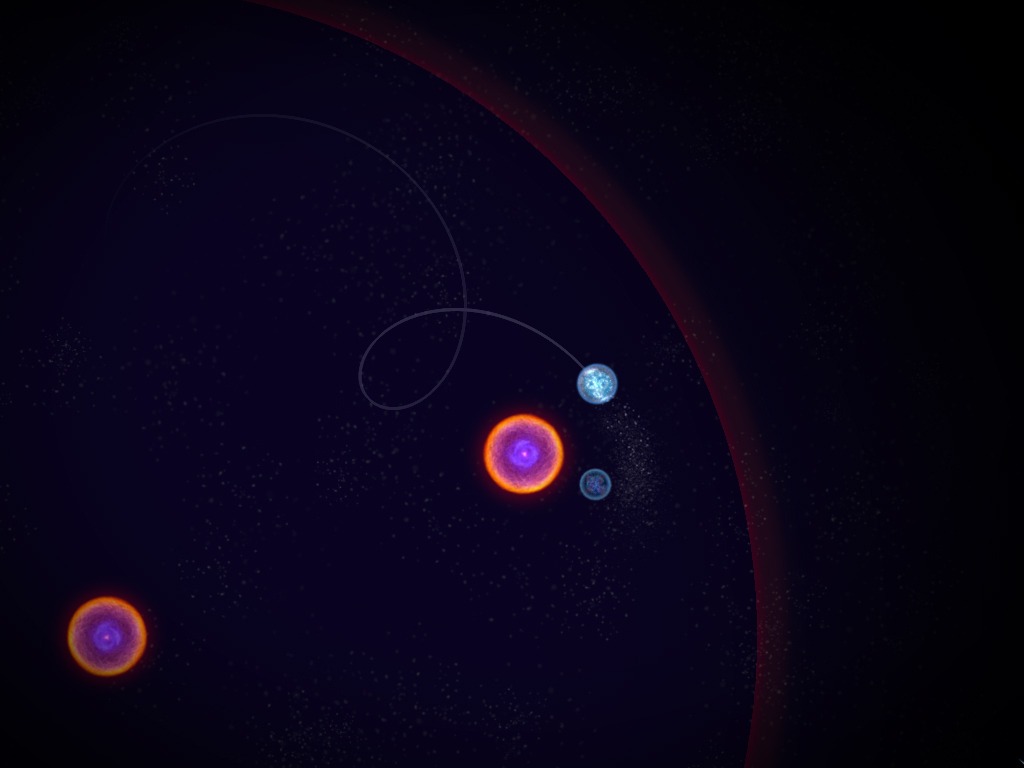
Osmos HD is an upgrade of the physics game where you are an omega trying to become the biggest. The game is very hard, but somehow satisfying when you beat a puzzle. The game requires a lot of concentration and finicky maneuvering, but the game is still enjoyable.
Pushing around the blog requires you to tap around the microbe with the touchscreen. This is like a jet booster, so the faster you tap, the faster it will float around. Around you are red microbes that you must avoid until you are bigger. Eat smaller ones until you consume the biggest one or complete the goal. Sometimes you will be orbiting a giant microbe and must complete the goal before you get sucked up.
The hardest part of the game is tapping just right and keeping good speed. You can slow down time or speed it up by swiping the screen left or right. This allows you to bump bigger microbes out of the way without being consumed. The visuals are pretty decent, and the game has a nice atmospheric soundtrack, but due to the high difficulty, this game is far from relaxing.
Overall, Osmos HD is worth the money, and you can play in the story mode or arcade. I wish there were more modes here, but at least the levels vary, so you won’t get bored. Casual gamers may get turned off by the sheer difficulty of some levels and the amount of concentration and precise movements required to move on. Give the demo a swirl before you buy.
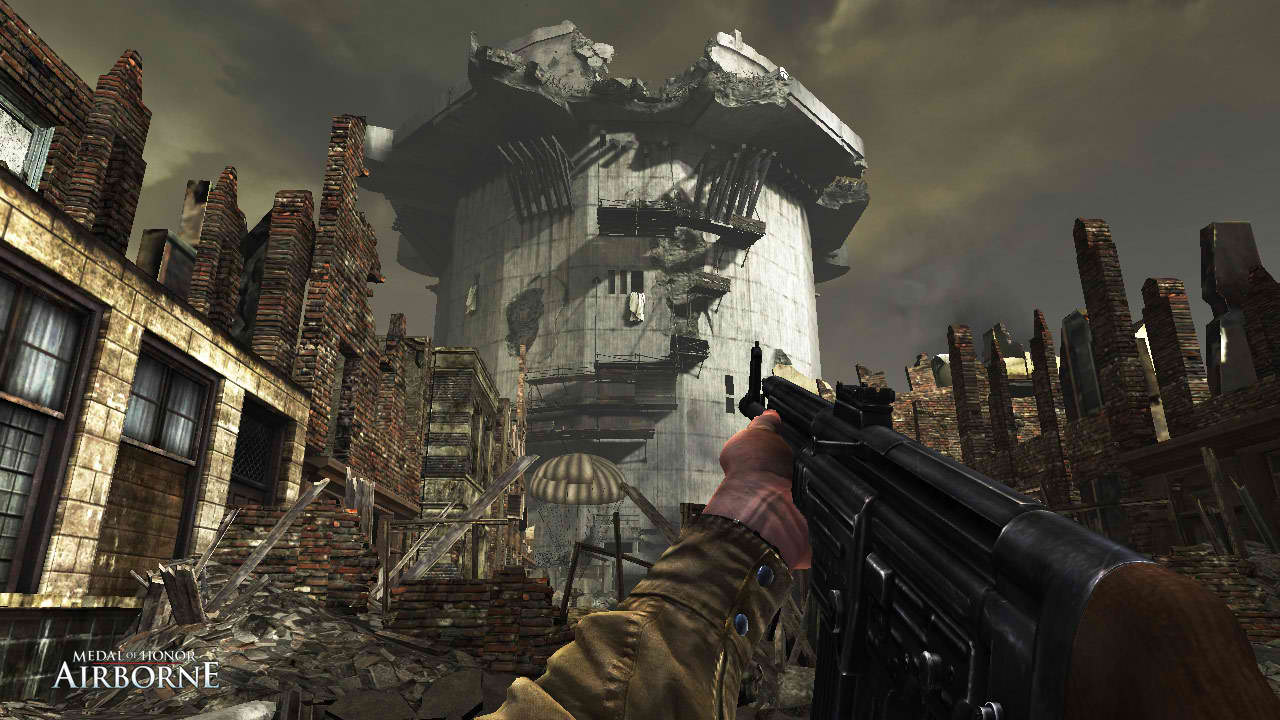
Medal of Honor started the first-person shooter World War II experience back on the original PlayStation. As time went on, they redefined the genre on PC with Allied Assault. It helped put WWII shooters’ feet on the cinematic ground. Frontline was the series’ last good game, and slowly after that, the series fell flat on its face with mediocrity, with EA only caring about money. Airborne continues this trend, and it’s dead obvious how little effort they put into the game.
You play as a soldier named Travers (like we care at this point), and you go through various WWII scenarios that you have probably gone through dozens of times before. The first thing you will notice about Airborne is how repetitive it feels in comparison to other WWII shooters. It doesn’t do anything new and re-treads the same ground that we are sick and tired of. EA tried to make us feel different about this with a new approach to level design. You play as paratroopers that jump out of planes at the start of every level onto green flares. These are safe zones and contain crates of health, ammo, and grenades. Once you hit the ground, you will notice that your minimap is pointing to various objectives. No longer do you follow a linear routine and take it one step at a time. Pick a direction and run, but that’s when things start going bad.
Every map plays out the same: shoot some enemies, push forward, rinse, and repeat ad nauseam. The enemies will keep coming in different pockets of the maps until you advance and take them out. This isn’t a new trick, and it just gets old quick because that is all you do. Place a charge on this AA gun, blow up this equipment, and blow up these thanks. No thanks. I have done this countless times already, so why do I want to do it here? The whole “nonlinear” map idea doesn’t really work because it makes the game ridiculously difficult, and you will die dozens of times at every level. Every time you die, you jump back out of the plane, losing not objective progress but advancement progress. If you just push back a huge group of enemies and die, you have to do it again. Your objectives are just checkpoints, and this gets frustrating beyond anything you can imagine. The game throws way too many enemies at you, but there are even problems with weapons.
The game has a nice upgrade system for making so many kills. For example, the MP40 will upgrade with a double clip, reduced recoil, and a knife melee attack. This is the most interesting thing in the entire game, but EA, for some reason, made the guns inaccurate to accommodate upgrades. Guns jump around more than you are used to, and no matter how well your aim is, you always miss about 60% of the time. Once you hit the lower recoil upgrade, it isn’t so bad. All the same WWII-era weapons are here (except the Sten), and they are yawn-worthy.
Thankfully, the game is short, with only 6 levels, so you can beat the game in about 6 hours. No matter how you slice it, the game is just extremely hard, repetitive, boring, and unoriginal on every level. They even went back to the health pack system, which is just archaic in design. You would think at least jumping out of planes is fun? Not really, because if you don’t grease or flare your landing, you botch it, and it involves a nauseating and disorienting animation of your character wobbling around while getting up and pulling the weapon out in a weird way. While this is happening, guys are shooting you, and you will recover with one health bar left. Nice job, EA, for screwing up every single thing in a game that you possibly could. Even the graphics are pretty bland and aren’t anything special.
Overall, Airborne is probably the worst Medal of Honor game I have ever played. Monotonous shooting, ridiculous difficulty, screwed-up parachuting mechanic, failed level design, and a retread of a genre everyone is tired of. Do yourself a favor and skip this unless you really need a WWII shooter fix. Forget about multiplayer as well, because there are only 6 maps and no one is playing online anyway.
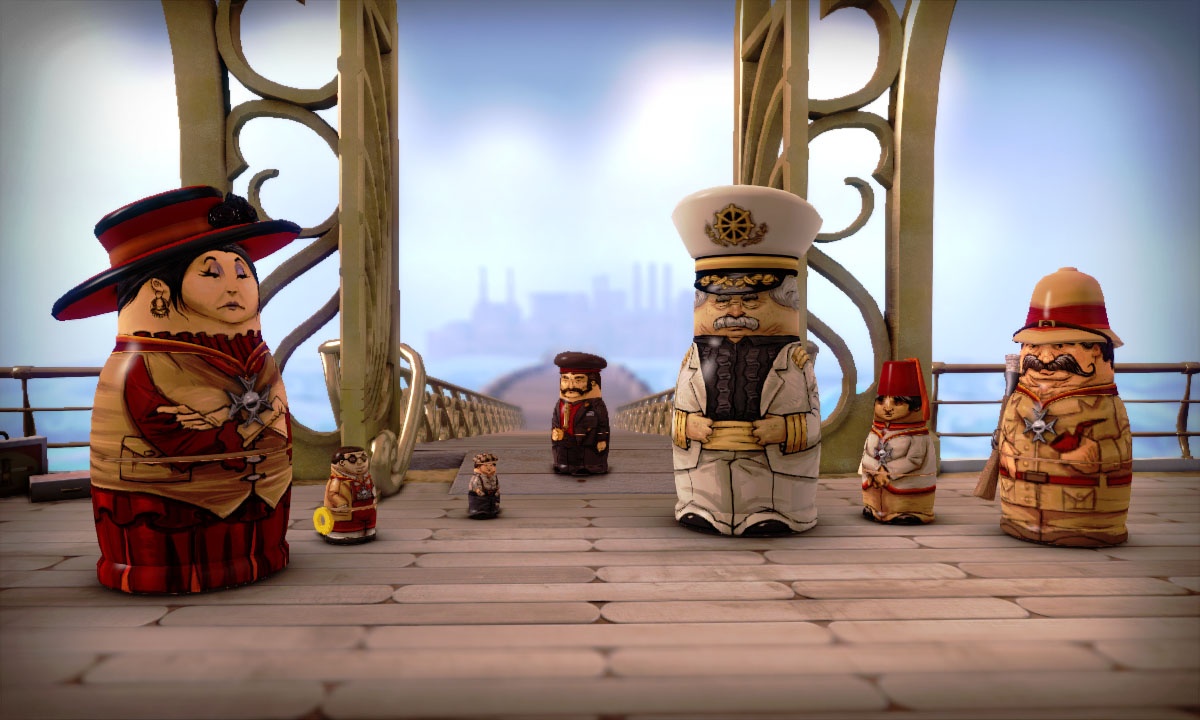
Double Fine Productions is known for very original and unique games (Psychonauts, Brutal Legend, Costume Quest) but has a hard time creating them, it seems. Stacking is a small Matryoshka doll named Charlie Blackmore who goes on a quest to stop child labor and stop the evil Baron from enslaving children for his selfish needs. In the process, he is saving his family members who are trapped. The game is very charming visually and appeals to all audiences.
The main gameplay in Stacking consists of you stacking inside dolls that are bigger than you and solving puzzles. There are areas that have someone blocking something, or something needs to be triggered, and you have to find the right doll to do this. You get three clues to help you along, which is a lifesaver because otherwise, it would be very difficult to know what to do. There are so many dolls that stacking each one would take forever. One puzzle involved finding a way to a cell that was holding a doll. The man is a doctor, so you have to find ways to make him feel ill. Stack into a doll blowing air, and then a fire chief. Spray him with water, then unstack and blow air on him to make him sick. This is just one of the multiple solutions. Each area has several ways to solve puzzles, and finding them all will unlock stuff in your hub, but it’s nothing useful.
You can also complete hi-jink challenges, which are where you use dolls’ abilities a certain number of times. You can also complete challenges, which are like side missions where you are helping dolls out. I found these pretty boring and think they are really for people who just want to mess around. There is really no reward for completing the game 100%, but if you love the stacking gameplay, go for it. If you get lost in the game, there is a guideline, thankfully, because, like I mentioned above, you will get lost. There isn’t a map either, so identifying dolls takes forever and gets boring. This is a big problem with challenges because there is no way to know who you are stacking or who you should stack. This is only half the problem, because then you need to know what to do with their ability.
The story is charming, and so are the visuals. Cutscenes are played out like old silent films, and the game has a satisfying ending (remember, Double Fine doesn’t do sequels). The controls work just fine, and the mechanics are simple, but the execution has problems, from what I explained. The game itself can be beaten in just a few hours if you only find one solution for each area and skip everything else. Only completists will want to bother doing this. For the low price, you get a very unique game, but if you can’t look past these problems, then you won’t enjoy it.
Dungeon Siege is one of the fathers of the dungeon crawling genre on the PC. There’s just something addictive about running around, smacking everything, and trying to find the best loot. Don’t forget about challenging boss fights, though, for the best loot. Dungeon Siege III continues this tradition with an engaging story, interesting characters, and beautiful graphics. The game, however, falls flat on a few notes.
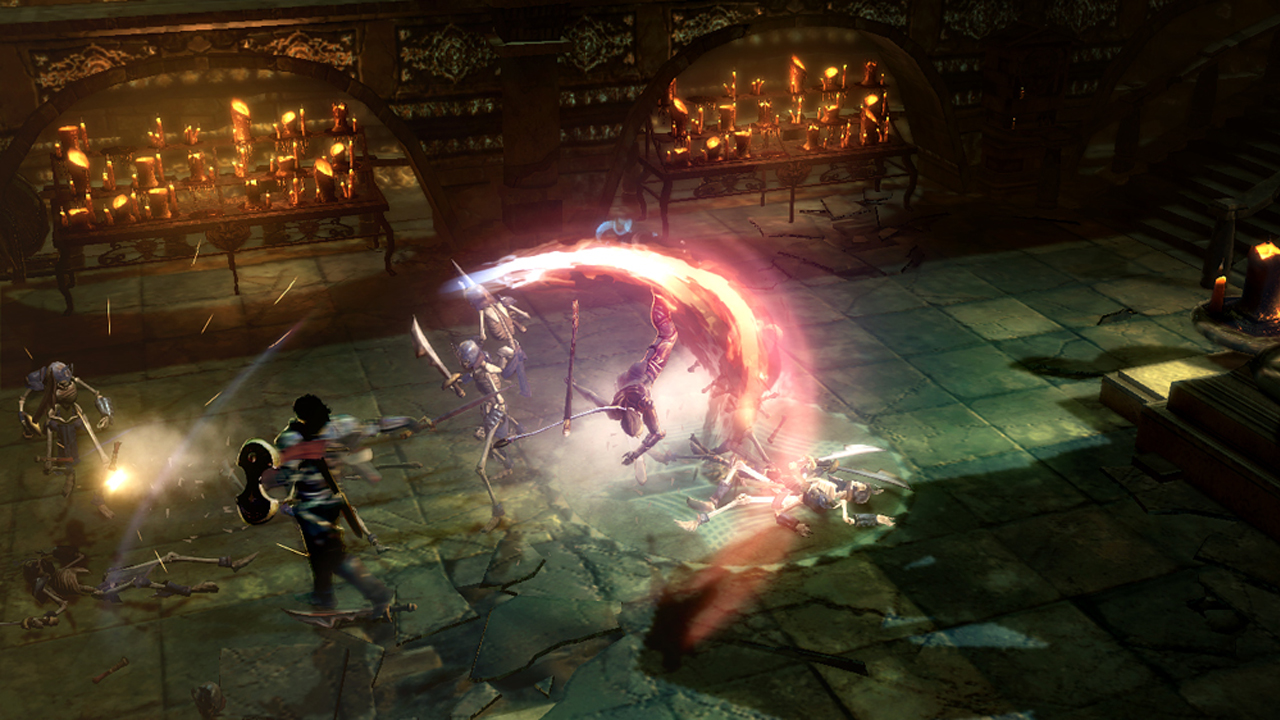
You get to pick a character among the four with their own unique background story. I chose the Lescanzi female who uses guns for combat. I got a long-range carbine as well as a pistol and shotgun combo backup for close range. As you run around killing enemies, you can use a variety of powers that use focus, and you gain this by killing enemies and hitting them. Think of this as mana. Then you have power orbs you can use for special attacks, but these only regenerate when enemies die. These powers vary by character, but they are essential for winning battles. I found combat to be fun and addictive here, but I never really felt I had the upper hand. I ended the game at level 35, did 99% of side quests, and still struggled through some tough fights. I had the best armor and weapons, but I was always struggling. Using my offensive, defensive, and passive powers really helped for healing, staggering enemies, knocking them back, and slowing them down. If you play single player, you get a partner (Anjali the Fire Archon), but there are some problems here.
The game is best played in multiplayer, but the single-player AI for your partner is touch and go. When you fall, you don’t die until your partner dies, but they can revive you. I had issues where I was in tough fights, and she just kept fighting and never came to heal me. Then she became overwhelmed and died. This was frustrating because you revert to the last save point, and long boss fights towards the end can make you tear your hair out in frustration. However, the game would be impossible to play without the revive feature, so I am grateful for that.
Exploring is very linear with a few branching paths, but at least you won’t get lost thanks to the questline you can pull up and follow around. Besides, going off the beaten path isn’t worth your time because there’s no “major” loot. Every chest seems to have a few different items and some gold. The armor looks great and shows off your character visually, but most of it was junk. Unless you access a new area, the shops will have poor armor, but rarely did I get one that boosted every attribute. Usually, I had to sacrifice attack power for more armor, agility for will, elemental damage for will, and so on. Where is all the good, high-level armor? It doesn’t really exist, and enemies drop armor and weapons that are worse than what is in stores. Dungeon crawlers are all about the awesome loot, and Dungeon Siege III is lacking it.
At least the story is interesting, with your character trying to recruit legionnaires to stop Jeyne Kessynder’s army. There is dialog choice that affects how the game turns out, and these actually meant something. A choice early on can make a boss’s fight later easier. My only problem here is that the conversations are dull because you just stare at the characters and usually skip most dialog. The voice acting is good, but that’s no excuse for dull dialog. Between each chapter are hand-drawn art slides, but they are ugly, and I would have liked to see some nice pre-rendered ones.
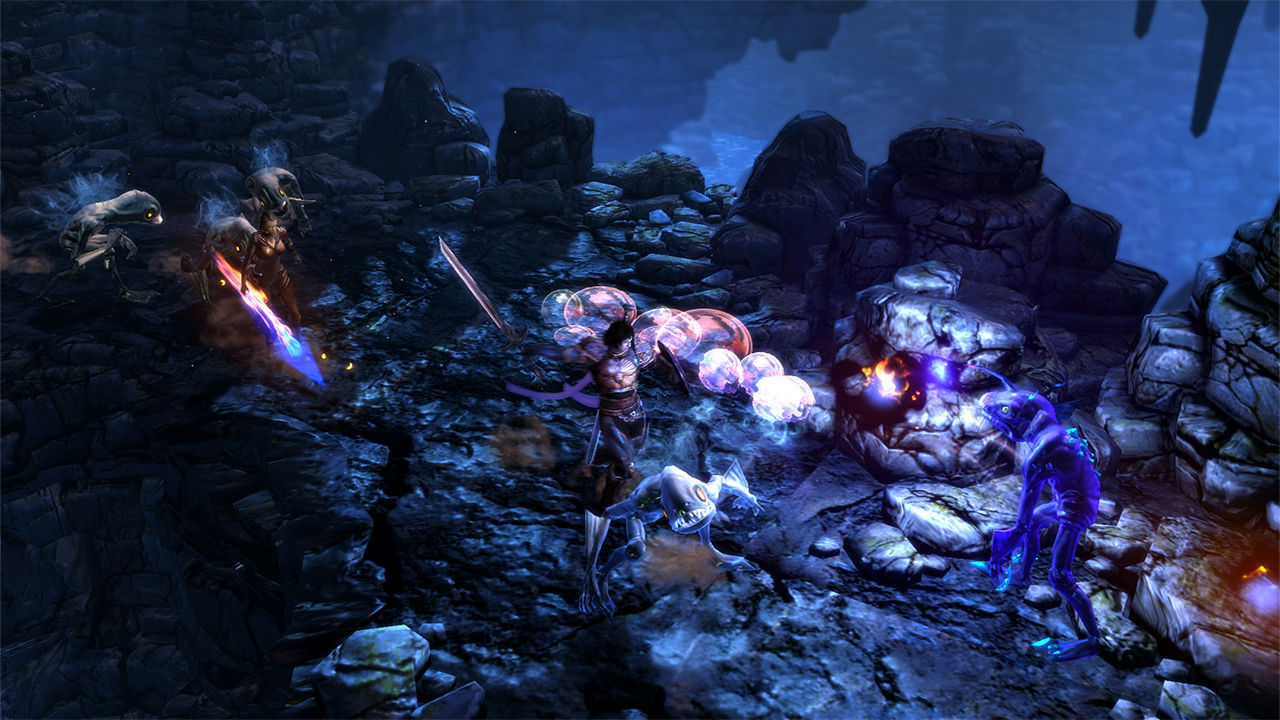
The graphics are gorgeous, with great lighting effects and high-resolution textures. The locations vary immensely, and you always look forward to seeing what area you will be in next. The music is great as well, with beautiful orchestral scores following in your footsteps. Dungeon Siege III is worth the bargain bin price these days, and dungeon crawler fans will have a blast here with challenging boss fights and varied locales to explore. Don’t expect great loot or even varied enemies because the enemy setup tends to be predictable. Dungeon Siege III is a fun dungeon crawler, but it could have been better.
Note: The game is compatible with AlienFX for those lucky enough to own an Alienware computer. When your health bar is green, all your lights are as well; the same is true when it is yellow, and then red. This is really neat, but the problem is that there was a delay for some reason, and it was never patched. Your health will be red, but your lights are still green. This only happens sometimes, but nonetheless, it is a cool feature.
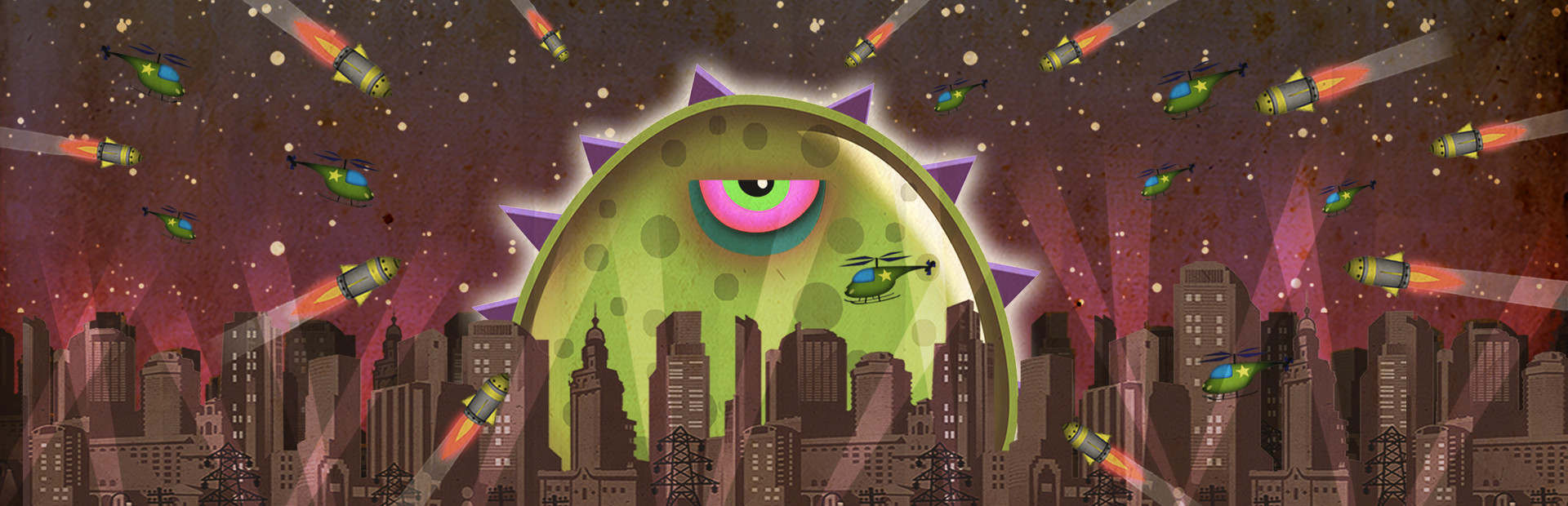
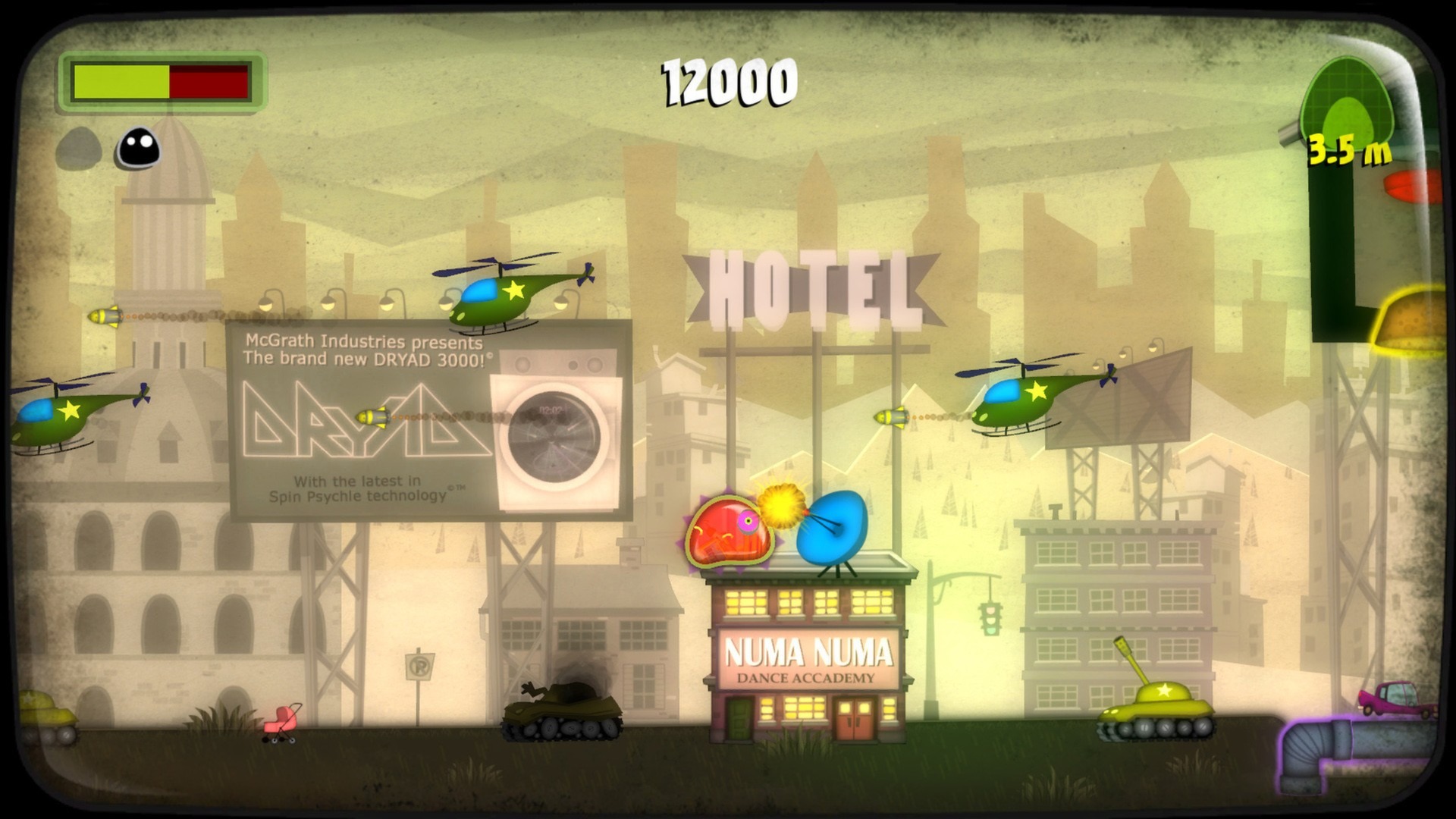
The Vita is currently short on good games, especially on the PlayStation Store. This little gem is a physics platformer that is addictive, unique, and very fun to play. You play as a blob that escaped a college laboratory and is on the rampage to take over the world. As you move along, you solve puzzles and use gelatinous physics to climb your way around.
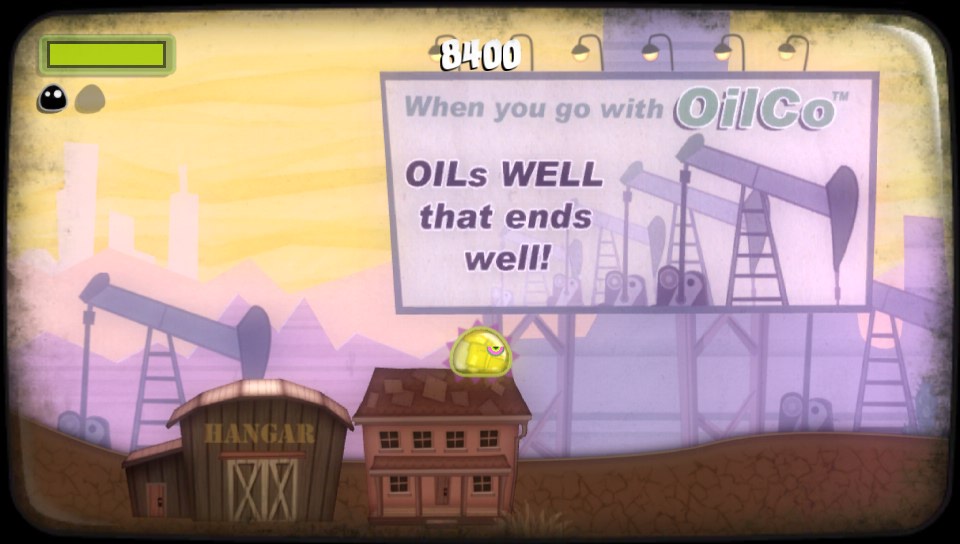
The game has a bit of Katamari Damacy built-in since you absorb things along the way to get bigger and bigger. Each level is different, and not one puzzle is the same. There are so many different gameplay elements that you will never feel bored here. Just to mention a few, you can use the touchscreen to pull green platforms that can shoot you across areas using kinetics and momentum, avoiding lasers, using magnets to push and pull your way around, and even some extra stages that use the tilt sensor. Mutant Blobs is so varied that you will always be looking forward to the next level.
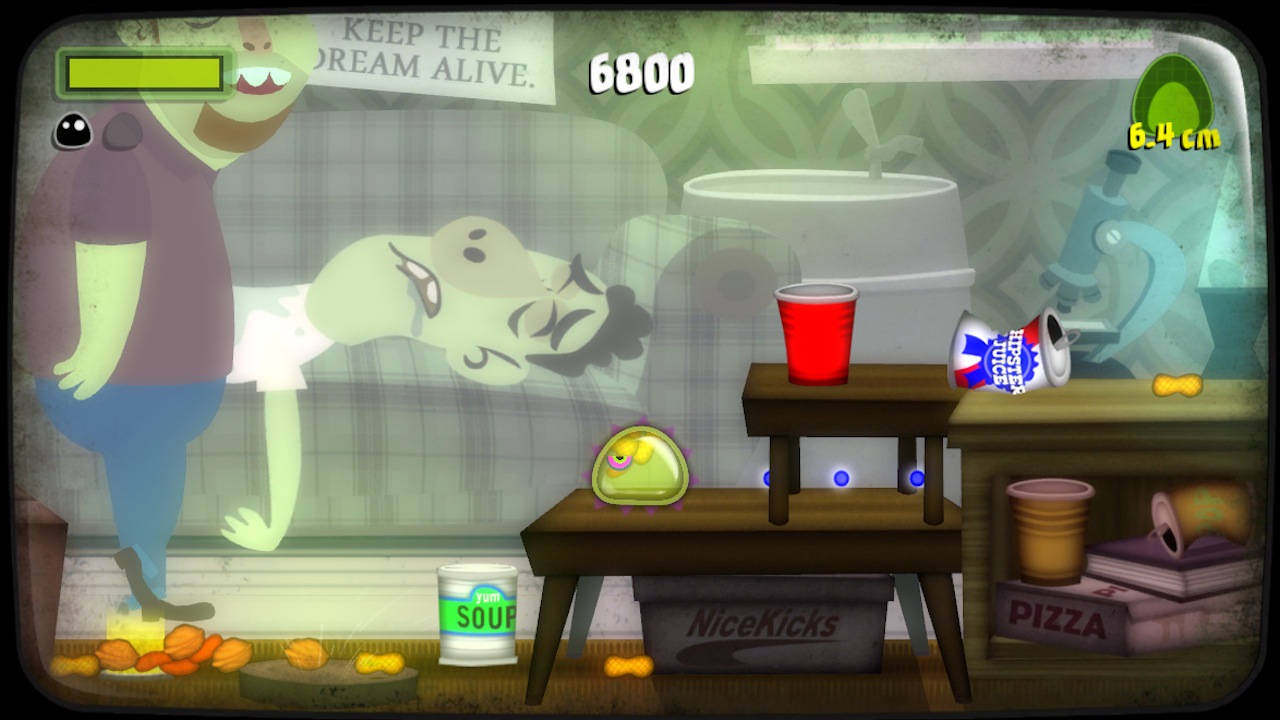
The blob’s physics work perfectly and change a bit as you get bigger. The controls are simple, but change when you float around using gas, where you switch to the analog stick. The game has a great sense of humor as you run over people and hear them scream, all while the blob’s sticky suckers make noises and make a gurgling sound when absorbing enemies. There are little hints at other games like Portal, Angry Birds, and Pac-Man that will make you chuckle. The whole package is so charming and fun that you will have a hard time putting the Vita down. This game is one of the first to really let you know how unique the Vita is because this game couldn’t really be done on a console or even a smartphone.
The game does get a bit too hard in spots where you will restart dozens of times, but these were far and few between, thankfully. Each level varies in length, but you are scored at the end depending on whether you found your two hidden friends and how many blue dots and items you absorbed. These are uploaded to leaderboards, which you can go back and beat later. I should also mention that I felt the game didn’t have enough levels, but hopefully more will come in the form of DLC. There’s enough here to last you about 4-5 hours, but most will blow through these in a few long sittings. This game is just so fun and different that you can’t get enough of it.
Overall, Mutant Blobs has perfectly balanced mechanics, varied level design, clever puzzles, and a charming art style. You will have a blast with this game, and it is the best $8 I have spent in a long time. If your Vita is currently not being used or has played all the launch games, pick it up and you won’t put it down.
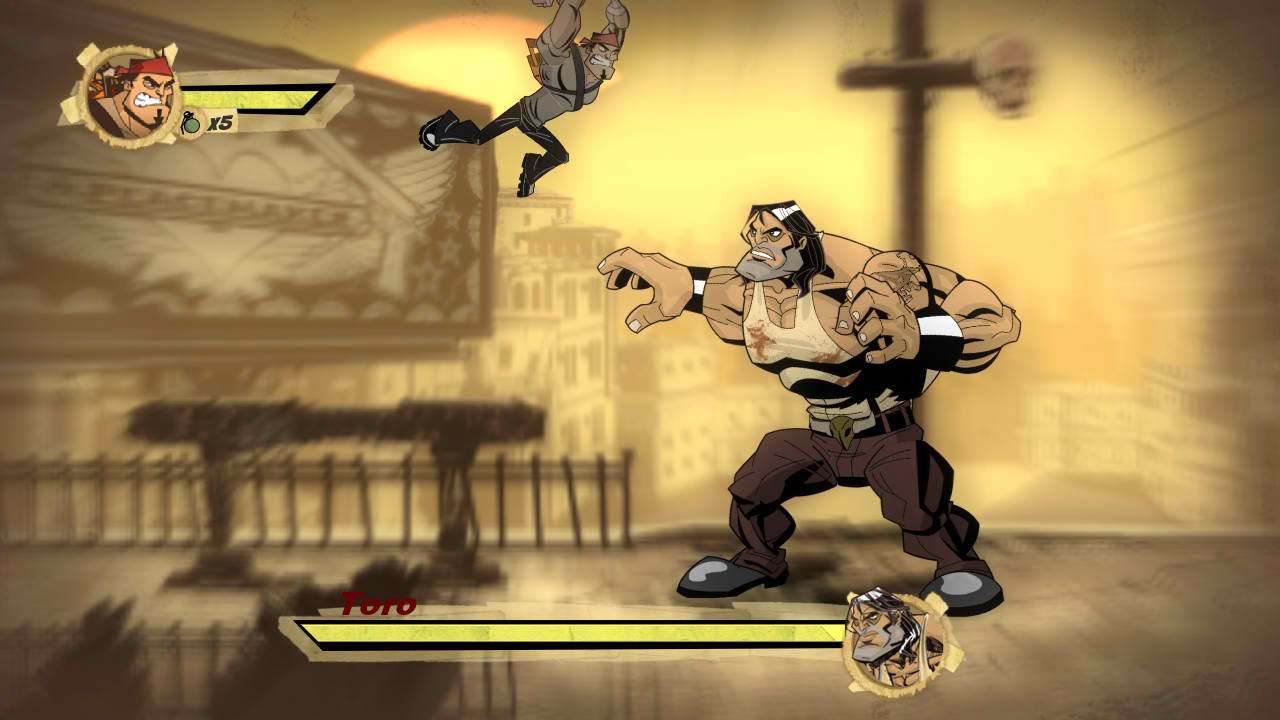
Shank is an artistically stunning game about a man named Shank (voiced by the same man who voiced Kratos in God of War) who is trying to get revenge on the death of his girlfriend. It doesn’t quite go according to plan, but he heads for the people responsible anyway. The game has gory melee combat with a tad bit of platforming. The game can be beaten in less than 4 hours, but by the end, you will have wished it had ended long before that.
The combat consists of light attacks (your shank), heavy attacks (weapons that are picked up like the chainsaw, katana, chains, and machetes), as well as three different guns for distance combat. You can toss grenades to clear crowds, but that’s pretty much all there is to the combat. There really aren’t any combos to learn or gain, which is a shame because by the end of the first couple of levels, you will get bored with the combat. There are problems, despite the hacking being fast-paced. Sometimes the controls will feel a bit sluggish when trying to counter people behind you, and when you get knocked back, you can get bounced around by multiple enemies with no way to get back up until it stops. This really frustrated me throughout the game. I always felt like I wasn’t 100% in control of Shank. Even some of the weapons had problems, like the shotgun only firing a couple of rounds, but then he puts the gun away, and during this animation, you are vulnerable. The problem is that you’re not even done shooting it, so he has to take it back out. Things like this crop up while you are playing, and by the end, you just have had enough. There is some minor platforming, but it’s not very challenging and feels like just some lame filler content.
One major issue was that the health pickup button was the light attack button. Who’s bright idea was this? During boss fights, this poses a real problem when you are trying to conserve health and then you accidentally use a light attack near the pickup and drink it. Other than this, other problems consist of repetitive boss fights, but the few that are different are the only things that break up the monotony. The visuals change between levels, but other than that, you just get bored. I wish there was a level-up system or some way to earn combos. Hacking and slashing enemies in a gory fashion is fun for so long until you want more. Hell, even some more varied level design would have been nice, but no such thing exists here.
Overall, Shank provides a mediocre story that barely keeps your interest. The game has a beautiful art style but is lacking in design change, and the combat is very shallow and monotonous. This game had a lot of potential, but if what is here is enough for a quick playthrough, then you will forget about it. Even playing again in different costumes isn’t enough to drudge through this repetitive side-scroller.
Dear Esther is a game from indie developer The Chinese Room that is a visually stunning adventure game, but it is lacking everything else. If you like slow-paced games or just want to relax and not worry about anything but moving your character, then this is probably exactly what you’re looking for. Everyone else, stay away.
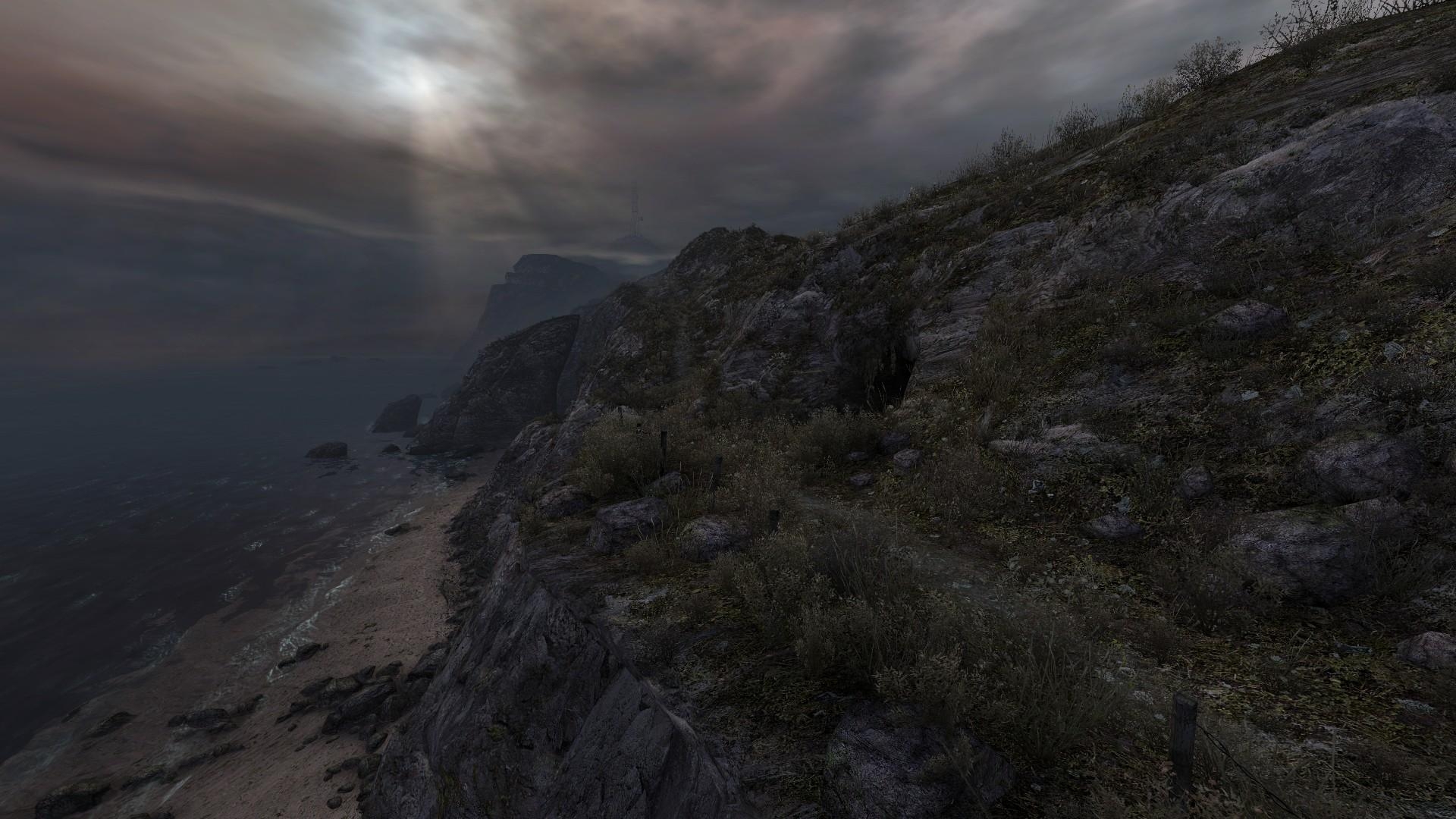
You start out on the beach with no objectives, so you just start wondering. This is all you do in the game while a narrator spews poems at you. There isn’t really a story here except that a man is searching for a man named Donelly, and you are writing letters to a man named Esther. As you wander around the level, you will see various things like abandoned huts, shacks, and strange writings on walls. I felt the game had an atmosphere that was a mix of Penumbra with a bit of Half-Life 2 thrown in. If you walk into a dark area, your flashlight will turn on, but there’s really no need to wander off the main path. If you do, you may get a little extra narrative, but it isn’t worth it because you have to walk all the way back to where you were.
You literally do nothing but walk. There aren’t any other buttons except zoom and take screenshots. This wouldn’t be so bad if the pace wasn’t so slow and grueling. You literally walk at a crawl, and I get that it’s so you can take in the scenery, but it doesn’t really change much until you get into the caves. There’s only so much ocean and swaying grass one can see before you get bored. The only thing you look forward to is the next piece of narration.
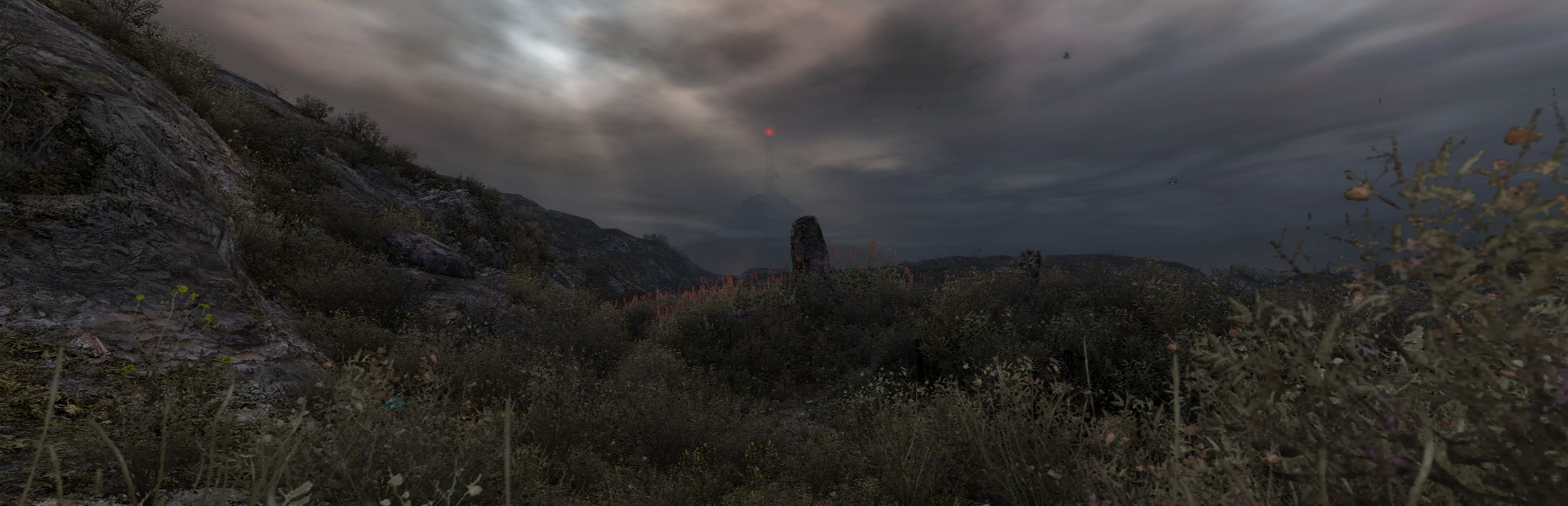
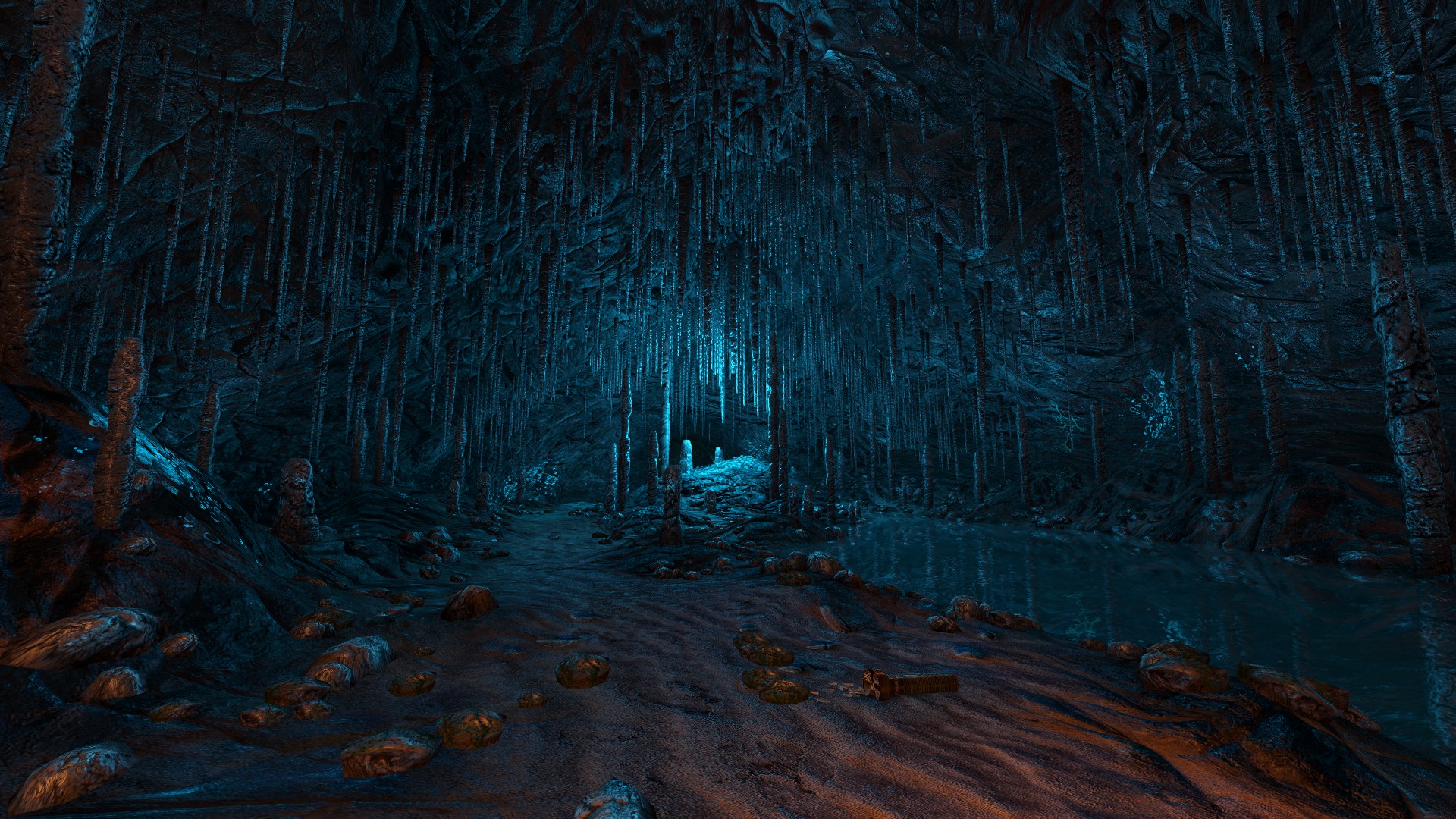
The game is stunning to look at, but you won’t see the true beauty of the engine until you get into the caves, where you get to witness gorgeous water and lighting effects. This is short-lived because this area is only about 10–15 minutes long, as are the other four areas. This leads us right into the game’s worst problem: It is less than an hour long. Even when you get to the end, you still don’t know why you played this game or what its purpose is. The story is very vague, and you never quite know what’s going on. This is hardly a game and is more of a technical showcase. If you can stomach this sort of thing, then go ahead, but you aren’t missing anything if you skip out.
Dear Esther does try something that most games don’t, but with zero gameplay and only being barely an hour long, it’s hard to justify that $10 price tag. There aren’t even any downloadable chapters, which is a real shame. Will I be keeping an eye on The Chinese Room’s next game? You bet because there is a lot of potential here, but I just felt it was clearly wasted.
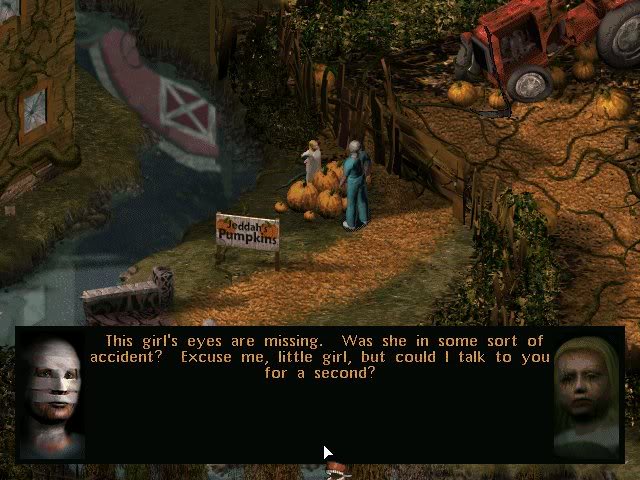
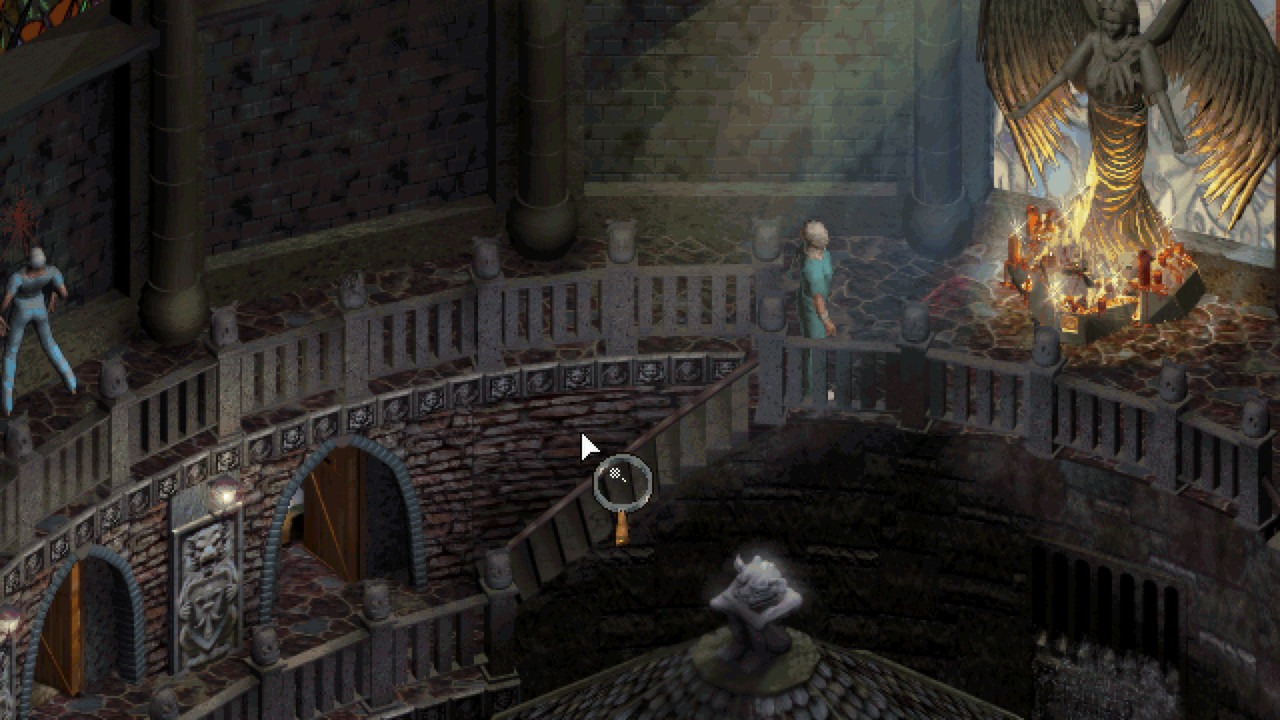
Adventure, strategy, and RPGs were the pinnacle of PC games back in the mid- to late-90s, and Sanitarium is one of those games. You play Max, who suffers a car accident and is stuck in his own insane delusions, or is he? You explore 12 sick and twisted chapters with excellent voice acting and very interesting characters, but don’t forget those adventure puzzles.
The game isn’t much different from the standard adventure game, where you wander around and click on items to proceed to the next area. Your icon is a magnifying glass, and you hold down the right mouse button to move your character around. This was my first annoyance with the game, being that the characters walk so slowly and there’s no run button. Despite this, clicking on things is actually interesting because most of it doesn’t even pertain to the real world. Your first area is an asylum where guys are bashing their heads against walls, and the people you talk to are completely out of their minds. This gets even worse as the game progresses, but that’s a good thing.
As you collect items, you find ways to use them in interesting ways, and it actually makes sense. However, most of the time, the way to use them is so obvious that you will miss it. This game isn’t exactly easy and just gets harder as the game progresses. You get thrown a couple of puzzles at the beginning, but towards the end, the game gets very puzzle-heavy, and they are not fun or easy. Sure, they are unique to individual worlds, but they aren’t easy. I had to use a walkthrough through most of the game because I just couldn’t figure out what to do most of the time.
My favorite part of the game was wandering around and talking to people and hearing their strange voices or weird stories. The worlds themselves are characters because each one has a big problem to solve, but thankfully each level is small and it’s not easy to get lost. The game is paced well with some CGI cutscenes (of course they look horrible being from 1998), but it’s nice that this game feels high-budget for its time. I always looked forward to the next zany world and the weird characters I would run into. I never got bored and always wanted more. The game is nicely paced at around 5–6 hours, and it had a satisfying ending. The one surprise I had, however, was a couple of boss fights. Most adventure games don’t have these, but these were strange.
Overall, Sanitarium is an excellent adventure game that shows how great the 90s were on the PC. You can pick the game up on GoG.com for only $6, but I did run into one huge problem. The game crashes a lot on the newer operating systems, and GoG never addressed the issue. If you can, get the CD and use it on an older operating system (like Windows 98), but otherwise, you will have to trudge through the constant crashes.
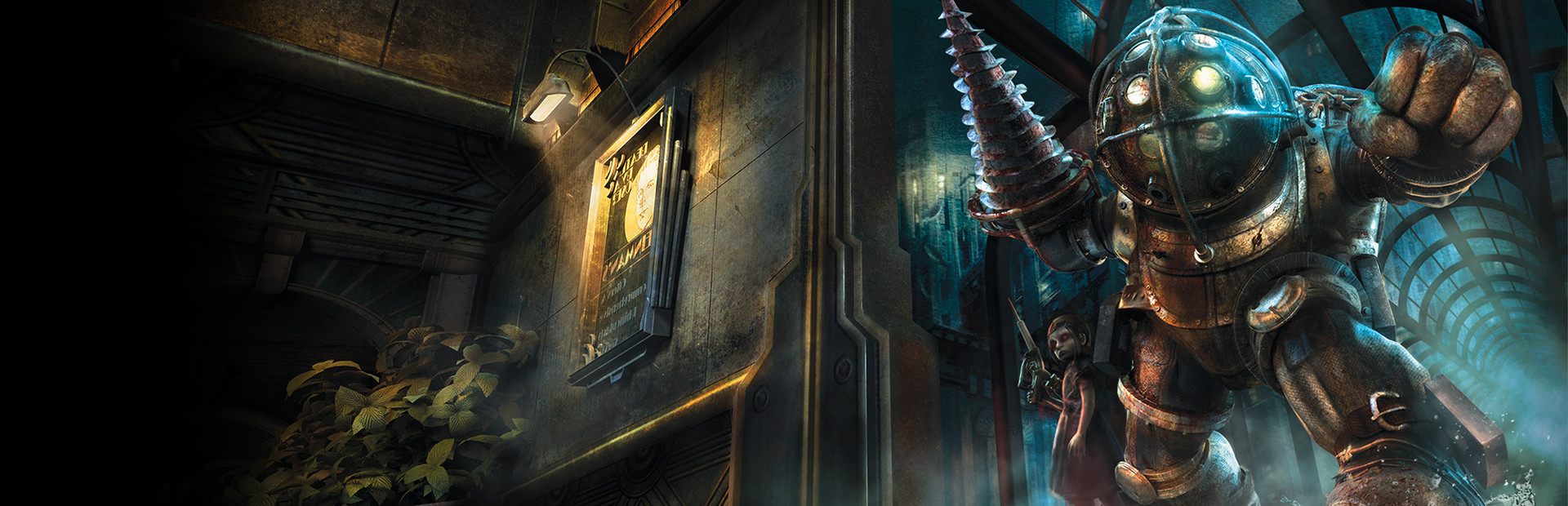
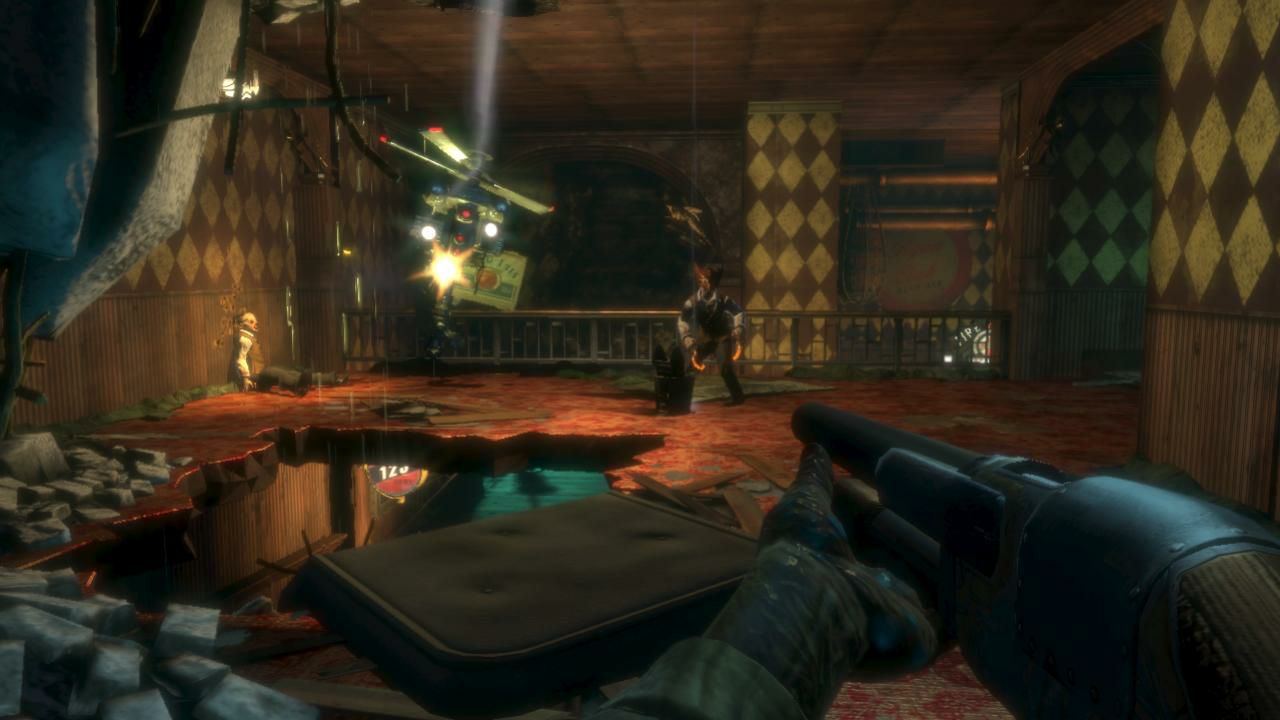
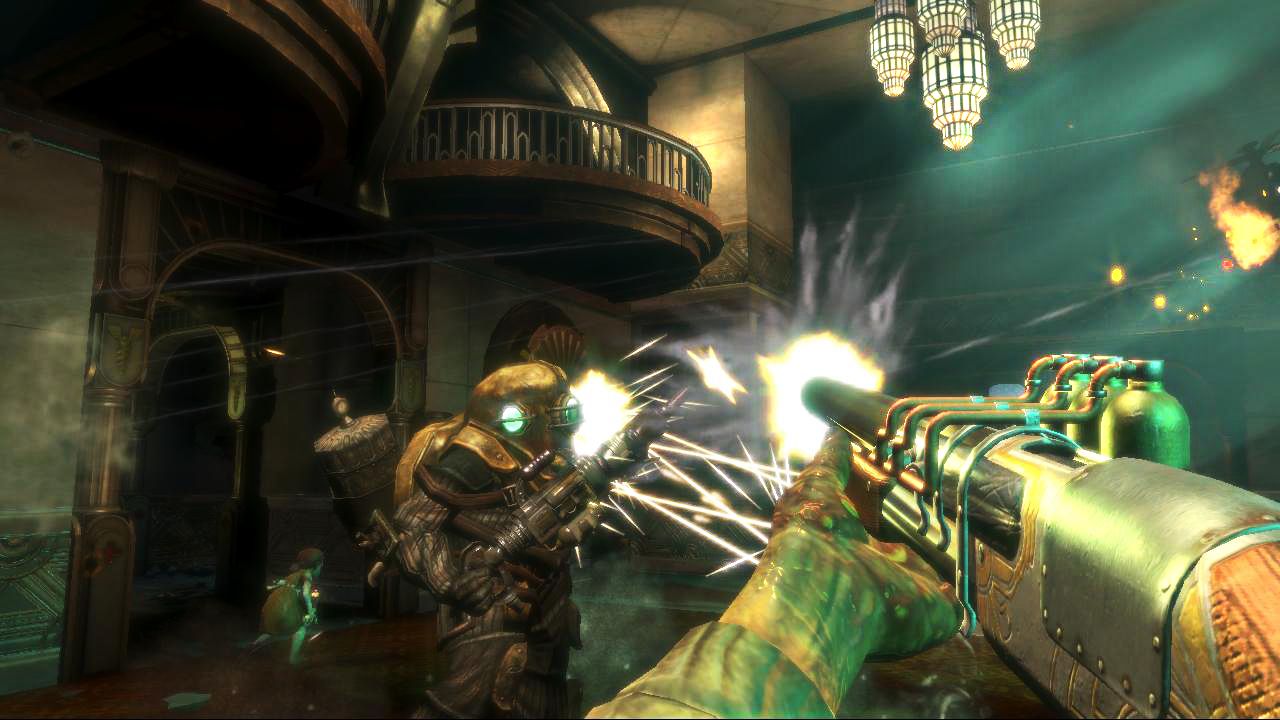
BioShock is awesome! Buy it! That is probably all you need for a review, but that’s not really a review. Anyway, if you don’t know the plot of BioShock, then you’ve been living under a rock for the past few months. You play a nobody named Jack who crashes into a plane and discovers Rapture. A failed underwater city whose founder, Andrew Ryan, turns crazy, and all the people of Rapture have gone nuts. They go nuts due to the plasmids they use to gain power. Also, the ADAM that can make you turn into anything you want is very valuable and is the key to rapture. The Little Sisters gather the ADAM, and the Big Daddies protect them. The story is full of plot twists and secrets. It’s probably one of the most original stories in any game period. The gameplay is like that of an average shooter, if you want it to be, or it can be a genetically enhanced one. That’s the beauty of BioShock. It can be anything you want; it can be boring, fun, stupid, or lame; it’s all up to you.
The game’s narrative is one-of-a-kind and what most games copy these days. The story is told through radio transmissions with no cutscenes. That is extremely hard to do while keeping the player interested. Atlas guides you around, telling you how to get to Andrew Ryan, but the world around you also tells the story of Rapture through audio diaries, things written on walls, and what the psychotic enemies blurt out. This is a rare form of storytelling in games, which is why BioShock is such a classic.
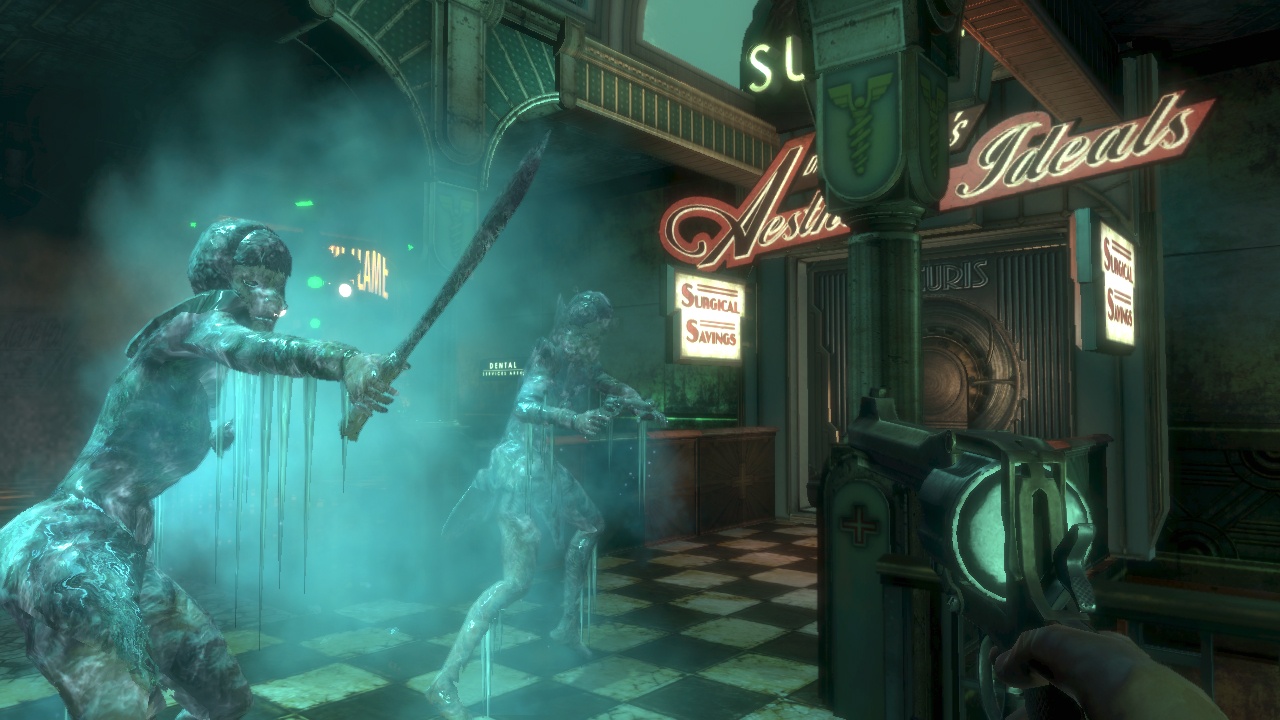
The graphics stand up pretty well today with DirectX 10 enhancements, but they are so subtle you won’t even notice. There are supposed to be better water effects and physics, but I didn’t notice a difference except that your steps cause ripples in the water now. There are lots of graphical problems on the PC that were never addressed, but they don’t hinder the game much. The game is very surreal, and it just sucks you in. The big thing here is the gene splicing and all the plasmids. There are so many of them, and you can do whatever you want with them. You can shoot fire from your hands or freeze your enemy with an ice blast. There are others as well that let you gain more health or hack turrets and safes better and faster. There is just so much detail here, it’s nuts. You can use a camera and research your enemies to learn their weaknesses and gain new plasmids and tonics. The only disappointment was the lack of any multiplayer whatsoever. All you can do is play this game to experience the true beauty of it all. BioShock is one of the best games in years, and I assure you that you will have more fun with BioShock than with Halo 3 or Metroid.
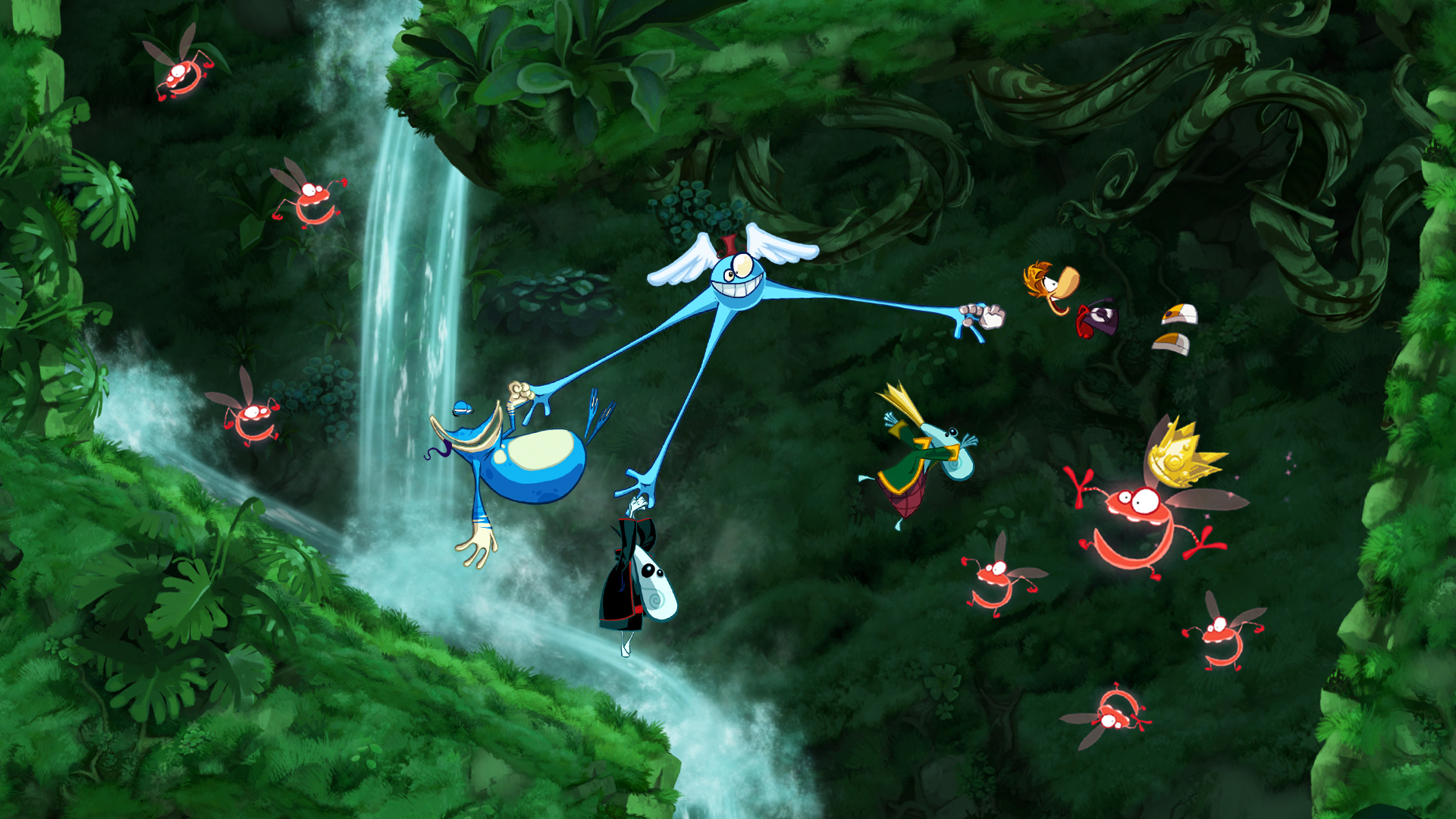
Rayman has been a struggling series since the PS1 games came out. There have been spin-offs, ports, and terrible sequels since then, but Origins redeems the series. There isn’t really a story here except that you’re saving lums and princesses of different lands to earn powers. There aren’t any cut scenes or voiceovers because this goes back to its old-school roots, and yes, the game is hard.
The controls are silky smooth, and so are the animations. It helps that the controls are responsive, as well as that you can jump around the levels that require focus and skill to navigate. Obstacles lay in your paths, such as treacherous waters, enemies, and fire. Each new area has unique enemies, hazards, and an overall layout that is very nice to look at. Enemies can be jumped on or punched, and after that, they inflate. You can use the Vita screen to touch them so they pop to get the light inside, which actually makes this version more forgiving than the consoles. When you jump around to find lums, you will see them in hidden objects, and some will be trapped in bubbles. You can touch them to pop them up to add to your collection, which is much easier. While you’re bounding about the cleverly laid-out levels, you can find hidden areas with cages full of lums that you can find by hearing their cries for help.
The game is just so cleverly designed, with levels that are tricky but not so tough that you can’t forgive the game. You may restart a few times, but it actually requires skill instead of luck or exploiting the game’s faulty controls (if they were). Sliding around on the ice, dashing towards an enemy and punching them, grabbing onto a ledge, and then jumping up on top of an enemy can be tricky, but it can be done with a little practice and a quick reaction. The levels slowly get harder, but the whole point is to collect the lums and get medals at the end of each level. Save enough, and you can unlock special treasure missions where you have to chase one down through a series of tricky obstacles.
Origins is just so clever and charming that you can’t really hate it. There are plenty of characters to unlock, as well as extras. This game is perfect for people who love exploring levels and finding secrets. There are plenty of levels and things to find to keep you busy for many hours. I do wish there were some more features for the Vita besides just using the touchscreen. However, what is here works, and nothing got downgraded from the consoles. I can only really recommend this game to hardcore platformer fans because of the difficulty.
























































 thebinarymessiah.com
Super, thank you