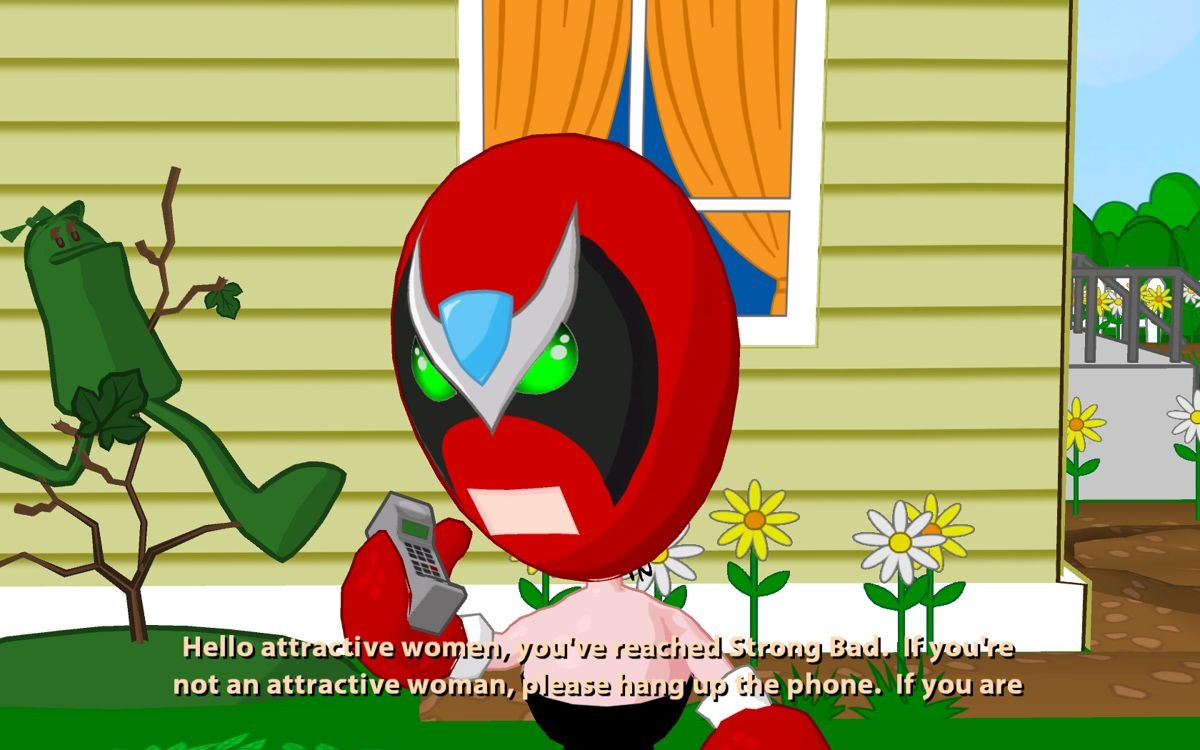
Everyone knows Strong Bad from their famous song on Guitar Hero II!!! What have you never heard of them? Well, that’s ok, we all forgive you, but now’s your chance to meet the almighty only-cool-enough-to-look-at-unless-you’re-an-attractive-women, sometimes known as “Flexapecs” Strong Bad. The game’s main attraction is the crazy humor and the nice graphics style. The game is basically a flash point-and-click adventure where you try to show off your strong badness by making Homestar (the town’s “cool guy”) look like a total jack. With great voice acting to support these neat characters, the basic gameplay element always stays the same: click on this thing, hear what Strong Bad says, laugh, wander around aimlessly trying to figure out where to go next with no hints, rinse, and repeat.
My biggest gripe is the fact that you never really know where to go, and most of the game is really a guessing game. You slowly unlock different locations, and warping to these places on the fly is easy via your map. Go around collecting special items and even take photos! But seriously, even though the game has strong humor, it doesn’t save the gameplay. Just double-click and hold the mouse button to make Strong Bad run here, go into your inventory, and try to make certain things work, but I guarantee most of the time you’ll resort to an FAQ. The beginning of the game starts out easy enough where you just follow the plot of the game, then about halfway through it lets go of your hand and you sort of get lost in everything. Trying to spoil Homestar’s fame isn’t really easy since it takes lots of different running back and forth to and fro collecting things to make this work over here. With no quest log or anything like that, you never know what to do, and there are really no hints to help you. Some parts of the game I didn’t even know existed until I resorted to a FAQ, and that was after over an hour of trying to figure out where this one inventory item goes. Trying to go around experimenting isn’t really fun and makes you really annoyed and frustrated.
With all of that aside, the game’s dialog and writing are hilarious and fit the characters very well. The humor is more random, stupid, and full of bathroom jokes than witty and smart. This works just as well, and somehow the game pulls it off cleverly without making you feel like you’re playing something lame. I just really like all of the details that went into this game, like the Snake Boxer 5 mini-game and all of the extra dialogs when you talk to someone more than once. It just really makes things that much more interesting. Now, this is meant for young teens and kids, so there is no mature humor, even though you’d expect it from this kind of character. I really feel these characters should have been given more mature dialog, but what’s here works and works well if you can get around the annoying hunt and seek. I really do recommend this game on the Wii or PC because you’ll love the hilarious dialog, great art style, and funny characters.
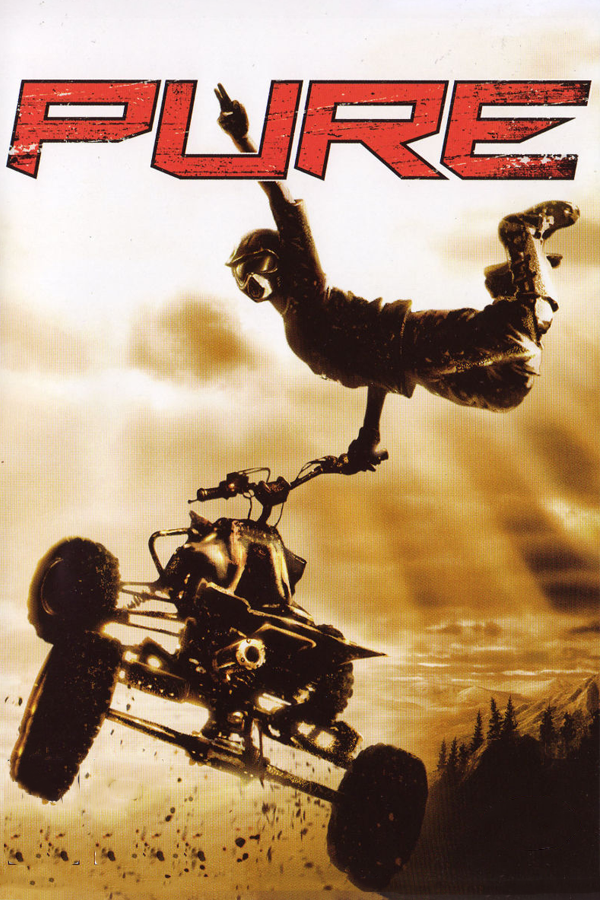
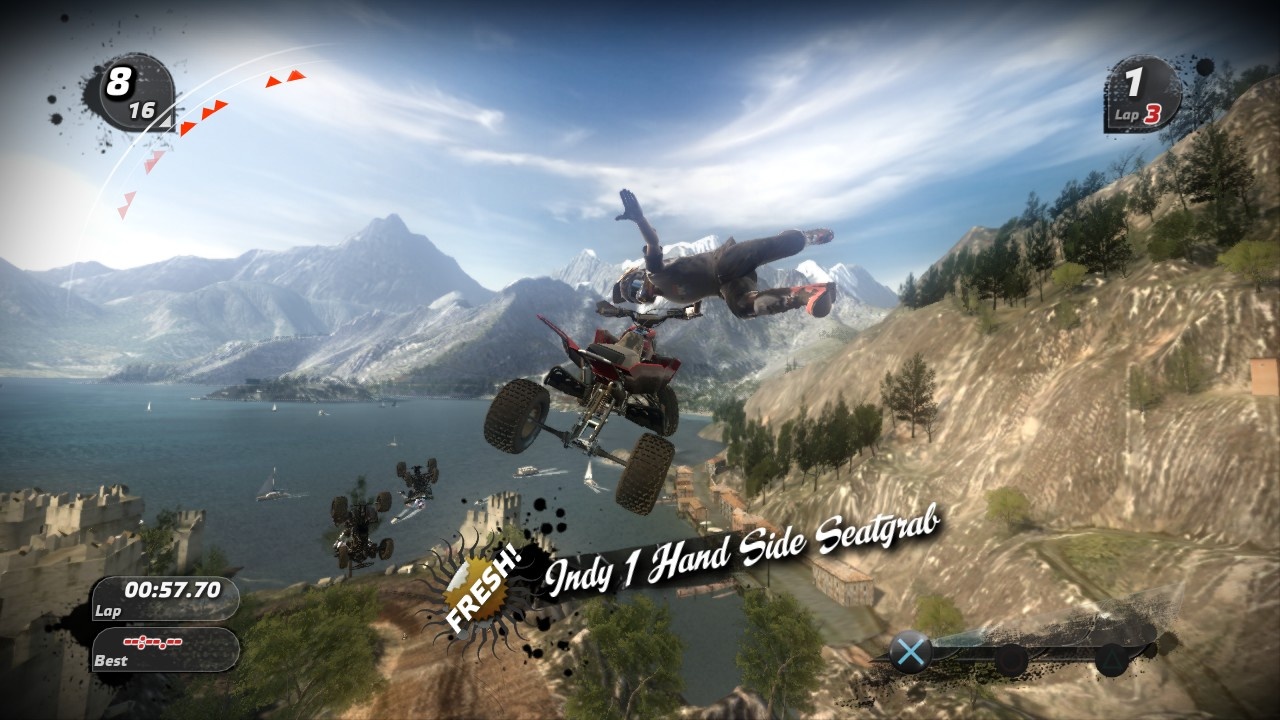
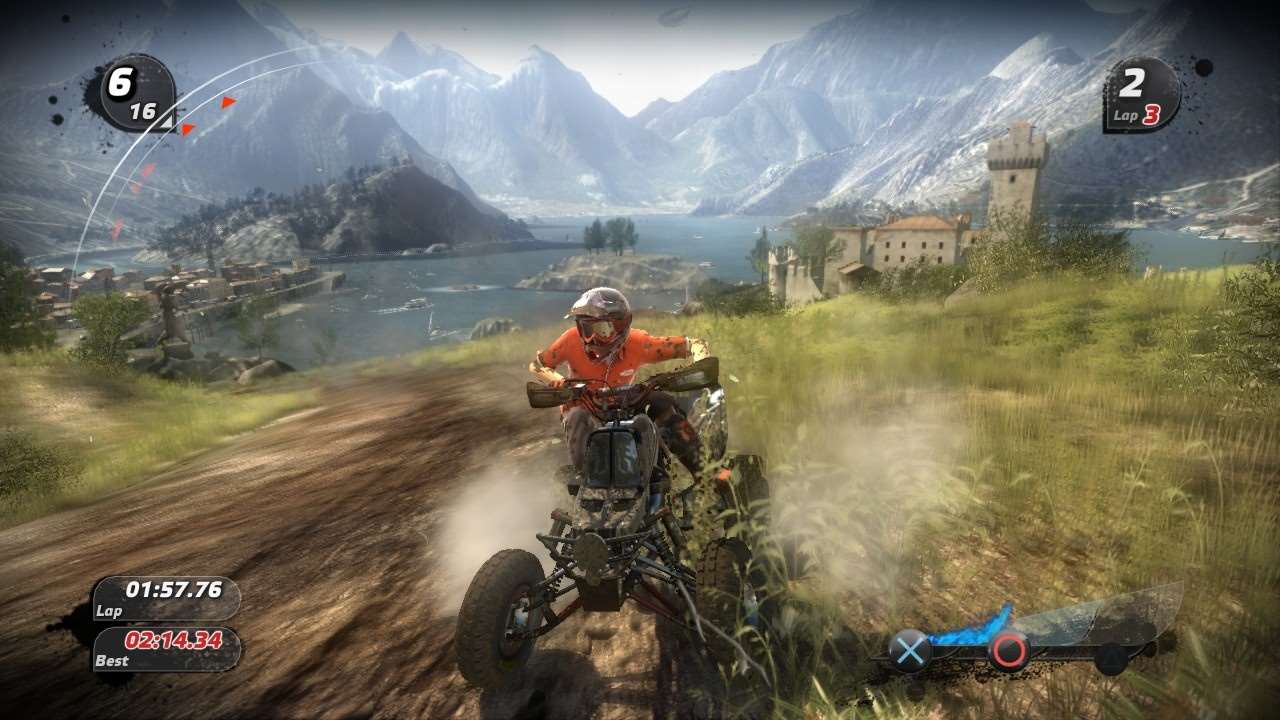
When I saw the Pure demo on XBLM, I just blew it off. After seeing how people were having so much fun with the game, I downloaded the demo, and boy, was I in for a treat! The game was super fast, super easy to play, and super beautiful! One thing I just have to say is that I was surprised at how great the game looked. The game is truly next-gen, with beautiful open, soaring vistas, crisp blue lakes, and waterfalls. Free-flowing grass, flowers, and weeds. Mud that really sticks to your ride and makes you feel like you’re slipping around in the mud. The game is just so beautiful to look at, especially when you’re going 120 mph over 200-foot jumps off cliffs! Yeah, this game is all about tricks, speed, and pure awesomeness (maybe this is why they just named it Pure so you can fill in the rest?). The game really feels fast, but the tracks are open and big enough for you to slip and slide around without feeling cramped.
The name of the game is all about building your ride and doing tricks (ok, the name is actually Pure, but work with me!) When you start out, you can build your ride from scratch, and I mean straight from the frame, and you add shocks, tires, drums, brakes, the body, footrests, and the whole nine yards. You can even change what your hand bars look like, the color, the decals—I mean, customizing your ride is insanely detailed, and nothing like this has been done in an ATV game before. Of course, you can pick your characters as well, but there’s no customization in that, and I thought that was pretty lame since you look at your character more than your ride anyway. You can unlock new parts and upgrades for your ATV as you win races (yes, 1st place at every event, or you don’t get the good stuff). There are plenty of parts, and you slowly get better and better upgrades to keep up with the competition, so there are no worries on that part, and as you unlock more ATV slots, you can just make endless different types of ATVs.
You’re probably wondering what it’s like to actually race, right? Well, that’s the best part! You preload your jumps like in all ATV racing games, and you press the right stick in any direction plus one of the face buttons to do a trick. Ok, it’s a lot more involved than that, and there is a unique twist to all of this here. The trick system is integrated into the boost system, so you can spend your boost with the X button as normal, or you can save it and unlock new buttons to perform new tricks as your bar fills up. Get it halfway up, and you get the B button, which lets you do intermediate tricks, and these take longer to pull off than the A button tricks. Get your bar almost all the way up, and you unlock the Y button tricks. These are the cooler, more advanced tricks that take the longest. Get your bar all the way up, and you get a special trick bonus. You can perform a special trick by pressing the right stick in any direction plus pressing the RB+LB buttons. This takes a good 4-5 seconds to pull off, so only do this on the super high jumps! But wait, there’s more!
You just can’t keep pulling off the same trick over and over since there is a rating system. Every time you do a new trick, you’ll get a “Fresh!” star next to the name of the trick; do it again and you get a silver “Tame!” star, and three times you get a bronze “Stale!” star. Tame stars give you a tiny bit of boost, and stale stars don’t give you any boosts. Link tricks together, and you can get a major boost—um, boosts—and you can quickly unlock the other buttons. Wait, there’s more, though! You can also tweak your tricks by pressing either the LB or RB buttons; while these take longer to perform, they give you an extra boost.
Tricks also have different effects on different race types. There are only three types, but they are very fun: race, sprint, and freestyle. The race event is what I was just talking about, so you race three laps, and you have multiple branches throughout the track that you can take to cut off the other racers and hopefully gain a lead. These are must-learns since there is a strategy to winning each track. Sprint is 5 laps of a 25–40 second track that maybe has 2-3 small jumps on it, so you must nail these to get your boost! Freestyle is probably the most robust event where you have a “gas gauge” and you have to get the highest score before your gas runs out. Linking tricks together gives you a multiplier timer, and picking up pickups along the way can help with this. Some range from freezing your gas for a few seconds, some give you an automatic special trick, some double your score, some give you a boost, etc. The freestyle event is always fun, and the gas tank meter keeps you on your feet.
Now all of this is fine and dandy, but the game does have some flaws. The AI can be very hard and frustrating since, no matter how well you race, you can never make the first. I had to start races dozens of times to nail first place, and you have to memorize the track and drive flawlessly to get first place. As I mentioned, you can’t customize your character; there are only 3 event types, so this makes multiplayer kind of drab. The game also starts to feel very old and repetitive after a while since there are so many tricks to pull off and the game is just the same over and over again. Still, though, you’ll have lots of fun with this game, and I hope the sequel provides more pure awesomeness.
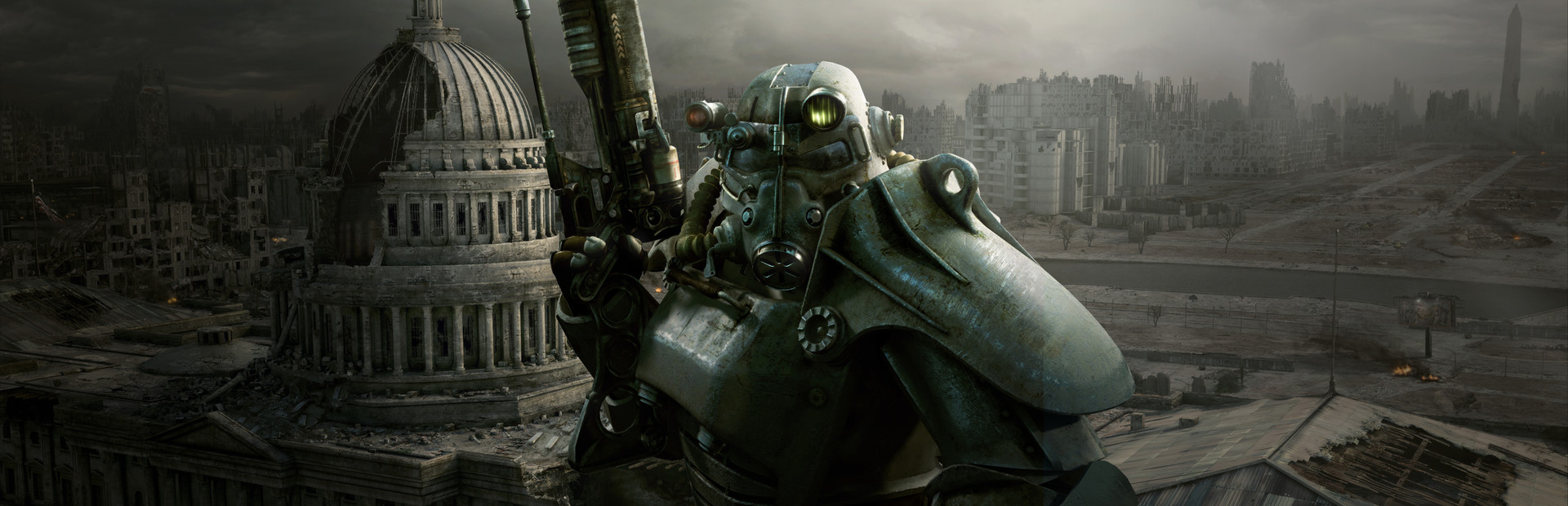
The only way you’re going to like Fallout 3 is for two reasons. 1. You loved Oblivion, and 2. You love the Fallout series. Otherwise, you’re probably going to hate the game and think it’s “boring.” I say this because the game relies a lot on you finding out what to do and where you should take your next steps. The game is 100% nonlinear and features a perfect balance of FPS action and RPG stat building. The game is more than just “Oblivion with guns,” and the reason people say this is because Bethesda uses the Oblivion engine for this game. Just like in Oblivion, you take quests from people and complete them as you wish. You can be good, bad, or neutral in the world. You can find mini-encounters or free-form quests that are separate from the main and side quests to unlock achievements. I don’t want to spend this whole review comparing this game to Oblivion since it is its own game.
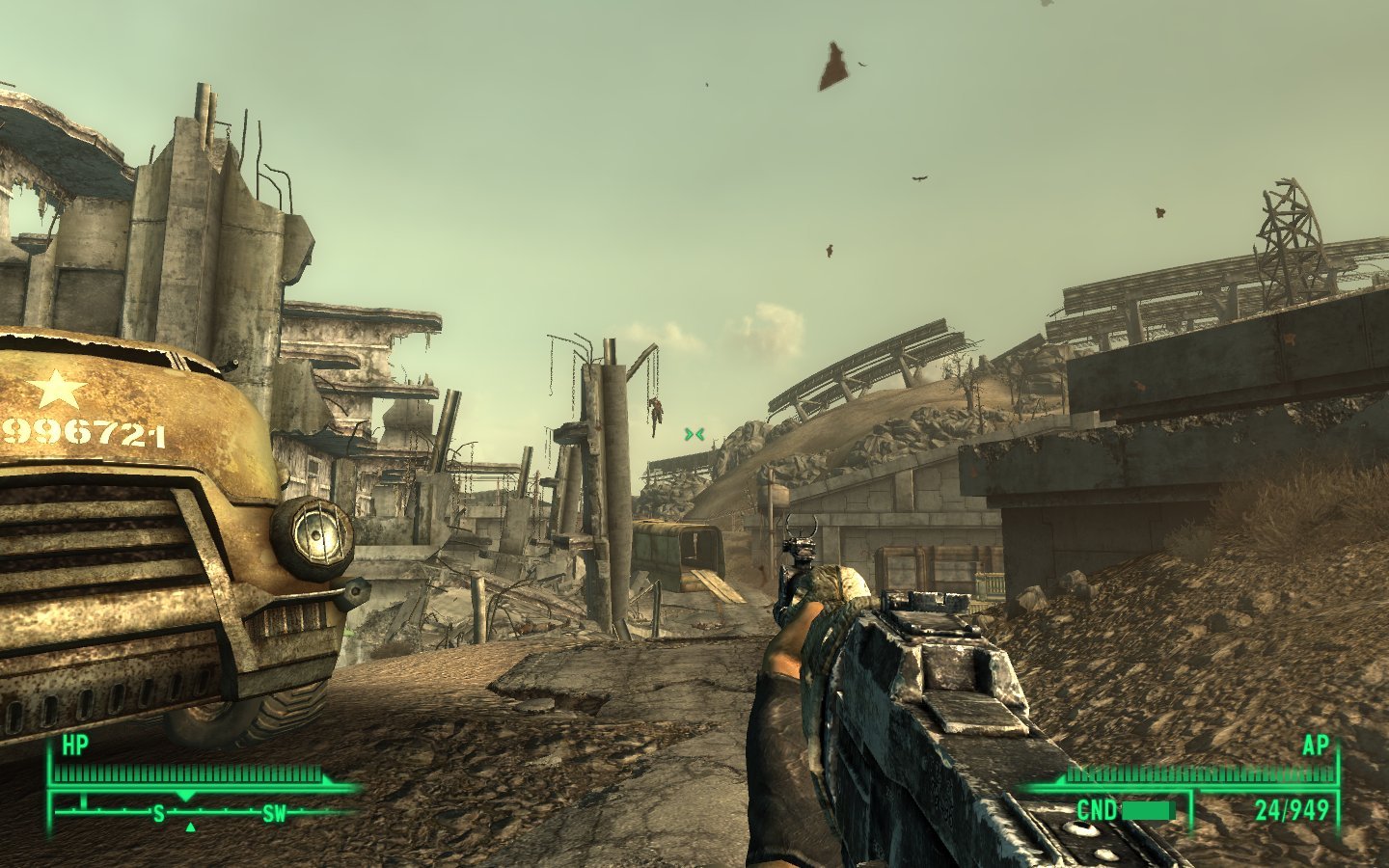
The first thing you’ll notice is how amazing the graphics are. The Oblivion engine has been refined, and everything looks amazing. Step out of Vault 101, and your eyes will adjust from the dark, and you’ll witness a beautiful yet desolate wasteland that leaves you wondering, “Now what?” Don’t be scared since the game does guide you a little bit, so you aren’t completely lost. Just wander around to find Megaton and just talk to people, and you’ll get quests eventually. Of course, you always know where to go for the main quests, and every quest has arrows on your map that point to where to go. You may see places on your map, but you can’t fast-travel there unless you actually walk around and discover them yourself. This forces players to explore the vast world of DC and really get to know the place. There are two sections to the game: the Wasteland, which takes up about 70% of the game, and DC, which is cluttered with metro stations, fallen buildings, and all the main landmarks like the White House, the Library of Congress, the Pentagon, etc.
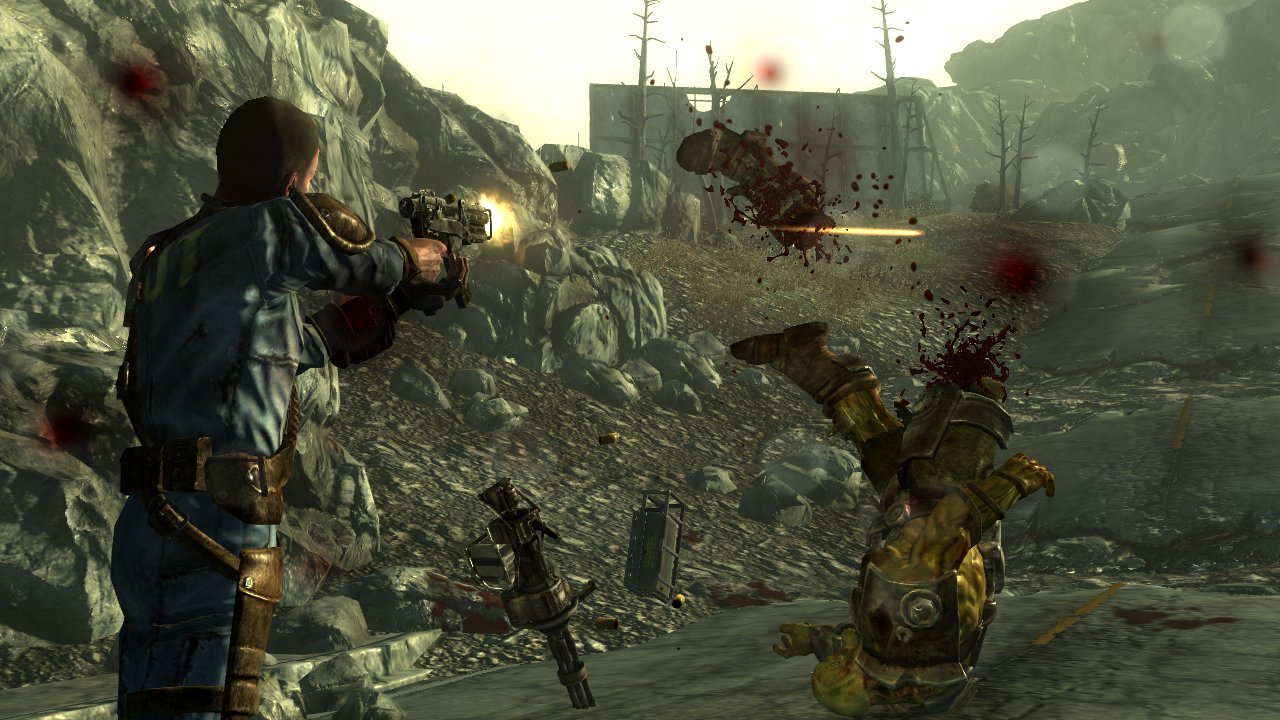
The only way to travel around in DC is through the metro tunnels, and I found this kind of annoying since it may be tough to figure out which tunnel goes where. I just really can’t express how amazing the game feels, and you really do feel alone and empty when you go through stores and buildings that are completely trashed. With the melancholy music, you sometimes get a bit depressed since it’s just so amazingly surreal. Thankfully, Bethesda injected a bit of dark humor to keep you from feeling this way, and one way is with VATS. The Vault-Tec Automated Targeting System is one of the main gameplay elements. Hit RB, and you’ll pause time and zoom in on your enemy, and there will be parts of his or her body you can hit. The percentage is your chance of hitting that target, your AP is your action points, and each weapon takes a certain amount of them every time you queue up attacks. If you do enough damage, you can cripple a limb and either make your enemy drop the weapon, lower their accuracy, or make them walk slower. Once you get to higher levels, a few shots and you can blow their heads off in a heaping gory mess, and it never ever gets boring. Sniping someone from 200 feet away, watching the camera follow the bullet, and having someone’s head fall off their neck is just so satisfying. I played for 54 hours and never got bored with it.
Of course, you can fight in real-time combat, but you don’t get the advantages of VATS like critical hit strikes, etc. The game has many weapons, from mini-nuke launchers to rocket launchers, 10mm pistols, combat shotguns, sledgehammers, hunting rifles—the list just goes on and on. You can also make your own weapons by finding schematics and collecting the items you need to build various weapons, like the Rock-It Launcher, which lets you shoot anything you find, and the Railway Rifle, which lets you shoot railroad spikes and impale limbs on walls. The game is huge, amazing, and awesome, and all of the combat is very satisfying, and there are endless ways to approach a situation. Don’t you like fighting? Use a Stealth Boy to sneak your way through places, plant live grenades in enemies’ pants, and watch them explode! Like fighting with your fists? Walk around with a power glove and bash your way through the wasteland. Now that combat is out of the way, let’s get to stats. Your menu is your Pip-Boy, which is attached to your arm, features an easy-to-navigate interface, and makes it really easy to find what you want. You can level up to level 20 (which is lame since you’ll get to level 20 way early in the game and be maxed out), and you have several options once you level up.
You can add points to yourself for things like your medicine, small guns, big guns, explosives, speech, barter, energy weapons, lockpicking, science, etc. Then you get to pick a perk (say that five times fast!) and these are another unique gameplay idea in Fallout 3. There are over 40 perks, but you can only pick up to 20 throughout the game, so choose wisely! Perks range from giving you more health, increasing your regular abilities, automatically giving you another level, making animals in the world your friends, revealing every location on your map, making you a law bringer, and if you bring every finger off a bad enemy to a special HQ, you get caps (currency in the game) and good karma. The stats are also affected by items such as Buffout, Jet, Mentats (post-apocalyptic drugs!), etc. These have temporary effects and will get you out of a tight situation. You can trade and repair your items with people around the city and become rich. You can also just shoot everyone in the cities and get bad karma, so as you can see, there are no restraints.
You can also pass time by “waiting,” which skips hours. You can heal your crippled limbs by sleeping or going to a doctor. Getting too irradiated? Take some Rad-Away! Getting addicted to a certain drug? Go to the doctor! You can eventually get your own place in Tenpenny Tower, and you can buy things like a workbench, doctor stations, etc. I just can’t express how HUGE this game is, from its vast size to being able to pick up anything you see to use as ammo, trade, or sell. You really do feel like you’re struggling to survive in a hostile wasteland, and that feeling never goes away, even after 100 hours of play. Of course, you’ll eventually conquer the wasteland and not be afraid of even the strongest enemies in the game.
Now there are issues with the game, but they’re minor. There is loading between each section of the game, such as going from the main world into buildings, etc. The level 20 cap is extremely annoying and makes you quit trying really hard to find places to fight in. The game is really similar to Oblivion, and people who played the F out of that game will feel too familiar here. That’s why this game didn’t get a 9.5 from me like Oblivion did because I’ve kind of “been there, done that” with this engine. While there are so many subtle things in the game, like having followers (including a dog!), the many types of weird enemies, and all the different people you can talk to, it’s insane. I could spend hours telling you about every location and person you meet. Just stop what you’re doing and go play Fallout 3, and you’ll spend dozens and dozens of hours surviving the vast wasteland! Go grab an Ice Cold Nuka-Cola and watch out for the hostile factions (Raiders, Talon Company Mercs, Slavers, etc.), and good luck out there!
Well, well, well, EA finally pulls itself together. After this and the upcoming Mirror’s Edge, I think EA finally got some brains that we’re full of new IP and original content. Dead Space is a superbly gruesome and atmospherically terrifying game that goes above and beyond the call of duty (no pun intended) when it comes to atmosphere, story, and gameplay ideas. The story is really unique, and it’s been ages since a great new original story has blossomed in the horror genre. You are Isaac Clarke, who is a repairman sent out to the Ishimura to find out why there are no communications on that ship. The ship is known as a “Planetcracker” and is carrying a mysterious relic called “The Marker,” and Isaac finds everyone aboard dead and the place deserted, except for extremely creepy monsters, a couple crazy doctors, and his girlfriend. Yeah, it’s a superb story, and it’ll keep you hooked throughout, but it won’t really unfold until the last three levels.
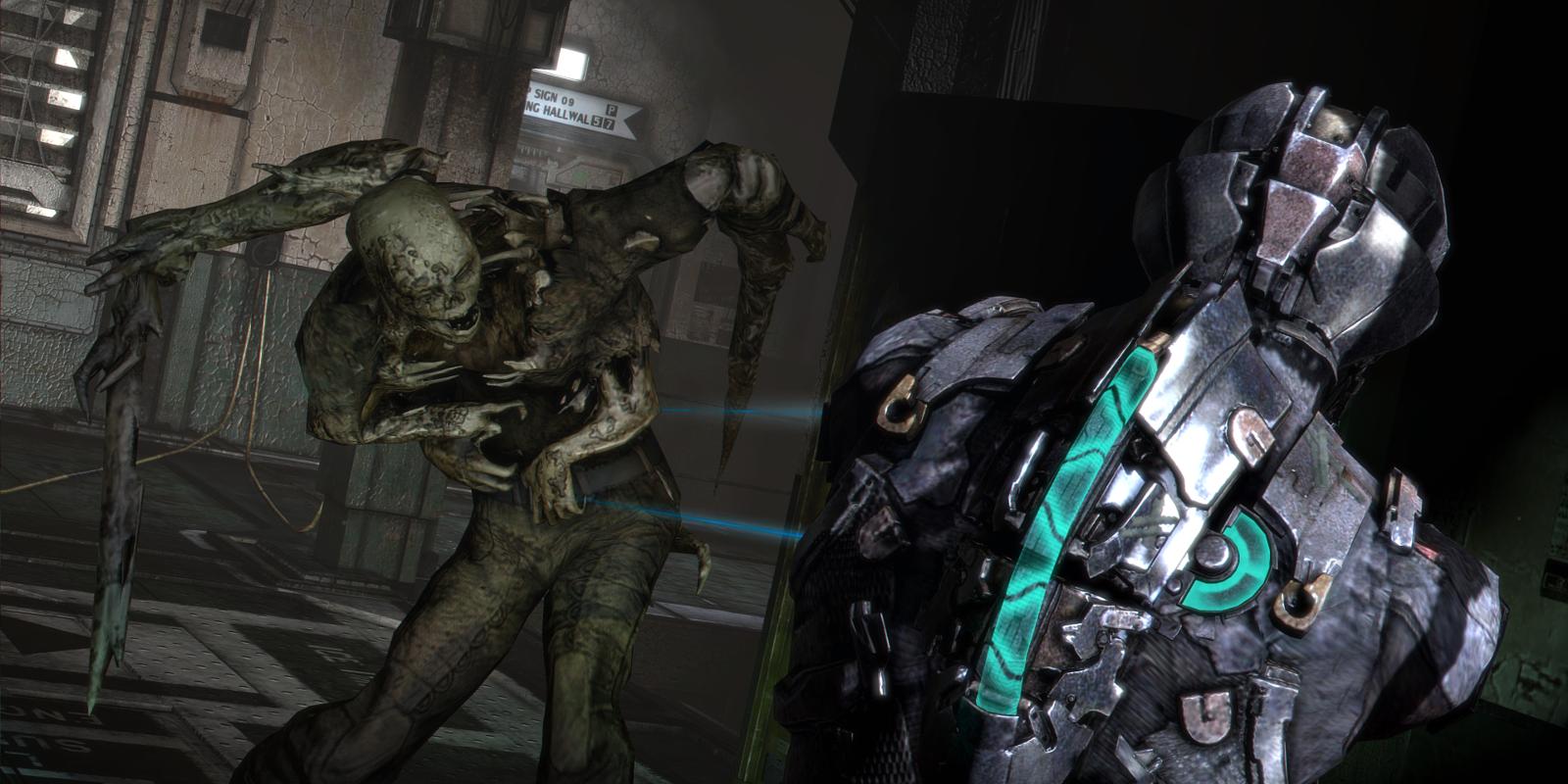
Let’s go right into gameplay. You can buy five different weapons (yeah, this game needs more weapons). They are the plasma cutter, ripper, flamethrower, force gun, contact beam, and line gun. They are all cool weapons, yet there is a twist: they’re tools, not guns. Isaac is a repairman, not a one-man-army mercenary or ex-military dude. This guy was not trained for combat, and he must learn very quickly how to defend himself. This makes the game feel even more creepy and makes you feel more helpless since you have to make do with what you have. What I loved is that everything is displayed visually, so there are no meters, bars, or gauges telling you your health and ammo. Everything is displayed to you. You have your health bar, which is a bar on your suit; your stasis bar is on your back (more on stasis later); your ammo is displayed holographically when you’re using your weapons; and so is your flashlight.
Everything in the game is easily accessible, and the controls are well mapped out. You can use melee combat by stomping on enemies or punching them. While you’ll not want to do this since it’s a bit clunky, it saves your butt in hairy situations. The way you kill enemies is by dismembering them to do extra damage. If you shoot their legs off, they’ll crawl to you. If you shoot their arms off, they’ll bite you to death. If you shoot one arm and one leg off, they’ll still crawl to you, decapitate them, and well, they’ll still try to kill you! If you get overwhelmed, just use your stasis and slow them; this is a must-do for some creatures like the Twitchers, who run ultra-fast. The creatures are very disturbing and are probably some of the sickest and most twisted things created in a game I’ve ever seen. These things are nasty, and you just feel the pain when you realize they were all once humans (most of them). There are also lots of cinematic sequences, like when a tentacle arm grabs your leg and it’s dragging you down a hall while you’re trying to shoot it off. There are HUMONGOUS boss fights, some turret gun sections, etc.
You’ll never get bored with the game since the scores vary so much. You’ll walk down a hall and a guy will be petting his dismembered leg and then fall over dead; you’ll hear a nurse laugh hysterically and blow her brains out; people will be killed behind bulletproof glass, etc. The game has a very disturbing atmosphere, and you really do get scared with all of the amazing ambient sound effects that will keep you on the edge and make you jump constantly. Dead Space does everything differently from other horror games since it’s all so surreal because of the way it’s done. You really do feel abandoned on a ship that once bustled with life. The graphics are also absolutely amazing; these are some of the best graphics seen so far, and they are breathtaking. There’s not much I can say except see it for yourself; you’ll be blown away!
There are segments that have zero gravity and vacuums. Zero-gravity sections have you jumping around the room, solving puzzles, and shooting things. These are very interesting, and they change the pace a lot. When you enter a vacuum, you are on an air timer, and if you don’t have any spare air, you’re dead! You can upgrade everything via workbenches by finding or buying power nodes. These work like “trees,” where you have to fill a path to that upgrade with nodes. Each weapon has different upgrade specs, and you won’t be able to upgrade them all in one play-through. In fact, it’ll take about two playthroughs to get all the achievements. There is plenty to do in the game, and the achievements are not impossible to get (like in FEAR!!! or Burnout Revenge!!!), so don’t panic.
All I have left to say is that Dead Space is absolutely amazing, and I’d give it a higher score if there were more enemy types, more weapons, and just a bit more variety. There’s enough to keep you interested through a couple of playthroughs, and I hope there will be a sequel (wait, it’s EA, of course there will be!) (Until we hate it.) There are six Dead Space comics available that you can pick up for about $15 each. I HIGHLY suggest reading these since they fill you in about a few weeks before the game takes place. They have the same atmosphere and storytelling as the game, and they are a really good read. Dead Space is one of the best horror-action games made, and this will be a piece of gaming history. I also look forward to the next few sequels.
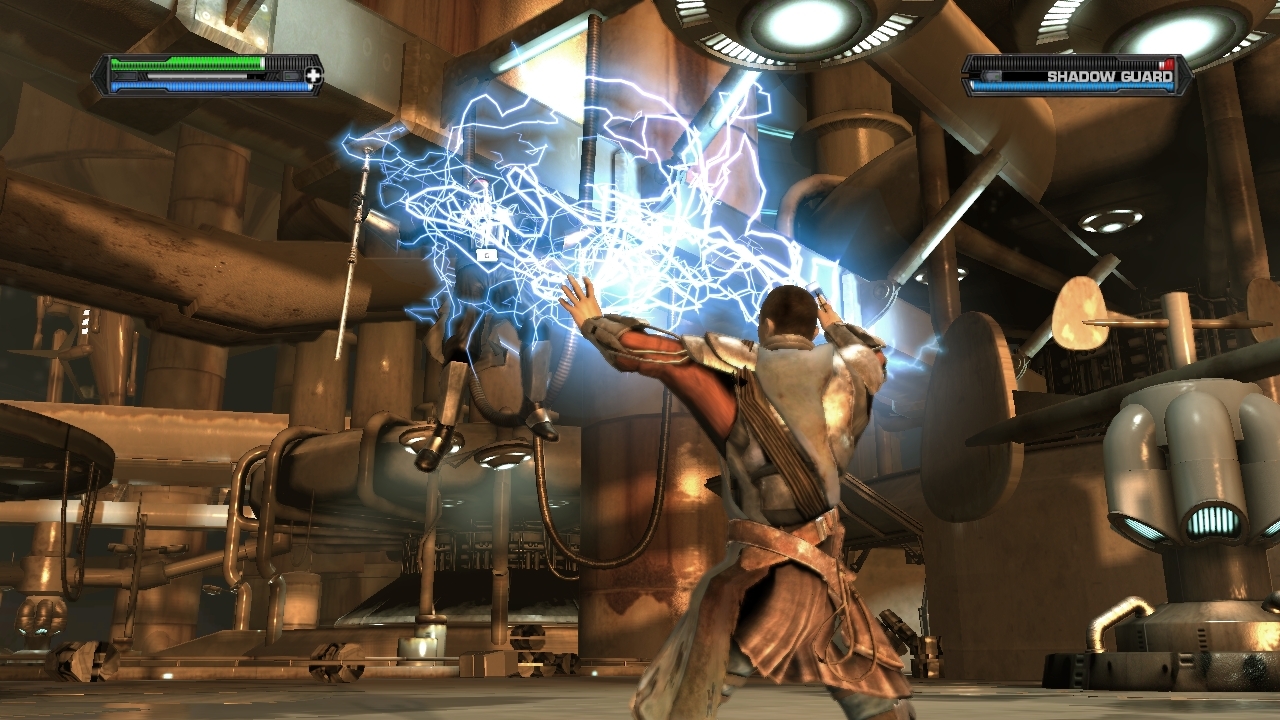
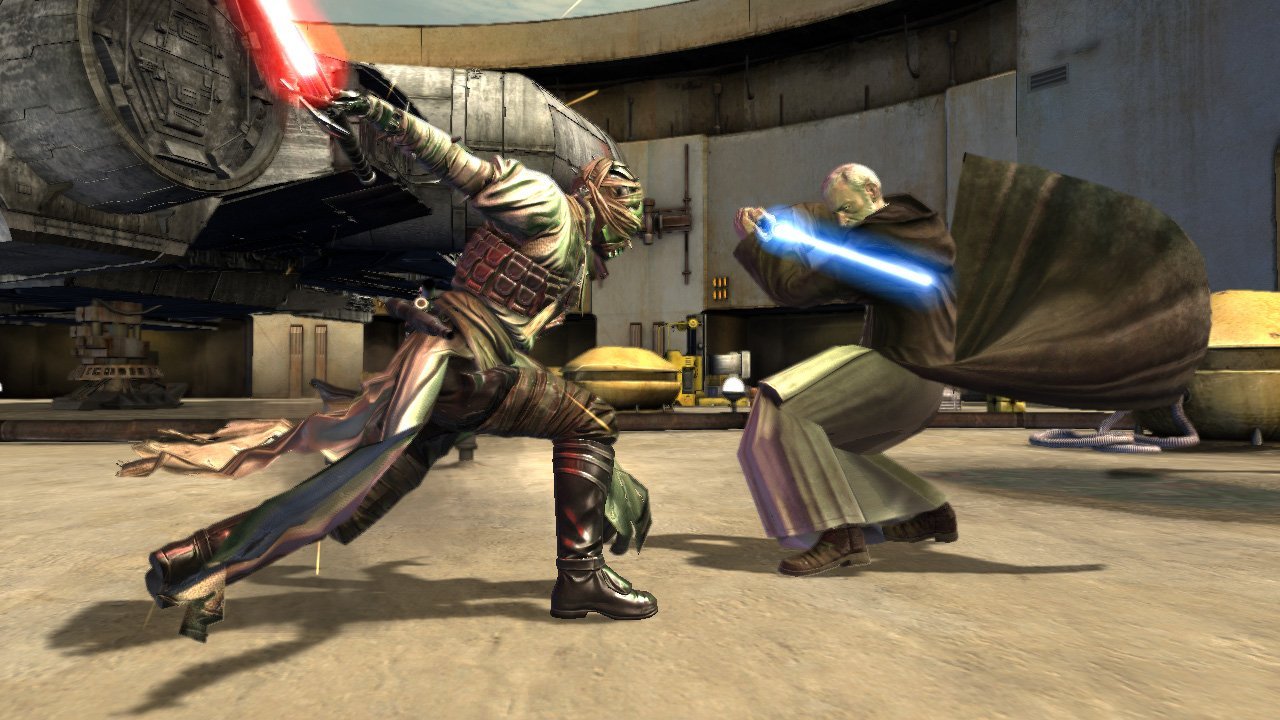
I was really excited about this whole game, and I’m surprised LucasArts lied and made a lot of things up. First, I have to mention that you can’t choose which side you go on until the final boss fight. Without spoiling anything, the whole game is based on you fighting with the dark side as Vader’s apprentice to bring the Emperor, the Sith Lord, and the Dark Sidius down so Vader can take his place. So, Unleashed takes place between episodes 3 and 4 (ok, if you can’t read the original 3 as 3, 4, and 5), and you try to bring about the Rebel Alliance to take the Empire down. While the story flip-flops a whole lot and doesn’t get interesting until the very end, it keeps things interesting, and there are a few new memorable characters that help make it interesting.
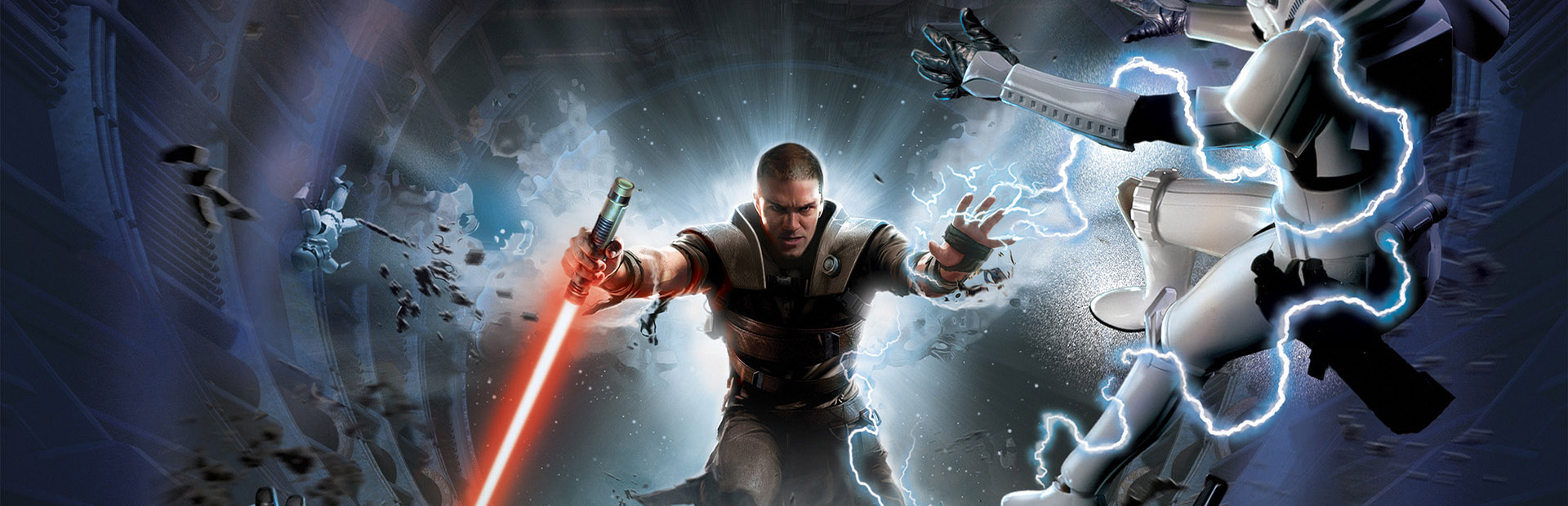
The whole point of the game is to make you feel ultra-powerful, and it mainly focuses on force powers. The controls take a bit of getting used to, but you basically learn force powers over time and can upgrade your lightsaber and your powers by using force powers. You can earn yellow (combo spheres), red (force spheres), and blue (power spheres). Each section has abilities that cost sphere points and can increase your max health, max force energy, give you new combos, etc. I found only a few of the combos really useful since the game is full of cheap fighting and death. You have to use your most powerful stuff on your weakest enemies, thanks to your falling down and not being able to recover. You’ll flop around like a rag doll while 20 enemies are wailing on you and you can’t get up. You can only recover in the air by pressing A really quick, so this really kills things—a hell of a lot too. You wind up dying and being overwhelmed because you get knocked down and can’t get up, so you die almost instantly, even in the easiest setting.
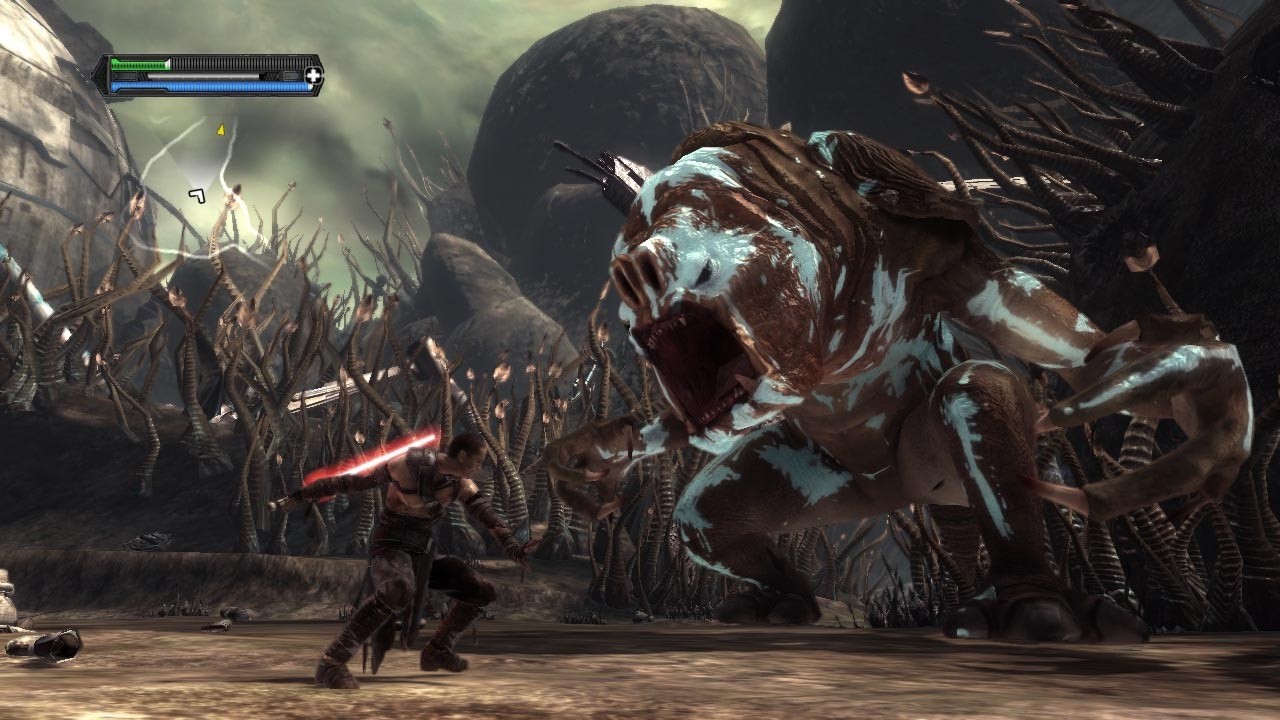
The game throws way too many people at you, so here’s a scenario. You have a bunch of Stormtroopers, 2 AT-ATs, 4 huge black Imperial dudes, 5 snipers, and 3 guys with turrets all wailing on you. How the hell can you beat them all without dying? Well, use your force powers like a lightning shield, saber toss, force push, or force throw. When you fight bigger enemies like Rancors or AT-ATs, you get a button-pressing sequence like in God of War, and it’s not as fun as you think. There’s no variation like stick turns, button-mashing, etc. Most of it is just sitting and watching, so it’s really broken.
I also have to mention that the game is absolutely gorgeous, and this is probably the only superb thing about the game. Everything is huge, and you really feel like you are almost on these planets. Of course, a Star Wars game wouldn’t be complete without finding stuff. If you get Jedi Holocrons, you can get new lightsaber crystals to change the color of your blade or power crystals to change the properties of your saber. Good luck finding them all since they are so stupidly hidden that you’ll only find half on every level, and there’s really no incentive to replay the game since it’s so darn cheap and retarded. If the game wasn’t so cheap, you could possibly beat the game hard, but even on medium, you almost can’t beat the game. I have a strong feeling that this game wasn’t playtested much, or these flaws wouldn’t exist.
Another major flaw is when you’re force-throwing. The game uses both sticks to do this, but it lacks depth perception, and it’s hard to aim objects properly. Another stupid flaw is the retarded camera; even though you can control it, the camera likes flopping around constantly, and it makes you feel sick after a while. PLEASE!!!! If you’re a Star Wars buff, then there are a lot of files you can unlock and read, including an art gallery, unlockable costumes, a cheat code section, etc. I guess only the rest of the hardcore players will go back and play this again, but even I (a HUGE Star Wars fan) won’t go play this more than once. So, if you can bypass the absurdly cheap deaths with no recovery after falling, the repetitive fighting, and the lukewarm plot, then, by all means, go for it.
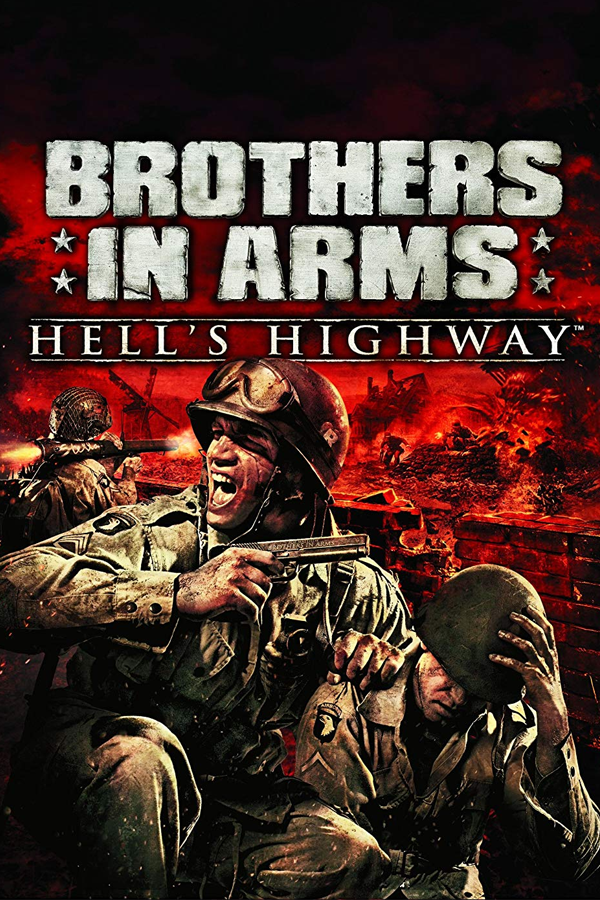
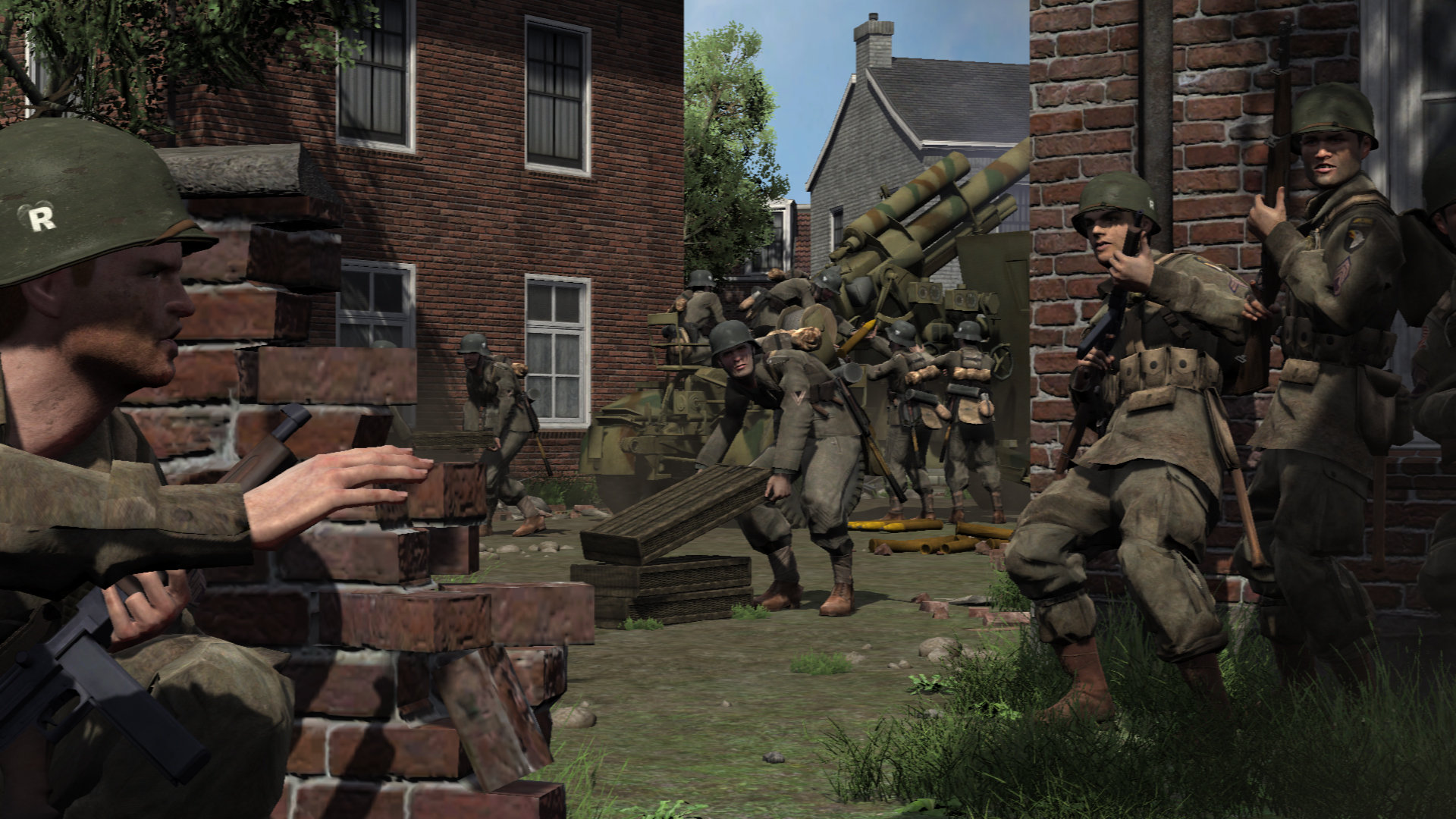
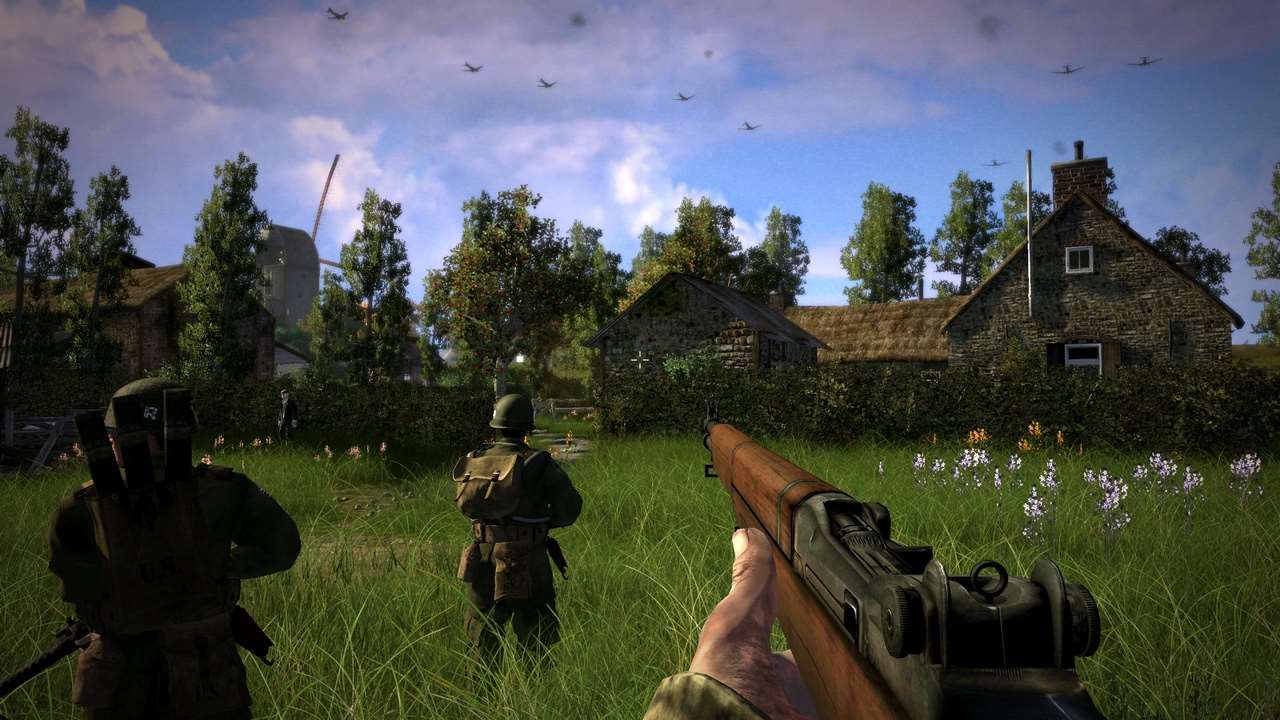
I never really liked BiA back when they first came out because of 1. I didn’t have a PC that could run it or an Xbox. 2. I preferred the run-and-gun aspect, like in Medal of Honor and Call of Duty; and 3. I was too impatient back then for the tactical gameplay. I have changed since then and am not an impatient little teenager with raging testosterone. I picked up Hell’s Highway expecting a bit of a mix, and thankfully there was. BiA has been known for its tactical squad command gameplay with great AI and a great non-fictional story around the fictional WWII setting, and that’s here, but it’s even better.
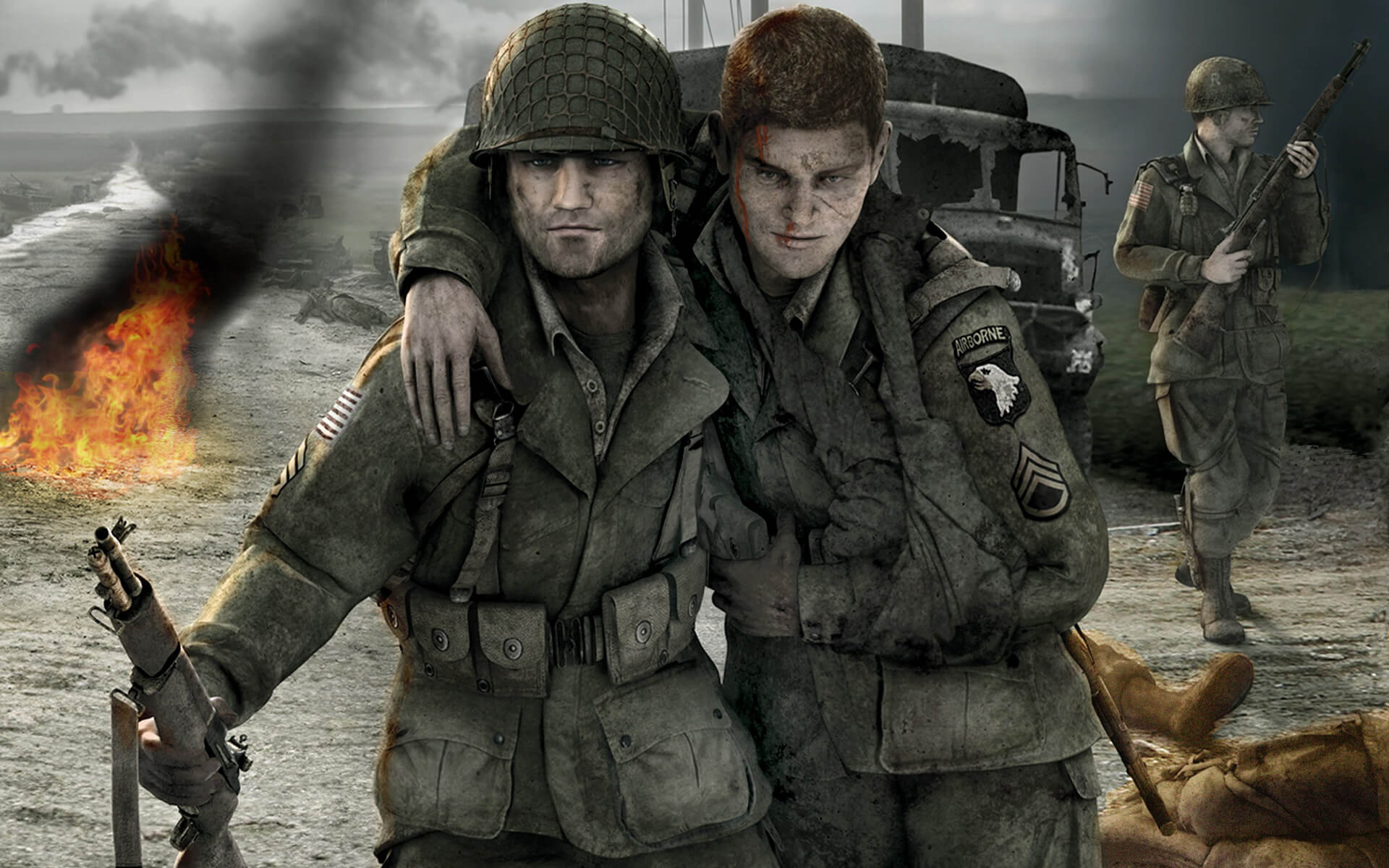
The story goes a little something like this: You are Baker, who goes through an emotional roller coaster ride with his squad mates, and you really feel what the soldiers are feeling—and even tear-jerking at the end. The only problem is that you have to have played previous BiA games to fully understand the story from the beginning. The story does one of those looping plot twists where it starts out at the end and goes three days back, then goes forward after that. The plot holes jerk when they are filled, and you really get pulled into the story. As far as I know, this is the only WWII story like this. I guess you can say this is my favorite WWII game story-wise, and it makes me want to pick up the other two original Xbox games.
What really counts, though, is the gameplay in one of these types of games, right? Well, the impatient should steer clear because you CAN NOT, I repeat, CAN NOT run out and go Rambo and their Kraut @$$es. You WILL be shot down almost instantly, and this is not good if you want to restart constantly (and experience the almost too long time). You have to position your squadmates around the various covers on the battlefield and slowly have them pin the enemies down so you can go around and flank them with…whatever you want. No, you can’t melee in the game, so that’s out. Sorry, only Call of Duty3 lets you do that. Each batch of enemies has a red circle above them, and when it’s red, they can blow your beehive apart if you run out, but if you command your squadmates to suppress them with fire, it will turn gray, and you can run out…for a few seconds. The game gives you plenty of ammo, so don’t worry about wasting shots. I mainly used single-shot rifles since headshots were mostly needed due to enemies taking cover. That’s what also makes the AI so great, so if, for instance, you run up to the cover and the enemy is behind, they’ll run away and hide somewhere else. Throw a grenade, and they’ll boogie on out of there, even if they’re on a Flak 88!
Now you can command four types of squads: Bazooka, Base Fire, Assault, and MG. Go figure out what those all do, but they are all essential to keeping you alive. Another thing that makes you REALLY think is that if you send your squad out in open fire, they’ll die too (but only until the next cutscene because they are all main characters), so you have to have one squad pin the enemy down while that squad runs, so it’s a leapfrog type thing. This is really great and keeps things from being boring since you have to think—psh, yeah, who woulda thought that a WWII shooter would make you think? Of course, you have grenades, but you get a grenade ring, and it’s basically an auto-lock thing, so just hold RB, and the grenade will fly over to the enemy on its own.
Speaking of all of that, something new here is the “action cam” thing. It’s kind of cool since BiA is the only game that seems to realize there was actually blood and guts in war. They don’t try to purty it up for kids. Sometimes when you make a cool headshot, you get a cut-a-way cam of the guy’s head getting all bloodied up and his helmet falling off. The same goes for explosions, so you’ll see guts go everywhere (get a clue, EA and Activision!). Stop being sissies!
If you’ve been wondering about the audio/visual experience this whole time, it’s because it’s good, or I would have said something! The game uses the UT3 engine (you know the same one in BioShock and Gears of War?). It’s nice and all, yet it still seems like the game came out last year. Maybe that’s because the game was delayed for almost a year (yet I have no idea why). The game has great lighting effects, explosions, fire, concrete, and rebar that blocks your view sometimes in the 3rd person cover. It’s good but not amazing. The voice acting is really great, and the whole game feels like WWII (you probably wouldn’t give a damn at this point, though).
If you want to know about multiplayer, don’t come here, because I never bothered playing it since it was a rental. I’m sure it’s great and has all the multiplayer goodness that most WWII shooters have. I highly recommend this game since it has a pretty long campaign (takes about 8 hours to beat) and really concentrates on Operation Market Garden instead of the whole damn war!!! So, you really get a good idea of what that battle felt like. Don’t spend $60 on this though, just rent it or wait for a price drop. Please get Fallout 3!!!
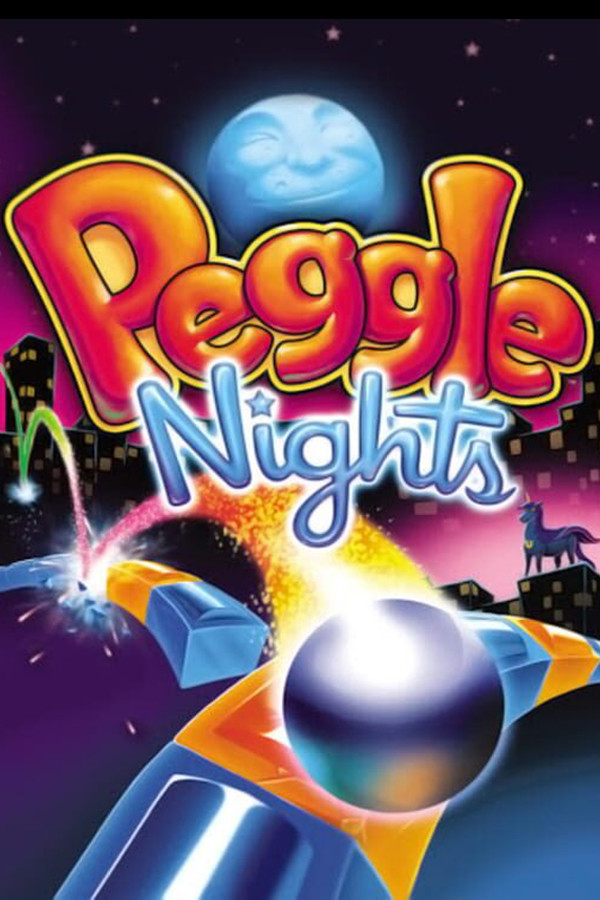
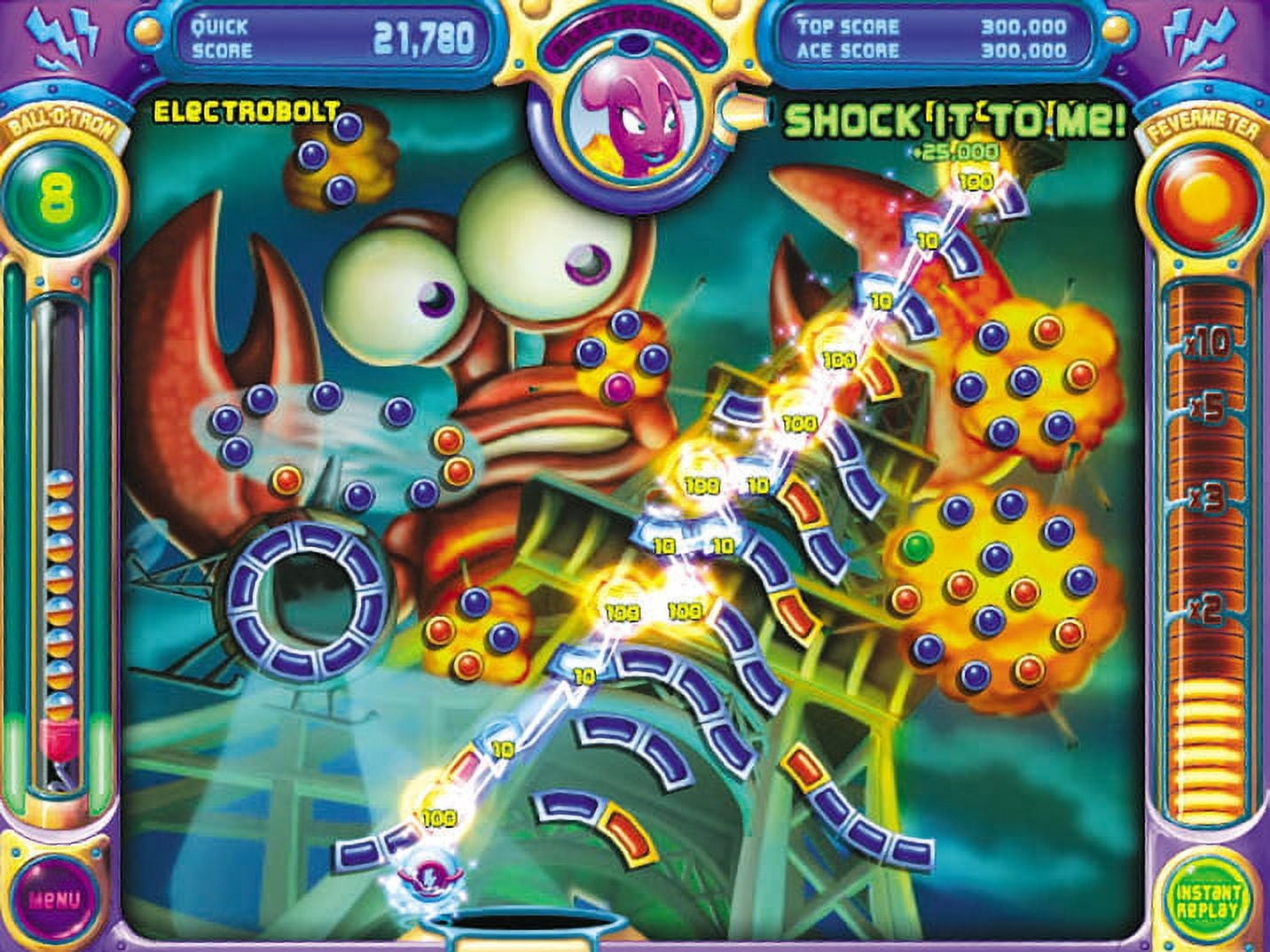
I’ve never played a Peggle game before, but I heard a lot about the new Peggle Nights, so I took a peek, and I liked what I saw. Peggle is basically what the name says: You shoot balls from the top of your screen and skillfully bounce them off different colored pegs to get the highest score. Now you’re probably asking, Why is this game so different from similar games? Maybe because this game has charm and a lot more than just a basic mechanic. The game has “stories,” or characters, wrapped around certain abilities that each one has when you hit a green peg. Some have a guideline, some will spawn multiple balls, some make the ball catch wider (more on that later), and a lot of other different helpful abilities make each set of levels play differently. The pegs are sorted kind of like a Lite Brite (remember those? No? Ok, Google it right now), where the pegs are stuck in the background and some even move. This makes each level different and more challenging. At the bottom is a “ball catch” (basically a basket) that moves back and forth, and if your ball drops in there, you get a free ball. Sometimes you may bounce it off the rim or just shoot it straight in there, and you get extra points.
You can earn extra points by hitting purple pegs and orange pegs from long-distance bounces (hit all orange pegs to clear the level). If you get over 25,000 points in one shot, you get a free ball. Sometimes if you don’t hit any pegs and you just shoot straight to the bottom, a coin will pop up, and you may get a free ball if you’re lucky! At the end of the round, four holes open up at the bottom for up to 50,000 points if you get it in the middle for extra points. You get awarded 10,000 points for every ball you have left.
The game gets really addictive thanks to its forgiving difficulty. You can pretty much clear most levels in less than a few tries, and the difficulty is never all that punishing. This helps make the game more fun and addictive to play. You’ll spend a lot of your time building your skill by bouncing shots around the pegs, trying to hit as many orange pegs as you can in one shot to get a huge score. At the end of every round, you get an all-time score count, and this is put up on the worldwide leaderboards. You’re probably wondering how the game is on the audio/visual front, and I can report that it’s very nice. The game has bright, colorful graphics with well-animated effects and perfect ball physics, and everything just feels right. At the top, where your shooter is, your character for that stage is up there with eyes that follow your mouse, and they make faces depending on your performance. Each level has different moving backgrounds, and this makes things never seem boring.
The game has great music, lots of different pinball sounds, and some pretty crazy fireworks at the end of each round! When you’re all done with this, you can play a challenge mode that has certain objectives you need to meet to earn up to 60 trophies. So there is plenty to do here, and for the $20 you pay, it’s one of the best arcade PC games you can buy. Load up Steam and enjoy Peggle Nights (but you won’t enjoy Steam).
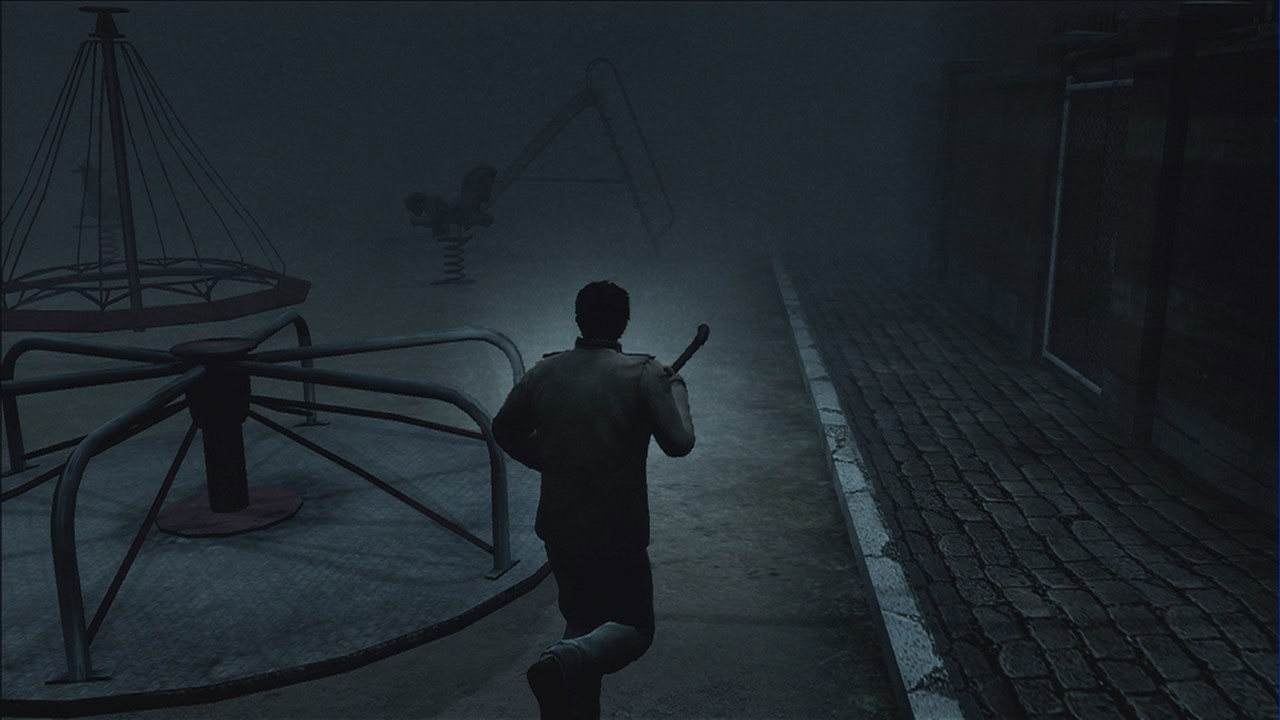
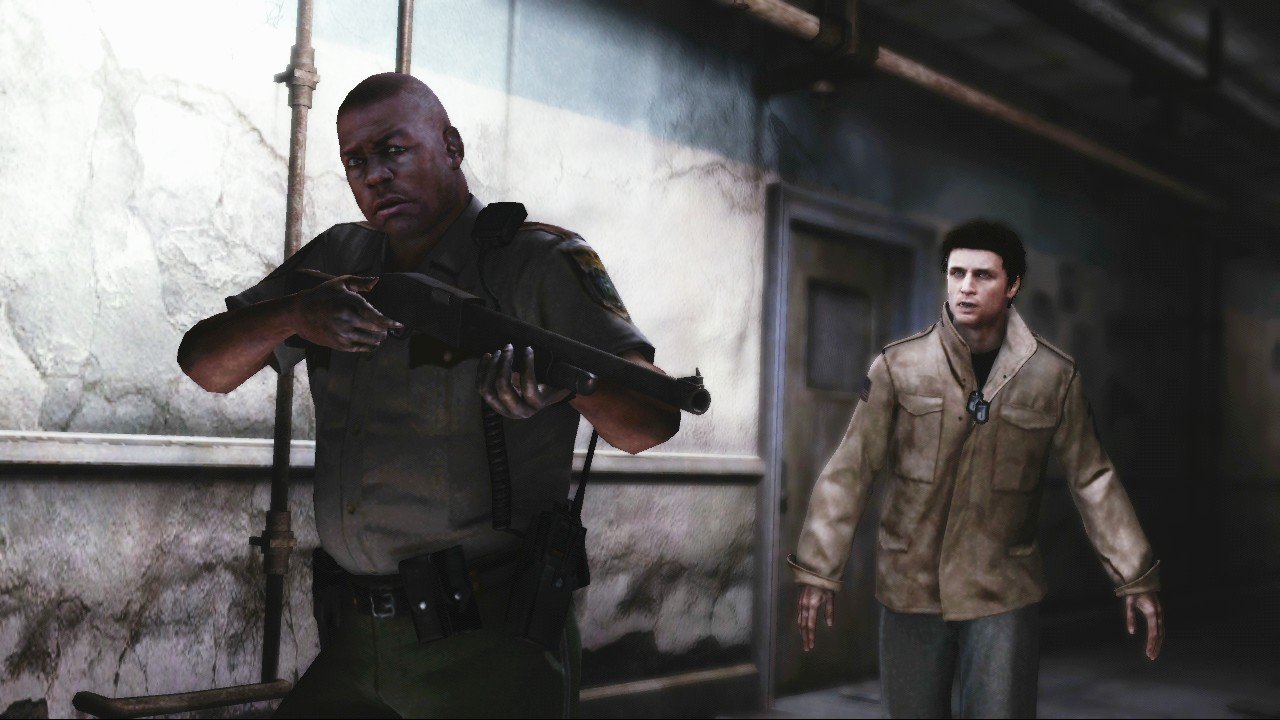
Silent Hill was one of the first survival horror series that was 3D, along with Resident Evil, Clock Tower, Alone in the Dark, and Parasite Eve. While Resident Evil and Silent Hill became more successful, Silent Hill still remains the most frightening survival horror series ever made. Homecoming is no exception, with lots of fog and lighting effects, unbelievably freaky creatures, a great story with lots of plot twists, and a new and improved combat system. I have to first mention that there are so many little things in this game for hardcore SH fans, such as homages to the movie (which most of this game is based on), such as the “Otherworld peeling” effect, barbed wire in the church, ash or snow, the Grand Hotel, and the nurses. There are references everywhere that mention famous horror authors, horror movies, etc. Most people may never find these, but they are there, such as the streets being the last names of famous horror authors.
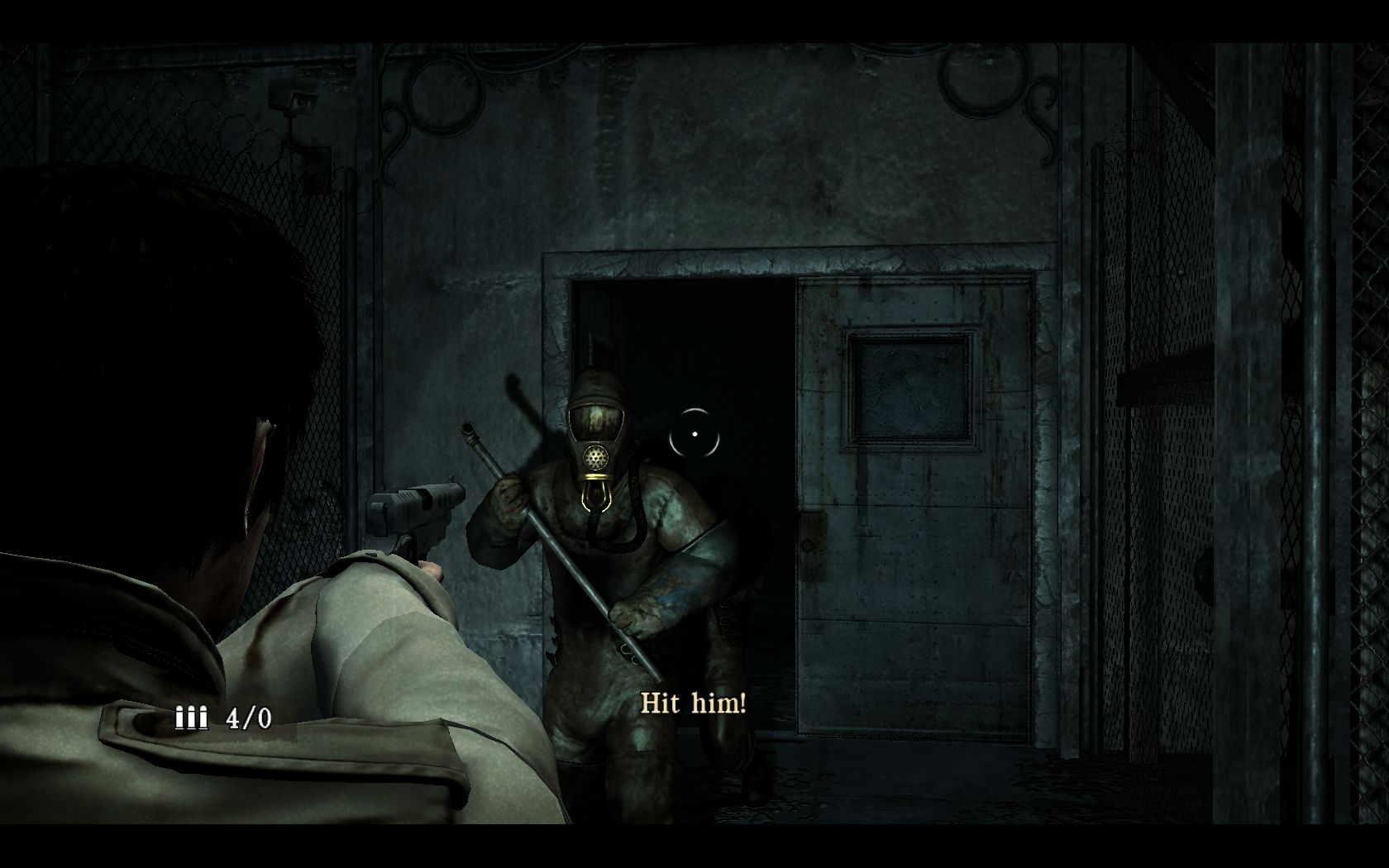
This is really great, and thankfully Konami kept all of this in mind for fans, but what if you’ve never played an SH game before? Well, then you came in at a great time. Most people’s concern is if the game has the same creepy atmosphere, and it does. There are fewer “out of the closet” scares, however, because the game concentrates more on the sheer atmosphere. Everything is dark and creepy, and we have the same spooky, unnerving sound effects and music that we’ve grown to love. The combat system is what I was mainly concerned about. Gone are the fixed camera angles and tank controls. The game controls very well in a third-person-style action game. You lock on to enemies and use light and heavy attack combos to kill them. This may be very repetitive and simple, but it’s better than being broken. Shooting is easier as well because you know how to control the gun in a Resident Evil 4 way.
Also introduced are button-pressing sequences, and this helps the intensity because if you don’t do this properly, you could die, and the game is totally up to you. Also new is a way to control the outcome of the story. Certain moments in the game require you to make a choice, and this will decide your ending (there are five altogether). There are a lot of weapons to pick up, such as knives, pipes, axes, shotguns, pistols, rifles, etc. There is nothing we haven’t seen in an SH game before, but you have to decide which weapon is best for which enemy.
If you want to go on the story side, it’s good, and it’s here. You are a man named Alex Shepard who comes home from being in a war, and everyone in Sheperd’s Glen is missing (just outside Silent Hill), and his brother Josh is missing. You must find the deep secrets of Silent Hill and why your brother went missing. There are tons of plot twists, and it’s probably one of the better, less confusing stories. The puzzles in Silent Hill are still as weird and confusing as ever. I had to get a FAQ for almost every single one because they require you to write down stuff and rattle off riddles in your head, and, well, they’re still confusing. The game is a bit short, however, and you can beat the game in about 8–10 hours, depending on how you play.
There is plenty of replay value thanks to the multiple endings, different costumes, and new weapons you can find after you beat the game. There are also collectibles to find, such as drawings, photos, and serums, to unlock achievements. The game is just very well put together, but you can tell the developers didn’t do anything risky with the formula. It’s pretty safe and basic, but you’ll want to visit Silent Hill again thanks to the excellent story, voice acting, graphics, atmosphere, new enemies, and button-pressing sequences, not to mention the humongous, disgusting boss fights! If you love survival horror, this is probably the best one of the year so far (Alone in the Dark was almost a disaster).
I remember hearing so much about this game back in 2005. I wanted to play it really badly, but thanks to the poor release time of the year (the Christmas holidays of ’05), Psychonauts was lost in the hype of all the fall and winter releases. I played the demo for PS2 and quickly realized I had to play either the Xbox or PC version to get a good experience because of the dumbed-down visuals, poor frame rate, and just overall bad performance on the PS2. So, now that Psychonauts has been an Xbox Original on the 360 for a while, I decided to spend the $15, and it was the best $15 I’ve spent in a long time. To start with, the game’s strongest points are its visuals, story, and voice acting. The platforming is really fun and has unique ways of doing so, but there are extremely frustrating moments in the game that just make you scream!
You play as Raz, who is a psychologist in a training camp for children trying to become psychonauts. An evil dentist known as Dr. Loboto is stealing the children’s brains, and another evil accomplice is behind it all, and you need to find that out. When you start the game, you’ll notice how beautiful the world is (for a 3-year-old). Everything is really bright, and the shapes have a Nightmare Before Christmas type of style. Everything is shiny and twisty, and it looks like an AAA cartoon. The voice acting is top-notch, and Raz is voiced by none other than Richard Levitz, who plays the voice of Invader ZIM. The characters are very unique, and you quickly learn to love them all. Accompanying the voice acting is clever dialog. It’s funny, witty, and keeps you drawn in.
When you explore the outside world, you can hunt for PSI cards, arrowheads, and challenge markers. A challenge marker ranks you up so you can power up your psychic abilities (more on that later). If you collect nine Psi cards and buy a Psi Core from the store, you can put them all together to create a challenging marker. Arrowheads are used as currency in the game, but you need a Dowsing Rod to find the buried rare ones. The problem with this is that there never seem to be enough arrowheads in the game to buy everything. Small arrowheads are worth 1, and the rare ones are worth 75, yet there just doesn’t seem to be enough. Luckily, all your upgrades are acquired by ranking up, so the only thing the store holds in his life are a few odds and ends (that are kind of useless).
Throughout the game, you’ll go inside people’s minds and try to solve their mental issues. This is what’s so unique about this game, and most of the puzzles are more about how you will get from point A to point B using your powers instead of pulling levers and switches. There are nine powers, from telekinesis to pyrokinesis to Levitation, so a shield. All these powers are used very well, and not one world is the same. Speaking of that, the worlds are so unique that the graphics change at each level. One world has you in a war zone, one level looks like you’re in a painting, and another level has you playing Waterloo against Napoleon!. The constant change in scenery is a huge plus and gets you excited for what’s coming next.
After about halfway through the game, you’ll explore the main world hardly at all, so when you do need to change your markers or just get some more arrowheads, there’s a warp system that takes you to each area. Once you finish a level and you want to go back and get some figments (these are floating neon 2D shapes that help you rank up: 100 and you rank up), cobwebs (these can be turned in for Psi Cards, but you need the Cobweb Duster to get these), you can also find tags for emotional baggage (see what I mean? This game has very neat ideas: They are crying baggage of emotion, and if you find the tag, you set them free. Find vaults (these have slideshows of why the person usually went mental).
There is a lot of collecting in the game, but it keeps you busy and has something to do for completionists. What I liked so much is that completing the game 100% is not that difficult, and you rarely need to resort to an FAQ. You always see everything; it’s just a matter of what psychic power will get you there. The game has lots of action with great boss battles, but these can be a bit too easy (just a few hits and they die). Overall, it’s a tragedy that Psychonauts‘ fate turned out the way it did, and I hope there is a sequel soon! If it weren’t for the extremely frustrating platforming sections, I would give this a 9.5, but that can really make things drag. The game is pretty long, with about 12 hours of gameplay and even more if you’re a completionist.
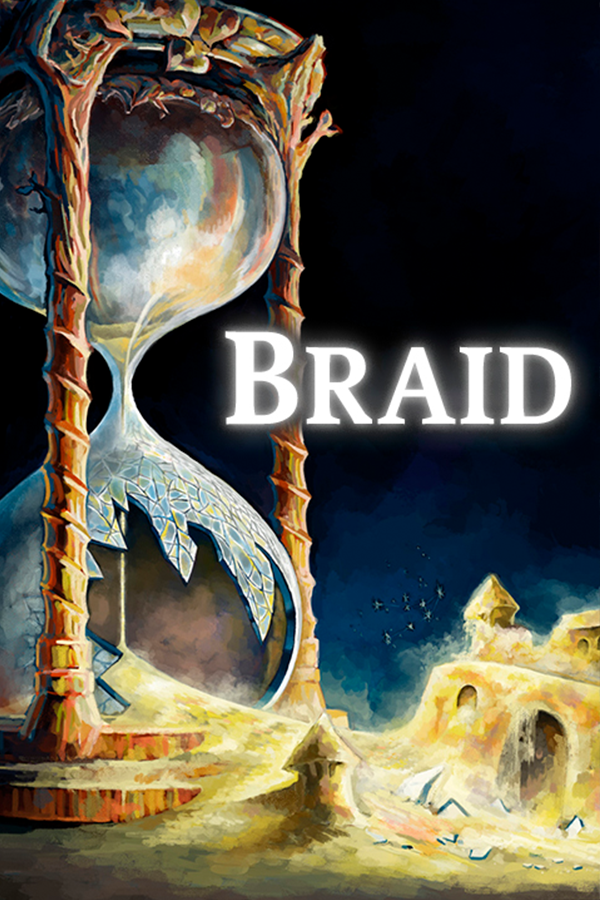
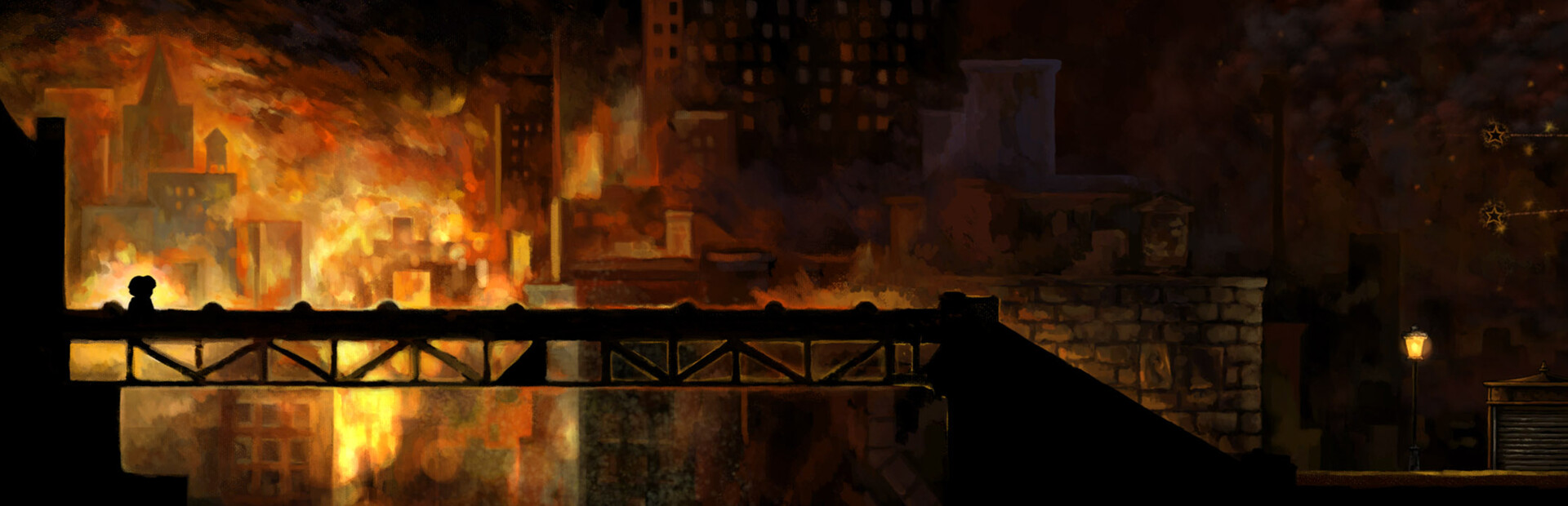
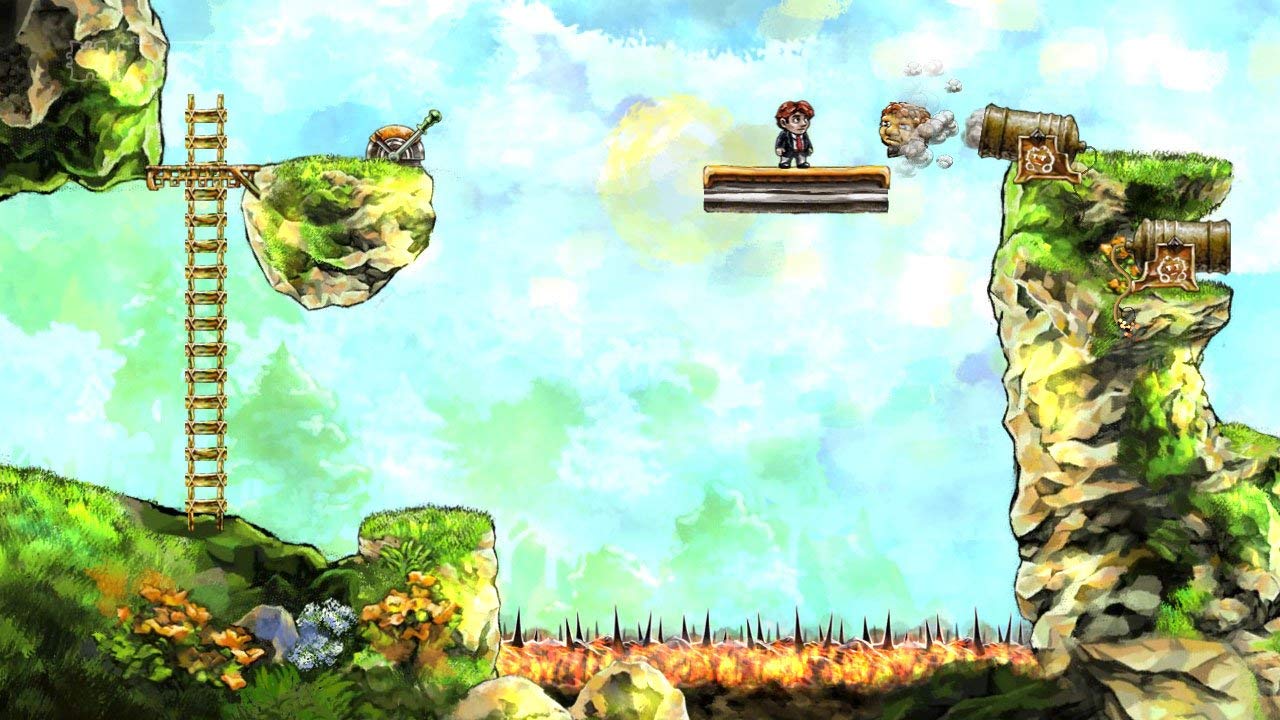
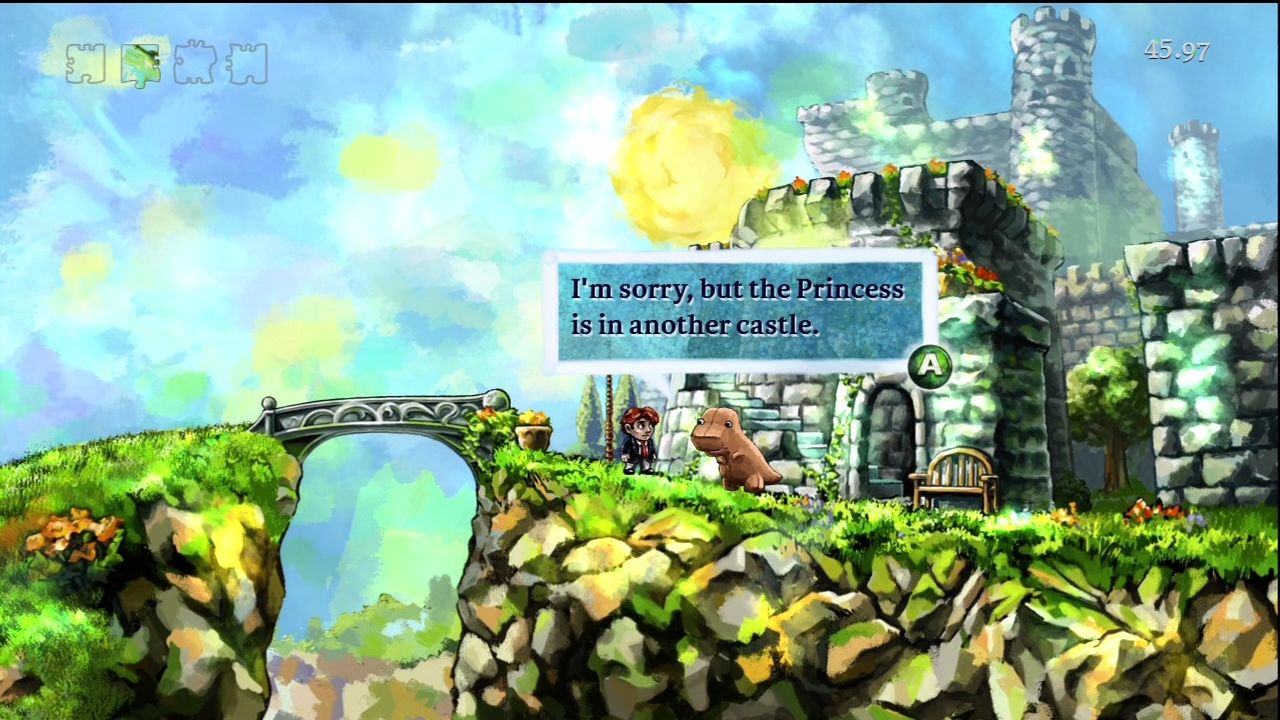
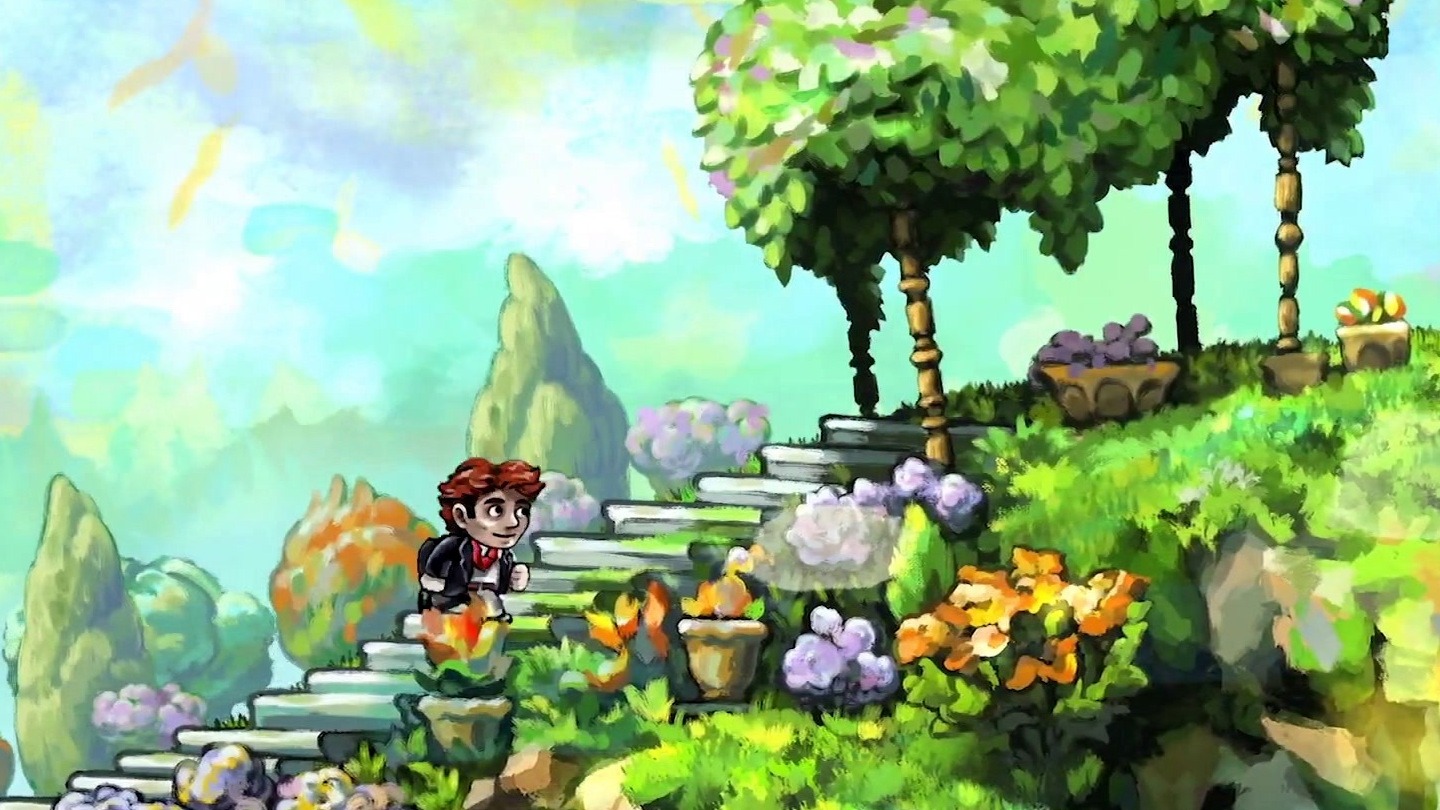
Braid is one of those WTF games where you think you know what’s going to happen, then it turns around and slaps you in the face. The story of Braid is very interesting, but it doesn’t really matter until the last level. You start the game off on world 2, then you end with world 1, and that’s the piece of the story that makes your brain go funny. This is what I love about Braid; it has a wonderful story along with beautiful pastel or watercolor backgrounds. The music is very moody and inspiring, and I just love the whole package. The main attraction to Braid is the whole-time mechanic. Each world uses time in a different way to solve unique (yet not hair-tearing) puzzles. Instead of dying and starting all over, you can rewind time—all the way until you enter the level if you have to. This is a very hard mechanic to explain, but you have to use the enemies as jumping springs. You have to jump on them just right to get on that higher ledge. Sometimes you have to alter their paths using time to get to where you need to. When some platforms and enemies are green, they are unaffected by time.
You can rewind time to get a moving platform underneath them, but they don’t go back in time; they just keep walking. Sometimes everything is moving backward in the level, and you have to alter the way the enemies are moving. If you walk forward, everything moves backward. One world has you using a ring that slows down time, but only around the bubble it creates. This lets you slow down cannon fire, slow down enemies so you can use them in the right manner, etc. One world even has you using your own shadow to help you. When you walk to where you need to be but you have to throw a switch that moves a platform on the other side of the level, you just rewind time back on the platform, and your shadow retraces your steps and hits the switch. This game is just so mind-blowing that it’s extremely hard to explain. The objective is to collect all the puzzle pieces and complete the puzzle to finish the world.
The game has about seven worlds and can be beaten in about 6–8 hours, depending on your IQ. If you like puzzles that truly bend your brain in ways unimaginable, then go for Braid. This game is too hard to describe in words; you just have to play it. For $15, it’s definitely worth it, thanks to all these awesome elements put together.
I don’t think there will be anything like this out there again, and this not being done by a major developer is very surprising. I hope this game gets the XBLA GotY award because there’s just so much to the time-traveling aspect that it’ll just wow you.

























































 thebinarymessiah.com
Super, thank you