Sumire is a beautifully made game with charming visuals and well-written dialog. While you can finish the game in about 3 hours, it’s quality content, and I was moved and touched by the story. You play a young girl named Sumire, who has recently lost her grandmother. The death split your parents up and made them distant, and you feel like your life is falling apart. One night, a magical seed flies through your bedroom windows, and you befriend a magical talking flower who only has one day to let you see your grandmother again.
The game is in a 2D sidescrolling style, but there’s no platforming here. This is a typical adventure game, but there really aren’t many objectives, and there’s no obscurity or cryptic puzzles here. In fact, there are no puzzles and very few characters to interact with. There is a map with a few areas you can fast travel around to, but there is a good and bad deed system set in place that can change the ending of the story. The game really focuses on being good to people, being the mature one in a situation, and realizing that life is finite. It’s pretty heavy stuff.
Early in the game, you come across creatures you can do good things for that aren’t complicated. Give a scarecrow a hat; give a frog a bug to eat; but what bug you choose will determine a good or bad deed. Other larger objectives have you delivering things to people from other people, and these are pretty much done as the story progresses. The first half of the game is spent wandering around collecting a few coins to spend and spending them wisely, on yourself or other people. There are a couple of mini-games thrown in for good measure, but the second half of the game picks up the pace quite a bit as the story concludes.
The music is also fantastic and really gets the heartstrings plucking as you really feel for these characters and Sumire’s understanding of death and just that in life you have to let things go, things end, and death is permanent. Her constant reliance on the flower is also sad, and it’s just wishful thinking and false hopes. Sumire also sorts out a love relationship and has to solve her bullying issue with three girls who constantly pick on her. It’s stuff every teen goes through in life, and it really brought me back to mine. Thankfully, I never felt lost or wondered what to do next, as you just move left all the time and the story unfolds itself.
Usually, I frown at games that are this short, but if they have a lot to show in such a short time, I’m happy. Sumire has a great story that’s short but really makes you think back to your teen years and early 20s of having to face life alone for the first time and realizing every action you take matters and affects you until the day you die. So many life lessons are tossed in here at rapid-fire but dealt with in a touching manner. However, there still isn’t much of a game here. You walk around, collect coins, talk to animals and creatures, do a few small fetch quests, and then move on with the story. It’s satisfying and fun, but I felt the side quests were a bit pointless. It’s not like you have a heavy dialog with these creatures and come back to them later. It did feel a bit like filler to me.
Overall, Sumire is a beautifully crafted game with great music and heavy dialog that can be really touching and nostalgic, and it just feels like a good, wholesome game in the end. It’s relaxing, doesn’t expect too much out of you, and after a few hours, you get a nostalgic trip back to your teens and early 20s, when life just got started.
I’m not much of a visual novel fan. I love reading books and grew up reading a lot, but visual novels are basically just digital manga, and I prefer traditional manga. I bought the VA-11 Hall-A years ago and never got around to it because there’s so much reading. What got me interested was the bartending aspect. It seemed like a fun time-management mini-game mixed in, and I was completely wrong. However, the strongest point of this game is the fun characters and how invested I became in their stories.
You play Julianne Stingray, a bartender in a cyberpunk world set nearly 100 years in the future. The bar is close to getting shut down, and you’re just living life day-to-day until that time comes. The game is pretty slow-paced and takes quite a while to pick up and get interesting. There’s a lot of character setup, and it takes such a long time, so it feels natural and organic rather than rushed. There isn’t really any gameplay. I spent more time clicking through dialog than anything else, but I did like all the characters. They were fun, unique, and had great personalities that I got attached to. If I were to say there was an ultimate goal, it would be to make amends with your ex-girlfriend who you got into a fight with years ago and need to apologize to, but honestly, this is a slice-of-life type of game. You really only need to read through everything.
You do earn money at the end of every day, and this can be spent on items to keep Jill focused at her job. There will be a hint when you get to your apartment as to what she might want. If you don’t buy this item, she won’t remember what customers ordered, and you have to remember yourself. There are also major bills that have to be paid, so you need to spend wisely. There is also an optional phone where you can view various news apps. Just some insight into the world, really, and nothing that matters towards the main story. There is an option to customize your apartment a bit, but it seemed superfluous in the end and pointless.
As you talk to patrons, you have to make their drinks. This seemed fun at first, but it quickly became dull and stale by day three of the game. There is a recipe book full of 24 different drinks you can make, and you can filter them by flavor and type. Patrons will give hints as to what they want, and you sometimes even have to read the descriptions to get the cryptic ones correct. Drinks are made with artificial chemicals in this world, and you have five. There are squares that fill up with each measurement, and you can mix or blend the drink, age it, or add ice. That’s literally it. I thought you could upgrade the bar and add new flavors and devices, but this is it. You end up cycling through all 24 drinks early on, and maybe 10 repeats constantly. It ends up no longer being fun to make these drinks and just interrupting the story. There are also no instructions on the difference between mixing and blending. You need to count how many times the shaker wiggles, and if it starts going fast, that’s blended. If you mess up a drink, you lose a bonus at the end of the day. However, you can’t serve messed-up drinks, as the game won’t let you. Some drinks allow you to add synthetic alcohol as much or as little as you want, and this is supposed to somehow change the story by making characters spill things when they’re drunk, but I never saw this happen.
The one game mechanic in an otherwise interactive visual novel is boring and somewhat pointless. If there was a much larger selection of drinks, or if I could add some later or upgrade equipment, that would be fun, but what’s here feels half-assed and tacked on. I also don’t like how we never get to know what’s going on in the world. The game hints at things happening politically and with various corporations and even a hacking group, but we get nothing in that regard. It’s mostly just what’s going on inside the bar and the characters you meet; it stays very local and centralized. I also felt the visuals, while artistically beautiful, were boring to look at. There isn’t any change in scenery, and the static anime-style characters just change facial expressions. It’s very hard to stare at the same background for nearly a dozen hours and make dozens upon dozens of repeated drinks just to stay invested in a character’s story. If it weren’t for the great characters, this game would be utterly boring nonsense.
With that said, VA-11 Hall-A is only worth getting into if you love anime, visual novels, or just like reading books. The bartending aspect is a poorly thought-out afterthought that hinders the progress of the story rather than helps it due to the small recipe size and laughable mechanics. I really liked the characters here, and the story ended on a nice note. I expected some sort of twist ending where the bar would close early or the hackers would take over all the androids and something interesting would happen, but we just get a slice-of-life anime-style bartending experience.
Strangeland starts out with you playing like a man in a straight jacket inside a carnival of sorts. The art style is dark, dreary, depressing, and looks great. The point-and-click adventure pixel art of yesteryear looks great, and I love this style of visuals. As you talk to the talking entranceway, you gain entry to the main area of the game, and like every adventure game ever made, you progress by exploring, talking to people, and picking up objects.
The main goal of Strangeland is to fight something called The Dark Thing, and you are trying to find a golden-haired woman who you think is your lover, but you aren’t sure. You can acquire hints for the game at any time by using the payphone in the main area, and this is a really big help. There isn’t much to the controls as you just walk around picking up items, some of which might need to be combined, and figure out where to use them.
The largest downside to Strangeland is its complete lack of world- or character-building. Each character speaks pointless riddles that have no meaning, and I don’t understand why. This world looks interesting, and I want to learn about it, but it’s so short—about three hours long—and there are so few characters that I feel I have rushed along to the end. Even the ending didn’t really make much sense after all of what you went through felt pointless. It’s not really hard to figure out where items go where you don’t get that many, but there are a few puzzles in the game, and they don’t feel like puzzles. I just randomly clicked around and solved them, so there’s that.
This is also a very small world. There are many 8 main screens you visit, and the second half of the game reuses these screens when you are in Deadland. And again, I can’t stress enough how awesome the art is. There’s gore, gross fluids, and strange pits that lead nowhere, and sadly, it’s all smushed into this tiny play area with not much to do. It’s not possible to get lost, and once you exhaust all the dialog options with a character, you can no longer talk to them. Your ultimate goal is to kill the Dark Thing, and I believe the ending had a choice, but I wasn’t sure. It ended so abruptly and unsatisfactorily that I just shrugged in the end. I really enjoyed the art and the voice acting, but that’s all there really is to the game.
In the end, Strangeland is so short that I don’t have a lot to say about it. It looks good, it’s not super cryptic like most adventure games are, and the voice acting is good, but the story just doesn’t make sense, and we never get to know more about the characters. What is Strangeland? Why am I here? How did I get here? Why am I in a straight jacket? Nothing is answered or explored, which is the main reason adventure games exist. To explore a world, story, and characters. This feels like mostly an art exhibit and nothing more.
I love post-apocalyptic anything. Just the curiosity of wondering what would happen when a man is on the brink of extinction is morbid yet fascinating. Beautiful Desolation takes the isometric point and click of yore and brings it to life with over 40 fully voiced and wonderfully designed characters and a time-warping story. The game starts out with you, Mark Leslie, arguing with his wife about someone whose emotional mess you have to clean up. Suddenly, a giant object slams into the ground from the sky and brings about the apocalypse with machines. You are now trying to find a way to figure out what the Penrose, the giant object, is and how to stop it from changing the world. The only issue is that it doesn’t go as planned, and you are warped an unknown amount of years into the future and must stop factions from fighting and choose between groups of characters.
Choices mostly matter before the ending of the game. There are several groups of characters, some warring with each other and some just single characters that don’t offer any rewards, and you must decide what happens to them all. You fly around an overhead map in your Buffalo transport, and objectives are obtained by talking to characters. Each area is small and linear, and there’s usually only one person to talk to in each area. The characters are really well done, and the style of the game feels like a mid-90s Fallout with pre-rendered animations in a box and the text appearing below it. The characters look amazing, from robots to weird fleshy things to plants and various lifeforms. There’s tons of imagination in this game, and even the environments look amazing. However, there’s not much else when it comes to exploring.
When you land in an area, you will most likely find things that need to be used or find things that need something to be used with. Sometimes a character might need an item, or they might need you to solve a large issue that decides the fate of their race or faction. The issue here is that objectives are so obtuse and cryptic, and you can easily miss an option to solve a large problem. For example, you need to ultimately find three items to restart the array to let you back on the Penrose to go home. One item needed is red mercury. There are two ways to obtain this, and depending on your choices, one will always be cut off. There is also one route that lets you fight a few bosses via a weird arcade game. You need tokens to put combatants in this machine. You need at least three tokens to even bother, and that’s never explained. To get these tokens, you must choose one of three outcomes for a few factions, or the fourth outcome gives you Red Mercury for the array. I wound up missing two of these and only got two tokens in the game, so the item I needed from the final boss for the arcade game to get Red Mercury was cut off.
This long string of outcomes that are hidden is a little unfair. I also accidentally decided my fate without even knowing that option would do that, and I wasn’t given a second chance. I decided the fate of two factions early on and wound up doing the opposite because I didn’t realize clicking a certain option would launch that decision, and it was too late. There are also some items that need to be bought to progress, and you need credits that are exchanged for gold. To acquire gold, you need to find it hidden in certain areas by just wandering around. This was also something I never explained, and for a while, I couldn’t figure out how to get credits. There are also some bogus items that you can waste credits on, so I’m not sure if you can end up not finishing the game because you have found all the gold and don’t have enough credits. There’s only so much gold in the game, and there’s not much.
One of my biggest gripes is needing to talk to certain characters before something advances. Icons on the map flash if there is a new dialog for a character, but that’s if you have already done something to trigger that. It won’t flash for items not discovered or anything like that. I had to use a walkthrough through most of the game because there were times I felt I made progress and the next character would give me zero hints on where to go next. Some objectives I could figure out alone, but 90% needed a walk-through. Just because the game looks mid-90s doesn’t mean it needs to play like it. It still didn’t stop me from looking forward to the next area and character to talk to, as they are so unique and interesting.
Overall, Beautiful Desolation is a well-written and very stylized post-apocalyptic adventure game with lots of nostalgic feelings of the mid-’90s. However, the insane number of cryptic and obtuse objectives makes the game very frustrating without a guide. I also didn’t like how often you would start feeling like you’re making progress and then get stopped dead at every turn with the only option to wander around every area until you noticed something you missed, and as the game progresses, that can take forever. You end up unlocking over 50 areas towards the end, and going back to them all is insane. I love the voice acting, the art style, and the story itself, but it’s so unfair and stops you dead in your tracks at every turn. Progress is incredibly grindy here, and not to mention, the major decisions in the game can easily be missed or skipped over.
I love the Warhammer series a lot. My first introduction was a small figure I was given as a gift in junior high back in 2003. I had a friend who was really into the series, painted the figures, and was all in. My parents couldn’t afford the figures, so I turned to video games. My first experience was Dawn of War. One of the best RTS games ever made. Then…that was it. I then played Dawn of War II and then Space Marine, but was still fascinated by the lore, art style, and designs. This comes across well in Hired Gun. The game is oozing with style and tons of steampunk design. Weird mutilated bodies everywhere that are full of strange tech, gross underground sewers, and tons of violence and gore. The game looks amazing, but that’s probably the best thing about the game.
It was advertised as Doom set in the Warhammer universe, but it is not. When you start the game, you pick your avatar and difficulty, and you are off with just a revolver. Right away, you take in the amazing art and visual design the series is known for. Then, within a few minutes, you can start shooting and moving, and that’s when everything falls apart. At first, the gunplay seemed fun. It’s fast-paced and punchy, and the guns feel pretty good to shoot. Then, at the end of the first level, you are already tired of it because there’s nothing else to do. Every single level is a shoot of everything that moves through poorly designed levels. Now the art is nice, but the actual design and layout of the levels are terrible. Tons of endless corridors to nowhere, hidden treasure chests that are not interesting enough to find, credits, and places to jump around and wall run on. Yes, it’s fast-paced and feels pretty good, but it’s so boring.
Another issue I have is that enemies spawn at random places, and there’s no pattern. You run around an arena, shooting everything in sight, and when you go to pick something up, an enemy drops another, shooting you from behind, even though everyone came out of the same door on the opposite side of the room. It can lead to cheap deaths as you get a shield to protect your health, and you can buy stims to revive you if you die. There are grenades that can clear crowds, but overall, the layout of the levels just doesn’t help. I can jump around everywhere, but what’s the point if everyone spawns randomly?
Some levels mix up arenas where you are locked in a room and heavy metal music plays until everything is dead, and then there are just endless linear hallways where you mow down more enemies. Enemies splatter and gib in Unreal Tournament-style glory, but they are not interesting to look at or fight. Everything dies in a few hits, and each weapon seemed to do the same damage except for when it came to distance. The game shoehorns an RPG system into the game that feels completely pointless and useless. There are charms, armor, tokens, and various other bits that can be collected, but they can’t be equipped until your next mission. So, why bother with an RPG system if it can only be accessed between missions? Once you finish a mission, you’re rated (who cares?). You can then complete side missions for greater challenges and better loot, but no thank you. The main missions are drab enough as they are.
Once you complete a mission, you can choose what loot to keep, and the rest is sold. Once you arrive at the main hub, there are various vendors that allow you to buy and sell weapons, as well as bionics for you and your dog. Yes, you get a dog companion that attacks you, but that’s it. The bionics are bought with credits, and you can acquire various powers that kind of help a bit, but mostly you’ll just shoot everything. This is the main gameplay loop. Shoot everything through levels with nothing in between, fight an occasional boss, and build up your arsenal and bionics. The gameplay itself isn’t just boring; so is the story. Now, I’m no Warhammer guru, but with previous games, you kind of get some lore thrown at your real quick to understand your surroundings, but here you just fight this gang and that gang and work for this person. There’s no context. The voice acting is okay, but there’s no reason to care.
Overall, Necromunda had potential, but it was squandered with a forced loot system, a boring story and gameplay loop, and terribly designed levels. I love the visuals and the lore behind the series, but this game just doesn’t do it justice. If it were a straight-up linear corridor shooter with more thought put into the weapons, enemies, and level design, it would have been better. Also, the whole looter shooter thing needs to stop at some point. No one can get it right, and it’s widely overused. Sometimes less is more, and Necromunda proves that.
I have tried to play this game since it was released numerous times and just couldn’t get into it. After putting 110 hours into the Mass Effect Legendary Edition recently, I decided it was finally time to blow through it. After 40 hours I can say that the game is more enjoyable than I first realized, but also has more flaws than I imagined. Most of the major visual bugs are patched out at this point, but what remains is the core game that can never change or improve without an actual sequel.
I love the premise of Andromeda. The game takes place 600 years after the events of the original trilogy and that’s because a private company sent every species known to Council space out on several arks to the Andromeda galaxy and establish lives on then discovered “golden worlds”. Everyone stays in cryostasis while an illegal AI named SAM watched over all the arks. You play as Ryder who wakes up to the human ark being hit by something called the Scourge. This is a space phenomenon that honestly is never really explored or explained in the game. Strange tendrils reach out and destroy worlds and ships. Your brother also ends up in a coma as his pod was damaged during the incident.
This is where you learn the basic controls and how to interact with the world. The core ideas and gameplay loop of Mass Effect are intact. You can read datapads, and talk to people for extra information and story, but in the end, your conversation choices make zero difference in the story. Whoops. I’ll get to that later. Once you finally try to explore the first golden world you realize it’s not. The Scourge changed it somehow, and all the golden worlds are no longer habitable. This sense of fear is something I wish the game touched on more. Being lost and stranded in space with no way back home is a really great idea, but they never play upon it. Once you land on the first planet, you learn how to do everything else. Controlling Ryder is a breeze, and the character is nimble, has a jetpack to jump around on ledges, can infinitely sprint, and the shooting is more akin to standard third-person cover shooter gameplay, but barely.
Let’s go over the combat. Sadly, Mass Effect 3 had more satisfying combat than Andromeda. It plays well, but it’s very generic and just gets the job done. Once again, like in Mass Effect 1, there’s too much loot. Weapon mods, augmentations, armor, armor mods, minerals, random collectibles, etc. This means that while each weapon looks unique, it doesn’t feel too unique. A shotgun feels like a shotgun, and an assault rifle feels like an assault rifle. They just picked a center lane for each weapon type and stuck with that. Games like Gears of War have weapons that have their own unique personalities. They are almost characters among themselves. At least in Mass Effect 3, the weapons had punch and weight to them, while these do not. The combat is mostly boring, and the same enemies repeat forever. You have the kett, Remnant, and the usual raiders. The kett are the main enemy as you are trying to stop the archon from using this Remnant tech to destroy worlds. More on that later. Then the Remnant is just a generic, boring robot. Each faction has different enemy types, but the game, in general, is pretty easy, and I rarely ever died, even during boss fights.
The biggest change in Andromeda is being able to explore actual planets. There are quite a few here, and they are actually really fun to explore. There are many side missions that involve your crew, and there are tasks, but honestly, just exploring and doing the main missions was the most fun I had in the game. The open maps feel like major filler, and while the worlds look beautiful, the new vehicle you get is much better to control, and it can get upgrades, but no combat; it’s 90% filler. There are tasks you can complete, but most don’t have objective markers, so you either have to wander around aimlessly looking for them or use a walkthrough. In the end, most missions don’t give you any rewards at all outside of XP. Unless you are a completionist, there are zero reasons to stray outside of the main missions. This is really a bummer, and most of Andromeda is just filler with no real rewards or pay-off.
There are also way too many things to keep track of. AVP missions, R&D, buying and selling, modding, unlocking cryopods teams, and bonuses. It’s just too much. AVP missions are pointless, as you just send teams out to complete missions for you. There’s a co-op multiplayer section tied in here, but why bother? The rewards are pointless. Andromeda tries to create an economy but ultimately fails, as it doesn’t need one. The game is too easy, so most of the weapons are useless. Once you get a level five weapon, you’re good. I had one of each weapon, and the mods are nice; they actually do help, but this meant I never needed to buy anything after the second world was finished. I mostly collected so many minerals on missions that I just R&Ded the weapon I wanted, and that was it. I needed research points to research the weapon, and then I could develop it. I also found the most rare weapons as loot. By the time I got to the third and fourth worlds, I stopped caring about all that and ignored it. I just continued to level up. Another thing I don’t like is that elemental ammo is now expendable, and you need to acquire it as it’s limited. It was hard to keep track of when I was using it, as there’s no sound or icon flashing that shows me when it’s gone. The icon just disappears.
So the main reason you explore these worlds is to establish a base and to clear each world’s hazardous conditions by activating three Remnant monoliths and then the vault. The monoliths sometimes require you to solve a sudoku-type puzzle using glyphs. Yep, I sighed at that too. At least it’s a real puzzle, but why do we need these? They just slowed the game down, and some are insanely difficult. Once you get into the vault, you activate consoles to get a path to the purifier console, then run out as the gas chases you. You do this about six or seven times, and it gets more boring as you complete each one. One thing I liked was seeing each race and how they fit into the Andromeda Initiative. It really feels like a reboot of the series while keeping the core of it intact—sometimes too intact.
That leads me to the main reason why most people felt so engrossed in the original trilogy: the choices. The dialogue is now split up into five emotions, and the binary moral system is gone, but each choice doesn’t really do anything. The only thing you can really control is who you form a relationship with. There is so much dialog and so many choices, but they mean nothing in the end, and that is one of the major problems with the game itself. I enjoyed the story itself, and the personalities and politics of the races remained intact and were in full force here, but my character was probably better off just not having any dialog choices. That would have been a bold new move, rather than keeping a system that is hollow in the end. And essentially, that’s what Andromeda is. A bunch of systems from the trilogy are either just there because they’re familiar and don’t do anything new, or they’re just there for no particular reason. This leads me to the Galaxy Map. BioWare just can’t get it right, even four games later. Sure, you are actually on a map this time and can zoom across the system, and it’s pretty cool for the first few times, then you want to skip it after that. It’s slow and uninteresting after a while, and there’s no reason to explore most planets outside of reading their descriptions. Sometimes you can launch a probe when Suvi announces an anomaly, but that’s it. So while the map is visually more impressive, it’s still pointless.
The visuals are outstanding, as the game uses EA’s Frostbite engine, but the game is horribly optimized. Frame drops happened mostly in cut scenes and in random areas. Sometimes dropping into single digits. It didn’t matter if it was on an overclocked RTX 2080 or an overclocked 1660ti. Both exceed the minimum requirements exponentially. The game still looks good with detailed textures and models, and I can’t explain just how beautiful the worlds are. I really felt like a space pioneer when exploring them. Overall, Andromeda is only worth a play-through for hardcore fans. If you just pick up this game, you’re going to get bored and not feel interested. It’s clearly geared towards fans of the series, as a lot of events carry over from previous games, and the knowledge of the races and events that took place reflects a lot in this game.
Mass Effect was a big part of my teen years growing up. It was a massive sci-fi odyssey that let you explore planets, and BioWare created a giant world with lore that could rival Star Wars. Alien species with in-depth military and political backgrounds, and the amount of detail spread across the whole game that fully incorporated the lore and detail. Being able to talk to numerous species such as the Elcor, Hanar, Volus, or Asari about their individual lives or more galactic issues. It was fascinating and ground-breaking for the time. The facial animations, the graphics, and the sheer scope of the game were unheard of. Fast forward over a decade later and it’s still impressive, but video games have evolved and so have action RPGs. The flaws are big red scores on the game, but it’s still fun to play through.
The game starts out like any other BioWare or Western RPG. You create a character, and pick a class, and a background. Mass Effect’s character customization was never grand, and LE’s improved version helps a bit, but it’s still not very detailed. You can choose a pre-made character, but I chose to create from scratch. I picked a class that balances biotics and weapons and a female. Biotics are powers you can use in the game (and describes how humans become biotics in fascinating detail) and you’re off. You start out right off the bat learning that dialogue is a huge part of the game here. In fact, every choice you make shapes the ending and the outcomes of missions that carry across all three games. You can be Paragon or Renegade based on how you respond. There are usually three different levels. Nice, mean, and down the middle. One major complaint players had was the Renegade path was Shepard just being a complete asshole and nothing in between. It also doesn’t serve you to be neutral through the whole game either. This path can unlock dialogue options for either side that can change the tide of the entire game including making missions easier or harder.
Once you learn the ropes and get into your first mission you will learn how to play with the combat and shooting in the game. Mass Effect never had amazing combat, but the shooting here is slightly improved and is more enjoyable than it was before. You can move into cover, peek around ledges, sprint, and throw grenades. You can carry four weapons. Assault rifles, pistols, shotguns, and sniper rifles. Throughout the game, you can acquire crap tons of loot that allow you to mod the weapons in various ways as well as acquire new weapons and armor. This is essential to staying alive and you also need to manage your crew’s armament as well. Over the course of the game, you will meet various characters such as Wrex the Krogan, Liara the Asari, and Garrus the Turian. These characters are quite memorable and some even offer missions. I didn’t particularly care for Kaiden or Ashley as they were just boring humans honestly, and there is nothing exciting about their personalities and you only learn about their past through optional dialogue when visiting them on the Normandy (your ship) after each main story mission.
One of the major hub areas of the game is the Citadel. A giant spacecraft that trillions of aliens live on. There are various parts you can visit and can easily get around through a fast travel system. There are about a dozen missions to complete on the Citadel as well as vendors to visit. Some missions are given to you here to complete in space, but overall the Citadel isn’t a very enjoyable place to explore. Most of Mass Effect suffers from slow exploration, linear corridors, and various other problems. It’s a flaw of the times as the Xbox 360 wasn’t powerful enough for the vast open worlds we have now and there were also time constraints for development. Honestly, exploring in Mass Effect just isn’t very enjoyable. I only really liked the main story missions. Side missions are a bore fest with nothing truly gained outside of cash and loot and there’s too much of it. The game is so short that you will end up with millions of credits with nothing to spend it on. About halfway through I acquired the best gear just by completing missions and opening crates.
It’s a very unbalanced game difficulty-wise. I found the game very easy early on as acquiring loot so fast and quickly means you can kill everything in a couple of shots. This also led to me never really venturing outside of my pistol as my class specialized in that weapon. I nearly maxed out my level by the end of the game and there are so many different things to put points into that it feels unnecessary due to the short length of the game. All these biotic powers, weapons, mods, and classes for a game that can be finished in less than 20 hours? I wound up finishing everything in the game in about 33 hours. While this sounds strange that there would be so much RPG stuff in a short RPG, the game mostly just runs itself. I micromanaged my inventory a lot, but the game is so easy that I never worried about trying to find the best stuff. It basically falls into your lap.
That’s also not the weirdest thing about the game. The MAKO driving sections are a notorious and infamous chore and bore-fest. The vehicle has a mounted turret and shoots grenades, but there’s not much reason to use it outside of main missions. The vehicle is floaty and the worlds you drive on are insanely difficult to navigate. The terrain feels like it was made by a child who was given a terrain deformation editor and they went nuts. Nothing makes sense, there’s no logic. Just cheer cliffs and mountains on every single planet that are a pain to drive on. You can go around and discover hidden anomalies and metal deposits (these are for credits), but it’s such a chore and it’s boring. The first few planets are interesting, and it’s fun to feel like you’re exploring planets in space, but they’re completely empty. There are no other colonies or cities to visit outside of the Citadel itself. Just hours of empty driving and getting out to do a stupid puzzle to complete a few fetch quests.
Most side missions are given once you enter a new cluster on the Galaxy Map. You are looking at a solar system and can click on planets and you get a zoomed-in view of them. These are actually quite awesome and they are all different. You get info sheets on what type of planet it is and that part is really more fun to explore than actually landing on planets. Most clusters have one planet you can land on, and once you enter a cluster that has a side mission you will get an incoming message. Then you land, explore, find anomalies to complete the fetch quests, find deposits for credits, then you go into the same three generic interior buildings that are rotated to shoot something dead to complete the side mission. Maybe there’s one that involves dialogue to complete the mission. These interior levels are boring with just a few hallways and open rooms.
With that said, what’s the point of completing side missions then? Maybe completionists will want to for achievements, but it’s not needed to get the credits to buy weapons and armor. You end up getting all that stuff organically as you play anyways. The most enjoyable moments are the dialogue sections though and combat is fun for the most part. It’s just clunky and most everything feels underutilized. However the story is fantastic and the majority of characters are memorable, and that’s Mass Effect’s strongest point. The world-building, the lore, the characters, the story, the writing, and everything involved in that.
The game looks good and the LE upgrade is definitely several steps up visually from the Xbox 360 original. There’s better lighting, higher resolution textures, more detailed models, and everything in between. The music in the series is also fantastic, and the PC graphics options are decent. There’s ultrawide screen support which is a huge plus in my book as well. Overall, Mass Effect 1 Legendary Edition improves mostly on the visuals and that’s it. You can’t fix the core gameplay too much. They tried to add sprinting, but it’s only for three seconds, so why bother? You can skip elevator rides, but only some of them, and interesting dialog takes place here, so again, what’s the point there? I also had physics issues, stuttering, slow down, and the game would randomly crash sometimes. Hopefully, this gets patched at some point.
If you can look past the awful MAKO missions, the clunky combat, overly easy difficulty, and the unbalanced loot system, the game is worth playing. The main story is short, and the side missions aren’t worth investing time into unless you want to complete everything. The story, lore, characters, and dialogue are what make the game so great, but it really hasn’t aged well over the years and feels like a time capsule of two generations ago.
Mass Effect 2
Mass Effect had a lot of issues when it was released and many things needed to be balanced, tweaked, and changed, and BioWare listened with Mass Effect 2. You can immediately see many improvements, especially right after playing the first game, but some issues were fixed in the wrong way or weren’t quite realized enough. As a sequel, the game is bigger, more in-depth, more fun, and definitely a much tighter experience overall.
One of the first things you will notice right away is the game plays more like a traditional cover-based third-person shooter. The shooting is tighter, the weapons are more satisfying to shoot, and the cover system is a lot better. One of the first major changes in the implementation of ammo was in form of thermal clips. I know in Mass Effect 1 it was said that the weapons shave off pieces of metal and each gun has a small mass effect drive, but for some reason, thermal clips are now needed. You can pick thermal clips off of dead enemies or around the levels, but you also now have more limited use of weapons in your class. Each class can use specific weapon types. The game also ditched the traditional loot system in favor of set upgrades that you acquire throughout the game for everything. Each weapon has 5 levels of damage you can upgrade to, there are biotic upgrades, but your biotic powers are now set in stone based on class. Once you pick your class your weapons, biotic powers, and even ammo type you can use are all permanent. Some people didn’t like this and felt it was the opposite direction of endless, mostly useless, loot.
I actually felt this was an improvement as BioWare went with a more traditional cover shooter system so they took out most of the RPG elements outside of adding stat points to one of your four or more powers based on your level. I chose to use any weapon type, but I couldn’t use sub-machine guns. I also had access to all ammo types, of which there are four. This actually came in handy when dealing with certain enemy types, as there are a wider variety of them. I used incendiary ammo for organic enemies, and for Geth and mechs, I used a disruptor ammo type. I felt the cryo was a bit useless, but I also had access to my two teammates’ powers, and I could command them to use them at will. You can acquire new weapons by discovering them around areas, as mission rewards, or sometimes at shops. There aren’t many weapons in the game, so just be aware of that. At least they feel more unique instead of just a statistic change in a massive pile of crap. Shepard also moves faster in this game, and the entire pace of the main missions and side missions is even faster and more streamlined.
Another huge change is the level design. In the first game, the only unique areas were during the story missions and side missions were a boring hodgepodge of empty hallways that led to empty square rooms. At least in this game, there are more worlds to land on, about three times as many, and there are about twice as many teammates to acquire so that means more unique areas as well. Each teammate is a mission in itself to acquire them and then they each have their own mission to gain their loyalty and this is used to advance your romantic relationship with them. There just aren’t more worlds, but they feel more lived in. Sure, they’re still small and linear and cramped, but the Citadel is what it was in ME1. You’re now just on three levels of the wards and the shops. There are aliens everywhere; the backdrops look gorgeous; there are more ambient sound effects; and it feels great—for the first visit. The game is still very static, and I wish alien positions would switch up or more random events would happen. Nothing ever changes, and every NPC is glued to that spot forever. It still feels good to be in these areas, and the extra detail everywhere is really noticeable.
Side missions are now acquired during main missions or other side missions. You might find a datapad that has a mission, or you will find messages on your personal terminal. The navigation of the galaxy map has greatly improved as well. All missions are now shown on the galaxy map, and there are bubbles on each nebula or cluster with the name of the mission. You can now directly control the ship on the map, but it’s honestly pointless and feels half-baked. You have fuel and probes now, and fuel is used to get across solar systems in a galaxy. You still need to use a mass relay to jump around the major clusters in the galaxy. The fuel feels stupid, as that’s all it’s used for, and probes are the answer to taking away the MAKO and finding resources.
Yes, the MAKO is gone! Hallelujah!, but now you are stuck with another mundane chore: scanning planets for resources. There are five resources needed for upgrades, with Element Zero being the rarest. Most of your Eezo is acquired on missions in containers rather than planets. What you have to do is hold down a button to scan the planet, and a bar graph will spike high when there’s a strong amount of an element in that spot. It’s incredibly tedious and feels like a chore, and there’s zero fun in it. Sure, you can acquire a better scanner later, as each crew member you recruit has a major upgrade to offer the Normandy, but it doesn’t make things better. What’s more annoying are the limited probes. Why? I can only get more at a fuel depot, and those are only near mass relays. So, if I’m in a system that has no depot, I have to travel back on the map and fuel up. Just give me unlimited fuel and probes! This limit makes no sense. I also don’t like how there’s no zoomed-in view of each planet like there was in the first game. It’s just a small ball on a screen. At least each planet has a unique description.
While the galaxy map is slightly improved, it introduces new issues, and the dialogue system hasn’t changed a bit. Shepard is a little less of an ass in the Renegade options, but the binary moral system is really crippling as the game tries so hard to be extreme on either end. There are now some quick-time events during certain scenes that allow you to perform a Paragon or Renegade action that can boost that meter, but at least the smaller choices in conversations now add a little bit too. The top, middle, and bottom responses are good to evil in their respective order, and you will get maybe two points for responding nicely even in parts of the conversations that don’t matter. Sometimes you can win an entire dialog-driven scene by having your morals polarized more on one side, but I will give BioWare credit for its continuity. Every action you take in the first game reflects whether it’s a crew member who died on a small side mission and you just get a message about it later. I noticed every action I took in the first game unfold and take hold here, and these actions also had dire consequences.
The main story is still really short, with only maybe half a dozen missions or so. The last three crew members are optional, and there are a couple of crew members attached to DLC. Sadly, these crew members don’t have any dialog trees, and their characters aren’t expanded upon enough. With that said, the new characters are really likable, memorable, and well-written. The expanded lore and world feel grand despite the game’s actual limited scope. I felt I had more control over the dialog, but the binary moral system is constricting in itself and is one of the main issues I have with the whole series. The game is about as long as the first, but it feels more satisfying as you aren’t spending 10+ hours driving around in a boring MAKO. I finished almost everything in about 35 hours, and it feels solid and thorough. Less filler was scrapped for more actual content.
The Legendary Edition upgrades are mostly visual, and they look great. The game is several steps up from the first game visually, and the voice acting has improved a bit. There are more scripted events, cut-scenes, and animations. But the same 3-second sprint still exists, which is annoying. Overall, Mass Effect 2 is so much better than the first in every way. The story feels grander, and the Collector’s are a new formidable enemy. More questions are answered that you actually care about, but also more questions are raised, and the game ends on a cliffhanger. I liked having to choose teammates to do certain things on the final suicide mission, as some might die, but you don’t know in what situation or how. Sometimes it’s not even the team member you actually pick who might die, but yes, team members die at the end, no matter what you do; it’s just a matter of who. I loved every minute I was in the game and couldn’t put it down.
Mass Effect 3
Here it is. The finale to one of the largest video game sci-fi epics ever created. It’s a huge undertaking, and when Mass Effect 3 first launched, it became infamous for its disappointing ending, which basically had to be rewritten and patched back in. This is it. The final push against the reapers and any other enemies that stand in Shepard’s way. The game focuses heavily on shooting and veers more away from a traditional RPG, but it also has a more focused mission structure with a lot of writing and dialog with choices that mean even more than they ever did before.
The main focus of the game is to now gain war assets towards defeating the reapers. This is your main goal and what all your main and side missions will give you in the end. You have a minimum meter and can’t engage in the final mission until you’ve met this bar. This is all based on a score, and it’s broken down based on what you have done. All main missions give you the largest chunk, as your next big goal is to basically figure out what to do with each species that we have learned about up until now. The krogan and turian conflict, the krogan genophage, the quarians, the rachni, and the geth. All questions are answered, and each main mission focuses on the main characters that either survived during Mass Effect 2 or just in general. Dealing with each and every major issue with all species is pretty incredible and cool. It feels right that everything led up to these huge decisions.
One of the first noticeable things is the improved combat. It’s more cinematic and feels closer to something akin to Gears of War. Infinite sprint, finally, with snappier cover mechanics and dodge and roll mechanics, and the guns feel more tweaked, unique, and satisfying to shoot. This feels like a proper third-person shooter now, with some RPG stats tacked on. However, despite the more unique weapons, which include a loadout bench, and the fact that each weapon can have two mods attached, the game is still too easy. I rarely ever died, and when you fully upgrade a weapon to level five, everything dies in a couple of bullets. I wound up finding preferences for how the gun feels over how much damage it can do. I feel there are way too many weapons for such an easy system, and every enemy feels like cannon fodder. While there are now only Reaper enemies and Cerberus enemies, they repeat often and get boring to shoot. I was never afraid of any situation, and I could even stand out in the open most of the time and just mow everything down without a scratch. While the combat feels great, it’s not challenging, and all the effort feels almost wasted.
Once again you command the Normandy ship and its layout has changed once again. It’s lost more streamlined and you no longer have to walk around talking to everyone hoping to unlock the next relationship stage. You only acquire five squadmates this time and most of you already have met before. I really felt no need to walk around the ship anymore except to invite people to my cabin to advance a relationship. You are informed when someone wants an invite so the whole relationship thing is better and streamlined. The game switched focus from a lot of planets to visit for side missions to just very unique and cinematic main missions with a few side missions here and there. There really aren’t many. There are a ton of main missions and it keeps the pace going. Most side missions for acquiring war assets come in the form of probing planets. Don’t worry, it’s not as tedious as ME2, but this time you just probe the flashing spot on the planet and get your asset. And very rarely do you ever land on a planet for something. This allows you to solely focus on main missions and map exploration, which is pretty much the same as in ME2.
The map removes the need for probes and just has fuel, which I still don’t really get. Now that the Reaper threat is imminent, you can scan the map as you fly around to find hidden assets. Sometimes this will alert the reapers, and they will swarm you on the map, and you usually have to escape and come back. So, once again, the map is improved in some ways and hindered in others. Never did BioWare really get this system down working flawlessly. The only place you can now visit off-world is the Citadel, and nowhere else. It’s also been streamlined as you visit different areas again. There’s a central elevator that takes you around to the five different levels, and it’s mostly used for war asset acquisition. You overhear people talking, and you then need to go to that system on the map and probe a planet for the thing they’re looking for. Sometimes it’s something you pick up on the main mission, but sadly, these can be easily missed, and there’s no way to go back if you do.
I found the binary moral system hindering once again, as it matters here more than ever. It still unlocks certain actions during scenes and dialog options during important scenes, but I don’t like being either really nice or really mean. There’s no in-between, and after going through three games like this, it’s really annoying and holds things back. It feels so black-and-white here that I almost predicted what outcome would happen if I chose a certain response. Other than that, the ending itself was satisfying, and you can replay the final scene and go through your options to see different outcomes. I didn’t like how I couldn’t get a detailed epilogue of what happened to each surviving crewmate and my romantic partners. You get concept art stills and Hackett giving a speech at the end (which doesn’t spoil anything), and it felt pretty generic in the end. Like a fizzle and hiss rather than a huge emotional finale.
The visuals in ME3 are better than ever, with insane details in the backgrounds and overall detail of the game. I found zero crashes and glitches with this game, as with ME1 and ME2. I did actually find one glitch where I fell through a floor, but I think it was my own fault that time. I did also find the DLC in ME3 kind of weird. There’s one DLC that’s all about comedy and stopping a clone of Shepard. You get an apartment that you can deck out? Why? It’s not like this is a game I want to spend time in a player’s home. I can buy furniture and stuff, which is not very exciting and completely useless. This DLC also has more mini-games in the form of an arcade and is basically an entertainment strip mall. While I enjoyed the funny one-liners and overall humor that the main game lacked, this added feature was super strange.
Overall, Mass Effect 3 improves by giving you more cinematic story missions, less filler, improved combat, and bigger choices than ever before. You really feel like all of your actions from the past have caught up with you, for better or worse. While BioWare still can’t seem to nail down combat and the galaxy map well enough, it works. Combat feels great, but it’s way too easy, and thus the time and effort spent on creating so many unique weapons and mods is a complete waste. Why bother when I can stand there and mow down every enemy with the same weapon through the whole game? There’s no incentive to mix up the weapons and experiment. With the ending being iffy and the DLC being kind of weird, I enjoyed my time with ME3 but also felt the flaws were glaringly obvious. It’s still a great ending to one of the greatest video game franchises ever made.
Legendary Edition Changes
The changes made for this release are nice, but a lot of effort felt only half-baked. You can now sprint anywhere in Mass Effect 1 and 2, but only for a few seconds, so why bother at all? The visuals are greatly improved in all three games, but a total remake would have been better. Why not take what Mass Effect 3 improves on and change these over to the other two games? Get rid of the MAKO levels entirely in ME1 and just drop me down into the side missions from the planet. Allow me to collect resources from others, as they’re only used to gain credits anyway. The Galaxy Map should have also been changed in ME1. While driving around the map wouldn’t benefit much, it would at least fit into the rest of the game. Some might say it doesn’t leave the game as original as possible, but these features are widely disliked by fans.
Combat could have also been changed from Mass Effect 3 in both games. While ME1 is more of a traditional RPG in terms of loot, why not scrap it entirely? There are a lot of design questions about this game, as it mostly feels like just a visual overhaul, and that’s it. At least the game runs well on modern systems and consoles, and that’s what mostly counts. This would also have given the developers an opportunity to redo the ending of the series completely. Take the fan feedback from the last decade and use that to rebuild a better ending.
Here it is. The finale to one of the largest video game sci-fi epics ever created. It’s a huge undertaking, and when Mass Effect 3 first launched, it became infamous for its disappointing ending, which basically had to be rewritten and patched back in. This is it. The final push against the reapers and any other enemies that stand in Shepard’s way. The game focuses heavily on shooting and veers more away from a traditional RPG, but it also has a more focused mission structure with a lot of writing and dialog with choices that mean even more than they ever did before.
The main focus of the game is to now gain war assets towards defeating the reapers. This is your main goal and what all your main and side missions will give you in the end. You have a minimum meter and can’t engage in the final mission until you’ve met this bar. This is all based on a score, and it’s broken down based on what you have done. All main missions give you the largest chunk, as your next big goal is to basically figure out what to do with each species that we have learned about up until now. The krogan and turian conflict, the krogan genophage, the quarians, the rachni, and the geth. All questions are answered, and each main mission focuses on the main characters that either survived during Mass Effect 2 or just in general. Dealing with each and every major issue with all species is pretty incredible and cool. It feels right that everything led up to these huge decisions.
One of the first noticeable things is the improved combat. It’s more cinematic and feels closer to something akin to Gears of War. Infinite sprint, finally, with snappier cover mechanics and dodge and roll mechanics, and the guns feel more tweaked, unique, and satisfying to shoot. This feels like a proper third-person shooter now, with some RPG stats tacked on. However, despite the more unique weapons, which include a loadout bench, and the fact that each weapon can have two mods attached, the game is still too easy. I rarely ever died, and when you fully upgrade a weapon to level five, everything dies in a couple of bullets. I wound up finding preferences for how the gun feels over how much damage it can do. I feel there are way too many weapons for such an easy system, and every enemy feels like cannon fodder. While there are now only Reaper enemies and Cerberus enemies, they repeat often and get boring to shoot. I was never afraid of any situation, and I could even stand out in the open most of the time and just mow everything down without a scratch. While the combat feels great, it’s not challenging, and all the effort feels almost wasted.
Once again, you command the Normandy ship, and its layout has changed once again. It’s become more streamlined, and you no longer have to walk around talking to everyone, hoping to unlock the next relationship stage. You only acquired five squadmates this time, and most of you have already met before. I really felt no need to walk around the ship anymore, except to invite people to my cabin to advance a relationship. You are informed when someone wants an invitation, so the whole relationship thing is better and more streamlined. The game switched focus from a lot of planets to visit for side missions to just very unique and cinematic main missions, with a few side missions here and there. There really aren’t many. There are a ton of main missions, and it keeps the pace going. Most side missions for acquiring war assets come in the form of probing planets. Don’t worry, it’s not as tedious as ME2, but this time you just probe the flashing spot on the planet and get your asset. And very rarely do you ever land on a planet for something. This allows you to solely focus on main missions and map exploration, which is pretty much the same as in ME2.
The map removes the need for probes and just has fuel, which I still don’t really get. Now that the Reaper threat is imminent, you can scan the map as you fly around to find hidden assets. Sometimes this will alert the reapers, and they will swarm you on the map, and you usually have to escape and come back. So, once again, the map is improved in some ways and hindered in others. Never did BioWare really get this system down working flawlessly. The only place you can now visit off-world is the Citadel, and nowhere else. It’s also been streamlined as you visit different areas again. There’s a central elevator that takes you around to the five different levels, and it’s mostly used for war asset acquisition. You overhear people talking, and you then need to go to that system on the map and probe a planet for the thing they’re looking for. Sometimes it’s something you pick up on the main mission, but sadly, these can be easily missed, and there’s no way to go back if you do.
I found the binary moral system hindering once again, as it matters here more than ever. It still unlocks certain actions during scenes and dialog options during important scenes, but I don’t like being either really nice or really mean. There’s no in-between, and after going through three games like this, it’s really annoying and holds things back. It feels so black-and-white here that I almost predicted what outcome would happen if I chose a certain response. Other than that, the ending itself was satisfying, and you can replay the final scene and go through your options to see different outcomes. I didn’t like how I couldn’t get a detailed epilogue of what happened to each surviving crewmate and my romantic partners. You get concept art stills and Hackett giving a speech at the end (which doesn’t spoil anything), and it felt pretty generic in the end. Like a fizzle and hiss rather than a huge emotional finale.
The visuals in ME3 are better than ever, with insane details in the backgrounds and overall detail of the game. I found zero crashes and glitches with this game, as with ME1 and ME2. I did actually find one glitch where I fell through a floor, but I think it was my own fault that time. I did also find the DLC in ME3 kind of weird. There’s one DLC that’s all about comedy and stopping a clone of Shepard. You get an apartment that you can deck out? Why? It’s not like this is a game I want to spend time in a player’s home. I can buy furniture and stuff, which is not very exciting and completely useless. This DLC also has more mini-games in the form of an arcade and is basically an entertainment strip mall. While I enjoyed the funny one-liners and overall humor that the main game lacked, this added feature was super strange.
Overall, Mass Effect 3 improves by giving you more cinematic story missions, less filler, improved combat, and bigger choices than ever before. You really feel like all of your actions from the past have caught up with you, for better or worse. While BioWare still can’t seem to nail down combat and the galaxy map well enough, it works. Combat feels great, but it’s way too easy, and thus the time and effort spent on creating so many unique weapons and mods is a complete waste. Why bother when I can stand there and mow down every enemy with the same weapon through the whole game? There’s no incentive to mix up the weapons and experiment. With the ending being iffy and the DLC being kind of weird, I enjoyed my time with ME3 but also felt the flaws were glaringly obvious. It’s still a great ending to one of the greatest video game franchises ever made.
Mass Effect had a lot of issues when it was released and many things needed to be balanced, tweaked, and changed, and BioWare listened with Mass Effect 2. You can immediately see many improvements, especially right after playing the first game, but some issues were fixed in the wrong way or weren’t quite realized enough. As a sequel, the game is bigger, more in-depth, more fun, and definitely a much tighter experience overall.
One of the first things you will notice right away is the game plays more like a traditional cover-based third-person shooter. The shooting is tighter, the weapons are more satisfying to shoot, and the cover system is a lot better. One of the first major changes in the implementation of ammo was in form of thermal clips. I know in Mass Effect 1, it was said that the weapons shave off pieces of metal and each gun has a small mass effect drive, but for some reason, thermal clips are now needed. You can pick thermal clips off of dead enemies or around the levels, but you also now have more limited use of weapons in your class. Each class can use specific weapon types. The game also ditched the traditional loot system in favor of set upgrades that you acquire throughout the game for everything. Each weapon has 5 levels of damage you can upgrade to; there are biotic upgrades, but your biotic powers are now set in stone based on class. Once you pick your class, your weapons, biotic powers, and even the ammo type you can use are all permanent. Some people didn’t like this and felt it was the opposite of endless, mostly useless loot.
I actually felt this was an improvement as BioWare went with a more traditional cover shooter system, so they took out most of the RPG elements outside of adding stat points to one of your four or more powers based on your level. I chose to use any weapon type, but I couldn’t use sub-machine guns. I also had access to all ammo types, of which there are four. This actually came in handy when dealing with certain enemy types, as there are a wider variety of them. I used incendiary ammo for organic enemies, and for Geth and mechs, I used a disruptor ammo type. I felt the cryo was a bit useless, but I also had access to my two teammates’ powers, and I could command them to use them at will. You can acquire new weapons by discovering them around areas, as mission rewards, or sometimes at shops. There aren’t many weapons in the game, so just be aware of that. At least they feel more unique instead of just a statistic change in a massive pile of crap. Shepard also moves faster in this game, and the entire pace of the main missions and side missions is even faster and more streamlined.
Another huge change is the level design. In the first game, the only unique areas were during the story missions and side missions were a boring hodgepodge of empty hallways that led to empty square rooms. At least in this game, there are more worlds to land on, about three times as many, and there are about twice as many teammates to acquire so that means more unique areas as well. Each teammate is a mission in itself to acquire them and then they each have their own mission to gain their loyalty and this is used to advance your romantic relationship with them. There just aren’t more worlds, but they feel more lived in. Sure, they’re still small and linear and cramped, but the Citadel is what it was in ME1. You’re now just on three levels of the wards and the shops. There are aliens everywhere; the backdrops look gorgeous; there are more ambient sound effects; and it feels great—for the first visit. The game is still very static, and I wish alien positions would switch up or more random events would happen. Nothing ever changes, and every NPC is glued to that spot forever. It still feels good to be in these areas, and the extra detail everywhere is really noticeable.
Side missions are now acquired during main missions or other side missions. You might find a datapad that has a mission, or you will find messages on your personal terminal. The navigation of the galaxy map has greatly improved as well. All missions are now shown on the galaxy map, and there are bubbles on each nebula or cluster with the name of the mission. You can now directly control the ship on the map, but it’s honestly pointless and feels half-baked. You have fuel and probes now, and fuel is used to get across solar systems in a galaxy. You still need to use a mass relay to jump around the major clusters in the galaxy. The fuel feels stupid, as that’s all it’s used for, and probes are the answer to taking away the MAKO and finding resources.
Yes, the MAKO is gone! Hallelujah!, but now you are stuck with another mundane chore: scanning planets for resources. There are five resources needed for upgrades, with Element Zero being the rarest. Most of your Eezo is acquired on missions in containers rather than planets. What you have to do is hold down a button to scan the planet, and a bar graph will spike high when there’s a strong amount of an element in that spot. It’s incredibly tedious and feels like a chore, and there’s zero fun in it. Sure, you can acquire a better scanner later, as each crew member you recruit has a major upgrade to offer the Normandy, but it doesn’t make things better. What’s more annoying are the limited probes. Why? I can only get more at a fuel depot, and those are only near mass relays. So, if I’m in a system that has no depot, I have to travel back on the map and fuel up. Just give me unlimited fuel and probes! This limit makes no sense. I also don’t like how there’s no zoomed-in view of each planet like there was in the first game. It’s just a small ball on a screen. At least each planet has a unique description.
While the galaxy map is slightly improved, it introduces new issues, and the dialogue system hasn’t changed a bit. Shepard is a little less of an ass in the Renegade options, but the binary moral system is really crippling as the game tries so hard to be extreme on either end. There are now some quick-time events during certain scenes that allow you to perform a Paragon or Renegade action that can boost that meter, but at least the smaller choices in conversations now add a little bit too. The top, middle, and bottom responses are good to evil in their respective order, and you will get maybe two points for responding nicely even in parts of the conversations that don’t matter. Sometimes you can win an entire dialog-driven scene by having your morals polarized more on one side, but I will give BioWare credit for its continuity. Every action you take in the first game reflects whether it’s a crew member who died on a small side mission and you just get a message about it later. I noticed every action I took in the first game unfold and take hold here, and these actions also had dire consequences.
The main story is still really short, with only maybe half a dozen missions or so. The last three crew members are optional, and there are a couple of crew members attached to DLC. Sadly, these crew members don’t have any dialog trees, and their characters aren’t expanded upon enough. With that said, the new characters are really likable, memorable, and well-written. The expanded lore and world feel grand despite the game’s actual limited scope. I felt I had more control over the dialog, but the binary moral system is constricting in itself and is one of the main issues I have with the whole series. The game is about as long as the first, but it feels more satisfying as you aren’t spending 10+ hours driving around in a boring MAKO. I finished almost everything in about 35 hours, and it feels solid and thorough. Less filler was scrapped for more actual content.
The Legendary Edition upgrades are mostly visual, and they look great. The game is several steps up from the first game visually, and the voice acting has improved a bit. There are more scripted events, cut-scenes, and animations. But the same 3-second sprint still exists, which is annoying. Overall, Mass Effect 2 is so much better than the first in every way. The story feels grander, and the Collector’s are a new formidable enemy. More questions are answered that you actually care about, but also more questions are raised, and the game ends on a cliffhanger. I liked having to choose teammates to do certain things on the final suicide mission, as some might die, but you don’t know in what situation or how. Sometimes it’s not even the team member you actually pick who might die, but yes, team members die at the end, no matter what you do; it’s just a matter of who. I loved every minute I was in the game and couldn’t put it down.
Mass Effect was a big part of my teen years growing up. It was a massive sci-fi odyssey that let you explore planets, and BioWare created a giant world with lore that could rival Star Wars. Alien species with in-depth military and political backgrounds, and the amount of detail spread across the whole game that fully incorporated the lore and detail. Being able to talk to numerous species, such as the Elcor, Hanar, Volus, or Asari, about their individual lives or more galactic issues. It was fascinating and ground-breaking at the time. The facial animations, the graphics, and the sheer scope of the game were unheard of. Fast forward over a decade later, and it’s still impressive, but video games have evolved, as have action RPGs. The flaws are big red scores on the game, but it’s still fun to play through.
The game starts out like any other BioWare or Western RPG. You create a character and pick a class and a background. Mass Effect’s character customization was never grand, and LE’s improved version helps a bit, but it’s still not very detailed. You can choose a pre-made character, but I chose to create it from scratch. I picked a class that balances biotics and weapons and is female. Biotics are powers you can use in the game (and it describes how humans become biotics in fascinating detail), and you’re off. You start out right off the bat learning that dialogue is a huge part of the game here. In fact, every choice you make shapes the ending and the outcomes of missions that carry across all three games. You can be a paragon or a renegade based on how you respond. There are usually three different levels. Nice, mean, and down the middle. One major complaint players had was that the Renegade path was Shepard just being a complete asshole and nothing in between. It also doesn’t serve you to be neutral through the whole game either. This path can unlock dialogue options for either side that can change the tide of the entire game, including making missions easier or harder.
Once you learn the ropes and get into your first mission, you will learn how to play with the combat and shooting in the game. Mass Effect never had amazing combat, but the shooting here is slightly improved and is more enjoyable than it was before. You can move into cover, peek around ledges, sprint, and throw grenades. You can carry four weapons. Assault rifles, pistols, shotguns, and sniper rifles. Throughout the game, you can acquire crap tons of loot that allow you to mod the weapons in various ways as well as acquire new weapons and armor. This is essential to staying alive, and you also need to manage your crew’s armor as well. Over the course of the game, you will meet various characters, such as Wrex the Krogan, Liara the Asari, and Garrus the Turian. These characters are quite memorable, and some even offer missions. I didn’t particularly care for Kaiden or Ashley, as they were just boring humans, honestly, and there is nothing exciting about their personalities, and you only learn about their past through optional dialogue when visiting them on the Normandy (your ship) after each main story mission.
One of the major hub areas of the game is the Citadel. A giant spacecraft that trillions of aliens live on. There are various parts you can visit and can easily get around through a fast travel system. There are about a dozen missions to complete on the citadel, as well as vendors to visit. Some missions are given to you here to complete in space, but overall, the Citadel isn’t a very enjoyable place to explore. Most of Mass Effect suffers from slow exploration, linear corridors, and various other problems. It’s a flaw of the times, as the Xbox 360 wasn’t powerful enough for the vast open worlds we have now, and there were also time constraints for development. Honestly, exploring in Mass Effect isn’t very enjoyable. I only really liked the main story missions. Side missions are a borefest with nothing truly gained outside of cash and loot, and there’s too much of it. The game is so short that you will end up with millions of credits with nothing to spend them on. About halfway through, I acquired the best gear just by completing missions and opening crates.
It’s a very unbalanced game, difficulty-wise. I found the game very easy early on, as acquiring loot so fast and quickly means you can kill everything in a couple of shots. This also led to me never really venturing outside of my pistol, as my class specialized in that weapon. I nearly maxed out my level by the end of the game, and there are so many different things to put points into that it feels unnecessary due to the short length of the game. All these biotic powers, weapons, mods, and classes for a game that can be finished in less than 20 hours? I wound up finishing everything in the game in about 33 hours. While it sounds strange that there would be so much RPG stuff in a short RPG, the game mostly just runs itself. I micromanaged my inventory a lot, but the game is so easy that I never worried about trying to find the best stuff. It basically falls into your lap.
That’s also not the weirdest thing about the game. The MAKO driving sections are a notorious and infamous chore and borefest. The vehicle has a mounted turret and shoots grenades, but there’s not much reason to use it outside of main missions. The vehicle is floaty, and the worlds you drive on are insanely difficult to navigate. The terrain feels like it was made by a child who was given a terrain deformation editor, and they went nuts. Nothing makes sense; there’s no logic. Just look at the cliffs and mountains on every single planet that are a pain to drive on. You can go around and discover hidden anomalies and metal deposits (these are for credits), but it’s such a chore and it’s boring. The first few planets are interesting, and it’s fun to feel like you’re exploring planets in space, but they’re completely empty. There are no other colonies or cities to visit outside of the citadel itself. Just hours of empty driving and getting out to do a stupid puzzle to complete a few fetch quests.
Most side missions are given once you enter a new cluster on the Galaxy Map. You are looking at a solar system and can click on planets to get a zoomed-in view of them. These are actually quite awesome, and they are all different. You get information sheets on what type of planet it is, and that part is really more fun to explore than actually landing on planets. Most clusters have one planet you can land on, and once you enter a cluster that has a side mission, you will get an incoming message. Then you land, explore, find anomalies to complete the fetch quests, and find deposits for credits. Then you go into the same three generic interior buildings that are rotated to shoot something dead to complete the side mission. Maybe there’s one that involves dialogue to complete the mission. These interior levels are boring, with just a few hallways and open rooms.
With that said, what’s the point of completing side missions, then? Maybe completionists will want to for achievements, but it’s not needed to get the credits to buy weapons and armor. You end up getting all that stuff organically as you play anyway. The most enjoyable moments are the dialogue sections, though, and combat is fun for the most part. It’s just clunky, and most everything feels underutilized. However, the story is fantastic and the majority of characters are memorable, and that’s Mass Effect’s strongest point. The world-building, the lore, the characters, the story, the writing, and everything involved in that.
The game looks good, and the LE upgrade is definitely several steps up visually from the Xbox 360 original. There’s better lighting, higher-resolution textures, more detailed models, and everything in between. The music in the series is also fantastic, and the PC graphics options are decent. There’s ultrawide screen support, which is a huge plus in my book as well. Overall, Mass Effect 1 Legendary Edition improves mostly on the visuals, and that’s it. You can’t fix the core gameplay too much. They tried to add sprinting, but it’s only for three seconds, so why bother? You can skip elevator rides, but only some of them, and interesting dialog takes place here, so again, what’s the point there? I also had physics issues—stuttering, slowing down—and the game would randomly crash sometimes. Hopefully, this gets patched at some point.
If you can look past the awful MAKO missions, the clunky combat, the overly easy difficulty, and the unbalanced loot system, the game is worth playing. The main story is short, and the side missions aren’t worth investing time in unless you want to complete everything. The story, lore, characters, and dialogue are what make the game so great, but it really hasn’t aged well over the years and feels like a time capsule from two generations ago.





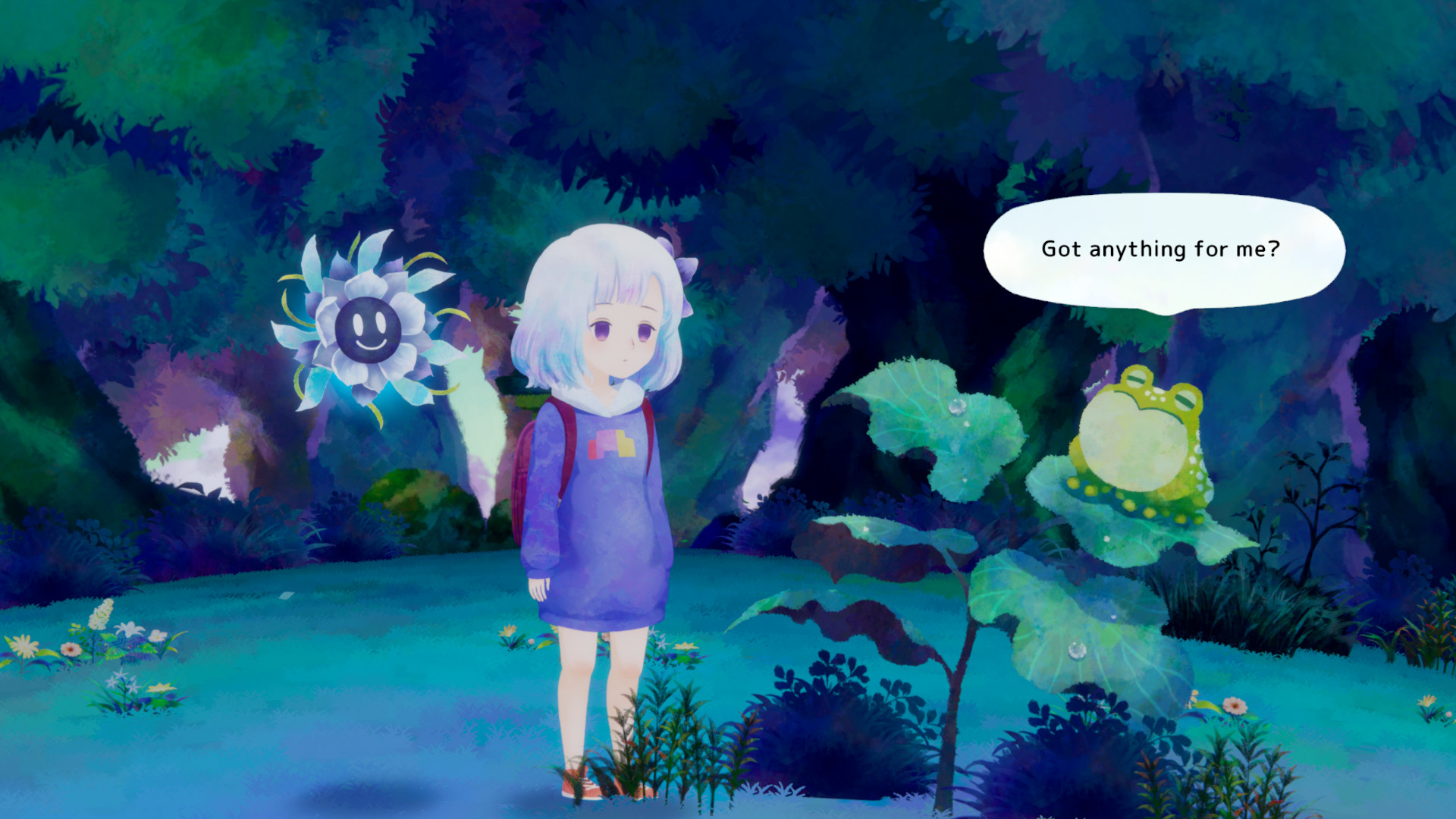








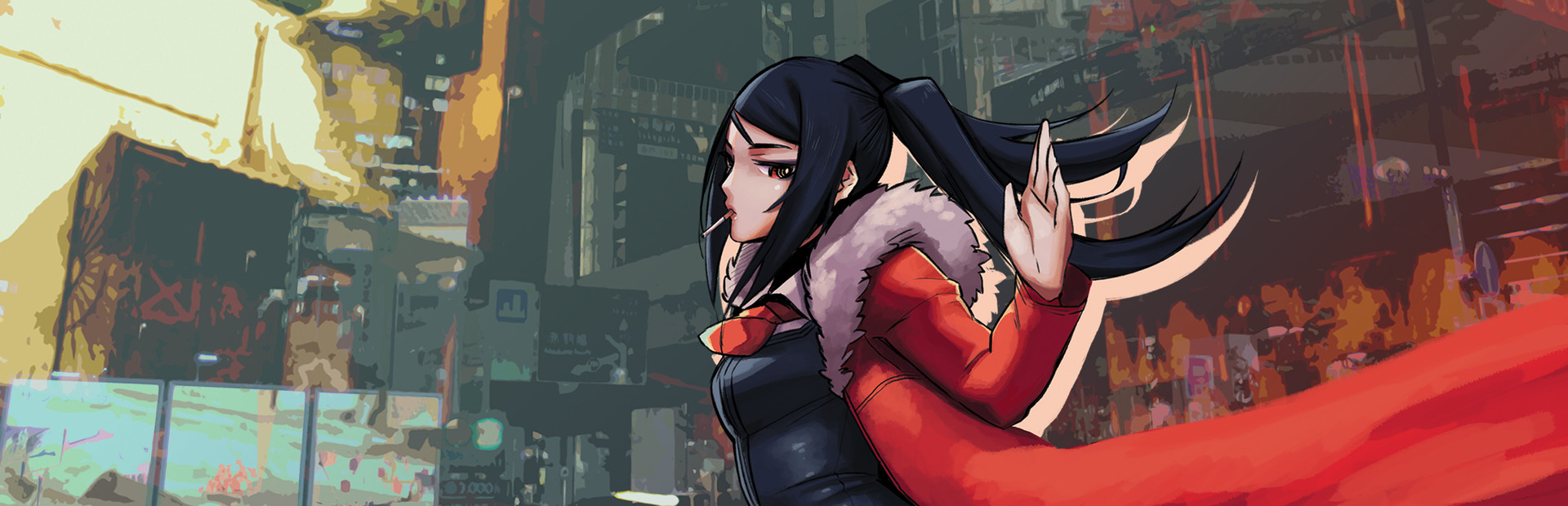
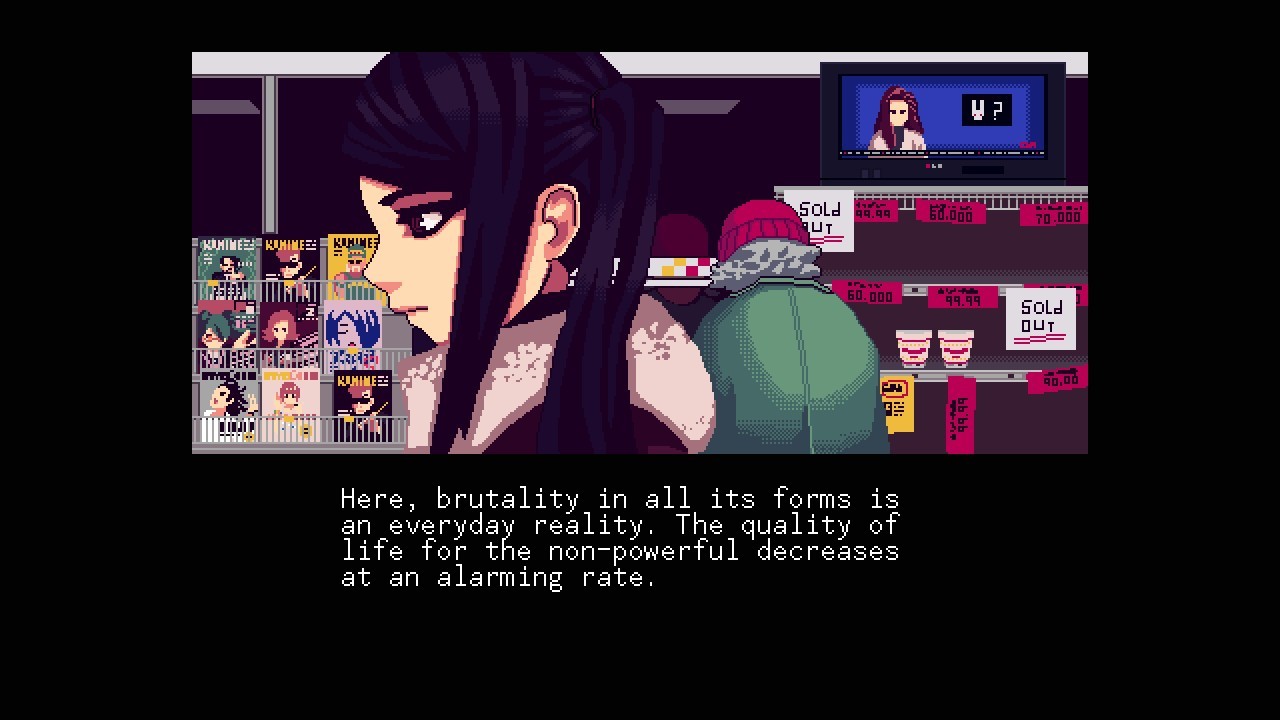






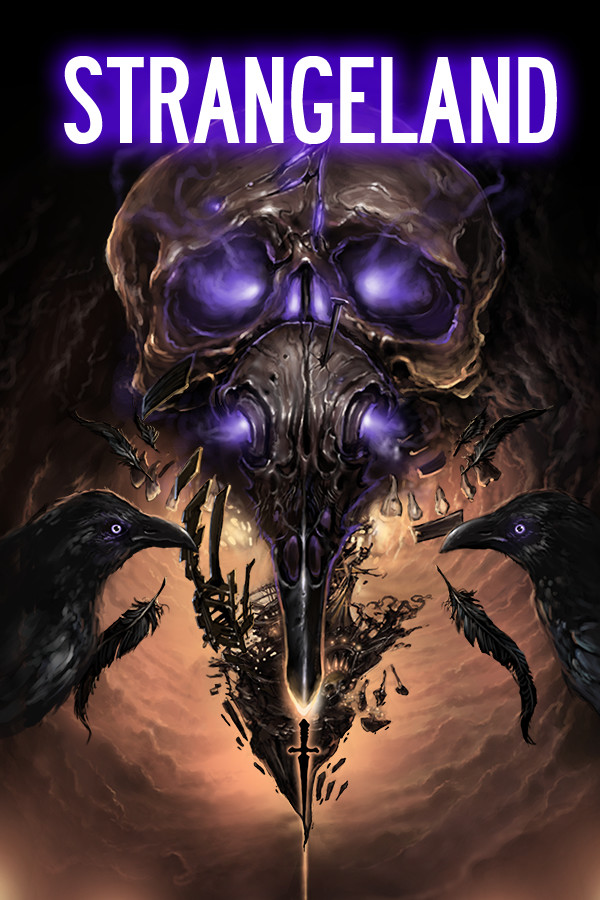



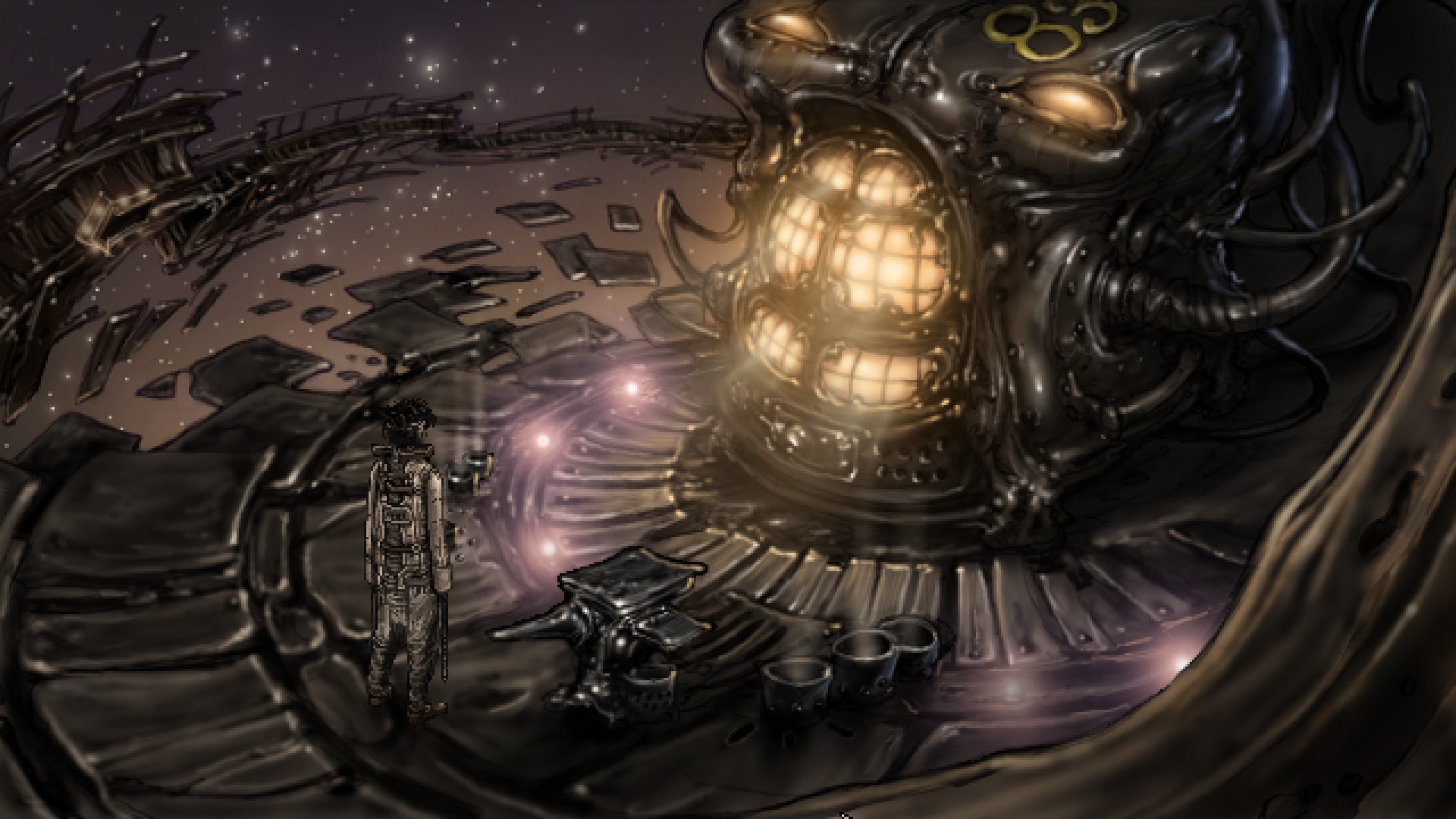


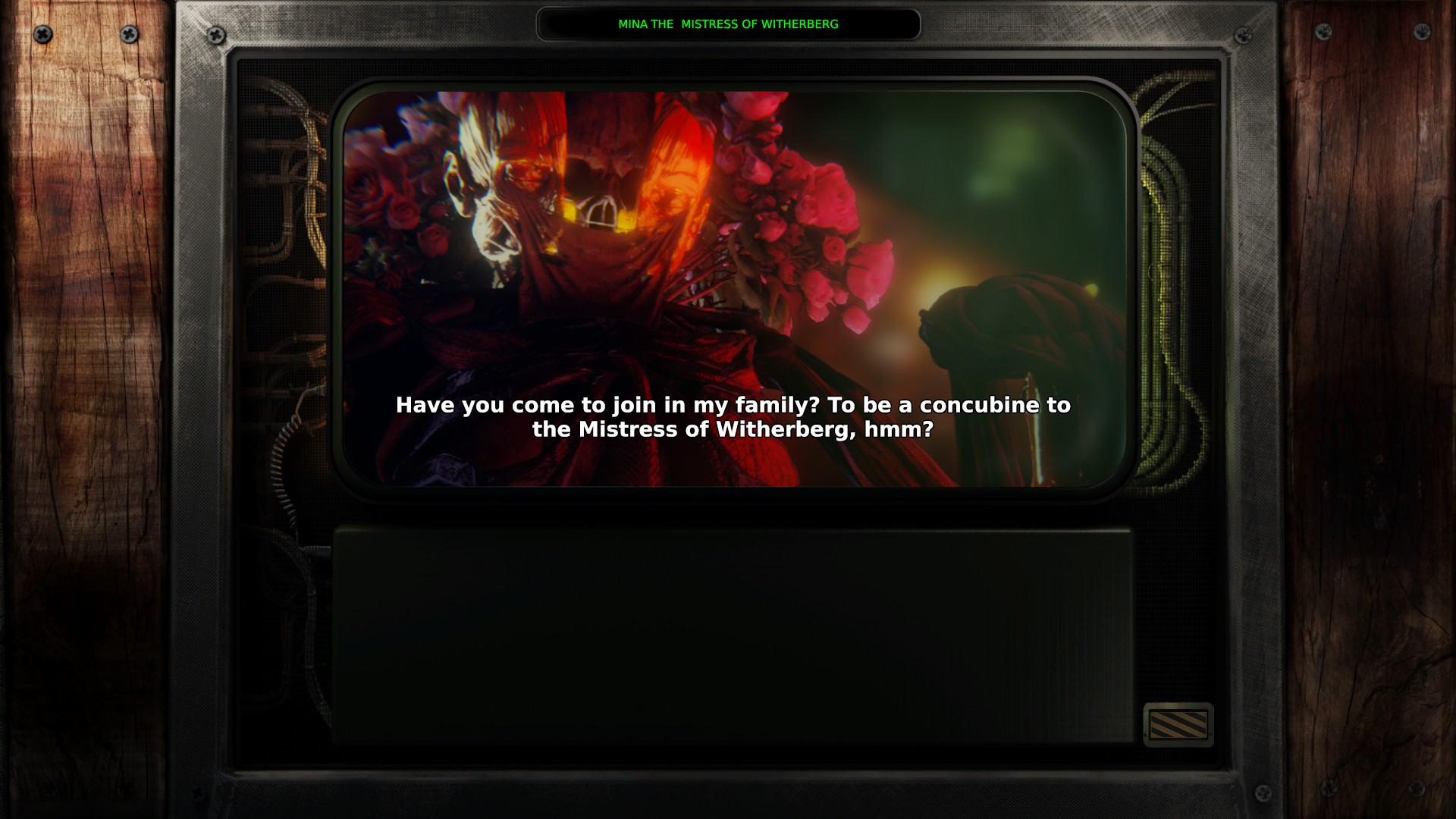

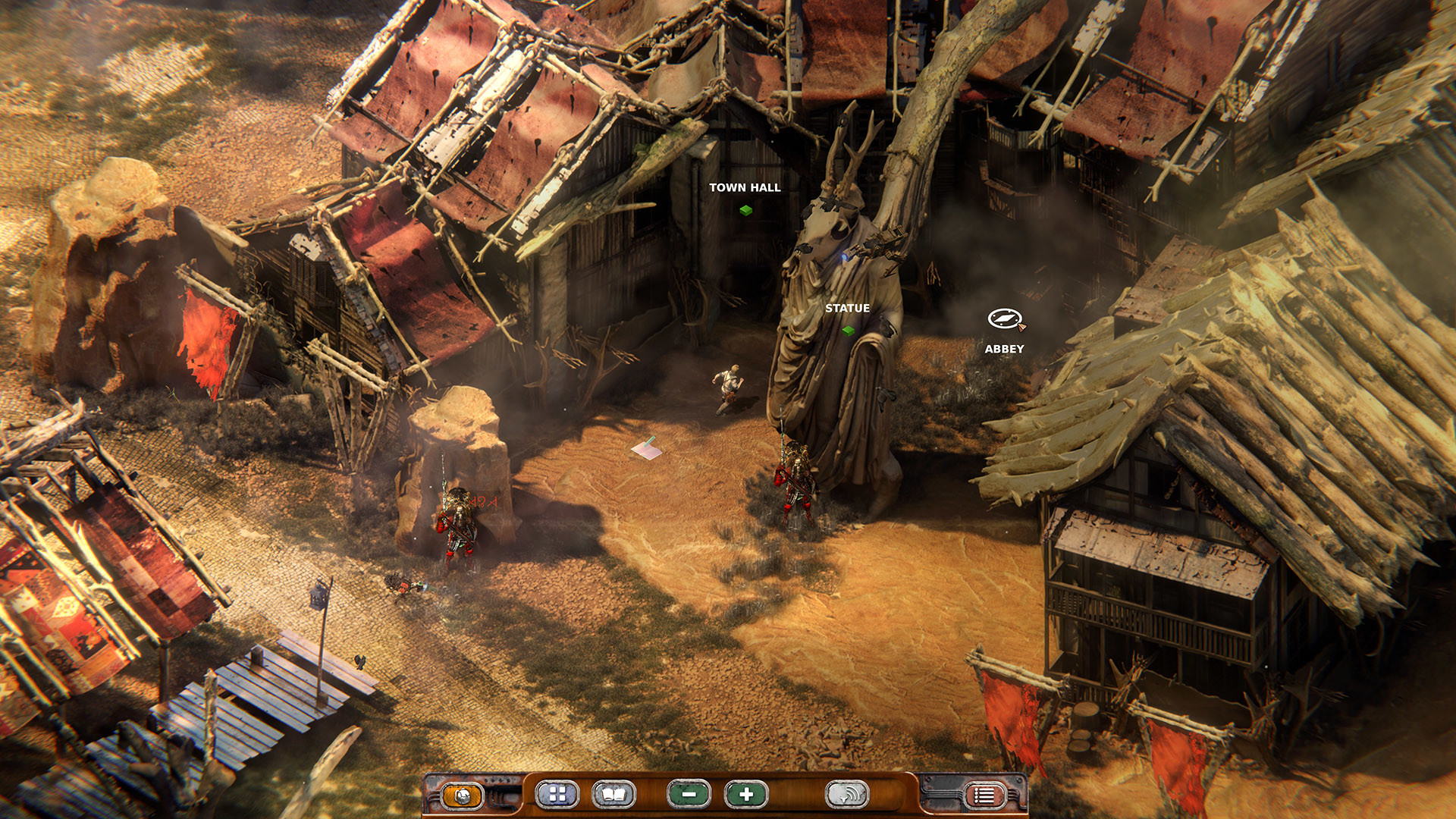







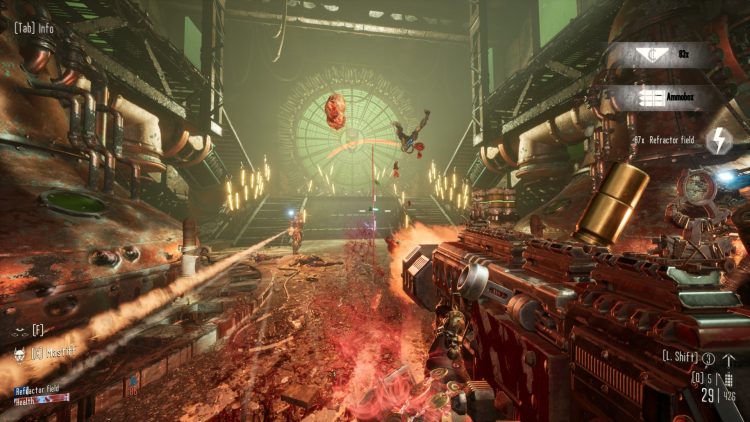
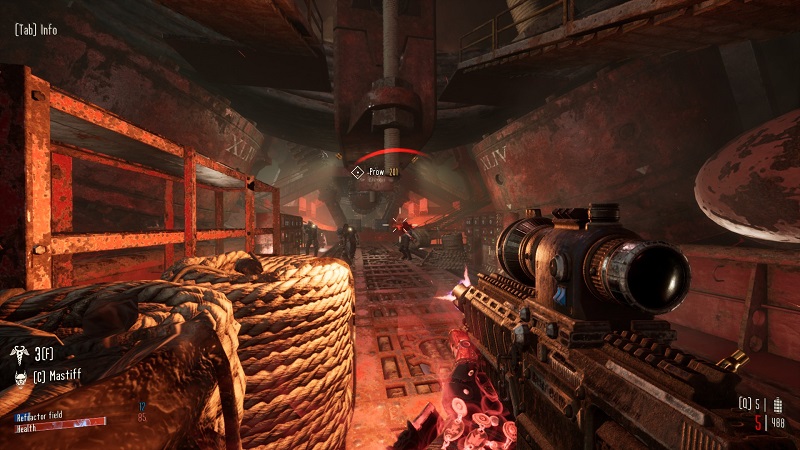

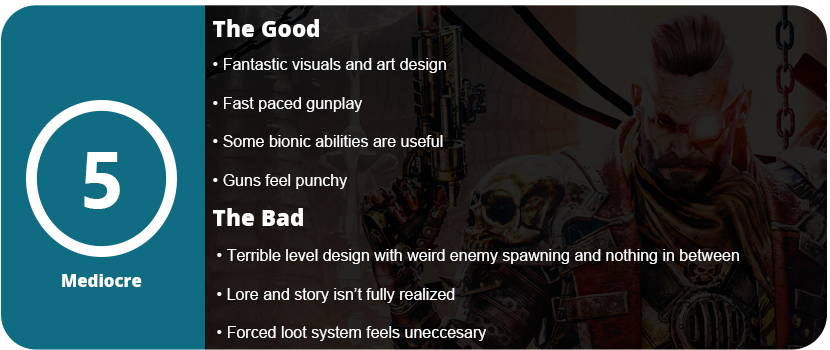




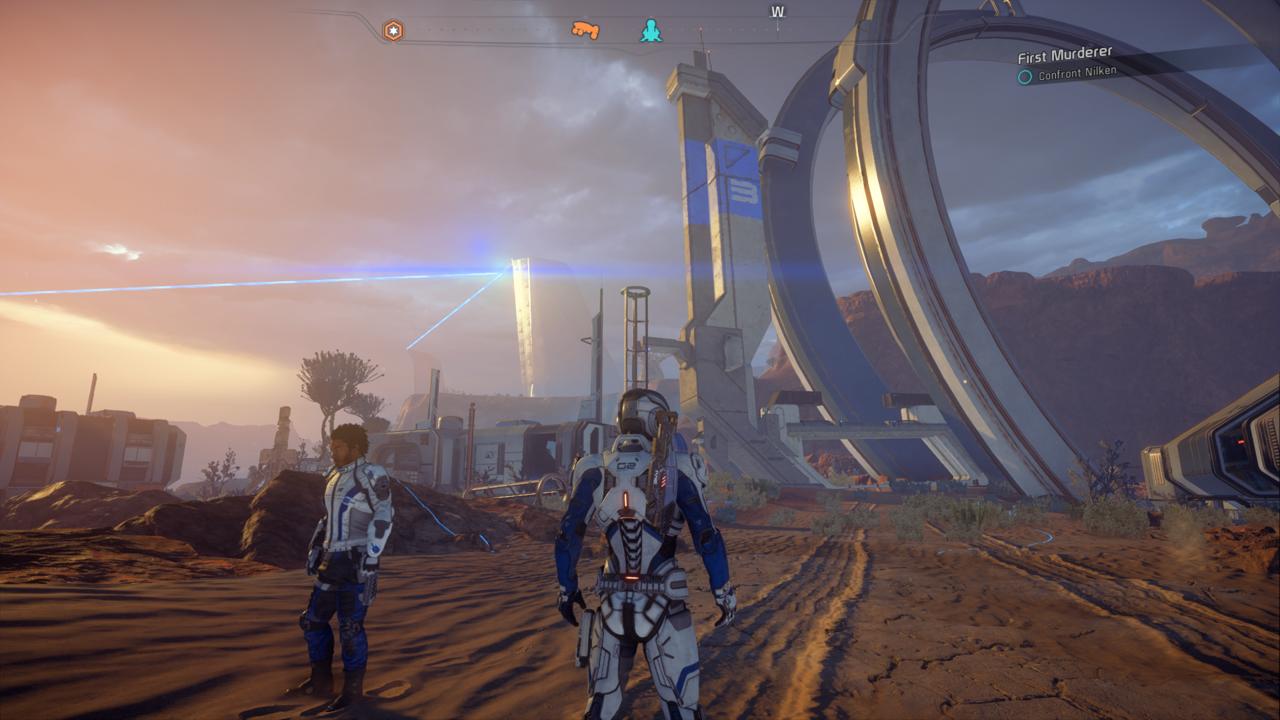
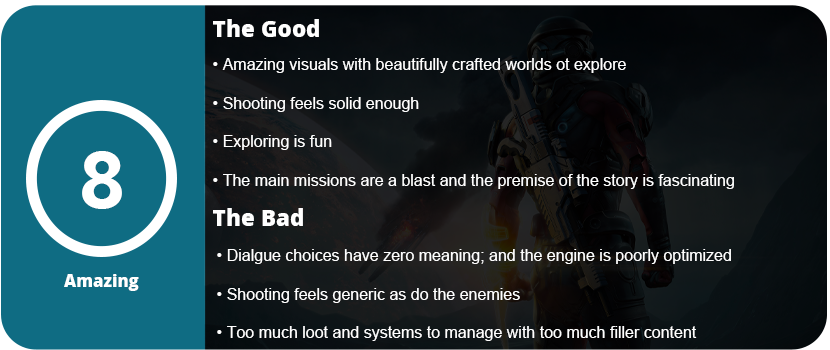




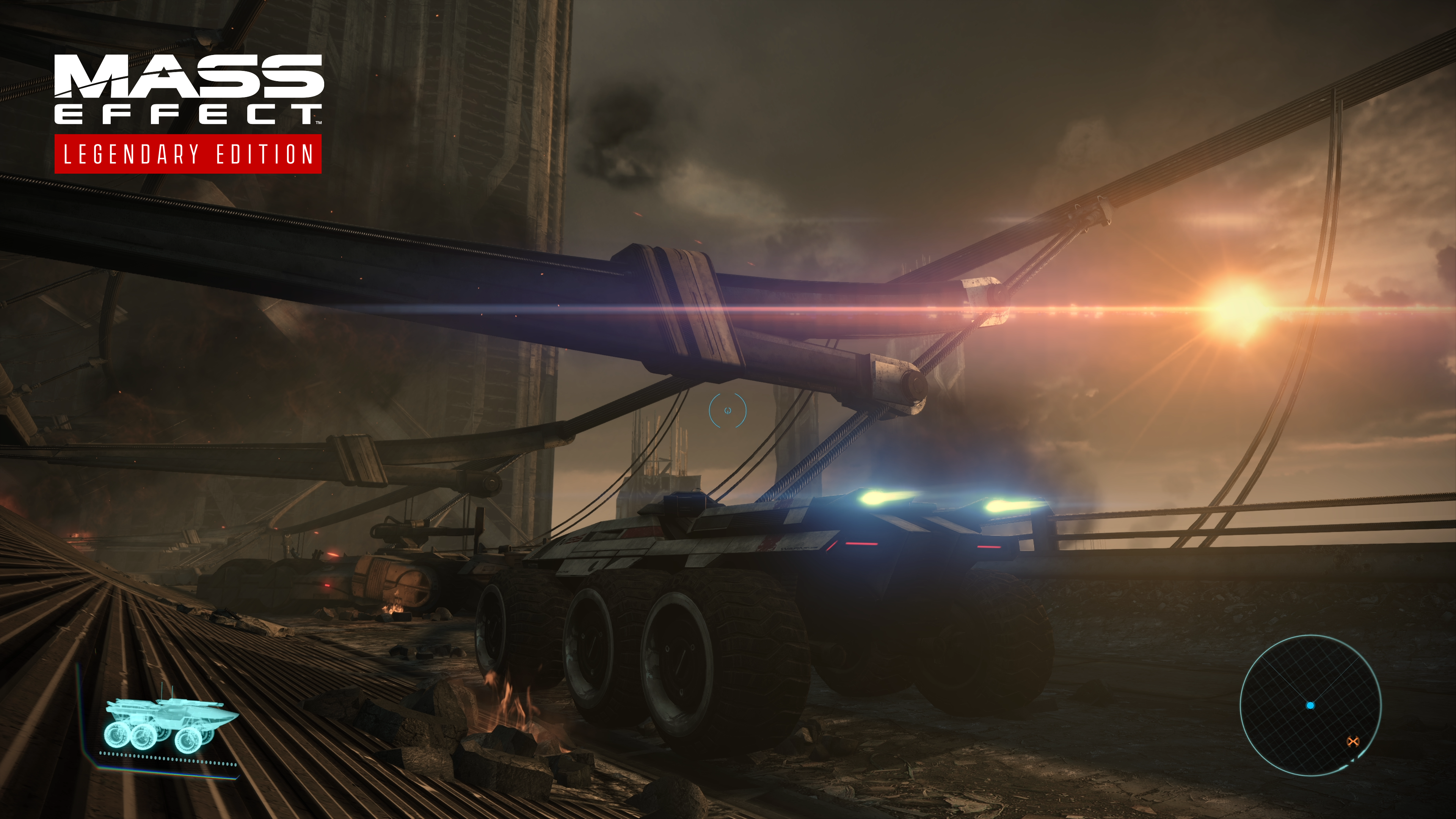


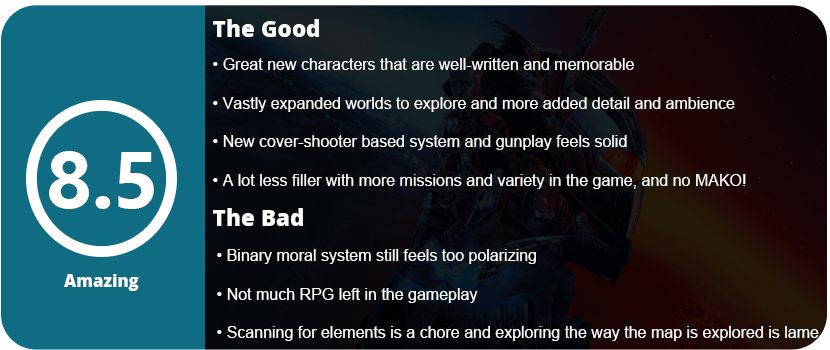


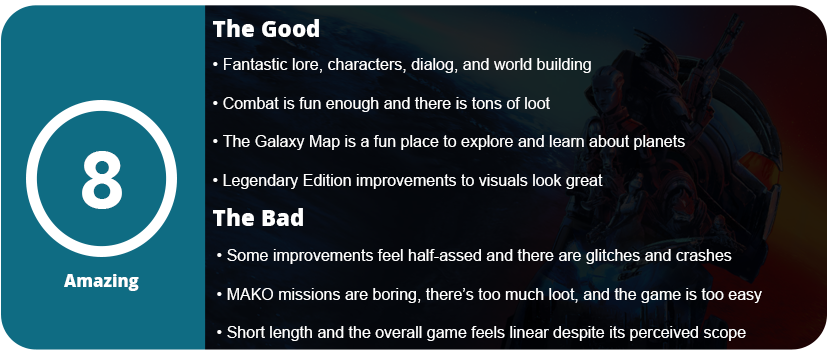


 thebinarymessiah.com
Clearly you have been blocking everything you or haven't played the game at all. Maybe pay attention to the story…