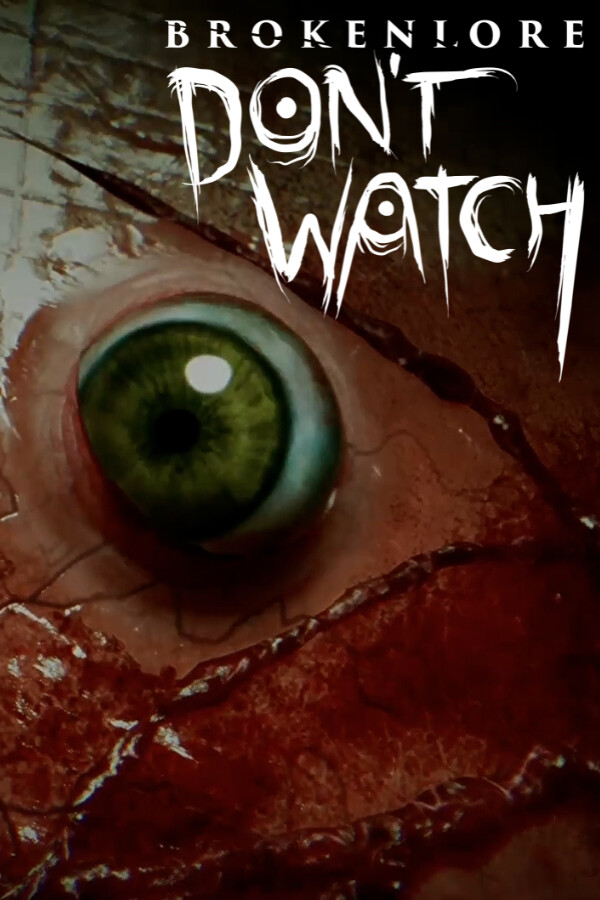
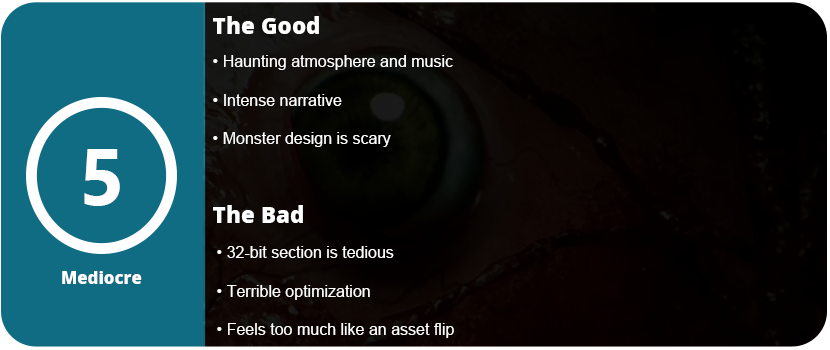
Horror games that are good are really hard to come by these days. The online stores are stuffed to the gills with short indie horror titles, mostly from Asia, that don’t really add much to what we’ve already seen. With the large amount of P.T. clones (Madison) and Asian urban legends (DreadOut, The Bridge Curse), none of it is of the same quality that everyone is trying to chase, such as the peak of horror games from the PS2 era (Silent Hill, Haunting Ground). Sadly, BrokenLore: Don’t Watch is another one to chuck into the bin of trying but failing to execute any kind of staying power in the horror genre.
You play as Shunji, a NEET (in Japan known as not in education, employment, or training) or, anywhere else in the world, a loser. He is living off of his parents’ income, and his lifestyle has clearly caught up with him. He’s behind on rent, his rent-to-own TV is ready for repossession, and he’s a complete slob. Looking around his apartment, you will see it’s pretty stereotypical for this type of person. Shelves of manga, fast food containers everywhere, anime posters of girls in lingerie, anime shirts, and trash piled up at the door. Sadly, we don’t really get to know Shinji or Junko, the only other character in the game. She contacts him via IM on his PC and warns him about not looking at a monster. Their mutual best friend is missing, and she wants him to contact this friend.
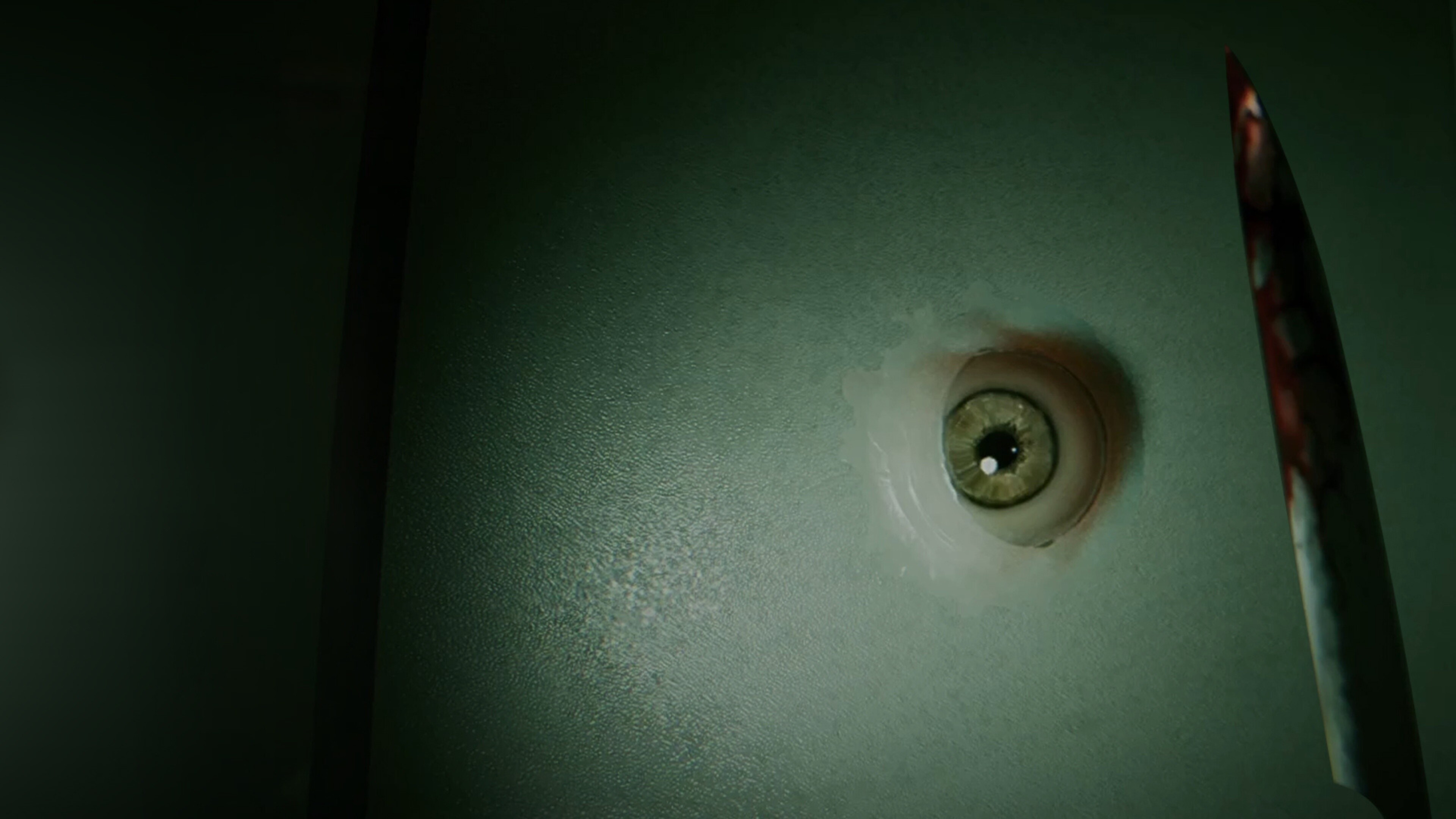
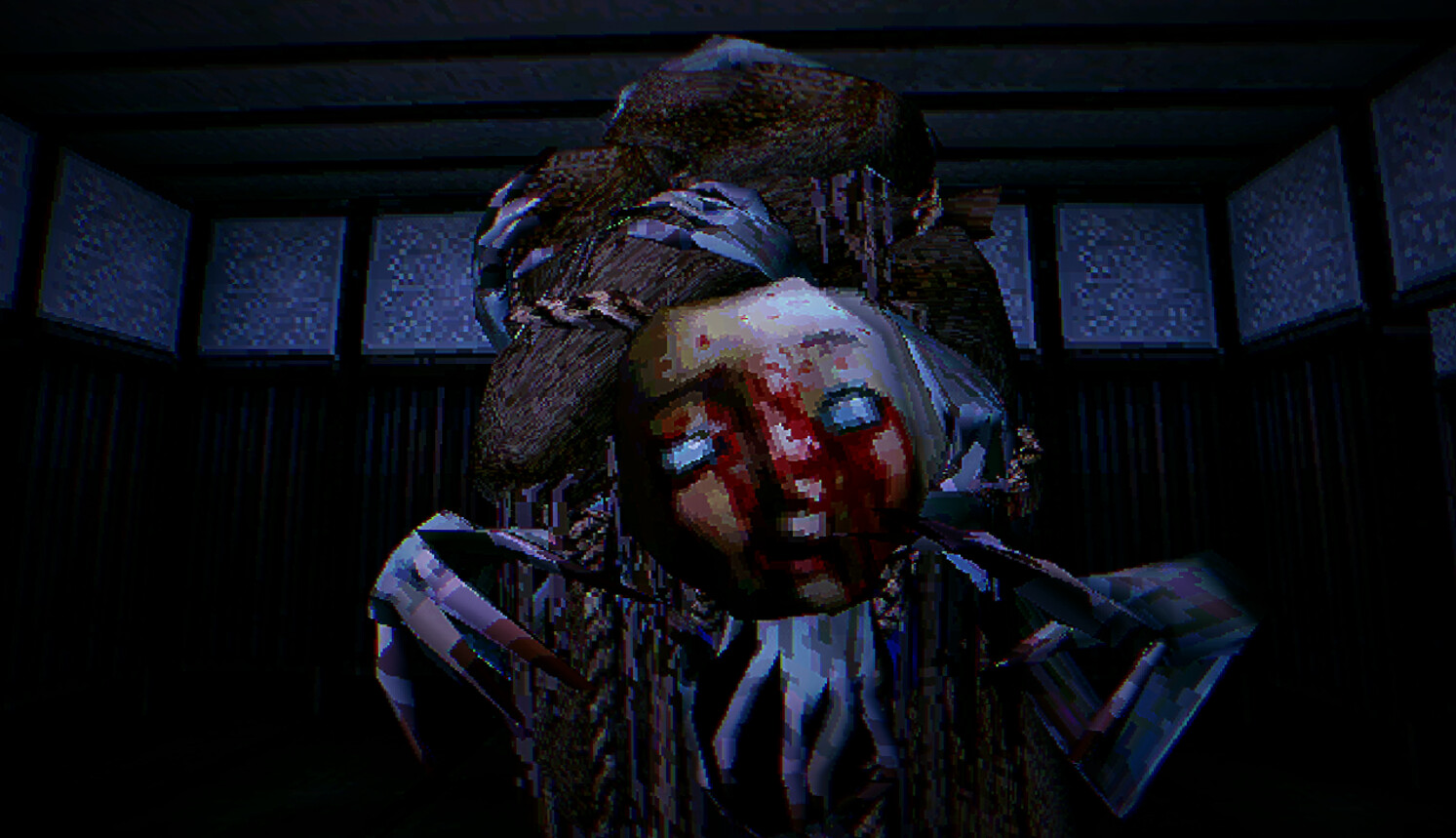
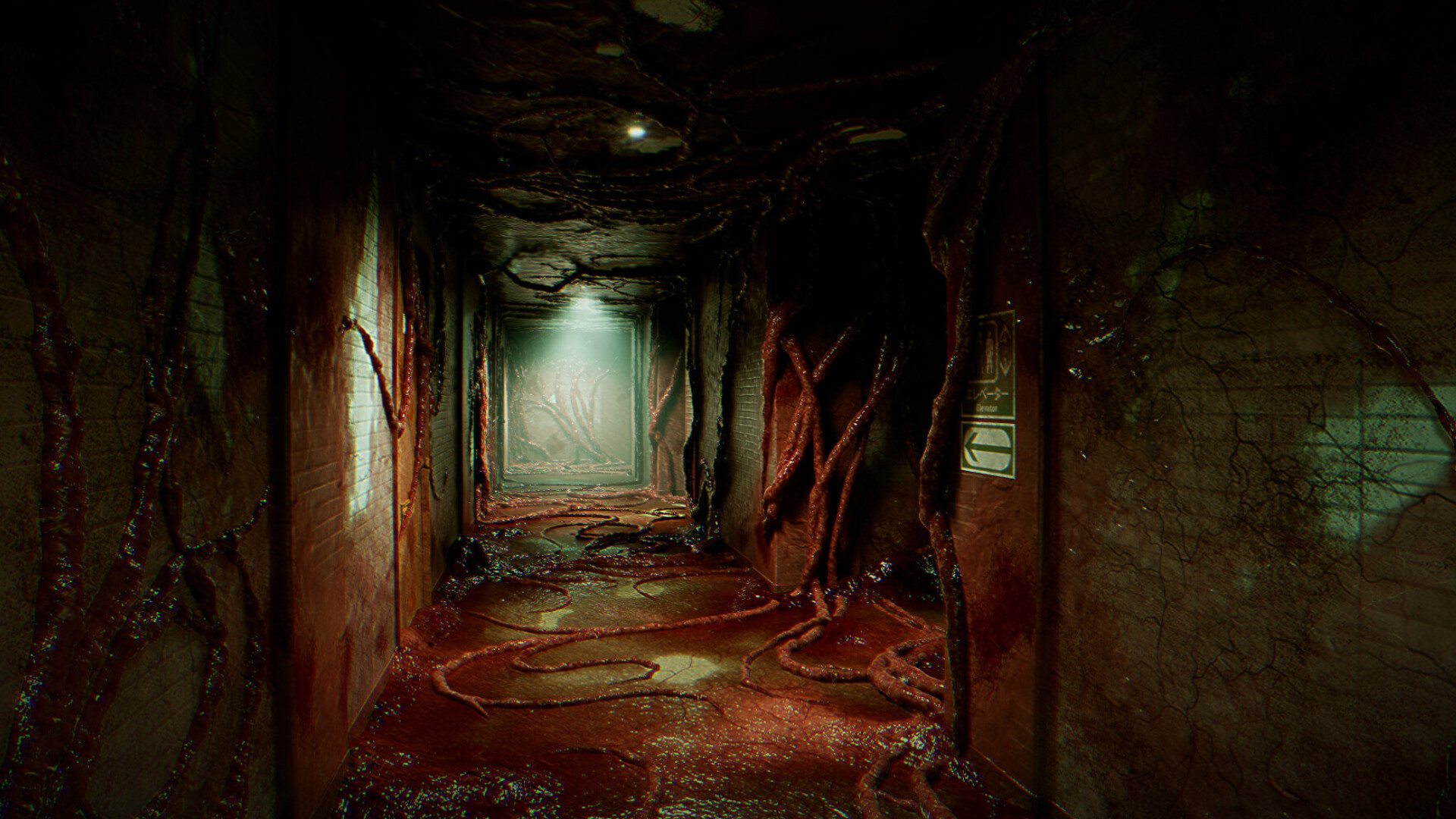
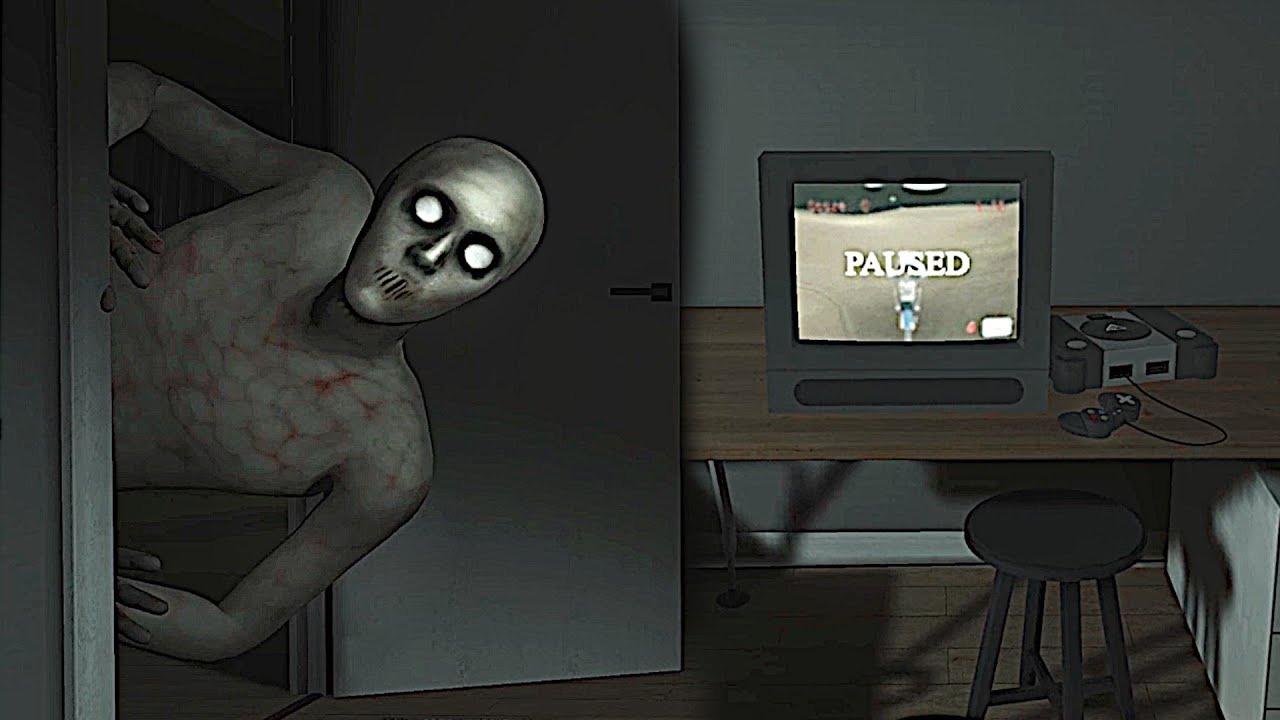
As you progress through the first 15 minutes of the game, you will slowly descend into the madness that is the Hayakuma. A monster that seems to come after deadbeats. These first moments of the game are full of progressing scares, and they are pretty cool. I don’t want to get into too much detail to spoil anything, but this is probably the best part of the game, sadly. The first time you need to stab eyes on the wall is really neat, but once you leave the apartment and venture into the hallways, the game quickly becomes tedious. The worst part of the game is when it changes to a 32-bit game a la PlayStation, and you might find 6 TV cords to unplug to get back to your apartment. I found this kind of pointless, and it doesn’t add anything to the game. You need to follow the colored cables to the correct areas and avoid a monster while you’re at it. If you get caught, you can get hit three times, and then you are reset back to the starting area of the large TV and must go back to find the plugs. It’s a good way to warp back to the beginning after you’ve found the plugs through.
Honestly, the game should have stuck with just unfolding a story inside of the apartment. The first part of the game is done really well, and I could see it being even better if they just continued creating some creative, scary moments. I was hooked during these scenes, but once you leave the apartment, I wished I could go back. The voice acting is also really well done, and being in Japanese keeps it from feeling cringy. Overall, Don’t Watch starts out really well but loses the focus and momentum that it built up and leaves you with a character you could care less about.
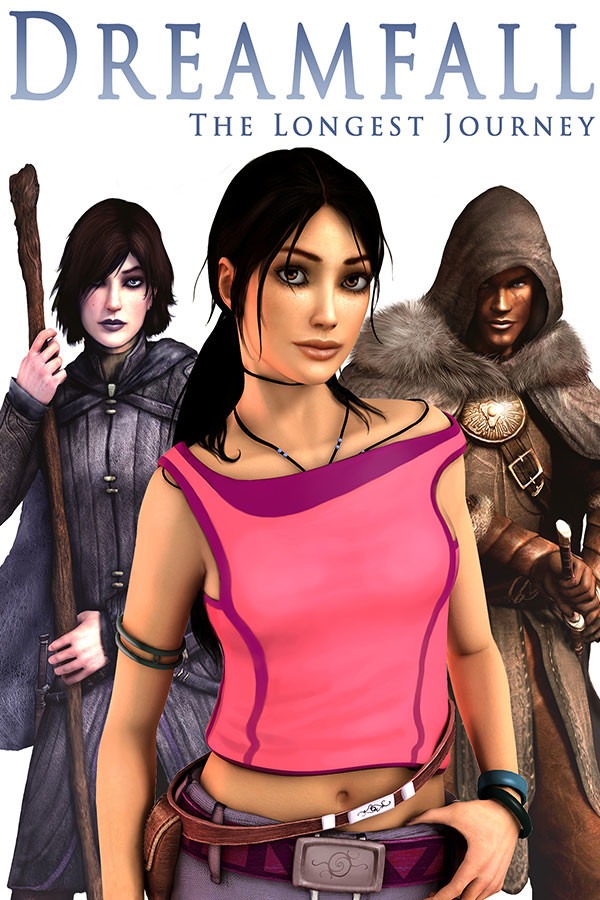
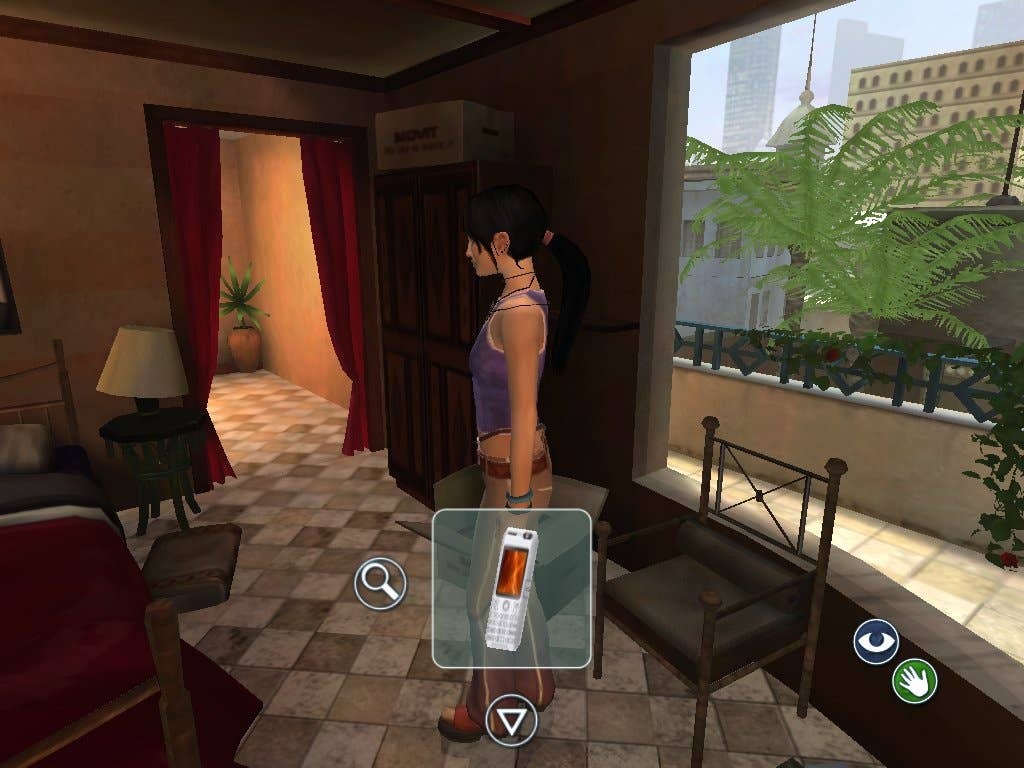
The Longest Journey is one of the best adventure titles ever created and one of my personal favorites. It’s so good that even my own mother fell in love with it, and she’s not a gamer. The world, characters, and lore that were built up in The Longest Journey were fascinating. It was well written, and the visuals, for the time, were fantastic. Gameplay-wise it suffered from the usual tropes of adventure games of the time, but Dreamfall is for a next generation of gaming with 3D visuals. The game stars a new protagonist, Zoe Castillo, who awakens in her home in Casablanca and ends up being entangled in a deep corporate conspiracy and needs to find April Ryan.
The game starts out a bit slow. Everything seems just fine, and the game needs to build up this new branch of the story with Zoe. You wake up in your room and talk to your dad, you go outside, you meet a friend at her phone store, and then you end up building towards a relationship with your ex-fling Reza, who is a secret reporter that is on to a big story to bring down the evil corporation WATIcorp, which is known for making AI and robots. April Ryan and Arcadia get involved; I don’t want to spoil how, but she is the second story branch in this game. You do end up in Arcadia for the second third of the game, running around a small town called Marcuria, going back and forth finding objects and talking to people. The last third of the game starts mixing it up, and you go back and forth between Stark (the real world) and Arcadia quite a bit. Familiar faces appear, and then the third story branch of Kian Alvane, an Apostle for a religious sect of Arcadia, sets in.
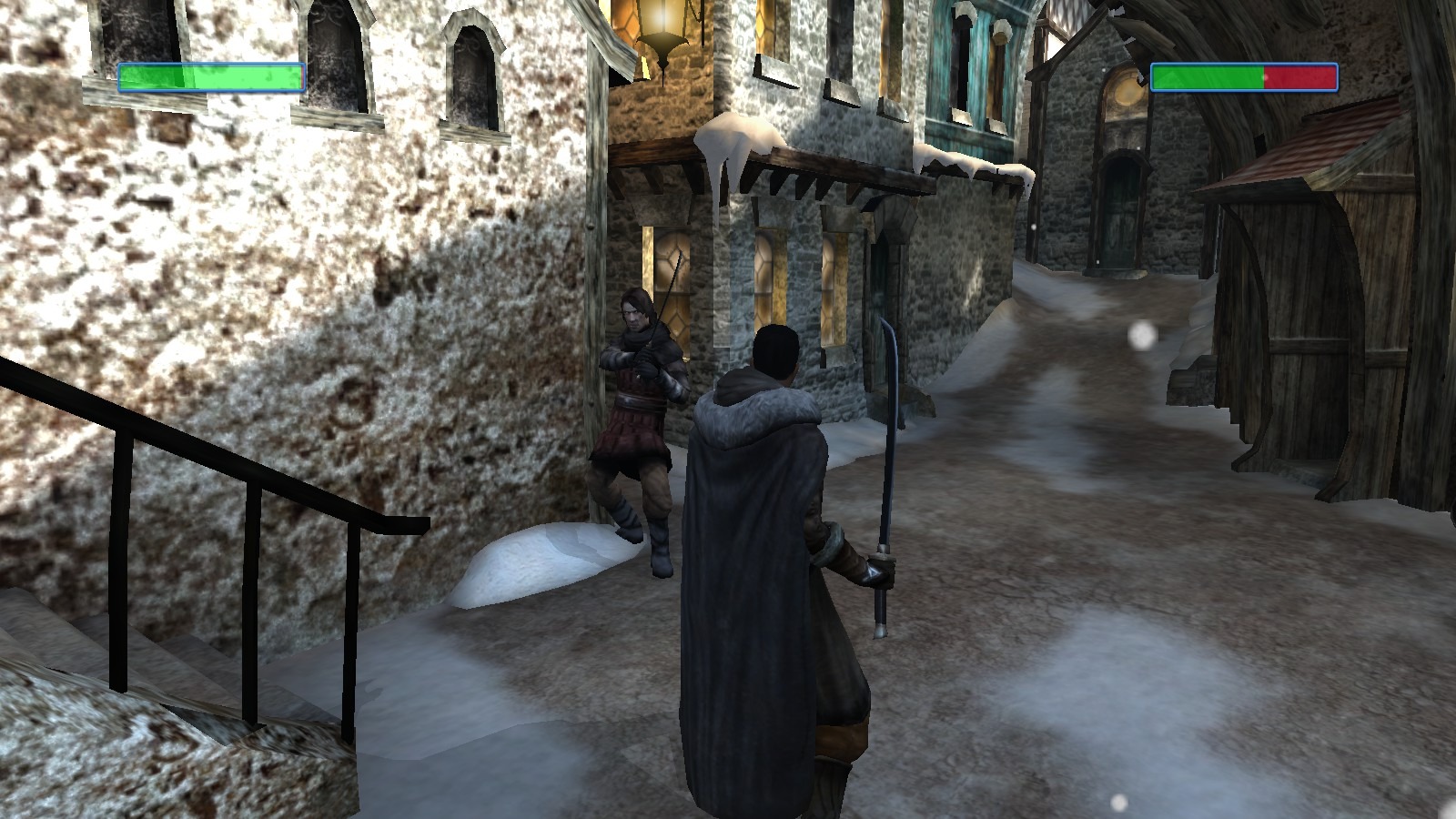
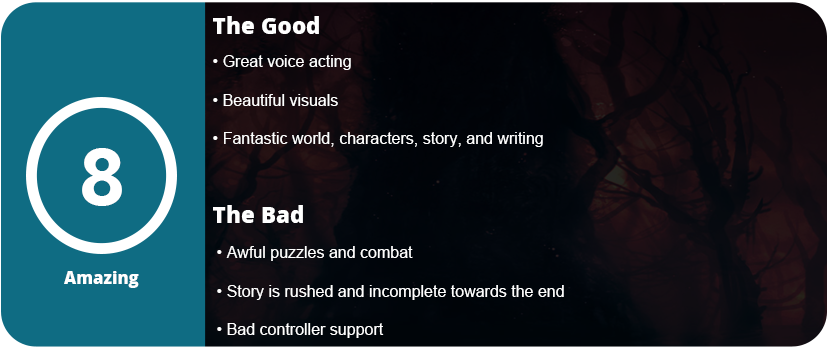
Gameplay is very minimal. Puzzles aren’t challenging and are very sparse. They consist of glyph matching against a timer and glyph spinners. They appear to have been tacked on at the last moment, a common occurrence in adventure games from this era. You can combine objects to solve puzzles, but this doesn’t happen very often. Objects are obvious and easy to come by, as there aren’t that many interactive objects in the game. Green brackets will appear over everything you can interact with, and most of them just have the character explain what it is. The first two-thirds of the game is more gameplay-heavy with a couple of stealth areas and combat. Yes, combat. It’s atrocious and shouldn’t have been put in. The animations are stiff and slow, and the controls feel like mud. There is a block button, and you can dodge, but the AI is unintelligent and just wails at you or repeats patterns. There is a light and heavy attack, but honestly you just need to mash the heavy attack and you will win. There are only a couple of fights in the game, and any others you won’t win, and you’ll essentially fail a stealth section.
The last third of the game is clearly rushed, and the game obviously wasn’t completed. This section is mostly just cutscenes and dialogue. Kian’s and April’s sections just end with no conclusion, and Zoe’s section is the only branch that feels complete in a way, with a proper cliffhanger for a sequel. I just found it odd that each chapter took nearly two hours to finish, and around chapter 7 I’m finishing them in a matter of minutes, and there are no more puzzles or gameplay. Even for what’s here, 12 hours is quite long for an adventure title. I feel this needed to be 20 to feel fully complete. Thankfully it doesn’t overstay its welcome. The writing is great, the voice acting is decent, and the world and characters are really interesting.
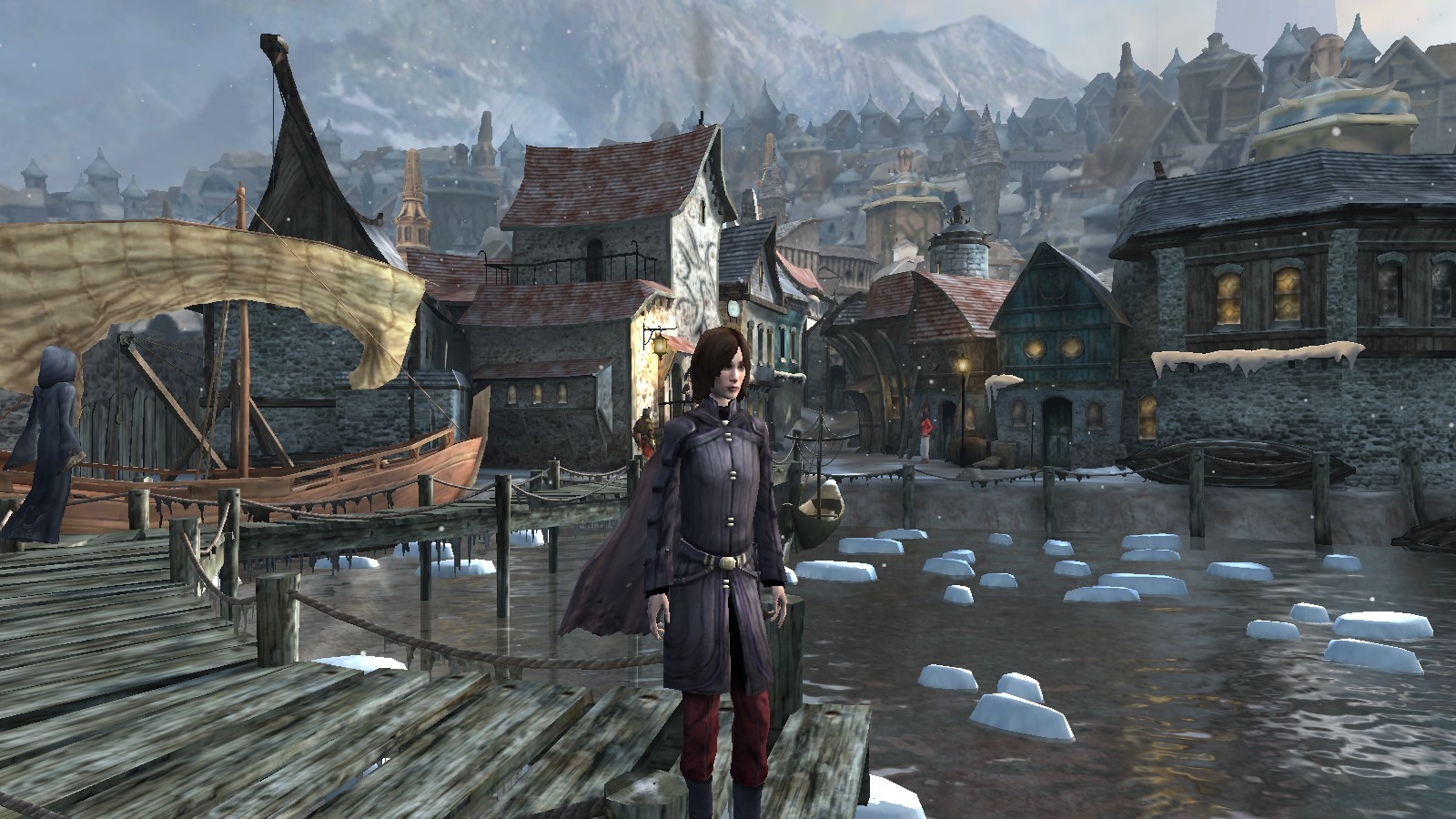
The visuals hold up surprisingly well even today. The large vistas look beautiful with great lighting effects. There’s a lot of detail put into everything from icicles hanging off of the bottom of bridges to detailed ornamentation in walls and stones that didn’t need to be there for a game of this era. Sadly, the PC version has terrible controller support, but this was pre-Games for Windows, so there was no universal controller standard for PC games back then. This game is still easily one of the best adventure titles ever made thanks to the fantastic lore, world-building, and writing. I couldn’t put the game down. I do recommend playing the first game, as this is a direct continuation, but the game does a good job filling you in on everything as the game goes along.
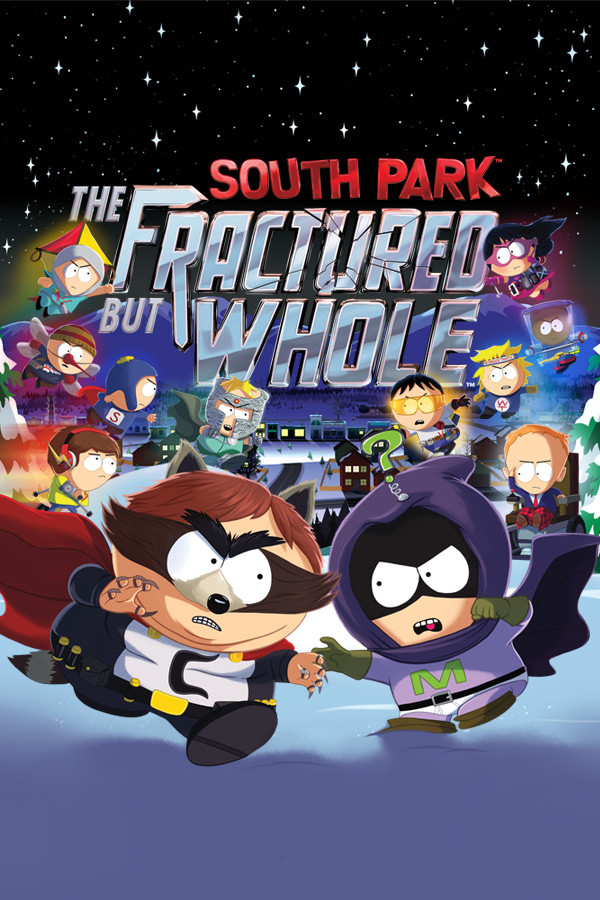
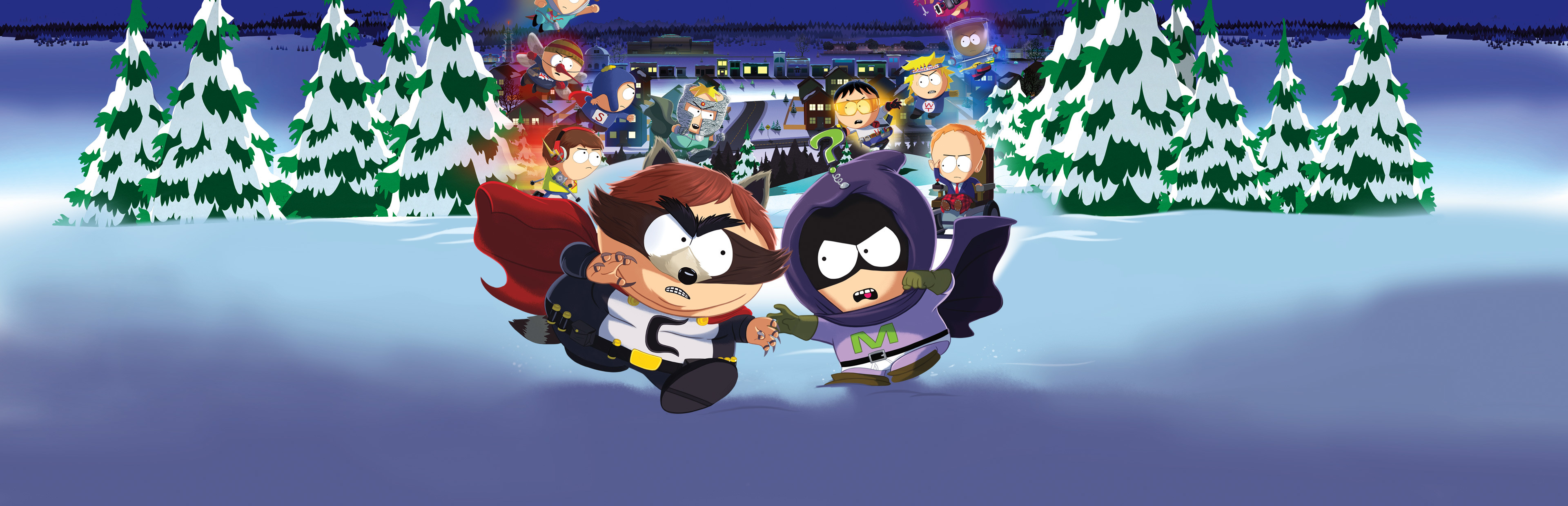
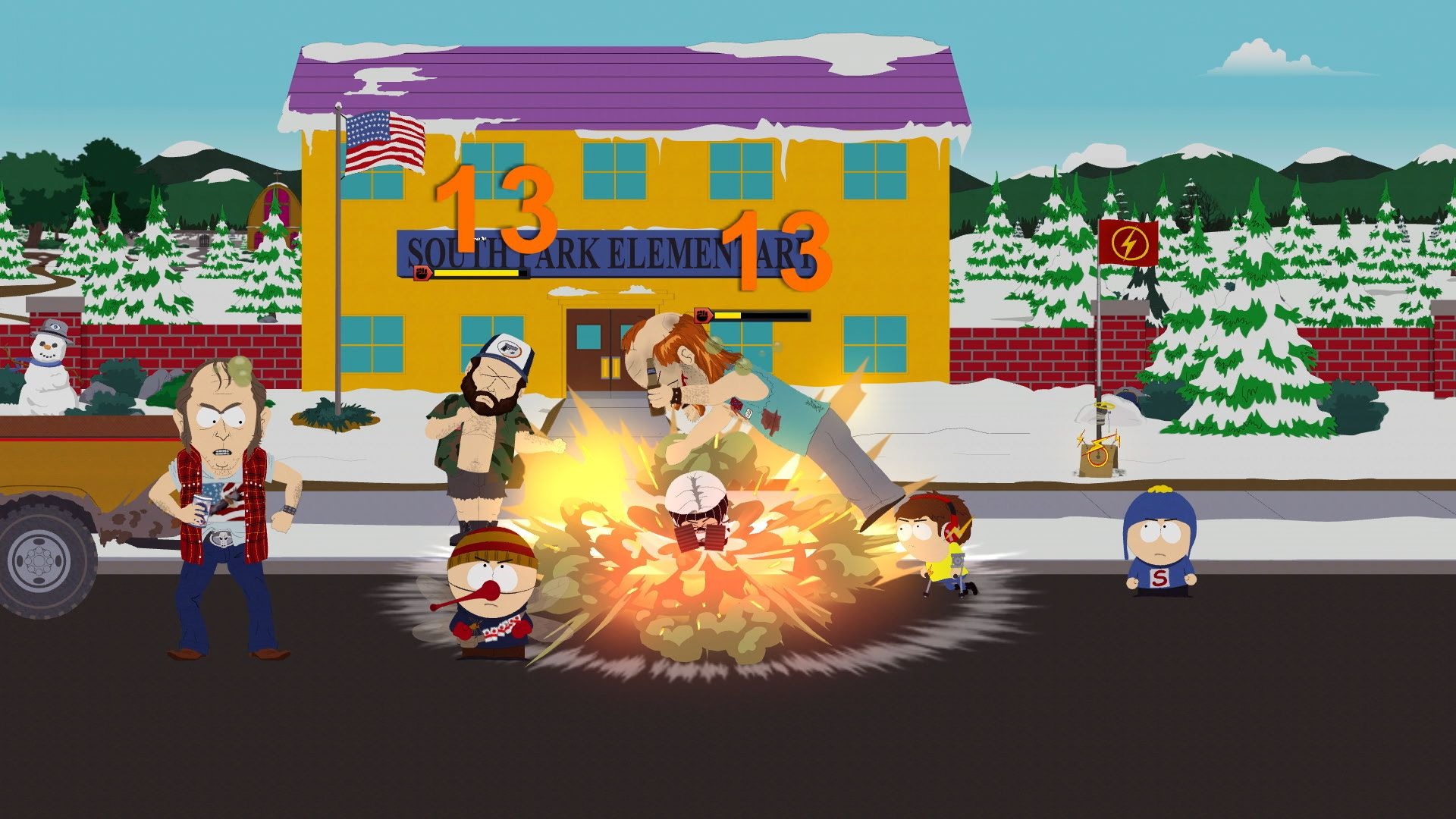
South Park has had a reputation of having terrible games in its repertoire. In fact, South Park on the N64 is considered one of the worst games ever made. The studio redeemed itself with The Stick of Truth in 2014 and delivered a fun turn-based RPG that kept the look and humor of the shows. Critics praised it for evoking the experience of playing an actual show. The Fractured But Whole carries on this tradition, introducing a fresh narrative and featuring the character of the New Kid, also known as Butthole or Butt Lord. Sadly, the game feels more like an expansion on the first game rather than an entirely new game. We get the same South Park map, nearly the same locales and shops, and the gameplay is mostly unchanged. The studio didn’t do much to address many of the concerns from the original, either.
You start out by creating your hero to look like a South Park character. You are a voiceless protagonist again, but I wish I could actually play as one of the main characters here. Once the plot is dished out, you can go explore South Park. Unfortunately, the map remains largely unchanged. Until you acquire different fart powers, various areas remain blocked. Your primary superpower is the ability to produce potent farts that have the capacity to alter the course of time and space. You eventually acquire various abilities that allow you to reach higher places by using small fans. You can use Captain Diabetes to knock over objects with green bases. You can unlock the electric door by having Butters…shove a hamster up your butt and then fart it out, which will short out the circuit. You couldn’t make this stuff up if you tried. You also have the power to have Toolshed shove a hose up your butt to act as an air compressor to blow debris away. Usually this is in the form of the lava Lego bricks that block paths early in the game. Exploration is mostly for finding crafting parts, which are hidden in various objects with gold handles or lids. You can also go around collecting Yaoi posters or find Big Gay Al’s hidden cats with pink scarves.
Exploration can be fun early on, as there are many areas to unlock, and you will always wonder how to get to certain spots. Once you get towards the end of the game, the entire town will be accessible. There are various vending machines that allow you to buy costume parts, artifacts, consumables, and crafting parts. You also have a social media presence on Coonstagram, so you can walk around and take photos with South Park characters to increase your following. This mainly just allows you to complete your character sheet. Mastery in various areas will unlock some rewards. Certain characters won’t take photos with you until you meet certain criteria, like finishing a side quest or main mission. There are also toilets you can poop in to play a mini-game. Honestly, all of these things are superficial and don’t really add substance to the exploration, but it’s better than nothing.
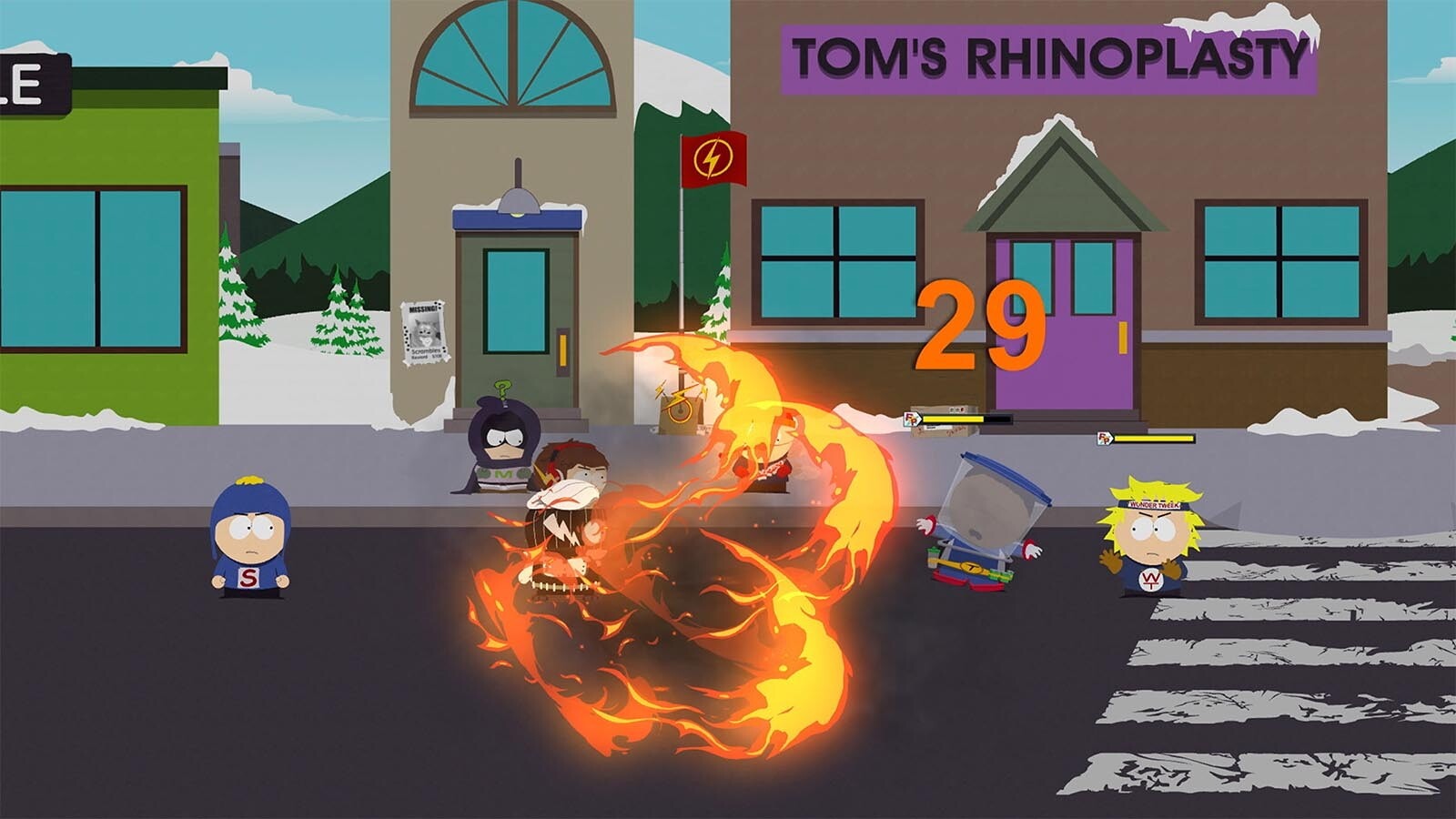
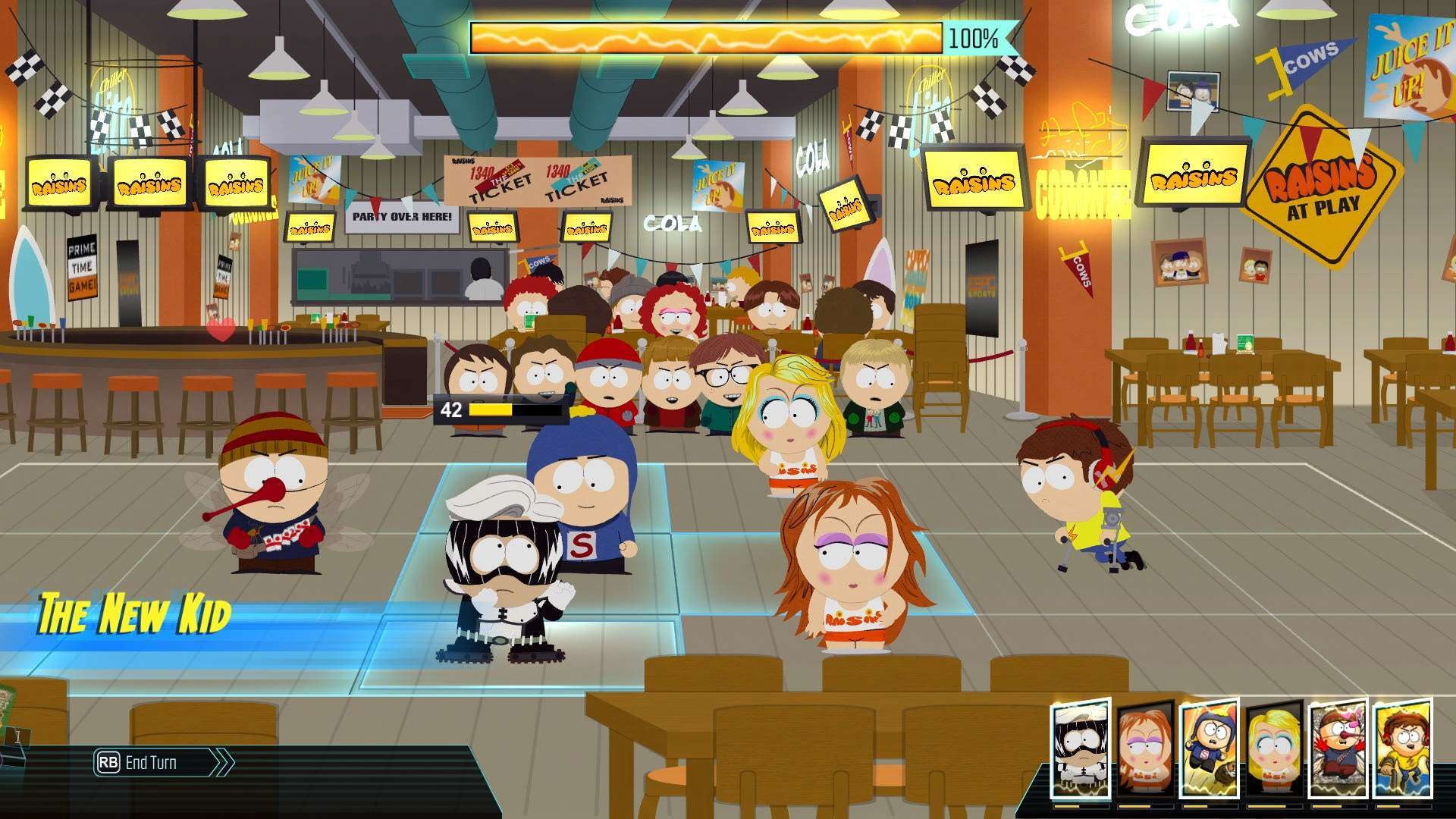
This game primarily focuses on combat, dividing each area into squares. Each character has different attacks that can reach certain grids based on what kind of attack it is. Some attacks move in specific lines, such as Toolshed’s drill attack, which is diagonal in both directions. Certain attacks have the ability to knock enemies back, which can result in additional damage if an enemy is standing behind them. Certain attacks have the ability to penetrate through enemies, while others require you to be in close proximity to them. To be honest, I don’t think the attacks are well balanced. There are three different power attributes: brain, brawn, and spunk. There are several superhero classes, including assassins, brawlers, plantmancers, and psychics. These are generic classes, and you can pick and choose abilities after selecting your class. Each class also possesses an ultimate ability. This ability is a yellow bar that builds up when hit, and when you are hit, you can press a button in time to give yourself a small health boost and advance the ultimate meter further. The ultimate meter is essential to winning longer and tougher battles.
Like in the previous game, there are positive and negative status effects. Bleeding, gross out (poison), attack and defense up or down, but positive status effects take a back seat over negative. There aren’t many abilities that give you positive effects. This illustrates my point about the powers being poorly balanced. There are very few healing abilities, and most of them feel useless. It is rare to find abilities that can heal your entire team, as healing individual characters becomes challenging when there are four or more characters on screen. There are consumables you can use for this, but items that give you more health as you go on are pricier and harder to come by, just like any RPG. You at least fully heal after each battle, and effects don’t carry forward. I found the attack patterns to be mostly annoying and attributed them to the balance issue. A lot of damaging attacks require you to be in front of or in line with the enemy. I wish there were more abilities that allowed you to attack from a longer distance. Some abilities feel useless when the grid layout just doesn’t work in your favor. I feel the grid needs to be wider so more characters can get in direct contact with the enemies. It’s not always a problem, but if you balance your abilities and party, you can avoid this, mostly. You can complete side quests to unlock summons, which are craftable items that can heal or do damage to the entire grid.
I also discovered that the story mode primarily focuses on boss rushes in the last half. You will run into various groups in the show, such as the Raisins, Rednecks, Ninjas, Sixth Graders, and so on. Each group has certain abilities you need to remember, and you need to pick the right party members to counter them. Some enemies will have attacks that require a countdown before they can be executed and cause splash damage. Some enemies are incredibly powerful and can swarm you. I appreciated the variety of bosses with different win conditions, such as escaping or pushing enemies toward the boss, as that is the only way to deplete its health. The biggest gripe I have about the combat is how slow it is. There are many funny quips and one-liners from every character, but the turn won’t start until they finish their line. You can’t speed up battle in any way, and ultimate animations aren’t skippable. Thankfully, a lot of the smaller battles that are around town don’t respawn, but you need to do side quests and fight everyone you can to get a high enough rank.
This game is equipment and rank-based, and you don’t acquire levels. Each rank unlocks an artifact slot, and your artifact rank determines how powerful you are. By the end of the game, you will need to be ranked at 800 or higher to fight anything. Each mission has a rank level next to it that must be met, or you will quickly die. You can obtain artifacts by fighting bosses, scrounging around, or crafting them once you find the recipes. You must fight as much as you can to increase your rank to unlock new slots. It’s really annoying how restrictive the game is, but thankfully I didn’t run into not being ranked up enough, as I did do most of the side quests and fought everyone I could see. Different artifacts will increase their stats based on the build you have. Costumes are cosmetic only.
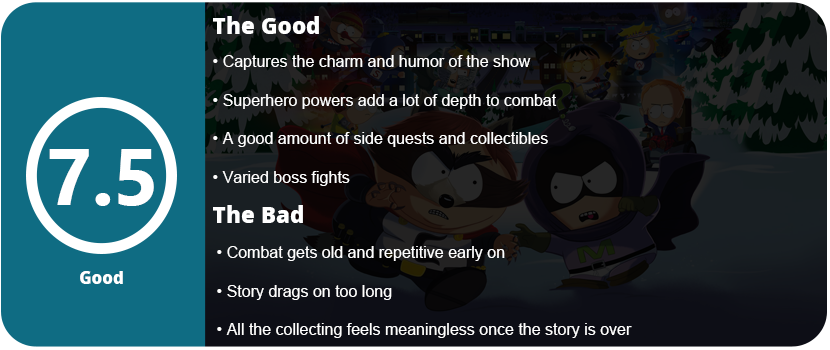
As the story progresses, the game feels dragged out. I feel there are many battles that are just there for fan service and don’t actually add to anything. The story is also similar to The Stick of Truth in that it’s nothing special and just feels like a typical South Park episode. That’s fine and all, but for a game, I wanted something a bit grander and more original. The game’s story relies too much on fan service and rehashing old story arcs from the TV show. Overall, The Fractured But Whole is a delightful superhero take on the formula but doesn’t do enough to advance the series or change much. If you didn’t like the last game, then this one won’t change your mind at all.
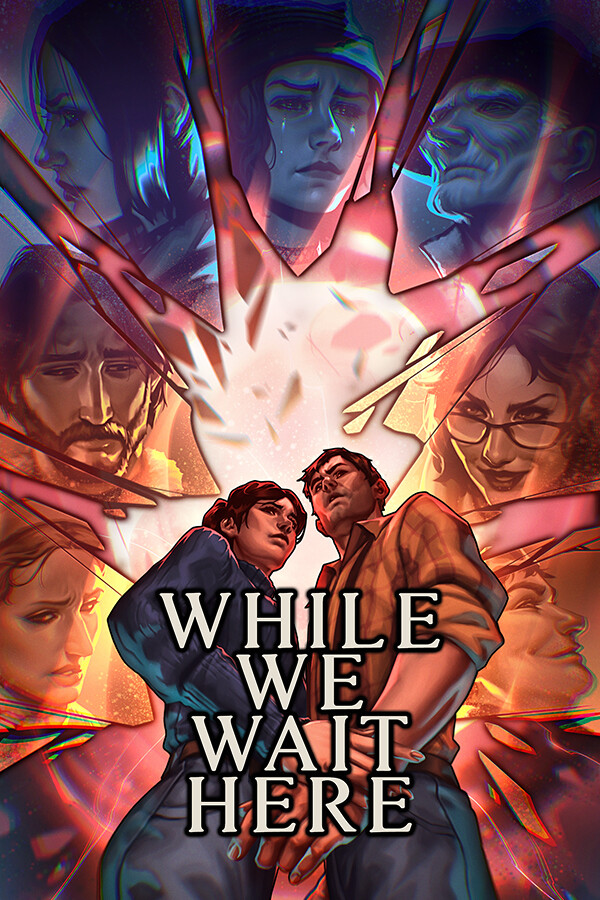
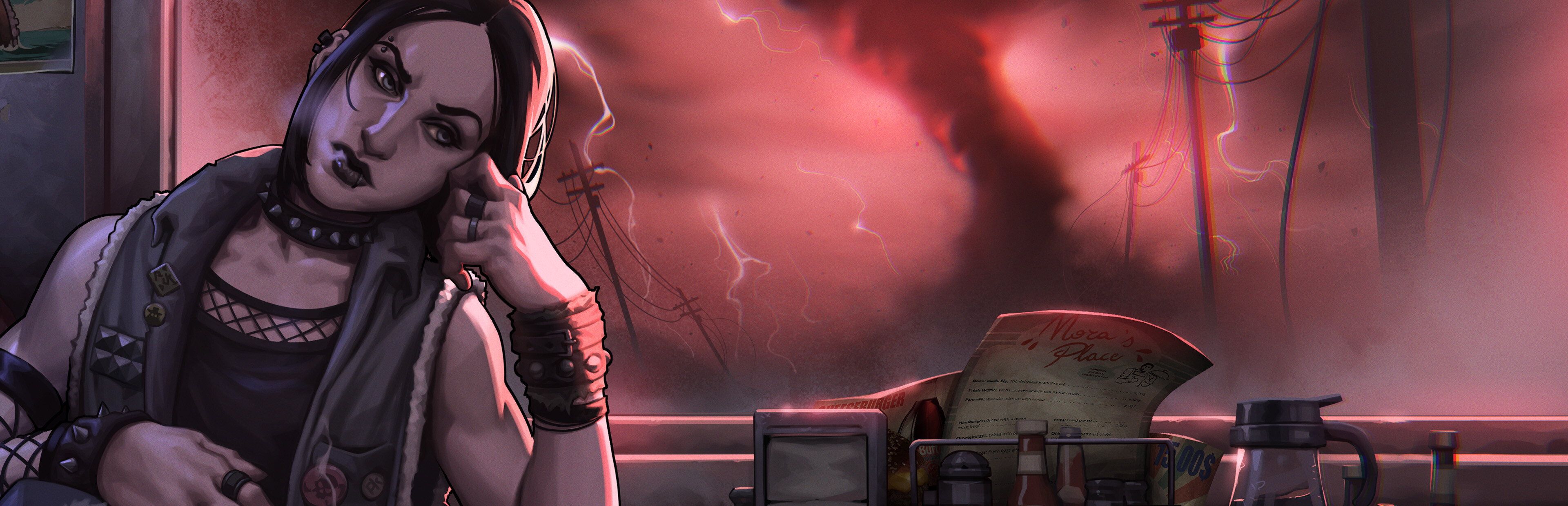
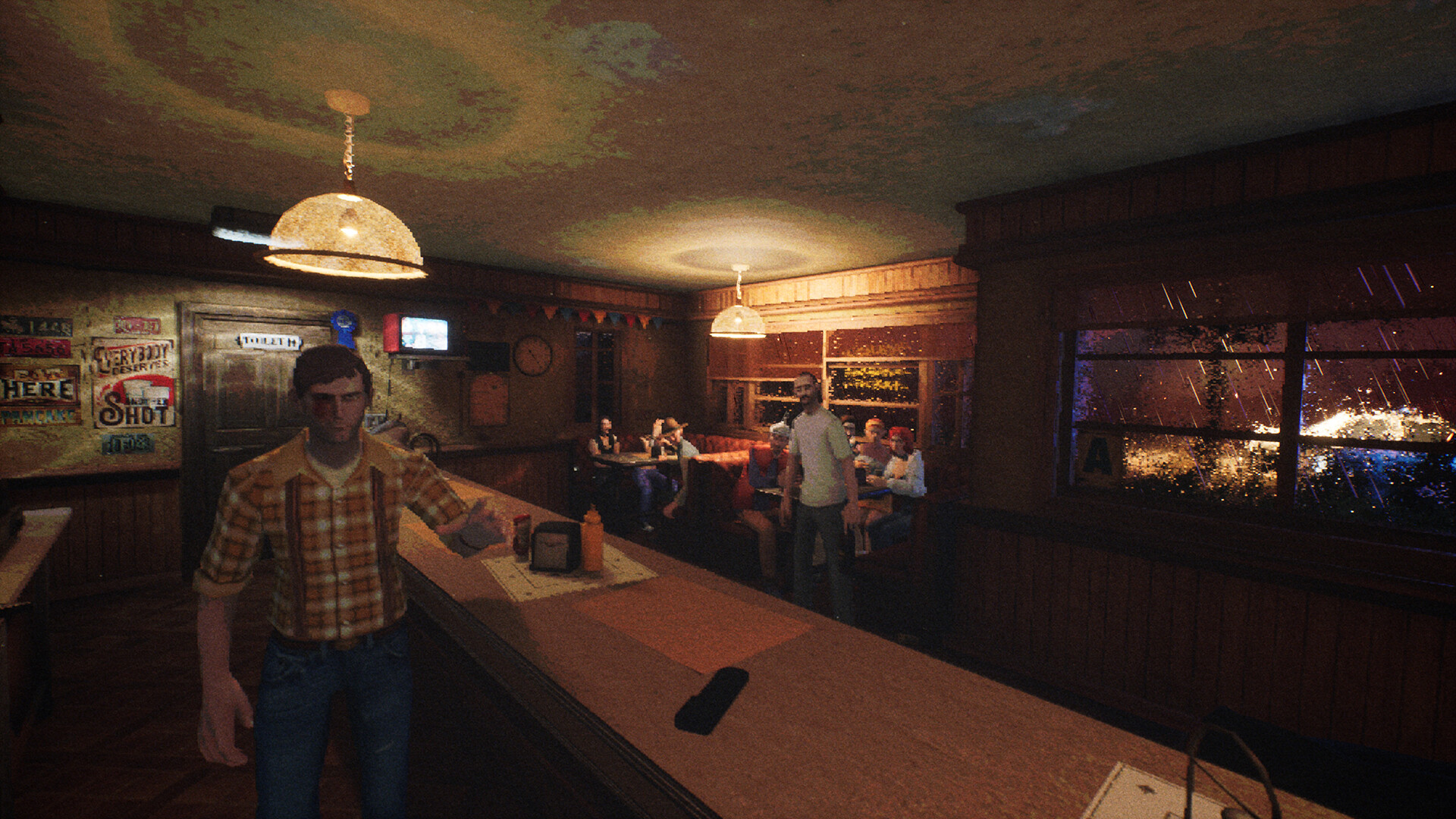
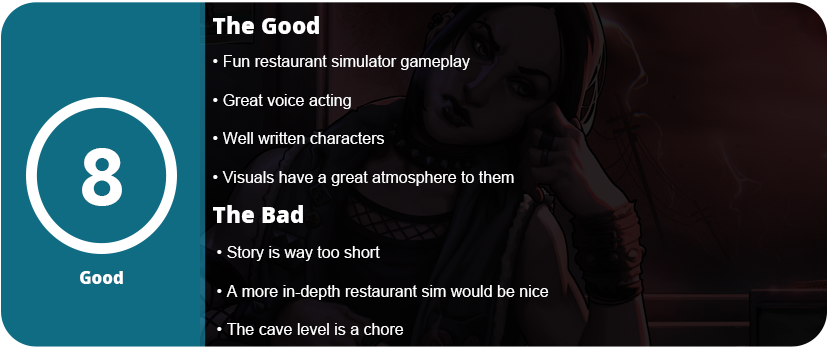
Retro-style games are booming right now, especially those with PS1-style graphics. Their limited capabilities are excellent for giving a certain vibe and atmosphere and are especially popular with horror games. While We Wait Here isn’t exactly a horror title, it does have a dark tone and theme. This is a story that begins near the conclusion and works its way backwards to tell everyone’s story. You are a couple who owns a diner in a small town in the middle of nowhere out in the Heartland of America. There’s no specific location given, and the entire area is generic, but it feels like somewhere out in the Midwest near Tornado Alley.
You are a couple who are about to move out of town and sell their diner. Lisa’s father owned this diner, and she assisted him in running it as a child. You meet Alex, your husband, while working at the diner as an adult. The game is a strange mix of horror, adventure, walking simulator elements, and restaurant sim similar to Diner Dash. However, the integration of the simulation elements with the rest of the story and game is so compelling that I found it impossible to stop playing. I played the entire game in one sitting. The writing is tight and well done, and the characters are very intriguing. Each character ends up at the diner, and you hear their conversations while cooking and play a 10-15 minute segment about their lives before arrival. The characters include two punk rock best friends who are constantly shushing each other about a secret, a couple with a newborn baby, a workaholic old man, and a peculiar and paranoid local.
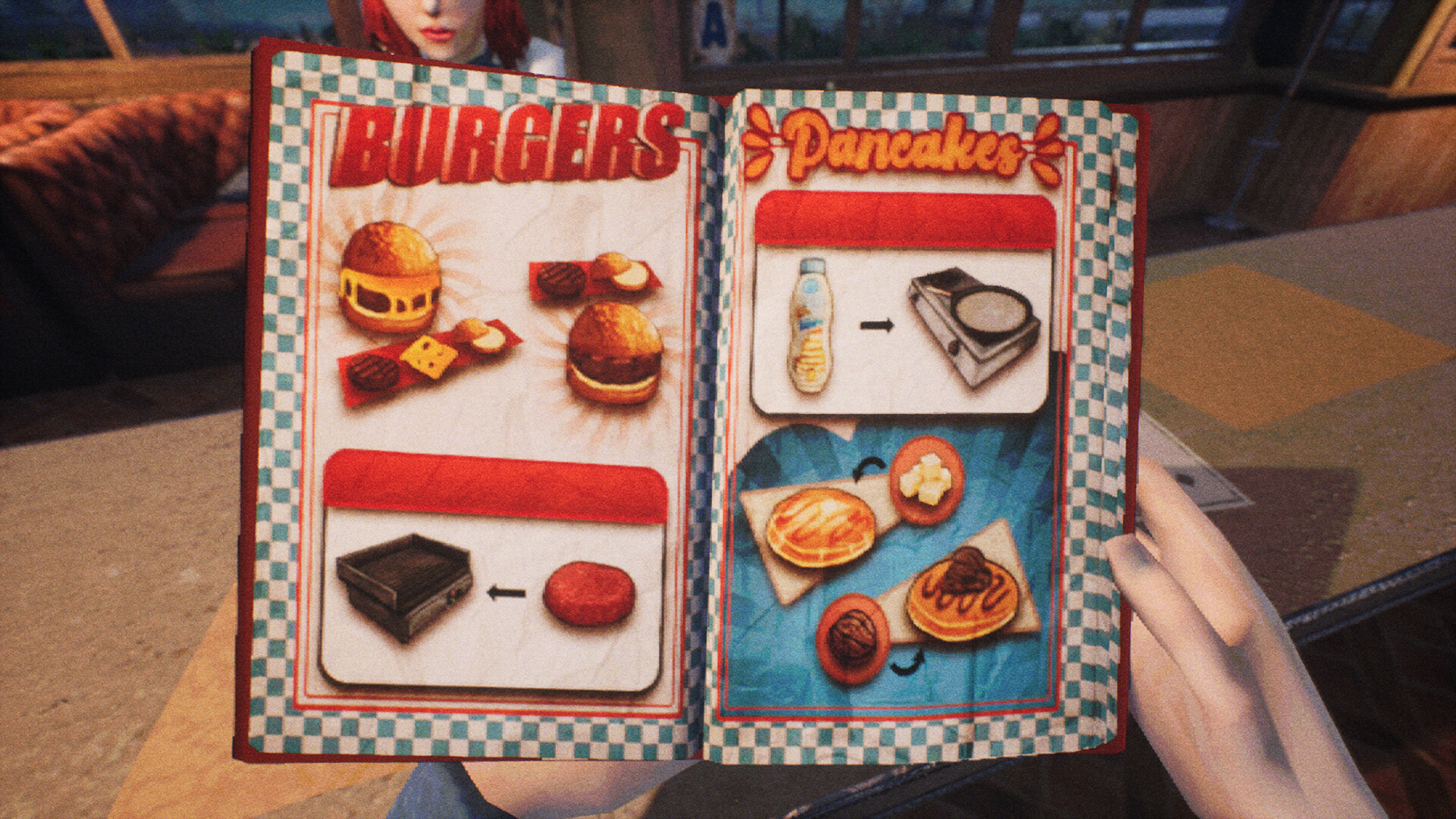
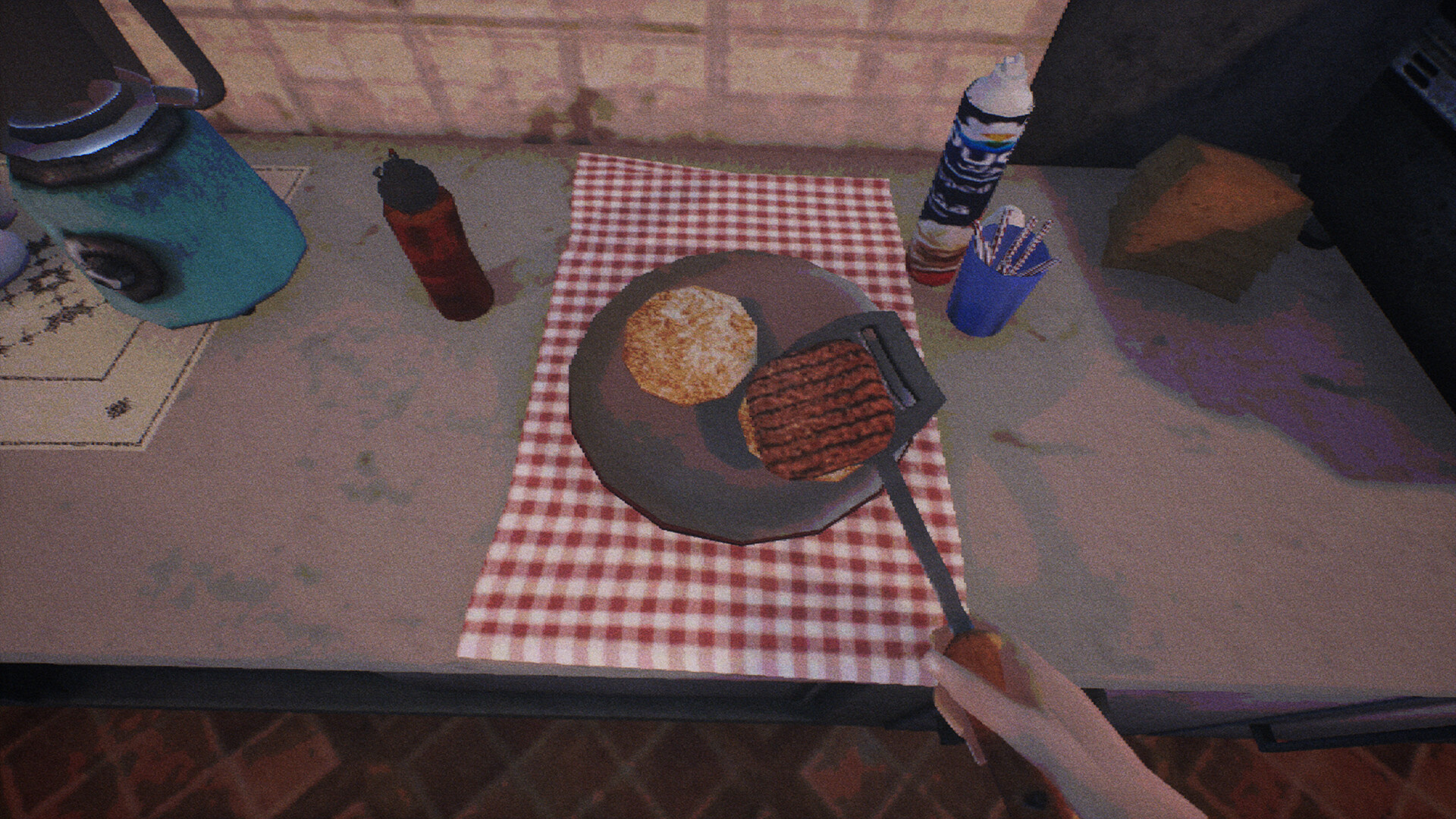
Your story with Alex is eventually told, and I can’t really give any other details about the story, as it could spoil it. There is a mystery between the two and the diner itself. There are many first-person interactions with the people, but mostly on the sim side. Each person can order something off of the menu. The menu is accessible with a button that gives instructions on what items go with each order. Once you place a ticket down on the table, you can go about your business. It’s not very complicated, but the animations are detailed, and overhearing the chatter in the back as the story goes on is great. You can grab milk and ice cream to make a milkshake. Put everything in a blender, grab a glass, and prepare it for the customer. Some food dishes require placing a plate in the prepping area, such as hamburgers. Make sure you look at the ticket icon and see whether they want cheese or not. You can grill, make pancakes, give whiskey shots and coffee, and clean and put away the dishes. That includes putting back ingredients like milk and frozen french fries. This isn’t very deep, and only during a few moments will you have many orders, but there’s no rush. There is no time limit on the game.
You will eventually prepare every type of item by the end of the game, but that’s okay. There’s just enough here for the 2- to 3-hour story, and by then I felt like if I had to prepare more, it would become tedious. There are a few other mini-games such as shooting with a gun during a couple of segments and painting a room, but they don’t overstay their welcome and are relevant to the story. I did find one particular area in the game that really drove me nuts. You need to navigate a labyrinthine cave at a snail’s pace, and it took me nearly 30 minutes to find my way out. The story could have greatly benefited from reducing or eliminating this part of the game.
The visuals are great. Despite the PS1 style, the character models surpass the system’s capabilities in detail. The game is always dark, and you always wonder what’s just outside the window. The bizarre storm that’s the centerpiece of the story made me curious. The entire game made me curious, and I wanted it to go on further. The writing is so well done, as is the voice acting and characters. I was eager to delve deeper into these characters’ lives, yet what’s presented here fulfills its intended purpose and accomplishes the task. Both the resolution and each character’s conclusions are satisfying. It is very difficult to have such a good story for this short of a game.
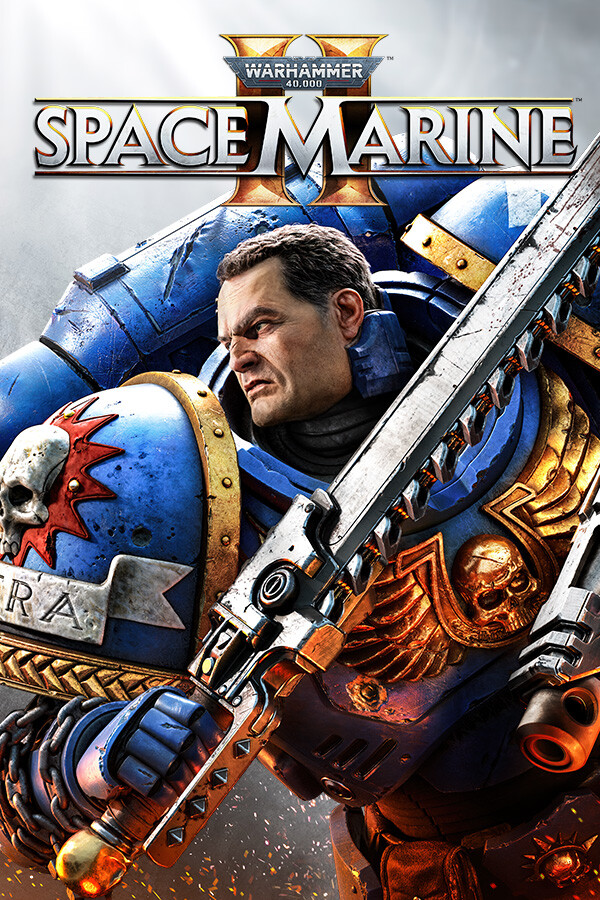
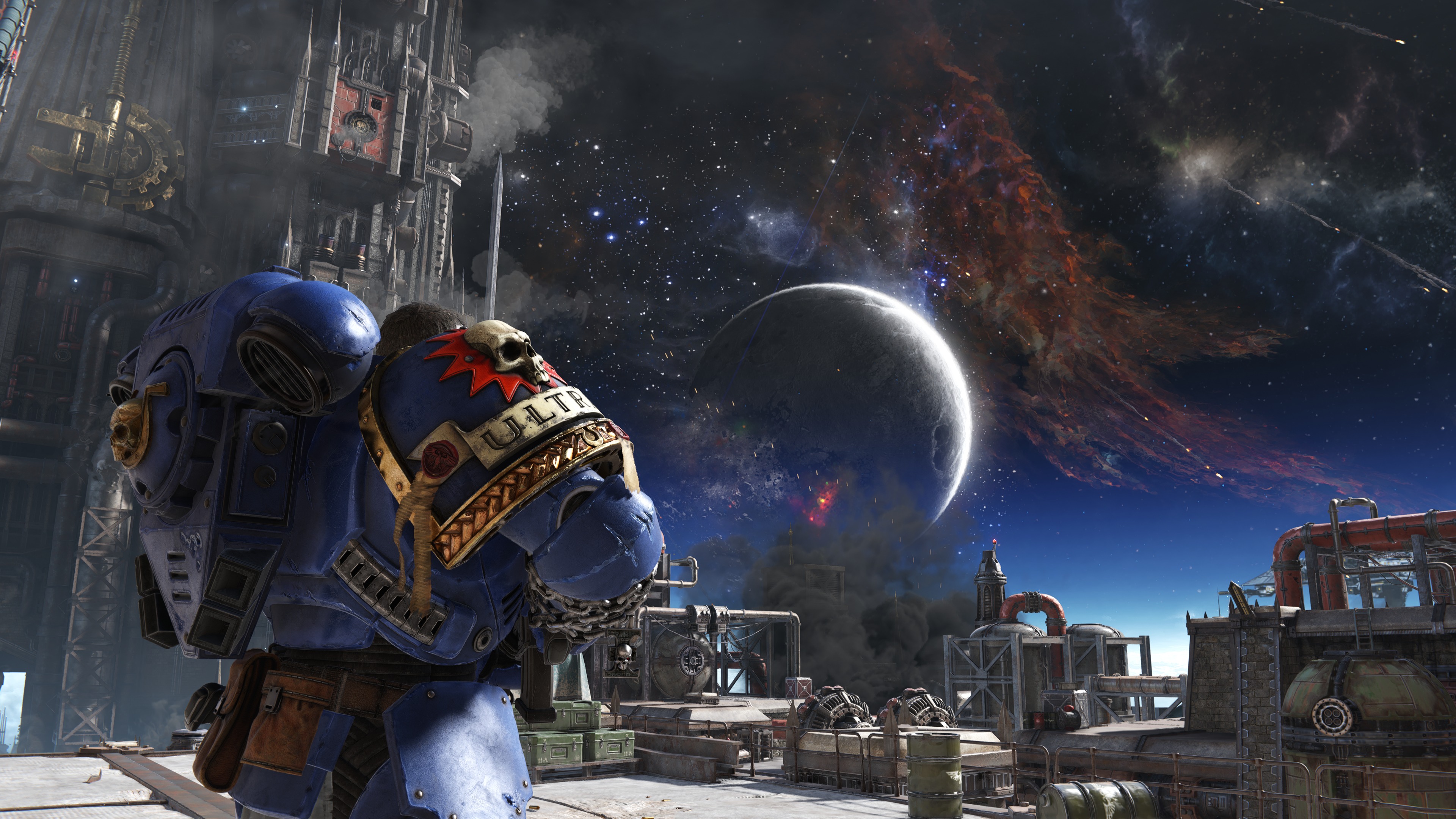
No matter your Warhammer fandom, you’ve probably played or heard of one of the games. The games garnered a stellar reputation with the Dawn of War strategy games in the early 2000s for PC. These games established Relic’s reputation and were regarded as some of the top Real-Time Strategy games of their era. Over two decades later, the franchise is now open to any developer willing to produce a game. One of the few genres the series has touched is action, let alone a third-person shooter. Despite receiving positive reviews, the first Space Marine struggled with its marketing strategy. Some saw it as a Gears of War clone, while the game also had issues with repetition and being somewhat forgettable. Sadly, not much has changed with the sequel.
The original game appears to have taught the developers very little. While it was a solid foundation, work on it feels like it was completely forgotten about. While you do continue the story of Titus, the Ultra Marine from the original game, his backstory isn’t touched upon, and you must have extensive knowledge of the Space Marine faction to truly enjoy this game. The story lacks depth, providing minimal explanation of the events taking place. The game opens up with one of the few scripted scenes as you play as Titus, who is dropped down into a Tyranid-infested planet to deliver a megabomb. This is where the game’s combat is introduced, and sadly, everything the game has to offer.
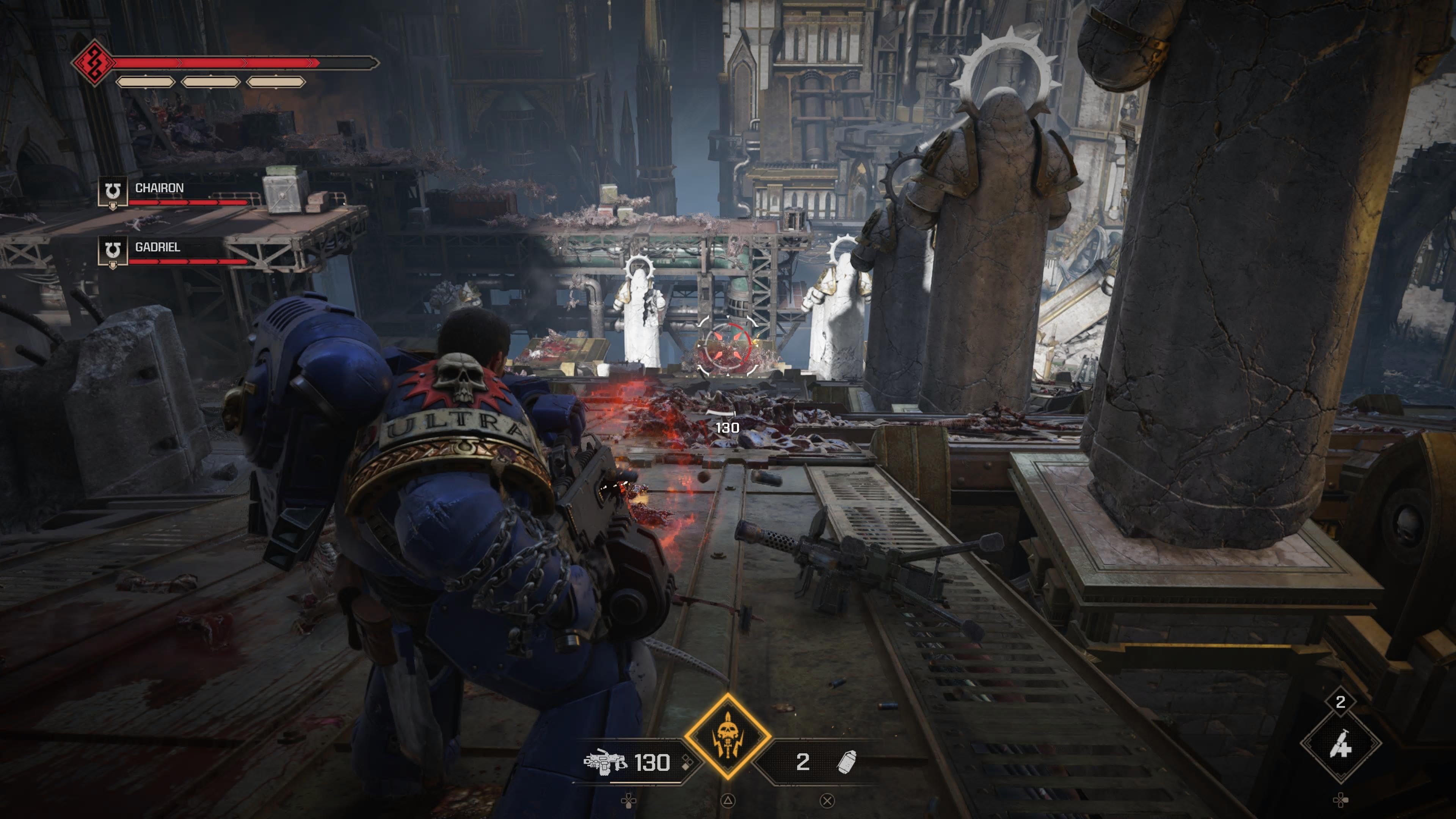
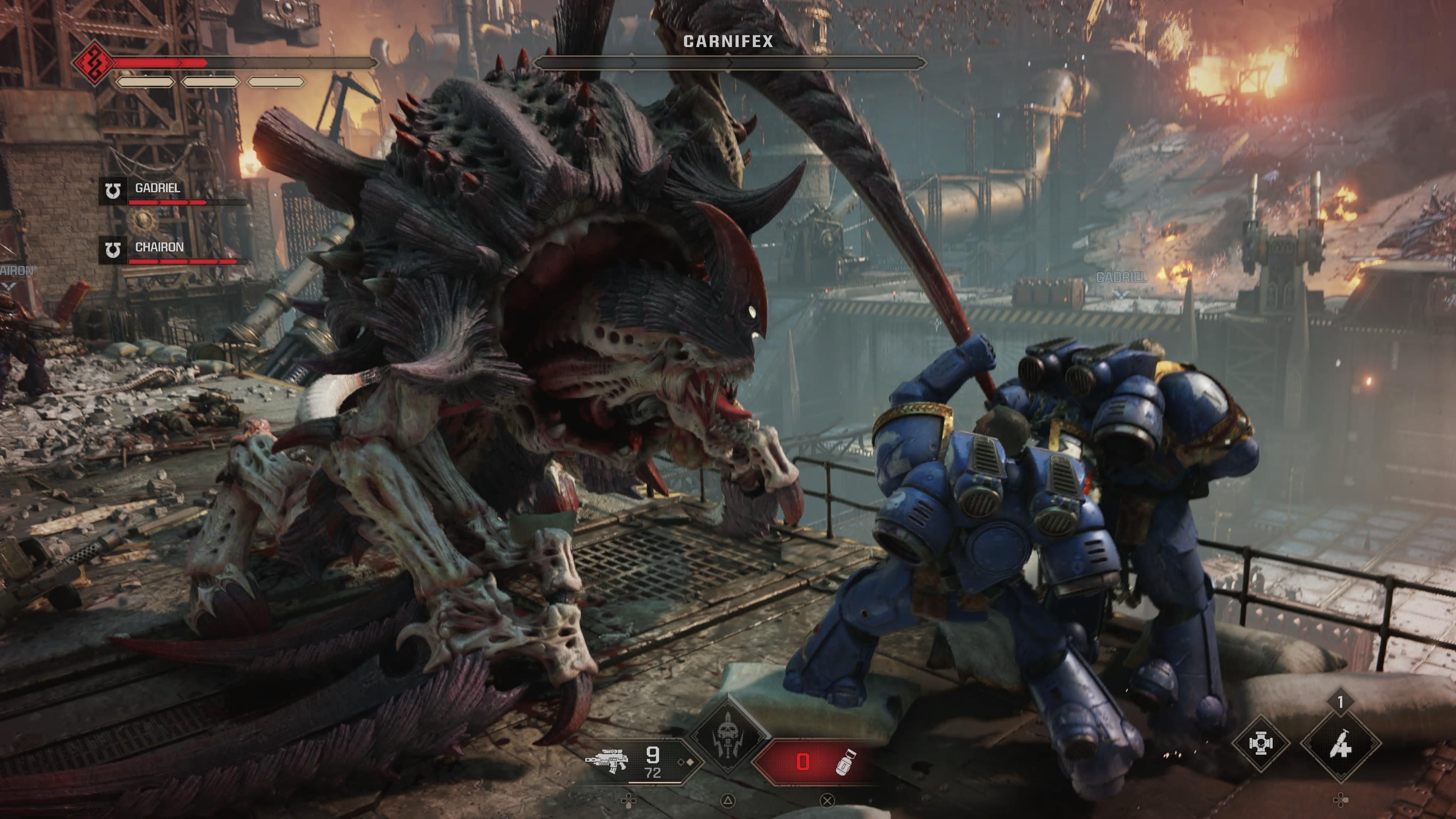
The combat in Space Marine 2 is really satisfying despite how incredibly repetitive and shallow it is. The animations are great. The weapons are punchy and all have a personality. I actually chose different weapons for different situations that arose. Melee combat is the most satisfying, with Titus using one of four different melee weapons that are unlocked as you progress through the campaign. These weapons include the combat knife, chainsword, power sword, and thunder hammer. Each has different feelings and speed as well as damage dealt. There really is only a three-hit combo with no light or heavy attacks. There is a parry system in which a blue flash appears on an enemy that is about to attack you. If it’s a small enemy, Titus will grab them and instantly kill them. Larger enemies will just deal a lot of damage. When an enemy flashes red, you can perform an instant kill with a brutal attack. Sadly, the same animation repeats for each enemy, so it gets old pretty fast.
In terms of shooting, the camera placement bears a resemblance to Gears of War. However, the game lacks a cover system, a feature it could greatly benefit from, and the sheer number of enemies necessitates constant movement. When you deal enough damage, a red reticle may appear on the enemy, allowing you to press the fire button for an execution shot. The downside is that most weapons are ineffective at close range. There are no shotguns or any close-quarters weapons outside of the flamethrower. There are sniper rifles, which are useful in limited situations. You also have a secondary pistol, which I found nearly useless, as there is plenty of ammo everywhere for your main weapon. There are also throwables, such as regular grenades, sticky grenades, and a bomb that you can detonate at your command. The game really does not give you enough grenades despite their effectiveness in dispersing large crowds. As a result, the weapons don’t feel well-balanced.
The more passive parts of combat include your Ultra ability, which grants you more damage, and you heal as you deal damage. This trait only lasts maybe ten seconds but takes forever to build back up. On two levels, you get to use jump packs, which grant you dash and double jump abilities, as well as being able to charge up a ground pound, which does some nice AOE damage. As you can see, most of the game is spent just aimlessly wailing on hordes of enemies or shooting them when they are far away enough to matter. It’s a shame the gun balancing is so poor, as they feel excellent to use. Instead of throwing masses of enemies at you, I wish they spent more time making the enemies more unique and worthwhile, like in Gears of War, which would enhance the gameplay experience. You also only get two different enemy types. The first half of the game sees the same few Tyranid types, and then the final half is only Chaos enemies, which are essentially just Space Marines. There are some sub-bosses, but they don’t provide much of a challenge, and there is only one for each enemy type. The Tyranid Carnifex and the Chaos Helbrutes. There are a couple of main boss fights, and they are the only real challenge in the game.
The entire game is fairly easy. I rarely died, and while the game itself is well paced, the level design is rather boring and uninspired. You will sprint down the same corridors and hallways just to press a button to open a big door to sprint down more hallways to shoot out in a large open area, which all look the same. Some indoor areas, particularly your main base, are detailed. Despite all of this effort, the actual layout of the levels is just boring. Back at base, you won’t see much change either. You will receive some speeches from the chaplain; you can visit the armory, but there’s nothing really here. You can’t unlock new appearances, and you can only select your loadout based on weapons you have already unlocked. Additionally, the base involves running through hallways and using elevators to navigate between levels. This terminal also allows you to select your co-op missions.
The multiplayer itself won’t last long for most people. Most of the fun in PvE comes from doing the co-op side missions. The PvP features a limited number of maps, each with a rudimentary layout that doesn’t inspire much planning or strategy. With no cover system, players are just running around shooting and whacking at each other, which isn’t very fun. I found myself playing multiplayer for a couple of hours and never had the desire to go back. Once you complete the campaign, there’s also no reason to go back. I really only recommend buying this game on a steep sale.
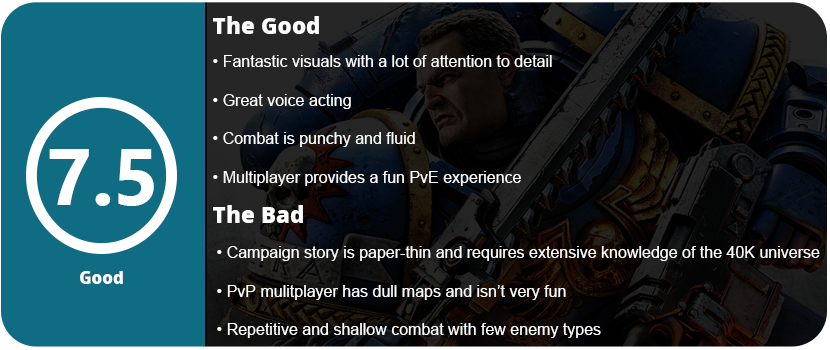
As it stands, Space Marine 2 didn’t learn much from what people critiqued the first game for. While the combat is crunchy, fluid, and violent, it’s very shallow, leaving you with repetitive gameplay. The same two enemy factions have the same type of enemies, so the entire game just gets boring rapidly. While the weapons feel enjoyable to shoot, they’re not well balanced, and the lack of a cover system makes strategizing your weapons almost meaningless. Despite the game’s impressive visuals and meticulous attention to detail, the level design remains uninteresting. Despite the excellent voice acting, the story lacks depth, and unless you possess a deep understanding of the Space Marine faction, you won’t derive much enjoyment from this game. That includes the passable multiplayer.
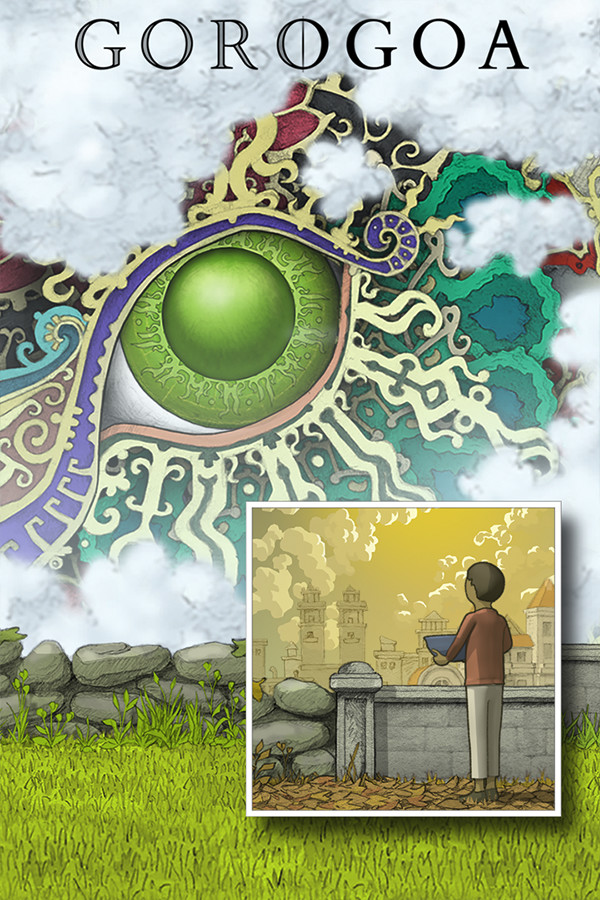
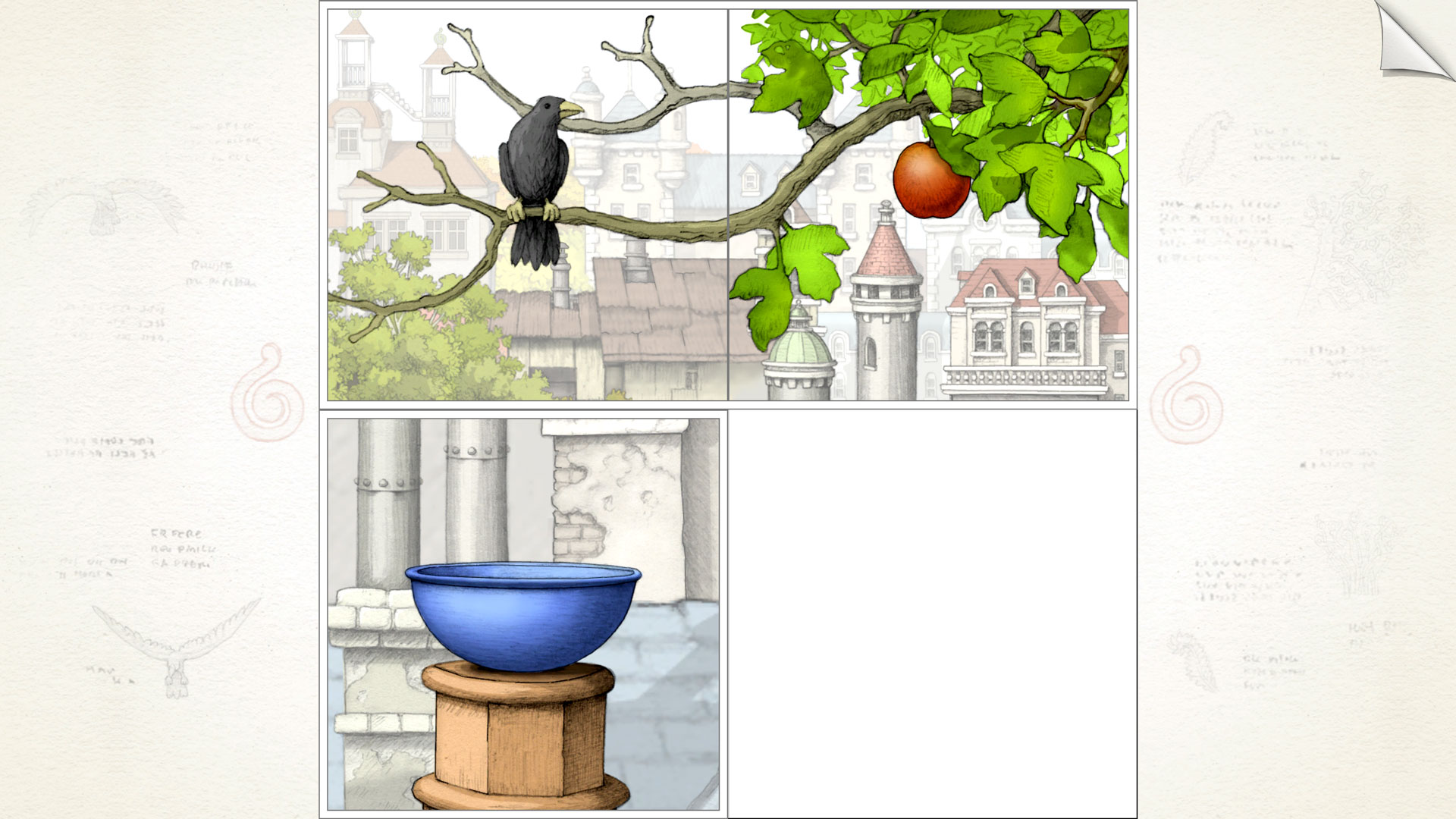
Gorogoa is a puzzle game I have avoided for years. All for two reasons: It’s incredibly short, and I thought the game would be so abstract that it would be extremely obtuse and difficult to play. I was mistaken, indeed. Gorogoa only takes 90 minutes to 2 hours to complete depending on how stumped you get. The first two chapters of the game ease you into the concept of the entire thing. The story primarily involves following a boy during wartime as he collects different colored fruit to complete an artistic masterpiece. At least that was my interpretation of the story. There isn’t a single piece of written dialogue in the game, so you must use your imagination to get the story across.
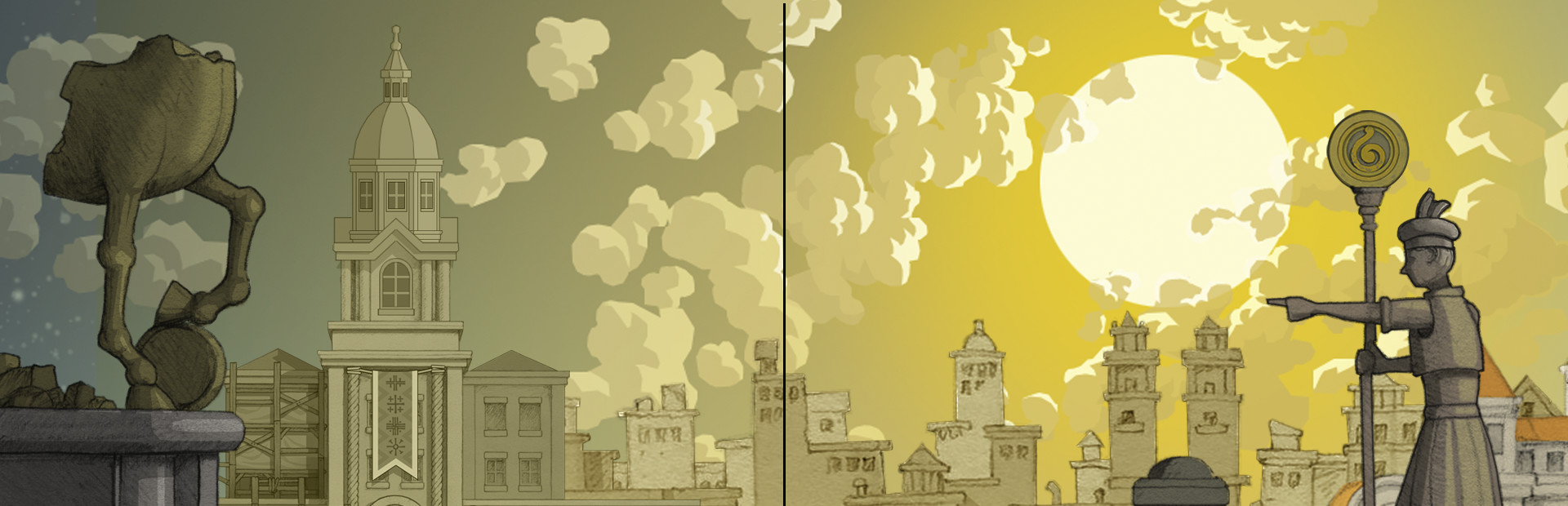
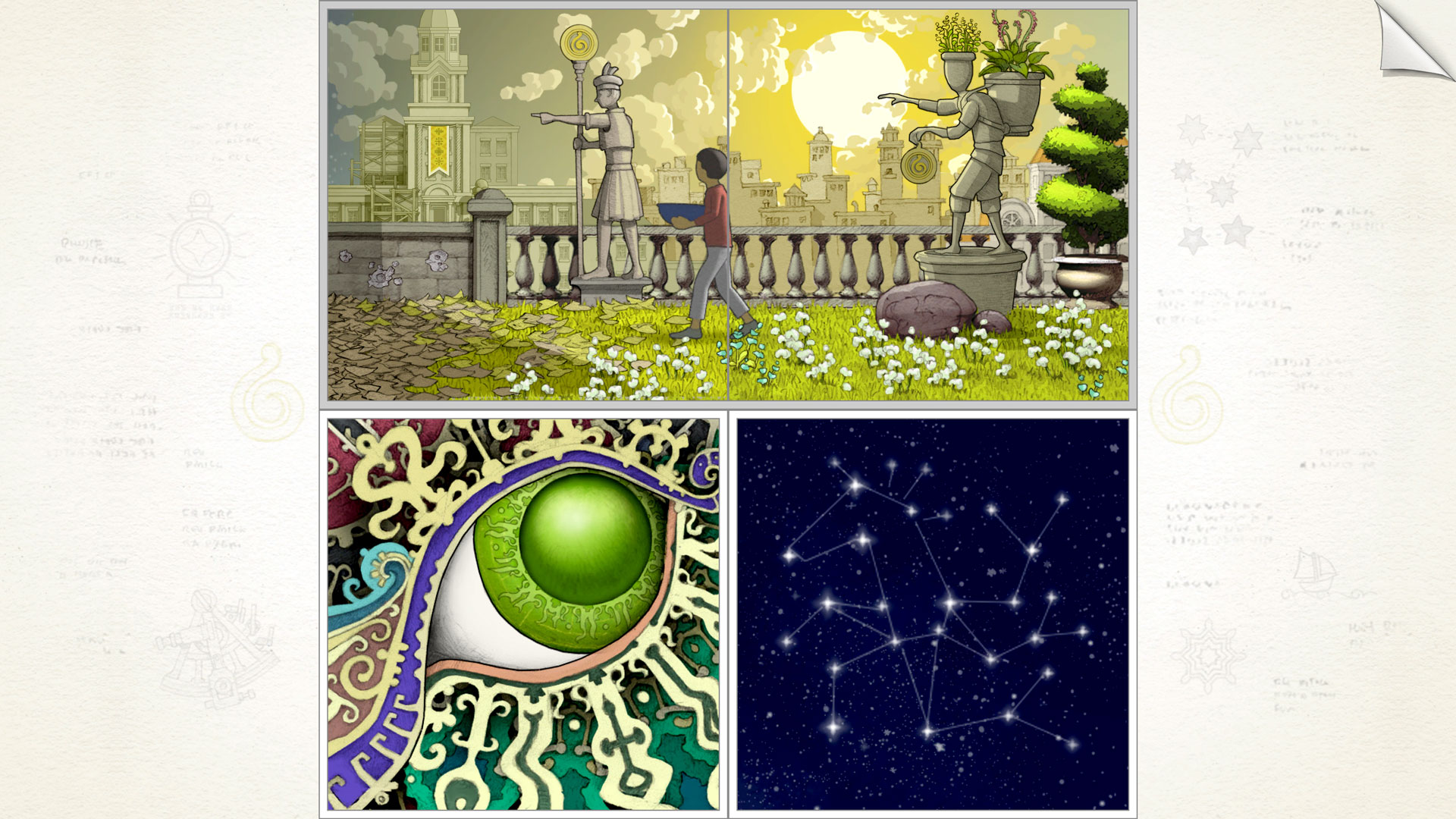
You have four tiles you can move pieces around on. Each tile is a moving picture. An hourglass icon will appear when an animation is playing, indicating that you cannot interact until the animation concludes. You can then click the tile, and blue flashes will appear over the part you can interact with. You can then zoom into the area, and occasionally you can zoom in multiple times, altering the perspective of the tile. Many times you need to find a “frame” to pull out of the tile and put to the side. Usually, another tile lies beneath this frame, requiring you to zoom out to reveal another puzzle piece. Occasionally you can pull multiple “frames” from the same tile and then zoom out and around on the frames as well. This procedure seems confusing in writing, but in practice it works really well. This reminds me of games such as echochrome, which challenge your perspective and encourage unconventional thinking.
Some puzzles will require you to move the boy from one frame to another. You can usually guess which one by matching the surroundings around the boy as he walks down a staircase. A doorframe might be the “frame” you pulled, and you need to zoom in and out of the frame the boy is in to figure out where to put the doorframes so he can continue towards the fruit. There are some puzzles in which you need to have an object interact with multiple frames, such as a box of rocks needing to be turned into a giant boulder to break glass. Perspective comes into play when matching tiles to determine which way the boulder should go. In chapters four and five the scenario gets more complicated with the need to rotate tiles, and you have several areas you can zoom in and out of in a single frame.
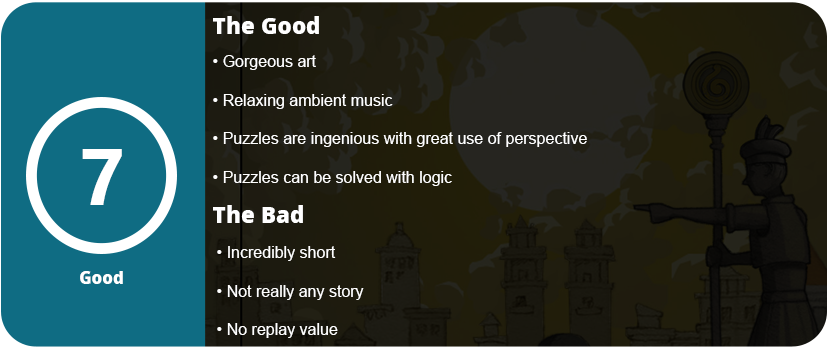
You get a lot of Eureka! moments if you just zoom around and fiddle around a bit. A couple of times, I understood the concept or knew the goal, but reaching it was challenging. I won’t blame the game for this, as it could just be my thinking, as these puzzles are very well designed and extremely clever in using perspective. I couldn’t find much to really nitpick at apart from the rotation animations need to fully play out before you can zoom in and out. I wish there was a skip animation button to expedite the tile rotations, enabling me to solve the puzzle before losing my focus. I found that the music stopped a little too frequently, and while it was good, I don’t quite understand why this was the case.
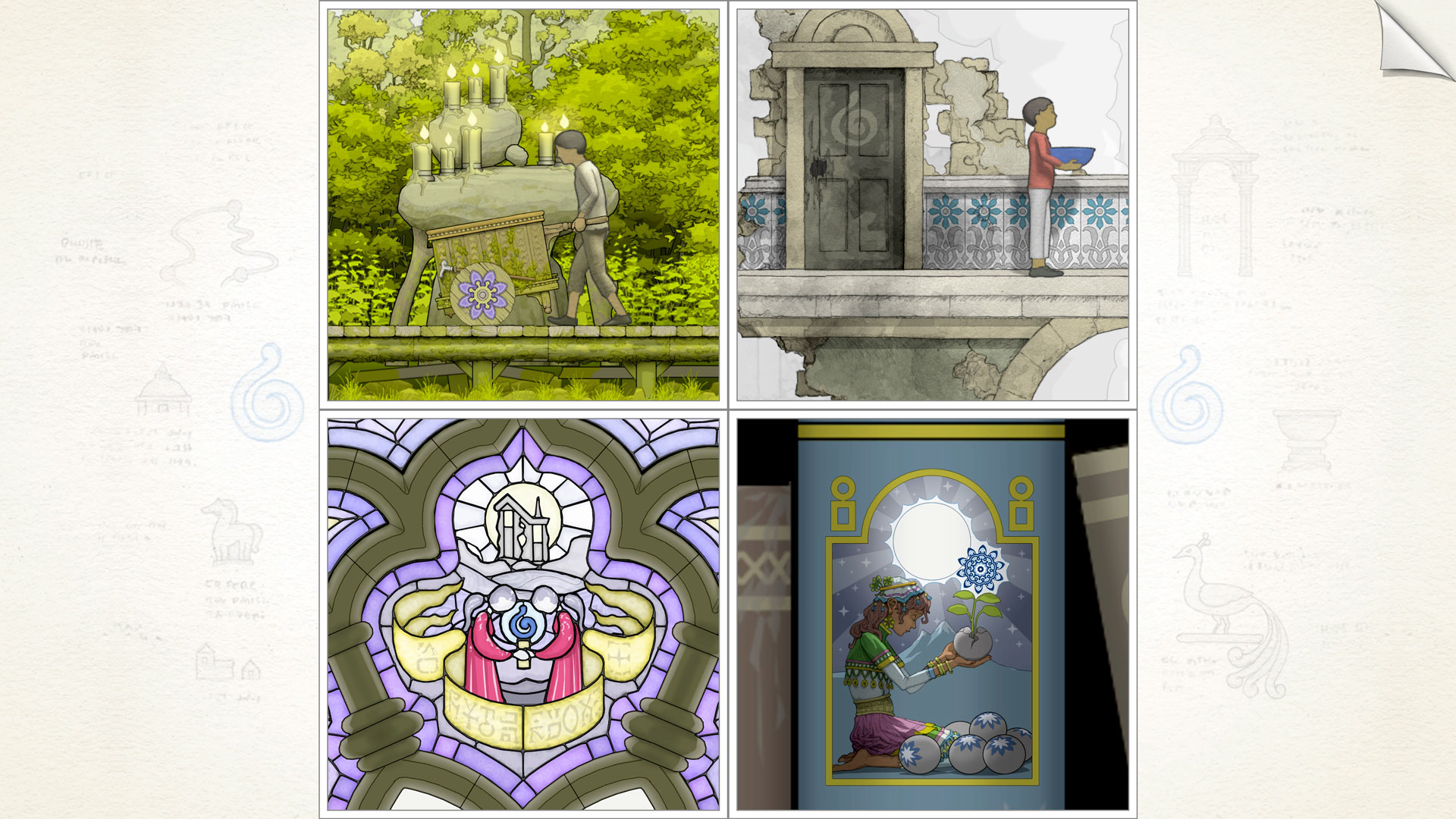
The artwork is fantastic, and the game is one of those games that feels like interactive art. The colors really pop on OLED displays, and I was surprised at how well this game scaled from a small screen to an ultrawide monitor. While the playspace is just a 4:3 box for the four tiles, the space around it has been scaled out to accommodate the empty screen space. The space it utilized resembled a sheet of paper. I was also surprised at how well the controls worked, from a touch screen to a touchpad to a mouse. However, this is a game that will not work with traditional controllers. There’s too much sliding around the tiles, and this would get frustrating quickly.
As it stands, Gorogoa is a gorgeous and clever puzzle game with lovely ambient music and enough puzzles to really make you think; however, basic logic will give you that Eureka moment and give you just enough of a serotonin hit to keep going. Though the game ends too quickly, it’s a great work of art that puzzle fans should play.
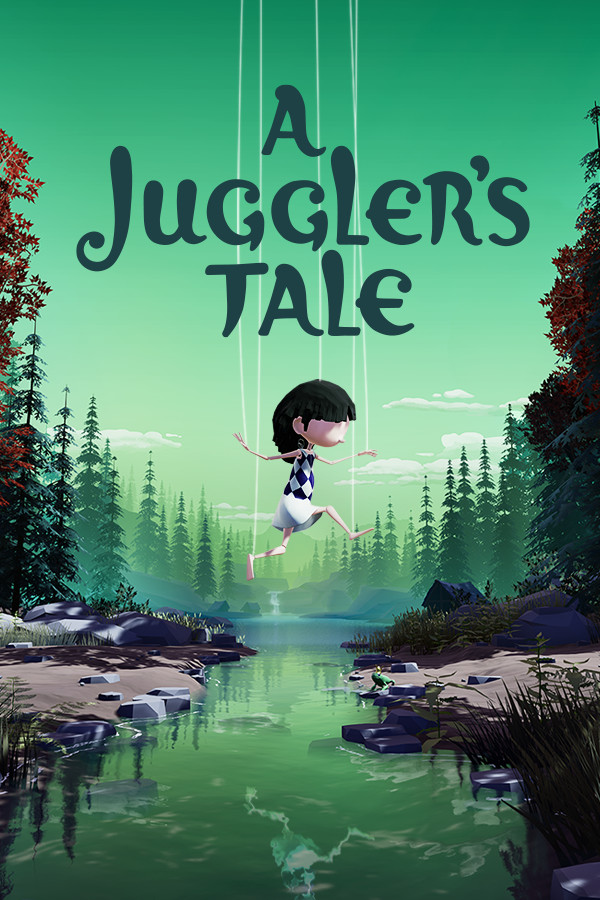
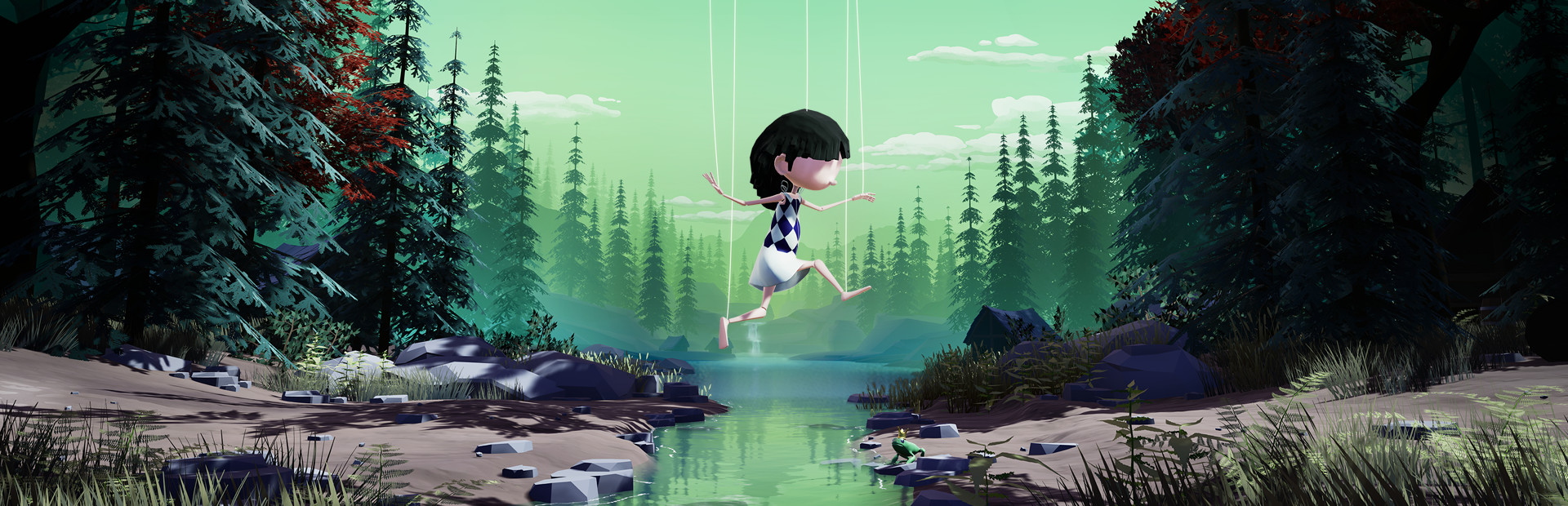
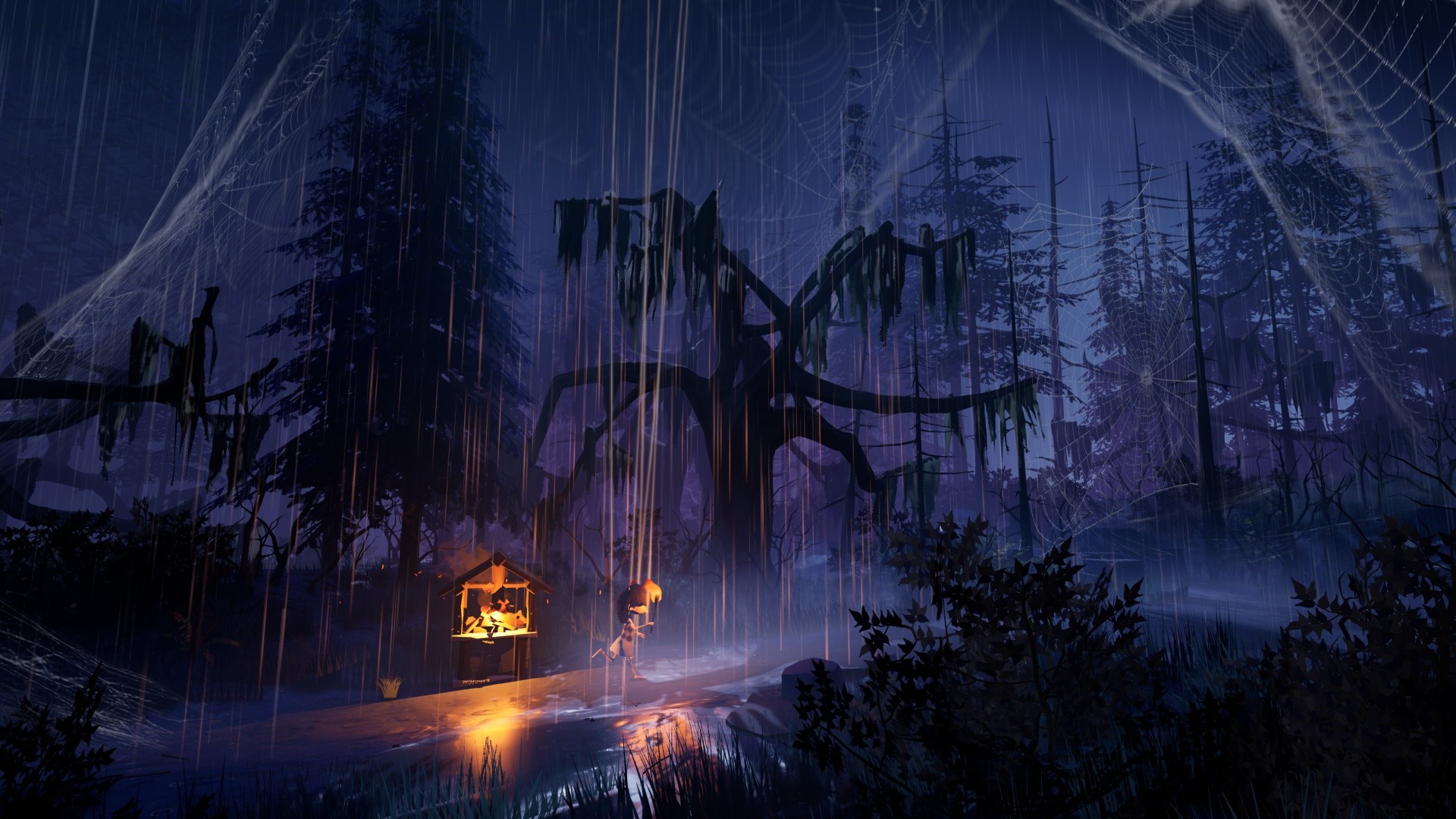
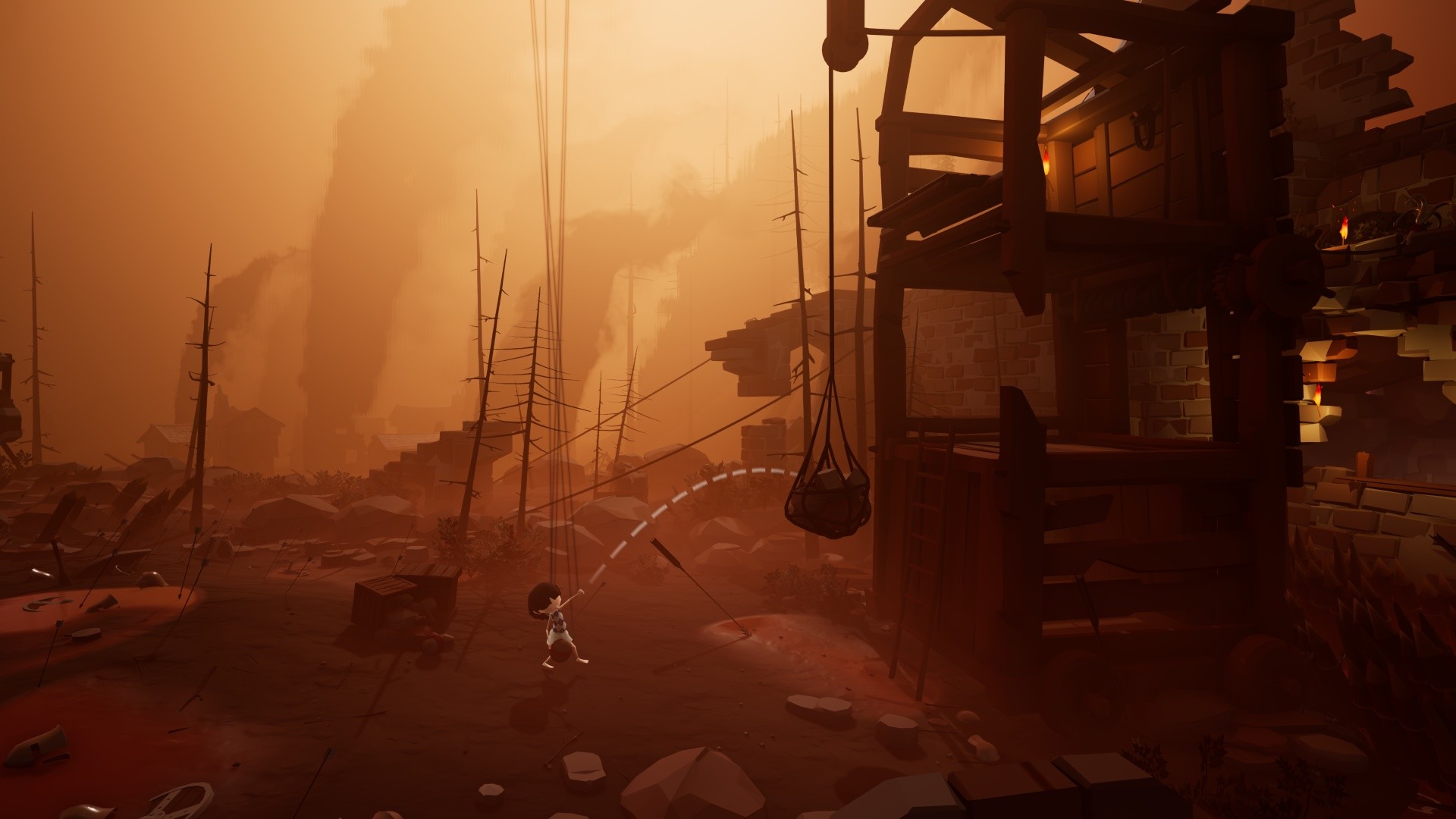
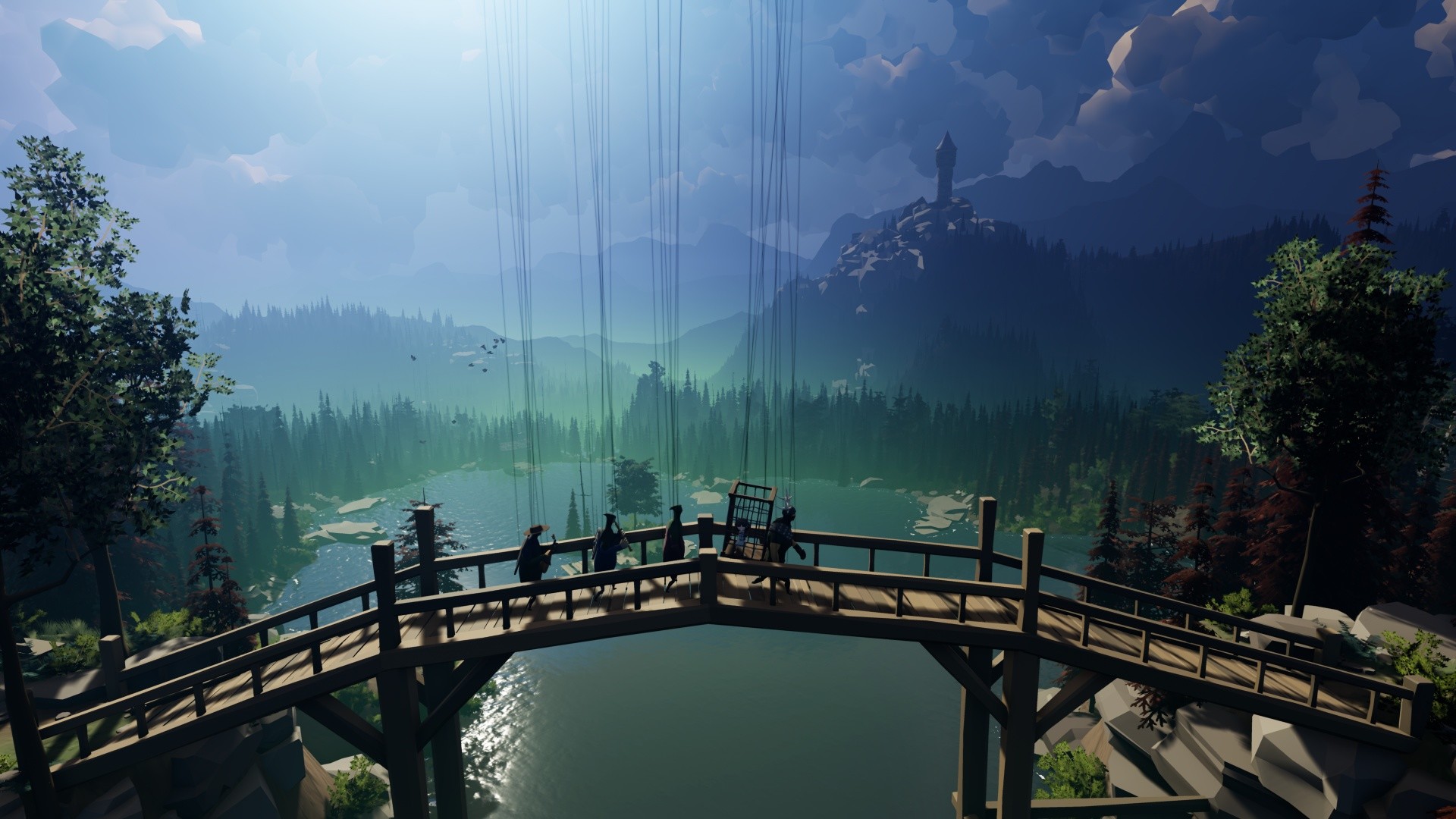
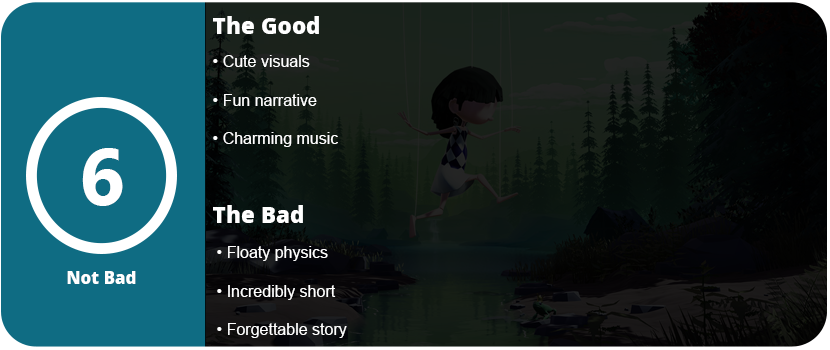
What would happen if a puppet broke free from its story? That’s the tale that A Juggler’s Tale spins. You play as a puppet named Aby who is following the lead of a narrator. Aby is an acrobat for a circus when she decides she wants to break free and be an actual person. She spends her time on the run which seems to be a familiar theme with these sidescrolling tales that star children such as Limbo, Inside, and even Little Nightmares. The first act is spent as a tutorial. You can run and jump, drag things, and throw objects. Each are used to solve simple puzzles. Usually there’s one or two per act. The acts are very short clocking in at around 15-20 minutes each. You can easily finish this game in under 2 hours counting for deaths and time figuring puzzles out.
Whle I didn’t find the puzzles themselves hard it was difficult to distinguish what could be interacted with mainly throwable objects. While some objects that could be pushed had red ribbon on them there would be rocks or apples that blended in with the background. I thought I was stuck and couldn’t figure out a puzzle until I looked it up and releaized that a cart was needed to progress, but I had no idea I could interact with it. The game at least has a good pace and I always felt like I was moving and advancing things. There is a bandit that is hired to capture you named Torda who chases and torments you throughout the game. Most of the platforming is simple such as hopping over gaps or climbing up ledges. Nothing that will test your Mario skills, and the physics are floaty.
Part of the puppet gimmick is that Aby is attached to her strings and they will get caught on objects. A lot of the time you are figuring out how to move the objects to free your strings. There are a few stealth sections with Aby hiding from flashlights and distracting bandits by moving certain objects. Nothing that we haven’t seen before. The game is rather entertaining, but the story is simple and nothing too special. There aren’t any crazy plot twists or any voice acting or dialogue to speak of outside of the narrator. It’s hard to get attached to characters like the little boy in Little Nightmares or Inside due to the lack of events and progress that the characters go through despite not speaking.
Overall, A Juggler’s Tale is fine. The graphics are colorful and well done with nice paper cut outs and a flat shaded art style, but the gameplay is very simple and won’t challenge anyone. This is a cute distraction that will get you through an afternoon, but you will soon forget about it.
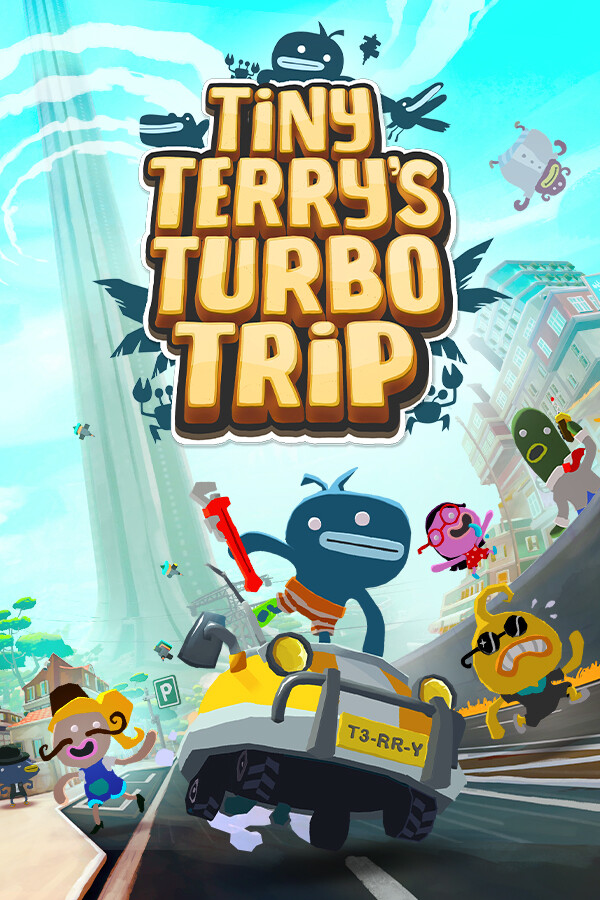
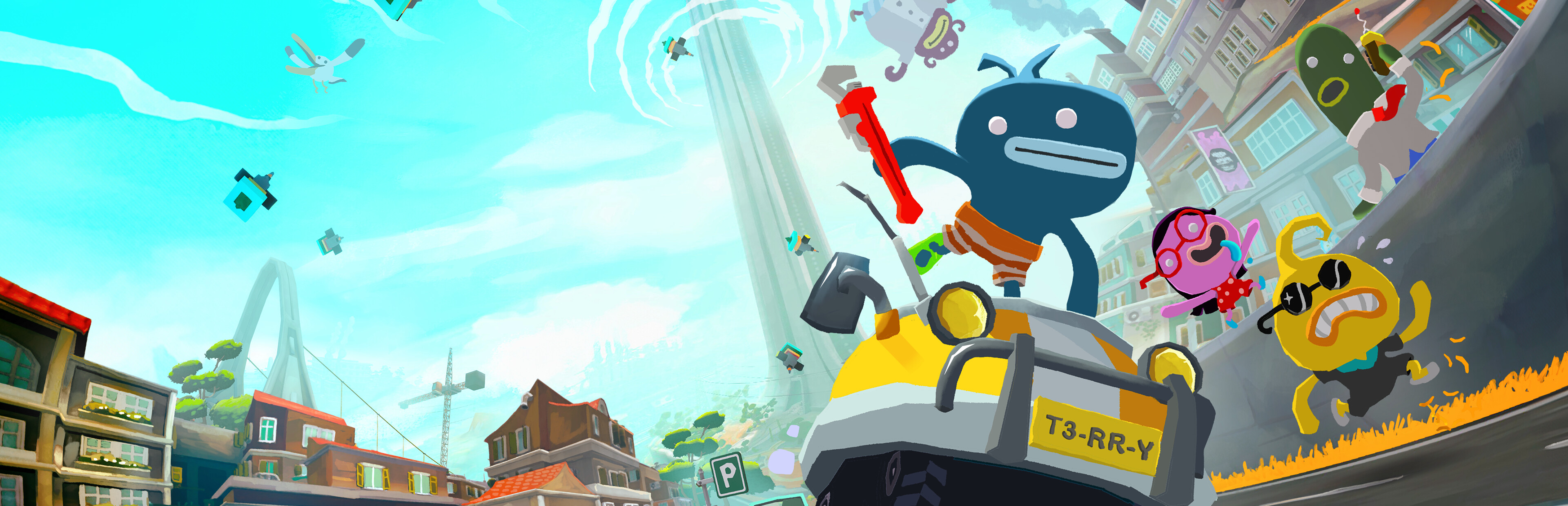
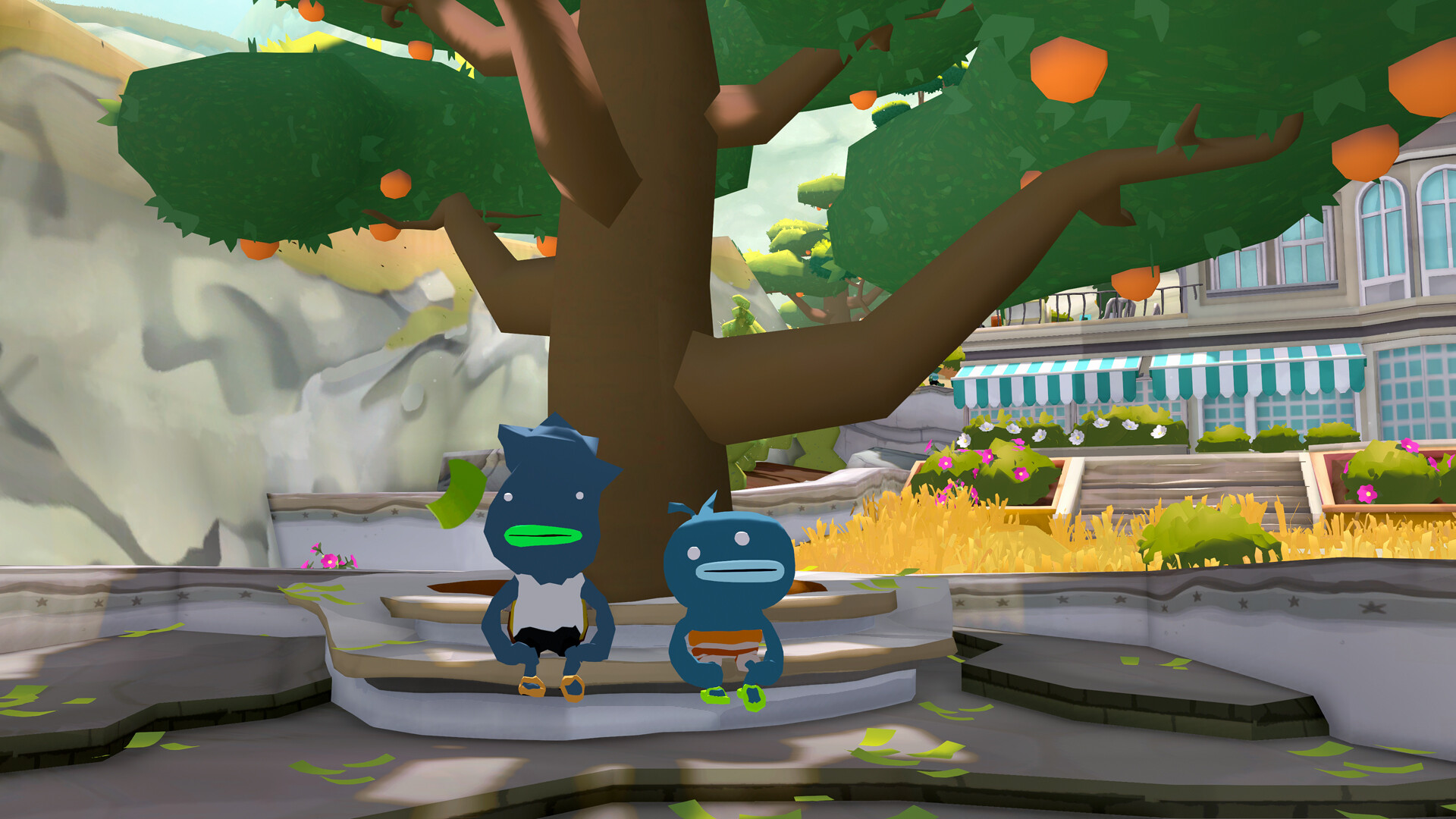
There are many games these days trying to bring back the nostalgic feeling of Nintendo 64 adventure titles, and many of them don’t quite pull it off. There’s a reason why we have moved away from collect-a-thon games such as Banjo Kazooie and Donkey Kong 64. While the worlds may be charming, the characters fun, and the visuals cute, the overall gameplay loop can feel tedious and sometimes boring. Tiny Terry tries to bring back that type of game with a large open map and things to discover but ends up feeling like a chore very early on. Unless you specifically like this type of game, then there isn’t anything here for you.
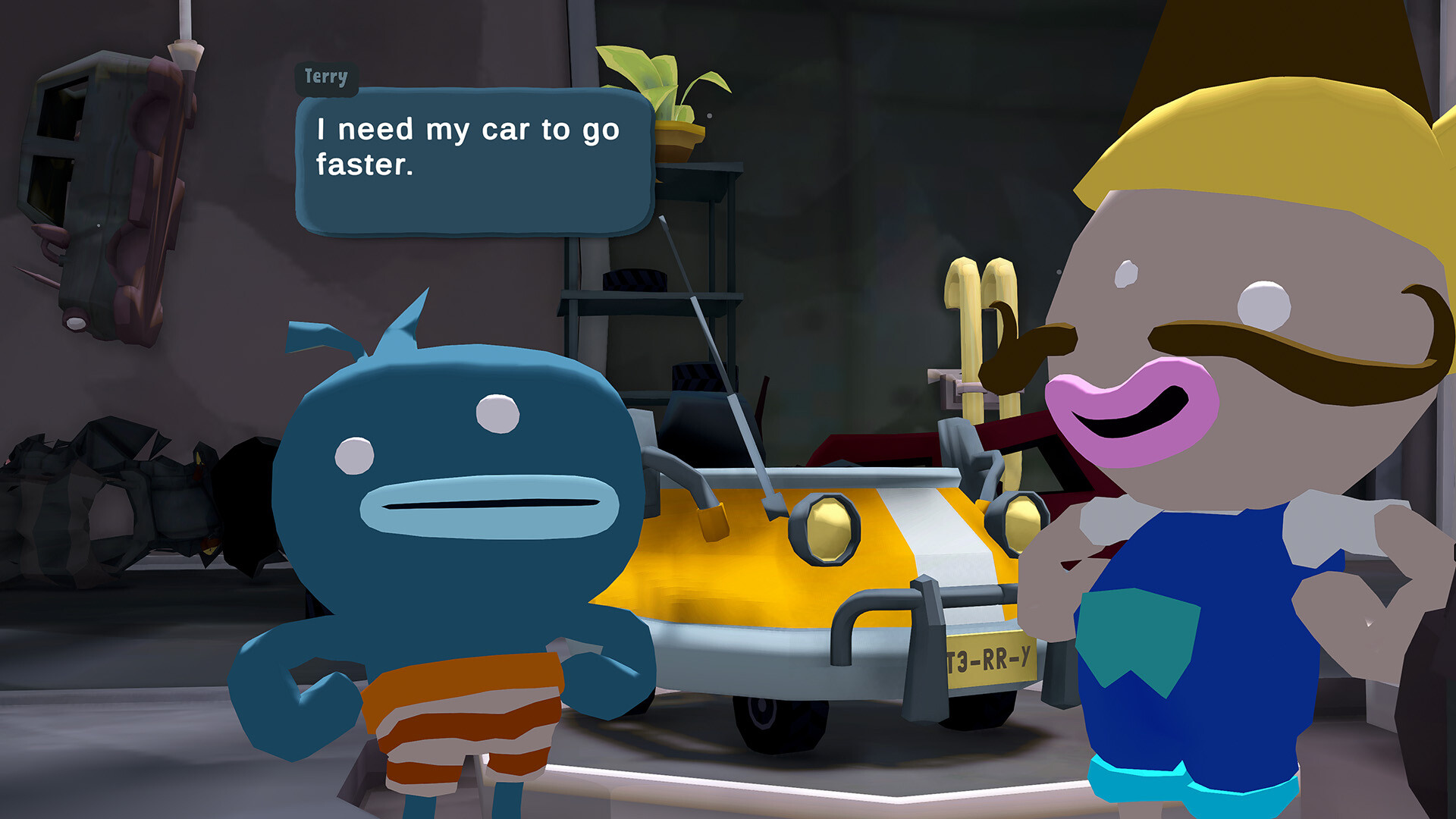
There are modern games that do these tasks well. Games like A Short Hike make the gameplay loop of collecting and finding things appealing and fun. Tiny Terry starts out by just dumping the player into the world with just a couple of objectives. This is also fine, as talking to people can also give you more objectives. The issue lies within traversing the world, the mechanics, controls, and some of the objectives being very obtuse. The overall humor of the game is fine, but nothing noteworthy attempting to emulate a specific style. Terry wants a car only to go to space. Someone built a highway to space, but no one knows why. He goes to an unemployment center where they lend him a car. It’s your job to find enough junk in the world to upgrade Terry’s turbo booster eight times to make it to space.
Objectives are mostly fetch quests. You must bring someone who has stolen a car to earn cash. That cash can be given to someone else to fulfill an objective, which in turn gives you a location on your map to dig up a trash can that has 100 junk in it. Each upgrade costs 150. However, to dig up that trash can, you need the shovel. Do you understand the direction I’m taking with this? There’s a lot of leading on with objectives. You need this object to complete this objective to obtain this amount of an item to finish another objective. The process can get tedious and frustrating. Finding a way to grind out cash to also acquire other items to allow access to different areas can feel like you aren’t accomplishing anything. You’re always fighting between not having enough cash to find more junk and vise versa. You also can’t unlock fast travel until you have upgraded your car seven times. By then, you’ve nearly completed the game.
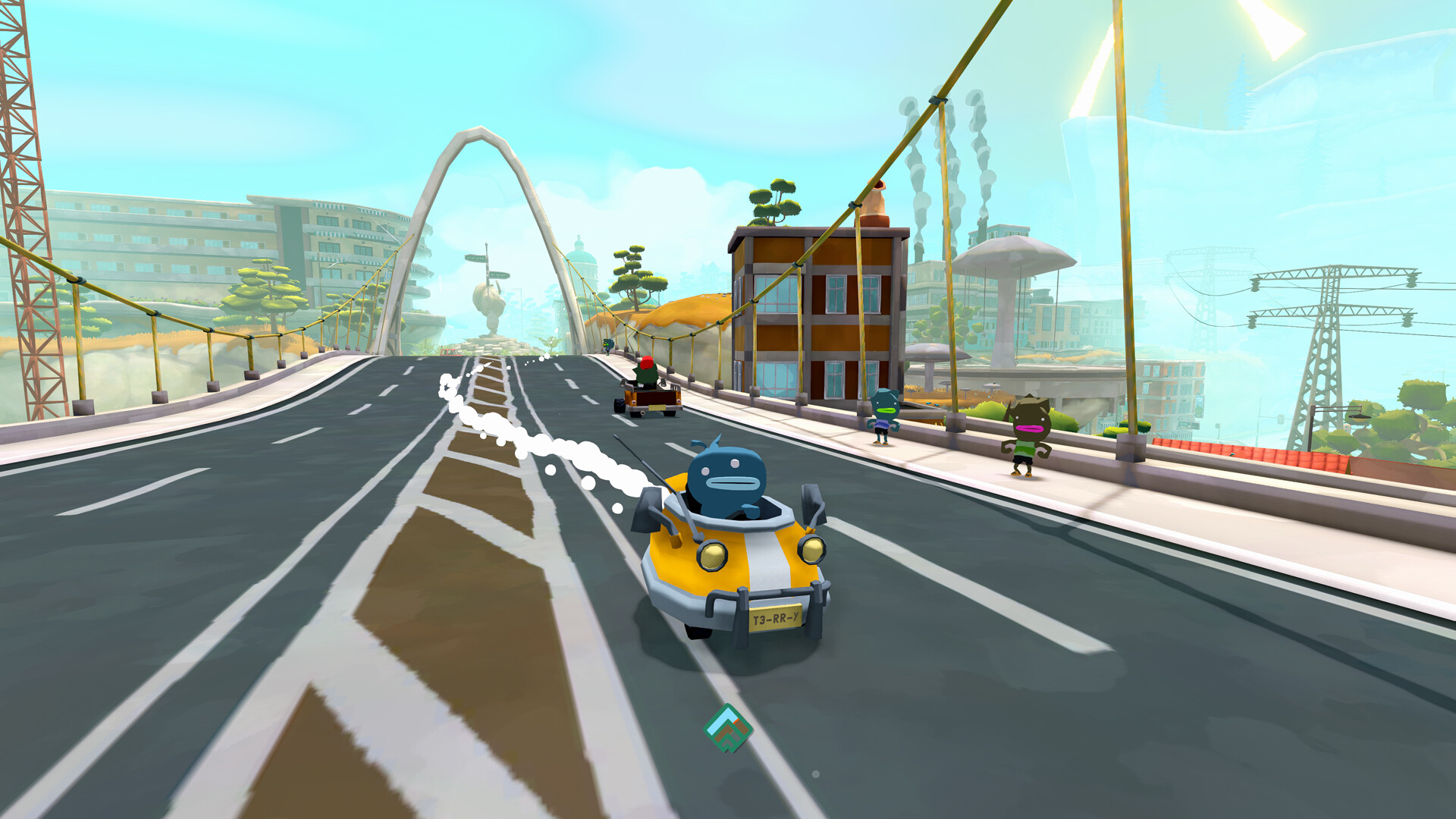
I found that the vehicle physics are annoying. Cars get stuck effortlessly and will clip into objects, and you can’t get out of it. I found it faster to run through most of the map, but it’s laid out in a very frustrating way. To run or drive, you must follow the road loop around since there are no shortcuts. Elevators can take you higher. Going from one end of the map to another and back again to finish an objective gets very tedious. 8 hours of this is infuriating, and some people might want to quit. Sadly, the game world has nothing to offer. There are only a few key characters to interact with, no mini-games, no varied objectives, and nothing remotely enjoyable to do other than grinding cash and junk in tedious and roundabout ways.
There are a few things you can spend your cash on, like a couple of food items and silly hats, but the cash is in such short supply; why would you waste it on these things? They don’t accomplish anything. There is no health bar, no combat, and you cannot sustain any injuries. You can use the lead pipe to whack NPCs for cash or steal cars. You also have to use it as a double jump by swinging the pipe after jumping to get extra height. Why not implement a traditional double jump? I found the fundamental parts of Tiny Terry to feel frustrating and cumbersome rather than fun and engaging. It felt like the game was always fighting against me.
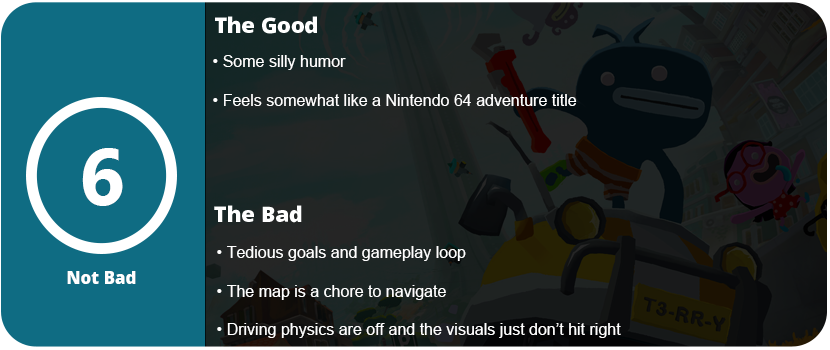
Overall, Tiny Terry’s fun premise and peculiar sense of humor fall short of its potential. The gameplay loop feels frustrating and tedious, the objectives constantly loop around to nowhere, and the map isn’t fun to explore. The only redeeming value is if you like this exact type of game. Early 3D adventure games can be frustrating and slightly grindy, but in the past, the worlds and characters were enjoyable and engaging. This is a very forgettable game with visuals that don’t feel like anything special. Tiny Terry doesn’t have standout features. It’s fine. Just fine.
The Dread X series is a great idea. Get a bunch of indie developers together to create some short horror experiences and put it all together in some weird hub. Each game is completely different and offers brand new experiences, but I’m starting to see that the series is running out of ideas. The main hub this time around is a kids birthday center called Outpost 3000. It’s space- and alien-themed and full of 90’s cheesy goodness. I appreciate the varied areas you can go into, and the games this time are unlocked by finding 12 different presents and bringing them back to your table. You can then choose one of twelve games to unlock with the present represented as candles on your birthday cake. When you unlock a new area in the center, you get a comic book panel.
Discovering the center is probably the most fun the game has to offer. There are some puzzles, chase sequences, and light exploration, but nothing too crazy. These areas range from a locker room, kitchen, animatronic stage, movie theater, ball pit, and many other birthday play center areas. There’s a monster that chases you through most of it in certain areas, and this doesn’t prove to be much of a challenge. The game controls like any other low-budget asset flip Unity/Unreal Engine FPS game and looks the part too. The graphics are very early 2010s or Unreal Engine 3 era feeling. Lots of shiny surfaces, baked lighting that’s too bright, bloom, etc. While it gives off a cheesy vibe, I would have liked to see this series move a bit further ahead in the tech department.
Of course, I will do mini-reviews for all twelve games. I will give each game a rating out of 5.
Ludomalica—This is a board game where you play in the first person. You are in your bedroom, and there seems to be a family member haunting the house. When you roll the dice and you land on a question mark space, the ghost will appear somewhere in the house. You must have all lights off in all rooms and all doors closed. The game has a limited duration and follows a predetermined script. Eventually the house opens up more with different floors and rooms. The entity must not capture you, or it will send you back to your room. Overall, the atmosphere is really intense, and I felt reluctant to go outside of my room and close all the doors. It gives off the memories of turning on all the lights while going to the bathroom at night as a kid. – 3.5/5
Resver – This is a first-person walking simulator that just doesn’t make any sense. Everything is presented in black and white, and as you move forward, text appears, seemingly attempting to explain a narrative. It honestly made no sense outside of having the moral idea of not doing drugs and the impact they can have on you. It seems this is some sort of drug ring thing. I honestly have no idea. The game is about 20 minutes long, and outside of the visual trip, there’s not much here. – 2/5
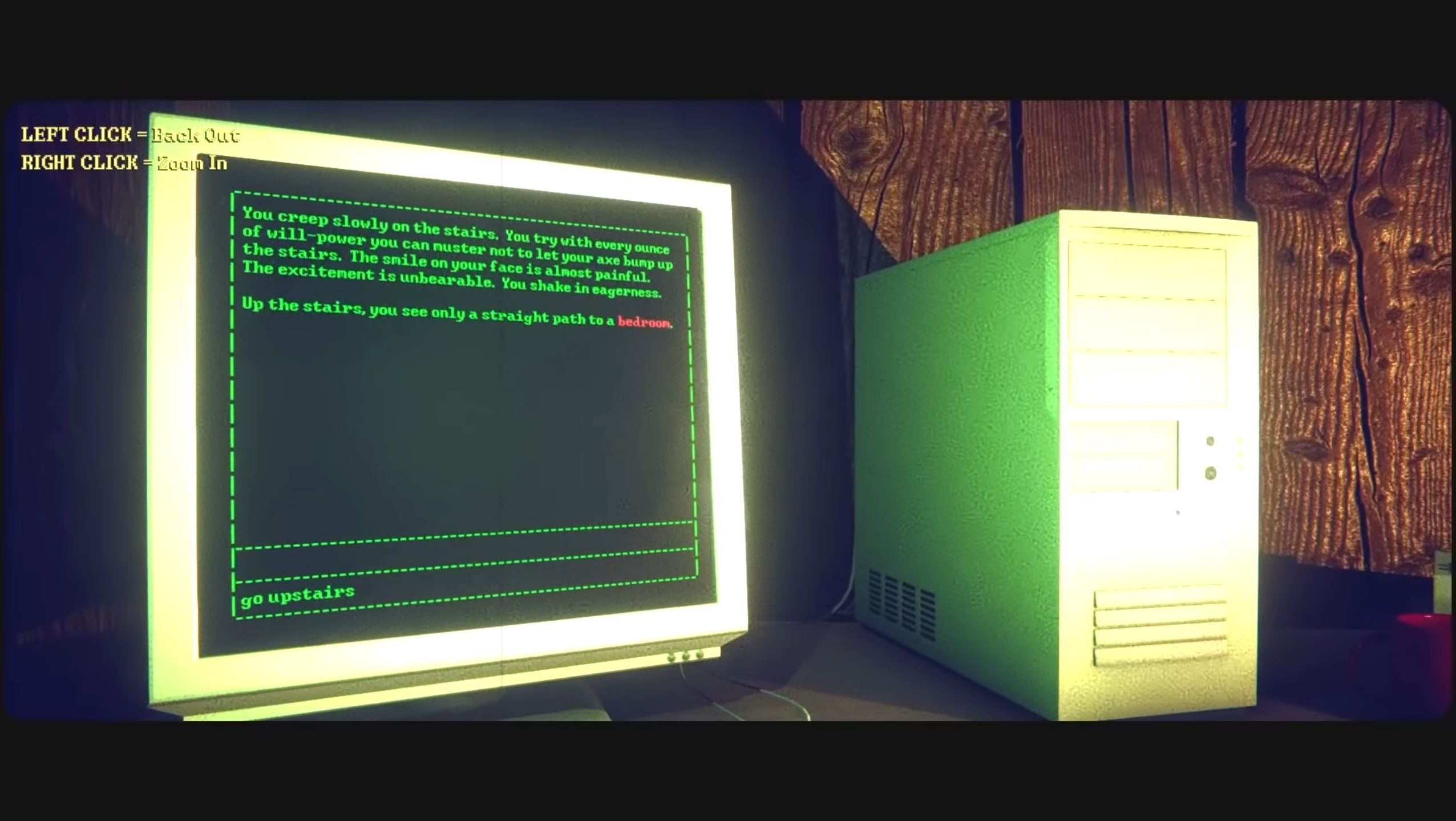
We Never Left – This is about a video game developer with psychosis who is inside his own text adventure game. We saw something like this in Stories Untold. The atmosphere and tension here are done really well, except I found the tape hunting to be quite tedious and annoying. The visuals are a bit headache-inducing too. These are PS1-style graphics, but with some sort of filter over them, and they just don’t look that great. I found the story to be pretty intense, and the voiced lines were a plus. 3.5/5
Interim-This is a weird one, but in some ways it’s good. The game features a real-life actor superimposed in front of it, similar to older FMV games of the mid-90s. You are an intern who seems to be on some sort of reality TV episode. It’s really odd, makes no sense, and the visuals are really weird, but not always in a good way. Sometimes it’s confusing where to go, and the game soft-locked on me a couple of times for no reason. It’s over in about 20 minutes, but what’s here is mostly entertaining. However, it doesn’t contain any frightening elements. 2.5/5
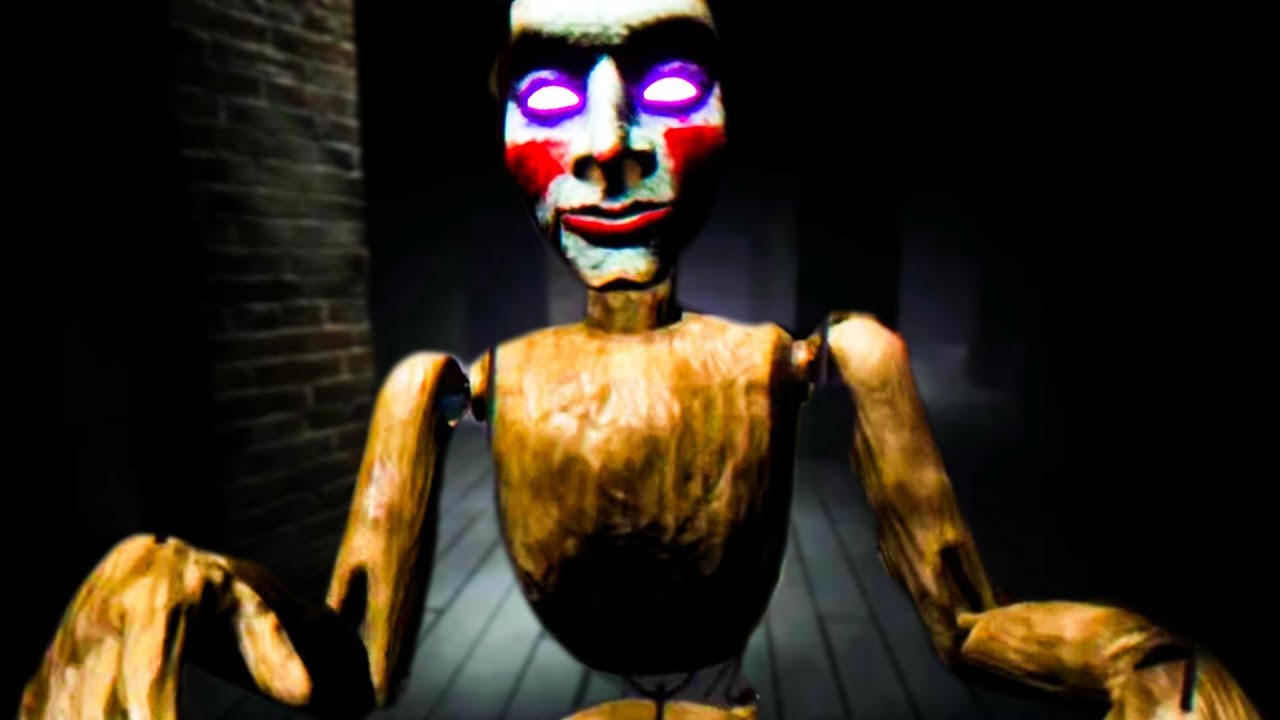
Beyond the Curtain – This is a weird walking simulator that is very repetitive and has almost no tension. You are an actor in a play and seem to have some sort of phobia of puppets. You walk around an endless backstage tunnel, and I mean seemingly endless. The scenery never changes, and all you need to do is walk around puppets holding knives so they don’t stab you. There’s a final area with some sort of worm creature, and that’s about it. The puppets are always following you, and you need to make sure you constantly look back at them to gain some distance. The game lacks scariness and is excessively drawn out, leaving no clear sense of purpose. This game is likely to rank among the weakest of its kind. 1.5/5
The Book of Blood – This is by far the best game in the package. This is a full-on stalker game set in a fairground. There is a lot of occult discovery, and you accidentally end up in one and need to get out. You have a book that you need to solve puzzles in. You need to go out and gather supplies to complete the ritual, and every so often a strange masked man will try to kill you. Both trailer doors must be locked at all times, and sometimes the power will go out and obscure the book. Next, you must locate the numbered breakers and reset them. Run around too much, and the masked man will find you. You need to sneak around and get everything turned back on. You can also pop out the two windows to see if the man is near your trailer. Once you hear him knock, you need to quickly check the locks on your doors. This game is really intense and actually quite scary at times. The book puzzles require a significant learning curve to master, but once you do, they can be quite enjoyable. 4/5
KARAO – This game is rather strange, and while one of the most surreal, it just doesn’t make sense. This is a PS1-style horror title in which you run around a linear path trying to find a way to open doors. You get a shotgun and can shoot things, and this is one of the longer games along with The Book of Blood. The path is super linear here, and you need to talk to people and listen to their abstract dialogue to also get codes to open gates and doors. The visuals are more on the interesting side, but this is another game with PS1 graphics and a weird filter on top that doesn’t seem very appealing. 2.5/5
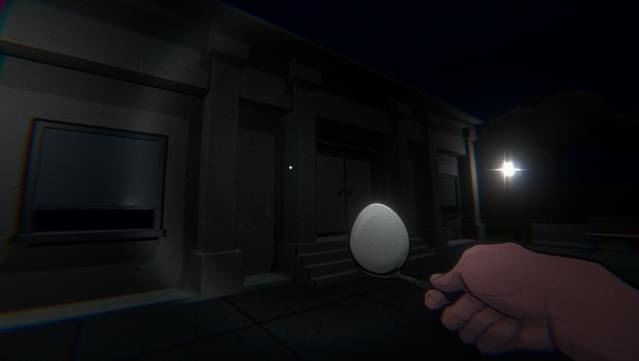
Spirit Guardian – Probably one of my least favorite games. This is a terribly designed first-person haunted school walking simulator. The game is around 15 to 20 minutes long and has a cheesy “Nanny” haunting the school inside. You are following the instructions of a little boy. He tells you to place blocks on a table, play hide and seek, and carefully walk eggs on a spoon. Physics are terrible; the flashlight works well, but if you’re caught, your items are taken and may be in a dark locker where you can’t find them. I found the game just incredibly tedious, difficult to control, and completely uninteresting. 0.5/5
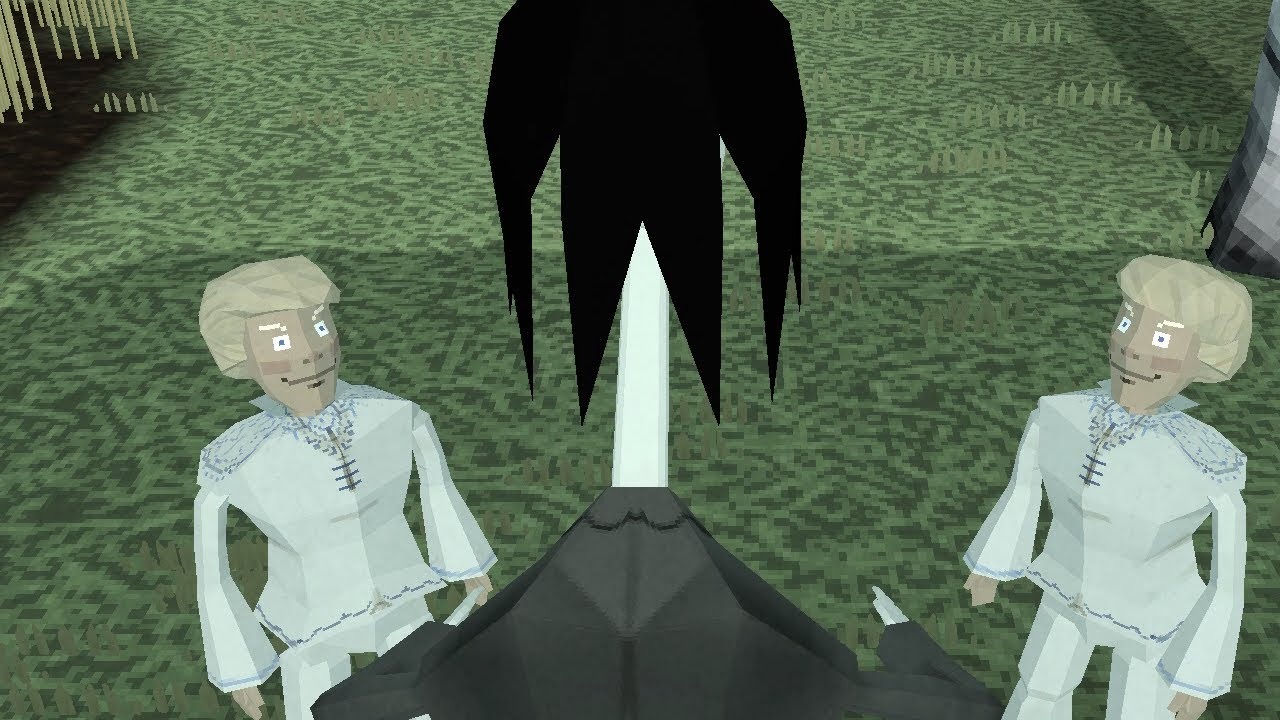
HUNSVOTTI – This is one of the oddest games in here, but also the ugliest and hardest to control. Rather than a PS1 aesthetic, this game goes for an N64 one, and boy, does this look ugly. The polygonal, poorly animated figures and stiff controls certainly bring back memories of some of the worst games on that system. You are a little boy in a Dutch festival called HUNSVOTTI. Every character is in a canned animation, and you must find flowers without bumping into anyone. The more you do, the faster the animations are, and eventually they will all come after you, and you still have to find flowers. After finding all the flowers and dropping them into the well, you become a large demon that can kill the villagers. It’s very odd and not really in a good way. 1/5
Gallerie – This game has one of the coolest concepts, 3D binaural audio, to use ASMR voice lines to add atmosphere for the player, but it just comes across as mostly annoying. While the spoken words are fine, the gibberish later is just the weird clicking and smacking that people do in the ASMR videos, and I can’t stand that. You are tasked with destroying the world, and some girl is angry, and you need to interpret what she is saying to you via a legend. There are three levels here, each more annoying than the next. You must keep away from an entity that stalks you, and when you look at it, similar to Beyond the Curtain, it stops moving for a few minutes. You need to find demon paintings and enter the QTE on screen before it attacks you. The second level is more of the same, but the third is the worst with leapfrogging of batteries that need to be charged. In the meantime, you are backtracking and running around a confusing level. The visuals are weird, but disorienting and not pleasant in the slightest. – 2/5
Vestige – This is another PS1-style game, but you are a kid who is discovering his old PS1 games, but they are haunted. Sadly, you end up playing this game, and it is just a terrible dirt racing game similar to Motocross Madness with terrible controls and physics. You walk around your house trying to advance the plot a bit. Overall, the game isn’t memorable or captivating in the slightest. The atmosphere is a bit tense, but nothing here is worthwhile. 1.5/5
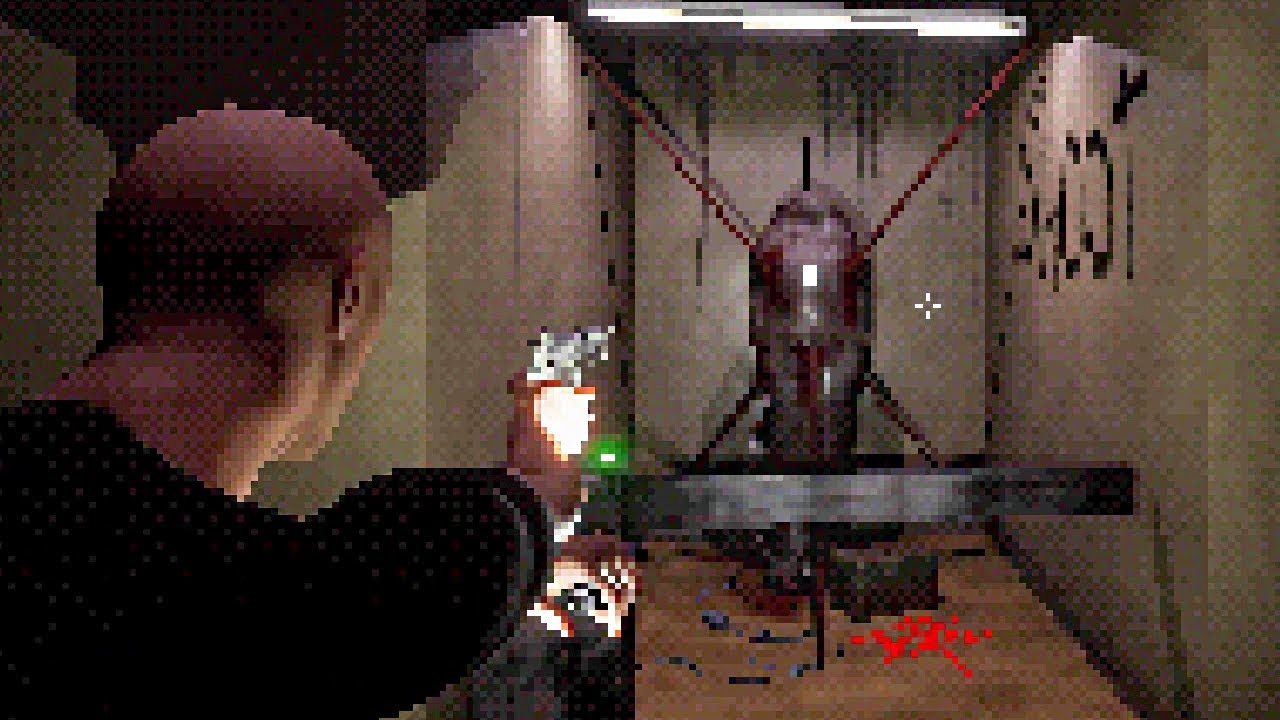
Rotten Stigma – Another poorly implemented PS1-style game with Unreal Engine asset flip vibes. You play as a generic bald-headed man in a green shirt who wanders around what seems to be a recreational center. You get a pistol and a lead pipe as a weapon and have to fend off weird bipedal creatures. You just read notes from Alex to solve a couple of puzzles that aren’t challenging at all. Once you wind your way around the area, collect a few items and keys, and shoot some bad guys, you end up at the end of the story in about 20 minutes. The game is incredibly ugly, clunky, and uninteresting. There’s a bit of atmospheric tension due to the dark lighting and sounds. There’s one particular scene that I enjoyed, but nothing was expanded upon. It involves a crying body bag and a bathroom. The game is obviously inspired by Silent Hill but doesn’t even come close. 1.5/5
Average Score: 2/5
It’s clear that the collection here isn’t quality but quantity. Most of these games are just ideas for what could be larger games, but those ideas still aren’t great. Many of these games are clunky, ugly, have headache-inducing visuals, nauseating cameras, obtuse puzzles, or have atmospheres that are slightly creepy but don’t go very far. The Outpost 3000 hub is more entertaining than any of these games. Many games also have asset flip vibes, don’t have outstanding resolutions, and show up stretched out on higher resolution screens or have visual bugs. Nothing here is fantastic or stands out much. The Book of the Blood is the most solid of these games, and that’s still not saying much. I’m glad most of these games are around 20 minutes long. Any longer, and I will not finish them. Overall, Dread X Collection 5 is the weakest one I have played thus far. This doesn’t feel like a collection of quality at all. Nothing here makes me want to seek out these developers and see what they have to offer, unlike past games. I feel like this series needs to go more on the mini-game route rather than full-on games or be stricter in their quality.
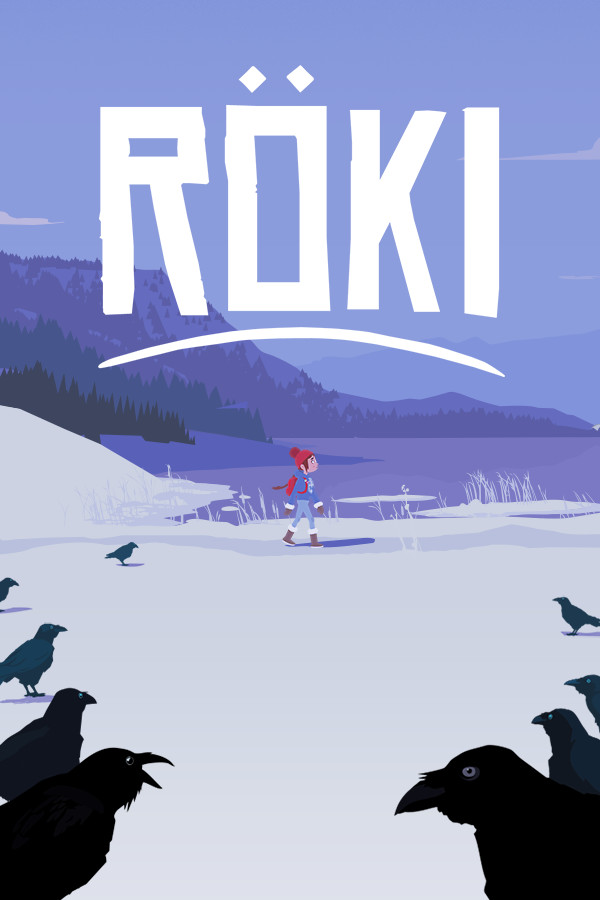
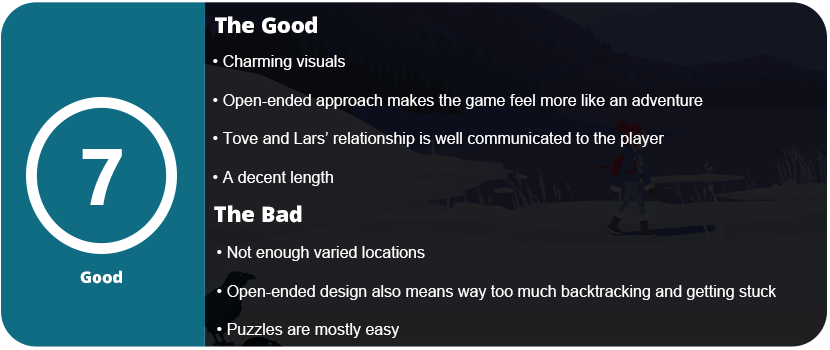
Do you remember the days you were a kid and went on adventures outside? The days you would be outside from dusk to dawn playing too far away from home and weren’t quite sure you’d find your way back, but kept going anyways? That’s the feeling of adventure you get from Röki. The game is much longer than most point-and-click adventures, taking around 8 hours to complete. This allows for a better and deeper story to unfold. While the overarching story isn’t anything super special, the relationship between Tove (the girl) and Lars (her little brother) and their father is rather deep, and you can feel the tight relationship and love this family has.
The game is a more open adventure title. Rather than being completely linear, you can fast-travel between several areas to find objects and solve riddles. The game’s openness necessitates the ability to press the left stick for interactive objects to flash. Just like any adventure title, you need to find objects to advance the story, and due to the openness, some puzzles might take a couple of hours before you eventually get all the parts to solve them. This also leads to the most frustrating thing about the game. If you miss an item for a puzzle, you have to figure out where it is. As the game opens up, this can lead to tedious backtracking and flashing all the objects on the screen and running around until you figure out what you missed. Frequently, this occurred due to the game’s lack of clear instructions or tracking features. The journal is rather useless and holds a map and various optional items you can pick up as collectibles.
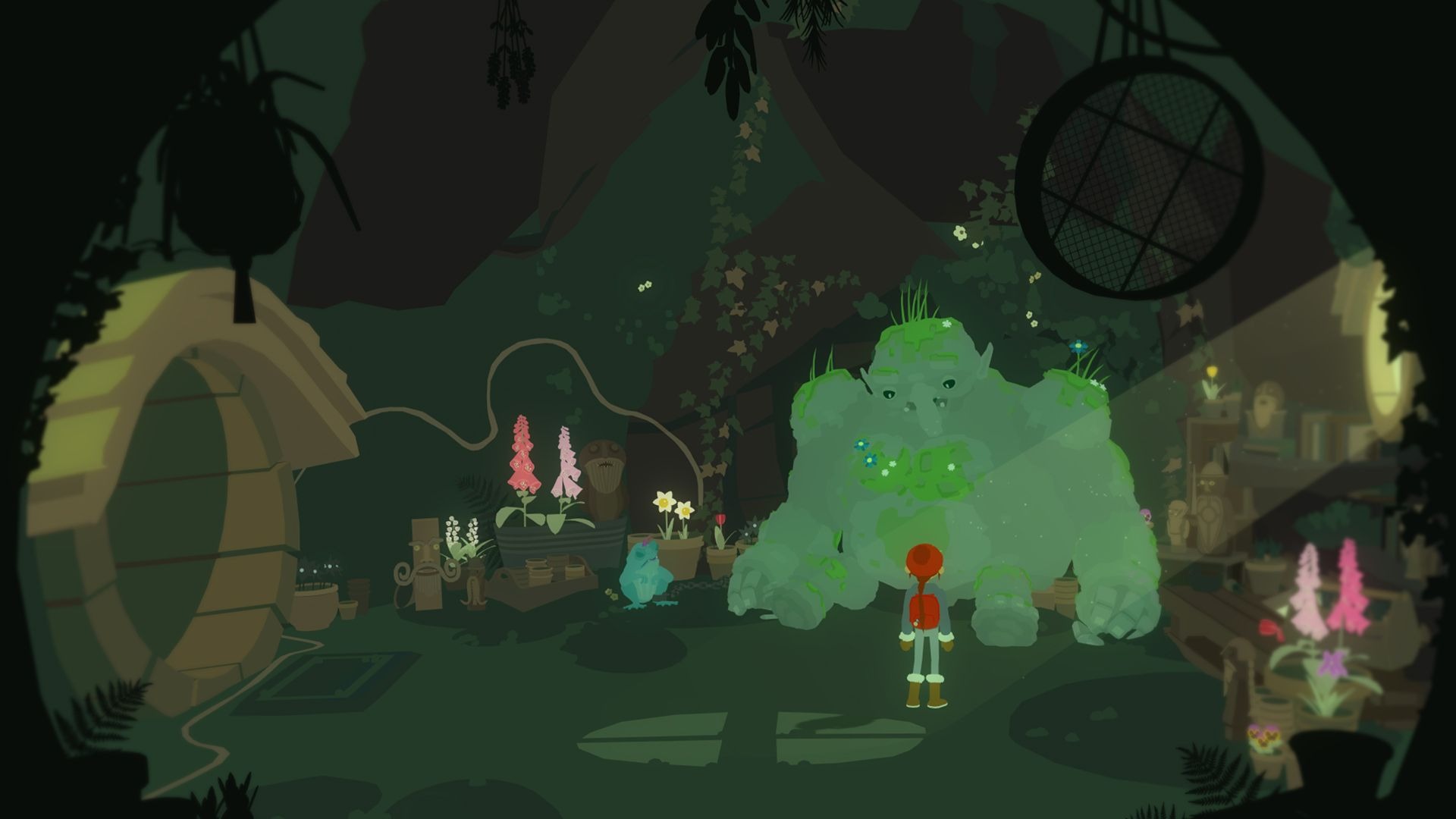
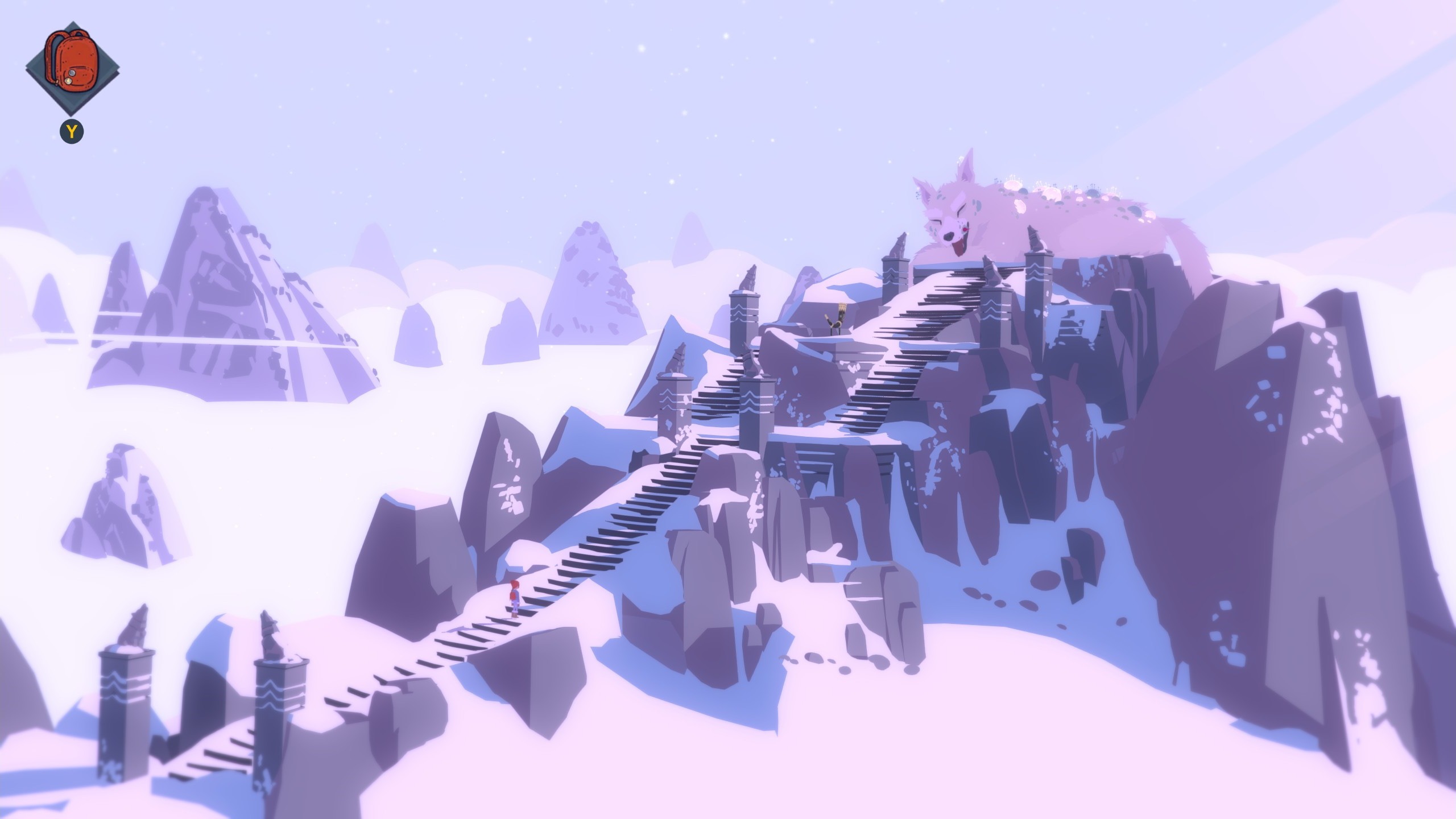
Tove can run by holding down a button, and she can interact with objects. Outside of this, there isn’t much to the controls. She can climb walls and ladders, but you’re mostly just interacting with things. I found some of the puzzles quite fun, intuitive, and clever. The game experiments with ideas such as controlling two characters (swapping) and using a couple of different objects to complete puzzles and unlock new areas. There are giant beasts that need to be defeated and tamed. The game is based around Norse mythology, so you will encounter many beasts from this lore.
Despite the game’s lack of voice-acting, the writing conveys the characters’ emotions. Every so often the game will cut to a long scene and then give you control back. There aren’t many cutscenes in the game, but despite the length, the game never felt tedious or boring. I wish there was less need for backtracking. Sure, fast travel is helpful, but you still have to run towards an area, climb, or enter it, and some parts of the game can be really tedious to get to. You can’t skip climbing segments. Climbing dominates some later puzzle areas, leading to frustration. I spent more time waiting for animations to finish than actually solving the puzzle.
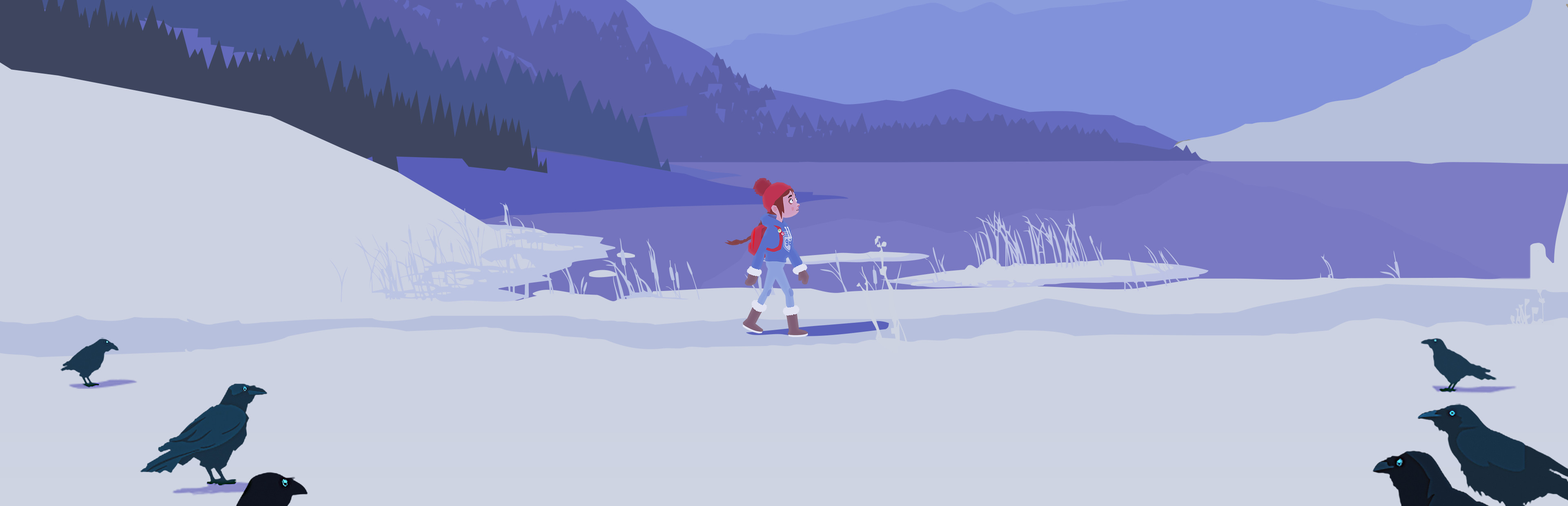
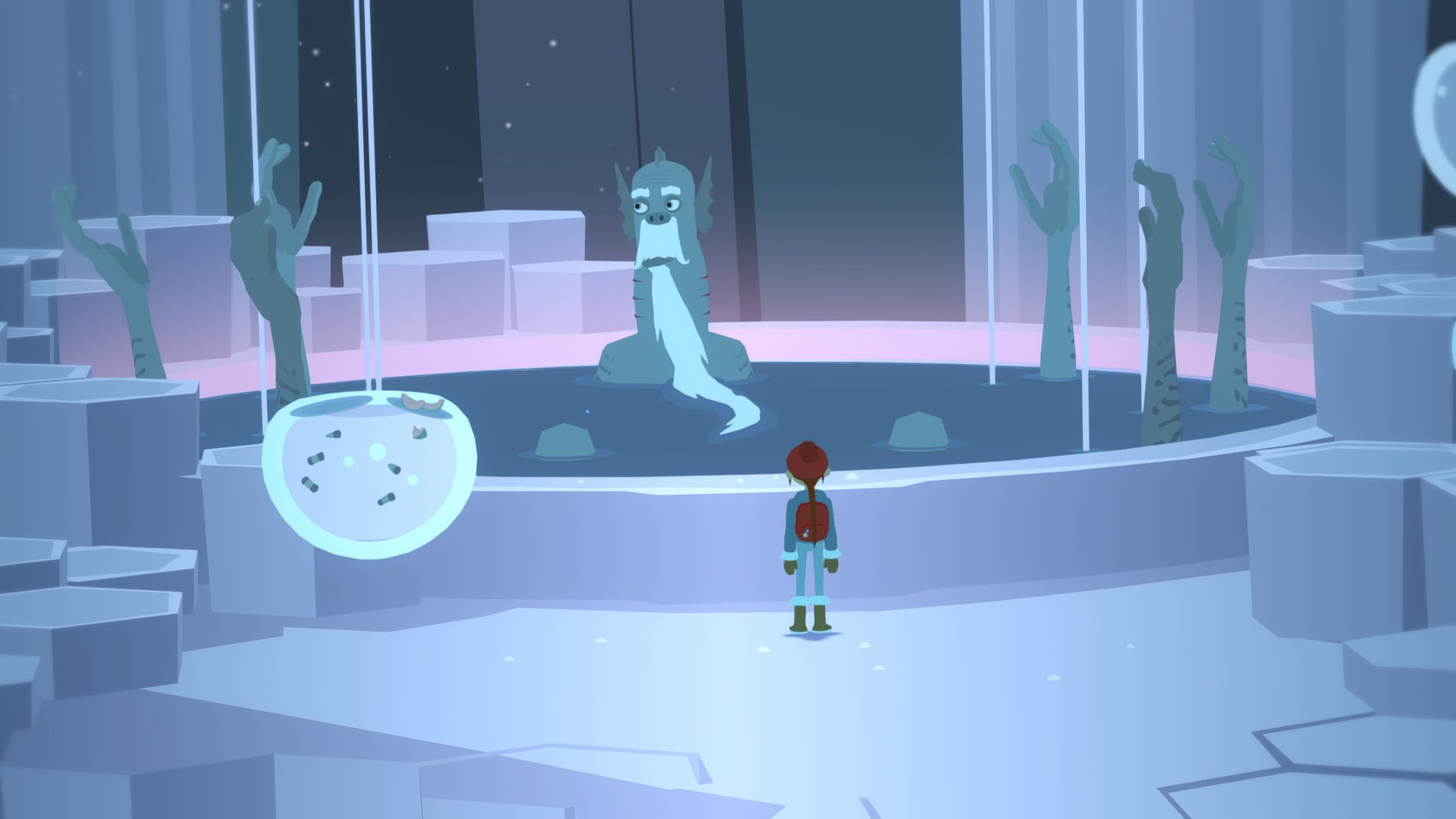
The visuals are really nice, but this visual style is something we are seeing a lot of, and I don’t find it the most appealing. The use of paper cut-out/flat texture with solid colors is a common visual style. It works, but I would like to see something more original. The music creates a captivating atmosphere, and certain tracks evoke strong emotions during specific scenes. I found the whimsy of the beasts and monsters to be really charming, and this is where the art style worked the best. The game has a lot of whites and grays (stones) due to the entire thing being set in the winter. There’s not much variation in environments.
Overall, Röki is a surprisingly lengthy but well-built adventure title. There are a lot of puzzles and rooms, and the pacing is great. I didn’t really want to put the game down…until something tedious came up, like missing a single object for a puzzle, and I had to spend 20–30 minutes hunting it down. This happened far too frequently. This phenomenon occurred at least once with each major puzzle. If you love Norse mythology or just want a touching story about family, then this is for you.




































 thebinarymessiah.com
Try multiplayer. A lot of fun !