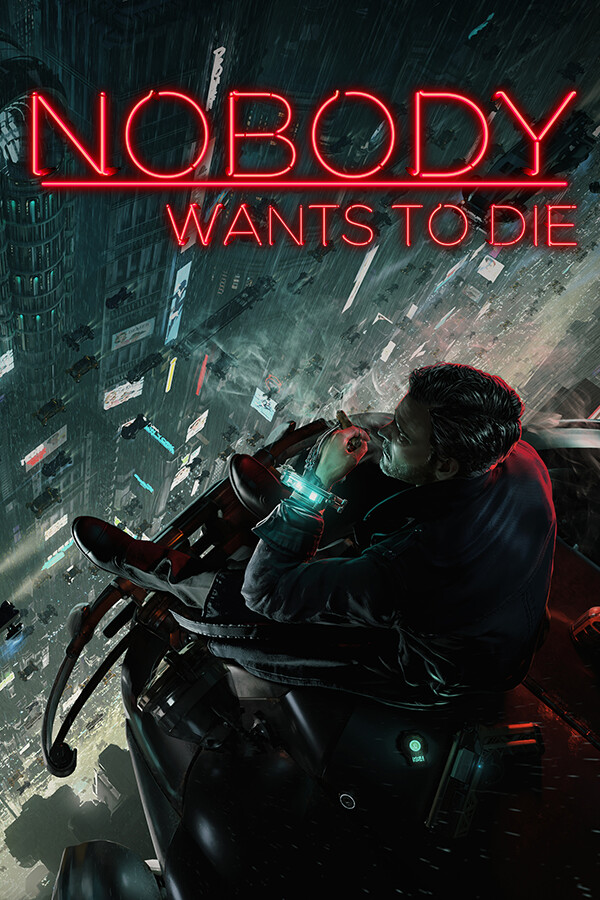
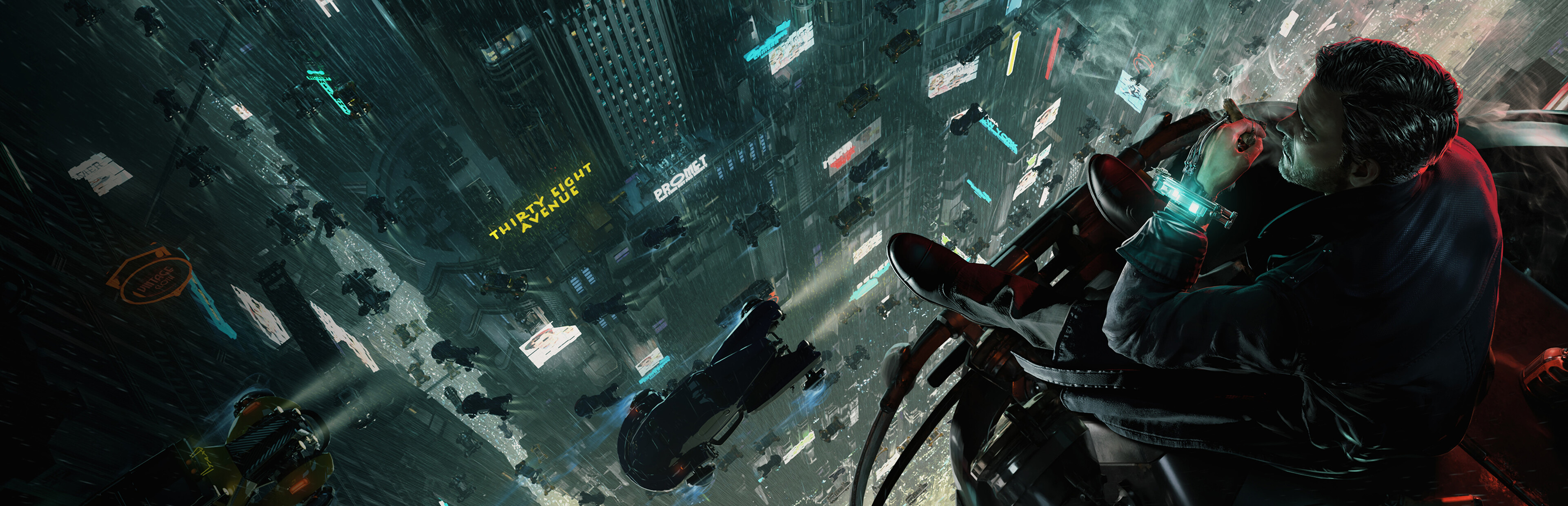
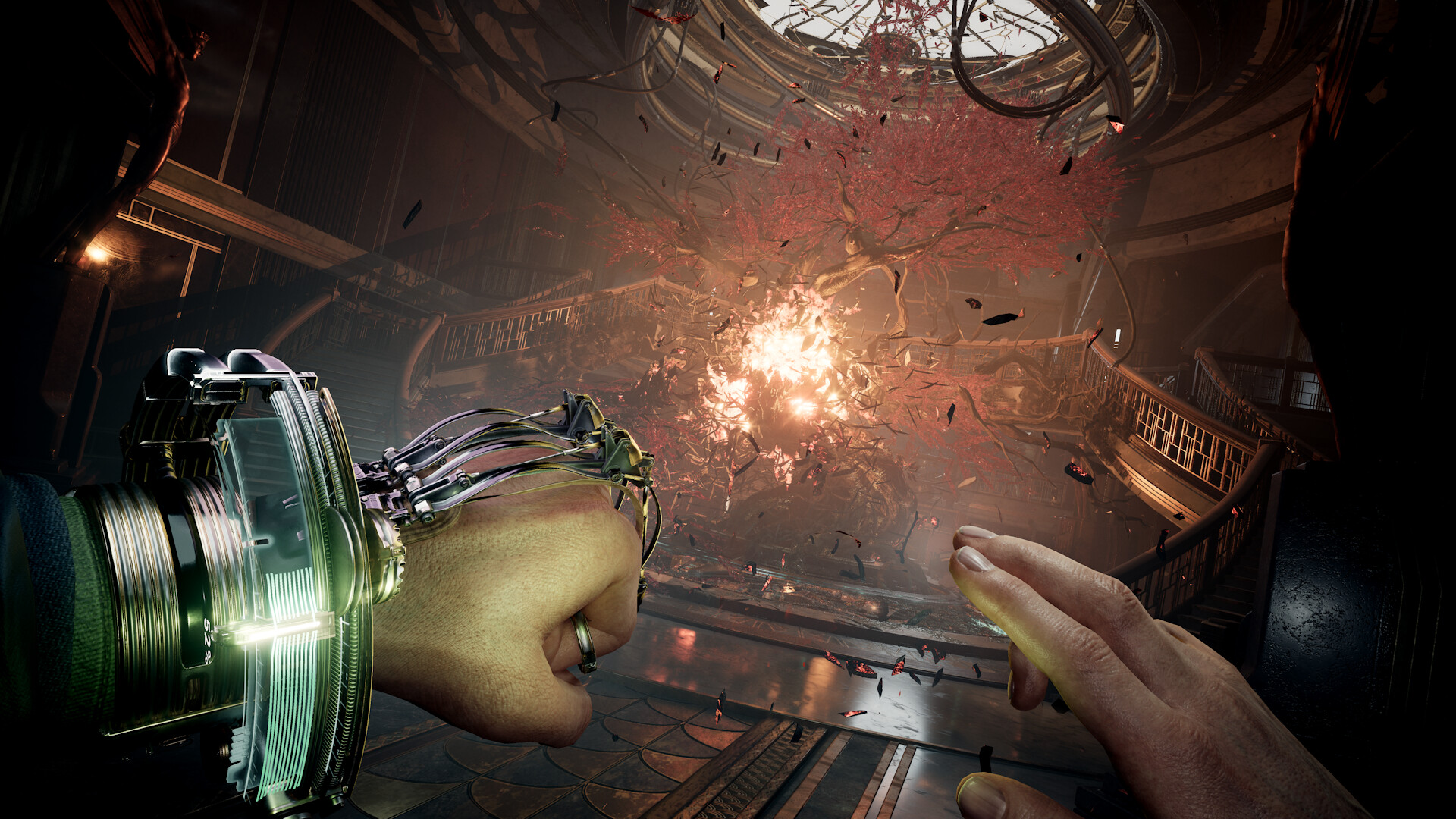
Nobody wants to die. That’s a statement that anyone can understand. What if you had the ability to purchase a new body and continuously inject your conscience into a new one? This is the premise of Nobody Wants to Die. A detective noir game set in a dystopian New York in 2239 where flying vehicles exist, we are now in a caste system, and capitalism has won. As suspended detective James Karra, you embark on an investigation into the suspected murder of a large corpo boss. Your partner, Sarah, is in your earpiece.
There isn’t much exploration in this game, and it’s not a first-person shooter. Although the entire game takes place in first person, it remains a pure adventure title. The game masterfully constructs this dystopian future, immersing the entire experience in the art deco Americana of the 1930s. James has a lot of internal problems, and due to being on his fifth body, he has a lot of problems from his 100 years on this planet. The better shape a body is in, the more it costs. However, there’s something dark happening. The game also does a fantastic job explaining how you can recreate crime scenes and explains a person’s ichorite, which is what’s used to transfer a person into a new body.
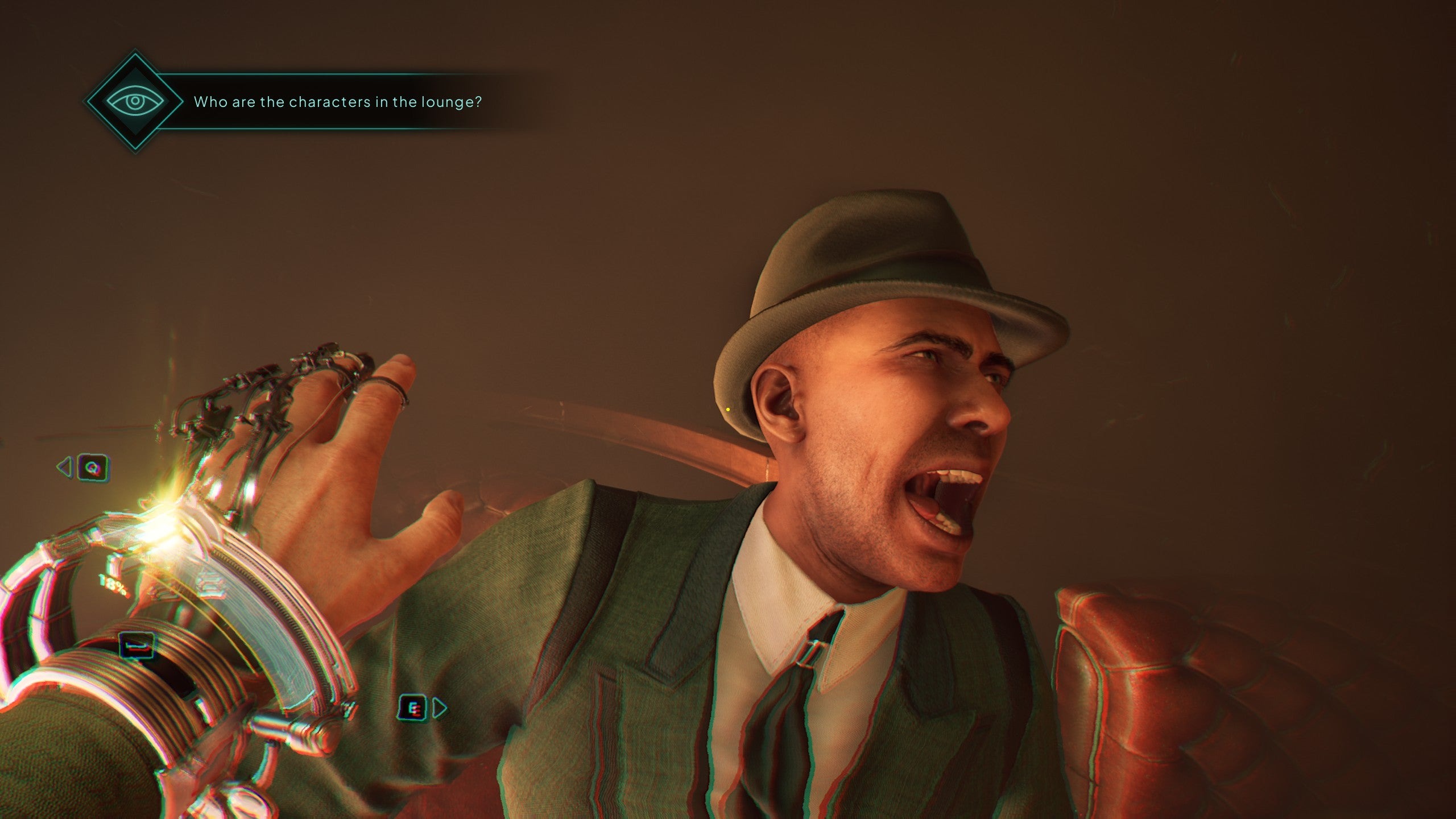
That’s the majority of the gameplay. The crime scenes are pieced together like mysteries through the Replicator. This allows you to fast forward and rewind scenes as you piece them together. You have to walk around and find the prompts to advance the puzzle to the next piece. There are also other tools like the X-ray wand and UV lamp. You use these to see through objects and then detect fluids. You are always swapping back and forth between the two. However, the puzzles are very linear and don’t require any brain power to solve, but they are still fun. Many of the crime scenes are really interesting to solve, as you can draw your own conclusions and see what the outcome ends up being. There are three main crimes in the game, and they take quite a bit to go through. It’s a lot of fun seeing everything kind of come together and hearing Sarah and James analyze everything to come to a conclusion. When you get back to your apartment, you can put down objects that are in place for clues that you found, and you need to string everything together to come up with a final conclusion. Moreover, it’s a straightforward process.
Outside of the main crime scenes, there are a couple of moments in James’ apartment. It gives you a glimpse of how awful living conditions are in the future. Everyone shares bathrooms and the government logs everything they do. You have to see a psychologist for life after transferring to a new body for the first time. The ads, propaganda, and everything in between are done so well for how little you can explore this game. While the characters aren’t very deep or memorable, they help carry the story along enough to stay interested. I’m sorry, but the story is too short to remember. The setting and world are more interesting. The game also has dialogue choices that determine which ending you get. Some options will have locks on them, meaning you need to have changed your path prior to the current option. The way you respond to Sarah or act at a crime scene (like deciding to steal something for yourself) can get you in trouble if you’re not careful. The execution of the story is commendable, and as the story progressed, I found myself grateful for the choices I made that allowed me to navigate through certain scenes.
The visuals are rather appealing for an indie title. Lighting is great, art deco is beautiful, and vehicle and object designs are fun. The game is at least well paced, and I didn’t want to put it down. The voice acting is outstanding too, and there are just enough little twists and turns to keep you glued to the screen. There isn’t much to hate here outside of easy puzzles and lack of exploration. I honestly wouldn’t mind another game in this world and have the lore expanded upon.
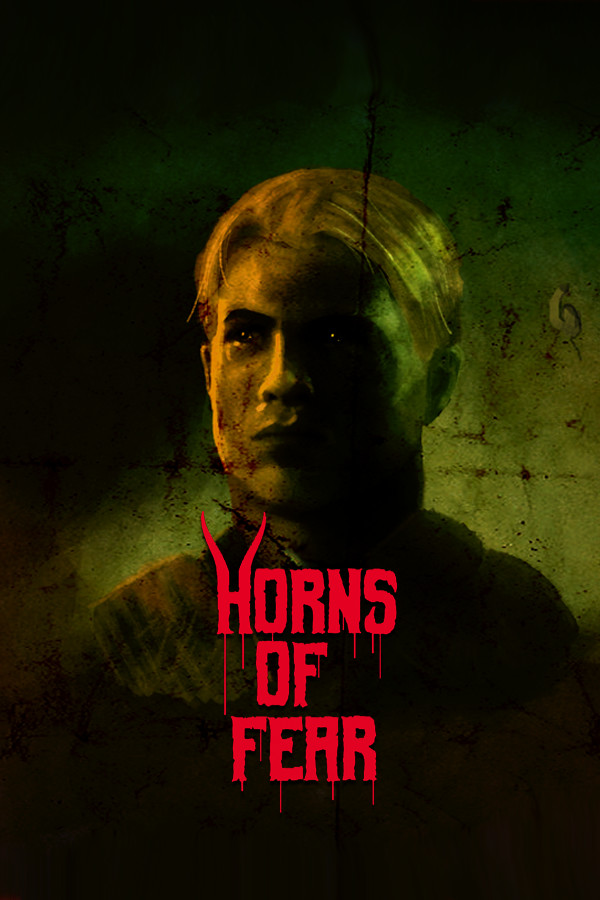
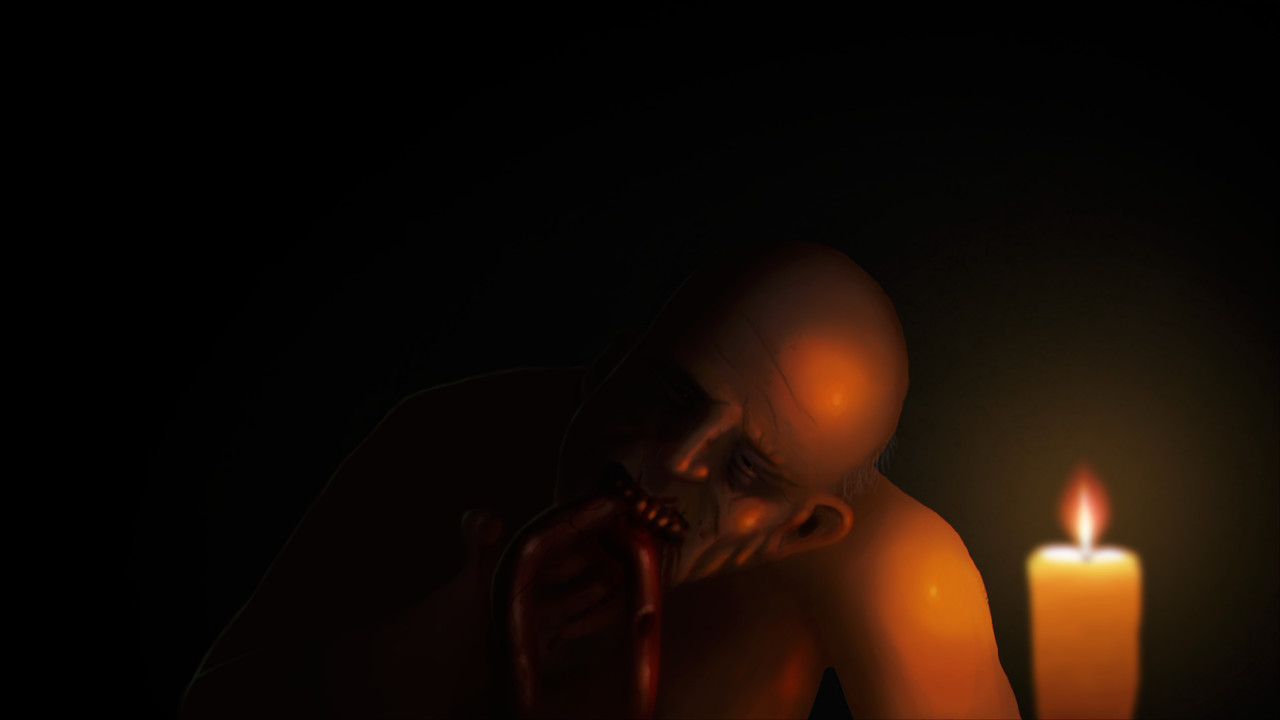
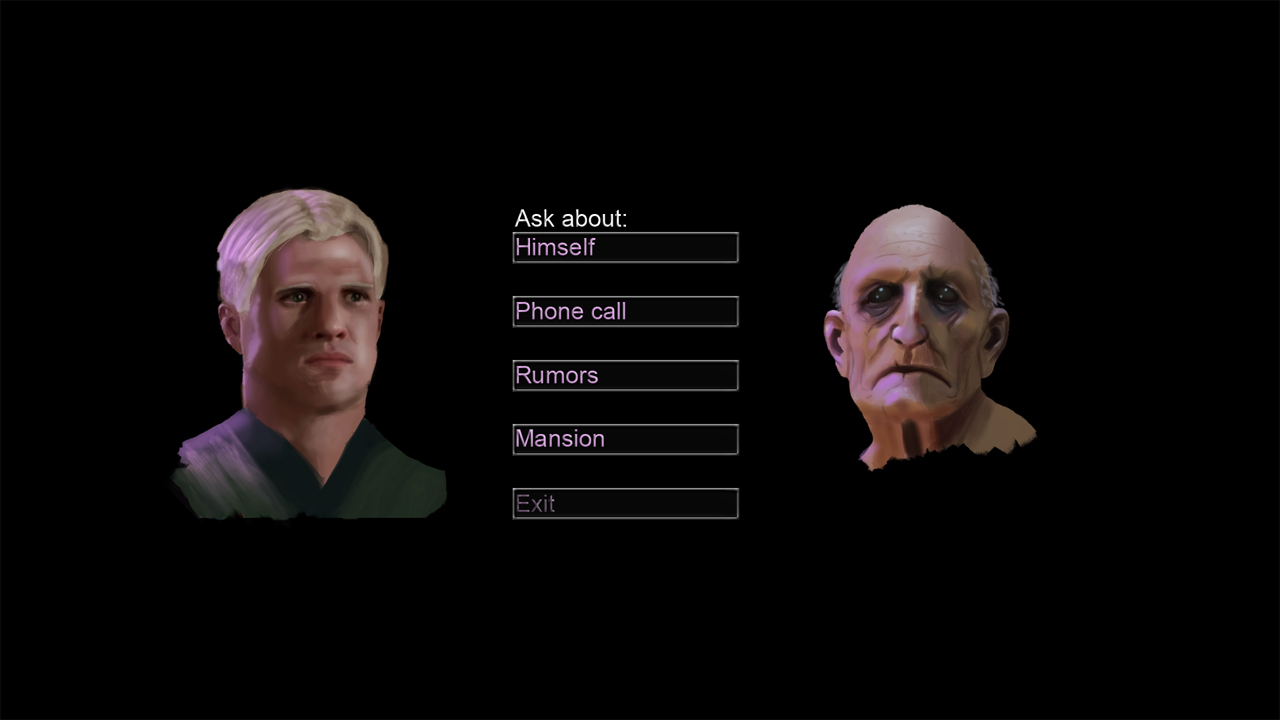
Horns of Fear is a short horror adventure game with a handful of puzzles and a creepy manor to explore. You are Jim Sonrimor. You are a journalist who is grappling with a challenging relationship or marriage. You receive a call from an old woman to investigate her manor. Upon waking from drugs and pizza, you somberly visit the manor and notice something is wrong from the start.
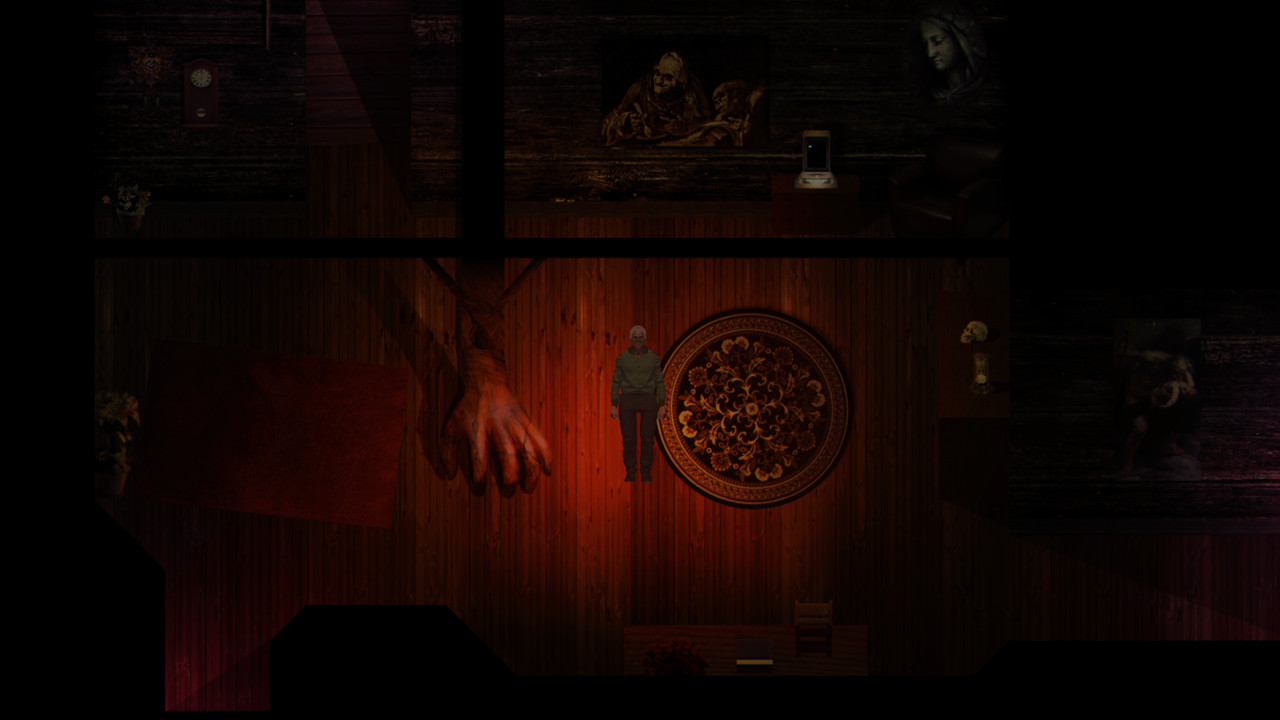
The game has a 2D isometric art style similar to point-and-click adventures of the early 90s. Indeed, this game would be perfectly suited on a vintage gaming shelf. Your inventory is small, and the game is short enough to never fill it. You can save at computer terminals, of which there are only a few. The game is tiny and short that you can easily play the entire thing without needing to save. The puzzles are captivating and surprisingly well designed. I rarely needed a walkthrough. Most developers treat players like idiots or make puzzles too difficult, but not so much here.
Once you complete a puzzle, you will usually see a small cutscene. There isn’t any combat in this game outside of the final boss. There are a couple of quicktime events, but for the most part, the game is mostly about atmosphere and storytelling. I was surprised at how complete the story felt despite the 90-minute run time. Without giving anything away, the ending took a surprising turn and provided a highly entertaining experience. The scares themselves are more jump scares. The sound of a screeching violin accompanies a shadow moving across the screen. The cutscenes have a few gory and gruesome shots that are super cool. The death scenes are also really gory. The music itself was just okay. The music lacked originality and bore a somewhat cliched feel. The theme was reminiscent of a haunted house, rather than being unique to this particular game.
With that said, though, don’t expect anything incredibly unique or something with a lot of staying power. Horns of Fear is a decent short horror adventure and nothing more. While the puzzles are entertaining, you can’t really get lost due to the incredibly linear path you take, and there’s not really any character building. You’re mostly playing for a fun, short train ride rather than a full-on 3-day tour. While the visuals themselves aren’t particularly noteworthy, they provide just enough elements to make your play worthwhile. The trippy cutscenes, strange ending, and ease of play are enough to invite more horror fans over.
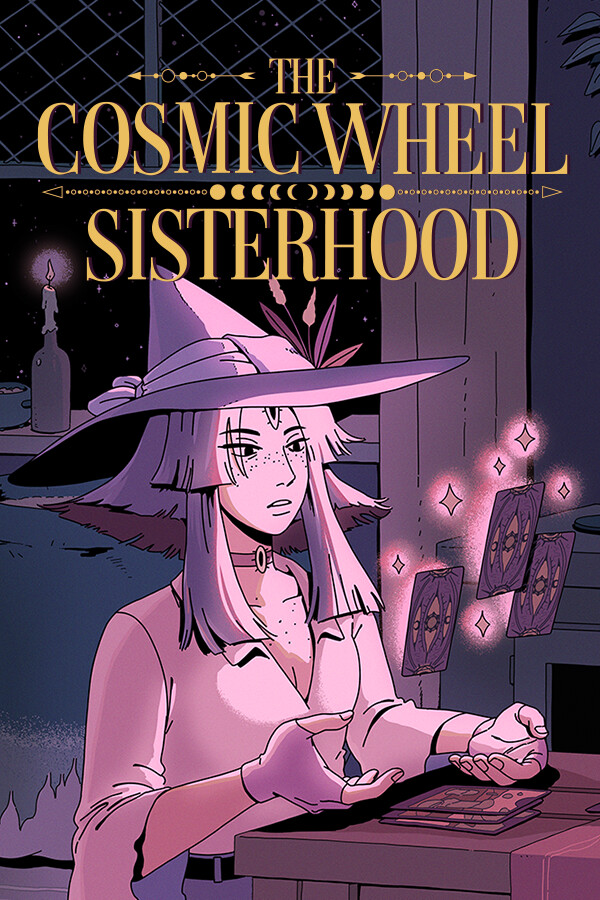
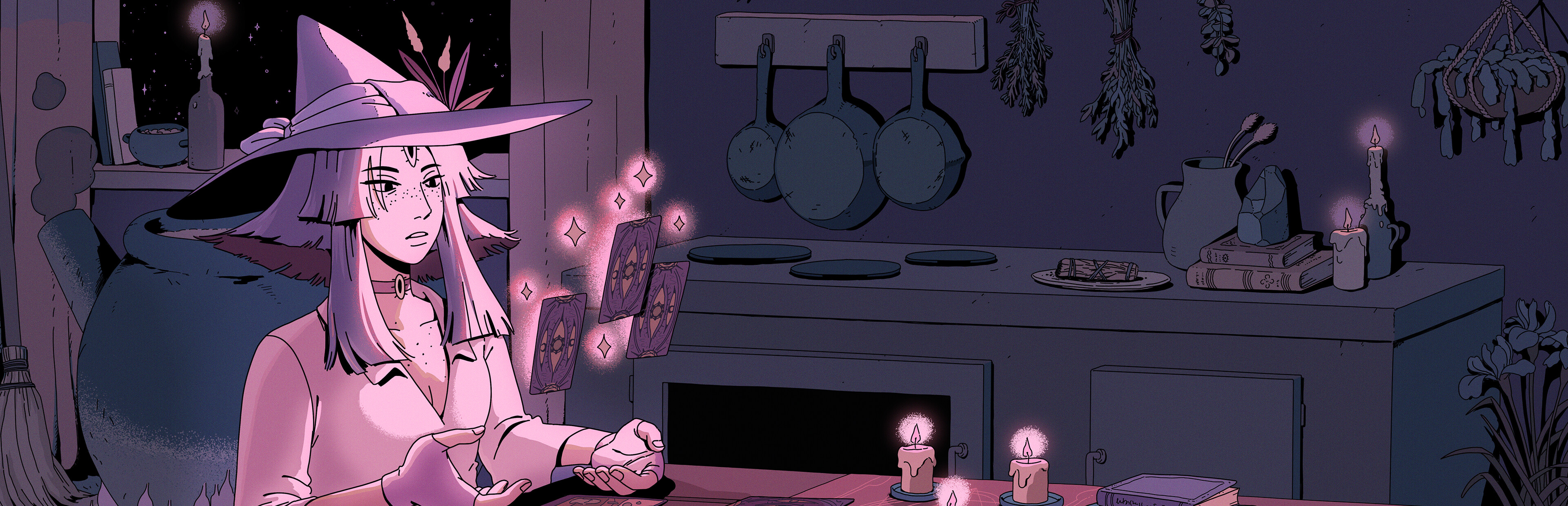
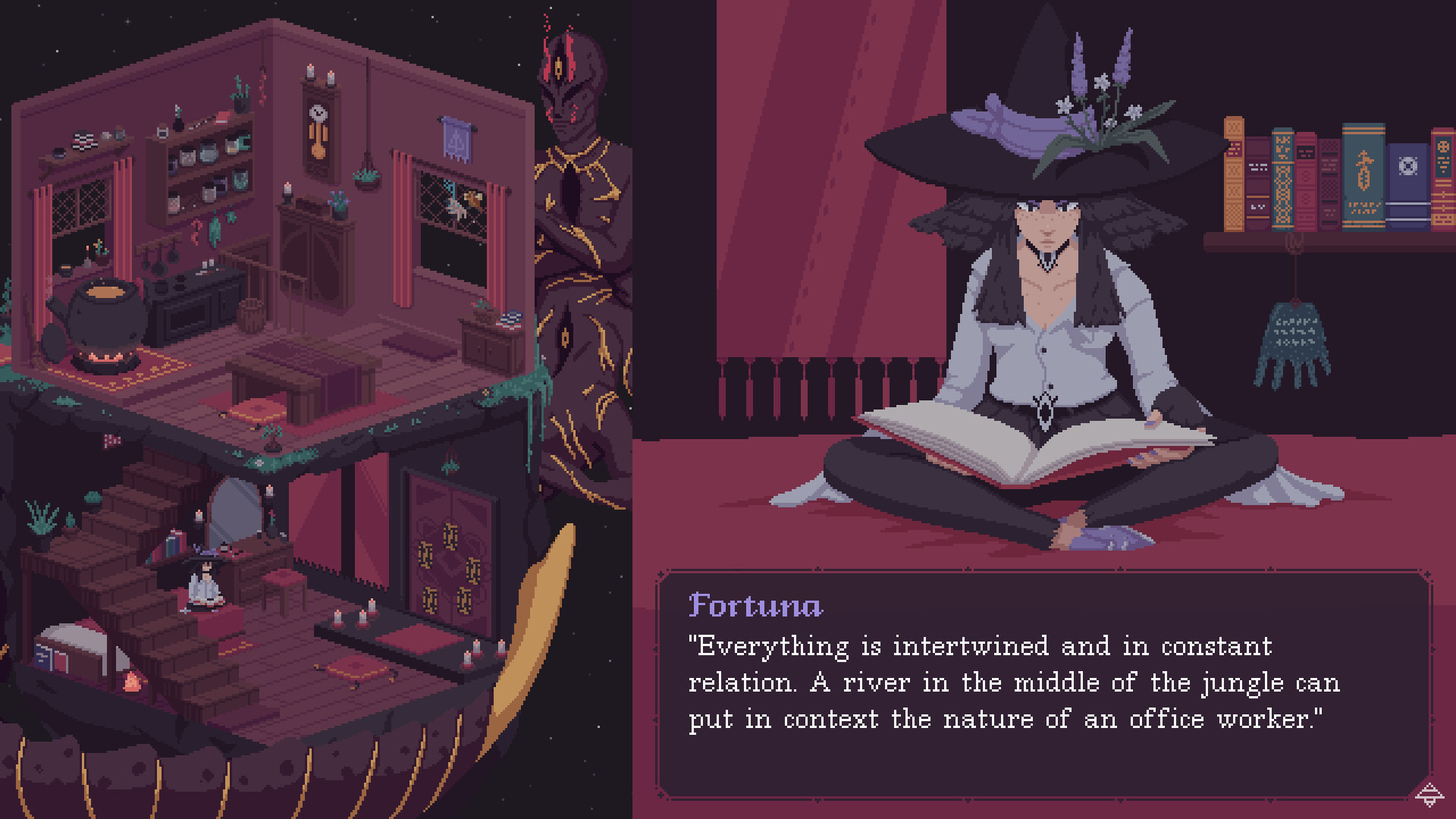
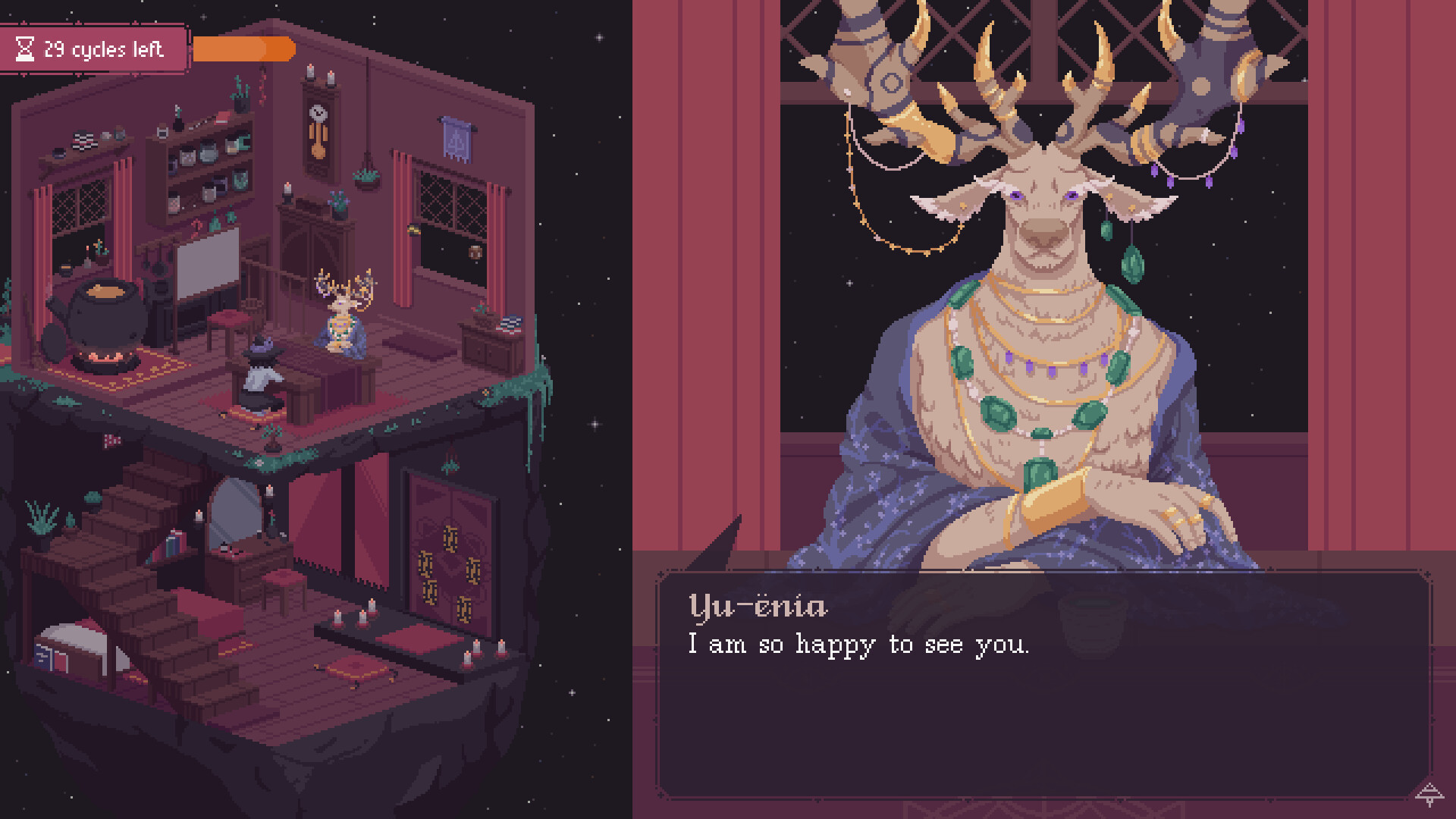
Whether you like Tarot, believe in it, don’t, or are somewhere in between, it’s an interesting topic for a game. The Cosmic Wheel’s main gameplay loop is focused around creating Tarot cards and using them to change the fate of those around you. You play as Fortuna, an exiled witch who is imprisoned for over 200 years (when the player steps in), and in the meantime the entire witching cosmos is being told through visitors that come to your window. You can sit these visitors down and converse with them as well as tell most their fortune.
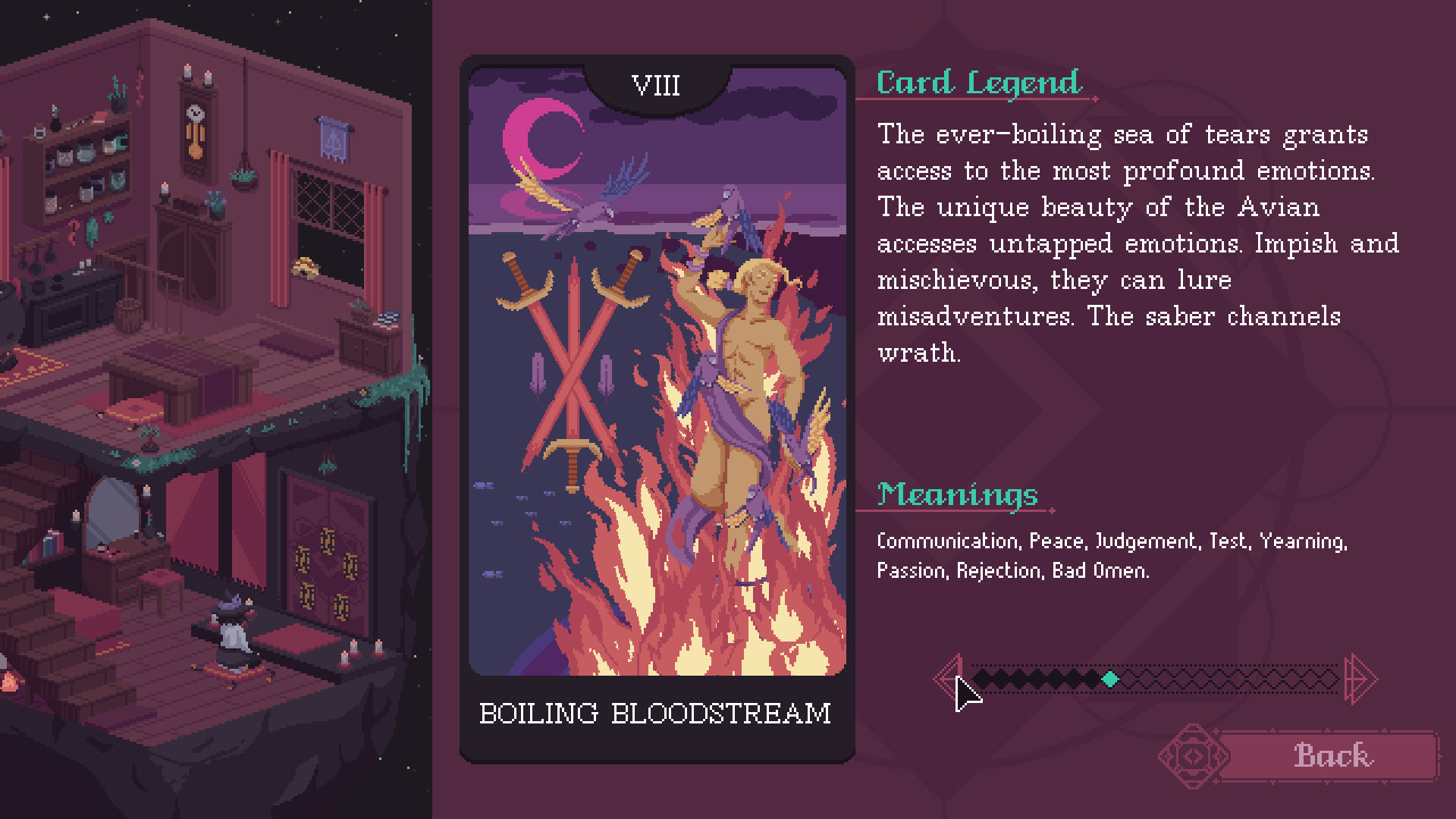
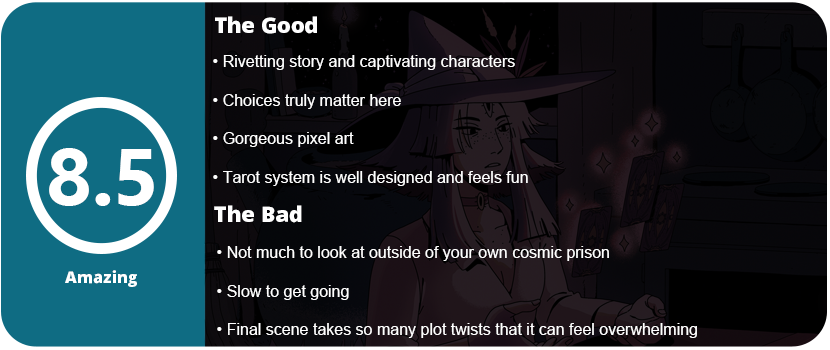
The story is incredibly detailed and diverse, and I have never played a game in my life in which the choices I made during it mattered so much. So many things I did wound up deciding so many minute twists and turns in the plot, both large and small. You can create cards by choosing the background and the art itself. Every background carries a corresponding fortune. These also cost energy. There are four colors you collect after each Tarot reading, and you spend these points on creating the cards. You can collect art and backgrounds from visitors. You can customize the art on the card by dragging and dropping pieces down, flipping, rotating, scaling, etc. It’s fairly basic, but it’s enough for just Tarot cards. You can create your own unique deck this way, and it truly feels unique to you.
If you don’t like a card, you can dispel it in your cauldron to gain the points back, and when you aren’t talking to visitors or creating cards, you can study, read interactive fiction (to gain small amounts of points), or sleep until the next day. You have a main Behemoth that you summoned (which is forbidden and illegal, by the way) named Abramar, who keeps you company and is trying to help you find ways to escape. As the plot unfolds, you keep talking to people, and how you respond to them matters. Picking any answer won’t do. Make sure you think about how you talk to people. You can gain friends and allies or create new enemies. The game’s lore explains itself surprisingly well, with witches from all government factions visiting you. They visit you either as friends or as new witches seeking guidance, among many other motives. You eventually head toward a political race, and it’s up to you to either run yourself or just support friends who are running.
As each chapter unfolds, you learn more about your past, your friends’ past, and the overall cycle of the witches and their entire existence. I was surprised that the game was able to convey an entire universe of magic and explain it all in a cohesive way without mass dumping codex pages on me or subjecting me to reading insane amounts of text. Talking to people naturally teaches you the lore and universe, which you gradually piece together in your mind. The storytelling and writing are phenomenal. These are some of the best storytelling and writing I’ve ever encountered in a video game. To truly show you an entire universe of lore from the confines of a single home isn’t an effortless task. There isn’t any exploration here. The entire game confines you to this single home, interspersed with sporadic cutscenes depicting your life on Earth in the past.
Having said that, every decision you make, whether it’s a dialogue or deciding whether to read someone’s fortune, has a significant impact in the future. There were choices I made in chapter one that I regretted five chapters down the road and didn’t realize it would have mattered. This is a game that requires multiple playthroughs to feel like you can truly master the choice-based system; however, I really wish there were more locales. While the dialogue is a constant stream of entertainment and you always feel like things are moving along, I wanted to see more of this world. In other worlds, the witches homes and see more of their past. The developers did a fantastic job of keeping you entertained in a single area for 10 hours.
With that said, the pixel art is fantastic, the characters have a lot of personality in their outfits and designs, and when the game ended, I had real attachments to these characters. I wanted more from them, and I didn’t forget about them by the next day. The Cosmic Wheel is a special type of game that can balance excellent storytelling, keep it well paced, and confine the players to a single playfield while making every choice matter. Games like this don’t come around often. Give this game a try if you enjoy story-based games.
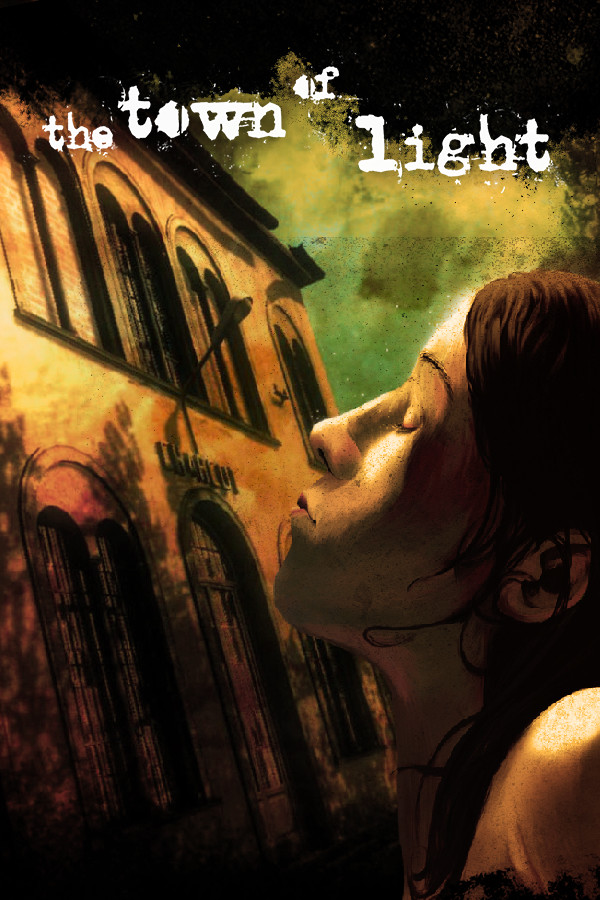
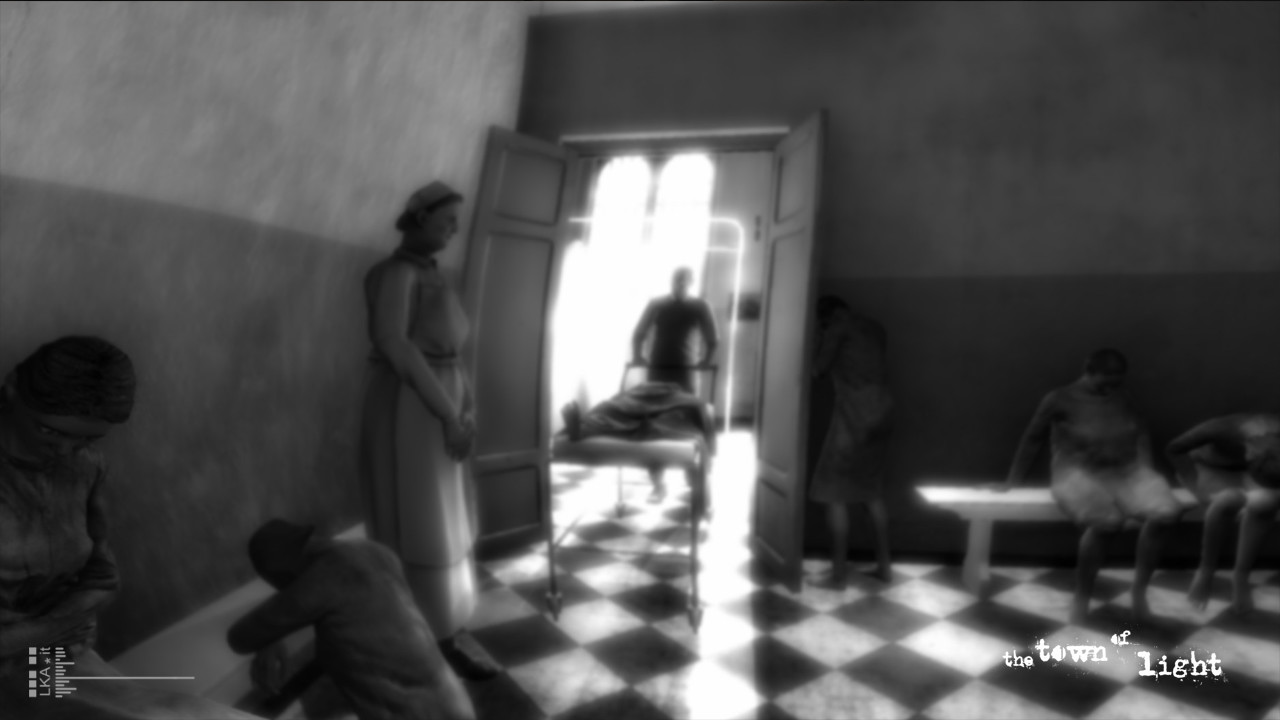
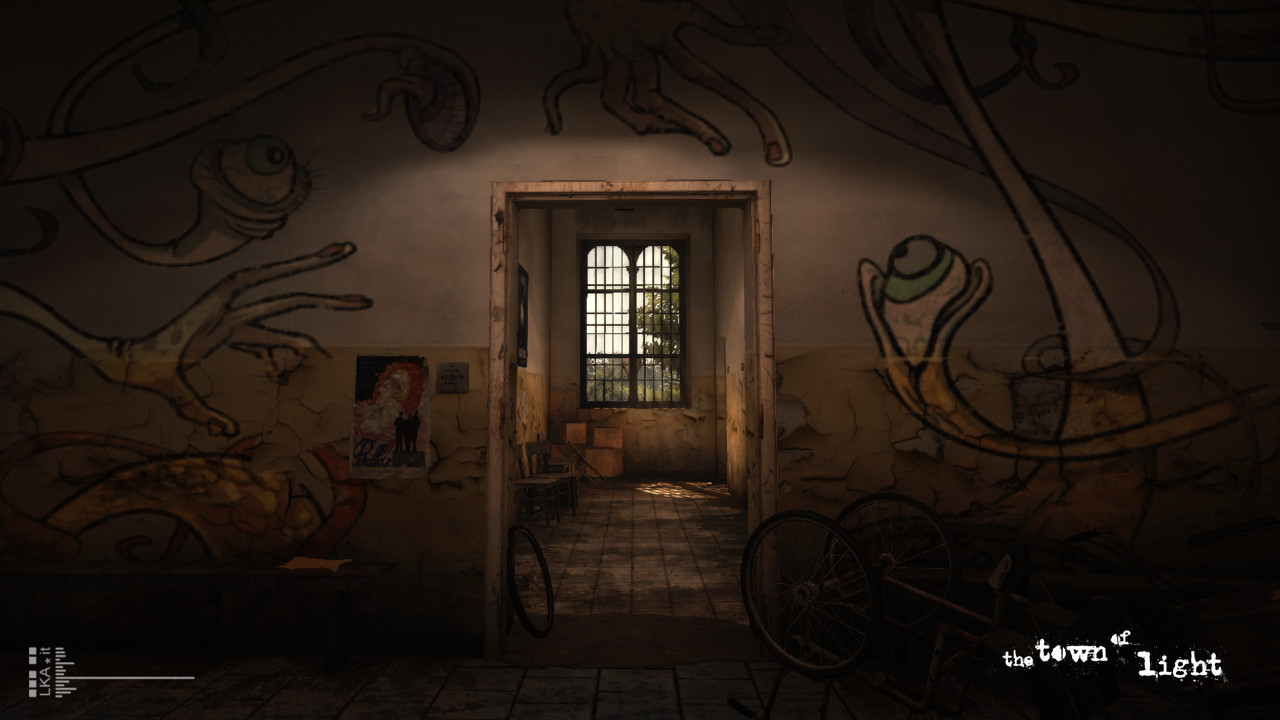
I absolutely love how the human mind works. It is fascinating how the human mind can break, repair itself, and affect the body and psyche in ways we still don’t fully understand. The Town of Light explores these ideas with a real-life case. The game is set in a hospital in Tuscany, Italy, called the Ospedale Psichiatrico di Volterra. You play as a woman named Renee who seems to be coming back to this hospital and reliving her experience here. The game’s unsettling ambient audio and flashbacks of dark and disturbing sketches are fantastic to experience.
Sadly, that’s the only enjoyable part of the game. The entire game has an incredibly slow pace and the usual obscure and abstract way of finding your way around and figuring out what to do. There are way too many doors to open, and there are too many spaces to explore with nothing in them. This hospital is two stories and quite large. With the slow walking pace, I just wanted to experience the story and move on. You don’t know you’re heading in the right direction until Renee continues narrating the story or a flashback happens. These flashbacks are either pencil sketches or full-on cutscenes. If you press the back button, some chapters will have Renee tell you where to go; however, everything is in Italian, so unless you pull up a translator or can kind of figure out prefixes and suffixes of words, you might get lost based on the signs.
There are eight diary pages to collect and find. These are highlighted notebooks in certain rooms, and I suggest getting them all. The notebook is an insightful dive into the mind of those that are mentally ill and have various psychological diseases. The sketches are haunting and beautifully done. The best part of the game is the narrations of the various hospital records you must find to advance the story. The entire tale of Renee and her fellow patients is fascinating, haunting, and quite disturbing. It also shows how awful the healthcare, especially mental healthcare, was in the 40s and 50s in not just Europe, but all over the world. I work as a nurse myself in a hospital, and it’s insane to know that our current modern way of doing healthcare (humanely) is very recent. Like the last 25 years, recent.
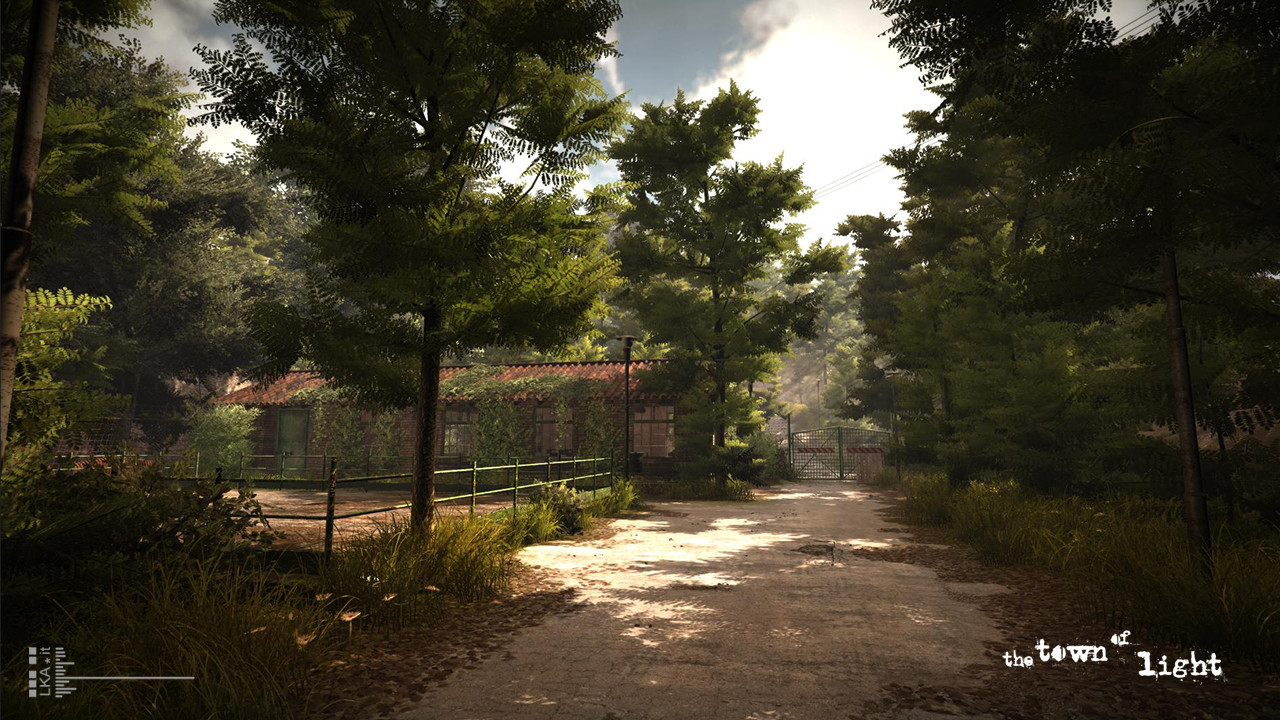
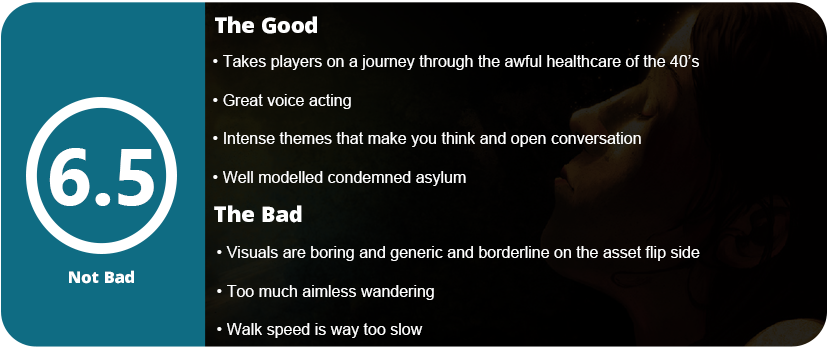
I also have to give credit to the developers for accurately portraying a decaying asylum. It looks and sounds just like you would find one in real life. I highly recommend watching The Proper People on YouTube, who are the best urban explorers out there. They have visited asylums in Italy, and the building is very reminiscent of how they stand today. The peeling paint, depressing color scheme, abandoned, rusting bed and wheelchairs, and old and mysterious medical equipment that look like torture devices (some were). Despite all of this, however, the game is very boring and ugly to look at. Even for 2016, the game is teetering on the border of asset-flippy territory. It just looks so generic and low-budget despite some decent lighting effects.
The voice acting is very well done, and the overall picture you walk away with is the narrative of mental health in general and how people are taken advantage of back in the day. The game also explores how orderlies raped and molested the women and lied and were believed. The doctors literally got away with murder, and families were lied to and betrayed without ever knowing it. Thankfully, this is all in the past, but the hundreds of thousands of victims who died and suffered under the guise of humane healthcare is a sad story and something worth discussing even today.
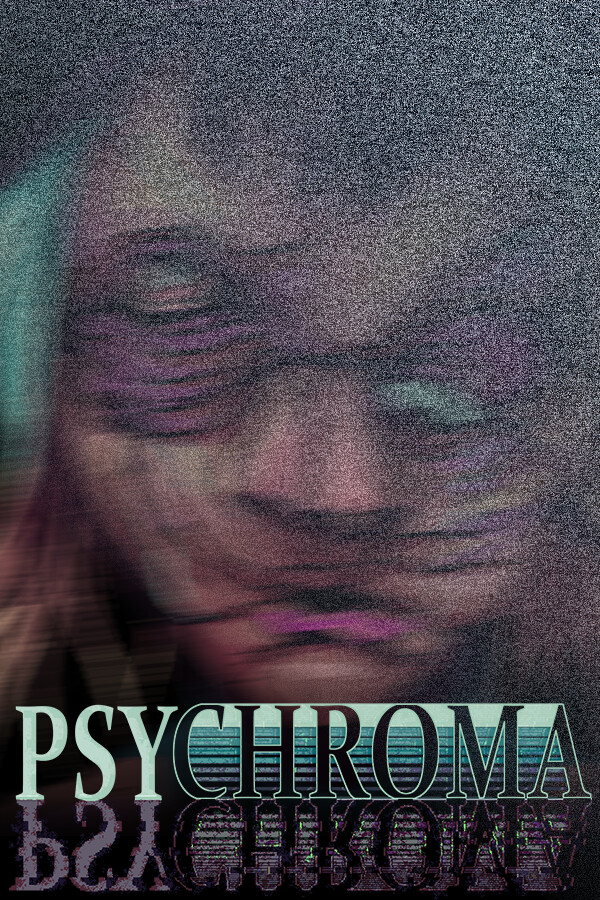
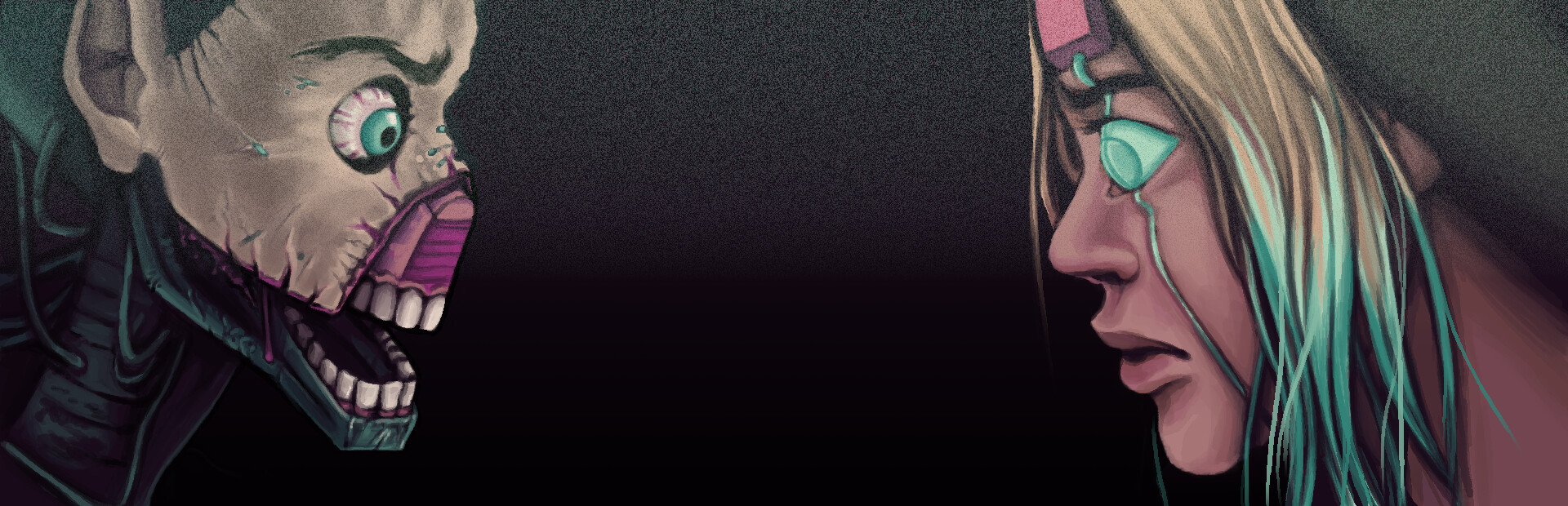
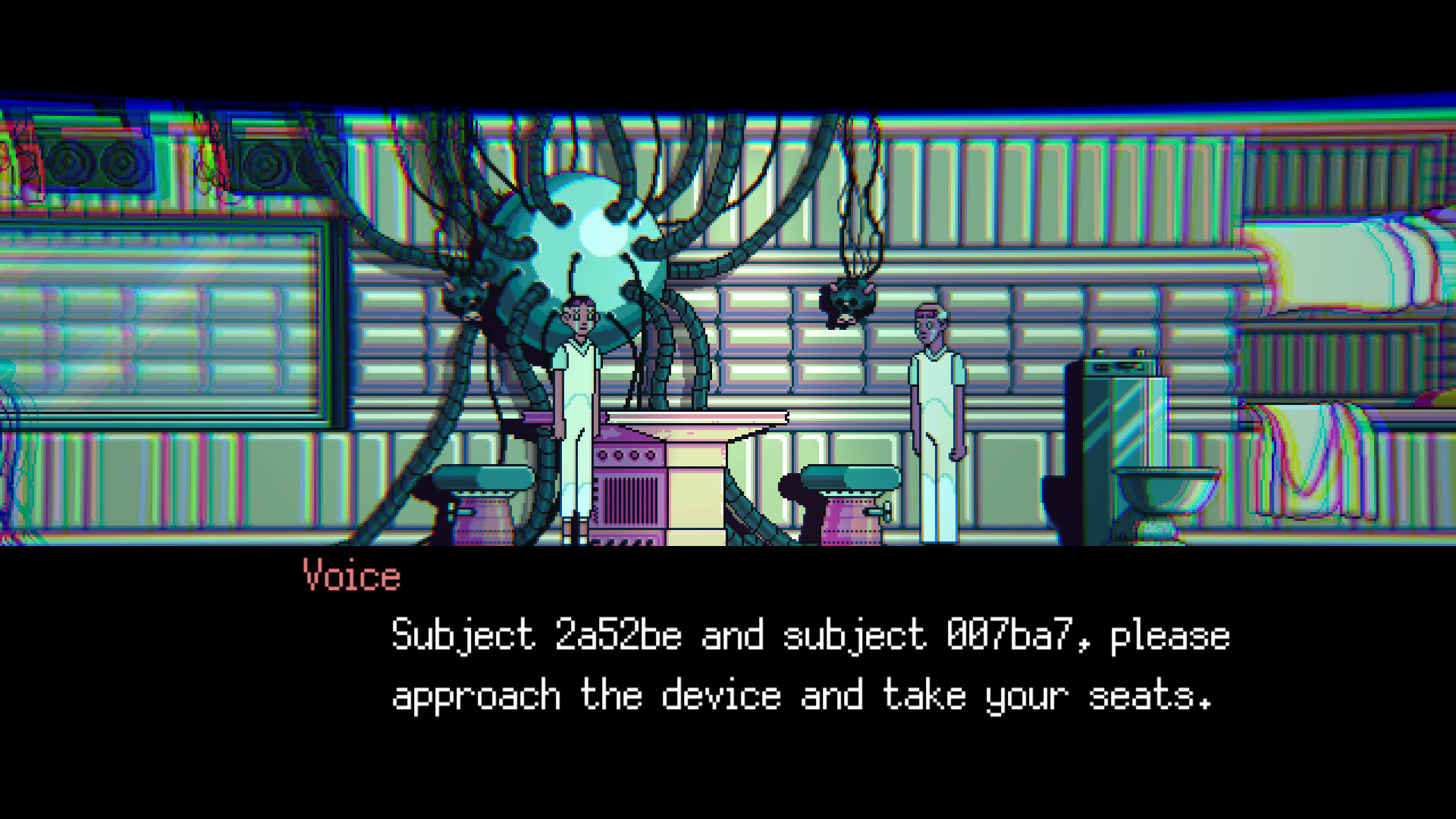
I personally love cyberpunk settings. I particularly enjoy cyberpunk settings that delve into the mental states of individuals with cybernetics and explore the workings of such a world. Psychroma explores the idea of secret human experimentation and how it can affect and break the human psyche. The overall story itself is pretty good, but getting there feels like a chore. The story is broken up quite a bit and feels confusing to piece together through most of the game. A lot of backstory is told through computer logs that you must find hidden throughout the house. You play as a cyborg/human experiment named Haze. The atmosphere is quite unsettling. Outside, acid rain falls down from the sky, eating away at the corrugated steel walls and rebar. The mystery of the house and the haunting past is what you’re uncovering.
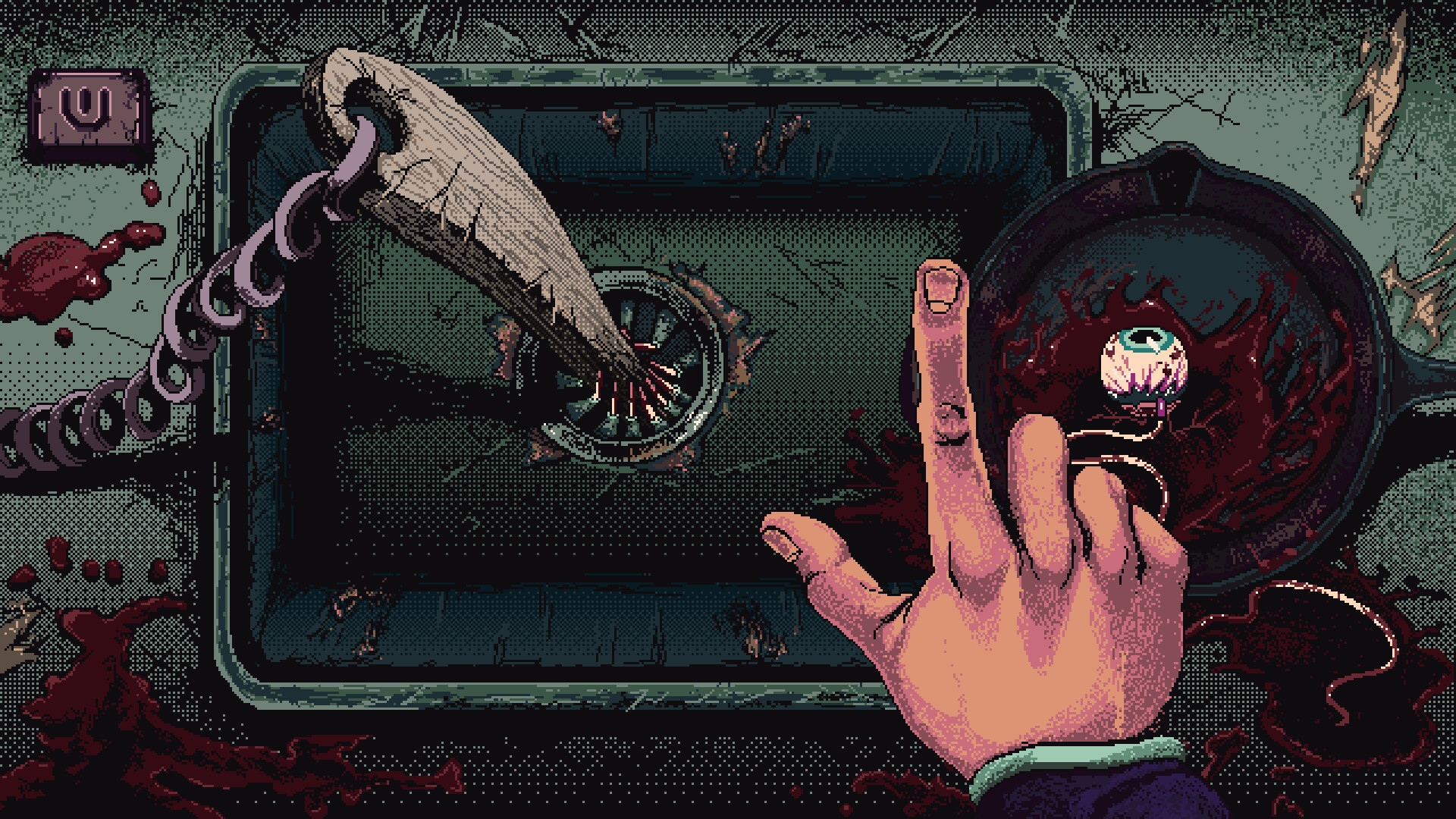
This is a side-scroller adventure title, so there’s no combat here. You have a limited inventory system and must interact with objects until things happen, hidden passages open, and new doors unlock so you can get that next item to advance through the story again. This is sadly very obtuse and obscure. Many times I ran around all seven floors and clicked on everything only to discover I had to use an altar to go back in the past and unlock something new. Usually info like a passcode you need for a new door. There are three altars in the game, and each one has a part of the house locked off and has isolated memories. You must find cards for housemates and determine their past and role in the experiments.
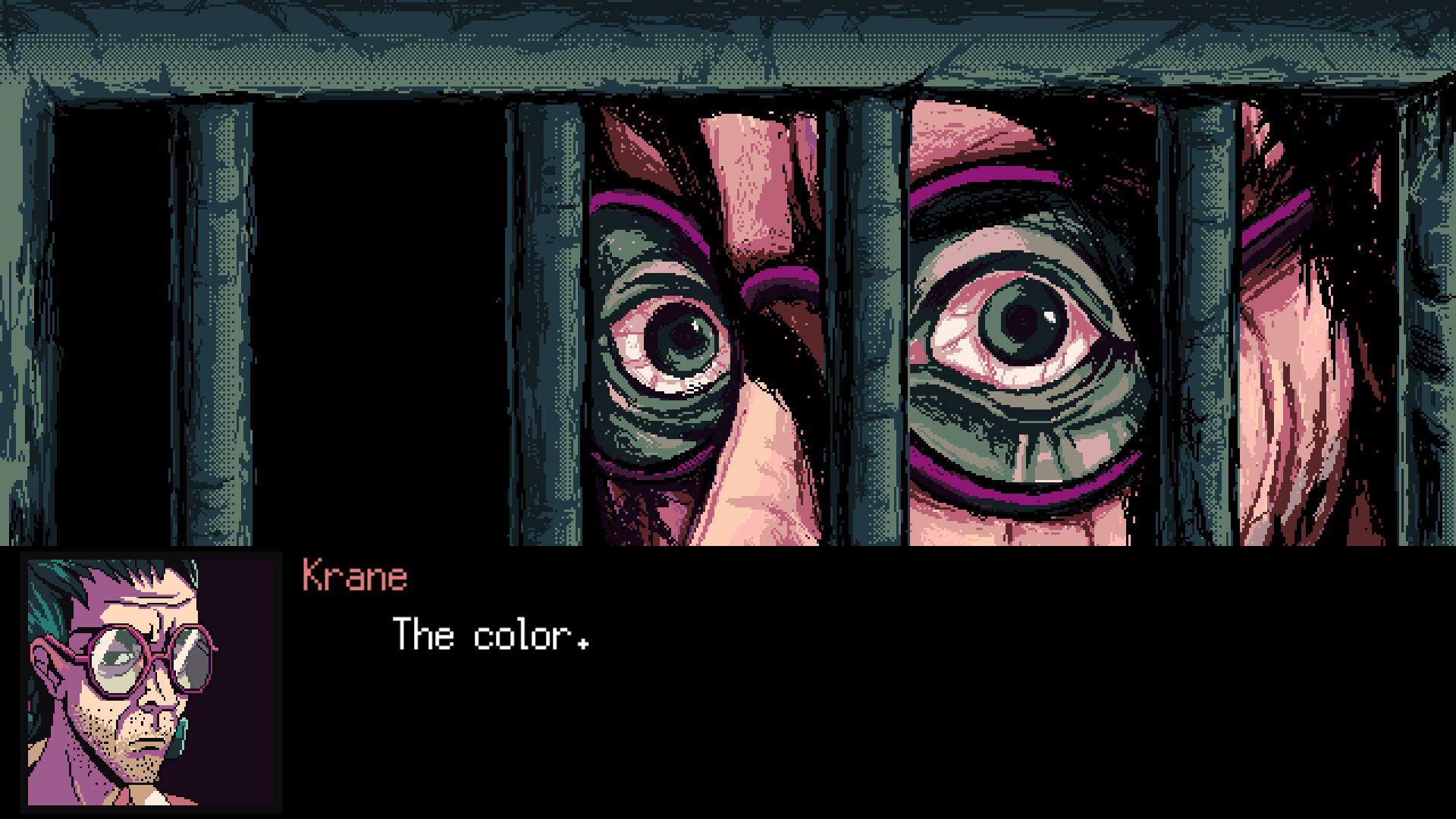
I don’t want to dwell too much on the story since that will spoil the game, but the fullscreen stills and artwork are fantastically drawn. The haunting horror and torture of the children here and various subjects is gruesome. There’s quite a bit of gore here, but what fascinates me is cyborg gore and how they work medically. I will only say that the premise of the game is that there’s something sinister going on in the house, and a member of it might be a creep. Haze gets suspicious early on, but who it is and why is what you need to discover. There are a couple of plot twists, and the story is good once you can piece it together and make sense of it. I wanted to know a bit more about the character’s past, but the game is only 2-3 hours long, so there’s not a lot of time for character building.
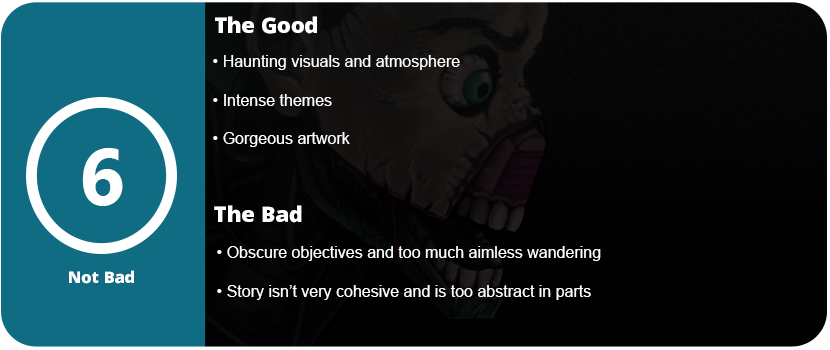
I honestly just didn’t like the aimless wandering, and the objective in the menu screen doesn’t help at all. I was able to figure out a good portion of the game by myself, but I got to a few spots where I felt completely stuck, and the constant backtracking and running around room after room trying to find that one spot I missed drove me nuts. My strategy of turning on the lights in rooms I’d been in didn’t help if I missed an object or didn’t interact with it correctly. If the game had a map system with a flashing blip or something to indicate your floor, it would have been more fun.
As it stands, Psychroma does a great job giving up a disturbing cyberpunk mystery of hospitalization, experimentation, and creepy family values. The game dives into gender identity a bit (that’s going to piss some snowflakes off) and self-discovery. I felt the overall story was pretty good, the artwork was fantastic, and the atmosphere was quite haunting and depressing, but the actual gameplay held everything back some. The constant backtracking and item hunting will put a lot of players off.
The idea of DLC for Mortal Kombat was an exciting prospect when it started with Mortal Kombat (2011). You paid $5 for a new character, and this felt fine. Mortal Kombat X introduced the character pass system, which was also well liked. You paid $20 for four new characters that were spread out over a few months. Mortal Kombat 11 introduced a terrible monetization feature that required too much grinding for unlockables and customization items. This trend sadly got worse with Mortal Kombat 1, with entire outfits and sets being stuck behind a paywall. One of my favorite features of any MK game was the alternate outfits, and being able to customize them was a dream come true, but Neatherrealm went the evil route and locked most of it away.
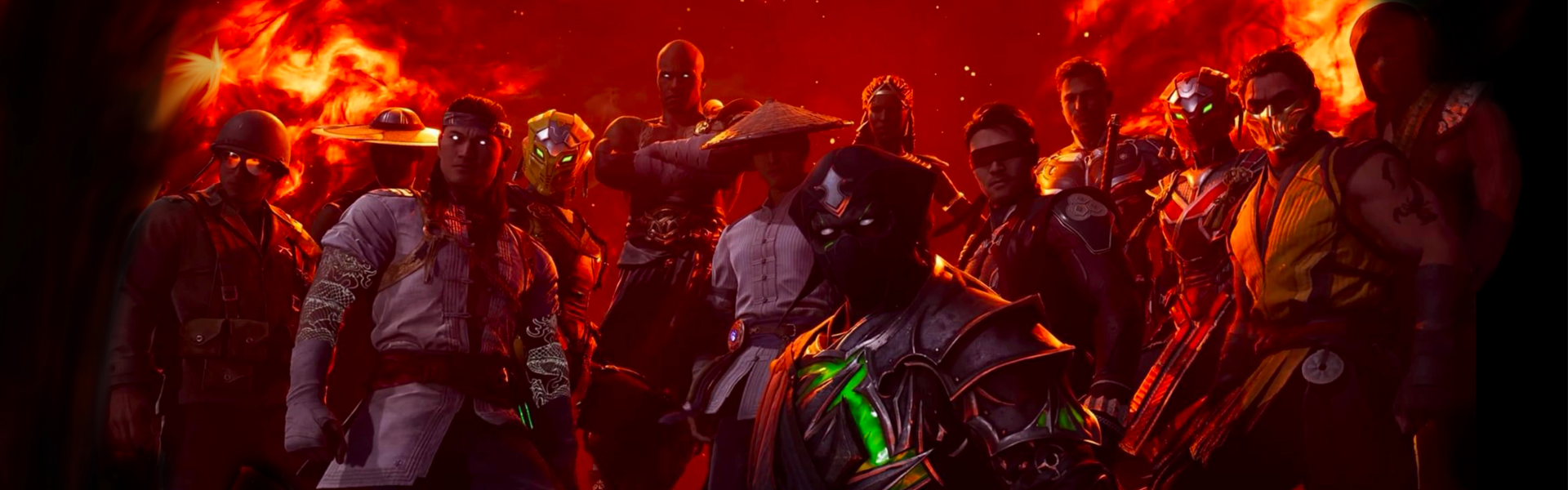
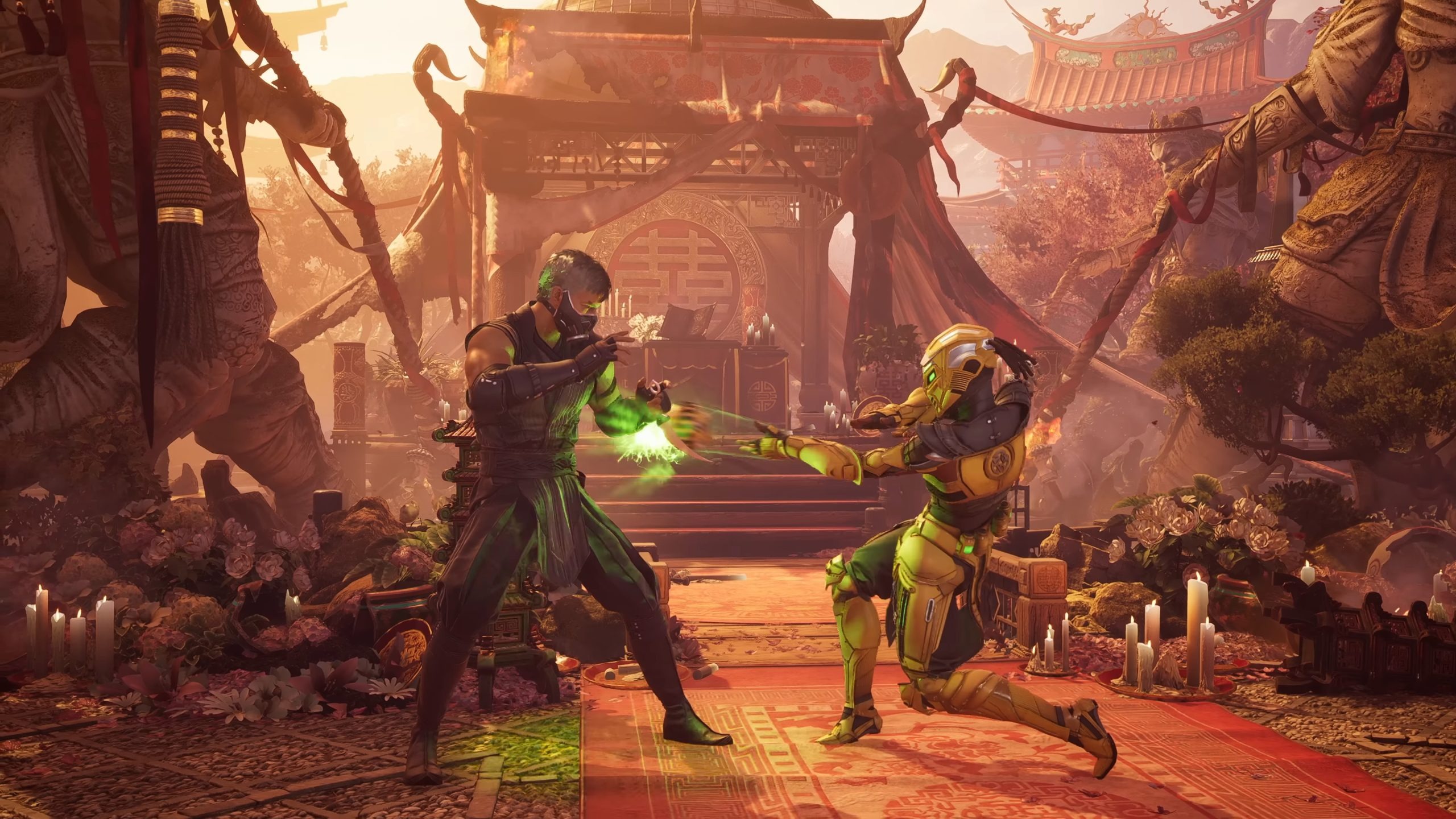
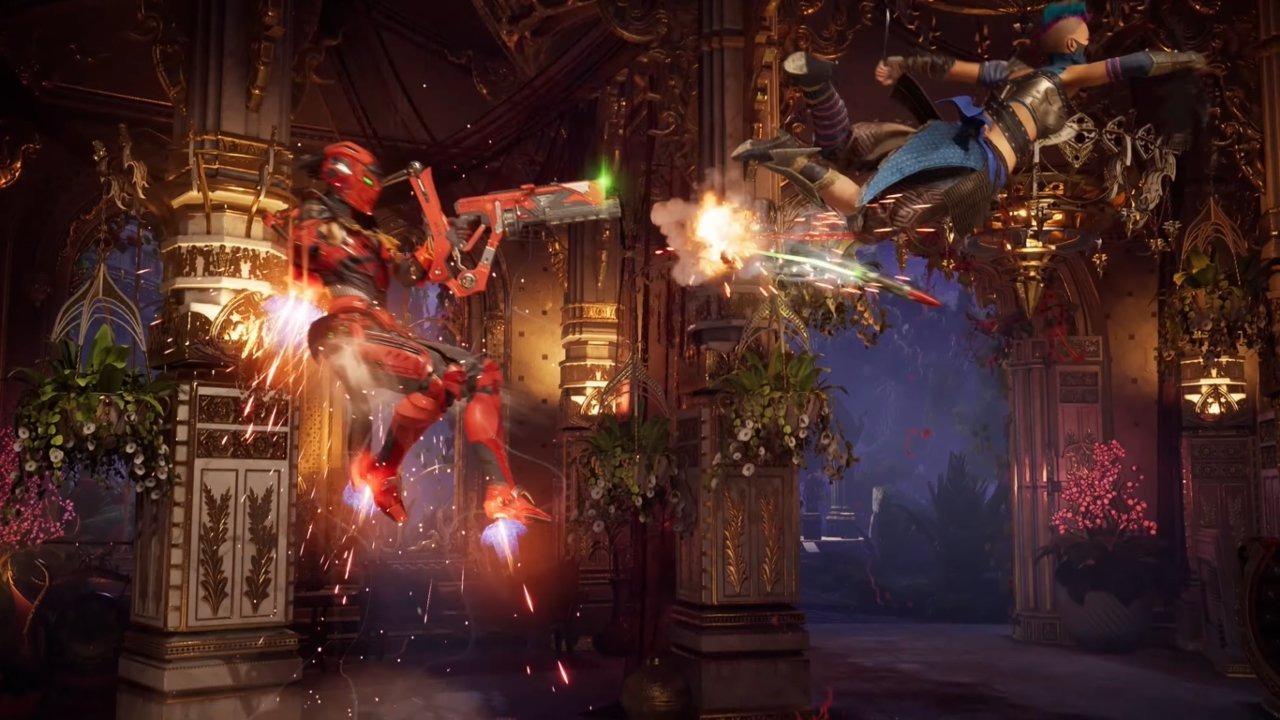
The same appears to be the case for single-player content. While I don’t mind paying a few dollars for more of the fantastic story mode and more characters, make sure to make it worthwhile. The Aftermath expansion for MK11 was awesome and was a great ending to that story. This epilogue has a lot of problems with it, mostly being the terribly written dialogue. Everyone is angry, growly, and so much “GRRR!!!” in their voice that it is laughable. Everyone seems to be delivering one-liners rather than cohesive dialogue. Trying to throw in bits of story exposition into single lines of dialogue is so stupid and elementary. The main campaign had pretty good writing with some characters delivering full speeches and emotional depth. This just feels like a 5th grader reading a bad comic out loud. The entire Khaos realm invading the current timeline is a cool concept, and Titan Havik makes for a great villain, but it’s just so badly written, and the fights are monotonous and boring. You get four more chapters, but each fight is just a recycled and uninteresting Khaos version of other characters. These seem to have some sort of Mad Max vibe to them, but it just looks like a group of terribly dressed punk rock fans.
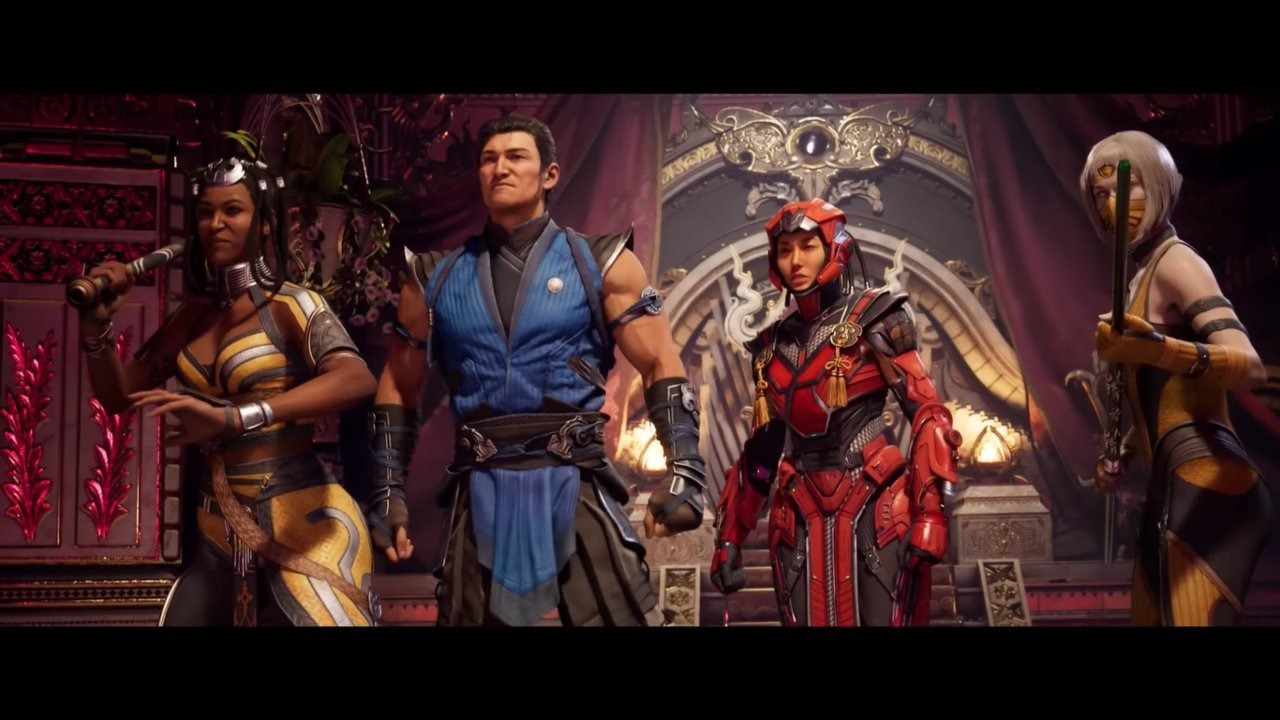
Let’s talk about some truly awful characters. Sektor and Cyrax seriously suck. Not because they are gender-swapped. Oh no, no, no. They are no longer cyborgs, which means their uniqueness is gone. Netherrealm could have made these female cyborgs, and it would have been awesome still. Even if these were human males, they both would have been lame. I don’t understand the push to humanize Cyrax and Sektor lately. This means their cool moves and deadliness feel off. We don’t need them to have in-depth dialogue and feelings. They are killing machines and reminded me a lot of the Predator. Because these are lame exo-suits, you no longer get the cool gadgets like the Cyrax’s chest blade or net, and Sektor’s missiles just don’t look cool. The missile launcher is a giant, oversized shoulder pack that just doesn’t look right. The characters are also poorly written and feel generic, so there was no saving them there either.
Then that brings us to the DLC characters, which at this time of writing, T-1000 and Conan are not available yet. Ghostface is one of three guest characters, and he looks great with these flowing robes, having great physics effects, and the goofiness from the series as well is fine. I don’t enjoy his power moves, which just have him use various knife moves. His fatality is funny, so there’s that, but his animality is weird. Noob Saibot is the only character here that I enjoyed playing. He looks cool, and his backstory actually makes sense in the epilogue. Noob Saibot is the only saving grace for the entire package, but it still doesn’t justify the price tag.
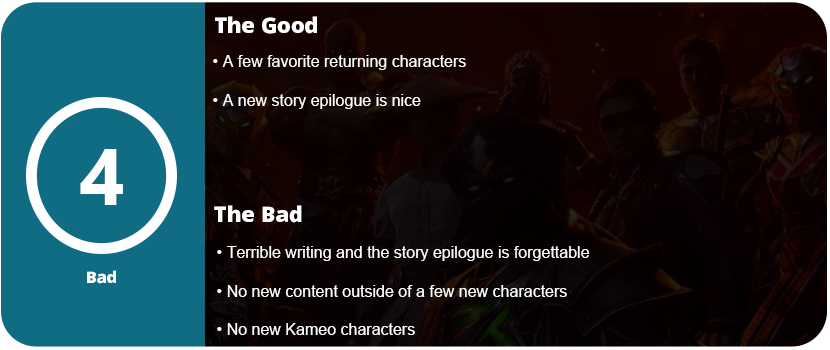
And honestly, these guest characters are getting old. It was cool back in MK (2011) with Freddy Krueger and Alien, but it’s becoming too much. Spend the money on the licensing to bring back characters people love or create new ones. There are also no Kameo characters this time around either, which is a real shock. We could have at least gotten a few more of those. That also doesn’t help justify the price tag. $40 for a 2-hour, terribly written epilogue and three new characters. At launch, Ghostface was not available at all. The only redeeming part of the game at launch was Noob Saibot. What is Netherrealm Studios thinking? They aren’t.
And that brings me to the fact that this is my favorite game series of all time, and it’s becoming live-service garbage. The entire series needs to take a few years off, reboot, and come back with what fans loved. More content, less grinding, and more unique characters with fewer guest ones. As it stands, Khaos Reigns is worth maybe a $10-15 purchase on sale, but that’s it.
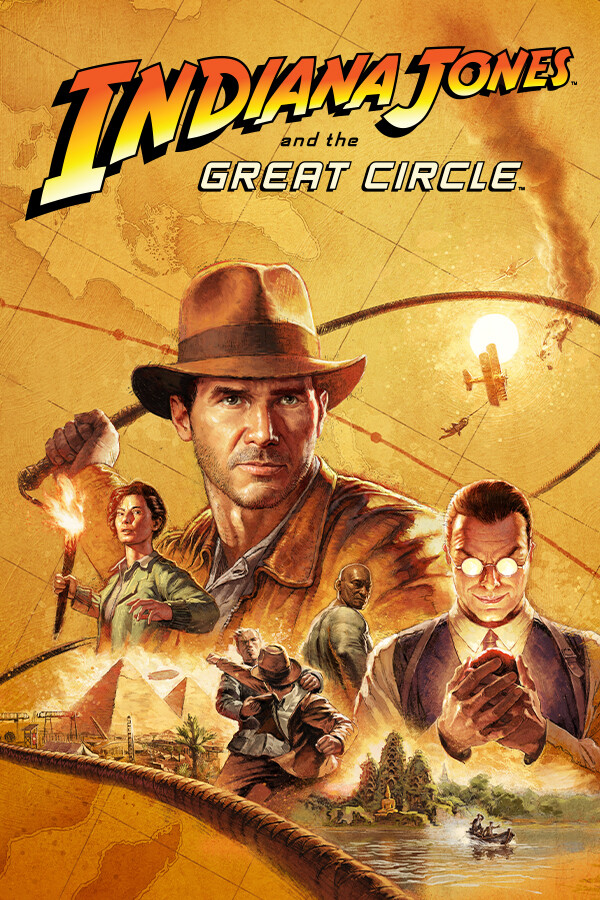
When you think of Tomb Raider, Uncharted, or most treasure hunters, you think of Indiana Jones. Harrison Ford’s iconic character is considered the grandfather of all video-game spelunkers. It’s only puzzling when you realize nearly every Indiana Jones game was mediocre to terrible at best, and none got the fancy high-budget treatment that his copycats did. Thanks to MachineGames, who are masterclasses; with their pedigree being in the recent Wolfenstein reboots, there’s no one else more qualified for a WWII-set adventure title in the first person.
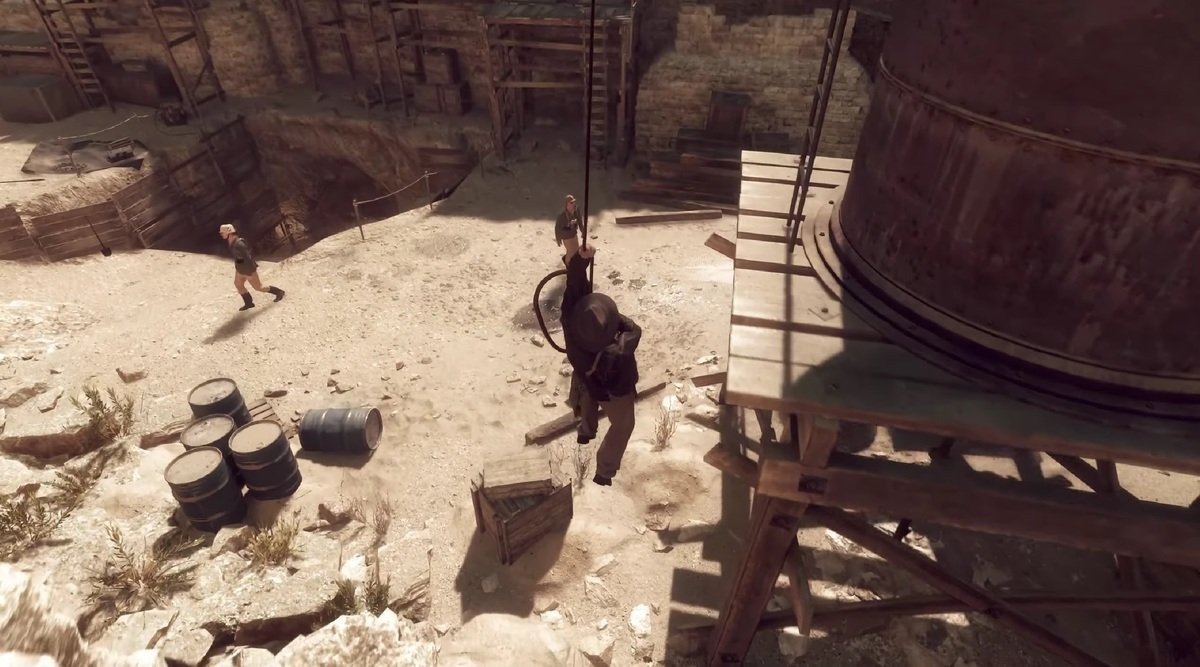
The Great Circle focuses on major monument sites like the Sphinx and Machu Picchu that hold a stone that, when combined with the rest, can allow instantaneous travel. This seems a bit far-fetched for a series so grounded in reality, but MachineGames pulled it off. The game starts out very serious and realistic in tone. You get to play the opening sequence based on one of the scenes from an Indy movie, Raiders of the Lost Ark. This is your basic tutorial on how to play the game and what to expect gameplay-wise. This platforming and climbing is mostly played in first person, but it’s used sparingly and works well for the character. The titular action hero is also voiced and acted by Troy Baker, of Joel from The Last of Us fame, and you would swear Indy’s voice is actually Ford’s or some sort of AI. He does a fantastic job getting all of Ford’s mannerisms and quips just right. MachineGames, in turn, did a stand-up job with his facial animations and expressions. The digital form embodies the essence of Indy.
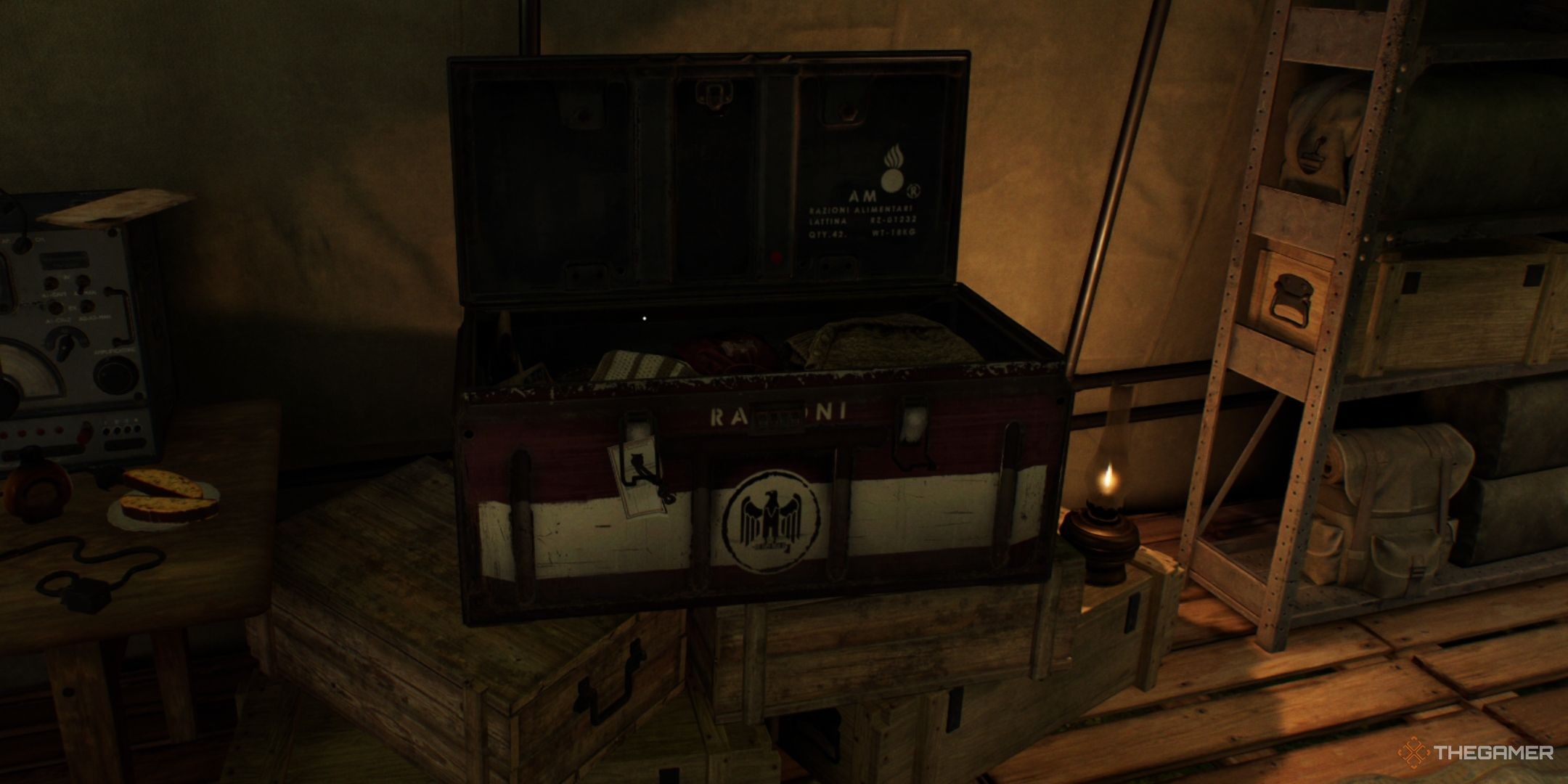
I greatly appreciate the gameplay loop here, as it breaks up quite a bit and never feels stale. The first two “maps” of the game are large and open and give you side quests on top of the main adventure. You can ignore these, but they provide you with Adventure Points, which you can use to unlock abilities from the Travel Books you acquire. They also hold a lot of fun adventuring, great scripted events, and puzzles. Running around the map can unlock fast travel points, but don’t worry. These maps are significantly smaller than those found in games like Grand Theft Auto or Assassin’s Creed. You can easily run from one side to the other in a couple of minutes. The challenge here is that the Nazis have camps and barricades set up all over the maps. As long as you maintain your disguise, you can access some restricted areas and avoid others. Usually the disguise is similar to the local flavor of the working class. Indy will auto-equip disguises as needed, such as his iconic leather jacket, hat, and trousers, when you get to a tomb. You can easily get away with a lot, and thankfully the enemy AI can’t detect you from miles away. The yellow alert symbol above their heads is fairly generous and gives players plenty of time to hide and move out of the way.
Most restricted areas are fairly large and open, and your objective has multiple ways of entry. Either go in bashing everyone down or shoot your way through, but realize that some early areas don’t really have guns, and you will run out of bullets quickly. Sometimes it’s better to not be seen, as you can be greatly outnumbered. The main combat mechanic here is melee weapons of everyday use that you can pick up, such as brooms, tire irons, bottles, brushes, batons, frying pans, or anything else you fancy. These have degradation bars and can only be used a few times. Sneaking up behind an enemy and whacking them will get an instant knockout. Guns can also be turned around and used as melee weapons if you want to go a more pacifist route.
If you break your main revolver, you can use repair kits, but bullets are very rare. It’s not recommended to go in guns blazing until later levels when you can pick up a shotgun, sten gun, or other pistols. These also have a single clip, and then you have to discard the weapon. You also can’t carry any weapons up ladders. If you climb out of an area, the weapon stays behind. While you do at least get your revolver at all times as a backup, I rarely used guns. I must commend MachineGames for effectively dissuading players from using guns, despite their potential convenience. I always searched for a melee weapon and sometimes avoided combat in entire areas thanks to the many ways to get to an objective.
I did find navigating the areas a bit annoying, as the menu and inventory system are kind of a mess. All of Indy’s notes are in a notebook, and you hold this in real-time; the navigation icons only appear when the book is out. I had to run around with a book in my hand to see my player icon move in real time on the map. I would have liked an optional compass on the HUD. I also found flipping around to notes for solving puzzles to be a nuisance. The overall design of the menu system is subpar, resulting in a cumbersome experience. Some optional puzzles require you to snap photos for hints, and these documents and photos need to be referenced a lot, so flipping through multiple pages each time is a chore.
Adventuring itself feels grounded and used sparingly, so it feels like a real Indy adventure. You use your whip to pull things down, swing across gaps, and disarm enemies in combat. The whip is slow, and you can’t just run full tilt down a hallway and expect Indy to whip beams and fly across the levels Prince of Persia style. You have to stop and aim at the beam; Indy then whips it, and then you swing across, but Indy’s speed isn’t that of a superhuman adventurer. It feels real and believable. Indy doesn’t climb up his whip against walls quickly either. There’s a weight to his movements ; he’s struggling just a bit and always on the brink of exhaustion. To be honest, it’s a refreshing shift in pace. My favorite parts of the game are the final tombs you explore before the final bosses, as they are full of fun puzzles and scripted events. MachineGames broke up the game by adding three heavily scripted linear levels after the first two open maps. It’s so well paced, and I couldn’t put the game down.
The RPG system seemed a bit forced and unnecessary to me. The Adventure Points rack up, and you will end up with more than you need, but buying more books requires medicine bottles, which must be hunted and searched for in the level. You can use your camera to snap photos when an icon appears for some quick Adventure Points. Then you have coins, which you mostly use to buy the three main gadgets you use throughout the entire game. These gadgets include a camera, a lighter, and a re-breather. These are quite expensive and will require you to go finish side missions and scrounge for money in chests and on shelves. Travel books help you gain stamina, health, and damage while knocking out enemies faster. All three currencies are underutilized. You can also eat pastries to increase your “armor,” use bandages to heal, and eat fruit to increase your stamina “armor,” which just allows your stamina to reduce at a slower rate. Stamina is vital to combat, as fisticuffs is so heavily relied upon.
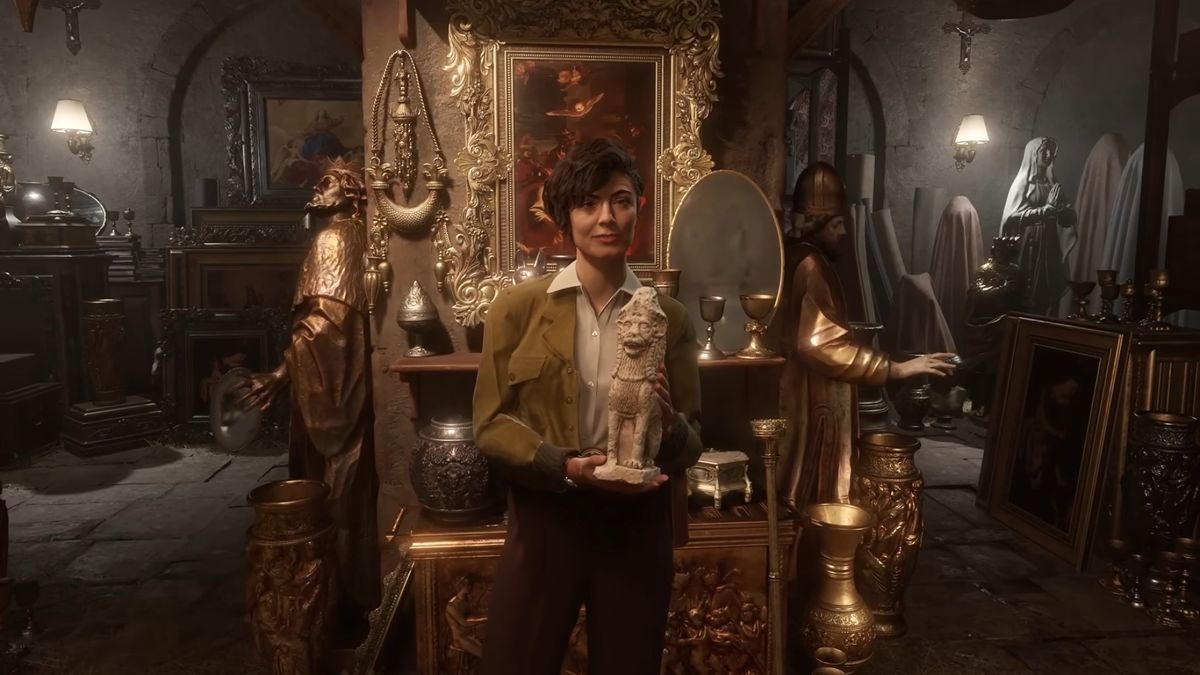
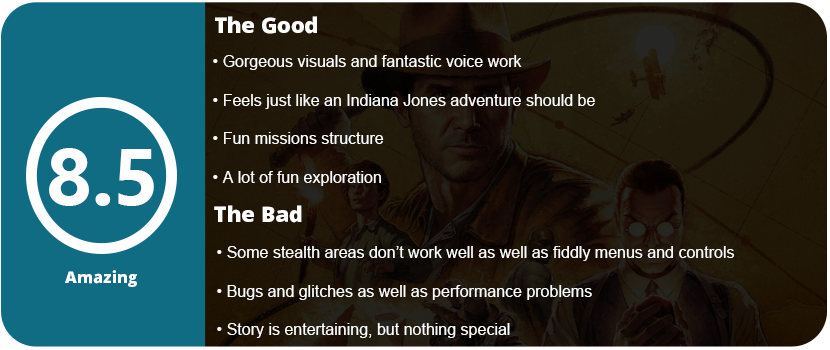
The game itself looks absolutely gorgeous. It is undeniably one of the most visually stunning games to date. The game boasts an extensive range of diverse locales, including a desert, dense jungle, the Vatican, a college, and a snow level. The game is constantly changing things up, and it just never feels boring. The story, while elementary, is captivating enough to keep me going, but the characters feel like they almost stand out but still feel a bit too cliché. The main antagonist, Dr. Voss, has a wonderful personality that you really despise, but there’s something about him that makes him forgettable, as well as your female companion Gina. The overall adventure itself is memorable, however, and I had a blast with the 20 hours I put into this game. I don’t feel the urge to find all the hidden collectibles, as this part of the game felt like a chore. I preferred the scripted events that made me feel like Indy rather than sneaking around collecting things like a Thief game. Overall, I believe this is the finest Indiana Jonesgame ever created, and I look forward to future releases.
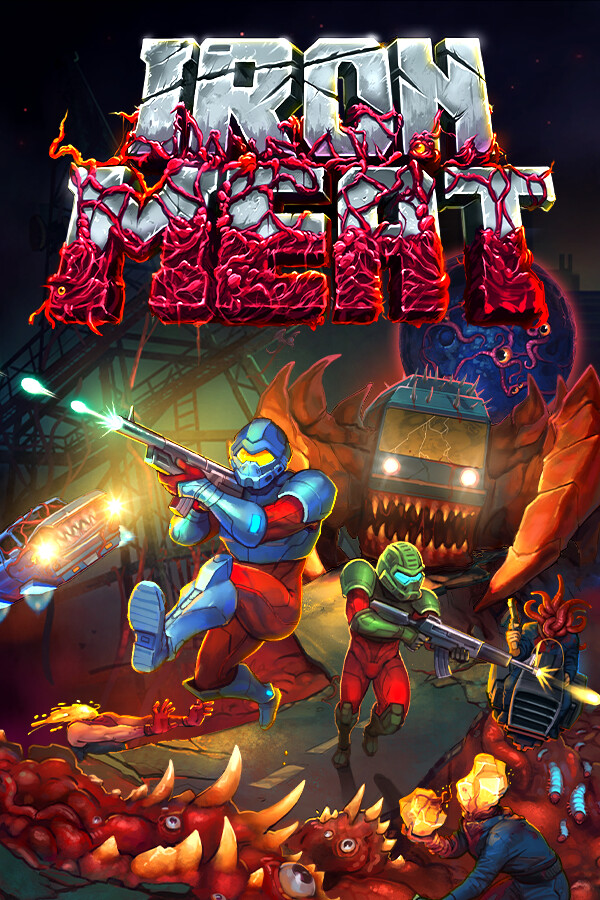
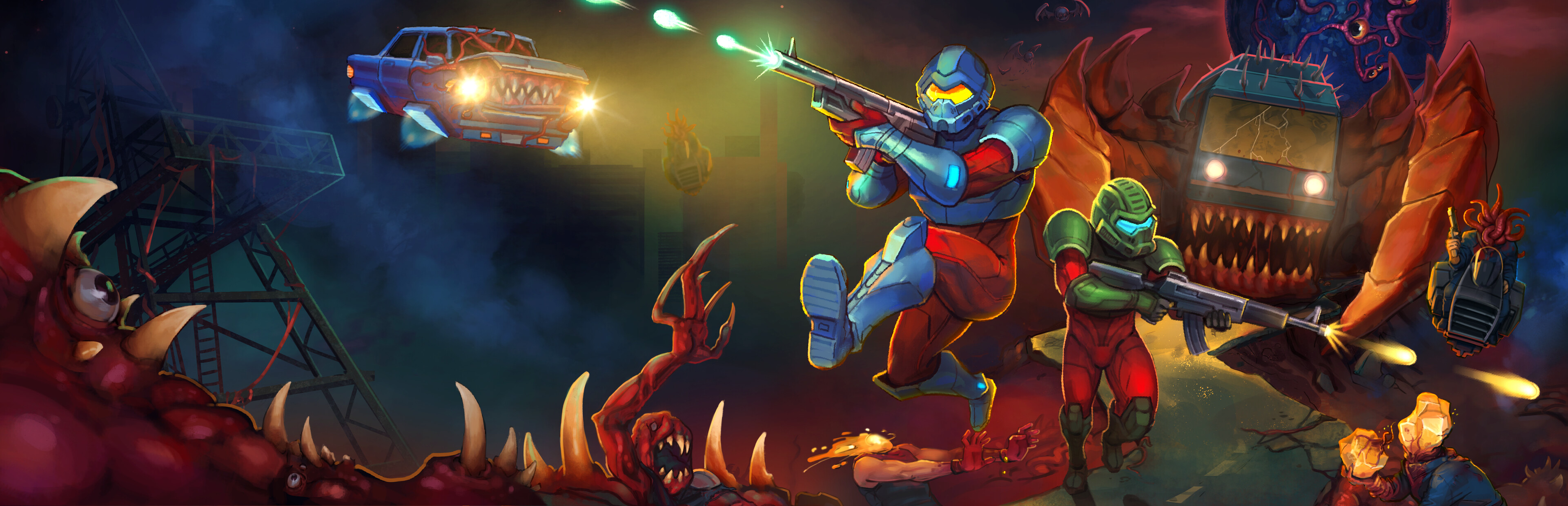
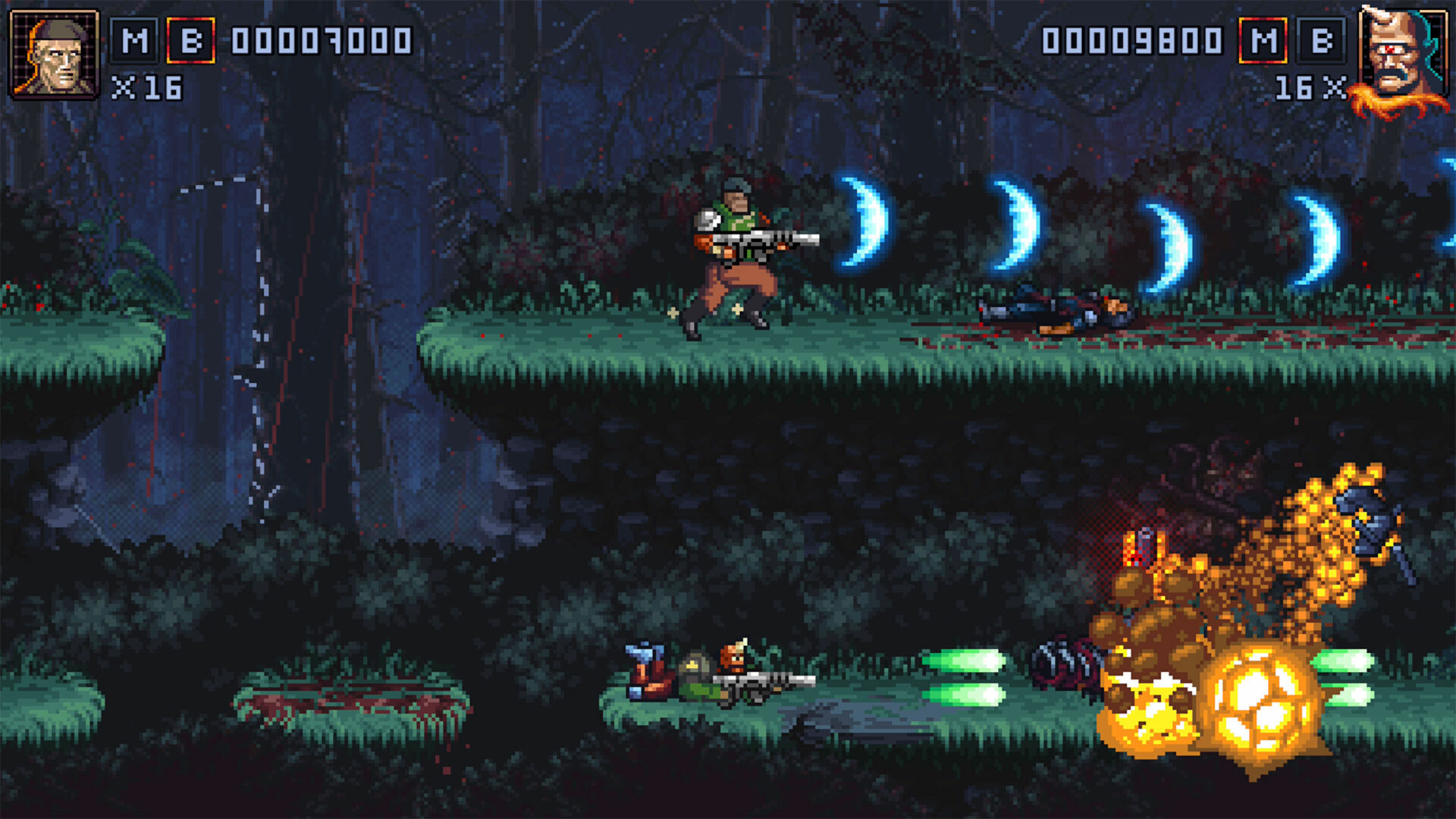
Contra is the blueprint for side-scrolling action games. They need to be tough as nails, have insane bosses, and usually have a lot of gore or some sort of inspiration from biomechanical art. Moreover, the Earth is under the control of a vast and formidable alien race. Iron Meat nails all of these and is a blast to play. The game can also nail all of these aspects and still fail in level design and gameplay. That’s thankfully not the case here.
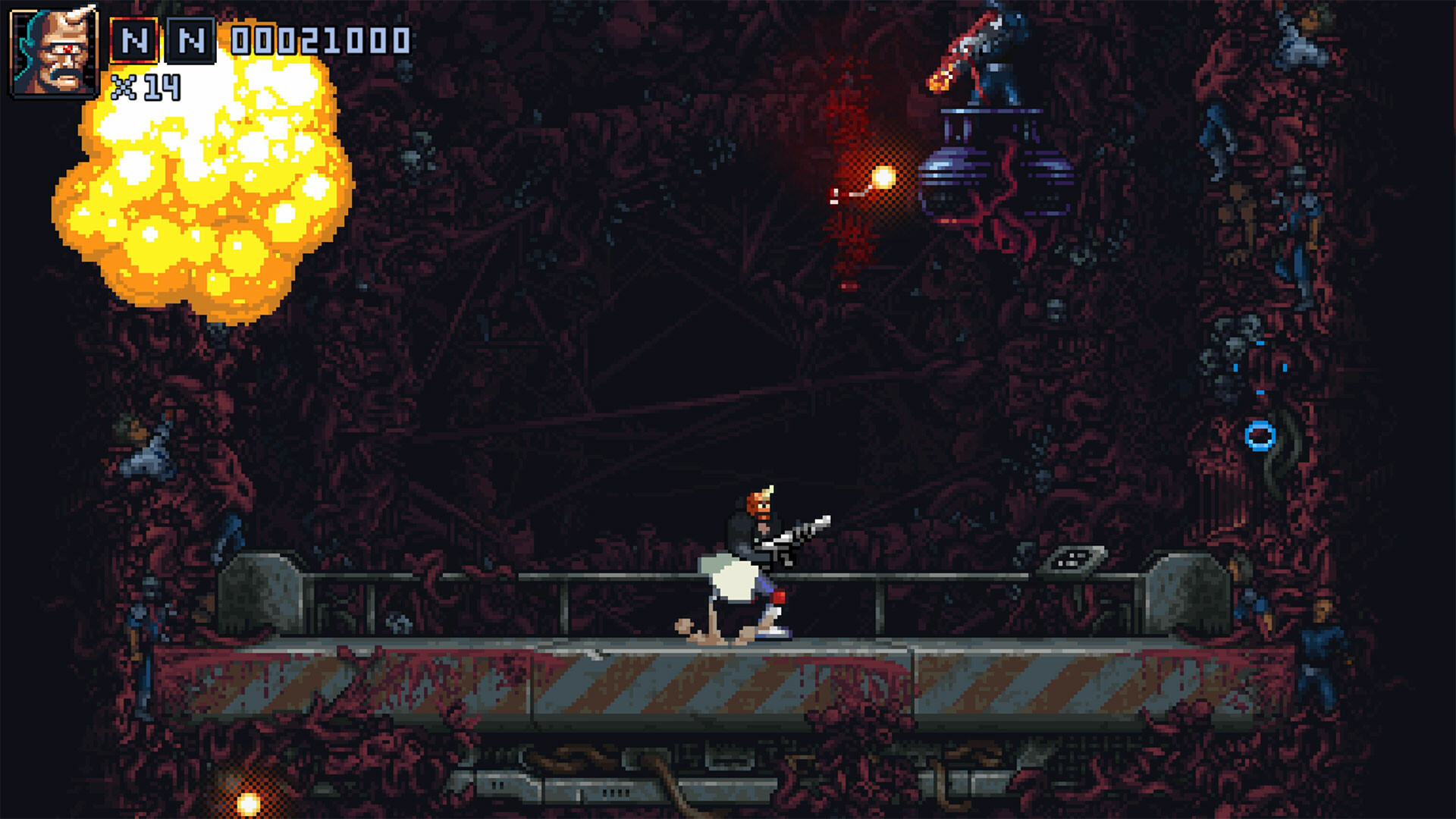
As a stalwart soldier, your mission is to save Earth from an alien race that has taken over the Moon. There are nine unique levels in this game, each with varying lengths, enemies, and obstacles to overcome. The game is very pick-up-and-play friendly, as you just run forward and blast everything in sight; however, Iron Meat has a couple of things it does a bit differently. You can find ammo pickups inside objects. Occasionally, friendlies may drop them, or you may find them lying around. They are not commonly found, and if you die, you forfeit your weapon. The standard weapon is a rapid-firing machine gun that works well enough. Other weapons include different firing rates and patterns. There are also pickups to increase your score by 1,000.
In Iron Meat, you can shoot in eight directions. Another great feature is that you can hold down a trigger button to maintain your position while shooting in any direction. The game constantly presents you with enemies at a rapid pace. Some enemies, such as boxes with jaws, bugs, melee enemies, weird snakes, bats, and various other insane abominations, may be incorporated into the level itself. The enemy design is fantastic, and you get to know what each enemy does and how to kill them. Occasionally, following a specific order can also prove to be an effective strategy. You can also avoid enemy fire by lying down prone and shooting. Some levels will also test your platforming skills, featuring obstacles such as collapsing ceilings, death pits, and suspended platforms.
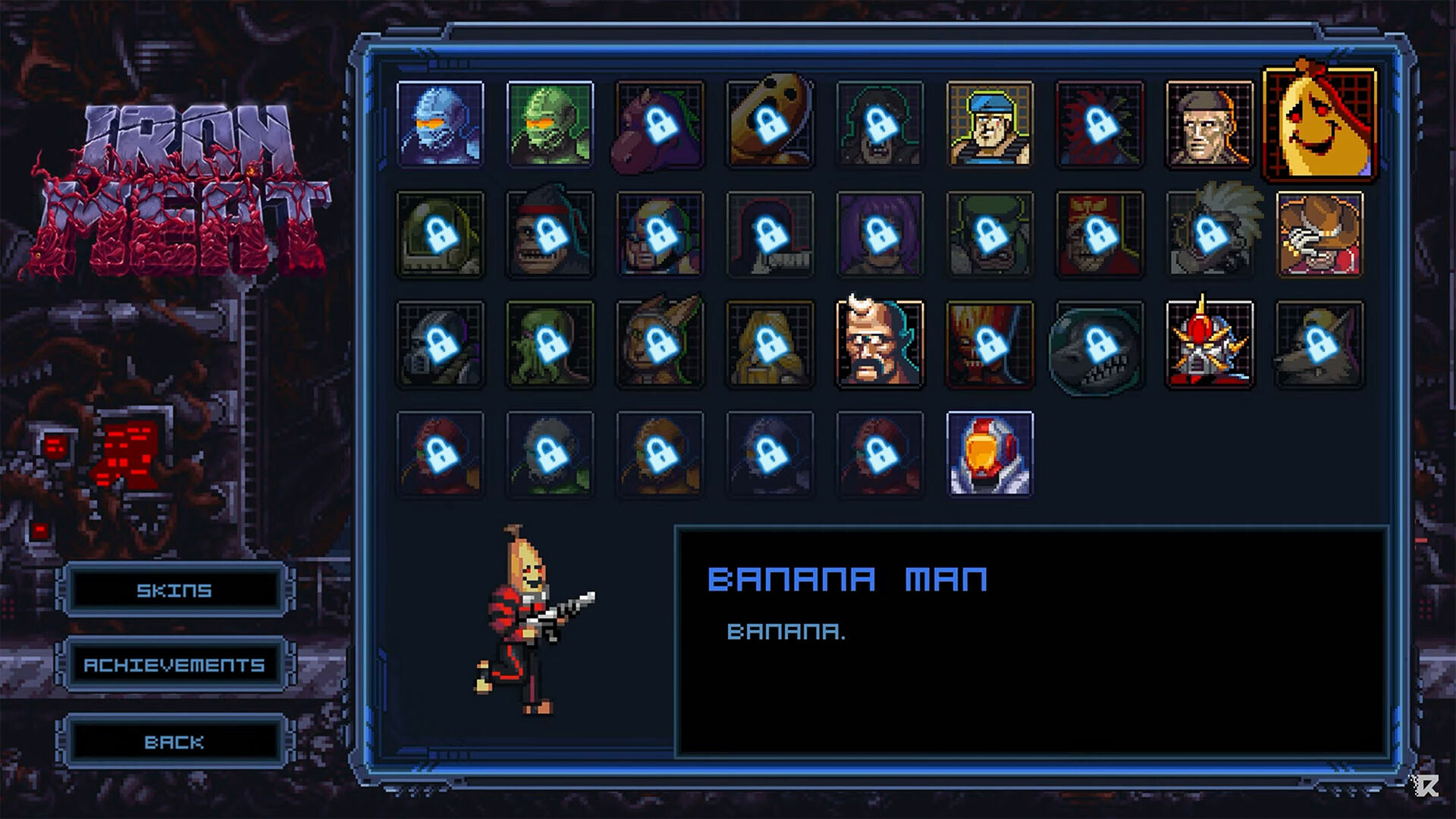
The bosses are really great. They have various attack patterns, and you get used to knowing when to attack. Some will chase you, while others will fly around you. Some are small, while others are massive, possessing multiple forms and phases. They all look grotesque and nightmarish, though. The game’s pacing effectively breaks up the action. There is a vertical level, followed by a level that emphasizes platforming, and then another level that presents a large number of enemies at once. You can unlock characters and swap body parts to create your own unique soldier. Once you complete the game, you can go through it again in mirror mode.
Although the game may appear to have less content compared to modern games, it truly pays homage to the classic 16-bit run-and-gun shooters. Most of those games featured a mere half dozen levels and lacked additional modes. Iron Meat does have a two-player co-op mode, which is a nice addition, but I feel there’s a lot of content here for the asking price. Going through and learning all of the attack patterns and enemies is fun, and then getting more points on higher difficulties can be a fun challenge. You can complete the game in less than two hours, but those two hours are filled with enjoyment.
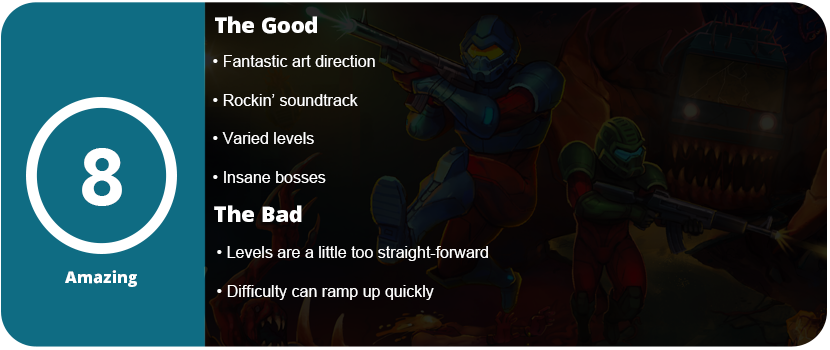
Overall, Iron Meat nails pretty much everything you would want in a 16-bit run-and-gun shooter. Iron Mean boasts massive bosses, captivating soundtracks, copious amounts of gore, diverse levels, and exceptional controls. There’s not much Iron Meat does wrong outside of the occasional straightforwardness of some levels. This is one of my favorite games in the genre, and you shouldn’t miss out.
Some of the best storytelling comes from the least expected places. Nobody anticipated that DONTNOD would become a masterclass in storytelling. Square Enix’s publishing of DONTNOD was a risk, and no one anticipated such a feat from a publisher arm of such stature. I played the original back in 2014 and fell in love with its characters, atmosphere, setting, and story. The game is a supernatural tale grounded in modern times in a quiet fictional town of Arcadia Bay in the Pacific Northwest. At the time I lived in Southern California, just 60 miles north of Los Angeles. I had no idea that the place I fell in love with would become my home ten years later.
The story of Max Caulfield and Chloe Price is one of the best told in gaming. The writing is fantastic and portrays feelings and love for these two friends like no other game can. The combination of settings, sound, ambience, and choice-based storytelling creates a perfect setup that is difficult to match or surpass. Life is Strange has some of the deepest decision-making in gaming. These choices have profound repercussions in the game and feel as heavy as real-life choices you would make for yourself. Choosing between siding with an angry stepfather or joining in on the lashing could determine whether you get help when your life is in danger or not later on. The excellent thing about the choices here: You can’t tell what the outcome will be. Max makes a comment after each choice, and if you rewind and choose the other option, you’re just as clueless and worried as to whether you made the correct choice.
Max possesses supernatural powers that enable her to jump through time by focusing on photos and also rewind time. If you make a choice, you can rewind and choose again, but the outcome won’t play out here. You have to go based on pure instinct and forethought. Relationships with game characters and their feelings will bias you. Some characters may feel like you want the worst to happen to them, but is that the best choice for everyone? The game’s time-bending storytelling captivates you as you enter chapter three. Max starts visiting alternate realities, and her irresponsibility with this power comes to fruition… or does it? The cycle of rewinding makes Max’s nose bleed, and she passes out, not remembering what happens. Her irresponsible and rebellious friend, Cloe, is the polar opposite of Max’s own personality, but do you sacrifice their friendship for the better of everyone or selfishly keep your friends?
Given that the original game is already 10 years old, I will disclose some spoilers here. If you don’t want to read about them, then skip ahead. I want to delve deeper into the minor details of Life is Strange’s story and conduct a somewhat psychoanalytic analysis of it. The game’s release sparked controversy because it exposed the vulnerable side of minors. As teenagers, we all experienced awkward moments involving sexuality. There are a few scenes toward the end that show Max and the others kidnapped and tied up. Many people accused DONTNOD of being pedophiles or “creeps,” despite the lack of any explicit sexual content. Of course, we see these teenagers making out and kissing, but there’s nothing inherently sexual about it. DONTNOD’s portrayal of these teenagers, stripped down to their core and shattered with fear like animals, can truly unnerve people. I also find that the lack of explanation as to where Max got these powers is baffling. Where did they come from? Is this all imaginary? Is this part of the entire encompassing process of teenagers pretending or over-exaggerating a lot of what happens in their life? Is Max dreaming all of this? There’s a lot of interpretation left to the player, and to this day no one can explain it much.
Although the writing is engaging, it contains a significant amount of outdated slang. Slang from the 1980s and 90s is no longer relevant today, let alone in 2014. Max will employ phrases such as “Shaka Brah,” and refer to Cloe as “Totally Punk Rock,” a term that is both cringeworthy and outdated. While the voice acting is mostly good, it varies in quality, with some performances being truly bad and some exhibiting strange tones for the portrayed expressions. However, it doesn’t take away the overall theme of childhood nostalgia. And that’s what really sells me on Life is Strange. I never had the opportunity to attend private high school, live in dorms, and experience the adventures these teens have in this game. I always yearned for this experience and romanticized it. I still feel nostalgic and warm from the scenes. Just teens being real teens. Hiding in a junkyard and playing with things they aren’t supposed to. Engaging with unconventional individuals, skipping school, and so on are common practices. It seems weird, but we all had those moments or yearned for them as teens. DONTNOD brings that out in all of us.
The soundtrack is one of the best ever written for a game. Jonathan Morelli’s original music reaches deep into your heart, evoking emotions you may not have known existed. The licensed soundtrack rings with tones of nostalgia, the Dog Days of Summer, and days gone by. The soundtrack evokes memories of a simpler, more innocent era that you long to revisit. Life is Strange’s art style resonates deeply with its use of watercolor and smudges, depicting a past that is often out of focus, much like our own. We can recall the specific details, yet the distance and finer details are consistently blurred.
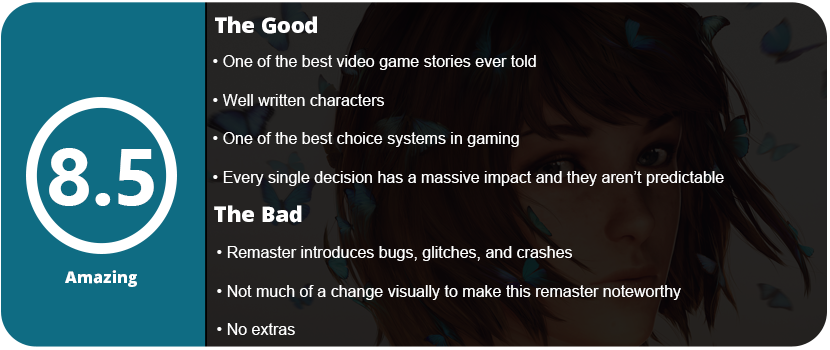
This is primarily a walking simulator with minimal puzzle elements. There are some rewind puzzles that allow you to get optional photos for achievements or to get better dialogue options to help you along in the story. There isn’t much gameplay here, but you aren’t coming into this for that. The remastered version of this game is quite disappointing, with only minor changes such as increased brightness and slightly improved lighting. This game was very dated when it released and is even more dated today. The lip-syncing remains unimproved, and the facial animations exhibit extreme stiffness. Additionally, the game occasionally introduces bugs, crashes, and glitches, and there is currently no update available for the PS5. The high-resolution mode runs at 30 FPS, and while that’s fine for this type of game, it’s not necessary for the hardware in the PS5.
Overall, Life is Strange Remastered may not entice returning fans, but it’s an excellent option for those who are new to the game. The game is one of the best stories ever told, with some fantastically written characters, an amazing atmosphere and setting, and some of the best music ever composed.
Who hasn’t played Half-Life 2 yet? I still have a free coupon from 2007 in my Steam account, but I can’t give it away because everyone I know or have spoken to owns HL2. The game industry and people’s minds haven’t forgotten Half-Life, but it’s been on the back burner for a while now. Every time a new false rumor for a Half-Life 3 emerges, people perk up, and the game becomes popular for a bit and fizzles out. There have been many community updates, such as the famous Half-Life 2: Update that improved visuals and fixed bugs. However, Valve has finally released their definitive version of the game 20 years later.
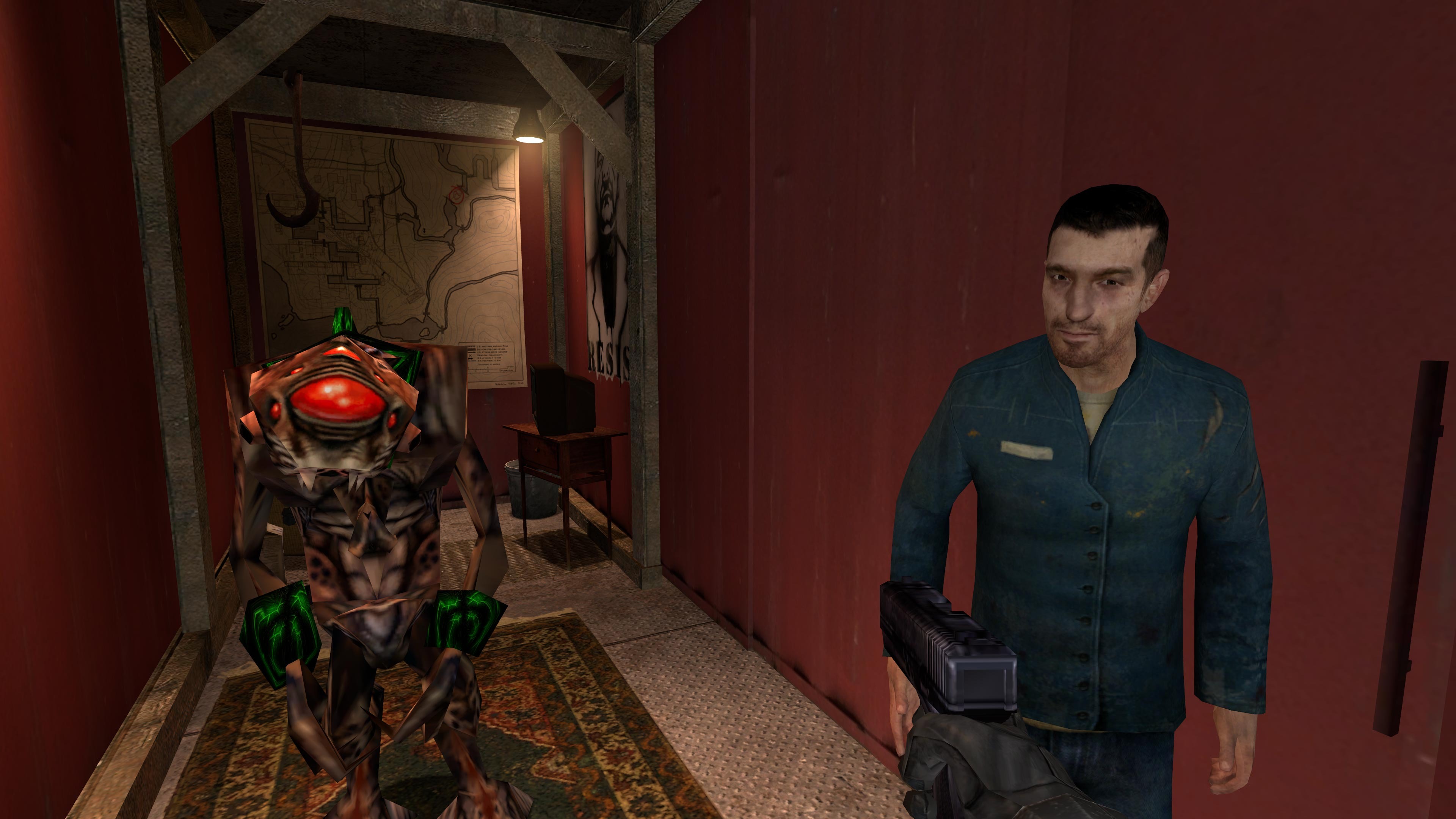
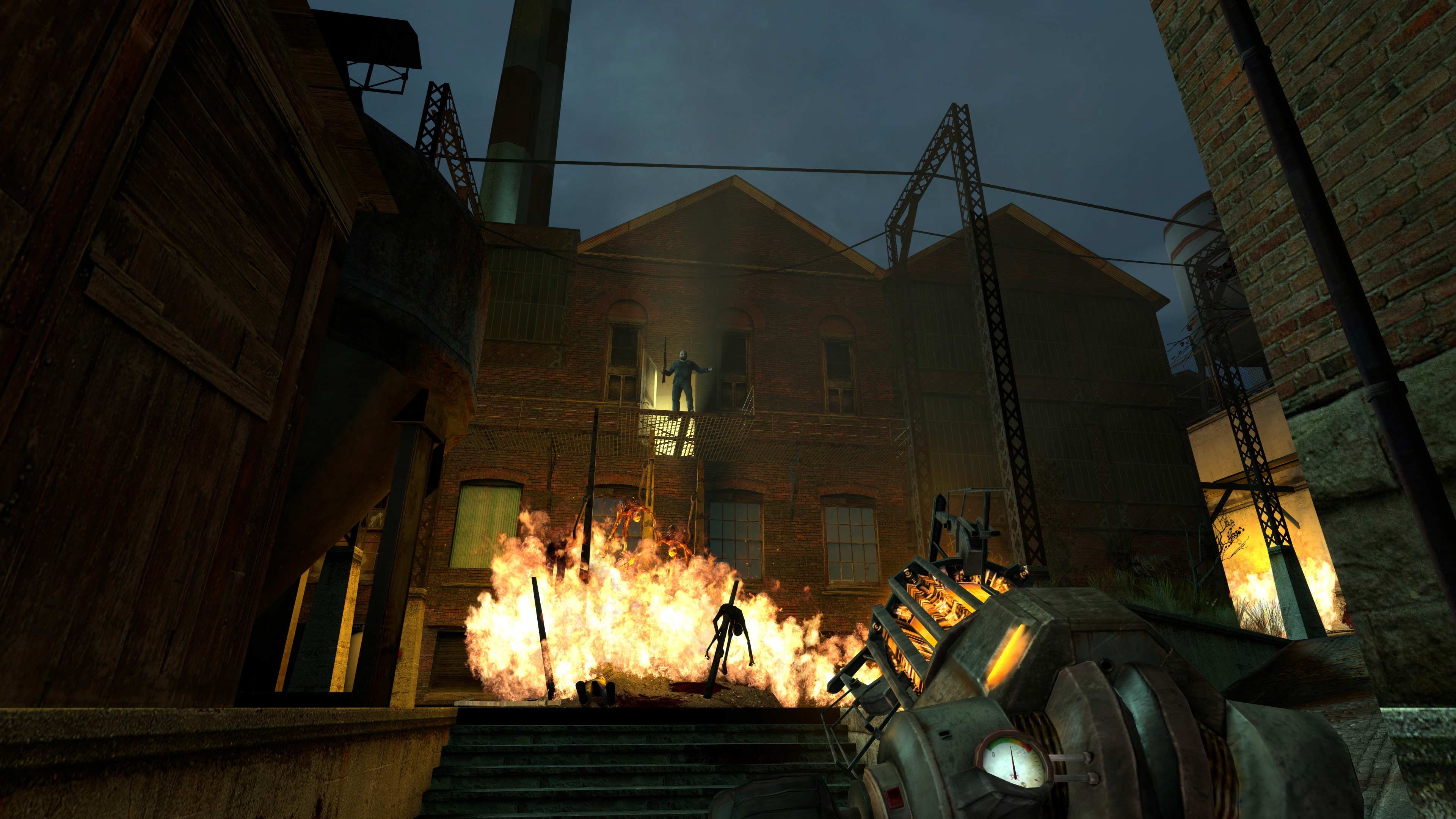
The Anniversary Update incorporates several significant improvements, including enhanced resolution light cubes, the correction of G-Man’s green eyes during the intro, the ability to choose between original and improved blood and flame effects, a more contemporary user interface and menu, an additional 3.5 hours of commentary, the incorporation of both episodes, and additional features. These quality of life improvements make a huge difference and make the game more palatable to play by today’s standards. Half-Life 2, in general, is a fantastic game with a flow unlike any other game I have played.
To celebrate the 20th anniversary, I am going to do a full review of Half-Life 2 through modern-day eyes. Although I didn’t have the best experience when I first played the game on a business desktop in 2005, it was well-optimized for the time and ran smoothly on potato computers. This was the game that prompted me to finally download Steam. People tend to forget how awful it was back in the day, when it constantly crashed and updates would break both the software and the games that required it. While today’s gamers adore Steam, the gaming community didn’t hold the software in high esteem 20 years ago.
As for the game itself, the modern UI is a welcome change, especially on Steam Deck. The game now supports controllers properly with no need to remap anything. You can choose from a grid or carousel-style weapon menu too, which is a nice change. The visuals are sharp and crisp at higher resolutions, and the game overall looks very clean. It has aged incredibly well, and this is thanks to Valve’s Source Engine and the way everything scales up for higher resolutions. As for playing the game, it feels better than ever. The game takes place shortly after the first game, where Gordan wakes up mysteriously on a train bound for City 17, and features a now-famous intro by G-Man himself. The game is a master class on in-game storytelling. Instead of taking away the players’ controls and inserting pre-rendered cutscenes, the game tells everything through subtle details in the surrounding world.
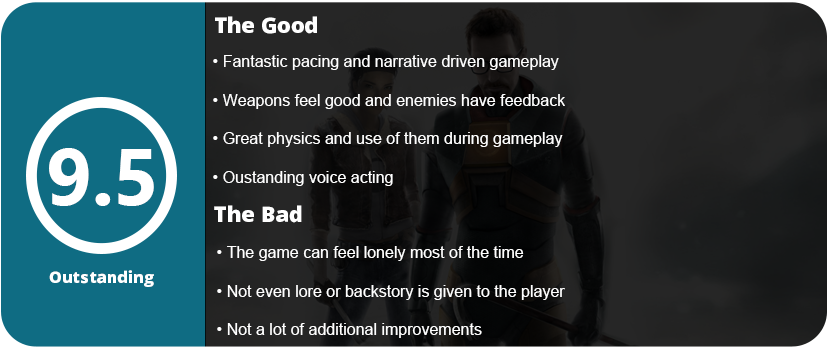
The beginning of the game is the best example of this. Valve also teaches players how to play the game through natural in-game dialogue and simple puzzles at first. The Metro cop, who instructs you to pick up the can at the start of the game, teaches you how to use physics. The inclusion of this now infamous line ensured that players understood their capabilities. This may seem dated today, but in 2004, physics were very CPU heavy, and most high-end processors struggled with them. People had to learn how to pick up objects using real physics back then. Barney explains the first stacking puzzle, instructing you to stack boxes in order to escape a window.
The game’s natural progression is stellar. The game’s long segments ensure that you always feel like you are moving in the world and making progress in real time. Each area is an hour or two long, and you progressively make your way toward the Citadel and Dr. Kleiner’s lab. The hoverboat area is quite lengthy, giving you the impression that you’re actually traveling to your destination in real time. However, these lengthy segments are not monotonous. Valve puts little tidbits in the game that the player can do or ignore. You have the option to escape and obtain ammo or supplies from a passing house, but doing so could potentially lead to a firefight. There are hidden Lambda caches all over the game, and these really help and come in handy.
The transition from a vehicle to on-foot and back again significantly breaks up the pace. There aren’t many puzzles in the game, but there are some areas that require navigation of pipes and ladders and need a bit of thinking to find your way out. Every game introduces something new, whether it’s a weapon or the ability to command squads. While this is very simple and archaic by today’s standards, I found they mostly get in the way and rarely help outside of offering medkits and distracting enemies. Every game introduces new enemies, and just when you believe you’ve defeated them all, a new type emerges. The enemies range from Metro cops to zombies, and from Elite Combines to Striders. Weapons feel excellent and have a unique and distinct feel to weapons, such as the pistol, are not suitable for use in specific situations. It’s mostly useless after you get around half the guns in the game, and I rarely ran out of ammo. The more powerful weapons have limited ammo, so it’s crucial to use skill to ensure you hit everything, kill enemies, and avoid wasting ammo.
There are ammo crates, boxes, and medkits everywhere. While medkits are not a thing anymore in FPS games, they work well here. Gordon has the ability to recharge his HEV suit for armor purposes. Most of the game feels dated in terms of navigation. The entire game, including linear buildings, vents, doors that need to be opened, and tunnels, guides you along a linear path. Although the game may appear expansive and open at times, it actually follows a linear structure, which was the standard for first-person shooter games during that era. While other games such as Halo 2 set the standard, Half-Life 2 stands out for its organic progression structure and illusion of real-time progress in the world. The inclusion of physics such as needing to use the iconic Gravity Gun to pull a wooden beam from in front a door through a window to progress is something that FPS never really did.
Half-Life 2 has a distinct and unique sound and appearance. There are a lot of browns and beiges, but the game still has color in places. The coastline boasts a plethora of blue water, while Ravenholm is characterized by its dark hues of gray, dark metal, and aged wood. The sound design is iconic, from the HEV suit charging to the Metro cop and Combine radio chatter to the bleeps and bloops of the turrets, which were later used in Portal. The entire game exudes a distinct vibe, ranging from Gordan’s slick momentum to the physics and the firing of the weapons. Enemies respond well to weapon fire and ragdoll when dead or blown up. While there isn’t too much gore in the game there is a lot of blood. Enemies won’t gib at grenades, but you might see the occasional severed head.
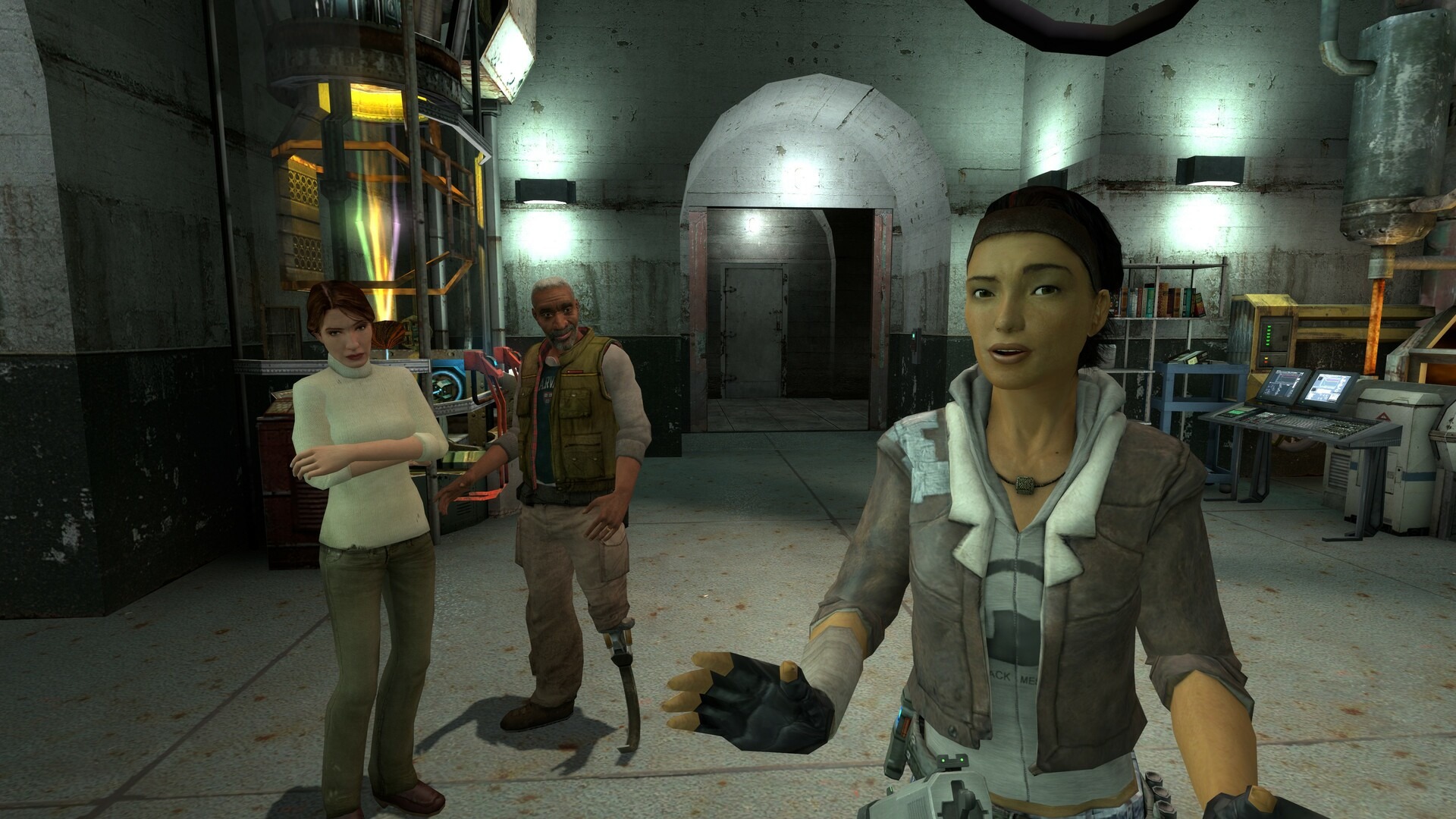
The overall oppressiveness of the world of Half-Life and the Combine is palpable in this game. Every time you encounter a group of rebels, even if it’s just for a brief conversation, it’s a refreshing change from feeling alone and feeling like your assistance is fleeting. Ever since I was 15, this game has felt so lonely and melancholy. It’s one of the reasons I haven’t played through this game too many times over the years. Valve masterfully captures the sense of being a superhero, with everyone relying on you, and effectively conveys the dire consequences of making a mistake. The player bears the entire game’s burden.
The Anniversary Update may not seem like much to some. It’s not a remaster or remake, but rather a set of quality-of-life improvements that are not in any way detrimental. HL2 doesn’t need a remake as it works perfectly fine today. A remake would primarily serve as a cosmetic enhancement, but thanks to Steam Workshop’s implementation, we have access to mods that accomplish this for us.





































 thebinarymessiah.com
Try multiplayer. A lot of fun !