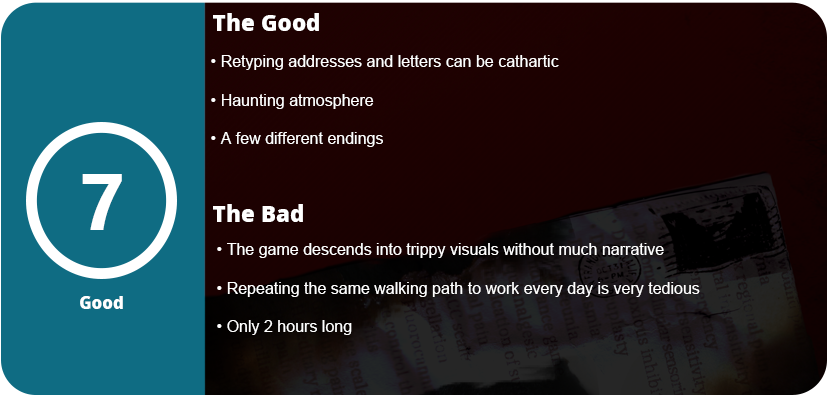
Working a mundane job, thinking something new will make things better, can just sometimes make things worse. We have all been there at least once. You start a new job in a new town trying to restart your life, run away from something, etc. The job ends up crushing your soul; you want to cry every time you wake up to go. Bills start piling up, you end up chasing due dates, and you’re always in the red at the end of everything. Denied time off, denied overtime, and you can’t catch any breaks. Dead Letter Dept. sees this loop as a game. You play as someone who is running away from someone or trying to start a new life and rents a single-bedroom apartment in a random city in the US as a data entry person. The game spirals into something sinister at the department, and the game turns into a detective-style typing game with horror elements.
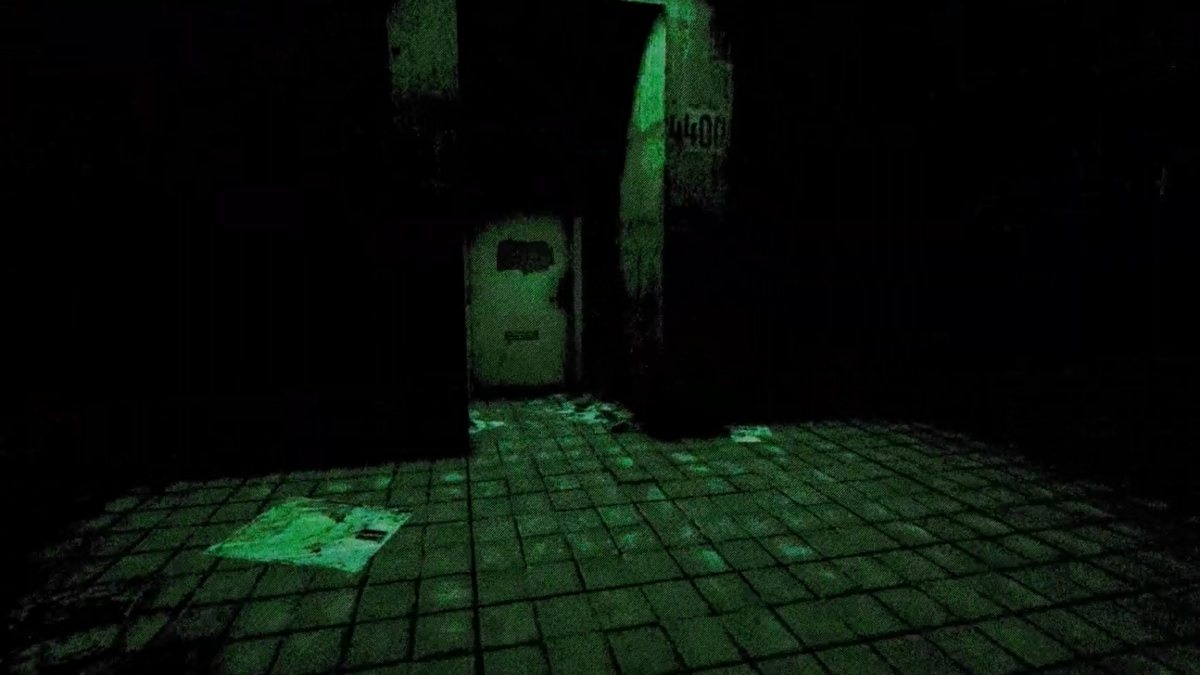
Honestly, this is another indie horror title that ends up spiraling into trippy visuals and effects that don’t really mean anything. This seems to be a trend and has been for over a decade, and I don’t get why. The game does a great job soaking us in atmosphere with a depressing sky, not being able to look out the window, commentary on the bed, bills piling up, the fridge, and so on. Then you exit your apartment and go down long hallways out to the public transit. The sad part about this is that this sequence repeats after every single day and gets old fast. Nothing really happens during this sequence outside of flickering lights and an occasional shadow. After a few days it would have been nice to just skip the job after exiting the apartment if there was nothing meaningful to tell here.
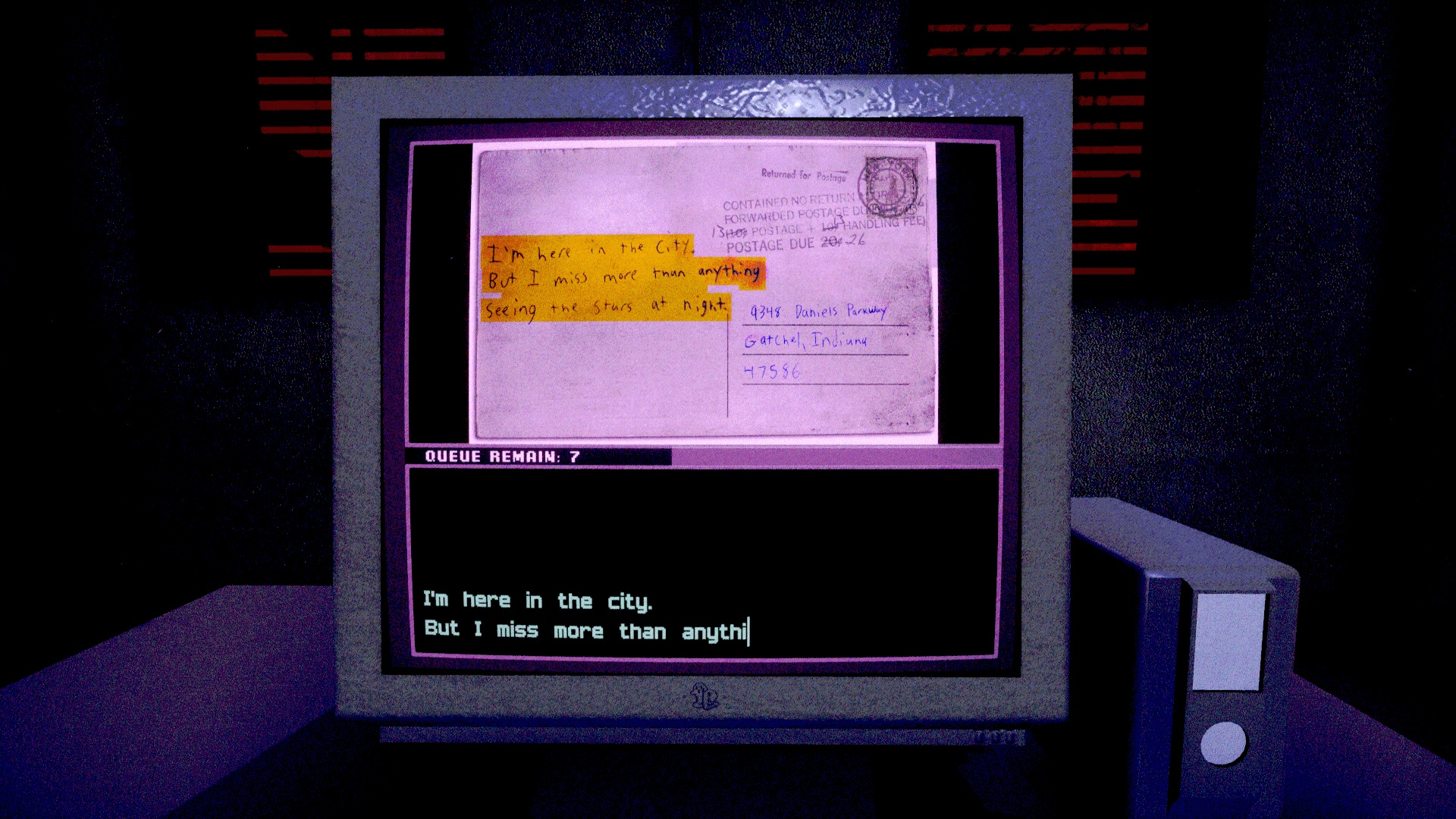
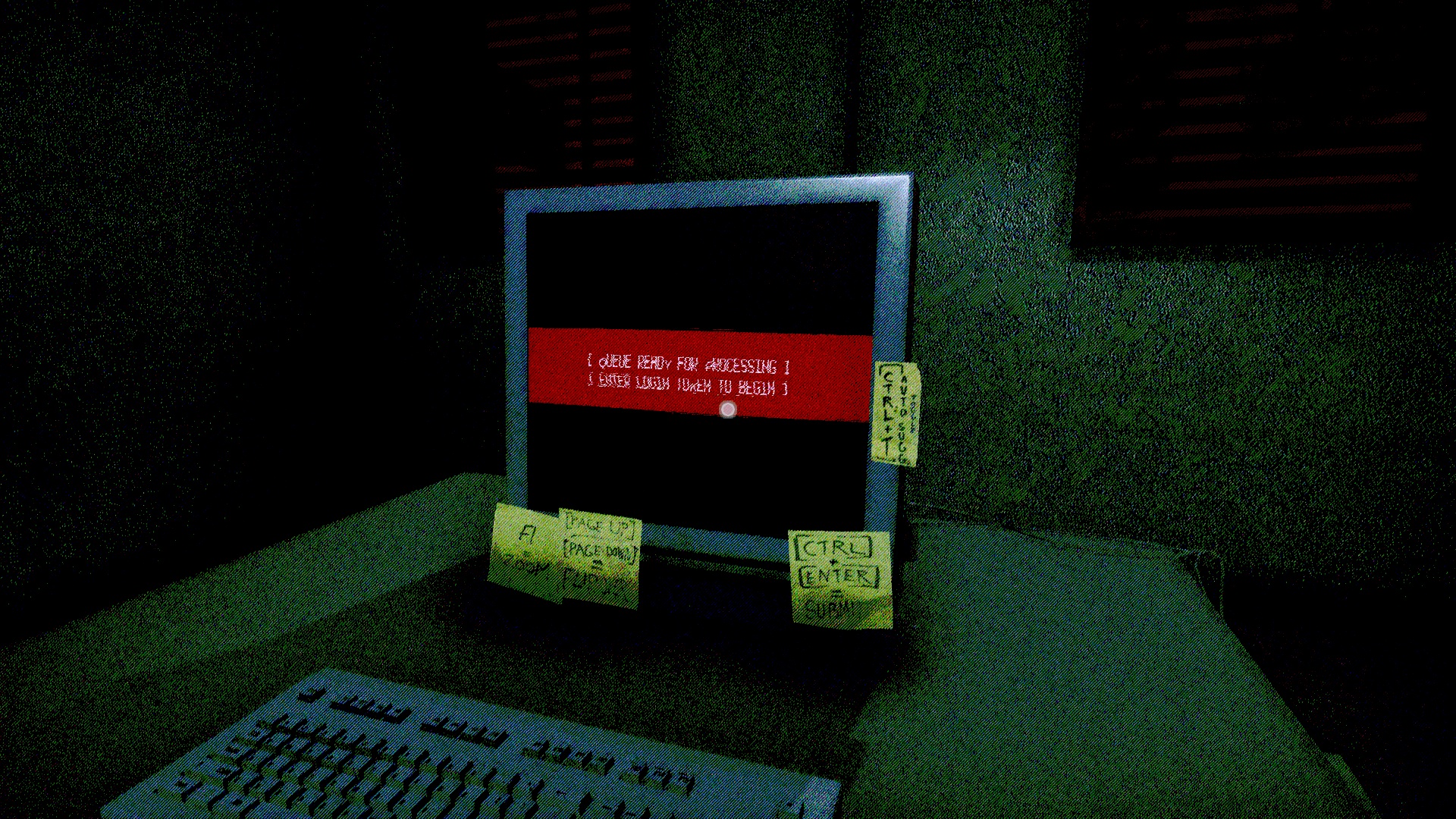
Once you sit down, the meat of the game is the typing. You are presented with letters, postcards, and various crumpled-up pieces of mail. Your job is to translate what is highlighted in yellow. Once you start typing an address, the autocomplete will pop up and can suggest addresses, but it’s mostly useless. You can assign shortcut keys to flip the mail over and zoom in. There are many different types of mail, from typing in entire passages to small greetings. You get a feel of snippets from people’s lives based on what the envelope says or the postcard. As the days move on, you can forward some stuff to different addresses to get different endings, but like most horror games, the different endings don’t really matter and aren’t interesting enough. Once you play as intended, unless you want to achievement hunt, there’s no reason to play again.
As you would expect, the game starts playing with your senses over time. Shutting power down, making you hallucinate, and various other trippy effects, but there’s no narrative here. Everything is abstract and open for whatever interpretation the player wants. You get strange messages sent to you throughout the game, but there’s no cohesive narrative. It all feels a bit random and obtuse. I still enjoyed it, though, as the game is tense and haunting and you don’t really know what’s going to happen next. There are a few parts in which you wander around through empty hallways. I felt this distracted from the overall core game and didn’t add any value to anything. I just wanted to see the dialog in the apartment, as your character’s internal thoughts are some of the most disturbing in the game. Less is sometimes more.
Overall, Dead Letter Dept. is a fun evening of typing and managing mail but doesn’t tell the best horror story. The atmosphere and happenings in the apartment are great, and what little is there tells quite a lot. The story of struggle and being alone in the world is something the developers should have held on to rather than go off onto this weird, haunted-house, trippy-effect direction. What’s here is good, and there are some frights, but there’s too much here to make it something it’s not.
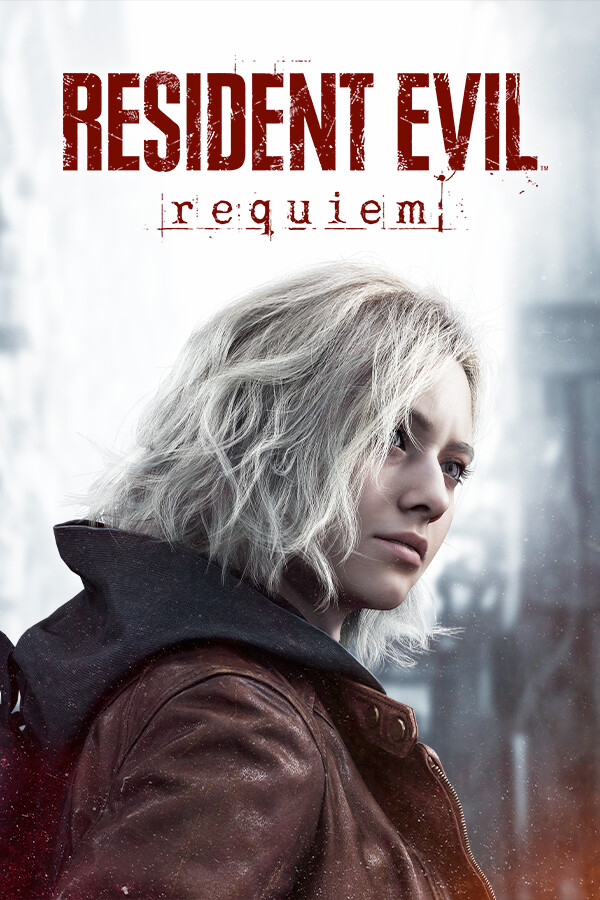
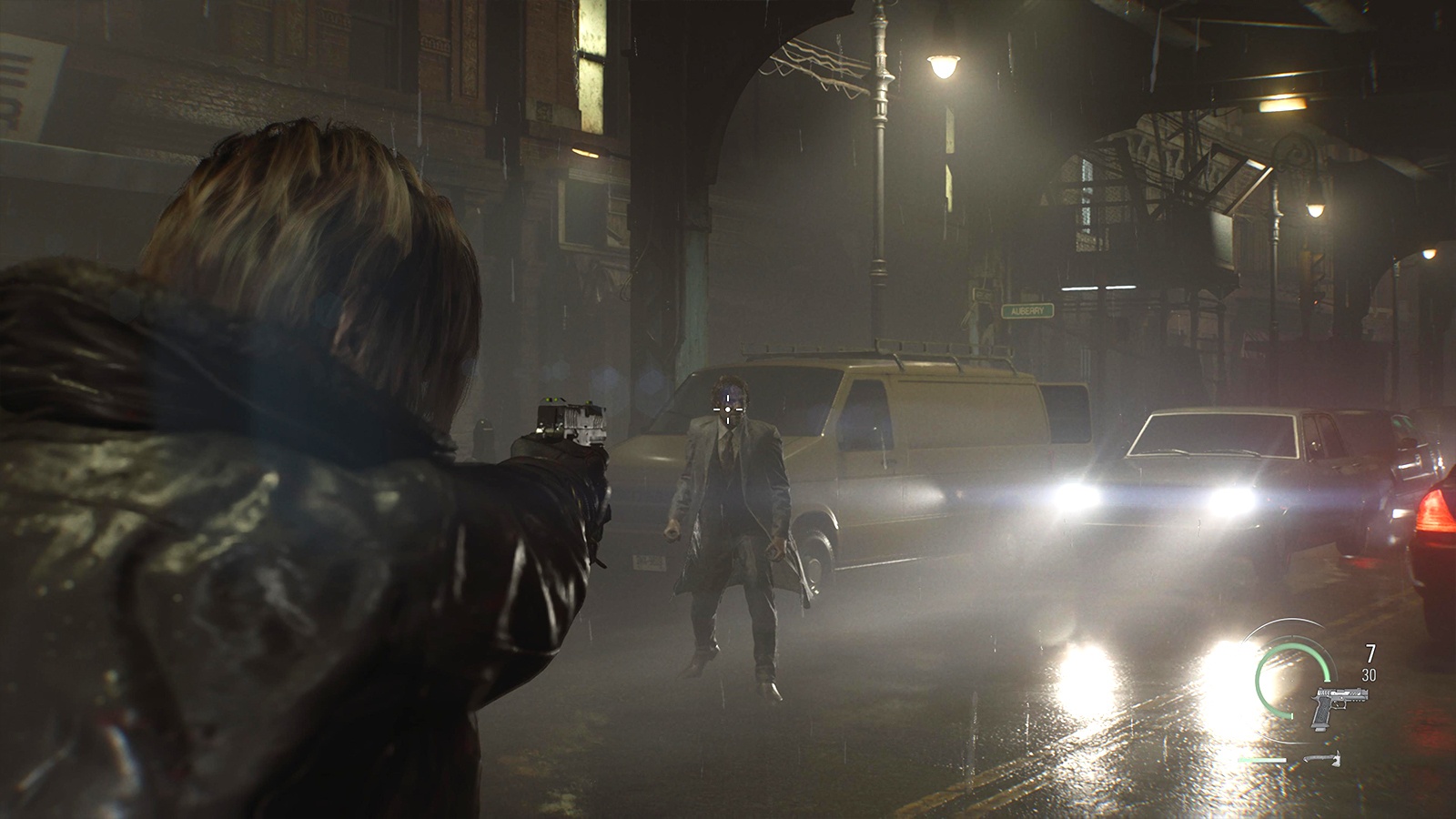
When one of the founding fathers of modern horror games has a new release, we stand up and politely pay attention. Along with other series such as Silent Hill, Fatal Frame, and Clock Tower, Resident Evil is in the upper echelon of survival horror gaming. While the series has had multiple reboots over its life cycle, the most modern version from Resident Evil VII remains intact here. Requiem feels like a blend of VII and Village but also adds elements of what made past games great. The level design and flow of Resident Evil 4 plus the slow plodding pace of the original series. The levels with Grace Ashcroft will frighten you and make you grip your controller in anticipation and fear, while Leon Kennedy’s more action-oriented level will make you do the same, but due to the intense action and strategically pulling out different weapons for each situation that comes up. One new aspect to Requiem is the haunting atmosphere and near post-apocalyptic feeling that Raccoon City has. Yes, you do revisit some areas from Resident Evil 2. I also noticed that Requiem has a different flavor of music during Leon’s exploration areas. I got Fallout 3 vibes. You feel alone and desperate, savoring any and all moments of light, safety, and quiet no matter how brief. Requiem makes you feel desperate and alone, and that’s very hard to pull off in most games.
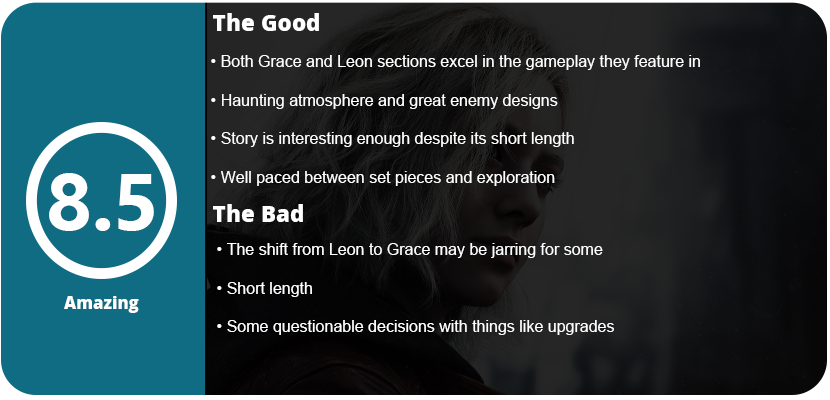
Another aspect Requiem shies away from is less of the campiness from previous games, even VII and Village, which is a welcome change. While there is some cheesiness from the series that eeks in from some of Leon’s lines or the personalities of a few characters, the more serious nature of the series is a welcome change and works well here. While new character Grace isn’t my favorite in the series, she has enough humanity and personality (such as her stuttering a lot when she’s scared and nervous) to help bring the game closer to something more relatable. There are subtle touches in the game that a lot of people might miss, such as Grace holding her mouth when a boss character snakes by, her fumbling a lot when desperate, and little gestures that make a difference. Her sections are played in first person (and optionally third), so you are more up front with the horrors around. Requiem plays like two separate games, and it may be jarring to some. There will be a divide with fans of the slower-paced games loving Grace’s part and fans who love RE 4-6 preferring Leon’s more action-oriented parts. I feel they complement each other. When things start to feel a little too slow, you switch to Leon, and when things might feel a bit repetitive there, or you need a break, you end up back with Grace. Both Leon and Grace have three large parts of the game each that they star in. Most of Grace’s parts are in the first third of the game, giving you brief tastes of Leon’s sections through the first third.
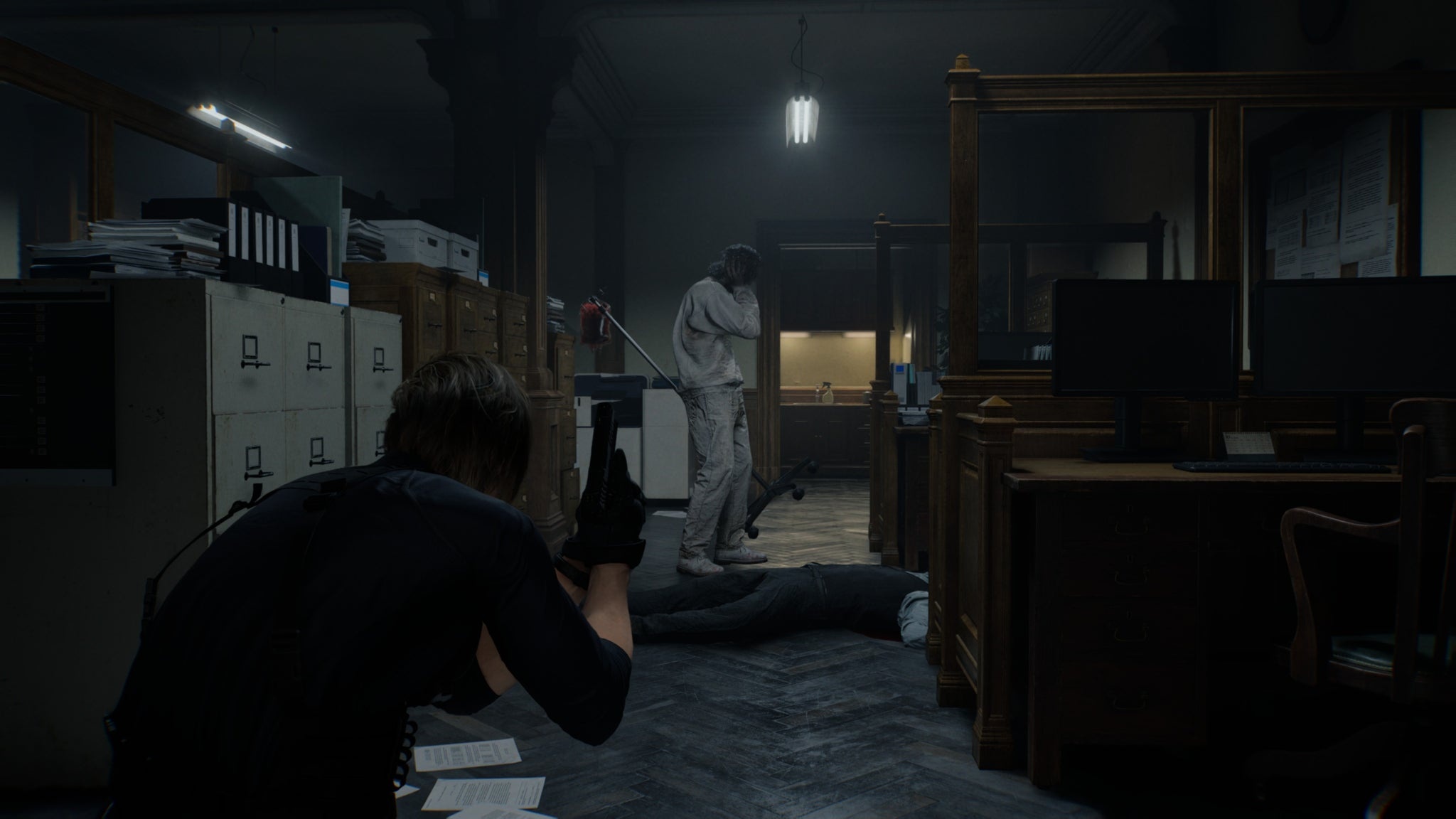
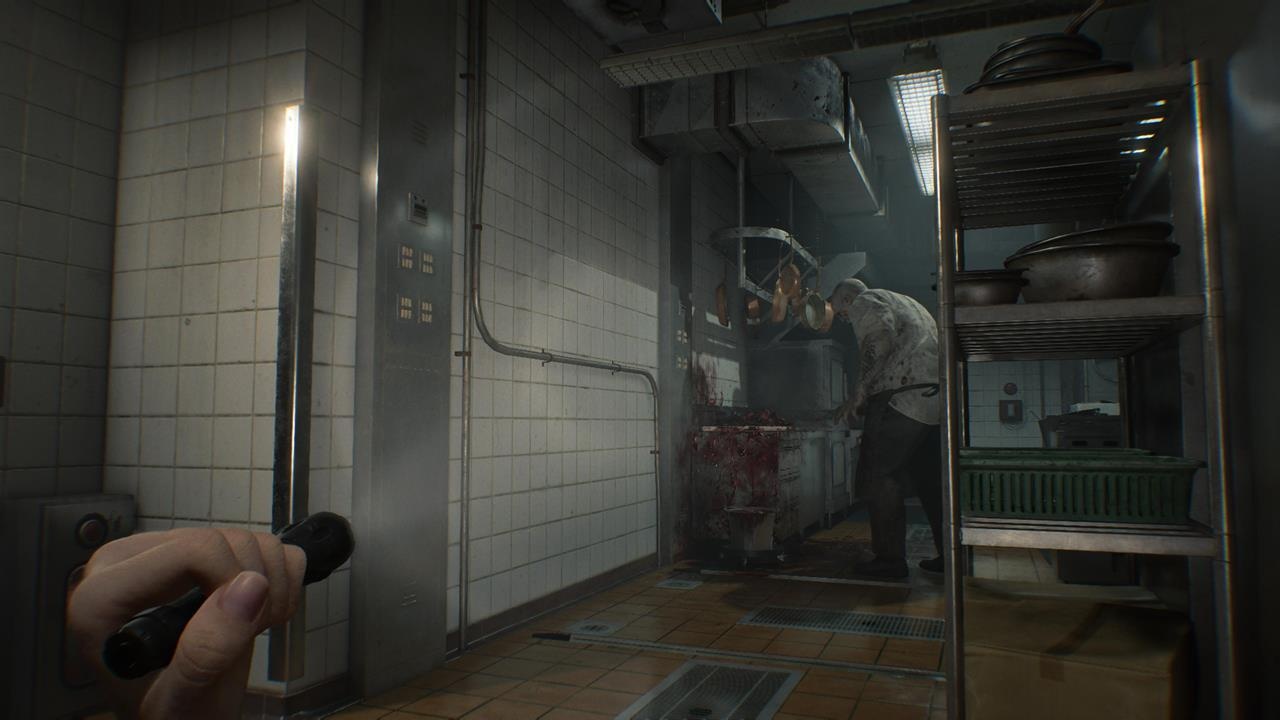
Grace’s sections are all about atmosphere and scares. There are no real jump scares here. Capcom did an amazing job delivering a lot of tension through the lighting and mood around you. Harsh white walls may seem like a safe haven, but just beyond the next door is complete darkness and zombies wandering around. Grace isn’t powerful, and her resource management is much tighter than Leon’s. In the first area every bullet counts, and you usually have to run away from most situations. I don’t want to dig too deep into the story and spoil anything, but Grace is investigating the hotel that you are in during the first part of the game, and while the overall layout may seem small, it feels huge when you can only advance little bits at a time. A fight with two zombies will feel like a herculean effort compared to Leon’s sections, who can battle a dozen or two at all once. Grace has a single pistol during her entire time in the game, and you have to acquire other things through crafting. You create things with scrap and blood. Blood is gathered with a tool that you acquire a little ways into the first area. You can craft healing items, ammo, Molotovs, and Hemolytic syringes to keep zombies from coming back to life. Yes, they come back here. Unless the heads are destroyed, that is, and Grace isn’t powerful enough to really do this on her own. It’s story-related, but the syringes cause the zombies to essentially explode. It’s important to craft as many as you can and get downed zombies before they even come back because they can come back stronger as blister-head zombies. These are fast-moving and tough to take down. A single blister head obliterates your ammo and health reserve and is hard to run from.
As you can see, Grace’s sections are meant for sneaking around, finding secrets (many notes with safe codes, for example), and a single area to level up. Yes, things can be missible in this game. Only the first section allows Grace to upgrade her abilities, such as weapon strength, increase storage (more pouches can be found later), blood storage, etc. It’s important you find the ancient coins throughout the first area and buy everything. I found it a bit odd that you can’t upgrade in later levels, but that’s the way it is. Doing so will make later parts of the game much easier. As for bosses, it’s best that Grace does not engage with them. Leon can later come through and take them out, but as Grace, you would waste your Requiem bullets and little ammo early on. Requiem is a powerful pistol that Leon carries (and gives to Grace in the beginning) that should only be used as a last-minute bail-out method. Later on, I saved it during boss fights. Ammo is insanely limited for this and hard to craft, as Grace (the recipe is well hidden).
The horror elements in Grace’s sections are fantastic. The introduction to each boss that stalks certain areas is so well done, and they are insanely grotesque. Zombies aren’t just plodding buffoons that make for easy targets this time around. They sway and fall around, which makes them hard to hit. Getting headshots isn’t easy, and their movements are unpredictable and require you to take your time and aim carefully. Certain scenes, such as when Grace is fighting off a zombie for the first time and it bites her weapon and breaks its teeth. The beginning of the game is mostly all about the horror while slowly opening up the first level to you and forcing you to explore. With each objective completed, you will be desperate to rush back to your safe room and save. Puzzles are not very complicated in this game. Most of them just want items that you have to fetch in different parts of the levels.
Leon’s sections are very similar to Resident Evil 4. Even though he’s older, he’s still tough but very much experienced. Your loadout is larger than any other RE game he stars in, and you can easily carry up to five weapons with room to spare. Leon’s first major area you explore eventually opens up to upgrades via a tracker that gives credits for kills as well as finding bonus tracking with different rarity. You can upgrade your weapons similar to Resident Evil 4. You can buy various attachments, sell weapons and items, and buy new ones. You can upgrade your armor as well. It will take quite a while to get enough credits to upgrade your favorite weapons, but by the end of the game it’s doable. Leon feels a bit heavy to control here, and his sprint is pretty fast. Melee combat is a bigger focus. Leon has a hatchet he can use to parry melee attacks. Sometimes when a zombie is staggered, you can chop off their head, do kicks (similar to RE4), and even throw melee weapons that enemies drop. It’s imperative that you switch weapons for each situation at hand. If you’re dealing with a couple of tougher enemies, grab your shotgun. If there are a lot of smaller zombies from afar, use your sniper rifle. If you have a bunch up close, whip out the SMG and spray them down. Your pistol eventually just becomes a backup weapon. Just like in RE4 you’re constantly balancing weapons and ammo to stay alive. You can craft items just like Grace, but the focus is more ammo and grenades and healing items than anything else. Weapon attachments aren’t really a thing in this game, so you end up finding a few hidden charms that can be attached to weapons. Leon’s areas are less scary and more intense during combat, but like I explained earlier, the exploration is haunting and eerie. You might enter a dark building not knowing what’s inside while searching an optional area for supplies only to get ambushed. One of the more fun moments is Leon being able to wield a chainsaw and cut everything down, but there are only a few scenes in the game that allow this.
Overall, Requiem is a fantastic Resident Evil game mixing multiple elements of what makes the series great. The evolution of the best zombies in any game that started with Resident Evil 2 Remake, the slower pace of the original games, the fast-paced action and great level design of the more modern games, and the visuals are mind-blowing. At least on PS5 Pro, Capcom’s use of PSSR 2 and ray tracing is incredible. Grace’s areas have halls with lots of white walls and light that look sterile and hopeless, with areas that are barely lit making you run for any light you can. This is one of the best-looking games of this generation, and it runs incredibly well. Requiem might feel bipolar with these two different takes on action, but it’s a refreshing take. The game isn’t too long either, only lasting about 20 hours if you get all optional items. You can easily blow through the game in about 15 hours.
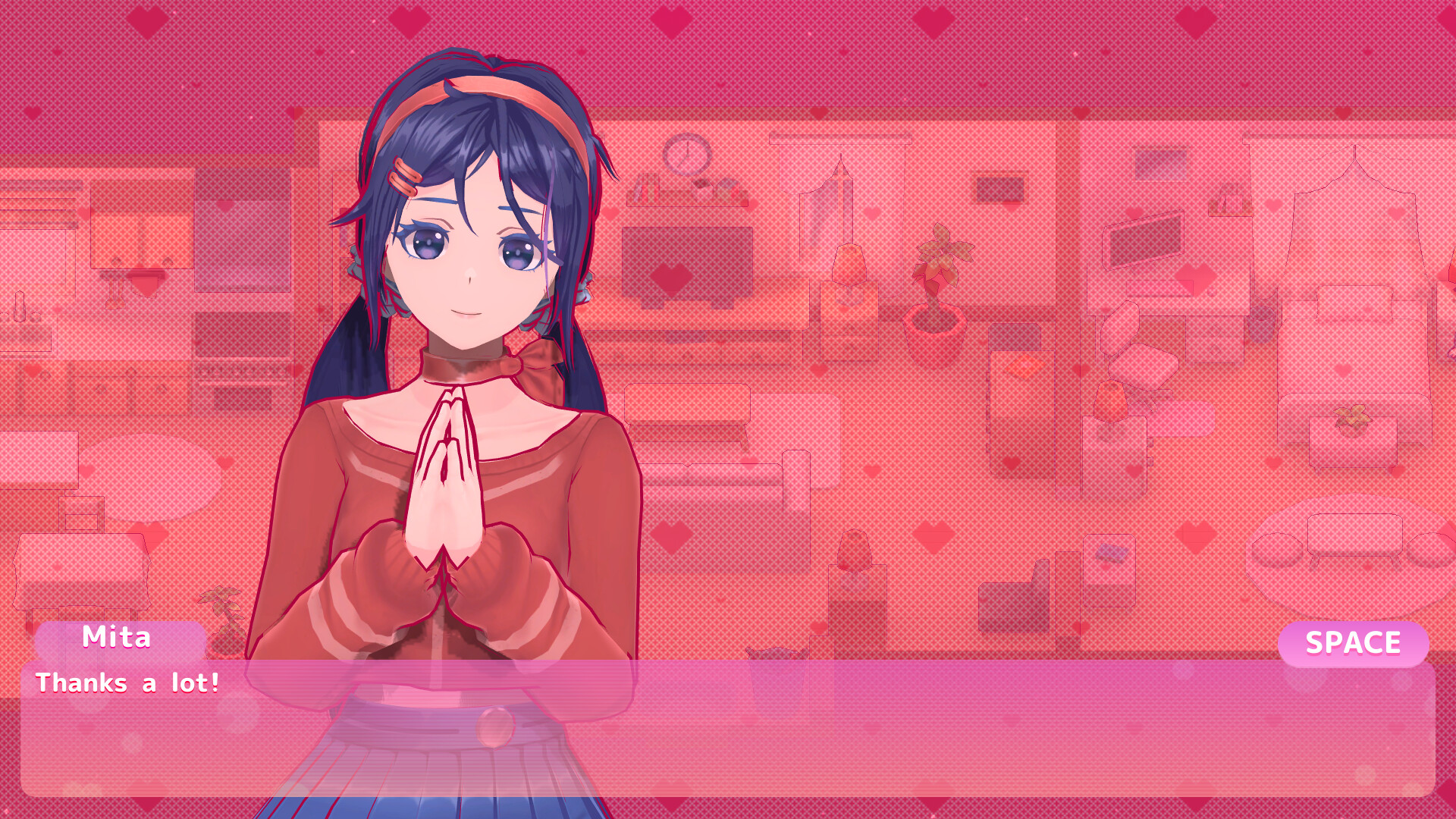
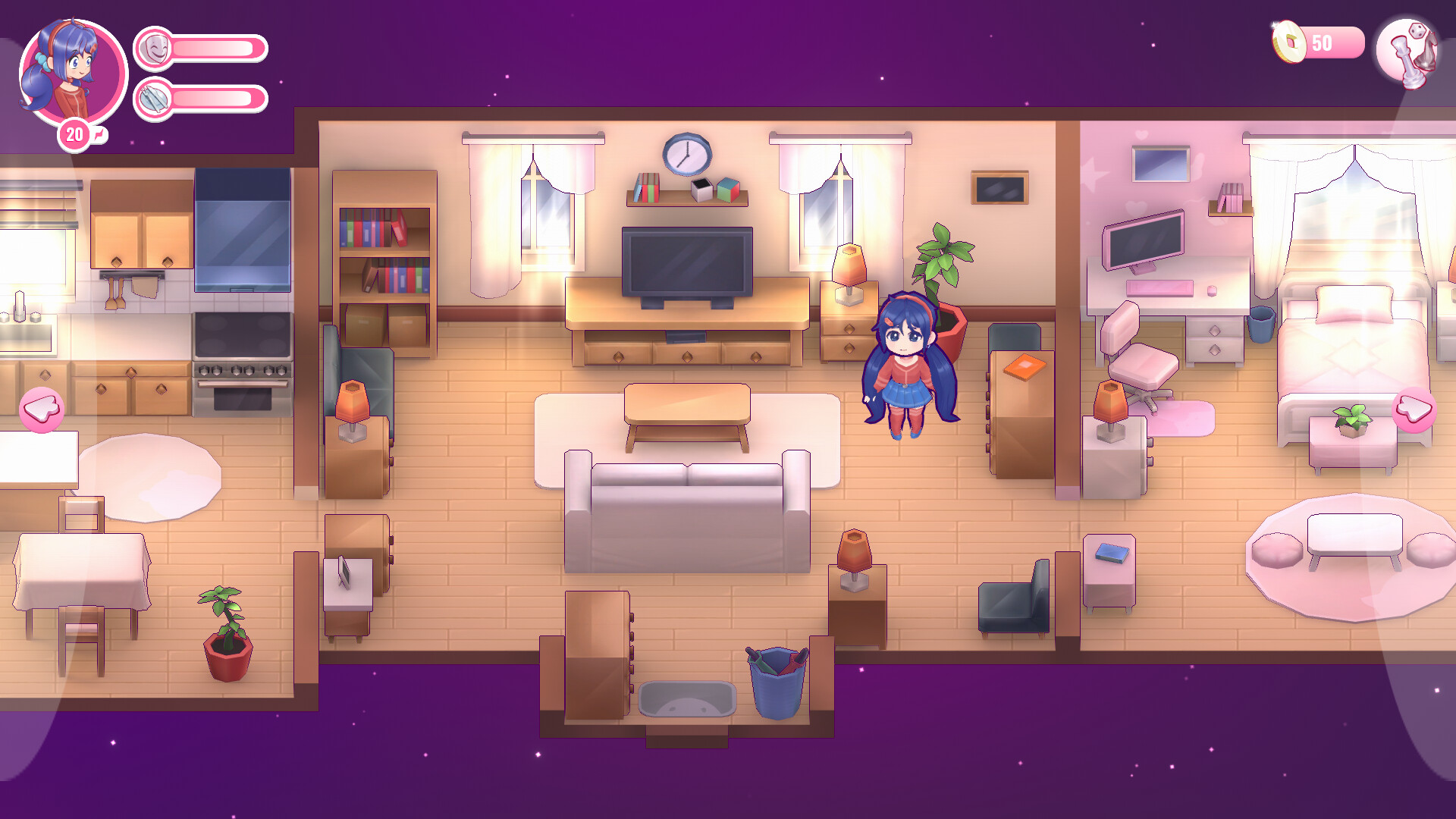
Have you ever wondered what it would be like to be inside of a mobile game? Probably not, but you can now with MiSide. This is a horror adventure title with anime vibes and a surprisingly engaging story. I originally passed MiSide off as a generic anime visual novel, but after digging further I realized there was more to this game. You play as a generic male character who ends up playing a mobile game called MiSide. The main female protagonist and antagonist is Mita. These are female characters that inhabit various versions of the game. My only advice to new players is to give the game time to build, as it is pretty slow to start. You walk around in first person, examining objects and talking to Mita. The game does a great job building up the character, as she’s the only one in the game, so everything rides on how well she is developed. The game’s biggest strength is subtle horror and the feeling that something is never quite right. Weird glitches start popping up, but Mita plays it off as if it’s normal and it’s nothing to worry about.
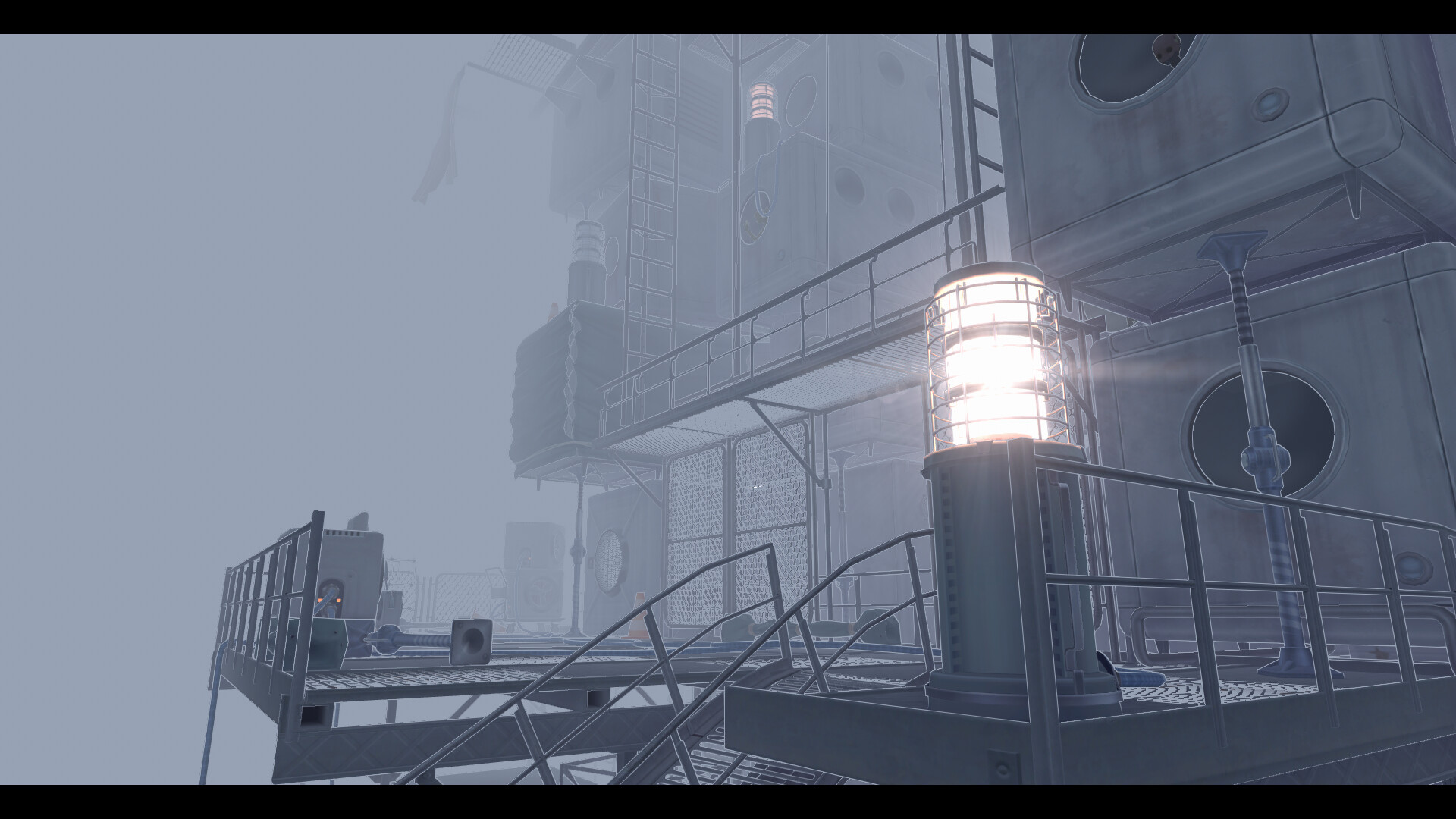
As the first chapter progresses, the horror elements start to kick in. I don’t want to talk too much about the story, as this is the strongest part of the game, and I don’t want to spoil much. There are some other minor gameplay elements, such as light but easy puzzles and some mini-games. You can collect character cartridges for unlockables, but overall there’s not really any reason to replay the game. Despite how repetitive the environments can be (such as Mita’s room), there are some elements when you break through the main game that really get interesting. The “behind the scenes” of the game, or breaking the game’s boundaries, is when things get super weird and fun. There are some short chase scenes, dreamlike sequences, weird monsters, and lots of walking around. The game is paced pretty well, and I appreciate how quickly the visits with each Mita are. Just enough to get an idea of their version’s personality and move on. These end up like little mini levels with a single objective inside of them.
My favorite part about the game is the intensity of escape. You need to break free of this game world before Crazy Mita gets to you. The developers did a great job of giving her some depth, and despite Mita being a single character, her different versions and personalities make her seem like separate characters. The way you interact with the game world in the first chapter determines the outcome of two different endings, and these can easily be overlooked. Interacting with the environment is really strong here, and despite not much being tangible, what you do interact with matters. Visual novels usually can drag on forever with exposition dumping, and this is something MiSide doesn’t do, which was my biggest fear. A lot of the lore and backstory is told as you move on through the game, so things never slow down and bore the player.
While the visuals have typical anime aesthetics, there are subtle things that make it interesting. It’s very sterile, and the soundtrack is brooding and haunting, like something is just always off. The game purposefully portrays a very fake happy “world,” and despite never being able to see outside of Mita’s room, you know it all feels fake and fabricated, and as you wander outside of the game’s boundaries, you realize this more and more. The game is very claustrophobic feeling, and you can feel suffocated as you feel like you are never going to escape. MiSide does something that good horror movies do, and that’s constantly giving you hope and then dashing that hope moments later. When you feel like all is lost, there’s another silver lining, and you grasp on to that and move along with the story, thinking you finally have it, just for it to happen again. It’s a great way to build tension, and while MiSide is only about 4 hours long, it doesn’t overstay its welcome.
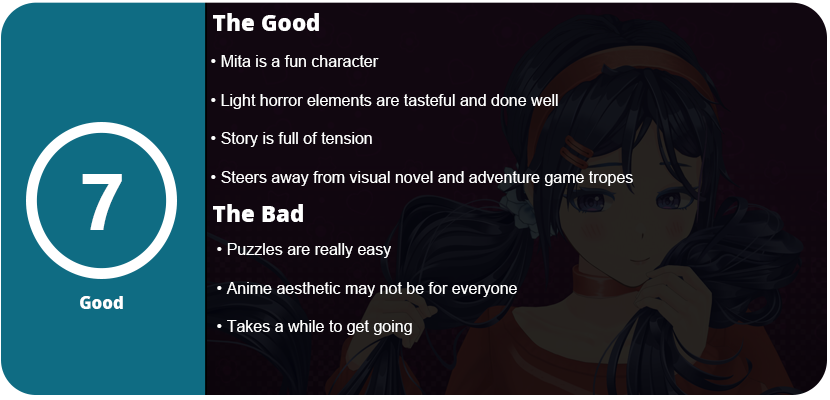
If you don’t like visual novels or adventure titles, I recommend giving this a try. It’s different enough to never veer too far into either genre’s problems or tropes, but if you don’t like anime aesthetics, that may be the clincher for you. The subtle horror elements and constant hope dashing give the story tension and a great feeling of accomplishment. When I was outside of the game’s boundaries, I got Portal vibes, and breaking its own 4th wall is just really cool. The game overall is just fun for an evening of great storytelling.
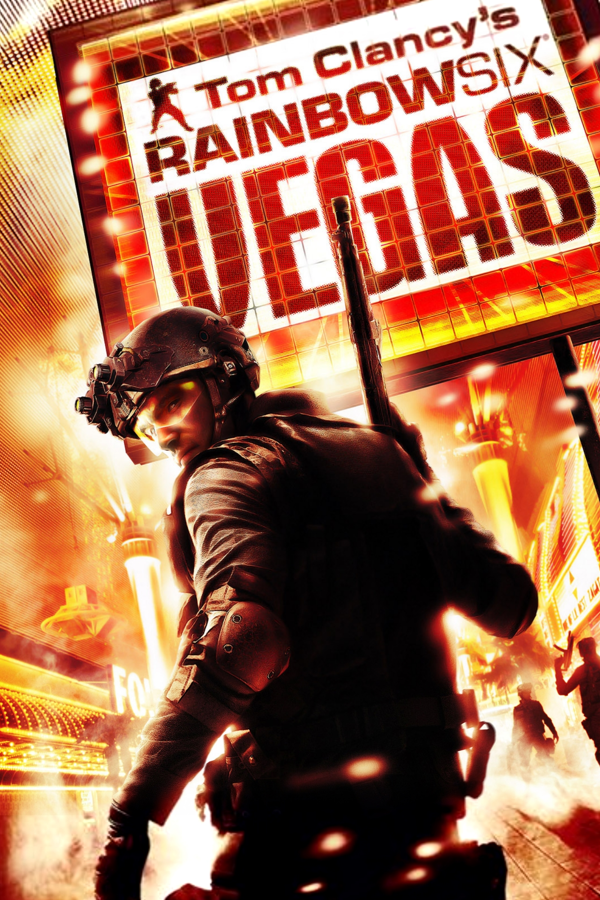
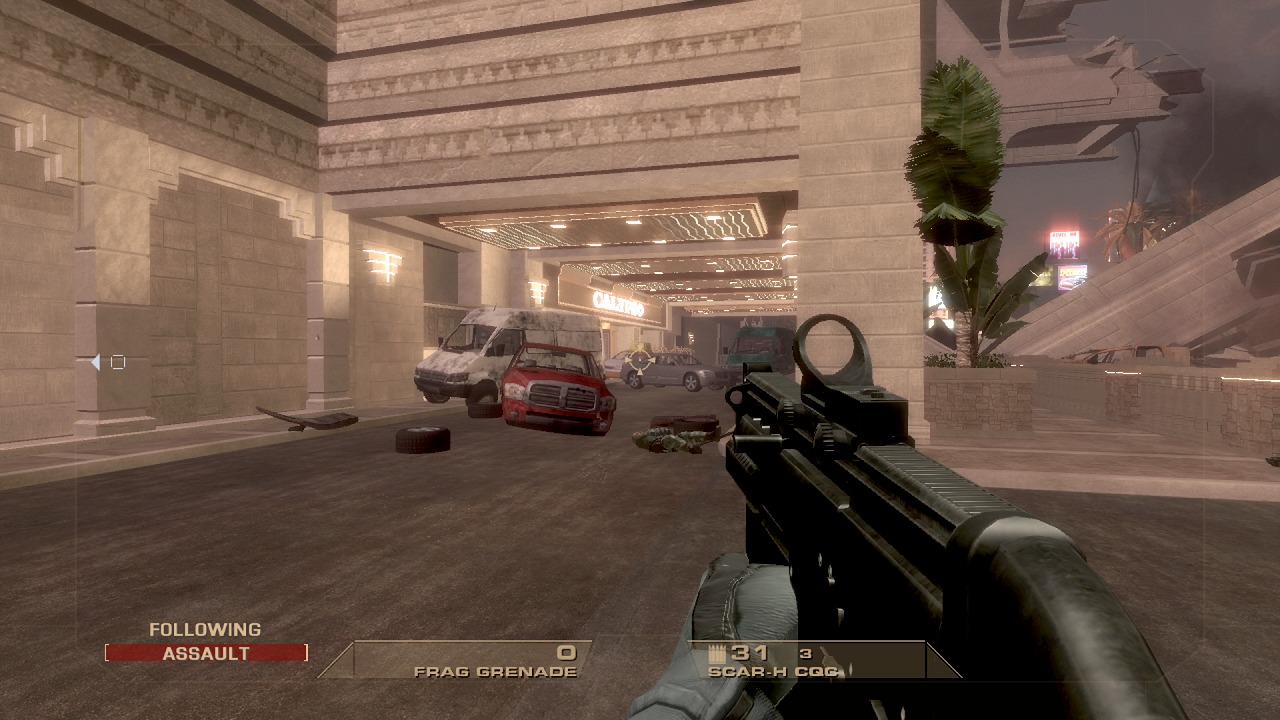
Back in the late 2000s, the Tom Clancy games were on top of the world. Engines that pushed consoles to their limits, great new ways to explore gameplay, fantastic shooting mechanics, and fun multiplayer modes. This was true across all the Tom Clancy franchises, from Ghost Recon to Splinter Cell. Rainbow Six was dormant for quite a few years before being rebooted in the Vegas series. You play as a team of three Rainbow Six operatives trying to thwart a terrorist attack in Las Vegas. Like most of these games, the story is only there to scoot the campaign along and isn’t memorable or anything interesting. There’s maybe a single cutscene per level, and calling these cutscenes is generous. Most scenes involve your operator talking to you via pre-rendered video in the corner of the screen or the Six team talking in a huddle. It’s nothing groundbreaking, but it doesn’t really need to be.
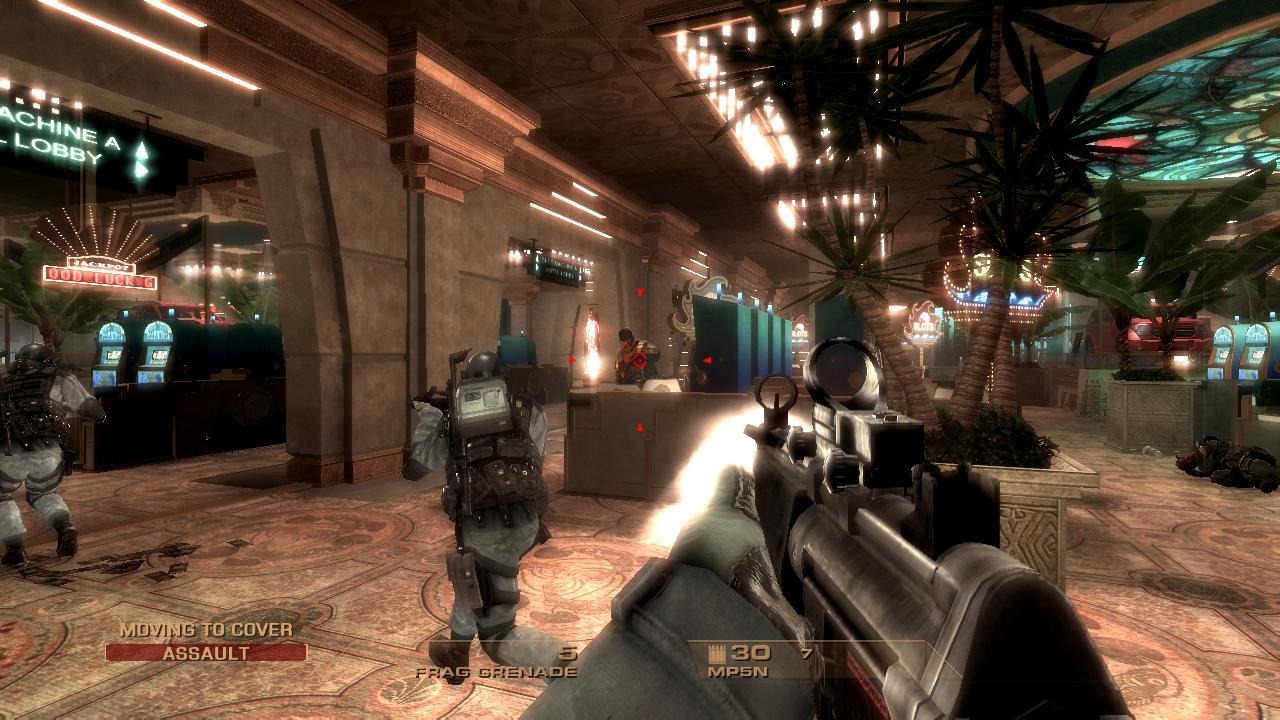
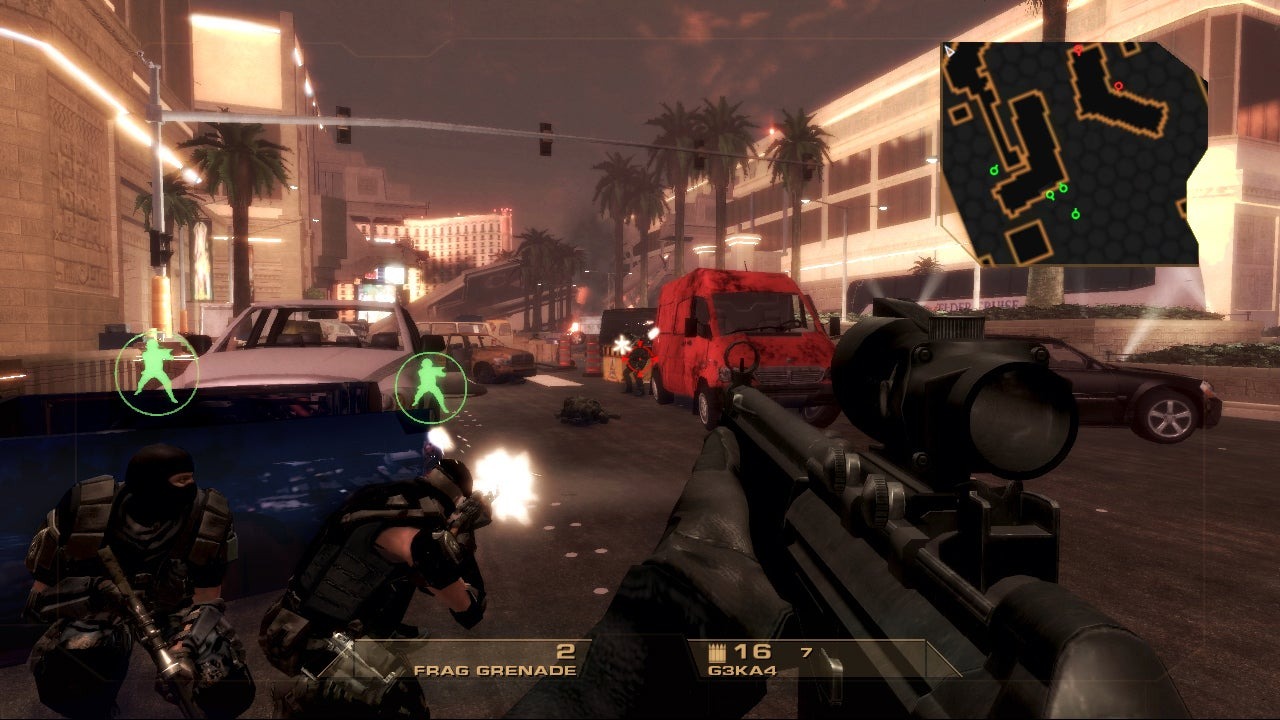
Rainbow Six is a very tactical game. You go in nearly blind and have to watch every single corner. The AI does a decent job in previous games of taking out enemies, and it’s the same case here. You can command your two squad mates to go anywhere with the A button, and an orange highlight will appear. This works great, as you can just point where you’re aiming and always have them scout ahead. We’ll come back to this later. You can order your squad to hold, follow, and stack up on doors, and this is sadly the only tactical part of the entire game that made it through. There’s a serious identity crisis with Vegas, as it can’t decide if it wants to be Call of Duty or Rainbow Six. This tug-of-war is felt in every part of the game, from multiplayer to the campaign to level design.
Going in slow is the name of the game, and that’s no exception even in this more arcadey title. You will die in just a couple of hits, and there are no difficulty options. You need to constantly send your team members ahead around every single corner. Even when you think all enemies are down, one will be hiding behind some box and pop up and kill you. I died dozens of times in this campaign because the levels are just not designed for tactics or even stealth. You can attach silencers to your weapons, and when you do, your teammates will as well. The issue here is once you enter a room everyone suddenly knows your there. Stealth is nearly useless. You can switch from full auto to single shot, which is really useful. Sadly, most levels aren’t designed for a group of three police special tactics officers. This game was designed for the military. Why is Rainbow Six taking down a terrorist group? It makes no sense.
There are many large open areas with tons of hiding spots for enemies. Some areas will have 20+ guys, and remember, you can die in just a couple of hits. You can back off and recover health, and the cover system is actually great. You can buckle against any wall or object and enter a third-person view similar to Ghost Recon: Advanced Warfighter. You can blind fire or pop up and shoot enemies, but the enemy AI feels really unfair most of the time. They can hone in on you from really far away, and their blind fire is too accurate, but mine will barely graze an enemy in a closet. Your teammates are key to clearing out areas by ordering them around staircases, and some micromanagement is involved. You can send them into a room, and they will drop if there are too many enemies. You can revive your teammates with health injections, and these are unlimited, and order a member to revive the other too while you cover them. Some situations allowed for team members to go down at the wrong time and block a doorway. After so long their health goes from yellow to red, and then they die, but you get quite a bit of time to get to them. Enemies can throw grenades and flashbangs, and these are usually only useful in small rooms. They are pretty much useless in large open areas.
The only tactical part of the game is stacking up on doors and breaching them. You can snake cam under a door and tag up to two enemies. You can then order your teammates to breach, frag, or enter and clear a room. That’s it. You can order them up ladders, and you can occasionally rope down the side of the building and turn upside down to shoot inside, which was really fun, but there were only a few times you could do this. Most of the game is just moving from room to room and killing everything in sight, and it gets old really quick. There’s no variation, and you can’t even use the turrets in the game to make some fights a bit easier. I also found that checkpoints were poorly placed. I would need to have a teammate hack a computer, and then I would need to cover them. Instead of restarting before the hack, I would restart two to three rooms back and have to keep clearing them. This game becomes a frustrating chore after awhile because you can’t use any tactics in this game. It’s trying to be Rainbow Six mixed with some Ghost Recon and Call of Duty.
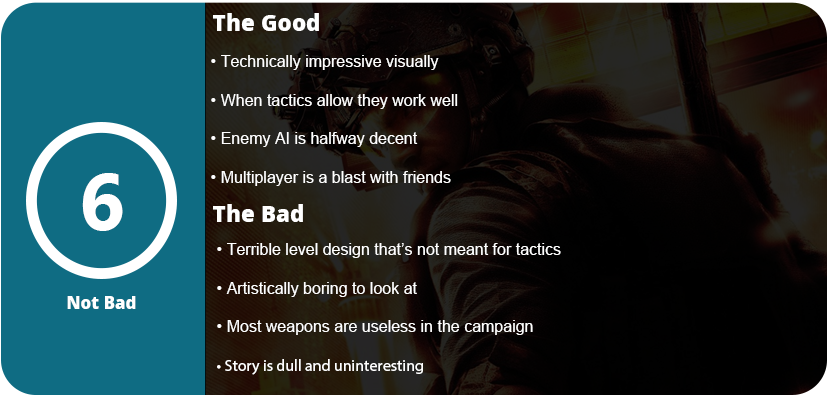
The multiplayer is where the game shines, and while the servers are long gone, you can still get some friends together to play online. I do remember playing the game back in the day online, and it was a blast, but far from what Call of Duty offered. Rainbow Six also looks great technically, even today, but it falls under the same tropes of the era, such as too much bloom lighting and everything being brown and gray. This is a very ugly game to look at artistically, even for a realistic shooter. Sadly, there’s not much value in playing this first game today unless you want to be a Rainbow Six completionist or get an idea of how far the sequel came along. The campaign lasts about 4-5 hours, and then it’s over, leaving you frustrated and wishing there were more tactics to get through the game and die less. You won’t come away happy or inspired in any way. Most people won’t even get through the first level without dying 20 times due to the identity crisis of a Rainbow Six game trying to be Call of Duty.
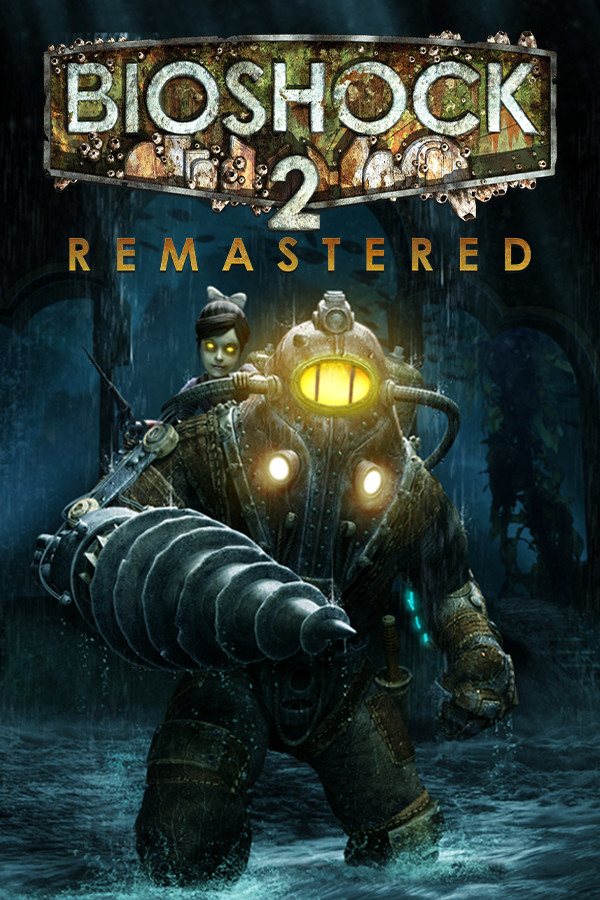
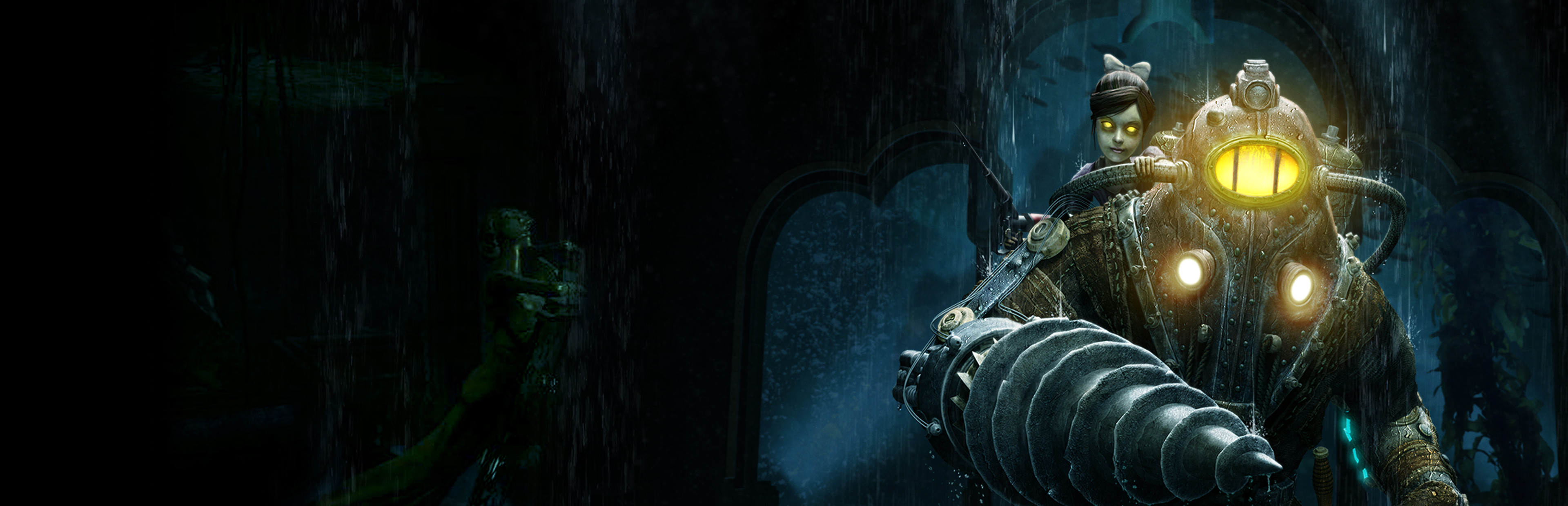
Is a man not entitled to the sweat on his brow? Well, I don’t know honestly. That would be what Andrew Ryan would say, but he’s gone. Several years after the fall of Ryan and Rapture, you awaken as the Big Daddy, Subject Delta, on a hunt to track down Eleanor Lamb. The new antagonist is trying to finish Ryan’s legacy and eliminate everything that was inside Rapture. Little Sisters play a bigger role in this game, as you are a Big Daddy now and need to protect them. BioShock 2 was never my favorite in the series. While I have the original Xbox 360 Collector’s Edition box sitting in a cabinet, as I adore the series anyways, there are some qualities to this game that I do prefer over the original. Sadly, the pacing and story aren’t one of them. BioShock 2 attempts to appeal to more casual action-oriented gamers of the time by including a multiplayer mode. This was 2K’s desperate attempt to make a Call of Duty out of the series, and it failed miserably. Many resources that could have gone to the campaign were wasted on multiplayer that no one played. The Remaster removes this feature, and it’s not missed.
While the beginning of the game starts out similar to the original with really good atmosphere and scripted story beats, the game quickly falls apart after that. Maybe “falls apart” is too strong, but it loses what made the original so well loved to begin. The slower-paced storytelling that takes its time and uses visual cues to tell the story is mostly absent. Instead we are bombarded with tons of exposition over our radio and bounce between Sinclair himself and Lamb. The sequel treads some too familiar ground by having a unique boss in each level that you must defeat. Each one has a personality quirk, but none are as memorable as the original.
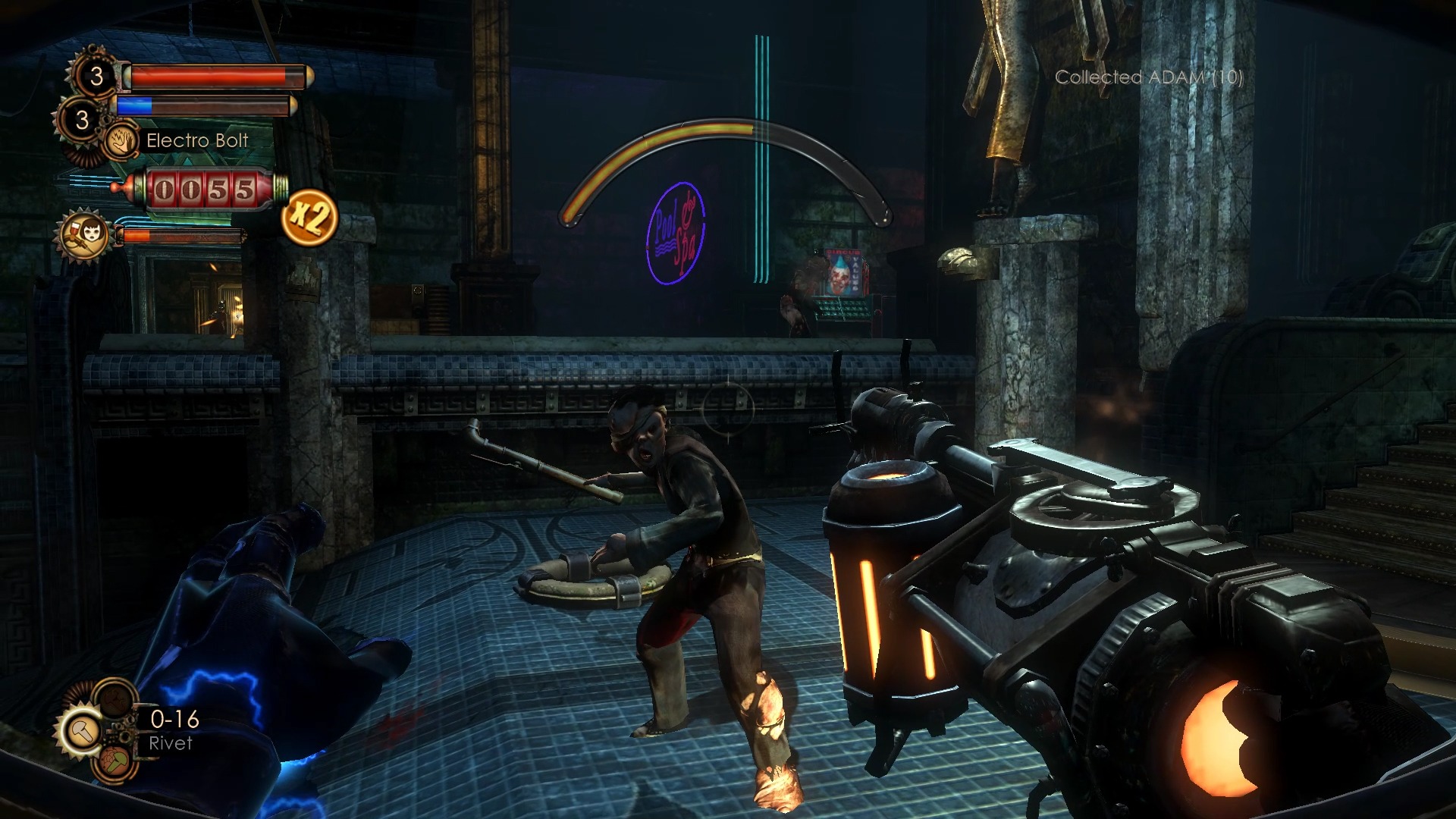
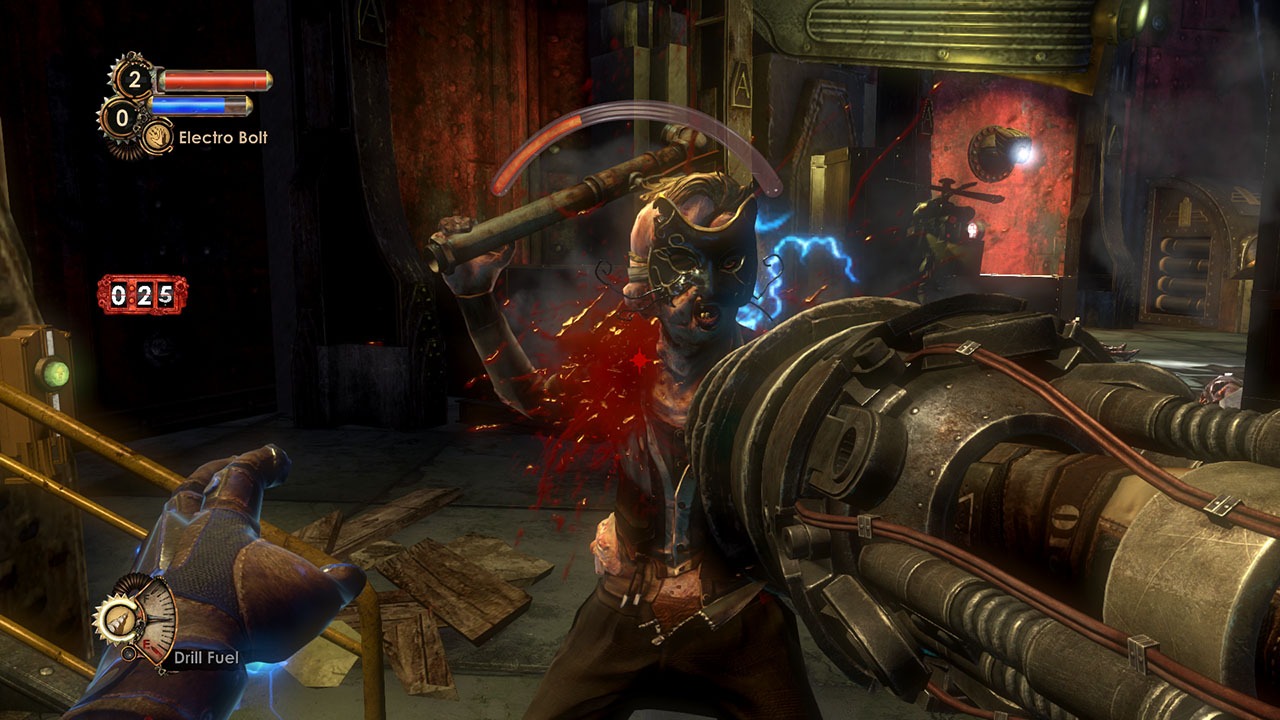
We get a whole new arsenal of weapons this time around, and they feel great. There are still three selectable ammo types, but the only gun that stayed was the grenade launcher. A quality of life improvement is the removed need to reload when selecting a new ammo type. There is a new minigun, hacking tool, rivet gun, double-barrel shotgun, speargun, and drill. The drill is your main melee weapon, but it uses fuel. It’s pretty powerful and can be augmented with tonics. The downside to this new arsenal is that it’s still not suited for the close quarters combat of Rapture. I found the speargun nearly useless, as there’s no long-range combat in this game that requires it. Towards the end of the game the rivet gun (even fully upgraded) starts to become less useful. I eventually stuck with the minigun and shotgun. Each weapon can now have three upgrades, but you can’t fully upgrade every weapon. There are 16 upgrades in total, but only 14 upgrade stations. It doesn’t make any sense. While the shooting feels a little quicker and better in this sequel, it still doesn’t solve the fundamental issue of the arsenal being correct for all of this close-quarters combat.
Hacking has been replaced with a simple meter now. You just press a button when the needle is over the green bars. It’s a huge quality of life improvement over the original’s full mini-game for each hack. Hacking can add a bonus sometimes if you press the blue bars. It can drop a free item or add cash to safe hacks. The hacking tool can also drop mini-turrets to help in battle, which is nice when covering Little Sisters. These are technically optional (outside of the first level). You can fight off another Big Daddy, take the Sister, and have her gather Adam at two different locations. You then get the choice to adopt them at a hidey-hole or harvest them. You can even choose to just harvest their Adam after fighting off the Big Daddy too. No need to gather, but you will be solely relying on your arsenal and limited plasmids, and that’s not recommended. Plasmids are easier to use this time around, and each one has two upgrades, but there are no new ones in this game. In fact, they took some away, such as Sonic Boom and Insect Swarm. Instead, we can now equip up to 20 gene tonics, which seems a bit overkill. These are also mostly all the same, with a few new additions in regard to hacking.
The research camera is back and probably more annoying. You now record video, and how you defeat the enemy determines the points. You are required to change things up and not kill an enemy in the exact same way too many times, or points are reduced. The problem is you need to keep re-equipping the camera for every enemy, and it gets quite old. I wish this feature was removed entirely. You get damage bonuses for complete research, but it’s only necessary on the highest difficulty. The game overall is much easier than the first game, offering little challenge. There are a couple of new enemies, such as Subject Alpha Big Daddy and Mutant, that are similar to what Frank turned into at the end of the first game. The splicers are all the same with no new additions, which is sad. I find the addition of two new bullet sponges to be kind of useless. While combat feels better in this game, it’s not evolved in any way at all. It does get kind of old by the end, especially if you played the original game. Ammo is too plentiful, and you’re no longer scrounging for ammo. You feel like an unstoppable war machine.
Story beats are also too similar to the first game. You go in, shoot some bad guys, press some switches, gather a few items, and then kill the boss. Plasmids’ tricks are also not changed up with oil, water, and explosive tanks everywhere. There isn’t even a lot of ice in this game. While the combat feels better, it’s been dumbed down a lot, and so has level design. These areas all look and feel the same. While Rapture does feel older and more aged, and it nails the look of this, the entire game just feels like one long level. Nothing is set apart, and it all feels too familiar. There’s a lot of exposition and interesting bits in the audio logs. There is also a new “morale” system that lets you either save or kill certain key characters in the game, but it doesn’t alter the ending that much. Gathering ADAM with Little Sisters isn’t as fun or exciting as it could be, and things only really get changed up towards the very end of the game in the last level.
Overall, BioShock 2 Remastered doesn’t really remaster much, like the first title, and the sequel in general is the weakest of the trilogy. While improving in some areas, others are sacrificed, such as a shorter campaign, retreading old ideas, and making combat feel better but less exciting. It’s interesting to play as a Big Daddy, and the first level in the game nails this perfectly. The pacing is nice, and the design is atmospheric, but nothing ever changes the pace or level design. Levels in general feel more cramped, and with the additions of larger enemies and more of them, the weapons you get still don’t fit the bill. If you played the original, then go for it. There are some questions that are answered. It really feels like an expansion pack rather than a true sequel.
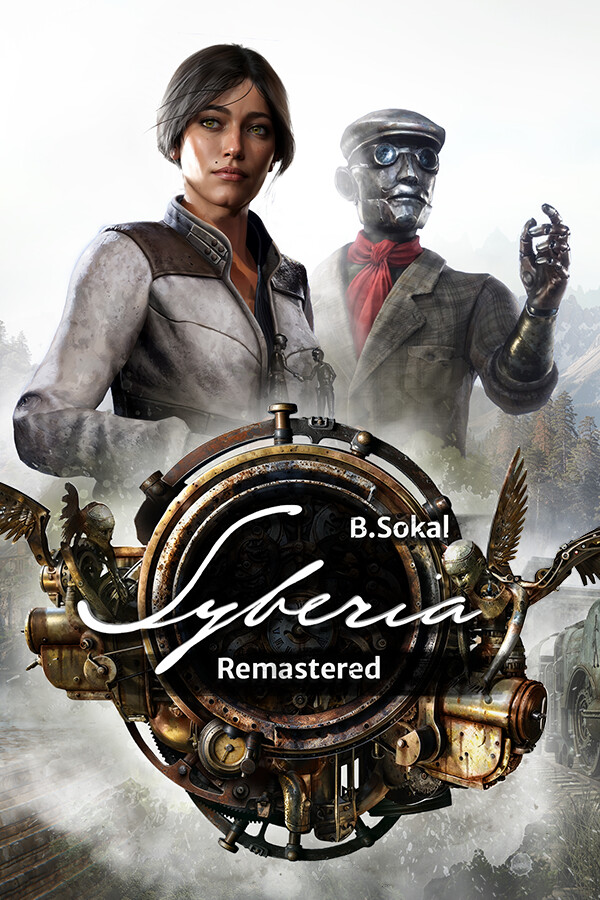
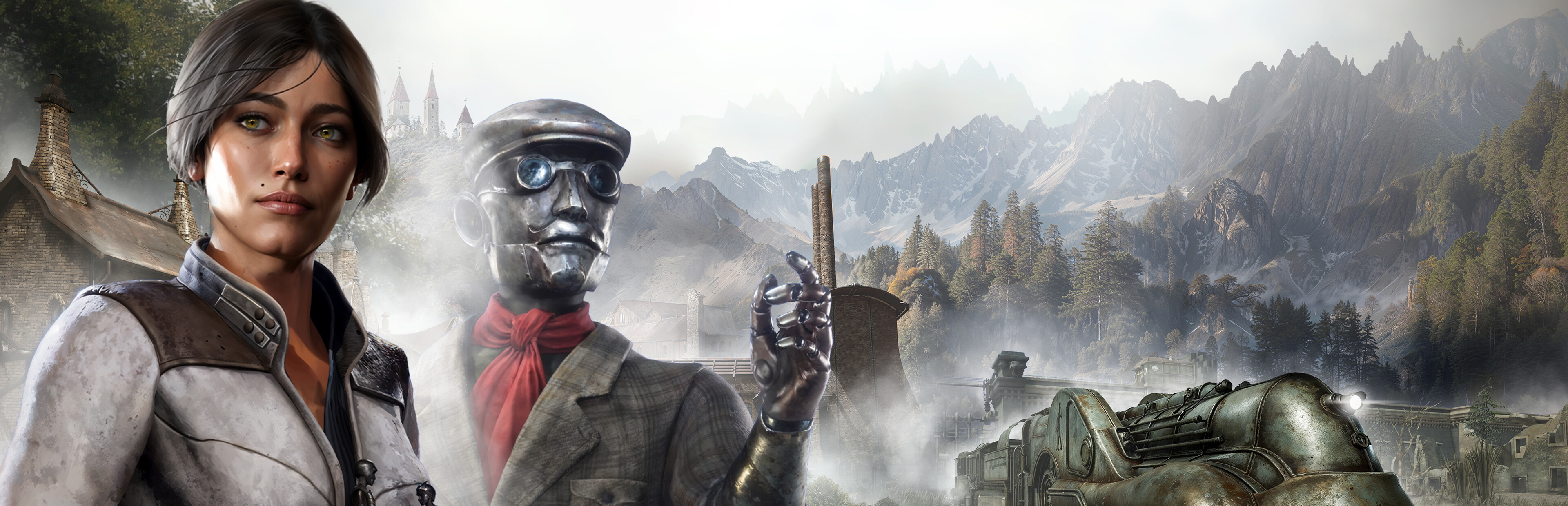
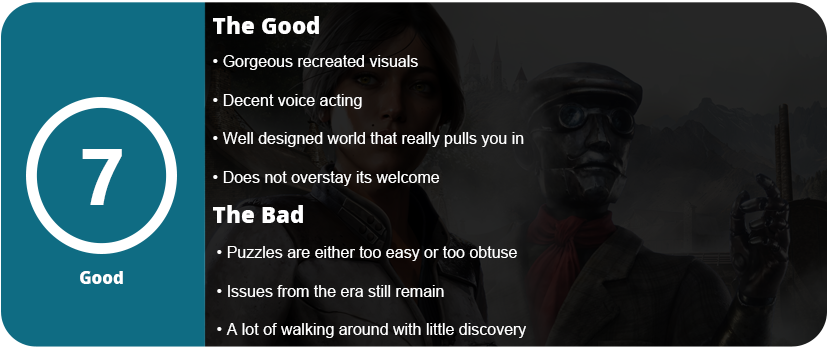
The late Benoit Sokal’s vision is something I have yet to experience. Syberia is considered one of the best point-and-click adventures of all time despite its flaws. Like other games in the genre, such as Sanitarium and The Longest Journey, Syberia gave PC gamers beautiful visuals, intriguing characters, and rich worlds to explore. This remastered classic does just that by giving new gamers a fresh take on an older classic, flaws and all. The series is now a four-part saga that starts here with its humble beginnings.
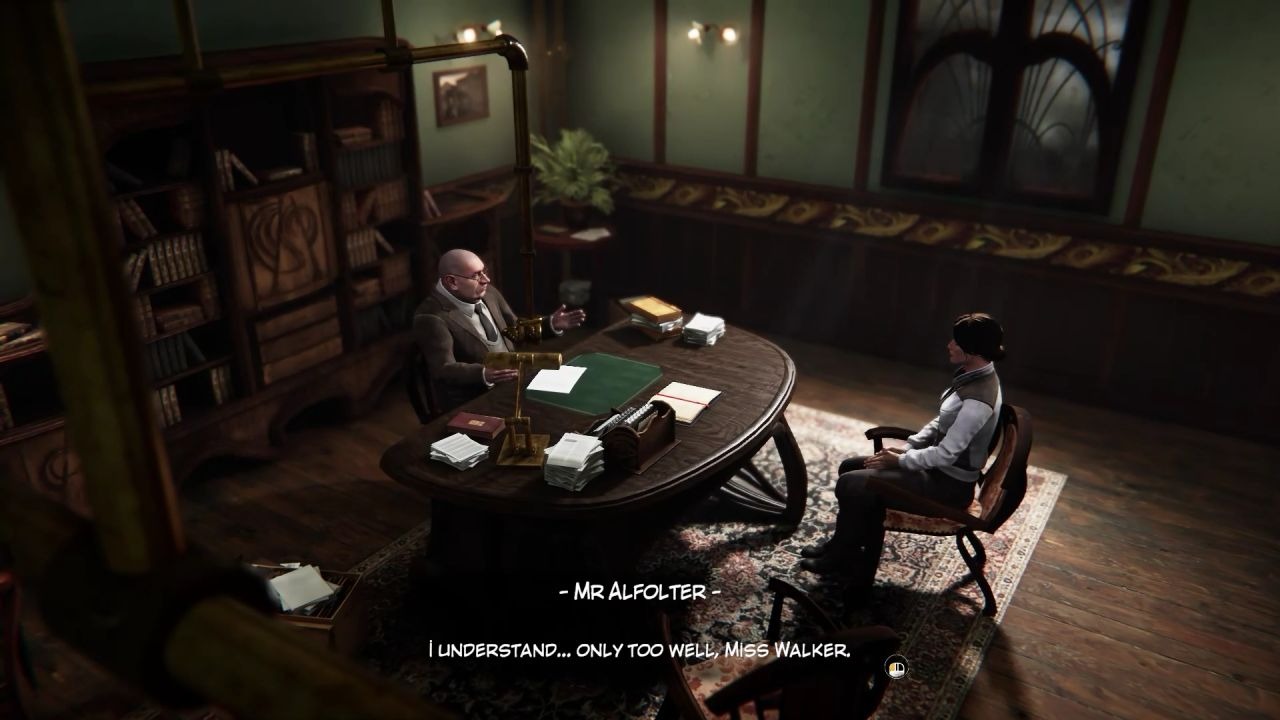
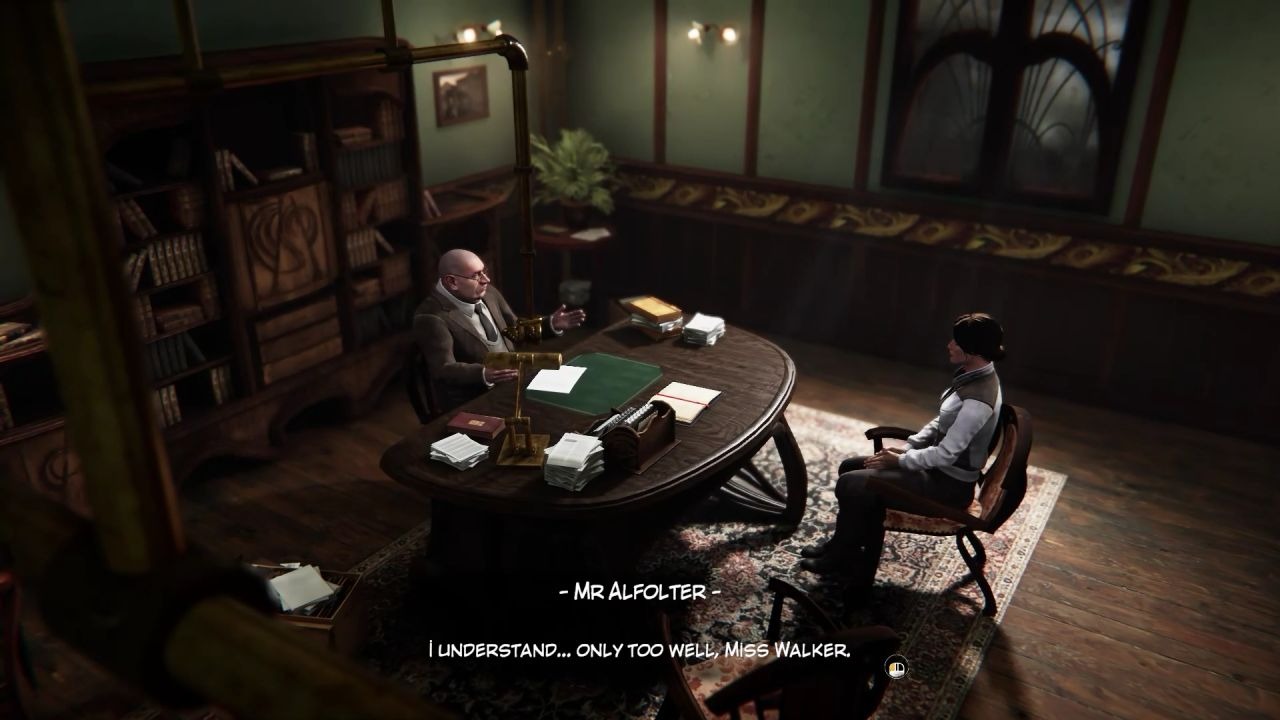
You play as an American attorney. Kate Walker is tasked by her agency to get an automaton factory signed over to a new toy company. You must seek out its owner, and this leads you on an epic journey through various towns with interesting people. Kate eventually awakens an automaton engineer who is able to drive a wind-up train to where she needs to go. The train needs constant winding, so it conveniently stops in these towns. The towns usually have mini mysteries to solve or predicaments to correct so Kate can move on with her journey. She either needs more info on where to find Hans Voralberg, who is the living descendant of the factory owner. There’s a lot of humanity in this game. From the strange university with its weird Stoker council to the obsessed automaton in the mines who wants to desperately reimagine an opera he saw long ago. The dystopian Soviet Russia vibes also add to the atmosphere here. The game feels sterile and falsely joyful. Remnants of this sadness litter the environment, akin to soldiers dispatched to abandoned facilities to await their demise.
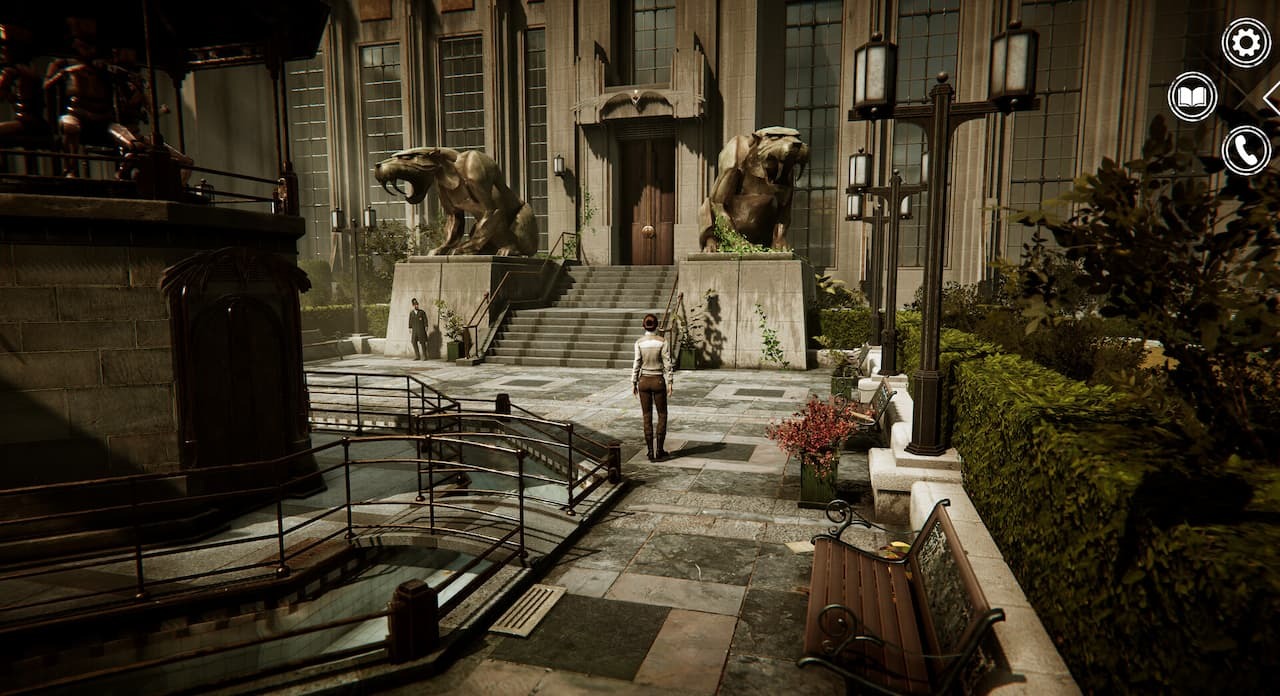
Syberia does a fantastic job feeling like an actual adventure. However, the puzzles are few and far between, and a couple can be rather obtuse, while the majority have no challenge. There’s a lot of backtracking in the main “hub” areas of each town and just a lot of walking. Talking consists of selecting questions, and that’s it. The pre-rendered cutscenes were not redone, looking incredibly dated. These are in full widescreen with a proper aspect ratio but should have been redone or just done in engine. The remade visuals look fantastic with beautiful sweeping vistas, great lighting, and good-looking textures. There are some quirks left over from the era, such as needing to have animations finish before doing something else, some graphics glitches, and object hunting. Most objects will have a circle appear over them if you get close, but these can be missed sometimes, leading to a lot of wandering around.
You can platinum this game in one go, and it can be finished in about 4-5 hours with a guide. Once you complete the game, there’s no reason to really revisit unless you have nostalgia for the original. The remaster adds some interesting DualSense features, like having Kate’s phone conversation play through the controller speaker, but there’s not much else to this game. If you love adventure games, then give this a try. Here’s to hoping the second game will get remade as well.
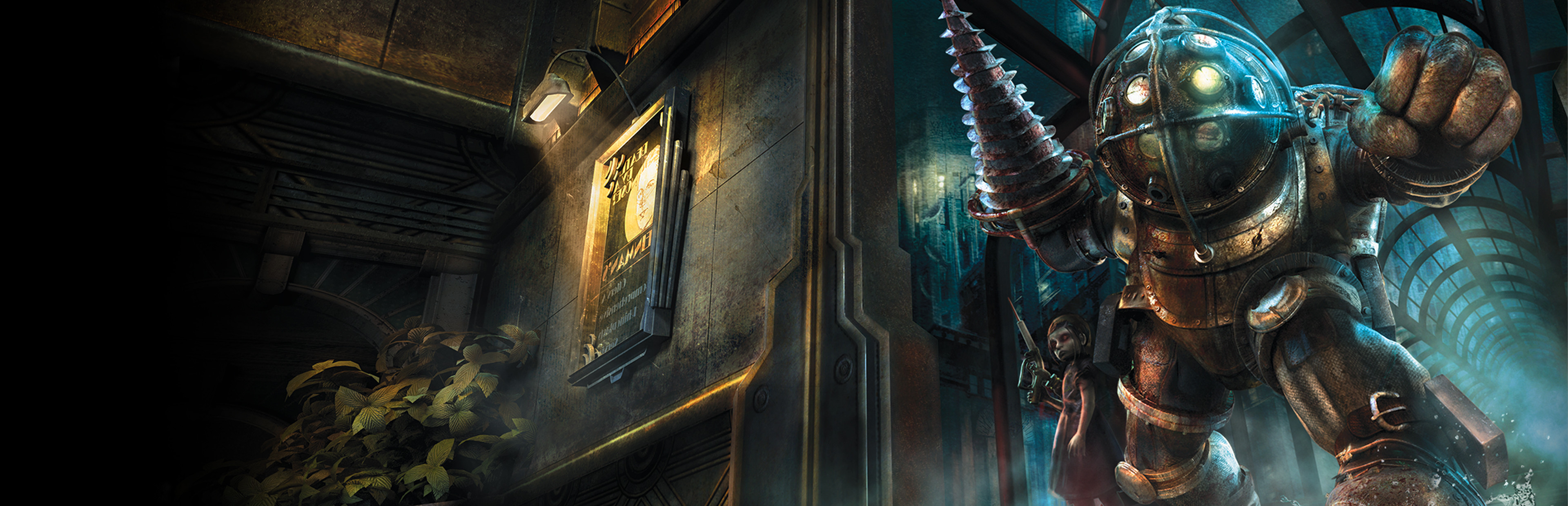
War. War never changes. Oh wait, wrong game. Clears throat Is a man entitled to the sweat on his brow? A famous quote from Andrew Ryan. The creator of Rapture. An underground utopia, or dystopia, that’s a playground for the rich. Using Adam and Eve to alter your genes and add power like fire, ice, shock, and bees. You arrive serendipitously via plane crash over the Atlantic ocean. You work your way through Rapture while being guided by a man named Atlas. There are Little Sisters, children who harvest Adam from dead Splicers, and Big Daddies that protect them. There’s quite a bit going on, and while this is a spiritual successor to System Shock, it was revolutionary for its time. Sadly, many younger gamers, like myself, had never heard of System Shock as it wasn’t a blockbuster seller.
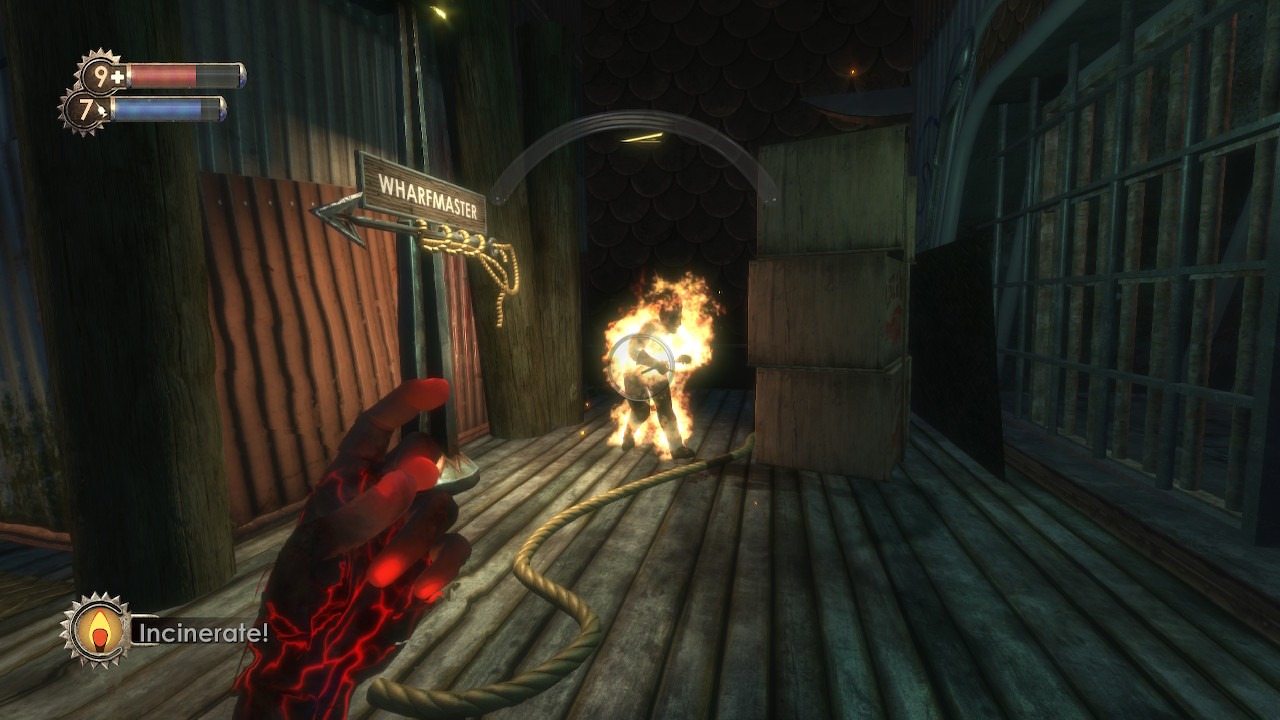
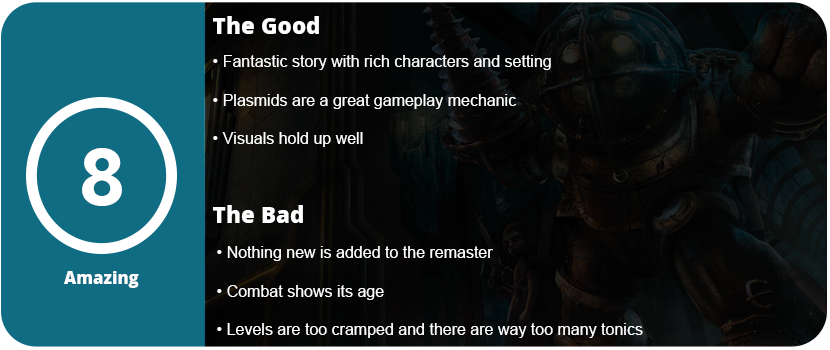
Sadly, the remaster does the bare minimum. Only making the game playable exactly as is, just in a higher resolution and frame rate. 2K Games took the PC version with the updated DirectX 10 lighting and shadows and threw it on consoles. We get developer commentary and some combat trials, but the age of the game is also present. A full remake would have been better. While the story is well known amongst gamers of the HD era, the gameplay hasn’t aged quite as well. There are many quality of life improvements that could have been made. For example, the combat isn’t the best. The reticle is a massive circle, and while guns feel pretty decent, the Plasmids are frustrating to aim. Plasmids like Shock Bolt and Incinerate converge on a pinpoint, and you waste so much Eve trying to hit enemies. There are also an awful lot of passive and combat tonics that feel mostly useless for such a short game.
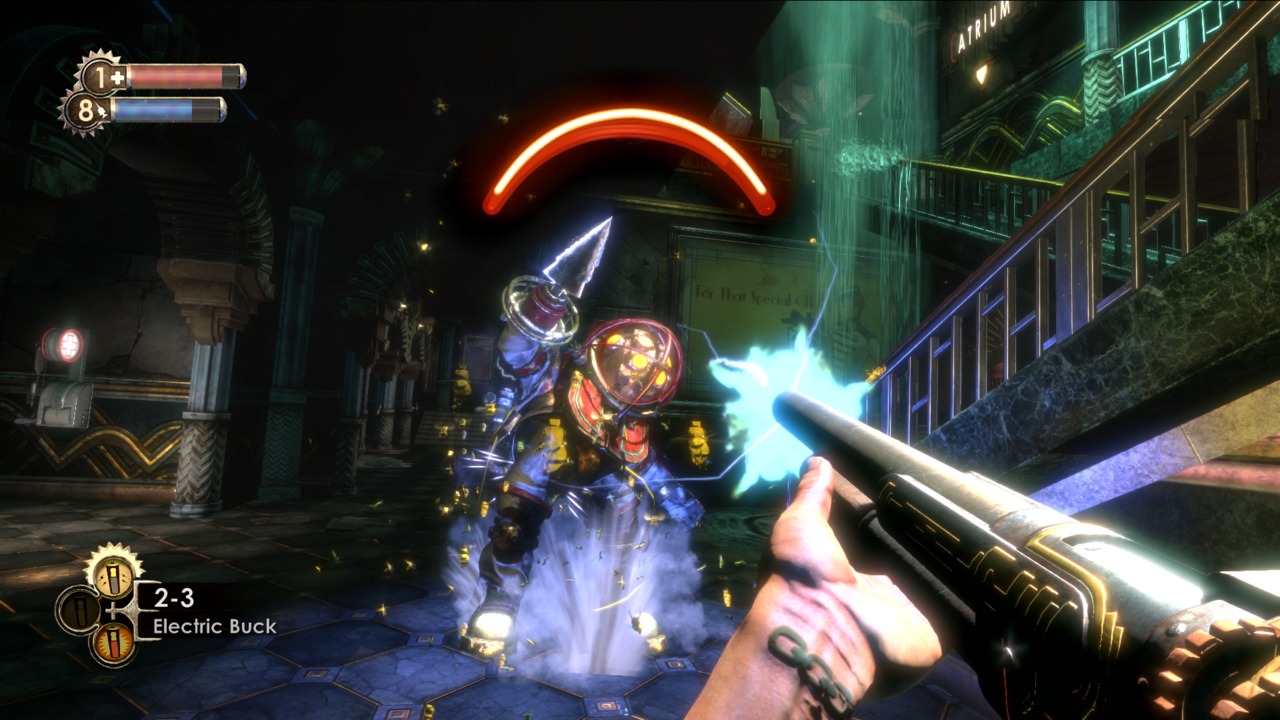
While the 17 year old me didn’t really notice any of this when I played it on launch day for my Xbox 360 at the time, the game’s near perfection at the time is showing some cracks. The levels are cramped and incredibly linear, making combat hard. Many of the areas are way too dark, making it hard to see enemies and hit them at the speed they move at. It’s not the worst ever, but it’s annoying, and a remake could have remedied this. You get six guns in the game, but not all of them are useful. The Napalm launcher is something I rarely used, and the same goes for the grenade launcher. The areas are too cramped for these destructive weapons, and you end up taking a lot of damage. You will switch between the shotgun, revolver, and Tommy gun the most as your main weapons. The crossbow is the closest to a sniper rifle that you will get. Each weapon has three different ammo types. There are explosive, shock, anti-personnel (good against humans), and armor-piercing (used against Big Daddies). The combat system is fine but pretty flawed. You can upgrade each weapon twice to add things like damage and recoil reduction.
You can change your equipped plasmids and tonics at Gene Banks. You use Adam taken from Little Sisters at Adam machines to buy these. There are just too many. I used the Research one for taking photos of enemies to increase damage dealt to them. Once I get everyone researched, this tonic is useless to me. There are tonics to reduce security timers, making hacking easier, reducing the cost of vendors, etc. You can only get five slots for each track. Then there are up to three levels for each tonic. There’s too much. I felt for the short length maybe half the amount of plasmids and tonics would have been fine. You will find your favorites and pretty much stick with those through the entire game. You can finish the game in about 6 hours or less. Other vendors are for ammo and items for healing and such. There are many different healing items, from snacks to first aid kits and seemingly useless alcohol. Hey, there’s a tonic to reduce the drunkeness effect of those as they restore Eve. It’s an excuse to look around. Every container has something. Eventually you will unlock crafting at the U-Invent station to make ammo and some tonics that can’t be bought or found. Looting can be fun, but it distracts from the main story and gameplay loop.
There are just too many systems at play here for such a short game. These are all good ideas, and they work fine, but do we need five plasmid tracks (you can equip up to 15 passive tonics and five for combat) and a crafting ability? Ammo is scarce and becomes a pain to find on harder difficulties. You will need to loot every enemy and container to scrounge. This is fine, but is this now a survival horror game? The best parts of the game are the scripted events. There are few boss fights outside of the disappointing one at the end. The Big Daddys act as mini bosses themselves. They won’t attack you until you attack first. There are Bouncer and Rosie types, each with different types of attacks. Finding the 122 audiotapes throughout the game gives you backstory and fills in lore since there’s a lack of NPCs to talk to. These are logs of residents from before the city fell apart. Each level is themed after someone who ran that area, such as Cohen, who is all about theater. There’s the casino, the outdoors simulation area of Arcadia, the central core area of Hephaestus, etc. The areas are all distinct and interesting to look at despite being very cramped and their design feeling more like a video game than an actual city. It’s obvious no one could actually live in this place; it just doesn’t make any sense.
Despite not being ported over to a new Unreal Engine, the UE3 assets hold up surprisingly well thanks to the fantastic Art Deco style the game went for and have become iconic. The visuals were state of the art at release, but just increasing the resolution doesn’t do much here. The hacking mini-game gets old fast (assemble pipes) and could have been changed or removed. The enemies and characters are also well designed and iconic, but the game has definitely aged. Some areas are not so graceful, such as the combat, level design, and RPG elements. Enjoy the game for a fun evening that’s a great roller coaster ride and explore. Don’t focus too much on collecting, and just enjoy this as a stylish shooter.
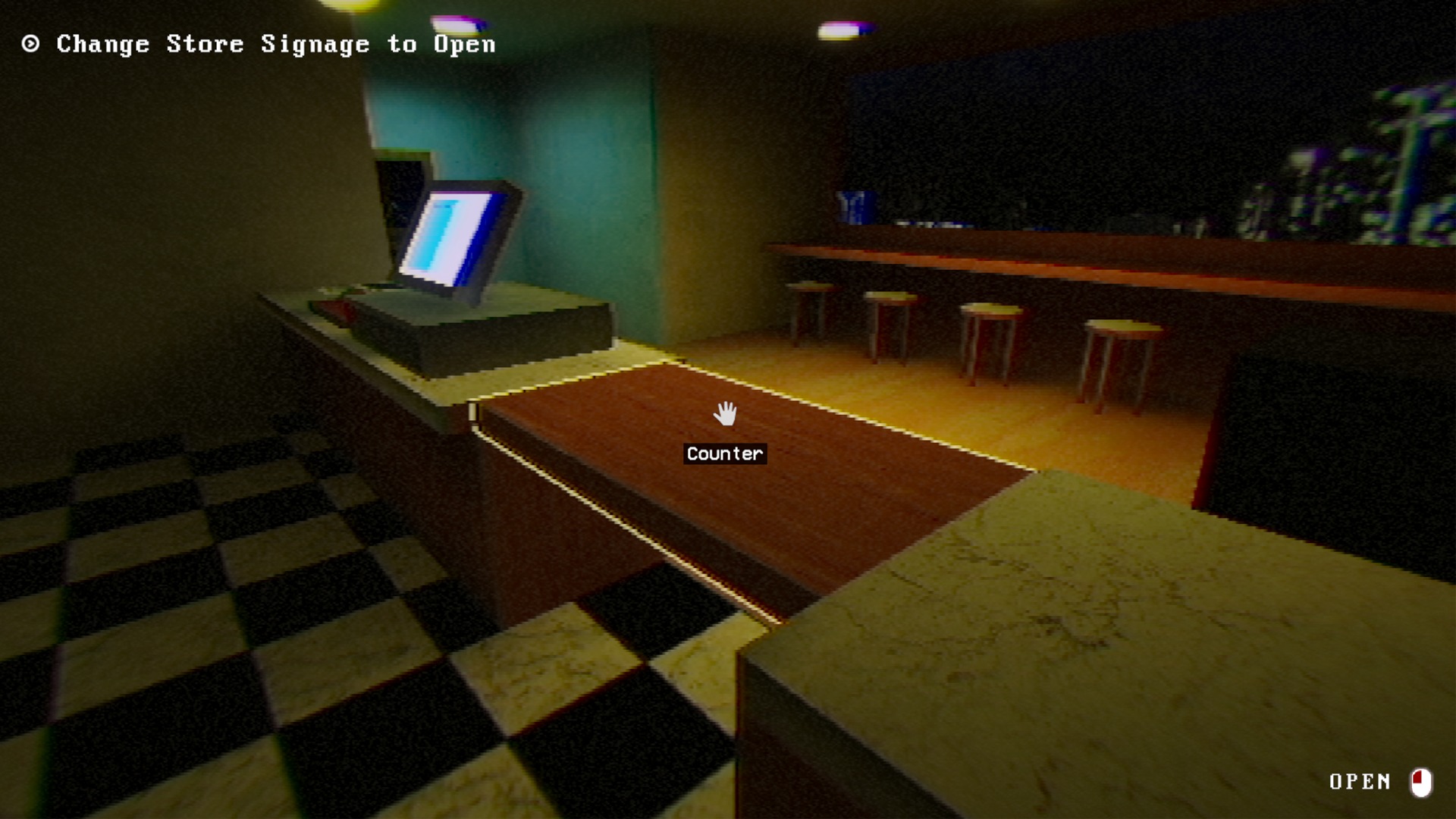
Stress from work is a real issue today. It’s quite common that in Asian cultures this can lead to suicide. Many local legends and myths revolve around overworked women who jump from buildings or hang themselves and then haunt where they work. The Boba Teashop does a great job of building atmosphere and tension in this regard. There is a time management simulator in here that’s actually quite fun, and sadly the game ends so soon. A few other PS1 style horror games of this ilk have done this, such as While We Wait Here. There isn’t much to this game. It’s a very simple game to look at, as you are only inside this single shop. The game is very dark and moody, with it constantly raining outside, and it always seems to be nighttime.
I have to commend the developer for some great scares. These aren’t just cheap jump scares or fake-outs. There’s some serious psychological horror stuff going on. Things will appear in the periphery of your view, and when you turn to look, nothing is there. You can’t make out the object, but you know something was there. There’s a lot of tension building, such as when you are told that an electrician will be working on the system and your lights will flicker. There’s constant fear that something will pop out at you or that one of those lights flickering is something else. The entire workday ends up like this.
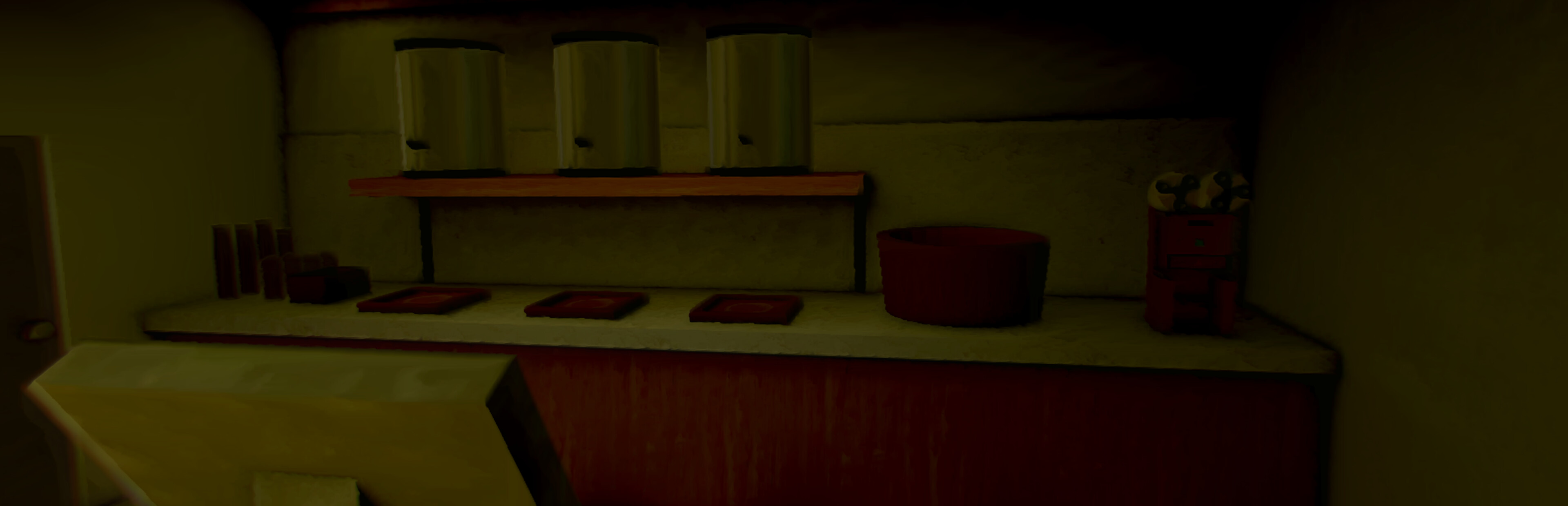
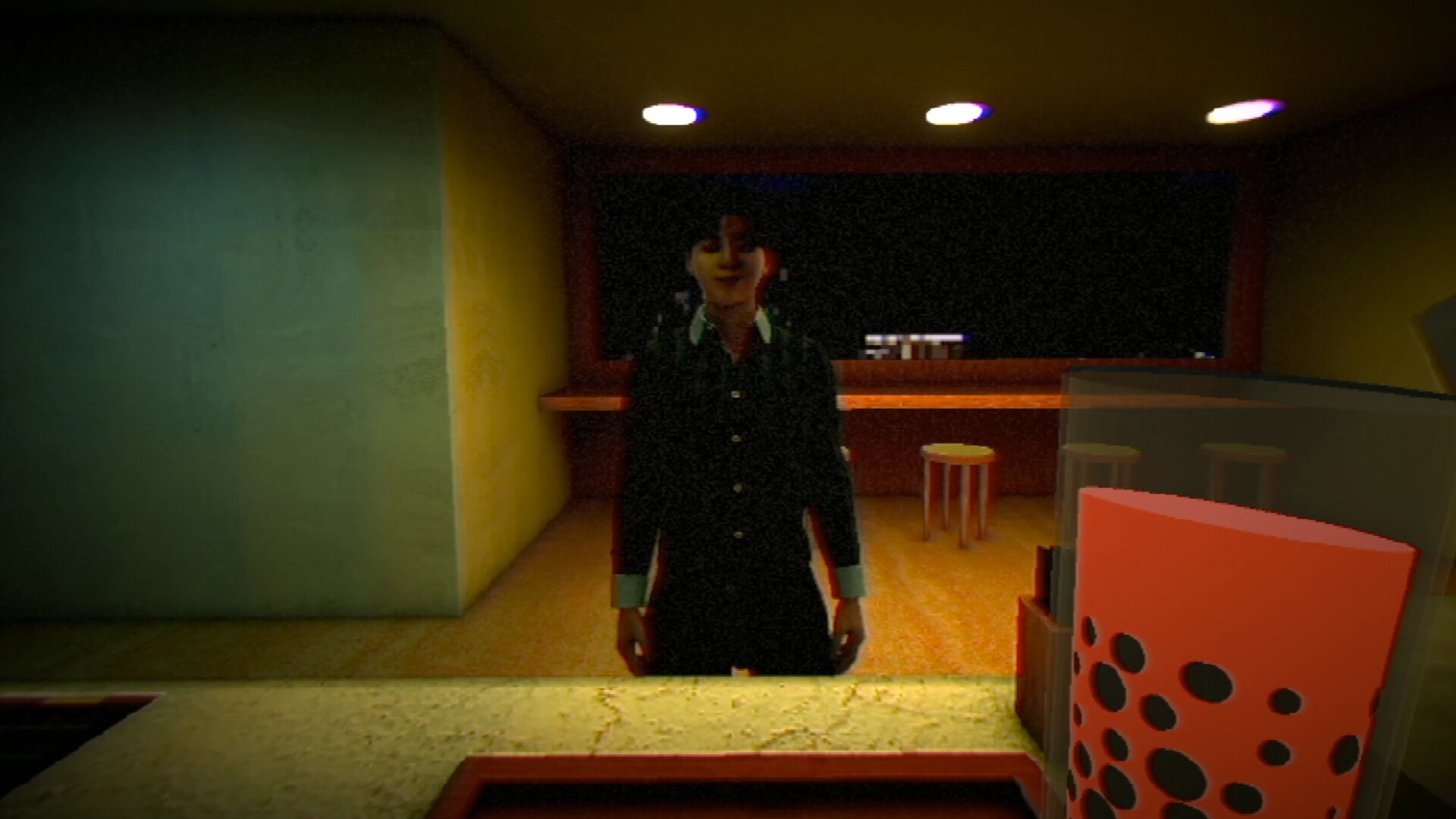
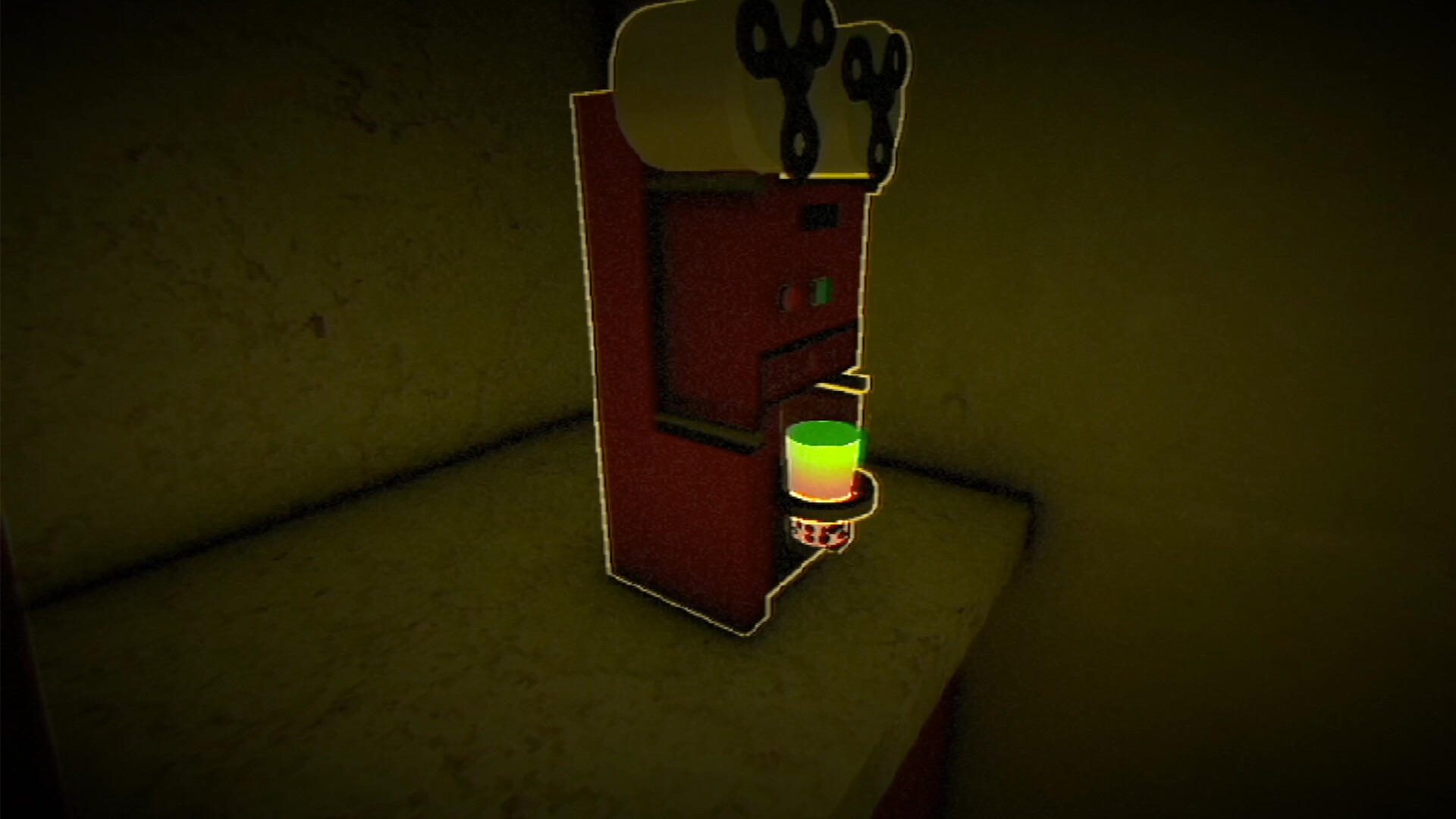
The main gameplay loop is greeting customers and getting orders. You start out simple with just boba tea. You pick up your cup and place it under the correct vat of liquid. Eventually you can use chocolate and coffee. You can then add milk from the fridge as well as various fruit. The last station is your boba, and then you must seal the top before handing it over. In the employee room the recipes are on the whiteboard if you get confused. It’s a very simple but addictive loop of taking orders, and you also get repeat customers. Some are rude, some are nice, and some are strange. Orders are displayed on the register, and when you hand the drinks over, the customers will pay and you collect the money. A couple of other people come in who don’t order drinks, but it all adds more tension. You get more and more stressed as the days go on and start seeing things.
I don’t want to spoil the scares and story, as this is such a short game. The visuals play well with this type of game. The low-poly graphics and lack of lighting keep you glued to your screen. In between the gameplay loop of making drinks, the game never lets up. Something is always happening. The game lasts maybe an hour at most, and this feels like a proof of concept or demo for something that could be bigger. I highly encourage those who are fans of horror and PS1 style graphics to buy this and play it. You’re supporting an indie developer, and the game is really inexpensive. Normally, I don’t care for these super short indie games. They are usually fairly disappointing and don’t offer anything memorable, but things come together just right here to warrant a playthrough.
When dealing with mental health or talking about it, there can be many obstacles to overcome. How do you approach it? Do you take it head-on and use a traditional narrative experience where you watch the protagonist spiral out of control, or do you use the approach Luto took and make it an interpretive indirect narrative in which the player experiences the downfall? Luto does an impressive job showing what it can feel like to experience depression, thoughts of suicide, and mental health issues. Never has a game done a similar job since Hellblade: Senua’s Sacrifice.
What we need to understand is that the developers aren’t approaching in a “sensitive” way but in a way that we can just fully understand. Unless you are experiencing or have experienced any mental health issues or even some sort of trauma that can lead to this, we have no way of knowing. I particularly enjoy how the human mind deals with these things and the artistic interpretation of it. While I have experienced my own sets of trauma through my life, it’s still interesting to see what else is out there. You play as a man who is dealing with the loss and grief of family members. I don’t want to spoil the story, but it’s not the direct tale, but how you experience this interesting grief.
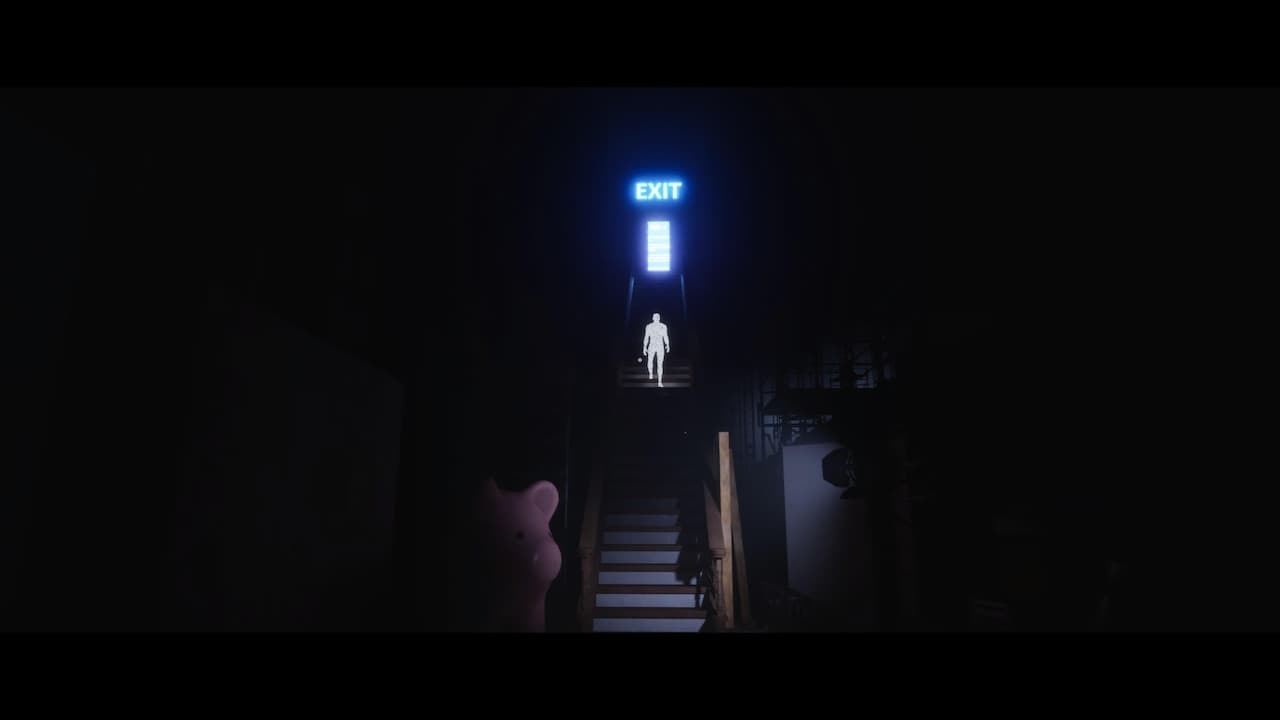
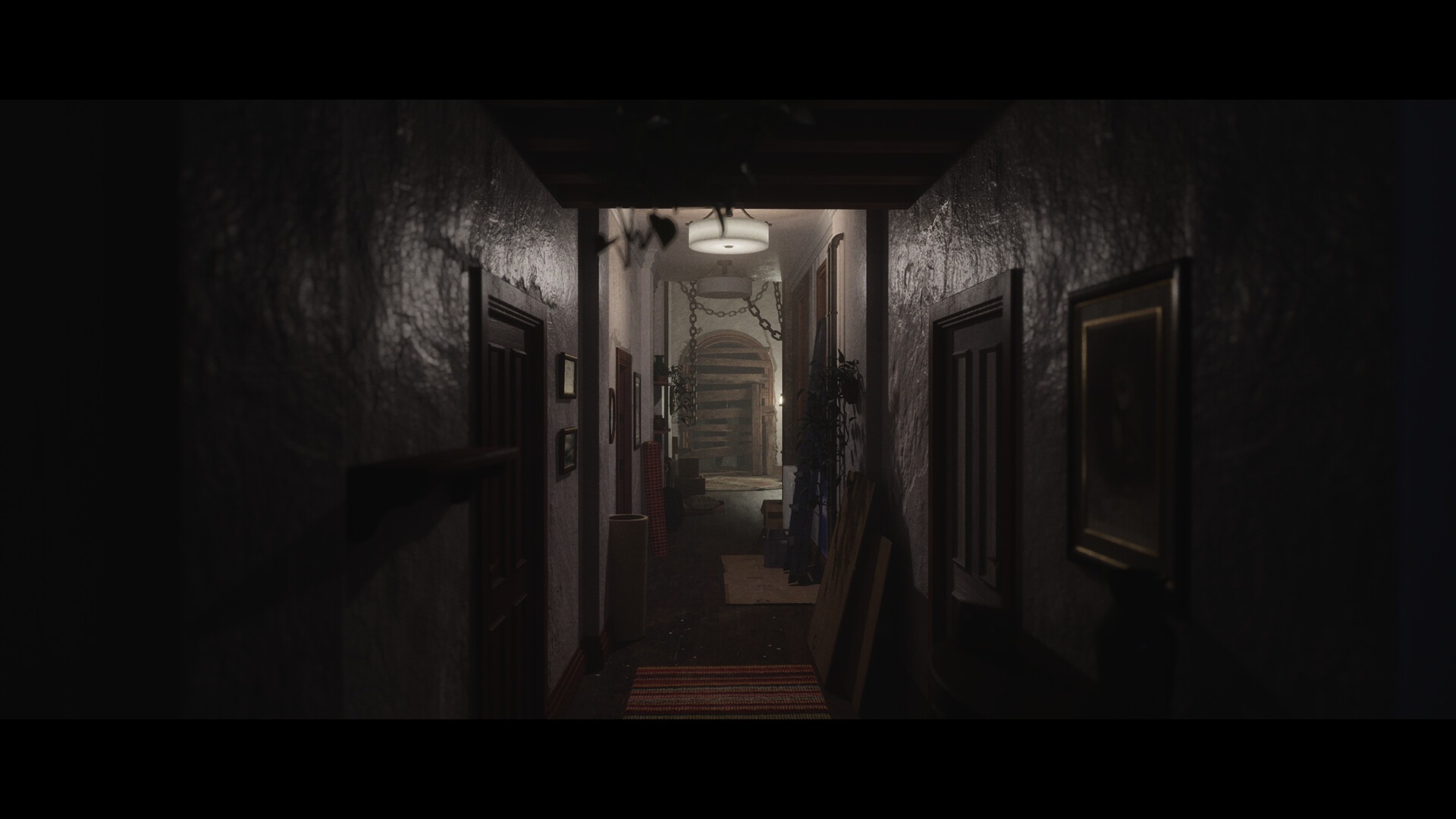
There are some trippy gameplay ideas here that I have yet to see. There is some direct inspiration from the P.T. demo by Hideo Kojima. The nearly sterile lighting and hyperrealistic house that feels lived in yet cold and empty at the same time. The buzzing of lights, ticking of clocks, and just your footsteps are all you hear. The silence can be deafening. There is a cheeky British narrator that talks you through the game, similar to The Stanley Parable or something straight from a Media Molecule game (LittleBigPlanet). However, something seems off with this narrator. As you walk out of your bathroom and complete your day as the narrator intends, you try to break the sequence. This leads to further sequence breaking and then to some meta-narrative ideas without spoiling anything.
Some puzzles involve solving looping hallways and corridor issues. Identifying numbers and observing objects in specific ways are key to solving puzzles. The first example has you trying to get a hammer hanging from a chandelier because you need this to pry wood off a doorway. You can keep walking downstairs only to end up back at the same staircase. You need to find four numbers to enter as a phone number to break the sequence and drop the hammer. You need to be observant and look for breaks in patterns. It’s very reminiscent of P.T. in that sense. These puzzles can be fun, but if you’re not good at finding them, some can be hard to figure out.
As the game moves on, some of the horror elements will pop up, and, while they are subtle, the excellent lighting effects help with this. The game is very surreal and haunting in the sense that nothing makes sense. It can be disorienting and go against the grain of what makes sense. This can be scary on its own rather than jump scares and creepy monsters. There are none in this game. Some scares are very subtle and only exist if you spot them, or the atmosphere alone can just be downright tense. You will expect something to jump up at you or come out of a doorway, but nothing ever does. That’s a fantastic way to create horror. Luto makes the scares seem like they are there, but it’s all in the player’s head. I don’t want to spoil the short game by explaining anything in detail. With a walkthrough, you can complete the game in 4-5 hours.
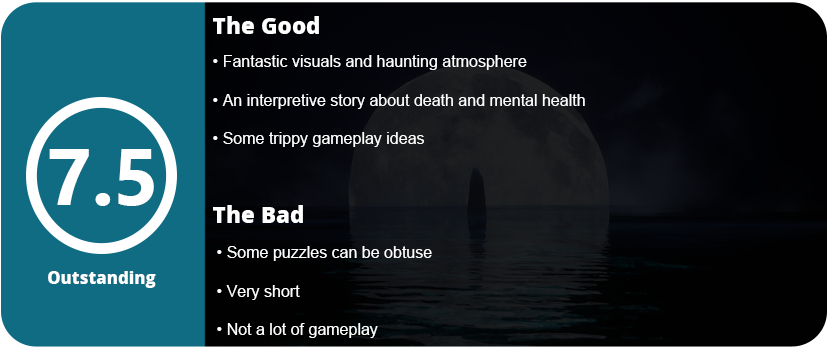
Overall, Luto is a fantastic psychological horror game. I just wish there were more puzzles and gameplay and some of the puzzles weren’t so obtuse. While I like that the story is interpretive, this is becoming a cliche in indie horror titles and can be tough to pull off with such short lengths. Luto does a better job than most, but it’s still not perfect. While I love the lighting and atmosphere, the game does look kind of generic in spots, such as the hyperrealism of the house and day-to-day objects. Things don’t really start looking much different until more of the surreal stuff starts to pop up.
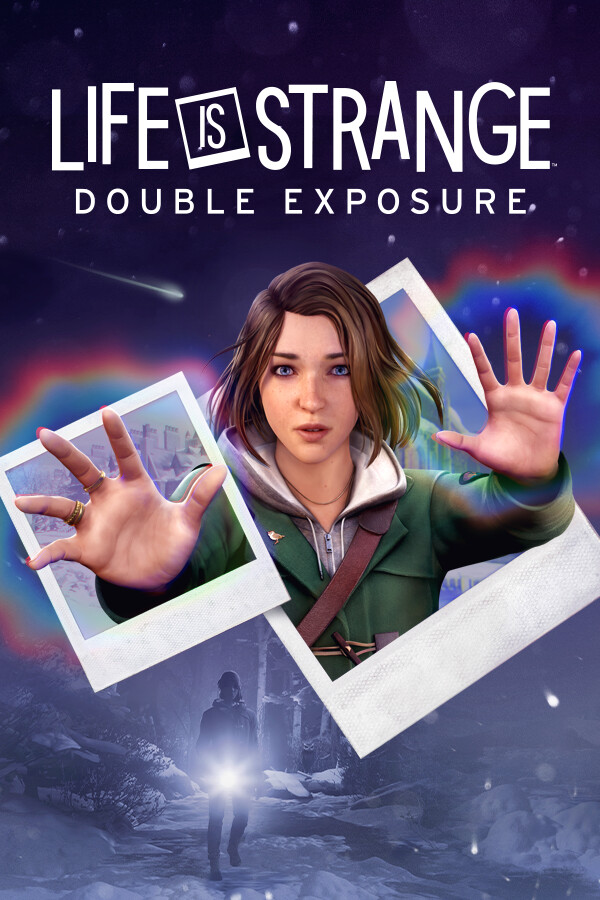
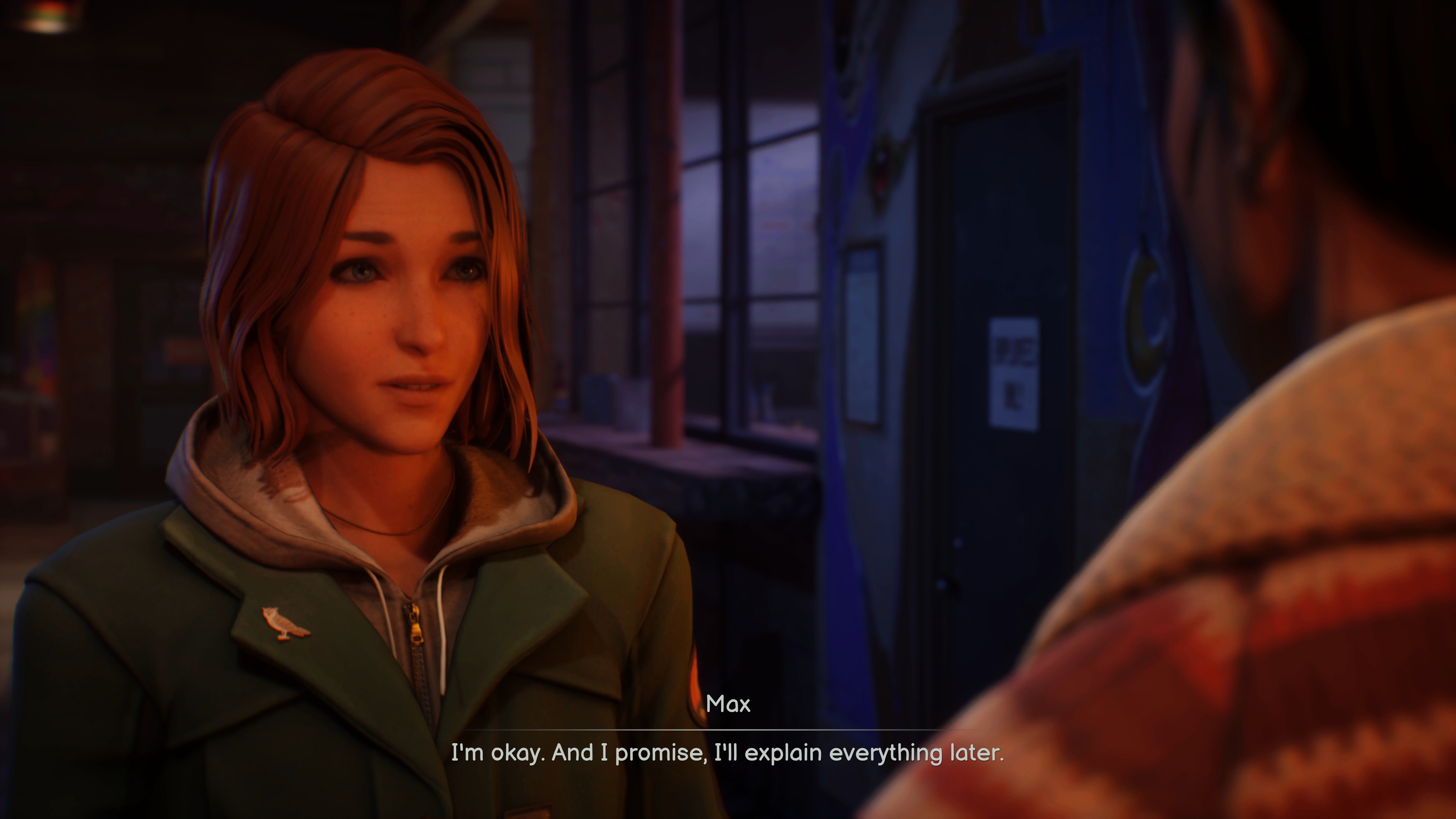
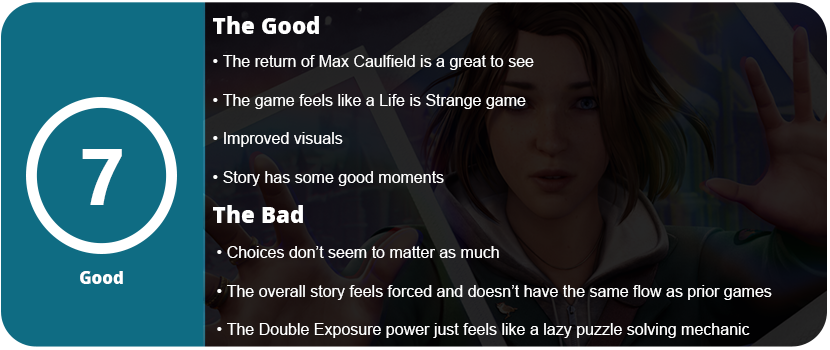
Max! Max, you’re back! It’s so good to see Max Caulfield again. This time as a grown adult. Our Max is all grown up. Well, that’s what I wanted to say, but a few hours into the game, you will realize that while Max is back, everything surrounding her return isn’t. This is a very forced game that didn’t need to get made. While all of us are curious as to what happened to Max as she grew up, we didn’t want a repeat of the original game. Deck Nine nailed the feeling of the first game. While we’re not in the same time period (late 2000s), we are in modern times, but with new friends and foes. The atmosphere of Life is Strange is here. The surreal soundtrack, being able to interact with various objects and hear Max’s inner monologue, important choices, well-made characters, etc. It’s all here, but in a very basic package to tie it all up.
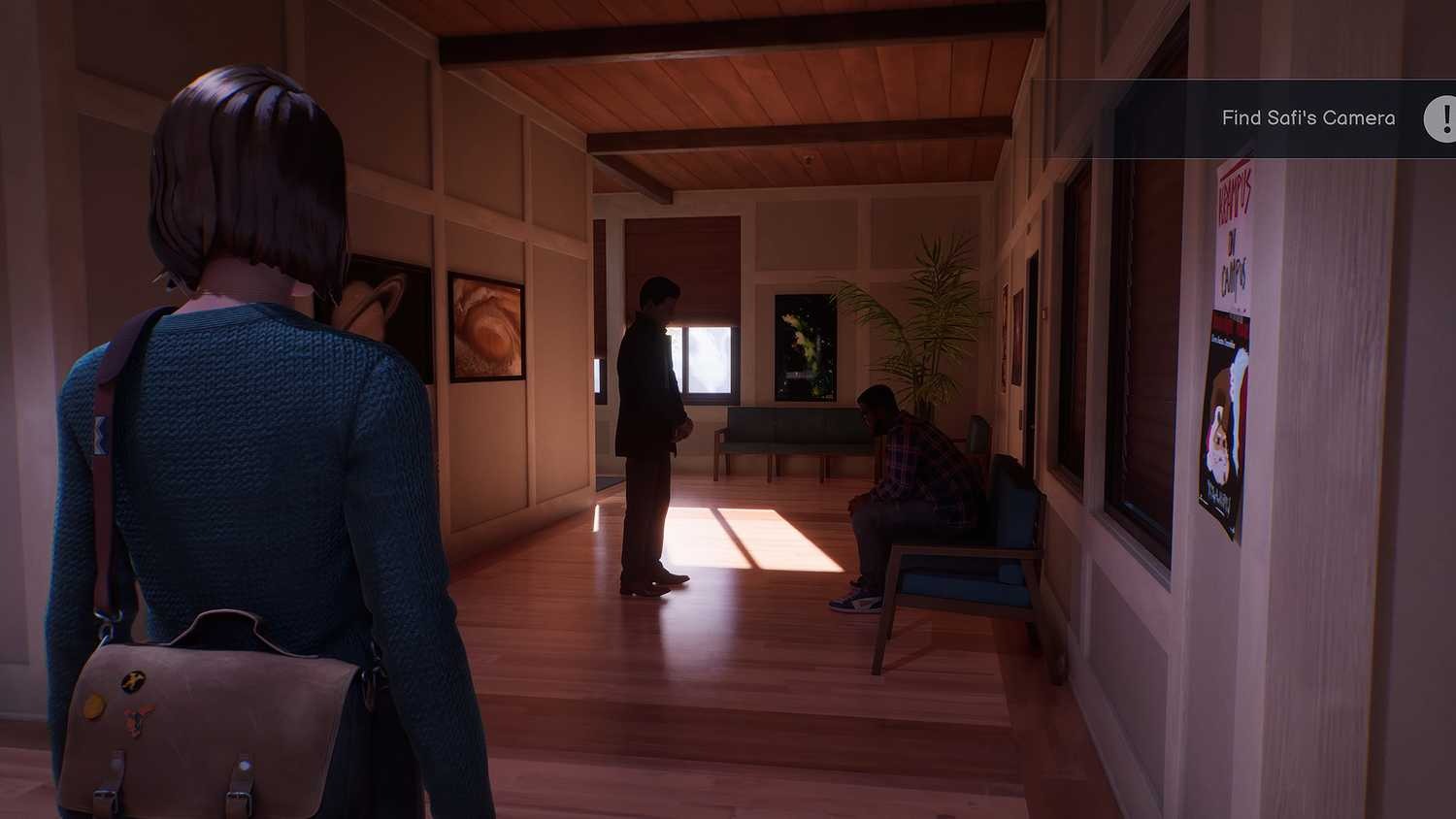
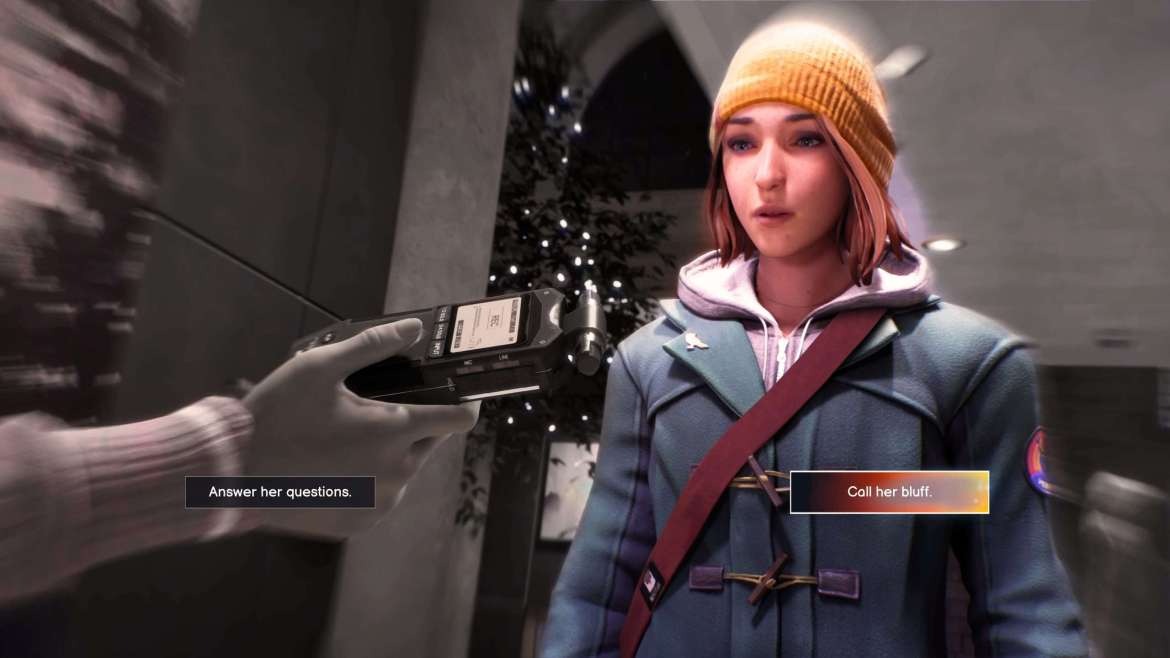
Here’s the thing: Double Exposure literally tries to repeat the original game and story. It feels very forced and eye-rolling towards the end and isn’t believable one bit. Cloe has been replaced with Safi. She’s a hotheaded character similar to Cloe, but she also has a soft side. She’s goofy and has a good sense of humor, but you can clearly see this is a Cloe replacement or clone. Then you have Lucas, who is a Mark clone, etc. There’s a pattern here. He’s another creepy teacher who has a secret that rocks the whole story. It’s predictable, which is a shame. Instead of putting Max in a new situation with her old powers, she somehow has new powers. The power of Double Exposure. She can now hop timelines. It’s pretty silly and less grounded than the original game. While having powers is silly anyways, the first game being so grounded made it believable rather than a hokey superhero wannabe story. Treading the same ground just feels wrong.
Thankfully, the characters are interesting, but not as memorable as the original cast. They all have character, flaws, good and bad traits, and are not super stereotyped. Gameplay-wise, nothing has really changed. I would go as far as to say there is less gameplay here than in the original game, and that game was already lacking any. The locales are also not very interesting and are constantly repeated. There are too many mundane indoor environments, such as the Turtle bar, the school, Max’s apartment, etc. There aren’t any outdoor locations with sweeping vistas or more interesting indoor areas. You will spend up to 10 hours in these same locations over and over again. Max is now an urbexer (Urban explorer) so why don’t we get to see some cool abandoned buildings like during the intro sequence? The game just jumps straight into Max trying to save the planet, so we don’t get time to be with her and her friends living normal lives for a bit. That’s what made the first game so great.
Gameplay involves switching back and forth between timelines to solve puzzles, but this is just an excuse to extend gameplay. There are set nodes that sparkle, and you can jump between the Dead and Living worlds (one of the characters in the game dies, and you are trying to save her and stop it). You can pulse your power to see objects placed in the other timeline in real time before switching to it, but it doesn’t add anything interesting. There’s of course the usual collectible hunt, but that’s about it. Choices in the game are fewer and don’t have the mega impact that they did in the original. Story-changing sequences don’t come by often. Maybe once a chapter or none in some of them.
At least the visuals are improved. The facial expressions are great, and there’s a lot of detail in everything while still looking like a Life is Strange game. The upgraded visual quality helps go a long way, but sadly this was wasted on so few areas to explore. The ending is also rushed and feels inconclusive and too predictable. When the credits rolled, I just felt like the entire game was just not necessary. It didn’t add any value to the original game. Fans should definitely play, but you do need to play the original to appreciate what is here. Max recaps the original game throughout the story, but not in detail, so a lot is missing. There are a lot of references to the original that new players won’t understand. Some scenes in the ending aren’t explained at all, but are direct references to the original game such as when Mark strapped Max into the chair. For a cheap purchase you will have a fun couple of evening with the game, but don’t expect anything groundbreaking.








































 thebinarymessiah.com
Try multiplayer. A lot of fun !