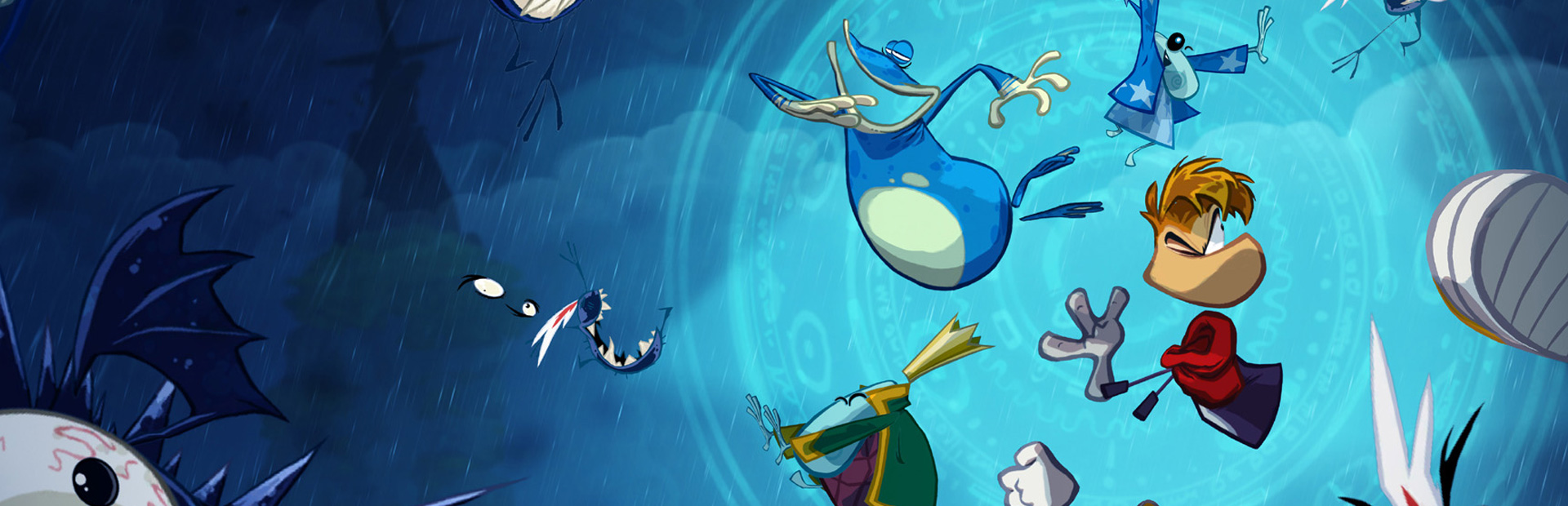
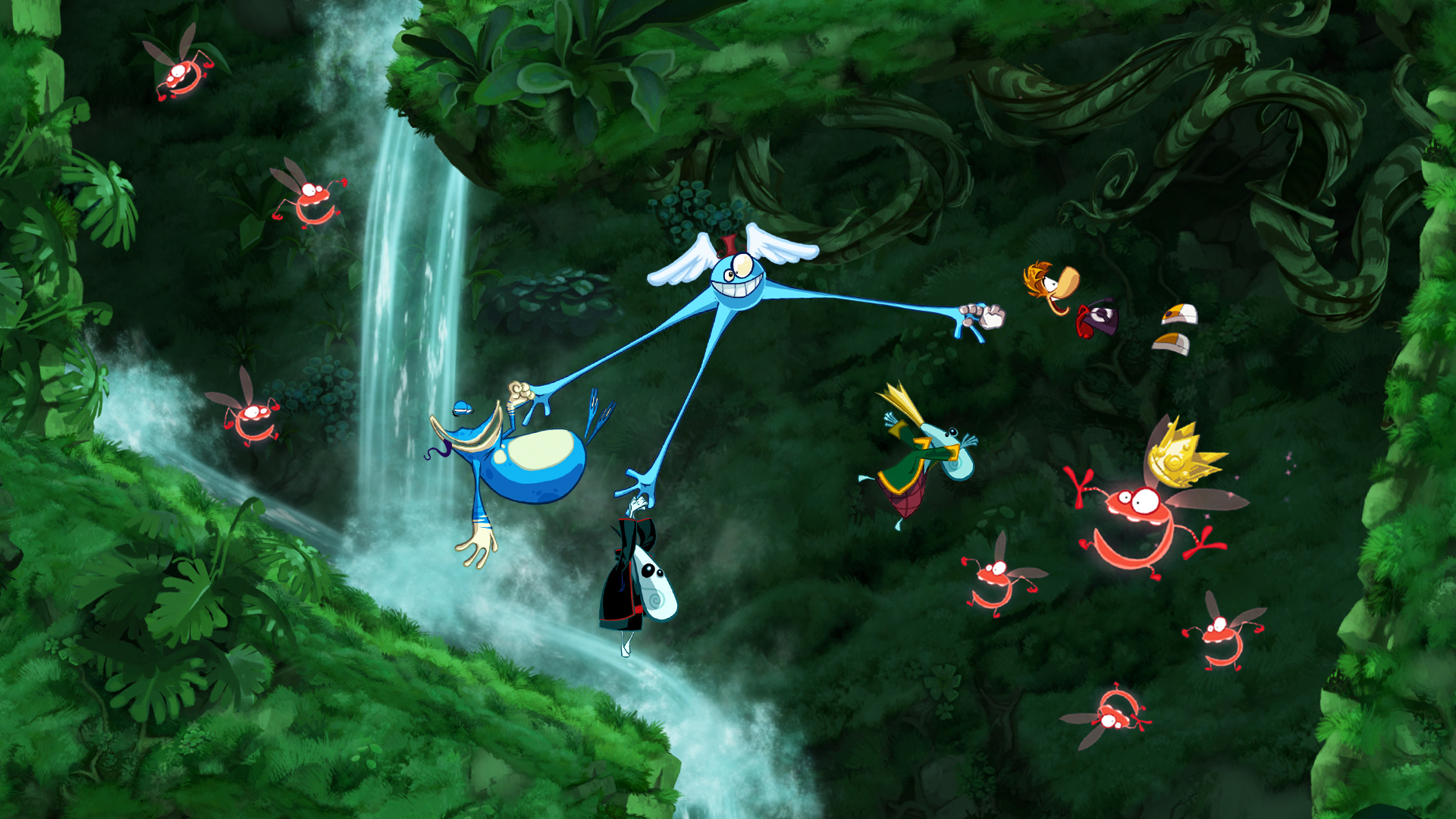
Rayman has been a struggling series since the PS1 games came out. There have been spin-offs, ports, and terrible sequels since then, but Origins redeems the series. There isn’t really a story here except that you’re saving lums and princesses of different lands to earn powers. There aren’t any cut scenes or voiceovers because this goes back to its old-school roots, and yes, the game is hard.
The controls are silky smooth, and so are the animations. It helps that the controls are responsive, as well as that you can jump around the levels that require focus and skill to navigate. Obstacles lay in your paths, such as treacherous waters, enemies, and fire. Each new area has unique enemies, hazards, and an overall layout that is very nice to look at. Enemies can be jumped on or punched, and after that, they inflate. You can use the Vita screen to touch them so they pop to get the light inside, which actually makes this version more forgiving than the consoles. When you jump around to find lums, you will see them in hidden objects, and some will be trapped in bubbles. You can touch them to pop them up to add to your collection, which is much easier. While you’re bounding about the cleverly laid-out levels, you can find hidden areas with cages full of lums that you can find by hearing their cries for help.
The game is just so cleverly designed, with levels that are tricky but not so tough that you can’t forgive the game. You may restart a few times, but it actually requires skill instead of luck or exploiting the game’s faulty controls (if they were). Sliding around on the ice, dashing towards an enemy and punching them, grabbing onto a ledge, and then jumping up on top of an enemy can be tricky, but it can be done with a little practice and a quick reaction. The levels slowly get harder, but the whole point is to collect the lums and get medals at the end of each level. Save enough, and you can unlock special treasure missions where you have to chase one down through a series of tricky obstacles.
Origins is just so clever and charming that you can’t really hate it. There are plenty of characters to unlock, as well as extras. This game is perfect for people who love exploring levels and finding secrets. There are plenty of levels and things to find to keep you busy for many hours. I do wish there were some more features for the Vita besides just using the touchscreen. However, what is here works, and nothing got downgraded from the consoles. I can only really recommend this game to hardcore platformer fans because of the difficulty.
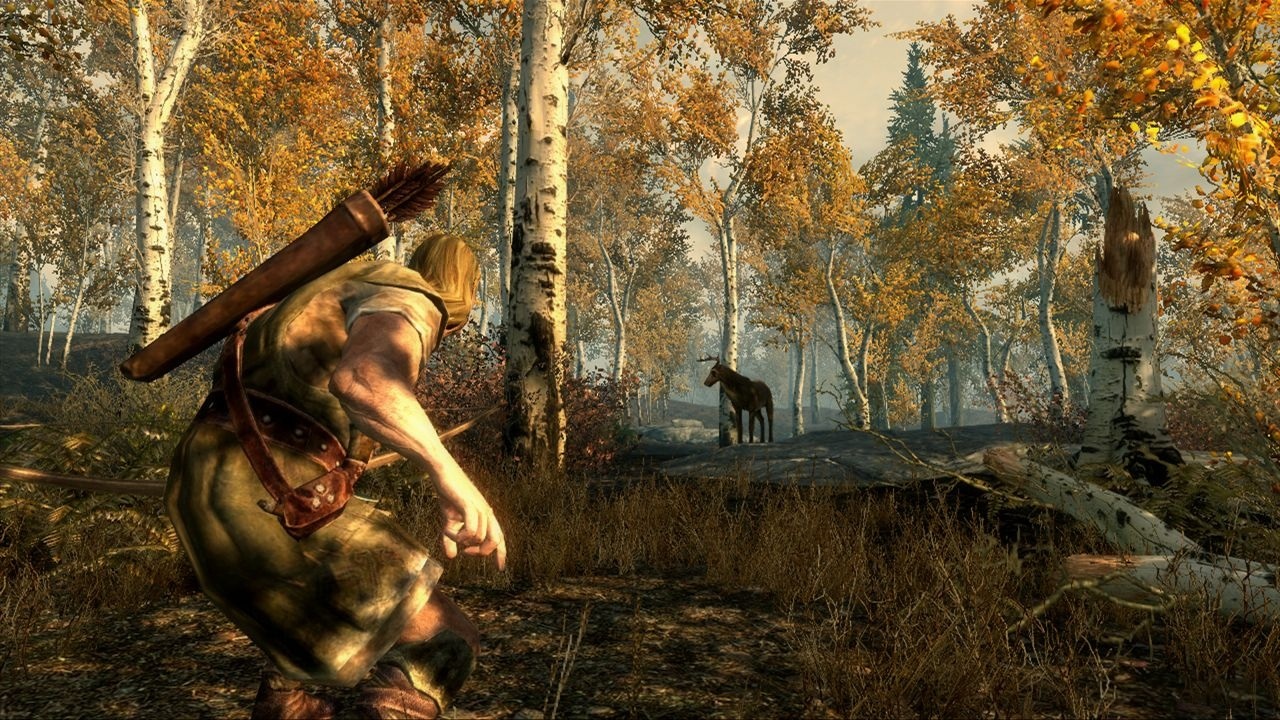
Here it finally is! I had so many great memories with Oblivion back in 2007. I could go on and on about that game, but the fifth game in the series is before us and has taken the world by storm. From creating internet memes to lots of weird videos on YouTube, Skyrim is a behemoth that even non-gamers couldn’t ignore. Skyrim takes place in Well, Skyrim, which is north of Cyrodiil. Cyrodiil was where Oblivion was set, but Skyrim is also set 200 years after those events. Of course, they are talked about in Skyrim, but time isn’t the only change in the game.
You are the Dragonborn, or Dovahkiin, who has the power of the Thu’um, which means you can shout like a dragon. This is actually a major gameplay element in the game, as well as fighting dragons. The map may seem smaller than Cyrodiil, but there is a lot more content in the game. I spent 108 hours on Skyrim, and that was 90% completion of side quests, areas discovered, and finishing the main story. I finished at level 45 and had almost 100,000 gold. In Oblivion, I was able to finish the game at about 95% in 50 hours. That lets you know how much more content there is, so you will be busy for months.
Let’s talk about combat first. The game still has third-person melee combat like the past two games, but it has been revised. The combat feels smoother, and it’s not so much like you’re playing whack-a-mole. There are more elements involved behind the engine, but the thing you will see the most is the perk system that is borrowed from the Fallout series. When you level up, you look to the sky and have a bevy of different areas to gain perks in: magick areas, combat, defense, and even blacksmithing (more on that later). Concentrate on one area and try to get as many perks as you can. This gets rid of the system from Oblivion where you can only level up to something if you use it, like jumping around like a bunny to increase endurance, etc. If you use light armor, you will gain levels (up to 100 in every category) in that area. Use two-handed weapons or destruction spells, and you will gain levels quickly. The perks allow you to gain and build on that area instead of solely relying on users to gain levels.
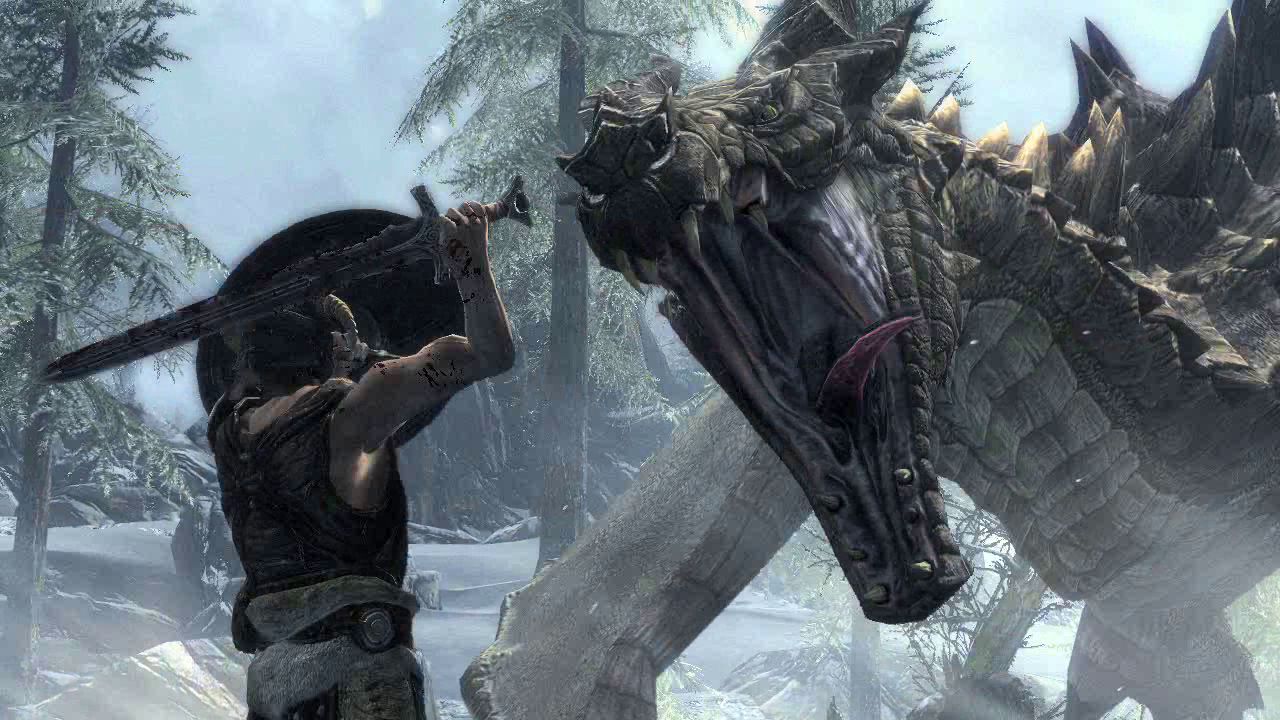
Of course, there are new enemies in the game, like Draugrs and dragons. Dragons should be avoided early on until at least level 10 because you will die in one hit. Once you kill these beasts, you gain their soul and can use it to unlock dragon shouts. Shouts consist of powers like unrelenting force, slow time, and fire breath. Each shout has three levels, but you need to find those words by exploring dungeons throughout the world. Dragons are just awesome creatures to fight because they are the biggest enemy ever put into a TES game. Of course, you need to watch out for wildlife like bears, crabs, leopards, etc. The world of Skyrim is dangerous and cold, so beware. Sneaking is still a huge problem because it seems no matter how good your sneaking skill is, you still get caught, especially when pickpocketing.
Factions are a huge part of TES, and Skyrim doesn’t leave you out. The thieves, dark brotherhood, mages, and fighter guild are all here, but bigger and better. The stories are more fleshed out and are a lot longer, plus your rewards are better. The Dark Brotherhood and Thieves Guild stories were my favorites, and they show you just how deep into the lore and story you can get. Everything else from past TES games you remember is here, like choices during dialog, but thankfully the whole persuasion mini-game is gone from Oblivion. There are a lot more main characters, and the voice acting is more varied, but everyone has Nordic accents because Skyrim has a Viking/Nordic setting, which is a huge departure from Oblivion’s strictly medieval tone.
Looting is a huge part of TES, and Skyrim doesn’t disappoint here. There is so much to loot that even after 100 hours, you will still scour every nook and cranny for stuff to sell at shops. Lockpicking has been improved and is much quicker this time around. Menus have also been improved with a nice four-way system leading to items, magic, maps, and skills. This gets rid of Oblivion’s awful Excel sheet-type menus. Of course, my complaint here is that you can’t compare items anymore, which is a major pain. You have to remember statistics, which is a bigger pain when shopping.
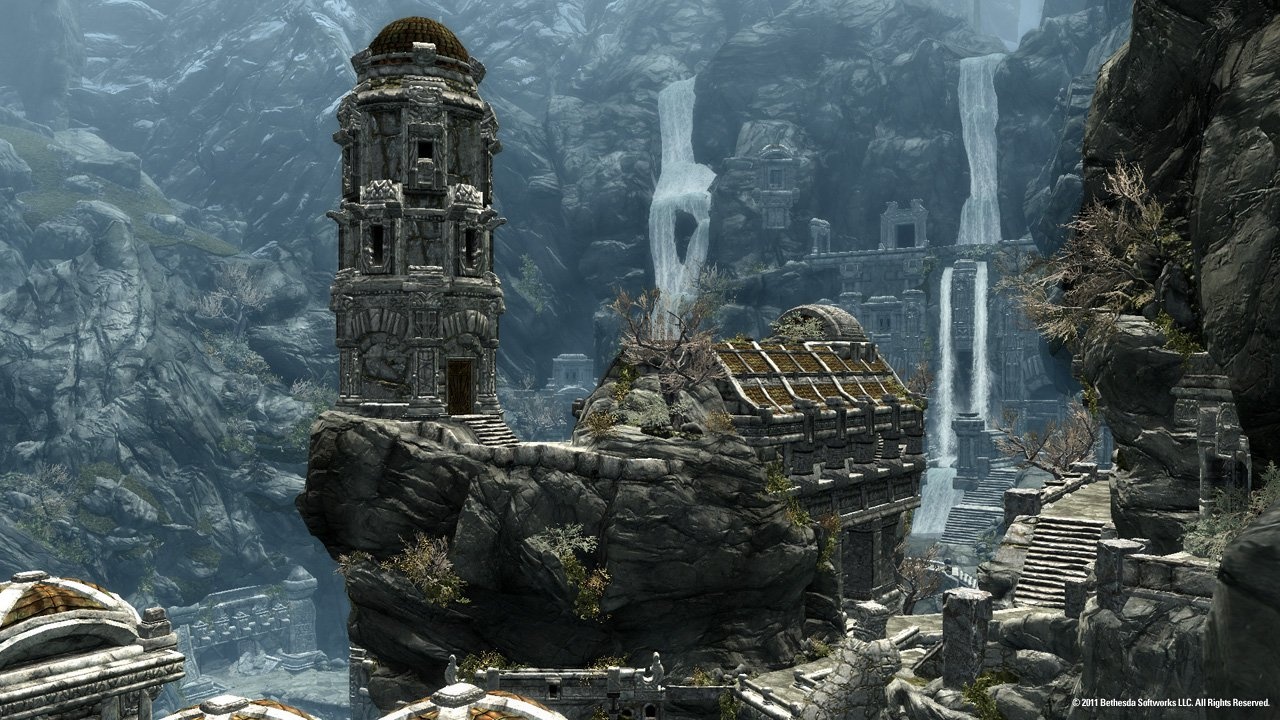
Skyrim has a forging system where you can get ingots for various medals as well as leather. Use these to forge weapons and armor in different categories, like Daedric, Leather, Studded, Iron, Glass, Ebony, etc. You can upgrade these on benches for armor and grindstones for weapons. This makes the whole armor and weapon system feel more custom-made to your liking than just what is out there. The armor and weapons are over double what is in Oblivion. Those are all the major changes in Skyrim, but there is so much detail here that you have to play the game to truly see what I am talking about. You can even read every single book in the game. There is so much detail here. Fans of the series will love the deepened and richer lore of the races and parts of the TES series. There are tons of them here. You even get to explore ancient Dwemer (Dwarven) ruins.
Horseback riding is back, and even the third-person view has been greatly improved, as have the animations. There are so many major changes, as well as minor changes, that I can’t even remember them all. However, there is a huge issue with this game, and that is bugs. There were so many bugs upon release that stopped quests from continuing: quest items being lost, stuck in areas, graphics bugs, dragons flying backward, and everything else you can imagine. Even after a few patches, there are still some bugs, and probably a few that will never be fixed. This is unacceptable, even for a large game like this. Thankfully, there is a huge mod community that fixed a lot of this first, but the stock game has problems that console gamers can’t fix.
The models are still ugly, and the woman still looks like a man. PC gamers get high-resolution textures, which make the game look amazing, but the consoles are stuck with low-res graphics that look kind of dated. The lighting in Skyrim is great, but with so many issues cosmetically, you really should get the PC version. Mods out there transform women into beautiful heroines straight out of comic books, with amazing new armor, new lighting, graphical effects, etc. The stock game is really lacking technically, and that disappointed me quite a bit. If you can look past all this, Skyrim is one of my favorite RPGs of all time and sits right up there with Oblivion.
Collector’s Edition: Hardcore fans may want to drop the extra $90 for the monster collector’s edition. You get a giant statue of Alduin that is an in-game model, a giant coffee table-style art book, a making-of DVD, and a steel bookcase. The statue is worth the extra money itself, and it looks amazing. Of course, this is for hardcore fans only, but good luck finding one.
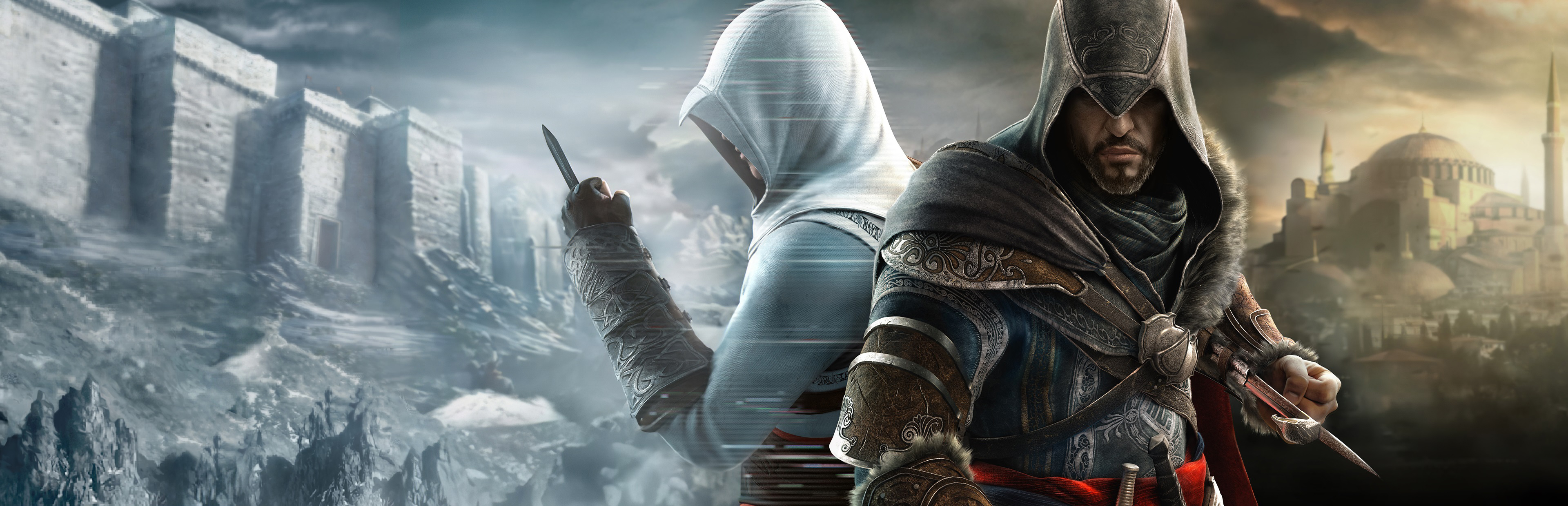
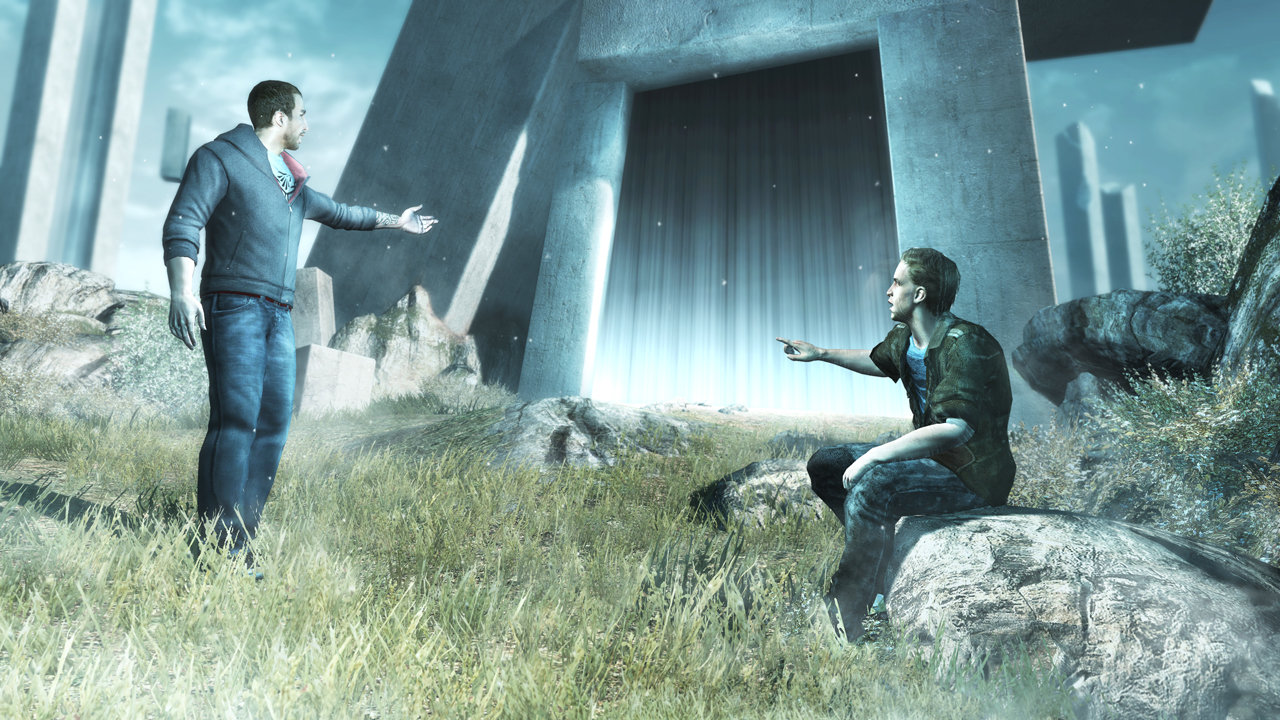
Ezio Auditore da Firenze. When most gamers hear this name, they think of one of the best video game characters ever made. Ezio went down in game history the way he did for a reason. Assassin’s Creed revolutionized the action/adventure genre with assassination skills, a whole new take on stealth gameplay, and awesome parkour gameplay. Revelations are the conclusion to Altair and Ezio’s story, but just another chapter for Desmond Miles. Desmond is stuck in the blackness of the Animus and is in a kind of coma. His brain can’t tell his personality apart from Ezio and Altair’s, so Subject 16 (yes, you finally meet him) helps you a little bit here. There isn’t much of Desmond here because this is the two assassins’s story; in fact, there are only three cut-aways for Desmond through the whole game.
Ezio’s story starts with him trying to find the five keys that Altair hid, but the Templars are also after them. Altair has some secretly hidden library under Masyaf, so it’s a race. This is the shortest AC game to date, but that doesn’t mean it’s worse. There is a new layer added to Ezio’s personality because he’s 50 through 62 in this game. Playing as an old man is pretty awesome, though. Ezio is now wiser, smarter, and a master assassin. You even play as Altair through his old age up to 92, and he still kicks ass! This should be more like Geriatrics’s Creed. Let’s go ahead and start with side missions. The same ones from Brotherhood are kept, but others from past games are cut. Templar Dens replace Borgia Towers; you can recruit assassins, buy stores, buy monuments, find viewpoints, and that’s about it. Side missions took a back seat here to some epic main story missions. Overall, the game can be beaten in less than 15 hours, even if you try to do the side missions that are here.
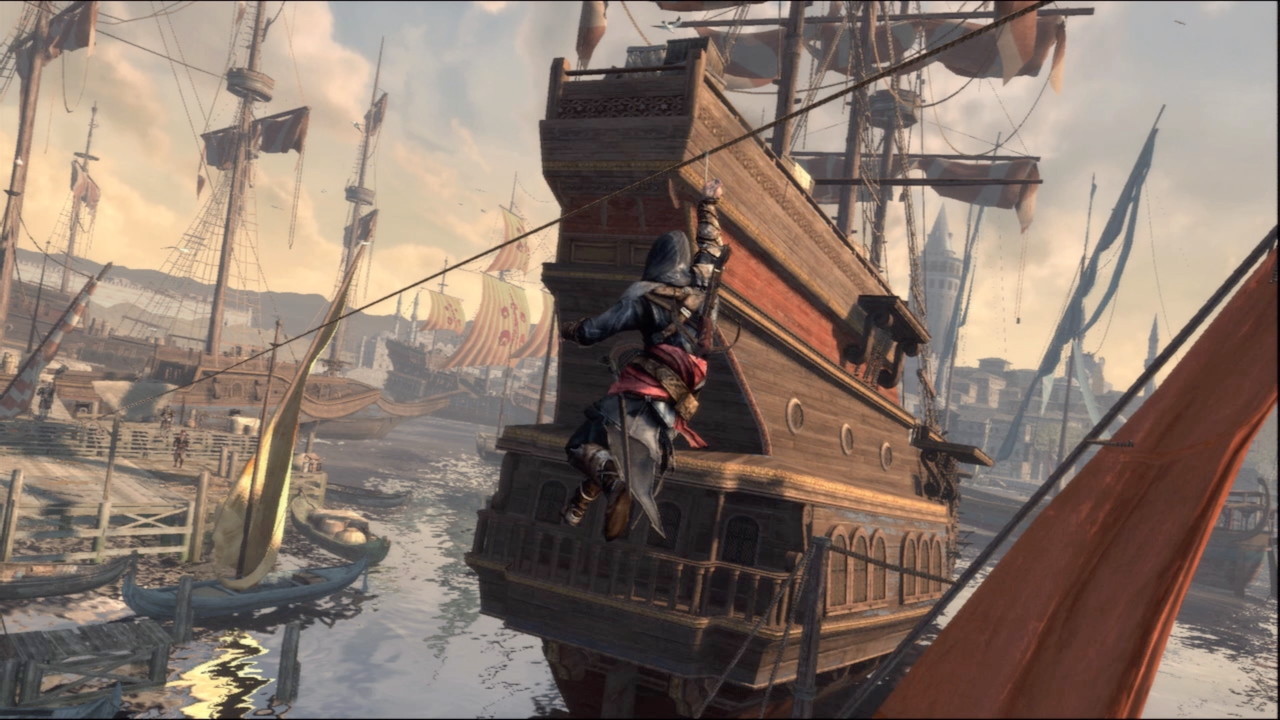
Collectibles this time around involve only Animus Fragments, which are used to unlock crappy Desmond side stories, which will be explained later. Two new combat abilities are brought to the table here: bomb-making and the hook blade. This adds a layer of depth to combat and climbing. Remember when you would jump off a building from too high and just couldn’t reach the one in front of you? Now you can, with a quick press of the action button, catch yourself. It can be used in combat as well as running away from guards. Remember when guards would block your path and you had no choice but to get knocked over? Now you can hook them and roll right over their backs. This also adds another item to climbing, which is zip lines. Zip along and assassinate enemies at high speed, which is a blast.
Bombs have three different levels: diversions, weapons, and defense. Boxes are scattered everywhere that contain parts of bombs that contain the container, gunpowder type, and item inside. You can use a lamb’s blood bomb to make enemies think they’re wounded and become stunned. A splinter bomb stuns enemies or uses a cherry bomb to drive guards away from areas. These really come in handy when you don’t want to get into a huge fight. The problem here is that it’s wasted on the short length of the story. I didn’t even get to use all the bomb types because there weren’t enough missions in the game that called for them.
There is also a strange strategy-type section at the beginning that is never used anywhere in the game, and I thought it was fun. You can use points to call down different types of assassins on roofs or use defenses on the ground. You can use your gun when the wave of guards comes. This was kind of like a tower defense thing and was really strange just to have it on one mission.
All the other items are here, like parachutes, poison darts, and all that stuff from past games. However, combat is finally perfect with combo chains after you kill an enemy. Keep the chain up, and you can kill each one near you with just one hit. The combat really flows this time, and the new kill moves are just gruesome. You can do everything else in past games, so nothing here has really changed. You do use your Eagle Sense more because you need to use it to find these clues to the keys. This leads to awesome and varied main missions that involve epic chases, picking your way around guards, and even giant climbing puzzles. I found these to be the most entertaining, but the gameplay really ends there. It is short and sweet, as well as entertaining.
The area is completely new because it is set in Constantinople and Istanbul. There is one sequence dedicated to a whole underground Templar city, but I felt all this was wasted on such a short little sequence. The area in Revelations is tiny compared to past games, but this is understandable for how short the game is. The new art style and the setting are a great welcome because Rome and Italy were getting tiring to see. The graphics are still superb, even with the slight updates to the engine. The voice acting is superb, and so is the storytelling.
Desmond’s Journey is a strange telling of Desmond’s past through a first-person platforming puzzle thing. I have no idea what this is, but it should go away. There are five short little areas that involve platforming and pushing buttons. Then you get to place floating blocks in front of you to make paths. Yeah, what the hell? It’s nice to know Desmond’s story, but collecting 100 fragments for this isn’t even worth it.
Multiplayer has been amped up and is just as fun. There are more modes, but instead of being really original, they are hidden under the AC theme. These are the models you see in first-person shooters that are disguised here. Capturing the flag is just taking a key from the enemy base and returning it to yours. There is a deathmatch mode and a few others, but more modes are good and they are fun. There are more maps, characters, and abilities that will keep you coming back for hours.
Overall, Revelations is just as amazing as past games in the series, but just on a smaller and shorter scale. It perfects the series to a T, and I don’t think anything else can be done with these two heroes. If you made it this far in the series, go ahead and finish it. Long-asked questions are answered, but there are also some new ones now. The game has a touching ending, and we even finally get to see what happened after the first AC. Revelations is an excellent game, with just enough new stuff to keep fans happy.
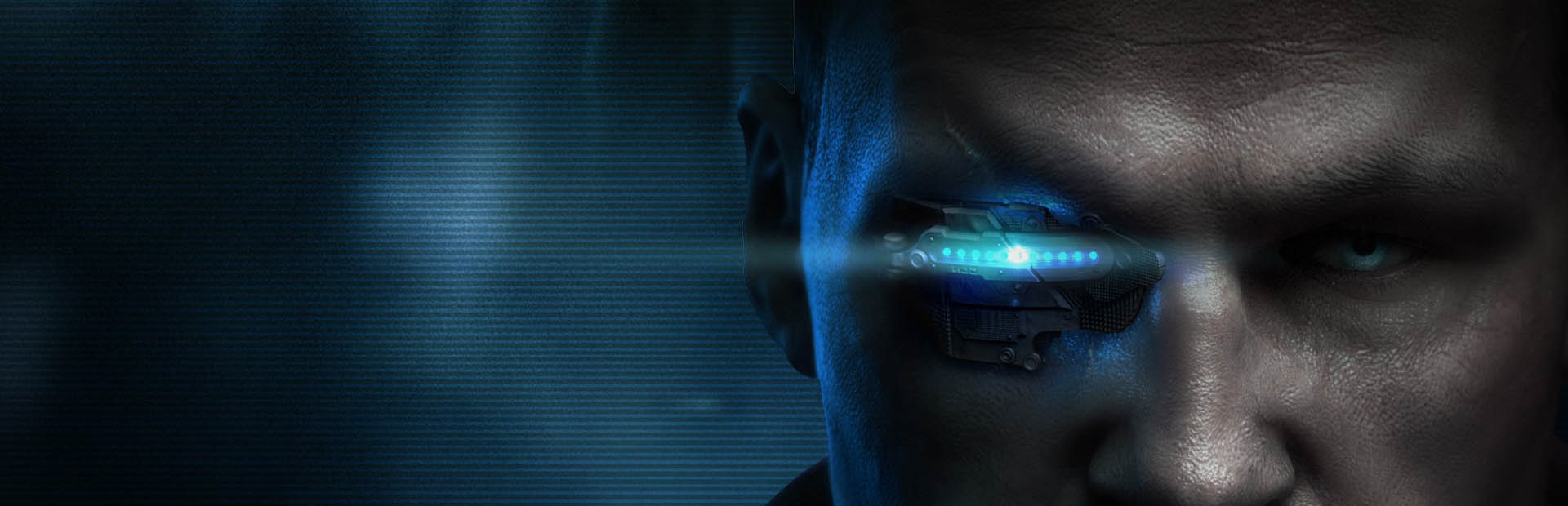
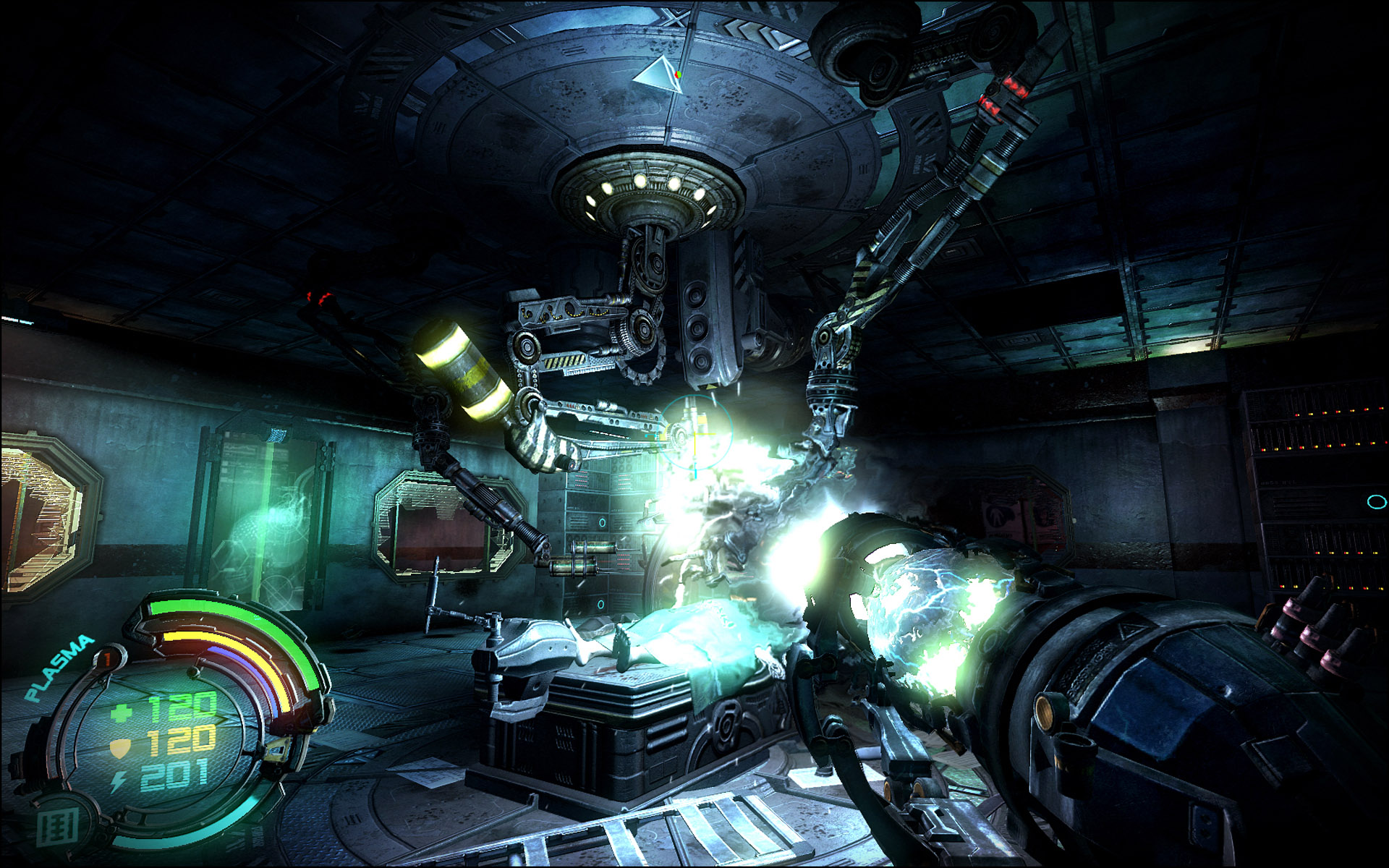
Hard Reset is a cyberpunk game set in the future about a war between AI machines and humans. You are an agent of the CLN trying to stop this, but the story is kind of just vaguely tossed together and doesn’t really make any sense. You also don’t get much sense of what’s going on in the world. The characters are uninteresting, and the messy comic-style cut scenes are uninspired and sloppy. Besides this, the game has some solid shooting, but even that has issues of its own.
There are only two guns, and each one has its own different “add-ons.” The energy weapons let you shoot plasma, mortars, a smart gun that shoots through walls, and EMP grenades. The CLN gun has a machine gun, RPG, shotgun, and grenade launcher. This is great and all, but this system is flawed. Switching between two weapons and then to the right attachment is stupid. Not only are the gun switching animations slow, but having to do this costs precious seconds in which you’re dying. This also rolls into the biggest problem with the game: It’s too damn hard. Sure, I like a challenge, but just a few hits and you’re dead. But there are tons of enemies thrown at you, and they don’t go down easy. Expect to restart dozens of times, almost during every fight, unless you’re on easy.
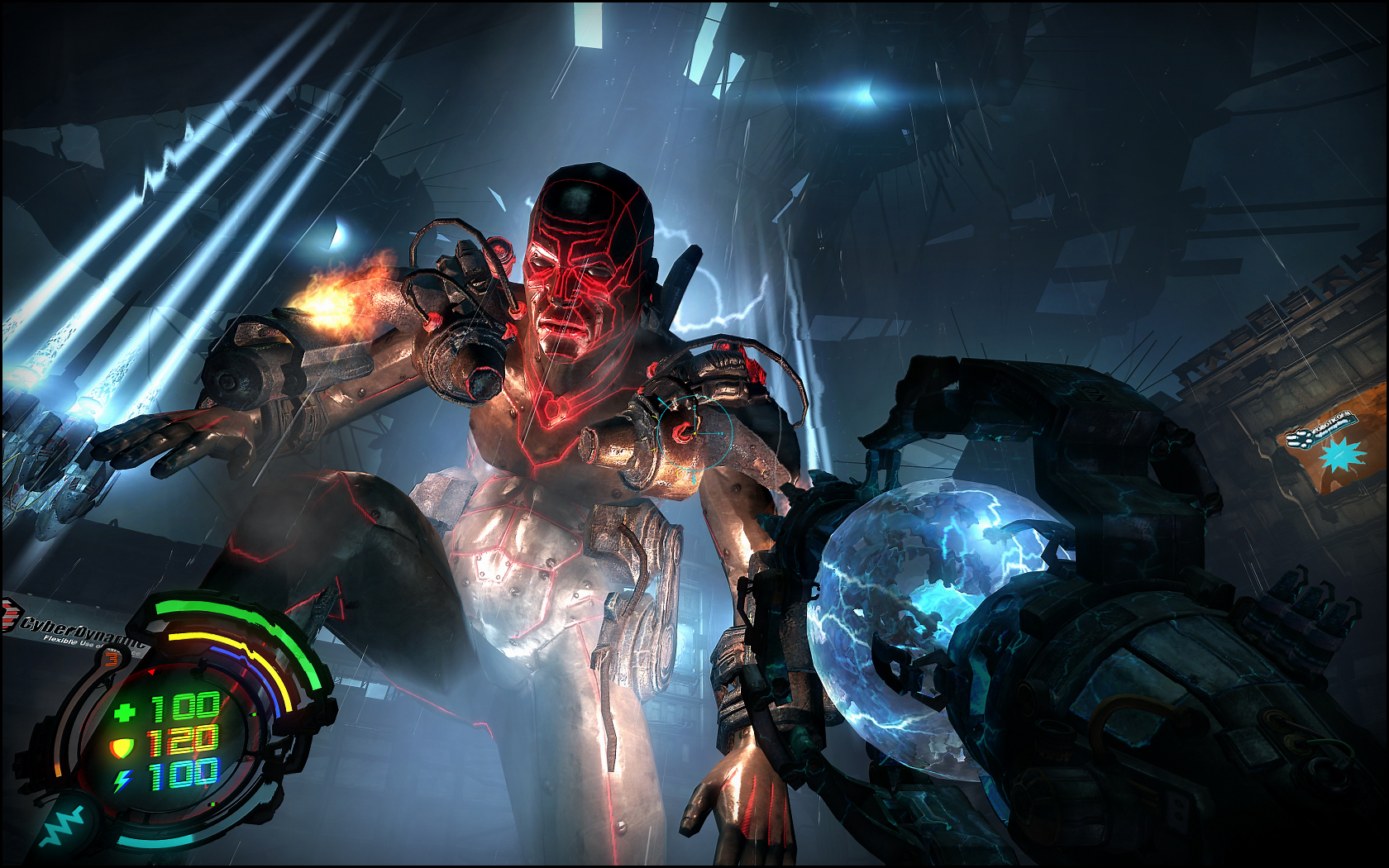
Why would a game have a weapon system that works against itself? Who knows. You can buy these attachments and upgrade them by finding XP lying around everywhere, but the progression is slow, and by the end of the game, you will barely have bought 10 upgrades. My other complaint is that there are only about six different types of robots you can shoot, and they get old very fast. The first couple of levels are pretty awesome, then that wears out when you get to your first fight, where you die about 10 times.
There are a couple of boss fights, but they are almost impossible to beat on any difficulty but easy. I haven’t played such a hard FPS as I can remember. It actually makes the game not very fun at all, and even the most skilled players will struggle. I can’t even believe they put an insane mode in here. One hit and you’re dead, which makes it impossible to go past the first fight in the game. Go figure. The objectives are all the same with you pressing this button. Shut down this thing to go past that thing. There are secret areas you can find to improve your end-of-level score, but who really cares? You’ll be lucky if you can get through the damn game.
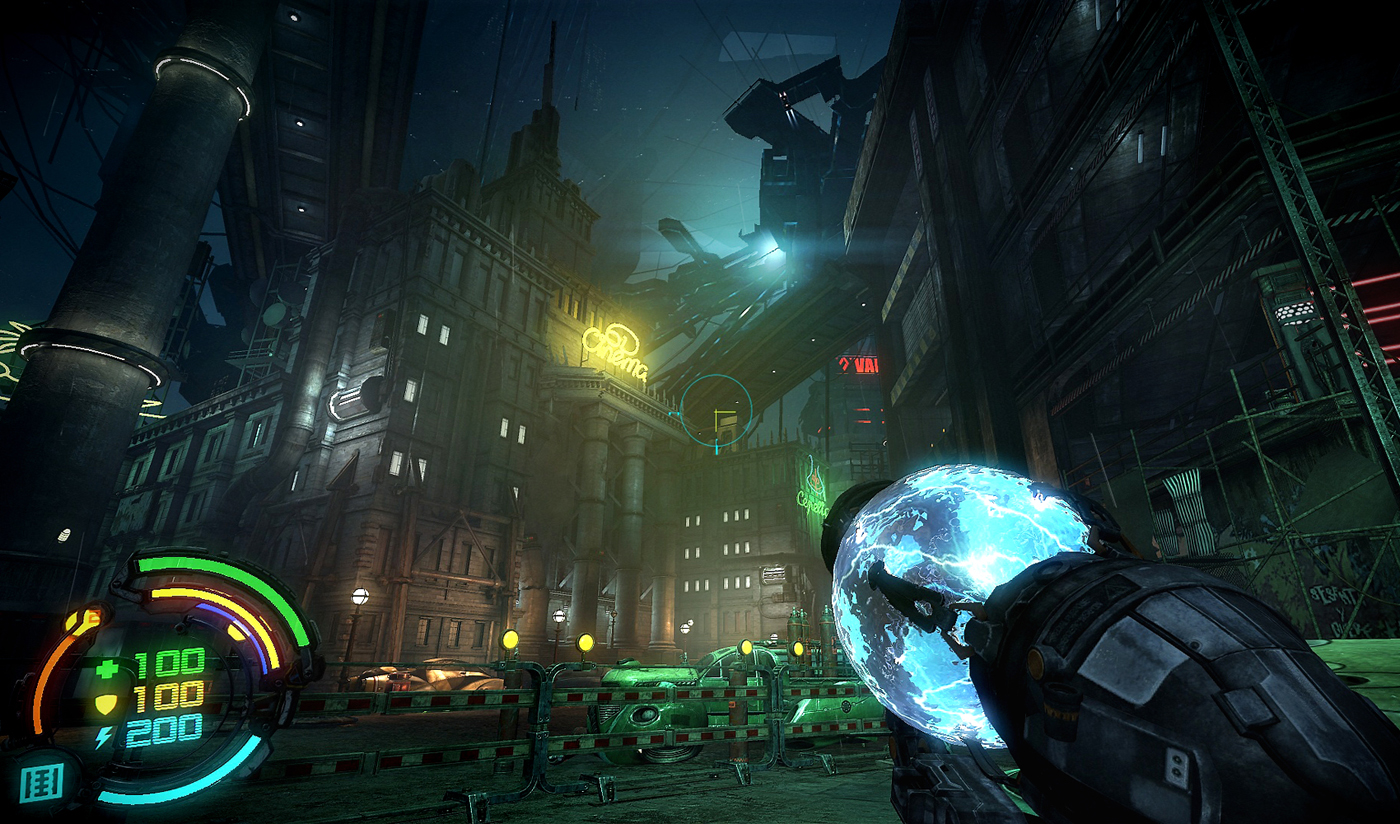
The game looks pretty damn good with a nice Blade Runner-type art style, but it’s wasted on linear levels. The overall feeling of the world has lots of potential, with kiosks hocking items in robotic or half-failing voices, holograms with propaganda, and ads everywhere. I like the style, but it sure went to waste. Overall, Hard Reset is a decent shooter for a weekend, but the extreme difficulty practically kills it. There’s also no multiplayer, which is a surprise, so after you finish the game once, you probably won’t go back.
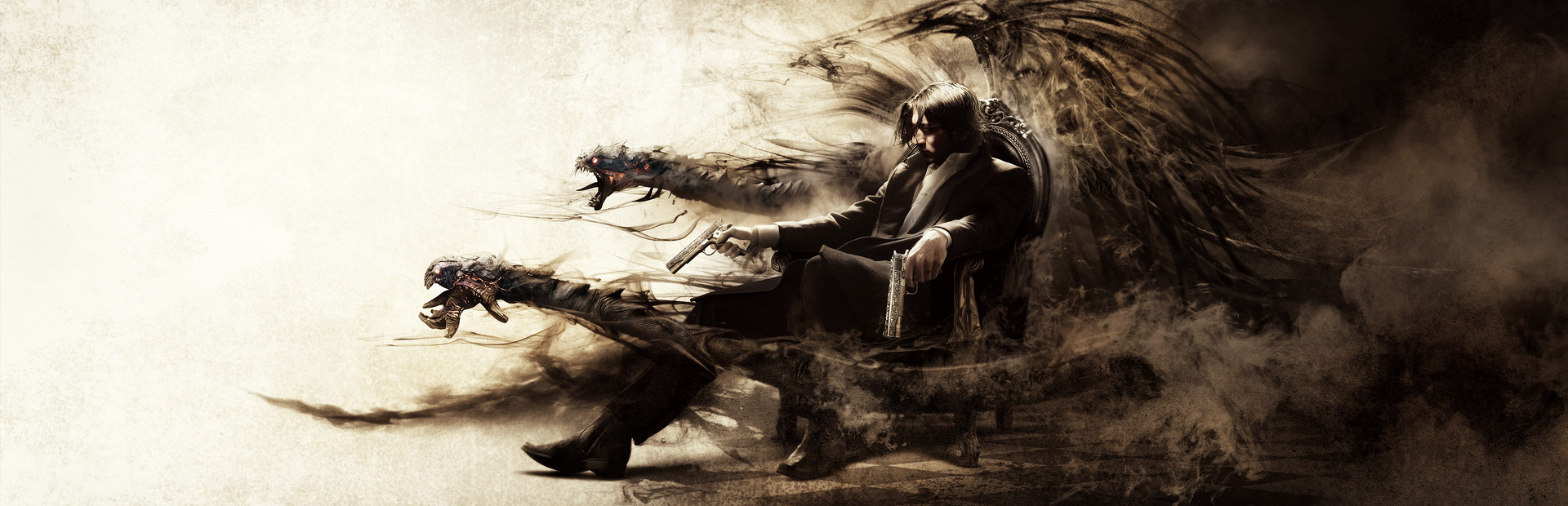
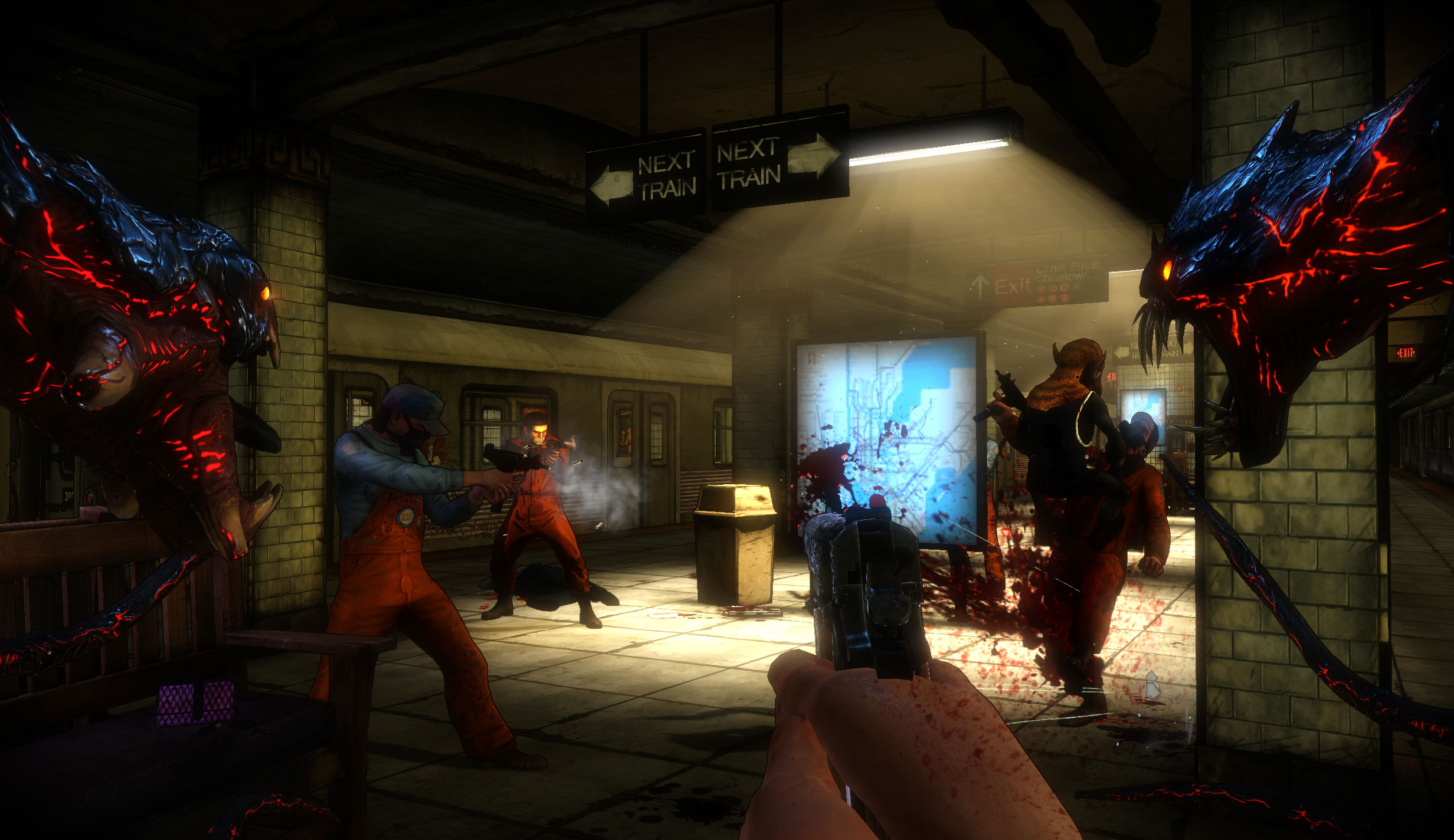
I have to come right out and say that The Darkness II is disappointing and takes away more good from the first than adds to it. The first game is one of my favorite games of all time because of the amazing atmosphere and linear open world that was delivered with trickling story elements that kept you wanting more. This allowed constant banter between Jackie and The Darkness, but it was that dark, eerie atmosphere that kept me wanting more. The side quests were nice, and there were some varied environments. The Darkness II takes all that away and makes this a more linear, in-your-face type of game. Sure, the storytelling is superb, and so is the voice acting, but that linear, open world allowed you to explore things on your own.
The Darkness II is about The Darkness finally waking itself back up inside Jackie, and he is on the hunt to find Jenny even though she’s dead. A cult group called The Brotherhood wants The Darkness and takes constant hits on Jackie’s mafia family. The story is great and even more deep than the first game, but once again, that awesome atmosphere is exchanged for some ho-hum backdrops you fight in, ranging from a warehouse to a graveyard to a carnival. What has changed here, mainly, is how you use The Darkness powers because it is the best part of the game.
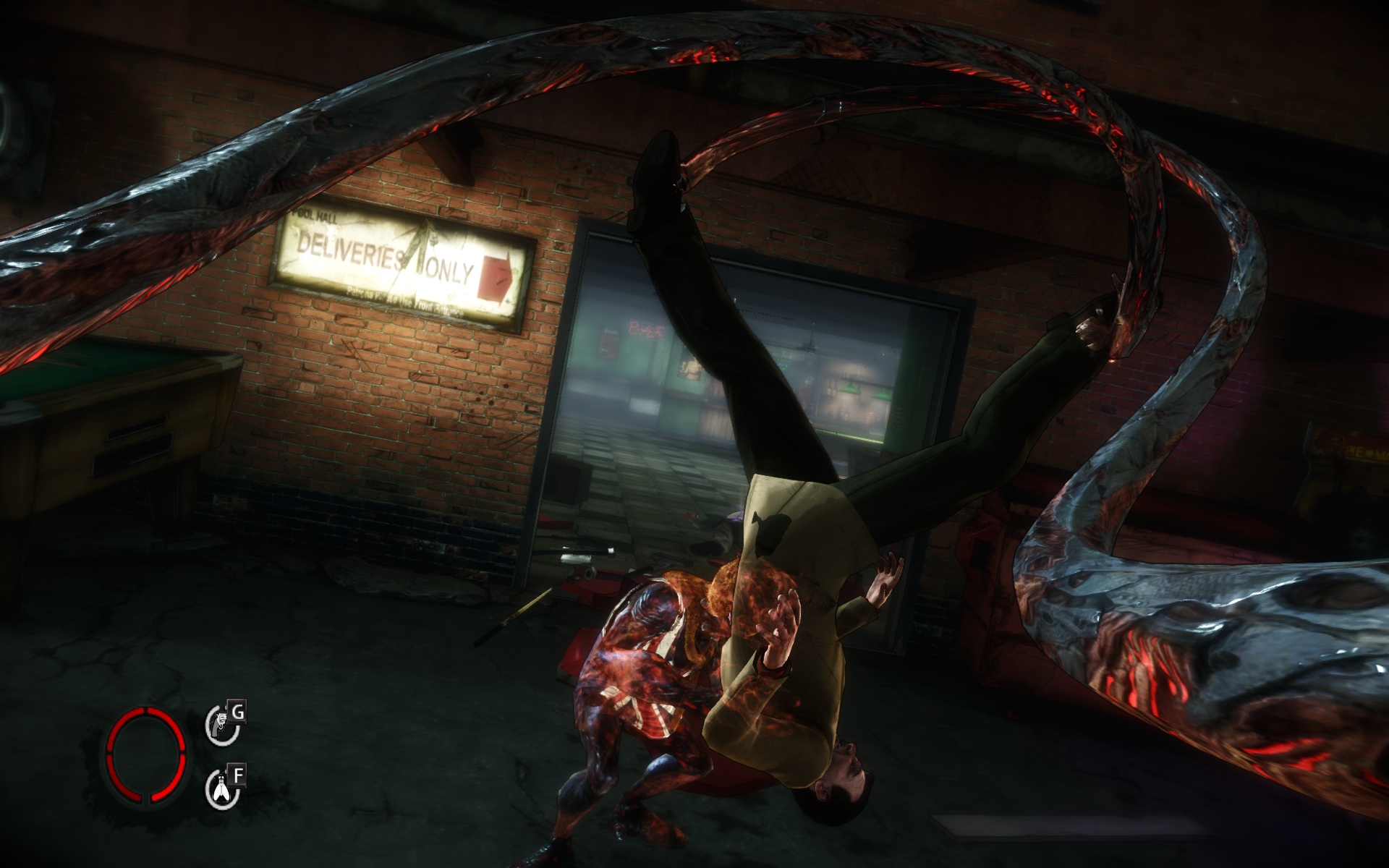
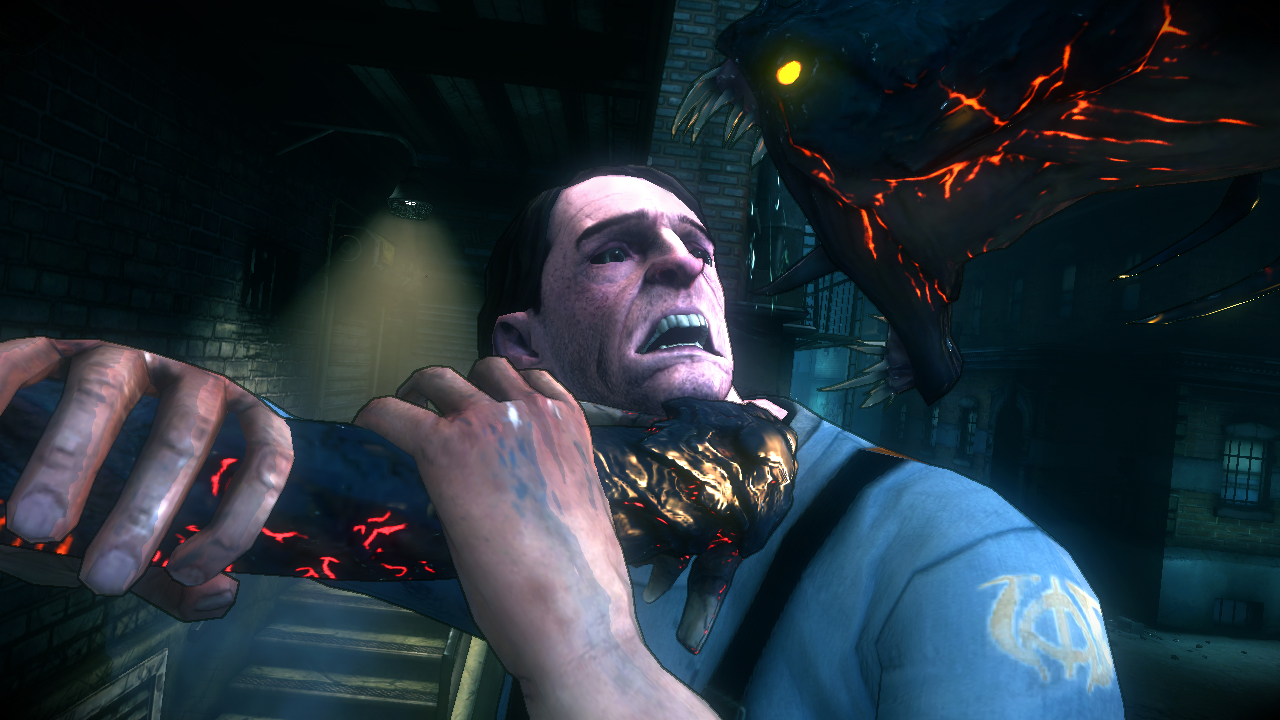
You can upgrade your powers even more now by earning points by killing foes and finding relics. You can also use the environment around you to kill enemies, like using fan blades, poles, chairs, barrels, you name it. The awesome gory death animations make for a visual treat, but you can also tear enemies apart with new Darkness animations and abilities. Eating hearts isn’t the peak of your powers here anymore because you can now upgrade with Darkness armor, shields, ammo producing death kills, and even using your Darkling to sicken enemies.
Yes, that Darkling strategy thing that felt like Overlord is gone now. The one Darkling that follows you throughout helps you on his own, but his charming self is still there. He will still fart, pee, and curse his foes down, so don’t be disappointed there. I actually preferred this because it jives with the faster-paced action. Gunplay is still a huge part of the game, and so is dual-wielding. You can channel darkness through the guns for one-shot kills, but the guns handle very nicely and are a lot of fun to use. Some other powers range from faster reloading, bigger clips when in darkness, using Swarm to stun enemies, and various other upgrades.
The whole point is to stay in the dark, and this time you are given more than just light bulbs. The Brotherhood uses light weapons against you and will have traps and random light obstacles set up, so you must take them down quickly. Staying in the dark allows you to swipe your demon arms, but you are also thrown more than just humans now. Enemies will be infused with dark armor that you must punch through before killing them, and some of these guys are tough. Some can teleport around, so there is a new level of challenge here, but the big problem is that sheer numbers are thrown at you, which can be overwhelming later on.
All this doesn’t sound too bad, right? Ripping a car door off and watching it fly through the air and cut someone in half. Watching your demon arms rip a body in half or pull ahead after stunning them doesn’t seem worse. The fact is, the game is really repetitive in the sense that this is all you do. Just running around killing everything in your path with really no strategy. There’s no cover system, no Darklings to use, and nothing but your demon arms and guns. The story elements are delivered wonderfully, but you can’t help but know that it’s just more killing waiting on the other end of the cutscene. The boss fights break things up, but all you do is avoid attacks and blast them to death, and to be honest, late in the game, you use your guns more than demon arms because there are just too many enemies to kill at once.
On top of all this, the art style was changed to represent the comics more, which is nice, but the game isn’t technically impressive. It looks a couple of years old and doesn’t even come with enhanced visuals on the PC. There is an extra Vendetta mode that can be played online with up to four players, introduces four characters with separate Darkness abilities, and is actually quite fun. Once you finish these, however, you won’t be coming back.
Overall, The Darkness II detracts so much from the first game that it is almost not even the same. The slower-paced trickling action is replaced with repetitive in-your-face corridor shooting that is better or worse depending on the player. This should be played by fans of the first game just to see the story playthrough, but don’t expect the masterfully created atmosphere and open-world feeling of the first game.
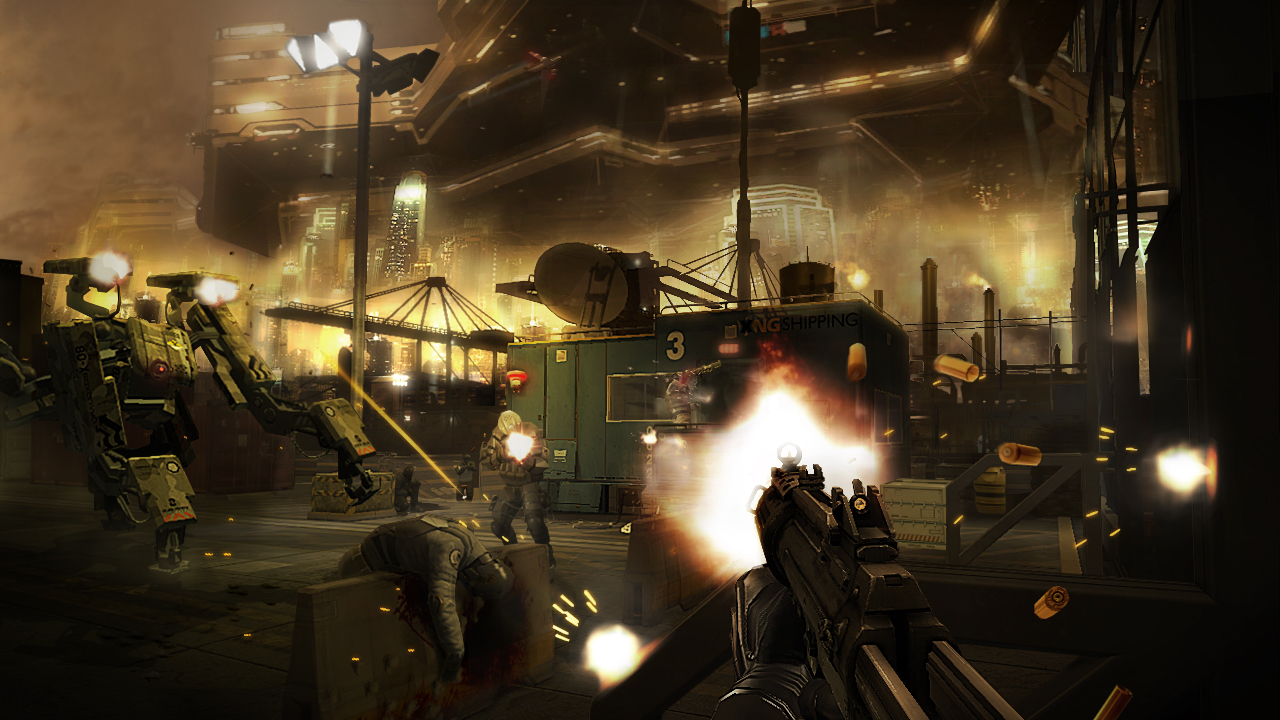
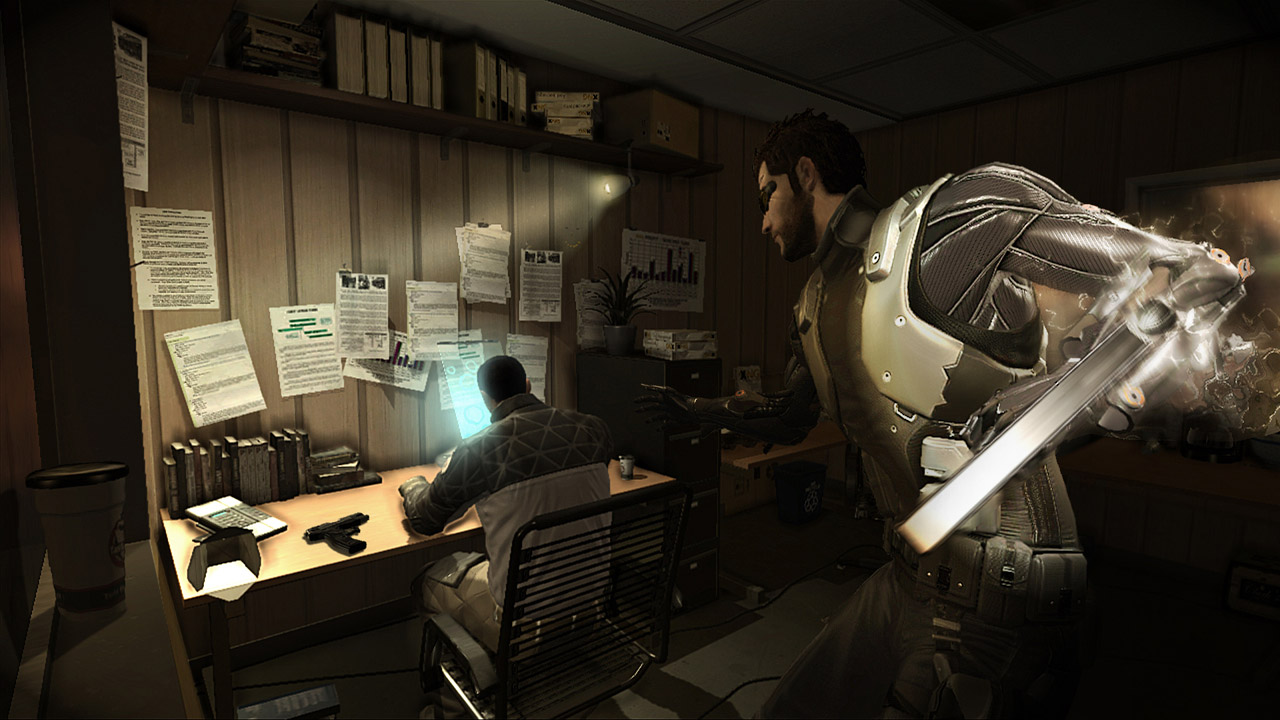
Being the third sequel to one of the top five PC games of all time can be tough. The guys at Eidos Montreal nailed the game and pulled off one of the most anticipated games of all time. One of the best parts of Human Revolution is the engaging atmosphere and story that go along with it. You play the ex-SWAT turned security chief at Sarif Industries, Adam Jensen. Sarif Industries is one of the leading corporations in human augmentation. Of course, there are always rivals, so the facility gets broken into one day and the top scientist gets stolen (among others) and is used for some secret project. The great thing about the story is that you’re led on constantly, so you think the plot goes one way and then quickly moves another way. When you start the game, you will have no idea that the people involved are the main cause towards the end. The story is masterfully created and very entertaining.
Of course, what makes Deus Ex so famous are the multiple ways you can approach getting to a goal. Use stealth and not knock out anyone; use tranq darts, stun guns, or just up-close melee. If you don’t like that, you can use silenced weapons and take everyone out, or just run through with a machine gun and blast everyone away. Of course, it’s not just how you kill people, but how you navigate the level. If you see a room full of eight bad guys, you can upgrade your augs to allow you to become invisible for a few seconds and dash across the room to the door you need. Don’t you have that aug? You can find a vent somewhere and crawl through most of the area, but wait, there’s a camera right where you need to be. Find the computer that controls cameras, hack into it, and disable it. Or you can just blast your way through.
There are tons of options for every part of the game, but the augs are what will get you through. You can access an elevator that can bypass three whole floors of bad guys, but it’s blocked by heavy crates. If you have the ability to move heavy objects, you are golden. If not, find another way around as best as you can. The whole point is to choose a play style and augment yourself accordingly, so if you want stealth, use stealth add-ons, the ability to see through walls, invisibility, and keep a tranq gun or silenced pistol. I love how there are so many options to choose from, and each section just flows and doesn’t require too much trial-and-error like most stealth action games.
You will come across conversations where you need to persuade someone to give you information, and this is done through clever dialog choices, but you can use augmentation to see what personality type the person is and how to persuade them. If you are having a hard time, you get a chance to release pheromones as a last-ditch effort to persuade, but you must know the personality type, so watch that meter carefully. These choices can be simple or huge, such as how to disable turrets during a boss fight or even to make whole missions easier. However, choices during the game don’t affect the endings, so some people may feel this was all for nothing.
While those are the main parts of gameplay, you can upgrade weapons, buy and sell at black markets, and even buy Praxis kits for upgrading at limb clinics. Be warned, though, because the game is very hard if you choose to gun everyone down. You will lose your life quickly, and just a few shots will kill you. There are even a few boss fights, but I found these extremely difficult and required a lot of saving during the fight. The game also has a decent length of about 15–20 hours, so you will be busy for a while.
I do have to mention that when the game came out, there were horrible glitches, and it performed terribly. I actually had to restart the game 1/4 through because of a glitch that prevented me from moving on to the next level. This is unacceptable, but by now, 99% of the glitches have been fixed, and the game now performs smoothly. The overall atmosphere is a lot like Blade Runner, but I felt it was lacking with just people standing around in the linear levels. Sure, you can run around, but the game is made up of hallways rather than an open world. The graphics look decent in DirectX 11, but they look abysmal in DirectX 9, so don’t expect this game to look amazing. Characters have low-resolution textures as well as low-poly models, and the overall effects aren’t very impressive.
Overall, Human Revolution is one of the best stealth-action games to come out in a while, but most importantly, it re-creates the amazing choice-based gameplay that the first game did so many years ago. If you can look past the dated visuals, linear level design, and difficult boss fights, you will be pleased with lots of great game design as well as engrossing characters and an engaging story.
Everyone was bullied at some point in their life during school, so Rockstar took it upon themselves to help people reflect on that and become bullies themselves or anti-bullies. Jimmy Hopkins is sent to Bullworth Academy because he’s a huge jerk and his mom and stepdad hate him. The story really makes you reminisce about high school because of how accurately it portrays it. You walk around, and you see jocks beating up nerds and greasers beating up preps. Of course, due to the game’s age (about 7 years old), there are problems, glitches, and stiffness due to the PS2’s limited technology, but the overall atmosphere and fun content will keep you hooked.
The game is based on Grand Theft Auto, so if you play that series a lot, you are right at home here. You get a mini-map with stars marked on it, a combat system, a vehicle system, as well as a shooting system. They all work really well and even better than the GTAgames, but don’t forget, this is a teen-rated game, so you can forget about Jimmy killing hookers and pushing drugs. After you get familiar with the engine, you will be introduced to the combat system, which works well thanks to a lock-on mode and target switching with the right analog stick (keyboard controls stink). A health bar is displayed around the target’s feet, and the melee combat system is surprisingly deep. You unlock combos and moves by bringing transistors to the bum that lives behind the school.
With grapples, takedowns, and various combos comes ranged combat, which is fun thanks to the interesting and fun weapons. Instead of rocket launchers and AK-47s, we get potato spud launchers, bottle rocket launchers, slingshots, stink bombs, itching powder, spray paint (for tagging), eggs, and various breakable melee weapons that are awesome to use. You can’t jack cars, but you can jack bicycles, and you have a skateboard in your inventory. I really wish there were more vehicles to use than just these two things, but it works because the world isn’t big enough to need anything faster.
The days in Bully go by like school, and of course, you can get busted and, instead of wasted, knocked out like in GTA games. Prefects are the authority on campus, and there are a lot of rules. There are two classes a day, and you will see a bell on your map. If you skip class, you can be busted for truancy, hit kids and get chased for violence, hit girls or adults, and the meter goes red, and everyone runs after you for this. You can be busted for trespassing (being inside a building after hours), theft, vandalism, and all the hijinks of kids, so watch out. Of course, getting busted is actually hard because you can always outrun them, and if a prefect gets a hold of you, you can rapidly press Y to break free. If a teacher or cop gets you, you’re done.
Classes are fun and consist of mini-games like music class, which uses the triggers to tap out the rhythm; biology class, which has you dissecting animals; math class, which has you answering simple questions; shop class, which has you doing button commands to repair bikes; and photography class, which has you snapping pictures. There are more classes, and they help keep you busy between missions and can be fun. When you aren’t doing missions or classes, you can do one of the two jobs in town, which is a paper route and mowing lawns. I really wish there were more jobs, but more on why later. There are also challenges for each faction as well as random activities like people having you egg things, make deliveries, or break into lockers.
Missions are varied and range from throwing snowballs, playing tricks, assaulting faction fortresses, sneaking through an asylum, and helping teachers with adult problems. There’s a lot of variety in the main missions, and it will keep you hooked and wanting to do the next one. I just wish there were more side missions that had a good payoff because money is kind of useless in this game. I rarely spent it and didn’t really need to. There is also a lame dating system built in where you can compliment a girl, then give her a gift, and then she’ll kiss you. This is as far as it goes, and after trying it once, you won’t do it again.
All this sounds fun, and it is, but it comes with a price. Everything feels stiff, stilted, and linear, which really detracts from the experience. The same NPCs walk around, sayings repeat constantly, animations are stiff and awkward, the same music repeats constantly, the sound is low quality, and the graphics aged poorly with low poly models and some ugly textures. The only things that haven’t aged are the excellent voice acting, memorable characters, and charming and witty dialog. This is the best part about Bully because of characters like Gary, who are whacked sociopaths who you want to just punch. The world isn’t very big at all, and while you can change your clothes and hair and earn money, there’s really no reason for it. You can find collectibles in the world, do races, and more, but honestly, for what? There’s no payoff, and I guess you just do it to be the best completionist.
I could go on about how stiff the game feels or the multiple glitches that I encountered, but after completing the 10-15-hour campaign, I felt no reason to continue on. I couldn’t bear hearing the same saying, listening to the same music, or seeing the same NPC walk by me. Back in the day, it was revolutionary, but now it’s just a wrinkle in the game timeline as something unique and playful because there isn’t a single game out there like it. Enjoy the game for the great dialog, characters, and story, as well as the fun mini-games and varied missions, but if you can’t overlook the many faults, then move on.
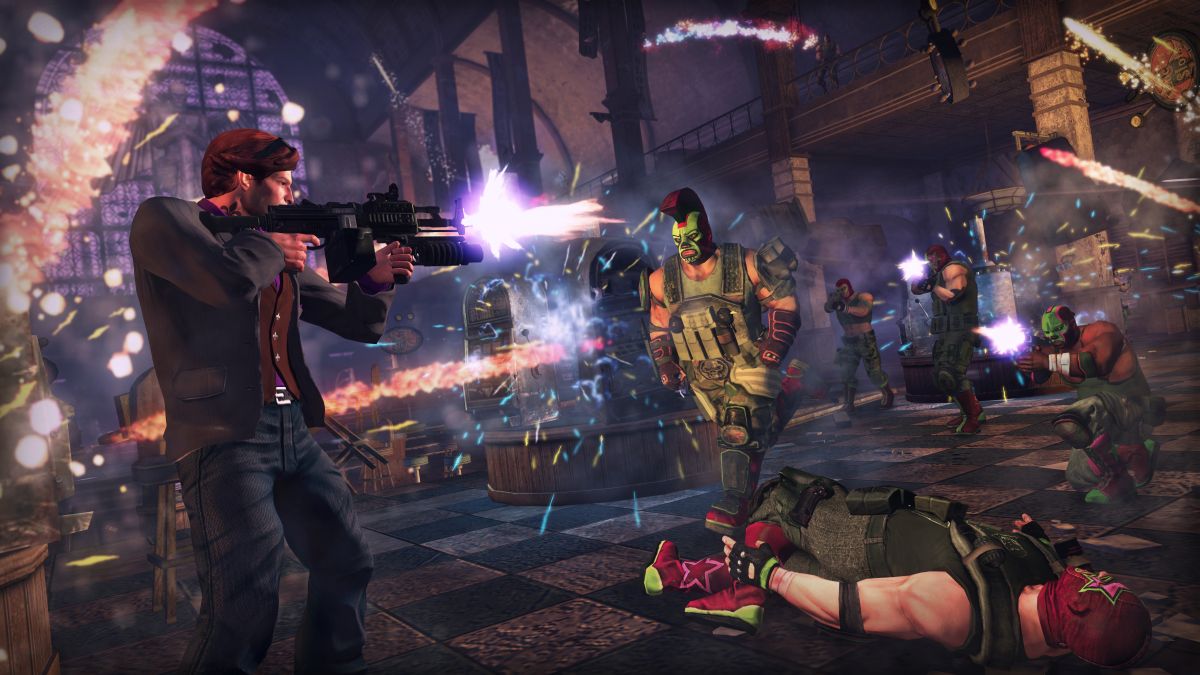
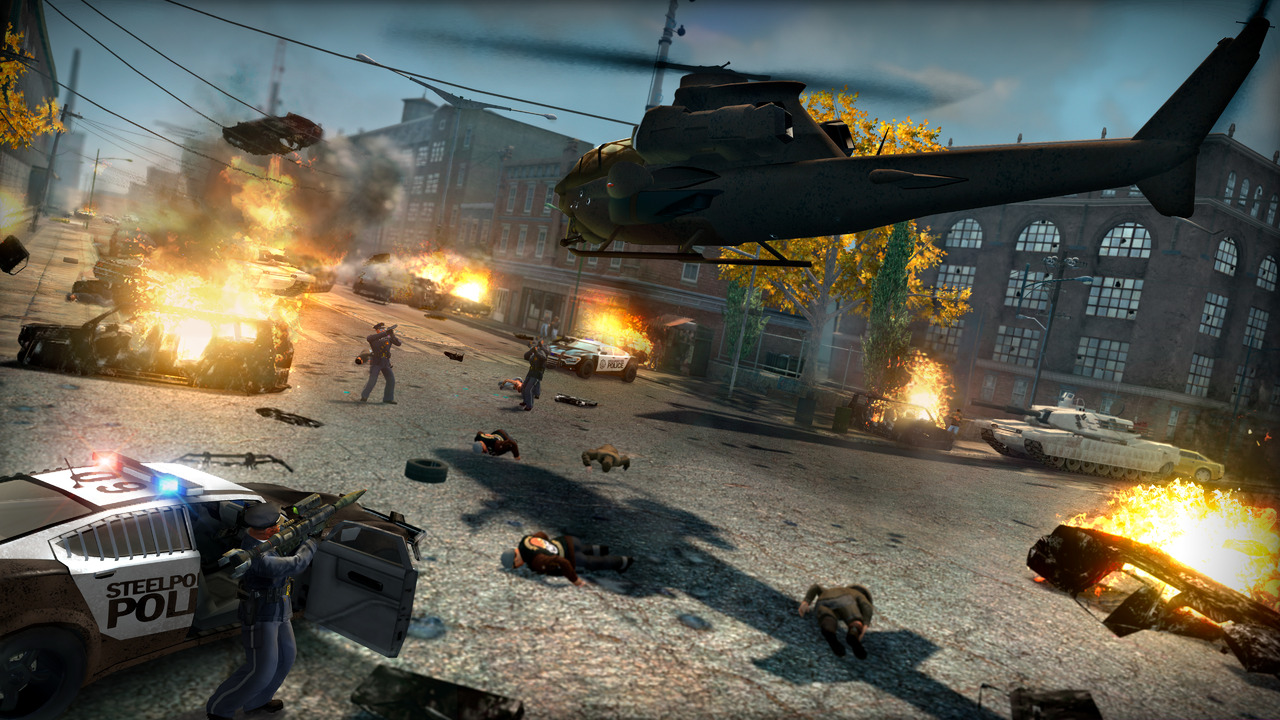
A game claiming it’s one of the craziest around is something that would be hard to live up to. Thankfully, Saint’s Row: The Third does, and man, is it crazy. Parachuting out of planes and shooting tanks while falling out of the sky, a God of War-style boss fights in virtual reality, beating people up with giant purple dildos. Yeah, I’d say that’s crazy, but The Third offers even more!
The story is really great, with awesome characters and witty dialog. Johnny Gat dies in the beginning mission (that’s no spoiler), but returning characters like Pierce and Shaundi return, and the new characters are just as great, such as the bit brute Oleg and the nerd Kenzie. This time around, you are famous, and the Saints own the city, but they lose it because three new gangs move into town: The Morningstar, Deckers, and Luchadores. A paramilitary group called STAG has also moved in with heavily armored guys, tanks, and VTOLs (jets) that, yes, you can fly and keep in your garage.
A lot of the story missions are interesting and completely varied to help deliver this interesting and entertaining story. From going inside a supercomputer and fighting as a walking toilet, blow-up doll, or fighting in a Luchadore match, to shooting cars with a rocket launcher from a helicopter, to just running around and killing everything, everything is a huge blast, and each mission is different. Of course, there are side missions such as Trailblazing, where you drive around in a fireproof suit on an ATV and run into people and cars to blow them up to earn seconds on a clock as you blow through a checkpoint race. There are other side missions that let you pimp your girls around: Insurance Fraud lets you get hit by cars to earn money; Mayhem lets you use pre-determined weapons to cause as much destruction as possible; and a lot more. My favorite is the Genki matches, which are like a gladiator-type game show. There is no shortage of things to do in The Third, with collectibles to be found, assassination missions, car theft missions, and tons of challenges.
Saint’s Row doesn’t stop there, with a ton of cars to drive as well as a bunch of customization options for building your character, upgrading and decking out cars, and even a crap ton of upgrades for you and your guns. You can use your phone to call in homies to help you fight, deliver vehicles, and even customize how your gang looks and taunts. You can run around and buy property to increase your respect rating and how much control you have over that territory.
But what about the world you play in, you say? It looks amazing with DirectX 11 features exclusive to PC, which makes the game look ten times better than that of the consoles, and the world is huge and bursting at the seams with life. The game never looks boring, feels boring, or sounds boring, with great radio stations with funny commercials and even one radio station dedicated to Adult Swim. I just can’t describe how crazy this game is because you have to play it to experience it. The controls are silky smooth, with great car control and even aircraft control. Is there anything wrong with the game? Yeah, there are some irritating issues like ragdoll physics when you get blown up, there are way too many enemies to kill, and the side missions are extremely difficult, but these things can be easily overlooked. If you love open-world games, I would say Saint’s Row: The Third is the best out there, and there really isn’t anything quite like it.
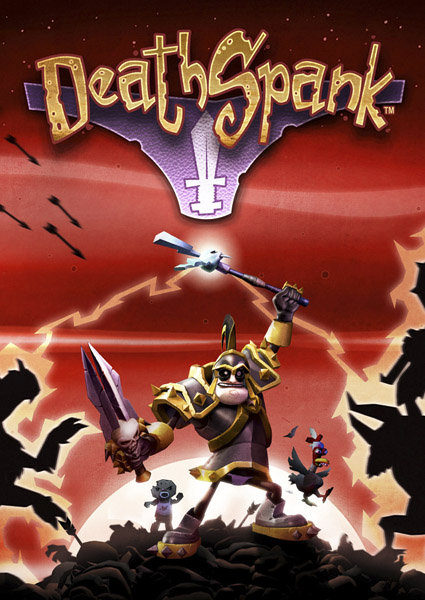
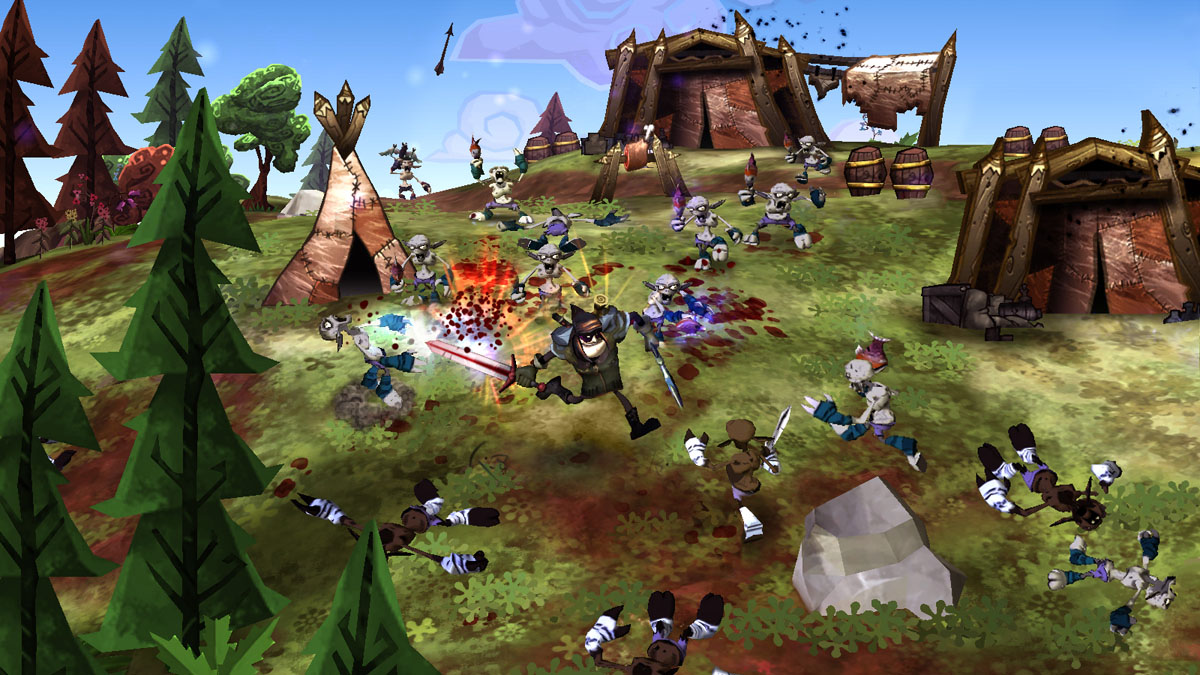
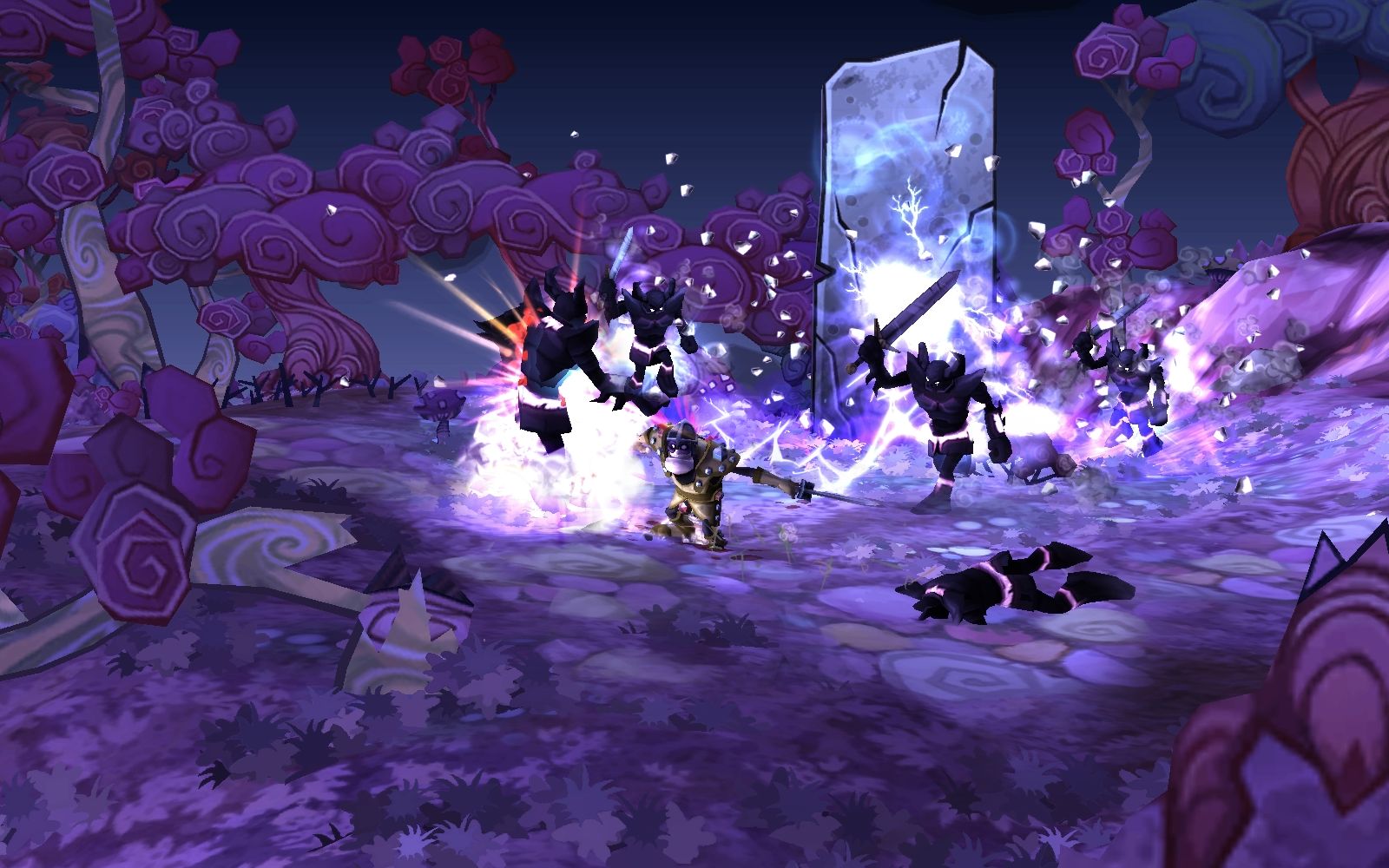
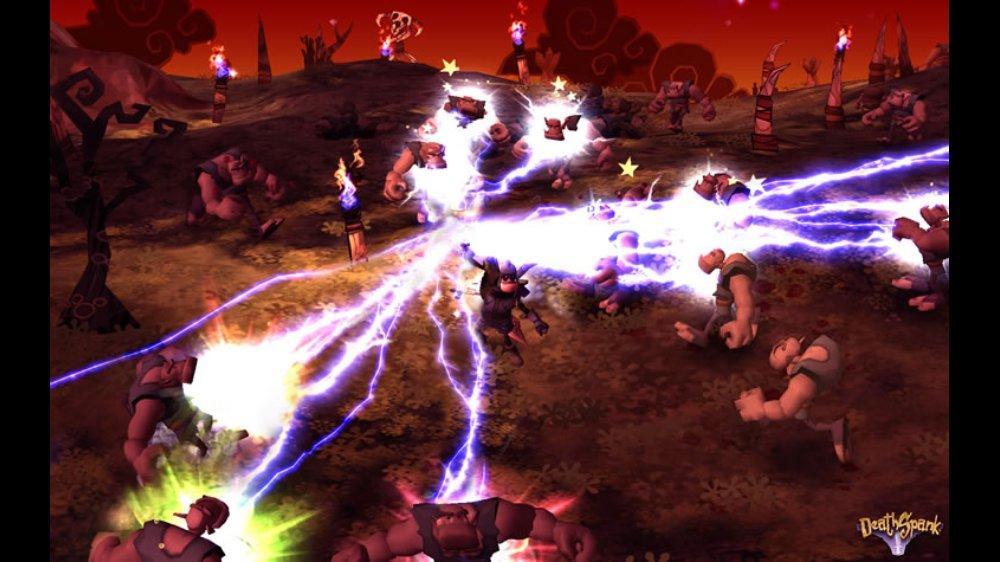
The Dispenser of Justice! Hero of the Downtrodden! Those are just a couple of DeathSpank’s other names in this hilarious action RPG from Hot Head Studios. You play the silly hero DeathSpank in his quest to find the artifact and kill the evil king, Lord Von Prong. LVP wants DeathSpank’s magical thong to become eviler, but in the meantime, you need to do some saving for the downtrodden.
The overall story isn’t much, but the banter with NPCs is what really makes you crack up with the obvious stabs at RPGs and other games. It will take different shots at the genre without even saying anything, sometimes like one quest has you pleasing an orphan in the Demon Mines to put in your orphan bag. You must run into town and get everything she needs, but the store just so happens to have everything you need when you get there, like a cell phone and a pony! This is an obvious jab at RPGs, whose stores always have what you need.
The game also has some more childish jokes, like collecting unicorn poop, finding help letters in dragon poop, and helping villagers make their dirt and stone soup taste better using various animal parts. While this humor may not be funny to all, most will get a kick out of it, and DeathSpank is chock-full of it. Of course, the gameplay is important, and DeathSpank lets you assign four different weapons at a time to use, and there are a ton of weapons, armor, and different types of potions to use. You can even eat various foods to heal up, like pizza, fries, magic mushrooms, and root beer. When you whack enough enemies, you get to unleash your Justice meter, which is a power-up for certain weapons. The game consists of a huge map that you can wander around and travel via outhouses spread throughout the world. There are a ton of quests, and you’re looking at about 10–15 hours of gameplay here that is very entertaining.
The game has two major flaws, and this is the fact that no matter how high you level up or how good your armor is, you will be guzzling potions and healing items every 5 seconds. Enemies respawn when you re-enter an area, and you can’t move on to another until you are at a higher level, or those enemies will kill you quickly. This makes progression slow at first and forces you to complete quests because that’s the only way to really level up. You get very little XP for killing enemies, even if they are at a higher level than you. I found this very frustrating and made the game less enjoyable because of all these weird quirks. I also found that some quests were vague on where to go, and using fortune cookies spread around gives you hints, but those are just mostly useless.
The visuals are nice, but technically the game is very simple; there is a huge variety of enemy types, and you really won’t get bored on that end. The best part about DeathSpank is the humor in the dialog and the funny voice actors who over-exaggerate voices. Even as an action RPG, the game is fun and challenging for anyone looking for something out of the ordinary to play, plus it has co-op play for anyone wanting to share the fun and jokes with a friend.
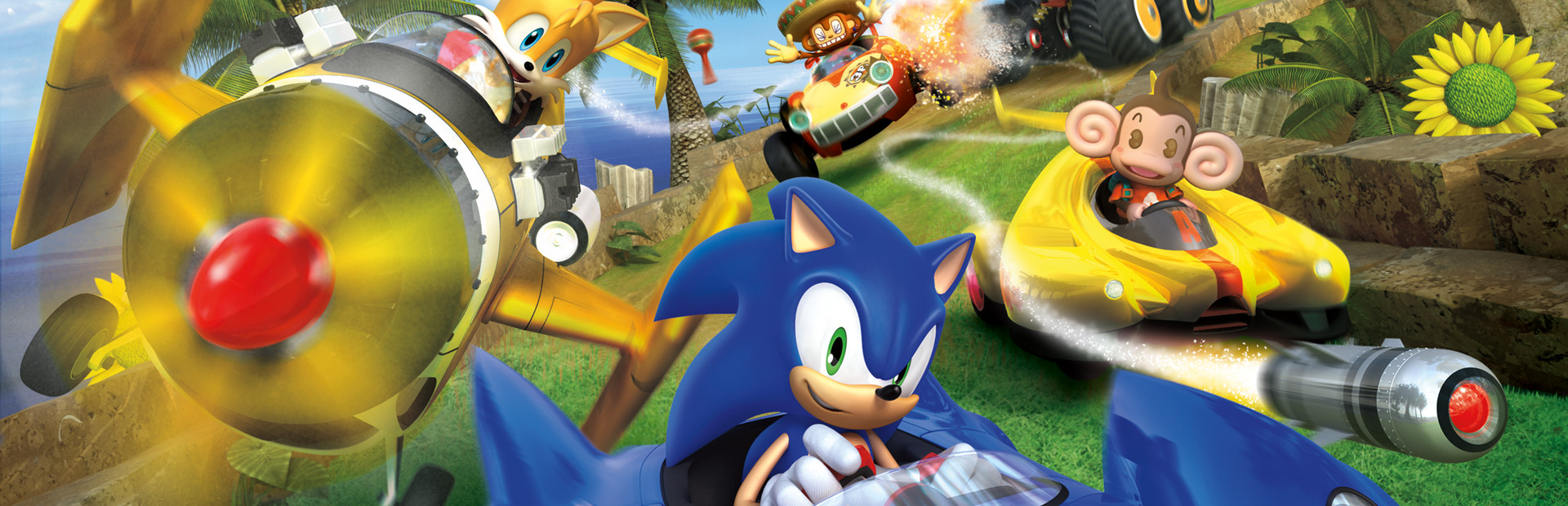
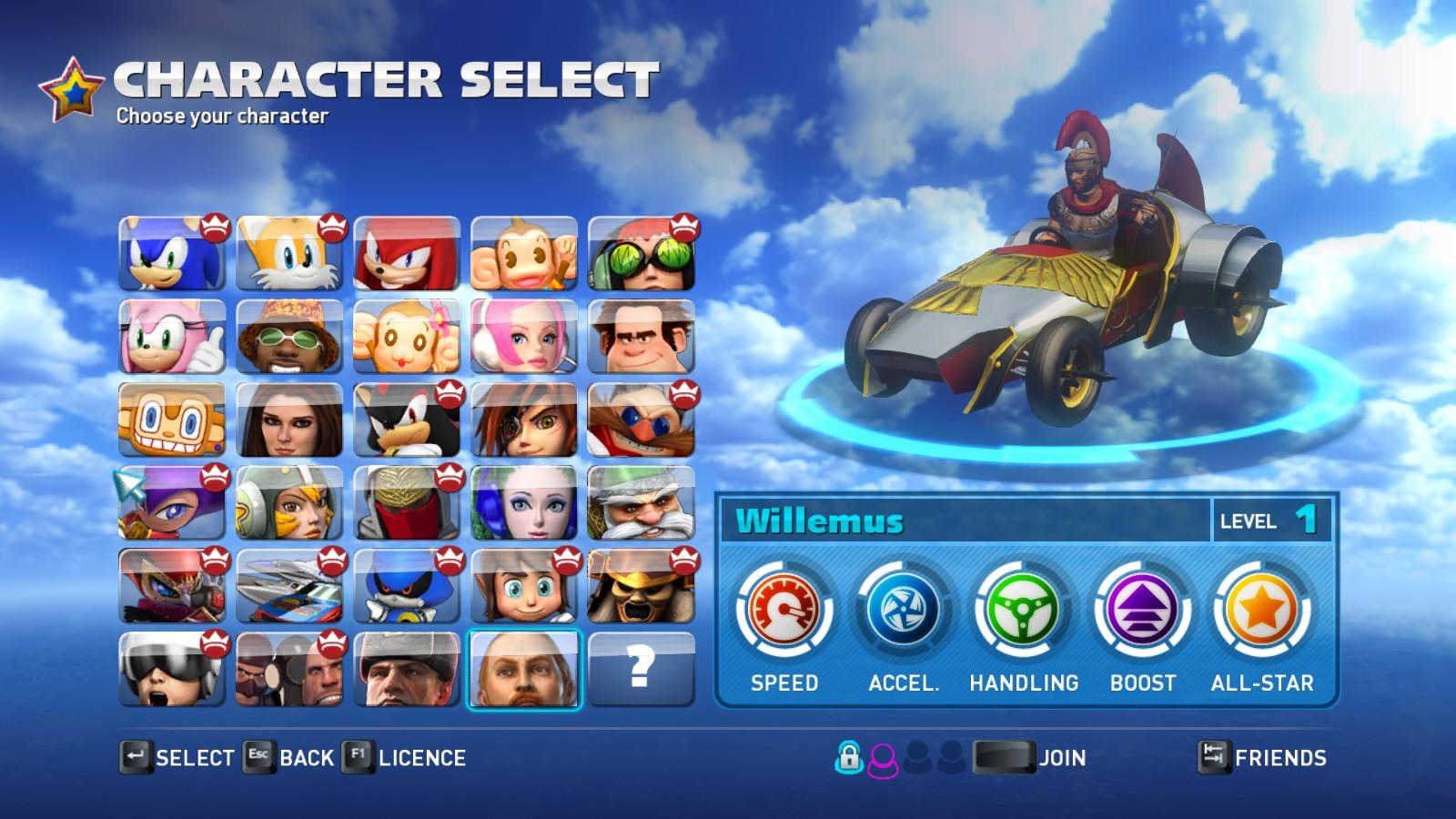
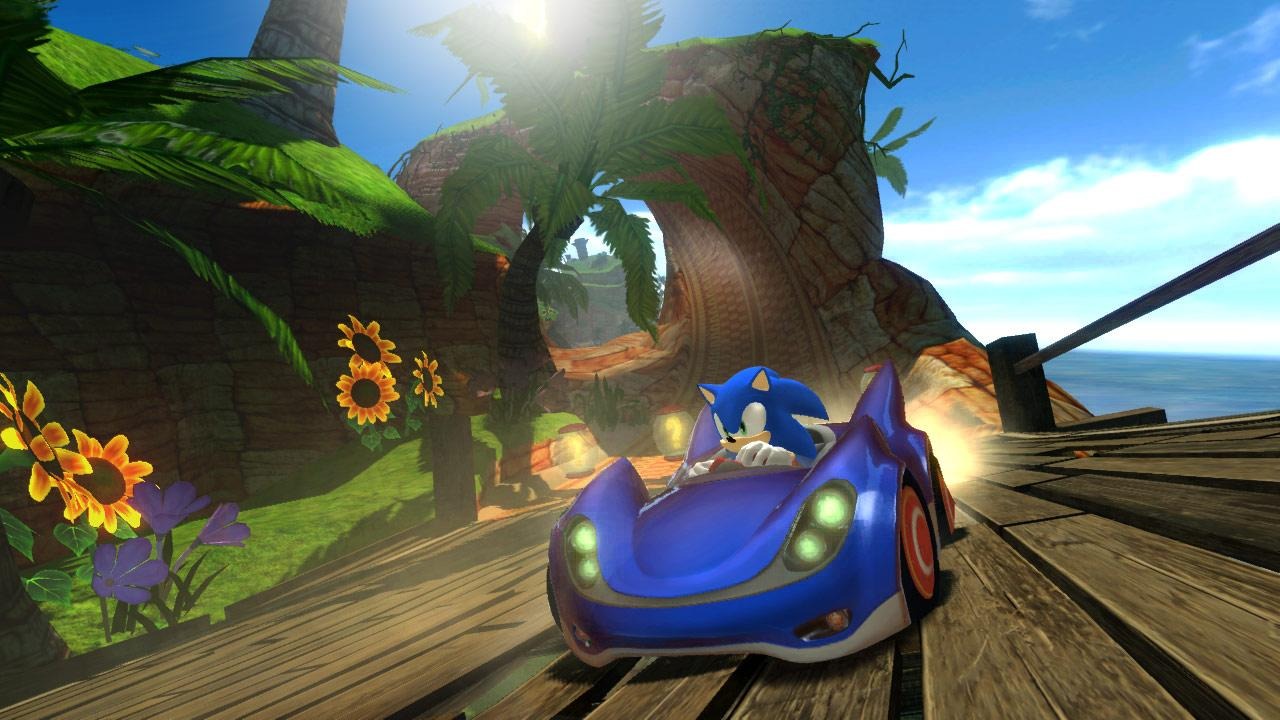
Kart racing games tend to be able to beat the king of them all: Mario Kart. While that game started, all a few entertaining offbeat ones have raced by, but this is Sega’s serious attempt at it, and it works. You can play as almost every major Sega mascot, such as most Sonic characters and familiar faces from Space Channel 5, Super Monkey Ball, and others. You race around tracks that reflect the design and setting of various Sega games while using power-ups to stay ahead of the pack.
The game has a power sliding ability that will increase your boost, which is the key to getting in the first place, but also picking up capsules that hold random power-ups such as a homing missile, mines, shields, speed boosts, and various other power-ups we have seen countless times. The game has a great sense of speed, and sliding around corners and doing various stunts is exciting, but the overall experience is borderline juvenile and very easy, even in the hardest mode. There are various missions you can complete as well as buying characters with Sega Miles, but this only goes so far.
The ideal way to play is with friends, but you need several controllers to do so because there is no online play. Why this was stripped from the PC version beats me, but it really brings down the experience since crowding around one computer isn’t very convenient. Once you do get some friends aboard, the game is a blast, and power-sliding and knocking enemies down makes for great laughs.
But when it’s all said and done, the game is a really average kart racer and has dated graphics as well as some annoying sounds. The game just feels the same no matter what you do as a single player, and I highly doubt anyone over 10 can play all 50+ missions without going crazy. If there was just some online play in here, it could sweeten the deal some, but the single-player can only be tolerated for so long.














































 thebinarymessiah.com
Super, thank you