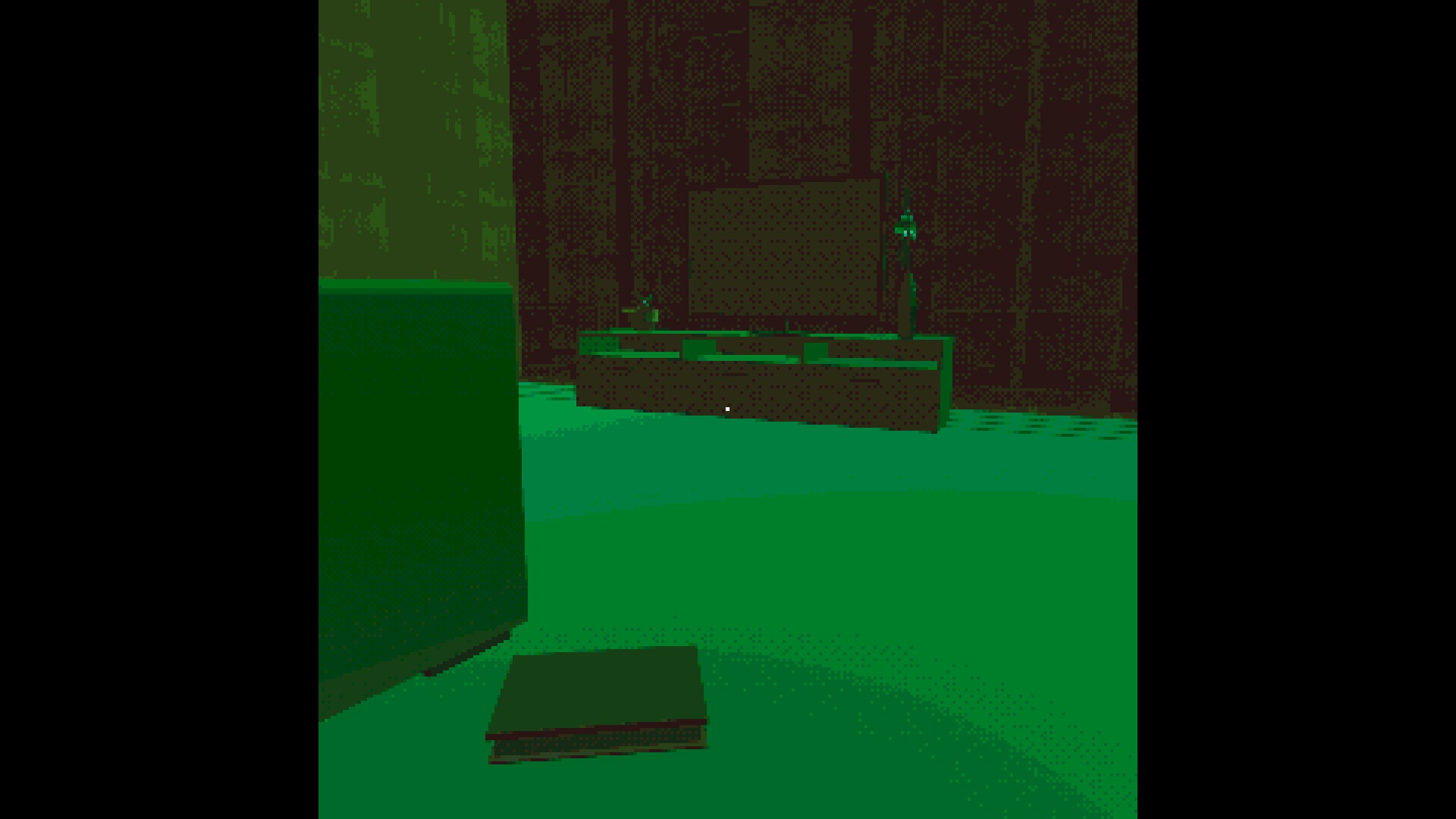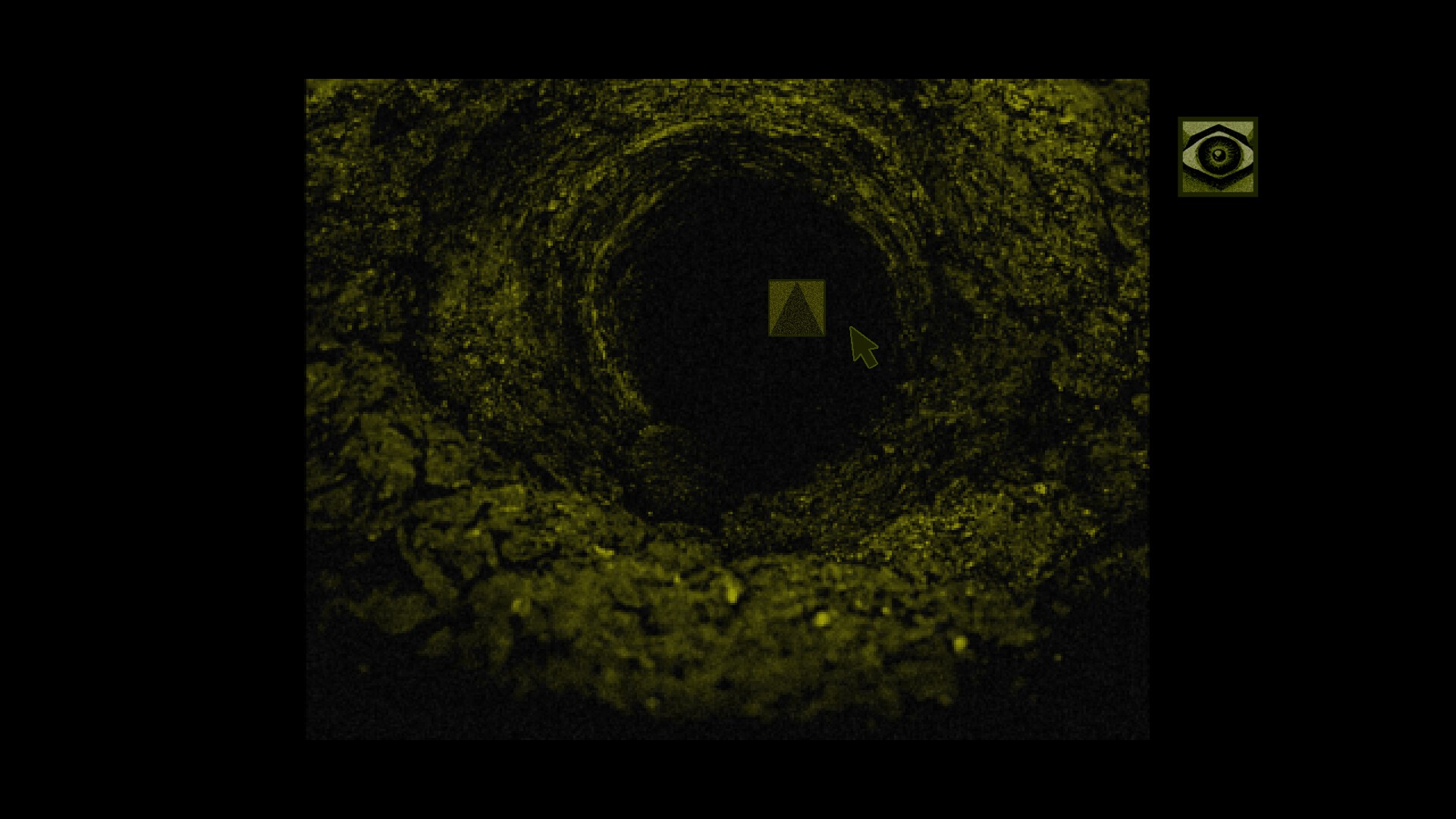
Indie horror games with PS1-style graphics are becoming abundant these days, and some don’t have any substance or meaning. The game I live under your house begins with the player traversing underground tunnels as a mysterious creature—or person. The mystery character’s thoughts drive the narrative. A green filter surrounds the entire game, giving it the appearance of an original GameBoy LCD.
The low resolution/low polygonal visuals and short draw distance help to add dread and tension without having to actually create it. You invade the house you are living in, but I can’t spoil anything. Let’s just say the ambient music and sound effects add a lot of tension. There are no jump scares or cheap thrills here. The game doesn’t need it. The game’s haunting visuals and atmosphere leave you yearning for more dialogue. Whenever the character speaks, I just hold my breath, expecting something to happen. Each chapter only takes a few minutes to complete, but each location you end up at is just as intense as the last.

I will talk about the story DLC. It’s only $1 and is much better than the main game. It adds two new chapters to the game and seriously increases the sense of claustraphobia. There are fewer 2D dialogue-heavy scenes and more 3D exploration. The DLC is short but also incredibly intense and answers a lot of questions from the base game. The DLC chapters have better writing and storytelling, so you get a better idea of your surroundings, and the severe sense of dread the main character is feeling comes across strongly.
Overall, I live under your house is a very short but intense horror game with PS1-style visuals, haunting ambient music, and atmosphere. There are some disturbing images and scenes that can really get under your skin. This is a perfect game to play with all of the lights off and headphones on.
Surrealism is something that The Dream Machine does well. The Dream Machine masterfully crafts an otherworldly art style that is both familiar and dream-like. It’s the best part about the game, which also took 7 years to make. The first two chapters were released all the way back in 2010—14 years ago. It took 7 years to develop the following 4 chapters. This game might hold the record for the longest time between episodic content. Imagine having to wait nearly three years for a single chapter. The longest gap was in getting the final chapter out the door. While this was only a two-man team behind the game, I can’t fault it too much for its release schedule. Regrettably, akin to numerous point-and-click experiences, the game is rife with incomprehensible puzzles and ambiguous objectives that impede its progress throughout.
I highly recommend playing this for the first time with a guide. There are just too many obscure objectives you need to complete to get through the game without hours of backtracking and guessing. There are some context clues, such as when you solve a physical puzzle together, Victor will indicate if it was successful or not. However, the game heavily relies on gathering items, determining their direction, and determining if they are related. The game’s premise is about a single couple expecting their first child and renting a new apartment in a new town—a fresh start. They end up discovering a strange secret their building holds, and Victor is now transcending reality and entering dreams.
Through each chapter, you will enter another tenant’s dream, and some of the puzzles are about how to get to these tenants. You travel between areas, examine everything you can, and figure out which items go where and who to talk to. Towards the end of the game, you end up entangled in dialog trees that are required to trigger certain events. In this game, talking and exhausting all dialog options is a must, or you will end up stuck, not knowing where to go. It could simply be a dialog option you forgot to click on. Certain items in this game don’t function as they would in the real world due to its abstract logic. This can lead to serious frustration and roadblocks along the way, but I always play point-and-click adventure titles with guides first, and then if I like the story enough, I will go back through it again alone. While some are fun to figure out by yourself, others, like this game, can be a convoluted mess. Clicking on everything and guessing with so many areas and objects is just a recipe for disaster.
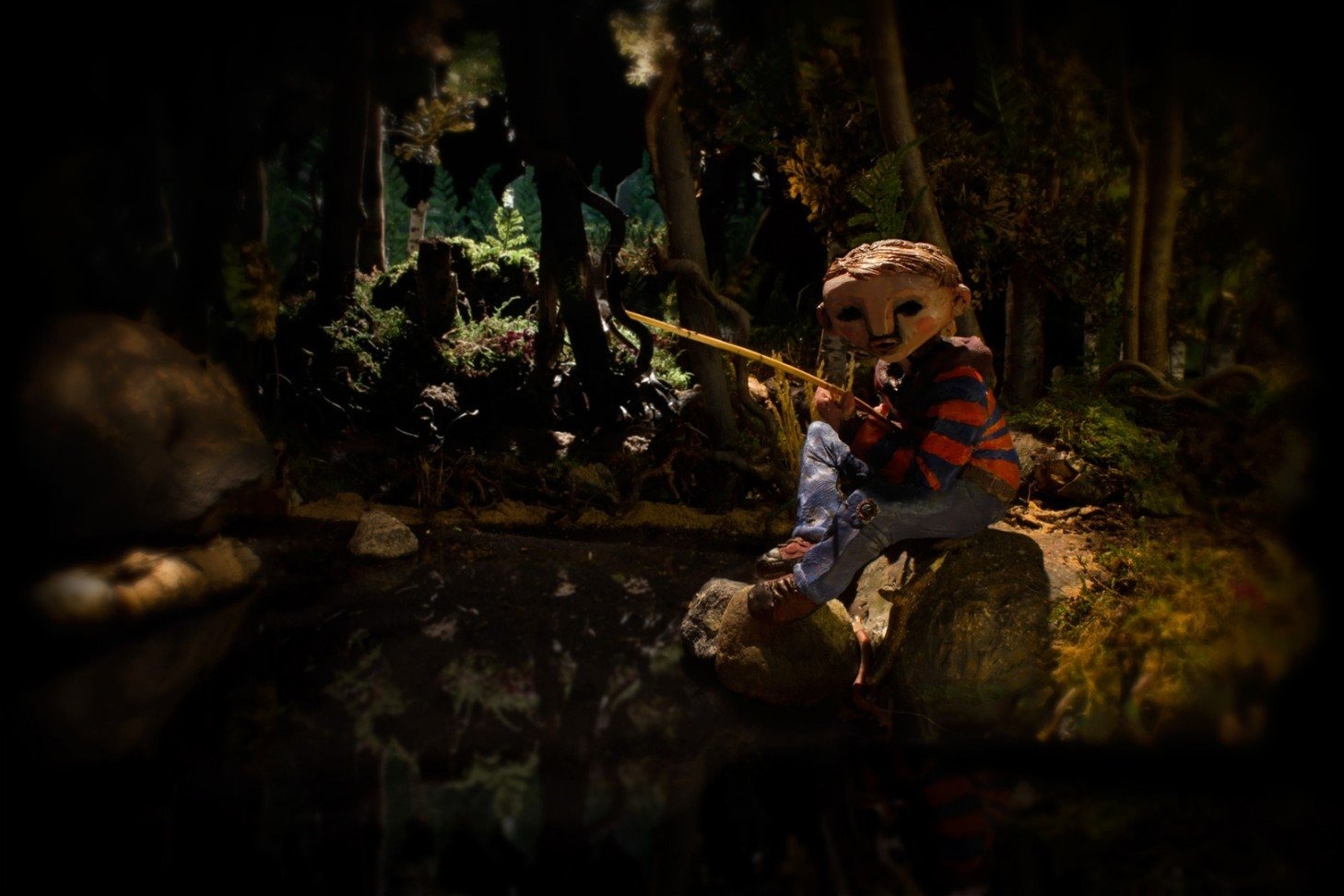
The visuals, ambient music, and sound are what really kept me playing. While the story itself is a theoretical tale of dreams, life, death, and rebirth, the surreal visuals that move from recognizeable everyday objects and locations to pure dream-like states of pure consciousness are a treat to look at. The hand-modeled backgrounds made out of real-world objects are a joy to look at. The music is haunting and mesmerizing, and it will occasionally invoke feelings of nostalgia for a long-distant memory as a child and innocent years of a simpler time. Each location effectively balances the game’s light and dark elements.
The overall story isn’t anything that will stick with you, but it’s still well done, has a conclusive ending, and is thought-provoking for at least a little bit. The game’s visuals will remain in my memory far longer than any character names or the story itself. The Dream Machine demonstrates a clear dedication to both visual arts and sound design. While there are better adventure titles out there, gameplay-wise, there’s no denying that this is a game that every fan of the genre needs to experience.
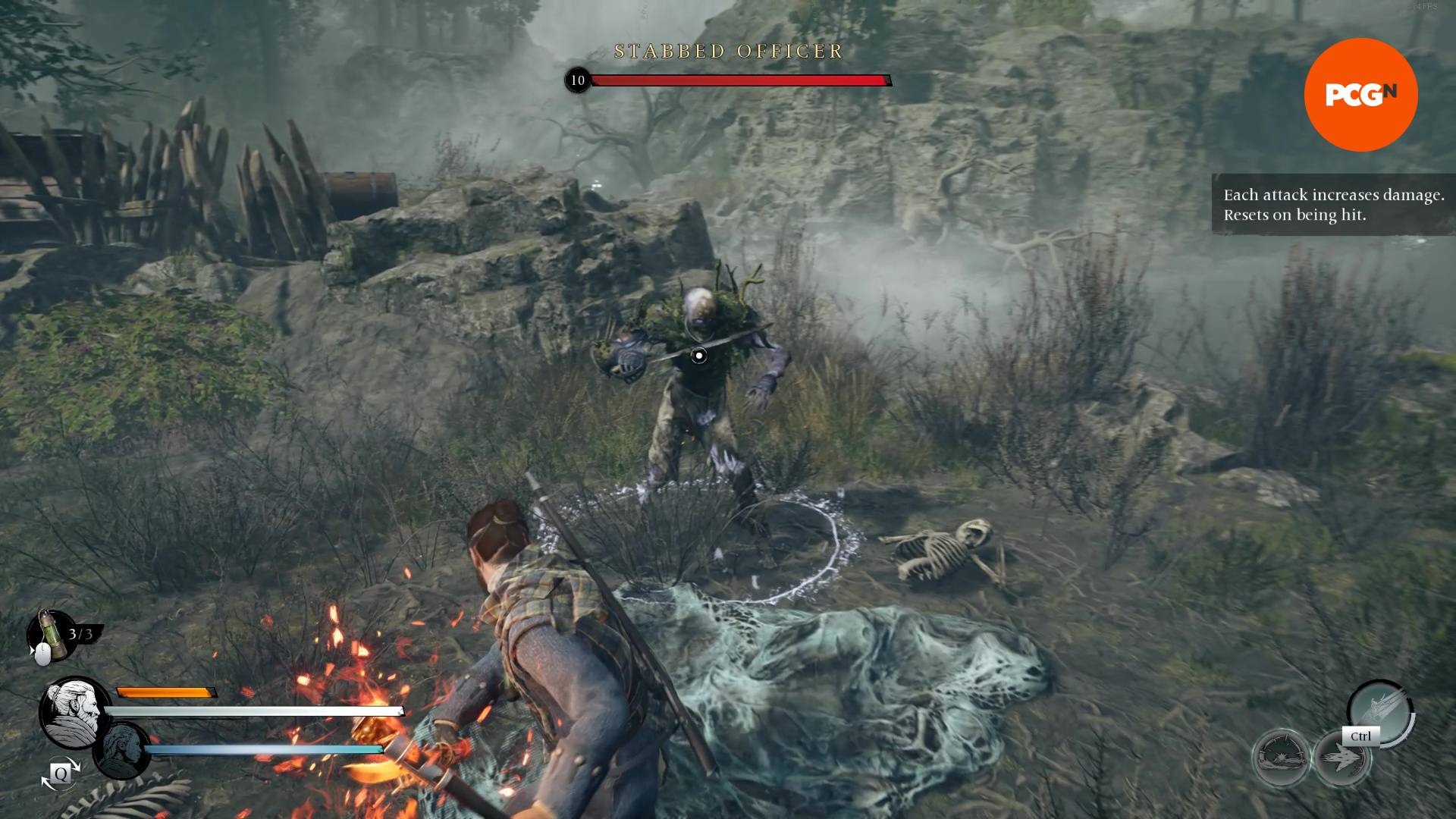
Back in the mid-2000s, there were many God of War clones, and that trend continues with the 2018 reboot. Banishers is essentially a God of War clone, almost to a T, barrowing many elements such as combat, exploration, storytelling, and the upgrade system. However, there’s a hint of “Eurojank” present that I just can’t shake. While the story, setting, and lore are interesting enough (the key word is “enough”), the game never excels to the heights of the game it’s trying to become.
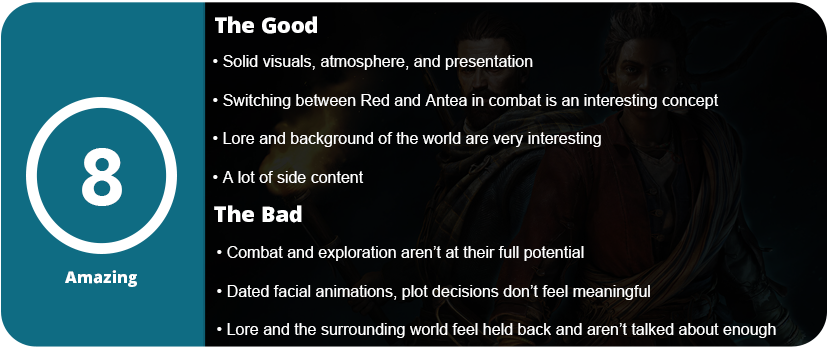
You play Red Mac, Raith, and Antea Duarte. Lovers who are now separated by the plane of the dead. Banishers are people who go around removing hauntings from people, places, and objects, but they can also pass judgment and execute the living for doing wrong to those who previously lived. It’s an interesting concept, but sadly, the game never goes into more detail about it. How can these people just kill the living based on what the dead say? What are the laws and rules surrounding this? The game also doesn’t go into the background or history of the Banishers. This is something that God of War did well. We need a lot of backstory if we’re going to spend 25+ hours in a game like this. The entire game is just pretty “good,” but never memorable or amazing. It always just falls below that mark. While I found the world and atmosphere of New Eden fascinating, the way the story and world are unfolded to the player are boring, mundane, or just not interesting. Reading material is pointless and doesn’t add to anything.
Let’s just start with the combat. Heavy and light attacks make up the basis of combos, but you can switch to Antea in the ghost plane, who has more powerful attacks. Her bar isn’t HP, but an energy meter. Hit decrease this as well as using your attack powers. You can refill this bar by fighting as Red in the real world, but he doesn’t have any special attacks, and this really kept me from creating a strategy or learning how to beat enemies. Red just light and heavy attacks enemies (with a heavy charge attack), and the game tells you Red does more damage to ghosts and Antea does more damage to possessed bodies, but it never really seemed to be effective. You can parry attacks, which the game heavily relies on for more damage, and Red has a gun that you get about 1/4th through the game; it’s a one-shot rifle that requires a reload. This can sometimes do a lot of damage, but the enemies are so boring and uninteresting that there’s no distinguishable feature or stat to build strategies in your head. Ghosts are pretty easy, while anything else can damage sponges. I just couldn’t combo or create a meaningful pattern for defeating enemies, and it made combat one of the least enjoyable parts of the game. It also just feels slightly clunky and sluggish.
The upgrade system feels almost as useless. You get experience for Red and Antea by completing side quests (called hauntings), which grant you additional damage for certain attacks, but I never really got to unlock any new combos or powers. Antea’s three powers are found during the story, so the upgrade tree is just boring, and I never felt powerful enough and couldn’t even use skills to become more powerful. This also bleeds over into the equipment system. Red can equip rifles, blades, outfits, and potion bottles, which increase attributes, but no matter how high they were, I always felt just too weak to really get an edge over the enemies. Antea can equip various accessories to help her attributes, but nothing felt powerful or meaningful.
This leads to the exploration and hunting gameplay loop that’s identical to God of War, but without the enjoyment. Why do I want to hunt chests and haunted objects, fast travel back, and open new paths with new powers if all this equipment feels useless and haunting cases only give me a single esence for the skill tree when it also feels pointless? They are fun at first, and the haunting cases are like mini-murder mysteries you can solve, but they also play out the same way. Some lead to small boss fights, some are just item gathering quests, and they all add to the main story choice (I won’t spoil it) for the ending, but they are all optional. There is a lot of side content here, but I gave up about halfway through because I just didn’t feel any of the rewards were worth it.
With that said, the game looks pretty good for an Unreal Engine 4 game. There is a lot of detail in the environments; they are varied, and the atmosphere is thick and heavy, but everything just teeters on not quite being enough on every front. The ability to even upgrade equipment doesn’t help make you feel like you’re growing as a player or character. I felt just as weak from the beginning of the game to the end and wound up dying quite a bit. Some side content, like the void walking dungeons, is tedious and boring, and the only redeeming value is exploring the world and picking up all these items and chests. I just wish the rewards were better.
Overall, Banishers has a lot of interesting concepts going for it, and the voice acting is good (the facial animations are very dated). I wanted to know more about this world, but the game just doesn’t give it up. The side content is questionable, the combat is too clunky, and there’s no strategy or really good combo system implemented to make it stand out from the crowd. There aren’t really any puzzles, and the story is predictable towards the end, making you feel like your choices are almost meaningless. I feel like if DONTNOD had another go, they could get a lot more right. As it stands, this feels like a “Eurojank” God of War.
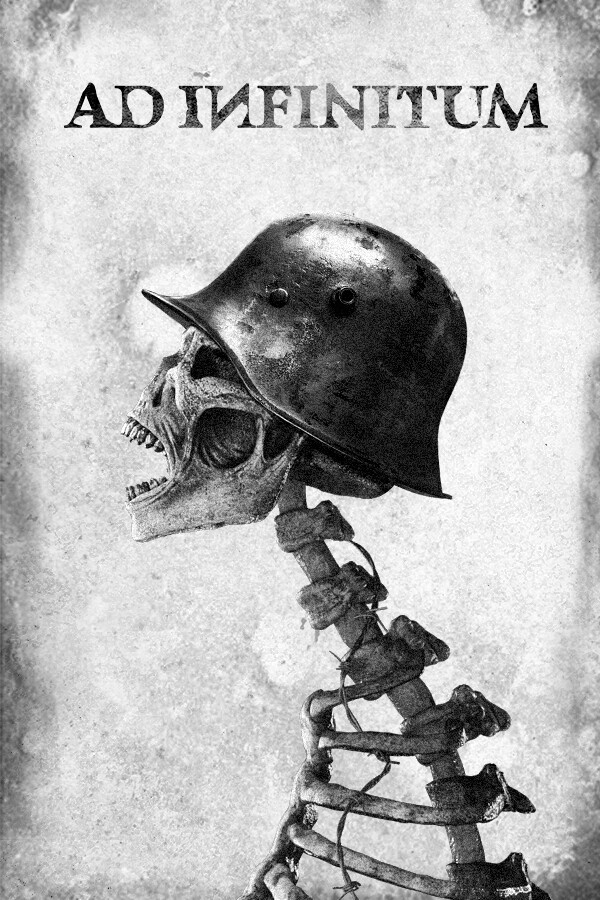
World War I was a horrific time in the world. The creation of mustard gas and the deaths of 20 million people are just a couple of things that came from that war. You play Paul von Schmidt, a German man who returned from the war. Paul and his brother Johannes are raised by their father, who is a wartime cripple. Over the course of the game, you explore Paul’s mind and how he feels and represents the events of his childhood and the trauma from the war. Sadly, most of this is only pieced together by letters found throughout the game, as the cut scenes themselves explain little and just muddle the otherwise generic feeling of the story.
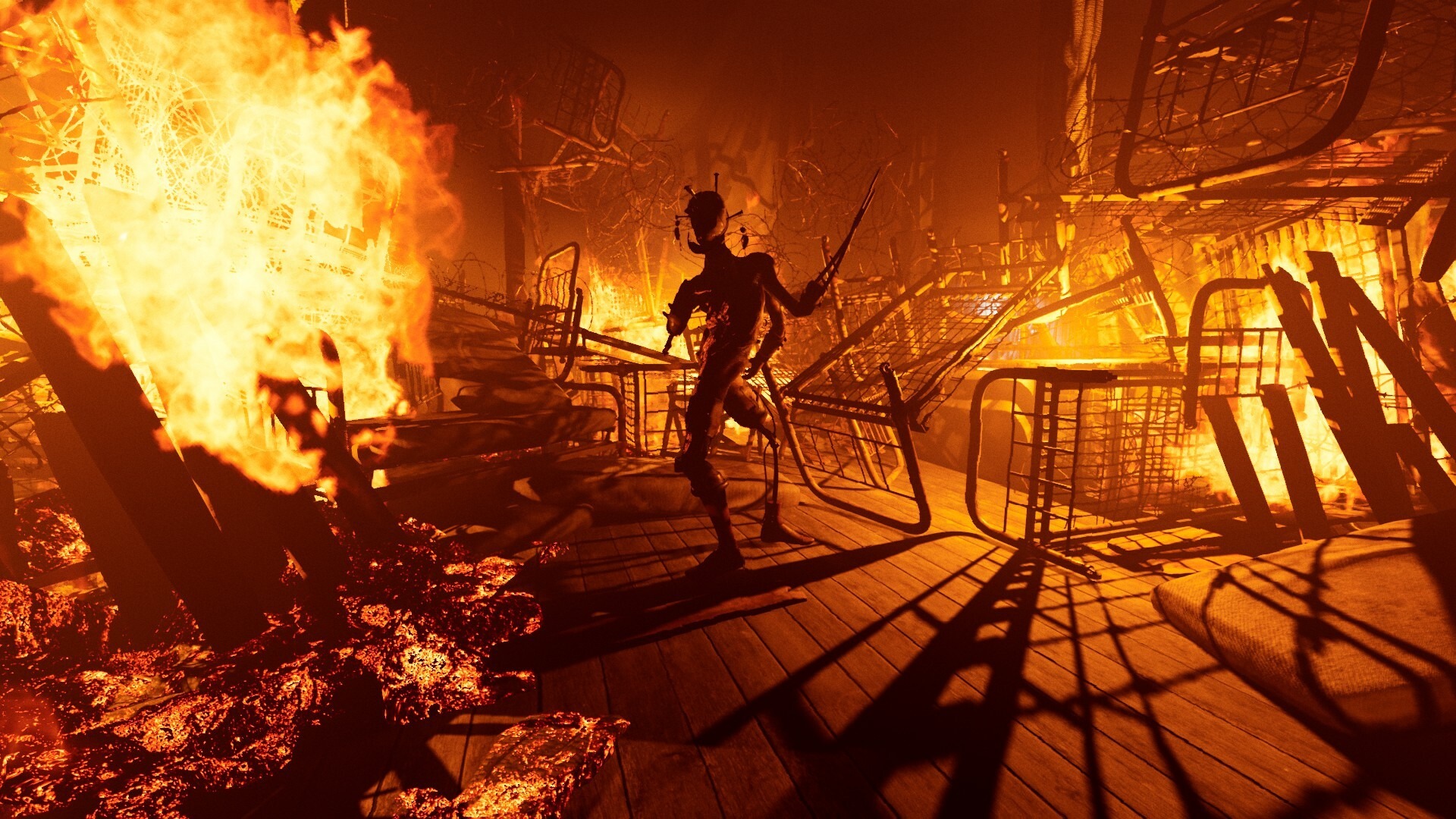
The game is broken up into two gameplay styles. An adventure/walking simulator-style mansion exploration where you solve puzzles. This part of the game is rather dull and uninteresting. Many other games do house explorations better (Layers of Fear, Gone Home, What Remains of Edith Finch) as the game slowly opens the house to you, but the key is to find objects to solve puzzles and find something that triggers a dive into Paul’s mind and thoughts. Each chapter (there are three) consists of one of his family members represented as a horrific monster. You can either choose to kill them or let them live to get different endings. Most of these “boss fights” require you to flip switches and run away for the most part, but they are rather intense, so I didn’t mind them.
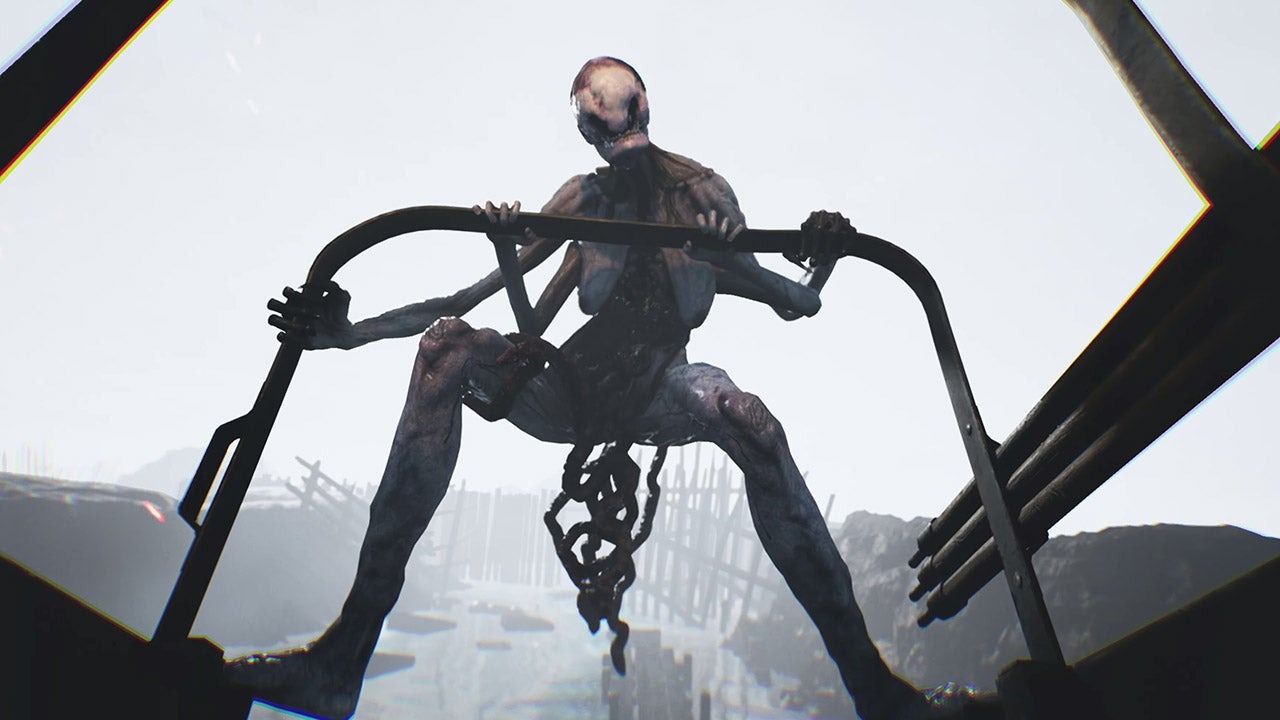
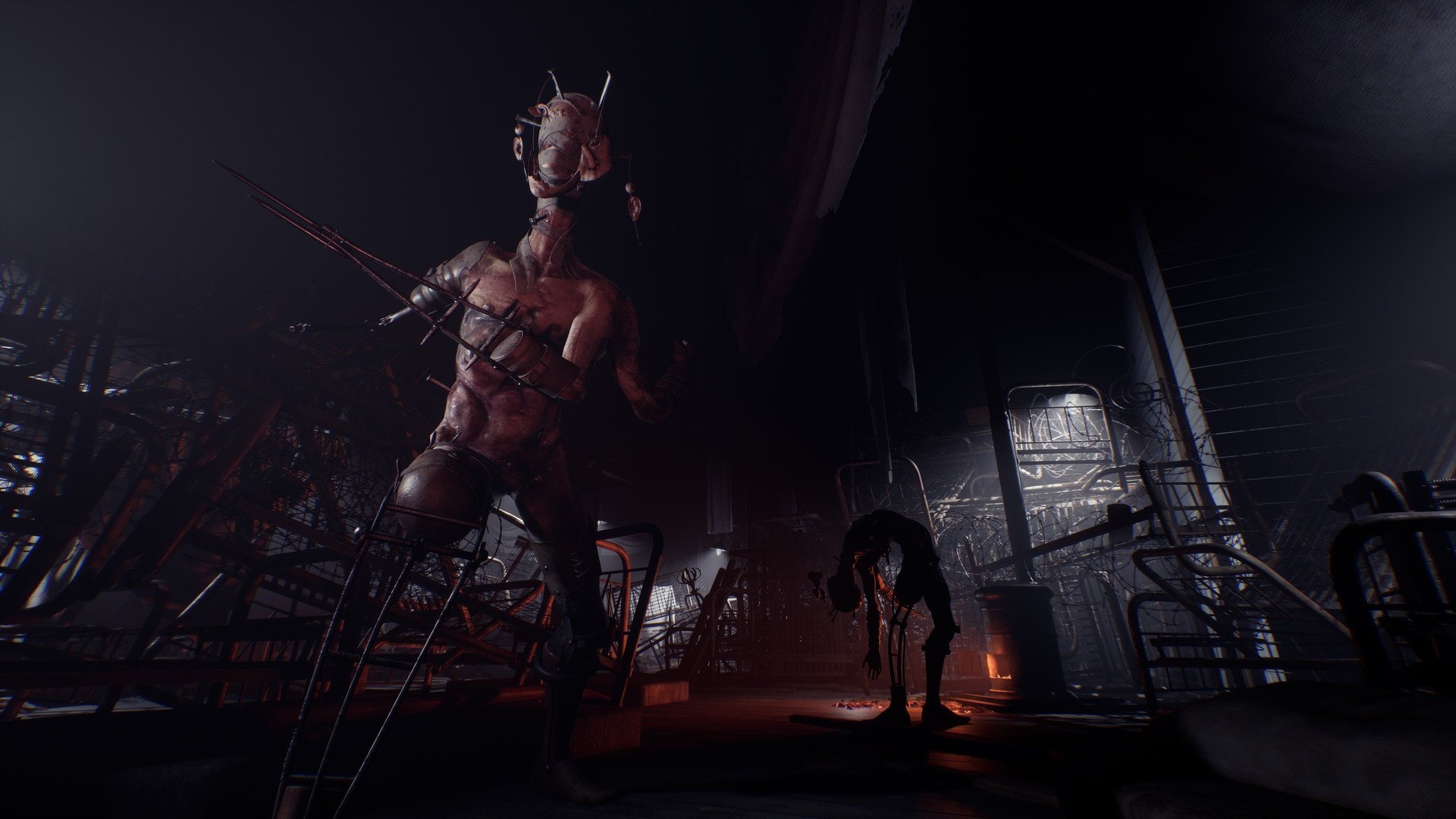
The second part of the game is the trenches gameplay, in which the horror part sets in. You need to run around solving the occasional puzzle while also hiding from enemies. There is no combat in this game, so you have to sneak around and find your way through the dark in various environments. The creature designs are awesome, but this is probably the most exciting part of the game. It was intense sneaking past enemies, and thankfully there’s only one small section in each chapter, but the horror elements that are actually good can be counted on one hand. There are moments in which each main monster is introduced, and these scenes are fairly creepy, and outside of weird sound effects and haunting ambience, there’s not much else here. The game does portray the gruesome horrors of the war, with bodies spread everywhere, the barbaric medical practices, and the overall brutal nature of everything people endured during that time.
With the game being as linear as it is, there isn’t a lot of room for exploration outside of finding dog tags, and this only grants an achievement. There are a few extra gameplay items you can find, such as a pickaxe to break down walls, a dynamo flashlight, a gas mask, and wire cutters to cut down barbed wire, which is actually quite annoying. The barbed wire moves and is related to the story (I won’t spoil why), and you have to cut the non-moving wire or it will grab you, and that will trigger a quick-time event. This could have been done better. To be completely honest, all of these items don’t really add anything to the game. The gas mask is used a few times to get through corridors with some gas, and it lasts a few seconds. The flashlight is annoying to use, as it only lights up for a few seconds before needing to be charged again.
The game overall isn’t very exciting. The horror elements fall flat, and the walking simulator-style gameplay is void of almost any gameplay. The story itself is convoluted and difficult to figure out if you don’t read the papers spread throughout the game. The visuals are at least good, if not necessarily unique or interesting, because of the monster designs. There are nice lighting effects, but the character models are something to be desired. The mansion areas are also a chore to play through, and it just feels like mindless wandering through rooms to find objects.
Overall, Ad Infinitum doesn’t do anything particularly well or is interesting enough to not be forgettable. There are some good horror moments, but they aren’t anything special, and the game overall lacks a cohesive story or a way to tell it. There are many games out there that are similar and do a better job of everything listed.
Telltale is mostly known for licensed adventure games such as The Wolf Among Us and The Walking Dead. They shut down and started back up, and now they probably don’t have the money to license these franchises anymore. I actually prefer this. Telltale has created their first original IP in years, and it has so much potential. The biggest takeaway from this game is the usual Telltale style of storytelling and choice-making. You think you know what you’re going to choose ahead of time and how it will pan out in your head, but things always make a left turn and change on you, and you’re left speechless. They are also, sadly, known for having almost no gameplay and very dated visuals.
Gameplay is more frequent in this game, but you just control your character in a walking simulator situation, walking or gliding down long hallways. There are a couple of elementary puzzles thrown in, and that’s your lot for gameplay. It’s fine, as I go into Telltale games for the story and characters and not much else. You can use zero-G movement in some areas and move around that way. You can also optionally scan a few items here and there for collectibles, but it’s very limited and linear in scope.
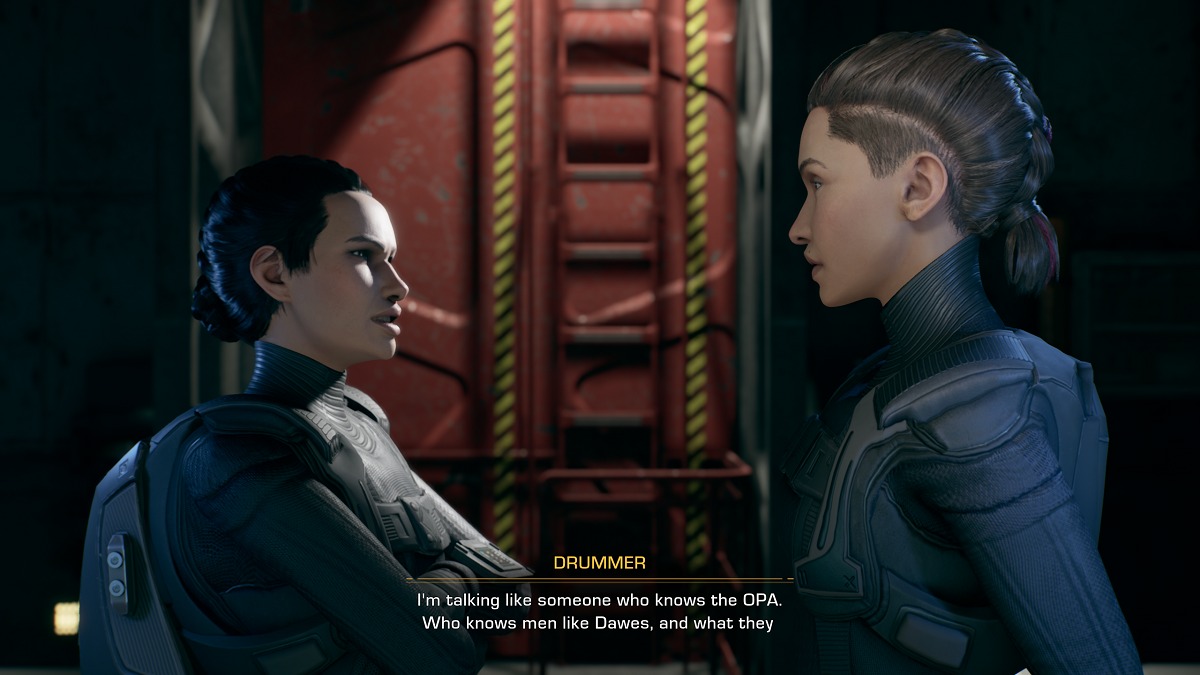
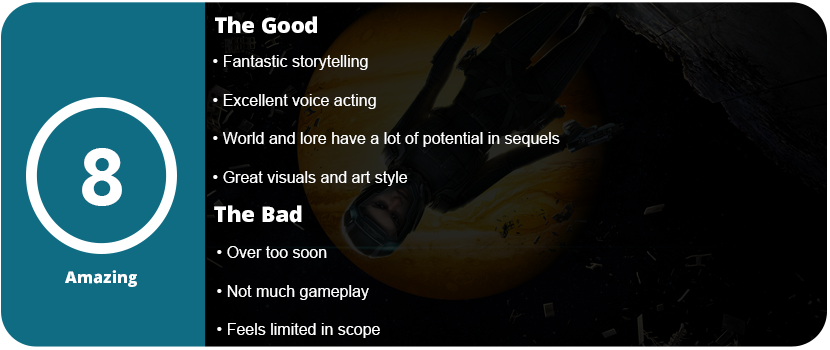
The best part about the game is the atmosphere, characters, and overall story. While this game is the beginning of a larger story arc that will give us more lore and behind-the-scenes politics on the goings-on of this world, this game solely focuses on establishing Captain Drummer as a brand new protagonist, and I love her so much. She has a lot of charisma and is a dark and brooding character without being cringy and formulaic. Her voice actress does a fantastic job portraying this. The other characters are written in your typical telltale manner, which allows you to constantly hate or like a character and then suddenly doubt everything in the end. The cast is small, but the game has a fantastic pace that keeps things interesting.
You’re essentially scrappers, and there is an established order of inners: people who live inside the astroid belt and those who love outside of the astroid belt. There are pirates involved, and there is a secret treasure that everyone is fighting over. I don’t want to go too much into the story, but the game’s atmosphere is dark and haunting, but there’s no horror. The monster here is the human element and just how brutal we can be to each other in a split second. I found the ending very satisfying, and it opens up for a clear sequel that hopefully expands this entire universe that Telltale has created.
The visuals are a huge improvement over their past games. While they aren’t ground-breaking and are required to run on previous generation hardware, the stylized visuals look great, and the blacks, whites, and grays really make you feel alone and claustrophobic all the time. The voice acting is top-notch, as always, and the only thing I left with was wanting more from this series. I also wanted more gameplay, as quick-time events are incredibly dated and there are other things you can do for adventure titles other than these dated gameplay elements. More side quests, an actual gameplay loop, and more side dialogue would be nice to be able to expand upon everything. As it is, the game takes 6-7 hours to finish, but it’s incredibly enjoyable, and I couldn’t put the game down.
First-person shooters were new to me when Red Faction launched in 2001. I didn’t have a gaming PC growing up, so games like Doom, Wolfenstein, and Quake were nearly foreign to me. Red Faction was an overhyped game full of development issues and overpromised ambition. The “Gen-Mod” destruction model is half-baked and barely there. The visuals are dull and boring (even for the time), and the story doesn’t go anywhere at all. Not to mention zero character development. I rented this game and got bored with it maybe an hour in, and I can see why.
Sure, the game looks much better on PC, but there’s not much to really look at. Even for the time level, the design in shooters was fairly dull. Very few had interesting things to look at, such as Half-Life or Halo. Red Faction is just browns and reds with boring caves and industrial buildings. You are on Mars, by the way. You are part of a rebellion group called the Red Faction, who are miners uprising against the overbearing government. You are trying to fight your way to the top and stop a deadly plague that’s killing the miners. This story starts and stops here. It doesn’t go anywhere; there’s nothing to spoil. You end up finding the cure, and that’s really it. The voice acting is actually really good for the time, but the only thing that kept me playing was pure curiosity to finally see this game through to the end.
There are quite a few weapons in this game, but most aren’t found until the last third of the game. You have your standard array of guns. Submachine, assault, precision, sniper, pistol, rocket launcher, and rail driver There’s also a heavy machine gun and grenades. It’s a standard list of weapons we’ve used in so many shooters, and Red Faction doesn’t do anything interesting or fun with them. The shooting in this game feels pretty good and holds up well today, but the enemy AI is terrible, so don’t expect much of a fight. There are vehicles you can pilot in this game, but they aren’t anything fun or interesting. They shoot bullets or rockets, and a lot of the time I would end up stuck in weird physics glitches.
The game isn’t very long. You can finish it in under 4 hours, and thankfully there’s a quick save feature, which I suggest using often. Enemies are run-of-the mill faceless military dudes, and there’s an occasional weird creature thing to mow down in the caves. Environmental detail is what you can expect from this era. Rooms are equipped with an occasional table, chair, or monitor. Nothing stands out or looks interesting in this game. Destruction is boiled down to blowing open a wall to get to a button (there’s a lot of button pressing in this game), and that’s about it. The occasional chunk of wall breaks off, but this is far from what Volition was touting back in the day.
Red Faction is at least a solid shooter. It’s fun while it lasts, and the last act throws new enemies and weapons at you, and there are two whole boss fights in this game. Vehicles don’t feel great to pilot, destruction is minimal, the story has a strong premise but goes nowhere, and the visuals are pretty bland. I did find the stealth section of the game pretty fun. Trying to find your way around without being spotted is like a giant puzzle, but that’s all there is that changes things up. In the end, if you never play this game, you aren’t missing out on gaming history.
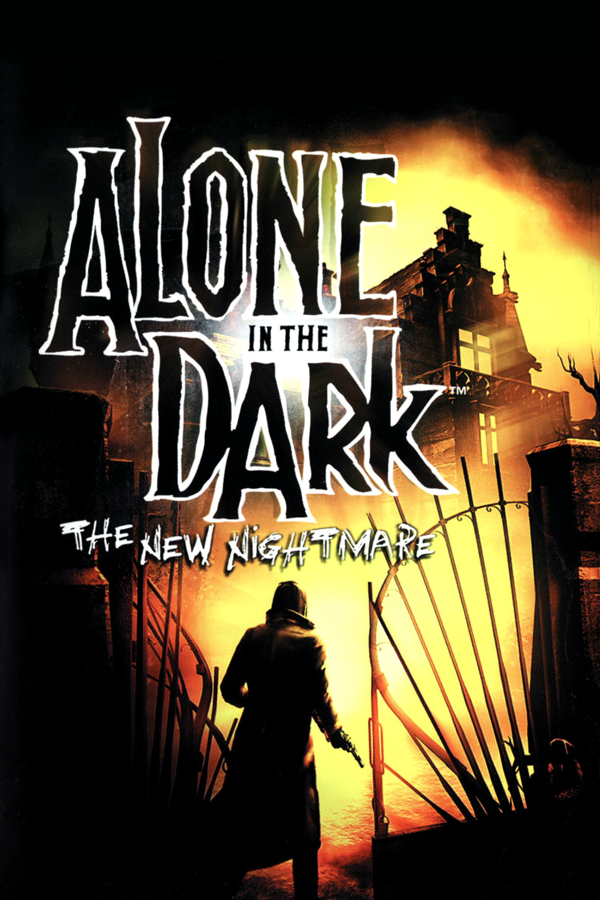
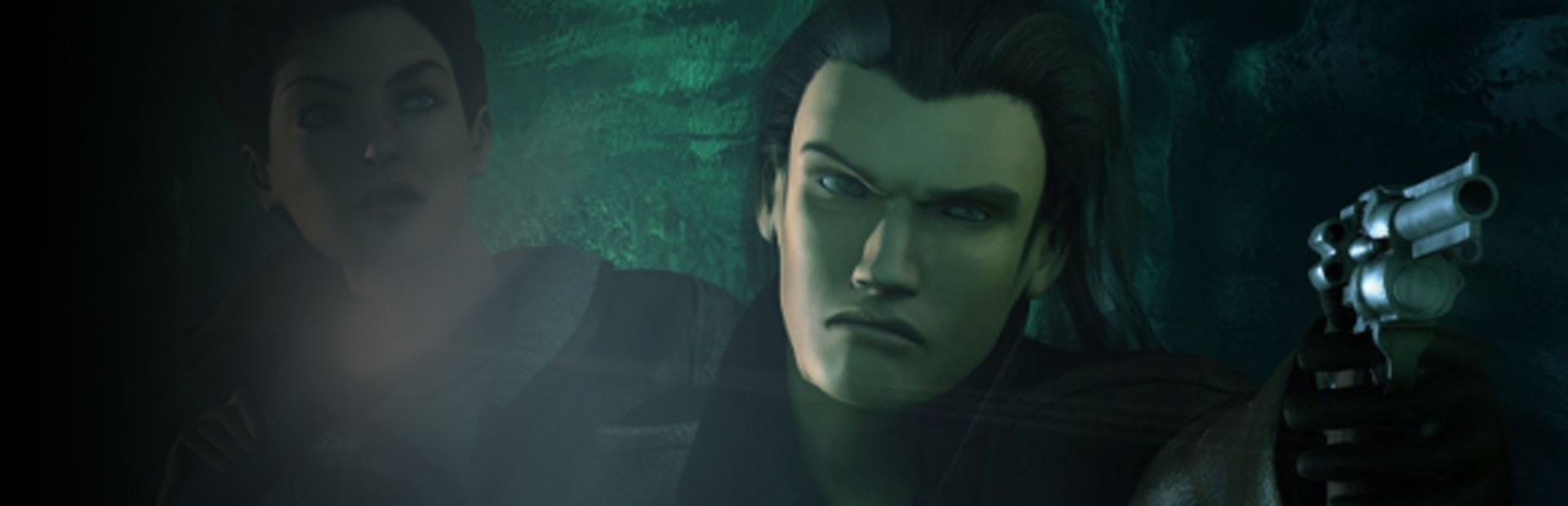
A murder mystery. A supernatural thrill ride. A past that haunts you. These are many things, Edward Carnby and Aline Cedrac have to deal with. Carnby’s best friend, Charles Fiske, is found dead off the coast of an island. You are sent to investigate, but your parachute is damaged on impact, and you must fight off strange creatures from another dimension while trying to find out the fate of your friend. The story here is surprisingly deep and involved, but not very interesting. It’s akin to a sleepy mystery novel that keeps you hooked just enough to keep reading but then quickly forget about it shortly afterwards. The New Nightmare is kind of stuck between a rock and a hard place due to the timing of its release. It came out just before the beginning of a new generation of consoles and kind of feels like it has a foot in each generation.
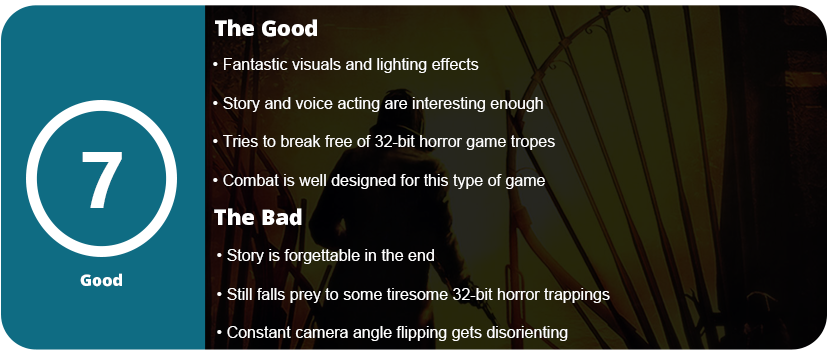
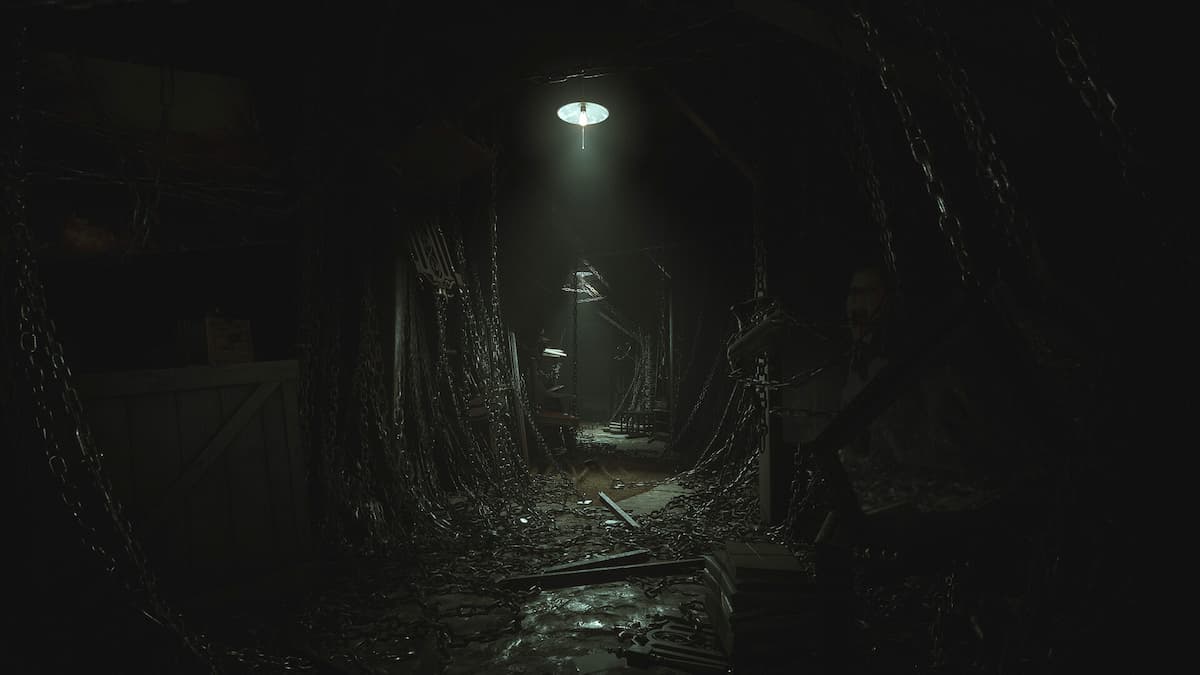
I do have to state that the visuals are very impressive right off the bat. For a Dreamcast game, the pre-rendered backgrounds would be mistaken for a PS2 title, especially when using VGA. They are bright, crisp, and well detailed without that 32-bit sheen that older “tank-style” horror titles had that used pre-rendered backgrounds. The lighting effects are well done, especially when using your flashlight, and the monster designs are surprisingly not very scary or interesting. They feel like generic sci-fi creatures from a B-grade midnight premiere on the Sci-Fi (yes, not SyFy; get that out of here) Channel. The atmosphere is really tense, and there are a few jump scares scattered throughout the game, but overall it does a great job of giving you a haunting, impending doom feeling.
Back to the whole one foot in each generation business it still has pre-rendered backgrounds, tank controls, and a tiresome inventory system. Thankfully, there aren’t a lot of items to pick up, as there are few puzzles in this game. Most of your pick-ups are weapons, ammo, saves, and first aid. You can combine and split objects, but I only had to do this once as Edward. I got tired of having to do a quick reload by going into my inventory screen and manually reloading there, as there is no reload button. You must wait until you are out of ammo first. This would be nice to have, as you eventually learn how many shots each creature type takes and can count them that way. I also hated how much the views and angles flipped around. I appreciate the more modern take on cinematic angles and camera views, but this game could have easily been 100% done in real-time on the Dreamcast with no issues. When fighting some creatures, you get knocked into another angle, and the screen pauses to load for a split second, making you disoriented. This especially proves troublesome during the final boss fight.
I did like how the game doesn’t skimp on ammo, but you must preserve it in the beginning and be smart. I easily missed the shotgun the first time around and had to restart, as you don’t get much revolver ammo in the game at all. The majority are shells. I wound up in a hallway with zombies, zero ammo, and 200 shells. Thankfully, it was only 30 minutes of gameplay before I could get to the shotgun again, but this is another foot in the previous generation. I like the better map with an actual dot on screen showing you where you are, but certain angles and lighting make things hard to see. Some items sparkle, but I would see sparkles through walls that were objects in another room. It doesn’t help at all.
If you conserve well during the first disc, you get many more weapons later on and tons of ammo, and you can just blast away. However, the game tries to guide you a bit better, similar to how modern games do. Puzzles will sometimes be two-way communication over the radio with hints or instructions you need to follow or clearly needing symbols for a code lock, but you can use an item to follow clues and trails to the symbols you need. It’s a great step in a new direction, as I love these games’ atmosphere, story, creature design, or anything else but navigating their frustrating, labyrinthine, and obtuse maps. Backtracking is also not super horrible here. There were only a few times I needed to go from one end of a level to another, and it was the final time before moving on to the next major area. I do detest the limited saving system. You need to find Charms of Saving, and there are only around 20 in the whole game. Thankfully, the game is done in less than 5 hours, and if you are careful, you won’t die and can spread them out. I only used about 10 during my whole playthrough.
Overall, The New Nightmare isn’t a reboot of the game (we were graced with that horrible beauty just a few years later), but a step into making the traditional point-and-click adventures console-friendly and trying to make them more modern. The story and characters are interesting enough to push you through the game, but mostly they are forgettable. The voice acting is surprisingly decent, and the visuals are awesome. There is so much pushing and pulling in two different generations that the game falls into typical 32-bit supernatural horror trappings but also tries to break free of some. There are plenty of weapons and ammo; the auto-aim system works well; the puzzles are not obnoxiously obtuse; and backtracking is minimal. Overall, The New Nightmarehas aged better than many games of its era thanks to trying to push in more modern directions. This is a great way to spend a Halloween or dreary evening.
Bloober Team seems to really love their Layers of Fear series because they thought it was big and important enough to remake both games and tie them into each other with a third overarching story. If either game was confusing enough, nothing is cleared up in the story, and it all comes together to feel mostly poetic, vague, and abstract. While the writer’s overarching story makes sense as she’s trapped in the lighthouse that was meant to be an inspiration, the painter’s or actor’s stories are much improved.
Trying to describe Layers of Fearis a challenge unto itself, as the gameplay is about as abstract as the story it’s trying to sell. The game is full of excellent visual effects, disappearing acts, illusions, the opening and closing of many doors, jump scares, and anything else you can think of to make a game feel like a lot is happening when really nothing is. The game is all flash with no substance, and the remake didn’t do anything to change this. It leaned into the flash at full tilt thanks to the Unreal Engine 5 upgrade and ray tracing. It looks pretty (mostly in the first game, The Painter’s Story), and that’s about all this game has going for it. I thought it would be scarier to push the supernatural themes a bit more, but instead, Bloober chose to just give us an enemy that can hurt us in each story, but it doesn’t add anything. They are slow; you can run from them, and you can also banish them with light, but they come back.
Layers of Fearcame out when P.T. clones were rampant. You start out in a seemingly harmless house with rooms you can walk into, the bare sound of ambient noise in the background, lights flickering here and there, and drawers and cupboards you can open. You end up wandering around the first house a bit until you discover the painting room and dive into the first chapter. There’s a lot of narration in the background, disembodied voices, and notes you can pick up and read to help with context and exposition. Every interactive object has a white circle over it, and you can twist it, pull it, and turn it. Essentially, Layers of Fear is a Bop-It® simulator in disguise, but I digress.
There are rarely any puzzles to challenge you. There might be a large hub with doors that branch off and you need to get an object from each room, or there might be a code you need, but they are always right in front of you by opening a door or looking at the correct object. Layers of Fear‘s only challenge is not getting bored to death because the story is too busy trying to be poetic and pretentious over telling something interesting. Once you’ve opened the 100th door, most may turn the game off, especially when no other gameplay is introduced outside of crouching in the second story. Sure, the second story has fewer illusions and parlor tricks and feels more like an adventure, but I also understand the painter’s story is a trip through madness and insanity, but you sure wouldn’t be able to tell if it weren’t for the visual rollercoaster.
I even felt the DLC from the first game didn’t add anything known as The Inheritance. It was 45 minutes of frustrating mazes that didn’t deliver anything new or exciting. The new DLC called The Final Note is just more of the same without giving us anything unfamiliar or appealing in the slightest. Even the overall story for the writer that’s supposed to tie all of this together is very short, linear, and completely unnecessary in the long run. With two games to get through and the second story being much less interesting, I don’t see many players finishing this at all.
There are collectibles in each game that can get you achievements, but many are easy to miss. If you don’t look at the right object, open the wrong door, or just walk past something, you can miss it. They don’t give any additional facts, story bits, or anything noteworthy, so outside of achievement hunting, there isn’t a reason to do this. I honestly would have preferred an entire third entry rather than a remake after spending around 2 hours in each story. The game just becomes a slog of cheap thrills and poor storytelling.
The visuals are a treat at least, but for some reason, they don’t look as good when you get to the second story, which is Layers of Fear 2. I’m not sure if it’s because the graphics are just more plain here. Things are less colorful and trippy and are a bit more grounded, but the first story looks so good with great lighting effects and better textures. Once I finished the first story, I did look forward to what was happening with the writer’s chapter, but these segments are so short and don’t give us any more meat for this already scrawny game.
Overall, Layers of Fear is a remake no one asked for. Remaking an already mediocre and mostly bad sequel and trying to tie it together with a half-assed third story just doesn’t work. We get the first game’s DLC that feels pointless, a new DLC that feels aimless, and monster chases that are now dangerous but don’t need to be. The game is barely a horror title. Without the lighting effects done the way they are, you wouldn’t know. I didn’t ever feel scared; there were occasional moments of urgency, but that’s about it. The stories are convoluted hollow shells that do a bad job of telling a story in a game that you feel imprisoned in with no gameplay, and the only thing to look forward to is the story. This should have been a third game and not a remake.
Walking simulators are something I really enjoy as they can focus mostly on the story, characters, and atmosphere. Sadly, it’s also a big gamble as sometimes the story can be great, but the gameplay is awful or the story is awesome, but the ending sucks and pretty much makes the entire experience not worthwhile. The Chinese Room is notorious for its walking simulators, being almost exactly that, and this game is a spiritual successor to Dear Esther which looked great but was forgettable.
The game puts you in a small rural British town of Shropshire where there doesn’t seem to be anyone around. All you know is to follow a ball of light floating around and it guides you around the town to activate cut scenes of the main characters talking about what happened at that moment. You will see the aftermath such as a wrecked car, a turned-over box, bloody rags, etc. There are no actual character models as they are just whisps of light in the shape of people acting things out on screen. This can make the game aggravating to play and pay attention to. A game with literally zero gameplay outside of an action button, and doesn’t have any characters on screen better be damn good right?
As you walk around and follow the ball of light you will sometimes hear a numbers station playing on a radio or a telephone ring. These are extra tidbits of stories you can listen to. Each part of the town focuses on a specific character, but sadly I was often lost as to who was what as there were no faces to put to any of the voices. Once you see a cutscene play out your ball of light will stop and wait, sometimes. There were quite a few glitches in the game in which the ball of light would get stuck in the ground, not continue on, or just disappear somewhere never to be found. I had to restart the game to get the ball back on track.
Major cutscenes that actually advance the story are triggered by grabbing a ball of light and moving it left and right until it explodes. This was originally an excuse to use the then-new DualShock 4 touchpad. Here it’s just a mouse drag and feels pointless. You know you are done with an area when you get a ball of exploding light that takes a few seconds to trigger. After this cutscene, the area goes dark and you follow a trail of lights on the ground to the next area. This is all there is to the game. It’s pretty to look at, even today. The game uses CryEngine so it looks awesome and holds up well, but it’s still forgettable. There’s nothing memorable about a realistic-looking generic old English rural town.
I did eventually get into the story towards the end. However, the game just ends on a pretentious note and I felt deflated and annoyed. I really hate endings like this. This was four hours I will get back and I won’t take anything away from this game at all. No interesting gameplay, no memorable visuals, and no exciting story. The voice acting is great, but that’s about it.
Sadly, Everybody’s Gone to the Rapture is a game I’ve avoided for a decade and there’s a reason for that. I knew that this game would be very forgettable and a waste of time. I enjoyed the idea of this strange apocalyptic infection that’s passed around through phone and radio waves, but there’s no pay-off in the end. That also doesn’t take into account the aggravatingly slow walking pace that most people won’t be able to put up with. Even if it was two times faster it would be more tolerable. It feels like you’re crawling. That would be fine if there were more visuals to look at but there aren’t.
Did you ever play Resident Evil 4 and want to just organize that inventory? It’s kind of satisfying getting all your items in the right spot, so someone thought that should be its own puzzle game. In Save Room, you organize weapons, health, and other items ripped straight from the game it’s inspired by.
There are only 40 puzzles in total and you can blow through them in just about an hour. On the left is a cache with a grid and on the right are the items you need to fit in there. There are just enough squares to fit every item exactly. You begin with just fitting small pistols and then larger weapons like shotguns and rifles. Shortly after this, you need to organize health items and grenades. Things get more complicated when you start out with too many items.
Well, just like in RE4, you have a health meter and need to refill your guns. You need to do this in a certain order as this is also part of the puzzle. You may have three health items, but can only use two so you must figure out how to combine herbs and also hurt yourself with poisoned eggs and fish to be able to use more health items. Later on towards the last dozen puzzles you start crafting ammo in addition to stacking ammo and reloading weapons.
This all sounds complicated, but if you ever played RE4 you know exactly what to do already. A few puzzles will get your brain juices flowing. Mostly the ones that needed me to combine certain types of ammo and reload or stack ammo in a certain order. I only had to look up a few puzzles online, but most are quick trial and error levels and you will be breezing through them.
This sounds like a great concept, but in the end, it gets old really fast and it makes you just want to play RE4 instead. The visuals are pretty ugly, there’s a single track that loops in the background, and that’s all there is to this. For the low asking price, I can’t really complain. I had my hour of fun, but it’s totally forgettable. This isn’t on the same level as Portal or even something like The Room series. You won’t be talking about this 10 years from now. I honestly can only recommend this to RE4 fans who want some sort of weird spin-off. Anyone else who never played RE4 just won’t care about this or even get the idea.
Try multiplayer. A lot of fun !