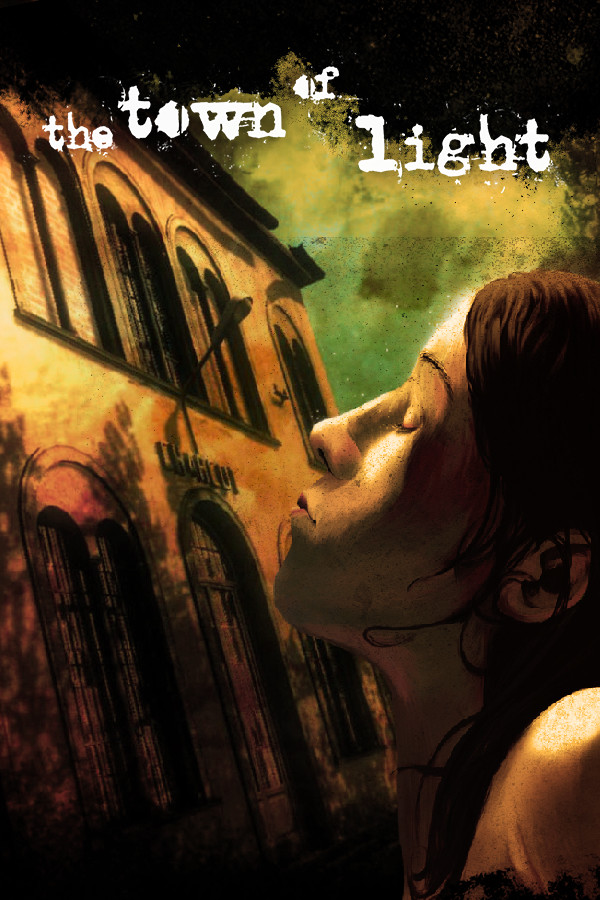
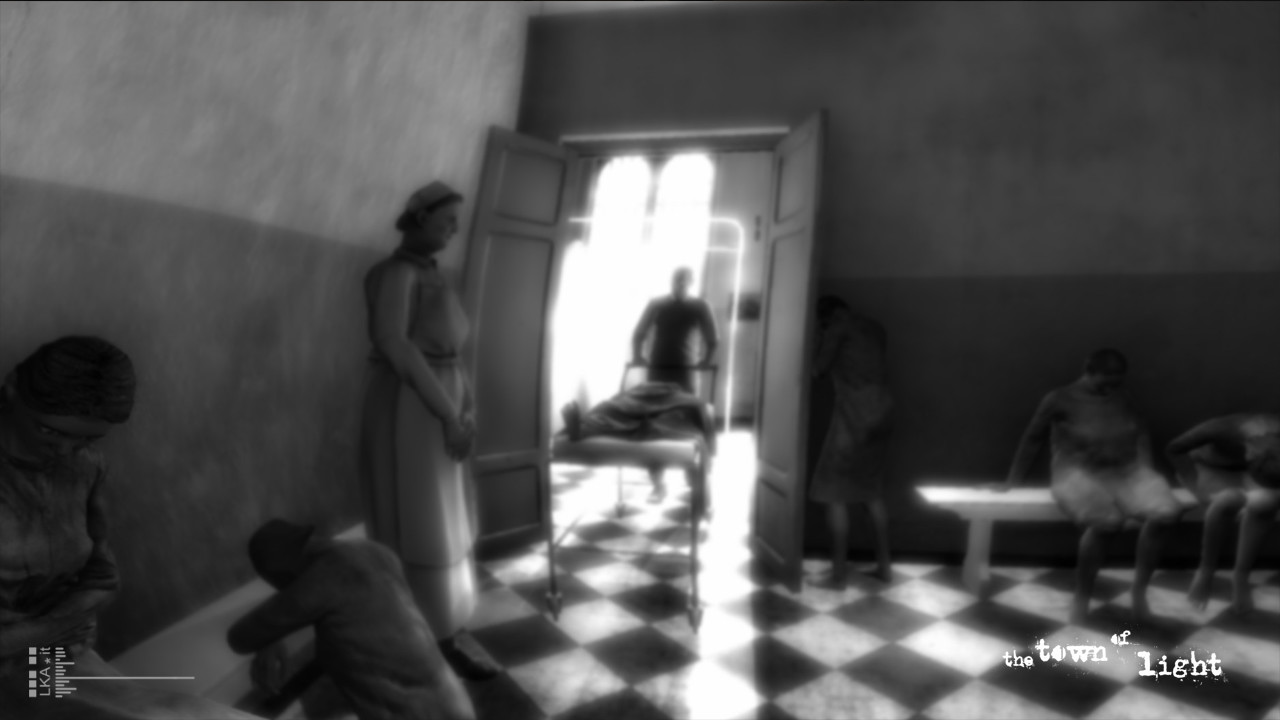
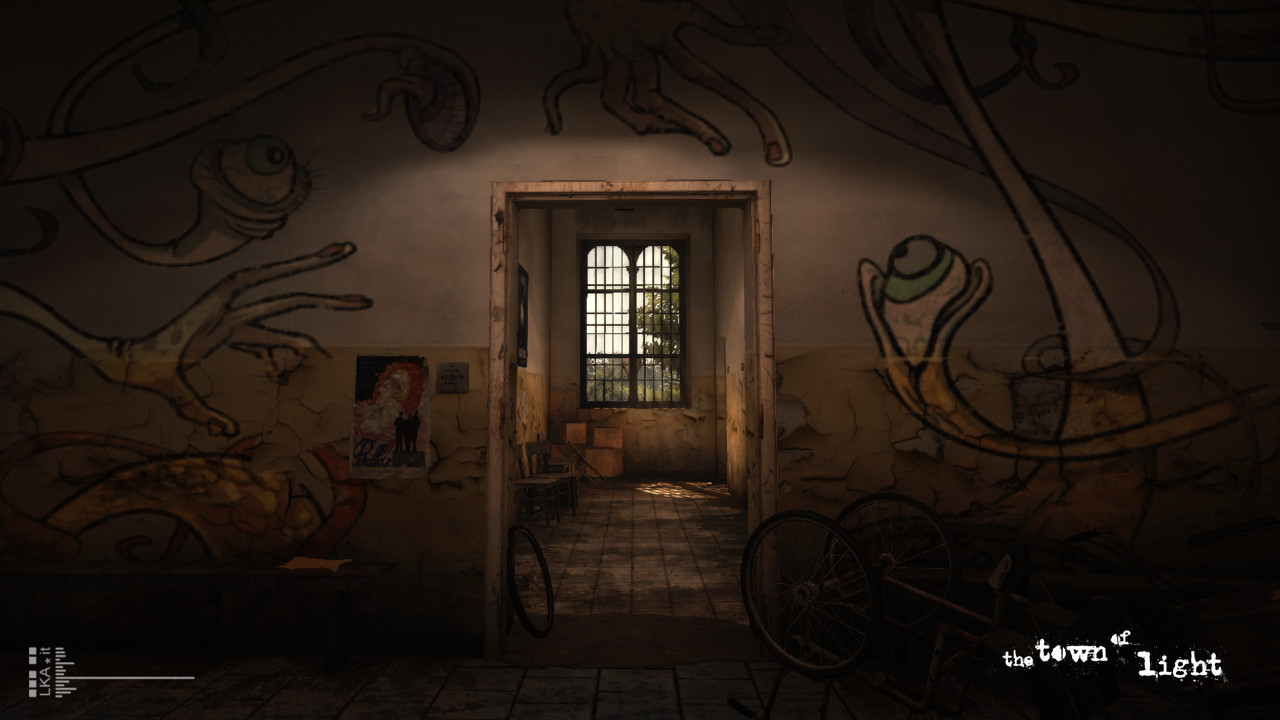
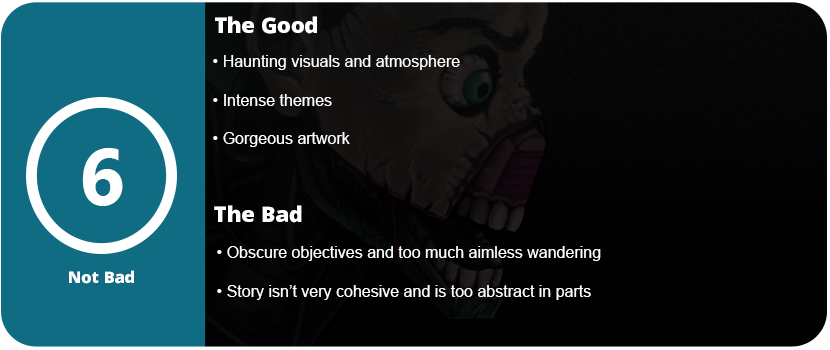
I absolutely love how the human mind works. It is fascinating how the human mind can break, repair itself, and affect the body and psyche in ways we still don’t fully understand. The Town of Light explores these ideas with a real-life case. The game is set in a hospital in Tuscany, Italy, called the Ospedale Psichiatrico di Volterra. You play as a woman named Renee who seems to be coming back to this hospital and reliving her experience here. The game’s unsettling ambient audio and flashbacks of dark and disturbing sketches are fantastic to experience.
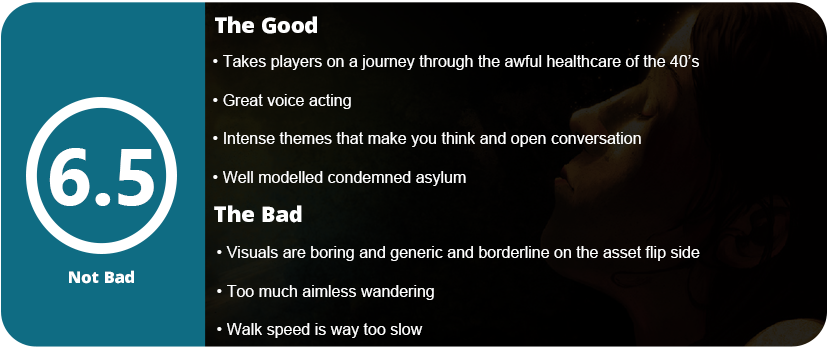
Sadly, that’s the only enjoyable part of the game. The entire game has an incredibly slow pace and the usual obscure and abstract way of finding your way around and figuring out what to do. There are way too many doors to open, and there are too many spaces to explore with nothing in them. This hospital is two stories and quite large. With the slow walking pace, I just wanted to experience the story and move on. You don’t know you’re heading in the right direction until Renee continues narrating the story or a flashback happens. These flashbacks are either pencil sketches or full-on cutscenes. If you press the back button, some chapters will have Renee tell you where to go; however, everything is in Italian, so unless you pull up a translator or can kind of figure out prefixes and suffixes of words, you might get lost based on the signs.
There are eight diary pages to collect and find. These are highlighted notebooks in certain rooms, and I suggest getting them all. The notebook is an insightful dive into the mind of those that are mentally ill and have various psychological diseases. The sketches are haunting and beautifully done. The best part of the game is the narrations of the various hospital records you must find to advance the story. The entire tale of Renee and her fellow patients is fascinating, haunting, and quite disturbing. It also shows how awful the healthcare, especially mental healthcare, was in the 40s and 50s in not just Europe, but all over the world. I work as a nurse myself in a hospital, and it’s insane to know that our current modern way of doing healthcare (humanely) is very recent. Like the last 25 years, recent.
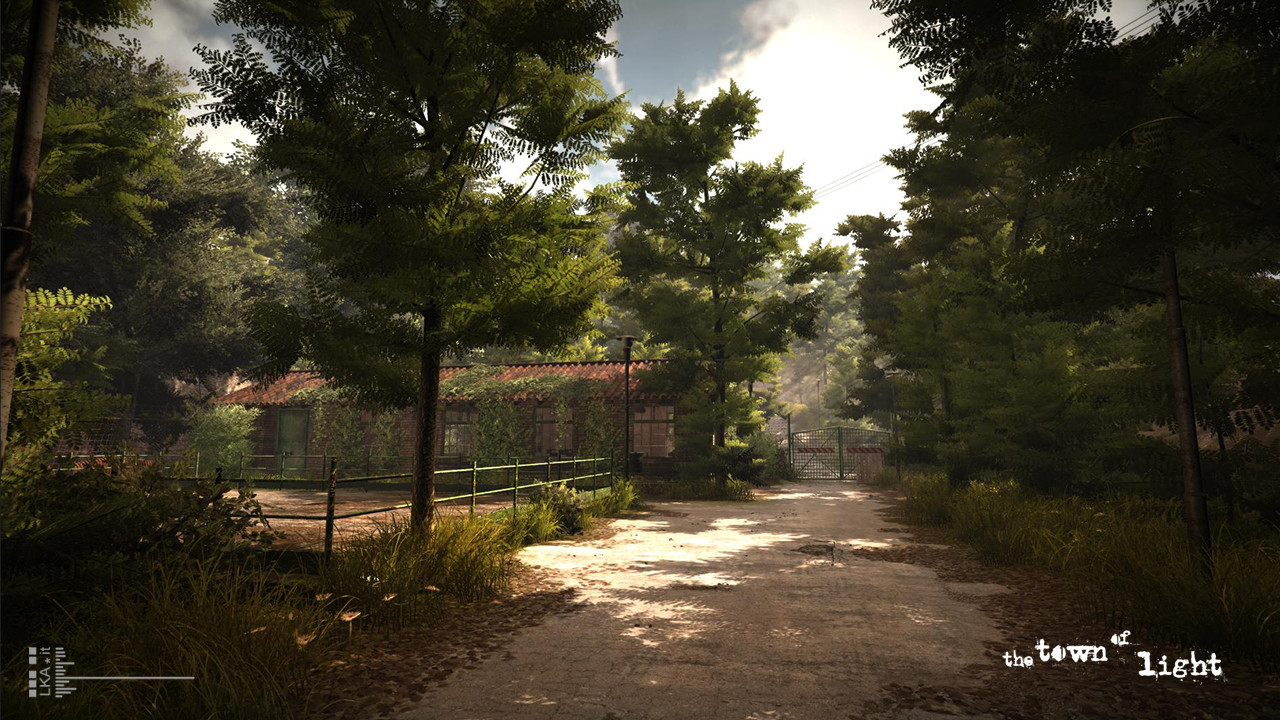
I also have to give credit to the developers for accurately portraying a decaying asylum. It looks and sounds just like you would find one in real life. I highly recommend watching The Proper People on YouTube, who are the best urban explorers out there. They have visited asylums in Italy, and the building is very reminiscent of how they stand today. The peeling paint, depressing color scheme, abandoned, rusting bed and wheelchairs, and old and mysterious medical equipment that look like torture devices (some were). Despite all of this, however, the game is very boring and ugly to look at. Even for 2016, the game is teetering on the border of asset-flippy territory. It just looks so generic and low-budget despite some decent lighting effects.
The voice acting is very well done, and the overall picture you walk away with is the narrative of mental health in general and how people are taken advantage of back in the day. The game also explores how orderlies raped and molested the women and lied and were believed. The doctors literally got away with murder, and families were lied to and betrayed without ever knowing it. Thankfully, this is all in the past, but the hundreds of thousands of victims who died and suffered under the guise of humane healthcare is a sad story and something worth discussing even today.
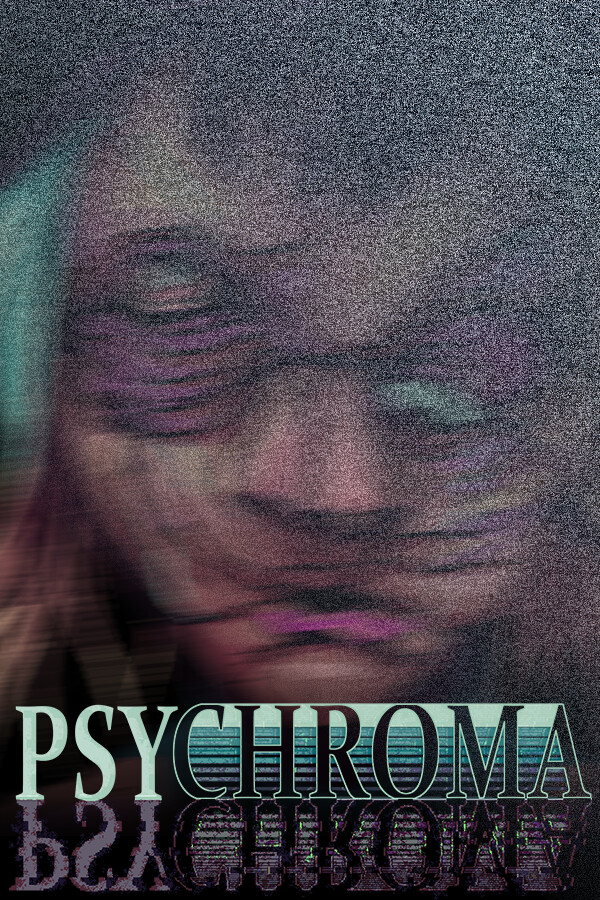
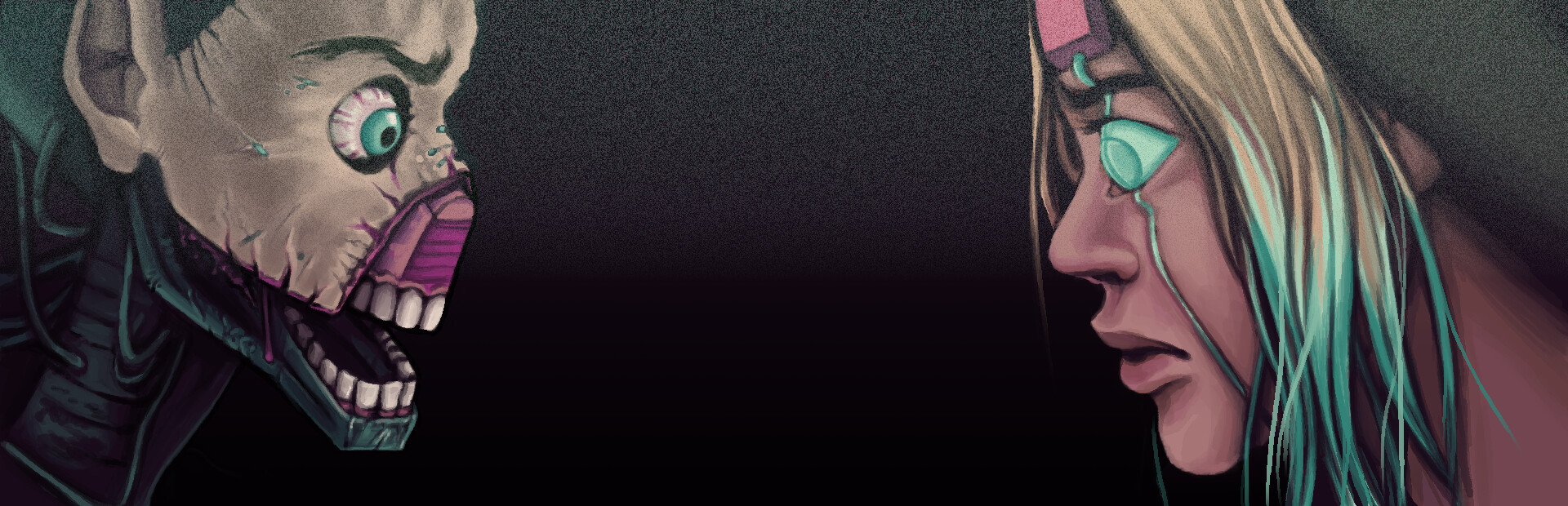
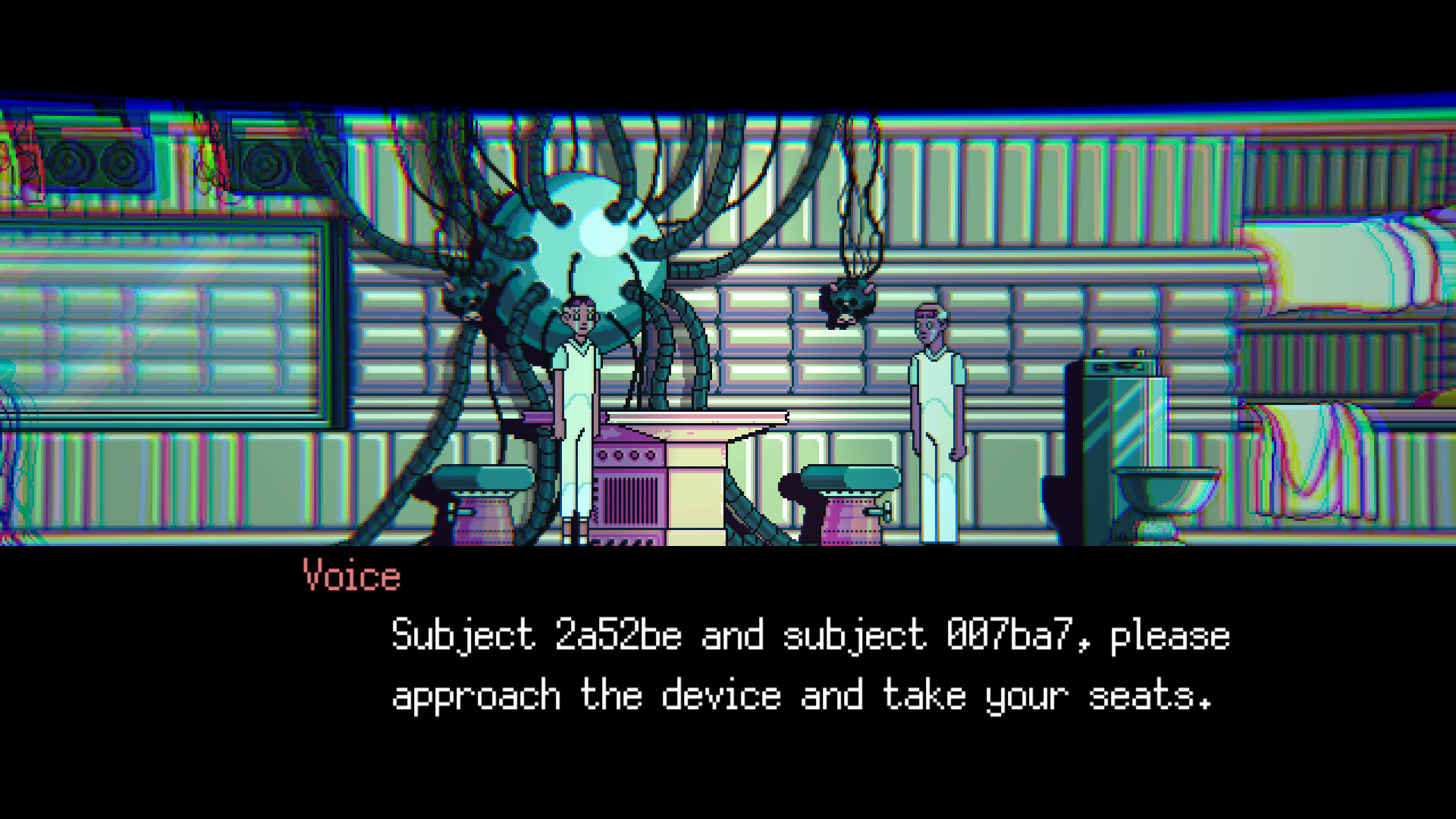
I personally love cyberpunk settings. I particularly enjoy cyberpunk settings that delve into the mental states of individuals with cybernetics and explore the workings of such a world. Psychroma explores the idea of secret human experimentation and how it can affect and break the human psyche. The overall story itself is pretty good, but getting there feels like a chore. The story is broken up quite a bit and feels confusing to piece together through most of the game. A lot of backstory is told through computer logs that you must find hidden throughout the house. You play as a cyborg/human experiment named Haze. The atmosphere is quite unsettling. Outside, acid rain falls down from the sky, eating away at the corrugated steel walls and rebar. The mystery of the house and the haunting past is what you’re uncovering.
This is a side-scroller adventure title, so there’s no combat here. You have a limited inventory system and must interact with objects until things happen, hidden passages open, and new doors unlock so you can get that next item to advance through the story again. This is sadly very obtuse and obscure. Many times I ran around all seven floors and clicked on everything only to discover I had to use an altar to go back in the past and unlock something new. Usually info like a passcode you need for a new door. There are three altars in the game, and each one has a part of the house locked off and has isolated memories. You must find cards for housemates and determine their past and role in the experiments.
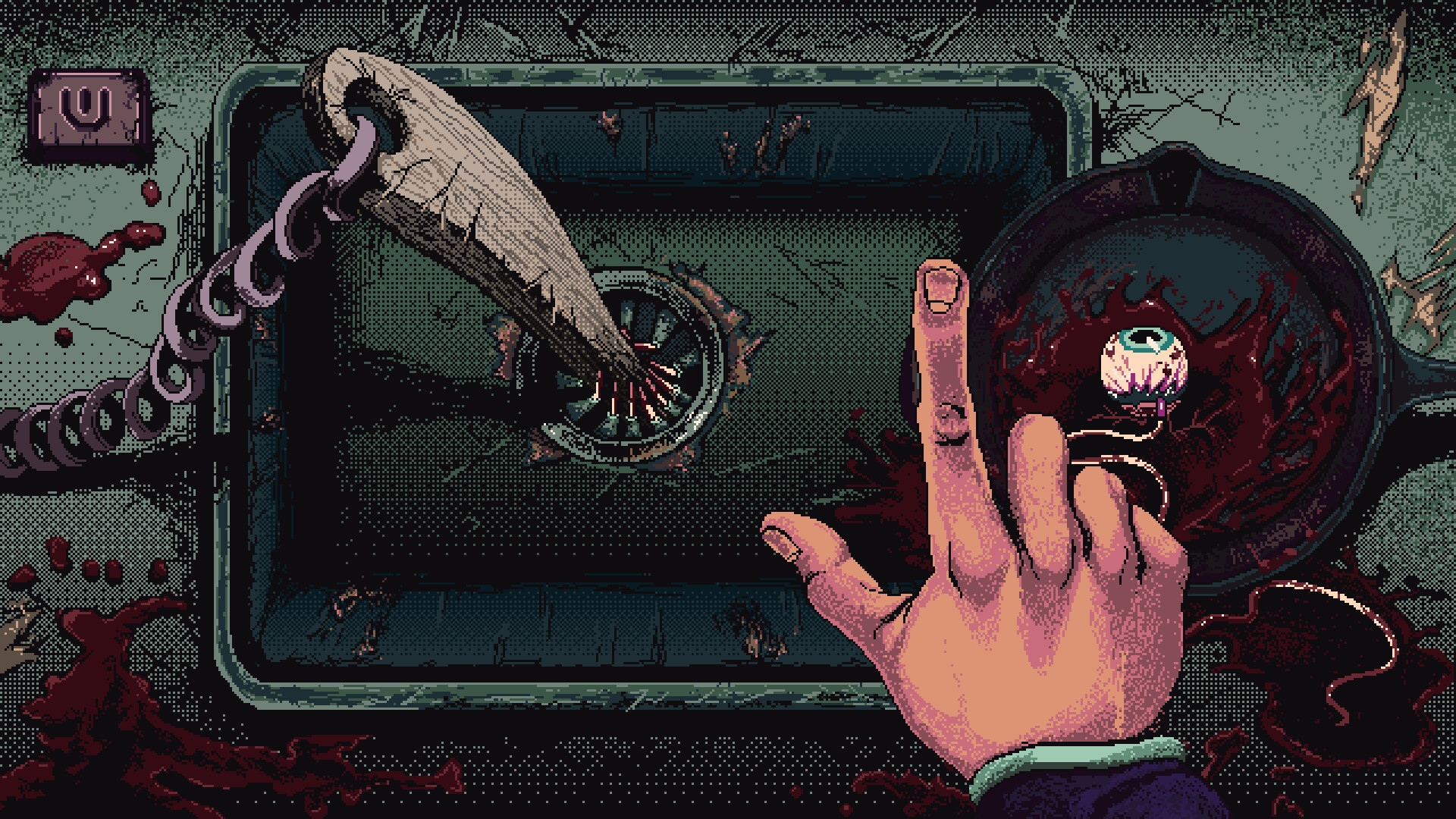
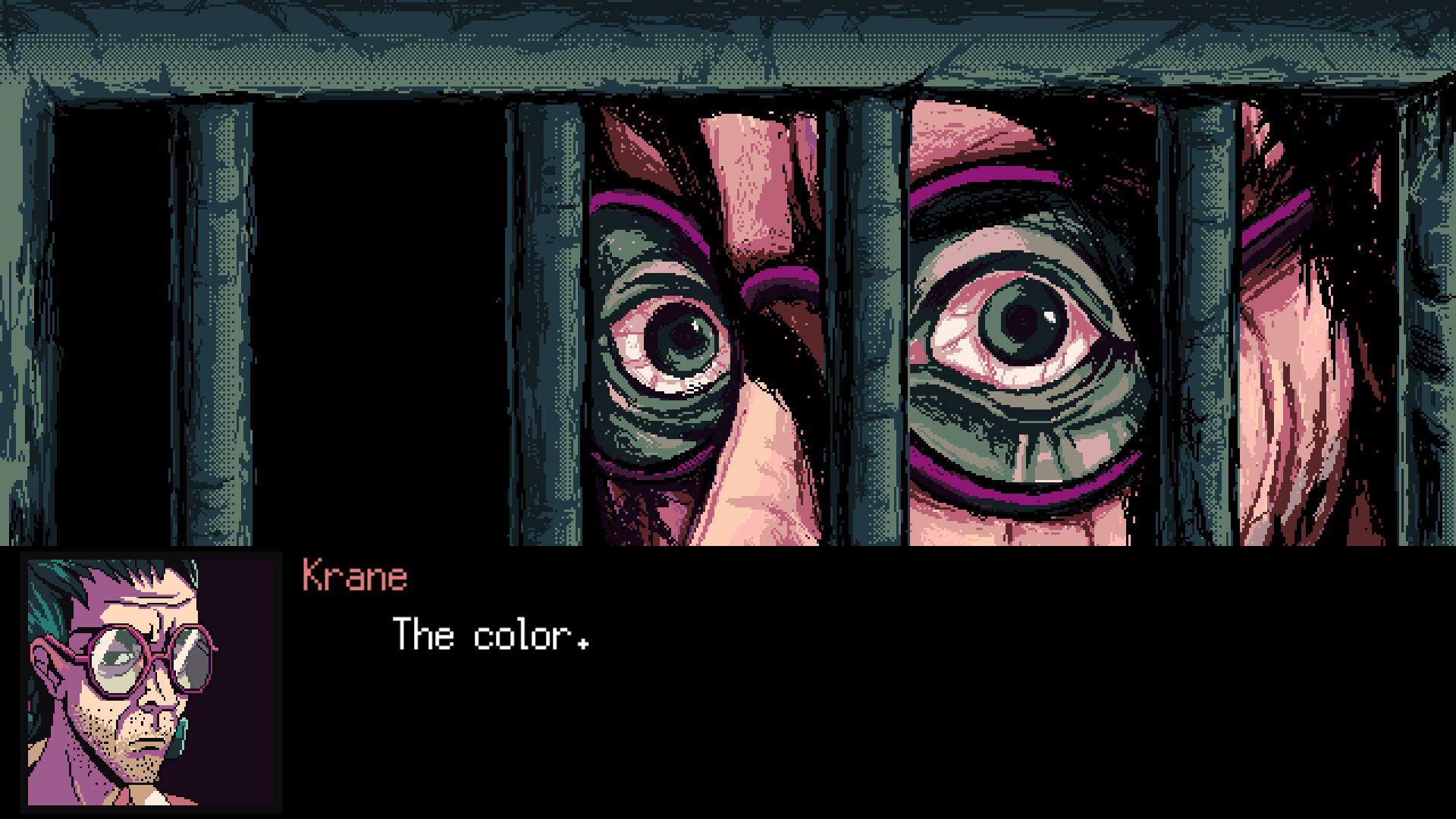
I don’t want to dwell too much on the story since that will spoil the game, but the fullscreen stills and artwork are fantastically drawn. The haunting horror and torture of the children here and various subjects is gruesome. There’s quite a bit of gore here, but what fascinates me is cyborg gore and how they work medically. I will only say that the premise of the game is that there’s something sinister going on in the house, and a member of it might be a creep. Haze gets suspicious early on, but who it is and why is what you need to discover. There are a couple of plot twists, and the story is good once you can piece it together and make sense of it. I wanted to know a bit more about the character’s past, but the game is only 2-3 hours long, so there’s not a lot of time for character building.
I honestly just didn’t like the aimless wandering, and the objective in the menu screen doesn’t help at all. I was able to figure out a good portion of the game by myself, but I got to a few spots where I felt completely stuck, and the constant backtracking and running around room after room trying to find that one spot I missed drove me nuts. My strategy of turning on the lights in rooms I’d been in didn’t help if I missed an object or didn’t interact with it correctly. If the game had a map system with a flashing blip or something to indicate your floor, it would have been more fun.
As it stands, Psychroma does a great job giving up a disturbing cyberpunk mystery of hospitalization, experimentation, and creepy family values. The game dives into gender identity a bit (that’s going to piss some snowflakes off) and self-discovery. I felt the overall story was pretty good, the artwork was fantastic, and the atmosphere was quite haunting and depressing, but the actual gameplay held everything back some. The constant backtracking and item hunting will put a lot of players off.
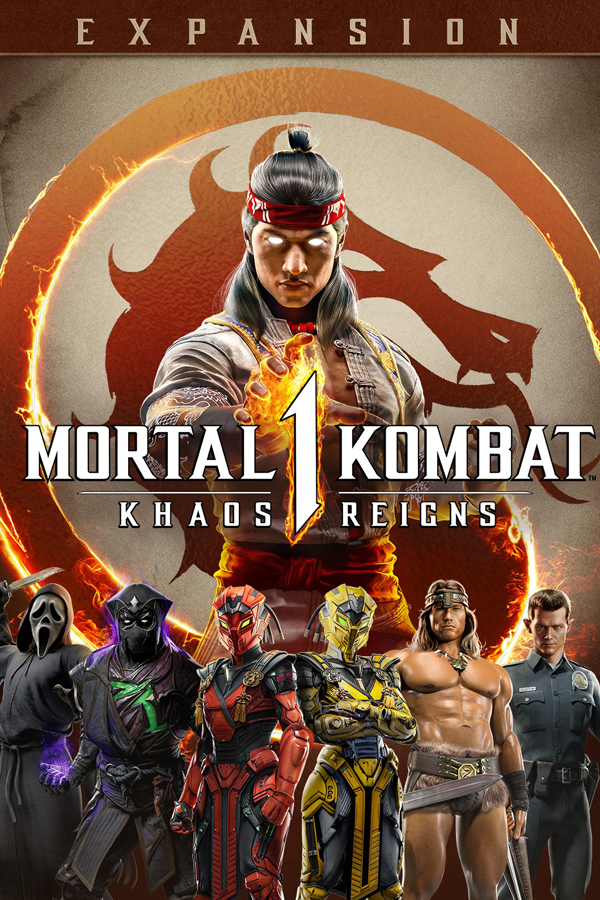
The idea of DLC for Mortal Kombat was an exciting prospect when it started with Mortal Kombat (2011). You paid $5 for a new character, and this felt fine. Mortal Kombat X introduced the character pass system, which was also well liked. You paid $20 for four new characters that were spread out over a few months. Mortal Kombat 11 introduced a terrible monetization feature that required too much grinding for unlockables and customization items. This trend sadly got worse with Mortal Kombat 1, with entire outfits and sets being stuck behind a paywall. One of my favorite features of any MK game was the alternate outfits, and being able to customize them was a dream come true, but Neatherrealm went the evil route and locked most of it away.
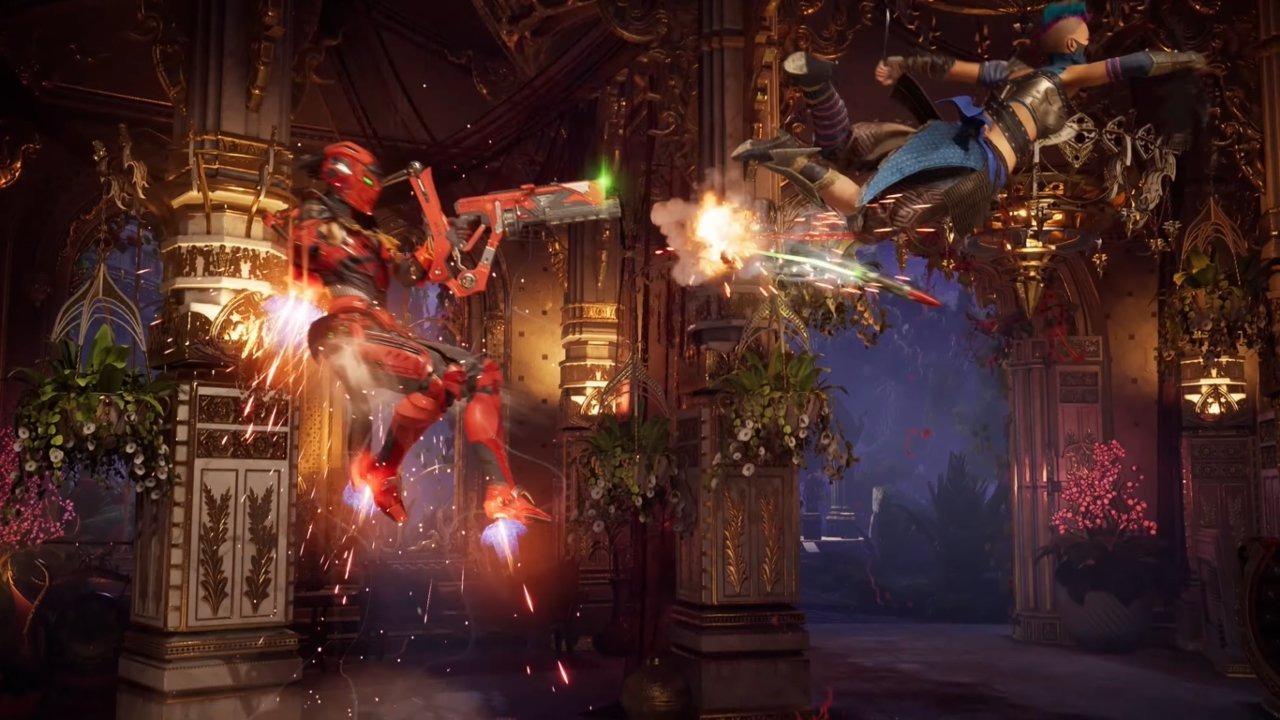
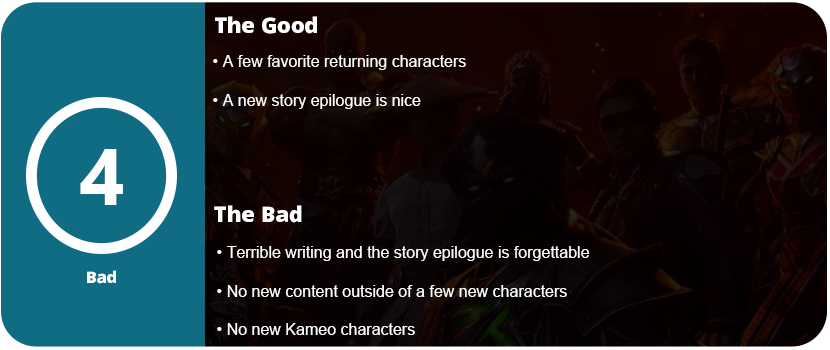
The same appears to be the case for single-player content. While I don’t mind paying a few dollars for more of the fantastic story mode and more characters, make sure to make it worthwhile. The Aftermath expansion for MK11 was awesome and was a great ending to that story. This epilogue has a lot of problems with it, mostly being the terribly written dialogue. Everyone is angry, growly, and so much “GRRR!!!” in their voice that it is laughable. Everyone seems to be delivering one-liners rather than cohesive dialogue. Trying to throw in bits of story exposition into single lines of dialogue is so stupid and elementary. The main campaign had pretty good writing with some characters delivering full speeches and emotional depth. This just feels like a 5th grader reading a bad comic out loud. The entire Khaos realm invading the current timeline is a cool concept, and Titan Havik makes for a great villain, but it’s just so badly written, and the fights are monotonous and boring. You get four more chapters, but each fight is just a recycled and uninteresting Khaos version of other characters. These seem to have some sort of Mad Max vibe to them, but it just looks like a group of terribly dressed punk rock fans.
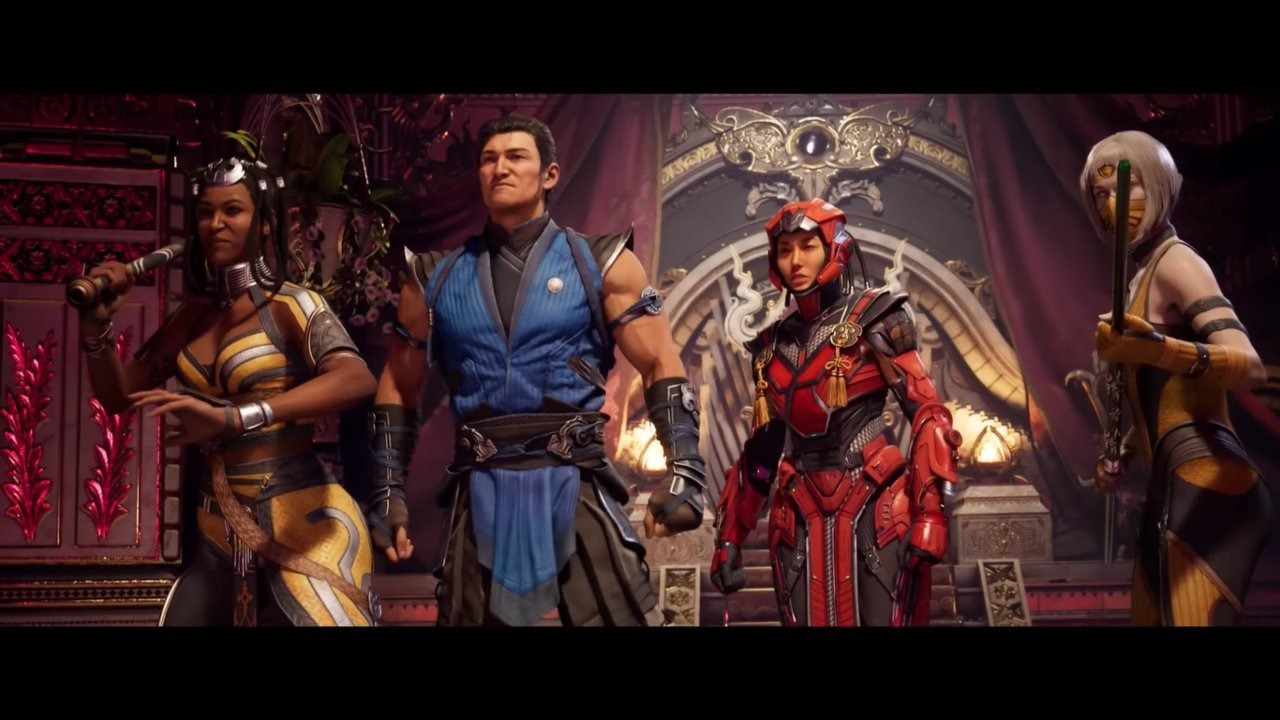
Let’s talk about some truly awful characters. Sektor and Cyrax seriously suck. Not because they are gender-swapped. Oh no, no, no. They are no longer cyborgs, which means their uniqueness is gone. Netherrealm could have made these female cyborgs, and it would have been awesome still. Even if these were human males, they both would have been lame. I don’t understand the push to humanize Cyrax and Sektor lately. This means their cool moves and deadliness feel off. We don’t need them to have in-depth dialogue and feelings. They are killing machines and reminded me a lot of the Predator. Because these are lame exo-suits, you no longer get the cool gadgets like the Cyrax’s chest blade or net, and Sektor’s missiles just don’t look cool. The missile launcher is a giant, oversized shoulder pack that just doesn’t look right. The characters are also poorly written and feel generic, so there was no saving them there either.
Then that brings us to the DLC characters, which at this time of writing, T-1000 and Conan are not available yet. Ghostface is one of three guest characters, and he looks great with these flowing robes, having great physics effects, and the goofiness from the series as well is fine. I don’t enjoy his power moves, which just have him use various knife moves. His fatality is funny, so there’s that, but his animality is weird. Noob Saibot is the only character here that I enjoyed playing. He looks cool, and his backstory actually makes sense in the epilogue. Noob Saibot is the only saving grace for the entire package, but it still doesn’t justify the price tag.
And honestly, these guest characters are getting old. It was cool back in MK (2011) with Freddy Krueger and Alien, but it’s becoming too much. Spend the money on the licensing to bring back characters people love or create new ones. There are also no Kameo characters this time around either, which is a real shock. We could have at least gotten a few more of those. That also doesn’t help justify the price tag. $40 for a 2-hour, terribly written epilogue and three new characters. At launch, Ghostface was not available at all. The only redeeming part of the game at launch was Noob Saibot. What is Netherrealm Studios thinking? They aren’t.
And that brings me to the fact that this is my favorite game series of all time, and it’s becoming live-service garbage. The entire series needs to take a few years off, reboot, and come back with what fans loved. More content, less grinding, and more unique characters with fewer guest ones. As it stands, Khaos Reigns is worth maybe a $10-15 purchase on sale, but that’s it.
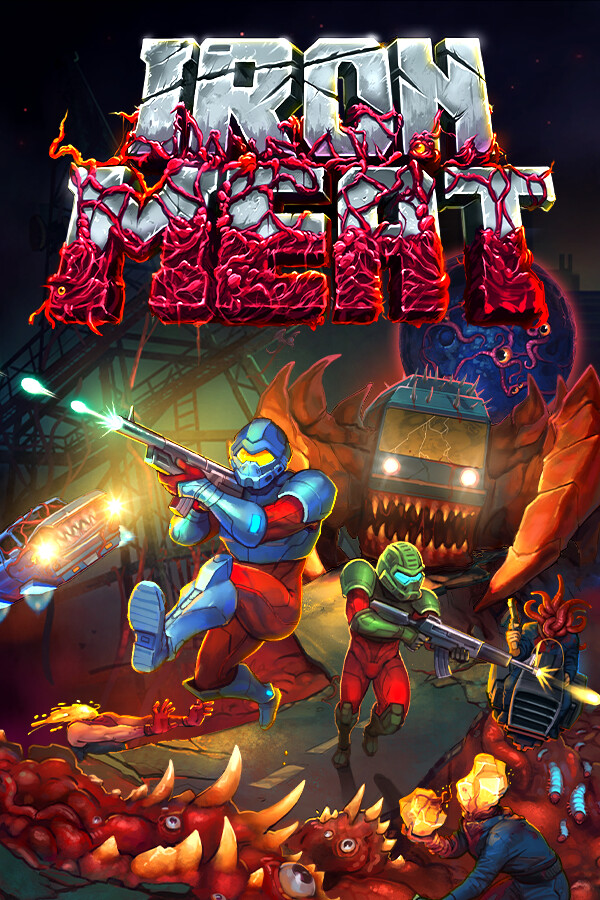
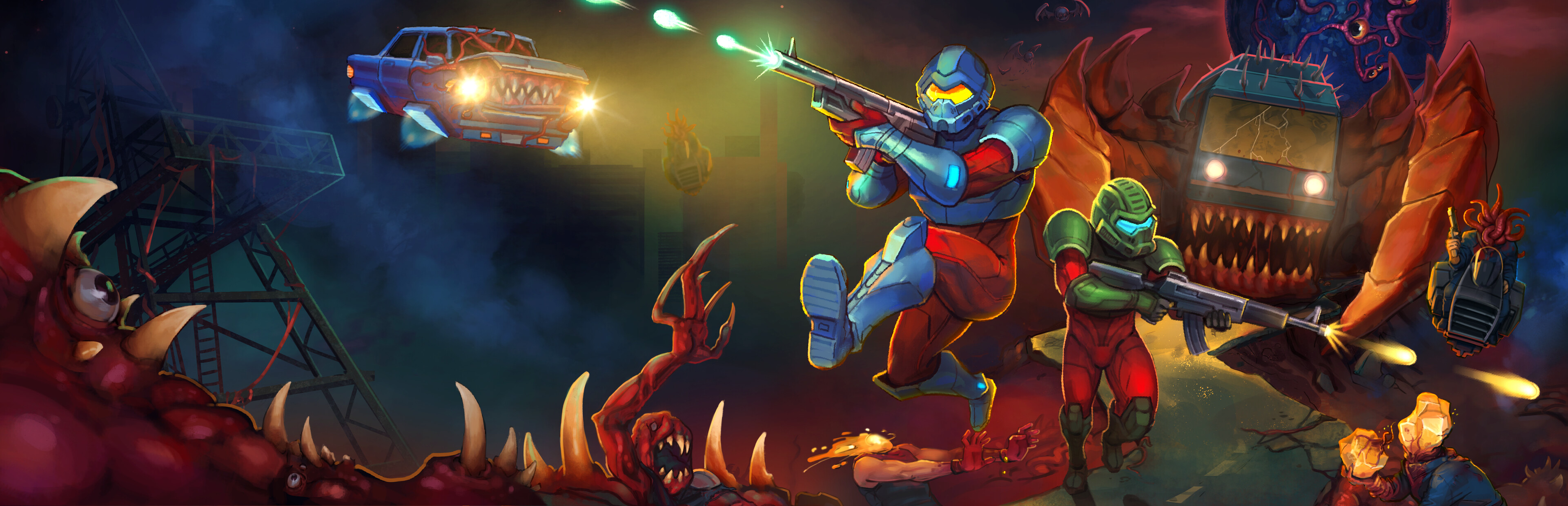
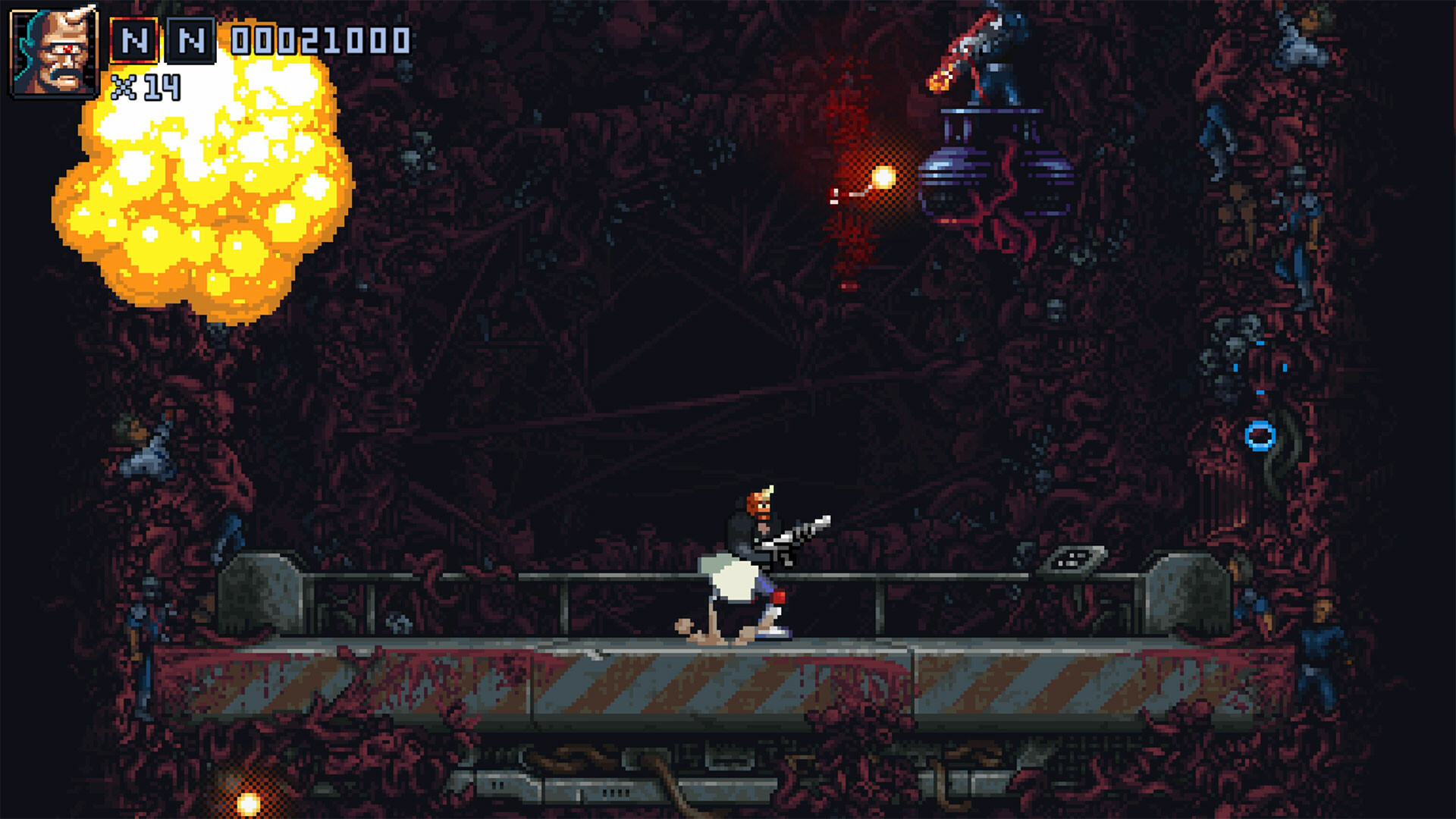
Contra is the blueprint for side-scrolling action games. They need to be tough as nails, have insane bosses, and usually have a lot of gore or some sort of inspiration from biomechanical art. Moreover, the Earth is under the control of a vast and formidable alien race. Iron Meat nails all of these and is a blast to play. The game can also nail all of these aspects and still fail in level design and gameplay. That’s thankfully not the case here.
As a stalwart soldier, your mission is to save Earth from an alien race that has taken over the Moon. There are nine unique levels in this game, each with varying lengths, enemies, and obstacles to overcome. The game is very pick-up-and-play friendly, as you just run forward and blast everything in sight; however, Iron Meat has a couple of things it does a bit differently. You can find ammo pickups inside objects. Occasionally, friendlies may drop them, or you may find them lying around. They are not commonly found, and if you die, you forfeit your weapon. The standard weapon is a rapid-firing machine gun that works well enough. Other weapons include different firing rates and patterns. There are also pickups to increase your score by 1,000.
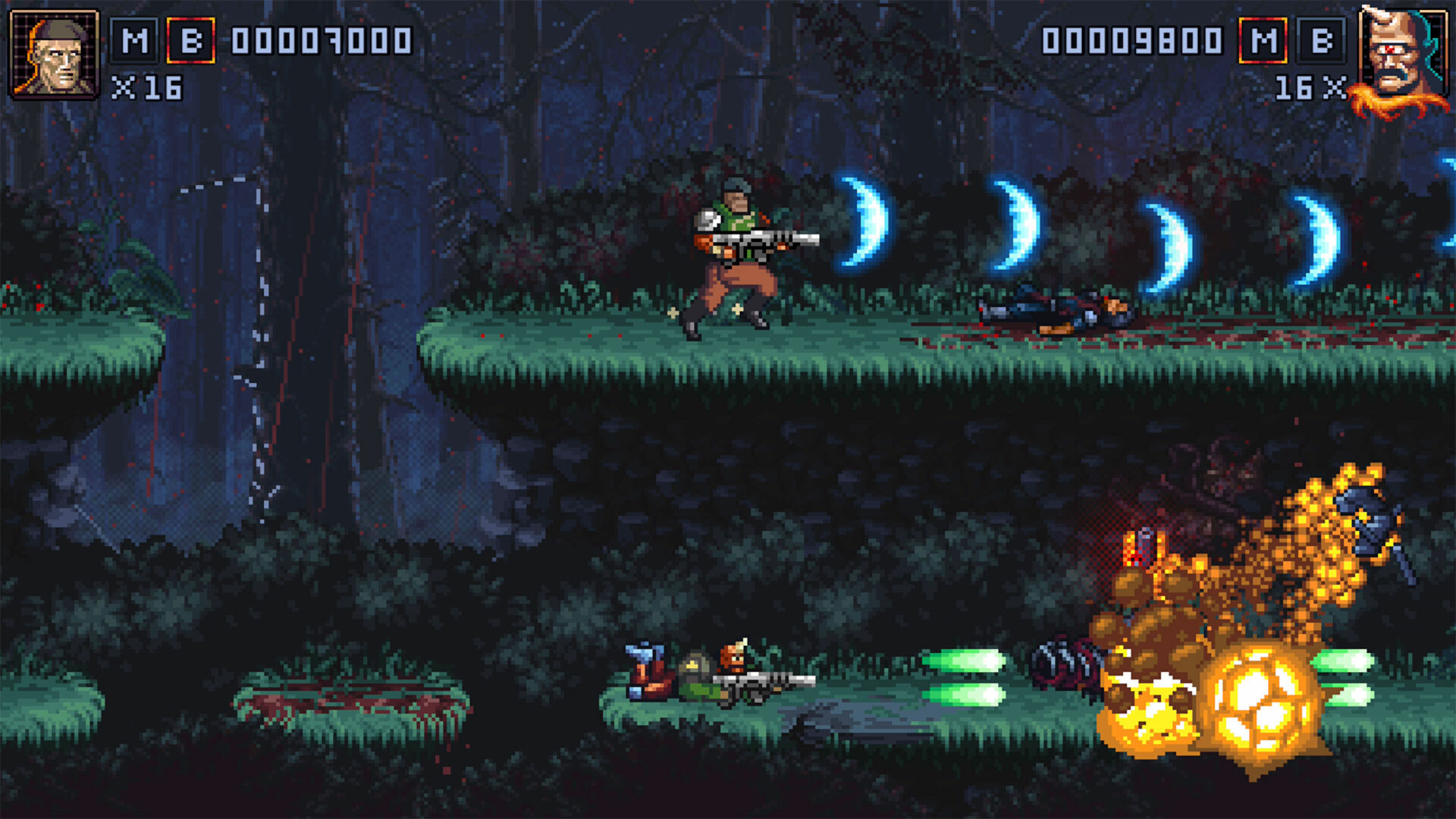
In Iron Meat, you can shoot in eight directions. Another great feature is that you can hold down a trigger button to maintain your position while shooting in any direction. The game constantly presents you with enemies at a rapid pace. Some enemies, such as boxes with jaws, bugs, melee enemies, weird snakes, bats, and various other insane abominations, may be incorporated into the level itself. The enemy design is fantastic, and you get to know what each enemy does and how to kill them. Occasionally, following a specific order can also prove to be an effective strategy. You can also avoid enemy fire by lying down prone and shooting. Some levels will also test your platforming skills, featuring obstacles such as collapsing ceilings, death pits, and suspended platforms.
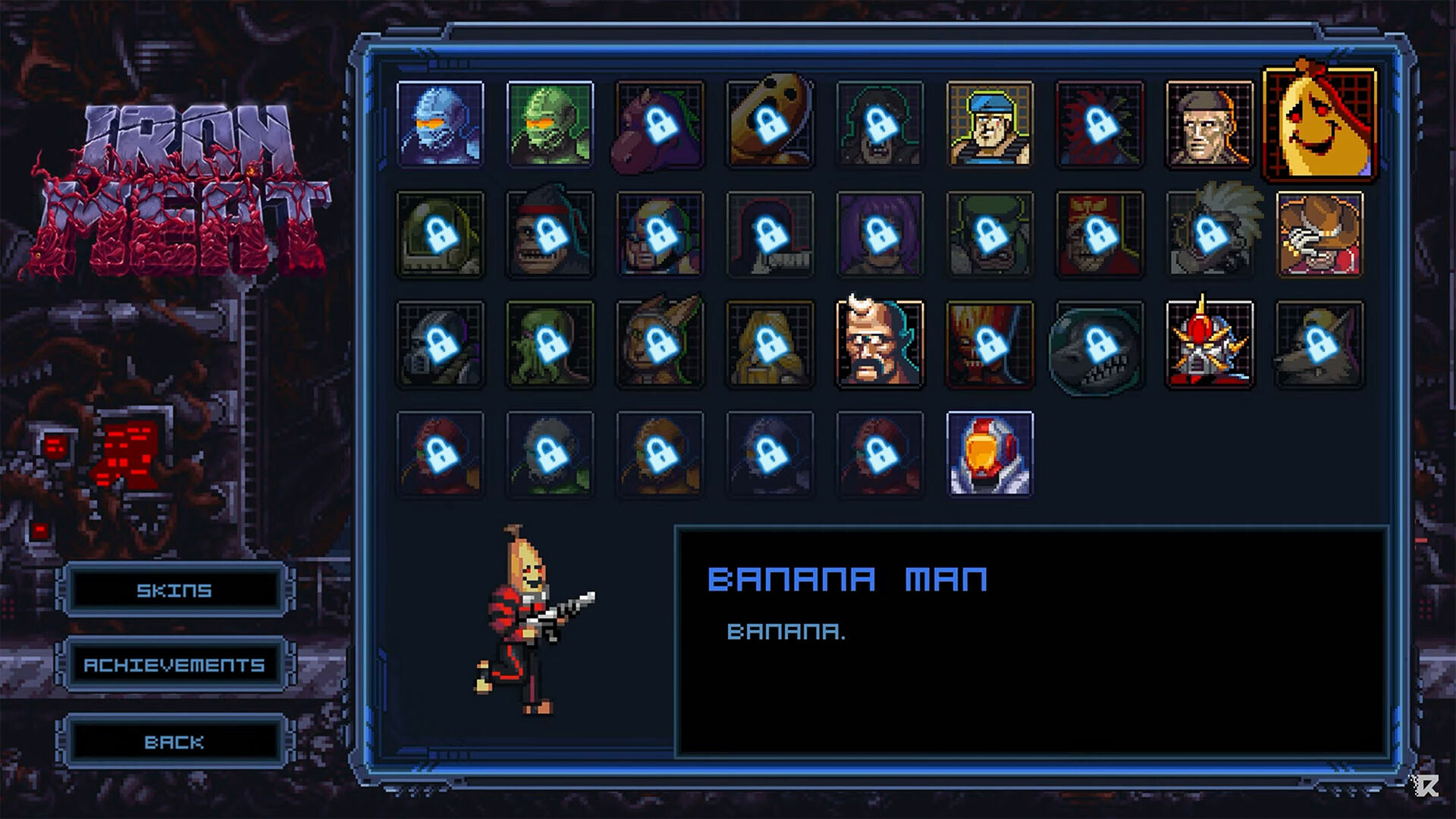
The bosses are really great. They have various attack patterns, and you get used to knowing when to attack. Some will chase you, while others will fly around you. Some are small, while others are massive, possessing multiple forms and phases. They all look grotesque and nightmarish, though. The game’s pacing effectively breaks up the action. There is a vertical level, followed by a level that emphasizes platforming, and then another level that presents a large number of enemies at once. You can unlock characters and swap body parts to create your own unique soldier. Once you complete the game, you can go through it again in mirror mode.
Although the game may appear to have less content compared to modern games, it truly pays homage to the classic 16-bit run-and-gun shooters. Most of those games featured a mere half dozen levels and lacked additional modes. Iron Meat does have a two-player co-op mode, which is a nice addition, but I feel there’s a lot of content here for the asking price. Going through and learning all of the attack patterns and enemies is fun, and then getting more points on higher difficulties can be a fun challenge. You can complete the game in less than two hours, but those two hours are filled with enjoyment.
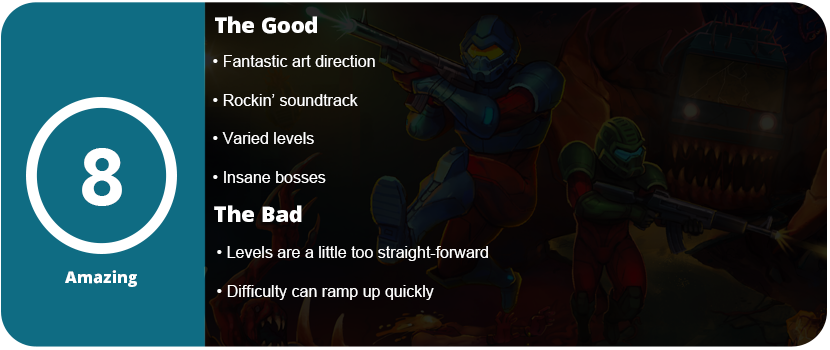
Overall, Iron Meat nails pretty much everything you would want in a 16-bit run-and-gun shooter. Iron Mean boasts massive bosses, captivating soundtracks, copious amounts of gore, diverse levels, and exceptional controls. There’s not much Iron Meat does wrong outside of the occasional straightforwardness of some levels. This is one of my favorite games in the genre, and you shouldn’t miss out.
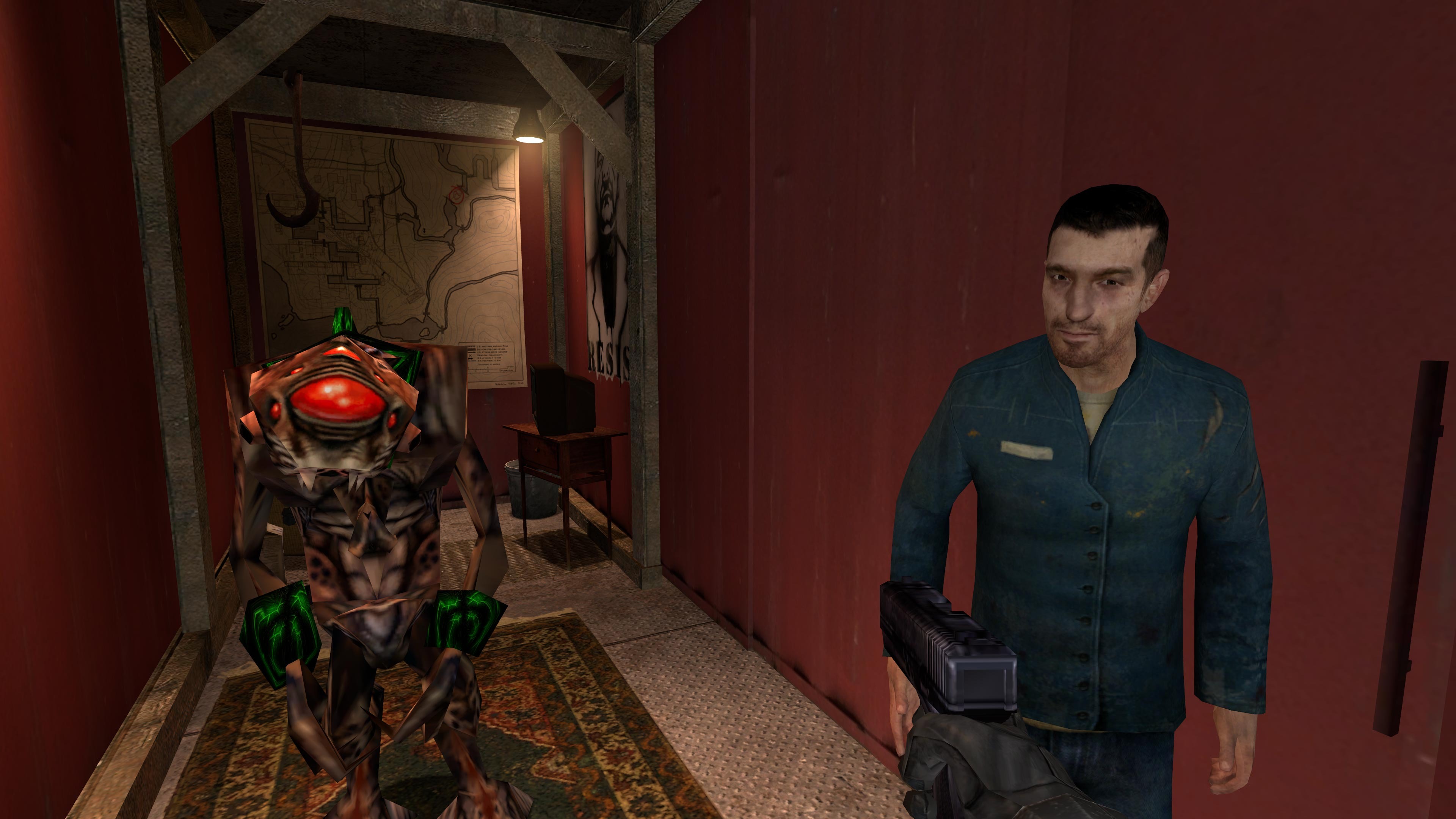
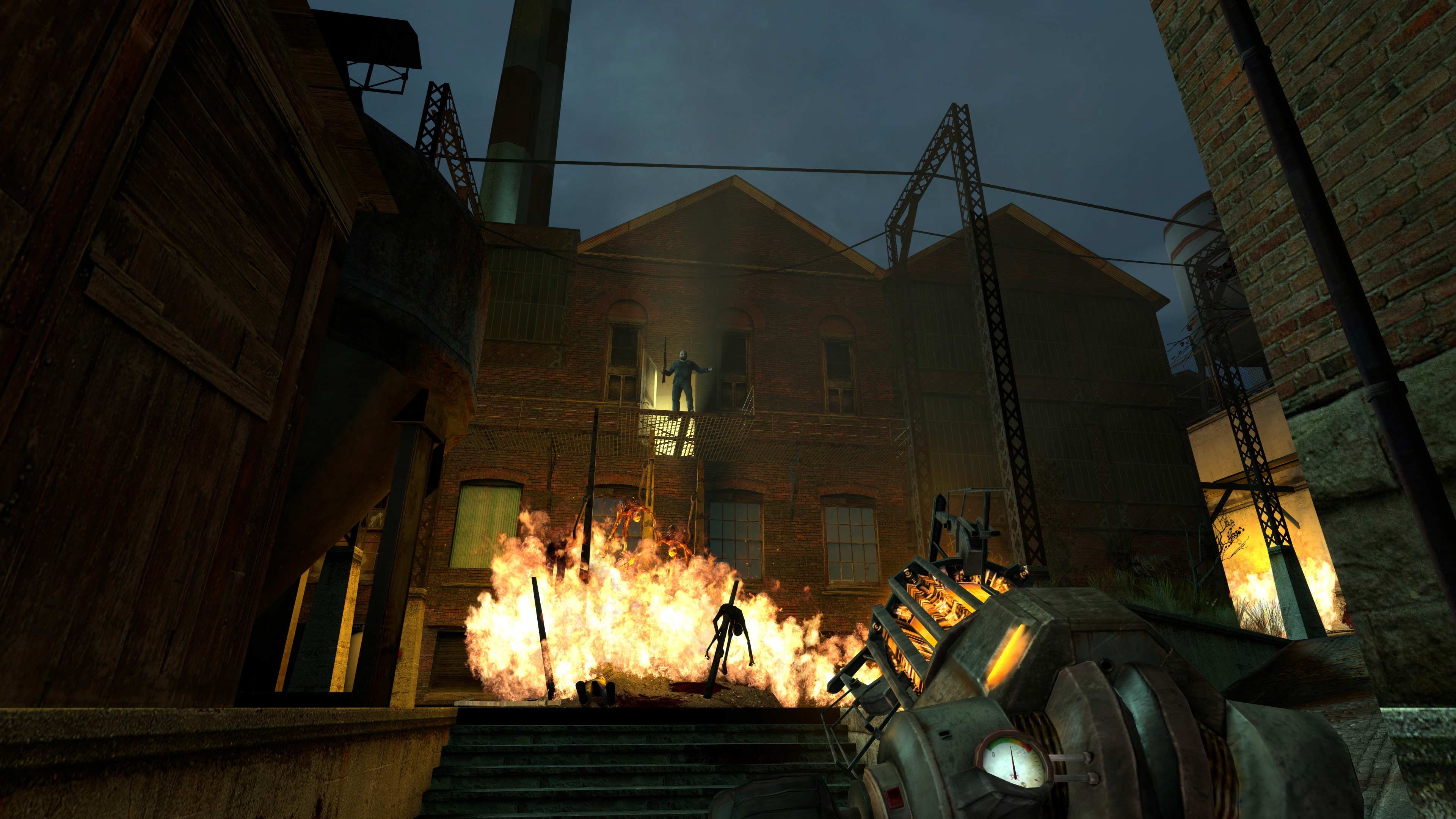
Who hasn’t played Half-Life 2 yet? I still have a free coupon from 2007 in my Steam account, but I can’t give it away because everyone I know or have spoken to owns HL2. The game industry and people’s minds haven’t forgotten Half-Life, but it’s been on the back burner for a while now. Every time a new false rumor for a Half-Life 3 emerges, people perk up, and the game becomes popular for a bit and fizzles out. There have been many community updates, such as the famous Half-Life 2: Update that improved visuals and fixed bugs. However, Valve has finally released their definitive version of the game 20 years later.
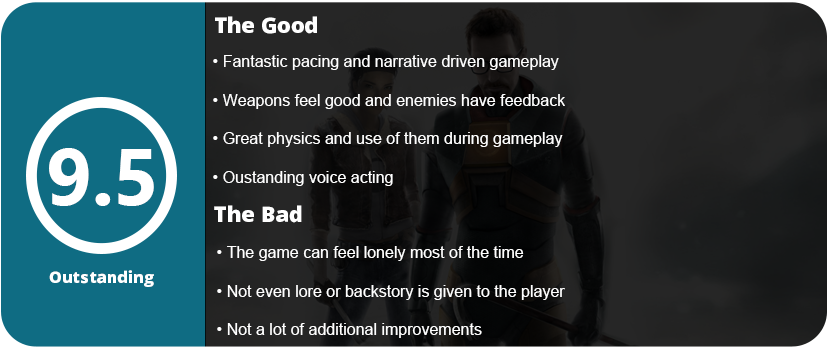
The Anniversary Update incorporates several significant improvements, including enhanced resolution light cubes, the correction of G-Man’s green eyes during the intro, the ability to choose between original and improved blood and flame effects, a more contemporary user interface and menu, an additional 3.5 hours of commentary, the incorporation of both episodes, and additional features. These quality of life improvements make a huge difference and make the game more palatable to play by today’s standards. Half-Life 2, in general, is a fantastic game with a flow unlike any other game I have played.
To celebrate the 20th anniversary, I am going to do a full review of Half-Life 2 through modern-day eyes. Although I didn’t have the best experience when I first played the game on a business desktop in 2005, it was well-optimized for the time and ran smoothly on potato computers. This was the game that prompted me to finally download Steam. People tend to forget how awful it was back in the day, when it constantly crashed and updates would break both the software and the games that required it. While today’s gamers adore Steam, the gaming community didn’t hold the software in high esteem 20 years ago.
As for the game itself, the modern UI is a welcome change, especially on Steam Deck. The game now supports controllers properly with no need to remap anything. You can choose from a grid or carousel-style weapon menu too, which is a nice change. The visuals are sharp and crisp at higher resolutions, and the game overall looks very clean. It has aged incredibly well, and this is thanks to Valve’s Source Engine and the way everything scales up for higher resolutions. As for playing the game, it feels better than ever. The game takes place shortly after the first game, where Gordan wakes up mysteriously on a train bound for City 17, and features a now-famous intro by G-Man himself. The game is a master class on in-game storytelling. Instead of taking away the players’ controls and inserting pre-rendered cutscenes, the game tells everything through subtle details in the surrounding world.
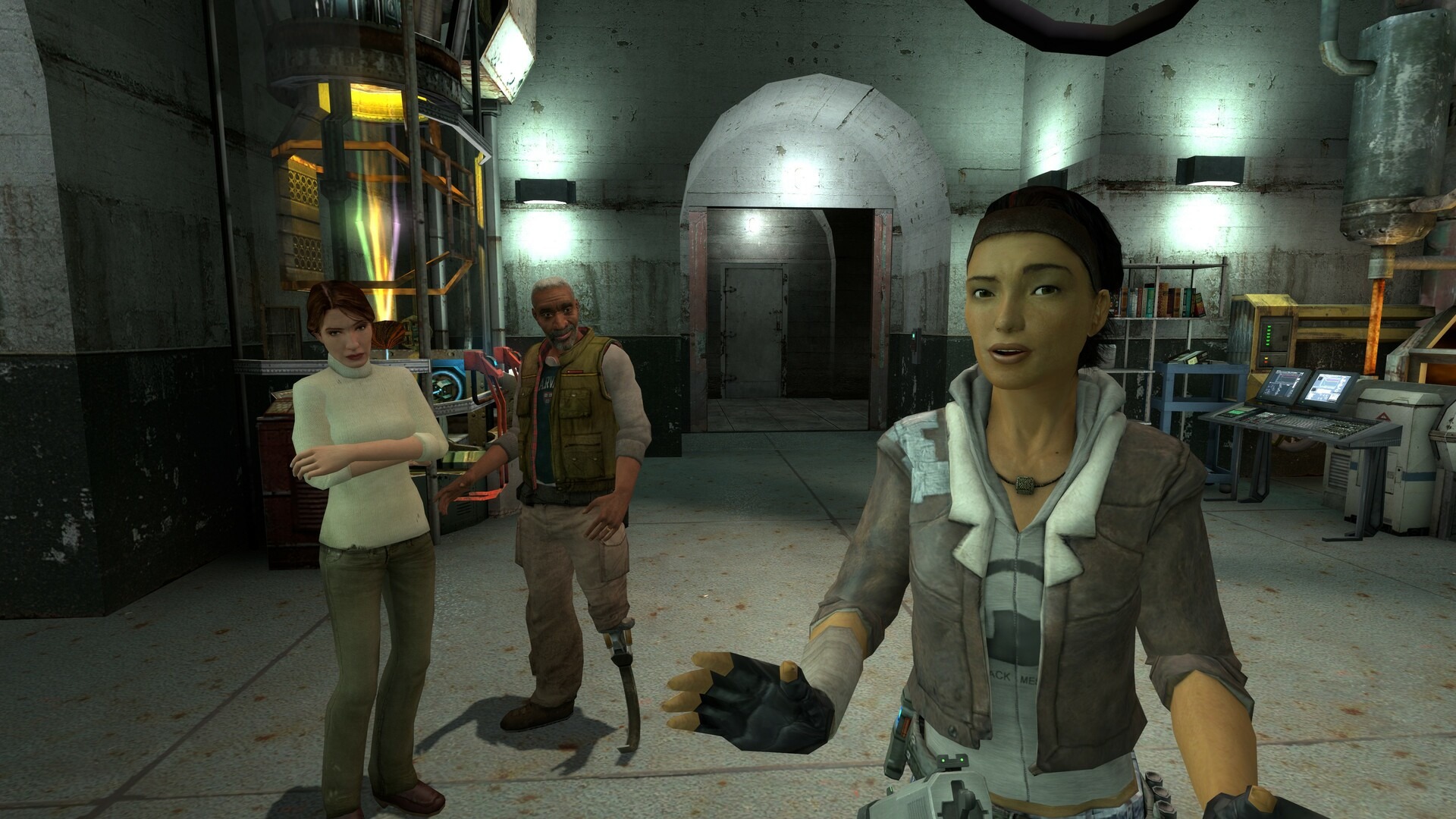
The beginning of the game is the best example of this. Valve also teaches players how to play the game through natural in-game dialogue and simple puzzles at first. The Metro cop, who instructs you to pick up the can at the start of the game, teaches you how to use physics. The inclusion of this now infamous line ensured that players understood their capabilities. This may seem dated today, but in 2004, physics were very CPU heavy, and most high-end processors struggled with them. People had to learn how to pick up objects using real physics back then. Barney explains the first stacking puzzle, instructing you to stack boxes in order to escape a window.
The game’s natural progression is stellar. The game’s long segments ensure that you always feel like you are moving in the world and making progress in real time. Each area is an hour or two long, and you progressively make your way toward the Citadel and Dr. Kleiner’s lab. The hoverboat area is quite lengthy, giving you the impression that you’re actually traveling to your destination in real time. However, these lengthy segments are not monotonous. Valve puts little tidbits in the game that the player can do or ignore. You have the option to escape and obtain ammo or supplies from a passing house, but doing so could potentially lead to a firefight. There are hidden Lambda caches all over the game, and these really help and come in handy.
The transition from a vehicle to on-foot and back again significantly breaks up the pace. There aren’t many puzzles in the game, but there are some areas that require navigation of pipes and ladders and need a bit of thinking to find your way out. Every game introduces something new, whether it’s a weapon or the ability to command squads. While this is very simple and archaic by today’s standards, I found they mostly get in the way and rarely help outside of offering medkits and distracting enemies. Every game introduces new enemies, and just when you believe you’ve defeated them all, a new type emerges. The enemies range from Metro cops to zombies, and from Elite Combines to Striders. Weapons feel excellent and have a unique and distinct feel to weapons, such as the pistol, are not suitable for use in specific situations. It’s mostly useless after you get around half the guns in the game, and I rarely ran out of ammo. The more powerful weapons have limited ammo, so it’s crucial to use skill to ensure you hit everything, kill enemies, and avoid wasting ammo.
There are ammo crates, boxes, and medkits everywhere. While medkits are not a thing anymore in FPS games, they work well here. Gordon has the ability to recharge his HEV suit for armor purposes. Most of the game feels dated in terms of navigation. The entire game, including linear buildings, vents, doors that need to be opened, and tunnels, guides you along a linear path. Although the game may appear expansive and open at times, it actually follows a linear structure, which was the standard for first-person shooter games during that era. While other games such as Halo 2 set the standard, Half-Life 2 stands out for its organic progression structure and illusion of real-time progress in the world. The inclusion of physics such as needing to use the iconic Gravity Gun to pull a wooden beam from in front a door through a window to progress is something that FPS never really did.
Half-Life 2 has a distinct and unique sound and appearance. There are a lot of browns and beiges, but the game still has color in places. The coastline boasts a plethora of blue water, while Ravenholm is characterized by its dark hues of gray, dark metal, and aged wood. The sound design is iconic, from the HEV suit charging to the Metro cop and Combine radio chatter to the bleeps and bloops of the turrets, which were later used in Portal. The entire game exudes a distinct vibe, ranging from Gordan’s slick momentum to the physics and the firing of the weapons. Enemies respond well to weapon fire and ragdoll when dead or blown up. While there isn’t too much gore in the game there is a lot of blood. Enemies won’t gib at grenades, but you might see the occasional severed head.
The overall oppressiveness of the world of Half-Life and the Combine is palpable in this game. Every time you encounter a group of rebels, even if it’s just for a brief conversation, it’s a refreshing change from feeling alone and feeling like your assistance is fleeting. Ever since I was 15, this game has felt so lonely and melancholy. It’s one of the reasons I haven’t played through this game too many times over the years. Valve masterfully captures the sense of being a superhero, with everyone relying on you, and effectively conveys the dire consequences of making a mistake. The player bears the entire game’s burden.
The Anniversary Update may not seem like much to some. It’s not a remaster or remake, but rather a set of quality-of-life improvements that are not in any way detrimental. HL2 doesn’t need a remake as it works perfectly fine today. A remake would primarily serve as a cosmetic enhancement, but thanks to Steam Workshop’s implementation, we have access to mods that accomplish this for us.
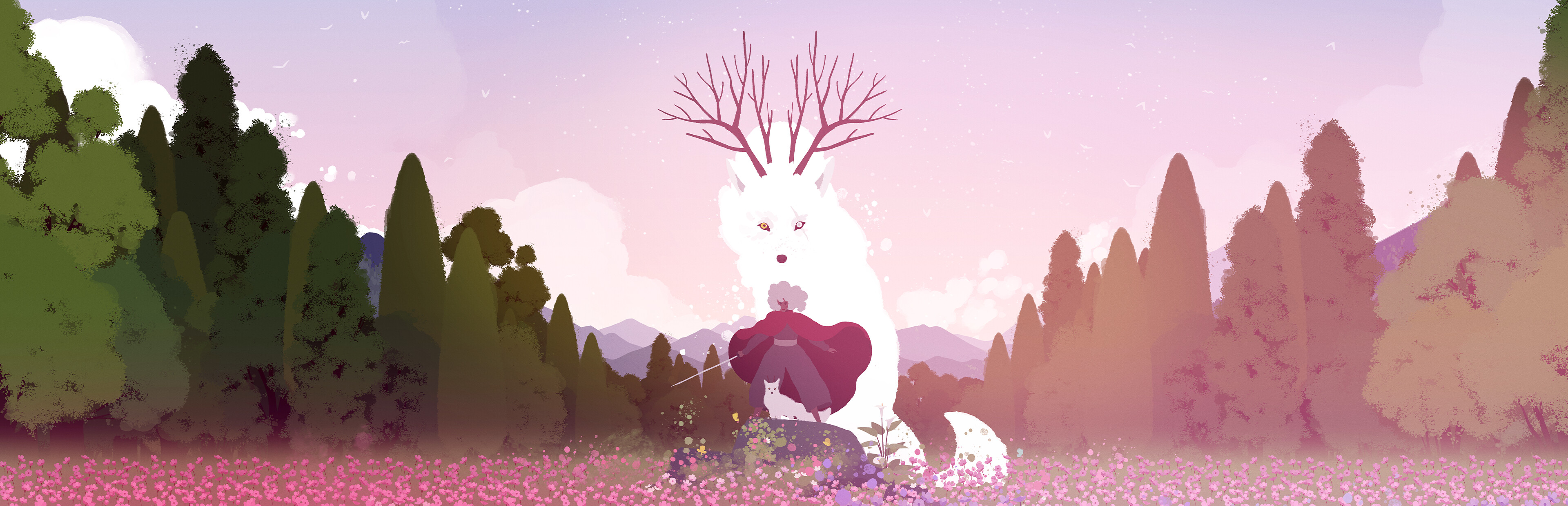
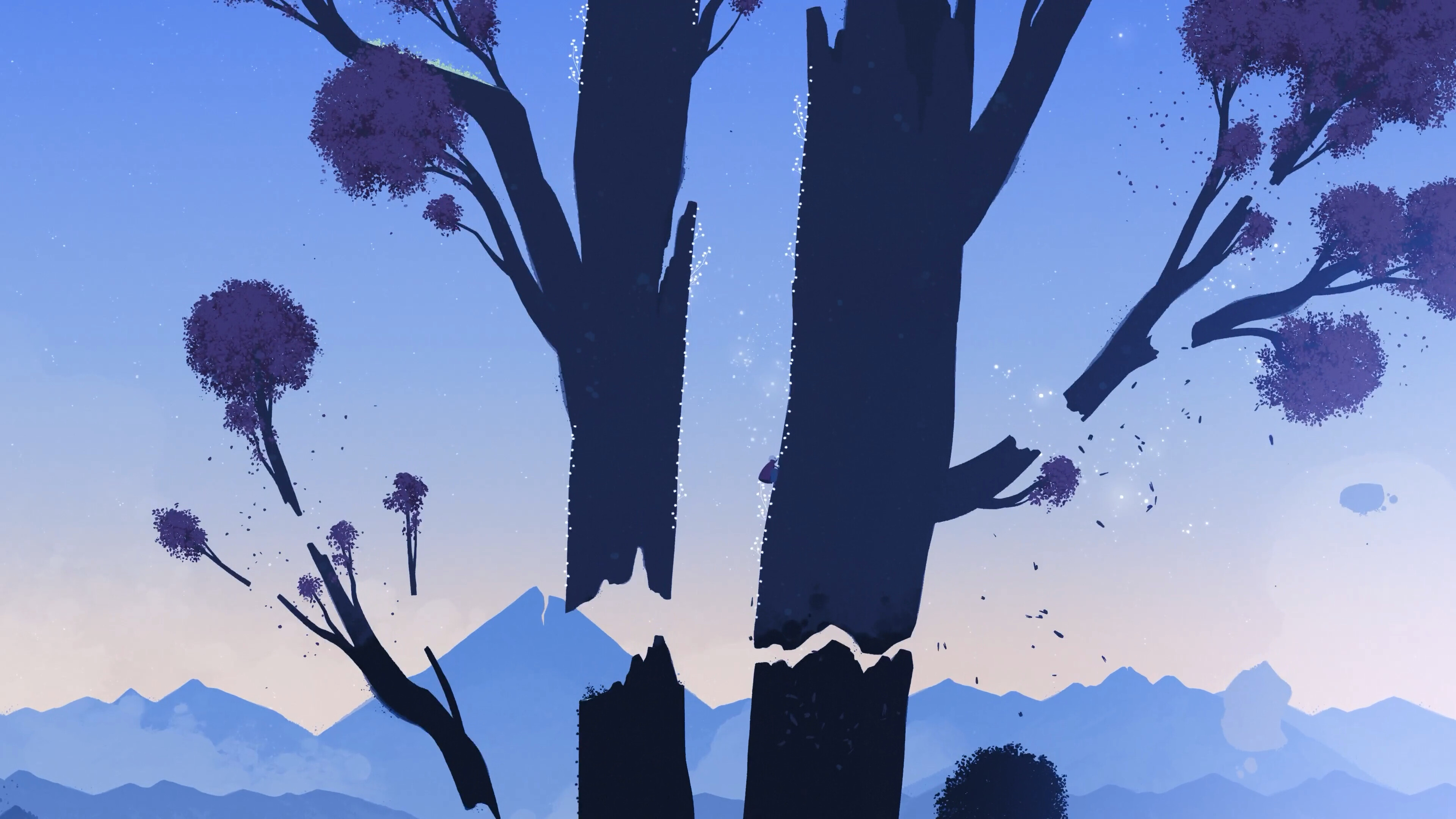
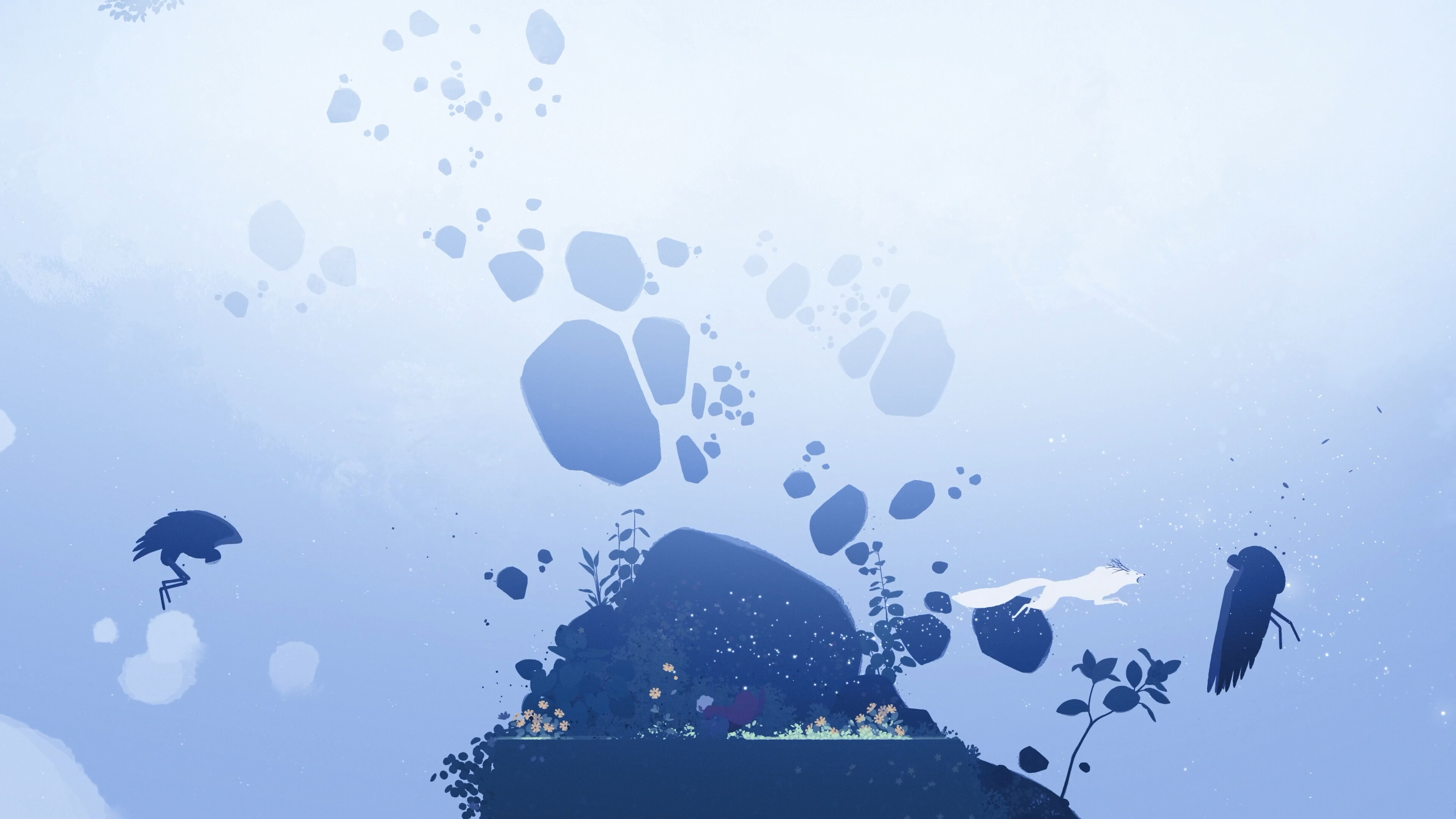
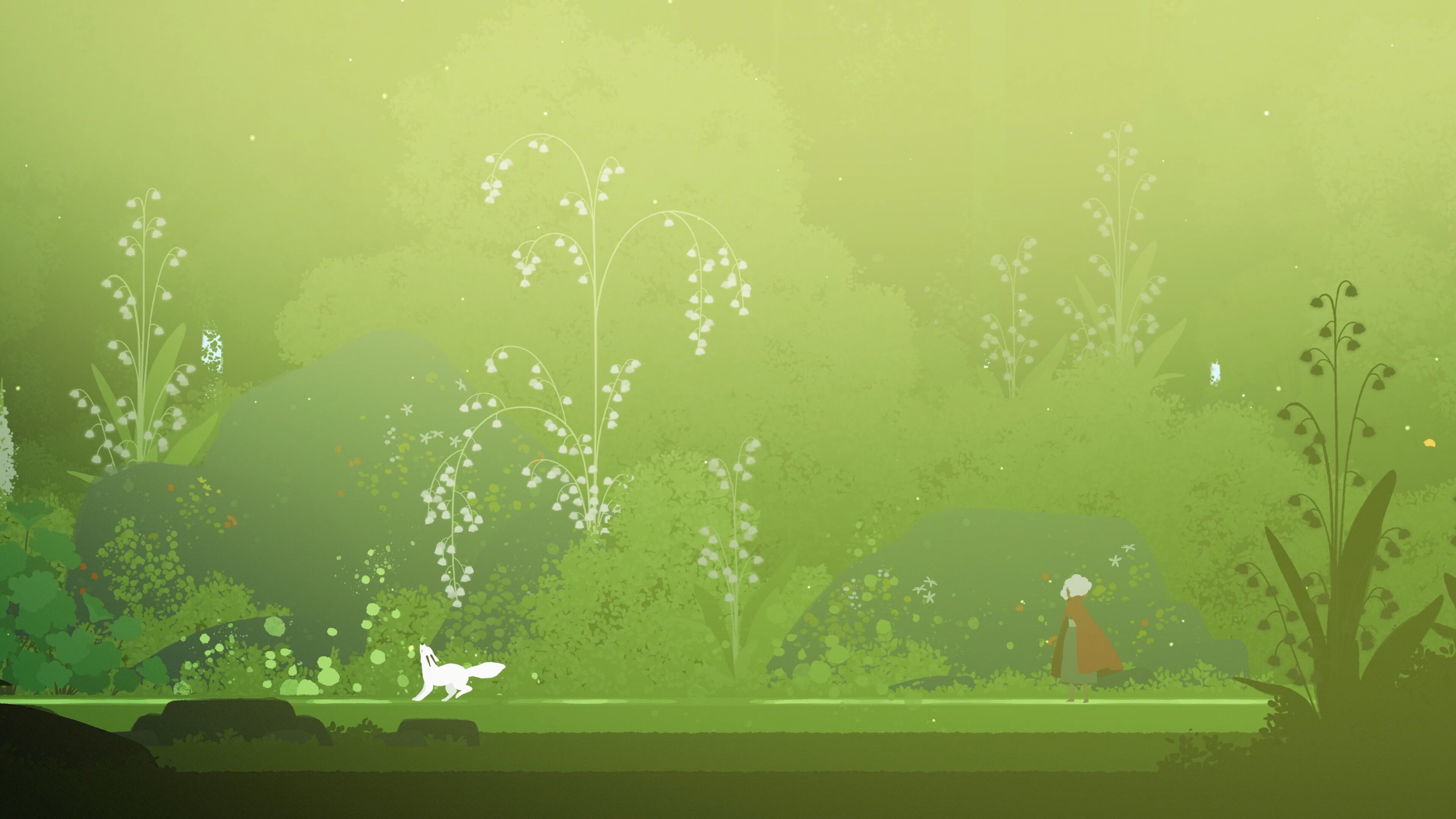
The quality of minimalist games varies greatly. Games like Gris, Planet Lana, Inside, Little Nightmares, etc. are sidescrolling titles that have a focus on one or two things. Visuals alone typically tell the story, which can be challenging to master. Neva seems to nail the story, which is rare for these types of games. The only voice acting in the game is Alba, your character, who grunts and calls out Neva’s name. Neva, a dog or wolf god, is fighting back against a blight that has swept the land. Everything has been overtaken by black goo disguised in strange white masks, and your mission is to uncover the cause of this calamity before it destroys all life on the planet.
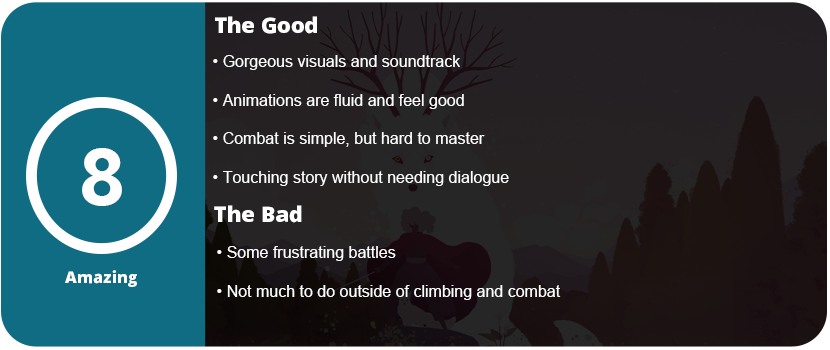
The story requires a lot of player interpretation, but it’s quite obvious what is going on. We don’t have names, lore, history, or anything like that, but it’s an obvious good vs. evil story, and Alba obviously has a strong bond and love for this God, Neva. There are ups and downs, close calls, and tragedies in the story as you fight your way through everything. I don’t want to spoil anything, but the story is very touching. The gorgeous animations and art mixed with the astounding soundtrack by Berlinist will wrench a couple of tears from you; it nearly did for me. Most of the game focuses on skilled platforming with triple jumps and some puzzles here and there. There are also some extras you can collect, but they require a bit of thinking, and some of the most advanced platforming in the game requiring surgical precision on distance and height.
The game uses white to indicate what you can do. Bright white lines adorn climbable platforms and walls. At times, you must solve puzzles by striking white gongs, which can move platforms in various ways. As the game progresses, these challenges escalate in complexity, yet they remain surmountable. The game consistently introduces new elements to the player, leaving me astonished each time. Just when I thought I saw everything the game had to offer, something new came along. At times, you can ride Neva and use her for combat; new enemies will emerge, surprising you with their unique fighting styles. Even some puzzles will be enemies themselves. One of my primary concerns with brief games such as these is that they reveal all their features within the initial hour, leaving you trapped in an endless loop of gameplay that quickly loses its allure. Neva consistently introduces new elements or modifies familiar elements to keep you engaged. I love this so much.
Combat is simple as it contains only a three-hit combo, but the enemies are the real challenge. You must learn their patterns and attack animations, and then dodge, jump, and attack accordingly. As previously mentioned, the game introduces new enemies in unique ways. You can roll through enemies and some of their projectiles, but some might be in the air, some might throw things, and some might be huge, including bosses. In some fights, you can use Neva to stun enemies, which can be advantageous. However, in other fights, Neva may not be available, resulting in reduced damage and a reliance on pure skill. Some fights were so tough I restarted over a dozen times because my timing was off. Multiple enemies pose a real challenge, and the game lulls you into a false sense of security early on—that the combat is simple and easy and something you don’t need to focus on.
The game never becomes dull or boring because everything, including the scenery, is constantly changing. The game is absolutely stunning to look at with so much color and vibrant displays of black. Playing with an OLED screen is a must, as the colors pop and come to life. The game’s short duration of about 4–5 hours may turn most people away, but the sheer variety of what’s changed up with so few enemies and a simple gameplay loop is superbly done. I couldn’t put the game down, as I wanted to see these two succeed and find out what caused this blight in the world of Neva. The game and its characters are truly captivating, and I eagerly anticipate more.
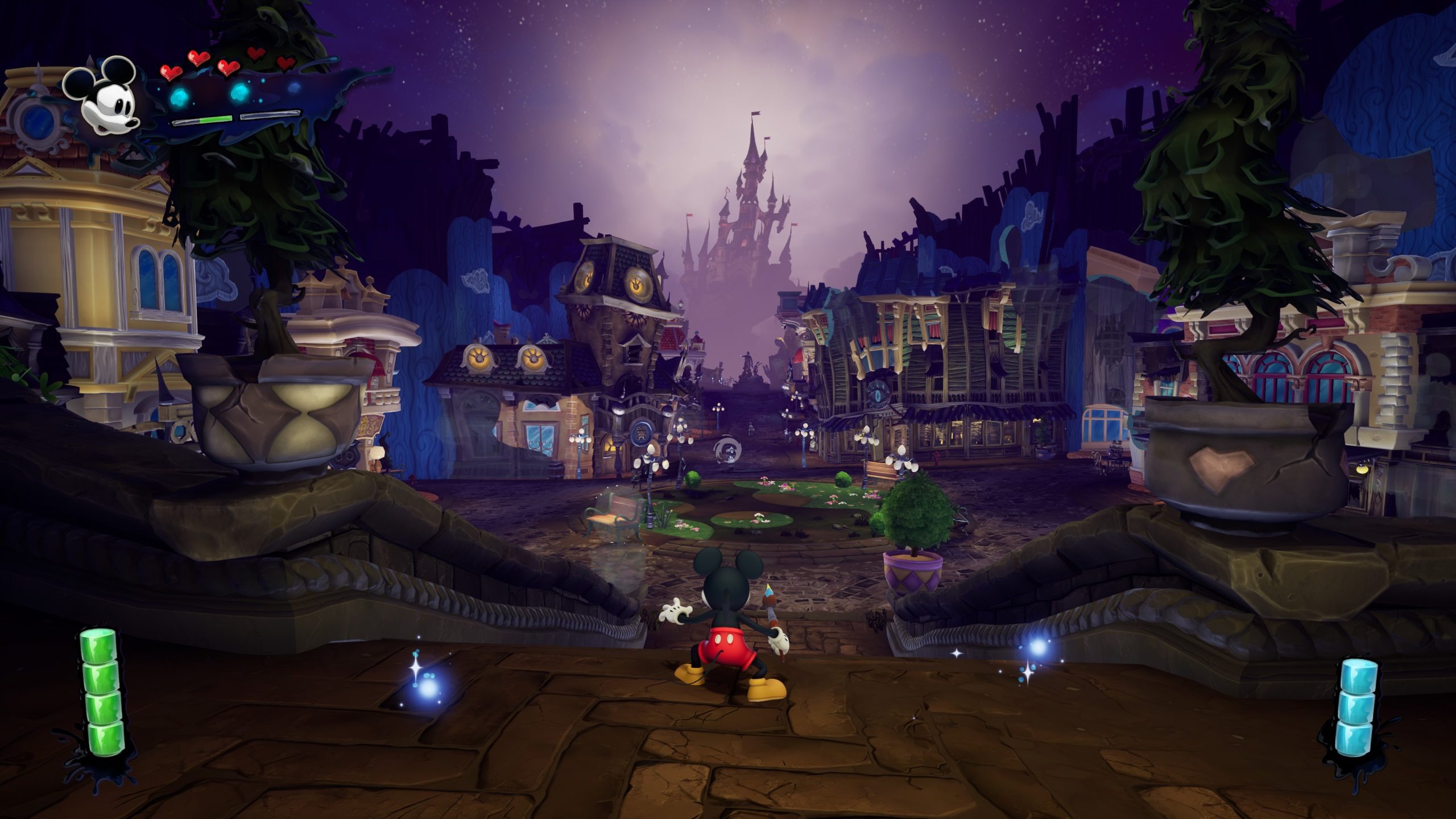
Disney has a long and dark history with video game studios and the entire industry in general. Many developers and studios want more creative freedom with the property, and Disney constantly holds their hand and shoots down great ideas. Warren Specter, the creator of Deus Ex and the infamous flop Tabula Rasa, aimed to explore a new genre of games and create a dark Disney fantasy game. However, the Wii version he produced was a disjointed mess. The game’s ambition exceeded the capabilities of the console it was designed for, yet its release came too late for the company. Disney wasn’t pleased with the poor sales of the game and weak reception. The biggest issue that Epic Mickey faced was the terrible camera, and this game needs constant camera work to play correctly.
Epic Mickey is a strange game still. It takes some time to fully understand the game. It doesn’t play like a typical platformer and aims to be something else. I wanted to immediately explore, collect, and paint, but the game doesn’t let you do much of this early on. The game takes place in the Fantasia universe of Mickey, where he serves as The Apprentice to the Sorcerer. The Sorcerer created a world, and Mickey got curious one night and dumped a bunch of thinner inside and went and hid. As time passed, the consequences eventually caught up with him, and now Mickey finds himself inside this world, armed with the magic paintbrush. There’s a light and dark theme that has you using Paint or Thin enemies and bosses to get a different ending. When you defeat each boss, this will also determine which side receives more tank upgrades.
Once you get past the prologue, the game opens up a tiny bit. There is a main hub town that requires Sparks to open new portals to one of the five worlds. Players can find Sparks in the world or through the completion of both side and main quests. This is where the game gets a little frustrating, as side quests are missable. Each world features a primary hub area, but once you complete that world, you can no longer access the subsequent areas. I found it annoying not knowing that part of a quest was here, and once I finished, I was told the quest can no longer be completed. Most quests are tedious fetch quests, and obtaining a Platinum trophy doesn’t necessitate collecting every item. I found this very odd as well, as it feels there’s no point to 100% the game. You only need to finish maybe 70% of the side content to get every achievement or trophy.
Navigating through the cramped levels feels strange. Areas with outlines require painting, and areas with brighter and vivid colors can be thinned. To create platforms, locate hidden chests containing pins, and navigate the area, you must undertake this task. Certain side quests require painting specific objects, a fun but underutilized mechanic. Early on in the game, I didn’t use the brush all that much. Many things appeared to require painting, yet there was no justification for it. I noticed numerous buildings and objects with missing parts, but where was the enjoyable “Paint everything for a special item” quest? Maybe for a cool outfit?
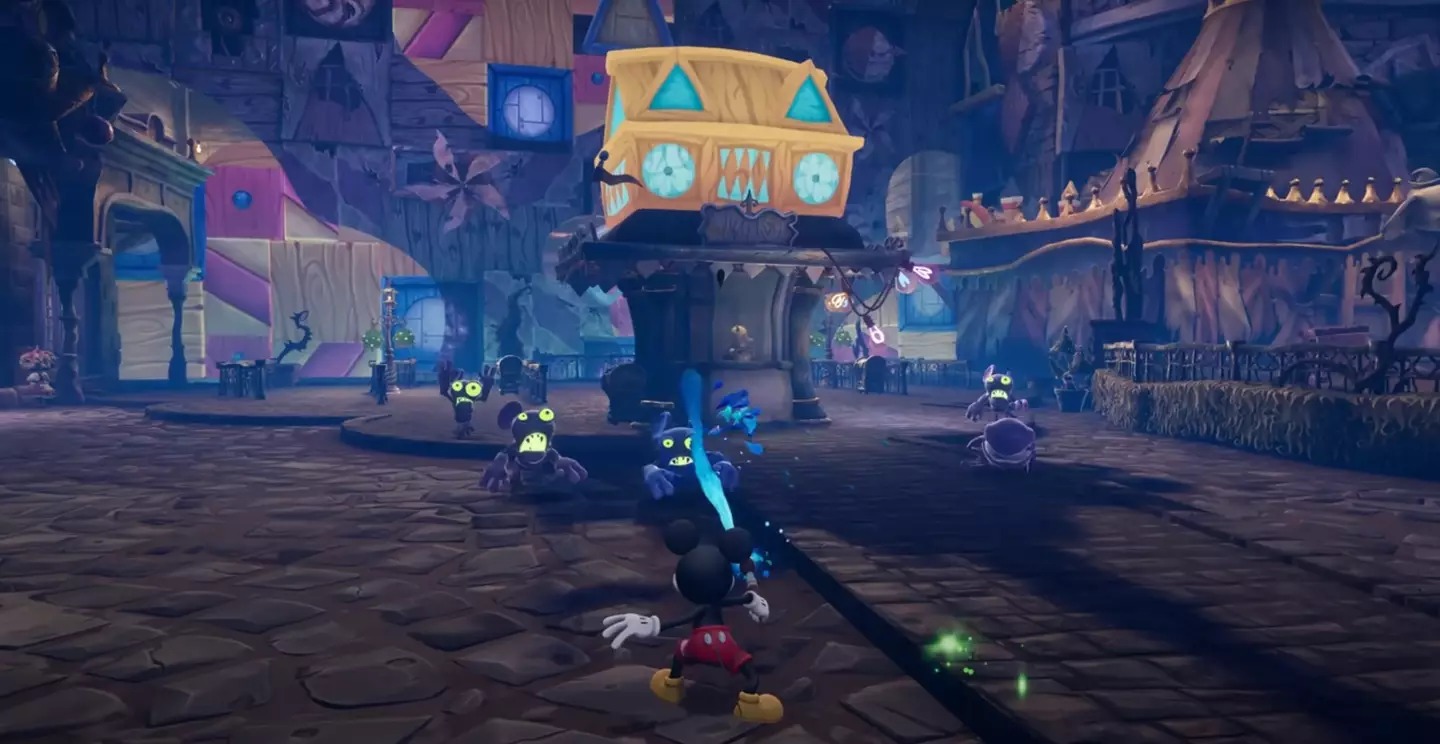
Due to its sparseness and the ability to avoid most enemies, combat is incredibly easy in this game. Depending on the ending you want, you can paint enemies to make them fight for you or thin enemies to make them disappear. If you paint enough, you can send sprites out to “possess” enemies to fight for you, but I never used this feature. The game solely presents challenges in the form of boss fights and animatronics, which necessitate thinning before a physical attack. You can save caged Gremlins to simplify certain aspects of the game, like stopping enemy generators, but the game’s simplicity makes this unnecessary. I found most of the enemies to be annoying and a hindrance to platforming, especially since many would respawn later.
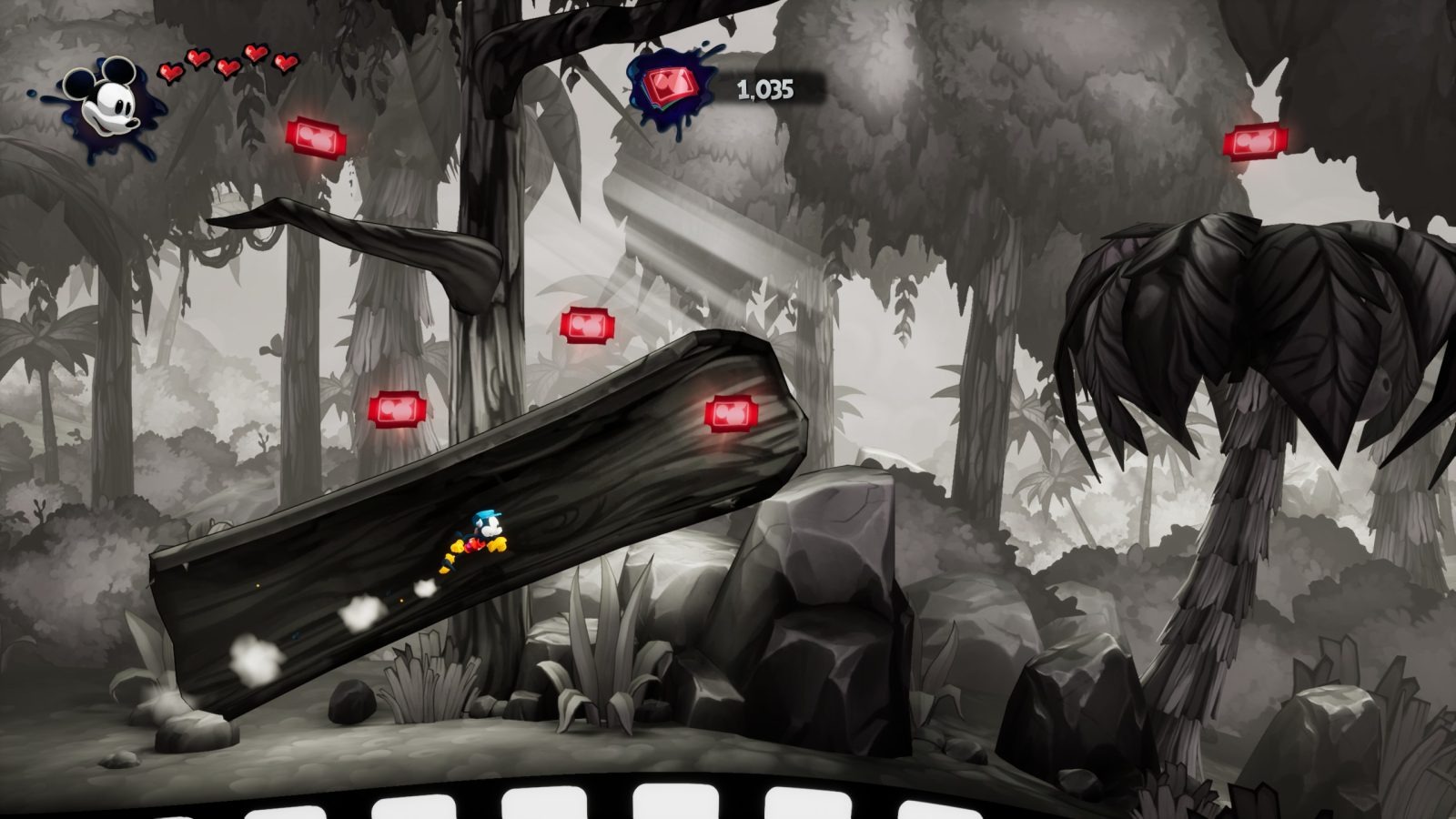
Another puzzling gameplay element were the E-Tickets. These were completely useless. Every so often someone will offer to make something easier to allow you to purchase a spark or something similar for e-tickets. You can purchase items from shops like hearts, tanks, and permanent upgrades, but the availability of these items is limited. Most of the E-Tickets are for concept art, and I always had more E-Tickets than I could ever want. They are scattered throughout the game and have the ability to reappear. At the start of the game, I devoted a significant amount of time to collecting every single one in sight, only to discover that they would reappear upon my return or even upon my death. I would have liked to spend more tickets on outfits or customization options like paint color or brush type.
For the most part, Mickey’s momentum and physics feel good. He’s a bit floaty, especially in the 2D levels, but it works. Mickey can do a jump and slam move, a spin move, and a triple jump. The more advanced platforming sections present the biggest challenge in the game, but they also offer the most enjoyment. You can complete the 2D levels, which are transition levels, in around 30 seconds. Each level features concept art and two film reels. You use these to unlock items at the cinema, with approximately 64 available throughout the entire game. However, you only need half of these for the achievement, and permanent upgrades aren’t really necessary. Halfway through the game, you receive various items such as a TV to distract enemies, a clock to slow down time, and an anvil to crush enemies, among others. I never used these except on rare occasions, as combat is mostly avoidable. With the exception of a few puzzles and boss fights, I rarely used these.
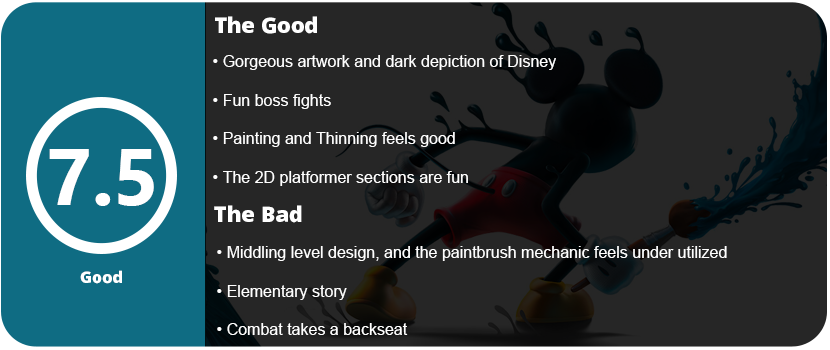
The visuals are fantastic, with some of the darkest for a Disney title to date. There are numerous melancholic landscapes in black and white, blending dark hues with sporadic bursts of brightness. Everything appears perilous and gloomy, yet it maintains a striking beauty. Unfortunately, most of the game’s content is forgotten much like its characters. Platforming takes precedence over combat, painting, and a cohesive level design. Only boss fights and a few puzzles provide occasional challenges. Navigating levels is a bit of a nightmare due to their haphazard design and layout. Purple Lamp did a great job fixing what they had to work with from the original game, but it needs more, and I doubt we will ever get it. The story isn’t even enough to bring the game up a notch or two, as it’s elementary and childish, which is in stark contrast to the tone of the entire game. It feels like a Saturday morning cartoon story that would put a toddler to sleep, which is a crying shame. Overall, it’s well worth a playthrough for platformer and Disney fans. If you hated the original, this might just be enough to change your mind.
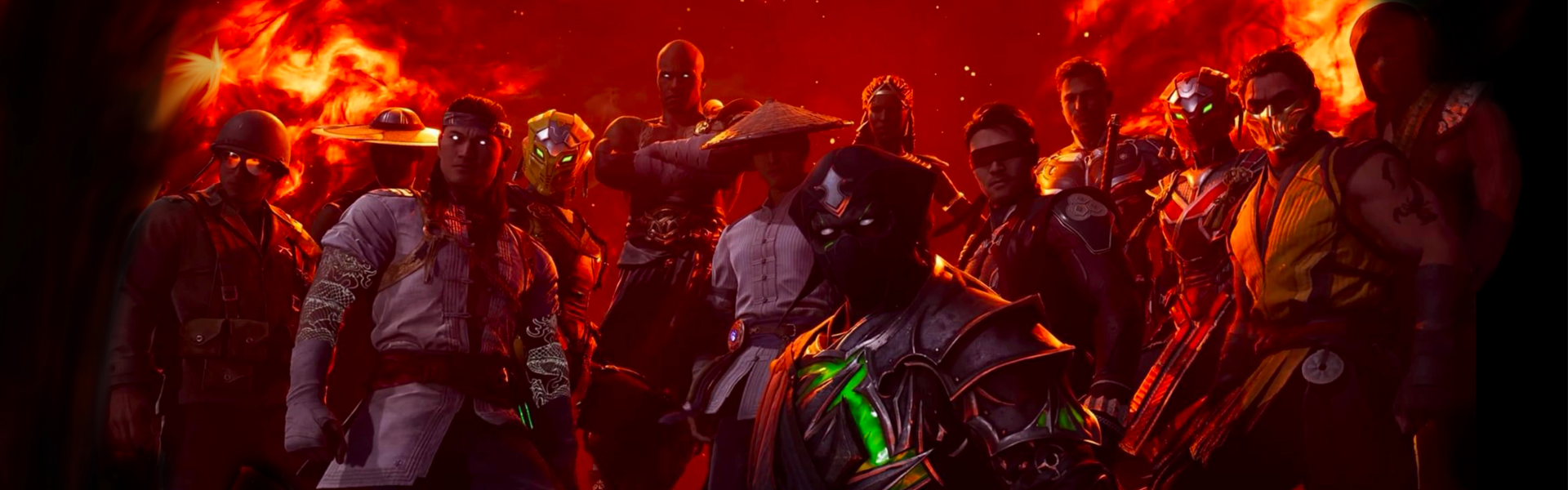
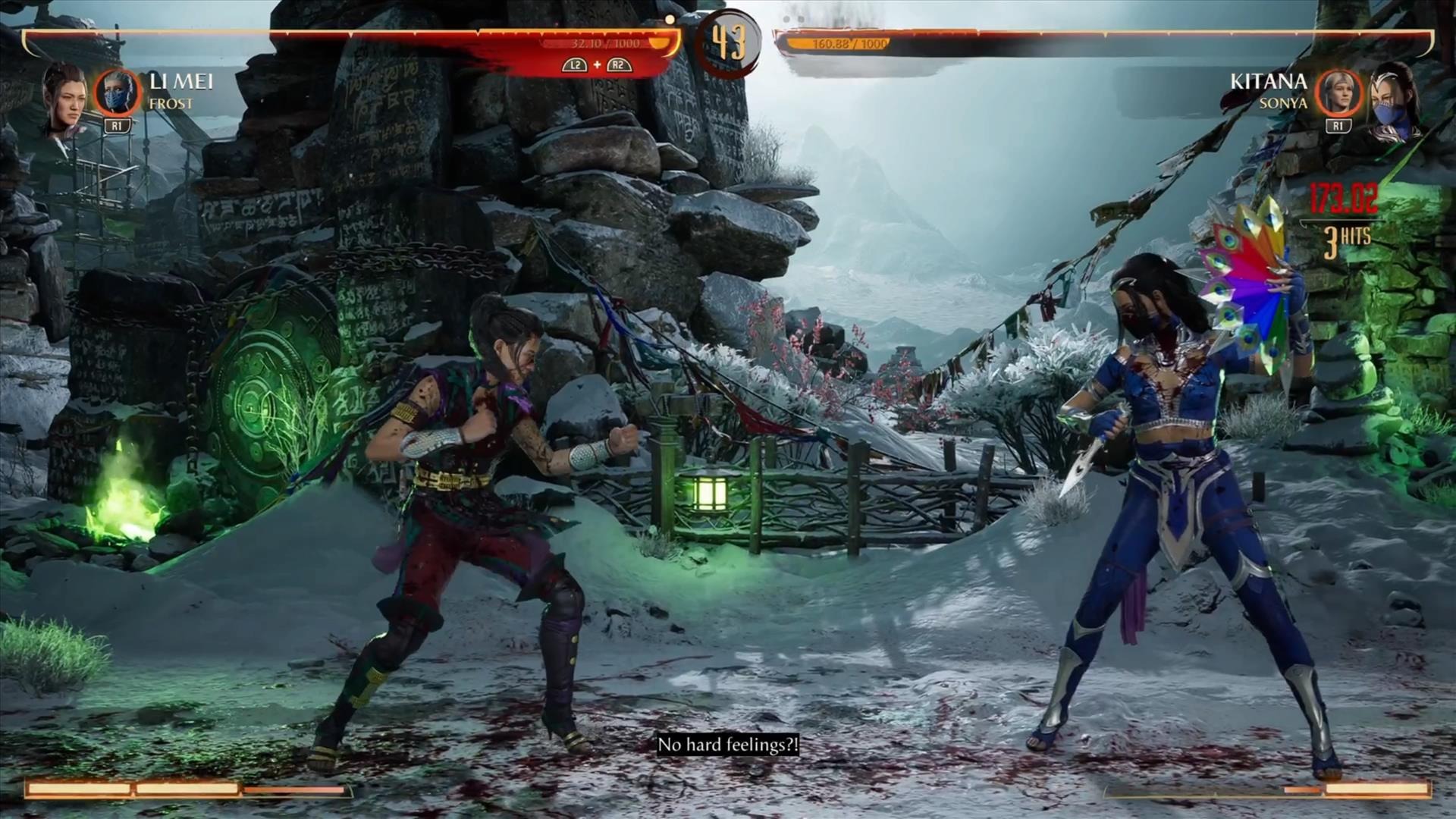
Here we are 30 years later, and the series has literally made a full circle. Mortal Kombat is my favorite video game series, and it was the first game I ever played as a toddler on the Sega Genesis back in 1992/93. While this game is technically a reboot, it’s still a continuation of the overall timeline and a sequel to Mortal Kombat 11‘s story. You follow the cast of characters: Liu Kang and Kronika split time into multiple timelines. Liu Kang wanted to reset everything and create a timeline of peace, but somehow old enemies are returning, and he can’t explain why. I don’t want to spoil anything. Mortal Kombat still has the best story out of any fighting game to date, and this story is fantastic. There were a lot of twists and turns, and I was sad when it ended. The voice acting is fantastic, and many favorite characters return.
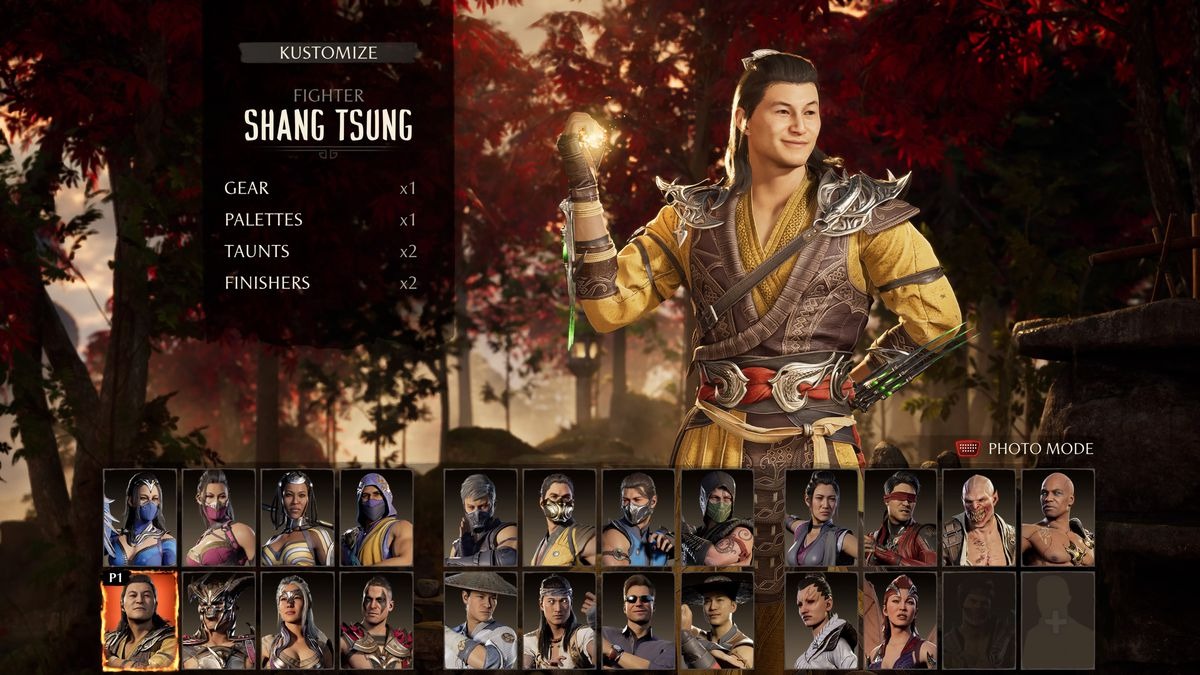
Clearly, Ed Boon and his team were reminiscing about the later 3D games, from Deadly Alliance to Armageddon, because there are a lot of references and characters returning from that era. Nitara, Ashrah, Darius, Shujinko, Sareena, and Havik are among those returning. These characters were one-offs who never made it into any other game, and it’s quite shocking to see these seemingly nobodies make a huge comeback. The only caveat is that they aren’t all playable. More on that later.
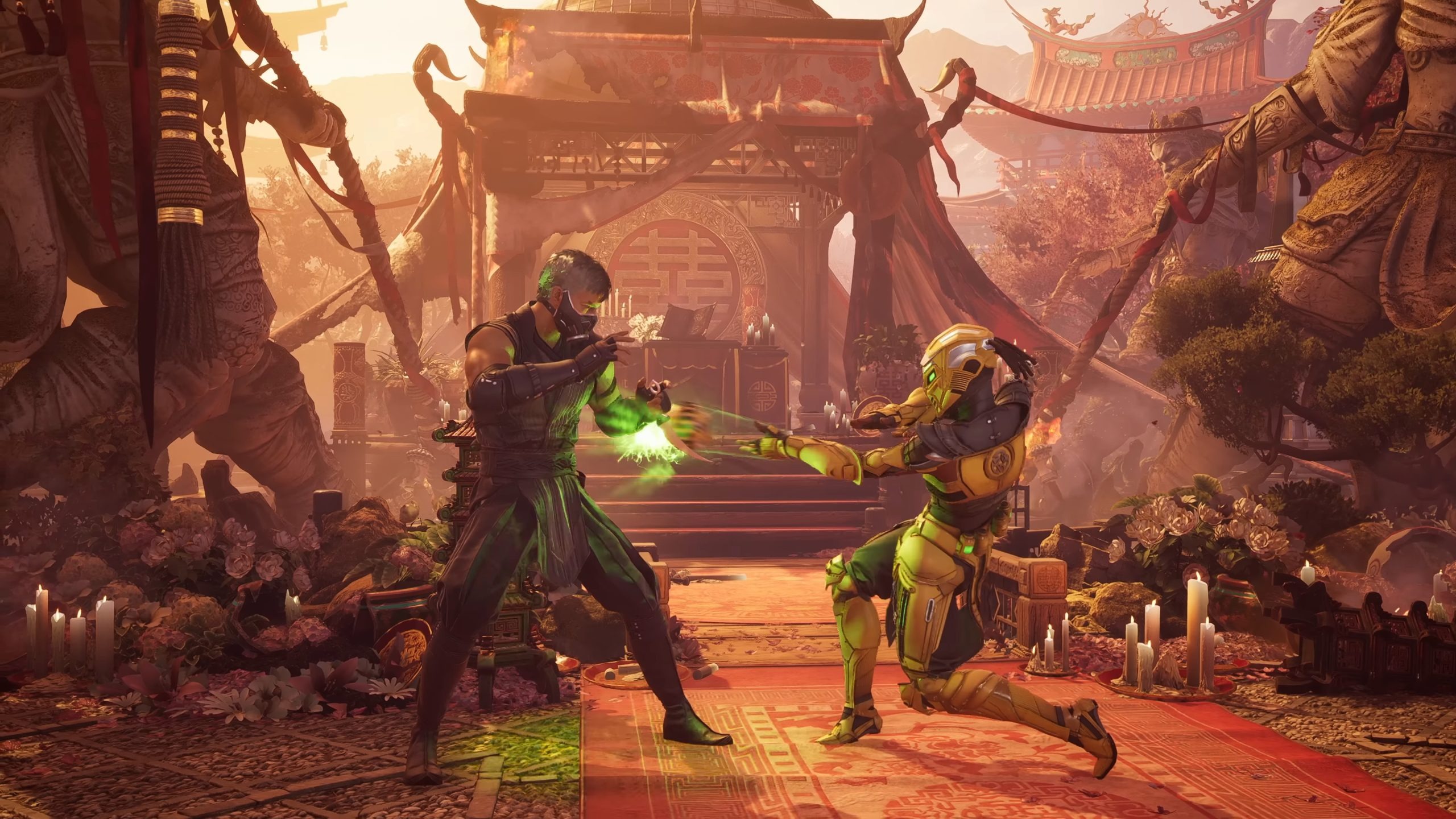
The story mode plays out the same as in MK9. You watch a cut scene, and it flows into a single fight. Not all characters are playable during the story, but you get rewards for every fight you win; more on the extra content later. I highly recommend completing the more advanced tutorials, followed by the challenges for learning specific characters. They have tweaked and refined the fight system to make it feel faster-paced and more reminiscent of the classic 2D Mortal Kombat games we all grew to love. Air combat has come back, and there is a higher emphasis on creating your own combos rather than relying on set combos already programmed into the game. There’s a lot more freedom in the fighting system.
Of course, there are more advanced systems in play, such as cancellations, interrupts, combo breakers, and the usual throws and final blows. The same tri-segmented special meter is back, allowing you to enhance your moves almost exclusively, just like before. After removing the shackles of pre-programmed combos that have been around since Deadly Alliance, you feel more in control, and the game is so crunchy, punchy, and fluid. The game’s animations and controls are incredibly smooth, enabling even the most advanced players to cancel and interrupt as they please.
Kameos is a new major gameplay feature. We had tag battles before in MK9, but these characters aren’t playable. Kameos have replaced environmental interactions. You can no longer throw someone into the background or grab things. Your health bar now features a Kameo meter, which you can summon twice before it requires charging. You can combo in and out of Kameo summons, as well as hold down the button to use more advanced moves. Throws and fatal blows now bind Kameos. Most fatal blows only have one or two X-ray shots rather than the usual three. They still look cool and are one of the best features to ever make it into a fighting game.
Mortal Kombat 1 is the first MK game in a very long time that actually lacks content. Gone are the multiple modes for replay value or experimental ideas. We only get a new Konquest-style mode that has you moving along a grid on various maps. Each tile has something on it, from a reward to a fight, but gaining Koins (there is only a single currency now) is a serious grind and feels worse than MK11‘s grind. Customizing characters is awesome, and the outfits here are much more varied than MK11‘s numerous pallet swaps. You can even personalize your Kameo fighters. Sadly, the new Konquest mode is sluggish, mostly boring, and resets with each new season. Yeah, MK1 has seasons now. Yikes.
I sadly have to admit that this might be the beginning of the franchise’s downfall. With a bigger emphasis on microtransactions (cosmetic only) and making the player grind into tedium for cosmetic items, the series is losing what made fans love it for so many years. The fight system itself is better than ever, with top-notch animations and a fantastic story mode, but this is short-lived. Online play increases replay value, but the costumes and unlocks are what MK fans love, and they’re being turned into something to profit off of. Though stunning, the images don’t quite erase the vinegary taste of greed.
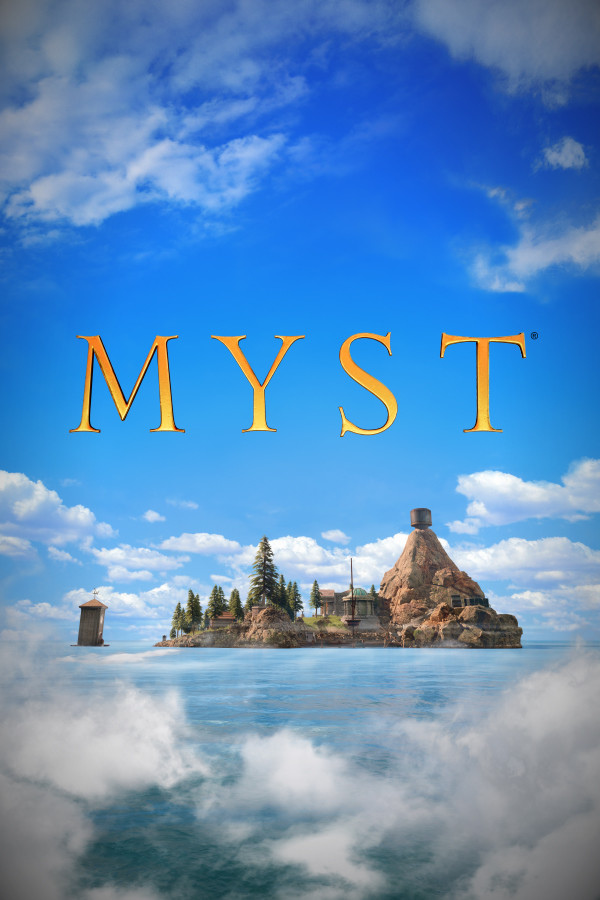
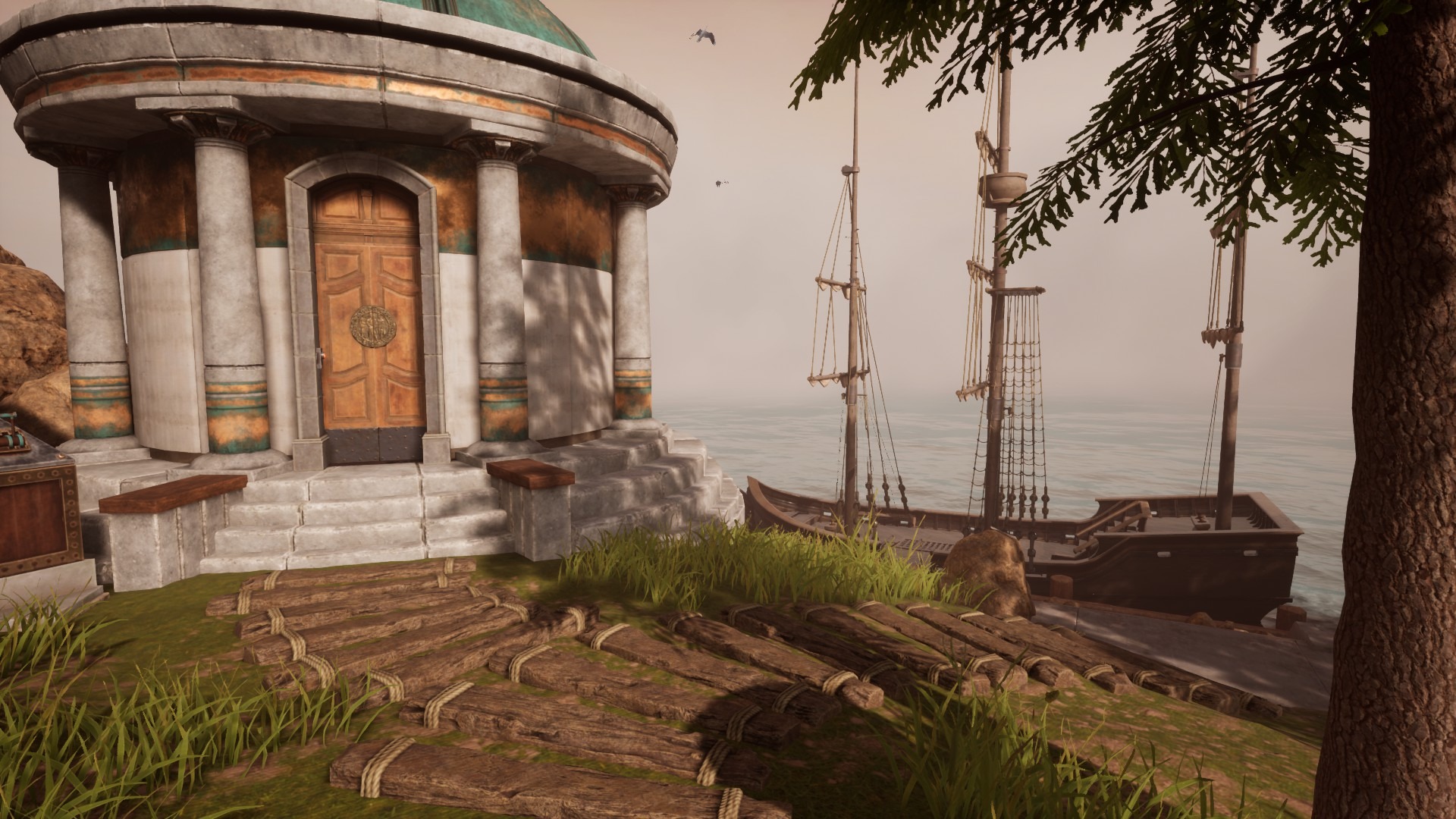
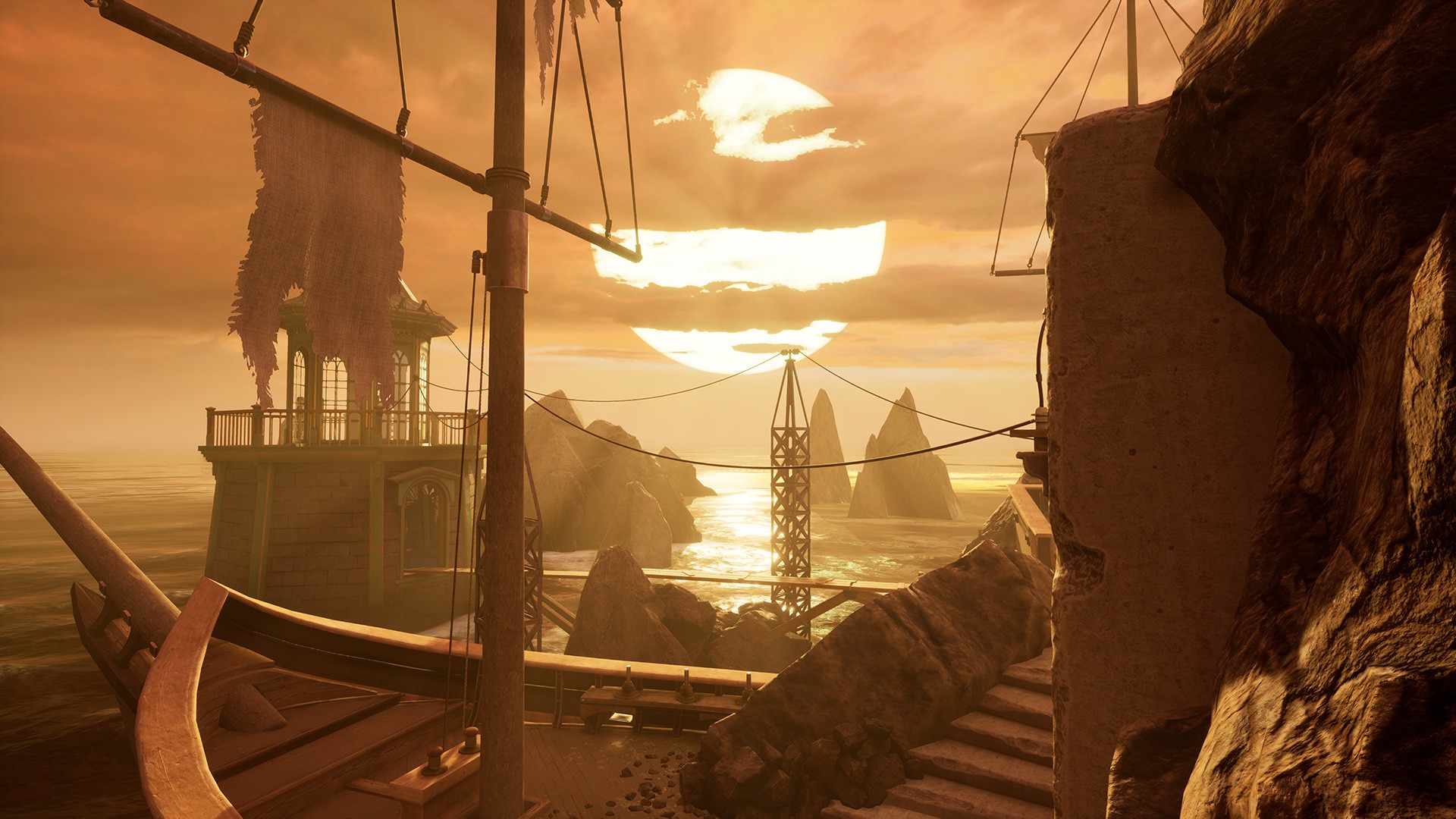
Myst is notorious for its incredibly complex puzzles, yet its captivating world and style captivate and compel exploration. I remember and recall playing Myst III in the early 2000s in my local library, having only seen copies of the game on the shelf for various systems at stores throughout the years. However, I refrained from playing it due to its incredibly complex puzzles, which even a small child would struggle to understand. Cyan completely remakes the game in real-time, so you can freely walk around these areas, unlike previous versions, which were fixed pre-rendered images.
Myst isn’t very story-heavy, but the world is interesting, and as you explore the main island, you eventually learn the pattern of how to travel to other islands and get to the ending. Technically, you can reach the end of the game in two minutes (there’s an achievement for it, and I got it after many frustrating tries), but you also want all four endings, so I recommend following a guide the first time around. This game is very landmark-heavy, so it’s important you remember where everything is. The main island has a hub that will transport you to the islands, but you must solve the puzzle to unlock their doors.
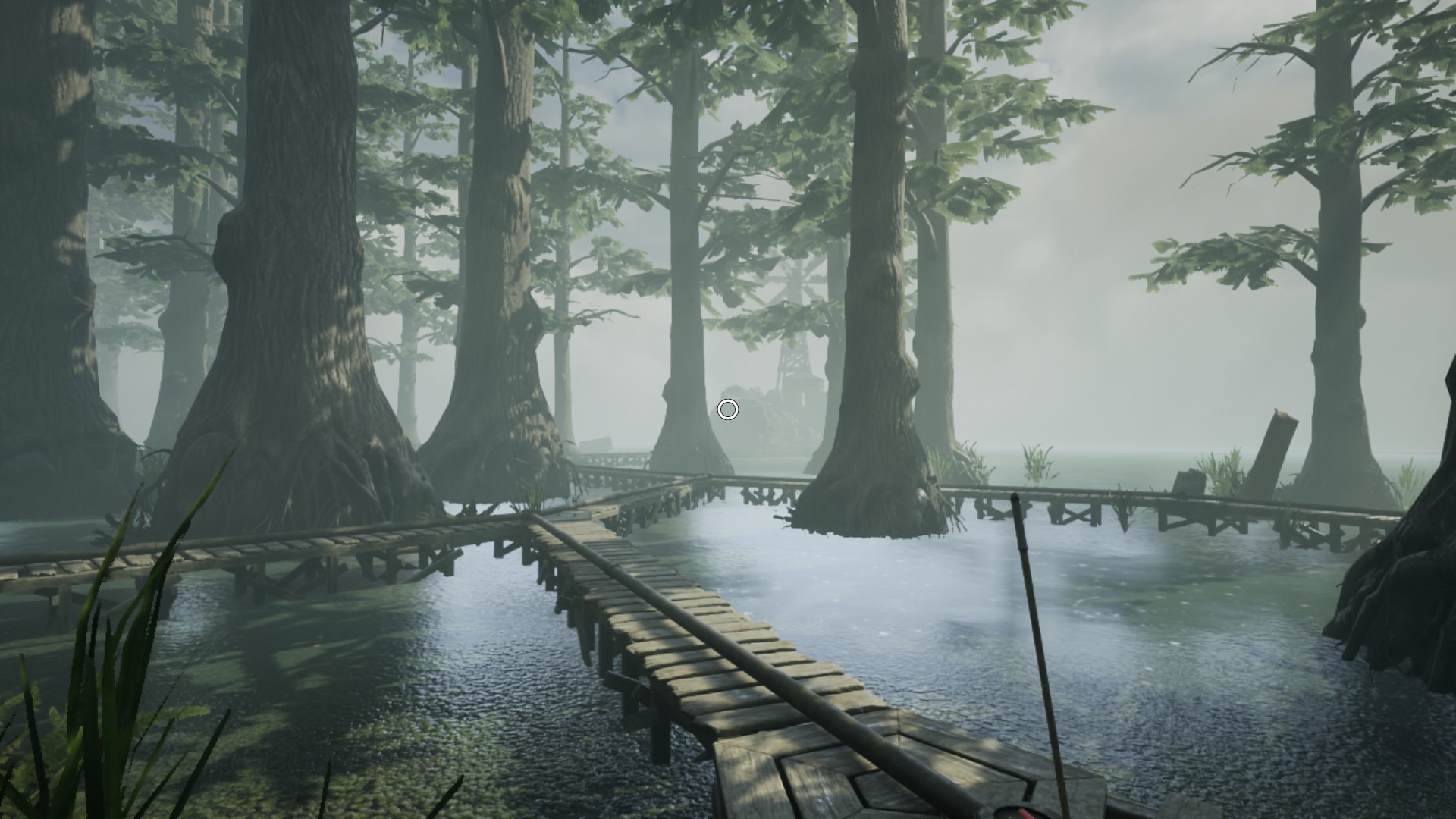
You can follow this pattern by locating a map in the main library and directing the laser to various locations. Once you have done this, you can go up the library elevator and look for a single clue to help unlock the door to that island. These puzzles on the island are fairly easy and not hard to figure out at all, and each island’s puzzle gets progressively more complex and obtuse. Channelwood Island is the easiest, with just levers that you need to flip to make water run through a pipe to power elevators and bridges. It’s very straight-forward. By the end of the game, you are using audio cues to determine what direction a train goes via a compass rose. These sounds are from another island, which you hopefully wrote down or memorized. It’s very overwhelming at first, but doing a guide playthrough allows you to do randomized playthroughs later to get the last few achievements.
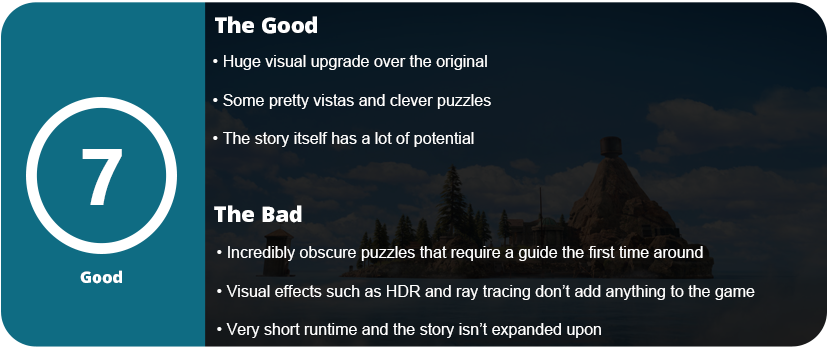
Outside of the run button, the gameplay is very simple. You interact with objects, and that’s pretty much it. Each island has a very linear path, so you can’t get lost, but the cryptic symbols on doors and switches may scare some players and turn many away. I did run across a glitch here and there, such as an achievement not popping up or getting stuck in the game world (there’s a reset option, thankfully), and you can save anywhere, which is nice. Despite the pleasant music and voiced dialog in the cutscenes, the game still feels dated, even with effects like HDR and ray-tracing enabled. The textures are fairly low-resolution, and the lighting just feels very artificial. There’s also a low draw distance, so outside of the island you are on, there’s just endless fog. I would have liked to have seen more stuff in the distance.
Overall, Myst is mostly for those who played it years ago, in 1993, but newcomers who crave brain-scraping puzzles will love this game. With a guide, you can breeze through the game in about 2 hours, but I went back and got all but three achievements, as they were fun to get. Once you get to know the island and the puzzles, the game becomes more fun with random playthroughs. Even though the puzzle solutions vary, you already know how to solve them, which is half the fight.
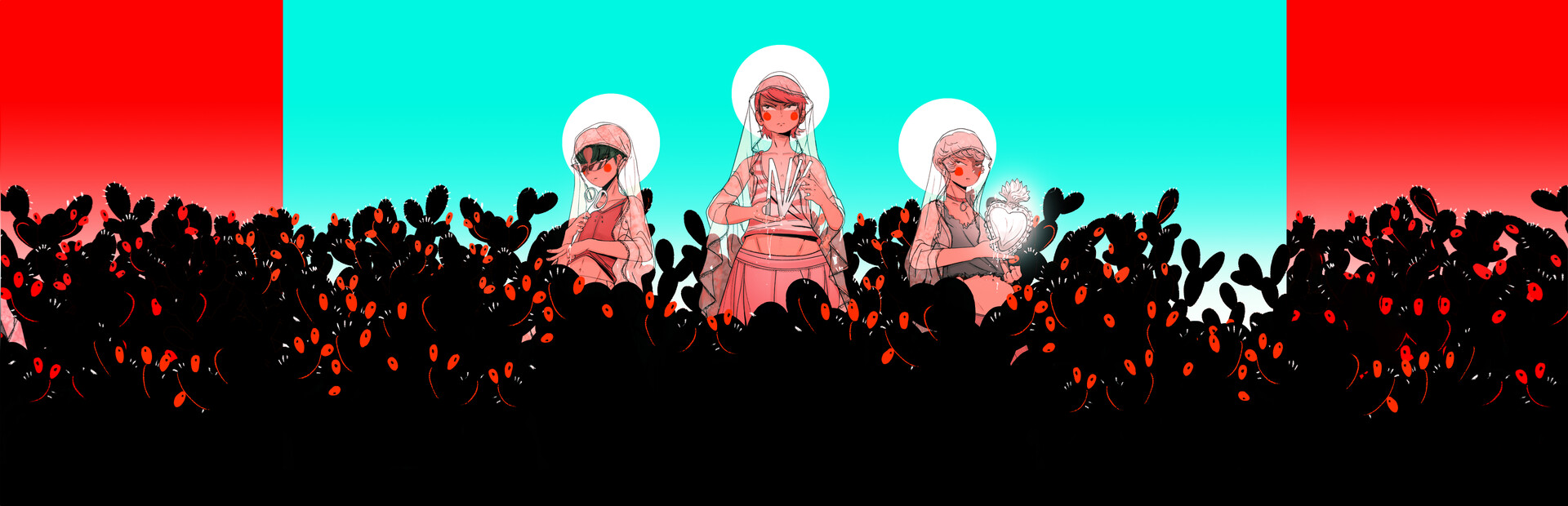
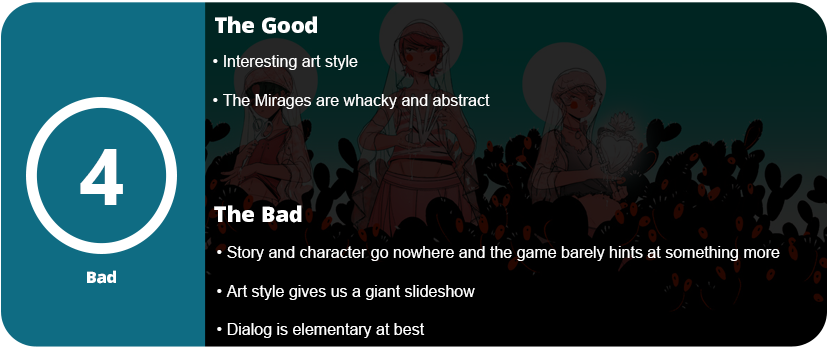
I’m not the biggest fan of visual novels. Most visual novels, or VNs as the community likes to call them, either lack a compelling story or engaging characters, or they drag on for more than 30 hours without achieving anything. Mediterranea Inferno drew me in because of its visual style and advertised player choices that could shift the story. While this does exist, the story is incredibly basic, with some very elementary writing and characters that are as interesting as a wet napkin.
The game’s inclusion of queer culture may offend many people, but for individuals like me, it suggests that the story could feature some intriguing characters. The game takes place in modern-day Italy, amidst the COVID-19 pandemic (it’s mind-boggling to think we’ve built entire game stories around this pandemic), and depicts the disintegration of these three friends during that period. The overall story hints at how COVID broke friends apart and how the isolation and lockdowns made it difficult for all three of these men to maintain their social lifestyles.
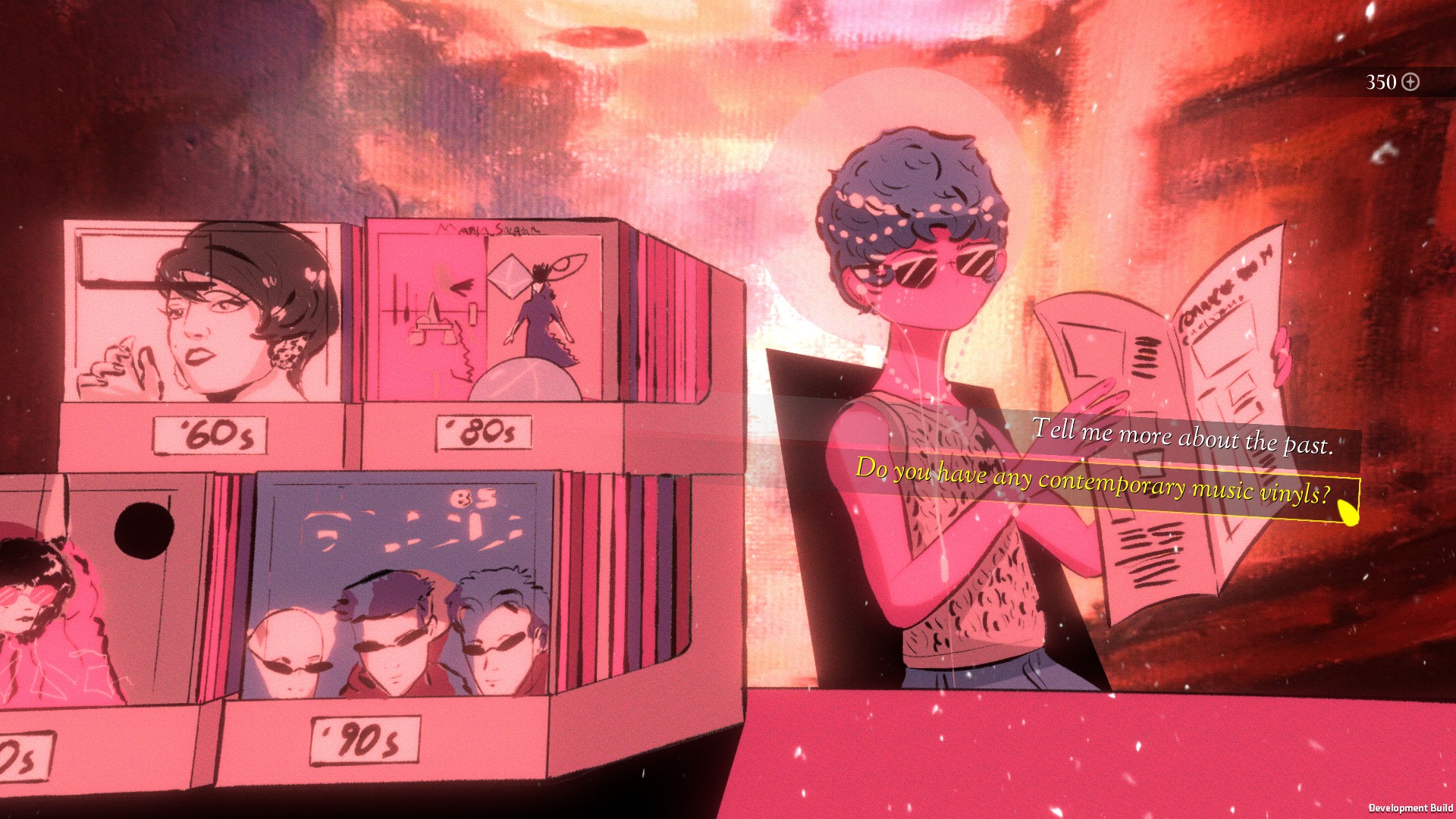
This VN is very “slice-of-life,” with not much going on. The endings express no inner turmoil, and there is no gameplay. The choices you make during Mirages imply that the characters might be taking drugs at these moments. A mysterious character appears and offers a strange fruit that you can peel or turn down to alter the story a bit. You get coins to purchase these fruits by interacting with objects in the mirages. This game’s best ending for each character requires four tarot cards, but only one character can get them in one playthrough. There are three days and three nights to live through.
We learn a small amount of backstory for each of the three men here, but it’s mostly just dialog about complaining or what feels like random, boring daily conversations. I almost wanted to stop the game after the first day, but I kept going, hoping that there would be some crazy plot twist. Sadly, this never happened. I can’t spoil too much of the story (like it matters with how bad it is), but there’s not much here for anyone. Those who enjoy storytelling, queer gamers seeking a connection with LGBTQ+ characters, or anyone seeking a visually appealing game will not find it appealing. The art, while hand-drawn, just isn’t very appealing at all. The game is mostly just a giant slideshow, with an occasional low-poly 3D model thrown in for good measure.
By day three, I just didn’t know what to really expect anymore. The Mirages are weird, abstract, and poetic, but nothing means anything in this game. There’s no reason to care or keep moving. Early on in the game, there’s no hook to keep you in your seat. Most people will click away before the end of the first day. I understand it takes time to set up a story, but for a game that only has a 2-hour runtime, there isn’t a lot you can do. Overall, there’s not much here to recommend, as there aren’t too many redeeming qualities in this game.




































 thebinarymessiah.com
Try multiplayer. A lot of fun !