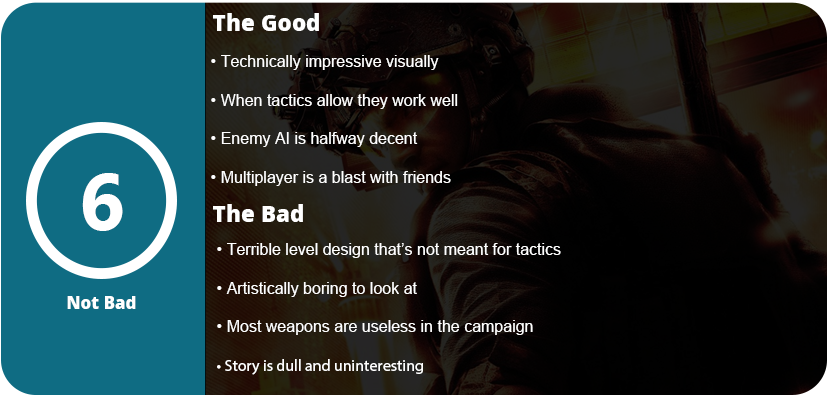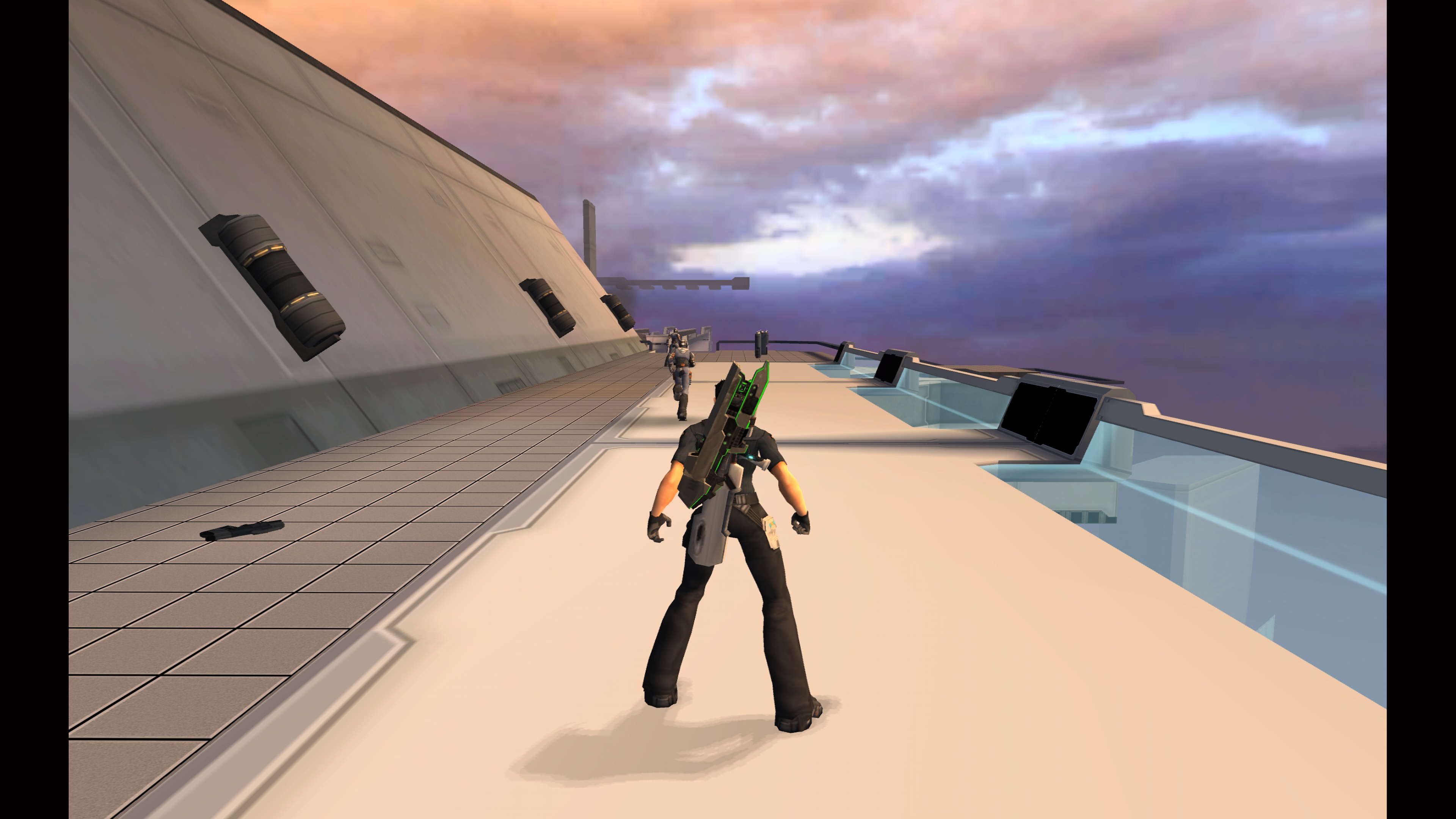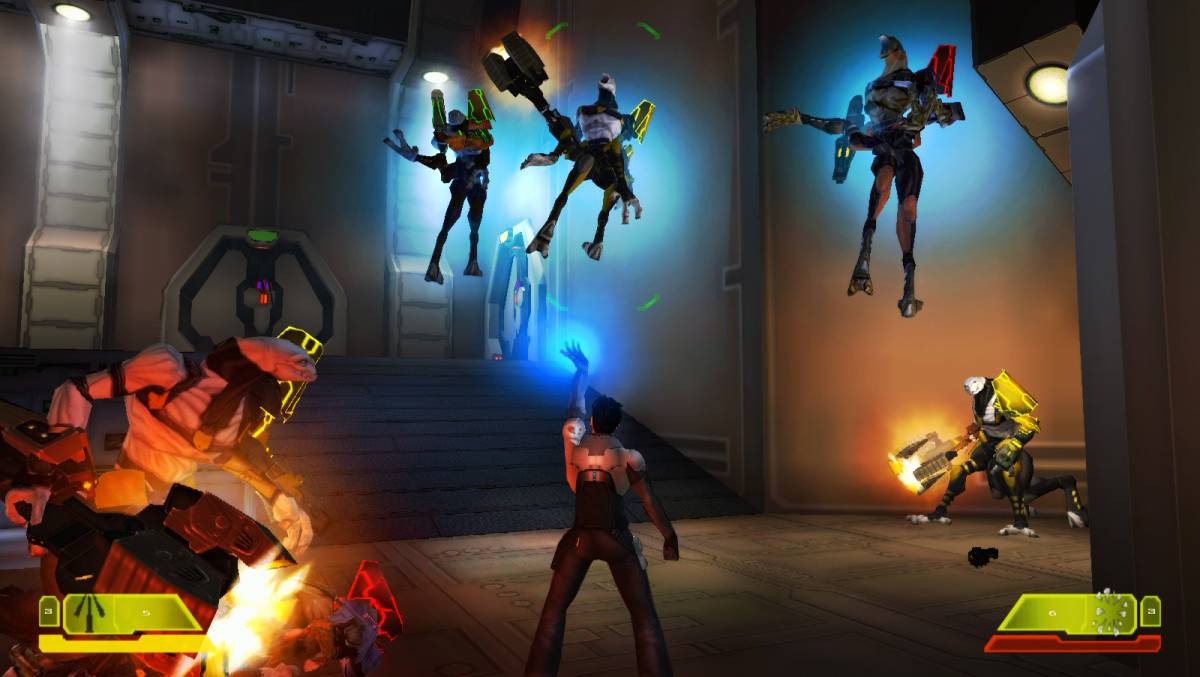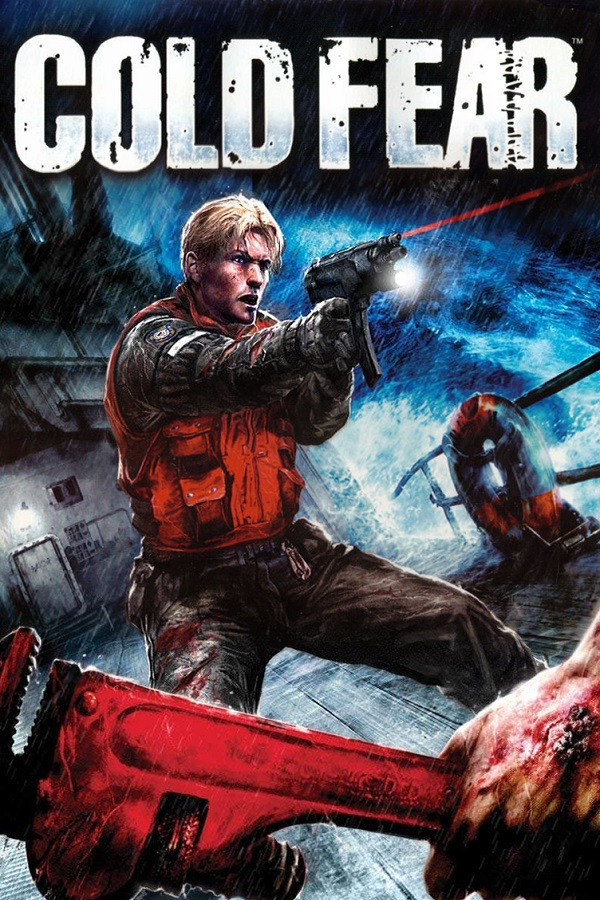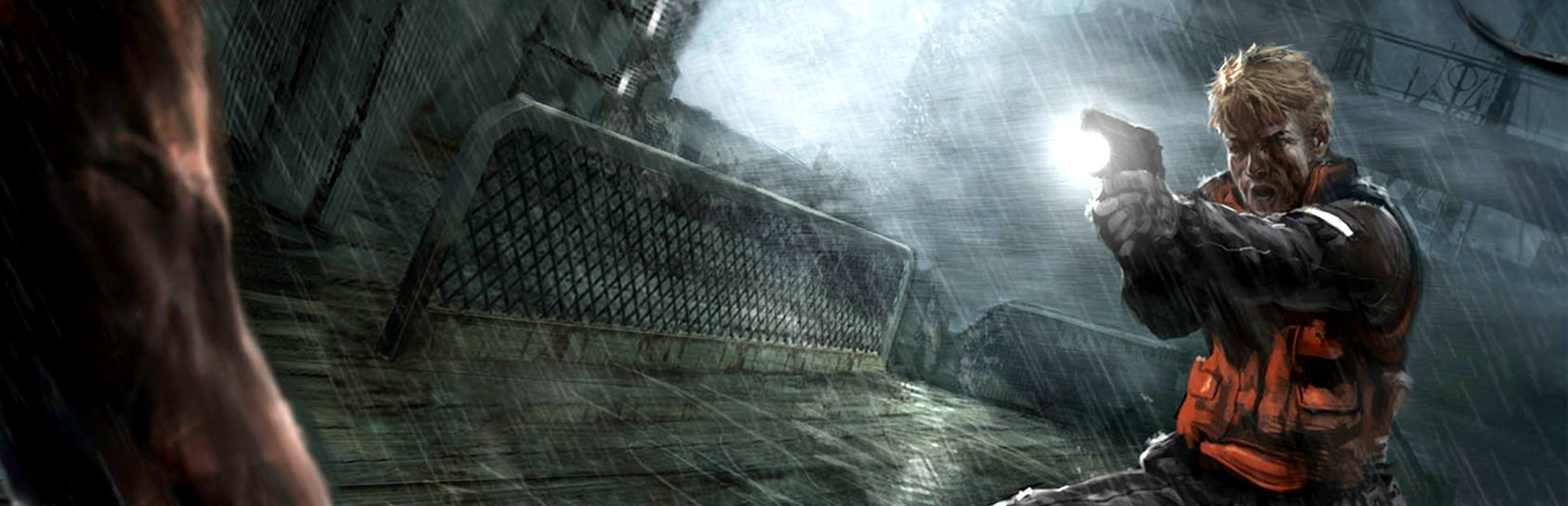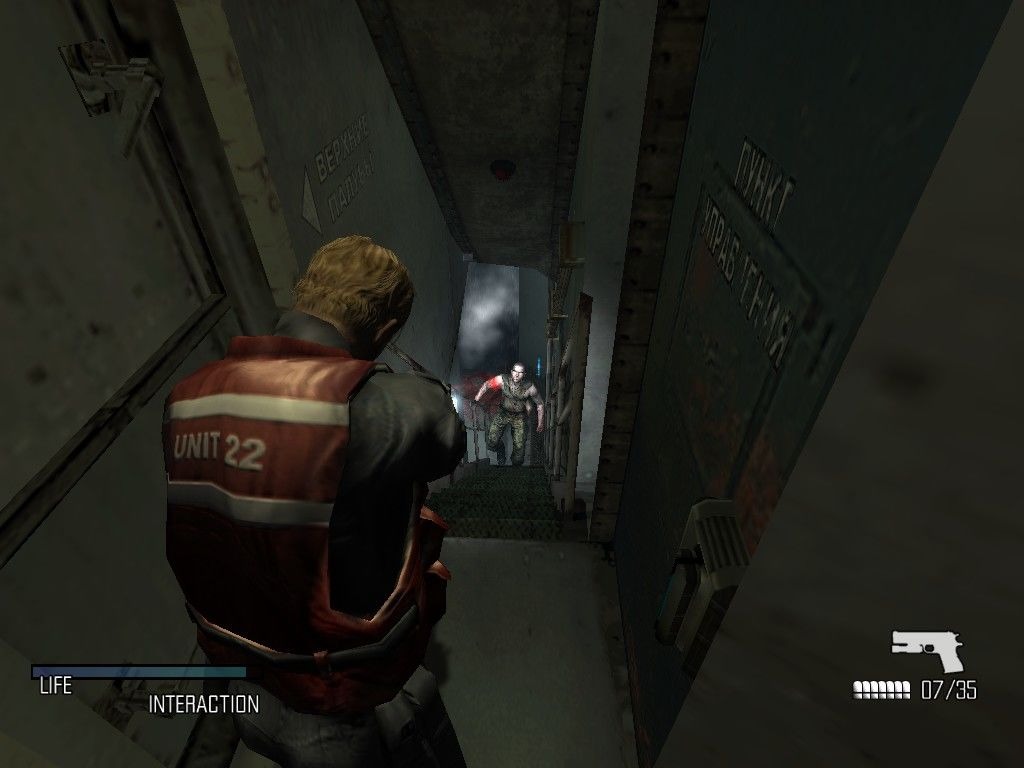
2005 was the tail end of Resident Evil clones. This period was just before the emergence of Resident Evil 4 clones. It seemed to never end. Cold Fear has an intriguing premise and a couple of neat gameplay ideas, but they are never fully explored. What we get here is a survival horror title that focuses mostly on action and has little horror to offer. I like the idea of being stuck on a ship during a storm. You feel claustrophobic, and Cold Fear did a decent job portraying this. I experienced a constant sense of urgency, needing to act quickly before the boat overturned or the zombie infection overtook me.
Of course, it’s never that simple. It’s not just a generic zombie virus. Instead, you play as a U.S. Coast Guard agent (neat idea), Tom Hansen. He’s your typical generic blonde-haired action dude with no personality who tries to be amusing but never is. He answers an S.O.S. and tries to rescue those on board. You find out there’s a species called Exocels that is infesting everyone on board. The scenario leads to zombified crew members that wield knives and can sometimes shoot. There are also regular humans, who are the Russians on board trying to kill you. It’s not a very intriguing plot or very deep. The game is only 4-5 hours long, so there’s no room for any plot development. Diaries scattered throughout the game provide the majority of the Exocel DNA exposition. There is only one other character, Anna, who is a Russian daughter of the person you’re rescuing. It’s not important, to be honest. There is a small escort section at the beginning of the game, but after that, you mostly do not see Anna again, at least not with the character you are rescuing.
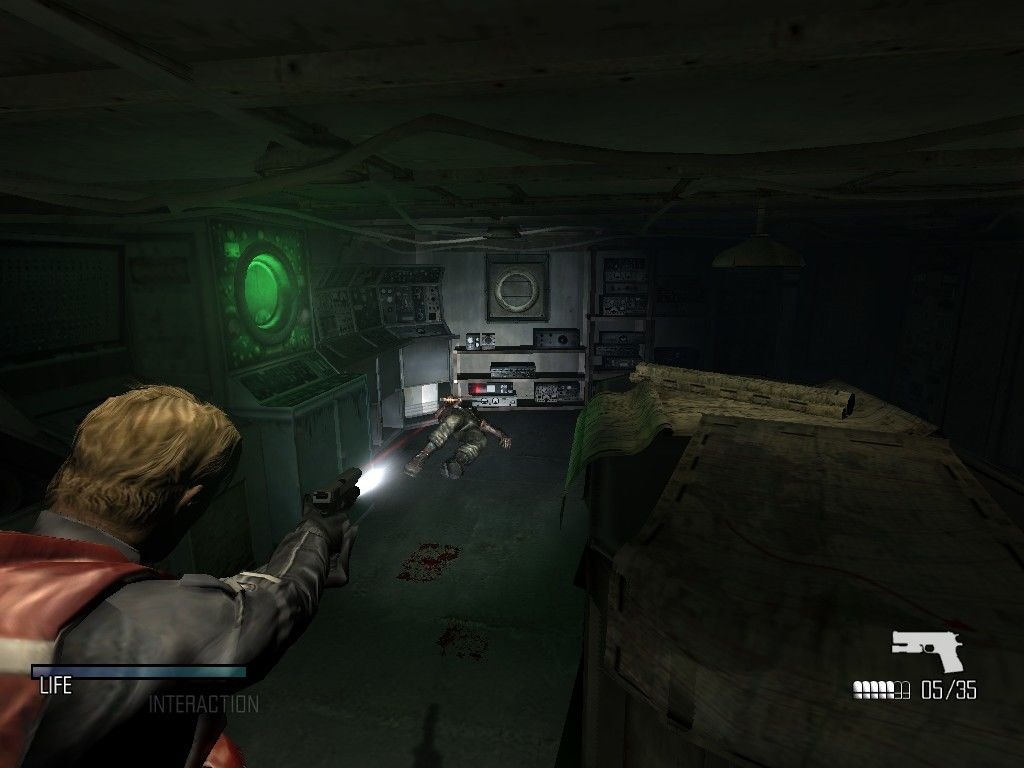
With the almost neat story out of the way, the game’s main focus is combat. There are quite a few weapons in the game, such as a pistol, shotgun, grenade launcher, flamethrower, crossbow, submachine gun, and AK-47. The pistol and submachine gun have a flashlight attached to them as well as a laser sight. The AK does as well. There aren’t many really dark areas in the game, but the flashlights do come in handy in some situations. The humans and zombies are pretty boring and straightforward enemies. There’s no dodge button, but if you are grabbed, you execute a QTE to do a critical hit. Zombies will only die when their heads explode, which is a neat gameplay mechanic. You can shoot the zombie’s head off or perform a head stomp on them when they are down. If they burn up or experience electrocution, they also die.
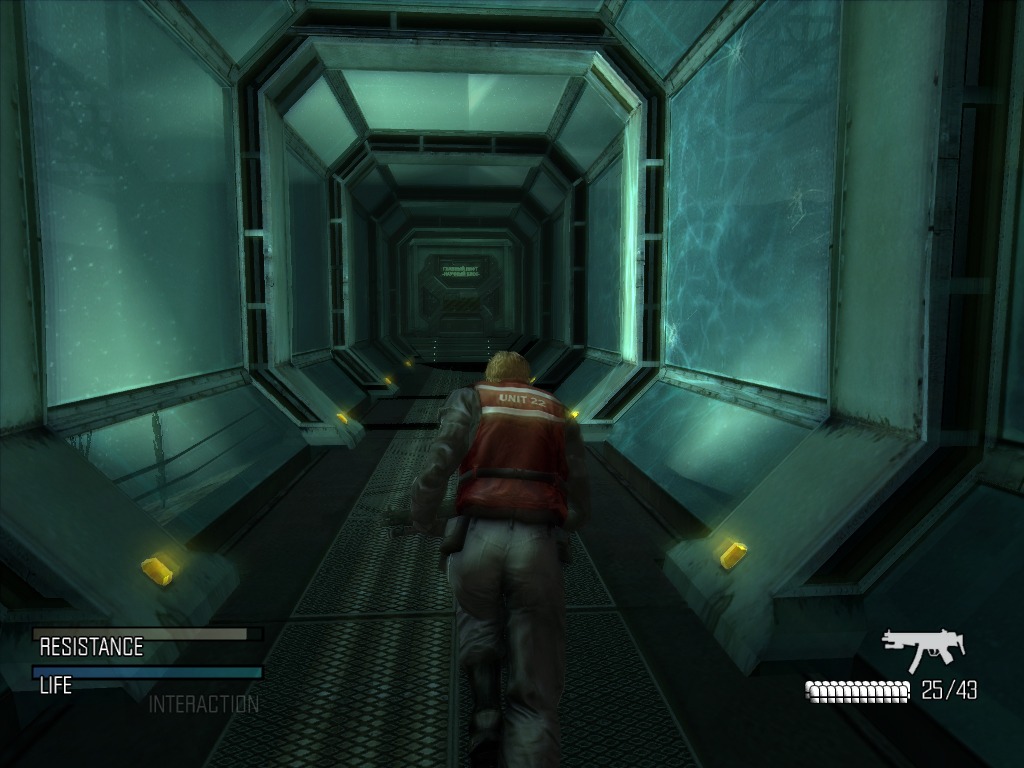
There is a lot of environmental damage that can be done, such as shooting barrels, fire extinguishers, and valves on walls and shooting some electrical boxes to electrocute enemies in water. There were even a couple of scenes in which you extend a bridge, and if you think ahead, you can have the zombies fall off by pulling the bridge back. These were fun mechanics, but they aren’t utilized frequently. The very cramped and small rooms are difficult to maneuver and fight in. The camera switches to an over-the-shoulder perspective reminiscent of Resident Evil 4 when aiming, but it snaps back to a pulled-back third-person view and occasionally switches to fixed camera angles. It’s disorienting, and while not game-breaking, it wasn’t ideal for this much action. The later Exocel enemies are more interesting to fight, such as the Exoshade, which is invisible in shadows; there is one that’s invisible all the time, and you must watch for wet footprints, or it will be visible when passing through steam. The Exomass, resembling a bull, stands as the most formidable opponent in the game. The only way to kill it is by shooting its red club-like arm until it explodes. You need to utilize each weapon for each situation, such as the AK for long distance and everything else for close quarters, with the shotgun being the best weapon. Each of the game’s two sections (the ship and the oil rig/research facility) has two restock rooms and a limited medbay. You can’t restock forever.
Sadly, what drags the whole experience down quite a bit is that there is no map, and the labyrinthine maze-like areas will confuse you. Sure, you have objectives, but they mean nothing if you don’t even get a clue as to where to go. You will wander around aimlessly until either an event occurs or you find a sparkling object nearby. Saves are also predetermined before entering certain doors that either trigger a cutscene or just after. They aren’t spread too far apart and were fairly placed. Unfortunately, once you finish the game, there’s no reason to play again. It’s not intriguing enough to. While the game is serviceable, it suffers from frequent frame rate drops too.
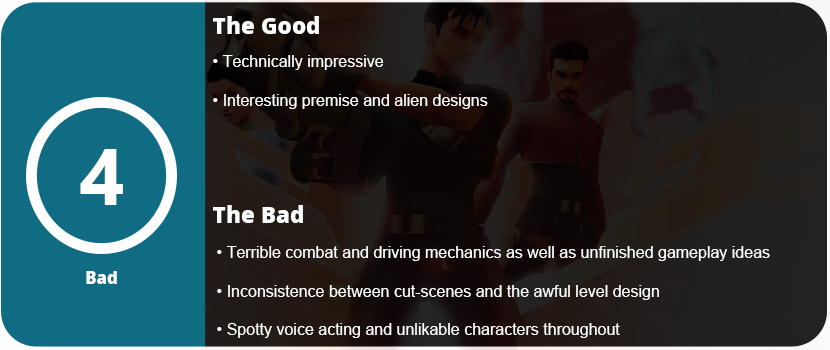
Overall, Cold Fear isn’t scary, but tense. The many gameplay ideas are peppered throughout that show promise but are never fully used. Waves can inflict damage, the boat can rock you when you’re on deck, you can swing objects that can strike you, and you can use environmental hazards to combat enemies. The game either disperses these ideas excessively or utilizes them sparingly. Although the combat is decent, it suffers from a sluggish camera, and the game’s overall layout is too constrained to provide intense action. You need a guide to avoid wandering aimlessly without a map. The visuals are pretty decent too, but nothing spectacular. Everything is gray, metallic, and drab with decent lighting effects but suffers from severe frame rate issues. Cold Fear isn’t a fantastic survival horror, especially when most of the horror is missing. It’s short enough to not be offensive, and don’t expect a deep story or intriguing characters.
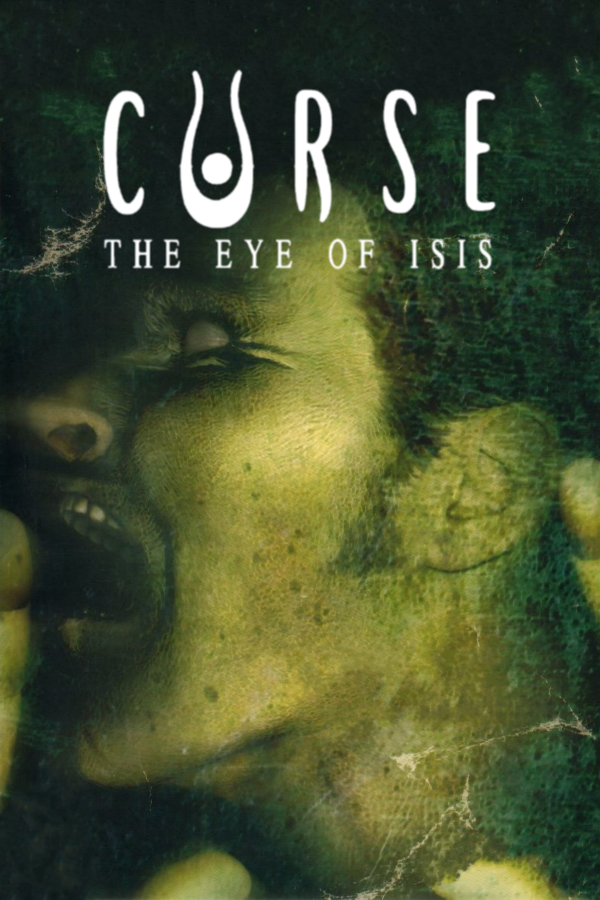
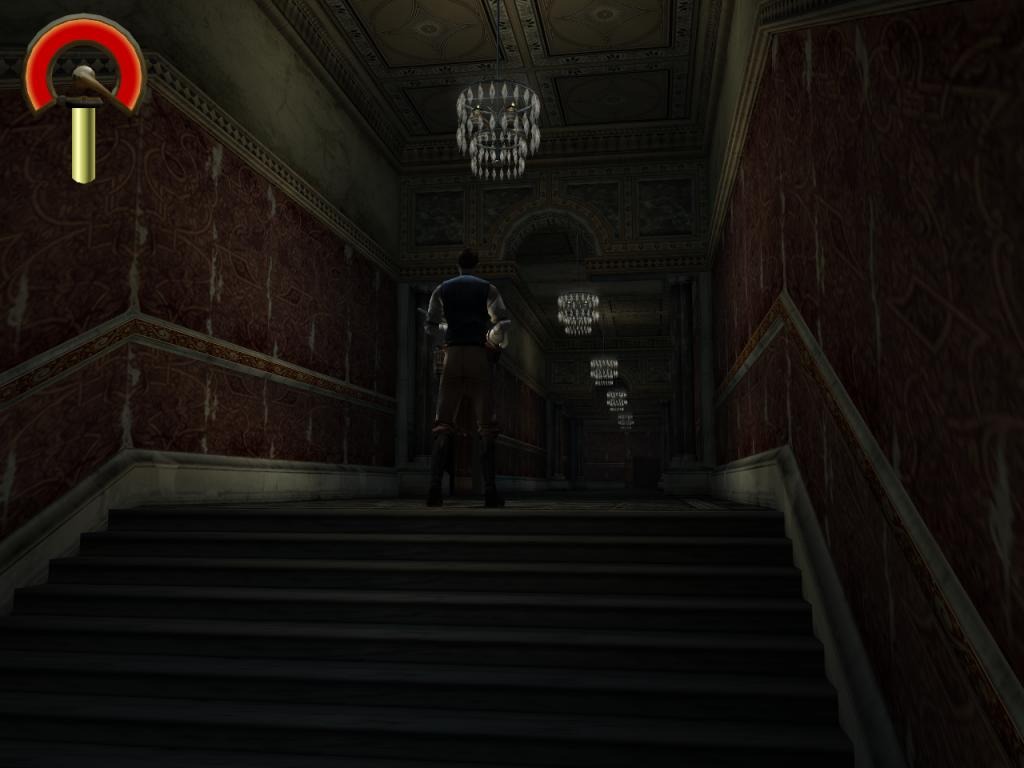
Curse is the most deceptive video game cover I’ve ever seen. It looks freaking scary and is a damn excellent cover. It’s also a pretty rare game on Xbox, one of the more expensive ones in the library. With the subject matter being a survival horror game, I had to add it to my collection. I didn’t do much research for the game. When I finally got a copy and booted it up, I stared at my screen. “Oh,” With a blank stare, I flatly exclaimed. It’s one of “those” survival “horror” games. It’s essentially an Alone in the Dark clone. It’s no more scary than a Goosebumps TV show. The beginning cut scene doesn’t invoke much hope, and neither do the production values.
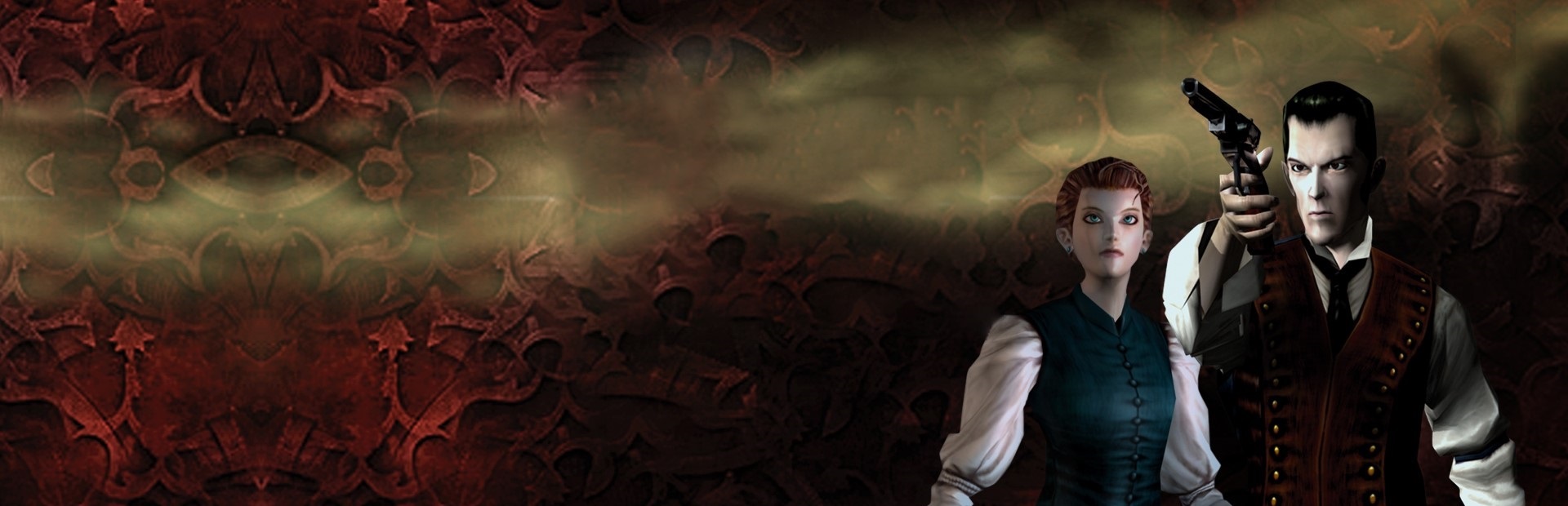
So, you play as a man-woman duo, Darien and Victoria. You only play as Victoria a few times in the game, but you are mostly Darien. The game is set in late 19th-century England. The two protagonists are American, but everyone else seems British minus Abdul. The hijinks here end up becoming 19th-century Night at the Museum. Darien’s childhood friend Victoria invites him to a British museum when an artifact is stolen, the titular Isis statue, by a thief named sigh Le Chat. His avatar is a person in a black ninja-type costume that shoots crossbow bolts. You end up chasing this character through the game. The story is completely uninteresting and fails to develop at all. In the entire game, you are simply chasing down the Eye of Isis to return it to its rightful place and prevent a “curse” from spreading. It’s a yellow mist that turns people into zombies. Yeah, it’s not fascinating at all.
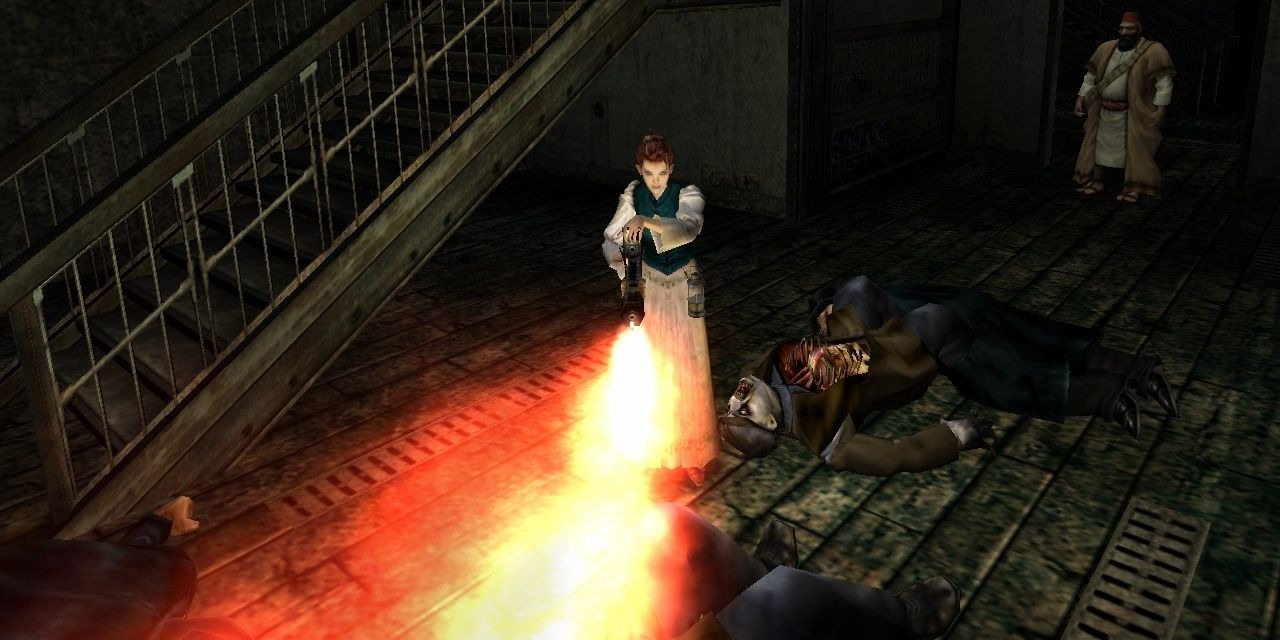
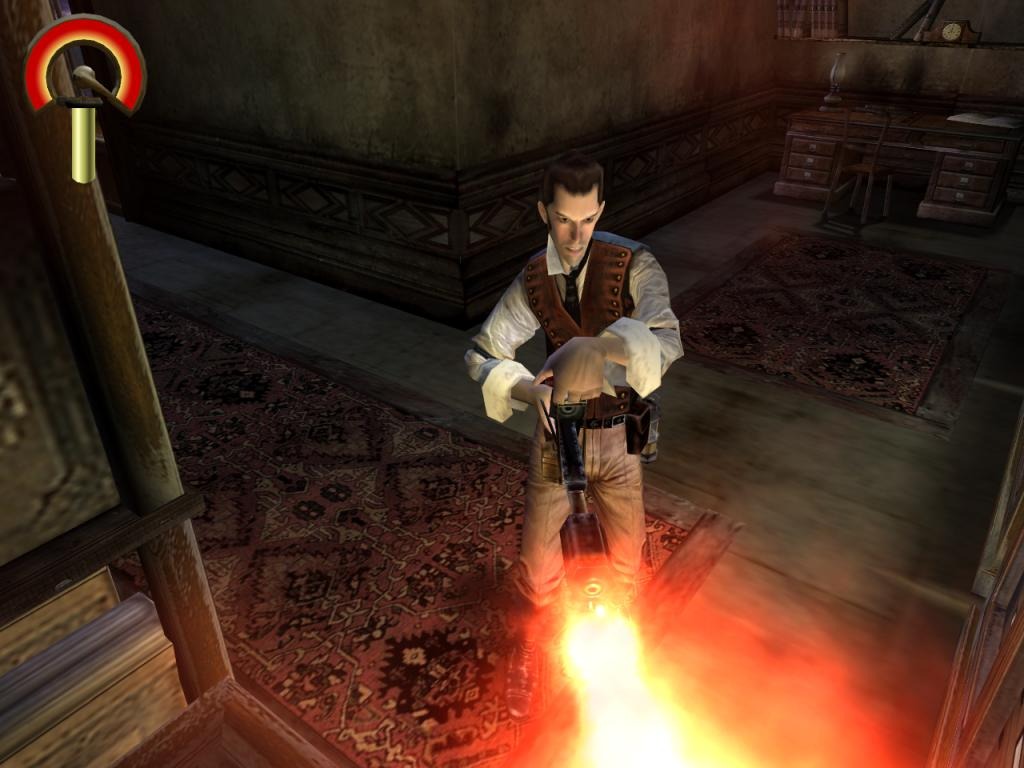
The lack of scary monsters contributes to the overall uninteresting nature of the game. The two monsters are equally frightening. You get zombies from the regular humans you fight, who are British dudes with shotguns and mummies. Totally not scary one bit. The zombies have open chests that shoot out a tentacle at you or spray yellow mist out of their mouths, which can raise a meter on the screen that slowly drains, but this also will drain your health. The enemies are surprisingly easy to dodge thanks to the also unexpectedly good lock-on combat system. I didn’t hate the combat in this game. You can circle strafe around everyone and avoid most damage pretty easily. A yellow reticle will slowly shrink down to a dot, which is your accuracy meter. There are only a couple of weapons in the game. The available weapons in the game include a revolver, shotgun, crossbow, rifle, mortar, and flamethrower. The revolver and rifle share the same bullets, and the flamethrower needs canister fuel refilled at oil stations.
Bosses are the least fun to fight in this game due to the cramped areas you are in. These bosses are big, and you just don’t get enough room to move around. The first big boss isn’t so bad, but you need to wait for vulnerable moments. You should stay constantly locked on, and as soon as the yellow reticle pops up, it indicates that it’s okay to shoot. I didn’t realize this during the first fight with two bears and wasted tons of ammo. Another fight against a giant bull requires you to move a meat hook and pick it up crane-game style with three button presses, but the bull needs to be in the exact spot, and mine glitched by just randomly cutting to the meat hook being attached when the bull wasn’t anywhere near the hook. There are quite a few glitches in this game. It’s incredibly unpolished.
Inventory management can break your game permanently if you’re not careful. You can swap inventory items between the two characters or give them to Abdul, who is your only save station. Abdul will follow you around and appear at key moments, allowing you to save frequently. However, if you give an item like a weapon to a character, they will disappear for a good chunk of the game, and you can end up with no weapons or ammo. I also ran into a glitch where the flamethrower fuel canisters kept multiplying in my inventory, and there’s no drop button. I had to give five to Abdul and not touch the canister that said x99. If I had kept going, I would have locked my game up. I had one issue where I gave all my weapons to Victoria, but she disappeared, and I was swapped back to Darien with no weapons or ammo. I had to reload my save and not do that again. It would be nice if each character had their weapons or could find their own during their parts of the story. Inventory management is seriously broken here.
With that said, the game is incredibly mediocre. This is a must-play with a guide, as the level design is atrocious. The maze-like levels and awful map system don’t help. The map has zero labels outside of slight shading on doors that you can’t open, but these constantly change. It’s a way for the developers to lazily guide you around. Every door will be locked except the one you need to go to. What’s the point of large areas with many rooms if everything is locked and unlocked based on what’s happening? I also encountered issues with ladders that glitched and required the character to be placed in an exact position before they could be activated. Puzzles are obtuse with badly placed camera angles, making it difficult to see symbols and objects. The two available written guides exhibit poor quality, lacking warnings about weapon selection and descriptions of boss fights. For the final boss, one guide advises, “I won’t spoil how to fight the boss, but just beat it like the last one.” That’s not helpful at all.
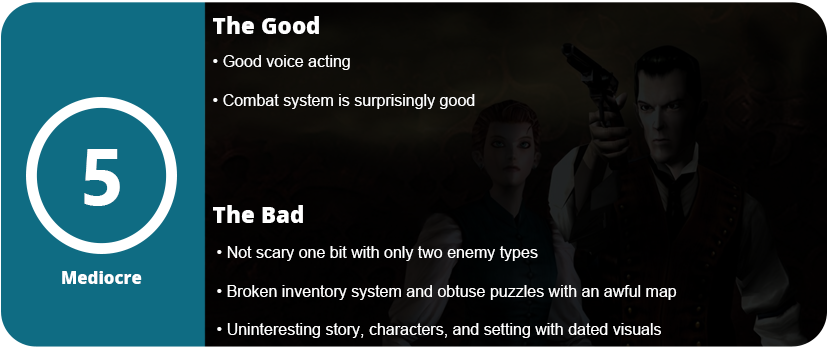
Overall, Curse is an awful-looking, mediocre game that isn’t scary. Only two enemy types, broken inventory that can lock your game up, terrible and dated visuals, an uninteresting story, and bad camera and level design with uninteresting characters. Even the sound design and music are just bad. Why does walking on sand sound like squeaky rubber? At least the voice acting is good.
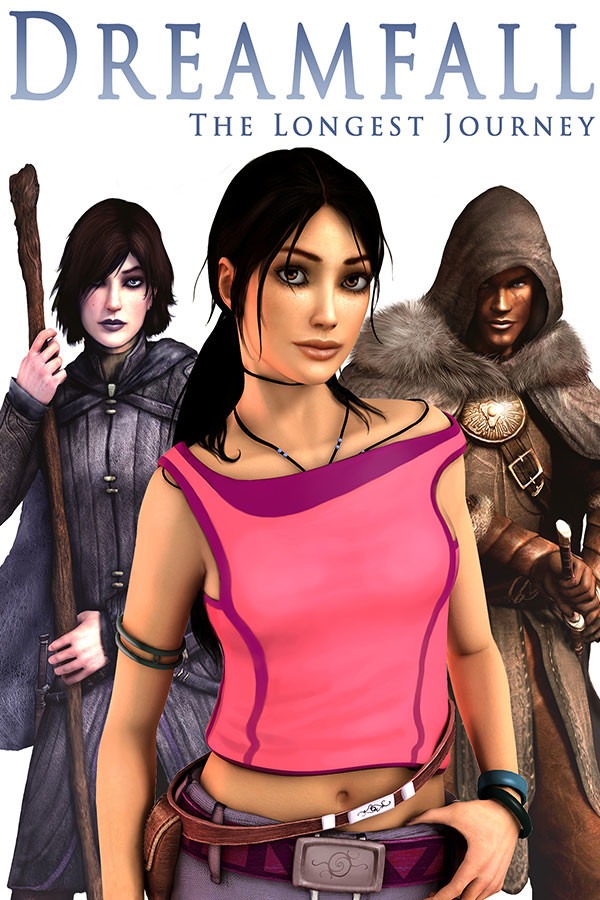
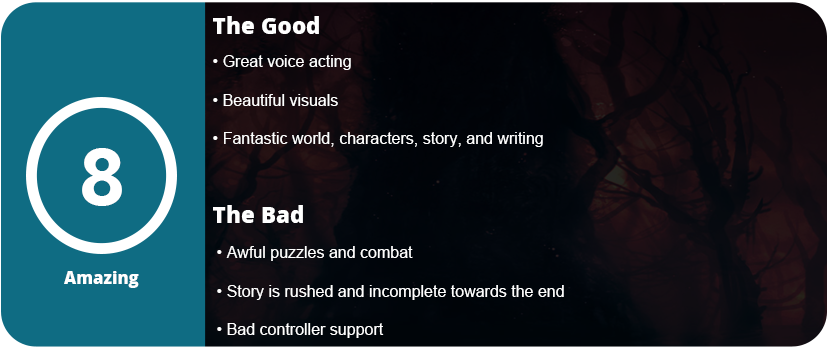
The Longest Journey is one of the best adventure titles ever created and one of my personal favorites. It’s so good that even my own mother fell in love with it, and she’s not a gamer. The world, characters, and lore that were built up in The Longest Journey were fascinating. It was well written, and the visuals, for the time, were fantastic. Gameplay-wise it suffered from the usual tropes of adventure games of the time, but Dreamfall is for a next generation of gaming with 3D visuals. The game stars a new protagonist, Zoe Castillo, who awakens in her home in Casablanca and ends up being entangled in a deep corporate conspiracy and needs to find April Ryan.
The game starts out a bit slow. Everything seems just fine, and the game needs to build up this new branch of the story with Zoe. You wake up in your room and talk to your dad, you go outside, you meet a friend at her phone store, and then you end up building towards a relationship with your ex-fling Reza, who is a secret reporter that is on to a big story to bring down the evil corporation WATIcorp, which is known for making AI and robots. April Ryan and Arcadia get involved; I don’t want to spoil how, but she is the second story branch in this game. You do end up in Arcadia for the second third of the game, running around a small town called Marcuria, going back and forth finding objects and talking to people. The last third of the game starts mixing it up, and you go back and forth between Stark (the real world) and Arcadia quite a bit. Familiar faces appear, and then the third story branch of Kian Alvane, an Apostle for a religious sect of Arcadia, sets in.
Gameplay is very minimal. Puzzles aren’t challenging and are very sparse. They consist of glyph matching against a timer and glyph spinners. They appear to have been tacked on at the last moment, a common occurrence in adventure games from this era. You can combine objects to solve puzzles, but this doesn’t happen very often. Objects are obvious and easy to come by, as there aren’t that many interactive objects in the game. Green brackets will appear over everything you can interact with, and most of them just have the character explain what it is. The first two-thirds of the game is more gameplay-heavy with a couple of stealth areas and combat. Yes, combat. It’s atrocious and shouldn’t have been put in. The animations are stiff and slow, and the controls feel like mud. There is a block button, and you can dodge, but the AI is unintelligent and just wails at you or repeats patterns. There is a light and heavy attack, but honestly you just need to mash the heavy attack and you will win. There are only a couple of fights in the game, and any others you won’t win, and you’ll essentially fail a stealth section.
The last third of the game is clearly rushed, and the game obviously wasn’t completed. This section is mostly just cutscenes and dialogue. Kian’s and April’s sections just end with no conclusion, and Zoe’s section is the only branch that feels complete in a way, with a proper cliffhanger for a sequel. I just found it odd that each chapter took nearly two hours to finish, and around chapter 7 I’m finishing them in a matter of minutes, and there are no more puzzles or gameplay. Even for what’s here, 12 hours is quite long for an adventure title. I feel this needed to be 20 to feel fully complete. Thankfully it doesn’t overstay its welcome. The writing is great, the voice acting is decent, and the world and characters are really interesting.
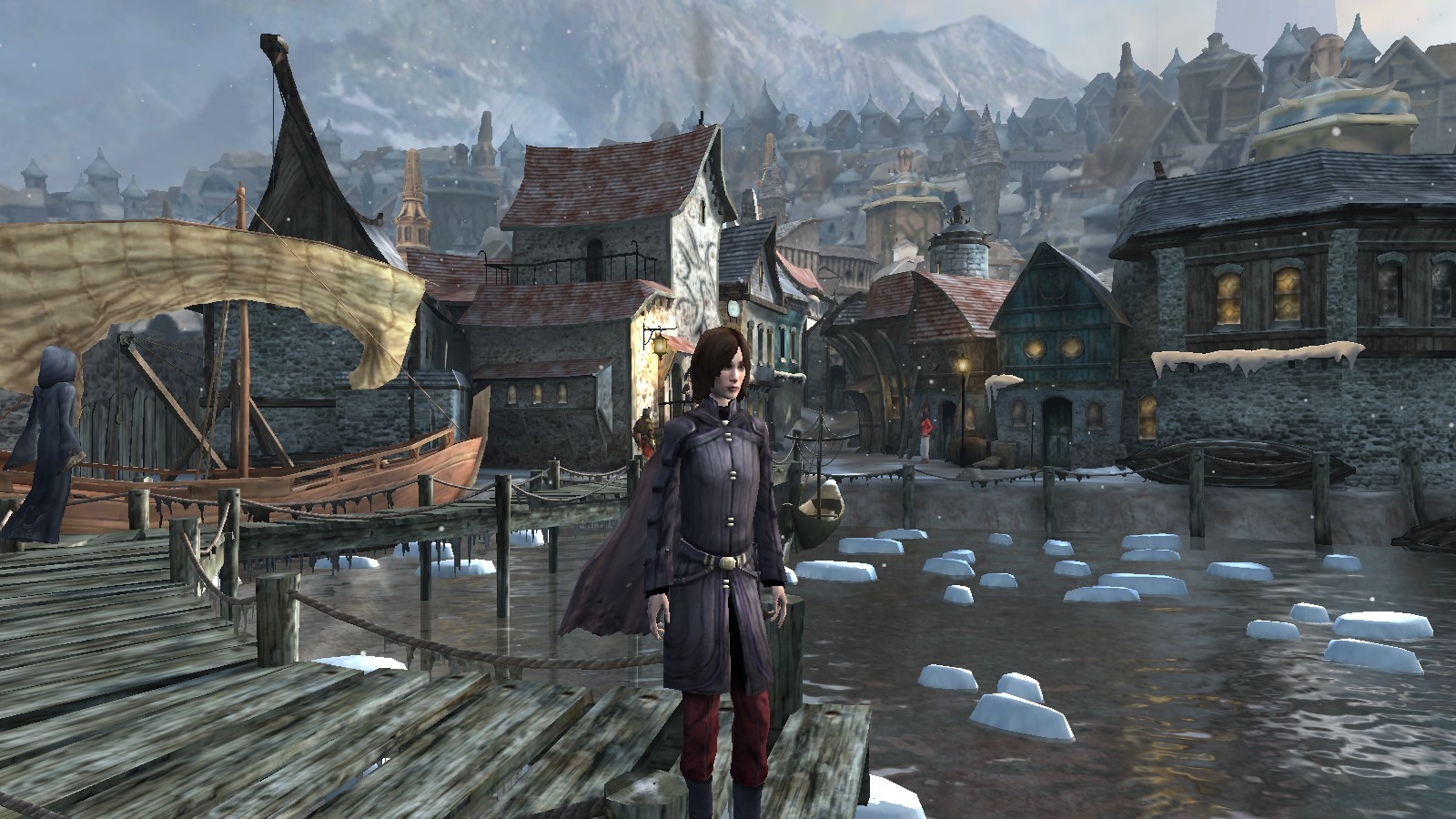
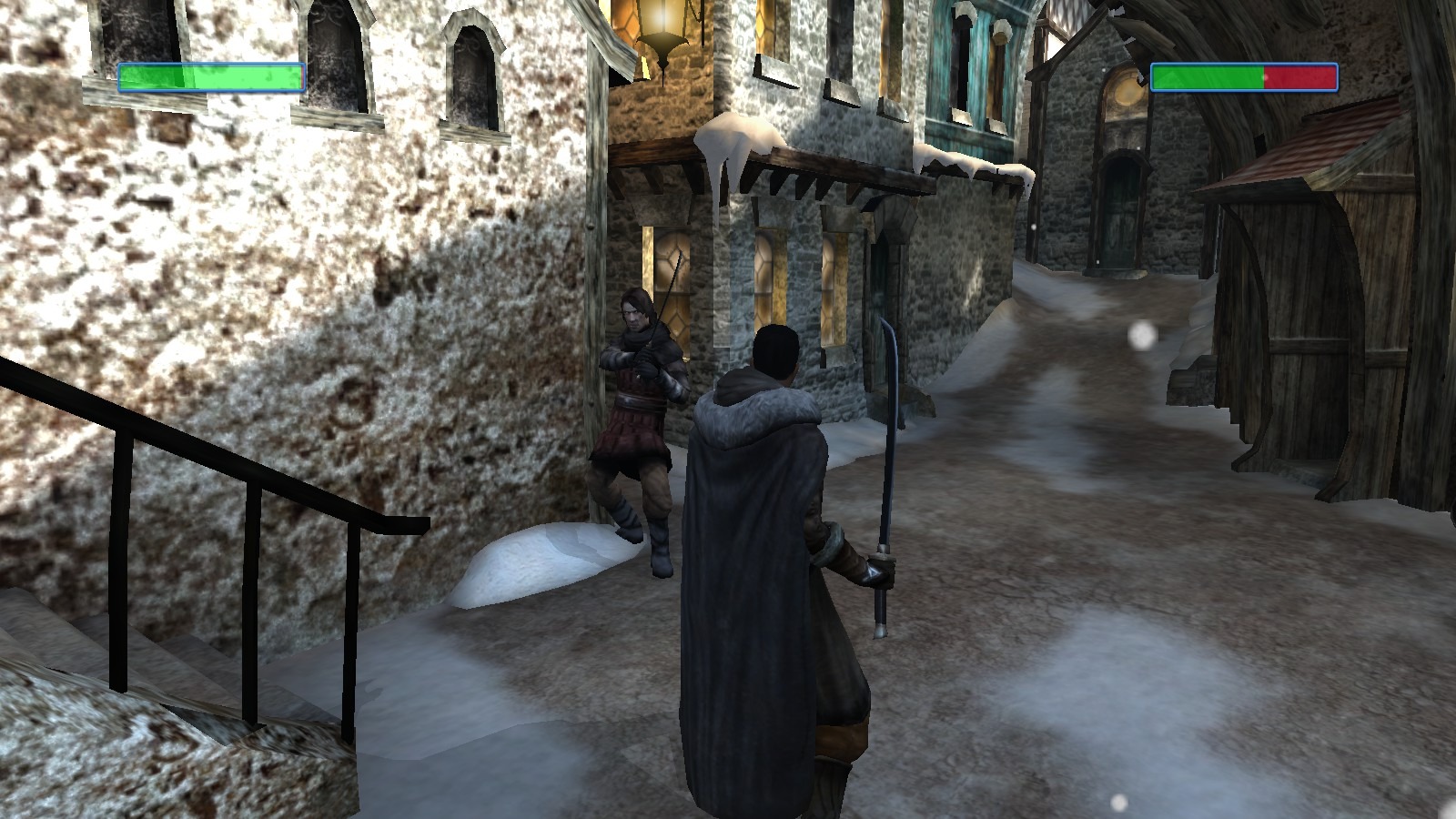
The visuals hold up surprisingly well even today. The large vistas look beautiful with great lighting effects. There’s a lot of detail put into everything from icicles hanging off of the bottom of bridges to detailed ornamentation in walls and stones that didn’t need to be there for a game of this era. Sadly, the PC version has terrible controller support, but this was pre-Games for Windows, so there was no universal controller standard for PC games back then. This game is still easily one of the best adventure titles ever made thanks to the fantastic lore, world-building, and writing. I couldn’t put the game down. I do recommend playing the first game, as this is a direct continuation, but the game does a good job filling you in on everything as the game goes along.
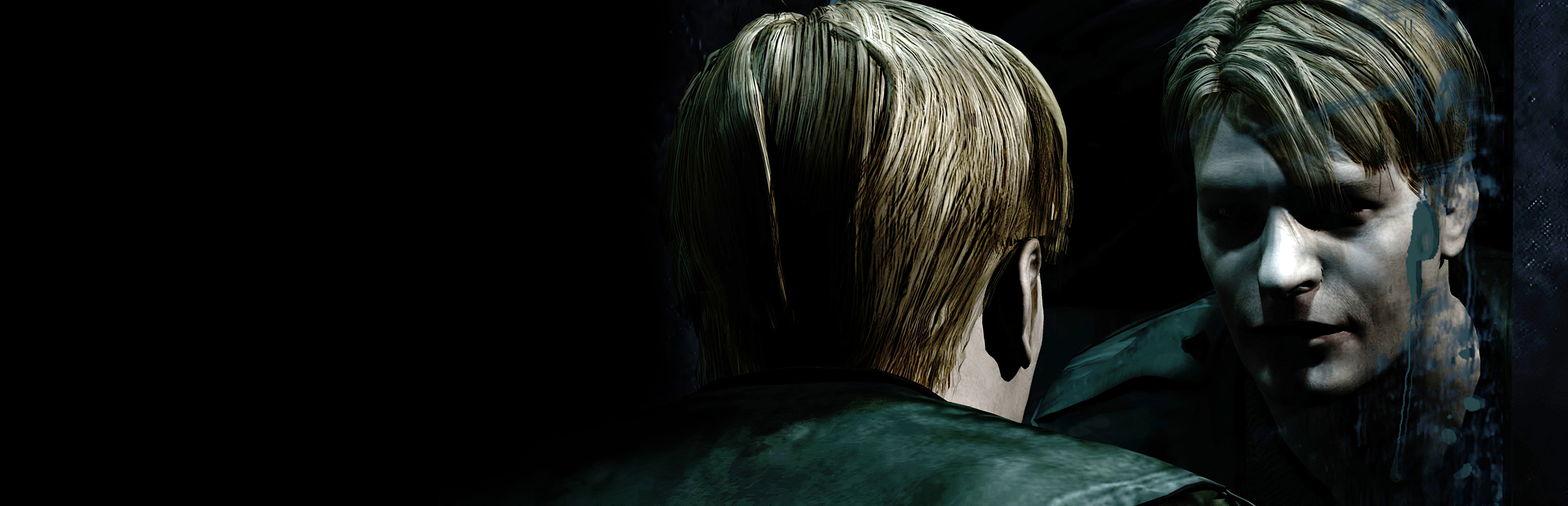
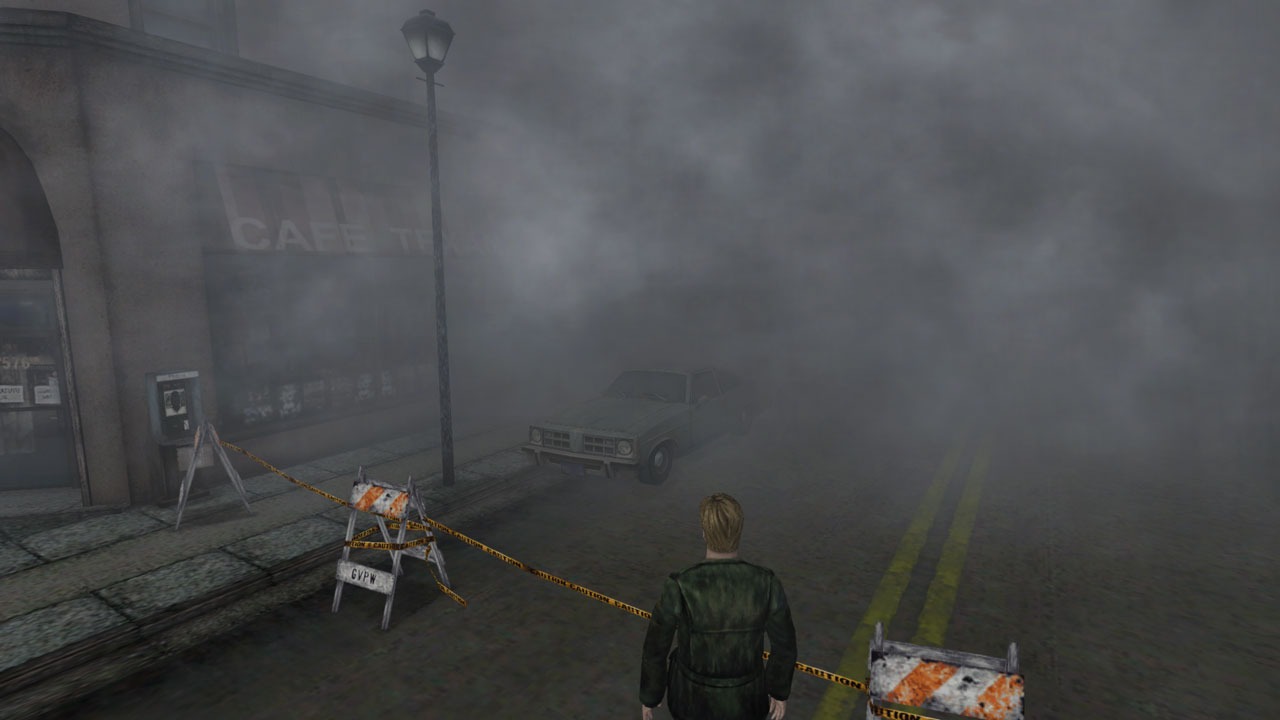
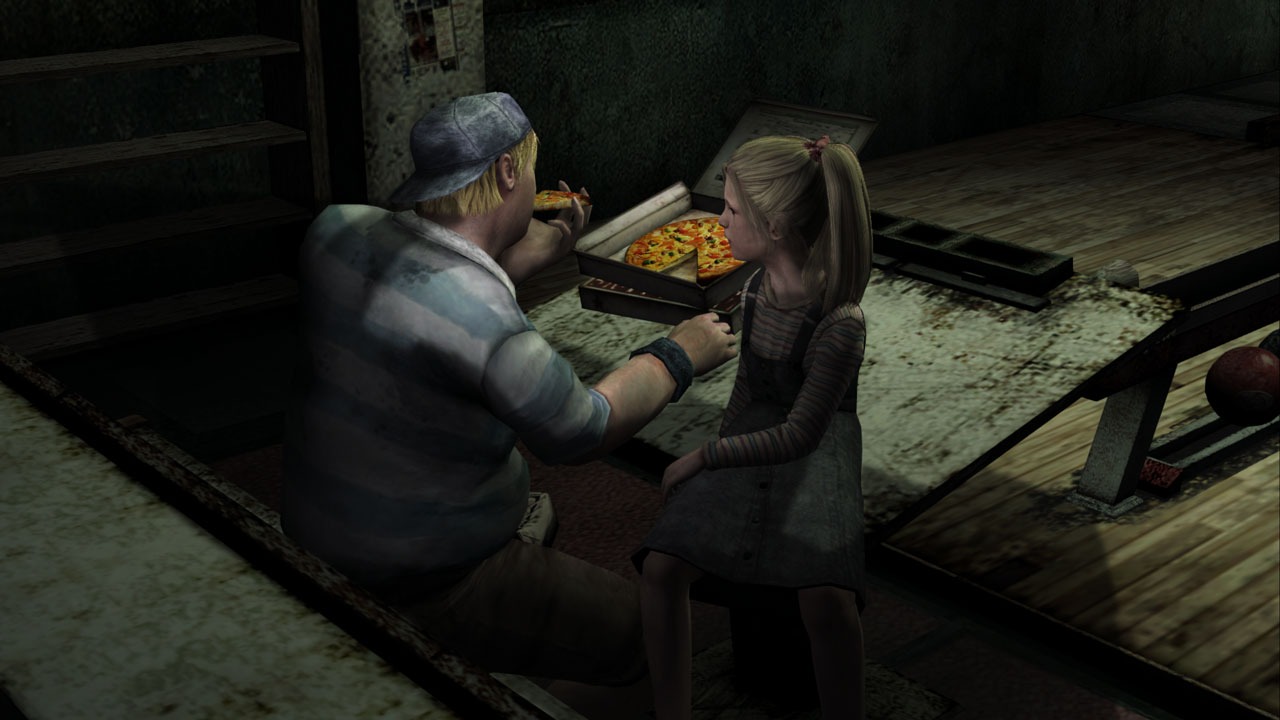
Silent Hill 2 is considered one of the best horror titles ever made. This is my second playthrough of the game. I first played this on PC as well almost 20 years ago. I was a teenager, and I can’t even remember if I finished the game. Silent Hill 2 differs significantly from its original PS1 title. The game focuses more on atmosphere, surrealism, and how things affect people mentally. You follow a man named James Sunderland, who is searching for his wife Maria in the town of Silent Hill, Maine. The story is a little disjointed and doesn’t always make sense, but I think that’s intentional. The game focuses on themes and characters that have no connection to James. Are they manifestations of the town’s pain in human form? There isn’t much exploration of these people’s back stories, despite their frequent appearance. Despite the lack of a third act or a definitive ending will be on the player to make of it what they will. The story is open for interpretation, but remains interesting.
I like how more straight-forward this game is. While the map is an essential tool for figuring out where to go, this series kind of made that a staple. As you progress, your map will mark off areas explored, doors tried, and objects found, aiding in exploration. I still find the puzzles somewhat obtuse, especially on harder difficulties, which make the clues more vague or sometimes nonexistent. For a first-time playthrough, I recommend the easiest combat and puzzle difficulty so you actually finish it. Puzzles involve finding combination locks, and you must either decipher written clues or photos. Some are obvious, while one literally requires you to guess the combination. Finding keys, sometimes through multi-tiered layers of unlocking, is a significant part of advancing through the game. When you receive keys, it’s clear where they lead, and the town map typically circles your next objective. However, navigating inside buildings complicates the process. Most players will tend to become frustrated when they have to attempt every door on the map, especially when there are enemies present. That’s why I recommend starting at the easiest difficulty to gain a better understanding of the game before taking on another challenge. Even starting normal can make the game feel unbearable at first when you don’t know where to go.
Silent Hill 2 improves on the first game’s combat. Auto-aim works much better, but ammo conservation is a must for boss fights. You get a handgun, shotgun, and rifle, as well as three different melee weapons, and that’s it. When you are just fighting one-to-one, you should use your melee weapon, but on the easiest difficulty, ammo is so plentiful that I could use a gun through the last 3/4 of the game once I collected enough. During the first half of the game, you will wander through the main town of Silent Hill, but you should stick to the sidewalks, as this is where all of the items, including health and ammo, are located. You can avoid most enemies by running past them, but the ominous atmosphere compels you to engage in combat. The enemies in the town respawn anyway, so there’s no point. On harder difficulties, the combat is more challenging, but in most areas you won’t face more than two enemies at a time. You must also kick the monster once it’s down, or it won’t completely die and can come back up. Most enemies are slow and easy to learn their patterns from. The game’s final bosses require the rifle, which boasts the rarest ammo count. The shotgun is powerful but slow at close range, and the handgun is your main firearm for the entire game.
There aren’t any mini-games or side quests here. Basically, you just try to get from A to B alive and watch whatever cutscene you come across. There aren’t any collectibles, either. With a guide, I was able to finish the game in about 4 hours, so it is surprisingly shorter than I remember it being. This was originally a technical showcase for the PS2 during its first year on the market. The fog and lighting effects in this game blew me away when I watched a neighbor play it. If you try to play this game on your own, you may get frustrated early on, turn the game off, and never come back. I highly recommend your first playthrough with a guide. I used the official BradyGames guide for Xbox and had a blast the entire time. I honestly did not want the game to end. I thought the game could tell me more, and I wanted to explore the “alternate” areas from the original title. I never experienced significant frustration with the guide, except for the repetitive nature of the interior locations. The overwhelming number of hallways you traverse gives you a sense of familiarity among them.
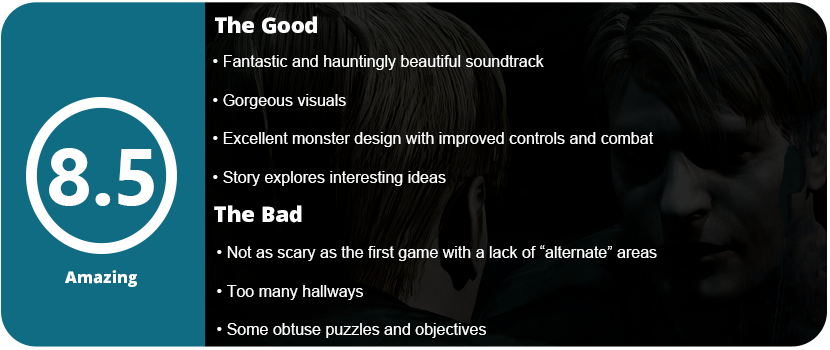
With that said, the atmosphere is something I absolutely couldn’t get enough of in this game. The eerie and exquisite soundtrack, the intricate designs of the enemies, and the overall aesthetic appeal of the game captivated me. I was disappointed that we didn’t get to see too much of “alternate” areas, and the boss fights are a bit too straight forward and disappointing, but they look cool. I honestly wish there were more enemy types in this game, but what’s here is still memorable and iconic. The fog that covers everything is now an integral part of the game’s aesthetic, rather than a necessity for these consoles to render the visuals and reduce draw distance. I did become somewhat fatigued by the frequent requirement to traverse narrow hallways, as this game contains an abundance of them. There’s too much focus on item hunting and not enough on exploration. I’m surprised the game wasn’t more combat heavy—at least in certain areas—given how much the combat and controls have improved. The voice-acting was sporadic and inconsistent, as anticipated. The mystery of the endings is my biggest gripe. Interacting with certain objects can lead to unexpected endings. The series’ staple endings are difficult to acquire, and even with a guide, I struggled. Thankfully, this game is worth multiple playthroughs, so you might want to consider it.
Overall, Silent Hill 2 is a fantastic horror title, with the Xbox and PC versions being the superior choices. I played with the Enhanced Edition mod this time around, and it looks as excellent as it will get without an official remaster or remake. It combined the best assets from all versions to make it playable on modern systems equipped with controllers, ultrawide screens, and proper FOV fixes, among other things. The texture work is remarkable, and I loved every second of it. The soundtrack is excellent; I actually listen to it outside of the game. The sound effects are also iconic and haunting themselves. They will stay in your head forever. While the characters themselves may not be particularly intriguing or profound, the town of Silent Hill stands out as a unique character in its own right. With so much to reveal and is concealed, you want to see everything. I would even consider this an unofficial HD remaster. If you haven’t played Silent Hill 2 yet, this is the way to go outside of the Xbox version.
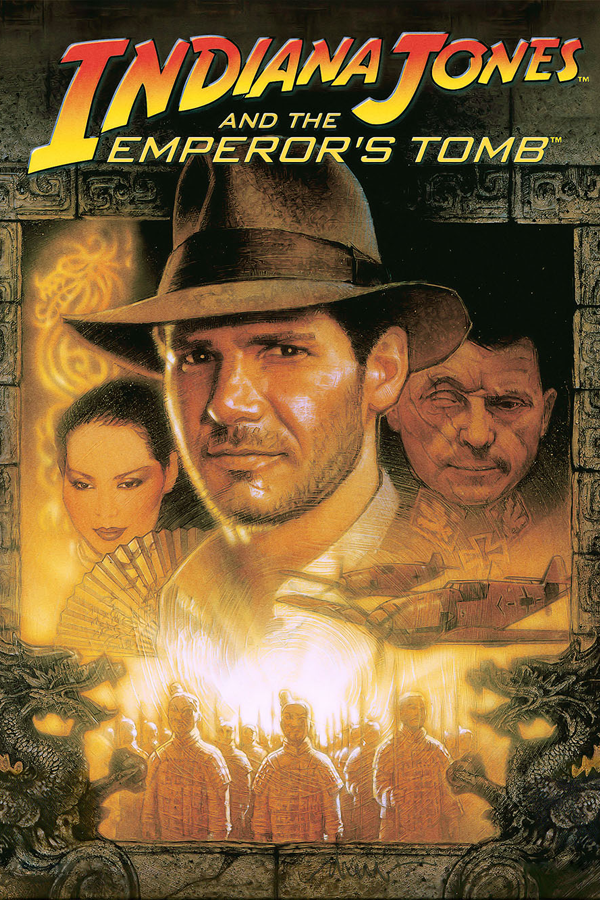
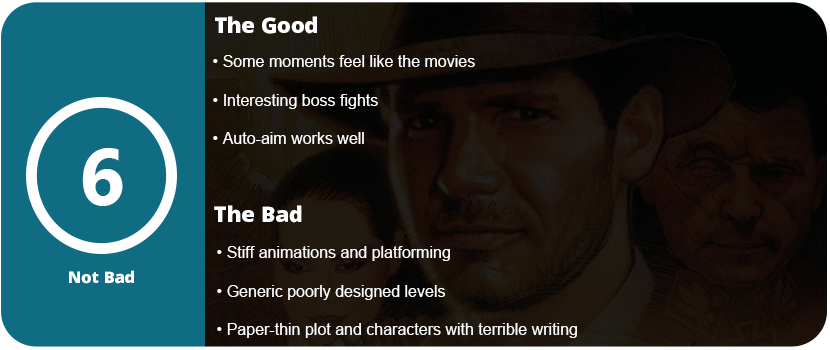
I’m not a huge Indiana Jones fan. The only one I remember is the fourth movie, Kingdom of the Crystal Skull. When I was a child, I watched bits and pieces of the original trilogy when my parents would put it on, usually when it showed up on a cable network, but that was it. This is my first ever Indiana Jones game, and I have to say that I came away quite surprised with people giving it such high praise and holding it as the best Indiana Jones game to date. The story is cheesy and corny; the dialogue is terrible, and the characters lack depth. Indy himself has no backstory or context. You clearly must already be a fan of the movies, and the developers anticipated this. The storyline suggests that Indy finds himself in the midst of a task for a client and encounters obstacles. Then, the Chinese government hired him to find the dragon’s heart. He eventually encounters Nazis who are also in pursuit of the same object. It’s pretty pointless, and there are so few cut scenes that it really doesn’t matter.
The first half of the game is actually the worst. Stiff animations, clunky combat, and terrible platforming plague the entire game. The puzzles themselves would be neat in a Tomb Raider game, but here they showcase the poor level design. Indy either climbs things, pushes levers, does hand-to-hand combat, or shoots guns. That’s all there is to the entire game. Levels in the first half mostly consist of hand-to-hand combat, as ammo is very scarce. You can replenish your health by using medkits or drinking from your canteen, which refills at water fountains, a resource that becomes increasingly scarce as the game progresses. The canteen upgrades only work for the level you’re on and don’t carry over. There are also artifacts that need to be found in order to unlock concept art, which, to be honest, is a lame idea.
The stiff animations contribute to the clunkiness of platforming. Indy is really jerky or just doesn’t respond instantly to button presses. Because of this, I ended up falling off cliffs or missing jumps more times than I can count. You can also whip-swing, but the stiff animations feel sped up during the swing compared to the rest of the jumping. Having to cold jump to a ledge right above you is a chore. Indy must be precisely aligned to secure a grip. There are ledges you can shimmy across with a dedicated wall hug button, but the combat is even worse. Idy auto-aims and works most of the time, making shooting the best part of the game, but ammo is scarce in the first half. Melee combat just drags on forever. Enemies are fist sponges, and even with a melee weapon such as a sword or bat, opponents would take 20-30 hits to die. You can use your whip to knock weapons out of their hands, which is mandatory if they have a gun and you don’t. When more than two enemies gang up on you and back you into a corner, it becomes a chore to fight them off.
The level design is generic; even for 2003, it’s pretty bad. The game is bland and void of character, with a lot of rectangular empty rooms and hallways. The game occasionally shows something more when you are outdoors, but this doesn’t happen until mid-game. The game accelerates by letting you play one of the two on-rails sections, which it needed more of. The Nazi base is less puzzle-solving and more platforming and combat, which is what I prefer. The temple level proved to be the most challenging, primarily due to its underwater nature and poor swimming mechanics. Indy can only swim fast underwater, and there are sharks that can kill you. Boss fights are also a rare occurrence, but they were one of the few more intriguing elements of the game, as each boss fight needed something in the environment to weaken them before you could take them down. They were almost a mini-puzzle themselves.
Overall, the game is a mostly frustrating and overly long affair. The game can take up to 8 hours to finish if you don’t die frequently, but the devs could have completely eliminated the first half of the game. It’s the weaker half anyway. The unfair checkpoints also don’t help; you have to restart entire long sections every time you die. There are a few fun moments, such as the boss fights and on-rails sections, and the platforming is more enjoyable than the puzzle-solving, but the generic visuals, paper-thin plot, and cumbersome controls and animations hold this game up quite a bit.
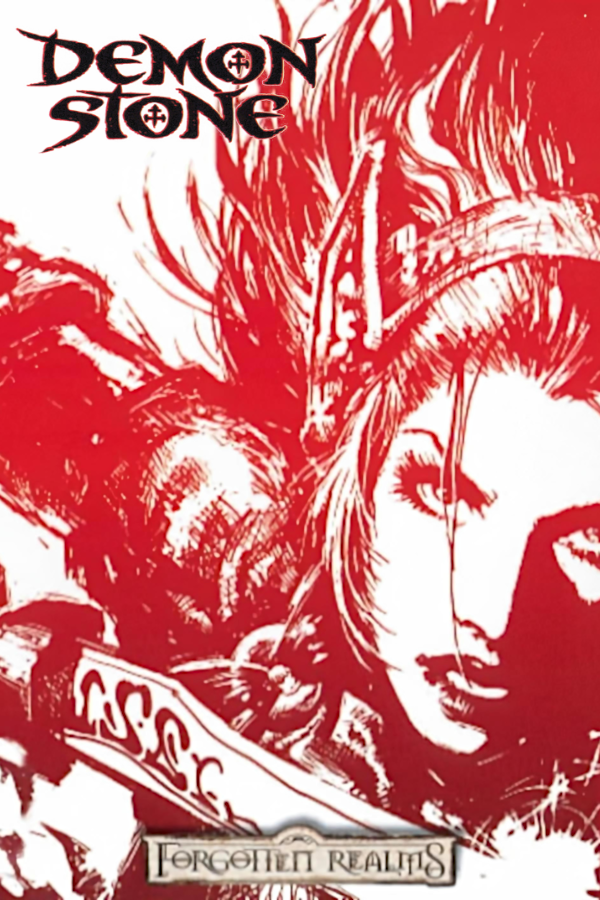
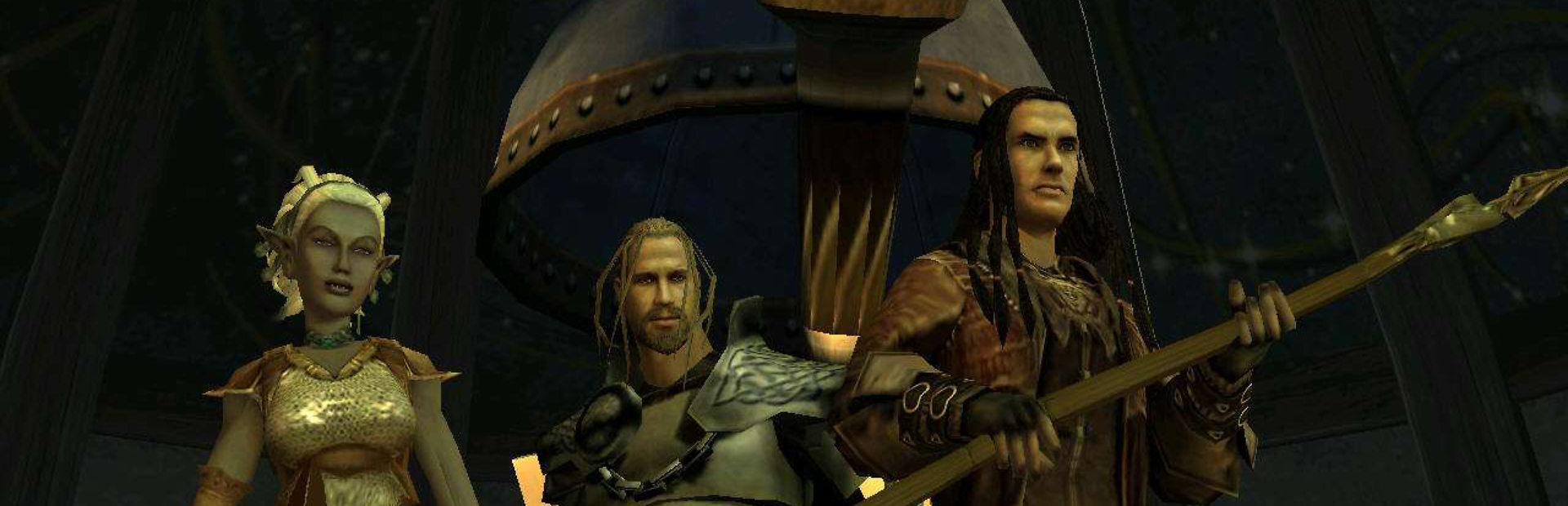
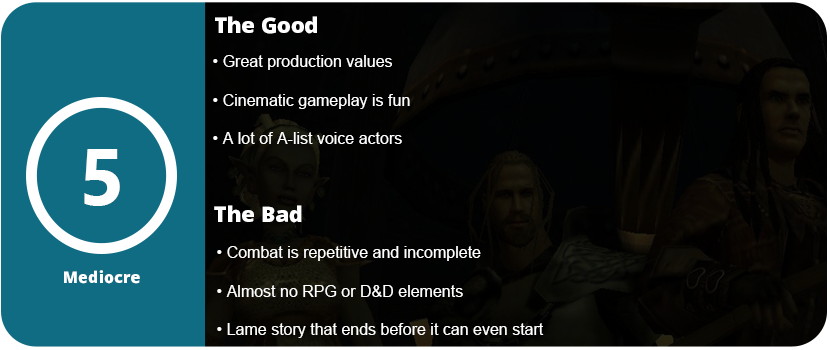
Around 2004/2005, towards the end of the sixth generation console cycle, games began to take a new turn. AAA titles were becoming something bigger. Blockbuster video games with cinematic gameplay were all the rage as consoles became more powerful. Stormfront Studios was all the rage with their smash-hit movie tie-ins to Peter Jackson’s last two The Lord of the Rings films. The linear gameplay, coupled with unique combat for each character and the ability to bring the world of the movies to life as a playable game, was fantastic and executed well. Here, there’s not much. Having the Dungeons & Dragons license at your fingertips and doing none of the D&D stuff with it is a crying shame. This game could have worked as a generic fantasy title if they just changed a few of the characters’s names.
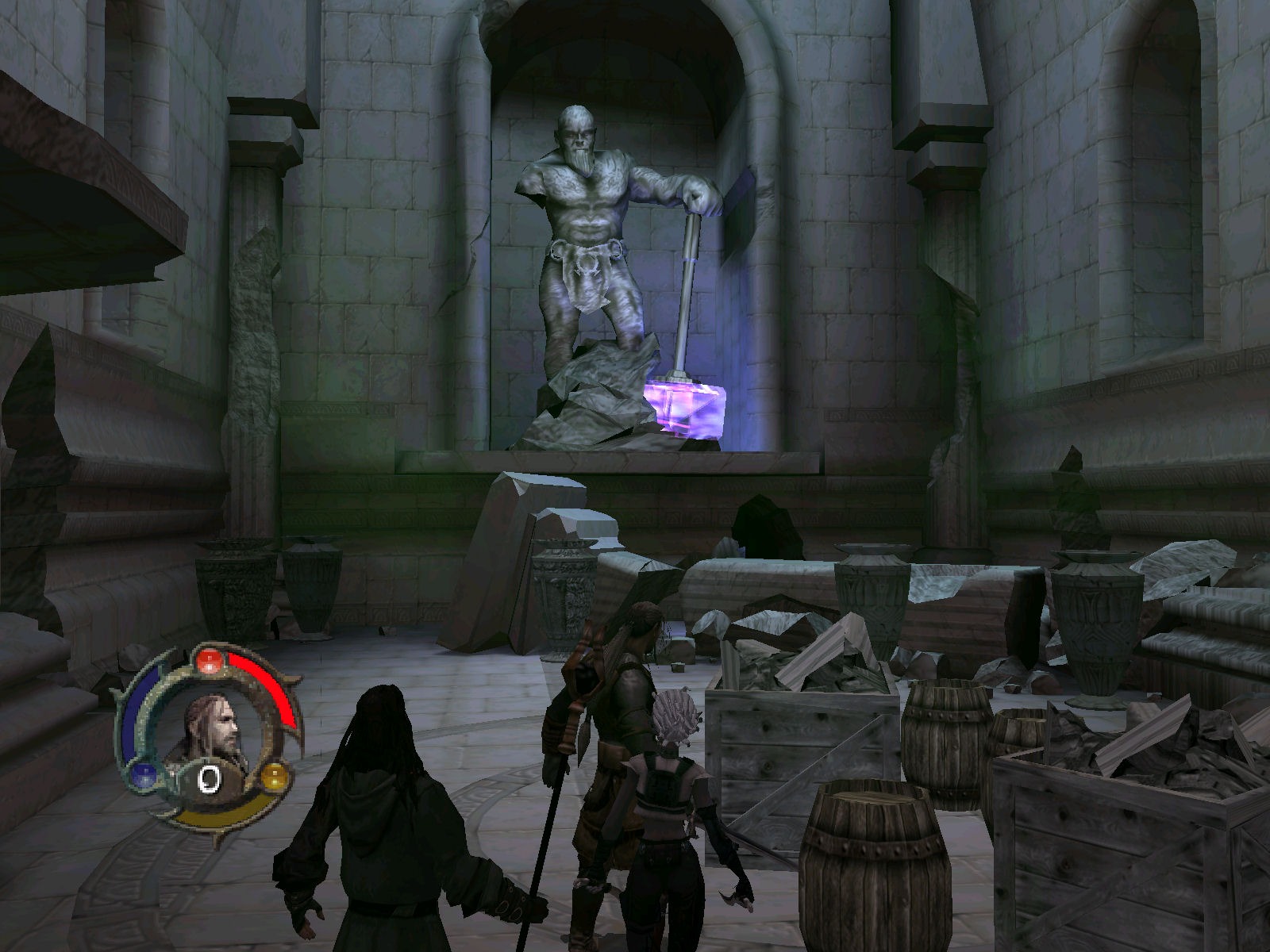
The game features a captivating opening level. You start out right away in the heat of the action, similar to The Lord of the Rings games. The backgrounds are full of action, battles, flying dragons, and collapsing structures. It’s all here. Each of the three characters introduces you to their combat. The three characters are Rannek, a warrior, Illius, a sorcerer, and Zhai, a rogue. Each can perform the typical tasks associated with their respective classes. Rannek is a powerful fighter with a large sword and heavier armor. Zhai is able to turn invisible for a brief time and sneak attack foes. She is also the fastest with dual knives. Illius can attack with his staff, but he’s best at long-range magic shooting at enemies. This sounds great and all, but the combat quickly falls apart, and its problems show long before the first level ends.
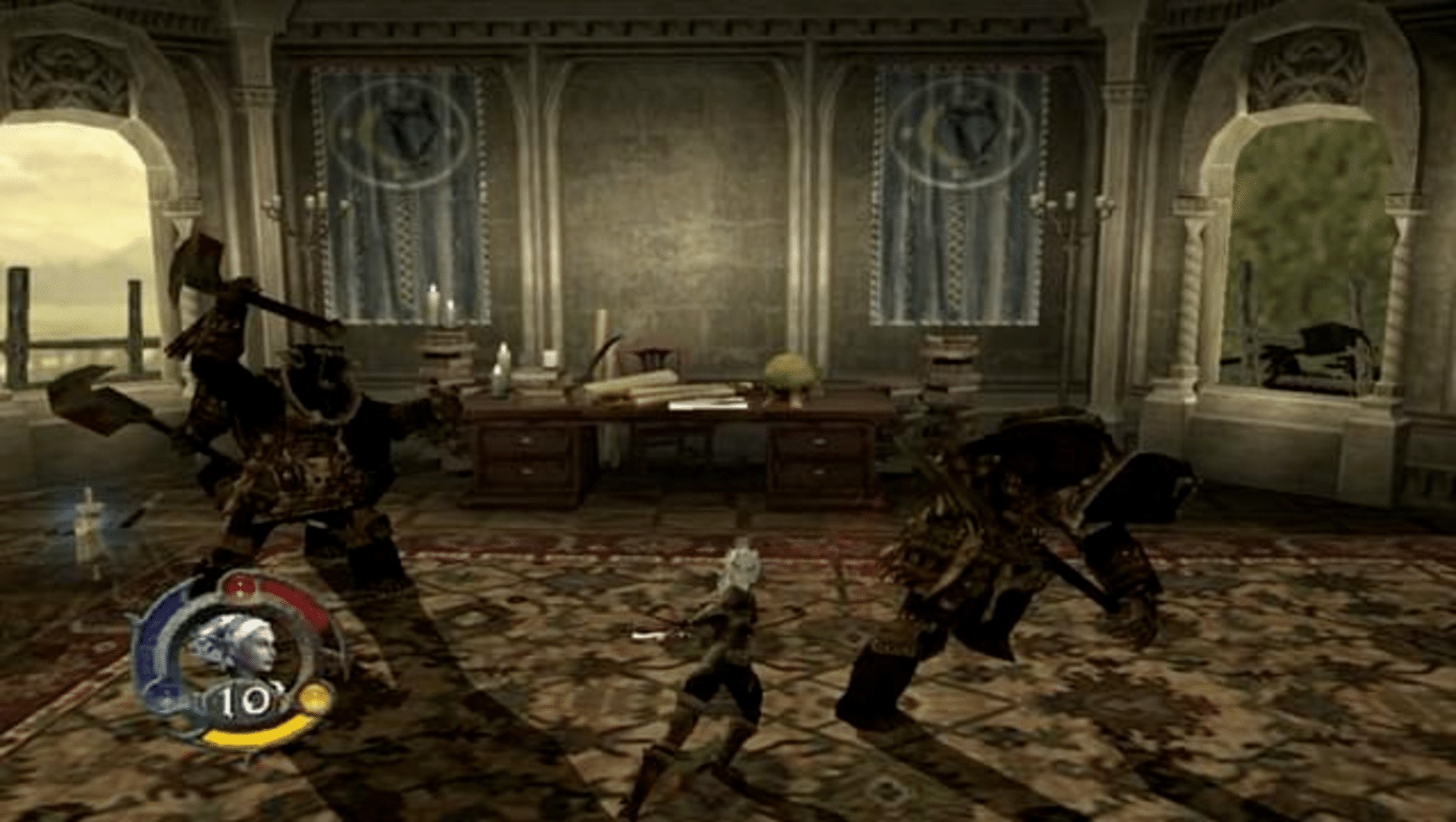
You can switch between each character at any time. Each character’s health meter is located in the lower left corner, as well as a power meter. This meter fills up, and the characters can do a powerful AOE (area of effect) move to clear out enemies. If they all have their power moves ready, you can make an ultimate attack and have all three do theirs at the same time for maximum damage. The initial drawback is that receiving a hit causes your power meter to decrease. This makes no sense. The combat system’s configuration, where groups of enemies relentlessly assault you, lacks a method for evading or parrying. There are two and three hit combos, as well as a ground stab, which is completely useless because enemies don’t fall to the ground outside of a single stage.
This made combat feel like a mindless button masher. I didn’t bother with combos, as they held no significance. The areas are also so cramped that I couldn’t get Illius back far enough to use as a range support. Most of the time, Zhai felt completely useless. Enemies will drop health and power meter bottles, and occasionally you will find treasure chests with coins or maximum health upgrades, but most of the chests are empty. Again, another pointless gameplay addition. I had to exploit the health system, as AI-controlled partners will not die about 99% of the time. When I was down to my last hit, I would switch characters, as it would always seem that health potions would drop more for the AI characters than for myself. The boss fights feel epic in scale and are indeed cinematic, but they feel janky, and most can replenish their health for no apparent reason other than to prolong the battles.
The game is also full of unfair checkpoints. At times, you are forced to replay entire sections with dozens of hordes pursuing you, and you cannot skip cut scenes. This became increasingly challenging as the game progressed. Demon Stone steals the only RPG elements from the D&D setting, offering moves and attributes that you can purchase with either gold or experience. There is an auto-buy feature that I used because it didn’t matter what you bought; you always felt underpowered, or only a single character would feel more powerful. Everything is incredibly imbalanced. To make matters worse, the game only has 10 levels that can be completed in around 4 hours if you don’t die a lot during the last couple of levels. There are some extras to unlock, but they aren’t worth it.
With that said, the story is lame and pointless. We know we need to trap Ygorl, the main antagonist in the Demon Stone, but there’s no lore here. The characters have no backstory at all. There’s the occasional one-line quip about Zhai’s half-breed roots, but the length of the game doesn’t give you enough time to develop a deeper story. Despite the inclusion of well-known voice actors like Patrick Stewart, Michael Clark Duncan, and B.J. Ward, I found the game lacking in depth. They each have a couple dozen lines, as the cutscenes are incredibly short. Despite the obvious high production values, impressive visuals, and good sound design, the overall impression is one of shallowness and flatness. The game could have benefited from additional time to develop into a more expansive adventure, rather than a rushed and cramped corridor hack and slash.
While the main next-gen console version of the game is considered to be an all-time classic and helped revolutionize the online FPS genre, the lower-powered hardware versions were completely different games. While they share the same name, you wouldn’t know these were Call of Duty games if you played them and no one told you.
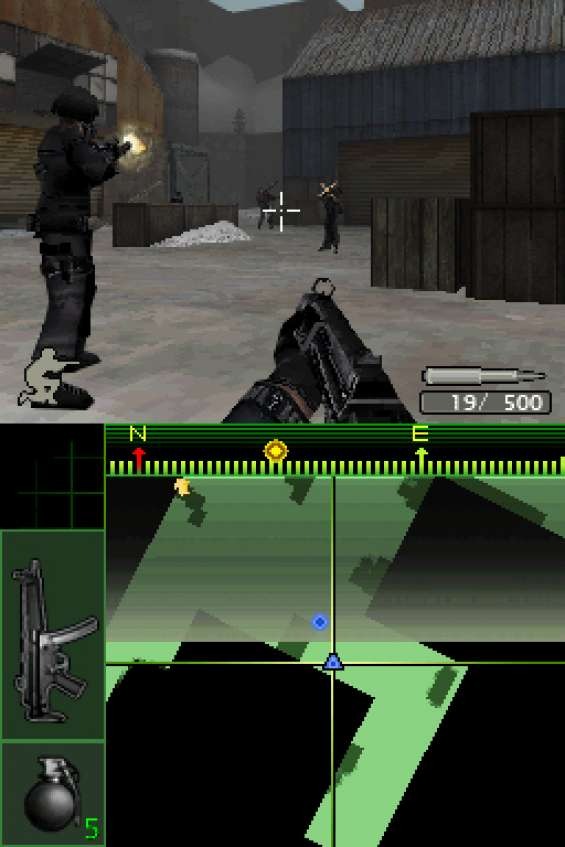
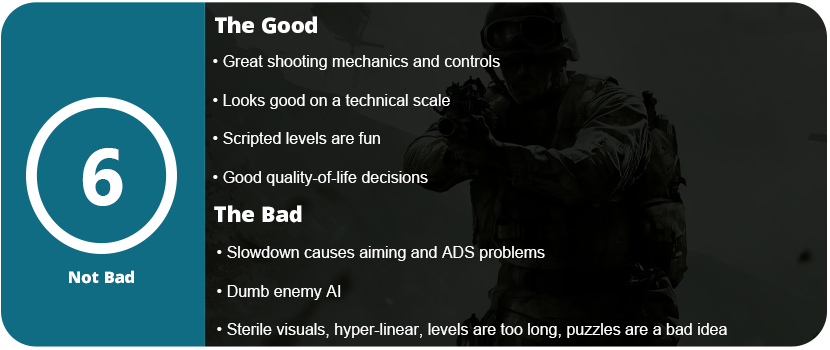
Modern Warfare for the DS loosely follows the plot of the main game but instead takes liberty with its own unique levels and design choices. Obviously, we are working with barely better-than-PS1-level hardware here. n-Space really had to be creative and make entirely new games, mostly “themed” around the franchise. The game is still in first-person view, and you can switch between two different weapons. By default, you always start out with a pistol and another firearm. You can pick up weapons with the touch screen (a hand icon) and use that as your main weapon will not have any extra ammo available when you run out unless you die. When you die, you start out with your default weapons again and lose whatever you picked up, but your ammo is refilled. Weapons in this game feel decent, but the slowdown from the DS being pushed too hard (especially when enemies pop in) makes aiming a bit sluggish and janky.
Aiming with the touch screen feels fine. Using the D-pad or face buttons to strafe isn’t an issue either, but using the R or L button to fire can give you massive hand cramps even with larger DS systems. Most everything is controlled by the touch screen. Double-tap to bring up the ADS (Aim Down Sights), switch to grenades, and tap the weapon icon to reload. There are a few quality of life things that n-space did think of, such as when you reload, you go back to ADS if you are in that mode already, and spriting pulls you out of ADS mode. My issue with ADS is that while it’s more accurate, there’s a delay in bringing it up on screen, and that delay can cost you your life. When enemies pop in and the slowdown happens, it won’t respond to my double-taps fast enough, and I would constantly bring up the ADS and back out a few times caused by the delay. It’s not game-breaking, but very annoying.
There are two mini-games when setting explosives and defusing bombs. I found the pipe puzzles annoying, and following the wires to defuse bombs isn’t really fun or challenging. These were just thrown in here to make use of the touch screen. Honestly, who wants to solve puzzles while playing Call of Duty? It’s weird and just doesn’t fit. It really breaks the flow of combat. The enemy AI is also pretty dumb. Enemies just stand there and shoot at you; don’t take cover or move out of the way. This is literally an on-rails shooting gallery and is insanely linear. Levels are way too long, and some objectives have unfair checkpoint placements or none at all. Objectives range from collecting something to planting a bomb or just shooting everything in sight. I found the scripted mounted machine gun levels pretty fun, but the AC-130 level (similar to the console version) is awful and boring. You can barely make out any enemies, and you can’t use larger weapons against smaller enemies. There are only a couple of buildings to blow up, and you just mow down dozens of enemies over and over again in almost complete silence. It was a bad level, for sure.
The visuals are decent for what the system can do. They are definitely sterile and boring to look at, with no artistic flair. The game tried capturing the hyper-realism of the consoles, and the DS just can’t quite do this. It’s a very brown and beige-looking game. There’s no personality put into this game. It feels like a copy-and-paste FPS that you could attach any name to. Multiplayer is the same as single-player, but with another person. It’s not very exciting, and your friends will get bored fast. I appreciate n-space for trying to capture the excitement of the console versions on the limited hardware, but it needs something else. Better enemy AI, less linear-feeling levels, more interesting scripted levels, and fewer storyboard-cut scenes. It’s a great first start, but it has a lot of work before it becomes a staple DS shooter.
Horror games from the 1990s to the mid-2000s hold a special place for me. These games were genuinely unique in the sense that they focused so much on the atmosphere that they may have been shunned in critic reviews, sold poorly, and generally ignored during their time, but we have come to love them later on. Horror games have rarely been made the same since. Fatal Frame was a very unique series that took the genre to new heights with interesting gameplay mechanics that steered away from guns and running away from things. Your Camera Obscura was your weapon and puzzle solver, and the first game won gamers over, but it had unfair difficulty and had clunky controls. The second game fixed a lot of this and was later upgraded further for Xbox. This would also, sadly, be the last game in the series on Microsoft’s green beast of burden.
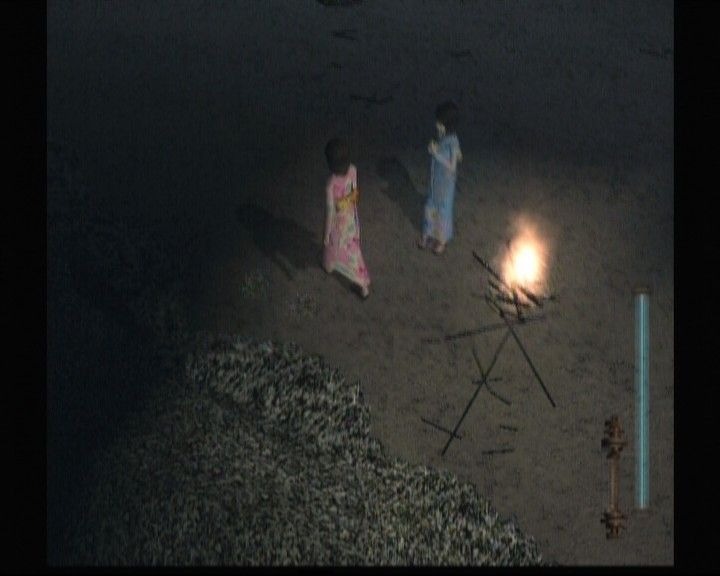
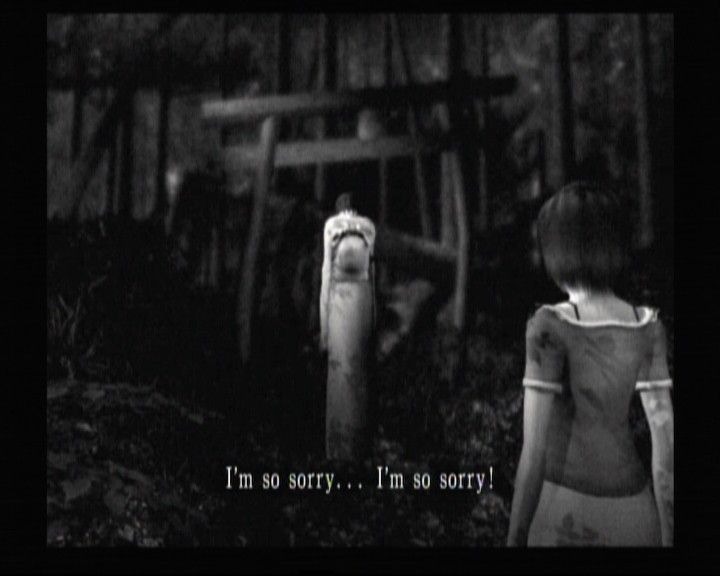
You play as new characters this time around. Twin sisters Mio and Mayu Amakura You are trying to solve the mystery of the “Crimson Sacrifice Ritual” in All God’s Village, a fictional town in Japan. This isn’t a journalistic setting; instead, just two girls are playing in their favorite spot when a dam collapses and Mio falls. The original sacrificee wants revenge and her own twin sister back, and you both are prime candidates. The story is rather interesting and very dark and creepy. I enjoyed it quite a bit, as it surprisingly had more depth than most horror games of the time. Most of the story is told through texts you find (there are a lot) and not so much in cut scenes. There are crystals you can now pick up and listen to on your radio, and these are rather haunting. I enjoyed these quite a bit. The voice acting is surprisingly decent (for the time), and the voices of the dead can really make you feel uneasy.
Of course, the main attraction is the Camera Obscura. Once again, you use this to kill ghosts and see things that aren’t there. It’s more refined this time around, with better controls. You can switch to proper FPS controls, which makes playing much easier. Upgrades are more robust, as are equipped add-ons. You can find add-ons throughout the game, with some being passive and some requiring you to charge your camera. You can equip up to three add-ons and swap between them while in camera mode. These range from Blast, See, Stun, Slow, etc. These can be upgraded along with your basic functions, like in the first game. Finding passive ghosts and taking photos of them (if you’re quick) can give you Spirit Points as well as fighting spirits. You need spirit orbs to slot in to be able to advance to the next upgrade level. Each power has three levels. I highly recommend upgrading your basic stats first. Spirit Points are more plentiful than in the first game, which is a good thing.
Just like in the first game, your goal is to take a photo as close to the spirits’ faces as possible to be able to take a Fatal Frame shot. There is a meter that powers up around the circle in the center, and when it hits red, you need to be quick. There is a red flash at the top that tells you when it’s best to use a power-up. On rare occasions, you can get a two-photo combo for massive damage. There are film types in this game, and thankfully the weakest is unlimited. This means you won’t ruin your game (like in the first one) if you run out of film. The game will just become insanely hard. Higher types are plentiful, and I never ran out, but I recommend saving the Zero film for the final boss. There’s less than 10 in the entire game. I also found healing items incredibly plentiful, and I never ran out.
My biggest complaint is the backtracking and navigation. It’s hard to figure out where to go next. There are obscure objectives, and some things won’t trigger until you enter the correct room. This is a much bigger game than the first. With three large houses and the village itself to explore, I had to use a walkthrough throughout most of the game because I just kept getting lost, but that’s par for the course for survival horror games of this era. I found the visuals to be fantastic, even by today’s standards. Great textures, models, and lighting are amazing. The Xbox really shows off what the series can do here, and it’s a shame the third game never got a port.
Overall, Fatal Frame II is a fantastic upgrade over the first. Just make sure you have a guide handy. The controls are much improved, the camera system is more robust, enemies are actually fun to fight this time around, and bosses are challenging. The story is interesting enough, and the lore is creepy and unsettling. The atmosphere alone is worth playing through this game for. Haunting music, a few jump scares, creepy ghost designs, and insanely unsettling throughout.
Wild West games blew up in the mid-2000s. Games like Read Dead Revolver and Call of Juarez really pushed the genre forward. Gun was a highly anticipated open-world game that was being watched by Grand Theft Auto fans. I remember reading about this game in magazines leading up to its release and being disappointed with how linear and simple it was. You play Colt White, who is just living day-to-day life with his father, Ned White, when he dies, and you get sent on a mission to avenge him, which leads to a road of greed and death. The story is really simple and short. It’s honestly very one-dimensional, but the voice acting is solid, with major actors like Tom Skerret and Ron Perlman.
The majority of the game is made up of shooting. As the title implies, guns are the main focus of the game. You have an array of weapon types, such as six-shooters, lever-action rifles, sniper rifles (bolt-action), melee, throwables, and bows. You slowly unlock these weapons as you play the story, and you can also upgrade them at the shopkeep. You can acquire more gold by finding it in the wild or completing side missions. Side missions are the second bulk of the game, ranging from bounties to poker games and, overall, just shooting up more bad guys. There’s no variation in mission type outside of the names. In the end, you’re either killing someone or rescuing a horse.
Horseback riding is a major gameplay element here, and it’s done surprisingly well for the time. They’re treated kind of like cars in the GTA. They have health meters, which are also tied to stamina. Overwork your horse, and it will die. You can trample enemies with the horse, which is great for clearing out large groups, and they are needed to travel between the two towns. This is one disappointment I have with the game. It’s surprisingly linear, and the open-endedness is an illusion. This is just one large map full of brown dust, canyons, a couple of rivers, and a meadow. The game is very dull and void of any life, unlike GTA, which feels vibrant and constantly moving. There’s just the wind and twanging background music playing. The towns may have three or four people walking around, and there are no interiors to speak of. It’s indeed a very empty world.
I highly recommend just blowing through the story mode in the 4-5 hours it takes and forgoing most upgrades. Despite having this shop system, it is pretty much pointless. Sure, it helps to have more damage or quicker reloads, but the quickdraw allows you to kind of cheat and constantly use it as long as you’re killing enemies to refill it. Empty the meter. Shoot about five enemies and empty it again. I never really saw the need for most of the upgrades. This will alleviate the pain of completing these dull side missions.
The shooting in Gun is mostly stiff and awkward. It’s not amazing. There is a sticky auto-aim, and you can aim down your sights with rifles, but the camera zooms too far in, and you can’t follow anyone up close. Stealth is pretty much pointless outside of a single-story mission because enemies can somehow see and hear you from a mile away. The explosives were surprisingly useless as well. Enemies can stand just in front of or behind an explosion, and they aren’t affected. This is really terrible. There are some missions that have you mount a cannon and hit everything dead on. There is no splash damage for explosions in this game. It makes no sense.
Overall, the game is very linear, ugly, and pretty repetitive. The side missions don’t add any variation, the upgrade system can be skipped entirely, and the open world is void of life. The only redeeming value of this game is its great voice acting, many cut-scenes, and short length. The story isn’t even anything noteworthy either, and the same goes for the characters. With their short length, they have no time to expand or grow on us. We get no backstory. Just the here-and-now, and that means nothing when characters die. I would only recommend this game if you’re itching for a Western game and need to go back in time, but this game really did not live up to the hype upon release.
Many people use video game reviews to determine how to spend their hard-earned dollars. While as an adult I don’t take this as seriously and I now make my own money I am more forgiving of games that aren’t perfect. As kids or teens, we have limited money and are usually picked through gaming magazines to determine if that one game was worth the money because we only got a few a year. For me, it was only during Christmas time that my parents bought games. I mostly rented mine throughout my childhood and teen years. Even for rentals, I was picky as I didn’t want to be stuck on my weekend with a dud of a game. Even a 7/10 or 3.5/5 would be considered a waste of time. This was the last generation in which AAA title after AAA title would be considered fantastic and with so many exclusives it was hard to keep up with. The HD era of gaming would see budgets balloon to insane heights and game releases slowed down as a result.
In my eyes, 7/10 or 3.5/5 games are mostly ignored. These aren’t always considered hidden gems either. Some are, but some are just considered forgettable. Not awful or good, but just passes under everyone’s radar. These aren’t the “so bad it’s good” games either. A few of these games have cult followings; a few I had only heard of while compiling this list and some I played myself growing up. I compiled this list from Metacritic with games between 74-70. I feel that’s the true blue 7 range. 79 and 78-rated games usually only have about 25% of the critics giving it a 7 to bring an otherwise 8 score down some. These games are at least rated by half the critics as 7/10. While I know many people don’t listen to critics and some might feel this game should be rated higher or lower is subjective. Like it or not, critic reviews drive sales and it may be the reason why you might find a few games on this list you’ve never heard of, thought was talked about worse than you remember, or something along those lines
Dead Rising 2: Case West – 2010
An exclusive standalone title bringing back Frank West. It was too little too late as the second game wasn’t a big enough improvement for most people. I personally don’t care for this series but die-hard fans at this one up.
Most Recent Entry: Dead Rising 4 – 2016 (PC, XONE)
Capsized – 2013
This indie title was well-liked for its visuals and atmosphere as well as old-school challenge, but its combat and exploration were a bit one-note and didn’t hold most people’s attention for long
Ridge Racer 6 – 2005
A console launch title that was met with a lot of hype. It was just average. There were better arcade racers at the time and it didn’t advance the series enough to be groundbreaking. For a console launch title, it also didn’t show off the power of the 360 at the time like it did with the PSP.
Most Recent Entry: Ridge Racer: Draw and Drift – 2016 (iOS, AND)
Kinectimals – 2010
One of the most hyped Xbox 360 games to date. This was shown off during the Kinect unveil at E3 and people went nuts. It’s probably the best Kinect game out there and while it was praised for its imagination and whimsy it didn’t have much gameplay or content to keep you coming back.
Comic Jumper: The Adventures of Captain Smiley – 2010
Comic Jumper was praised for innovative gameplay and fun characters, but lacked depth and became very repetitive. It felt like an older Xbox game at best.
Dance Dance Revolution Universe – 2007
A competent yet underwhelming debut on next-gen consoles. The graphics were sub-par and there was no addition of custom soundtracks which many stated was a missed opportunity. It was just more DDR on Xbox 360.
Most Recent Entry: Dance Dance Revolution II – 2011 (WII)
Your Shape: Fitness Evolved – 2010
The short-lived series made its mark at the launch of the Kinect and many praised it for using the device well, but underneath was simply a workout simulator and nothing more.
Most Recent Entry: Your Shape: Fitness Evolved 2013 – 2012 (WIIU)
Jetpac Refueled – 2006
A cheap reimagining of the classic Atari game. It worked well enough, but if you aren’t a fan of high-score games then this wasn’t for you. It didn’t do anything to evolve the series enough.
Motocross Madness – 2013
The final game in the long-running series. Its console debut, and reboot, featured cute avatar characters, and looked good, but had very little content outside of multiplayer.
NBA Baller Beats – 2012
Not to be confused with Midway’s NBA Baller series. It was an ambitious title and probably one of the most unique for the Kinect. You used a real-life basketball and dribbled to a rhythm game. It was great for practicing and a good workout, but hindered the visuals and content department. People also complained of needing said basketball and a hard surface. Anyone living with downstairs neighbors was also left out.
Most Recent Entry: NBA 2K23 – 2022 (PC, XONE, PS4, PS5, XSX, NS)
Hybrid – 2012
Even if you wanted to play this game you can’t. It was online only with no bots and isn’t for purchase any longer. Now it’s just a relic and time capsule. The game was praised for doing interesting things, but was priced too high, had no offline play, and had weird controls.
Small Arms – 2006
An early title that launched with Xbox LIVE Arcade. This four player brawler had a charming roster and fun combat but didn’t offer much in terms of longevity or depth. It’s still available today to play on Xbox One.
Raiden Fighters Aces – 2009
For a budget retail title, it offered three Raiden games that hardcore fans would love. Other than that the game was questioned for being double the price of most LIVE Arcade games and only including three.
Most Recent Entry: Raiden IV x MIKADO remix – 2021 (NS)
Zumba Fitness Rush – 2012
Fitness games were everywhere for the Kinect and motion devices. It was an unstoppable plague. Zumba Fitness was considered one of the better ones, but each version lacked a variety of content.
Most Recent Entry: Zumba: Burn It Up! – 2019 (NS)
Kinect: Disneyland Adventures – 2011
Of course, this was going to happen. Riding the apex of the Kinect’s popularity you can take a trip down a virtual Disneyland. The game was praised for capturing the magic of the theme park but lacked content or challenge.
Scene It? Lights, Camera, Action – 2007
Trivia games have always had their audience and Scene It?burned up and fizzled out fast. This one was exclusive on Xbox 360 for some reason and was critiqued for having trivia that only 20 something’s (who are in their 30s now) would get and understand. It wasn’t great for family night.
Most Recent Entry: Scene It?: Movie Night – 2011 (X360, PS3)
Kinect Sports – 2010
The most popular Kinect game, it launched with the device, and it was a direct rival to Wii Sports. It didn’t have the same charm sadly. While the games were fun the motion controls didn’t register accurately and it lacked overall content. The series would try one last time on the Xbox One before fading out of existence.
Most Recent Entry: Kinect Sports: Rivals – 2014 (XONE)
Crimson Alliance – 2011
Praised for its bright visuals and fun take on the Diablo formula, but was really short and didn’t offer much in terms of content. It was also best played with other people as the AI wasn’t very good.
Omega Five – 2008
A fun yet shallow side scrolling shooter. It looked really good as well with lots of nice effects, but it didn’t have a unique hook or visual style and in the end, many people lost interest.
Race Pro – 2009
A racing sim that was praised for its realism but lacked content and felt too similar to the PC racing sims. It just couldn’t compete with the likes of Forzaand Project Gotham Racing.
Amped 3 – 2005
A system launch title and originally Microsoft’s answer to SSX Amped had its following and crowd. Amped 3 was well…amped up to launch and was one of the better-selling games. Despite this, the game lacked content despite looking next-gen, but it looked bland and didn’t have much flair or style to it. It played like a generic snowboarding game. The series would end here.
Gel: Set & Match – 2009
An original puzzle game indeed, but it just felt like it wasn’t enough or didn’t reach its full potential. It wasn’t super accessible and also not challenging enough at the same time.
Star Ocean: The Last Hope – 2009
Xbox 360 exclusive JRPGs weren’t plentiful and none of them were stellar. Many kept playing them until FFXIII would surface, but Star Ocean hasn’t been a good franchise in over a decade. The Last Hope was full of long drawn out cut scenes, an uninteresting story, and gameplay that was boring and average. However, regular JRPG lovers will find enough to like here. It would later released on PS3 with little fanfare.
Most Recent Entry: Star Ocean: The Divine Force – 2022 (PC, PS4, XONE, XSX, PS5)
Phantom Breaker: Battlegrounds – 2013
This is a hardcore beat ’em up similar to Castle Crashers, however, it’s not as accessible. Some claimed it was too complicated, and some said it had gameplay mechanics that weren’t the best. Overall, if you like this genre there’s something here for you. It’s also getting a new game this year.
Most Recent Entry: Phantom Breaker: Omnia – 2022 (PC, NS, XONE, PS4)
South Park: Let’s Go Tower Defense Play! – 2009
Considered the best South Park game at the time, but that’s not a big shoe to fill. You either needed to be a South Park fan or love tower defense to enjoy this. It offered very little variety and not much outside of multiplayer.
Most Recent Entry: South Park: The Fractured But Whole – 2017 (PC, PS4, XONE, NS)
Axel & Pixel – 2009
A great looking original point-and-click adventure that was praised for being brave enough to bring this genre back, but the story wasn’t interesting enough to garnish sales for a sequel. If you love the genre and haven’t played this then you’re in for a visual treat.
Hexic 2 – 2007
A new game by Tetris creator Alex Pajitnov is exciting. Hexic 2‘s Xbox 360 exclusivity wasn’t a surprise, but it wasn’t much more than the original. The first Hexic game was the first ever LIVE Arcade game I played as it came with my system bundled in. I never bothered with the sequel, but my sister was obsessed with this game. Many complained the game cost too much for how little it offered.
The Splatters – 2012
A unique and fun physics based puzzle game, but players felt the game was too hard, unfair, and overall rough around the edges. It’s still fun for puzzle fans as there’s nothing else like it.
Nike+ Kinect Training – 2012
Nike threw their hat into the Kinect ring a little too late and what we got was a pure training simulator with almost no game. It wasn’t fun, it was very serious and didn’t have the best motion detection setup. If you had one training sim for your Kinect you had them all.
Meteos Wars – 2008
The DS phenomenon came to Xbox 360 but was hampered by an overly aggressive AI and no online play. Despite the name, you’d mistake this for an online only game. While the core gameplay was intact, it didn’t have a lot to offer. This would be the final nail in the series’ coffin.
Lips – 2008 Lips: Number One Hits – 2009
If the name wasn’t dumb enough the karaoke genre was overflowing with shovelware at this point. Despite this one-off game for the 360 being decent as a simulator. It wasn’t really a game. You just sing to the words like any other game with no modes or actual fun.
Fruit Ninja Kinect – 2011
Does anyone remember Fruit Ninja? It was a smartphone phenomenon. It also got a giant arcade version which I actually got to play. While this is one of the better Kinect games it was way overpriced and this hurt sales and reviews. It had about the same content as the smartphone versions at nearly full retail price. It’s a great title to own if you have one collecting dust somewhere.
Most Recent Entry: Fruit Ninja 2 – 2020 (AND, iOS)
Easy Golf: Course Architect – 2008
This was a more high-profile indie game that was made by the community. It looked simple, but played well enough and had a robust course editor. It was best played online. However, the rather ugly visuals and UI hampered the experience a bit.
Chromehounds – 2006
If the cover isn’t the most generic thing you’ve ever seen it doesn’t end there. The game didn’t look up to snuff for the era, but offered a robust customization suite with great online play, but lacked everywhere else. It’s a decent mech game that was exclusive to the system but quickly forgotten about.
Crackdown 2 – 2010
The first Crackdown was loads of fun and felt original. Sadly, due to the surprising popularity, the sequel was greenlit too fast and we got more of the same which wasn’t really a good thing for an open world game. It felt like an expansion if you can say that. The series never reached the heights of the original.
Most Recent Entry: Crackdown 3 – 2019 (PC, XONE)
Bubble Bobble Neo! – 2009
Another arcade version of Bubble Bobble. Nothing new or innovative and incredibly hard, but if you love arcade games then this is for you. At this point in time, any form of Bubble Bobble was heeded with groans as it was a series Taito had beaten into the ground at this point.
A hyped up exclusive that got attention everywhere. It was first looked down upon due to its dated visuals which didn’t look next-gen. It was also a slower paced strategy title that would automatically neuter sales. In the end, the game had fun multiplayer, but was really repetitive. It would have done better as a PC title.
Bomberman Live: Battlefest – 2010
Better than the abysmal 360 exclusive, but plays it too safe to set itself apart from other games. The online play was a good addition, and the visuals are charming, but that’s about it.
Most Recent Entry: Amazing Bomberman – 2022 (MAC, iOS)
Full Auto – 2006
A very short lived series and a not-so-surprising Sega exclusive on Xbox. This was a generic feeling car battler at its core despite the high octane thrills and average track design.
Most Recent Entry: Full Auto 2: Battlelines – 2007 (PSP, PS3)
Haunt – 2012
This Kinect title was late to the game, but provided a charming haunted house to travel through. Ultimately it was over in a few hours and didn’t have much gameplay or depth to keep you coming back.
Ticket to Ride – 2008
There wasn’t anything inherently wrong with the game. It was for hardcore boardgame players really. It had a dry presentation and was simple to learn but hard to master. I feel if it had flashier visuals it would have appealed to more people.
Yep! The fact that I forgot about this game until you made a comment proves that.