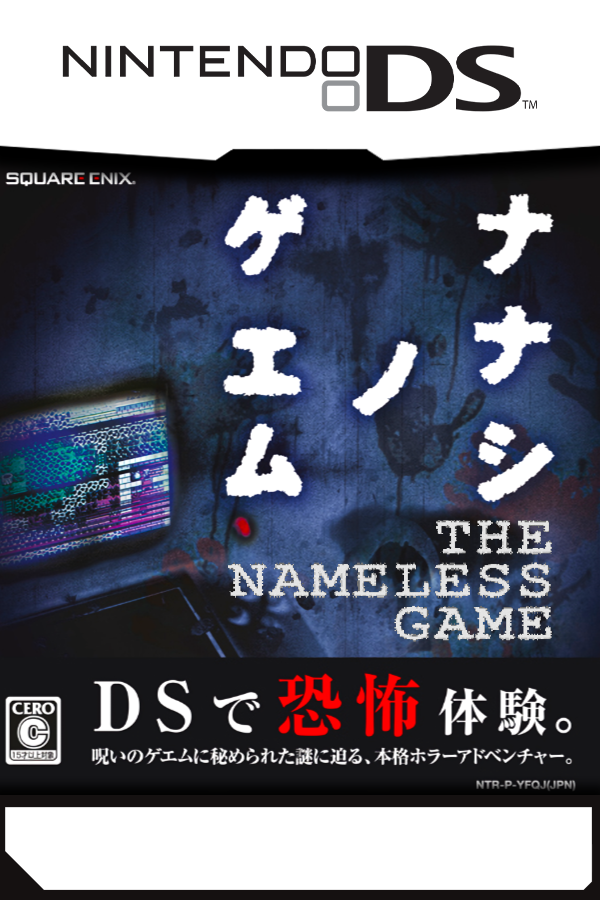
Have you ever wondered if a haunted video game exists? These permeate Japanese folk tales and were popular during the 8-bit era of consoles and computers before the internet was a widespread phenomenon. You play as a friend of a daughter whose father is a video game developer. You unravel a murder mystery involving a haunted DS game and a fractured video game development studio. It’s an interesting meta view on the terrible world of stressful video game development. I don’t want to get too involved discussing the story, as what little is here is very short, running at about 3 hours in total.
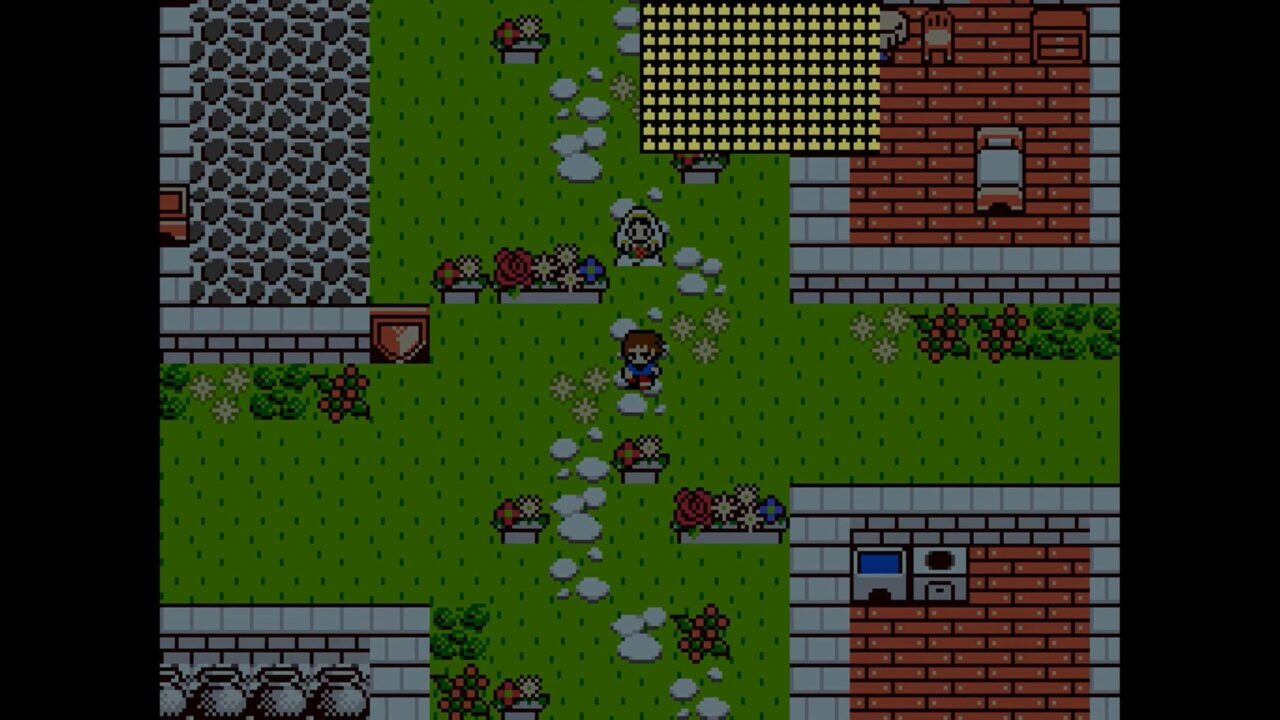
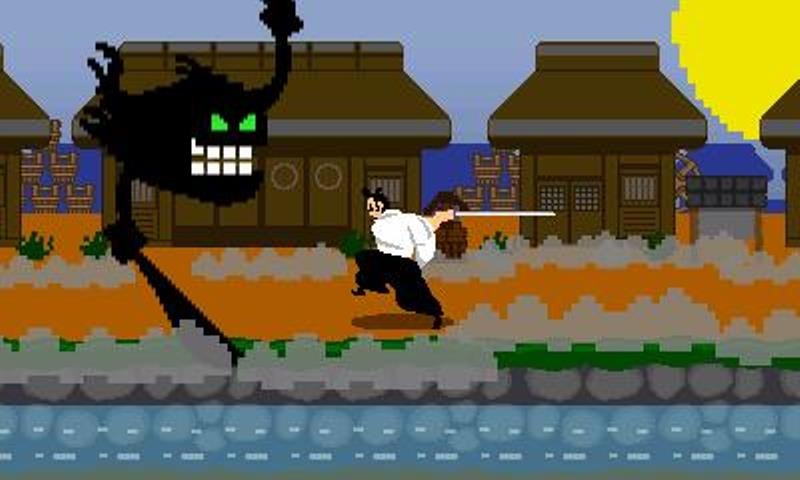
There are 7 days before the haunted game turns you into a statue. You initially investigate the disappearance of your best friend’s boyfriend, but eventually, you stumble upon the cursed TS game. Yes, for obvious reasons; the DS is called the TS in the game. This game is a 16-bit RPG title that reflects the real world. When you hear your TS jingle (it’s the startup sound for the DS), you will pull up what looks like a simulated DS home screen and play this 16-bit game. It’s not an RPG in this game. It’s just a single town that you walk around in and talk to people to trigger events. The music and graphics are glitched out and creepy, and it helps give off a good atmosphere. You don’t enter this mode but maybe once per chapter for just a few short minutes. Each day is started with a visual novel type of dialogue, as the majority of the game is held in book mode. I love games that use this feature, but there’s no option to flip the DS for left-handed people. The TS RPG style game is played in regular mode, so you are frequently flipping the DS back and forth.
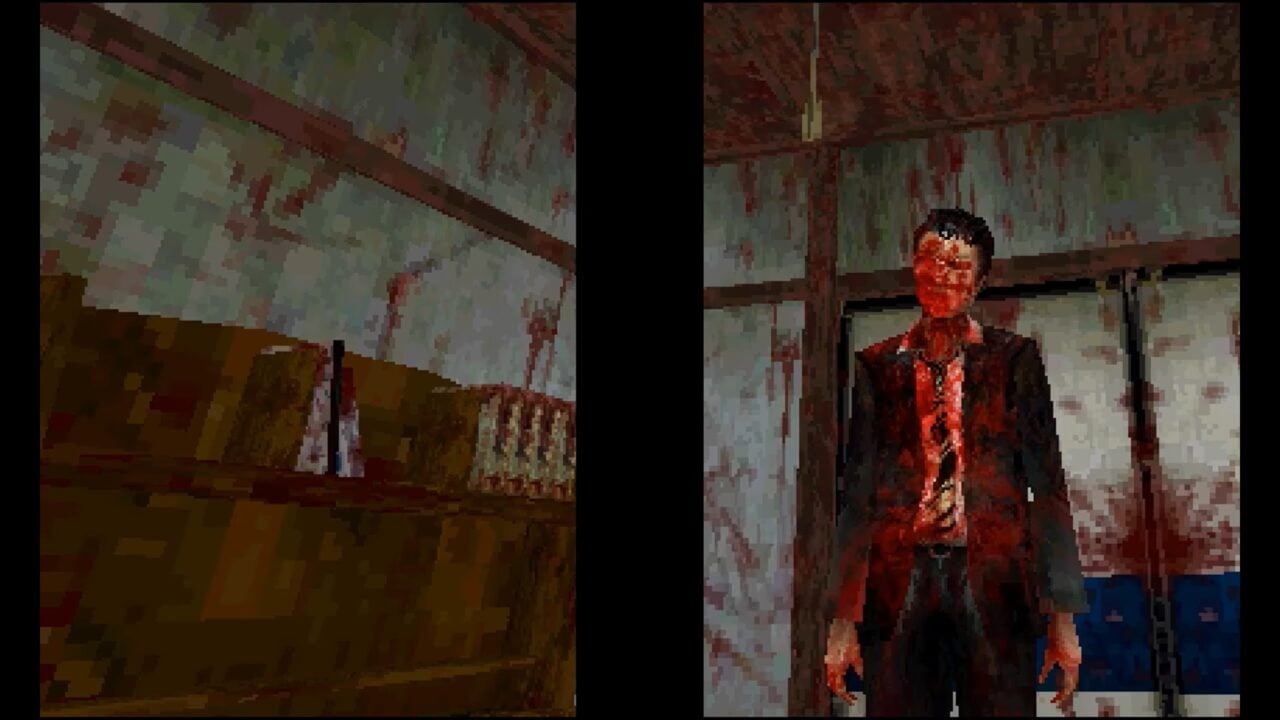
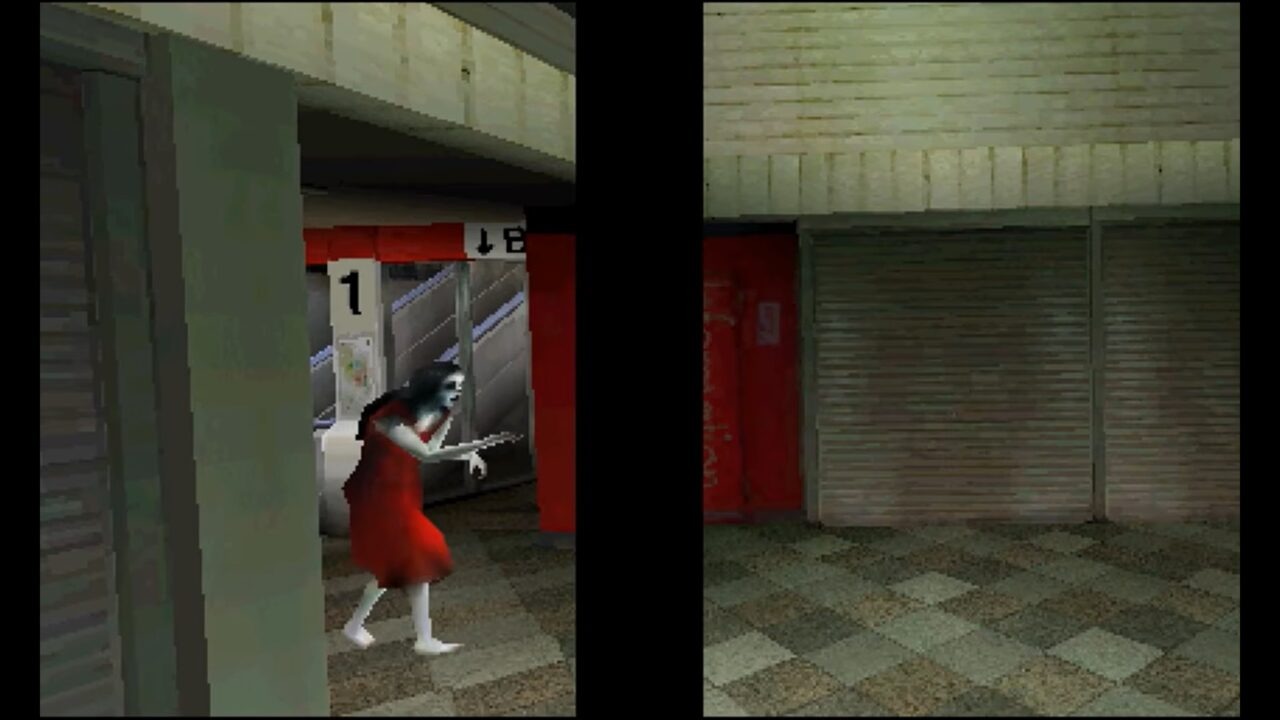
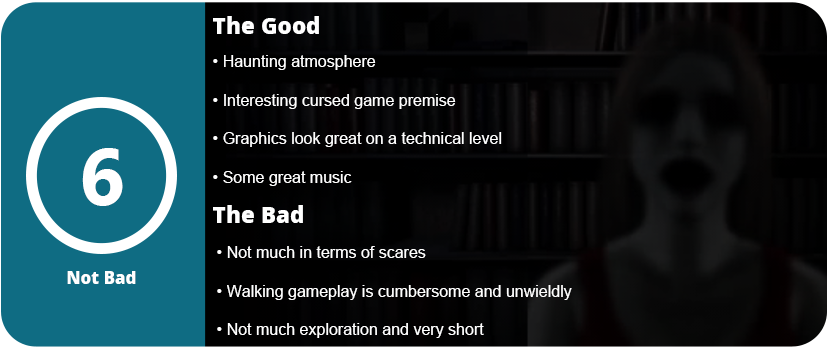
The meat of the game is the walking simulator-style touch screen-based exploring. It’s pretty bad, and my hands cramped constantly (at least using the DSi XL). There’s no option to just use auto-run all the time. The character walks at a doggedly slow speed and one that’s not practical for running away from ghosts. You need to hold the stylus in the center of the screen to run and turn faster. While doing this, you are holding down the D-pad and rolling your thumb around to strafe. This control scheme is fine, but I would prefer to use either the stylus for movement or just the D-pad. There’s little interaction with the environments outside of picking up key items and opening doors. You will be opening many doors and backtracking through many mazes. A lot of these have to be navigated in a specific order to avoid the ghosts that roam the hallways. These ghosts aren’t very scary. They’re slow and plodding and they just have black eyes and gaping black holes for mouths.
Despite the title being a horror game, there aren’t many scary moments. While the ghosts aren’t scary, there are a few jump scares that worked early on, but after day three, the game kind of gives up the horror part and focuses more on the murder mystery. The characters are meaningless, as the game is so short we can’t get to really know anyone. Every one has generic anime tropes to them, and by the end of the game there’s not much to care about. While the mystery is solved and has an actual ending, I didn’t care about anything in between. While the levels are great-looking on a technical level, they are void of detail. I liked the Silent Hill “Otherworld”-looking areas in the hospital, but these are just plain empty hallways with an occasional chair or desk. You can’t interact with anything to encourage world-building. The goal is to just open doors and get to the next cut scene.
While Nanashi no Game isn’t a good horror title or walking simulator, it’s short enough for a fun afternoon of the occasional creep-out. The music is pretty haunting, and there is tension in the game, and it uses the DS hardware well and in interesting ways. Just don’t expect anything really crazy here. If the controls were better, or at least customizable, the game would be more forgiving on that part as well.
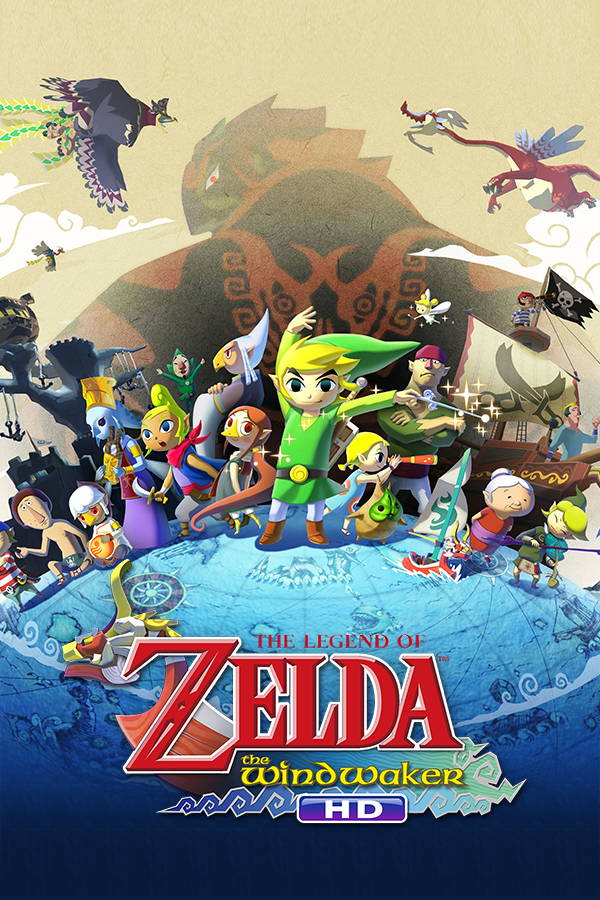
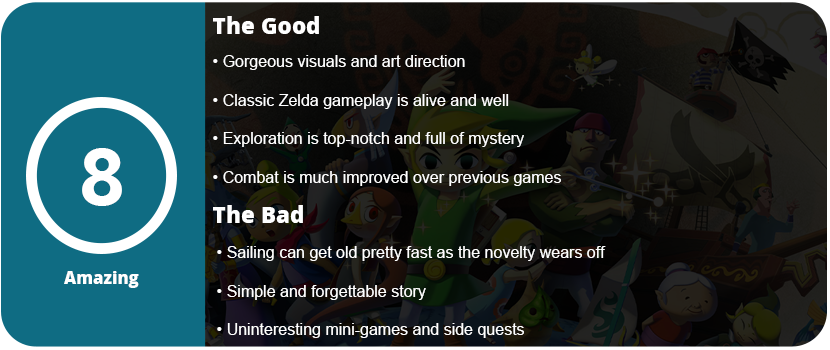
This is a game I have been trying to finish for years. I started the game three times on a Dolphin emulator and lost my save (I never owned a Gamecube growing up), and I finally gave up. I wound up selling my original Wii U before this game was released and missed out, but now that I have a Wii U again, I can finally complete the game, and I certainly did, but with a walkthrough because boy, oh boy, is this game more massive than I ever imagined. While Nintendo games tend not to be very story heavy or deep, Wind Waker HD does have a small story that seems to only have a cut scene every 10 hours of gameplay when you hit a new section of the story. Honestly, it doesn’t feel like much is going on until the final chapters of the game, but that’s okay. We all play Zelda for the gameplay and atmosphere.
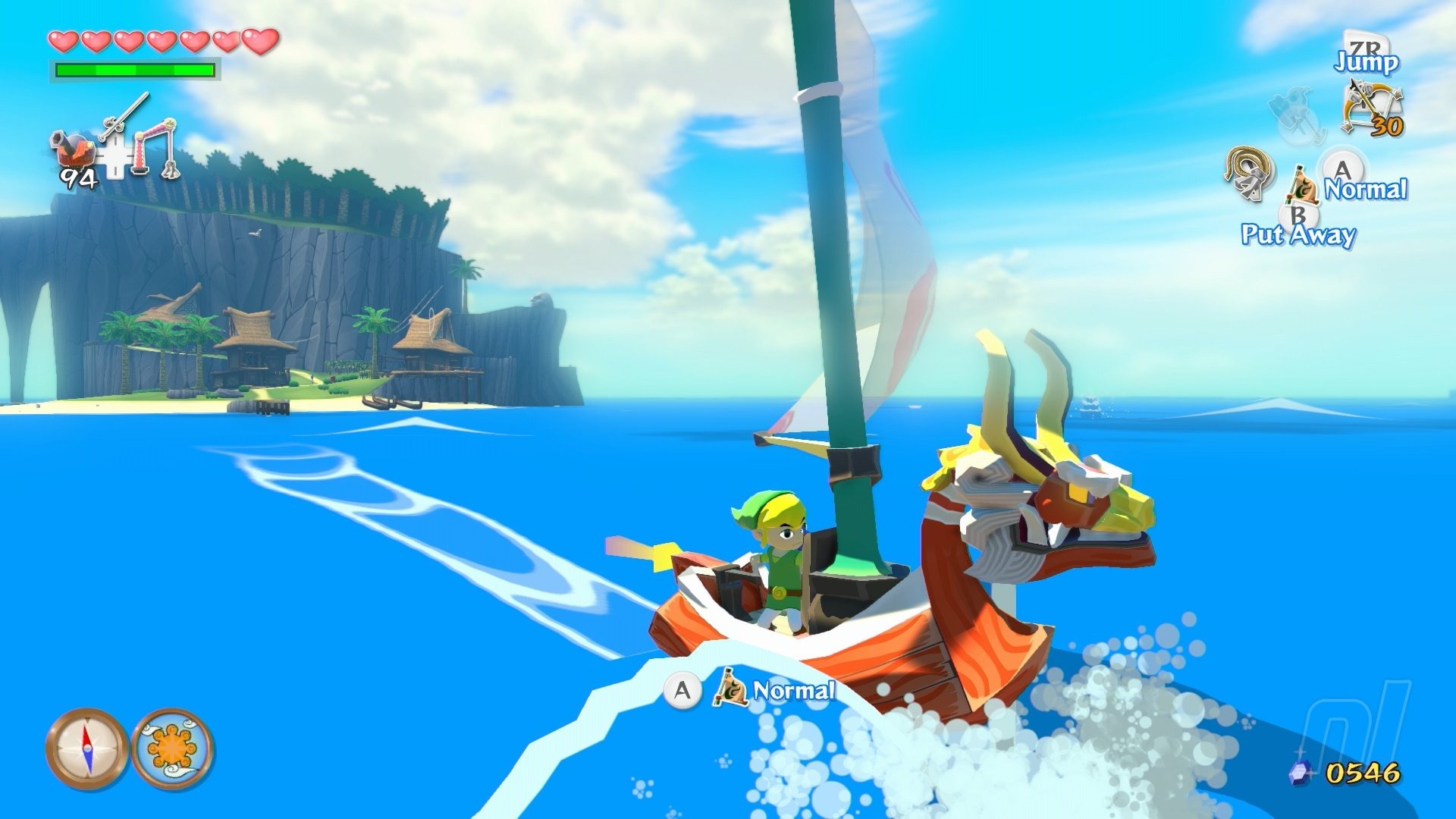
There is a lot to dissect with this game. The premise of the game makes you think this is a simple “kids” adventure due to the bright and colorful graphics and Toon Link design. You start out on an island and get to know the gameplay loop just like in any Zelda game. You fight an old man to learn combat, pick up pigs to understand the need for solving puzzles, and eventually swipe grass to collect rupees, which serve as the in-game currency, just like in every other Zelda game. Upon boarding the Red Lions, you will embark on a vast ocean that features a grid system. You need to use the Wind Waker to change the direction of the wind; otherwise, going into a headwind will cause you to barely move at all. This is the first insanely annoying thing about this game. If I had the Gamecube version this feature alone would make me quit playing. Why is this a thing? In the HD version, you can obtain the Swift Sail at an auction much earlier than in the Gamecube version, which not only allows you to move faster but also enables you to ignore the wind direction.
With that first annoyance aside, Wind Waker is a true adventure. You can sail anywhere and see an island, jump on it and see what it holds. You usually need an item to solve a puzzle, but some don’t require one. In the game, you can explore 28 squares immediately, but it’s advisable to save the sailing discoveries for when you have access to the Swift Sail. One baffling design decision was the requirement to feed a fish in each square, which will then mark the corresponding island on your map. I felt these choices took away the adventure and discovering-for-yourself part of the game, as once you enter the square on the map, it should unveil what island is there. This is one of many tedious side quests that just aren’t needed. The upside to this level is that every fish will give you a hint about the island on the square, but I felt this wasn’t really needed as they are pretty vague anyway.
Like many other Zelda games, there are dungeons to explore that advance the quest further. On your map, you will occasionally see a red circle indicating your location, but at times, the path becomes ambiguous and challenging to navigate. You will get lost effortlessly during certain portions of the game. I feel the dungeon design for Wind Waker isn’t as appealing as previous or later games. The early ones are very short, and they all feel rather labyrinthine and difficult to navigate later on. Some of their difficulty is remedied with pots you can jump into to warp to other parts of the dungeon, but they need to be discovered and uncovered, so even these are hidden around, which is annoying. Most of the puzzles in the dungeons vary, using the same ideas throughout the game, such as lighting sticks on fire, platforming, combat, block pushing, etc. The puzzles vary greatly, and no two are usually alike, but I did find some elements within that bring the experience down a tad. Platforming isn’t outstanding in this game. There’s no jump button, but Link will just hop right off the ledge with nary a breath on the analog stick. This resulted in many character deaths and the need to restart combat sequences. If you die, you restart the room, but if you lose all your hearts, you go back to the start of the dungeon, and all enemies respawn.
Combat is actually pretty good this time around with a lock-on system and some fast-paced animations and action. Swiping three-button to five-button combos is swift and fast, and you can even do a 360 swipe. When you lock on, you can use items without having to manually aim, such as the grappling hook to get them from enemies or bombs. Many enemies can be dodged or avoided, but boss fights are pretty unique despite being fairly easy. The typical boss fight consists of three rounds, which occur after discovering the attack pattern and learning how to inflict damage on the boss. Dungeons play out just like other Zelda games, with small keys to open doors to advance through the dungeon, and these are acquired through puzzles or combat. You will also get items to explore the overworld and advance through the dungeons while seeking the Boss Key.
Most of the side quests in Wind Waker are pretty tedious and are needed to be completed because the infamous final section of the game requires you to pay Tingle a large amount of rupees to decipher the Triforce maps. This has been reduced a lot in the HD version by about a third, as well as the horrendously tedious quest itself of getting 8 Triforce shards and only three Triforce maps. I find it difficult to understand certain aspects of Japanese games. There’s also another tedious section in the form of a boss rush in which you need to defeat all four bosses a second time, but at least they’re easier and don’t require as many hits. With that said, there are also treasure maps, nearly 50 in the HD version, that lead to heart containers and rupees. The rupees are much needed for the end of the game as well as for buying some heart containers by either paying to do mini-games or using the auction house. Everything is connected, and while much of the content is optional, completing most or all of it makes the endgame easier.
The player can extend the game time by nearly 20 hours when doing so. I spent more time exploring, finding treasure maps, completing side quests, getting heart containers, etc., than on the main quest itself. I had a lot of fun doing all of this. Not much feels like a chore, outside of some quests being nearly impossible to figure out without a guide. Digging up treasure chests gets old after a while, but it’s doable. I didn’t care for the submarines or the infamous combat gauntlet of 50 rooms of enemies towards the end of the game. The reward is well worth it, but it did feel tedious. Despite the minor issues, the dungeons and islands all feel different. There are so many different puzzle types and platforming sections that you can shake a rupee at it; it’s absurd. Let’s also talk about the titular Wind Waker itself. This wand is used to make songs that are needed to advance in dungeons, change the wind’s direction, and cycle night and day, which are also used for puzzles. It’s fine, but not nearly as memorable or as special as the Ocarina. You use the gamepad’s touch screen to swipe in the direction of the arrows, and the songs appear on the touch screen for easy reading; however, I found Wind Waker to be less memorable or interesting than the Ocarina. The game would have been fine without it.
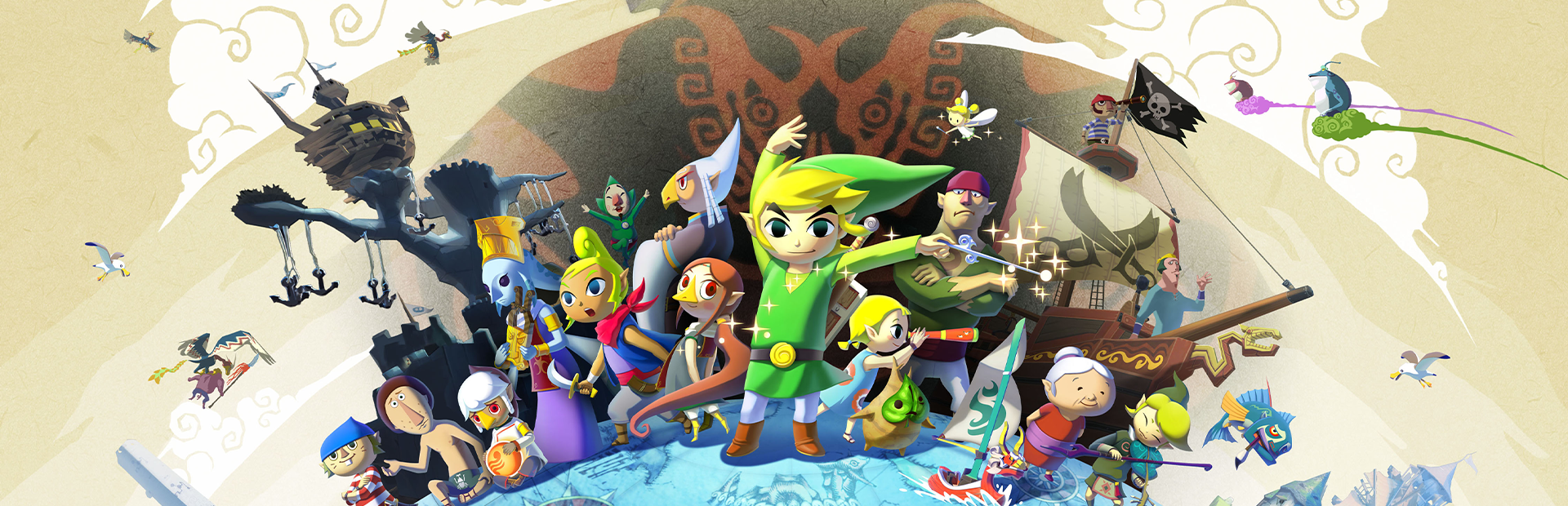
The visuals of the game really come to life, making this one of the most iconic and artistically unique games ever made. Back in the day, there was significant backlash against the cell-shaded art direction, which many gamers felt appeared too “kid-like” compared to their desire for a darker, more mature Zelda adventure. The HD version enhances the colors and brings them to life, in addition to introducing many quality-of-life changes to the game itself. Many critiqued the game for having too much bloom effect, but I didn’t mind it so much. Increased wallet size and the ability to use the gamepad as a navigation tool for the map and item management are significant improvements in a game where these features are frequently utilized.
Overall, Wind Waker HD adds many changes to make the game more enjoyable and really enhances the visuals to an eye-wateringly beautiful level. The core game itself has some issues, such as the early dungeons being short and easy, the weird late quests tedium, such as the Triforce shard and map quest, and the repeating boss fights, but this was significantly made more tolerable with these being cut down. Gaining access to the Swift Sail much earlier in the game significantly improves the experience. I found the Wind Waker itself wasn’t a very exciting object and doesn’t match the greatness of the Ocarina. It honestly could have been scrapped, and the game would have been just as enjoyable.
Many of the side quests can be tedious but are manageable; however, many important items and secrets are easy to miss without a guide. Without a guide, you will completely miss the numerous treasure maps, chests, heart containers, and secret items on your first playthrough. I highly recommend a guide for the first playthrough to see most of the game. I found the story forgettable, and while the combat is better than previous games, it’s still nothing special. Ultimately, Wind Waker is a game that evokes strong emotions due to its expansive ocean exploration, which physically separates you from the main quest and extends it into a 40-50 hour adventure.
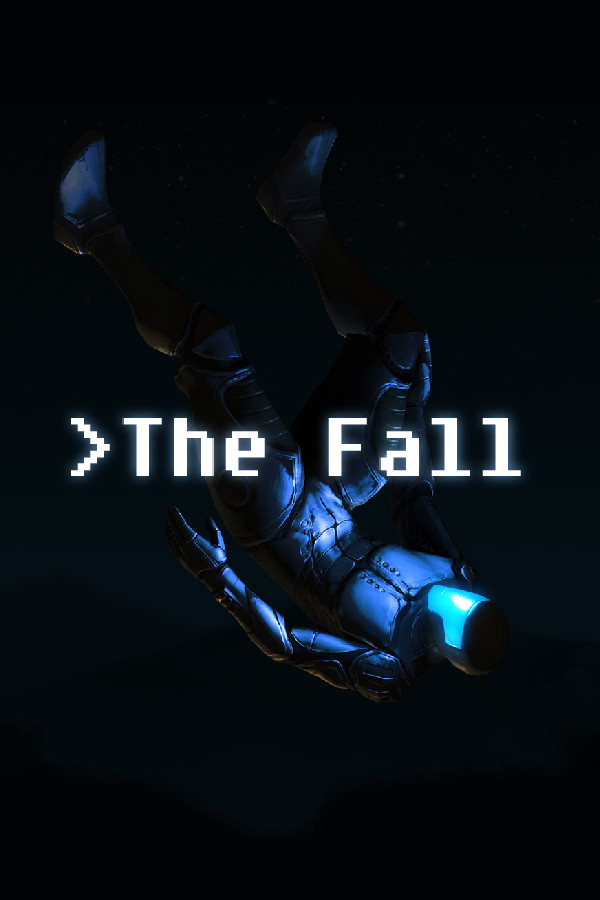
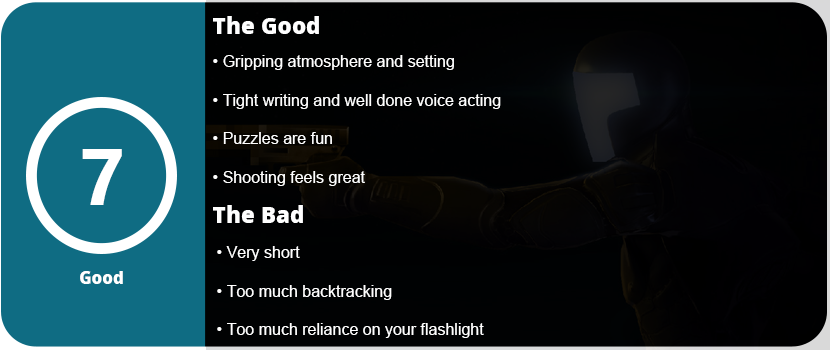
The idea of robots taking over humans has been an age-long discussion, but what if they were designed to help us instead, no matter the cost? That’s the idea that The Fall presents to players. You play as a pilot who has crash-landed on a planet, but the AI known as A.R.I.D. (autonomous robotic interface device) activates and uses an advanced smart suit to essentially control the pilot’s body while searching for medical attention. The pilot lands on a derelict planet run by an AI called the Caretaker, who is examining and studying ARID for unknown reasons. Excellent writing and voice acting bring the story to life, despite its short length. There is not a single wasted line of dialogue or moment. This is an incredible premise and idea that I want to see more of. The Fall is a Metroidvania-lite, but with its own identity. The genre has seen little of this type of game today, especially with the explosion of indie games being produced.
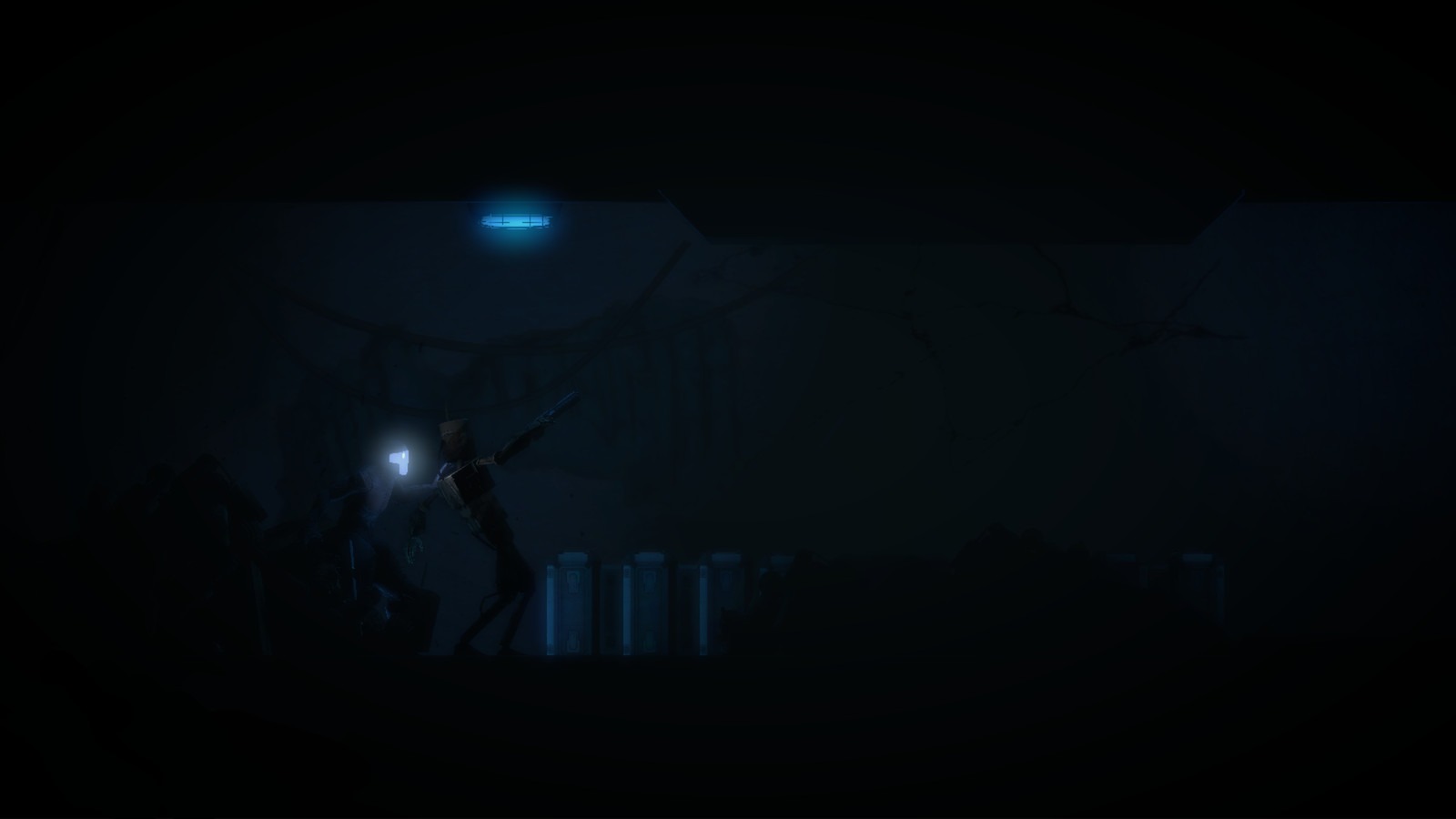
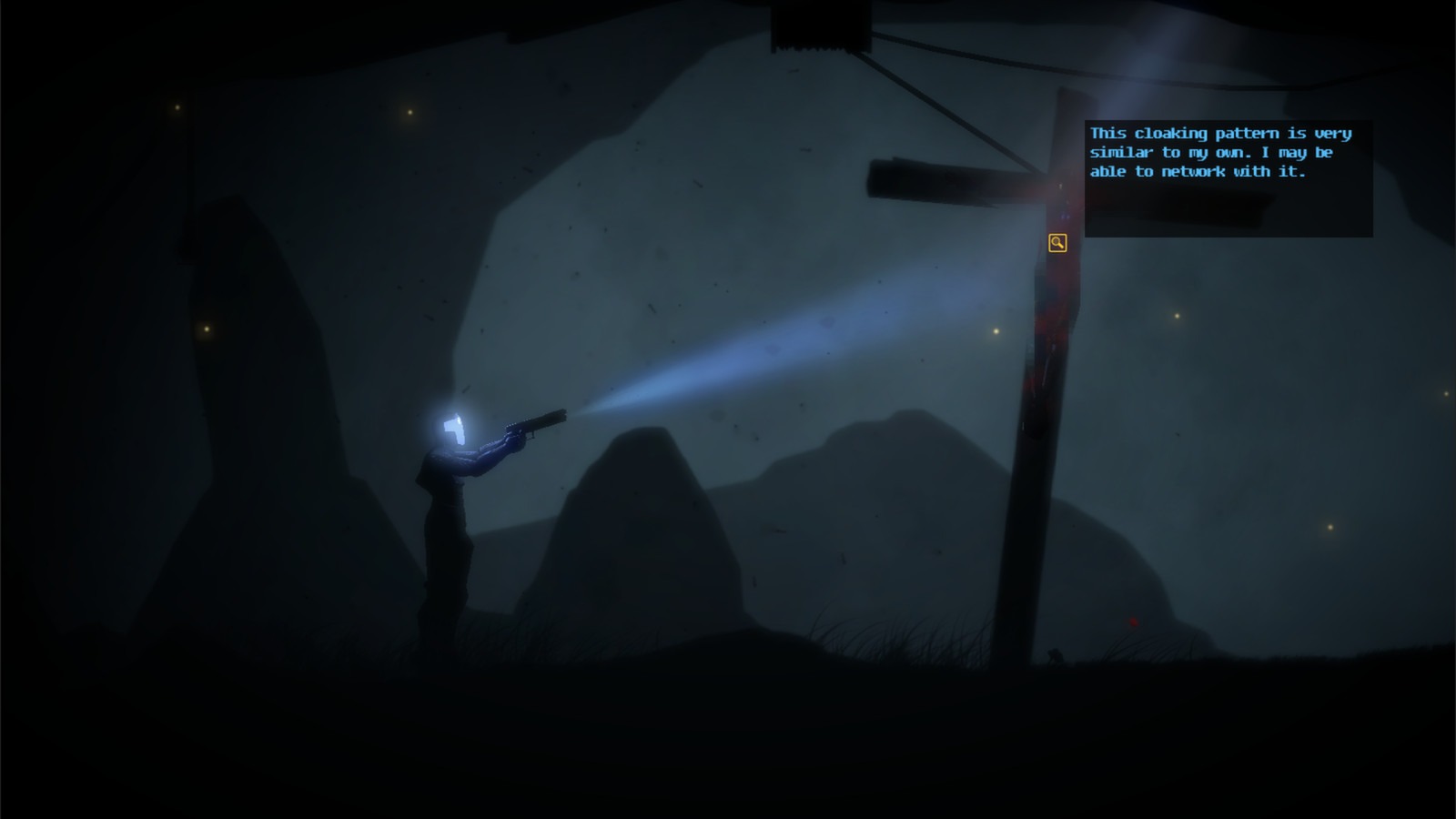
Despite its simplicity, the game boasts a surprisingly complex control layout. You can walk around in a 2D plane, but jumping and combat are limited. You must use the flashlight on your pistol or light the path ahead, as the game is very dark and is mostly underground. When you shine your light over objects, a context piece of text will appear describing it or allowing you to interact with it. The majority of the game is puzzle-based, relying on an inventory system to combine and interact with the right object. The Caretaker’s testing center is the longest section of the game. Many puzzles are actually quite fun and clever, but a few can take a weird obtuse angle and make little sense in terms of how they are solved.
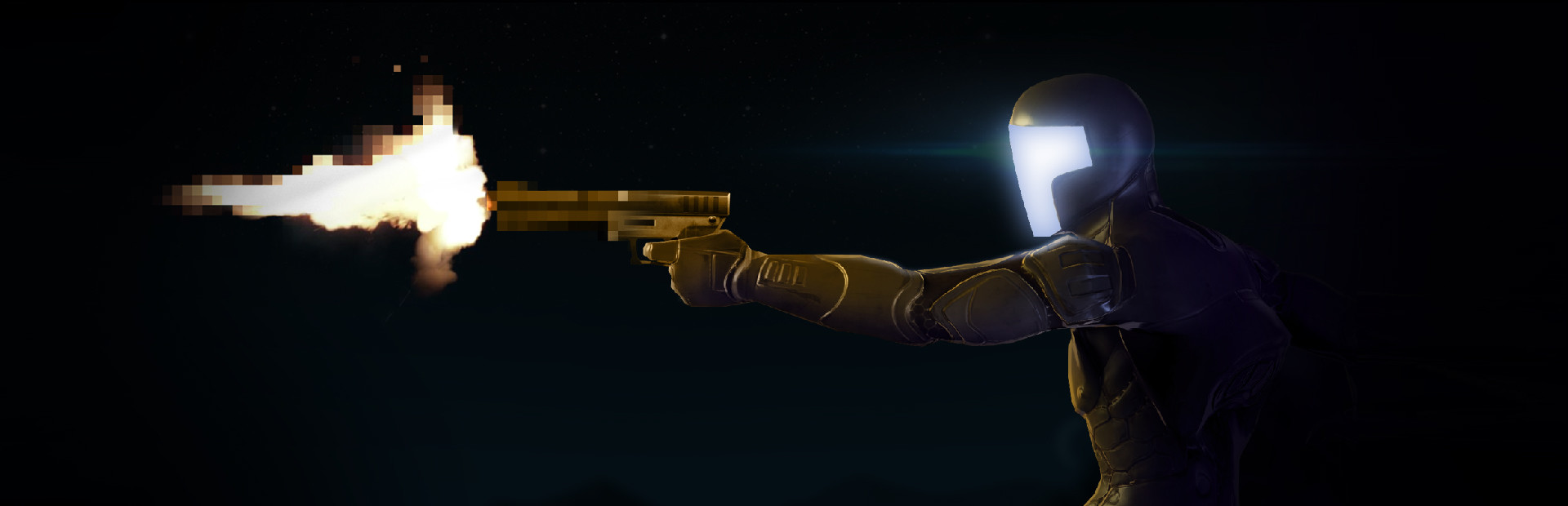
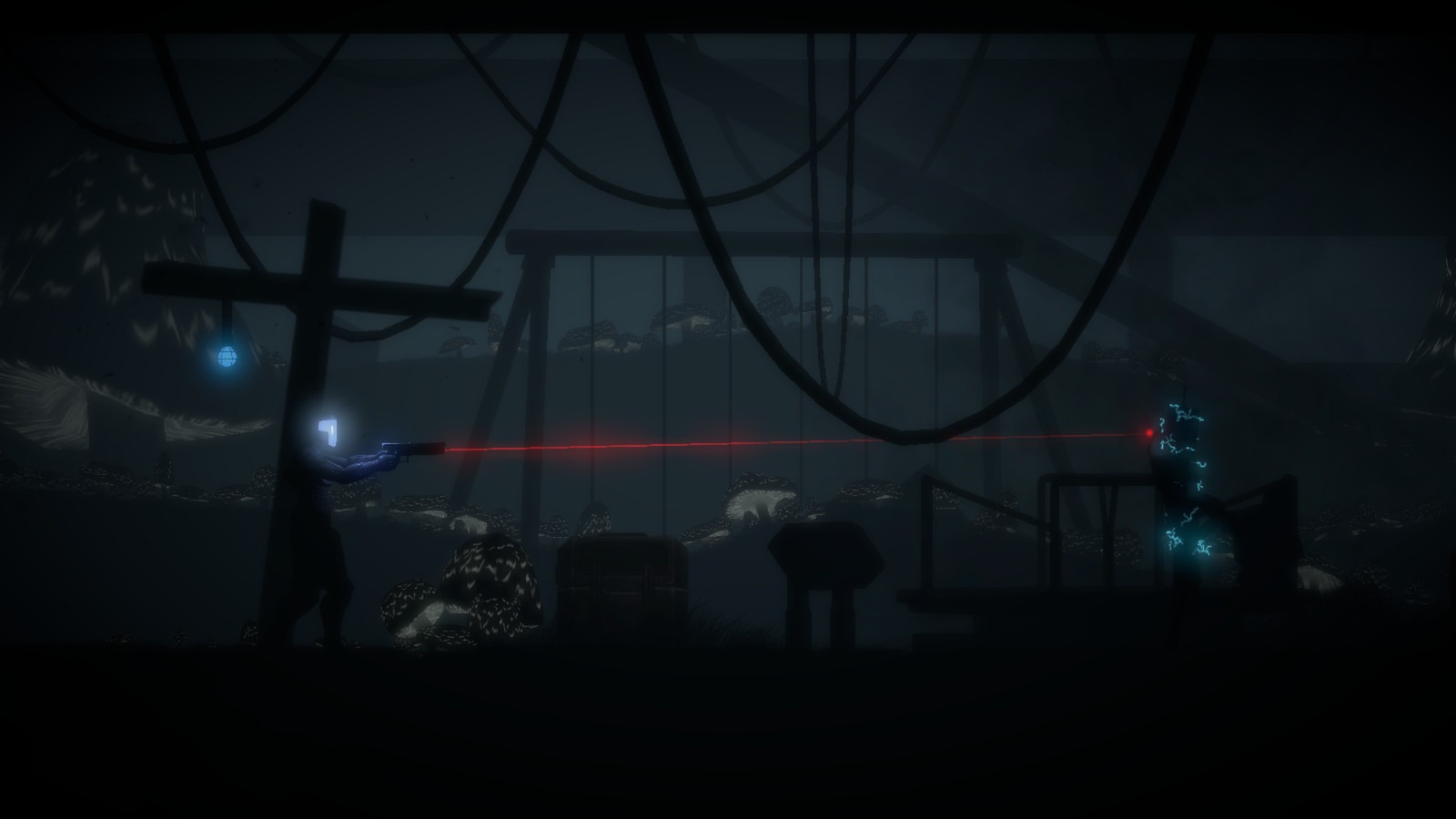
Combat in The Fall is crunchy and powerful but very limited. Other androids will attempt to attack you, but their actions are very limited and occur only during scripted events. You can hide behind cover and pop out to deliver a headshot. You must switch to the laser sight for better accuracy. You can sneak up behind enemies to kill them, or you can advance on them while they take cover. The shots are impactful and crunchy. The combat doesn’t overstay its welcome and is used at the right times. Of course, you can’t use your gun for the first third of the game, as abilities need to be unlocked, such as faster fire rates, the gun itself, and other suit abilities.
The game is tedious because it has a lot of backtracking, so you’ll often go from one end of a level to the other. I understand that this is part of a Metroidvania, but you aren’t going back to a level once you are upgraded and can access new parts of a level. You often find yourself running back and forth to collect parts of a puzzle, hoping you have the correct piece, only to discover that you either don’t or that it belongs to another puzzle located elsewhere. It’s not game-breaking, but it does get old pretty quickly. Once you have read all the text and discovered every part of the level, the adventure part of the game kind of disappears, and all that’s left is the tedious process of solving puzzles and running around.
The atmosphere and graphics are fantastic even today. The game has a surreal feeling of almost transporting you to the world thanks to its great sound design and visuals. While there is a lot going on in the foreground, most of the atmospheric stuff comes from what’s happening in the background. A lot of the background stuff can give you a visual cue as to what’s going on just from one glance. You can see a massive cave and the exterior of a spaceship through the windows, among other things. The few occasions where there is spoken dialogue are excellent, and the excellent writing keeps you captivated with every word.
Overall, The Fall is a fantastic atmospheric Metroidvania-lite that features great writing and tense gameplay, including gun sections that do not overstay their welcome. ARID is a wonderful character despite being a programmed robot, and the ending of the game is well worth your time. This game was one of the few indie titles that contributed to the “indie revolution” of the early 2010s and played a significant role in establishing the Wii U eShop as a prominent platform for indie games.
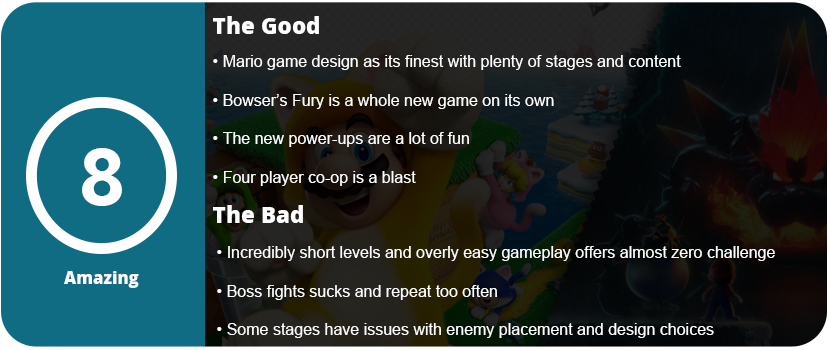
There was never a time when a mainstream Mario platformer was bad—2D or 3D. In the early 2010s, Nintendo was dialing back the more open 3D Mario adventures in favor of more linear 2.5D platforming titles. This shift was sparked by the popularity of the New Super Mario Bros. series, which then spun off two 3D Mario games that were kind of in between that and Super Mario Galaxy. Super Mario 3D Land, which was exclusive to the 3DS, was a lot of fun; however, it was too easy and seemed more suitable for children. The levels were super short; they could be completed in a matter of a couple of minutes, and overall, the game was a perfect weekend rental. Mario games are not typically ones that require 100% completion, since the only reward is personal satisfaction; however, Nintendo attempted to change this with Super Mario Galaxy. The reward is the challenge.
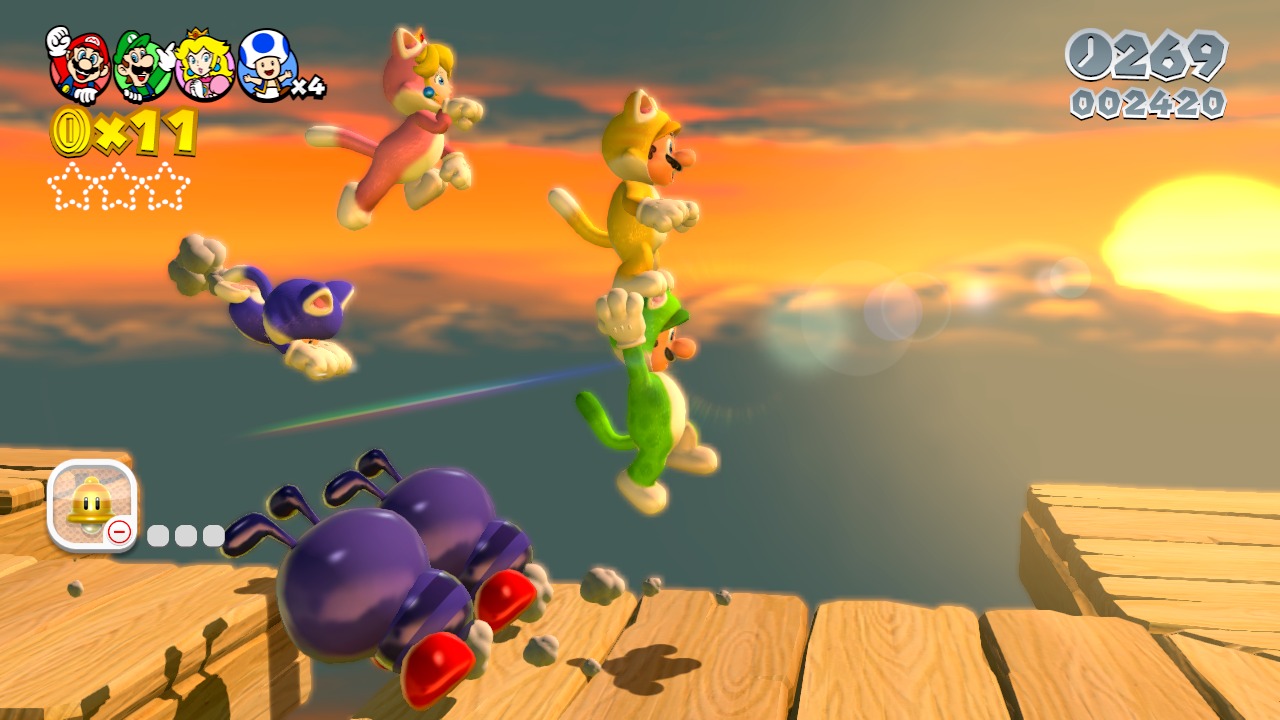
3D World is 3D Land’s bigger console cousin. Released for the Wii U two years after 3D Land, and being the only mainstream 3D Mario title on the system, it was a giant success. Implementing a four-player couch co-op mode and introducing new power-ups while maintaining the short levels from 3D Land seemed to be a perfect match for most people. The game exceeded the capabilities of the Wii U and boasted a stunning visual aesthetic, which it continues to maintain on the Switch today. Bright, colorful visuals similar to Mario Galaxy were a winning combination. The game’s world map has the same standard Mario layout we’ve seen since the beginning. You navigate a map in 3D that has each stage you can enter. There are some small things to do on the map, like enter slot machines to win power-ups and coins, bonus stages, Toad houses with presents, etc. These are neat but don’t really add anything to the game overall. The 3D map functions effectively and fulfills its purpose.
Mario can store one power-up while also using one in this game. Power-ups are suits with something old and something new, like the Cat power-up, which allows you to sprint faster, swipe at enemies, and run up walls, which not only opens up new gameplay possibilities but can also make levels and challenging spots easier. Each stage flows like a typical Mario game. There are constant obstacles to jump across, pits to avoid, enemy patterns to learn, and coins to collect. Coins are simply used to provide you lives. 100 coins equals one life, so don’t feel obligated to hit every single question mark block. Some of the later stages can be really tough, but nothing that can’t be managed if you are careful. What makes Mario games so beloved is how well balanced everything is, and there’s always something new coming at you. No two levels are the same. While many obstacles and hazards are the same, they are always used in unique ways. This is just the Mario design language that has been unable to be replicated to this day. It’s literally perfect. You also get to ride a water Plessie, which has his levels and areas. While he can be somewhat challenging to master in terms of riding and steering, the exhilarating sense of speed is truly remarkable.
There is a giant variety of levels ranging from lava, ice, clouds, mountain peaks, and many other types of terrain. There are expansive cities, shadowy mansions, eerie caverns, and underwater caves. I can’t think of a single type of level that isn’t in this game. Most levels flow similarly, though. You get a couple of sections that show you what to expect in the stage. Is there a lot of platforming, enemy stomping, running, and dashing? Each level has three hidden green stars to collect and a stamp. This is your completionist objective: to get them all. You do have to get some extra stars, as later boss stages require unlocking them with stars. Some of the stars are very well hidden or incredibly tricky to get without dying. If you die, you keep everything you found and can restart at either the checkpoint or the beginning of the stage; however, since the stages are so short, this isn’t a huge deal. Occasionally, there are levels that can be incredibly frustrating. Either a group of enemies is just in the wrong place, or something just isn’t designed well within the level.
Mario can stomp enemies, but with a power-up, he can attack from afar or swipe. The Fire Flower can throw fireballs, the Koopa suit can throw boomerangs, and the Tanooki suit allows you to jump farther; additionally, if you die at least five times, you will receive the white Tanooki suit, which grants invincibility. This optional box is located at the checkpoint. This item is great to use if you just want to power through a level and get the stars and stamp. Just remember, if you get a single hit, you lose the power-up, and another hit makes you tiny. Three hits and you’re done. The boss fights are really disappointing, incredibly easy, and repeated often, which seems to be a trend with 3D Mario games at this time. I keep saying Mario, but there are other characters, and they all feel different to play. Luigi jumps higher, Peach jumps farther, and Toad is faster. Some secret areas require specific or multiple characters to activate. In single-player, you can pick up the new cherry power-up to multiply yourself for these puzzles. However, controlling a number of characters at once is tricky.
Bowser’s Fury
If you don’t 100% the game, you can blow through the entire thing in less than 6 hours. It’s a very short game. Thankfully, the Bowser’s Fury DLC was included, and the game is like a whole new mini Mario adventure on its own. You break away from the classic linear levels and are dumped into a small 3D map that has islands that play out similar to the 3D World levels. You can explore the areas surrounding these islands for small mini-games that award Cat Shrines, which are the new stars in this DLC. You need 40 to fight the final Bowser boss, but there are 100 in total. It’s a massive DLC that’s another game all on its own. There’s no new focus on new power-ups. They just took the 3D World stuff and threw it into an open-world design, and it works.
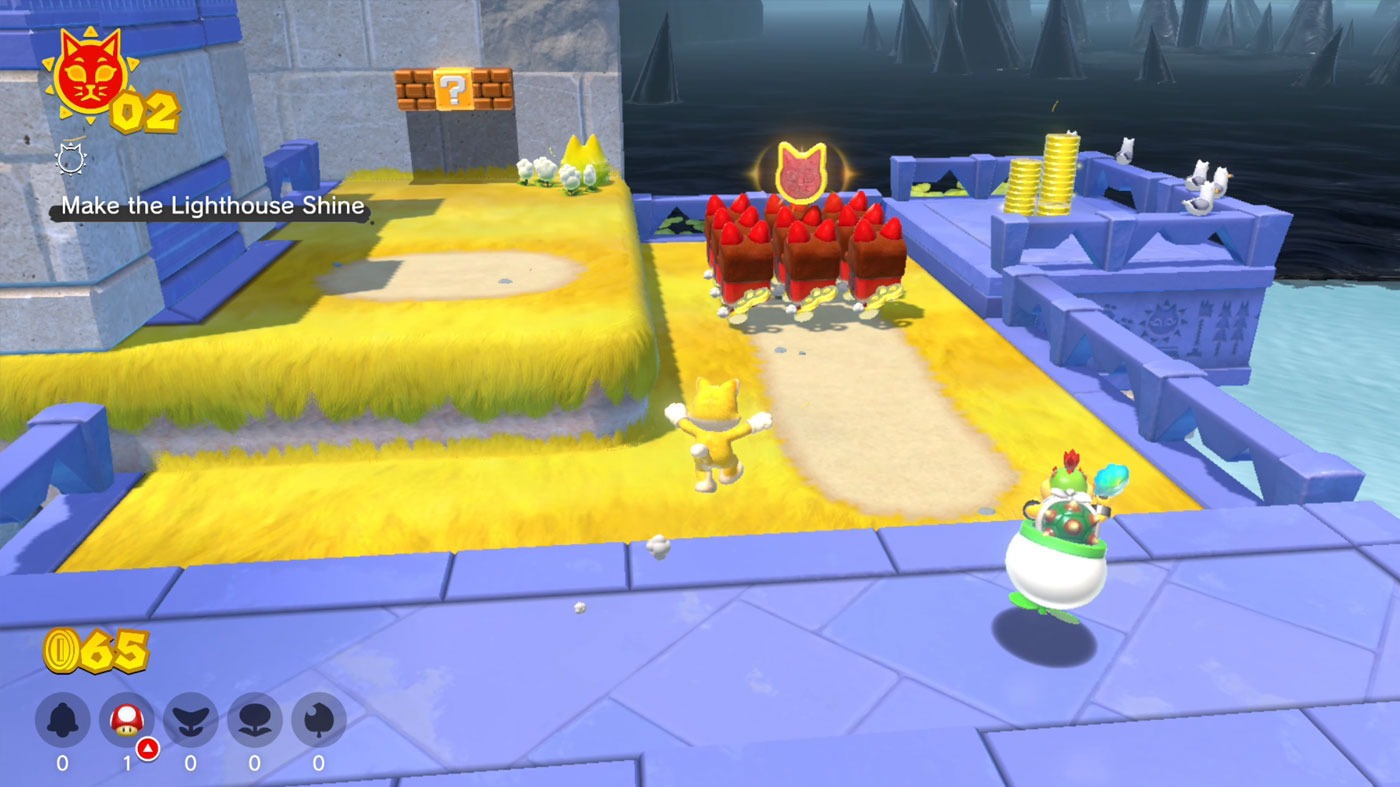
A gate marks the start of each “stage,” showing the Cat Shrine goal name and how many are left. Each island has five Cat Cards you can find, which will award a Cat Shrine. Each new run in the level allows for a new way to navigate it. One run might focus on platforming, while the next run provides a helicopter box that allows you to fly around the small island in search of a key to open the cage containing the Cat Shrine. The levels are just as well designed as the main game, and the final few stages are tough but fun. The new element here is that Bowser is a massive Kaiju monster, and every few minutes a rainstorm starts, and Bowser will start throwing stuff at you, and this also opens up gameplay opportunities. There are Bowser blocks hidden around some islands, and if you stand by them while Bowser is out, he will breathe fire on them and break them, usually revealing a Cat Shrine. The number of shrines hidden throughout this DLC is massive, and it can easily take a player 6 hours just to find all of them with a guide.
Once you get enough Cat Shrines, you can fight Bowser in a new Giga fight. There’s a massive Cat Bell at the center of each of the three islands, and when Bowser comes out, this will light up and ring. Grab the massive Cat Bell, and you will transform into Kaiju Mario, allowing you to brawl with Bowser. Here you need to dodge his attacks, swipe at him in any of the power-up suits, and power stomp him when he’s belly up. Throughout the storms, if you clear a lighthouse while he’s out, it will take some health away so he’s easier when you fight him. This innovative approach to gameplay is unparalleled in previous Mario games.
Of course, the same old bosses from the main game are found throughout the DLC, which sucks, but you get Bowser Jr. to tag along with you, and he can assist in combat, or you can tap on giant question mark graffiti icons to get a power-up. A second player can control Bowser Jr. too, so this is obviously a more single-player-focused DLC. In this DLC, you can hold as many of these powers as you want. Since you are on a giant set of islands, the entire game takes place in the ocean, so to get across large distances, you can use a Plessie, who also has his own sprinting mini-games to get Cat Shrines.
Overall, Super Mario 3D World feels excellent to play and is a lot of fun, especially with four players. My biggest gripe is that the game is far too easy and the stages are too short. After Mario Galaxy, I feel like the series hadn’t quite hit that stride until Odyssey came out. The physics of the game also feel a bit off. I often had some perspective issues where I fell off ledges and misjudged jumps because of the camera angle. The level design overlooked or couldn’t help these quirks. I also find the boss fights monotonous and simplistic. Upon reaching the 6th world, I began to feel a sense of exhaustion with the game, and the remaining areas became somewhat tedious. Bowser’s Fury, a fantastic DLC, effectively bridges the gap between 3D World and Odyssey. Overall, the result is a solid game packed with content.
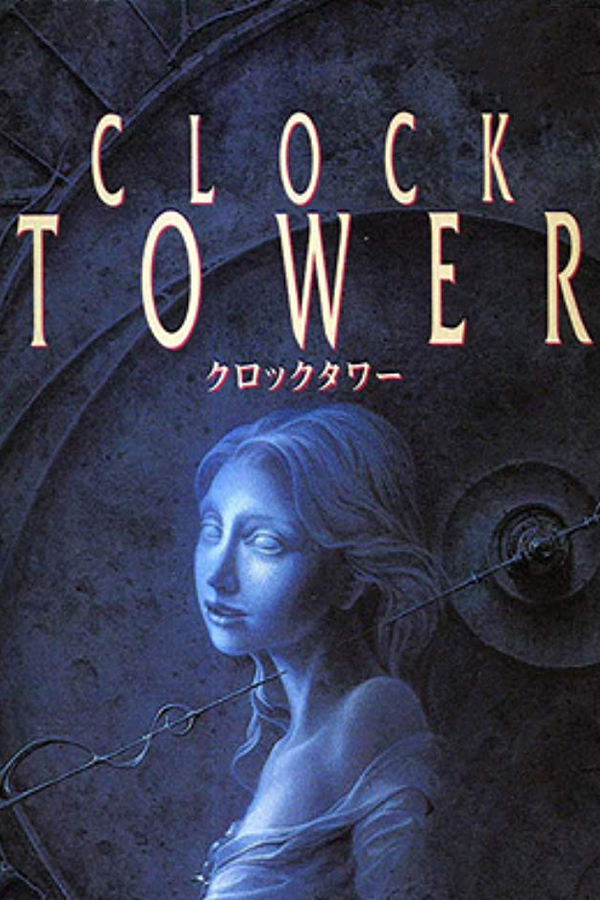
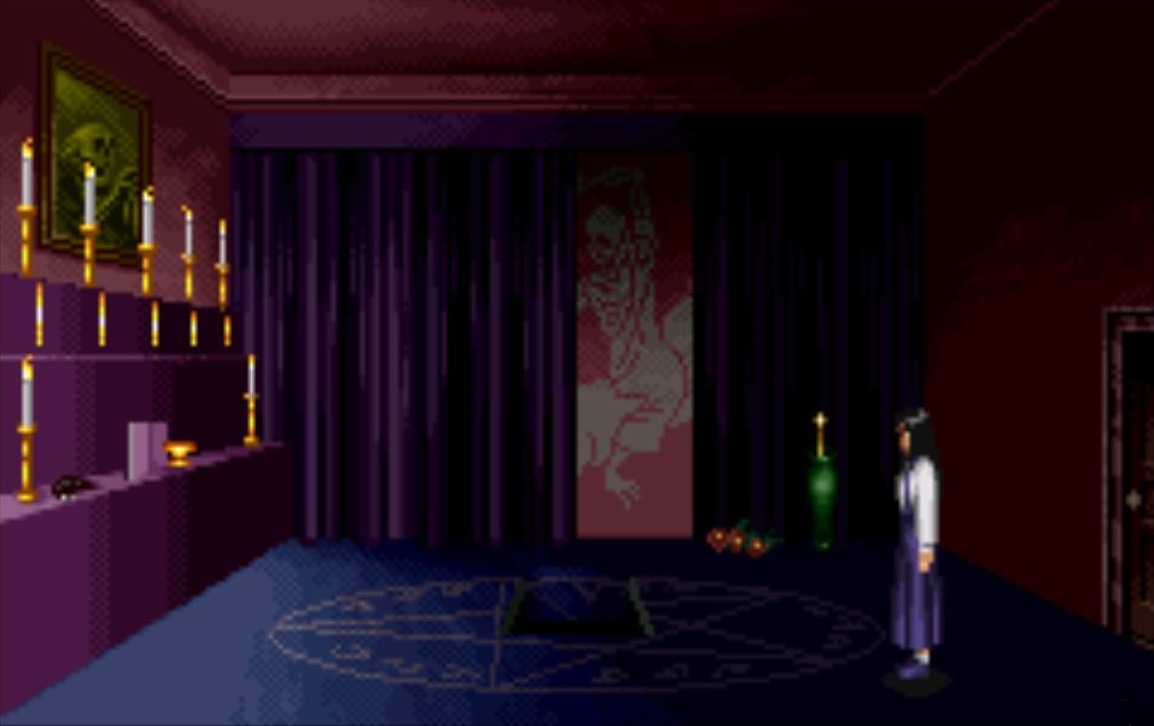
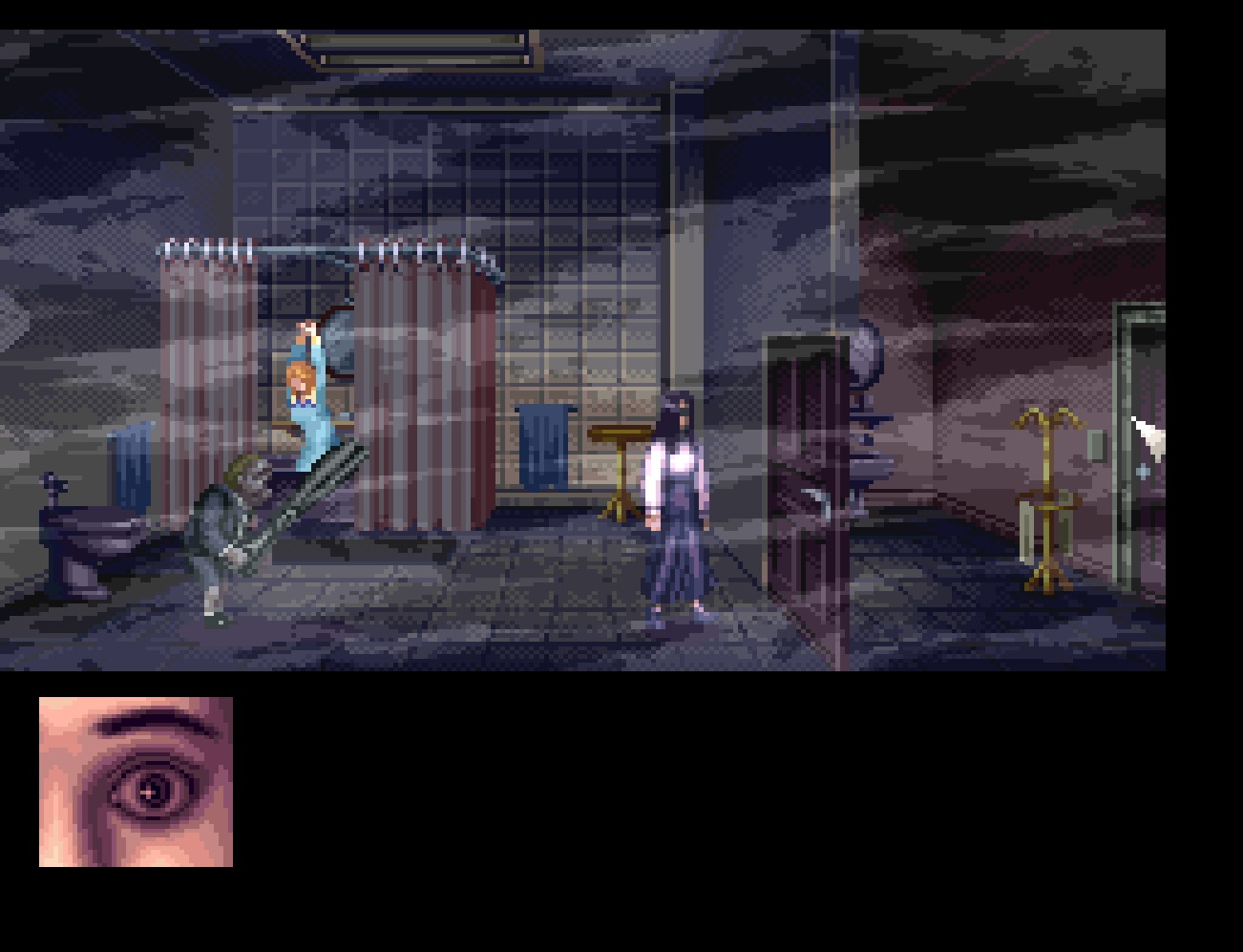
Clock Tower starts out well enough. There aren’t many point-and-click adventures on the Super Nintendo, so I can see why this slower-paced game never made it outside of Japan on the SNES. Initially, the controls are peculiar and challenging to adapt to. Using the L and R buttons causes Jennifer to continuously run in that direction. She will continue to run in that direction up any stairs, obstacles, or doors until you press the buttons again to stop her. The story is mostly difficult to understand and grasp. You end up in a scary mansion with a group of friends, and then they slowly disappear. The “Scissor Man,” who appears at random, chases you as you search for them.
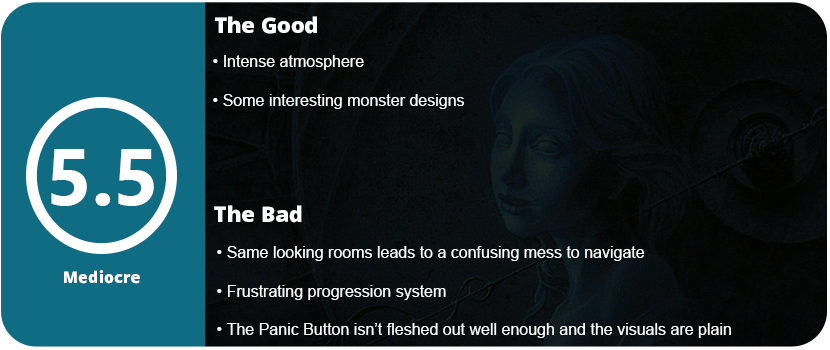
The gameplay necessitates a comprehensive guide. This game is unlike any other I have ever played on the SNES. You can spend hours wandering around and looking into all the rooms, never truly knowing what to do or where to go. The idea of running away from the monster is novel, but without the guide, I would not have known that you need to do most things in a very specific order. Certain orders provide different endings, and you can also easily miss one of the few hiding spots in the game. When Scissor Man appears, you must keep running until you can hide, or he will not go away. It’s important to memorize the mansion’s layout and where each hiding spot is. My issue with a game featuring so many rooms is that many of them share a similar appearance. Despite spending a solid 4-5 hours playing this game, I often found myself lost, even with a comprehensive walkthrough. Some rooms will also lead to insta-deaths as well which made things more frustrating.
I’m also not sure how I feel about the game’s sound. It’s almost nonexistent. Outside of Jennifer’s shoes tapping on the ground, there’s nothing here to listen to. When the Scissor Man appears, his theme song plays, and if you’re lucky, you can use the panic button to escape his grasp. As you run out of stamina, your portrait icon will turn red, and you will need to rest by kneeling. You will find yourself engaging in this activity frequently. There are some items you need to find in order to unlock doors and various objects, but these will be impossible to find with Scissor Man constantly chasing you halfway across the mansion. Each playthrough randomly changes a few rooms, making it difficult to distinguish between the main hallways. Despite the tension of Scissor Man lurking around every corner, there aren’t any other enemies in the game, and the lack of sound effects and music removes any would-be tension.
Overall, despite the slightly interesting story and plot twists, many players may find the labyrinthine hallways, obtuse objectives, lack of hiding spots, and overall trial and error required to reach the game’s end frustrating. Although the concept is intriguing, the execution falls short.
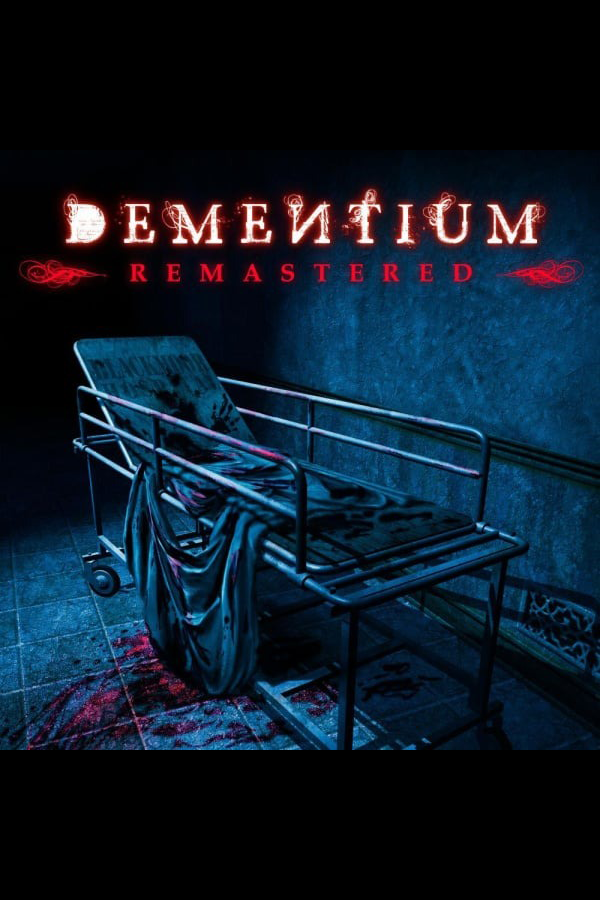
Dementium is one of the saddest stories on the DS. There are very few horror games on the system, and Dementium was a hyped-up train wreck all the way to release. Renegade Kid originally pitched Dementium as a Silent Hill game on the DS. They went to Konami to show off their FPS engine running at 60 FPS. It’s an impressive engine and still is today, and it’s a joy to play and experience, but Dementium’s tricks end after about 30 minutes, and even the remastered version doesn’t add much.
The biggest issue with the original game was the insane difficulty level and lack of checkpoints. If you died, you had to restart the entire chapter, and the game is made up of claustrophobic, deja vu-enducing labyrinthine corridors that require either a detailed walkthrough and guide or pure dumb luck. The enfuriating boss fights and repeated enemies will make your head scream, and most people won’t get through the first few chapters before shutting the game off. I did it back when the game originally came out. The first half of the game consists of finding items to progress, and this constant backtracking is infuriating. Each floor of the hospital looks exactly the same, and each hallway is literally repeated on multiple floors. I passed the same hallway with slugs coming out of the walls and dropping from the ceiling grates in the exact same pattern dozens of times. The same closets with the same set of boxes stacked in the exact same position will repeat several times in a row in every hallway. The same three office layouts repeat ad nauseam. It’s a lazy design of copy and paste, and the last of the landmarks makes backtracking an utter nightmare.
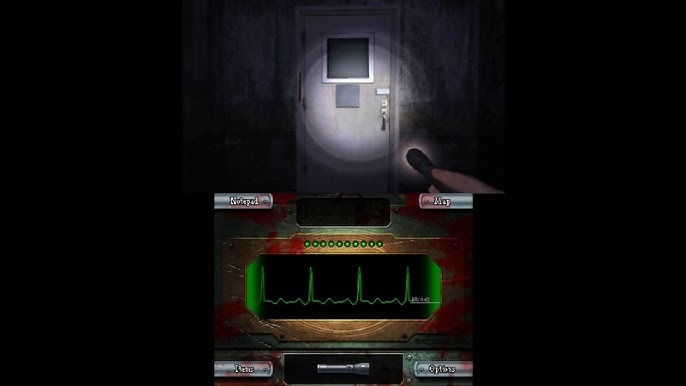
What becomes a horror game of keeping your own sanity quickly becomes apparent once you get to the first boss fight. Bosses flash red and become invulnerable for a few seconds after each shot. This is an incredibly stupid design choice. Let me blast these guys away, as you also have limited ammo early in the game, only to become Rambo by the final few chapters. Health is also finite, as whatever you find in each hallway is. Thankfully, it’s plentiful, but later chapters become endurance races. The final chapters lack any type of puzzle solving or object hunting and just see you running through dozens upon dozens of hallways, just running from enemies, hoping you find the right door that’s not locked. Almost every door in this game is locked, and the clues to the right door are the ones with bloody handprints. That’s even not 100% true sometimes. The remastered version adds new checkpoints and save points throughout the game, but those still aren’t enough. This game needs a save anywhere feature.
There are plenty of guns, such as a pistol, revolver, sniper rifle, assault rifle, and baton. They all feel good to shoot, and the shooting mechanics are very smooth and accurate. It’s a crying shame it was put to waste on this mundane slog of a mess. The remastered version also takes advantage of the dual analog controls of the 3DS, which helps as well. The final chapter of the game is a stamina rush of every enemy thrown at you numerous times just to get to a final boss that can kill you very quickly. Prepare to run through this level numerous times in sheer frustration over terror. I like the idea of switching between a gun and a flashlight, but after a while, I ran from most enemies. The same five repeat through the entire game; the novelty of a DS shooter wears off very quickly.
Overall, the visuals and atmosphere are actually memorable. The music is haunting, and the darkness creeping in around you works. There are no jump scares, and the story is non-existent outside of a few scenes. You can’t even determine what’s going on in this poem through written text, as there’s very little of it. It’s a boring, frustrating mess of a game wrapped around a fantastic game engine and haunting atmosphere. It’s a shame the remaster couldn’t do more than upscale the textures and add checkpoints that barely help the difficulty.
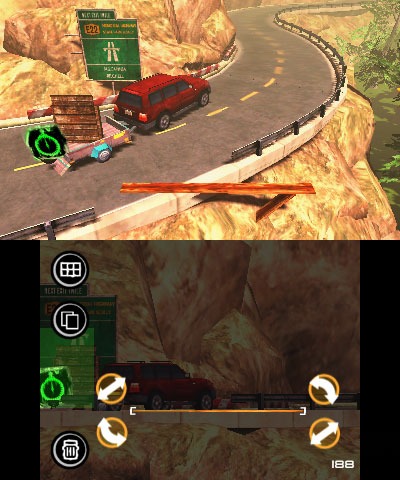
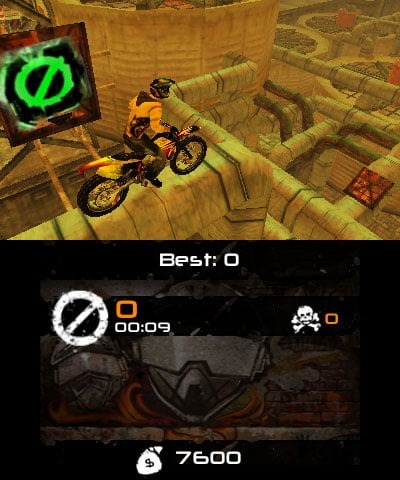
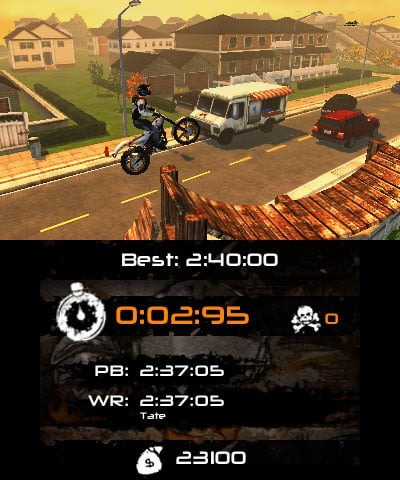
Trials is the dominant 2.5D motocross physics game. It’s a hard category to describe. I reviewed Trials 2: Second Edition over a decade ago and have loved the series ever since. RedLynx knows how to mix fast-paced gameplay with well-designed courses and tracks that are fun to master, and restarting isn’t always an absolute pain. Urban Trial is a fairly decent clone of that game, but it falls flat in many areas.
Firstly, there is no story, so don’t worry about that. You can just jump straight into the main campaign, which consists of five different urban environments and seven tracks in each area. To unlock the next area, you need three stars or better on every track in the previous map. This isn’t too difficult. Just get through the course without crashing a lot. My issues with the game started on the second map and made me question whether I wanted to keep going, at least in a single playthrough.
The physics in Urban Trial Freestyle 2 are mostly okay, but they put you on moving platforms that the physics engine isn’t great at emulating. Riding on a moving grate across a bunch of moving barrels isn’t as easy as you’d think in this game. A lot of times my bike got stuck on the edges, and I couldn’t pull back to get over them. Even stationary stairs are hard to get over. The physics feel almost too centered. If I push too far forward or backward, the bike loses complete control, and it’s too hard to correct it. The bike also feels way too heavy once it is not completely centered. This was never an issue in trials. The tracks are also haphazardly laid out, with too many steep jumps next to each other, so it makes it hard to gauge how to take each ramp.
There is some sort of jump scoring gauge that was never explained, and I couldn’t quite figure it out. When you approach a certain jump, a couple of green bars will float around, and your rider will make a comment that he made it or didn’t. I don’t understand what this was for, and it seemed pointless in the end. It’s hard to pull tricks on these bikes with the physics the way they are.
There are cash icons to grab in each level, but I was never interested in getting these as the unlockables are pretty lame. You can customize your dude and bike, but the options are very limited. Just a few colors and clothing items (I mean less than 10 each), and they cost a lot of money, so it’s not worth it. This felt like a throw-in at the last minute to make it feel more like a sequel or something. There is a freestyle mode where you can do stunts, but with the wonky physics, it’s kind of hard. There is also a track editor mode, which isn’t intuitive at all. It requires a lot of trial and error to get everything placed right, and with the weird physics, it just isn’t worth the effort. I feel this is for kids who have nothing else to play and got this on sale and are just bored.
The visuals are actually pretty good, with decent textures and a lot of detail in the environments, and there wasn’t really any slowdown that I noticed. I wish the music was better and there were more ambient sounds like in Trials, but for a budget eShop game, this is actually not that bad. What’s here is fun to fill a couple of evenings, and if you are itching for a Trials game, then you can’t do much harm with this game. If the physics felt more balanced and the track design was a lot better, it could go a long way toward really competing with Trials. The track editor is passable, and the unlockables feel thrown in at the last minute. All this game made me want to do is go back and play a much better Trials game, but for a few dollars it’s harmless.
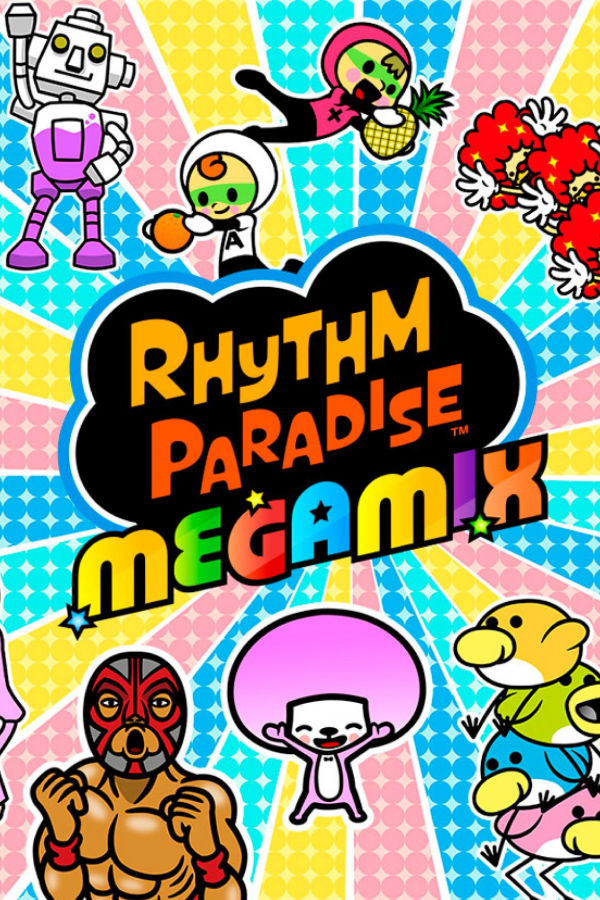
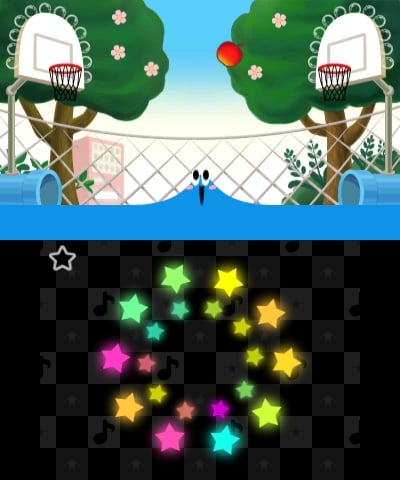
Rhythm Heaven has always been a difficult game to master. This isn’t Warioware or Hatsune Miku. This game requires precise timing, and you must be really in tune with the beat. I had to physically tap my foot or nod my head to keep myself in rhythm for some of these minigames.
The game has a typical Nintendo-esque storyline in the vein of Warioware, with goofy characters. The art style is nice and cute, with skippable dialogue, which most people will probably do. Each section contains four mini-games that you must pass to move on to the next set of four mini-games. These games are some new and mostly old from the previous two games. Mini-games require you to press the A or B button or tap the stylus (this is an optional alternative). Being on the beat is a bit more forgiving than previous mini-games, and scoring is a lot more generous. If you are just a couple of points from passing, the game will give them to you out of pity, and the boss stages will let you pass if you spend 30 coins for at least trying. My biggest gripe with the previous games was the lockout from progression, which would make you want to quit playing.
My favorite mini-games are the ones that have something physical to track. The LumberBear one is a perfect example. Logs get laid out in front of you, and each mini-game has a second type of beat to follow. There is usually a fast-paced rhythm and then one where it requires longer pauses or rapid-fire button presses (in the form of three most of the time). The first tower you play is actually much harder than the later towers because the second version of these mini-games is longer, which allows you to miss more and still pass. There is a practice mode before each game starts and if you miss too much the bottom screen will show a rhythm pattern for you to follow. This helps as some patterns are just hard to get down. Again, another way for the series to be more forgiving this time around.
There are some mini-games I was just terrible at or weren’t designed in a way that made staying on beat intuitive. There is always a visual or audio cue, but sometimes the mini-games will trick you and pull the camera out, obscure your view, or cut the audio, and this requires mastering the mini-game. It all becomes muscle memory at a certain point. This isn’t a casual rhythm game or mini-game compilation like we’re used to. Can we call this a hardcore rhythm game?
You can unlock trophies and other extra mini-games in the museum and cafe. This never really interested me, as this isn’t a game I wanted to finish 100%. Once you finally finish the story mode, there’s no real reason to come back to this game unless you really love punishment. I found this game wasn’t relaxing at all for how tense and focused you have to be to play it and pass the story stages. Even with the goofy characters and skippable dialogue, the story mode is quite long, with seven towers to finish. The graphics are great, and each mini-game looks unique and charming. This has that wacky Nintendo signature all over it. If you disliked previous Rhythm Heaven games, I would give this a shot since it is more forgiving and the timing has been somewhat refined.
This is my first time playing a Mario & Sonic Olympic game outside of an arcade room. The series never appealed to me, and it’s been around for what seems like forever. They never reviewed very well; they all looked and seemed to be too similar, and they felt aimed at kids. A mini-game-style game set around the Olympics is usually something you can blow off. Anything Olympic-branded is most likely hot garbage, but there is something here.
The 3DS version of the game has a story mode, unlike the Wii version. The mini-games are also hand-tailored for a more pick-up-and-go style and are much shorter. The story mode is quite simply dead-ass boring and a complete snooze fest. There was zero effort put into it, and there is no reason to play it other than to get used to some mini-games. The basic premise is that Mario and Sonic can’t start the opening ceremony because Bowser and Dr. Eggman have set off a fog machine that produces evil versions of everyone. The cutscenes last way too long, sometimes up to five minutes, and consist of characters standing around grunting, showing emotes, and yapping about a whole lot of nothing. All of your usual Sonic and Mario characters appear, such as Team Chaotix, Princess Peach and Daisy, Yoshi, and Metal Sonic. That means absolutely nothing. When everyone is done running their mouths, you can pick a challenge. Some challenges are one event only; some can be more. There are five chapters in the story mode and then bonus chapters focusing on Bowser Jr. after the fog has cleared.
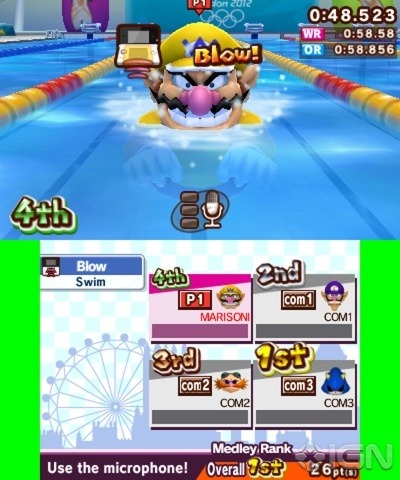
There are a lot of mini-games, so I will give the game credit there, and they are varied. You use everything in the 3DS to play these games. Shooting mini-games uses the gyroscope and the shoulder buttons; swimming might have you partially rotating the circle pad. A swimming game has you using the touch screen with your fingers. Some require timing and reflexes, but I felt some were pure dumb luck unless you played against an actual person. Some mini-games are just hard to understand, with about four screens of instructions before each game starts. This makes the story mode drag on, as you just want to jump in. I don’t need to confirm three times and get instructions more than once. Even restarting an event resets all of this, and it’s back to confirming everything. It drove me crazy.
Mini-games play fine on normal difficulty, but hard feels nearly impossible. Not one mini-game ever feels right or perfected. Some feel sluggish and unresponsive; others are hard to grasp and take multiple tries to understand. Some I never quite knew what was causing me to fail, such as the BMX sport excusive to the 3DS. You press A to jump, but you need to tilt the 3DS to land flat. I could never figure this out and always landed wrong, no matter what I did. Games that require timing, such as fighting sports, just get frustrating because it seems the CPU knows what you pressed, and it’s a dice roll as to whether it fails. This is most notable in table tennis and badminton. I would get 50 rallies on one match and fail, but the next serve, the CPU would fail in 3 rallies. It never felt fair.
It got to a point in the story mode that I avoided the timing and reflex mini-games and went straight for ones that required physical ability to win, such as blowing into the mic, tapping a button really fast, or using the stylus. When you finally beat the story mode, you can mix and match event types through unlocked playlists or create your own. Once you’ve played every game a few times, there’s no reason to keep playing against the CPU. This game really needs a second player to feel fun, but then you still run into issues with sluggish controls, and the game never quite gives you the control you need or that would make the mini-game feel more organic.
The visuals are pretty good for a 3DS title, but they’re nothing special to write home about. Textures and character models look pretty decent, but it’s your typical Sonic or Mario visual style, which can feel pretty boring around this point in time. I wish the story mode was better and wasn’t geared towards pre-schoolers, and there are a few really fun games in here, but they are buried by the sheer weight of many other sub-par games.
I never thought that a GTA game would be in handheld format. We had the original two games on the GBA, but that was kind of expected. Chinatown Wars is a brand new hand-tailored experience for the DS and later shoehorned onto the PSP. There are touch-screen controls, a whole new interface, and mini-games galore. This game feels like what GTA 3 would have been if it hadn’t gone full 3D. You get the over-the-top perspective, but everything is still in 3D. The game looks really good for a DS game and feels like a unique GTA experience.
The story is your typical GTA gangster revenge story. You play as Huang, whose father was murdered for an ancient sword that was passed down to mark the next mob boss leader. Huang flies to Liberty City to avenge his father’s death, get to the bottom of the Triad and gang squabbling, and get that sword back to help his uncle move to the top. The story is full of deceit, betrayal, deception, and revenge and is mostly uninteresting. It doesn’t have the charisma, flair, or flavor that the console versions have, mostly due to the lack of voice acting. The story is told through stills and text, which makes sense on the DS, but definitely doesn’t give the characters any well-being. Many of the mob members are stereotypical drug and sex addicts, power-hungry, stupid, and Huang can’t trust anyone. The story has around 50 missions, and they play out similar to the console version.
The main interface is custom for the DS. You get a PDA-style screen that you can touch. The map is displayed here as well as your radio stations, throwables, and weapon switching, and the menu in the PDA will show your trade info, emails, settings, stats, etc. It’s very intuitive and just makes sense. New story missions are given via red emails. These will also give you a shortcut to place a waypoint on the map leading to that new story. There are a lot of quality-of-life things like this thrown in. The GPS map has shortcuts for everything you need, from odd jobs to your safehouses. You can also order ammo and weapons from Ammu-Nation on the PDA as well. They show up at your house, and you get an email telling you when it’s ready.
Running around the world of Liberty City feels lively because of the limitations put in place. You can run and jack cars, drive off and kill everyone on the road, and gain your infamous wanted stars. Stars can be dropped by making police cars crash, which will help lower your wanted meter faster. I did feel there were way too many cops around in this game. It seemed every 5–10 cars was a cop car or a pig walking around. I was constantly caught carjacking or running over someone, and I was always running into cop cars. This felt way overdone in this game. Driving around Liberty City does feel great. The game never slows down, and the ambient sound effects of the original radio tunes (they’re instrumental and not licensed due to space limitations on the DS carts) make it feel like a living and breathing GTA game on the go.
Missions are varied, but some elements of missions can get quite annoying, causing multiple deaths and restarts. The auto-lock-on feature for shooting isn’t that great. You don’t always lock on to the closest enemy or an enemy at all. This caused many deaths when I locked onto a car instead of a person shooting at me. You can roll around and dodge people, but many times I was stuck without a weapon and would have to order something from Ammu-Nation, go to my safehouse, wait, pick it up, and go back and restart the mission. Thankfully, you can trip skip if you get to a certain point in longer missions, which saves you time, and you can skip cutscenes. A lot of mini-games surround missions, such as tapping the screen to break locks, mini-games to use cranes, plant bombs, scratch cards, tattoing, and many others. These were a lot of fun, and I was always looking forward to the next one. However, trying to jack a car and being stuck in a mini-game of hot starting it for the 100th time got old and would make me get busted as you can’t back out of it. Most missions vary from shooting, following, and chasing, and some put you on turrets or throw bombs out of a car. Overall, the mission variety is awesome, and I never got bored.
The biggest setback in the game is the new feature of drug dealing. You can use your PDA to see the drug turf map for who buys and sells what. This is required to actually make money for weapons and sometimes even start missions. Some missions require a certain drug type or a large amount of cash. This means setting a GPS waypoint for a dealer who sells said drug and buying some from them. You need to make large profits, so it’s best to wait for an email when a dealer is selling at a discount and then turn around and sell it. This takes a lot of time—driving around and waiting around, however. Buying and selling drugs at market value won’t get you anywhere. Odd jobs can give you a few bucks, but they don’t pay out enough. This really slows the game down and hampers an otherwise fast-paced game.
When it comes to visuals, the game really shines on the DS. There are small, subtle things, like street lights turning off when you hit the poles. Weather patterns such as lightning strikes casting shadows on the ground, sparks, fire effects, and even being able to close the driver door if it’s still open while driving (let go of the accelerator and Huang will close the door). These small changes help make this a high-quality DS experience and set it above the rest in terms of production values. Chinatown Wars may have a forgettable story and characters, some control issues when shooting, some frustrating missions, and a drug dealing mechanic that hinders more than helps, but overall the game is miles above what I thought a portable GTA game could be and in some ways feels better than the PSP GTA games.











































 thebinarymessiah.com
Try multiplayer. A lot of fun !