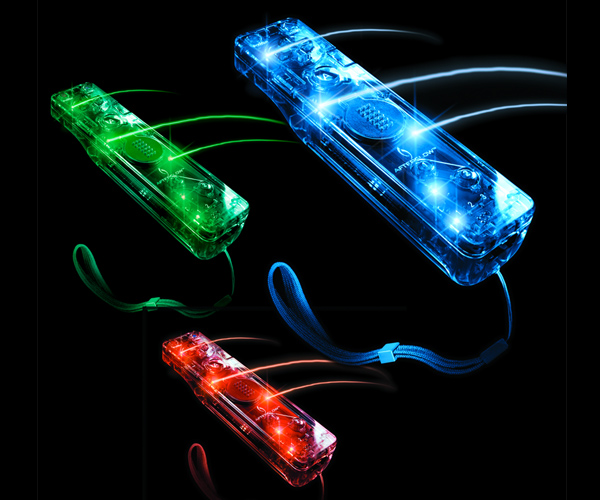
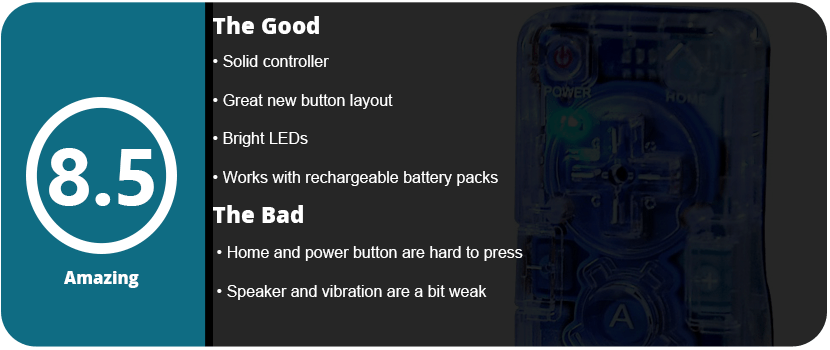
After buying a Wii U, you will need controllers with Wii Motion Plus in them. For $10 less, you can get these, which are pretty well designed, and I like them a lot. PDP makes great products, and these are no exception. The Afterglow products look cool because they have colored LEDs and transparent cases. I also like the new layout for the controller. The + and – buttons are on the extreme sides of the remote above a. 1 and 2 are diagonally placed, so your thumb doesn’t hit both all the time when holding the remote horizontally. I just found the home button a little hard to press because it is inset with the power button at the top.
The LEDs are bright and vibrant and look cool in the dark. The remote feels solid and sturdy, not cheap like some Wii peripherals. It comes with a strap as well, so the whole package is here. It will fit any rechargeable battery, but it’s a bit tight. One thing you really have to look out for on third-party controllers is the quality of the buttons. They press nicely and give good feedback. I just found the speaker to be a bit quieter than the official ones, and the vibration is a bit softer as well. This is a minor issue, but it still feels nice and is a great product. For $10 less, you get cool LEDs, better button placement, and a solid-feeling controller.
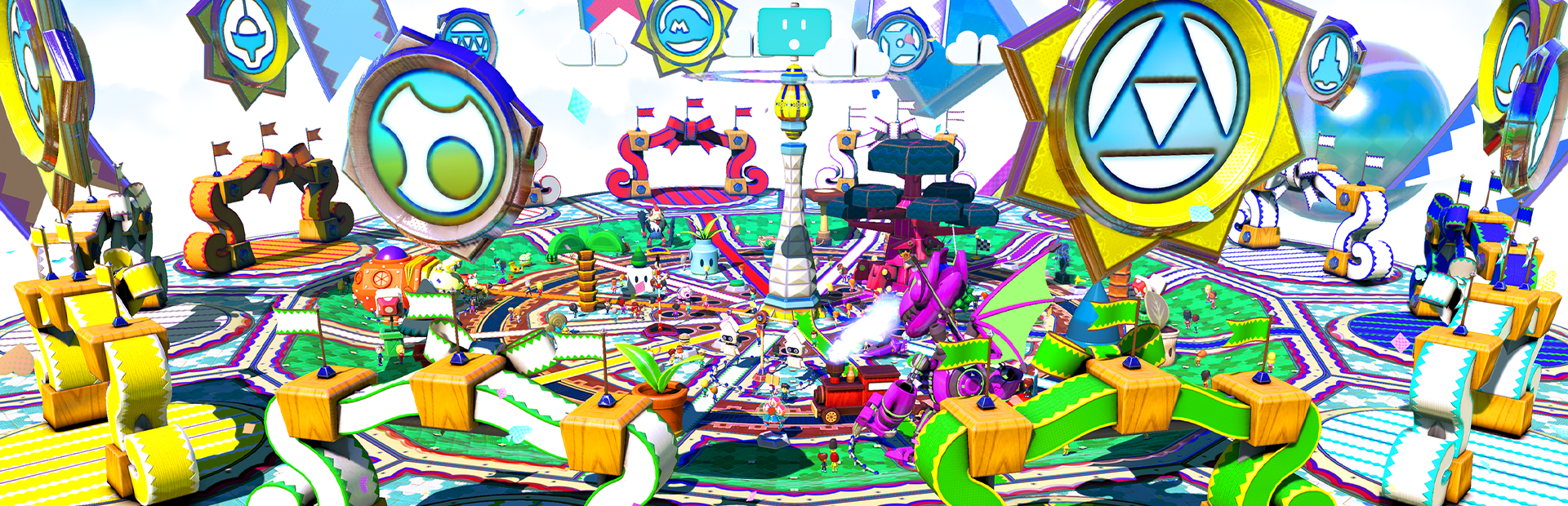
Everyone knows that Nintendo usually offers some sort of software to get you used to and familiar with their new console. The Wii had Wii Sports, the DS had Brain Training, and the Wii U had the very beefy Nintendo Land. This is a game that features a hub that interacts with the Miiverse and has doors to mini-games. Like Mario Party, this game is best played by other people. The AI is pretty dumb and unfair, and it is just completely boring by itself.
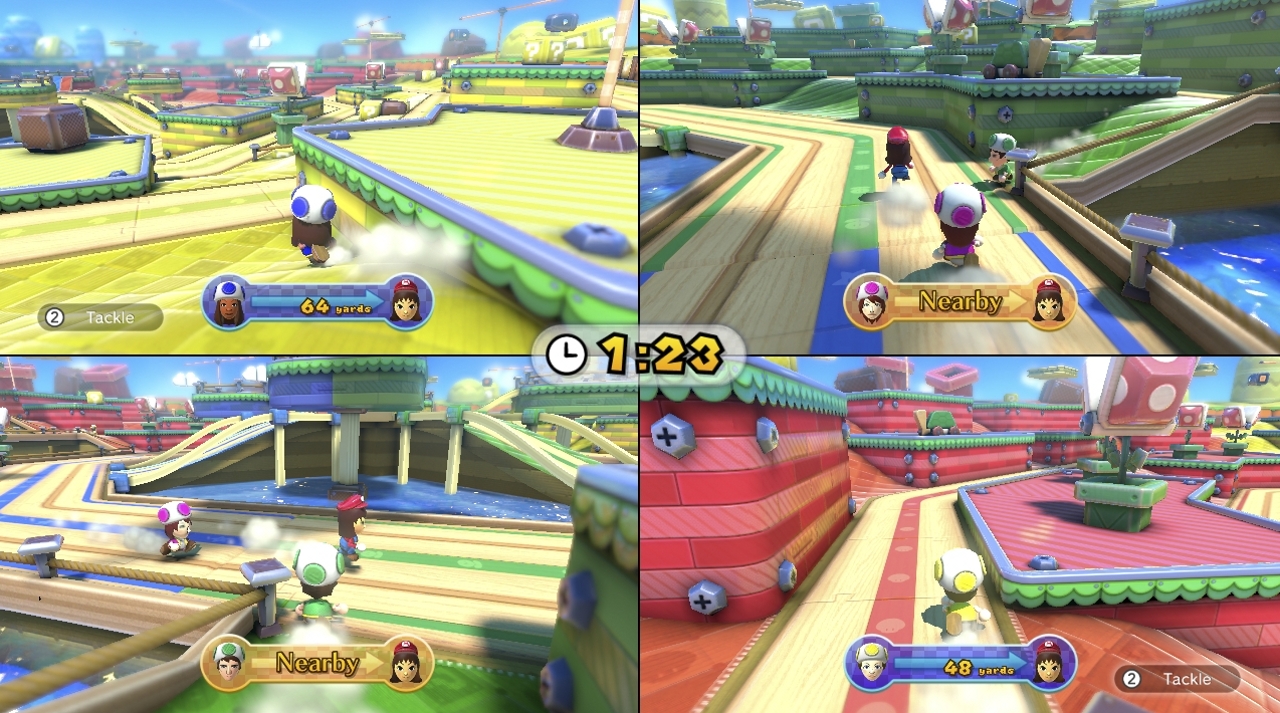
There are mini-games that feature pretty much every Nintendo franchise. One is an Animal Crossing game that is very competitive and fun. One person controls two dogs on the gamepad while the other players run around using Wiimotes to collect candy. If you play with one other person, they must put 15 pieces in dishes; if it’s two or more other people, they must collectively get candy and keep it with them. They have to work together because the more you have, the slower you run. This game seems unfair at first for the gamepad player because you run slower and your tackles don’t go very far. It takes practice and skill to tactically corner the Wiimote players and get them. Some of these mini-games have a face-camera feature because you can’t look up at the TV; it’s cheating. When you look up, the Wiimote players will know and can pummel you accordingly.
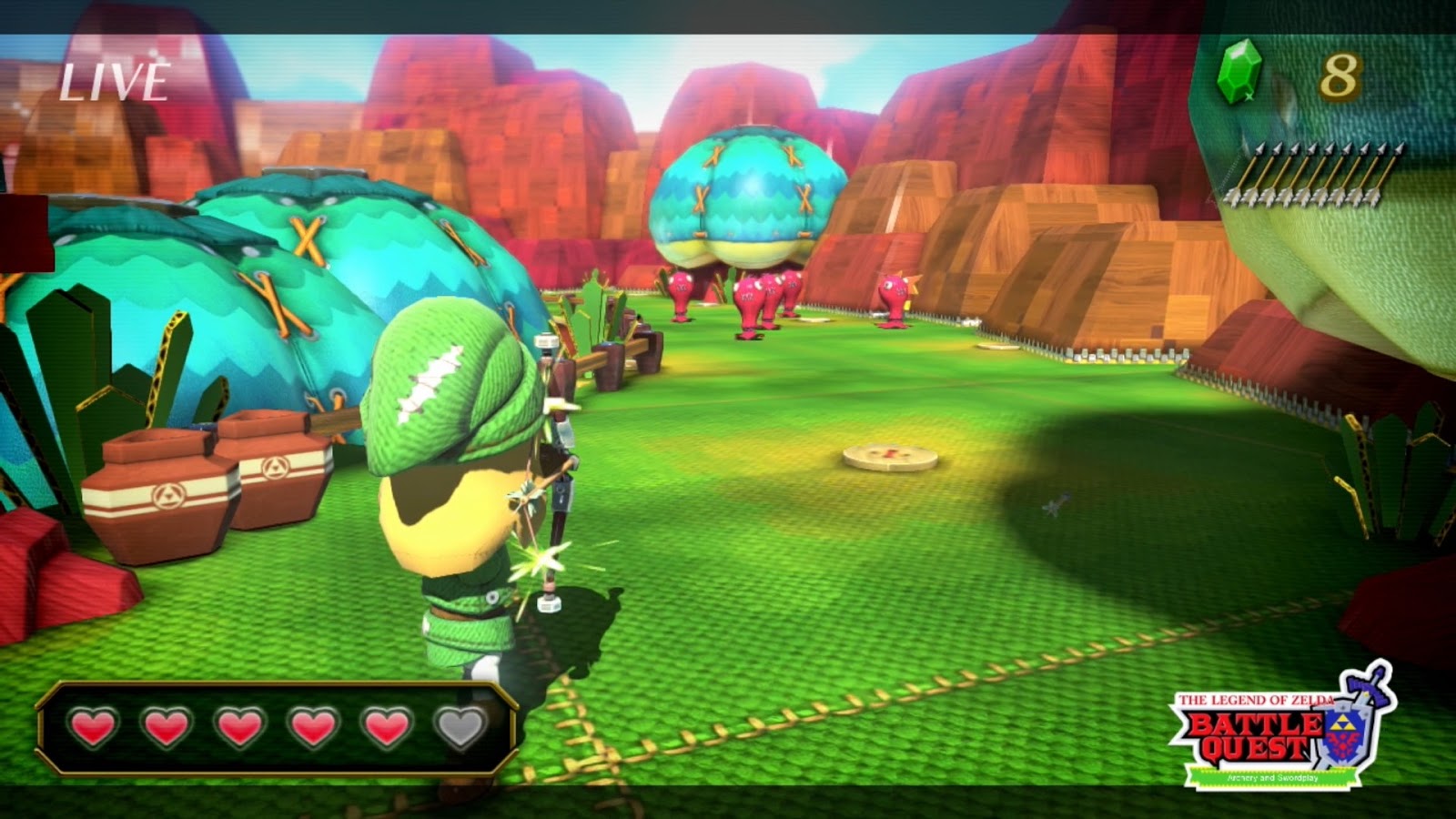
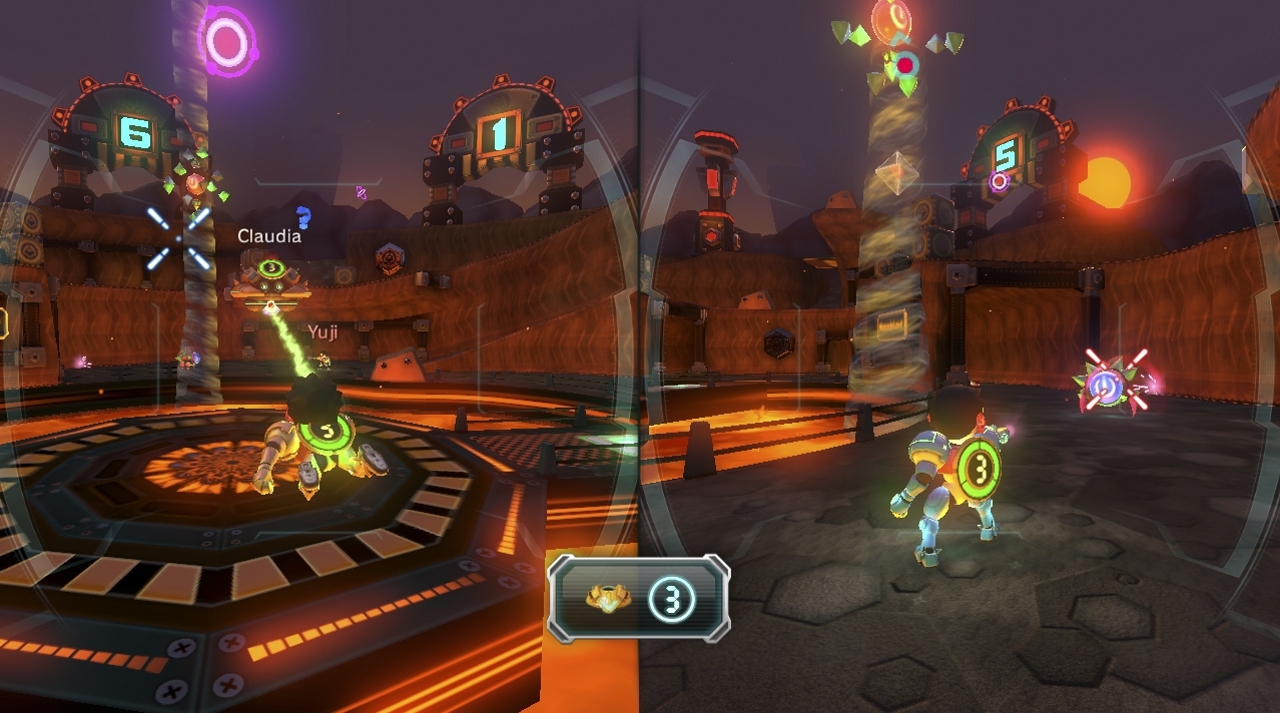
The best mini-game is the Zelda Battle Quest. This one is the biggest and has ten full levels. The gamepad player is an archer, and the Wiimote players are swordsmen. You must get through the on-rails levels without dying, but you all share a pool of health. It’s really fun, and the Wii Motion Plus makes Link’s sword motion 1:1, so it feels responsive and fluid. Another mini-game, probably the second biggest, is the Metroid one. The gamepad player is a spaceship, while the Wiimote players are Samus. It’s pretty much a deathmatch game and is really fun. The controls are great, and it can get really intense.
There are a lot of unbalanced and unfair mini-games here—too many. The Luigi’s Mansion one has the gamepad player as a ghost and the Wiimote players as the catchers. The problem is that the levels are way too small. There’s not enough room to run around, which can be unfair to too many people. My least favorite is Mario Chase. The gamepad player is way too fast; it’s nearly impossible to catch them, and it’s also really boring with uninspired and lame levels. The second most unfair is the Pikmin game. The arenas are way too small, and the gamepad player has an unfair advantage by being able to throw their Pikmin at the Wiimote player, so the Wiimote player has no distance attacks.
There are also some single-player mini-games, but one person can assist with the Wiimote, making things easier. My favorite is the DK Crash Course. You look at the gamepad and have to tilt your car through an obstacle course. The Wiimote player can press A, and a bubble will form around you, slowing you down. Another one is the Fruit Cart game. You must draw a line on your gamepad to the fruit that appears on the screen. The Wiimote player can get one fruit for you automatically.
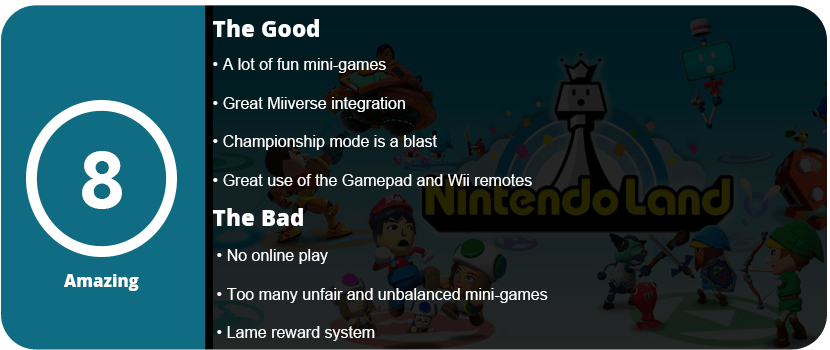
As you can see, there’s a lot here, but there really aren’t any rewards. You get coins that are used on a Plinko-type mini-game that spits out prizes, but these just clutter your theme park and are pointless. My favorite feature of all is the train. It’s basically a championship mode that gives everyone a try at the gamepad, and that user can challenge other Wiimote players, or the gamepad gets passed around. It’s really fun and exciting, and it brings everyone together. I just wish these games could be played online. Why, Nintendo, are you so stuck in the past? The Wii U has online capabilities, and yet its games aren’t online, except for the Miiverse.
The game looks really good, but overall it’s lacking in online play and rewards. There are too many unfair and unbalanced mini-games that just aren’t any fun. For a packed-in game with the Wii U, it’s pretty beefy and very fun, but I wouldn’t go out and throw $60 down on this game.
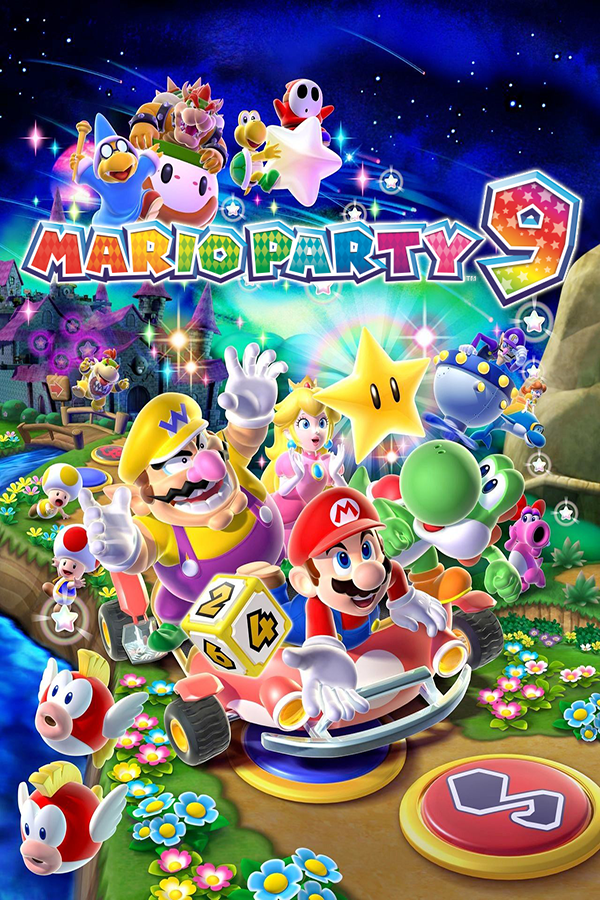
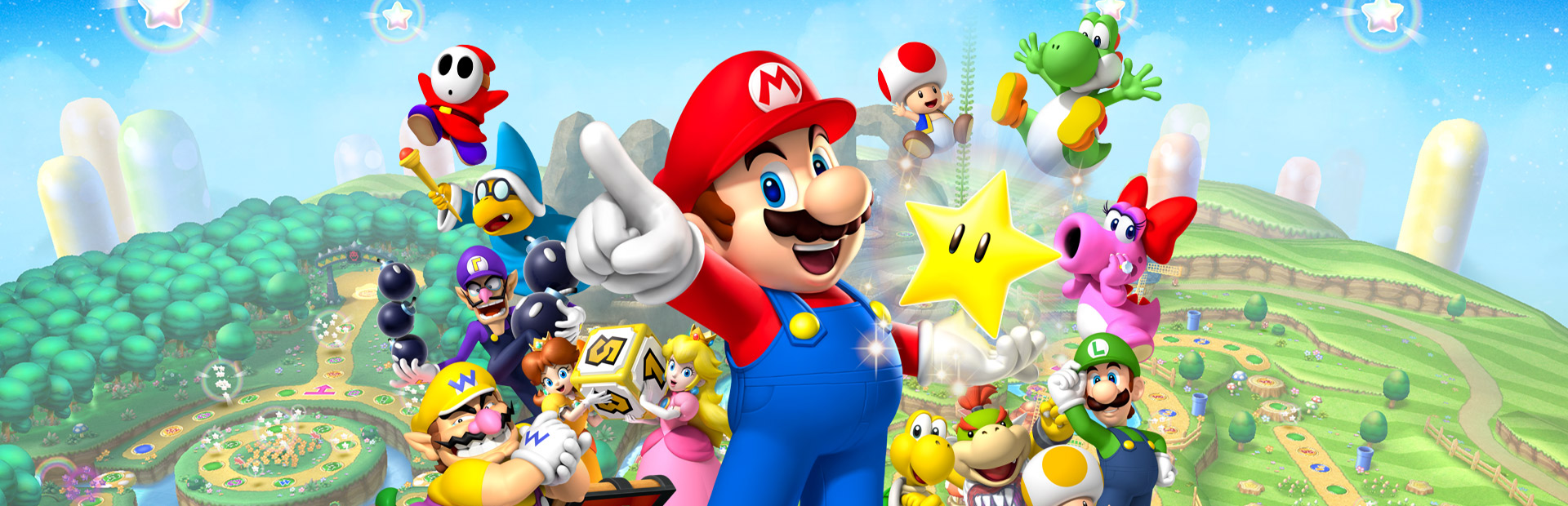
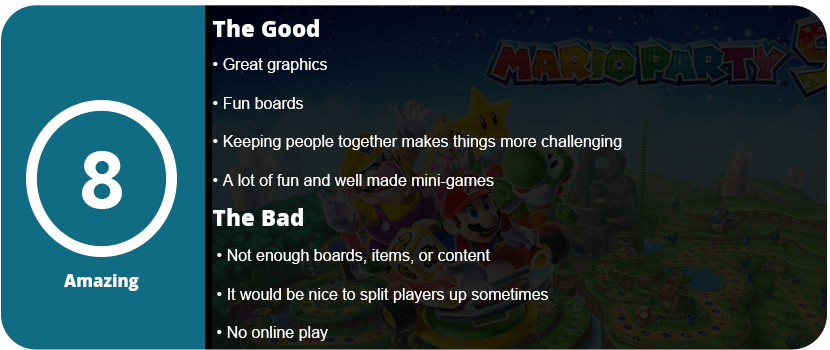
I can’t believe this series has gone on for this long. It was a super-fun game back on the Nintendo 64 and continues to be so. The great thing about Mario Party is that it doesn’t fix what’s not broken. People love this game for its competitive nature and super-fun mini-games. Mario Party 9’s mini-games are pretty solid and some of the best yet; they just lack content.
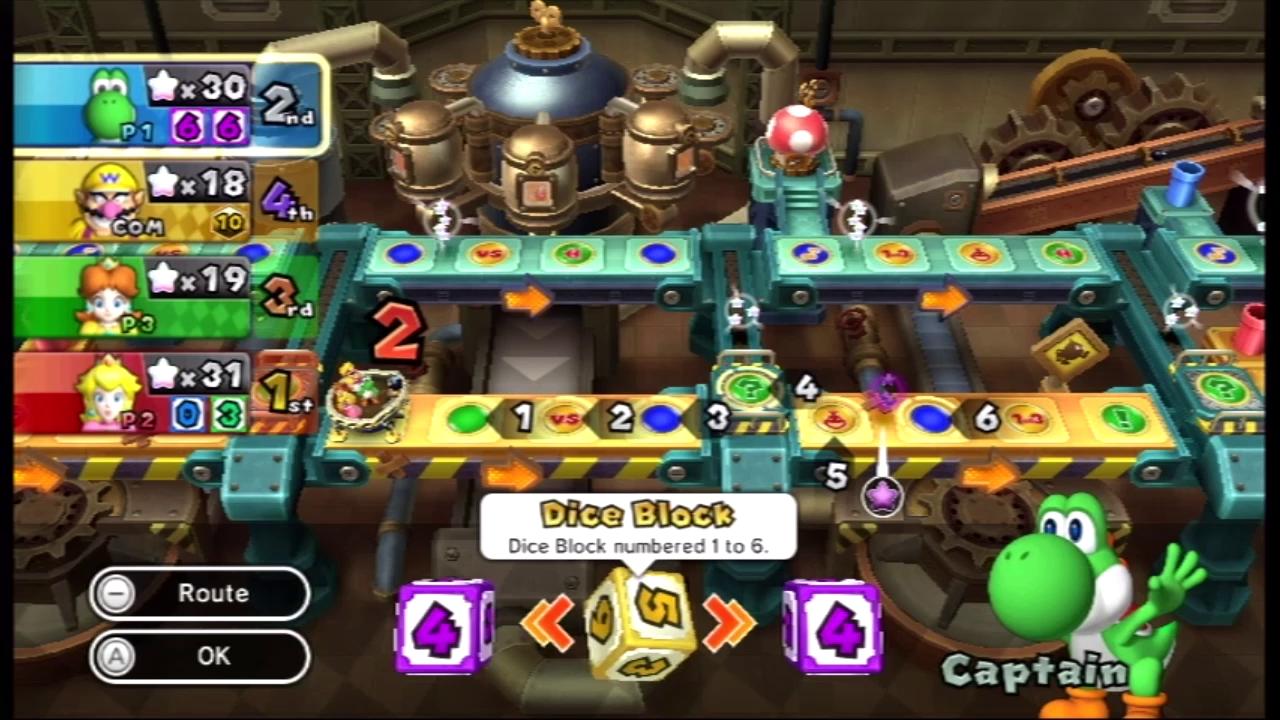
The game consists of about seven boards, but instead of everyone moving around individually, you’re all stuck in a vehicle. This makes things fun because you are all heading in the same direction, and one person can decide everyone’s fate. The boards are fun and offer a lot of variety. Bowser’s Space Station has a jackpot and jackpot spaces. If you land on a mini-star space, it adds to the jackpot. If the jackpot reaches 20 mini-stars, a mini-game is thrown at you to determine who gets them. There are mini-bosses in each level, traps, hazards, and other fun things on each board. Blooper Beach has two islands that consist of negative stars and mini-stars. You are stuck on this six-space island until someone lands on the space to get out. Everyone loses stars or gains them until that happens. This is what I mean by saying that one person can decide someone’s fate. It’s like going on an adventure together, and you have to stick together.
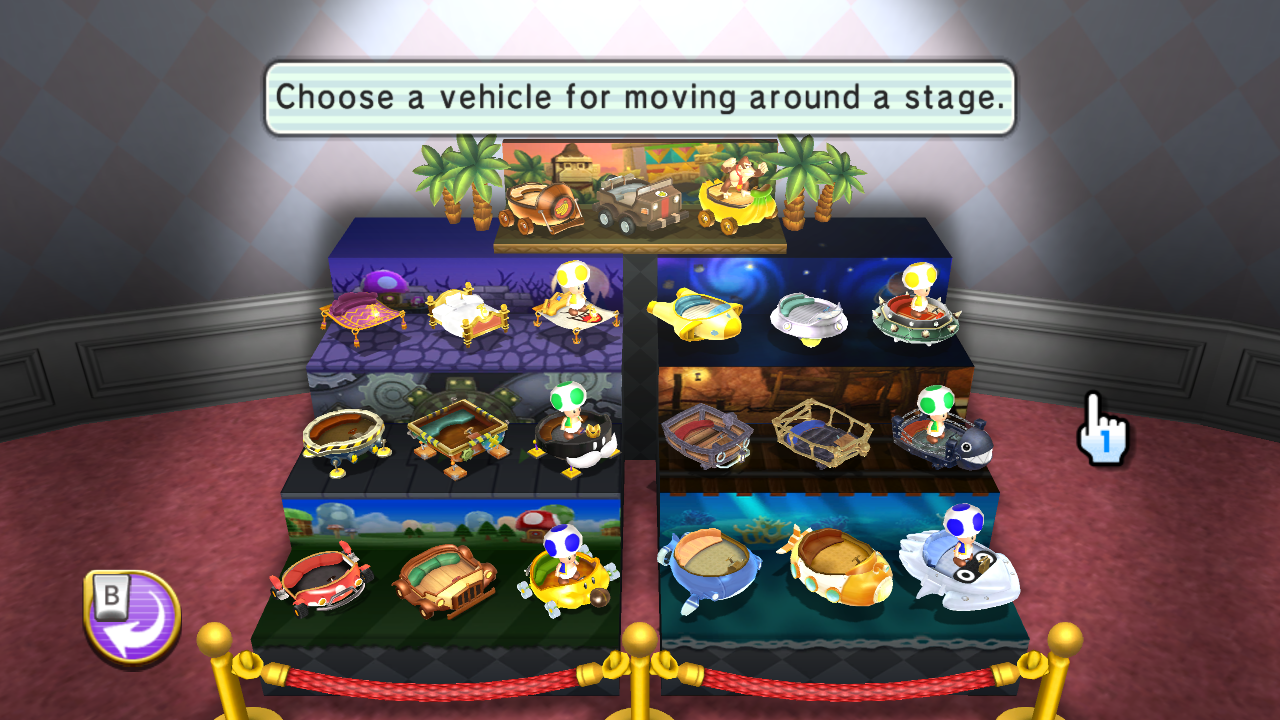
However, I wish there were some other boards that allowed individual movement. You can unlock new vehicles with points in the museum, but there’s just not enough variety here. The great thing about having so few boards is that when you memorize them, things get challenging, and you can get really good and have an advantage over your player. With everyone staying together, the person whose turn it is is the captain. There are captain event spaces where that person gets to choose who moves during the board mini-game. It’s really a lot like Monopoly, where one person will be way ahead and then suddenly lose at the end. That’s so great about everyone sticking together, but it does have downsides.
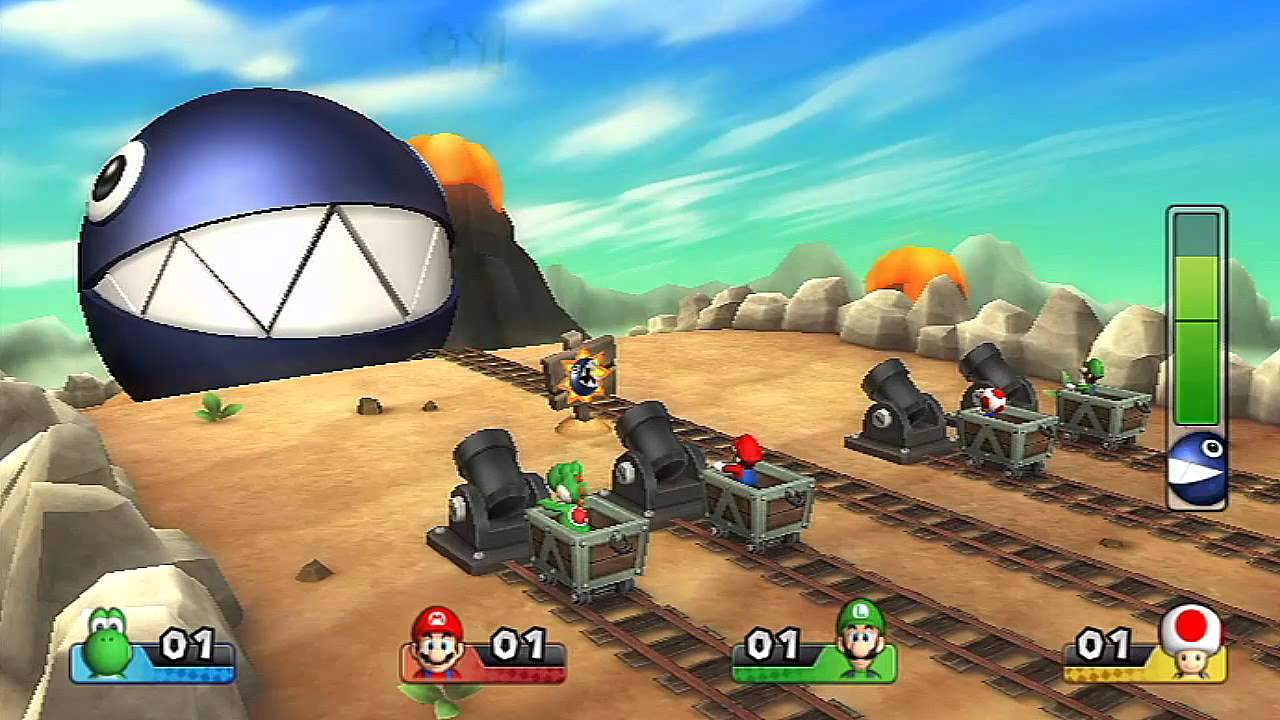
The mini-games are the best part of Mario Party, and there are a lot of them here. They all use the Wiimote in a unique way, and each is different and a blast. Unlike other Mario Party mini-games, very few are unbalanced here. Everyone has a fair advantage, and most require actual skill thanks to Wiimote’s design. Some games have you tapping buttons really fast, shaking, pinching, and grabbing stuff, carefully tilting things around, and many others. Some Bowser boss fights get really fun and challenging, where everyone has to work together sometimes and then against each other during other times. One mini-game has Bowser throwing dice onto the platform. Each side has a player’s face, but one side has Bowser’s. You want your face to show up the most, but not Bowser’s. You have to decide whether to work together or against each other in order to get the most attack points.
A real big letdown is that there’s no online play. This game is really only fun with other people and is completely boring for you. It’s great to relax with, but the AI is usually cheap and not fun to play mini-games against. I also wish there were other characters, boards, and more extras for the $50 price tag. The graphics look great; there’s just a lot of aliasing, which is to be expected with the ancient Wii hardware. If you have a lot of friends with whom you play games at home, this is a must-have.
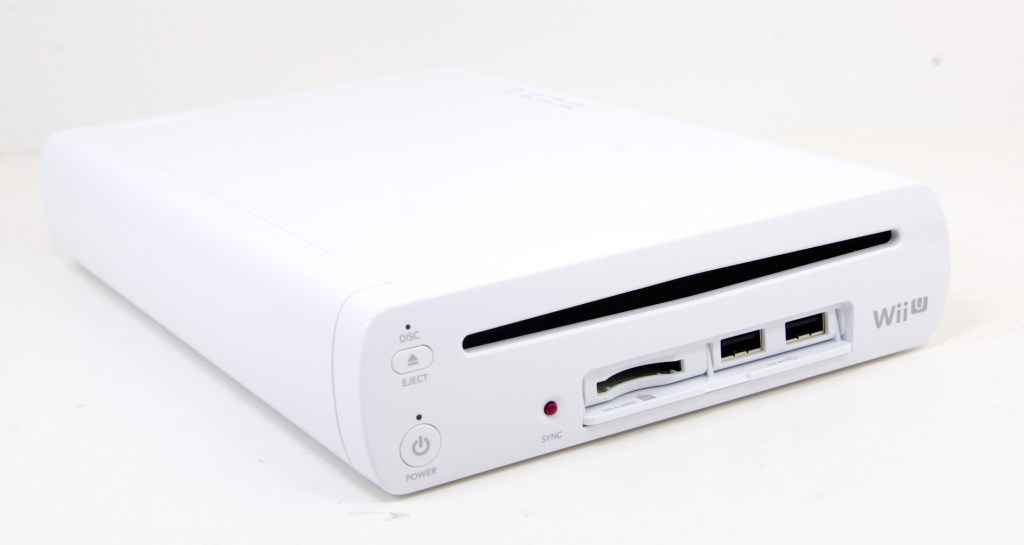
The Wii U is a system I swore up and down I would never get. My girlfriend brings one home, and I’m standing there looking at the thing, like after you had an awkward fight. There’s Injustice: Gods Among Us sitting there in its tantalizing glory, waiting for me to play it. I pull open the box and hook it up. Setting up systems is a nice feeling and doesn’t happen very often.
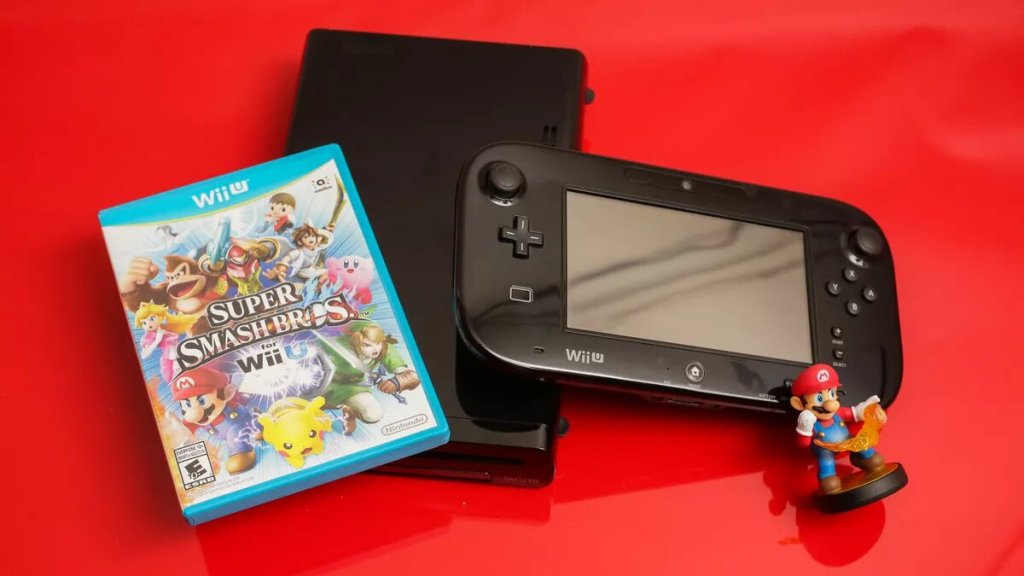
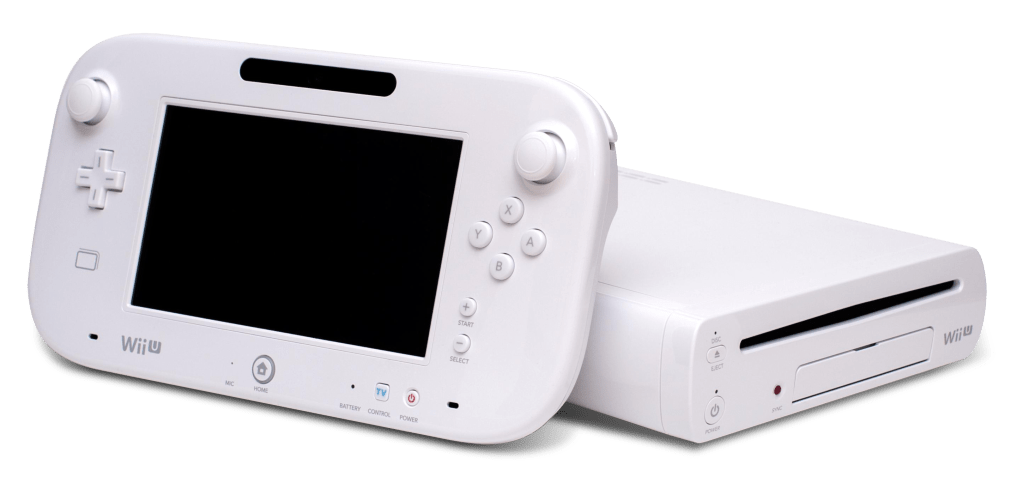
After setting it all up, I realized that the first feature that really got me to like the console was the TV remote feature. It’s really neat, and it’s not something that has ever been implemented into a console before. After I create my Nintendo account and pop in Injustice, I start liking the system. The gamepad is easy to hold and super light. This was key to making sure that long periods of playtime didn’t cramp your hands. The dual analog sticks are very nice, and the button layout is perfect. The ergonomics of the gamepad are just spot on. Anyone in doubt, even hardcore haters, just know that this is one of my favorite controllers. The DSi XL stylus comes out, and that even surprised me. The triggers and bumpers in the back are laid out perfectly. I applaud Nintendo for getting this right. It’s so useful! There are so many possibilities with this thing, but the system is only 6 months old.
I then notice that the game is playing on the screen. Even if you hate Nintendo, it will make you giddy. It’s a really cool thing to see. You can take the gamepad, plug in headphones, and play while someone’s doing something else on the TV. Why wasn’t this around 20 years ago?! This is only for games that don’t use the gamepad for much, though. My only major complaint is the battery life. Nintendo made this huge oversight, and it needs to be fixed.
The Wii U was designed for people who already own a Wii; that’s obvious. It comes with a Wii sensor bar, but no Wiimotes? Pretty stupid, actually. I do like that it emulates the Wii menu, and you can still use the Wii Shop channel. It’s nice to see Wii games upscaled into HD—not as crisp as the Wii U games, but still nice.
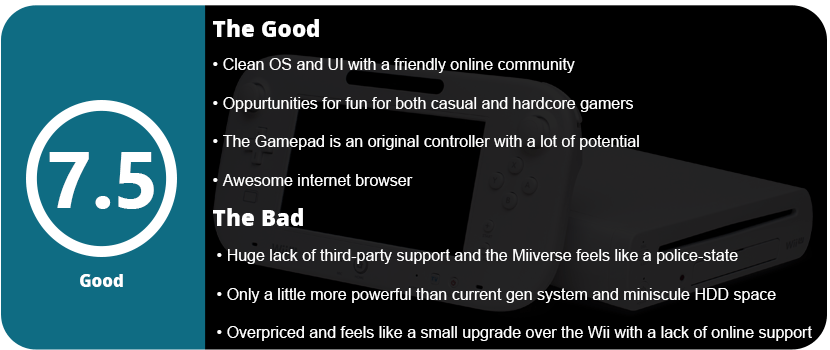
This is also Nintendo’s first HD console. They are behind at times (they always are), but the Wii U looks razor-sharp on my 50″ 1080p plasma. The colors are rich and vibrant, and some of the games look pretty good. The only issue is that the Wii U has weaker hardware than current-gen consoles when it comes to processing power. Nintendo fanboys can scream all they want that it’s a next-gen console, but in terms of power, it isn’t. This is what the Wii should have been.
The Wii U has a tri-core 1.24 GHz “Expresso” CPU. Sad. I think Nintendo was trying to keep costs down, but the gamepad seems to have cost them more than the unit itself because it seems like two systems in one. The Wii U has a 550 Mhz GPU “Latte” that is AMD-based and totally custom-made. Combined, the Wii U is about 4x as powerful as the PS3, but that’s not that big of a jump. The GPU has a slightly faster clock and BUS speeds. The Xbox 360 has a tri-core 3.2 GHz CPU, while the PS3 has an 8-core CPU (1 PPE, 7 SPEs), so right now the Wii U is only about 4x as powerful as the current-gen consoles. It’s not the big jump that everyone expects. It’s like going from the GameCube to the Wii (the Wii was only 4x as powerful as the GameCube). It isn’t nearly as powerful (about a fraction) as the top PC rigs, Xbox One, and PS4. The big disappointment is that the Wii U doesn’t support DirectX 11 architecture like the Xbox One and PS4 do. Don’t expect to see Crysis 3 or any other DX11 game on the Wii U. The Wii U has 4GB of DDR3 RAM at 1600Mhz which is about slightly above the average RAM speed that people use in PCs. 1GB is held off for system stuff so developers still only have 3GB to work with. Still better than the 256MB that’s on current-gen consoles, so this is the only leg up the Wii U has. It’s still 10x as powerful as the Wii, but that’s not saying much.
In the end, it comes down to games; right now, the Wii U is lacking. There are quite a few high-budget ports, but they’re ports. These games have been played on other consoles. Thankfully, there’s a huge Wii library out there you can play while you wait, but even the eShop is pretty much empty. I’m impressed with the hardware, but not so much with the software. All we can do is wait and see.
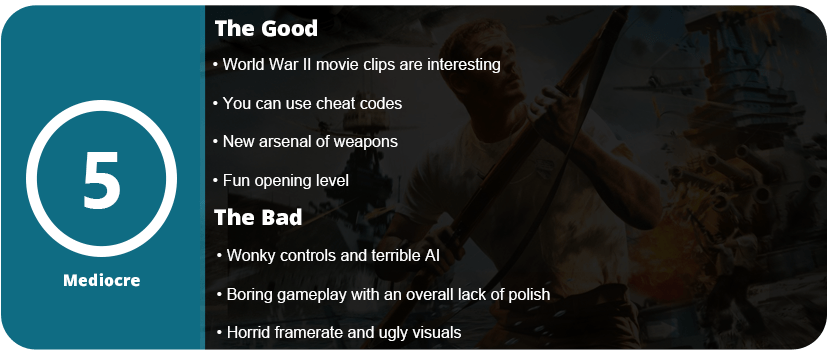
Pearl Harbor was one of the worst terrorist attacks on the US and was what got us involved in World War II. EA decided to leave the frontlines of Europe and head to Hawaii at Pearl Harbor and into the Japanese and Philippine frontlines. It’s a nice change of scenery, especially back in the day when WWII shooters were coming out nearly every day. The problem is that Rising Sun is a reskin of Frontline with a lack of polish and detail and just doesn’t feel complete. Rising Sun needed about 6 months more of development before being anything remotely decent. What we have here is a sluggish, boring, and mediocre shooter, probably one of the worst shooters of 2003.
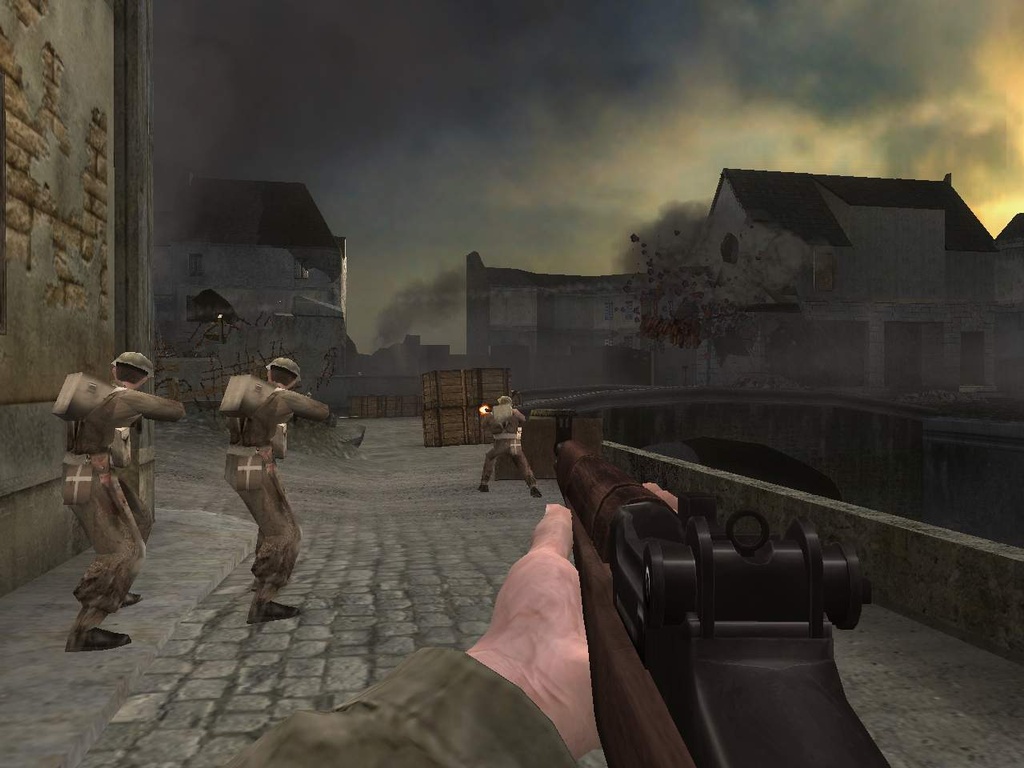
The game actually starts out pretty nicely. The bombing of Pearl Harbor feels epic in this game, you are just a nobody sailor who gets woken up by the bombings. After you see the poorly pre-rendered cutscene you start controlling your guy and it feels very similar to Frontline—too similar. Right off the bat, you realize the control issues haven’t changed. The aiming is really sensitive and finicky; there are no iron sights aiming, and the controls just stink. Once you run around the boat trying to escape your notice, you can save at checkpoints. This is actually one of the only two major issues that were fixed by Frontline. The missions are very long, and you no longer have to start at the beginning of every level when you die.
Once you get out, you notice the framerate is worse than Frontline. The FPS drops to single digits often, and it actually affects gameplay. Trying to shoot someone when the game is chugging along at 5 frames per second is nearly impossible. It doesn’t help that the aim is already wonky. The change of pace in the beginning, using the turret on the boat, and shooting down planes is fun. I also have to mention that the only great part of Rising Sun is the music. Medal of Honor has a fantastic score across all the WWII games, but Rising Sun needs more than that to save it.
Once you start the next level, you realize the game is just so bad. The level design is abysmal with confusing mazes; it was cute for EA to try to make you feel like you have multiple paths, but you really don’t. It just makes things more confusing. There are also secondary hidden objectives this time around, but they are nearly impossible to figure out; hell, even the regular objectives are hard to figure out. Items don’t flash, so you can’t tell if they’re part of the scenery or something you need to interact with. Most of the time, you just get lucky when a prompt comes up on the screen when you pass something.
I like the new selection of weapons: the shotgun, Type 99, Sten MKII, and a few other Pacific Theatre weapons. That’s probably the only other great change from Frontline, but the guns control themselves so horribly that you won’t care. The most annoying part of Rising Sun is the forced and failed implementation of stealth. During one of the last few levels, you get recruited into the OSS and have to infiltrate a Japanese summit at a hotel. The game gives you the Welrod, which is a one-shot silenced pistol. Sure, that’s fine, but Rising Sun wasn’t built for stealth. I shot the first few people silently, then all of a sudden I was being attacked. I had to run around the whole level with just a pistol and the Welrod. Not very fun. The hints say to stick to the shadows and stay in the column areas. Yeah, sure, what shadows? The stealth is just completely broken, but at least healing items give you more health, so the game is a bit easier in that regard.
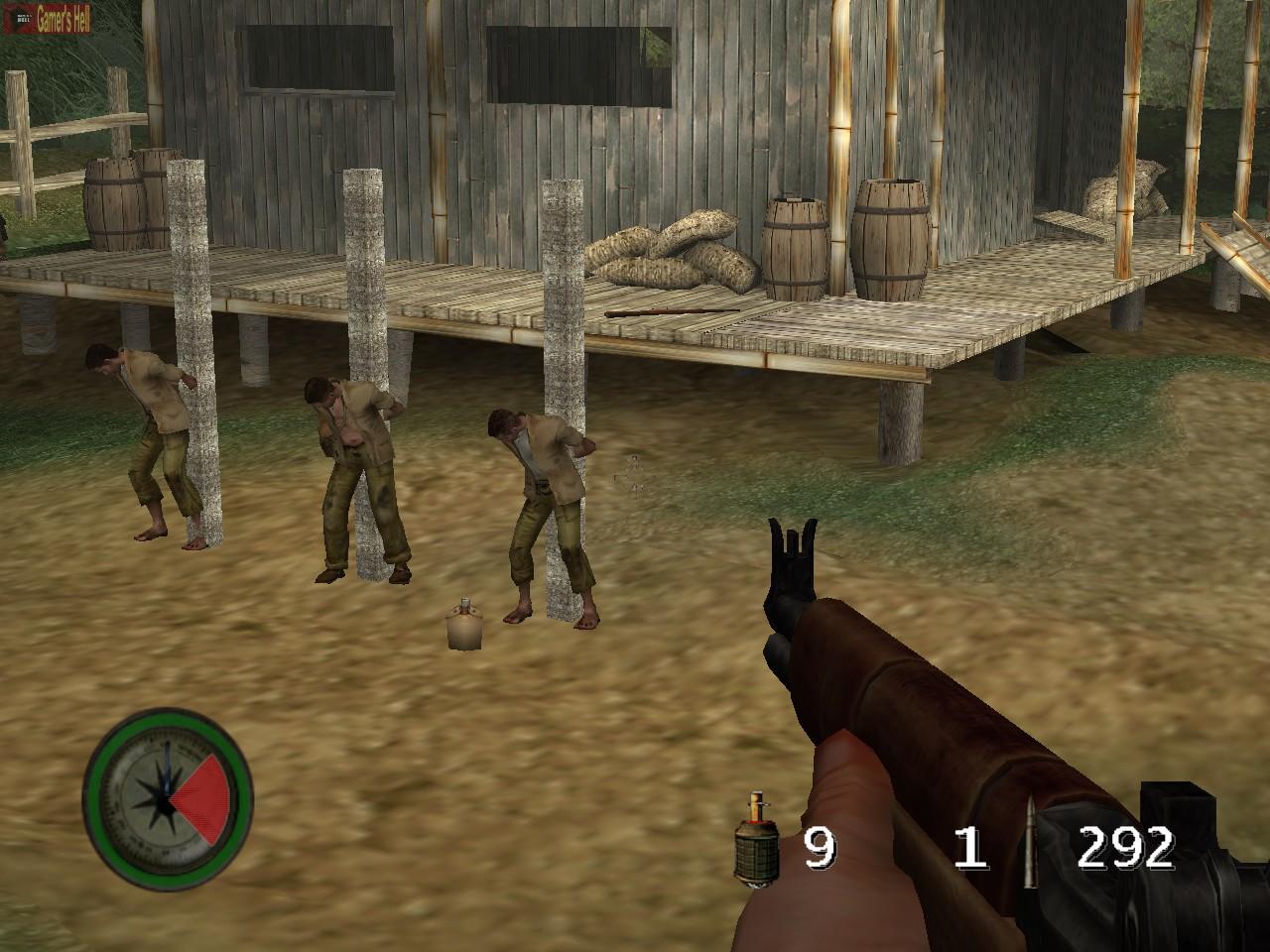
Let’s finally talk about graphics. The game is butt ugly, even uglier than Frontline. During the jungle levels, the developers just put the flat texture of a forest on the walls. Yeah, good job, you lazy jerks. The game is just ugly and unpolished. The events in the game are so unbelievable that it’s hard to think that these things actually happened. Did I mention there’s still no blood? The last thing to go is the terrible AI. The friendly AI just stands there while they’re being shot and completely ignores enemies. The multiplayer is also as boring as ever.
Rising Sun sold millions of copies, but it couldn’t live up to the quality of the previous game. With ugly graphics, horrible framerate, terrible AI, bad level design, and various other issues, Rising Sun stands as one of the worst games in the series.
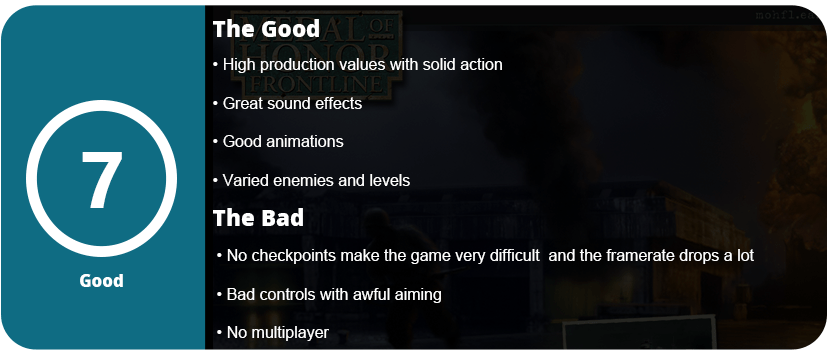
This was one of the first games that blew me away when I was a kid and made me proud to own a PS2. The opening D-Day scene took my breath away—all the explosions, the scripted scenes, the death animations, the sound—it was all here, and the production values were through the roof. Looking back at it 11 years later makes throwing an egg on the floor more exciting than watching this game. While I can’t compare it to games that came after it, even back then there were issues with the game, and they just really stick out now.
Frontline’s realism dropped off after the opening level. After D-Day, you get recruited to do special missions across Europe and are a one-man army. It’s very unrealistic when you’re running around by yourself, killing squads that an entire army takes to take down. You’re blowing up fuel depots, sabotaging equipment, assassinating important Nazi figureheads, and various other things. The game is solid, and the scripting is still nice today, but the shooting mechanics and controls stink. There’s no aiming down the sights; instead, you just zoom in. Shooting from the hip has no reticle, so this is useless. My biggest issue with the game, and even back then, was that it was insanely difficult and there were no checkpoints. If you die, you restart the entire level, which can be infuriating.
You have to be careful and run around finding health packs and ammo. You can pick up enemies’ weapons and instead are stuck with what you are given at the start unless you find a placed weapon. I did like the variety of enemies, such as fat chefs throwing knives at you, engineers, cooks, butlers, and even enemies in robes. The death animations are still nice, but where’s the damn blood?! The game almost comes off as campy because it is so far from capturing the tragedy of WWII. Even back in the day, I felt this way. The pacing of the levels is also off because some levels will be really long and tough while others are super short.
I did find that the game had some fun cheat codes, but there’s no replay value. Multiplayer wasn’t put into the PS2 version, and even the graphics are lacking. There’s a lot of aliasing, and the framerate drops tremendously during explosions. Everything does look clean, and you can tell a lot of time and care was put into the game. I just can’t get over how bad the aiming is; it’s so squirrely and hard to get a bead on enemies. The game has a pretty decent length campaign and is worth the cheap price if you have never played this game. Frontline was one of the best WWII games for a reason because it was one of the first to really have high production values.
In the end, Frontline feels very dated, but you can see why the game was praised so much back in the day. The production values still show, but the PS2 can’t keep up with the action. The aiming is terrible and the controls are all wrong, but what can you expect from an 11-year-old game?
8-bit style games are growing in popularity, and Bit.Trip has been delivering excellent games for quite a while now. Runner was my favorite in the series, but it was relentlessly hard, even early on. Runner 2 fixes these issues by making levels more fluid and by adding a checkpoint halfway through. The game is mostly the same, but with added obstacles and better graphics.
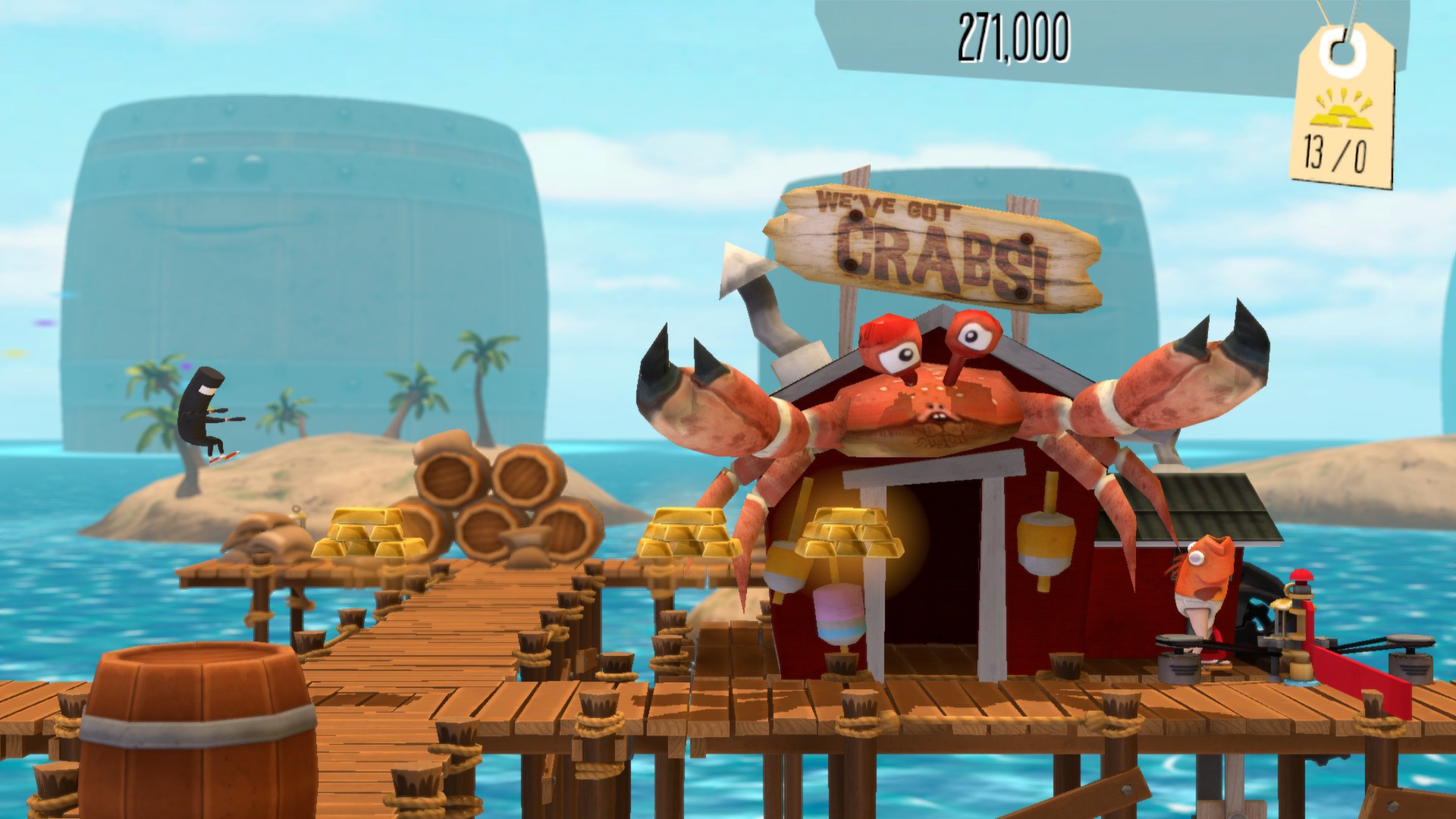
The game plays roughly the same as the last one. Watch Commander Video and his pals run to the right while you jump, kick, and dance your way to the end of the level. Some added obstacles are a four-way diamond where you need to press the corresponding button when you get to each corner. Another obstacle is a loop-de-loop, where you use the right analog stick to follow your character as he runs inside. Various obstacles are introduced as the game progresses, and by the end, you need to be quick and have all these memorized as soon as they pop up. I actually never felt overwhelmed by having to remember too many abilities; it felt just right. Levels have you ducking, jumping, using your shield to block flying blocks, kicking stop signs, and even kicking some in the air while sliding. The abilities are timed to a catchy 8-bit soundtrack that is even better and richer than the last game. As you move along, there are gold bars to collect as well as red plus blocks that add a track to the music as you move along.
These elements are what everyone loved in the first game, and they stayed in this one, but the game is just more forgiving. Honestly, it was more fun because I never even got to the second level in the first game. Runner 2 features bosses at the end of each level that are pretty fun and very challenging. There’s a new path feature for levels that changes the difficulty depending on which path you choose. Red and green arrows will point to which path is which; the red path usually has hidden chests that unlock costumes as well as retro cartridges. These 25 retro levels are actually in 8-bit, like they were ripped straight from an NES game. Very charming and fun to play.
You also score by doing everything in the game. Dancing is one ability that adds 2,000 points with each move. I just found the whole game very addicting and couldn’t put the controller down. Rarely did I find a spot where I was stuck, and even rarer were there occasions where the game’s own design got in the way. I would fly by something so fast that I would die several times before realizing what was going on and what I had to do. The whole game is just super fun, challenging, and very rewarding. If you get all the gold bars and the 4 red plus signs in the level, you get to shoot yourself out of a cannon at a target to get a Perfect+ score. Very challenging, but fun.
The graphics look amazing, with each of the five levels being unique. My favorite was The Bit. Trip, which was level 5. You can see other Bit.Trip games being played in the background as you run along. My biggest disappointment was the lack of extra characters. There are five, but what about Super Meat Boy and other characters from the last game? I wanted more honesty. The PC version at least gets a little extra flair with depth of field and slightly better lighting effects. This is just one artistically stunning game.
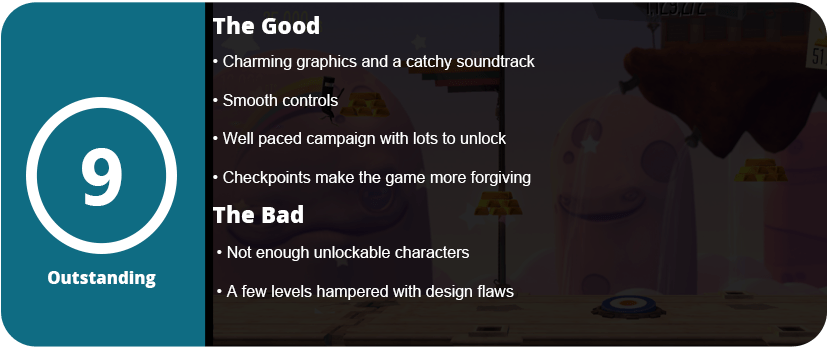
Overall, Runner 2 keeps what everyone loved in the last game and adds a lot more depth and more layers of fun while being more forgiving. There are lots to collect and a ton of challenges to complete while you play. There are a few levels that were hampered by their own design flaws, and I just wish there were more unlockable characters.
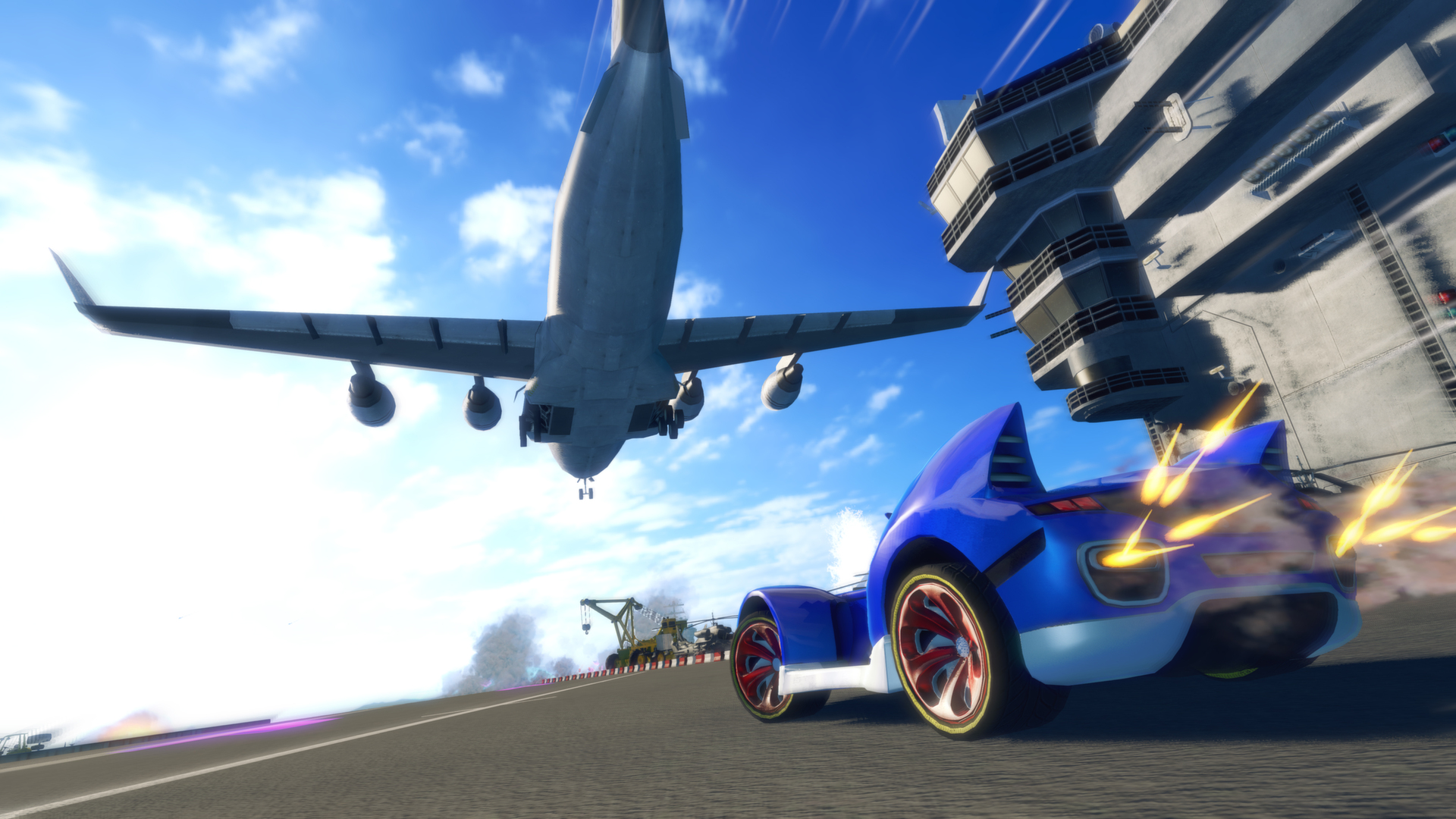
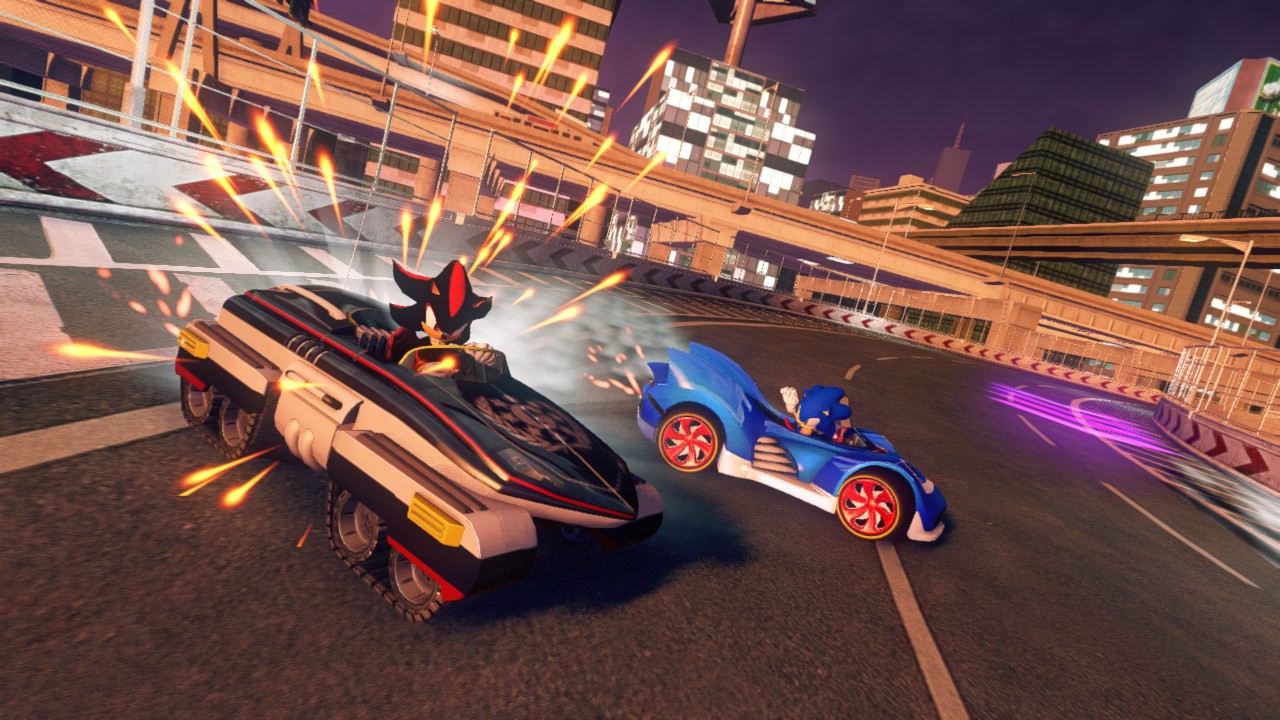
I’m not much of a kart racing fan because the games tend to be too simple and easy, but Transformed really knocks it out of the park. The last Sonic Kart Racer was just okay; it had a slow pace, and it just wasn’t designed very well. This game really surprised me with its excellent graphics, track design, and character selection.
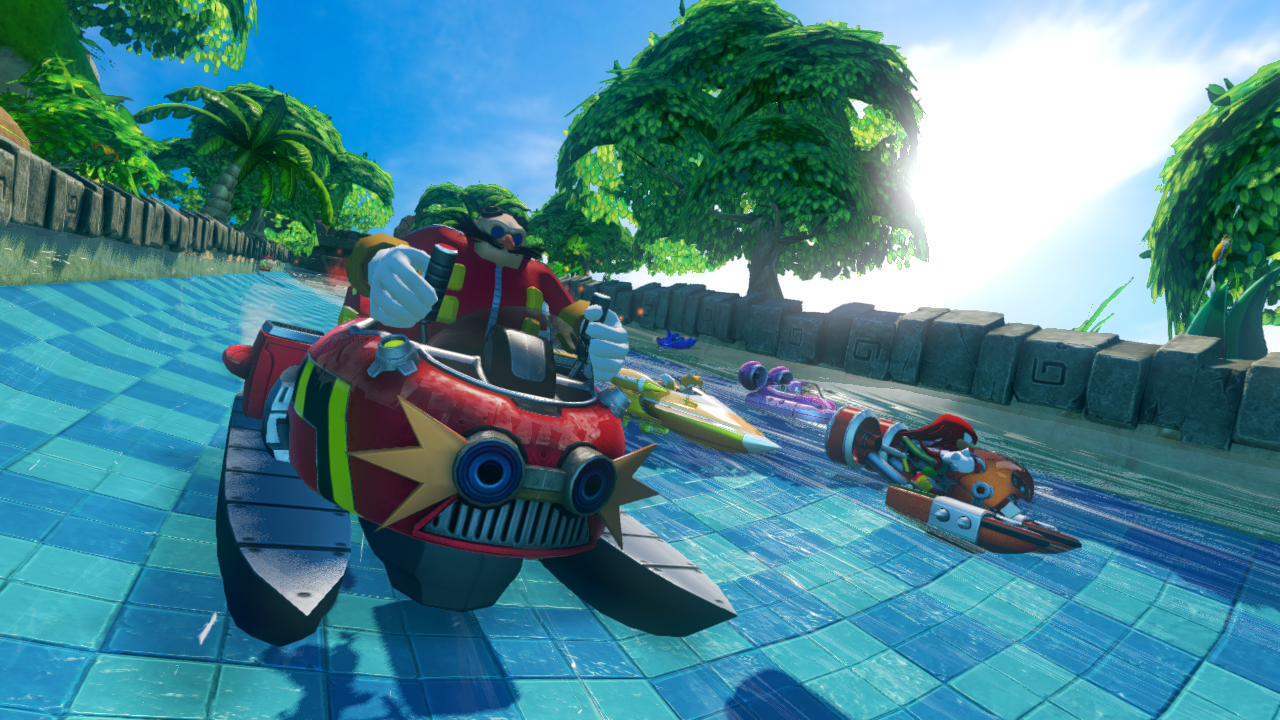
The obvious are Sega mascots such as Sonic, Amy, Shadow, Robotnik, Alex Kidd, and various others. While any of these guys outside of Sonic aren’t well known, it is nice to see them here. PC users get exclusive characters such as Football Manager (I know), Team Fortress, and Shogun (I know… Not exactly amazing characters you would want in a kart racer, but oh well. When you start your first race, you will immediately see how much better this game is. The handling is so much more fluid, and the races just flow. What really sells the game are the tracks that change mid-race and are able to transform into flying and nautical vehicles. Each character has three different vehicles, and it just feels great. They all handle things differently, so it makes you stay on your toes. The track design is amazing. There are hazards everywhere, and the weapons are really cool. The tracks are featured in various games, like Sonic’s Green Hill Zone and Samba De Amigo’s crazy LSD track. These levels are fun, but I just wish there were more.
The weapons vary from iceballs, twisters, remote cars that explode, rockets, blowfish, and various other crazy weapons. You pick up the question-mark capsules to find them, but you will find an All-Stars weapon that will make you really powerful and fast. Your car transforms, and it just looks really cool. Along the way, you can pick up coins that are used in other modes’ load screens in a slot machine to acquire boosts and other items. I just found the game to be very pleasing to play, but not with a single player. Easy was too easy, medium was too hard, and hard was impossible. The AI is really bad, but people play kart racing games for multiplayer anyway, which is where all the fun is to be had in this game. Unlike the last game, PC gamers get online multiplayer.
The graphics are really nice, with bright, vibrant colors, great-looking textures, and some really amazing lighting effects. Of course, the PC gets the best treatment, and it looks way better than the last game. As you play the game, you will eventually find tracks that become your favorites and find which character you prefer. The dynamically changing tracks just add that much more fun to the game. Hitting speed boosts, finding weapons, and avoiding track hazards are so much fun, and the sense of speed is incredible.
I just wish there was a bit more, but while there is more content than in the last game, I feel something is just missing. Maybe if the AI wasn’t so bad, the single-player would be more fun, but I found myself getting bored with it. The only reason to constantly come back is multiplayer. There is a licensed feature that allows you to add up to three stickers that you earned, but I felt this was completely useless and something to put in for little kids. However, as it stands, it doesn’t add anything significantly new to the genre or push it forward, which is what it needs. While it may not reinvent the wheel, it just makes it bigger and louder.
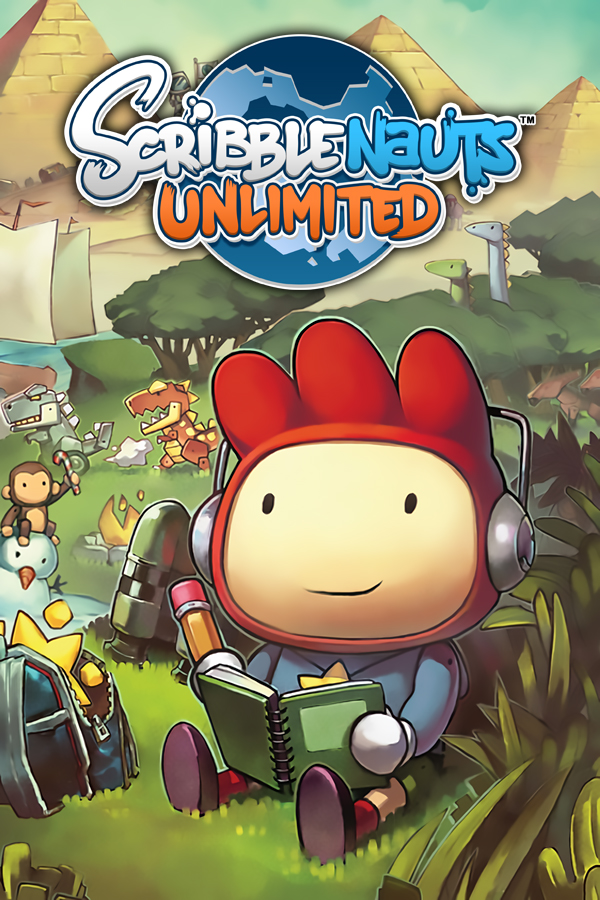
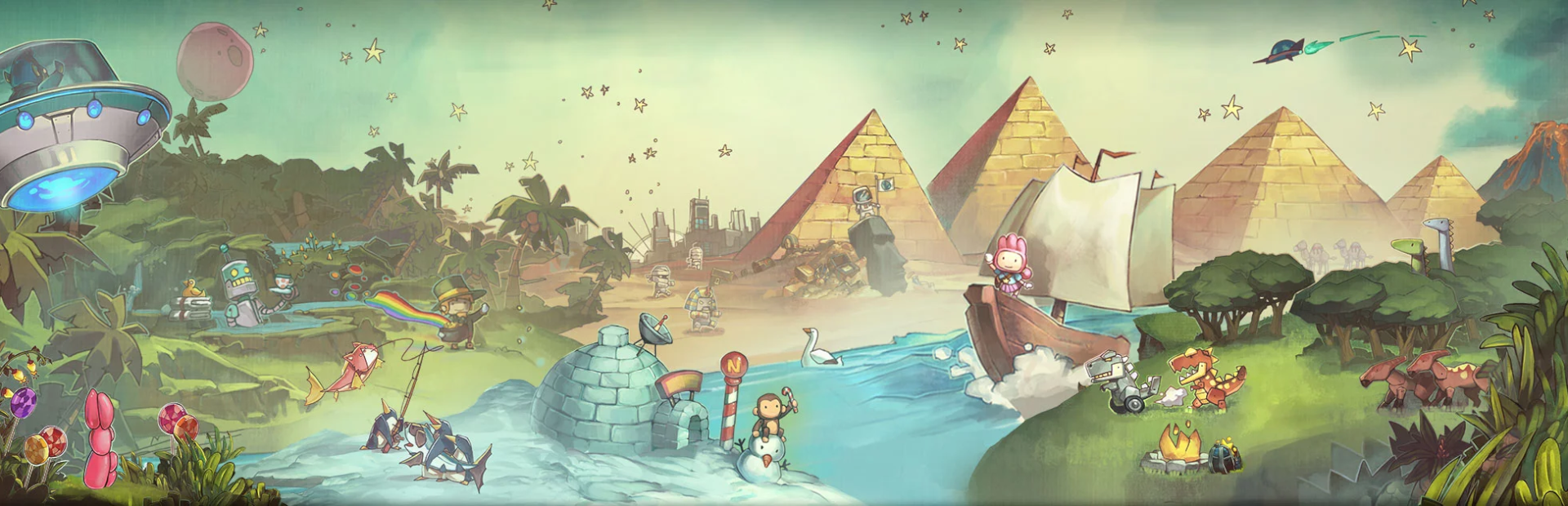
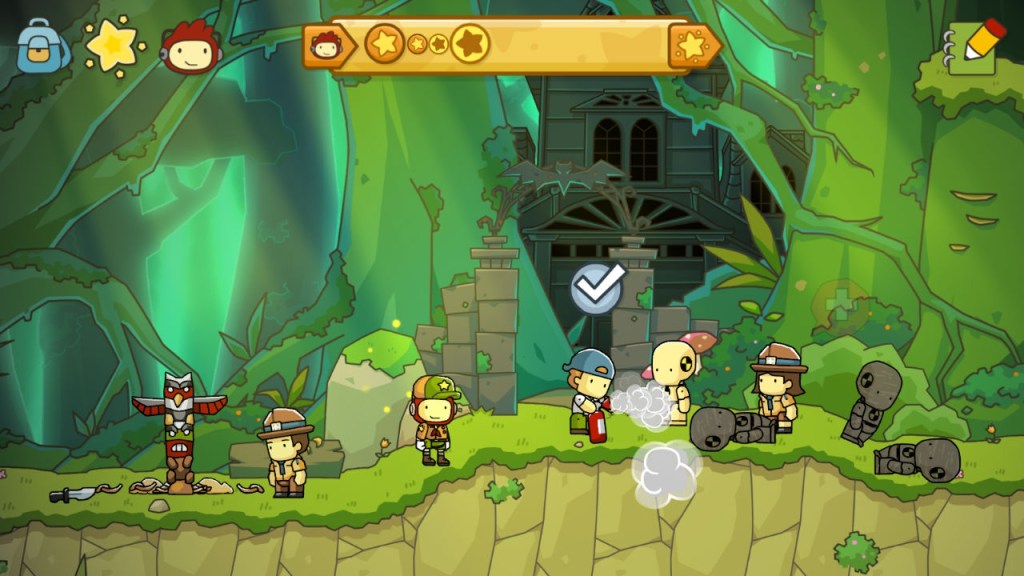
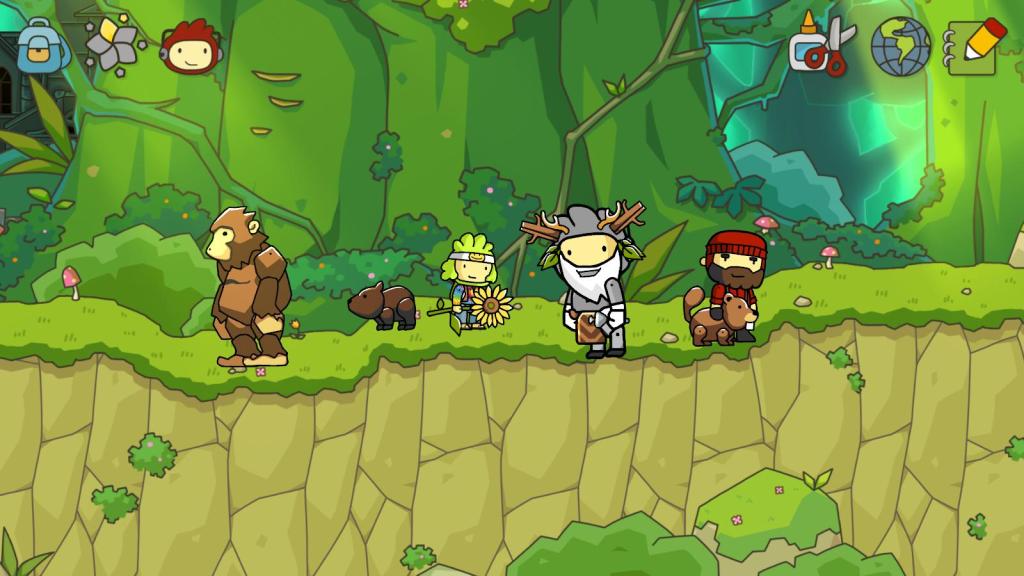
Scribblenauts is one of those games that is just fun, no matter what age you are. Solving puzzles by using your imagination just spells fun for anyone. Unlimited tries to throw in an open-world feel, which doesn’t feel so open and has almost every item you can imagine in there. The problem with Unlimited is that it is literally unchanged with no new features, and that is a huge letdown. Still worth a playthrough, though.
There is a bit of a story about Maxwell and his sister, who have parents who have a magic journal and pen. You can create anything with this, but one day Max uses it for bad on an old man. He puts a curse on his sister to turn her to stone unless he does good for people and collects Starites to free her. It’s a bit touching at the end and pretty cute, but nothing will wow you. The story is fine and works for the game. Once you are set free, you use your special vision to find people at each level who need help. They will appear gold, and the main puzzles will have blue stars above them.
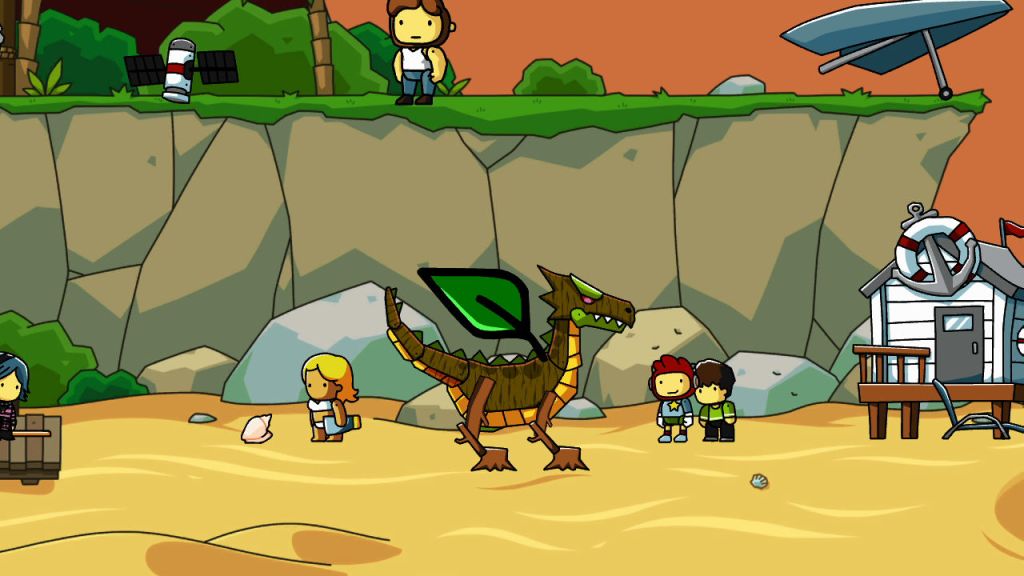
The people outside the main puzzles just require items to solve their dilemmas. You will read your clue at the bottom of the screen and try to solve it. Most logical things work like a ghost that doesn’t feel scary enough. Click on him and write in the adjective box “scary,” and you solve the puzzles. It seems pretty simple, but there’s such a variety (over 100 in all) that it is just plain fun. I spent 2-3 hours in one sitting just flying through the puzzles, but then you get the snafus, which kind of ruins it all. Some puzzles won’t accept logical solutions, or you get a bad hint. The secondary puzzles don’t get additional hints like the main puzzles. The best thing is to get other people to help you who have a fresh thought process on it.
Overthinking puzzles will probably make you the most frustrated in the game, so it is a good idea to come back. Most main puzzles are pretty wacky and fairly simple and easy. For example, one area has you making dishes for certain people. A gamer comes in and wants pizza, so you add three ingredients. Easy. Another comes in and wants to eat a phoenix. Pretty weird, but ok. Add feathers, a beak, and wings, and you’re done. The last one wanted to eat a motorcycle, so I added a tire, gas tank, and engine. It was very strange, but very simple, and it was fun coming up with all this stuff. There are a few that are challenging and require some minor platforming and timing, but there aren’t many. You can finish the story in just a few hours, but getting 100% is fun.
Scribblenauts still has colorful graphics with paper cutout-style visuals, and it looks nice. The physics have been improved, but overall, the game is just pure fun. Sure, it may be really easy, but there are those puzzles where you just won’t get it or won’t take logical solutions. The biggest issue is that there is literally nothing unchanged from past games. The UI may have changed for PCs, but that’s about it. I wanted to see some mini-games or an actual adventure where you have to think about objects to get you from one end of the level to the next using objects. What’s here is fun, but maybe not for $30.
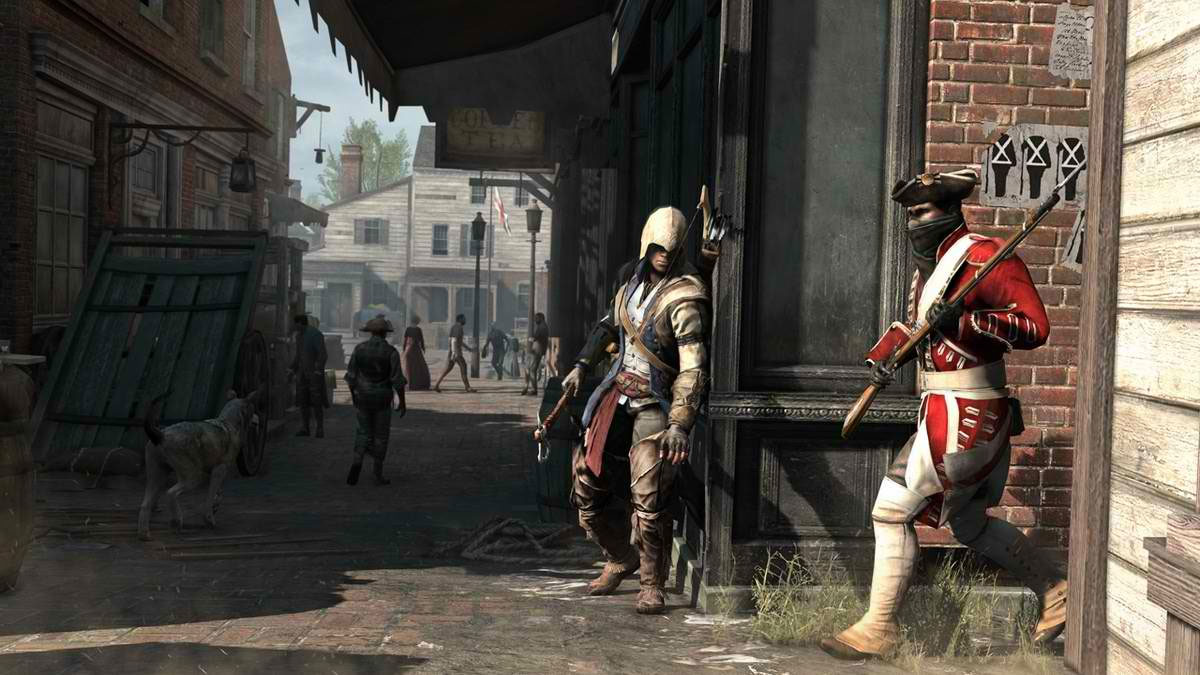
I can’t tell you how long I have been waiting for this game—well, I can, since the first one. I didn’t know what AC3 would be, but I knew down the road it would come, and here it is. Somehow, Ubisoft can manage to make each entry feel fresh without having to do drastic reboots. AC3 is set in the American Revolution and is the final chapter in Desmond’s story, or so they say. You play as Connor or the unpronounceable Ratonhnhaké:ton. He is a Mohawk Indian, or half British, half Kanien’kehá:ka. He is actually a likable character, and after Ubisoft created such loved characters as Altair and Ezio, it becomes a huge challenge to create a third. There are so many changes to the game that it feels like a true sequel, but a few flaws that have persisted throughout the series remain.
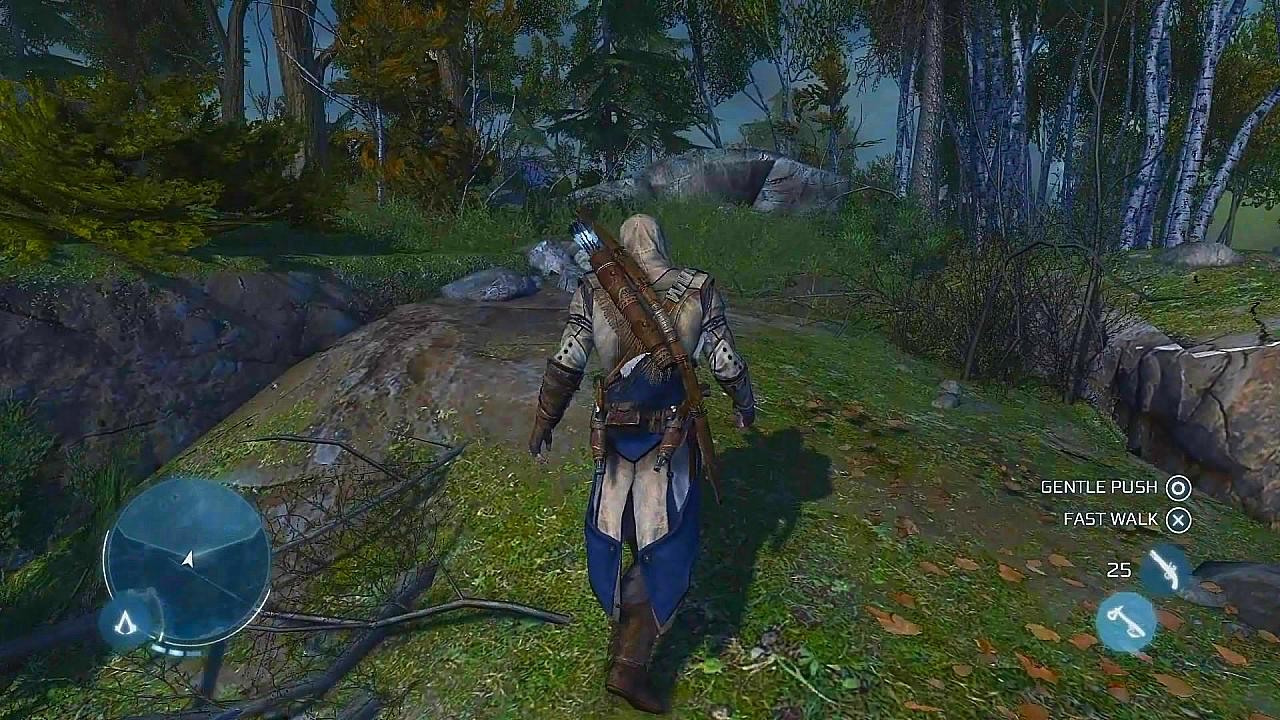
The first thing you will notice is the change in the HUD design. It is much more streamlined and user-friendly. The second thing you will notice is that the puppeteer system is gone. You do everything with RT only and jump around with A. This is supposed to help streamline climbing (which it does), so you have to press fewer buttons. Connor automatically pushes people out of the way while running, so you no longer stumble and fall down. One major thing I took away was how much you can blend. Being able to run away from guards is much easier now, but you can still hide in stacks. There are different crowd types of blending in, like people leaning against walls, starting riots, etc., but when you are notorious, you can fight or lose them more easily. The whole environment just feels more natural, so you can climb on cliffs in the frontier and use different handholds. Trees can now be climbed because a new V-shaped object has been introduced.
The same flaw persists in parkouring throughout every game. Connor will jump around on handholds that you don’t want him to. He will even sometimes get stopped by invisible barriers if an object is too low. This led to cheap deaths and frustrating restarts. I guess some things can’t ever be ironed out. Thankfully, the combat is much improved, with Ubisoft realizing Assassin’s Creed is a counter-fest and actually building on this. AC3 is my third favorite fight system in an action adventure right under God of War and the new Batmans. Each attack is built around a counter, so you press B when a red triangle appears above an enemy’s head, then press X to instant kill, B again to throw, or A to disarm. The combat system is fast and fluid and leads to fewer deaths, but it is still challenging because you need to be quick. Each assassin you recruit is unique, and there are only six. Each one has a special ability, like escort, marksman, riot, and others. These unique abilities give you much more options when infiltrating restricted areas to either bring you to the heart or distract guards. You can even send them off on missions through the map menu instead of localized areas.
There are many weapons and items you can use in combat. The punch dagger has been reduced to just one, but you have a flintlock pistol (yes, it requires a lengthy reload every time, but you can carry two later on), and you also have a bow and arrow. Other items include mines, poison darts, rope darts, and many others. You also have to watch out because enemies have weapons and will form firing lines. When they do this, press A near an enemy and use them as a human shield. Good stuff.
On another note, combat leads to hunting, which is a great mechanic added to this game. Exploring the large Frontier area and homestead allows you to hunt animals and skin them for items to use for crafting. You can stalk animals (stalking is a whole new feature that allows you to hide in tall brush), assassinate them from the air, and lay snares to trap smaller animals. Laying out bait will make an animal come to the exact area you want, but watch out. Using more aggressive methods of killing will damage the animals’ pelts, such as using a pistol or mine. Hunting also leads to many club challenges, which are extremely difficult to complete. You can even be attacked by animals, which leads to quick-time events.
Now that we have the three major things about the game out of the way, let’s talk about the minor stuff. The menu and HUD design are much more streamlined, such as your health, ammo count, and even the assassins you can call upon. Everything is minimal, and I really like that. Of course, when you pass by new areas, you get briefed on a bit of history about them, which is 25% of the fun in AC3. After you finish the story mode, you can go around finding hundreds of collectibles such as feathers, chests, trinkets, and other items. The club challenges are really tough, though, and require you to meet certain criteria to move onto the next list. It can be fun, but some are nearly impossible to complete.
One of my favorite things in the game is the Peg Leg Trinket missions, which are cinematic and a placeholder for the Templar Tombs that were in previous games. The final piece of loot for these missions is awesome, and each mission is memorable and so much fun. There is a new investigation mechanic added that has you finding clues on the map, which is used for hunting, side missions, and story missions. What’s more, the naval battles are absolutely epic and really fun. Thanks to the new Anvil-Next graphics engine, Ubisoft created some pretty realistic water effects that make you feel like you’re really in the ocean. Steering the ship around and blasting off cannons at enemy ships is so much fun, and each mission has various objectives. Probably the best use of a controllable ship in any game ever!
You are probably wondering about the story. Sure, Connor’s story is touching and has him following every major event in the Revolution along with key people. The characters are entertaining to watch and hear, and Desmond’s story is, like all the other games in the series, very brief, but the ending isn’t as bad as everyone says it is. It isn’t confusing, but just abrupt. Desmond and the gang are trying to stop the solar flare from destroying the world on 12/21/12, and it gets a bit complicated. Connor’s story has a satisfying ending, but you just can’t help but feel giddy when a historic figure like Ben Franklin or George Washington appears on the screen.
Once you finish the epic story mode, there is multiplayer, which is just so addictive. Ubisoft has fine-tuned it and nailed it with the cat-and-mouse gameplay that you can’t get enough of. Each player gets an avatar of another player they have to kill. However, at each level, there are dozens of duplicates walking around, but you can’t just start killing everyone. Killing innocents exposes you and makes you vulnerable. Find your target by watching for suspicious behavior like blending, hiding, or running. You also have people hunting you, but you can’t kill them; just knock them out. If you confront them directly, you just get an honorable death, which reduces their kill score. Stay incognito and knock them out from behind. There are many modes, such as Assassinate, that don’t give you any contracts. You just have to watch your compass and kill everyone you can find. There are deep customization options that allow you to change the appearance, attack moves, stances, taunts, and weapons of each character. You can unlock new items by ranking up and earning credits.
Overall, AC3 is huge and fantastic. Exploring the Frontier, Boston, and New York is amazing, not to mention the fantastic graphics for such dated hardware. Multiplayer is extremely addictive, and other small tidbits just add to that. Weather changes, hunting, crafting, side missions—the list goes on and on. The only way to truly experience this amazing game is to play it. This is definitely a game of the year-worthy game and well worth a purchase.
Limited Edition: For $60 extra, you can get a highly detailed figurine of Connor, a life-size Assassin’s version of the American flag, a beautiful art book, and a belt buckle. This is all well worth the extra money because of how detailed everything is. The flag has metal eyes, so it can be flown on a pole. The statue has so much detail; it looks fantastic. The art book is designed like a 17th-century journal and looks beautiful. It was well worth the purchase.










































 thebinarymessiah.com
Try multiplayer. A lot of fun !