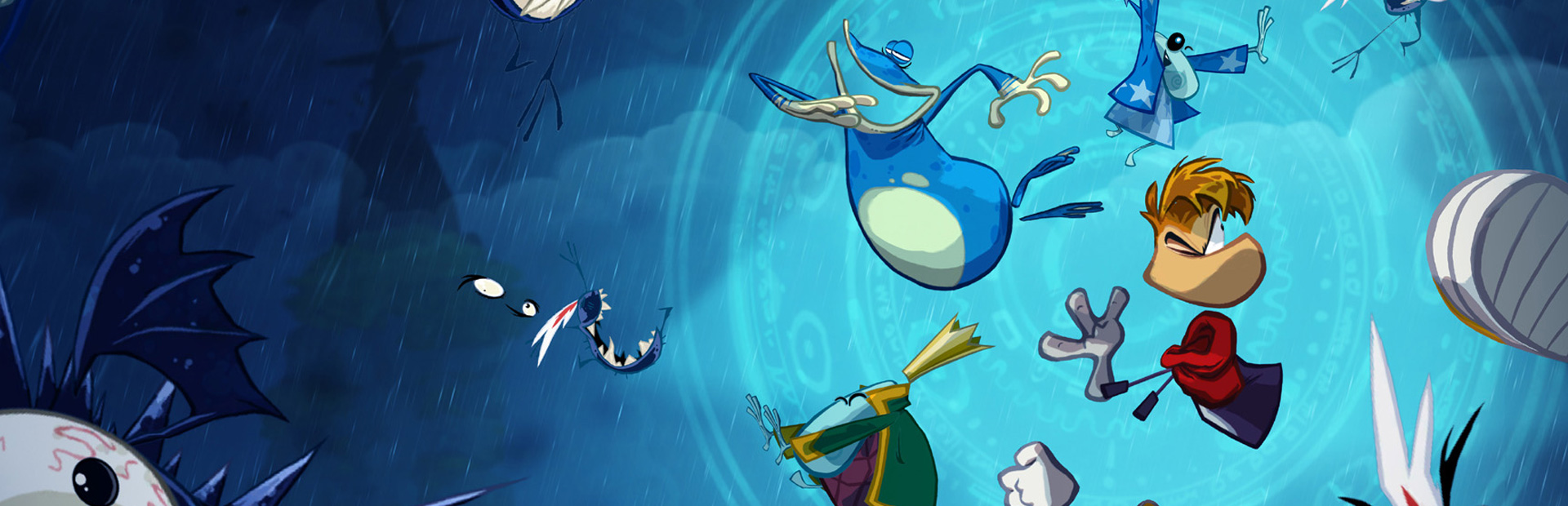
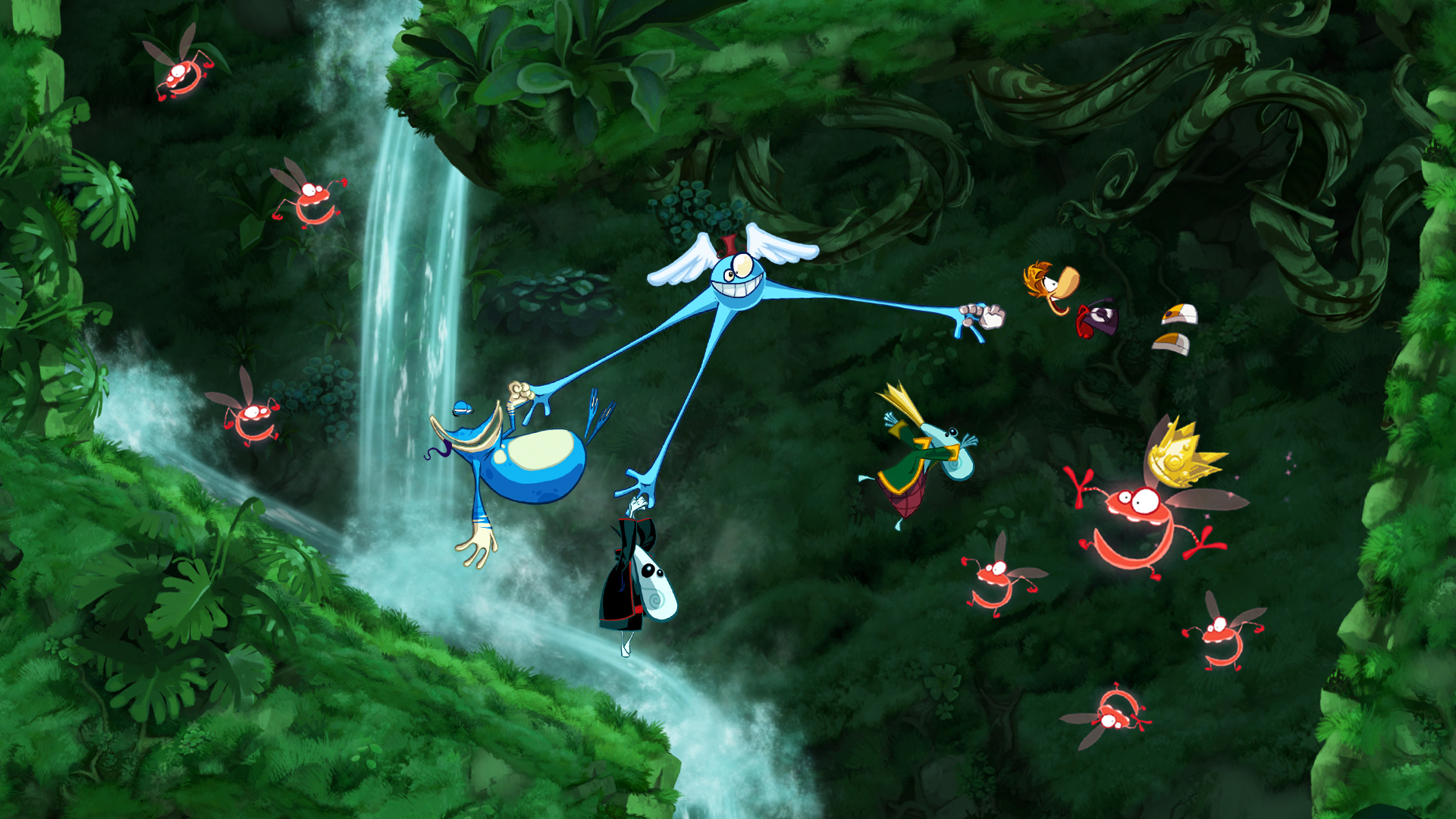
Rayman has been a struggling series since the PS1 games came out. There have been spin-offs, ports, and terrible sequels since then, but Origins redeems the series. There isn’t really a story here except that you’re saving lums and princesses of different lands to earn powers. There aren’t any cut scenes or voiceovers because this goes back to its old-school roots, and yes, the game is hard.
The controls are silky smooth, and so are the animations. It helps that the controls are responsive, as well as that you can jump around the levels that require focus and skill to navigate. Obstacles lay in your paths, such as treacherous waters, enemies, and fire. Each new area has unique enemies, hazards, and an overall layout that is very nice to look at. Enemies can be jumped on or punched, and after that, they inflate. You can use the Vita screen to touch them so they pop to get the light inside, which actually makes this version more forgiving than the consoles. When you jump around to find lums, you will see them in hidden objects, and some will be trapped in bubbles. You can touch them to pop them up to add to your collection, which is much easier. While you’re bounding about the cleverly laid-out levels, you can find hidden areas with cages full of lums that you can find by hearing their cries for help.
The game is just so cleverly designed, with levels that are tricky but not so tough that you can’t forgive the game. You may restart a few times, but it actually requires skill instead of luck or exploiting the game’s faulty controls (if they were). Sliding around on the ice, dashing towards an enemy and punching them, grabbing onto a ledge, and then jumping up on top of an enemy can be tricky, but it can be done with a little practice and a quick reaction. The levels slowly get harder, but the whole point is to collect the lums and get medals at the end of each level. Save enough, and you can unlock special treasure missions where you have to chase one down through a series of tricky obstacles.
Origins is just so clever and charming that you can’t really hate it. There are plenty of characters to unlock, as well as extras. This game is perfect for people who love exploring levels and finding secrets. There are plenty of levels and things to find to keep you busy for many hours. I do wish there were some more features for the Vita besides just using the touchscreen. However, what is here works, and nothing got downgraded from the consoles. I can only really recommend this game to hardcore platformer fans because of the difficulty.
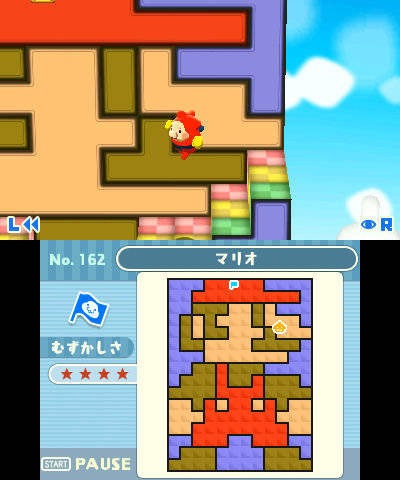
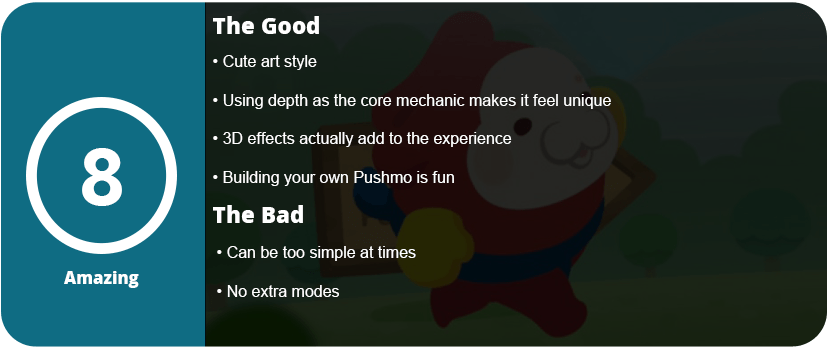
Before you write Pushmo off as a cutesy kids’ puzzle game, think again. The game uses depth as its core, which is what 3DS is all about. You get to move blocks forward by four blocks, but you have to rescue a Pushmo at the top by figuring out how to configure these blocks. Thankfully, you can jump around, so this makes the game a bit easier, but not all games are as easy as they seem. One puzzle can only consist of four blocks, but the way they are shaped makes it difficult to climb, so you have to figure out how to stagger these to get to the top.
This makes the game original and fresh so as to stray away from the Tetris, physics, and memory clones. If you feel really stumped or want to analyze what you did, just rewind with the shoulder buttons or reset the whole thing via a button at the bottom of the blocks. This is the entire game, but when you get bored, go ahead and build your own puzzles, which add a layer of extra fun. There are plenty of puzzles to solve, but the game is quick and easy to just play on the go without worrying about checkpoints and saves.
The art style is cute with bright, colorful graphics, and the 3D effects are there to help immerse you in the depth layering, which makes it feel like part of the puzzle-solving rather than a gimmick or something that gets in the way (like Bit.Trip Saga). With the low price point, you get dozens of hours of fun content, but overall, the game is just really simple and only good in short bursts. This is a game for any age, any player type, and for everyone who owns a 3DS. Right now, this is the eShop’s killer app and probably the best game on there.
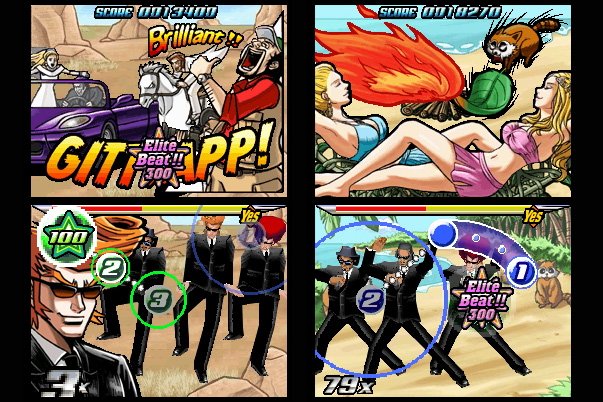
The DS doesn’t have enough good rhythm games, but Elite Beat Agents helps fill that void with a campy, off-the-wall style that any fan of the genre will enjoy. You play as three Charlie’s Angels Esque agents (men instead of women) with crazy hairstyles who go out helping people do impossible tasks that break real-world rules. Various stages include helping a pirate find treasure, helping a taxi driver deliver a pregnant woman to a hospital after a cop tells him to not speed ever again, or a movie director making successful movies. These are told in comic-style frames, and they are quick and funny to watch. You play about 30 seconds of a song, then you watch the rest of the wacky story unfold, and how good you were at that segment determines whether or not they succeed in their goal or fail.
The gameplay is different from most rhythm games in the sense that you don’t follow colored blocks that fall into place, and you hit them at the right time. The game uses solely the touchscreen, but I couldn’t really dig the way the rhythm mechanic was designed. You hit numbered circles, and depending on the beat, an outer circle will close in, but once it gets even with the numbered circle, you tap it. The numbers tell you in what order to hit it, but you must follow the colored group. Various other “notes” range from following a ball with your stylus, double-tapping, triple-tapping, or using a spinner to fill a meter. These are weird for rhythm games and help add to the random, crazy feeling of the stories, but they are really hard to master because timing is hard when trying to line up circles within circles.
Later on, the songs get harder, so there are all these circles floating around, and you can get confused and lost on the tiny screen, and the game has little room for error. Keeping your meter in the yes is important because if you are in the no after the segment, you fail that part of the story. My issue is that the meter is constantly running down and you are keeping it up, so failing a lot in slow sections makes you fail faster. Once you get the hang of it, you start having fun, but younger people may get frustrated quickly due to the high learning curve.
A rhythm game isn’t complete without good songs, and EBA is lacking here as well. There are famous songs here, such as Village People’s “YMCA” or Avril Lavigne’s “Sk8ter Boi,” but that’s just it; it’s a hodgepodge of random artists, and these are just cover songs (remade by someone else). Not only that, but the audio is very low quality and tinny, so it feels like a half-baked rhythm game. I like some of the songs here, but there should have been more consistency and fewer random pickings, plus there are only 19 songs, so you can finish this in one or two sittings. The game also lacks any type of mode besides multiplayer, so you will get bored after a few sittings with this game.
EBA has a great sense of humor, funny stories, and a decent selection of songs, but it feels like it’s missing something, and the high learning curve will turn anyone away except the hardcore rhythm fans. This is a great weekend rental or something you can pick up in your bargain bin if you are craving rhythm action on your DS.
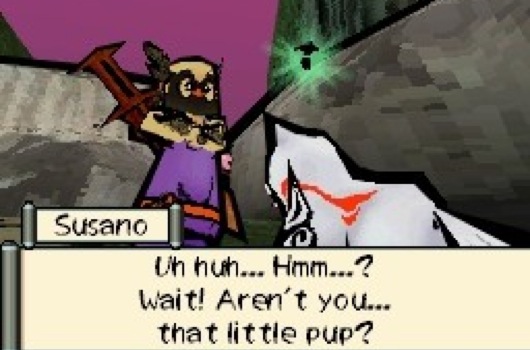
Pork Chop, Mutt, Pooch, Squiddy, Dude, Boy, and every other name, but Chibiterasu is what our poor little hero has to be called throughout his journey. You play as Amaterasu’s son in this true sequel to the hit classic Okami for PS2. There was a lot of speculation that the game would be dumbed down or just feature mini-games, but we get a full-fledged 20-hour adventure on par with the first game. You wander around the world of Nippon (Japan), trying to stop an evil spirit named Akuro from bringing the world into darkness. Along the way, you meet five children who become your partners and help you learn new brush techniques.
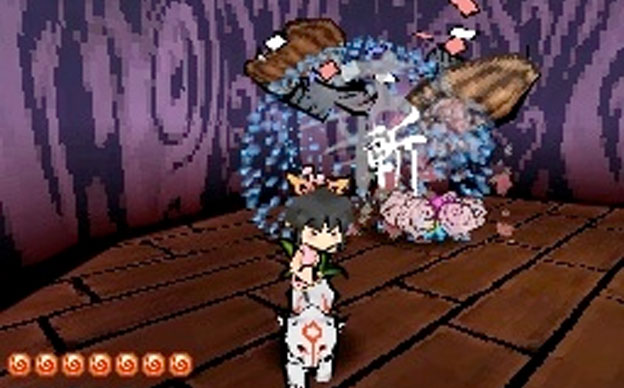
The game feels like it suits the DS better than the PS2, thanks to the touchscreen. The game is also almost exactly like Okami in a way, so we get a console experience on a handheld, and that’s rare for the DS. This also becomes a major problem because it is too similar to Okami to become truly unique, which is what prevents it from receiving a higher score (or Editor’s Choice). The combat is similar to Okami in that you are trapped in a giant circle, and you fight that way. Instead of adding new things to the combat or reinventing it, you fight just like Okami. Using your weapon and brush technique, you whack away, but each enemy needs a strategy because they have elemental powers, or some are immune unless stunned. The enemies are unique, but the combat lacks any change, and vets will feel the combat isn’t as fun the second time around, so you will avoid it as much as possible. Boss fights are really epic, and each uses the brush techniques in a unique way, just like Okami did. These are some of the best parts of the game.
Puzzles were a big thing in Okami using the Celestial Brush, but this time around they feel easy and lack any real challenge. Guiding your partner across a gap to fetch something isn’t very hard. Even just using a brush technique to open a door or find a way out isn’t exactly challenging either, but they feel Zelda-like, so fans of that series will like this. Even though each dungeon offers new brush techniques and new elemental powers, they are used in the same mundane way throughout the whole game, but they are easy, so you don’t have to expect frustration.
Outside of combat and solving puzzles, exploring the world is a little mundane as well. Finding secrets was big in Okami, but it just feels tiresome here because there is no big payoff for finding all secrets or even finding any that are used, like cash at shops or just items. I wanted to find a super-powerful weapon, maybe a hidden brush technique, but instead we just get normal stuff. I really wish there was more to the whole game than just finding your way to the next dungeon, but there are side quests for people who are into that. You don’t get anything but praise, which levels you up, which in turn gives you more life and ink pots. Everything that you did in Okami can give you praise here, but nothing new has been added yet again.
Besides this, the controls are tight, with the shoulder buttons acting as the brush, which brings a snapshot of the top screen to the bottom. Brushstrokes feel natural using the touch screen, but sometimes, if the camera is off, the stroke won’t register or will do a different one, which left me frustrated a few times. Using the D-pad to control Chibi is a bit rough because it is so small (using the 3DS circle pad is a lifesaver), but overall the controls work well. I did find the map completely useless because it is either too big or too small, and there’s no way to zoom around on it. I also found myself completely lost as to where to go due to a lack of some sort of quest log or journal.
The best part about Okamiden is the unique art style that Okami brought to gamers, and despite the DS’s ancient hardware, it sucks every bit of power to pull this off. This results in some serious slowdown quite often, but the game looks great. My last complaint would be that the game is long-winded towards the end and isn’t suited for portable play. Save points are spread too far apart, and it feels like a console game even on this. 20 hours is also a bit long for a handheld, but in turn, we get a wonderfully crafted story with a lot of detail and characters you really care for.
Okamiden does a lot right by bringing the unique experience of Okami to the DS with console-quality style, but in turn doesn’t do enough things that are new to make it as amazing or as unique as the original was. Everybody who owns a DS should play this game because it is one of the best on the little system. Even with ancient hardware, Okamiden shows us exactly what this system was built for.
If you are a fan of classic 8-bit games or quick simple games then you will be right at home here. Bit.Trip Saga takes all the games in the series and packs them into one game. There are 6 games here, but each is different and requires lots of concentration and good hand-eye coordination to have some fun. Let’s dig into this pile of pixels and see what’s in store.
Bit.Trip Beat is one of my favorites because it’s a variation on Pong where you repel pixels coming at you to create a catchy beat. It gets harder and harder as time goes on and is a blast. If you miss too many the game will go in a Nether mode which actually turns the game 8-bit and is really neat. The 3D effects here are nice but are distracting and using the circle pad is useless and inaccurate. I chose the stylus for precise aiming because you will need it.
Bit.Trip Core is one of my least favorites because of how hard it can be to watch four sides of the screen at once. You stay in the middle and control a beam to destroy pixels coming at you from all sides. This can get confusing and it’s really hard to play for long periods of time. I didn’t play this one as much and was a bit of a disappointment.
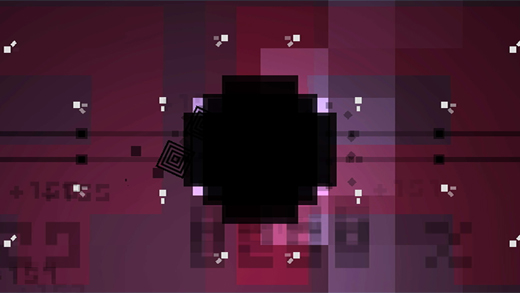
Bit.Trip Void is another favorite because it doesn’t require much concentration and accuracy. You are a black hole that collects black pixels and avoids white. When you are too big to fit on-screen, or between two pixels, you pop and bank your score. This one is highly addictive and I wound up playing for longer sessions than the other games.
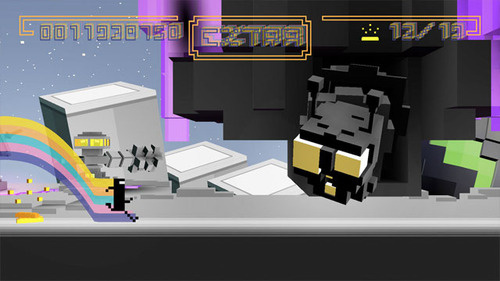
Bit.Trip Runner is my favorite of them all because it’s the biggest game of the six and most fun. You run down a level and avoid obstacles by jumping, kicking, sliding, and timing things just right to a super catchy beat. At the end of each level, you go into an 8-bit version to collect gold and rack up your score. There are tons of levels here, but it can be very difficult towards the end because it requires perfect timing.
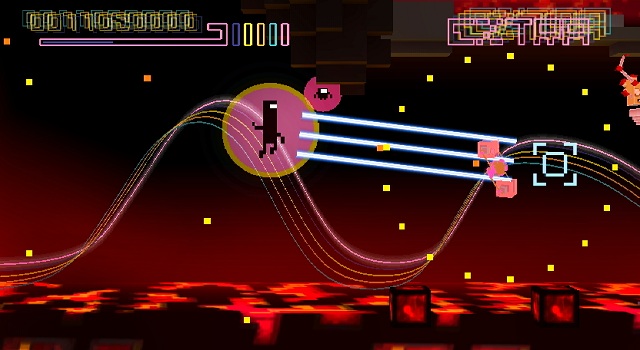
Bit.Trip Fate isn’t one of the best because you are on a set path and have to avoid enemy fire while firing back. Dodging fire on a set path seems like it works against you and isn’t really all that fun even if you do concentrate. The game has a slow pace and also requires right-handed stylus use.
Bit.Trip Flux is the last of the six which is like an anti Bit.Trip Beat. You avoid getting hit instead of hitting objects and is just as addictive as Beat. I found this to be one of the more fun games of the six and is super fun to play for long periods of time.
The whole experience is nice, but in short bursts only due to the repetitiveness and sheer concentration needed to get far in the game. This is great for a portable experience, but the 3D effects are distracting, and with some games, it made the experience worse. This game isn’t just for anybody, but for hardcore gamers who love racking up scores and like precision skills and twitch shooting.
Everyone was bullied at some point in their life during school, so Rockstar took it upon themselves to help people reflect on that and become bullies themselves or anti-bullies. Jimmy Hopkins is sent to Bullworth Academy because he’s a huge jerk and his mom and stepdad hate him. The story really makes you reminisce about high school because of how accurately it portrays it. You walk around, and you see jocks beating up nerds and greasers beating up preps. Of course, due to the game’s age (about 7 years old), there are problems, glitches, and stiffness due to the PS2’s limited technology, but the overall atmosphere and fun content will keep you hooked.
The game is based on Grand Theft Auto, so if you play that series a lot, you are right at home here. You get a mini-map with stars marked on it, a combat system, a vehicle system, as well as a shooting system. They all work really well and even better than the GTAgames, but don’t forget, this is a teen-rated game, so you can forget about Jimmy killing hookers and pushing drugs. After you get familiar with the engine, you will be introduced to the combat system, which works well thanks to a lock-on mode and target switching with the right analog stick (keyboard controls stink). A health bar is displayed around the target’s feet, and the melee combat system is surprisingly deep. You unlock combos and moves by bringing transistors to the bum that lives behind the school.
With grapples, takedowns, and various combos comes ranged combat, which is fun thanks to the interesting and fun weapons. Instead of rocket launchers and AK-47s, we get potato spud launchers, bottle rocket launchers, slingshots, stink bombs, itching powder, spray paint (for tagging), eggs, and various breakable melee weapons that are awesome to use. You can’t jack cars, but you can jack bicycles, and you have a skateboard in your inventory. I really wish there were more vehicles to use than just these two things, but it works because the world isn’t big enough to need anything faster.
The days in Bully go by like school, and of course, you can get busted and, instead of wasted, knocked out like in GTA games. Prefects are the authority on campus, and there are a lot of rules. There are two classes a day, and you will see a bell on your map. If you skip class, you can be busted for truancy, hit kids and get chased for violence, hit girls or adults, and the meter goes red, and everyone runs after you for this. You can be busted for trespassing (being inside a building after hours), theft, vandalism, and all the hijinks of kids, so watch out. Of course, getting busted is actually hard because you can always outrun them, and if a prefect gets a hold of you, you can rapidly press Y to break free. If a teacher or cop gets you, you’re done.
Classes are fun and consist of mini-games like music class, which uses the triggers to tap out the rhythm; biology class, which has you dissecting animals; math class, which has you answering simple questions; shop class, which has you doing button commands to repair bikes; and photography class, which has you snapping pictures. There are more classes, and they help keep you busy between missions and can be fun. When you aren’t doing missions or classes, you can do one of the two jobs in town, which is a paper route and mowing lawns. I really wish there were more jobs, but more on why later. There are also challenges for each faction as well as random activities like people having you egg things, make deliveries, or break into lockers.
Missions are varied and range from throwing snowballs, playing tricks, assaulting faction fortresses, sneaking through an asylum, and helping teachers with adult problems. There’s a lot of variety in the main missions, and it will keep you hooked and wanting to do the next one. I just wish there were more side missions that had a good payoff because money is kind of useless in this game. I rarely spent it and didn’t really need to. There is also a lame dating system built in where you can compliment a girl, then give her a gift, and then she’ll kiss you. This is as far as it goes, and after trying it once, you won’t do it again.
All this sounds fun, and it is, but it comes with a price. Everything feels stiff, stilted, and linear, which really detracts from the experience. The same NPCs walk around, sayings repeat constantly, animations are stiff and awkward, the same music repeats constantly, the sound is low quality, and the graphics aged poorly with low poly models and some ugly textures. The only things that haven’t aged are the excellent voice acting, memorable characters, and charming and witty dialog. This is the best part about Bully because of characters like Gary, who are whacked sociopaths who you want to just punch. The world isn’t very big at all, and while you can change your clothes and hair and earn money, there’s really no reason for it. You can find collectibles in the world, do races, and more, but honestly, for what? There’s no payoff, and I guess you just do it to be the best completionist.
I could go on about how stiff the game feels or the multiple glitches that I encountered, but after completing the 10-15-hour campaign, I felt no reason to continue on. I couldn’t bear hearing the same saying, listening to the same music, or seeing the same NPC walk by me. Back in the day, it was revolutionary, but now it’s just a wrinkle in the game timeline as something unique and playful because there isn’t a single game out there like it. Enjoy the game for the great dialog, characters, and story, as well as the fun mini-games and varied missions, but if you can’t overlook the many faults, then move on.
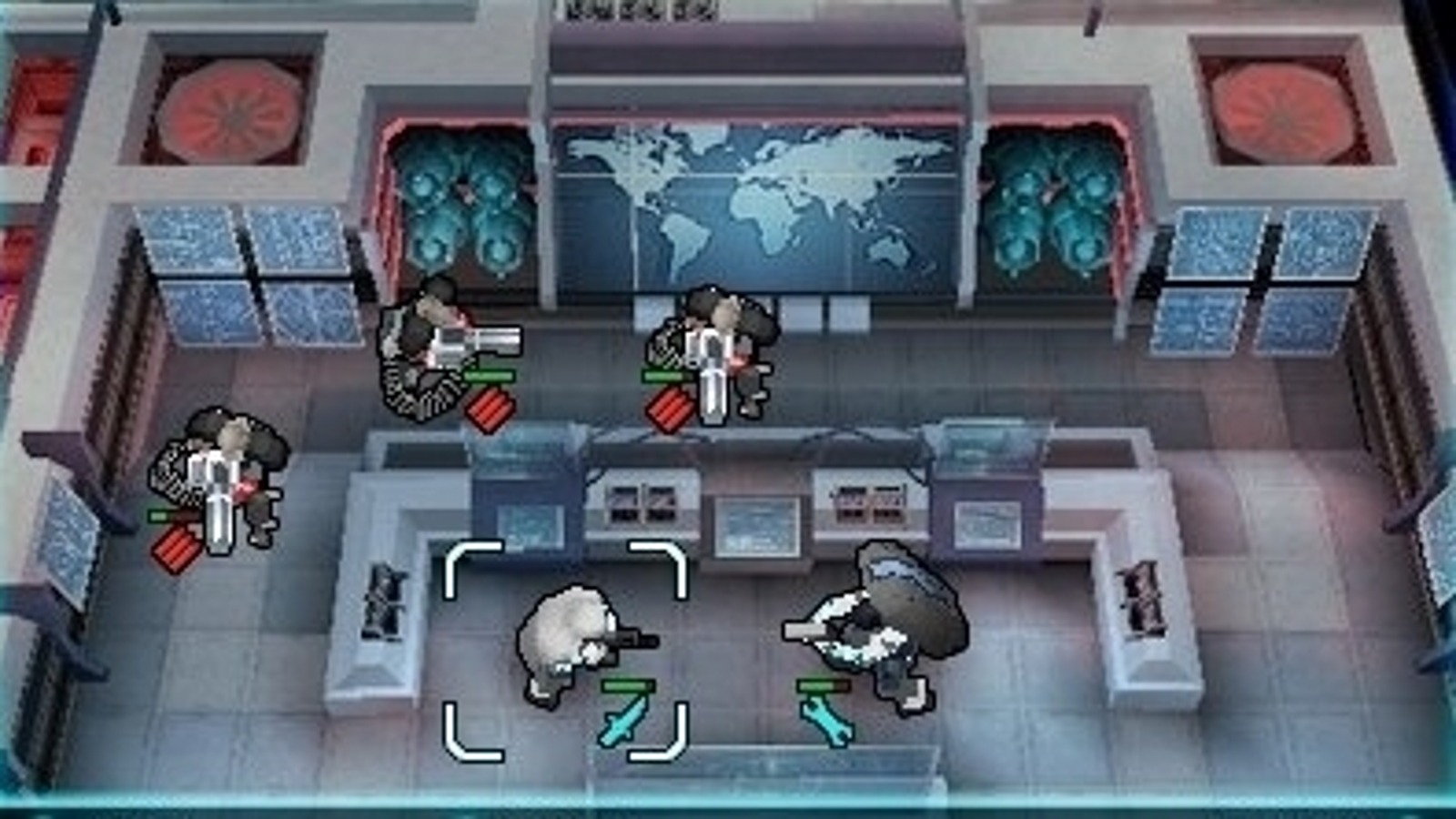
When you think of Tom Clancy or Ghost Recon, you probably aren’t thinking of turn-based strategy. Ghost Recon takes the weirdest and most unlikely departure that is sure to become a disaster, but works well and culminates into a great little TBS game. This would be a great game, whether it had the Ghost Recon name or not. Traditional fans of the series may cry foul or turn their nose up, but portable fans and turn-based strategy fans will likely get hooked. Ghost Recon has never been known for deep or complex stories, and Shadow Wars is no exception. You play a squad of elite soldiers trying to stop a war between the Russians and Kazakhstan. Due to the lengthy campaign (a good 15 hours or so), you get an entertaining story that you actually want to see an ending to. While the characters aren’t very deep, you do grow somewhat attached.
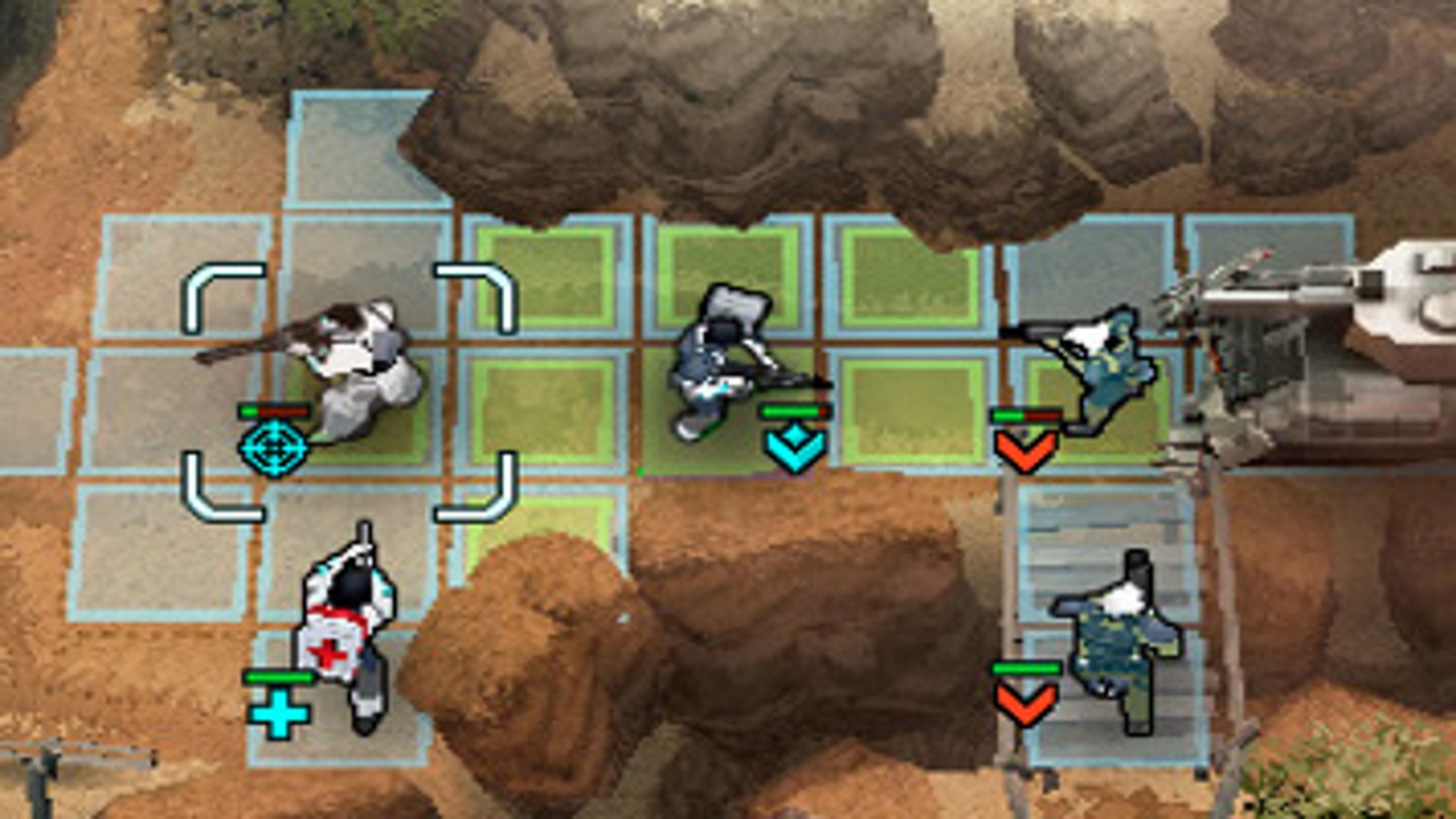
Of course, you want great tactical gameplay in a game like this, and Shadow Wars delivers. While it may not be very deep, it’s suspenseful and has various missions that will put you on edge sometimes. The enemies are just regular soldiers, but as the game moves along and you level up, they get tougher, and eventually you get drones thrown at you, which are pretty tough against anything but explosives. Each of the six ghosts is completely different, such as one who uses a mini-gun, which is good for up-close firepower; Haze is the sniper; and Banshee uses a cloaking device, so she is invisible to everything unless right next to an enemy. You will use each ghost and rely on their powers and abilities because each mission will require you to really choose wisely how to move about the map.
Each ghost can gain command points by killing enemies, which can then be used for their special power. Duke and Banshee can use Rapid Strike, which gives them one extra turn, or Haze can use Super Shot, which is pretty much a hit-kill sniper shot. Of course, their secondary weapons can be used this way too, like grenades or Duke’s portable missile launcher. Most maps have various command flags that you can capture to earn command points for the entire squad that can be used to give a ghost another turn, give everyone a huge command point boost, or call in an airstrike on outdoor maps for devastating attacks. You can use cover, like in regular games, that will reduce damage, such as going into buildings or being next to obstacles. You also have an attack range that will be reduced the farther the enemy is, but this isn’t anything new to TBS players and should fit right in.
While all this sounds deep, it really isn’t. Sure, on the field, you have to use your brain and decide how to move about the map wisely, because 99% of the time you’re greatly outnumbered, and a dumb move can cost you the game. Each map is completely different, but most objectives tend to be the same. After a mission is complete, you can distribute points to level up your ghosts, which gives them more health, further movement, and more damage. You can also equip weapons, but I was greatly disappointed in this because each ghost only gets one other option for each category, and I stuck with the first one through the whole game.
There are other problems with the game being way too hard on anything but easy, and even then, you’ll fail missions a lot. Thankfully, there’s a save feature, but towards the end, you’re greatly outnumbered by enemies that take forever to kill, even if you’re at the highest level. I found this unfair, and despite being intense by getting out with a hair of health left, it was exhausting because some levels dragged on forever. Despite these shortcomings, the campaign is varied and mixes things up a lot, so this kind of help.
Don’t expect anything deep that you expect from most turn-based strategy games; just come in expecting a lot of fun activities. The game is extremely tough and doesn’t offer a deep and really interesting story like most turn-based strategy games do. The graphics are also nothing special, even with decent 3D effects. You’re not going to see anything that you haven’t seen in a portable TBS game. Shadow Wars is a great entry into the 3DS and will keep you busy for quite some time.
Sonic has seen so many rough years since its 3D outing in Sonic Adventure for Dreamcast. It has never had the same sense of smooth speed in 3D, and it seemed for years that Sonic Team and Sega just couldn’t get it. There were a few lights in the dark with some good GBA games, Sonic and the Secret Rings for Wii, as well as the last Sonic Colors being pretty decent, but all the rest were total crap. Sonic finally makes a 2D return with the ability to play as both the original and the new Sonic, but this also means each level has two different ways to play. The story is pretty thin, with a Time Eater and Doctor Eggman screwing time up and wiping the color away from the land. It isn’t much and can be easily ignored, as can the most awful voice acting.
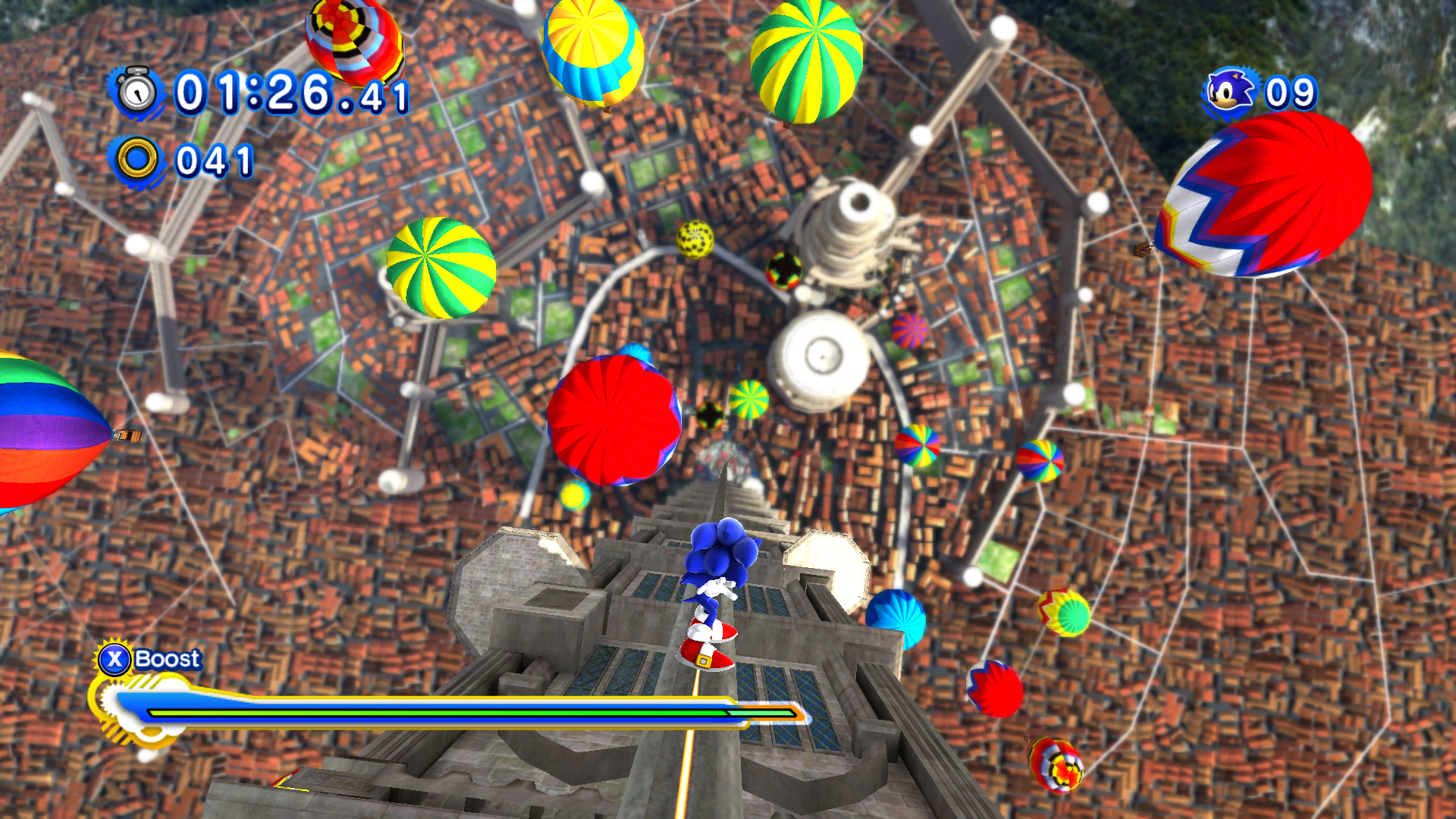
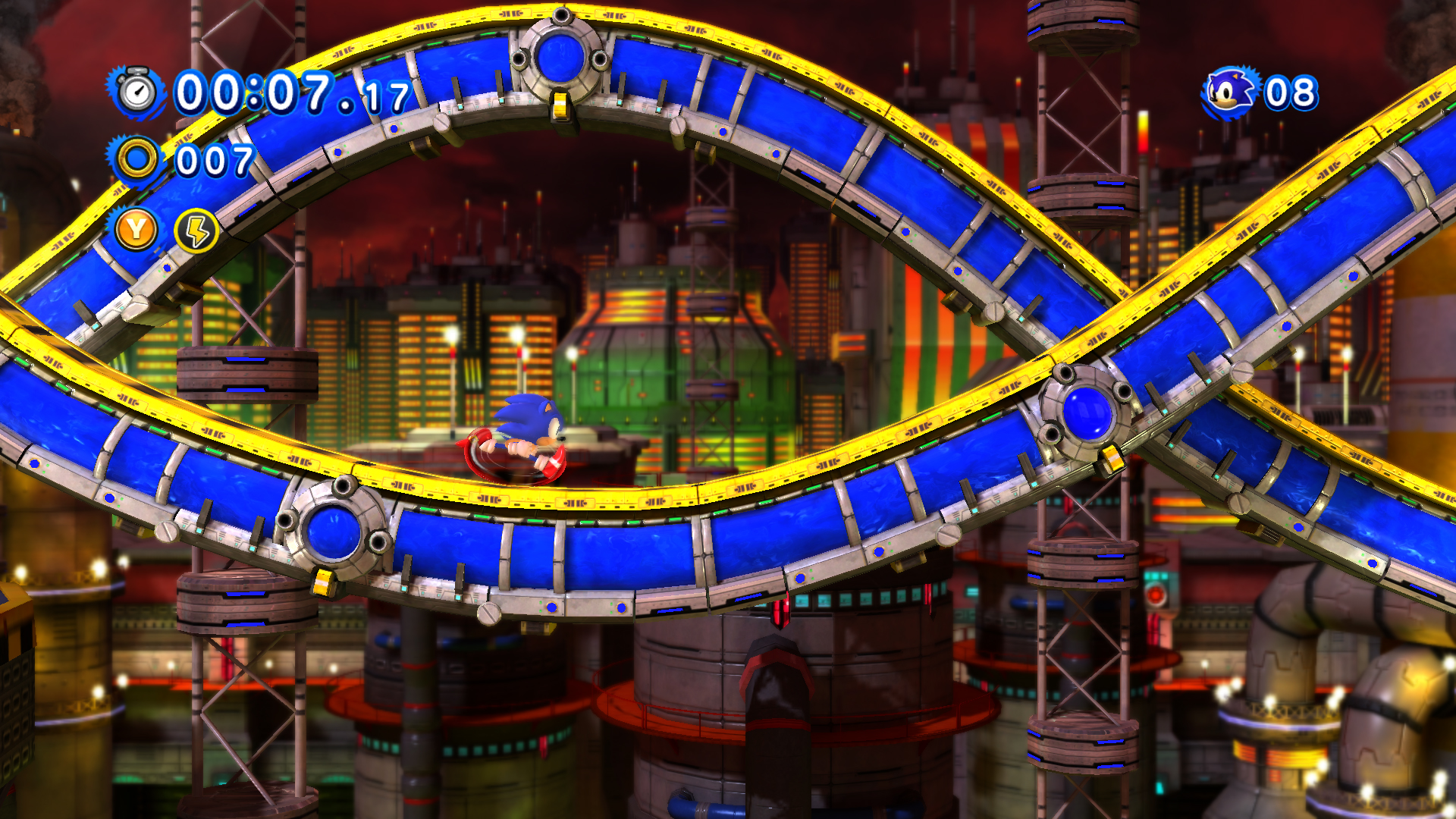
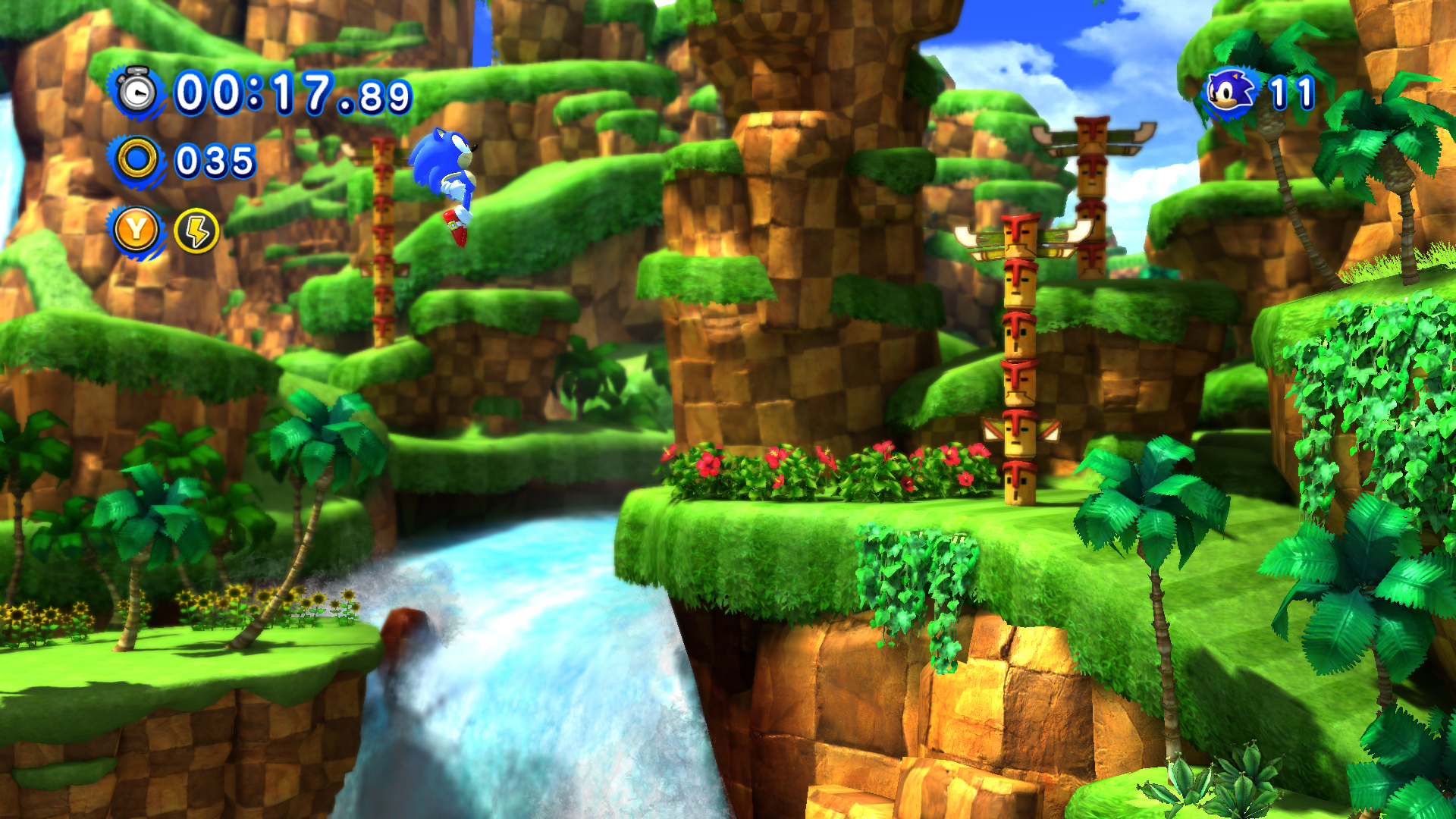
Playing as the original Sonic brings back great memories when you step into Green Hill Zone and start flying around the level in 2D (with 3D graphics) like the grand days of old. The graphics are amazing, with great lighting, high-resolution textures, and great-looking models. This is the best-looking Sonic game to date, and Sega finally got the game up to speed with today’s graphics. Previous Sonic games had hideous visuals and tons of glitches, but you won’t find that here. You die and collect rings to stay alive, but you can use cards that give you both offensive and passive powers that help you along the way.
Playing as the new Sonic puts the camera back behind Sonic with the homing attack, but calm down! The game actually works now and flows great with some awesome cinematic moments, and the speed stays fast. You can use a boost that fills by collecting rings, and the homing attack can actually make you get through levels faster as well as fly through rings, but I found doing the flips in the air pretty useless. Overall, playing at each Sonic gives you a rewarding experience with memorable levels. Only two are from classic Sonics, and the rest range from terrible ones from Sonic Adventure, Shadow the Hedgehog, and even the failed Sonic the Hedgehog reboot from 2006. The levels are recreated in a fun way and are tons of fun to play.
There are a couple of boss fights, and I’m disappointed with how easy they are. There are three with Metal Sonic, Shadow, and Silver to get Chaos Emeralds, and three with Eggman. You have to find keys to unlock the boss stages and then move on to the next levels. In between, you can do side missions that range from a multitude of different goals to different ways to play. Each can be played as either Sonic, and they are a blast. However, the last two levels are poorly designed and just feel slow and difficult. Puzzle-solving? That shouldn’t be in a Sonic game. The last two levels will take you about ten minutes to complete, and that is way too long for a Sonic level. If you can ignore these last two, the rest is a blast. Repetition does set in from doing so many side missions because they start to feel the same after a while. Only hardcore fans will stick around and collect all the stars and get S ratings in each mission.
Sonic Generations does a good job of redeeming the failed series and pulling it out of the sewer. Fans of the old can return with a smile, and fans who have stuck with the series will finally get a game that isn’t a piece of crap. With an online mode, tons of extra activities, and amazing graphics, we can finally say Sonic is back!
Based on a popular manga in Japan, Corpse Party delivers a great and haunting story with memorable characters in a very haunting setting. Several school kids perform a cult-type ritual called the Sachiko Charm as a gag. They don’t realize that the charm is part of a sadistic and horrific murder of four schoolchildren, including the girl the charm is named after. They get thrown into a parallel dimension of Heavenly Host Elementary and must find a way to appease the ghosts or get stuck there for eternity. What the children go through is horrific and gut-wrenching, but that is the beauty of Corpse Party.
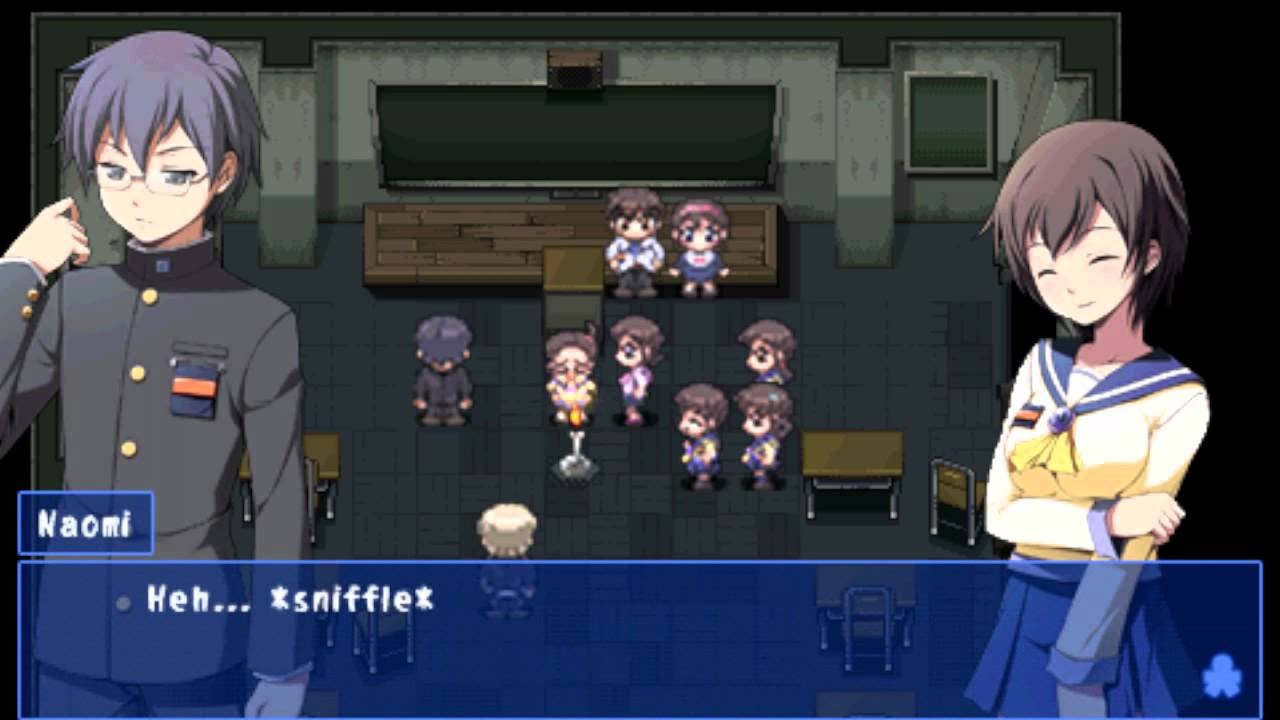
Forget about gameplay and everything else, because this game is all about the story and atmosphere. I have to give the developers props for bringing across such a scary game with such simple graphics as a 2D survival horror with low-quality sprites and the occasional well-drawn anime shot. The game is disturbing, mainly in the well-delivered Japanese voice acting and just the raw terror and gore in the game. There are buckets of blood, severed heads, and mutilated bodies everywhere, but mainly in textual descriptions more than anything. The game really doesn’t do much in terms of visuals, so you solely rely on the great script to get the horrific images. Some scenes are just black, with only voices and text to go by, but it still brings across the feeling of sheer terror.
This is possible because you go through everything with these kids, and the things that happen to them are just horrific and extremely sad because you really get attached to everybody. The game, however, is also lacking in gameplay because you only run around pressing X on everything trying to find items to unlock new areas. The school is the same through every chapter, but it just changes and blocks certain areas off or adds new areas. The game is pretty easy to navigate and understand until you get to chapter 3, and then it all falls apart and requires a guide. Everything has to be done in exact order, or you wind up with “bad endings,” and it’s game over. While each bad ending is different, you get frustrated when the game takes you through 20 minutes of gameplay only to realize it was all part of the bad ending. There is even a glitch that won’t let you get all the school tags to unlock the extra chapters. I really hate how the game has to be played out in an exact way, not to mention that during certain scenes you can die by selecting the wrong choice, but there are saves throughout the game that help remedy this a bit.
While the game lacks any type of gameplay at all, you will still be satisfied with the excellent story and characters. This is the only thing saving Corpse Party from being another terrible attempt on the PSP, but being so late in the system cycle is a surprise. If the game had better graphics, or maybe just more anime cut-aways, the game would be one of the best on the PSP.
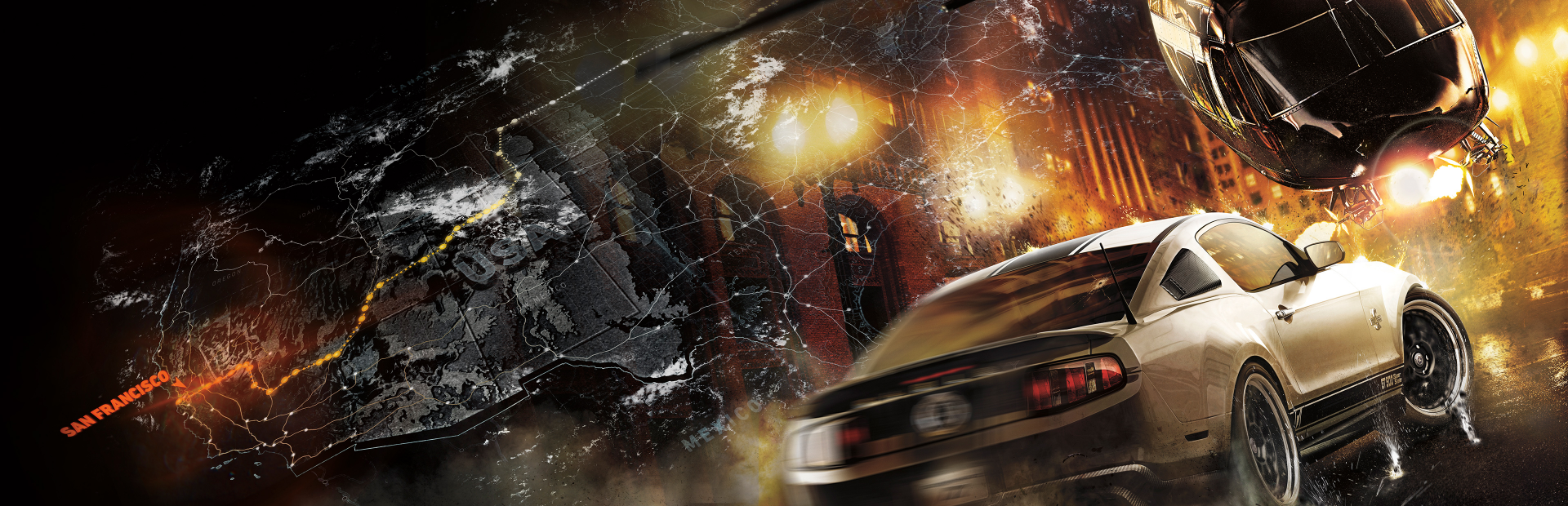
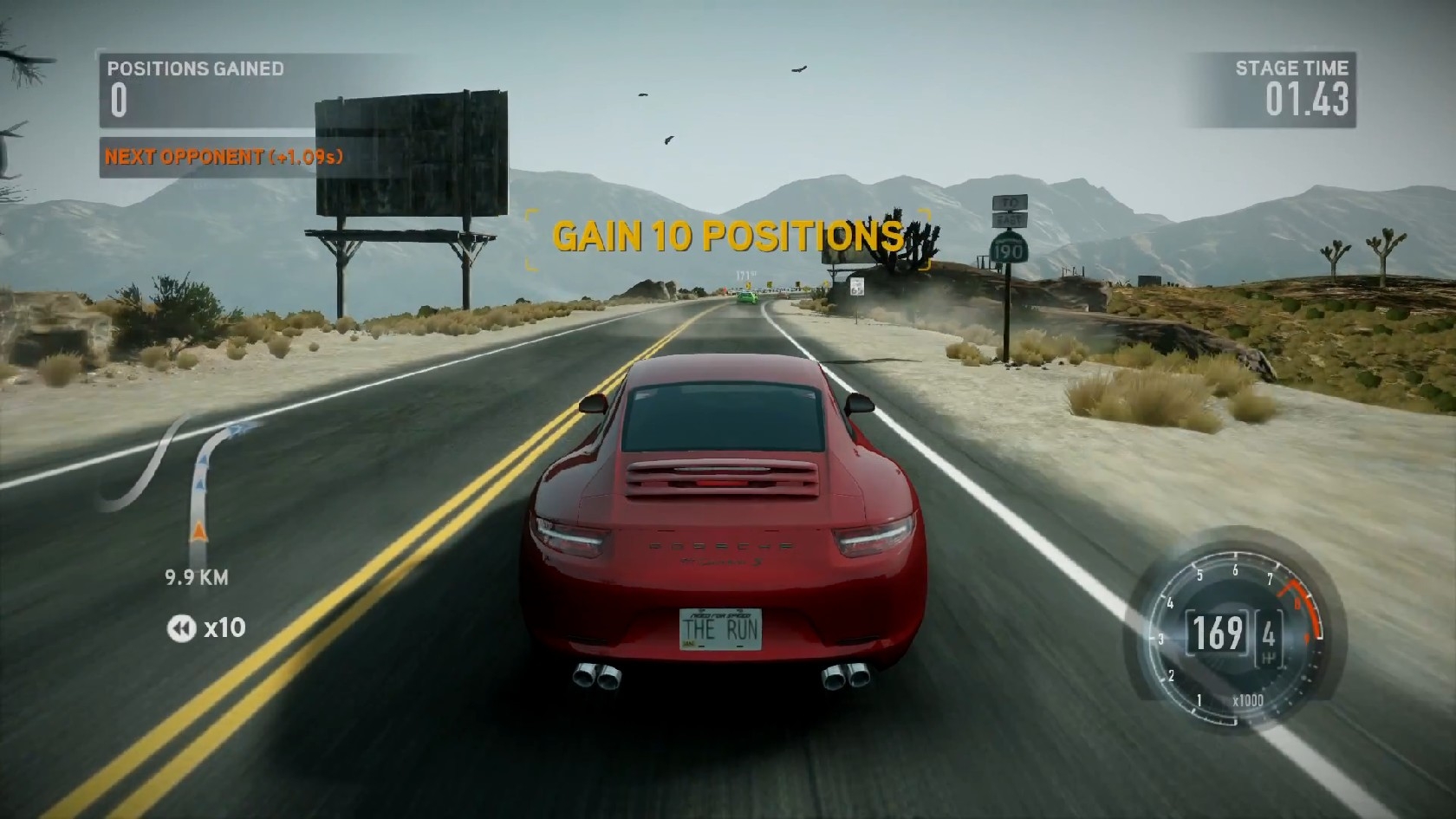
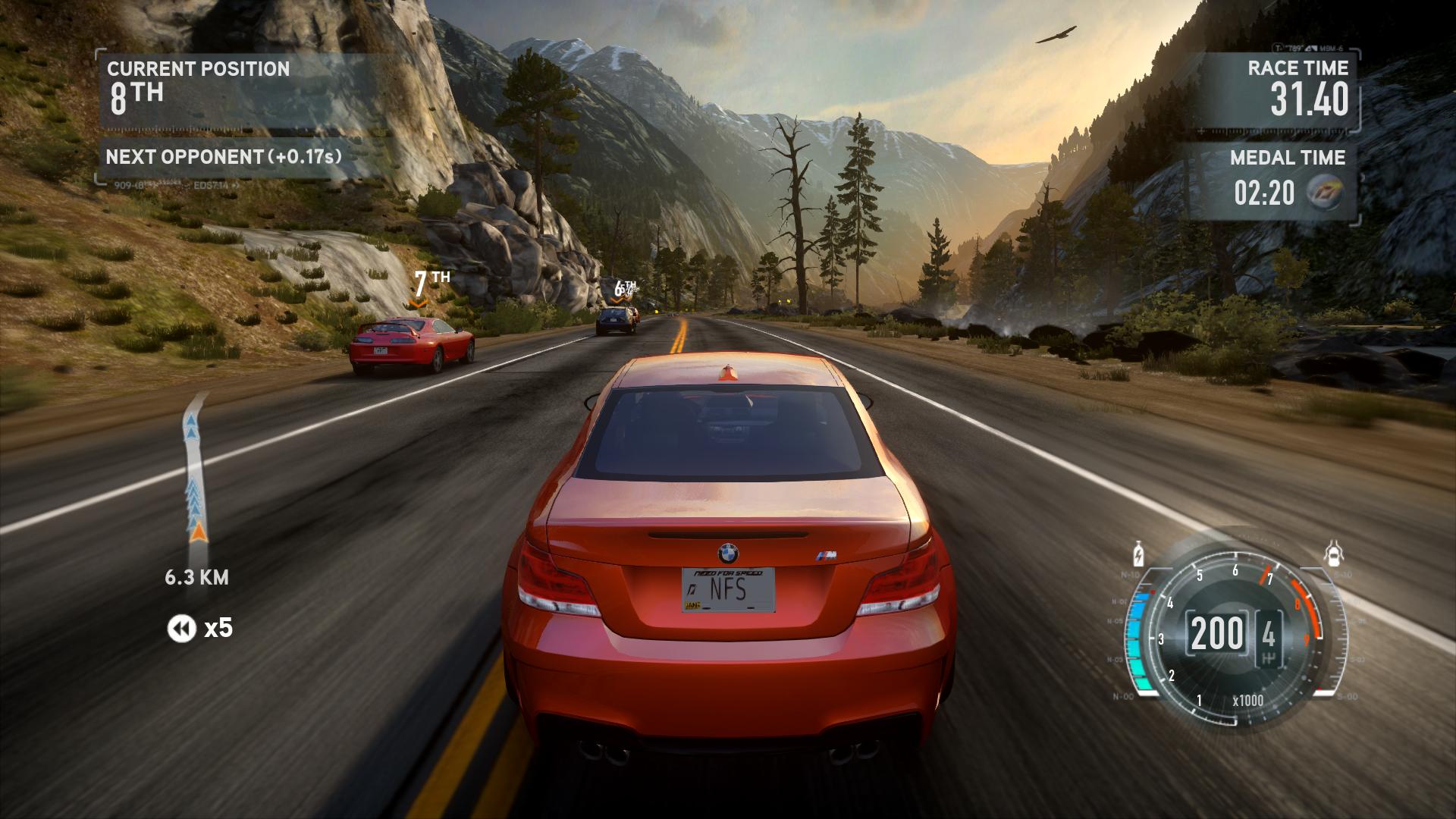
Need for Speed has taken many different directions in the last decade, but The Run tries to go back to its roots while trying something new. Sure, you’re being chased by cops, doing illegal stuff in a car, having great graphics, and having a super-fast sense of speed. It sounds like an NFS game, right? Well, in a sense, it is, but it won’t change haters’ minds or make hardcore fans happy. This isn’t the true return like Hot Pursuit was, but it does convey a nice idea. You play a guy named Jack Rourke who owes a mob a lot of money. You hear about a race from San Francisco to New York, and your “agent” will give you a cut of the prize money and make your little mob problem go away. You start at the 200th place and make your way to the 1st.
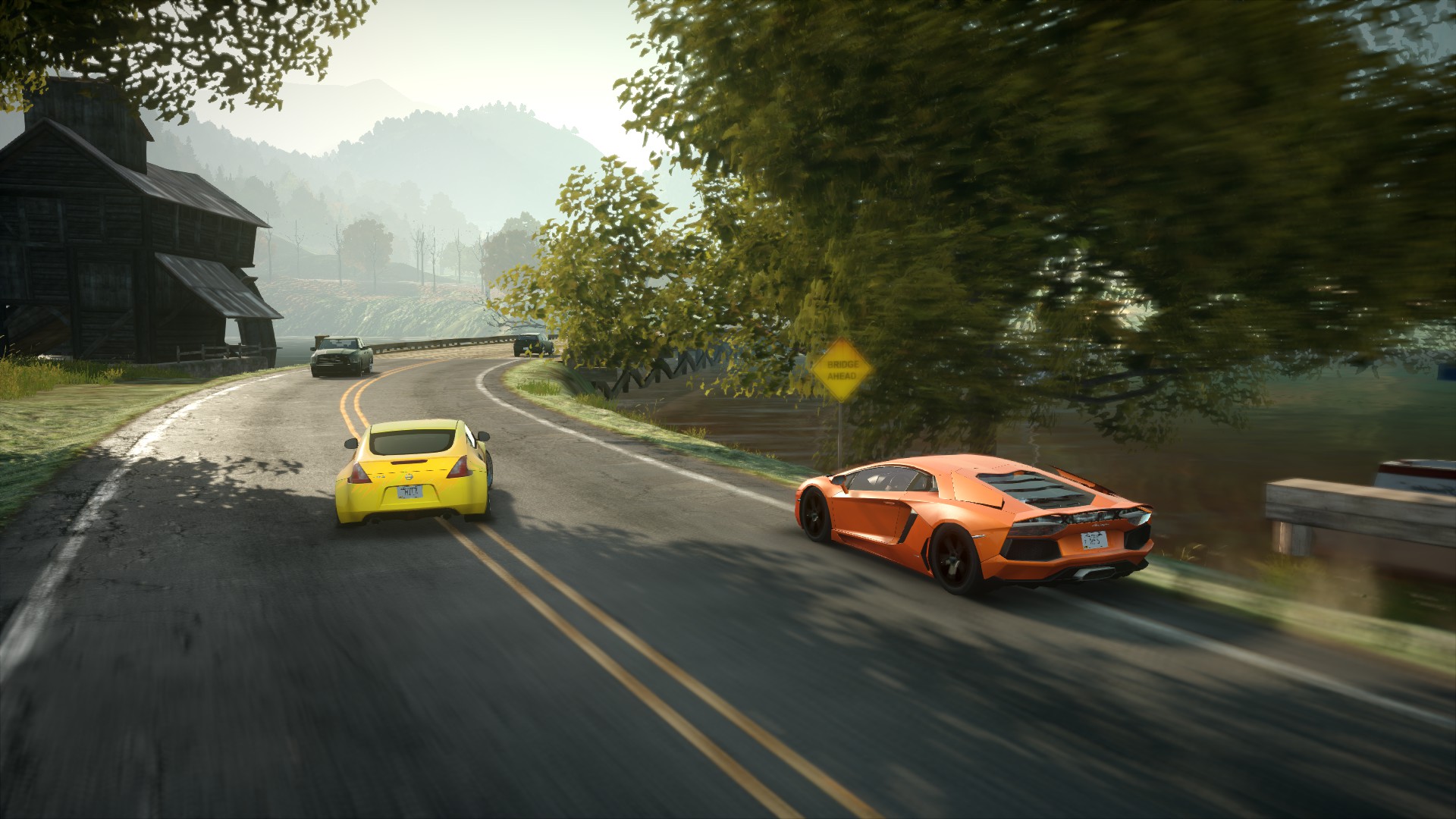
This sounds like it would take forever or be just one straight race, but it isn’t. The game is broken down into 10 stages, and each stage has various races. The terrain obviously changes a lot, and this means lots of different environments to look at, which gets help from EA’s latest Frostbite 2 engine that was used in Battlefield 3. While it doesn’t look as amazing as that game, it looks fantastic and is probably the best-looking NFS game to date. There are so many different places to race—snow, open fields, farms, factories, cities, you name it. There are several different race types, but they are thrown up variously, and the overall experience is repetitive.
Races range from gaining a certain number of positions to battling against the clock in elimination races. There are “boss” races that have you racing a good distance; there are also races solely against the clock to catch up time. That’s about all there is, and the only thing keeping you from getting really bored are the constantly changing environments, which are great to look at, and not one stage is the same. There are some better elements that make the game thrilling, and these are the survival sections. One has you running from an avalanche, another from a helicopter shooting at you, as well as a mountain demolition, but these are so far, and few of you yearn for them between the constant drag of gaining positions.
While these moments are highly entertaining, and probably the moments in the game, a few times Jack will get out of his car and initiate quick time events, which are also entertaining but pretty pointless since you normally don’t play an on-foot NFS game. Don’t worry, you don’t control him; just think of it as an interactive cutscene.
A great NFS game needs fast real-world cars, and there are plenty here, from Ferrari to Lamborghini. You will find them here. You can change cars by pulling into gas stations throughout stages, but overall, you usually stick with one car until the next group is unlocked. You can earn experience through things like drifting, jumping, overtaking cars, etc., but I found this kind of useless since you only earn one thing when leveling up, and it’s usually an avatar or something like that. You can use resets during a race if you crash or really screw up, but watch out; they are limited.
The game features Autolog, which everyone has grown to love, plus there are Challenge Series races to do after you beat the short 4-5 hour campaign mode. Multiplayer is pretty standard and nothing to write home about, but The Run is a fun weekend rental and nothing more. You will quickly forget about this one, but the whole idea is fun while it lasts.
















































 thebinarymessiah.com
Try multiplayer. A lot of fun !