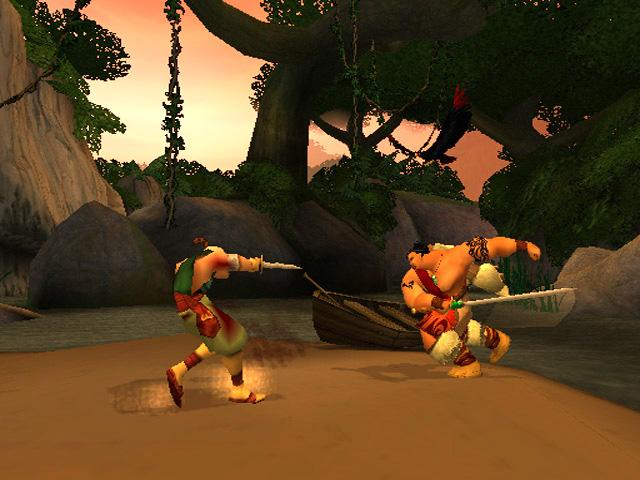
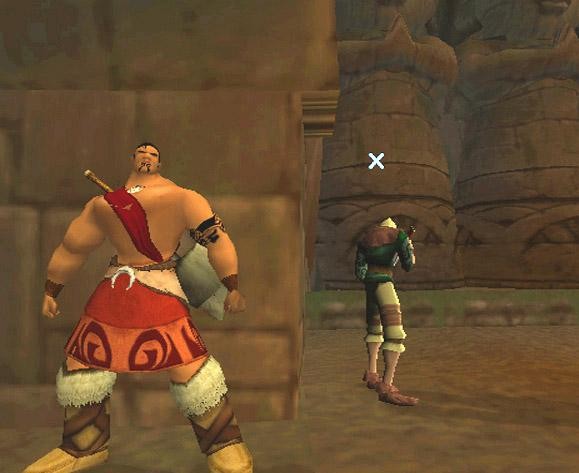
The Mark of Kri is a curse passed down from generation to generation, and each firstborn child bears the mark on their skin. There are six at all times, but some crazy guy wants to kill off the curse or something like that. The story isn’t explained very well and is not very interesting. The Mark of Kri’s strong points are its stealth, but it has sluggish combat and camera issues galore. It may have been pretty good ten years ago, but not today.
The game is very linear, with usually only one pathway to follow. You have a bird that is your companion that you can send off to certain points to scout ahead for you. This is mandatory; otherwise, you will be fighting off tons of guys all the time and dying. Once you use Kuzu to scout ahead, you can plan an attack. Use stealth by sneaking up, buckling against walls, or dropping down on enemies. You use the right analog stick to sweep a beam around that assigns a face button to an enemy; that’s their attack button. You can stealth kill two enemies by starting the attack on one and then pressing the buttons shown above the second enemy. Sometimes you need to distract guards by shooting bells with your arrow, scaring animals, and other things. This is pretty fun, and finding the right path through enemies can be fun. It is the actual combat that is sluggish and troublesome.
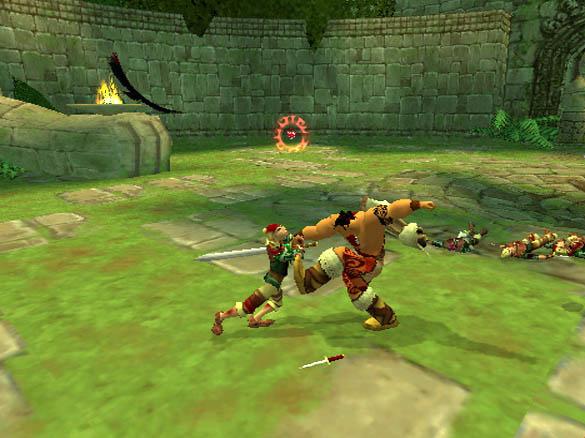
The right analog stick should have been used for camera control in this game because it gets lost all the time. It never focuses on enemies like it should, and it takes forever to sweep around. The combat is okay when there are just a few enemies, but later on, in the game, 15+ enemies will surround you. You get better weapons like the axe that can lock on up to nine enemies, but this whole lock-on business just doesn’t work. I would rather control the camera and have a more fluid combat system that way. The reason why I died so much was that Rau would stop and rub his head, trip constantly, bang his weapon off of stone walls, and get it stuck in wood, and this was frustrating. In the meantime, you are being hit and dying while all the unnecessary animations are playing out. Once you get surrounded or trapped, you’re dead. Backing out is impossible because once you unblock, you get bombarded by attacks.
If that isn’t enough, the save system is annoying. There are no save points, just save scrolls. You have to find these, and they don’t carry over to the next level. The same goes for max health upgrades. You will end up using your save scrolls or squandering them because you want to save a hard part. Another issue was using the bow. Aiming at enemies takes forever because you have to wander around the enemy until you get a lock on, and if the enemy is too high up, you have to fiddle with it until you hit the enemy. Not fun.
The graphics are just average, even for back then. The game is only 6 levels long and can be beaten in about 4–5 hours. The story is underdeveloped due to its short length, and you won’t care about any of the characters. The combat has sluggish controls, and the whole sweeping lock-on system is a terrible idea and doesn’t work right. The camera has a lot of issues, and the list goes on. For just a couple of dollars, this is a decent stealth game, but be wary of all the problems.
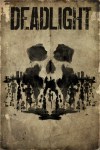
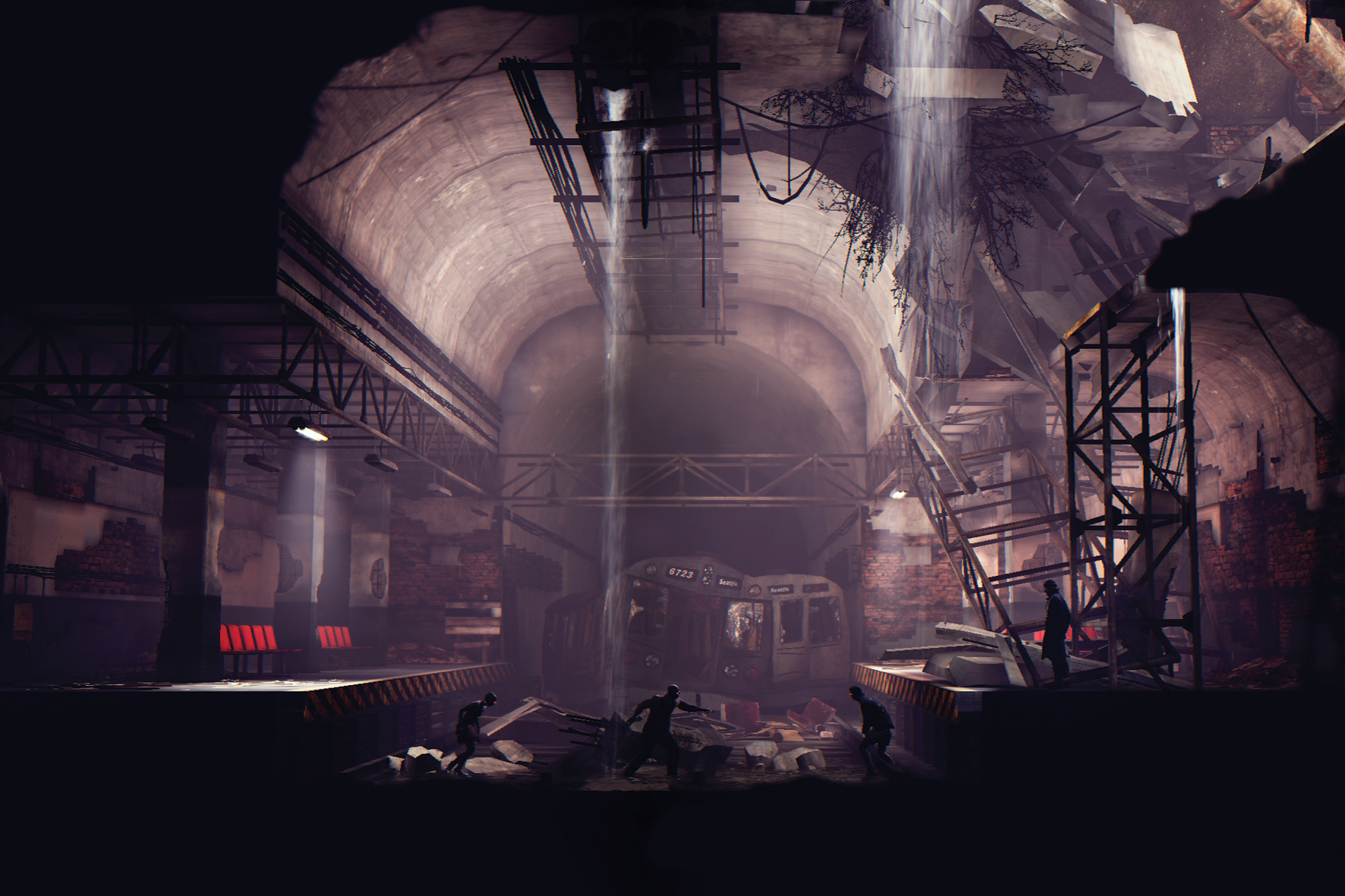
Zombie games are abundant now, but they are getting smarter and more atmospheric. Deadlight brings the unique 2D side-scrolling platforming of Shadow Complex and adds zombies. You play as Randall Wayne, trying to find his family in the Safe Zone while uncovering why The New Law is trying to round up survivors. The problem with the story is that it is so short that it doesn’t give it much time to develop. You won’t care about anyone in the game, just the action. Deadlight’s strongest feat is its atmosphere, but this one has a few issues.
The game is all about platforming and running from zombies. There are some puzzles thrown in, but they are basic and not very hard to figure out. Push this button to raise this platform-type stuff. You can run and bust open doors, but the run feature is mainly used to run from zombies in open areas. Jump to avoid obstacles in your way because you don’t want to take down all these zombies. You carry an axe most of the time, but they don’t go down easily and take several swings to take down. Once you get caught up in a zombie group, you’re pretty much dead, which is frustrating. It’s best to just jump over them and get to the next area. In some sections, you get a pistol or a shotgun, which comes in handy, and then you don’t have to run from zombies. All the action and platforming are really fun, but the game is troubled with some awkward mechanics. You can’t jump or grab onto objects directly above you if you are pressing left or right at all. Randall with a leap forward, and this can lead to cheap deaths. Climbing up and down things is annoying because you have to press a button to go up and down. Instead of just pressing up to go up and down to go down, you have a button for each action that breaks the game’s momentum. The same goes for aiming. You can’t just whip out your gun and blast enemies away; you have to stop, aim (which takes a second for the gun to be drawn), and then fire. This is ridiculous and annoying.
Besides that, the game has many locales you go through, and it is just a lot of fun. I played the whole game in one sitting because of the atmosphere. Seeing zombies in the background, having to run, and taking them down is just plain fun, which Deadlight does a good job of providing. There were a lot of cheap deaths due to awkward controls and glitches, but most glitches have been addressed now. The game just has a great pace that constantly keeps you on the move, but there are other issues that persist.
The voice acting is spotty where it is good sometimes and terrible other times. The graphics are amazing for this type of game, and they really draw you into this desolate world. I just wish there was a great story to go along with this game. Being so short, I felt they could have done so much more. There’s no reason to go back, and finding collectibles doesn’t give you jack, so one quick play-through and you’re done. This is just an evening play-through and isn’t really worth the price. This feels more like a long demo than anything else. Deadlight has a lot of potential, but hopefully, a sequel will provide more.
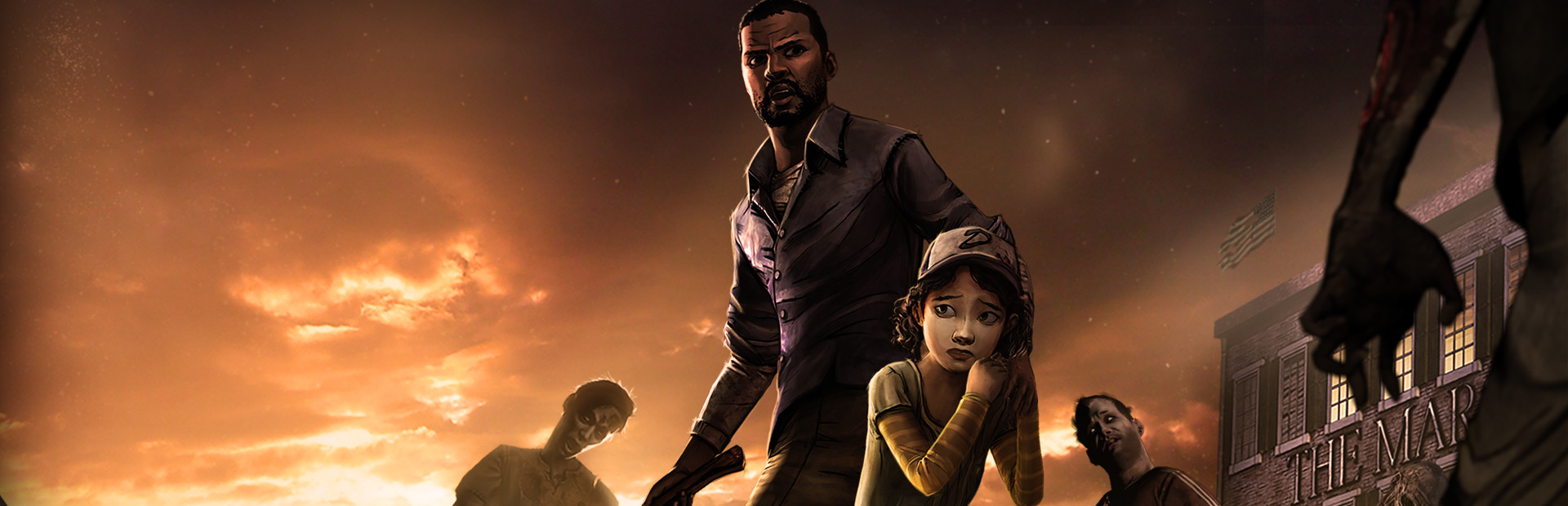
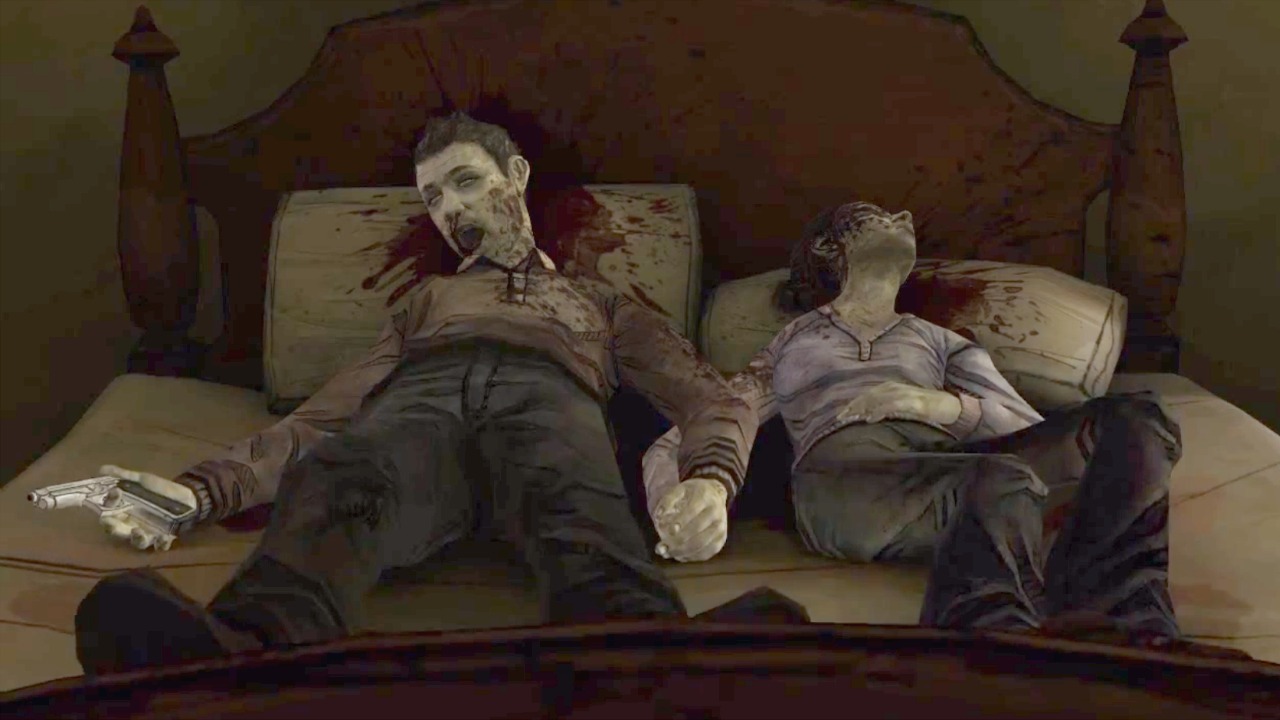
The Walking Dead has been a gripping and highly entertaining adventure game thus far, so now that the season finale is here we can see how every choice you made stacks up. Thankfully choices have impacted things throughout the series instead of stacking them up for the end. A few from each episode will affect this episode, but I have to say that this episode is extremely heart-wrenching and the most shocking of them all, not to mention the shortest.
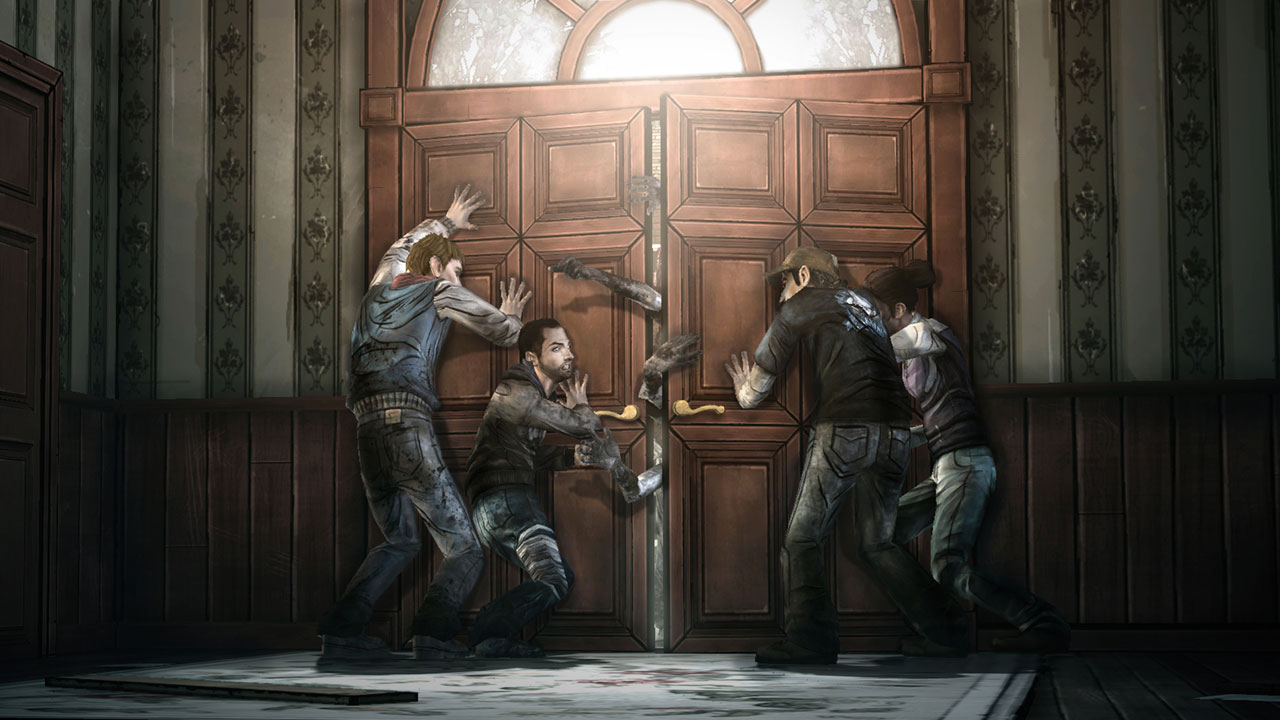
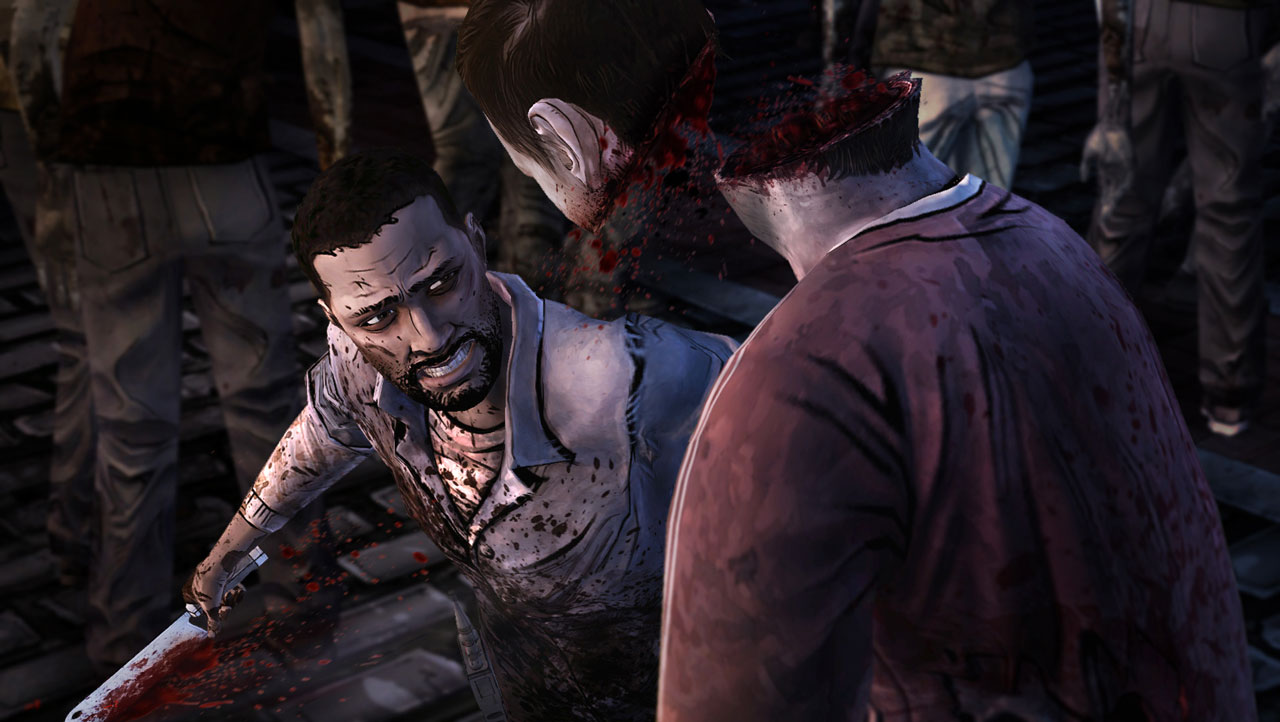
Lee and your surviving gang are on their way to save Clem from a mysterious man who snatched her up. They leave their boat behind for a bit to go find her, but things go completely downhill because the zombies are in the thousands and not to mention all the shocking moments that lead up to the end. Something happens every 20 minutes or so that will make you set your controller down and take a breather and say, “How did that happen?!” That’s how great this series is. Each character is memorable and you will either love them or hate them depending on your choices. The system Telltale set up is so organic and smooth that you don’t really notice your choice caused this until you really think. That is excellent game design, but I will take some time to address issues that I have held off until now.
Firstly, the graphics are pretty dated which I mentioned in the first episode. The art style looks like the comics, but the graphics are about 7 years old. There are hitches and stuttering often which never got addressed. Each episode is extremely short, but this one clocks in at just a measly hour. Why this is a stand-alone episode is beyond me, they could have just made this series four episodes. The pacing is also all over the place. Episode 2 was probably the most disappointing of them all, and Episode 4 was lacking in the shocking moment department. There’s also no challenge in the game with this just being an interactive experience. This is one of my favorite adventure games of all time, but I would like to see some serious upgrades in Season 2.
With all that said Episode 5 ends on a cliffhanger and who knows when we will find out what’s happened next. After seeing how successful this series is I’m sure Season 2 will start pouring out through next year starting in spring. Episode 5 is very touching and after you finish the game you will realize that Season 2 will start with a whole new cast of characters. As it stands Episode 5 delivers a great ending and you really feel satisfied with your journey through Savannah and will sit back and wait for Season 2.
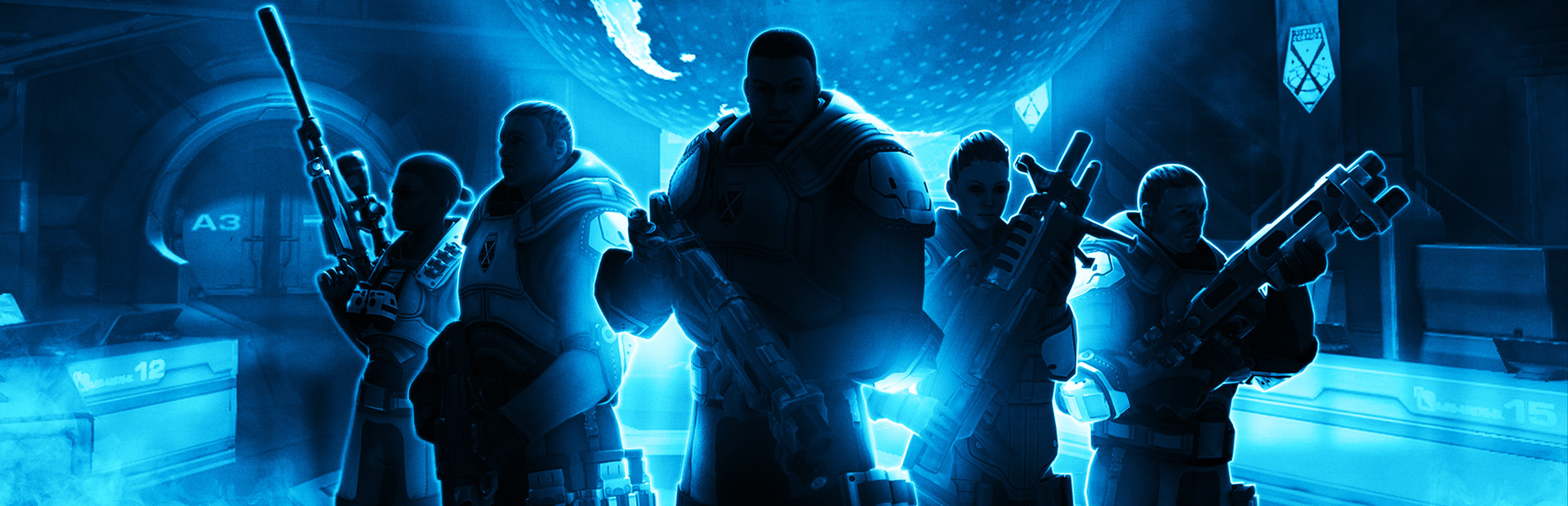
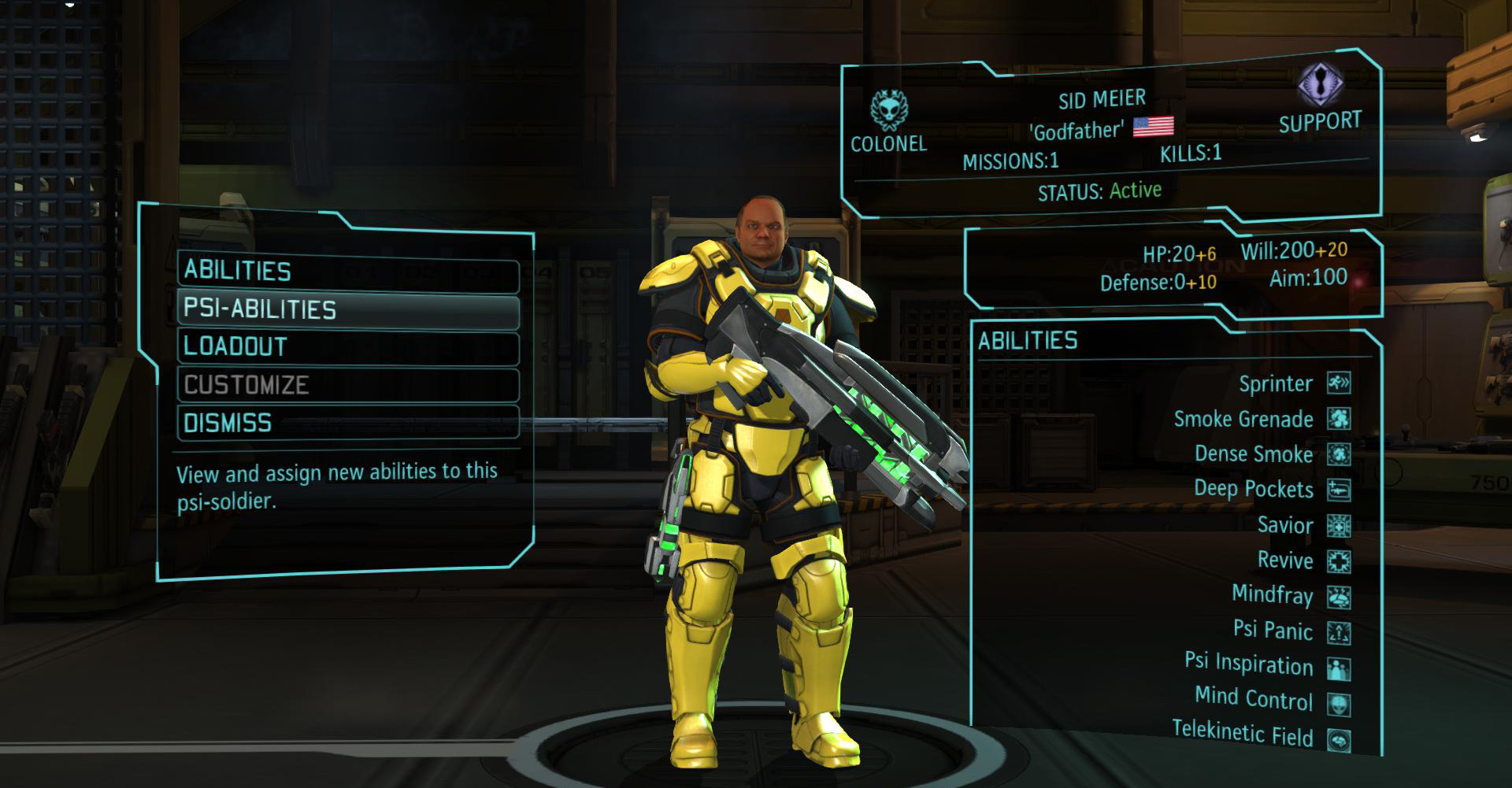
XCOM was a popular turn-based strategy game back in the ’90s, and everyone was surprised by how well this game turned out. Enemy Unknown keeps the series vibe and atmosphere updated to today’s standards. Enemy Unknown is one of this year’s best strategy games, but there is one reason why most people will never complete this game: It is too damn hard. Not the fun and challenging type of hard, but the kind that makes it impossible to move on no matter how well equipped your soldiers are.
The game does a very good job of introducing new things to you as you move on. The UI is very simple and uncomplicated, but pretty deep. You get to see a cut-a-way of a military base, and you can click on each department. Research is where everything starts. By gathering all intact materials from missions, you can research new things like weapons, armor, satellites, and various other things. Engineering is where it is all made and upgraded, as well as keeping track of other buildings. Workshops, laboratories, generators, hangars—all these things determine how fast you can upgrade and how you become more powerful. The barracks are where you can equip your squad’s loadout, upgrade soldiers, hire new ones, etc. Finally, there are the situation room and the command center. Here you can advance the days until you run into missions, trade alien parts on the black market, and view how in distress the world is. It is all very simple and almost revolutionary in design because most strategy games are Excel sheet-based and are pretty complicated and hard to navigate.
Once you assign things to engineers and do research, you can advance the days until you run into something, such as a UFO sighting. When this happens, you scramble your jets, and depending on how good the equipment you gave them is, they’ll take it down. Most of the time, you will run into abduction scenarios where you eliminate all hostiles or have to rescue someone. When this happens, you get a choice as to what country to help. Each one gives you a reward, such as money, scientists, engineers, or other items. Usually, you pick the one that’s in distress the most because if you don’t, they will remove themselves from the XCOM operation, and if they all withdraw, it’s game over. Once you go into battle, this is where you see how hard this game gets.
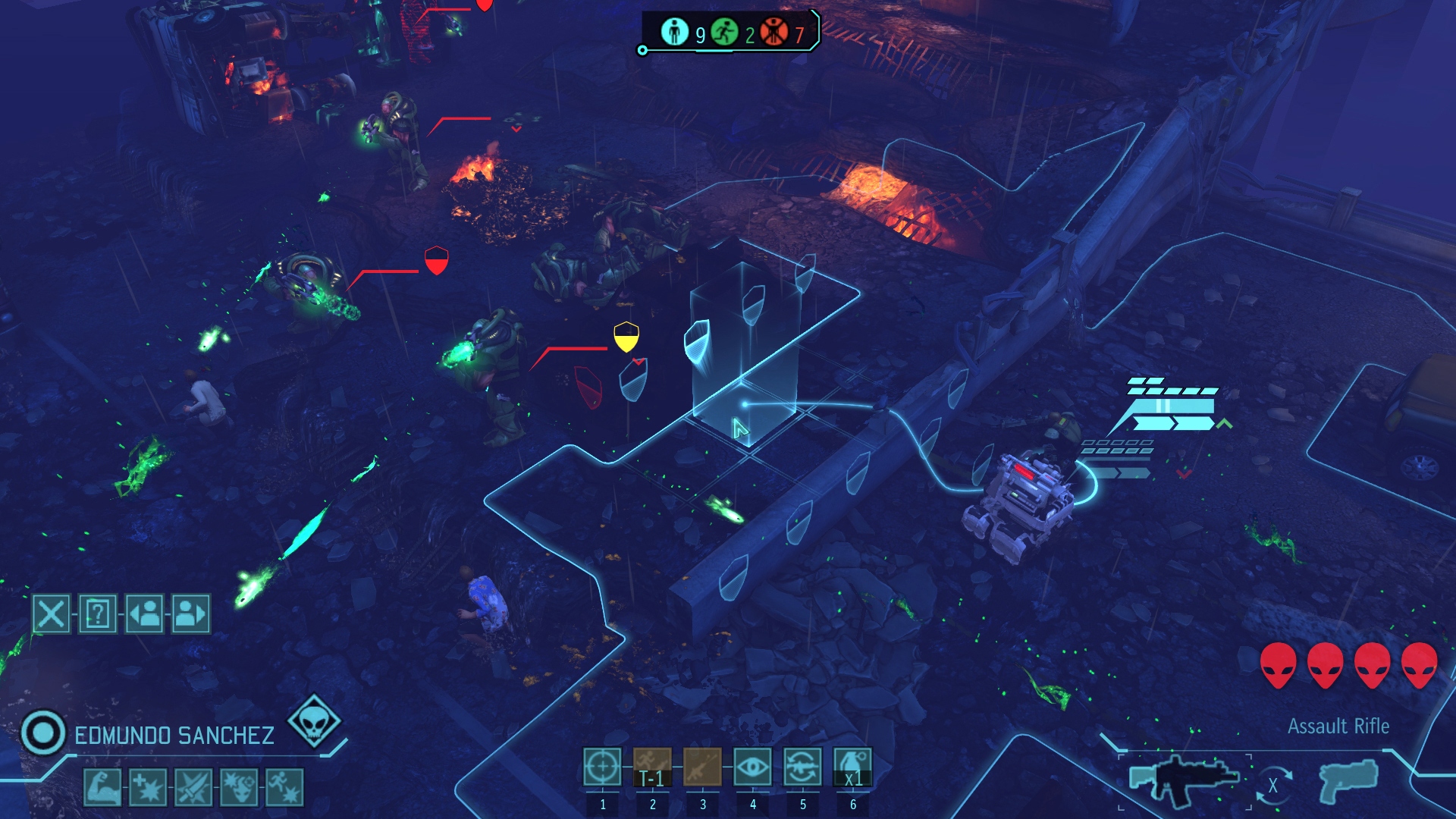
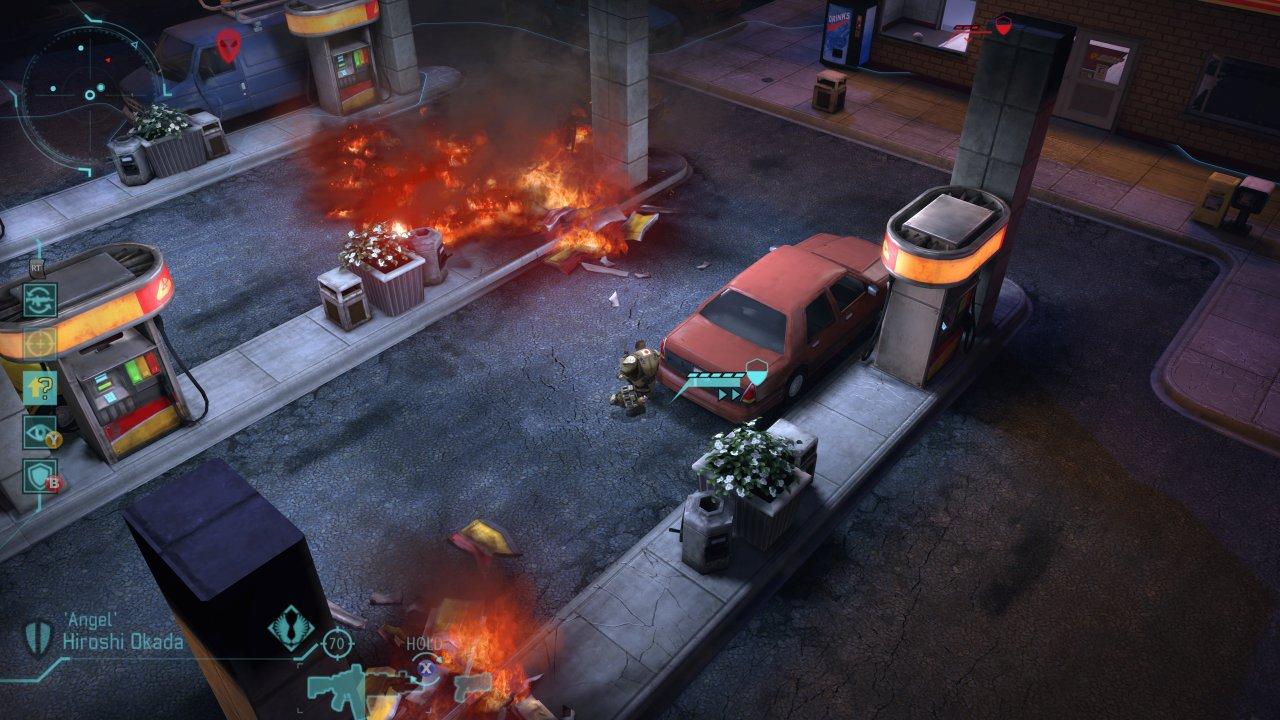
Each soldier gets two moves. The area around them is blue, which means that’s one move, and yellow, which means it takes both moves to get there. Performing an action takes one move, and that is usually shooting alien scum. All soldiers start out as regulars with assault rifles until after their first mission and they rank up. The class is chosen randomly, which I really hate because you can be stuck with five snipers and just one assault guy. When you are ready to shoot, you will see how accurate your shot is. Once all turns are taken, it’s the alien’s turn. This back and forth is normal for strategy games, but the objectives you are given, or the difficulty of aliens, are absurd and completely unfair. You will shoot down some small grays and get through a few thin men. Maybe you will lose 2 or 3 guys in the process, and then four freaking Mutons will show up and wipe the rest of you out in one turn. Or don’t forget the damn spider things that can turn your squadmate into a zombie in one hit. This gets frustrating because every mission is like this. I rarely got through any unless it was on an easy-difficulty mission.
This would be ok if it were during main missions, and you could go back and grind a bit to get better equipment, but you have to do that with every single mission. You fail almost more than you succeed, such as by losing so many soldiers. Once a soldier dies, they are dead forever and won’t come back. Once you lose a fully ranked soldier, you have to start from scratch again with a new guy. It is completely unfair in a game this difficult. In most missions, you will be lucky if you get out with 2 or 3 guys, but you are probably thinking that’s because I stink at the game. I would restart and try all different strategies, and nothing would work. The whole point of the game is to take cover and never be out in the open. Once you advance and are just standing there, you’re dead. The fog of war doesn’t help when you run around the map trying to figure out where all the enemies are. Forget a rescue mission where you have to save a certain amount. Saving 5/25 people is a lot harder than it sounds. All 20 will die before you get to your third guy. This game is just a nightmare, and not in a fun way.
That doesn’t make the game bad, though. There are a lot of great research projects that have a huge impact on everything you do. You have to decide carefully about what you want, or you’re screwed. You get a very limited amount of money every month, and you have to stretch it. I found this a bit unfair as well, because there’s no compromise. Even if just one element was easier, it could make this game more tolerable. As it stands, I had this game for over a month and barely got 25% through the game before I gave up. Spending 45 minutes on a mission and then dying at the end is just ridiculous. Reloading quick saves doesn’t always work, either because you realize you forgot to equip someone with a medkit or because you need to be more accurate on certain missions and forgot to equip scopes. This game is just a pain.
The production values are at least nice, with great-looking aliens and some decent voice acting, but overall, this game requires extreme patience more than skill or brainpower. The game is well done with intense battles, but maps repeat often, the camera is screwy where it zooms out of buildings, and the graphics are a bit underwhelming. The main thing is the extreme difficulty, which practically ruins the game. I have never played such a hard strategy game before, but there’s someone out there who will like this.
Zombie shooters are very popular these days, but surprisingly, not a lot is bad. Dead Nation is a top-down shooter that has you blasting zombies away as a lone survivor during a zombie apocalypse. The story isn’t anything original, but the action will test your endurance with waves that come in the hundreds.
All your weapons are equipped with a flashlight, and this is the only thing that allows you to see what’s coming up to you. Zombies range in different sizes as well as really large ones that can kill you in a couple of hits and take a lot of bullets. The levels are very linear, with rubble blocking your way, but the whole point is to score high and get as much gold as you can to upgrade your weapons. You can find this in containers, on the backs of cars, and even in large chests. You will need to upgrade your weapons often, or you will never make it through the game. There are a lot of upgrades, and you won’t buy them all in one playthrough.
The levels are broken up into checkpoints, and in these safe areas, you can upgrade your weapons and swap armor that you find. You can upgrade the ammo capacity, clip capacity, damage, reload speed, firing rate, and other things. Each upgrade costs more, but it is necessary to upgrade as much as you can. You have items that you can throw, such as dynamite, grenades, flares, molotovs, and mines. The zombies become attracted to bright lights and loud noises, so these items can give you a lot of breathing room. Even shooting cars that have alarms can wipe out dozens in an instant. The same goes for barrels and other items that explode.
Enemies get tougher as you go on, but there are also “arenas” on some levels that can be really tough. Hitting a switch to wait for an elevator or a large bridge to expand can be very noisy, so you will have hordes on you while you wait. These can be the toughest areas because you need to use your weapons wisely. Use your rifle to pick off zombies when the numbers are low. Use your shotgun when you have zombies filtering through a choke point. The blade launcher will slice through enemies until it hits a wall, which can take out entire hordes. The game is extremely fun, with lots of gore and great graphics that make the whole game tense.
Of course, this game was designed with co-op in mind, which is the most fun and the easiest. Going through solo is really tough, and levels tend to stretch a bit too long. Dying really stinks because you can very easily get set back to the last checkpoint, meaning you have to fight through the same hordes over again to get to where you died. This is probably the worst thing about the game, but once you play enough, you will get good and learn what weapons are best to use.
Overall, Dead Nation is a fun PSN game that will give you a few hours of tense zombie shooting. This game will really test your endurance because it never lets up. Once you think you are safe, hordes of zombies come at you from all directions. Grab a friend and play this during a long night, and you are bound to have a lot of fun.
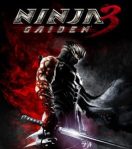
Ninja Gaiden for Xbox was considered one of the hardest games in recent gaming history, at least one of the hardest of the 6th generation. I had Ninja Gaiden Black and couldn’t get past the third level; it was so hard. Ninja Gaiden 3 dumbs down the difficulty and concentrates on cinematic combat like God of War, but doesn’t pull it off as well. There is no reward for combat, the levels are highly linear, and the same patterns repeat often. This is a fun weekend rental, but nothing more.
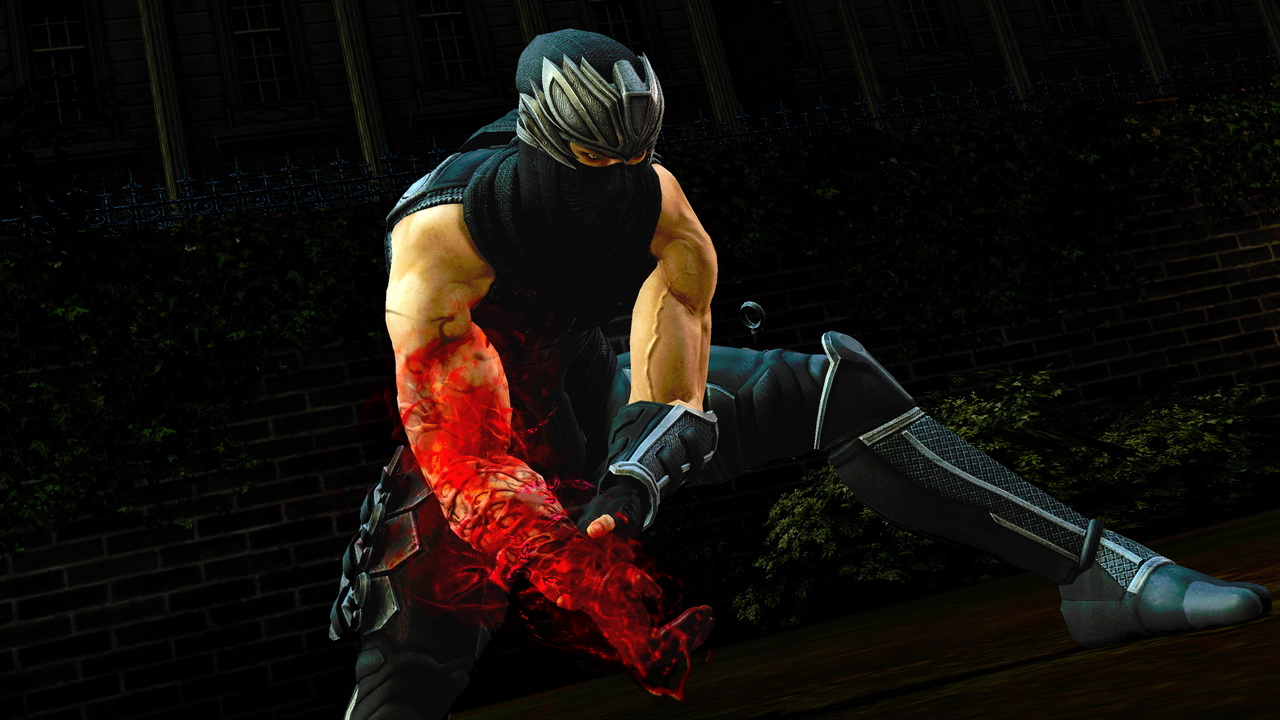
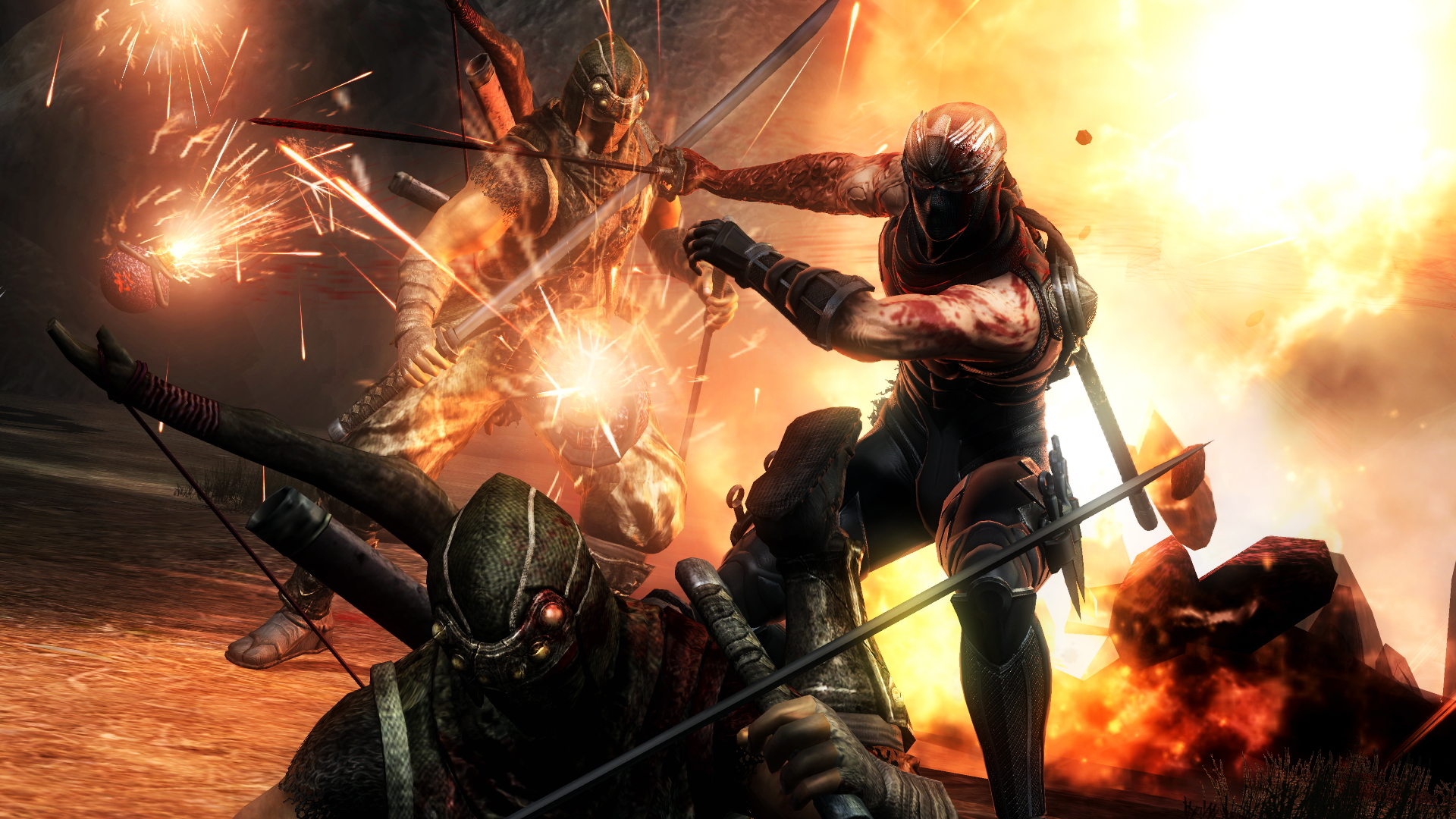
Usually, in a Ninja Gaiden game, you die several times in the first level. The game starts out pretty cinematic, with Ryu jumping from heights and gliding down. The combat consists of light and heavy attacks and dodges. The problem here is that the same moves and animations repeat constantly and just get tiresome less than halfway through. There are no upgrades, no new weapons, no new Ninpos—nothing. Just hack away until everything dies. The game is still really tough, with dozens of enemies being thrown at you at once, but you restore full health after every battle this time, and there are no health potions; in fact, you can’t even shop at Muramasa’s anymore. Why they took such core elements away is beyond me. The only new gameplay element is using Ryu’s infected and cursed arm to instantly kill enemies. When you kill enough, you can hold down Y and do this, and his dragon-fire Ninpo will clear the entire screen. It seems like cheating when it comes to Ninja Gaiden and is hard to get used to.
A lot of people claimed NG3 wasn’t a true sequel and dumbed it down for today’s audience, which is used to being handheld through games. This may be true, but I think the QTEs are what got people so mad. You use them for everything, like combat and even climbing walls and wires. This is fun at first but grows tiresome quickly because they repeat so often. The same helicopter fight, spider bot, and other enemies repeat quite often, and it gets boring and uninteresting. The only thing breaking up the monotony is the unique boss fights, which are a lot of fun and challenging. I wish there was more to this game, but that is about it. The locales are familiar, at least with jungles, city landscapes, military bases, and various others. They change quickly, so at least that doesn’t get boring.
The story is actually quite interesting, despite how much people complained about it. Ryu gets a curse on his arm, and it is rotting his arm away. The Lords of Alchemy are working on some plot to take over the world, and eventually you will find out how towards the end. The characters are at least likable in that quick-satisfaction way. You won’t remember them long after you finish the game, but they are entertaining enough to keep you in the story, and at least the voice acting is decent.
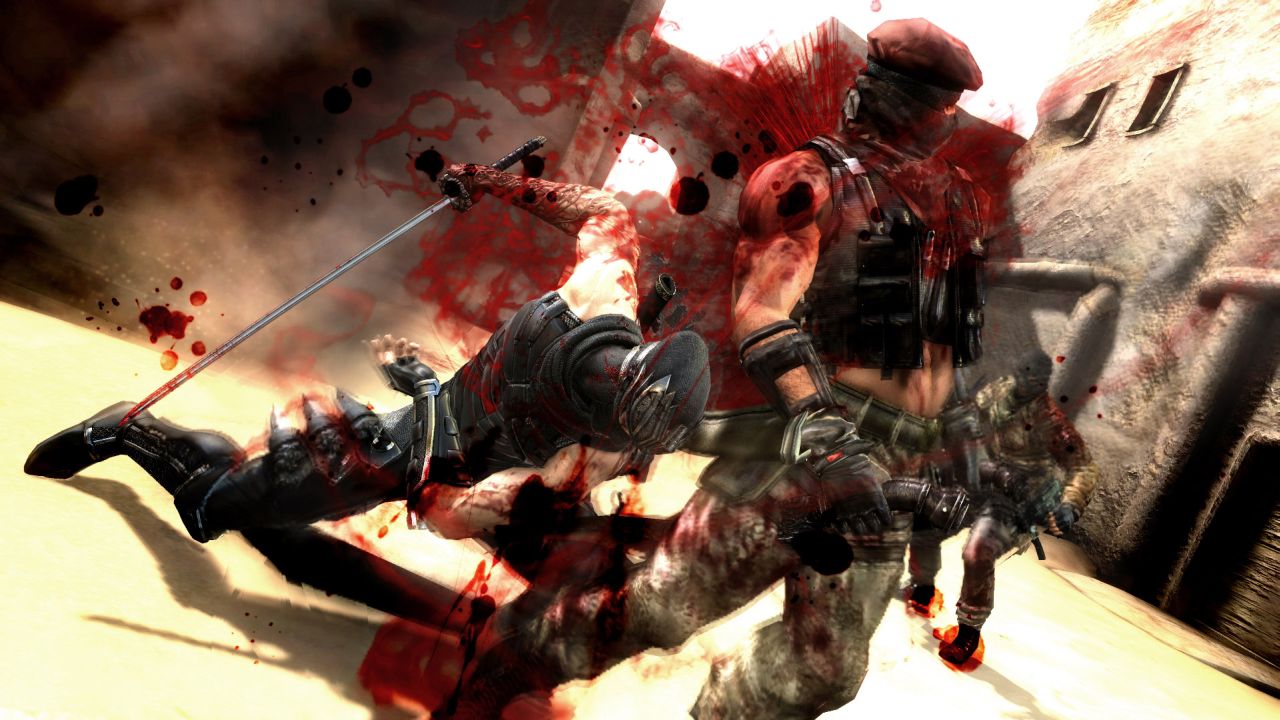
The graphics are really good for the Xbox 360, but you will notice the gore factor is severely toned down. No longer do enemies slice in half and heads fly off. It was a bit disappointing, but there are still buckets of blood. Overall, NG3 is a disappointment in a long-term way. You won’t be trying to master speed runs in this game, but there’s enough challenge here for a bargain bin purchase or weekend rental. The combat is so dumbed down that it becomes repetitive and nearly boring, but at least the fear of death is always near, and there are frequent checkpoints to counter this. There are no upgrades or anything like that, but at least Team Ninja saw that most people never finished previous games and tried to make it easier; this isn’t the way.
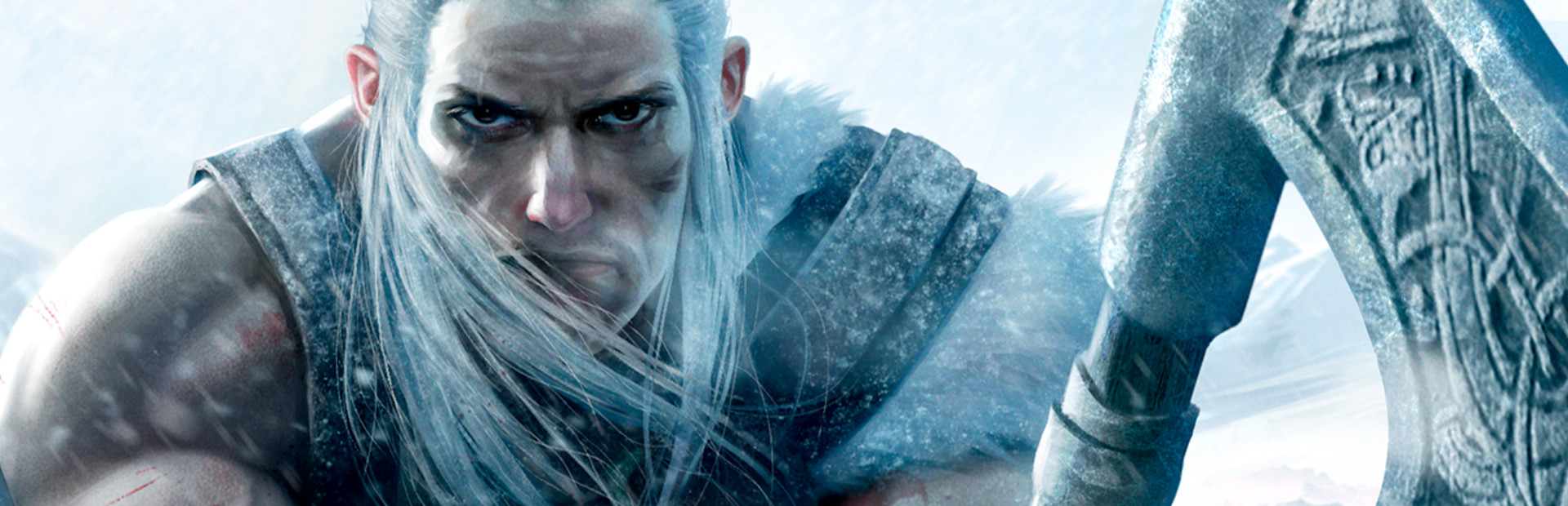
Creative Assembly has made a lot of time-period hack and slash games that are decent but have many flaws (Spartan: Total Warrior for PS2 was one). Viking is a decent game but is plagued with repetition. I played this 5 years ago on the Xbox 360, and it was just OK back then. This game has aged like rotten milk, only having a decent graphics upgrade. Is it worth even a $15 purchase?
The answer is maybe. It depends on how you look at low-budget ports of older games. Viking has a paper-thin story that is middling on nonsense. All I know is that two busty goddesses are fighting each other and using Skarin (what a dumb name) to round up Vikings to stop Hel’s Legion. It feels more like a Lord of the Rings rip-off when you play it. Aside from the lame story, everything in this game is repetitive and grows boring. I finished this game back in 2007, but I couldn’t even finish the third section of this game this time around; I just wanted to tear my hair out. The combat is sluggish, with repetitive animations and combat moves. Sure, there are some upgrades, but mashing light and heavy attacks against hundreds and hundreds of enemies is boring. There are a few instant kill animations, but they repeat so often that you will just finish off the enemies normally because of how tiresome it gets. It doesn’t help that the slow motion goes on for way too long.
Using flame pots, throwing axes, and health potions don’t help either. This game can be really tough, and you respawn at Leystone locations spread throughout each of the three islands. Your only goal is to run around liberating camps with Viking cages in them. It gets boring because that is all you do. There are no other objectives. Some camps require you to “prove” yourself before they join your army. This leads to mundane tasks like liberating another camp to prove yourself. At the end of each island are large fortresses that you liberate, which are probably the only interesting thing in the game for the first time. You can summon a dragon to wipe out shamans, but you need to acquire stones to do this, which completely breaks this. Once all the shamans are dead, you liberate that area and move on. No matter how fast your computer is, you will experience a massive slowdown during these battles because of all the people on screen. This drove me nuts.
Before you can liberate the final town on each island, you have to use stealth to sneak in and complete an objective. This was both broken and boring because you had no idea where to go. Enemies spot you too easily, and then they call all their friends over, and you die. Why you have to sneak into these camps is beyond me. Why can’t you just liberate it and then take the item as a reward? After one hour, this game is just not fun. The world is empty, there’s no reward for exploration, and the map system is nearly useless. The only redeeming qualities are the gore and the updated graphics. At least the game is really short and can be beaten in about 8 hours.
Overall, if you missed this five years ago, you’re not missing anything now. If you really need a budget hack and slash, then go ahead, but be warned of the boring, repetitive gameplay.
I can’t tell you how long I have been waiting for this game—well, I can, since the first one. I didn’t know what AC3 would be, but I knew down the road it would come, and here it is. Somehow, Ubisoft can manage to make each entry feel fresh without having to do drastic reboots. AC3 is set in the American Revolution and is the final chapter in Desmond’s story, or so they say. You play as Connor or the unpronounceable Ratonhnhaké:ton. He is a Mohawk Indian, or half British, half Kanien’kehá:ka. He is actually a likable character, and after Ubisoft created such loved characters as Altair and Ezio, it becomes a huge challenge to create a third. There are so many changes to the game that it feels like a true sequel, but a few flaws that have persisted throughout the series remain.
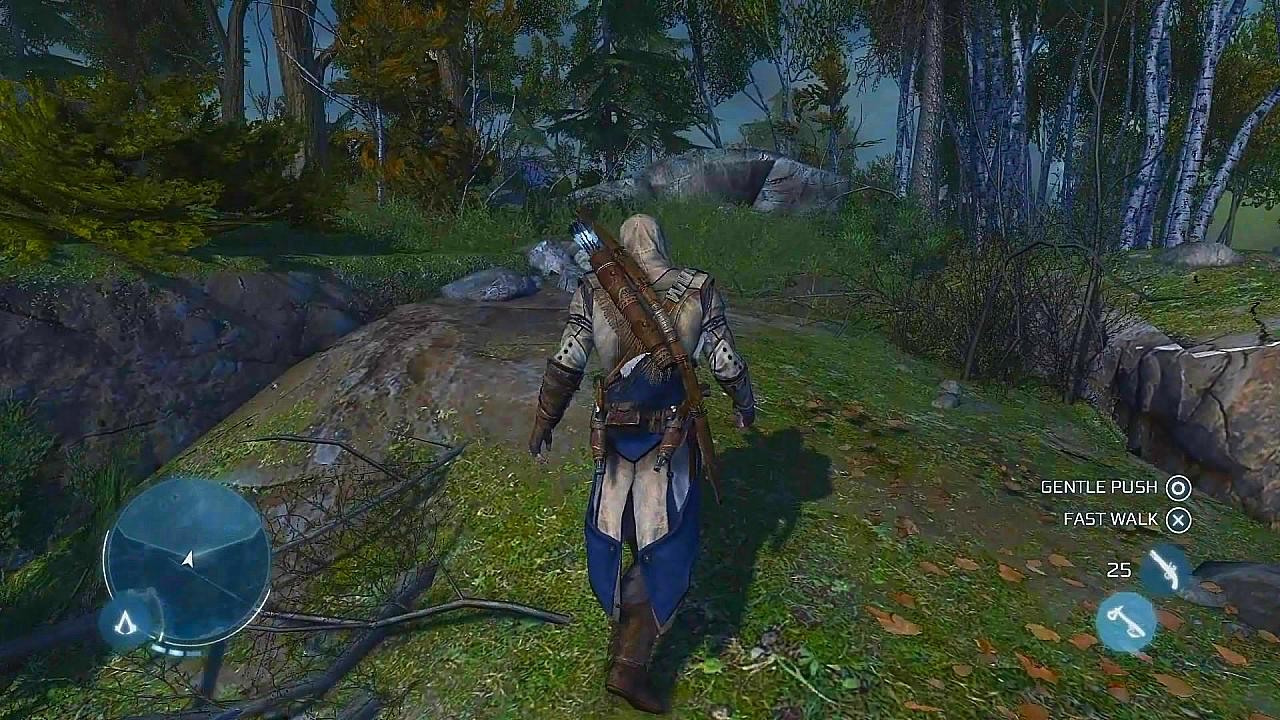
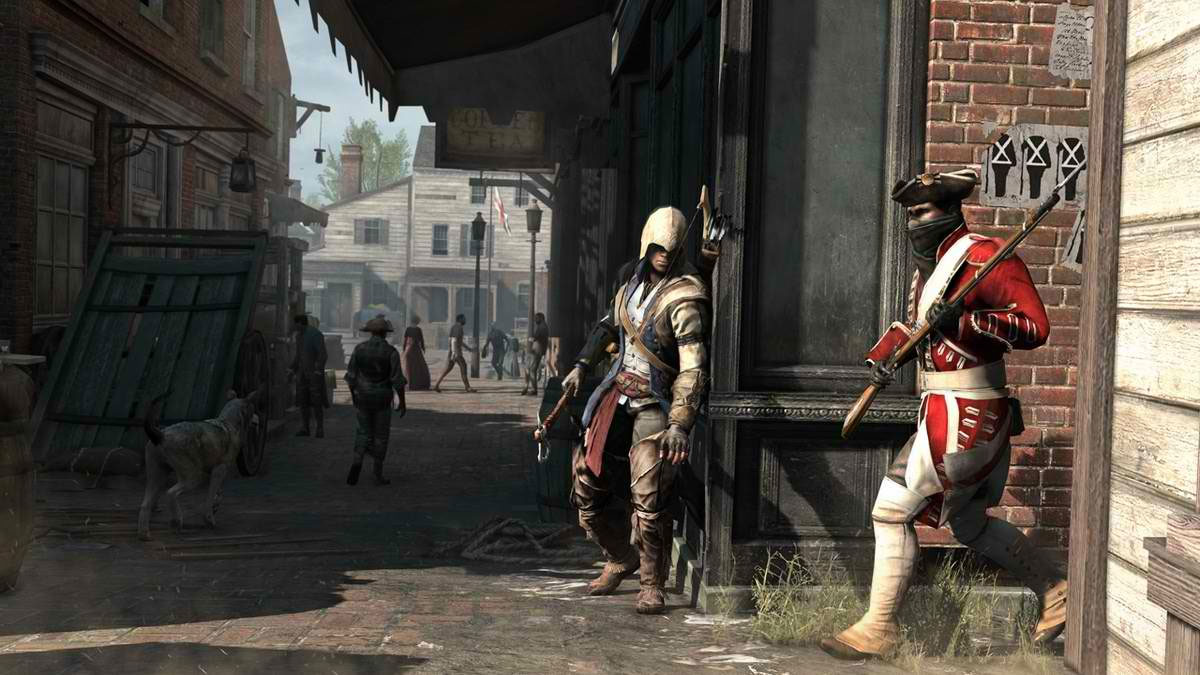
The first thing you will notice is the change in the HUD design. It is much more streamlined and user-friendly. The second thing you will notice is that the puppeteer system is gone. You do everything with RT only and jump around with A. This is supposed to help streamline climbing (which it does), so you have to press fewer buttons. Connor automatically pushes people out of the way while running, so you no longer stumble and fall down. One major thing I took away was how much you can blend. Being able to run away from guards is much easier now, but you can still hide in stacks. There are different crowd types of blending in, like people leaning against walls, starting riots, etc., but when you are notorious, you can fight or lose them more easily. The whole environment just feels more natural, so you can climb on cliffs in the frontier and use different handholds. Trees can now be climbed because a new V-shaped object has been introduced.
The same flaw persists in parkouring throughout every game. Connor will jump around on handholds that you don’t want him to. He will even sometimes get stopped by invisible barriers if an object is too low. This led to cheap deaths and frustrating restarts. I guess some things can’t ever be ironed out. Thankfully, the combat is much improved, with Ubisoft realizing Assassin’s Creed is a counter-fest and actually building on this. AC3 is my third favorite fight system in an action adventure right under God of War and the new Batmans. Each attack is built around a counter, so you press B when a red triangle appears above an enemy’s head, then press X to instant kill, B again to throw, or A to disarm. The combat system is fast and fluid and leads to fewer deaths, but it is still challenging because you need to be quick. Each assassin you recruit is unique, and there are only six. Each one has a special ability, like escort, marksman, riot, and others. These unique abilities give you much more options when infiltrating restricted areas to either bring you to the heart or distract guards. You can even send them off on missions through the map menu instead of localized areas.
There are many weapons and items you can use in combat. The punch dagger has been reduced to just one, but you have a flintlock pistol (yes, it requires a lengthy reload every time, but you can carry two later on), and you also have a bow and arrow. Other items include mines, poison darts, rope darts, and many others. You also have to watch out because enemies have weapons and will form firing lines. When they do this, press A near an enemy and use them as a human shield. Good stuff.
On another note, combat leads to hunting, which is a great mechanic added to this game. Exploring the large Frontier area and homestead allows you to hunt animals and skin them for items to use for crafting. You can stalk animals (stalking is a whole new feature that allows you to hide in tall brush), assassinate them from the air, and lay snares to trap smaller animals. Laying out bait will make an animal come to the exact area you want, but watch out. Using more aggressive methods of killing will damage the animals’ pelts, such as using a pistol or mine. Hunting also leads to many club challenges, which are extremely difficult to complete. You can even be attacked by animals, which leads to quick-time events.
Now that we have the three major things about the game out of the way, let’s talk about the minor stuff. The menu and HUD design are much more streamlined, such as your health, ammo count, and even the assassins you can call upon. Everything is minimal, and I really like that. Of course, when you pass by new areas, you get briefed on a bit of history about them, which is 25% of the fun in AC3. After you finish the story mode, you can go around finding hundreds of collectibles such as feathers, chests, trinkets, and other items. The club challenges are really tough, though, and require you to meet certain criteria to move onto the next list. It can be fun, but some are nearly impossible to complete.
One of my favorite things in the game is the Peg Leg Trinket missions, which are cinematic and a placeholder for the Templar Tombs that were in previous games. The final piece of loot for these missions is awesome, and each mission is memorable and so much fun. There is a new investigation mechanic added that has you finding clues on the map, which is used for hunting, side missions, and story missions. What’s more, the naval battles are absolutely epic and really fun. Thanks to the new Anvil-Next graphics engine, Ubisoft created some pretty realistic water effects that make you feel like you’re really in the ocean. Steering the ship around and blasting off cannons at enemy ships is so much fun, and each mission has various objectives. Probably the best use of a controllable ship in any game ever!
You are probably wondering about the story. Sure, Connor’s story is touching and has him following every major event in the Revolution along with key people. The characters are entertaining to watch and hear, and Desmond’s story is, like all the other games in the series, very brief, but the ending isn’t as bad as everyone says it is. It isn’t confusing, but just abrupt. Desmond and the gang are trying to stop the solar flare from destroying the world on 12/21/12, and it gets a bit complicated. Connor’s story has a satisfying ending, but you just can’t help but feel giddy when a historic figure like Ben Franklin or George Washington appears on the screen.
Once you finish the epic story mode, there is multiplayer, which is just so addictive. Ubisoft has fine-tuned it and nailed it with the cat-and-mouse gameplay that you can’t get enough of. Each player gets an avatar of another player they have to kill. However, at each level, there are dozens of duplicates walking around, but you can’t just start killing everyone. Killing innocents exposes you and makes you vulnerable. Find your target by watching for suspicious behavior like blending, hiding, or running. You also have people hunting you, but you can’t kill them; just knock them out. If you confront them directly, you just get an honorable death, which reduces their kill score. Stay incognito and knock them out from behind. There are many modes, such as Assassinate, that don’t give you any contracts. You just have to watch your compass and kill everyone you can find. There are deep customization options that allow you to change the appearance, attack moves, stances, taunts, and weapons of each character. You can unlock new items by ranking up and earning credits.
Overall, AC3 is huge and fantastic. Exploring the Frontier, Boston, and New York is amazing, not to mention the fantastic graphics for such dated hardware. Multiplayer is extremely addictive, and other small tidbits just add to that. Weather changes, hunting, crafting, side missions—the list goes on and on. The only way to truly experience this amazing game is to play it. This is definitely a game of the year-worthy game and well worth a purchase.
Limited Edition: For $60 extra, you can get a highly detailed figurine of Connor, a life-size Assassin’s version of the American flag, a beautiful art book, and a belt buckle. This is all well worth the extra money because of how detailed everything is. The flag has metal eyes, so it can be flown on a pole. The statue has so much detail; it looks fantastic. The art book is designed like a 17th-century journal and looks beautiful. It was well worth the purchase.
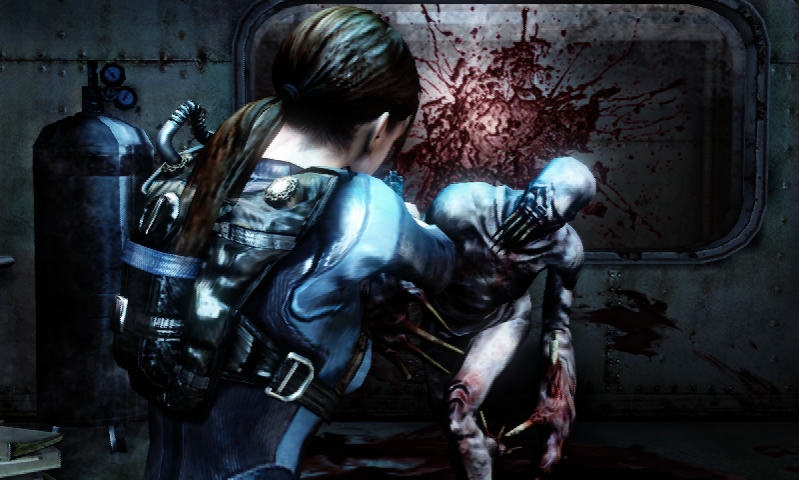
Revelations is the first Resident Evil game on 3DS and is probably the best portable RE game ever made. Not to mention, probably one of the better, more recent Resident Evil games. The controls are solid, the story is at least a little interesting, and the monsters are awesome. Of course, the game has great 3D effects and a lengthy campaign. Hop aboard Queen Zenobia as Jill Valentine and find out for yourself.
You start out as Jill Valentine aboard Queen Zenobia, which is a derelict ship that possibly holds answers for the T-Abyss virus that the terrorist group Veltro unleashed into the ocean (or will unleash). The game has an over-the-shoulder perspective like RE4 and 5, but when you use your weapons, the camera goes into the first person to utilize the 3D effects. It works well, and you can move around while aiming by holding L. There are many different weapons in the game, and you can find custom parts to upgrade them. It really makes a difference when facing tough enemies, but not every custom part is easy to find. Some are hidden away, needing certain keys, but this is grouped into a major issue with the game (I will explain later). The shooting feels great and is really solid. The weapons vary from various machine guns to shotguns and pistols. Each type of weapon shares the same ammo pool, but each weapon is different in range, fire rate, and damage.
The exploration is a lot like early RE games because it is claustrophobic and you are stuck on a ship the whole time. This felt a lot like the mansion in RE1, but I prefer the more open adventure feeling of the later games. This leads to constant backtracking, but Capcom tries to skirt this by blocking off passages or making new ones available via keys. I find these ships confusing to navigate and am always lost until later in the game, when the last few chapters are linear and more cinematic and you only have one way to go. It would help if the map system didn’t stink so much. It is in 3D, but you can’t turn it the way you want, and there are no lines that divide sectors. Half the time, I couldn’t tell if I was on the bottom floor or the top floor and just had to run around guessing. The mini-map is more detailed, but why not the full map too?
This is probably the worst thing about the game, but sometimes the enemies can be tough, and too many spawn. This is a close-quarters game, so having 10 enemies spawn in one hallway is a disaster and leads to frustrating deaths. Not to mention the extremely tough final boss, who is a lot like Nemesis. The game does have a pretty good dodge feature where you push the analog nub towards the enemy at the right moment. This can ease tough boss fights, but finding their weakness is key. The enemy designs are awesome, and some are almost Silent Hill-like. They are creepy and gross, and they stray away from the human zombies that we are used to in this series. It is a nice change and should be introduced more often.
The game also has some pretty awesome gameplay change-ups where you use a turret to fight off a giant monster, carry wounded team members, swim, and do various other things that change up the pace. Revelations is a fun roller coaster ride that is full of surprises and will keep you entertained throughout the entire 10-hour campaign. Once you beat that, you can do co-op missions where you fight off hordes of monsters, but some sort of single-player mission mode would have been nice. Revelations also look fantastic with visuals that fully utilize the 3DS hardware.
Overall, Revelations is fun with great visuals, 3D effects, and awesome gunplay. The monsters look good, and the story is decent but nothing memorable. The gameplay is changed up often, and there is a nice long 10-hour campaign. If you love Resident Evil, then this is a must-have for any 3DS owner.
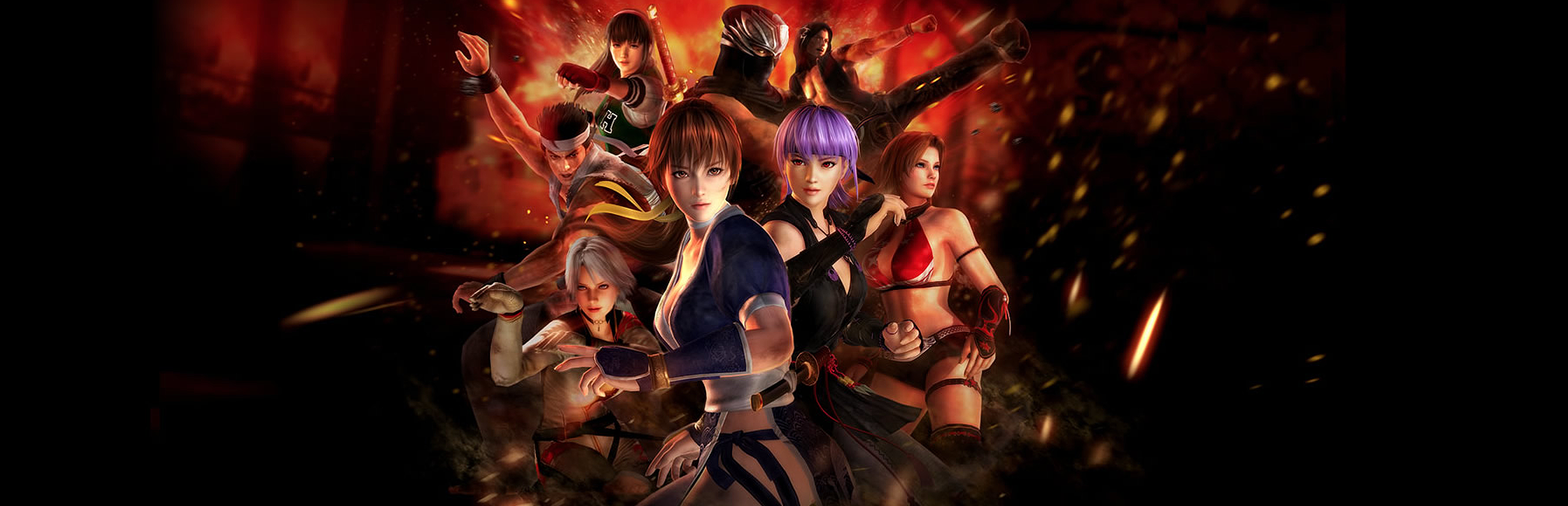
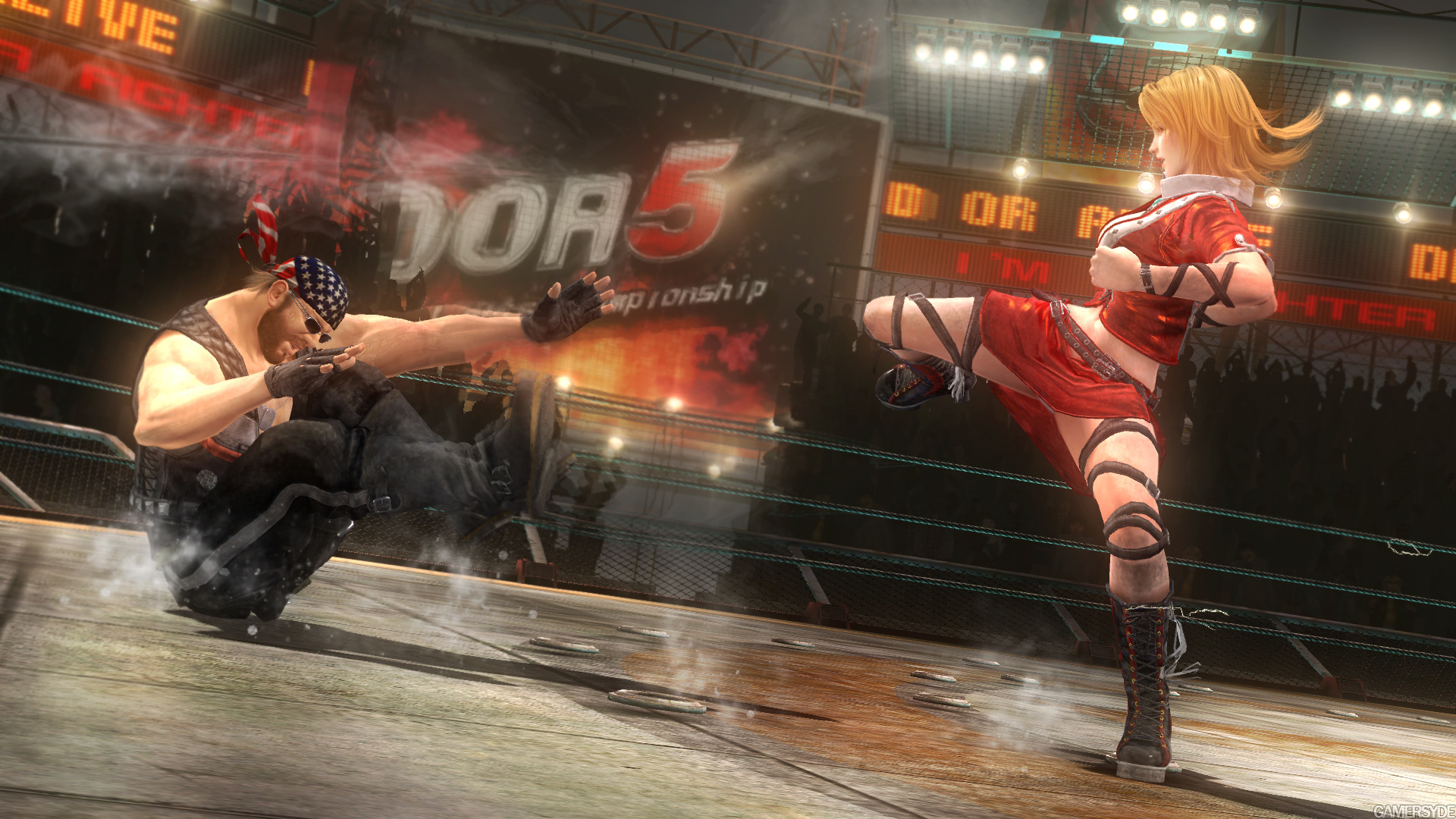
Dead or Alive is one of the longest-running fighting games, dating back to the PS1 era. It is also one of the fighting games that probably adds the least amount of features or changes through each sequel. DoA 5 doesn’t really add much, so fans of DoA 4 will be a little disappointed here. The fighting system is nearly unchanged, and all you will notice from the beginning is a new story and a graphical upgrade. The game looks pretty good, and there’s a long 65-mission story, but is it worth the $60 purchase if you are just happy with DoA Dimensions or DoA 4?
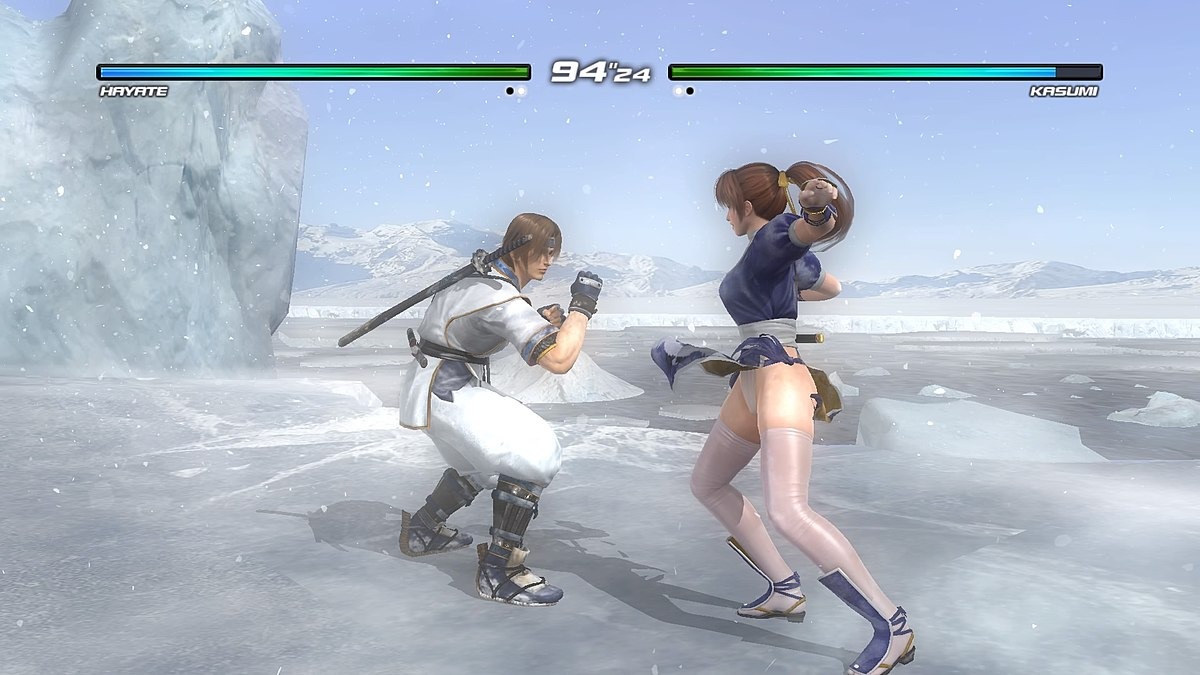
The only new additions to the fighting system are the Cliffhangers and the Critical System. Both are underwhelming and just add to the already complicated fight system. However, it is more enjoyable to button mash than other fight games that rely on things like jump canceling, jump this, cancel that, etc. DoA is based around a triangle fight system that is based on holds and counter-attacks. This means you have to be quick and read your opponent’s moves; most fighting games aren’t like that. This is also a problem because predicting moves is very hard in this game, and having counters and holds for high, low, and mid strikes is just ridiculous and creates a very high learning curve that will turn most new players away.
The critical system allows you to do extra damage when the word pops up on the screen; when it turns red, you can do even more damage, but the timing for this is a serious pain. You spend more time trying to read and predict all this stuff than just button mashing, which is a lot more fun. Some fighting games are more fun when learning the moves and the fighting system (Mortal Kombat, Marvel vs. Capcom), but Dead or Alive isn’t. You have to focus less on the fight and more on the animations and things that pop up on the screen. I spent hours trying to learn all this, but in the end, I just resorted back to button mashing, which I felt more confident in.
Cliffhangers are cinematic events in which you power blow (a super-powerful charged attack) into a certain danger zone and a quick-time event comes up. This was fun, but it is hard to figure out the special Danger Zone in most stages and leads right back to that issue where you are distracted from the actual fight. DoA 5 just adds too many distractions, but for people who don’t mind (probably hardcore fans), then you may like these new ideas. Despite all of this, the fighting system is very fun and fluid and is all martial arts, with no fancy fireballs or magic attacks.
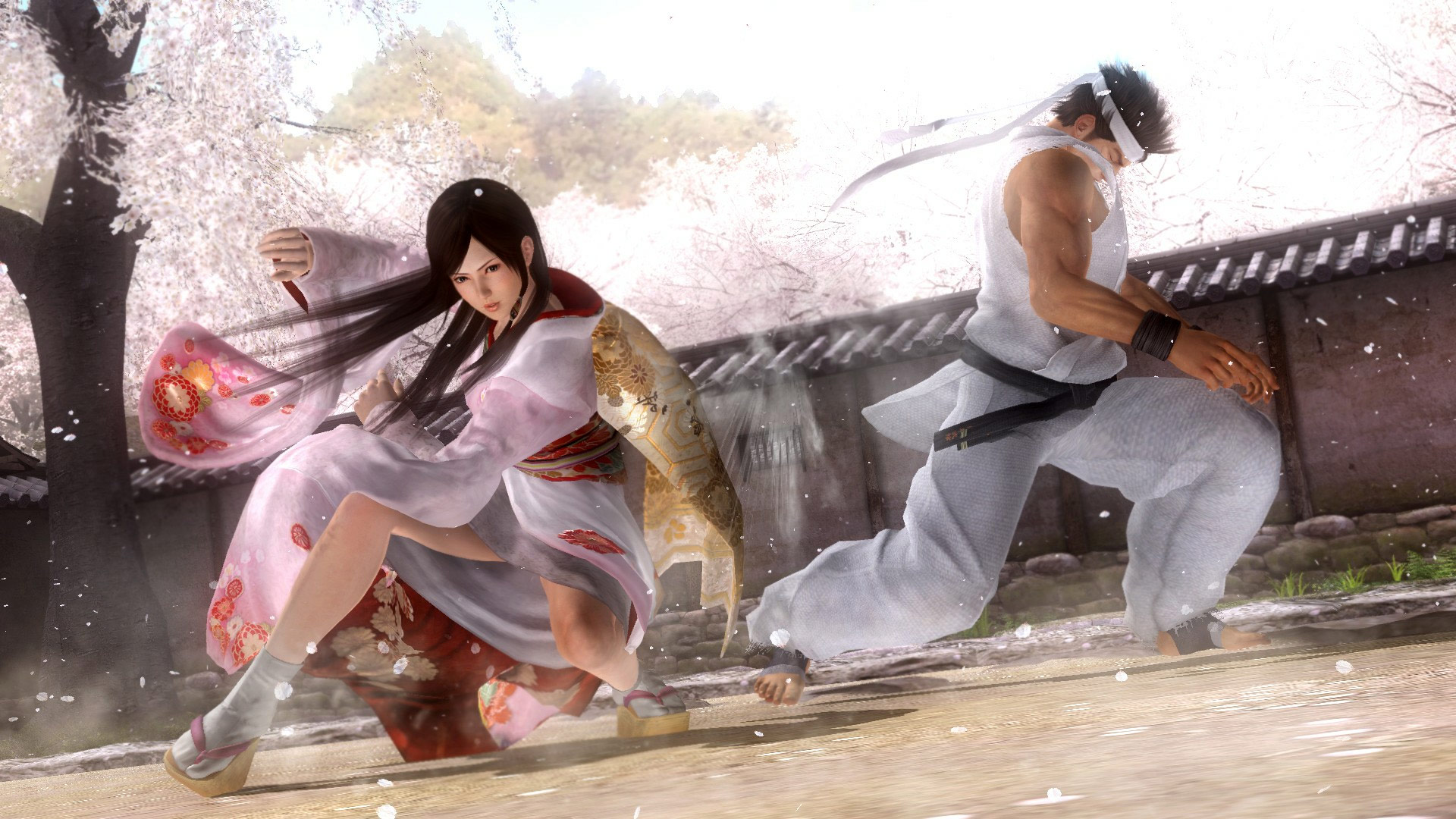
The story mode is back and is pretty well developed, but it is confusing for newcomers. You had to have played past story modes because they pick up after each other. Kasumi is just trying to stop Alpha 152 again, and the Mugen Tenshin clan (Ayane, Ryu Hayabusa, and Hayate) are after her. In the meantime, Zack is trying to recruit people for Dead or Alive 5, and most people will find the story mostly uninteresting. It is better than most fighting game stories, though. The graphics look great and pretty much push the consoles to their limits. There is a new dirt and sweat feature added to characters, but you can only guess why. Dead or Alive is 70% female fighters with large breasts that jiggle with every move in very little clothing. This isn’t a bad thing because most of the characters are well known and very well developed, with unique personalities. One of the features in every Dead or Alive release, for me, are the new costumes I can unlock in the game because they are so well done and make the women look even more beautiful.
The story mode also has bonus missions, but after halfway through, they start becoming impossibly difficult. Dead or Alive isn’t really a combo type of game, but pulling off 7 and 10-hit combos can be a serious chore. Online modes are fun as always, but most players will get discouraged by the good long-time fighters. This just proves that you must master the triangle system because once you get locked into a combo, you’re stuck. Health bars deplete quickly in this game, so fights can last only a minute or two.
Overall, DoA 5 doesn’t bring much to the table to call this a true sequel—graphical upgrades, a new story, and just a couple of new additions to the fighting system—but they hamper it down. There are also no new characters, just a few cameos from Virtua Fighter. Plus, the stages are actually pretty boring. Construction site, a street, and a Japanese house. Yawn. DoA 5 is solid and fun, but wait for a price drop.


















































 thebinarymessiah.com
Try multiplayer. A lot of fun !