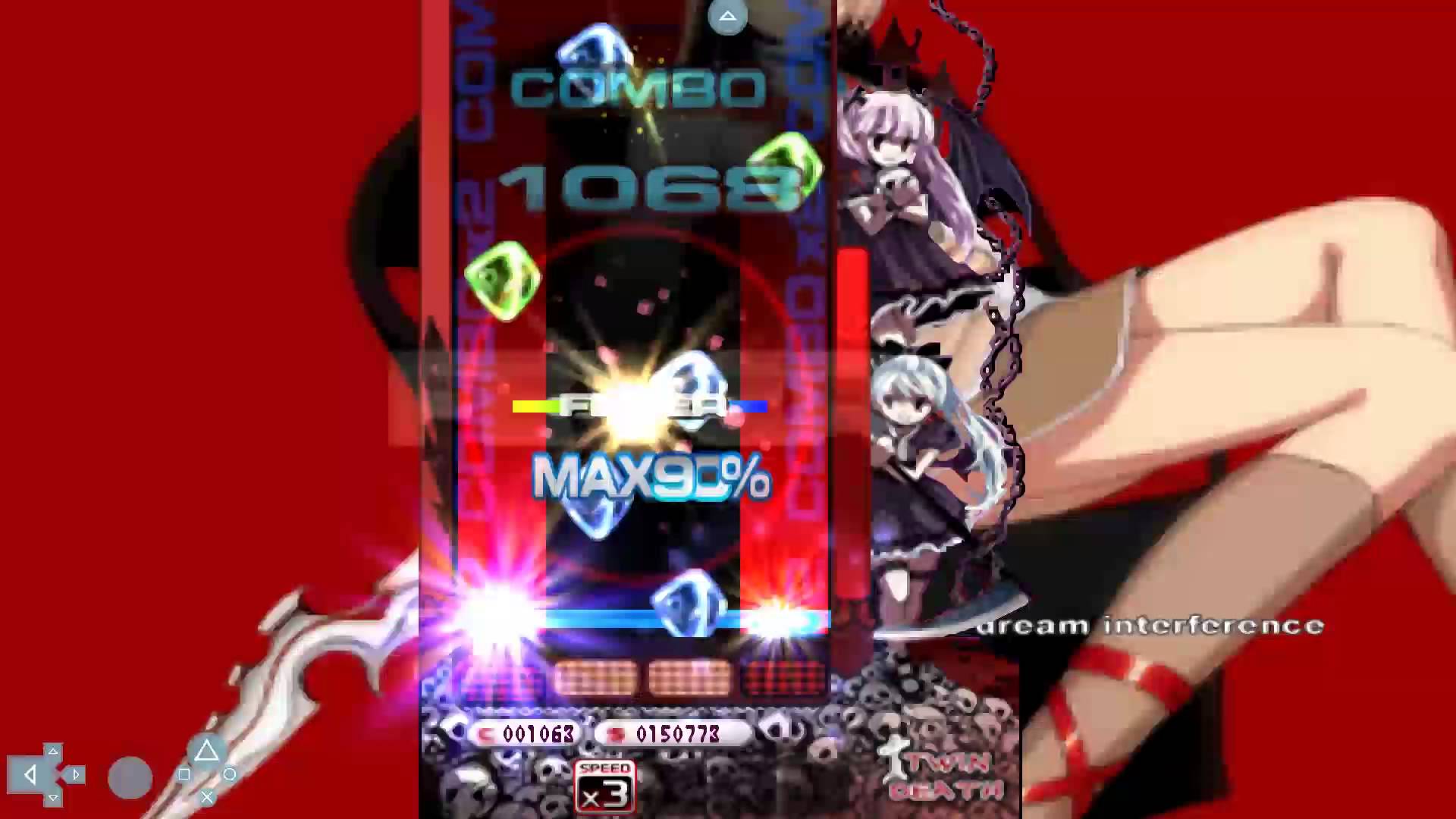
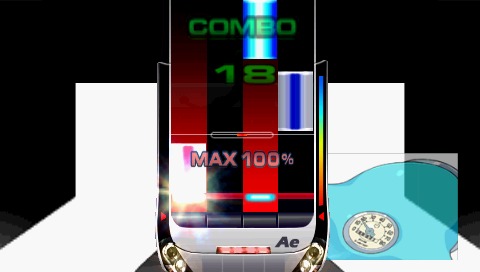
DJ Max is a huge rhythm game hit in Korea that uses a DDR-type gameplay style. There is obviously no dance mat, so you have to use the face buttons, and this works out just fine. There are 4-button, 5, 6, and 8-button modes. While 4 is the easiest, 8 can be damn near impossible. You select a song for each of the four stages, and each stage has harder and harder songs.
The game has some RPG elements, such as leveling up to unlock more gear, images, songs, etc. Notes, gear (the whole box in which the notes fall), and your character can have certain attributes that earn you more exp, gold, etc. There is even a speed modifier for people who want more of a challenge or if the game is going too fast for them. This can be changed during the song or before it.
After you get a certain score on a song, you can play a harder version of that song on the same stage by pressing left or right. During play, you must hit each note when it hits the bottom. Depending on your accuracy, a percentage will appear. If you miss a note, you will break your combo, but if you fill your fever bar and use it, your combo will double for a short amount of time. You don’t just hit single notes, however; there are held notes and even “scratched notes” that require you to spin the analog stick.
Once you finish a song, you are scored on how well you performed and given a grade, some experience, and gold. Gold is used to buy more gear. There are 50 songs, and each one has a wonderfully illustrated music video that streams in the background. If you get bored with the main mode, you can complete challenges that have set goals. Reach this score, don’t break more than this many times, etc. If you really love the music in here, you can even listen to the OST or watch the videos. There are dozens of images to unlock and lots of goodies for fans to keep playing.
The game may sound perfect, but it has flaws. There are already four other DJ Max games (including Clazziqai and Black Square Edition), and this is exactly the same as those. Fever takes some of the more popular songs from those games, but it is still missing some key gems. Playing with more than four buttons will frustrate most players; there’s no way to transfer the OST to your memory stick, and you can’t transfer songs from the other versions like you can within those. Other than this, newcomers won’t know a difference and will have a blast with DJ Max Fever.
There was a good reason why I avoided the original Army of Two, and this was because of the terrible single-player AI. The game was only fun with another person, but even then, it was flawed. The 40th Day tries to improve this, but it fails. You would normally expect the console experience on the PSP, but all we get is a top-down, clear-the-room-type game.
The story is even retarded in the sense that it doesn’t make any sense. You are in China on a mission, and something goes wrong, and you have to escape. Why not just call for air support? I don’t know; the game never explains. At first, the game is pretty fun with its fast-paced gameplay. You can switch between a primary and secondary weapon (assault rifle and shotgun), which you have to use in different situations. You have a melee attack, and you can command Rios to hold or go into Aggro mode. This is supposed to make him more aggressive, but all it does is piss you off. You can duck behind cover (but you can still get shot most of the time) and upgrade your weapons, as well as buy new ones. If Rios ever goes down, you can revive him, but if you die before you get to him, it’s game over, and vice versa.
So what makes the game not fun? Too much, in fact. First off, the AI is absolutely dumb. Once the screen moves to a new area, you can’t go back, but sometimes Rios will still be back there, and he’s stuck for good. If you die and need him to revive you, you’re screwed. A lot of the time, Rios will just charge out at enemies and get his health depleted quickly. This is especially annoying during boss fights. There are also a few glitches where you will get stuck in objects, which can be very frustrating. Upgrading weapons takes forever since you can’t accumulate cash fast enough. By the time I got 2/3 through the game (and I stopped there, by the way, because the game just became unbearable), I had only bought two guns and upgraded my first two. The only other things you can do are press buttons and hack turrets to use against the enemy. The game just isn’t exciting anymore after the first level.
Does the game at least look good? Kind of is your answer. Some of the environments look OK, but everything just looks too cartoony. The game sounds OK, and it has good voice acting, but it can’t save this piece of garbage. Does co-op save it? More so, yes. If you have a buddy, the game can be quite enjoyable, but the redundant gameplay makes it a borefest very quickly. The awesome bro-li-ness of the console games doesn’t come across here, and this makes the game a flop.
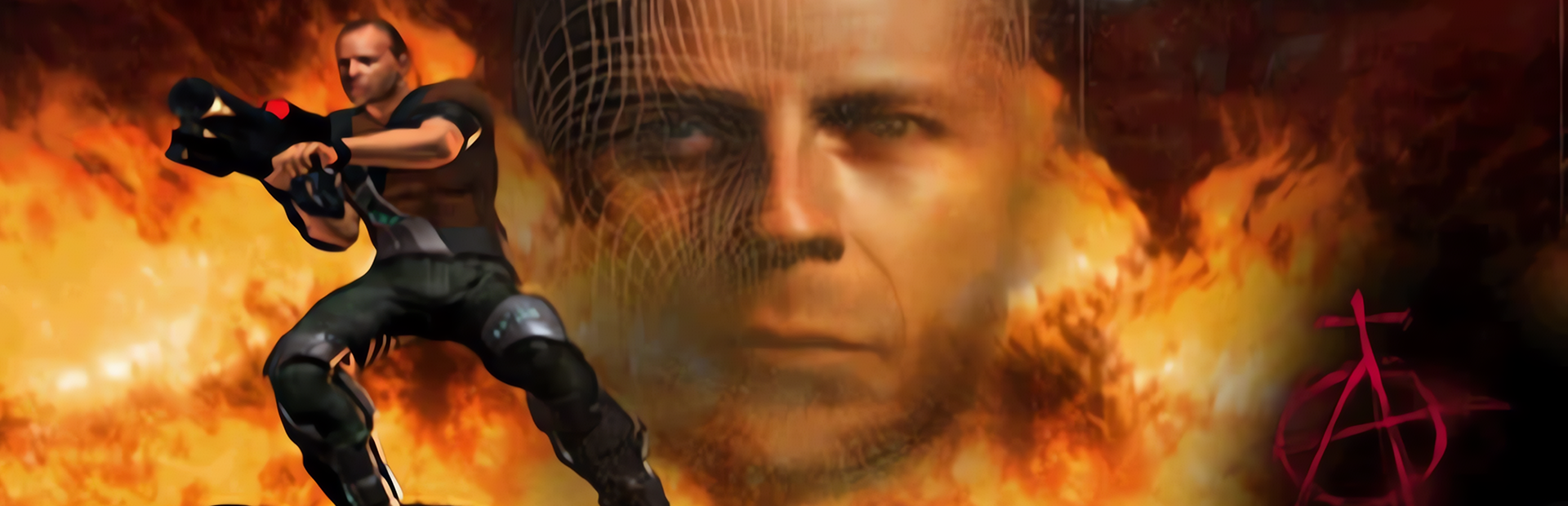
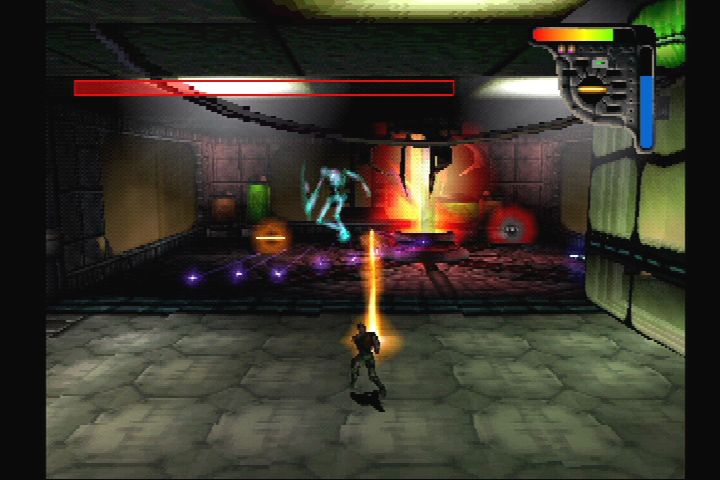
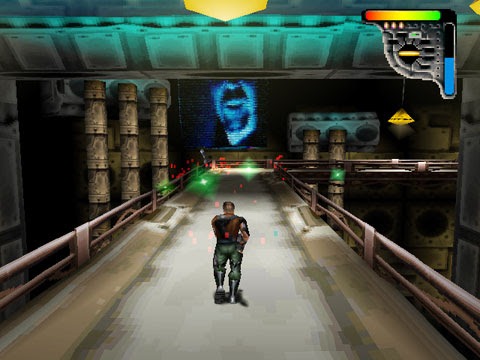
Back in the old 64-bit era, famous actors were just starting to feature in video games, but many blew it off as child’s play. Bruce Willis is one of the first actors to have a game built with him as the main protagonist that is not based on a movie. The game features a very detailed Bruce for the time, with some solid pre-rendered FMVs thrown in the mix as well. The game features a noncoherent story that makes no sense, but when Bruce is involved, it’s all about the action, right?
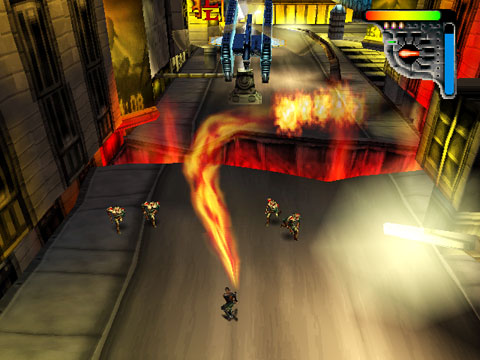
The game has an over-the-top view, and you shoot all around you using the face buttons. You can jump, but as the camera goes, jumping can be a bitch and is probably the hardest part of the game. Not being able to move the camera in his environment is very frustrating and almost ruins the game. You can pick up different limited weapons such as homing missiles, plasma guns, electro bolts, etc.—nothing special. Each level, however, is very well laid out, and the enemies have nice designs. The game is hectic, fast-paced, and pretty immersive.
At the end of every level is a boss fight, and these can be easy or hard, and they vary throughout the game. A problem I ran into is that instead of using the second analog stick, using the face buttons makes shooting diagonally hard, which leads me to mention that the difficulty is very unbalanced. Some levels are easy, some are hard throughout the game, and that’s a bad thing.
Bruce Willis lends his voice, and there are maybe 20 or so lines. Yeah, that’s it. Cliche stuff such as “Ohhh, you want some too?!” “Kill ’em all, it’s time to jam!” and various groans and grunts. In my mind, that isn’t using Bruce Willis to his fullest potential. This game could have been cooler and more than just a name tie-in. I also feel a co-op mode would have been good here as well.
All in all, Apocalypse is a fun weekend shooter, but nothing more. Bruce Willis’ talent was wasted, but if you can get over the annoying camera, controls, and lack of an interesting story, then Apocalypse is just for you.
Grand Theft Auto has always been the pinnacle for sandbox games, angry politicians and moms, and great gameplay. With an already great game, this add-on gives us new characters, new stories, and added features. You play Luis Lopez, who is working for Tony, who pulled Luis off the streets and into his club business as a bodyguard. Both Luis and Tony get in over their heads, and their friendship spirals out of control to the brink of destruction. But can Luis save them on time?
You will meet many old characters from the original as well as finish a few unfinished side stories from Grand Theft Auto IV, such as the museum mission. If you want me to jump right to it, I will. There are a few great new features, and these include cars, people, dialog, parachuting, a rating system, and new weapons. The game also takes a more cinematic turn with epic helicopter rides, train rides, and even saving a person from certain death in the air via parachuting. There are triathlon missions, escort missions, killing missions, and missions that just turn for the worst.
The story is well planned out, and if you finish the story, you can finish drug wars on turf, but even if you finish those, you get about 10 hours of gameplay, so I just wish there was more for $20. The characters are very well thought out, and you can get very attached to them. All of this is accompanied by excellent voice acting as well. The rating system, however, is pretty useless since you don’t know what the requirements are, and perfecting each mission is tedious. Some require a certain amount of headshots or car damage. Sometimes this is impossible, but the die-hard crowd will strive to waste their time with this.
If you want variety in your missions, is it here, with no two being the same? Each mission is fun and memorable and may actually have you wanting to play through it twice. I love the mission variety in Grand Theft Auto, and Gay Tony provides this. With an epic climax that has you glued to your seat, you just don’t want to put the game down, and this is the first Grand Theft Auto that has done this for me, and that is what was worth the $20 for me. The great voice acting, dialog, story, characters, mission variety, and superb action.
If you are a fan of Grand Theft Auto IV and want more, here you go. The graphics are starting to look a tad aged; there isn’t enough new stuff, but the game is high in production values, and it really shines through.
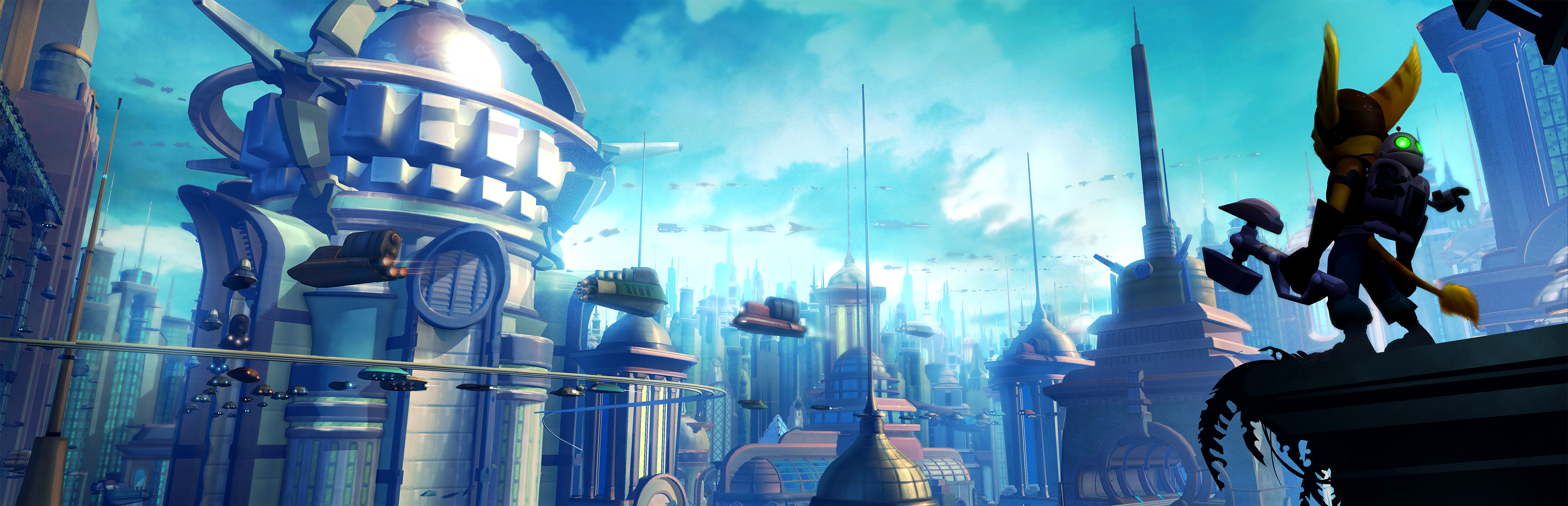
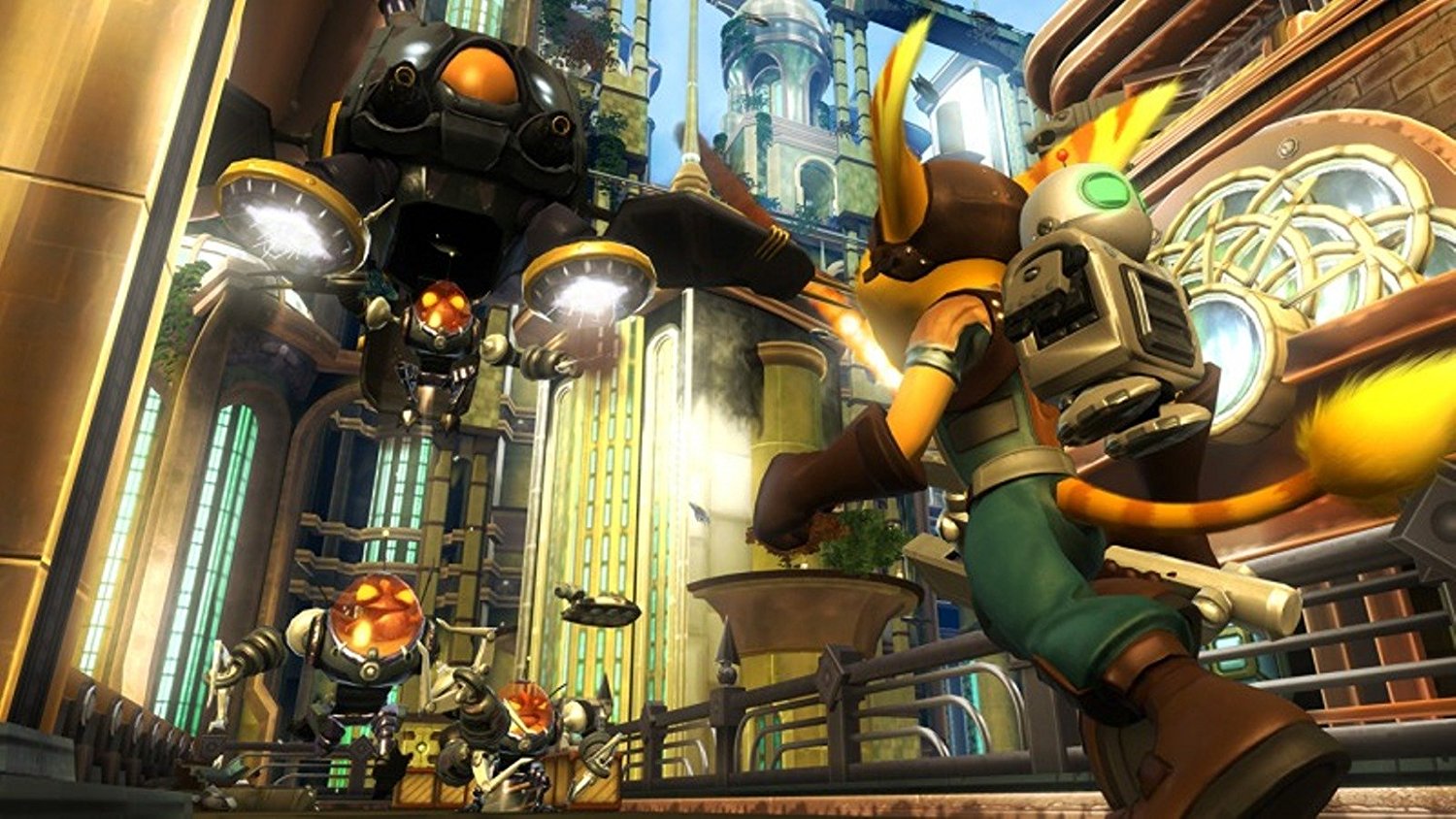
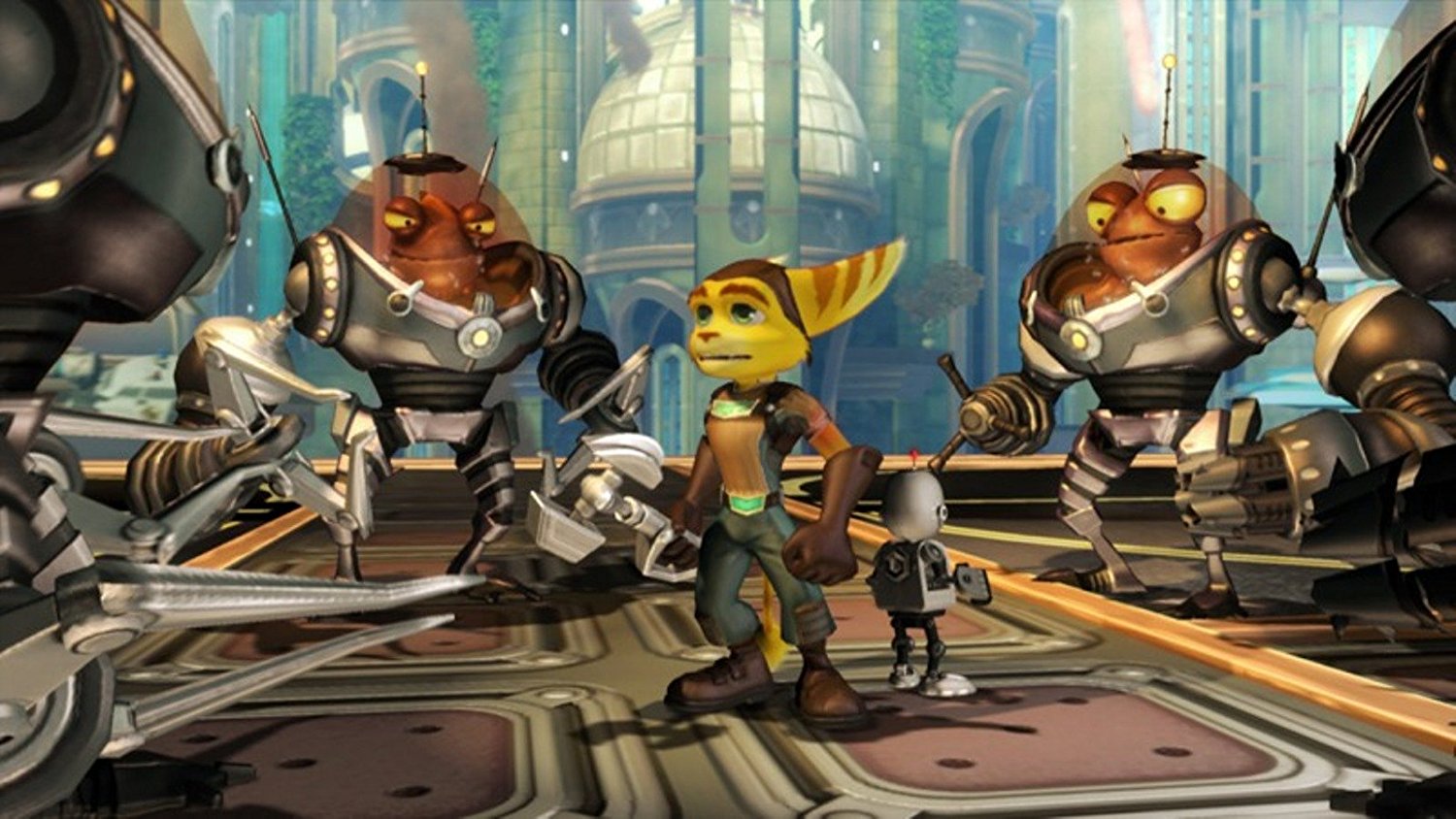
The dynamic duo that debuted on the PS2 nine years ago is now back in next-generation action with new weapons, updated graphics, and the same awesome stories and dialog you would expect from the series. The future sees the duo fighting an ancient race known as the Cragmites that Ratchet’s lombax ancestors supposedly destroyed. Ratchet learns more about his ancestor’s dark past and must stop the evil Emperor Tachyon before he annihilates the last of the lombax race: Ratchet.
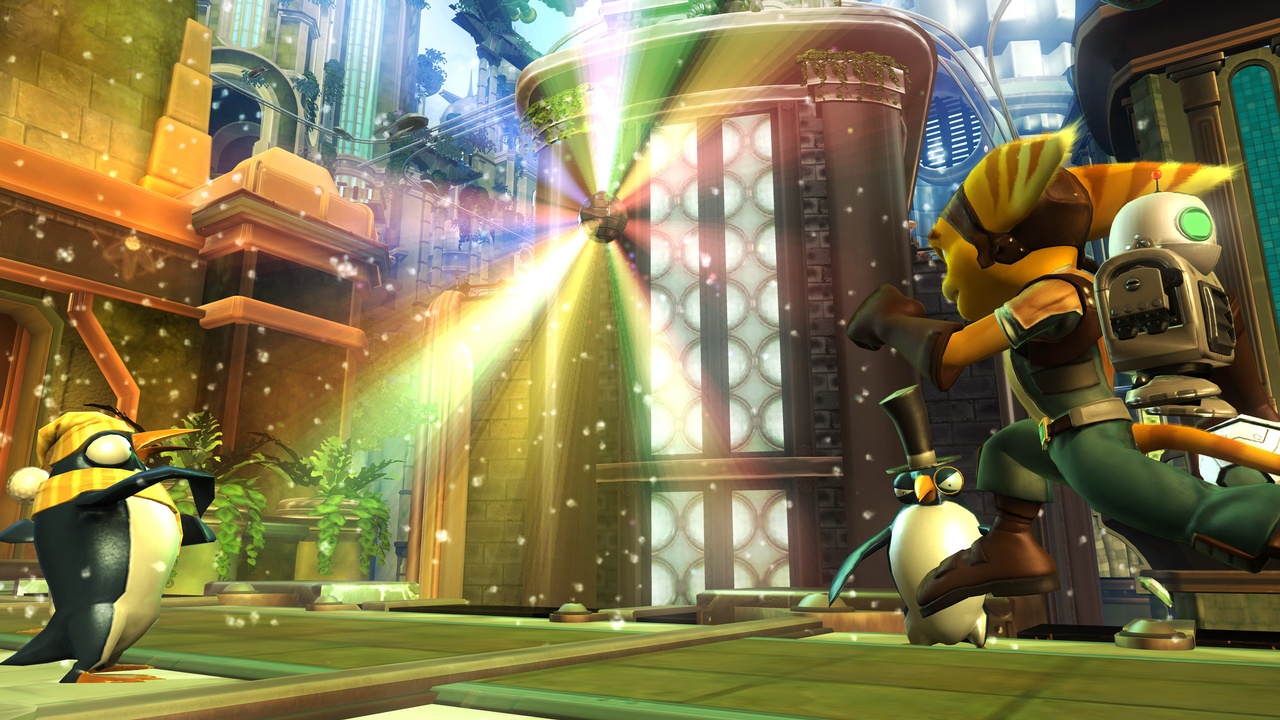
The game hasn’t changed in the past nine years, and this is both good and bad. The tried-and-true action platforming formula that revolutionized the platforming genre is still intact here, but with no upgrades. Ratchet can jump around, hover, glide, fly, roll, and shoot his way through hordes of enemies. The game is also a third-person shooter that allows strafing from side to side and a first-person mode. You have to go around the world finding certain gadgets and weapons to kill bigger, badder enemies and unlock areas. Gadgets range from the classic Slingshot and Gravity/Grind Boots to the new Geo-Laser (which uses the SixAxis to guide it), the Hover Wings (which also uses the SixAxis), and more. Weapons include the Combuster, Shard Repeater, Tornado Launcher (that uses SixAxis to guide the tornadoes), Death Springs, Predator Missile, and more. There are some defensive weapons, like the awesome Grovatron, which shoots out the disco ball and makes the enemies dance. The Morph gun turns enemies into penguins, while the Gelenator uses a green jello goop that lets you jump to higher areas at certain levels. All the weapons are original, creative, and really fun to use. Some enemies are weaker than other weapons, which makes weapons gained at the beginning useless towards the end, so there are balancing issues.
Weapons can be upgraded automatically after use, or you can do it yourself by collecting raritanium and upgrading at weapon stations. You can also buy new weapons, armor, and gadgets like Leech Bombs. Buying items in the game requires nuts and bolts that are collected from killing enemies or breaking open boxes. There are also some ammo boxes spread throughout the level, so keep an eye out for those. There are also life boxes that you can collect, but these tend to be rare thanks to the game’s high difficulty. Yeah, the game is really hard because not only are the bosses hard, but later on, in the game, a few hits will kill you even if your health is past the 200 range. I found this very frustrating, plus no matter how much you upgrade your weapons, you never feel like they’re powerful enough, which leads to ammo issues. This is a huge downfall in the game, and I hope the new game fixes this problem.
If you really love just killing enemies, you can go into the infamous gladiator stages and earn yourself some serious bolts by beating waves of enemies with certain instructions. These can range from only using your wrench, weapons switching automatically, to even boss fight tag teams. Some people are probably wondering about Clank. Well, he gets his own upgraded and improved levels using the mysterious Zoni as his helper instead of the little robot Clanks. You can levitate across gaps and order them to repair things, and the newest addition is slowing downtime. Clank’s sections haven’t been updated too much, but it’s enough to keep you from getting bored. You can also collect gold bolts and unlock skill points to buy some costumes in the extras menu, but they aren’t that great, so only hardcore fans should indulge.
Another side note that I have to mention is that the game uses the SixAxis really well, from diving from the sky to use the weapons to even shaking your booty in a pirate dancing mini-game—yeah, only in Ratchet & Clank. One of my favorite mini-games is the new “tilt-the-ball” type of hacking game, which has a spark running from circuits, and you have to tilt the controller to guide a metal ball to connect the gaps so the spark can reach its node. The game throws a lot of new stuff at you at a good rate, so this keeps you from getting bored. I just wish that the game wasn’t so hard so it could be more enjoyable. What makes the game even harder is that the checkpoints are far and few in between. You can finish half a level and then have to start over from the beginning.
If you think Future suffers from a lot of problems, it does. The huge difficulty problem, poor balancing, and not-so-next-gen graphics make you really consider this for purchase, but with a super funny story, loveable characters, and great weapons, it makes up for all those shortcomings. The Groovitron alone is worth the play-through.
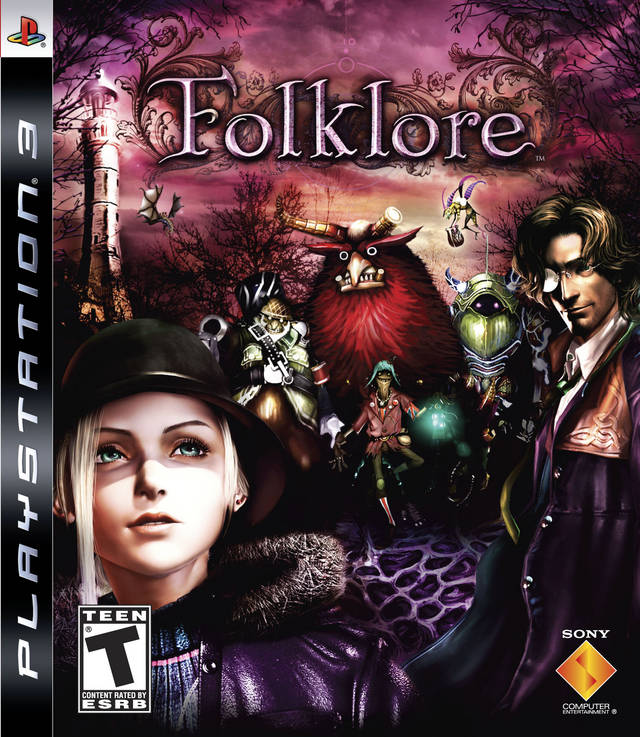
One idea that has not really been explored in video games is fairies, and why this is beyond me. When I saw Folklore debut at E3 ’05, I was stunned by the beautiful visuals and the charming idea of capturing fairies’ “ID” and using them to attack. After the game’s release, two years later, it received lukewarm reviews, with most people complaining of the difficulty and repetition, and I have to agree.
Gameplay-wise Folklore takes a step in the right direction but then trips with flawed execution. You can capture dozens of fairies and store them for later use. Each realm has different types of fairies, and they are used not only to fight certain enemies but bosses as well. Some fairies are weak against some and immune to others. You can assign fairies to each face button and execute them as attacks. This is a step in the right direction, but the trip-up is due to flawed mechanics. Every time you attack a fairy, the character stops, and then the animation is played out. This can be very frustrating when fighting fast-moving fairies or bosses. Another flawed element is that you don’t know what fairy is good to each other because there is no data letting you know. You have fairies classified under elements, but you don’t know which can fight which unless you equip and unequip each fairy, and this is daunting.
If that sounds bad enough, navigating through the levels is extremely hard, despite the extreme linearity of the game. Most levels are like mazes that give you no direction on which to go, and re-spawning enemies every time you reenter an area is a disaster. Really? Re-spawning enemies? C’mon. You have to fight each area to acquire the IDs to break certain gems or fight bosses. After you have visited an area once, you can just run by them all. Another thing that I hate is that there is no way to use items. You can collect karma items, but I have no idea what they are used for. Health can only be generated by saving spots or when enemies drop them, and this is rare. If you die, you have to start all over again from the last save point.
The other useless and annoying element of the game is the MP bar. It regenerates, but there are no special magic attacks, so using only attacks that drain a bar is absurd. After a few hits, you have to wait for it to regenerate, and this can be very annoying when fighting enemies that have timed downtimes.
If you want to talk about something that really annoys me, There are 8 chapters in the game, and each character has 6, but when you get to chapter 7, you have to play 1-6 with the other character. Playing through an already frustrating game twice to see the ending? It’s almost not worth it. The game does have a great mystery murder-type story that will keep you guessing all the way through, but there are even problems with that. There are lots of text readings and hardly any cut scenes. The scenes are pre-rendered CGI, which is what next-generation technology is supposed to illuminate. You also get weird comic-style panels that you can fast forward and then RPG-type avatar conversation screens.
There are positive notes that make the game worth at least renting, and the biggest one is the great use of the Sixaxis motion sensing. This is probably the most use I’ve seen from any PS3 game so far. When you defeat folklore, you will see a red soul come out of it, and that is the sign to hit R1 and pull the controller up. Some bigger folklore and bosses have you whacking the soul side to side, pulling up at timed moments, and shaking the controller vigorously.
The game’s best feat is probably its looks, with gorgeous landscapes and beautifully designed folklore, but that’s really not enough to keep you playing. Once you get to chapter 7 and realize you have to go through the game again with the other character, it makes you decide whether to tread on or give up. If the game wasn’t so frustrating with all of its weird, quirky gameplay elements, it would be an amazing adventure.
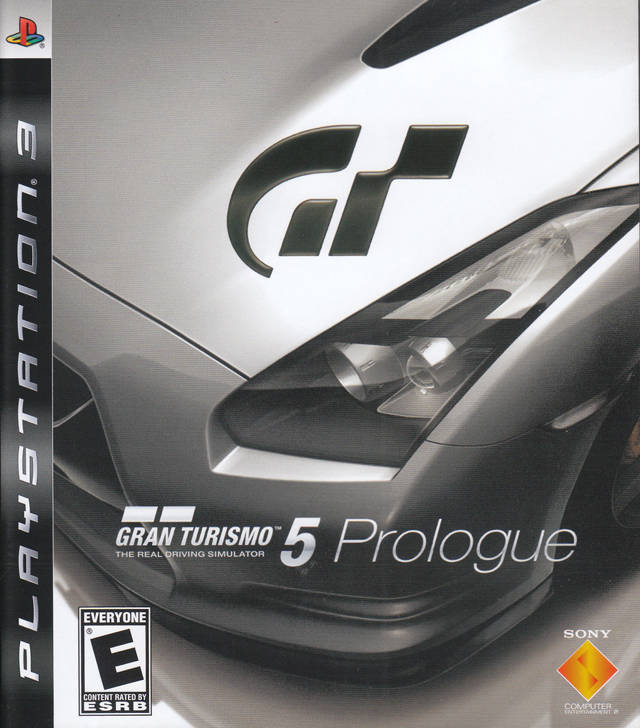
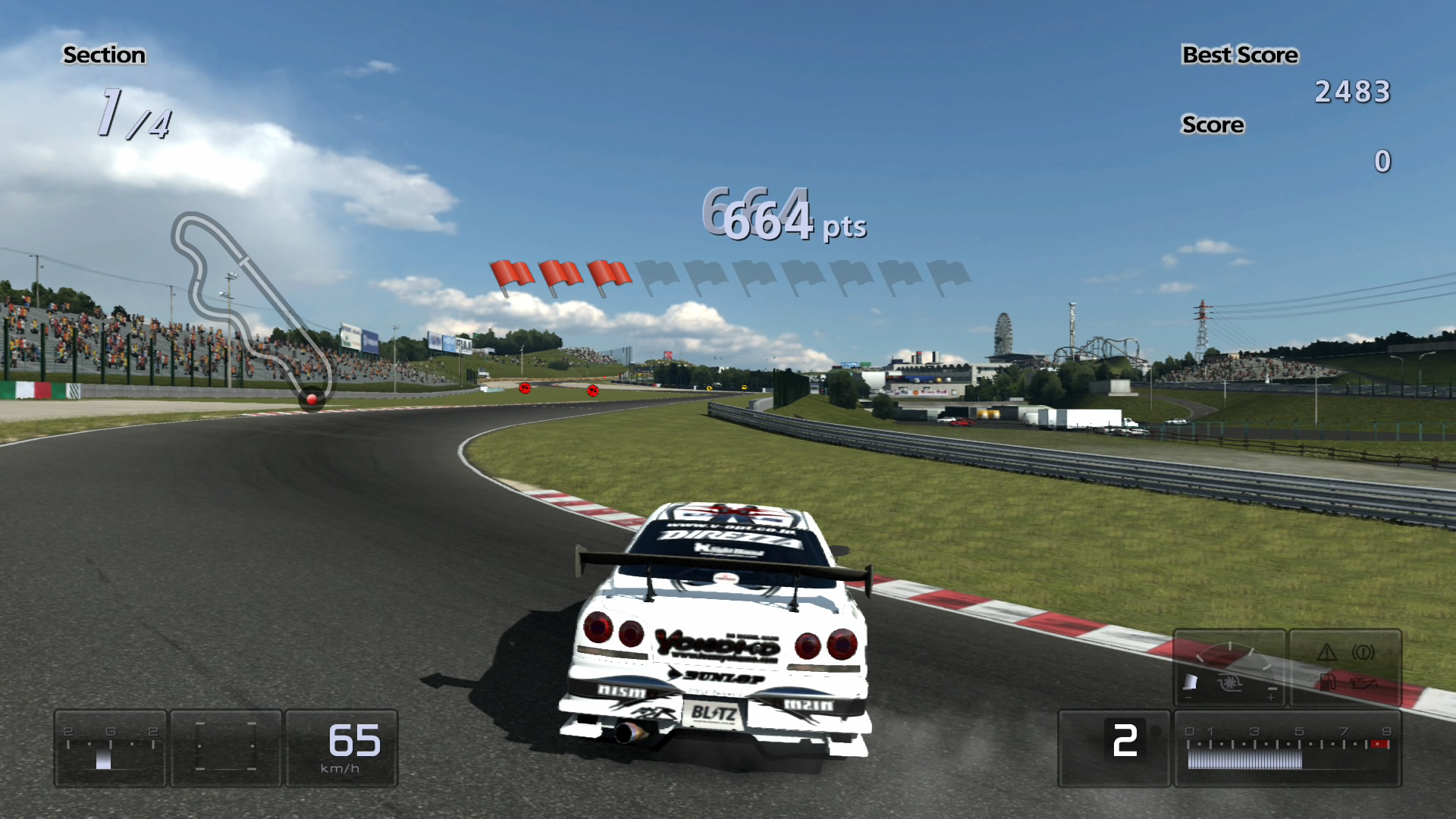
When you think of racing games, most older gamers will think of Gran Turismo: graphics that push the current generation to its limit, ultra-realistic physics, and cars that drive like their real-life counterparts to a T. Just when we thought racing couldn’t get any better than Gran Turismo 4 for the PS2 back in 2005, Gran Turismo 5 rolls along on the PS3.
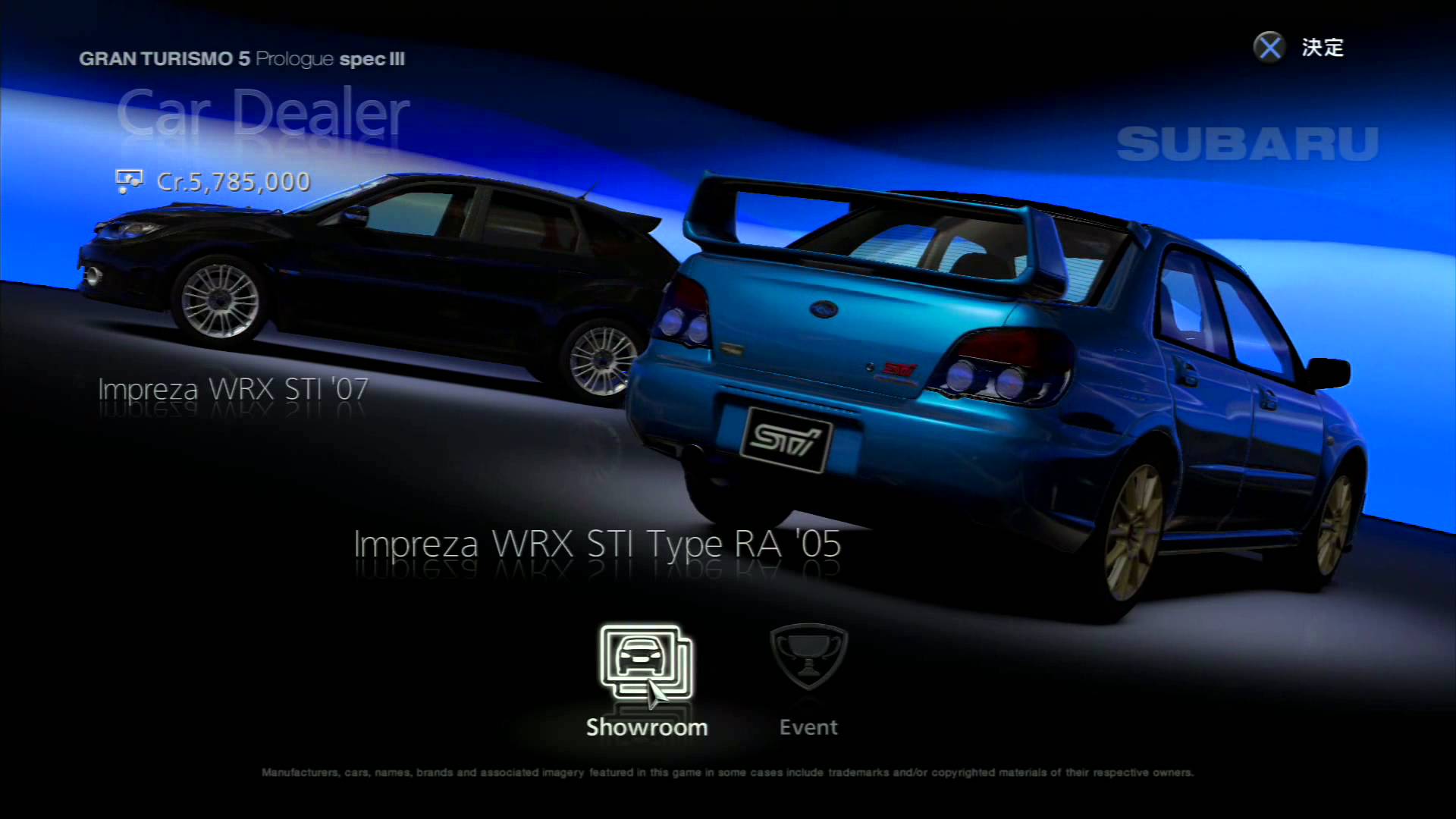
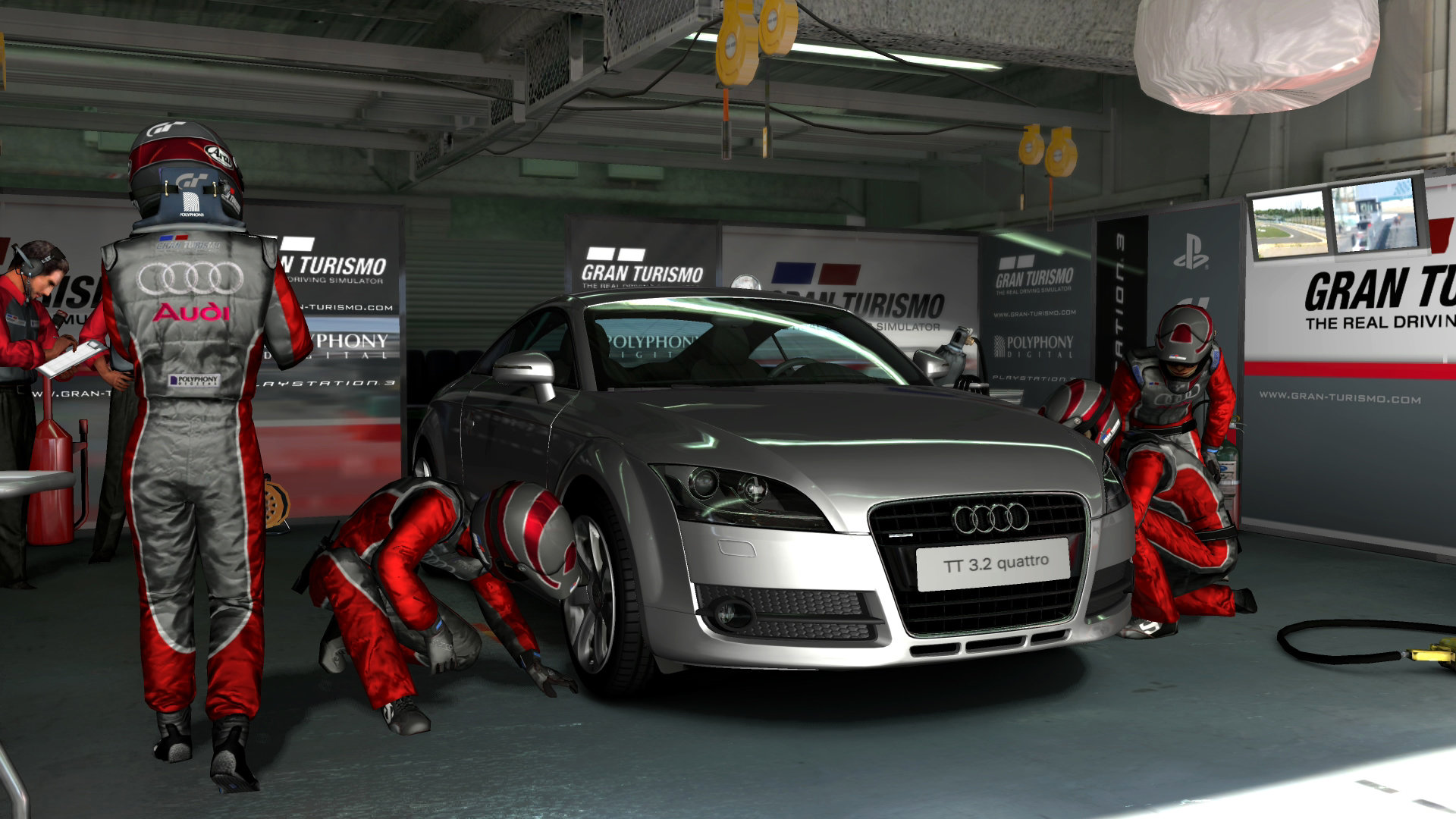
As the title suggests, this is just a preview, or an over-glorified demo, of the full game coming out this year. While the game was released almost 2 years ago, it still looks amazing today, and the realism is so close to real life you can taste it. Everything you know about Gran Turismo has had a facelift, and this includes the menu. Instead of all those icons on a map, you are treated to your car being displayed in different countries in the background, along with an event calendar and some new icons. The first thing you will notice is the fully-fledged online play with up to 12 players. The second is the GT TV, which lets you purchase episodes of car shows for die-hard car fanatics (I completely skipped this), but it’s there. You have your regular events and single races instead of the standard simulation and arcade modes. You can go to the dealerships, pick up your cars, and jump into the events.
Some problems do pop up right from the start when buying a car since there are frequent loading screens between screens and the car information isn’t displayed right. It scrolls across the bottom, and you can only view the car if you click on it and have it load. There is no full-detail spec sheet, mainly due to the fact that you can’t upgrade your cars. Yeah, guys, sorry. In the “demo” version of Gran Turismo 5, you just buy your cars and race as is. I have no idea if Polyphony is completely stripping away this idea since it is also missing in the PSP Gran Turismo as well.
Once you buy your car (there are about 80 or so cars if you get the free Spec III update), you can go into your garage and sell cars from here as well as view them. Gone is the whole car wash thing, for now, but some sort of virtual tour of the car would have been nice, as would being able to use all the items in the car (cmon, you want ultra-realism, right?). Once you get into the event menu, you can see the requirements for entering, and these are limited to certain types of cars. Once you start racing, you should get third or better to earn credits to buy more cars, rinse, and ad infinitum. While this sounds dull, each car handles it surprisingly differently, and the AI is a really nice challenge. However, the usual time limits are set way too tight and are almost impossible to beat even when driving with the guideline and not crashing.
When you actually start driving, you’ll notice just how tight the controls are. You really like turning a wheel thanks to the great analog stick of the DualShock 3 and the great vibration feature. Every car also sounds the same, and the amazing in-dash cockpit view (for the first time in Gran Turismo) is beautiful, but I just wish you could turn the driver’s head around. There aren’t too many tracks to drive on, but there are a lot of familiar ones all the way back to the first game 12 years ago.
If you want to talk about aesthetics, the game looks stunningly real. You can’t really tell the car apart from something in real life, and the tracks all look amazing, but I know I can look better, and I hope the graphics engine I boosted a little for the final release.
While there are many flaws and things missing, such as the driving tests and upgrades, there are a lot of things not improved, like the super strict time limits, plus sometimes the game is just too real to be fun. Other than that, for about $25, you can really have a good racer that will last you a while, or if you are a die-hard Gran Turismo fan, this will tide you over until the final release.
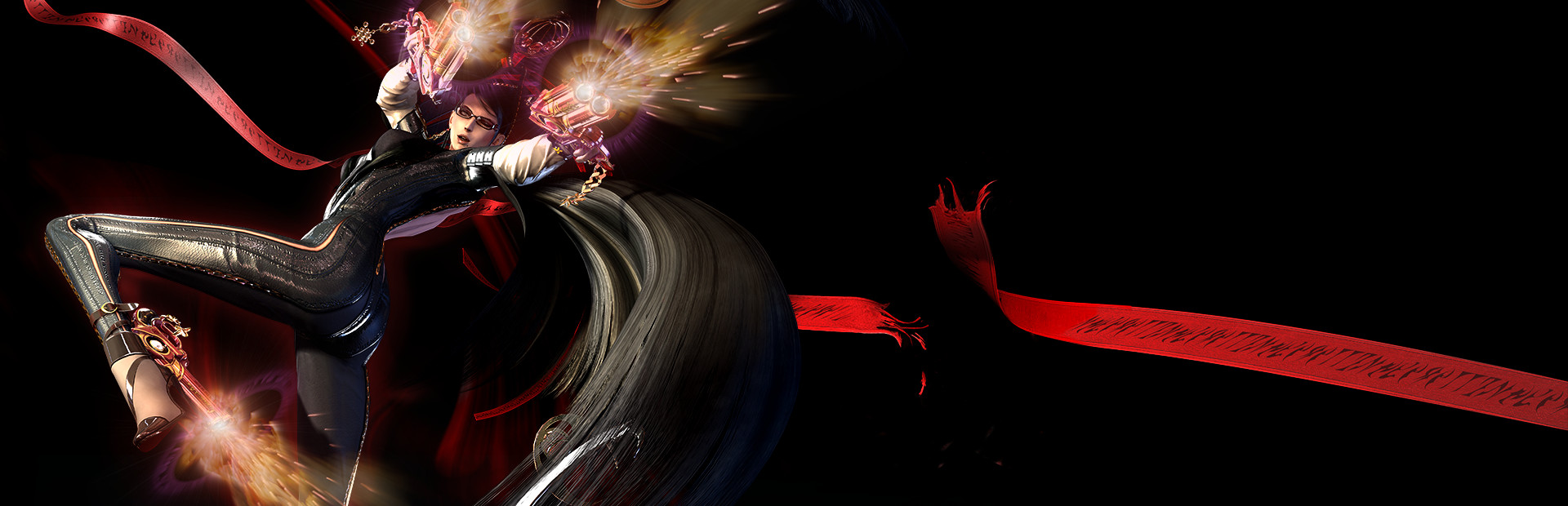
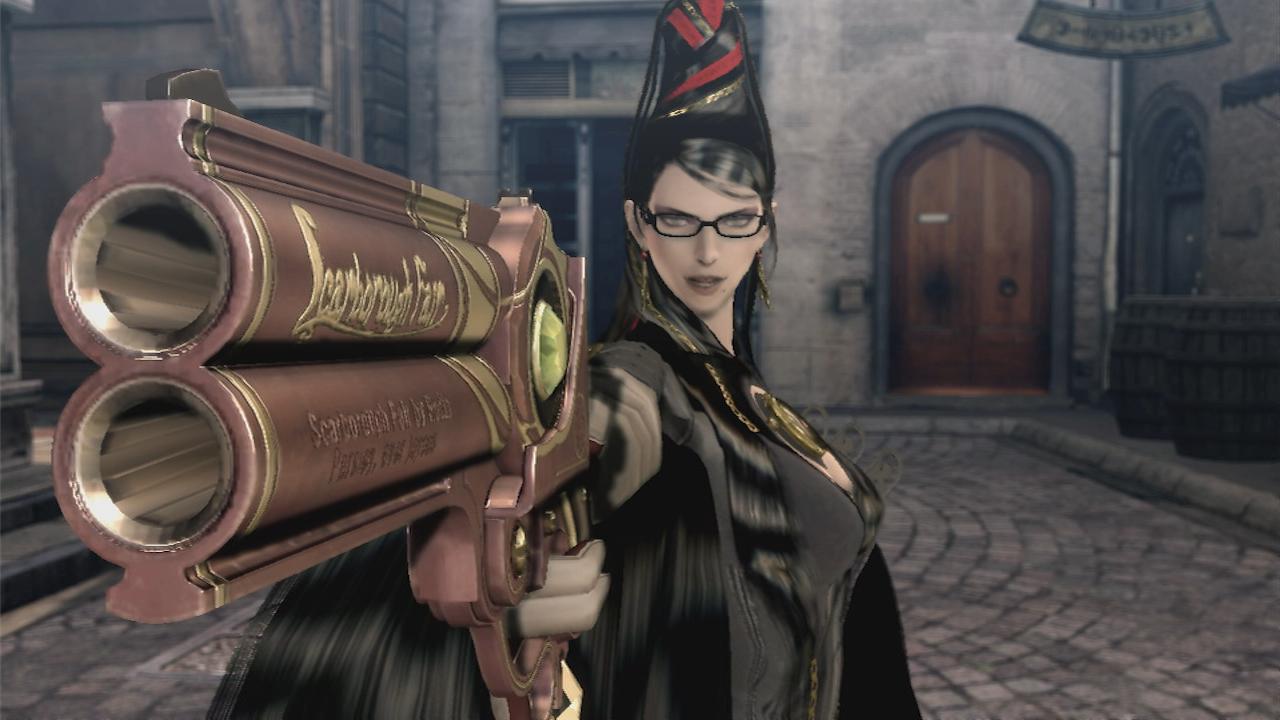
When you think of sexy and video games, they usually don’t mix. There have been a lot of attempts at using sex to sell video games, and while some were successful, such as Dead or Alive, BloodRayne, and Tomb Raider, others weren’t, such as Red Ninja, Cy Girls, and Rumble Roses. Where does this put Bayonetta? On top as queen and as one of (if not THE most) stylish, sexy, and witty female protagonists ever created in any media period.
Being a good and bad Umbra witch trying to unlock her past. Bayonetta has witty dialogue and a super-sexy British accent. I can’t describe just how shocking Bayonetta is in terms of design. She is scantily clad in leather with proportionate breasts and has beautifully styled hair and glasses that look good. She just makes your heart throb when you see her, and no other female game character has done that for me. The cinematics in the game are very outlandish, outrageous, and just “I can’t believe they did that.” The game is developed by the lead designers of Devil May Cry and Resident Evil, so if you are a Devil May Cry fan, you know what to expect.
My last note on the design of Bayonetta’s sexiness is just how they incorporate it all into the gameplay, from items to moves to summoning demons. One cut scene I can recall has Bayonetta sweating on a plane, and Luka watches the bead of sweat drip down her breast and drop right off her nipple. All while the camera is zoomed in on this at a side angle. Necessary? Yes. Why? Because that is just what Bayonetta is all about. Nonstop action with sex thrown in.
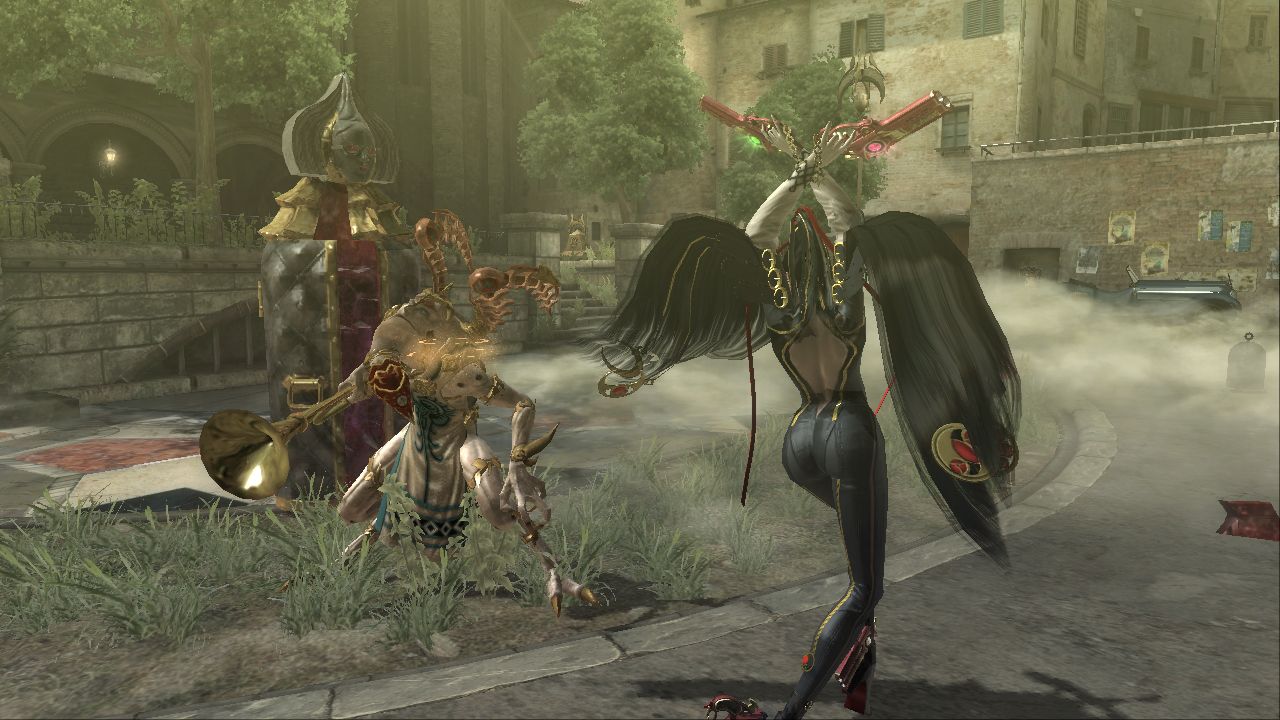
Getting down to gameplay, you fight the good-bad angels by summoning the Creator to merge all three realms: Purgatorio, Paradiso, and the human realm. All these creatures are amazingly designed, and there are a good 30 or so of them. Bayonetta fights with both her feet and hands. You can equip a normal weapon on her hands and either the shotgun or handgun on her feet. Using the Y button, she uses her hands, and B is her feet. The combos are deep and almost endless since you can hold buttons down to charge weapons or use X to just use the handgun. Using witch time is a unique element that you must use at all times since time slows down for a few seconds if you evade at the right time, and this is key to defeating certain enemies and bosses since some can’t be beaten without it. This is also incorporated into puzzles, but they usually aren’t all that hard to figure out.
Unlocking weapons requires you to find pieces of LPs of angel hymns and bring them back to Rolin in the Gates of Hell bar. Here, you can also buy items, accessories, alternative weapon designs, and more. All items (like in Devil May Cry) give you either health, witch power, or extra life, and you get the idea. Each comes in a small or large form and costs a good amount of halos (the game’s currency). There are only four different weapons: a whip, a sword, guns, and Beowulf-type claws. Thankfully, you can have two different load-outs and switch between them on the fly.
Anyways, when you finish a batch of angels, you will be scored based on your combo style, time, and damage taken, and this affects your overall level score. If anyone is a Devil May Cry fan, you will know this scoring system is brutal and impossible to score perfectly on every level. This is also Bayonetta’s biggest flaw since a lot of the game is hair-tearing, controller throwing, and frustration-inducing ulcers, especially when it comes to boss fights. There are five different medals you can get. Pure platinum, platinum, gold, silver, and bronze. Pure platinum consists of you getting the biggest combo style and killing all enemies in the shortest amount of time with no damage at all. Platinum consists of the same, except you can take a little damage, and so on and so forth. You are then ranked at the end of the level by these medals plus how many items you used and overall damage was taken plus time and combo style. If you do poorly (like I managed), you can get a stone award. Even on normal, I did my best and thought I was smokin’, but I still managed to get stone awards at the end of every level.
On another note, the bosses are fun and out of this world. They are ugly and big, and you just want to kill them. Each one is unique, and one even has you riding around on a piece of debris in the ocean fighting a 200-foot sea creature. Epic? Sure, it is, and every second of the game is. Each boss and each fight consist of a little damage-inducing, button-mashing mini-game using Bayonetta’s demons or torture attacks. For the larger enemies, Bayonetta’s hair turns into demons, and if you didn’t know, her clothes are also part of her hair. She goes into a sexy pose, and her clothes are stripped except for the hair swirling around her sweet spots. You can pulverize the enemy. Smaller enemies have torture attacks that are gruesome, sometimes sexy, and satisfying. This can be done by getting your Witch Power meter all the way up, but take a hit and it goes down. There is no magic in the game, and you won’t even remember since all the elements work well.
On a side note, the gameplay is changed up in almost every level, which leads to epic motorcycle riding levels, jumping across cars in traffic, shooting down enemies on a rocket flying through the air, and a whole lot more. There is even an arcade shooter in between levels that earns you points you can use to get items or exchange for halos. The game is chock-full of neat elements that have never been used in any game before (if so, they are perfected here). If you want stylish, over-the-top, sexy action, then look no further than Bayonetta.
Metal Gear Solid is one of the most memorable game series ever created, and MGS4 is a great topping on the cake. Not only does MGS4 offer an incredibly riveting story, but also some great multiplayer as well as hidden stuff for long-time MGS fans irking all the way back to the original game.
Starting out with MGS4 is kind of daunting due to the deep storyline that is hard to follow unless you have played the other three games, but you can manage if you are smart enough and stick with the story. The only problem I had with the story was the drawn-out cut scenes that can last over 30 minutes, thanks to Hideo Kojima’s love for cinematic storytelling. Most of the length comes at the end of every chapter, the mission briefing, and then the beginning of the next chapter. Each chapter took over 30 minutes to start, and sometimes the dialog can drag on and become sleep-inducing.
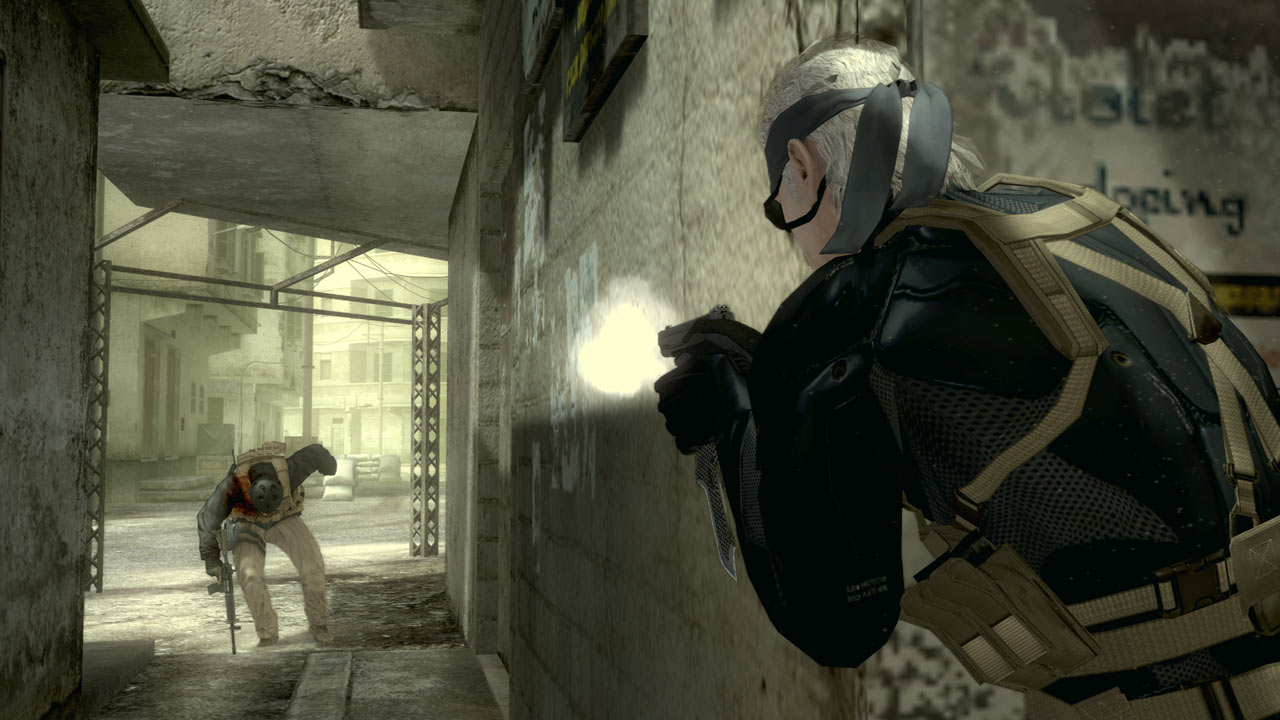
Metal Gear has always been known for its stealth gameplay, and MGS4 is the first Metal Gear game to give you complete control of the camera and even implement a first-person mode. The greatest improvement (for me) was the fact that sneaking through compounds, camps, and warfront lines didn’t feel like a puzzle anymore but like a stealth game. The amount of stuff in your HUD may be overwhelming at first, but you will adjust. You have a health meter, a psyche meter (that I never found any reason to keep track of), an item and weapon menu, a camouflage gauge, and a radar screen. You can also buy weapons and ammo from Drebin’s Shop using Drebin points that are accumulated by picking up weapons on the battlefield. You can also customize weapons now with silencers, grenade launchers, shotguns, flashlights, and more. There are dozens of weapons to buy, and each comes in handy for certain situations.
Using your camouflage is one of my favorite elements because whenever you lie still, your suit copies the texture on the ground and lets you blend in better. Throughout the game, you will acquire more types of camouflage, but the suit is great. You can even change the color of your vest and face. Another element that I love is the change of pace in the game. No longer have you been confined to stealth-only elements since there will be full-out firefights through some levels, vehicle sections, and even a section where you use a mech. That doesn’t sound like metal gear to you? Welcome to the evolution.
The game just feels fluid, smooth, transitions well, and has a perfect playtime of about 15-20 hours. You can also partly interact with the cinematic by zooming in and, at key points, pressing L1 for a first-person view and pressing X for flashbacks of previous games. I do have to say my biggest disappointment was the boss fights, since they aren’t as original as in previous games. Most just have you shooting enemies to death and using a key element to figure out how to actually kill them.
There are a multitude of CQC moves for you to use against enemies or just a good silenced shot to the headworks too. Hiding bodies isn’t such a big deal anymore since you are in a war, and crawling through dead bodies will be like tomorrow’s chores after a while. Using camouflage to blend is probably the key element to sneaking in this game since using shadows and lying are still key.
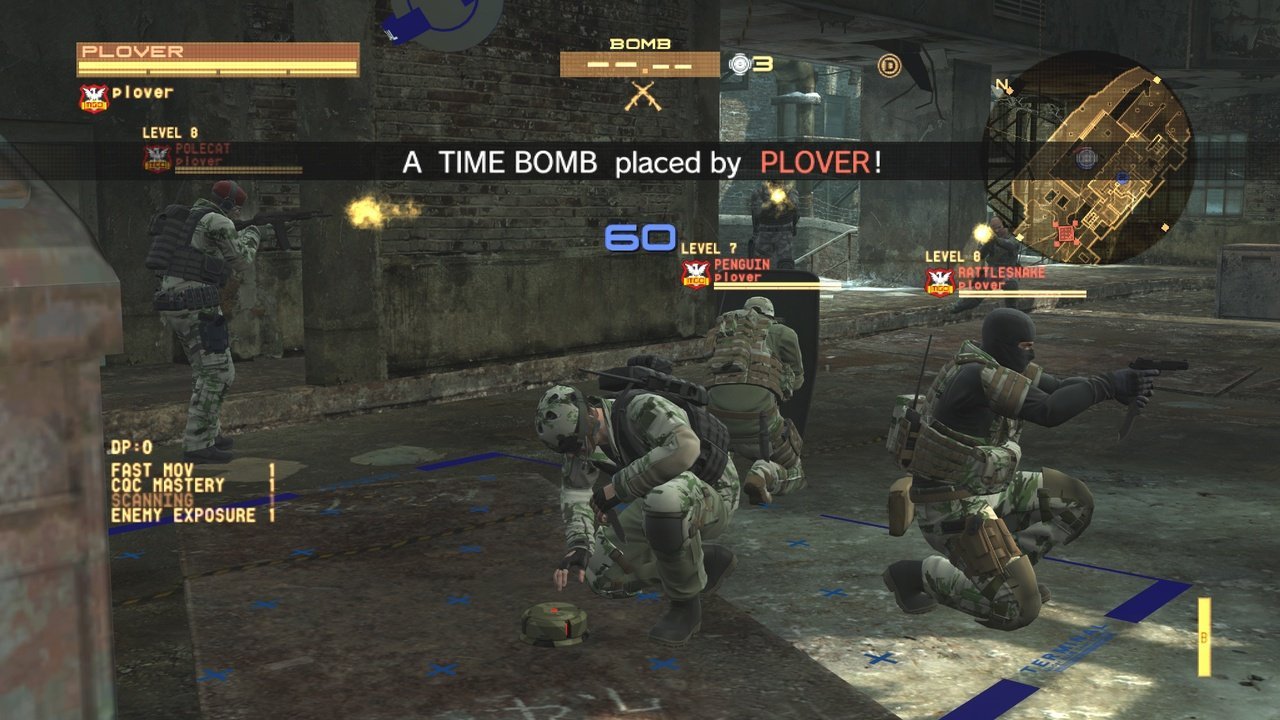
When it comes to multiplayer, you are in for a treat because Metal Gear Online is a fully integrated online system that is separate from the game. You have several different game types (all the ones you can expect), all while using Drebin points to use guns during matches and using your experience points to level up and buy stuff for your character through the Konami website. There are several expansions available, but Metal Gear just never felt like an online thing for me. It is fun, but trying to find a room with 16 people is kind of rare, especially at lower levels. The online element of Metal Gear is strangely deep for a game that doesn’t get much online traffic since Metal Gear feels strictly like a single-player-only experience, but it’s there for people who want it.
If Metal Gear turned you off before, you should give it another shot because it truly mixes stealth and action beautifully, and even someone who doesn’t care too much for Metal Gear (like me) can love this game. The game looks amazing, and all the characters look life-like and are rendered beautifully. The voice acting is top-notch, and nothing can type out the fight scenes. Patience is a virtue in this game, but you get a great feeling of satisfaction after sneaking through a whole enemy camp unseen. It is easier than previous games, but it still offers a challenge.
If you love the Metal Gear saga, then you should have this already, but even people who have never played a Metal Gear game get engrossed in this wonderfully crafted and touching story while being sucked into the single-player experience.
JRPGs that were the standard are now being taken over by western RPGs, and one of the main developers responsible for this is Bioware. Dragon Age: Origins is a very deep game, mainly in politics, religion, and mythology, that is reminiscent of Tolkien lore. Not only is the dialog witty and humorous, but every piece of dialogue is spoken with great acting. Each character is memorable, and Bioware really does it with their morality gameplay because it takes ten minutes to decide a choice since they change gameplay so much, more so than in any other Bioware game.
The game has different factions you can play as (dwarf, human, elf, then different classes in those races), and each takes about 50+ hours to play (my first playthrough was 41 hours). You start by customizing your character, but that isn’t the deepest part of the game. When you start out with any race, you learn the combat basics, which are pretty deep yet also very simple.
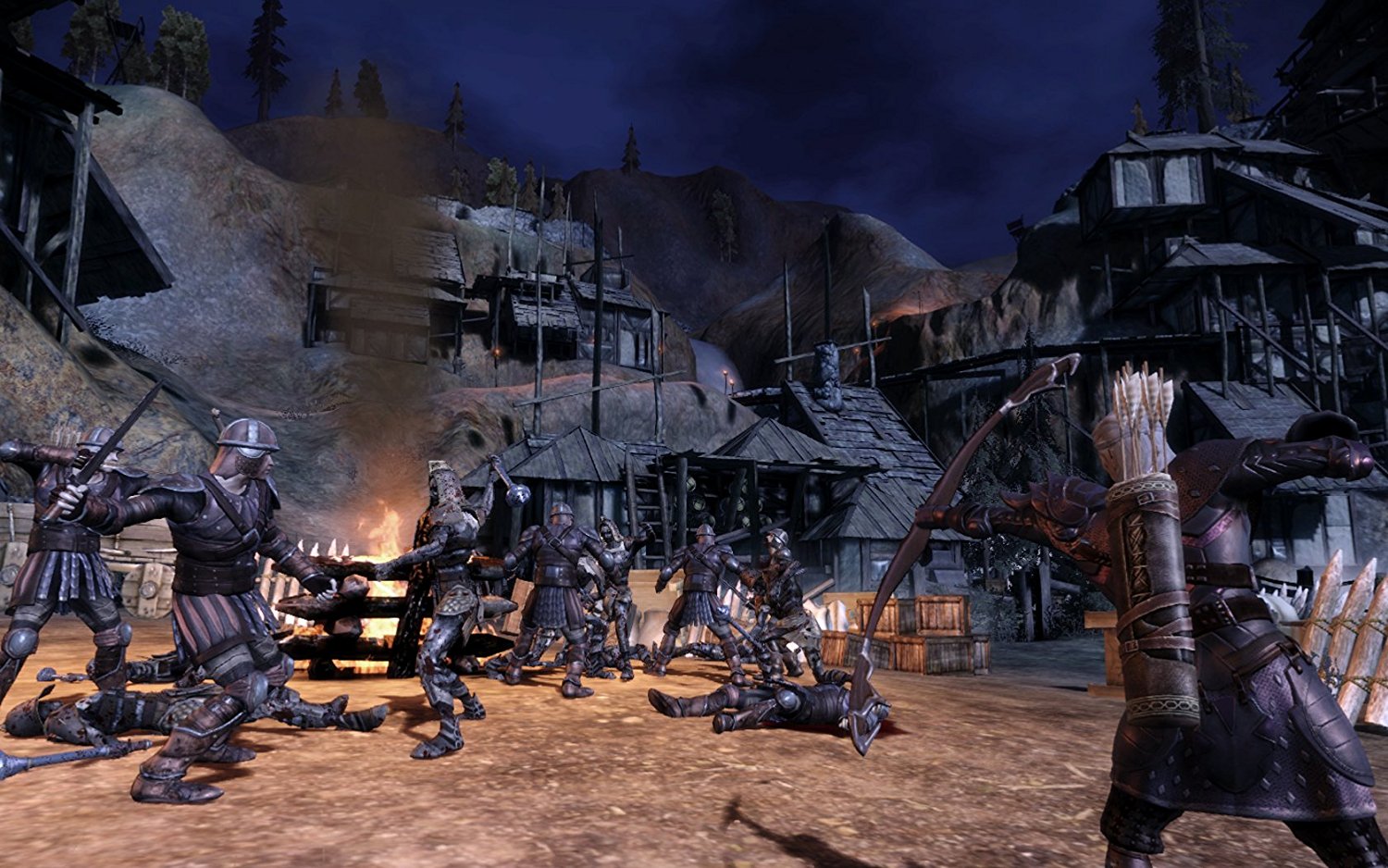
The actual combat itself is the standard Hit the attack button and watch the characters hack away. You earn experience by killing enemies and level up accordingly. The game has a radial menu that lets you access your potion and trap-making skills and techniques, as well as combat tactics. You can create traps and potions by learning the skills over time and by using ingredients found throughout the game world (I found both of these useless). Skills range differently between mages and warriors, but warriors can learn different fighting styles such as two-handed, dual weapons, sword and shield, and even archery. Each class can learn other classes’ techniques, and that’s the beauty of Origins. There are dozens of different skills to learn, and you won’t learn them all before beating the game.
The sheer depth of the game is mind-boggling, but I know one thing that people are concerned about, and that is side quests. There are dozens upon dozens of them to keep you satisfied, but of course, you don’t have to complete them all. There are also tons of Codex pages to pick up and read in this deep and wonderful lore that Bioware has created. There is enough stuff to read to fill a history book, but if you’re not the reading type, you can just skip over this. There are hundreds of different items to obtain, from armor and weapons to ingredients and gifts to make characters like you better.
After playing for about 5–10 hours, you will realize how much the game relies on your actions to tell the story. Unlike other Bioware games, you will notice these changes right away, and sometimes a decision in the beginning can progressively make things worse or better for you throughout the game, and it will make you regret what you did, and that is brilliant. The deepest part of the game is the menu itself, in which you equip your gear, check quests, codex pages, and your map, but there isn’t much to explain other than your normal inventory menu. Thankfully, the game steers away from unnecessary stats that boggle your mind and make you want to quit playing.
Playing the game is fairly simple, and the controls are easy. You can control all four party members, which gives you a nice tactical advantage, but most of the time I just played as my own character. Just remember, when a character dies during a battle, you have to wait for all enemies in the area to be killed for them to be resurrected (unless you have a mage with that skill). I found the game very difficult on the normal setting (almost impossible), so the easy setting had to be used, and that was challenging enough. Traveling between areas is easy enough since you use a world map, but you can encounter battles in between the areas.
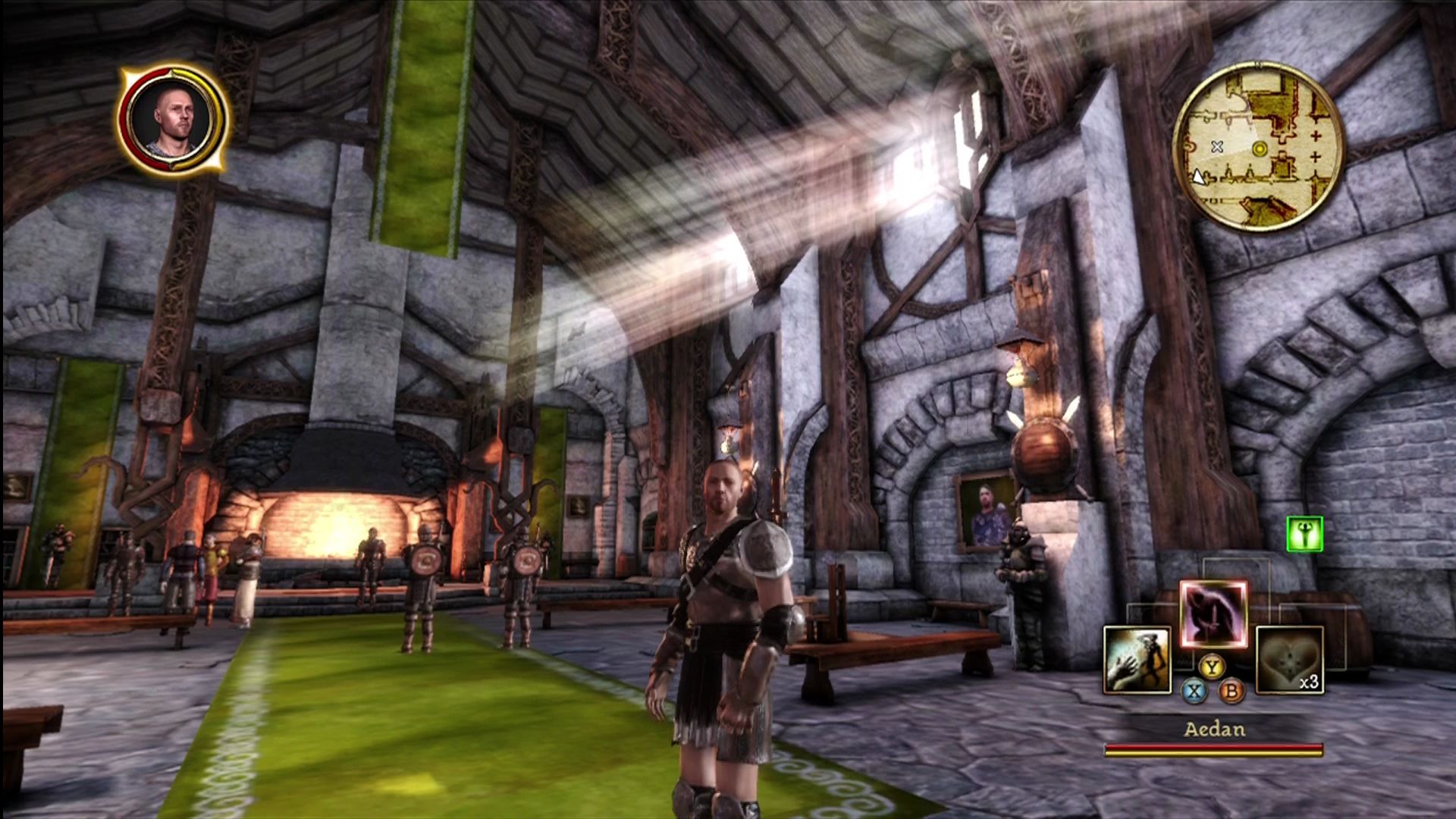
One of my biggest gripes about the game is that it is pretty ugly. The Xbox 360 version is the ugliest, with flat, muddy textures that look like you’re playing on the lowest settings. Why this is, I have no idea, but there are also frame rate issues and long load times every time you enter a new area. There is also some sort of collision detection issue because when you press A to attack, enemy party members will sometimes dance around the enemy before attacking, and this can kill you in tight situations. This seems to be a huge issue when many characters are against one enemy.
In other words, if you love deep stories that deal with Blights, an Archdemon, and a deceitful king, then buy this game, but try to get the PS3 or PC versions since they look better. Dragon Age is probably one of the best western-made RPGs in decades, and with so many items, skills, party members, techniques, and side quests, you are in for hundreds of hours of addictive RPG gameplay.













































 thebinarymessiah.com
Try multiplayer. A lot of fun !