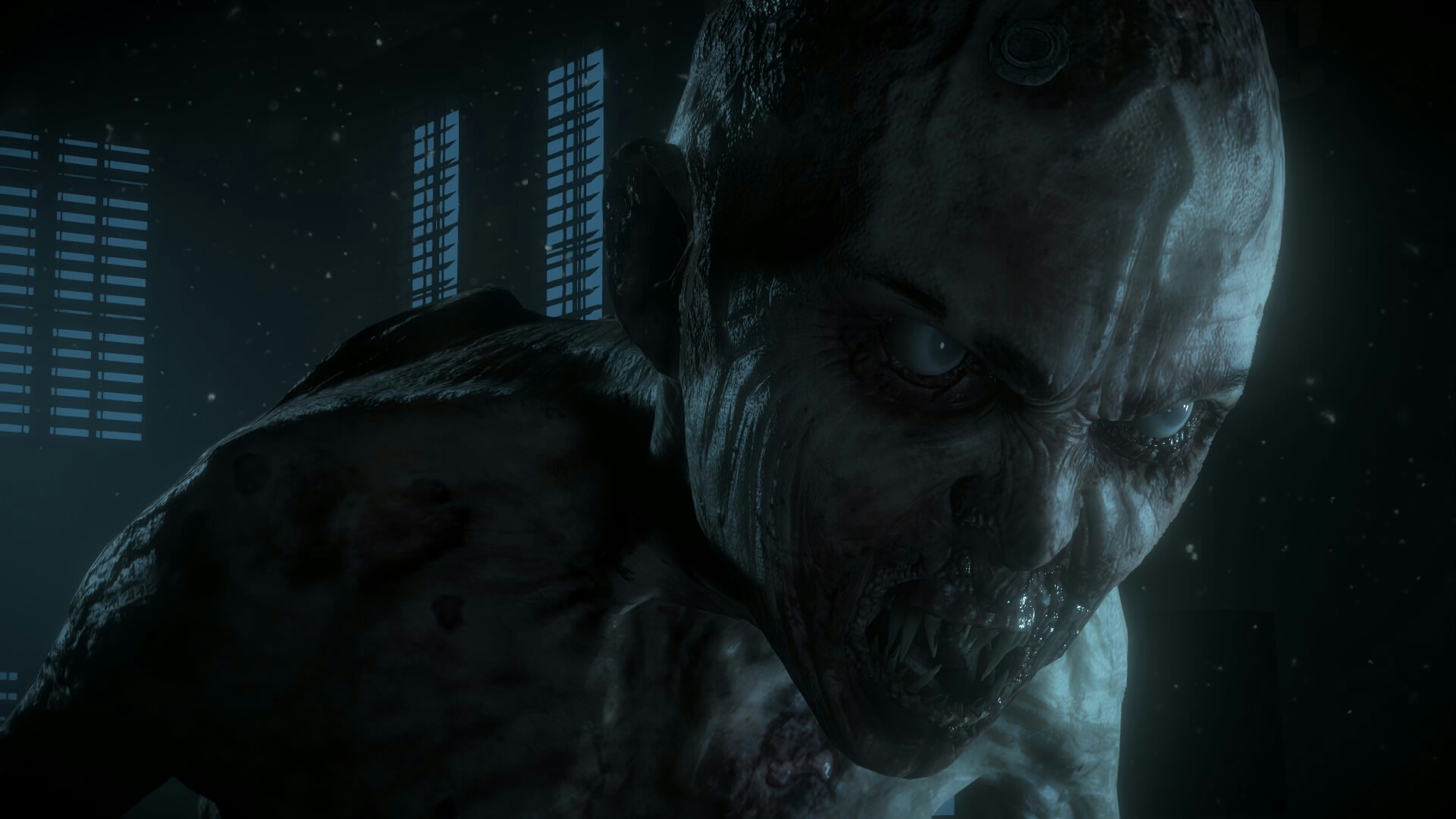
Adventure games have mostly evolved into choice-based, heavily story-driven experiences. We’ve seen this in the past with games like Beyond: Two Souls, Indigo Prophecy, and Heavy Rain. Until Dawn perfects this type of storytelling with precise decision-making, great characters, an intense story, and something to always look forward to, You play as seven teenagers who are staying in a millionaire’s cabin in the middle of nowhere in Canada. They play a prank on two of the characters, and they end up getting killed in the process. Until Dawn introduces multiple killers and the game becomes both a psychological horror, slasher game, and paranormal horror all at once.
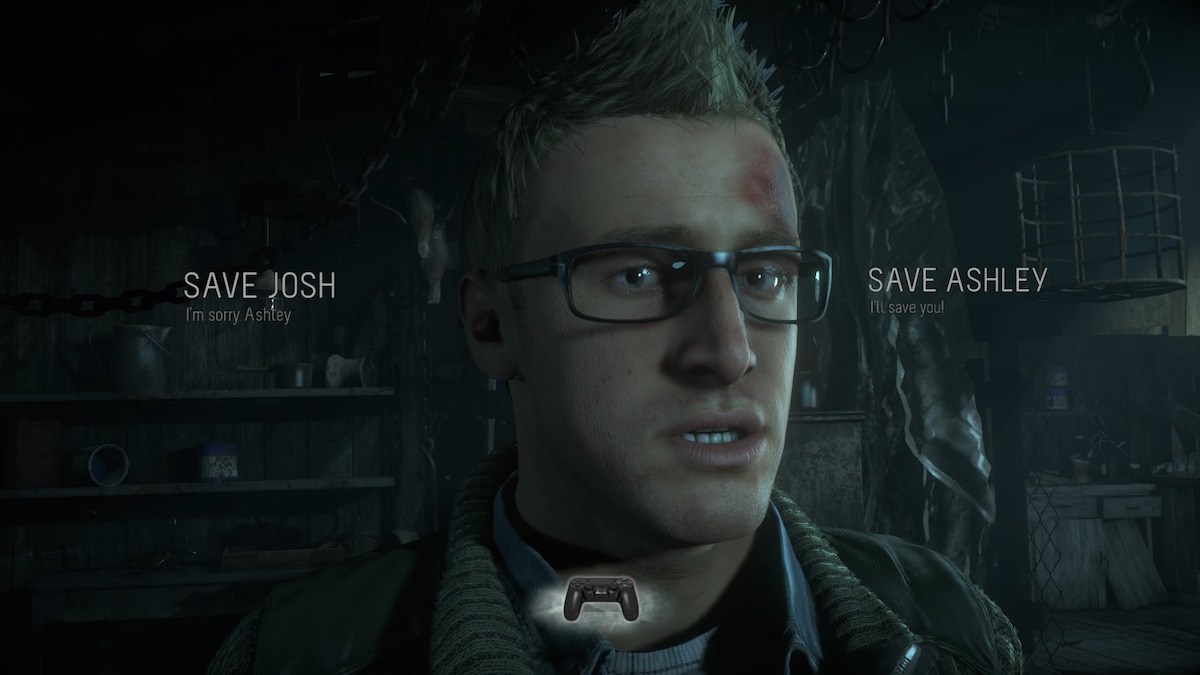
It may seem like the game is biting off more than it can chew, but the pacing is done so well that the entire story and all of the choices and elements can beautifully unfold into a fantastic narrative and will keep you glued to your seat. During the entire 8-hour adventure, I didn’t want to shut the game off. The choices in Until Dawn are done better than in any other game, as missing just a single button prompt can mean that you change the course of the character’s fate. Most prompts include quick timing, but some require you to aim and even not to move the controller. Anywhere, jumping across ledges, climbing walls, and chasing sequences can mean life or death for yourself or another character.
I didn’t really know this until I missed a button press during a chase sequence, and my character got killed. You can’t go back and fix it as the story moves on as intended. It really makes you think and pay attention, as some choices are also about which paths to take. Sometimes not making a move is the best choice as well, and these butterfly effects will accumulate and the consequences will unfold throughout the game and not just at the end, which is very important.
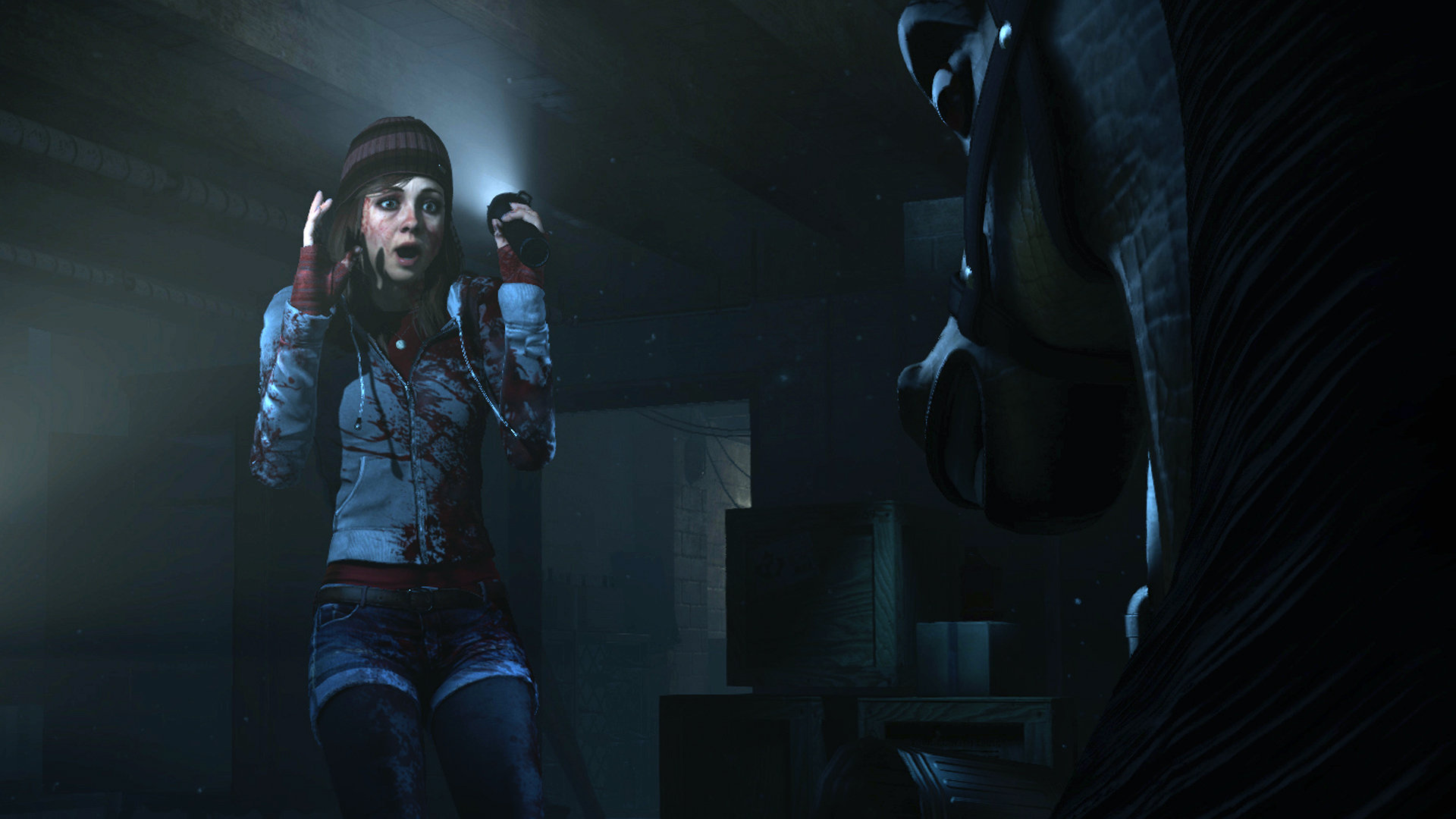
There’s no basic ending or pre-rendered cutscene that all these choices lead up to; you literally play out the entire story based on choices, as certain characters will die or survive, and it could alter another’s fate. The weaving of this is so complex and impressive that you just get lost in it all and enjoy the show. The game has an amazing atmosphere and literally scared the crap out of me to the point where I couldn’t play the game alone. From the haunting music and sound effects to the amazing lighting effects and claustrophobic hallways, The game is full of tension, and I ate up every minute, as most games never feel this intense and serious.
Most of the game uses the PS4’s motion sensing in the controller, which controls the player’s head or light source. Moving the controller around will allow you to shine your light around or complete button prompts. Most major actions are detailed hand gestures that even have you turning papers over, lifting items, pushing, pulling, and bashing. It’s a great way to draw the player in, and it’s done with such detail that it feels real and believable. I loved all of these, as there are so many different prompts and sequences that it remains fun.
The visuals are some of the best to grace home consoles, as every texture looks like the real thing, the characters are so well made, you can see every pore and imperfection, the lighting is amazing, and there’s so much detail everywhere. This is a fantastic-looking game, although the motion capture and character animations can sometimes feel puppetlike and don’t quite sync up.
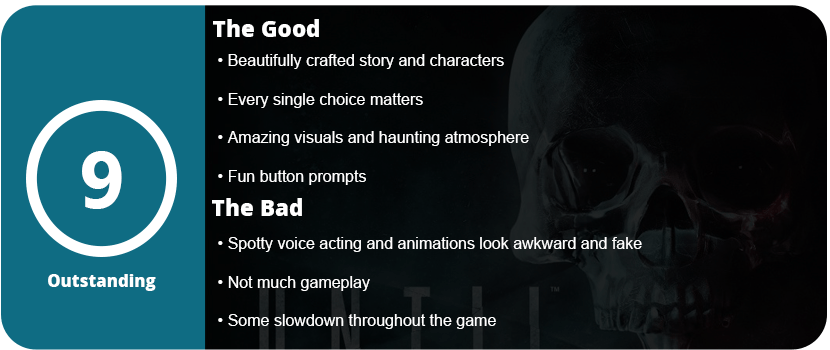
Without spoiling the story, there’s not much more here I can say. This is a fantastic story that you will talk about months from now and maybe even play through again. With the minute choices made and every turn being life or death, it makes for an entertaining game that will scare you to death and make you jump. The game isn’t without flaws, such as spotty voice acting that can come off as cheesy sometimes; there’s a slowdown throughout the game as it pushes the PS4 too far; and there’s not much gameplay outside of controlling the characters, but it grabs and holds you down and won’t let you back up. This is exactly how horror should be done, and many games need to take note of it.
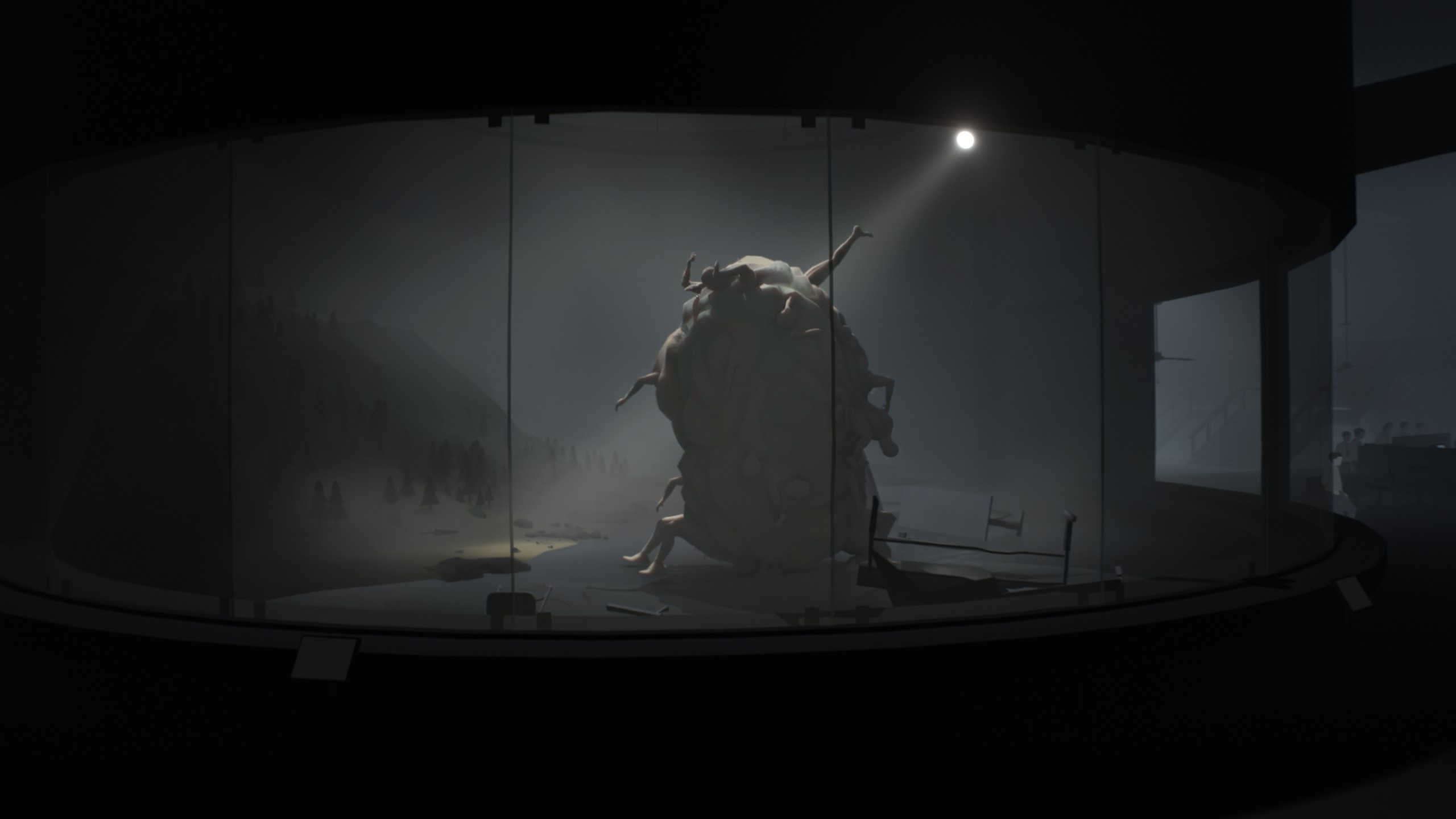
Atmospheric side scrollers became popular thanks to Limbo. With no story but an entire tale told through the atmosphere, puzzles, and platforming, this became a great way to show gamers that the platforming genre can be a little more mature. Inside are all the aspects that Limbo created and perfected.
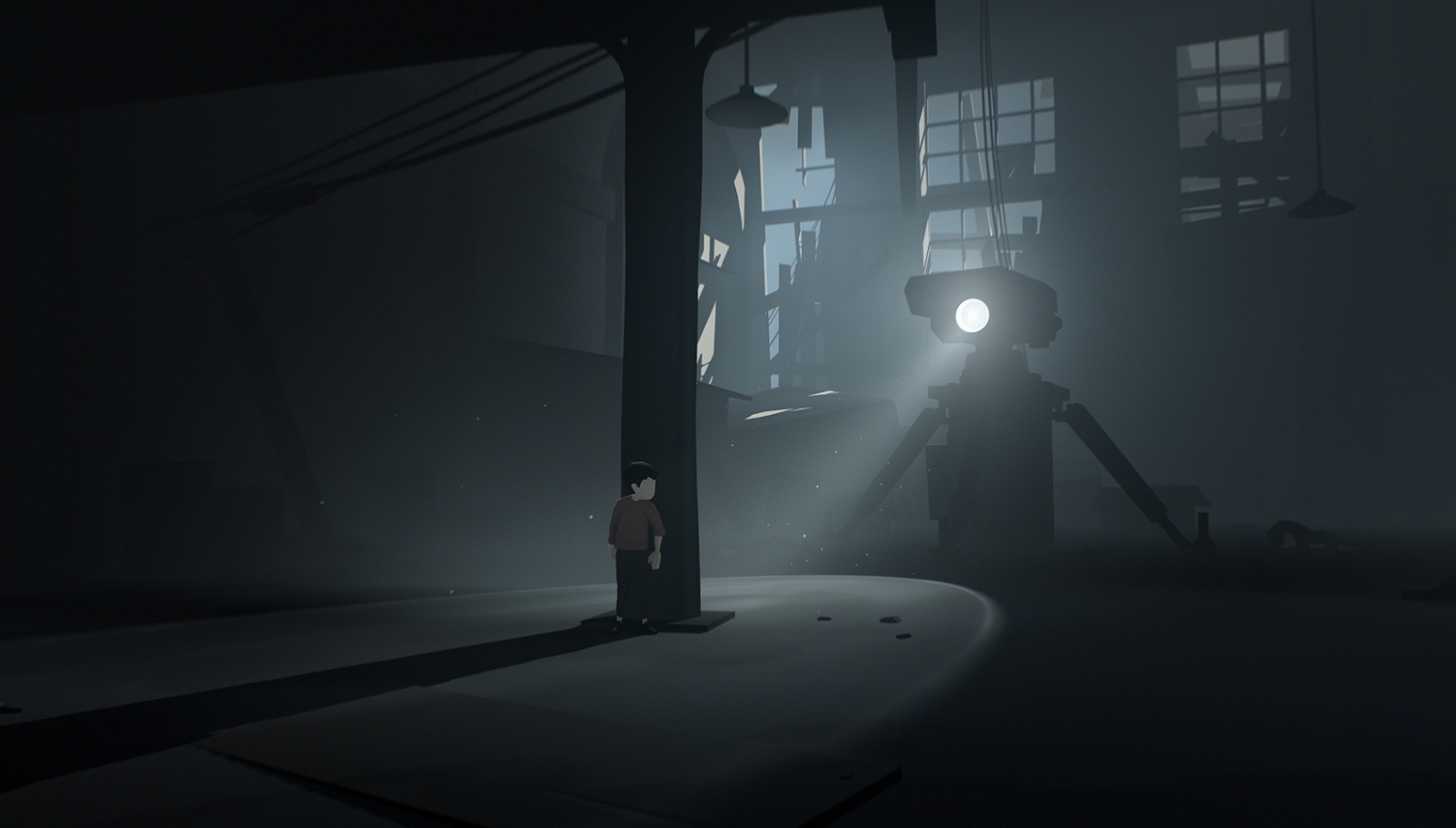
The game starts out with a little boy stumbling out of some trees and running through a forest. In the background, you can see soldiers in masks searching for something, but you’re never quite sure if it’s the boy or something else. Who this boy is and his purpose are never explained, but that’s kind of okay, as it’s up to the player to interpret this. The game has no tutorials, as there’re only two buttons to use: jump and an action button. You slowly get introduced to the game’s puzzles by pulling objects to ledges to reach greater heights, learning to keep switches open, etc. The game’s main focus is the art style and atmosphere. This game has an Uncanny Valley militaristic dystopia theme with everything in gray. It really grabs your attention, and the game can get quite tense.
Some of the more memorable scenes are when dogs are chasing you, as there’s no music but just the panting of the kids and raging, aggressive dogs at your heels. Most chase scenes actually require skill to finish, as they require precise timing of jumps and even quick-on-your-feet puzzle solving. The game is very well-paced, as I wanted to play through the whole thing without stopping. While there wasn’t a story being told, I wanted more chase scenes and sections where the boy had to sneak by these adults. The game isn’t just a flat plane, either, as the world turns and pans in accordance with the 2D playfield. It never feels like you’re going just left or right in a world that has been cut in half. There’s depth in the foreground and background, which is something that’s not done often in side scrollers.
There’s something strange going on in this world, as it seems most humans (or slaves) are mind-controlled and are being sold to other humans or possibly some type of alien. I couldn’t really tell, and again, that’s the point. Your job is to keep this boy out of danger and to keep pushing forward. From swimming, using a submersible, climbing, running, jumping, and puzzle-solving, there are quite a lot of games here for such a short length. Inside also has amazing animations and physics—some of the best I have ever seen. The way the boy runs and the people in the background interact with your every move is jaw-dropping. The boy would sneak across a floor and open a grate while everyone was starting inside some vat in the background. As soon as that grate dropped, all heads looked toward you. It’s creepy and fantastic all at the same time, not to mention the boy’s gruesome death animations and scenes.
I was amazed all the way through this game, despite the ending making zero sense and just being so abrupt. I wanted more, and hopefully we will get more. I can see that this could be a vastly expanded universe with an amazing story, but these atmospheric indie games tend to never have sequels. The game’s art style is just some of the best this year, and the graphics are also technically impressive, with amazing textures, lighting effects, and shadowing that would put some big-budget games to shame.
Overall, Inside is a wonderful must-play game. It’s oozing with atmosphere, tension, and pacing that will keep you glued during the whole 4-hour play session. When it’s over, you will sit back and remember most of the scenes and wonder what’s going on in this game. I felt more like a spectator who jumped into the middle of a movie, and I’m just watching what’s happening next, hoping to catch on. This is a unique way to tell stories and can be very hard to pull off. Thankfully, Inside will have you thinking about it long after it’s gone.
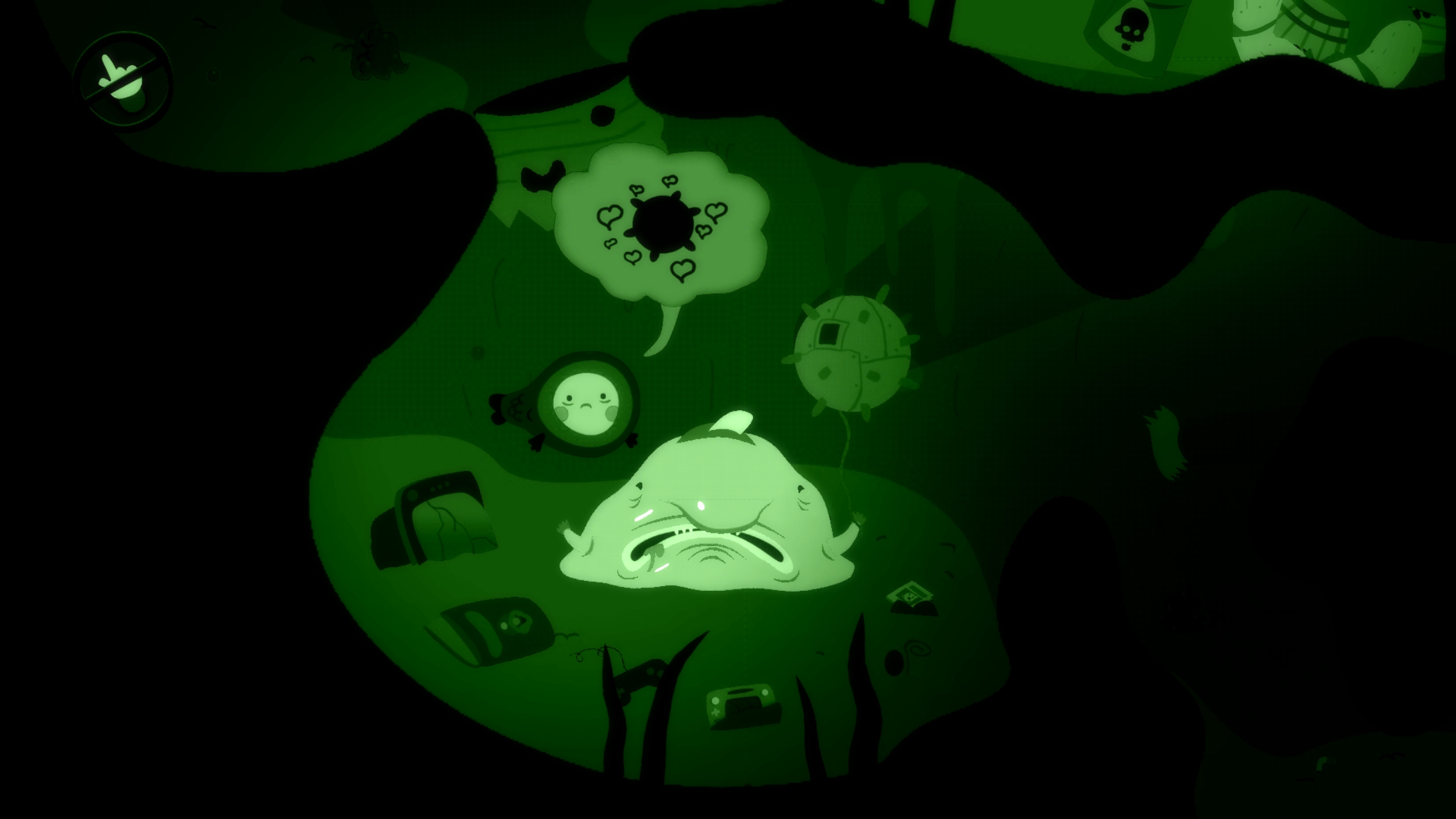
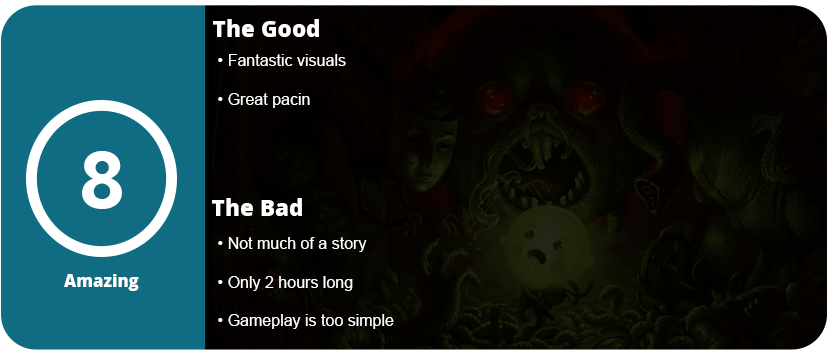
Adventure games are always hit or miss, as they have many classics to live up to. There are the occasional crazy and interesting adventure games like Neverending Nightmares that are quite fascinating. Bulb Boy is one such game where you play as a, well, bulb boy who must defeat a monster to save his grandfather. There’s not much of a story here, as it’s all about atmosphere and visuals. The game is rather short, and it’s not the most cerebral adventure game out there, but it’s worth a purchase.
Like in a typical adventure game, you can tap on areas for the character to move to and examine items. Bulb Boy is very straight-to-the point so there’s not much exploring here. There’s only so much to click on and very little inventory. The game has bosses on each stage that you must defeat, but the puzzles are very easy and not really puzzles. You find an object, and it can only go in one direction, as there’s no backtracking or exploring involved. I would love to see this universe expand, as Bulb Boy is grotesque, beautiful, and full of atmosphere. It’s a horror adventure with a cartoon flair, guts, and everything disgusting all over the screen.
There’s a lot of green in this game, and the cut-out art style is just fantastic. I enjoyed playing through the whole game, despite only taking a couple of hours. Bulb Boy’s death animations are brutal, there’s a lot of variety, and the game has a nice, quick pace to it. Some of my favorite things about this game are the extreme closeups of areas, as they show the sickly detail of everything around this character. It’s nightmarish for sure and definitely one of the most artistic games this year.
It’s a crying shame that this is an indie game and won’t get much attention. I hope for a sequel that’s more expanded, but we’ll see. In the meantime, just feast your eyes on the beautiful art, despite how straightforward and simple the gameplay is.
Surreal adventure games are the next generation of the adventure genre, and if they are done right, they can be quite memorable and mesmerizing. Journey was one of the first of this kind of new adventure title. With minimal UI, gameplay, controls, and story, you are swept through a linear journey of emotions, visual beauty, and auditory bliss. Some of the people from Journey are back at it again with Abzu, an underwater cinematic adventure.
You play as a character that swims around the ocean, exploring and trying to stop some sort of mechanical infestation from destroying all ocean life. The story plays out similar to Journey, in which you figure out what’s going on contextually as you progress through the game via images and scenes. If you played Journey, then you know what to expect with Abzu. What this game does differently is that it focuses more on an exploration of this beautiful world than pushing the player through a short journey and telling a quick story.
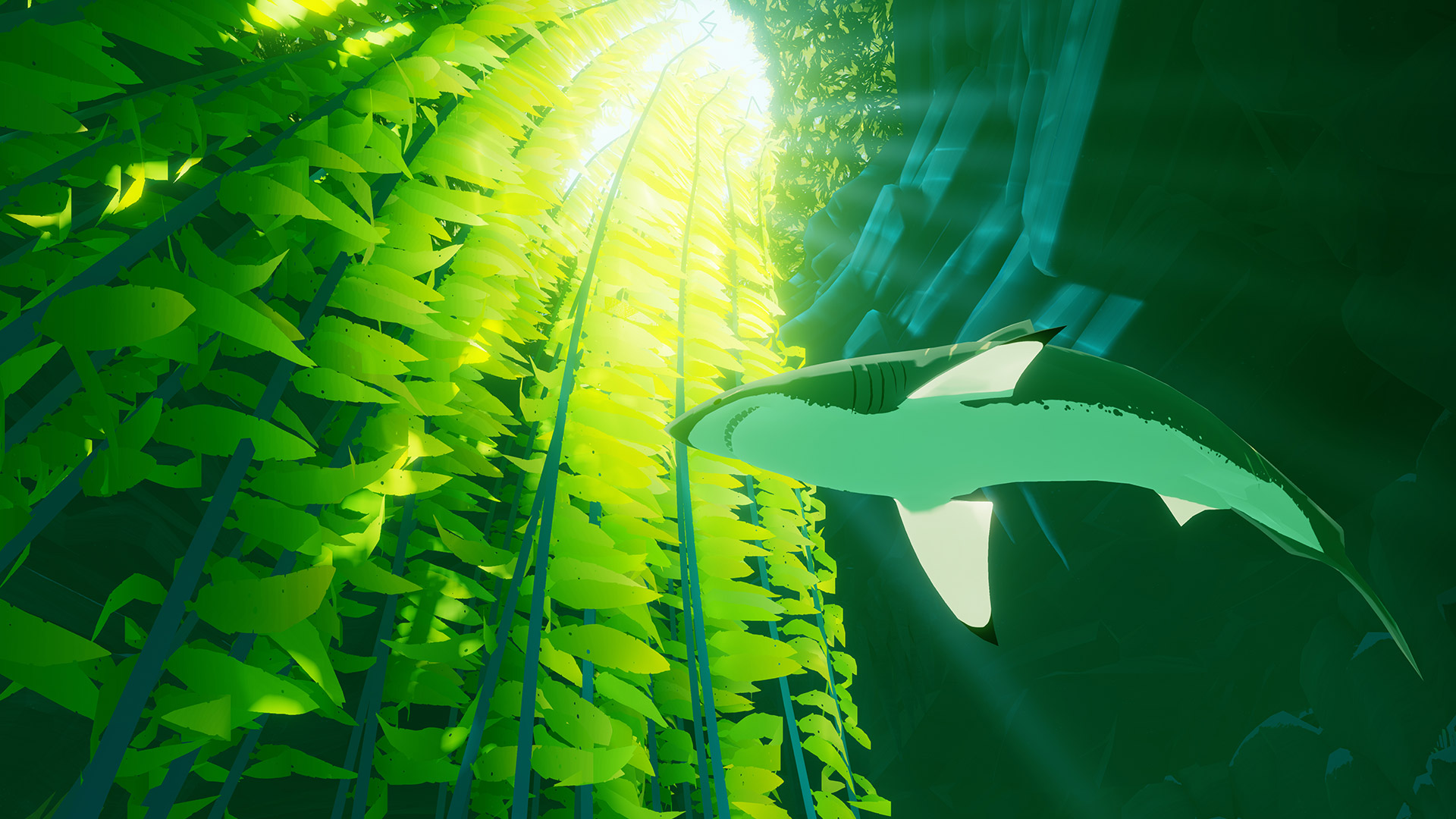
Right off the bat, you will notice how gorgeous this game is. Using Unreal Engine 4, Abzu is bursting at the seams with color and saturated with detail. As you push through each large exploration area (there are about a dozen), your main purpose is to find hidden shells, activate various switches to open doors, and activate little pools that will add various new creatures to the game. While I mainly feel this was filler content to extend the game another hour, it forces you to explore the ocean floor and look around a bit. Seeing all sorts of marine life and plant matter float around you is just amazing. This game really makes you feel like you’re swimming in the ocean and exploring what’s under the sea.
The game’s pacing is similar to Journey, with an explorative area and then a cinematic on-rails section that shows off the visuals that this game nails. Having your character leap out of the water to a stunning vista or romp around with whales in the murky depths is something not seen in any other game. Not a single area is the same, and I never saw the same sea creature twice. It’s the little things that count in games like this, and the amount of detail packed in Abzu is triple that of Journey, and I loved every second of it.
Now, that’s not to say that exploring these cinematic moments is the best thing for this type of game. I thought Journey’s pacing was spot on, but Abzu feels like a bumpy roller coaster with these cinematic scenes spread too far apart. There are only so many switches, chains, and doorways I can go through before I want something else. When you give the player very little to do, you have to rely on the senses and visuals to keep the player entertained. I feel this could have been an underwater journey if the pacing was a little better.
Overall, Abzu is a fantastic adventure game, and any fan of Journey must own it. The visuals are absolutely stunning, and Austin Wintory is back with another beautiful soundtrack—one of the best this year. It’s just a shame that the game suffers from poor pacing and exploration elements that are just there to force the player to look at everything. I feel like I’m getting my face rubbed in beauty rather than being allowed to soak it in as it passes by me.
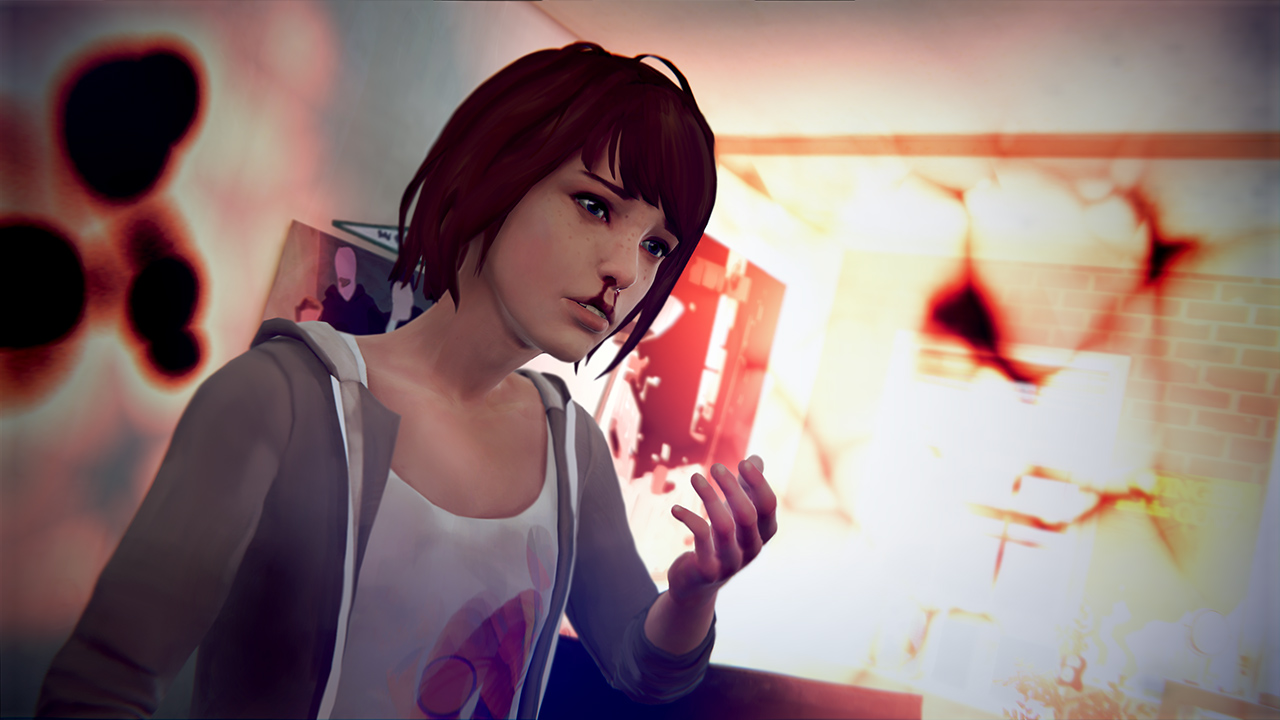
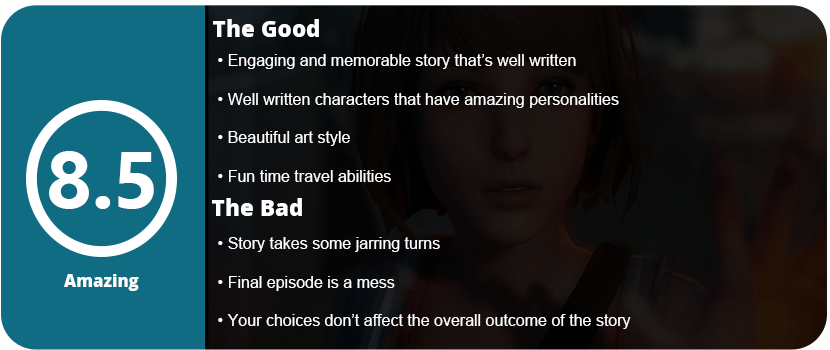
Have you ever wanted to time-travel and change the past? How about just the last 30 seconds? You get that option in Life is Strange. You play Maxine Caulfield, who discovers she can rewind time by saving her childhood friend from a fatal gunshot wound in the girl’s bathroom. This changes Max’s life and everyone around her, but it’s up to you to decide if it’s for good or worse. Life is Strange tells a fantastically beautiful story with wonderfully written characters. The game will keep you hooked and have you playing all 8 hours with barely a blink.
Life is Strange tries to build on the revolutionary point-and-click adventure genre that The Walking Dead revived from Telltale Games. The game is a little more open-ended, but not by much. There’s more to explore and items to “look at,” which gives you a bigger insight into Max’s own thoughts and mind. Honestly, by looking at all these objects, you get to know Max better and the world around you more. Besides this, you just walk through every area to the next character that advances the story. There are some “time puzzles” that require you to select certain dialog choices and then rewind time to use that information to your advantage. It’s an interesting idea, but Life is Strange’s storytelling is a bit of a mess and requires you to pay attention very closely or you will miss something.
The game is broken up into 5 episodes, and each one has a cliffhanger ending. The game goes on at a good pace except for the final chapter, which is a roller coaster and kind of a mess. Without spoiling everything, you kind of “review” everything you have done through the game, which involves an awful stealth sequence. However, through the entire game, I couldn’t help but realize that no matter what I chose, the final outcome never changes, which is odd. It’s not until the last two chapters that all your choices start to unfold, but I feel they are just detours rather than different outcomes. Despite that frustration, the story in Life is Strange is amazing.
I have to talk about the atmosphere of this game. It’s so nostalgic and really reminded me of my adventures as a kid growing up, and it really makes you think about your family, friends, and what’s going on around you in your life. That small country life is something I grew up with personally, and the game really hit home with me. It sucked me in every minute, despite the slow start I had to push through. The entire game is so touching and full of emotion; it’s one of the best video game stories I have ever seen, but it still doesn’t top Soma. This is a story you will talk about long after the game is over and ponder over. The only thing that really annoyed me about the story is that it tries to turn this innocent teen drama “Where did my best friend go?” mystery into a serious murder mystery, which is kind of jarring. I loved exploring these areas out in the middle of nowhere and getting into shenanigans with Max and her best friend Cloe through their time travel events. Once the murder mystery stuff hit, it was a bit of a turn-off, but it wasn’t until towards the end.
Life is Strange also isn’t the prettiest game to look at; it’s rather ugly. The game has a nice watercolor art style, but the game’s technical level is a first-generation Xbox 360 game at best. The textures are muddy and awful, and the character models are terrible. This is just a downright ugly game, but the story and characters keep your head out of that. Overall, this is worth every dime and all your time invested.
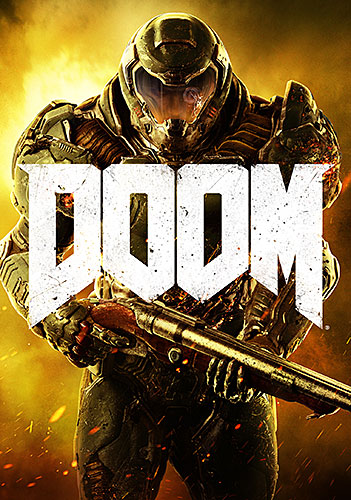
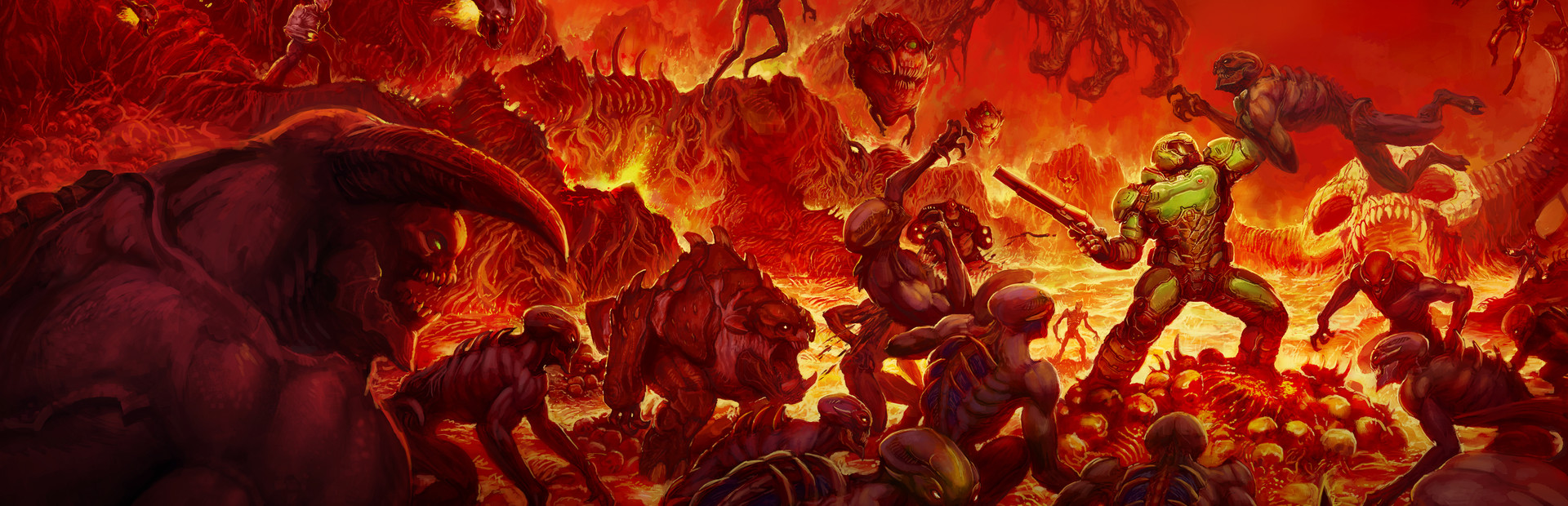
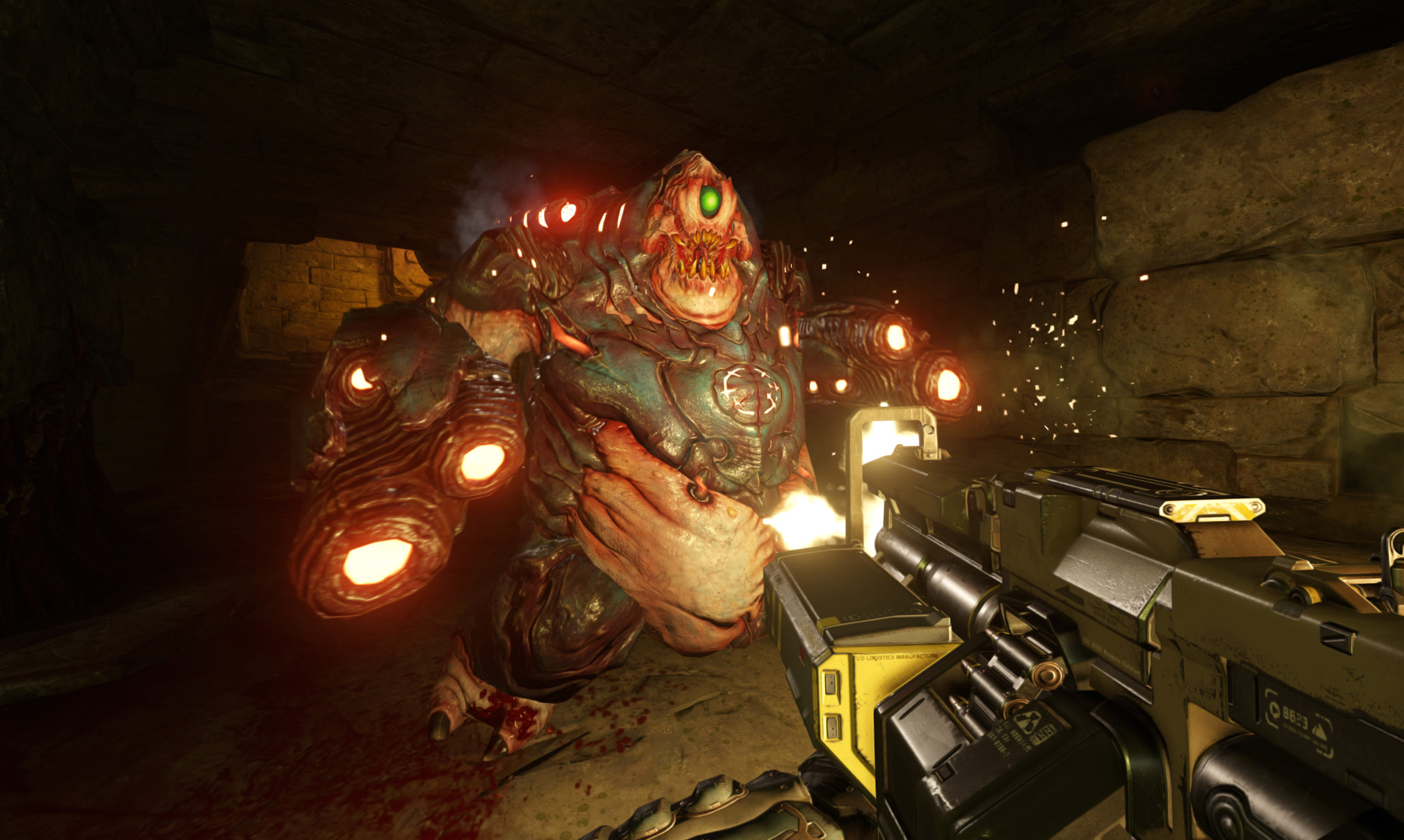
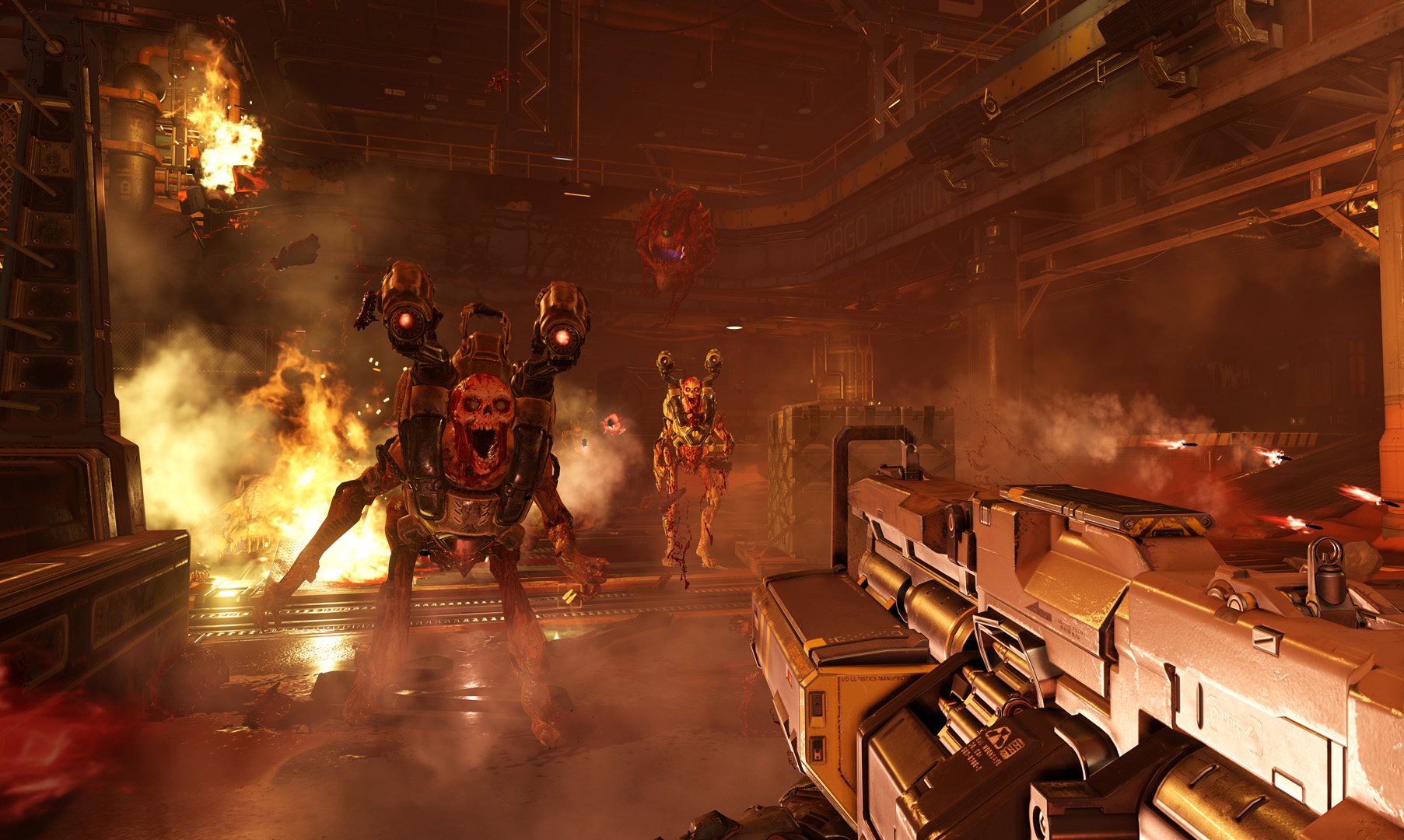
Well, 2016 seems to be a great year for the comeback of shooters. First Overwatch, now DOOM (well, in reviewing order). DOOM could have gone so bad, so quickly. However, ID Software went back to its roots, updated it for 2016 technology, and gave the middle finger to all the rest of the stuff plaguing the genre. DOOM is by far one of the best FPS games I have played in over a decade. It’s fast-paced, challenging, fun, full of secrets for veterans, and just plain old shooting.
The game actually does have a bit of a story, and it’s done just right so that it won’t get in the way of the shooting. You play Doomguy, a UAC Marine who has to help a robot scientist named Hayden stop another researcher from bringing Hell to Earth. Amanda Pierce let the tech and religious aspects of Hell get to her, and it overran the advanced Mars facility. Most of the story is told through logs, which are actually the best way to keep the story from getting in the way or becoming a train wreck. There are few cutscenes in DOOM, and when they play out, they are a nice break from the challenging gunplay. It’s light and crisp and isn’t stale, which is great for the genre. Too many games—Battlefield and Call of Duty, in particular—try to do this Hollywood sci-fi script of I don’t know what the hell to impress the edgy gamers out there. It doesn’t work; it’s a train wreck, and those stories are a complete mess. The FPS genre relies too heavily on story and not enough on gameplay.
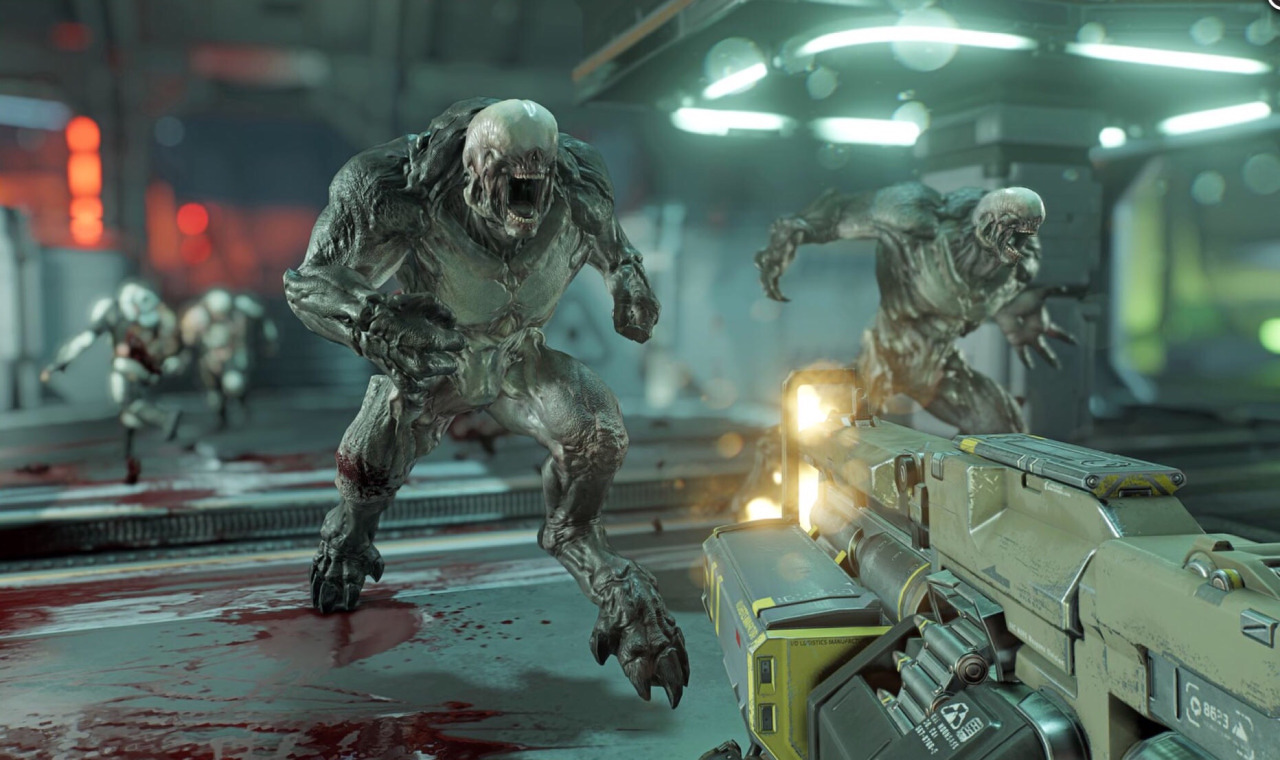
With that said, DOOM is just like you remembered all those years ago—forget about Doom 3. As soon as I took control of Doomguy, I was in heaven. It’s fast-paced, controls amazingly well, and the guns feel fantastic. The slow build-up of your arsenal makes you smile every time you acquire a new weapon. Seeing Doomguy pick up the shotgun brought a “hell yeah” smile to my face. Seeing the chainsaw rip through enemies just gave me satisfaction as a shooter I haven’t felt in years. There’s a strong arsenal, and not all classic weapons return; a majority are new. The chaingun is fun, the heavy assault rifle is fun, and the gauss rifle is just so much fun. DOOM starts bringing the series into 2016 with weapons mods and Praetor Suit upgrades. These seem unnecessary at first, but with the way the enemies are balanced and maps are laid out, you feel you need them. Each weapon has two different mods, which are incredibly helpful. The shotgun can get an exploding buckshot or a three-round burst. There’s no reloading ammo in the game, so the R key is used for switching between mods. To keep things balanced, there’s a mod switching animation, so going into combat with what you want is necessary.
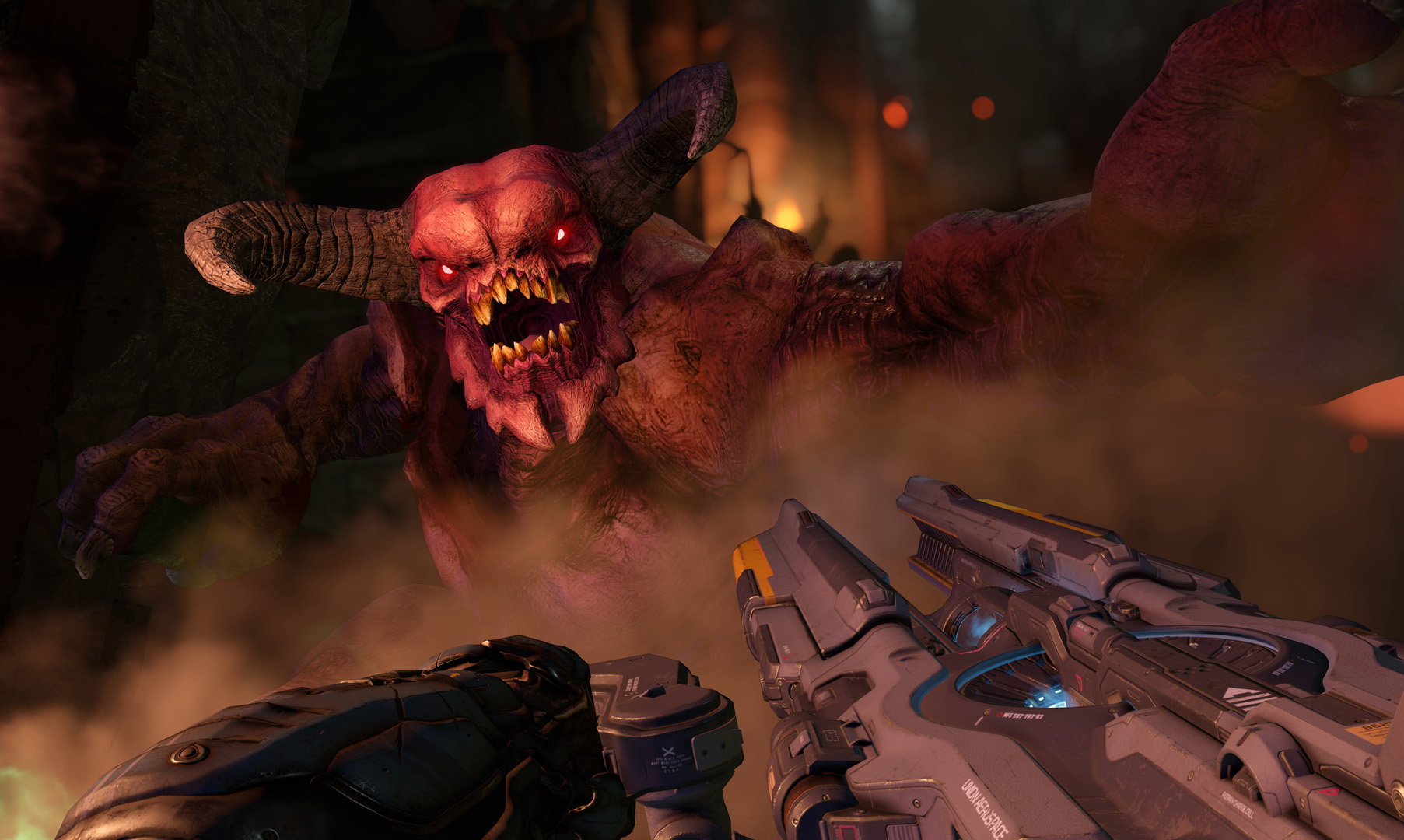
Let’s talk enemies. The game is chock-full of them, and all the classics return. Pinkies, Hell Knights, Cacodemons, Imps, etc. They look fantastic, blow up great, and the game is so gory and full of detail. The game isn’t the most technically impressive as some textures are lacking, but the game has incredible lighting, and the game runs at a nice smooth clip at 60 FPS. It does require the latest PC hardware to run at maxed-out settings, with Nightmare textures needing a GTX 980 or higher as it requires 6GB of VRAM. If you have the rig, you’re going to be in for a visual spectacle. I also have to commend the audio. The explosions, gunfire, enemy sounds, and gory splats are fantastic. The game also has a good ‘ol heavy metal soundtrack with a techno twist. This is one of the best video game soundtracks this year.
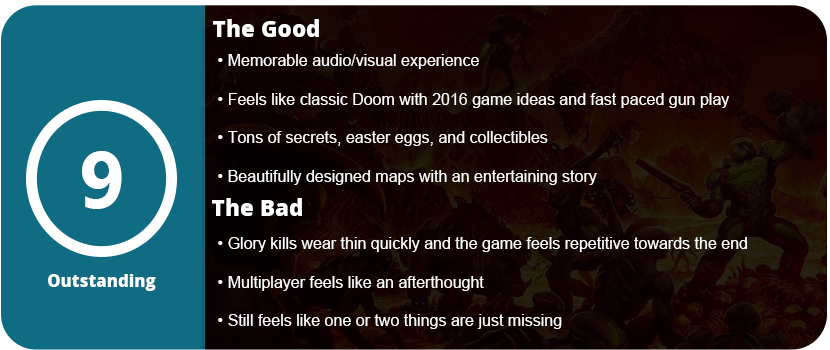
DOOM’s level design is actually very old-school, and it works well here. Each level is made up of arenas with linear hallways in between. 50% of the fun in DOOM is finding all the secrets, thanks to the excellent map. Once you find the Auto Map, all secrets are revealed, but they are still challenging to find. You might see a collectible floating in the air, but you have to find the right switch or path to get to it. I haven’t had this much fun finding collectibles and secrets in a game in a very long time. It was done right here and was not forced. Everything you miss can be reacquired by replaying levels. DOOM also features a new Rune Trial mode, which is a super fun mini-game of sorts that is quite challenging. I was able to beat them all through the first play-through, but a few proved tough. You get timed to complete certain goals, such as killing a certain number of enemies under certain circumstances. They change up the pace and are a warm welcome to the series.
Multiplayer is a bit of a disappointment, but it’s not awful. It’s fun for quite a while, but it won’t have you coming back months later like other shooters. You have your classic modes, and it’s just plain old run-and-gun fun online. It just feels like it’s lacking something or something that needs adjusting. Hopefully, the next DOOM will address this issue, or we will get a stand-alone DOOM multiplayer suite.
DOOM is a fantastic shooter and one of the best to come out in the past ten years. It does have a few flaws; I forgot to mention glory kills, which are melee kills used when an enemy is stunned and flashing. Pressing F can launch you towards the enemy to acquire health and ammo, but it’s overused quite a bit. Thankfully, it’s totally optional, and towards the end of the game, the novelty wore off, and I only used it for health and ammo. The game does get repetitive towards the end, but not in an overly bad way. It’s just part of the genre and series and is a staple that will never go away. Outside of these issues, the game is worth a full purchase.
First-person shooters have hit an all-time slump in the past 10 years. With Call of Duty and Battlefield every year, they have kind of polluted the genre. FPS games are the laughing stock of the gaming community, and it needs to stop. Even worse, FPS multiplayer has taken an all-time low as well. I have not enjoyed online multiplayer since Team Fortress 2, and that was a long time ago. Overwatch finally fixes this problem. Yes, Overwatch is the best multiplayer game I have played in nearly 10 years. That’s not an overstatement; that’s not an exaggeration; that’s a true, hard fact.
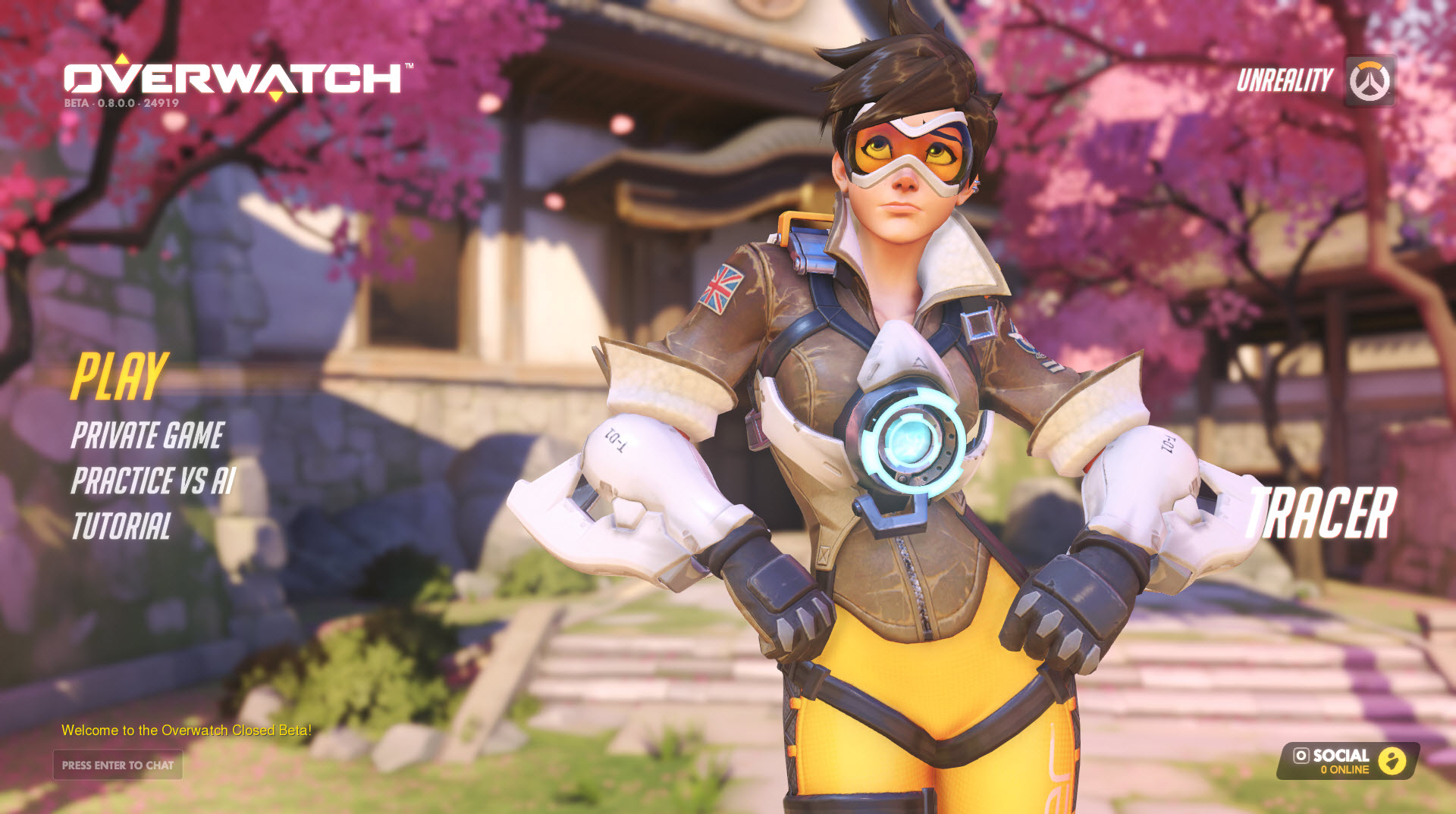
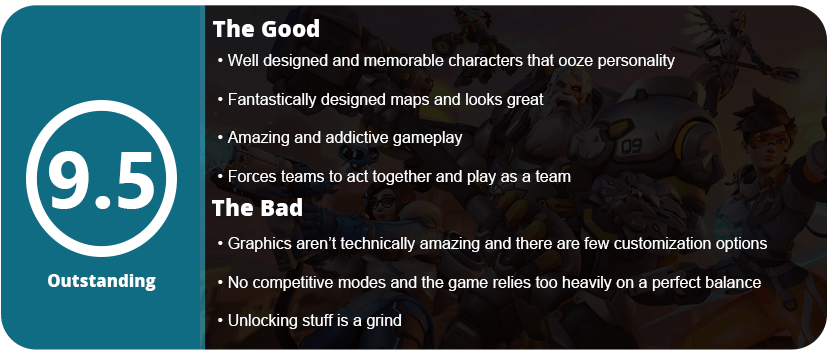
What makes Overwatch so great? First off, the characters. Overwatch has some of the best characters gaming has seen in ages, with every single one being memorable, unique, and fun. Not once did I find myself hating a character or preferring not to play as one. But you’re also probably asking, “What is Overwatch?” A team-based shooter with 6-vs-6 with various maps, objectives, and downright amazing fun.
Overwatch does not have a story, so let’s make that clear. It doesn’t need one either, and that’s a damn miracle on its own. You boot up the game, play the tutorial, and go; that’s all you need. This is very refreshing, as I’m tired of shooters shoehorning crappy stories into games. There isn’t even a backstory for the characters, which is also not needed as it just works. I can’t express this enough; the game just works, and it’s a masterpiece.
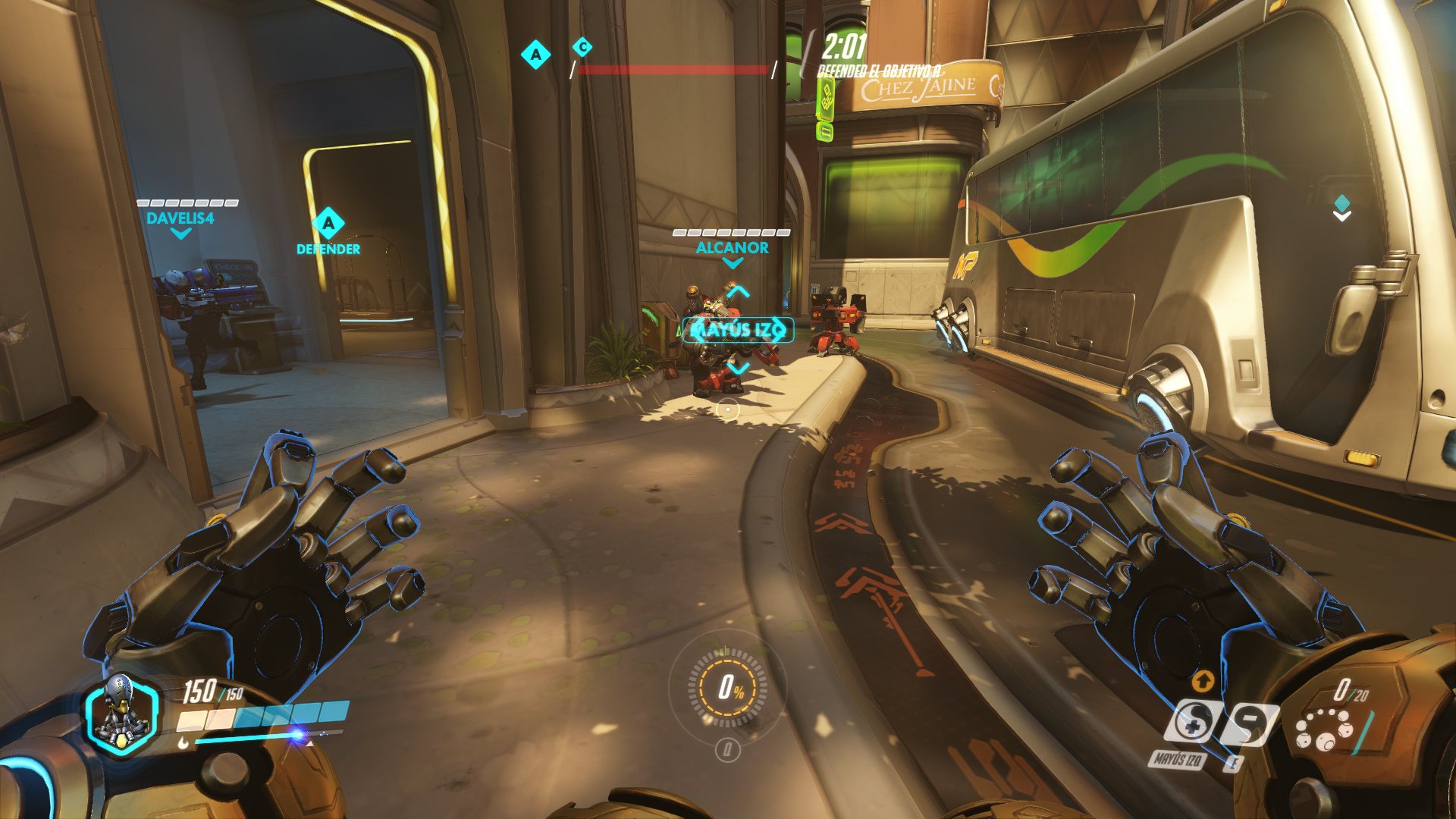
Let’s talk about gameplay. The game is perfectly set up for this type of game and strays away from leveling up weapons and getting new gear like in other FPS games. Each character has two abilities and two modes on their weapons. Characters are divided up into class types, which are tank, offense, defense, and support. Each class has about five characters, so there are plenty to choose from. Not a single character plays the same, and this is key to balancing out matches. One feature I absolutely love is the match hints when selecting characters. It lets everyone know when there are too many offensive characters, too many snipers, not enough tanks, etc. This allows you to balance out the match and works wonders. Rarely did I play a match in which players did not follow these guidelines.
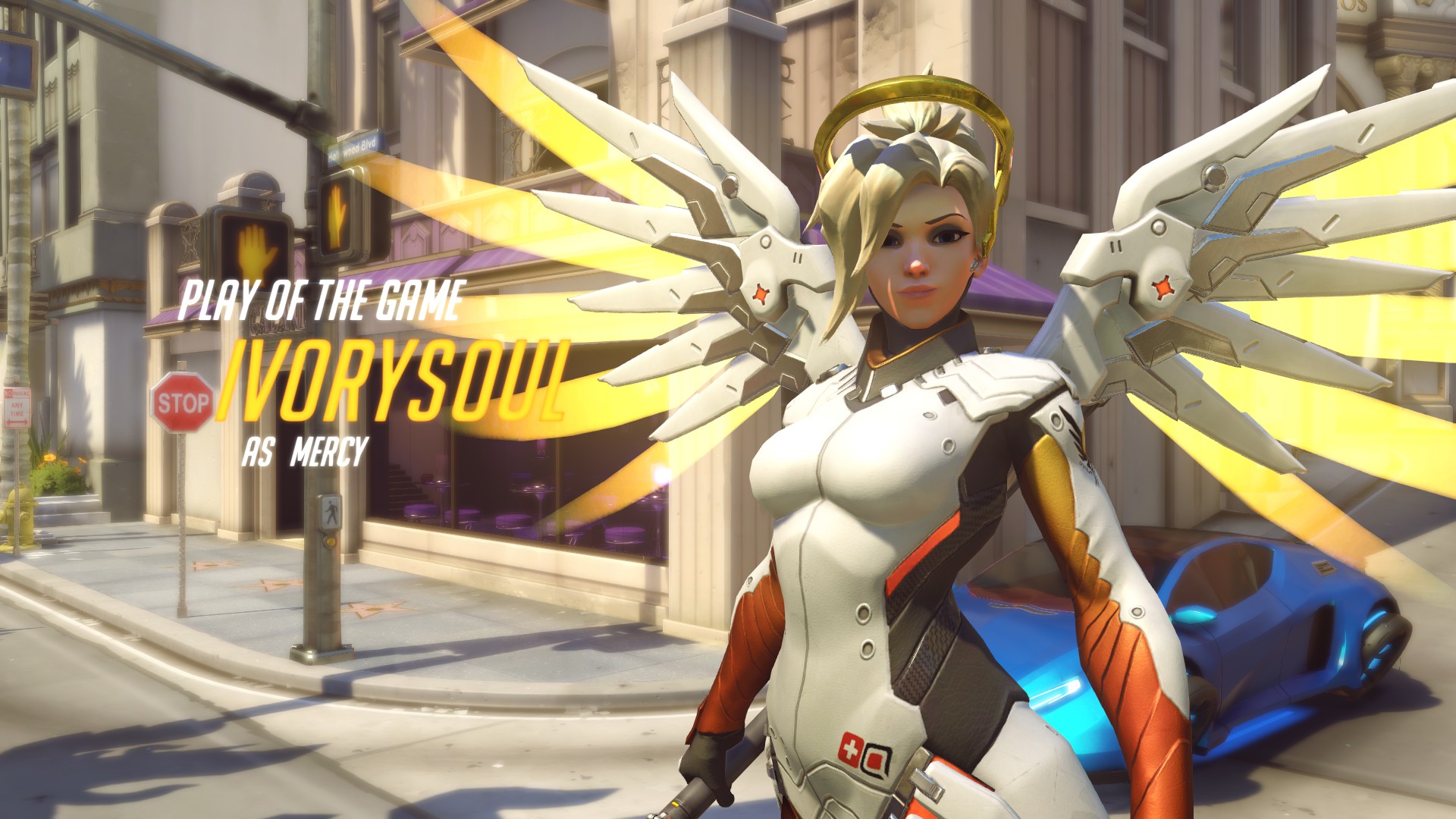
Having each character play completely different forces forces everyone to either pick a few favorites or experiment. I still haven’t played all characters yet, but I stuck with Mercy (a healer) through most of my time. She doesn’t have any defense or offense abilities outside of a small pistol that does minimal damage. It’s up to other players to protect you and use your abilities to their full extent. She can fly towards another player from a good distance, and this was a great defense. If you’re out in the open, you can fly to a character, and they will usually protect you. Her secondary fire ability is increased damage dealt, so I would use this on a player until their health dropped. Every character also has a special ability that needs to be charged. Once charged, these can turn the game around and give your team an edge. Mercy can resurrect a dead player, which I have actually won matches doing.
Another character I played a lot was Pharrah. She’s a rocket launcher offense character that can fly. Her gameplay is designed for vertical play, and it’s so much fun. Her rockets are fairly balanced and bring me back to the days of the Unreal Tournament. Her abilities are a rocket pack that allows her to glide, a super jump, and her special ability is a rocket barrage, which is best used in the air as she’s immobile during this ability.
As you can see, the game is perfectly balanced. Not one single character is overpowered, causing players to use only one character. There are melee-only characters like Reinhardt, who uses a giant shield that players can take cover behind, but he also wields a giant hammer. He’s deadly up close, but he can’t do much for players far away. Then there’re characters like Widowmaker and Hanzo, who are snipers and do great damage from far away but can hold their ground in close combat if it’s one-on-one. I just love how well each character plays and each one is unique, and I haven’t had that feeling since Team Fortress 2.
Once a match is over, there’s an awesome play of the game that is picked by the winning team. You get a cool character intro screen as well as great adrenaline-fueled music along with the 10-second replay clip. Right now, there’re issues with computers spitting out outplays via numbers, so a lot of support characters get overlooked, but Blizzard is currently working on this. The whole time I played Mercy, I was only Play of the Game once, and that was because a player I was healing killed a lot of people, and then I resurrected someone, making my numbers slightly better. It’s unfair, as characters who do quick high damage get the most plays, such as Reaper, Hanzo, McCree, Bastion, Reinhardt, and D.Va. Most of the characters have huge AoEs, which the computer considers the coolest.
Once the play is over, players can rate the match and commend the players with the best numbers, and then you go to your XP bar. Every time you level up, you get a loot box, which contains four items ranging from new skins, sprays, icons, and voice lines. These are nice perks to make your character stand out a bit, but I would have loved something more robust. Maybe being able to customize the character fully would have been nice, but any weapon or ability upgrades would break the entire game. It’s perfectly balanced as it is.
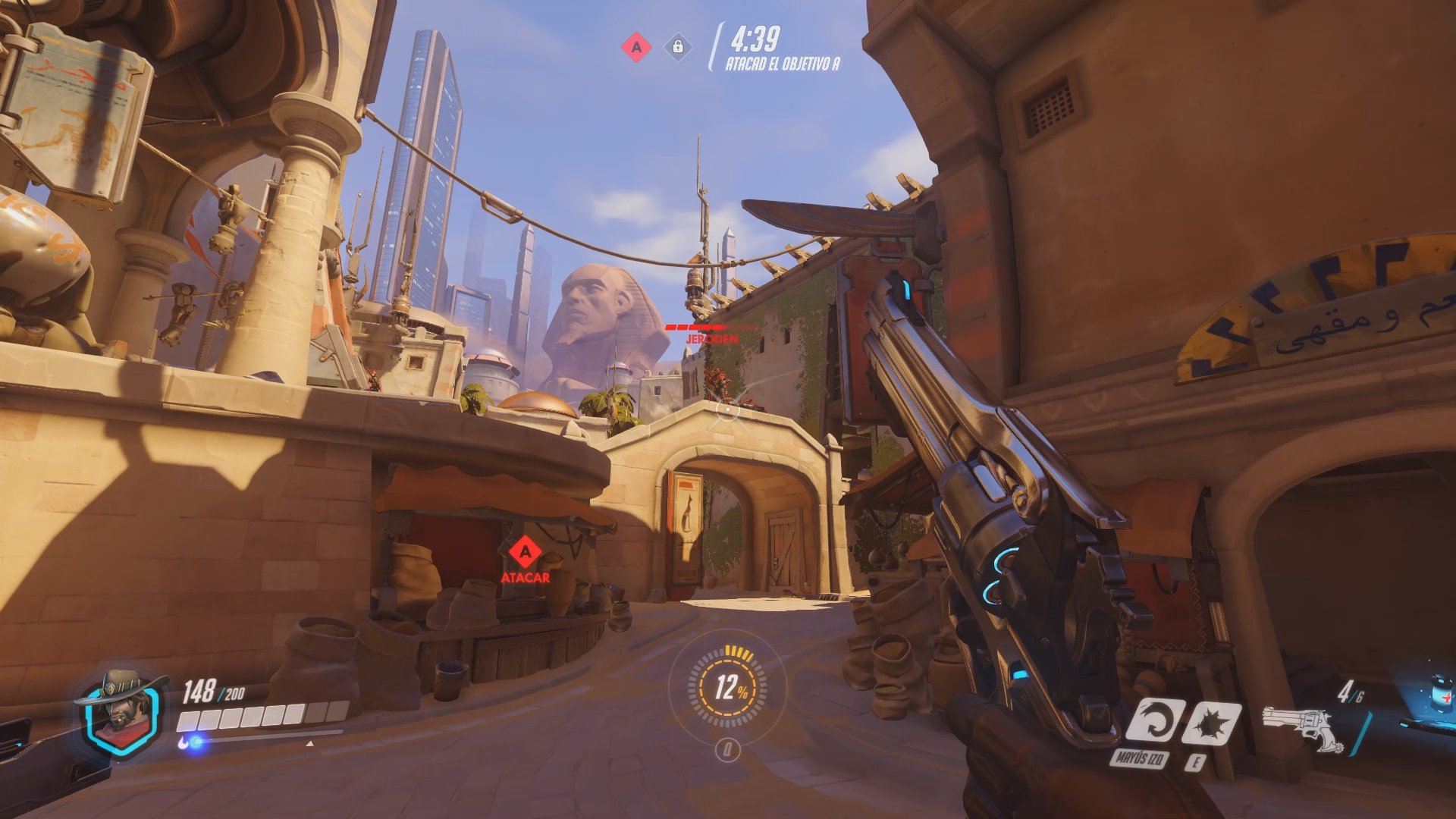
The map’s design is also fantastic. I didn’t find a single map I disliked or didn’t want to play. There are about a dozen or so maps right now from around the world, ranging from Russia to the USA, China, and Mexico. They are laid out just right so every character can take advantage of something, whether it’s a sniper spot, large open area, or corridor.
Now let’s talk about visuals. Overwatch is not as technically impressive as it is artistic. The game looks fantastic; don’t get me wrong, but this isn’t going to make the latest GPU sweat. There’re some low-res texture issues here and there, and you can tell it was optimized for consoles. The lighting effects are fantastic, and everything is highly detailed, but don’t expect The Witcher 3 status graphics.
With all that said, Overwatch has been one of the best shooters in the past ten years. I recommend every shooter fan pick this up, especially if you love Team Fortress 2. The game is perfectly balanced, has memorable characters, and is a blast to play as it forces players to work in teams even without communicating.
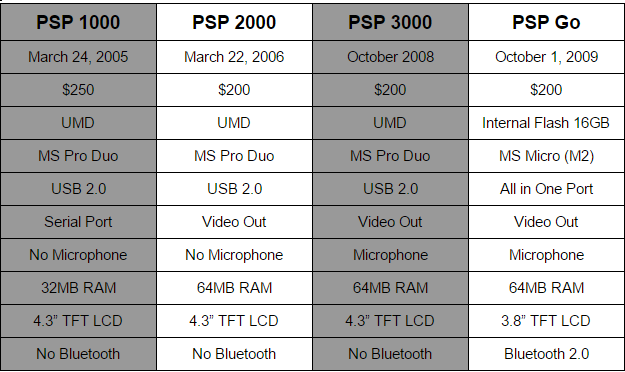
The PSP is a legendary system. There were so many fantastic games on this console that it has been considered the second-best next to the GameBoy Advance. The PSP had a great start and a rough ending, but overall, hundreds of games were released, and a good quarter of them were worthy of being in a collection. Now, I have played and owned the PSP since that wonderful day on March 24, 2005, when I was a teenager and saved up my allowance on pre-order payments for 6 months. However, what ultimately killed the PSP sales-wise was piracy. The PSP was very easy to hack, and many custom firmwares were installed on the system, allowing users to download games. While this is possible on every console in existence, the PSP became a Pirate Station Portable, if you will. Emulators were made for the system, so you can carry around SNES, GBA, Genesis, and even PS1 games on this thing. It’s a very powerful and versatile system, and many things can be done with it.
While I can’t condone piracy, if you own a large collection of classic games, it’s great to have them on the go with you, and this became my main driving point for playing this system to this day. Outside of emulators, the PSP library is like no other. Racing games, action, and RPGs were among the most popular genres on the system. The PSP had one of the greatest handheld launches of all time, with Ridge Racer, Darkstalkers, Lumines, Ape Escape, and many other brands on board. The system was sleek, the most beautiful handheld system ever created, and powerful. I remember booting up Ridge Racer for the first time and being overwhelmed by the graphical fidelity, sound, and large screen. This was also the first handheld with this large of a screen. We had widescreen gaming in our hands with a huge 4.3″ LCD, and that was even bigger than phones back in the day. In 2005, you had BlackBerries with small screens and flip phones. Phone screens didn’t catch up until six years later. The PSP was way ahead of its time.
While many great games took forever to be released, it was a slow trickle, for sure. Huge games were milestones for the system, like God of War, Kingdom Hearts, Final Fantasy, Gran Turismo, Tactics Ogre, and many others. These games defined the system as fantastic, and there were also many other hidden gems thrown in there. There were also many JRPG ports that were only seen in Japan that were now ported to English for the first time, and this trend continues with the Vita. The PSP was perfect for JRPGs that you could keep in your pocket. Now the PSP had many flaws, like the terrible UMD discs that nearly crippled the system. The system also had many failed services like comics, Skype, UMD movies, and the terrible internet browser. The system remains great for watching movies, listening to music, and playing games, but more so natively than through paid services. They just didn’t work on the PSP at all.
This will be my very last review of the PSP hardware line, as it was the last (outside of the E1000 unit that was in Europe only). The PSP Go is a very difficult system to find these days, as it is the least widely available. The PSP Go was released in 2009 and was discontinued barely two years later. The PSP had two previous models that greatly improved the system, with the 3000 model being the best. Surprisingly, what drove sales was how easy the hardware was to hack and downgrade. The original model was the easiest to hack, as it was mastered by the time the 2000 model came out. The 2000 model had a new motherboard, and several hurdles had to be overcome with various firmware updates. It is the least popular of the three. The 3000 system didn’t take as long as Sony was slowing down on the firmware updates, and the PSP Go was hacked in no time flat.
With that said, the actual system is even sexier than you could imagine. A slide-out PSP? No way! Many mock models were created for the PSP 2, which was said to be announced around the time of the PSP Go release. The system does have drawbacks over the original models, but there are advantages that help iron some of this out. First off, the system fits in your pocket easier. The PSP wasn’t really the best for your pocket, as it was very wide.
The Go eliminates the buttons on the side of the screen by putting the screen on top of the buttons, which is a genius idea. While the chassis is now all plastic, it’s still very sturdy. The system retains the overall shape of the PSP and has rubber feet on the bottom of the system, and the PSP ring logo is now removed. The buttons have been completely rearranged, more dramatically than the PSP 3000’s arrangement. The new PS button introduced on the 3000 is now on the top screen, being the only button there. The Bluetooth and WiFi lamps are at the top of the screen, as are the speakers flanking the screen. It’s very minimal and looks great, and this is my favorite home button so far on the system. On the top of the system are the usual L and R buttons, but they are larger than the previous systems and lay more flat as they don’t make up part of the shape of the system like before. The PSP has a volume rocker for the first time, which is on top of the system, and the screen and note buttons flank that. These are the only bad decisions as to when the screen is up. These buttons are hard to press as you have to blindly feel for them. Your most used buttons are under the screen with the analog nub between the D-pad and face buttons, which is interesting as it was under the D-pad previously. The nub is inset, so your thumb stays inside and feels more like an analog stick, and it sticks up away from the console but doesn’t tilt still. The D-pad is much improved, as it doesn’t rock like previous systems, and the face buttons are the exact same size as the Vita. You can actually see the influence of the Vita in the PSP Go.
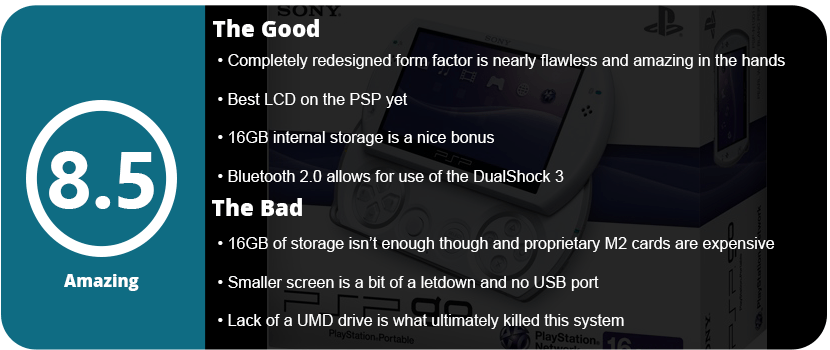
With that said, the buttons feel great, and the body is nice. The power slider and wifi switch are very similar to the PSP 3000 on each side of the system, but the worst change of all is a new proprietary memory card called Memory Stick Micro. This was one last stab to combat piracy, but the internal flash actually helped it. The new memory cards are much more expensive than the MS Pro Duo cards that were widely available. So, if you upgraded to a PSP Go, you had to ditch your Pro Duo, which is an awful move on Sony’s part. While the internal storage is a nice 16GB for several games, a larger size would have been nice to eliminate the removable media altogether. 32 or 64GB would have been just fine, and no one would have complained. On the plus side, with this internal storage comes lightning-fast read and write speeds, so load times are greatly reduced in most games. The Go also has Bluetooth 2.0, which no other model has. This was to connect Bluetooth headsets and the DualShock 3. Oh yes, you can play games with the DualShock 3, which is a nice feature; however, there’s no easy way to play as you have to put the Go on a flat surface. USB 2.0 was also removed and now has its own cable, which means your other cables are out the window. If you lose this cable, you’re screwed; however, USB A to B was being phased out as phones were using Mini B cables, which are now standard. Hey, at least it still has a headphone jack and mic.
Most people complain that the Go has a screen that’s almost half an inch smaller than the previous models. After a while, you don’t notice, and the picture is extremely clear due to the better LCD technology inside the Go. The “looking through a screen door” issue is gone here, and the screen is crisp and bright even by today’s standards. Overall, I can consider this the Gameboy Advance Micro of the PSP. Every handheld system usually has a miniature “best of” variation, and this is it.
With that said, the PSP Go is my personal favorite system. I love the larger versions; the PSP 3000 is the best of the three, but something about ultra-compactness and the slide-out screen really sells the entire package. It’s a gorgeous system, and it’s a shame it hasn’t been re-released. The only true way to play this is by buying the UMD versions, downgrading the firmware, and playing the backed-up ISO of your game. You can even downgrade a UMD PSP, and there are plugins that allow you to rip the game from the UMD onto the MS Pro Duo and then transfer it to your Go to completely circumvent piracy. This huge hurdle is probably what killed the Go, and the fact that the PSN store is shutting down on the PSP natively this month is a crying shame. You can still buy and purchase PSP games, but eventually those will go away as well, and this hacking circumvention will be the one and only way to even get games on this system.
It’s also the rarest of the variations, as a new system will run you over $200, which was the original price point, and even just finding one in good shape is a chore on its own. I picked up a beat-up system near me for $80 with the charger, and it was the only one in my entire county. I later tracked down the white model used in perfect condition for just $100, but again, most cheap Go systems are extremely beat up. If you don’t care about that, then $60–80 is your price range, which isn’t bad.
I just played this game in one long four-hour sitting, and I’m a little emotional about it. The game is completely story-driven and not one of those shitty Steam Early Access survival games that are becoming a plague. Instead, we get a linear adventure game with no combat and just beautiful visuals and a great story. You play a man named Henry who’s suffered the loss of his wife’s mental state due to Alzheimer’s. The game starts out with just some text about how Henry came about to take this job as a fire watchman. In just a few minutes and several lines of text, you develop feelings for Henry and his wife, which is really tough to do. The words are carefully chosen and arranged in just the right way.
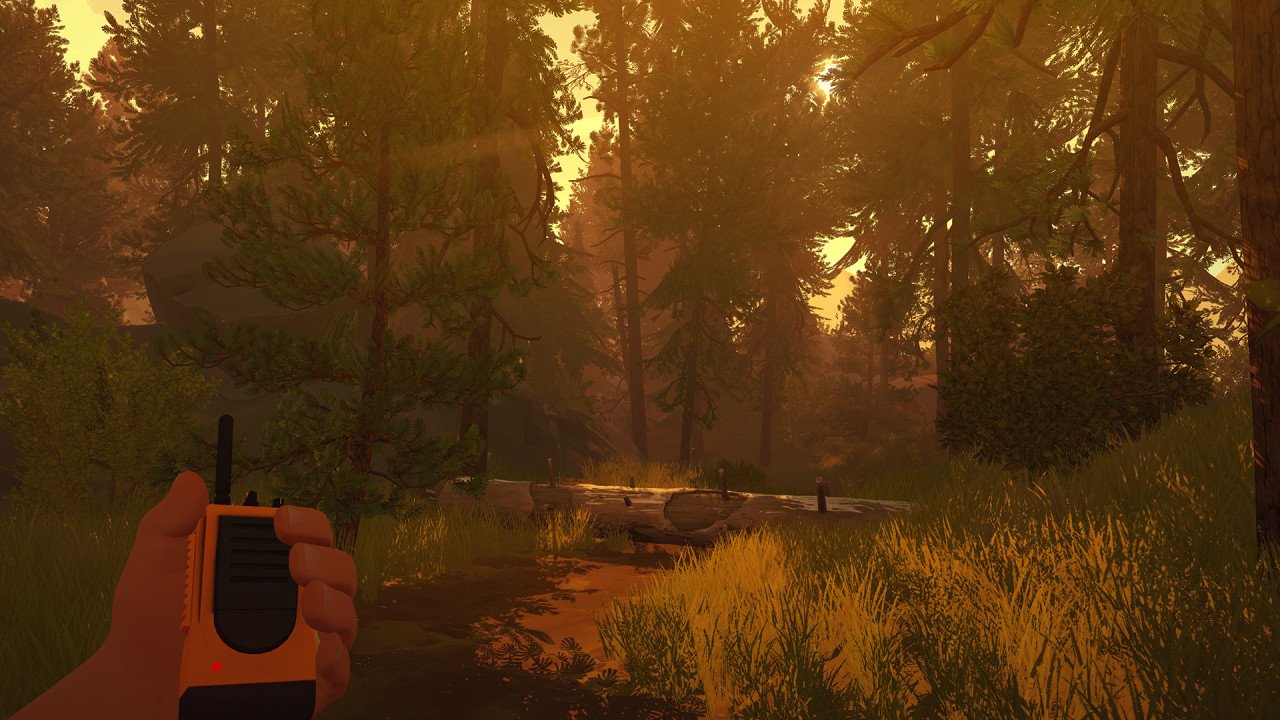
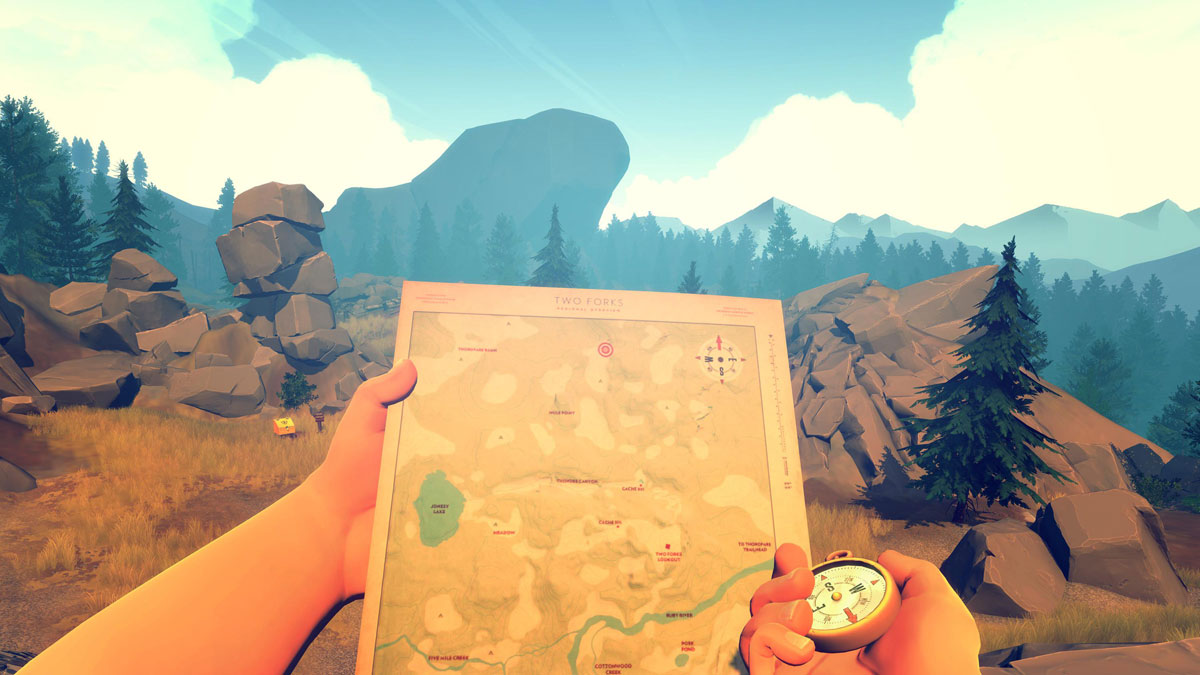
In between this text and the segment is a mini-tutorial with Henry making his 2-day hike to his watchtower. unobtrusive and feel natural and organic, so when you take full control of Henry, you’re ready to start playing. When you do, the game starts out with simple missions from the head watchtower, Delilah. Your only communication with her is your walkie-talkie, and you never actually see her in the entire game. It’s a sense of mystery that allows the player to paint their own picture like a book would. The first missions have you setting out to stop some teens setting off fireworks, and this is where you get oriented with the map and compass. There’s a dot where you are, so there’s no need to memorize anything or do aimless guesswork.
Once you get to the site, you realize it’s two female teens who are completely naked, drinking beer, and blasting music. They get upset with you like any rebellious teenager would and threaten you. The first three days of being a fire watchman are played out; however, the game gets darker and tenser as you progress. There are little subtle things that freak you out, such as seeing a man on your way back to your watchtower, discovering someone’s watching you and listening to your conversations with Delilah, and so on. It’s all very organic, and the fact that it is subtle makes it scary and gives a tense atmosphere without using cheesy ghost stories and jump scares.
There were several moments where I wasn’t sure what kind of story this was. Supernatural? After an hour into the game, I figured it wasn’t that. Was it a slasher flick-type story? Not when I realized there’s actually no violence in the game. Was this a murder mystery? Maybe something with aliens? Not at all. It was great to go down this twisting path to finally discover what the true threat was, which I will not spoil here.
The only lighthearted nature of the game is the relationship between Henry and Delilah growing through conversation; however, I was never completely trusting of her due to certain dialogue exchanges and slip-ups on her part. Firewatch is a roller coaster ride of emotions and story-driven feelings that most games can’t get right. In fact, Soma was the last game to make me feel this way.
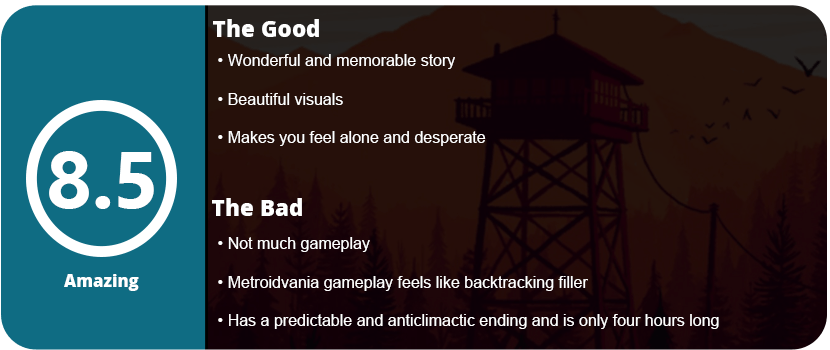
Overall, Firewatch actually has a few flaws that keep it from being perfect. Outside of the story, there’s a lot of aimless backtracking, as after the second hour, you have already discovered this entire area. The Metroidvania-style gameplay to recover equipment to get to new areas seems natural, but it just exaggerates how much this game relies on backtracking to extend game time. Firewatch does have some excellent visuals, though, but nothing that will make modern PCs sweat. I personally had a small connection with this game as I grew up in this area of Wyoming, where the game is based. They mention the cities of Casper and Gillette, which I grew up in both throughout a lot of my childhood. I also visited Yellowstone, so the environment is very familiar to me and made me feel like I was back at home as a kid.
Play Firewatch for the great story, but don’t come in expecting a slaughterfest, survival game, horror jump scares, or any of those cliches. The game is quite mild gameplay-wise, but the story will have you thinking days after finishing.
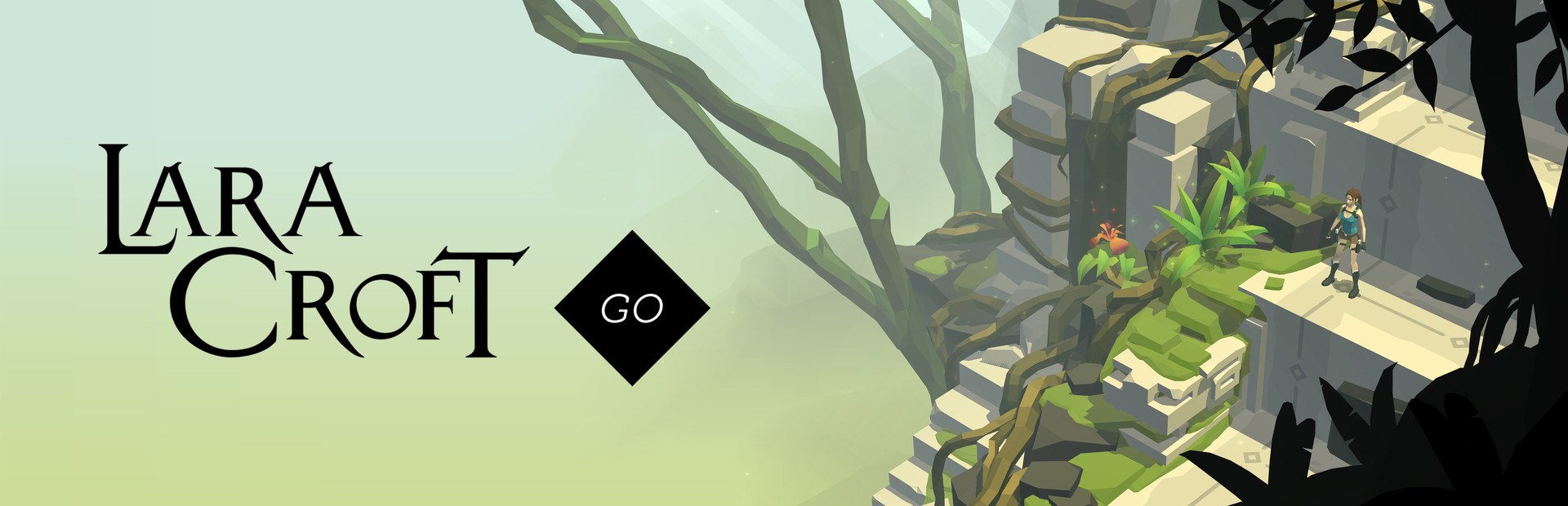
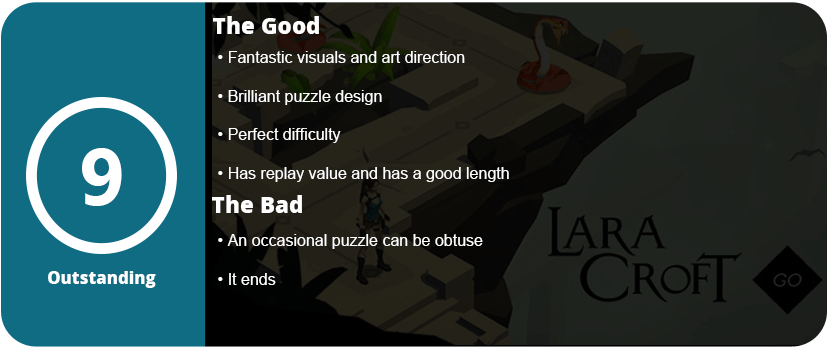
Lara Croft has made a huge comeback thanks to 2013’s Tomb Raider reboot. With her spin-off top-down series, Lara was bound to find her way onto the mobile market. Feeding off the success of Hitman GO, Square Enix takes another popular franchise and ups the ante on the GO series. With fantastically designed puzzles, great graphics, and easy controls, Lara Croft GO is the best mobile game released this year.
If you played Hitman GO, you will be in familiar territory. The levels are comprised of squares that Lara moves along; these squares have dots on them, so you know which ones you can land on. There are various puzzles that will make you really think before advancing to the next level. From pulling switches, avoiding enemies, killing enemies, moving platforms, moving stone pillars, and various other gameplay tidbits. It’s not just as easy as pulling this switch over here and having that switch be done. Enemies play a huge role in this game, and movement is key here. Every time Lara moves a space, so does an enemy. You must line up your moves to avoid the enemy or go around them. The puzzles are brilliantly laid out here and will constantly keep you in check.
The game also felt progressively balanced in difficulty. I started off clearing levels quickly and then slowly had to start thinking. Once I thought I had mastered certain gameplay elements, another was thrown at me and made me think all over again. I can’t stress enough how well these puzzles are designed; they feel like they were made with care and delicate thought in each and every square. In between solving puzzles, there are hidden vases throughout the level that hold gems that will unlock outfits for Lara if all are found in the level.
The game is also quite decent in length. It took me a good two weeks to finish the game, and there is replay value here. Throughout the whole game, I never felt like it was impossible or too hard. It was always something that stared me right in the face, and when I figured out the puzzles slowly, I had a lot of “Aha!” moments, which are so satisfying. Some puzzles I really had to work on, and some were quite easy, but the easy ones in between keep it from getting too frustrating.
The graphics in Lara Croft GO are beautiful papercraft models with great lighting effects and high-quality textures. This is a high-end mobile game at its finest, and I firmly believe every Tomb Raider or puzzle fan must own it. I hope to see more games in the GO series, as they are addictive and so wonderfully crafted. This is a hidden gem and an oasis among awful and ugly free-to-play games.






















































 thebinarymessiah.com

Try multiplayer. A lot of fun !