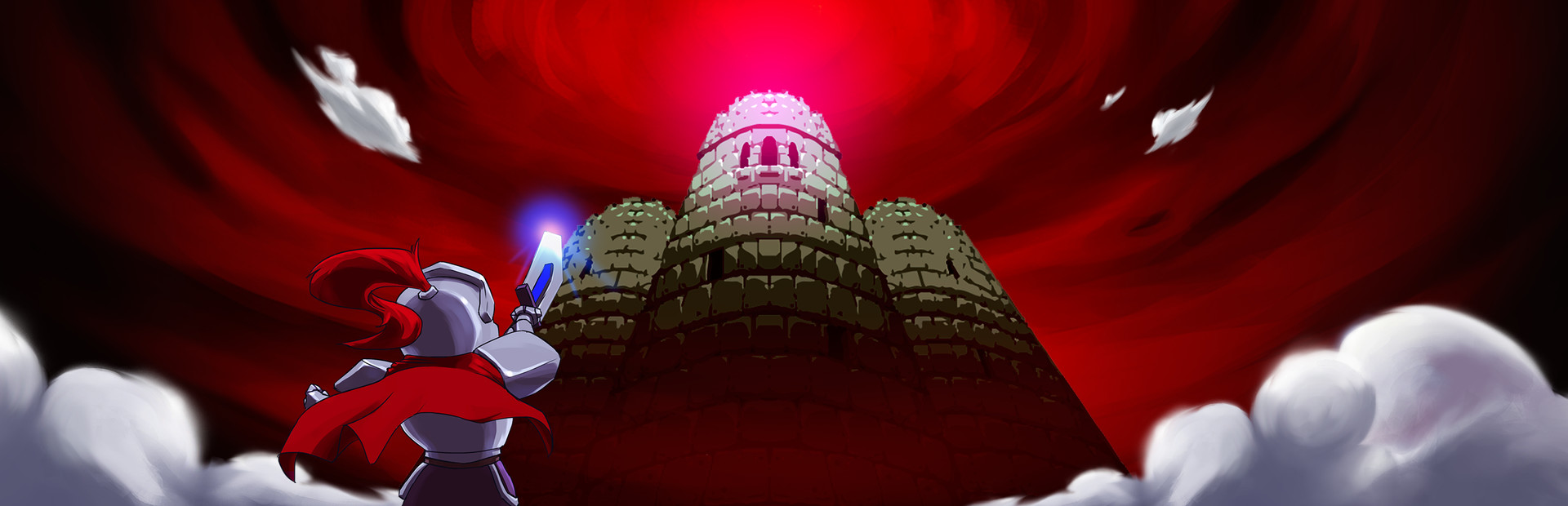
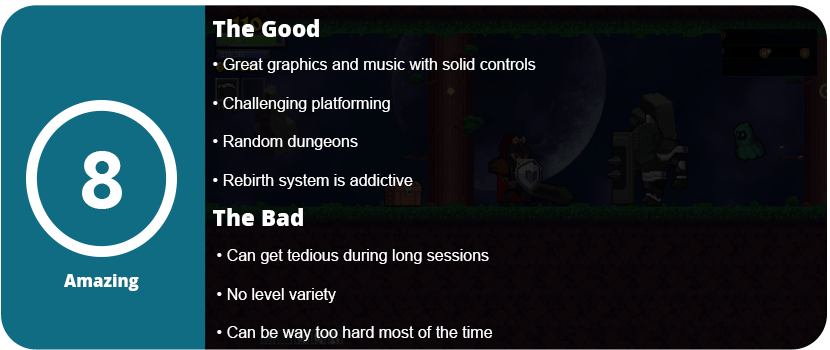
2D platformers have had a huge comeback in the past 5 years, but none of them really offer a great challenge. Rogue Legacy offers a lot of replay value thanks to the randomly generated dungeons and characters. I love Rogue’s character selection system. You get to pick between three different people, and when you die, their attributes make an offspring that is similar. Some characters walk upside down, and some have extra strength, health, MP, HP, and various other passive effects. This is really neat, and sometimes you are forced to choose one particular character so the other bad genes are wiped out on your next death. You can upgrade your weapons at each rebirth, and you can give up 30% of all the gold you find to lock down the castle if you liked the previous layout. When you enter the castle, you must forfeit all your gold, so you start from scratch. This is a cool feature and doesn’t really get in the way.
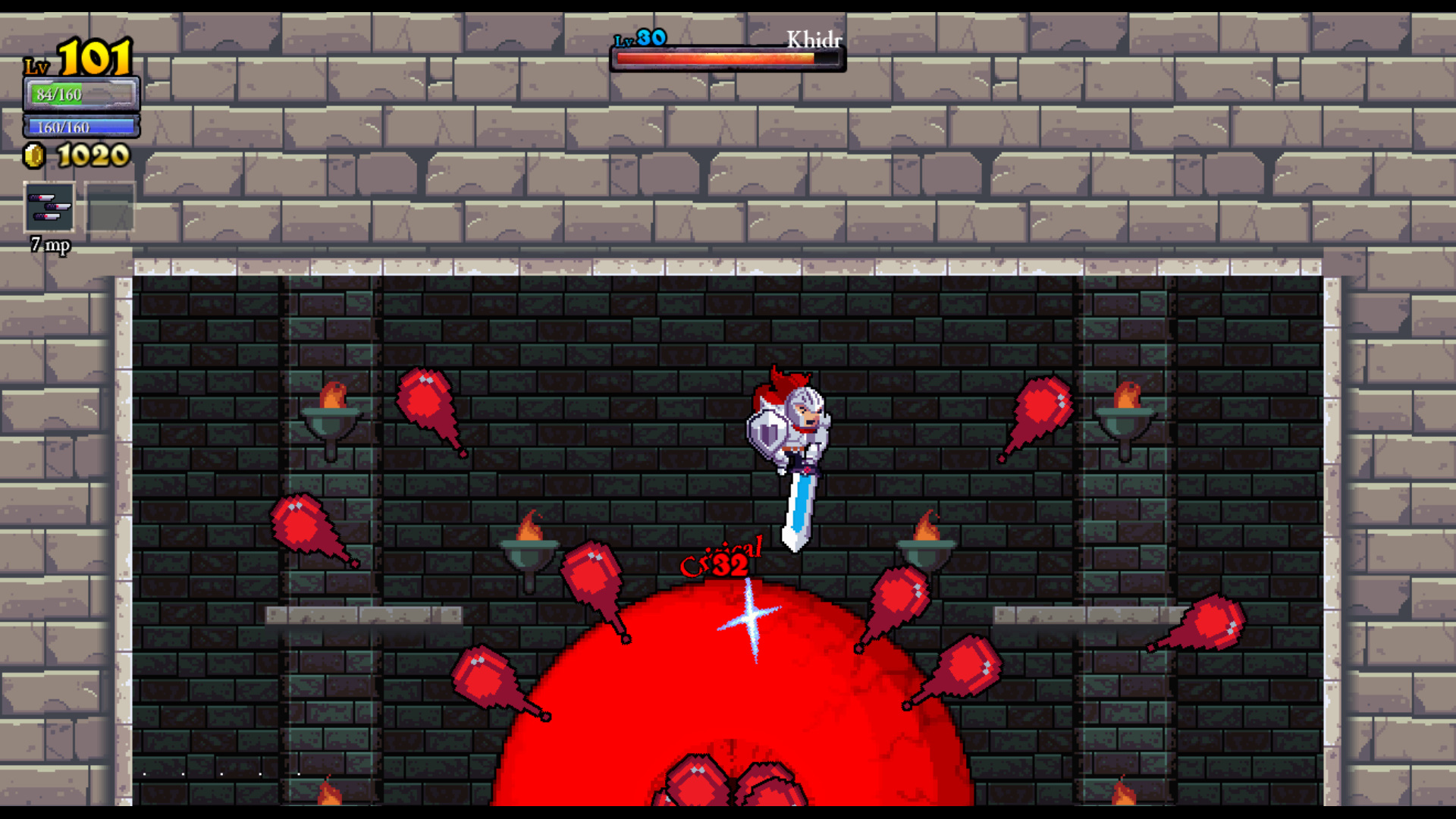
When you actually play, you will be greeted with great controls and fast-paced and challenging combat that’s similar to Mega Man and Castlevania. Breaking open objects gives you gold or items, and enemies can be really tough and fast. You have to stay on your toes because you can die really easily. I died around 15–20 times before I even got to the first boss. You also get items that use MP, kind of like in Castlevania. Honestly, this game felt like Castlevania meets Infinity Blade, which isn’t a bad influence. I wasn’t frustrated because sometimes the rebirth was for the better. After a while, it gets kind of hard, so it’s only fun in short bursts. I found the game very addictive, and the variety of enemies kept me coming back for more.
The whole point is that you become more powerful every time you die, so it’s not like other games where all your progress resets. You are always progressing, no matter how good or bad you are at the game. After a while, you start learning the enemy patterns and eventually even a favorite layout. The graphics are actually pretty good with nice 8-bit sprites; this is actually one of my favorite platformers in a long time since ‘Splosion Man and Fez. There’s really not much wrong with the game other than the lack of level variety, and the game can be way too hard. This game relies solely on skill to advance, and the better you are, the longer you can survive.
Don’t let the simplicity and small scope of Rogue Legacy turn you away. If you love platformers and challenging games, this is for you. The game has a great chip-tune soundtrack, nice graphics, and solid controls. The constant dying and respawning can get tedious sometimes, and the progress you made before can feel like it’s all for nothing. Thankfully, there are many upgrades and items to buy to keep you coming back for more.
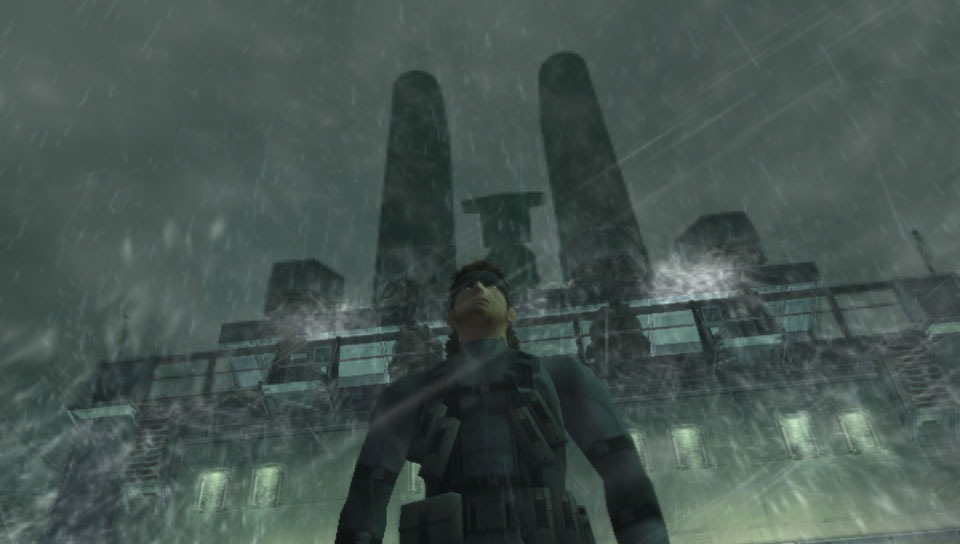
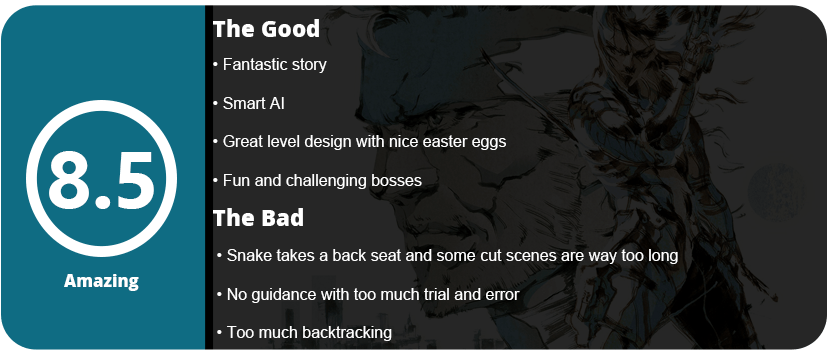
This game kind of haunted me growing up. Everyone was raving about it; it was always rented out at Blockbuster. I saw commercial after commercial for it but never understood it. I finally bought it when it was in the bargain bin years after its release and was still too young to understand the game. It was confusing, and I didn’t have the patience for stealth games. Now that the HD version has been released, I figured I would give it another go. The game is fantastic, has a memorable story and some of the best stealth action out there, and holds up well for today. Honestly, if this game had current graphics, you wouldn’t be able to tell the difference.
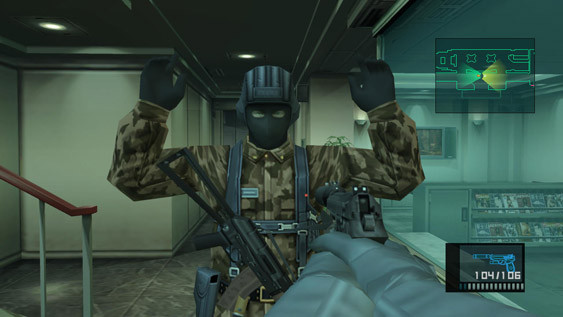
The game is made up of two chapters, one on a tanker and one on Big Shell. The tanker section is the shortest, and this is the only time you play as Snake. You are introduced to the basic controls and gameplay, which is pretty simple. The controls are a bit hard to get used to and aren’t planned out very well, but they work. The whole point is to get to your objective without being seen. You can knock out guards through the melee, drag their bodies into lockers to hide them, use tranqs, or just plain old head shoot them with a silenced pistol. This stuff isn’t just handed to you, though; you have to go find these weapons. The game also has exploration elements, but this can really frustrate some people because you have to use a lot of trial and error to get through some spots and find out where to go. The level design is really great, though, and each section is small enough to memorize very quickly. If you die, you restart that one section instead of going back away. I really liked this a lot, and you are allowed to save anywhere you want. The stealth elements really take getting used to and feel stiff in spots. You can’t kneel and walk at the same time. If you crouch and move forward, you go into a crawl. You can hang from ledges with a stamina meter, go into first-person mode for accuracy, climb boxes, etc. This all adds up to being tools to use for the stealth experience. How you use them determines how well you get through each section.
Each section is completely different, but you can’t just run around killing everything. There are guards that have to check in every minute or so, and if you knock them out and they don’t respond, a response team will come check it out. If you are spotted, your radar disappears, and you have to go into a cool-down mode while the enemy searches for you. The AI is great in this game, and you can really tell how far ahead the game was for its time. It gives you a sense that you can’t screw around, you can’t exploit the AI, and you can’t exploit the levels; you just have to do things the right way. You have to memorize enemy patrols, figure out where the cameras are placed, use chaff grenades, hide in boxes, etc. Don’t worry, though; there is some action in the game in the form of great bosses.
Fighting Vamp, Olga, Metal Gear RAYs, and a Harrier II are all exciting. The bosses are great, and you can tell they don’t make them like they used to. Health slowly widdles down; you have to stay on your toes, and healing items aren’t thrown at you constantly. You have to memorize the enemy’s moves and patterns and then find what weapons work the best. The Metal Gear RAY fight is extremely tough, yet somehow very fun. You have to constantly dodge and roll, quickly switch to the first person, and then roll around again. Using the high-frequency blade uses the right analog stick to swing the blade around, which was very unique at the time. The game is highly cinematic and was probably the most cinematic game ever made at the time. One thing I have to mention is the long-cut scenes. They can be over 10 minutes long toward the end. You will go through real-time cutscenes and then 5 minutes of radio dialog. It’s not necessarily boring, but the ADD in you will want to do something else while you listen.
Metal Gear Solid is also known for extras that are hidden from fans. Things like Zone of the Enders boxes and posters, strange little things that you can do that will trigger dialog from your radio—these things aren’t really seen these days. Most developers don’t put the time or effort into doing these things, even though a select few will only see them. Most people may not care, but I like seeing little, hidden Easter eggs everywhere. This game will only be enjoyed by the patient, though. Running around everywhere trying to kill everything isn’t going to work in this game, but I did hate the lack of direction. If you don’t know any better or check the FAQ, you will run around aimlessly, not knowing what to do. Especially when you try to disarm the bombs in Shell 1. There are quite a few, and each bomb is tough to get to. Half of them I just couldn’t find, and the other half was a pain to get to. If the game had a bit more guidance, it would pretty much be perfect, and don’t forget the weird controls.
As it stands, MGS2 is one of the greatest games of all time for a reason: it’s a perfect symphony of story, cinematics, stealth action, action, great boss fights, pacing, and character development. The HD upgrade for Vita and PS3 adds texture filtering, some aliasing, and even some reworked textures. It looks very smooth and crisp, but still looks dated. If you can look past all that, you are in for one great game.
Developer: Right Square Bracket Left Square Bracket Games
Release Date: 4/26/2013
Available On
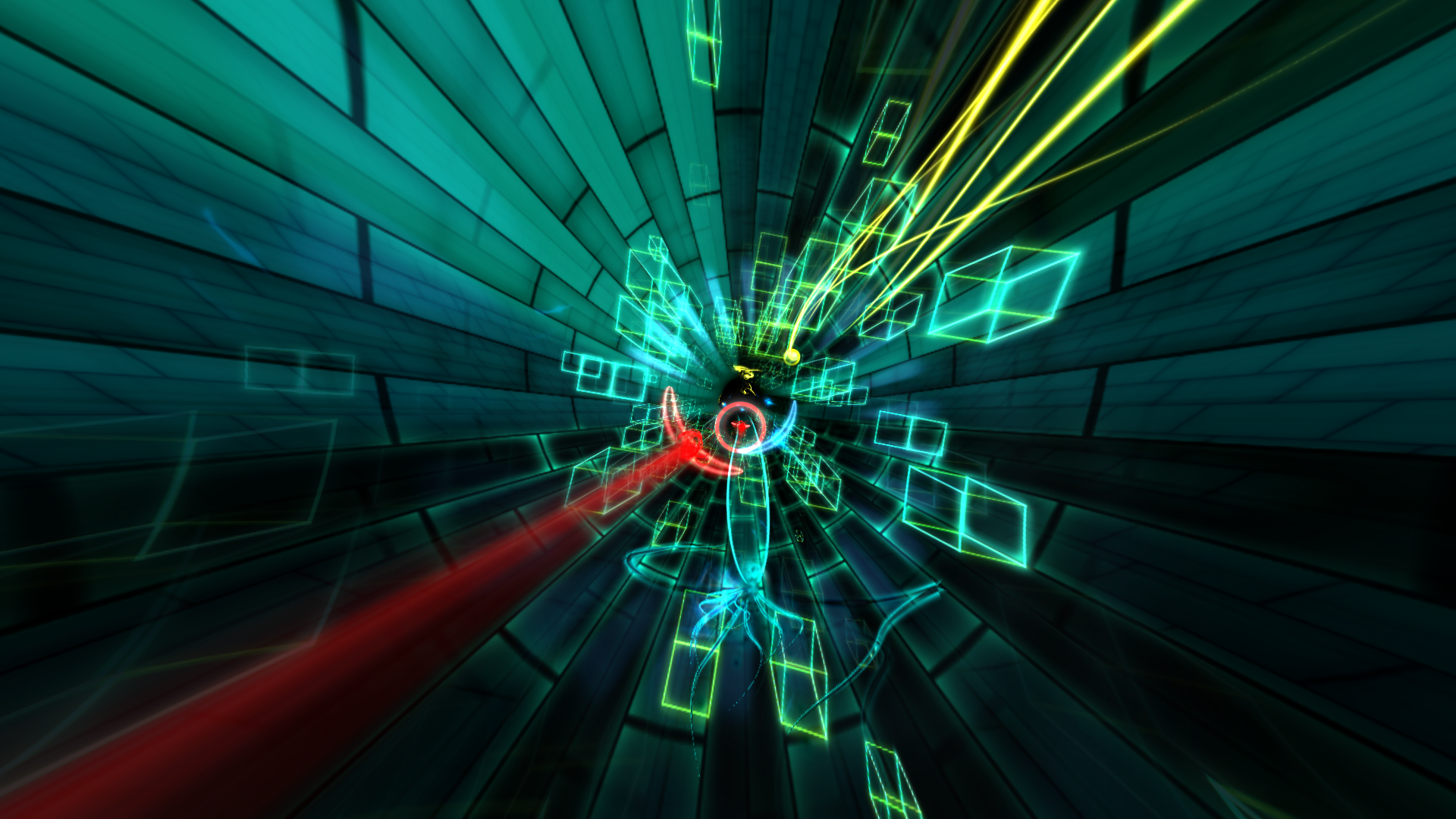
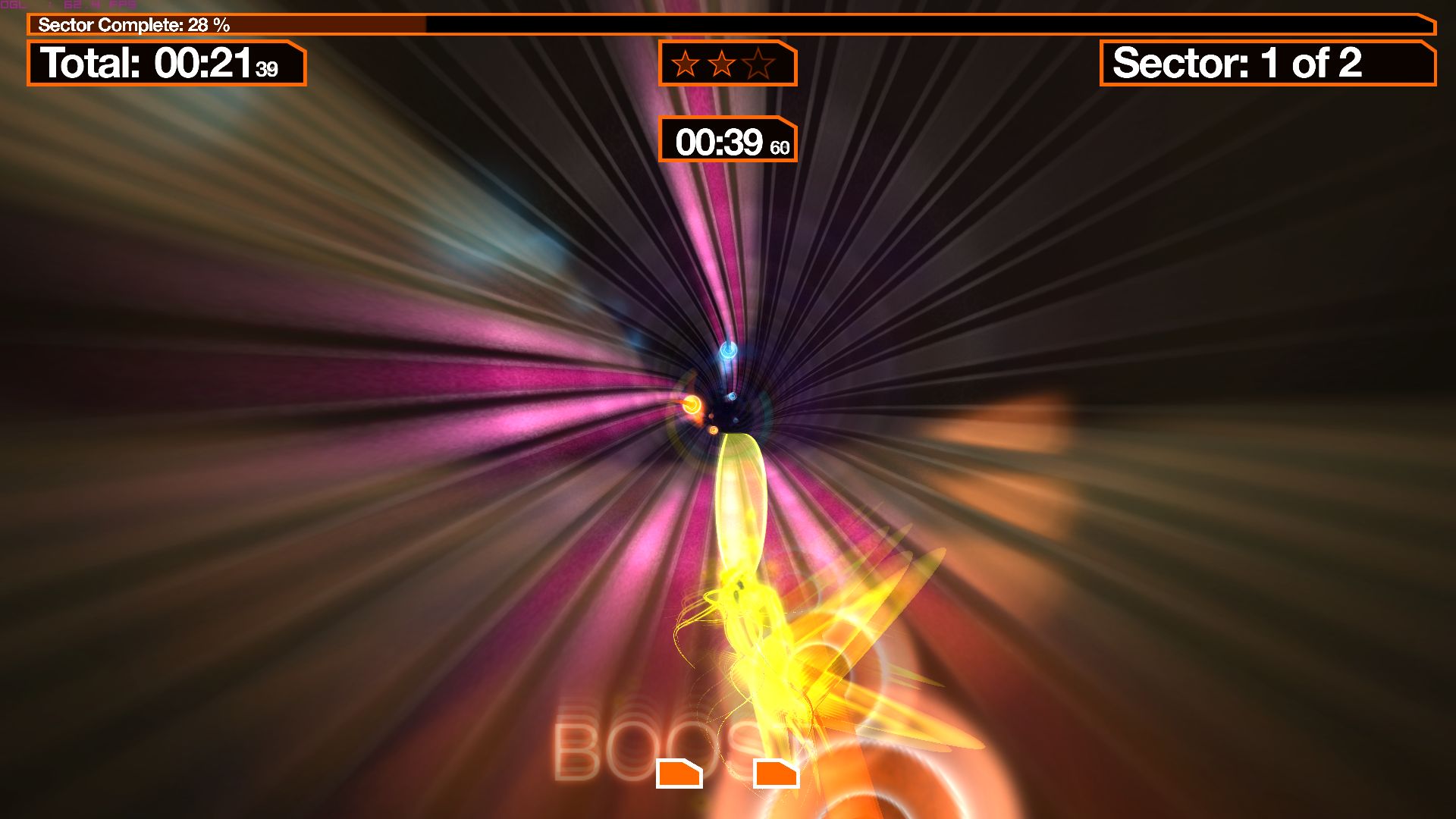
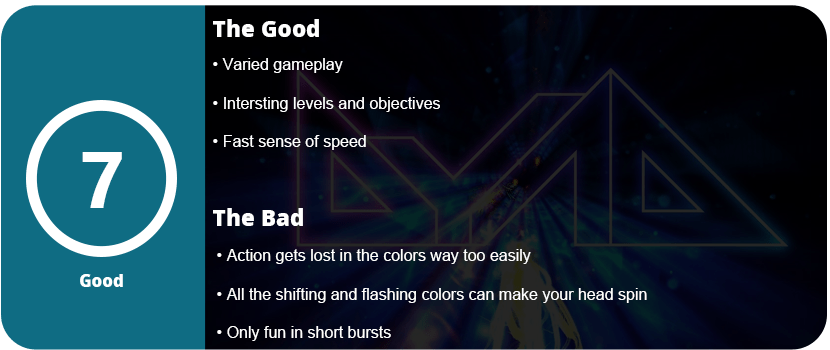
Dyad is a game where you do things in a spiral tunnel. That pretty much sums it up. You are a thing, and you shoot things like the tunnel whizzes by faster and the tempo of the music picks up. Each stage has an objective, such as getting through levels as fast as possible by chaining together the same colored orbs, which will give you a speed boost. Running into these orbs slows you down. I felt the shooting levels were the most fun, and there are a lot of levels here, so don’t worry.
The biggest issues are the constantly changing colors and the sense of speed. It will make some people small or dizzy. When you’re focusing on something, even for a couple of minutes, it will make you dizzy. There can be so many colors on the screen that you get lost in the craziness, and that’s a serious problem. I couldn’t play for long sessions because my eyes would hurt or I would get so confused that I would need a break. Thankfully, the environments vary from stage to stage, and the enemies get changed up.
It’s not as easy as blasting everything. You need to avoid some things because if you shoot, it will hurt you. Some missions just end up being way too difficult, to the point that you can barely pass the minimum requirements. This is all due to the crazy colors and the weird sense of speed. You can see your lane as far as the game will let you. At least you don’t have to wait for things to come up right in front of you to shoot. This adds a bit of strategy as you spin around the tunnel, trying to think ahead of your moves. For a while, it feels pretty awesome to think on your toes and line up the perfect path for the highest score. There’s really nothing much else to say here; you have to play it to see how fun it can be. This game isn’t for everyone, though; if you are sensitive to motion sickness and flashing colors, I would stay away.
Dyad is a rare game that doesn’t come around very often. While it may slip under everyone’s radar for that big blockbuster title, it reminds us how simpler games can still be fun. The action can be too hectic and can get lost in the ocean of rainbow colors swirling around the screen, but there are plenty of levels here to keep you busy and a great soundtrack to listen to.
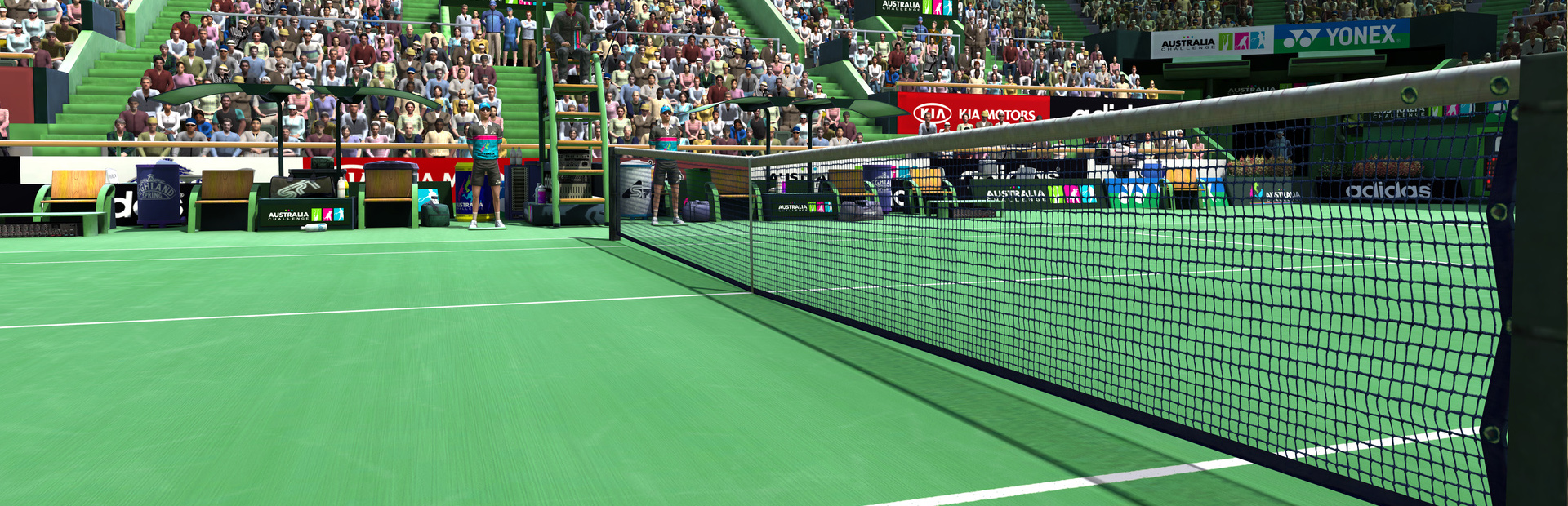
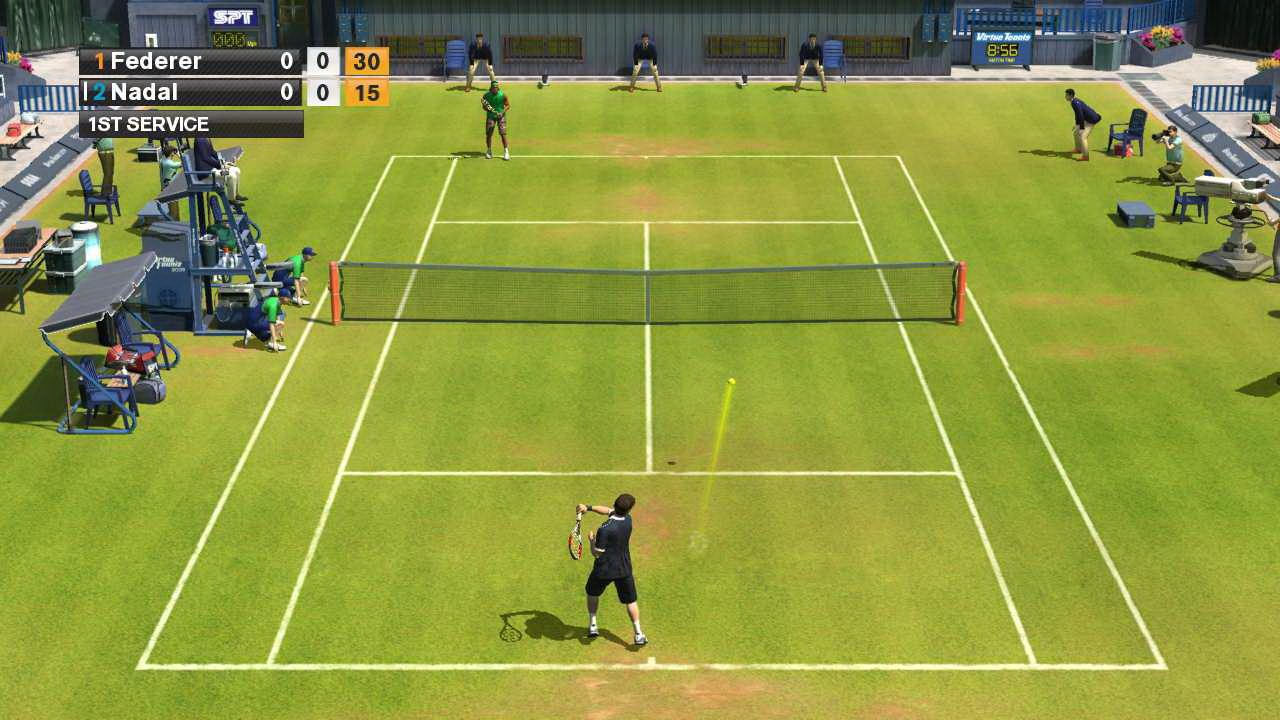
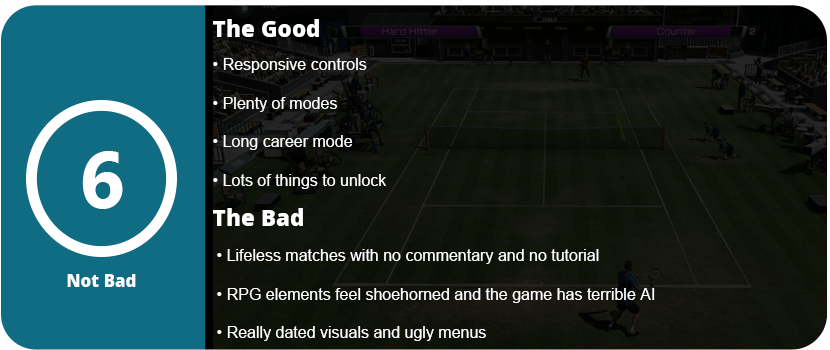
First off, I’m not a tennis fan. I just like playing the occasional game, such as Hot-Shot Tennis. I just like the competition and the strategy behind it. You need to trick the player into going where you want so you can set them up for failure (or, at least, I think that’s how you play tennis). I don’t know! I’m not a pro player! Secondly, Virtua Tennis 4 isn’t the best tennis game I have ever played; it’s very dull and lacks any excitement or flair. It doesn’t need to be a crazy arcade-type game, but give us more than just green, two players, and a ball.
The game is very confusing to start. The career mode is pretty lame, and I didn’t like it. You move around a world map with a piece of paper and markers. You get random move cards instead of dice. Some spots are for training; others are clothing shops, tournaments, face-offs, and various other things. Every time you get into a match, whether it’s for training or not, your condition decreases, and this apparently affects how you perform. I honestly didn’t notice a difference, or the AI was just so bad that it didn’t affect anything. This board game idea is nice, but it’s so dull. The menus look like absolute crap and are flat and lifeless. There’s no tutorial on how to play, and each move pretty much felt the same. The only one that felt different was the lob.
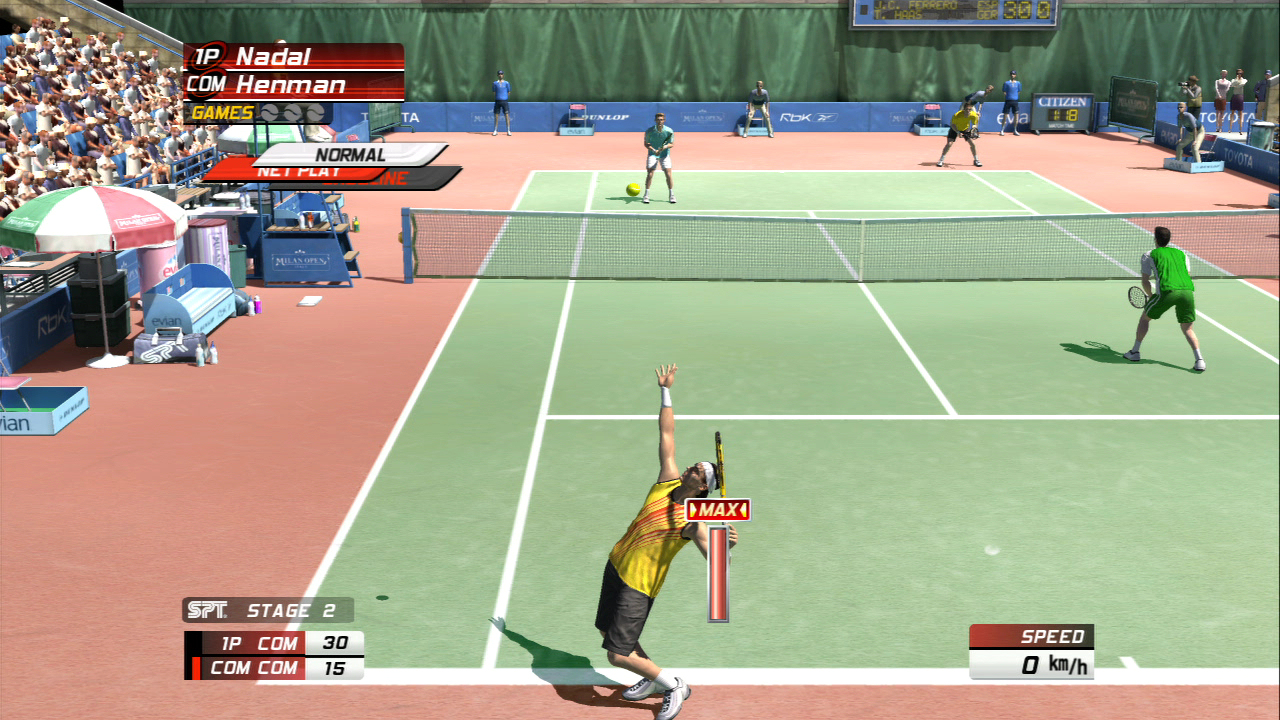
During a match, I felt every player played the same. You serve with a power meter, and I could never figure out where my ball was going. Some sort of reticle on the ground would have been nice. I would smack the ball for 10 minutes, and nothing would happen. It was so hard to trick the AI into doing what you wanted, and it took so long. I wound up losing match after match trying to outbeat the AI; otherwise, I was stuck in an endless volley. The matches themselves, outside of swinging, are boring. There’s no commentary, the characters look horrible, the pros don’t look like their real-life counterparts, and the graphics look about 5–6 years old.
I understand this is supposed to be a tennis sim, but you can still make it fun. Even after playing 10 tournaments, I still didn’t unlock any new clothes; my character was taking forever to level up, and it just felt like the same thing every freaking match. It felt like it would never end. During career mode, the stupid reps and managers would pop up with lifeless dialog that you just didn’t care about. The only real way to go is multiplayer, but no one is playing online at all. I just feel that the game is a huge, boring mess with terrible AI and lifeless characters. The controls respond pretty well, but I didn’t feel a difference between any of the hits. The game could have been so much more. As it stands, this is the worst tennis game I have ever played. Even major tennis fans will be disappointed in this lifeless borefest.
Mass Effect made such a huge impact on me and the gaming world that no one probably expected. To create such a vast universe of fans of Star Wars is just incredible. BioWare pulled it off, and each game is very memorable. Mass Effect 3 pulls all the punches this time around and is the epic climax to the Reaper invasion that is sent to wipe out all organic life in the galaxy. Of course, Commander Shepard is supposed to fix this along with his or her recruits that you brought along throughout the series. Never before has a game spread so much across a trilogy. I have never kept a game save so sacred as I have my Mass Effect save because every choice you make carries heavily throughout the whole series.
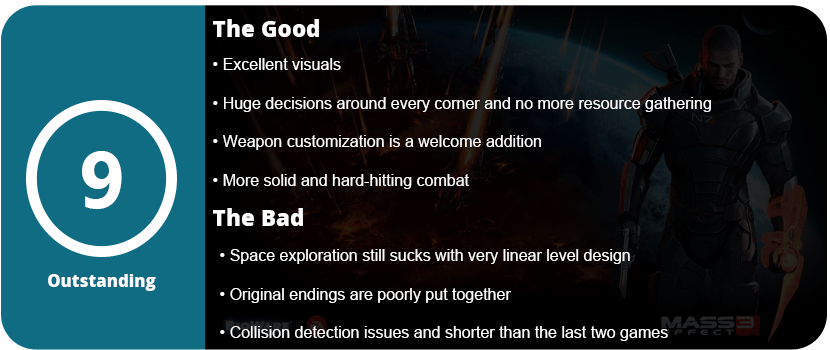
It was obvious in ME2 how choices carried over, but ME3 is huge. Main characters will die; some that died in the last games will have an impact on how ME3 turns out. Instead of going around recruiting people like in the last two games, you are recruiting entire war assets for the War on the Reapers. You are trying to bring whole nations together and making huge decisions that will impact the galaxy for the rest of time. Things like whether or not you should cure the Krogan genophage, help the Council, help Cerberus, or just say screw it and make everyone’s lives hell. You have choices here, and they will make you think a lot. Never before as a shooter have I cared about seeing certain races die or get hit. Seeing the Turian homeworld Palaven get creamed left me feeling sad and determined to make choices that helped them. In this game, some civilizations actually get wiped out due to your choices. Some are just as subtle as helping someone out on the Citadel with a side mission that decides whether the Elcor, Hanar, Batarian, and Volus survive or not. This game is so big and bold.
Aside from the obvious story, the gameplay has improved a lot. The action and shooting are more refined and feel better. There are whole new weapons, a cover system, as well as a dodge and roll mechanic that comes in handy. Everything just feels tight, and weapons hit heavy. Speaking of weapons, you can now customize them by adding mods to improve damage, stability, accuracy, and even clip capacity. You can now buy mods through shops on the Citadel in Normandy instead of running around on every planet trying to get what you need. You can also buy armor and have more customization options for your character, which is very welcome. You also can’t carry every weapon with you anymore. I guess the goal was to balance the game more. Each weapon you have will add weight, which can be reduced by upgrading weapons. Carrying every weapon with you will slow you down and reduce the recharge speed of biotic powers, so choose carefully.
The overall structure of the game is just more streamlined, less messy, and less annoying. Small side missions are usually stuck in the Citadel, where you have to find an item for someone during space exploration. Exploration in space still isn’t fun, but it’s a lot better than scanning every damn planet for resources. They have completely scrapped this time around, so everything is just bought with credits, which is how it originally should have been. You can still scan, but you do it on the map, and EDI will tell you if she finds something. Certain planets will have a war asset or an item someone on the Citadel is looking for. If you scan too much, the reapers will come after you, and you have to high-tail it out of the system before they catch you and come back after a mission has been completed.
Almost everything you do in this game is big, and I can’t think of any mission that felt small, like in the last two games. ME3 is just huge in scope, and there are some memorable and impressive moments. The story is very cerebral, but here’s the catch: If you have never played a Mass Effect game before, go back to the first one and start from the beginning. You just won’t appreciate every decision if you jump right in. The comic that explains the last two games isn’t enough and doesn’t do this excellent and amazing sci-fi series justice. Only fans who have played through the last two will appreciate this game and truly feel that every decision is personal.
The controversy about the endings is understandable. I got to use the Extended Cut DLC while playing this, and after some research, the ending would stink without it. Without any spoilers, the ending gives you three choices at the end this time around instead of two. The choices are explained more, and there are some extra shots stuck in the endings to make more sense of it all. The original endings were just sloppy and, to be honest, lazily put together. BioWare did everyone a service by offering these endings for free.
Overall, Mass Effect 3 looks amazing, plays well, and has some of the most memorable choices I have ever had to make in a game. This is about all life as we know it, not just some city or civilization. This is about all organic and synthetic life, and what ME has done for the gaming world is a huge feat that I haven’t seen since Star Wars. This is a true sci-fi masterpiece that all fans of the genre will love. If I did have any complaints, it would be the original endings, and there are some issues like collision detection and linearity; the game feels shorter than the last two games; and the space exploration pretty much stinks. These are minor, though, and don’t really bring it down much.
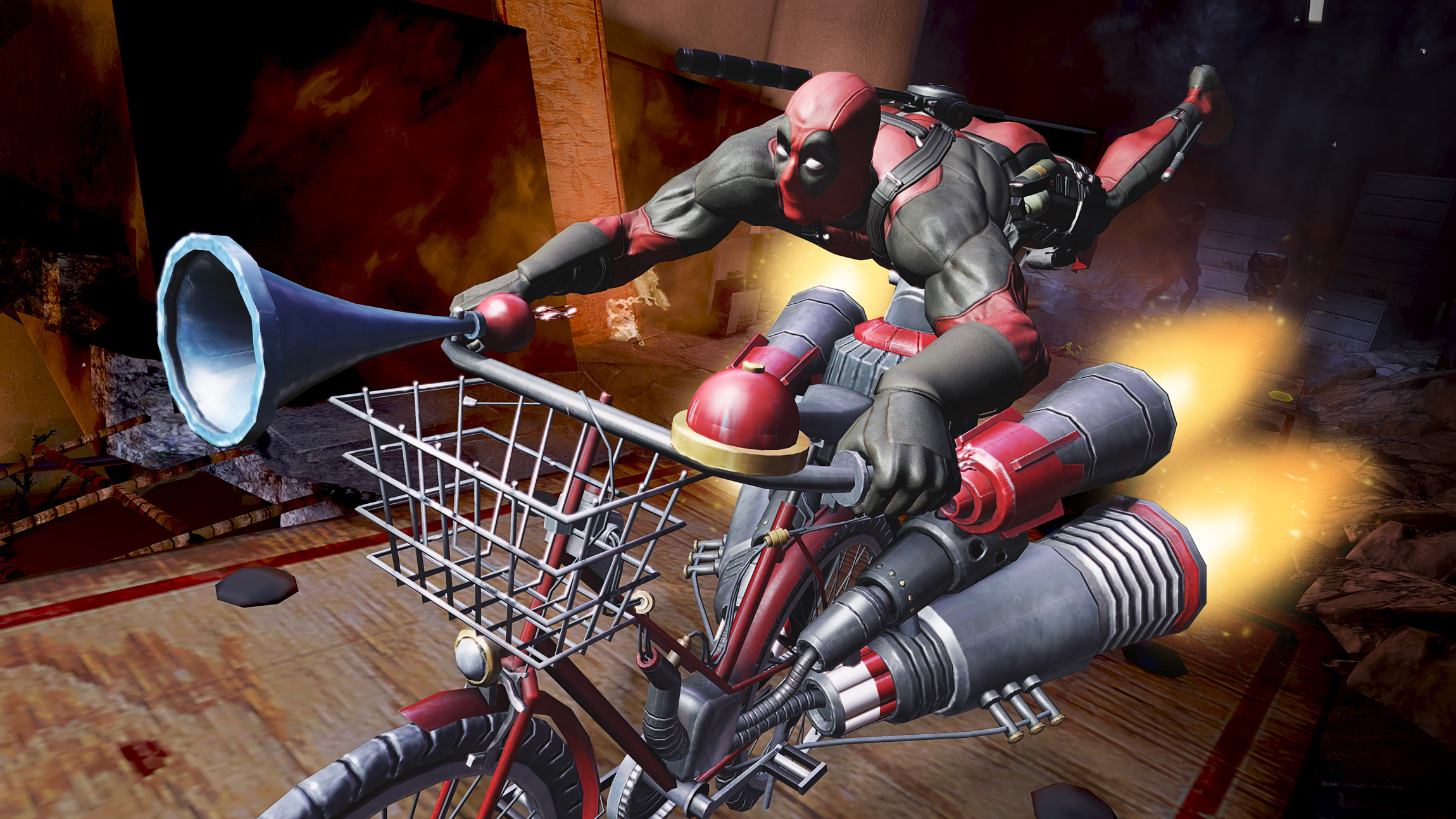
These superhero games and movies are just coming out left and right. Sure, the quality has gone way up over time, but Marvel’s side of the games department has been floating around average for the last decade. Deadpool is one of those weird comic characters that has a huge fan base, yet another large amount of people hate him. I’ve always liked Marvel’s more lax approach to adult-oriented comic content. Deadpool curses, makes penis jokes, motorboats breasts, and is just a seriously goofy character. You won’t find that in a DC comic. The game itself is just average; it starts out great but falls downhill pretty fast. This is expected of High Moon Studios, which became famous for their Transformers games. Those as well were just lacking more passion.
There’s really not much of a story here. Deadpool is bored, so he calls up a guy to make a video game about him; it’s the one you’re playing, and he breaks the 4th wall constantly. It’s great humor and a lot of fun, but the overlying plot is watered down and boring. Deadpool is trying to stop Sinister from creating an army of clones. On the way, you meet The Marauders (Arclight, Vertigo, and Blockbuster) as well as a few of the X-Men. Wolverine makes an appearance as well as Rogue, but they are pretty much useless. Cable fights alongside you for a while, but again, it’s not really worth having him in there.
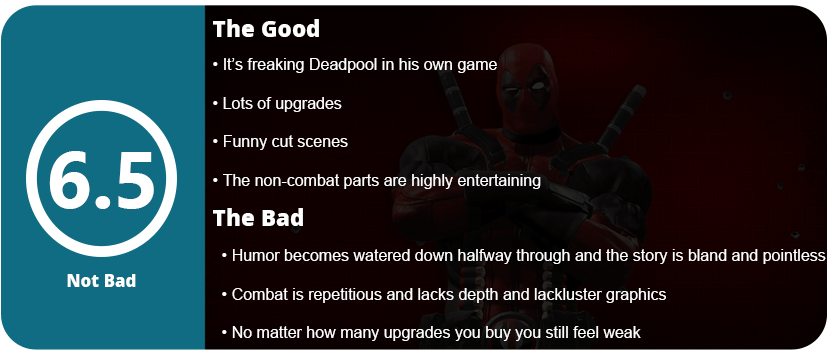
The combat is where superhero games are supposed to shine, and Deadpool needs more polish. The controls work well; there are a lot of upgrades and a small arsenal of melee and ranged weapons, but it’s very repetitive and gets so boring towards the end. The problem lies in pacing. You will get a fun little scenario where you’re on a turret, floating in an amusement ride, shooting cardboard cutouts, or spinning prize wheels, but these are so short and so spread apart that you beg for something different. It’s just level after level of the same bad guys over and over again. No matter how many upgrades I bought, I never felt powerful enough. I maxed out my hammers at the end of the game, and it just did a bit more damage than the standard damage. What kind of crap is that? The guns are the same way. There are momentum moves you can do that do massive damage; it varies with each weapon, but it takes so long to build up the meters. The combat just feels average in the end, with buttons mashing the light and heavy attacks.
Every so often, you will be forced into a stealth section, but it’s broken or purposefully made that way. You can use your guns or your weapon. Sometimes the rest of the guys heard me, and sometimes they didn’t. The animations are funny, and they are well done, but who cares if they’re linked to monotonous combat? The other parts of the game, where you walk around mingling with hot chicks in bikinis, slapping Wolverine in the face, using a giant robot foot as a rocket, and spinning prize wheels, are the fun parts. I can count them all on one hand. There aren’t even that many cutscenes; it’s just 80% combat. Even the humor starts to wear off after a while. Deadpool even makes fun of his own game by saying he doesn’t have any new jokes. The slapstick humor and penis one-liners are funny during the first half of the game only.
Graphics-wise…it’s average. There’s no unique art style like the Batman Arkham games. The PC just has better textures and slightly better lighting. High Moon really needs to get it in gear and stop pushing out these half-baked games of theirs. It’s like there’s no passion, or it runs out halfway through development. Deadpool is a fun weekend rental, but in the end, it’s forgettable and somehow shouldn’t be.
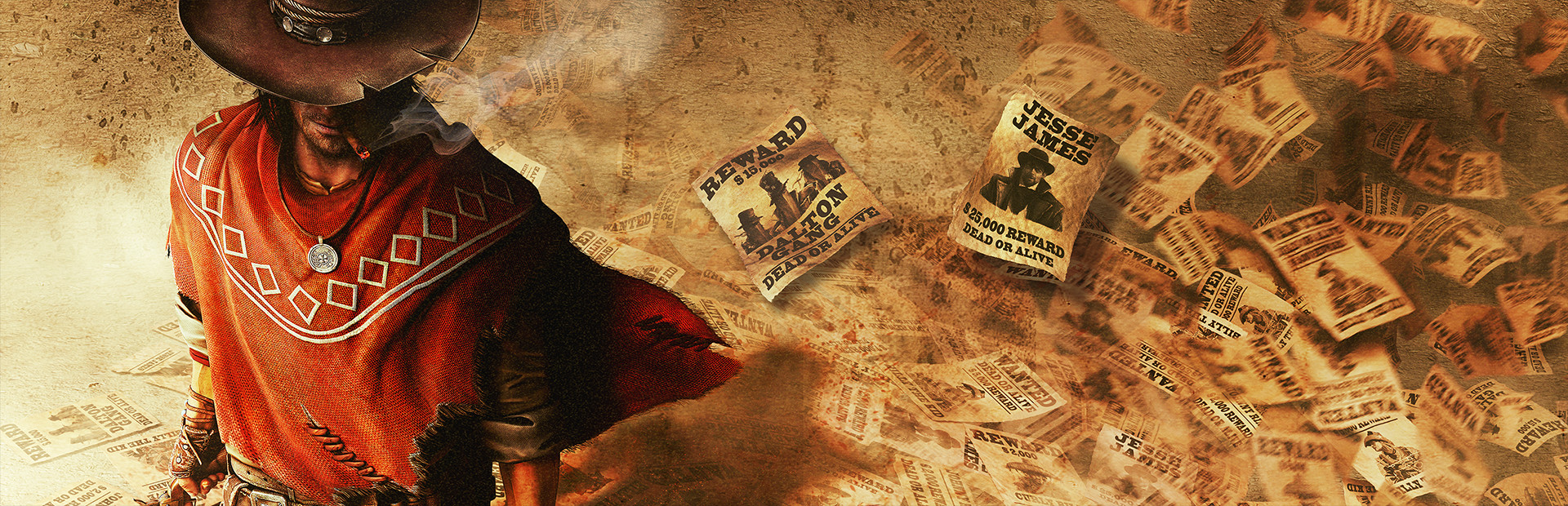
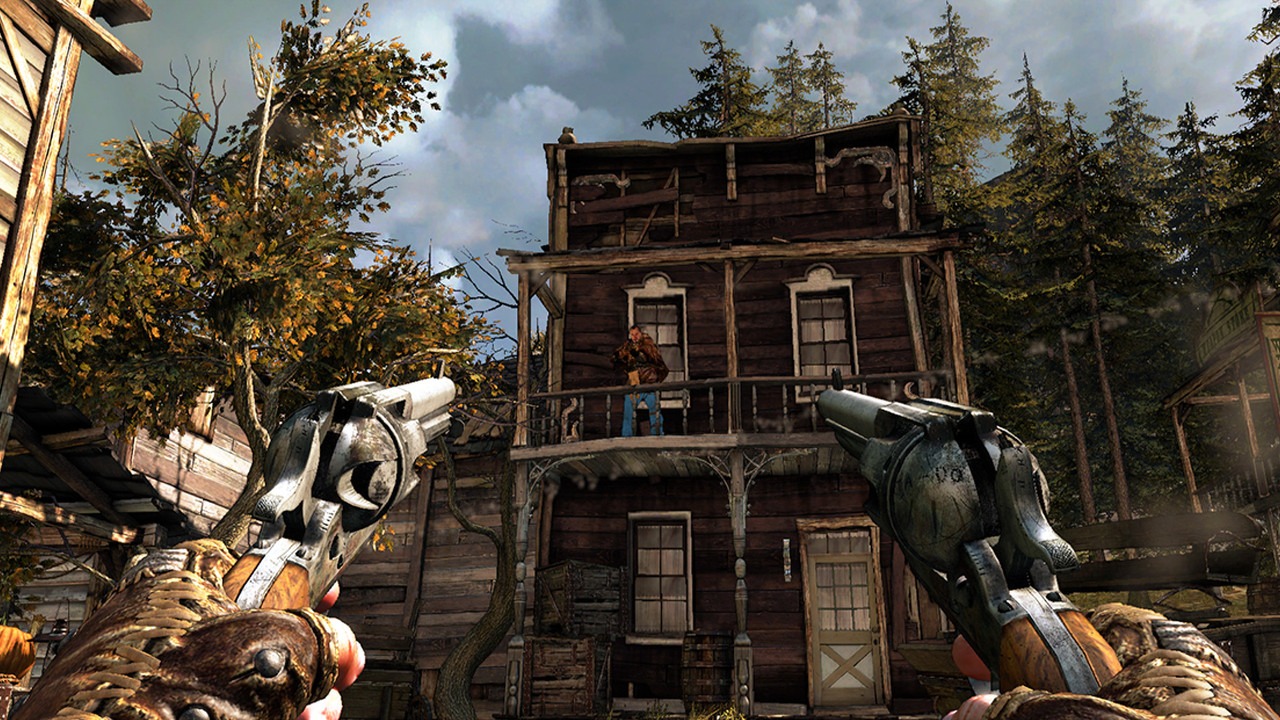
Call of Juarez has been a very rocky Wild West series. The first game was terrible, the second game was great, the third game was horrible, and the fourth game was great. Will the fifth game be horrible? Who knows. What I do know is that for $15, this is a very enjoyable shooter with a pretty good story and a narrative inspired by Bastion. You play as Silas Greaves, a “retired” bounty hunter who went after the most notorious outlaws in the west, such as Jesse James, Kid Curry, The Dalton Brothers, and The Sundance Kid.
The story’s cutscenes are told through black-and-white stills, but the narrative is really fun. If you have played Bastion, you will know what I’m talking about. As you play the game, it is being narrated as you go. Sometimes things will change right in front of you, on the fly, as Silas narrates his tales. Sometimes you will go through a whole section of a level; a bar patron will ask Silas if that really happened, then he will back up and correct himself. You then play that part again in a different way. It’s really fun, and as you progress, you start to question if Silas is really who he is or if he is even telling the truth. The battles get more outlandish, and even the patrons start questioning him. The story has a nice twist ending, and I have been hooked the whole time thanks to the tight gunplay and fun story.
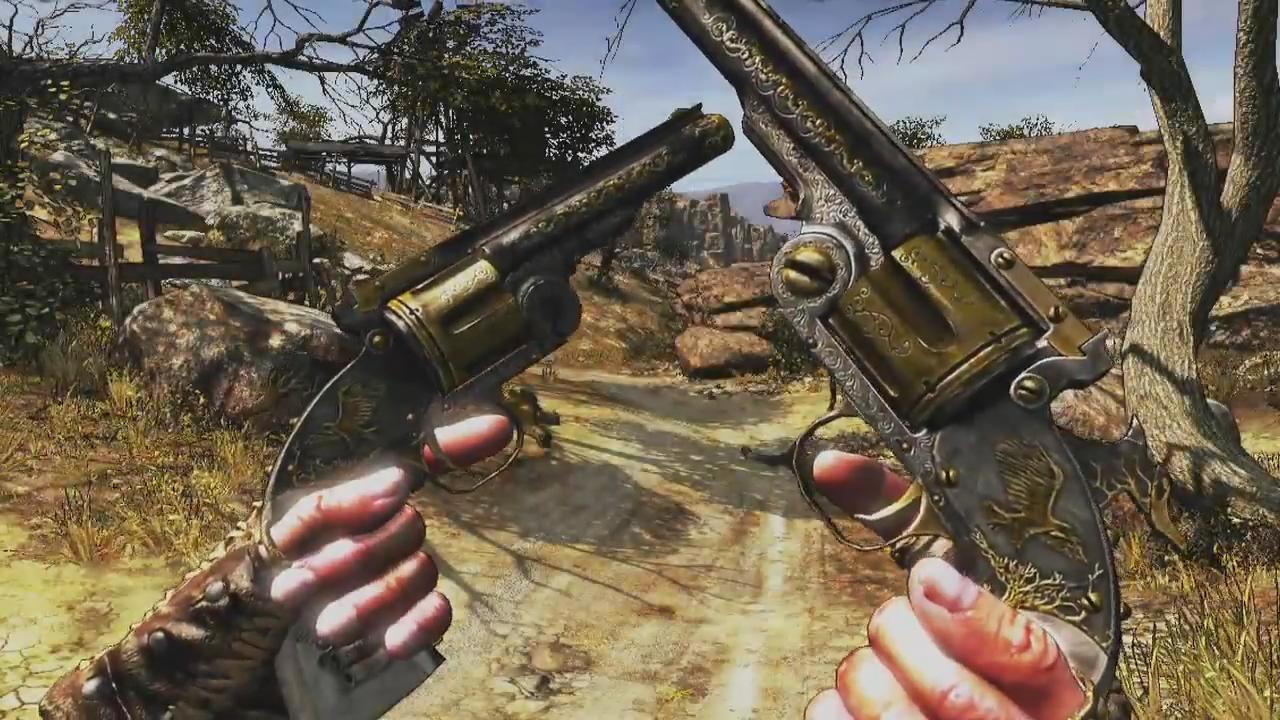
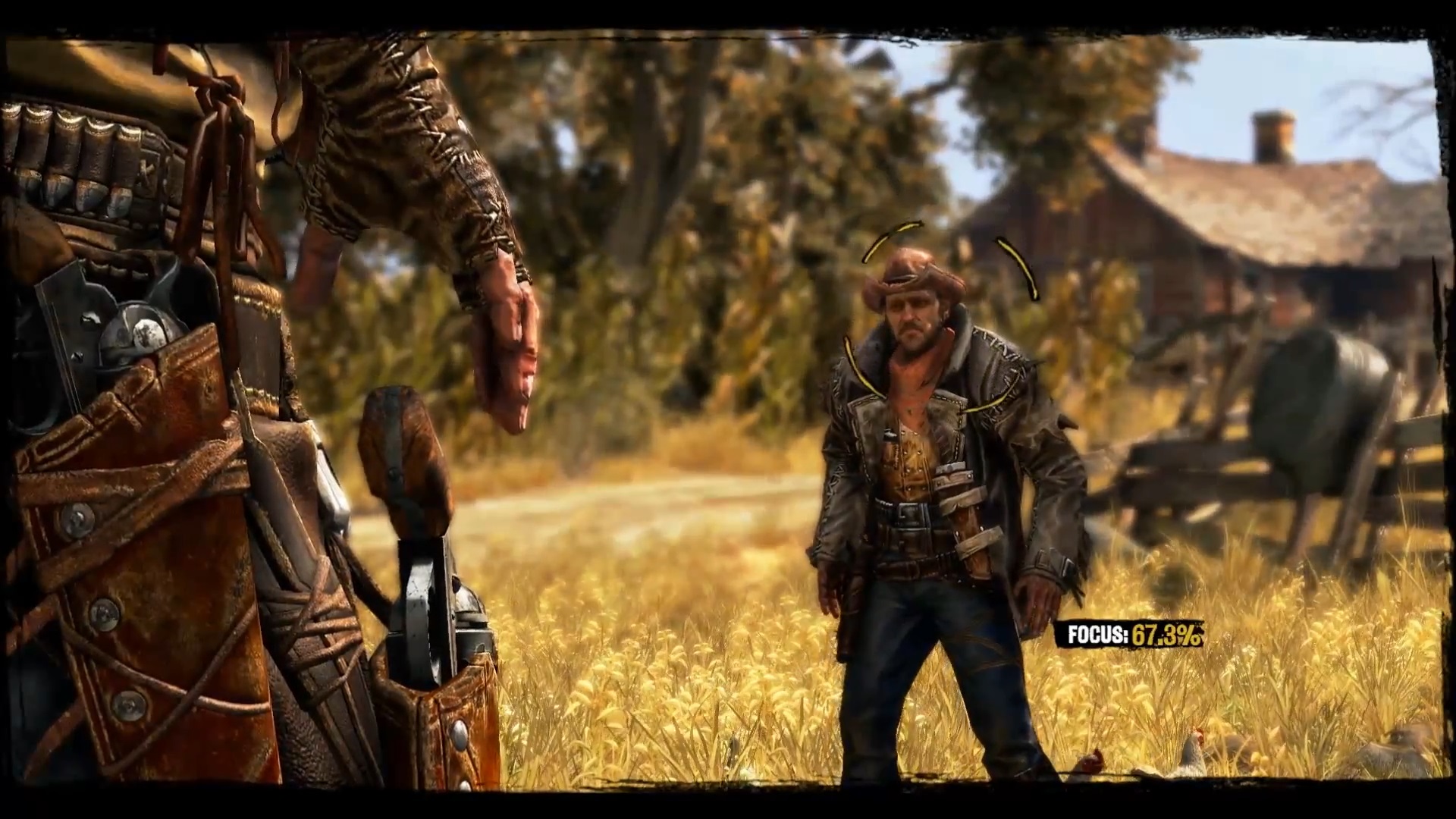
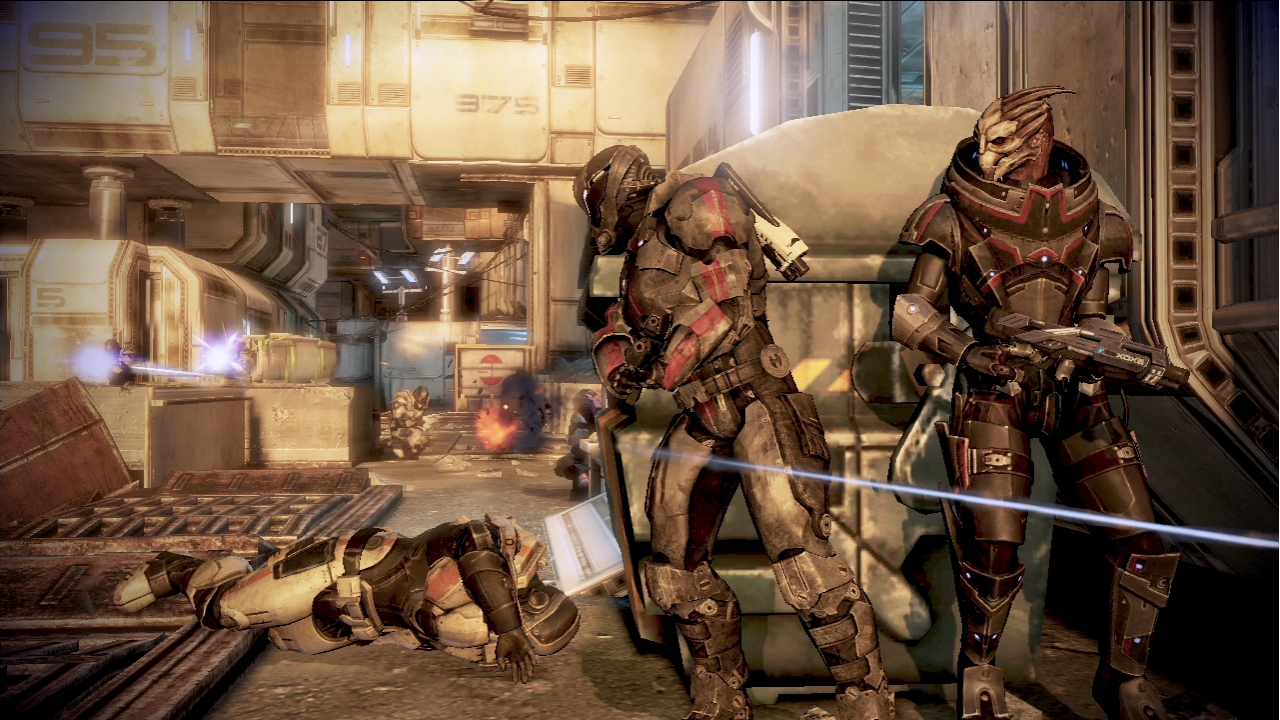
The game is very simple and basic at heart. You get four different weapons: dynamite, pistols, shotguns, and rifles. There are a couple variations of them, but they shoot damn well, and I have to say I haven’t had this much fun as a shooter in a long time. While the enemies repeat often and it’s the same shootouts throughout the level, the environments change often, and the fun narrative keeps things mixed up so you are never bored. Every so often, you will have a duel with a boss. You need to use the two analog sticks to control the focus on the enemy and the speed of your hand. It’s tough to concentrate on two things at once, but it makes it fun and a bit challenging. During shootouts, you can slow down time and highlight enemies in red. You also get a “last chance” by being able to dodge the bullet that would normally kill you. Push both sticks in the opposite direction to save yourself. These little elements are just fun and a bit different from your typical military shooter.
Some boss fights require you to hide, sneak around, or use dynamite. There are also hidden secrets in the game that tell the real-life tales and occurrences of these real-life outlaws and skirmishes. They are pretty interesting for anyone who likes some history in their game (Assassin’s Creed fans!). That’s all there really is to it. The game is simple yet a lot of fun. You can do challenge missions afterward and a new game+ to continue with your leveled skills. There are three categories: trapper/melee, long-range, and short-range. As you advance in each section, you unlock a special gun in that category, which makes the game both easier and more fun.
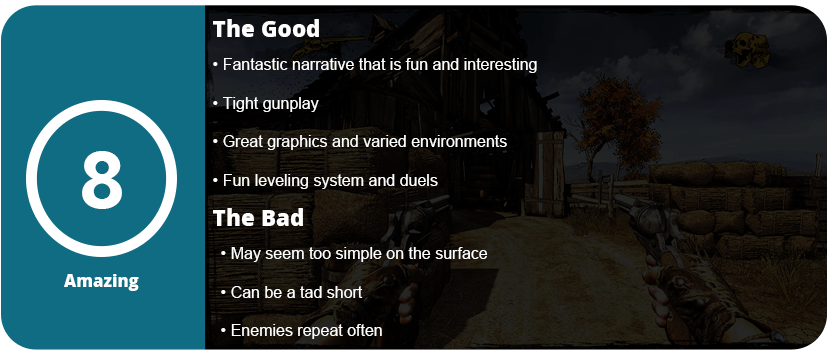
Overall, Gunslinger is a really fun game. There’s not much wrong here other than it being bitten simply by some people. The graphics are fantastic, the gunplay is solid, and the narrative is a lot of fun and will keep you hooked to the end (I rarely put the controller down!). For $15, this is one of the best downloadable games you can buy this year. It may also be a good jumping-in point for anyone who hasn’t played a Call of Juarez game before.
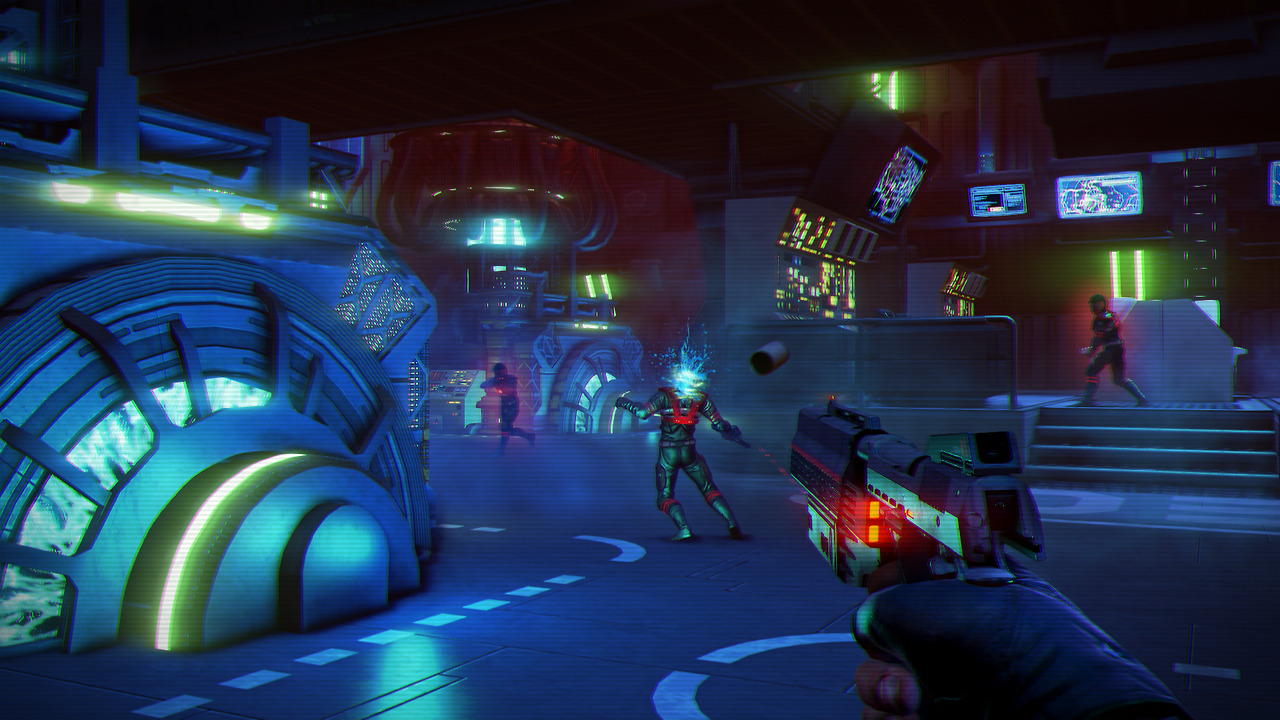
Blood Dragon is a beast all on its own. Forget everything you know about Far Cry. Blood Dragon uses Far Cry 3 as a base—a building block to lay something seriously badass down. You play as a cyborg named Rex who is trying to stop a man named Sloan from taking over the world. It sounds cheesy, and it is, and that’s the best part.
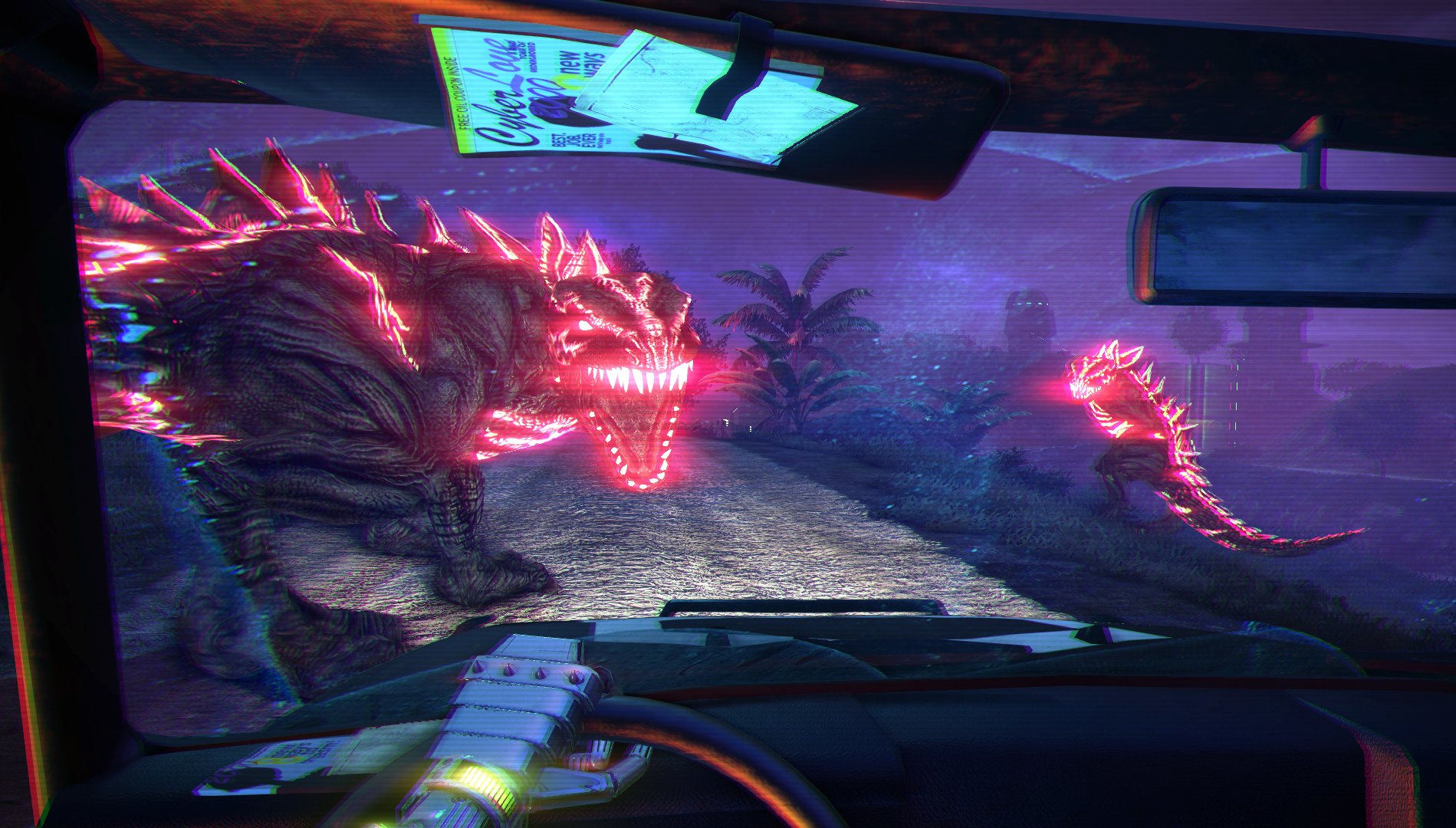
Right, when you launch the game, you will notice the awesome 80s vibe. The loading screen looks like a VCR with a tracking bar down at the bottom. Funny little hints flash across the screen, like “Sniper Rifles…close-range weapons when you select the wrong gun.” Once I saw stuff like this, I knew I was in for a badass ride. The game is short on content; let me just get that out right now. You can beat the story in about 4 hours, but there are bases to take over, like in Far Cry 3. You can use cyber hearts you rip from dead bodies to lure Blood Dragons into these bases, shoot the bad guys up yourself, or go all stealthy. It’s completely up to you. The dragons can hear you once you run or shoot, so stay low and use your hearts to lure them away. Other than that, there are two side missions you can partake in: hostage rescues and hunting. Not exactly different from Far Cry 3, but enough to justify the small price tag.
There are only a few weapons in the whole game, but they are really awesome. The shotgun has a cool reload animation similar to The Terminator 2, and Rex rests the gun on his wrist. He pops the shells in by letting them fall into the chamber. You get a sniper rifle, a mini-gun, and an assault rifle, as well as a pistol. There are various throwables, but they are all neat, and you will use them all often. One thing I particularly liked was the attention to detail in the animations. When you heal, you fix his cyborg arm by welding it, fixing cables, pulling bullets out with his finger, and a few others. When you run, he looks like the T-1000, with his hand completely straight and pumping his arms really fast. I just love the whole aesthetic of this game. The Tron-looking art direction has neon reds and blues as well as the enemy design. It’s a fun trip back to the past, when my parents showed me all the cool 80s action movies. In the first scene, you are in a helicopter mowing down enemies to Little Richards’s “Long Tall Sally,” like in Predator. The awesomeness just never ends.
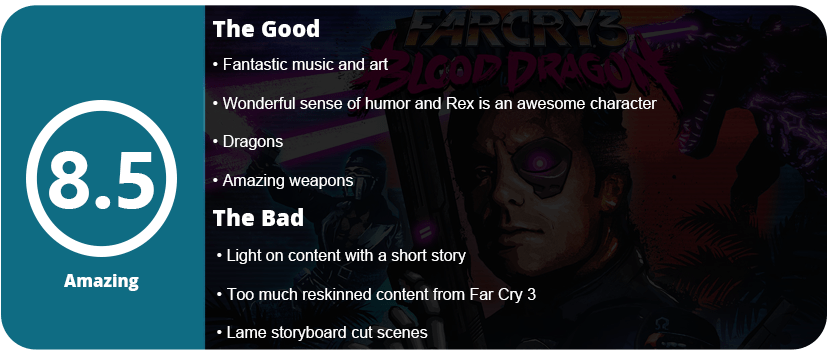
I also can’t help but love the music. It’s stuff straight from the 80s and fits so well that I actually listen to the soundtrack outside of the game. You can tell the team was pressed for time (they only got 6 months) because a lot of the Far Cry 3 stuff is just reskinned, like the hang glider, the jeeps (the only vehicles in the game), the jet skis, and even the helicopters. There’s not really much to do in the game, and once the story mode and all the bases are taken over, there’s no reason to stay. You will see everything the game has to offer in about an hour, but the ending is just badass. You get to ride a dragon that curses and talks while shooting lasers from his eyes and mowing down everyone with a cannon. The story mode is highly entertaining, but I was disappointed with the low-quality storyboard-style cut scenes. They didn’t do the game justice.
In the end, Blood Dragon is one of the best downloadable games this year and a completely pleasant surprise. Even if you don’t like Far Cry, the 80’s vibe should bring many hardcore gamers along. It’s light on content, the characters are average (except Rex), and the animations and art style are one-of-a-kind; there’s no other game out there like it. I really hope there’s a fully-fledged sequel, even outside of the Far Cry 3 engine.
Before you continue reading, this review is coming from someone who has grown to hate JRPGs over the past ten years. I rarely play them, and if I do, I never finish them. The story ends up falling flat; there are too many random battles; the characters are boring; or it’s just too damn hard. Ni no Kuni caught my attention due to the fact that Studio Ghibli was involved, and Level 5 is a master at JRPGs. While I didn’t finish Dragon Quest VIII, I did enjoy its story and art immensely.
Ni no Kuni is all about magic. A boy named Oliver’s mother dies after saving him from drowning. A fairy named Mr. Drippy comes to visit him, and he’s off to another world. It turns out that an evil witch wants to destroy the world. It sounds pretty simple, but there are a lot of plot twists, and the ending will have you going, “No way!” during each cutscene. The game holds a lot of secrets, the characters are engaging, and you will get very attached. However, the story is only half of what makes a good JRPG.
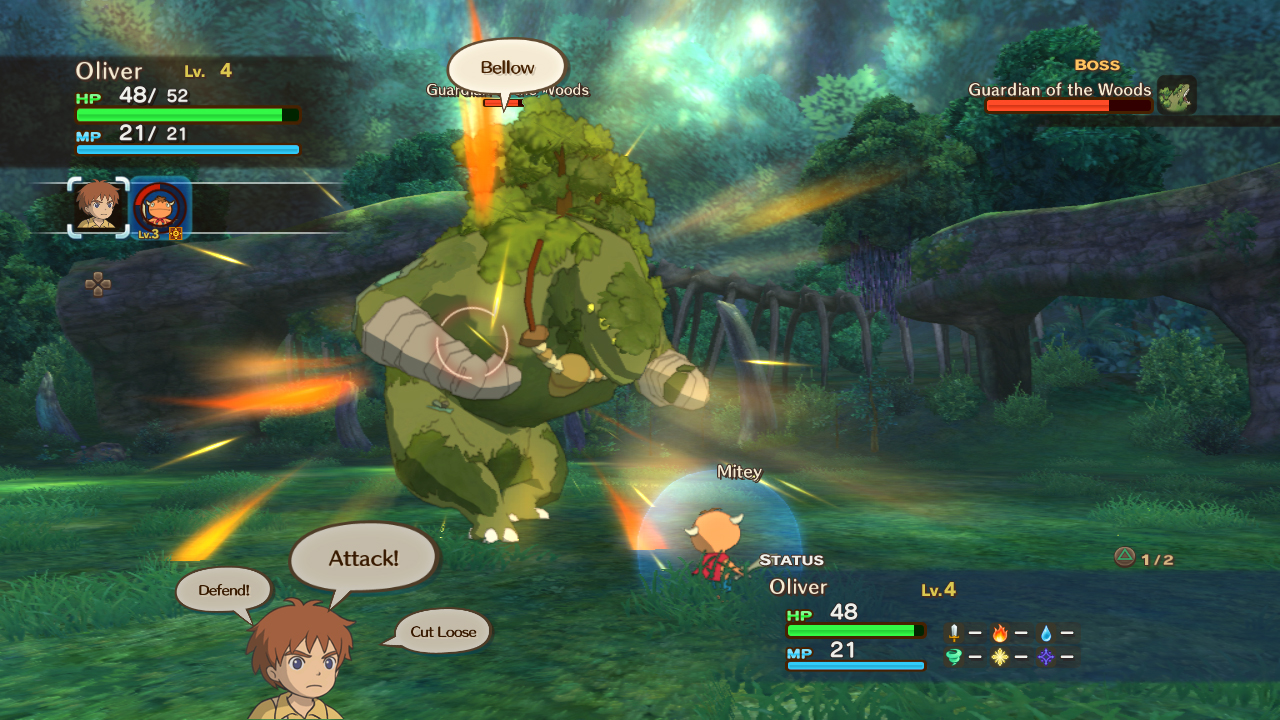
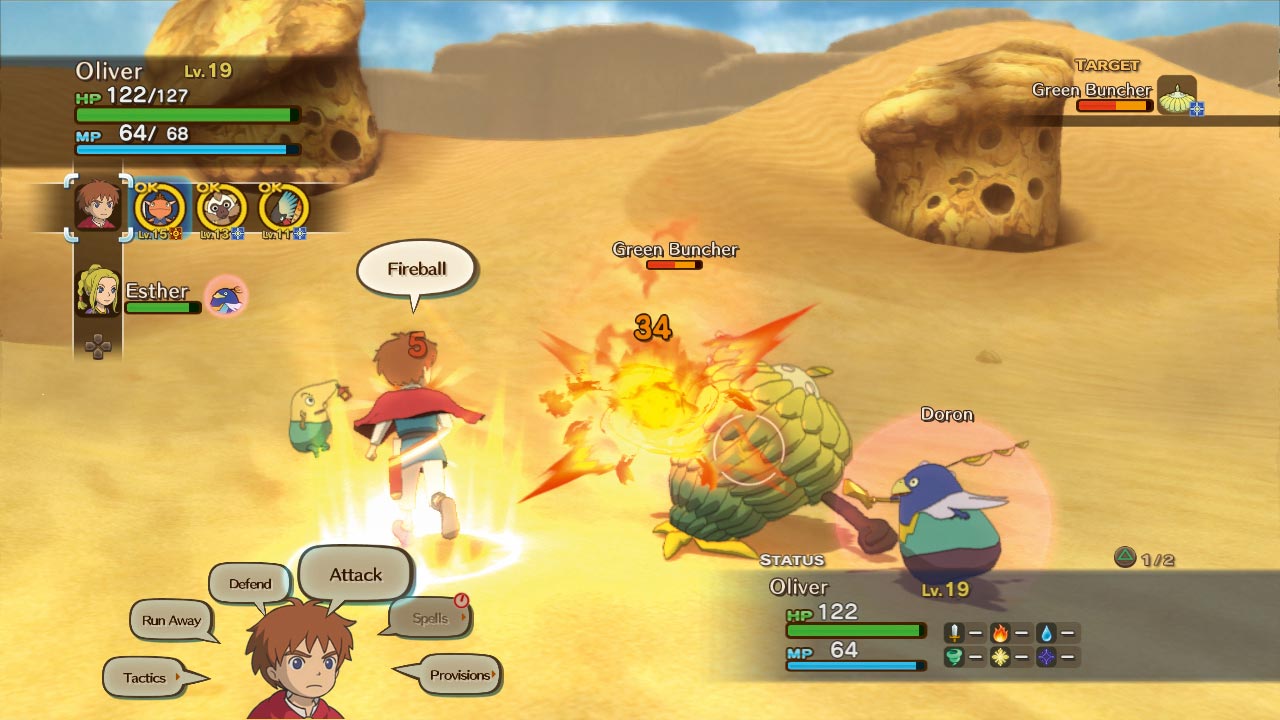
The combat is in real-time, not turn-based. It’s all about reaction time and strategy. All three of your characters run around the battlefield. The enemy can strike at any time, but so can you. Each character can cast spells and send out one of three familiars to cast various other spells and do physical damage. There are dozens of them throughout the game that you can capture and train. Oliver is the most powerful mage, and by the end of the game, you will be casting room-clearing magic. The biggest issue with this is that the game is solely focused on magic. Physical damage, no matter how high of a level you are, never does the same amount of damage as magic. You will be guzzling MP potions like crazy; always make sure you have a ton stocked up. Enemies will sometimes cast spells themselves or charge physical attacks. You can order your team to defend or attack, and then you have to attack yourself. This requires quick thinking and timing, as well as actual gaming skills. It’s also important to exploit the elemental weakness of each enemy, if there is one. During the battle, enemies will drop HP and MP glims to help you out, and rarely the gold glim will supercharge you or you’re familiar with an ultra-powerful attack or defensive move.
Boss battles are the toughest in the game, and towards the end, they will come with 2 and 3 different phases. This game gets extremely tough after the first few chapters, so tough that it will require a lot of level grinding during the last half. I actually played the last half on easy and still died quite often. This game is extremely hard; be warned. There are other things you can do outside of battles, like side quests. Oliver can go around collecting pieces of heart from people and giving them to other people who need them. He can cast spells to help advance his way through the world, like making bridges, talking to ghosts and animals, rejuvenating broken objects, etc. There are 150 side quests, and you get gold and items for them as well as stamps. 10 stamps get you a card, and these cards can be redeemed for permanent effects like extra XP during battle, enemies dropping more loot, and even giving Oliver 100 extra max HP and MP. These side quests, including bounty hunts, can be fun and can add 15-20 hours of gameplay themselves.
After so long, you will be able to sail and fly around the entire world, allowing you to avoid overworld battles. The game has no random battles, but some enemies are so hard to avoid that they might as well be. If you get to a high enough level, enemies will run away, and you won’t have to deal with them. The game is also full of dangerous dungeons full of chests of loot. Now, what about these familiars? Think of them like Pokemon. You can feed them treats to advance various attributes, and then feed them gemstones to advance them to their third and most powerful stage. As they level up, they acquire new spells and techniques. You can swap out different familiars and hold up to 500 in your familiar retreat.
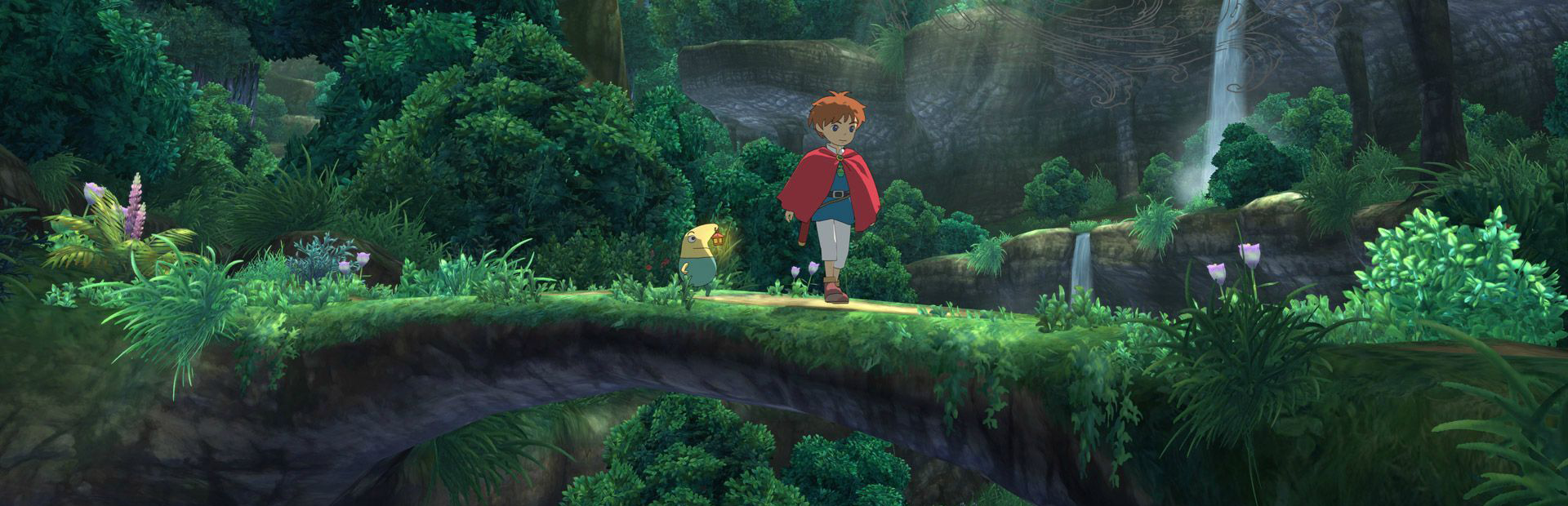
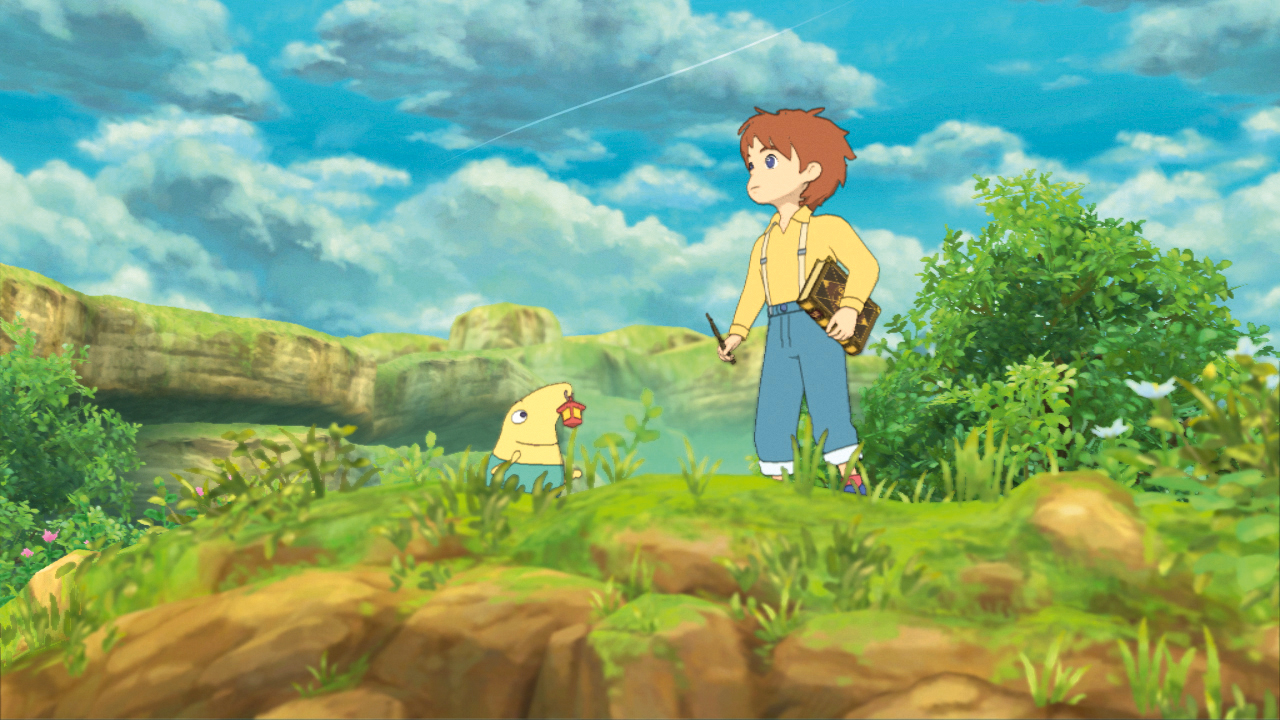
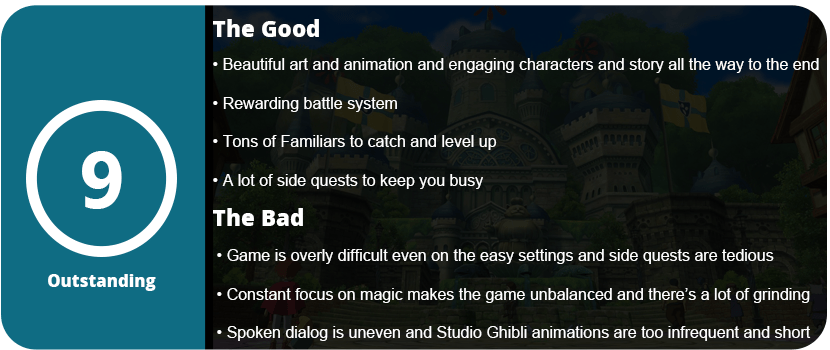
The game’s art is fantastic and gorgeous, along with the music. Studio Ghibli created the animated cutscenes, but there aren’t many of them. There are less than 10 minutes of animation throughout the whole game, and that’s very disappointing. I felt they shouldn’t have bothered at that point. There’s also a lot of unspoken dialogue, and it just seems random when it happens. Towards the end, there are hardly any cut scenes, and it drove me nuts. Why waste the great voice acting and animation only to spread it randomly and unevenly throughout the game? Other than that, colors pop on a 1080p HDTV with bright, vibrant colors thanks to Studio Ghibli’s art style, which everyone has grown to love and appreciate.
In the end, Ni no Kuni has a very engaging story that will keep you hooked for dozens of hours. The combat tries to change things from the typical JRPG format, but there are a few flaws in it. Your spells can be interrupted often, and when you defend, sometimes they won’t register or you don’t get enough time before the enemy attacks. You get about a second before the enemy attacks. During that time, you need to order your team to defend themselves. It can be tough during boss fights. I also hated the focus on magic, and the game was overly difficult during the last 3/4. Other than that, the combat was fine. The game suffers from tedium towards the end, and the side quests start feeling the same, and you just want the game to end. There is some post-end content, but most people might skip this. Ni no Kuni is a perfect game for JRPG fans, but non-fans won’t find enough here to change their minds.
Metro 2033 was one of the most atmospheric shooters in the past decade. It had an excellent story, great characters, and solid shooting action. It just wasn’t paced very well, and the stealth sections nearly ruined the game. That has all been fixed in Last Light; this is one of the best shooter and horror games to come out in a long time.
You play, once again, as Artyom. Set in the post-apocalyptic Russian underground metro system, the creatures, radiation, and violent storms have driven everyone underground. Life isn’t so simple. After Artyom launched the missiles on the Dark One’s nest, the war against the communists is getting more heated. The only way to stop this war is to find the last surviving Dark One and use it against President Moskvin to stop the war from destroying the last humans on Earth.
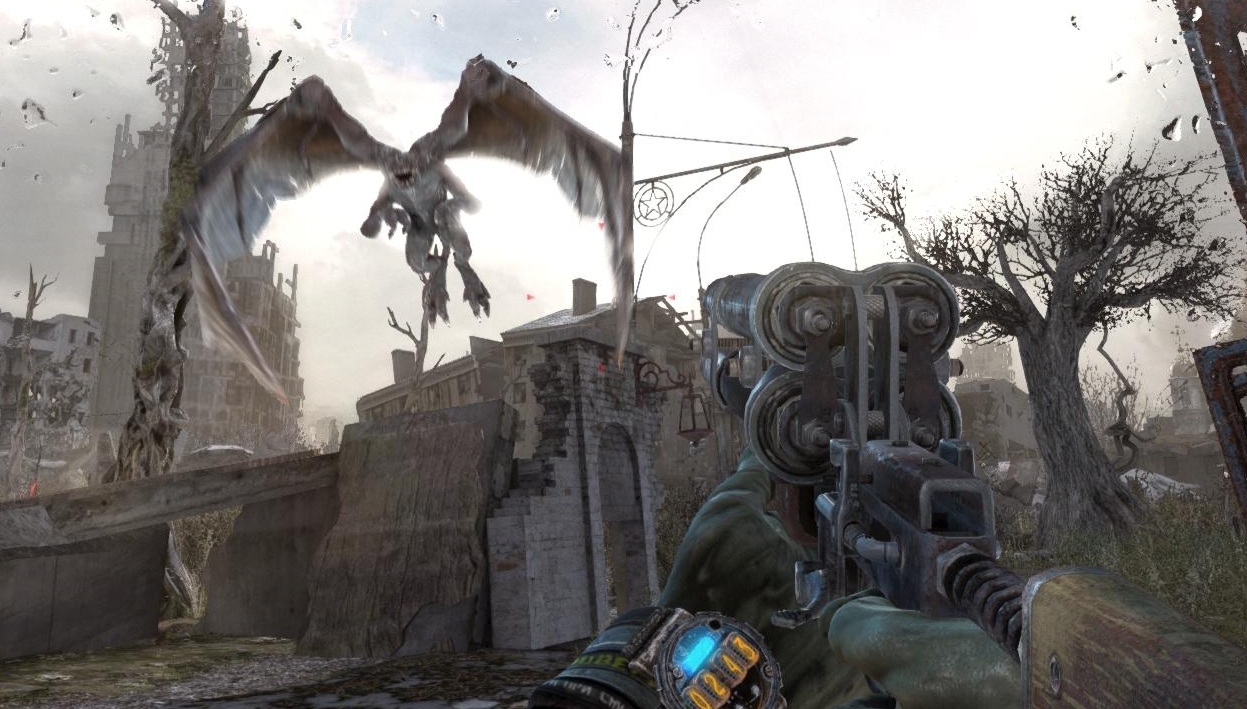
The game is more about Artyom’s journey than the overarching story. The game is broken up into underground sections, stealth, top-side sections, boss fights, on-rails stuff, and then safe cities. The atmosphere in this game is just phenomenal. Never in a shooter—in a long time anyway—have I felt actually afraid. When you’re underground in these dark, decrepit tunnels and you’re hearing strange sounds all around, you get really scared. These sections last for minutes rather than seconds, like most shooters. They let you marinate in this dark, frightening atmosphere. Sometimes your flashlight won’t work, and you just have to use your lighter to see. The monsters are terrifying because they look so close to what they once were—just mutated. This plays out through the entire game, and it’s very tense.
You can carry three weapons with you at all times. They are all great weapons to shoot because some of them are kind of slapped together with parts. The Bastard is an interesting side-loading machine gun; it gets jammed often, and you have to be careful. Ammo is scarce, and you must make sure you save your military-grade bullets to buy ammo and better weapons along with attachments. Once you get to a city, it’s like a breath of fresh air. After being in such a scary situation, you are so relieved to see civilization. There are some throwable objects at your disposal, like bombs, incendiary flares, knives for stealth, and then you have med syringes. You get night vision goggles later on, and you have to use your charger to keep your flashlight and goggles powered on. When you’re on the surface, you must wear a mask, and you need to find filters to continue breathing. Artyom can also wipe his mask when things get blurred out. This is a fantastic mechanic—a wipe mask button—and it just adds to the feeling of survival. If you get hit too much, your mask breaks and you can’t breathe.
While I stuck with mostly the same guns throughout the game, you always feel slightly underpowered. The monsters are vicious and dangerous, and you can’t take them all on at once. Sometimes stealth is the best option, and it’s so much better. AI doesn’t detect you a mile away, and you can stealth kill easily with your throwing knives or from behind. The levels are laid out much better, and you get a sense of accomplishment when you get through a level for the first time. The pacing is fantastic, and I just couldn’t put the controller down; it was that good.
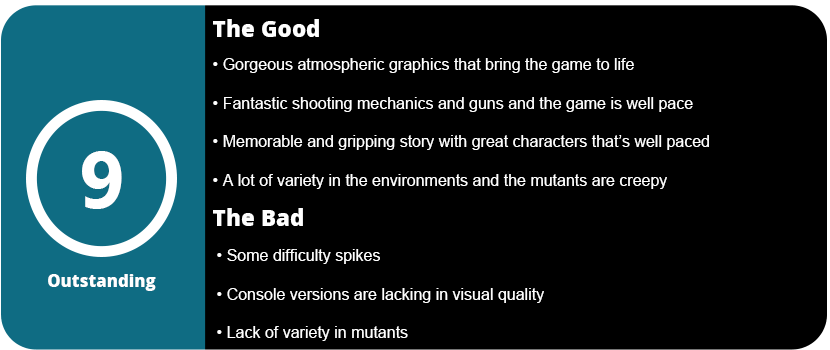
The graphics are some of the best out there. On consoles, it actually ruins the atmosphere because a lot of stuff is taken out due to the underpowered hardware. On PC, the game jumps to life with mind-blowing lighting effects, super-high-resolution textures, and various other things that actually severely downgrade the experience on consoles. Last Light is one of those games where graphics are a huge part of the experience. The lighting, textures, depth of field, all that stuff makes the game just come to life. You have to play it to experience it. I honestly have to say that you won’t get the same experience on consoles as you will on PCs. If you buy the PC version, you also get the Metro 2033 eBook for free.
Overall, Last Light is one of the most intense and frightening shooters made in the past decade; nothing comes close. The sheer terror you feel when Artyom is breathing heavily in his mask, blood and mud are dripping down your mask, and your watch says you only have 90 seconds of filter life left. Mutants are after you, and if you panic and run to find filters, then you have to turn and face them. With the destroyed world around you, you are constantly reminded that this was once a habitable place. You walk through buses and planes with skeletons in the seats and apartment buildings with ghosts that haunt them. Anyone who wants to feel survival horror, don’t play Resident Evil or Silent Hill; Last Light is your one-way ticket.
Yeah, it's pretty damn awful. Notoriously one of the worst games on the PSP. A 4 was actually being generous.…