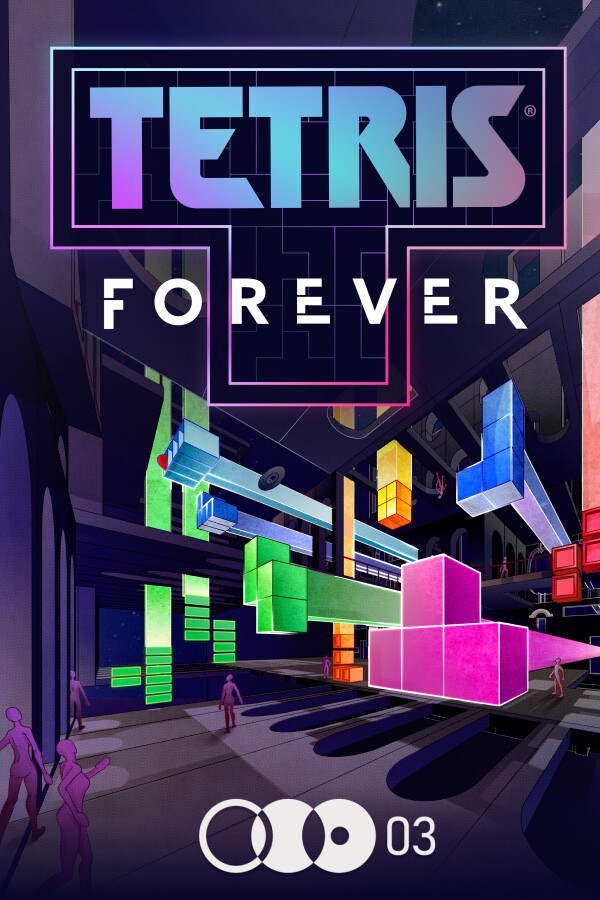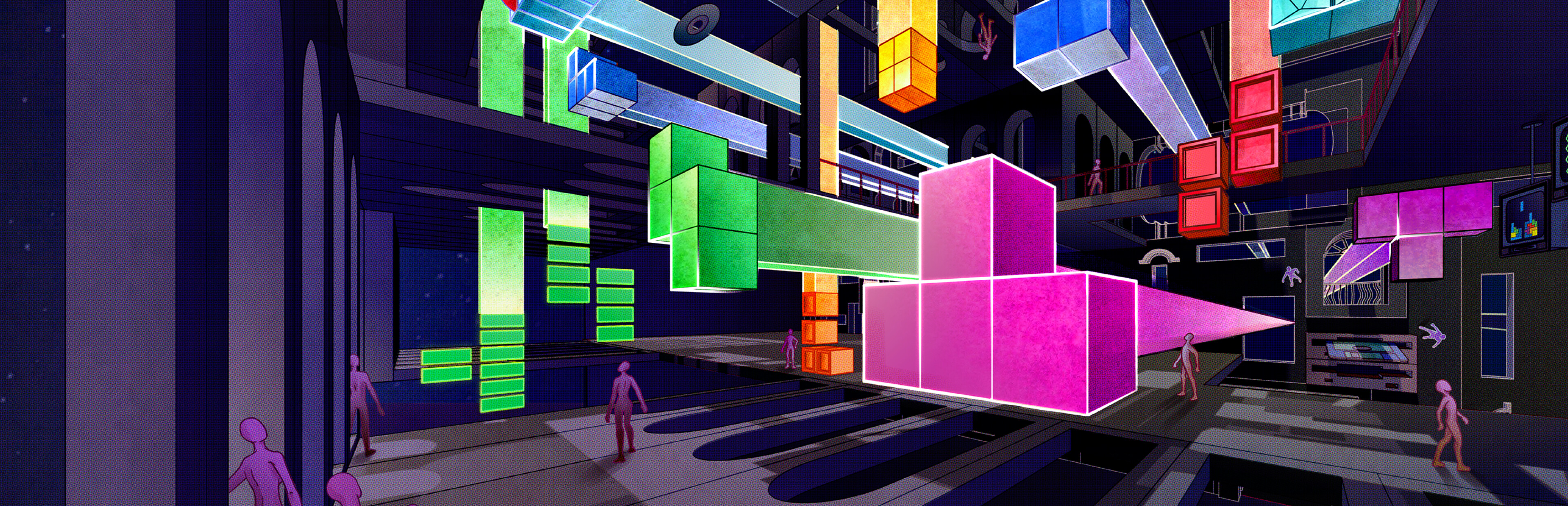
Digital Eclipse’s Gold Master series is an incredibly original and unique idea. The series focuses on creating interactive documentaries that explore interesting game stories or sagas, allowing gamers of all ages to engage with them. This is the third Gold Master game coming right after the Atari 50th Anniversary, which was absolutely a blast to experience. Tetris Forever is a great concept. The story behind how Tetris came to be is fascinating, and Henk Rogers, the person who helped bring Tetris to the West, is a great storyteller. I was floored by how Tetris came to be and the breakdown of the gameplay and nuance of what makes the game a timeless classic. The documentary clips are wonderful. Usually ranging from 3 to 8 minutes each, there’s easily over an hour of video footage, but that’s kind of where the best part of the game ends.
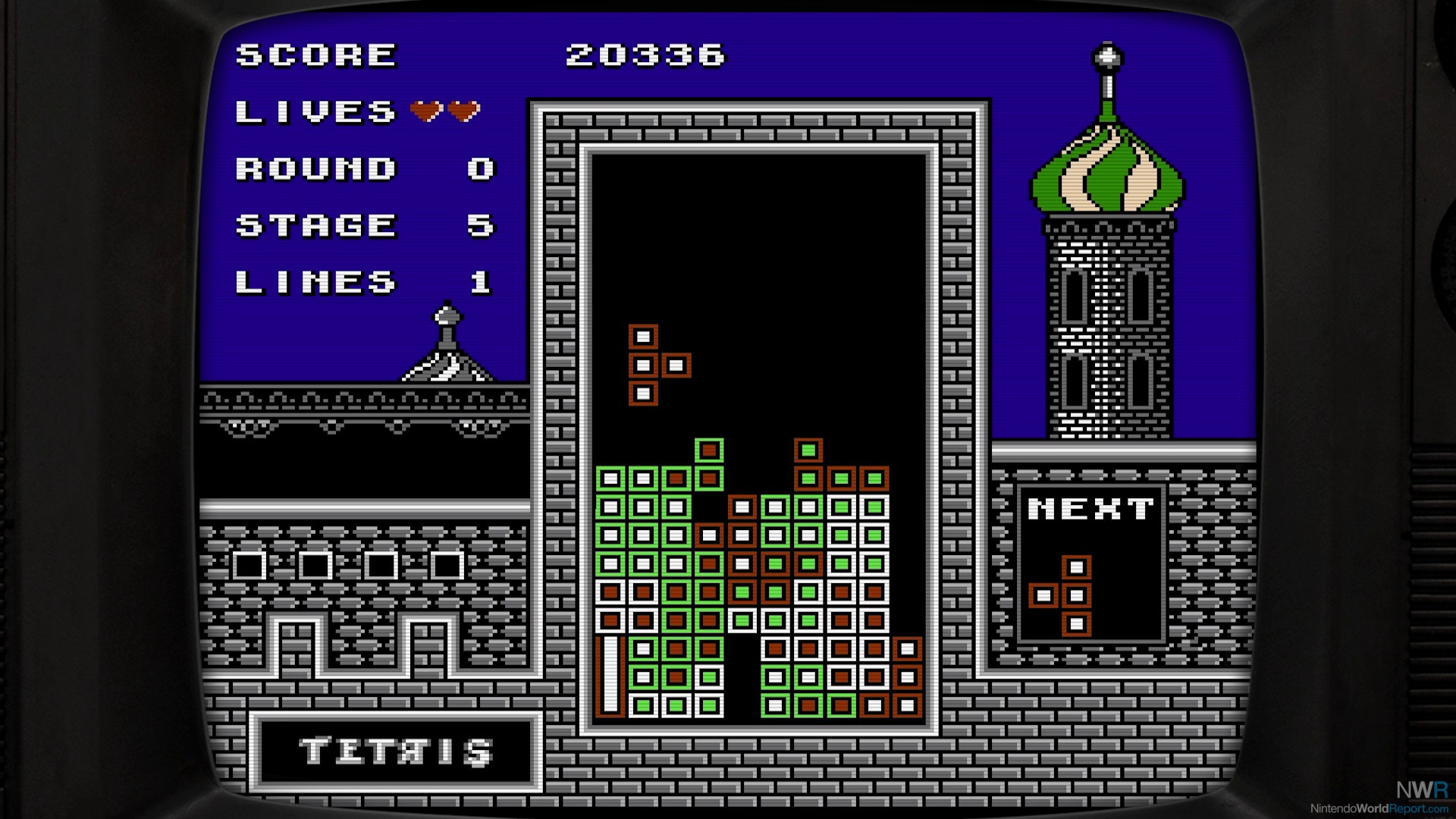
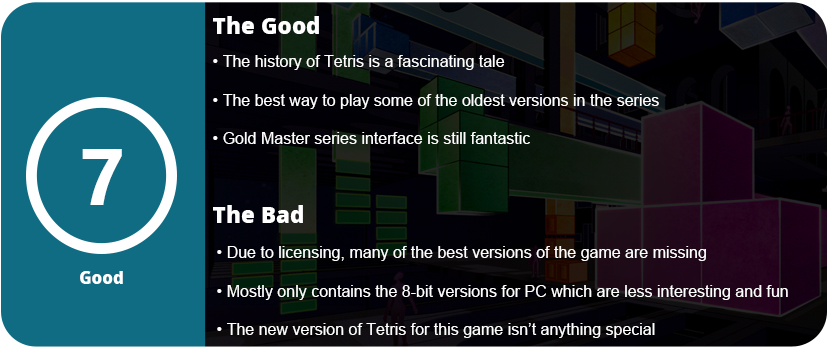
It’s difficult to call these Gold Master series “games” as they are interactive museums. Many different versions of Tetris are owned by other copyright holders. The most famous being the original Game Boy version of Tetris that shot the series into the stratosphere. It’s not here because it’s owned by Nintendo. You can see it being played in the footage of the game, but that doesn’t help us sitting here playing this game. Forever is mostly comprised of older MS-DOS and early 8-bit PC versions of the game that are historically interesting but not very fun to play. Digital Eclipse did a great job creating a replica of the computer they are on visually and adding things like a CRT curve, filter, and mapping the keyboard controls to a controller. Sadly, they just aren’t fun to play. Many versions don’t have music or much sound at all. Outside of messing around with these for five minutes, you will have no reason to go back to them.
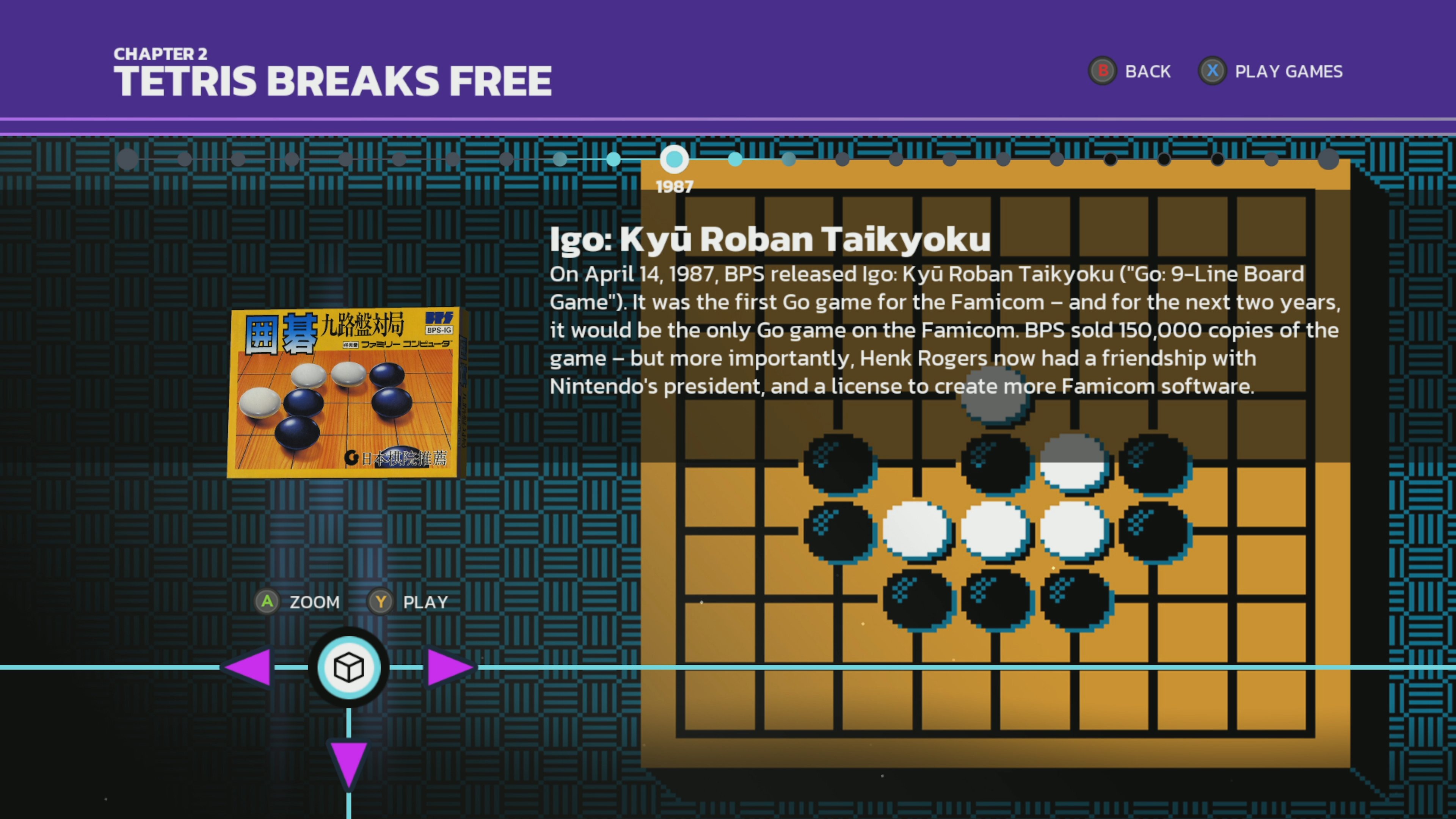
There are a few other games that aren’t Tetris included, as these are part of the Spectrum Holobyte story. Many NES games are included here, but you can play these outside of Forever on emulators through ROMs on much simpler devices that boot up quicker without a fancy interface. Again, these games are either not fun or just interesting enough for a historical reference. This isn’t like Atari 50th, where you can play every single game Atari made or held the rights to, and they were full-blown games. These are pretty much all puzzle or board games. One of the big stories that helped Henk Rogers gain trust from Nintendo was making a game of Go, which is basically Japanese Reversi. The NES version is intriguing at best, but I was not a fan. It’s not as addictive or fun as Tetris and requires much more concentration.
Sadly, only 8-bit games are included here. Nothing past the mid-90s is included. It would have been great to get DS, PS2, PS1, or other consoles on here, but there’s either a rights issue or an emulation issue on Digital Eclipse’s side. Most of the more interesting games are 16-bit and beyond. The lesser-liked sequels to Tetris are included, and a few spin-offs like Hatris, Super Bombliss, and a brand-new game made for this compilation, which is the only non-8-bit game included. This Gold Master release is mostly for those interested in the story of Tetris rather than playing it. Unless you grew up with these 8-bit games, I don’t see any reason why anyone else would enjoy them. Sadly, even the new Tetris game isn’t anything special. It’s not much to look at and just plays like any other Tetris game. The most interesting feature is the 1989 mode, which emulates the Game Boy version, and that’s as close as you will get to it. I don’t see myself booting up an entire compilation just to play this version of Tetris.
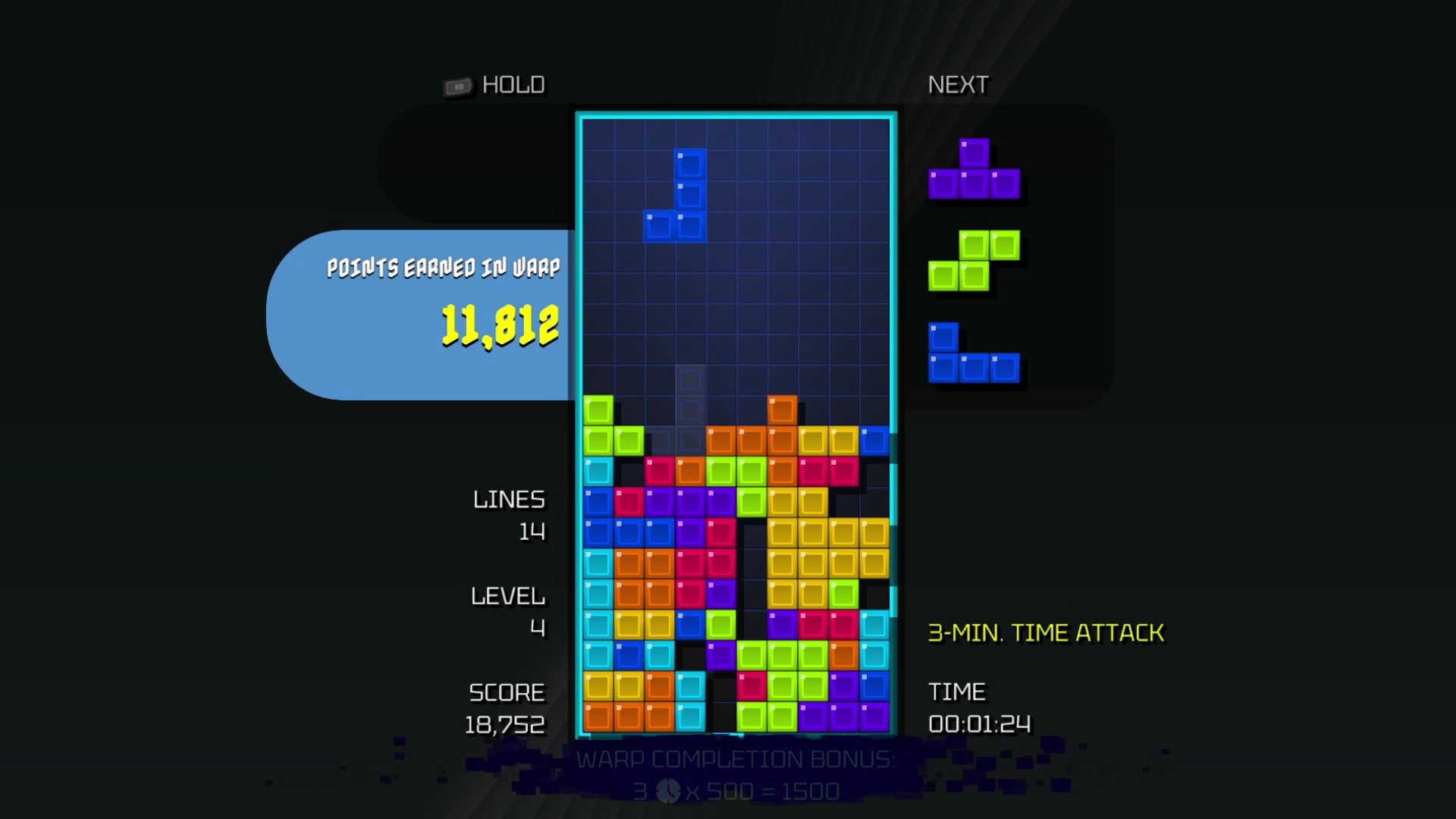
The title would have been more interesting as a cheap documentary than a game all by itself. I got more enjoyment out of the video clips than I did the games themselves. With four 8-bit versions of the original Tetris (all inferior versions) and many less interesting spin-offs and sequels, it begs the question as to who this is for. The low asking price helps, but even then, unless you are a massive Tetris fan, it’s hard to justify the cost. Tetris Time Warp is the game you will spend the most time on here, but will you come back to it? Tetris is a fascinating tale and one of the most interesting I’ve had the pleasure of listening to. Tetris is a fantastic and timeless game series, but the content included here does not represent its strongest offerings.
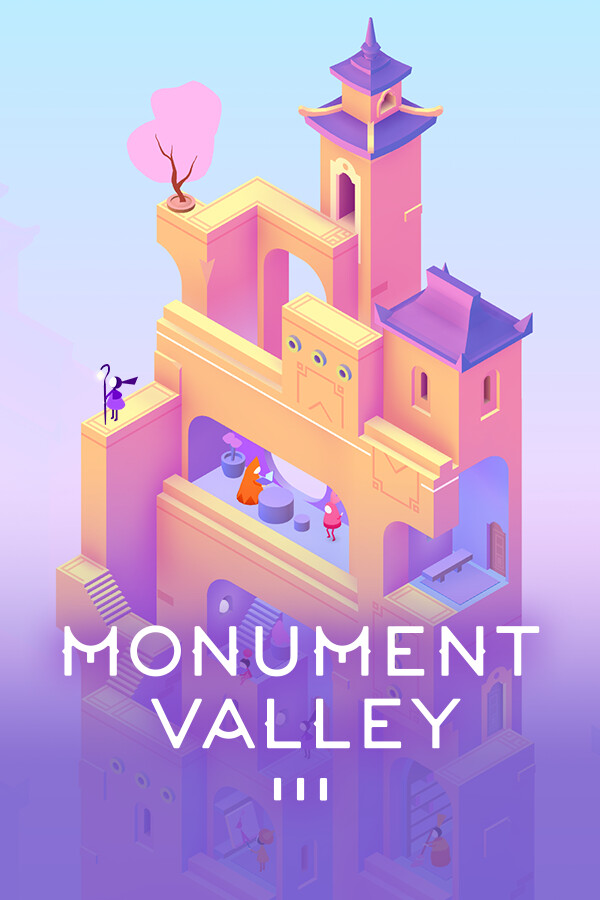
Monument Valley played a pivotal role in shaping the mobile gaming scene by demonstrating the feasibility of console-like experiences on mobile devices. With the flood of microtransaction-heavy free-to-play schlop on the app stores, Monument Valley was a beacon of hope for those who wanted to play single-player games on their phones. The MC Escher-like level design and clever puzzles were adored the world over, and USTWO was considered a pioneer of single-player mobile gaming. The second game was more of the same, which everyone wanted, but the third game here is still more of the same. That’s also what we want, but we want something longer than two hours. With the series venturing into console and PC territory, the short length isn’t as forgiving.
The overall game is exactly the same as before. If you play all three of these games back-to-back, you could be forgiven for thinking they were the same game or DLC of the first. There’s not much new here outside of a more streamlined and cohesive narrative. While it’s more visually presented with a girl named Noor trying to restore a lighthouse to a tribe that lives in the ocean (or that’s how I interpreted it), there’s nothing crazy storywise and never has been with the series. A lot of emotions are invoked through the fantastic soundtrack and visuals. The bright colors and the continuation of the MC escher style puzzles with perspective and illusions at play make this series one of my favorites of all time, right next to echochrome.
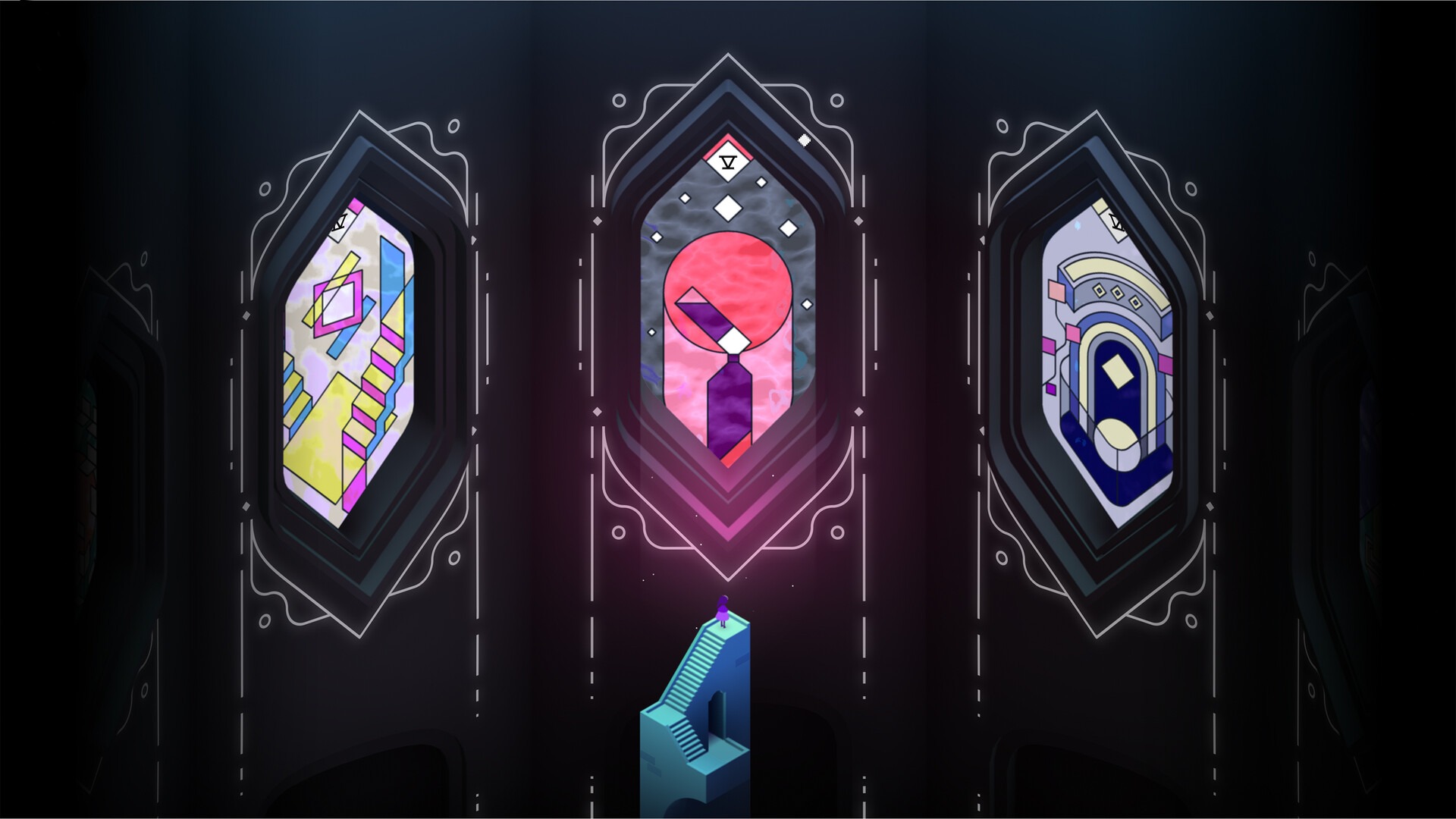
The game is easy to understand thanks to visual context. Parts of the level that can be manipulated are represented with hollow pips similar to a Lego block. You can move these freely while Noor is on them, and it’s required to solve some puzzles. You can’t always expect to just move a piece and command Noor to walk to the exit. Some pieces are moved with a spinner, and these can not be moved while Noor is on one of them. These are some of the harder puzzles, and they really require you to look outside of the box and take perspective into mind at all times. There’s a new gameplay mechanic here of being able to command a boat (it’s a leaf bug with an eye on its sail that blinks). It’s such a fantastic design. These may require moving a character back and forth between platforms to solve a puzzle. Another puzzle-solving element is a growing tree and having the leaves appear on different parts of a platform. These are subtle gameplay ideas, but they are new and welcome.
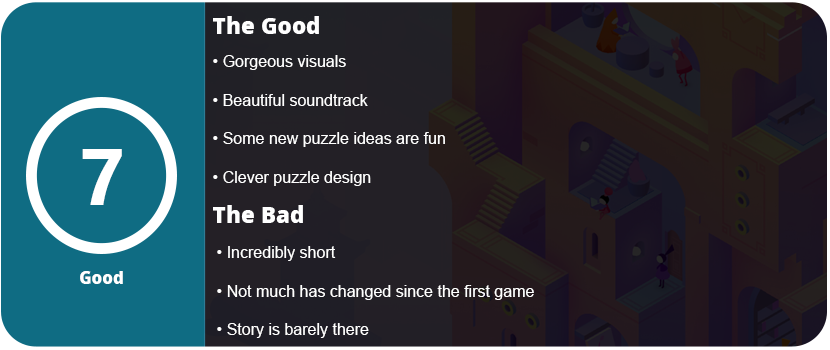
With all that said, the game is still just way too short. There are only 11 levels, and you can finish the game in a single sitting. I wanted more. I have always wanted more from this series. They are spread so far apart that when they come, you cherish them like an expensive sweet. The soundtrack is ethereal and beautiful, the visuals pop on OLED displays, and the level design is like no other. These games are well worth a playthroughif you love puzzle games. Just don’t expect a lot.
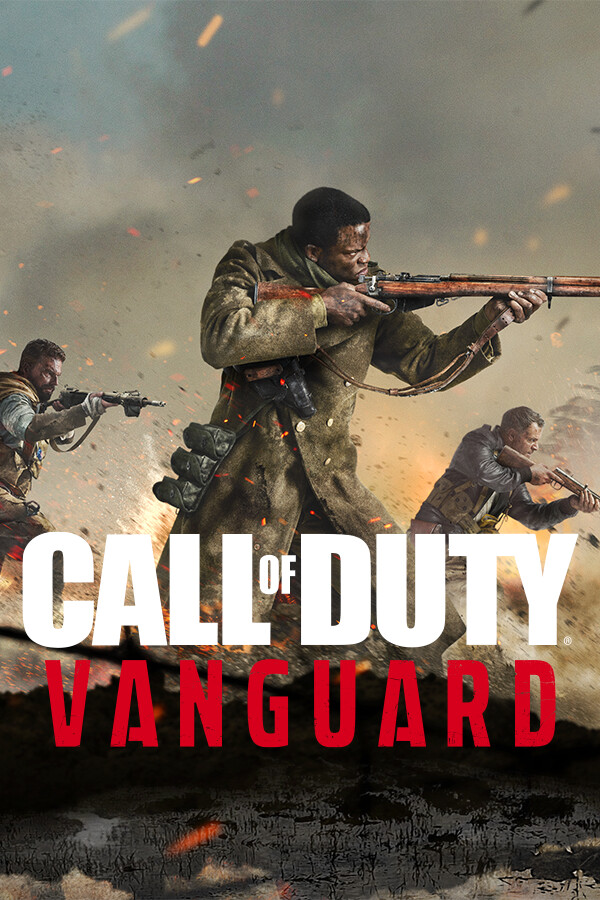
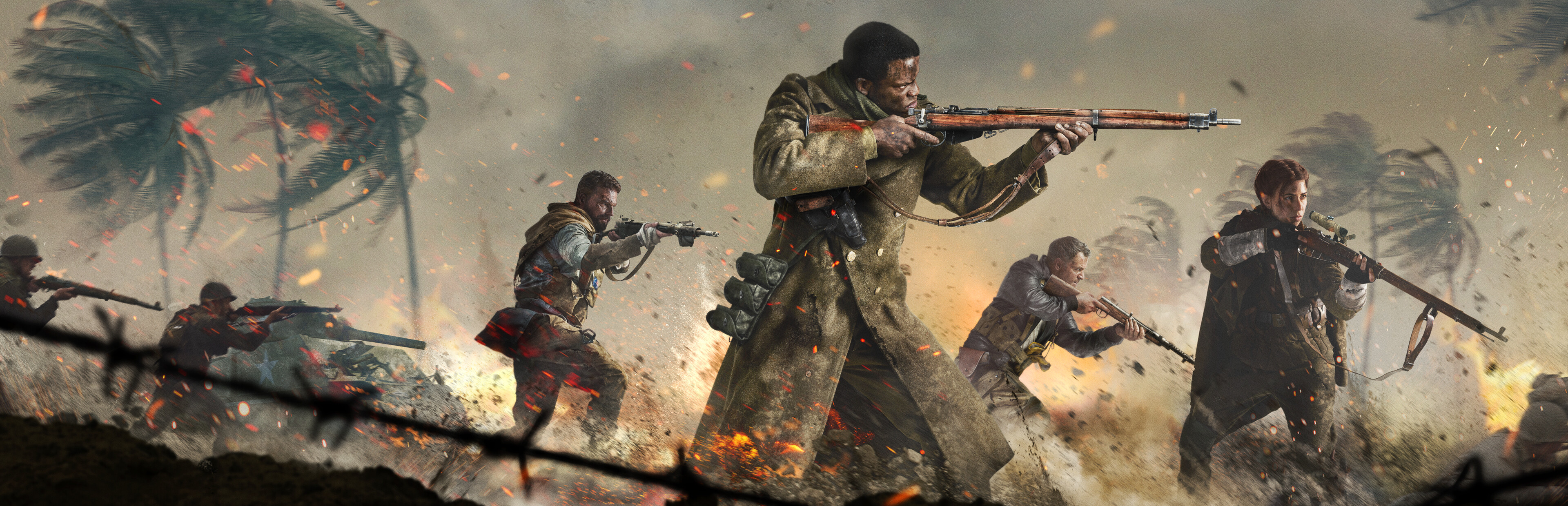
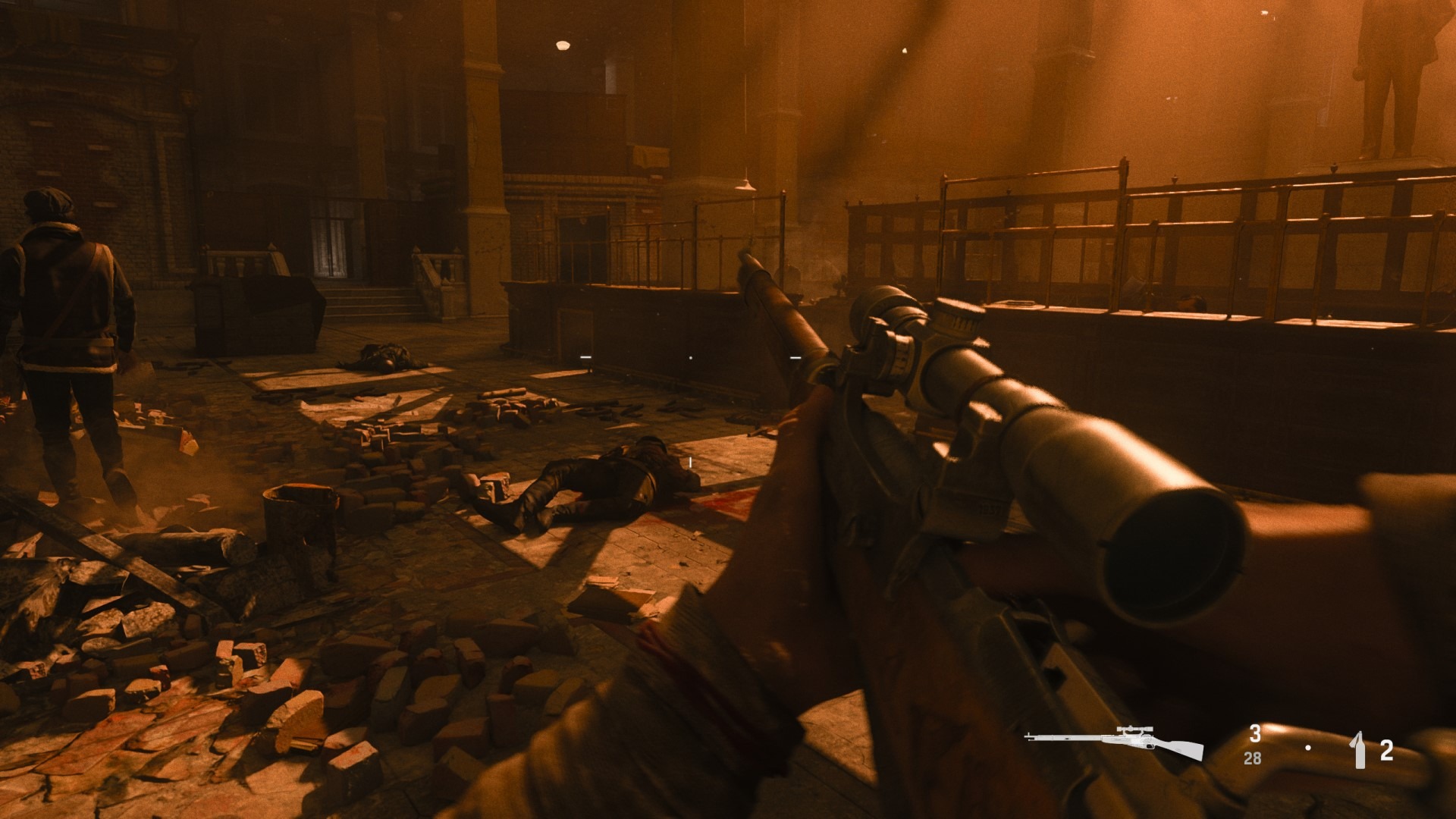
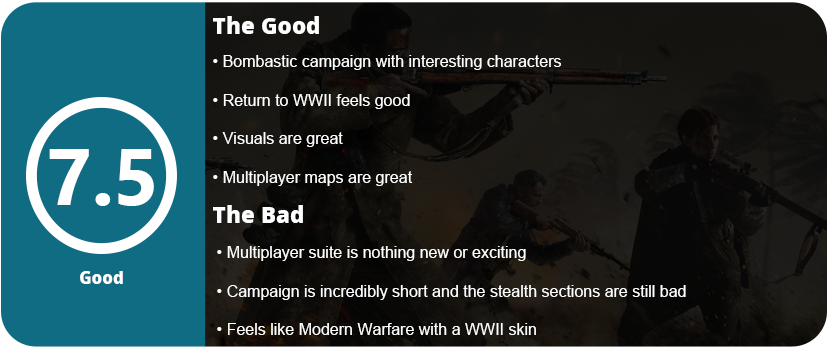
Oh boy, it’s another Call of Duty release. I completely disregarded it due to its brief campaign and my lack of interest in the Zombies mode. Four years passed, and here we are. I was in the mood for an FPS game that wouldn’t take up a lot of time, and I’m glad I played it. Starting with the campaign, this is one of the most entertaining in the series, and it’s a crying shame it’s so short. Activision has the budget and talent to make a good long 8-10 hour campaign, but instead we’re stuck with 9 short missions clocking in at around 4 hours. The characters are fun, the writing is tight and interesting, and the Nazi villains are fun to see on screen. You play as a team of allied soldiers who are captured by the Nazis while trying to find documentation on plans for Project Phoenix. The Nazi plan to stay alive after Adolf Hitler had allegedly committed suicide. It’s an interesting point during the war that isn’t talked about or used in WWII games much. The main antagonists are two SS officers who torture and kidnap an Australian, an American, a Russian, and a British soldier who were on the operation to steal the documents.
The game opens up with a train mission. It’s as bombastic and fun as any Call of Duty mission. The game feels immediately familiar…too familiar. It has the exact feeling of Modern Warfare. The speed, the momentum, and everything about what gives modern Call of Duty its identity are here, both for better and for worse. It feels a bit odd while holding WWII guns to be reloading them like a modern rifle. Slapping a clip off the top of a Browning. Everything feels like it’s in fast forward. I would have liked a slower, more deliberate feeling to this game, as we are returning to the series’ roots after all, but that’s too much to ask. It feels odd hopping around walls like it’s Assassin’s Creed as the Russian sniper Lady Nightingale. I feel like a WWII shooter needs a bit more finesse and a slower approach. The game doesn’t feel like Modern Warfare when it’s dressed in a WWII setting.
I don’t like stealth in Call of Duty, and it’s just as broken here. Running around and hiding in vents and under tables just slows the game way down. A high-octane shooter like this does not need any stealth. It’s easier to just shoot everyone in sight. The only reason to actually use the stealth is when it’s required or for achievements. Enemy placement is not right for stealth combat, and patrol patterns seem random. Enemies will also stay in an alerted state once seen, so it’s just pointless. The stealth takedowns are pretty cool to see, though. One new gameplay mechanic not seen in a Call of Duty is flying planes as the American. It’s fun; it doesn’t last long (only a single mission), but the preflight check and taking off just feel cool. There are no other vehicles to drive or even ride on in this game, which is kind of odd.
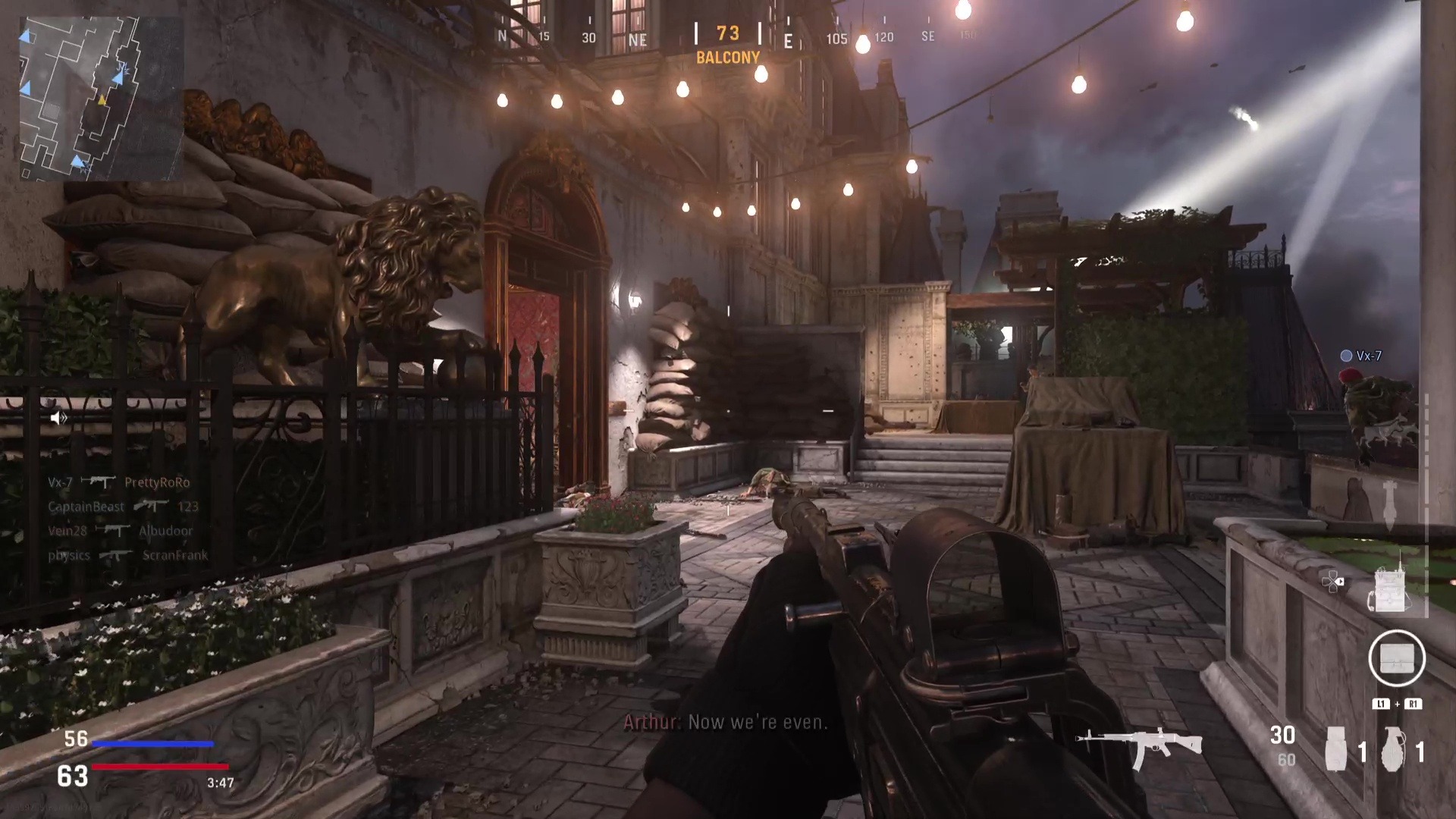
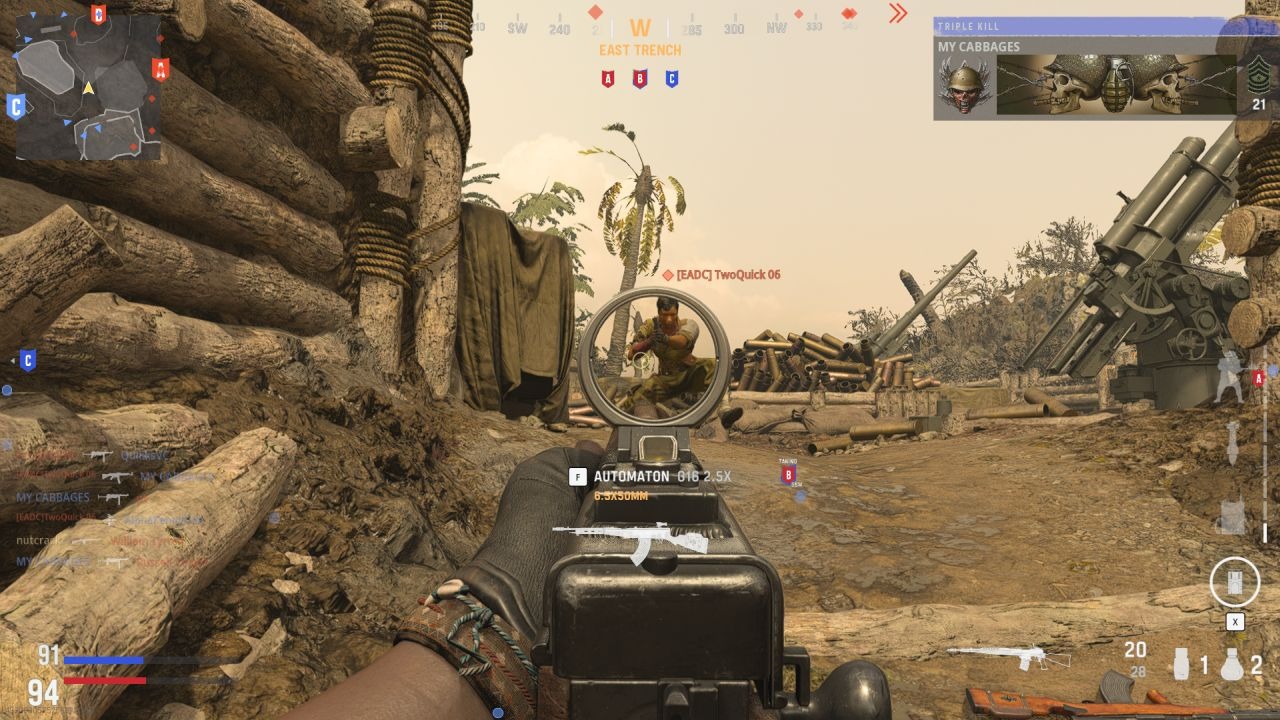
Outside of the campaign are multiplayer and Zombies. I’m not a Zombies expert, but I do know that this is a return to form with no story or weird map puzzles like in the Black Ops series. Some may like this, and some may hate it. I personally do not care either way. I tried Zombies for a couple of hours, and it was…fine. Multiplayer is the best part of the game, but it’s subject to the usual Call of Duty nonsense. The maps are at least really good, and the way the weapons fire makes it a bit different than modern games. They are less accurate and, of course, less modern, so you don’t get all these crazy attachments for the guns. I won’t bother going into detail on maps or anything, as, sadly, the game is mostly dead. I made it into a couple of matches, but that was after sitting for 20+ minutes waiting for enough people to join.
With that, this game is best played as a super cheap discount for the campaign and maybe some multiplayer with friends, but don’t expect much playtime out of this. I really wanted the campaign to be longer. There’s a lot here that works with interesting characters and a great script, but it’s just cut so short. The authentic WWII weapons feel good, and anyone who is a veteran of past WWII shooters will instantly recognize all of these weapons. Zombies mode is fun, but a drastic change from Black Ops Zombies, which some people may not like, but as it stands, this is a modern Call of Duty game. All that will be left one day is just the campaign and offline multiplayer. What’s here is entertaining for an afternoon of fun, but that’s it.
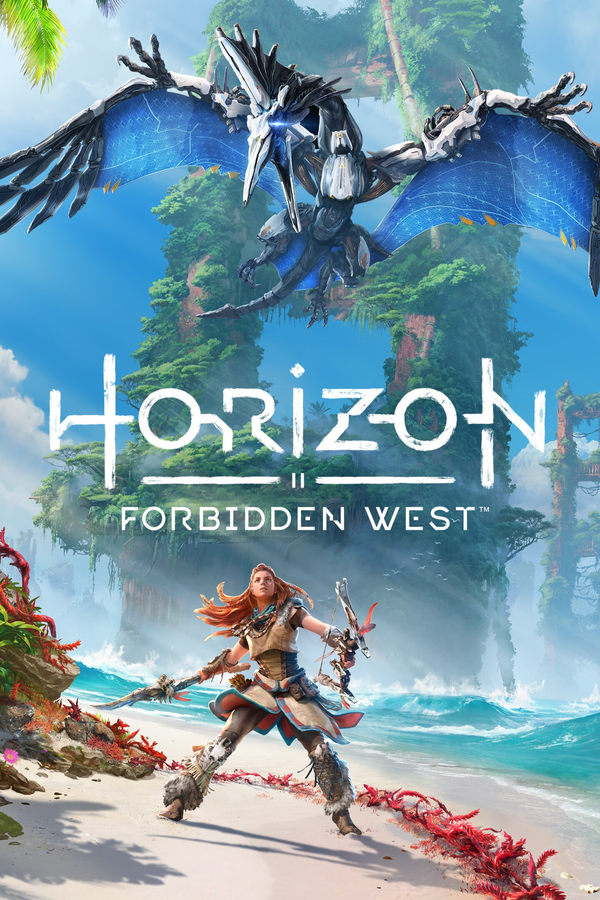
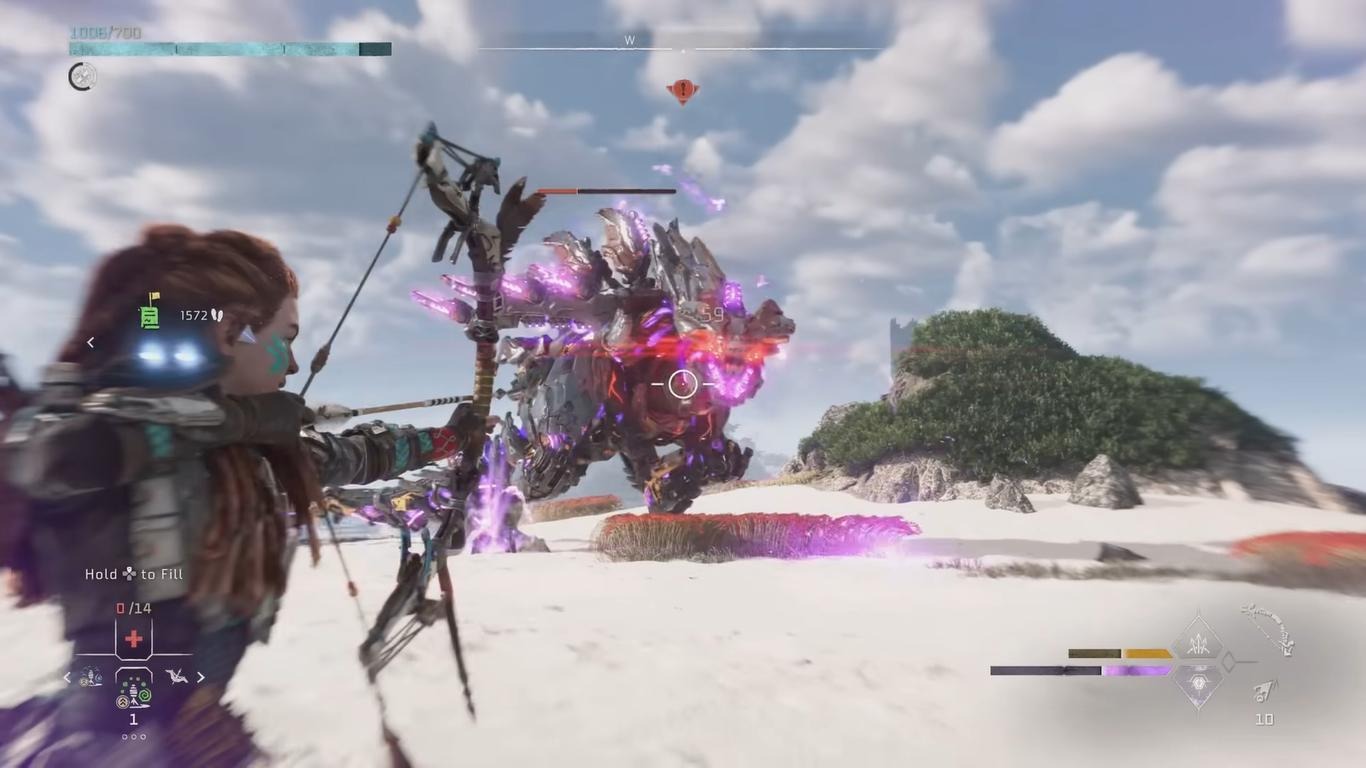
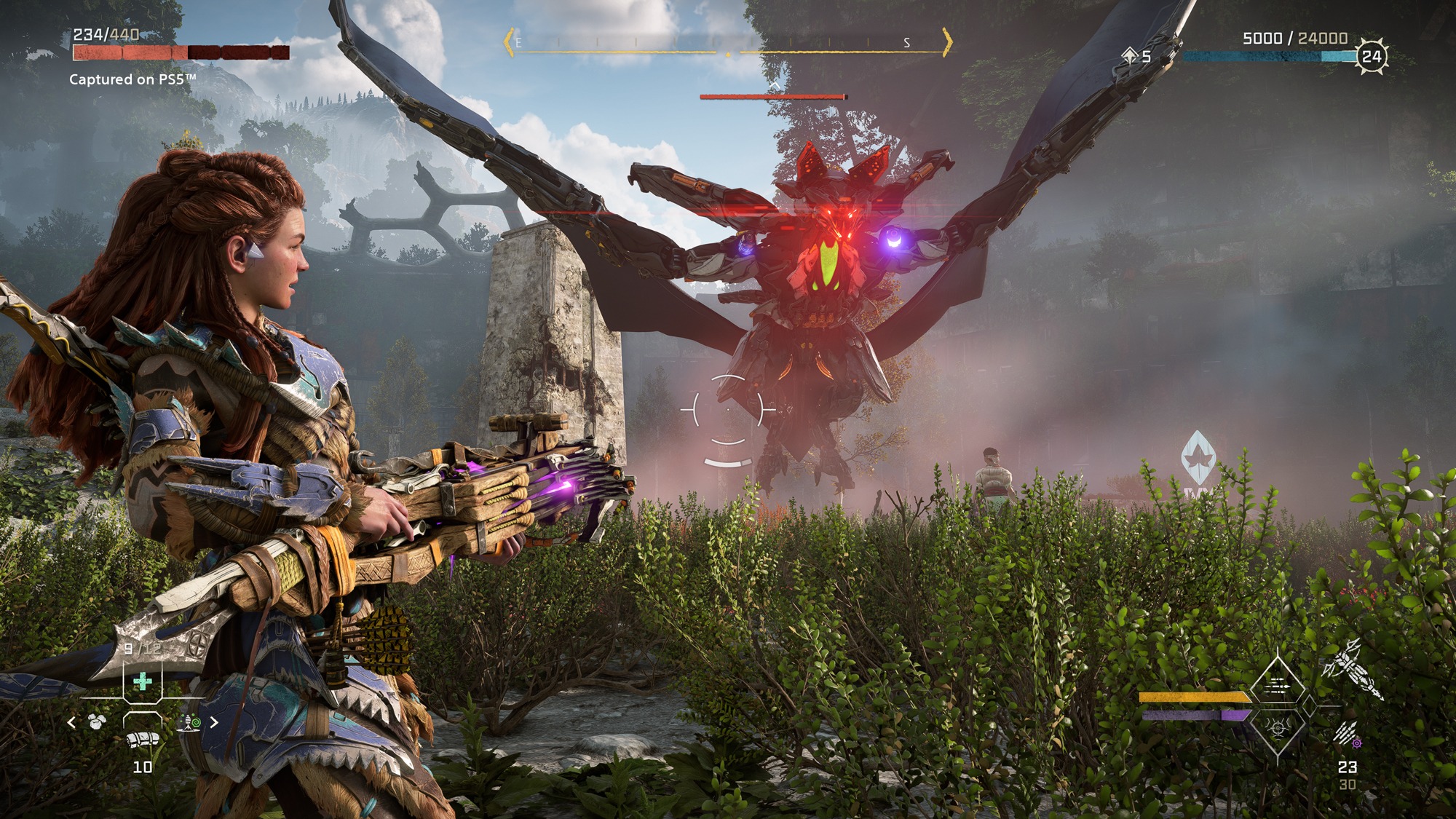
We have a lot of post-apocalyptic games right now. A lot of them are what the world is like shortly after the apocalypse. Usually a few years or decades. Horizon is one that shows what the world could be like thousands of years after one, and this fascinates me even more. Zero Dawn was a hard game to get into. It was slow to start, even slower to get good, and the combat just wasn’t all that great, including the stealth. Aloy is a fantastic main protagonist and one of Sony’s best in years. She’s strong, not cliche or stereotypical, and has a striking design. Sadly, she was the only memorable character in Zero Dawn. Forbidden West tries to remedy a lot of this by giving us a bolder and grander adventure and more refined mechanics, but does it succeed?
The game doesn’t exactly expect you to have played the first game and catches you up on the story so far, and kind of does throughout the entire game. Zero Dawn’s story only got interesting during the last few missions of the game, and it kind of exposition dumped on you during a few long cutscenes. It was interesting, but not very nuanced. Here, the story is kind of retold as you continue your adventure to stop Sylens and the Hephaestus AI from destroying the world. The game does start slow…again. You end up dealing with another warring tribe before getting to the heart of the story and saving the planet. Honestly, I lost interest in the game for a couple of years because of this. I put around 8 hours into the game, mostly trying to explore and get into the game mechanics again, but it just dragged. I highly recommend just doing the story before doing any side content, as you really need more of the special gear and higher-tier armor and weapons. You will constantly hit blocks, and it will frustrate you early on. The story itself takes around 20-25 hours to complete. By the end you will be around level 30 or so and have really good gear.
I don’t want to spoil much of the story, but your main goal is to help the GAIA AI to take back control of the various terraforming systems that Zero Dawn launched as the end is nigh. There are a few small plot twists, some new factions, and a great buildup to a pretty damn good story by the end of it all. There’s a lot of science fiction thrown in, and it talks about interstellar travel and whatnot, and I was hooked. There aren’t choices in the game like in most action games, but you do get dialog trees that let you optionally listen to more exposition and backstory. There’s a lot of this, by the way. Just metric tons of optional dialogue, audio recordings, and texts. They really wanted to sell this story and flesh it out as much as possible, and they did a pretty good job. It’s very believable and feels grounded and almost like it can happen. There are moments that got intense in the story where you weren’t sure how Aloy and her companions would get out of hairy situations. I really like what they did here, and there’s potential to now expand on this even further and branch off into other subgenres.
The writing is much better this time around with less cringy dialogue and corny lines; however, the character design is still generic. All of Aloy’s allies are either just generic characters or have good writing and personality, but their looks are generic. For example, Alva is a great character in writing, but she still looks generic. Varl and Zo are forgettable, and Erand is a stereotypical biker personality who discovers he likes drinking and “Death Metal”. All of the miscellaneous characters who give side quests and errands are pretty generic. I just didn’t care for most of them. Some other characters are more decent, like Kotallo, who is missing an arm and is battling his honor. They have some great personality, and I could get behind them. It’s better, but not quite there yet.
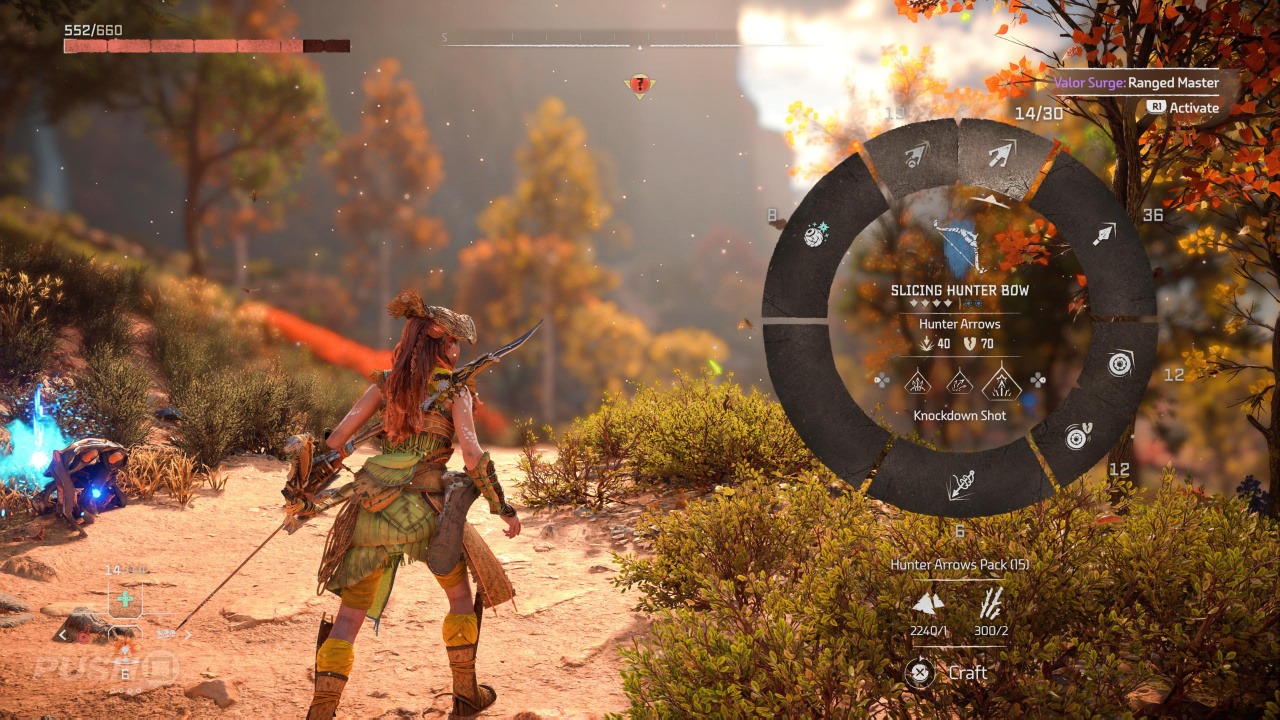
With the story out of the way, let’s dive into the combat. I still don’t love it. You’ll be dodging and rolling out of the way of these machine creatures. I feel there’s too much focus on ranged combat when most of the machines attack you up close. There is less stealth in this game and more up-close melee, but you still only have heavy and light melee attacks. If you sneak around, you can do a stealth kill, but you need to be at or above the area’s level to do instant kills. Humans are always instant kills, but machines not so much. There are many ranged weapons at your disposal that can set tripwire traps, semi-automatic arrows, long-range arrows, bomb slings, javelins, etc. These can all be equipped with coils that inflict various elemental ailments, such as corrosion to eat away at armor. The quickest way to take a machine down is to use your Focus to highlight weak spots and target those. You can slow down time (and this meter increases with various stat boosts), but I never felt in control of fights. Boss fights require tons of health potions and either having the right weapons or blasting them with everything you have. You can craft more ammo in the weapon wheel too.
Stealth still consists of hiding in tall grass, and you can use combat augments from the upgrade tree like an invisibility cloak. The upgrade tree now has more branches on the tree, such as trapper, hunter, infiltrator, warrior, etc. While enemy placement is a bit better this time around, I still found stalking around massive camps to be nearly impossible. When you get seen, the enemy and nearby enemies are on alert, and it takes forever for them to go back to patrol. With the heavier focus on direct combat, it was easier to just wipe everyone out. Find a heavy weapon and you can take out an entire camp with it. Combat does feel improved with a couple more weapon types, but melee fighting is still limited, and combat just isn’t my favorite in this series. I prefer exploring more than anything.
And with that, exploring is abundant here. The map is massive, too massive. It’s a truncated version of the West of the US. The Pacific Northwest (Washington, Oregon), Nevada desert, San Francisco coastlines (Northern California), and Las Vegas. They took all of these biomes and shrunk them down onto a single map. What’s here is a lot of nothing. While there are tons of side quests, errands, missions, and things to find, Forbidden West falls into the same tired trappings of modern open-world games. Too much bloat and not enough focus on what’s interesting. Everything outside of the main story is just for getting the platinum trophy. The side quests are given by companions, so those are more story related, but everything else is just filler to extend game time. I did like doing the Tallneck missions. These are one of the few less generic-looking machines in the game, but there are only five, with one being part of a main mission. These reveal more of the world and reveal large landmarks in an area, but there’s still some fog of war.
Traversing this larger map requires you to have a mount. I forwent them in the last game, as it wasn’t a very big map, but here they’re a must. You can bypass most machine herds and get to where you need to go, plus you can now fly on winged machines this time around, but not until the last act of the game. This makes doing side content so much easier, and you can pretty much avoid all herds this way. However, I do have a problem with platforming in this game. This game is just way too context sensitive, and that’s another problem with modern gaming right now. These large AAA games are so context heavy that it can make things feel sluggish and cause many glitches. Jumping and climbing in Horizon is not great. Animations are too long; Aloy will jump when not told, and she won’t grab onto ledges despite jumping right towards them; she will just fall through ropes and other objects. A lot of long platforming segments required many restarts just because something went wrong. You have to be lined up perfectly, or things won’t connect. I fell through objects and got stuck; she would swing half her body through a wall, and I would jump right past a pole or beam for no reason and then land it the next time around. It sucks.
And with that we can talk about visuals. Forbidden West is still one of the best-looking games of all time. The visuals are stunning, and even in performance mode, they look great. I played in balanced mode with 120 Hz turned on, and it was the best way to go. There is so much detail everywhere, from small facilities that look like they were abandoned for thousands of years to lush forests and dry deserts. There’s so much detail everywhere, including the new large underwater areas. While I still feel parts of the game feel generic, like the overall futuristic look of the game. It’s a lot of shiny metal, smooth gel like metal, white, gold, triangles, etc.; it feels like stuff that’s been done to death in games like Deus Ex: Mankind Divided, Mass Effect: Andromeda, Echo, etc. It was fine the first time around, but this futuristic style is getting old. We need a refresh. I also don’t care for the machine designs. They look like generic Transformer animals. Even the tribal armor all looks generic and the same after a while.
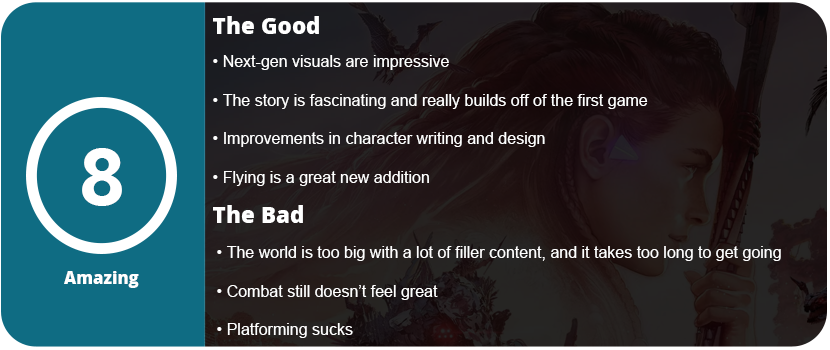
Despite all of that, the game has a fascinating story, a large beautiful world to explore, and some decent gameplay loops of side content. I just wish the combat was tighter and the platforming didn’t suck. The writing is better, and some of the main characters are better, but most of the other characters you run into are forgettable and generic.
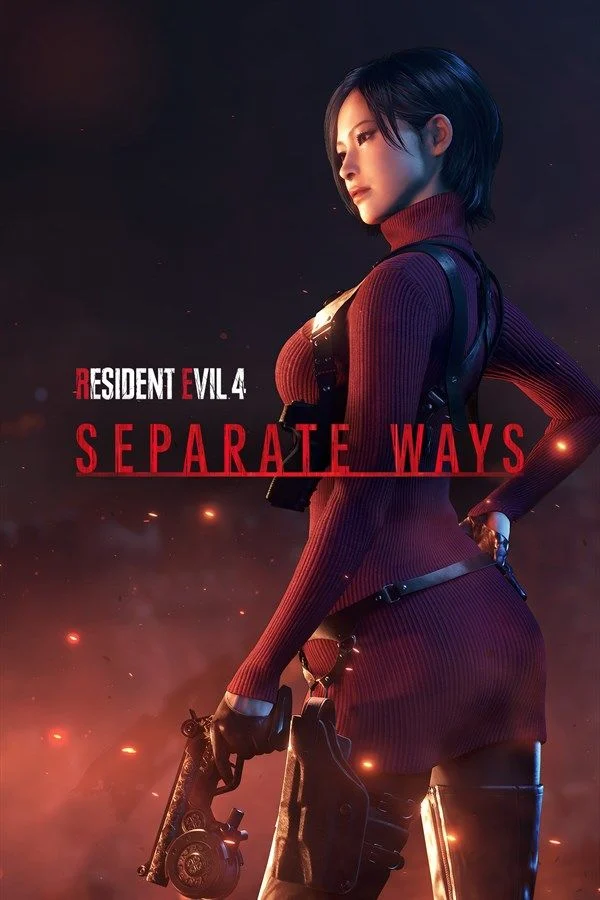
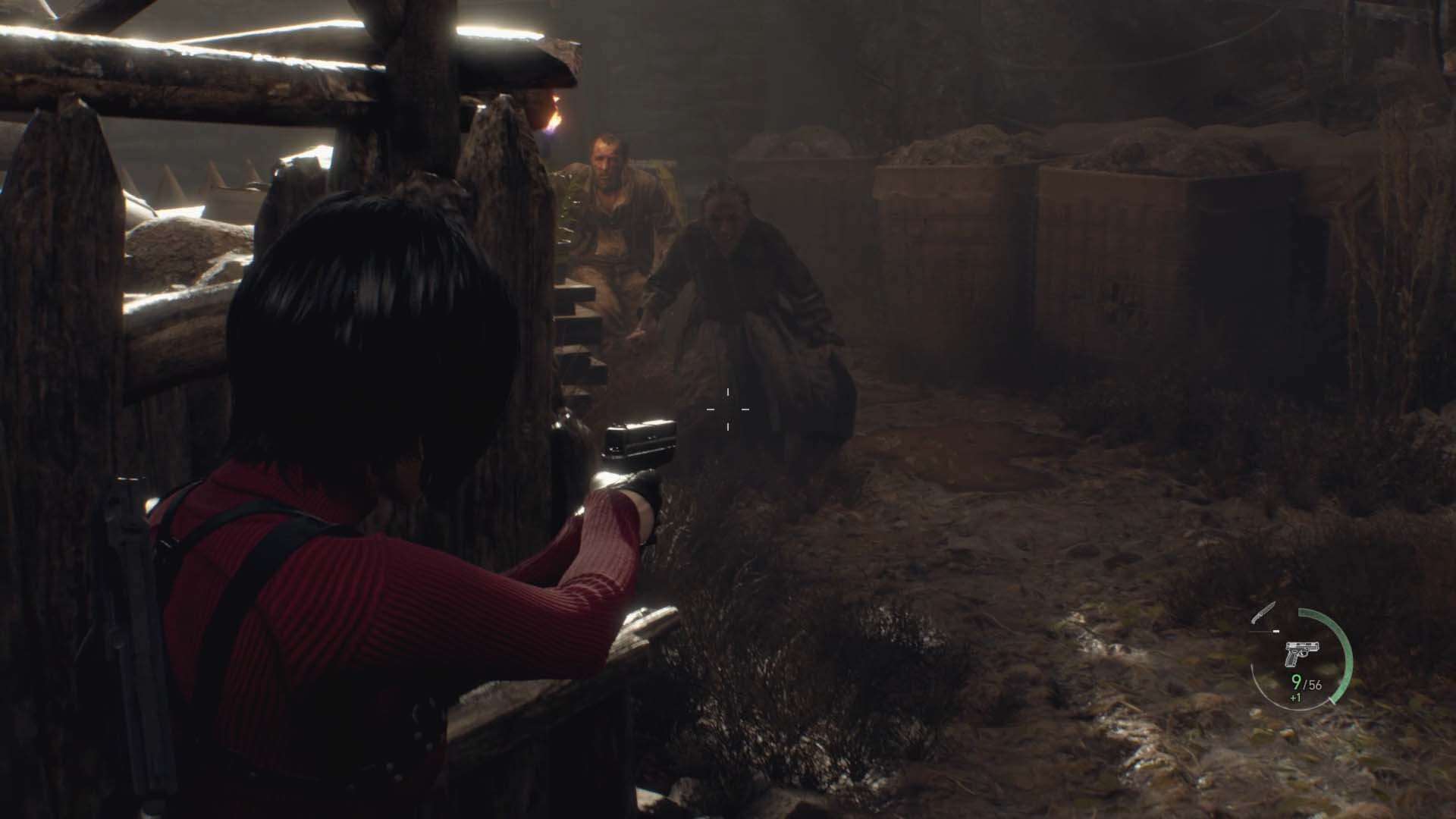
Have you always wanted to know how certain things happen in Resident Evil 4? Why did Leon escape from situations at the right moment, or why did the odds of him surviving certain encounters seem unusual? Some of those questions are answered in Separate Ways. This is the side content from the original game remade for 2023. You play as Ada Wong here. She’s such a fascinating character, and despite being an early childhood crush, I found I appreciated her more endearing qualities as an adult. She’s mysterious and bold, doesn’t take crap from anyone, but is still fighting a moral quandary within herself. She wants to be a bad guy, but not that bad. She also has a hankering for Leon, and their sexual tension ratchets up here more than any other time.
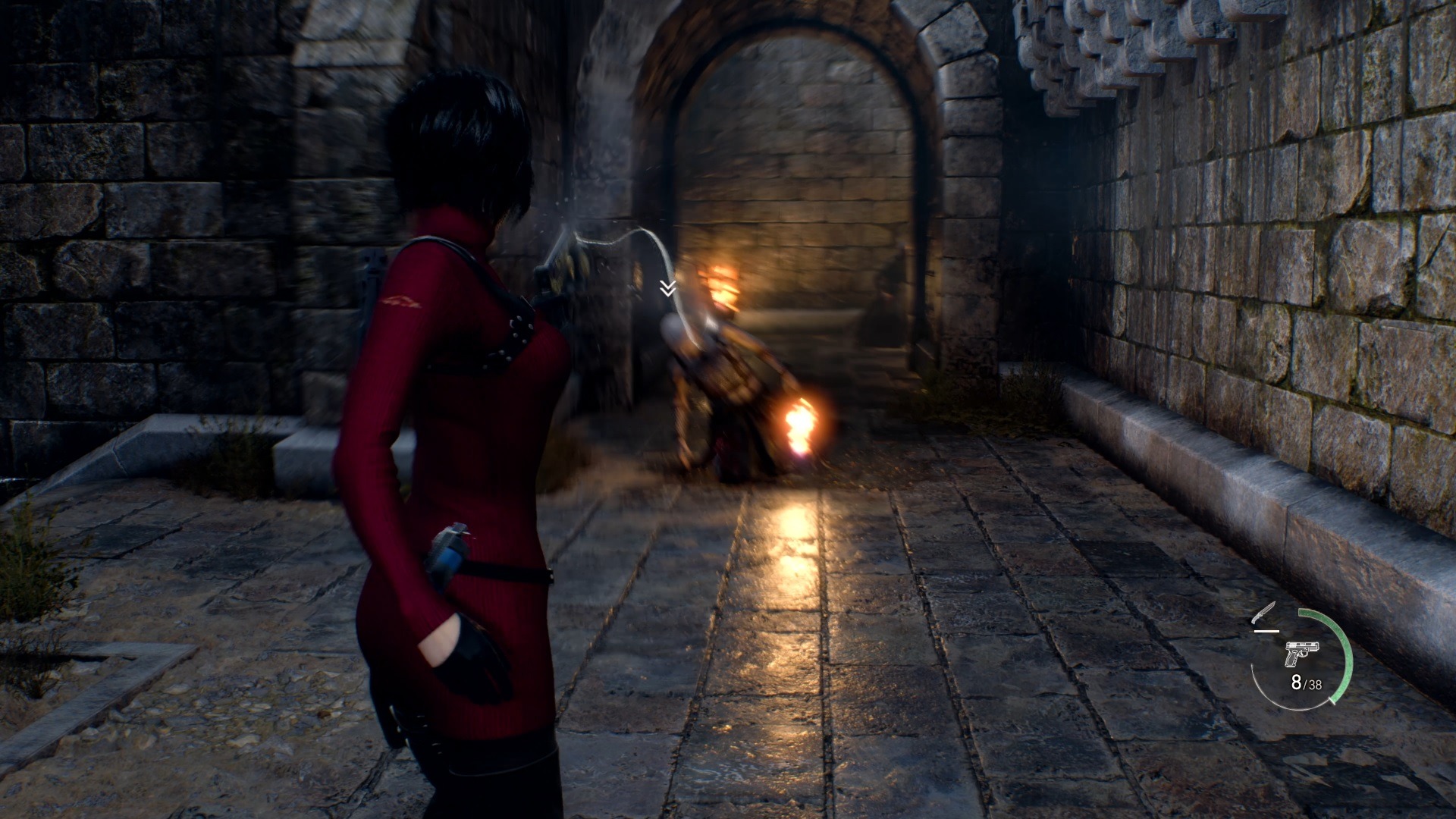
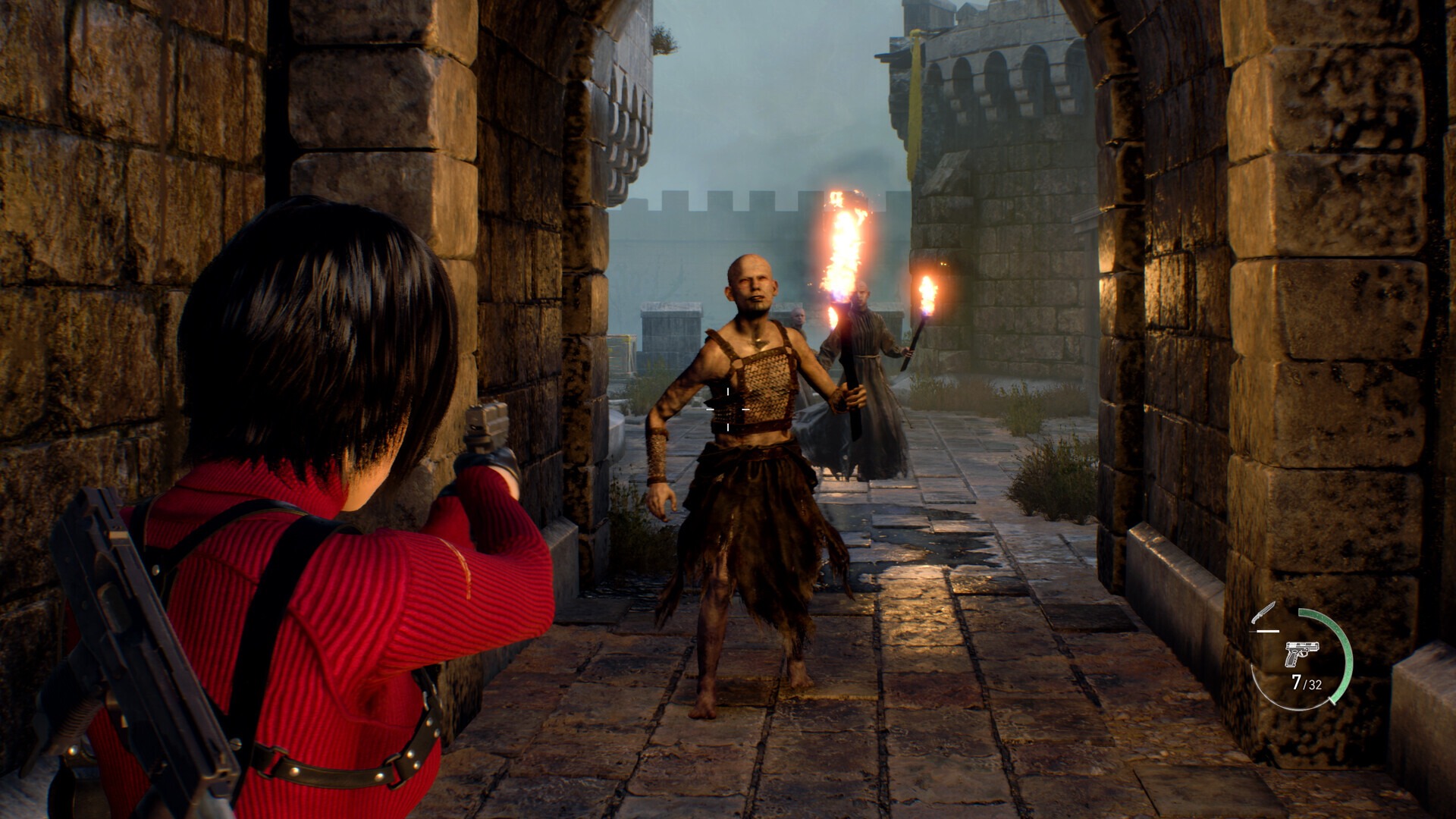
Separate Ways is more of a remix of the main game than anything really new. New battlefields are usually above or in Leon’s old areas. Sometimes you will notice he’s cleaned up the place or destroyed an area before you get there. One such area is after the church bell tower fell in the main village. You go through the game in the same order, but at a rapid speed. Ada has a grappling hook in her arsenal to traverse the high ground. She can also use this to get closer to enemies quicker for a finisher and rip shields off of enemies. This is even used during the boss fight with El Gigante. She can swing up and fight on top of buildings, giving her an advantage. Ada also has access to the shopkeeper and a small repertoire of guns. She starts out with the Punisher MC pistol and the TMP. She’s all about close quarters combat. You can eventually get the M1903 rifle and the much better Stingray toward the end, but you will most likely always be charging in to get close. You can get access to the shotgun as well, but shells are really rare and take 12 gunpowder to create just 6 shells. Although it won’t be useful frequently, it can save you in an emergency. Save it for dispersing large crowds or for tougher enemies.
Ada also gets a few side quests, such as her very own medallion mission and fetching various items. There’s plenty of treasure lying around, and gemstones can be inlaid into valuable items to make them worth more. Be on the lookout for hanging treasure pots and chests everywhere. You will need those Pesos. You can use Spinel gems to trade for passive keychains to add to your cache to increase stats such as sprint speed, damage, and defense. I didn’t end up using any of these, as they are expensive, and the DLC’s short run time means you’re better off upgrading your pistol, TMP, and buying new weapons. I did end up with the Red9 towards the end and spent most of my money on upgrading those two weapons, as the ammo is most plentiful for them. I only used the bow a few times, but bolts use knives, and these are better suited for stabbing enemies on the ground before the Las Plagas pops out of their head. You will also need to get out of tight situations, and you can sneak around some areas and pick off some enemies too. Here it’s best to be resourceful, as ammo is scarce, and so are healing items, more so than in the main game.
Ada does run into her fair share of bosses, but not all of them are attacked head-on. One boss is a chase scene through a facility, while some are recycled from the main game but remixed a bit. I found the constant scraping for supplies, upgrading, crafting, and looking for treasure to be just as fun as the main game. It was nice seeing new areas and having some questions answered. Ada is a great on-screen presence and is one of my favorite female video game characters of all time. Her new voice actress does a good job making her sound emotionless and stern, but when emotion needs to break through, she can’t quite seem to land it. Emotions like surprise and slight fear just don’t come across well. Ada is almost like a robot by design, but she does have her humanity peek through from time to time, and that makes her such an awesome character. She’s not as evil as Wesker, but a nice in-between.
Overall, Separate Ways is a fantastic DLC that does everything right. Coming in at 4-5 hours of run time, it’s enough for a nice evening playthrough and to see the other side of RE4 that Leon can’t access. There are no upgraded visuals or anything like that with this, and there’s nothing inherently new or unique. It’s a remix of RE4 and that’s fine.
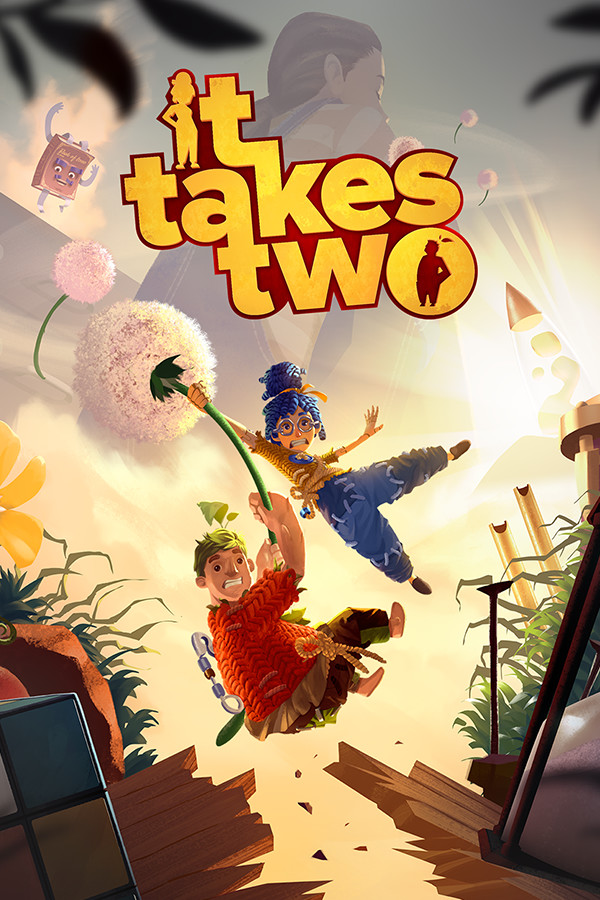
I’m not really a co-op person. I do not consider myself a person who typically engages in cooperative gaming. I was raised among friends who did not share a strong interest in video games, and when they did, it was not in the genres I preferred. I have always been inclined towards single-player experiences. It Takes Two is the first co-op-only game that has motivated me to seek out a partner for gameplay, even though it took me four years to complete it. I was always a single-player kid. It Takes Two is the first co-op-only game that has pushed me to find someone to play multiplayer games with, even if it took me four years to finally finish. I started the game out with my wife and finished it off with my youngest sister. Couch co-op is something that builds bonds and memories, and this is one of those games. The story takes a backseat to fantastic gameplay that is always changing with incredible level design.
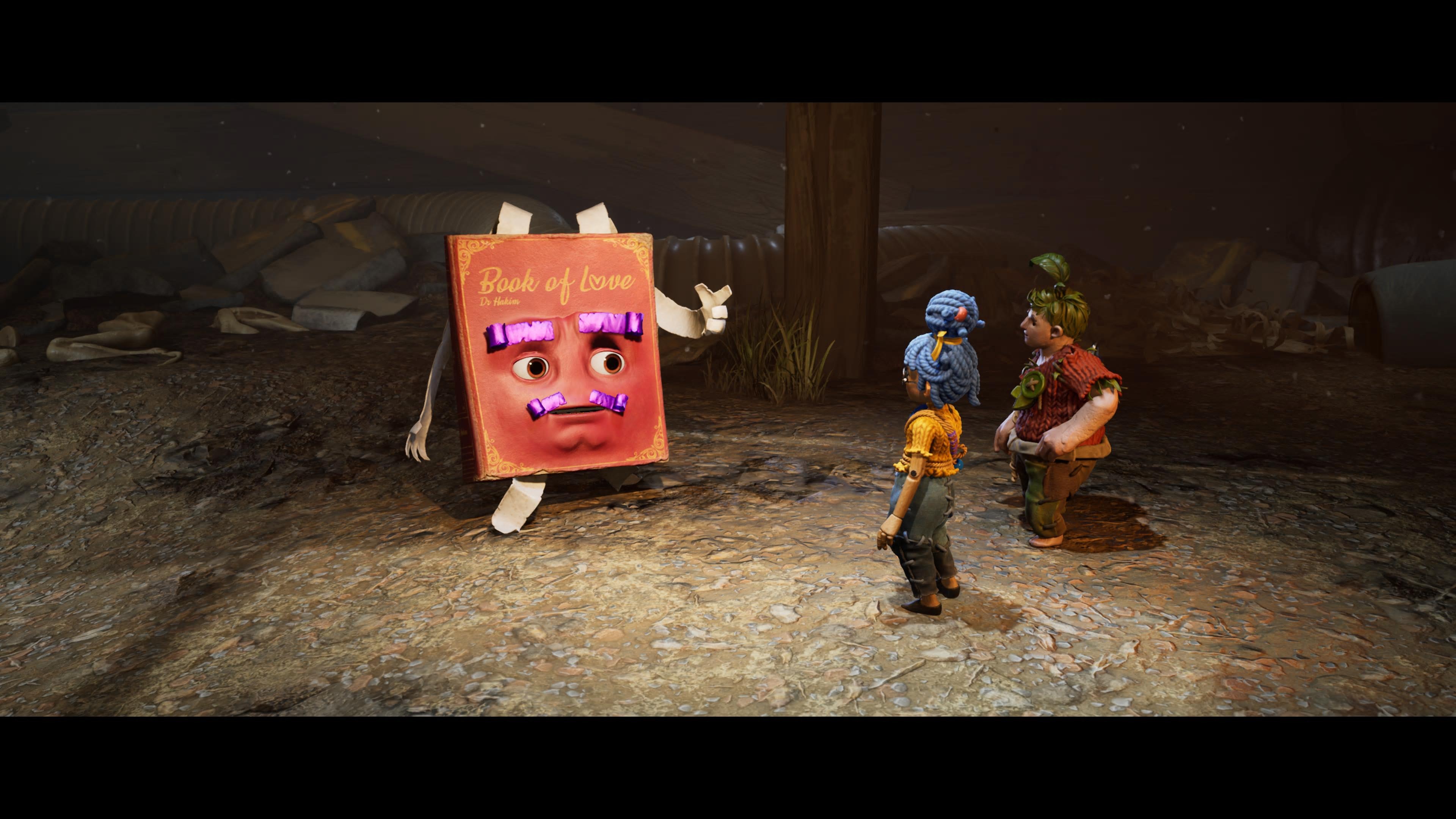
The story is the worst part of the game, and not for the reason you think. It’s poorly written. Painfully written. The idea itself is fine on paper. You are a married couple (Cody and May) going through a borderline divorce when your child gets the troubling news and uses her handmade dolls to act out her parents getting along again. Both of you drift off to sleep, finding yourself in a world akin to Pixar’s, where everything is grandiose and seemingly insignificant details are conspiring against you. One of the most annoying characters ever conceived in pixels is a therapist in the shape of a book called Dr. Hakim, who is a racist Mexican stereotype. His dialog is cringy and awful, and he’s just so incredibly annoying. Whenever he was on screen, my wife would use her phone, or my sister would walk away. I also don’t like how Cody and May’s relationship seemingly never evolves despite these harrowing acts they go through. Each level should typically show some change in their relationship, and relying on a monkey-in-the-middle remediator is quite frustrating. This is one of my least favorite video game stories ever. It’s just incredibly horrid.
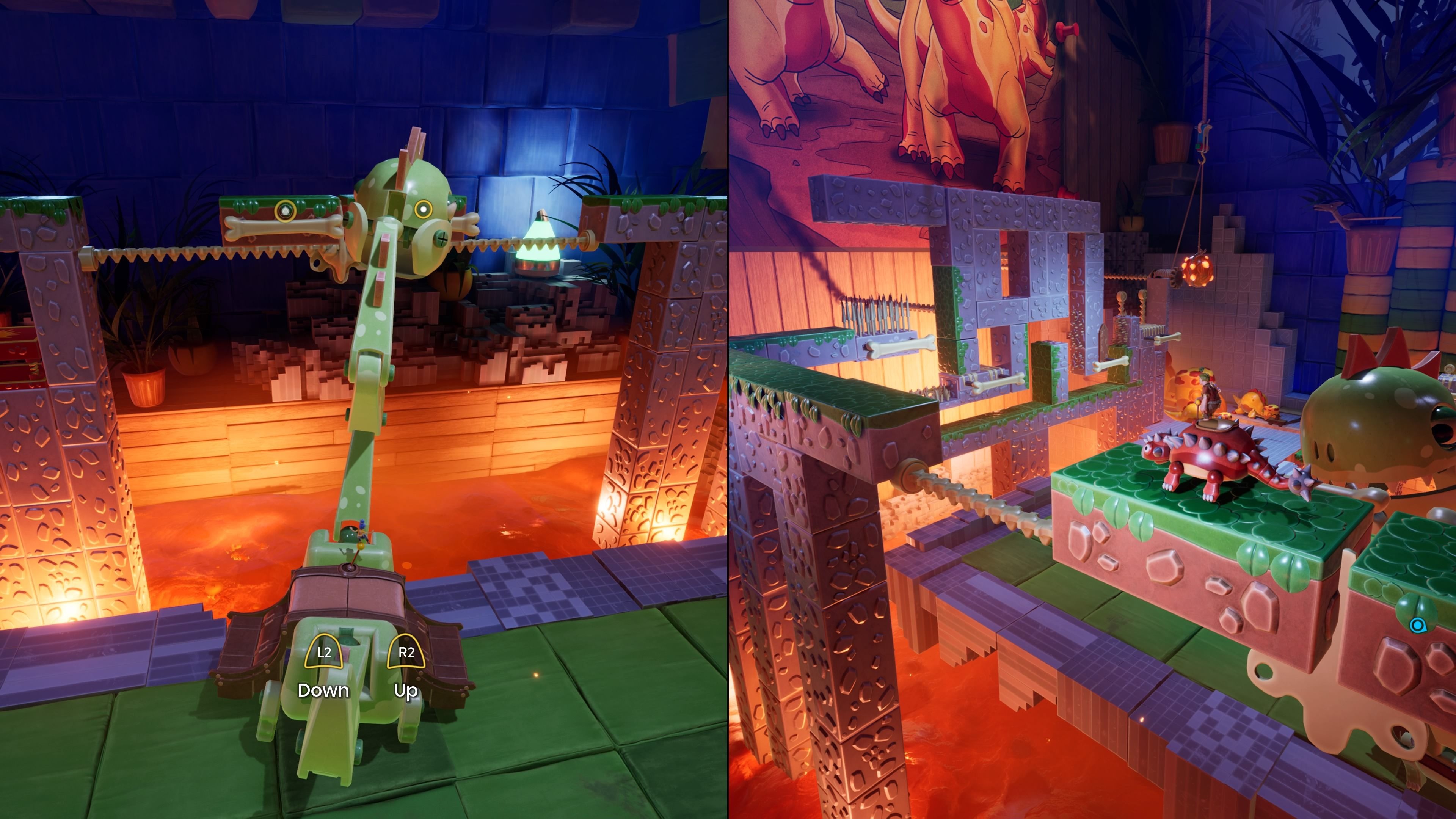
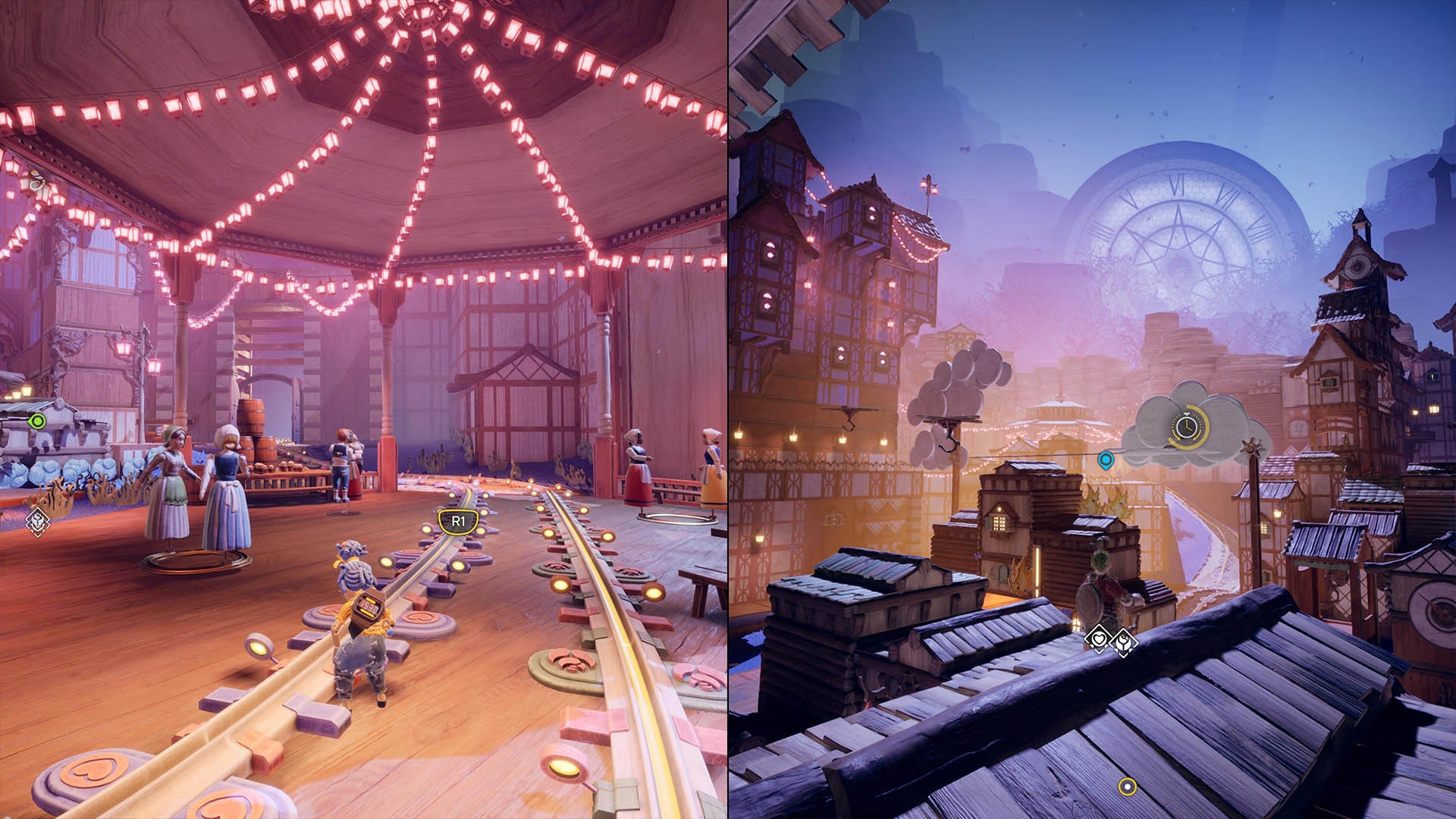
Outside of that, the game is a delight to play. Each level is unique and full of charm, such as the garden level with enemies that are different flora and the attic level, which has you walking and bouncing on instruments that make real sounds. Each level gives Cody and May a unique ability they must use to puzzle-solve and use for combat. Not every level has combat, but every one has a lot of platforming and puzzle solving. The first level’s vacuum cleaner, for example, is a delight, and another level uses a honey cannon backpack. The game is played in split-screen, so you must work together to solve everything. In some areas, one character is needed to get through. The puzzles constantly change, and each ability is used to its fullest.
There are some mini-games spread out throughout the game that are more like “toys” and don’t really do anything. They are marked with a tambourine floating above them. Some range from getting points by shooting cannons at blocks to long jumps off of swings to a chess game. They are interesting but slow the game and have no rewards. These are good ideas, but the winner should get a reward, like a damage boost. Most of the time we would just play once for a couple of minutes and move on.
Combat, on the other hand, is really annoying and not excellent. Balancing is an issue here. Occasionally, an excessive number of enemies will attack you, resulting in both of you dying and necessitating a restart of the area. If one player dies, they can revive by mashing a button, but if both die, it’s over. We died more in combat than any other time, and everything is too chaotic to monitor your life meter. I would get pummeled and wailed on as a passive ability character waiting for my partner to take out the baddies or expose the weak point of an enemy or boss while smaller enemies just annihilated us. This problem isn’t a skill issue either. Additionally, the absence of a lock-on button increases frustration during gameplay.
The visuals themselves are fantastic. Each level feels unique while grounded in realism. The unique dreamlike and cartoonish visuals provide a Pixar vibe, and they are a sight to behold. The explosion of everything, from everyday objects to skyscraper-sized buildings, is truly captivating. However, some levels, like the dream level at the midway point, seem overly lengthy. There is a hub area, and you branch off to different sub-levels, but it seems to go on forever. Then, later on, I felt like a single character’s ability was underutilized. The attic level had me barely doing anything for my partner. The balancing in this game is significantly flawed, but it can be overlooked.
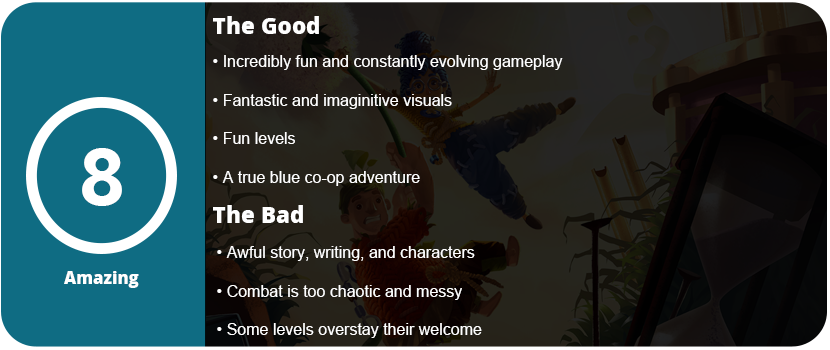
Overall, It Takes Two is a must-play for anyone remotely interested in co-op games. The story, characters, and writing are both awful and rote, but the gameplay is why you will stay. The visuals are incredibly charming and imaginative, and the combat requires each player to assist each other at every single turn and puzzle. Combat is too simple and chaotic to be very fun or engaging, but there’s not a lot of it. The game is a pretty decent length, clocking in at 8 hours or so.
The idea of robots taking over humans has been an age-long discussion, but what if they were designed to help us instead, no matter the cost? That’s the idea that The Fall presents to players. You play as a pilot who has crash-landed on a planet, but the AI known as A.R.I.D. (autonomous robotic interface device) activates and uses an advanced smart suit to essentially control the pilot’s body while searching for medical attention. The pilot lands on a derelict planet run by an AI called the Caretaker, who is examining and studying ARID for unknown reasons. Excellent writing and voice acting bring the story to life, despite its short length. There is not a single wasted line of dialogue or moment. This is an incredible premise and idea that I want to see more of. The Fall is a Metroidvania-lite, but with its own identity. The genre has seen little of this type of game today, especially with the explosion of indie games being produced.
Despite its simplicity, the game boasts a surprisingly complex control layout. You can walk around in a 2D plane, but jumping and combat are limited. You must use the flashlight on your pistol or light the path ahead, as the game is very dark and is mostly underground. When you shine your light over objects, a context piece of text will appear describing it or allowing you to interact with it. The majority of the game is puzzle-based, relying on an inventory system to combine and interact with the right object. The Caretaker’s testing center is the longest section of the game. Many puzzles are actually quite fun and clever, but a few can take a weird obtuse angle and make little sense in terms of how they are solved.
Combat in The Fall is crunchy and powerful but very limited. Other androids will attempt to attack you, but their actions are very limited and occur only during scripted events. You can hide behind cover and pop out to deliver a headshot. You must switch to the laser sight for better accuracy. You can sneak up behind enemies to kill them, or you can advance on them while they take cover. The shots are impactful and crunchy. The combat doesn’t overstay its welcome and is used at the right times. Of course, you can’t use your gun for the first third of the game, as abilities need to be unlocked, such as faster fire rates, the gun itself, and other suit abilities.
The game is tedious because it has a lot of backtracking, so you’ll often go from one end of a level to the other. I understand that this is part of a Metroidvania, but you aren’t going back to a level once you are upgraded and can access new parts of a level. You often find yourself running back and forth to collect parts of a puzzle, hoping you have the correct piece, only to discover that you either don’t or that it belongs to another puzzle located elsewhere. It’s not game-breaking, but it does get old pretty quickly. Once you have read all the text and discovered every part of the level, the adventure part of the game kind of disappears, and all that’s left is the tedious process of solving puzzles and running around.
The atmosphere and graphics are fantastic even today. The game has a surreal feeling of almost transporting you to the world thanks to its great sound design and visuals. While there is a lot going on in the foreground, most of the atmospheric stuff comes from what’s happening in the background. A lot of the background stuff can give you a visual cue as to what’s going on just from one glance. You can see a massive cave and the exterior of a spaceship through the windows, among other things. The few occasions where there is spoken dialogue are excellent, and the excellent writing keeps you captivated with every word.
Overall, The Fall is a fantastic atmospheric Metroidvania-lite that features great writing and tense gameplay, including gun sections that do not overstay their welcome. ARID is a wonderful character despite being a programmed robot, and the ending of the game is well worth your time. This game was one of the few indie titles that contributed to the “indie revolution” of the early 2010s and played a significant role in establishing the Wii U eShop as a prominent platform for indie games.
There’s been an ever-increasing discourse between the people and corporate America. American Arcadia takes the worst of the present and shows us the ugly side of being slaves to mega corporations. With clear inspiration from The Truman Show and Walt Disney’s vision of “The World of Tomorrow” and his original vision of Disney EPCOT, American Arcadia is a dystopian trip down 70’s lane with fantastic voice acting, a riveting story, and excellent pacing.
You play as two main protagonists. Trevor Hills and Angela Solano. The game has two perspectives. Trevor’s gameplay is a 2D side-scrolling platformer similar to games like Limbo and Inside, and Angela’s more puzzle-heavy first-person sections have inspiration from 70s spy movies, not too dissimilar from No One Lives Forever, but without any shooting. Angela is a stage tech for the corporation Walton Media (clearly a dig at the Walt Disney Company) who ends up being recruited by an activist group called Breakout, and you end up helping Trevor escape where he lives while trying to shut down the corporation. The game’s pacing is fantastic. The game consistently presents fresh scenarios, never growing stale or monotonous. The story continuously moves and evolves as you play, with events unfolding for each character while you control the other. Many times there will be cool split-screen sections in which you need to do tasks with Angela while controlling Trevor on her monitor. I don’t want to give away too much plot to have the explanation make more sense, but it’s really cool and well done.
Trevor and Angela are likeable characters, and while not super original, they leave an impact, including on the villains. There are sections of the game that teach you organically about the world of American Arcadia, including the lives of Angela and Trevor. Trevor’s sections are full of fast-paced platforming and push puzzles. These are not super complicated, but they are fun and help break up the chase scenes. Angela’s sections include quite a few puzzle types, from sliding puzzles and quizzes to some that are completely unique. This includes mostly hacking things to help Trevor get through areas. This was one of my favorite gameplay ideas. You can press a button to enter the camera mode. The feature changes the perspective of Trevor’s sections, and you must manipulate electronics around him to get past guards and obstacles. Every single scene gives you something new. I can’t state that enough. There were a couple of frustrating sections in which I realized I was analyzing the scene wrong. I made mistakes such as jumping onto the incorrect platform and running in the incorrect direction. Nothing was ever so annoying that I wanted to quit playing. I do think the game should have given a couple of hints if you keep doing the same thing over and over and dying, but again, it’s not a big deal.
Visually, the game has a fantastic sense of style. Inside of Arcadia, the world is stuck in the 70s. There are a lot of panning vistas of cool interior designs while Angela is in the present day, and it’s all less captivating to look at. I’m not a fan of the character designs. They are very blocky with no noses. It’s a bit off-putting, but the rest of the game looks excellent. I feel the biggest issue is that the game is too short. Depending on how much you struggle with the larger puzzles, you can finish the game in about 4-5 hours. While the entire game is explained well and feels like nothing is left out, I wanted to know more about Angela’s childhood and backstory, as we get to know mostly about Walton Media and Trevor.
As it stands, American Arcadia is one of the best games in this category. With constantly evolving gameplay ideas, fantastic voice acting, a riveting story with twists and turns, and a delightful art style, there’s not much you can’t like. Going between Trevor’s 2D sections and Angela’s first-person sections is a lot of fun, and you never know what’s coming next.
South Park has had a reputation of having terrible games in its repertoire. In fact, South Park on the N64 is considered one of the worst games ever made. The studio redeemed itself with The Stick of Truth in 2014 and delivered a fun turn-based RPG that kept the look and humor of the shows. Critics praised it for evoking the experience of playing an actual show. The Fractured But Whole carries on this tradition, introducing a fresh narrative and featuring the character of the New Kid, also known as Butthole or Butt Lord. Sadly, the game feels more like an expansion on the first game rather than an entirely new game. We get the same South Park map, nearly the same locales and shops, and the gameplay is mostly unchanged. The studio didn’t do much to address many of the concerns from the original, either.
You start out by creating your hero to look like a South Park character. You are a voiceless protagonist again, but I wish I could actually play as one of the main characters here. Once the plot is dished out, you can go explore South Park. Unfortunately, the map remains largely unchanged. Until you acquire different fart powers, various areas remain blocked. Your primary superpower is the ability to produce potent farts that have the capacity to alter the course of time and space. You eventually acquire various abilities that allow you to reach higher places by using small fans. You can use Captain Diabetes to knock over objects with green bases. You can unlock the electric door by having Butters…shove a hamster up your butt and then fart it out, which will short out the circuit. You couldn’t make this stuff up if you tried. You also have the power to have Toolshed shove a hose up your butt to act as an air compressor to blow debris away. Usually this is in the form of the lava Lego bricks that block paths early in the game. Exploration is mostly for finding crafting parts, which are hidden in various objects with gold handles or lids. You can also go around collecting Yaoi posters or find Big Gay Al’s hidden cats with pink scarves.
Exploration can be fun early on, as there are many areas to unlock, and you will always wonder how to get to certain spots. Once you get towards the end of the game, the entire town will be accessible. There are various vending machines that allow you to buy costume parts, artifacts, consumables, and crafting parts. You also have a social media presence on Coonstagram, so you can walk around and take photos with South Park characters to increase your following. This mainly just allows you to complete your character sheet. Mastery in various areas will unlock some rewards. Certain characters won’t take photos with you until you meet certain criteria, like finishing a side quest or main mission. There are also toilets you can poop in to play a mini-game. Honestly, all of these things are superficial and don’t really add substance to the exploration, but it’s better than nothing.
This game primarily focuses on combat, dividing each area into squares. Each character has different attacks that can reach certain grids based on what kind of attack it is. Some attacks move in specific lines, such as Toolshed’s drill attack, which is diagonal in both directions. Certain attacks have the ability to knock enemies back, which can result in additional damage if an enemy is standing behind them. Certain attacks have the ability to penetrate through enemies, while others require you to be in close proximity to them. To be honest, I don’t think the attacks are well balanced. There are three different power attributes: brain, brawn, and spunk. There are several superhero classes, including assassins, brawlers, plantmancers, and psychics. These are generic classes, and you can pick and choose abilities after selecting your class. Each class also possesses an ultimate ability. This ability is a yellow bar that builds up when hit, and when you are hit, you can press a button in time to give yourself a small health boost and advance the ultimate meter further. The ultimate meter is essential to winning longer and tougher battles.
Like in the previous game, there are positive and negative status effects. Bleeding, gross out (poison), attack and defense up or down, but positive status effects take a back seat over negative. There aren’t many abilities that give you positive effects. This illustrates my point about the powers being poorly balanced. There are very few healing abilities, and most of them feel useless. It is rare to find abilities that can heal your entire team, as healing individual characters becomes challenging when there are four or more characters on screen. There are consumables you can use for this, but items that give you more health as you go on are pricier and harder to come by, just like any RPG. You at least fully heal after each battle, and effects don’t carry forward. I found the attack patterns to be mostly annoying and attributed them to the balance issue. A lot of damaging attacks require you to be in front of or in line with the enemy. I wish there were more abilities that allowed you to attack from a longer distance. Some abilities feel useless when the grid layout just doesn’t work in your favor. I feel the grid needs to be wider so more characters can get in direct contact with the enemies. It’s not always a problem, but if you balance your abilities and party, you can avoid this, mostly. You can complete side quests to unlock summons, which are craftable items that can heal or do damage to the entire grid.
I also discovered that the story mode primarily focuses on boss rushes in the last half. You will run into various groups in the show, such as the Raisins, Rednecks, Ninjas, Sixth Graders, and so on. Each group has certain abilities you need to remember, and you need to pick the right party members to counter them. Some enemies will have attacks that require a countdown before they can be executed and cause splash damage. Some enemies are incredibly powerful and can swarm you. I appreciated the variety of bosses with different win conditions, such as escaping or pushing enemies toward the boss, as that is the only way to deplete its health. The biggest gripe I have about the combat is how slow it is. There are many funny quips and one-liners from every character, but the turn won’t start until they finish their line. You can’t speed up battle in any way, and ultimate animations aren’t skippable. Thankfully, a lot of the smaller battles that are around town don’t respawn, but you need to do side quests and fight everyone you can to get a high enough rank.
This game is equipment and rank-based, and you don’t acquire levels. Each rank unlocks an artifact slot, and your artifact rank determines how powerful you are. By the end of the game, you will need to be ranked at 800 or higher to fight anything. Each mission has a rank level next to it that must be met, or you will quickly die. You can obtain artifacts by fighting bosses, scrounging around, or crafting them once you find the recipes. You must fight as much as you can to increase your rank to unlock new slots. It’s really annoying how restrictive the game is, but thankfully I didn’t run into not being ranked up enough, as I did do most of the side quests and fought everyone I could see. Different artifacts will increase their stats based on the build you have. Costumes are cosmetic only.
As the story progresses, the game feels dragged out. I feel there are many battles that are just there for fan service and don’t actually add to anything. The story is also similar to The Stick of Truth in that it’s nothing special and just feels like a typical South Park episode. That’s fine and all, but for a game, I wanted something a bit grander and more original. The game’s story relies too much on fan service and rehashing old story arcs from the TV show. Overall, The Fractured But Whole is a delightful superhero take on the formula but doesn’t do enough to advance the series or change much. If you didn’t like the last game, then this one won’t change your mind at all.
Retro-style games are booming right now, especially those with PS1-style graphics. Their limited capabilities are excellent for giving a certain vibe and atmosphere and are especially popular with horror games. While We Wait Here isn’t exactly a horror title, it does have a dark tone and theme. This is a story that begins near the conclusion and works its way backwards to tell everyone’s story. You are a couple who owns a diner in a small town in the middle of nowhere out in the Heartland of America. There’s no specific location given, and the entire area is generic, but it feels like somewhere out in the Midwest near Tornado Alley.
You are a couple who are about to move out of town and sell their diner. Lisa’s father owned this diner, and she assisted him in running it as a child. You meet Alex, your husband, while working at the diner as an adult. The game is a strange mix of horror, adventure, walking simulator elements, and restaurant sim similar to Diner Dash. However, the integration of the simulation elements with the rest of the story and game is so compelling that I found it impossible to stop playing. I played the entire game in one sitting. The writing is tight and well done, and the characters are very intriguing. Each character ends up at the diner, and you hear their conversations while cooking and play a 10-15 minute segment about their lives before arrival. The characters include two punk rock best friends who are constantly shushing each other about a secret, a couple with a newborn baby, a workaholic old man, and a peculiar and paranoid local.
Your story with Alex is eventually told, and I can’t really give any other details about the story, as it could spoil it. There is a mystery between the two and the diner itself. There are many first-person interactions with the people, but mostly on the sim side. Each person can order something off of the menu. The menu is accessible with a button that gives instructions on what items go with each order. Once you place a ticket down on the table, you can go about your business. It’s not very complicated, but the animations are detailed, and overhearing the chatter in the back as the story goes on is great. You can grab milk and ice cream to make a milkshake. Put everything in a blender, grab a glass, and prepare it for the customer. Some food dishes require placing a plate in the prepping area, such as hamburgers. Make sure you look at the ticket icon and see whether they want cheese or not. You can grill, make pancakes, give whiskey shots and coffee, and clean and put away the dishes. That includes putting back ingredients like milk and frozen french fries. This isn’t very deep, and only during a few moments will you have many orders, but there’s no rush. There is no time limit on the game.
You will eventually prepare every type of item by the end of the game, but that’s okay. There’s just enough here for the 2- to 3-hour story, and by then I felt like if I had to prepare more, it would become tedious. There are a few other mini-games such as shooting with a gun during a couple of segments and painting a room, but they don’t overstay their welcome and are relevant to the story. I did find one particular area in the game that really drove me nuts. You need to navigate a labyrinthine cave at a snail’s pace, and it took me nearly 30 minutes to find my way out. The story could have greatly benefited from reducing or eliminating this part of the game.
The visuals are great. Despite the PS1 style, the character models surpass the system’s capabilities in detail. The game is always dark, and you always wonder what’s just outside the window. The bizarre storm that’s the centerpiece of the story made me curious. The entire game made me curious, and I wanted it to go on further. The writing is so well done, as is the voice acting and characters. I was eager to delve deeper into these characters’ lives, yet what’s presented here fulfills its intended purpose and accomplishes the task. Both the resolution and each character’s conclusions are satisfying. It is very difficult to have such a good story for this short of a game.
Yep! The fact that I forgot about this game until you made a comment proves that.