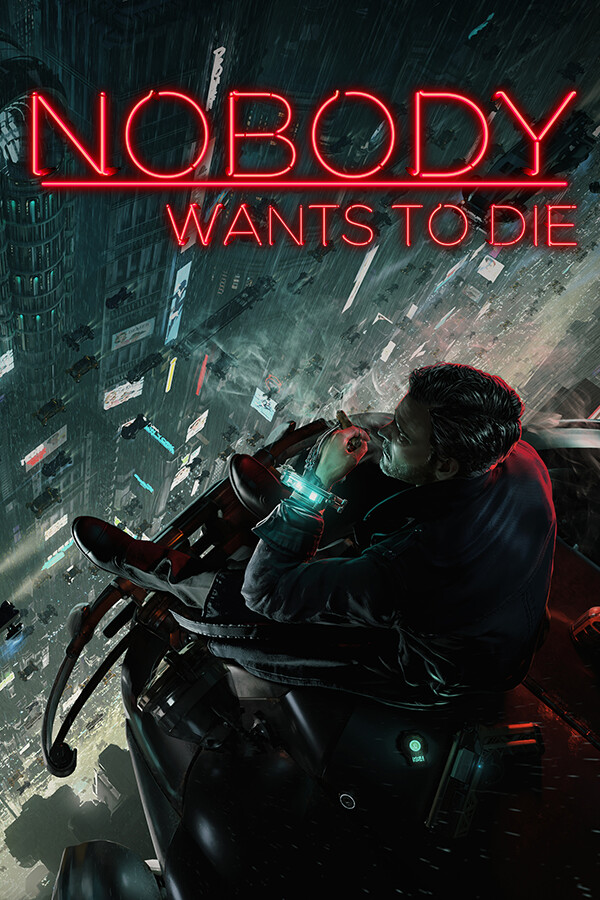
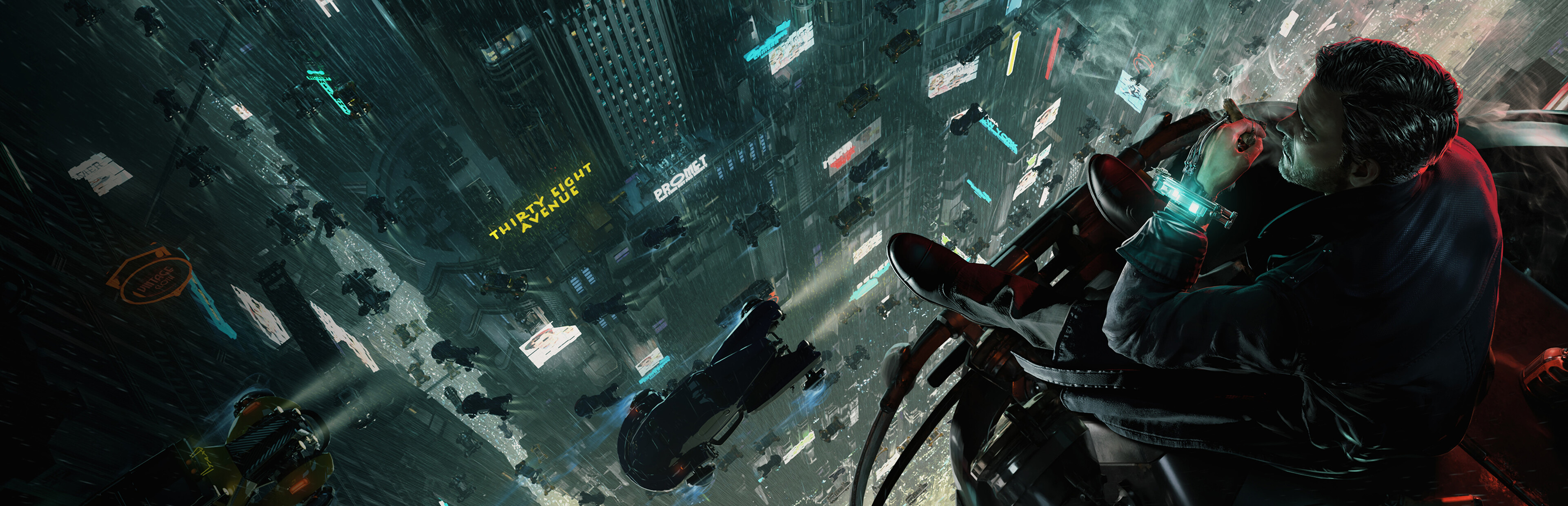
Nobody wants to die. That’s a statement that anyone can understand. What if you had the ability to purchase a new body and continuously inject your conscience into a new one? This is the premise of Nobody Wants to Die. A detective noir game set in a dystopian New York in 2239 where flying vehicles exist, we are now in a caste system, and capitalism has won. As suspended detective James Karra, you embark on an investigation into the suspected murder of a large corpo boss. Your partner, Sarah, is in your earpiece.
There isn’t much exploration in this game, and it’s not a first-person shooter. Although the entire game takes place in first person, it remains a pure adventure title. The game masterfully constructs this dystopian future, immersing the entire experience in the art deco Americana of the 1930s. James has a lot of internal problems, and due to being on his fifth body, he has a lot of problems from his 100 years on this planet. The better shape a body is in, the more it costs. However, there’s something dark happening. The game also does a fantastic job explaining how you can recreate crime scenes and explains a person’s ichorite, which is what’s used to transfer a person into a new body.
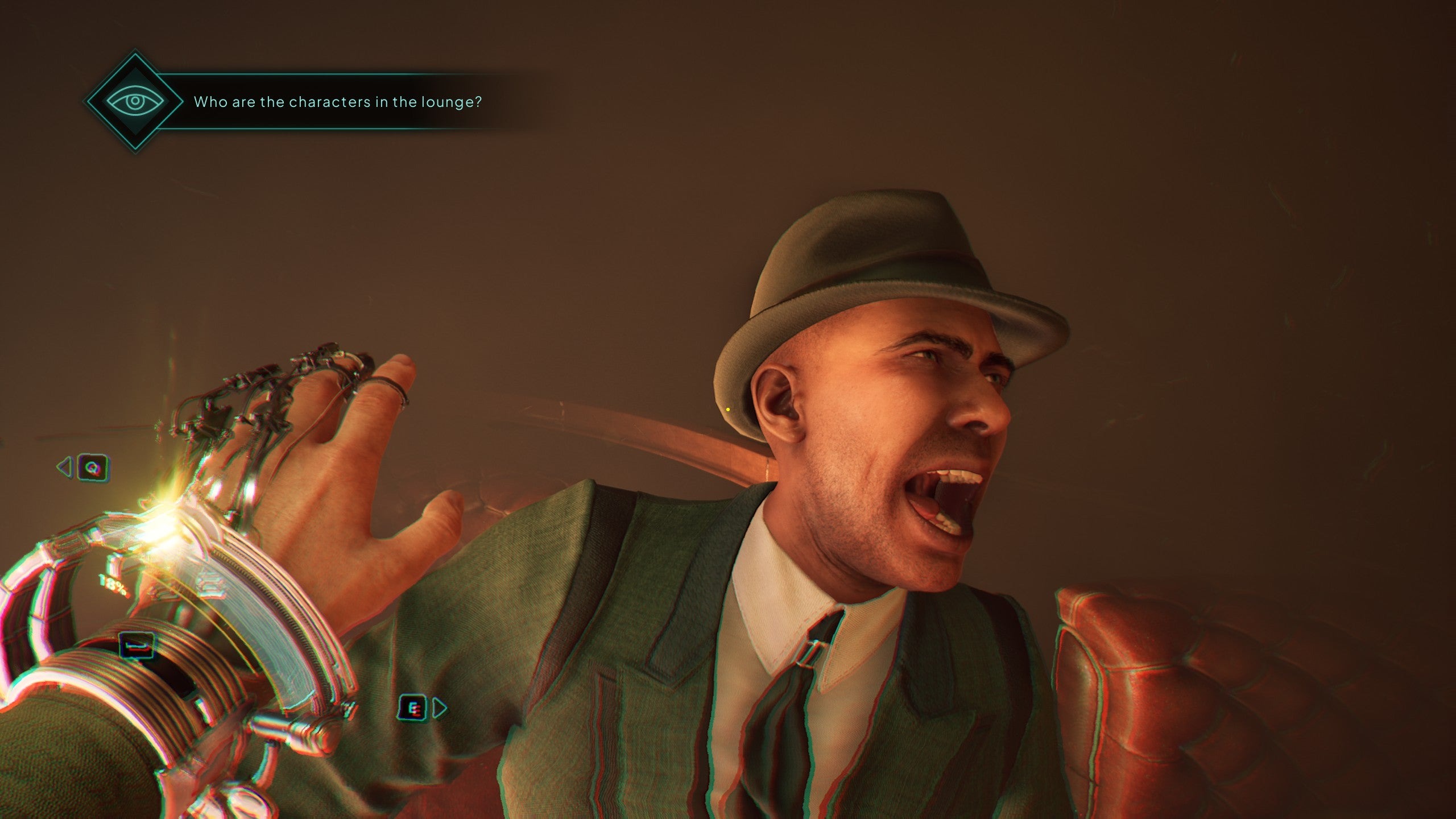
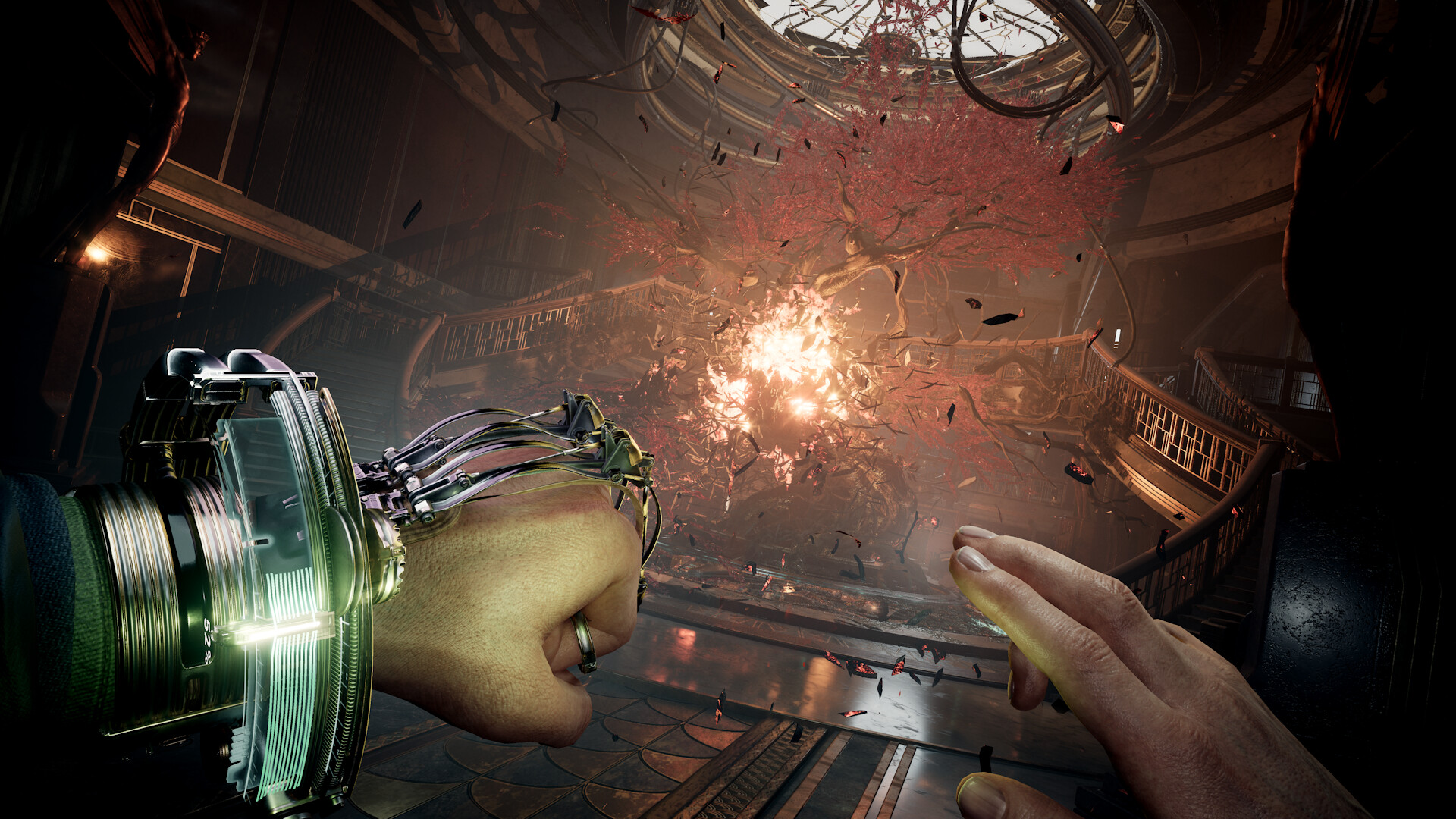
That’s the majority of the gameplay. The crime scenes are pieced together like mysteries through the Replicator. This allows you to fast forward and rewind scenes as you piece them together. You have to walk around and find the prompts to advance the puzzle to the next piece. There are also other tools like the X-ray wand and UV lamp. You use these to see through objects and then detect fluids. You are always swapping back and forth between the two. However, the puzzles are very linear and don’t require any brain power to solve, but they are still fun. Many of the crime scenes are really interesting to solve, as you can draw your own conclusions and see what the outcome ends up being. There are three main crimes in the game, and they take quite a bit to go through. It’s a lot of fun seeing everything kind of come together and hearing Sarah and James analyze everything to come to a conclusion. When you get back to your apartment, you can put down objects that are in place for clues that you found, and you need to string everything together to come up with a final conclusion. Moreover, it’s a straightforward process.
Outside of the main crime scenes, there are a couple of moments in James’ apartment. It gives you a glimpse of how awful living conditions are in the future. Everyone shares bathrooms and the government logs everything they do. You have to see a psychologist for life after transferring to a new body for the first time. The ads, propaganda, and everything in between are done so well for how little you can explore this game. While the characters aren’t very deep or memorable, they help carry the story along enough to stay interested. I’m sorry, but the story is too short to remember. The setting and world are more interesting. The game also has dialogue choices that determine which ending you get. Some options will have locks on them, meaning you need to have changed your path prior to the current option. The way you respond to Sarah or act at a crime scene (like deciding to steal something for yourself) can get you in trouble if you’re not careful. The execution of the story is commendable, and as the story progressed, I found myself grateful for the choices I made that allowed me to navigate through certain scenes.
The visuals are rather appealing for an indie title. Lighting is great, art deco is beautiful, and vehicle and object designs are fun. The game is at least well paced, and I didn’t want to put it down. The voice acting is outstanding too, and there are just enough little twists and turns to keep you glued to the screen. There isn’t much to hate here outside of easy puzzles and lack of exploration. I honestly wouldn’t mind another game in this world and have the lore expanded upon.
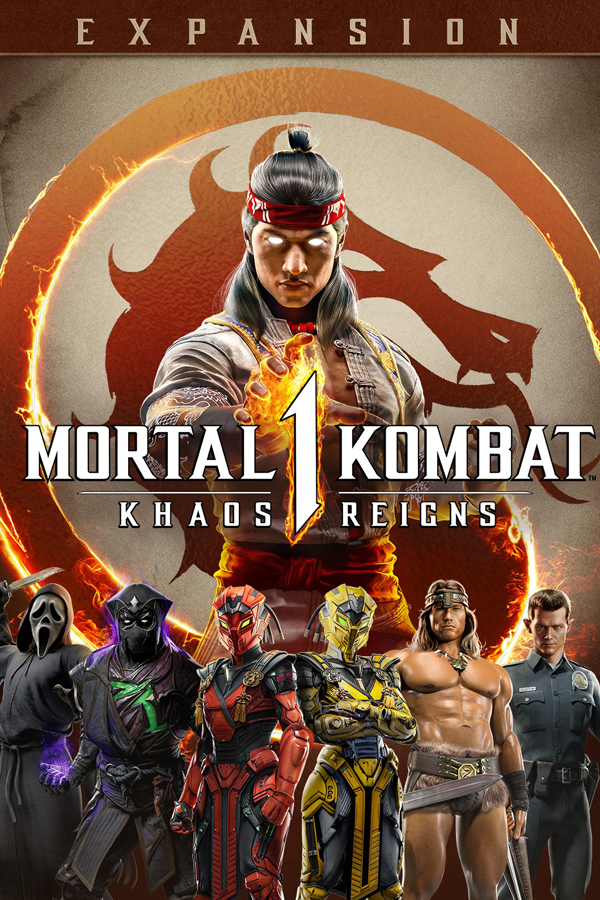
The idea of DLC for Mortal Kombat was an exciting prospect when it started with Mortal Kombat (2011). You paid $5 for a new character, and this felt fine. Mortal Kombat X introduced the character pass system, which was also well liked. You paid $20 for four new characters that were spread out over a few months. Mortal Kombat 11 introduced a terrible monetization feature that required too much grinding for unlockables and customization items. This trend sadly got worse with Mortal Kombat 1, with entire outfits and sets being stuck behind a paywall. One of my favorite features of any MK game was the alternate outfits, and being able to customize them was a dream come true, but Neatherrealm went the evil route and locked most of it away.
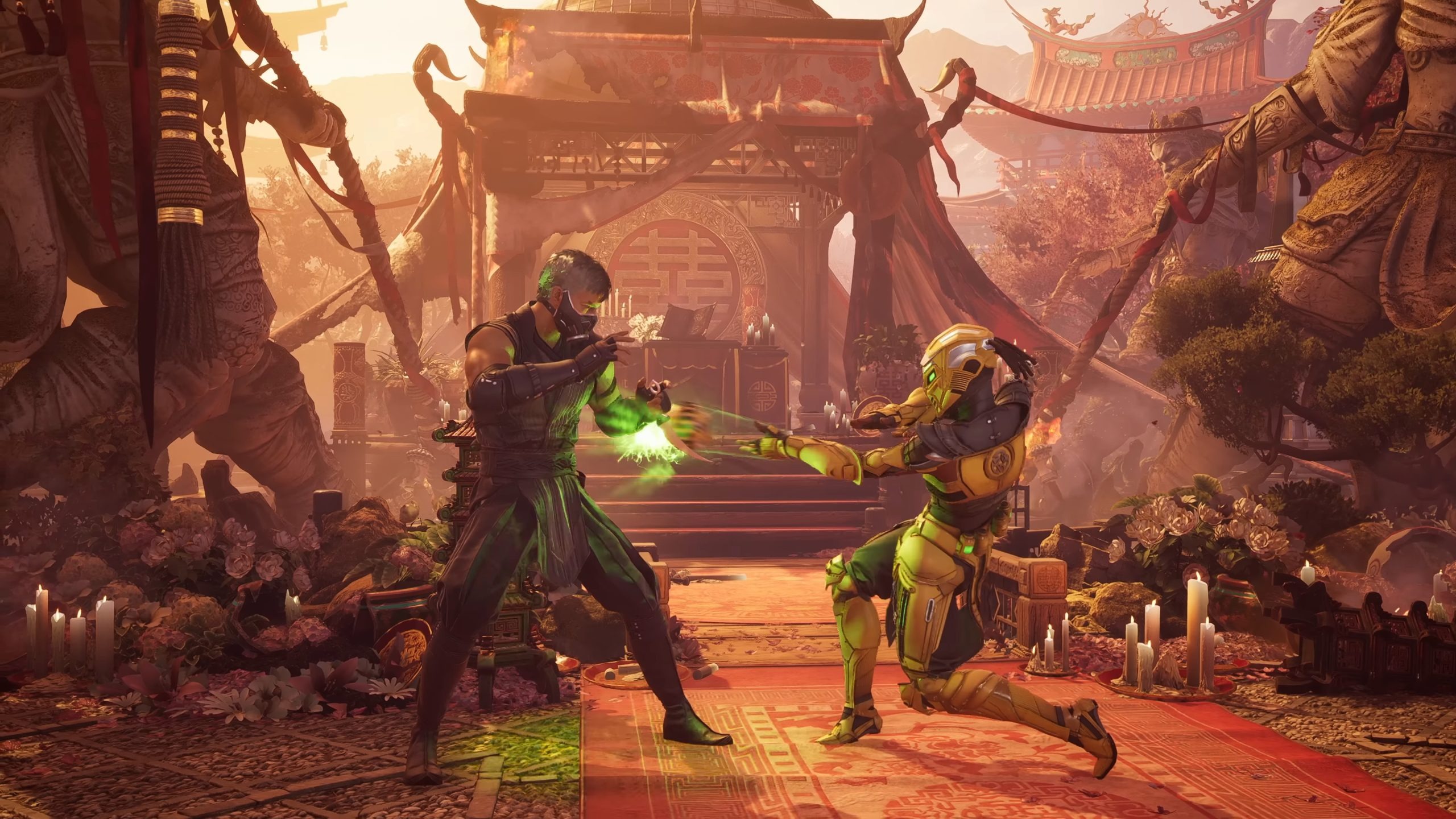
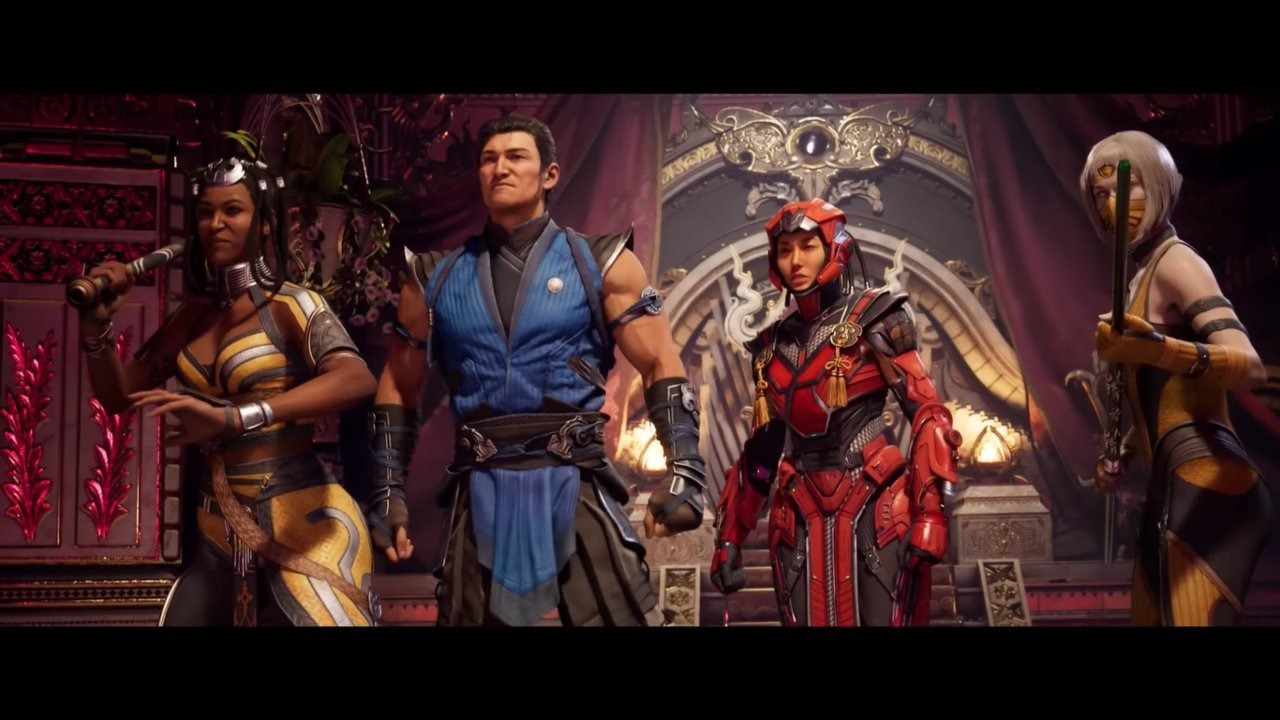
The same appears to be the case for single-player content. While I don’t mind paying a few dollars for more of the fantastic story mode and more characters, make sure to make it worthwhile. The Aftermath expansion for MK11 was awesome and was a great ending to that story. This epilogue has a lot of problems with it, mostly being the terribly written dialogue. Everyone is angry, growly, and so much “GRRR!!!” in their voice that it is laughable. Everyone seems to be delivering one-liners rather than cohesive dialogue. Trying to throw in bits of story exposition into single lines of dialogue is so stupid and elementary. The main campaign had pretty good writing with some characters delivering full speeches and emotional depth. This just feels like a 5th grader reading a bad comic out loud. The entire Khaos realm invading the current timeline is a cool concept, and Titan Havik makes for a great villain, but it’s just so badly written, and the fights are monotonous and boring. You get four more chapters, but each fight is just a recycled and uninteresting Khaos version of other characters. These seem to have some sort of Mad Max vibe to them, but it just looks like a group of terribly dressed punk rock fans.
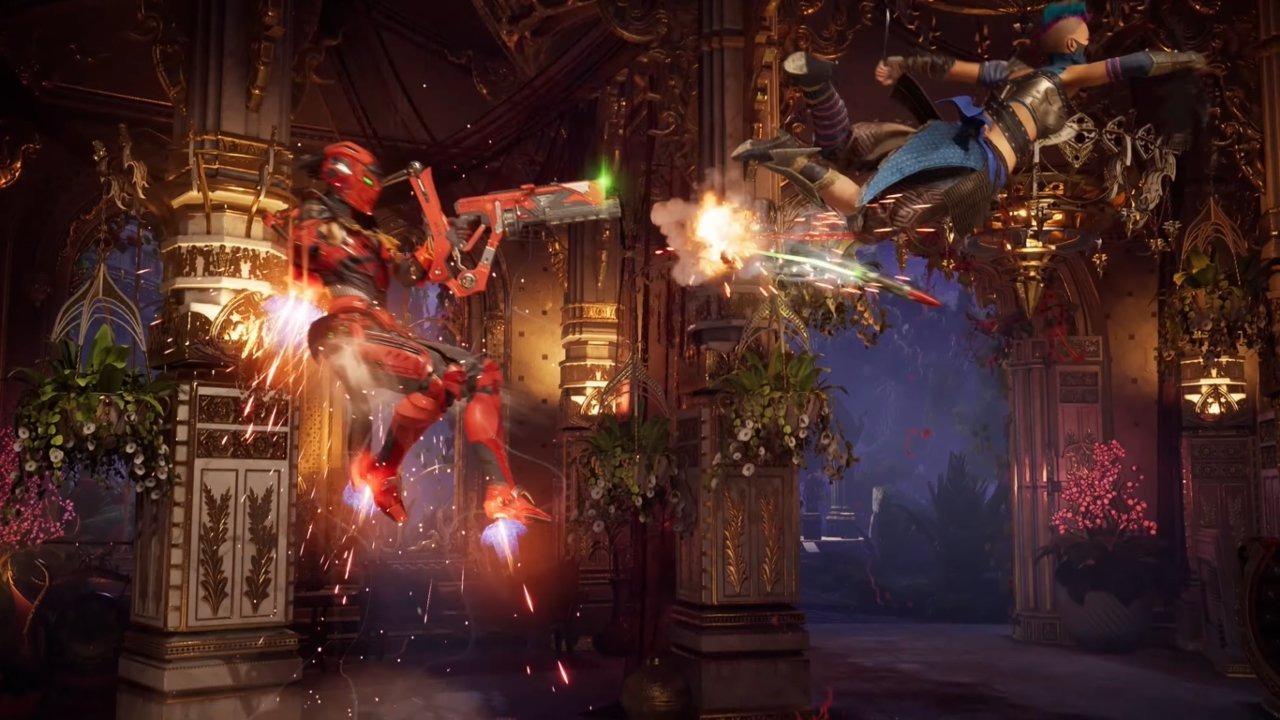
Let’s talk about some truly awful characters. Sektor and Cyrax seriously suck. Not because they are gender-swapped. Oh no, no, no. They are no longer cyborgs, which means their uniqueness is gone. Netherrealm could have made these female cyborgs, and it would have been awesome still. Even if these were human males, they both would have been lame. I don’t understand the push to humanize Cyrax and Sektor lately. This means their cool moves and deadliness feel off. We don’t need them to have in-depth dialogue and feelings. They are killing machines and reminded me a lot of the Predator. Because these are lame exo-suits, you no longer get the cool gadgets like the Cyrax’s chest blade or net, and Sektor’s missiles just don’t look cool. The missile launcher is a giant, oversized shoulder pack that just doesn’t look right. The characters are also poorly written and feel generic, so there was no saving them there either.
Then that brings us to the DLC characters, which at this time of writing, T-1000 and Conan are not available yet. Ghostface is one of three guest characters, and he looks great with these flowing robes, having great physics effects, and the goofiness from the series as well is fine. I don’t enjoy his power moves, which just have him use various knife moves. His fatality is funny, so there’s that, but his animality is weird. Noob Saibot is the only character here that I enjoyed playing. He looks cool, and his backstory actually makes sense in the epilogue. Noob Saibot is the only saving grace for the entire package, but it still doesn’t justify the price tag.
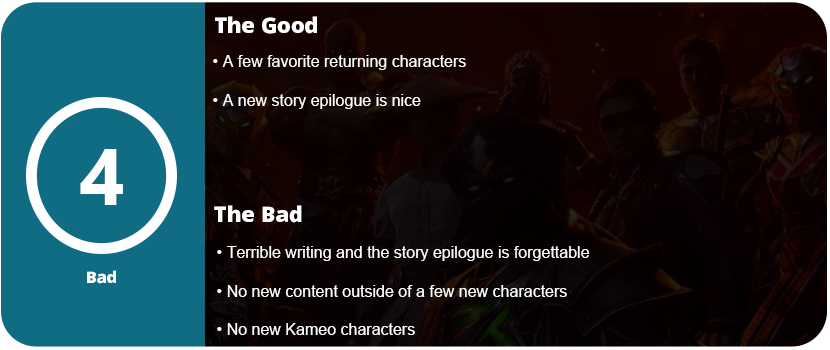
And honestly, these guest characters are getting old. It was cool back in MK (2011) with Freddy Krueger and Alien, but it’s becoming too much. Spend the money on the licensing to bring back characters people love or create new ones. There are also no Kameo characters this time around either, which is a real shock. We could have at least gotten a few more of those. That also doesn’t help justify the price tag. $40 for a 2-hour, terribly written epilogue and three new characters. At launch, Ghostface was not available at all. The only redeeming part of the game at launch was Noob Saibot. What is Netherrealm Studios thinking? They aren’t.
And that brings me to the fact that this is my favorite game series of all time, and it’s becoming live-service garbage. The entire series needs to take a few years off, reboot, and come back with what fans loved. More content, less grinding, and more unique characters with fewer guest ones. As it stands, Khaos Reigns is worth maybe a $10-15 purchase on sale, but that’s it.
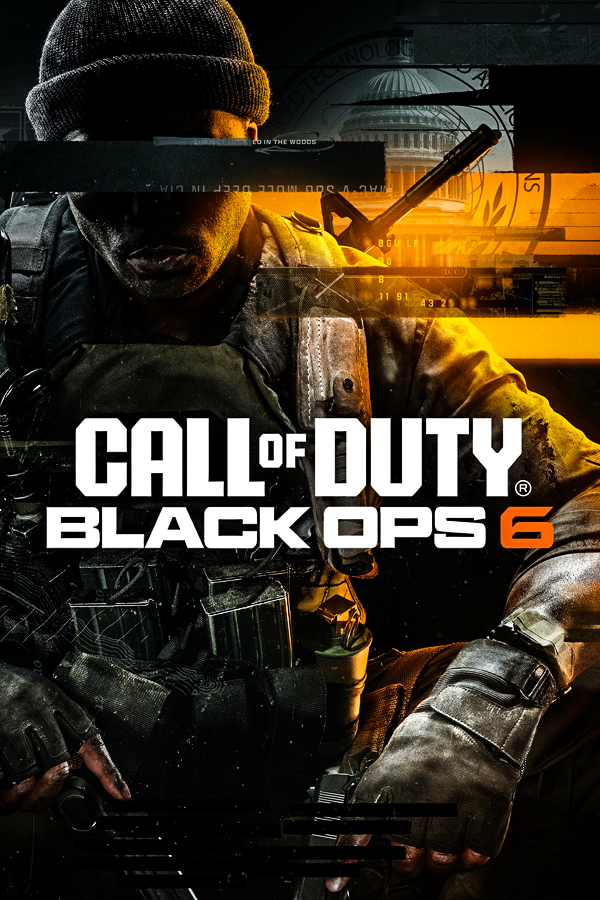
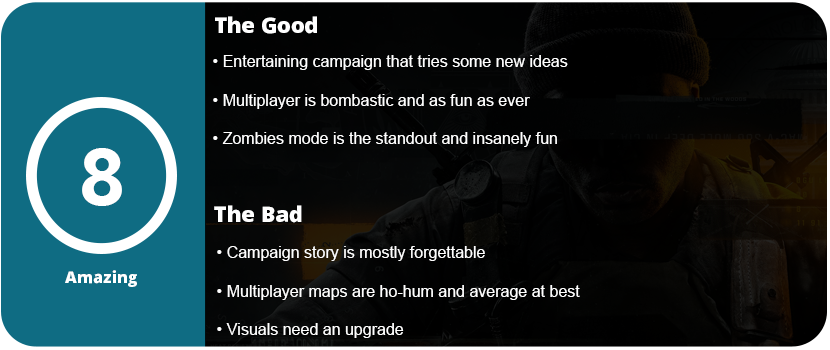
Call of Duty has culminated in becoming a standard yearly event with the series alternating between Black Ops and the mainline Modern Warfare series. While some entries try to incorporate new ideas into each new game in the series, more obvious now than ever, it needs a long break and has to go back to the drawing board. While they are all entertaining in different ways, they are trying to please everyone rather than a select crowd. Bloated multiplayer modes, mediocre maps, and entertaining albeit short and contrived campaigns are keeping the series back.
Black Ops 6 has a pretty entertaining campaign. Although it surpasses Black Ops III in terms of gameplay, it maintains the innovative concepts from Cold War, a feature I truly appreciated. The story itself is fun, but nothing memorable or anything well written. This won’t be winning anyone over in that department. This is the first Black Ops game to pick up the story from the second game, which is the only one to actually matter. It also incorporates events from Cold War, and it’s pretty cool to see characters like Frank Woods return. Those games came out so long ago that the new generation of gamers probably won’t even know or care, but fans of the series will.
There is a main hub area that all the characters hang out in. This is a house in the woods and eventually plays a role as a level itself towards the end of the campaign. Treyarch tried making something out of this house by adding an in-depth puzzle that incorporates running around the house and finding clues. I find it ironic that the core gameplay of this game requires players to not think, but wants them to think critically and solve puzzles. Call of Duty has always been the opposite of thinking or lack thereof. The reward is pretty decent, but I won’t spoil it, and the puzzle itself takes the entirety of the campaign to solve. I found the whole unlocking of benches kind of unnecessary for how short the game is. You can buy benches to upgrade weapons, such as more ammo and health, or increase melee damage. I really wouldn’t have noticed if I had never used them here. These are unlocked with the cash you find in the game.
There is also a large open map that is a new experiment for the series. It’s not like the terrible levels from Modern Warfare III that copy the Warzone maps. You get a vehicle that is stocked with ammo, and you can go around completing side objectives for more XP, such as clearing out camps or saving scouts. You can then fast travel back to the truck via the map and go back to the main campsite to swap weapons and get more ammo and equipment. It was a refreshing change of pace, and that’s kind of the pattern I was seeing with this campaign. There are more options for pacing, rather than relying solely on mounted vehicle segments to change the pace. This time around, the design of a few stealth missions has improved. I felt I could get through them without having to be perfect with my route. I could jump into the water and swim close to the objective, get out, kill a few enemies, and kind of worm my way to where I needed. The stealth missions are also not stealthy all the way through like in Modern Warfare II and become a chore. At a certain point in the game, it might be acceptable to go guns blazing.
There was also a reconnaissance level that involved a political party for Bill Clinton, which was cool. It felt fresh, broke up the pace of constant shooting, and helped slow things down so we could see the story build more. What I wasn’t a fan of was the Zombies mode-inspired level in which you become intoxicated with a hallucinogen, and you must find four key cards and fight four zombie bosses. The level felt cramped, reminiscent of an office building, and it was not particularly enjoyable. Hey, you can’t win them all. At least they tried something different. It also felt completely out of place compared to the grounded realism of the main story.
The overall feeling and gunplay have minor tweaks and adjustments, but it mostly feels the same as Cold War or any other Call of Duty game. Sadly, these games are conjoining and starting to all feel the same outside of features and modes. The gunplay is still top-notch and hasn’t been beaten yet by any other AAA arcade-style first-person shooter. It feels good, and the weapons have a good amount of weight and realism to them. The details on the weapons, from dangling keychains and decals to smoke blowing around from the barrel when you run to shell casings dropping on the ground, are all things most players will take for granted, but these minor details are something the series doesn’t get enough credit for. I also didn’t find too many bugs outside of some post-launch crashes. I ran into an issue where I had to turn off my overclocking on my GPU because it would crash the game every 10–15 minutes or in specific areas. By now, most patches have addressed these issues.
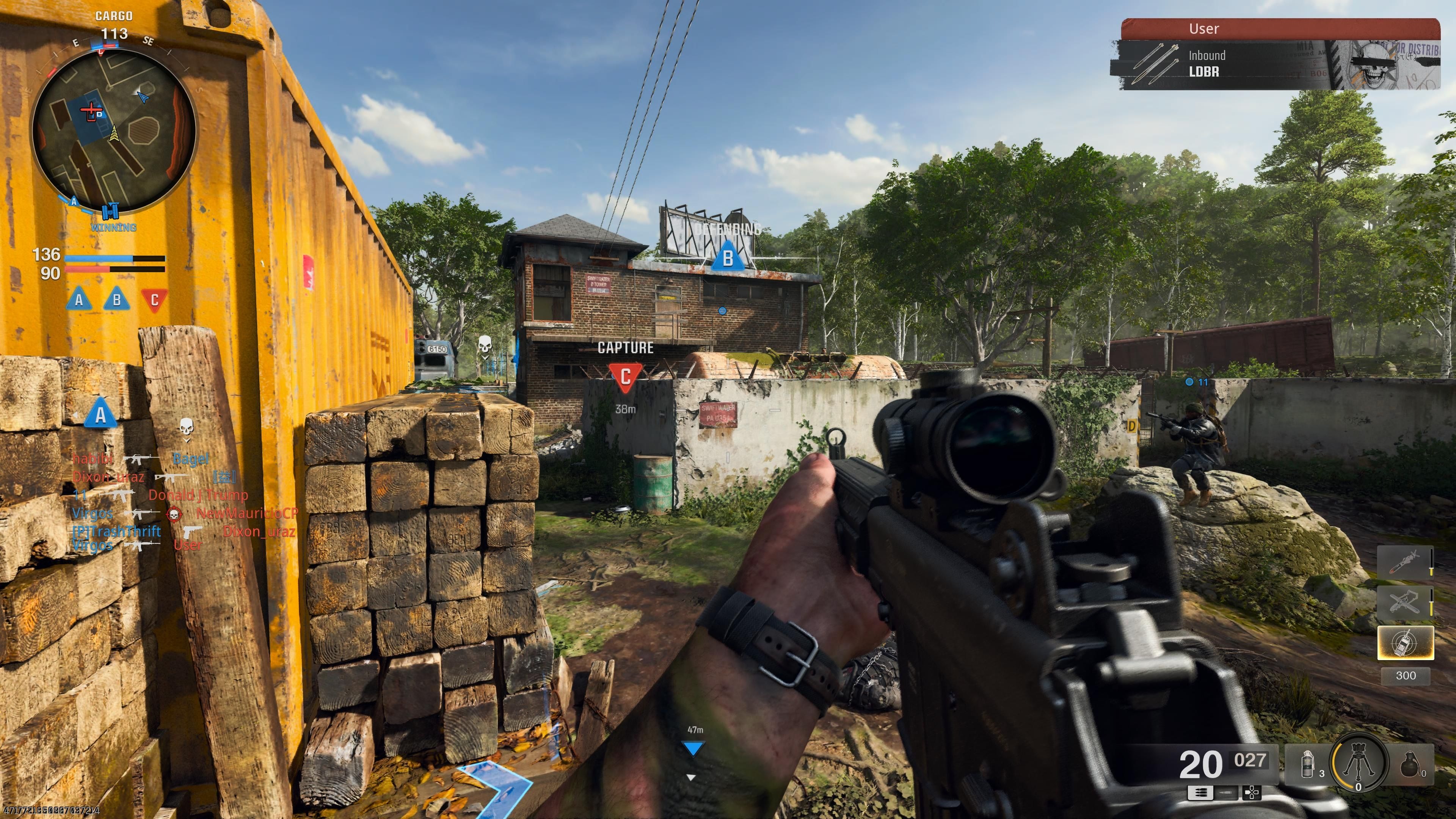
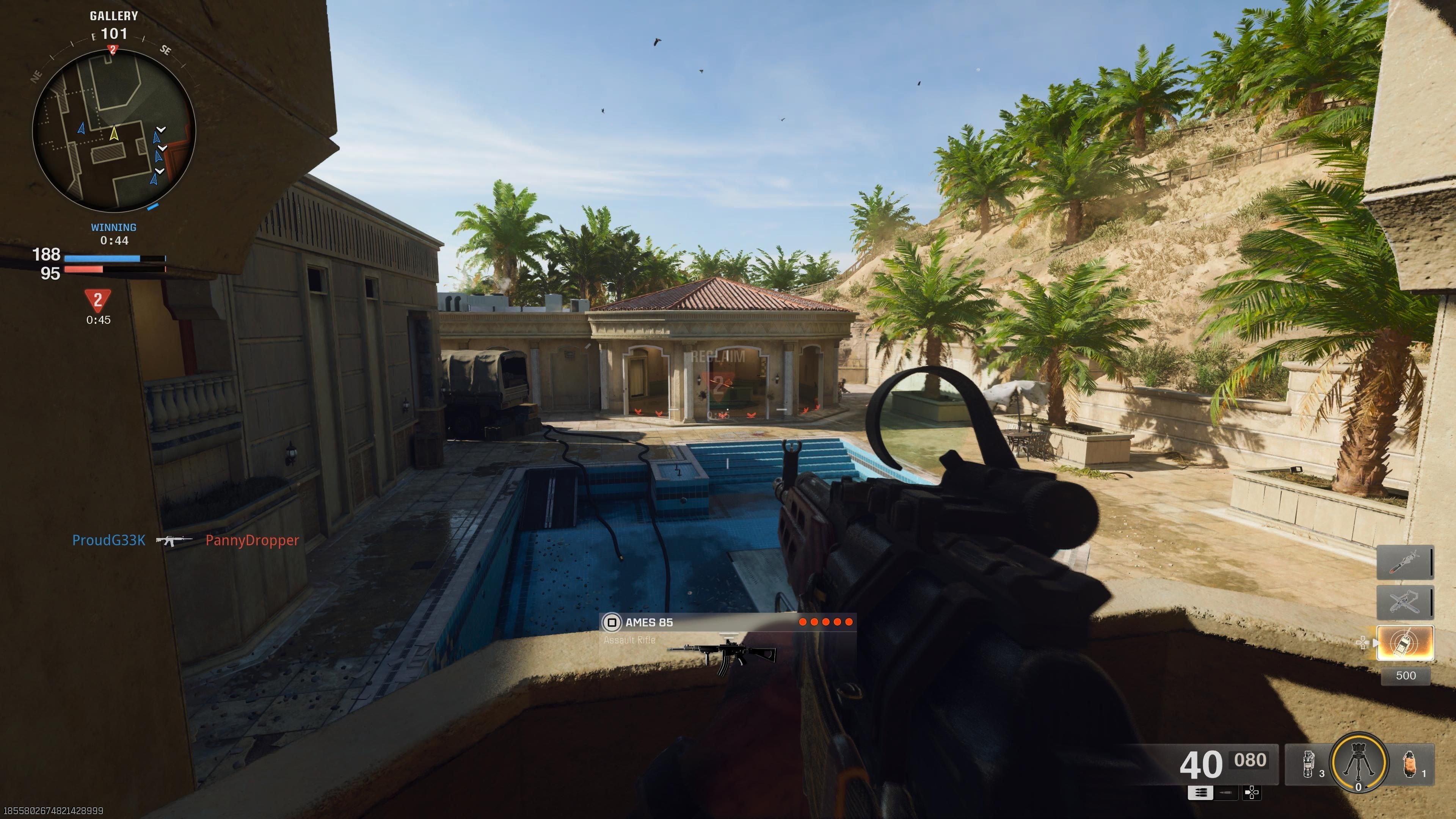
As for the multiplayer mode, there isn’t much to talk about if you already are familiar with the series. The typical modes are all here, from Team Deathmatch to Hardpoint. I actually love Call of Duty’s multiplayer mode, and I have my favorite mode types. I always rotate Team Deathmatch and Kill Confirmed. I might throw a Hardpoint in there sometimes, but it’s the maps that always make or break the game, and Black Ops 6 maps aren’t amazing like Modern Warfare (2019), but they’re not nearly as bad as Modern Warfare III or Cold War’s maps. They all feel fairly generic, and I’m tired of the constant cop-out of using stripped-down campaign maps to make multiplayer ones. Let’s make unique maps that work just for multiplayer for once, please.
Of course the returning Zombies mode is the only reason why a lot of people will buy this game. This is the most robust mode, and it feels unique to Black Ops. There are a bunch of new additions, such as the Gumball perks that allow you to equip a specific gum pack, and then you can randomly get a ball from a machine on the map. There are also Cola cans that give you perks such as superpowered melee attacks, but these can stack. On top of that, there’s the usual overly grind-heavy weapon progression system. I honestly hate this so much in the entire series. I can never stay invested long enough to unlock a good amount of items, as the XP grind is unfair and needs to really change. While the skins and other cosmetic items look great, to actually get them is another story. This is for people who only play the game online and can put 6–10 hours a day into it to actually unlock things and feel like they are making progress.
The same goes for the monetization system of weapon packs, blueprints, operators, and cosmetics. I want to be able to use these cool-looking items by unlocking them by playing, not paying money. I’m guilty of buying the odd pack here and there, but the insanity of the Battle Pass on top of buying $15-20 item packs is absurd and needs to really change. There is so much to the multiplayer mode that is locked away behind a paywall. While you can still enjoy the game itself without paying anything, you never feel like you are making progress and get stuck with the same basic weapon sets for dozens of hours that most people will not want anything to do with. Additionally, the inconvenient launcher system necessitates launching the most recent Call of Duty in order to access modes from earlier games. We need to overhaul and change the entire Call of Duty ecosystem. The ecosystem is experiencing a state of bloating and internal degradation.
With that said, the visuals and audio in the game are fine. The graphics aren’t terrible, but they also need an update as they are starting to feel a bit dated. This is in part due to still needing to be playable on 15-year-old hardware and scale accordingly. Call of Duty needs to abandon previous-generation consoles, or the series will seriously fall behind. While the graphics don’t look awful, you can tell they are dated. There’s no ray tracing, no advanced lighting effects, and the textures up close look a bit grainy and blurry. I also think that the series needs a gameplay overhaul. While the gunplay feels good and has a fun factor to it, how many times do we need to play the game like this? Let’s try to make Black Ops feel a bit different from the mainline series again. Black Ops 6 is probably the best game in the series to date, but the short campaign (about 4 hours) and the uninspired maps might put a lot of people off for the high price tag.
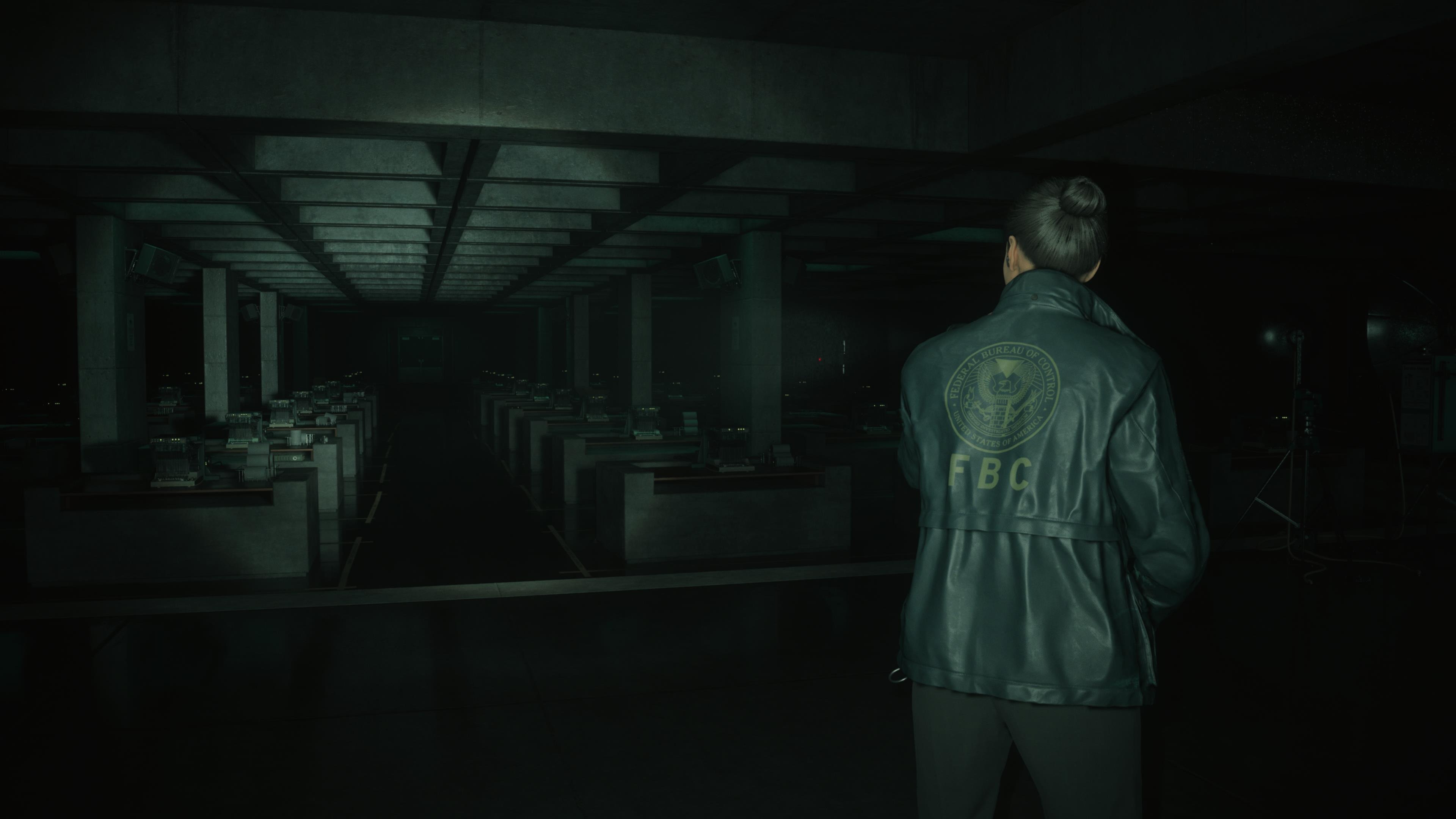
The level of intertwinement between Control and Alan Wake is somewhat surprising. Control is the explanation for what is happening in the Alan Wake games. It serves to ground the series, transforming it from a purely psychological horror to something more paranormal and believable. Here, you play as the FBC agent Kiran Estevez. You are exploring the Lake House event in this short 2-hour DLC, and the game is more combat heavy than previous DLC entries. The game also features a significant increase in horror elements. A new enemy and weapon have been introduced, which is always enjoyable.
Kiran controls and plays just like any other character in the game. She doesn’t have any special stats, abilities, or weapons. You use your handgun and shotgun here. Kiran is battling a new entity who loves painting it seems. You must unravel the mystery behind the Lake House and who opened the portal. The game is very linear and feels more like Control than Alan Wake. You play in an FBC facility, so it’s very linear and not very interesting to look at. There aren’t any beautiful vistas or open areas here. There are numerous spacious office rooms and hallways in this area. This kind of brings the game down a bit as well. There are five floors you must descend, and the main goal is upgrading your security key card to get to the next level.
The game involves a round robin where players traverse a hallway and then engage in combat with a group of Taken. There are numerous enemies in this game, and the fights are quite challenging. Only the new Black Rock Launcher, which you acquire towards the end, can defeat the new enemy, a strange, tall, walking paint entity. Otherwise you must run from them. Towards the end, a formidable boss awaits you, testing your combat skills to the fullest. Personally, I found the excessive shooting to be enjoyable as it provided a break from the monotony of the hallways and corridors. Finding articles and reading computer emails tells a significant portion of the story here. You can backtrack to optional locked doors that contain more hidden story tidbits, but you won’t find any extra items or hidden weapons anywhere.
I personally didn’t find this DLC to be the strongest. It’s forgettable, while entertaining, and serves its purpose for the two hours you play, but that’s about it. I did think the fights were really tense and the horror elements here were great, but they were short-lived. While Kiran is an interesting character, I would have liked to explore more of her backstory and pull away from the horror and firefights of the main game. Let’s get to know these other characters’ pasts. There is a lot of lever pulling, box carrying, and elevator hopping, but it’s done in an annoying way.
Otherwise, The Lake House DLC serves its purpose and nothing more. It’s a very linear DLC full of bland environments, a couple of tough fights, and not much else. If you are seeking more action in the game, consider purchasing this DLC. However, the storyline is largely uninteresting and can be challenging to follow, unless you enjoy reading the game’s extra articles.
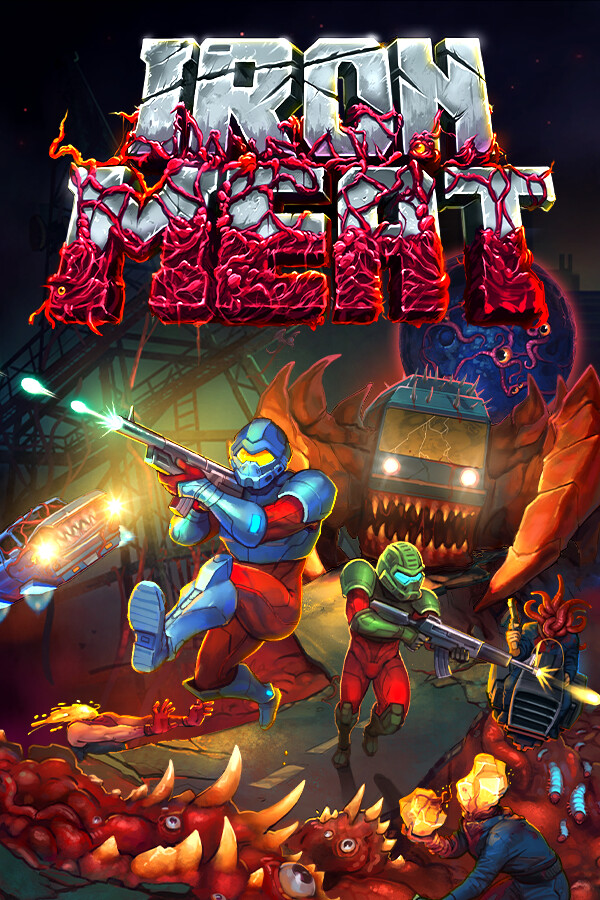
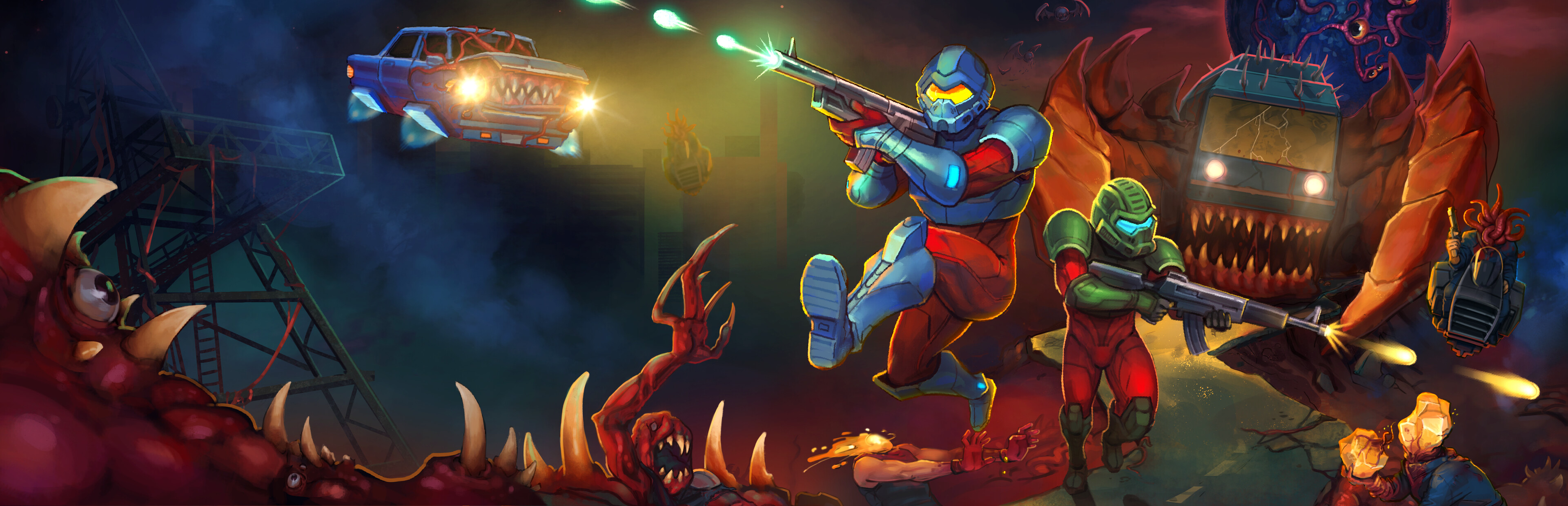
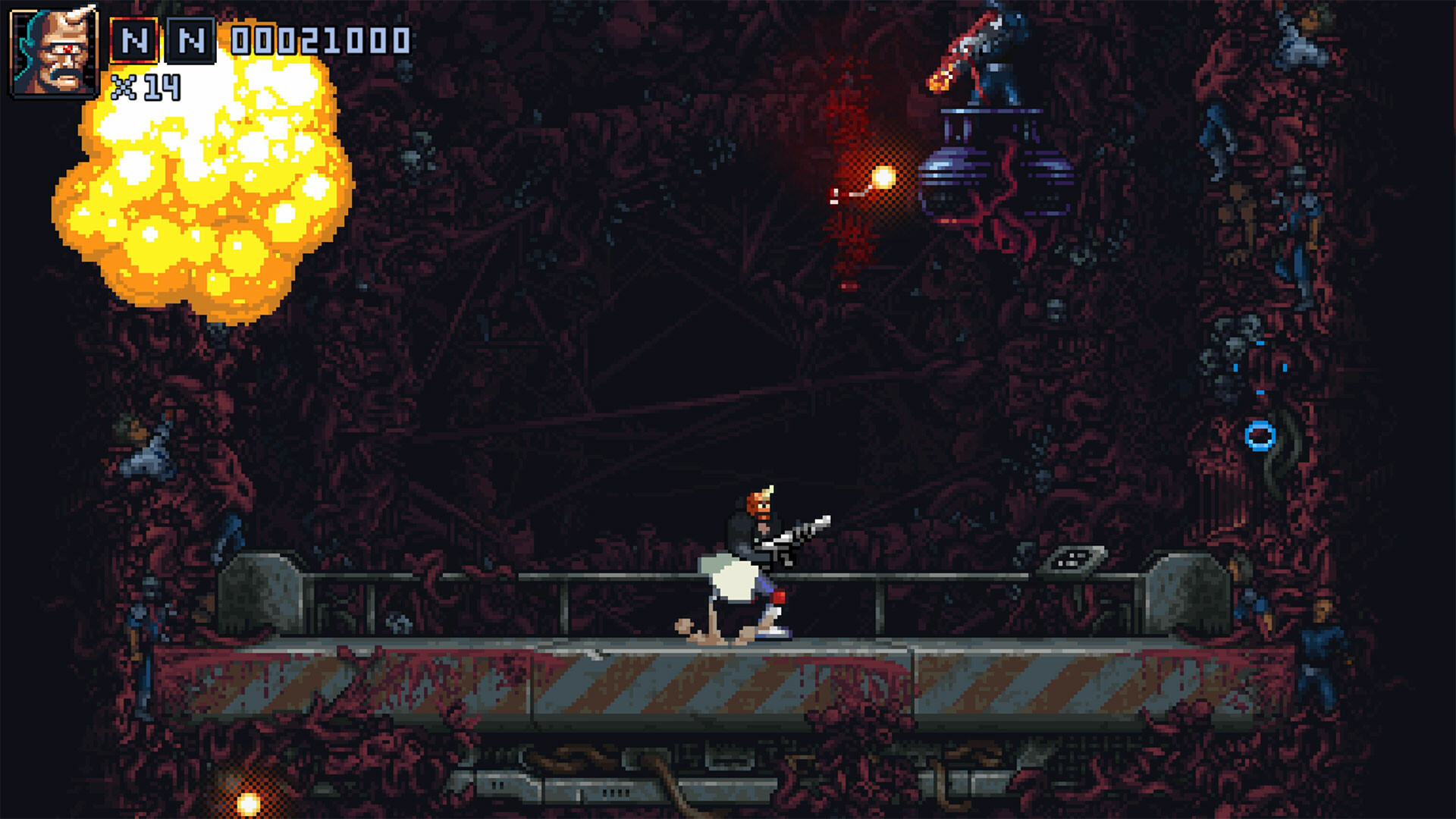
Contra is the blueprint for side-scrolling action games. They need to be tough as nails, have insane bosses, and usually have a lot of gore or some sort of inspiration from biomechanical art. Moreover, the Earth is under the control of a vast and formidable alien race. Iron Meat nails all of these and is a blast to play. The game can also nail all of these aspects and still fail in level design and gameplay. That’s thankfully not the case here.
As a stalwart soldier, your mission is to save Earth from an alien race that has taken over the Moon. There are nine unique levels in this game, each with varying lengths, enemies, and obstacles to overcome. The game is very pick-up-and-play friendly, as you just run forward and blast everything in sight; however, Iron Meat has a couple of things it does a bit differently. You can find ammo pickups inside objects. Occasionally, friendlies may drop them, or you may find them lying around. They are not commonly found, and if you die, you forfeit your weapon. The standard weapon is a rapid-firing machine gun that works well enough. Other weapons include different firing rates and patterns. There are also pickups to increase your score by 1,000.
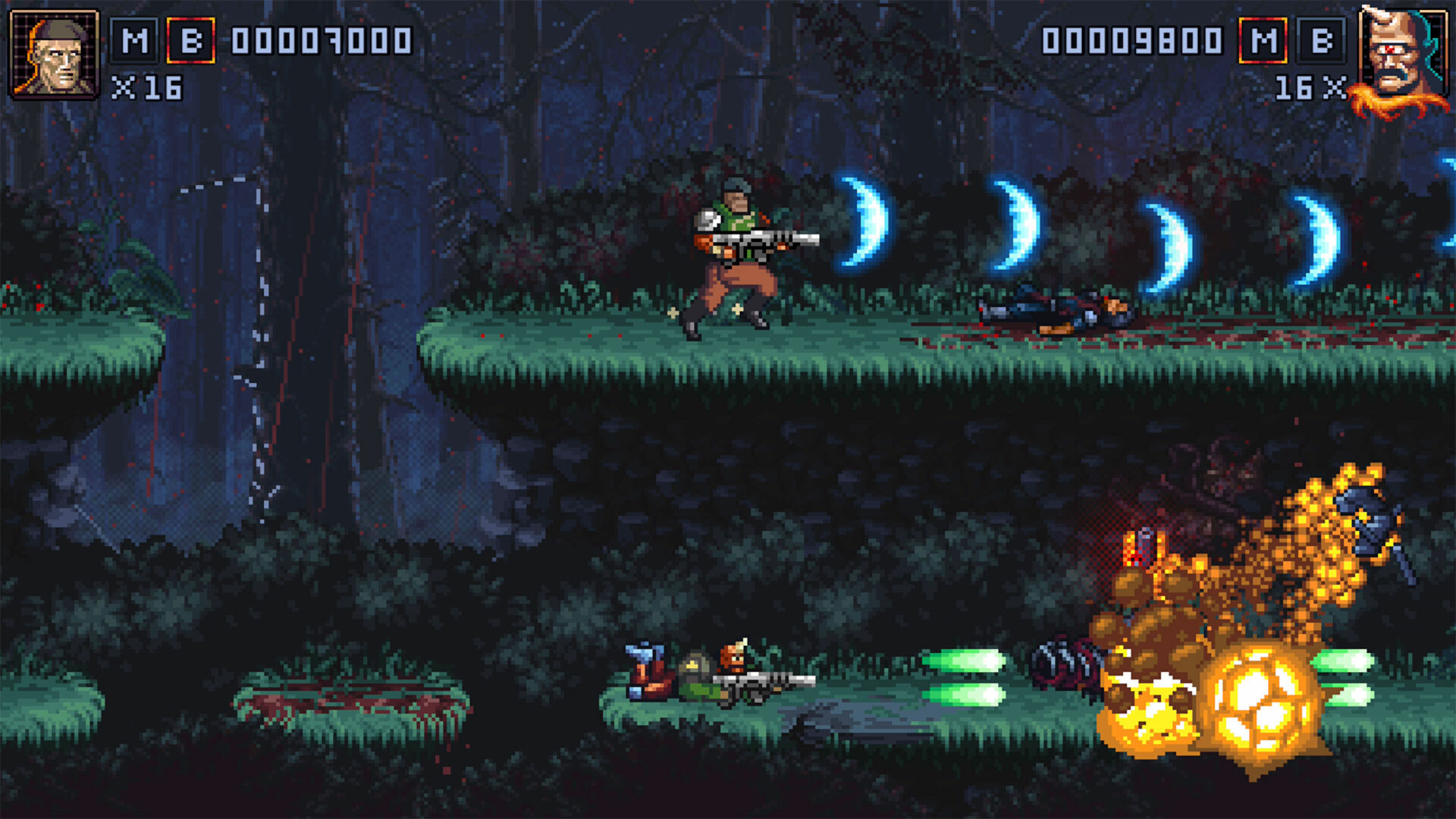
In Iron Meat, you can shoot in eight directions. Another great feature is that you can hold down a trigger button to maintain your position while shooting in any direction. The game constantly presents you with enemies at a rapid pace. Some enemies, such as boxes with jaws, bugs, melee enemies, weird snakes, bats, and various other insane abominations, may be incorporated into the level itself. The enemy design is fantastic, and you get to know what each enemy does and how to kill them. Occasionally, following a specific order can also prove to be an effective strategy. You can also avoid enemy fire by lying down prone and shooting. Some levels will also test your platforming skills, featuring obstacles such as collapsing ceilings, death pits, and suspended platforms.
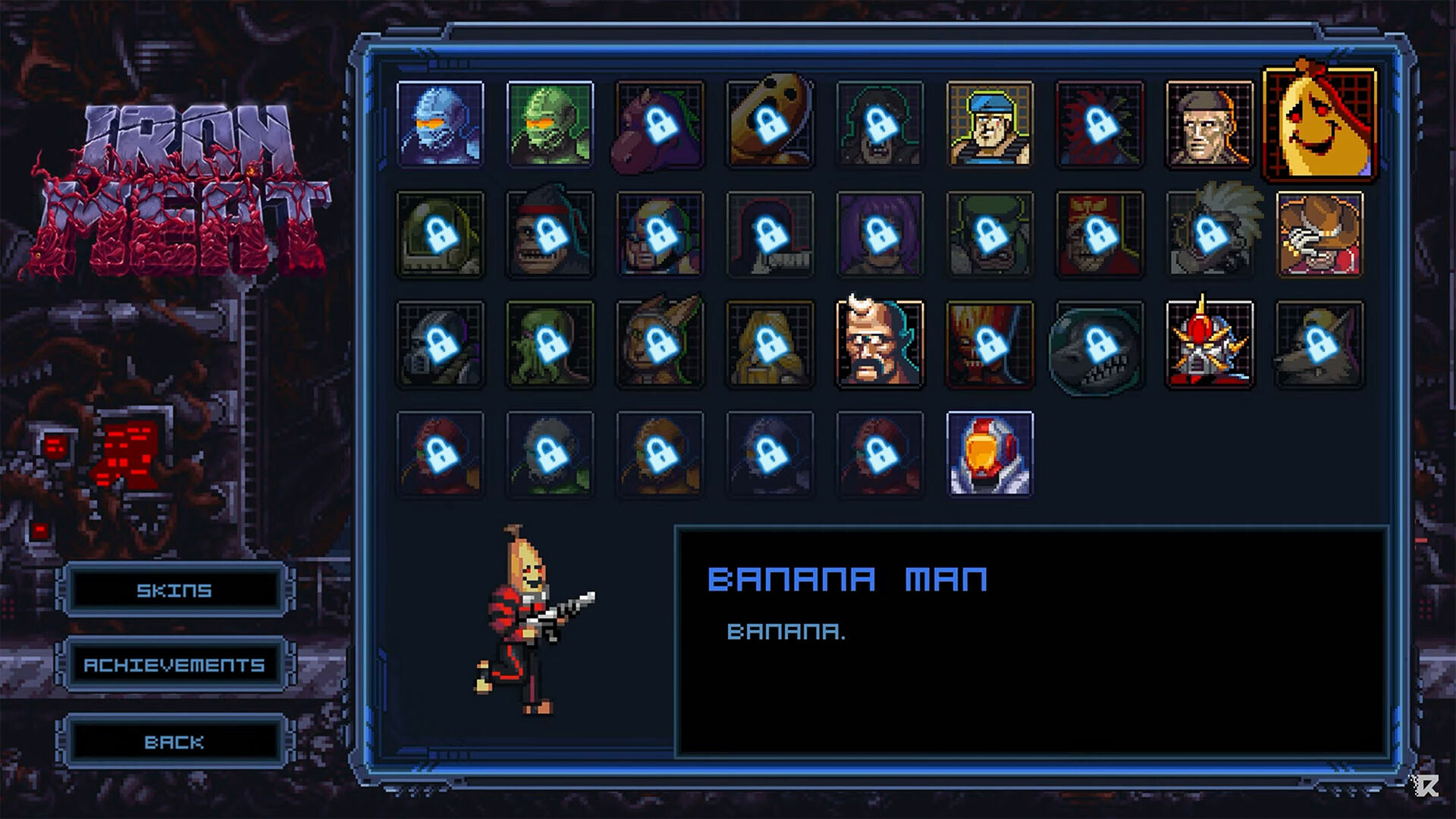
The bosses are really great. They have various attack patterns, and you get used to knowing when to attack. Some will chase you, while others will fly around you. Some are small, while others are massive, possessing multiple forms and phases. They all look grotesque and nightmarish, though. The game’s pacing effectively breaks up the action. There is a vertical level, followed by a level that emphasizes platforming, and then another level that presents a large number of enemies at once. You can unlock characters and swap body parts to create your own unique soldier. Once you complete the game, you can go through it again in mirror mode.
Although the game may appear to have less content compared to modern games, it truly pays homage to the classic 16-bit run-and-gun shooters. Most of those games featured a mere half dozen levels and lacked additional modes. Iron Meat does have a two-player co-op mode, which is a nice addition, but I feel there’s a lot of content here for the asking price. Going through and learning all of the attack patterns and enemies is fun, and then getting more points on higher difficulties can be a fun challenge. You can complete the game in less than two hours, but those two hours are filled with enjoyment.
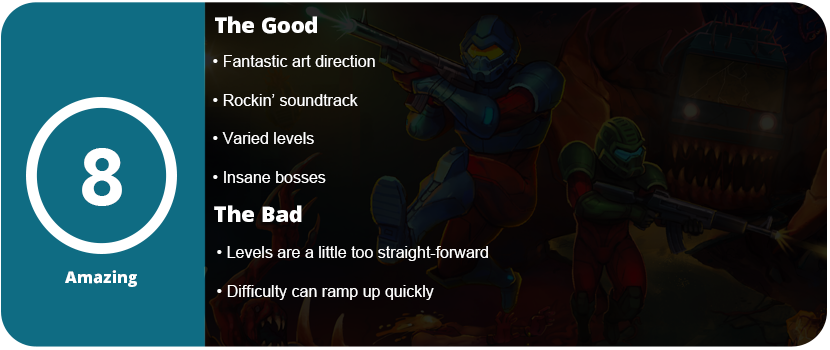
Overall, Iron Meat nails pretty much everything you would want in a 16-bit run-and-gun shooter. Iron Mean boasts massive bosses, captivating soundtracks, copious amounts of gore, diverse levels, and exceptional controls. There’s not much Iron Meat does wrong outside of the occasional straightforwardness of some levels. This is one of my favorite games in the genre, and you shouldn’t miss out.
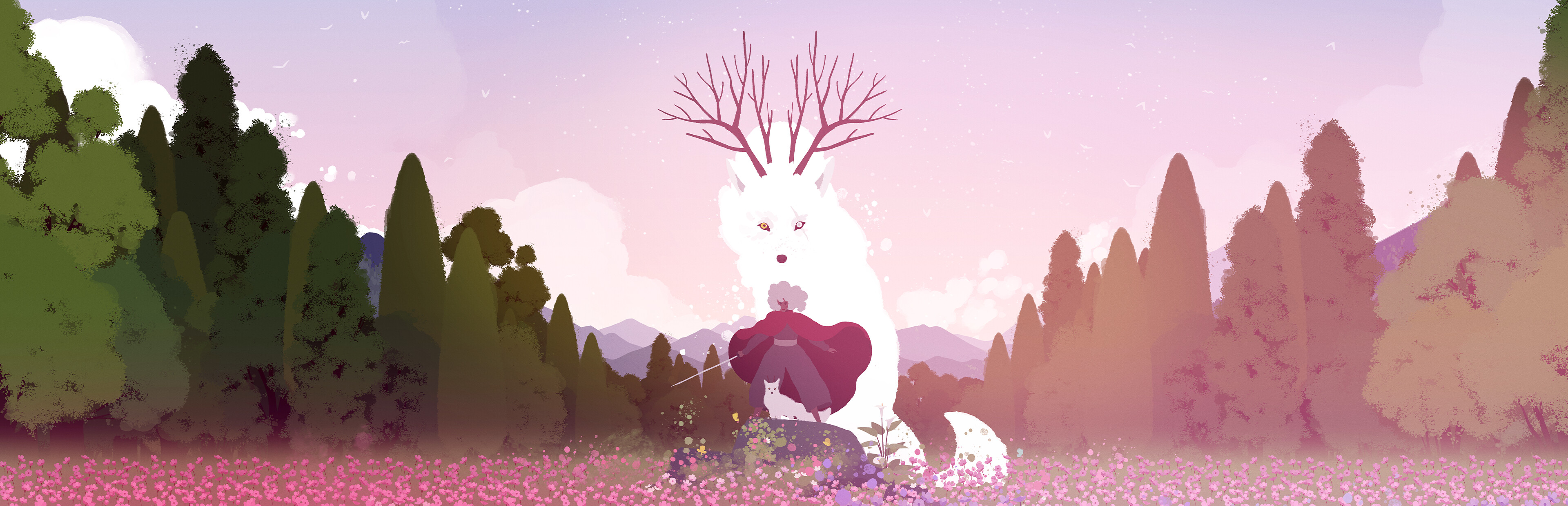
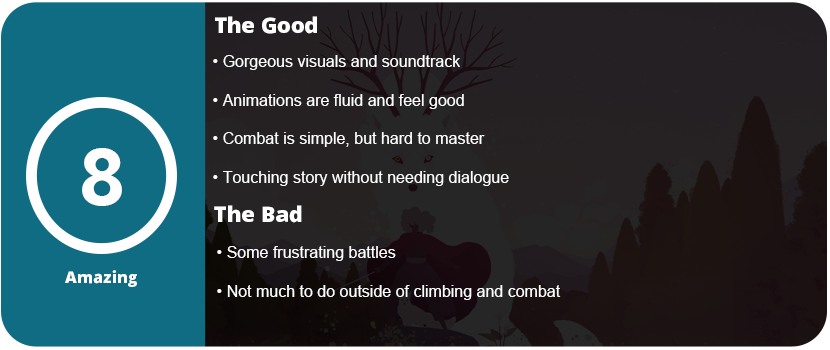
The quality of minimalist games varies greatly. Games like Gris, Planet Lana, Inside, Little Nightmares, etc. are sidescrolling titles that have a focus on one or two things. Visuals alone typically tell the story, which can be challenging to master. Neva seems to nail the story, which is rare for these types of games. The only voice acting in the game is Alba, your character, who grunts and calls out Neva’s name. Neva, a dog or wolf god, is fighting back against a blight that has swept the land. Everything has been overtaken by black goo disguised in strange white masks, and your mission is to uncover the cause of this calamity before it destroys all life on the planet.
The story requires a lot of player interpretation, but it’s quite obvious what is going on. We don’t have names, lore, history, or anything like that, but it’s an obvious good vs. evil story, and Alba obviously has a strong bond and love for this God, Neva. There are ups and downs, close calls, and tragedies in the story as you fight your way through everything. I don’t want to spoil anything, but the story is very touching. The gorgeous animations and art mixed with the astounding soundtrack by Berlinist will wrench a couple of tears from you; it nearly did for me. Most of the game focuses on skilled platforming with triple jumps and some puzzles here and there. There are also some extras you can collect, but they require a bit of thinking, and some of the most advanced platforming in the game requiring surgical precision on distance and height.
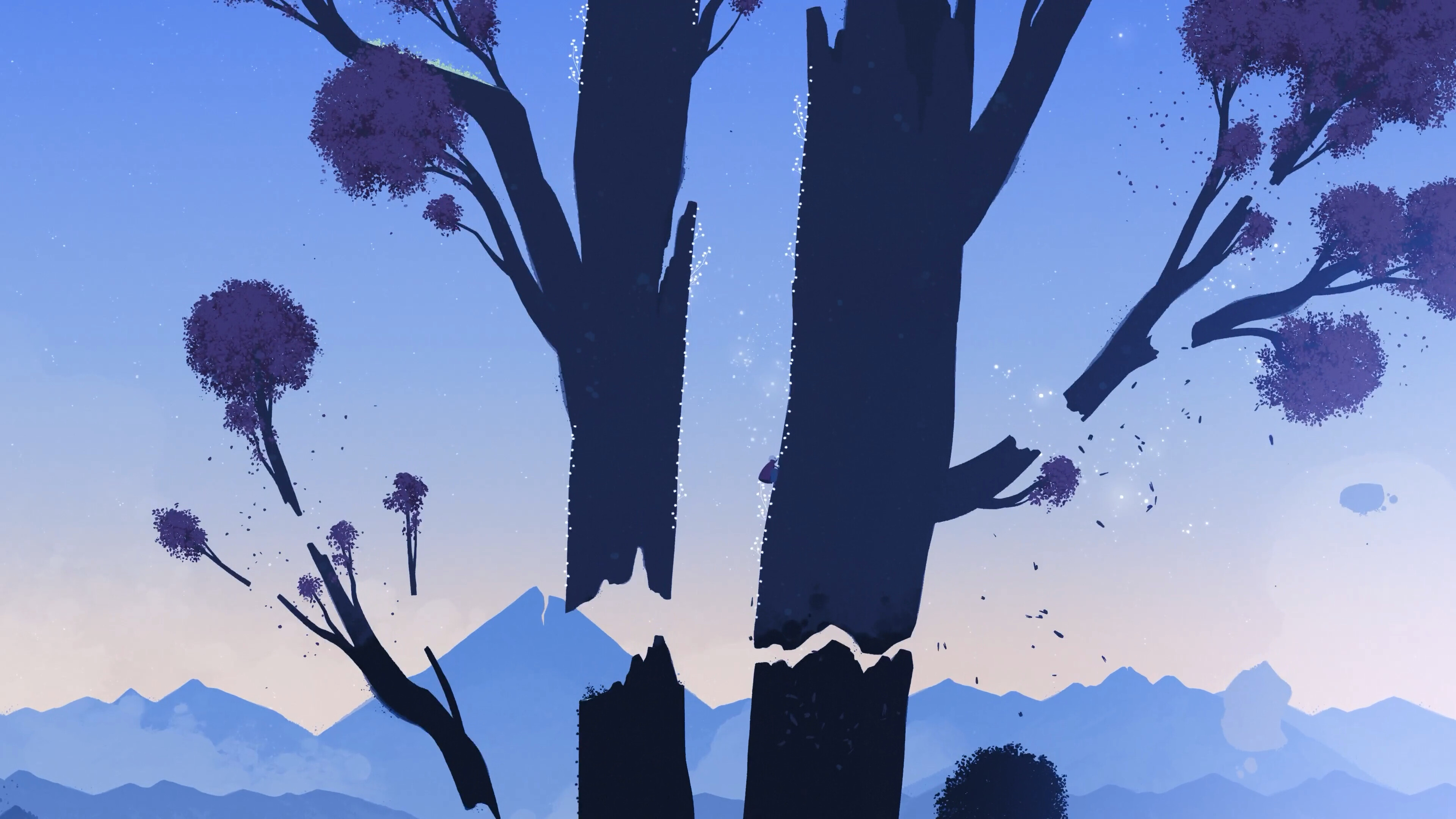
The game uses white to indicate what you can do. Bright white lines adorn climbable platforms and walls. At times, you must solve puzzles by striking white gongs, which can move platforms in various ways. As the game progresses, these challenges escalate in complexity, yet they remain surmountable. The game consistently introduces new elements to the player, leaving me astonished each time. Just when I thought I saw everything the game had to offer, something new came along. At times, you can ride Neva and use her for combat; new enemies will emerge, surprising you with their unique fighting styles. Even some puzzles will be enemies themselves. One of my primary concerns with brief games such as these is that they reveal all their features within the initial hour, leaving you trapped in an endless loop of gameplay that quickly loses its allure. Neva consistently introduces new elements or modifies familiar elements to keep you engaged. I love this so much.
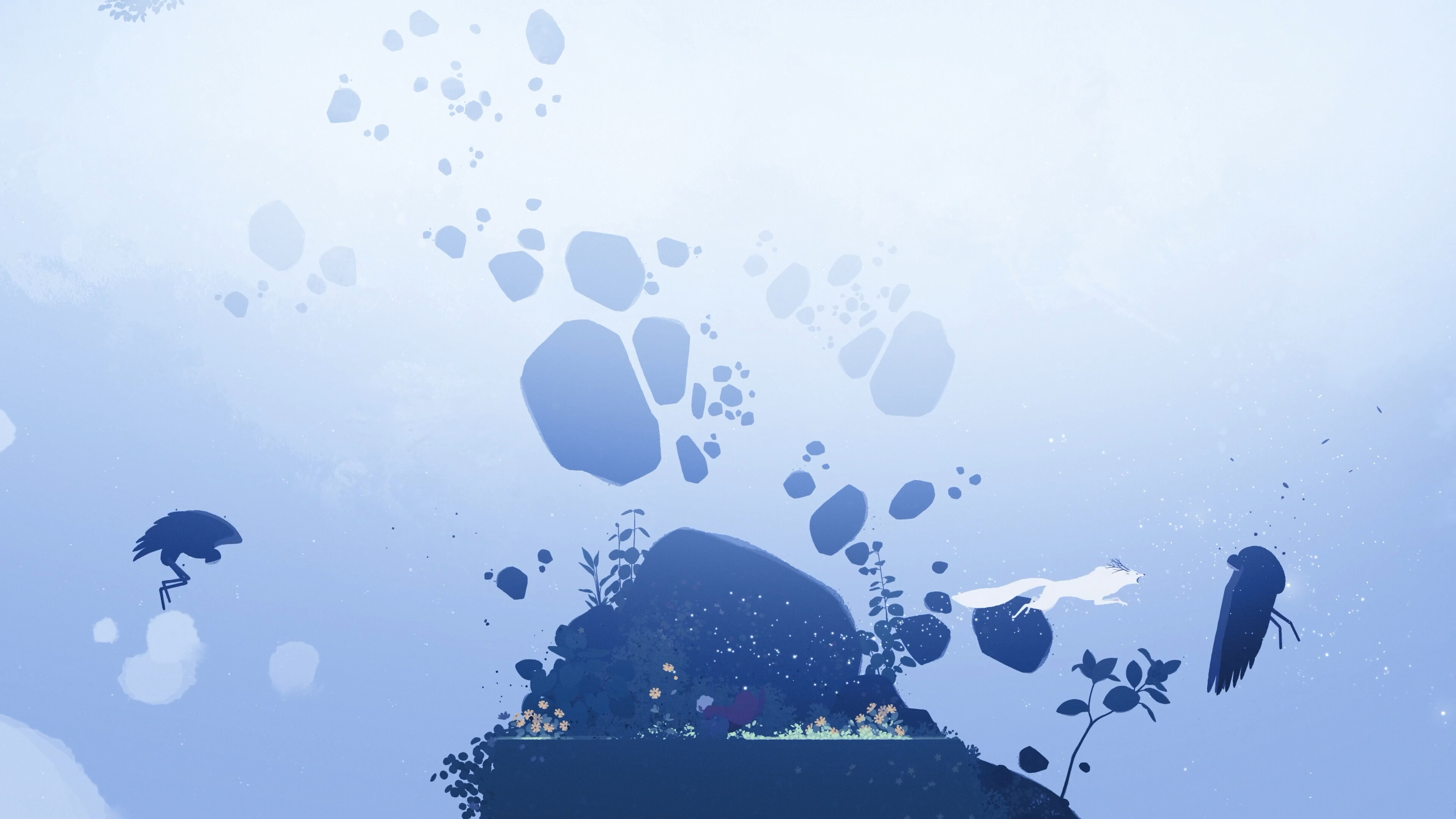
Combat is simple as it contains only a three-hit combo, but the enemies are the real challenge. You must learn their patterns and attack animations, and then dodge, jump, and attack accordingly. As previously mentioned, the game introduces new enemies in unique ways. You can roll through enemies and some of their projectiles, but some might be in the air, some might throw things, and some might be huge, including bosses. In some fights, you can use Neva to stun enemies, which can be advantageous. However, in other fights, Neva may not be available, resulting in reduced damage and a reliance on pure skill. Some fights were so tough I restarted over a dozen times because my timing was off. Multiple enemies pose a real challenge, and the game lulls you into a false sense of security early on—that the combat is simple and easy and something you don’t need to focus on.
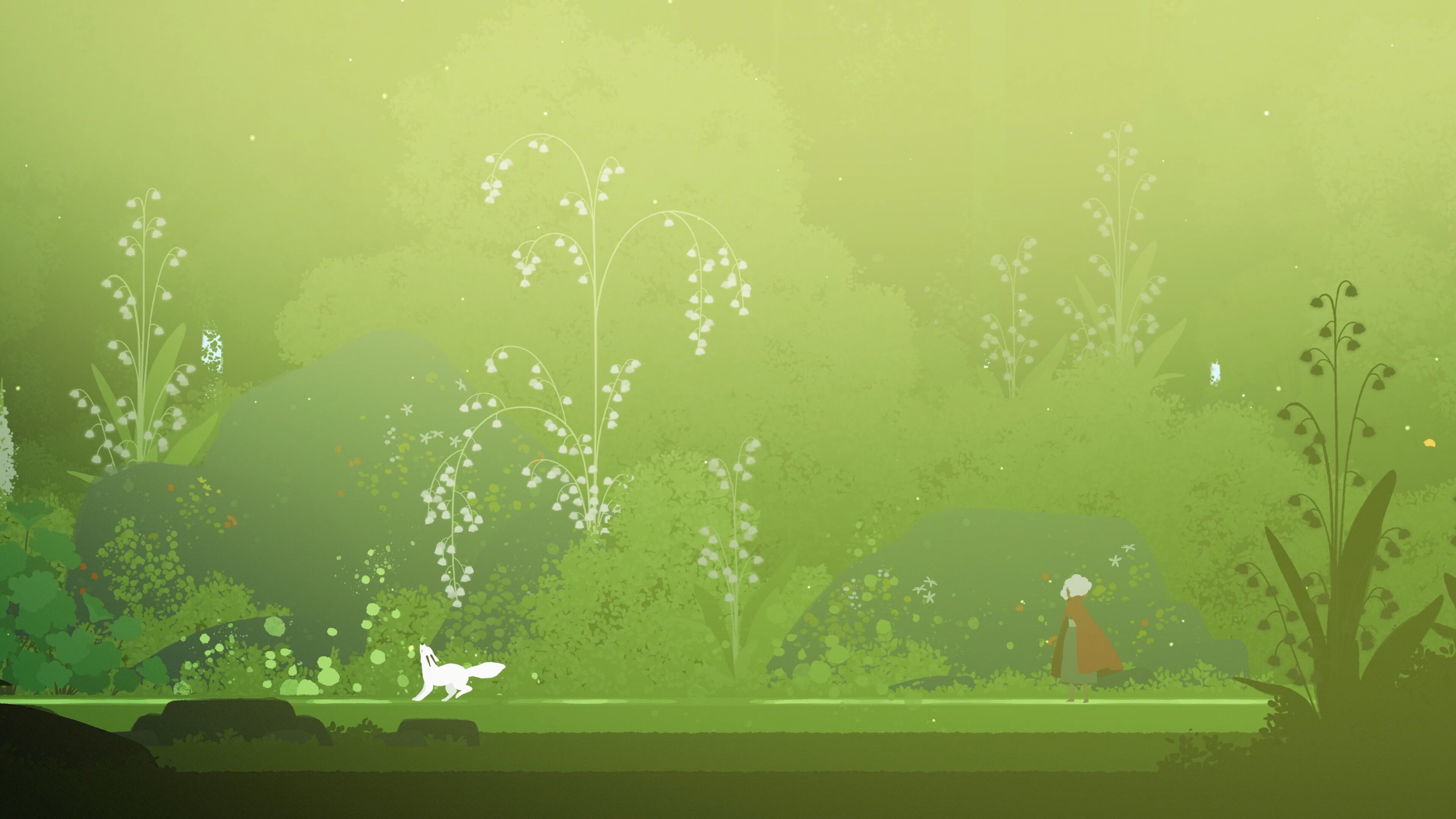
The game never becomes dull or boring because everything, including the scenery, is constantly changing. The game is absolutely stunning to look at with so much color and vibrant displays of black. Playing with an OLED screen is a must, as the colors pop and come to life. The game’s short duration of about 4–5 hours may turn most people away, but the sheer variety of what’s changed up with so few enemies and a simple gameplay loop is superbly done. I couldn’t put the game down, as I wanted to see these two succeed and find out what caused this blight in the world of Neva. The game and its characters are truly captivating, and I eagerly anticipate more.
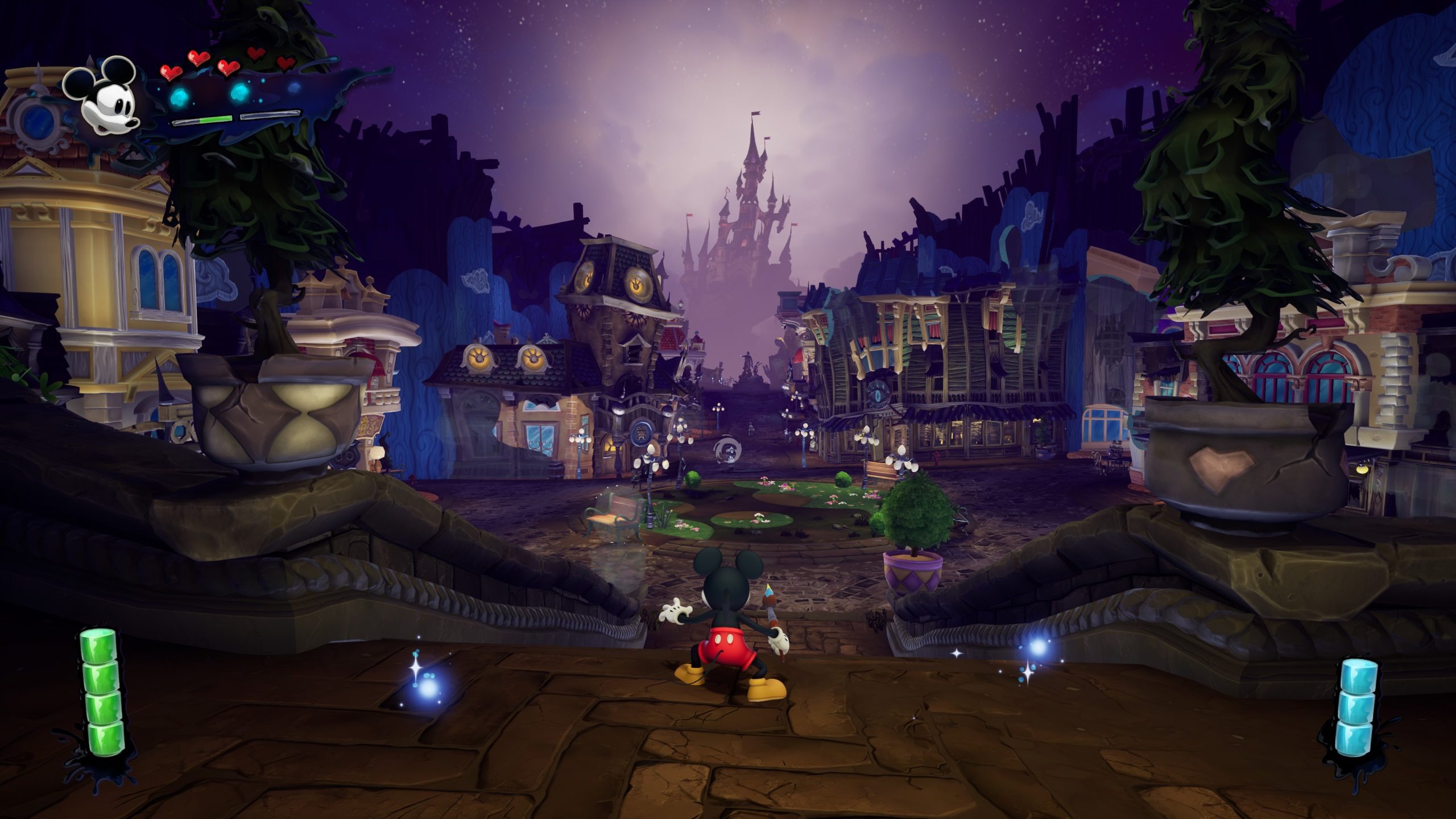
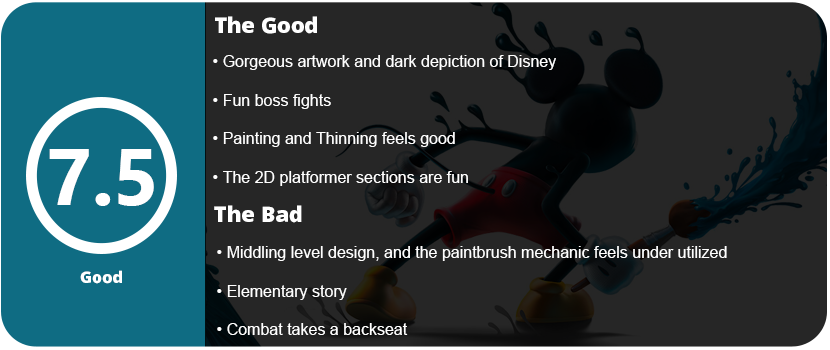
Disney has a long and dark history with video game studios and the entire industry in general. Many developers and studios want more creative freedom with the property, and Disney constantly holds their hand and shoots down great ideas. Warren Specter, the creator of Deus Ex and the infamous flop Tabula Rasa, aimed to explore a new genre of games and create a dark Disney fantasy game. However, the Wii version he produced was a disjointed mess. The game’s ambition exceeded the capabilities of the console it was designed for, yet its release came too late for the company. Disney wasn’t pleased with the poor sales of the game and weak reception. The biggest issue that Epic Mickey faced was the terrible camera, and this game needs constant camera work to play correctly.
Epic Mickey is a strange game still. It takes some time to fully understand the game. It doesn’t play like a typical platformer and aims to be something else. I wanted to immediately explore, collect, and paint, but the game doesn’t let you do much of this early on. The game takes place in the Fantasia universe of Mickey, where he serves as The Apprentice to the Sorcerer. The Sorcerer created a world, and Mickey got curious one night and dumped a bunch of thinner inside and went and hid. As time passed, the consequences eventually caught up with him, and now Mickey finds himself inside this world, armed with the magic paintbrush. There’s a light and dark theme that has you using Paint or Thin enemies and bosses to get a different ending. When you defeat each boss, this will also determine which side receives more tank upgrades.
Once you get past the prologue, the game opens up a tiny bit. There is a main hub town that requires Sparks to open new portals to one of the five worlds. Players can find Sparks in the world or through the completion of both side and main quests. This is where the game gets a little frustrating, as side quests are missable. Each world features a primary hub area, but once you complete that world, you can no longer access the subsequent areas. I found it annoying not knowing that part of a quest was here, and once I finished, I was told the quest can no longer be completed. Most quests are tedious fetch quests, and obtaining a Platinum trophy doesn’t necessitate collecting every item. I found this very odd as well, as it feels there’s no point to 100% the game. You only need to finish maybe 70% of the side content to get every achievement or trophy.
Navigating through the cramped levels feels strange. Areas with outlines require painting, and areas with brighter and vivid colors can be thinned. To create platforms, locate hidden chests containing pins, and navigate the area, you must undertake this task. Certain side quests require painting specific objects, a fun but underutilized mechanic. Early on in the game, I didn’t use the brush all that much. Many things appeared to require painting, yet there was no justification for it. I noticed numerous buildings and objects with missing parts, but where was the enjoyable “Paint everything for a special item” quest? Maybe for a cool outfit?
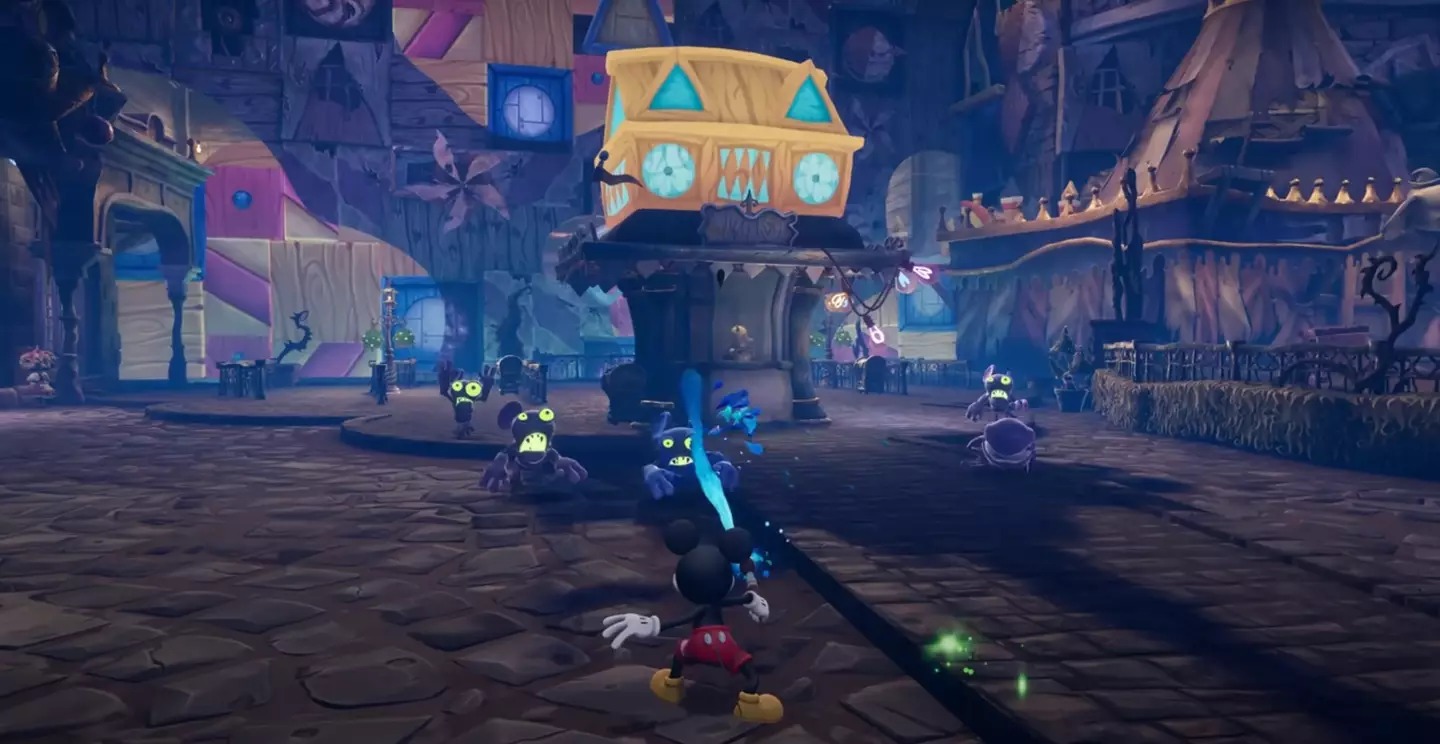
Due to its sparseness and the ability to avoid most enemies, combat is incredibly easy in this game. Depending on the ending you want, you can paint enemies to make them fight for you or thin enemies to make them disappear. If you paint enough, you can send sprites out to “possess” enemies to fight for you, but I never used this feature. The game solely presents challenges in the form of boss fights and animatronics, which necessitate thinning before a physical attack. You can save caged Gremlins to simplify certain aspects of the game, like stopping enemy generators, but the game’s simplicity makes this unnecessary. I found most of the enemies to be annoying and a hindrance to platforming, especially since many would respawn later.
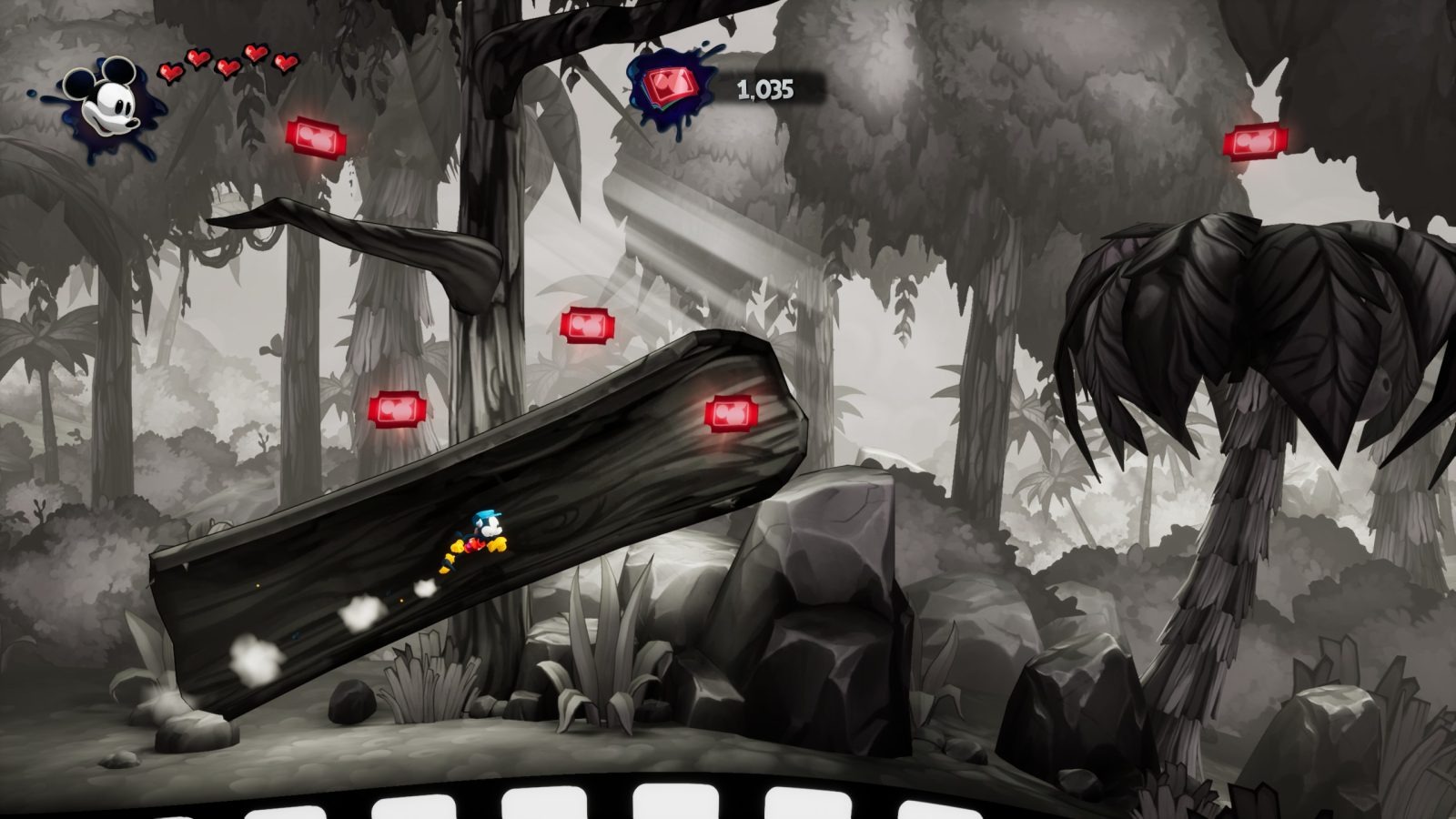
Another puzzling gameplay element were the E-Tickets. These were completely useless. Every so often someone will offer to make something easier to allow you to purchase a spark or something similar for e-tickets. You can purchase items from shops like hearts, tanks, and permanent upgrades, but the availability of these items is limited. Most of the E-Tickets are for concept art, and I always had more E-Tickets than I could ever want. They are scattered throughout the game and have the ability to reappear. At the start of the game, I devoted a significant amount of time to collecting every single one in sight, only to discover that they would reappear upon my return or even upon my death. I would have liked to spend more tickets on outfits or customization options like paint color or brush type.
For the most part, Mickey’s momentum and physics feel good. He’s a bit floaty, especially in the 2D levels, but it works. Mickey can do a jump and slam move, a spin move, and a triple jump. The more advanced platforming sections present the biggest challenge in the game, but they also offer the most enjoyment. You can complete the 2D levels, which are transition levels, in around 30 seconds. Each level features concept art and two film reels. You use these to unlock items at the cinema, with approximately 64 available throughout the entire game. However, you only need half of these for the achievement, and permanent upgrades aren’t really necessary. Halfway through the game, you receive various items such as a TV to distract enemies, a clock to slow down time, and an anvil to crush enemies, among others. I never used these except on rare occasions, as combat is mostly avoidable. With the exception of a few puzzles and boss fights, I rarely used these.
The visuals are fantastic, with some of the darkest for a Disney title to date. There are numerous melancholic landscapes in black and white, blending dark hues with sporadic bursts of brightness. Everything appears perilous and gloomy, yet it maintains a striking beauty. Unfortunately, most of the game’s content is forgotten much like its characters. Platforming takes precedence over combat, painting, and a cohesive level design. Only boss fights and a few puzzles provide occasional challenges. Navigating levels is a bit of a nightmare due to their haphazard design and layout. Purple Lamp did a great job fixing what they had to work with from the original game, but it needs more, and I doubt we will ever get it. The story isn’t even enough to bring the game up a notch or two, as it’s elementary and childish, which is in stark contrast to the tone of the entire game. It feels like a Saturday morning cartoon story that would put a toddler to sleep, which is a crying shame. Overall, it’s well worth a playthrough for platformer and Disney fans. If you hated the original, this might just be enough to change your mind.
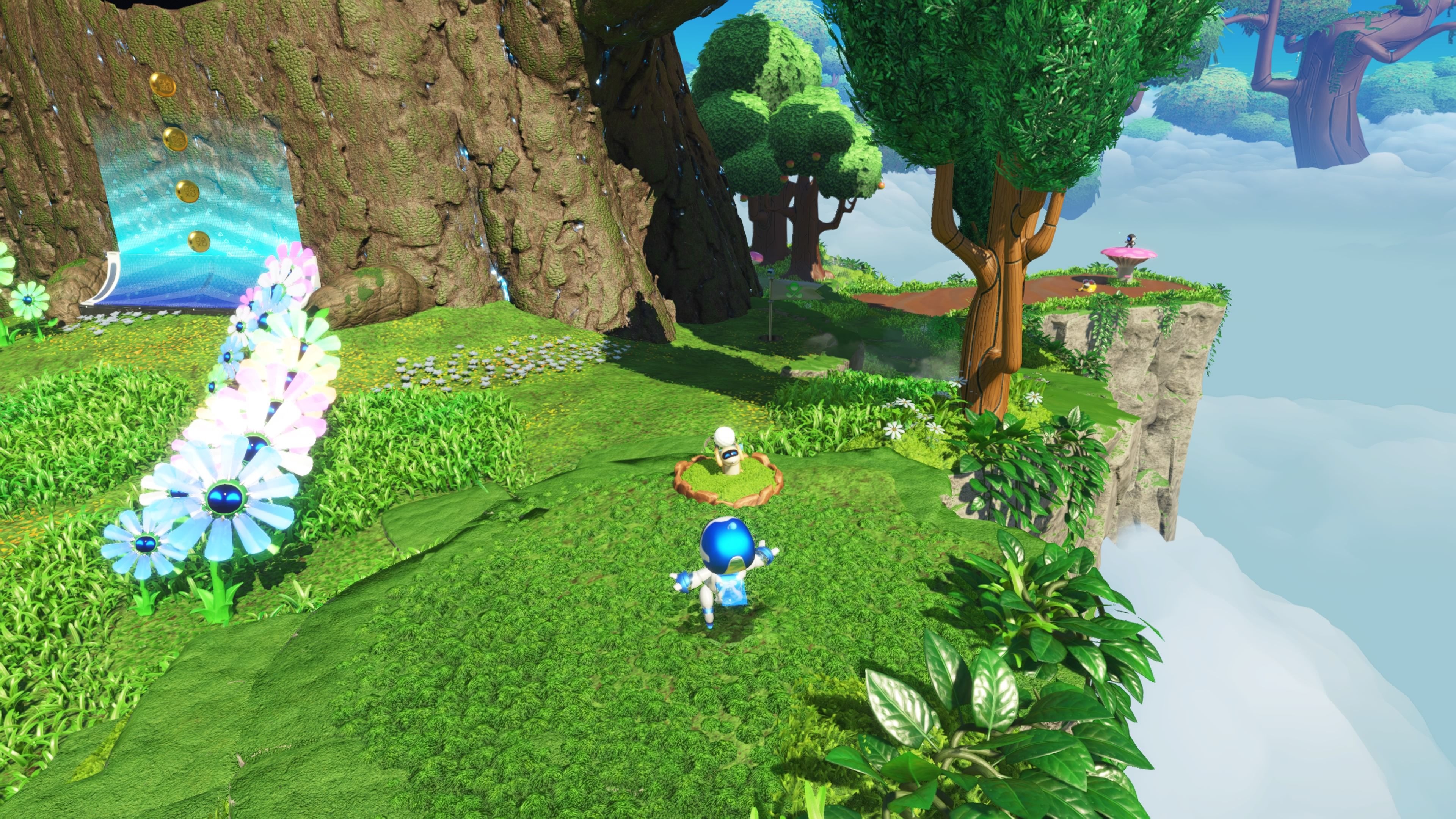
When you think of revolutionary games that utilize a game system’s specific features, you think of Nintendo. That was what I was thinking the entire time I played Astro Bot. It feels as though Miyamoto personally created it. Is it possible that after three decades we finally have a platformer on Sony platforms to call its own. I’m not referring to an exclusive game from a third-party studio that could potentially be available on any other platform. . The PS5 exclusively offers a unique experience. Playing Astro Bot gave me the same giddy feeling as when I played Super Mario Galaxy for the first time. This killer app is a game changer for Sony’s PS5, but why did it take four years to release?
I went into this game with low expectations. Just another cutesy platformer. I didn’t anticipate that this would match or even surpass the quality of LittleBigPlanet and Tearaway. I was unable to put the game down, and Astro Bot brought a smile to my face for an unhealthy period of time. You don’t seem to understand just how enjoyable and addictive this game is. In just three days, I completed nearly 100% of the game. I haven’t sat down with a game like this in years. I can’t remember the last game I did this for outside of the recent release of Silent Hill 2. The game is just pure, raw fun.
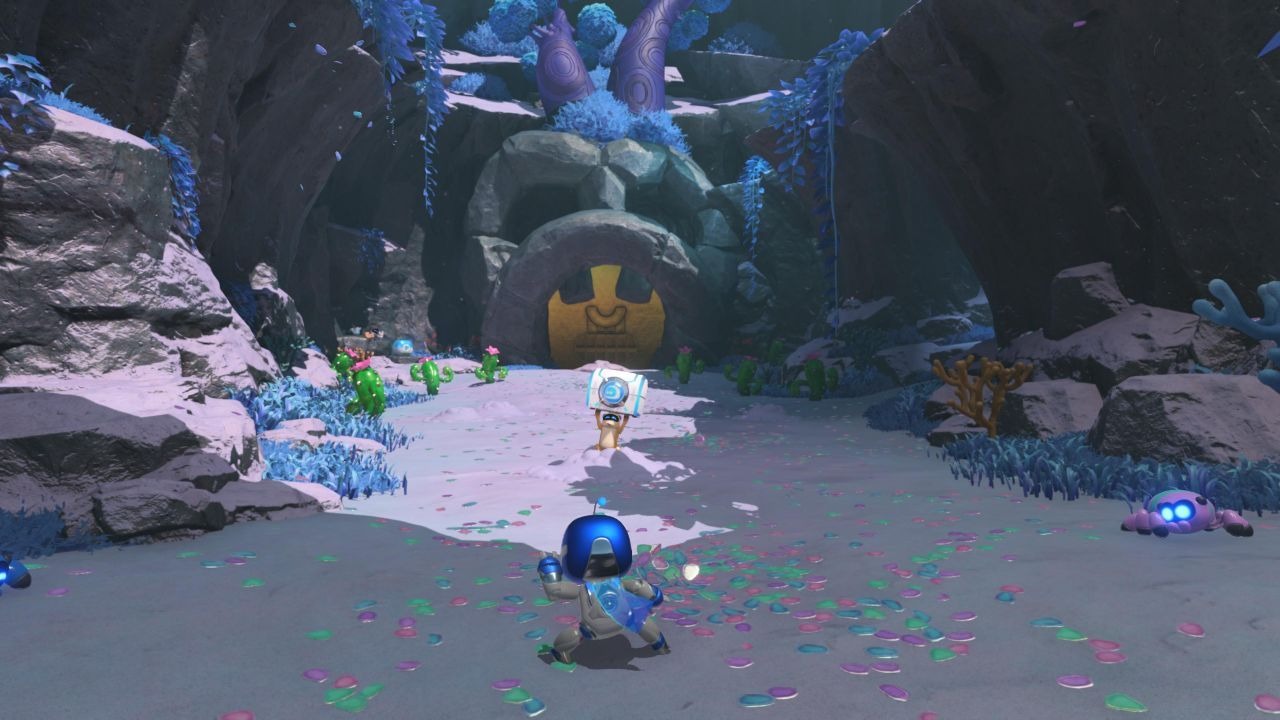
First off, let’s get the Sony branding out of the way. This is a PlayStation fan service specifically designed for those who have grown up with the PlayStation brand. While you can find all the modern games from the last two generations here, Team Asobi has dedicated their efforts to nearly every franchise that Sony has released or was known to be exclusive, helping to shape the PlayStation identity. Each level features a variety of bots, puzzle pieces, and occasionally a secret level. The bots that make cameos from other franchises are identified by gold face button logos on their icons. There’s usually 2-3 per level, but each “galaxy” has an exclusive PlayStation-themed level. God of War: Ragnarok, Uncharted, and even Horizon are obvious choices. However, the Loco Roco and Ape Escape stage almost brought me to tears. This could have been a whole new Loco Roco game on its own. I was so stunned and shocked when there was a whole world dedicated to such a forgotten Sony IP.
One of my favorite things about the cameos is that Team Asobi didn’t outright tell you who they are. For obvious reasons, they cannot reveal the identities of third-party-owned names, but part of the fun lies in identifying the character based on the description they provide. There are 300 bots in the game, and at least a third of those are cameos. When I saw bots for Vib Ribbon, Intelligent Cube, Klonoa, Journey, Strider, and various other popular and more obscure characters, I was shocked and cheered with joy. However, what helps here is that the Astro Bot characters are charming, cute, and full of emotion and expression without any voice acting outside of grunts and shouts. The blue LED displays on their faces and their white bodies may appear generic and plain, but these two simple elements, along with some slapstick humor, effectively recreate the personalities of other video game characters.
Astro Bot’s storyline isn’t particularly noteworthy. Astro Bot, like most Nintendo IPs, is primarily about the experience. A green bully alien has stolen the parts of your PS5 mothership, and it’s up to you to defeat him. The Sony branding is on point with PlayStation logo gold coins, face button shapes littered everywhere, the Astro Bots riding on PlayStation consoles, and so many Easter eggs. By adopting Nintendo’s strategy of not requiring a deep and involved story with voice acting, the game is unrestricted by a mythos or timeline. The story was adorable and fun, and the end credits stage was a blast to play.
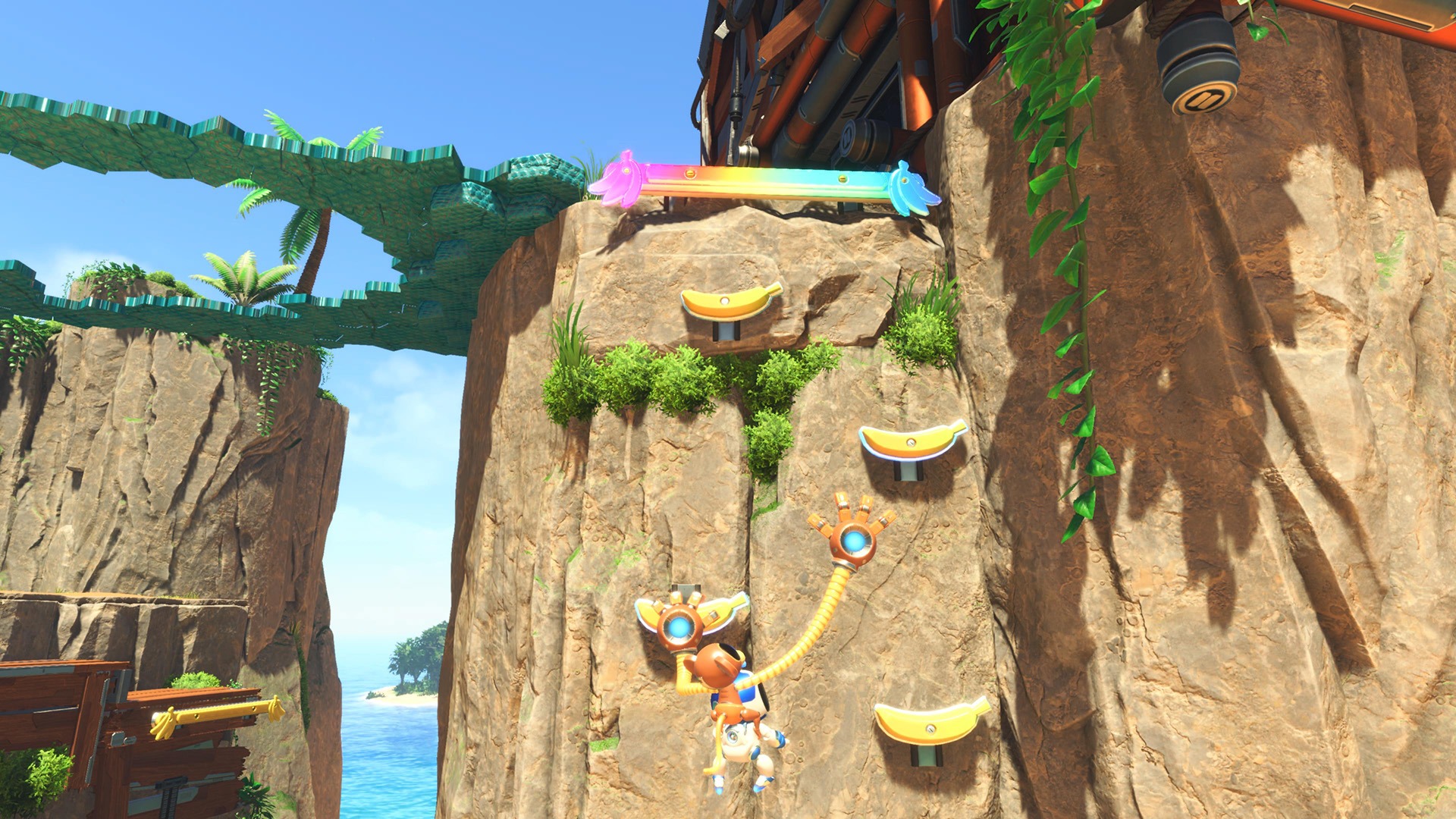
When it comes to playing Asto Bot it’s an absolute treat and the game just feels so good to play. The momentum, physics, weight, gravity, and all of those things that make platformers like Mario as iconic as it is are fantastic and feel like no other platform out there. Your Bot will start out at a walking pace and slowly pick up speed. You get a spin attack, a punch attack, and your rocket boots can be used to as laser cutters to attack enemies as you jump over which is vital to master as some enemies can only be defeated this way. Bouncing around levels on various environmental objects such as jelly, inflated balloons, and other items just feel so good. Part of this is due to the DualSense’s amazing sound based vibration function and the haptic triggers. No other game has used the controller this well. Playing this game reminds me of the E3 2006 demo of Sony stating that the PS3 graphics are so good you can tell textures apart. Well, here you can feel textures. It’s insanely good and accurate. The jaggedness of a zipper pull, the sloppy jelly, various floor textures like grass, water, metal, cement, etc. It all has a unique feeling and the audio textures play through the controller speaker. The speaker is always going and it adds a sense of depth to the game I have never experienced before.
Astro Bot places significant emphasis on texture in the game, with each world offering unique features. There are enemies that repeat, but they are usually dressed to match the theme of the world, and these enemies are well tuned and adjusted for the speed and momentum of the game just like a Mario title. When you spot a specific enemy and are able to gauge their speed and how you move around the world with them, you know that something magical is happening. This is crucial for the significantly more complex special stages, which demand incredibly precise platforming and present immense challenges. There are also a few speed run stages available. I can’t express just how well tuned this formula is. Team Asobi has this nailed down and has literally made the next best 3D platformer since Super Mario Galaxy. I would never say that statement lightly.
Bosses are unique, fun, and multi-staged, with their size filling up the entire screen. Various accessories, such as the bulldog horizontal boost, the chicken vertical boost, the dual-arm punching springs, the monkey tambarines, and even an elephant backpack that sucks up various fluids to create platforms, are available in certain stages. You use these during boss fights, timing their attacks, learning their patterns, and reacting accordingly. Mini-bosses are present in some of the bonus stages, and they are all thrilling to battle against, possessing a unique and intimidating presence. I will say that my only complaint about the game is the one-hit kills. This is a stark difference from an easier and more forgiving game like Super Mario Galaxy. Boss fights permit two hits, while the frequent checkpoints facilitate easier navigation. However, during the hardest challenge levels, there are no checkpoints. These levels can be extremely lengthy, and repeatedly restarting the same level can become frustrating. Only the most skilled players will have a slim chance of completing them.
Sadly, once you’ve collected everything in the game, there’s nothing else left to do. You can easily achieve a 100% completion rate and platinum status in less than a week, which is a positive development. I never wanted the game to end. I wanted more, and hopefully this is a series that will stay and continue to innovate. The finely tuned and perfected platforming, mixed with PlayStation branding, a new cute Bot character that can show a ton of emotion and expression with no voice acting, and the best use of the DualSense controller to date make for a fantastic package. This is a unique and rare type of game that comes only once every decade. Great platformers are extremely rare due to the precise nature of the genre’s formula, which is difficult to get right. With Team Asobi’s flawless execution and impressive artistic and technical visuals, this game is an obvious choice. If you love platformers, this game is for both kids and adults.
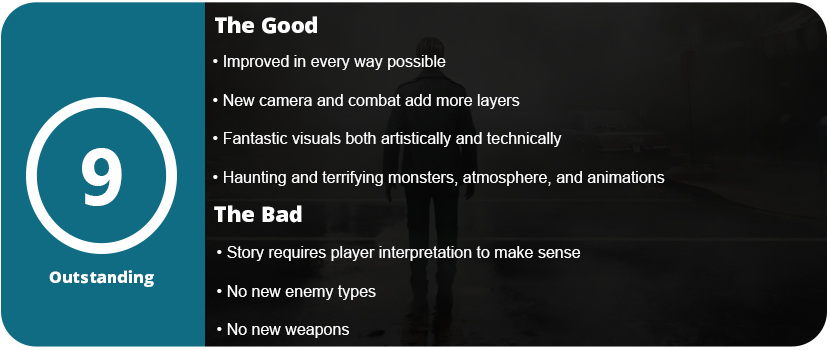
“They actually did it!”, I exclaimed. As soon as I saw the opening scene and played the first 20 minutes of the game, my jaw dropped. I don’t know what happened, but Bloober Team, against all odds, managed to make one of the greatest remakes of all time and put Silent Hill back on the road to recovery. Following the disappointing releases of Downpour and Book of Memories, along with the subpar HD ports of Silent Hill 2 and 3, many people dismissed the series. The previews for Silent Hill 2 were quite unimpressive, giving the impression that Bloober was concealing a potentially terrible game. However, it’s also possible that they were concealing the game’s true quality to surprise everyone. It’s hard to say, but the game is far from lazy.
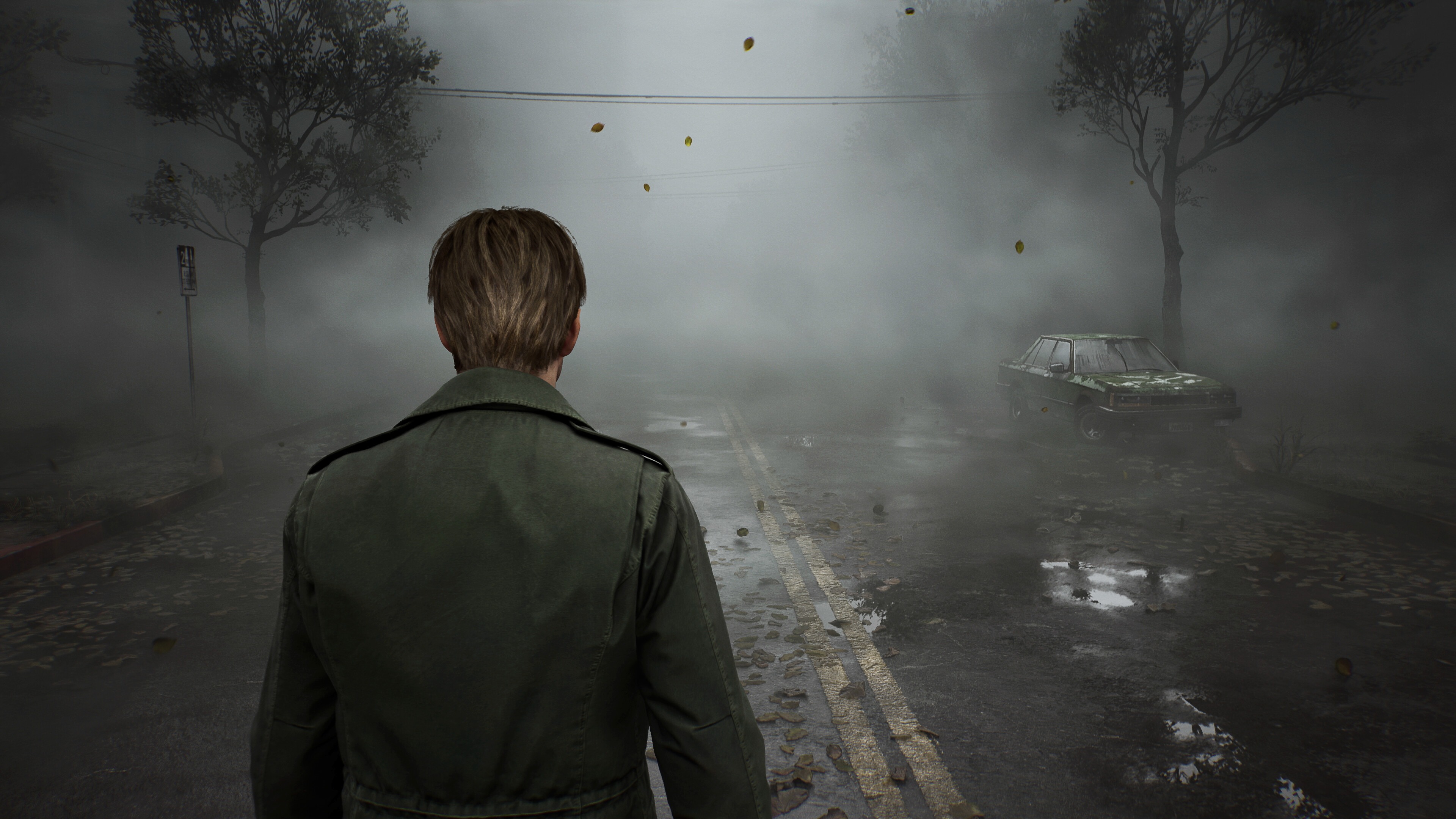
If you played the original game on either PC, Xbox, or PS2, then you are in for a treat. For those who haven’t: Welcome to Silent Hill. This is undoubtedly one of the most terrifying games I’ve played in recent years, and the utilization of Unreal Engine 5 brought me immense relief. The effects that Bloober used here would not have been possible with UE4. The ray-tracing, lighting effects, fog, and insanely detailed texture work are gorgeous, and I drank in every second of this game. Thank goodness this didn’t come to previous-generation consoles, which would have required UE4. This is truly a next-gen title. A couple of months ago, I had the opportunity to play the fan-made Enhanced Edition for PC, and I can confidently say that Bloober did not opt for a copycat remake. Instead, they infused the game with their unique style, incorporating new areas to enhance gameplay without causing it to feel bloated and monotonous. Bloober has extended some dialogue and cut scenes, resulting in a more organized game overall. I had a blast finding memos, photos, and the new Glimpses to unlock trophies. There is also a New Game+ feature, which is awesome. Although your items don’t carry over, you receive a new chainsaw as a melee weapon and can unlock more endings, including two new ones specifically designed for this game that don’t have trophies attached to them.
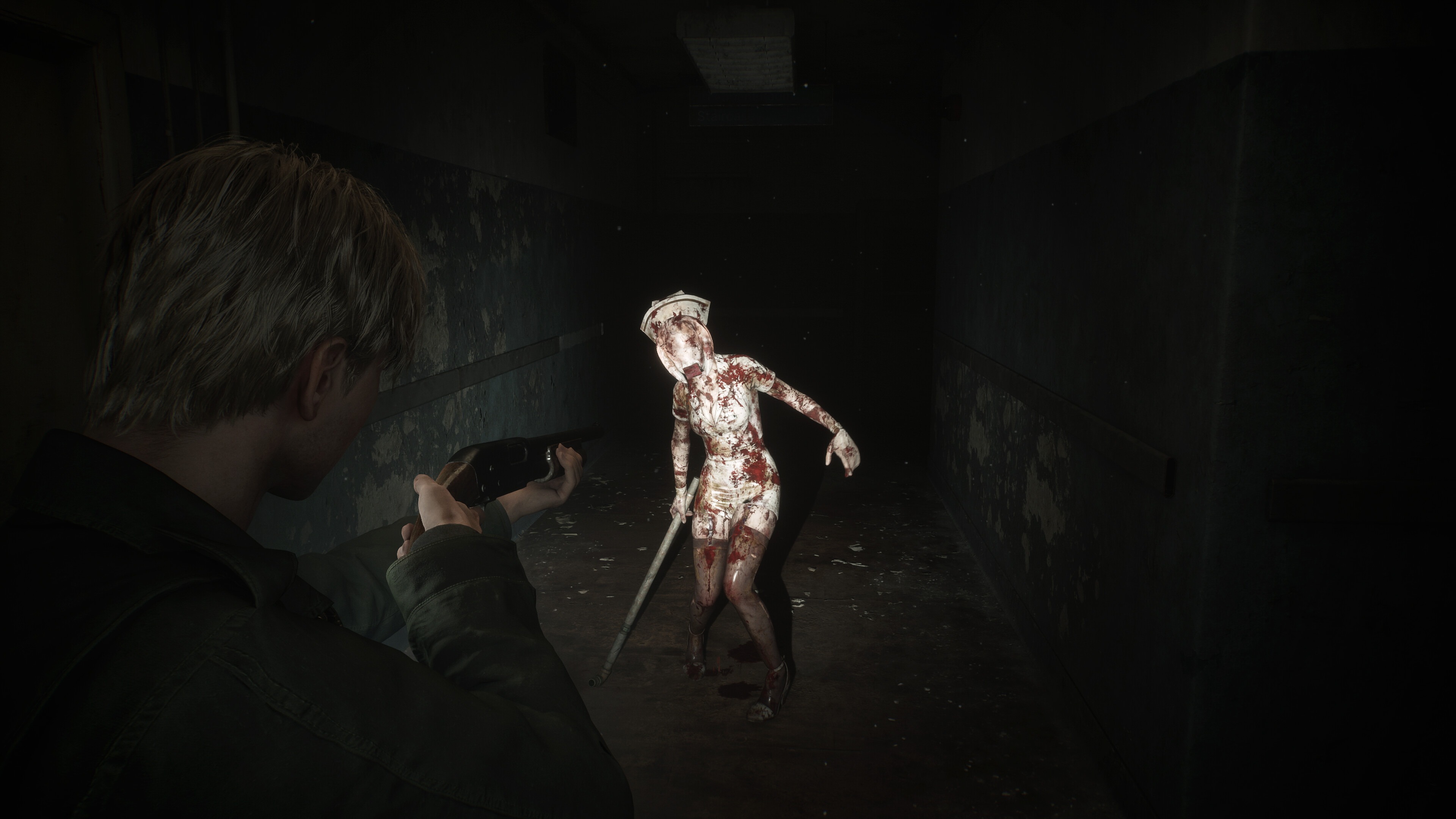
The combat and camera are the two biggest deals of the remake. Taking a cue from Resident Evil, they positioned the camera behind James, adding a more cinematic flair that was both much-needed and welcomed. Melee and shooting combat is brand new here, with fantastic enemy designs to kill and squash. The melee combat is punchy, and James delivers his grunts and shouts with a tremendous deal of passion and fervor, resulting in a satisfying experience. The camera will sway and bounce slightly with each swing, and James will hesitate for a split second on the third hit of the combo, committing his entire body to the final swing, creating an impactful crunchy effect. The DualSense controller is essential for this, as it enhances the entire experience, not just during combat. When your radio goes off and an enemy approaches, you can hear it through the controller speaker, and the DualSense vibrates with every crunch, shout, and scream.
The ranged combat is satisfying as well. This game features the same three weapons, and you must use ammo sparingly and wisely. Use melee whenever you can to conserve ammo. You can deal with one or two enemies, but some rooms will throw three or four at you, necessitating shooting. The revolver, rifle, and shotgun all return; ammo for the shotgun and rifle is very rare. Only save them for bosses. You also receive a 2×4 equipped with nails and a lead pipe, which is the only melee weapon available aside from the chainsaw in NG+. My only complaint about the game is that Bloober didn’t incorporate enough weapons in more areas. I would have preferred to see a few more guns, or at the very least, more melee weapons. There’s no upgrade system, but that’s fine, as it’s not needed. Some people may question this. Thankfully, the game provides great feedback when you shoot enemies. For example, hitting a limb will cause them to fall to the ground, and shooting them in the head will cause them to stop in mid-walk. It’s very satisfying, and I have no complaints about the combat system at all.
The game could have potentially deteriorated during the exploration phase. Bloober needed to update how to navigate the game for a modern audience. Silent Hill is known for being cryptic, especially in the puzzle department. There are numerous granular options available for customization. You can customize the combat and puzzle difficulty as well as adjust the HUD as much as you want. The game’s main areas feature a larger central puzzle that players uncover, necessitating the discovery of specific items within that level. Bloober does a competent job guiding the player with lights, blood trails, debris, etc. Additionally, it’s essential to explore each door, as it bears markings identical to the original. This map system has always garnered high esteem and performs exceptionally well here. You won’t get lost easily, and Bloober did a commendable job making every hallway and room stand out. One of the biggest issues with the original game was the abundance of bland-looking rooms and hallways that seemed to always look the same. Bloober added a lot of detail and made every location feel dreadful and haunting. The atmosphere is stunning and truly frightening. I didn’t care for the newly added pushable carts. These never solved any puzzles and felt like pointless filler. When the carts are pushed 6 feet away and into place the handles drop down and lock the cart telling you it’s in the right spot. Climbable areas are marked with white cloth which is a nice touch.
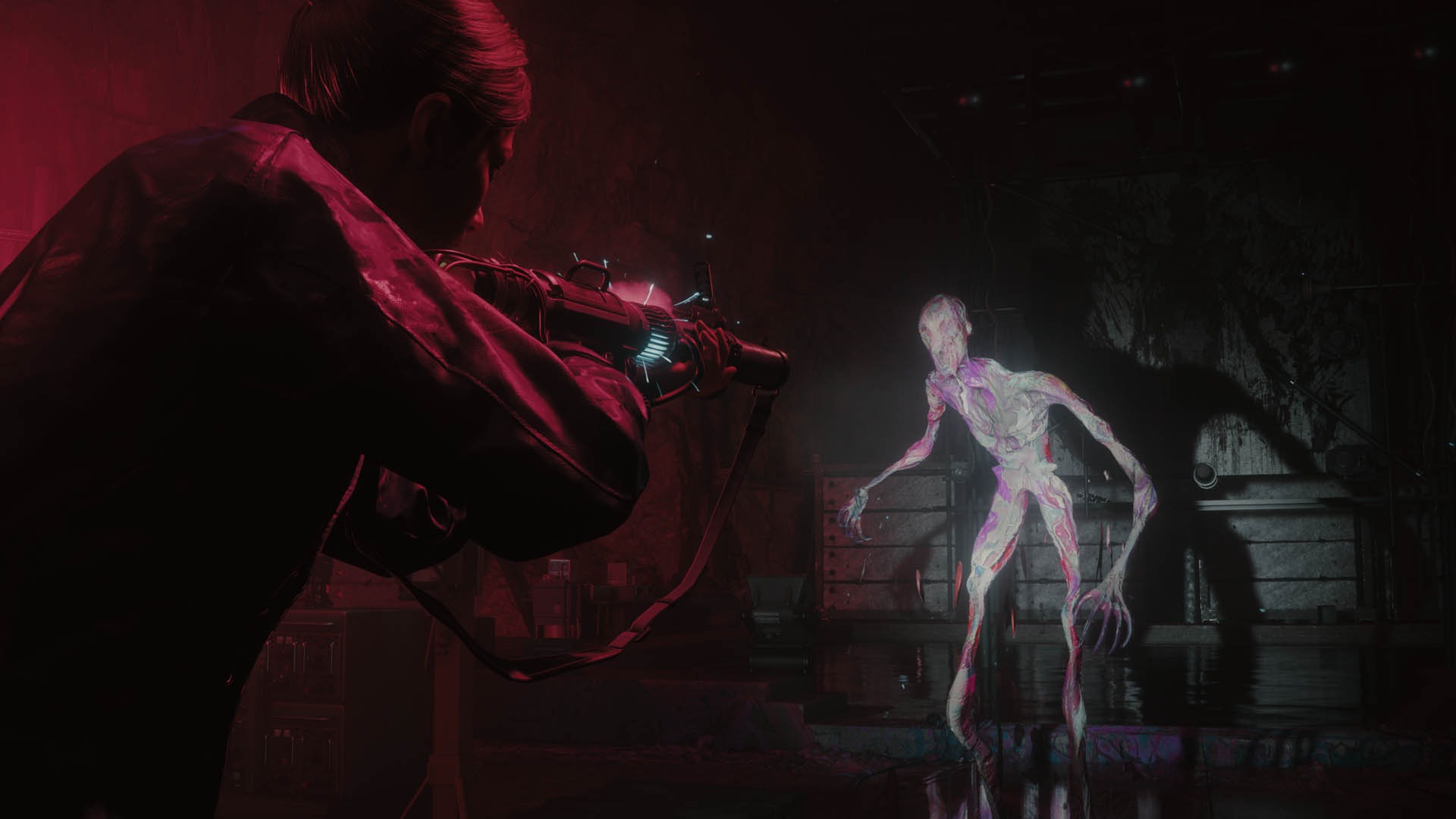
I cannot emphasize enough how significantly Bloober enhanced the atmosphere and feeling of Silent Hill 2. The game features a remastered soundtrack and eerie ambient effects. Upon entering the town for the first time, the majority of players will find it unforgettable. The fog, which is choking and claustrophobic, is accompanied by strange alien sounds that play when enemies are near, random rusty bangs, the scraping of Pyramid Head’s sword on the ground, and fantastic animations of monsters that seem almost human. The distant, dark hallway barely illuminates the contorted bubblehead nurse, who twitches in response to your approach. The flashlight serves as your sole source of hope and comfort. After so long, just stepping back into the foggy town is a sweet reprieve from the cramped and delirious buildings. The Otherworld areas are equally as nightmarish and fear-inducing. You will be on edge during the entire game.
The new voice acting is also phenomenal. While the original voice acting was inconsistent, I was astonished by the exceptional quality of the new rendition. The actors effectively convey every emotion, demonstrating genuine care and commitment to their roles. James sounds sad, lost, and human. Eddie’s actor masterfully portrays his psychosis on the verge of madness. The characters in Silent Hill 2 were few, and their appearances were brief. Some may find this distasteful, as it appears to be a departure from the current practice of creating games with numerous hours of voice acting. The game heavily relies on the players’ interpretation and reading of the memos. The game does not explicitly reveal what is happening to James, what these monsters are, or why Silent Hill is set up the way it is. The town is a character in the game. Silent Hill is known for dabbling in the human psyche and mental psychosis of people.
Silent Hill 2 is a surprising love letter to the series, and I fully endorse Bloober doing more remakes and even a new Silent Hill game. They haven’t had the greatest track record in terms of gameplay. Despite the unfavorable reception of Layers of Fear and Blair Witch, they successfully created a captivating experience here. The new camera and combat are punchy and responsive, the visuals are stunning, the added areas are fun, and I honestly didn’t want the game to end. At the end of the game, I felt empty and immediately started a New Game+, something I never do. As a longtime fan of Silent Hill from my childhood, that first game scared me so much that my mom had to return it to the rental store. I greatly appreciate it and can’t wait to see what the future holds.
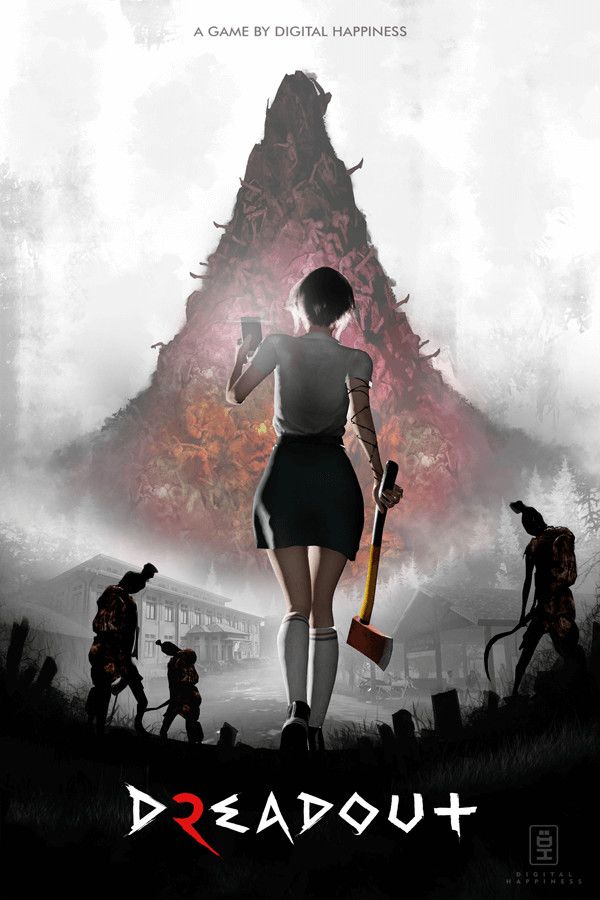
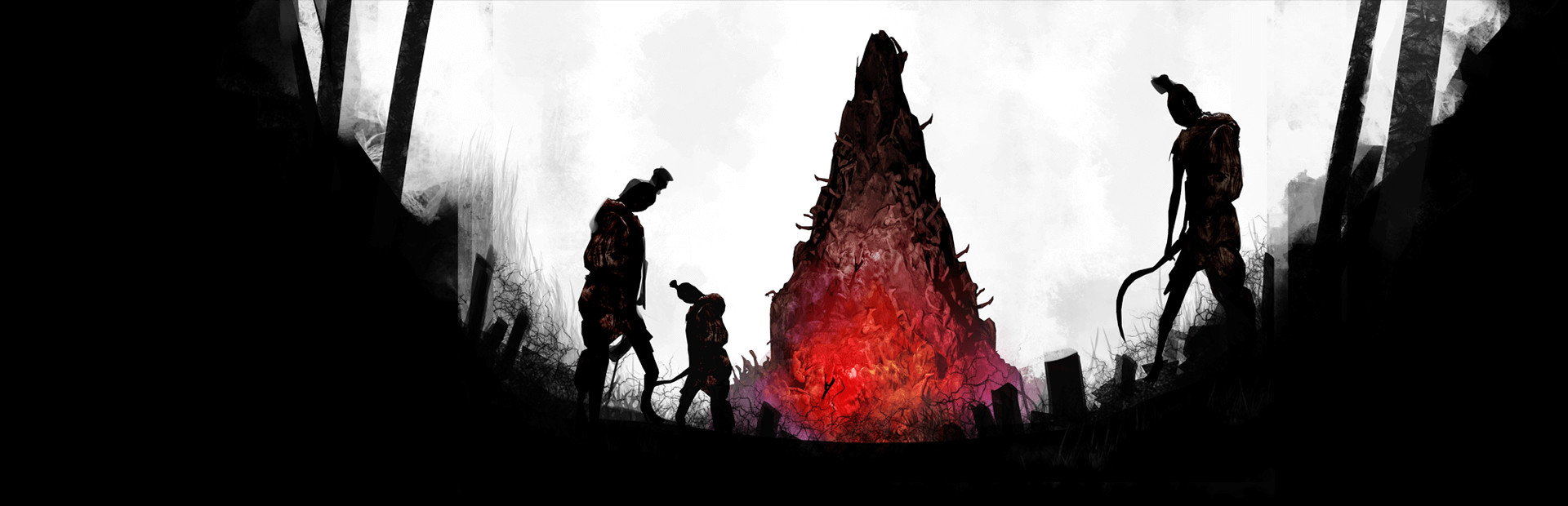
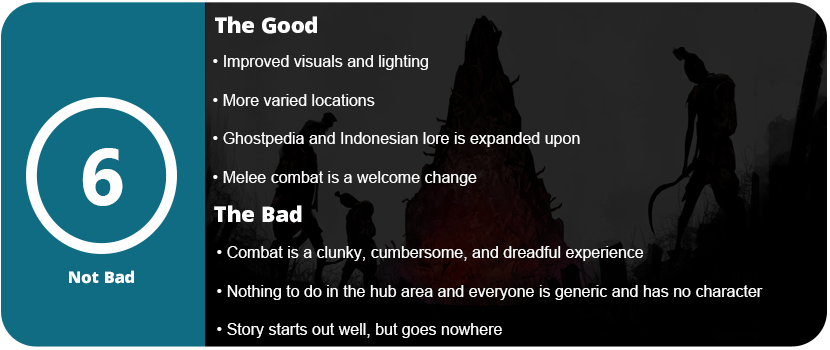
I finally made it around to the last of the trilogy. This latest entry is a huge step up for the series, but if you zoom out and look at the game in comparison to others at the beginning of this generation, it still feels and plays dated. Right off the bat, the game is a massive boost in visual fidelity. The game boasts improved textures, models, and lighting, all of which contribute to its impressive visual appeal, particularly considering its modest budget. The game also has a more cohesive timeline to play through rather than a few random set pieces. There are eight acts in this game, so it’s about as long as the two previous games combined. There is a large hug area you can run around in, and then you can branch off to the different acts as the story progresses.
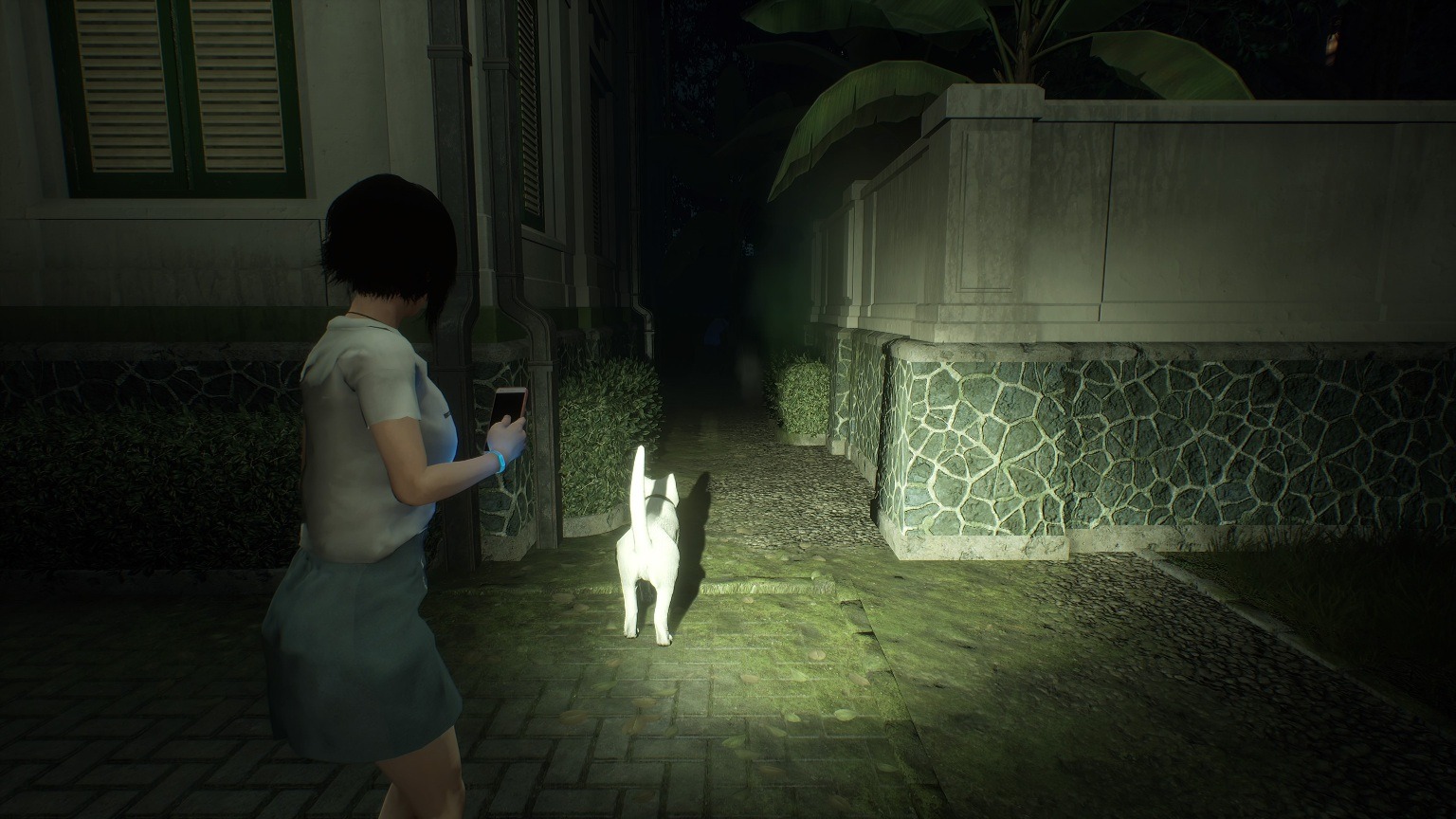
Right off the bat, while this all seems nice, it’s superfluous. The main town, where you wander around, offers only a few hidden urban legends to photograph and two side quests. A chapter unlocks each of the game’s five locations. Linda looks much better, but she has no personality. This was a great opportunity that the developers could have used to make Linda a memorable female horror protagonist, but they didn’t really give her a voice or any character. In fact, everybody in this game feels like a generic JRPG NPC. The ghosts and monsters have more character than they do. This also leads to the same stupid story that makes zero sense. While you can view a “Previously on DreadOut” video, the game doesn’t do anything with this story. I was hoping for an explanation of Linda’s past and the curse that haunts her, but the explanation fell flat, leaving me with a shrug at the game’s conclusion. I can’t delve deeper into it without revealing the limited plot, so don’t expect too much.
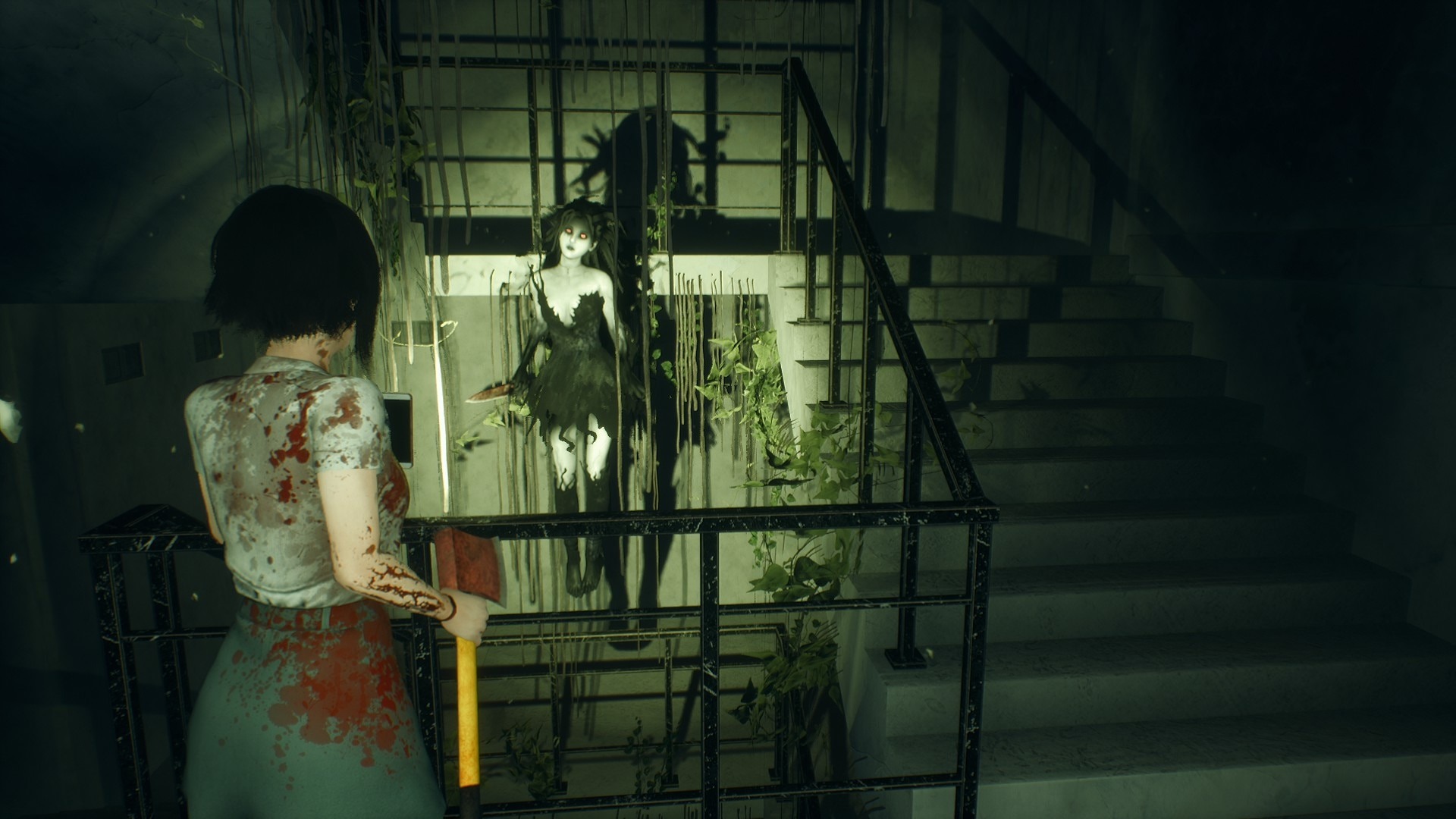
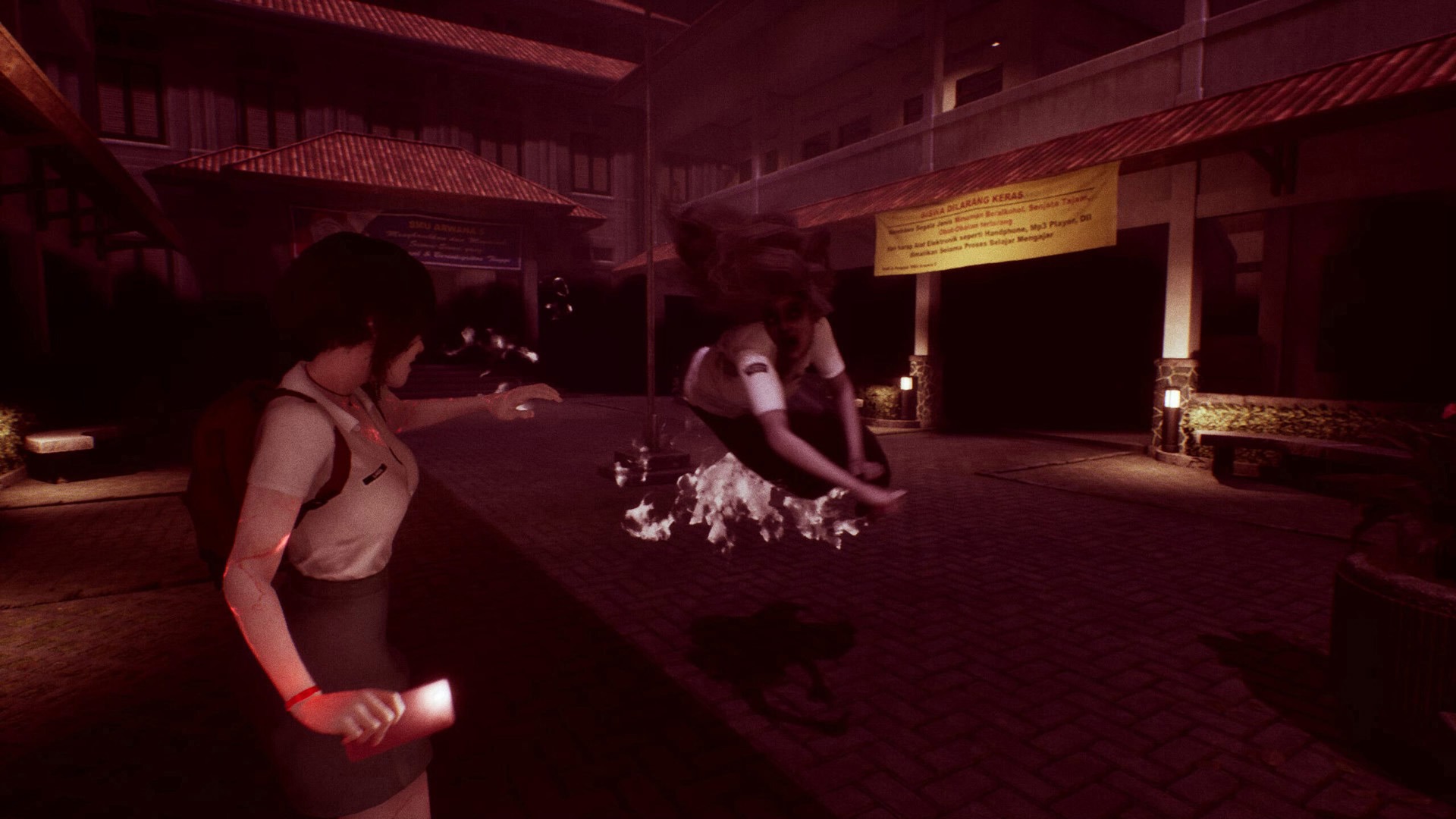
Combat comes in two forms. In the original form, which uses the Irisphone 2.0, you aim at a ghost, and when a “glitch” appears, you can snap a photo to inflict damage. There’s a new feature that lets you hold the shutter button longer to do extra damage. The second form is only available in the “alternate” realms, where Linda can use her phone’s flash to stun enemies and wield a melee weapon. These realms do not allow you to take photos, and there is a greater emphasis on solving simple puzzles. I honestly found the Irisphone combat in the “real” world to be atrocious and frustrating. The ghost’s face has to be perfectly centered in the phone for the glitch to appear, and it only happens for a split second. This time, the game features a greater number of bosses, each with their own unique gameplay style. However, a significant number of these bosses can be so frustrating that many players may abandon the game and never return. Some of the problems include knockback animations that are annoying and there’s still no health meter. The screen slowly turns black and white, and you can hear a heartbeat, but that’s about it. There’s a particular boss in Act Two that had me screaming. Some of these ghosts take 20-30 shots to take down, and Linda has no dodge, parry, or block button.
While combat in the “alternate” realms is better because you can sling your axe everywhere, it’s still clunky and obtuse. Here, the game will throw a lot of enemies at you, and you still have no block, dodge, or parry button. Some enemies have the ability to run faster than Linda, lurching forward in a continuous loop that prevents you from moving far enough to breathe or escaping into a corner. Your health will recover if you run away long enough, but this was mostly noticeable during boss fights. While the game is clunky and cumbersome, it throws things at you, making these fights way more frustrating than they need to be. One particular boss isn’t just a single ghost; more little ghosts spawn and constantly come back. Why did these ghosts spawn? With this Irisphone, I can’t dodge or block, and swinging the axe or getting the shot just right is hard enough. These elements don’t add challenge, but frustration. They only show how flawed the combat system is.
Unfortunately, this time around, most of the game is combat. I did get lost in some larger levels with labyrinthine hallways that all seemed to look the same, which was a problem with the first game, but this wasn’t an issue on every level. Most of the time, I knew where to go because the area was either very linear or had only one path forward. I did explore the area, collected all the urban legends, and filled my Ghostpedia, but the game seemed to lack any meaningful activities. Although the expansion of Indonesian lore and the improved appearance of the monsters are commendable, I believe this series has the potential to achieve more. It wants to be the next big horror title, like Silent Hill, but it has to break through the tropes that the survival horror genre suffers most of the time. If there is a DreadOut 3, it needs better combat, better level design, and a story that makes sense, as well as making Linda a likable character and not just a voiceless generic avatar.
DreadOut 2 is really only for fans of survival horror from the 1990s and early 2000s, as well as those who enjoyed the original games. The game’s visuals have improved more than the gameplay. Combat is horrendously cumbersome, obtuse, and difficult. Some of the boss fights are victims of this mess, which can cause players to throw the game in the trash. The story lacks depth, and the characters resemble generic robotic avatars instead of evolving with an ever-growing series. The game expands upon the Indonesian lore of monsters, urban legends, and ghosts, enhancing their visual appeal, yet the open hub remains empty and bare. The game needs more attention to detail before I will bother with a fourth outing.





































 thebinarymessiah.com
Try multiplayer. A lot of fun !