• About
    • BinaryMessiah
    • Game Collection -BinaryMessiah-
  • Guides
  • Blogs
    • FAQs/Walkthroughs
      • Mortal Kombat (Vita)
      • Mortal Kombat: Deception/Unchained
      • Syphon Filter: Dark Mirror
      • Syphon Filter: Logan’s Shadow
  • Games
    • PC Reviews
      • Mac
      • Steam Deck Verification
        • Steam Deck Verified
        • Steam Deck Playable
        • Steam Deck Unsupported
        • Steam Deck Unknown
    • Microsoft Consoles
      • Xbox One
      • Xbox Series X|S
    • Nintendo Consoles
      • Switch
    • Sony Consoles
      • PlayStation 5
      • PlayStation 4
    • Mobile Reviews
      • Android
      • iOS
    • Retro Consoles
      • Nintendo
        • Game Boy
        • Game Boy Color
        • Nintendo 64
        • Game Boy Advance
        • DS
        • 3DS
        • Super Nintendo
        • Gamecube
        • Wii
        • Wii U
      • Sony
        • PlayStation (PS1)
        • PlayStation 2
        • PlayStation 3
        • PSP
        • PlayStation Vita
      • Sega
        • Sega Master System
        • Sega Genesis
        • Sega 32X
        • Sega CD
        • Sega Saturn
        • Sega Dreamcast
        • Game Gear
      • Microsoft
        • Xbox
        • Xbox 360
      • SNK
        • Neo Geo Pocket
        • Neo Geo Pocket Color
      • NEC
        • TurboGrafx-16/PC Engine
        • TurboGrafx-CD/PC Engine CD
      • Nokia
        • N-Gage
      • Bandai
        • WonderSwan
        • WonderSwan Color
  • Game of the Year Awards
    • 2025
    • 2024
    • 2023
    • 2022
    • 2021
    • 2020
    • 2019
    • 2018
    • 2017
    • 2016
    • 2015
    • 2014
    • 2013
    • 2012
    • 2011
    • 2010
    • Retrospective Round-Up
      • Retrospective: 2009
      • Retrospective: 2008
      • Retrospective: 2007
  • Gadgets
    • Reviews
  • Comics
    • Avatar Press
    • Boom! Studios
    • Dark Horse
    • DC
    • Dynamite
    • IDW Publishing
    • Image
    • Markosia Publishing
    • Marvel
  • Book Reviews
  • Interviews

Nokia N-Gage QD – 20 Years Later

Posted by BinaryMessiah on 09/21/2024
Posted in: Hardware, N-Gage, Retro Consoles. Tagged: cell phone, console, games, gaming, handheld, N-Gage, Nokia, qd, review, reviews, video games. Leave a comment

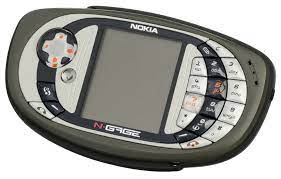
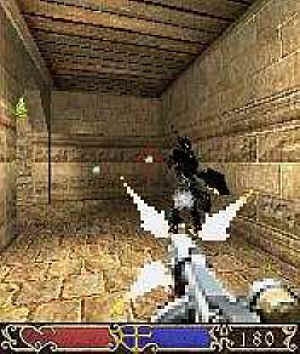
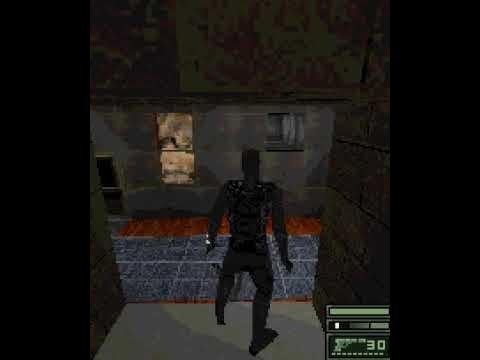
October 7, 2003, was a day to remember or completely forget, depending on who you were. The original N-Gage model sold for $299 ($462 adjusted for inflation) and was a graphical powerhouse on par with the original PlayStation. While the seven original launch titles were all ports from GBA and PlayStation, they ran from very well to questionable, and the system showed a lot of promise. I remember seeing the N-Gage in GameStop as a broke 13-year-old, wishing I could get one. The ads for Ghost Recon, Splinter Cell, SonicN, Tony Hawk, and Tomb Raider made me green with envy. I was envious of all these amazing games that I could play on the go! It was way better than the dumb GBA! Actually, it wasn’t, but Nokia squandered its potential due to the immense power under the hood.

Ultimately, there are great videos on YouTube documenting the system’s history, but in the end, the original model most likely killed the system. The infamous “Taco” phone was sweeping the press and turning gamers off. A former GameStop employee told me that people frequently came in to roast the system and make fun of it when they saw the ads for it. It was the laughingstock of the industry, especially for Nintendo fanboys, and everyone knew it was going to fail. Whether that was accurate at the time remains a matter of debate, but it did not boost sales. They just couldn’t get enough. The portrait screen also turned off many users, necessitating manual customization of most games for the experience. Released just 7 months after the Taco model, the QD lacked features such as a USB port, MP3 playback, dual-band antenna instead of tri-band, and the same operating system, even though Symbian 7.0s had already been out before the QD’s release. This implies that gamers continued to rely on 1st generation Symbian games for content beyond the N-Gage library.

So what’s the QD experience like? It was frustrating, to be honest, but in the end, I grew fond of the little system. I have created a comprehensive guide explaining how to begin the collection process and set up the system, but it’s not an easy task. You need a standard-size SIM card, an MMC memory card (not made anymore), and a card reader for it. The N-Gage library is rather expensive to collect, with many going for $50+. There are a ton of great games available for the N-Gage. In fact, in its sad 65-game library, there are more good games than bad.

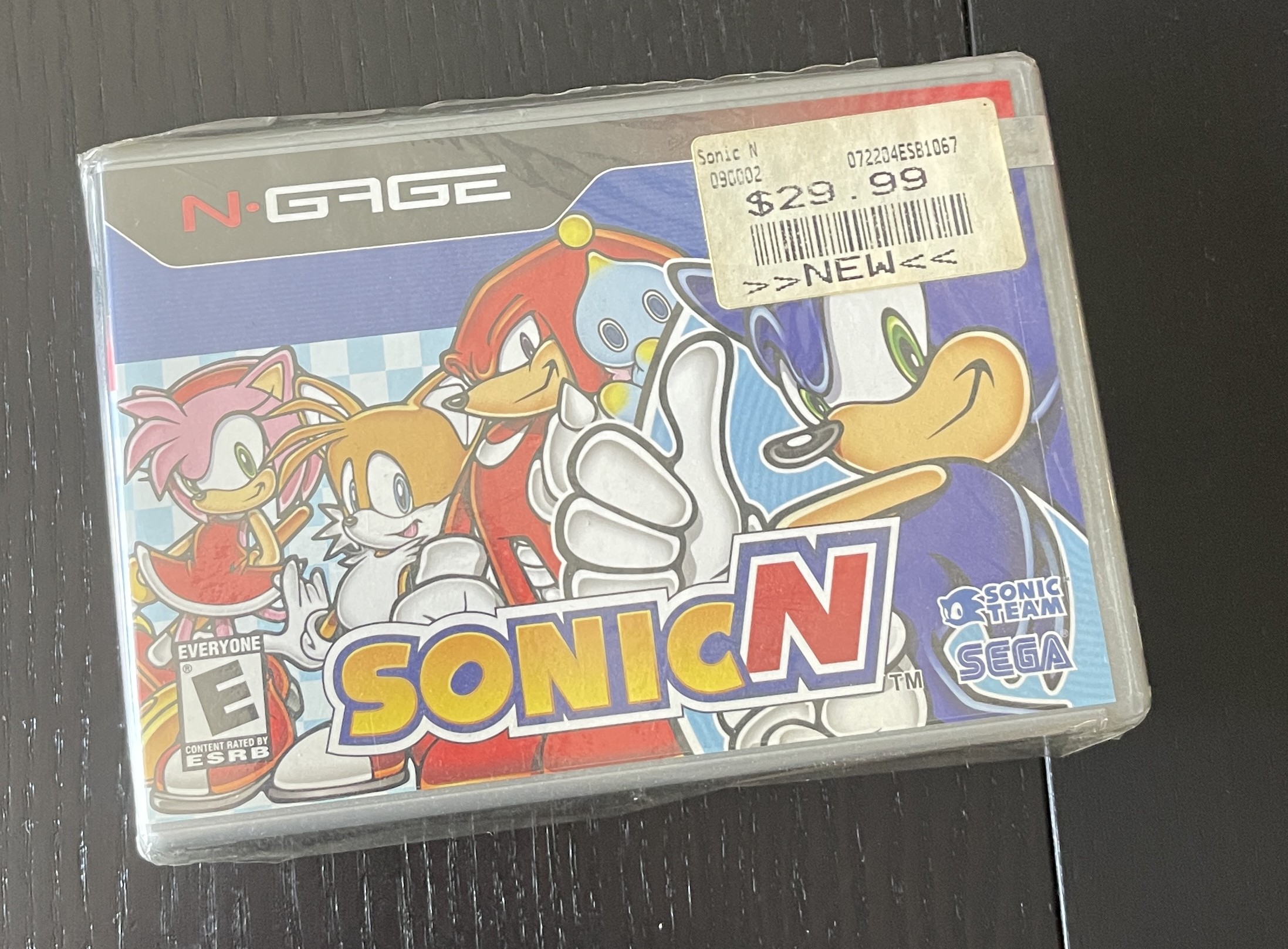
A new copy of SonicN sold by GameStop that I purchased

Physically, the QD feels good in the hands. It features a thick rubber bumper around the entire outer edge. The top sports a rubber stopper with the headphone jack and charger port, and the bottom has one for the card slot. These stoppers are a serious pain! They were always intended for older cell phones. Usually, the stoppers for the charging port or headphone jack will eventually tear and break. If you have a large N-Gage library, you’re going to eventually rip these stoppers. Maybe hard plastic would have been better, but this is a budget re-release, so I digress. The back has a removable battery door, and underneath is a spot for the SIM card. The front features a D-pad and various menu navigation and selection buttons on the right, as well as the standard numpad on the left. There are two raised buttons (5 and 7) that function as “game buttons.” You also get an orange backlight. The screen is a backlit 2.1″ TFT LCD at 176×208 resolution and looks pretty decent. At least it’s backlit, which is a nice touch.

In terms of software, the OS itself offers minimal customization options. It’s a standard affair, with the only customization being the wallpaper for the home screen and welcome screen. This is about all you could do on your phone back in the day. There isn’t even an option to customize the ringtone, really. The only special thing about this phone is the form factor and the unique game library, in which there are many awesome games available. If you can get an MMC card up and running, you can play cracked games since the library is so expensive.

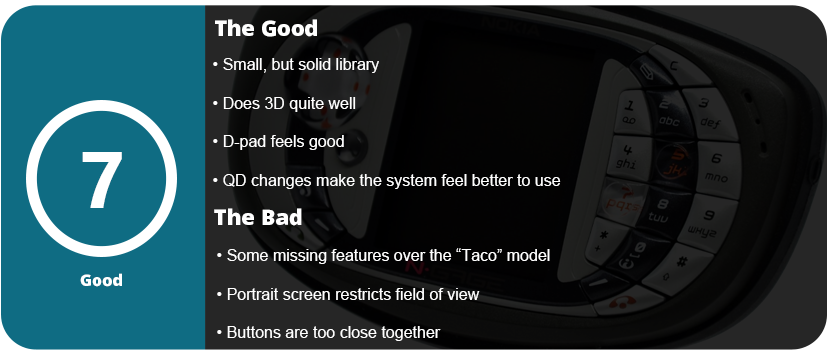
How does it feel to actually play the games? Well, it’s a bit awkward at first as the face buttons are so close together. While the 5 and 7 keys have a distinct height, I can still easily hit other buttons, and the D-pad feels surprisingly comfortable. You can roll your thumb around it easily enough. I think shoulder buttons or a push-out keyboard could have helped here. But let’s get to the true reason why anyone would want this. The games. How do they feel and play?

They vary greatly. Sadly, the system didn’t have a long enough life to really iron out the kinks and let developers hone their tools. Some games feel great on the system, like they were hand-tailored, while others feel completely shoe-horned in just to make a quick buck on some hype. The N-Gage isn’t anything special in that regard. The N-Gage received the same treatment as every other console. The portrait screen is probably the system’s biggest fault. Although developers can adapt control schemes to the screen, they must completely tailor games to the orientation. No other console has ever done this before, unless you count the Vectrex or something else. Either stick to widescreen (16:9) or 4:3. Heck, even 1:1 would have worked just fine. I also wish the screen was a little bigger. Even a mere inch would suffice. There’s plenty of detail here, as the TFT LCD is pretty nice for the time period, but that orientation really narrows your field of view.

When it comes to performance, the N-Gage did pretty okay in 3D. It is certainly better than the Gameboy Advance, but not as good as the PSP or even the DS. Games that seem like they were really well adapted ran fine on the system with a little slowdown, such as Ashen, but other games like Red Faction and Tomb Raider run at a sub-30 FPS most of the time. However, some games, such as Tony Hawk’s Pro Skater, consistently run at 60FPS or even higher. While control schemes with a few buttons work well on the system, anything that requires the entire keypad can get cumbersome due to the layout. Ashen requires the whole keypad, including buttons, to free-look. While it certainly works and takes some getting used to, it’s not ideal at all. It’s the same issue the PSP had with no second analog nub.

Nokia aggressively promoted their N-Gage Arena online gaming, which bore a striking resemblance to Xbox LIVE. This allowed for multiplayer via cellular or Bluetooth connections. Although I am unable to test it at this time, my research indicates that it functioned reasonably well as long as you had adequate coverage in your location. It also depended on the game’s specific net code. I can imagine this being a big deal back in the day, as there weren’t any online wireless portable gaming systems like we have now. The only other portable system to offer cellular online play would be the 3G PlayStation Vita almost a decade later, which bombed spectacularly. Interestingly, the N-Gage Arena launch page remains active as of this writing, but all other links within are inoperable. After the N-Gage devices died out, the N-Gage gaming service survived for a few more years, ending up on their higher-end N-series phones. These were the last Nokia Symbian-based phones before smartphones took over. The N-Gage 2.0 was more of a gaming device than a completely new gadget. These only ran on higher-end phones, such as the N95 (mine pictured below). Games such as Metal Gear Solid Mobile were large names that would hopefully make mobile devices a serious gaming platform. Regrettably, this realization came too late.

Overall, the N-Gage QD was the system that should have been out at launch. While it doesn’t feel as well-built as the original model and cuts some features, it makes gaming on the thing—which was the main marketing push for it—better and just more accessible. Better buttons, easier access to the game slot, a smaller form factor, and just a few other tweaks were enough to consider this version the definitive N-Gage experience, but it was too little, too late. Indeed, the N-Gage library boasts a surprisingly robust selection of games, surpassing the quality of many “failed” systems. Released at the height of the handheld era, the N-Gage faced inevitable failure due to the dominance of the GBA, rumors of new handhelds from Nintendo and Sony, and its eventual higher price compared to both systems. The exclusion of children from the market due to the need for a cell phone and a talk plan further increased the cost, a burden that parents were unwilling to bear. The much cheaper Game Boy Advance was a better alternative. If Nokia had released a game-only version at a price that was more than half the original price and made some adjustments, it might have been a more viable option. Who knows? But it’s still worth having in your collection.

Share this:

  • Email a link to a friend (Opens in new window) Email
  • Share on Tumblr
  • Tweet
  • Share on Reddit (Opens in new window) Reddit
Like Loading...

Arc the Lad: End of Darkness – 19 Years Later

Posted by BinaryMessiah on 09/17/2024
Posted in: PlayStation 2, Retro Consoles, Sony. Tagged: arc the lad, games, gaming, jrpg, review, reviews, rpg, video games. Leave a comment

Publisher: Namco

Developer: Cattle Call

Release Date: 06/15/2005


Available Exclusively On


Less than a year later, the much-loved Twilight of the Spirits sequel released to little fanfare. I expected a lot of improvements and more of the same, but this game was a huge departure and mostly recycled content. You play as a seemingly generic character named Edda, a young boy from Cragh Island who is the last surviving excorcist. You now have a Slothian Deimos companion, Hemo, who is annoying and tags along for most of the dialogue. The story seems like it would start out as a normal sequel, picking up right where the last one left off. The previous heroes are all in new senior roles or retired now, but that’s not the case—far from it in fact.

The story essentially goes nowhere. The entire battle system is now real-time, but in a detrimental way. You can attack enemies in arenas with a basic attack button, but you can only use magic if your card is equipped. The card system undermines the foundations established in the initial game. There are special “gimmicks” and part cards. You can purchase the part cards for armor and weapons from vendors or find them in the field. You also have the opportunity to play as all the heroes from the previous game, provided you find their cards hidden somewhere in the world. The frustrating part about all of this is your hunter rank. To rank up at the arena, you must complete repetitive quests such as escort missions, kill X amount of enemies, find X items, and so on, earning two different types of stars in the process. You take a test, and after you rank up, more missions unlock. There doesn’t appear to be much of a story in this game. There are a few story-based missions you can take on, but the combat is so atrocious and downright boring that I never made it past the third rank.

When I refer to areas that are recycled, I mean that they are taken directly from the game. While it’s cool to see the old locales and heroes, the removal of their models from the game creates an uneven visual mess. The newer assets appear marginally better than those from the previous game, but when combined with the older ones, the overall aesthetic is unimpressive. End of Darkness, a 2005 game, just looks plain generic and awful. There’s no personality here. One of the only things that held the previous game together was the excellent story and interesting characters, but they just don’t exist here. The dialogue is dry and dull, and there is almost nothing to like here. Combat could have saved this game, but relying on boring real-time combat and repetitive quests in reused areas just doesn’t cut it.

There have been no improvements in the quality of life. Cities contain hidden holes that Hemo can crawl through. You would think that each hidden hole would hold a cool item or a card, but most of the time, all you get is recipe advice and hints. An absolute waste of time. If that wasn’t enough, there’s nothing else to do in this game except complete the hunter missions and do the ranking trials. It’s also a very short game, if you can get through it without dying of boredom. The game is about half the length of the first one.

Overall, End of Darkness feels more like a side experiment rather than a full-fledged reboot or sequel. It feels like Cattle Call didn’t know which one to choose and decided to try to be both. The new combat system is boring, tedious, and awful. The story is almost non-existent, and the visuals haven’t significantly improved. The new card system is unwieldy and uninteresting, and playing as previous heroes feels pointless.


Share this:

  • Email a link to a friend (Opens in new window) Email
  • Share on Tumblr
  • Tweet
  • Share on Reddit (Opens in new window) Reddit
Like Loading...

Forgotten Realms: Demon Stone – 20 Years Later

Posted by BinaryMessiah on 09/11/2024
Posted in: Microsoft, PC Reviews, PlayStation 2, Retro Consoles, Sony, Xbox. Tagged: d&d, demon stone, dungeons and dragons, forgotten realms, games, gaming, review, reviews, rpg, video games. Leave a comment

Publisher: Atari SA

Developer: Stormfront Studios

Release Date: 09/14/2004


Available On


Around 2004/2005, towards the end of the sixth generation console cycle, games began to take a new turn. AAA titles were becoming something bigger. Blockbuster video games with cinematic gameplay were all the rage as consoles became more powerful. Stormfront Studios was all the rage with their smash-hit movie tie-ins to Peter Jackson’s last two The Lord of the Rings films. The linear gameplay, coupled with unique combat for each character and the ability to bring the world of the movies to life as a playable game, was fantastic and executed well. Here, there’s not much. Having the Dungeons & Dragons license at your fingertips and doing none of the D&D stuff with it is a crying shame. This game could have worked as a generic fantasy title if they just changed a few of the characters’s names.

The game features a captivating opening level. You start out right away in the heat of the action, similar to The Lord of the Rings games. The backgrounds are full of action, battles, flying dragons, and collapsing structures. It’s all here. Each of the three characters introduces you to their combat. The three characters are Rannek, a warrior, Illius, a sorcerer, and Zhai, a rogue. Each can perform the typical tasks associated with their respective classes. Rannek is a powerful fighter with a large sword and heavier armor. Zhai is able to turn invisible for a brief time and sneak attack foes. She is also the fastest with dual knives. Illius can attack with his staff, but he’s best at long-range magic shooting at enemies. This sounds great and all, but the combat quickly falls apart, and its problems show long before the first level ends.

You can switch between each character at any time. Each character’s health meter is located in the lower left corner, as well as a power meter. This meter fills up, and the characters can do a powerful AOE (area of effect) move to clear out enemies. If they all have their power moves ready, you can make an ultimate attack and have all three do theirs at the same time for maximum damage. The initial drawback is that receiving a hit causes your power meter to decrease. This makes no sense. The combat system’s configuration, where groups of enemies relentlessly assault you, lacks a method for evading or parrying. There are two and three hit combos, as well as a ground stab, which is completely useless because enemies don’t fall to the ground outside of a single stage.

This made combat feel like a mindless button masher. I didn’t bother with combos, as they held no significance. The areas are also so cramped that I couldn’t get Illius back far enough to use as a range support. Most of the time, Zhai felt completely useless. Enemies will drop health and power meter bottles, and occasionally you will find treasure chests with coins or maximum health upgrades, but most of the chests are empty. Again, another pointless gameplay addition. I had to exploit the health system, as AI-controlled partners will not die about 99% of the time. When I was down to my last hit, I would switch characters, as it would always seem that health potions would drop more for the AI characters than for myself. The boss fights feel epic in scale and are indeed cinematic, but they feel janky, and most can replenish their health for no apparent reason other than to prolong the battles.

The game is also full of unfair checkpoints. At times, you are forced to replay entire sections with dozens of hordes pursuing you, and you cannot skip cut scenes. This became increasingly challenging as the game progressed. Demon Stone steals the only RPG elements from the D&D setting, offering moves and attributes that you can purchase with either gold or experience. There is an auto-buy feature that I used because it didn’t matter what you bought; you always felt underpowered, or only a single character would feel more powerful. Everything is incredibly imbalanced. To make matters worse, the game only has 10 levels that can be completed in around 4 hours if you don’t die a lot during the last couple of levels. There are some extras to unlock, but they aren’t worth it.

With that said, the story is lame and pointless. We know we need to trap Ygorl, the main antagonist in the Demon Stone, but there’s no lore here. The characters have no backstory at all. There’s the occasional one-line quip about Zhai’s half-breed roots, but the length of the game doesn’t give you enough time to develop a deeper story. Despite the inclusion of well-known voice actors like Patrick Stewart, Michael Clark Duncan, and B.J. Ward, I found the game lacking in depth. They each have a couple dozen lines, as the cutscenes are incredibly short. Despite the obvious high production values, impressive visuals, and good sound design, the overall impression is one of shallowness and flatness. The game could have benefited from additional time to develop into a more expansive adventure, rather than a rushed and cramped corridor hack and slash.


Reviewed On


Share this:

  • Email a link to a friend (Opens in new window) Email
  • Share on Tumblr
  • Tweet
  • Share on Reddit (Opens in new window) Reddit
Like Loading...

Clock Tower – 29 Years Later

Posted by BinaryMessiah on 09/07/2024
Posted in: Bandai, Nintendo, PC Reviews, PlayStation (PS1), Retro Consoles, Sony, Super Nintendo, WonderSwan. Tagged: adventure, clock tower, games, gaming, horror, review, reviews, snes, video games. Leave a comment

Publisher: Human Entertainment

Developer: Human Entertainment

Release Date: 09/14/1995


Available On


Clock Tower starts out well enough. There aren’t many point-and-click adventures on the Super Nintendo, so I can see why this slower-paced game never made it outside of Japan on the SNES. Initially, the controls are peculiar and challenging to adapt to. Using the L and R buttons causes Jennifer to continuously run in that direction. She will continue to run in that direction up any stairs, obstacles, or doors until you press the buttons again to stop her. The story is mostly difficult to understand and grasp. You end up in a scary mansion with a group of friends, and then they slowly disappear. The “Scissor Man,” who appears at random, chases you as you search for them.

The gameplay necessitates a comprehensive guide. This game is unlike any other I have ever played on the SNES. You can spend hours wandering around and looking into all the rooms, never truly knowing what to do or where to go. The idea of running away from the monster is novel, but without the guide, I would not have known that you need to do most things in a very specific order. Certain orders provide different endings, and you can also easily miss one of the few hiding spots in the game. When Scissor Man appears, you must keep running until you can hide, or he will not go away. It’s important to memorize the mansion’s layout and where each hiding spot is. My issue with a game featuring so many rooms is that many of them share a similar appearance. Despite spending a solid 4-5 hours playing this game, I often found myself lost, even with a comprehensive walkthrough. Some rooms will also lead to insta-deaths as well which made things more frustrating.

I’m also not sure how I feel about the game’s sound. It’s almost nonexistent. Outside of Jennifer’s shoes tapping on the ground, there’s nothing here to listen to. When the Scissor Man appears, his theme song plays, and if you’re lucky, you can use the panic button to escape his grasp. As you run out of stamina, your portrait icon will turn red, and you will need to rest by kneeling. You will find yourself engaging in this activity frequently. There are some items you need to find in order to unlock doors and various objects, but these will be impossible to find with Scissor Man constantly chasing you halfway across the mansion. Each playthrough randomly changes a few rooms, making it difficult to distinguish between the main hallways. Despite the tension of Scissor Man lurking around every corner, there aren’t any other enemies in the game, and the lack of sound effects and music removes any would-be tension.

Overall, despite the slightly interesting story and plot twists, many players may find the labyrinthine hallways, obtuse objectives, lack of hiding spots, and overall trial and error required to reach the game’s end frustrating. Although the concept is intriguing, the execution falls short.

Reviewed On

Share this:

  • Email a link to a friend (Opens in new window) Email
  • Share on Tumblr
  • Tweet
  • Share on Reddit (Opens in new window) Reddit
Like Loading...

Hypnagogia: Boundless Dreams

Posted by BinaryMessiah on 09/01/2024
Posted in: PC Reviews, Steam Deck Unsupported, Steam Deck Verification. Tagged: adventure, boundless dreams, games, gaming, horror, hypnagogia, retro, review, reviews, video games. Leave a comment

Publisher: Raptorsoft Games

Developer: sodaraptor

Release Date: 10/29/2021


Available Exclusively On


I am absolutely fascinated with the human psyche and how to brain works being in a dream state. I find vaporwave aesthetics incredibly pleasing, and I can immerse myself all day in the border between retro analog objects and digital dreamscapes. Hypnagogia explores the real-life state of being in between dreams. The trippy PS1 aesthetic visuals mixed with classic platforming and storytelling of yesteryear make for one of the most nostalgic games I’ve played in a long time, but this also comes with its own set of issues.

The game’s goal is to collect nine dream shards for a mysterious bird in this hub world that you enter. Each similar to 32-bit era games like Crash Bandicoot, each shard resides in a unique level. Levels range from basic platforming to puzzle solving, and some levels are more entertaining than others. Some levels are more familiar to gamers who grew up with Banjo Kazooie, with your character meeting weird cartoon-like creatures engaging in simplistic dialogue, retrieving an item for them, and unlocking the next area. These were quite enjoyable, as they didn’t require a lot of brain power. Later levels, like the dreaded forest level, are way too long, have too many labrynthine levels, and have obtuse puzzles that drag the experience down. This particular level took me several days to complete, primarily because I was unaware that there was no save feature during the level. I would quit and have to start all over again from the beginning. 

Zelda-like dungeons are present in the aforementioned forest level, but they lack effectiveness and enjoyment. The later levels resemble a walking simulator, involving some backtracking, until the final couple of levels abruptly transform into a terrifying Silent Hill-style experience. The game clearly pays homage to the games that shaped the gaming genre of that era. The floaty platforming can get quite annoying for the more platform-heavy levels, such as the second one, where you are in a giant ocean and need to retrieve keys from various corners of the level. The first half of the game just doesn’t have excellent pacing. While the atmosphere and visuals are fantastic and immersive, the gameplay itself can pull you out or make you quit for good.

That’s not to say the gameplay is inherently bad. It’s quite manageable, but the level design itself is quite atrocious and can even be downright boring. For instance, in the cyber level towards the end of the game, you must float through the air to collect cubes that unlock additional paths. However, this requires a significant amount of backtracking, and the act of floating around can be challenging to control. Many times it was difficult to figure out what the goal of the level was, and I wound up just wandering around talking to all the creatures until something happened. 

The visuals are the game’s main attraction, and each level is oozing personality and wonderful texture work that make it feel like a PS1 game. The mall level in particular made me feel something. Being in a closed down mall and having it transform into an abandoned mall is something I enjoy watching UrbEx explorers discover. The reflective water, bright pinks, whites, and blues give it a vaporwave vibe, and a few levels have just enough of the game they are trying to copy to make you smile when you realize it. Overall, Hypnagogia is a fantastic game for those who are seeking this type of visual aesthetic or looking for something to itch their nostaliga. Just don’t expect a compelling story, good controls, or consistent level design.

Reviewed On


Share this:

  • Email a link to a friend (Opens in new window) Email
  • Share on Tumblr
  • Tweet
  • Share on Reddit (Opens in new window) Reddit
Like Loading...

Arc the Lad: Twilight of the Spirits – 21 Years Later

Posted by BinaryMessiah on 08/28/2024
Posted in: PlayStation 2, Retro Consoles, Sony. Tagged: arc the lad, games, gaming, jrpg, ps2, review, reviews, rpg, twilight of the spirits, video games. Leave a comment

Publisher: SCEA

Developer: Cattle Call

Release Date: 06/25/2003


Available Exclusively On


As a child, I remember seeing this game everywhere. Every store had ads for it, BlockBuster always had it rented it out, and TV commercials for it were constant. What turned me off was the turn-based strategy aspect, and the graphics did not look that great even for their time. Arc the Lad was a new IP for the West, as the first three PS1 games never had a localization. I remember everyone raving about the story and characters, but I also knew the game was going to be very long and hard. That part was not incorrect.

You play as two characters in this game. You alternate between Darc, the Deimos, and Kharg, the Human. The plot itself is rather simple, but Cattle Call did a commendable job of trying to enrich the story with lore and fill the world with life. The story revolves around the basic concept of humanity polluting the Earth and never being satisfied with their achievements, always seeking more. It is similar to many Studio Ghibli films of the past, with stories of pollution and the need to love the planet more. There is also a fight over the balance between light and dark, and how one can’t exist without the other. Tribes and groups of species are constantly engaged in conflict with each other. The Deimos, the humans, the Drakyr, and numerous others engage in constant conflict. Everyone wants the five spirit stones, created a millennium ago, to gain the ultimate power. Thankfully, the story involves the characters quite a bit and fleshes them out, and I actually really enjoyed it.

The battle system is a different story. After the first couple of hours, most people may shut the game off. The story doesn’t really pick up until a few hours in which is long past when the combat can get on your nerves. The game is a turn-based strategy, but you move within a radius. Each character has an attack range and can use magic in the form of spirit stones. When a character has an aura surrounding them, you can unleash a combined power attack, but it requires proximity to another character and occurs automatically during an attack. Battles are slow, dull, and rather boring. The attack range never makes sense. Characters equipped with guns are limited to shooting only a few feet ahead of them, and retrieving dropped items consumes your movement turn, thereby limiting your action options. This significantly impedes combat and necessitates constantly grouping your characters together.
I also don’t like that there are auto-battles on the overworld map. This is the only time auto-battles occur, but unless you need to grind, you must wait for the battle to load, wait for the condition message to disappear, select your characters, enter the battle, wait for the camera to sweep, then retreat. There is no retreat option in the pre-battle screen, which makes no sense. Battles are also heavily unbalanced, ranging from dull and easy to a barrage of them with no save point or store in sight. There aren’t many bosses in this game, but most of the battle conditions just require you to kill everything. Given that this is a strategy RPG, this approach seems illogical. It would make more sense to be a traditional turn-based RPG like Final Fantasy.  It would help if there were alternate win conditions to easy the difficulty or add more strategy to the game.

The dull and dated visuals also detract from the game. The black voids and incredibly basic visuals clearly mark this game as a previously-in-development-for-the-PS1 game. No lip-syncing, terrible animations, blurry textures, and flat, dull environments plague this game. The towns feel void of life and are super tiny. Additionally, the voice acting is scarce, and what is present is mediocre at best. There is a significant amount of written dialogue and extensive reading. Sometimes I would go 15–20 minutes only reading dialogue in between fights. There is no exploration of the area. Outside of two object hunting quests, there are no side quests, and the armor and weapon system is odd and strange. There is just nothing to do outside of combat and watching cutscenes.

Instead of receiving brand-new weapons as in other RPGs, you receive weapon parts. You can equip up to three parts of armor and weapons to adjust various stats such as health, dexterity, and the usual stuff you find in JRPGs. Winning battles earns you gold, but enemies can also drop them, resulting in a wasted movement turn. Only chests can be found in the levels towards the later fourth of the game. Some dungeons are a little labyrinthine and frustrating to navigate, too.

Overall, the game has a story with a lot of heart and soul, and the characters are great despite the elementary writing and cliche personalities of the main heroes. There were a few plot twists, and I was pleasantly surprised by some of the turns the story took. However, this all comes at a heavy cost. The combat is dull, boring, and slow, and the difficulty is all over the place. The graphics are awful, flat, lifeless, and dated. The voice acting is barely passable, and some may hate the dozens of hours of reading. However, the game does have the world’s lore fleshed out, and you feel a part of it, and it feels alive. There are books to read, characters to get snippets of lore from, and it all feels like a living and breathing world. Visually, the game fails to capture this essence, which is truly disheartening.


Share this:

  • Email a link to a friend (Opens in new window) Email
  • Share on Tumblr
  • Tweet
  • Share on Reddit (Opens in new window) Reddit
Like Loading...

The X-Files: Resist or Serve – 20 Years Later

Posted by BinaryMessiah on 08/24/2024
Posted in: PlayStation 2, Retro Consoles, Sony. Tagged: action adventure, games, gaming, horror, mulder, resist or serve, review, reviews, skully, the x-files, video games. Leave a comment

Publisher: Sierra Entertainment

Developer: Black Ops Entertainment

Release Date: 03/16/2004


Available Exclusively On


The X-Files is one of, if not the biggest, cult TV shows of all time. I was a young kid when the series was at its peak in the mid- to late-90s, so I didn’t understand any of it, but my mother was really into the show. While I caught bits and pieces, I do remember the atmosphere the TV show delivered, and this has stuck with cult shows dealing with paranormal activities for the foreseeable future. While the entire show might not have aged the best by today’s standards, it’s still a highly entertaining show that really makes you want to believe. There weren’t really any video games on the show until this one. Long after the series final season debuted and long after the series peaked in 2004, 2004 was also the end of the Sixth Generation’s life cycle, with the Xbox 360 just around the corner. What did Resist or Serve bring to the survival horror genre?

Well, the short answer is zero. I feel like fans of The X-Files would enjoy this more than survival horror fans of Silent Hill will. You can choose between Mulder and Skully (the show’s two main protagonists, voiced by the show actors as well). Each side has slightly different events in the same levels, so it may or may not be worth playing the game twice. Once was enough for me. The game has fixed camera angles similar to Silent Hill, but nothing is pre-rendered. You can move around the environment well enough, and there is some light puzzle-solving and combat. Combat is on the rougher side. You can hold a flashlight and a gun at the same time, but you can’t run with the flashlight and the gun out. If you want to run, you can just hold the flashlight. In some levels, you get nightvision goggles that help, but they’re still annoying. There’s an auto-aim feature similar to Silent Hill, and it works well enough if enemies aren’t right on top of you. Enemies will bum-rush you, and a couple shots will knock them down. One or two zombies is manageable. Although the combat system is not the worst I’ve ever encountered, the narrow level design isn’t conducive to this kind of shooting. Many rooms are barely ten steps wide. When faster enemies, such as dogs, come after you, the characters can’t run faster than the enemies to gain distance, turn around, aim, shoot, and reload, which slows you down a lot. It’s better to do the age-old reload on the inventory screen trick.

Combat only becomes a serious problem during boss fights. These guys have a longer range of attack, and I could never outrun them enough to turn around, blast them, and then get going again. Most bosses are easier if you stand still and blast them. The challenge lies more in battling the controls than in the bosses’ design. Health bars in the shape of the show’s logo serve as a health meter for these bosses. The rest of the game is obtuse object hunting, but knowing what to do with these objects can be quite annoying, especially when combining multiple objects together or deciphering notes to gain access codes. At least the game’s pace isn’t all that bad, and there are many locales to move through, from a research facility to an underground occult lair. 

Three episodes, each with a couple of acts, make up the game, with the first episode being the longest. There are a few pre-rendered cutscenes, but most are in real-time, and boy are the graphics rough here. In 2004, there was no reason for this game to resemble a PlayStation 1 game. The environments are bland and boring; there are zero facial animations; and the textures are a muddy, molten mess of colors. On characters’ faces and objects, textures literally blend and bleed into each other. The animations are stiff and awkward, and this honestly feels like a budget first-gen PS2 title, not something that should be out at the end of the system’s life. When it comes to the horror elements of the game, they kind of work in the beginning, but the same screeching violin and piano banging sound plays one too many times at the wrong moments, and the theme song repeats way too often. It will work for fans of the show, but not generalized horror fanatics.

To be honest, there really isn’t that much horror in the game. There are a couple of neat scenes in which Skully dissects a human a couple of times in gruesome detail, but the hideous visuals don’t do it justice. Some very dark buildings have lighting that almost works, but it doesn’t. The zombies are cheesy and stereotypical, and the bosses are just hooded cult freaks. There’s no exploration here unless you just want to find first-aid kits and ammo clips. There are no hidden items, and the only extras are lame storyboards. I played through Skully’s story first, and I had no desire to repeat the entire game as Mulder for a couple of different scenes and altered boss fights.

Overall, Resist or Serve is worth a playthrough. Resist or Serve may take you 5-6 hours to complete, and while it has a fairly interesting story, it ultimately succumbs to the whims of the TV show’s cliches and punchlines. David Duchovny and Gillian Anderson phone in their voice lines, sounding like they are falling asleep or bored (I guess Duchovny always sounds like that), but it’s not an inherently offensive game. The worst parts are the boss fights, and it could have gotten a lot more wrong.


Share this:

  • Email a link to a friend (Opens in new window) Email
  • Share on Tumblr
  • Tweet
  • Share on Reddit (Opens in new window) Reddit
Like Loading...

Parasite Eve II – 24 Years Later

Posted by BinaryMessiah on 08/20/2024
Posted in: PlayStation (PS1), Retro Consoles, Sony. Tagged: action adventure, games, gaming, horror, parasite eve ii, review, reviews, video games. Leave a comment

Publisher: SquareSoft

Developer: SquareSoft

Release Date: 01/12/2000


Available Exclusively On


Resident Evil significantly established the benchmark for survival horror games and 3D gaming in general. Games were still trying to figure everything out. Camera angles, movement, pacing, and combat. It was up to these developers to pioneer 3D games for the next 20 years. Parasite Eve may have been a short-lived franchise, but it made a lot of advancements in the 3D action/survival horror genre that Resident Evil was quickly trying to dominate. Despite its late PS1 release, this game felt ahead of its time, even though I haven’t played the first one.

The story is surprisingly simple to follow and fairly interesting. As a MIST agent, Aya Brea, you embark on a journey to the Nevada desert and the town of Dryfield. Here, your mission is to devise a permanent solution to halt the NMC (Neo-Mitrocondira Creatures). There is a lot more to the game. You also start out in a mall in Los Angeles. There are a couple of twisty endings, and the story is well-told and easy to follow. There isn’t really any voice-acting due to space constraints. The visuals alone explain why the game spans two discs.

The game has both RPG and action-combat elements. There are plenty of weapons and magic to use, and the game is a tight balance of the two. This is also the era in which missing a key item could make the game artificially more difficult, so I suggest playing the game on easy the first time with a guide and then doing a New Game Plus on your own. Despite the game’s linear structure, the vagueness of your objectives could lead to many missed or lost opportunities. At times, your map displays the locations of your objectives, while others do not. You can pull up the help in the map menu to see Aya give you a single hint; sometimes that’s also enough, and other times it still leaves you clueless. There are only a couple of puzzles in the game, but there is still a lot of item hunting. You need to find key items that not only advance the story but also optionally unlock new weapons or items to aid you.

Parasite Eve II‘s combat is surprisingly excellent for the time. 3D movement is tank-based, but it feels more fluid thanks to better camera angles than most games in this genre. There is an auto-lock system with a large reticle that you can easily swap between enemies. The game is fairly smart and usually picks the enemy closest to you, but not always. You can fire rounds off, and reloading happens when your clip reaches zero. Secondary attachments on some weapons can stun enemies or deal massive damage. These all cost money, and it’s imperative that you acquire the best weapons as early as possible; however, this becomes a juggling act with inventory vs. your attachments. You need to upgrade your armor to increase your attachments, but you can also find small pouches on the field. You should always have a single weapon in hand and equip at least one other. It’s good to know what types of enemies are in the area to be able to balance this just right.

Weapons vary, from pistols to shotguns, assault rifles, grenade launchers, and attachments that help you miss and match. You can equip an M4A1 assault rifle with the AS1S shotgun attachment, allowing you to combine both types of weapons without requiring two inventory slots. However, you must acquire precious BP by killing enemies to purchase these attachments. Bosses give the most, but it’s important to kill everything around you so you can get as much BP and EXP as possible to level up your powers. There aren’t random battles or respawning enemies, but opponents will spawn in the same area after each objective is complete. Harder enemies start popping up, as well as more of them, so it’s really important to know their weaknesses and what weapons and magic attacks work best. Some will attack you in swarms, so stun attacks are best for these enemies. You can’t move around much, so make sure you really get the hang of the combat system.

Magic is interesting, as you will use it for stronger enemies and large groups. As you level up, you acquire new magic in different categories. You can level up Fire, Earth, Wind, and Necro magic to a maximum of three per power, and utilize the magic wheel to activate these powers. This requires MP, so you will need to boost your MP to use it in combat. You should equip some key items instead of using them, as they can significantly increase attack damage and even magic. Therefore, it’s crucial to utilize a guide during your initial playthrough, as inadvertent use of these items, such as boosting a magic point by one level or similar effects, can result in waste. While you can’t use an auto lock-on (the game pauses when in the magic wheel), magic is incredibly useful for bosses. Green vector lines indicate the path, and enemies will flash green to indicate potential hits.

The map system is rather useful. Rooms in red mean there are enemies in that room, and once they are all defeated, it will not be red anymore. When you initiate combat, the screen briefly turns white and you hear the sound of a heartbeat. Sometimes, if the enemy doesn’t see you yet, you can quickly change weapons, heal, or do back attacks that cause more damage. Aya automatically reloads after clearing all enemies in the room, and your winnings window appears. Item drops are incredibly rare. They only become more common when you start fighting the game’s most powerful enemies, the GOLEMS, towards the last fourth of the game on the second disc. There are only a few shops in the game, so this leads to a lot of backtracking. Additionally, the game does not allow you to sell items, meaning that if you inadvertently purchase something, you are unable to return it. This means you can only discard items not needed in your inventory or store them in a box. I recommend saving before buying anything; in case something doesn’t work out, you can reload.

The visuals push the PS1 to its limits. We still get pre-rendered backgrounds with some 3D objects in place, but the character models look good, and there is a lot of detail in everything. While the game looks mostly generic style-wise, it is a technical showcase for the PS1. Sadly, the lack of voice work and infrequent FMVs kind of hurt the game presentation, but what’s here works. Overall, Parasite Eve II isn’t perfect. It’s a product of its time, with developers trying to figure out how to do action games in 3D. The weapon balancing act is frustrating, and missing out on key items to make the game more enjoyable can cause a lot of problems later on when you realize it’s too late. The combat system works well enough, and there are plenty of weapons and magic. The game’s main issues were mostly backtracking and a lack of knowing where to go. The story is interesting, surprising in depth for the time, and well told.


Share this:

  • Email a link to a friend (Opens in new window) Email
  • Share on Tumblr
  • Tweet
  • Share on Reddit (Opens in new window) Reddit
Like Loading...

Streets of Rage – 33 Years Later

Posted by BinaryMessiah on 08/17/2024
Posted in: Game Gear, Linux, Mac, Microsoft Consoles, Nintendo Consoles, PC Reviews, PlayStation 4, Retro Consoles, Sega, Sega CD, Sega Genesis, Sega Master System, Sony Consoles, Steam Deck Unknown, Steam Deck Verification, Switch, Xbox One. Tagged: beat 'em up, games, gaming, review, reviews, sega genesis, streets of rage, video games. Leave a comment

Publisher: Sega

Developer: Sega

Release Date: 08/02/1991


Available On


When I had my Sega Genesis back as a small toddler or child, I didn’t ever play Streets of Rage. I probably saw it on the shelves, but I ignored it. For me, it seemed like a “big kid” game. I was more into mascot platformers like Sonic the Hedgehog and games like Ecco the Dolphin. For years, I avoided this game. Side-scrolling brawlers have grown and evolved over time, but after playing this, I realized it’s one of those genres that can’t really do much outside of what’s on the tin. Responsive controls, combat, and enemy variety are the imperatives. Streets of Rage was one of the first games to make this genre a 16-bit staple back in the day.

You can play as three different characters. Axel, Blaze, and Adam in the fictional city of Wood Oak. These three crime fighters follow a very basic story that was typical back in the day. You only played RPGs for stories. The controls are rather strange and challenging to get used to. I found the characters’ momentum to be wrong. You walk side to side slowly, but up and down is twice the speed. This lets enemies hit you cheaply when you dodge. There is no dodge button, so you need to predict the enemies’ moves so you can sidestep out of the way. Jumping attacks are very floaty and almost useless if you jump too high. Additionally, I observed that the execution of combos and various moves was haphazard, lacking any discernible pattern.

Sometimes I would do a spin kick, grab an enemy, and flip over them. While all these moves look cool on screen, I could not figure out a combo to do them. I was mashing A the entire time, wiggling the D-pad. There’s not much else to it. The game isn’t too difficult until you get to the bosses. Suddenly, you can wipe out your health bar in just four hits. Like any 16-bit annoying trope, the last level is incredibly long, and you go through a boss rush before fighting the final boss. Once you get to him, you can answer a question, and if you choose yes, you will be dropped two levels back to do it all over again. Lives are very scarce, so it’s important to pick up weapons and use them whenever you can.

I found that when there were more than four enemies on screen, the combat just wasn’t good enough for this. Locking enemies into a combo is key, but, like I said earlier, it’s nearly impossible to figure out. Bosses rarely lock in, which intensifies their difficulty. Most players won’t get past the first few levels before giving up. The game is very unforgiving. I just wish the characters moved faster and didn’t feel so sluggish. The environment is also nothing to write home about. The environment is primarily brown and dark, featuring generic settings like a large city bridge, a beachfront, and a mundane building. The enemy variety is also quite small.

By the time you get to the eighth and final stage, you will feel burned out and done. If you somehow managed to survive, there’s not a lot of incentive to keep retrying, given how incredibly repetitive this game is. If combat and controls were more responsive or there was a dodge button, this would be forgiven. Even the screen-clearing special attack doesn’t help much, as you have to save them for bosses, and you don’t get many. Playing this game with another player significantly improves the overall experience. This game is not suitable for solo play.

Reviewed On


Share this:

  • Email a link to a friend (Opens in new window) Email
  • Share on Tumblr
  • Tweet
  • Share on Reddit (Opens in new window) Reddit
Like Loading...

Heart of Darkness – 26 Years Later

Posted by BinaryMessiah on 08/12/2024
Posted in: PC Reviews, PlayStation (PS1), Retro Consoles, Sony. Tagged: adventure, games, gaming, heart of darkness, review, reviews, video games. Leave a comment

Publisher: Interplay Interactive

Developer: Amazing Studio

Release Date: 09/08/1998


Available On


In the early to mid-90s, FMV games were all the rage, but they never really panned out, and almost all of them were bad in their own spectacular ways. There was a refinement to the genre in terms of cartoony and claymation FMV games that were mostly adventure titles, but Heart of Darkness took pre-rendered animations and scenes, so it felt like you were playing a 3D cartoon, and added a new spin. While the graphics are pretty bad, the art style is whimsical and indicative of what could have been a great 3D movie for kids.

You portray a little boy who is full of imagination. In the beginning scene, you get a bunch of sweeping camera angles, whimsical adventure music, and what seems like an invasion by a dark evil lord and his minions. Of course, all of this is happening in the boy’s mind as he plays in his treehouse, but that’s not the main focus. The story progresses as you decide to save a tribe of flying creatures from this evil lord, who is turning them into shadow creatures. There are a good number of FMV sequences, some ranging from 30 seconds to a few seconds. There isn’t a significant amount of voice acting, and what is present is difficult to discern. The FMV videos are very low quality and run at what seems like sub-24 fps. 

The only gameplay is jumping, running, and shooting, which are too difficult. The sluggish controls and unresponsive animations artificially inflate the game’s difficulty. When you possess a gun or firepower, a plethora of creatures flood the screen. The opening scene alone could deter many players, as it leaves them uncertain about whether they should run or shoot. Many background pieces blend in, and it’s hard to tell what is interactive and what is not. Trial and error is key to this game, as is saving frequently. I have to admit that at least the checkpoint system is mostly fair. I rarely regressed too much, but when I did, it was a particularly challenging section that I had to repeatedly complete. A lot of times, traps and enemies will pop up on screen before you can even take in what is going on. This is a screen-to-screen game with no smooth scrolling. I would run to the next screen and immediately die. The placement of these traps and enemies is unfair and not necessary. It feels like there was little to no playtesting involved.

You can shoot in eight directions, but it can be challenging to align shots precisely. Certain sections and puzzles involve swimming, and defeating enemies necessitates a specific strategy, which also applies to you. Contact with enemies often results in instant death. A health bar would have been nice, especially during the final boss fight, which was aggravating. Jumping also requires precise timing, as there’s a little hop, a running jump, and a regular jump. Each one is a pre-canned animation, and you can’t interrupt it. There’s also an issue with ledges seemingly needing to be pixel-perfect to jump off of, as some platforms are exactly the right amount of pixels apart. I also disliked having to wait for a slight pause to load between platforms when switching screens.

Despite all of that, the game does possess its own unique charm. The puzzles are the strongest aspect of the game. When you are just walking around pushing buttons and climbing ladders with no danger involved, the game shines. If the combat had been cut, I could even deal with the platforming woes, but the combat seriously drags the game down, as the animations and controls aren’t responsive enough for something like this. The game can be completed in a couple of hours, but due to the constant trial and error you will spend a full afternoon on this game. It’s worth it for the charm alone, but just be prepared to repeat sections over and over again.

Reviewed On


Share this:

  • Email a link to a friend (Opens in new window) Email
  • Share on Tumblr
  • Tweet
  • Share on Reddit (Opens in new window) Reddit
Like Loading...

Posts navigation

← Older Entries
Newer Entries →
    • Reddit
    • Instagram
    • Bluesky
  • Follow on WordPress.com
    1. BinaryMessiah's avatar
      BinaryMessiah on Rengoku II: The Stairway to H.E.A.V.E.N. – 19 Years Later01/25/2026

      Yeah, it's pretty damn awful. Notoriously one of the worst games on the PSP. A 4 was actually being generous.…

    2. Unknown's avatar
      Anonymous on Rengoku II: The Stairway to H.E.A.V.E.N. – 19 Years Later01/24/2026

      No idea about this game, its not that bad its a 6.5 not a 4....

    3. BinaryMessiah's avatar
      BinaryMessiah on Lonewolf12/10/2025

      Yep! The fact that I forgot about this game until you made a comment proves that.

    4. Unknown's avatar
      Anonymous on Lonewolf12/10/2025

      completely forgetable?

    5. Unknown's avatar
      Anonymous on Dark Seed II – 29 Years Later11/30/2025

      Thats nice, now its 30 years full.

  • https://www.heavensgate.com/
Blog at WordPress.com.
  • Subscribe Subscribed
    • thebinarymessiah.com
    • Join 207 other subscribers
    • Already have a WordPress.com account? Log in now.
    • thebinarymessiah.com
    • Subscribe Subscribed
    • Sign up
    • Log in
    • Report this content
    • View site in Reader
    • Manage subscriptions
    • Collapse this bar
 

Loading Comments...
 

    %d