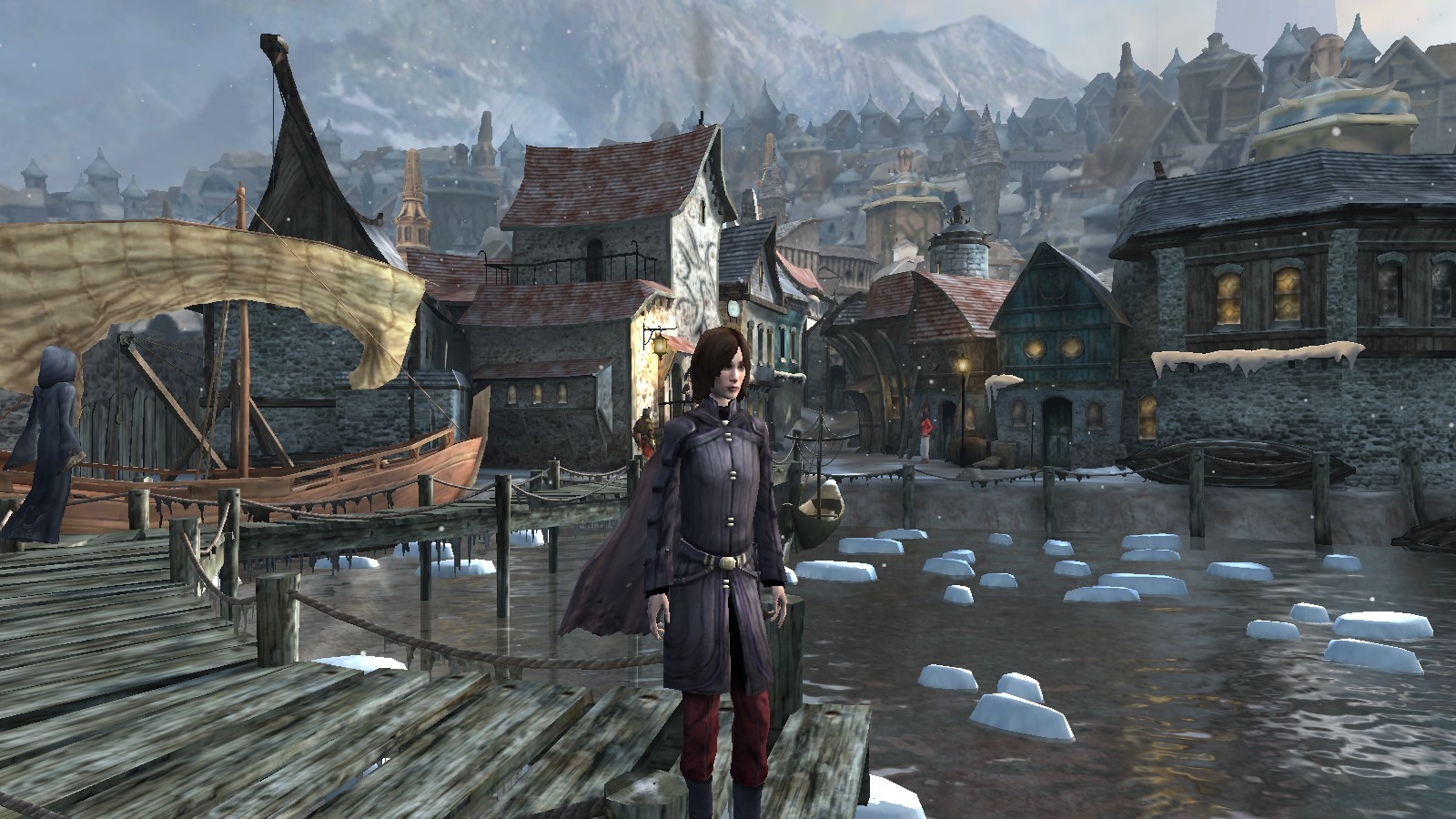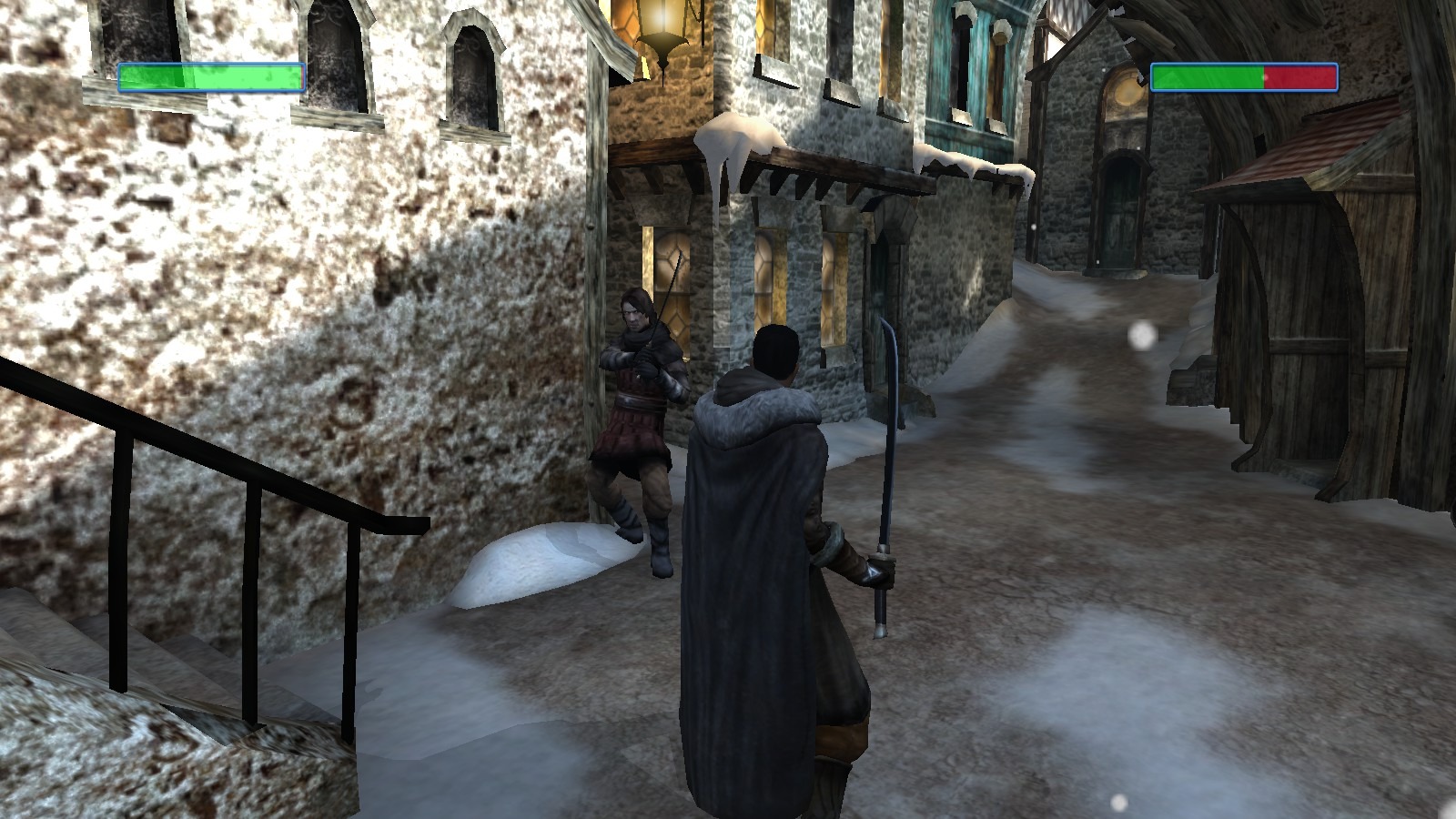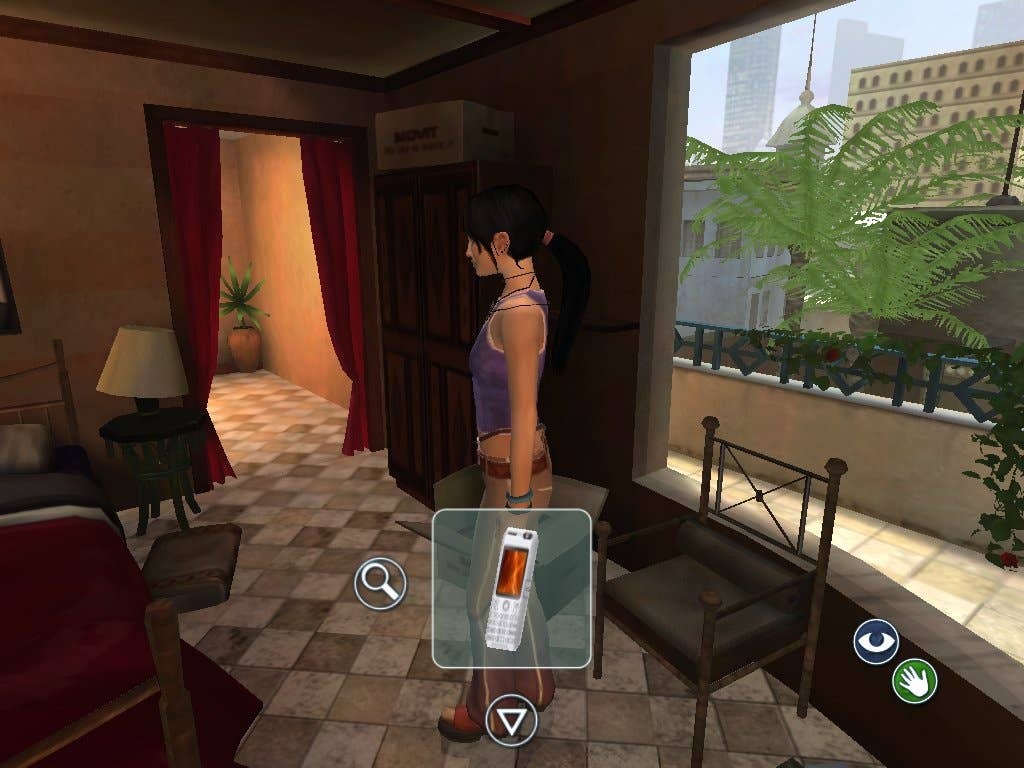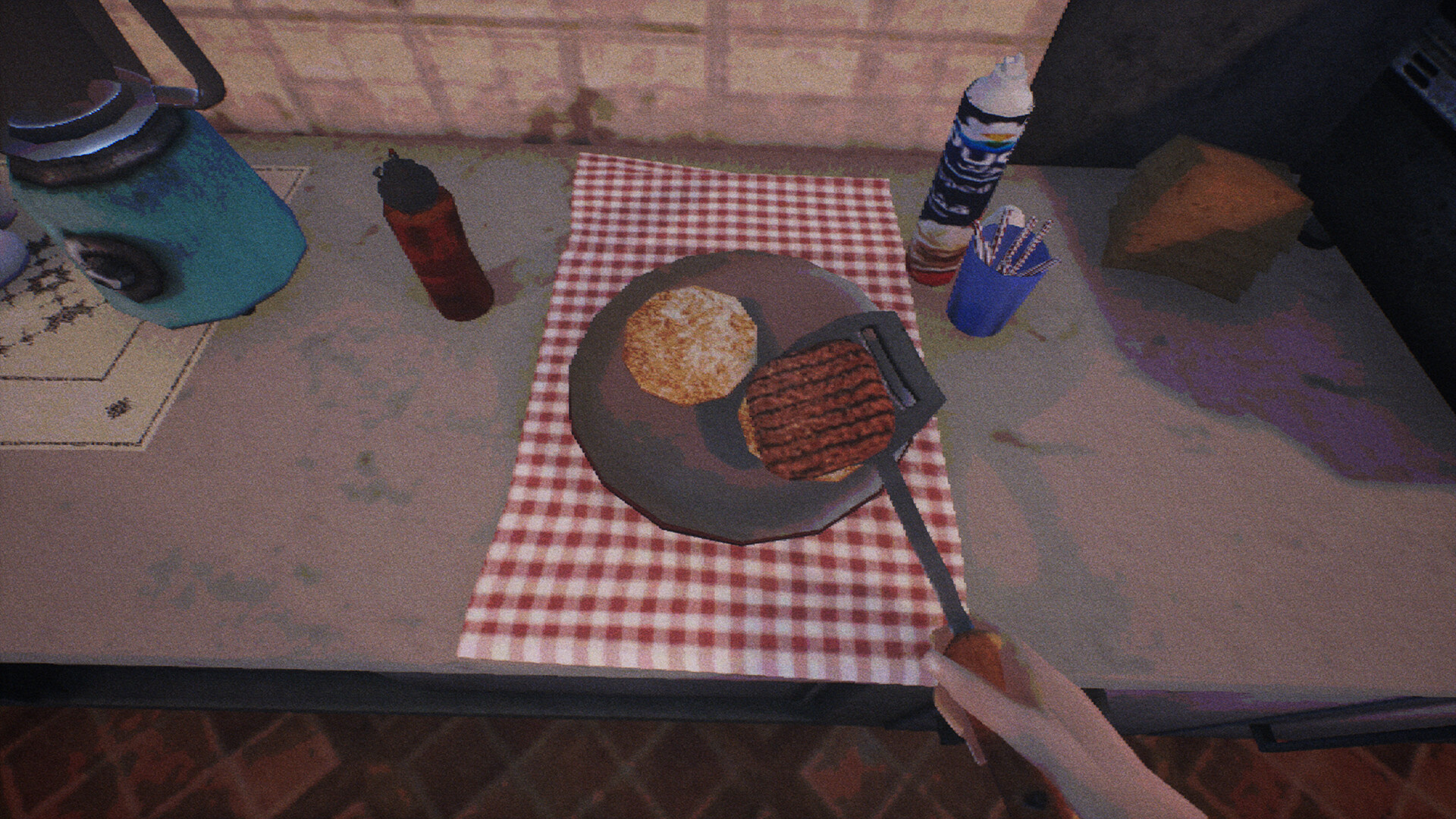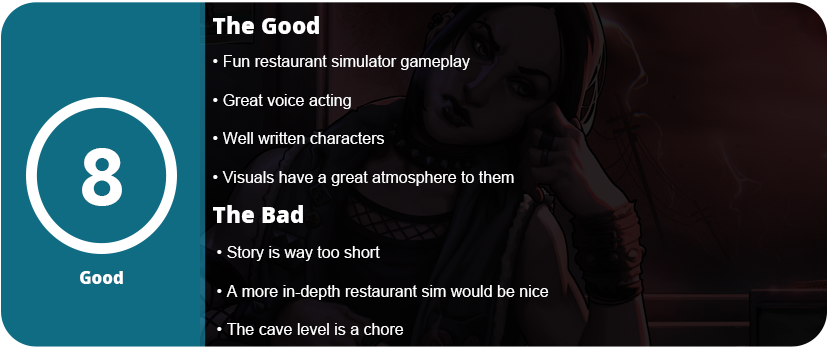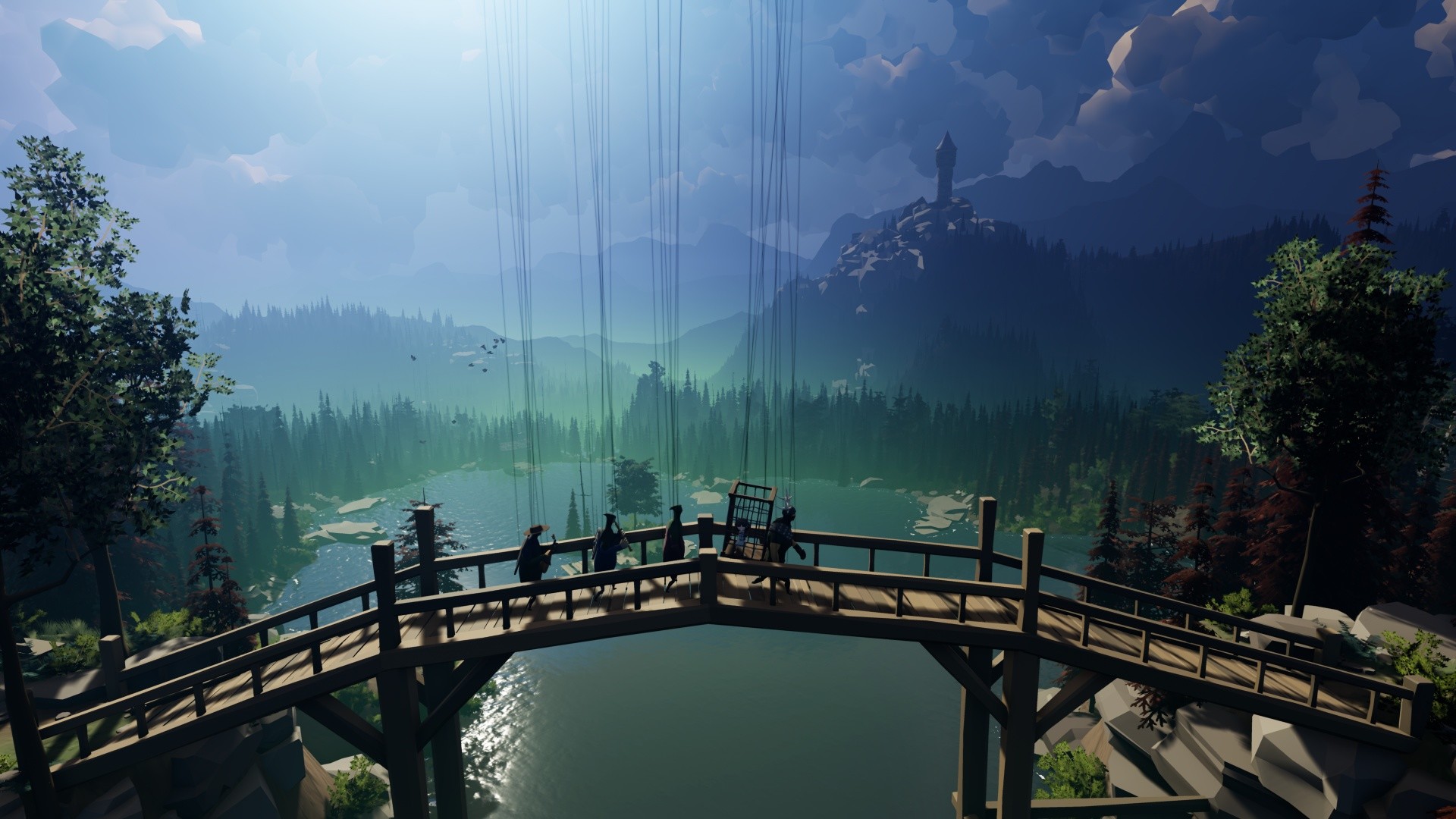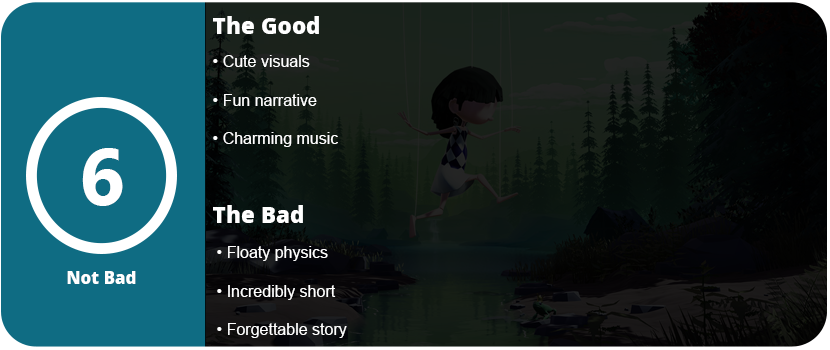
Do you remember the days you were a kid and went on adventures outside? The days you would be outside from dusk to dawn playing too far away from home and weren’t quite sure you’d find your way back, but kept going anyways? That’s the feeling of adventure you get from Röki. The game is much longer than most point-and-click adventures, taking around 8 hours to complete. This allows for a better and deeper story to unfold. While the overarching story isn’t anything super special, the relationship between Tove (the girl) and Lars (her little brother) and their father is rather deep, and you can feel the tight relationship and love this family has.
The game is a more open adventure title. Rather than being completely linear, you can fast-travel between several areas to find objects and solve riddles. The game’s openness necessitates the ability to press the left stick for interactive objects to flash. Just like any adventure title, you need to find objects to advance the story, and due to the openness, some puzzles might take a couple of hours before you eventually get all the parts to solve them. This also leads to the most frustrating thing about the game. If you miss an item for a puzzle, you have to figure out where it is. As the game opens up, this can lead to tedious backtracking and flashing all the objects on the screen and running around until you figure out what you missed. Frequently, this occurred due to the game’s lack of clear instructions or tracking features. The journal is rather useless and holds a map and various optional items you can pick up as collectibles.
Tove can run by holding down a button, and she can interact with objects. Outside of this, there isn’t much to the controls. She can climb walls and ladders, but you’re mostly just interacting with things. I found some of the puzzles quite fun, intuitive, and clever. The game experiments with ideas such as controlling two characters (swapping) and using a couple of different objects to complete puzzles and unlock new areas. There are giant beasts that need to be defeated and tamed. The game is based around Norse mythology, so you will encounter many beasts from this lore.
Despite the game’s lack of voice-acting, the writing conveys the characters’ emotions. Every so often the game will cut to a long scene and then give you control back. There aren’t many cutscenes in the game, but despite the length, the game never felt tedious or boring. I wish there was less need for backtracking. Sure, fast travel is helpful, but you still have to run towards an area, climb, or enter it, and some parts of the game can be really tedious to get to. You can’t skip climbing segments. Climbing dominates some later puzzle areas, leading to frustration. I spent more time waiting for animations to finish than actually solving the puzzle.
The visuals are really nice, but this visual style is something we are seeing a lot of, and I don’t find it the most appealing. The use of paper cut-out/flat texture with solid colors is a common visual style. It works, but I would like to see something more original. The music creates a captivating atmosphere, and certain tracks evoke strong emotions during specific scenes. I found the whimsy of the beasts and monsters to be really charming, and this is where the art style worked the best. The game has a lot of whites and grays (stones) due to the entire thing being set in the winter. There’s not much variation in environments.
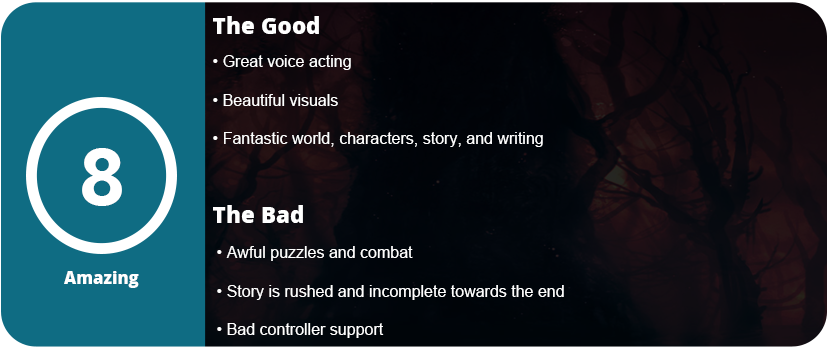
Overall, Röki is a surprisingly lengthy but well-built adventure title. There are a lot of puzzles and rooms, and the pacing is great. I didn’t really want to put the game down…until something tedious came up, like missing a single object for a puzzle, and I had to spend 20–30 minutes hunting it down. This happened far too frequently. This phenomenon occurred at least once with each major puzzle. If you love Norse mythology or just want a touching story about family, then this is for you.
Nobody wants to die. That’s a statement that anyone can understand. What if you had the ability to purchase a new body and continuously inject your conscience into a new one? This is the premise of Nobody Wants to Die. A detective noir game set in a dystopian New York in 2239 where flying vehicles exist, we are now in a caste system, and capitalism has won. As suspended detective James Karra, you embark on an investigation into the suspected murder of a large corpo boss. Your partner, Sarah, is in your earpiece.
There isn’t much exploration in this game, and it’s not a first-person shooter. Although the entire game takes place in first person, it remains a pure adventure title. The game masterfully constructs this dystopian future, immersing the entire experience in the art deco Americana of the 1930s. James has a lot of internal problems, and due to being on his fifth body, he has a lot of problems from his 100 years on this planet. The better shape a body is in, the more it costs. However, there’s something dark happening. The game also does a fantastic job explaining how you can recreate crime scenes and explains a person’s ichorite, which is what’s used to transfer a person into a new body.
That’s the majority of the gameplay. The crime scenes are pieced together like mysteries through the Replicator. This allows you to fast forward and rewind scenes as you piece them together. You have to walk around and find the prompts to advance the puzzle to the next piece. There are also other tools like the X-ray wand and UV lamp. You use these to see through objects and then detect fluids. You are always swapping back and forth between the two. However, the puzzles are very linear and don’t require any brain power to solve, but they are still fun. Many of the crime scenes are really interesting to solve, as you can draw your own conclusions and see what the outcome ends up being. There are three main crimes in the game, and they take quite a bit to go through. It’s a lot of fun seeing everything kind of come together and hearing Sarah and James analyze everything to come to a conclusion. When you get back to your apartment, you can put down objects that are in place for clues that you found, and you need to string everything together to come up with a final conclusion. Moreover, it’s a straightforward process.
Outside of the main crime scenes, there are a couple of moments in James’ apartment. It gives you a glimpse of how awful living conditions are in the future. Everyone shares bathrooms and the government logs everything they do. You have to see a psychologist for life after transferring to a new body for the first time. The ads, propaganda, and everything in between are done so well for how little you can explore this game. While the characters aren’t very deep or memorable, they help carry the story along enough to stay interested. I’m sorry, but the story is too short to remember. The setting and world are more interesting. The game also has dialogue choices that determine which ending you get. Some options will have locks on them, meaning you need to have changed your path prior to the current option. The way you respond to Sarah or act at a crime scene (like deciding to steal something for yourself) can get you in trouble if you’re not careful. The execution of the story is commendable, and as the story progressed, I found myself grateful for the choices I made that allowed me to navigate through certain scenes.
The visuals are rather appealing for an indie title. Lighting is great, art deco is beautiful, and vehicle and object designs are fun. The game is at least well paced, and I didn’t want to put it down. The voice acting is outstanding too, and there are just enough little twists and turns to keep you glued to the screen. There isn’t much to hate here outside of easy puzzles and lack of exploration. I honestly wouldn’t mind another game in this world and have the lore expanded upon.
This keyboard features an additional OLED screen. There’s also a premium price tag for this as well as less customizability. I have never owned any SteelSeries products outside of an RGB mouse mat years ago. The packaging was decent, nothing special, and it came with a keycap puller, a USB-C cable, and a USB-C dongle, which was nice. The keyboard also works with Bluetooth, but the software has limitations in this mode. Once I got the keyboard out and the palm rest, I was surprised at how comfortable it was to type on. The biggest gimmick is the screen and their Omnipoint actuation adjustability to change the sensitivity of key presses. No, this isn’t like a DualSense controller in which your key switches get “harder,” but they just become more or less sensitive and register with a stronger keypress or light press. It’s a neat feature, but mostly unnecessary.
The Omnipoint 3.0 switches felt good to type on, and the foam mod at the bottom of the PCB prevents any ping. I did think the switches lacked a more tactile feel than I’d like, but that’s personal preference. The keyboard itself is unremarkable looks-wise. This keyboard appears to be a standard black “gamer” keyboard, complete with RGB illumination. The black and white two-line OLED display is the only feature that will draw your attention. The display is rather primitive for being OLED and honestly doesn’t do much. Outside of showing your actuation meter, PC temp, GIF animations, and a few app integrations like Tidal (not official Spotify support), there’s not much here. I had the most fun with the GIF animations, but the limited display can’t show anything with detail. You need very chunky 8- or 16-bit graphics for anything to show up well. There isn’t a dedicated repository for GIF animations, with the exception of an Imgur album containing approximately 60 animations that someone has created. Any other support requires using their GameSense SDK, which no one has really made anything for. One individual has created a GameSense Essentials app on GitHub, which merely displays Spotify artist and song information along with a clock. The lack of support is really sad.
I did like the power-saving features, such as the OLED and lights turning off after a certain amount of idle time. However, even with this, the battery went down to 50% in just a few hours of use. You’re lucky if you will get 8-10 hours before the battery dies. This was achieved while using the wireless mode, not Bluetooth. Sadly, the SteelSeries Engine app works fine but isn’t as flashy or robust as Logitech or Razer’s offerings, but at least it works. I found making macros and changing the settings of the actuation rather cumbersome due to flipping through so many screens. The OLED screen options are pitiful, and even just navigating the screen is a chore. There’s a tiny scroll wheel and a button. With the limited app support, this screen doesn’t offer much beyond being there just for the sake of it.
Sadly, this keyboard doesn’t support hot-swappable switches. They are soldered on and only support the Omnipoint switches thanks to the actuation and Rapid Trigger gimmick. This also supports only a select few keys. If you need different actuation on switches, you are better off just buying a custom keyboard with the switches you really want in them. Relying on software drive actuation just isn’t the same. It can come off as just unresponsive to some people. I honestly didn’t notice much of a difference outside of the hardest of key presses. There’s not much play in between. Adjusting individual key actuation is useful for WASD keys or harder keys. There is also a feature to prevent nearby keys from being accidentally pressed.
Overall, an underutilized OLED screen and gimmicky, non-replaceable switches contribute to the keyboard’s premium top-tier price. The keyboard’s overall design is a classic black “gamer” keyboard featuring RGB lighting. The software is decent and usable, but the actuation force and rapid triggers feel like gimmicks outside of specific use cases. The keys feel nice, and the sound is dampened, and the palm rest is nice, but overall, you’re better off spending the $270 on a custom keyboard.
Horns of Fear is a short horror adventure game with a handful of puzzles and a creepy manor to explore. You are Jim Sonrimor. You are a journalist who is grappling with a challenging relationship or marriage. You receive a call from an old woman to investigate her manor. Upon waking from drugs and pizza, you somberly visit the manor and notice something is wrong from the start.
The game has a 2D isometric art style similar to point-and-click adventures of the early 90s. Indeed, this game would be perfectly suited on a vintage gaming shelf. Your inventory is small, and the game is short enough to never fill it. You can save at computer terminals, of which there are only a few. The game is tiny and short that you can easily play the entire thing without needing to save. The puzzles are captivating and surprisingly well designed. I rarely needed a walkthrough. Most developers treat players like idiots or make puzzles too difficult, but not so much here.
Once you complete a puzzle, you will usually see a small cutscene. There isn’t any combat in this game outside of the final boss. There are a couple of quicktime events, but for the most part, the game is mostly about atmosphere and storytelling. I was surprised at how complete the story felt despite the 90-minute run time. Without giving anything away, the ending took a surprising turn and provided a highly entertaining experience. The scares themselves are more jump scares. The sound of a screeching violin accompanies a shadow moving across the screen. The cutscenes have a few gory and gruesome shots that are super cool. The death scenes are also really gory. The music itself was just okay. The music lacked originality and bore a somewhat cliched feel. The theme was reminiscent of a haunted house, rather than being unique to this particular game.
With that said, though, don’t expect anything incredibly unique or something with a lot of staying power. Horns of Fear is a decent short horror adventure and nothing more. While the puzzles are entertaining, you can’t really get lost due to the incredibly linear path you take, and there’s not really any character building. You’re mostly playing for a fun, short train ride rather than a full-on 3-day tour. While the visuals themselves aren’t particularly noteworthy, they provide just enough elements to make your play worthwhile. The trippy cutscenes, strange ending, and ease of play are enough to invite more horror fans over.
Whether you like Tarot, believe in it, don’t, or are somewhere in between, it’s an interesting topic for a game. The Cosmic Wheel’s main gameplay loop is focused around creating Tarot cards and using them to change the fate of those around you. You play as Fortuna, an exiled witch who is imprisoned for over 200 years (when the player steps in), and in the meantime the entire witching cosmos is being told through visitors that come to your window. You can sit these visitors down and converse with them as well as tell most their fortune.
The story is incredibly detailed and diverse, and I have never played a game in my life in which the choices I made during it mattered so much. So many things I did wound up deciding so many minute twists and turns in the plot, both large and small. You can create cards by choosing the background and the art itself. Every background carries a corresponding fortune. These also cost energy. There are four colors you collect after each Tarot reading, and you spend these points on creating the cards. You can collect art and backgrounds from visitors. You can customize the art on the card by dragging and dropping pieces down, flipping, rotating, scaling, etc. It’s fairly basic, but it’s enough for just Tarot cards. You can create your own unique deck this way, and it truly feels unique to you.
If you don’t like a card, you can dispel it in your cauldron to gain the points back, and when you aren’t talking to visitors or creating cards, you can study, read interactive fiction (to gain small amounts of points), or sleep until the next day. You have a main Behemoth that you summoned (which is forbidden and illegal, by the way) named Abramar, who keeps you company and is trying to help you find ways to escape. As the plot unfolds, you keep talking to people, and how you respond to them matters. Picking any answer won’t do. Make sure you think about how you talk to people. You can gain friends and allies or create new enemies. The game’s lore explains itself surprisingly well, with witches from all government factions visiting you. They visit you either as friends or as new witches seeking guidance, among many other motives. You eventually head toward a political race, and it’s up to you to either run yourself or just support friends who are running.
As each chapter unfolds, you learn more about your past, your friends’ past, and the overall cycle of the witches and their entire existence. I was surprised that the game was able to convey an entire universe of magic and explain it all in a cohesive way without mass dumping codex pages on me or subjecting me to reading insane amounts of text. Talking to people naturally teaches you the lore and universe, which you gradually piece together in your mind. The storytelling and writing are phenomenal. These are some of the best storytelling and writing I’ve ever encountered in a video game. To truly show you an entire universe of lore from the confines of a single home isn’t an effortless task. There isn’t any exploration here. The entire game confines you to this single home, interspersed with sporadic cutscenes depicting your life on Earth in the past.
Having said that, every decision you make, whether it’s a dialogue or deciding whether to read someone’s fortune, has a significant impact in the future. There were choices I made in chapter one that I regretted five chapters down the road and didn’t realize it would have mattered. This is a game that requires multiple playthroughs to feel like you can truly master the choice-based system; however, I really wish there were more locales. While the dialogue is a constant stream of entertainment and you always feel like things are moving along, I wanted to see more of this world. In other worlds, the witches homes and see more of their past. The developers did a fantastic job of keeping you entertained in a single area for 10 hours.
With that said, the pixel art is fantastic, the characters have a lot of personality in their outfits and designs, and when the game ended, I had real attachments to these characters. I wanted more from them, and I didn’t forget about them by the next day. The Cosmic Wheel is a special type of game that can balance excellent storytelling, keep it well paced, and confine the players to a single playfield while making every choice matter. Games like this don’t come around often. Give this game a try if you enjoy story-based games.
I absolutely love how the human mind works. It is fascinating how the human mind can break, repair itself, and affect the body and psyche in ways we still don’t fully understand. The Town of Light explores these ideas with a real-life case. The game is set in a hospital in Tuscany, Italy, called the Ospedale Psichiatrico di Volterra. You play as a woman named Renee who seems to be coming back to this hospital and reliving her experience here. The game’s unsettling ambient audio and flashbacks of dark and disturbing sketches are fantastic to experience.
Sadly, that’s the only enjoyable part of the game. The entire game has an incredibly slow pace and the usual obscure and abstract way of finding your way around and figuring out what to do. There are way too many doors to open, and there are too many spaces to explore with nothing in them. This hospital is two stories and quite large. With the slow walking pace, I just wanted to experience the story and move on. You don’t know you’re heading in the right direction until Renee continues narrating the story or a flashback happens. These flashbacks are either pencil sketches or full-on cutscenes. If you press the back button, some chapters will have Renee tell you where to go; however, everything is in Italian, so unless you pull up a translator or can kind of figure out prefixes and suffixes of words, you might get lost based on the signs.
There are eight diary pages to collect and find. These are highlighted notebooks in certain rooms, and I suggest getting them all. The notebook is an insightful dive into the mind of those that are mentally ill and have various psychological diseases. The sketches are haunting and beautifully done. The best part of the game is the narrations of the various hospital records you must find to advance the story. The entire tale of Renee and her fellow patients is fascinating, haunting, and quite disturbing. It also shows how awful the healthcare, especially mental healthcare, was in the 40s and 50s in not just Europe, but all over the world. I work as a nurse myself in a hospital, and it’s insane to know that our current modern way of doing healthcare (humanely) is very recent. Like the last 25 years, recent.
I also have to give credit to the developers for accurately portraying a decaying asylum. It looks and sounds just like you would find one in real life. I highly recommend watching The Proper People on YouTube, who are the best urban explorers out there. They have visited asylums in Italy, and the building is very reminiscent of how they stand today. The peeling paint, depressing color scheme, abandoned, rusting bed and wheelchairs, and old and mysterious medical equipment that look like torture devices (some were). Despite all of this, however, the game is very boring and ugly to look at. Even for 2016, the game is teetering on the border of asset-flippy territory. It just looks so generic and low-budget despite some decent lighting effects.
The voice acting is very well done, and the overall picture you walk away with is the narrative of mental health in general and how people are taken advantage of back in the day. The game also explores how orderlies raped and molested the women and lied and were believed. The doctors literally got away with murder, and families were lied to and betrayed without ever knowing it. Thankfully, this is all in the past, but the hundreds of thousands of victims who died and suffered under the guise of humane healthcare is a sad story and something worth discussing even today.
I took a long break from Razer products for a while. Razer’s quality has gone downhill over the years, and not to mention, their Synapse software has become bloated, buggy, and just plain awful. I only ever owned three Razer mice, and one was my first ever gaming mouse back in 2009. That mouse in question was the original Naga MMO. I also had the Razer Mamba 2012 and Ouroboros. They all had issues with the laser causing drift, the material wore down fast, and the Teflon feet became uneven in less than a year. I never went with a Razer mouse again. I then tried a headset, Man O’ War (awful after a few weeks), a keyboard, Blackwidow Chroma V2 (not too bad), and I was just never pleased with them. There’s something always off about Razer that just feels icky. If the product works fine out of the box, then the software has issues. If you don’t have software issues, you might have issues with the hardware somewhere down the road. Razer simply manufactures subpar products under the “Gamer” label and then moves on. For the insane premium price they charge, I would expect better.
To wit, I thought I’d give them another shot. At this point, I have mostly moved on from gaming keyboards, as I’m beginning to value key switch feel over aesthetics and RGB. Razer’s RGB is rather decent, and all of their products work with SignalRGB, which is a third-party RGB software I use to control everything. If SRGB doesn’t support it, I won’t use it. The OLED panel on the keyboard was very intriguing; however, I hesitate whenever gaming-branded keyboards have a gimmick. The last keybord I had with a massive gimmick was the Mad Catz Strike 5 keyboard. They are usually mostly useless or are never really supported by anyone or the community. I was also interested in the modularity of this keyboard. More mainstream gaming keyboard companies are trying to embrace the modding community, but it’s a hard community to win over. A lot of these keyboards just don’t have any personality or soul. They don’t feel unique or are too gaudy for the custom keyboard community.
As always, Razer has premium packaging; I can’t fault them there. The keyboard itself has an aluminum body and feels solid and sturdy. It feels great to type on. The switches have a nice tactility, and the foam mod inside the keyboard reduces pinging and enhances the tactile feel of the keys. The Razer Orange Tactile Mechanical Switch Gen 3s aren’t bad. You can swap the switches out for any 3 or 5 pin switches, which is really nice, but with the RGB lighting, you are limited to the type of keycaps you can use. “Backlit” or “Shine-Through” caps are not very popular. You can disassemble and mod the keyboard, but the only benefit is the Razer branding and OLED screen. If you want to take a keyboard apart and mod it, you might as well get a better moddable keyboard for a third or half the price.
The palm rest is comfortable and plush, and it is magnetic so it won’t slide around on your desk; however, I know this material will wear over time. I’d rather have a harder rubber material instead of the plush. Over time it will fade, discolor from the acid in the oil from your skin, and eventually start tearing and becoming thin. Overall, the design of the keyboard is rather standard and unordinary. It has an all-black finish with black keycaps that looks rather standard. The entire keyboard is nothing special to look at. The OLED screen will catch most people’s eyes. I couldn’t find any specs or resolution on the OLED display, but it is black and white, not color, and has minimal customization and features. What probably accounts for at least $100 of the price tag is, at best, a simple gimmick.
The OLED screen is controlled with a wheel on the side of the keyboard next to the screen that also clicks in. There is also another button below this. You can change the “screensaver” animation and swap between “apps” such as volume control, media control, system info (such as CPU and GPU temperature), keyboard info, and an audio visualizer. This isn’t very impressive given the technology we have today, and it’s an OLED screen. You’re stuck with everything Razer branded. The animation and text banners are generic and all Razer logos. GIF animations can be uploaded to the keyboard, but resolution and size limit them. The keyboard saves only 150 frames. This was the coolest part of the screen, as switching between apps like media controls and the volume got annoying. It’s faster just to use dedicated keys for that. I also could not get the keyboard to read my system info. Overall, the OLED screen is a disappointing gimmick with no support from Razer and no way to customize anything outside of a scrolling text banner and GIF animations. There’s also the battery-eating part. With the OLED screen just on 50% brightness, the keyboard’s battery didn’t last a day. I also had issues with the OLED screen syncing and working on any wireless mode. Synapse would stop syncing things and it would crash. The transfer rate is also really slow for uploading GIFs and most of the time it would time out before an upload would finish.
My biggest issue with this keyboard isn’t the overall lack of impressive features that are already present in custom keyboards. Razer claims to have invented revolutionary features. The damn thing just doesn’t work. It works best in wired mode, but Synapse 4 is an awful piece of software. This keyboard is not compatible with the more stable Synapse 3 software. The keyboard also worked fine in Bluetooth mode, but SignalRGB does not work over Bluetooth due to the bandwidth limitations, and many Synapse features are not available in Bluetooth mode. I wanted to use the keyboard in wireless mode with the 4K Hyperpolling dongle. It never worked. It would continuously disconnect every 2–3 minutes. I spent 4 hours troubleshooting this. I tried reinstalling the Synapse software, deleting all devices in device manager, different USB ports, a USB hub, USB 2.0 and 3.0, front and rear USB ports, a different computer, and updating the dongle and keyboard firmware. If you think of it, I tried it. I also don’t understand how Razer can’t just give us a normal USB dongle. You need to attach a USB cable to this device, which then dangles and flops around on the desk or behind your PC. 8000 Hz polling is also a placebo effect. No one can type that fast or needs that kind of responsiveness. Most people are fine with 1000 Hz polling. 4K is even unnecessary.
This absolute garbage driver issue caused me to return the keyboard, and the fact that this expensive OLED screen is a mere gimmick with no third-party support or seemingly any support from Razer, for that matter. Synapse 4 is also an unwieldy, bloated piece of software trying to advertise so many other Razer software apps that it has acquired. I just cannot believe that the most expensive keyboard I have ever purchased is this bad. Razer really needs to overhaul their product line, fix their software issues, and stop offering gimmicks that most people won’t care about. Sure, you can set macros on the OLED screen and keyboard, but they are unwieldy, and using keyboard commands is much faster than flicking through a screen. Additionally, the keyboard lacks color and rapidly drains the battery. Overall, just stick with whatever keyboard you currently have, as I’m sure it works much better than this overpriced monstrosity.
I personally love cyberpunk settings. I particularly enjoy cyberpunk settings that delve into the mental states of individuals with cybernetics and explore the workings of such a world. Psychroma explores the idea of secret human experimentation and how it can affect and break the human psyche. The overall story itself is pretty good, but getting there feels like a chore. The story is broken up quite a bit and feels confusing to piece together through most of the game. A lot of backstory is told through computer logs that you must find hidden throughout the house. You play as a cyborg/human experiment named Haze. The atmosphere is quite unsettling. Outside, acid rain falls down from the sky, eating away at the corrugated steel walls and rebar. The mystery of the house and the haunting past is what you’re uncovering.
This is a side-scroller adventure title, so there’s no combat here. You have a limited inventory system and must interact with objects until things happen, hidden passages open, and new doors unlock so you can get that next item to advance through the story again. This is sadly very obtuse and obscure. Many times I ran around all seven floors and clicked on everything only to discover I had to use an altar to go back in the past and unlock something new. Usually info like a passcode you need for a new door. There are three altars in the game, and each one has a part of the house locked off and has isolated memories. You must find cards for housemates and determine their past and role in the experiments.
I don’t want to dwell too much on the story since that will spoil the game, but the fullscreen stills and artwork are fantastically drawn. The haunting horror and torture of the children here and various subjects is gruesome. There’s quite a bit of gore here, but what fascinates me is cyborg gore and how they work medically. I will only say that the premise of the game is that there’s something sinister going on in the house, and a member of it might be a creep. Haze gets suspicious early on, but who it is and why is what you need to discover. There are a couple of plot twists, and the story is good once you can piece it together and make sense of it. I wanted to know a bit more about the character’s past, but the game is only 2-3 hours long, so there’s not a lot of time for character building.
I honestly just didn’t like the aimless wandering, and the objective in the menu screen doesn’t help at all. I was able to figure out a good portion of the game by myself, but I got to a few spots where I felt completely stuck, and the constant backtracking and running around room after room trying to find that one spot I missed drove me nuts. My strategy of turning on the lights in rooms I’d been in didn’t help if I missed an object or didn’t interact with it correctly. If the game had a map system with a flashing blip or something to indicate your floor, it would have been more fun.
As it stands, Psychroma does a great job giving up a disturbing cyberpunk mystery of hospitalization, experimentation, and creepy family values. The game dives into gender identity a bit (that’s going to piss some snowflakes off) and self-discovery. I felt the overall story was pretty good, the artwork was fantastic, and the atmosphere was quite haunting and depressing, but the actual gameplay held everything back some. The constant backtracking and item hunting will put a lot of players off.
The idea of DLC for Mortal Kombat was an exciting prospect when it started with Mortal Kombat (2011). You paid $5 for a new character, and this felt fine. Mortal Kombat X introduced the character pass system, which was also well liked. You paid $20 for four new characters that were spread out over a few months. Mortal Kombat 11 introduced a terrible monetization feature that required too much grinding for unlockables and customization items. This trend sadly got worse with Mortal Kombat 1, with entire outfits and sets being stuck behind a paywall. One of my favorite features of any MK game was the alternate outfits, and being able to customize them was a dream come true, but Neatherrealm went the evil route and locked most of it away.
The same appears to be the case for single-player content. While I don’t mind paying a few dollars for more of the fantastic story mode and more characters, make sure to make it worthwhile. The Aftermath expansion for MK11 was awesome and was a great ending to that story. This epilogue has a lot of problems with it, mostly being the terribly written dialogue. Everyone is angry, growly, and so much “GRRR!!!” in their voice that it is laughable. Everyone seems to be delivering one-liners rather than cohesive dialogue. Trying to throw in bits of story exposition into single lines of dialogue is so stupid and elementary. The main campaign had pretty good writing with some characters delivering full speeches and emotional depth. This just feels like a 5th grader reading a bad comic out loud. The entire Khaos realm invading the current timeline is a cool concept, and Titan Havik makes for a great villain, but it’s just so badly written, and the fights are monotonous and boring. You get four more chapters, but each fight is just a recycled and uninteresting Khaos version of other characters. These seem to have some sort of Mad Max vibe to them, but it just looks like a group of terribly dressed punk rock fans.
Let’s talk about some truly awful characters. Sektor and Cyrax seriously suck. Not because they are gender-swapped. Oh no, no, no. They are no longer cyborgs, which means their uniqueness is gone. Netherrealm could have made these female cyborgs, and it would have been awesome still. Even if these were human males, they both would have been lame. I don’t understand the push to humanize Cyrax and Sektor lately. This means their cool moves and deadliness feel off. We don’t need them to have in-depth dialogue and feelings. They are killing machines and reminded me a lot of the Predator. Because these are lame exo-suits, you no longer get the cool gadgets like the Cyrax’s chest blade or net, and Sektor’s missiles just don’t look cool. The missile launcher is a giant, oversized shoulder pack that just doesn’t look right. The characters are also poorly written and feel generic, so there was no saving them there either.
Then that brings us to the DLC characters, which at this time of writing, T-1000 and Conan are not available yet. Ghostface is one of three guest characters, and he looks great with these flowing robes, having great physics effects, and the goofiness from the series as well is fine. I don’t enjoy his power moves, which just have him use various knife moves. His fatality is funny, so there’s that, but his animality is weird. Noob Saibot is the only character here that I enjoyed playing. He looks cool, and his backstory actually makes sense in the epilogue. Noob Saibot is the only saving grace for the entire package, but it still doesn’t justify the price tag.
And honestly, these guest characters are getting old. It was cool back in MK (2011) with Freddy Krueger and Alien, but it’s becoming too much. Spend the money on the licensing to bring back characters people love or create new ones. There are also no Kameo characters this time around either, which is a real shock. We could have at least gotten a few more of those. That also doesn’t help justify the price tag. $40 for a 2-hour, terribly written epilogue and three new characters. At launch, Ghostface was not available at all. The only redeeming part of the game at launch was Noob Saibot. What is Netherrealm Studios thinking? They aren’t.
And that brings me to the fact that this is my favorite game series of all time, and it’s becoming live-service garbage. The entire series needs to take a few years off, reboot, and come back with what fans loved. More content, less grinding, and more unique characters with fewer guest ones. As it stands, Khaos Reigns is worth maybe a $10-15 purchase on sale, but that’s it.
Call of Duty has culminated in becoming a standard yearly event with the series alternating between Black Ops and the mainline Modern Warfare series. While some entries try to incorporate new ideas into each new game in the series, more obvious now than ever, it needs a long break and has to go back to the drawing board. While they are all entertaining in different ways, they are trying to please everyone rather than a select crowd. Bloated multiplayer modes, mediocre maps, and entertaining albeit short and contrived campaigns are keeping the series back.
Black Ops 6 has a pretty entertaining campaign. Although it surpasses Black Ops III in terms of gameplay, it maintains the innovative concepts from Cold War, a feature I truly appreciated. The story itself is fun, but nothing memorable or anything well written. This won’t be winning anyone over in that department. This is the first Black Ops game to pick up the story from the second game, which is the only one to actually matter. It also incorporates events from Cold War, and it’s pretty cool to see characters like Frank Woods return. Those games came out so long ago that the new generation of gamers probably won’t even know or care, but fans of the series will.
There is a main hub area that all the characters hang out in. This is a house in the woods and eventually plays a role as a level itself towards the end of the campaign. Treyarch tried making something out of this house by adding an in-depth puzzle that incorporates running around the house and finding clues. I find it ironic that the core gameplay of this game requires players to not think, but wants them to think critically and solve puzzles. Call of Duty has always been the opposite of thinking or lack thereof. The reward is pretty decent, but I won’t spoil it, and the puzzle itself takes the entirety of the campaign to solve. I found the whole unlocking of benches kind of unnecessary for how short the game is. You can buy benches to upgrade weapons, such as more ammo and health, or increase melee damage. I really wouldn’t have noticed if I had never used them here. These are unlocked with the cash you find in the game.
There is also a large open map that is a new experiment for the series. It’s not like the terrible levels from Modern Warfare III that copy the Warzone maps. You get a vehicle that is stocked with ammo, and you can go around completing side objectives for more XP, such as clearing out camps or saving scouts. You can then fast travel back to the truck via the map and go back to the main campsite to swap weapons and get more ammo and equipment. It was a refreshing change of pace, and that’s kind of the pattern I was seeing with this campaign. There are more options for pacing, rather than relying solely on mounted vehicle segments to change the pace. This time around, the design of a few stealth missions has improved. I felt I could get through them without having to be perfect with my route. I could jump into the water and swim close to the objective, get out, kill a few enemies, and kind of worm my way to where I needed. The stealth missions are also not stealthy all the way through like in Modern Warfare II and become a chore. At a certain point in the game, it might be acceptable to go guns blazing.
There was also a reconnaissance level that involved a political party for Bill Clinton, which was cool. It felt fresh, broke up the pace of constant shooting, and helped slow things down so we could see the story build more. What I wasn’t a fan of was the Zombies mode-inspired level in which you become intoxicated with a hallucinogen, and you must find four key cards and fight four zombie bosses. The level felt cramped, reminiscent of an office building, and it was not particularly enjoyable. Hey, you can’t win them all. At least they tried something different. It also felt completely out of place compared to the grounded realism of the main story.
The overall feeling and gunplay have minor tweaks and adjustments, but it mostly feels the same as Cold War or any other Call of Duty game. Sadly, these games are conjoining and starting to all feel the same outside of features and modes. The gunplay is still top-notch and hasn’t been beaten yet by any other AAA arcade-style first-person shooter. It feels good, and the weapons have a good amount of weight and realism to them. The details on the weapons, from dangling keychains and decals to smoke blowing around from the barrel when you run to shell casings dropping on the ground, are all things most players will take for granted, but these minor details are something the series doesn’t get enough credit for. I also didn’t find too many bugs outside of some post-launch crashes. I ran into an issue where I had to turn off my overclocking on my GPU because it would crash the game every 10–15 minutes or in specific areas. By now, most patches have addressed these issues.
As for the multiplayer mode, there isn’t much to talk about if you already are familiar with the series. The typical modes are all here, from Team Deathmatch to Hardpoint. I actually love Call of Duty’s multiplayer mode, and I have my favorite mode types. I always rotate Team Deathmatch and Kill Confirmed. I might throw a Hardpoint in there sometimes, but it’s the maps that always make or break the game, and Black Ops 6 maps aren’t amazing like Modern Warfare (2019), but they’re not nearly as bad as Modern Warfare III or Cold War’s maps. They all feel fairly generic, and I’m tired of the constant cop-out of using stripped-down campaign maps to make multiplayer ones. Let’s make unique maps that work just for multiplayer for once, please.
Of course the returning Zombies mode is the only reason why a lot of people will buy this game. This is the most robust mode, and it feels unique to Black Ops. There are a bunch of new additions, such as the Gumball perks that allow you to equip a specific gum pack, and then you can randomly get a ball from a machine on the map. There are also Cola cans that give you perks such as superpowered melee attacks, but these can stack. On top of that, there’s the usual overly grind-heavy weapon progression system. I honestly hate this so much in the entire series. I can never stay invested long enough to unlock a good amount of items, as the XP grind is unfair and needs to really change. While the skins and other cosmetic items look great, to actually get them is another story. This is for people who only play the game online and can put 6–10 hours a day into it to actually unlock things and feel like they are making progress.
The same goes for the monetization system of weapon packs, blueprints, operators, and cosmetics. I want to be able to use these cool-looking items by unlocking them by playing, not paying money. I’m guilty of buying the odd pack here and there, but the insanity of the Battle Pass on top of buying $15-20 item packs is absurd and needs to really change. There is so much to the multiplayer mode that is locked away behind a paywall. While you can still enjoy the game itself without paying anything, you never feel like you are making progress and get stuck with the same basic weapon sets for dozens of hours that most people will not want anything to do with. Additionally, the inconvenient launcher system necessitates launching the most recent Call of Duty in order to access modes from earlier games. We need to overhaul and change the entire Call of Duty ecosystem. The ecosystem is experiencing a state of bloating and internal degradation.
With that said, the visuals and audio in the game are fine. The graphics aren’t terrible, but they also need an update as they are starting to feel a bit dated. This is in part due to still needing to be playable on 15-year-old hardware and scale accordingly. Call of Duty needs to abandon previous-generation consoles, or the series will seriously fall behind. While the graphics don’t look awful, you can tell they are dated. There’s no ray tracing, no advanced lighting effects, and the textures up close look a bit grainy and blurry. I also think that the series needs a gameplay overhaul. While the gunplay feels good and has a fun factor to it, how many times do we need to play the game like this? Let’s try to make Black Ops feel a bit different from the mainline series again. Black Ops 6 is probably the best game in the series to date, but the short campaign (about 4 hours) and the uninspired maps might put a lot of people off for the high price tag.
Yeah, it's pretty damn awful. Notoriously one of the worst games on the PSP. A 4 was actually being generous.…