Voice acting is what delivers the personality in characters, and good voice acting is key to any good game. What makes it the best is a wide variety of personalities delivered by the voice actor and thus bringing out the greatness of characters. Good voice acting makes them unique, lovable, and makes you become attached to them. This year had some great AAA titles with amazing voice acting, but only one can take the prize.
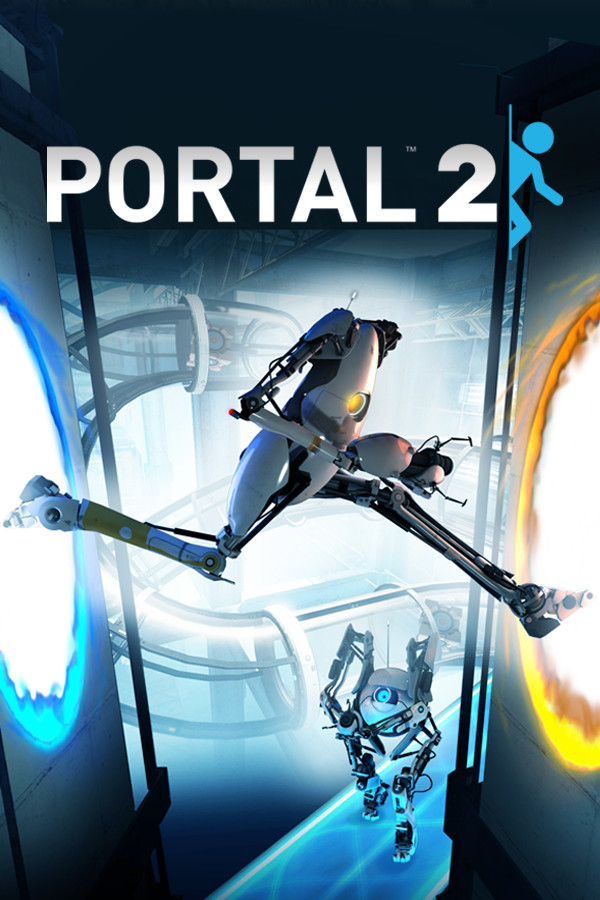
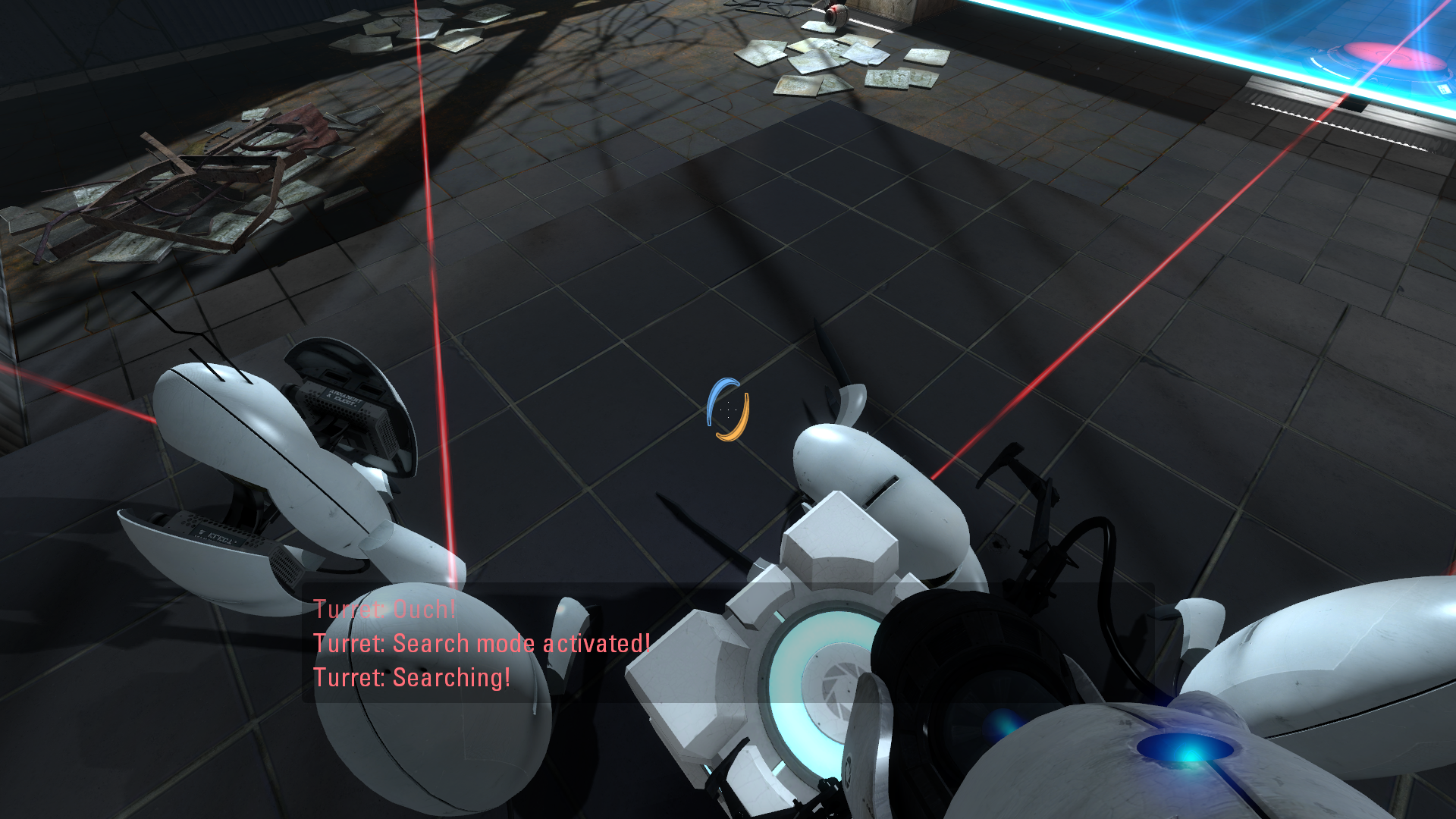
Portal 2 delivers some amazing characters through witty whimsical writing and some talented voice actors. Portal 2 doesn’t just have good voice acting but diverse, funny, and unique voices for characters that are one of a kind. This is what made it top the others and is definitely something to be remembered. With characters like Wheatley, GlaDOS, Turrets, Cave Johnson, and other characters you just can’t beat that.
A great story is usually memorable and you will talk about it for years to come. You need good characters, voice acting, and a lot of other elements to make a good story. Usually, there has to be a great ending as well as some twists and turns, but it also has to make sense. A good story is probably the hardest thing to find in the video game world, but there were a lot of great ones this year, but there can be only one.
This was the toughest category this year. With so many great stories I could only choose one. Gears of War may be considered a meat head’s game, but the story branching over the three games is full of great characters and a struggle for survival that eats at your heart. These people are fighting a genocidal race of bugs, and in the meantime, they are losing their loved ones right in front of their eyes. The delivery from the voice actors just makes you care so much about Delta Squad, but overall the ending and story in Gears 3 finish the story with a tightness that most sequels can’t really pull off.
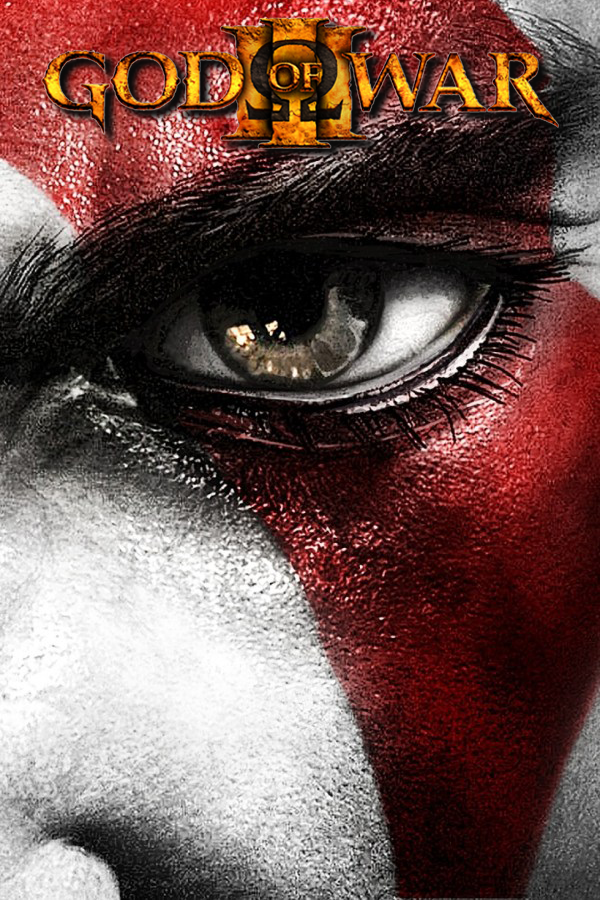
God of War III defines the genre that tells us there are no limits or boundaries and it really shows here. With superb combat, epic boss fights, and gruesome gore that would make even the strongest squirm you have to love this game. It perfects the series and really shows what the next-generation is all about.
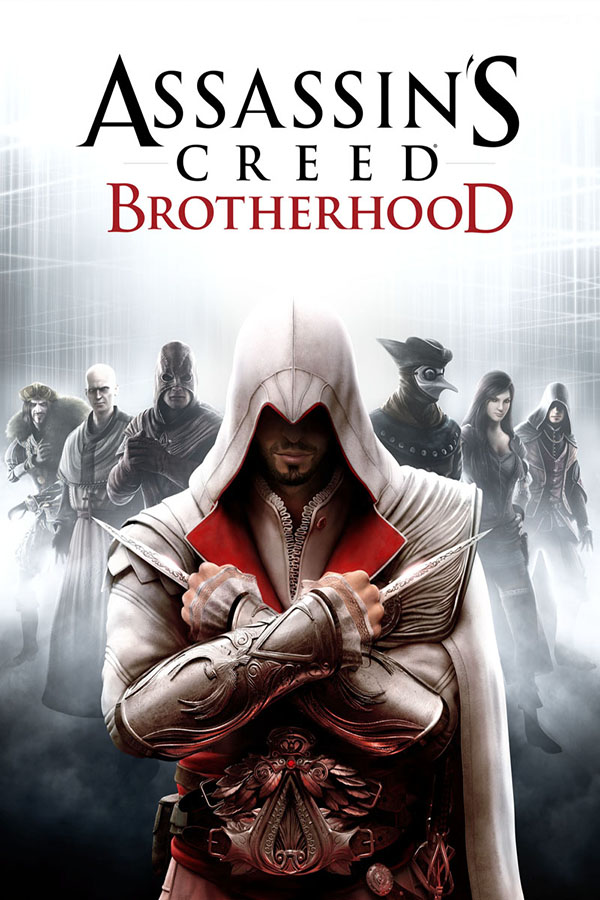
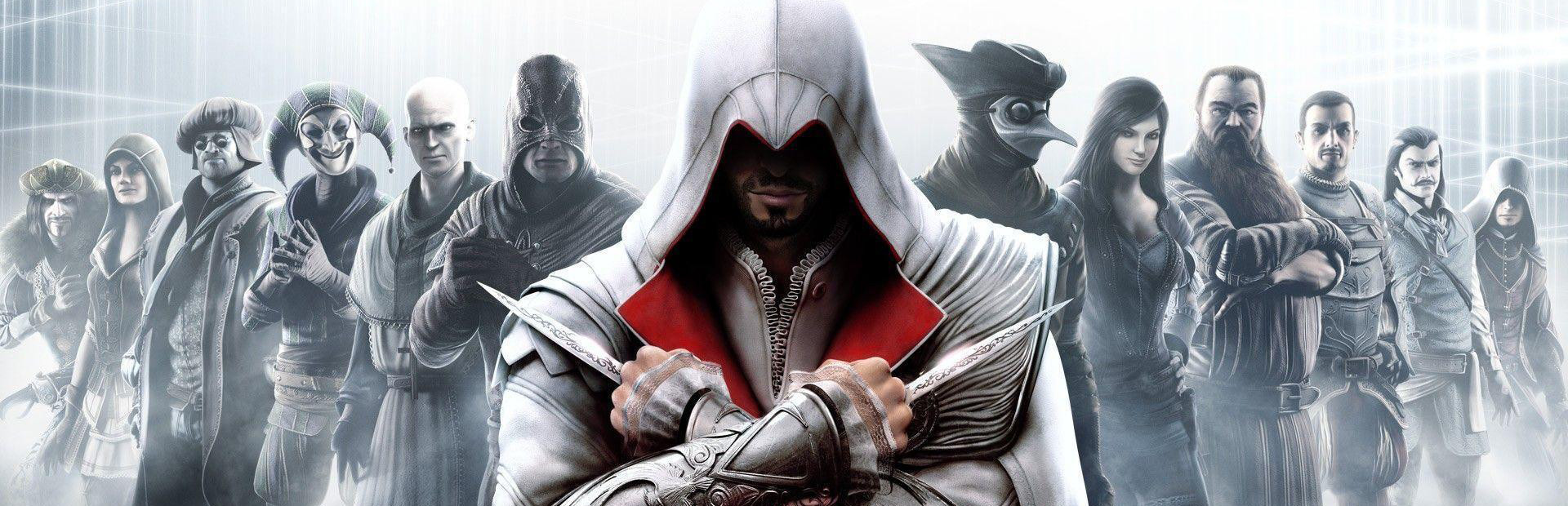
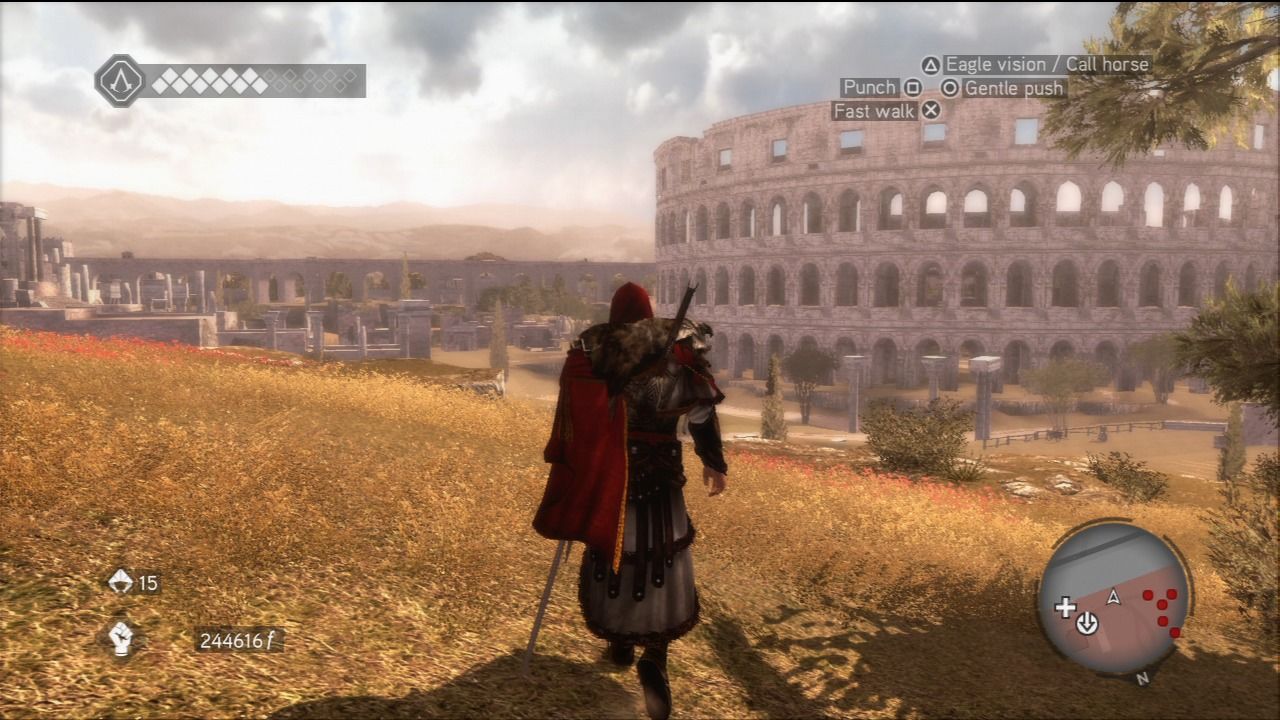
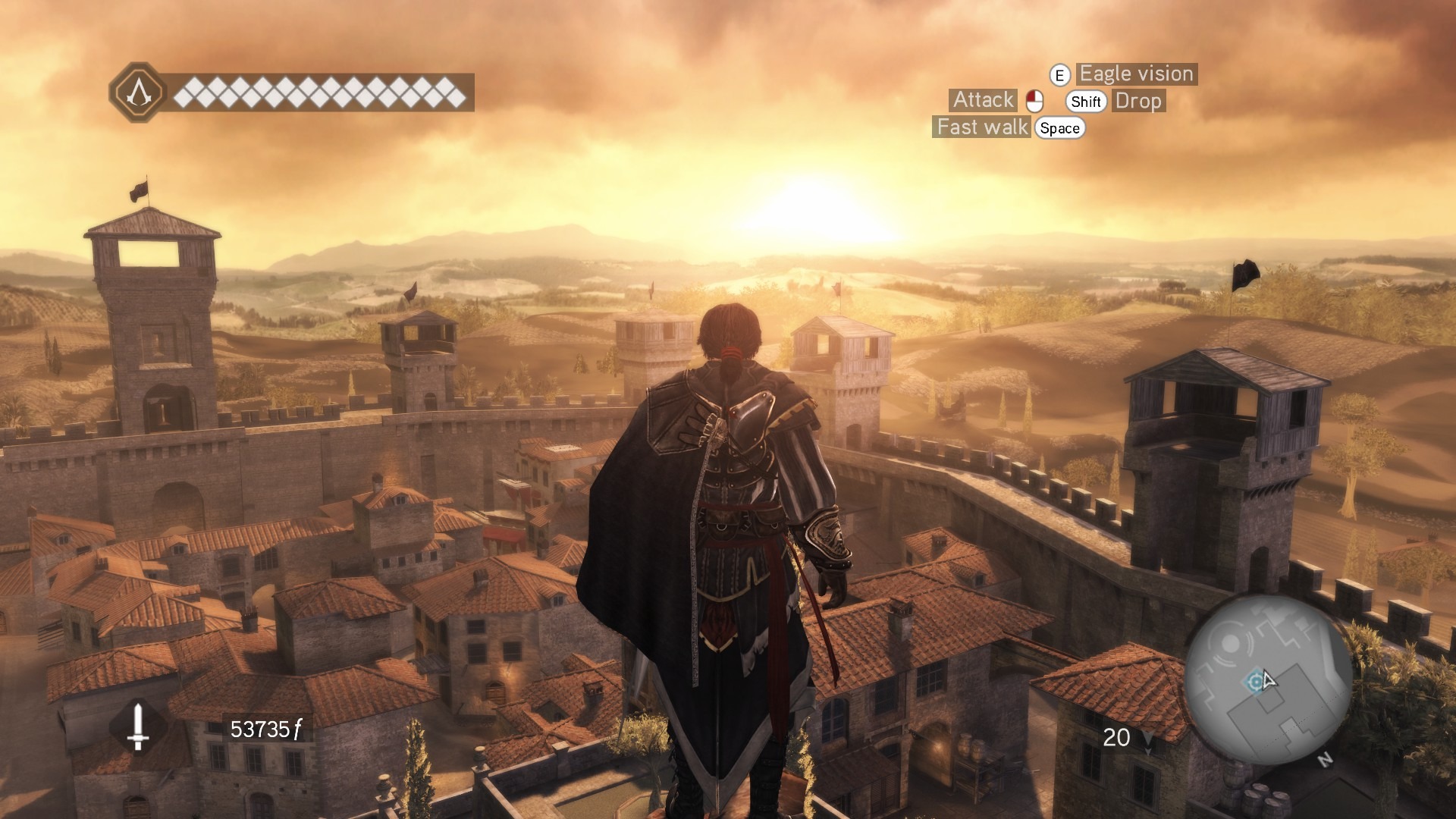
Brotherhood is one of those sequels that was thought to be just a cash cow tie-in for II, and everyone forgets about it. In fact, it was supposed to be a multiplayer-only add-on, but a few months before release, we realized it had a huge single-player experience that was bigger and better than II. This is what sequels should be like, especially if they borrow everything from their predecessors. Brotherhood isn’t a true Assassin’s Creed sequel like II was to the first one, but a new chapter in the amazing universe of 1500s Renaissance Italy. This time the game is set in Roma (Rome), and it’s huge, and there’s a lot more to this game than one skeptical fan might suspect.
The story is just as engaging, if not more complex, than II. Ezio is now older and the leader of the assassins, and he must stop the Borgia reign in Roma (since he failed to kill Rodrigo Borgia in the second game), but Rodrigo himself is only seen twice in the game and briefly. It’s all his minions and the fight against Cesare that are the main focus here. The game still has a deep political plot that ties in with real-life situations and people at the time.
Along with that, you can also play as Desmond Miles outside the Animus, and he has a bigger gameplay part with a whole section dedicated to restoring power to today’s Auditore Villa for the team’s new hideout to find the Apple of Eden and stop Abstergo and the Templars. While you only see these guys at the beginning and end of the game, you get another cliffhanger ending that will lead to the third game, as well as a great conclusion to Ezio’s story.
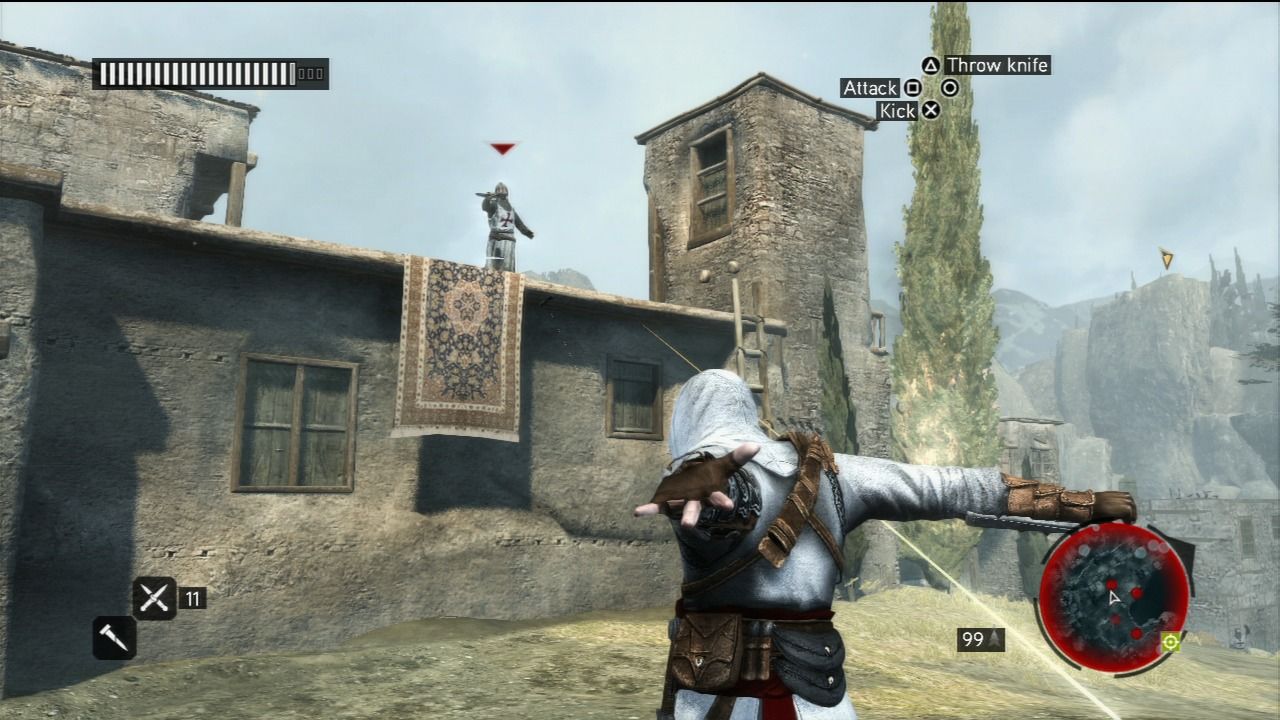
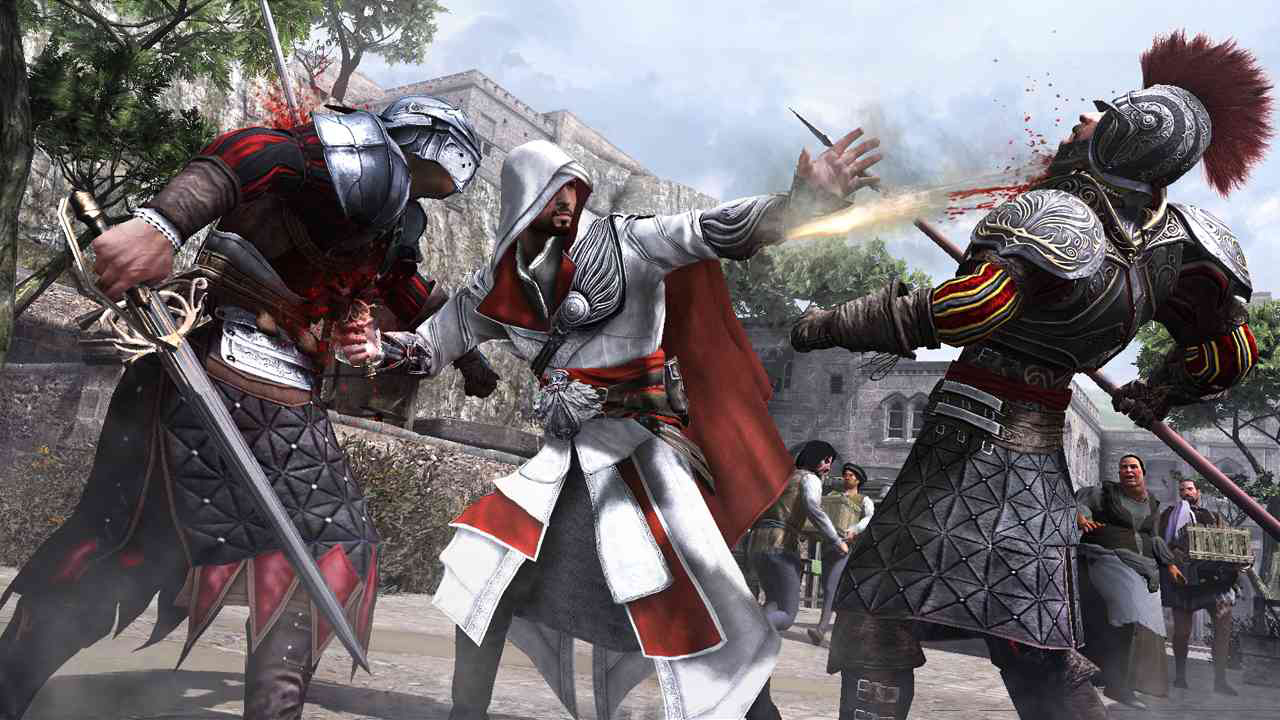
The game plays exactly like II, with no changes to gameplay except for some added stuff like a new crossbow, which is a godsend for killing stealthily from far away. It’s great to do a mission and wipe guys out with a crossbow and not get detected by those hard-to-reach guys. There aren’t any newly added weapons besides that, but combat is enhanced slightly, so it’s not such a counterfest. You can kick enemies, combo Arkham Asylum style, and even do some nice executions with the pistol. This is a nice change to combat and makes it a little more fun. You can also call in assassin recruits to help you, and this is extremely helpful, but more on that later.
Despite the main chapters, there are more side missions than you can shake a stick at. The side missions will take a good 20+ hours to complete and are tons of fun. You have the Borgia towers that have to be burned. These have to be burned down to buy closed-down stores and restore areas and landmarks. You have to enter a restricted area, kill the Borgia captain, then climb the tower and burn it down. There are quite a few, so these will keep you busy, and finding and killing each captain is different and challenging. On top of this, you can buy stables, blacksmiths, doctors, art stores, tailors, faction buildings, banks, and landmarks to restore Roma 100%. You will increase the city’s income, which will be deposited in a bank every 20 real-world minutes.
There are other side missions for each faction (thieves, courtesans, and mercenaries), as well as assassination contracts, Christina missions, finding more The Truth files (10 this time), and now Lair of Romulus missions, which have six in all and are much like Templar Lairs. After you find all six keys, you can unlock the Romulus armor, which is like Altair’s armor in the last game. You can also go to pigeon coops and play a mini-RPG that lets you send your assassin recruits out on missions based on their experience. Missions are based on difficulty, and you will see a percentage bar on how successful they will be. Send more than one to fill it higher, but if they come back, you can upgrade their armor or weapons, and when they reach level 10, you can make them full assassins. These are also helpful during missions since you can call up to three, or call them all for an arrow storm, and kill all enemies on-screen. It’s great to call an assassin on someone you can’t reach and then go in further without getting detected.
On top of all this, these missions can only be synched 100% if you complete the challenge, such as using your hidden blade and completing it in this amount of time. Don’t kill this person; only kill this person. It adds a surprisingly huge amount of depth to the game and makes playing missions (both side and main) more interesting and challenging.
Now the multiplayer is a really fun and surprising addition to the series. There is only one mode, and it’s all about a free-for-all cat and mouse hunt. You are given a target (another player out of 7), and you must use your abilities and skills to kill them while you may also be pursued. So you have to find your target and keep from getting killed yourself. The game has a Call of Duty-style perk and ability system that lets you customize load-outs as well. The game is very addictive and keeps you on your toes. You must blend and try to just act natural since NPCs also have the same looks as other players. There are many characters to play as, and each has its own unique abilities. The multiplayer will keep you hooked and make you come back to the game long after the single-player is exhausted.
With tons of new content, great new characters and a story, and an awesome multiplayer suite, Brotherhood is an example of what sequels should be like. I highly recommend this to fans of the last game and anyone who loves the variety in their games.
Collector’s Edition: For an extra $40, you get a Jack-in-the-Box with either the Plague Doctor or Harlequin (depending on what store you get it from), as well as a bonus DVD, extra maps (one exclusive to the PS3), a playable multiplayer character, an art book, and the soundtrack. This is a huge value for $40 and is a must-have for fans. The Jack-in-the-Box is made a tad cheaply with weak springs, and getting the things to close is annoying, but the figure itself is high quality.
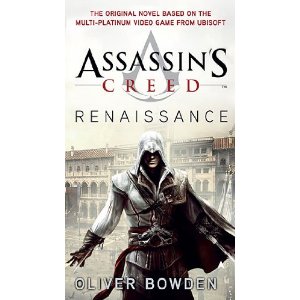
Assassin’s Creed is one of those games that is really tricky to put into book form, and it didn’t quite get pulled off right here in Oliver Bowden’s adaptation of the second game. Assassin’s Creed has two parts: One is a science fiction story where a man named Desmond Miles is captured by a secret government organization and stuck in an Animus machine to unlock the DNA of his ancestors and find the Pieces of Eden. The second part is whatever time period Desmond is throw-in, and in this case, he is Ezio Auditore de’ Firenze in 1476 Italy.
The book completely cuts out the science fiction part of the game and just concentrates on what’s going on in the Animus, but dismisses this as well. This may be great for people who don’t like the science fiction side of Assassin’s Creed, but fans will miss it. Bowden also relies too heavily on the script of the game to drive the book, and rarely do you get to be inside the minds of the characters as much as you’d like to be. He rarely delves further than the games do, and this is disappointing.
A lot of the secondary characters are built upon very well, and you never feel for them except for Ezio. You always feel the other characters are just add-ons and not really important in the story. All of this is just more evidence that Bowden relied too heavily on the script. The book does include the story pieces from the DLC Bonfire of the Vanities and Battle for Forli, so you get some of that included that wasn’t in the original game.
The bits of Italian are nice, but most readers who didn’t play the game won’t realize that this was because Animus 2.0 had bugs in it that couldn’t translate all of it into English for Desmond. There is, however, a nice dictionary at the back of the book that translates all the Italian phrases for you.
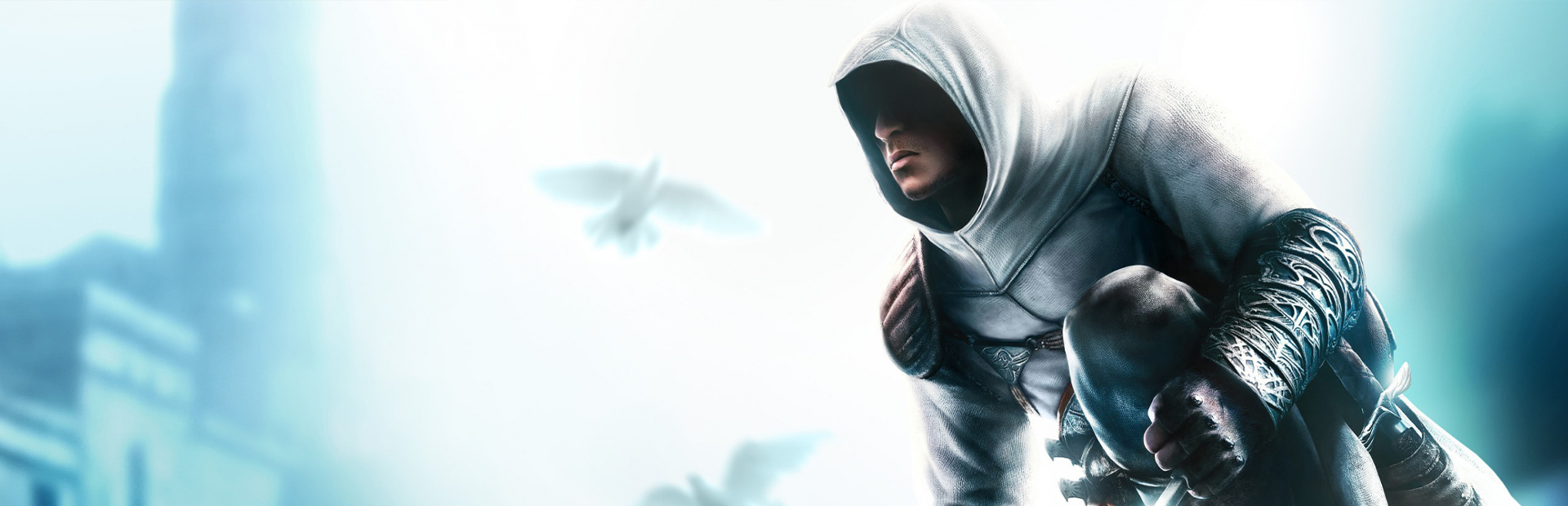
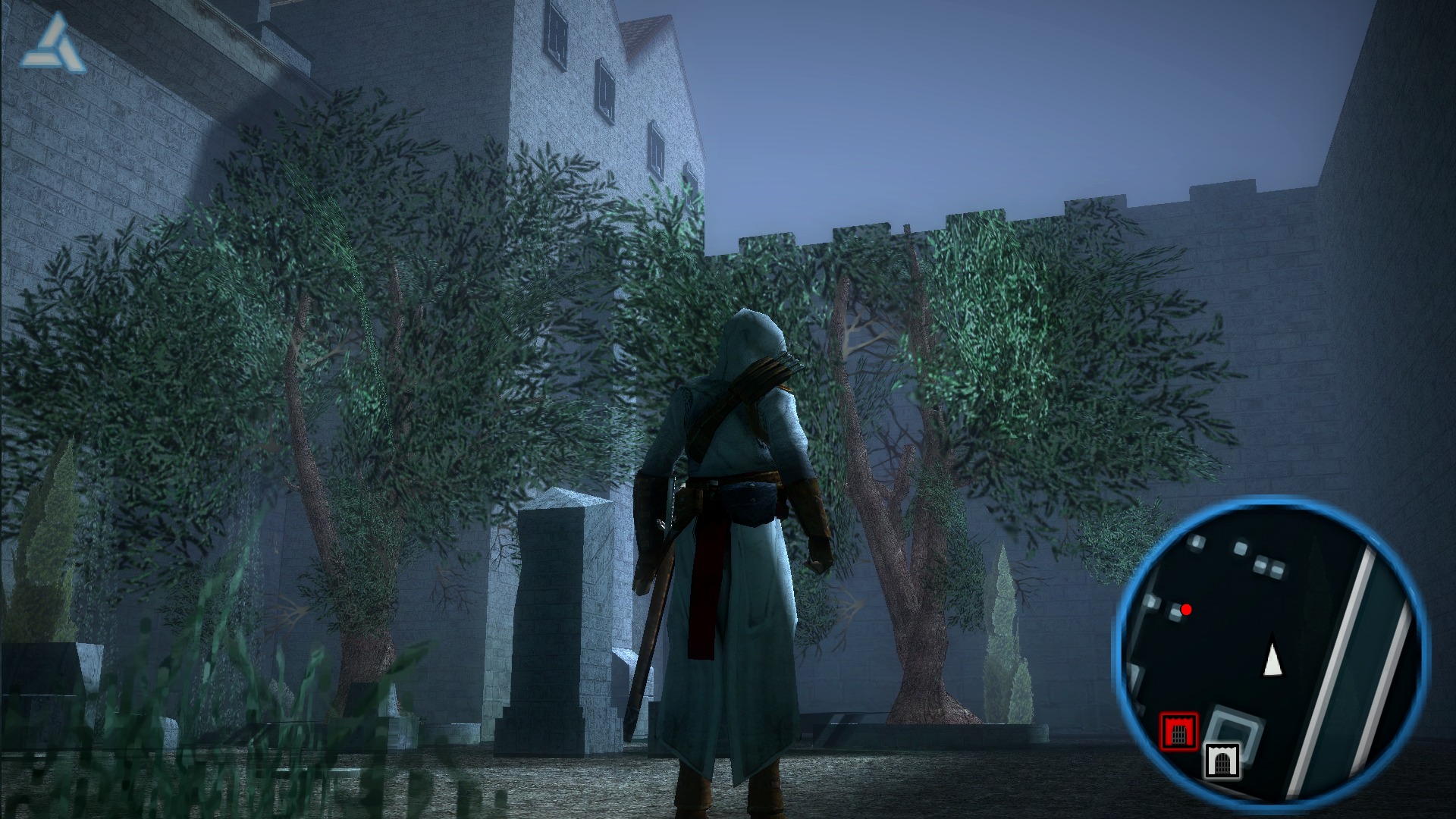
It’s 1191 A.D., and Acre is still not safe from the clutches of the Templars. Altair is once again at war with the seemingly never-ending Templars to find the Apple of Eden. No one knows what this strange artifact can truly do, but Altair doesn’t want them to be the first to find out.
If you were disappointed to find out that Assassin’s Creed II wasn’t a true sequel to the first game, look no further. Bloodlines are the first game’s only and true sequel. Those who played the original will be on familiar ground, as Bloodlines is almost exactly like the first game—both in good and in bad. You still play as Altair and can run, hop, and skip to your heart’s desire as you play the story through. The main difference, however, is that Desmond Miles is nowhere to be seen, as Bloodlines only concentrates on Altair’s story. There are some other rather interesting differences here as well, so you’d better read further.
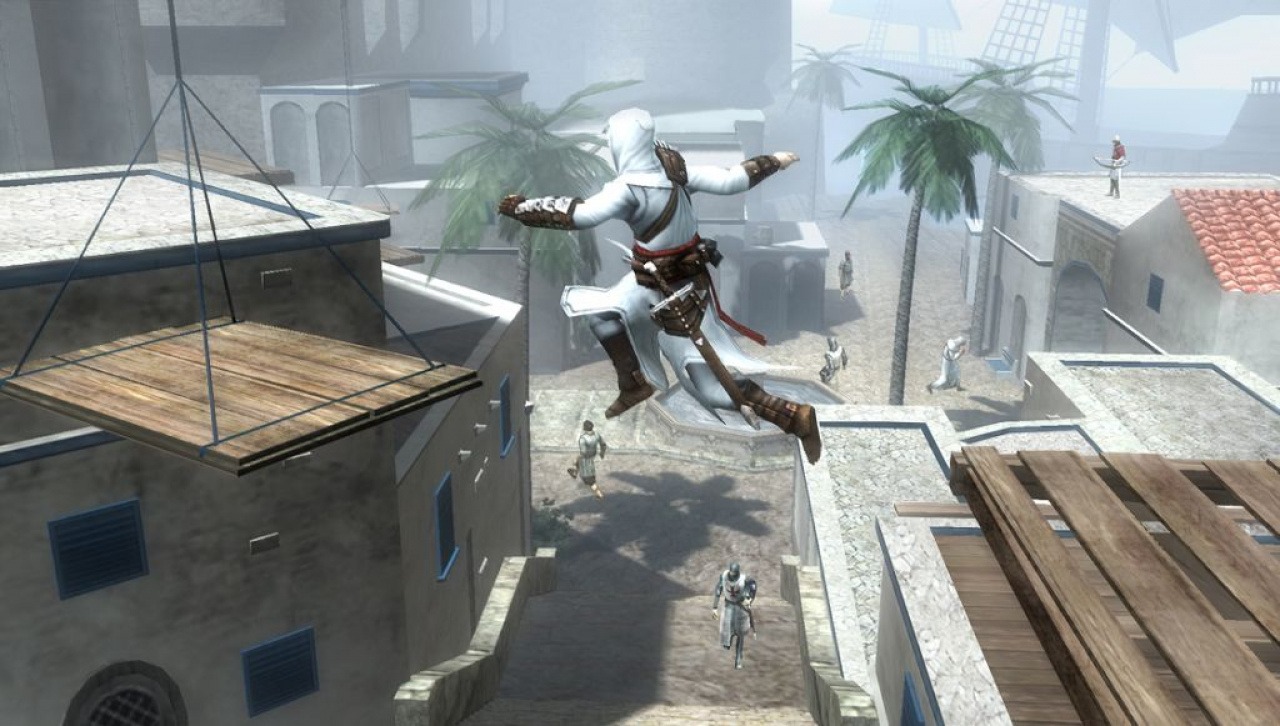
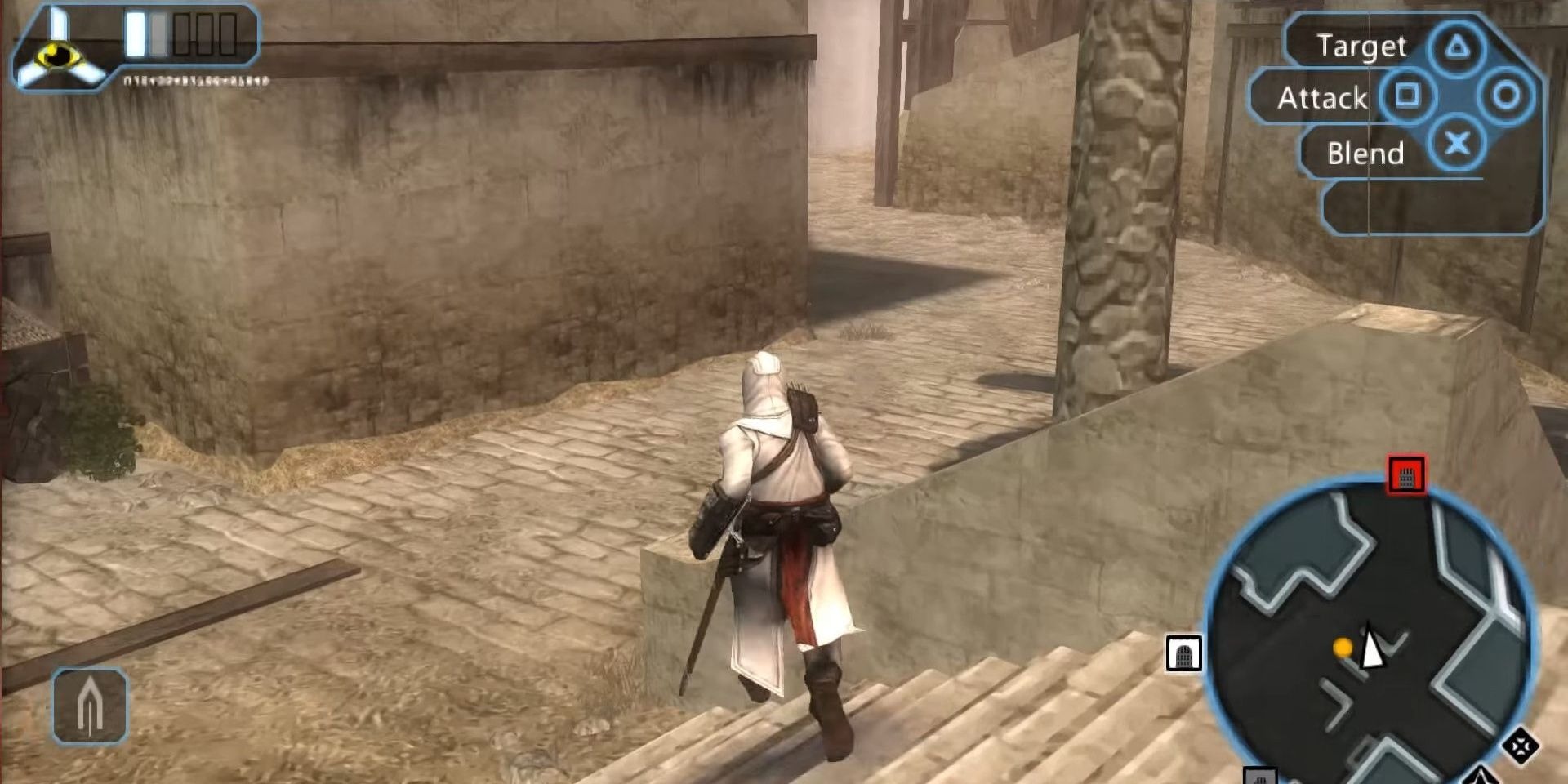
There are two different sets of controls: low-profile and high-profile. In low profile, you can walk, blend, attack, etc., while high profile allows you to sprint, run, and free run up walls and buildings. You can run up practically anything that has a ledge or some sort of foothold. However, the PSP controls seem to be a little too sticky for my liking. If you are only one or two paces away from anything, Altair will cling to that object even if he can’t climb it, and this can be extremely frustrating when running from guards in order to find someplace to hide. Free running isn’t too hard, but just a bit finicky.
The combat system is simple and pretty easy to use, and it is exactly like in the first game. Holding down your block button and waiting for a soldier to attack, and then counter-attacking, is the best route; just rinse and repeat. You can also attack first, but since you’re usually surrounded by a superior force, it is usually wiser to wait and counter-attack when attacked. If the guards are not on alert, you can naturally assassinate them by sneaking up behind them with your hidden blade or throwing knives at them.
The world in Bloodlines is not ‘open’ in the same sense as the world in the original was. Instead, it is formed of small, little areas. Also, the layout of these areas is often a little too restrictive. While in the original, you could find alternate ways to your target, the routes in Bloodlines are often too restrictive, and you end up having to fight groups of enemies with no place to hide or run and no way around the enemies. You end up having to fight them all off. The restrictive world is also evident in the lack of high points on the maps. While in the original, you could climb on the specially marked high points in order to synchronize your map and unlock new areas, these are few and far between in Bloodlines.
As far as it comes to side missions, there are not many of them available. The available missions range from delivering messages to assassinating targets to helping citizens being bullied by guards. Unlike in the original, some of the side missions in Bloodlines are timed. Another small addition that is different from the original is that after each main chapter, you can upgrade items using the gold coins you find throughout the game. This is slightly similar to Assassin’s Creed II, but the economic system isn’t present.
Simply put, the game is gorgeous. However, it doesn’t look like the first game. Bloodlines look like what the first game would be if it were ported to the PS2: there is no bump mapping, no HDR (high dynamic range) lighting, and the graphics certainly aren’t in HD. But even with these limitations, the graphics are highly detailed, with great-looking models and menus. There is no evidence of a slowdown, and the voice acting is terrific.
Overall, the gameplay in Bloodlines is perfect for portable standards, and running around in the small areas is pretty fluid, even if the controls are slightly awkward. Bloodlines is a great first attempt to get an Assassin’s Creed game on the PSP, despite the subtle flaws that make it feel like it was a bit rushed. Nevertheless, I found sneaking around and assassinating people very satisfying, and there were enough areas to keep me occupied. The game takes about 6 hours to finish, depending on your play style, so I found it well worth my money.



























 thebinarymessiah.com
Yeah, it's pretty damn awful. Notoriously one of the worst games on the PSP. A 4 was actually being generous.…