Voice acting is what delivers the personality in characters, and good voice acting is key to any good game. What makes it the best is a wide variety of personalities delivered by the voice actor and thus bringing out the greatness of characters. Good voice acting makes them unique, lovable, and makes you become attached to them. This year had some great AAA titles with amazing voice acting, but only one can take the prize.
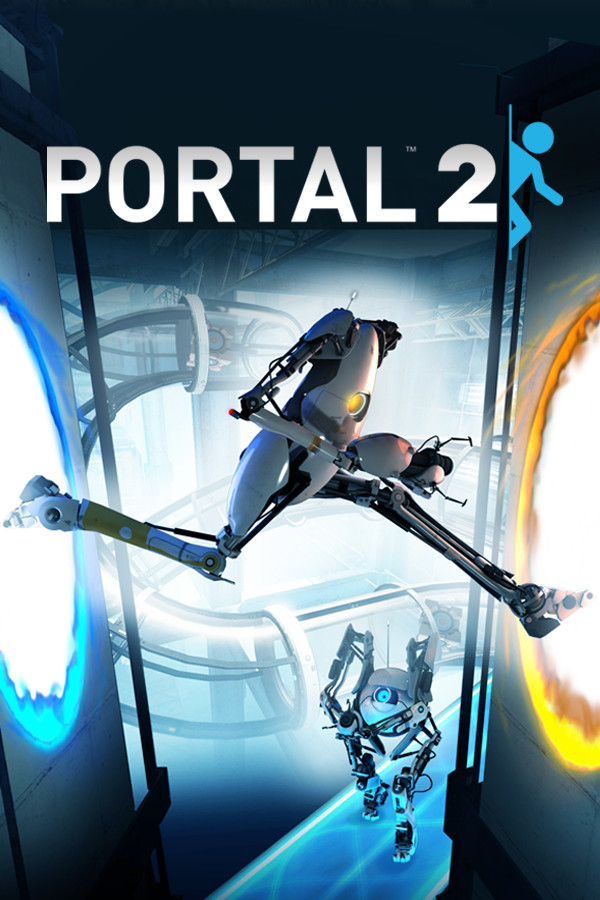
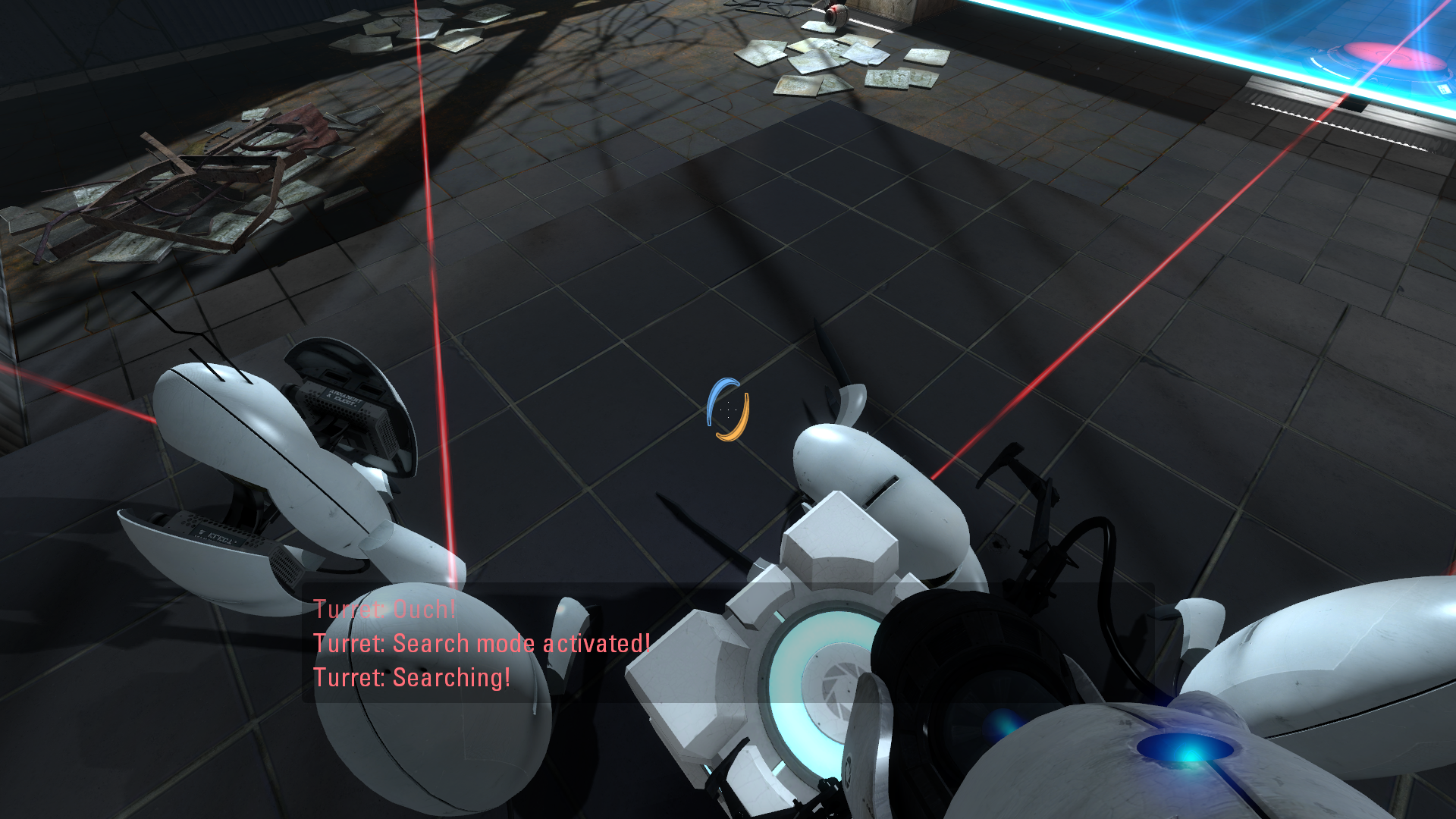
Portal 2 delivers some amazing characters through witty whimsical writing and some talented voice actors. Portal 2 doesn’t just have good voice acting but diverse, funny, and unique voices for characters that are one of a kind. This is what made it top the others and is definitely something to be remembered. With characters like Wheatley, GlaDOS, Turrets, Cave Johnson, and other characters you just can’t beat that.
Great sound design isn’t the music but everything else you hear. Not only is variety good, but it has to match and be unique to the game and atmosphere. Everything from the wind blowing through cracks, swords clashing, breathing, grass rustling, and bullets whizzing it all makes the audio experience.
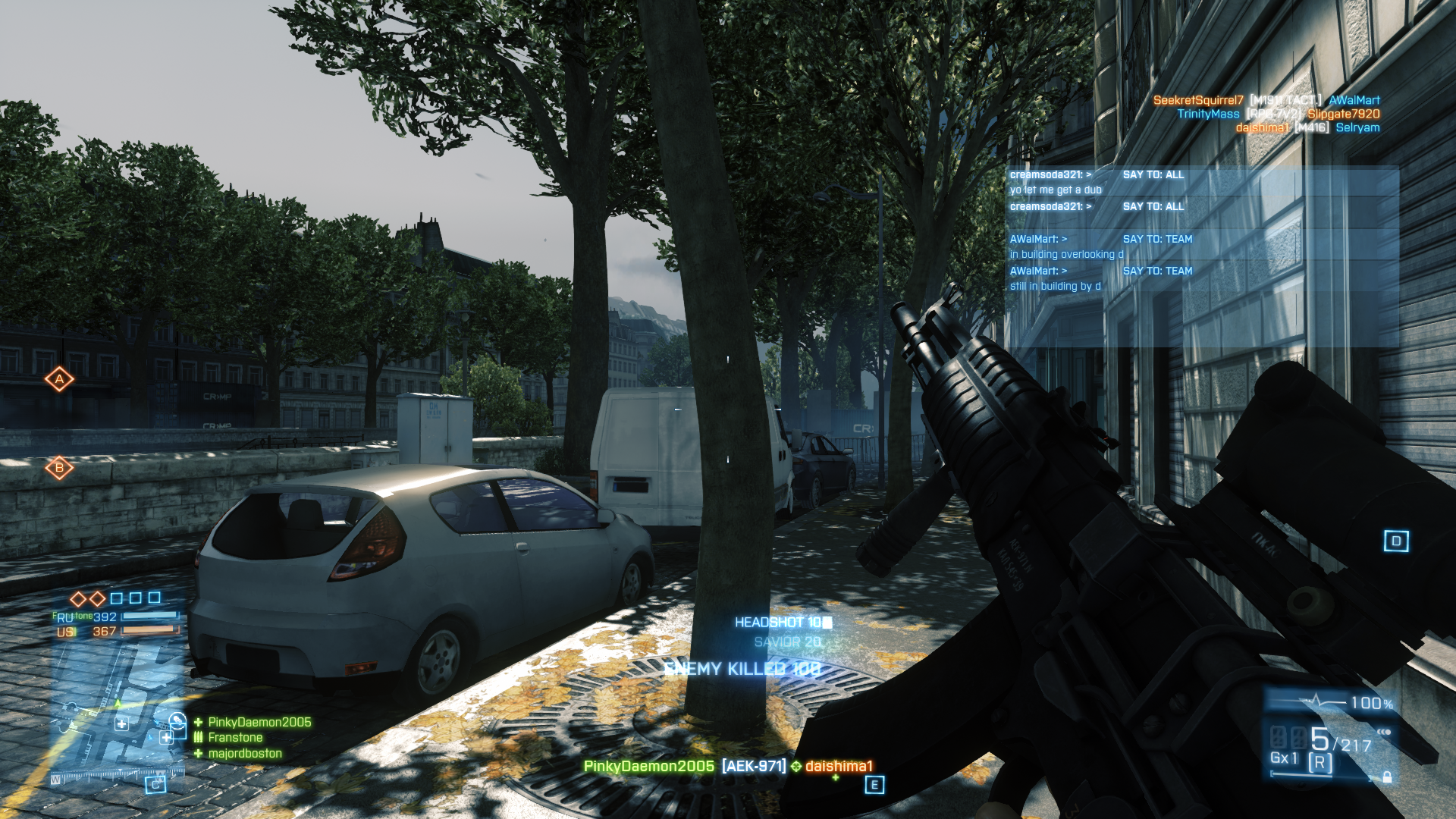
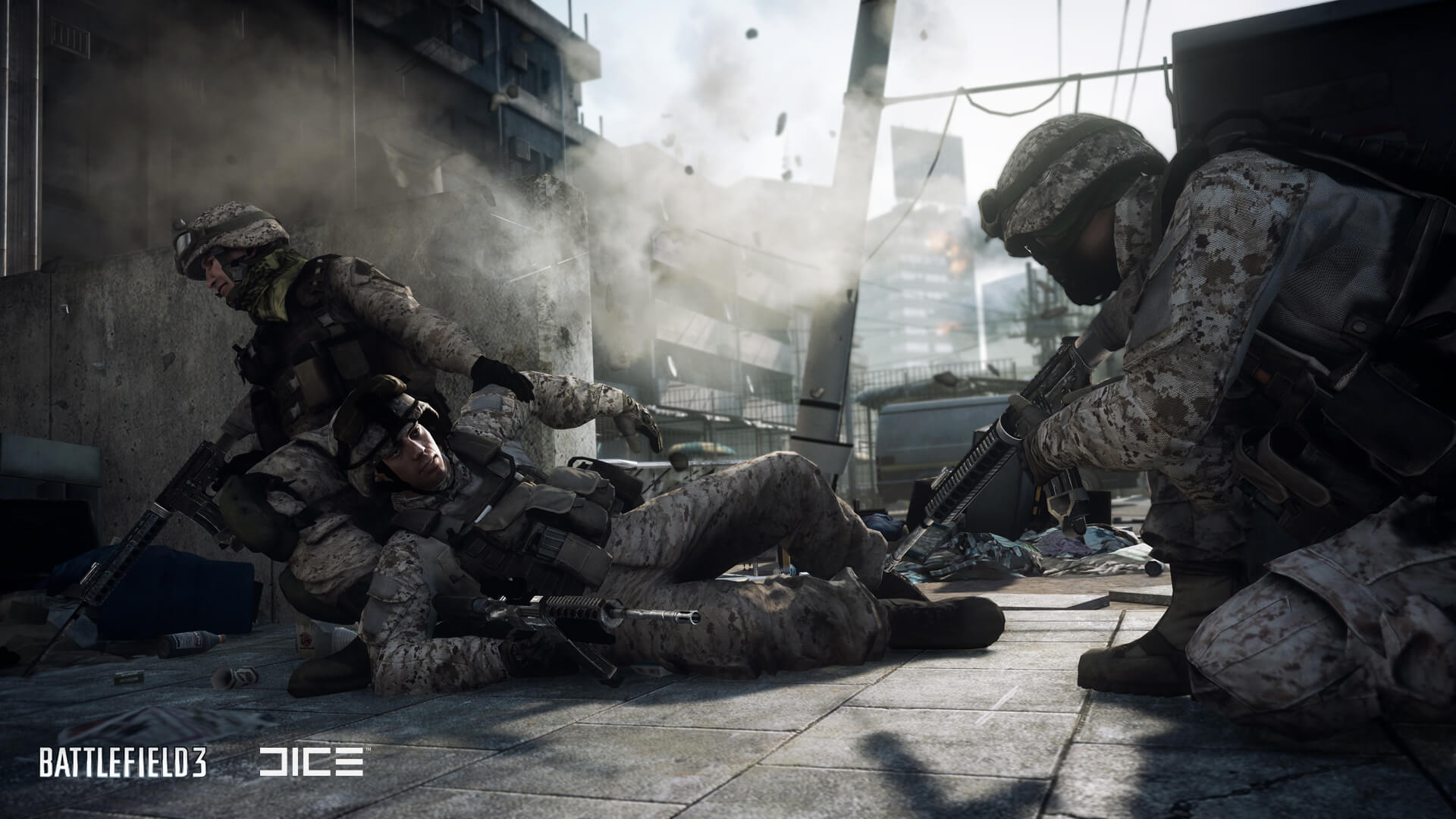
What makes the Battlefield series in the general top most games in sound design is the audio directional placement and just the sheer realism of battle. No other war game has pulled off such rich and visceral sound from bullets whizzing by your head to being able to find a sniper from distance and direction. Everything sounds hyper-realistic, but also completely ensnares you into the battle. This realistic and technically phenomenal achievement puts it over the top of everything else.
An atmosphere is what delivers emotion and overall feelings in the game. The atmosphere can make a game scary, colorful, cartoony, or make you feel alone and sad. Atmosphere much matches and represent the idea of the game. Sometimes the atmosphere isn’t delivered right and can make a game feel boring, or just look bad.
The Best Atmosphere category was even harder than last year’s because so many great AAA titles came out with strong atmospheres. There were also some games I didn’t get a chance to squeeze into the runner-up’s area so that tells you how well this category did this year. While some of the others may have better art to back up their atmosphere L.A. Noire does something that most can’t: Make an atmosphere without fancy art or licenses. L.A. Noire is a new IP and pulls off a 1940’s era in realistic detail and really pulls you in and brings you into a time period that most games don’t explore outside World War II. L.A. Noire had amazing visuals to back it, but to make the game feel so true to an era is very hard to do. You don’t need fancy art for that.
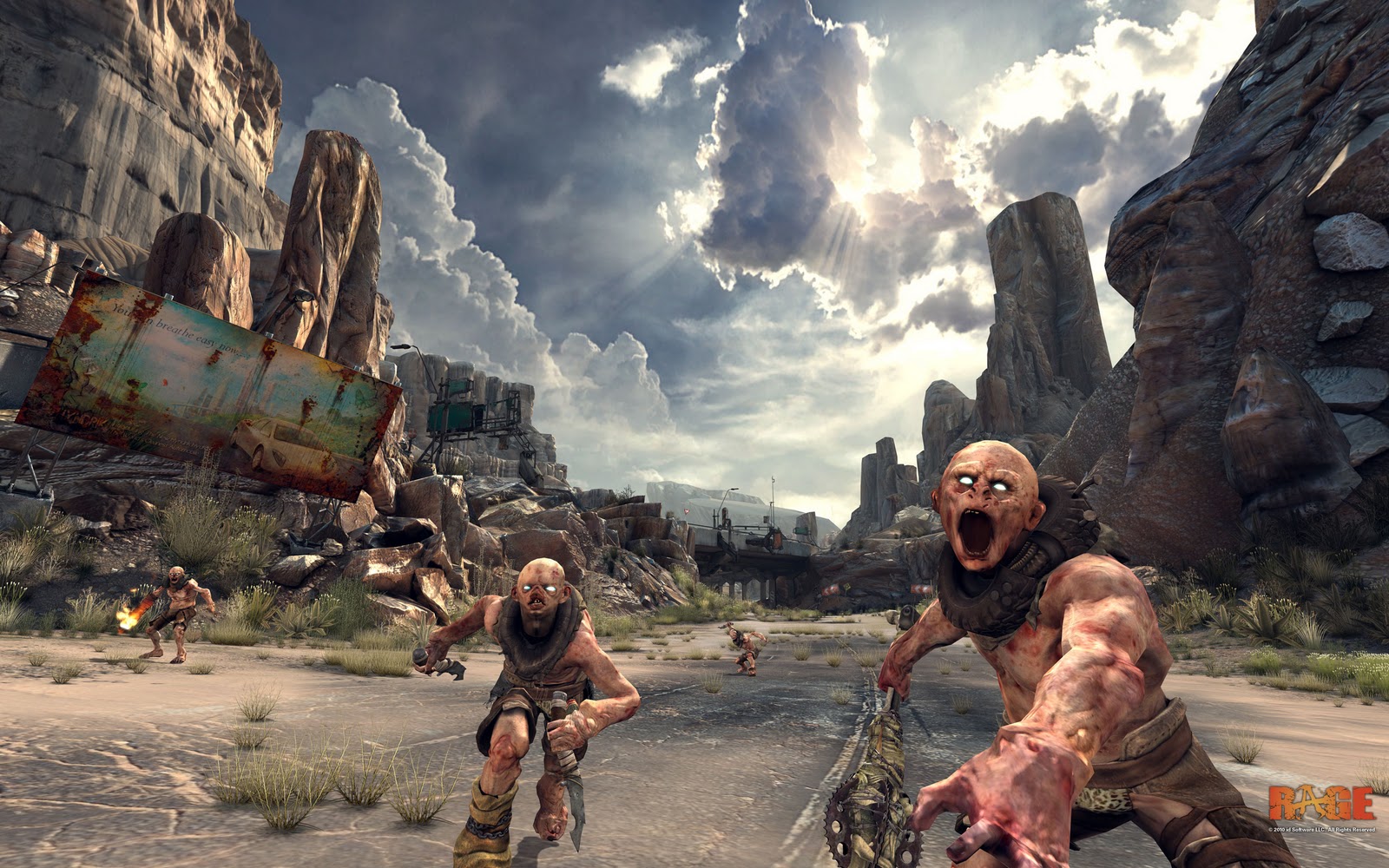
I have to come right out of the gate and say Rage is probably one of the most disappointing games I have played all year. With all the hype about the amazing and revolutionary graphics engine and weapon system that id Software (the inventors of first-person shooters) has made, you would think they would fall through. The game is completely 180 degrees from what id Software said the game would be like. The first thing you will notice is the enormous number of bugs and game-breaking glitches, especially for ATI card users. The graphics will literally be completely distorted, or the entire game will be blue. How do you fix this? Extract a file from the graphics driver update and put it in the Rage folder. Or you can fiddle around with the Catalyst Control Center, or how about the game not even running right unless you have it open? This is completely absurd and should not be like this upon release. I spent a total of four hours fixing this damn game so I could just play it. So you’re probably asking, Is it worth it?
Well, the shooting is solid, and that’s a fact. I know what they are doing, and the guns are great and super fun to use. You can upgrade them at stores in towns and use various ammo types because the enemies do need different approaches. This is by no means a straight-up stand in one area that shoots everything. You will die quickly, so use what you have available to your advantage. Guns like assault rifles use regular steel rounds and felt-rite rounds, which are more expensive but more powerful. The shotgun can use buckshot but also pulse rounds and pop rockets, which act like explosive shells. You get a rocket launcher, a sniper rifle, and a pistol that shoots four different types of ammo. There’s a decent amount of guns in the game, and you slowly unlock them as the game goes on.
Shooting enemies is fun because each weapon packs a punch and feels good to shoot. Enemies have great animations and fight worth a damn, so the game isn’t too easy. There are even some pretty fun boss fights as well. The enemy variety is pretty low; however, you get maybe five different kinds through the whole game, with some just swapping out outfits, such as different bandit groups. The whole point of Rage is to run around the world and explore dungeons to complete various mission types. The dungeons are varied and have a lot of loot in them to engineer items such as bandages, wing sticks (boomerangs that are instant kills!), sentry bots, RC cars that explode, ammo, grenades, and a whole slew of things you can build in your menu while you’re on the field. This can be really fun and encourages exploring every corner for junk to sell or use.
Now you’re probably wondering how the game is like an open world. While the game has a great art style and feels a lot like Fallout, it isn’t trying to copy it in any way. The game has a nice post-apocalyptic art style and has some great designs and pulls of atmosphere, but it falls short because the game has a false sense of freedom. The outdoor areas must be driven (more on car combat later) and cannot be traversed by foot because, for one, it will take forever, and on the other, cars will kill you almost instantly. The world has a lot of “hallways” that you can drive in that lead to each dungeon, but by no means is it a free, open world like Fallout at all.
This tends to be very depressing because you can see all this great open land, but it’s barren and closed off by cliffs and walls around you. I mean, there are only three towns in the whole game, and they are spread out in two different areas that you have to load between. There are a nice amount of side missions as well as races that involve over-hyped car combat. You drive your car, which controls very well, and do various races to earn certificates to upgrade your vehicle so you can survive out in the “wasteland.” The combat is fine and all but mainly serves as just a way to get to your missions in the “open world” because car combat out here is far and few between.
I also had a problem connecting with characters because you don’t talk to them much and they really just give you missions. I also had a problem connecting to the story because, while it has potential, it falls short with a terrible and lame ending, plus it just ends abruptly with a poor final mission with no boss fight. Some of the side missions are probably more interesting than the main missions. Overall, you’re looking at a 15-hour campaign, even if you complete every side mission. I also have to mention that the graphics look good, but there are better-looking games out there thanks to Rage’s weird low-resolution texture problem, but there are some really nice lighting effects throughout.
Overall, Rage is a buggy, broken technical mess that most people will just give up on. However, the game has solid shooting, excellent weapon design, and engineering stuff that is really fun. The false sense of freedom and so-so car combat really bring the game down to just a mediocre experience that will not leave an imprint like Doom or Quake did all those years ago. Sorry, id, but try again.
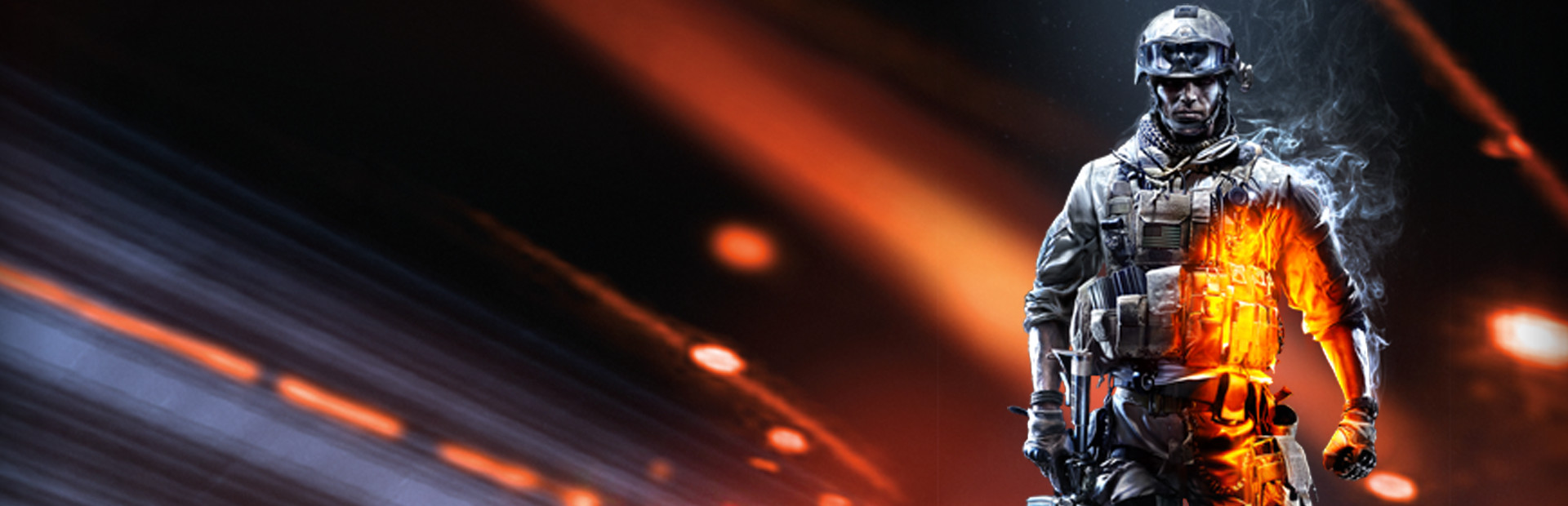
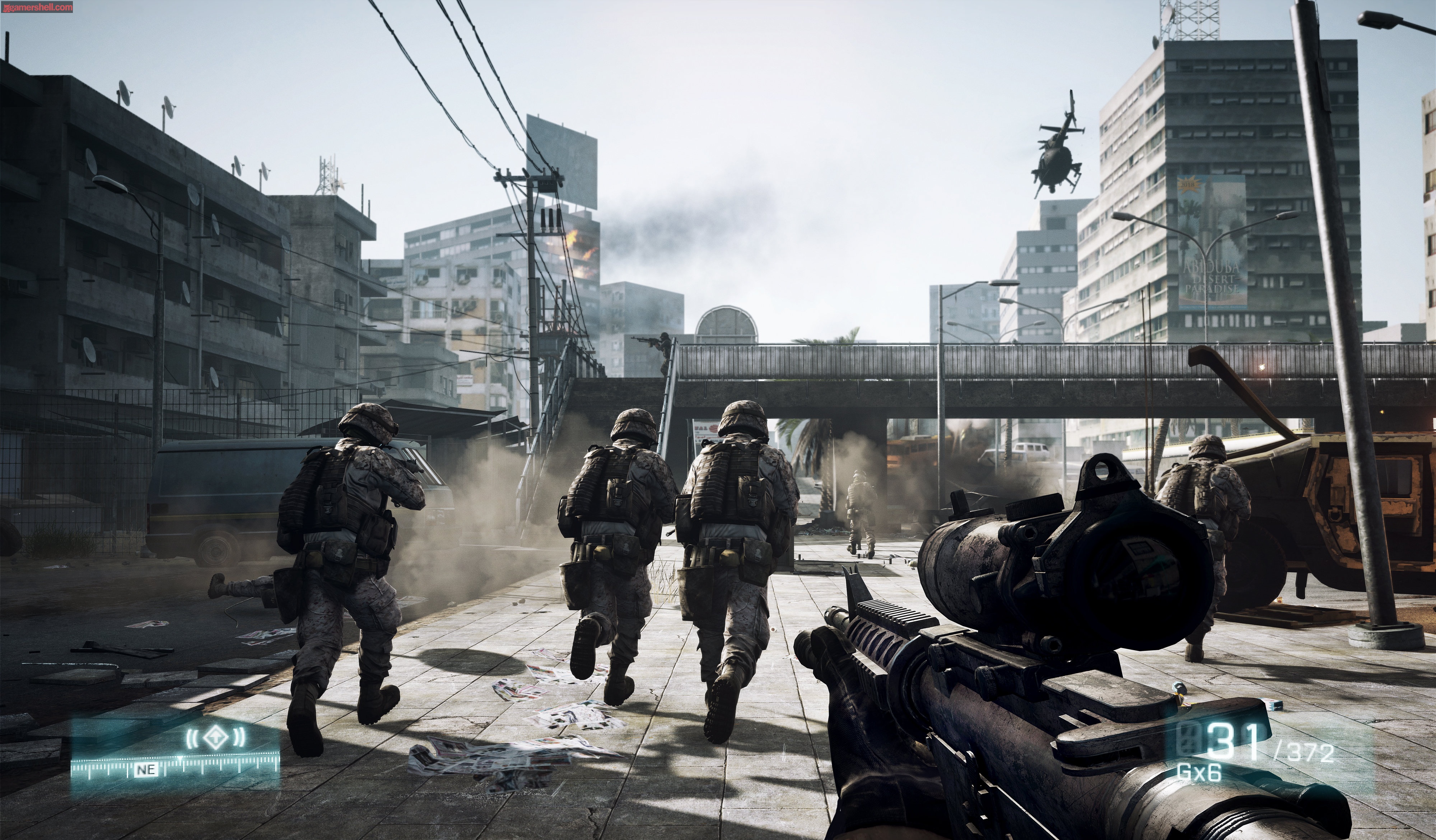
So the military shooters march on and seem to bring with them new multiplayer ideas, updated graphics, and at least trying to make more realistic and tenser single-player campaigns. Battlefield 3 drops the Bad Company name and picks up the original name. It has nothing to do with BF2 or that line in the series, but it keeps the Bad Company multiplayer, so it mixes it up a bit. BF3‘s single-player mode gives you a taste of the new graphics engine, Frostbite 2, as well as a chance to test out some guns. The story is actually interesting, with a couple of plot twists, but nothing sophisticated. You jump around different people trying to find a portable nuke that was stolen. You go from the Middle East to Russia and to a few other parts of the world, and BF3 tries throwing a few new things out there.
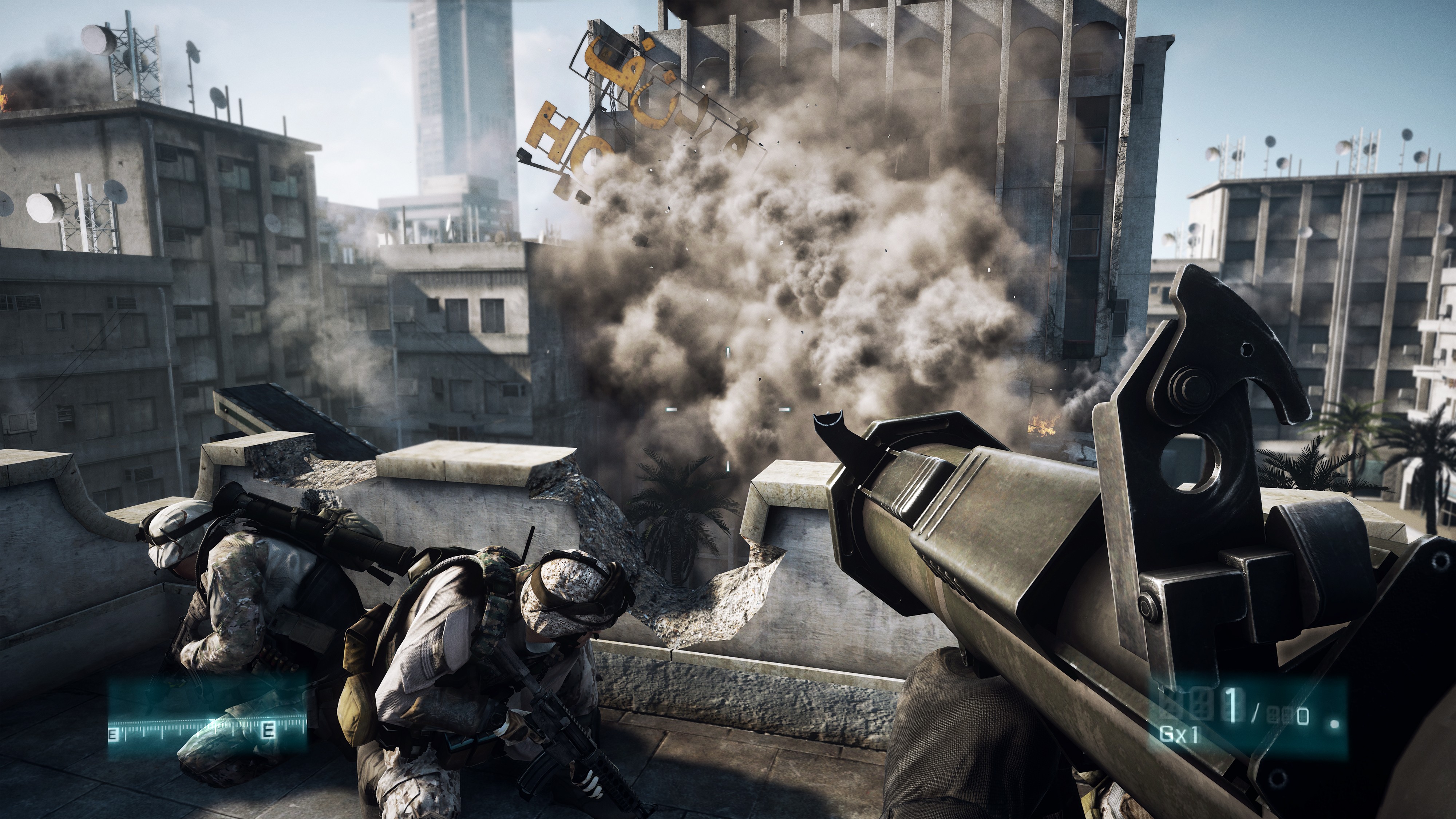
The characters are good, and the voice acting is great, but you won’t get much out of a military single-player campaign. The campaign nails the atmosphere with lots of explosions; the excellent Battlefield ambiance is back and sounds more realistic than ever thanks to the new engine. The campaign does lack the scripted cinematic set-pieces we grow to enjoy in these types of games. There are a few, such as the earthquake in Iraq, the beginning train scene, and the jet scene in the middle of the game, but the rest is just running a gun through open terrain and buildings. The pacing is good, but I wanted more action and some more scripted sets to make the campaign feel more punchy. BF3 does add some detail that other military shooters haven’t, such as great animations. One scene has a Russian jet shooting your squad down. Running from cover to cover and ducking shows your character sliding into cover and falling down like you actually would if you died. Getting up is just as great to look at because you stumble out of being prone, so it feels so real and awesome.
The graphics are probably some of the best ever seen so far. Being on the PC, the game is DirectX11 only, so you get just some amazing lighting, excellent-looking textures, and the most realistic water I have ever seen. The lights and coronas off the sun and flashlights blind you; everything reflects like it would in real life. Plus, the sound is amazing and is actually useful in multiplayer because distance makes a difference in sound here. Gunfire sounds different at different ranges rather than just quieter. Bullets whip and whizz past you with realistic sounds; gunfire sounds incredible; and the explosions look too real. The game does require a seriously (like within the last year) powerful rig to run because there’s no DirectX9 option here.
While the graphics are really the only major thing going for the campaign, it is nice to play and has some replay value just to look at everything alone. The difficulty is all over the place, and some spots are just extremely tough, and you can die very quickly in this game. This isn’t a run-and-gun arcade shooter like Modern Warfare or other military shooters. My only other complaint is that the game doesn’t recognize gamepads very well, even the Xbox 360 controller, which most games have as a built-in standard. I did notice the mouse and keyboard felt better because it seems the game was built around these controls.
The multiplayer is where the money’s at, and BF3 delivers with new modes and some great maps. Using EA’s Origin client, you get a browser-based experience with filters and all the greatness of using a PC. The new model is Deathmatch, which is greatly welcomed, and back are Rush and Conquest. This time you get to play on large maps that can hold 64 players, and it really does feel like a battlefield. The new maps are great, and Deathmatch is addictive, but DICE refined the unlock system. You don’t get perks, but you do get to add things to your loadout, like an infinite sprint, defibrillators, med packs, etc. It does take a long time to start unlocking good stuff, and you’re stuck with crappy load-outs. Weapons have no scopes (except the sniper rifle), plus you only get one main weapon per class to start with. Be patient, wait to unlock scopes for rifles, stick to close-range combat, and just tough it out.
Using vehicles is back and standard in Rush and Conquest, and while these remain the same, they never get old. The new engine helps make the online fights feel bigger and badder with the sound coming into play, plus shooting down boats and helicopters with four guys in a tank never gets old. I didn’t find any stability issues, and EA is constantly updating Origin and the browser experience for online play, so just stick with them and enjoy them. Battlefield 3 may not deliver a riveting single-player experience, but the new engine and excellent multiplayer will keep you hooked. You can also jump in for a co-op campaign ride, but you will come back for the multiplayer thanks to the slow yet steady unlocks, which make you feel like you truly earned them.
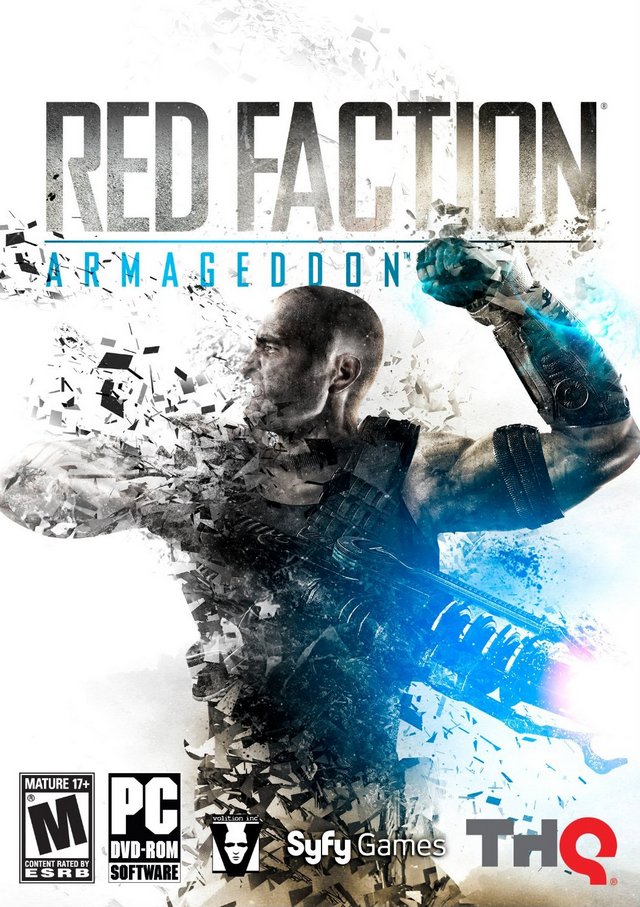
The Red Faction series has been very rocky since the first game was released in 1998. Guerrilla revolutionized the series with a massive destruction engine that allowed you to destroy anything standing. Armageddon builds on this but gives us new characters and a whole new enemy to fight, but this time under the surface of Mars. Darius Mason is the great-great-grandson of Alec Mason. You get a job to excavate some sort of artifact and awaken a whole race of Martian creatures. The story is pretty riveting and takes you on a wild ride to finally beat the Marauders, as well as a long ancestral war. The characters are likable and are fleshed out really well, especially between Darius and his AI SAM, who guides him through the game. Their bantering will sometimes make you laugh with some pretty witty dialog.
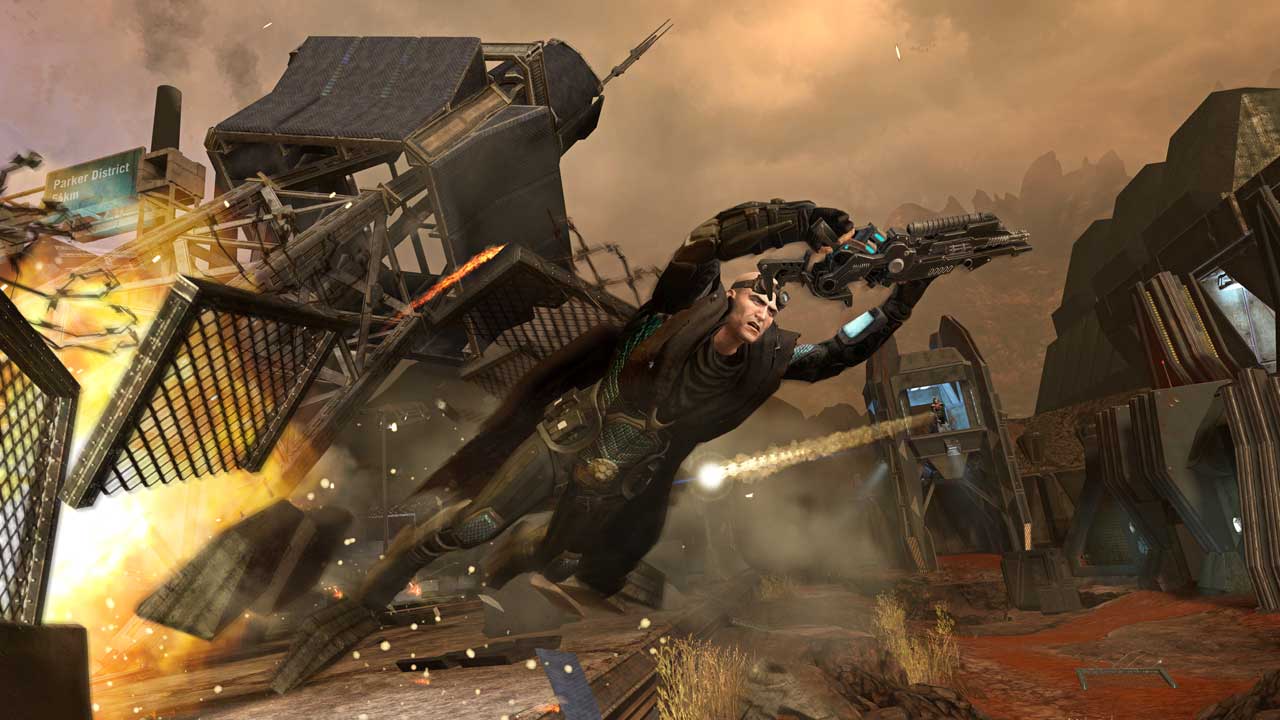
The heart of the game is the combat. The game isn’t an open-world like last time, but a guided linear adventure that is actually more suited for the series. You can destroy anything in your path by using a large explosion or magnet gun. Shoot at one point, then link it to another, and it will drag and pull apart anything in its path. You can even do this to enemies, which is kind of amusing. The hammer is back, but pretty much useless since you are overwhelmed by a ton of enemies most of the time. The new Arsenal kicks ass with some pretty sweet weapons. The nanorifle returns and disintegrates anything in its path. There’s a black hole launcher that sucks anything nearby up and then explodes. Of course, there are the usual weapons like rifles, rocket launchers, and shotguns of various types, but the new weapons are very unique.
Most of the time, you are blowing up various creatures of different sizes, but the game encourages finding strategies for each alien. This requires swapping out weapons all the time and finding which ones work in certain situations. You will come across points where you have to destroy spawn points, large tentacles, and behemoth aliens. It’s challenging, but just enough so that you can actually finish the game without dying constantly. You always feel like you’re on the run and never safe for a second. The objectives vary, and there are some really awesome vehicle sections in the game.
Using the walkers is awesome, with certain sections slapping different weapons on the walkers as well as the spaceship section. These parts don’t last long, but you always look forward to them thanks to great controls and the feeling of finally being able to overpower the alien threat. You can upgrade yourself by finding scrap metal, and there are a lot of upgrades. These range from health to weapon power and your nanoburst. The nanoburst allows you to push enemies away, create a shield, and even make a shockwave to get out of tight situations.
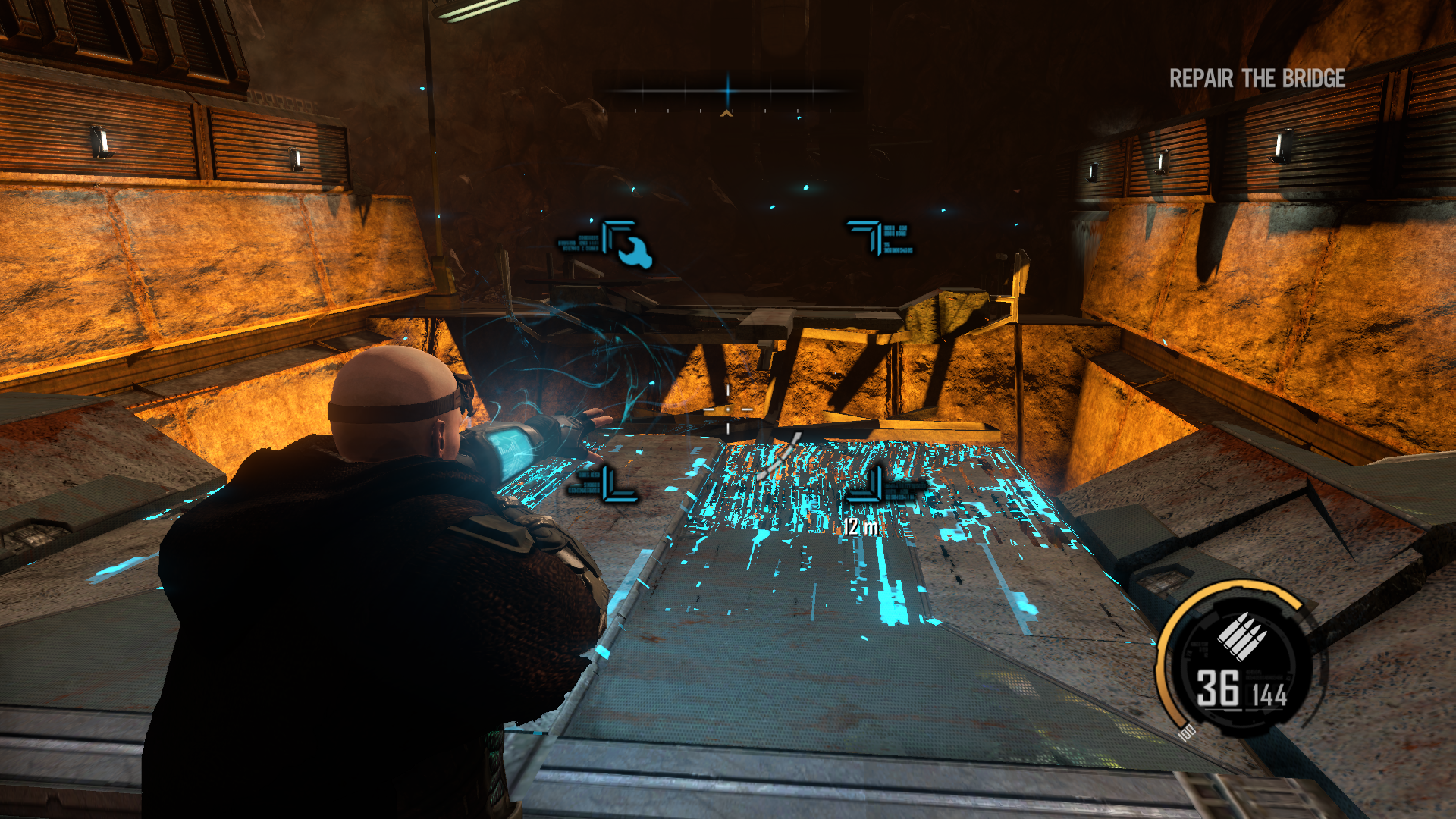
One of the most unusual parts of Armageddon is being able to rebuild things you destroyed. You can rebuild anything that was blasted away, and most of the objectives require using this to repair things. This can also be used in combat by rebuilding cover that broke away, so you have a ton of things at your disposal for combat. I never really got bored with the game because the action was constant and there were so many variables for combat. If I had to choose something bad about the combat, I would say some of the environments are a little cramped, and there are times when you feel the enemies will just never stop coming. It is also little in variety besides the few levels with humans, but 90% of the time you will be fighting the same aliens over and over again.
Multiplayer is fun, but it won’t last long due to the lack of people playing. There is a Ruin Mode, which lets you just destroy things, and a few other modes to let you continue using the awesome things Armageddon lets you have, so there is some replayability here. The visuals use DirectX 10 and 11, if you can run them, which adds great visual quality over the consoles and DX 9. I’m not sure why it uses 10 and 11, but the game does look pretty good in most areas. Overall, Armageddon is the best (and sadly, the last) Red Faction game, so enjoy it while you can and get destroying!
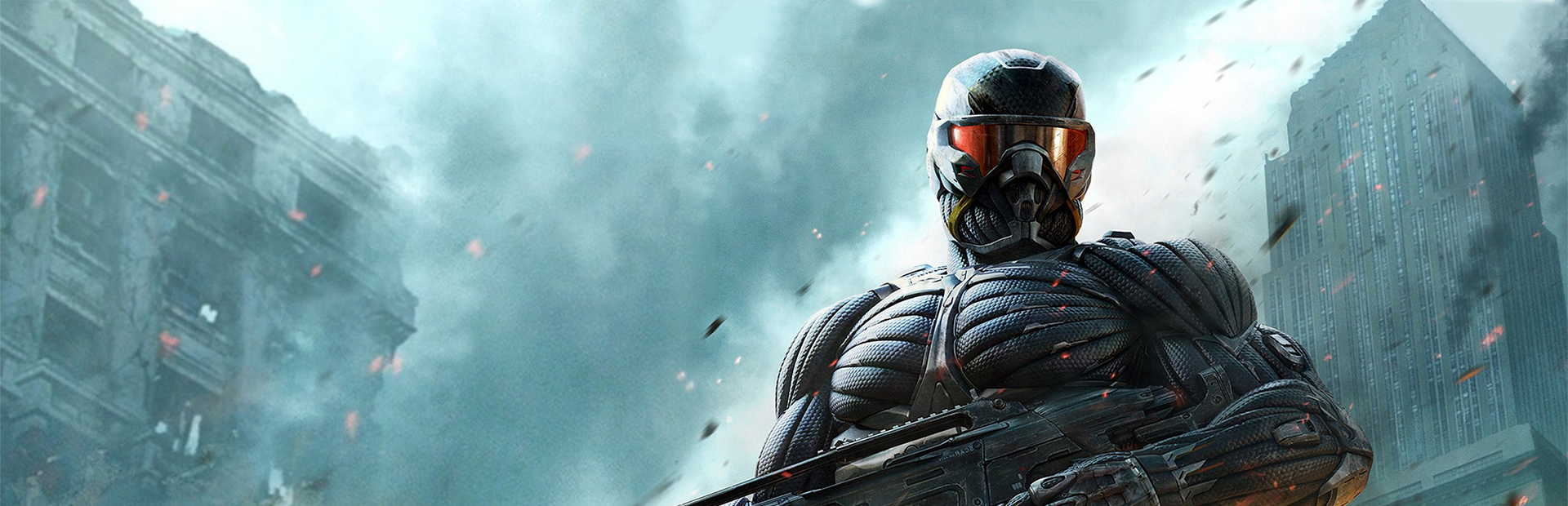
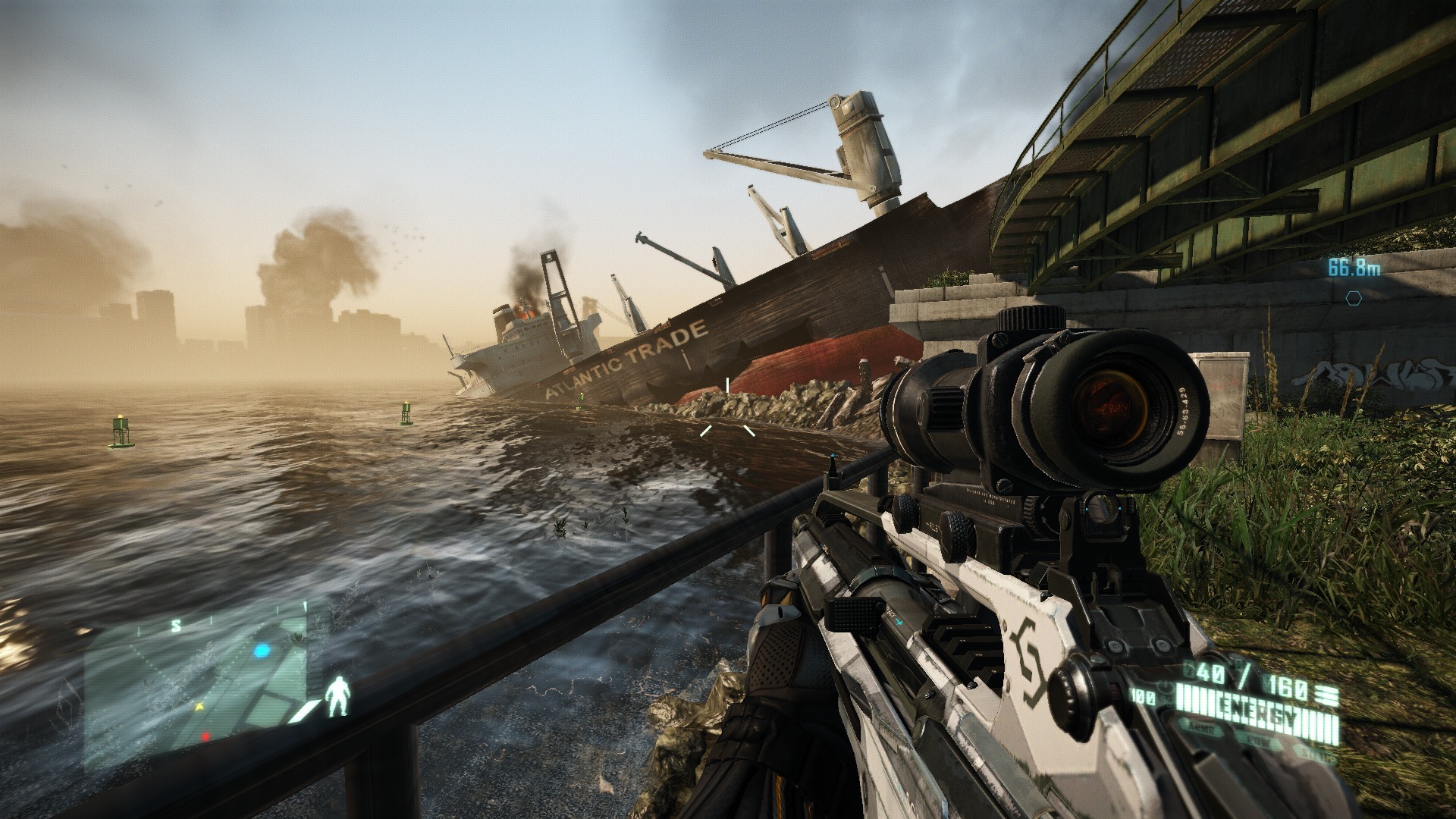
Being a regular human in a shooter has been done hundreds of times, but being a true one-man army with technology built into your nano-suit is something that hasn’t really been done before. Meet Alcatraz. The poor dying soldier or nobody whom the Prophet chose to stick his suit on and kill himself. Now you are thrown into the war that you wanted nothing to do with and are the key to helping stop the invasion of Manhattan.
A lot that you remember from the first game is different now, thanks to the game being streamlined for consoles. You no longer have a power wheel, and two of them have been taken away and put into the other two. You get to switch between armor mode and stealth mode. You can use your superpower moves in armor modes, such as powerful kicks and punches, as well as absorbing long falls. Stealth mode allows you to cloak and sneak up on enemies or just go right in the past without being detected. Both of these are key to staying alive, and you will be switching constantly.
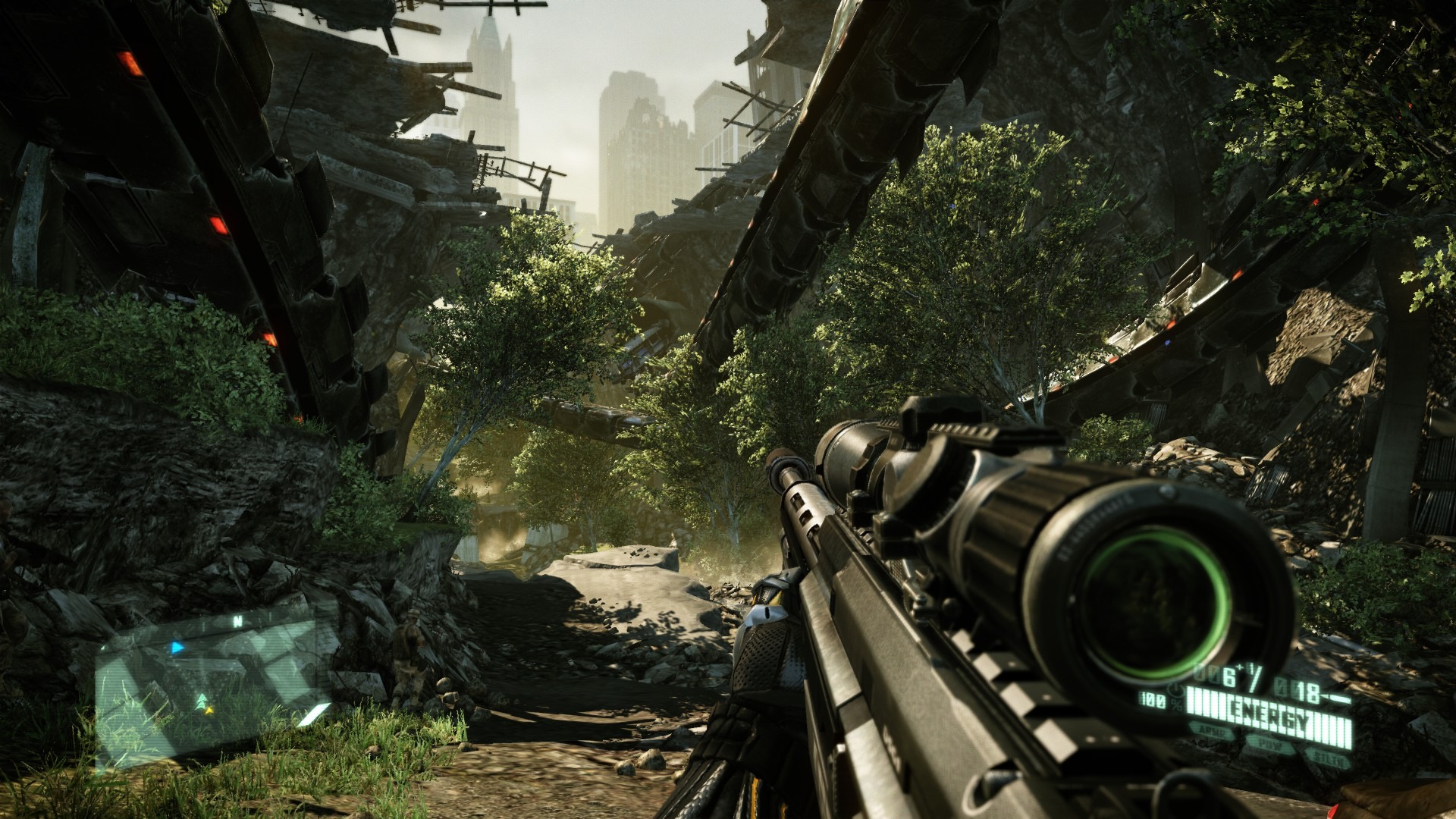
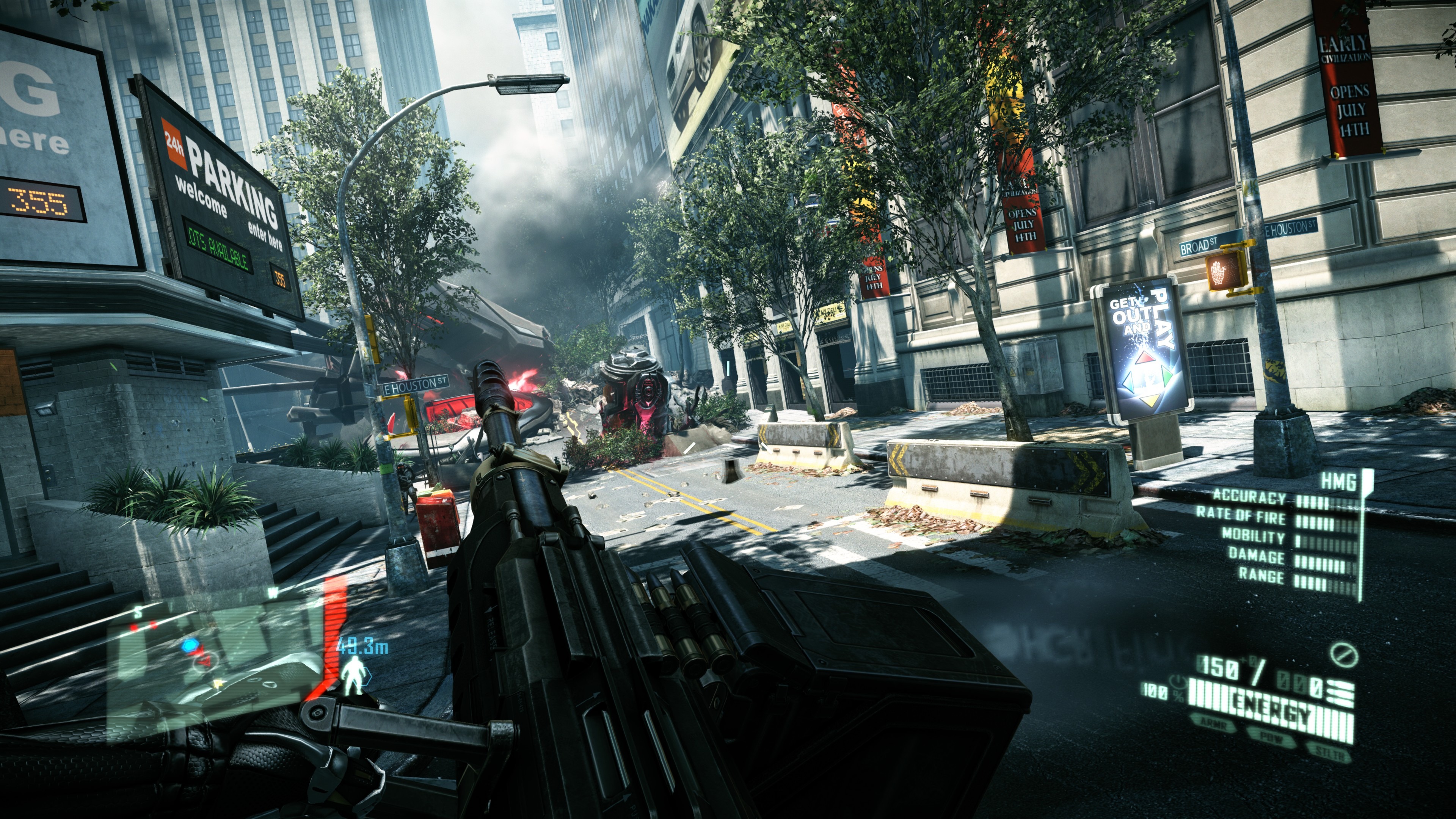
Another thing that changed was the lush jungle you got to roam around in freely. You are now stuck in a concrete world, and the game is more linear this time around. That’s not all bad because you still get to choose your approach to firefights, and some areas are massive. Using your tactical visor, the game will give you options on how to approach the battle, such as certain weapons, high perches for sniping, or complete paths to totally avoid all enemies. This still gives you the sense of battle control like in the first game without making it feel like a Halo/Call of Duty hallway clone.
You have two enemies in the game: Ceph aliens and the CELL army, trying to capture and use your technology for their own good. The story isn’t exactly the most cohesive thing we’ve seen; it wasn’t the first game either. The story is kind of confusing, and you never really know what’s going on between all the characters, and it doesn’t get really good until the last couple of missions. In the middle of the game, there is a lot of back and forth between Hargreaves and Gould, who are two scientists with completely different views. The CELL enemies are just like regular humans, but later on, the game throws countless Ceph at you, and they have different types of Ceph that come after you, from grunts to huge walking tanks. Of course, this makes the game feel very repetitious due to the low enemy type, and the game doesn’t really look different from area to area except for different levels of destruction.
There is a little more to it than just shooting everything in sight. You can upgrade your powers this time around by collecting nanocatalysts from dead Ceph, and the stronger the Ceph, the more you will get. Press the upgrade button, and Alcatraz’s hand will be displayed with five different areas of upgrades on his fingers. A few examples are bullet tracers, longer stealth mode, and the ability to see cloaked enemies. While it does change the gameplay a bit, it doesn’t do a lot to truly enhance the experience. Not to mention the fact that you have to watch your energy meter when using the power because it runs out in a matter of seconds. Using your night vision plus stealth while running will run it down in less than 10 seconds, so you never truly feel powerful or get the ability to upgrade your energy meter.
Of course, you can still customize your weapons with different sights, silencers, and other attachments, but I wish we could use every attachment for every gun instead of each gun getting its own special options. There are some new guns, however, and there are plenty, but they are fun to shoot, so don’t think that the weapon selection is weak at all. There are some other things thrown in, like a few turret sections, and some quick-time events are thrown into the cinematic parts of the game, which are thrilling and very fun, but they are too short and too far apart from each other. The linearity of the game allows this type of cinematic control, and it’s welcomed, but I would have liked to see more of it.
You’re probably wondering about the graphics. Since this is streamlined for consoles, do we get DirectX 11? Do we get higher-resolution textures and extra graphics options? When the game launched, it was no. We got exactly what the consoles got, but a few months later the DirectX 11 patch was released as well as a high-resolution texture pack. With this, the game looks phenomenal and is probably the best-looking shooter to date. Of course, you need a monster rig to run the game with these settings enabled. Even my rig dropped in the single digits during certain scenes, but man, is it gorgeous to look at? The game also supports 3D, so if you have the GPU, then enable it because it does enhance the experience a lot.
Overall, there are a few bugs that can sometimes hinder the game, and it is also very long for an FPS to run for about 10–12 hours. The multiplayer is also very addictive and fun for a while, with perks and upgrades, and there is a good variety of maps available. I had a lot of fun since using the suit powers kind of makes playing an FPS different online. However, it still doesn’t have the addictive quality of Call of Duty or Halo to keep you playing for months or years after release. So, with an underwhelming story and a low enemy variety, just stomach the repetition for a while, and you’ll be treated to one gorgeous and fun shooter.
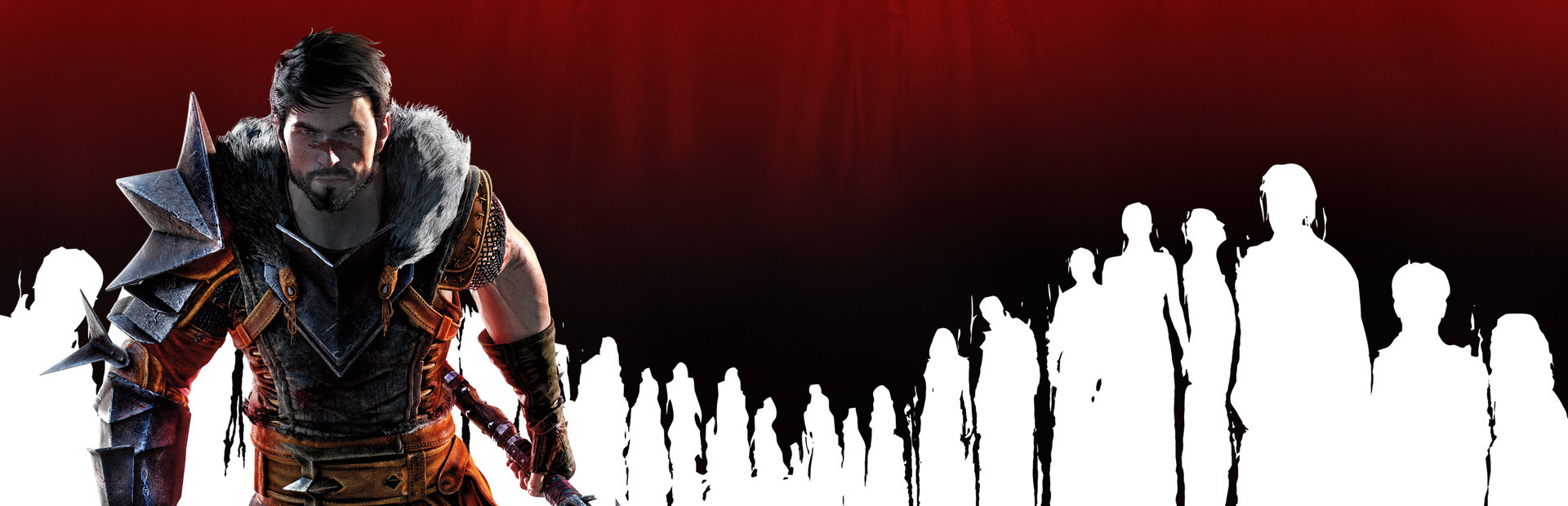
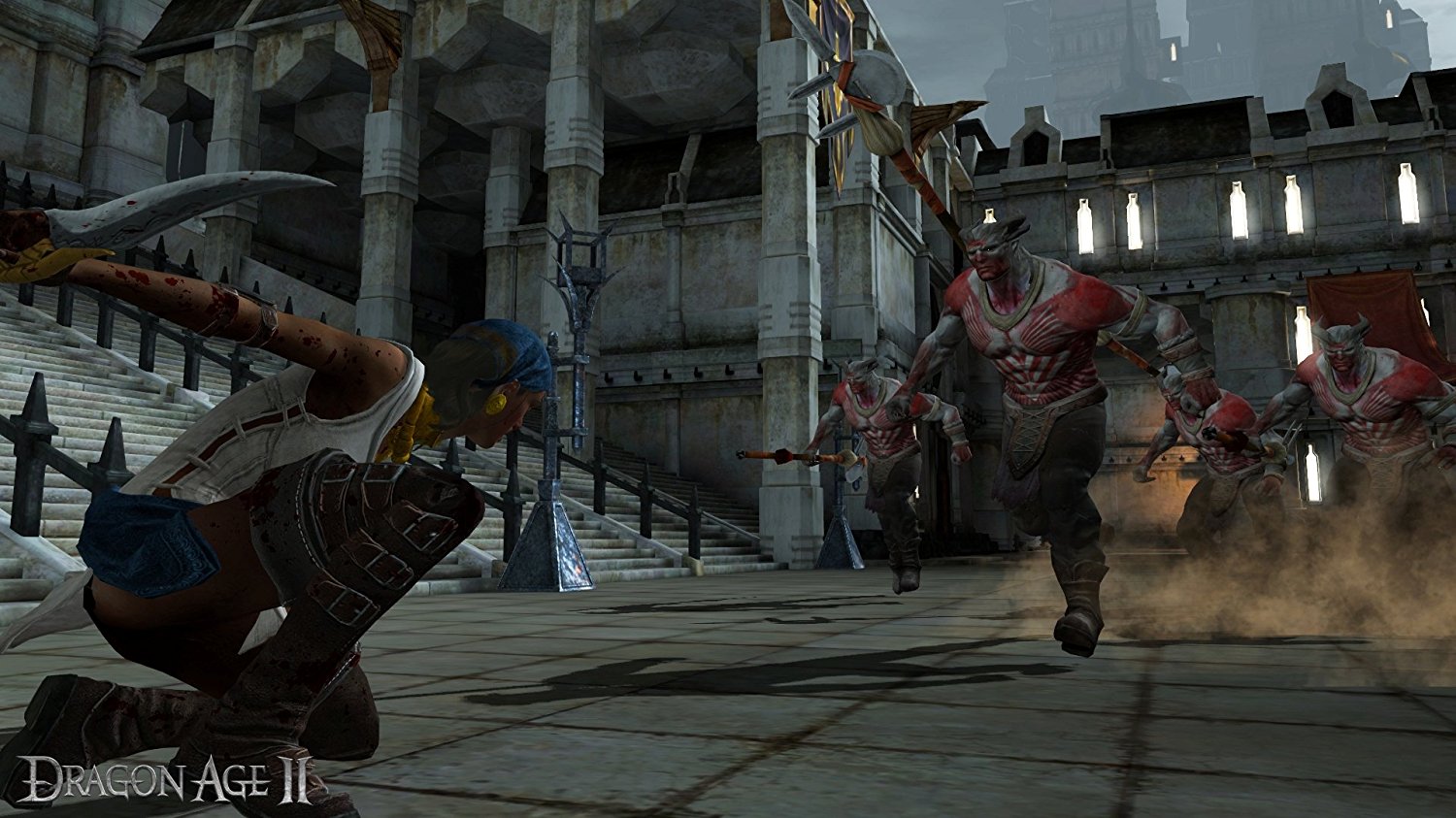
Dragon Age: Origins was Bioware’s gift to gamers missing the old action RPGs of yonder, such as Diablo, Baldur’s Gate, and Icewind Dale. Dragon Age II has come along and is really a love it or hate it type of thing. It’s almost nothing like Origins, but there’s a lot of good in this as well. The game does have more flaws than the original, but I will get to those later.
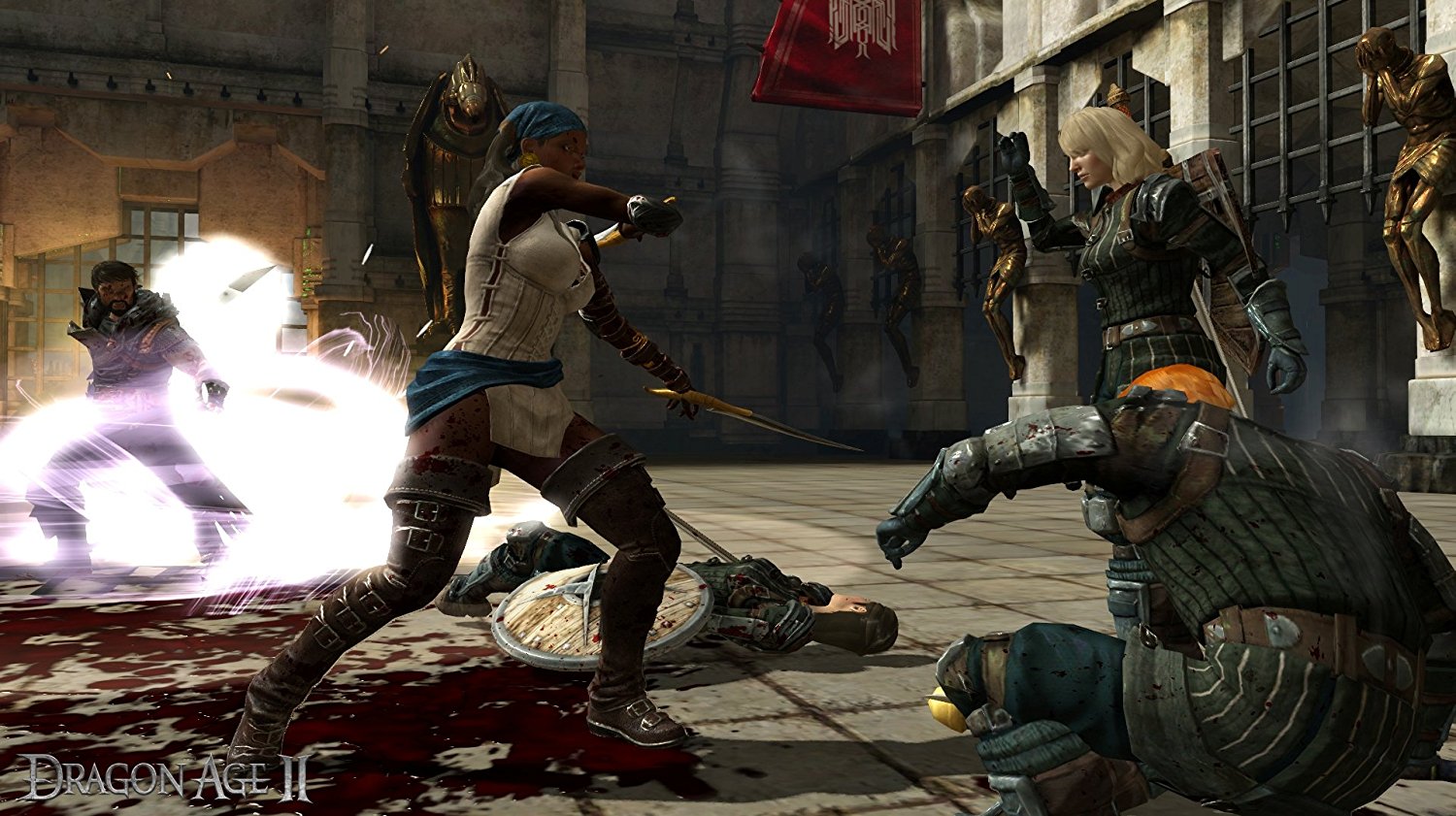
DA2 tells the story of Hawke, who is the Champion of Kirkwall, in events that take place right after the last game. DA2 really concentrates on a more personal level with the companions and Hawke instead of an overall save-the-world-type story. The Darkspawn play a very small role in this story, and you only encounter them a few times. Don’t mistake DA2 for a poor linear story because the moral outcomes become the usual Bioware head-scratchers, and as the game goes on, your choices make bigger and bigger impacts. The story is broken up into three acts, which respectively have you rising to power, using that power, and finally completely unleashing your abilities as Champion of Kirkwall to either save the mages or help the Templars destroy them. The character in DA2 is absolutely amazing in both looks and personality, plus some cameos and appearances from the last game. You really get attached to each one and want to use them all during battle.
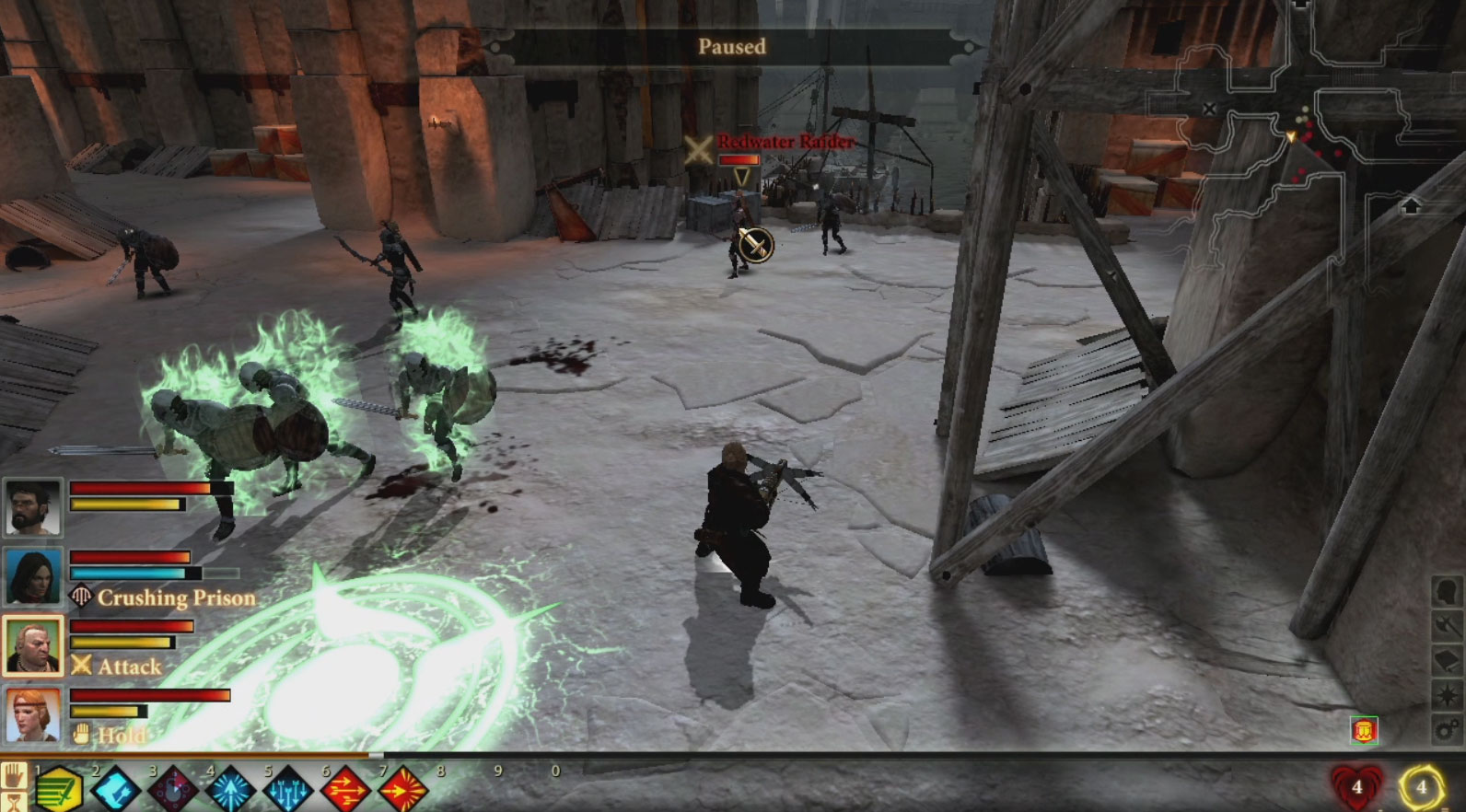
The story is probably the best thing going for DA2, but it does have a bit of a slow start. If you are used to Origin’s huge, overarching story, you might actually get bored for a while with this one. Little things help influence the story, like romances (yes, gay romances work here), but there are so many choices during the dialog that the story could turn in so many different directions, so you always feel like you have complete control. The dialog is more like Mass Effect with a wheel that has several options. You can choose from the usual good/bad dialog, but a new sarcastic one has been added in the middle, and I always chose these because they were just clever. Just like any Bioware game, relationships with characters can also impact dialog and give you advantages or disadvantages depending on that.
So, if you go into DA2 expecting an excellent story, you won’t be upset there. What you will probably hate are the more action-oriented combat and the more linear and repetitive environments. The combat has fast, fluid animations instead of the clumsy combat from Origins. Characters strike hard and fast, and there is a lot of gore, which I didn’t mind. Of course, you can have up to ten quick slots equipped for abilities, and the new tree is very intuitive. There are different ability classes, and then each ability can also be upgraded within that. Loot collecting and leveling up work just like in Origins, including junk, but you can’t equip armor on companions. Yeah, it’s one of those “What the hell?” type issues with the game. Sure, you can add runes to their armor and weapons, but just don’t expect to change their armor.
There are a lot of changes from Origins that really shouldn’t have been touched, including the linear and extremely repetitive environments. You move around a map and just follow the arrow on your map to each goal. Since you are just in Kirkwall, you are moving around the same hallway dungeons and the same main map cities. After Act 1, you have probably seen 75% of the game. I really missed the open areas from Origins and the feeling of being in an open world. Sure, the graphics got a huge upgrade, and it all looks nice, but there isn’t much variety. What disappointed me more than anything else in the game were the repetitive areas that kept you strictly in Kirkwall. There are some outdoor environments, but don’t expect a lot of them. There is also constant loading between areas, and this drove me nuts early on.
Of course, there’s a lot of good looting and resource collection, and you can use poisons and grenades like before, but what I hate still is the potion cooldown times that are set at 30 seconds. This can make hard boss fights very frustrating because later on you’ll have a ton of money and have over 100 potions, but you can only use one every 30 seconds, and this goes for stamina droughts as well. The only thing I like about the new combat system is its faster pace and speed. There are so many abilities that you won’t even unlock them all in one play-through.
Overall, DA2 feels like a Dragon Age game, but that nostalgic feeling from Origins is gone, and I really missed that. DA2 will keep you busy for a good 30+ hours, and there are even some great side quests. The visuals are great with DirectX 11 support and high-resolution textures on the PC, so if you have the rig, this is the way to go. However, the graphics seem more sterile than Origins due to linearity, so it loses its charm in that area a bit. I highly recommend DA2 to fans of the past game, but don’t expect this to be a true-to-life sequel.
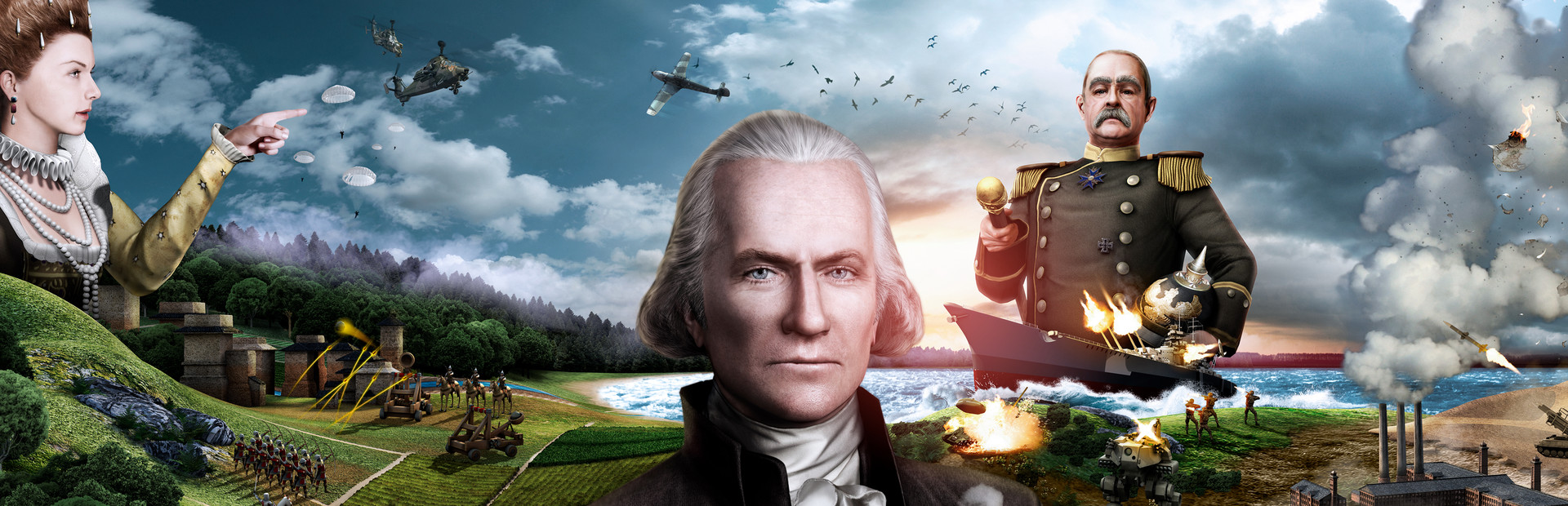
After playing my first game of Civ 5, I realized how much of a greedy jerk George Washington was. 500 gold, all my resources, one city, and open borders for just one silk resource?! He’s just begging to get wiped out, but I keep my cool and press on as the most advanced civilization for the next 150 turns. I built many great wonders, such as the Great Wall, the Great Lighthouse, the Colosseum, the Taj Mahal, and even the Hanging Gardens. Of course, it takes about 100 turns to create most of these, but it keeps my people happy and sets us into a golden age.
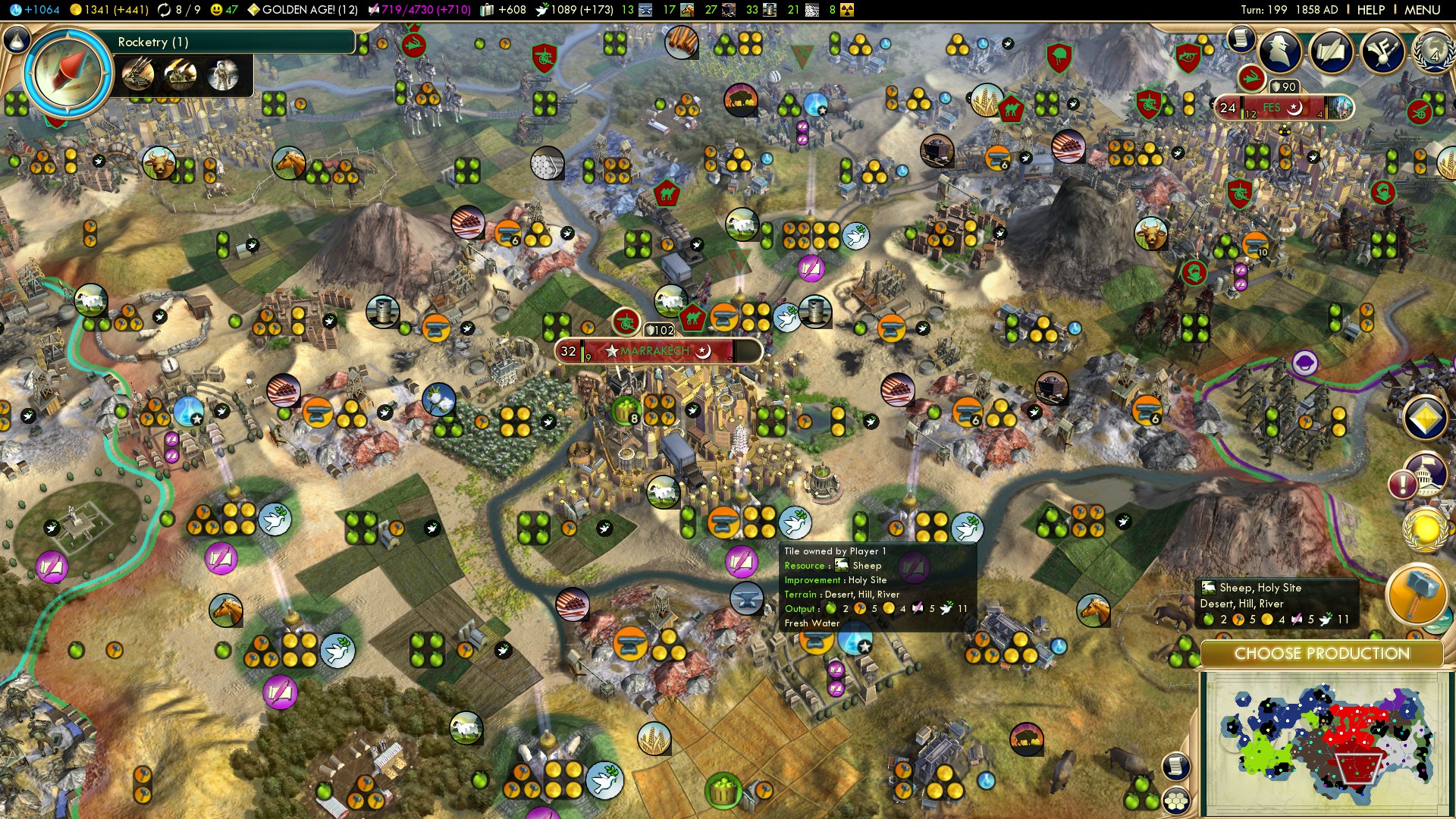
This is just the beginning of Civ 5 and its deep turn-based strategy gameplay, yet it’s so simple to grasp, and that’s the beauty of it. Civ 5 may seem like an overwhelming beast when you first play it (mainly for newcomers), but you learn as you play. After my 50th turn, I already had the hang of 90% of the game and just learned little things from there on out. You start out by picking the leader of a country, but each one has special attributes like a better economy, military, or even science. You establish your main capital city, and from there you learn new sciences, produce buildings, great wonders, workers, or different military units. Different tiles on the map may have icons for mining, farming, etc., and you can deploy workers here. Connect these to your capital, and your income will increase.
Of course, after a while, you must expand your empire, or people will get unhappy and may even rebel in the city due to overpopulation or not having enough entertainment, food, or other resources. Keeping your people happy is just part of the struggle to create a great civilization. Other cities may want to ally with you by having you gift units, give them gold, or vow to protect them. Connect your cities with roads, and voila, you have more income. Or you can just wipe them out and either annex the city (which requires building a courthouse before you can use it) or use it as a puppet city and just collect the income, but don’t control what they do. There’s also the option to just raze cities and let everything burn!
Yes, Civ 5 lets you play as you please; sadism or masochism is all up to you. You can be friends with all your neighbors and just run out to 2050 and be the first and most advanced civilization. Or you can do what I did and get tired of the other leaders and build an army to take over. After having a rapidly advancing civilization over Washington, I decided to open my borders to him, but he was still guarded because he didn’t like my huge army. Sure, I made my people suffer a tad from the high upkeep of this vast army, but it was well worth it. I started attacking his capital, and this declared war. After a few turns, he offered a peace treaty for 10 turns, so I accepted, and during this break, I got every unit I had and surrounded his capital. After the treaty was over, I attacked and quickly took over his entire empire. It was easy thanks to my advancement in military technology, so I was way ahead of him. Musketmen versus spearmen doesn’t exactly equal fairness. He offered peace treaties, but I swiftly turned them down, and he eventually declared defeat.
But…just…one…more…turn! Even though I technically beat the map, I kept on conquering and even stole over his allied city before defeat. I bought tiles with lots of resources to quickly build up my empire and expand my borders. Turn after turn, I swept up all resources, hoarded my gold, and built massive structures to be the greatest of all time.
That’s how every game plays out, and with the great AI, stunning visuals, and excellent little tidbits like social policies, which act like perks, and the fact that not every map will play the same way twice, While you can’t stack units anymore, it really makes for a better strategy and makes things a bit simpler, so you’re not just concentrating completely on your army. There are so many little things to this game; you just have to play it to realize what’s here. With a great in-game user-made map, scenario, and other item download section, excellent multiplayer, and countless hours of endless ways to play maps, you will never get bored. Tactics must be changed for each leader, each map, and each opponent. The only real issues I had were the fact that not every leader is balanced and that a game can take days to finish, plus some changes may turn hardcore fans off. So, the question begs the answer: Can your civilization stand the test of time?
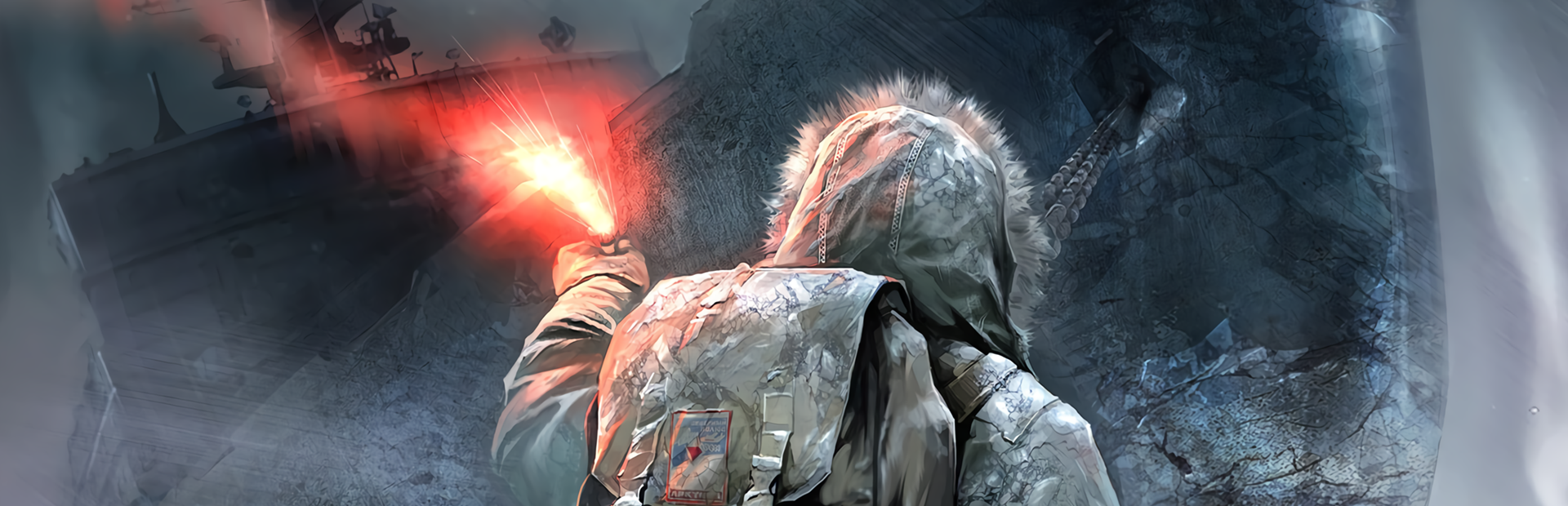
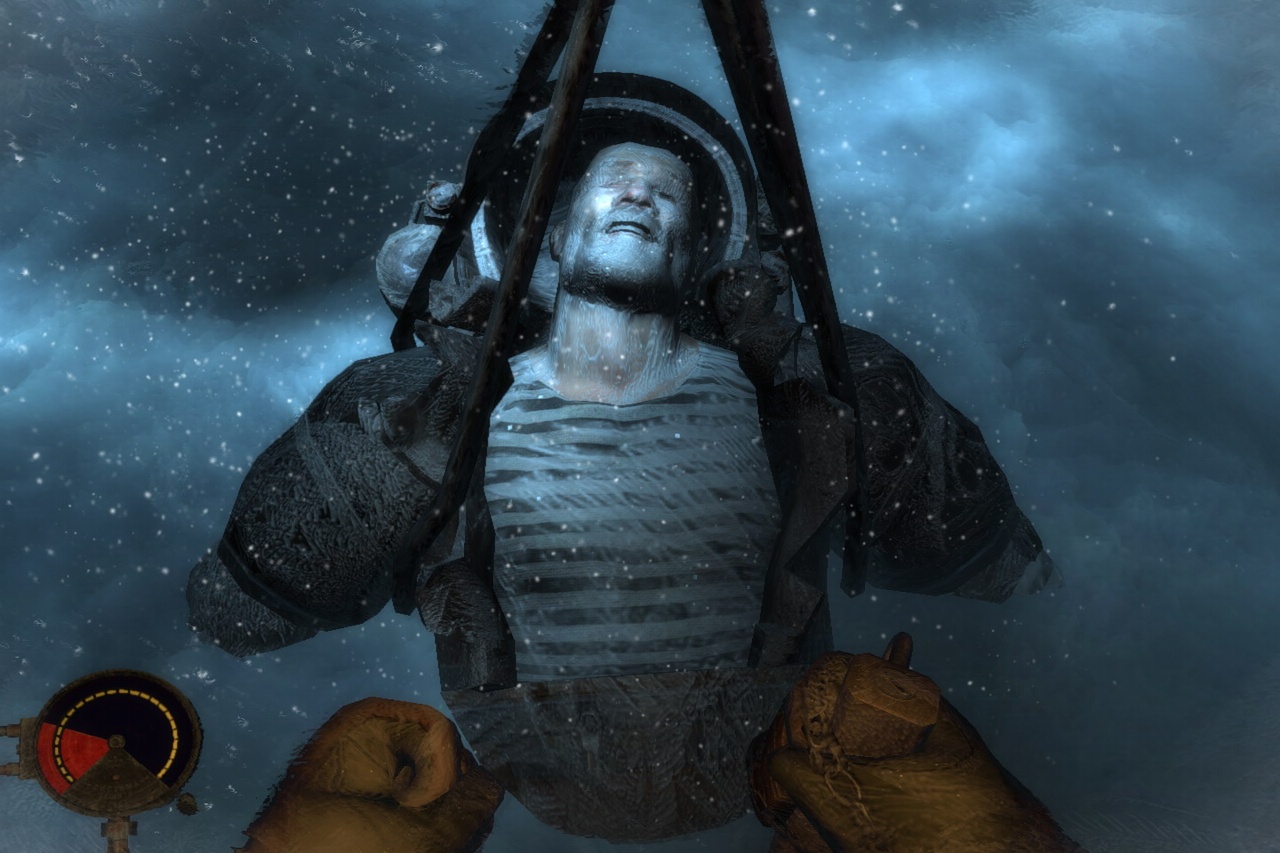
I love first-person shooters with a great atmosphere, and Cryostasis pulls this off well. While the story is pretty confusing and never really makes any sense at all (even at the end), you at least know why you’re here. You are moving through a Russian nuclear icebreaker that was destroyed after hitting an iceberg (sound familiar?). You walk around finding dead bodies, and upon touching them, you can relive the moments leading to their deaths and try to prevent them so you can continue getting through the area that is blocked. This also provides more backstory on how the ship actually hit the iceberg and why.
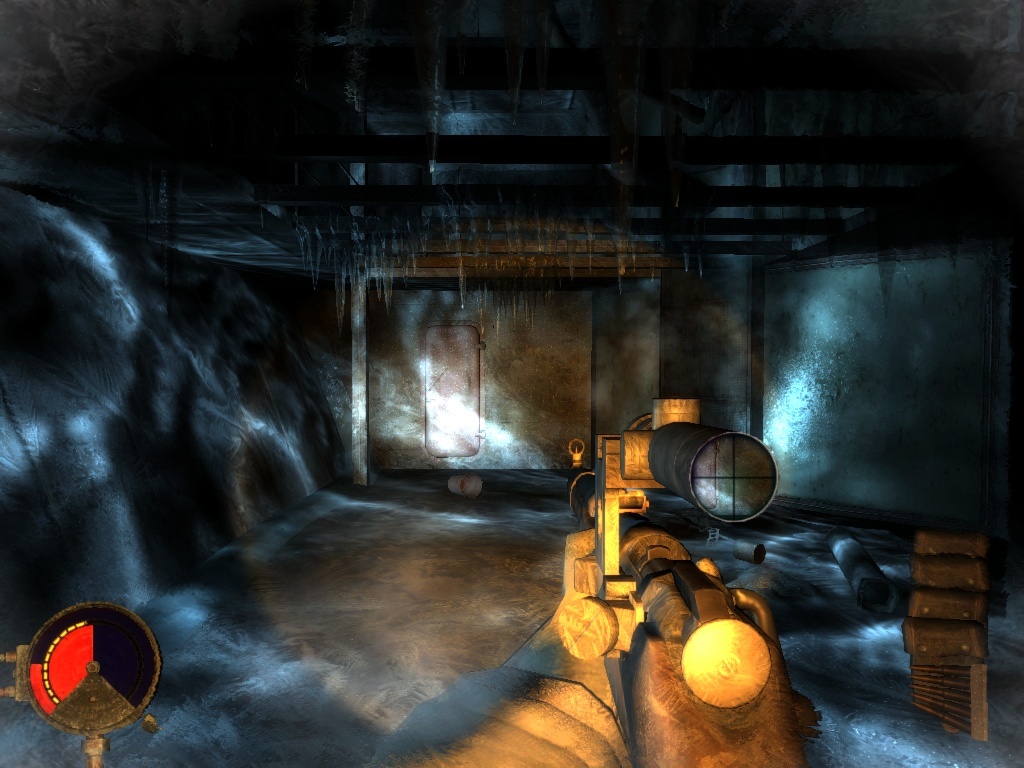
The game is a first-person shooter, so you get some guns, but the game is slow-paced and not a high-octane shooter like most people like. You move very slowly, and you have to take your time aiming since these guns don’t exactly fire at a high rate. You get several different types, such as bolt-action rifles, a Tommy gun, a water cannon (that uses icicles!), and even a flare gun. The aiming is slow, like I mentioned, and you just feel like you’re shooting in slow motion. This isn’t entirely bad since you can take your time and aim because ammo is a tad scarce. You do, however, never feel like your guns are very powerful, even against weaker enemies. But you don’t get guns right away since, for a good 25% of the game, you get to use melee weapons.
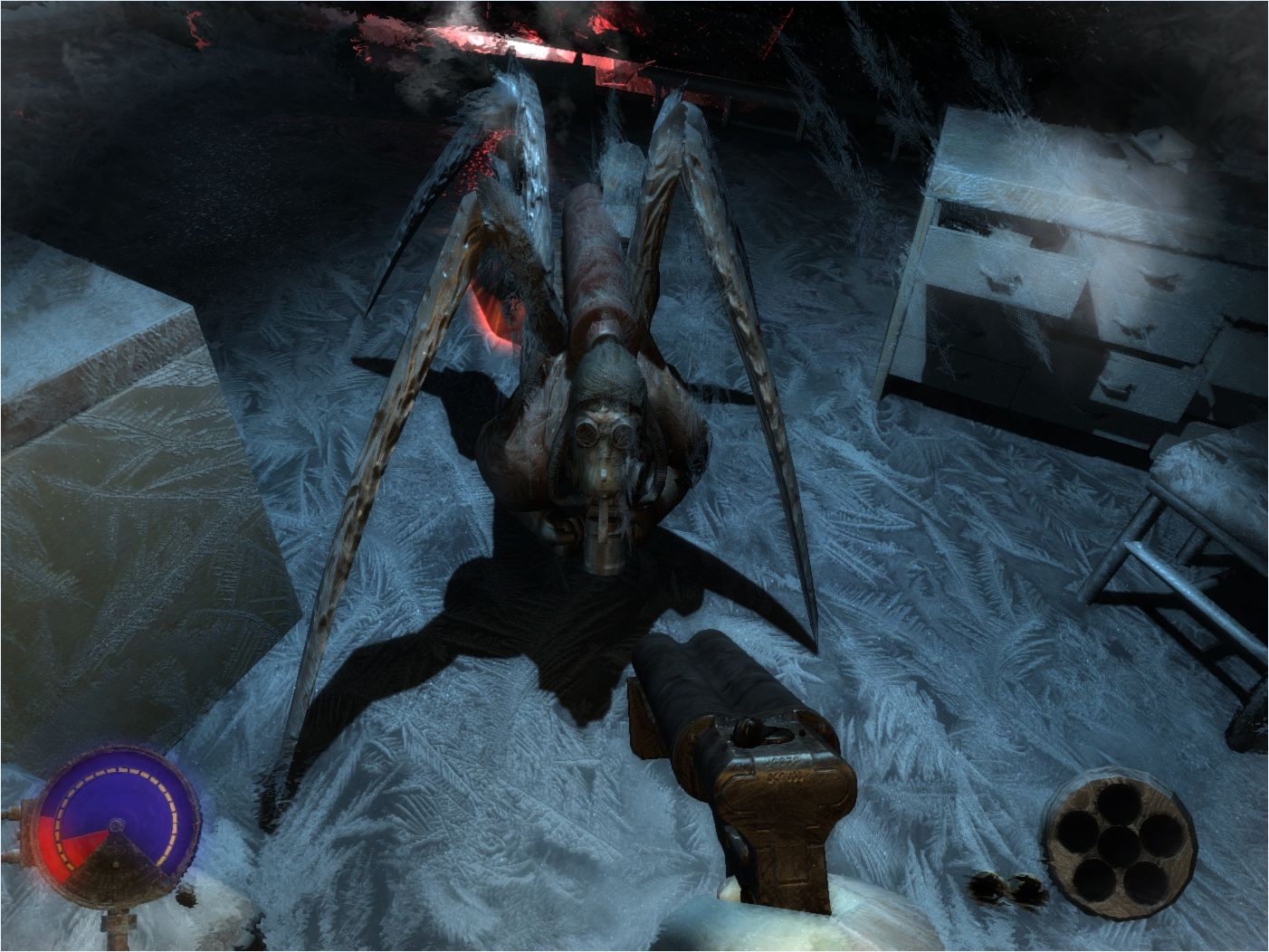
The enemies in the game are pretty unique and not just average cannon fodder. These enemies are pretty creepy, look great, and behave decently towards your actions. Some swing axes and some shoot back, but they are all pretty hard to take down, especially the bigger guys later on.
The game doesn’t really consist of puzzles, but it is sometimes a linear maze. You do flip switches and activate heat sources (more on that later), but there are no actual puzzles in the game. This game makes things a bit dull and feels monotonous since the tone of the game never really changes, and even the atmosphere wears thin before the end. You’re opening a lot of doors, flipping a lot of switches, and shooting some bad guys, and that’s about it. This game is really only for people who are into atmosphere and stories.
You can use any heat source, such as lamps, lights, heaters, fires—you name it—to recharge your health. There are two meters, and the outer one shows how warm the room is or the heat source. You can only heal up to where that meter stops, and then you have your endurance gauge for sprinting.
The game looks pretty good, and you need a monster rig to run it with DirectX 10 and get the best-looking settings. The textures are highly detailed, and you can even watch the ice melt and watch the water run down walls in real-time. Of course, this was one of the very first DX10 games, so there are plenty of glitches. The PS 4.0 has a problem making animations jerky, so you have to fiddle around with minimizing to the desktop and changing it from 3 to 4 to get it to stop. The game will crash at random sometimes, and there are some weird, out-of-nowhere glitches throughout. This makes the game very frustrating to play, even if you have a hefty rig.
The game can feel like a chore towards the end because the pace never changes and is just deliberately slow, and the story just never makes sense. However, it has something about it that makes you keep playing regardless of all this, but people who like fast action should stay away. Cryostasis could have been a lot better with a more stable engine, better shooting, and a more steady pace instead of just being slow throughout. If you have the rig to run this game and the patience, then Cryostasis is your thing.
Update (06/14/18): The game has actually been pulled off of Steam as of late and does not run on Windows 10 or modern GPUs. This is such a shame, as it can easily be run on any GPU from the last 5–6 years with no problems. If you want to pick up a copy, you need to find someone who has it in their Steam library.
















































 thebinarymessiah.com

Try multiplayer. A lot of fun !