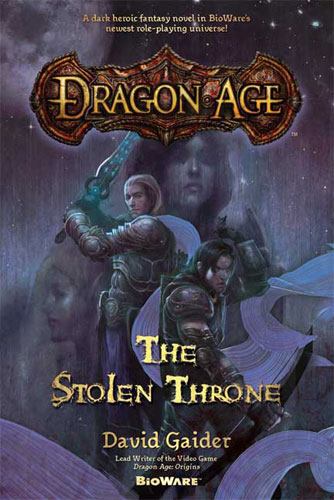
In Dragon Age: The Stolen Throne, Maric sets out on a mission of vengeance against the faithless lords who were responsible for his mother’s death. Now, having reclaimed the throne, King Maric finally allows the legendary Grey Wardens to return to Ferelden after two hundred years of exile. When they come, however, they bring dire news: one of their own has escaped into the Deep Roads and aligned himself with their ancient enemy, the monstrous dark spawn. The Grey Wardens need Maric’s help to find him. He reluctantly agrees to lead them into the passages he traveled through years before, chasing after a deadly secret that will threaten to destroy not only the Grey Wardens but also the Kingdom above.
Dragon Age: The Calling is the second novel to be set in the Dragon Age universe. It is set approximately fourteen years after King Maric Theirin and his companions ventured into the Deep Roads as described in Dragon Age: The Stolen Throne and eleven years after the Orlesian occupation of Ferelden was brought to an end at the close of the Blessed Age. Dragon Age: The Calling focuses on Maric, a young Duncan, and the Grey Wardens.
The Calling — 9.5/10
The Calling is wonderfully written and feels more like the game than The Stolen Throne does. With the whole book being set in the Deep Roads, you really get to know what these people feel when traveling this dangerous road. Gaider does an excellent job of making you feel claustrophobic, helpless, and glad that you are not with these guys. Every page is filled with tense dread and the psychological torment these people must go through to get to their destination. On another note, you also follow the Grey Warden, who has joined the Darkspawn. However, we finally get to know about an intelligent Darkspawn that is very mysterious and may have different intentions.
The Calling has a great cast of characters that you really feel for, and the book is very hard to put down. There never was a dull moment, and this book really lets you get even closer to the dark atmosphere of the game. This book is my favorite out of the two and deserves a read by fans.
The Stolen Throne –8.5/10
The Stolen Throne doesn’t feel like a game at all, except for one moment when the characters are on the Deep Roads. The rest of the book is all about politics and huge battles with men. The book doesn’t really mention Darkspawn until towards the end of the book. This book is a tale of how Loghain and Maric met each other, and this was before the next blight. The book is well-paced, but it gets a bit repetitive with battle after battle. While they are different and have twisted, it’s a redundant pace of politics, battle, politics, battle.
The book isn’t as good as The Calling, and the characters aren’t as good, but it’s enough to keep you reading, and fans of the game will definitely love both of these books.
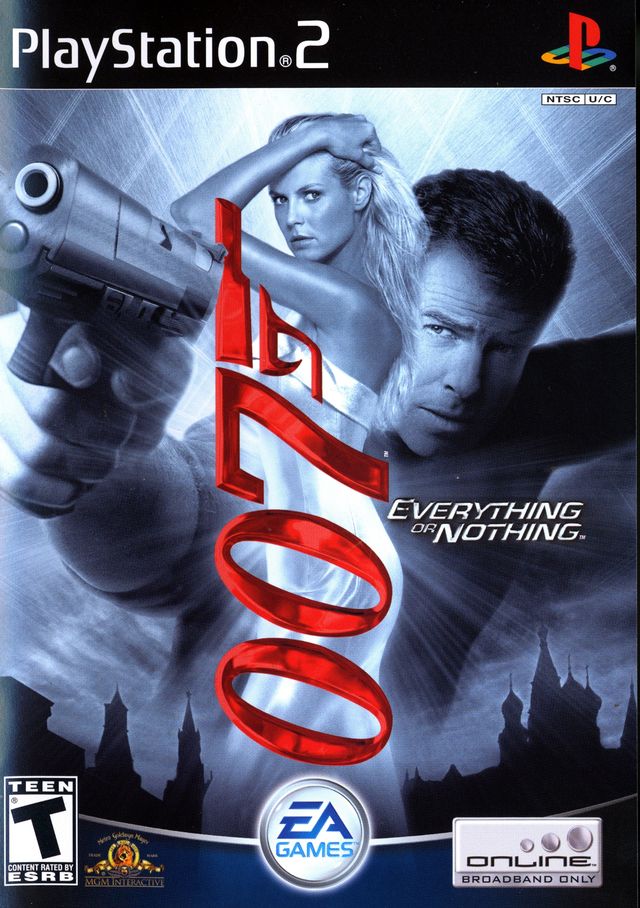
I’m not really a James Bond fan, but I can’t help but pass up a good action game, no matter what the license is. Everything or Nothing is based on the film when Pierce Brosnan was still a famous spy, and Everything or Nothing is pretty solid. The story is pretty nonsensical and is your typical Bond plot with a bad guy (Willam Defoe) hell-bent on ruling the world. Diavolo has nano-mites that can eat through metal and plans on attaching payloads of this stuff to nukes. Bond runs into a henchman (Jaws) and a beautiful woman to stop the evil madman.
The best part is the vehicle sections, and the shooting sections are hard as hell and mundane. I’m going to throw that out there right now. The vehicle sections have Bond driving real-world vehicles with missiles, machine guns, flame throwers, and oil slicks attached to them. What makes the driving sections so grand is the sense of speed. Driving across a bridge, jumping through signs, and finding shortcuts to trigger “Bond Moments”. While these are hard to find (even in on-foot sections), they can be satisfying. Every driving section is different, from escorts to flying over rooftops to races. All vehicles handle very well, even at high speeds, and this is what truly matters.
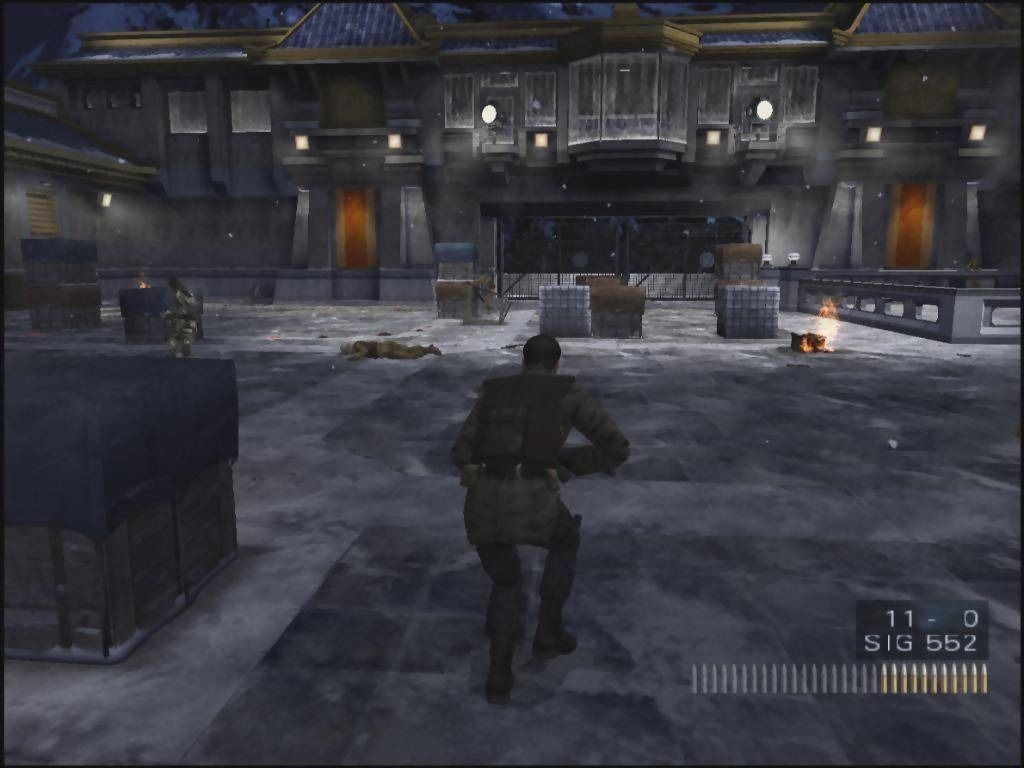
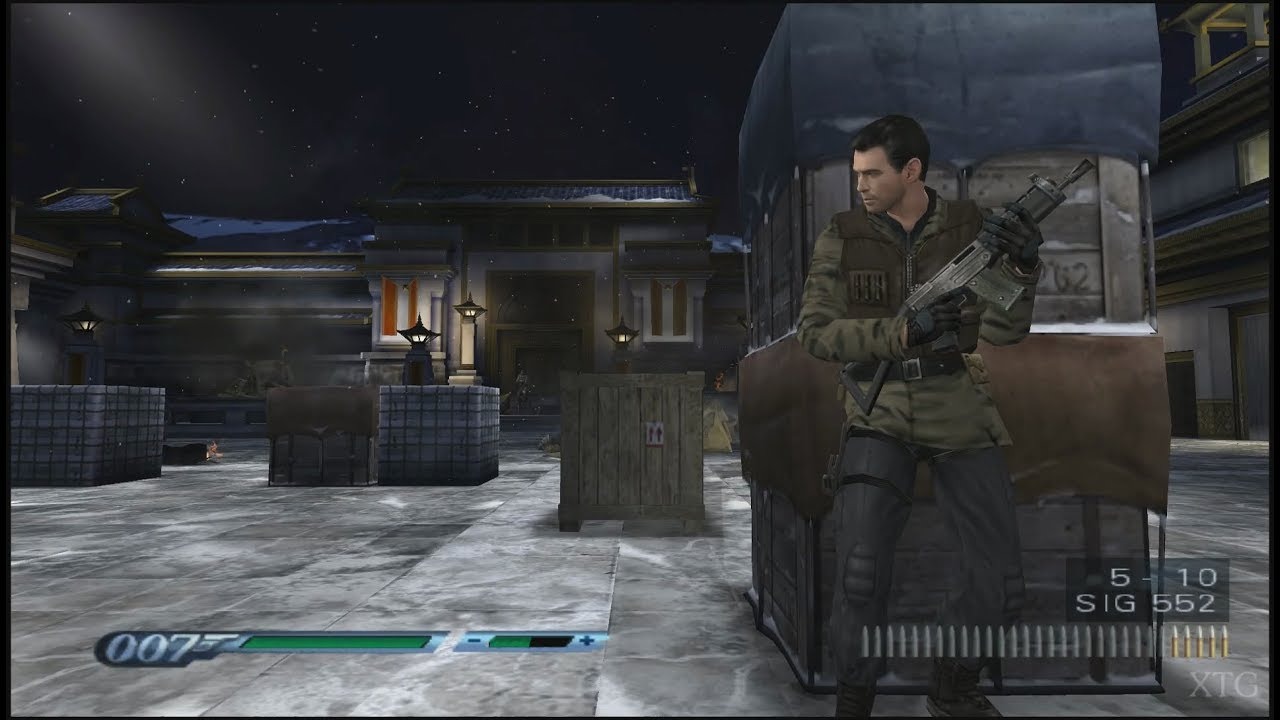
The on-foot sections are mundane and extremely frustrating. Even in the easiest setting, the game throws dozens of bad guys at you, and ammo is a loot and hunt type thing. You start out with a puny P99 pistol, and the game throws about 10 bad guys at you. The lock-on feature is clumsy since you can’t lock on unless the camera is facing an enemy. If you get close enough to someone, Bond will put his gun away and start meleeing while other guys around him are shooting. This can make you die in very tight spots. The melee is pretty basic, with heavy and light punches along with counters. You can hide behind the cover, but this tends to be a problem if the cover is taller than Bond can shoot.
You can use a lot of gadgets, but they tend to be useless unless the level requires them. You get Q spiders, which are remotely operated spiders that can blow things up and go inside little nooks. The coin grenades are pretty straightforward but have crappy physics and bounce around like rubber balls. There’s the nanosuit that makes you invisible, but I never even had to use it since stealth in this game is very hard and almost not an option. The rappel gun is what I used most. Being a Bond game, I wish the gadgets would have come in handy, but they are if you really want to use them. The shooting sections are just so frustrating due to the unbalanced difficulty. I died over 10 times on certain missions, and there are no checkpoints. Some of the longer levels have one, but most levels have none, and this can make you throw your controller across the room.
The graphics are pretty decent for a 2004 PS2 game. The textures are solid, the audio is nice, and there are only slight framerate problems due to the PS2’s limitations. There is an online co-op, but this will never be tested since the servers were shut down. There are a lot of missions in this game, and it will keep you busy for a good 8–10 hours, depending on how many times you die. The game is pretty solid, and you won’t be disappointed. Even people who don’t like Bond can enjoy this game, and that’s the beauty of it.
Ahhh, the tired old FPS genre. Everyone loves it, and then everyone hates it. What more can developers do to change the FPS genre to make it interesting? Better graphics? Better sounds? More realistic AI? Realistic physics? Less linear? Keep the linearity? More vehicles? Better story? The list goes on and on, and the answer is yes to all of the above.
Bad Company 2 is a sequel to the first, but the first game was pretty forgettable. You play as a squad of four soldiers who were military rejects and must earn their freedom or face the slammer. They are sent into Africa and other parts of the world to find some sort of scalar weapon that the Russians found in Japan and are using for global domination. Not something we haven’t seen before, but the squad has great characters that you’ll love, and hearing their banter is enough to keep playing.
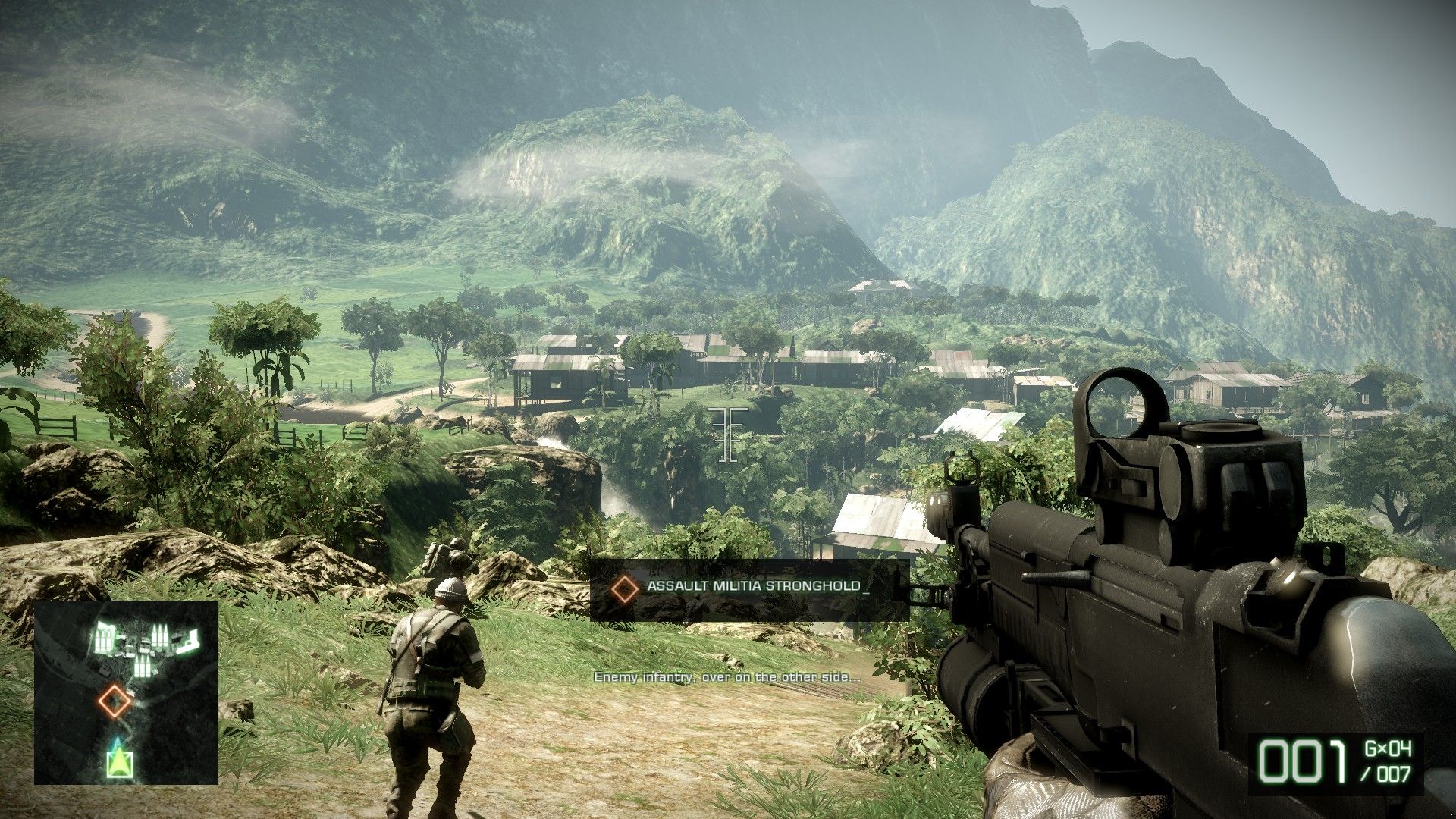
A lot of people are comparing Bad Company 2 to Modern Warfare 2, and if I were to pick the better game, Bad Company 2 for single-player and realism, and Modern Warfare 2 for multiplayer, but then again, I’m not comparing the two, so let’s get down to it. The first thing you will notice is how real Bad Company 2 feels, more so than any other shooter so far. The sounds are just amazing, with the sound of fire echoing off caverns, the sounds of you reloading echoing in a building, the pinging of bullet shells hitting the floor—everything sounds like it would in life and is placed accordingly to unlock most (if not all) shooters, real or not. The foliage looks real, and everything blows up. You can blow pretty much anything up in the game with anything you can get hold of. This is also used in gameplay when getting around turrets that you can’t shoot through. Find some red barrels and blow the building up, then have it collapse on everyone below it. This goes for radio towers, telephone poles, and large trees. Then again, it’s pretty stupid when you can blow apart small objects like trash cans, chairs, or cardboard boxes, so it’s very strange.
The weapon selection in the game is great, and you get all your real-world guns, and they fire like they should. The guns feel powerful, and everything about shooting feels dead-on. Gone, however, is the whole healing thing, and instead, you just hide in cover to heal. Another element stripped is finding the gold bars, but instead, M-COM stations that you blow up and finding weapons. The M-COM stations are hard to find, and I don’t know where all the hidden weapons could be, but they’re there for people who like that stuff. I personally hate finding crap in shooters like this since it detracts from the experience and pulls you out. Other than that, though, the game is paced nicely and flows just right.
There are some elements that haven’t been down before, like the whole blowing up everything in your path (in an FPS anyway), and there’s even one level where you will freeze to death if you don’t find shelter fast. This level has your knifing doors open as you race down a hillside. There are some epic vehicle sections (that haven’t been done before), but there is one level that isn’t linear that has three checkpoints, and you can choose which ones you want to do first. The opening level is even from WWII in Japan, so the game is full of surprises and is a blast to play.
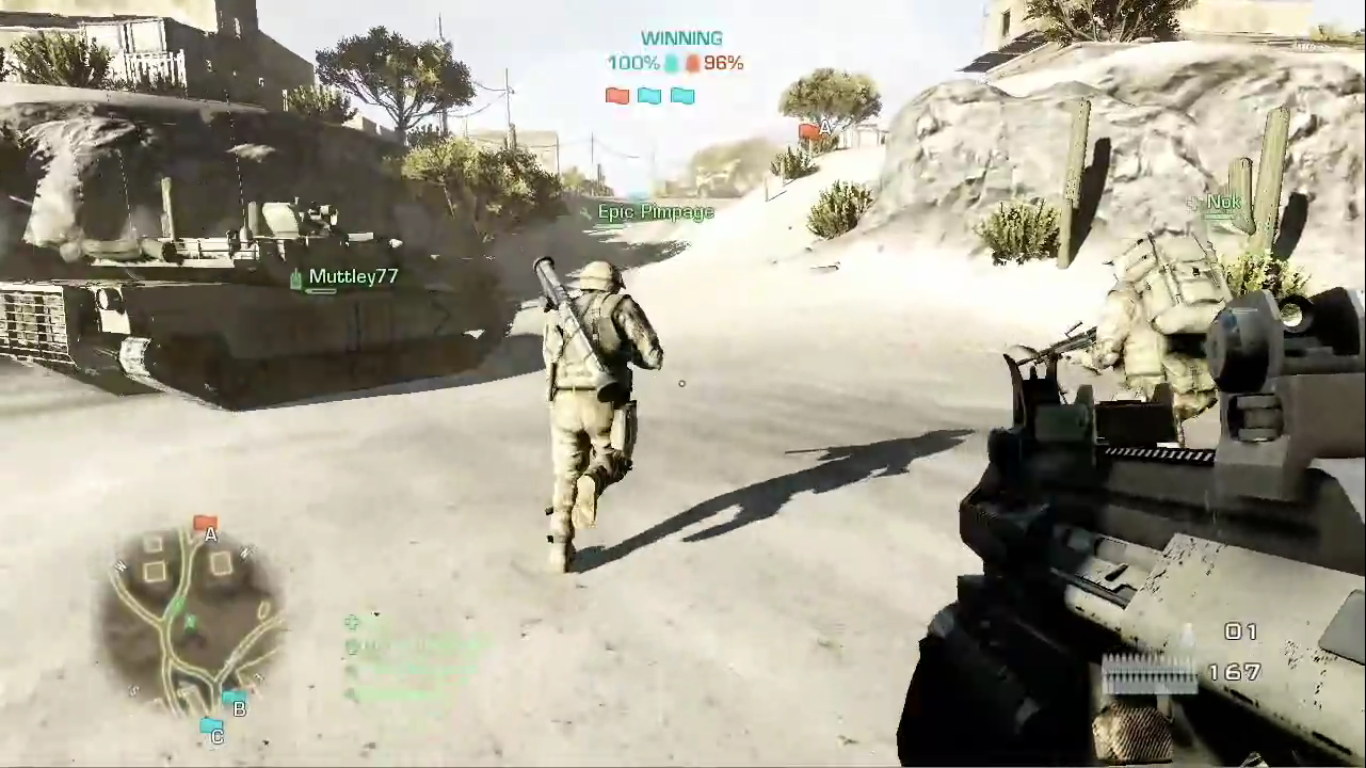
When it comes to multiplayer, the game is solid with three modes of play, but my favorite is Rush. Like in the original game, you have an attacker and defender side on a huge map (this one supports 64 players). You have five different classes to choose from, and you can customize them as you please. There are three “perks” that you can use at a time, but they must be unlocked, and this takes a while. The multiplayer is fast, intense, and fun, with lots of vehicles zooming around, everything blowing up, and people just being crazy.
My last words here must be how amazing the game looks. Probably being the best-looking shooter around, it looks great technically but has no artistic style and is just “real life” type of stuff, so it’s not for everyone. If you want a really amazing shooter to play and are bored of Modern Warfare 2, pick up Bad Company 2, because it’s one hell of a ride.
LIMITED EDITION: If you pick up the game soon, you can still get the limited edition, which has six multiplayer unlocks and entitles you to upcoming maps for free. A deal? I’d say it’s the standard price with no additional charge. To find a new copy if you can.
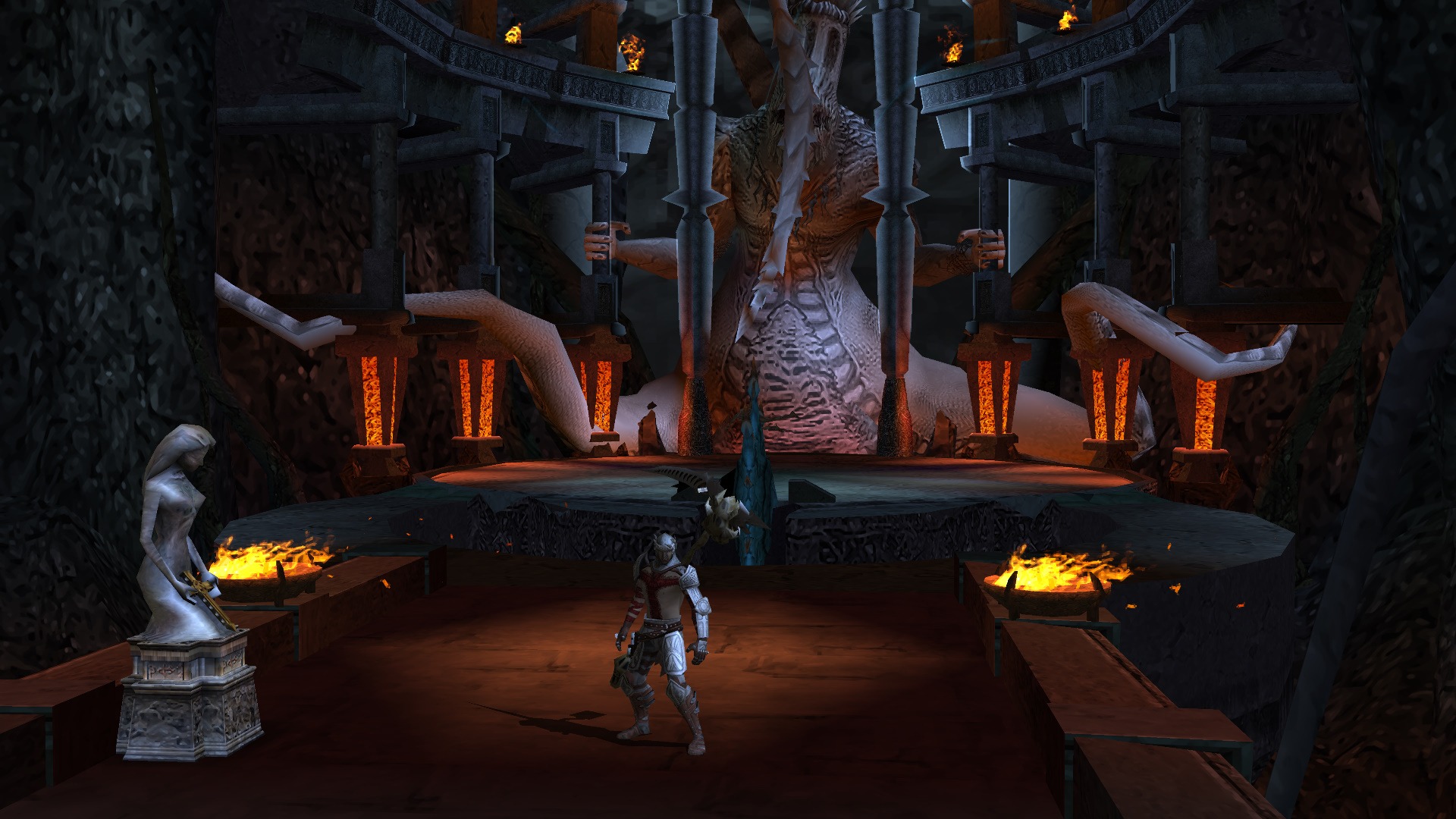
The first thing you will notice when you play Dante’s Inferno is that it’s a bold game. The game is one of the darkest, nastiest, and most mature games ever created, and it makes Christianity look like a damned fool. The game is about a man named Dante, who is a crusader and betrays his love, Beatrice. Upon his return to Florence, he sees her dead and watches as Lucifer takes her into hell, and Dante follows. The story is pretty good and keeps you interested, but it’s predictable. The game goes extremely deep into Christian and Greek mythology and pulls out names only hardcore followers would know, but enough of the story, let’s get to the gameplay.
The game has a pretty damn solid combat system. You use your scythe as your main weapon, and you have a cross-projectile attack. You can do aerial combat, launch enemies into the air, and use your magic. You can unlock moves by following the holy or unholy paths (which don’t actually affect the story), and each tree has a different set of moves. You can have four different magic items equipped, and all are useful and powerful. One of the first elements you’ll find that they took away is the relics. They are gone! These really helped you in the console versions, but they are nowhere to be found here. Anyway, the combat system is fluid, fast, powerful, and very deadly. Another element they took away from combat was the redemption meter. Geez, guys, why did you butcher this?! With those two things aside, the combat is fast and as fluid as it is on the consoles.
When it comes to exploration, Inferno both satisfies and disappoints. The game has you descending into the nine circles of hell, and each is harder, more deadly, and more brutal. Some levels are pretty epic, like The City of Dis and Limbo, and some disappoint, like Lust (just an ascending tower) and Gluttony (just fight Cerberus and a few baddies, and you’re down to the next level). The levels are varied in length, and I wish they would have been fleshed out more. Puzzle-solving is pretty rare, and when you do get some puzzles, they are pretty easy to solve. However, most of the puzzles have been solved for you. Yeah why?! Not only this, but a lot of the game’s intense sections are videos of gameplay from the PS3 version. One example is the part when you kill Charon and ride the giant minotaur up the crumbling bridge. You don’t get to play this part; instead, you watch it.
One thing I have to get straight is that the game is pretty epic. Not a God of Warepic, but enough to keep it very cinematic. There are QTEs in the game, such as when you take down a minotaur to ride it, take down bosses, etc. You can punish or absolve most enemies to get fed your tree paths. There are famous historical figures that you find throughout the game that you can punish or absolve upon reading what they ended up in hell for.
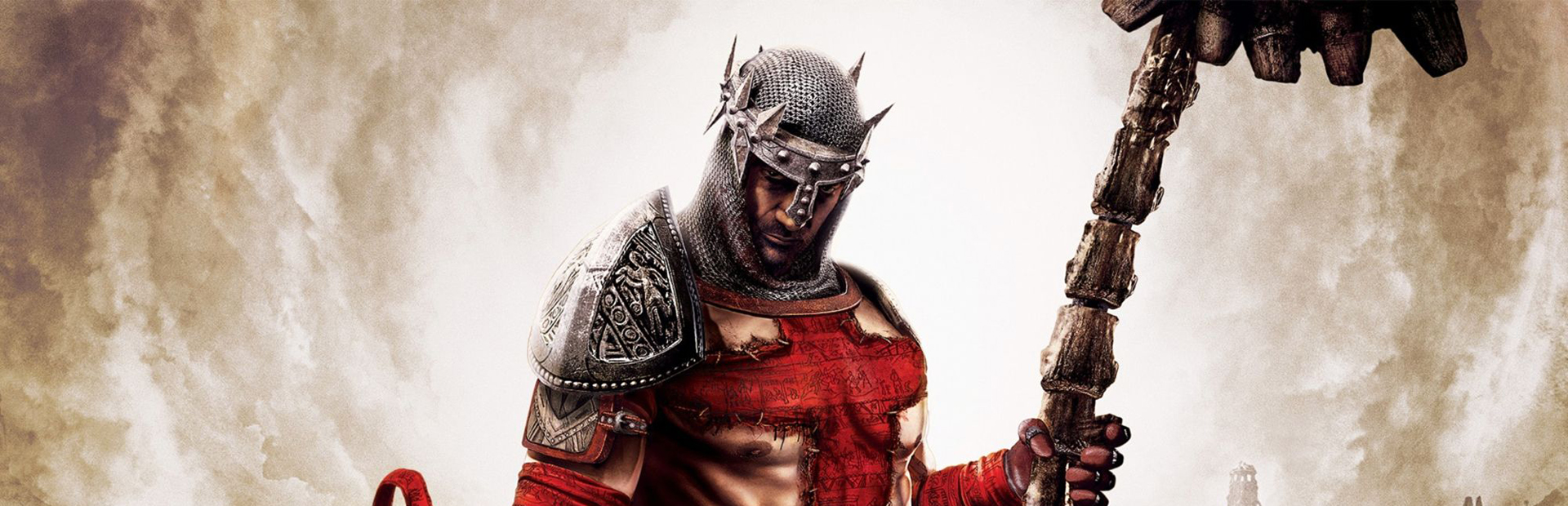
The game’s visual style is very impressive. It’s what you think hell would look like—dark, disgusting, and evil. The gluttony level is a good example since you are walking through the intestines, bile, puke, and so forth. The Lust level has female enemies’ wombs coming out of them to attack you. A giant Cleopatra with tongues coming out of her nipples and evil babies—yes, it’s bizarre, but it works, and it’s amazing to look at. However, on the PSP, it’s obviously downgraded quite a bit, and a lot of the beauty from the consoles is lost in translation.
The game is also extremely difficult, even in an easy setting. Wave after wave of enemies come at you from all directions, bosses are extremely hard to beat, and the game can be very frustrating often. However, the game’s major flaws are mainly the length, difficulty, and the fact that the levels weren’t developed to their fullest potential. So with the flaws of the console still here plus relics, redemption, puzzles, and a lot of other things removed from the game, you still get a solid Dante’s Inferno Lite for people who are on the go or don’t own an Xbox 360 or PS3 (you should!).
The first thing you will notice when you play Dante’s Inferno is that it’s a bold game. The game is one of the darkest, nastiest, and most mature games ever created, and it makes Christianity look like a damned fool. The game is about a man named Dante, who is a crusader and betrays his love, Beatrice. Upon his return to Florence, he sees her dead and watches as Lucifer takes her into hell, and Dante follows. The story is pretty good and keeps you interested, but it’s predictable. The game goes extremely deep into Christian and Greek mythology and pulls out names only hardcore followers would know, but enough of the story, let’s get to the gameplay.
The game has a pretty damn solid combat system. You use your scythe as your main weapon, and you have a cross-projectile attack. You can do aerial combat, launch enemies into the air, and use your magic. You can unlock moves by following the holy or unholy paths (which don’t actually affect the story), and each tree has a different set of moves. You can have four different magic items equipped, and all are useful and powerful. You can also find relics throughout the game that benefit Dante in certain ways. For example, one relic allows Dante to have more powerful throw attacks, one lets him instantly break fountains, one lets him take less damage, etc. These are found by talking to Virgil or in secret areas. Anyway, the combat system is fluid, fast, powerful, and very deadly. If you feel you are getting whomped, you can use your redemption meter, which is kind of like Rage of the Titans in God of War.
When it comes to exploration, Inferno both satisfies and disappoints. The game has you descending into the nine circles of hell, and each is harder, more deadly, and more brutal. Some levels are pretty epic, like The City of Dis and Limbo, and some disappoint, like Lust (just an ascending tower) and Gluttony (just fight Cerberus and a few baddies, and you’re down to the next level). The levels are varied in length, and I wish they would have been fleshed out more. Puzzle-solving is pretty rare, and when you do get some puzzles, they are pretty easy to solve.
One thing I have to get straight is that the game is pretty epic. Not a God of War epic, but enough to keep it very cinematic. There are QTEs in the game, such as when you take down a minotaur to ride it, take down bosses, etc. You can punish or absolve most enemies to get fed your tree paths. There are famous historical figures that you find throughout the game that you can punish or absolve upon reading what they ended up in hell for.
The game’s visual style is very impressive. It’s what you think hell would look like—dark, disgusting, and evil. The gluttony level is a good example since you are walking through the intestines, bile, puke, and so forth. The Lust level has female enemies’ wombs coming out of them to attack you. A giant Cleopatra with tongues coming out of her nipples and evil babies—yes, it’s bizarre, but it works, and it’s amazing to look at. The game is also extremely difficult, even in an easy setting. Wave after wave of enemies come at you from all directions, bosses are extremely hard to beat, and the game can be very frustrating often. However, the game’s major flaws are mainly the length, difficulty, and the fact that the levels weren’t developed to their fullest potential.
DIVINE EDITION: Exclusively to the PS3 is the Divine Edition, which includes a different cover, a fully digital version of Dante’s Inferno, and a free code for the Trials of St. Lucia (which is still not out yet). All of this for the same $60 price tag. The only disappointment was that there was no special book that came with the game that included Inferno. Reading the poem in a small window that is over 30 chapters long is not fun at all.
There was a good reason why I avoided the original Army of Two, and this was because of the terrible single-player AI. The game was only fun with another person, but even then, it was flawed. The 40th Day tries to improve this, but it fails. You would normally expect the console experience on the PSP, but all we get is a top-down, clear-the-room-type game.
The story is even retarded in the sense that it doesn’t make any sense. You are in China on a mission, and something goes wrong, and you have to escape. Why not just call for air support? I don’t know; the game never explains. At first, the game is pretty fun with its fast-paced gameplay. You can switch between a primary and secondary weapon (assault rifle and shotgun), which you have to use in different situations. You have a melee attack, and you can command Rios to hold or go into Aggro mode. This is supposed to make him more aggressive, but all it does is piss you off. You can duck behind cover (but you can still get shot most of the time) and upgrade your weapons, as well as buy new ones. If Rios ever goes down, you can revive him, but if you die before you get to him, it’s game over, and vice versa.
So what makes the game not fun? Too much, in fact. First off, the AI is absolutely dumb. Once the screen moves to a new area, you can’t go back, but sometimes Rios will still be back there, and he’s stuck for good. If you die and need him to revive you, you’re screwed. A lot of the time, Rios will just charge out at enemies and get his health depleted quickly. This is especially annoying during boss fights. There are also a few glitches where you will get stuck in objects, which can be very frustrating. Upgrading weapons takes forever since you can’t accumulate cash fast enough. By the time I got 2/3 through the game (and I stopped there, by the way, because the game just became unbearable), I had only bought two guns and upgraded my first two. The only other things you can do are press buttons and hack turrets to use against the enemy. The game just isn’t exciting anymore after the first level.
Does the game at least look good? Kind of is your answer. Some of the environments look OK, but everything just looks too cartoony. The game sounds OK, and it has good voice acting, but it can’t save this piece of garbage. Does co-op save it? More so, yes. If you have a buddy, the game can be quite enjoyable, but the redundant gameplay makes it a borefest very quickly. The awesome bro-li-ness of the console games doesn’t come across here, and this makes the game a flop.
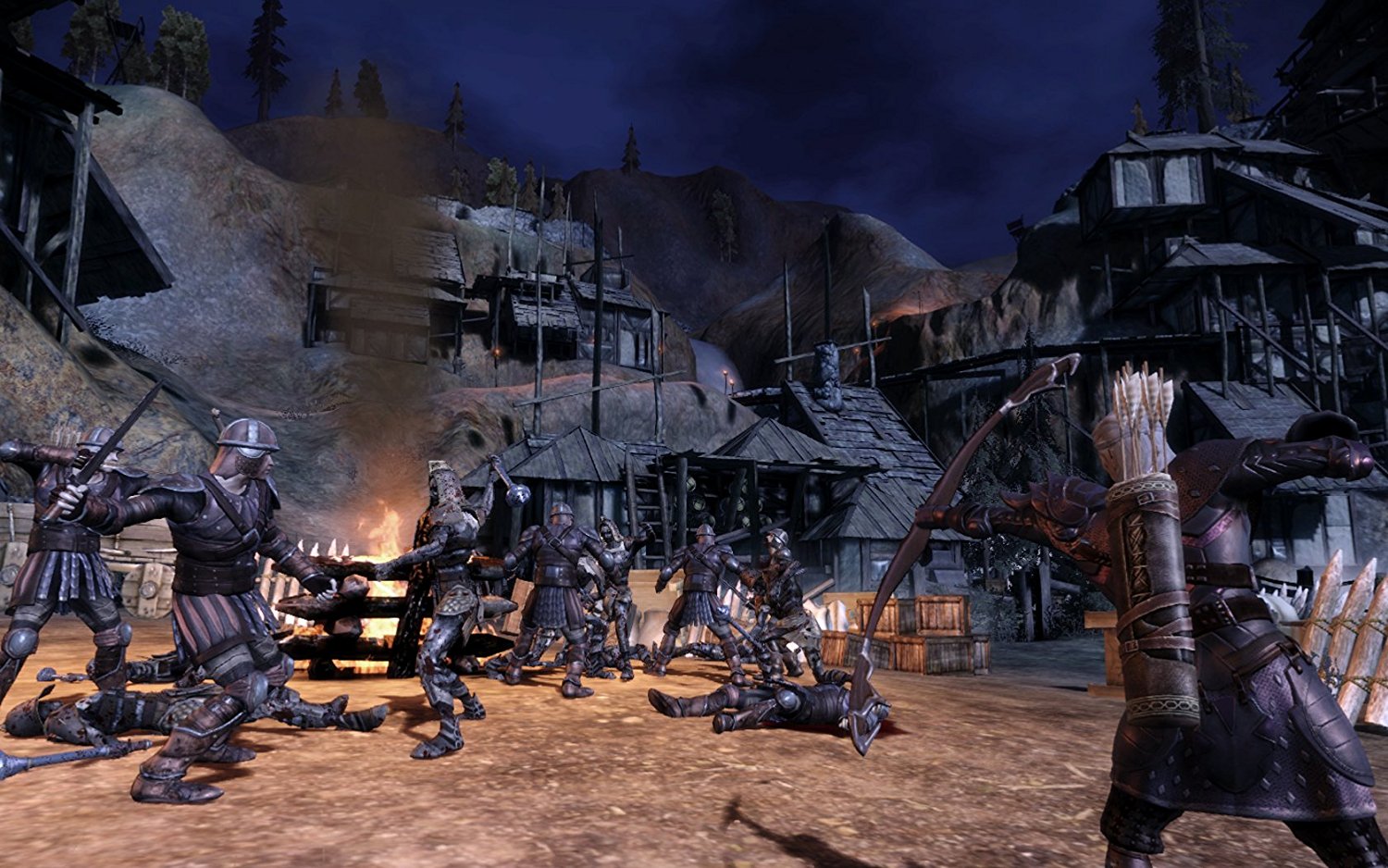
JRPGs that were the standard are now being taken over by western RPGs, and one of the main developers responsible for this is Bioware. Dragon Age: Origins is a very deep game, mainly in politics, religion, and mythology, that is reminiscent of Tolkien lore. Not only is the dialog witty and humorous, but every piece of dialogue is spoken with great acting. Each character is memorable, and Bioware really does it with their morality gameplay because it takes ten minutes to decide a choice since they change gameplay so much, more so than in any other Bioware game.
The game has different factions you can play as (dwarf, human, elf, then different classes in those races), and each takes about 50+ hours to play (my first playthrough was 41 hours). You start by customizing your character, but that isn’t the deepest part of the game. When you start out with any race, you learn the combat basics, which are pretty deep yet also very simple.
The actual combat itself is the standard Hit the attack button and watch the characters hack away. You earn experience by killing enemies and level up accordingly. The game has a radial menu that lets you access your potion and trap-making skills and techniques, as well as combat tactics. You can create traps and potions by learning the skills over time and by using ingredients found throughout the game world (I found both of these useless). Skills range differently between mages and warriors, but warriors can learn different fighting styles such as two-handed, dual weapons, sword and shield, and even archery. Each class can learn other classes’ techniques, and that’s the beauty of Origins. There are dozens of different skills to learn, and you won’t learn them all before beating the game.
The sheer depth of the game is mind-boggling, but I know one thing that people are concerned about, and that is side quests. There are dozens upon dozens of them to keep you satisfied, but of course, you don’t have to complete them all. There are also tons of Codex pages to pick up and read in this deep and wonderful lore that Bioware has created. There is enough stuff to read to fill a history book, but if you’re not the reading type, you can just skip over this. There are hundreds of different items to obtain, from armor and weapons to ingredients and gifts to make characters like you better.
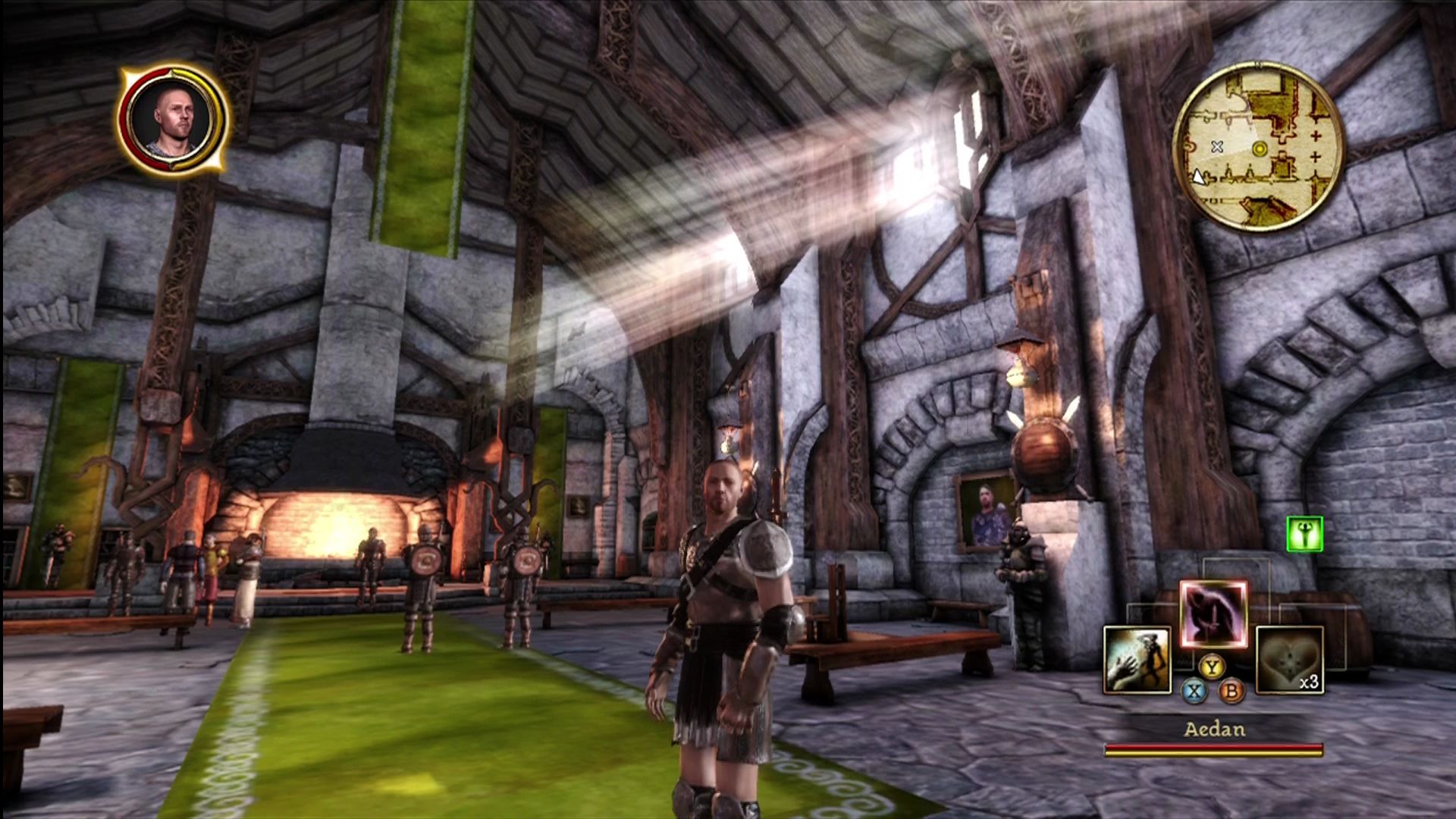
After playing for about 5–10 hours, you will realize how much the game relies on your actions to tell the story. Unlike other Bioware games, you will notice these changes right away, and sometimes a decision in the beginning can progressively make things worse or better for you throughout the game, and it will make you regret what you did, and that is brilliant. The deepest part of the game is the menu itself, in which you equip your gear, check quests, codex pages, and your map, but there isn’t much to explain other than your normal inventory menu. Thankfully, the game steers away from unnecessary stats that boggle your mind and make you want to quit playing.
Playing the game is fairly simple, and the controls are easy. You can control all four party members, which gives you a nice tactical advantage, but most of the time I just played as my own character. Just remember, when a character dies during a battle, you have to wait for all enemies in the area to be killed for them to be resurrected (unless you have a mage with that skill). I found the game very difficult on the normal setting (almost impossible), so the easy setting had to be used, and that was challenging enough. Traveling between areas is easy enough since you use a world map, but you can encounter battles in between the areas.
One of my biggest gripes about the game is that it is pretty ugly. The Xbox 360 version is the ugliest, with flat, muddy textures that look like you’re playing on the lowest settings. Why this is, I have no idea, but there are also frame rate issues and long load times every time you enter a new area. There is also some sort of collision detection issue because when you press A to attack, enemy party members will sometimes dance around the enemy before attacking, and this can kill you in tight situations. This seems to be a huge issue when many characters are against one enemy.
In other words, if you love deep stories that deal with Blights, an Archdemon, and a deceitful king, then buy this game, but try to get the PS3 or PC versions since they look better. Dragon Age is probably one of the best western-made RPGs in decades, and with so many items, skills, party members, techniques, and side quests, you are in for hundreds of hours of addictive RPG gameplay.
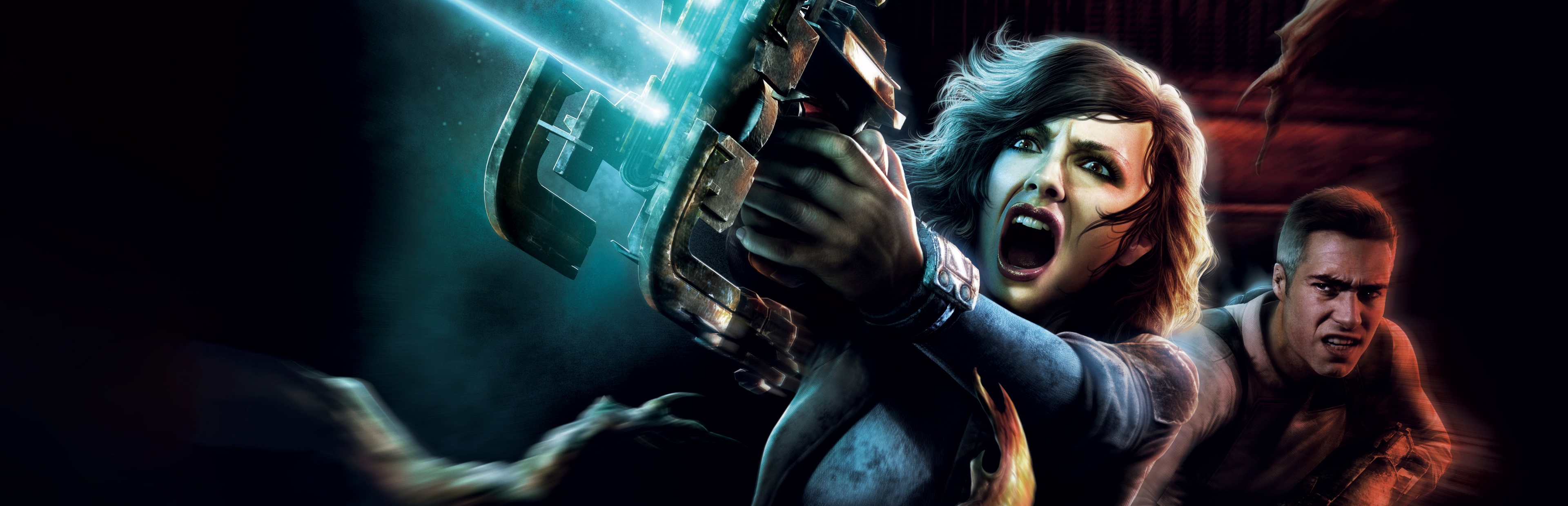
Dead Space is a surprising new gaming franchise from EA that is actually original, in-depth, and just really amazing. The whole story behind Dead Space is just so surreal, thanks to all the different forms of media, from movies to books to comic books. Dead Space is an alien artifact that somehow unleashed a deadly race of aliens onto a planet colony and found its way to the Ishimura, which is a planet-cracking ship.
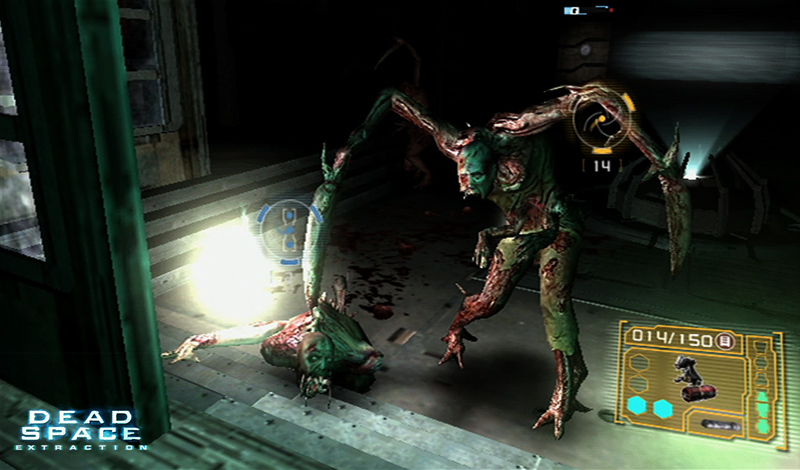
Dead Space: Extraction sets itself between the comic books and the first Dead Space game. Think of this as what happened before Isaac Clarke entered the Ishimura. Extraction may initially throw you off guard since it’s an “on-rails” FPS kind of like old arcade games. This may turn Dead Space fans completely off since you don’t have control over exploration. While this does hamper the score a lot, there is so much fun and fright to be had in Extraction.
The main focus in Extraction is getting the hell off the Ishimura and finding a shuttle. You play several characters throughout the game, but your main guy is Nate. He is a P-SEC officer who is working with his sergeant to get as many people to safety as possible. You really only see your reticle; the main focus is to point and shoot. The controls are really great and laid out for both regular use and the Wii Zapper (or any other gun attachment you may have), so I will be reviewing this game off of the Zapper control scheme. You have a lot in your hands besides weapons, and this includes your stasis (which slows down objects) and your telekinesis, which will pull objects towards you. You also have a swipe attack for melee and cutting things throughout the game.
Most of your weapon arsenal is tools, and all the weapons from the original Dead Space are back with lots of additions. Some of these include the P-SEC pistol, welding gun, and nail gun. The nail gun is standard and has unlimited ammo, but each weapon has secondary fire. For example, the pulse rifle has a shotgun blast that must be charged, the P-SEC pistol has a spray shot, and the flamethrower can shoot fireballs. All of these weapons will be needed and strategically used for certain situations.
Most of the game plays through the creepy and eerie story, with the character moving on his or her own. While this is immersive and cinematic, it can be boring sometimes since several minutes can pass by just looking around at nothing. The game moves at a slower pace than you would want, but it fits the atmosphere. There will be times when creatures will grab you out of the dark, and you must shake your Wii remote to turn on your glow worm. You will hear strange voices and creepy visions that pop up out of nowhere. While you’re roaming these halls, you need to act fast and use your telekinesis to grab ammo, upgrades, health, audio/text logs, etc. All of these are tallied up at the end of each chapter, and you are scored.
When it comes to creatures, I can’t really recall any new forms. Every single form from the original Dead Space is here, and even some environments. The developers recycled a lot of content, and this felt like a big no-no to me. While there are some simple mini-games, such as a rewiring game where you can’t touch red circuits, a turret section, and some parts that have you nail stuff up to keep things out, The game is riveting and exciting, but by the time you get through all ten (long) chapters, you just want it to end. This is partly due to the difficulty factor and the unbalanced ammo versus creature problem. Scrounging ammo is very difficult in this game, even in the easiest setting, and it makes you wish the developers would just stop doing that.
I, however, highly enjoyed this game and found it to be worth the $50 purchase. A number of weapons, a decent length, and amazing graphics helped make this game easy to chew. There is just enough mixed around for you to stay on the edge of your seat, and that’s what keeps you playing.
Don’t get me started; books based on video games are a lot better than movies and are a great way to tide you over until a sequel is released, and Ascension is no different. While the Mass Effect game stars Sheperd (or your character), Ascension creates new likable characters like Kahlee Anderson, Paul and Gillian Grayson, Hendel, and other characters.
The book is about a girl named Gillian who is part of the Ascension Project, which is a study on biotics in humans. Paul is part of a black ops group called Cerberus, and he takes Gillian into the lawless Terminus Systems to protect Gillian from being experimented on. Kahlee Sanders and Hendel follow to take her back, thinking Paul is trying to kill his own daughter. Without giving major plot twists away, Paul is fighting drug addiction, Kahlee uses sex as a stress reliever, and Hendel is an overprotective chief of security.
The book really sticks to the Mass Effect lore, with all the alien races present, and really uses a lot of Mass Effect terminology. I found that Drew was able to describe locales really well, so if you have played the Mass Effect game, you can get an idea of what these places might look like. While the book changes between two different people, the book just flows and has smooth transitions. If you have played Mass Effect, the book isn’t confusing at all, and you really feel like you’re back in the game.
The length of the book is perfect, running about 350 pages, so you can finish it within a week. Each chapter gives you a great dose of excitement, and I feel each chapter really closes well, so it makes it one of those “just one more chapter” type books, and I love those. When you put the book down, you’ll be thinking about what’s happening next, since the suspense in the book is astounding. What makes the book stand out is the fact that you can get inside these characters’ heads and really see what’s messing them up and making them do these things. If you loved Mass Effect, get this book, but it’s really only for fans of the game.
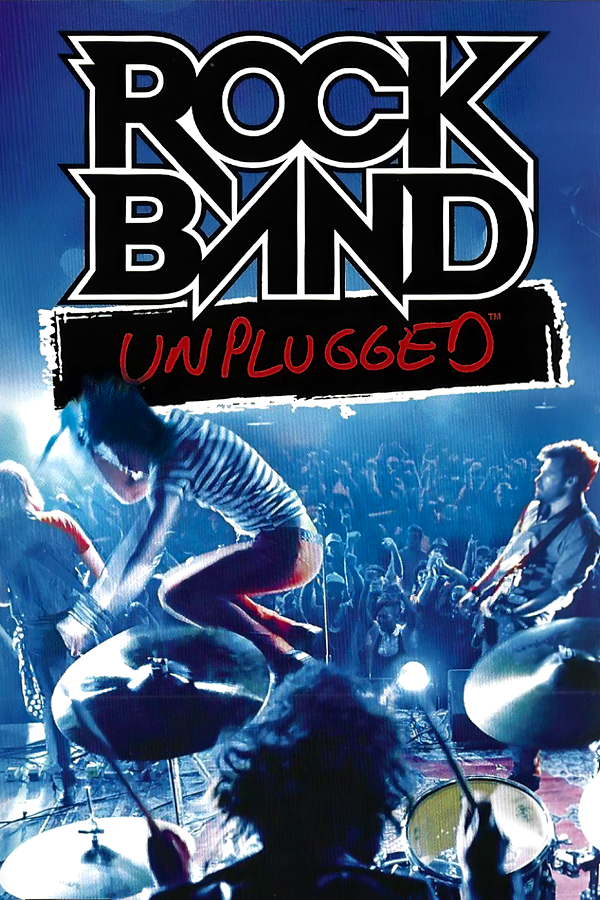
When Rock Band was released back in 2005, it kicked off a whole new era of rhythm games in your home. With Guitar Hero still using only the guitar controller, Rock Band introduced drums and mics to the genre. This brought a whole new meaning to the music genre and spawned many copycats, but none could do it better than Rock Band. Now that Rock Band has hit the portable scene, you just beg to wonder what quality the game has, and how could a game using instruments become so wonderfully executed with four buttons? Well, Unplugged is not a disaster, and the following paragraphs shall prove this to you.
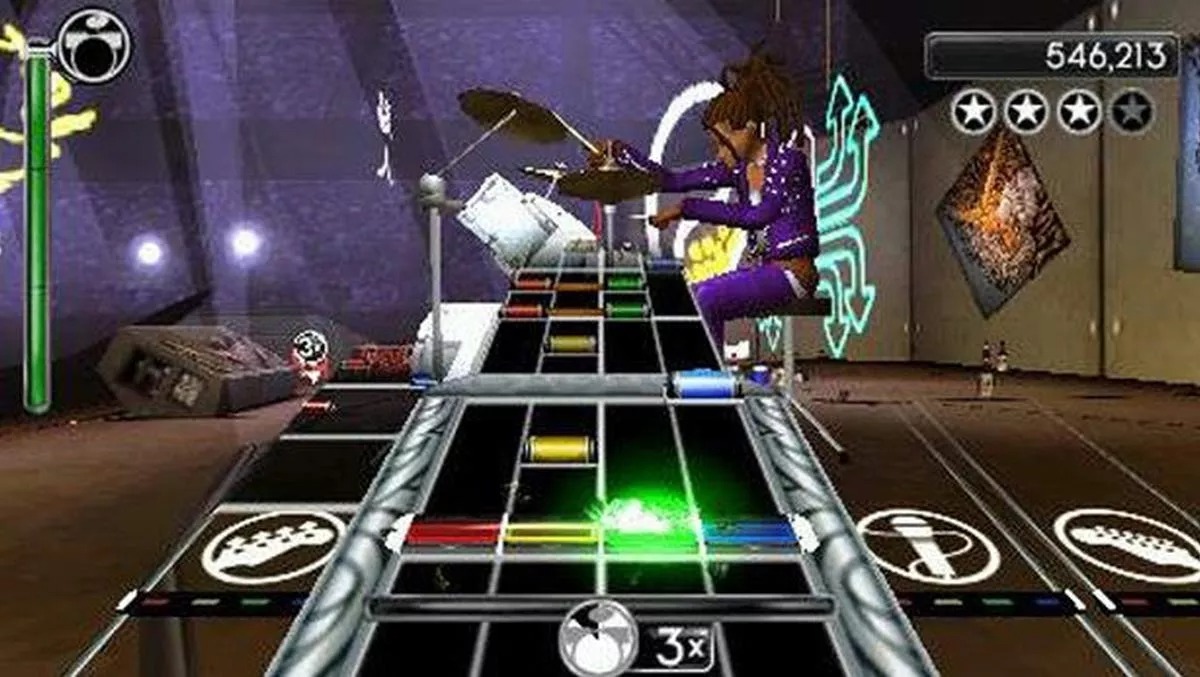
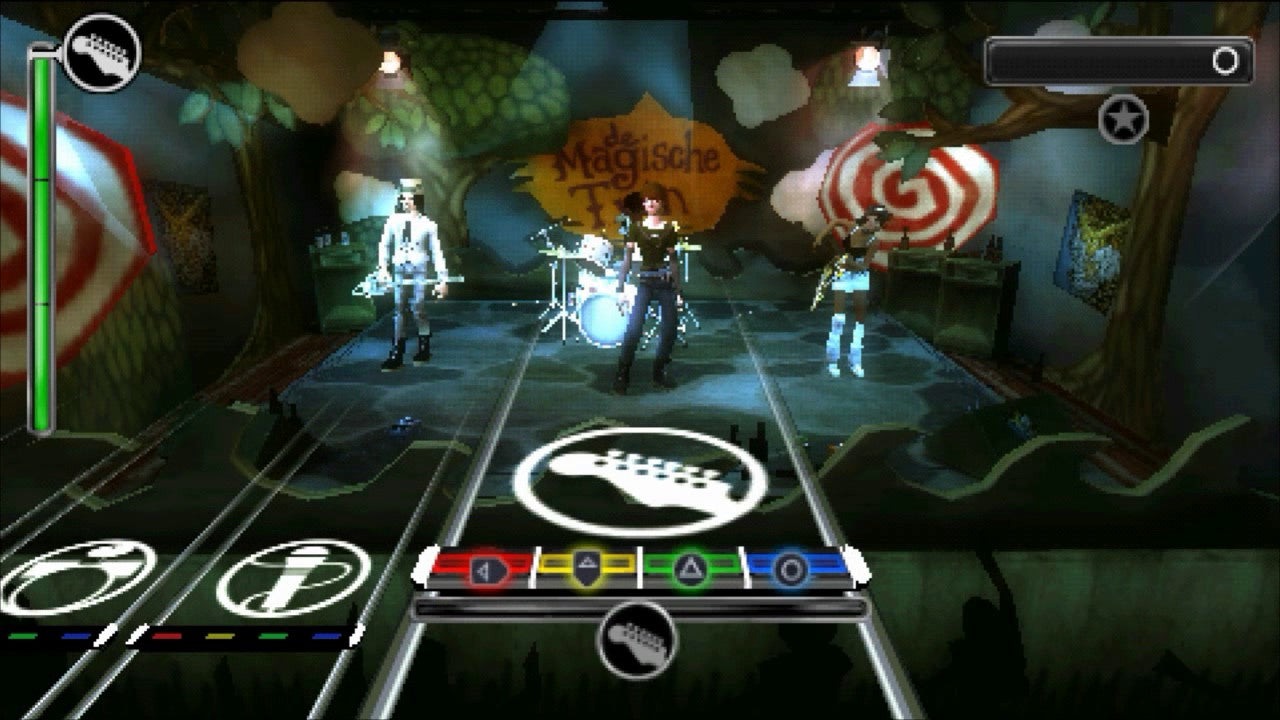
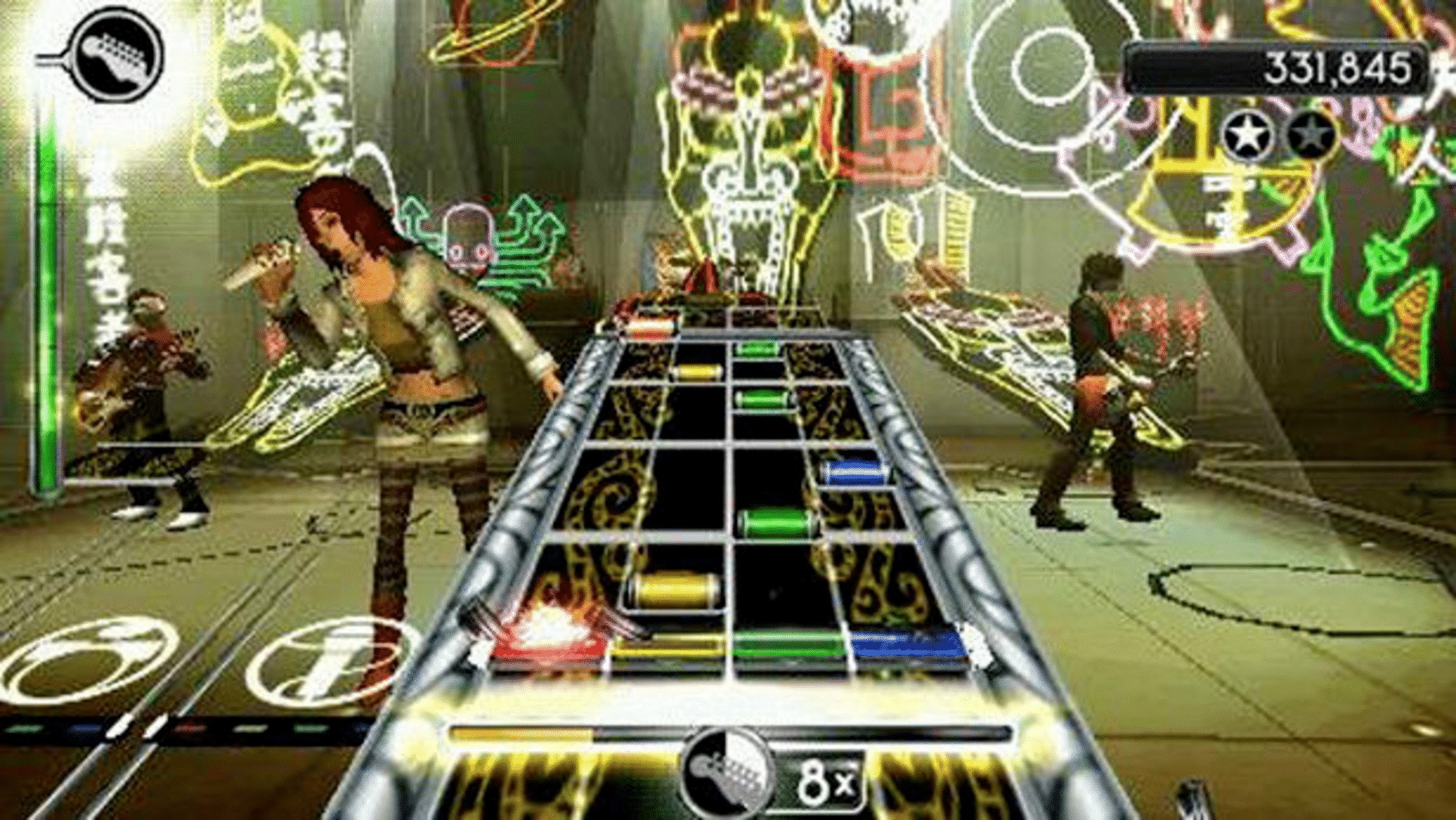
In short, Unplugged does some things really well with the gameplay but somehow manages to turn around and make the game not fun at the same time. Hold on to your desk, handrail, and controller because you have to play all instruments at the same time. Yes: bass, guitar, drums, and mic all at the same time. I know Backbone is a bunch of jerks, but it’s not as difficult as you might think. You see all four tracks on-screen (yes, singing is now a regular track), and when one starts coming down, you play the phrase, then switch to the next phrase using L or R. Phrases are silver borders around a certain amount of notes (each difficulty makes you play more in a phrase). If you play well enough, you’ll get to go to the next phase, but be fast! If you don’t switch right away, the phrase box will move up the track, and you must play all the darkened notes until you get there. In the meantime, other tracks are coming down around you, bringing down your crowd meter, and this last point is what makes the game not so fun.
When you’re actually playing the game, you use the left D-pad (red), up D-pad (yellow), triangle (green), and circle (blue) (DJ Max Portable vets will already have this down pat). As you can see, there is no orange present since the game only uses four buttons, but don’t let this misguide you into thinking the game is easy because it is far from that. To make the game a tad easier on recognizing what buttons to hit together, the orange bar that was used for the kick pedal on the drums now ties notes that are apart from each other. This helps identify when to hit two notes simultaneously and thus makes it a bit easier when all these little notes are whizzing by. Overdrive (or Star Power) is still the same and can be activated with the X button, but having to perfectly play every phrase can make gaining Overdrive a little hard.
One other thing that really makes playing this game somewhat annoying is the fact that instruments drop out if you leave the track alone for too long. I don’t mean drop out as in failing (you can save the tracks by using overdrive), but in an audio sense. This is supposed to be an audio aid or cue to go to that instrument and play the phrase, but it just makes the song sound really bad.
One major disappointment is that Unplugged does not have any multiplayer whatsoever. Yes, I know, I know—it’s alright; you can stop crying now. I am clueless as to why this decision was made because multiplayer is what really made Rock Band shine, and there’s no excuse not to have it in the PSP version. Besides the missing multiplayer, the game is really vanilla in models, as it includes only your Band World Tour, Quickplay, and Training; oh, and Options if you really like that. One request that Unplugged finally responded to was the ability to customize everyone in your band instead of just the musician you are currently playing.
The customization is actually really shallow compared to the console versions of the game since you can’t choose clothing categories (Goth, Punk, Metal, etc.), but only a few clothes for your torso, bottoms, and shoes. There aren’t as many accessories or even hair and makeup items, but this is OK since the game doesn’t look that great anyway (more on this later). When you start your band, you can name it, pick a logo (yeah, you can’t even make one!), name your musicians, and pick from some generic clothing, hair, makeup, and your set. I see that Backbone had the whole “portability” thing in mind, so you can whip up a band and go, but some people actually see customization (like myself) as the main part of the game and can really bring the game to life with your creations.
Once you start a band and enter the world tour, you’ll be in familiar territory. You have mystery setlists, make a setlist, and various sponsored setlists that have various amounts of tracks. You can select your difficulty (easy through expert), but not your instrument, and I really wish Backbone would have kept the game the way it was before with just one instrument track.
When you are actually playing a song, you are rated on how well you did with up to five stars and a score multiplier. Landing notes will increase this multiplier up to 8x (if you activate Overdrive) until you miss a note, when it goes back down to zero. Once the song is over, you see your percentage of notes hit for each instrument along with how many phrases you played, attempted, or failed. Eventually, you’ll unlock managers you can hire to change attributes of your play style that will earn you more cash and fans or get you gigs you couldn’t do otherwise. You unlock songs by earning a certain amount of cash, fans, and stars. In the beginning, this can be difficult since you have to get almost perfect scores on every song to start unlocking more gigs.
Sometimes before you start a gig, a screen will come up and ask you if you want to gamble with your gig (in a sense). By getting 4 stars or more, you can get quadruple the cash or nothing at all. If you get 5 stars, we’ll double your fans and all that. It’s fun and all, but we’ve seen this before, guys! The World Tour seems to be the meat of the game, and it’s nothing new or original—just the same old stuff we’ve seen from previous entries in the series—and this is a bit disappointing since it makes you feel like you’re just playing a rushed port.
There is also downloadable content available (as I write this) for people looking for more than what’s on the disc. Currently, there are 10 songs available (assuming this is an experiment by EA) for $1.99 each on the PlayStation Store. They are great songs (Disturbed-Inside the Fire, Paramore-Crushcrushcrush), so this is a great way to keep Unplugged alive and kicking. Since this is a band game, how does it sound? Very good, actually, as the songs are MP3 quality thanks to the UMD’s 1.8GB storage capacity and the PSP’s memory size. There are 41 songs on the disc, featuring The Jackson 5, Lacuna Coil, Pearl Jam, Bon Jovi, Boston, Tenacious D, The Police, and a ton more. Most of these songs (again another disappointment) are from previous Rock Band games, but these seem to be the best of them and almost feel like “Rock Band: Greatest Hits.”.
However, when it comes to the actual ambiance, the game fails. Crowd noise sounds like static, and the menu noises sound muffled and very monotone—almost like you were playing DS (Ha! Take that Nintendo!). and really makes the experience kind of dull, aside from the music. If you want to talk about graphics, you should cover your eyes and run away because the game looks kind of ugly. The characters don’t have realistic animations like the console versions, detailed textures, or nice lighting effects. Everything looks flat, plain, and really dull. The characters use the same retarded animation over and over again, and it makes you wonder if the game is really a third-party creation. I realize the PSP has limited hardware, but c’mon, they can do more than that; Kratos was able to!
While the menus look nice and crisp and remind you of Rock Band 2, I still wish there was more to the graphics and sound of the game. This is a real disappointment for me, but what saves the graphics department is that you don’t really look at the characters. Your main focus is on the tracks and the notes, which look crisp and clear. Rock Band: Unplugged is a great departure for the series on the portable scene. With 41 songs on disc, great controls, downloadable songs, and an extensive World Tour mode, there are a lot of reasons to come back to Unplugged again and again.
Don’t let the bad sides, such as mediocre graphics, poor ambiance, awkward gameplay, and the wee bit shallow selection of modes, bother you. Unplugged is probably the best portable rhythm game ever made, and it doesn’t even need a guitar hand grip.









































 thebinarymessiah.com
Clearly you have been blocking everything you or haven't played the game at all. Maybe pay attention to the story…