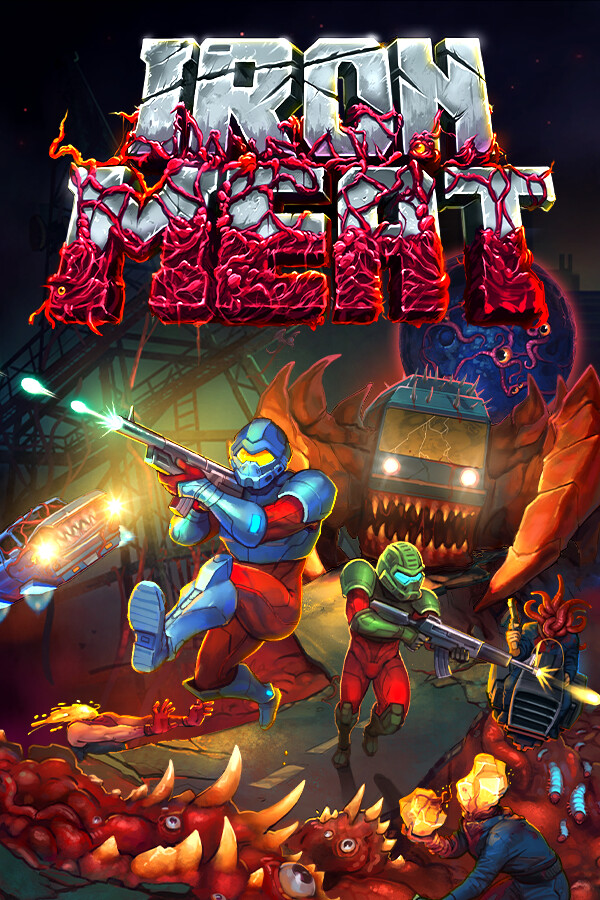
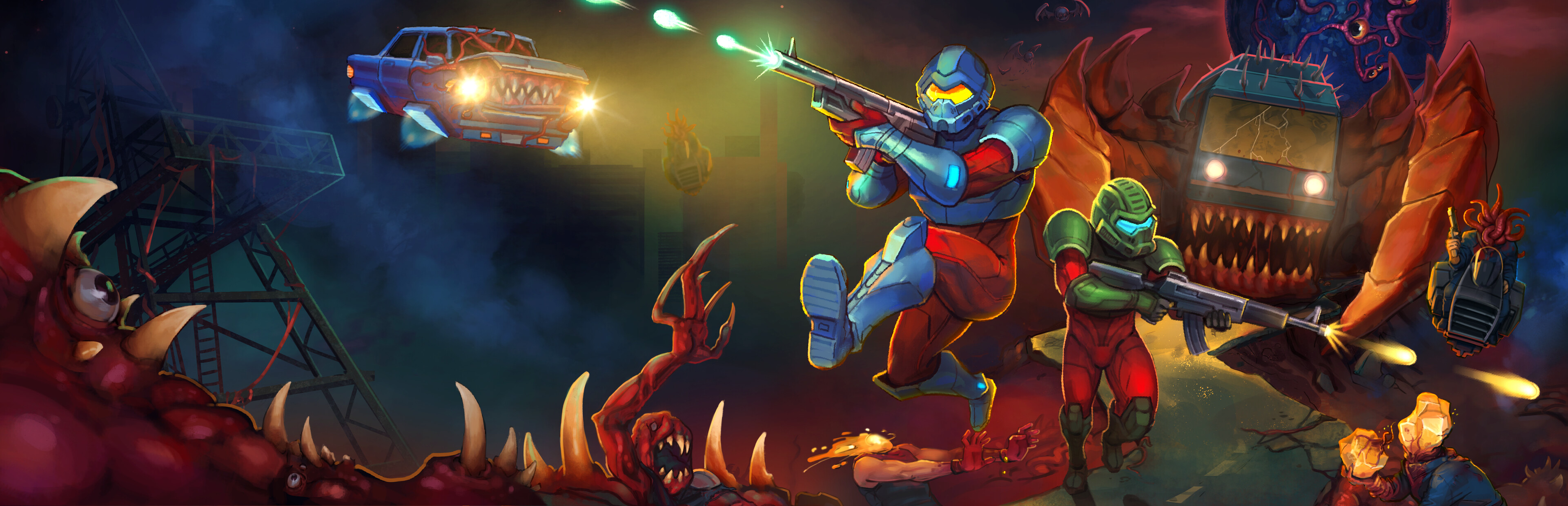
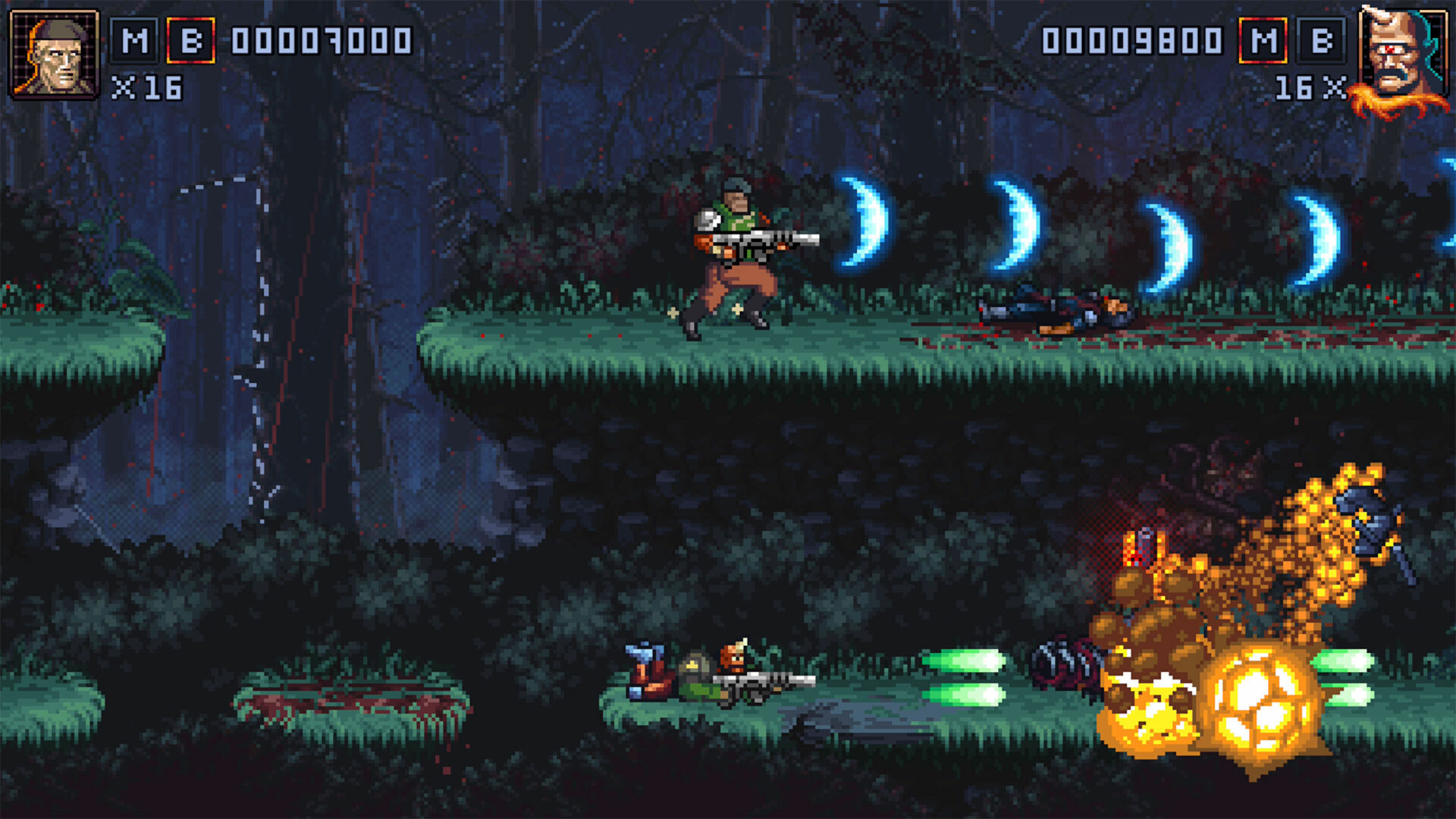
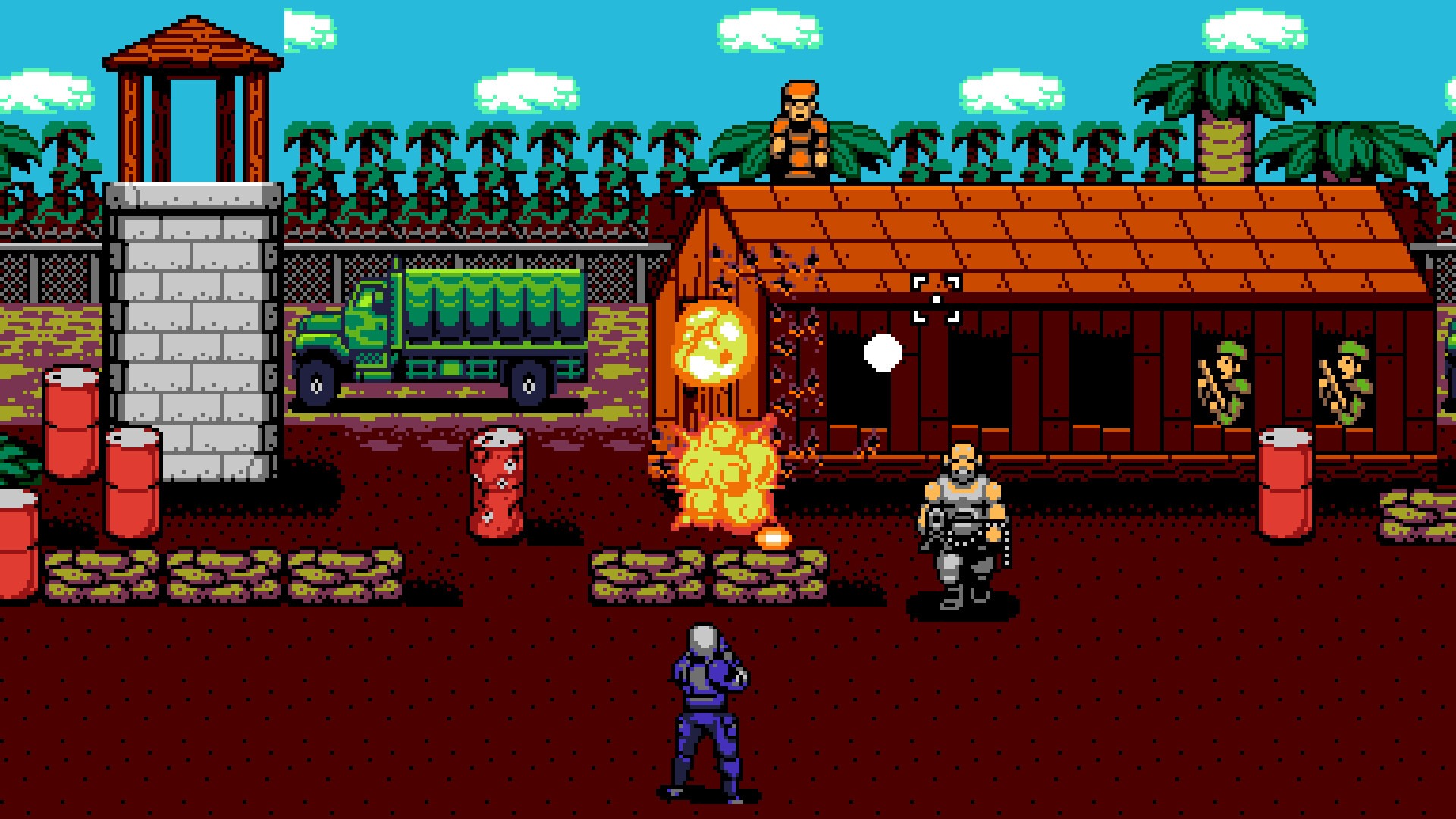
Contra is the blueprint for side-scrolling action games. They need to be tough as nails, have insane bosses, and usually have a lot of gore or some sort of inspiration from biomechanical art. Moreover, the Earth is under the control of a vast and formidable alien race. Iron Meat nails all of these and is a blast to play. The game can also nail all of these aspects and still fail in level design and gameplay. That’s thankfully not the case here.
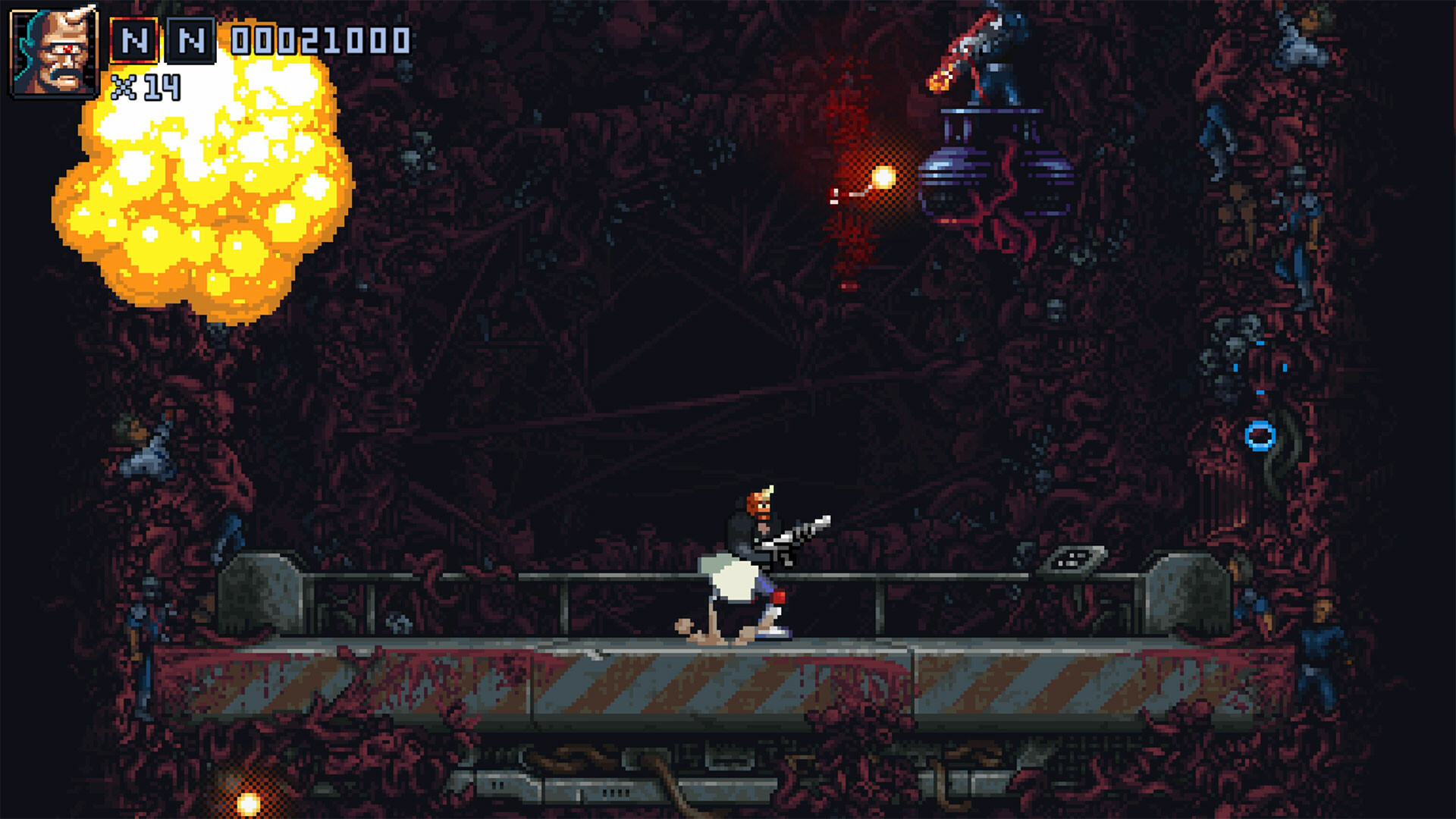
As a stalwart soldier, your mission is to save Earth from an alien race that has taken over the Moon. There are nine unique levels in this game, each with varying lengths, enemies, and obstacles to overcome. The game is very pick-up-and-play friendly, as you just run forward and blast everything in sight; however, Iron Meat has a couple of things it does a bit differently. You can find ammo pickups inside objects. Occasionally, friendlies may drop them, or you may find them lying around. They are not commonly found, and if you die, you forfeit your weapon. The standard weapon is a rapid-firing machine gun that works well enough. Other weapons include different firing rates and patterns. There are also pickups to increase your score by 1,000.
In Iron Meat, you can shoot in eight directions. Another great feature is that you can hold down a trigger button to maintain your position while shooting in any direction. The game constantly presents you with enemies at a rapid pace. Some enemies, such as boxes with jaws, bugs, melee enemies, weird snakes, bats, and various other insane abominations, may be incorporated into the level itself. The enemy design is fantastic, and you get to know what each enemy does and how to kill them. Occasionally, following a specific order can also prove to be an effective strategy. You can also avoid enemy fire by lying down prone and shooting. Some levels will also test your platforming skills, featuring obstacles such as collapsing ceilings, death pits, and suspended platforms.
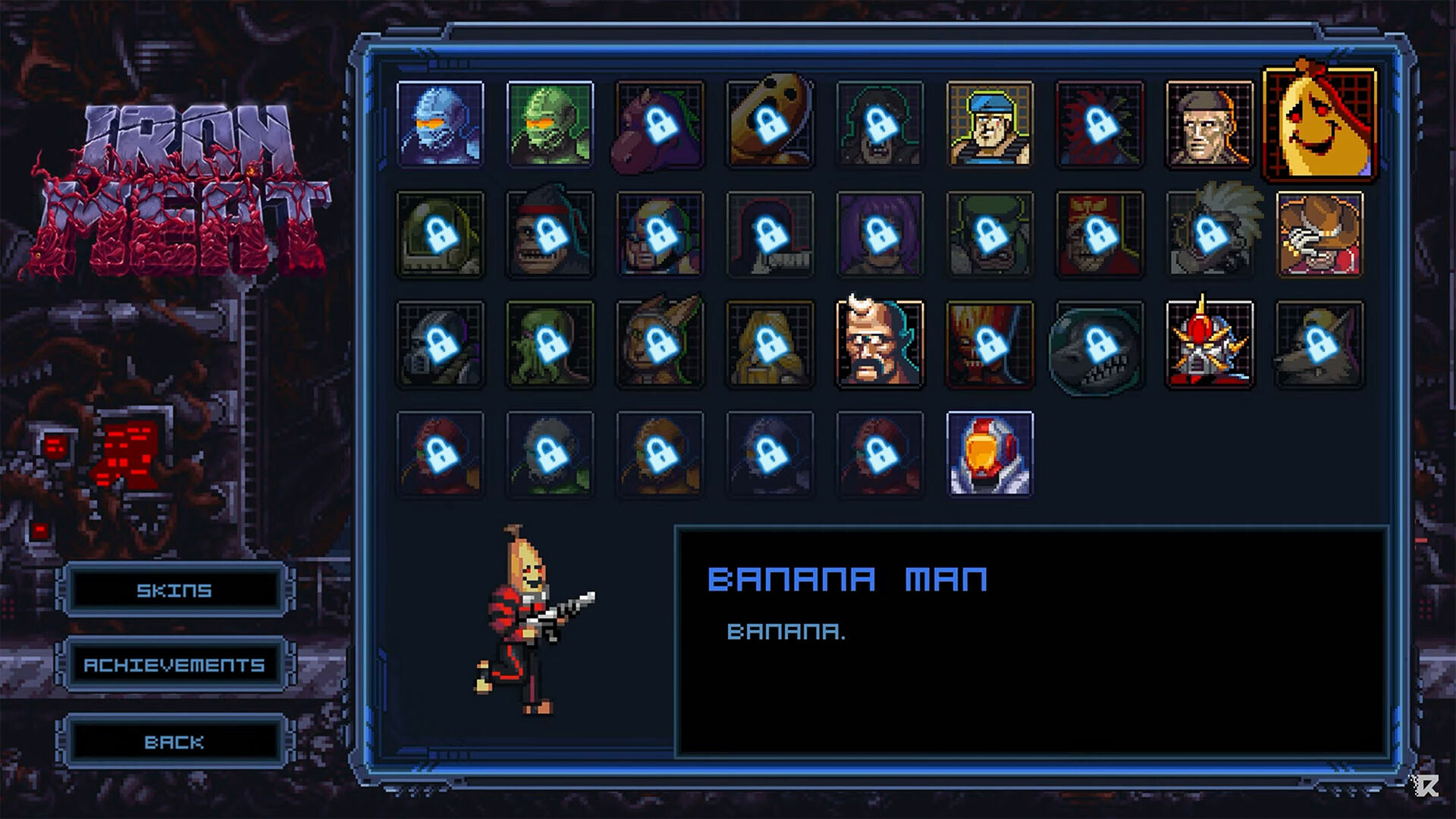
The bosses are really great. They have various attack patterns, and you get used to knowing when to attack. Some will chase you, while others will fly around you. Some are small, while others are massive, possessing multiple forms and phases. They all look grotesque and nightmarish, though. The game’s pacing effectively breaks up the action. There is a vertical level, followed by a level that emphasizes platforming, and then another level that presents a large number of enemies at once. You can unlock characters and swap body parts to create your own unique soldier. Once you complete the game, you can go through it again in mirror mode.
Although the game may appear to have less content compared to modern games, it truly pays homage to the classic 16-bit run-and-gun shooters. Most of those games featured a mere half dozen levels and lacked additional modes. Iron Meat does have a two-player co-op mode, which is a nice addition, but I feel there’s a lot of content here for the asking price. Going through and learning all of the attack patterns and enemies is fun, and then getting more points on higher difficulties can be a fun challenge. You can complete the game in less than two hours, but those two hours are filled with enjoyment.
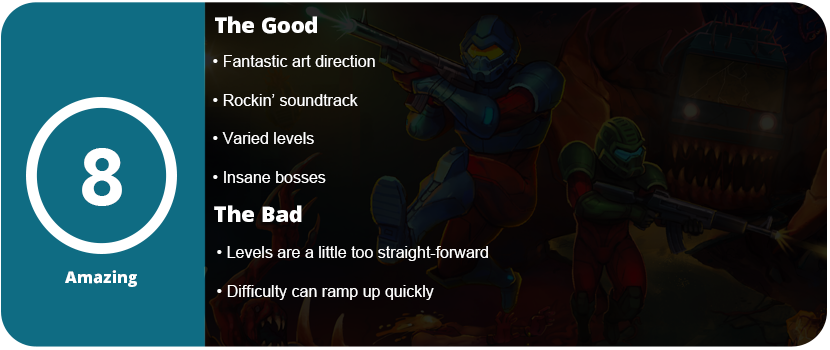
Overall, Iron Meat nails pretty much everything you would want in a 16-bit run-and-gun shooter. Iron Mean boasts massive bosses, captivating soundtracks, copious amounts of gore, diverse levels, and exceptional controls. There’s not much Iron Meat does wrong outside of the occasional straightforwardness of some levels. This is one of my favorite games in the genre, and you shouldn’t miss out.
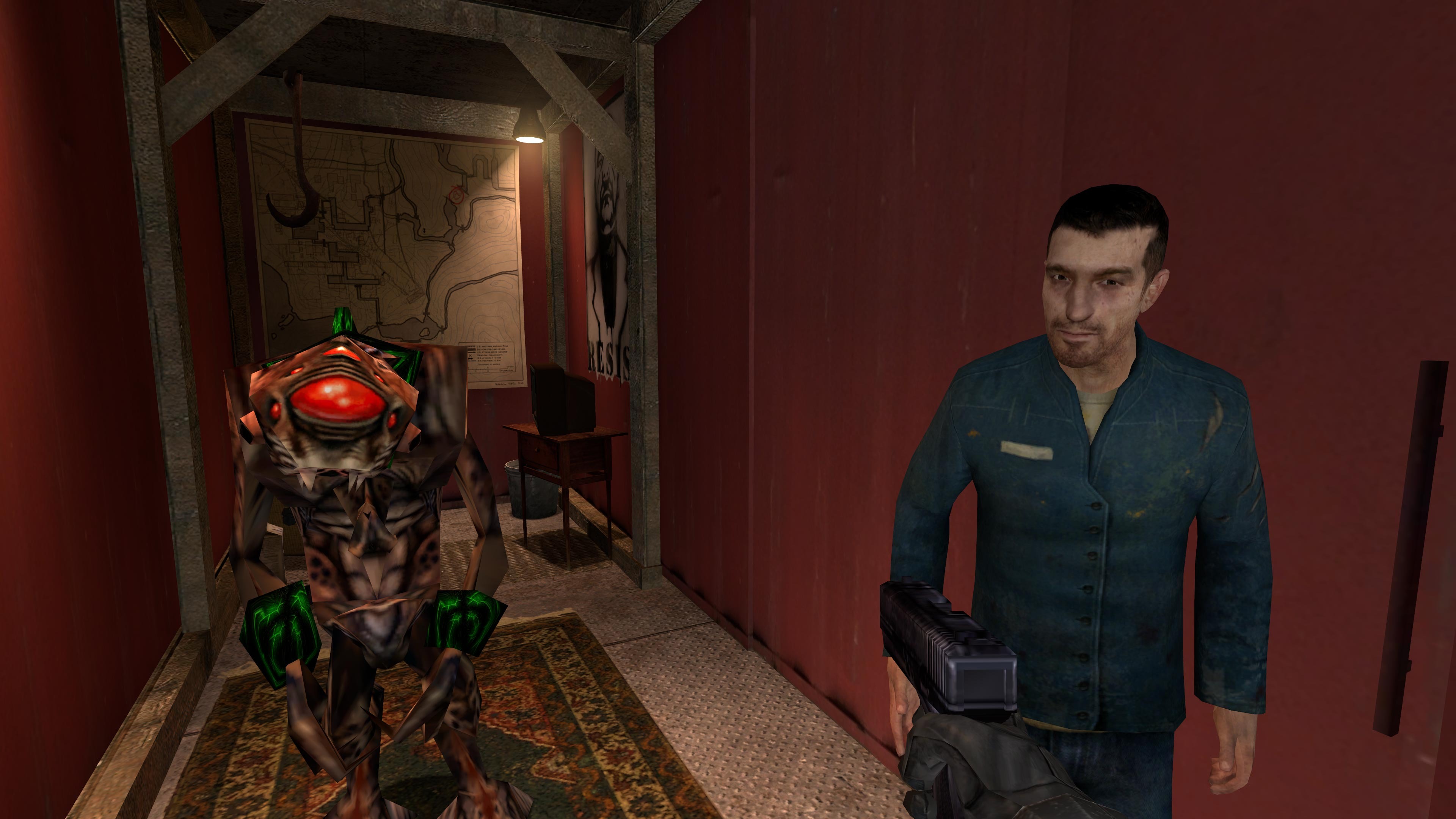
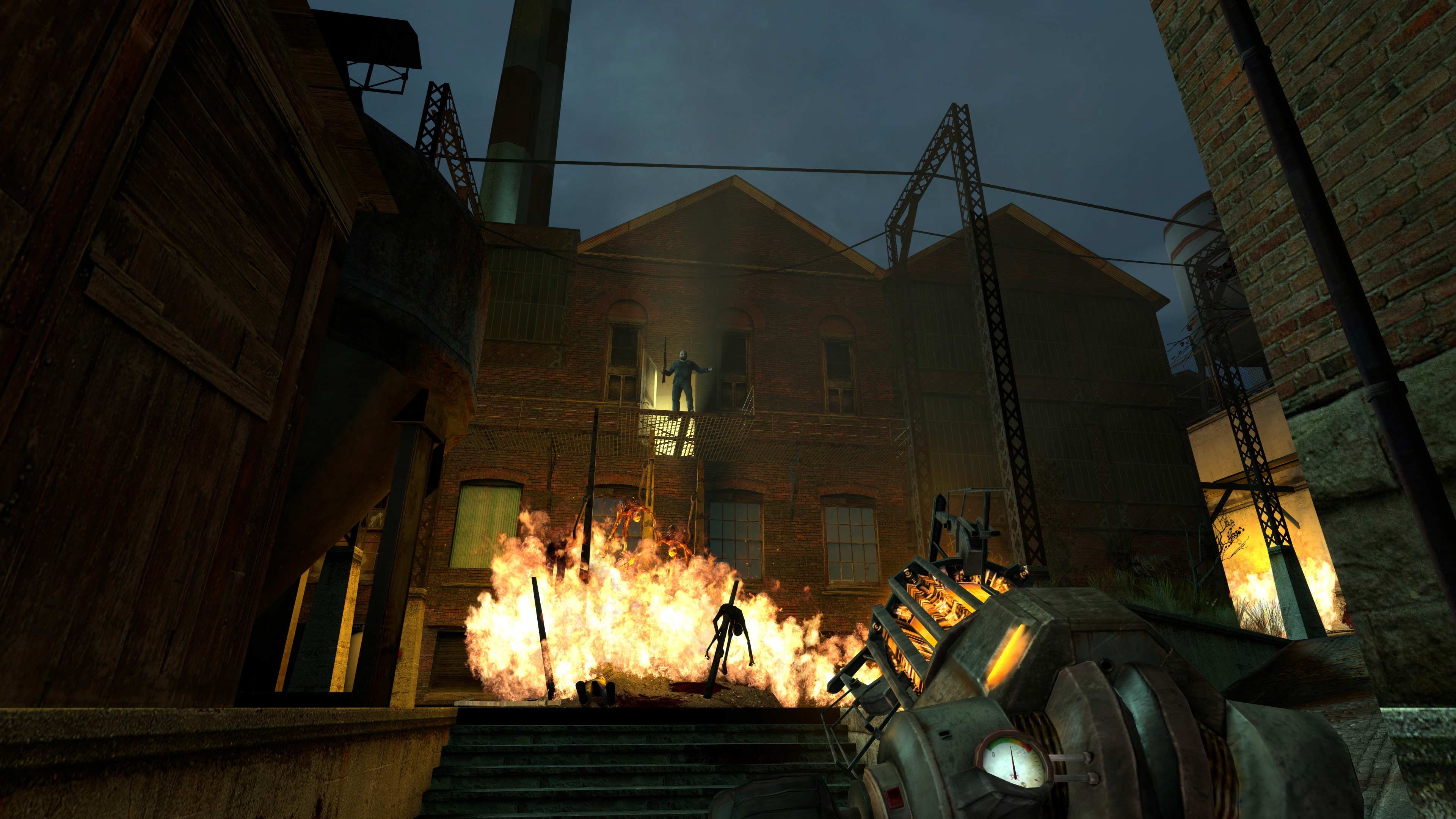
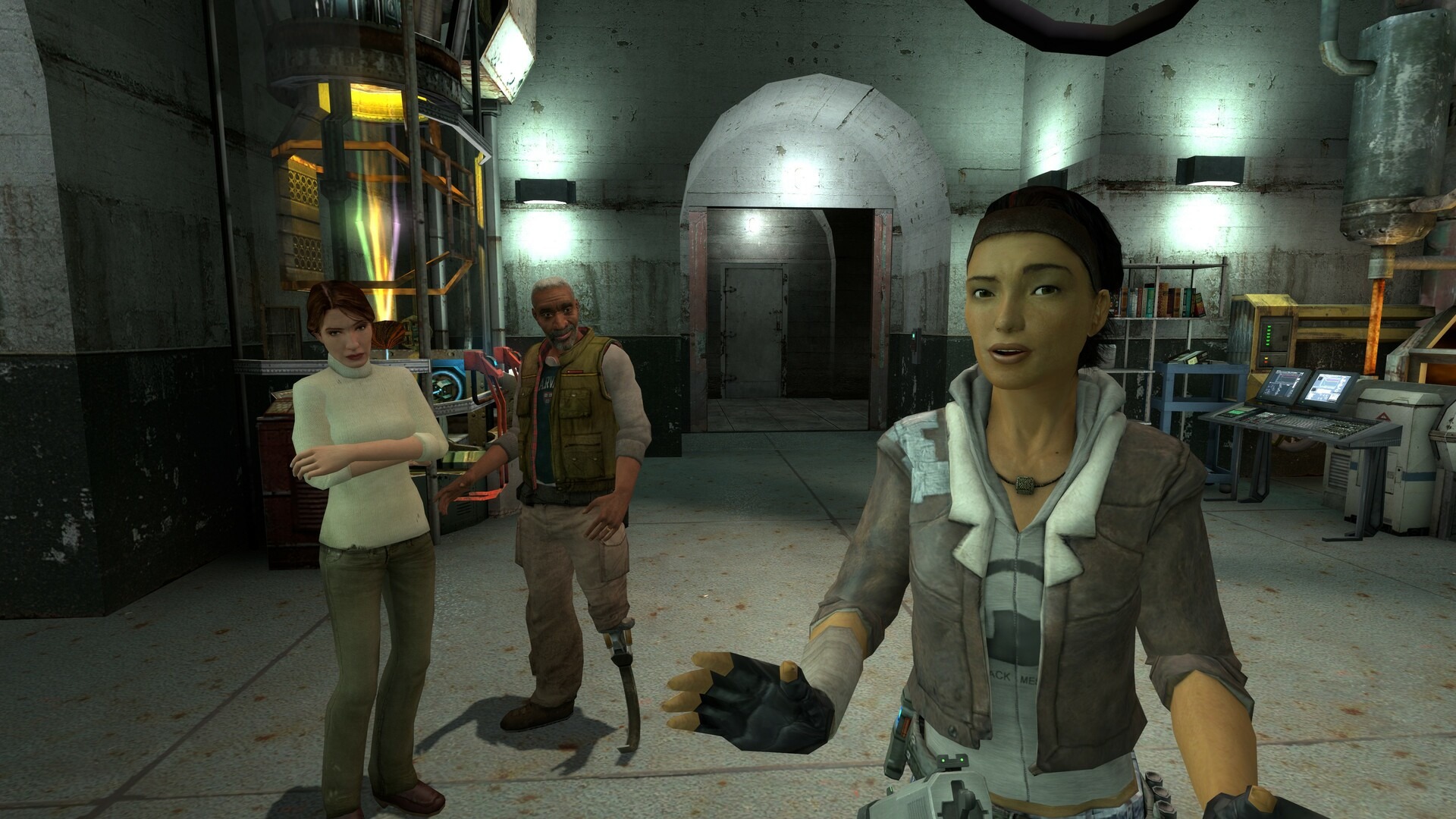
Who hasn’t played Half-Life 2 yet? I still have a free coupon from 2007 in my Steam account, but I can’t give it away because everyone I know or have spoken to owns HL2. The game industry and people’s minds haven’t forgotten Half-Life, but it’s been on the back burner for a while now. Every time a new false rumor for a Half-Life 3 emerges, people perk up, and the game becomes popular for a bit and fizzles out. There have been many community updates, such as the famous Half-Life 2: Update that improved visuals and fixed bugs. However, Valve has finally released their definitive version of the game 20 years later.
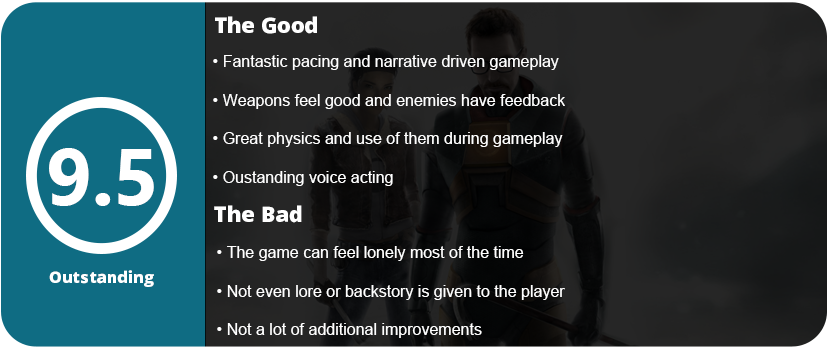
The Anniversary Update incorporates several significant improvements, including enhanced resolution light cubes, the correction of G-Man’s green eyes during the intro, the ability to choose between original and improved blood and flame effects, a more contemporary user interface and menu, an additional 3.5 hours of commentary, the incorporation of both episodes, and additional features. These quality of life improvements make a huge difference and make the game more palatable to play by today’s standards. Half-Life 2, in general, is a fantastic game with a flow unlike any other game I have played.
To celebrate the 20th anniversary, I am going to do a full review of Half-Life 2 through modern-day eyes. Although I didn’t have the best experience when I first played the game on a business desktop in 2005, it was well-optimized for the time and ran smoothly on potato computers. This was the game that prompted me to finally download Steam. People tend to forget how awful it was back in the day, when it constantly crashed and updates would break both the software and the games that required it. While today’s gamers adore Steam, the gaming community didn’t hold the software in high esteem 20 years ago.
As for the game itself, the modern UI is a welcome change, especially on Steam Deck. The game now supports controllers properly with no need to remap anything. You can choose from a grid or carousel-style weapon menu too, which is a nice change. The visuals are sharp and crisp at higher resolutions, and the game overall looks very clean. It has aged incredibly well, and this is thanks to Valve’s Source Engine and the way everything scales up for higher resolutions. As for playing the game, it feels better than ever. The game takes place shortly after the first game, where Gordan wakes up mysteriously on a train bound for City 17, and features a now-famous intro by G-Man himself. The game is a master class on in-game storytelling. Instead of taking away the players’ controls and inserting pre-rendered cutscenes, the game tells everything through subtle details in the surrounding world.
The beginning of the game is the best example of this. Valve also teaches players how to play the game through natural in-game dialogue and simple puzzles at first. The Metro cop, who instructs you to pick up the can at the start of the game, teaches you how to use physics. The inclusion of this now infamous line ensured that players understood their capabilities. This may seem dated today, but in 2004, physics were very CPU heavy, and most high-end processors struggled with them. People had to learn how to pick up objects using real physics back then. Barney explains the first stacking puzzle, instructing you to stack boxes in order to escape a window.
The game’s natural progression is stellar. The game’s long segments ensure that you always feel like you are moving in the world and making progress in real time. Each area is an hour or two long, and you progressively make your way toward the Citadel and Dr. Kleiner’s lab. The hoverboat area is quite lengthy, giving you the impression that you’re actually traveling to your destination in real time. However, these lengthy segments are not monotonous. Valve puts little tidbits in the game that the player can do or ignore. You have the option to escape and obtain ammo or supplies from a passing house, but doing so could potentially lead to a firefight. There are hidden Lambda caches all over the game, and these really help and come in handy.
The transition from a vehicle to on-foot and back again significantly breaks up the pace. There aren’t many puzzles in the game, but there are some areas that require navigation of pipes and ladders and need a bit of thinking to find your way out. Every game introduces something new, whether it’s a weapon or the ability to command squads. While this is very simple and archaic by today’s standards, I found they mostly get in the way and rarely help outside of offering medkits and distracting enemies. Every game introduces new enemies, and just when you believe you’ve defeated them all, a new type emerges. The enemies range from Metro cops to zombies, and from Elite Combines to Striders. Weapons feel excellent and have a unique and distinct feel to weapons, such as the pistol, are not suitable for use in specific situations. It’s mostly useless after you get around half the guns in the game, and I rarely ran out of ammo. The more powerful weapons have limited ammo, so it’s crucial to use skill to ensure you hit everything, kill enemies, and avoid wasting ammo.
There are ammo crates, boxes, and medkits everywhere. While medkits are not a thing anymore in FPS games, they work well here. Gordon has the ability to recharge his HEV suit for armor purposes. Most of the game feels dated in terms of navigation. The entire game, including linear buildings, vents, doors that need to be opened, and tunnels, guides you along a linear path. Although the game may appear expansive and open at times, it actually follows a linear structure, which was the standard for first-person shooter games during that era. While other games such as Halo 2 set the standard, Half-Life 2 stands out for its organic progression structure and illusion of real-time progress in the world. The inclusion of physics such as needing to use the iconic Gravity Gun to pull a wooden beam from in front a door through a window to progress is something that FPS never really did.
Half-Life 2 has a distinct and unique sound and appearance. There are a lot of browns and beiges, but the game still has color in places. The coastline boasts a plethora of blue water, while Ravenholm is characterized by its dark hues of gray, dark metal, and aged wood. The sound design is iconic, from the HEV suit charging to the Metro cop and Combine radio chatter to the bleeps and bloops of the turrets, which were later used in Portal. The entire game exudes a distinct vibe, ranging from Gordan’s slick momentum to the physics and the firing of the weapons. Enemies respond well to weapon fire and ragdoll when dead or blown up. While there isn’t too much gore in the game there is a lot of blood. Enemies won’t gib at grenades, but you might see the occasional severed head.
The overall oppressiveness of the world of Half-Life and the Combine is palpable in this game. Every time you encounter a group of rebels, even if it’s just for a brief conversation, it’s a refreshing change from feeling alone and feeling like your assistance is fleeting. Ever since I was 15, this game has felt so lonely and melancholy. It’s one of the reasons I haven’t played through this game too many times over the years. Valve masterfully captures the sense of being a superhero, with everyone relying on you, and effectively conveys the dire consequences of making a mistake. The player bears the entire game’s burden.
The Anniversary Update may not seem like much to some. It’s not a remaster or remake, but rather a set of quality-of-life improvements that are not in any way detrimental. HL2 doesn’t need a remake as it works perfectly fine today. A remake would primarily serve as a cosmetic enhancement, but thanks to Steam Workshop’s implementation, we have access to mods that accomplish this for us.
Indie games are what’s holding the game industry right now. It’s no longer AAA titles that get released every single month. The indie groups are the big events every year. There are festivals and online events held all year round celebrating indie titles. Some have had AA budgets while others are made by a single person. Indie games are where the heart and core of the game industry is right now and we need to protect and cherish this by buying the games that we like and love and supporting them. This has been a tale as old as time and many big games now started out as small indie titles such as Minecraft, Fez, Super Meat Boy, Amnesia: The Dark Descent, Stardew Valley, Terraria, and and many more.
Balatro
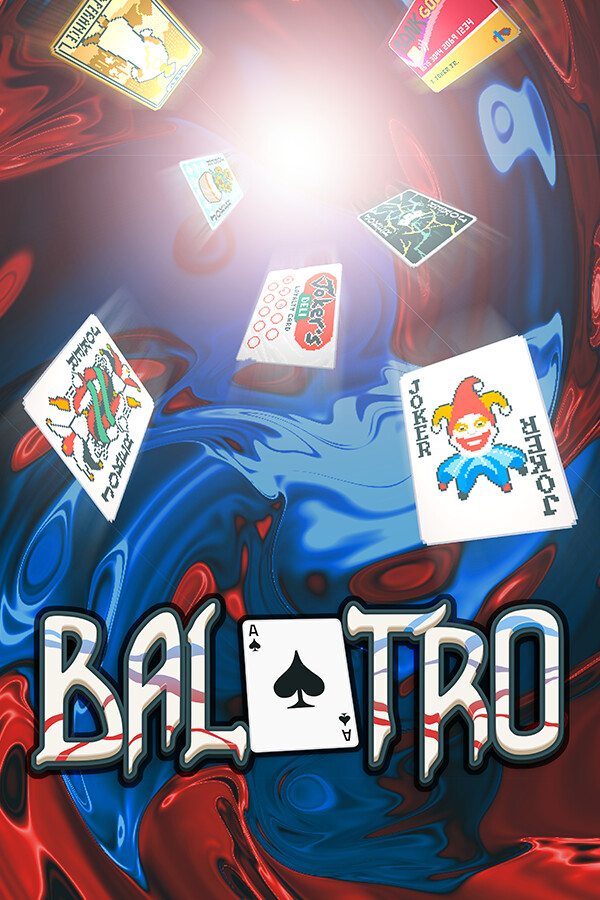
Balatro is one of those games that nobody knew or heard about and suddently blew up. Not only are rogue-like games in vogue right now, but Balatro’s addictive gameplay, colorful retro visuals, and easy to learn, but hard to master style made it a recipe for success. It’s available on every platfrom out right now and recently got a physical release.
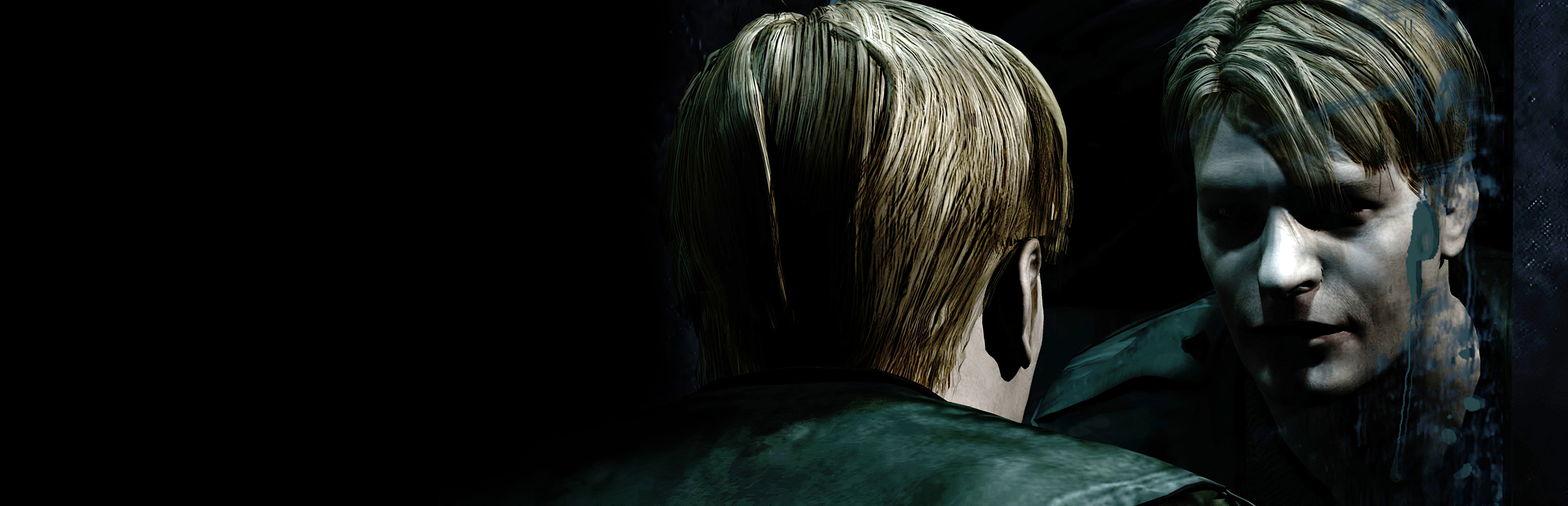
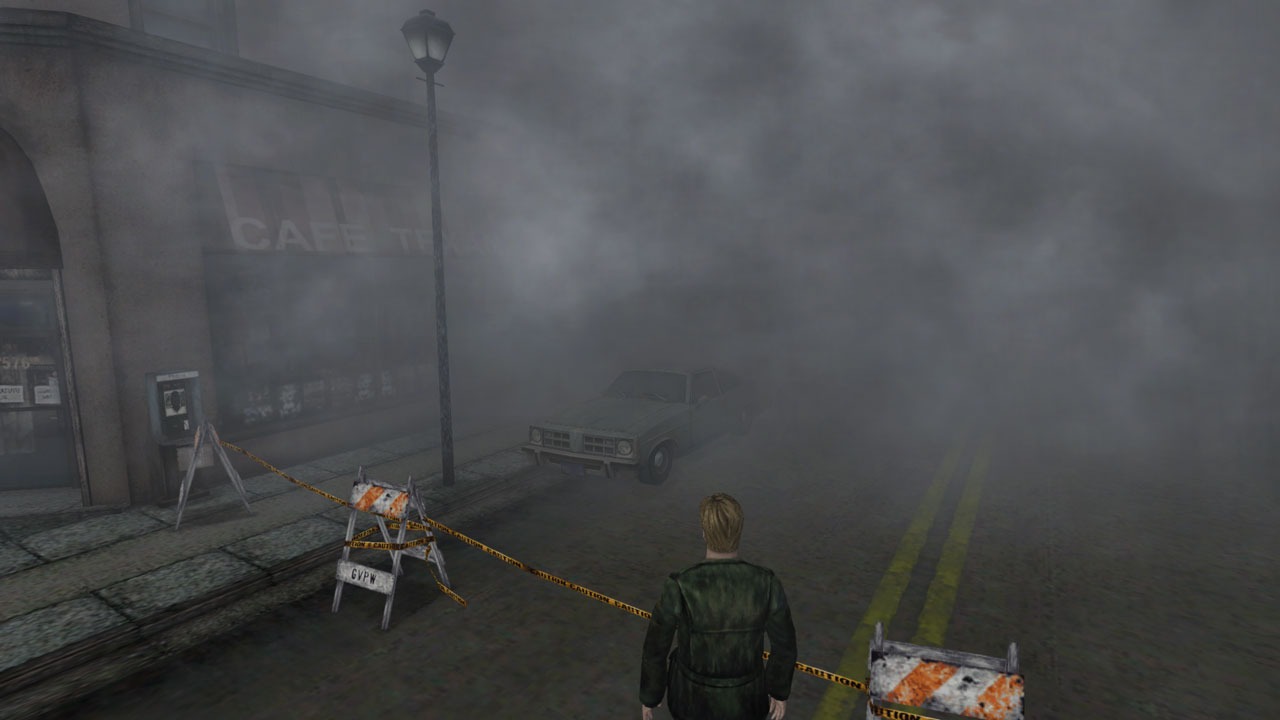
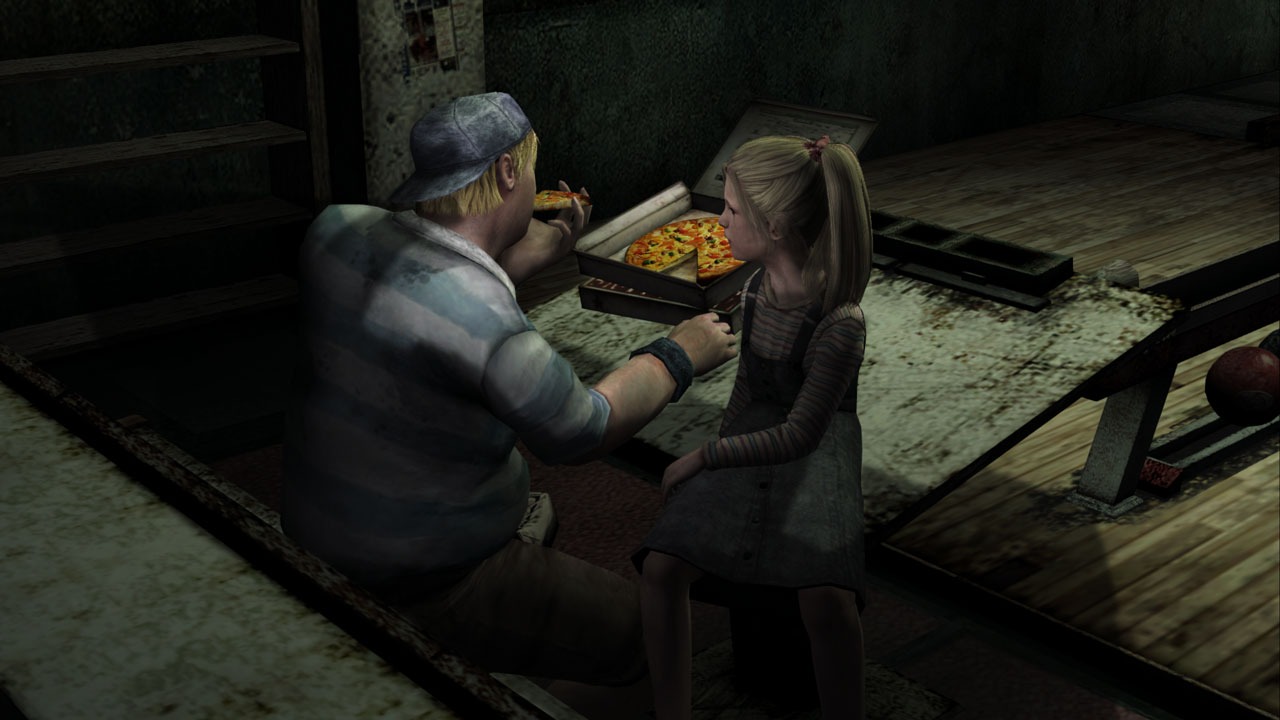
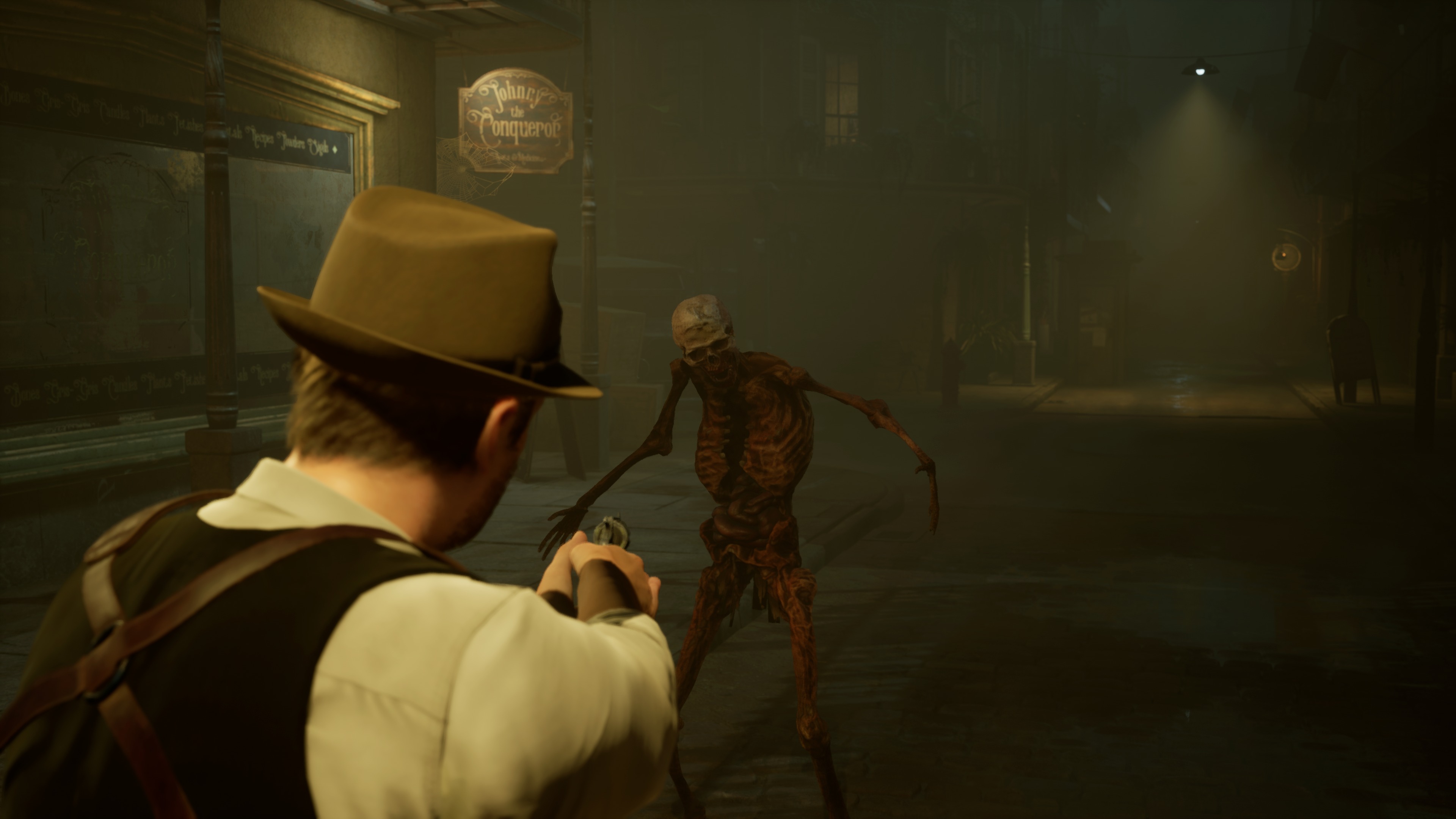
Silent Hill 2 is considered one of the best horror titles ever made. This is my second playthrough of the game. I first played this on PC as well almost 20 years ago. I was a teenager, and I can’t even remember if I finished the game. Silent Hill 2 differs significantly from its original PS1 title. The game focuses more on atmosphere, surrealism, and how things affect people mentally. You follow a man named James Sunderland, who is searching for his wife Maria in the town of Silent Hill, Maine. The story is a little disjointed and doesn’t always make sense, but I think that’s intentional. The game focuses on themes and characters that have no connection to James. Are they manifestations of the town’s pain in human form? There isn’t much exploration of these people’s back stories, despite their frequent appearance. Despite the lack of a third act or a definitive ending will be on the player to make of it what they will. The story is open for interpretation, but remains interesting.
I like how more straight-forward this game is. While the map is an essential tool for figuring out where to go, this series kind of made that a staple. As you progress, your map will mark off areas explored, doors tried, and objects found, aiding in exploration. I still find the puzzles somewhat obtuse, especially on harder difficulties, which make the clues more vague or sometimes nonexistent. For a first-time playthrough, I recommend the easiest combat and puzzle difficulty so you actually finish it. Puzzles involve finding combination locks, and you must either decipher written clues or photos. Some are obvious, while one literally requires you to guess the combination. Finding keys, sometimes through multi-tiered layers of unlocking, is a significant part of advancing through the game. When you receive keys, it’s clear where they lead, and the town map typically circles your next objective. However, navigating inside buildings complicates the process. Most players will tend to become frustrated when they have to attempt every door on the map, especially when there are enemies present. That’s why I recommend starting at the easiest difficulty to gain a better understanding of the game before taking on another challenge. Even starting normal can make the game feel unbearable at first when you don’t know where to go.
Silent Hill 2 improves on the first game’s combat. Auto-aim works much better, but ammo conservation is a must for boss fights. You get a handgun, shotgun, and rifle, as well as three different melee weapons, and that’s it. When you are just fighting one-to-one, you should use your melee weapon, but on the easiest difficulty, ammo is so plentiful that I could use a gun through the last 3/4 of the game once I collected enough. During the first half of the game, you will wander through the main town of Silent Hill, but you should stick to the sidewalks, as this is where all of the items, including health and ammo, are located. You can avoid most enemies by running past them, but the ominous atmosphere compels you to engage in combat. The enemies in the town respawn anyway, so there’s no point. On harder difficulties, the combat is more challenging, but in most areas you won’t face more than two enemies at a time. You must also kick the monster once it’s down, or it won’t completely die and can come back up. Most enemies are slow and easy to learn their patterns from. The game’s final bosses require the rifle, which boasts the rarest ammo count. The shotgun is powerful but slow at close range, and the handgun is your main firearm for the entire game.
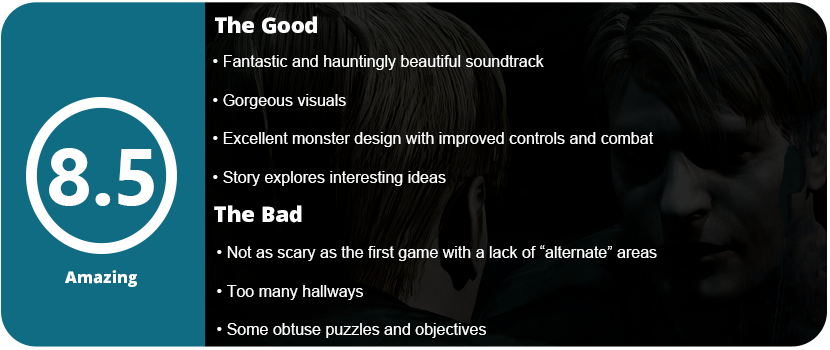
There aren’t any mini-games or side quests here. Basically, you just try to get from A to B alive and watch whatever cutscene you come across. There aren’t any collectibles, either. With a guide, I was able to finish the game in about 4 hours, so it is surprisingly shorter than I remember it being. This was originally a technical showcase for the PS2 during its first year on the market. The fog and lighting effects in this game blew me away when I watched a neighbor play it. If you try to play this game on your own, you may get frustrated early on, turn the game off, and never come back. I highly recommend your first playthrough with a guide. I used the official BradyGames guide for Xbox and had a blast the entire time. I honestly did not want the game to end. I thought the game could tell me more, and I wanted to explore the “alternate” areas from the original title. I never experienced significant frustration with the guide, except for the repetitive nature of the interior locations. The overwhelming number of hallways you traverse gives you a sense of familiarity among them.
With that said, the atmosphere is something I absolutely couldn’t get enough of in this game. The eerie and exquisite soundtrack, the intricate designs of the enemies, and the overall aesthetic appeal of the game captivated me. I was disappointed that we didn’t get to see too much of “alternate” areas, and the boss fights are a bit too straight forward and disappointing, but they look cool. I honestly wish there were more enemy types in this game, but what’s here is still memorable and iconic. The fog that covers everything is now an integral part of the game’s aesthetic, rather than a necessity for these consoles to render the visuals and reduce draw distance. I did become somewhat fatigued by the frequent requirement to traverse narrow hallways, as this game contains an abundance of them. There’s too much focus on item hunting and not enough on exploration. I’m surprised the game wasn’t more combat heavy—at least in certain areas—given how much the combat and controls have improved. The voice-acting was sporadic and inconsistent, as anticipated. The mystery of the endings is my biggest gripe. Interacting with certain objects can lead to unexpected endings. The series’ staple endings are difficult to acquire, and even with a guide, I struggled. Thankfully, this game is worth multiple playthroughs, so you might want to consider it.
Overall, Silent Hill 2 is a fantastic horror title, with the Xbox and PC versions being the superior choices. I played with the Enhanced Edition mod this time around, and it looks as excellent as it will get without an official remaster or remake. It combined the best assets from all versions to make it playable on modern systems equipped with controllers, ultrawide screens, and proper FOV fixes, among other things. The texture work is remarkable, and I loved every second of it. The soundtrack is excellent; I actually listen to it outside of the game. The sound effects are also iconic and haunting themselves. They will stay in your head forever. While the characters themselves may not be particularly intriguing or profound, the town of Silent Hill stands out as a unique character in its own right. With so much to reveal and is concealed, you want to see everything. I would even consider this an unofficial HD remaster. If you haven’t played Silent Hill 2 yet, this is the way to go outside of the Xbox version.
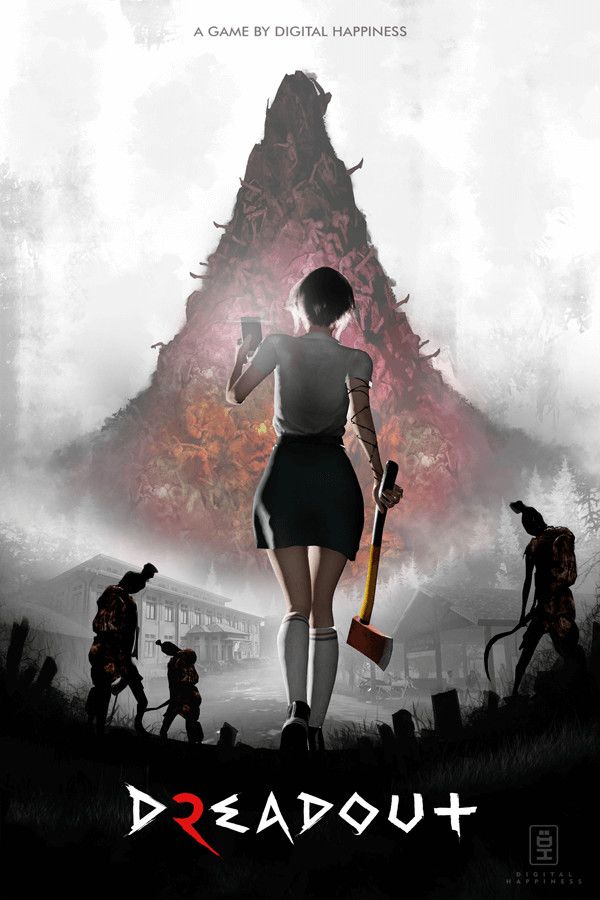
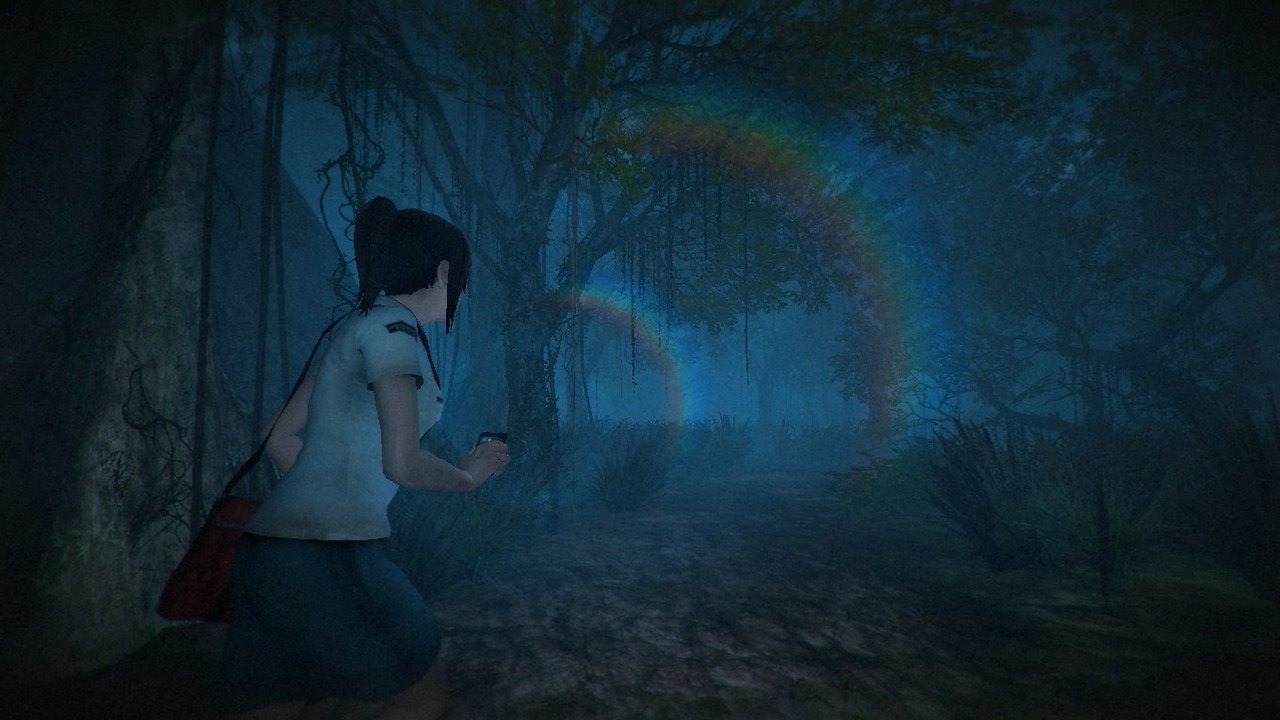
I finally made it around to the last of the trilogy. This latest entry is a huge step up for the series, but if you zoom out and look at the game in comparison to others at the beginning of this generation, it still feels and plays dated. Right off the bat, the game is a massive boost in visual fidelity. The game boasts improved textures, models, and lighting, all of which contribute to its impressive visual appeal, particularly considering its modest budget. The game also has a more cohesive timeline to play through rather than a few random set pieces. There are eight acts in this game, so it’s about as long as the two previous games combined. There is a large hug area you can run around in, and then you can branch off to the different acts as the story progresses.
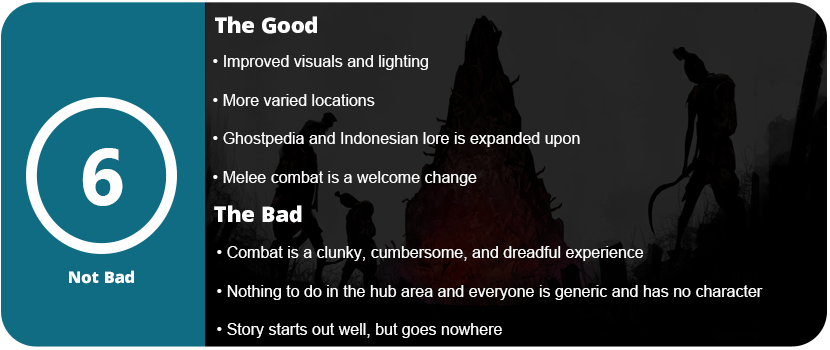
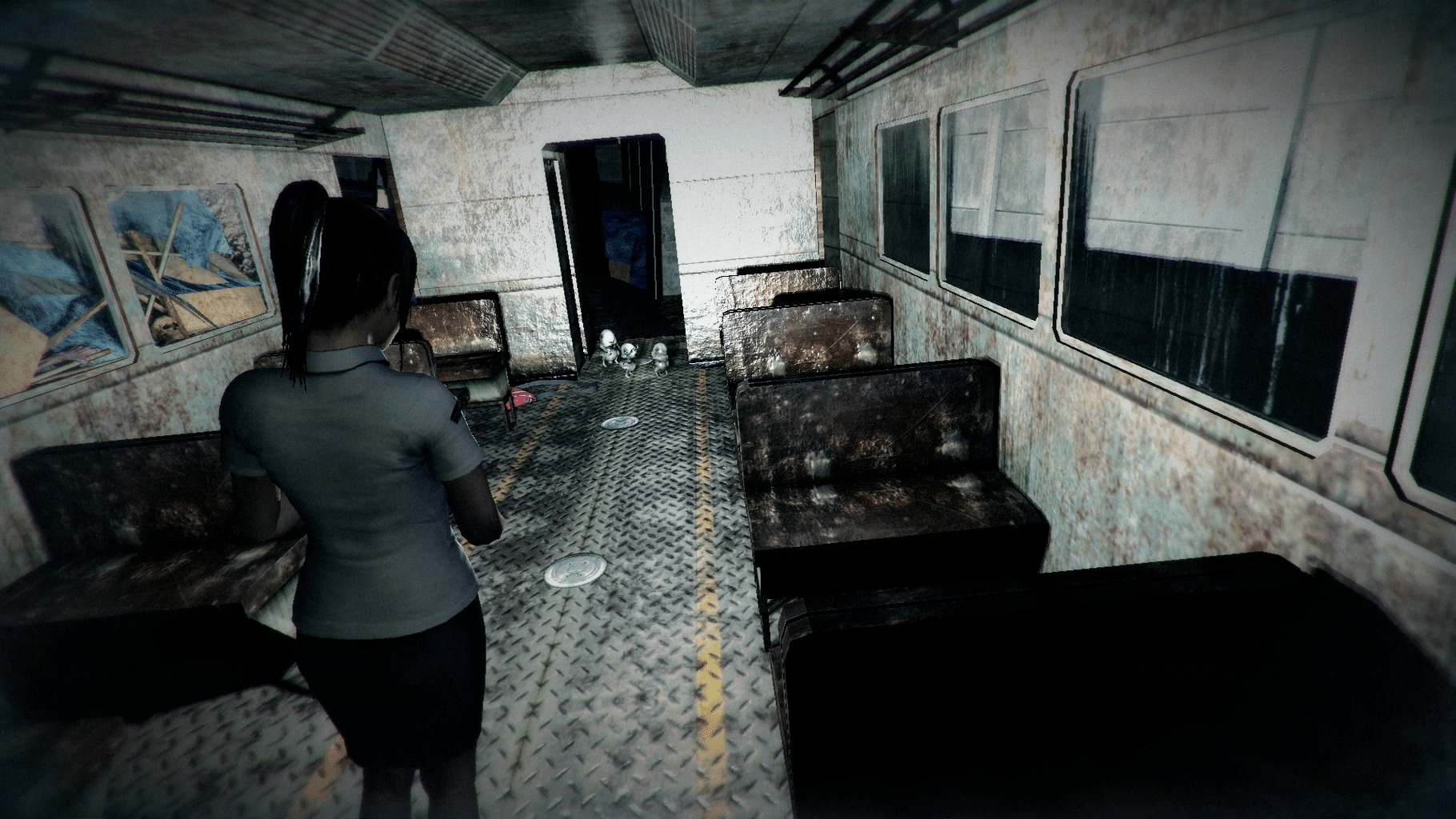
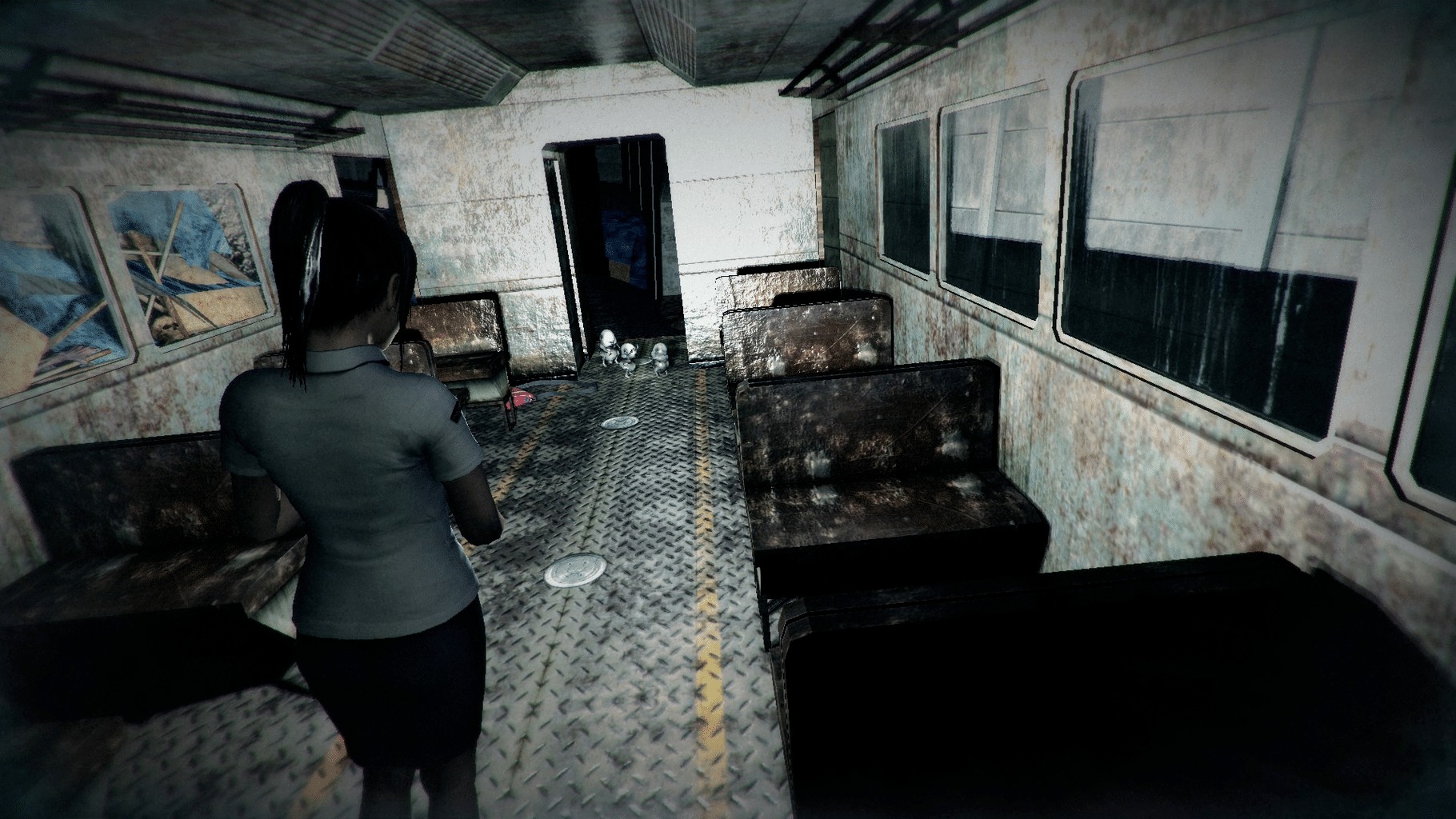
Right off the bat, while this all seems nice, it’s superfluous. The main town, where you wander around, offers only a few hidden urban legends to photograph and two side quests. A chapter unlocks each of the game’s five locations. Linda looks much better, but she has no personality. This was a great opportunity that the developers could have used to make Linda a memorable female horror protagonist, but they didn’t really give her a voice or any character. In fact, everybody in this game feels like a generic JRPG NPC. The ghosts and monsters have more character than they do. This also leads to the same stupid story that makes zero sense. While you can view a “Previously on DreadOut” video, the game doesn’t do anything with this story. I was hoping for an explanation of Linda’s past and the curse that haunts her, but the explanation fell flat, leaving me with a shrug at the game’s conclusion. I can’t delve deeper into it without revealing the limited plot, so don’t expect too much.
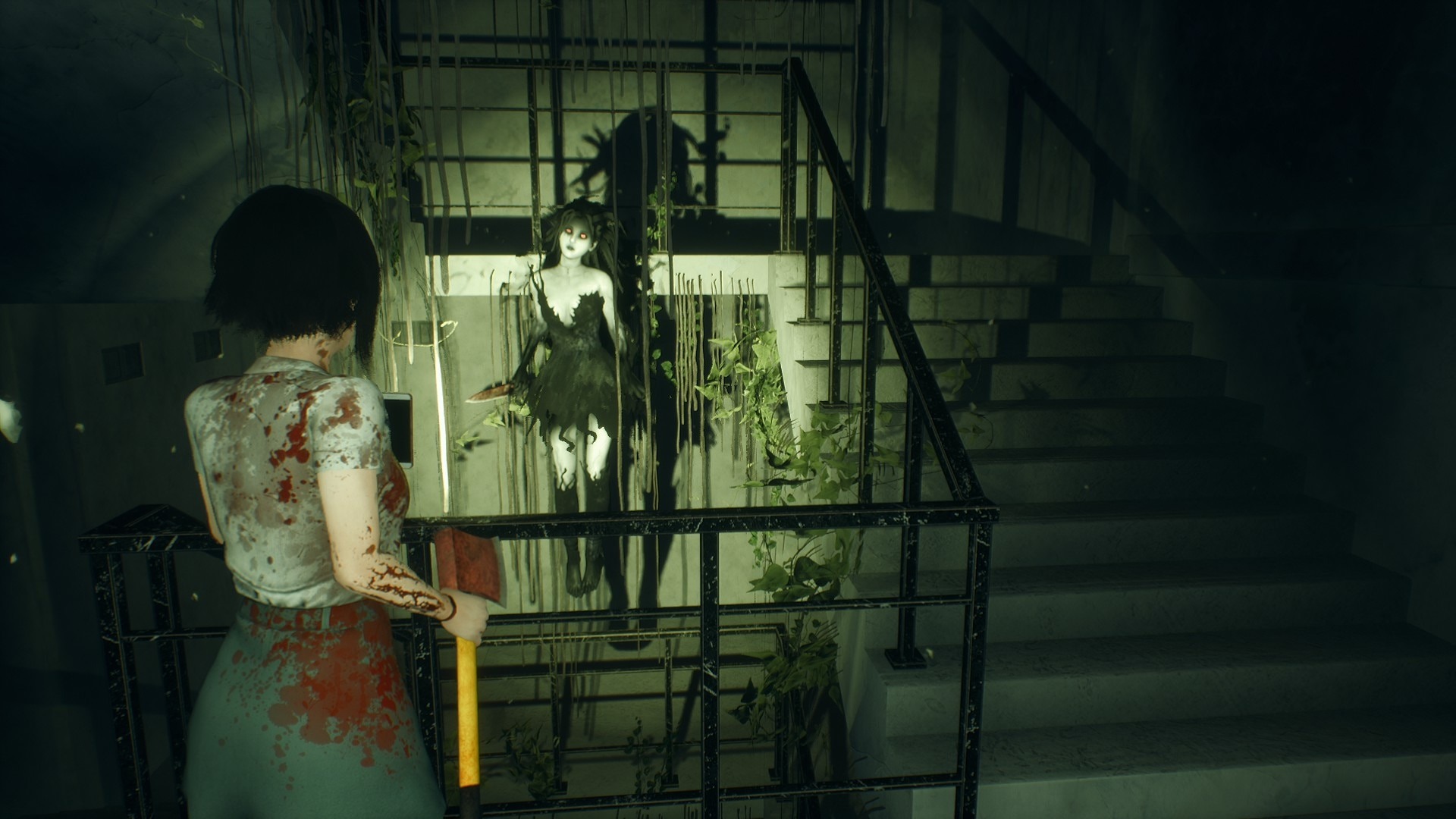
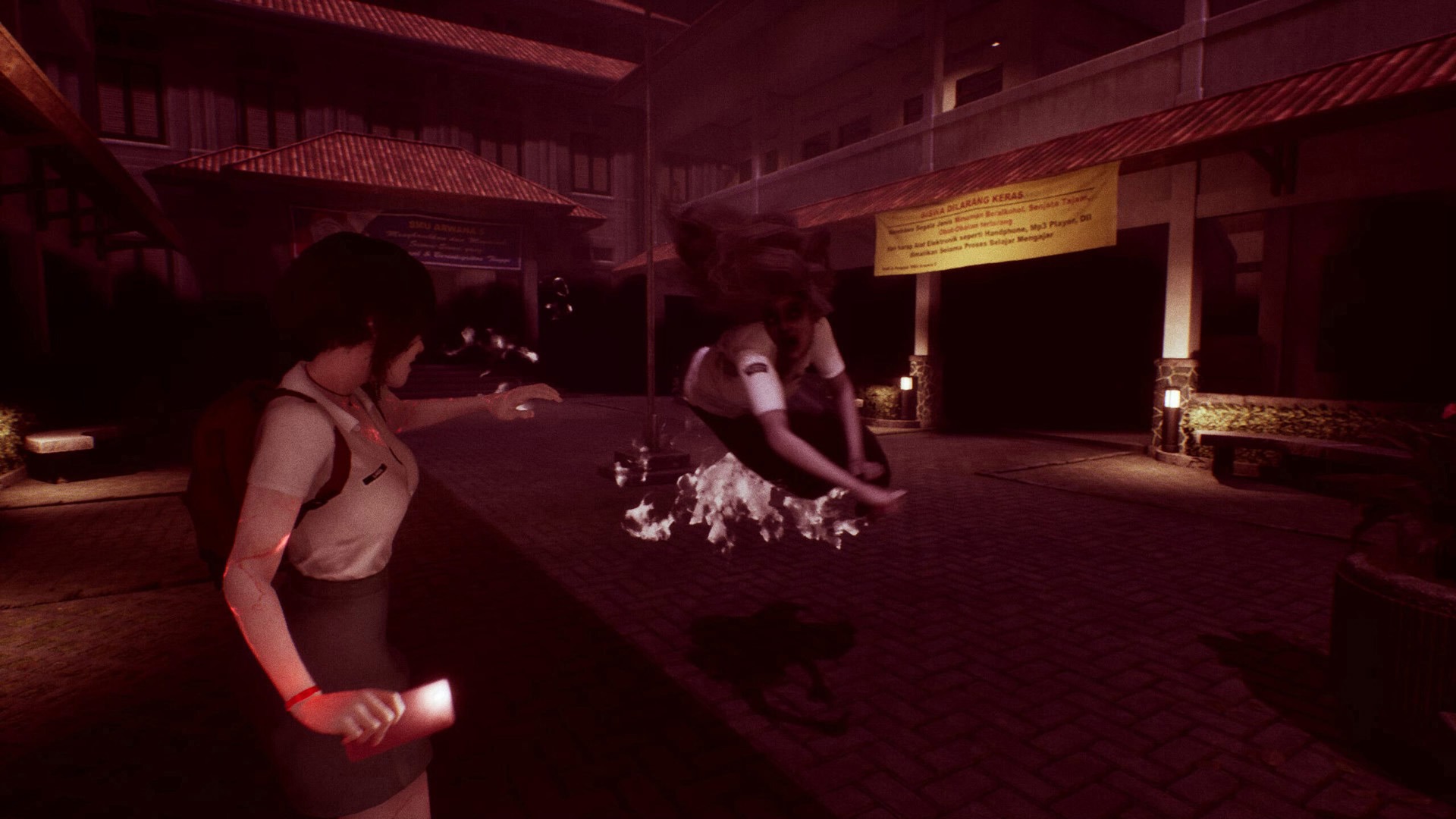
Combat comes in two forms. In the original form, which uses the Irisphone 2.0, you aim at a ghost, and when a “glitch” appears, you can snap a photo to inflict damage. There’s a new feature that lets you hold the shutter button longer to do extra damage. The second form is only available in the “alternate” realms, where Linda can use her phone’s flash to stun enemies and wield a melee weapon. These realms do not allow you to take photos, and there is a greater emphasis on solving simple puzzles. I honestly found the Irisphone combat in the “real” world to be atrocious and frustrating. The ghost’s face has to be perfectly centered in the phone for the glitch to appear, and it only happens for a split second. This time, the game features a greater number of bosses, each with their own unique gameplay style. However, a significant number of these bosses can be so frustrating that many players may abandon the game and never return. Some of the problems include knockback animations that are annoying and there’s still no health meter. The screen slowly turns black and white, and you can hear a heartbeat, but that’s about it. There’s a particular boss in Act Two that had me screaming. Some of these ghosts take 20-30 shots to take down, and Linda has no dodge, parry, or block button.
While combat in the “alternate” realms is better because you can sling your axe everywhere, it’s still clunky and obtuse. Here, the game will throw a lot of enemies at you, and you still have no block, dodge, or parry button. Some enemies have the ability to run faster than Linda, lurching forward in a continuous loop that prevents you from moving far enough to breathe or escaping into a corner. Your health will recover if you run away long enough, but this was mostly noticeable during boss fights. While the game is clunky and cumbersome, it throws things at you, making these fights way more frustrating than they need to be. One particular boss isn’t just a single ghost; more little ghosts spawn and constantly come back. Why did these ghosts spawn? With this Irisphone, I can’t dodge or block, and swinging the axe or getting the shot just right is hard enough. These elements don’t add challenge, but frustration. They only show how flawed the combat system is.
Unfortunately, this time around, most of the game is combat. I did get lost in some larger levels with labyrinthine hallways that all seemed to look the same, which was a problem with the first game, but this wasn’t an issue on every level. Most of the time, I knew where to go because the area was either very linear or had only one path forward. I did explore the area, collected all the urban legends, and filled my Ghostpedia, but the game seemed to lack any meaningful activities. Although the expansion of Indonesian lore and the improved appearance of the monsters are commendable, I believe this series has the potential to achieve more. It wants to be the next big horror title, like Silent Hill, but it has to break through the tropes that the survival horror genre suffers most of the time. If there is a DreadOut 3, it needs better combat, better level design, and a story that makes sense, as well as making Linda a likable character and not just a voiceless generic avatar.
DreadOut 2 is really only for fans of survival horror from the 1990s and early 2000s, as well as those who enjoyed the original games. The game’s visuals have improved more than the gameplay. Combat is horrendously cumbersome, obtuse, and difficult. Some of the boss fights are victims of this mess, which can cause players to throw the game in the trash. The story lacks depth, and the characters resemble generic robotic avatars instead of evolving with an ever-growing series. The game expands upon the Indonesian lore of monsters, urban legends, and ghosts, enhancing their visual appeal, yet the open hub remains empty and bare. The game needs more attention to detail before I will bother with a fourth outing.
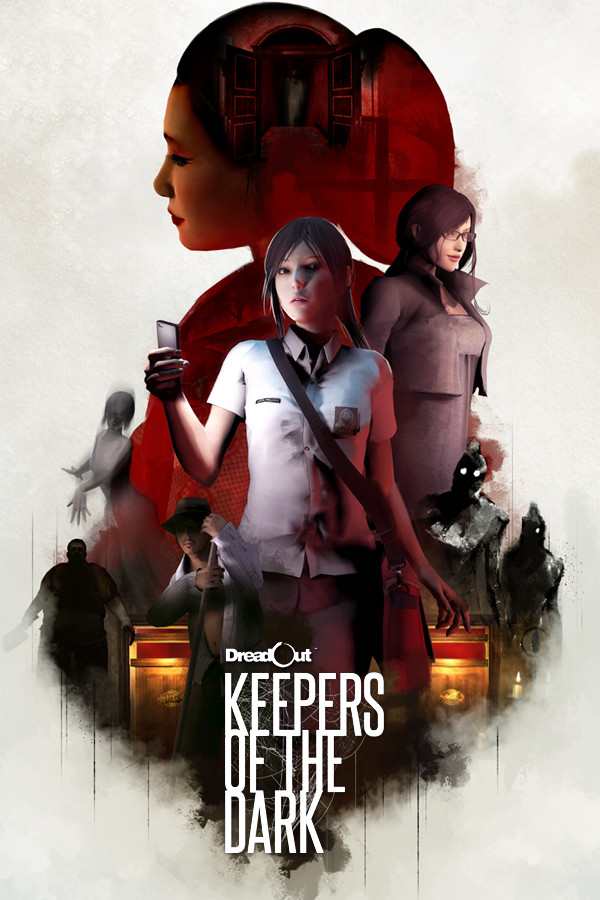
Despite being released two years after the original game, you can’t really expect much from Keepers of the Dark. This isn’t so much a sequel as an expansion, but played much differently. Instead of a linear path going forward, you have access to eight “realms,” which are just small sections of the first game recycled. Each realm consists of two ghosts that you must banish, with one serving as the main ghost that must be counted towards the final total to unlock the main large gate in the main hub. This was actually a neat idea, and I liked this game better than the first. While the combat is the main focus of the game, it still works, as you can consider this a boss rush game and only have to deal with one ghost at a time.
Each realm has a variety of items to pick up to make defeating ghosts in other realms easier. For example, you need to find 14 needles to make fighting a ghost in a specific realm much easier. In total, there are four notes to pick up in order to fight an optional ghost in another realm. These items aren’t too difficult to find on your own, as the “realms” are just small linear areas with little space to explore. I still find the stiff animations, the “limbo” death ritual, the sprinting stamina, and the long knockdown animations quite annoying, as they remain unchanged from the previous game. I also found the lack of any type of health meter irritating, as some bosses took up to two dozen shots to kill. Sometimes I couldn’t tell if the game had glitched or I was doing something wrong.
I did, however, run into a glitch in which one of the Nerd notes was not where it was supposed to be. This locked me out of an otherwise 100% first run, which is maddening. There are still graphical glitches, pop-ins, and clipping that shouldn’t be there. This shouldn’t be happening in a game in 2016. The lack of a cohesive story still irritates me, and the majority of “cutscenes” rely on in-game engine stills for narration. There are eight main bosses in total (one in each realm) and maybe 3-4 cut scenes. Overall, I feel like this game worked with the limitations of the first a little better.
If you were dissatisfied with the first game, you will likely dislike this one, but if you found the first game enjoyable, you may find this one to play more smoothly. Although it is a direct continuation of the first game, those seeking a compelling murder mystery or a compelling story in general may find it lacking. While the bosses draw inspiration from Indonesian urban legends and folktales, their lack of exploration and explanation renders them incomprehensible to those beyond Indonesia. Hopefully with a sequel the game can improve on the camera-obscura gameplay and dive deeper into the lore, but as it stands these two games are lacking too much to recommend to anyone who isn’t a die-hard survival horror fan.
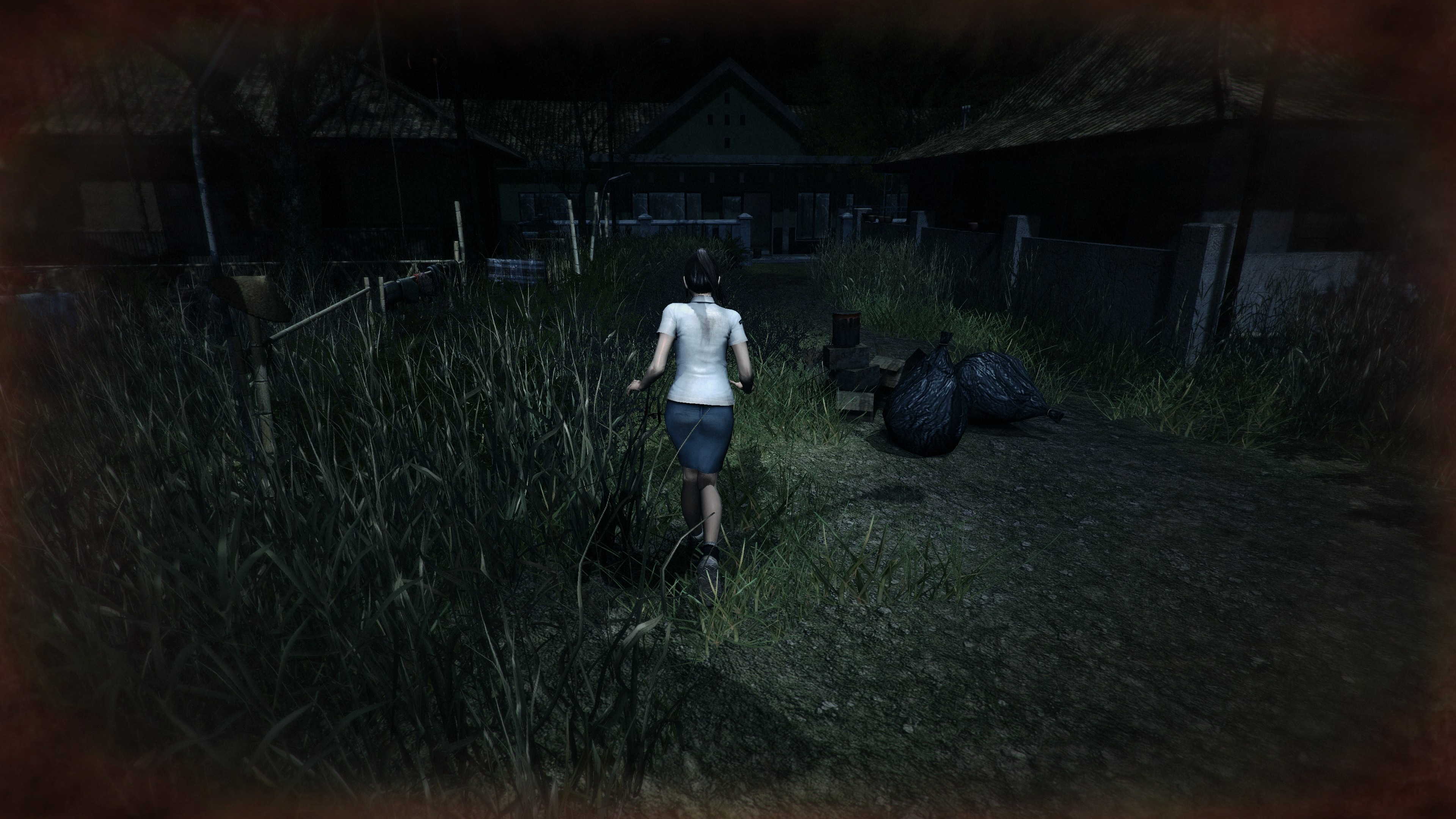
I turn to indie horror games for my fix because AAA horror titles just aren’t much of a thing anymore. Back in the day when we got regular Silent Hill releases and games like The Suffering, Obscure, Haunting Ground, and Resident Evil, there were more than you could count. Today, the majority of indie horror titles range from bad to subpar, with only the rare ones being truly good. DreadOut falls into the badto subpar category, but it doesn’t come with the majority of problems that most indie horror titles have.
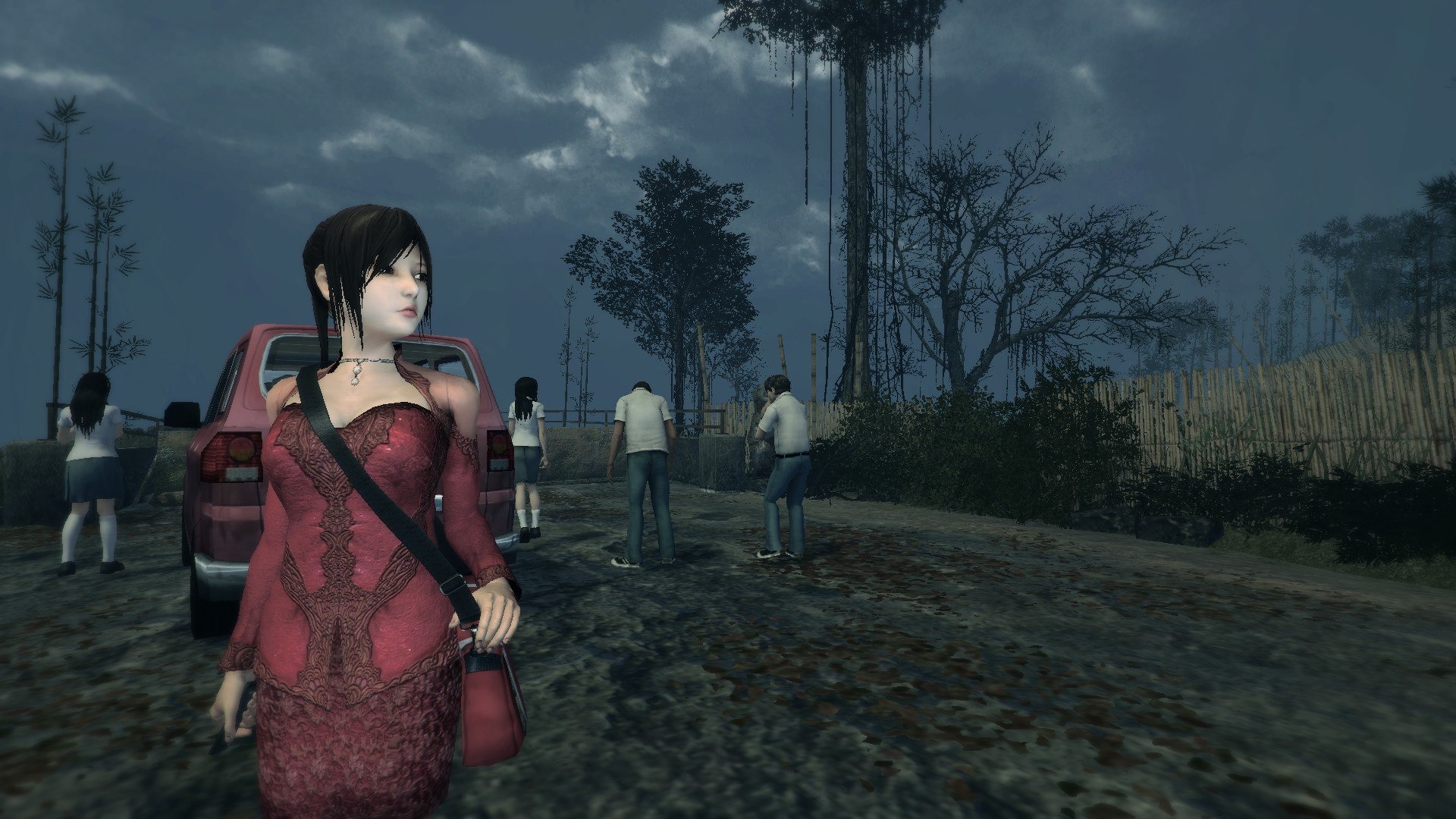
The story itself relies heavily on Indonesian folklore, and unless you are adverse to this subject, you won’t have any idea of what’s going on. In essence, the story unfolds as you embark on a school field trip, encounter an unexpected bridge, and ultimately find yourself inside a haunted school. The explanation for the appearance of this bridge, the existence of a haunted school in this town, and the other events in the game are mostly left to the player’s imagination. There are hints in the notes, but I never figured it out. I mainly came for the scares, and DreadOut does provide some.
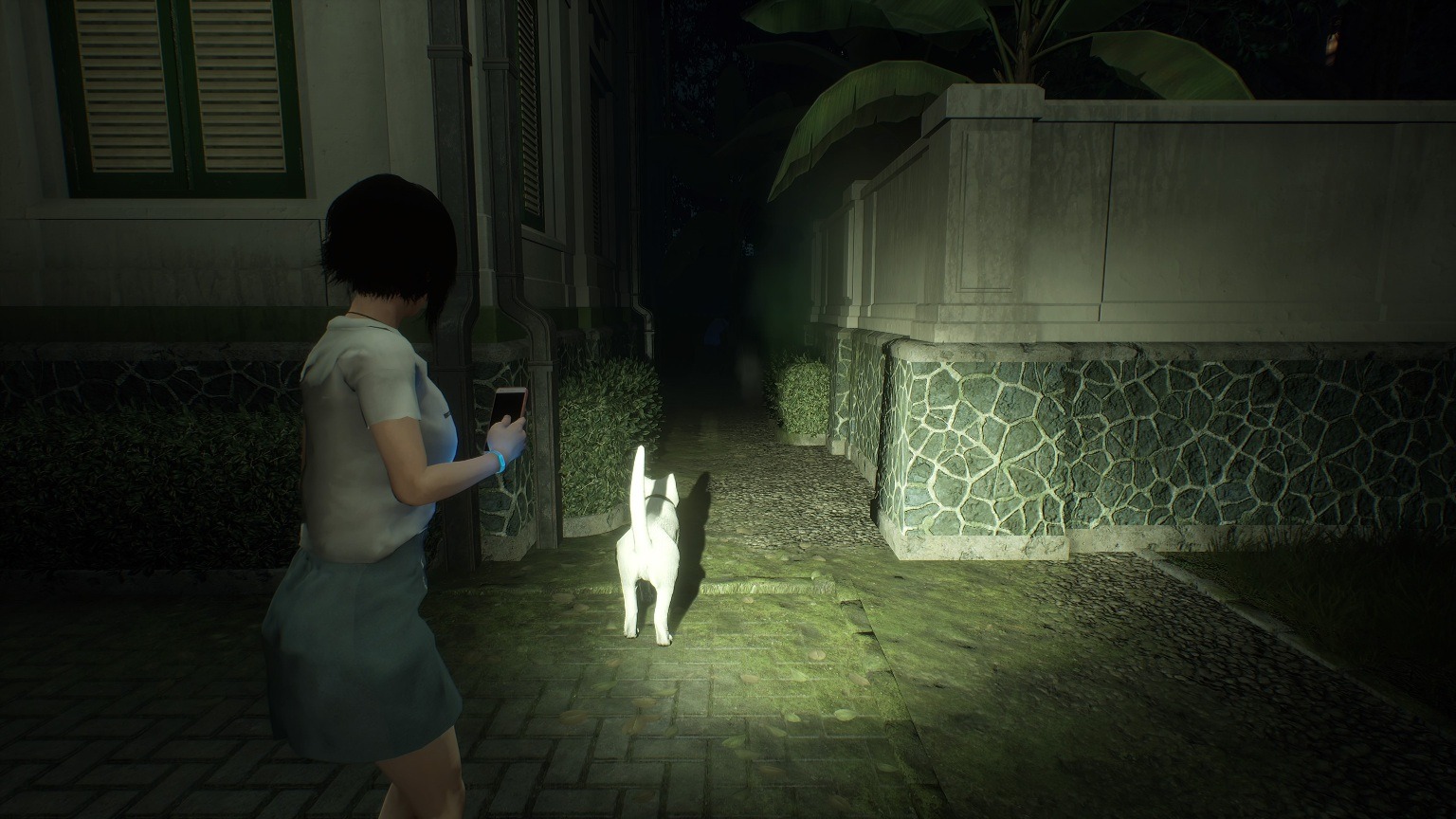
The combat system is similar to Fatal Frame in that it uses a camera obscura to battle ghosts and poltergeists. In this game, you can only see them in the camera frame (or phone screen). You do get a DSLR later on, but I found this a bit pointless as it doesn’t increase your “attack power,” and you only get a light if you press the flashlight button by creating a large flash around you. The phone actually uses the camera light as a flashlight, and it works well in most dark areas. The game employs a vignette around the screen to indicate the presence of a hint or object nearby (blue) or an enemy (red). If the vignette is red, it requires you to pull out the camera and search for anything moving. Unfortunately, most of the time, the ghost was nearly impossible to see, either because it was too close to the walls which required me to press the shutter button at random. The phone screen will “glitch” when a deadly shot is ready. When this happens, gold particles fly out of the ghost, and you know it took damage.
Thankfully, unlike most horror games, combat isn’t the main focus. They’re rare and you never fight more than one ghost. There are a few boss fights in the game, and these are the most captivating of the ghost designs. They aren’t difficult, and dying doesn’t reset any progress. Your punishment is a further walk from limbo to “the light.” You can acquire an item to nullify this walking distance or change it in the settings. I was unaware of the purpose of these items, as the game provided no explanation and was extremely ambiguous. When you enter the light, you simply pick up right where you left off. You can usually take 3-5 hits from a ghost before “dying.” It’s not very punishing at all.
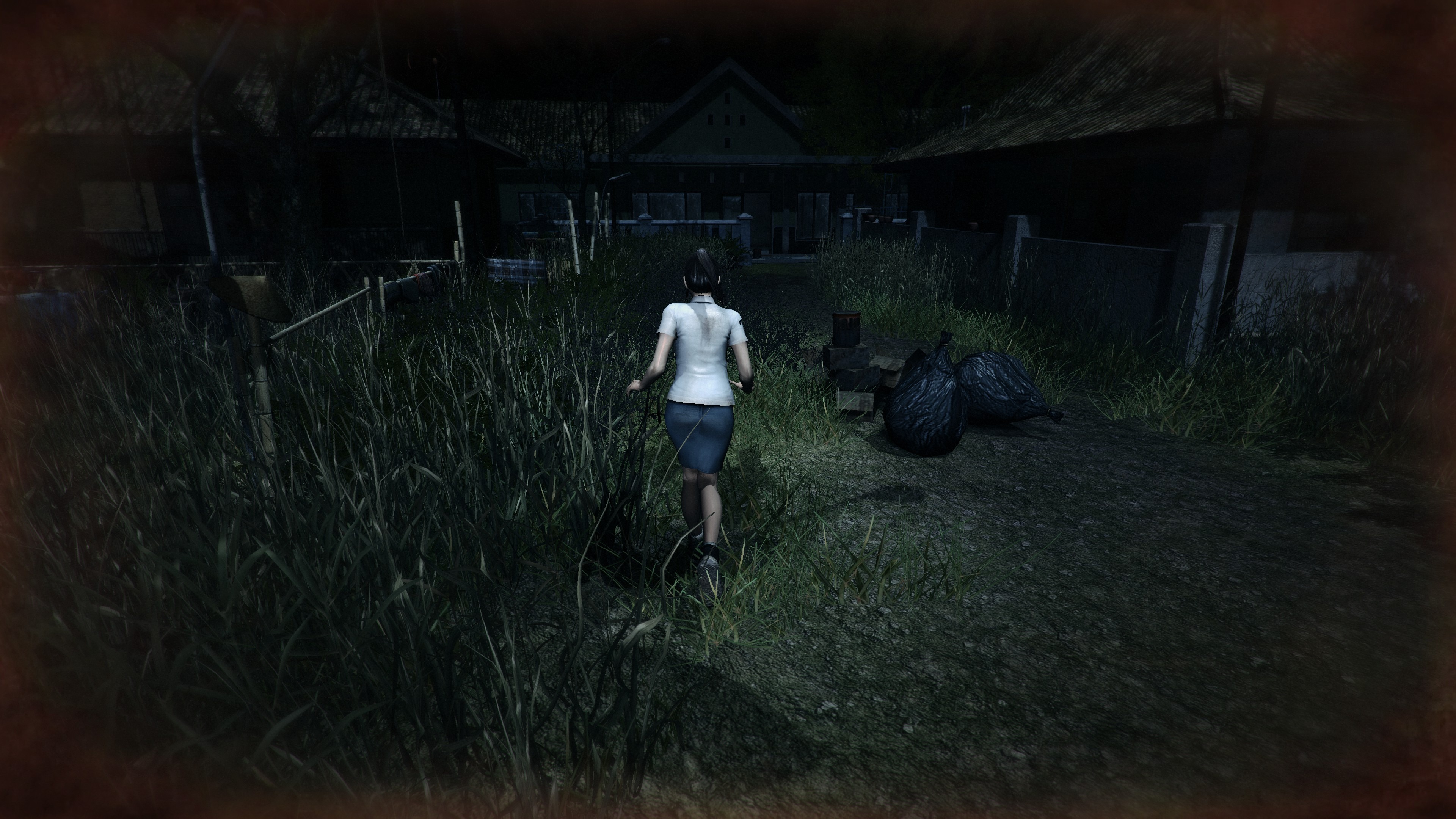
Exploration would be the best part of the game, but it is incredibly ugly and dated (even for its time), with low-res textures, stiff animations, low-res models, and very little detail in anything. This looks almost like a first-gen PS2 game. The game’s release was just before the launch of the PS4 and Xbox One, making the graphics engine, which was already a decade old, unjustifiable. Most of the game is very linear and straight forward, but the first area in the school was a confusing mess of hallways and doors, but other than that, it wasn’t difficult to navigate around.
You can finish the game in 2-3 hours, but honestly, there are many other games, like DreadOut, that not only look better but also play better. The voice acting is mostly passable, and there isn’t much dialogue to begin with, including a lackluster story. Why would you bother with this game? Well, if you really love horror like I do and enjoy the atmosphere of these games, which DreadOut does well, then this game is definitely worth your time. The music is also surprisingly excellent and really sells the haunting and uneasy atmosphere. The game has a few decent jump scares, and I felt uneasy through most of the game, so it at least accomplishes that.
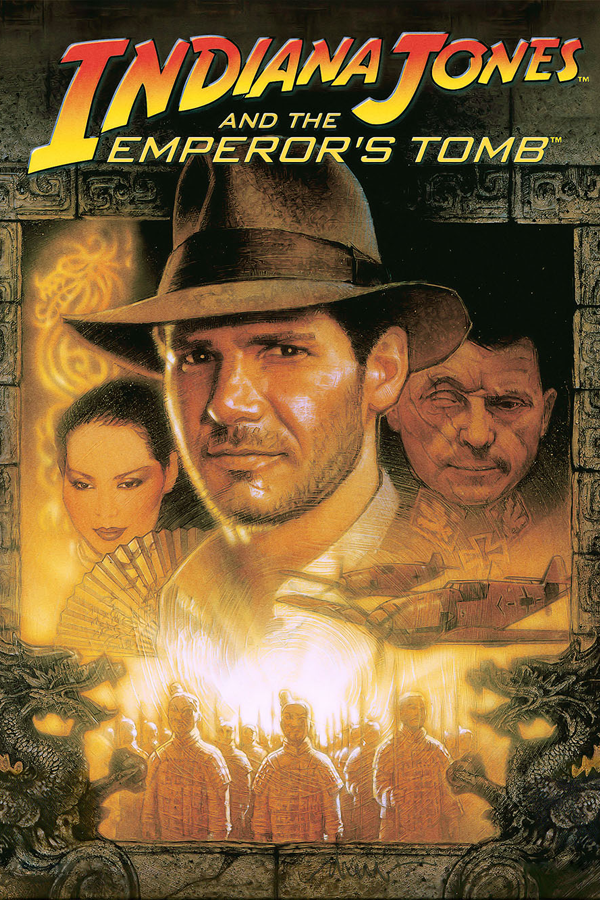
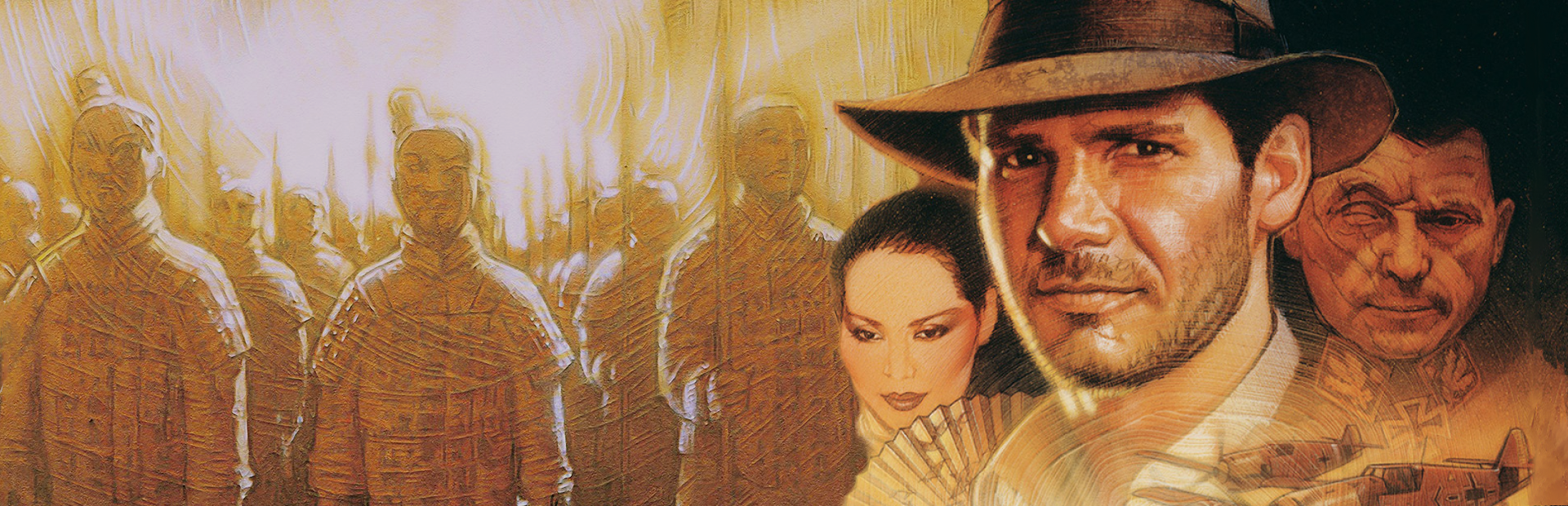
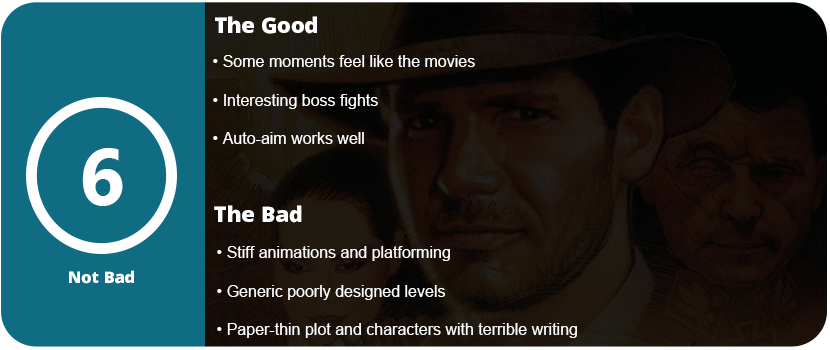
I’m not a huge Indiana Jones fan. The only one I remember is the fourth movie, Kingdom of the Crystal Skull. When I was a child, I watched bits and pieces of the original trilogy when my parents would put it on, usually when it showed up on a cable network, but that was it. This is my first ever Indiana Jones game, and I have to say that I came away quite surprised with people giving it such high praise and holding it as the best Indiana Jones game to date. The story is cheesy and corny; the dialogue is terrible, and the characters lack depth. Indy himself has no backstory or context. You clearly must already be a fan of the movies, and the developers anticipated this. The storyline suggests that Indy finds himself in the midst of a task for a client and encounters obstacles. Then, the Chinese government hired him to find the dragon’s heart. He eventually encounters Nazis who are also in pursuit of the same object. It’s pretty pointless, and there are so few cut scenes that it really doesn’t matter.
The first half of the game is actually the worst. Stiff animations, clunky combat, and terrible platforming plague the entire game. The puzzles themselves would be neat in a Tomb Raider game, but here they showcase the poor level design. Indy either climbs things, pushes levers, does hand-to-hand combat, or shoots guns. That’s all there is to the entire game. Levels in the first half mostly consist of hand-to-hand combat, as ammo is very scarce. You can replenish your health by using medkits or drinking from your canteen, which refills at water fountains, a resource that becomes increasingly scarce as the game progresses. The canteen upgrades only work for the level you’re on and don’t carry over. There are also artifacts that need to be found in order to unlock concept art, which, to be honest, is a lame idea.
The stiff animations contribute to the clunkiness of platforming. Indy is really jerky or just doesn’t respond instantly to button presses. Because of this, I ended up falling off cliffs or missing jumps more times than I can count. You can also whip-swing, but the stiff animations feel sped up during the swing compared to the rest of the jumping. Having to cold jump to a ledge right above you is a chore. Indy must be precisely aligned to secure a grip. There are ledges you can shimmy across with a dedicated wall hug button, but the combat is even worse. Idy auto-aims and works most of the time, making shooting the best part of the game, but ammo is scarce in the first half. Melee combat just drags on forever. Enemies are fist sponges, and even with a melee weapon such as a sword or bat, opponents would take 20-30 hits to die. You can use your whip to knock weapons out of their hands, which is mandatory if they have a gun and you don’t. When more than two enemies gang up on you and back you into a corner, it becomes a chore to fight them off.
The level design is generic; even for 2003, it’s pretty bad. The game is bland and void of character, with a lot of rectangular empty rooms and hallways. The game occasionally shows something more when you are outdoors, but this doesn’t happen until mid-game. The game accelerates by letting you play one of the two on-rails sections, which it needed more of. The Nazi base is less puzzle-solving and more platforming and combat, which is what I prefer. The temple level proved to be the most challenging, primarily due to its underwater nature and poor swimming mechanics. Indy can only swim fast underwater, and there are sharks that can kill you. Boss fights are also a rare occurrence, but they were one of the few more intriguing elements of the game, as each boss fight needed something in the environment to weaken them before you could take them down. They were almost a mini-puzzle themselves.
Overall, the game is a mostly frustrating and overly long affair. The game can take up to 8 hours to finish if you don’t die frequently, but the devs could have completely eliminated the first half of the game. It’s the weaker half anyway. The unfair checkpoints also don’t help; you have to restart entire long sections every time you die. There are a few fun moments, such as the boss fights and on-rails sections, and the platforming is more enjoyable than the puzzle-solving, but the generic visuals, paper-thin plot, and cumbersome controls and animations hold this game up quite a bit.
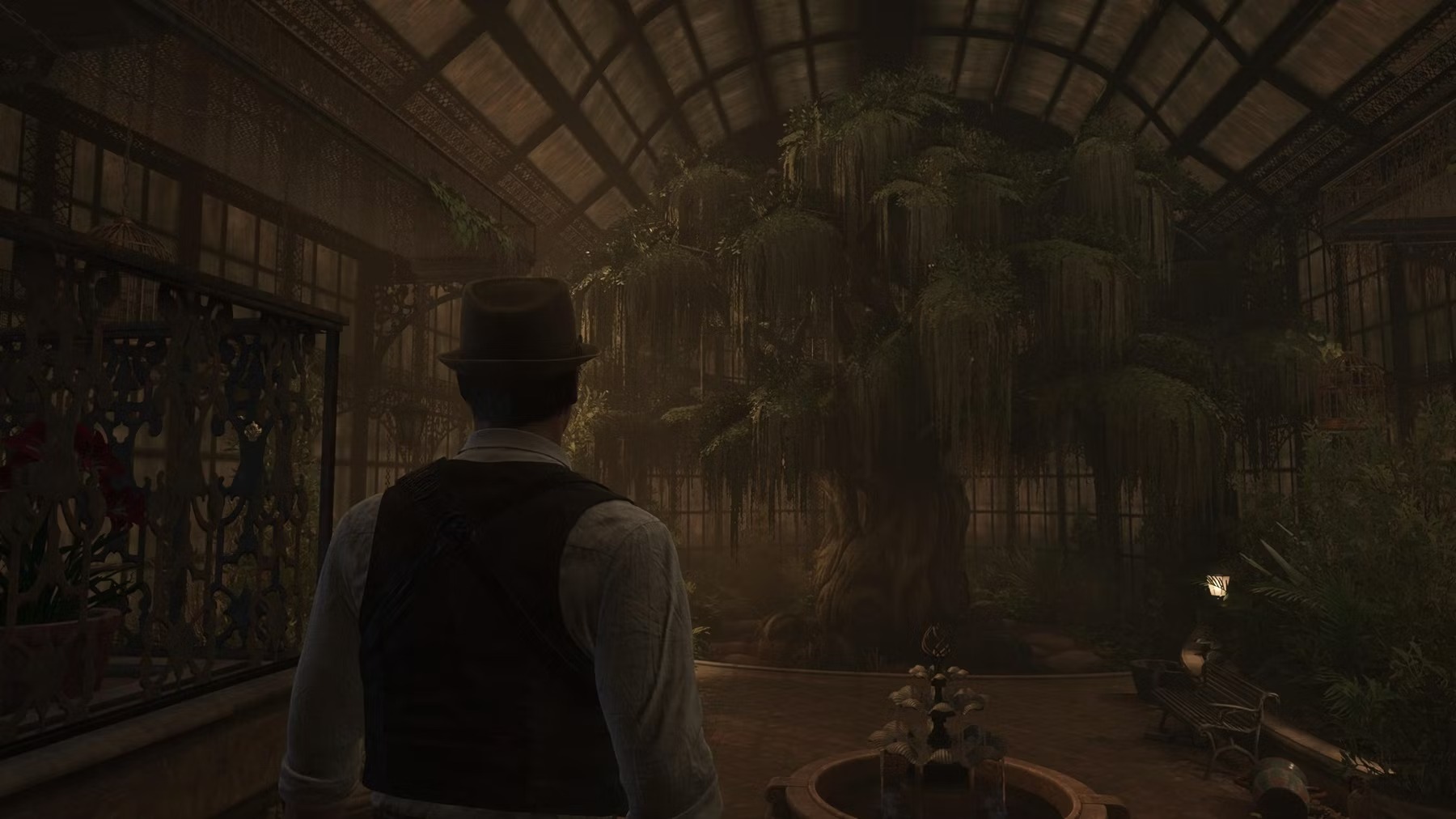
The series Alone in the Dark appears to have a perpetual curse. While the earliest 3D titles, such as The New Nightmare, received fairly positive scores, these last two reboots just can’t seem to get things right. I’ll grant the 2008 reboot some leeway, as it attempted to innovate and reinvigorate the series, despite its minimal connection to the lore of Alone in the Dark beyond the protagonist’s name. This new reboot is more faithful to the first game—exploring a creepy mansion, solving puzzles, and having basic combat. It did feel more like The New Nightmare and much less like the 2008 game, but it didn’t boost the series to new heights either.
You can play as either Detective Carnby or Emily Heartwood. The differences here are limited to a few different scenarios in a few levels, but you must play both sides to find all the collectibles. Emily’s uncle is living in an adult family home for the sick, and she needs to get him out. As she explores the mansion, she appears to be trapped in a paranormal dimension, alternating between what might be reality, her uncle’s reality, or her own mind. One of the first issues with the game is that the game isn’t really all that scary. The monster designs are kind of neat but not super interesting, and the atmosphere is more Haunted Mansion and Scooby Doo Fright Night than Silent Hill, but that’s not the biggest issue.
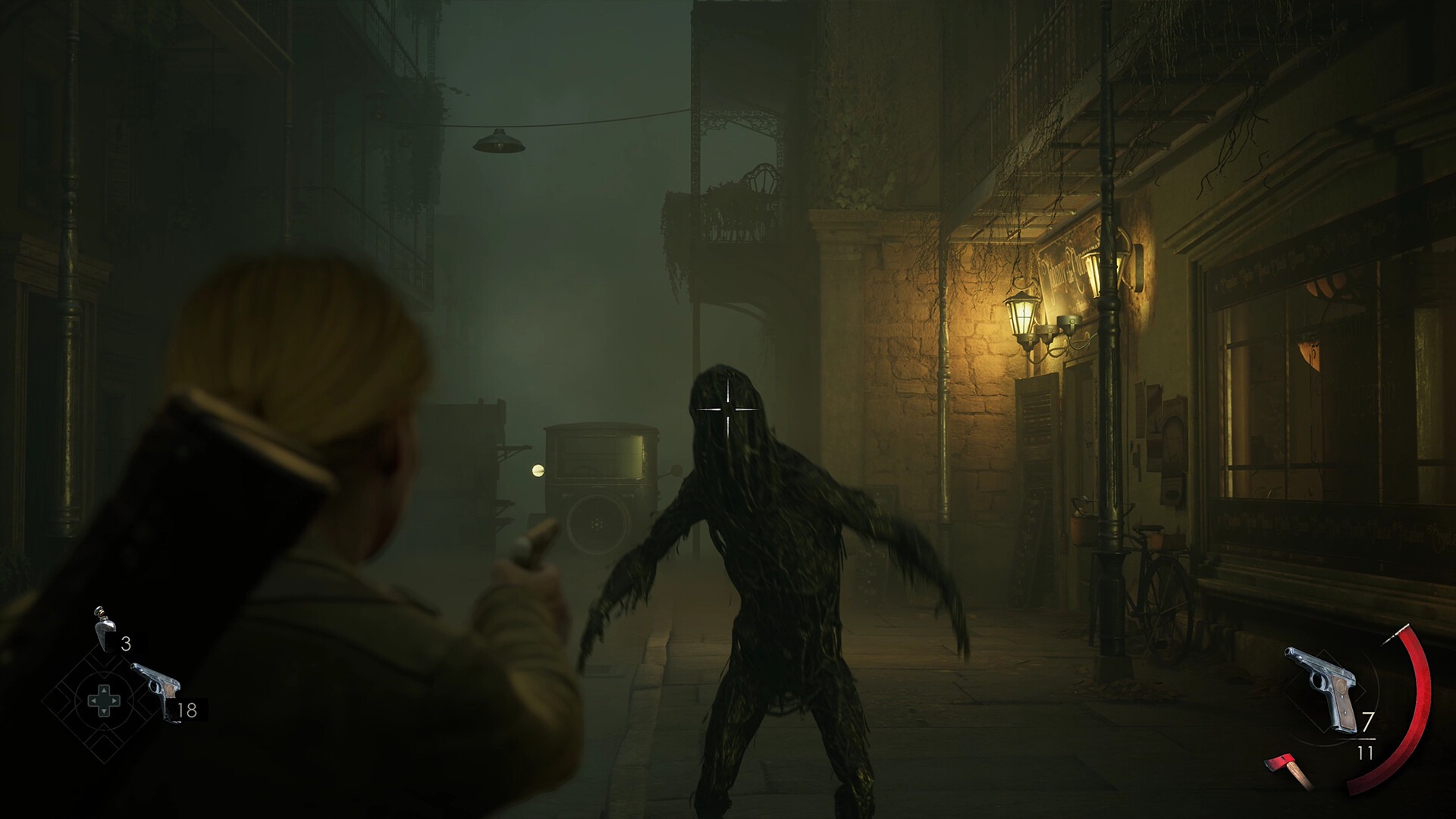
The combat in Alone in the Dark is quite boring and terrible. The melee combat just consists of wildly swinging an object around. You have both a regular hit and a power hit. Items are breakable, but you can carry one around at all times. This is fine if you’re up against a single enemy or can’t reload in time, but most of the time swinging the object causes your character to lunge forward, and it just feels awkward and stiff. There’s not a block or parry button—just a dodge button. The remainder of the battle involves firing a revolver, shotgun, or Tommy gun, with limited ammunition available. In most scenarios, I felt that there were too many enemies coming at you in the tight and cramped spaces you are in. There are some throwable objects, but the only useful ones are the Molotov cocktails. Throwing bricks is pointless because it doesn’t do any damage. Occasionally, there are stealth sections, which are incredibly short (requiring you to weave through three rows of barrels for example) or impossible to complete due to the enemies’ lack of set patrol patterns.
The game primarily consists of aimless wandering while attempting to solve obtuse puzzles with vague hints. The game features combination locks, math, and puzzles that evoke nostalgia from the year 2005. There’s an Egyptian Temple level in which you need to find three lenses to bounce light around to unlock the main door. This consists of a constant back and forth through labyrinthine hallways. You need to find the switch to unlock the lens door, but that switch triggered a collapse, so now you have to find another switch to open the shortcut door. This just feels like lazy design and prolonged play time. The mansion itself is the most monotonous, with repetitive hallways and locked routes in each chapter. Even if you manage to find a key or unlock a door, it remains bolted or blocked in another chapter. This leads me to my biggest issue. Game-breaking bugs. I rarely encounter these in games, but I encountered a bug where a door was blocked, leading to the end of Chapter 4. I couldn’t progress, and that’s where my game ended. Restarting the entire chapter wasn’t a guarantee that it would fix the bug.
The visuals are pretty acceptable for what they are. They aren’t ugly, but they don’t feel like Alone in the Dark at all. The story is pretty forgettable, with uninteresting characters, fairly lame dialogue, and average voice acting. The stiff controls, animations, and combat bring the game down quite a bit, but the game-breaking bugs, absurd level design, lame stealth, and repetitive backtracking add up to a not-so-great adventure.
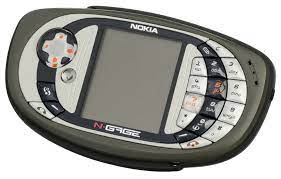
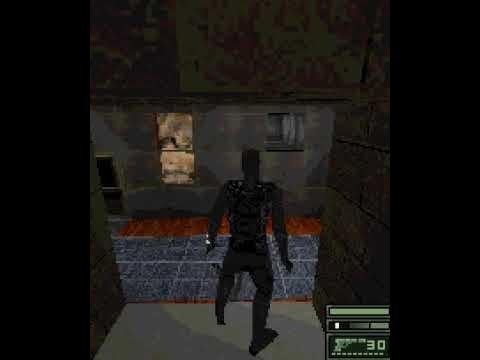
October 7, 2003, was a day to remember or completely forget, depending on who you were. The original N-Gage model sold for $299 ($462 adjusted for inflation) and was a graphical powerhouse on par with the original PlayStation. While the seven original launch titles were all ports from GBA and PlayStation, they ran from very well to questionable, and the system showed a lot of promise. I remember seeing the N-Gage in GameStop as a broke 13-year-old, wishing I could get one. The ads for Ghost Recon, Splinter Cell, SonicN, Tony Hawk, andTomb Raidermade me green with envy. I was envious of all these amazing games that I could play on the go! It was way better than the dumb GBA! Actually, it wasn’t, but Nokia squandered its potential due to the immense power under the hood.
Ultimately, there are great videos on YouTube documenting the system’s history, but in the end, the original model most likely killed the system. The infamous “Taco” phone was sweeping the press and turning gamers off. A former GameStop employee told me that people frequently came in to roast the system and make fun of it when they saw the ads for it. It was the laughingstock of the industry, especially for Nintendo fanboys, and everyone knew it was going to fail. Whether that was accurate at the time remains a matter of debate, but it did not boost sales. They just couldn’t get enough. The portrait screen also turned off many users, necessitating manual customization of most games for the experience. Released just 7 months after the Taco model, the QD lacked features such as a USB port, MP3 playback, dual-band antenna instead of tri-band, and the same operating system, even though Symbian 7.0s had already been out before the QD’s release. This implies that gamers continued to rely on 1st generation Symbian games for content beyond the N-Gage library.
So what’s the QD experience like? It was frustrating, to be honest, but in the end, I grew fond of the little system. I have created a comprehensive guide explaining how to begin the collection process and set up the system, but it’s not an easy task. You need a standard-size SIM card, an MMC memory card (not made anymore), and a card reader for it. The N-Gage library is rather expensive to collect, with many going for $50+. There are a ton of great games available for the N-Gage. In fact, in its sad 65-game library, there are more good games than bad.
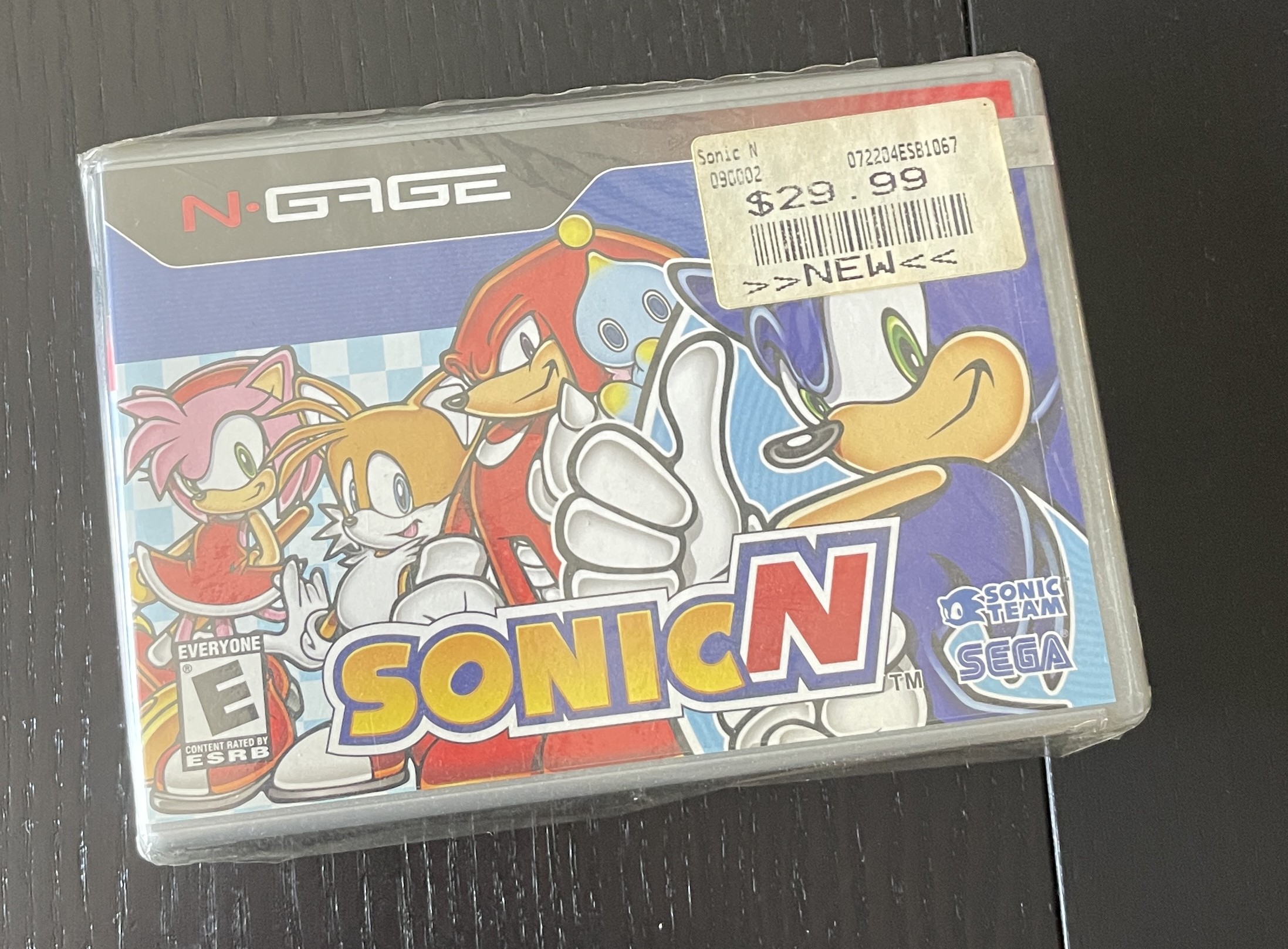
A new copy of SonicN sold by GameStop that I purchased
Physically, the QD feels good in the hands. It features a thick rubber bumper around the entire outer edge. The top sports a rubber stopper with the headphone jack and charger port, and the bottom has one for the card slot. These stoppers are a serious pain! They were always intended for older cell phones. Usually, the stoppers for the charging port or headphone jack will eventually tear and break. If you have a large N-Gage library, you’re going to eventually rip these stoppers. Maybe hard plastic would have been better, but this is a budget re-release, so I digress. The back has a removable battery door, and underneath is a spot for the SIM card. The front features a D-pad and various menu navigation and selection buttons on the right, as well as the standard numpad on the left. There are two raised buttons (5 and 7) that function as “game buttons.” You also get an orange backlight. The screen is a backlit 2.1″ TFT LCD at 176×208 resolution and looks pretty decent. At least it’s backlit, which is a nice touch.
In terms of software, the OS itself offers minimal customization options. It’s a standard affair, with the only customization being the wallpaper for the home screen and welcome screen. This is about all you could do on your phone back in the day. There isn’t even an option to customize the ringtone, really. The only special thing about this phone is the form factor and the unique game library, in which there are many awesome games available. If you can get an MMC card up and running, you can play cracked games since the library is so expensive.
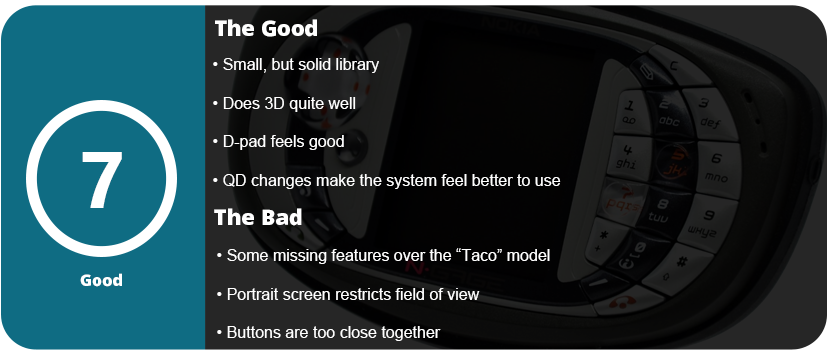
How does it feel to actually play the games? Well, it’s a bit awkward at first as the face buttons are so close together. While the 5 and 7 keys have a distinct height, I can still easily hit other buttons, and the D-pad feels surprisingly comfortable. You can roll your thumb around it easily enough. I think shoulder buttons or a push-out keyboard could have helped here. But let’s get to the true reason why anyone would want this. The games. How do they feel and play?
They vary greatly. Sadly, the system didn’t have a long enough life to really iron out the kinks and let developers hone their tools. Some games feel great on the system, like they were hand-tailored, while others feel completely shoe-horned in just to make a quick buck on some hype. The N-Gage isn’t anything special in that regard. The N-Gage received the same treatment as every other console. The portrait screen is probably the system’s biggest fault. Although developers can adapt control schemes to the screen, they must completely tailor games to the orientation. No other console has ever done this before, unless you count the Vectrex or something else. Either stick to widescreen (16:9) or 4:3. Heck, even 1:1 would have worked just fine. I also wish the screen was a little bigger. Even a mere inch would suffice. There’s plenty of detail here, as the TFT LCD is pretty nice for the time period, but that orientation really narrows your field of view.
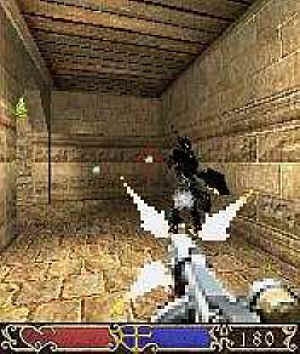
When it comes to performance, the N-Gage did pretty okay in 3D. It is certainly better than the Gameboy Advance, but not as good as the PSP or even the DS. Games that seem like they were really well adapted ran fine on the system with a little slowdown, such as Ashen, but other games like RedFaction and Tomb Raider run at a sub-30 FPS most of the time. However, some games, such as Tony Hawk’s Pro Skater, consistently run at 60FPS or even higher. While control schemes with a few buttons work well on the system, anything that requires the entire keypad can get cumbersome due to the layout. Ashen requires the whole keypad, including buttons, to free-look. While it certainly works and takes some getting used to, it’s not ideal at all. It’s the same issue the PSP had with no second analog nub.
Nokia aggressively promoted their N-Gage Arena online gaming, which bore a striking resemblance to Xbox LIVE. This allowed for multiplayer via cellular or Bluetooth connections. Although I am unable to test it at this time, my research indicates that it functioned reasonably well as long as you had adequate coverage in your location. It also depended on the game’s specific net code. I can imagine this being a big deal back in the day, as there weren’t any online wireless portable gaming systems like we have now. The only other portable system to offer cellular online play would be the 3G PlayStation Vita almost a decade later, which bombed spectacularly. Interestingly, the N-Gage Arena launch page remains active as of this writing, but all other links within are inoperable. After the N-Gage devices died out, the N-Gage gaming service survived for a few more years, ending up on their higher-end N-series phones. These were the last Nokia Symbian-based phones before smartphones took over. The N-Gage 2.0 was more of a gaming device than a completely new gadget. These only ran on higher-end phones, such as the N95 (mine pictured below). Games such as Metal Gear Solid Mobile were large names that would hopefully make mobile devices a serious gaming platform. Regrettably, this realization came too late.
Overall, the N-Gage QD was the system that should have been out at launch. While it doesn’t feel as well-built as the original model and cuts some features, it makes gaming on the thing—which was the main marketing push for it—better and just more accessible. Better buttons, easier access to the game slot, a smaller form factor, and just a few other tweaks were enough to consider this version the definitive N-Gage experience, but it was too little, too late. Indeed, the N-Gage library boasts a surprisingly robust selection of games, surpassing the quality of many “failed” systems. Released at the height of the handheld era, the N-Gage faced inevitable failure due to the dominance of the GBA, rumors of new handhelds from Nintendo and Sony, and its eventual higher price compared to both systems. The exclusion of children from the market due to the need for a cell phone and a talk plan further increased the cost, a burden that parents were unwilling to bear. The much cheaper Game Boy Advance was a better alternative. If Nokia had released a game-only version at a price that was more than half the original price and made some adjustments, it might have been a more viable option. Who knows? But it’s still worth having in your collection.















































 thebinarymessiah.com
Clearly you have been blocking everything you or haven't played the game at all. Maybe pay attention to the story…