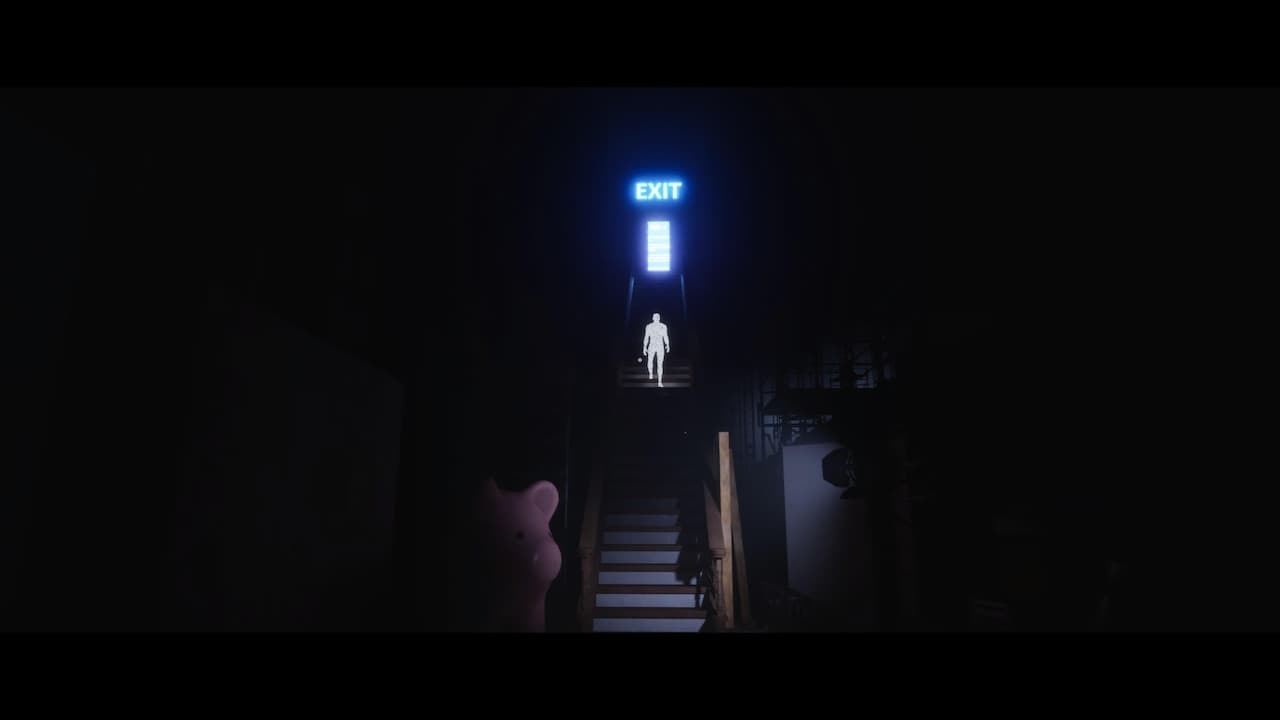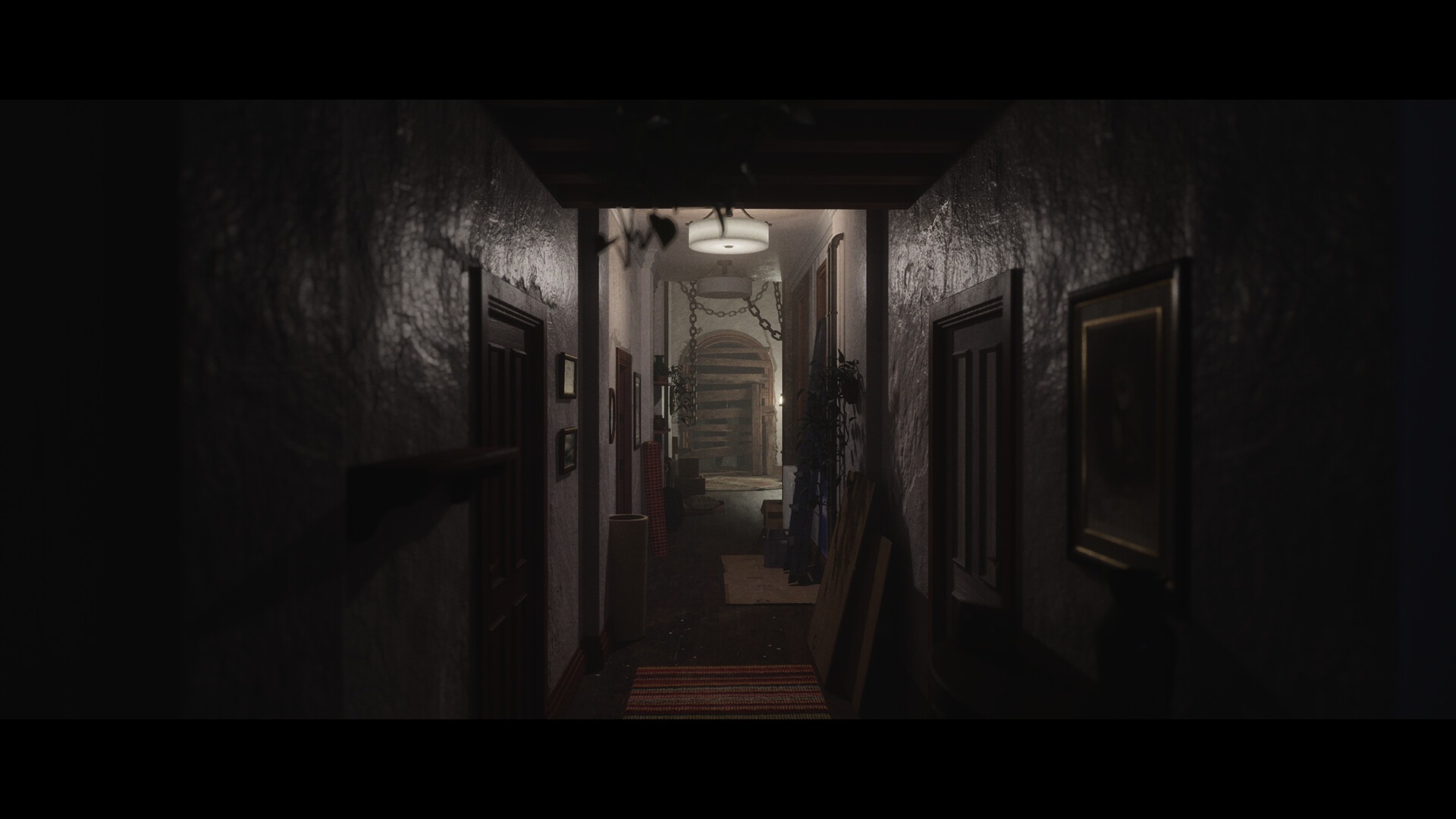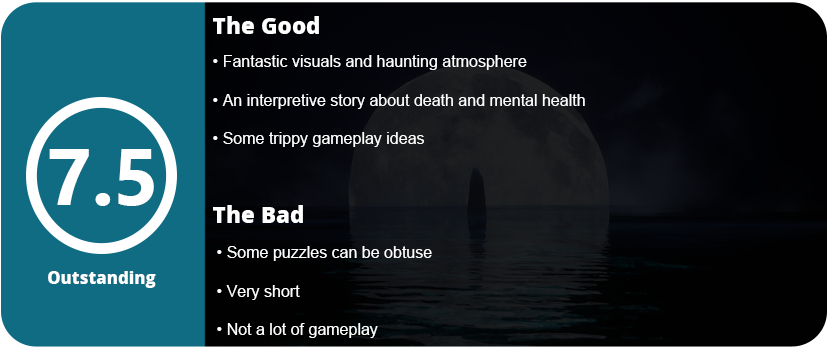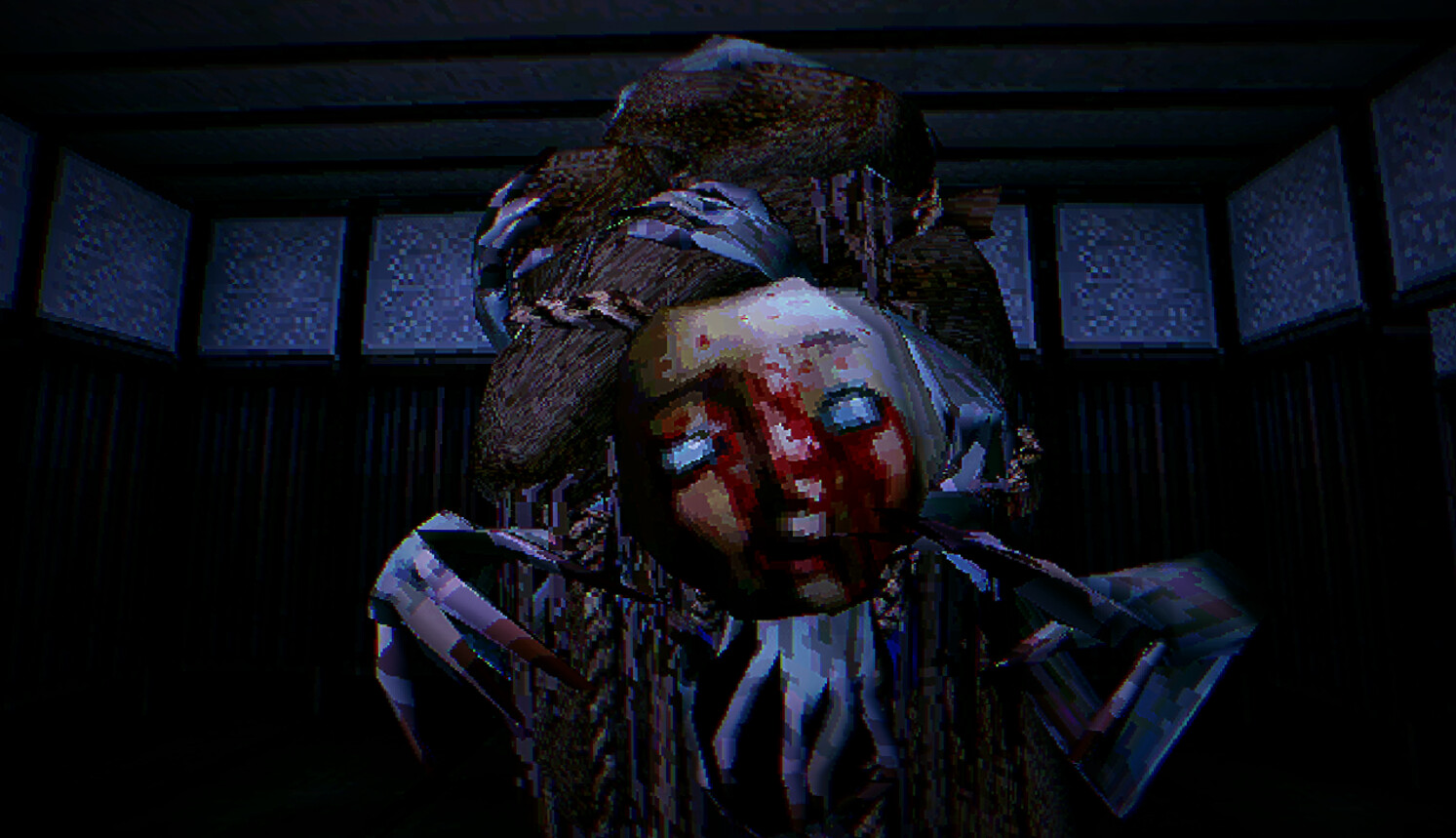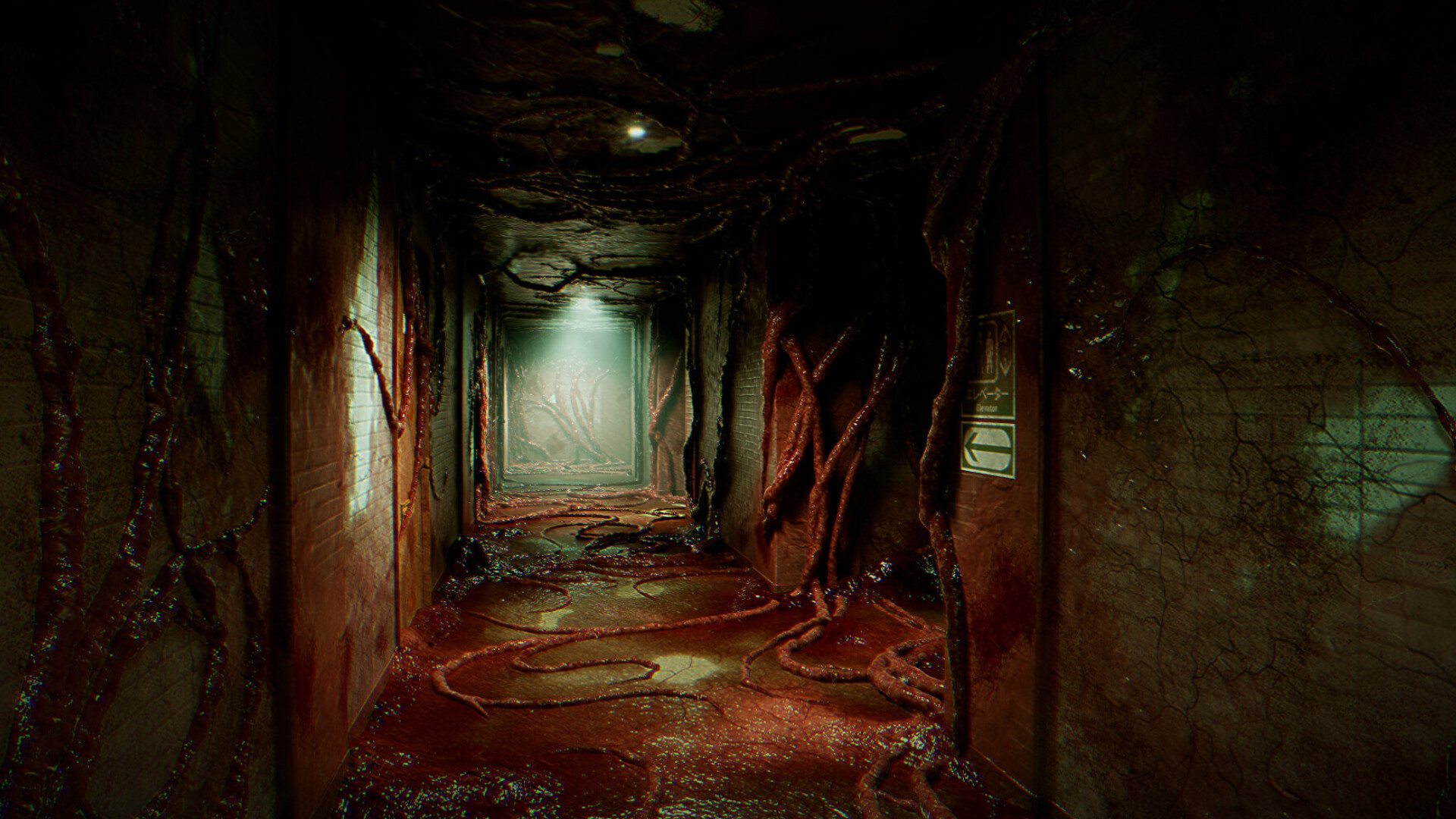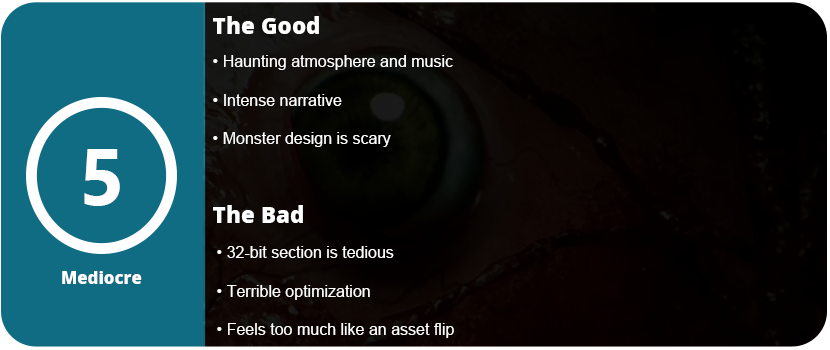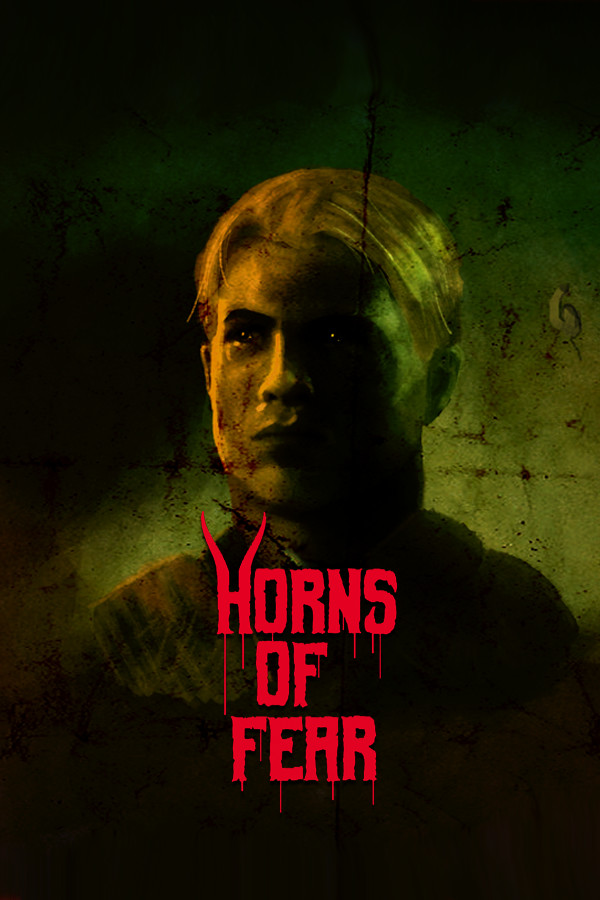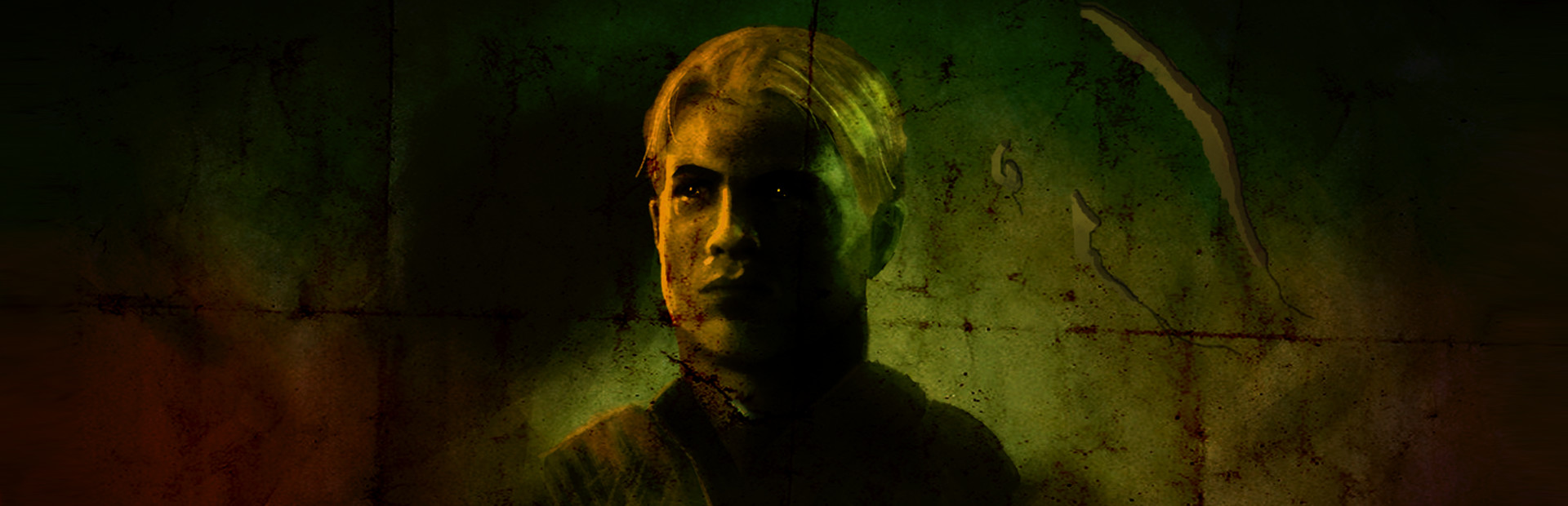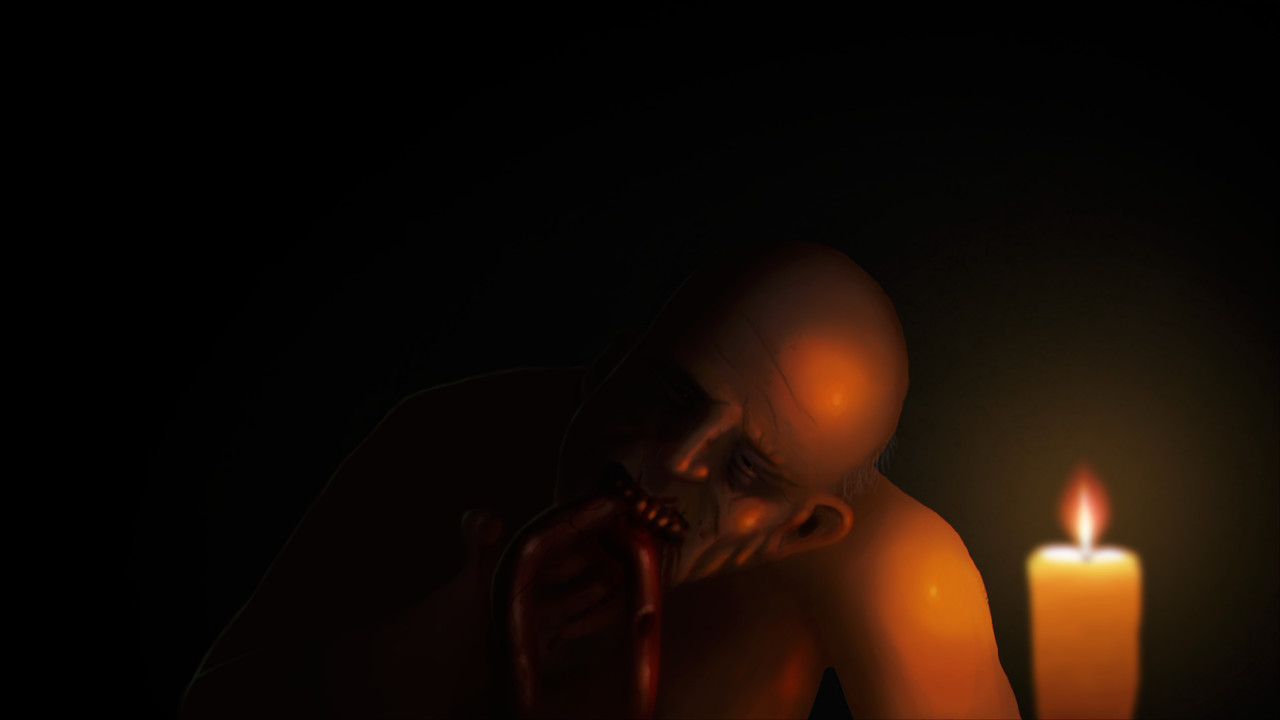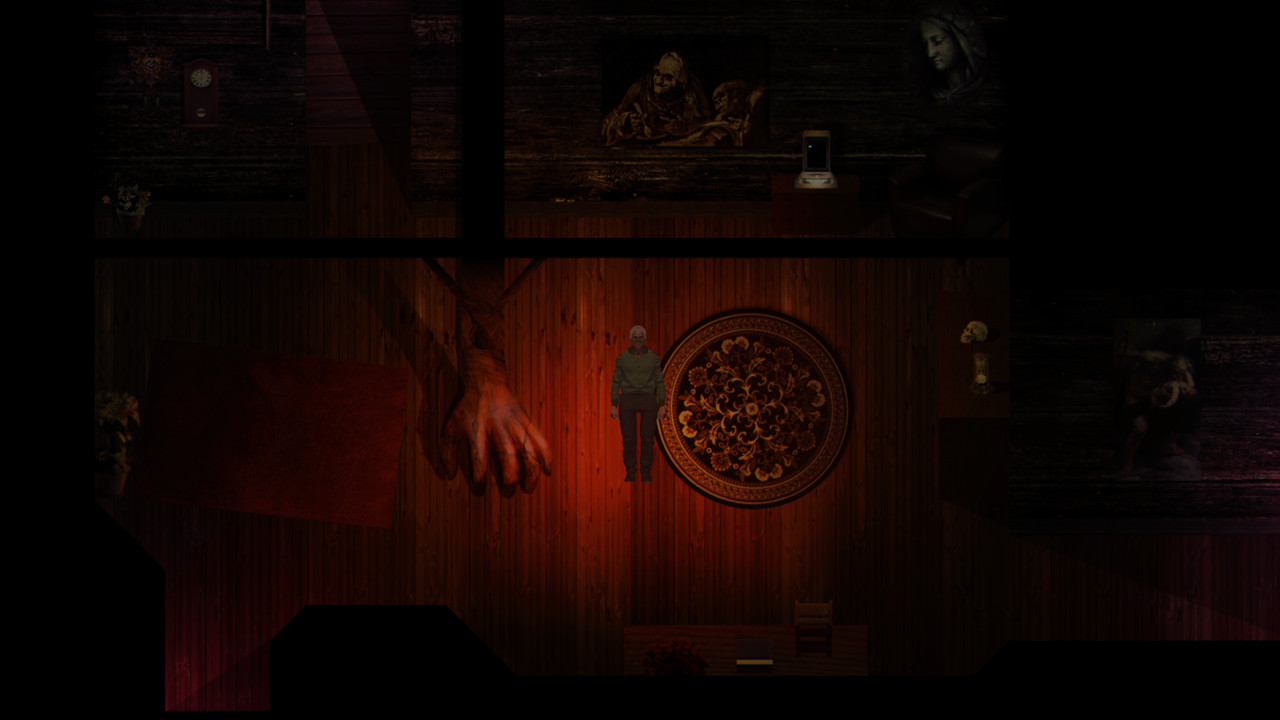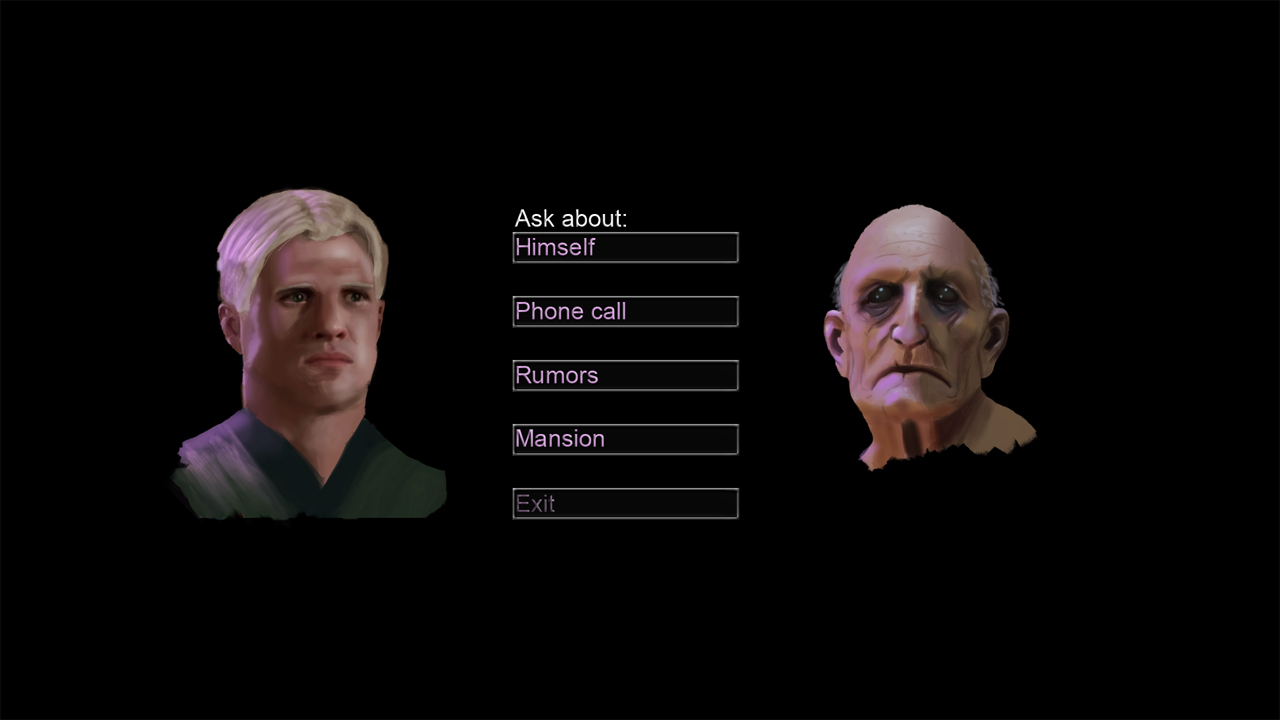
Horns of Fear is a short horror adventure game with a handful of puzzles and a creepy manor to explore. You are Jim Sonrimor. You are a journalist who is grappling with a challenging relationship or marriage. You receive a call from an old woman to investigate her manor. Upon waking from drugs and pizza, you somberly visit the manor and notice something is wrong from the start.
The game has a 2D isometric art style similar to point-and-click adventures of the early 90s. Indeed, this game would be perfectly suited on a vintage gaming shelf. Your inventory is small, and the game is short enough to never fill it. You can save at computer terminals, of which there are only a few. The game is tiny and short that you can easily play the entire thing without needing to save. The puzzles are captivating and surprisingly well designed. I rarely needed a walkthrough. Most developers treat players like idiots or make puzzles too difficult, but not so much here.
Once you complete a puzzle, you will usually see a small cutscene. There isn’t any combat in this game outside of the final boss. There are a couple of quicktime events, but for the most part, the game is mostly about atmosphere and storytelling. I was surprised at how complete the story felt despite the 90-minute run time. Without giving anything away, the ending took a surprising turn and provided a highly entertaining experience. The scares themselves are more jump scares. The sound of a screeching violin accompanies a shadow moving across the screen. The cutscenes have a few gory and gruesome shots that are super cool. The death scenes are also really gory. The music itself was just okay. The music lacked originality and bore a somewhat cliched feel. The theme was reminiscent of a haunted house, rather than being unique to this particular game.
With that said, though, don’t expect anything incredibly unique or something with a lot of staying power. Horns of Fear is a decent short horror adventure and nothing more. While the puzzles are entertaining, you can’t really get lost due to the incredibly linear path you take, and there’s not really any character building. You’re mostly playing for a fun, short train ride rather than a full-on 3-day tour. While the visuals themselves aren’t particularly noteworthy, they provide just enough elements to make your play worthwhile. The trippy cutscenes, strange ending, and ease of play are enough to invite more horror fans over.
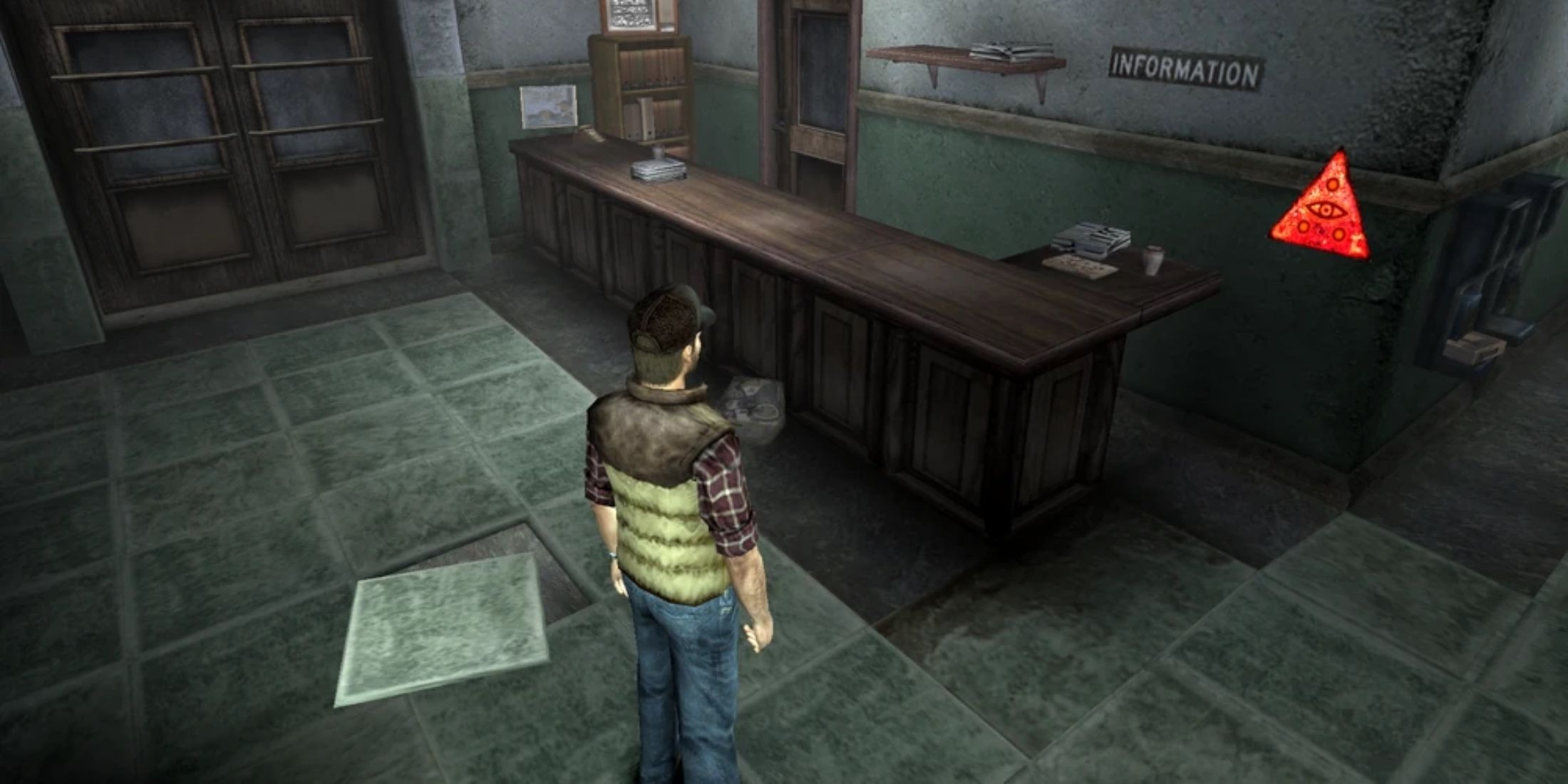
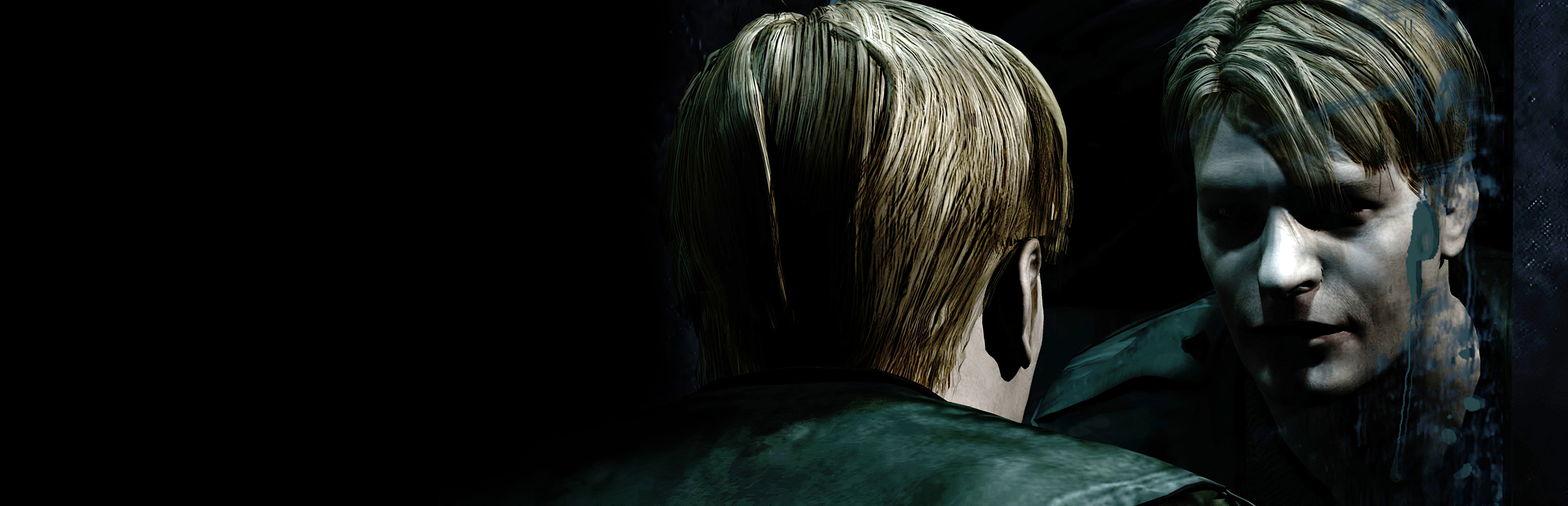
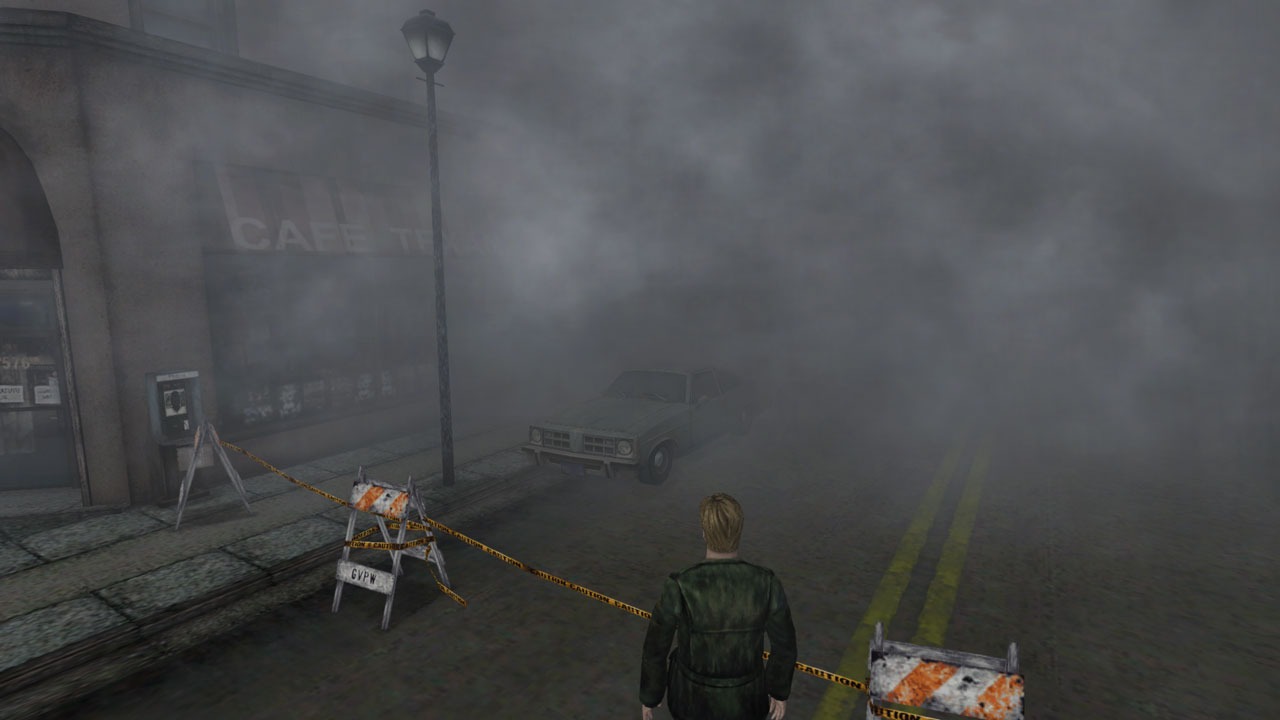
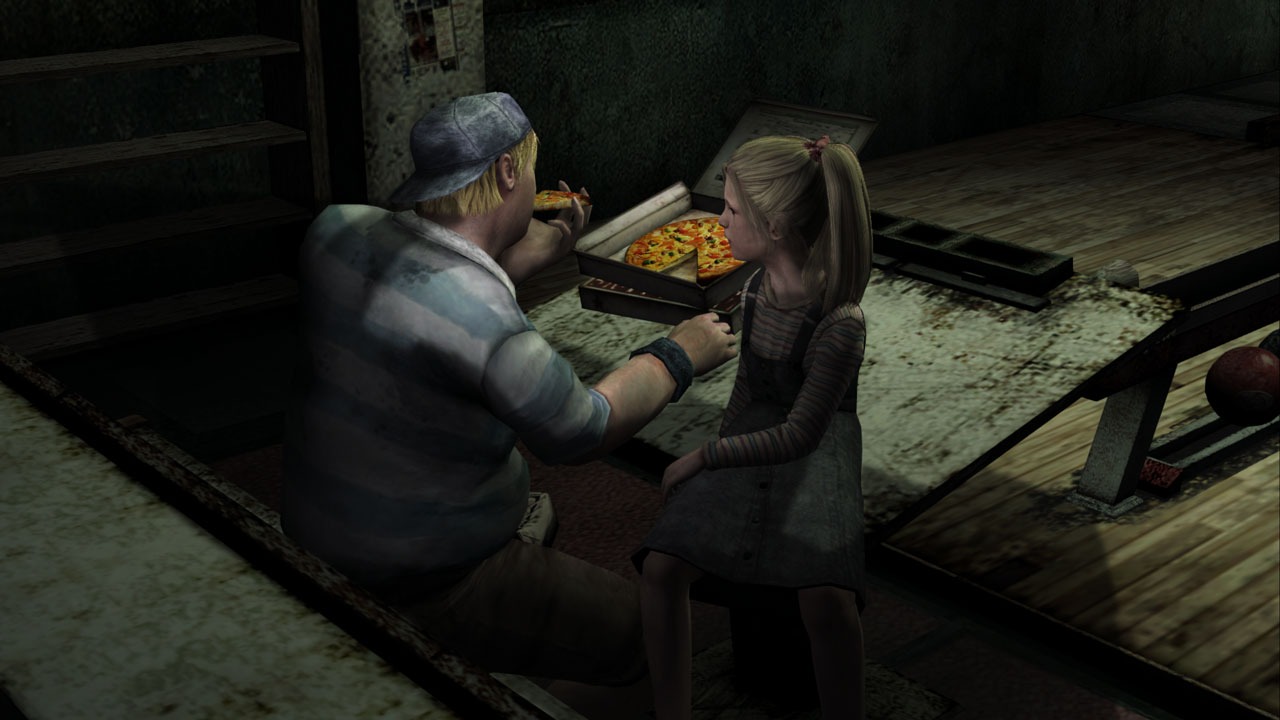
Silent Hill 2 is considered one of the best horror titles ever made. This is my second playthrough of the game. I first played this on PC as well almost 20 years ago. I was a teenager, and I can’t even remember if I finished the game. Silent Hill 2 differs significantly from its original PS1 title. The game focuses more on atmosphere, surrealism, and how things affect people mentally. You follow a man named James Sunderland, who is searching for his wife Maria in the town of Silent Hill, Maine. The story is a little disjointed and doesn’t always make sense, but I think that’s intentional. The game focuses on themes and characters that have no connection to James. Are they manifestations of the town’s pain in human form? There isn’t much exploration of these people’s back stories, despite their frequent appearance. Despite the lack of a third act or a definitive ending will be on the player to make of it what they will. The story is open for interpretation, but remains interesting.
I like how more straight-forward this game is. While the map is an essential tool for figuring out where to go, this series kind of made that a staple. As you progress, your map will mark off areas explored, doors tried, and objects found, aiding in exploration. I still find the puzzles somewhat obtuse, especially on harder difficulties, which make the clues more vague or sometimes nonexistent. For a first-time playthrough, I recommend the easiest combat and puzzle difficulty so you actually finish it. Puzzles involve finding combination locks, and you must either decipher written clues or photos. Some are obvious, while one literally requires you to guess the combination. Finding keys, sometimes through multi-tiered layers of unlocking, is a significant part of advancing through the game. When you receive keys, it’s clear where they lead, and the town map typically circles your next objective. However, navigating inside buildings complicates the process. Most players will tend to become frustrated when they have to attempt every door on the map, especially when there are enemies present. That’s why I recommend starting at the easiest difficulty to gain a better understanding of the game before taking on another challenge. Even starting normal can make the game feel unbearable at first when you don’t know where to go.
Silent Hill 2 improves on the first game’s combat. Auto-aim works much better, but ammo conservation is a must for boss fights. You get a handgun, shotgun, and rifle, as well as three different melee weapons, and that’s it. When you are just fighting one-to-one, you should use your melee weapon, but on the easiest difficulty, ammo is so plentiful that I could use a gun through the last 3/4 of the game once I collected enough. During the first half of the game, you will wander through the main town of Silent Hill, but you should stick to the sidewalks, as this is where all of the items, including health and ammo, are located. You can avoid most enemies by running past them, but the ominous atmosphere compels you to engage in combat. The enemies in the town respawn anyway, so there’s no point. On harder difficulties, the combat is more challenging, but in most areas you won’t face more than two enemies at a time. You must also kick the monster once it’s down, or it won’t completely die and can come back up. Most enemies are slow and easy to learn their patterns from. The game’s final bosses require the rifle, which boasts the rarest ammo count. The shotgun is powerful but slow at close range, and the handgun is your main firearm for the entire game.
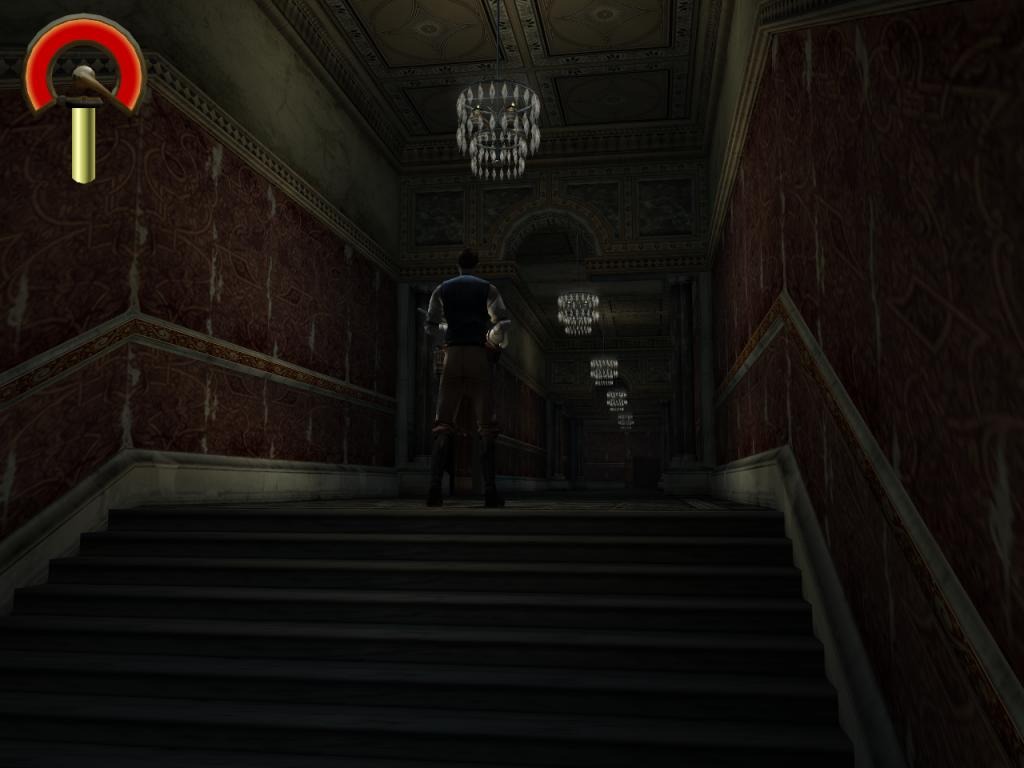
There aren’t any mini-games or side quests here. Basically, you just try to get from A to B alive and watch whatever cutscene you come across. There aren’t any collectibles, either. With a guide, I was able to finish the game in about 4 hours, so it is surprisingly shorter than I remember it being. This was originally a technical showcase for the PS2 during its first year on the market. The fog and lighting effects in this game blew me away when I watched a neighbor play it. If you try to play this game on your own, you may get frustrated early on, turn the game off, and never come back. I highly recommend your first playthrough with a guide. I used the official BradyGames guide for Xbox and had a blast the entire time. I honestly did not want the game to end. I thought the game could tell me more, and I wanted to explore the “alternate” areas from the original title. I never experienced significant frustration with the guide, except for the repetitive nature of the interior locations. The overwhelming number of hallways you traverse gives you a sense of familiarity among them.
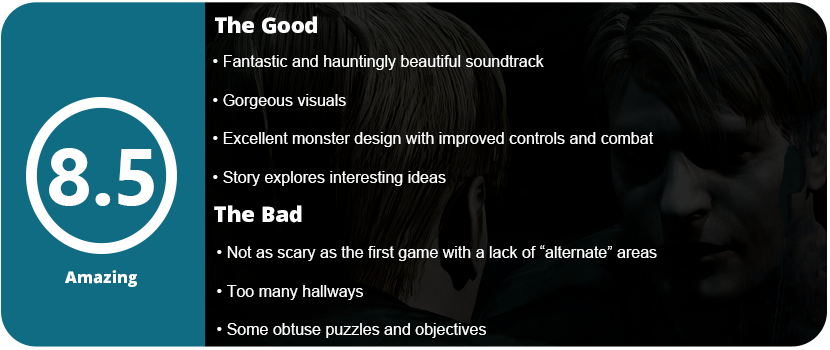
With that said, the atmosphere is something I absolutely couldn’t get enough of in this game. The eerie and exquisite soundtrack, the intricate designs of the enemies, and the overall aesthetic appeal of the game captivated me. I was disappointed that we didn’t get to see too much of “alternate” areas, and the boss fights are a bit too straight forward and disappointing, but they look cool. I honestly wish there were more enemy types in this game, but what’s here is still memorable and iconic. The fog that covers everything is now an integral part of the game’s aesthetic, rather than a necessity for these consoles to render the visuals and reduce draw distance. I did become somewhat fatigued by the frequent requirement to traverse narrow hallways, as this game contains an abundance of them. There’s too much focus on item hunting and not enough on exploration. I’m surprised the game wasn’t more combat heavy—at least in certain areas—given how much the combat and controls have improved. The voice-acting was sporadic and inconsistent, as anticipated. The mystery of the endings is my biggest gripe. Interacting with certain objects can lead to unexpected endings. The series’ staple endings are difficult to acquire, and even with a guide, I struggled. Thankfully, this game is worth multiple playthroughs, so you might want to consider it.
Overall, Silent Hill 2 is a fantastic horror title, with the Xbox and PC versions being the superior choices. I played with the Enhanced Edition mod this time around, and it looks as excellent as it will get without an official remaster or remake. It combined the best assets from all versions to make it playable on modern systems equipped with controllers, ultrawide screens, and proper FOV fixes, among other things. The texture work is remarkable, and I loved every second of it. The soundtrack is excellent; I actually listen to it outside of the game. The sound effects are also iconic and haunting themselves. They will stay in your head forever. While the characters themselves may not be particularly intriguing or profound, the town of Silent Hill stands out as a unique character in its own right. With so much to reveal and is concealed, you want to see everything. I would even consider this an unofficial HD remaster. If you haven’t played Silent Hill 2 yet, this is the way to go outside of the Xbox version.
I finally made it around to the last of the trilogy. This latest entry is a huge step up for the series, but if you zoom out and look at the game in comparison to others at the beginning of this generation, it still feels and plays dated. Right off the bat, the game is a massive boost in visual fidelity. The game boasts improved textures, models, and lighting, all of which contribute to its impressive visual appeal, particularly considering its modest budget. The game also has a more cohesive timeline to play through rather than a few random set pieces. There are eight acts in this game, so it’s about as long as the two previous games combined. There is a large hug area you can run around in, and then you can branch off to the different acts as the story progresses.
Right off the bat, while this all seems nice, it’s superfluous. The main town, where you wander around, offers only a few hidden urban legends to photograph and two side quests. A chapter unlocks each of the game’s five locations. Linda looks much better, but she has no personality. This was a great opportunity that the developers could have used to make Linda a memorable female horror protagonist, but they didn’t really give her a voice or any character. In fact, everybody in this game feels like a generic JRPG NPC. The ghosts and monsters have more character than they do. This also leads to the same stupid story that makes zero sense. While you can view a “Previously on DreadOut” video, the game doesn’t do anything with this story. I was hoping for an explanation of Linda’s past and the curse that haunts her, but the explanation fell flat, leaving me with a shrug at the game’s conclusion. I can’t delve deeper into it without revealing the limited plot, so don’t expect too much.
Combat comes in two forms. In the original form, which uses the Irisphone 2.0, you aim at a ghost, and when a “glitch” appears, you can snap a photo to inflict damage. There’s a new feature that lets you hold the shutter button longer to do extra damage. The second form is only available in the “alternate” realms, where Linda can use her phone’s flash to stun enemies and wield a melee weapon. These realms do not allow you to take photos, and there is a greater emphasis on solving simple puzzles. I honestly found the Irisphone combat in the “real” world to be atrocious and frustrating. The ghost’s face has to be perfectly centered in the phone for the glitch to appear, and it only happens for a split second. This time, the game features a greater number of bosses, each with their own unique gameplay style. However, a significant number of these bosses can be so frustrating that many players may abandon the game and never return. Some of the problems include knockback animations that are annoying and there’s still no health meter. The screen slowly turns black and white, and you can hear a heartbeat, but that’s about it. There’s a particular boss in Act Two that had me screaming. Some of these ghosts take 20-30 shots to take down, and Linda has no dodge, parry, or block button.
While combat in the “alternate” realms is better because you can sling your axe everywhere, it’s still clunky and obtuse. Here, the game will throw a lot of enemies at you, and you still have no block, dodge, or parry button. Some enemies have the ability to run faster than Linda, lurching forward in a continuous loop that prevents you from moving far enough to breathe or escaping into a corner. Your health will recover if you run away long enough, but this was mostly noticeable during boss fights. While the game is clunky and cumbersome, it throws things at you, making these fights way more frustrating than they need to be. One particular boss isn’t just a single ghost; more little ghosts spawn and constantly come back. Why did these ghosts spawn? With this Irisphone, I can’t dodge or block, and swinging the axe or getting the shot just right is hard enough. These elements don’t add challenge, but frustration. They only show how flawed the combat system is.
Unfortunately, this time around, most of the game is combat. I did get lost in some larger levels with labyrinthine hallways that all seemed to look the same, which was a problem with the first game, but this wasn’t an issue on every level. Most of the time, I knew where to go because the area was either very linear or had only one path forward. I did explore the area, collected all the urban legends, and filled my Ghostpedia, but the game seemed to lack any meaningful activities. Although the expansion of Indonesian lore and the improved appearance of the monsters are commendable, I believe this series has the potential to achieve more. It wants to be the next big horror title, like Silent Hill, but it has to break through the tropes that the survival horror genre suffers most of the time. If there is a DreadOut 3, it needs better combat, better level design, and a story that makes sense, as well as making Linda a likable character and not just a voiceless generic avatar.
DreadOut 2 is really only for fans of survival horror from the 1990s and early 2000s, as well as those who enjoyed the original games. The game’s visuals have improved more than the gameplay. Combat is horrendously cumbersome, obtuse, and difficult. Some of the boss fights are victims of this mess, which can cause players to throw the game in the trash. The story lacks depth, and the characters resemble generic robotic avatars instead of evolving with an ever-growing series. The game expands upon the Indonesian lore of monsters, urban legends, and ghosts, enhancing their visual appeal, yet the open hub remains empty and bare. The game needs more attention to detail before I will bother with a fourth outing.
Despite being released two years after the original game, you can’t really expect much from Keepers of the Dark. This isn’t so much a sequel as an expansion, but played much differently. Instead of a linear path going forward, you have access to eight “realms,” which are just small sections of the first game recycled. Each realm consists of two ghosts that you must banish, with one serving as the main ghost that must be counted towards the final total to unlock the main large gate in the main hub. This was actually a neat idea, and I liked this game better than the first. While the combat is the main focus of the game, it still works, as you can consider this a boss rush game and only have to deal with one ghost at a time.
Each realm has a variety of items to pick up to make defeating ghosts in other realms easier. For example, you need to find 14 needles to make fighting a ghost in a specific realm much easier. In total, there are four notes to pick up in order to fight an optional ghost in another realm. These items aren’t too difficult to find on your own, as the “realms” are just small linear areas with little space to explore. I still find the stiff animations, the “limbo” death ritual, the sprinting stamina, and the long knockdown animations quite annoying, as they remain unchanged from the previous game. I also found the lack of any type of health meter irritating, as some bosses took up to two dozen shots to kill. Sometimes I couldn’t tell if the game had glitched or I was doing something wrong.
I did, however, run into a glitch in which one of the Nerd notes was not where it was supposed to be. This locked me out of an otherwise 100% first run, which is maddening. There are still graphical glitches, pop-ins, and clipping that shouldn’t be there. This shouldn’t be happening in a game in 2016. The lack of a cohesive story still irritates me, and the majority of “cutscenes” rely on in-game engine stills for narration. There are eight main bosses in total (one in each realm) and maybe 3-4 cut scenes. Overall, I feel like this game worked with the limitations of the first a little better.
If you were dissatisfied with the first game, you will likely dislike this one, but if you found the first game enjoyable, you may find this one to play more smoothly. Although it is a direct continuation of the first game, those seeking a compelling murder mystery or a compelling story in general may find it lacking. While the bosses draw inspiration from Indonesian urban legends and folktales, their lack of exploration and explanation renders them incomprehensible to those beyond Indonesia. Hopefully with a sequel the game can improve on the camera-obscura gameplay and dive deeper into the lore, but as it stands these two games are lacking too much to recommend to anyone who isn’t a die-hard survival horror fan.
I turn to indie horror games for my fix because AAA horror titles just aren’t much of a thing anymore. Back in the day when we got regular Silent Hill releases and games like The Suffering, Obscure, Haunting Ground, and Resident Evil, there were more than you could count. Today, the majority of indie horror titles range from bad to subpar, with only the rare ones being truly good. DreadOut falls into the badto subpar category, but it doesn’t come with the majority of problems that most indie horror titles have.
The story itself relies heavily on Indonesian folklore, and unless you are adverse to this subject, you won’t have any idea of what’s going on. In essence, the story unfolds as you embark on a school field trip, encounter an unexpected bridge, and ultimately find yourself inside a haunted school. The explanation for the appearance of this bridge, the existence of a haunted school in this town, and the other events in the game are mostly left to the player’s imagination. There are hints in the notes, but I never figured it out. I mainly came for the scares, and DreadOut does provide some.
The combat system is similar to Fatal Frame in that it uses a camera obscura to battle ghosts and poltergeists. In this game, you can only see them in the camera frame (or phone screen). You do get a DSLR later on, but I found this a bit pointless as it doesn’t increase your “attack power,” and you only get a light if you press the flashlight button by creating a large flash around you. The phone actually uses the camera light as a flashlight, and it works well in most dark areas. The game employs a vignette around the screen to indicate the presence of a hint or object nearby (blue) or an enemy (red). If the vignette is red, it requires you to pull out the camera and search for anything moving. Unfortunately, most of the time, the ghost was nearly impossible to see, either because it was too close to the walls which required me to press the shutter button at random. The phone screen will “glitch” when a deadly shot is ready. When this happens, gold particles fly out of the ghost, and you know it took damage.
Thankfully, unlike most horror games, combat isn’t the main focus. They’re rare and you never fight more than one ghost. There are a few boss fights in the game, and these are the most captivating of the ghost designs. They aren’t difficult, and dying doesn’t reset any progress. Your punishment is a further walk from limbo to “the light.” You can acquire an item to nullify this walking distance or change it in the settings. I was unaware of the purpose of these items, as the game provided no explanation and was extremely ambiguous. When you enter the light, you simply pick up right where you left off. You can usually take 3-5 hits from a ghost before “dying.” It’s not very punishing at all.
Exploration would be the best part of the game, but it is incredibly ugly and dated (even for its time), with low-res textures, stiff animations, low-res models, and very little detail in anything. This looks almost like a first-gen PS2 game. The game’s release was just before the launch of the PS4 and Xbox One, making the graphics engine, which was already a decade old, unjustifiable. Most of the game is very linear and straight forward, but the first area in the school was a confusing mess of hallways and doors, but other than that, it wasn’t difficult to navigate around.
You can finish the game in 2-3 hours, but honestly, there are many other games, like DreadOut, that not only look better but also play better. The voice acting is mostly passable, and there isn’t much dialogue to begin with, including a lackluster story. Why would you bother with this game? Well, if you really love horror like I do and enjoy the atmosphere of these games, which DreadOut does well, then this game is definitely worth your time. The music is also surprisingly excellent and really sells the haunting and uneasy atmosphere. The game has a few decent jump scares, and I felt uneasy through most of the game, so it at least accomplishes that.
The series Alone in the Dark appears to have a perpetual curse. While the earliest 3D titles, such as The New Nightmare, received fairly positive scores, these last two reboots just can’t seem to get things right. I’ll grant the 2008 reboot some leeway, as it attempted to innovate and reinvigorate the series, despite its minimal connection to the lore of Alone in the Dark beyond the protagonist’s name. This new reboot is more faithful to the first game—exploring a creepy mansion, solving puzzles, and having basic combat. It did feel more like The New Nightmare and much less like the 2008 game, but it didn’t boost the series to new heights either.
You can play as either Detective Carnby or Emily Heartwood. The differences here are limited to a few different scenarios in a few levels, but you must play both sides to find all the collectibles. Emily’s uncle is living in an adult family home for the sick, and she needs to get him out. As she explores the mansion, she appears to be trapped in a paranormal dimension, alternating between what might be reality, her uncle’s reality, or her own mind. One of the first issues with the game is that the game isn’t really all that scary. The monster designs are kind of neat but not super interesting, and the atmosphere is more Haunted Mansion and Scooby Doo Fright Night than Silent Hill, but that’s not the biggest issue.
The combat in Alone in the Dark is quite boring and terrible. The melee combat just consists of wildly swinging an object around. You have both a regular hit and a power hit. Items are breakable, but you can carry one around at all times. This is fine if you’re up against a single enemy or can’t reload in time, but most of the time swinging the object causes your character to lunge forward, and it just feels awkward and stiff. There’s not a block or parry button—just a dodge button. The remainder of the battle involves firing a revolver, shotgun, or Tommy gun, with limited ammunition available. In most scenarios, I felt that there were too many enemies coming at you in the tight and cramped spaces you are in. There are some throwable objects, but the only useful ones are the Molotov cocktails. Throwing bricks is pointless because it doesn’t do any damage. Occasionally, there are stealth sections, which are incredibly short (requiring you to weave through three rows of barrels for example) or impossible to complete due to the enemies’ lack of set patrol patterns.
The game primarily consists of aimless wandering while attempting to solve obtuse puzzles with vague hints. The game features combination locks, math, and puzzles that evoke nostalgia from the year 2005. There’s an Egyptian Temple level in which you need to find three lenses to bounce light around to unlock the main door. This consists of a constant back and forth through labyrinthine hallways. You need to find the switch to unlock the lens door, but that switch triggered a collapse, so now you have to find another switch to open the shortcut door. This just feels like lazy design and prolonged play time. The mansion itself is the most monotonous, with repetitive hallways and locked routes in each chapter. Even if you manage to find a key or unlock a door, it remains bolted or blocked in another chapter. This leads me to my biggest issue. Game-breaking bugs. I rarely encounter these in games, but I encountered a bug where a door was blocked, leading to the end of Chapter 4. I couldn’t progress, and that’s where my game ended. Restarting the entire chapter wasn’t a guarantee that it would fix the bug.
The visuals are pretty acceptable for what they are. They aren’t ugly, but they don’t feel like Alone in the Dark at all. The story is pretty forgettable, with uninteresting characters, fairly lame dialogue, and average voice acting. The stiff controls, animations, and combat bring the game down quite a bit, but the game-breaking bugs, absurd level design, lame stealth, and repetitive backtracking add up to a not-so-great adventure.
Clock Tower starts out well enough. There aren’t many point-and-click adventures on the Super Nintendo, so I can see why this slower-paced game never made it outside of Japan on the SNES. Initially, the controls are peculiar and challenging to adapt to. Using the L and R buttons causes Jennifer to continuously run in that direction. She will continue to run in that direction up any stairs, obstacles, or doors until you press the buttons again to stop her. The story is mostly difficult to understand and grasp. You end up in a scary mansion with a group of friends, and then they slowly disappear. The “Scissor Man,” who appears at random, chases you as you search for them.
The gameplay necessitates a comprehensive guide. This game is unlike any other I have ever played on the SNES. You can spend hours wandering around and looking into all the rooms, never truly knowing what to do or where to go. The idea of running away from the monster is novel, but without the guide, I would not have known that you need to do most things in a very specific order. Certain orders provide different endings, and you can also easily miss one of the few hiding spots in the game. When Scissor Man appears, you must keep running until you can hide, or he will not go away. It’s important to memorize the mansion’s layout and where each hiding spot is. My issue with a game featuring so many rooms is that many of them share a similar appearance. Despite spending a solid 4-5 hours playing this game, I often found myself lost, even with a comprehensive walkthrough. Some rooms will also lead to insta-deaths as well which made things more frustrating.
I’m also not sure how I feel about the game’s sound. It’s almost nonexistent. Outside of Jennifer’s shoes tapping on the ground, there’s nothing here to listen to. When the Scissor Man appears, his theme song plays, and if you’re lucky, you can use the panic button to escape his grasp. As you run out of stamina, your portrait icon will turn red, and you will need to rest by kneeling. You will find yourself engaging in this activity frequently. There are some items you need to find in order to unlock doors and various objects, but these will be impossible to find with Scissor Man constantly chasing you halfway across the mansion. Each playthrough randomly changes a few rooms, making it difficult to distinguish between the main hallways. Despite the tension of Scissor Man lurking around every corner, there aren’t any other enemies in the game, and the lack of sound effects and music removes any would-be tension.
Overall, despite the slightly interesting story and plot twists, many players may find the labyrinthine hallways, obtuse objectives, lack of hiding spots, and overall trial and error required to reach the game’s end frustrating. Although the concept is intriguing, the execution falls short.
I am absolutely fascinated with the human psyche and how to brain works being in a dream state. I find vaporwave aesthetics incredibly pleasing, and I can immerse myself all day in the border between retro analog objects and digital dreamscapes. Hypnagogia explores the real-life state of being in between dreams. The trippy PS1 aesthetic visuals mixed with classic platforming and storytelling of yesteryear make for one of the most nostalgic games I’ve played in a long time, but this also comes with its own set of issues.
The game’s goal is to collect nine dream shards for a mysterious bird in this hub world that you enter. Each similar to 32-bit era games like Crash Bandicoot, each shard resides in a unique level. Levels range from basic platforming to puzzle solving, and some levels are more entertaining than others. Some levels are more familiar to gamers who grew up with Banjo Kazooie, with your character meeting weird cartoon-like creatures engaging in simplistic dialogue, retrieving an item for them, and unlocking the next area. These were quite enjoyable, as they didn’t require a lot of brain power. Later levels, like the dreaded forest level, are way too long, have too many labrynthine levels, and have obtuse puzzles that drag the experience down. This particular level took me several days to complete, primarily because I was unaware that there was no save feature during the level. I would quit and have to start all over again from the beginning.
Zelda-like dungeons are present in the aforementioned forest level, but they lack effectiveness and enjoyment. The later levels resemble a walking simulator, involving some backtracking, until the final couple of levels abruptly transform into a terrifying Silent Hill-style experience. The game clearly pays homage to the games that shaped the gaming genre of that era. The floaty platforming can get quite annoying for the more platform-heavy levels, such as the second one, where you are in a giant ocean and need to retrieve keys from various corners of the level. The first half of the game just doesn’t have excellent pacing. While the atmosphere and visuals are fantastic and immersive, the gameplay itself can pull you out or make you quit for good.
That’s not to say the gameplay is inherently bad. It’s quite manageable, but the level design itself is quite atrocious and can even be downright boring. For instance, in the cyber level towards the end of the game, you must float through the air to collect cubes that unlock additional paths. However, this requires a significant amount of backtracking, and the act of floating around can be challenging to control. Many times it was difficult to figure out what the goal of the level was, and I wound up just wandering around talking to all the creatures until something happened.
The visuals are the game’s main attraction, and each level is oozing personality and wonderful texture work that make it feel like a PS1 game. The mall level in particular made me feel something. Being in a closed down mall and having it transform into an abandoned mall is something I enjoy watching UrbEx explorers discover. The reflective water, bright pinks, whites, and blues give it a vaporwave vibe, and a few levels have just enough of the game they are trying to copy to make you smile when you realize it. Overall, Hypnagogia is a fantastic game for those who are seeking this type of visual aesthetic or looking for something to itch their nostaliga. Just don’t expect a compelling story, good controls, or consistent level design.
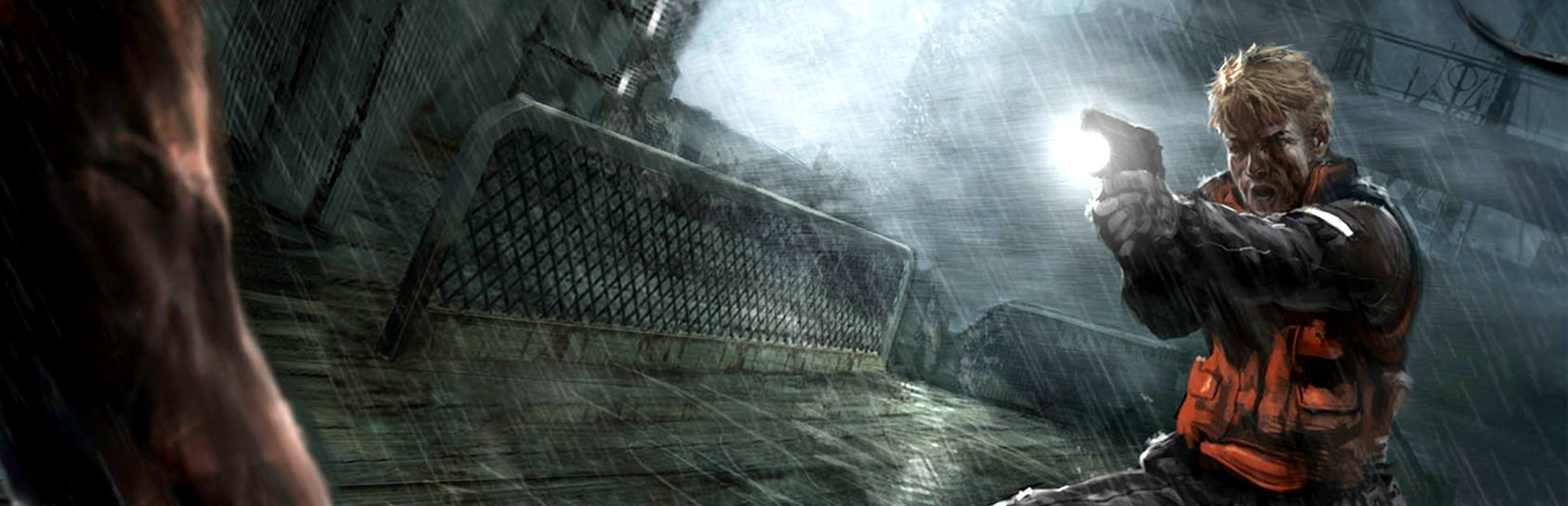
The X-Files is one of, if not the biggest, cult TV shows of all time. I was a young kid when the series was at its peak in the mid- to late-90s, so I didn’t understand any of it, but my mother was really into the show. While I caught bits and pieces, I do remember the atmosphere the TV show delivered, and this has stuck with cult shows dealing with paranormal activities for the foreseeable future. While the entire show might not have aged the best by today’s standards, it’s still a highly entertaining show that really makes you want to believe. There weren’t really any video games on the show until this one. Long after the series final season debuted and long after the series peaked in 2004, 2004 was also the end of the Sixth Generation’s life cycle, with the Xbox 360 just around the corner. What did Resist or Serve bring to the survival horror genre?
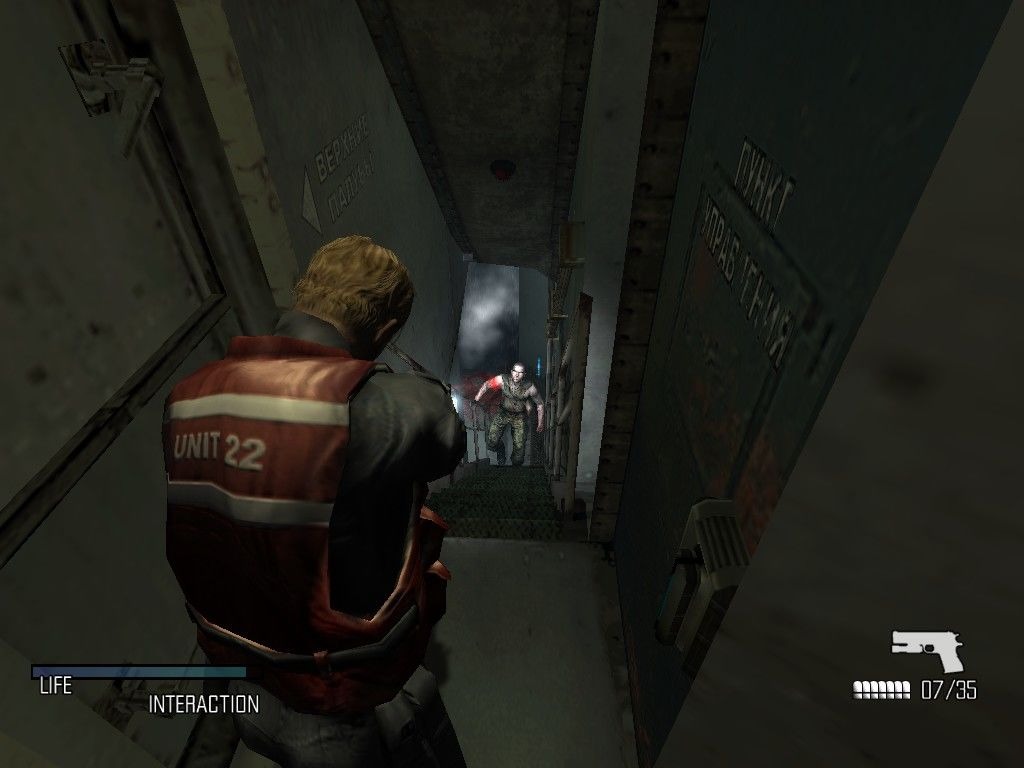
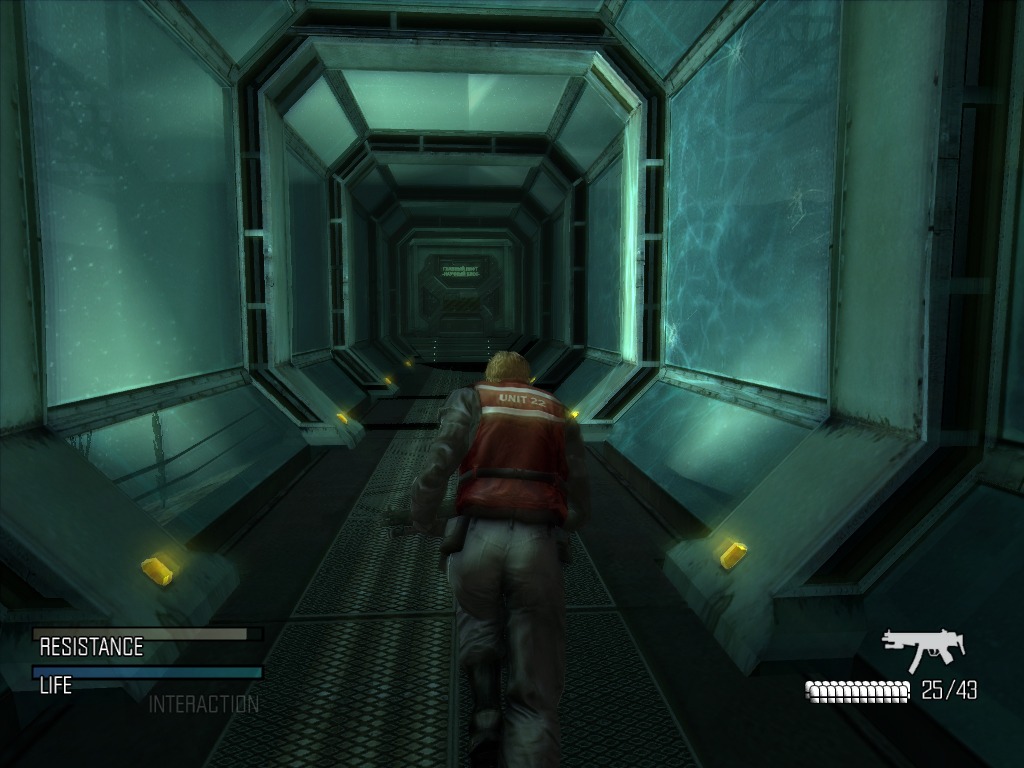
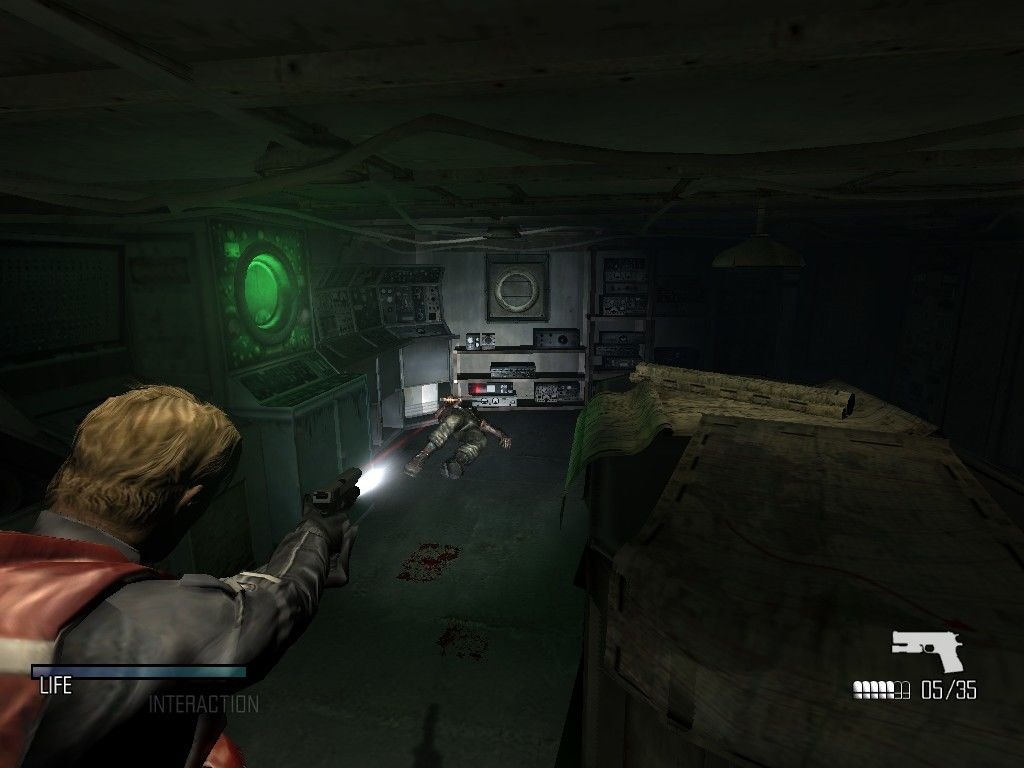
Well, the short answer is zero. I feel like fans of The X-Files would enjoy this more than survival horror fans of Silent Hill will. You can choose between Mulder and Skully (the show’s two main protagonists, voiced by the show actors as well). Each side has slightly different events in the same levels, so it may or may not be worth playing the game twice. Once was enough for me. The game has fixed camera angles similar to Silent Hill, but nothing is pre-rendered. You can move around the environment well enough, and there is some light puzzle-solving and combat. Combat is on the rougher side. You can hold a flashlight and a gun at the same time, but you can’t run with the flashlight and the gun out. If you want to run, you can just hold the flashlight. In some levels, you get nightvision goggles that help, but they’re still annoying. There’s an auto-aim feature similar to Silent Hill, and it works well enough if enemies aren’t right on top of you. Enemies will bum-rush you, and a couple shots will knock them down. One or two zombies is manageable. Although the combat system is not the worst I’ve ever encountered, the narrow level design isn’t conducive to this kind of shooting. Many rooms are barely ten steps wide. When faster enemies, such as dogs, come after you, the characters can’t run faster than the enemies to gain distance, turn around, aim, shoot, and reload, which slows you down a lot. It’s better to do the age-old reload on the inventory screen trick.
Combat only becomes a serious problem during boss fights. These guys have a longer range of attack, and I could never outrun them enough to turn around, blast them, and then get going again. Most bosses are easier if you stand still and blast them. The challenge lies more in battling the controls than in the bosses’ design. Health bars in the shape of the show’s logo serve as a health meter for these bosses. The rest of the game is obtuse object hunting, but knowing what to do with these objects can be quite annoying, especially when combining multiple objects together or deciphering notes to gain access codes. At least the game’s pace isn’t all that bad, and there are many locales to move through, from a research facility to an underground occult lair.
Three episodes, each with a couple of acts, make up the game, with the first episode being the longest. There are a few pre-rendered cutscenes, but most are in real-time, and boy are the graphics rough here. In 2004, there was no reason for this game to resemble a PlayStation 1 game. The environments are bland and boring; there are zero facial animations; and the textures are a muddy, molten mess of colors. On characters’ faces and objects, textures literally blend and bleed into each other. The animations are stiff and awkward, and this honestly feels like a budget first-gen PS2 title, not something that should be out at the end of the system’s life. When it comes to the horror elements of the game, they kind of work in the beginning, but the same screeching violin and piano banging sound plays one too many times at the wrong moments, and the theme song repeats way too often. It will work for fans of the show, but not generalized horror fanatics.
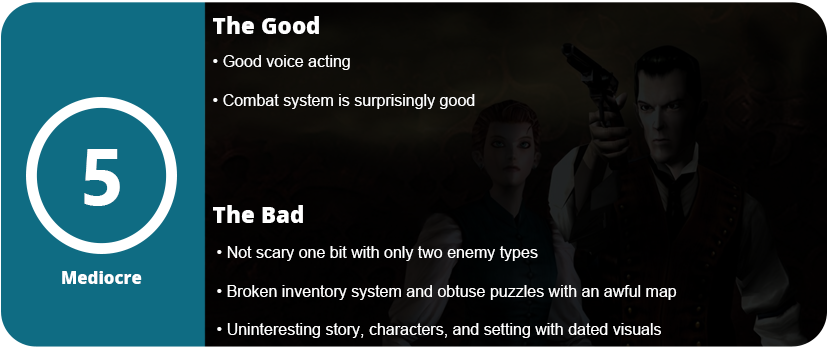
To be honest, there really isn’t that much horror in the game. There are a couple of neat scenes in which Skully dissects a human a couple of times in gruesome detail, but the hideous visuals don’t do it justice. Some very dark buildings have lighting that almost works, but it doesn’t. The zombies are cheesy and stereotypical, and the bosses are just hooded cult freaks. There’s no exploration here unless you just want to find first-aid kits and ammo clips. There are no hidden items, and the only extras are lame storyboards. I played through Skully’s story first, and I had no desire to repeat the entire game as Mulder for a couple of different scenes and altered boss fights.
Overall, Resist or Serve is worth a playthrough. Resist or Serve may take you 5-6 hours to complete, and while it has a fairly interesting story, it ultimately succumbs to the whims of the TV show’s cliches and punchlines. David Duchovny and Gillian Anderson phone in their voice lines, sounding like they are falling asleep or bored (I guess Duchovny always sounds like that), but it’s not an inherently offensive game. The worst parts are the boss fights, and it could have gotten a lot more wrong.
Resident Evil significantly established the benchmark for survival horror games and 3D gaming in general. Games were still trying to figure everything out. Camera angles, movement, pacing, and combat. It was up to these developers to pioneer 3D games for the next 20 years. Parasite Eve may have been a short-lived franchise, but it made a lot of advancements in the 3D action/survival horror genre that Resident Evil was quickly trying to dominate. Despite its late PS1 release, this game felt ahead of its time, even though I haven’t played the first one.
The story is surprisingly simple to follow and fairly interesting. As a MIST agent, Aya Brea, you embark on a journey to the Nevada desert and the town of Dryfield. Here, your mission is to devise a permanent solution to halt the NMC (Neo-Mitrocondira Creatures). There is a lot more to the game. You also start out in a mall in Los Angeles. There are a couple of twisty endings, and the story is well-told and easy to follow. There isn’t really any voice-acting due to space constraints. The visuals alone explain why the game spans two discs.
The game has both RPG and action-combat elements. There are plenty of weapons and magic to use, and the game is a tight balance of the two. This is also the era in which missing a key item could make the game artificially more difficult, so I suggest playing the game on easy the first time with a guide and then doing a New Game Plus on your own. Despite the game’s linear structure, the vagueness of your objectives could lead to many missed or lost opportunities. At times, your map displays the locations of your objectives, while others do not. You can pull up the help in the map menu to see Aya give you a single hint; sometimes that’s also enough, and other times it still leaves you clueless. There are only a couple of puzzles in the game, but there is still a lot of item hunting. You need to find key items that not only advance the story but also optionally unlock new weapons or items to aid you.
Parasite Eve II‘s combat is surprisingly excellent for the time. 3D movement is tank-based, but it feels more fluid thanks to better camera angles than most games in this genre. There is an auto-lock system with a large reticle that you can easily swap between enemies. The game is fairly smart and usually picks the enemy closest to you, but not always. You can fire rounds off, and reloading happens when your clip reaches zero. Secondary attachments on some weapons can stun enemies or deal massive damage. These all cost money, and it’s imperative that you acquire the best weapons as early as possible; however, this becomes a juggling act with inventory vs. your attachments. You need to upgrade your armor to increase your attachments, but you can also find small pouches on the field. You should always have a single weapon in hand and equip at least one other. It’s good to know what types of enemies are in the area to be able to balance this just right.
Weapons vary, from pistols to shotguns, assault rifles, grenade launchers, and attachments that help you miss and match. You can equip an M4A1 assault rifle with the AS1S shotgun attachment, allowing you to combine both types of weapons without requiring two inventory slots. However, you must acquire precious BP by killing enemies to purchase these attachments. Bosses give the most, but it’s important to kill everything around you so you can get as much BP and EXP as possible to level up your powers. There aren’t random battles or respawning enemies, but opponents will spawn in the same area after each objective is complete. Harder enemies start popping up, as well as more of them, so it’s really important to know their weaknesses and what weapons and magic attacks work best. Some will attack you in swarms, so stun attacks are best for these enemies. You can’t move around much, so make sure you really get the hang of the combat system.
Magic is interesting, as you will use it for stronger enemies and large groups. As you level up, you acquire new magic in different categories. You can level up Fire, Earth, Wind, and Necro magic to a maximum of three per power, and utilize the magic wheel to activate these powers. This requires MP, so you will need to boost your MP to use it in combat. You should equip some key items instead of using them, as they can significantly increase attack damage and even magic. Therefore, it’s crucial to utilize a guide during your initial playthrough, as inadvertent use of these items, such as boosting a magic point by one level or similar effects, can result in waste. While you can’t use an auto lock-on (the game pauses when in the magic wheel), magic is incredibly useful for bosses. Green vector lines indicate the path, and enemies will flash green to indicate potential hits.
The map system is rather useful. Rooms in red mean there are enemies in that room, and once they are all defeated, it will not be red anymore. When you initiate combat, the screen briefly turns white and you hear the sound of a heartbeat. Sometimes, if the enemy doesn’t see you yet, you can quickly change weapons, heal, or do back attacks that cause more damage. Aya automatically reloads after clearing all enemies in the room, and your winnings window appears. Item drops are incredibly rare. They only become more common when you start fighting the game’s most powerful enemies, the GOLEMS, towards the last fourth of the game on the second disc. There are only a few shops in the game, so this leads to a lot of backtracking. Additionally, the game does not allow you to sell items, meaning that if you inadvertently purchase something, you are unable to return it. This means you can only discard items not needed in your inventory or store them in a box. I recommend saving before buying anything; in case something doesn’t work out, you can reload.
The visuals push the PS1 to its limits. We still get pre-rendered backgrounds with some 3D objects in place, but the character models look good, and there is a lot of detail in everything. While the game looks mostly generic style-wise, it is a technical showcase for the PS1. Sadly, the lack of voice work and infrequent FMVs kind of hurt the game presentation, but what’s here works. Overall, Parasite Eve II isn’t perfect. It’s a product of its time, with developers trying to figure out how to do action games in 3D. The weapon balancing act is frustrating, and missing out on key items to make the game more enjoyable can cause a lot of problems later on when you realize it’s too late. The combat system works well enough, and there are plenty of weapons and magic. The game’s main issues were mostly backtracking and a lack of knowing where to go. The story is interesting, surprising in depth for the time, and well told.
Yep! The fact that I forgot about this game until you made a comment proves that.