Minimalist side-scrollers have become very popular in Limbo. Inside is just another example of these horror-side scrollers done right. Little Nightmares doesn’t really tell a story through voices or words, but through actions. Unlike Inside, Little Nightmares doesn’t have too much of a story to tell. You play as a child trying to escape a ship from humongous fat monsters trying to eat you. That’s all we get, really.
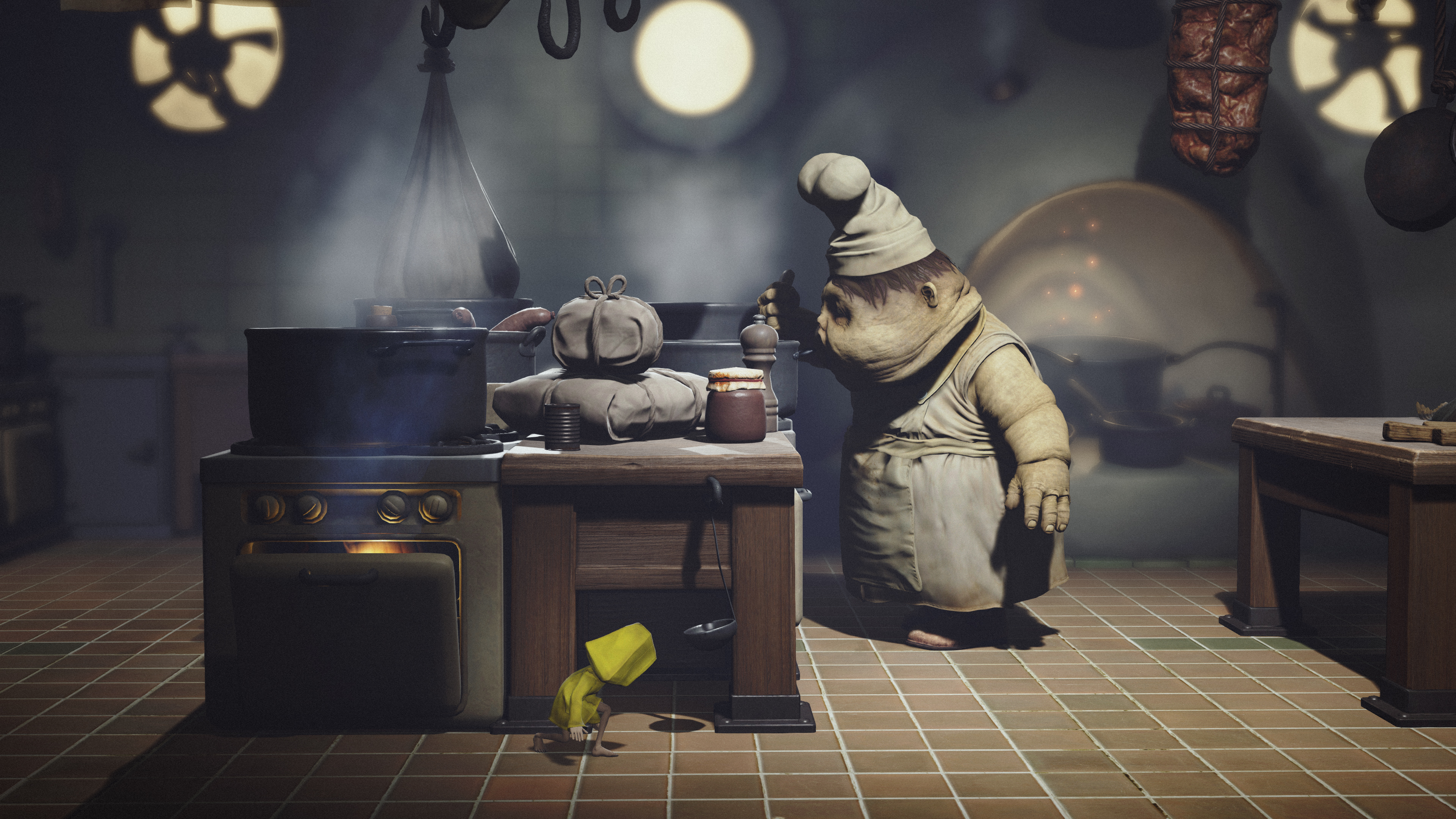
Sadly, the story doesn’t really explain much, as the art direction, monster design, and backdrops are wonderful and beg for more storytelling. The beginning of the game is made up of basic platforming with simple physics puzzles and a lot of atmosphere. Eventually, you start seeing the occupants of this ship, and that’s when things get creepy.
Little Nightmares does a fine job of creating a tense atmosphere and suspense. Grabbing and sneaking are tied to the shoulder buttons, so when you grab something, you must hold the button down. This makes things more intense, as you are running away from a monster with a key to unlock a door, and if you let go of that button, it’s all over. The middle of the game is made up of outsmarting these monsters, and the puzzles get bigger, but not really harder.
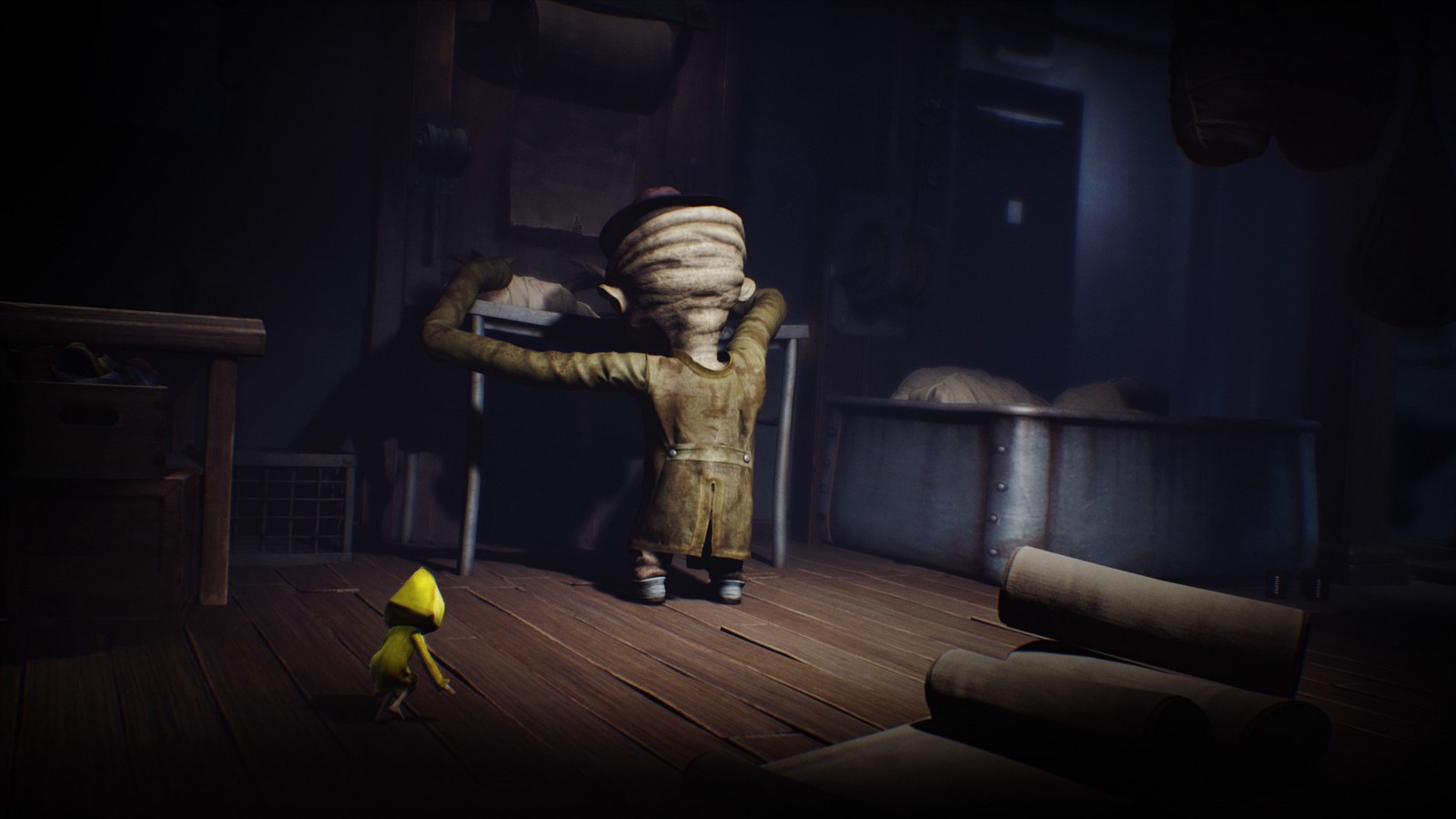
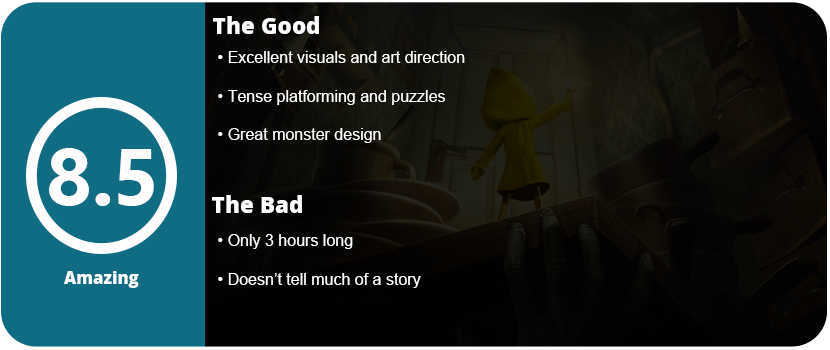
There’s not much to really explore outside of lighting lanterns for checkpoints and breaking porcelain dolls to unlock achievements. The game is definitely intense throughout the 3 hours it takes to complete; there wasn’t a dull moment that I can remember. I always felt like I was running, overpowered, and small. From climbing stacks of dishes and escaping on meat hooks to chopping off the arms of a doll maker, The game gives players something that most don’t, and that’s solid gameplay while combining excellent visuals and touching moments.
Overall, there are some of the best 3 hours you will spend. From beginning to end, Little Nightmares has something interesting to offer, and it’s never boring. The graphics are gorgeous, with art styles that reminded me of box trolls mixed with coraline. If you love horror games and platformers, then this is for you.
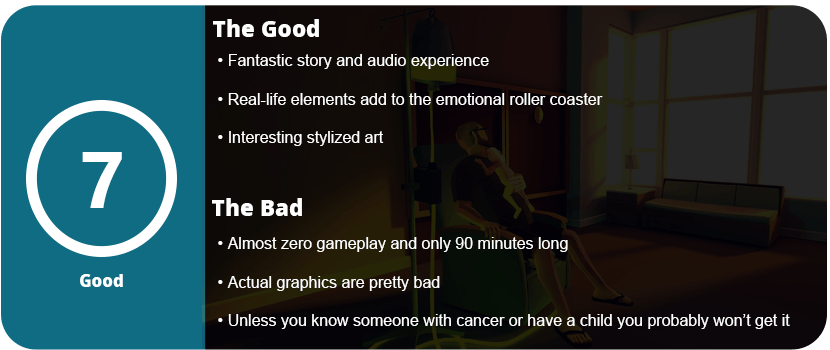
I love games that are emotional roller coasters, as they bring out emotions that AAA games just can’t achieve these days. The indie games are usually the best when it comes to story and characters, and That Dragon, Cancer isn’t a good game, but a good story. Seriously, gameplay-wise, this game stinks, but if you come for the story, you will feel some heavy stuff.
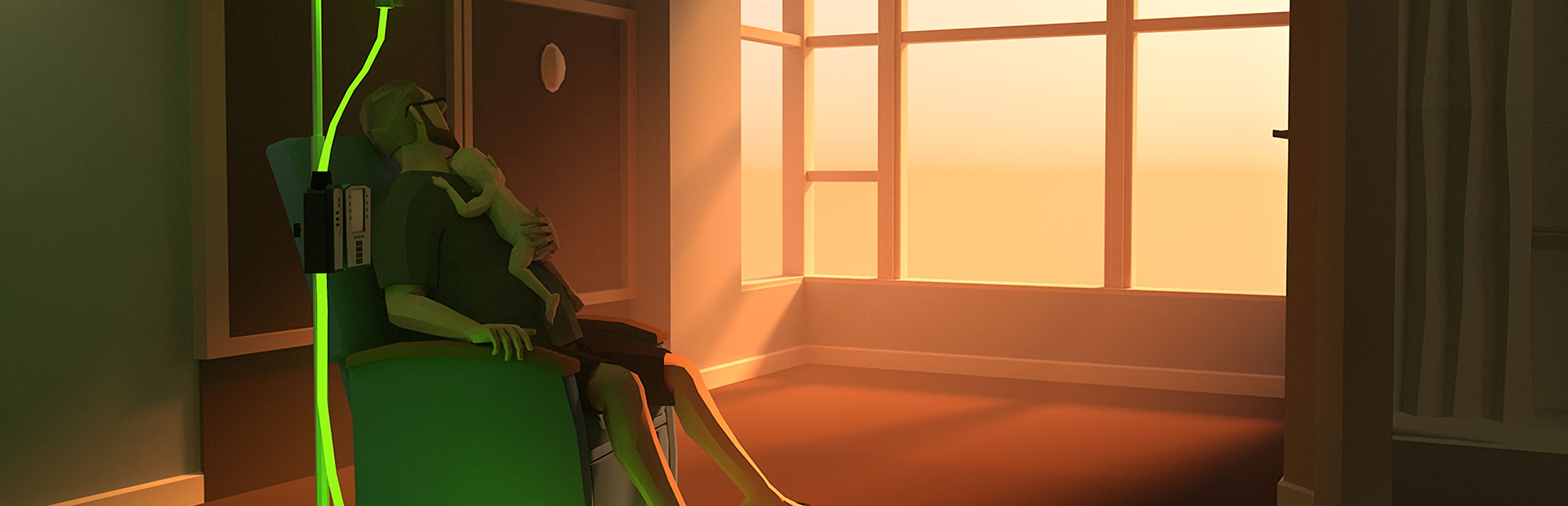
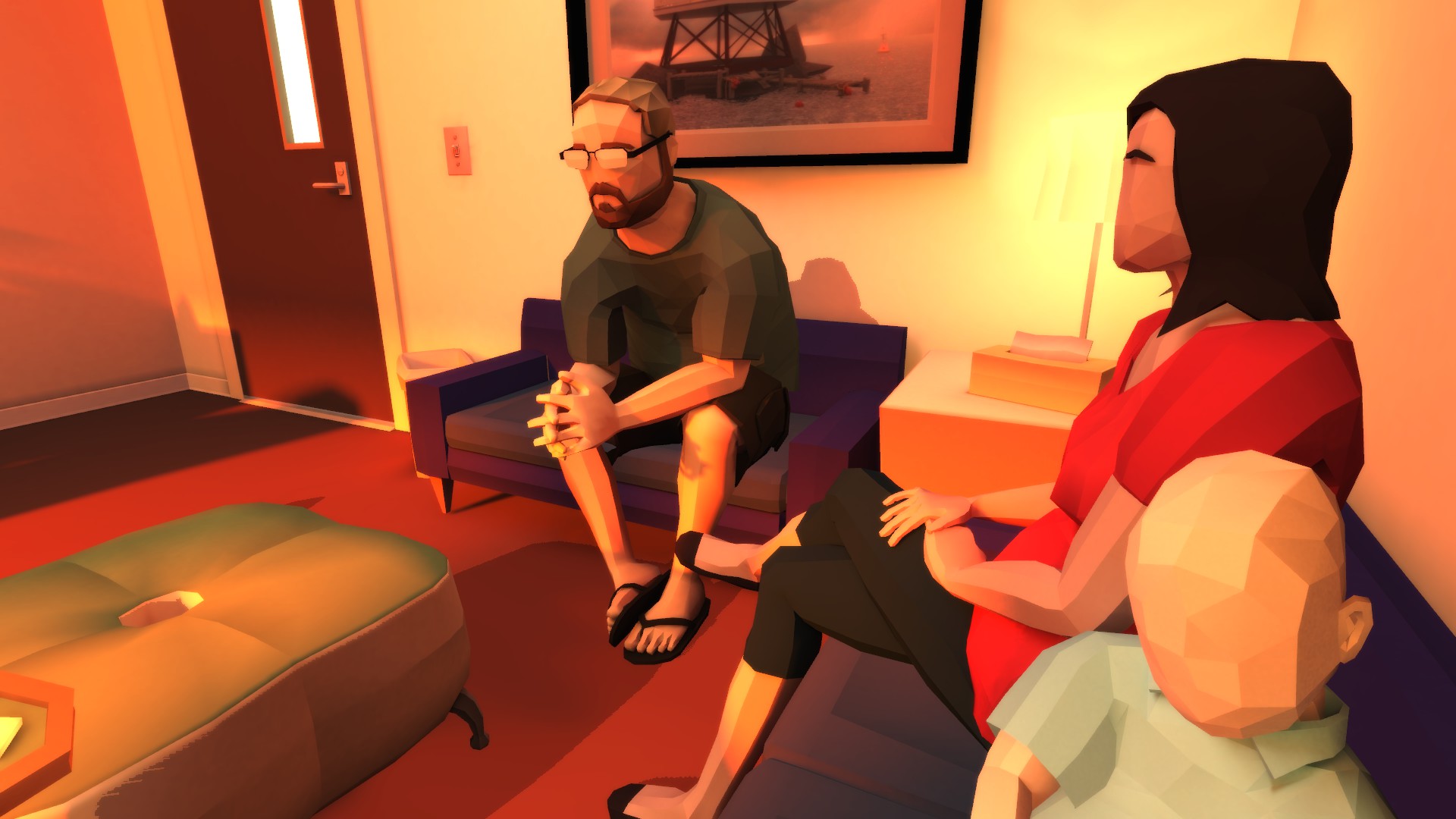
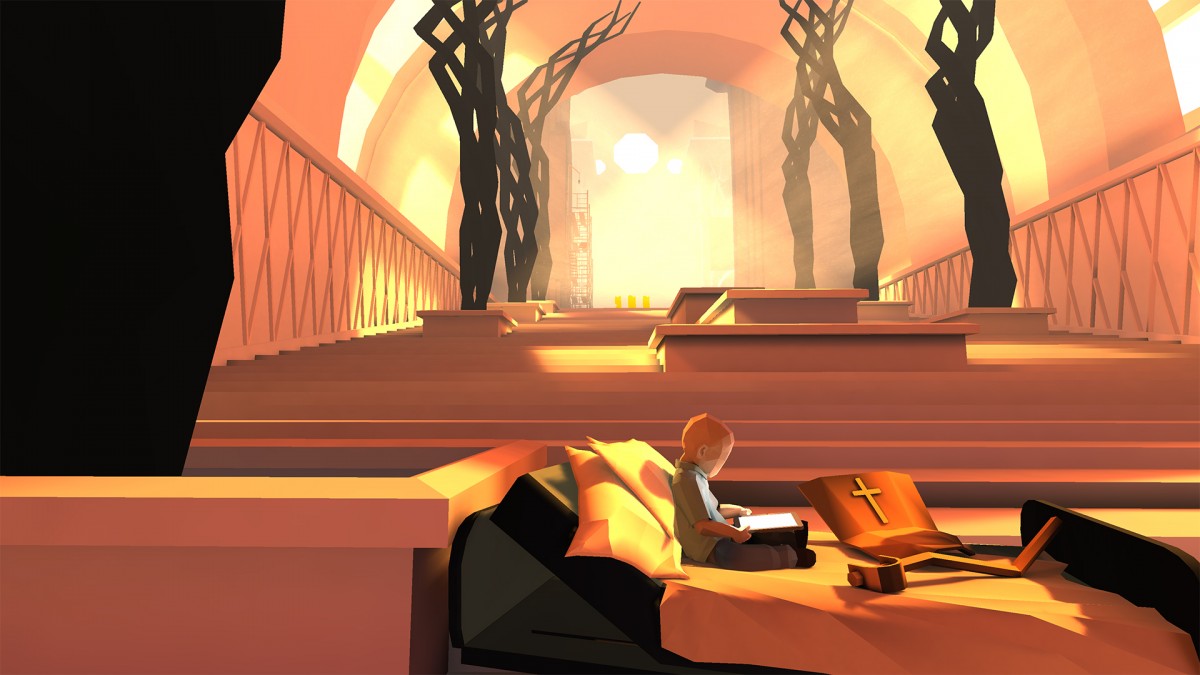
I personally took this game to heart, as I have my own son on the way, and the things that this family went through brought out some emotions I’ve never felt before. A little boy named Joel is battling brain cancer with his family, and you go through the emotional turmoil mostly through metaphors. The game captures most of the parents’ (the dad is part of the development team and helmed this game) memories that are both good and bad. There’s literally zero gameplay involved as you click through levels with flat-colored textures and listen to audio recordings of the family or read letters from other people that are actually real. The emotions didn’t really kick in until about halfway through the game, when you really start to feel the parents’ suffering with this battle.
Outside of clicking to the next area, there are little mini-games, but games say a lot. There’s no objective to various “tasks” like having Joel dodge cancer cells in space, clicking on constellations as they turn into animals and he rides them, etc. These are timed and don’t have any clear goal; you literally just wait it out. As a game, this is one serious piece of a turd, but I didn’t care as I wanted more of the story, and that’s hard to pull off. The best (or worst) part of the game is walking around a hospital and reading real letters in the form of cards from real people; there’re a good hundred of them. The biggest memory was of the dad sitting in the hospital room with Joel with what seems to be a real recording of him wailing in pain as the dad goes through emotional battles in the form of visual metaphors that you listen to him narrate. The crying hit a nerve with me as the dad told him to stop crying, and Joel was bashing his head against the crib. It’s honestly disturbing, but great at the same time.
The game is only about 90 minutes long, and everyone will walk away with this as a crappy game but a great story. I wish they concentrated on the gameplay elements more, as you can tell that was on the back burner. The father was so anxious to get this out that he forgot it’s actually a game. Most children won’t play it as it requires patience and a soul and heart to understand; anyone going through cancer or who survived it should relate, or anyone who adores their children. If you’re a typical heartless gamer, stay away.
I just played this game in one long four-hour sitting, and I’m a little emotional about it. The game is completely story-driven and not one of those shitty Steam Early Access survival games that are becoming a plague. Instead, we get a linear adventure game with no combat and just beautiful visuals and a great story. You play a man named Henry who’s suffered the loss of his wife’s mental state due to Alzheimer’s. The game starts out with just some text about how Henry came about to take this job as a fire watchman. In just a few minutes and several lines of text, you develop feelings for Henry and his wife, which is really tough to do. The words are carefully chosen and arranged in just the right way.
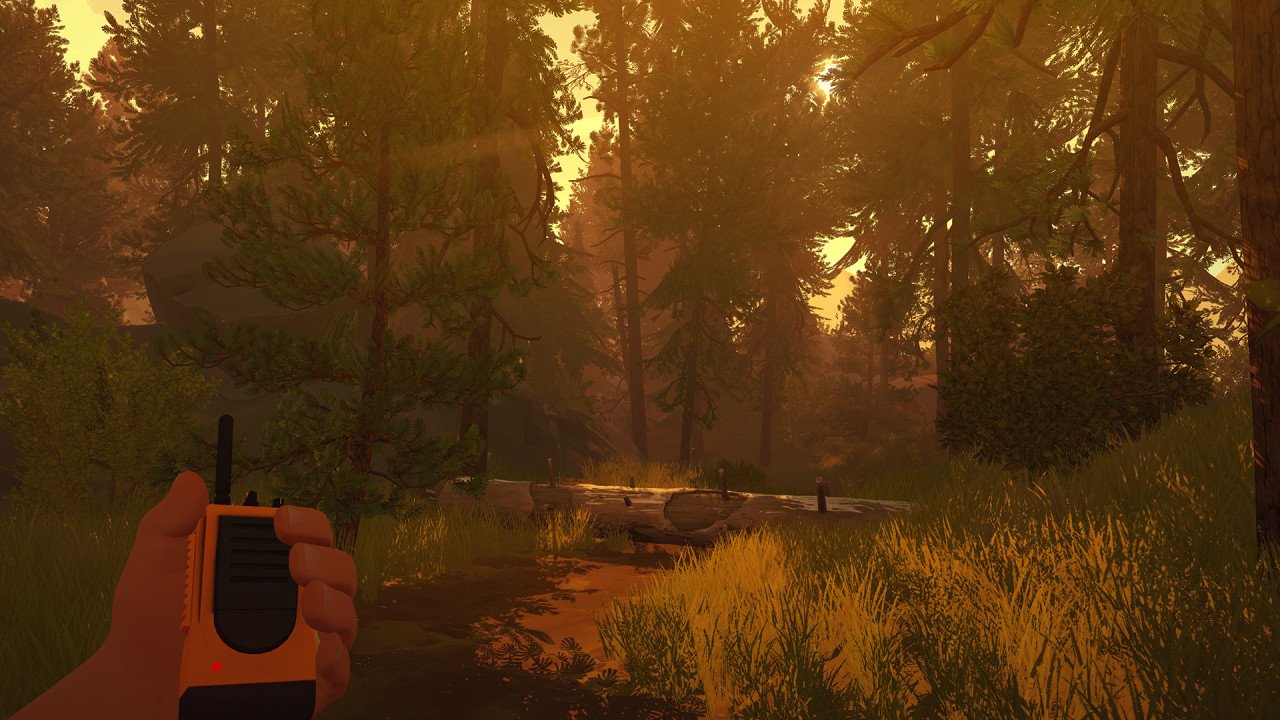
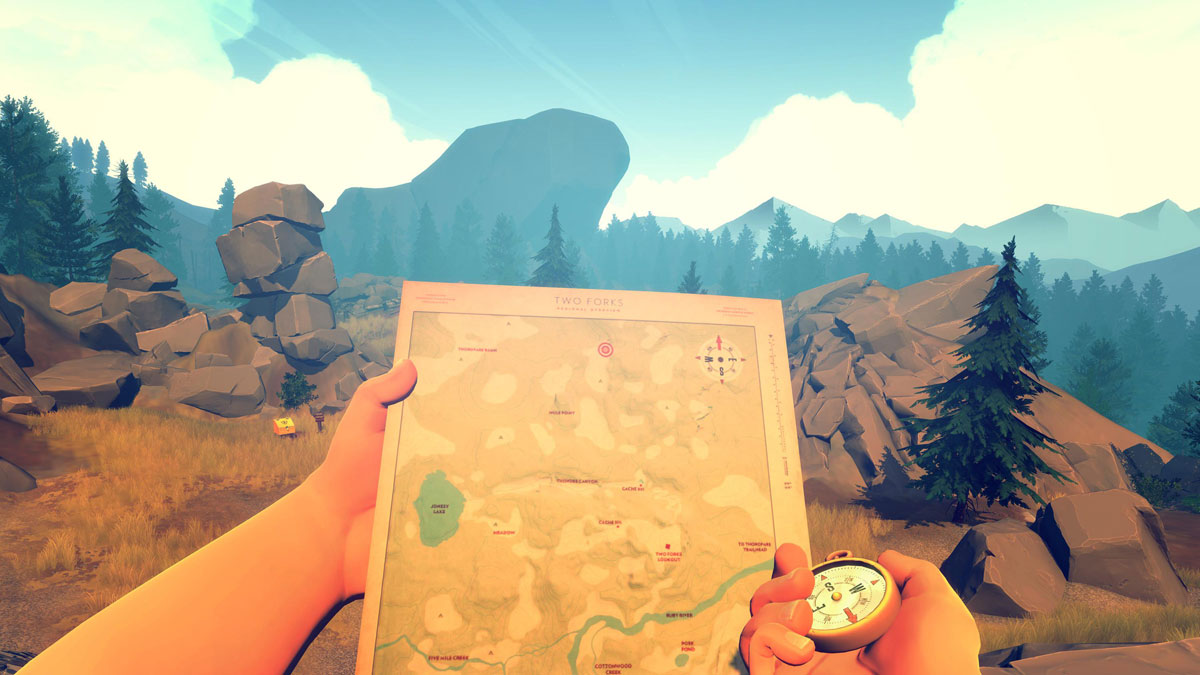
In between this text and the segment is a mini-tutorial with Henry making his 2-day hike to his watchtower. unobtrusive and feel natural and organic, so when you take full control of Henry, you’re ready to start playing. When you do, the game starts out with simple missions from the head watchtower, Delilah. Your only communication with her is your walkie-talkie, and you never actually see her in the entire game. It’s a sense of mystery that allows the player to paint their own picture like a book would. The first missions have you setting out to stop some teens setting off fireworks, and this is where you get oriented with the map and compass. There’s a dot where you are, so there’s no need to memorize anything or do aimless guesswork.
Once you get to the site, you realize it’s two female teens who are completely naked, drinking beer, and blasting music. They get upset with you like any rebellious teenager would and threaten you. The first three days of being a fire watchman are played out; however, the game gets darker and tenser as you progress. There are little subtle things that freak you out, such as seeing a man on your way back to your watchtower, discovering someone’s watching you and listening to your conversations with Delilah, and so on. It’s all very organic, and the fact that it is subtle makes it scary and gives a tense atmosphere without using cheesy ghost stories and jump scares.
There were several moments where I wasn’t sure what kind of story this was. Supernatural? After an hour into the game, I figured it wasn’t that. Was it a slasher flick-type story? Not when I realized there’s actually no violence in the game. Was this a murder mystery? Maybe something with aliens? Not at all. It was great to go down this twisting path to finally discover what the true threat was, which I will not spoil here.
The only lighthearted nature of the game is the relationship between Henry and Delilah growing through conversation; however, I was never completely trusting of her due to certain dialogue exchanges and slip-ups on her part. Firewatch is a roller coaster ride of emotions and story-driven feelings that most games can’t get right. In fact, Soma was the last game to make me feel this way.
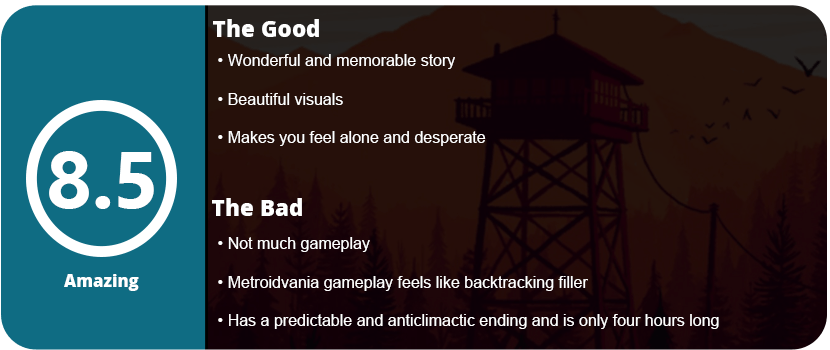
Overall, Firewatch actually has a few flaws that keep it from being perfect. Outside of the story, there’s a lot of aimless backtracking, as after the second hour, you have already discovered this entire area. The Metroidvania-style gameplay to recover equipment to get to new areas seems natural, but it just exaggerates how much this game relies on backtracking to extend game time. Firewatch does have some excellent visuals, though, but nothing that will make modern PCs sweat. I personally had a small connection with this game as I grew up in this area of Wyoming, where the game is based. They mention the cities of Casper and Gillette, which I grew up in both throughout a lot of my childhood. I also visited Yellowstone, so the environment is very familiar to me and made me feel like I was back at home as a kid.
Play Firewatch for the great story, but don’t come in expecting a slaughterfest, survival game, horror jump scares, or any of those cliches. The game is quite mild gameplay-wise, but the story will have you thinking days after finishing.
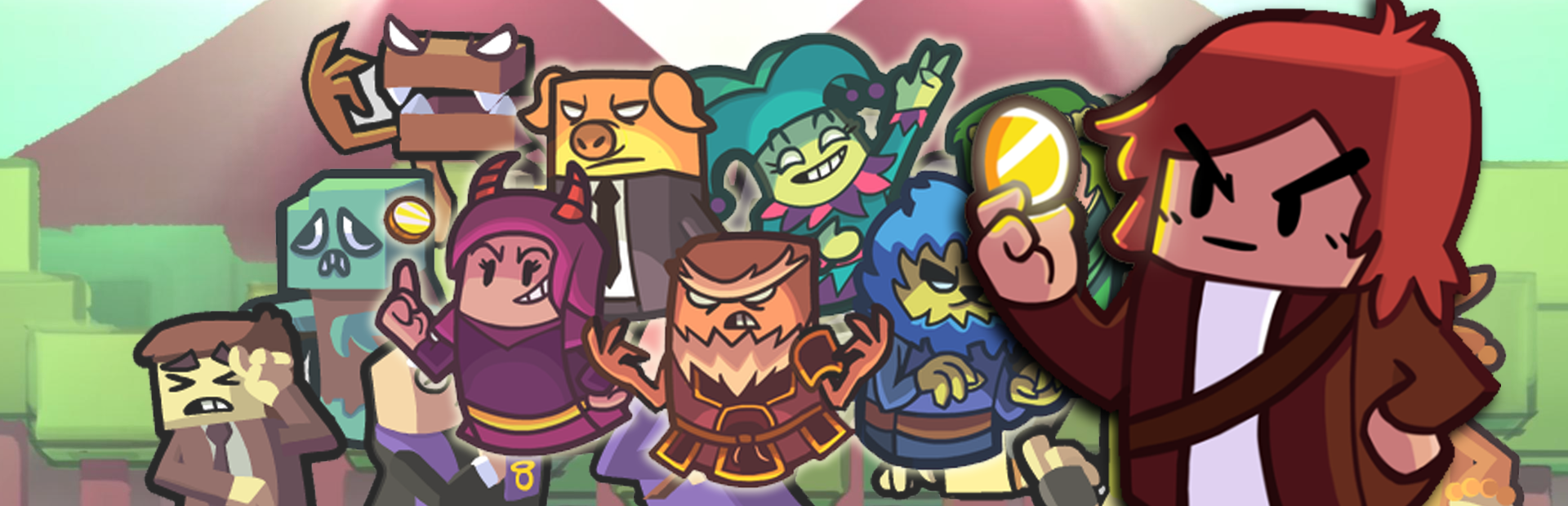
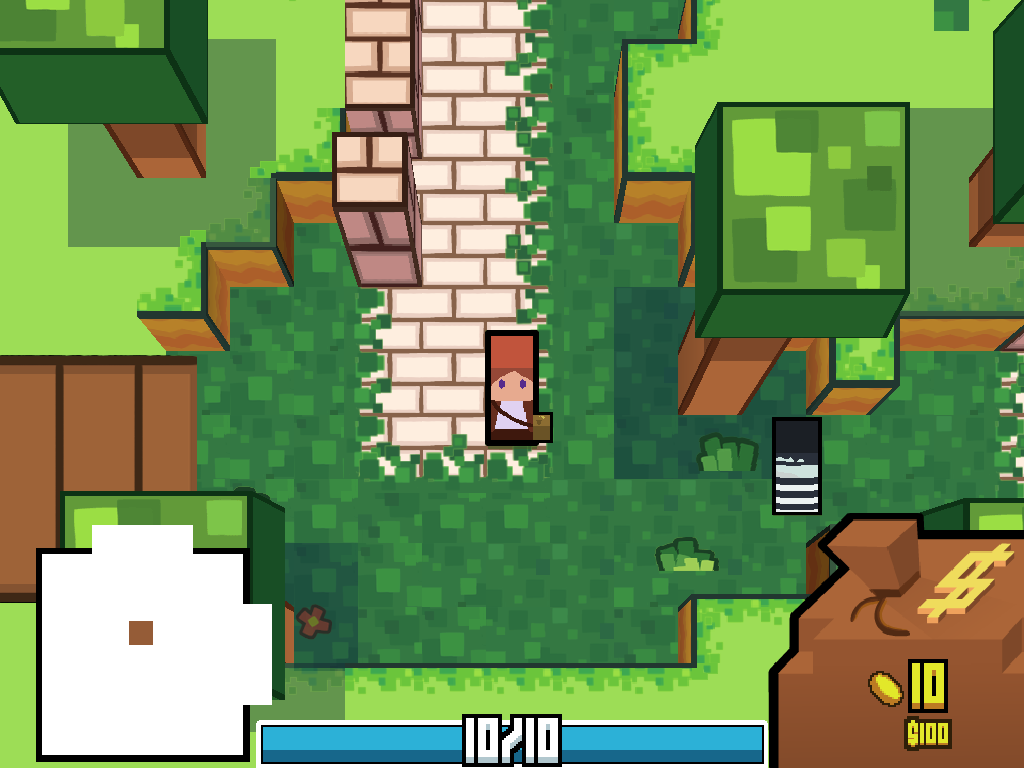
Rogue-likes are becoming very popular these days. They are simple and quick challenges with lots of replay value, almost like back in the day. You usually have a simple RPG system, combat, and a basic level design. Once you die in the game, you start all over again, usually in randomly generated dungeons. Rogue-likes are extremely addictive due to their fast-paced nature, but they also have a niche fan base due to their brutal difficulty. Coin Crypt takes this concept with a simple UI, 8-bit block graphics similar to Minecraft, as well as an interesting currency system.
In my first playthrough, I didn’t know what to do; there’s no tutorial—you just go. I ran into a baddie and fought him. Your character is holding out a giant hand, and in it is a coin that represents a combat move: attack, defend, magic, heal, etc. Holding down the button the coin represents while pressing RT to execute is quite satisfying. After I beat my first baddie, I ran around buying coins from coin banks to continue my journey. I then ran into a boss right away and lost due to his higher HP and attack strength.
My second play-through was a little more successful; I wound up filling my bag full of coins and got out of the dungeon with 220 coins richer. These coins can be applied to buying new characters, and then it’s back at it again. While Coin Crypt is fun to burn away an evening of gaming, I found it tiresome and too simple in the end. It didn’t have a unique style to it like Rogue Legacy or even mobile games like Tallowmere and Mage Gauntlet. The Minecraft art style has been done so many times that it’s there now just to attract fans of that game.
Overall, Coin Crypt is a fun rogue-like for people who love quick yet challenging games but don’t expect much more than a neat idea that will burn out in an afternoon.
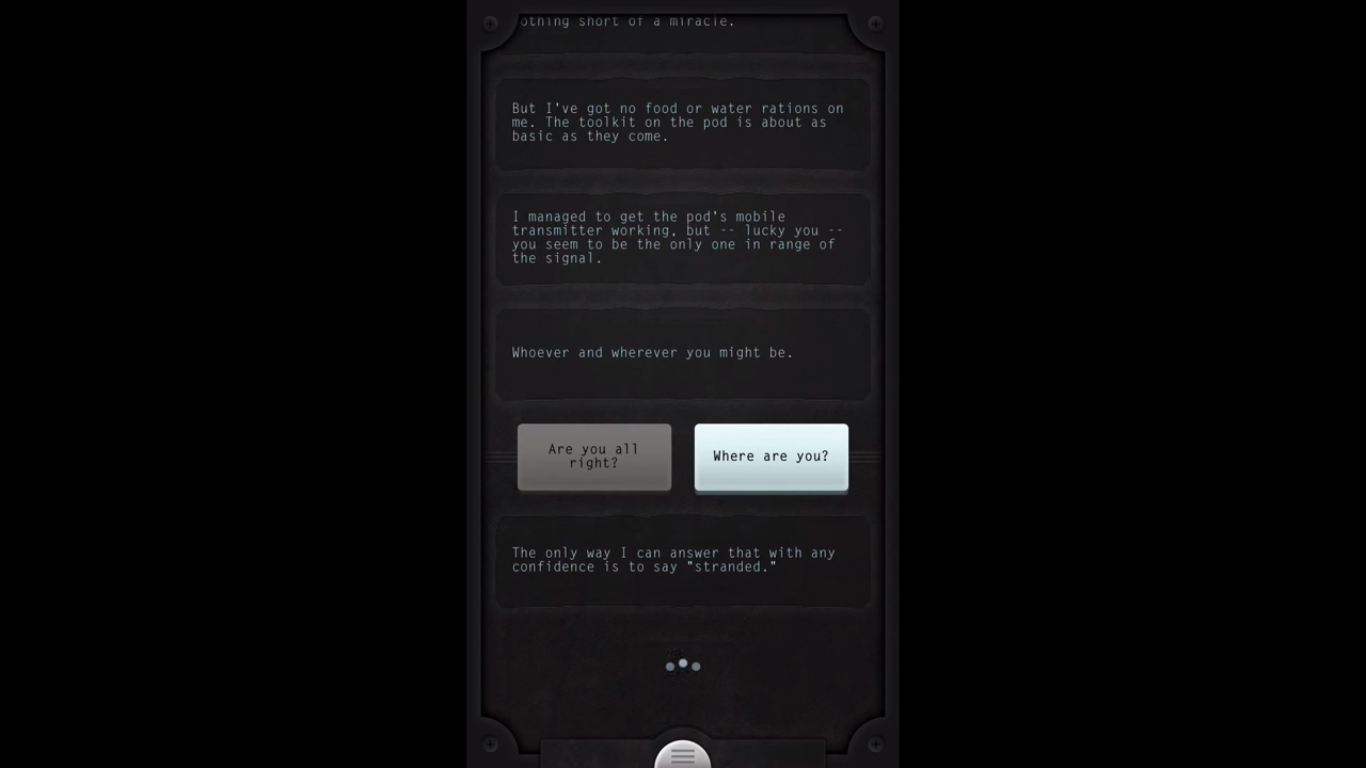
Texting with an astronaut. That’s not something you can say you do every day. Lifeline is a text adventure game like no other and actually is an evolution thanks to, well, cell phones. You receive an incoming message from a stranded astronaut named Taylor on an unknown moon. Your job is to give him the advice he needs to survive and find a way off the moon. It sounds boring and stupid, but it isn’t. Lifeline is one of the most unique mobile games I have ever played.
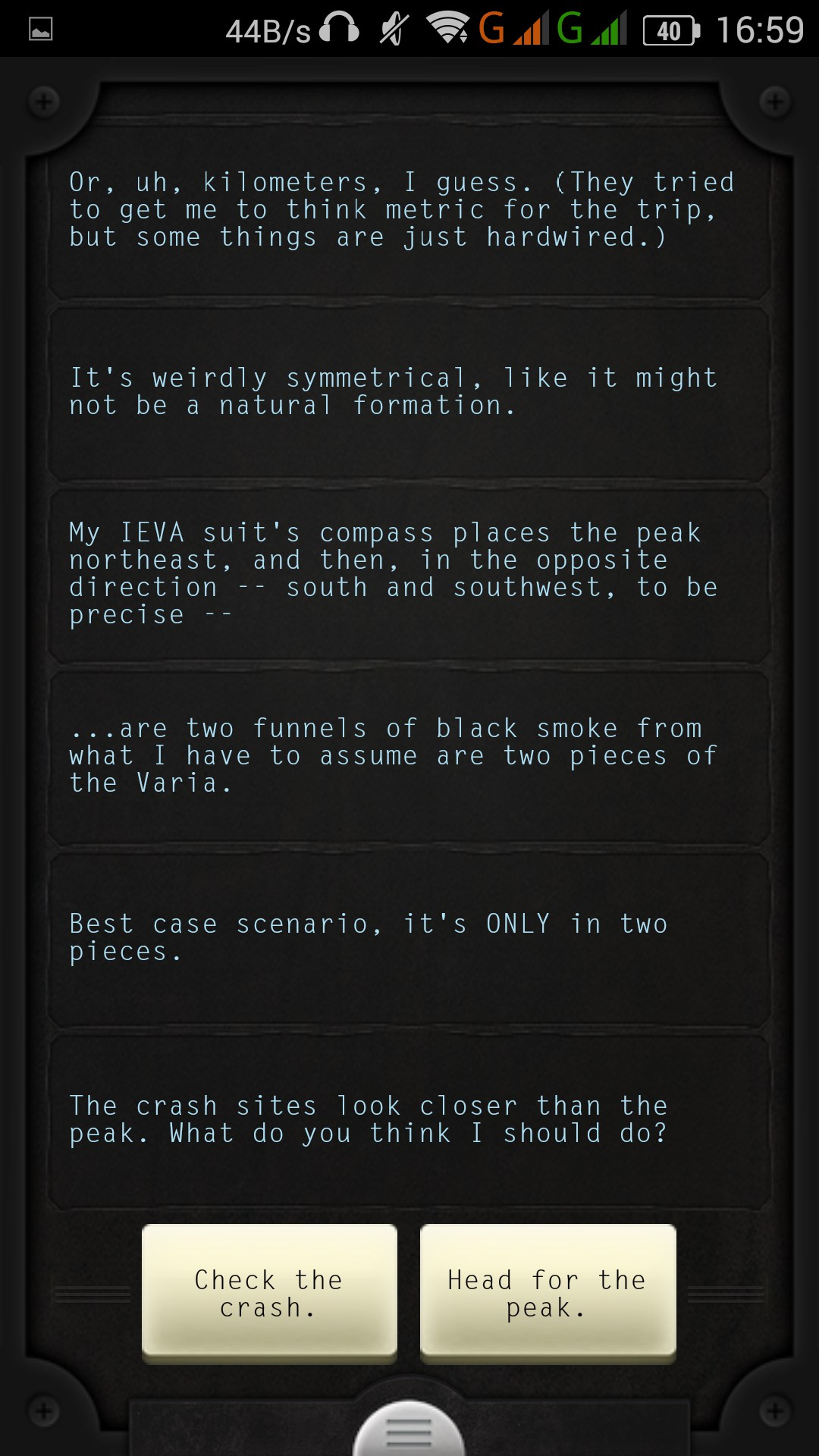
The best part about Lifeline is that you actually have to wait for Taylor to reply in real-time. If Taylor is going down to bed, you may have to wait 4-5 hours; if he’s eating, maybe 30 minutes. This sounds boring, but it’s actually quite engaging and thrilling; it leaves you wanting more. Of course, there’s a fast mode, but what’s the fun in that? My journey with Taylor was quite memorable, and the pace picked up towards the end of the story, which took me about two days to actually get there. Several times I wound up giving poor Taylor some bad advice, and our plucky, sarcastic astronaut died a few times. During my adventure, Taylor ran across two spaceships. The way Taylor describes everything paints a perfect picture in our heads of what the moon could look like. It’s a sci-fi horror mystery with no pictures or spoken dialog, which is what makes it that much more thrilling.
Several times Taylor would stop midway through sentences and cut off, and I wanted to know what happened. I would get a lot of “OH MY GOD” or “YOU WILL NEVER BELIEVE WHAT JUST HAPPENED.” You get a choice of two short responses, and while some may be similar, a few will decide Taylor’s fate. I was able to get Taylor to calm down after seeing strange creatures; we got some glow rods, a generator, and then a long and rough journey to a large crater with a tower in the middle that kept disappearing. Without spoiling anything, after you reach the tower, this is where the climax begins, and the wait times are non-existent. I really felt Taylor’s psyche start to deteriorate and felt his suffering. I actually felt like I was texting a stranded astronaut, and that’s the beauty of this game.
The best part about Lifeline is that you can go back to any point and rewind the story to that point or to the beginning of the day. This allows for zero frustration and complete fluidity through the story—something that other text adventures need to take note of. I just wish the story was longer and we could have explored nearly the entire moon. I wouldn’t mind a game like this lasting days or even weeks with dozens of hours of gameplay; it’s just so satisfying and engaging. With that said, Lifeline is a phenomenal idea, and hopefully more people will pick it up. The writing is believable, and the fact that you’re just staring at a gray screen with scrolling text and some haunting music makes it that much better and more engaging. The game forces you to use your imagination; it uses the unknown and lacks sensory input to make you want more and to really care about Taylor. On top of this, you can tell everyone you have texted an astronaut.
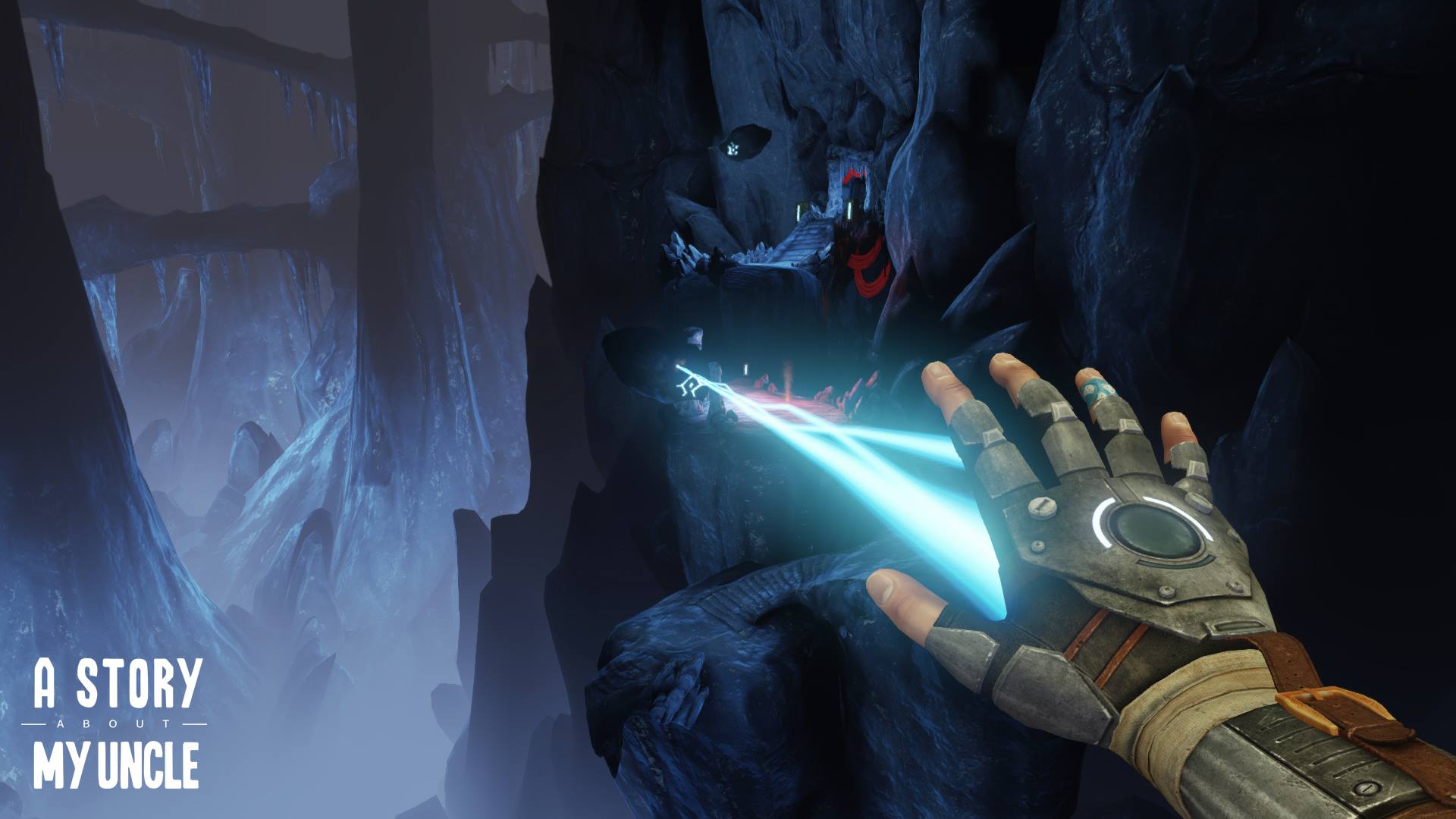
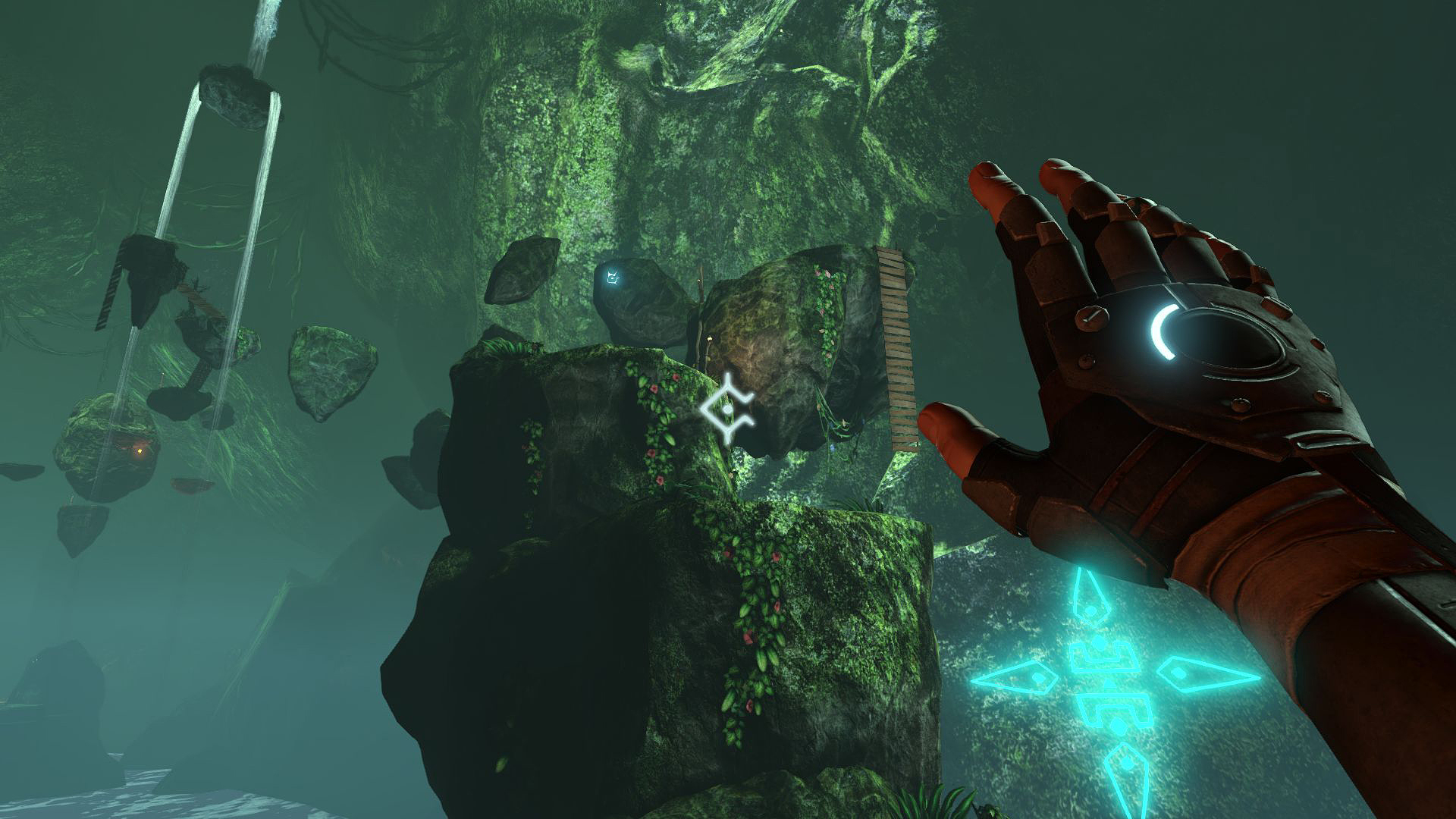
First-person platforming isn’t attempted often. A Story About My Uncle keeps it basic with grappling, anti-gravity jumping, and various puzzles. The story is fairly simple and doesn’t really mean anything until the very end. A boy is trying to find his uncle, Fred. He finds his uncle’s lab, where he straps on a weird jumpsuit and takes off to some unknown land. He eventually comes across a species of frog people, and a little girl from this village befriends the protagonist.
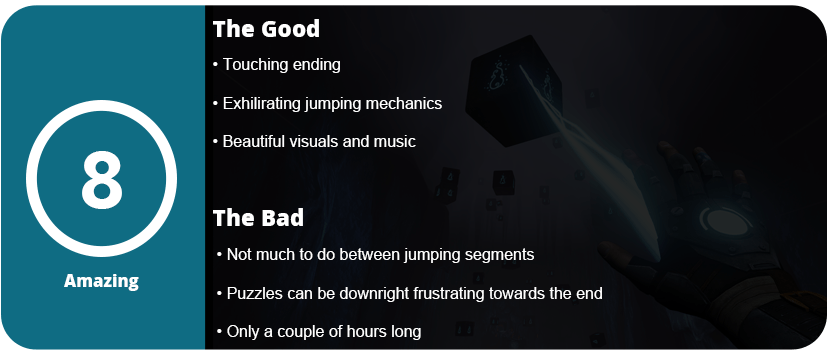
The jumping is actually quite exhilarating. You jump really high, and your character’s hands swing around, which makes you feel vertigo. The sheer speed and height this game creates is something not really seen in most games. As you make your way across bottomless chasms and dark caves, you begin to wonder what all this means. What’s the point? The jumping puzzles get progressively harder, to the point of downright frustration. The grapple has three shots. Once these run out, you either need to land or you’re falling into the abyss. Later on, you get rocket boots that allow a quick boost if you miss your shot or your next grapple point is too far away. One of the hardest obstacles is the windmill. I actually had to manipulate the physics by landing on one for a split second so my equipment could recharge. The game gets so tricky towards the end that casual players may not make it. Sure, the game is only a couple of hours long, but the complicated jumps are just mind-boggling.
With that aside, the music is great, and the game looks beautiful. While it uses the dated Unreal Engine 3, the art style is superb. I honestly felt like this was Journey to the Center of the Earth meets Mirror’s Edge. There’s nothing else out there like it, and the ending is extremely touching. Well worth the play through to get a few heartstrings pulled.
I just wish there was more to the game. Sure, jumping around gets fun, but sometimes I feel areas drag on forever with too much nothing in between. It’s a step in the right direction for this type of game. With more stories being pushed out and some variety in gameplay, this game could have been something even more incredible.
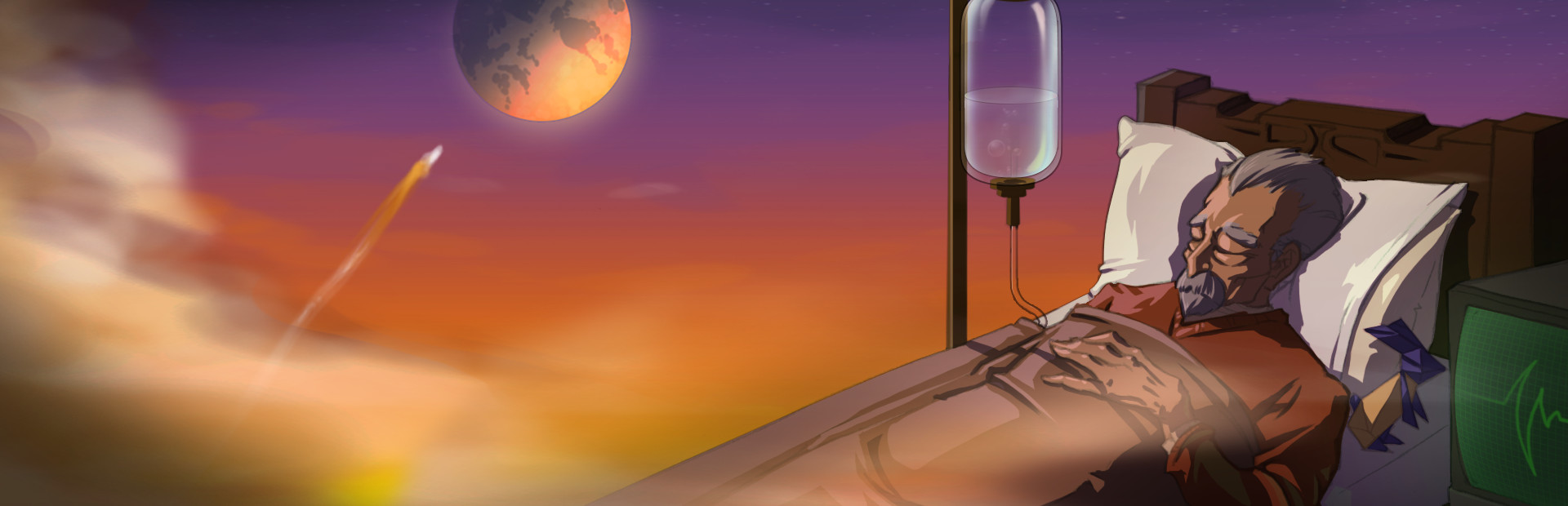
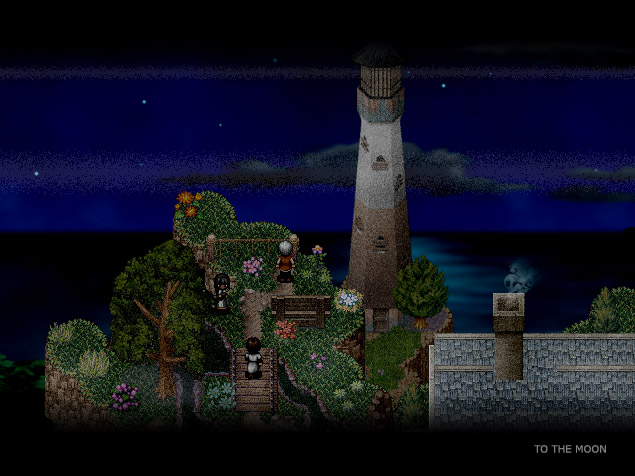
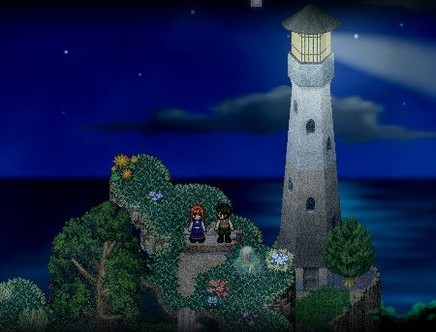
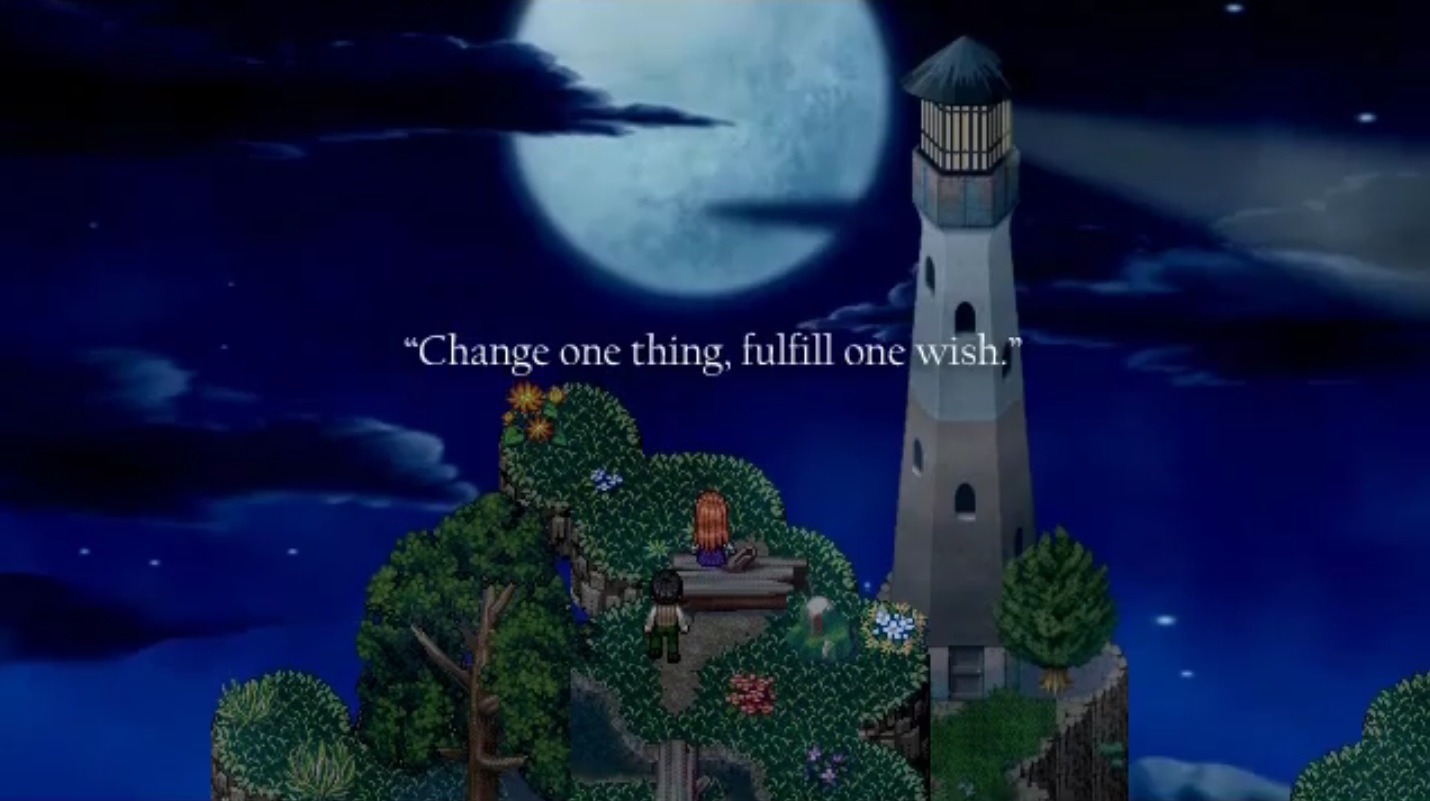
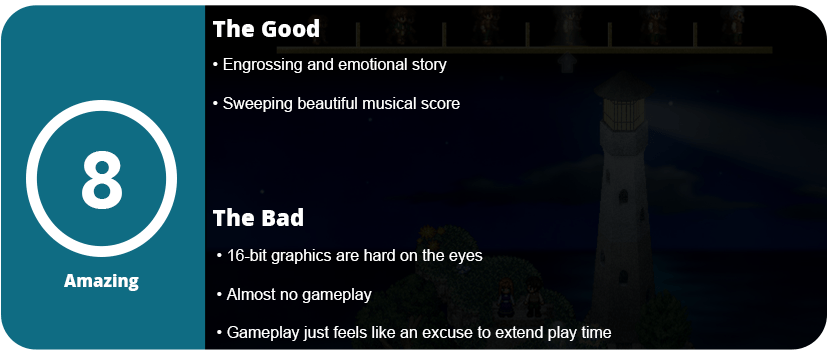
To the Moon is a 2D, 16-bit adventure game that follows two scientists who are fulfilling a dying man’s last wish. They use a strange computer to go into his memories to find the link that will allow him to go to the moon. To the Moon has a heartwarming story with a beautiful, sweeping musical score, but lacks any type of real gameplay.
The game is broken up into three acts, and during the first two, you are walking around John’s memories and have to find five memory links to unlock the shield surrounding time-jumping mementos. As you go further into John’s past, you find out why he doesn’t know why he wants to go to the moon. There is some memory block, and you have to find out what it is and remove it. Finding these memory links only takes a few seconds because you just click on the few items in the small area. Once you remove the shield, you play a little puzzle game, then move on to the next memory. This all just seems like an excuse to add gameplay to an otherwise visual-only adventure.
Through Act 2, you get to interact with two different mini-games, which are Whac-a-Mole and a zombie shooting section, and each is uninspired and pretty lame. The visuals are, like I said, 16-bit and pretty average. There’s nothing special here, visual-wise, and don’t even expect voice acting. The second-best thing about the story is the sweeping musical score. This score is beautiful and one of the best ones I have ever heard. I really wish that this game could have been more, but I understand most indie developers have small budgets.
Overall, To the Moon has a story that will tug at your heartstrings, as well as the music, but the gameplay feels like an excuse to extend the 1-hour story to barely four hours. If the gameplay was a little more engaging, I wouldn’t complain about it so much, but as it is, stay for the story and you will be entertained.
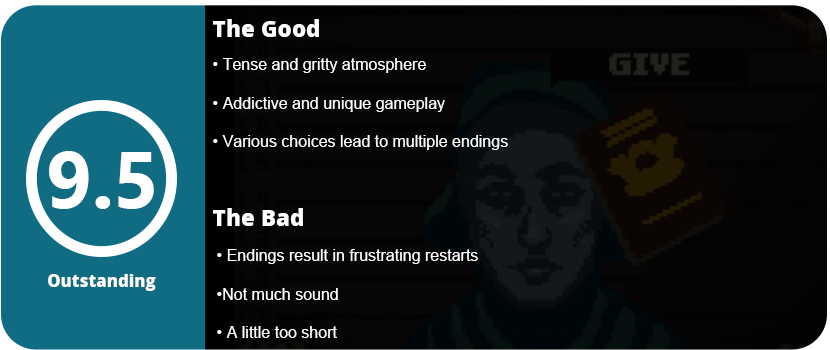
I honestly went into this game not expecting much. It is an 8-bit-style game where you stamp papers for people. Sounds boring, right? Far from it, and I mean very far. This is one of the most addictive and fun indie games I have ever played. This game kept me away from Skyrim, Splinter Cell Blacklist, and Saints Row IV. How can a $10 game keep me away from such high-budget splendor? It’s unique and so much fun. I honestly don’t even know if it’s a puzzle game, an adventure game, or something. It’s something, but so original that it creates a new category all on its own. You play as a Russian citizen who gets his name drawn in a labor lottery to work the customs booth at a border check. The story isn’t exactly deep, but the atmosphere is tense and gritty.
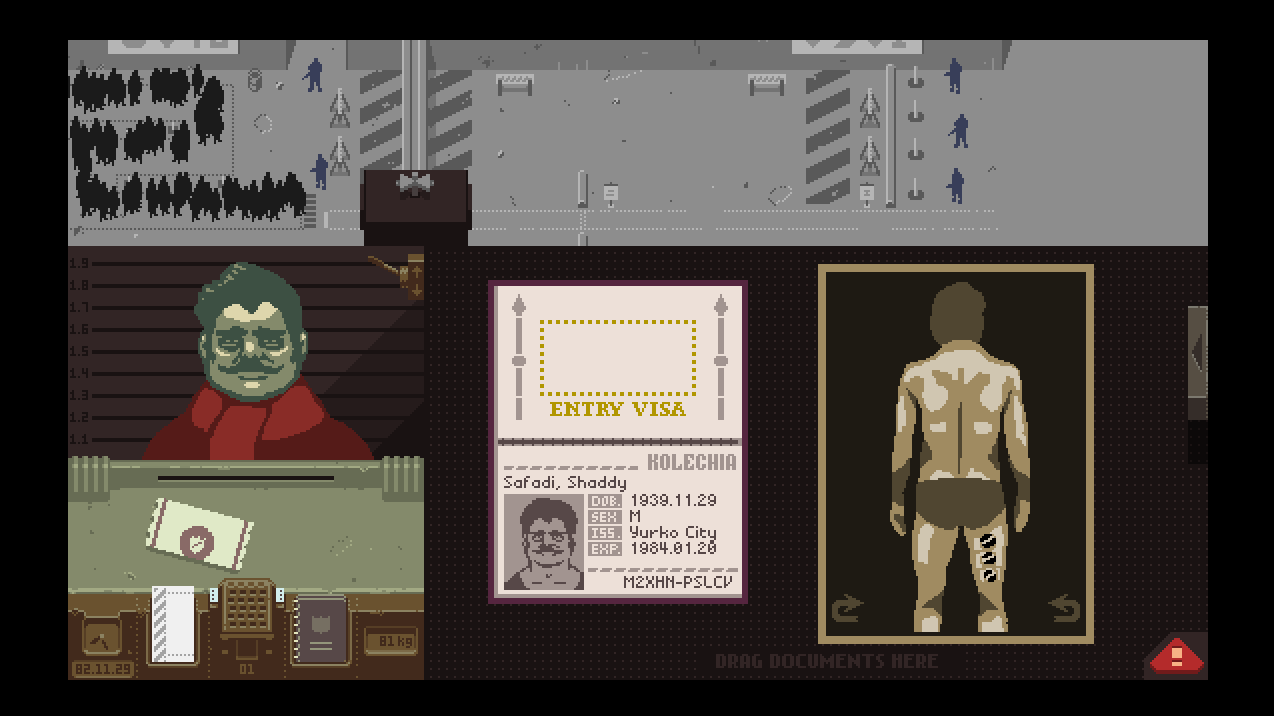
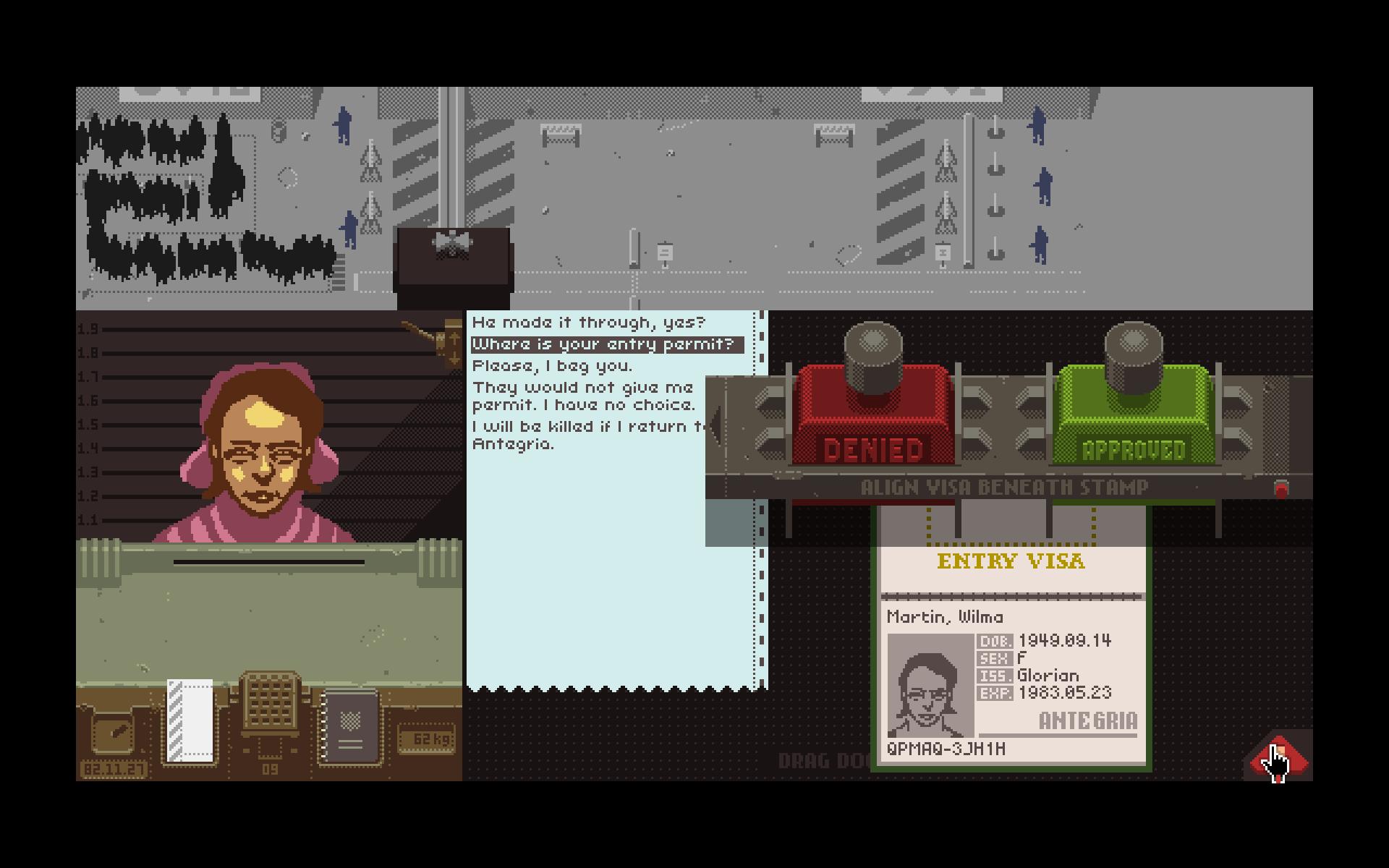
You start out every day by reading the headlines in the paper and walking to work (you don’t actually do the walking). The top half of the screen is the line at the border, and everything is going on. Guards are patrolling, cars are passing by, and you will occasionally witness terrorist attacks. The bottom part of the screen is split into two parts. On the left side are your counter and window. This is where you receive everyone’s passports and various papers, as well as your rule book and bulletin for the day. You must make sure everyone’s credentials match before you stamp their approval. You start out with the simple task of just making sure the issuing city matches the right province. You check this in your rule book. If this doesn’t match up, you go into inspection mode and click on the information you see wrong with the corresponding contradictory information. This gives you a personal touch to the game and makes you feel like you are in control of these people’s lives.
Before you roll your eyes, this isn’t some sort of Burger Builder or any other type of mobile game. You get more and more papers to check as the game progresses. You get special assignments such as confiscating certain citizens’ passports, stamping the reason for denial, cross-checking shot records, matching up ID numbers, height, weight, birthday, and expiration date, and you need to do all this fairly quickly. You’re not in real time, but the more you process, the more you get paid. This just gets so fun and addictive because of all the hands-on stuff you get to do. Sometimes people will try to bribe you or ask you to deny or pass certain people, and guards will bribe you if you detain more people. Later on, you get to even scan them for contraband and fingerprint them. There’s a lot involved, but it’s doled out slowly so you aren’t overwhelmed.
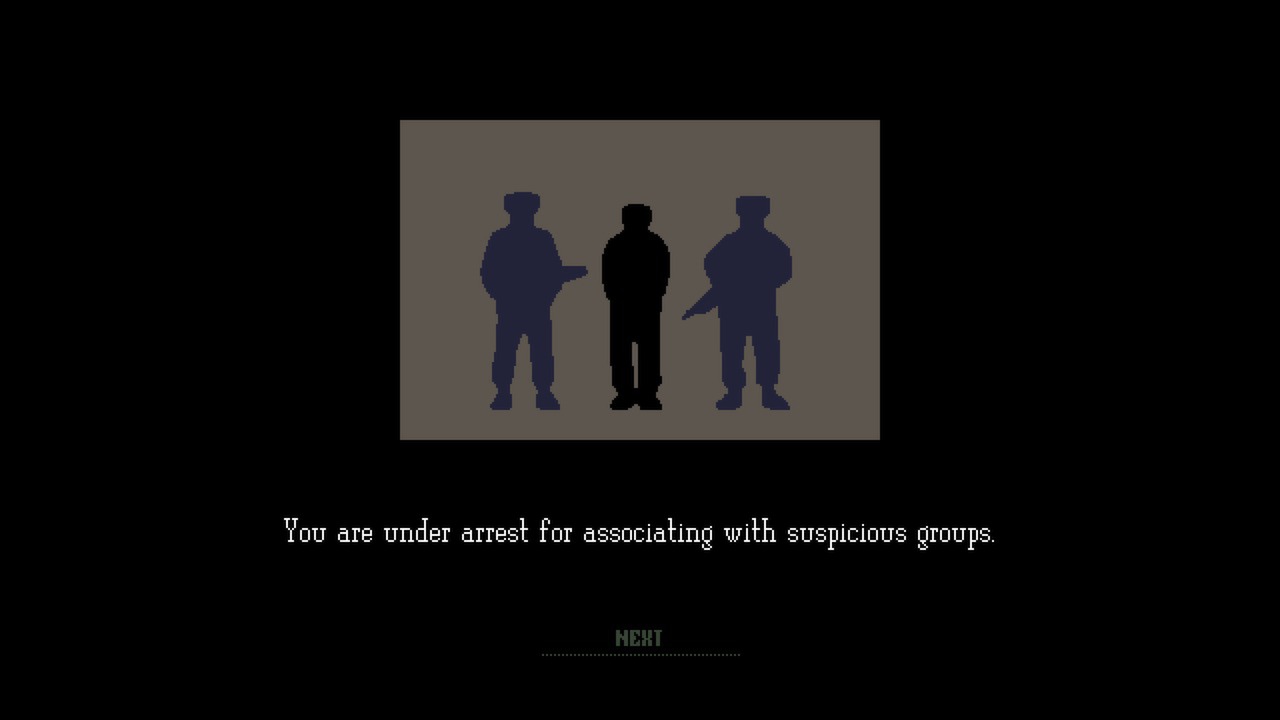
If you mess up, you get penalized; this goes against your 10-day inspection. You get plaques you can hang on the wall, but if you are caught with anything else on the wall, you get docked pay. If you are involved with the terrorist group EZIC, you get fired. It’s up to you to be loyal to your country or betray them behind your back. There are 20 different endings to get for different choices. Thankfully, the game saves before the start of each day, so you can change your choice. Things, like accepting certain bribes and spending that money, will trigger an audit, leading to an ending. You can burn the money and continue to save, but it’s all up to you. By the end of the day, you need to help your family with food, heat, and various other things using your pay. You need to be very careful and only get them what they need, or you will end up with a game over and your family dying.
The constant lash and tension between countries are tense, and you get the full brunt if you let known murderers in. Sometimes being the good guy will get you lots of penalties. Too many will lead to a game-overcoming inspection every 10 days. The game is just so much fun with a lot of replay value, and there’s a lot of content here. I honestly don’t have too much to say that’s bad except I wish the game was longer and you didn’t get all these endings and have to restart whole levels as a result.
Papers, Please is one of the most unique games ever made, period. I normally don’t care for these indie games since they are a dime a dozen, but when games like Fez, Braid, Limbo, and Papers, Please come up, they get my attention. Any gamer can play this since it really isn’t designed for a set crowd. This will be the best $10 you will spend on a game.
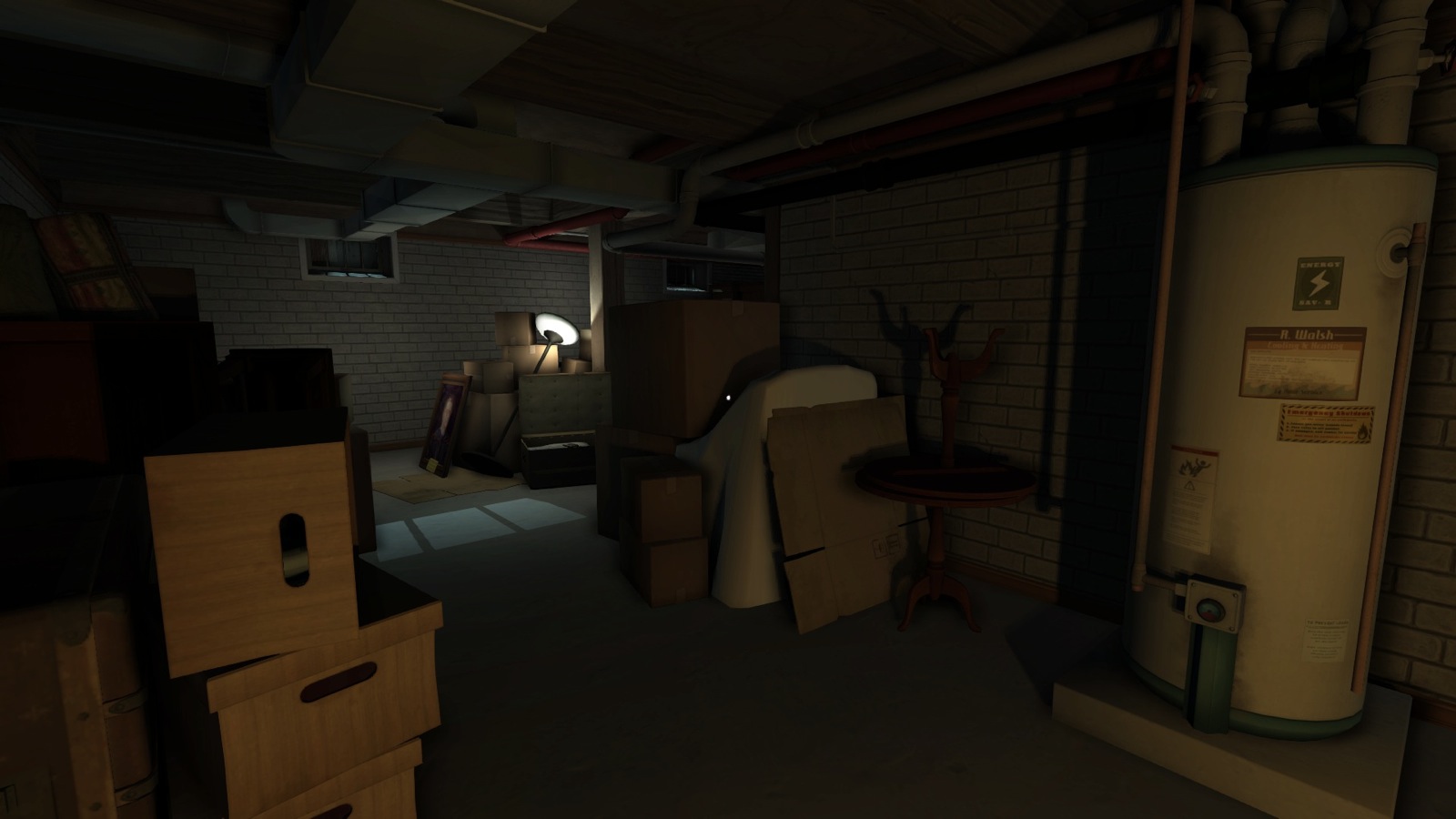
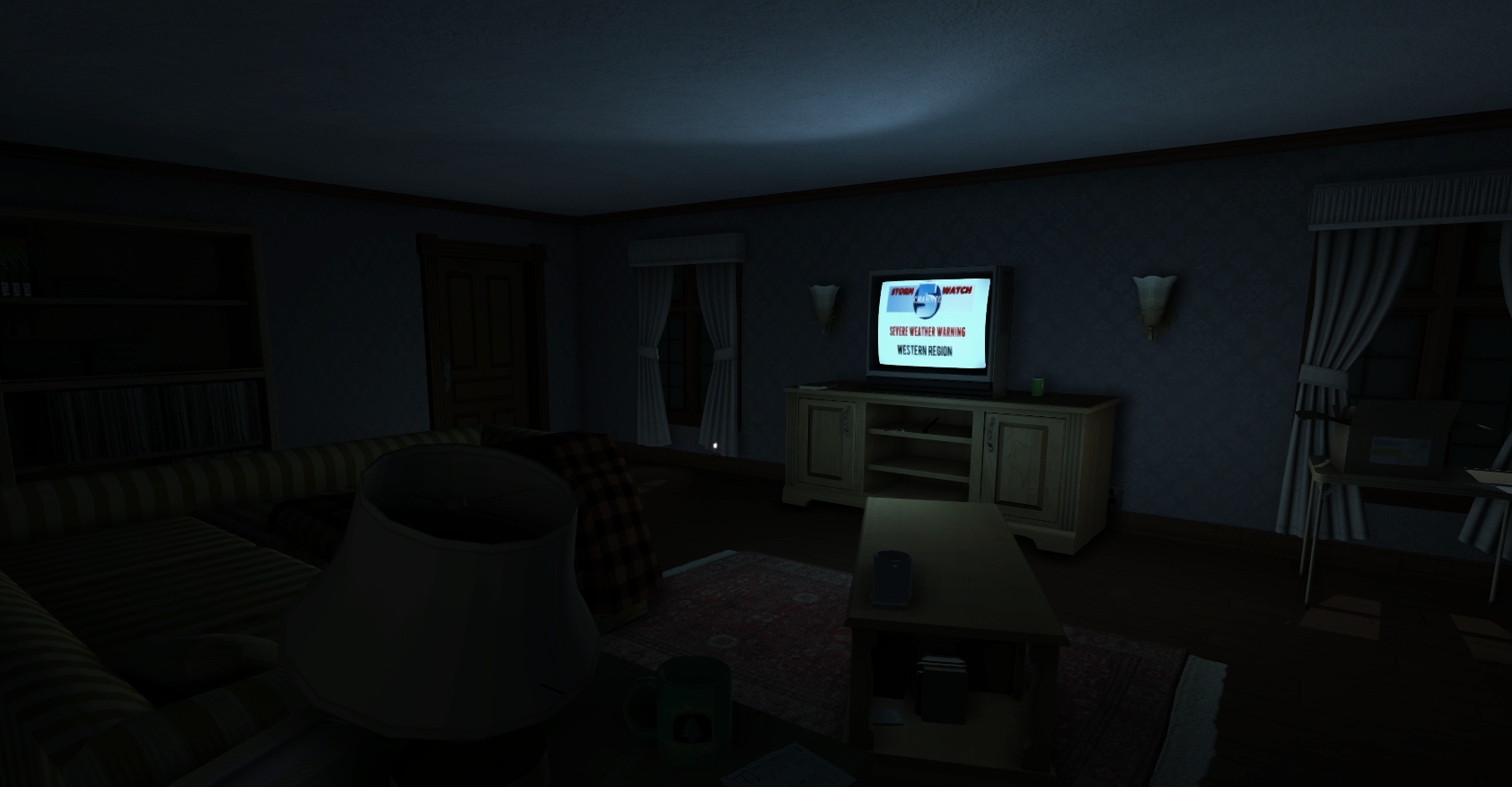
It goes to show that a smaller focus can create a great story and atmosphere. You don’t need a multi-million-dollar budget to create something great. Gone Home starts out oddly because you are given no direction, but after about 15 minutes, you realize what you are supposed to do. You arrive home from a school trip, and no one is home. You find a note on the front door from your little sister, Sam, that says she’s gone and won’t come back. With the dark atmosphere of lightning and rain, you expect this to be a murder mystery. In fact, that feeling changes throughout the game.
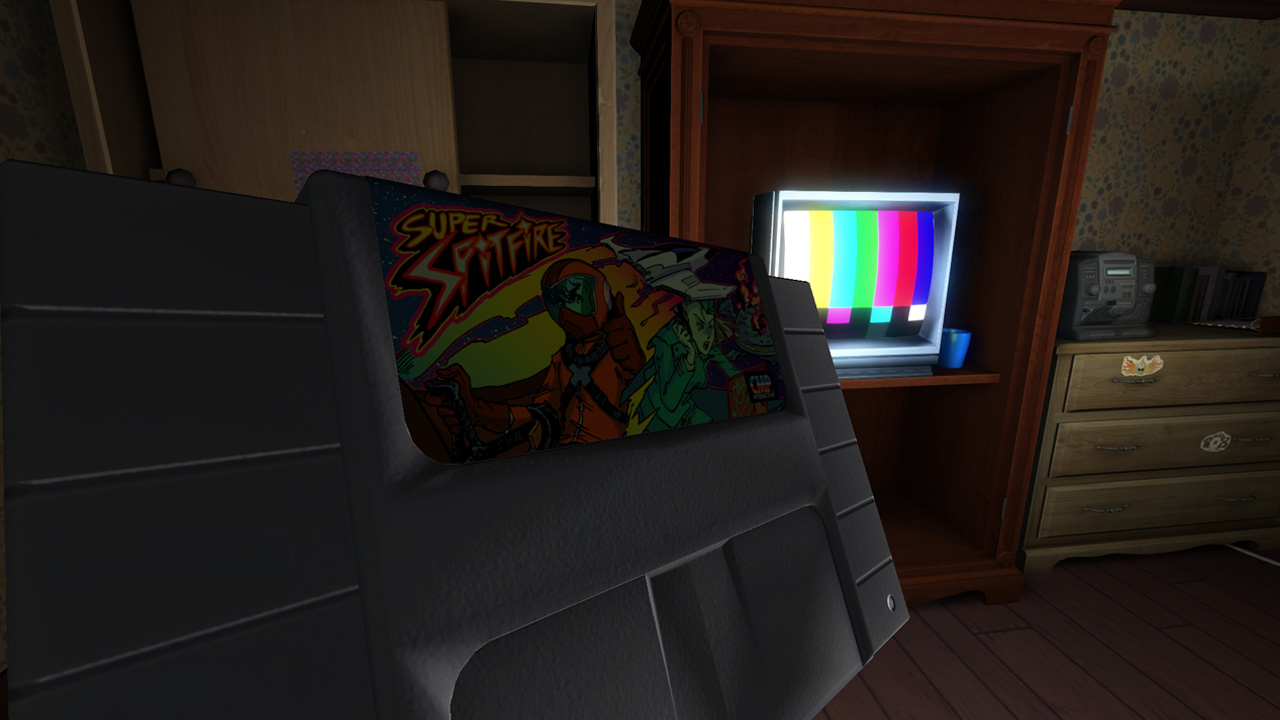
Once you find the key and go inside, you just wander around, examining everything. There are letters to read and interesting objects to look at. After a while, you start finding key items that activate journals narrated by your sister. The home itself is a great recreation of a ’90s home. It actually brought back a lot of childhood memories with CRT TVs, cassettes, VHS tapes, and various items from the 90s. It gave me a warm feeling, and I felt at home in this house, but I wasn’t sure what was going to happen. Was it haunted? Was there a murderer in the house? I went on to read more letters and items to see that the mom was a park ranger and the dad was a tried and failed author and magazine writer. I later discovered a few locked areas and three different cabinets that had lock combos on them.
Honestly, you don’t need a walkthrough for this game. It’s all pretty easy to figure out. I just went from room to room looking at everything and realizing that this lesbian relationship with Sam and her friend Lonnie is actually pretty heartbreaking. You see signs throughout the house that it’s a bit of a broken home, and Sam is a problem child. Little things like good report cards from you and then disciplinary notices from the school for Sam. It all brought back memories for me from my school days and my childhood. Anyone who grew up in the 90s will feel the same way. As I reached the end of the game, I was pretty emotionally stirred up. I couldn’t wait for the end.
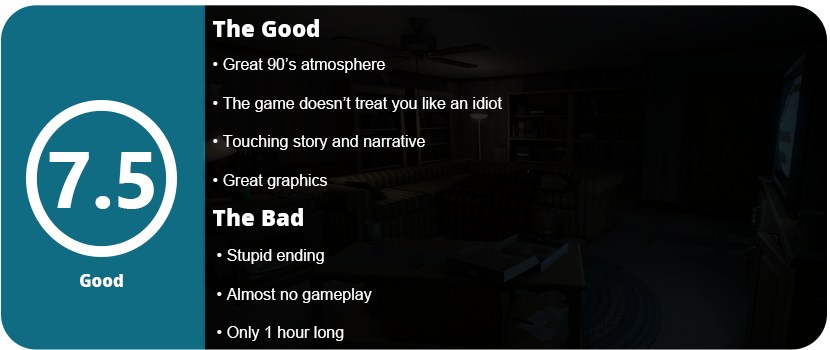
Once I got to the final room and saw the ending, I was really disappointed. I felt the entire 1-hour journey was for nothing. Sure, the story was sad and will tug at your heartstrings, but the ending was predictable and lame. There are signs everywhere of Sam studying the occult and various things about the house being haunted, but nothing ever happened. I was never spooked; there was no murder; it was just a few journals narrated by a gay sister, and that’s it. 90% of gamers will find this game extremely boring, and even if you don’t, it’s not worth $20. You get about an hour of gameplay with a lame ending. I expected the sister to have committed suicide and you would find her body upstairs, something like that, but no, just a lame ending.
The game has decent graphics, but nothing too impressive. There’s a lot of attention to detail everywhere to create this great 90’s atmosphere, but you still need a pretty powerful rig to run it due to the complex lighting effects. As it is, Gone Home is a great narrative and a trip down memory lane, but the ending and lack of gameplay are disappointing.
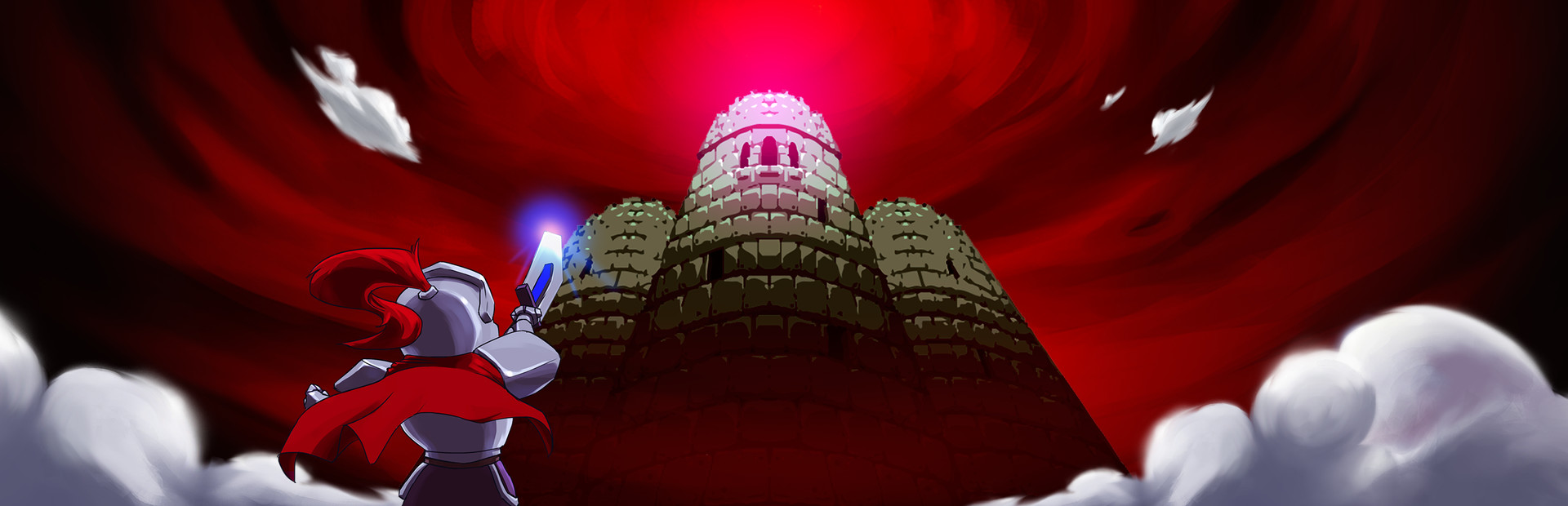
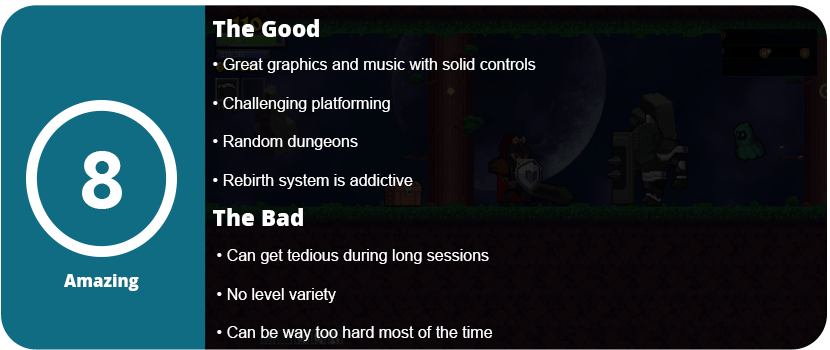
2D platformers have had a huge comeback in the past 5 years, but none of them really offer a great challenge. Rogue Legacy offers a lot of replay value thanks to the randomly generated dungeons and characters. I love Rogue’s character selection system. You get to pick between three different people, and when you die, their attributes make an offspring that is similar. Some characters walk upside down, and some have extra strength, health, MP, HP, and various other passive effects. This is really neat, and sometimes you are forced to choose one particular character so the other bad genes are wiped out on your next death. You can upgrade your weapons at each rebirth, and you can give up 30% of all the gold you find to lock down the castle if you liked the previous layout. When you enter the castle, you must forfeit all your gold, so you start from scratch. This is a cool feature and doesn’t really get in the way.
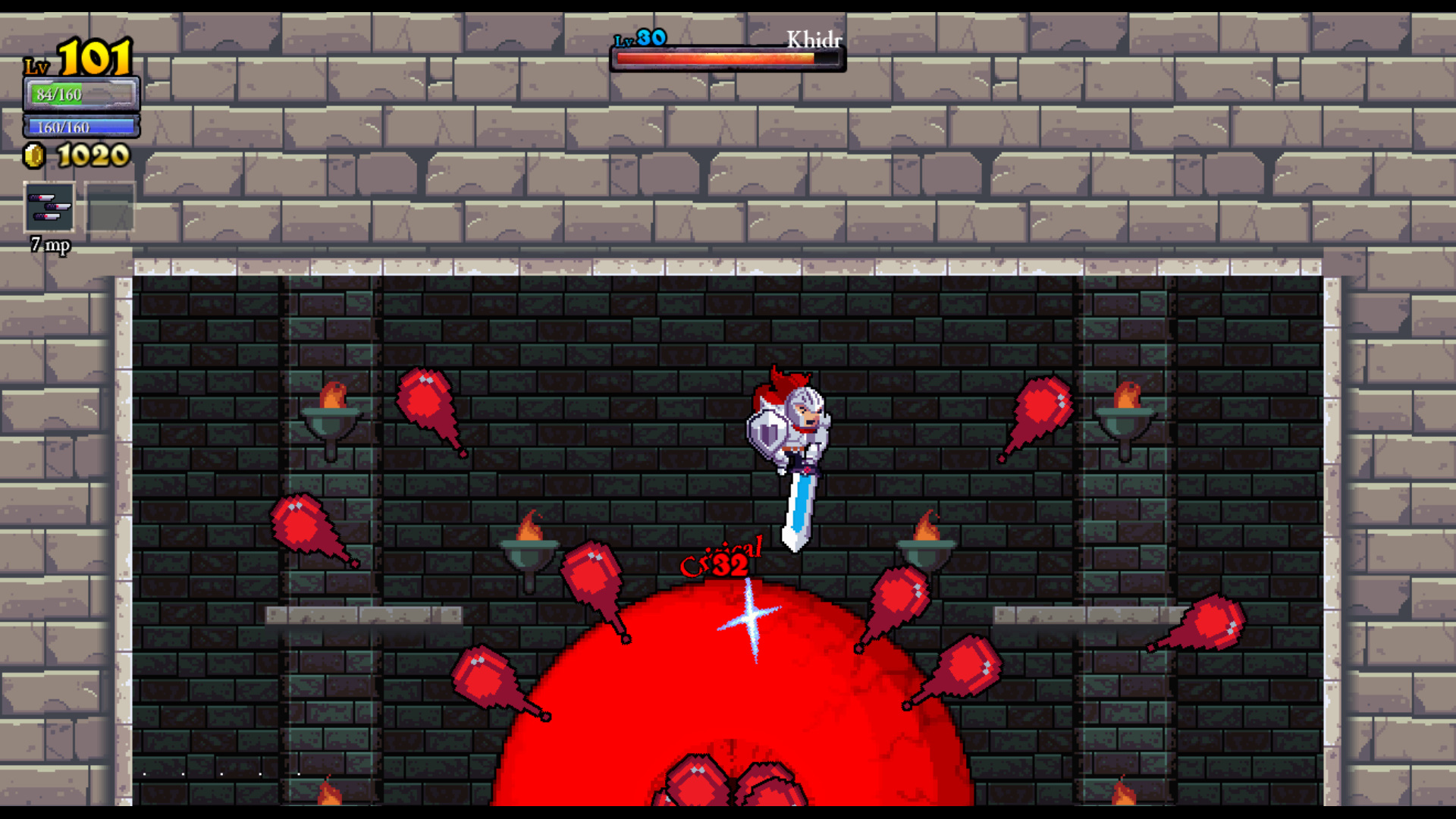
When you actually play, you will be greeted with great controls and fast-paced and challenging combat that’s similar to Mega Man and Castlevania. Breaking open objects gives you gold or items, and enemies can be really tough and fast. You have to stay on your toes because you can die really easily. I died around 15–20 times before I even got to the first boss. You also get items that use MP, kind of like in Castlevania. Honestly, this game felt like Castlevania meets Infinity Blade, which isn’t a bad influence. I wasn’t frustrated because sometimes the rebirth was for the better. After a while, it gets kind of hard, so it’s only fun in short bursts. I found the game very addictive, and the variety of enemies kept me coming back for more.
The whole point is that you become more powerful every time you die, so it’s not like other games where all your progress resets. You are always progressing, no matter how good or bad you are at the game. After a while, you start learning the enemy patterns and eventually even a favorite layout. The graphics are actually pretty good with nice 8-bit sprites; this is actually one of my favorite platformers in a long time since ‘Splosion Man and Fez. There’s really not much wrong with the game other than the lack of level variety, and the game can be way too hard. This game relies solely on skill to advance, and the better you are, the longer you can survive.
Don’t let the simplicity and small scope of Rogue Legacy turn you away. If you love platformers and challenging games, this is for you. The game has a great chip-tune soundtrack, nice graphics, and solid controls. The constant dying and respawning can get tedious sometimes, and the progress you made before can feel like it’s all for nothing. Thankfully, there are many upgrades and items to buy to keep you coming back for more.










































 thebinarymessiah.com

Try multiplayer. A lot of fun !