Game of the year is the hardest of them all. What makes the game of the year? Everything must be almost perfect, well balanced, epic, have a great story, characters, mechanics, graphics, and everything that makes up a game must be amazing and better than the competition. I wish I could have picked more than one because there were so many amazing games this year.
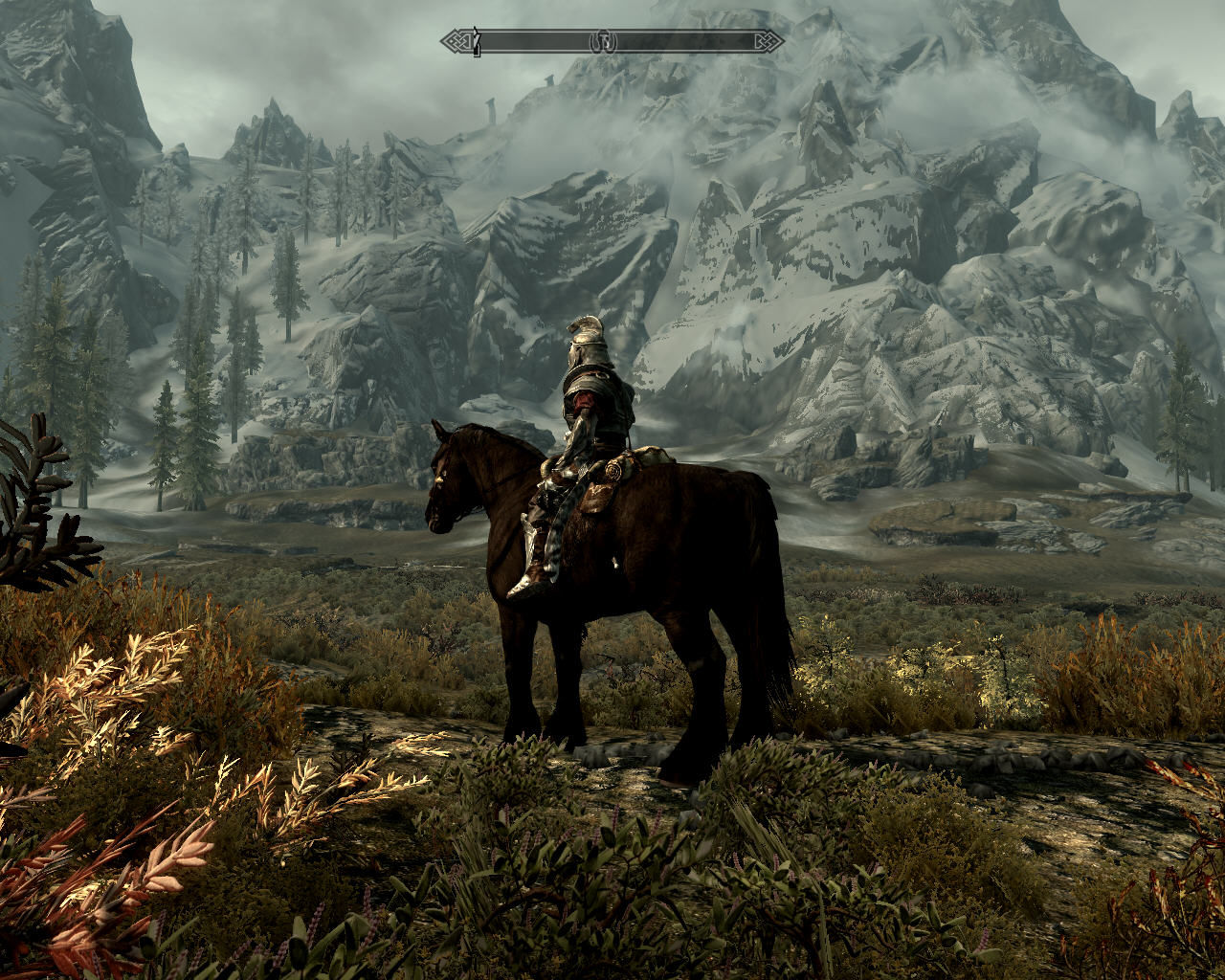
Skyrim actually wasn’t my first choice. It won because of how grand in scale the game was and the attention to detail that only a few games this year did. Over 100 hours of gameplay, unique characters, a grand story, beautiful graphics, lots of customization, and a gorgeous soundtrack made Skyrim come out on top of the entire pile. Skyrim is a special game in the sense that no other RPG or game can do it.
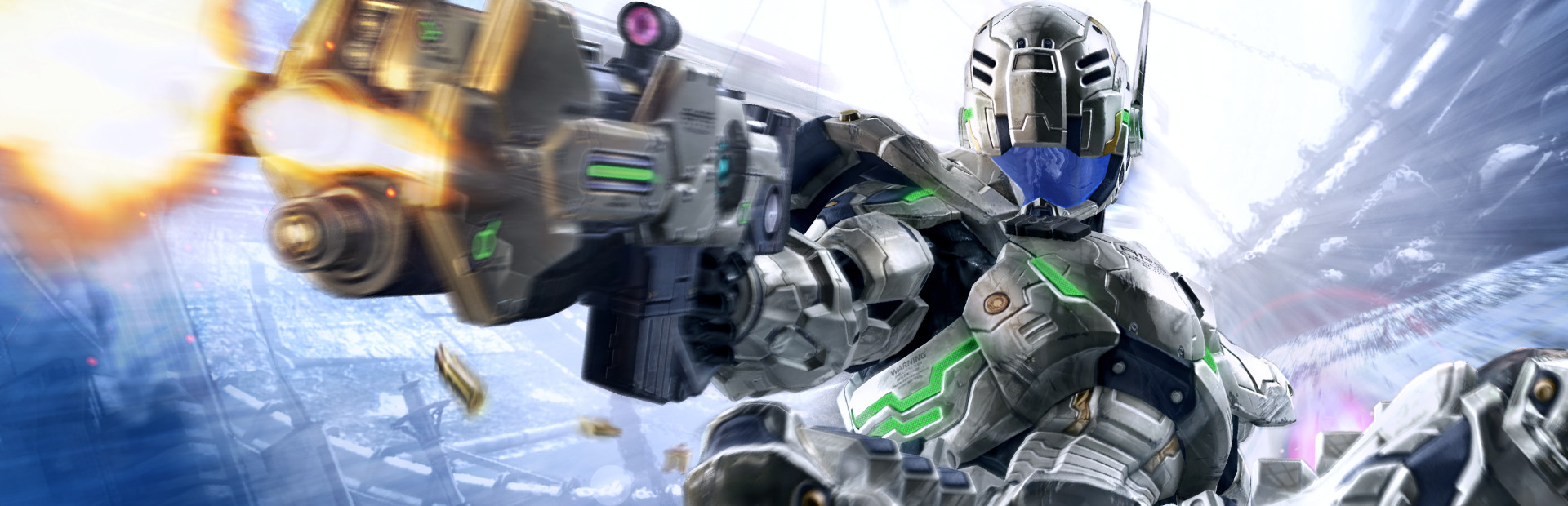
Japanese developers have a lot to learn from Western developers, but Vanquish shows that they are slowly catching on. Vanquish is infused with Western shooter’s big explosions and lots of shooting fused with Japanese fast-paced action and quick controls. Vanquish is a third-person shooter on speed thanks to the ARS suit. Sam Gideon can slide around at super speeds on the ground as well as slow down time during dodges. This allows for very hectic gameplay against robots of all sizes and shapes.
The plot is paper-thin and only advances at the very end of the game since the middle has absolutely nothing to do with the plot because you’re just dealing with in-the-moment problems, but the overarching story is a pretty standard affair with Russia trying to take over the world with a giant microwave emitter that destroys San Francisco. It’s nothing to get excited about, so just pop in Vanquish and expect fast shooting. The shooting is great thanks to using weapons that can be upgraded throughout the game with droppable upgrades. Everything is done on the battlefield, so there are no menus to fiddle with. I wish more shooters would use this idea so it doesn’t draw you away from the action. You get a loadout of three weapons and two different grenades. EMP grenades stun robots and incendiary blow them up. Different weapons range from your standard assortment of shotguns, heavy and light machine guns, rocket launchers, sniper rifles, etc., but there are a few originals, such as the disk launcher, the LFE gun that shoots huge blobs of purple energy, and the laser rocket launcher.
Thanks to the ARS suit, it allows for what would normally be an impossible amount of enemies to kill in a standard shooter, but being able to slide around at fast speeds and slow downtime isn’t the key to staying alive. If you get shot too much, your suit will automatically slow down time and burn up your energy meter. This allows you to kill any immediate danger and get to cover, but if you continue to get shot, you will die. The energy meter determines all your special abilities, and if you overheat, you have to wait for it to cool down. I found this a little annoying, especially when you start dying and you can’t shut off the use of the auto-slowdown, which will actually cause you to die during boss fights since you can’t slide away after it’s burned up.
The best part of the game is the boss fights since you have to shoot weak points, and sometimes this will trigger cinematic QTEs (Quick Time Events), but the biggest fallback for Vanquish is the repetition. Sure, there is some different gameplay stuff thrown in, like firefights on rail carts and turret sections, but I felt the game never truly took advantage of the whole ARS suit system. This is where the typical Japanese game’s generic atmosphere and aesthetics bring Vanquish down for me. While everything is responsive and sharp, it all feels generic, with weapons feeling like they don’t pack a punch and just feel like pop guns. There’s a good variety of enemies in here, but they are all just robots, and you can pretty much use the same tactic on all of them. Boss fights to recycle after Act 2, and the environments all look the same after Act 1.
The game looks good, but it is also generic-looking thanks to the typical Japanese art style of sterile whitewashed environments and copy-and-paste feeling levels. The characters are the usual stereotypical, cheesy voice-acted, empty-feeling people that you can’t really get attached to or don’t make much sense to. I want to get attached to the characters, but they just feel too cheesy and stereotypical and are completely forgettable. So why should you play Vanquish? The fast-paced action is undeniably addictive, and 6 hours is just enough to not get too sick of the game without wanting it to just end. On a side note, the ending credits are probably the most original I have ever seen in my 19 years of gaming. The developer’s faces are on asteroids, and you shoot them as their names pop up. The more important guys are harder to shoot, and the lead designer ends everything with a final boss fight. Kudos to Platinum for making credits more interesting than scrolling text.
RPG’s most important element is the story. This is what sets RPGs apart from other genres. The games also must have excellent lovable characters and good combat whether it’s turned based or real-time. RPGs also tend to be very long, but they are getting a bad rap in Japan due to never changing their formula.
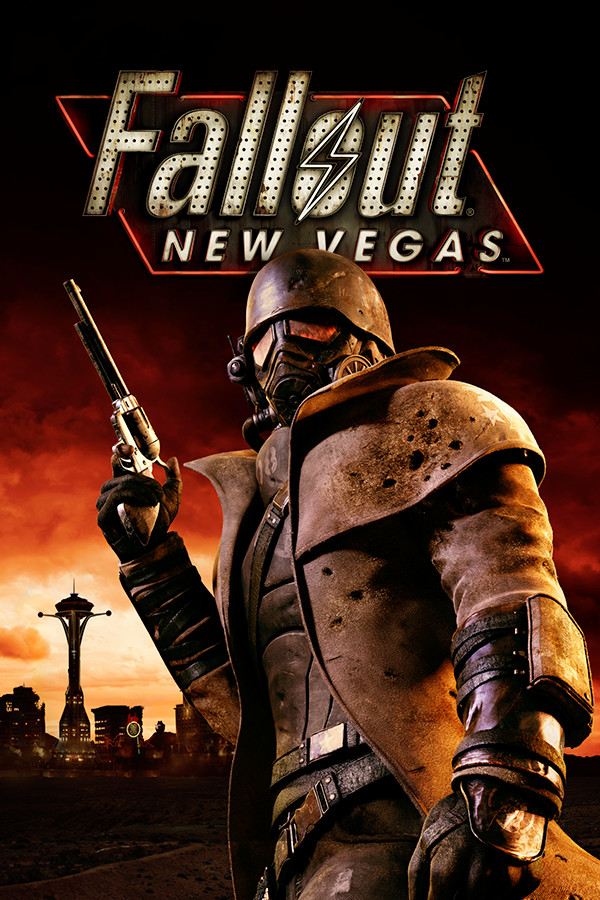
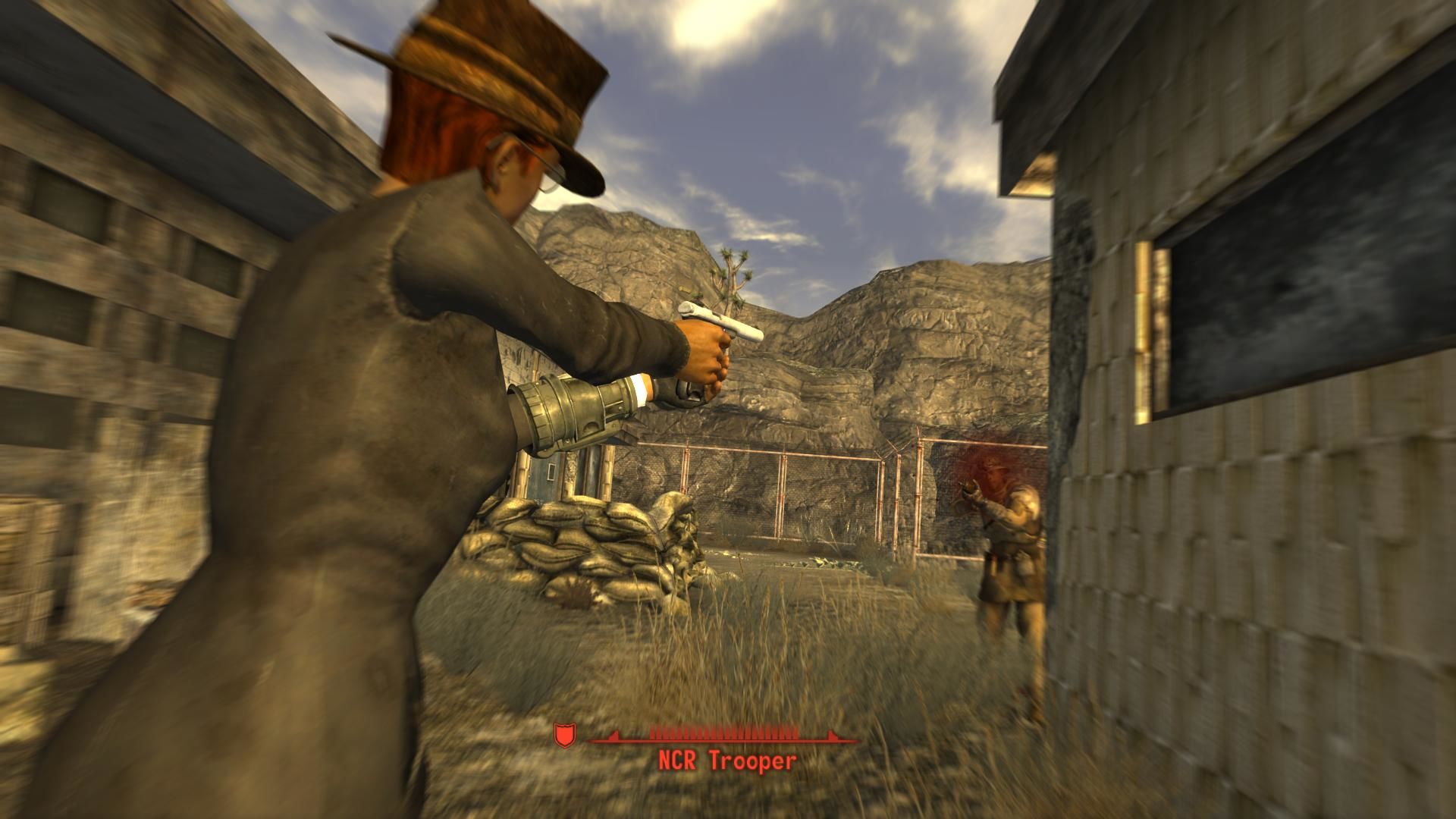
While New Vegas isn’t as good as Fallout 3 just the sheer vastness of the wasteland, the memorable characters, and the deep amount of content the game provides. There are a seemingly endless amount of quests, and the game has excellent dungeons, great shooting mechanics, and the mod community for the PC version is enormous, and New Vegas wins because the game lasts beyond the box, and it stays true to RPG standards: Leveling up by killing, completing quests, and tons of loot.
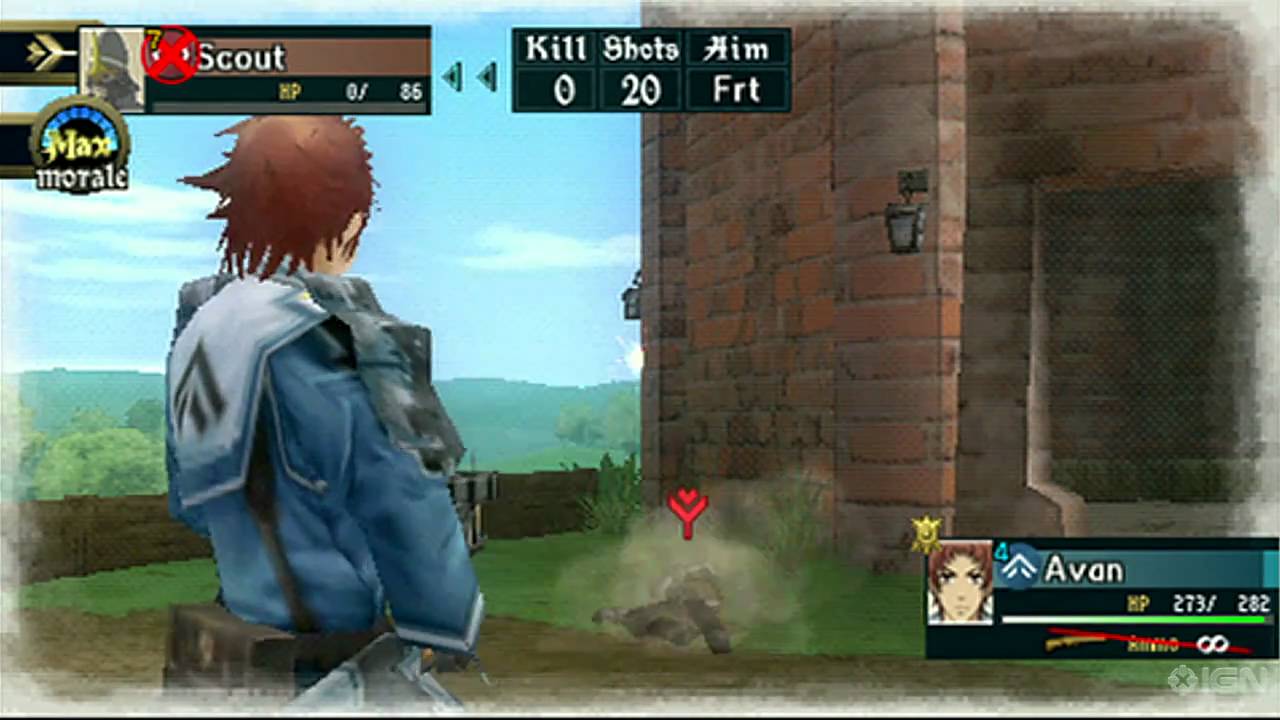
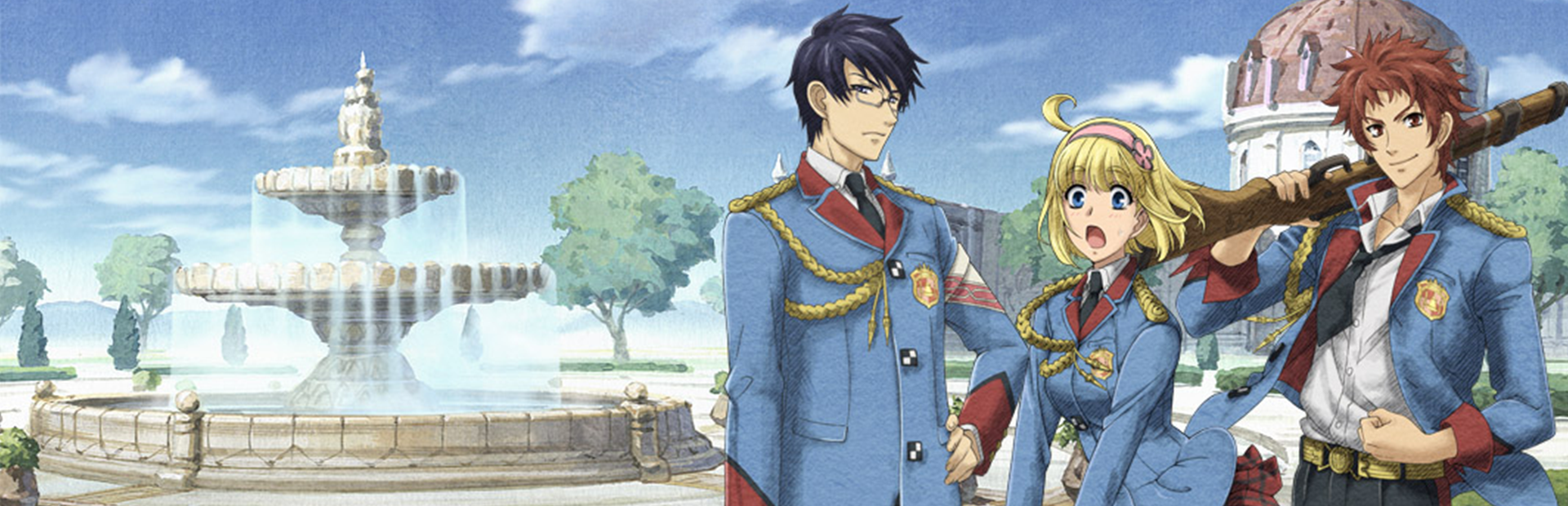
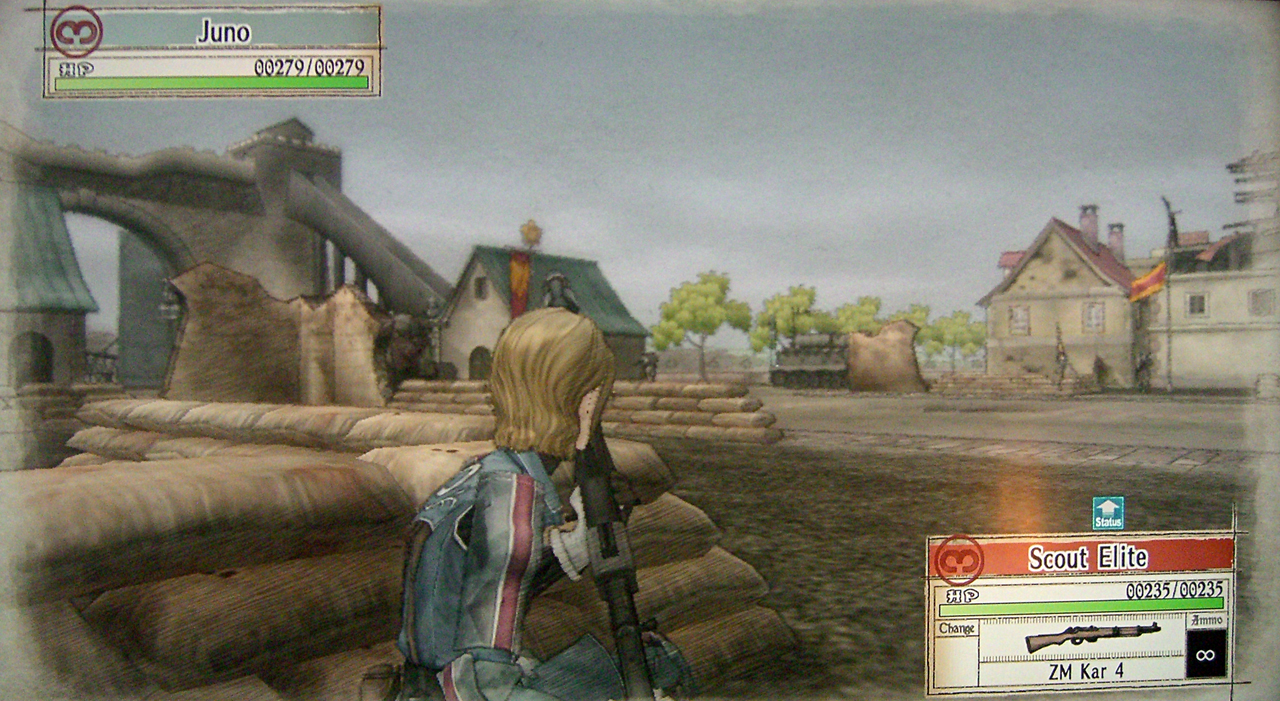
Valkyria Chronicles II sets you right in the middle of a war between a government and the rebels of Gallia, but what you really get into are the characters themselves and how they cope with each other. The game is set in a fictional WWII-type setting and is completely original. This turn-based strategy game can get pretty complex and is a lot to swallow at first, but after a while, you’ll get the hang of it.
The game is pretty menu-heavy, especially before deploying into missions. You can level up your classes (instead of individual characters) as well as produce weapons for each class and your tank. These are simple enough, but you have to unlock new weapons by leveling up. What disappointed me about this is that the weapon upgrades are very minimal, and it’s not until later levels that the stat boosts are large.
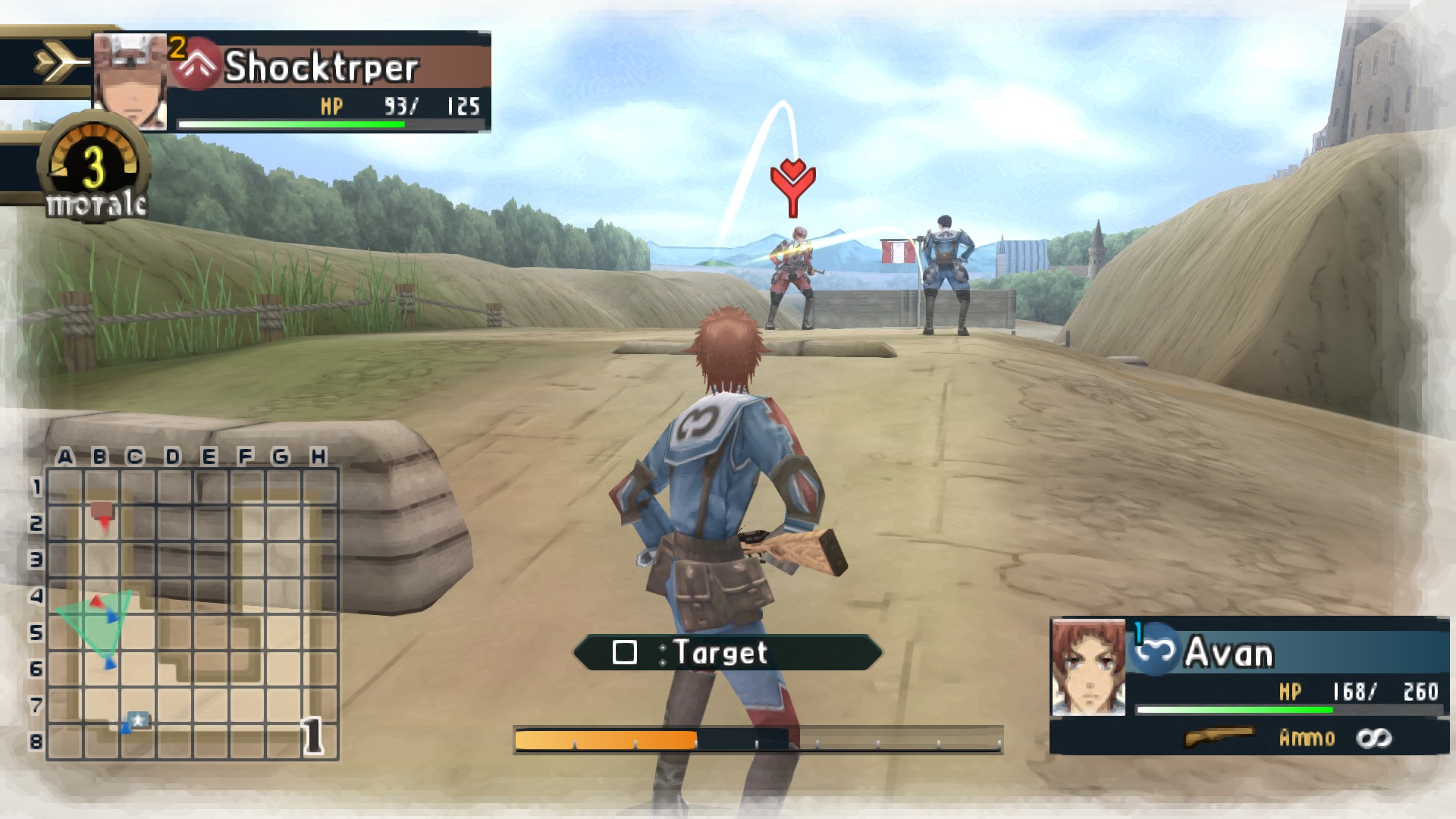
Once you do all this, you can rearrange your groups because each mission requires the right kind of people. There are different classes like Lancers (anti-tank), Scouts, Shocktroopers (heavy machine gunners), Engineers (medics), Armored Techs (melee), etc. You can only have six people deployed, and only five for each area. While this may be a pain since you’ll have 5 guys in one area and 1 in another, there are strategic workarounds for this. Once you start missions, you get an overhead map that shows your guys and your enemies. Killing enemies is as simple as moving them around in real-time, but each character has a different stamina meter, so watch out.
Each character uses one CP (turns), and tanks use two, so you really have to choose your moves wisely. While you’re moving around to position, enemies can shoot at you, but you can take cover behind sandbags. Killing enemies consists of getting the right amount of shots in before you reach your limit. Instead of relying on just draining HP, you have a shot limit, and when you aim at an enemy (depending on their type as well), another number will show how many shots it will take to kill that enemy. Headshots are always your best bet, but getting in close works too.
You can also find shortcuts throughout the map since most require you to move to different areas. Using a tank, you can build bridges to flank the enemy or build ladders. Once you capture an enemy camp, you can put your troops on standby and deploy them to captured camps in other areas. Be aware, though, of enemies and recapture those, which renders you unable to deploy in the new area unless you have at least one person there.
The battles can be pretty intense, but they also require perfect strategy, and it seems that most of the time only one will work. Certain missions have special requirements, like escorting, or certain players must be deployed. If you find that you need other abilities, you can retrain troops to different classes (if you’re short on one class) or change their abilities, like making a scout a sniper or a lancer a mortar. Sometimes perks will be activated on the field that do good or bad, depending on the character. If a character doesn’t like one that’s near, it’ll have a negative effect. Details like this can really help you pin down a strategy, but most others can ignore them.
Outside the battlefield, you move around campus and talk to people to progress the story, but that’s pretty much all there is to it. The game looks really good with a nice anime art style, and the voice acting is decent but not amazing. The small map size will make fans of the PS3 original angry, but it’s perfect for a portable system. The game is pretty stat-heavy and menu-heavy, and the difficulty spikes may make you actually give up altogether. I couldn’t get past the second story-based escort missions due to the insanely powerful enemies, and you have to get the strategy down perfectly or it just won’t work out. Other than this, the game is superbly fun, and with about 40 hours of gameplay, you should be kept busy.
The mash-up of Disney and Final Fantasy set fanboys squealing and shook the gaming world. It was like a huge tsunami of awesomeness that no one could have predicted. Thus, the first Kingdom Hearts was born with lots of charm and character but had a lot of problems with combat and one confusing story. The second game came out and really added depth to the game and was fan-freaking-tastic. Birth by Sleep is a prequel to the first game, and you really get a lot of stuff that was answerless in the last two games. You play as Terra, Ventus, and Aqua, who are three key blade wielders trying to stop the darkness from spreading through the world and within themselves. While the story works and is a lot simpler than in past games, it never feels like it really goes anywhere and isn’t as emotional as in other games.
With that aside, the next biggest thing is combat. While it’s a lot deeper, it’s also a lot more confusing and can be daunting to understand, especially for newcomers and younger players. You have a command deck that allows you to swap out abilities, and there are a lot of them. You can eventually equip up to nine commands, but flipping through them is tedious and not so combat-friendly. Using the D-pad to flip through commands can really kill you, especially during tough boss fights. Having to move from the analog nub to the D-pad means you stand still while switching. This leaves you vulnerable and can mean life or death if you have one hit left.
You can use the shot lock command, which is like a special attack that requires focus. You go into first-person mode and lock on the target for a few seconds, and it unleashes a pretty devastating attack. Summons are no longer available; instead, they are replaced with the less spectacular D-links. As you beat worlds, Disney characters can be selected, and basically, you just have a different set of commands to choose from. Your health replenishes, but this doesn’t seem as exciting as seeing the character fight with you.
You can meld commands together and add boosts to create new commands. This can be really interesting, and you can make commands you can’t normally buy or find. Other than this, the menus are usual with character bios, documents, and whatnot, but once you get used to the menu, you will have no problems. The biggest issue with combat is the stupid camera. Relying on a camera is critical with PSP games due to the lack of a second analog nub, but this camera is stupid. Locking on seems like a good idea until the lock-on breaks for some unknown reason and you lose sight of the enemy. This is really irritating during highly intense boss fights because you lose sight of them and can walk right into their traps. The camera likes to flip-flop around constantly, and fighting enemies above you is like going down into a swirling toilet with needles stabbing your eyes. It jitters and jitters and spasms, and it feels like the game is having an epileptic fit.
Despite this, it’s manageable, and you get so used to it that you just deal with it. Exploration is still the same yawn fest, but even more so since most of the environments aren’t as active or lush as KH2. The worlds are super short, and you can get to each boss without even fighting a single enemy, but if you return, they respawn, and this is only because of the irritating amount of level grinding. No matter what you do or what level you are at, bosses can kill you in just a few hits. At level 25, I was still getting my butt kicked by a boss late into the game. This leads to each character’s story completion time of about 10 hours. The words just don’t feel as alive and exciting as in KH2, and they just seem like bite-sized samples of what they should be. There are a few original worlds that are a nice touch, but they could have made the game so much better.
There is a command-board game that is so complicated and boring that you may not even care about it. You move around a board trying to collect new commands, and it’s overly complicated, as all Square mini-games are. This is more like a mini-mind meltdown than anything else, and co-op doesn’t make it any more fun. The game’s best feature is its technical achievement, being one of the very few games that pushes the PSP to the max. You could easily mistake this game for a PS2 game, but there are some frame rate issues, and if you don’t install your data on your memory stick, you are most likely going to experience horrendous load times. The voice acting is a bit iffy, but the game looks amazing. The enemies are pretty boring and generic, and they could have been a lot better.
Overall, Birth by Sleep is a great start, and I hope this isn’t the last KH on the PSP. If they improve the game’s many flaws, we are looking at the best portable game ever made. What the game really needs is a reboot because this formula is tasting a bit stale in 2010.
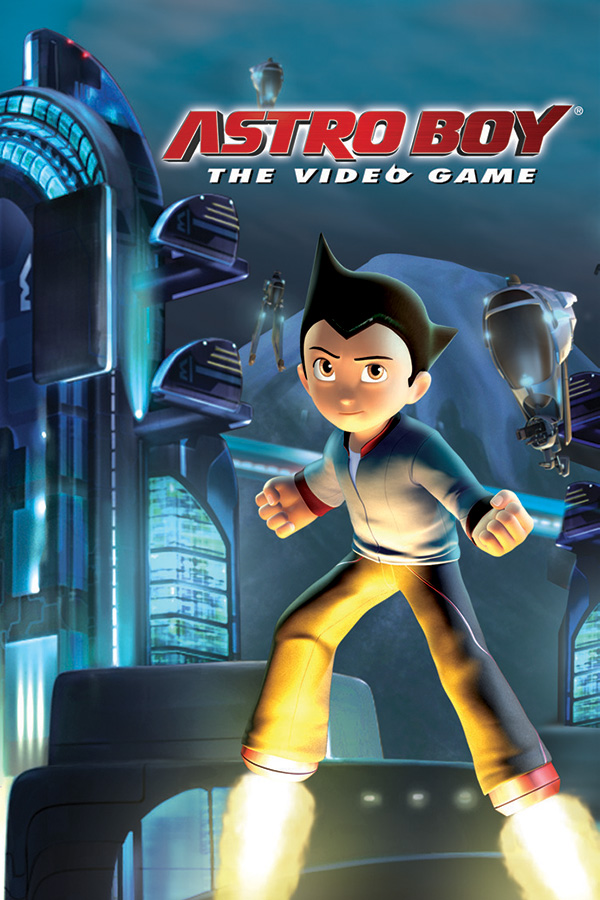
You all know Astro Boy, right? Well, probably not, since he is a lesser-known comic superhero. A boy is caught in a scientific experiment. This game is based on a 3D movie that will come out soon. The best Astro Boy game is by far Omega Factor on the GBA, and I have to say, from looking at the screenshots for this game, I thought it would be much like that aforementioned, but it’s just another movie tie-in cash cow.
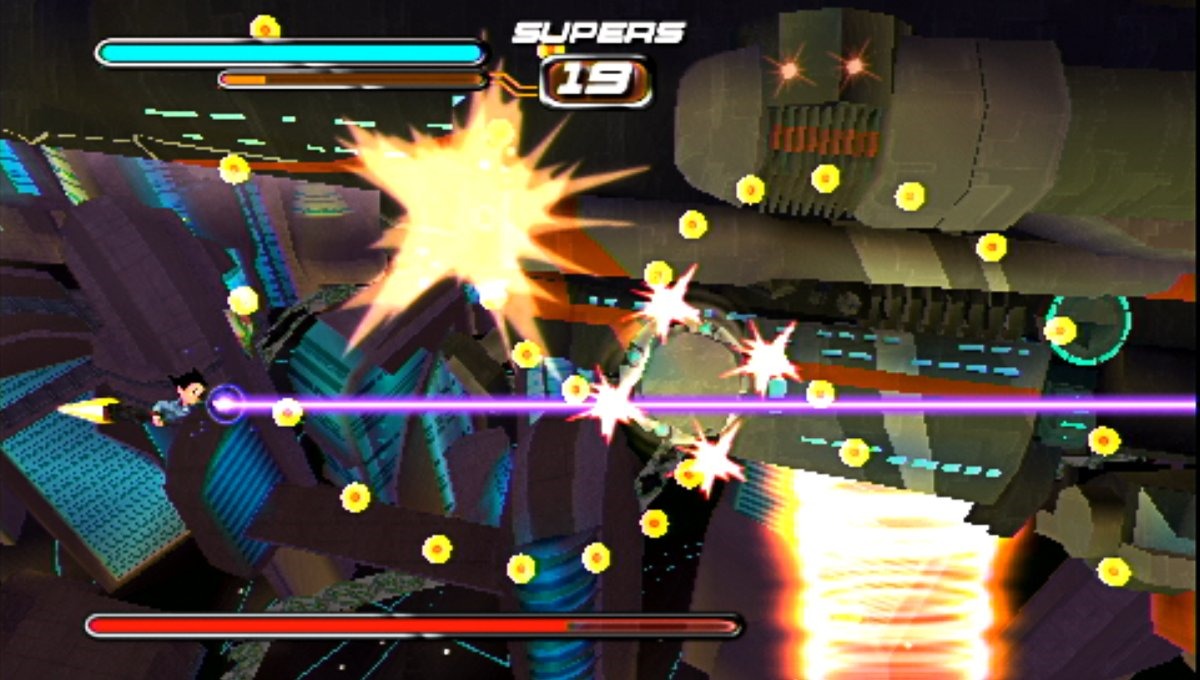
Everything starts off great with Toby flying through the air using his laser, guns, and various other weapons. Killing enemies gives you orange orbs that charge your special meter, and these can be stacked up to ten. Using the latter moves using one of those bars, even healing. That sounds great and all, but the game relies on this way too much, and you deplete your special bars way too fast. Most of the enemies are hard to kill, even from the start, so what do you do? Use your laser or punch them. The problem with punching is that it’s slow and unresponsive since you can’t punch while moving. Once you hit the button, Toby stops dead, and you have to wait for the whole animation to play out. Not a very good thing in a fast-paced game at all. If you think that breaks the game, the jumping is even worse. Using a double jump makes Toby fly in one direction instead of just double jumping. Single-jumping is slow and pathetic, like you’re on the moon or something. This makes instadeaths constant and very frustrating.
While the story has potential and the game looks and sounds good, the game is killed by the terrible controls and badly thought-out design. You can upgrade your powers, but you probably won’t get far enough to do that before hurling the game out the window. Astro Boy is supposed to be fast-paced and fun, but all we get is a sluggish, hard, unresponsive borefest. Think of a delicious-looking piece of candy. It looks yummy, has a great color, and shines on it, and when you bite down, it tastes like vomit. That’s Astro Boy in a nutshell. If you really liked the movie, just go play Omega Factor on GBA or even the other mediocre Astro Boy that came out a few years ago on the PS2.
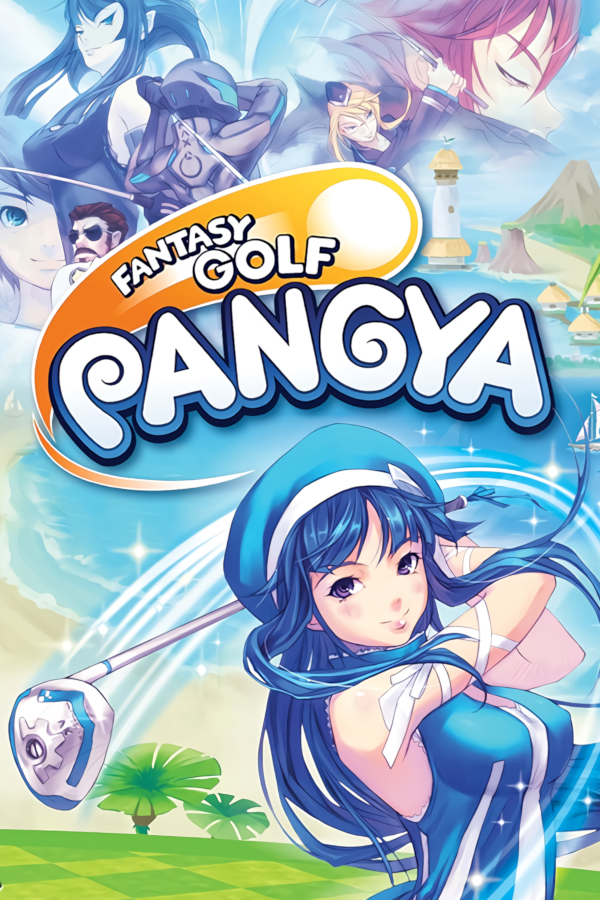
A long time ago, in a parallel dimension to Earth, there was a magical island world known simply as Pangya. All was peaceful in Pangya until one day, an evil force summoned by the Demon King came crashing down upon the land. This dark energy created a force field around Pangya that drained life from the land. The world of Pangya grew weaker with every passing day. Flowers withered, trees turned barren, and the earth lost its green. The people of Pangya could not come up with a solution to rid their land of an evil presence.
Until the inhabitants of the land realized that all of the life force from Pangya was being drained to the Demon King through a hole in the force field, A plan rose to plug the hole with a crystal filled with the spirit force of all living things. The power of the crystal became so great that it could not be touched by human hands. So the people in Pangya created the Air Lance, a tool in the shape of a stick to hit the mythical Phoenix ball into the hole of the evil force field. This difficult task was eventually completed by a warrior from Earth, ridding the world of the evil force for good. In honor of this warrior, the game of Albatross 18 is being played throughout the world of Pangya. The name Albatross was chosen because it is the best shot one can hit in the game outside of a hole-in-one. Today, you have been invited to play Albatross 18. Are you ready to show your skills?
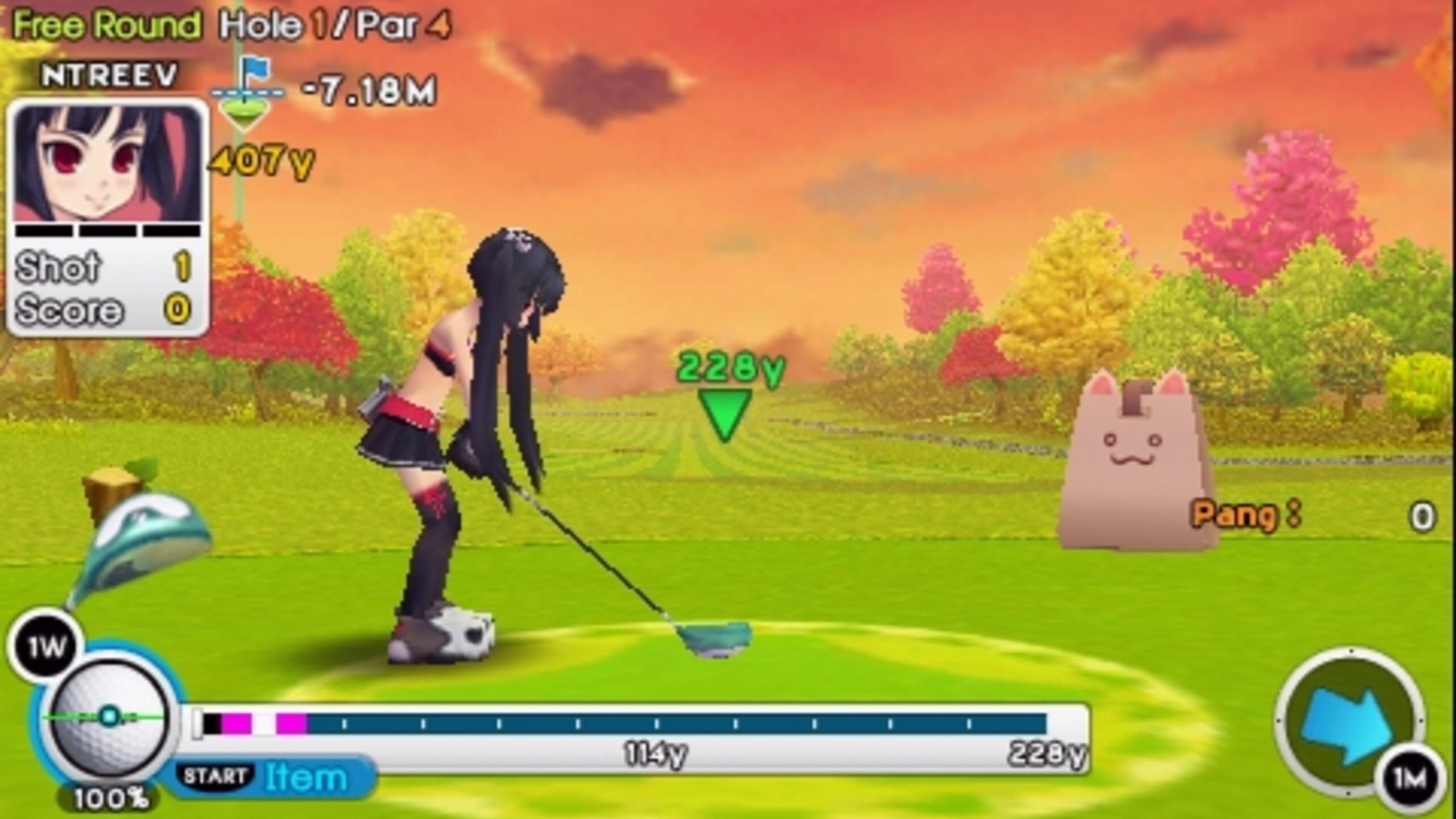
The game of Albatross 18 looks remarkably like golf; in fact, it is golf. When you start out in Pangya’s story mode, you set off into nicely laid-out courses with colorful names such as Wiz Wiz, Blue Moon, and Silvia Cannon. Playing the game is easy; simply pick your distance, then your power, and’swing!’ you’re off to the first hole. Wait a minute; there is a bit more depth than that. Differently colored blocks on the left indicate a certain action. Hitting just when it is white produces the perfect shot, while black or pink will make you tee, putting a point on your par count. Despite its creative-looking setting, Pangya still carries aspects such as the wind, the level of the terrain, obstacles, bunkers, the fairways, the rough, the green, and yes, even putting. Different characters are available to play with, and most can drive down a course anywhere between 210 and 260 yards. If the wind is facing you, you will probably nail about 235 if your character can drive 260. This is extremely important when shooting over a river or over a cliff since you will come short and get an out-of-bounds penalty.
The whole point of Pangya is to get your ball into the cup before the other player and do so with the fewest shots. Each player will take turns deciding what conditions will improve their shot. You need to adjust accordingly and use your quick finger to get a perfect Pangya shot. Pangya shots will bring your ball exactly where you want it, and anywhere outside the white box will make your ball come short. Pangya follows the traditional golf gameplay in most places but adds one little twist: power shots. Power shots come in different forms, ranging from the power spin that makes your ball roll back a few yards to the tomahawk, which makes your ball stop dead where it lands without rolling along with others. These sound useful, but the execution is so hard to pull off that you will quickly abandon the idea.
While most of the game’s mechanics sound solid and easy to understand, not every element has been worked out to the point it should have been. Customizing your game, for instance, is about as useless as playing golf with a baseball bat. You can shop at the Pangya store using Pang, the game’s currency, which is earned by completing tournaments. You can buy equipment such as new balls, clubs, and many other items. Buying golf balls adds points to your attributes such as accuracy, spin, and power. Strangely enough, clubs do the same but are just more expensive. The items that can be bought can be used during and will temporarily boost the exact same attributes, but they can also do some more interesting stuff, such as nullify the wind. All these elements could turn a standard game of golf into a true fantasy experience but end up being as exciting as watching paint dry.
The one thing that sets Pangya apart from its peers is its wonderful story and charming characters. Within each episode of the three available chapters, you can play ten characters, and they each have their own unique story. Each character is beautifully drawn, with personalities so vibrant that they pull you in and never let go. Uncle Bob is an angry police officer who entered the tournament just to get some fried chicken, and Max is a famous tennis player who is running from fans that are trying to get his autograph. There is no voice acting, but maybe this is a good thing. Most Japanese games don’t transfer well to American voices.
Contrary to the characters and colorful setting, the quality of the graphics is subpar, with flat and polygonal textures. In fairness, they do get the job done for this otherwise fine golfing game. Pangya is sure to be a pleasant surprise even to people who don’t like or even know how to play golf. Easy controls, wonderful characters, and a fun multiplayer mode will charm you out of your socks.
I don’t know how else to put this, but Eternal Sonata is probably one of the best (if not THE best) RPGs of this generation (yes, next-gen is now this gen; it’s been almost four years now, C’mon). The best part about Eternal Sonata is the graphics, story, music, and unique battle system.
To make this as easy as possible to understand, I’ll start with the story. ES does something different that I’ve never seen in a game before, and that uses a fictitious story with something that’s nonfiction. ES is about the famous pianist Chopin from the early 1800s. ES follows the life of Chopin when he was struck with tuberculosis and left Warsaw, Poland, due to the war with Austria at the time. While the real Chopin is sick in bed, you enter into his mind and into the world that he created while trying to recover. Chopin is now Frederic, and you run into several unique and lovable characters while trying to defeat the evil Count Waltz. Forte Castle (where Waltz lies) is supposed to represent Austria, and Chopin wants to go back and defeat the evil leader so he can go home. The reason why Chopin runs into these colorful characters is that they all have separate reasons to see the count (I won’t explain why due to spoilers). After you beat each chapter, stills of Europe will play, as well as a piece of Chopin’s music and pieces of his life will be told. Everything flows and ties in perfectly, and it makes it one of my favorite RPG stories of all time.
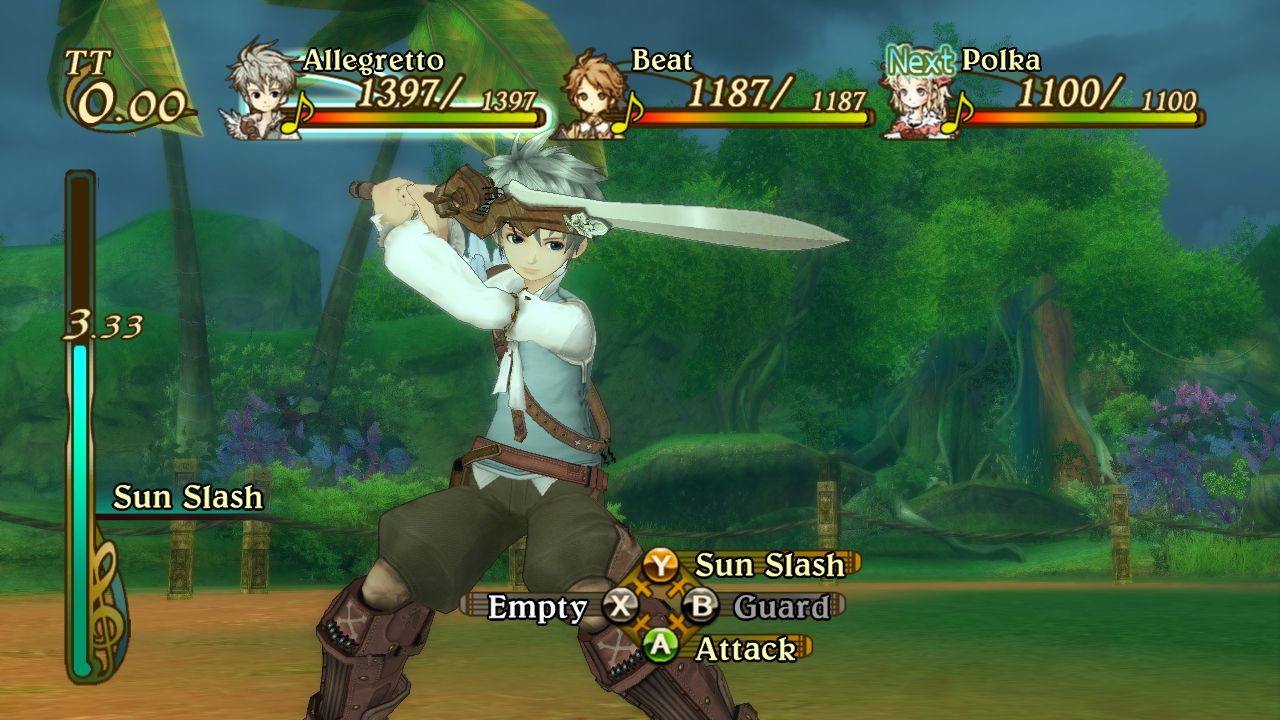
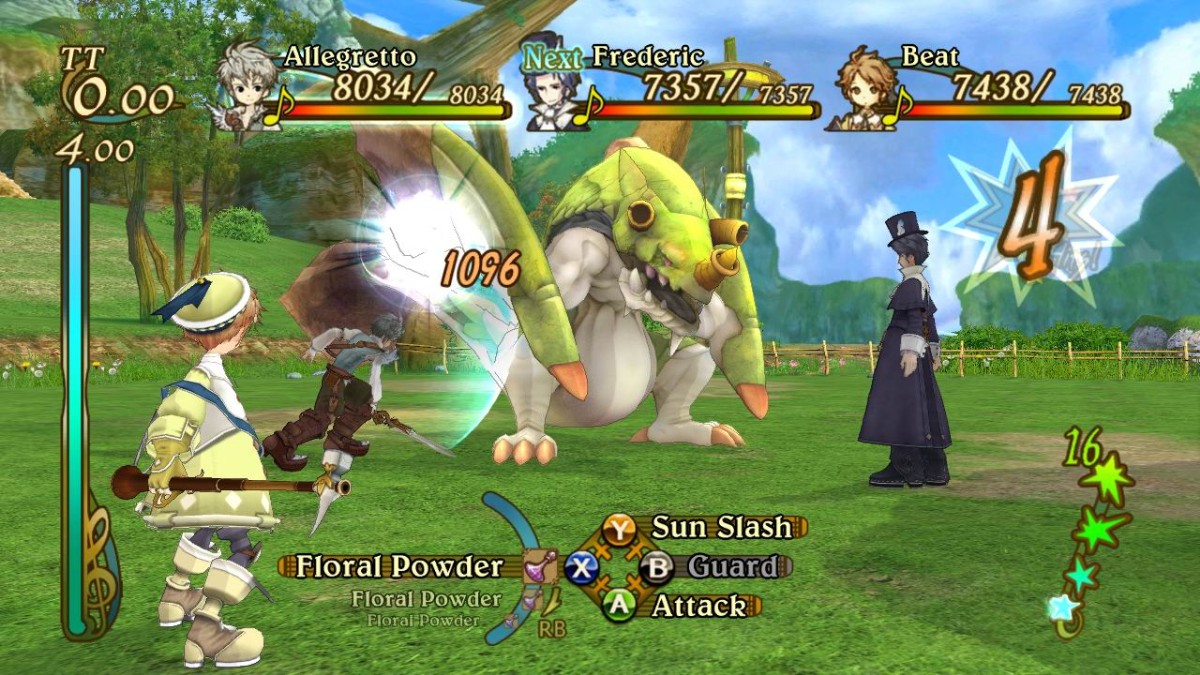
Now I’m going to go right into the battle system, with this being the meat of the game. ES doesn’t have a random battle system (thank God!) since I think we’re finally beyond that. Every enemy you see is in real-time, and you can avoid them if you want (like in numerous other RPGs). Instead of having magic, ability points, and some sort of super attack, ES does away with all that. You have a battle counter that lets you decide what you need to do. After this runs out, your action counter (about 5 seconds) counts down when you start moving, and you use the A button to attack with your main weapon. Magic, Special Abilities, or whatever you want to call them, are on your Y button, and you can use them as many times as you want throughout your turn. So, if you attack until your turn is just about up and then hit the Y button, you can do some devastating damage. Of course, you have items that heal, poison, and revive KOs, and there are tons of them, but there’s nothing special about these that you haven’t seen before. When it comes to guarding, you have a “chance” button (B), and if you hit the button when it appears on screen, you will block the enemy’s attack, greatly reducing the damage by about 90%. Sometimes the button will stay longer than other times, but it’s all about timing, and this helps keep the action up.
When you get your party leveled up, battle rules change from losing time on your counters to being able to chain special attacks to moving faster in battle. Every time you hit an enemy, you “queue” up power, and then when you use your special attack, it’s that much more powerful. Every character gets two abilities: light and dark. On the battlefield, you’ll see shadows and light areas; when you are in a dark area, you’ll use a dark attack, and when you are in a light area, you’ll use a light attack. This is really great and can help keep things mixed up. Watch out, though some enemies transform into stronger monsters when they are in the dark. The level design in this game can vary sometimes since some of it has labyrinthine dungeons that require a FAQ to even remotely understand how to navigate. A lot of these are partly due to puzzles that require a lot of backtracking that really gets under your skin. Now that the battle system is out of the way, let’s talk about production values.
Eternal Sonata uses some outstanding music, especially when Chopin’s pieces are used. The graphics are just absolutely gorgeous, with bright color palettes and unique architecture I’ve never seen in a game before. Eternal Sonata is also one of the JRPGs that also includes Japanese voice acting, and I highly recommend this over the American voice actors. Just turn the English subtitles on, and you’re good to go since the Japanese voice actors fit the characters better and are just superb. The game is easier than most JRPGs, but maybe this is a good thing. Everyone wants a stupidly hard RPG that takes over 100 hours to beat, and that’s not always necessary.
Eternal Sonata will take you 20–30 hours to beat, depending on your play style, and even has a “game finished” save so you can go back from the beginning at whatever level you finished. It’s sad to know Eternal Sonata got great reviews but had poor sales, so I hope you pick this up and experience the best RPGs of all time.
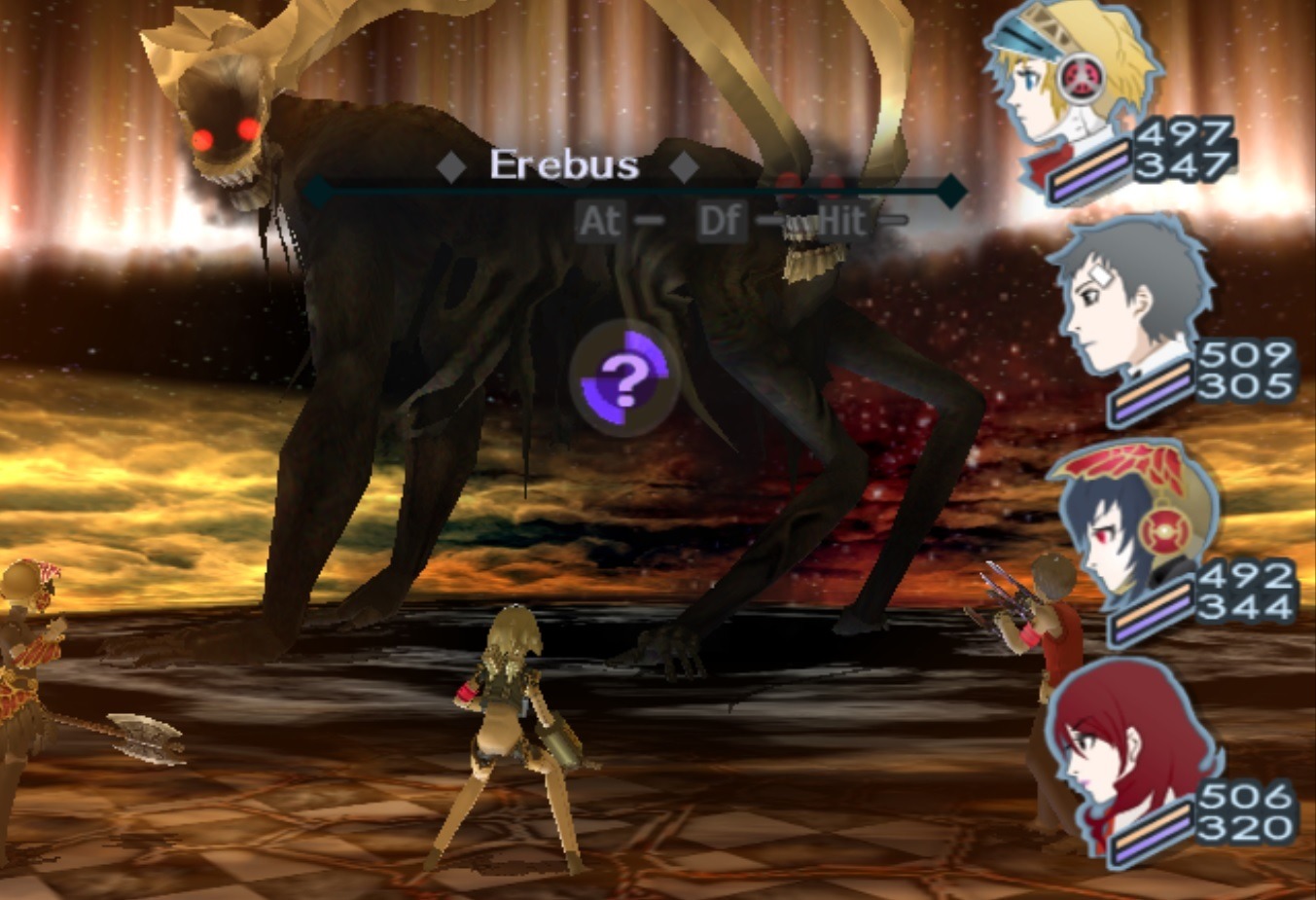
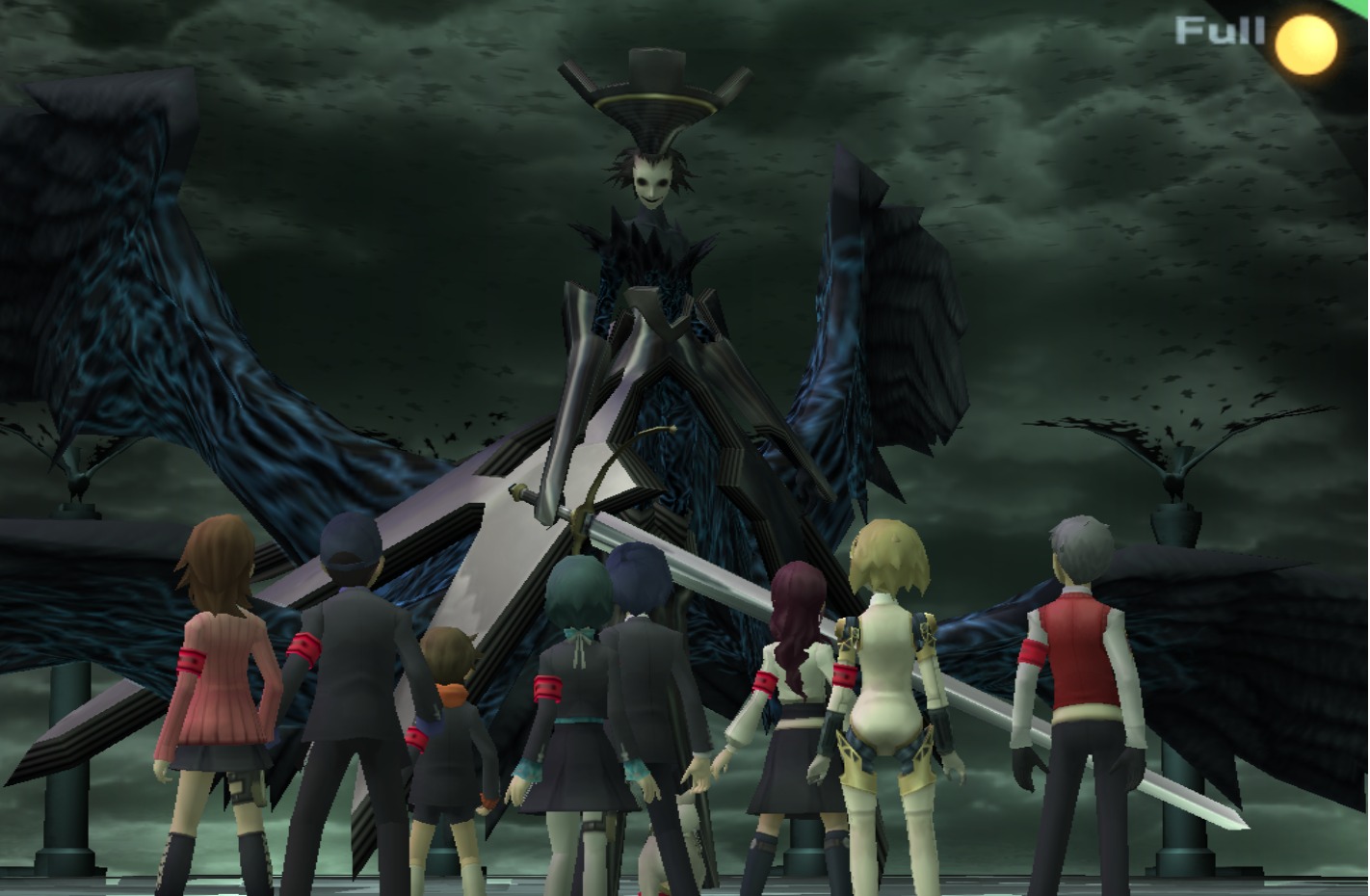
I heard all the hoopla about Persona 3, but the next-gen craze sidetracked me from it. I finally rented the game, and I have to say I am very impressed. I’m tired of the same old random battle JRPG with cliché stories, characters, and battle systems. P3 tries to do something different with practically every element. When you start the game, you’ll notice the game has beautifully drawn anime cutscenes. The story doesn’t become very clear until after you start playing, but this is OK.
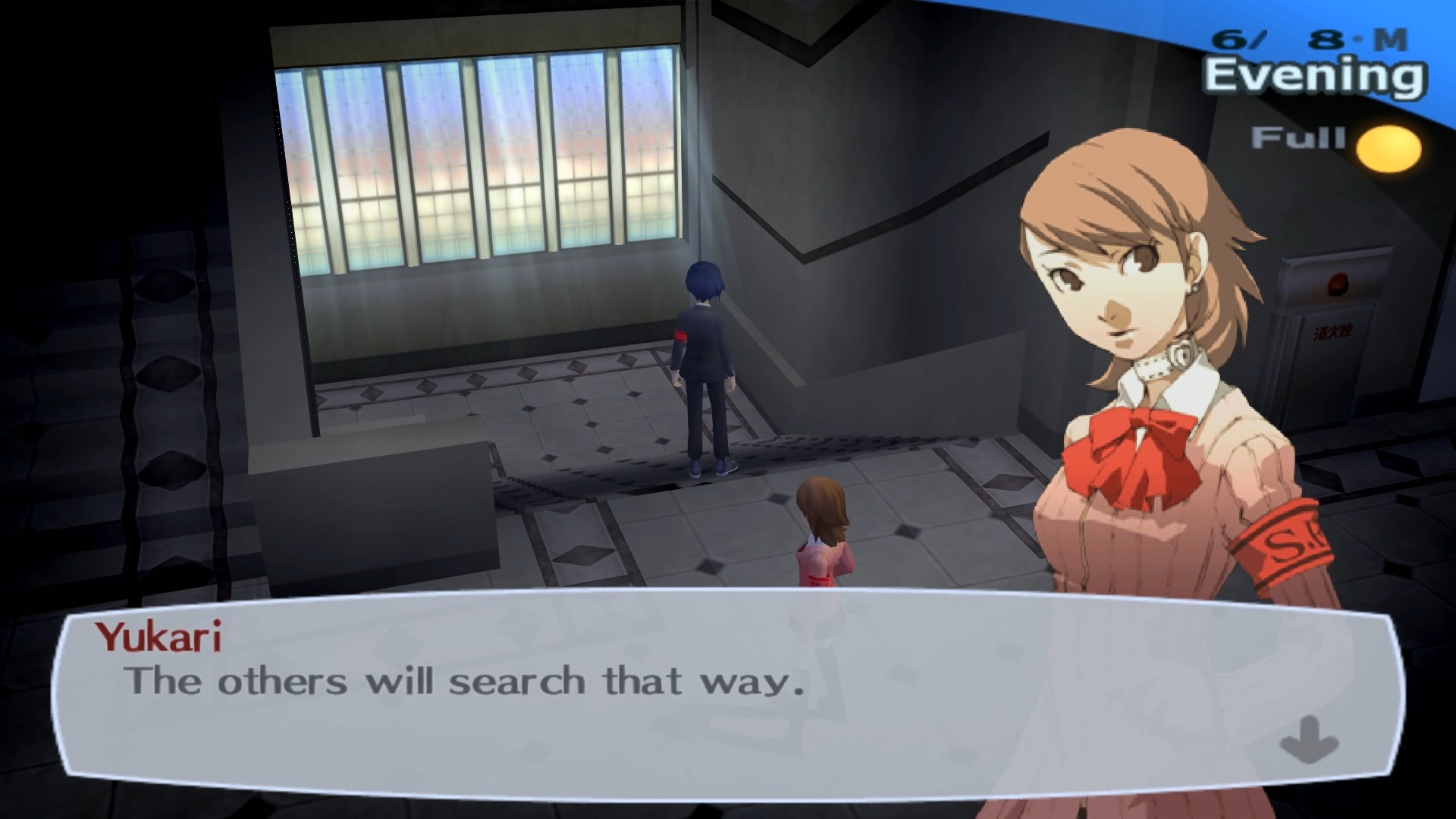
The first thing I have to say is that the game takes forever to get going. Maybe 5–6 hours into the game, you’ll really start getting interesting, and most of the play mechanics will be taught. When you’re not fighting, you’ll be living your regular school life by studying hard and preparing for exams. The game has a calendar event set up, and you go to school, talk to some people, and you can choose to stay awake in class and listen to the lecture to increase your academic skills. Sometimes you’ll have to answer questions (it’s mostly guessing), and maybe your charm will increase. After school, you can meet up with your friends to strengthen your social link (more on that later). Depending on the responses you choose, they will affect your relationships. You can also go shopping at the mall for items, weapons, armor, etc. Another thing I have to mention is that there isn’t enough to buy before the next moon phase (more on that later). So there is one new thing for each member, and that’s it. This can make traveling to the upper levels of Tarturus even harder (more on that later).
The game’s story is about shadows that try to wreak havoc during the Dark Hour, which is midnight. During this hour, the dorm you stay at turns into a mysterious tower known as Tartarus, and you must climb the tower, fighting stronger and stronger enemies. Every 30 days, you fight a boss, and some events happen that evolve the story. During those 30 days, you have to increase your social links, level up, and acquire all that you can before the big boss. When you fight in battle, you use your personas, which are like Aeons (think Final Fantasy), and they are your strongest attacks. You’ll rarely attack yourself, so you always concentrate on your personas. Some personas have different magic abilities, etc. The battles are won by determining the enemy’s weaknesses and exploiting them. When you hit their weakness, you get one more turn, and the enemies fall down. If you get all the enemies to fall down, you can do an all-out attack where all the players will maul the enemies for extra damage. This is key to mastering because you can die very easily early in the game because leveling up takes longer than it should. Luckily, you can switch personas in mid-battle, so you can exploit accordingly.
One irritating thing about this game is that they changed the elements’ names. Instead of Fire, Ice, Wind, and Fire, it’s Zio, Bufu, and Garu (light), and it’s really stupid. Why did they do this? Probably just to be cute, but it confuses you, and you have to know what these names mean. Once you win a battle, you may get Shuffle Time, which lets you see the faces of a card and shuffles them around. Some may give you bonus experience, some may be a new persona, and some may be weapons. While you run around through Tarturus, you can see the shadows, so this game isn’t random. If you hit them first, you get an advantage, but if you let them hit you, it’s not so good.
The game mainly revolves around personas, so, of course, you can make your own. Take your cards to the Velvet Room, and you can combine them to make better personas. Now there are attributes and rules, but these are confusing and pointless, so you just add a few up and see what it makes. It’s really simple and easy to use, but you can’t do this for a while because you can only create a persona that is at your level. Also in the VR, you can take requests from Elizabeth by bringing her certain items at certain dates for rewards. I found this very hard because you never really know what she’s talking about half the time. I think it’s mainly there for completionists.
Social links affect your persona because if you have a friend who is a Magician SL, all your Magician personas will level up faster. Of course, there are events every day that always change. Sometimes you can’t go to Tartarus at night because your members are too tired, some may get sick, some may be busy studying for exams, etc. This changes things up all the time, so not one day is the same. When it all boils down, the game is generally the same. Go to school; go to Tarturus over and over. There are no worlds or levels to actually explore, so this may disappoint some people. When in doubt, pick up Persona 3 because you are going to have a blast, and there are dozens of hours of RPG goodness here. With decent voice acting, memorable characters, and a great battle system, you will truly love this game.
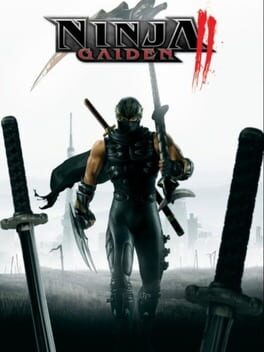
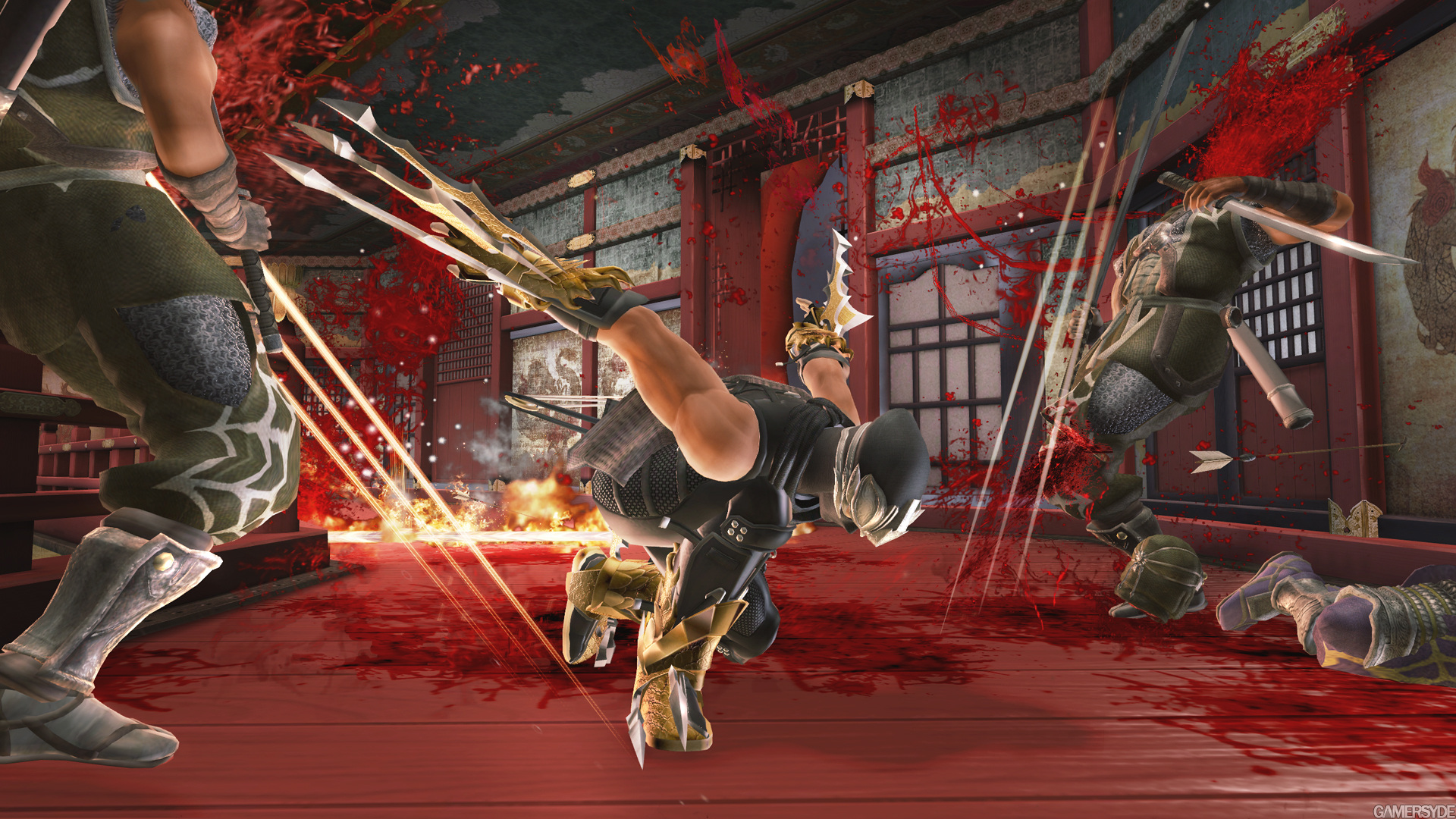
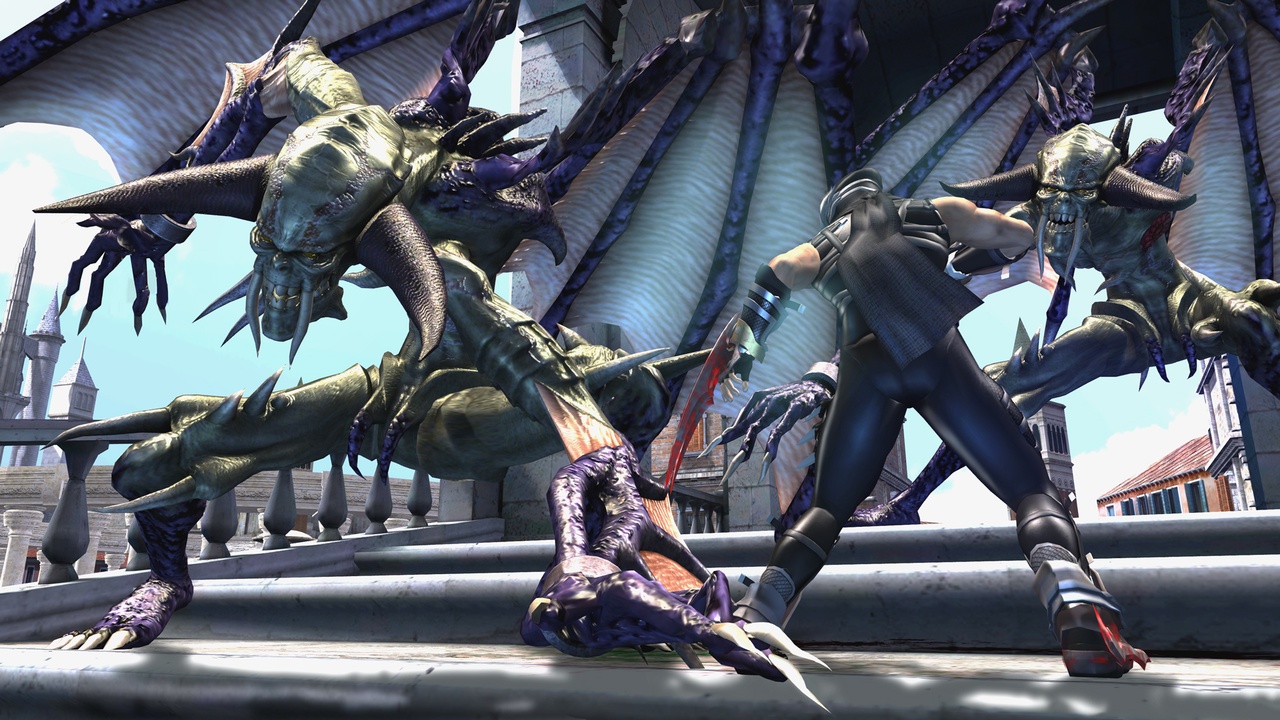
I never beat the first Ninja Gaiden due to its insane difficulty. I wanted to very badly, but no matter how much I tried, I failed in the end. Thankfully, NG2 is a bit more forgiving in the easy setting, but newcomers will never make it past the first level. The game’s story is nothing special and feels like a rehash at best. You have to save the world from the arch fiends taking over and destroying it, so you have to hunt them down one by one. The gameplay is essentially the same as in NG1. You have light and heavy attacks, along with projectile weapons that you can charge. The game has many more weapons and Ninpo scrolls to use. Weapons range from scythes to tonfas, flails, and even staffs. All the weapons are great, and you can upgrade them for up to three levels. After the enemies get too strong for that weapon, you’ll never use it again.
Ninpo magic is useful for enemies but useless for bosses since it doesn’t do any damage. They can be used to cripple enemies and finish them off with a finishing move. There are a lot of new moves in the game, yet they are repeated far too often. You can hack enemies apart into a bunch of pieces and continue to hack them up for overkill bonuses. While you rack up your karma score, you can also buy items from the Masamusa shops, which are generously spread throughout the levels, and the same goes for saving points. I never found the game unfair with checkpoints or saves. Once you die at a boss, you start right there in front of the boss again, so this makes things less frustrating. Another cool element is being able to run on top of the water. You can fight enemies this way as well, which just adds to the awesome ninja feel of the game. I also found the controls less responsive than in the first game and a bit sluggish. You’ll try to hit an enemy, but they’ll back away and hit you, but you’re stuck in an animation that you can’t back out of. This isn’t a huge issue, but it’s still there. Another problem is the camera, which is terrible. Instead of following Ryu, it’ll always stay in one spot, so enemies are coming at you blindly. While this also isn’t a huge issue, it doesn’t make things better.
Throughout each level is a Test of Valor portal, which has you killing as many enemies in the room as you can and rewarding you. These get extremely hard, then super easy. The game also looks amazing. While it’s not Assassin’s Creed or Gears of War amazing, it looks astounding with awesome lighting, high-res textures, realistic physics, and what have you. Another problem is that the game is insanely linear, with literally only one straight path to go on. This makes fighting a bit cramped sometimes, but overall, it isn’t a huge issue. A lot of people will have the biggest problem with the difficulty. While it’s tolerable on easy, you’ll never beat normal or, god forbid, hard.
What makes the game so hard are the limited healing items, some cheap enemies, and the sluggish controls. You never really feel powerful enough, no matter what weapons you get. I really hated this, and it was the most disappointing part of the game. There are also times when the frame rate will chug when there are tons of enemies on screen. This makes those sections even more annoying.
The game has lots of gore, sexy women, cool weapons and magic, a long campaign, leaderboards, and amazing visuals, but it falls down some with sluggish controls, a bad camera, and insane difficulty. If you loved NG1, you’re going to have a blast here, but if the first game made you feel standoffish, then pick NG2 up because you’ll be able to at least beat the game.















































 thebinarymessiah.com
Try multiplayer. A lot of fun !