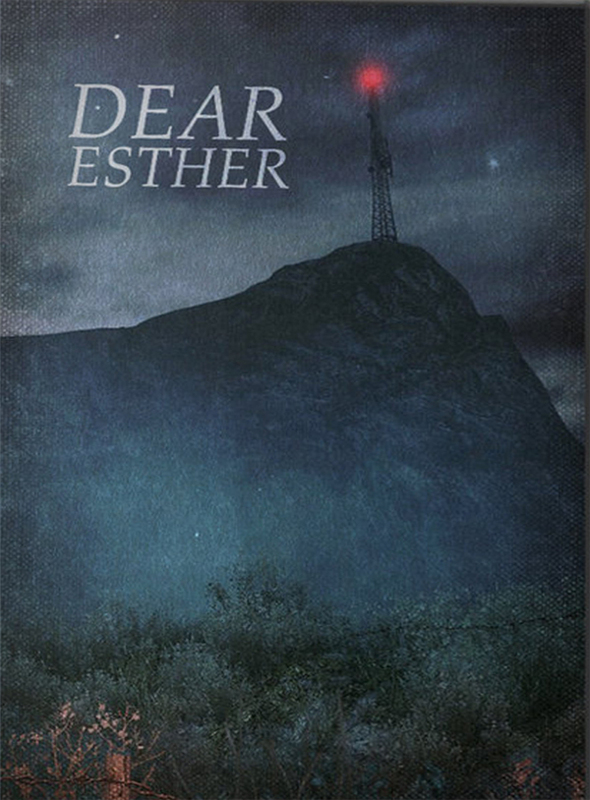
Dear Esther is a game from indie developer The Chinese Room that is a visually stunning adventure game, but it is lacking everything else. If you like slow-paced games or just want to relax and not worry about anything but moving your character, then this is probably exactly what you’re looking for. Everyone else, stay away.
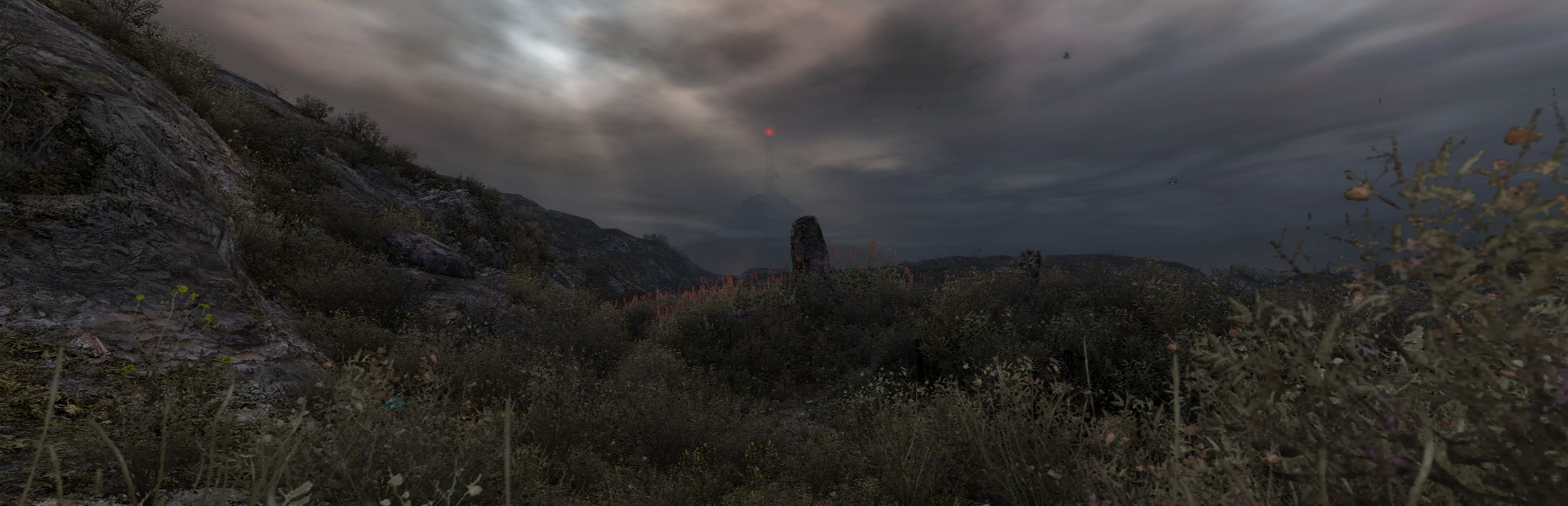
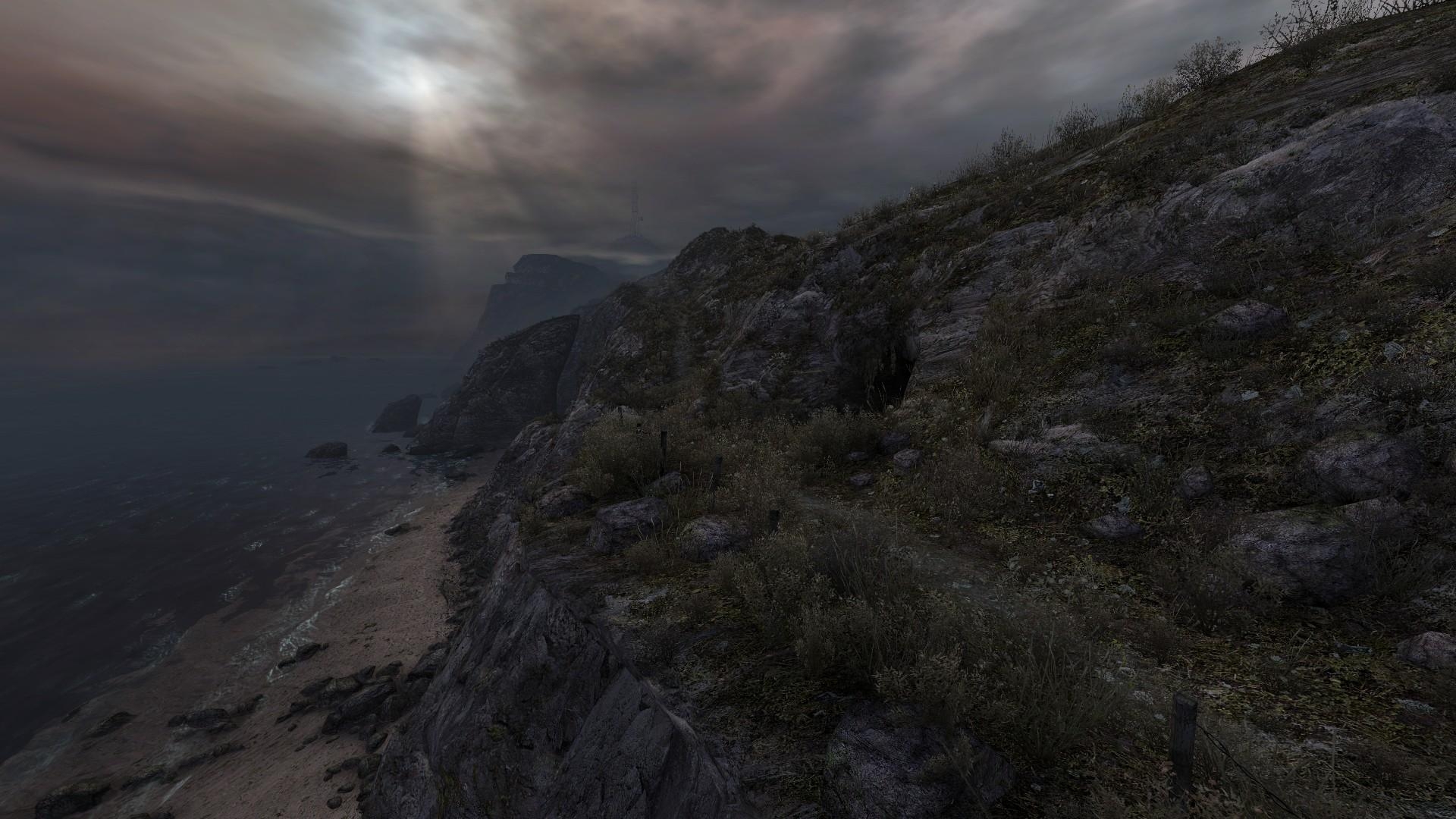
You start out on the beach with no objectives, so you just start wondering. This is all you do in the game while a narrator spews poems at you. There isn’t really a story here except that a man is searching for a man named Donelly, and you are writing letters to a man named Esther. As you wander around the level, you will see various things like abandoned huts, shacks, and strange writings on walls. I felt the game had an atmosphere that was a mix of Penumbra with a bit of Half-Life 2 thrown in. If you walk into a dark area, your flashlight will turn on, but there’s really no need to wander off the main path. If you do, you may get a little extra narrative, but it isn’t worth it because you have to walk all the way back to where you were.
You literally do nothing but walk. There aren’t any other buttons except zoom and take screenshots. This wouldn’t be so bad if the pace wasn’t so slow and grueling. You literally walk at a crawl, and I get that it’s so you can take in the scenery, but it doesn’t really change much until you get into the caves. There’s only so much ocean and swaying grass one can see before you get bored. The only thing you look forward to is the next piece of narration.
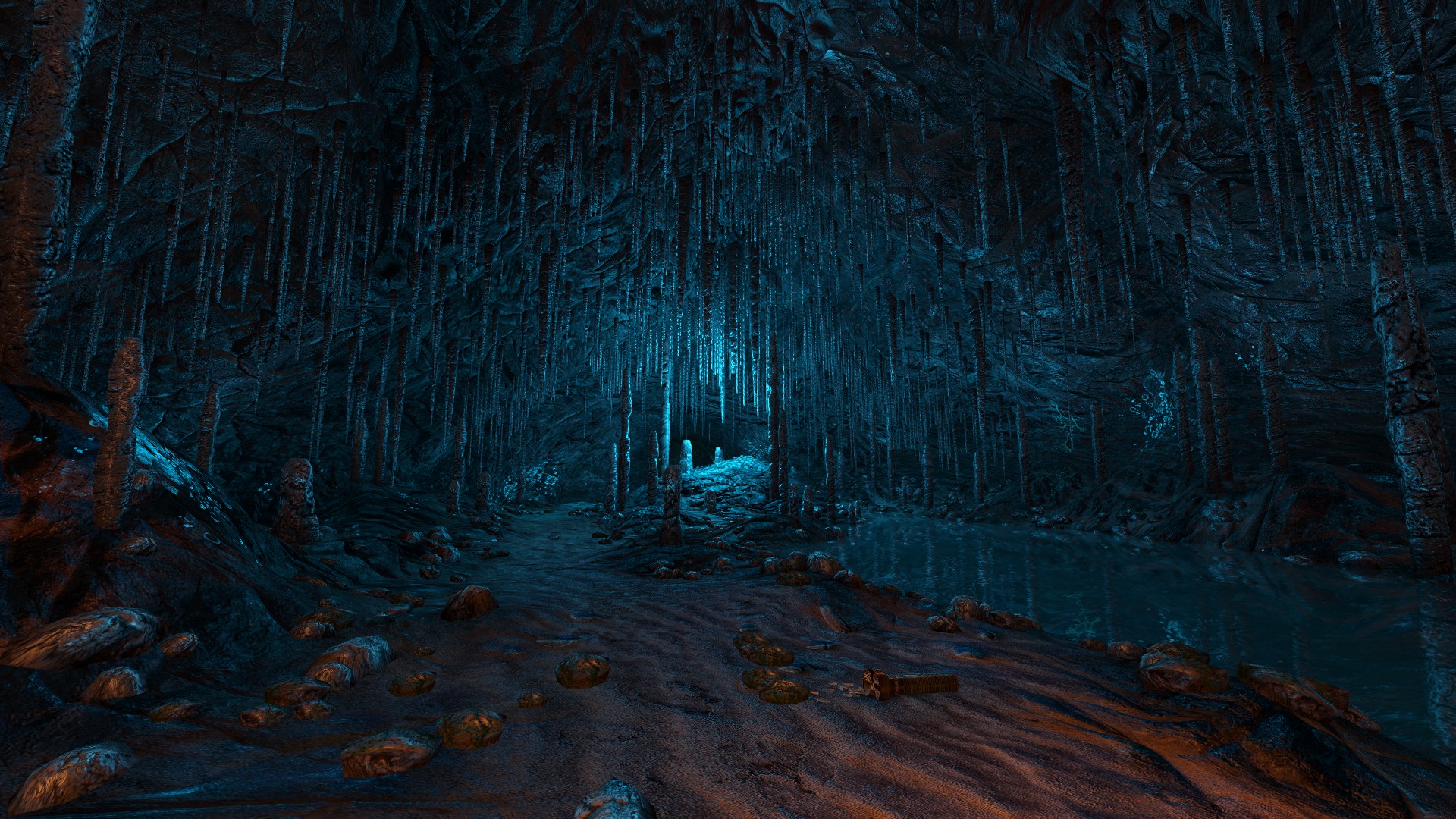
The game is stunning to look at, but you won’t see the true beauty of the engine until you get into the caves, where you get to witness gorgeous water and lighting effects. This is short-lived because this area is only about 10–15 minutes long, as are the other four areas. This leads us right into the game’s worst problem: It is less than an hour long. Even when you get to the end, you still don’t know why you played this game or what its purpose is. The story is very vague, and you never quite know what’s going on. This is hardly a game and is more of a technical showcase. If you can stomach this sort of thing, then go ahead, but you aren’t missing anything if you skip out.
Dear Esther does try something that most games don’t, but with zero gameplay and only being barely an hour long, it’s hard to justify that $10 price tag. There aren’t even any downloadable chapters, which is a real shame. Will I be keeping an eye on The Chinese Room’s next game? You bet because there is a lot of potential here, but I just felt it was clearly wasted.
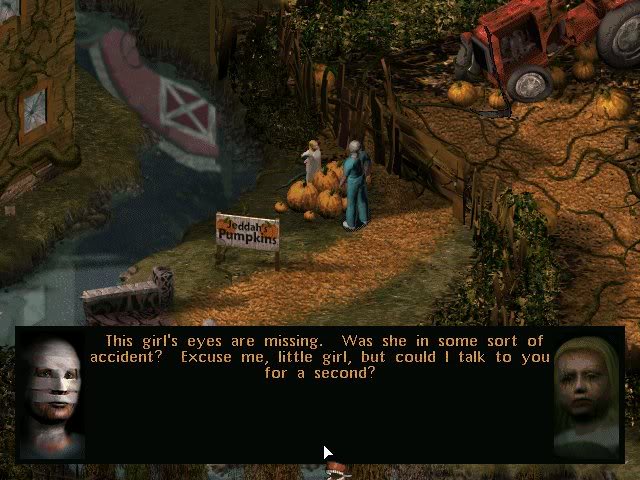
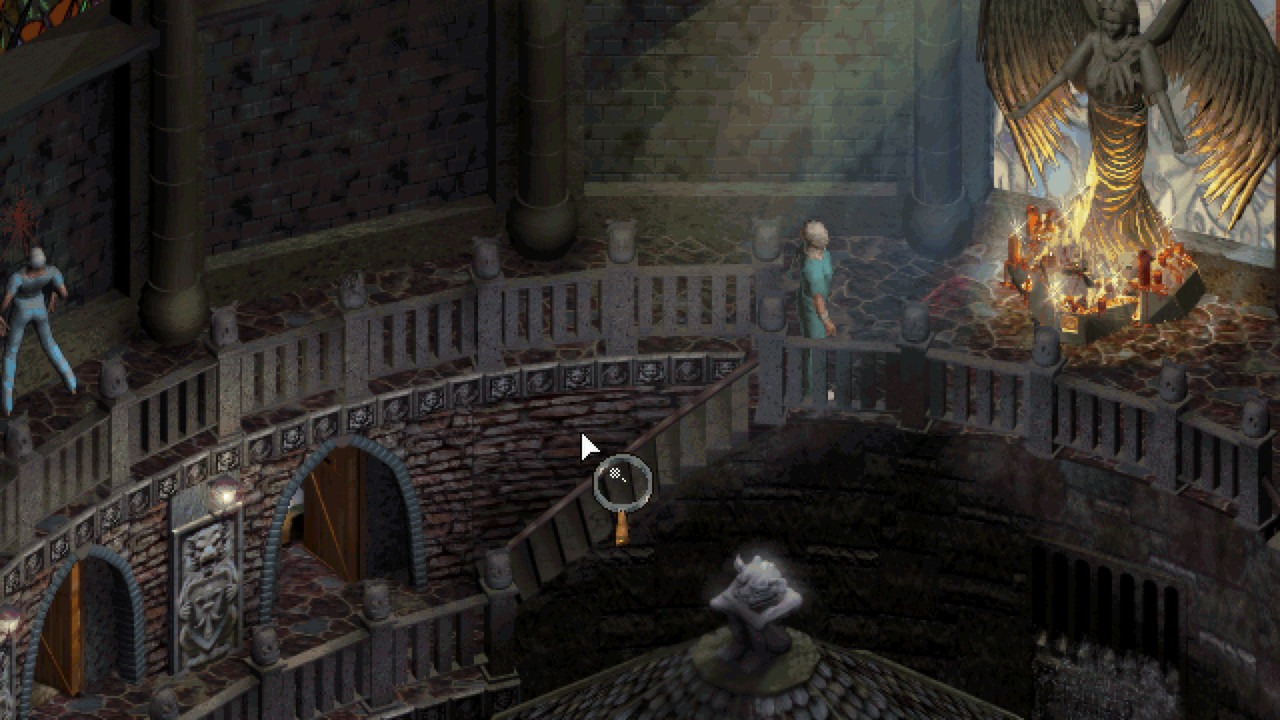
Adventure, strategy, and RPGs were the pinnacle of PC games back in the mid- to late-90s, and Sanitarium is one of those games. You play Max, who suffers a car accident and is stuck in his own insane delusions, or is he? You explore 12 sick and twisted chapters with excellent voice acting and very interesting characters, but don’t forget those adventure puzzles.
The game isn’t much different from the standard adventure game, where you wander around and click on items to proceed to the next area. Your icon is a magnifying glass, and you hold down the right mouse button to move your character around. This was my first annoyance with the game, being that the characters walk so slowly and there’s no run button. Despite this, clicking on things is actually interesting because most of it doesn’t even pertain to the real world. Your first area is an asylum where guys are bashing their heads against walls, and the people you talk to are completely out of their minds. This gets even worse as the game progresses, but that’s a good thing.
As you collect items, you find ways to use them in interesting ways, and it actually makes sense. However, most of the time, the way to use them is so obvious that you will miss it. This game isn’t exactly easy and just gets harder as the game progresses. You get thrown a couple of puzzles at the beginning, but towards the end, the game gets very puzzle-heavy, and they are not fun or easy. Sure, they are unique to individual worlds, but they aren’t easy. I had to use a walkthrough through most of the game because I just couldn’t figure out what to do most of the time.
My favorite part of the game was wandering around and talking to people and hearing their strange voices or weird stories. The worlds themselves are characters because each one has a big problem to solve, but thankfully each level is small and it’s not easy to get lost. The game is paced well with some CGI cutscenes (of course they look horrible being from 1998), but it’s nice that this game feels high-budget for its time. I always looked forward to the next zany world and the weird characters I would run into. I never got bored and always wanted more. The game is nicely paced at around 5–6 hours, and it had a satisfying ending. The one surprise I had, however, was a couple of boss fights. Most adventure games don’t have these, but these were strange.
Overall, Sanitarium is an excellent adventure game that shows how great the 90s were on the PC. You can pick the game up on GoG.com for only $6, but I did run into one huge problem. The game crashes a lot on the newer operating systems, and GoG never addressed the issue. If you can, get the CD and use it on an older operating system (like Windows 98), but otherwise, you will have to trudge through the constant crashes.
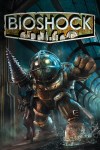
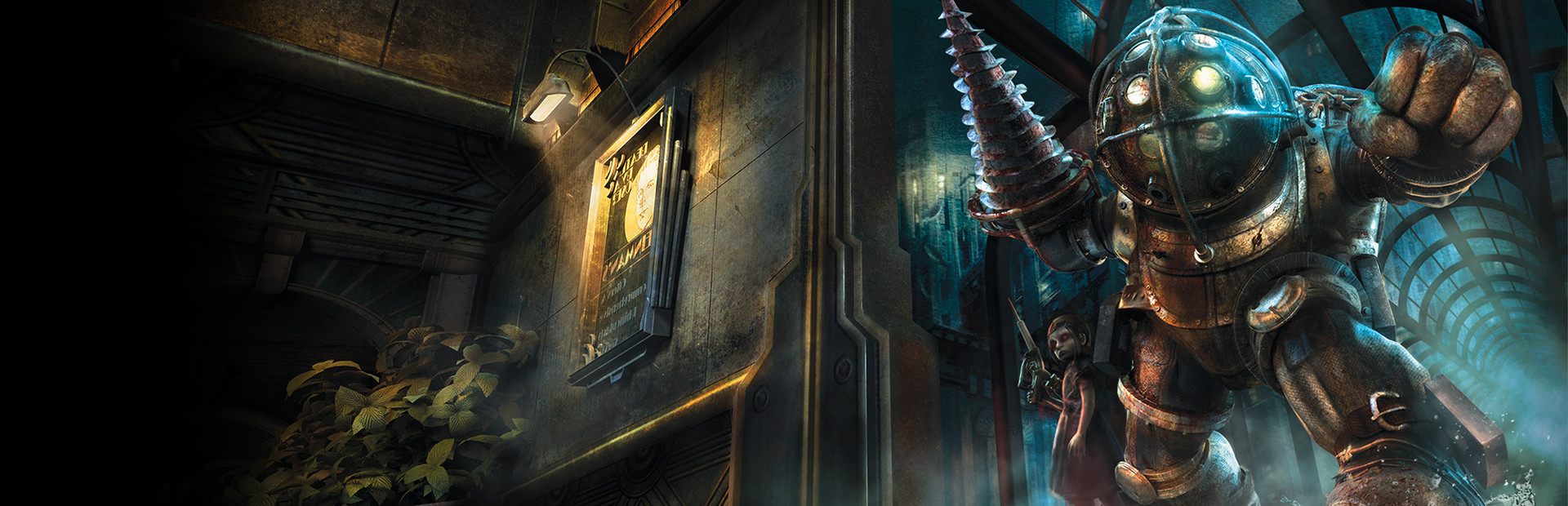
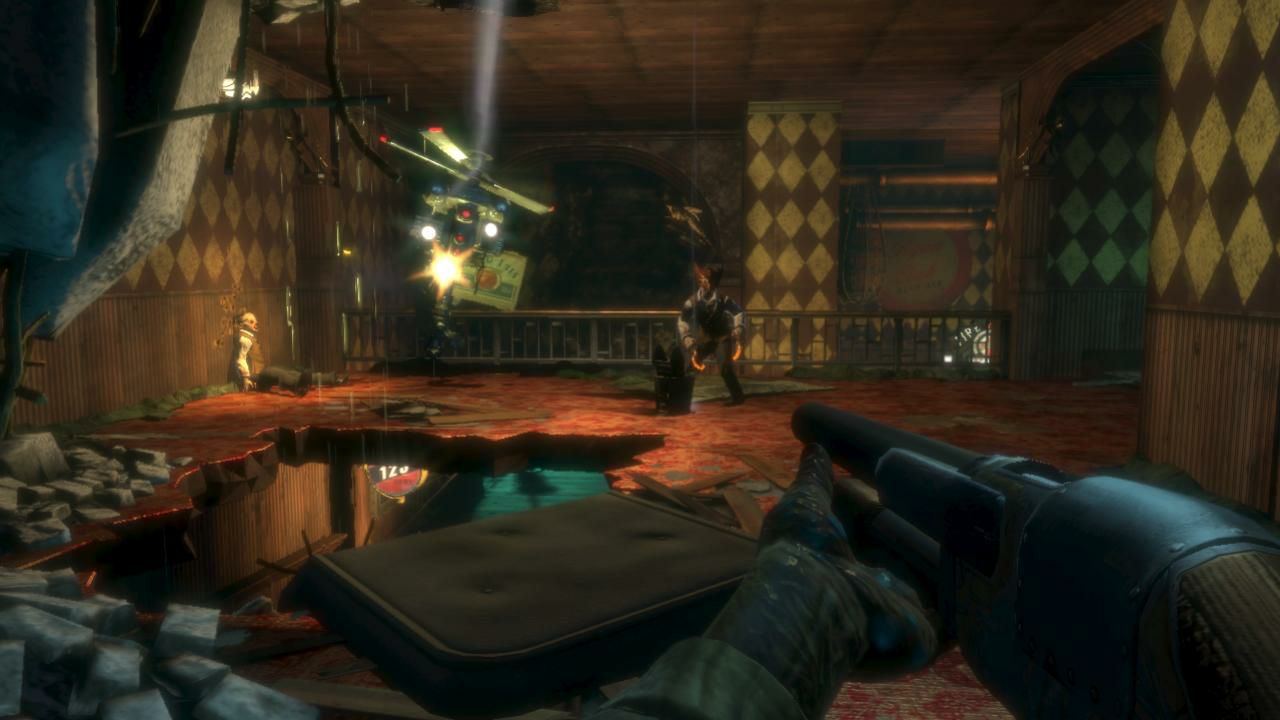
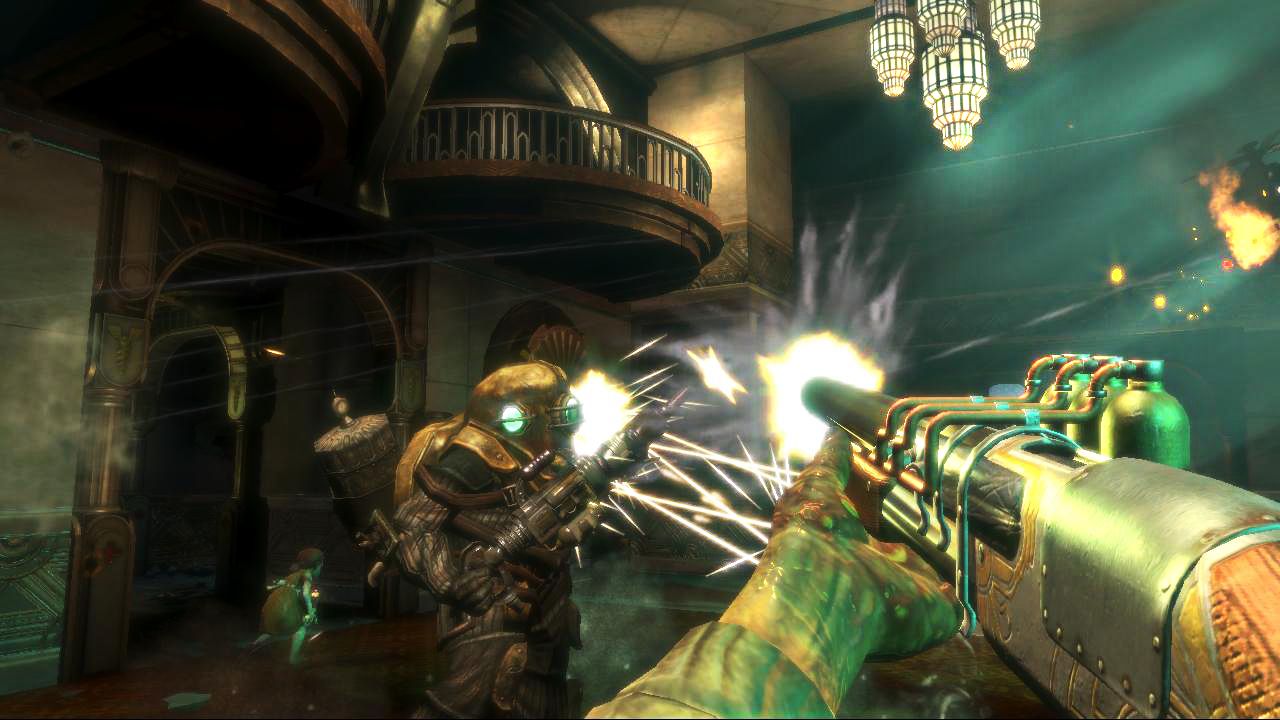
BioShock is awesome! Buy it! That is probably all you need for a review, but that’s not really a review. Anyway, if you don’t know the plot of BioShock, then you’ve been living under a rock for the past few months. You play a nobody named Jack who crashes into a plane and discovers Rapture. A failed underwater city whose founder, Andrew Ryan, turns crazy, and all the people of Rapture have gone nuts. They go nuts due to the plasmids they use to gain power. Also, the ADAM that can make you turn into anything you want is very valuable and is the key to rapture. The Little Sisters gather the ADAM, and the Big Daddies protect them. The story is full of plot twists and secrets. It’s probably one of the most original stories in any game period. The gameplay is like that of an average shooter, if you want it to be, or it can be a genetically enhanced one. That’s the beauty of BioShock. It can be anything you want; it can be boring, fun, stupid, or lame; it’s all up to you.
The game’s narrative is one-of-a-kind and what most games copy these days. The story is told through radio transmissions with no cutscenes. That is extremely hard to do while keeping the player interested. Atlas guides you around, telling you how to get to Andrew Ryan, but the world around you also tells the story of Rapture through audio diaries, things written on walls, and what the psychotic enemies blurt out. This is a rare form of storytelling in games, which is why BioShock is such a classic.
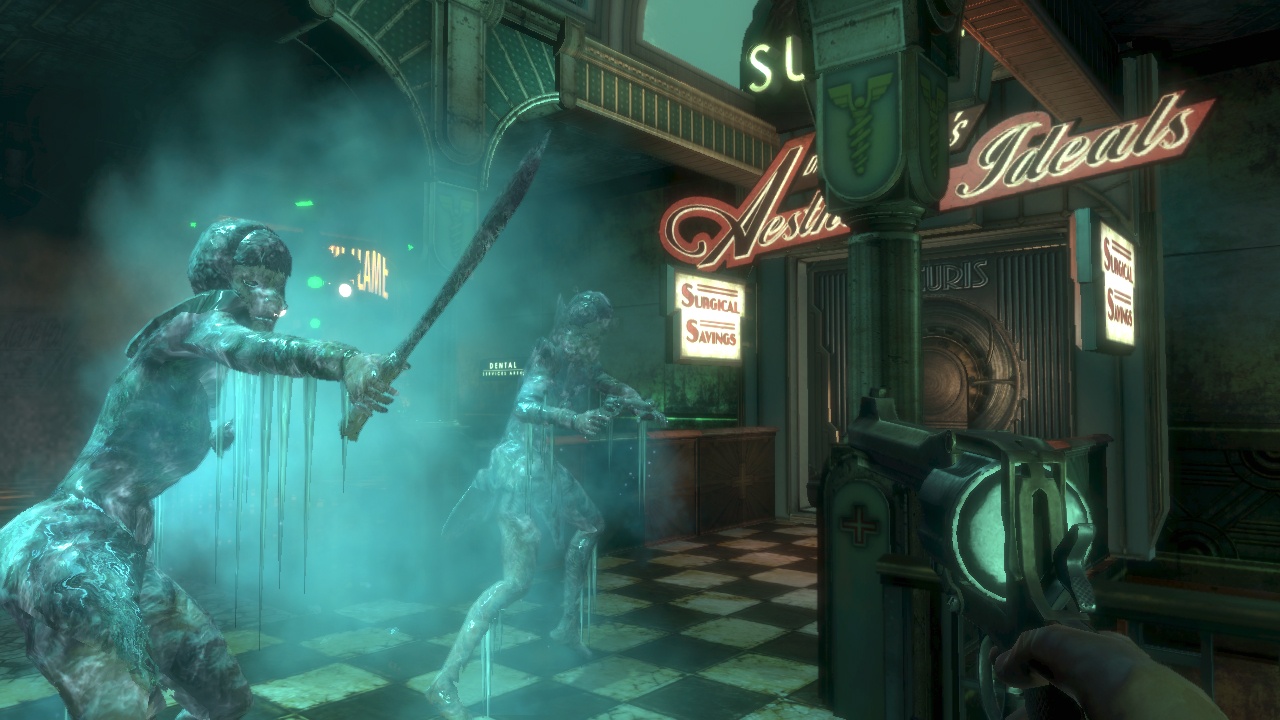
The graphics stand up pretty well today with DirectX 10 enhancements, but they are so subtle you won’t even notice. There are supposed to be better water effects and physics, but I didn’t notice a difference except that your steps cause ripples in the water now. There are lots of graphical problems on the PC that were never addressed, but they don’t hinder the game much. The game is very surreal, and it just sucks you in. The big thing here is the gene splicing and all the plasmids. There are so many of them, and you can do whatever you want with them. You can shoot fire from your hands or freeze your enemy with an ice blast. There are others as well that let you gain more health or hack turrets and safes better and faster. There is just so much detail here, it’s nuts. You can use a camera and research your enemies to learn their weaknesses and gain new plasmids and tonics. The only disappointment was the lack of any multiplayer whatsoever. All you can do is play this game to experience the true beauty of it all. BioShock is one of the best games in years, and I assure you that you will have more fun with BioShock than with Halo 3 or Metroid.
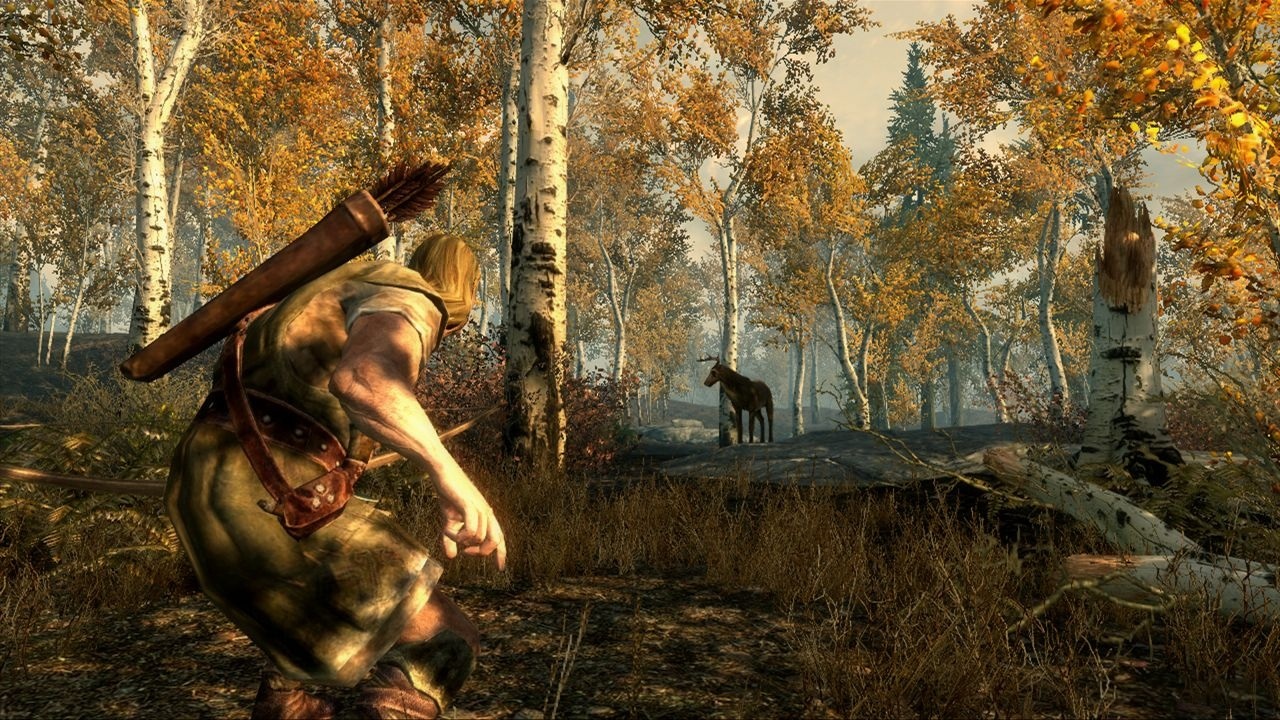
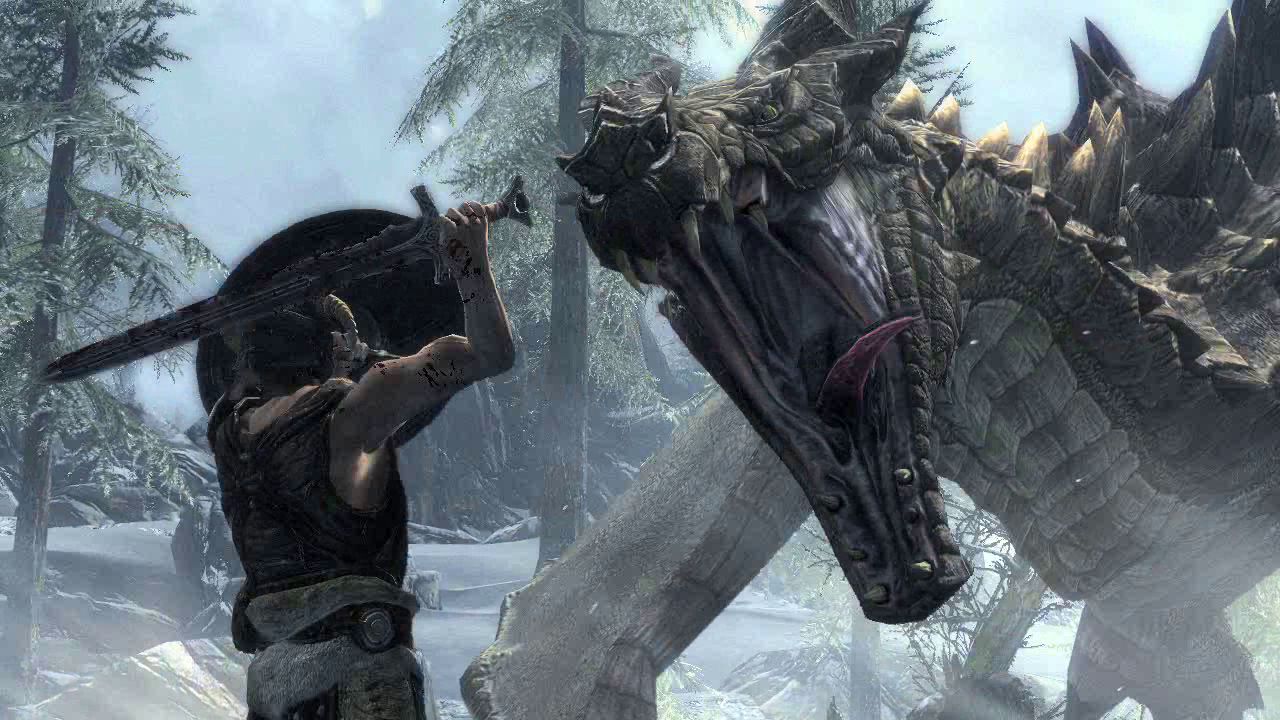
Here it finally is! I had so many great memories with Oblivion back in 2007. I could go on and on about that game, but the fifth game in the series is before us and has taken the world by storm. From creating internet memes to lots of weird videos on YouTube, Skyrim is a behemoth that even non-gamers couldn’t ignore. Skyrim takes place in Well, Skyrim, which is north of Cyrodiil. Cyrodiil was where Oblivion was set, but Skyrim is also set 200 years after those events. Of course, they are talked about in Skyrim, but time isn’t the only change in the game.
You are the Dragonborn, or Dovahkiin, who has the power of the Thu’um, which means you can shout like a dragon. This is actually a major gameplay element in the game, as well as fighting dragons. The map may seem smaller than Cyrodiil, but there is a lot more content in the game. I spent 108 hours on Skyrim, and that was 90% completion of side quests, areas discovered, and finishing the main story. I finished at level 45 and had almost 100,000 gold. In Oblivion, I was able to finish the game at about 95% in 50 hours. That lets you know how much more content there is, so you will be busy for months.
Let’s talk about combat first. The game still has third-person melee combat like the past two games, but it has been revised. The combat feels smoother, and it’s not so much like you’re playing whack-a-mole. There are more elements involved behind the engine, but the thing you will see the most is the perk system that is borrowed from the Fallout series. When you level up, you look to the sky and have a bevy of different areas to gain perks in: magick areas, combat, defense, and even blacksmithing (more on that later). Concentrate on one area and try to get as many perks as you can. This gets rid of the system from Oblivion where you can only level up to something if you use it, like jumping around like a bunny to increase endurance, etc. If you use light armor, you will gain levels (up to 100 in every category) in that area. Use two-handed weapons or destruction spells, and you will gain levels quickly. The perks allow you to gain and build on that area instead of solely relying on users to gain levels.
Of course, there are new enemies in the game, like Draugrs and dragons. Dragons should be avoided early on until at least level 10 because you will die in one hit. Once you kill these beasts, you gain their soul and can use it to unlock dragon shouts. Shouts consist of powers like unrelenting force, slow time, and fire breath. Each shout has three levels, but you need to find those words by exploring dungeons throughout the world. Dragons are just awesome creatures to fight because they are the biggest enemy ever put into a TES game. Of course, you need to watch out for wildlife like bears, crabs, leopards, etc. The world of Skyrim is dangerous and cold, so beware. Sneaking is still a huge problem because it seems no matter how good your sneaking skill is, you still get caught, especially when pickpocketing.
Factions are a huge part of TES, and Skyrim doesn’t leave you out. The thieves, dark brotherhood, mages, and fighter guild are all here, but bigger and better. The stories are more fleshed out and are a lot longer, plus your rewards are better. The Dark Brotherhood and Thieves Guild stories were my favorites, and they show you just how deep into the lore and story you can get. Everything else from past TES games you remember is here, like choices during dialog, but thankfully the whole persuasion mini-game is gone from Oblivion. There are a lot more main characters, and the voice acting is more varied, but everyone has Nordic accents because Skyrim has a Viking/Nordic setting, which is a huge departure from Oblivion’s strictly medieval tone.
Looting is a huge part of TES, and Skyrim doesn’t disappoint here. There is so much to loot that even after 100 hours, you will still scour every nook and cranny for stuff to sell at shops. Lockpicking has been improved and is much quicker this time around. Menus have also been improved with a nice four-way system leading to items, magic, maps, and skills. This gets rid of Oblivion’s awful Excel sheet-type menus. Of course, my complaint here is that you can’t compare items anymore, which is a major pain. You have to remember statistics, which is a bigger pain when shopping.
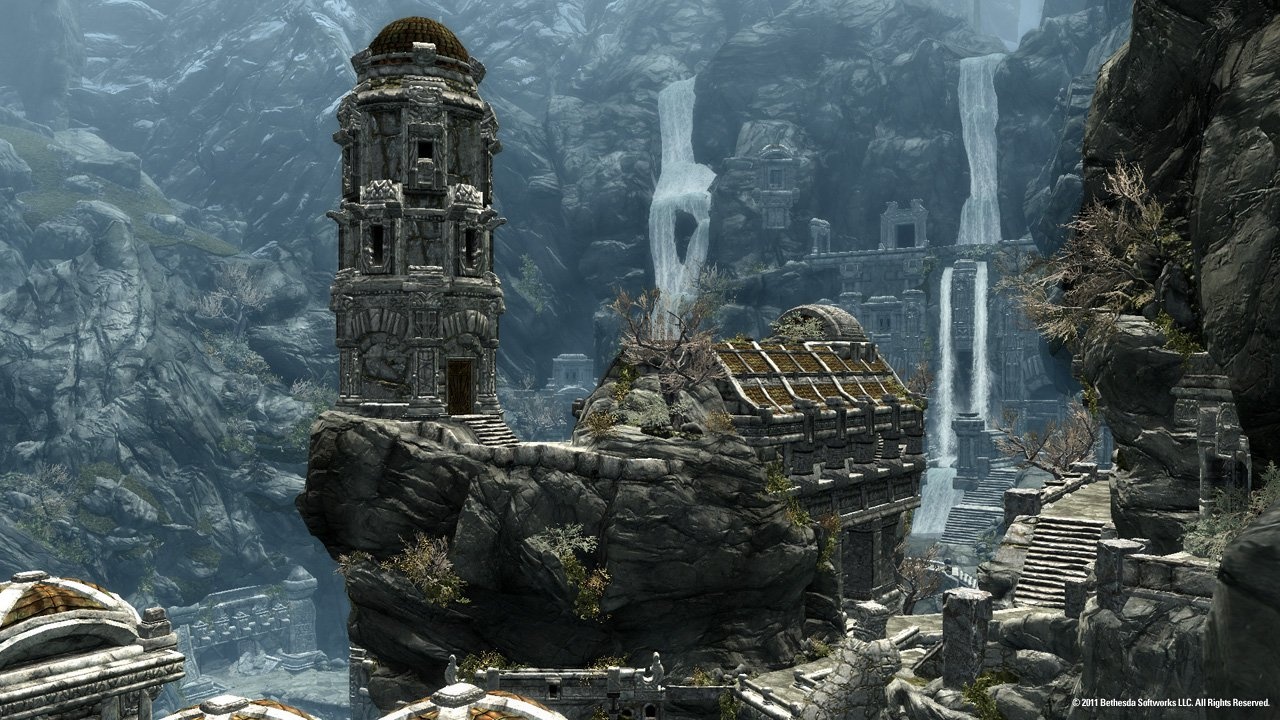
Skyrim has a forging system where you can get ingots for various medals as well as leather. Use these to forge weapons and armor in different categories, like Daedric, Leather, Studded, Iron, Glass, Ebony, etc. You can upgrade these on benches for armor and grindstones for weapons. This makes the whole armor and weapon system feel more custom-made to your liking than just what is out there. The armor and weapons are over double what is in Oblivion. Those are all the major changes in Skyrim, but there is so much detail here that you have to play the game to truly see what I am talking about. You can even read every single book in the game. There is so much detail here. Fans of the series will love the deepened and richer lore of the races and parts of the TES series. There are tons of them here. You even get to explore ancient Dwemer (Dwarven) ruins.
Horseback riding is back, and even the third-person view has been greatly improved, as have the animations. There are so many major changes, as well as minor changes, that I can’t even remember them all. However, there is a huge issue with this game, and that is bugs. There were so many bugs upon release that stopped quests from continuing: quest items being lost, stuck in areas, graphics bugs, dragons flying backward, and everything else you can imagine. Even after a few patches, there are still some bugs, and probably a few that will never be fixed. This is unacceptable, even for a large game like this. Thankfully, there is a huge mod community that fixed a lot of this first, but the stock game has problems that console gamers can’t fix.
The models are still ugly, and the woman still looks like a man. PC gamers get high-resolution textures, which make the game look amazing, but the consoles are stuck with low-res graphics that look kind of dated. The lighting in Skyrim is great, but with so many issues cosmetically, you really should get the PC version. Mods out there transform women into beautiful heroines straight out of comic books, with amazing new armor, new lighting, graphical effects, etc. The stock game is really lacking technically, and that disappointed me quite a bit. If you can look past all this, Skyrim is one of my favorite RPGs of all time and sits right up there with Oblivion.
Collector’s Edition: Hardcore fans may want to drop the extra $90 for the monster collector’s edition. You get a giant statue of Alduin that is an in-game model, a giant coffee table-style art book, a making-of DVD, and a steel bookcase. The statue is worth the extra money itself, and it looks amazing. Of course, this is for hardcore fans only, but good luck finding one.
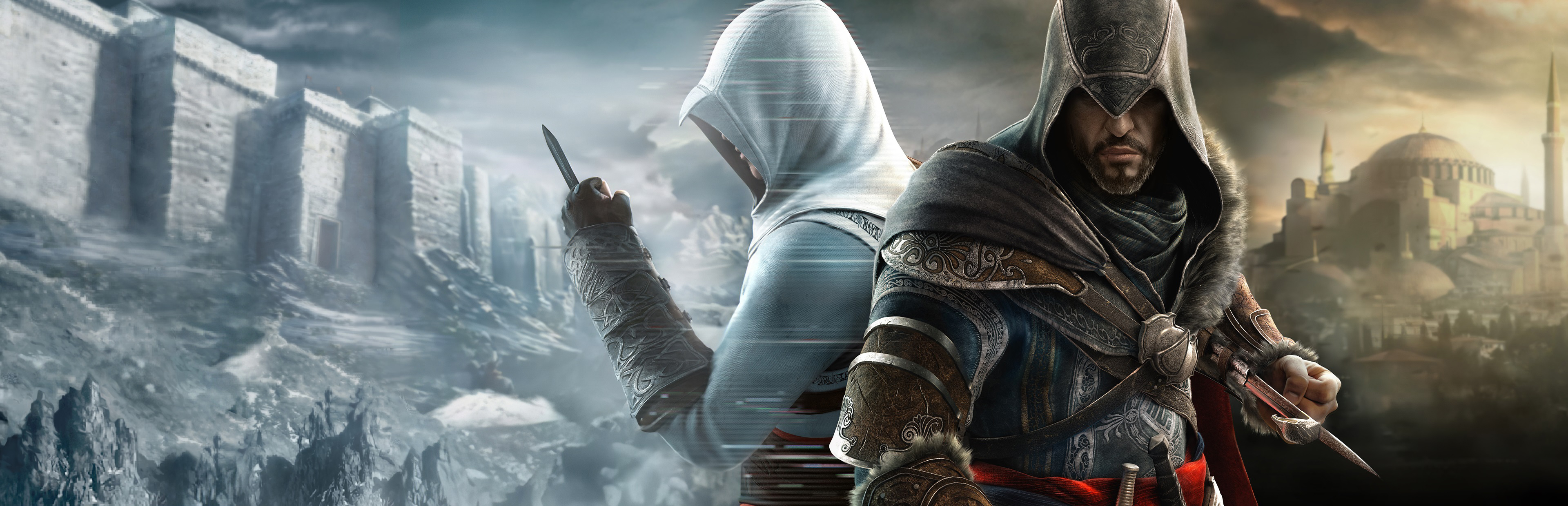
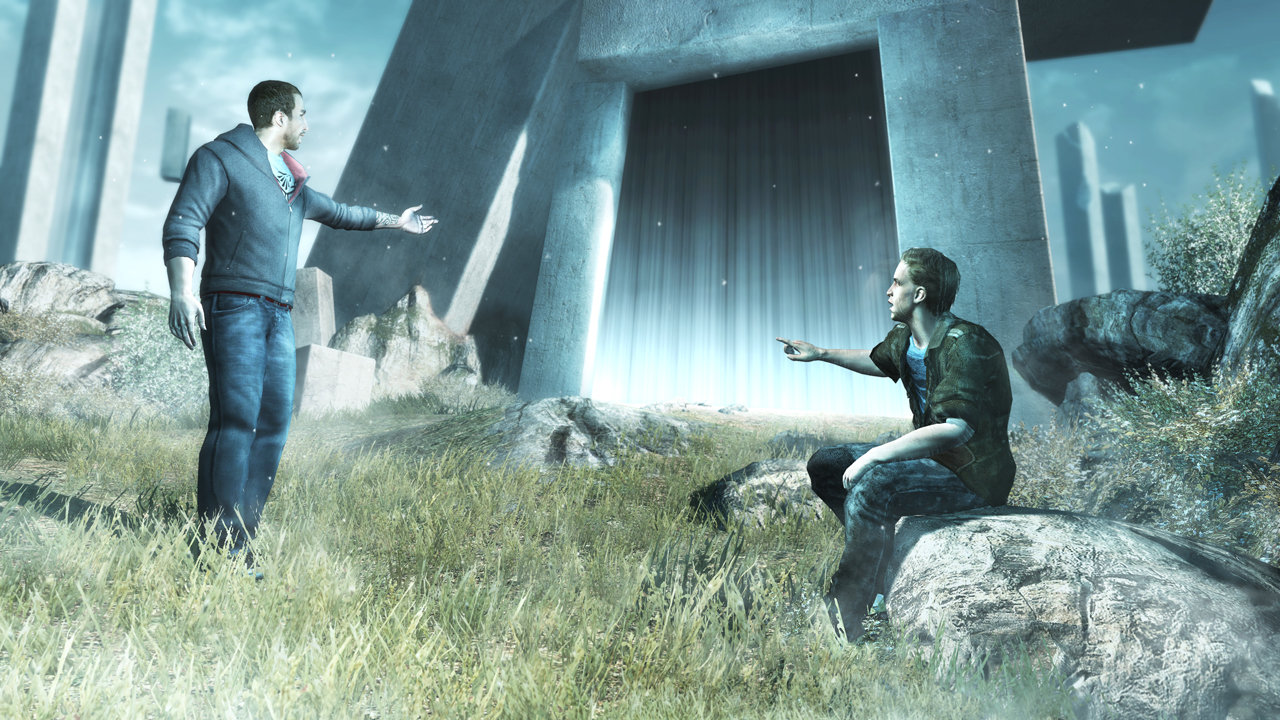
Ezio Auditore da Firenze. When most gamers hear this name, they think of one of the best video game characters ever made. Ezio went down in game history the way he did for a reason. Assassin’s Creed revolutionized the action/adventure genre with assassination skills, a whole new take on stealth gameplay, and awesome parkour gameplay. Revelations are the conclusion to Altair and Ezio’s story, but just another chapter for Desmond Miles. Desmond is stuck in the blackness of the Animus and is in a kind of coma. His brain can’t tell his personality apart from Ezio and Altair’s, so Subject 16 (yes, you finally meet him) helps you a little bit here. There isn’t much of Desmond here because this is the two assassins’s story; in fact, there are only three cut-aways for Desmond through the whole game.
Ezio’s story starts with him trying to find the five keys that Altair hid, but the Templars are also after them. Altair has some secretly hidden library under Masyaf, so it’s a race. This is the shortest AC game to date, but that doesn’t mean it’s worse. There is a new layer added to Ezio’s personality because he’s 50 through 62 in this game. Playing as an old man is pretty awesome, though. Ezio is now wiser, smarter, and a master assassin. You even play as Altair through his old age up to 92, and he still kicks ass! This should be more like Geriatrics’s Creed. Let’s go ahead and start with side missions. The same ones from Brotherhood are kept, but others from past games are cut. Templar Dens replace Borgia Towers; you can recruit assassins, buy stores, buy monuments, find viewpoints, and that’s about it. Side missions took a back seat here to some epic main story missions. Overall, the game can be beaten in less than 15 hours, even if you try to do the side missions that are here.
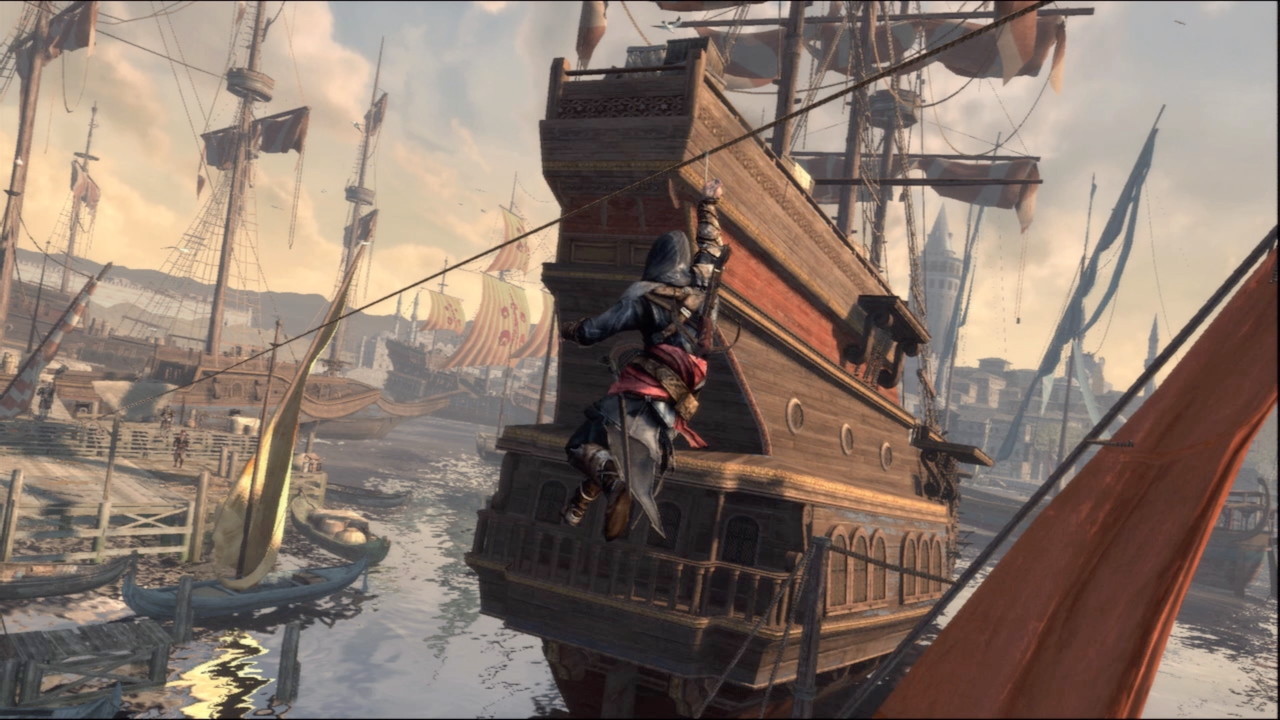
Collectibles this time around involve only Animus Fragments, which are used to unlock crappy Desmond side stories, which will be explained later. Two new combat abilities are brought to the table here: bomb-making and the hook blade. This adds a layer of depth to combat and climbing. Remember when you would jump off a building from too high and just couldn’t reach the one in front of you? Now you can, with a quick press of the action button, catch yourself. It can be used in combat as well as running away from guards. Remember when guards would block your path and you had no choice but to get knocked over? Now you can hook them and roll right over their backs. This also adds another item to climbing, which is zip lines. Zip along and assassinate enemies at high speed, which is a blast.
Bombs have three different levels: diversions, weapons, and defense. Boxes are scattered everywhere that contain parts of bombs that contain the container, gunpowder type, and item inside. You can use a lamb’s blood bomb to make enemies think they’re wounded and become stunned. A splinter bomb stuns enemies or uses a cherry bomb to drive guards away from areas. These really come in handy when you don’t want to get into a huge fight. The problem here is that it’s wasted on the short length of the story. I didn’t even get to use all the bomb types because there weren’t enough missions in the game that called for them.
There is also a strange strategy-type section at the beginning that is never used anywhere in the game, and I thought it was fun. You can use points to call down different types of assassins on roofs or use defenses on the ground. You can use your gun when the wave of guards comes. This was kind of like a tower defense thing and was really strange just to have it on one mission.
All the other items are here, like parachutes, poison darts, and all that stuff from past games. However, combat is finally perfect with combo chains after you kill an enemy. Keep the chain up, and you can kill each one near you with just one hit. The combat really flows this time, and the new kill moves are just gruesome. You can do everything else in past games, so nothing here has really changed. You do use your Eagle Sense more because you need to use it to find these clues to the keys. This leads to awesome and varied main missions that involve epic chases, picking your way around guards, and even giant climbing puzzles. I found these to be the most entertaining, but the gameplay really ends there. It is short and sweet, as well as entertaining.
The area is completely new because it is set in Constantinople and Istanbul. There is one sequence dedicated to a whole underground Templar city, but I felt all this was wasted on such a short little sequence. The area in Revelations is tiny compared to past games, but this is understandable for how short the game is. The new art style and the setting are a great welcome because Rome and Italy were getting tiring to see. The graphics are still superb, even with the slight updates to the engine. The voice acting is superb, and so is the storytelling.
Desmond’s Journey is a strange telling of Desmond’s past through a first-person platforming puzzle thing. I have no idea what this is, but it should go away. There are five short little areas that involve platforming and pushing buttons. Then you get to place floating blocks in front of you to make paths. Yeah, what the hell? It’s nice to know Desmond’s story, but collecting 100 fragments for this isn’t even worth it.
Multiplayer has been amped up and is just as fun. There are more modes, but instead of being really original, they are hidden under the AC theme. These are the models you see in first-person shooters that are disguised here. Capturing the flag is just taking a key from the enemy base and returning it to yours. There is a deathmatch mode and a few others, but more modes are good and they are fun. There are more maps, characters, and abilities that will keep you coming back for hours.
Overall, Revelations is just as amazing as past games in the series, but just on a smaller and shorter scale. It perfects the series to a T, and I don’t think anything else can be done with these two heroes. If you made it this far in the series, go ahead and finish it. Long-asked questions are answered, but there are also some new ones now. The game has a touching ending, and we even finally get to see what happened after the first AC. Revelations is an excellent game, with just enough new stuff to keep fans happy.
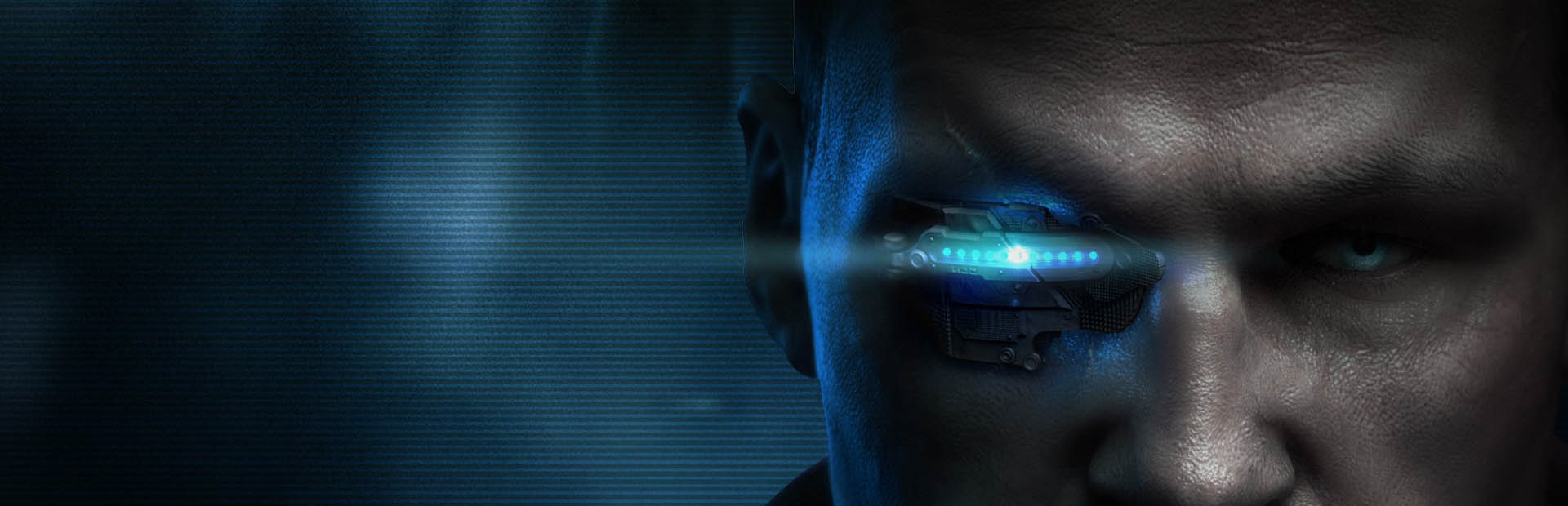
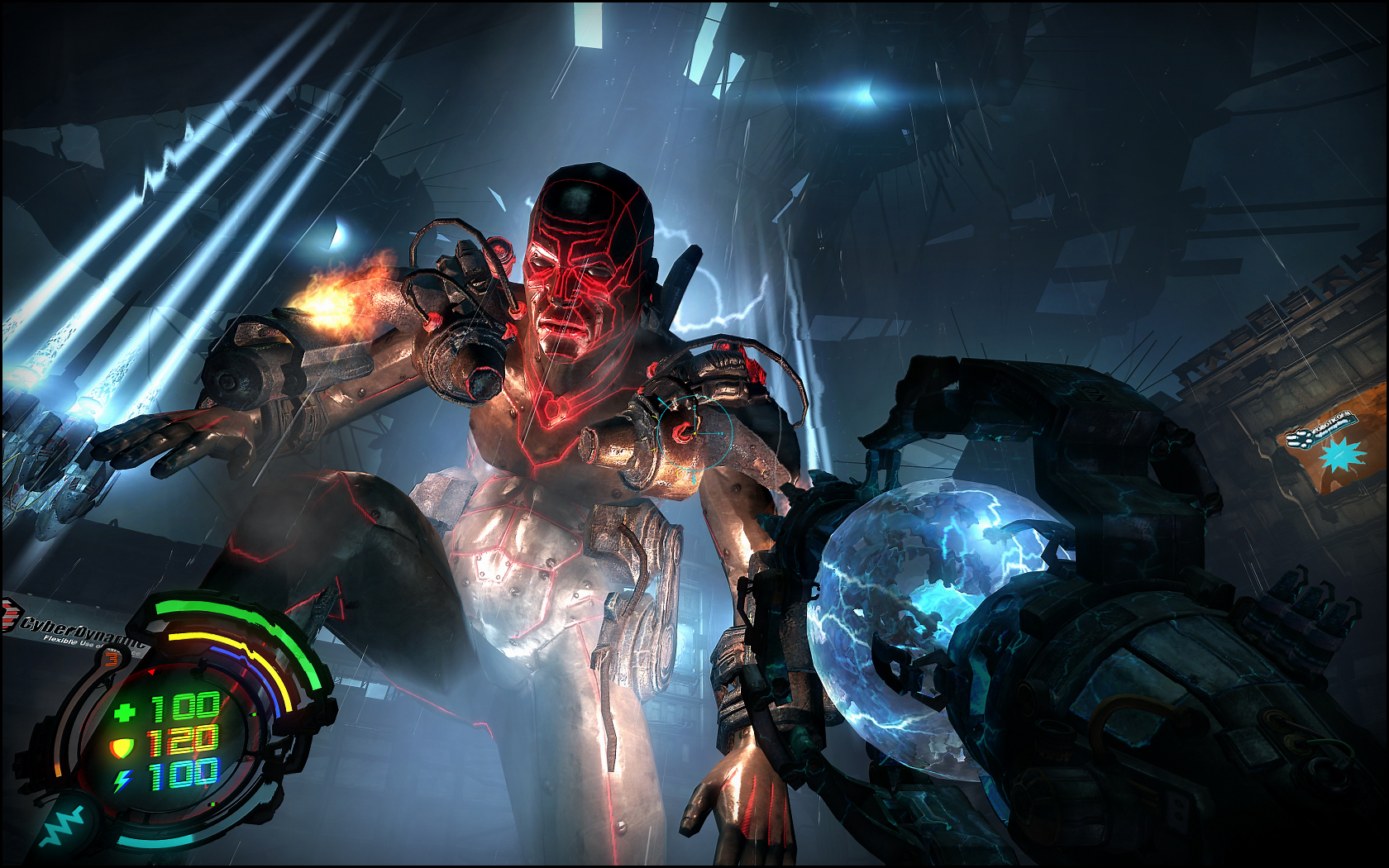
Hard Reset is a cyberpunk game set in the future about a war between AI machines and humans. You are an agent of the CLN trying to stop this, but the story is kind of just vaguely tossed together and doesn’t really make any sense. You also don’t get much sense of what’s going on in the world. The characters are uninteresting, and the messy comic-style cut scenes are uninspired and sloppy. Besides this, the game has some solid shooting, but even that has issues of its own.
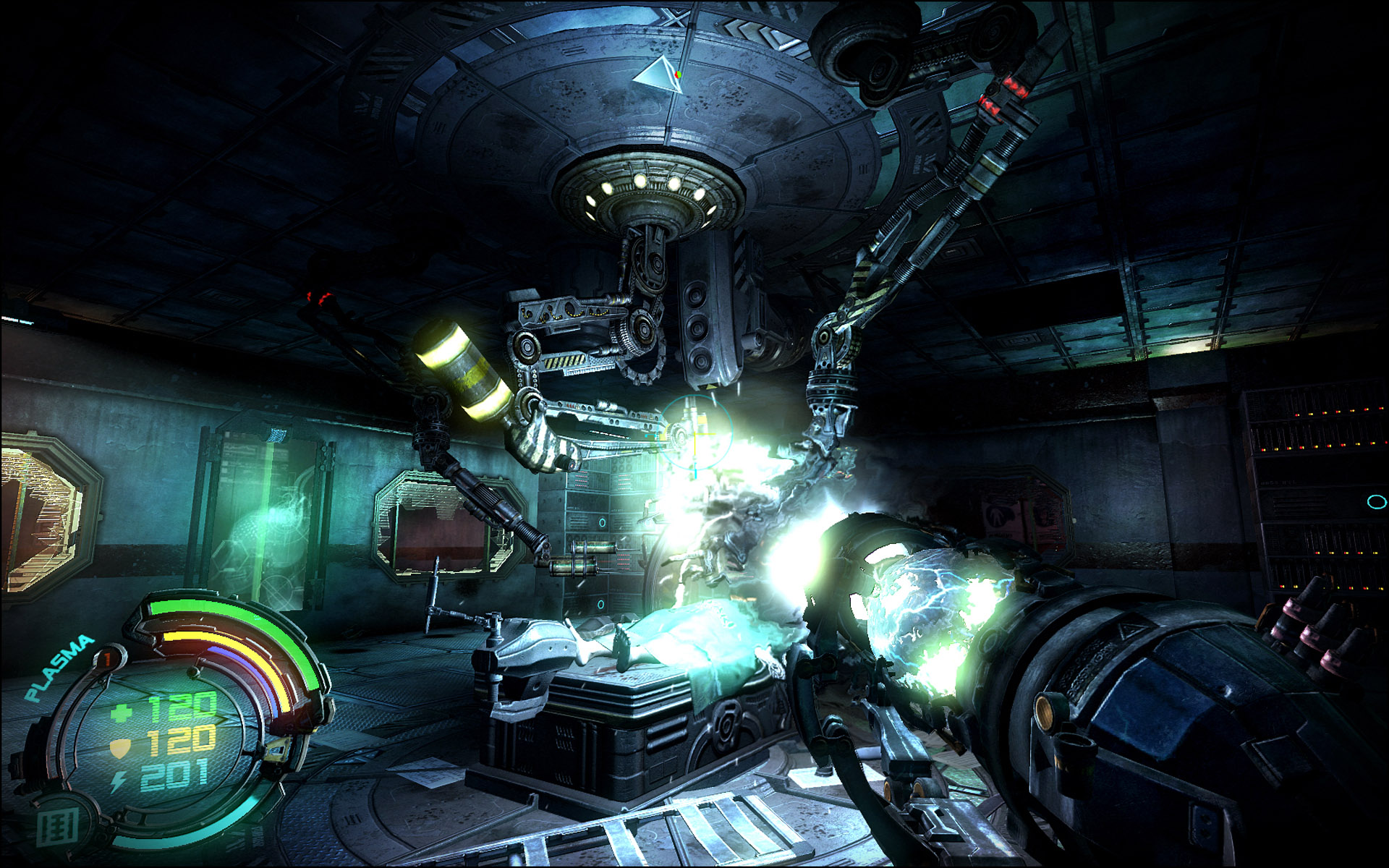
There are only two guns, and each one has its own different “add-ons.” The energy weapons let you shoot plasma, mortars, a smart gun that shoots through walls, and EMP grenades. The CLN gun has a machine gun, RPG, shotgun, and grenade launcher. This is great and all, but this system is flawed. Switching between two weapons and then to the right attachment is stupid. Not only are the gun switching animations slow, but having to do this costs precious seconds in which you’re dying. This also rolls into the biggest problem with the game: It’s too damn hard. Sure, I like a challenge, but just a few hits and you’re dead. But there are tons of enemies thrown at you, and they don’t go down easy. Expect to restart dozens of times, almost during every fight, unless you’re on easy.
Why would a game have a weapon system that works against itself? Who knows. You can buy these attachments and upgrade them by finding XP lying around everywhere, but the progression is slow, and by the end of the game, you will barely have bought 10 upgrades. My other complaint is that there are only about six different types of robots you can shoot, and they get old very fast. The first couple of levels are pretty awesome, then that wears out when you get to your first fight, where you die about 10 times.
There are a couple of boss fights, but they are almost impossible to beat on any difficulty but easy. I haven’t played such a hard FPS as I can remember. It actually makes the game not very fun at all, and even the most skilled players will struggle. I can’t even believe they put an insane mode in here. One hit and you’re dead, which makes it impossible to go past the first fight in the game. Go figure. The objectives are all the same with you pressing this button. Shut down this thing to go past that thing. There are secret areas you can find to improve your end-of-level score, but who really cares? You’ll be lucky if you can get through the damn game.
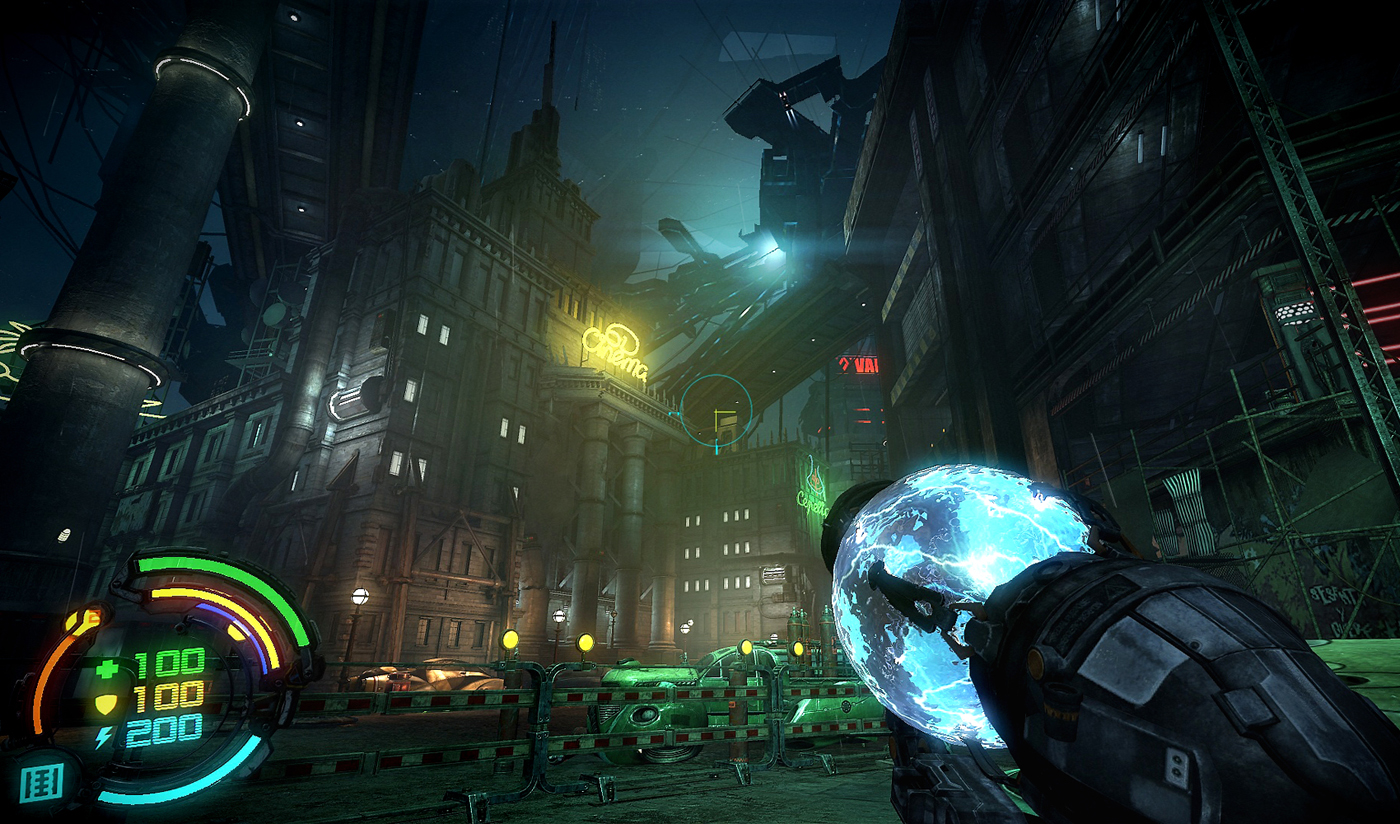
The game looks pretty damn good with a nice Blade Runner-type art style, but it’s wasted on linear levels. The overall feeling of the world has lots of potential, with kiosks hocking items in robotic or half-failing voices, holograms with propaganda, and ads everywhere. I like the style, but it sure went to waste. Overall, Hard Reset is a decent shooter for a weekend, but the extreme difficulty practically kills it. There’s also no multiplayer, which is a surprise, so after you finish the game once, you probably won’t go back.
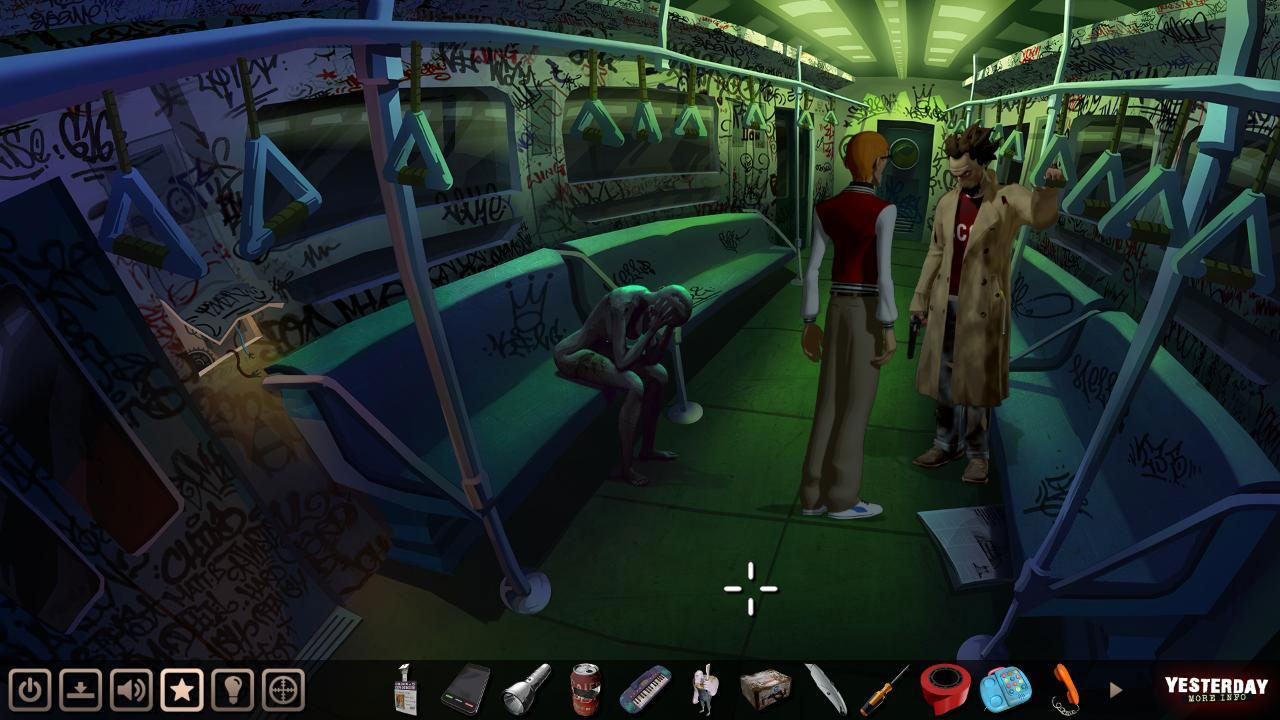
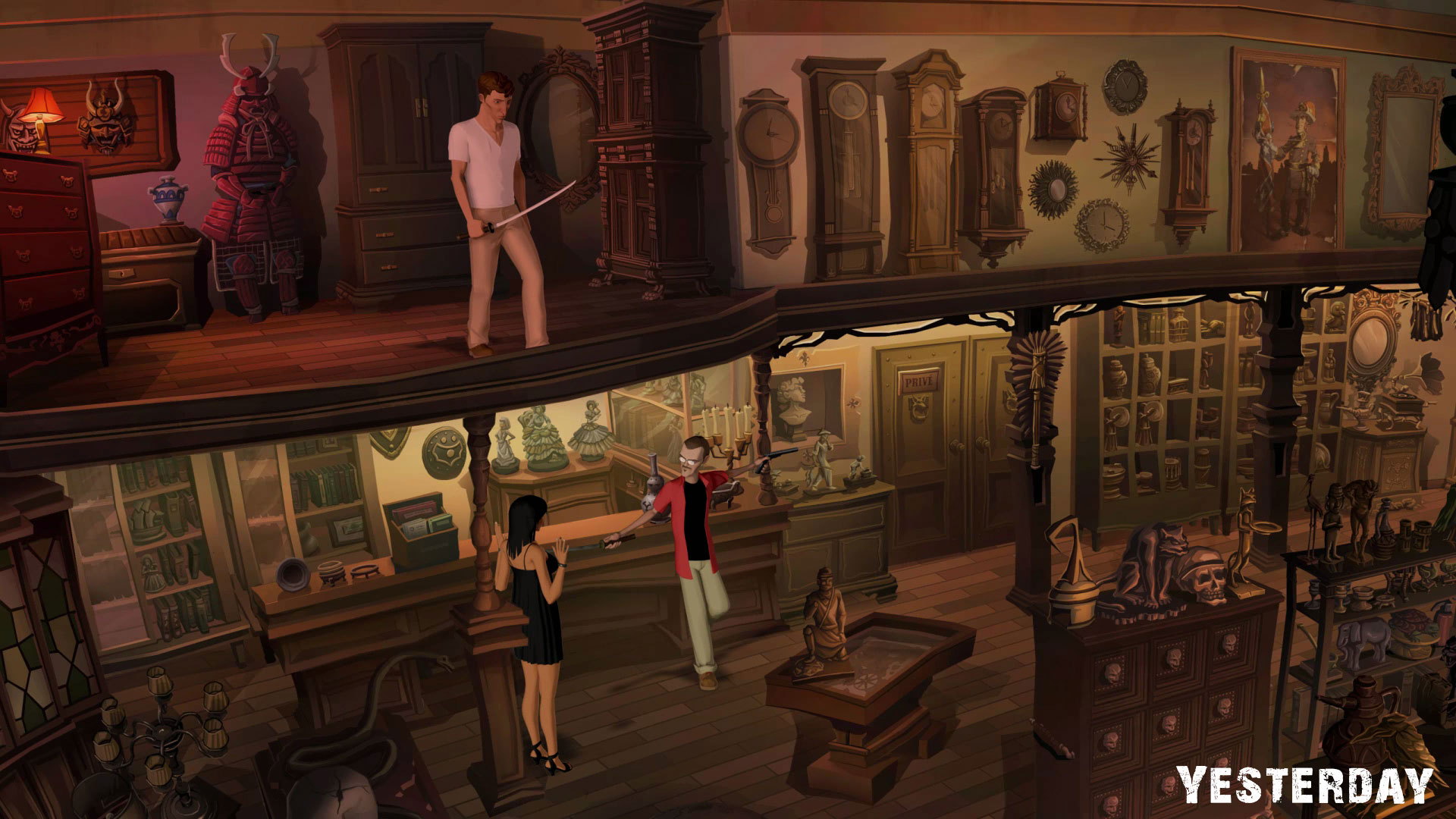
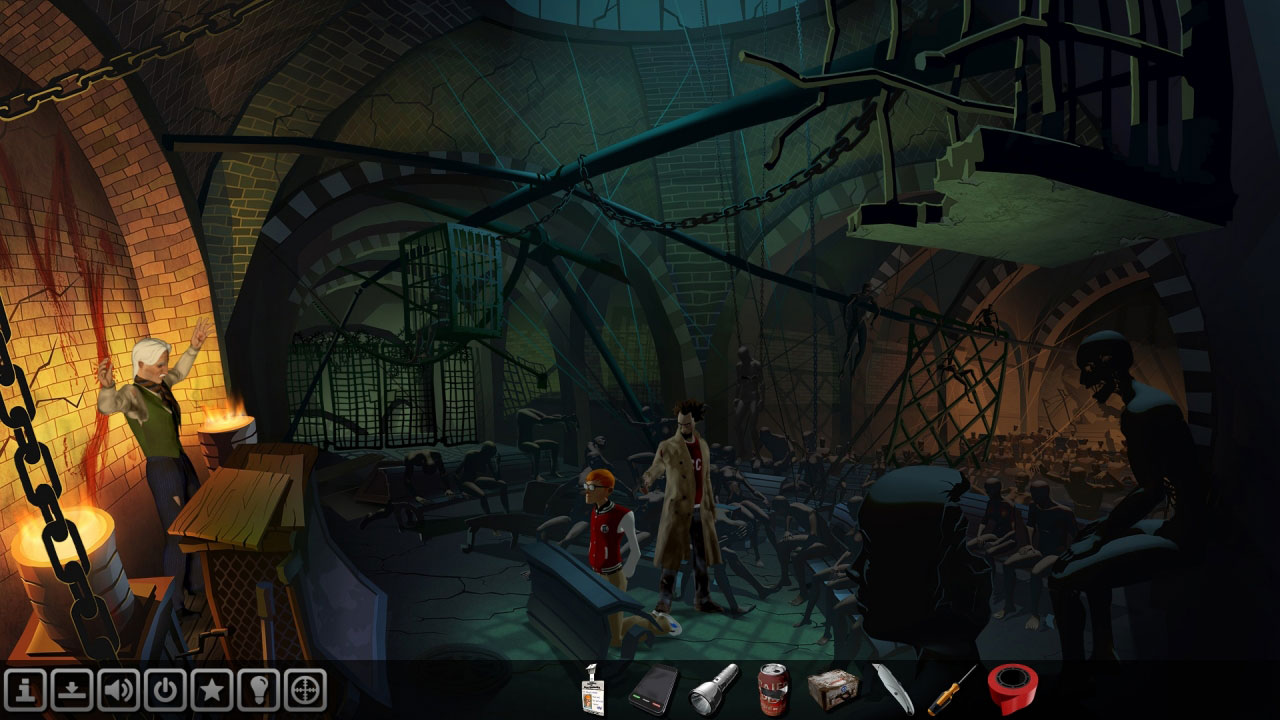
The adventure genre has struggled for years, and rarely are any of them any good. Yesterday is one of those gems because it does everything right and doesn’t do what other adventure games do. The story is the part that’s most interesting here, with you playing John Yesterday, who is a man investigating an occult book called The Order of the Flesh and has something to do with killing homeless people. You get mixed up in a huge mess after waking up with amnesia, so you travel around trying to figure all this stuff out. There are plenty of plot twists, and the game keeps you playing because you want to know more. The problem is that the story is so short that it leaves you wanting more.
The gameplay itself is extremely simple because all you do is find objects and come up with ways to use them. This isn’t new for adventure games, but the constant scene-changing means there’s always new stuff to find. The game completely wipes out tiresome pixel hunting because there is an object-of-interest button that will display things you can click on for a few seconds. Every adventure game needs this, and very few do it. There is also a hint button that is actually useful and gives you hints, so you are never stuck. If you use a hint, you have to click around some to refill the light bulb, so there is some encouragement to figure things out on your own.
Another thing I’m glad this game does is that when you click on something or try to move to different areas, there are no annoying walking animations or door-opening animations. The character warps to that spot, and the item pops up on screen. Thank you, Pendulo Studios, for not putting annoying, useless crap into an already annoying and dead genre. This makes playing the game much easier and makes progress quick. Another complaint would be the lack of puzzles, because there are very few and not very challenging. This is no Myst, but instead, you have to just figure out what item does what. This is kind of fun and keeps the pace up, but brainiacs will contest this and probably get bored with the game.
I feel Yesterday was actually geared more toward hardcore gamers who don’t have the patience for long-drawn-out stories and tiresome puzzles. This is both good and bad, depending on the player. I do detest the lack of challenge, but the fast-paced narrative is nice. Other than this, the animations are terrible, with horrible lip-syncing and some audio glitches along with spotty voice acting. The graphics have a cell-shaded cartoony look, which is nice, but technically, the game doesn’t look that great. One thing I found odd is that the game depicts a sick, twisted torture-type story with murder and killing, yet there’s hardly any blood and violent scenes are almost censored. I found this odd and kind of detracted from the experience, but what can you do?
Overall, Yesterday provides a fine narrative and quickens the pace of most sludgy adventure games, but the lack of puzzles, challenges, and an extremely short story will turn hardcore adventure fans away. Yesterday was a fun weekend play, but other than that, you won’t come back.
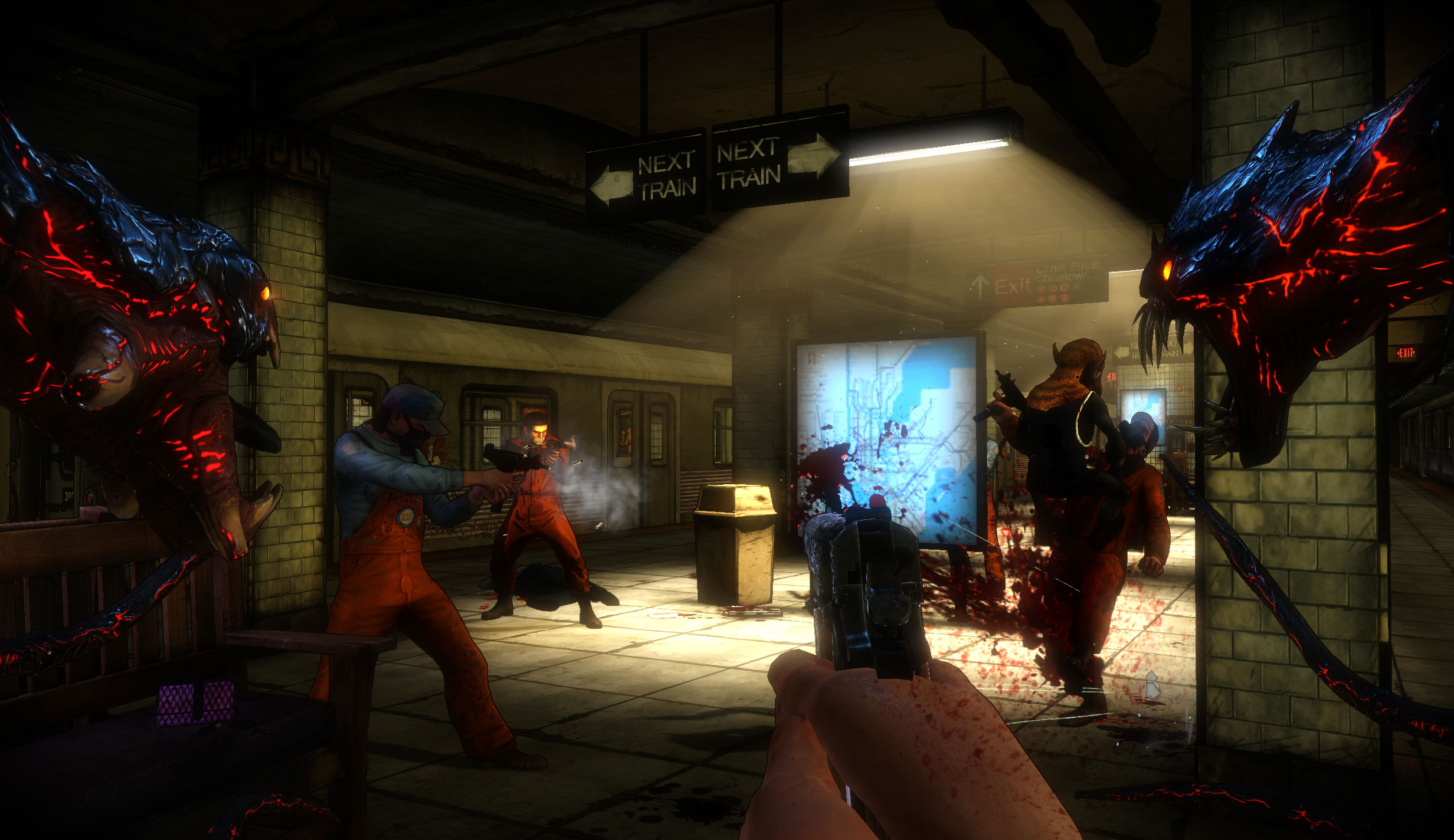
I have to come right out and say that The Darkness II is disappointing and takes away more good from the first than adds to it. The first game is one of my favorite games of all time because of the amazing atmosphere and linear open world that was delivered with trickling story elements that kept you wanting more. This allowed constant banter between Jackie and The Darkness, but it was that dark, eerie atmosphere that kept me wanting more. The side quests were nice, and there were some varied environments. The Darkness II takes all that away and makes this a more linear, in-your-face type of game. Sure, the storytelling is superb, and so is the voice acting, but that linear, open world allowed you to explore things on your own.
The Darkness II is about The Darkness finally waking itself back up inside Jackie, and he is on the hunt to find Jenny even though she’s dead. A cult group called The Brotherhood wants The Darkness and takes constant hits on Jackie’s mafia family. The story is great and even more deep than the first game, but once again, that awesome atmosphere is exchanged for some ho-hum backdrops you fight in, ranging from a warehouse to a graveyard to a carnival. What has changed here, mainly, is how you use The Darkness powers because it is the best part of the game.
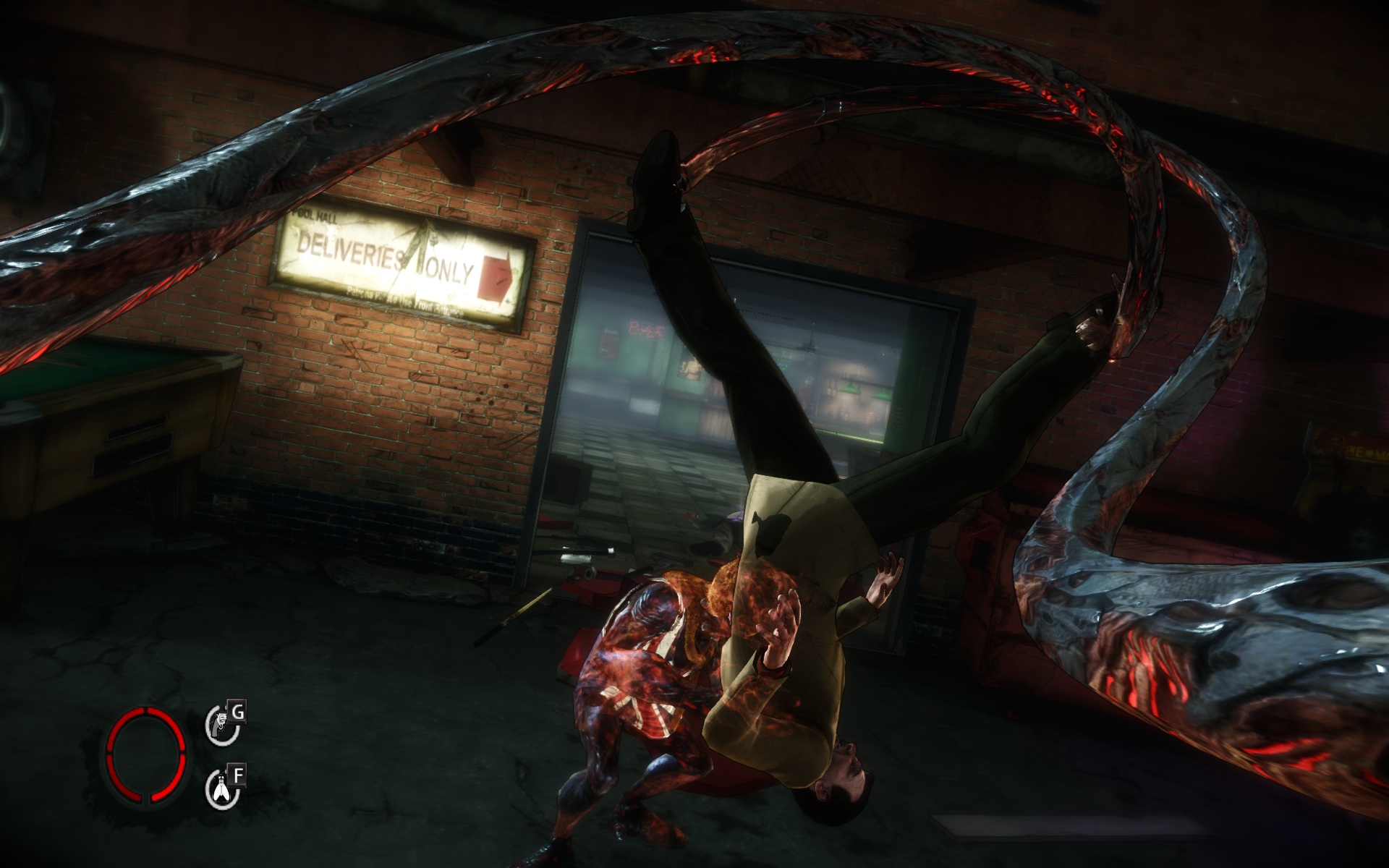
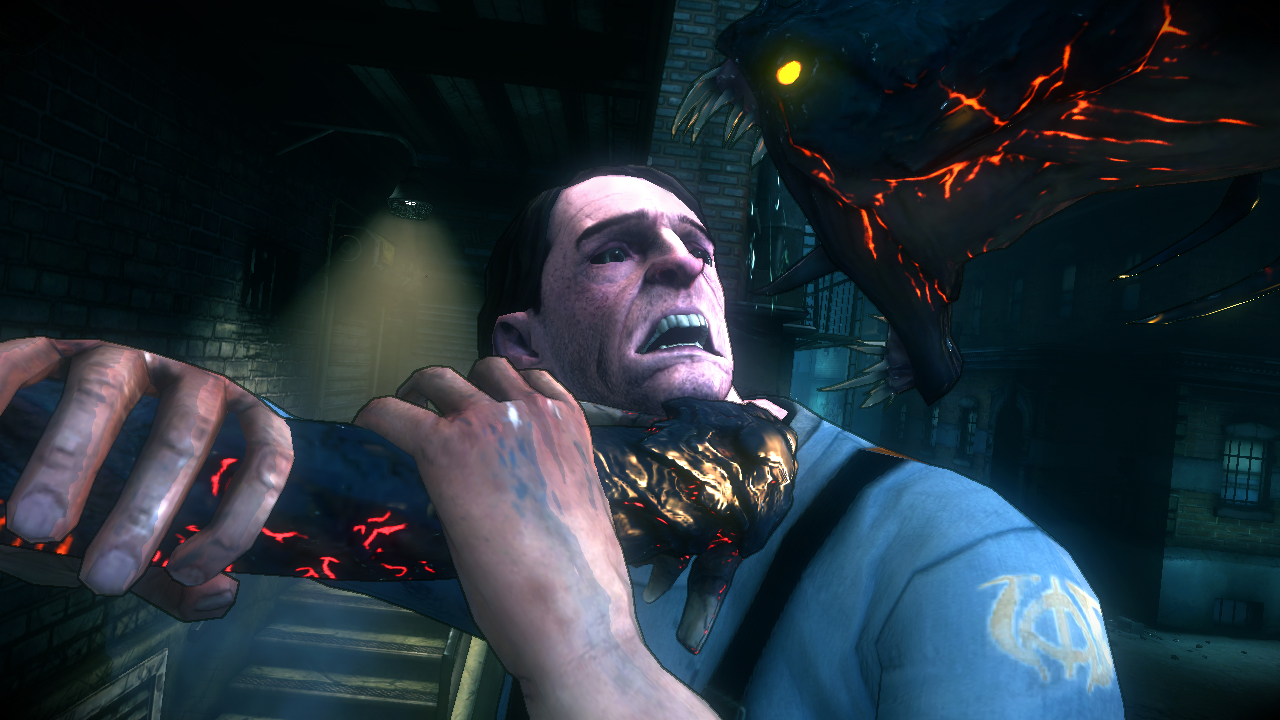
You can upgrade your powers even more now by earning points by killing foes and finding relics. You can also use the environment around you to kill enemies, like using fan blades, poles, chairs, barrels, you name it. The awesome gory death animations make for a visual treat, but you can also tear enemies apart with new Darkness animations and abilities. Eating hearts isn’t the peak of your powers here anymore because you can now upgrade with Darkness armor, shields, ammo producing death kills, and even using your Darkling to sicken enemies.
Yes, that Darkling strategy thing that felt like Overlord is gone now. The one Darkling that follows you throughout helps you on his own, but his charming self is still there. He will still fart, pee, and curse his foes down, so don’t be disappointed there. I actually preferred this because it jives with the faster-paced action. Gunplay is still a huge part of the game, and so is dual-wielding. You can channel darkness through the guns for one-shot kills, but the guns handle very nicely and are a lot of fun to use. Some other powers range from faster reloading, bigger clips when in darkness, using Swarm to stun enemies, and various other upgrades.
The whole point is to stay in the dark, and this time you are given more than just light bulbs. The Brotherhood uses light weapons against you and will have traps and random light obstacles set up, so you must take them down quickly. Staying in the dark allows you to swipe your demon arms, but you are also thrown more than just humans now. Enemies will be infused with dark armor that you must punch through before killing them, and some of these guys are tough. Some can teleport around, so there is a new level of challenge here, but the big problem is that sheer numbers are thrown at you, which can be overwhelming later on.
All this doesn’t sound too bad, right? Ripping a car door off and watching it fly through the air and cut someone in half. Watching your demon arms rip a body in half or pull ahead after stunning them doesn’t seem worse. The fact is, the game is really repetitive in the sense that this is all you do. Just running around killing everything in your path with really no strategy. There’s no cover system, no Darklings to use, and nothing but your demon arms and guns. The story elements are delivered wonderfully, but you can’t help but know that it’s just more killing waiting on the other end of the cutscene. The boss fights break things up, but all you do is avoid attacks and blast them to death, and to be honest, late in the game, you use your guns more than demon arms because there are just too many enemies to kill at once.
On top of all this, the art style was changed to represent the comics more, which is nice, but the game isn’t technically impressive. It looks a couple of years old and doesn’t even come with enhanced visuals on the PC. There is an extra Vendetta mode that can be played online with up to four players, introduces four characters with separate Darkness abilities, and is actually quite fun. Once you finish these, however, you won’t be coming back.
Overall, The Darkness II detracts so much from the first game that it is almost not even the same. The slower-paced trickling action is replaced with repetitive in-your-face corridor shooting that is better or worse depending on the player. This should be played by fans of the first game just to see the story playthrough, but don’t expect the masterfully created atmosphere and open-world feeling of the first game.
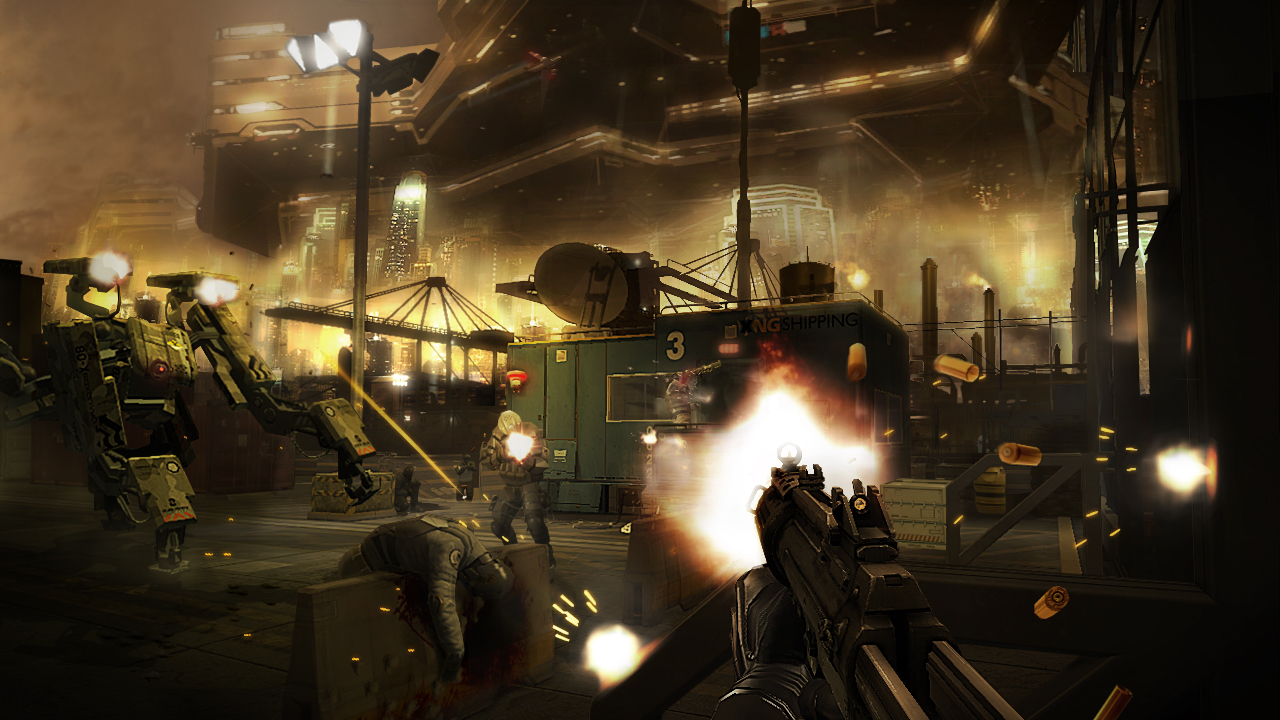
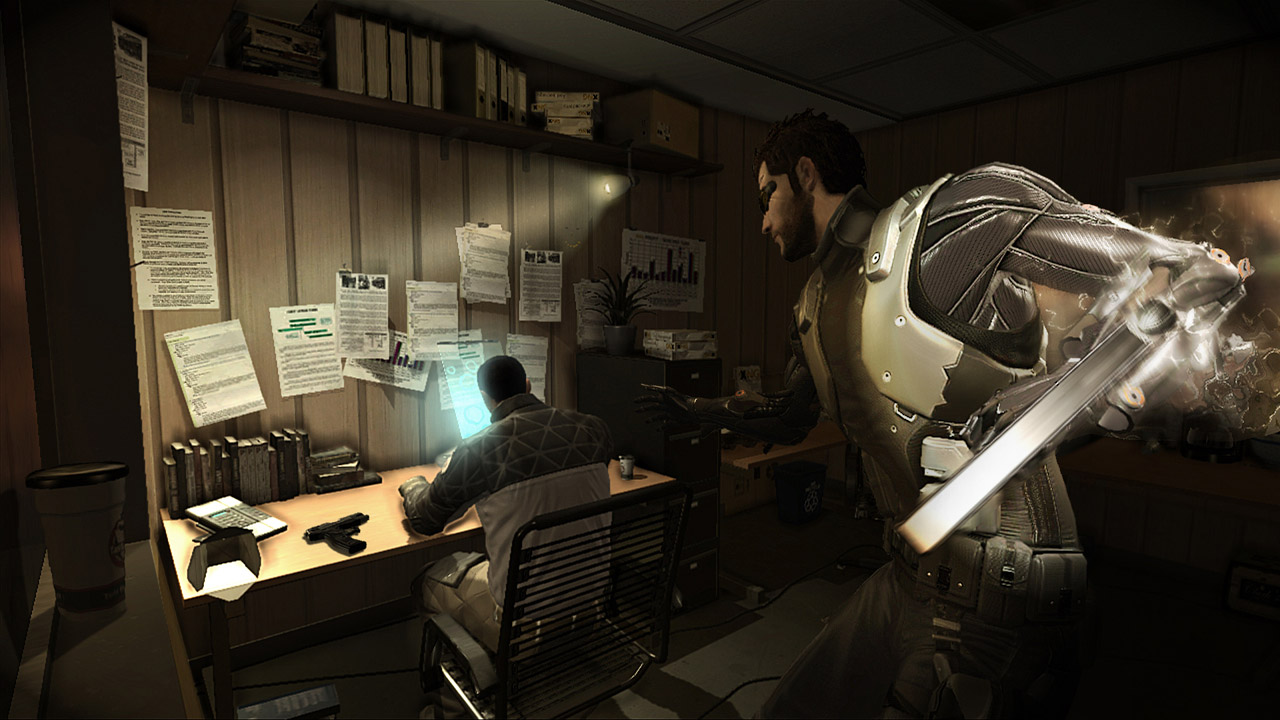
Being the third sequel to one of the top five PC games of all time can be tough. The guys at Eidos Montreal nailed the game and pulled off one of the most anticipated games of all time. One of the best parts of Human Revolution is the engaging atmosphere and story that go along with it. You play the ex-SWAT turned security chief at Sarif Industries, Adam Jensen. Sarif Industries is one of the leading corporations in human augmentation. Of course, there are always rivals, so the facility gets broken into one day and the top scientist gets stolen (among others) and is used for some secret project. The great thing about the story is that you’re led on constantly, so you think the plot goes one way and then quickly moves another way. When you start the game, you will have no idea that the people involved are the main cause towards the end. The story is masterfully created and very entertaining.
Of course, what makes Deus Ex so famous are the multiple ways you can approach getting to a goal. Use stealth and not knock out anyone; use tranq darts, stun guns, or just up-close melee. If you don’t like that, you can use silenced weapons and take everyone out, or just run through with a machine gun and blast everyone away. Of course, it’s not just how you kill people, but how you navigate the level. If you see a room full of eight bad guys, you can upgrade your augs to allow you to become invisible for a few seconds and dash across the room to the door you need. Don’t you have that aug? You can find a vent somewhere and crawl through most of the area, but wait, there’s a camera right where you need to be. Find the computer that controls cameras, hack into it, and disable it. Or you can just blast your way through.
There are tons of options for every part of the game, but the augs are what will get you through. You can access an elevator that can bypass three whole floors of bad guys, but it’s blocked by heavy crates. If you have the ability to move heavy objects, you are golden. If not, find another way around as best as you can. The whole point is to choose a play style and augment yourself accordingly, so if you want stealth, use stealth add-ons, the ability to see through walls, invisibility, and keep a tranq gun or silenced pistol. I love how there are so many options to choose from, and each section just flows and doesn’t require too much trial-and-error like most stealth action games.
You will come across conversations where you need to persuade someone to give you information, and this is done through clever dialog choices, but you can use augmentation to see what personality type the person is and how to persuade them. If you are having a hard time, you get a chance to release pheromones as a last-ditch effort to persuade, but you must know the personality type, so watch that meter carefully. These choices can be simple or huge, such as how to disable turrets during a boss fight or even to make whole missions easier. However, choices during the game don’t affect the endings, so some people may feel this was all for nothing.
While those are the main parts of gameplay, you can upgrade weapons, buy and sell at black markets, and even buy Praxis kits for upgrading at limb clinics. Be warned, though, because the game is very hard if you choose to gun everyone down. You will lose your life quickly, and just a few shots will kill you. There are even a few boss fights, but I found these extremely difficult and required a lot of saving during the fight. The game also has a decent length of about 15–20 hours, so you will be busy for a while.
I do have to mention that when the game came out, there were horrible glitches, and it performed terribly. I actually had to restart the game 1/4 through because of a glitch that prevented me from moving on to the next level. This is unacceptable, but by now, 99% of the glitches have been fixed, and the game now performs smoothly. The overall atmosphere is a lot like Blade Runner, but I felt it was lacking with just people standing around in the linear levels. Sure, you can run around, but the game is made up of hallways rather than an open world. The graphics look decent in DirectX 11, but they look abysmal in DirectX 9, so don’t expect this game to look amazing. Characters have low-resolution textures as well as low-poly models, and the overall effects aren’t very impressive.
Overall, Human Revolution is one of the best stealth-action games to come out in a while, but most importantly, it re-creates the amazing choice-based gameplay that the first game did so many years ago. If you can look past the dated visuals, linear level design, and difficult boss fights, you will be pleased with lots of great game design as well as engrossing characters and an engaging story.
Who would have thought winding rope on a wood figure would be fun? The guys at Secret Exit did and this is some simple fun here. While the graphics don’t push anything the wooden figure models are nice and varied, but this is a more challenging puzzle game than you think. As you work your way up a tree you have three goals for each figure by covering 70%, 85%, and 99% of the allotted rope. When you wind the rope it will turn a painted color, but be careful because if you wind the rope tight that’s lifted off the figure you can’t get underneath. The physics are great with rope sliding off corners and falling into place as it should.
Some figures have nails that you can use to redirect the rope, but the art of this is how well you can wind the rope and cover the whole object. Some are easy and some are hard with lots of arms, legs, or pieces that can easily be covered up or roped off on accident. That’s pretty much all there is to the game, but being such a unique puzzle game makes it great. There is nothing out there like this and you will have hours of fun here. There is some nice relaxing background music playing, but overall the game impresses on sheer originality. I highly recommend this to any puzzle fan hardcore or casual.
If I were to complain about this at all it would be the inconsistent difficulty that jumps around, the game lacks any type of mode like time attack, plus you can only play in short bursts because you will get bored after a while. Other than that this is one awesome game that comes at a small price.















































 thebinarymessiah.com
Clearly you have been blocking everything you or haven't played the game at all. Maybe pay attention to the story…