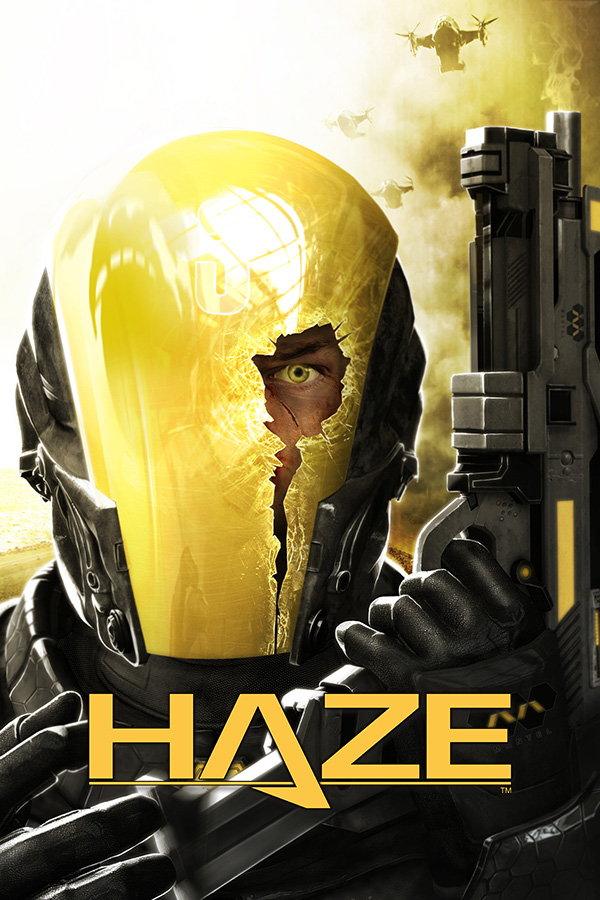
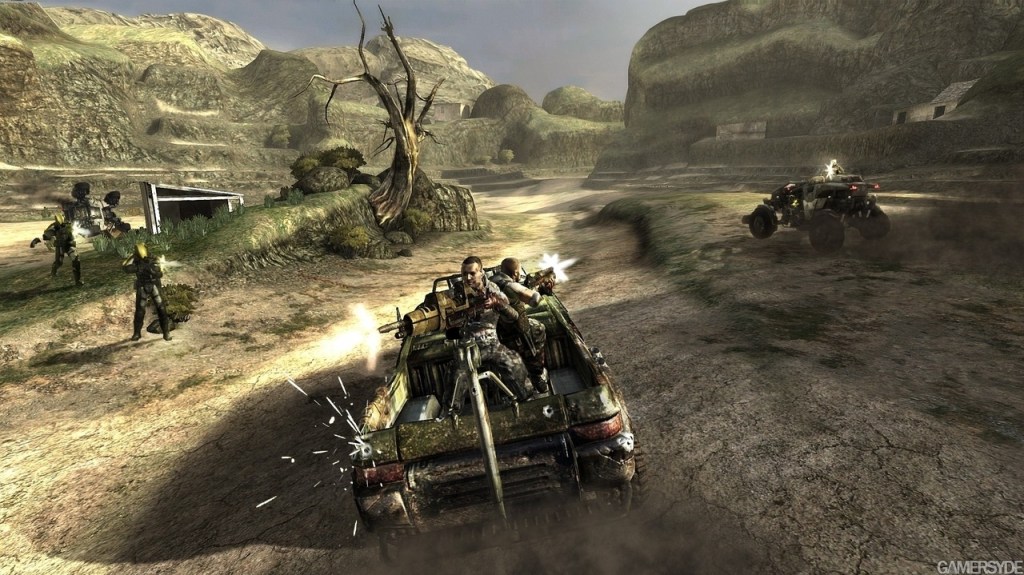
It’s not a mystery that developers around the world struggled with the HD era of gaming. Development went from a few dozen to hundreds almost overnight, and with the advancement of shaders, more complicated lighting effects, higher resolution textures, larger worlds, and more dialogue, it was a huge undertaking that put many companies out of business, and Haze is a casualty of this struggle.
You play as a private security mercenary named Shane Carpenter who is tasked with eliminating a rebel group for some reason, and it’s never said why. You are a supercharged soldier hopped up on the stimulant known as Nectar, and as the title says, halfway through the game, you are an outcast and deemed Code Haze. The nectar is used to force the soldiers to see the world in the way that the company wants them to see it, and in turn, you help the rebels take down the Mantel organization. Surprisingly, the story is the only interesting thing going on in this game. It had a couple of really good moments, and only if the developers had more time to work on this, Haze could have been one of the best shooters of the HD era of gaming. But, like most games back then, the publishers were pushing for money and time, and thus the game fell through.
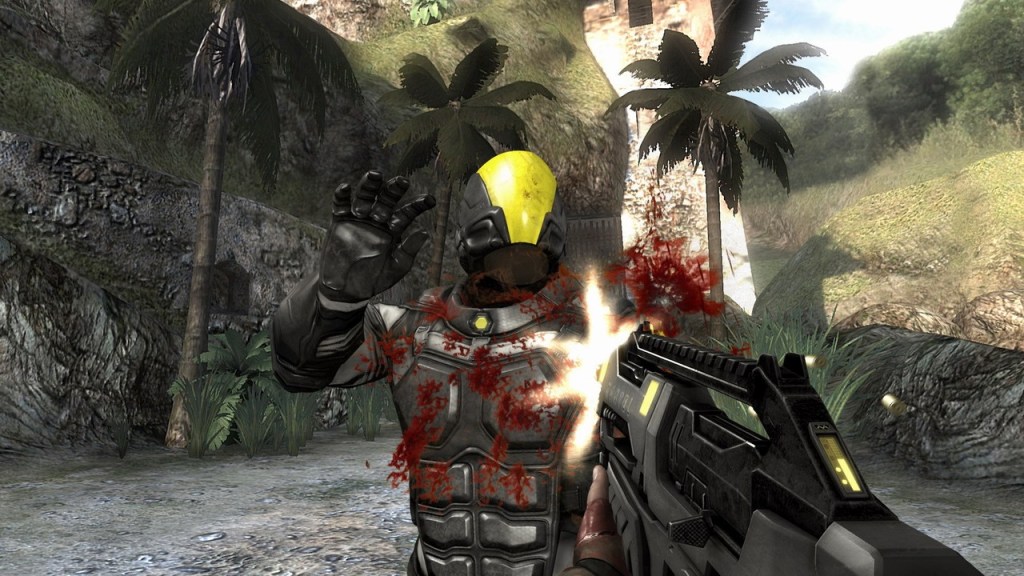
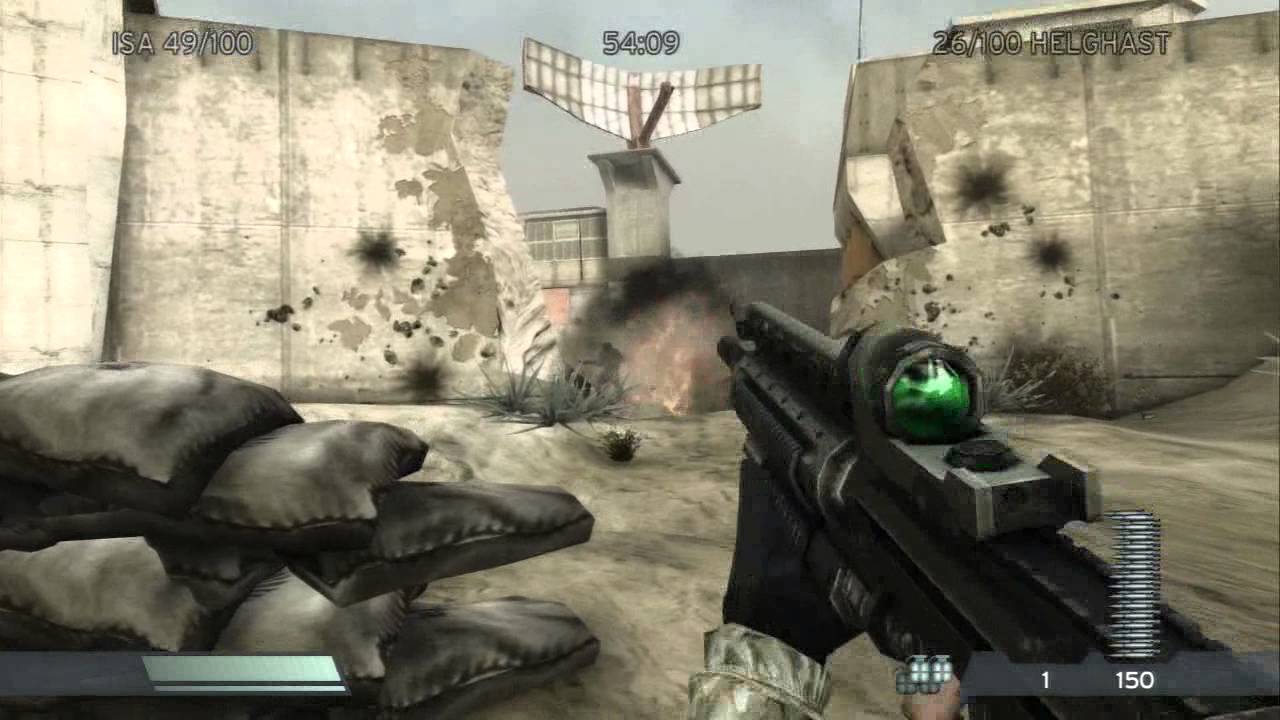
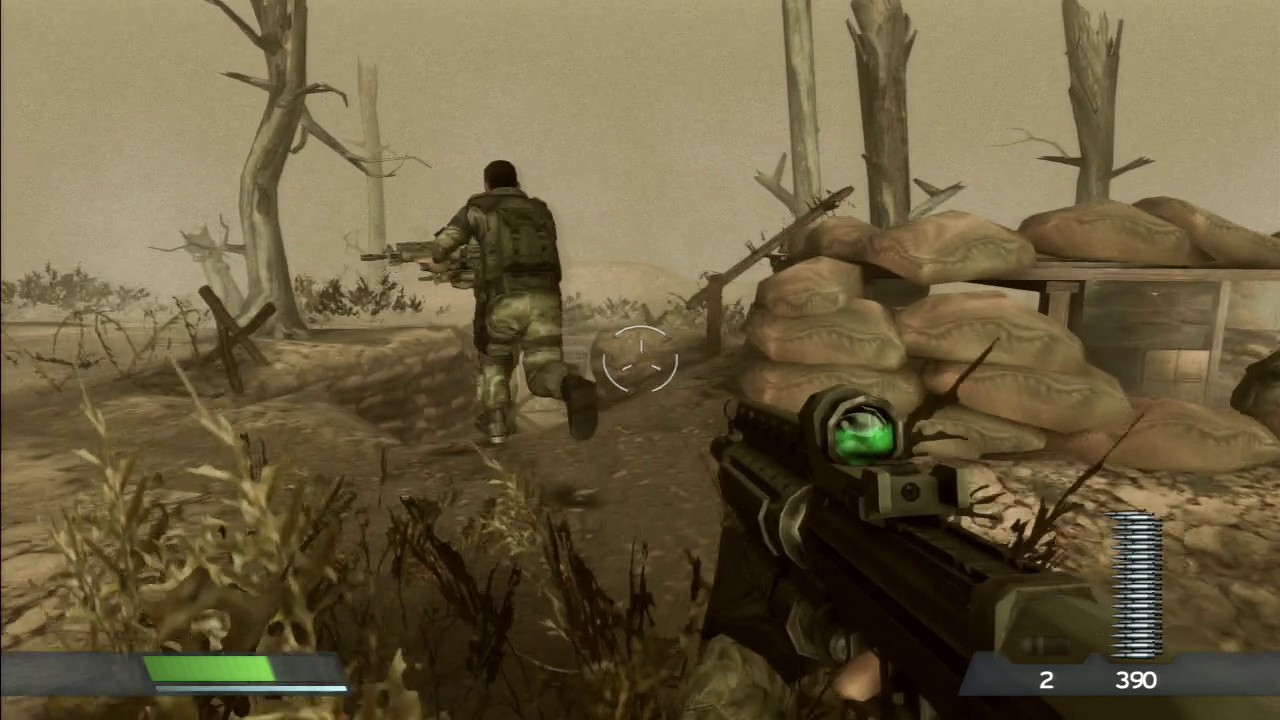
The shooting, sadly coming from some masters of FPS games, is awful. There is zero feedback in the gun, the controller, or hit detection, so every enemy just feels like a bullet sponge. The guns feel the same, and there’s just no satisfaction or character in them, such as in a game like Resistance, for example. Why there is no rumble function for firing weapons is unknown, but it sucks big time. Aiming and shooting became chores due to the poorly laid-out control scheme, which I completely had to change. It doesn’t help that there are very few weapons. A shotgun and an assault rifle were the only weapons I used throughout the entire game, outside of a few areas that called for a rocket launcher. There are supposed to be rebel weapons and Mantel weapons, but they are both exactly the same with just different ammo counts. They both feel exactly the same, which is ludicrous. There are a couple of interesting ideas, like being able to create nectar grenades to confuse soldiers and make them fight each other. Meleeing enemies and taking their weapons is also a good idea, but it’s all executed so poorly and feels half-baked.
The level design is also bland and uninspired. Boring jungles, boring gray buildings, and hallways—the game just looks half-built. Many buildings are void of any furniture or character. I mean, why are there so many buildings in this world without desks or paintings? Does everyone just live on the floor? Then let’s get into the vehicle sections. I don’t think these were ever playtested. The vehicles are floaty and too vulnerable, and scripted vehicle sections actually destroy the vehicle and force you on foot. Imagine any other game with a scripted vehicle sequence like Uncharted and having your vehicle blow up, and you just walk on foot through that section while the rest of the sequences trigger. It’s broken and awful and should have been cut completely.
Visuals, you say? Outside of the boring design, I guess the game looks decent for an early PS3 game. The game runs well at a good framerate, but it could have looked better. The multiplayer servers have long since shut down, but you’re not missing much at all. For the bargain bin price, I can only recommend this to those wishing to fill a PS3 void that they missed or are just curious. Haze is one of the most infamously awful games, and it left a stain on the video game timeline forever. It’s short-lived, but you’re better off playing one of the other many amazing shooters on PS3.
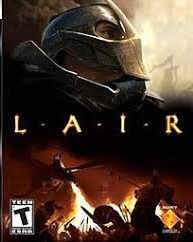
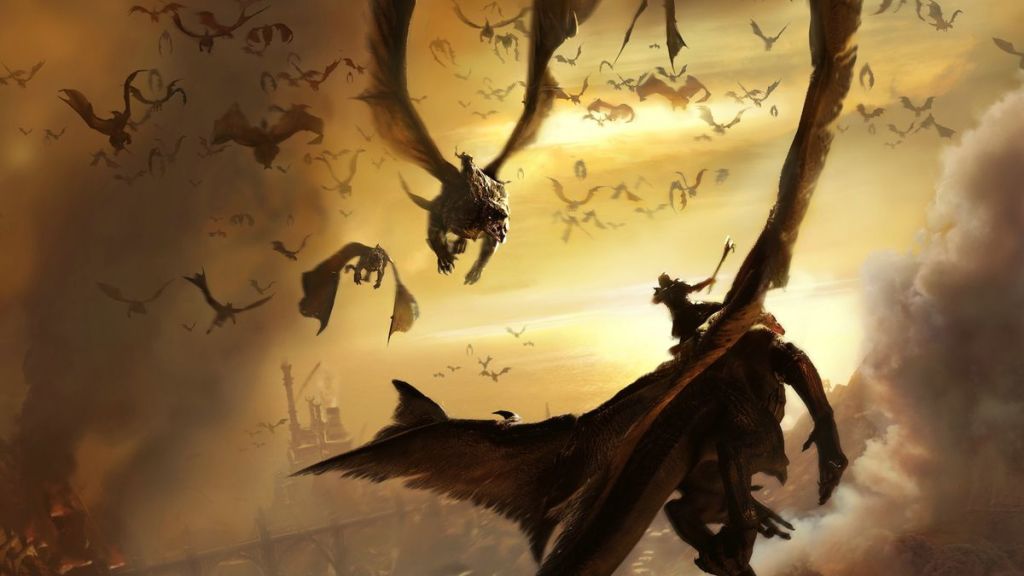
Fun. This is not a word you will be thinking of during your playthrough of Lair. There isn’t a single redeeming value to putting yourself through the torture of Lair unless it’s for novelty or pure curiosity, like myself. I avoided this game like the plague during and after launch. It was quickly thrust into bargain bins just months after launch, and no one gave it a second thought. The HD era of gaming was a rough start for most developers, and this game put Factor 5 out of business. So what happened?
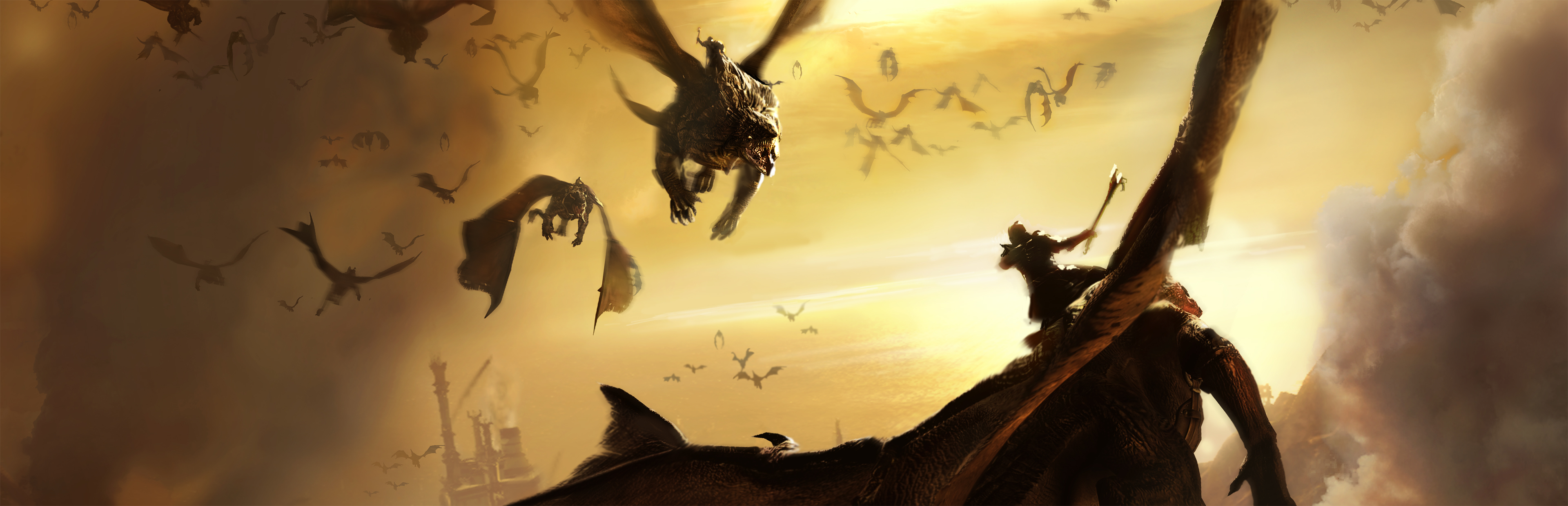
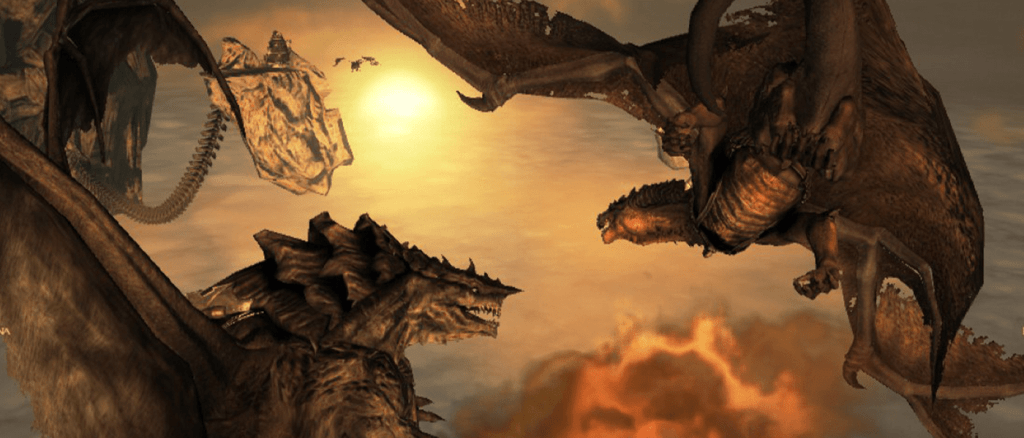
Well, for Factor 5’s history, you can watch plenty of YouTube videos on that, but Lair seems to start out okay, but within 10 minutes you realize you’re going to be in for a rough ride. The game seems okay during the opening pre-rendered cinematic, as it looks quite impressive for the time. Once the cutscene ends, you are on the ground, and you immediately notice the first few issues before you even jump onto your dragon. The framerate. It’s absolutely abysmal and one of the main reasons why the game is nearly unplayable. It never runs above 30 FPS and quite often dips down into single digits. Whenever there’s an explosion or thousands of enemies rendered on-screen in the form of armies far below you, the game just cannot keep up. The game from this point already feels half-made and like it’s in the alpha stage.
The second thing you will notice is how incredibly ugly the game is, even for its time. The textures are horrendously blurry, pixelated, and stretched out; the models seem half-done; the animations are broken and skip and jump around to different points; not to mention the awful controls. The dragon itself controls halfway decently, but without the patch to add analog support, this game cannot use the precision of the SixAxis motion with this horrible framerate. Nothing feels finely tuned, and you’re always doing large, gross movements to overcompensate for the framerate. When you finally get the hang of the controls, you are to lock on to enemies and shoot them down with fireballs. Pressing the circle allows you to magically zoom up to them, or just magically appear next to them for a takedown-style button-pressing fighting mini-game for health or a QTE animated takedown. You can also bash them on their side by swinging the controller towards them. This entire combat setup seems good on paper, but it’s clearly unfinished.
Locking on doesn’t work half of the time, as the dragon will stay locked on and face the opposite way of the enemy, yet somehow still shoot fireballs at them and sometimes make it. Usually, when you let go of the lock-on button, that’s when all hell breaks loose. Nine times out of ten, you will slingshot across the map and disorient yourself; hitting objects will also slingshot you and will just push you straight into the ground. Every single mission is either an escort or takes out X enemies until something happens. The objectives are so vague, and it’s so difficult to know who the enemy is and what units to attack. There are no highlighted areas, arrows, or anything to help you out. I restarted missions multiple times because I didn’t realize I was attacking the wrong side or completely missing an enemy that I didn’t see. While swooping down and attacking thousands of enemies at once seems impressive, and it should be, it’s not fun at all in this game. The draw distance is abysmal, as animations run at 2 frames until you get right on top of them.
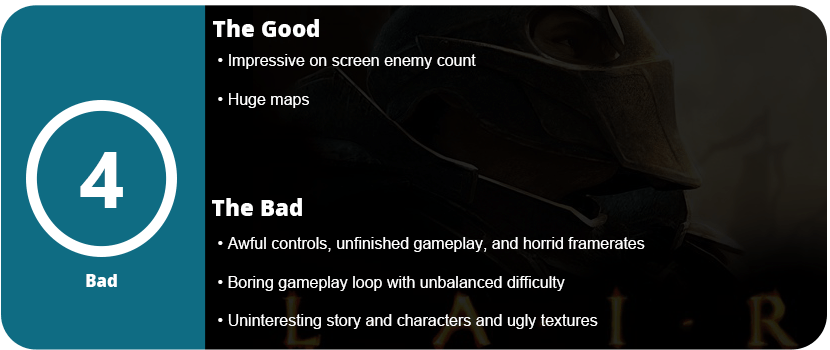
Oh, and the story? Forget it. Two warring factions for no apparent reason, and then you switch sides halfway through. No lore, no goal, just a couple of armies fighting because they can. The enemy design is boring, the dragons are boring, and outside of fighting the controls and framerate, the game is just dull and uninteresting. Even if this game worked, the underlying gameplay loop just isn’t fun. Sure, the maps look huge and there are tons of enemies on screen, but it’s a jumbled mess of confusion and throws the balancing way off.
Overall, Lair is just an awful game and shouldn’t be experienced by anyone. Unless you want to play an infamously bad PS3 game, just stay away. Thankfully, the game is short-lived, but you couldn’t get gold ratings in missions even if you wanted, as the framerate and awful controls prevented you from doing it. There is also no trophy support patched in, which is a real bummer.
If you ignored the original Killzone back in 2004, I can’t blame you. It was a rough road for Guerilla as they tried to make an exclusive first-person shooter for Sony’s underpowered console to out-beat Halo and Metroid Prime. Sony never had an FPS that was exclusive to their system, so it was Guerilla’s time to shine. It was dubbed “The Halo Killer” by fanboys, and it sadly received lukewarm reviews upon release. I actually got this for Christmas 2004 and ate it up like candy. I was a serious fanboy over this game. Fast forward 14 years, and I can see the game’s many flaws but also appreciate what it did for the PS2.
You play as a squad of four who are tasked with stopping an evil Nazi-like empire known as the Helghast that is trying to destroy all of humanity on the planet Vekta. The story is bare-bones, but there’s a lot of potential here with interesting art assets and great voice acting, but it just falls flat. There’s no background on the main characters of the war you’re fighting in. You’re literally just dropped in with no background or reasoning behind it. This was never done with Halo or Metroid Prime, as you were pulled right into the war or battles and understood exactly why you were there. It’s just a bunch of cutscenes with the squad going after various generals and moving from Helghan base to Helghan base.
The shooting is very interesting, as it’s part of why Killzone was loved by those who did like it. There’s a lot of weight behind the weapons, and they are actually quite unique and shoot well. It’s your standard array of military weapons, but with a twist and some personality behind them. Honestly, the weapons are the only thing front and center in Killzone and dominate the entire game. From the ISA and Helghast standard assault rifles to rocket launchers, grenade launchers, pistols, and heavy machine guns, Most weapons have a secondary fire that helps balance their weaknesses, such as the Helghan’s rifle, which has a shotgun attachment, and the ISA rifle, which has a grenade launcher. I personally stuck with the Helghast assault rifle through the first fourth of the game, as you can only play as Templar, but once the other characters were unlocked, I played as Rico since he has a chain gun with 800 rounds and a missile launcher. It’s seriously overpowered, but it feels so good to mow everyone down around you. The only weapon I really disliked was the shotgun, as it’s so slow to pump and shoot that unless you are one-on-one with a single enemy, you’ll get killed because you can’t fire fast enough. It’s practically useless, even in tight corridors.
The downside to the weapons having a lot of weight behind them is the animation. They are so long that they make the game more difficult than it needs to be. Every time you switch weapons, there’s a long animation of pumping the shotgun, fiddling with a rocket launcher scope, and flipping up the lid on the scope to the sniper rifle. Rico’s chain gun takes at least 2-3 seconds to swing out, then there’s a weird pump animation after, so you have to hide behind walls every time you switch weapons because of these animations. The same goes for reloading. Some weapons take over 5 seconds to reload, with the shotgun taking nearly 10 to load every single round. It’s fun to see and was never done up to that point in time, but it needed to be sped up or changed.
Outside of the weapons, the enemy AI is as dumb as a doorknob, with the Helghast literally standing around, not shooting at all, or they won’t move to cover. Part of this is the underpowered CPU in the PS2 and the game engine that pushed it way too far. There’s so much pop-in with fog of war to make up for the lack of a draw distance that enemies pop in and most of the time all at once, so an entire room or corner will be full of Helghasts that are easy pickings with a single grenade or kill you really quickly if you don’t notice them. The game engine just chokes the PS2 like no other game, with framerates dipping into single digits. I also played the remastered version for PS3, and while the 720p resolution looks sharper, there are still framerate drops because the engine just couldn’t handle the load. Sadly, because of the limitations, environments are bland and boring, with claustrophobic corridors and almost no draw distance. The game is gray, dull, and colorless, and while this could have worked, the weak PS2 brings the art backward because not enough can be rendered on the screen to make it look nice.
The entire game pretty much plays the same way and takes about 5 hours to finish. There are no vehicle scenes, no scripted events; it’s all just running and gunning, which gets old towards the end. For the PS2, this game is quite impressive and has a decent multiplayer mode, but there are more flaws than there are perfections. I would rather have had an ugly game that played better, but PS2 fanboys were clamoring for something that pushed the system like Halo did the Xbox. Is Killzone a Halo killer? Absolutely not, and it doesn’t even come close.
Kratos and God of War are PlayStation icons and symbols of what the system can offer. This game was the biggest hit in 2005, and I went nuts for it like everyone else. It reinvented the action-adventure genre like no one else had with epic boss fights, cinematic combat, and insane-level design. We finally get all of this in portable form on the Vita. While it isn’t the most ideal version, it’s still plenty of fun.
God of War is really starting to show its age and flaws these days; that is really clear. It was a new idea, however well executed, but still had some issues. The game isn’t quite as epic as I remember, thanks to the newer games in the series being insanely huge. There are only two big boss fights in this game, and I could swear there were more. The game is brutal in spots but still rewarding, with many secrets and areas to explore.
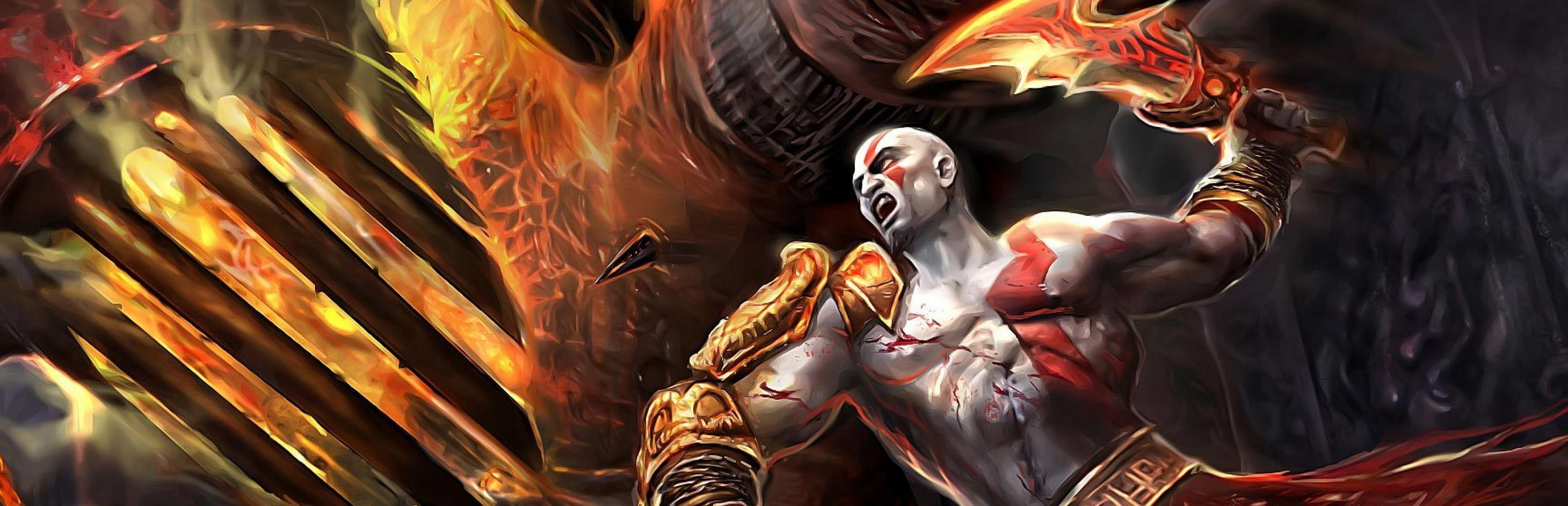
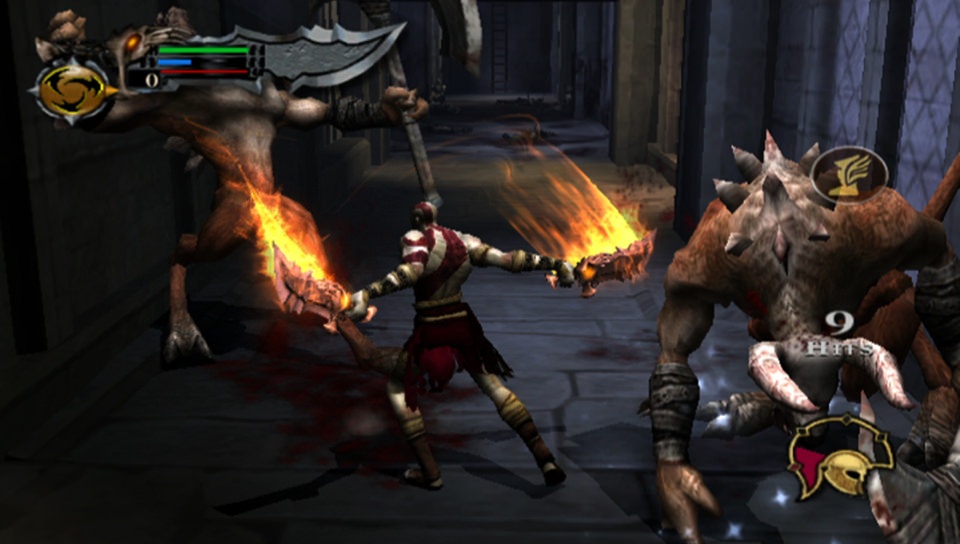
You play as Kratos, a Spartan general who cried out for Ares to save him and defeat his enemies, but this all came at a huge price. I won’t spoil more of the story if you have never played this series, but longtime fans know it already. The game has amazing combat, which is what was praised so much 13 years ago. Using the Blades of Chaos, Kratos can swing and spin them around with amazing animations and kill hordes of enemies. I’m not kidding about hordes; there are some scenes where you must defeat nearly a hundred enemies, which is brutal.
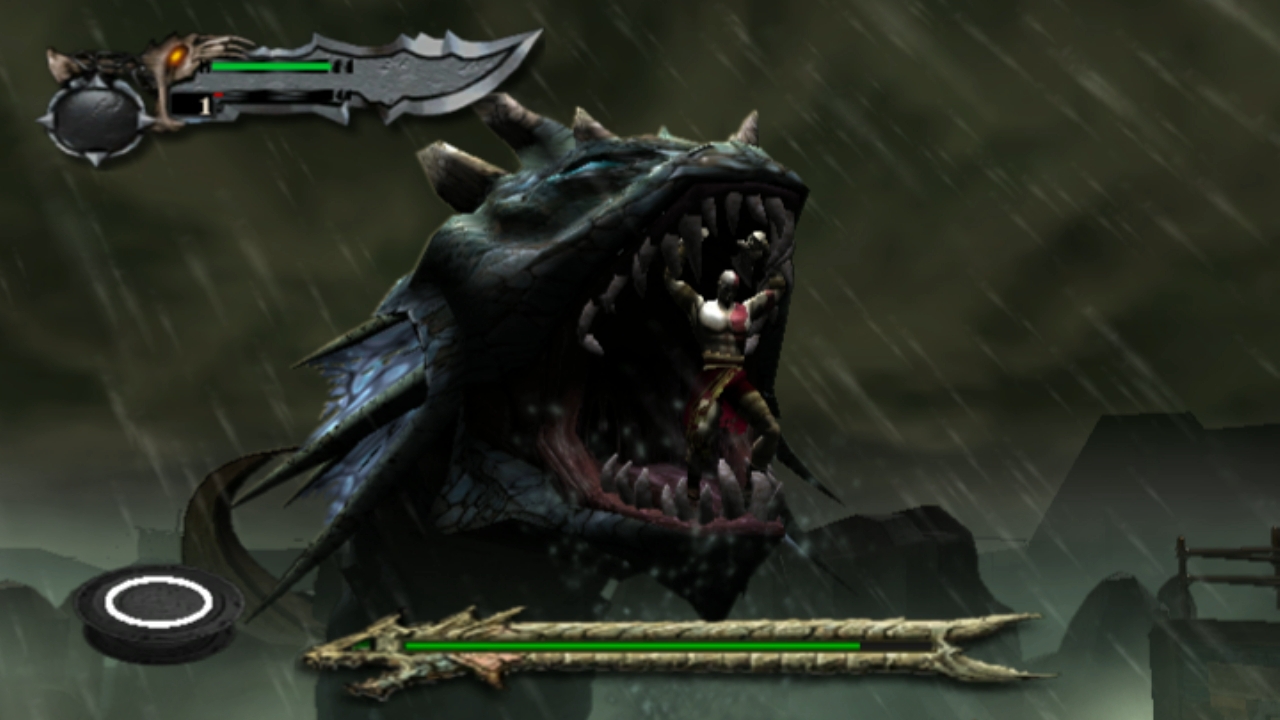
The enemy variety is also great, as there are small, easy enemies to huge, lumbering cyclops that take many hits to kill. God of War is famous for quick-time event kills. After so much damage is taken, the enemies will display the circle button above their heads. This initiates a quick-time button pressing, which will give you health orbs. Each enemy has its own unique animation. Each enemy is also a challenge on their own, as some are dangerous on hordes while others are not so much alone. The level design is fantastic, and the enemy placement is cleverly laid out to offer a challenge every step of the way.
The series is also famous for the magic powers you acquire that are different with every game. You get four, which become very useful for various enemies. Poseidon’s Rage is great for clearing hordes of weaker enemies, as it’s an AOE attack. Zeus’ Fury is the only long-range weapon you get for picking off ranged enemies. Souls of Hades is like a shield, and Medusa’s Gaze is great for larger single enemies to turn them to stone. On top of the Blades of Chaos, you also get Artemis’ Blade, which is a powerful short-range heavy weapon, but once the Blades were fully upgraded, I honestly never really used it.
Outside of combat, there are puzzles that will sometimes slow you down. Most consist of pressing switches in order, climbing puzzles, or jigsaws. Pandora’s Temple is a giant puzzle within itself that takes up a third of the game near the middle. I just can’t stress enough how hard this game can be. Some spots had me restarting dozens of times until I got it right, and this included platforming sections. The first game’s Hell area is notorious for being brutally difficult. Having to balance on long spinning logs covered in blades and then climb spinning spiked towers that stretch on forever is daunting, but rewarding when you do complete it.
Overall, God of War is still a blast to play 13 years later and is as polished as I remember. Outside of hardware limitations at the time, Sony did an amazing job creating what they did. There are some cheap deaths, unbalanced difficulty in spots, and the quick-time events do get repetitive, but it’s minor issues that can’t really bring the game down even today.
The Vita version is the only way to play this game in portable form, and it’s not the most ideal version. The PS3 version runs at a smooth 60FPS, but the Vita cleans up the visuals a little and does have some FPS drops when a lot of enemies are on screen, but it’s not often. I’m sad to see this game doesn’t hit 60FPS, which it does even on PS2 sometimes, which keeps this game from getting a perfect score.
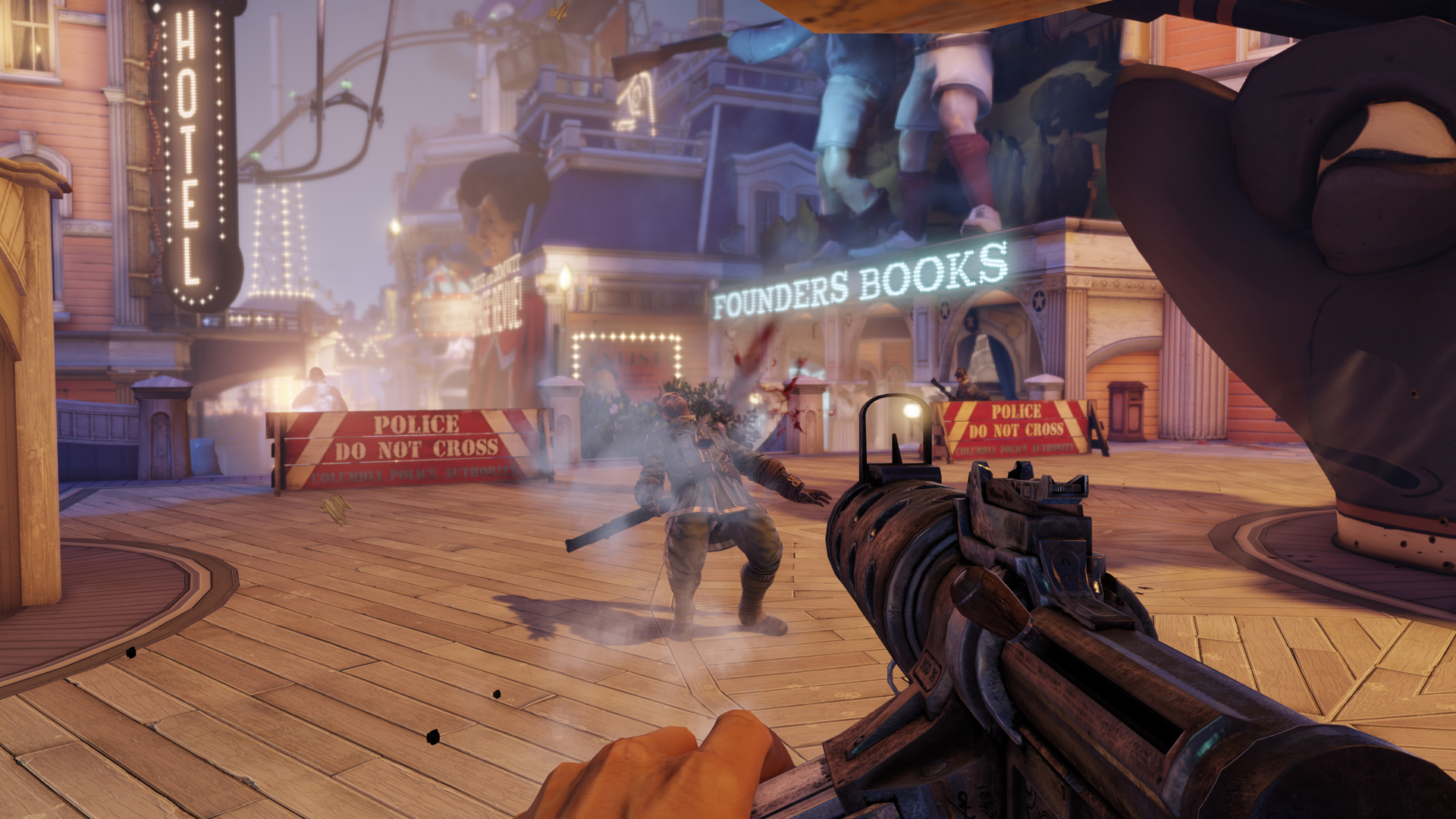
Well, here it is. One of the most anticipated games of the decade. BioShock was a masterpiece that raised the bar for storytelling in games as well as graphics and atmosphere. The underwater city of Rapture was loved by most gamers and became an instant classic. Infinite raises the bar yet again, and I have to say that this is one of the most beautiful and well-made games I have ever played, but even beautiful things have flaws.
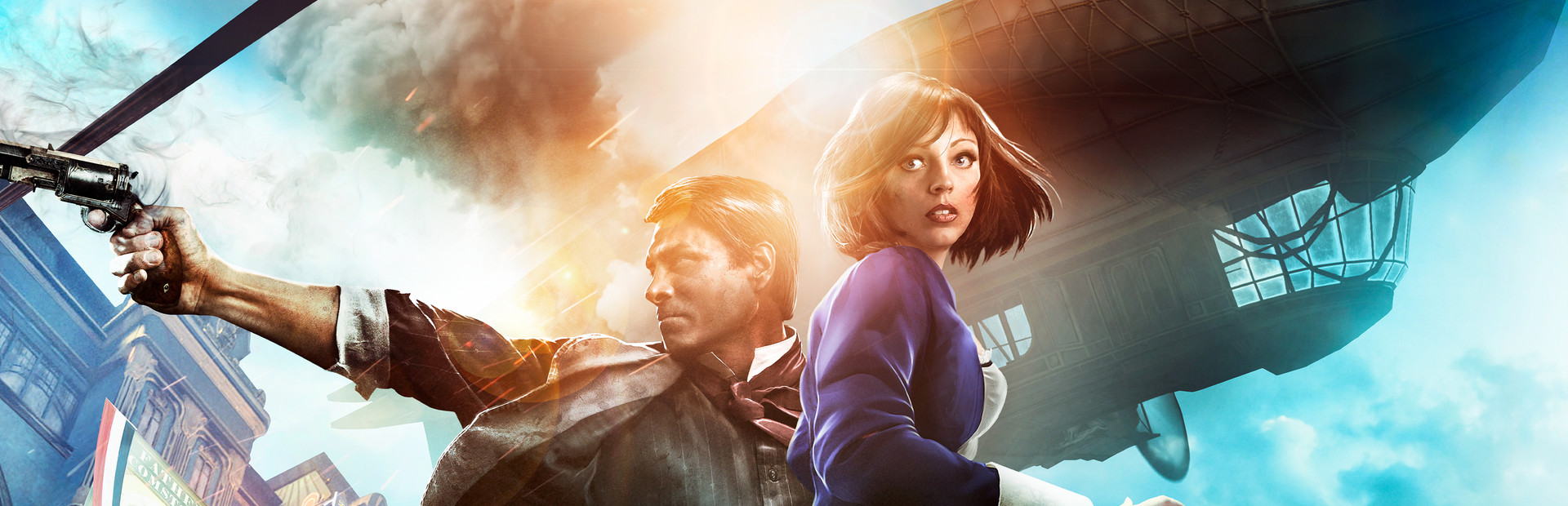
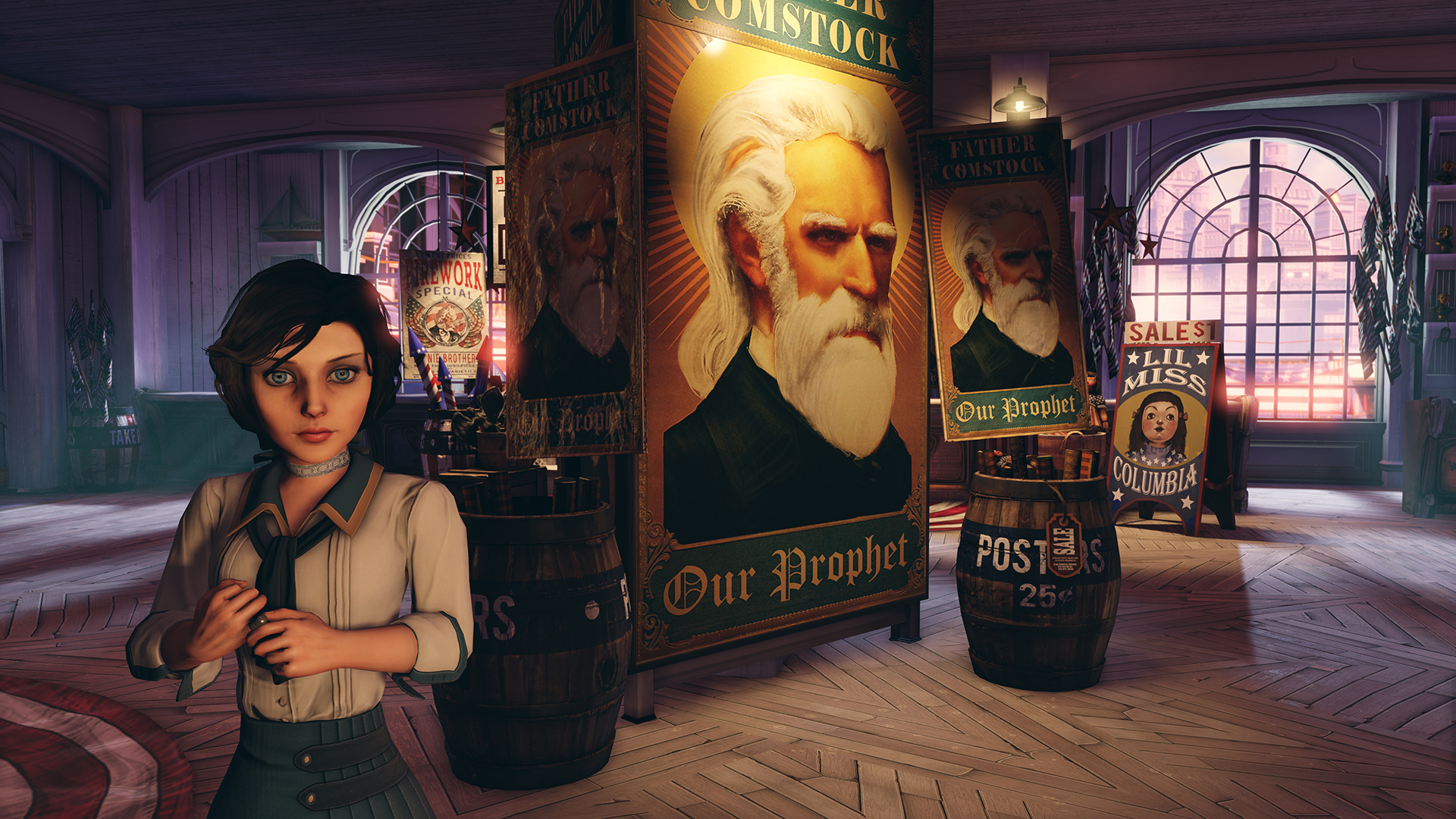
The beginning of the game is just breathtaking and spectacular. It’s probably my favorite opening to any game. I honestly can’t explain much about the story because everything would be a spoiler. All I can say is that you are a man named Booker DeWitt who needs to bring back a girl from the floating city of Columbia named Elizabeth. If he brings her back, he can wipe away his debt from gambling. The story progresses into a huge twist ending, fully cuts you loose, and doesn’t quite answer every question. The ending will shock you and even make my jaw drop. It’s a beautiful ending that is going to have gamers talking about it for years to come.
BioShock’s story is also told through the journey. There are no pre-rendered cutscenes or anything to break the flow. A lot of the story is told through hidden journals, like in previous games. There are a lot of similarities to older BioShock games, but everything is improved upon. The combat system still uses guns and magic attacks; however, you get Vigor this time around. They are replenished with salts that you find instead of Eve Hypos. Honestly, the Vigors don’t seem as useful as the Plasmids did. I pretty much stuck with a couple through the whole game because there are so many guns that these end up being more useful. Crow’s Trap is one of my favorites. You can send angry crows at enemies to pick and stun them, or you can lay traps. My favorite was the shock vigor. It can stun enemies, but later on, it can chain across enemies and make their heads pop. There’s one for fire; Bronco lets you throw enemies into the air; there’s a tentacle one that pulls enemies towards you; and there’s also one that allows you to charge enemies and cause damage. They sound neat, and they look neat in action, but the combat is more fast-paced and challenging than in previous games.
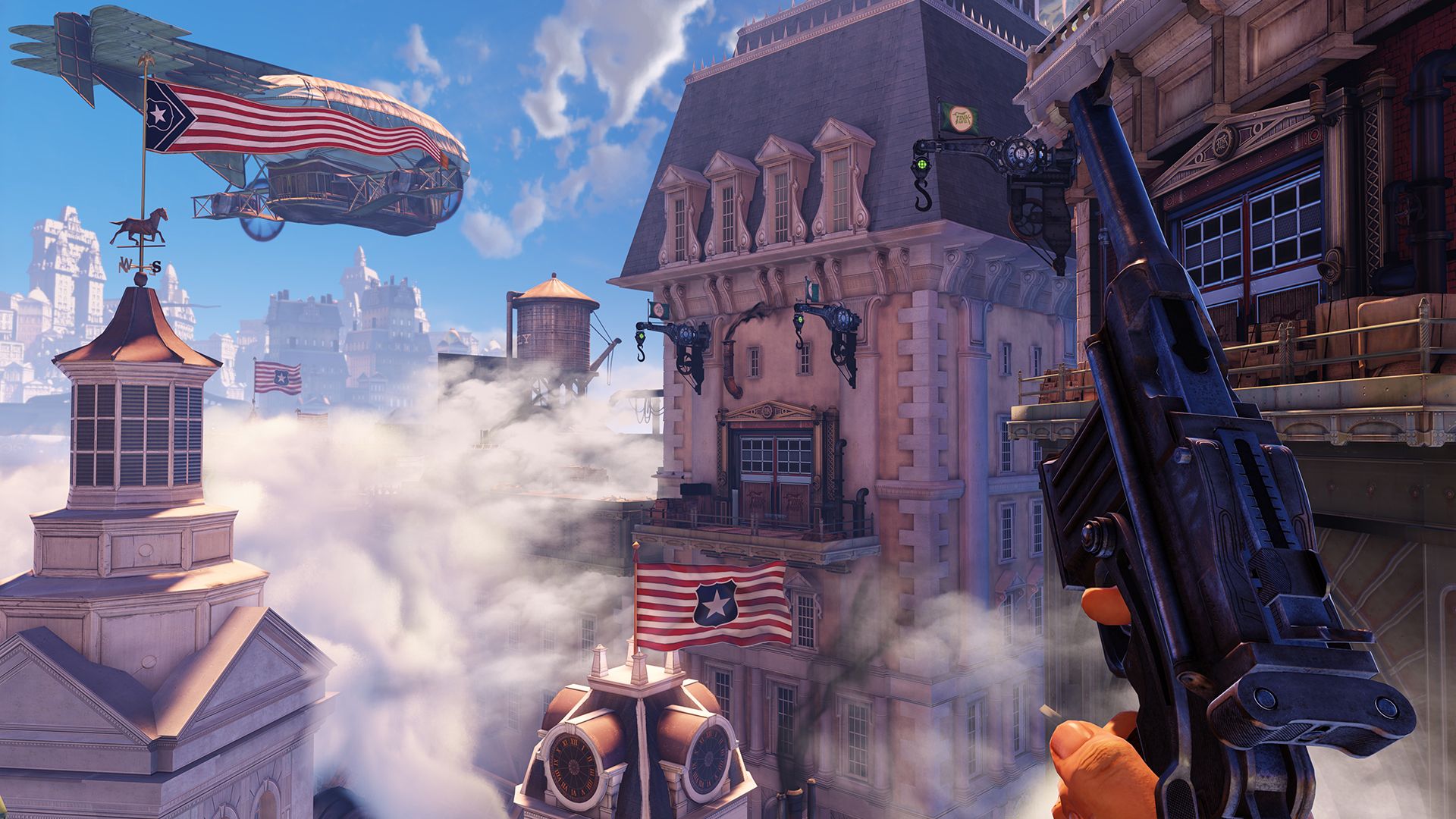
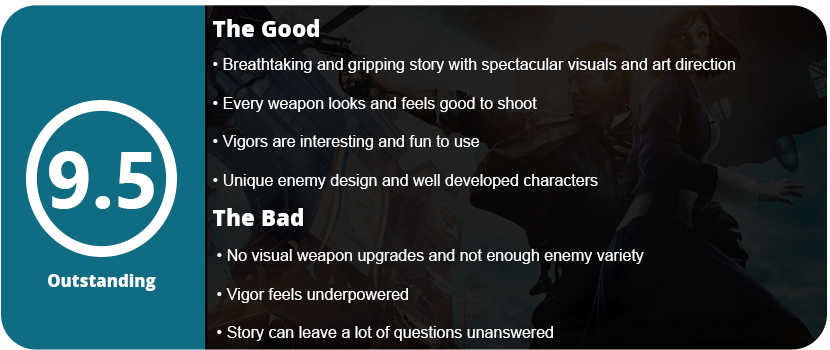
The guns feel so great to shoot in this game. There are pistols, sniper rifles, shotguns, and the typical ones for shooters. Hail Fire and Volley Gun shoot grenades; there’s an M1 Carbine, a repeater, and various others. Honestly, I wish there were more unique weapons like in older BioShocks, but at least they feel good to shoot, and there are plenty of them. I didn’t really need to resort to Vigor unless I had a lot of people after me or had large enemies to deal with.
Speaking of enemies, the ones in Infinite are some of the most imaginative since BioShock 1. There are various human enemies, but the Patriots and Handymen are awesome. There are also various creatures and some fun boss fights as well. I just wish there was a larger variety. There are different reskins of these enemies, but I really just wanted more to shoot at. The Patriots have chain guns that are hard to bring down but are weak in the back. Handymen are rarely encountered, but they are giant lumbering beasts and bosses on their own. Infinite gives you more exploration options during combat. Using the Skyline is so fun and magical. You can slow down, reverse, and hop down wherever you want. You can shoot from these skylines, so it adds a tactical element the series needs. You even get a better melee weapon that has gruesome finishing kills that will make you cringe.
Combat is just very solid in Infinite, but by the end of the game, it started feeling repetitive, and all that kept me going was the story and new places to explore. Infinite has a lot of secrets that need to be opened with lockpicks that you can find. You can equip gear that adds attributes, and you can upgrade weapons via stations around Columbia, like you did in BioShock. You can also upgrade your Vigors, which is nice; there are a lot of upgrades, and you won’t get them all in one playthrough.
When it comes to visuals, Infinite is one of the most beautiful and original games ever made…ever. On PC the DirectX 11 upgrade looks fantastic, the lighting is amazing, and the art style the team went for will blow your mind. I spent the first few hours just staring at everything because of how beautiful it looked. The pacing is spot-on, and the story makes you care about all the characters, or hate them. Ken Levine and his team are masters of their art and it’s proven here. This may even be his opus, but only time will tell. There’s nothing out there like Infinite; this is probably one of the few shooters in years that has tried to use the genre for what it’s good for. There’s no multiplayer, but you don’t need it. I also wish there were visual upgrades to the weapons like in BioShock 1, but those are minor gripes. Honestly, it’s hard to complain about this game other than the lack of enemy variety, the fact that Vigors feel underpowered, and the fact that there are no visual upgrades on weapons. The story is fantastic and gripping, and this game will hopefully live on to be one of the best ever made.
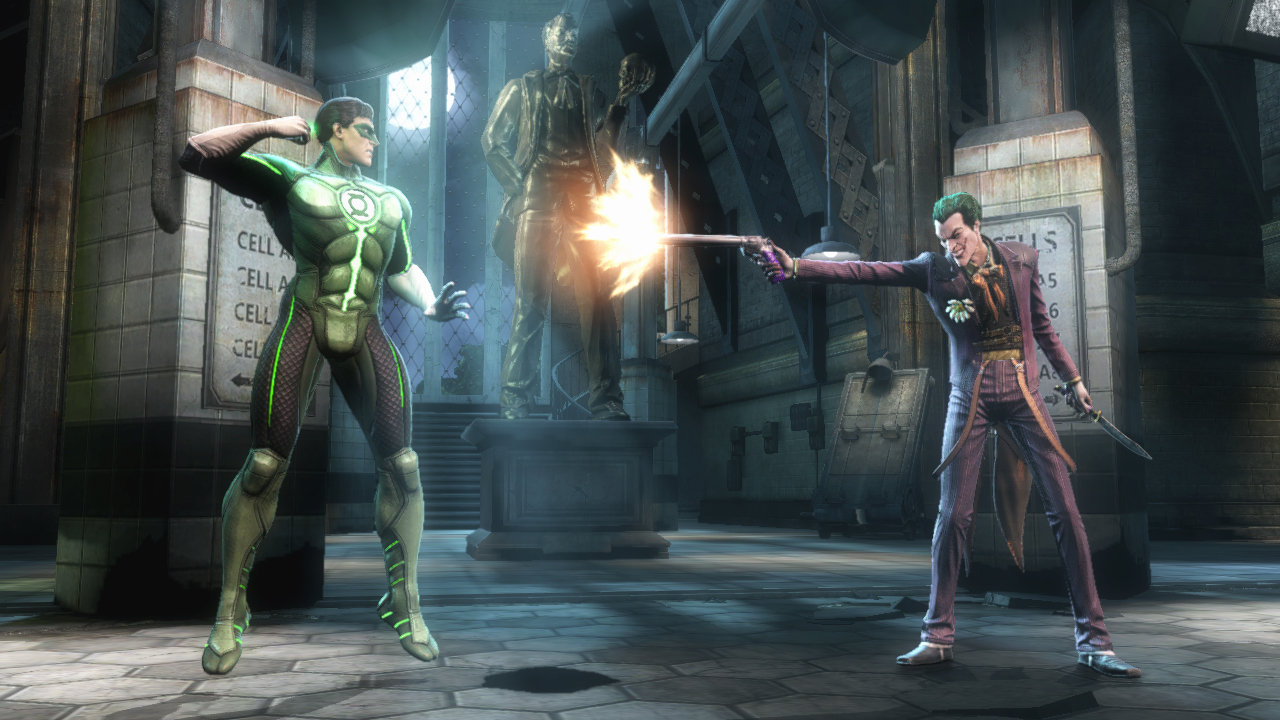
Marvel vs. Capcom is considered the official fighting game among Marvel fans. What about DC comics? There really hasn’t been a full-on fighting game except for the lukewarm Mortal Kombat vs. DC Universe. It felt a bit stiff; Mortal Kombat fans felt the violence was too watered down, and it just lacked some polish. The MK team has come back, minus Mortal Kombat, and created a very solid, full-on DC fighting game.
If you have played 2011’s Mortal Kombat reboot, you will be very familiar with this game. The 2D fighting plane remains with interactive environments, special moves, and various other things. The game plays a lot like Mortal Kombat, with several special moves and small combos at your disposal. You must combine all these to create larger combos; it’s tough and really takes some practice. Some characters are harder to play than others, but they are all fun to play in their own way. The interactive environments are very neat, and I hope more fighting games pick up on them. You can press R near different objects, and some are on offense while others are on defense. In Batman’s Bat Cave, you can press a giant red button to ignite the batmobile’s thrusters and burn your opponent. Some items can be picked up and thrown. Some levels have items at the very edges to help you escape and keep you from getting cornered.
The fighting engine is solid and responsive. Each character looks great and has an awesome arsenal of moves that are faithful to their comic origins. Each character has a special power-up they have that is executed with A. No longer are there four attack buttons, but three. Wonder Woman can use her power-up to switch between her sword and whip. Batman can shoot three batarangs, while some characters have defensive and passive power-ups. These have to recharge, of course, so they can’t be spammed. They are helpful and can give you a slight edge over your opponent. The power meter returns, like in Mortal Kombat, but is used for different things. Instead of the gory X-ray moves, you can unleash super-special attacks that look awesome. Some are a little less awesome than others, but they all take advantage of the power that each character wields. You can also use the Clash system, which allows you to wager part of your special meter once per battle for extra health. These are all tactical additions that can give you an edge and turn the tide of the battle, which a lot of fighting games don’t have.
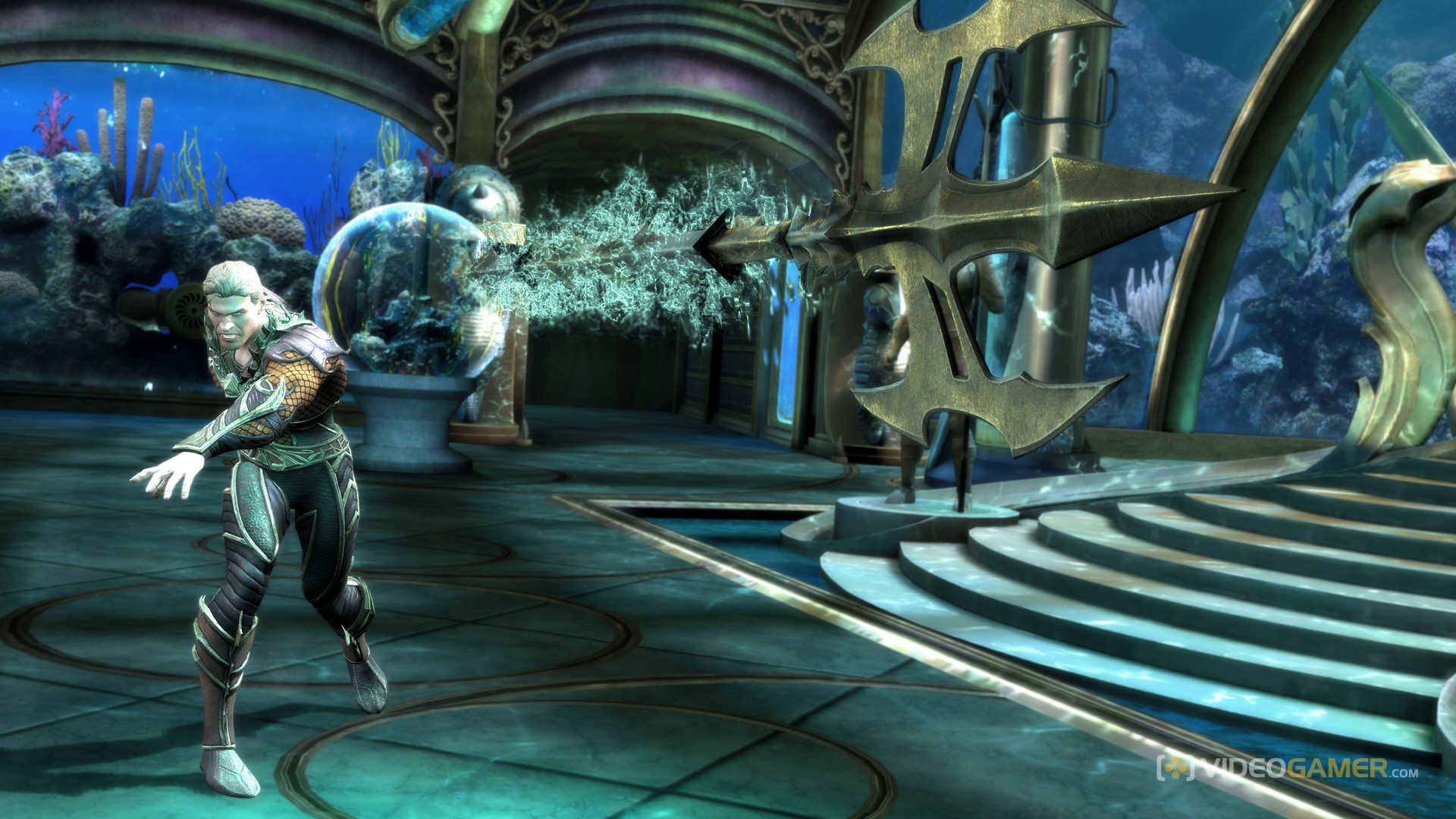
The fighting system takes a little while to get used to because it’s unlike anything else out there. It breaks the mold of traditional fighting games, which the genre desperately needs. Injustice has some of the best over-the-top action seen in a fighting game, thanks to the source material. Blood and gore are exchanged for comic book action, which you can’t get anywhere else. I also like how NetherRealm made Aquaman cool again. He looks awesome, and he’s one of my favorite fighters. He feels a lot like Jade from Mortal Kombat, where he whips his trident around a lot and is quick and jabby. I just wish they didn’t use so many obscure comic characters like Sinestro, Grundy, Black Adam, Raven, and various others. I also wish the roster was a bit bigger. At least it makes up for it in content elsewhere.
The first thing you will dive into is the story. Unlike Mortal Kombat, you won’t fight like every character in the game. I was also highly disappointed in the story because it’s just a pointless mess. Superman is tricked by the Joker to kill Lois Lane, and this causes some sort of rift, and everyone crosses dimensions. Superman, on the other hand, wants to take over the world and suppress everyone, so everyone is fighting their doppelgangers, which is kind of uninteresting. The plot is just a bunch of DC characters beating each other up, and it doesn’t really come to a head. I was glad that the story was as short as it was and was just over. It seems the story was kind of slapped together and wasn’t given much thought; DC fans will be highly disappointed in it.
After you finish that, you can go online or partake in the 240 S.T.A.R. Lab missions that are similar to the Challenge Tower in Mortal Kombat. Go to the Archives to unlock alternate costumes (not enough!), battle mutators, and concept art. This is similar to the Krypt in Mortal Kombat but doesn’t quite offer enough.
Overall, Injustice is a very solid fighter that tries to break the mold but offers a weak story mode, and the game just feels like it’s missing something. Is it because it feels so close to Mortal Kombat that everyone is expecting fatalities or something similar? Is it that the roster isn’t big enough? Too many lesser-known characters? I can’t really say, but I can’t quite place my finger on it either. What’s here is great, not to mention that the Wii U gamepad can be used to play the game off the TV or used as a display for special moves. The game does look good, with the Wii U getting higher resolution textures and some nicer lighting effects than the PS3 and 360 versions. The Wii U version is definitely the best of the three. With that said, there are dozens of hours of content here, and you will be playing for months.
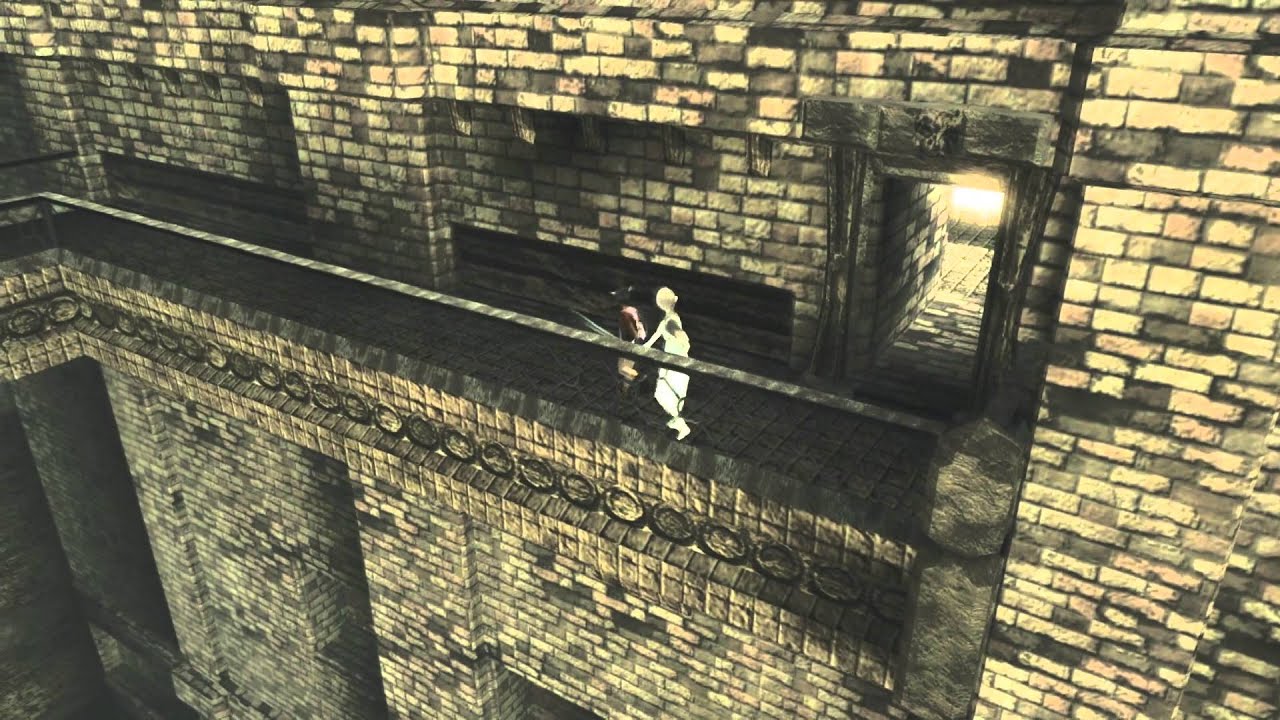
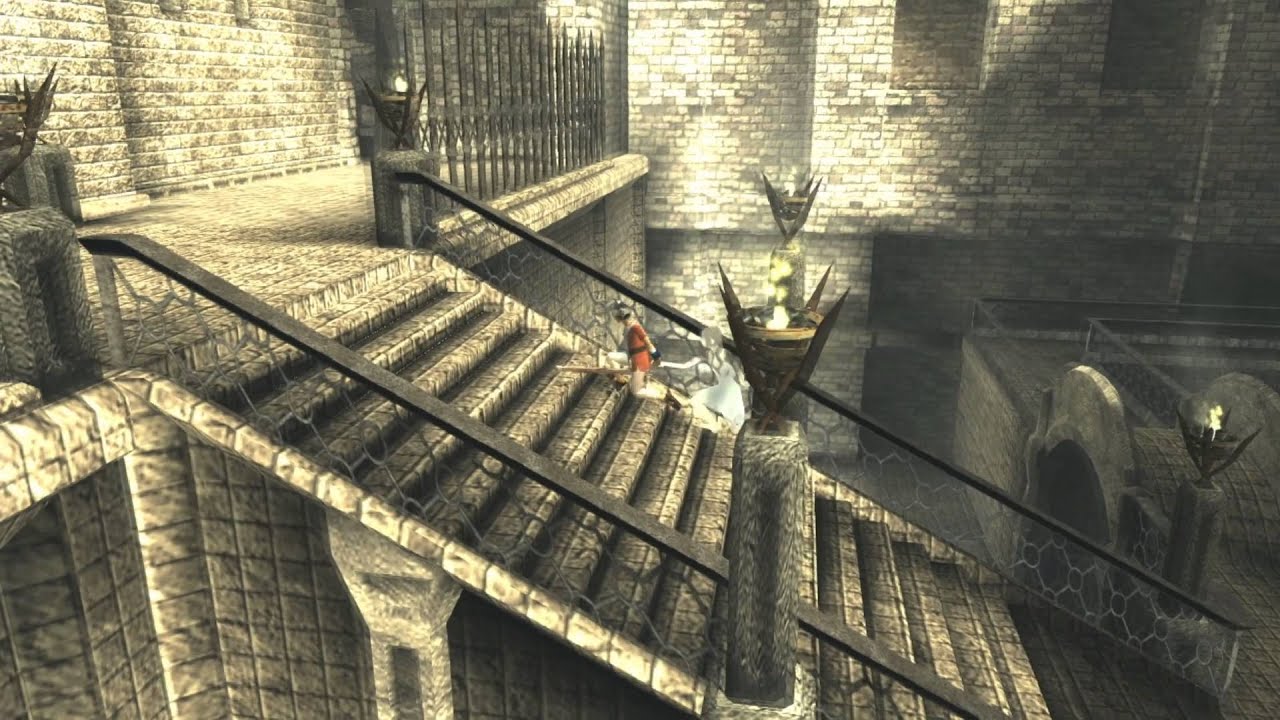
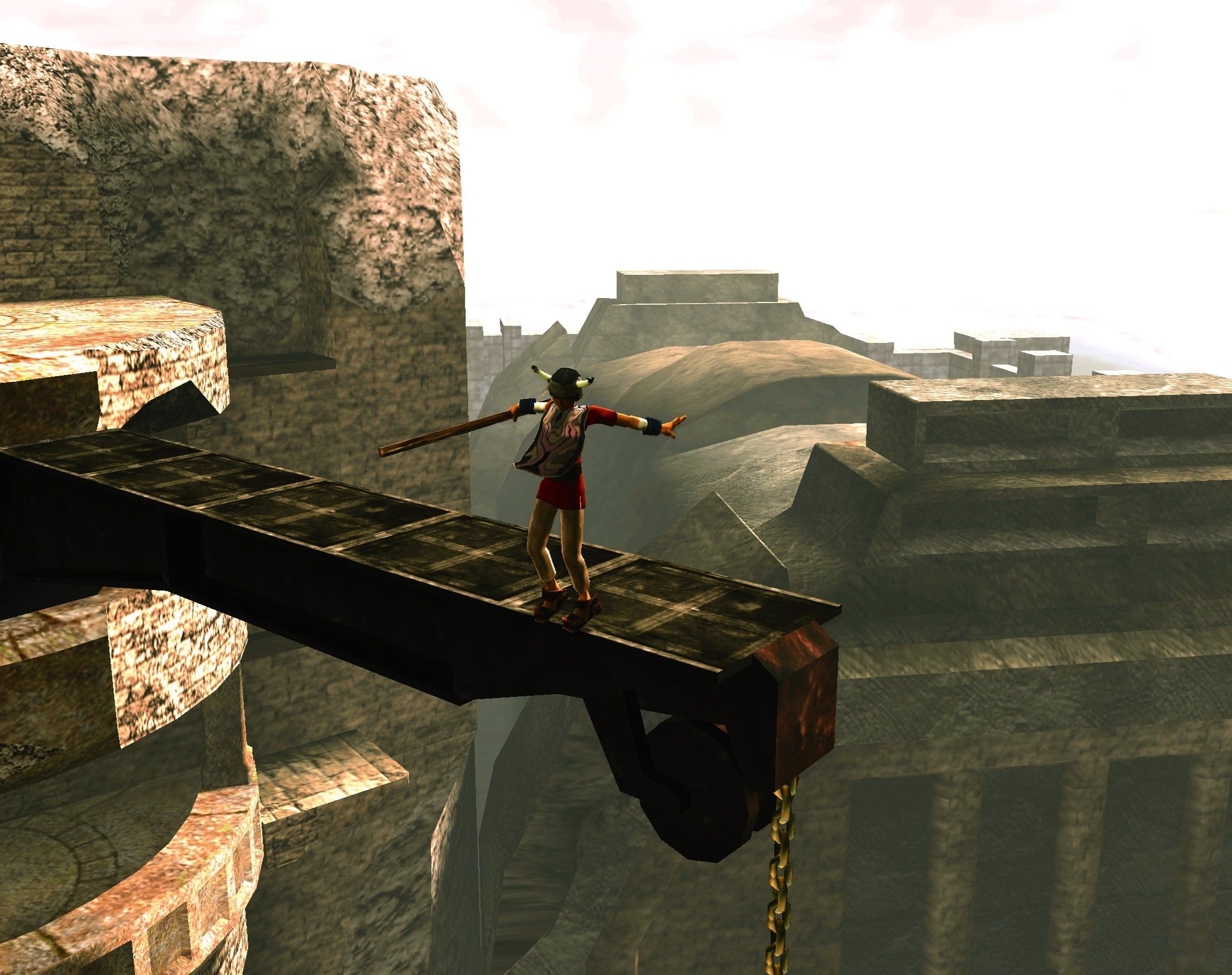
Ico is probably one of the most forgotten games in history. Being one of the first graphical powerhouses for the PS2, it proved that you don’t need a complex story and characters to have a good game. All you know is that you are a boy named Ico who is trying to save a girl named Yorda from her evil mother and escape from the castle. You enter as a captured prisoner because you have horns. You then escape and find Yorda along the way. What made Ico such a big deal was that you led her around manually by holding R1. This forced you to become attached to her, and they rarely spoke.
This game was way ahead of its time. That’s probably why people passed it by for Jak & Daxter and other PS2 games at the time. The game consists of some pretty cleverly designed puzzles that involve pulling switches, climbing, cutting ropes, and swinging on chains. You also push and pull on the occasional block. The level design is really well done, but there were a few obscure puzzles, like jumping off of a chain to knock a bridge down. This is completely against the game’s mechanics, so you would never know to do this. Leading Yorda around sounds annoying, but it prevents you from having to rely on the already shoddy AI. The game mechanics work well enough in design, but they are sloppy and frustrating to deal with.
When you jump, Ico tends to clip into ledges and ladders, making you have to slightly adjust him until he latches on. If you press the analog stick just slightly and jump, he will jump 20 feet, causing you to jump off ledges or fall to your death. There’s just so much bad collision detection, and the animations are janky and not well done. When you drag Yorda around, her arm looks like a flopping noodle that can go through her body. I know this was originally designed for PS1 before the game jumped ship to PS2, but still. There are other mechanics, like setting your sword down to pick up a giant stick, lighting it on fire, and then setting off a bomb. Sometimes you have to toss these before they blow you up. Fun game mechanics and all, but they repeated through the entire game, making you grateful for the short length (just about 4 hours).
A lot of times I didn’t know where to go because the middle of the game has two areas that are identical but just slightly different. The constant backtracking can confuse you, requiring a walkthrough. There are no boss battles to speak of except the final boss, but the combat is so frustrating and annoying. Ico swings his sword around aimlessly, and you can’t move while doing so. The AI jumps away as soon as you run after it, so if you get stuck in a three-hit combo, you get knocked down, and Yorda gets dragged away. You can’t die in this game during combat, but if Yorda gets dragged underground, you’re done. You can pull her out of the hole, but sometimes a shadow creature will hit you and knock you back, and then you have to suffer the long animation of getting up. A lot of games had these animations (The Mark of Kri), and I don’t know why. It breaks the fluidity of everything. Once you get the hidden mace in the game, combat is really easy, but you still get annoyed by the creatures constantly backing up when you approach.
The graphics look great with the new HD upgrade, but even back then, they were amazing. A lot of textures have been slightly upscaled, and some bloom and HDR have been added for better lighting. You can still notice the game’s age during up-close shots of areas. Textures are muddy and so blurry that they don’t even look like what they are representing. The main thing is that you can pan the camera around more now that the resolution has been bumped up, making navigation easier. This is how you do HD upgrades, right?
Overall, Ico is a great game, but the dated mechanics really show their age. If you can look past all this, you are in for a great, albeit short, game, but don’t expect engaging characters or a complex story. There are four cutscenes in the whole game, but this is about the journey and not the story.
Shadow of the Colossus
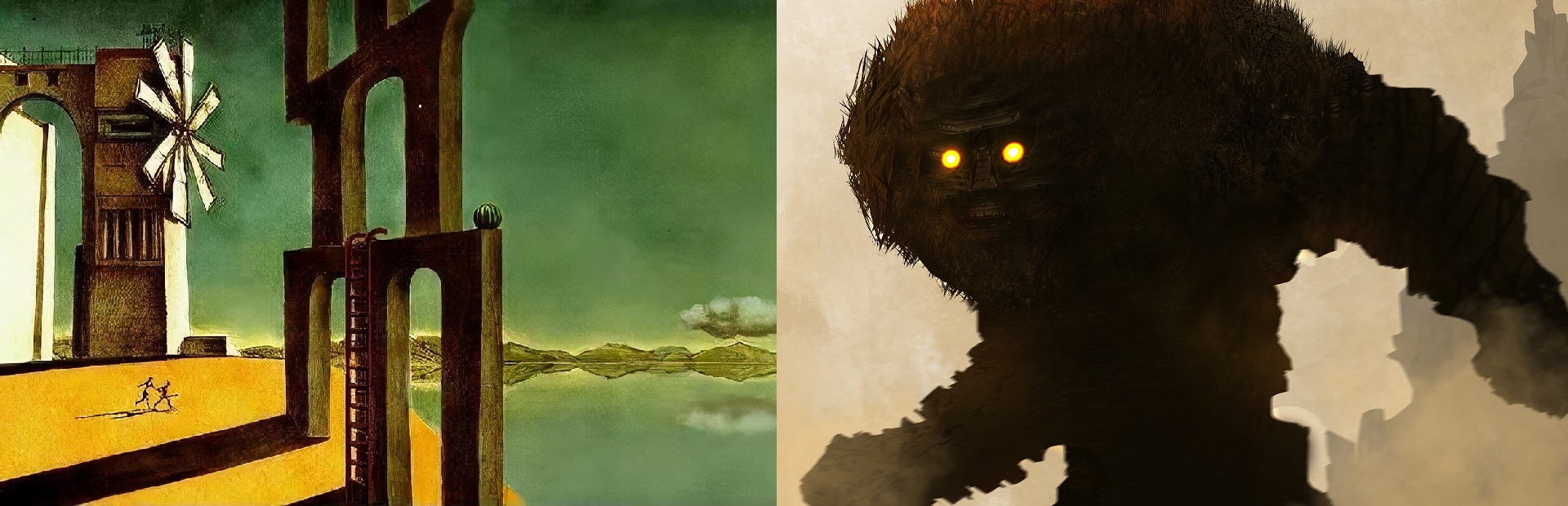
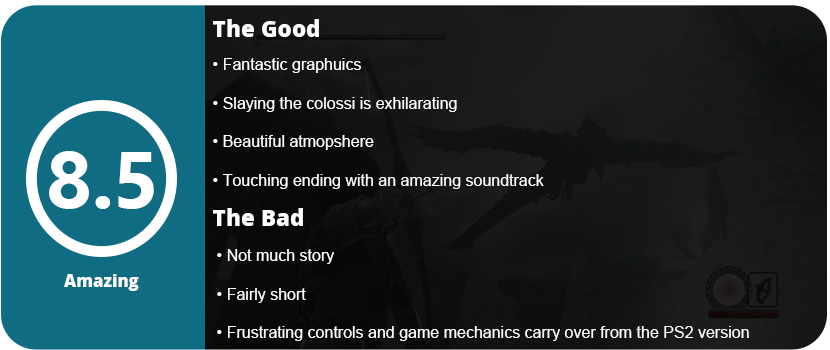
I have been wanting to review this game forever, and now I have the chance. I played this back in 2005 when it first came out, and it was just unreal. SotC still has some of the best graphics to grace the PS2, and it almost looked next-gen at the time. Of course, it suffered from the massive slowdown, but now we can play it with some extra graphical effects and at 60FPS. There’s not much of a story here; there never is with Famito Ueda’s games. You are a boy named Wander who brings a girl to a temple in a cursed land and vows to destroy all 16 colossi in order to bring her back to life. The game has one of the most touching endings I can remember.
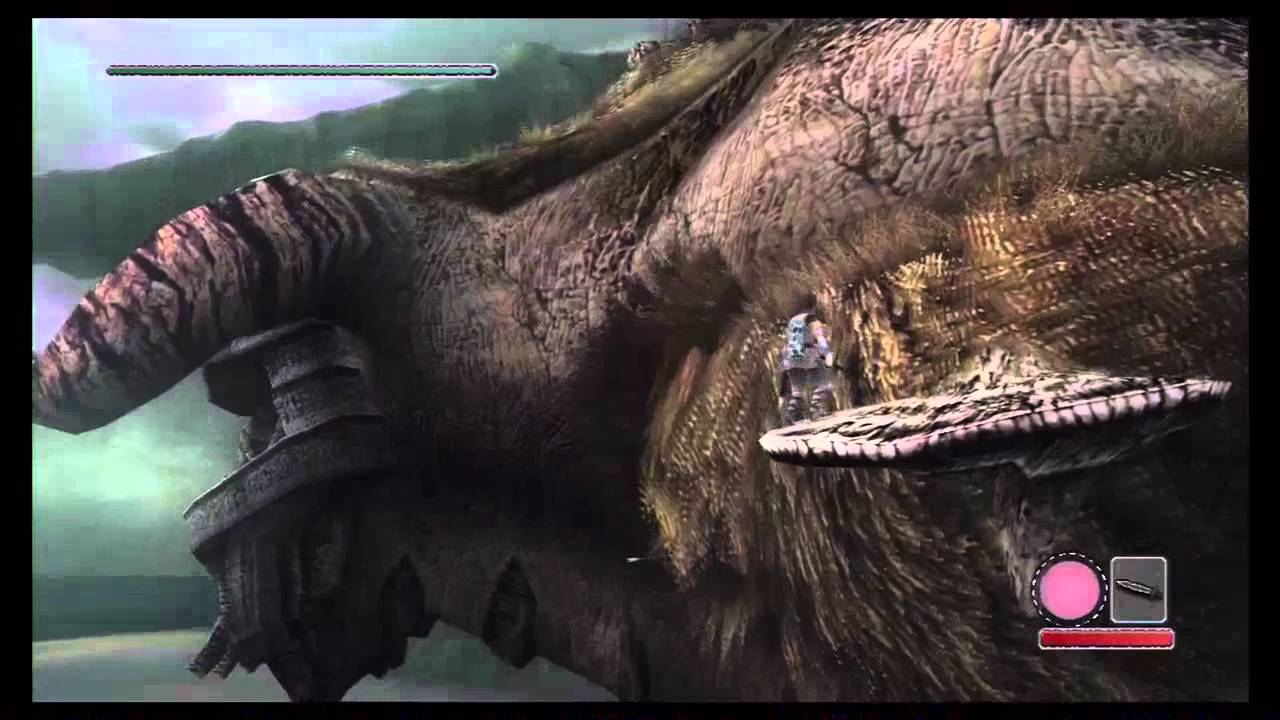
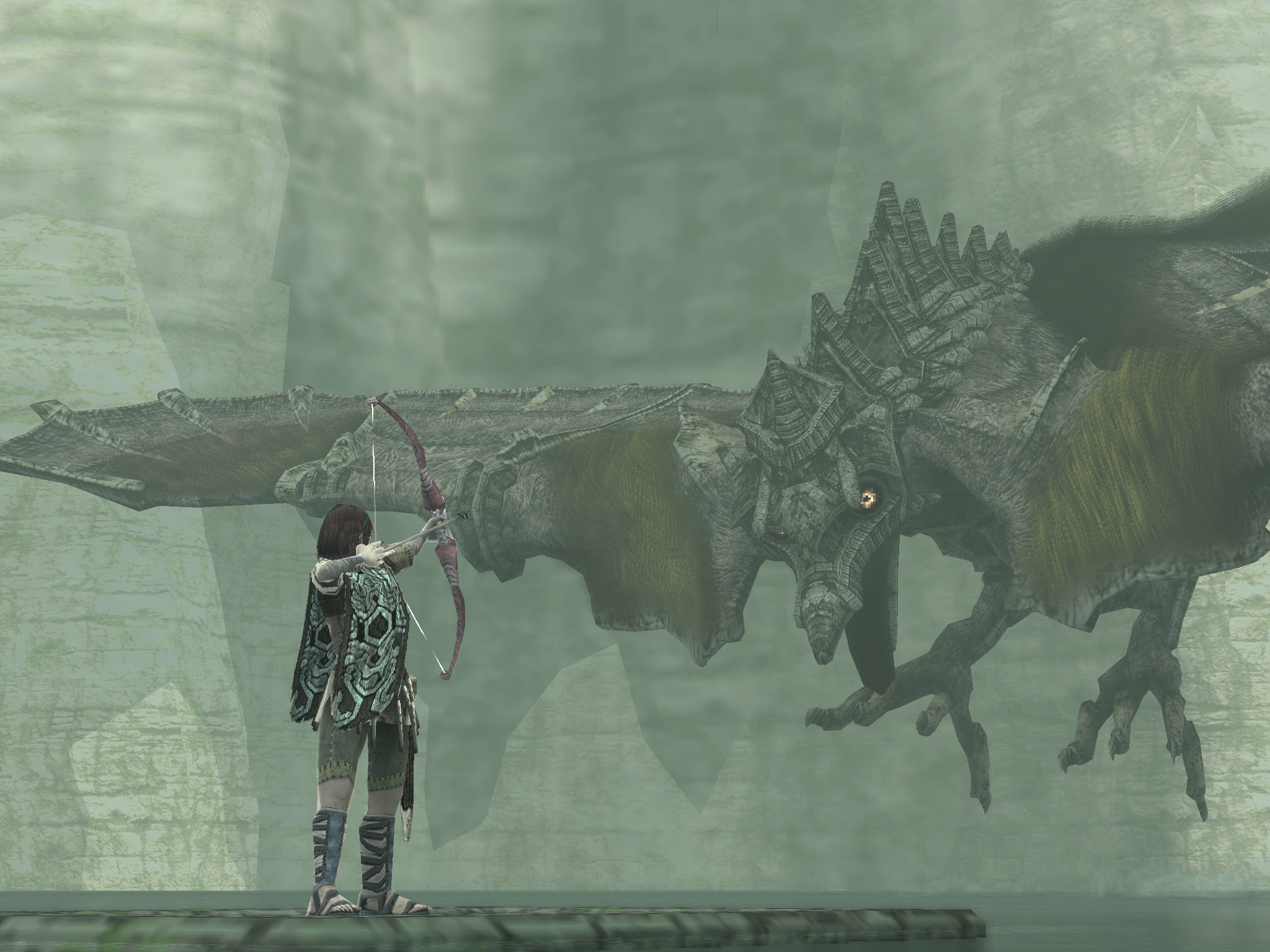
The game is very basic; you just head to each colossus and slay it. There is a huge open world, but it is very barren and void of life, but that’s the way it is supposed to be. You feel very alone and helpless in this land of brown and gray. You have two weapons: a sword and a bow. You can hold the sword up to the light to guide you to the next colossus, which really isn’t that hard. Once you find it, you have to figure out how to get on top of it, and that’s the tricky part. Each colossus is completely different. Some are tall, some are fat, and some are the size of a lion. These lumbering beasts will attack, but you need to find their weak spots. One colossus has weak spots on the bottom of its feet. When it walks, you need to use your bow and shoot it. It then falls over, and you can jump up, grab its fur, and start climbing. Some aren’t so easy; in fact, there are no hints on how to get on top of these beasts. One tricky water serpent requires you to swim over him, and then his tail will come out of the water so you can grab it.
The best part is when you get on these things. Each colossus is like a level in itself. You can climb around and hold the R1 button to stay on. They will try to shake you and your window to actually stab the glowing, weak spots that are really small. You have a stamina meter, and when it depletes, you let go and fall back down. This can be really frustrating if getting on top of the Colossus is already frustrating or a long fiasco. As you slay these monsters, your stamina and health increase, but you still need to watch out. The worst part about the game is the god-awful controls. They just stink, and the game mechanics are sluggish and unresponsive. If it weren’t for this, the game would be perfect. Wander’s animations are a bit jerky, and when the colossi shakes you and your stamina is dropping, you just want to charge your stab and kill it, but sure enough, you get shaken again right as you start to charge. Wander flops around, and it just feels sluggish. When you try walking on the colossus, Wander will fall and tumble, sometimes right down to the ground. I almost threw my controller several times because of this. You will mainly die because of the mechanics, not your skills.
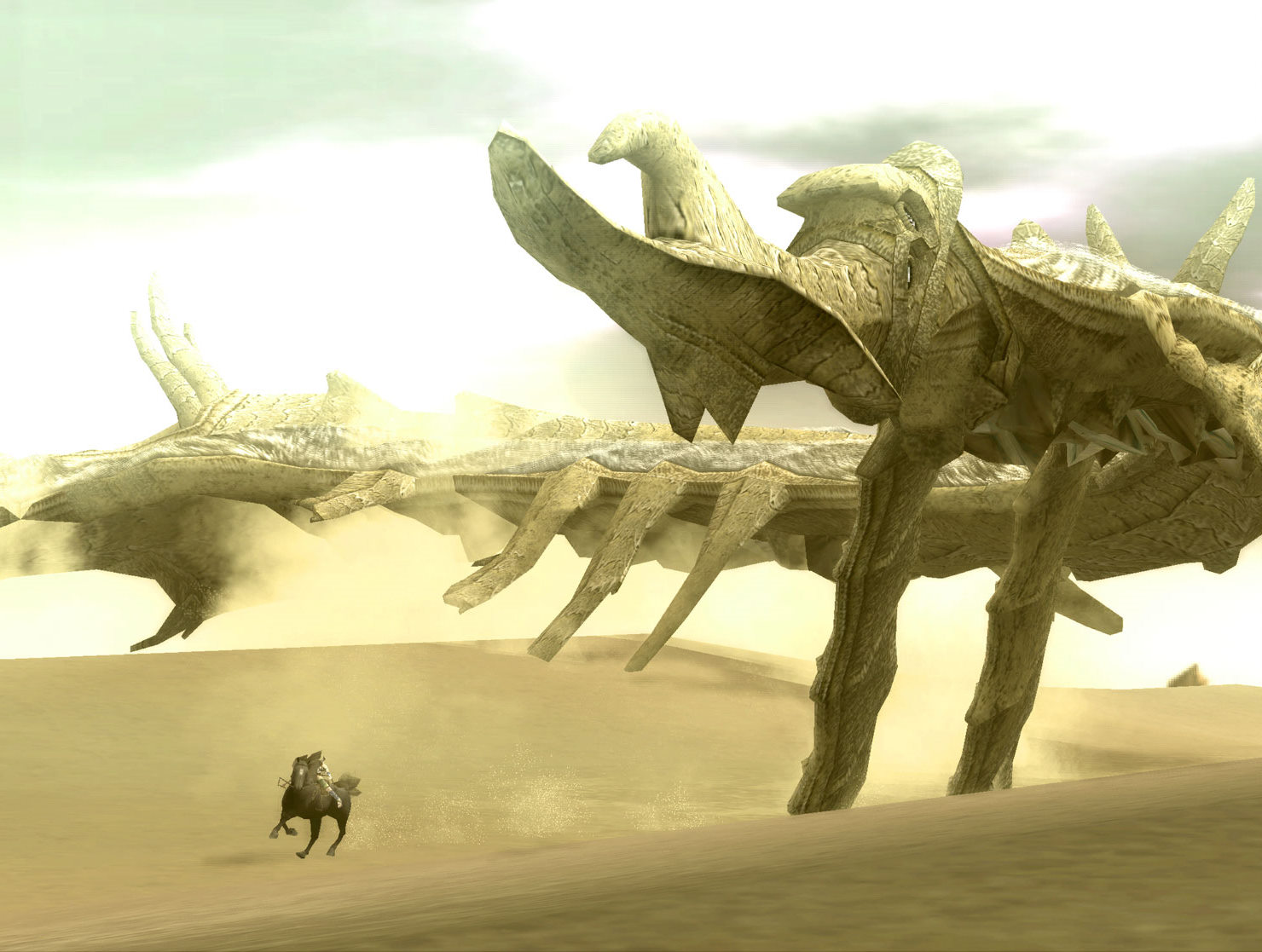
Let’s talk about your horse. Aggro is the main character, but I felt like I was driving a Mac truck. He won’t move if you push the stick forward; instead, you have to mash X, and it takes forever for his momentum to get going. You can only tap the stick left and right to steer him, but he moves too quickly and runs right into walls, which he then stops on a dime and turns completely around. Maneuvering through tight areas is a serious pain. The horse controls are just terrible. This is probably the only bad part of the game; there is nothing else like this game out there. The colossi themselves look fantastic and are just gigantic. You really feel helpless and wonder how you are going to take this thing down. It all adds to the foreboding atmosphere of the game and the loneliness and helplessness that you feel throughout.
I have been wanting to review this game forever, and now I have the chance. I played this back in 2005 when it first came out, and it was just unreal. SotC still has some of the best graphics to grace the PS2, and it almost looked next-gen at the time. Of course, it suffered from the massive slowdown, but now we can play it with some extra graphical effects and at 60FPS. There’s not much of a story here; there never is with Famito Ueda’s games. You are a boy named Wander who brings a girl to a temple in a cursed land and vows to destroy all 16 colossi in order to bring her back to life. The game has one of the most touching endings I can remember.
The game is very basic; you just head to each colossus and slay it. There is a huge open world, but it is very barren and void of life, but that’s the way it is supposed to be. You feel very alone and helpless in this land of brown and gray. You have two weapons: a sword and a bow. You can hold the sword up to the light to guide you to the next colossus, which really isn’t that hard. Once you find it, you have to figure out how to get on top of it, and that’s the tricky part. Each colossus is completely different. Some are tall, some are fat, and some are the size of a lion. These lumbering beasts will attack, but you need to find their weak spots. One colossus has weak spots on the bottom of its feet. When it walks, you need to use your bow and shoot it. It then falls over, and you can jump up, grab its fur, and start climbing. Some aren’t so easy; in fact, there are no hints on how to get on top of these beasts. One tricky water serpent requires you to swim over him, and then his tail will come out of the water so you can grab it.
The best part is when you get on these things. Each colossus is like a level in itself. You can climb around and hold the R1 button to stay on. They will try to shake you and your window to actually stab the glowing, weak spots, which are really small. You have a stamina meter, and when it depletes, you let go and fall back down. This can be really frustrating if getting on top of the Colossus is already frustrating or a long fiasco. As you slay these monsters, your stamina and health increase, but you still need to watch out. The worst part about the game is the god-awful controls. They just stink, and the game mechanics are sluggish and unresponsive. If it weren’t for this, the game would be perfect. Wander’s animations are a bit jerky, and when the colossi shakes you and your stamina is dropping, you just want to charge your stab and kill it, but sure enough, you get shaken again right as you start to charge. Wander flops around, and it just feels sluggish. When you try walking on the colossus, Wander will fall and tumble, sometimes right down to the ground. I almost threw my controller several times because of this. You will mainly die because of the mechanics, not your skills.
Let’s talk about your horse. Aggro is the main character, but I felt like I was driving a Mac truck. He won’t move if you push the stick forward; instead, you have to mash X, and it takes forever for his momentum to get going. You can only tap the stick left and right to steer him, but he moves too quickly and runs right into walls, which he then stops on a dime and turns completely around. Maneuvering through tight areas is a serious pain. The horse controls are just terrible. This is probably the only bad part of the game; there is nothing else like this game out there. The colossi themselves look fantastic and are just gigantic. You really feel helpless and wonder how you are going to take this thing down. It all adds to the foreboding atmosphere of the game and the loneliness and helplessness that you feel throughout.
The graphics are superb, even to this day. The PS3 version adds some texture filtering and anti-aliasing, and of course, the frame rate is now 60. There’s also some extra bloom added, so the lighting looks great. However, despite all this greatness, the game is pretty short, and you can beat it in about 5–6 hours. All you do is slay all 16 colossi, and you’re done. However, it was a very memorable experience.
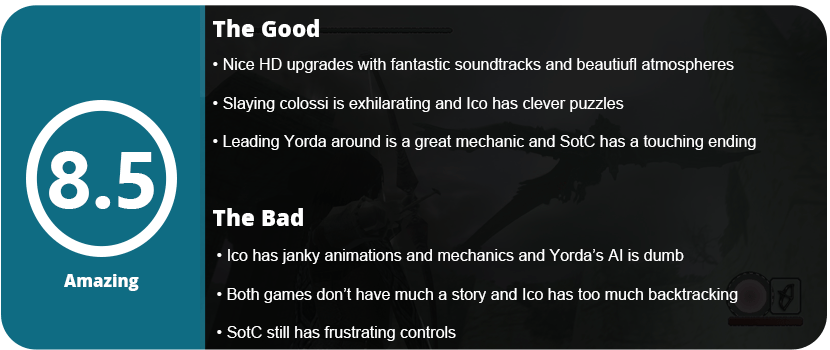
Overall, Shadow of the Colossus was a milestone for the PS2 and is still one of the best games ever made. The frustrating controls and game mechanics keep this game from being as perfect as all the rest. Have patience and just deal with it. Every PlayStation fan should play this game.
Ico is probably one of the most forgotten games in history. Being one of the first graphical powerhouses for the PS2, it proved that you don’t need a complex story and characters to have a good game. All you know is that you are a boy named Ico who is trying to save a girl named Yorda from her evil mother and escape from the castle. You enter as a captured prisoner because you have horns. You then escape and find Yorda along the way. What made Ico such a big deal was that you led her around manually by holding R1. This forced you to become attached to her, and they rarely spoke.
This game was way ahead of its time. That’s probably why people passed it by for Jak & Daxter and other PS2 games at the time. The game consists of some pretty cleverly designed puzzles that involve pulling switches, climbing, cutting ropes, and swinging on chains. You also push and pull on the occasional block. The level design is really well done, but there were a few obscure puzzles, like jumping off of a chain to knock a bridge down. This is completely against the game’s mechanics, so you would never know to do this. Leading Yorda around sounds annoying, but it prevents you from having to rely on the already shoddy AI. The game mechanics work well enough in design, but they are sloppy and frustrating to deal with.
When you jump, Ico tends to clip into ledges and ladders, making you have to slightly adjust him until he latches on. If you press the analog stick just slightly and jump, he will jump 20 feet, causing you to jump off ledges or fall to your death. There’s just so much bad collision detection, and the animations are janky and not well done. When you drag Yorda around, her arm looks like a flopping noodle that can go through her body. I know this was originally designed for PS1 before the game jumped ship to PS2, but still. There are other mechanics, like setting your sword down to pick up a giant stick, lighting it on fire, then setting off a bomb. Sometimes you have to toss these before they blow you up. Fun game mechanics and all, but they repeated through the entire game, making you grateful for the short length (just about 4 hours).
A lot of times I didn’t know where to go because the middle of the game has two areas that are identical but just slightly different. The constant backtracking can confuse you, requiring a walkthrough. There are no boss battles to speak of except the final boss, but the combat is so frustrating and annoying. Ico swings his sword around aimlessly, and you can’t move while doing so. The AI jumps away as soon as you run after it, so if you get stuck in a three-hit combo, you get knocked down, and Yorda gets dragged away. You can’t die in this game during combat, but if Yorda gets dragged underground, you’re done. You can pull her out of the hole, but sometimes a shadow creature will hit you and knock you back, and then you have to suffer the long animation of getting up. A lot of games had these animations (The Mark of Kri), and I don’t know why. It breaks the fluidity of everything. Once you get the hidden mace in the game, combat is really easy, but you still get annoyed by the creatures constantly backing up when you approach.
The graphics look great with the new HD upgrade, but even back then, they were amazing. A lot of textures have been slightly upscaled, and some bloom and HDR have been added for better lighting. You can still notice the game’s age during up-close shots of areas. Textures are muddy and so blurry that they don’t even look like what they are representing. The main thing is that you can pan the camera around more now that the resolution has been bumped up, making navigation easier. This is how you do HD upgrades, right?
Overall, Ico is a great game, but the dated mechanics really show their age. If you can look past all this, you are in for a great, albeit short, game, but don’t expect engaging characters or a complex story. There are four cutscenes in the whole game, but this is about the journey and not the story.
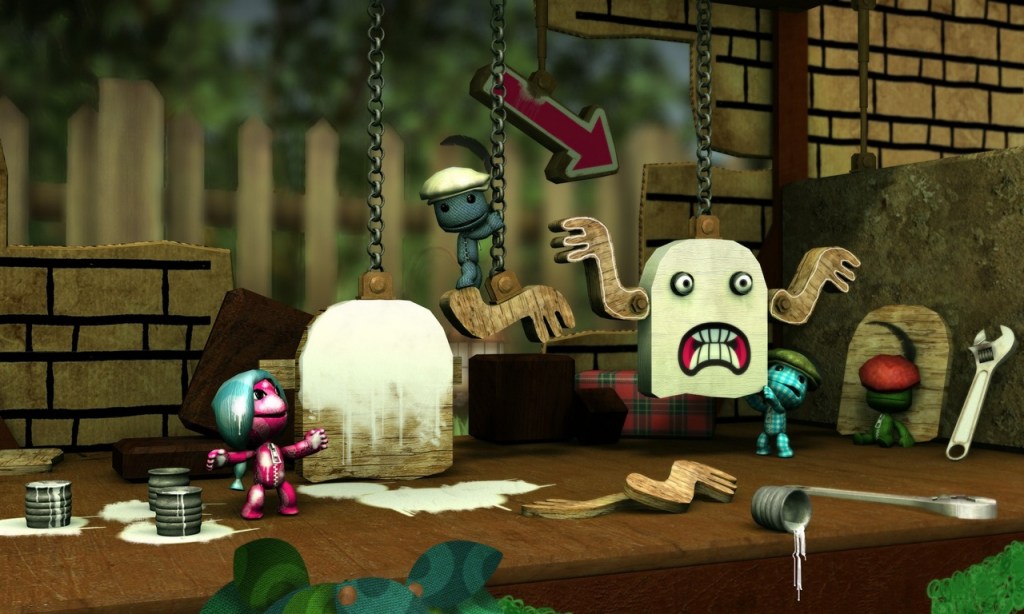
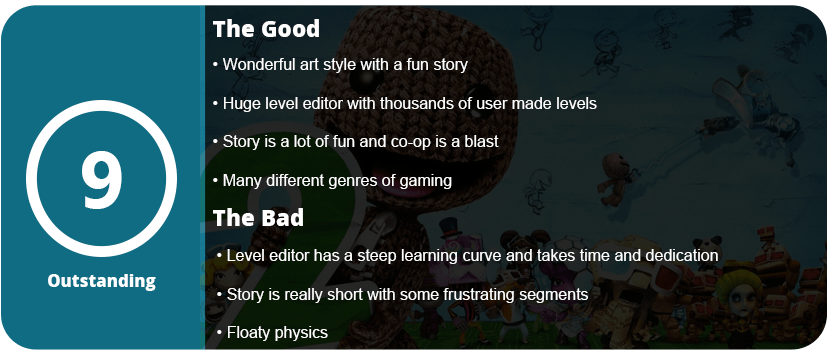
There are very few games that are 100% driven by your imagination. That is the game: you. Whatever you decide or think up is what you’re going to play. Impatient? You’re not going to have a fun time. Don’t you like thinking? Look elsewhere. LBP is a game all about using the tools in the game to create your own world and an idea of a fun game. LBP2 expands this by gearing the tools towards genres of games rather than just platforming. While the tool section may turn most players away, don’t fret! Enjoy the thousands of well-made levels from other players to keep you busy. I am not a sandbox, build-it-yourself type of person, so I didn’t spend much time in the editor. Open your mind and enjoy the delightful papercraft world!
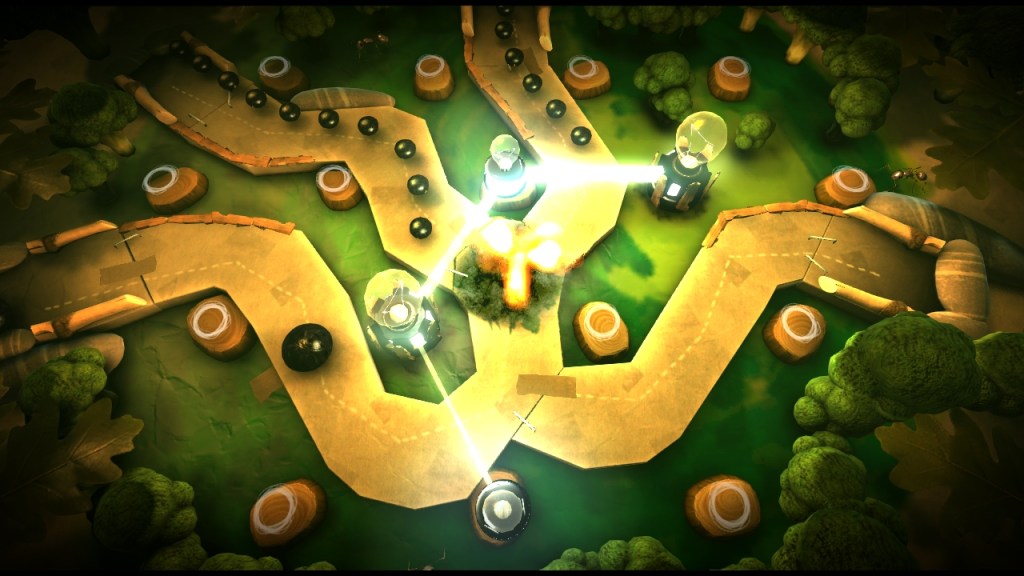
The story mode consists of four very fun worlds to play in to whet your appetite for the world and how everything works. The story is really weird and doesn’t make much sense. Your only goal is to stop the Negativitron from destroying Craftworld, and you have to rescue a few people in the process. With the weird story aside, the levels are really fun and show you all the different genres of gaming you can play in this game. Races, 2D shooters, platforming, fighters, and many others. Each level is completely different but plays similarly to the last game. You have to get through each section to the next checkpoint, where you can respawn if you die. The main point of the story is to find new stickers and materials for the level editor. These appear as bubbles in the game; some are easy to get, and some require a bit of puzzle-solving.
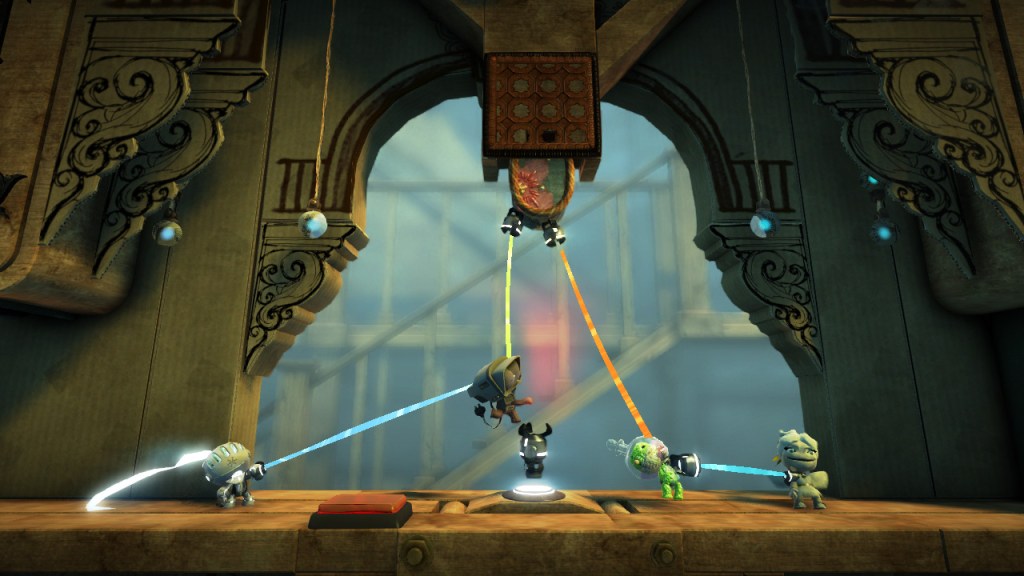
LBP2 is really co-op heavy, and I found myself finding people to play with online or having friends join me. The game is a blast in co-op and probably the best way to play. I loved the entire story mode because it was just so much fun. Plain and simple. One level had me using different weapons, like a sprinkler helmet, to put out fires on platforms and grow vines into platforms. Another level used a cupcake launcher, which acted as a remote mine. A later level used a few different animals as vehicles, such as a bunny, a hamster, and a bee as a shmup vehicle. It was all fun, colorful, and filled with imagination. The papercraft art style makes you feel like a kid again, playing with paper and toys. LBP2 is just one of the most imaginative games you can get your hands on these days.
The controls are solid but feel a bit floaty and slidey, which is okay after you get used to them. One of my favorite features is Pop-It, which is a simplified menu you can bring up to place stickers in the world and customize your Sack Thing. If I were to really complain about the story mode, it would be that some sections are ridiculously difficult and require several restarts, but nothing you won’t get past. Once you beat the story mode, you can either play user-made levels or make your own. I won’t go into the level editor because it would take 10 paragraphs just to explain, and even then you would be confused. It is more simplified than the first game, but there is more to it, so it feels more complicated. I honestly could not build a single decent level, so I moved on to user-made levels.
There are thousands of levels that are organized into categories. Ones that Media Molecule picked (which I recommend playing first) as well as levels sorted by rating. Some are pretty bad, some are spam, but some are amazing or even better than the ones on disc. Thankfully, you don’t have to download these levels to your HDD, so don’t think you have to use precious space for all these levels like most games. I also liked that you can sort by category, which really brings out one of the main new features of LBP2. These user-created levels just show how powerful the tools in this game are and how imaginative people can be. Of course, it is the most fun with more people, but you can still enjoy the game by yourself.
It goes to show that a developer doesn’t have to create an entire world for you to enjoy it. This is some of the most fun I have had in a game in a while, and I absolutely loved it. However, think carefully before buying this game. Are you a creator or player? If you are just a player, you will have fun, but you won’t be using 80% of what’s on the disc, the editor. Enough time has gone by for thousands of excellent levels to be created, so it isn’t a huge loss.













































 thebinarymessiah.com
Try multiplayer. A lot of fun !