Great sound design isn’t the music but everything else you hear. Not only is variety good, but it has to match and be unique to the game and atmosphere. Everything from the wind blowing through cracks, swords clashing, breathing, grass rustling, and bullets whizzing it all makes the audio experience.
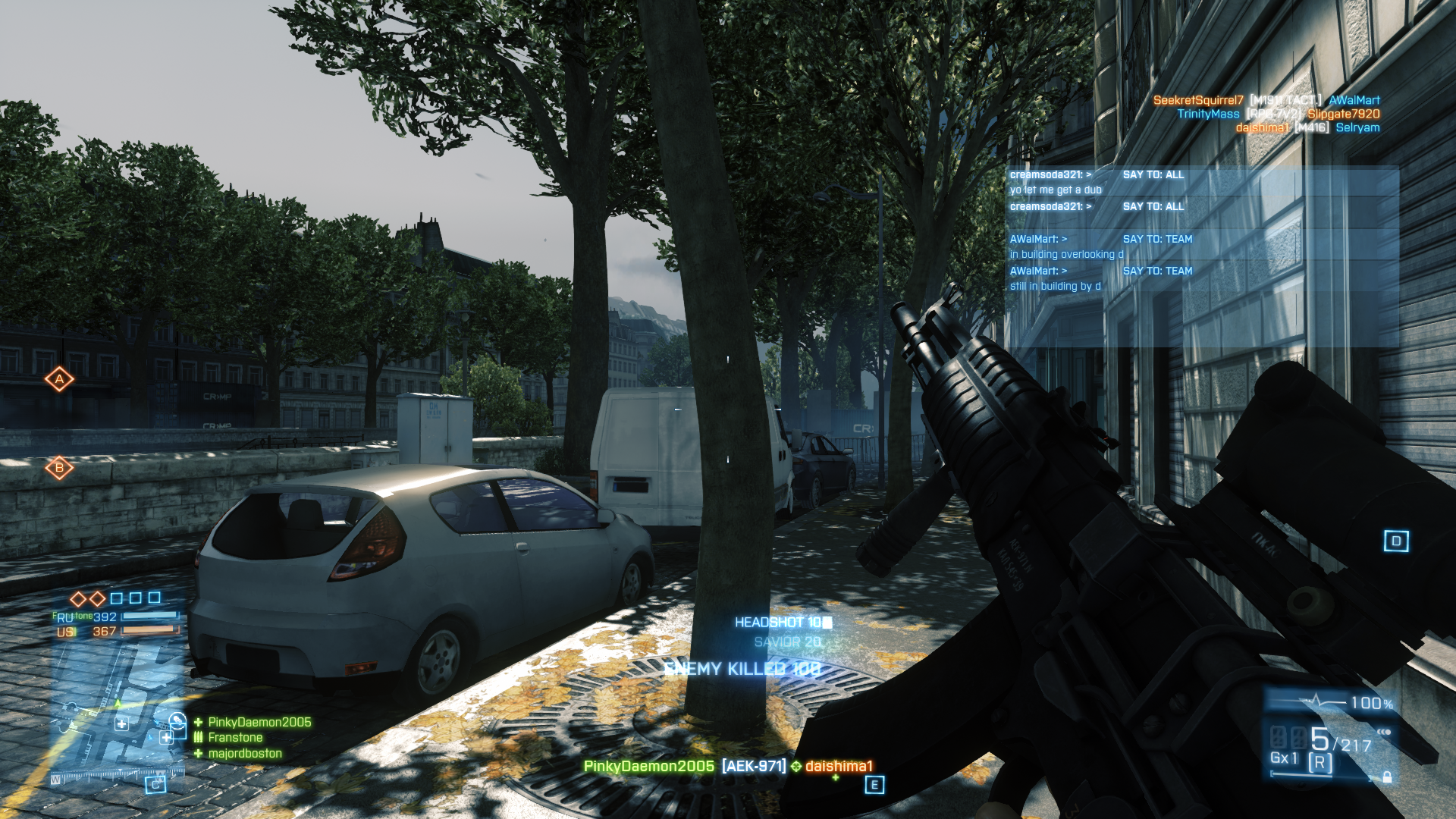
What makes the Battlefield series in the general top most games in sound design is the audio directional placement and just the sheer realism of battle. No other war game has pulled off such rich and visceral sound from bullets whizzing by your head to being able to find a sniper from distance and direction. Everything sounds hyper-realistic, but also completely ensnares you into the battle. This realistic and technically phenomenal achievement puts it over the top of everything else.
An atmosphere is what delivers emotion and overall feelings in the game. The atmosphere can make a game scary, colorful, cartoony, or make you feel alone and sad. Atmosphere much matches and represent the idea of the game. Sometimes the atmosphere isn’t delivered right and can make a game feel boring, or just look bad.
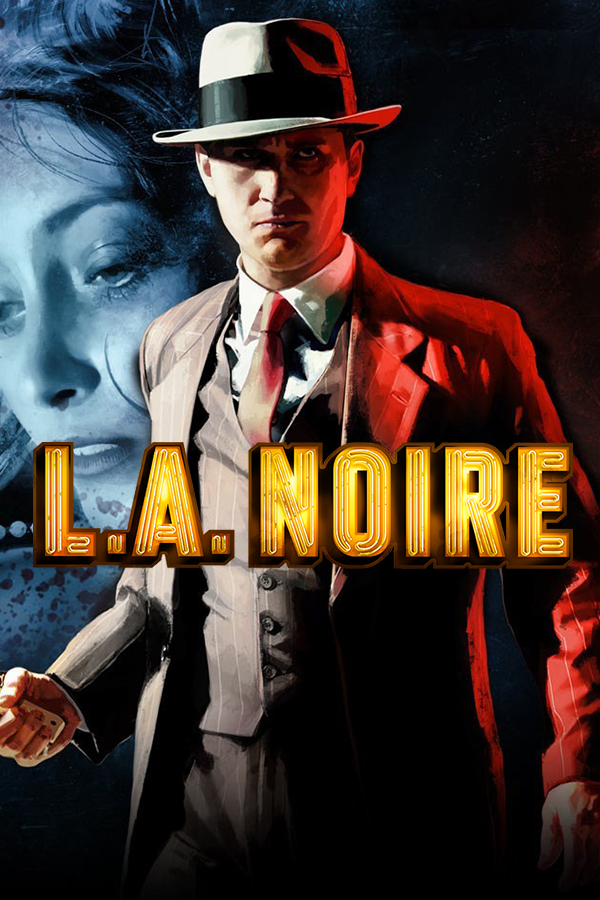
The Best Atmosphere category was even harder than last year’s because so many great AAA titles came out with strong atmospheres. There were also some games I didn’t get a chance to squeeze into the runner-up’s area so that tells you how well this category did this year. While some of the others may have better art to back up their atmosphere L.A. Noire does something that most can’t: Make an atmosphere without fancy art or licenses. L.A. Noire is a new IP and pulls off a 1940’s era in realistic detail and really pulls you in and brings you into a time period that most games don’t explore outside World War II. L.A. Noire had amazing visuals to back it, but to make the game feel so true to an era is very hard to do. You don’t need fancy art for that.
The Best Music award goes to a game that delivers emotion, atmosphere, and tension through the game’s soundtrack. Whether it be orchestral, licensed, or anything else it must feel just right.
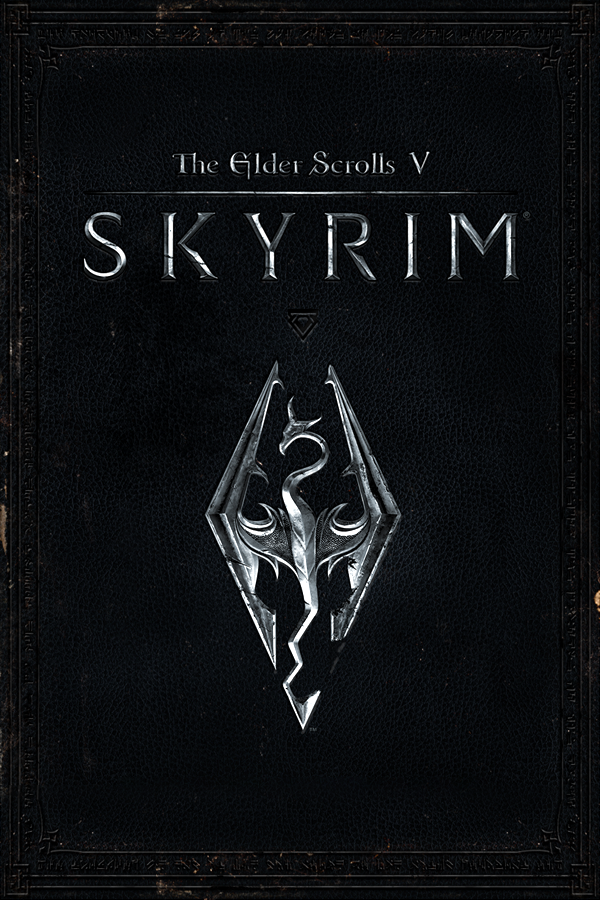
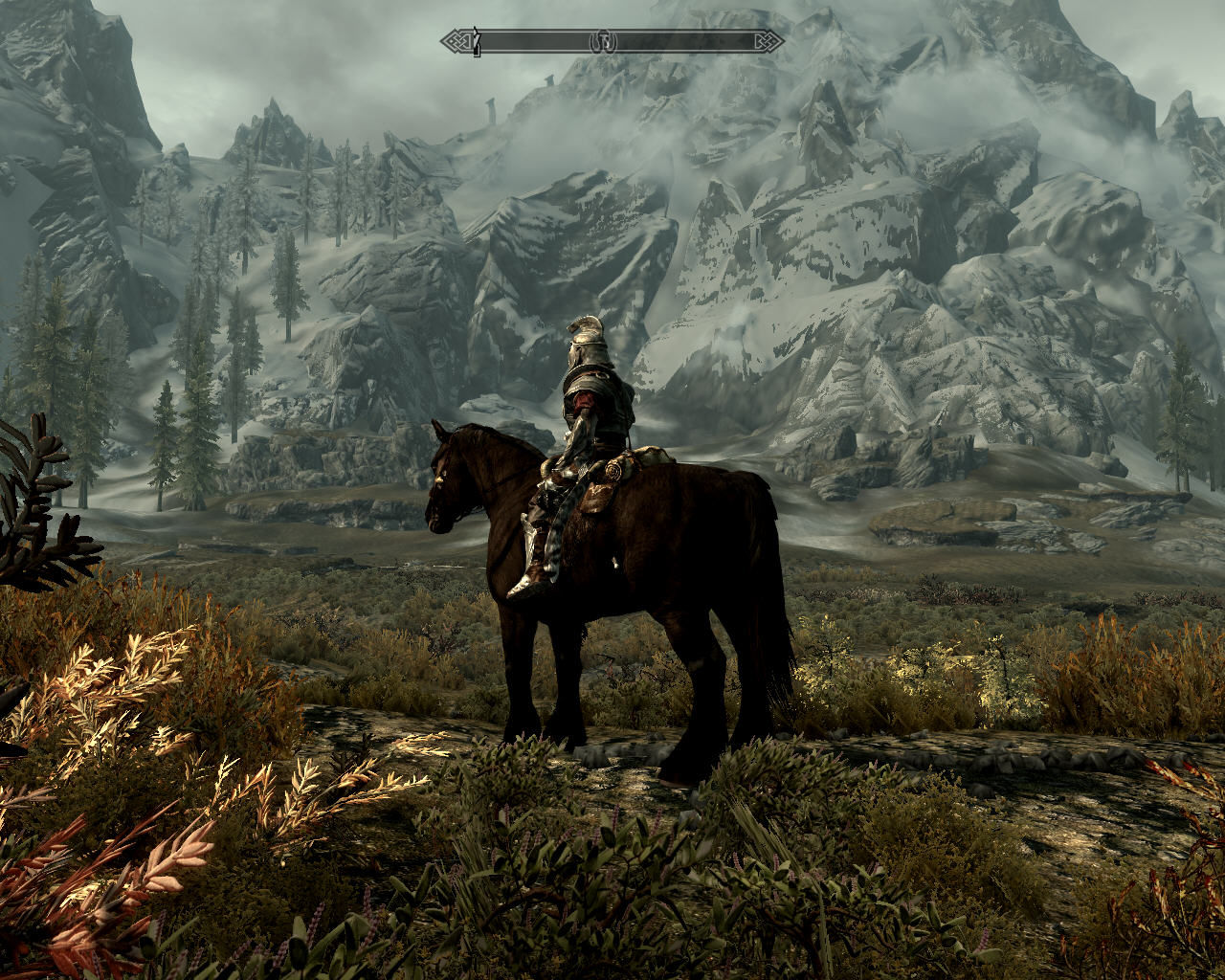
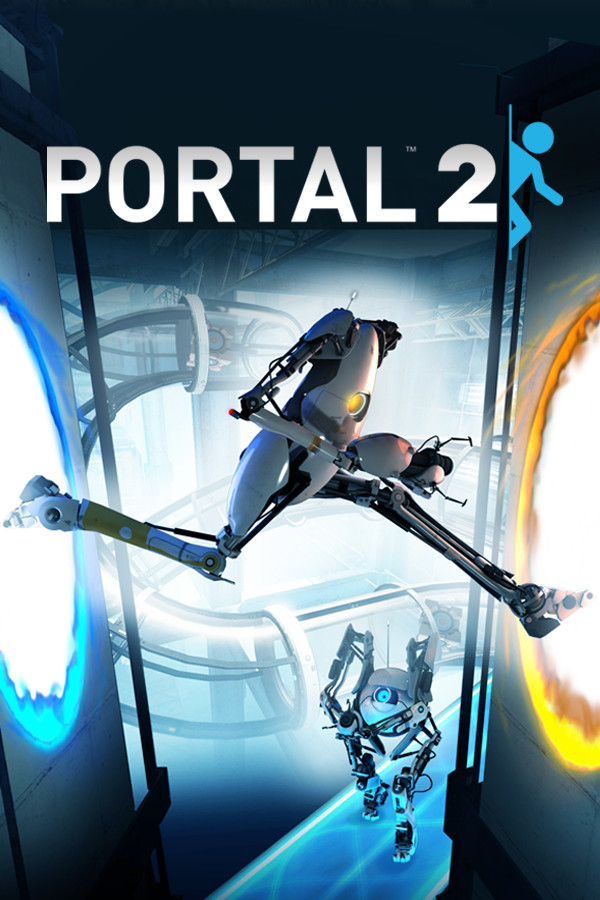
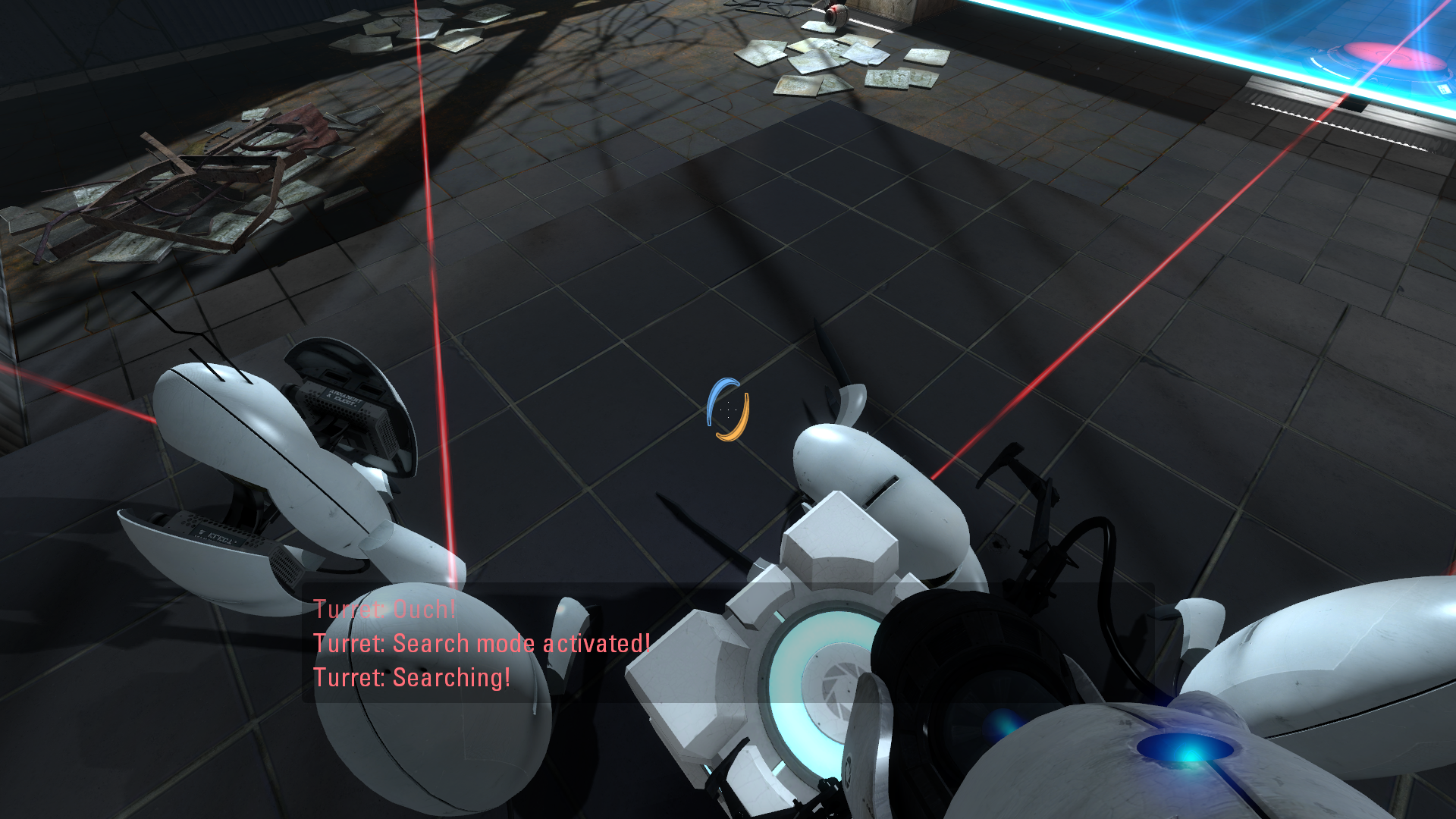
This was a tough call against Portal 2, but Skyrim came out on top thanks to composer Jeremy Soule’s amazing passion for the Elder Scrolls game. Every piece of music moves you and sucks you into the world like no other video game soundtrack can do. There are dozens of songs and each is masterfully composed and that is extremely hard to do. Every piece fits everything you do, see, hear, or interact with within Skyrim. The sweeping and dramatic theme song to the softer tones of exploring the world is perfect and nothing can match this kind of instrumental beauty.
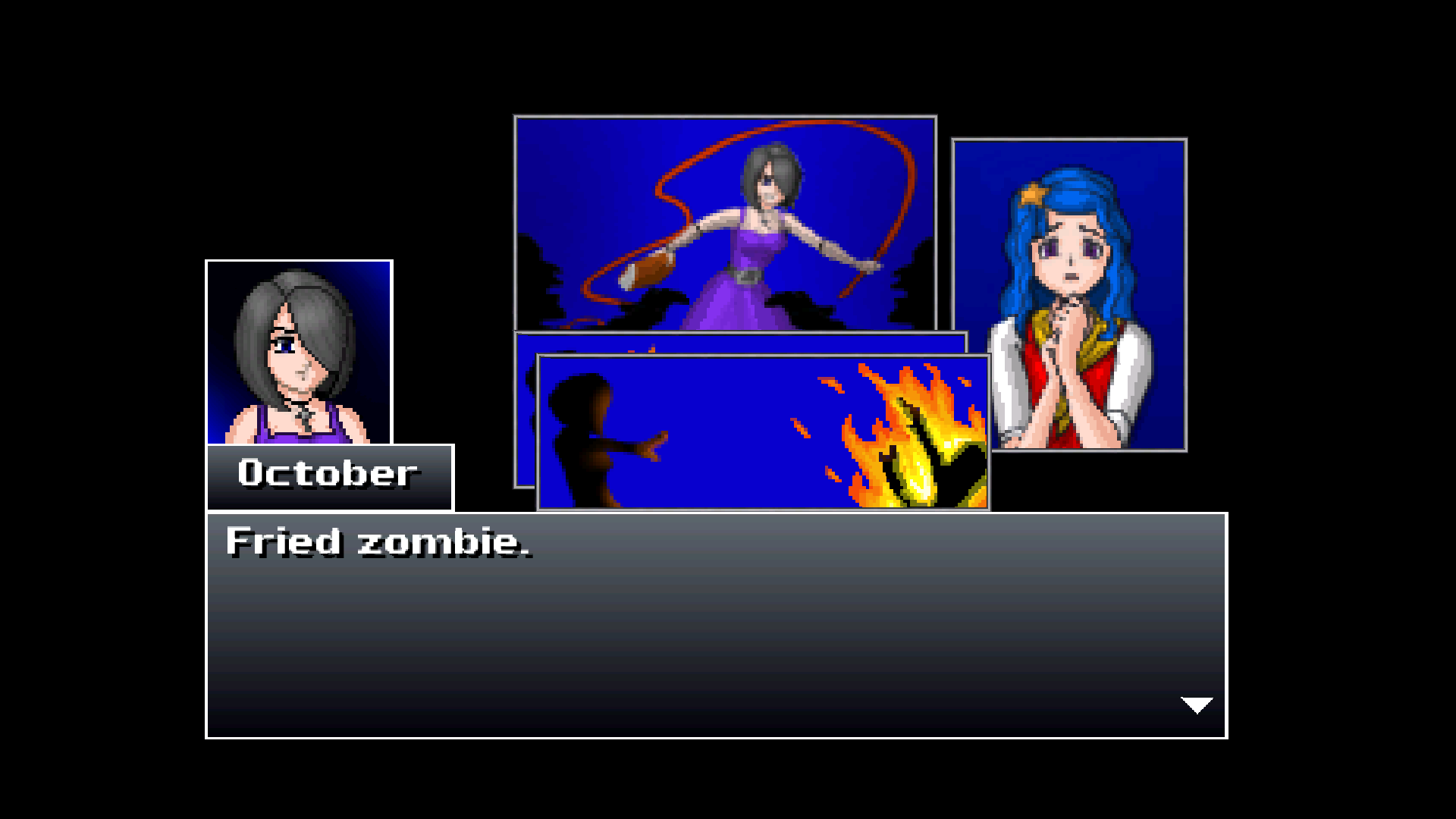
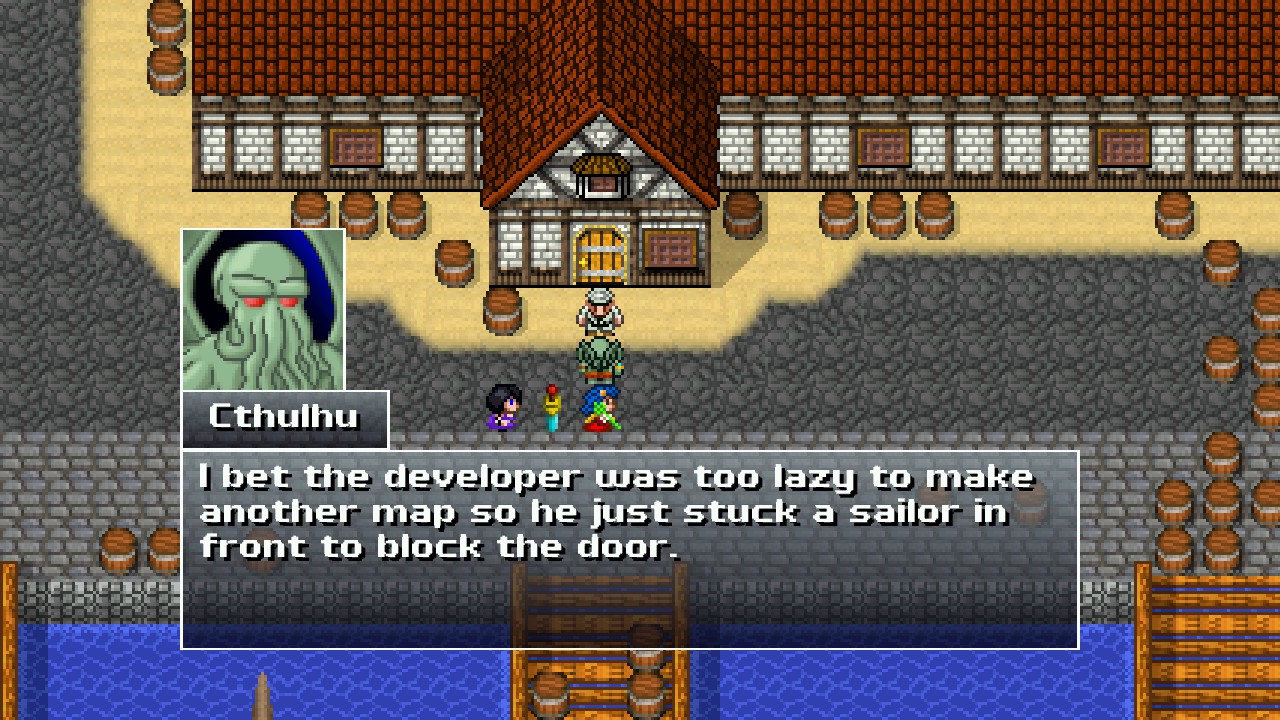
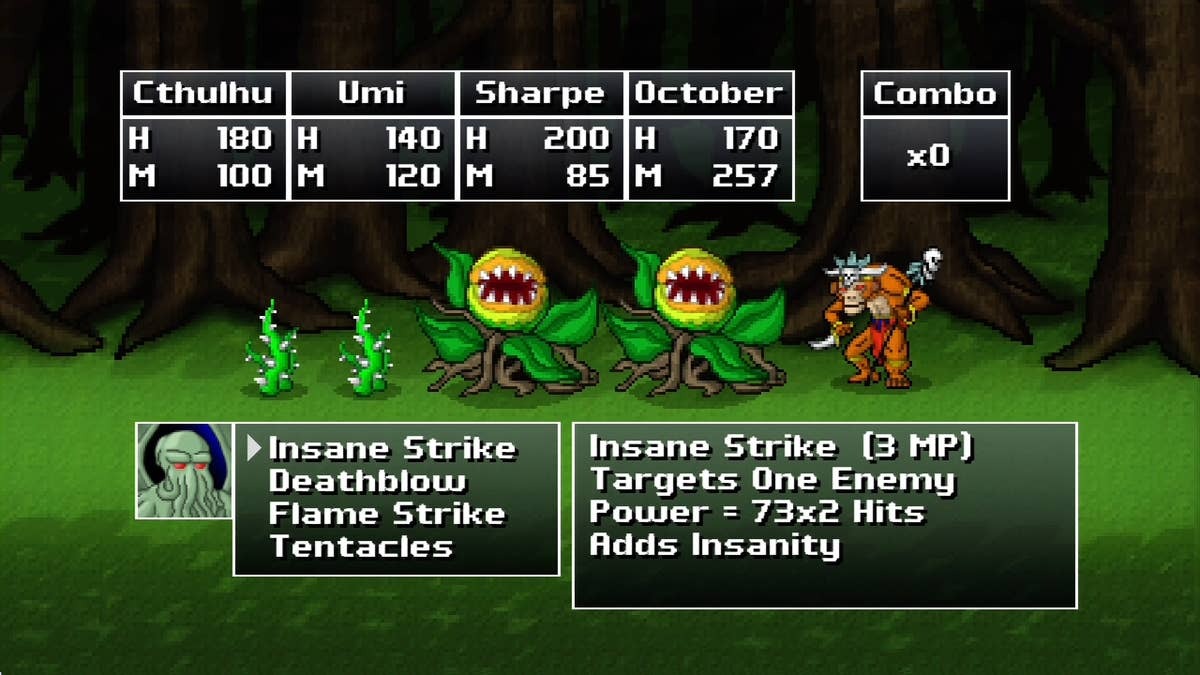
The Cthulhu series from H.P. Lovecraft hasn’t seen much love in the form of games, but indie developers Zeboyd picked it up and turned it into a whimsical/parody 8-bit RPG, and it’s done very well. You play as Cthulhu and pick up many party members along the way, but the whole point of the game is the great dungeon crawling that harkens back to the ’80s. You can attack like any RPG, but you have tech attacks that are more powerful and magic, and then you can unite with other members to combine devastating attacks. There are a ton of different attacks you learn when you level up, and you get a choice between two different things to level up with either stats or an attack, so by the end of the game, each member has a huge arsenal to use.
The game is very close to the mythology, with bosses that are from the story, towns named after the exact towns from the stories, and art-style matches. The music is amazing, with sweeping orchestral scores (in 8-bit midi audio, mind you) that really move you and sound great. The story is hilarious, with Cthulhu trying to redeem himself and become a true hero to raise his city of R’lyeh, but his interaction with characters in the world is really funny. Of course, the game wouldn’t be complete without a huge map to explore that has some secret dungeons, plus the environments and dungeons vary with lots of loot and chests to find.
However, the game’s biggest flaw is the extreme difficulty later on in the game, as well as the constant random battles that really drag the experience down. The developers tried to tone this down by disabling random battles after you do 25 of them, but you will probably go through a dungeon before you hit that number. I also didn’t like how if you don’t level up high enough, the end boss is impossible to beat, but each dungeon just really racks up the difficulty and requires you to grind a bit to get through the dungeon. I also didn’t like how you don’t really need a strategy to beat the enemies because you can just use the same one over and over through several dungeons. This causes the feeling of repetition to set in and makes you want the game to just end a little faster.
While the visuals are nice and give you a feeling of nostalgia, they don’t look good in HD, and the lack of battle animations and everything else that goes along with 8-bit graphics grates on your eyes after a while. However, the Cthulhu license is rarely explored, so any game to do so is welcomed, but this game is probably for hardcore RPG fans.
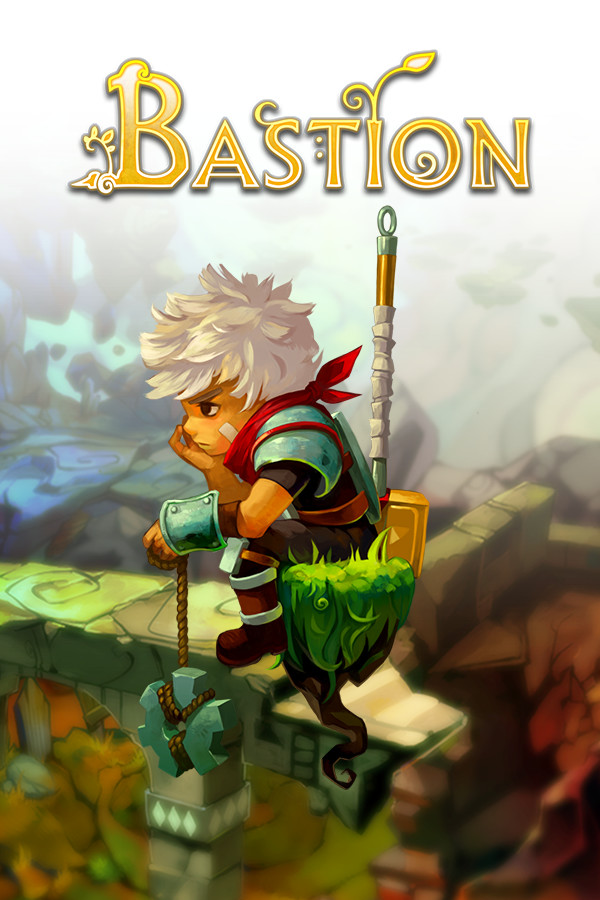
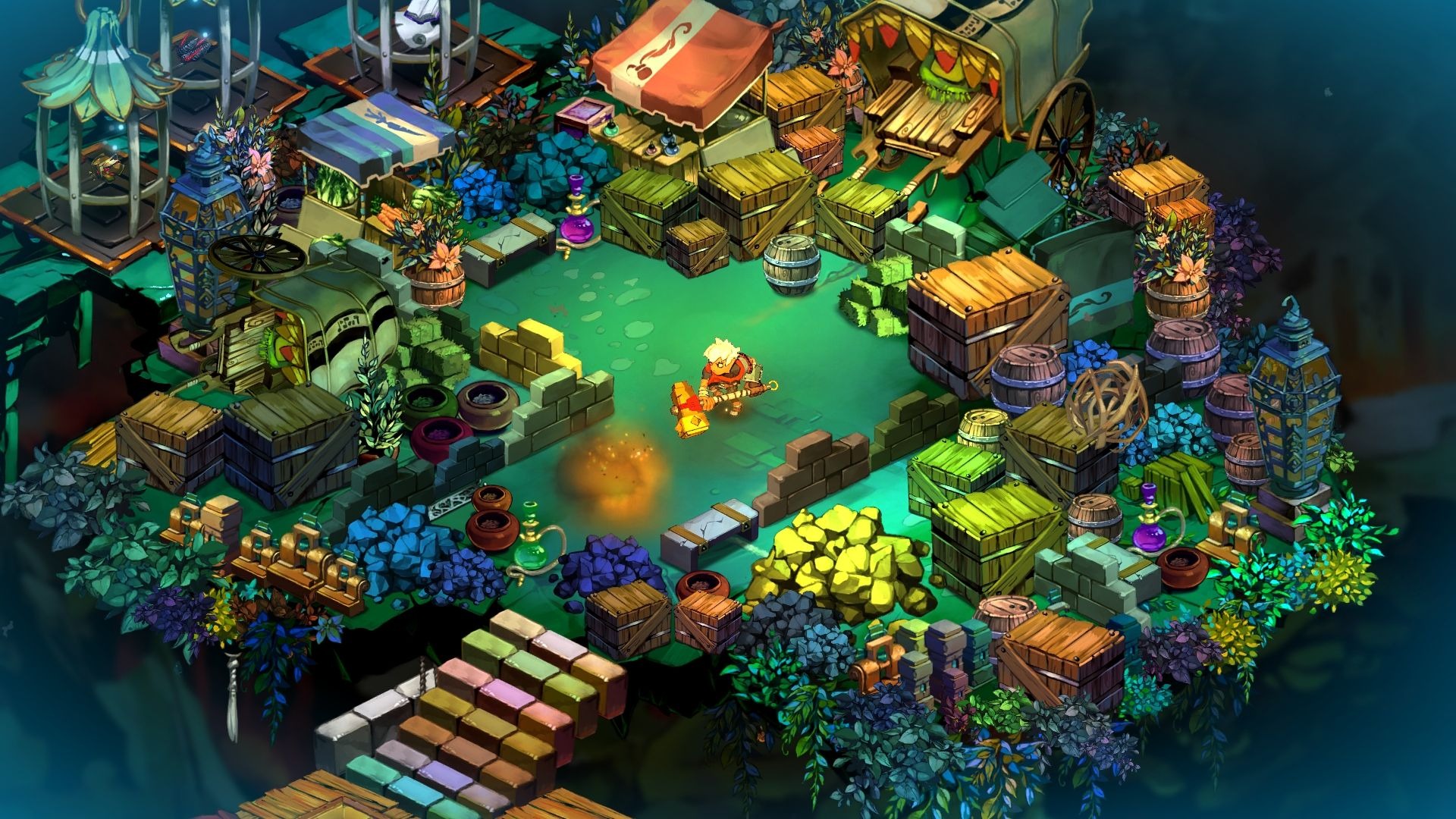
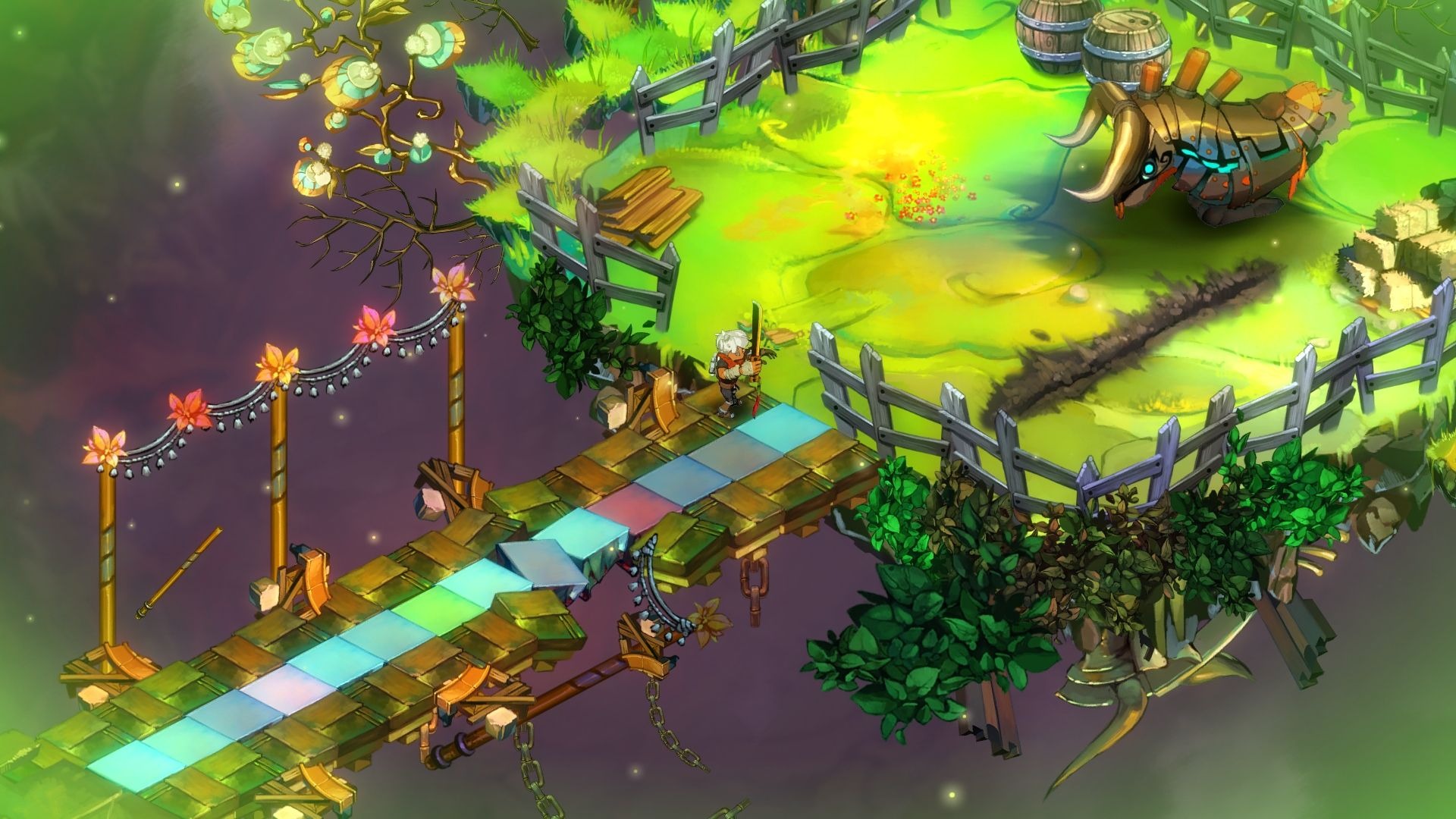
One thing that Bastion does differently from most games is its strong and unique narrative. A man narrates the boy’s every step and action in Bastion, and this is a very interesting way of telling a story. It’s like you’re playing an interactive storybook, especially since it looks like one too. You are trying to re-build The Bastion, which is a safe spot to run from The Calamity, and throughout the story, you find out what this is and why this boy is trying to find these shards to build this thing. Rucks (the narrator) guides you through the story as it unfolds, so you don’t know anything until it actually happens, like a storybook, but it’s happening while you’re doing it.
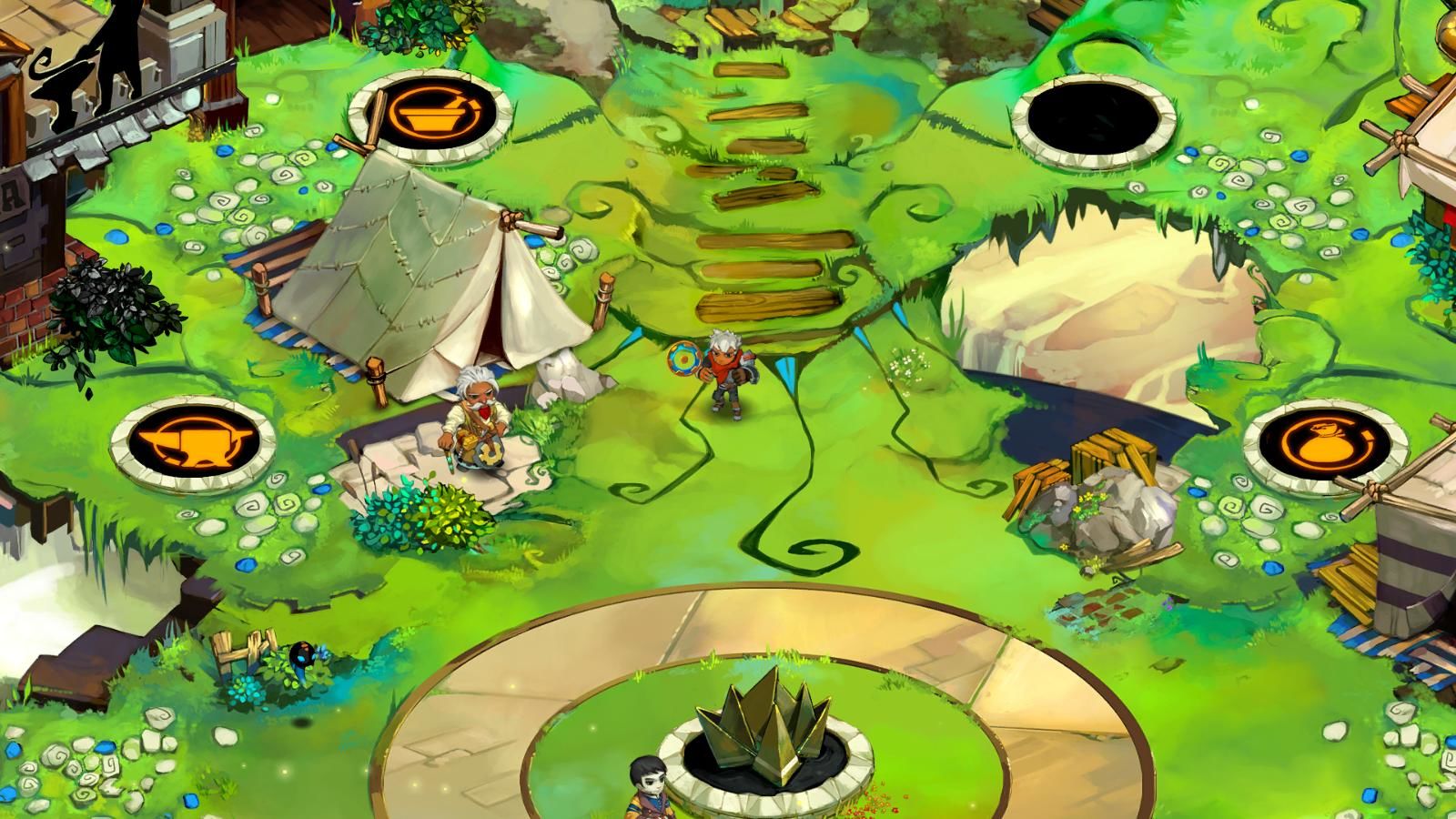
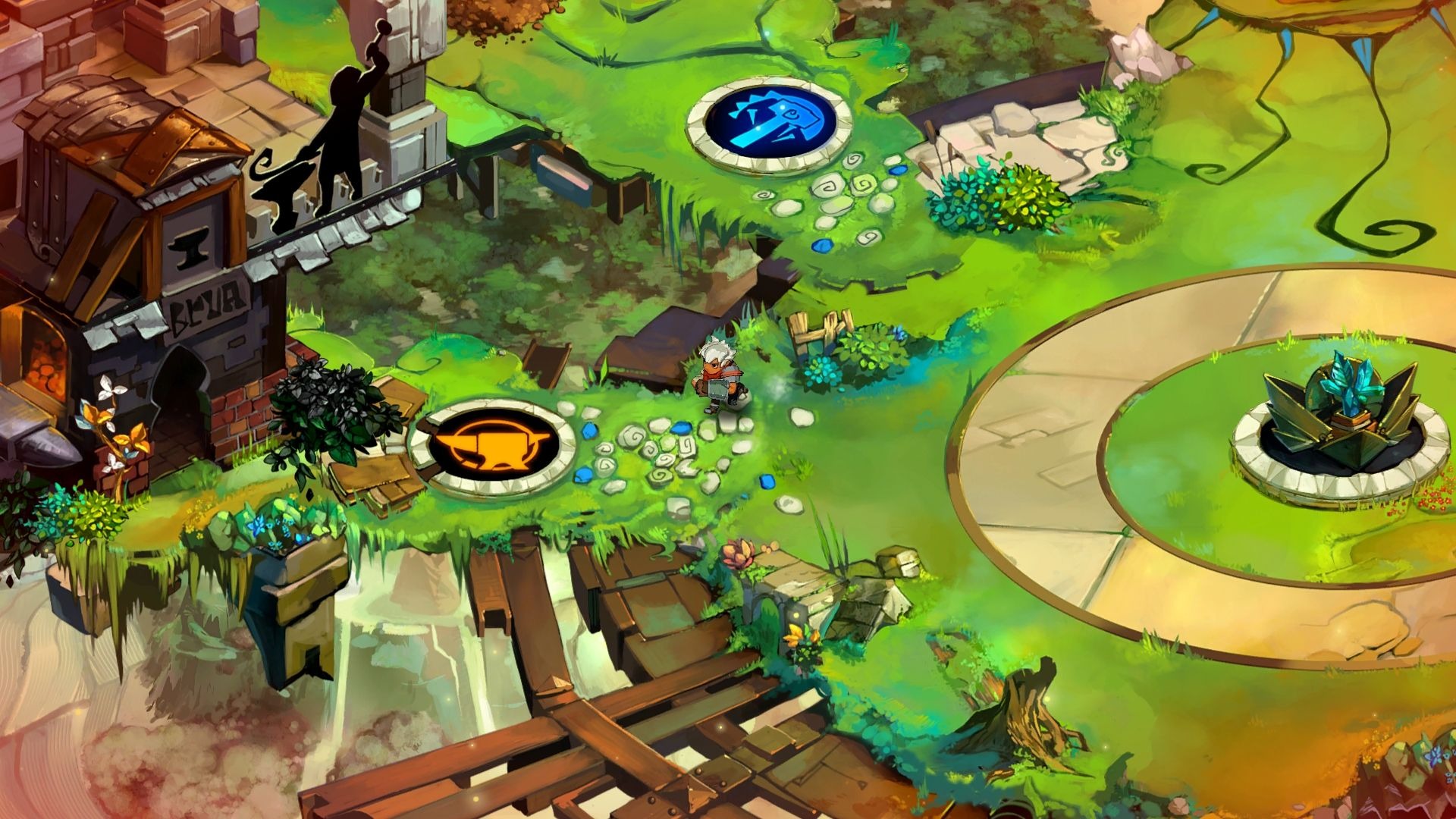
With the excellent narrative aside, the combat is top-notch and responsive. You can use a regular attack, a special attack, a block, or a projectile weapon. There are plenty of weapons, and you can upgrade them to add different attributes and bonuses. As you progress through the game, you unlock six different areas, which include an arsenal to swap weapons, a forge to upgrade your weapons, a shop to buy upgrades and special powers, a shrine to make the game harder, and an “achievement” area where you can meet requirements for extra shards (in-game currency). The customization and upgrades are deep and will keep you busy for a long while thanks to the proving grounds, which are unique challenges for each weapon. If you meet certain criteria, you get prizes based on your performance. These are not easy by any means, and a few were almost impossible to beat for me.
Combat is very responsive and challenging. The enemies are quick and smart and vary from stationary, fast-moving, slow-moving, heavily armored, etc. I should probably say that the balance is perfect, and you slowly get introduced to tougher enemies as the game progresses. You really have to use a combo of everything to stay alive because you will gulp health tonics constantly if you don’t use block and dodge a lot, so stay on your feet. The action gets hectic, and you start realizing this game is for hardcore action fans and not the casual gaming crowd that the visuals might seem to cater to.
There are a lot of levels, and the length varies from 5 minutes to 15, but one thing I can’t get over is the visuals. As you run through the levels, the walkways appear under you and seem to float in the air. The levels vary so much that not a single one looks the same. The hand-drawn visuals are just gorgeous, plus you can’t forget about the amazing soundtrack, which is something you stick on your MP3 player and listen to. This feels like a high-budget game, but only an indie game can deliver something on this side of creativity and originality. Bastion is a unique game, and nothing is quite like it in terms of narrative and visual delivery. Every action fan should own this because it’s $15 well spent.
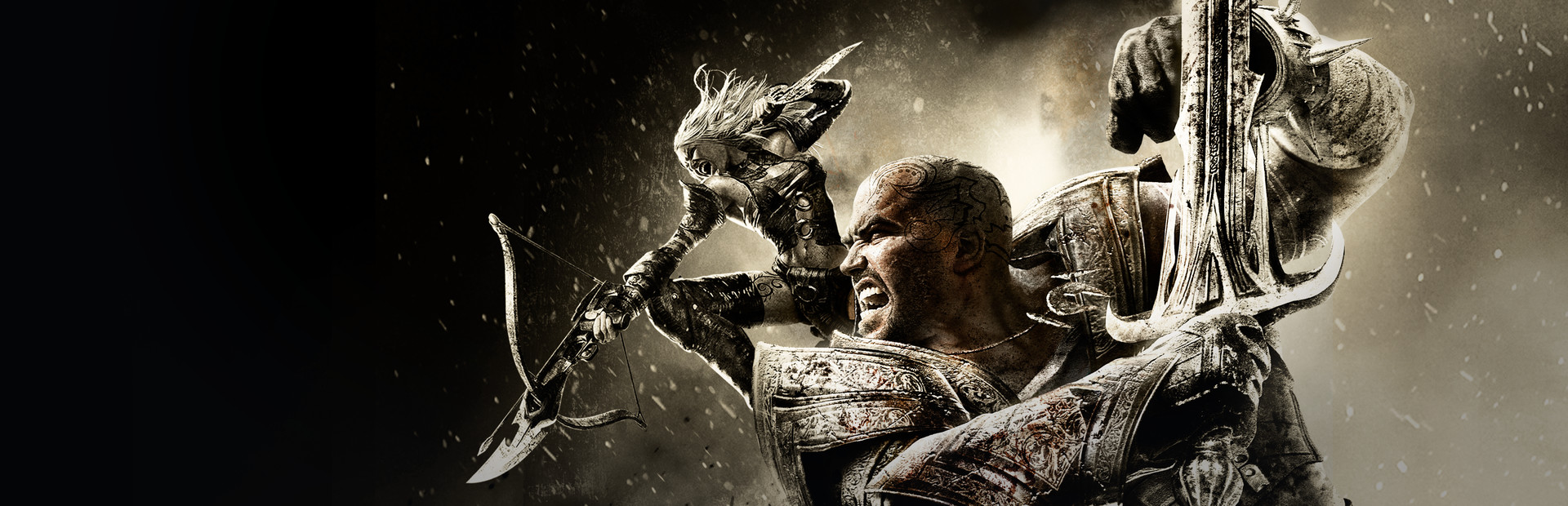
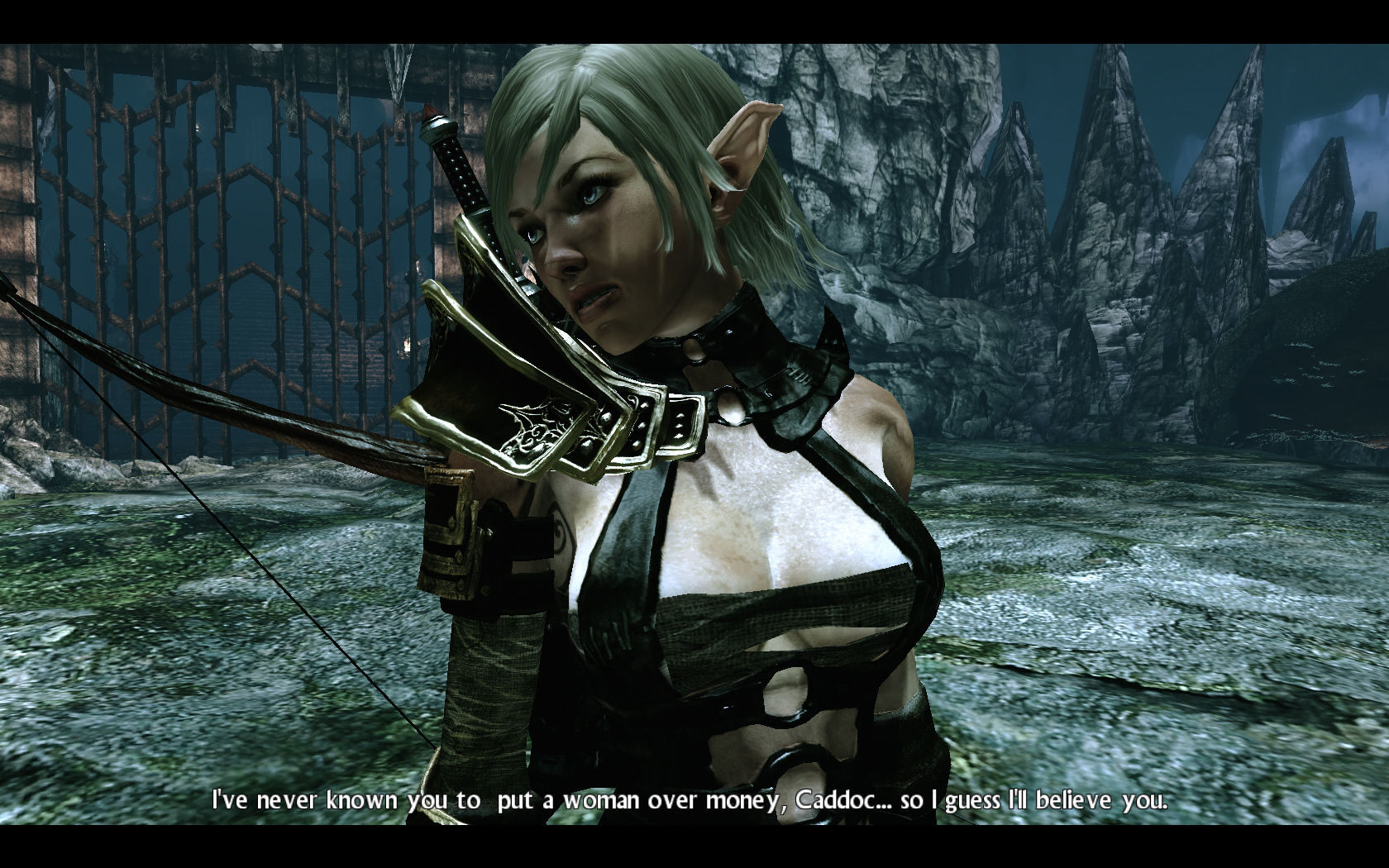
Most action RPGs tend not to be too bad, but Hunted is probably one of the worst I have ever played. The game has an interesting story that falls flat due to poor storytelling and pacing. You play as a mercenary couple: the human Caddoc and the beautiful elf E’Lara. Caddoc is calm and reserved, while E’Lara is all about rushing in and killing everything. The swapped stereotypes are nice, but the overall story goes nowhere until the very end. You get caught up in a mission to stop an evil man named Annuvin, who is using a dangerous liquid called Sleg that can turn everything into evil. Along the way, the only other part of the story is trying to find a mayor’s daughter for a high reward. It is not very interesting since the game is linear to a fault and the gameplay is just yawn-worthy.
Throughout the game, there are points where you can swap between the two, and they each play differently. Caddoc is all about melee and brute force, while he has a crossbow that does minor damage. I felt the crossbow was completely useless since it does hardly any damage (even after you find a few upgrades), is very slow to shoot, and takes forever to reload. His melee attacks are the best, but you just mash the attack button ad nauseam. If you block attacks with your shield, you can charge a fury attack, but if you get hit once before it charges, it depletes. What kind of thing is that? Every so often you will get supercharged and do extra damage, but I could never figure out how this happens exactly since it seems to be random.
E’Lara is all about using her bow, and melee is just like Caddoc’s crossbow; useless. You can pick up different-level weapons at three levels, which are fast, medium, and slow, but she doesn’t have a fury meter. If either partner dies, you can throw each other regeneration vials, but if you run out, you’re dead for good. You can also use magic, but it’s clunky and doesn’t fit right because some magic uses your weapon, so you have to switch to just magic, which involves throwing stuff. The game is just very clunky and not very responsive, and it makes a lot of battles a huge pain to get through.
Upgrading magic works, but it’s nothing special since there are only three different types and then two upgrades on top of that. You get upgrade crystals by finding them in containers, or enemies will drop fragments. On top of this, you would think that being an RPG, there would be side quests. Not really. You can find paths that lead to “rare” weapons, but these tend to be just as useless as the rest of the game and not worth anything. Hell, you can’t even spend the gold you pick up through the game. It just increases your score on the leaderboard. You can also find death stones on fallen enemies to hear their stories, but what’s the point? You’ll be too busy screaming at the clunky combat and falling asleep at the derivative gameplay.
Does the game at least look good? Not really. This is another game that uses Unreal Engine 3 but doesn’t use it to its full potential. The game looks average and, for some reason, has a lot of bugs and constant slowdowns, even on high-end systems. The voice acting for the characters is good, but since the game is so boring, you won’t really care. Why should you play through this? The archery in the game is fun at first because at least that part is done well and is pretty quick and fun. Hell, just play to stare at how gorgeous E’Lara is if you want, or even Seraphin. Everyone else should just move on to better action RPGs.
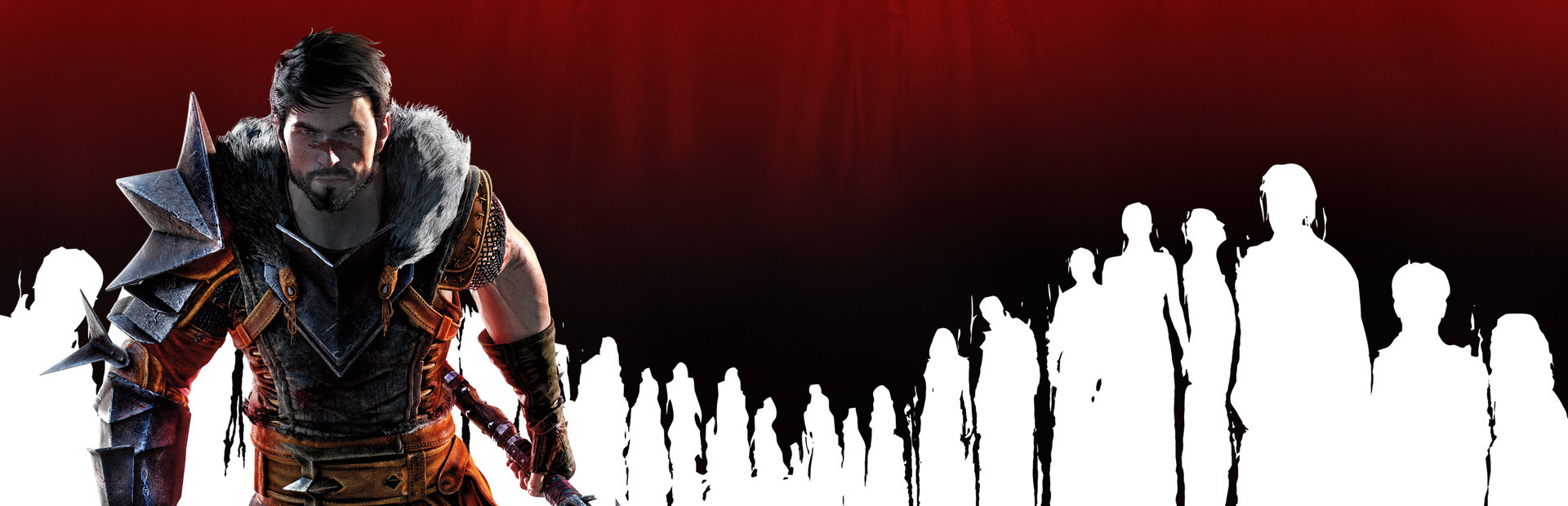
Dragon Age: Origins was Bioware’s gift to gamers missing the old action RPGs of yonder, such as Diablo, Baldur’s Gate, and Icewind Dale. Dragon Age II has come along and is really a love it or hate it type of thing. It’s almost nothing like Origins, but there’s a lot of good in this as well. The game does have more flaws than the original, but I will get to those later.
DA2 tells the story of Hawke, who is the Champion of Kirkwall, in events that take place right after the last game. DA2 really concentrates on a more personal level with the companions and Hawke instead of an overall save-the-world-type story. The Darkspawn play a very small role in this story, and you only encounter them a few times. Don’t mistake DA2 for a poor linear story because the moral outcomes become the usual Bioware head-scratchers, and as the game goes on, your choices make bigger and bigger impacts. The story is broken up into three acts, which respectively have you rising to power, using that power, and finally completely unleashing your abilities as Champion of Kirkwall to either save the mages or help the Templars destroy them. The character in DA2 is absolutely amazing in both looks and personality, plus some cameos and appearances from the last game. You really get attached to each one and want to use them all during battle.
The story is probably the best thing going for DA2, but it does have a bit of a slow start. If you are used to Origin’s huge, overarching story, you might actually get bored for a while with this one. Little things help influence the story, like romances (yes, gay romances work here), but there are so many choices during the dialog that the story could turn in so many different directions, so you always feel like you have complete control. The dialog is more like Mass Effect with a wheel that has several options. You can choose from the usual good/bad dialog, but a new sarcastic one has been added in the middle, and I always chose these because they were just clever. Just like any Bioware game, relationships with characters can also impact dialog and give you advantages or disadvantages depending on that.
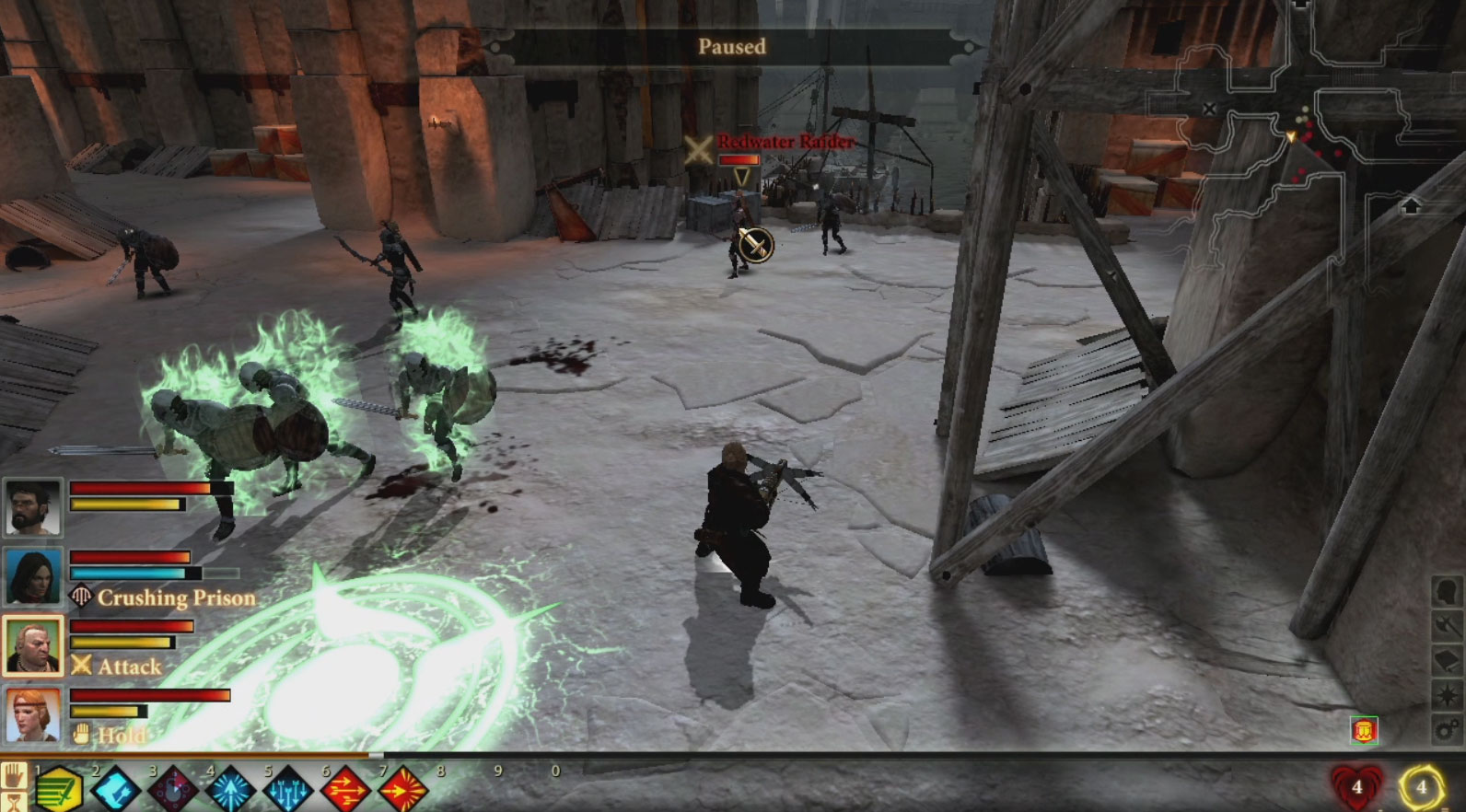
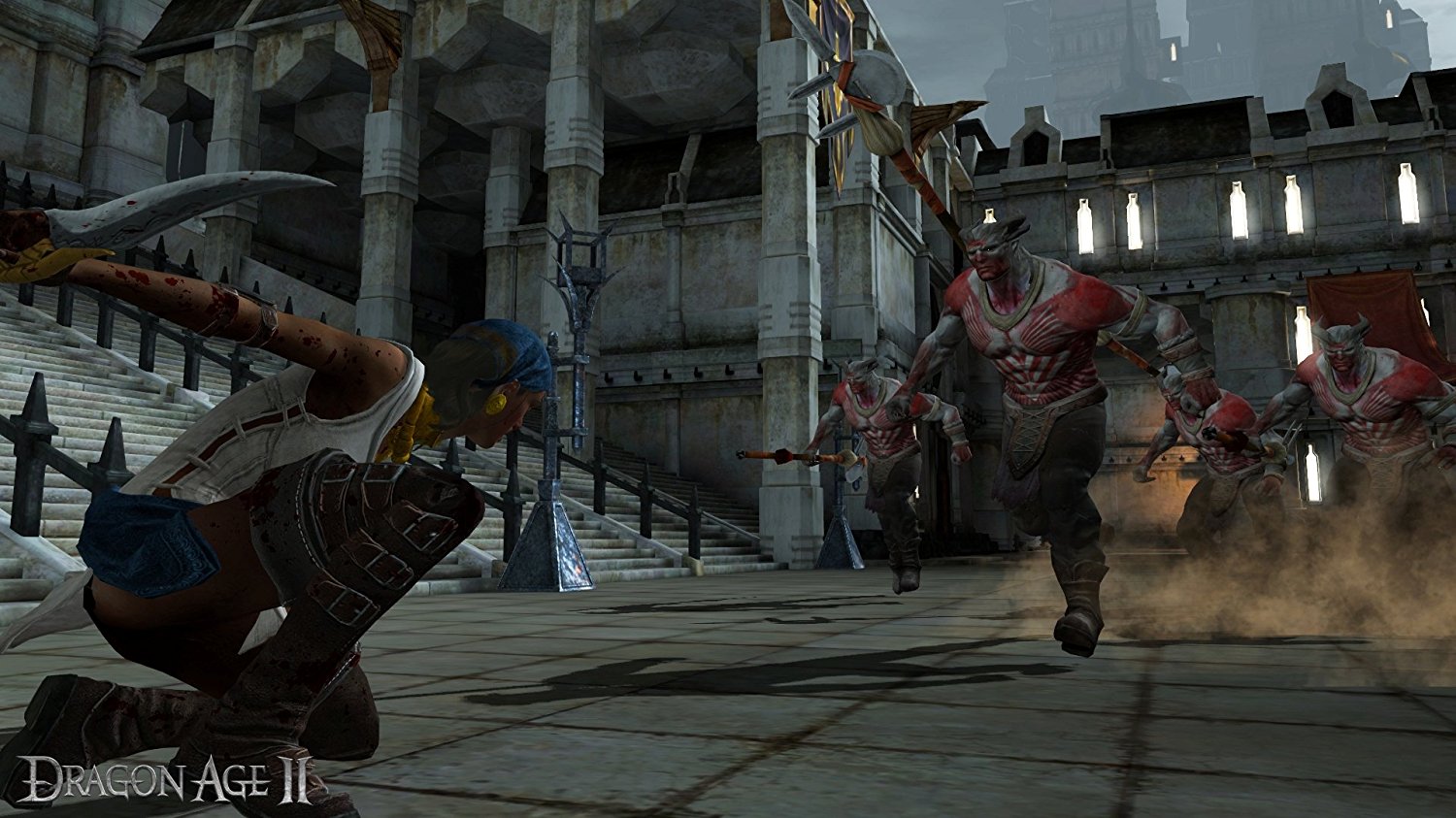
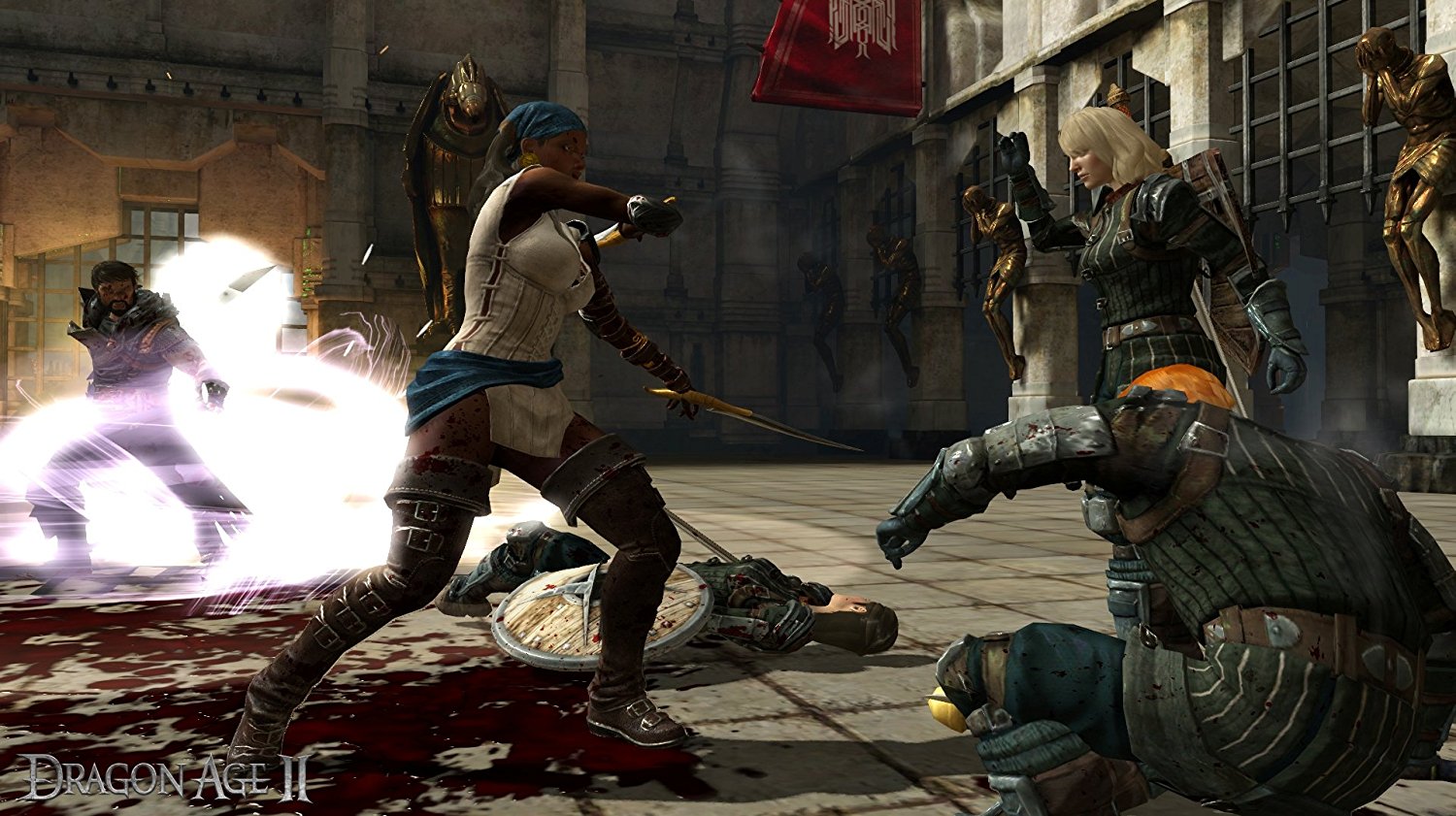
So, if you go into DA2 expecting an excellent story, you won’t be upset there. What you will probably hate are the more action-oriented combat and the more linear and repetitive environments. The combat has fast, fluid animations instead of the clumsy combat from Origins. Characters strike hard and fast, and there is a lot of gore, which I didn’t mind. Of course, you can have up to ten quick slots equipped for abilities, and the new tree is very intuitive. There are different ability classes, and then each ability can also be upgraded within that. Loot collecting and leveling up work just like in Origins, including junk, but you can’t equip armor on companions. Yeah, it’s one of those “What the hell?” type issues with the game. Sure, you can add runes to their armor and weapons, but just don’t expect to change their armor.
There are a lot of changes from Origins that really shouldn’t have been touched, including the linear and extremely repetitive environments. You move around a map and just follow the arrow on your map to each goal. Since you are just in Kirkwall, you are moving around the same hallway dungeons and the same main map cities. After Act 1, you have probably seen 75% of the game. I really missed the open areas from Origins and the feeling of being in an open world. Sure, the graphics got a huge upgrade, and it all looks nice, but there isn’t much variety. What disappointed me more than anything else in the game were the repetitive areas that kept you strictly in Kirkwall. There are some outdoor environments, but don’t expect a lot of them. There is also constant loading between areas, and this drove me nuts early on.
Of course, there’s a lot of good looting and resource collection, and you can use poisons and grenades like before, but what I hate still is the potion cooldown times that are set at 30 seconds. This can make hard boss fights very frustrating because later on you’ll have a ton of money and have over 100 potions, but you can only use one every 30 seconds, and this goes for stamina droughts as well. The only thing I like about the new combat system is its faster pace and speed. There are so many abilities that you won’t even unlock them all in one play-through.
Overall, DA2 feels like a Dragon Age game, but that nostalgic feeling from Origins is gone, and I really missed that. DA2 will keep you busy for a good 30+ hours, and there are even some great side quests. The visuals are great with DirectX 11 support and high-resolution textures on the PC, so if you have the rig, this is the way to go. However, the graphics seem more sterile than Origins due to linearity, so it loses its charm in that area a bit. I highly recommend DA2 to fans of the past game, but don’t expect this to be a true-to-life sequel.
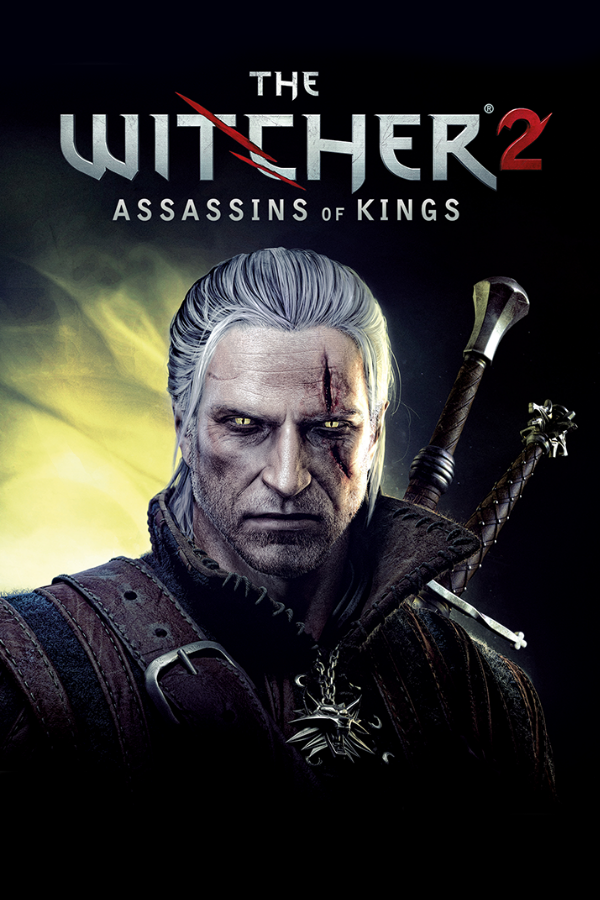
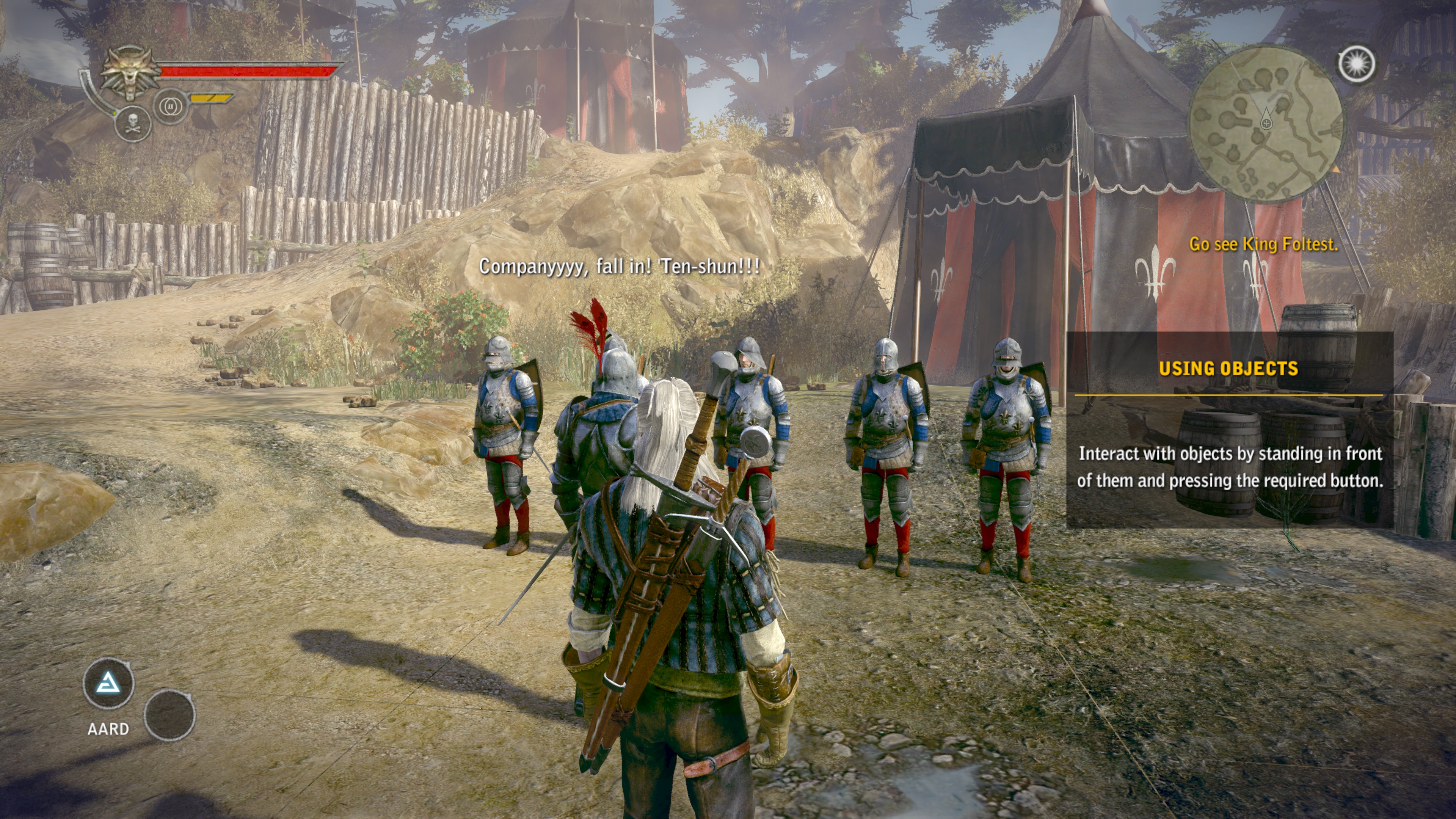
Action RPGs these days are really iffy due to the fact that they tend to feel too formulaic. They usually have good stories, but the graphics are horrible, the combat is clumsy, and the quest system is yawn-worthy. The Witcher 2 takes what was great from the first and makes it even better to form one of the greatest action RPGs of this generation.
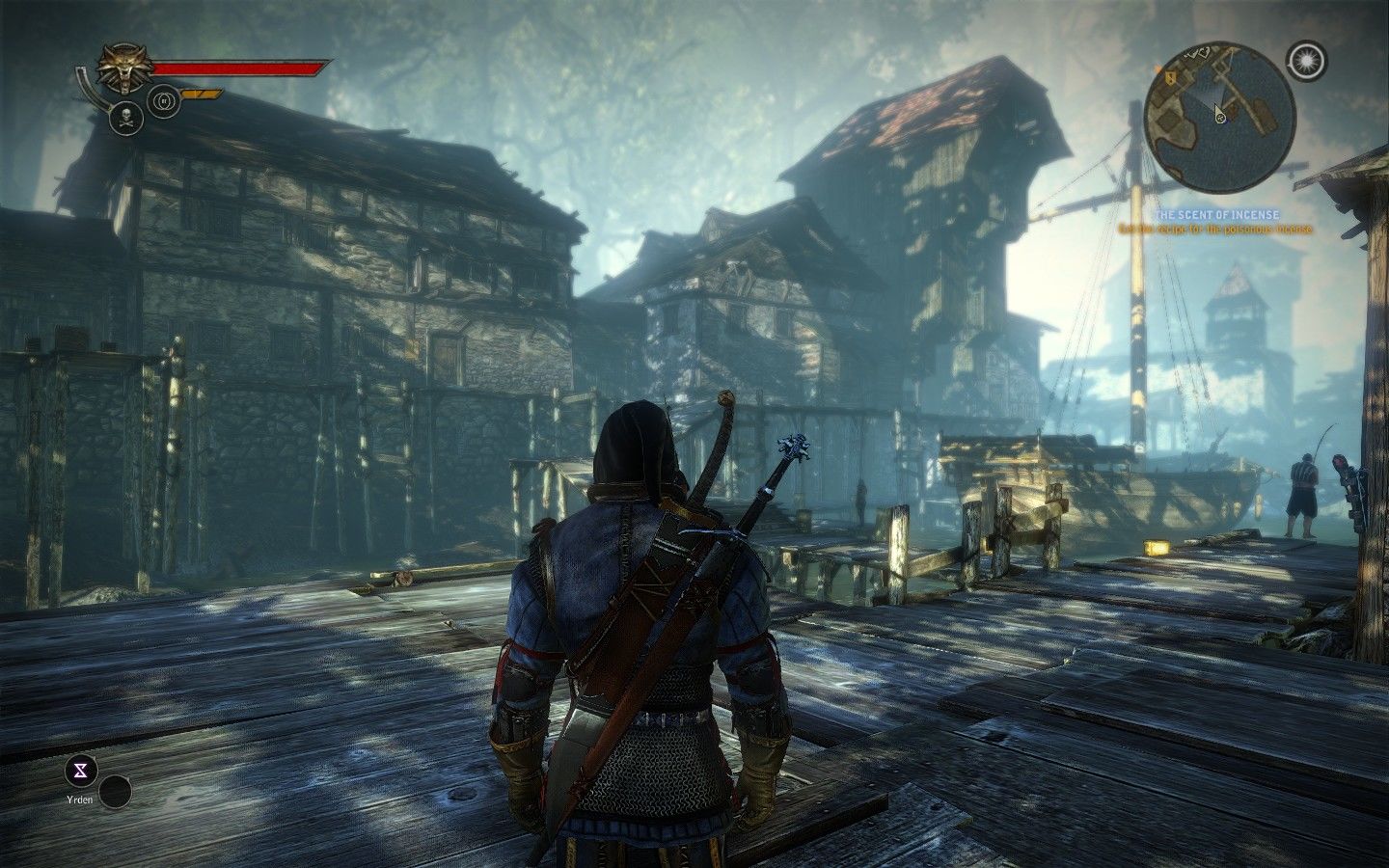
You play, once again, as Geralt of Rivia, a witch who got framed for assassinating King Demavend and must prove his innocence. The story is heavy on politics but is also very deep and feels just like the novels. Triss Merrigold also returns with her beautiful red hair and all. You will also see other familiar faces, such as Zoltan Chivay and Dandelion. The new faces are strong, likable, and memorable characters that you will grow to love or hate, respectively, throughout the course of this 20- to 30-hhour game. Geralt himself is even stronger this time around, with more problems than you can shake a stick at. You learn to respect him more and see just how much this poor man can take. CD Projekt really shows you the roots of both good and evil in humanity in such a realistic fashion, and that’s what really drives the characters home.
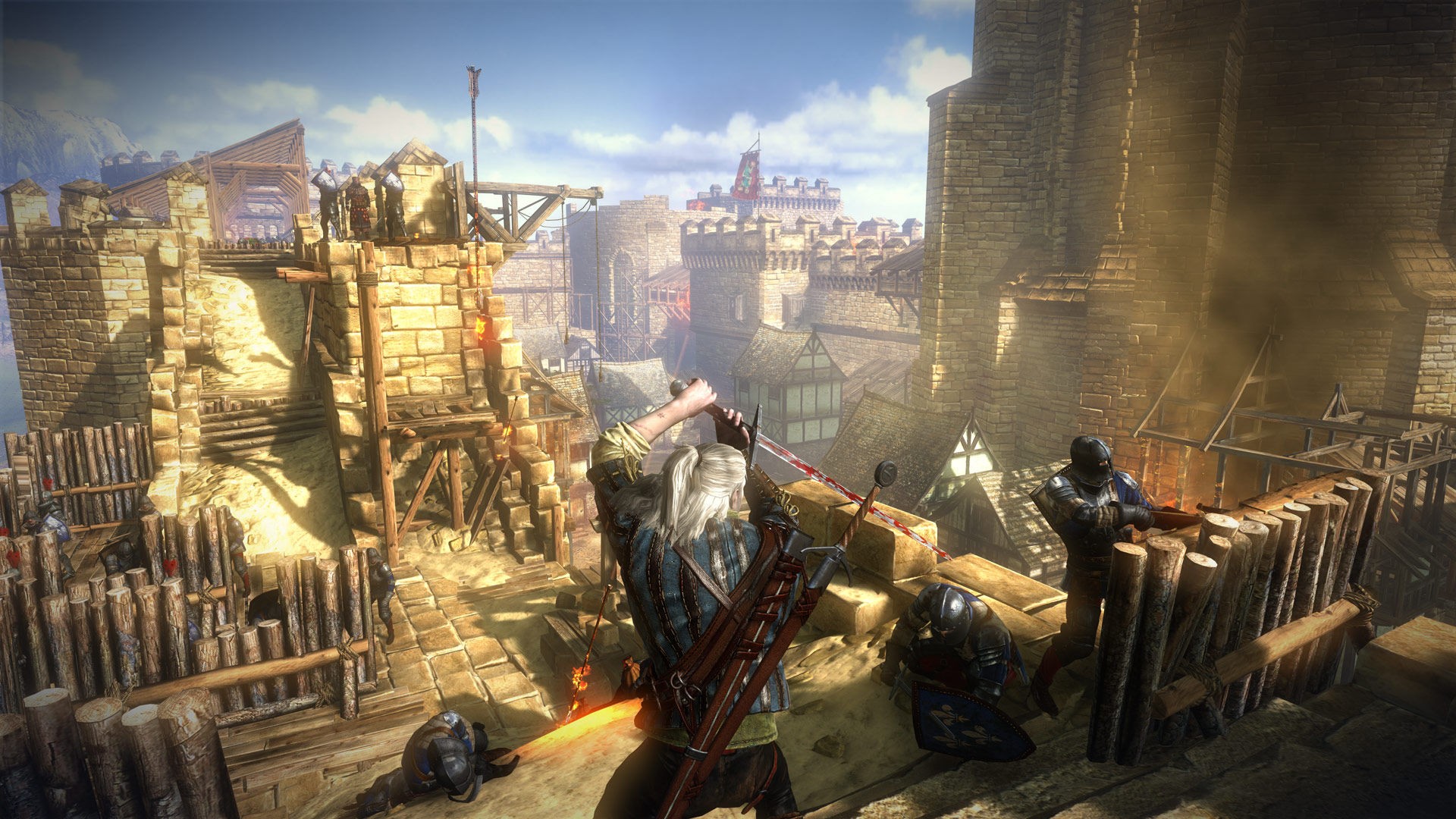
The combat in The Witcher 2 is better than the first game because gone are the timed sword swings and stances. You now just have light and heavy attacks, but you can block and counter-attack (when you unlock the skill), and you still use the steel/silver sword combo. Steel is for people, and silver is for monsters. Combat was very hard to do when the game first launched, but patches as of late have fixed this for multiple blocking and faster responses. The combat isn’t great and is clumsy, especially early on when you aren’t very strong and towards the end of the game. Combat will make you smash your monitor in frustration in the beginning because you have to learn to just hit once or twice, dodge, run around, hit another couple of times, rinse, and repeat 50 times. Yeah, it’s one of those games in the beginning. After you level up enough, you can cut down enemies in just a couple of swings, and groups of 7–10 won’t really bother you.
Of course, you can equip better armor, weapons, and so forth, but The Witcher lets you do other things like equipping trophies that are found on bosses that increase stats, using sword enhancements such as oils, whetstones, runes, and armor enhancements (kind of like Monster Hunter?). This adds a lot of depth to the customization of your loadout, which has endless possibilities. I think the biggest improvement is resource gathering and alchemy because it’s so simple and easy now. Just gather resources as you go, and you can meditate and create potions that increase your vigor (for signs; more on that later), vitality (health), a potion that lets you see in the dark, damage-increasing potions, etc. The only problem is that you can’t drink them from the menu; you have to use them before a fight. This is my biggest beef with the game because if you are low on health in a fight, you’re screwed unless you took a swallow potion beforehand. The premeditated potion drinking is a big flaw in the game, I think, but some hardcore RPG players may like this.
The Witcher is also famous for its signs because witchers can’t use magic like sorcerers or mages can. There are six different signs, and they use chunks of vigor but recharge over time. These signs are vital to winning in combat, especially against bosses, so learn to use them in tandem with sword combos, and you can win even the toughest fights. One last thing you can use in combat is Places of Power, which you find with your wolf medallion. Activate it, and you may find, out in the woods or in wild places, signs of power that give you temporary stat boosts. These come in handy early in the game (especially in Flotsam) when you are at a low level.
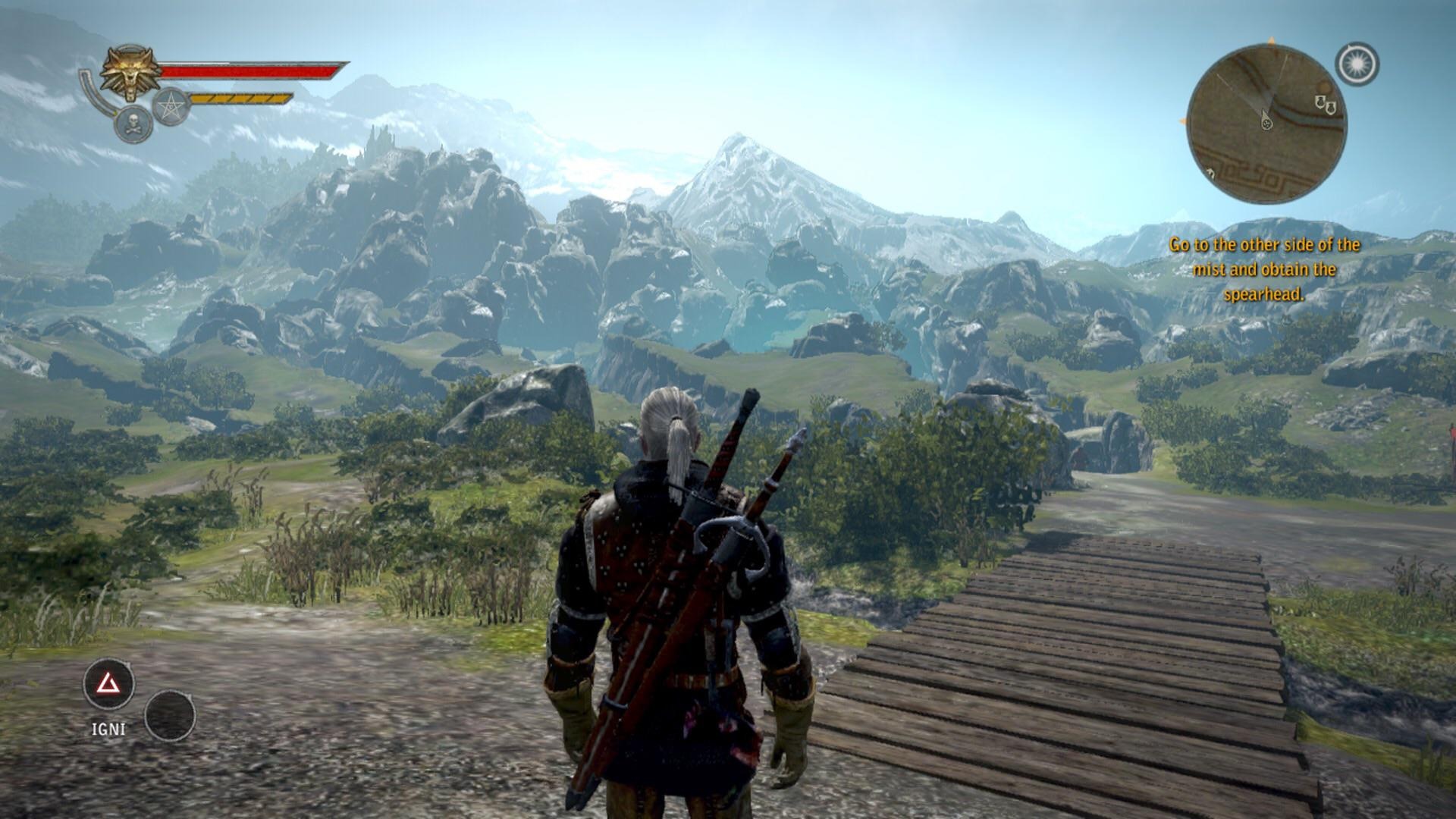
The story also has moral decisions thrown in there that really change the outcome of the story. Of course, there are multiple playthroughs (but no new game, sadly), so you can see what each decision will bring. There are a lot of plot holes in the story that aren’t filled until the very end during dialog, which I found odd, so if you get confused, just hang in there until the final moments of the game. Overall, my biggest issue is the potion use, combat, and the huge difficulty spikes. The graphics are groundbreaking, with gorgeous lighting, highly detailed textures, amazing landscapes, and varied environments with nice weather effects. The character models look superb, and the voice acting is top-notch. This game just shows that indie developers can make games look great. You do need a monster rig to run the game on high settings (especially with Ubersampling enabling you to probably need dual GPUs and a high-end quad-core CPU). Other than that, The Witcher 2 is amazing in every way and should not be missed by anyone.
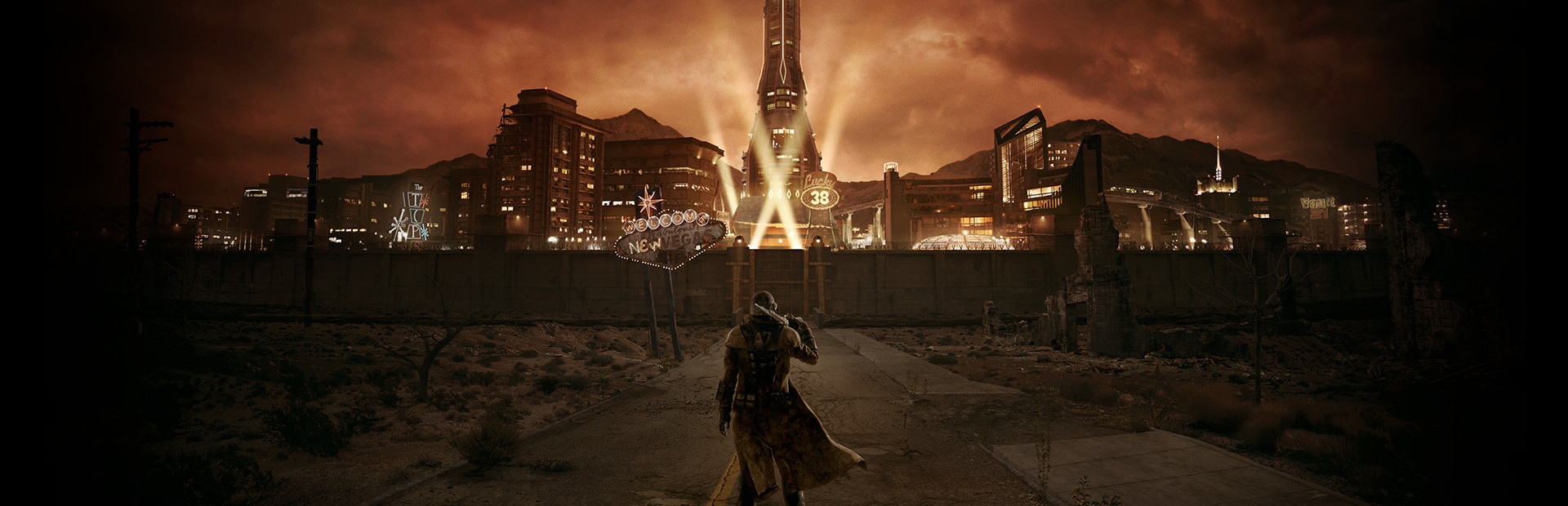
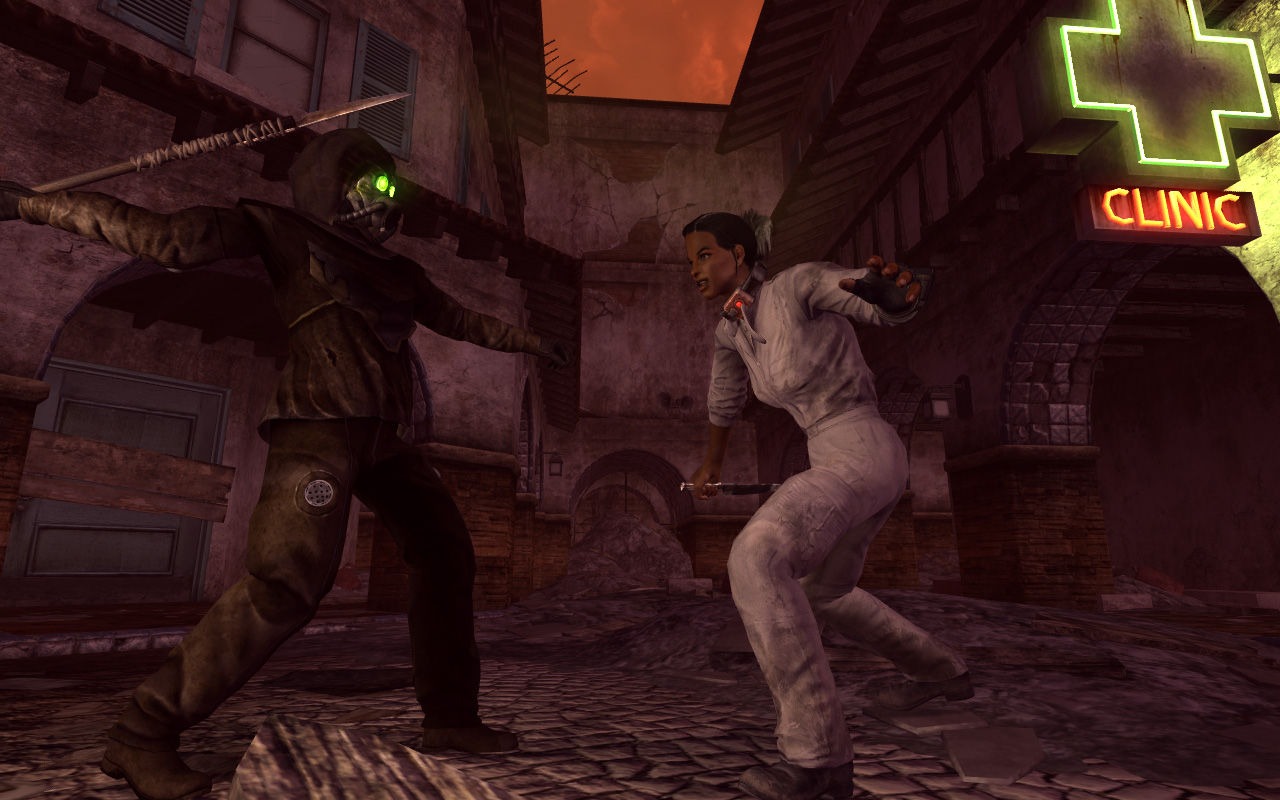
I have a feeling the Fallout series has a curse that the first DLC release isn’t very good. Dead Money tries to do things with the game that it can’t do, and it makes the DLC very hard and sometimes boring, but the story, characters, and underlying reason why you’re in the Sierra Madre are great. You start off by following a signal to the Sierra Madre Casino, but then you’re knocked out and a collar is put on you. You’re told to find three people to help you open the casino and bypass its defenses.
The three characters are great to talk to and learn about. Dog/God is a super mutant with schizophrenia; Dean Domino is a British stage actor turned ghoul; and Christine is a mute who was tortured. After you find each character, you must take them to their designated spots in the villa. This is the second part of the DLC, but by the time you get here, you’ll have cried up a storm. The game features heavy stealth and hand-to-hand combat, so people who put points into the classes will breeze through it. There are guns, but the ammo is scarce, and people who invested in energy weapons have no shot here.
The ghost people are extremely hard to kill, even if you are at level 30. You’re mainly forced to use melee with bear trap fists, spears, and knives. If you invested in guns, you’re going to have a real hard time here. It doesn’t help that all your equipment was taken away and you stuck with the few armor pieces in this whole 8–12 hour DLC. It’s light armor, and it sucks, but it’s better than nothing. There are no vendors here, just vending machines. Oh, but wait, you can’t use caps. You have to use Sierra Madre Casino chips that are scattered everywhere to buy stim packs, ammo, and everything else. Yes, why would they work against the system that’s already made and working? It’s very odd and makes playing the game so frustrating because you’re scrounging and looking for exploits in the game design to not die.
It doesn’t help that the DLC is very maze-like, and this is bad for this type of game. Where are the open areas? Nowhere. It’s just corridor after corridor, and it’s dark, bleak, and boring to look at. Everything looks the same, and it’s not very nice to be in either. Not in a good way either; I felt cramped throughout the whole ordeal, and it gets worse when you get in the casino to figure out how to get into the vault. I hope Obsidian doesn’t force us to do things the engine can’t really do next time. Part of the frustration comes with the beeping collar. Let it beep too long, and you blow up and die. There are speakers everywhere that emit a signal, and you have to run around until it stops, but this is trial and error. Run down the wrong path, and the signal won’t stop there, so you die. Yes, save constantly, or you will tear your hair out.
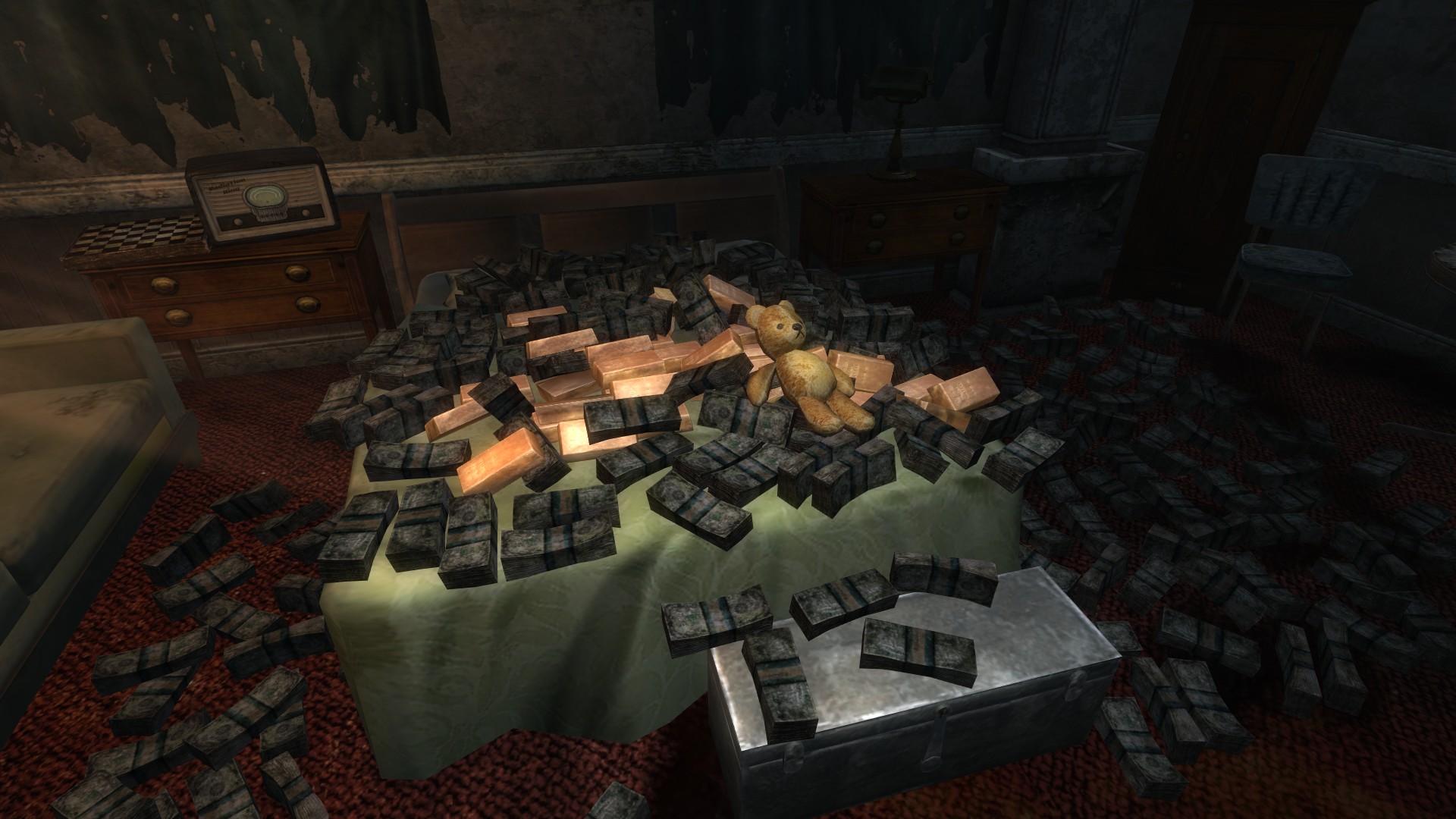
This mechanic is probably the most flawed since Fallout isn’t meant for this kind of stuff. I started hearing the beeping in my sleep; it goes off so many times. Some speakers you can shoot and others you can’t, but good luck that you do not get tired of this. Overall, the story is excellent, and I really felt attached to the characters. The ending is probably one of the most interesting I’ve seen in a game, and I’ll say this part because it won’t spoil anything. There are gold bars, and you can carry as much as you can, and they are worth over 7,000 caps each!! I saw these and tried to stuff my pack with them, but they weigh you down quickly. I decided to drop everything except one weapon and my armor to carry about seven of them. People who have the Rat Pack perk will take advantage here.
With two different endings and choices being a big part of the three characters, you should enjoy this part of the game. You can only get this if you are a hardcore Fallout fan; otherwise, you should just pass. It’s way too hard, and the mechanics work against what’s already established.
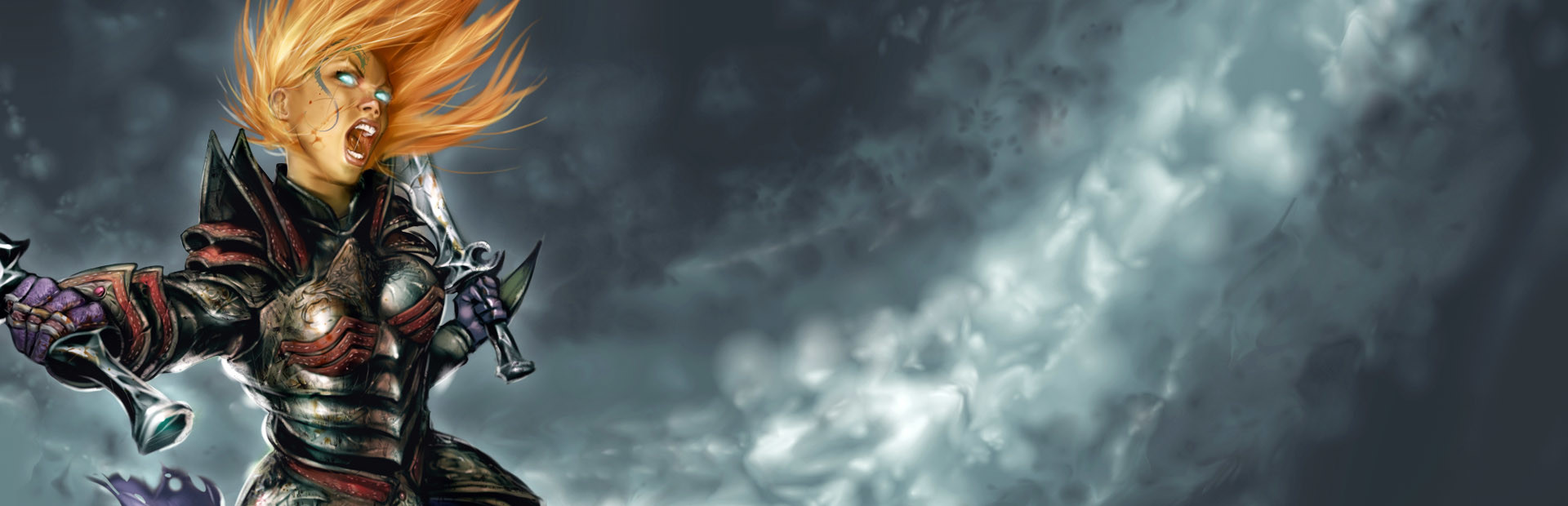
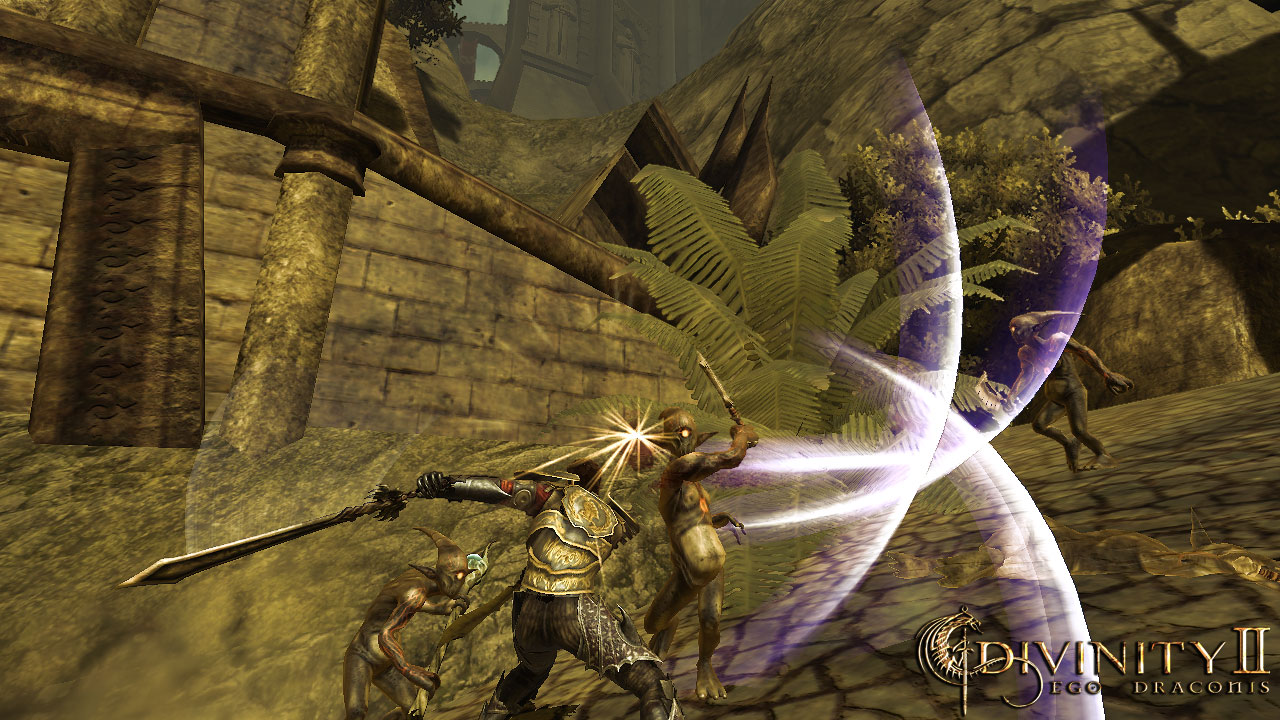
Action RPGs tend to be picked up more than JRPGs, mainly due to the fact that Western game companies tend to make them. What makes a great action RPG? Responsive controls, smooth and fluid animations, lots of loot, an interesting story with great characters, and graphics even help, but it’s the combat that really makes an action RPG shine. Divinity II has some great animations for its combat, and the controls are responsive, but it’s the underlying game revolving around this that brings a lot of flaws to Draconis.
You play as a dragon slayer in the first part of the game, but only to realize your fate is different from those that are chosen. As a Dragon Knight, you must seek out a way to stop the evil Damian, who wants to destroy the world. Along the way, you meet colorful characters that you must stop in order to get to Damian. The story is good, but it’s spread way too thin, and you only get some story bits every 4–6 hours since sections can take so long, and you’re forced to do side quests. This is the #1 flaw in Draconis: in order to do the main quests, you have to be at a high enough level to even defeat those enemies, so doing almost all the side quests is mandatory. You can’t even enter certain areas unless you’re at a certain level because those enemies will kill you in an instant.
You can fight and level up as normal, but deciding between three different play styles is necessary to defeat these hard-to-kill enemies. Either as a knight, mage, or archer, you can wield all three, but you specialize in just one at the beginning of the game. You can buy and equip weapons and armor and even craft your own potions via different characters in the game, or once you get your alchemy lab going (no spoilers, so I won’t go further into that!)
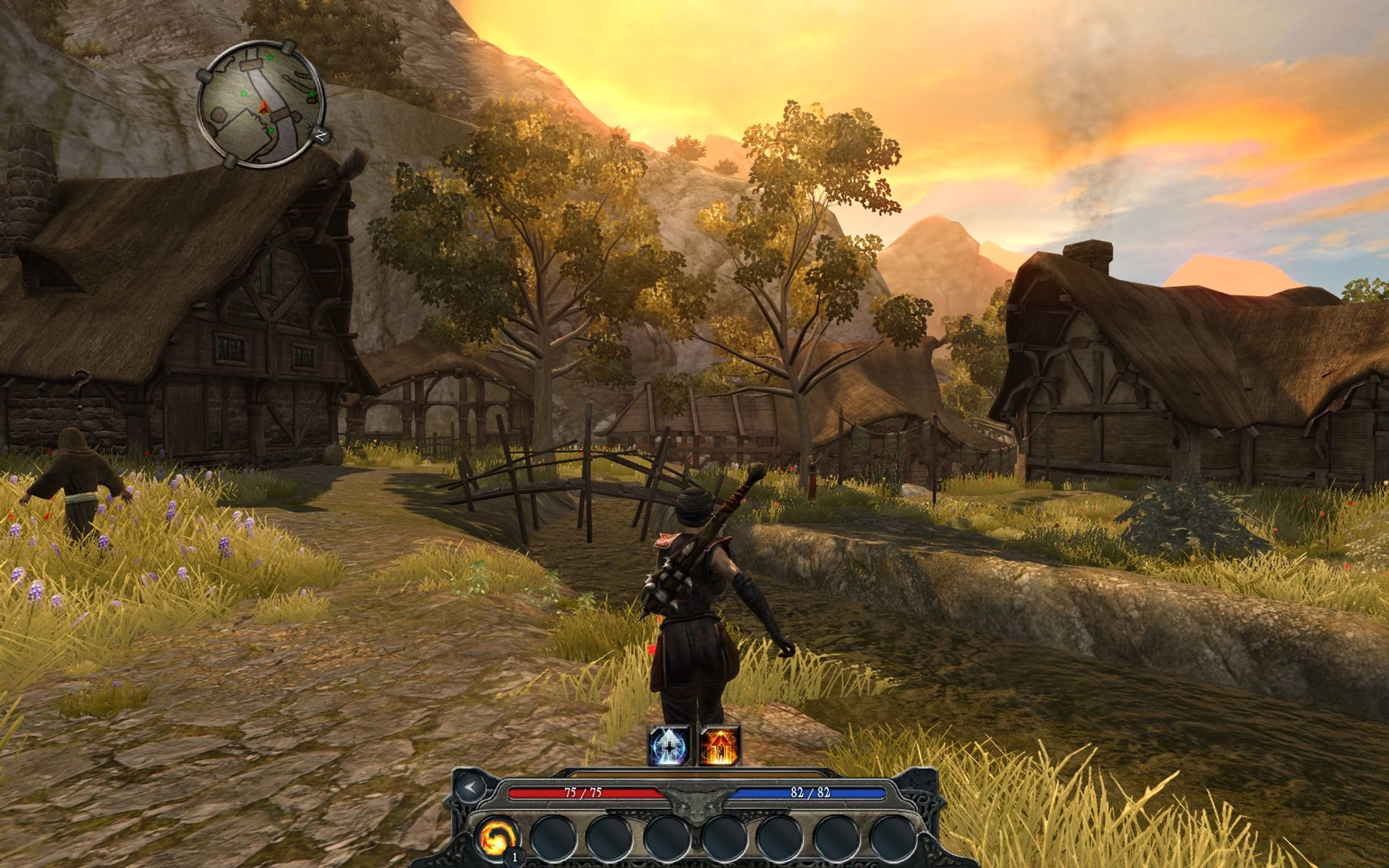
The second biggest flaw in Divinity II is the fact that there is little direction. I had to use a guide for almost every mission because the map stinks and only shows where your main quests are. The logbook has no clues on where to go, so you either run around for hours clueless or use a guide. This is a huge no-no in RPGs, and I hate ones that give no direction at all. You can fast travel around the map, thankfully, but after Oblivion’s travel system, I’m spoiled, so this one doesn’t seem good enough.
Combat tends to be too difficult in the sense that you have to use exploits due to the fact that you can easily be overwhelmed. Towards the end of the game, I encountered about 12 level 30 enemies, and I was only level 31. I had to go attack them a little bit until I was almost dead (I had no potions to heal me or restore mana), so I ran outside the cave and changed into dragon form (yes, you can be a dragon in this game!) and let my mana quickly generate. I then healed myself as a dragon (you share health and mana in each form) and then ran back into the cave. This is the kind of irritating exploitation of game mechanics that makes the game a chore and not very fun.
The game also kind of lacks in the traditional sense that there really aren’t any places to get potions. You can get ingredients, but I’ve always found alchemy in RPGs pretty useless, but stores are spread so far out, and there really aren’t any towns. There’s one at the beginning of the game, but the rest of the way, there aren’t any. The game relies heavily on combat, which is fine, but please give us some places to explore outside combat.
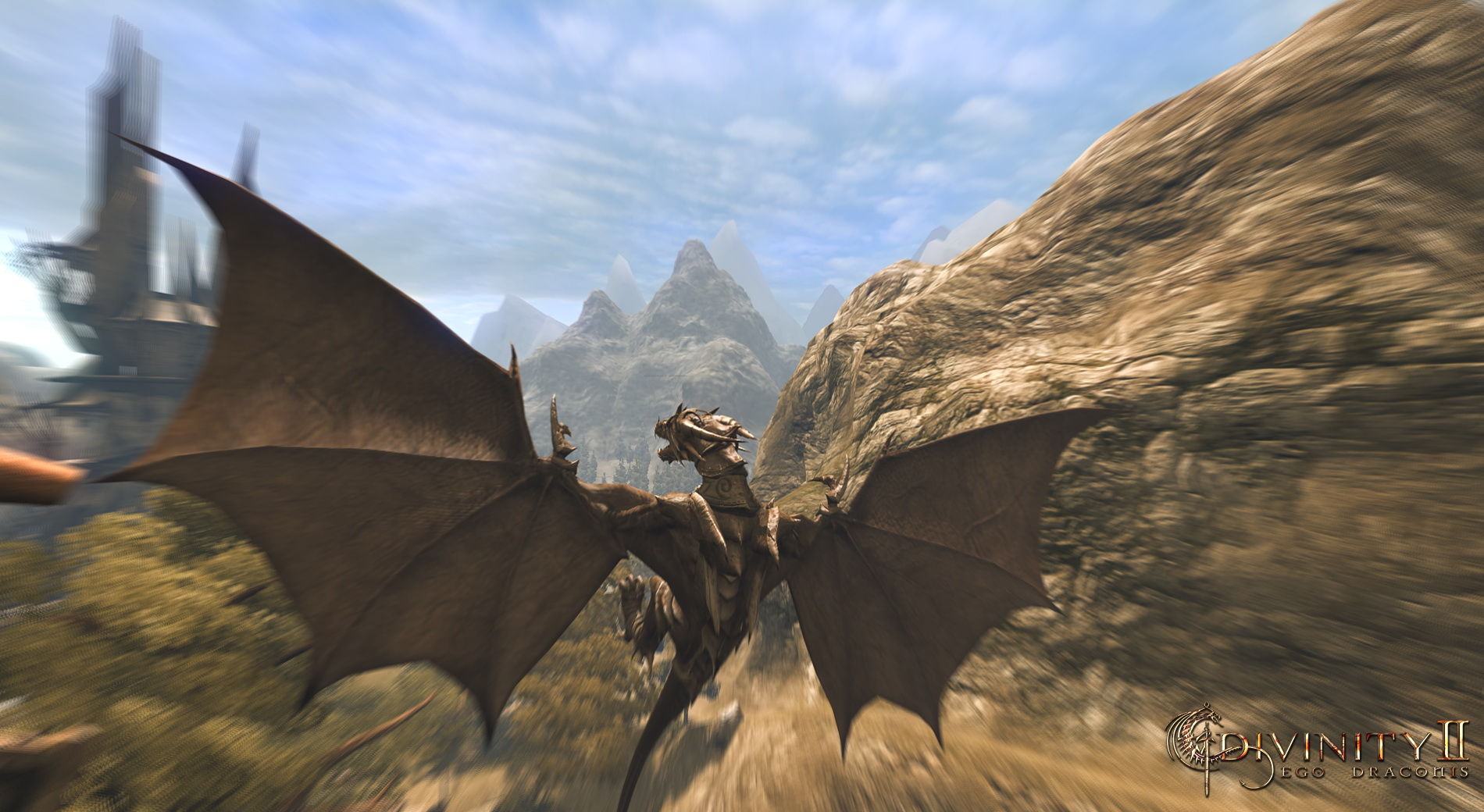
Fighting as a dragon makes you feel awesome and powerful, but you must be out in the open to fight in this form. It’s mainly in the endgame’s third area (Orabas Fjords) that you can use dragon form, but you have to watch out for anti-dragon barriers, which will kill you the instant you touch them. Divinity II really just feels like it fights against the player a lot and makes you want to hate the game, but there’s something about it that makes you keep playing.
Divinity II may have a lot of flaws, but RPG fans will enjoy Draconis simply for the satisfaction of beating this difficult game. The story is interesting (if you can remember what happens between each section), and some of the characters are very interesting. However, the voice acting is very spotty, but it works. Looks-wise, Divinity II looks great but won’t really make your PC sweat. The animations are smooth, the combat feels responsive, and the enemies are very interesting, but the above flaws may turn some away.



















































 thebinarymessiah.com

Try multiplayer. A lot of fun !