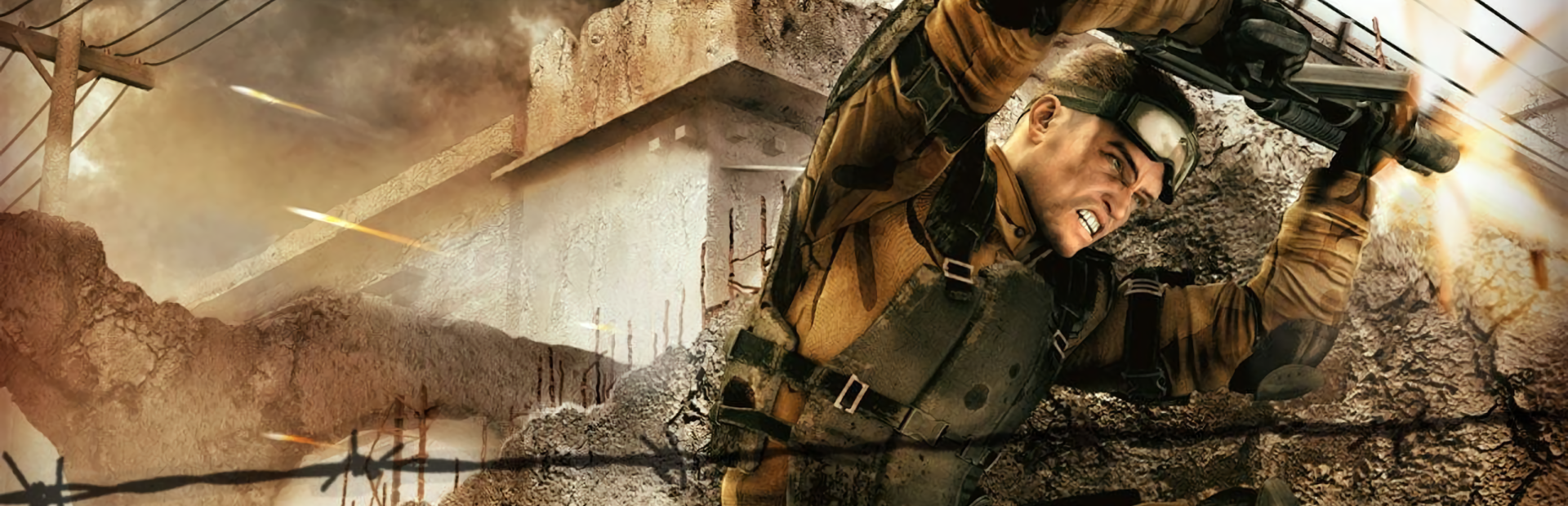
Cover-based third-person shooters weren’t really a thing until the last console generation. Third-person shooters took quite a while to evolve into something truly stunning, and the best example of this is Gears of War, which is third-person shooting perfected. Kill Switch was actually a sleeper hit back in the day and was widely talked about due to the great shooting and cover mechanics.
Kill Switch has a story that sees a male protagonist (I can’t even remember his name; the story is so lame) trying to stop a dude named Archer from launching a nuke. In the process, you are trying to recover your memory of your wife being murdered by him. I don’t even know. The game is so short that it doesn’t allow any type of story to evolve, let alone a bad one. The story is completely forgettable, and I skipped all the dialog towards the end because it was a confusing mess.
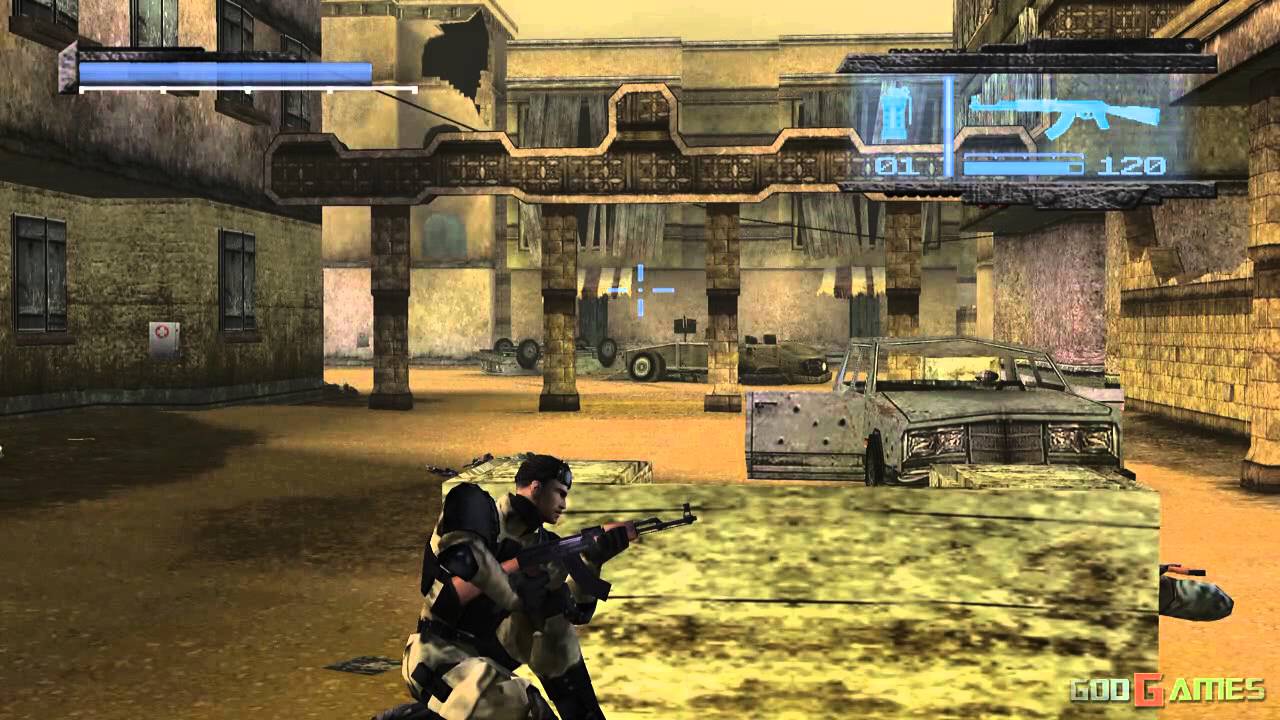
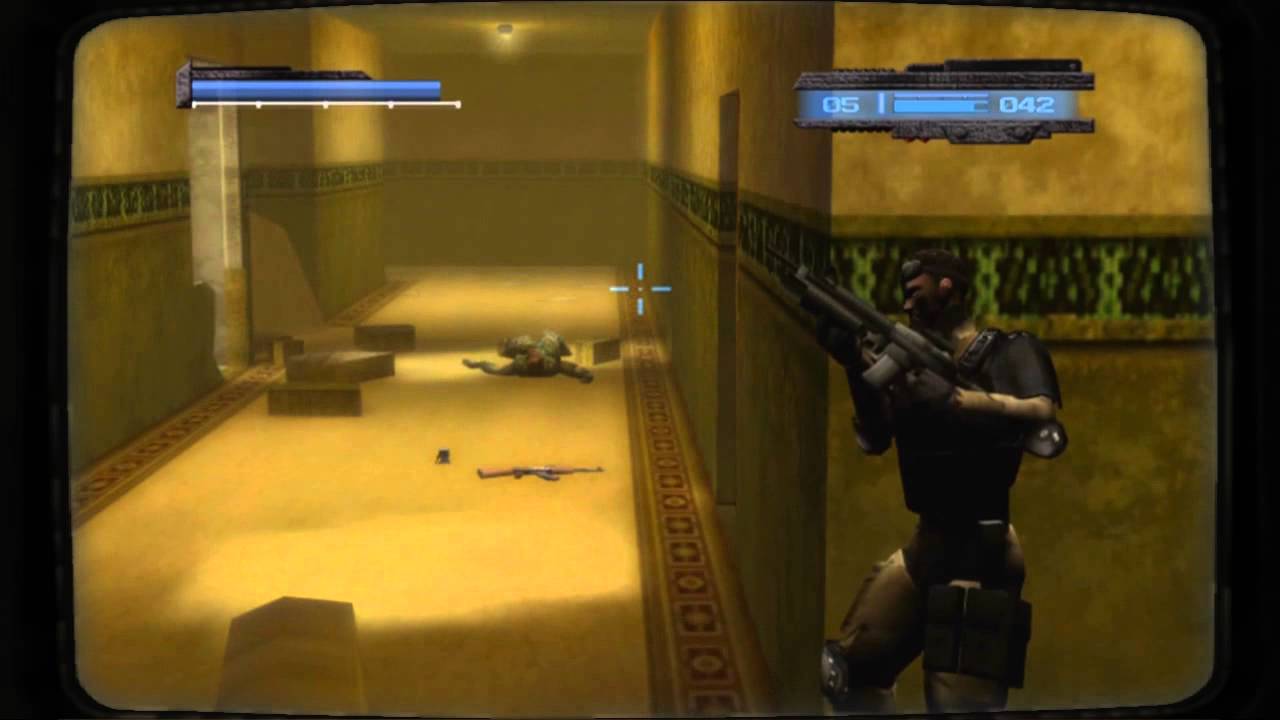
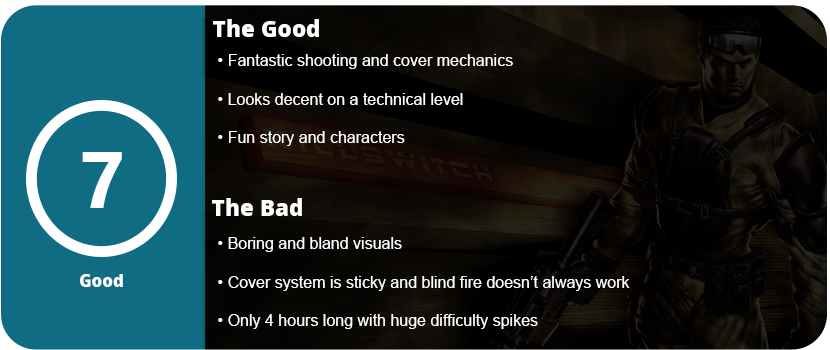
The gameplay is where it’s at here. The controls are simple, and the game is run-and-gun at its finest for the time. Holding R allows you to buckle against a wall or obstacle, and you can blind fire over it, or you can pop up and shoot more accurately. I found that blind firing doesn’t quite work well if the obstacle is higher than you can raise your gun. Most of the time, it did not work, so I stuck to pop-up shooting. You can throw grenades and flashbangs, as well as dodge rolling and melee attacks. It’s a pretty standard affair, but at the time, it was done so well that there was nothing like it.
I have to say the level design is just plain bad and boring. Every level is a stereotypical military base with boring blank walls, stairs, and rooms. There is absolutely nothing to look at here, despite the game being technically quite good-looking. The textures are sharp, the models are nicely made, and the animations are pretty good. It just goes to show that you are literally just coming into this game for the shooting, and that’s it.
Maybe it’s a good thing this game is so short. Clocking in at about 4 hours if you don’t die a thousand times over trying to get through the hordes of enemies. There were issues with major difficulty spikes and draw distance. I would have a guy shooting at me accurately beyond where I could see, even with a sniper rifle. The weapons are nothing to write home about either, just your typical military machine guns and your token shotgun.
Overall, Kill Switch is worth a buy for its great gameplay that is fun and addicting. Just don’t expect a story or anything nice to look at. Is there a reason for there to be a sequel? Well, the story somehow manages to say that it hasn’t ended yet, but Kill Switch has no relevance today with better cover shooters like Gears of War. If it were rebooted into something fantastic, that’s another story, but I honestly can’t see that happening. Kill Switch belongs in 2003 and should stay there—nice and snug.
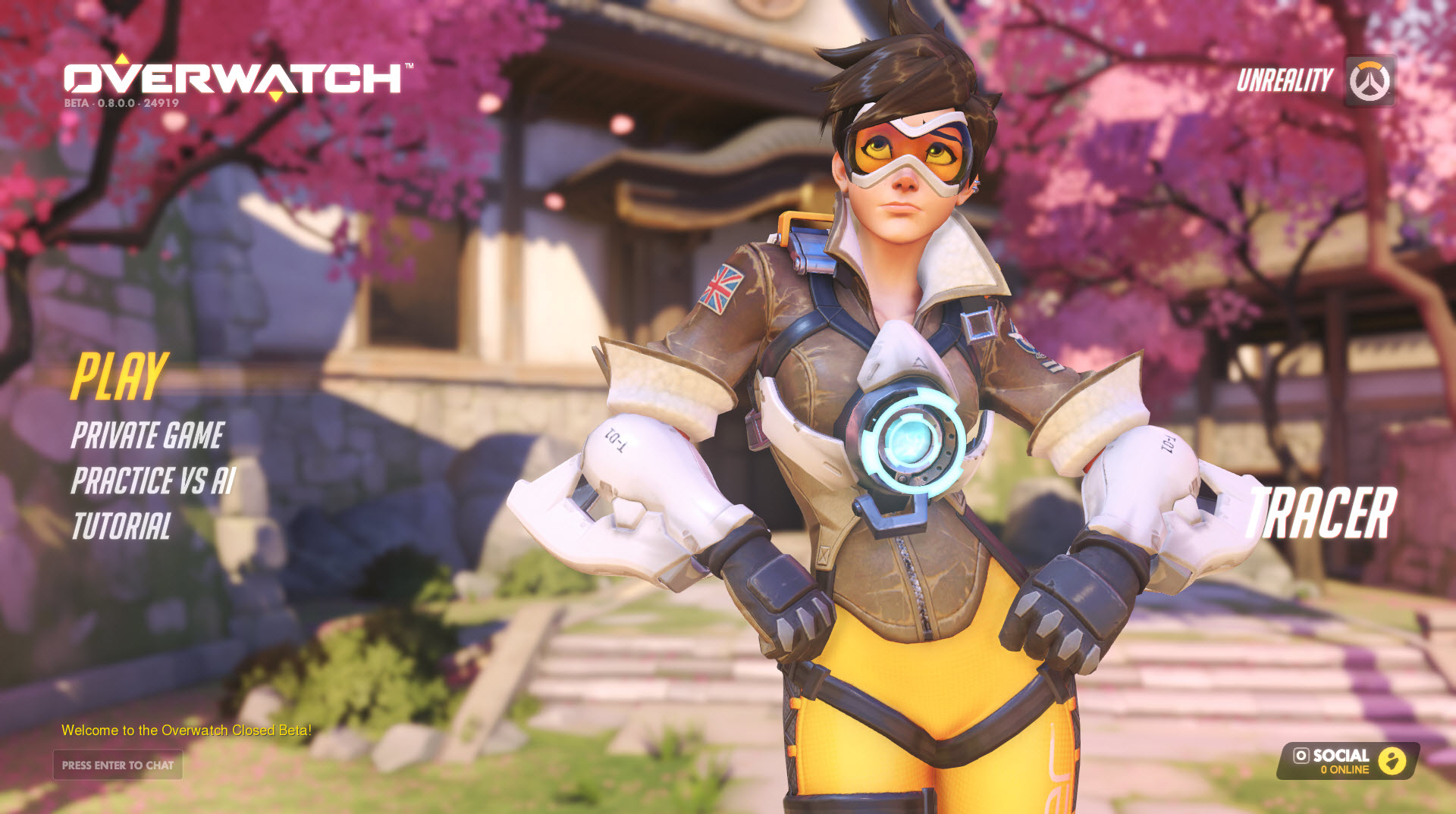
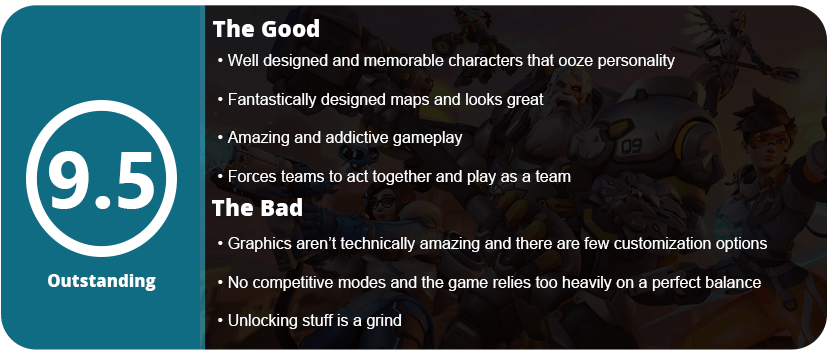
First-person shooters have hit an all-time slump in the past 10 years. With Call of Duty and Battlefield every year, they have kind of polluted the genre. FPS games are the laughing stock of the gaming community, and it needs to stop. Even worse, FPS multiplayer has taken an all-time low as well. I have not enjoyed online multiplayer since Team Fortress 2, and that was a long time ago. Overwatch finally fixes this problem. Yes, Overwatch is the best multiplayer game I have played in nearly 10 years. That’s not an overstatement; that’s not an exaggeration; that’s a true, hard fact.
What makes Overwatch so great? First off, the characters. Overwatch has some of the best characters gaming has seen in ages, with every single one being memorable, unique, and fun. Not once did I find myself hating a character or preferring not to play as one. But you’re also probably asking, “What is Overwatch?” A team-based shooter with 6-vs-6 with various maps, objectives, and downright amazing fun.
Overwatch does not have a story, so let’s make that clear. It doesn’t need one either, and that’s a damn miracle on its own. You boot up the game, play the tutorial, and go; that’s all you need. This is very refreshing, as I’m tired of shooters shoehorning crappy stories into games. There isn’t even a backstory for the characters, which is also not needed as it just works. I can’t express this enough; the game just works, and it’s a masterpiece.
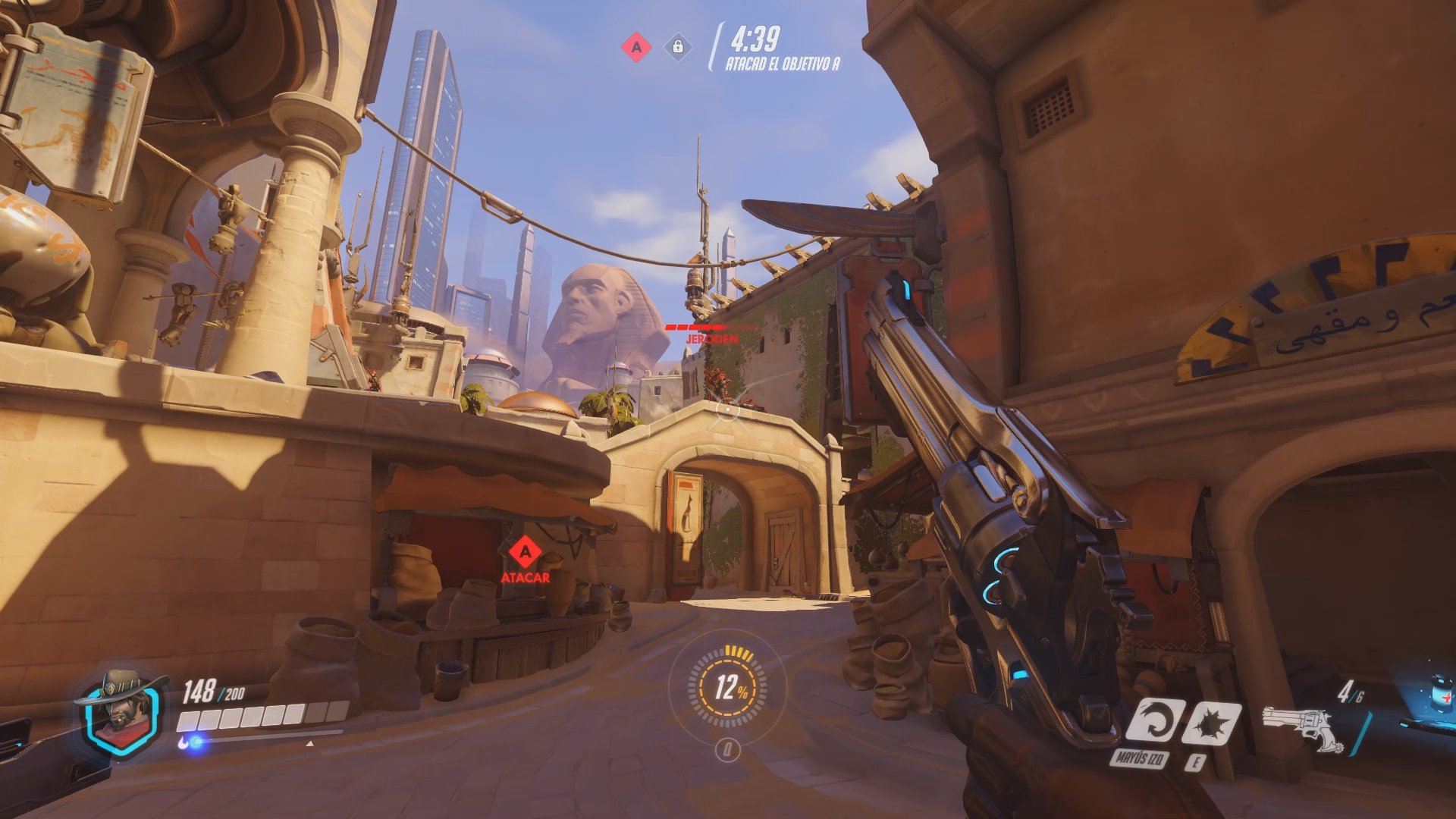
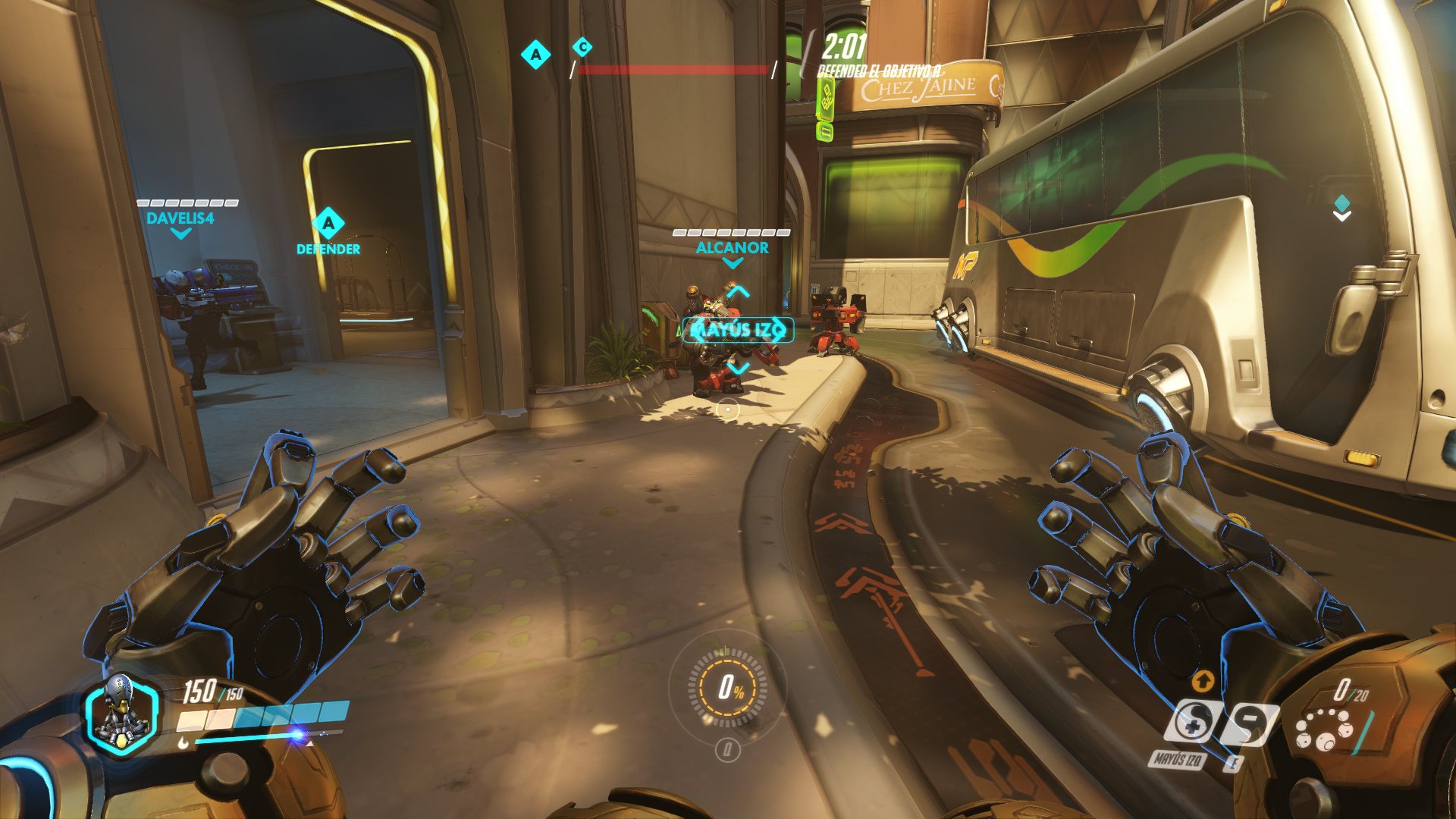
Let’s talk about gameplay. The game is perfectly set up for this type of game and strays away from leveling up weapons and getting new gear like in other FPS games. Each character has two abilities and two modes on their weapons. Characters are divided up into class types, which are tank, offense, defense, and support. Each class has about five characters, so there are plenty to choose from. Not a single character plays the same, and this is key to balancing out matches. One feature I absolutely love is the match hints when selecting characters. It lets everyone know when there are too many offensive characters, too many snipers, not enough tanks, etc. This allows you to balance out the match and works wonders. Rarely did I play a match in which players did not follow these guidelines.
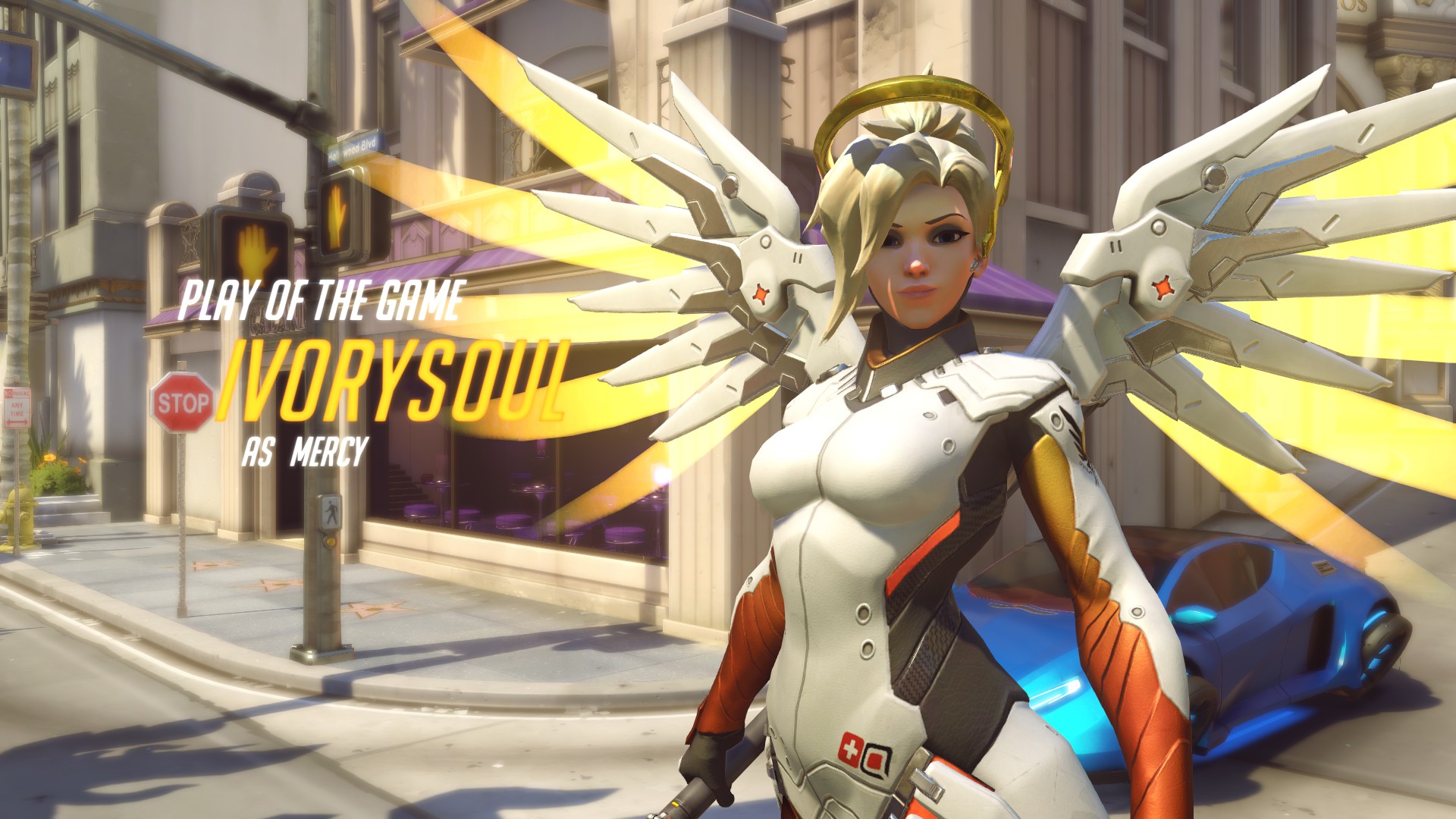
Having each character play completely different forces forces everyone to either pick a few favorites or experiment. I still haven’t played all characters yet, but I stuck with Mercy (a healer) through most of my time. She doesn’t have any defense or offense abilities outside of a small pistol that does minimal damage. It’s up to other players to protect you and use your abilities to their full extent. She can fly towards another player from a good distance, and this was a great defense. If you’re out in the open, you can fly to a character, and they will usually protect you. Her secondary fire ability is increased damage dealt, so I would use this on a player until their health dropped. Every character also has a special ability that needs to be charged. Once charged, these can turn the game around and give your team an edge. Mercy can resurrect a dead player, which I have actually won matches doing.
Another character I played a lot was Pharrah. She’s a rocket launcher offense character that can fly. Her gameplay is designed for vertical play, and it’s so much fun. Her rockets are fairly balanced and bring me back to the days of the Unreal Tournament. Her abilities are a rocket pack that allows her to glide, a super jump, and her special ability is a rocket barrage, which is best used in the air as she’s immobile during this ability.
As you can see, the game is perfectly balanced. Not one single character is overpowered, causing players to use only one character. There are melee-only characters like Reinhardt, who uses a giant shield that players can take cover behind, but he also wields a giant hammer. He’s deadly up close, but he can’t do much for players far away. Then there’re characters like Widowmaker and Hanzo, who are snipers and do great damage from far away but can hold their ground in close combat if it’s one-on-one. I just love how well each character plays and each one is unique, and I haven’t had that feeling since Team Fortress 2.
Once a match is over, there’s an awesome play of the game that is picked by the winning team. You get a cool character intro screen as well as great adrenaline-fueled music along with the 10-second replay clip. Right now, there’re issues with computers spitting out outplays via numbers, so a lot of support characters get overlooked, but Blizzard is currently working on this. The whole time I played Mercy, I was only Play of the Game once, and that was because a player I was healing killed a lot of people, and then I resurrected someone, making my numbers slightly better. It’s unfair, as characters who do quick high damage get the most plays, such as Reaper, Hanzo, McCree, Bastion, Reinhardt, and D.Va. Most of the characters have huge AoEs, which the computer considers the coolest.
Once the play is over, players can rate the match and commend the players with the best numbers, and then you go to your XP bar. Every time you level up, you get a loot box, which contains four items ranging from new skins, sprays, icons, and voice lines. These are nice perks to make your character stand out a bit, but I would have loved something more robust. Maybe being able to customize the character fully would have been nice, but any weapon or ability upgrades would break the entire game. It’s perfectly balanced as it is.
The map’s design is also fantastic. I didn’t find a single map I disliked or didn’t want to play. There are about a dozen or so maps right now from around the world, ranging from Russia to the USA, China, and Mexico. They are laid out just right so every character can take advantage of something, whether it’s a sniper spot, large open area, or corridor.
Now let’s talk about visuals. Overwatch is not as technically impressive as it is artistic. The game looks fantastic; don’t get me wrong, but this isn’t going to make the latest GPU sweat. There’re some low-res texture issues here and there, and you can tell it was optimized for consoles. The lighting effects are fantastic, and everything is highly detailed, but don’t expect The Witcher 3 status graphics.
With all that said, Overwatch has been one of the best shooters in the past ten years. I recommend every shooter fan pick this up, especially if you love Team Fortress 2. The game is perfectly balanced, has memorable characters, and is a blast to play as it forces players to work in teams even without communicating.
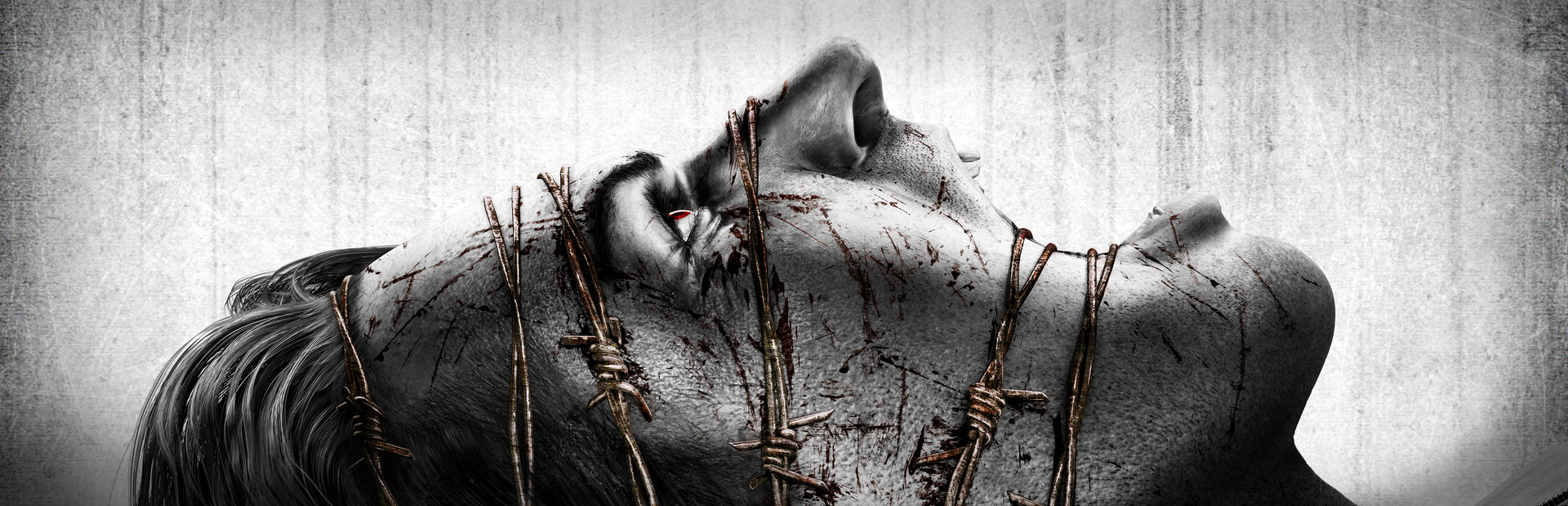
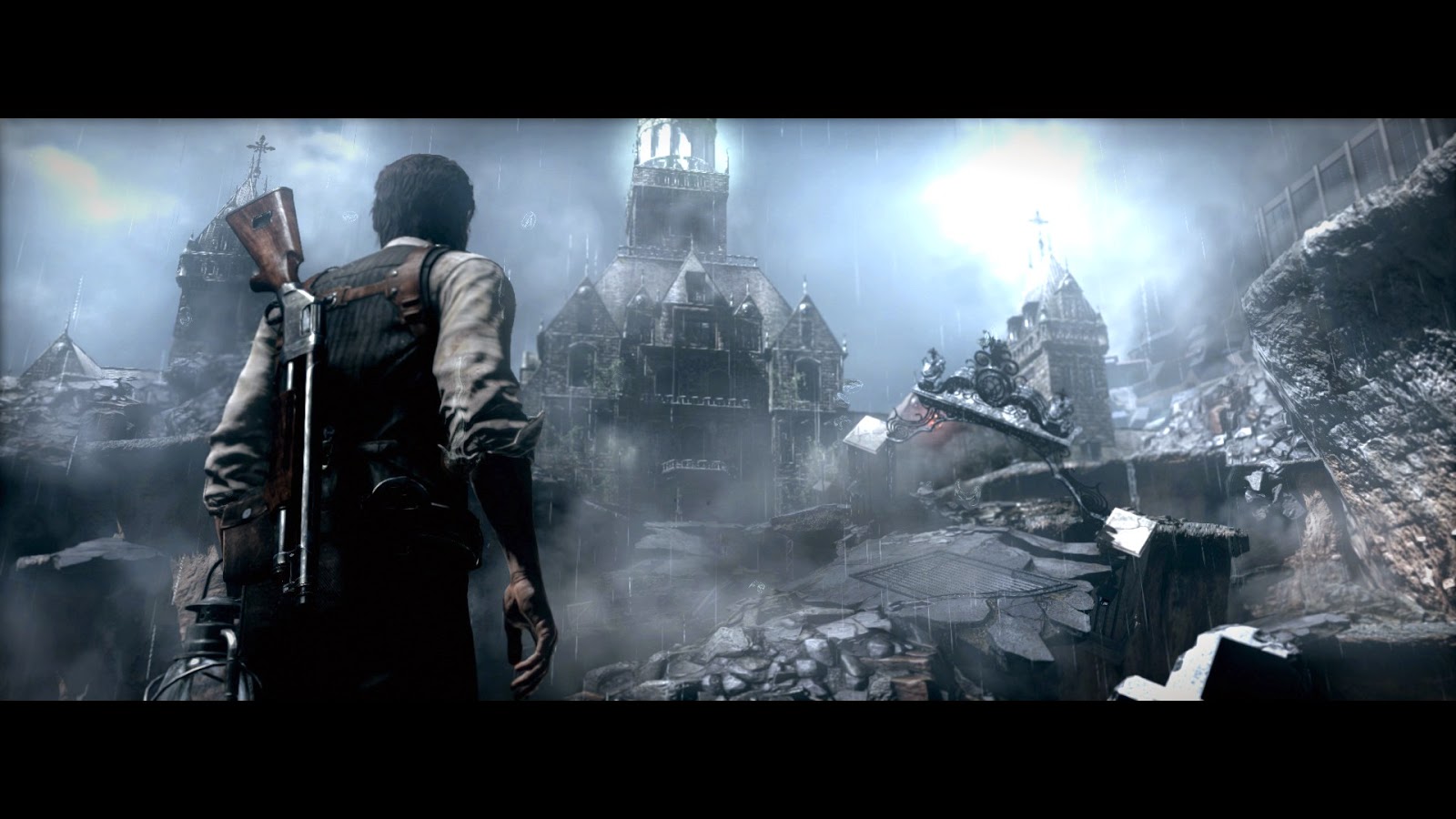
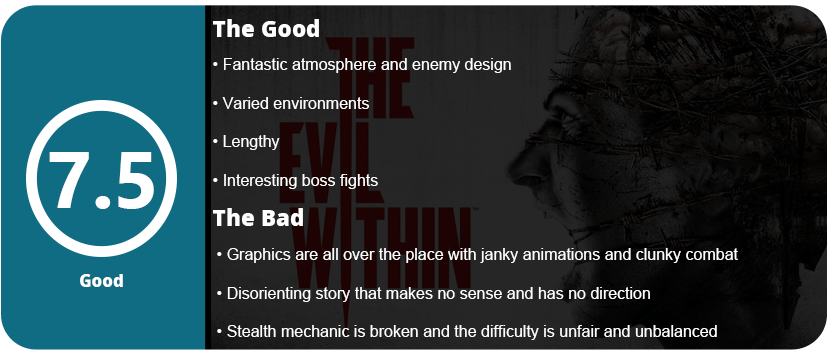
Right out of the gate, I have to say that this game is extremely difficult. It took me nearly a year to get through this game because of just how exhausting the game is to play through. Fifteen grueling chapters clock in at about 15 hours. You play a man named Sebastian who enters an asylum with two other detectives to find out why a massacre broke out there. You are then stuck in a bunch of nightmares; you’re chasing a boy named Leslie and running from a man named Ruvik. That’s it. Have a good night. The story makes zero sense; there’s no comprehension, and it’s very disorienting. You go from crazy room to crazy room, down hallways and arenas, with no sense of why you’re doing this.
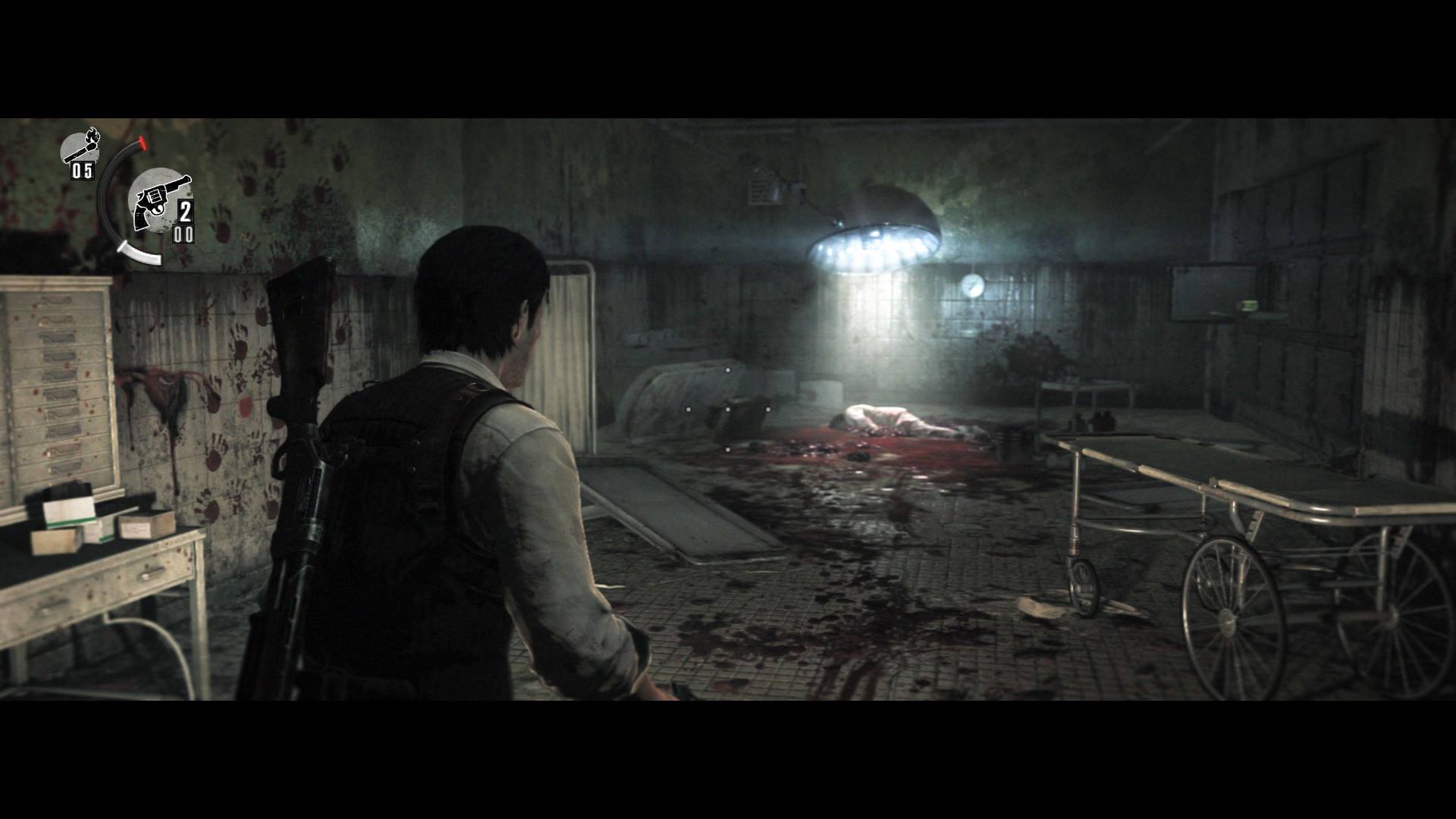
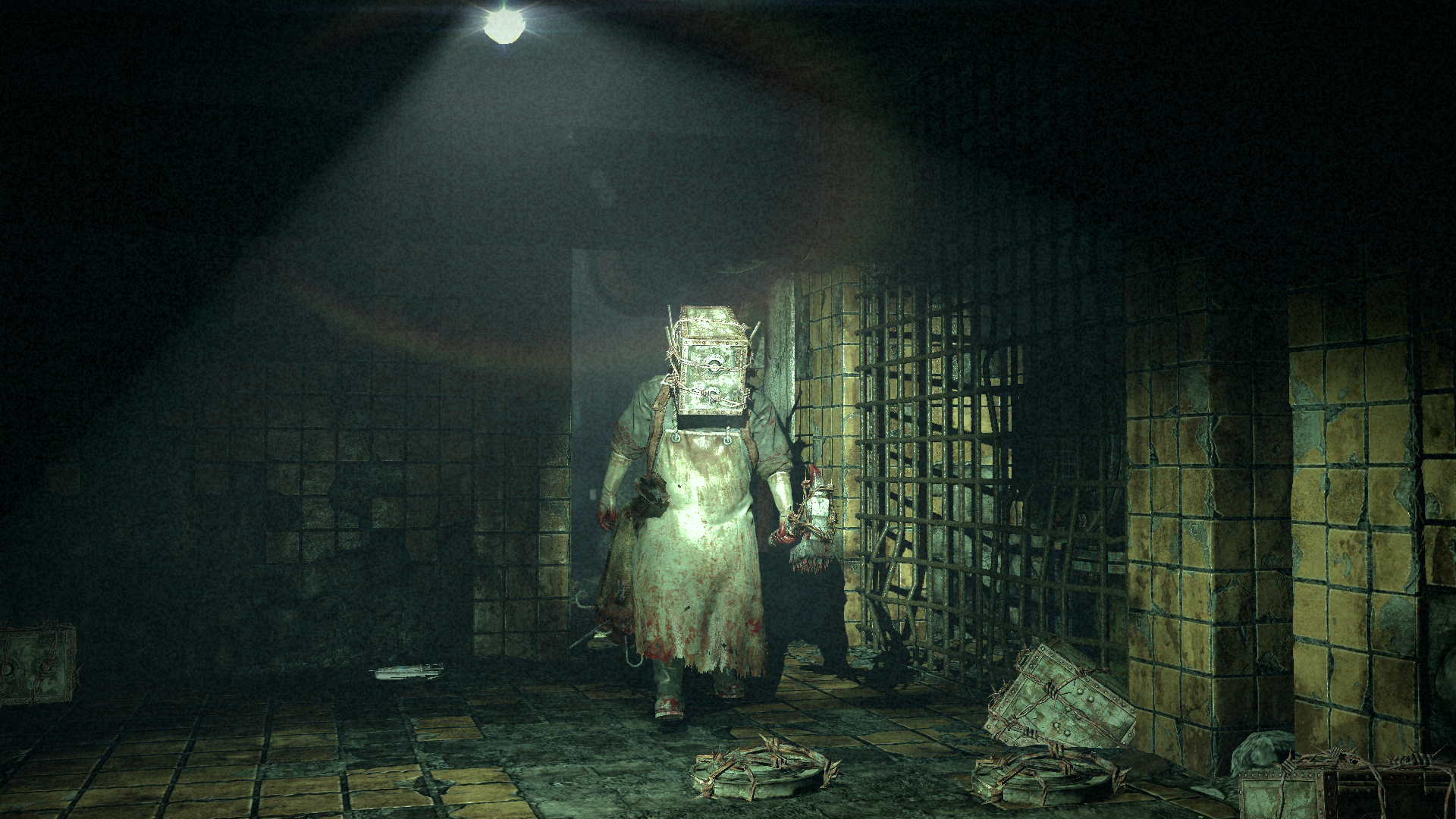
Apart from the insanely vague story, the game does give off an amazing sense of atmosphere. Creepy intestines hang from the walls, eyeballs float around on ceilings, and enemies are some of the scariest stuff since Dead Space, but I have to say, the atmosphere is awesome. Unfortunately, that’s about all that The Evil Within has going for it, despite trying to bring back the old-school survival horror vibe, which it fails to do. This is done with a lot of stop-and-go cut scenes and endless hallways, and then you’re slammed with a bunch of action and no ammo—yeah, it’s one of those.
This game wants to bring survival horror ammo scrounging to a game that has a lot of action, and this is very bad. It just doesn’t work. Even if you are smart with your ammo, conserve, and use melee when the option is available, it just doesn’t always work. The game is highly unbalanced, with long stretches of nothing and then several arenas full of bad guys. Now there is a stealth element added in, but it fails most of the time. Enemy paths are random, they are placed poorly, it’s hard to get to them because the sneak animation is aggravatingly slow, and it doesn’t end there. The game is devoid of puzzles, meaning there is no challenge outside of combat. On top of all this, gunplay itself isn’t very fun, as the camera zooms too close to Sebastian’s shoulder, making quick aim disorienting and difficult, the animations are janky and can’t be interrupted, and it takes forever to level up your abilities and weapons—it actually requires a second playthrough.
I feel sometimes I’m too hard on the game, as it isn’t terrible, just extremely difficult and unpolished. The graphics are also something to be desired; they feel very dated but have some nice lighting effects. However, the textures and models are all over the place, but nothing in here looks truly next-gen, even on PC. I feel that this game is a little hard to explain as there’s so much going on and each area is completely different. That may be the only thing saving this game outside of the gruesome horror scenes and interesting boss fights. With no way to understand the story, players will try to latch on to other elements, but at the end of the day, you sit back and wonder if it was worth it.
Weapons in the game are your standard affair: a shotgun, revolver, sniper rifle (bolt action, of course), rocket launcher, magnum, and crossbow. The crossbow is probably the most interesting gun in the game, as you can create bolts from scraps you find by disarming traps. These become vital during boss fights and when you’re surrounded by bad guys. One interesting, yet unnecessary, element in the game is burning bodies with matches. If you have some, you can do an instant kill by burning the body. This is useful against tougher enemies to save on ammo. There are also your typical secrets to find—hidden keys, map pieces, etc.—stuff that most people don’t care to collect.
Some players may appreciate the hardcore challenge, but most will balk. But the game is worth a playthrough for the atmosphere and roller coaster ride of gore, guts, and weirdness. Be prepared for a nonsensical story and extremely unbalanced difficulty. If you can stomach the unpolished gameplay, then you could have a pretty entertaining experience.
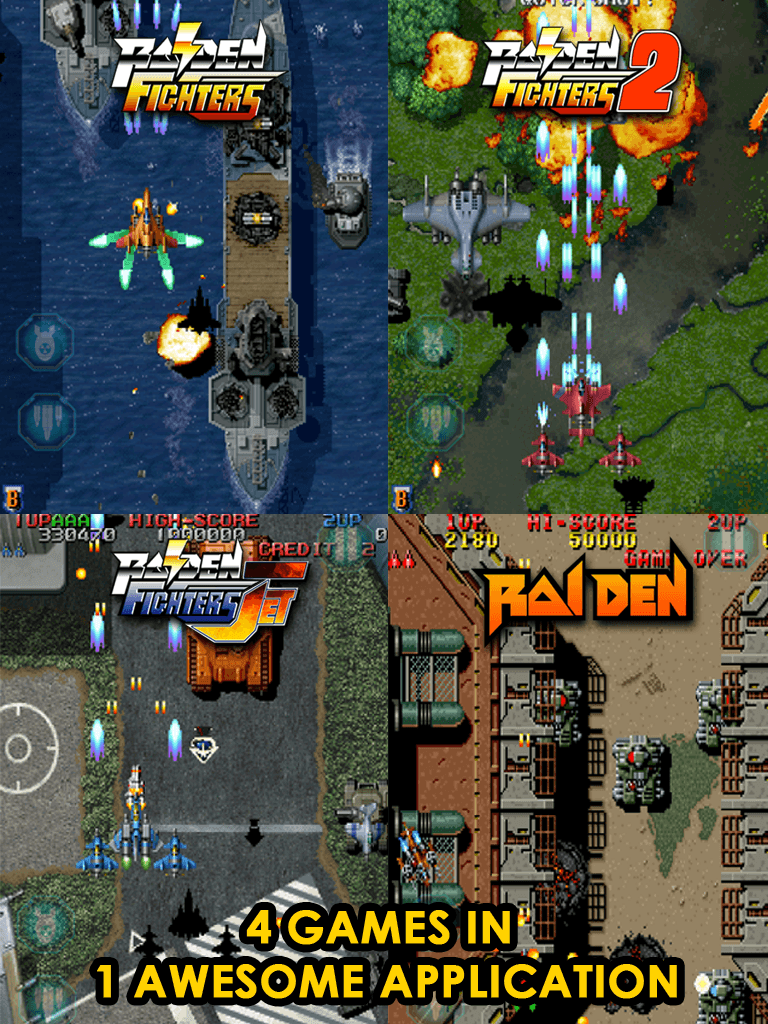
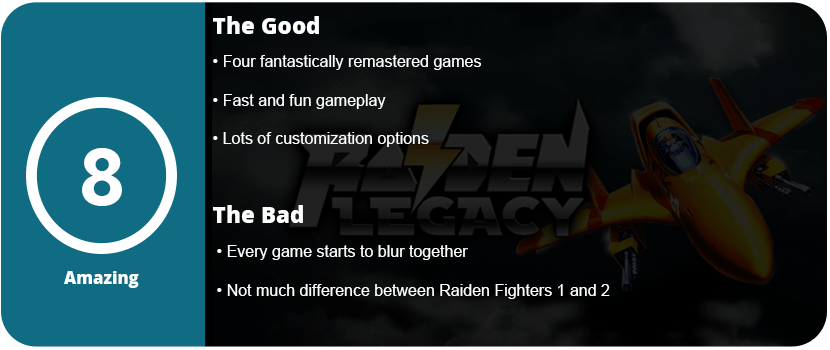
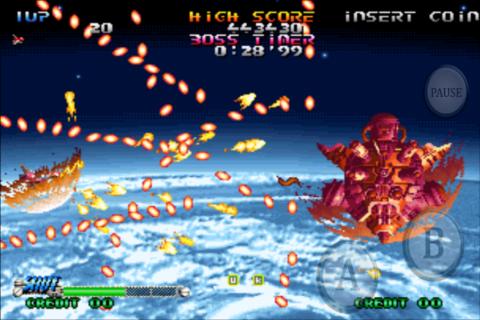
Raiden is one of the original popular shmups that delved away from fantasy settings and more towards a realistic military setting. Raiden is fast-paced, controls smoothly, and has some great enemy layout and level design. To top this all off, Raiden Legacy has four Raiden games that are all a complete blast to play.
The first game is the original Raiden. Using 16-bit graphics and sound, it may look dated, but it plays wonderfully. The sprites are crisp and clear, and the sound is great. It starts off slower than the newer games, with power-ups and faster-paced enemies taking a while to appear. This may seem familiar with some of the recent free-to-play or freemium bullet hell games today. The bosses are fun, there are plenty of jets to choose from, and I found it had a personality over the newer Raidens that made it stand out and unique.
Next up is Raiden Fighters. This is a more updated, newer-looking Raiden that you would see in arcades. The game looks crisp and clean, and there are plenty of power-ups to go after. It is definitely different than the first Raiden and feels different as well. Just like all the other games in this collection, there are plenty of control options, and each game has arcade, mission, and practice modes. It’s always a good idea to get a handle on each level, enemy placement, and power-up management before mastering a level.
The third game in the collection is Raiden Fighters 2. It feels quite similar to the first Fighters game and honestly could have been excluded, and the package would have been fine. The graphics and sound are nearly the same, but there are different jets to use, enemies, and levels, so it is kind of a new game. Still just as solid as the other two and worth a playthrough.
The last game is Raiden Fighter Jet. Fighter Jet is more, well, jets, I guess. You fight a lot more air enemies than ground enemies, and it looks and sounds the best out of the four. After you get to the fourth game, it will start to feel a bit the same, and it will start to become a blur in the end. However, these are fun shmup experiences, and they work great on mobile phones. The control settings are customizable (I preferred Touch 200), and the game just looks awesome in portrait mode on high-res screens.
Overall, if you’re a shmup fan, this is a must-have. Keep in mind that this is a more realistic military-style shooter and less fantasy, but still a great game.
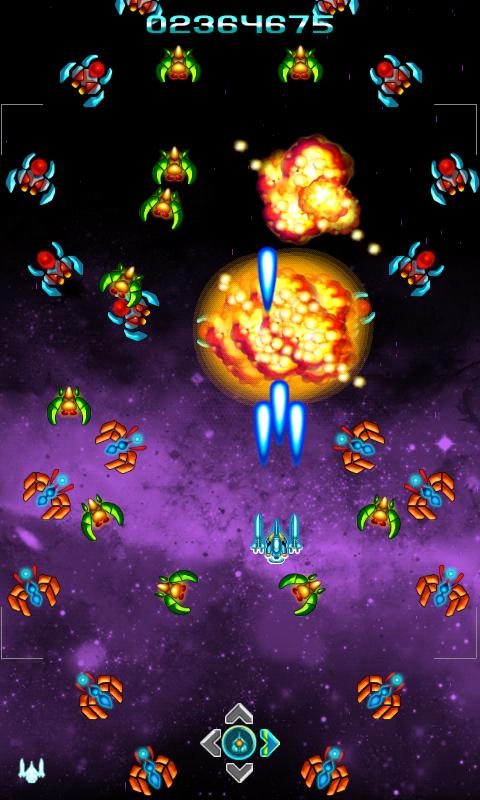
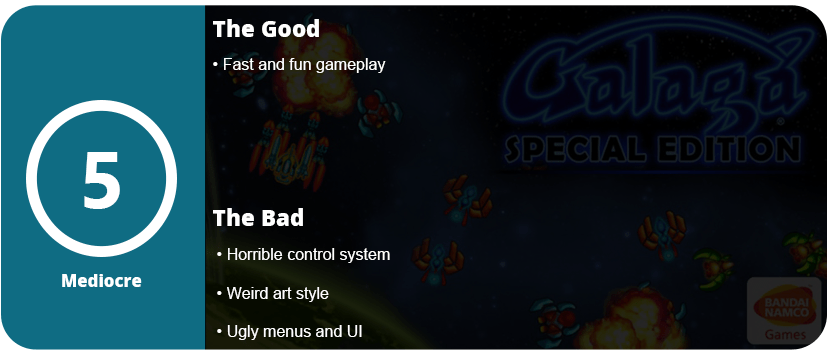
Galaga is one of the original shmups and hasn’t really done much since its incarnation. I had fond memories of playing Galaga on my original Game Boy and remembering how hard it was. Now I’m back with Galaga: Special Edition, and I’m quite disappointed. I wasn’t expecting HD graphics or tons of different modes. I just wanted an honest, updated Galaga experience. What we have here is a messy and not quite up-to-par version that I would have any fan of the series or genre pass up.
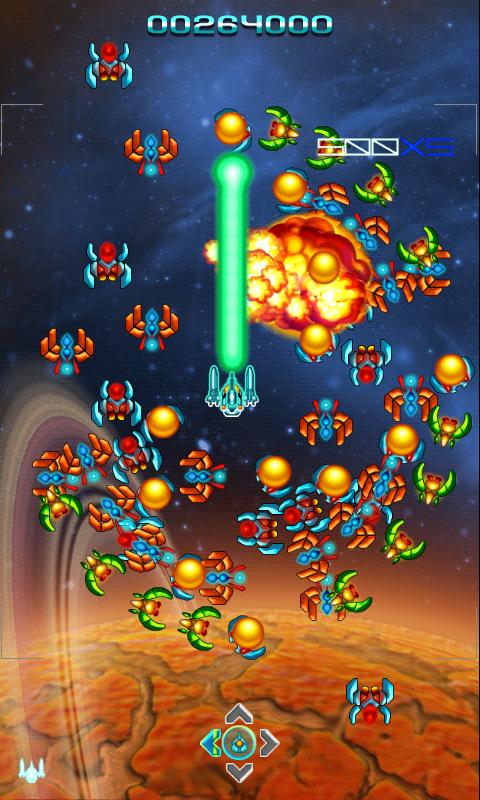
For starters, the game just isn’t fun to control, the animations are awful, and the game just doesn’t feel right. Your ship stays on one screen, and you just move around the area, trying to kill the enemies. It’s a stationary shooter ’em up, but one that used to be really fun. The special effects are awful, and honestly, even the menus feel old and not quite up to speed. I honestly feel like this was a crappy Flash game that was just ported to mobile devices.
If you really need a Galaga to fix on the go, this game will get you by, but it can’t hold a candle to the original game. I also felt the game just didn’t control very well and seemed to “skip” around on the screen. There’s really not much to say here other than keep playing and build up a high score. If you don’t like staying stationary or want a lot of on-screen action, this game isn’t for you.
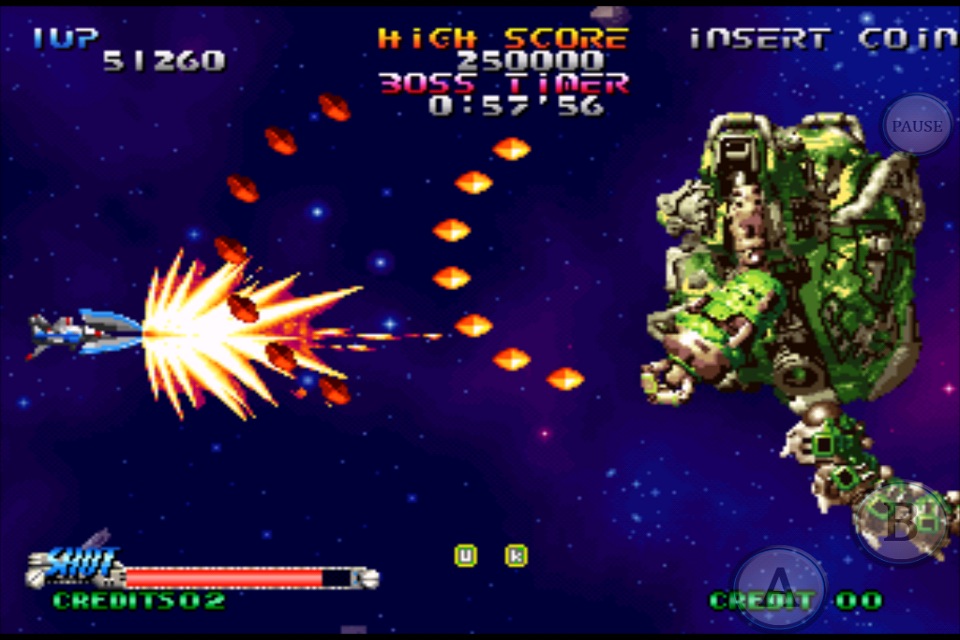
Shoot-em-ups, shmups, and side-scrolling shooters, however you want to call them, had a grand place in the video game industry. While they may seem like a dying breed, they dominated the arcades and consoles leading up to the PlayStation 2. R-Type, Raiden, 1943, Cotton, Ikaruga, Defender, and even Space Invaders and various other shooters were household names. They are also some of the toughest games ever made. Only consisting of a few levels, these difficult pieces of art were what made you a hardcore gamer. Blazing Star was one of many, and it is now playable on mobile phones.
Blazing Star has only seven levels, but they are extremely brutal, and most people won’t make it past the first one. The controls are simple enough: use your thumb to move the ship around while you fire your bullets, and use another button to cause your bullets to scatter around. It’s fairly simple—sometimes too simple—but it works. The game is as hectic as you would expect and is actually one of the harder bullet hell games I have played. As you move along the 3–4 minute levels, you acquire points and also power-ups along the way. If you die, you get a chance to recover your power-ups, but there’s so much going on on the screen that you will have a hard time gathering them all back up without dying again. Honestly, there’s more going on than I could keep track of, but it was a lot of fun.
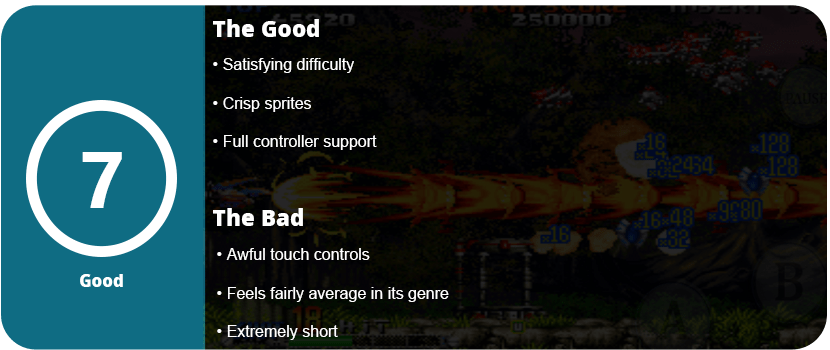
The final level is actually just a really tough boss, but beating the game is quite satisfying, and I have to say it looks good too. The screens are bright and crisp on high-res phones, and the only problem I had were the controls. They felt strange somehow, but I preferred a controller. I had to constantly lift my thumb and move it back because the ship didn’t follow my thumb where I wanted. The delay caused me to underperform, but this was fixed using an actual analog stick. I honestly can only recommend this game to hardcore shooter fans; casual lookers will immediately hate this game. There’s also nothing particularly memorable about Blazing Star that really sticks out; it feels average, but average enough to be better than a bad shmup.
Call of Duty has had a steady downfall since Modern Warfare 3. Ghosts was a great change for the series, but it just wasn’t enough. Advanced Warfare is the first CoD game to be developed outside of Treyarch and Infinity Ward, and this is probably one of the best things for the series. The fact that Advanced Warfare is completely fictional and original is a good change as well.
You play Mitchell, a soldier who is working for a private military company called Atlas. Atlas is bigger and better funded than the entire US military, so they also have more power. I love the way the pace of the story is, and the characters are actually pretty likable and memorable. Gideon is a tough Brit who you grow to like, and he is actually my favorite of all the characters. The story is all about stopping a bad guy named Hades, who nuked parts of the world years ago. However, the good part is that the story takes a huge turn when you go after Atlas’ founder, for reasons I won’t say to avoid spoilers.
With the story being solid (probably the only good story in the CoD series), the gameplay holds up well. Yes, it still feels like CoD, but it’s a bit different. The guns have more weight and feel better, despite being completely fictional and futuristic. The weapons are based on real-world weapons, but with a twist. There are some really awesome new attachments and features. The new grenade feature is amazing. Your tactical grenade allows you to switch between EMP, Threat, and various other types. The threat grenade is my favorite, as it lights all the enemies up red for a short time. There’s also a threat detector attachment for guns that lights enemies up red when you have your reticle over them. The lethal grenade can switch between Frag, Smart, and various others. The smart grenade is my favorite, as it shoots into the air and homes in on the closest enemy. These features may seem subtle, but they fit the futuristic universe and advance the traditional CoD gameplay quite a bit.
A second major feature is the ExoSuit. There are three abilities that you can have, such as a jump pack, stim pack, a temporary shield, grapple, and various other features. Rolling this over into multiplayer is a blast and really changes things up, forcing you to forgo your CoD multiplayer routine and traditions.
The multiplayer suite is great, and the customization is even deeper than Ghosts. Choosing your gender, clothing, and even a different face is a step up for the series. The weapon customization is extremely in-depth, allowing you to hand-tailor your perfect CoD loadouts with various attachments, perks, weapons, and weapon paint. While the basic CoD suite is still here and hasn’t changed much, the added features of Advanced Warfare pretty much change the entire thing for the better.
Lastly, the graphics are absolutely fantastic on next-gen systems and PCs. The character models are gorgeous, the animations are beautiful, and the lighting is some of the best you will see this year. High-res textures and amazing sound keep you engulfed and trekking on. CoD had always been something to laugh at graphically due to the previous console’s aging, but now the series has one of the most advanced graphics engines available.
With all that said, Advanced Warfare is a great departure from the tired formula, and anyone who has been holding out should jump in now. It washes out the foul taste of the stigma that the series has created for itself and the FPS genre as a whole.
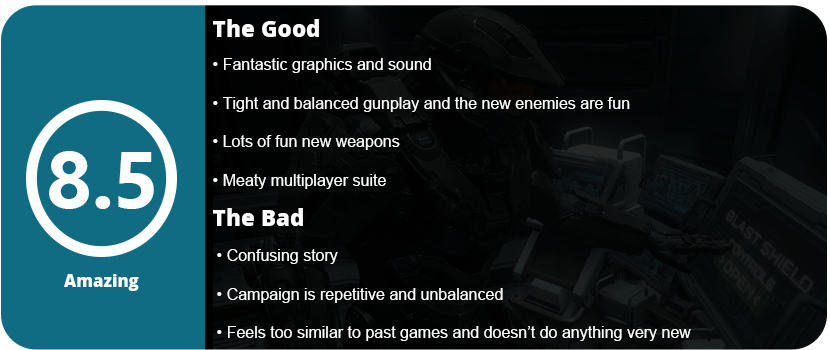
The Halo series is probably one of the most repetitive and unchanging series I have ever played. The first three were pretty good, and Reach and ODST made me fall asleep. With Bungie out of the picture and 343 Industries in the captain’s chair, I figured Halo may have some great new changes. I was half right. The single-player campaign is pretty fun and is as tough as nails. The new weapons are awesome to shoot, and there are new enemies for once that are different. The story is convoluted and confusing, but hardcore fans may be able to follow it okay.
The mechanics are pretty much the same as in previous Halo games. There are no iron sights; the game is fast-paced with high jumping and fast sprinting. There’s still no cover system, which is a shame, and the game is damn hard. I felt the story was a bit random, and the environments felt the same way. One minute I’m shooting the same tired Covenant, then these machines type aliens, then mutated Covenant, then regular Covenant. There were some vehicle sections, and I was riding a giant vehicle. The game just felt all over the place, but it was fun, at least.
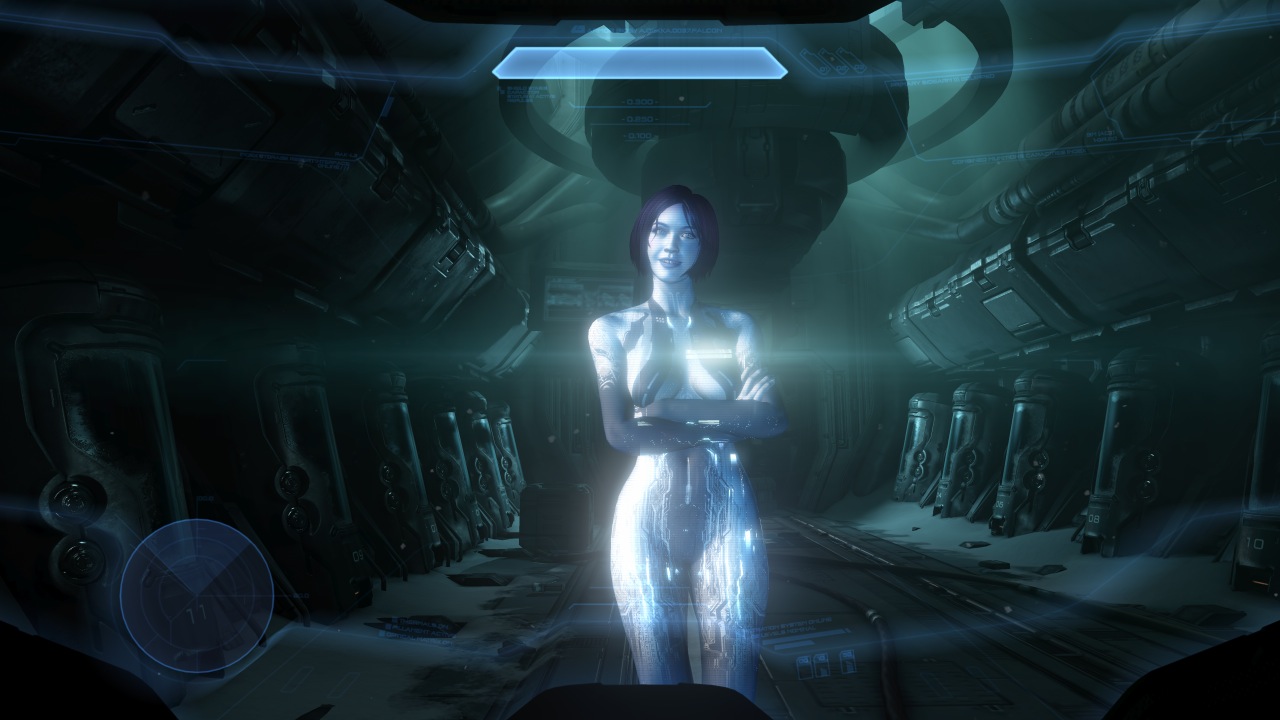
The story is really confusing and never makes much sense. Something about Cortana being infected and a giant being called the Didact trying to destroy everything. It’s nothing fancy or sophisticated, but you can’t expect much from an FPS. At least the game just feels tighter, a bit heavier, and less floaty than other Halos. I felt the weapons had weight to them, and the sheer variety had me switching them up all the time for different situations. I did find that there were repetitive scenarios throughout the whole game, like jumping into stations to hit a button at the top and running back down to get to the next one. This scenario repeated often throughout the whole game and felt archaic and overly simple.
While the structured campaign felt old and tired, multiplayer is still the best part of Halo. The constantly updated match types make you come back for more all the time. The game feels faster-paced and just more fluid and balanced than any previous Halo game. Customization is deep for your avatar; there are many levels to climb, and the unlocks are sweet and rewarding. After you beat the Halo campaign just once, I doubt you will ever go back because of how forgettable and repetitive it feels. I honestly think at this point, Halo should just continue as a multiplayer-only game and maybe jump on board with PC.
The few little tweaks here and there help the game become more balanced overall. The lack of dual-wielding makes the game feel more raw and “hardcore.” The various adjustments in damage from each weapon and the increased damage for melee attacks are nice. I also love how great the game looks. This is the best-looking Xbox 360 game out, and the voice acting and animations are so lifelike. However, the Xbox 360 doesn’t have the same processing power as the PS3, so you won’t see The Last of Us-quality textures and lighting effects. There are some ugly textures in Halo 4, and they really show sometimes. Surprisingly, there weren’t any slowdowns or glitches that plagued other Halo games.
Overall, Halo 4 is a great final opus for the 360, but it isn’t the revolutionary new Halo like everyone thought. The campaign is repetitive, extremely difficult, and confusing; the story is so-so, but the multiplayer is where the meat of the game is.
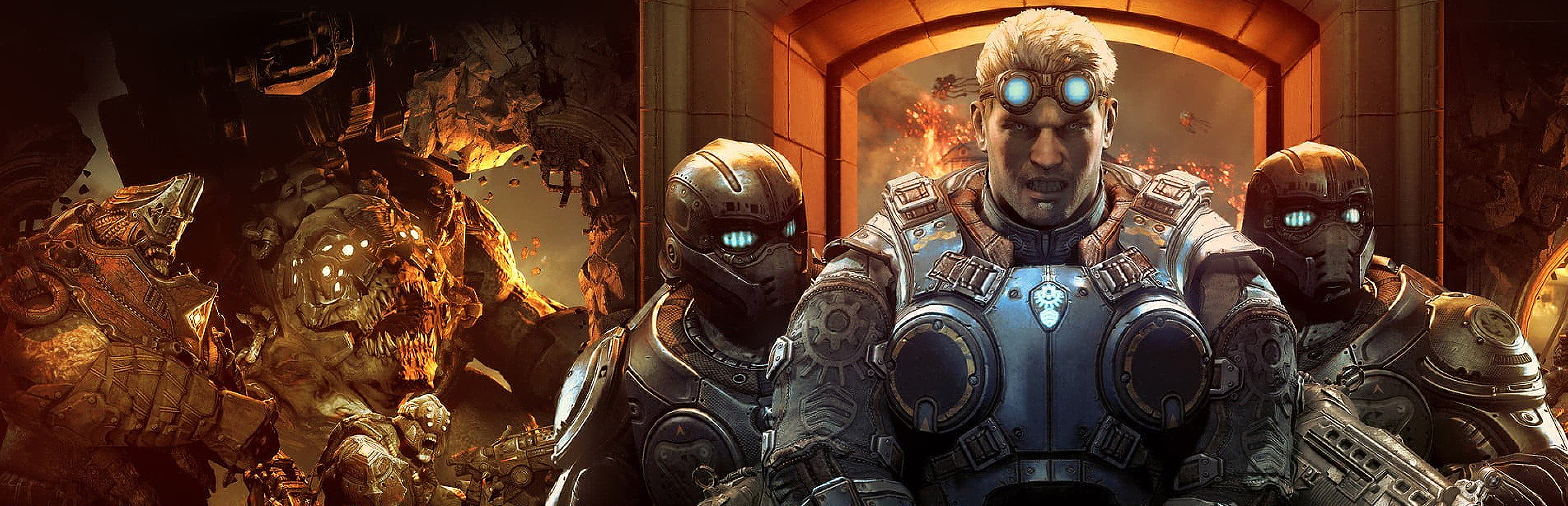
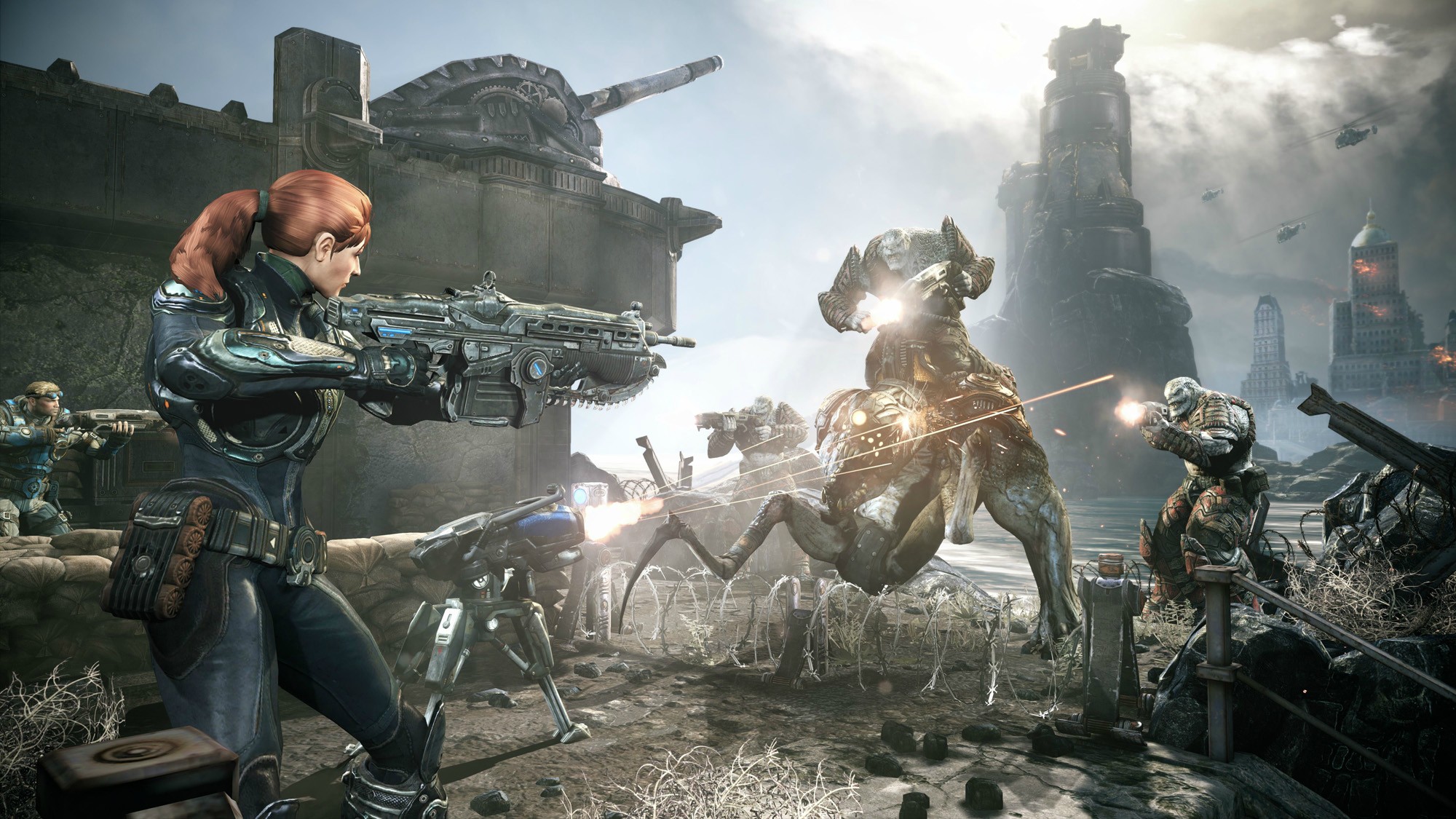
Gears of War is the Xbox 360’s best series and one of the best of this generation. It introduced cinematic gameplay in a gritty post-apocalyptic world with revolutionary gunplay and cover systems. Judgment proves that all series run out of steam. It’s the worst Gears game, but not terrible. People Can Fly (of Painkiller fame) took the driver’s seat thanks to their successful collaboration with Epic during the development of Bulletstorm. Judgment isn’t anything like the previous games in a bad way. It’s dragged down by balance issues, linearity, and a poor story.
Let’s start with the story. It takes place years before Delta Squad was formed and Baird was a lieutenant. He’s accompanied by UIR Paduk, Sofia Hendrick, and Augustus Cole. They are arrested and are being held in a trial in the middle of a battlefield by Colonel Loomis. You play their flashbacks as testimonies. Honestly, the story never goes anywhere, and there’s nothing gripping about it. You just play as each character in short 30- to 45-minute chapters. Once you catch up to the present moment, you play one more chapter, and that’s it. Nothing interesting at all. Even the bonus chapter called Aftermath is pretty lame. It takes place after Gears of War 3, but all you’re doing is finding a boat to get out to sea. There’s nothing revealing about the overall story.
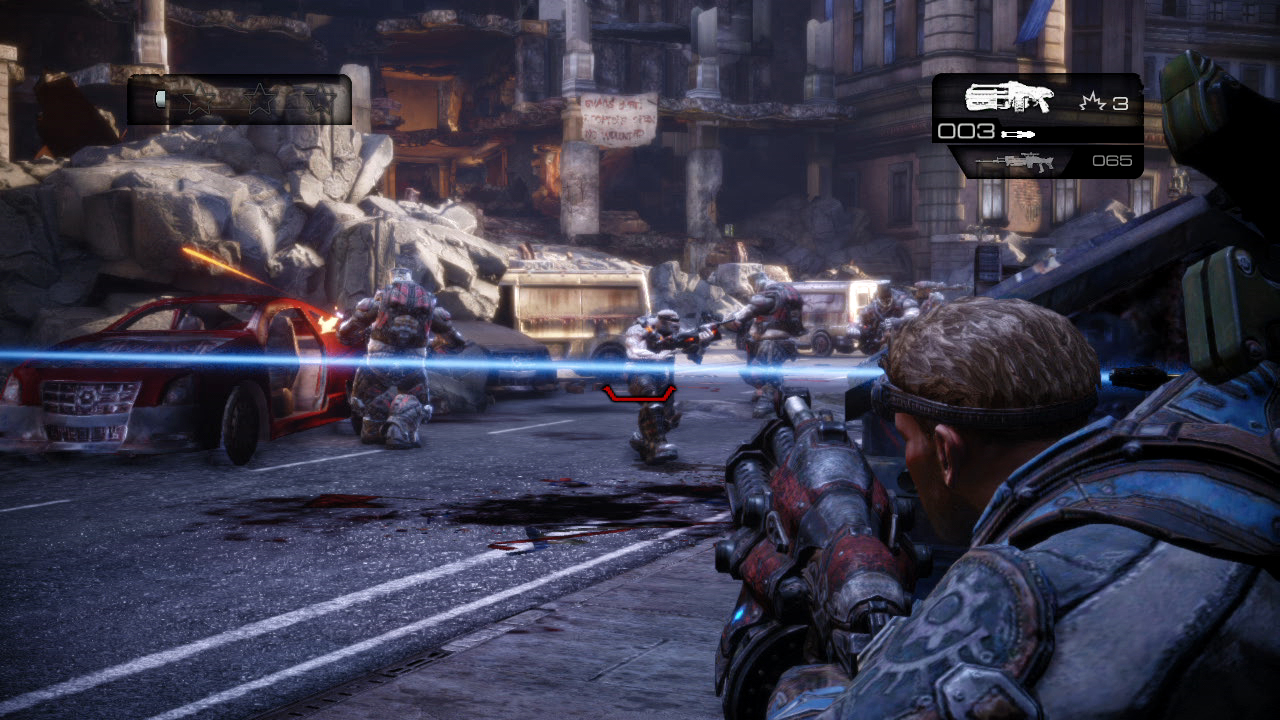
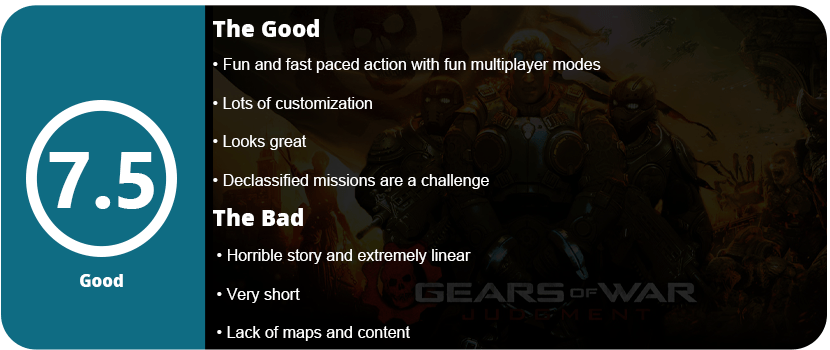
Challenge and pacing take a back seat as well. Judgment is all about the kill count, and tactical combat takes a back seat. All the enemy’s health has been dialed back a lot, so you can run around pumping them with lead. It got so bad that 5–6 enemies would pile up on you or an ally. This would never happen in previous Gears games. I honestly rarely used cover and just went around blasting enemies with the Gnasher. The game is broken up into sections, with score totals at the end. The only awesome thing about Judgement that impressed me was the declassified missions. These are giant red gear logos on the wall at the beginning of each section, which makes the game a bit more challenging. Ranging from time limits to certain weapons, more enemies, more defenses, etc. These also increase your star rating, which is used to unlock items and achievements.
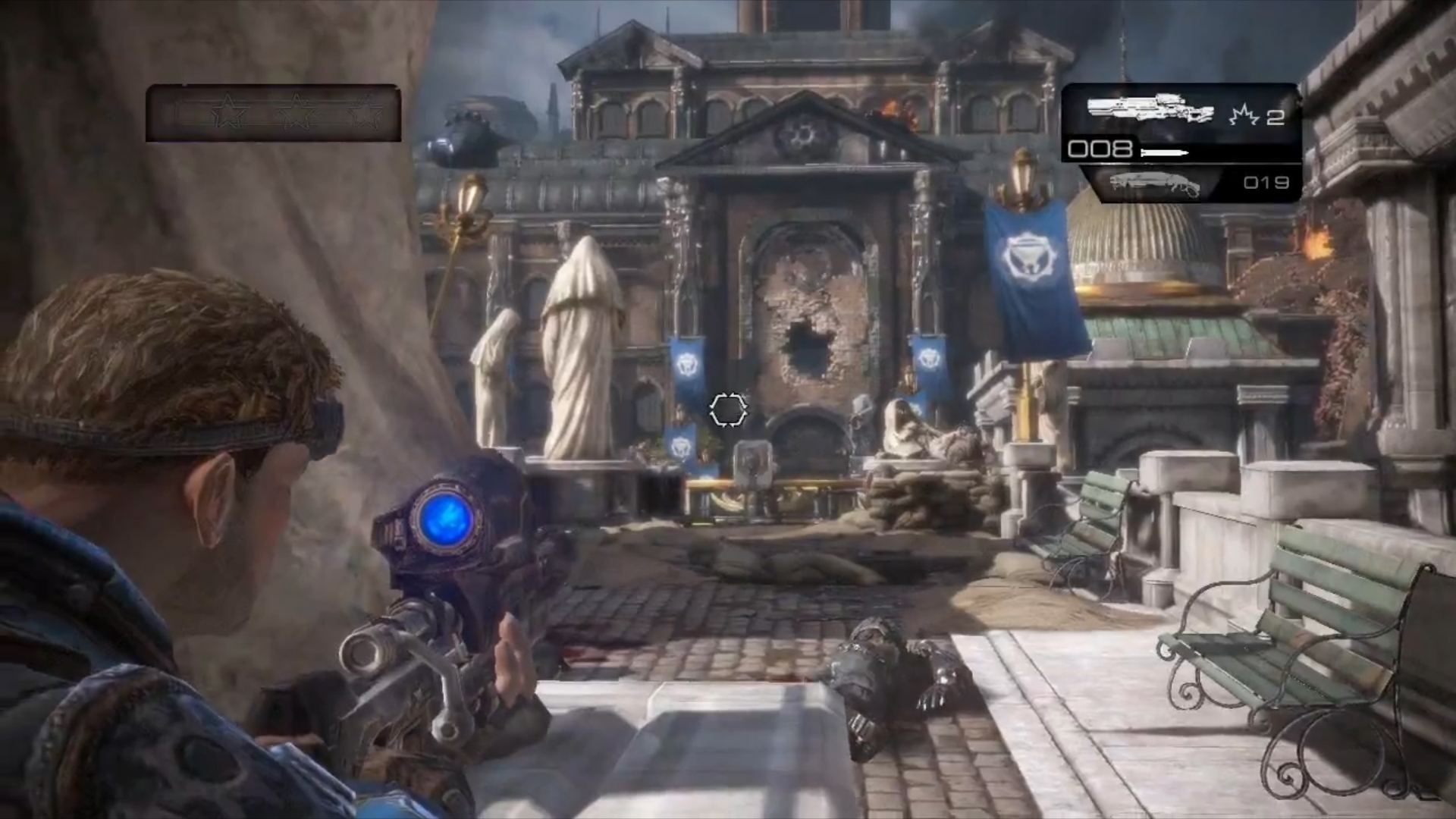
Halfway through the game, it starts getting extremely repetitive. I honestly almost hated the game, but the action itself kept me hooked because it was faster-paced than previous games and a bit more exciting. There really isn’t much new added to this game either. There’s one new enemy that acts as a mini-Berserker. Once you shoot it, it will grow bigger, and only headshots will kill it. There are a few new weapons, but they are UIR weapons. The Booshka is a grenade launcher, and the Markza is a sniper rifle with a fast firing rate. There’s also another rifle that is nearly as deadly as a Longshot but fires four rounds before reloading. I wanted more content; honestly, even the levels were generic and boring. It’s the same hallways and battlefields over and over. The overall game is just really disappointing.
Once you finish the campaign, there’s really no reason to go back unless you really want all the stars, find the hidden COG tags, or play co-op. The multiplayer is probably the best out of all the Gears games, but it lacks content. There aren’t many maps, and Horde mode is absent, but there’s a substitute mode called Survival and Overrun. Survival pits a Gears team against an AI-controlled locust, and Overrun lets players control the locusts. This mode is intense and another small step in the evolution of the Gears multiplayer suite. The classic modes are back and feel as solid as ever, but the lack of maps may bore players quicker than in previous games.
Overall, Judgment is a huge disappointment. The campaign is generic, short, and almost boring; the tactical side of Gears is taken away for running and gunning. Multiplayer suffers from a lack of maps, but at least there’s a lot of customization stuff to unlock for your characters. You now get rewarded for all those kills and ribbons you earn in the form of prizeboxes. The graphics look great and push the 360 to its limits, but the console is seriously aged, and it shows. Judgment is a fun weekend rental or bargain purchase. At this point, Gears of War needs a reboot to keep going.
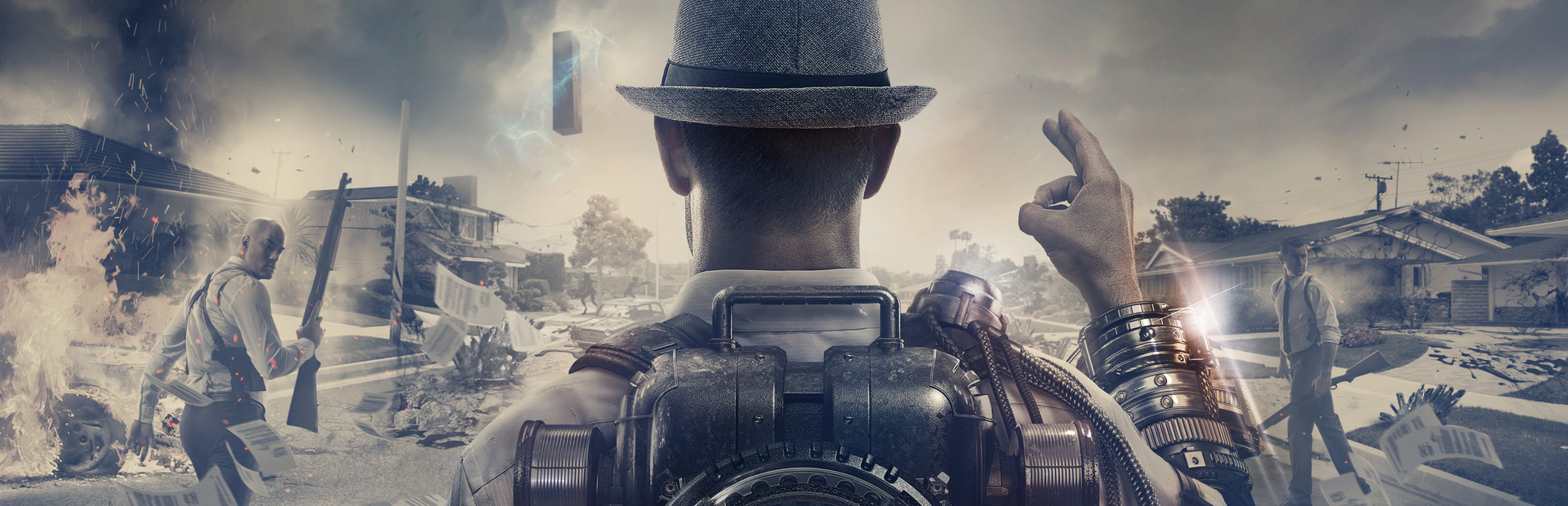
XCOM: Enemy Unknown was one of the best TBS games to come out in years. It had tightly coordinated tactical gameplay that packed a punch and kept you on your toes. The Bureau kind of keeps this idea while bringing you into the dice-rolled battles firsthand so you can control them. The game takes place after the Cold War, when agent William Carter is tasked with helping save the entire planet from an alien invasion. That is one hefty mission, but you have squadmates to bring alongside you.
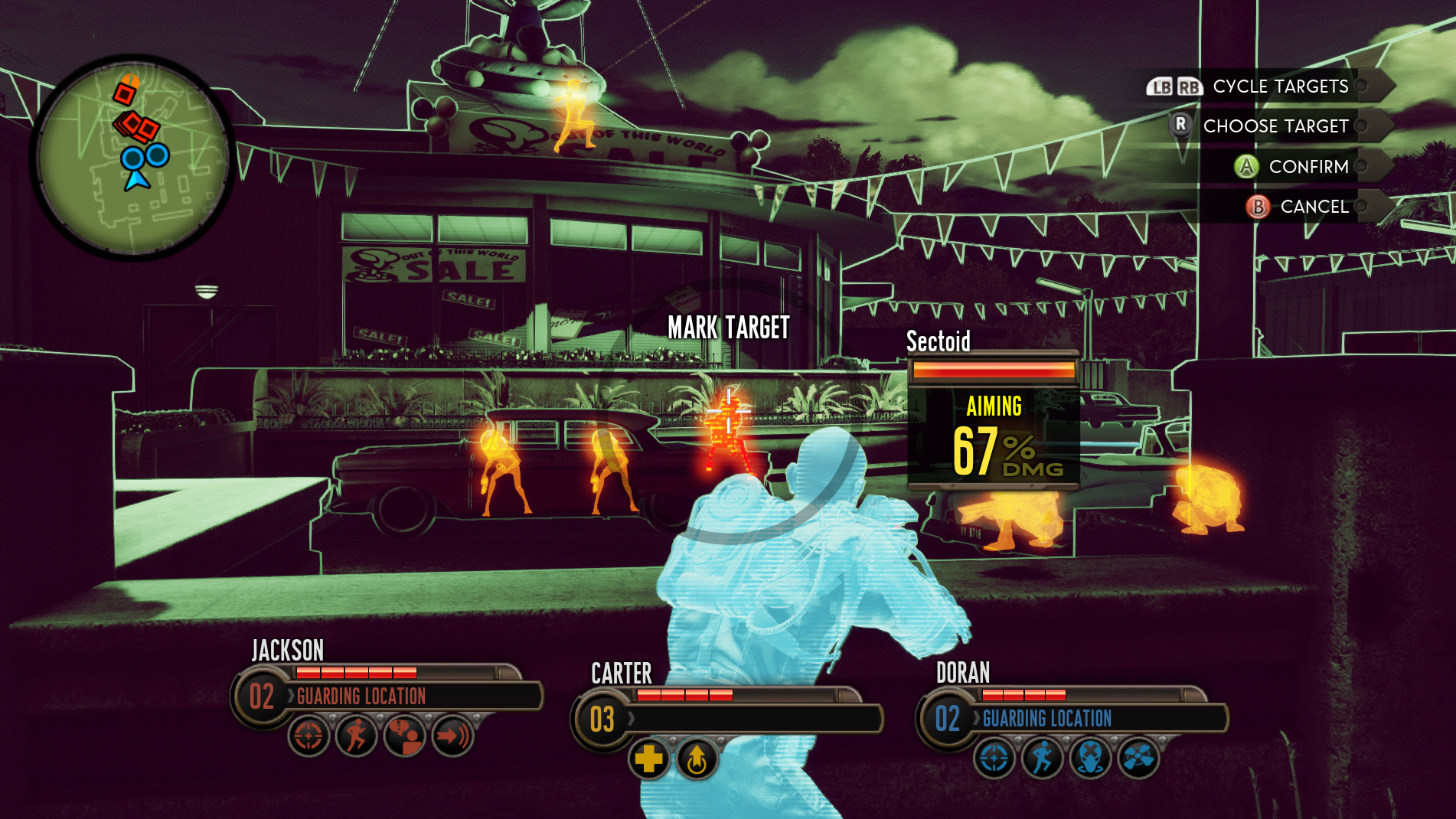
XCOM is a third-person cover-based tactical shooter. It pretty much feels like a zoomed-in, more detailed Enemy Unknown. You will encounter some of the same enemies, and the art style is even the same. You can snap into a cove and order your squad to do things like lift an enemy up, heal, revive, throw out traps like mines, sharpshoot an enemy, etc. You can queue these up while time slows down and watch it all unfold. It’s a very powerful tool in this game and can get you out in a pinch. The shooting itself is mediocre. Weapons never feel all that powerful and somehow just feel off. Ammo runs out constantly, and you can end up weaponless a lot of the time in a hot firefight. At least the levels are well laid out enough for you to find adequate cover and plan your attack.
There’s really not much else to the game outside of shooting. You move from fight to fight, pressing switches or finding the intel. The game is a bit on the cinematic side, and the opening sequence is pretty awesome. Once you are back at HQ, you can walk around and talk to people, start side missions, and upgrade your squad and loadout. You get the same death penalty as in Enemy Unknown. A completely leveled-up squad member can be lost in battle if you don’t revive them in time; however, the revive time is way too quick to pass. It’s not enough time for someone to go to a battleground and save someone. This becomes frustrating since leveling up takes so long. When you do choose squad members, you can choose from snipers, close combat, medics, and various other classes. This mainly just determines their skill tree.
I also found it annoying that weapons are slow to unlock. 25% of the way through the game, I only found a few weapons and two alien weapons. There are various other blueprints or technologies you can find to turn into other things, but they’re not as deep as Enemy Unknown. What’s here is solid fun, but it gets repetitive and boring quickly. Every battle turns out the same; you get the occasional boss fight, but it just gets so monotonous that there would be more substance. The game looks pretty good on PC but looks very dated on consoles. It’s nothing special, but the attention to detail in the Cold War-era atmosphere is pretty awesome and engaging.
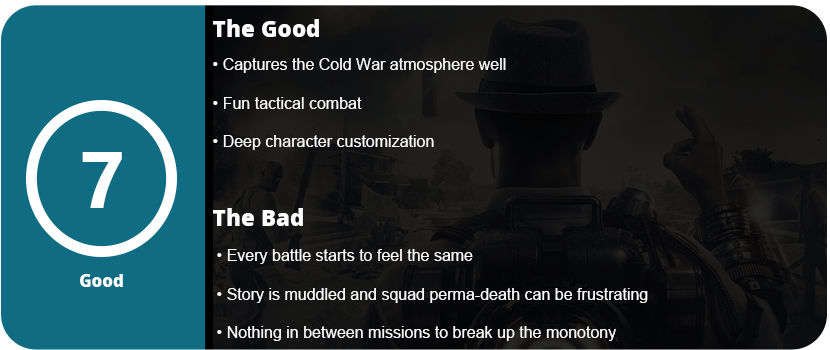
As it stands, The Bureau is a solid shooter that takes the tactical RTS gameplay and puts you in the driver’s seat. The atmosphere is well captured, and the skill tree system makes battles easier, but the frustration of perma-loss when a squad member dies is excruciating. The overall combat can get dull and repetitive early on, with nothing in between.











































 thebinarymessiah.com
Try multiplayer. A lot of fun !