This was one of the strongest console launches I can ever remember. For a first-year, Nintendo pumped out some fantastic games, as well as the strongest third-party support they have had in a decade. The system still has room to grow, but so far it’s impressive.
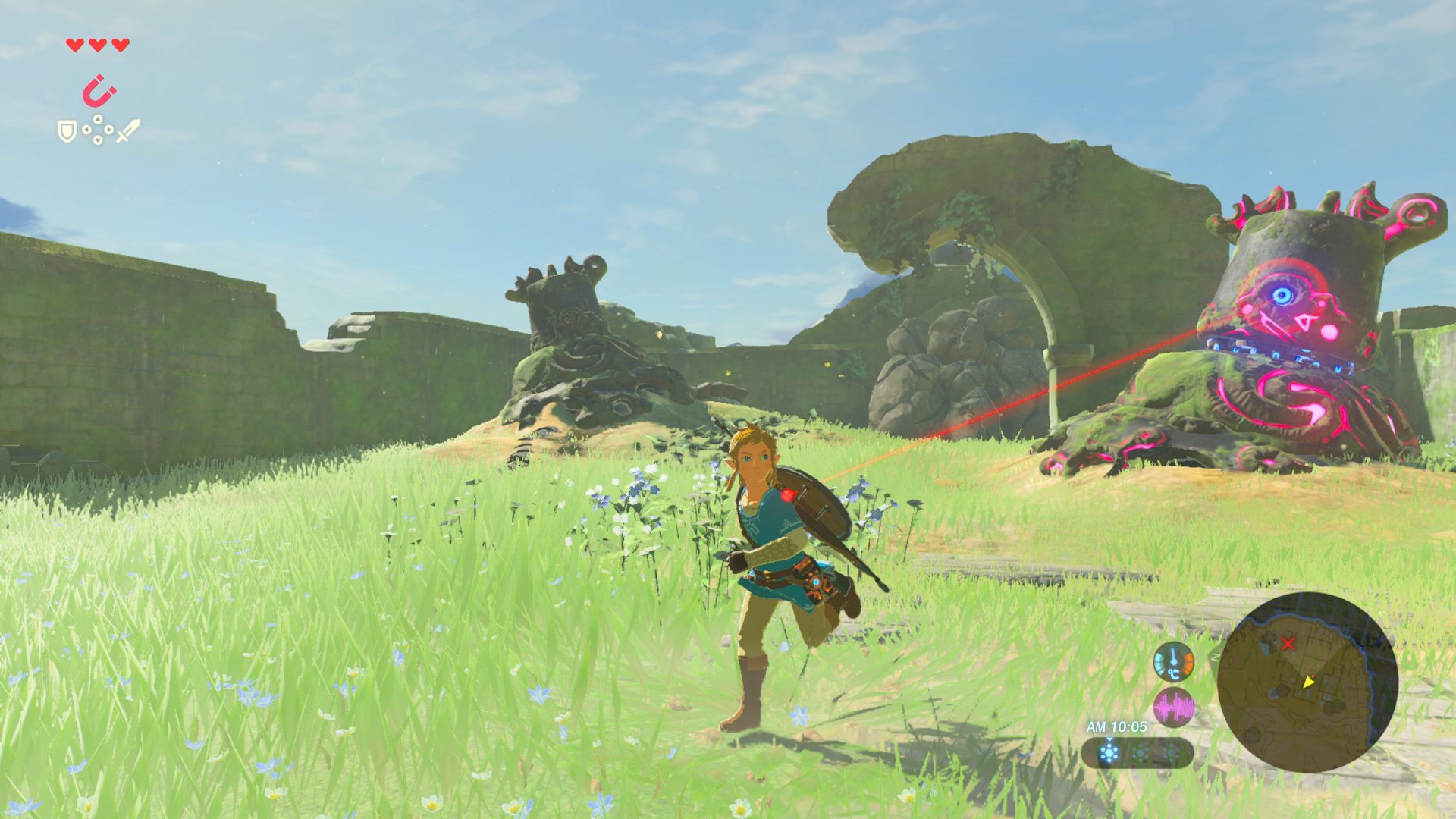
The Legend of Zelda: Breath of the Wild
Breath of the Wild isn’t just a superb open-world game set in the Zelda universe, but it changes the Zelda formula forever. One of the most popular and well-known franchises in entertainment history has just changed everything on the Switch, which is the biggest deal since Ocarina of Time nearly 2 decades ago. It pushes the Switch to its limits, looks gorgeous, plays amazingly smooth, and is so immersive and deep.
The splashing of waves, the grass between your toes, the ash in your eyes, and Dunmer at your feet. Ah, it’s nice to be back in Morrowind! I was surprised when I found out Dragonborn took place on Solstheim, which is a volcanic island just off the coast of Morrowind. You arrive there due to a strange, occult thing happening. People are building relics in their sleep—basically, sleepwalking and building. You ask around about a guy named Miraak, and people say he sounds familiar, but they can’t quite remember. As you ask around in the main city, Raven Rock, you will be greeted by Devin Mallory’s brother and various other people who are very interesting to talk to.
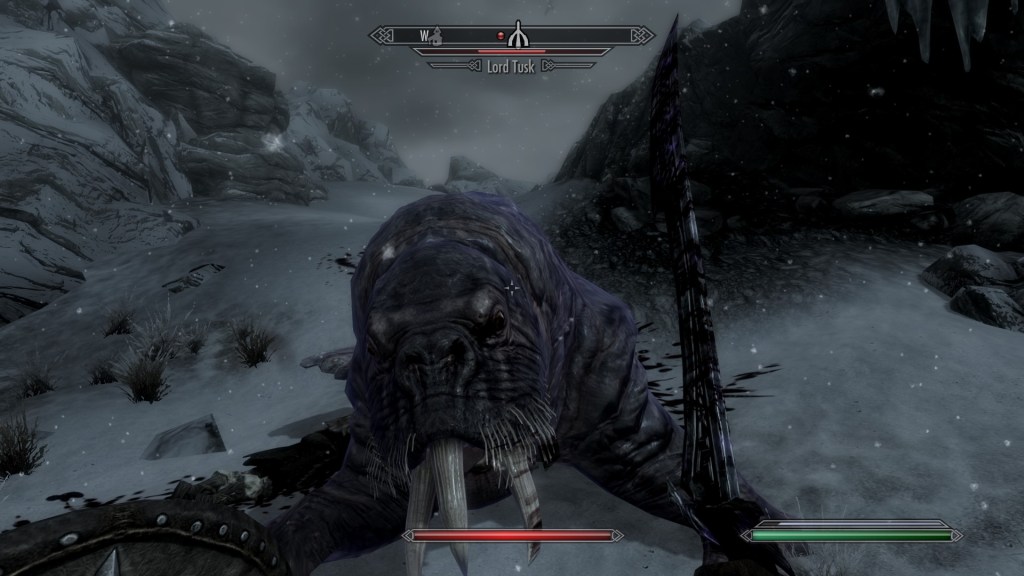
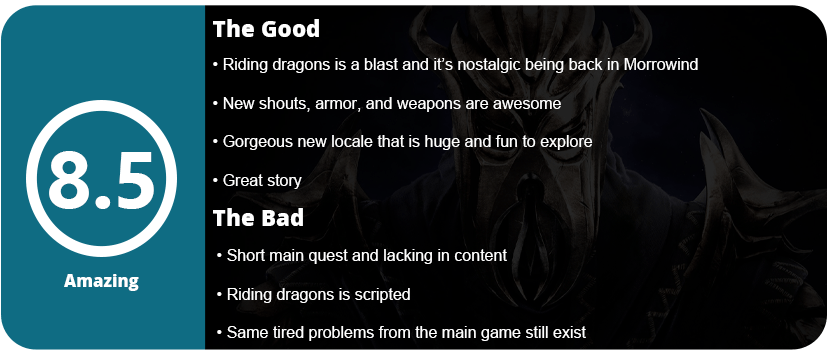
I first have to mention that Dragonborn has some of the best art in any Elder Scrolls game. When you start getting the Black Books and travel to Apocrypha (Hermaes Mora’s territory), you will be stunned. It’s very Lovecraftian with the Lurker and Seeker enemies. There are strange tunnels that move, walls made of sticks, floors covered in paper with arcane writing, and strange magic and objects. I loved these areas and enjoyed them immensely. However, the main quest line is super short; there are more side quests here, which is good, I guess. The final fight with Miraak (not a spoiler, it’s obvious) is very challenging, and you get to ride freaking dragons! This is probably the most powerful thing added to an Elder Scrolls game. I love the new shouts, such as Bend Will. This will make enemies fight alongside you. The new Bonemold and Chitin armor looks awesome, as do some new weapons. There’s quite a bit here, a nice chunk of the game, and a great final goodbye to Skyrim.
Many of the quests are more puzzle-related and quite challenging. It was nice to be really challenged by exploration in Dragonborn. One final quest has you finding cubes in an old Dwemer ruin. You have to place them in a certain order and run around finding them to open up new parts. The enemies are challenging, and I found it all quite fun. There’s plenty of Morrowind lore here for longtime fans and newcomers who don’t know much about it.
I warn you, though, that you need to be at least level 20 to start this. I came in at level 7 and got my butt handed to me by the Ash Spawn, the first enemies you will encounter. I died in just one hit, so be careful. I also hated how there was no place to train for smithing, and there was only one major town. At least you can fast travel to and from Skyrim via the map and not by boat every time. I was also upset that you didn’t get to ride dragons until the final quest, and it’s very brief. Also, be warned: Miraak will steal all your dragon souls if you kill dragons in Solstheim. He’s a real bastard.
Overall, Dragonborn is a solid and final DLC for Skyrim. It is much better than Dawnguard in the sense that the story is more interesting, but there aren’t two sides to play. Being able to ride dragons is a major addition to the game; the enemies are interesting and challenging; the art looks fantastic; and the lore is great.
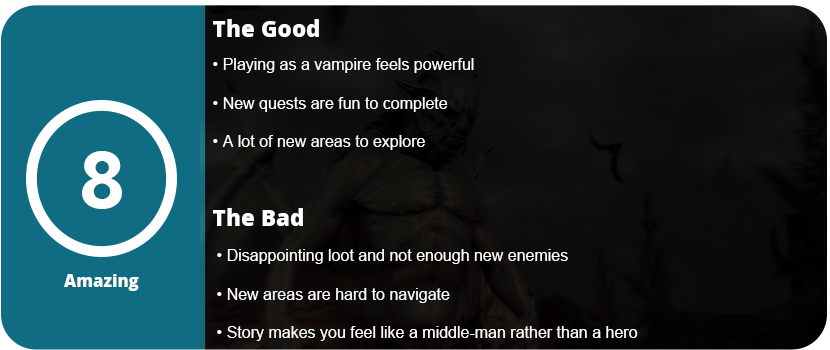
It took quite a while for a DLC to come out for Skyrim, but here it is. Vampirism is where this one will take you, and while it is a fun ride, it is quite short and a bit lacking in content. You can choose to side with the vampires or Dawnguard, but the main storyline is the same. I found all the quests fun, with some beautiful new locales, but I really wish this DLC was more.
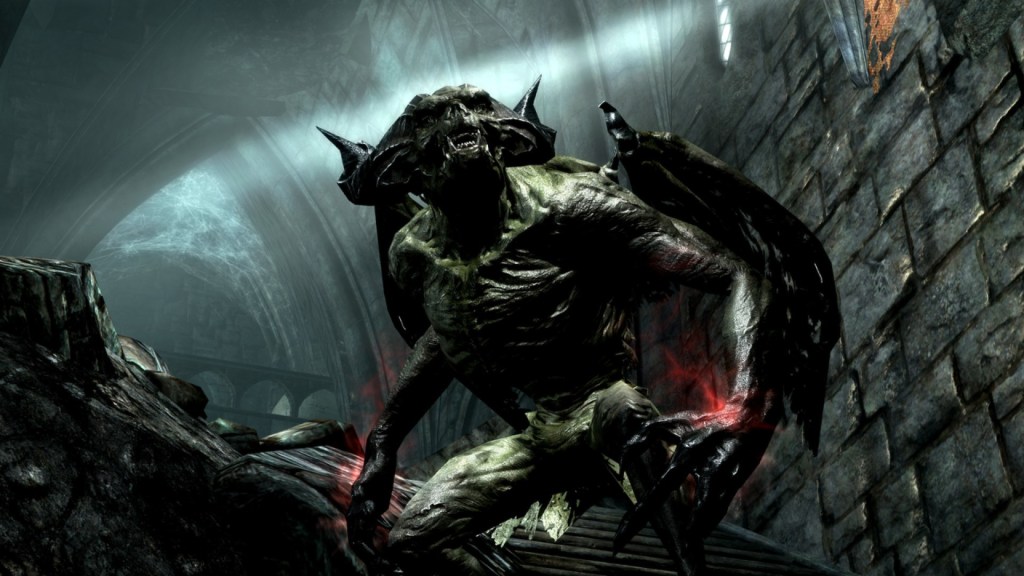
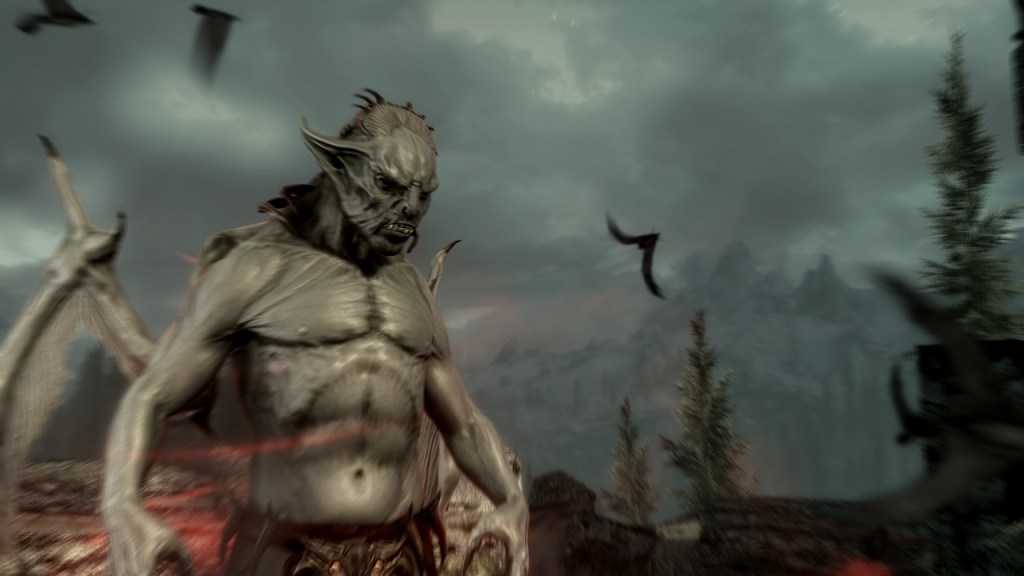
You start by hearing about a rumor of a castle off Solitude. Once you arrive, you are greeted by vampires, and the lord of them all asks if you want the gift or not. I, of course, chose to, and I am glad I did. The new vampire form has its own set of perks and skills. Using melee to attack or magic spells is fun, plus the bat teleportation spell is great to use. The vampire design in Dawnguard is fantastic and stays away from cliché looks. They look more like beasts than the typical Hollywood vampires. I chose to side with the vampires, so I can’t tell you how the Dawnguard quests went. The side quests are fun and vary greatly in what to do. The same goes for the main quests, but I have one major complaint about a particular main quest.
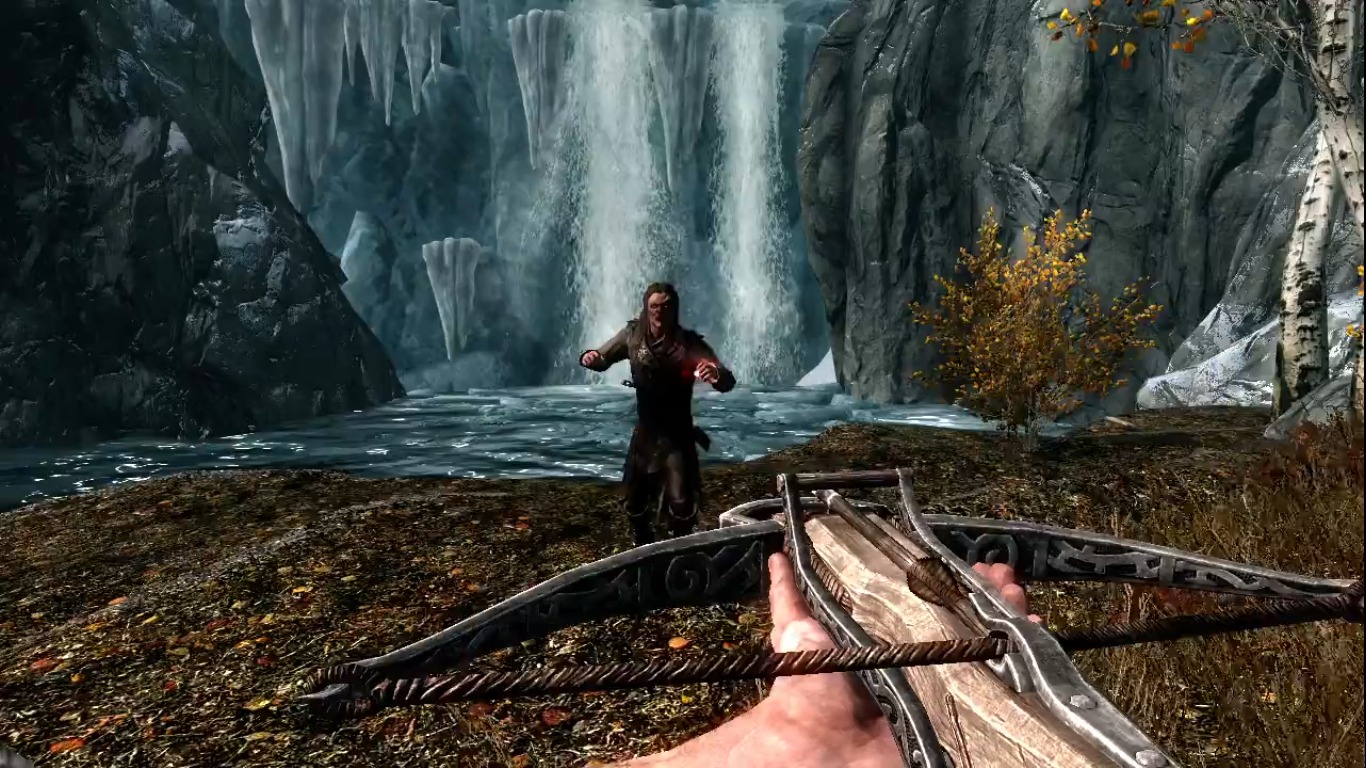
One quest has you trying to figure out how to get Auriel’s Bow from the Snow Elves, yes Snow elves, and this is one confusing quest. You have to pass through 5 different portals that take you to new areas, but the quest marker doesn’t point to them all like most quests. You really have to figure out where to go and this quest will take almost 2 hours to complete. It takes you through vast areas such as icy caverns, phosphorescent caves, and Falmer territory. Because these areas are so vast (probably more vast than any other interior area in Skyrim), you will get lost easily. I spent most of my time trying to figure out where to go because there were so many branching, confusing paths. Some people may like this, but at least make the quest marker point in the right direction.
The DLC is also extremely buggy, with quests that you can’t complete, items that won’t appear or drop, and many other things. I had to advance some quests using the command console because a bug prevented me from moving on. The story is a disappointment as well, because you feel like you’re just the middleman in some family dispute. Serena is a great companion, but the other characters are hard to like because you don’t visit them very often except to get quests. There weren’t any crazy plot twists or anything like that. I honestly felt like this was something that could have just been kept in the main game as a faction quest. For the high price point ($20), there isn’t much loot that you can walk away with and feel satisfied with. The biggest loot is Auriel’s Bow, which is useless for people who aren’t using archery. There are a couple new enemies thrown in, but overall, this DLC doesn’t feel like it is worth $20.
The most important thing is that it is more Skyrim, which is what people want. There are more quests that are fun and allow you to continue leveling up your character and looting. Skyrim may not ever have a Shivering Isles-type expansion, but let’s hope that the future DLC will be more enjoyable than Dawnguard.
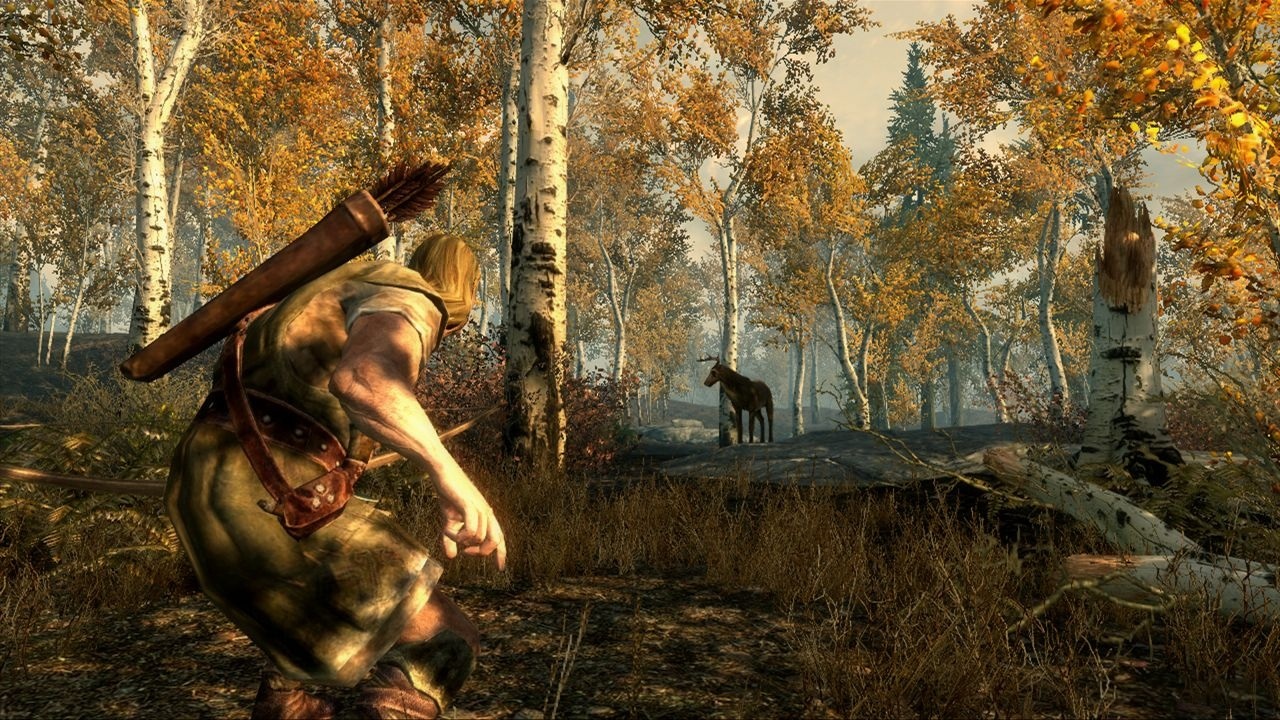
Here it finally is! I had so many great memories with Oblivion back in 2007. I could go on and on about that game, but the fifth game in the series is before us and has taken the world by storm. From creating internet memes to lots of weird videos on YouTube, Skyrim is a behemoth that even non-gamers couldn’t ignore. Skyrim takes place in Well, Skyrim, which is north of Cyrodiil. Cyrodiil was where Oblivion was set, but Skyrim is also set 200 years after those events. Of course, they are talked about in Skyrim, but time isn’t the only change in the game.
You are the Dragonborn, or Dovahkiin, who has the power of the Thu’um, which means you can shout like a dragon. This is actually a major gameplay element in the game, as well as fighting dragons. The map may seem smaller than Cyrodiil, but there is a lot more content in the game. I spent 108 hours on Skyrim, and that was 90% completion of side quests, areas discovered, and finishing the main story. I finished at level 45 and had almost 100,000 gold. In Oblivion, I was able to finish the game at about 95% in 50 hours. That lets you know how much more content there is, so you will be busy for months.
Let’s talk about combat first. The game still has third-person melee combat like the past two games, but it has been revised. The combat feels smoother, and it’s not so much like you’re playing whack-a-mole. There are more elements involved behind the engine, but the thing you will see the most is the perk system that is borrowed from the Fallout series. When you level up, you look to the sky and have a bevy of different areas to gain perks in: magick areas, combat, defense, and even blacksmithing (more on that later). Concentrate on one area and try to get as many perks as you can. This gets rid of the system from Oblivion where you can only level up to something if you use it, like jumping around like a bunny to increase endurance, etc. If you use light armor, you will gain levels (up to 100 in every category) in that area. Use two-handed weapons or destruction spells, and you will gain levels quickly. The perks allow you to gain and build on that area instead of solely relying on users to gain levels.
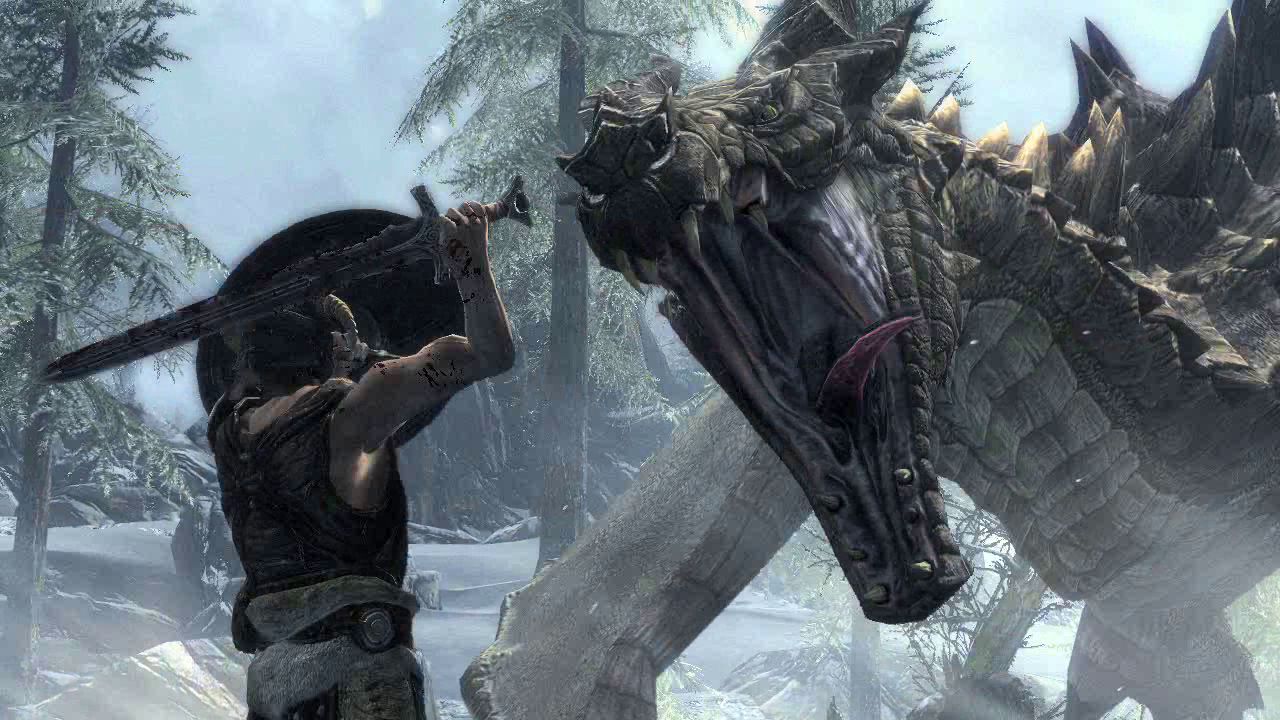
Of course, there are new enemies in the game, like Draugrs and dragons. Dragons should be avoided early on until at least level 10 because you will die in one hit. Once you kill these beasts, you gain their soul and can use it to unlock dragon shouts. Shouts consist of powers like unrelenting force, slow time, and fire breath. Each shout has three levels, but you need to find those words by exploring dungeons throughout the world. Dragons are just awesome creatures to fight because they are the biggest enemy ever put into a TES game. Of course, you need to watch out for wildlife like bears, crabs, leopards, etc. The world of Skyrim is dangerous and cold, so beware. Sneaking is still a huge problem because it seems no matter how good your sneaking skill is, you still get caught, especially when pickpocketing.
Factions are a huge part of TES, and Skyrim doesn’t leave you out. The thieves, dark brotherhood, mages, and fighter guild are all here, but bigger and better. The stories are more fleshed out and are a lot longer, plus your rewards are better. The Dark Brotherhood and Thieves Guild stories were my favorites, and they show you just how deep into the lore and story you can get. Everything else from past TES games you remember is here, like choices during dialog, but thankfully the whole persuasion mini-game is gone from Oblivion. There are a lot more main characters, and the voice acting is more varied, but everyone has Nordic accents because Skyrim has a Viking/Nordic setting, which is a huge departure from Oblivion’s strictly medieval tone.
Looting is a huge part of TES, and Skyrim doesn’t disappoint here. There is so much to loot that even after 100 hours, you will still scour every nook and cranny for stuff to sell at shops. Lockpicking has been improved and is much quicker this time around. Menus have also been improved with a nice four-way system leading to items, magic, maps, and skills. This gets rid of Oblivion’s awful Excel sheet-type menus. Of course, my complaint here is that you can’t compare items anymore, which is a major pain. You have to remember statistics, which is a bigger pain when shopping.
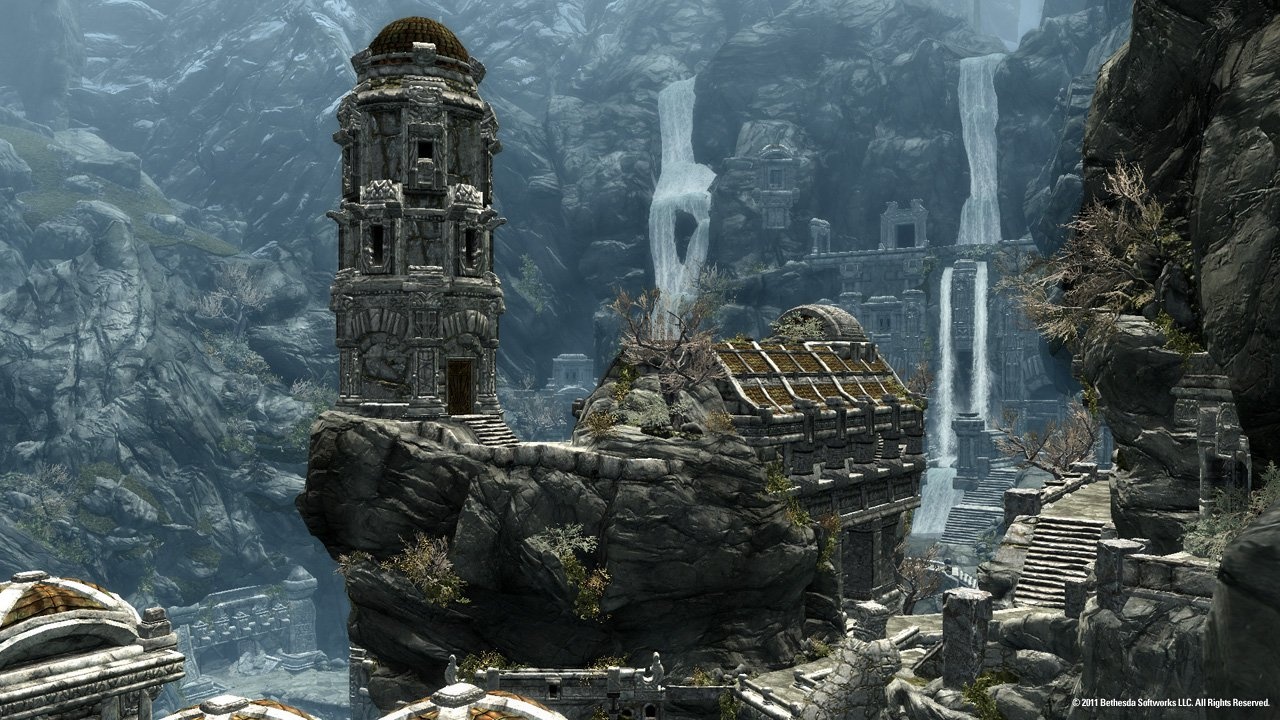
Skyrim has a forging system where you can get ingots for various medals as well as leather. Use these to forge weapons and armor in different categories, like Daedric, Leather, Studded, Iron, Glass, Ebony, etc. You can upgrade these on benches for armor and grindstones for weapons. This makes the whole armor and weapon system feel more custom-made to your liking than just what is out there. The armor and weapons are over double what is in Oblivion. Those are all the major changes in Skyrim, but there is so much detail here that you have to play the game to truly see what I am talking about. You can even read every single book in the game. There is so much detail here. Fans of the series will love the deepened and richer lore of the races and parts of the TES series. There are tons of them here. You even get to explore ancient Dwemer (Dwarven) ruins.
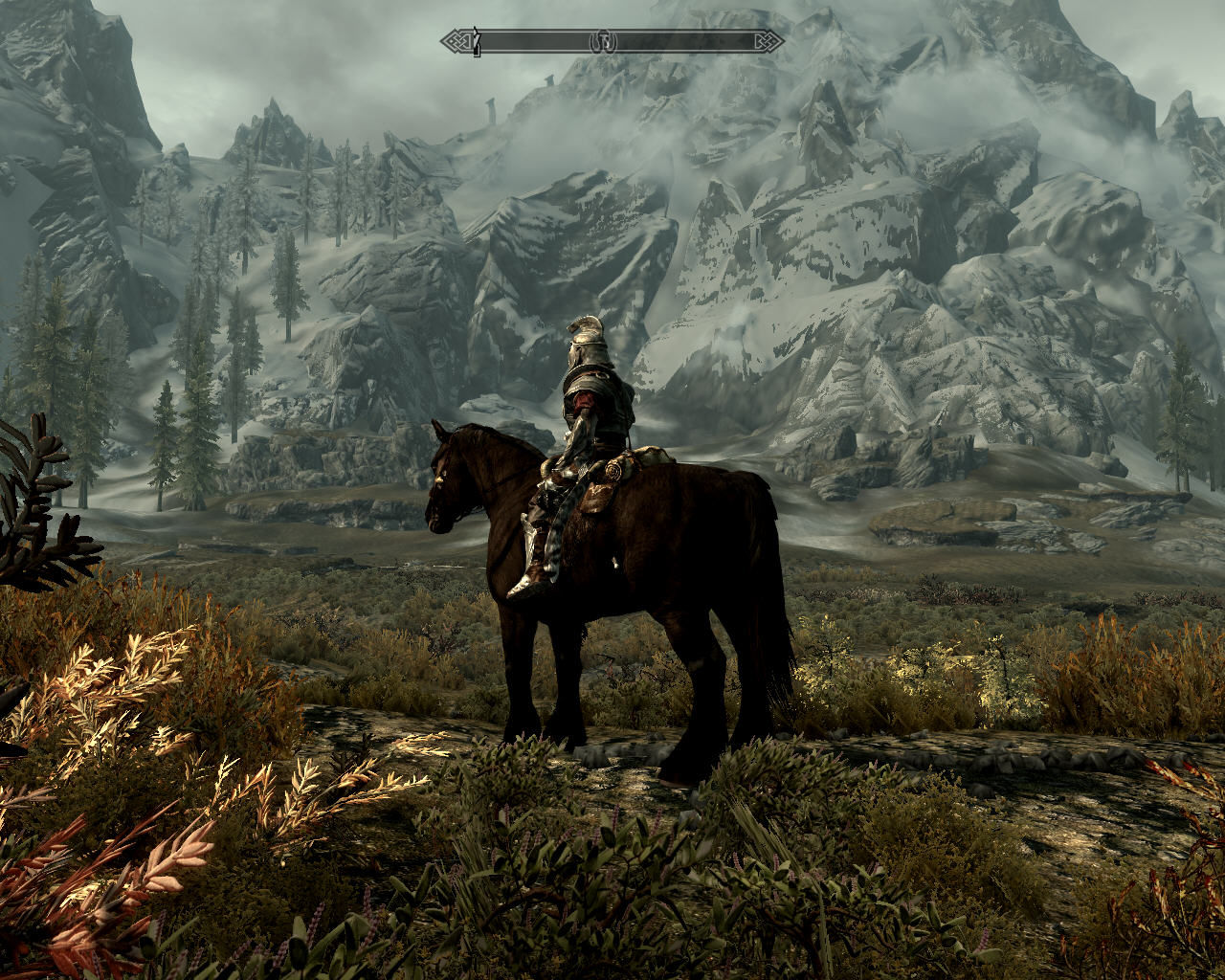
Horseback riding is back, and even the third-person view has been greatly improved, as have the animations. There are so many major changes, as well as minor changes, that I can’t even remember them all. However, there is a huge issue with this game, and that is bugs. There were so many bugs upon release that stopped quests from continuing: quest items being lost, stuck in areas, graphics bugs, dragons flying backward, and everything else you can imagine. Even after a few patches, there are still some bugs, and probably a few that will never be fixed. This is unacceptable, even for a large game like this. Thankfully, there is a huge mod community that fixed a lot of this first, but the stock game has problems that console gamers can’t fix.
The models are still ugly, and the woman still looks like a man. PC gamers get high-resolution textures, which make the game look amazing, but the consoles are stuck with low-res graphics that look kind of dated. The lighting in Skyrim is great, but with so many issues cosmetically, you really should get the PC version. Mods out there transform women into beautiful heroines straight out of comic books, with amazing new armor, new lighting, graphical effects, etc. The stock game is really lacking technically, and that disappointed me quite a bit. If you can look past all this, Skyrim is one of my favorite RPGs of all time and sits right up there with Oblivion.
Collector’s Edition: Hardcore fans may want to drop the extra $90 for the monster collector’s edition. You get a giant statue of Alduin that is an in-game model, a giant coffee table-style art book, a making-of DVD, and a steel bookcase. The statue is worth the extra money itself, and it looks amazing. Of course, this is for hardcore fans only, but good luck finding one.
An atmosphere is what delivers emotion and overall feelings in the game. The atmosphere can make a game scary, colorful, cartoony, or make you feel alone and sad. Atmosphere much matches and represent the idea of the game. Sometimes the atmosphere isn’t delivered right and can make a game feel boring, or just look bad.
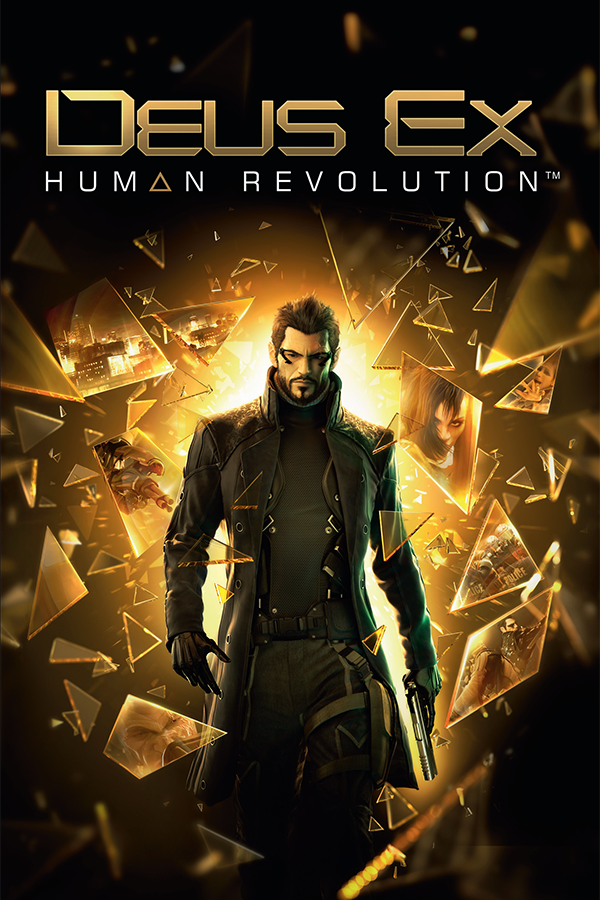
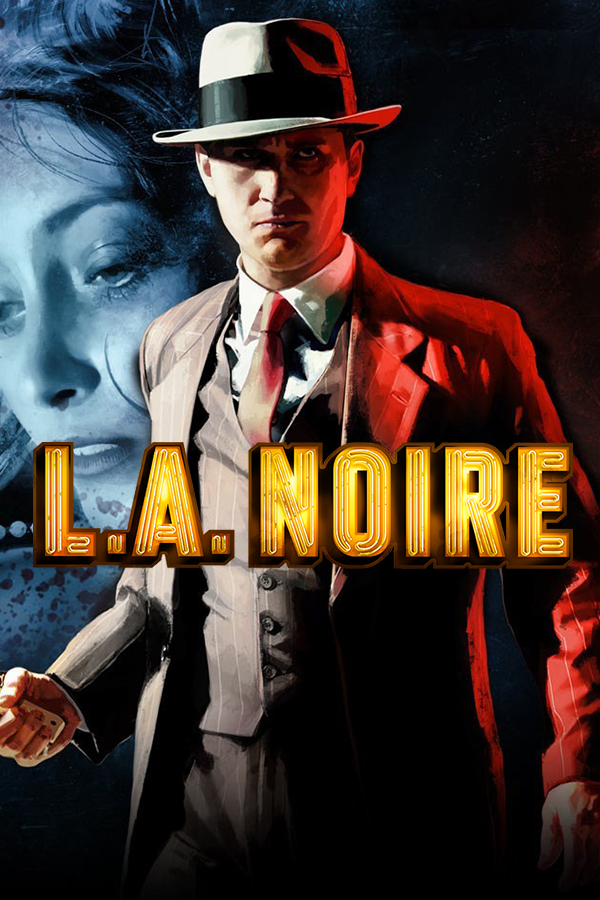
The Best Atmosphere category was even harder than last year’s because so many great AAA titles came out with strong atmospheres. There were also some games I didn’t get a chance to squeeze into the runner-up’s area so that tells you how well this category did this year. While some of the others may have better art to back up their atmosphere L.A. Noire does something that most can’t: Make an atmosphere without fancy art or licenses. L.A. Noire is a new IP and pulls off a 1940’s era in realistic detail and really pulls you in and brings you into a time period that most games don’t explore outside World War II. L.A. Noire had amazing visuals to back it, but to make the game feel so true to an era is very hard to do. You don’t need fancy art for that.





















































 thebinarymessiah.com
Try multiplayer. A lot of fun !