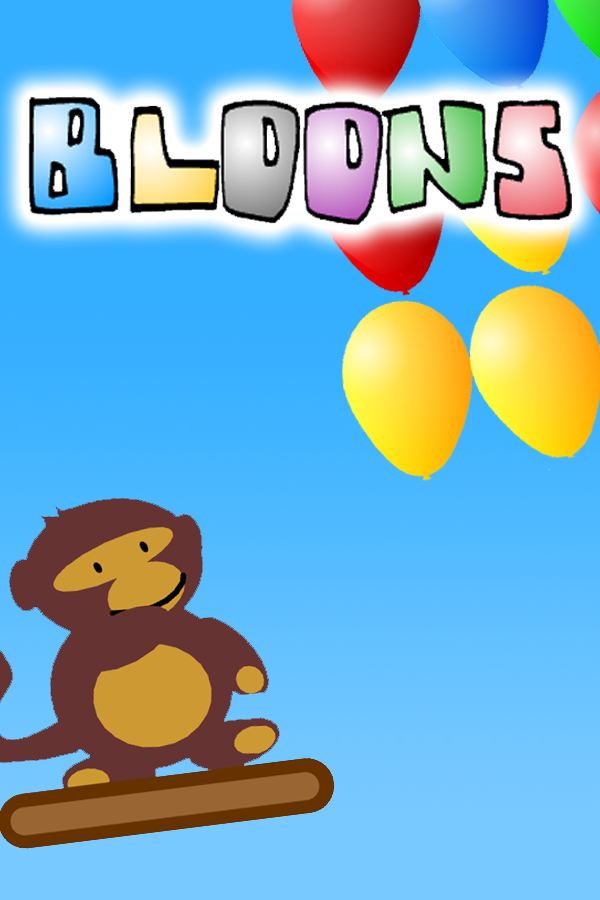
If you haven’t already heard, the PSP Go is out (a.k.a. PSP-N1000), and alongside this, Sony launched the PSP Mini lineup, which is a line of cell phone games ported to the PSP. Some of these ports were updated, and some weren’t. Bloons is a puzzle game that has a mix of Bust-A-Move and darts and will keep you busy for quite a while.
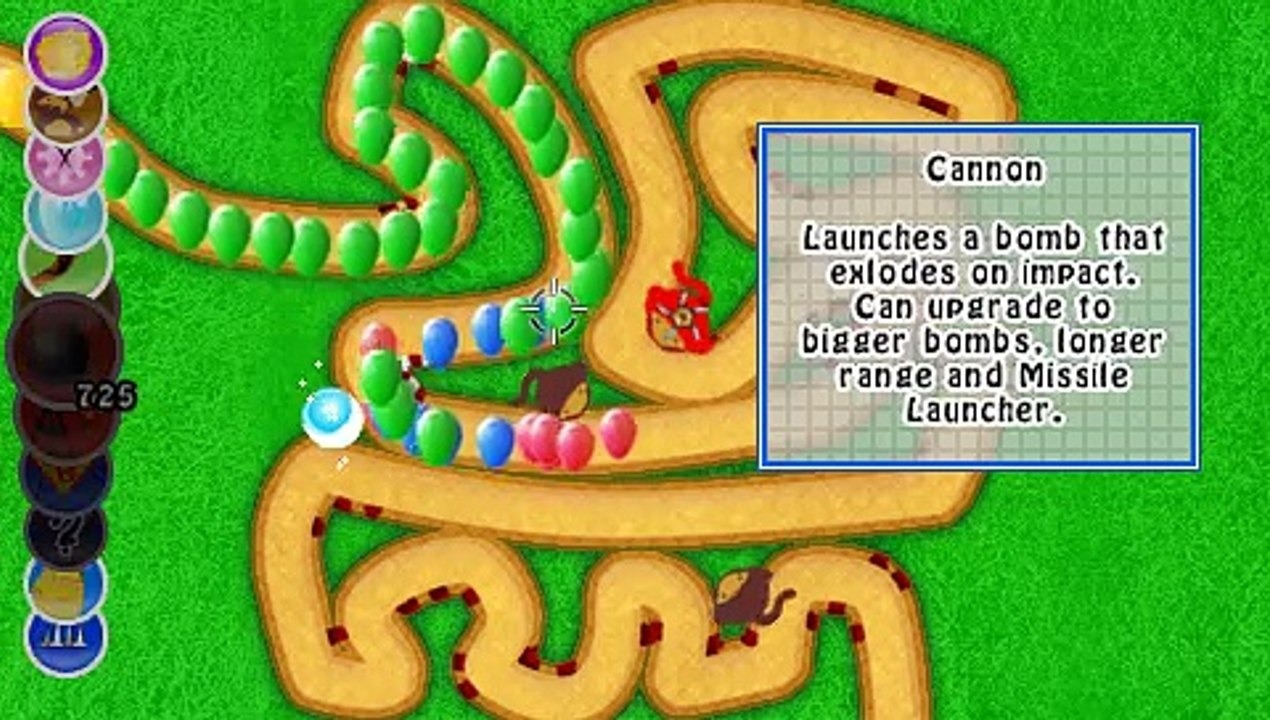
You are a monkey with an arrow that you can spin around and stretch out. The farther you stretch it out, the less of an arch your throw will be. You get a set amount of darts at each level to complete the objective. There are a minimum number of balloons you need to pop to pass, and sometimes there are obstacles in your way. There are quite a few, actually: brick walls you need to shoot around, ice balloons that freeze all nearby ones, a bouncy rope that bounces back your darts, breakable bricks, and the list goes on. I never felt bored with this game since each level is different and the progression in difficulty is fairly nice.
The main issue I had with the game was that it was too simple, and the arrow takes forever to turn around. The graphics are very simple and don’t really push the PSP at all, plus the sound is pretty empty with the same music loop and annoying sounds. Otherwise, Bloons is an excellent way to pass the time and should definitely be picked up.
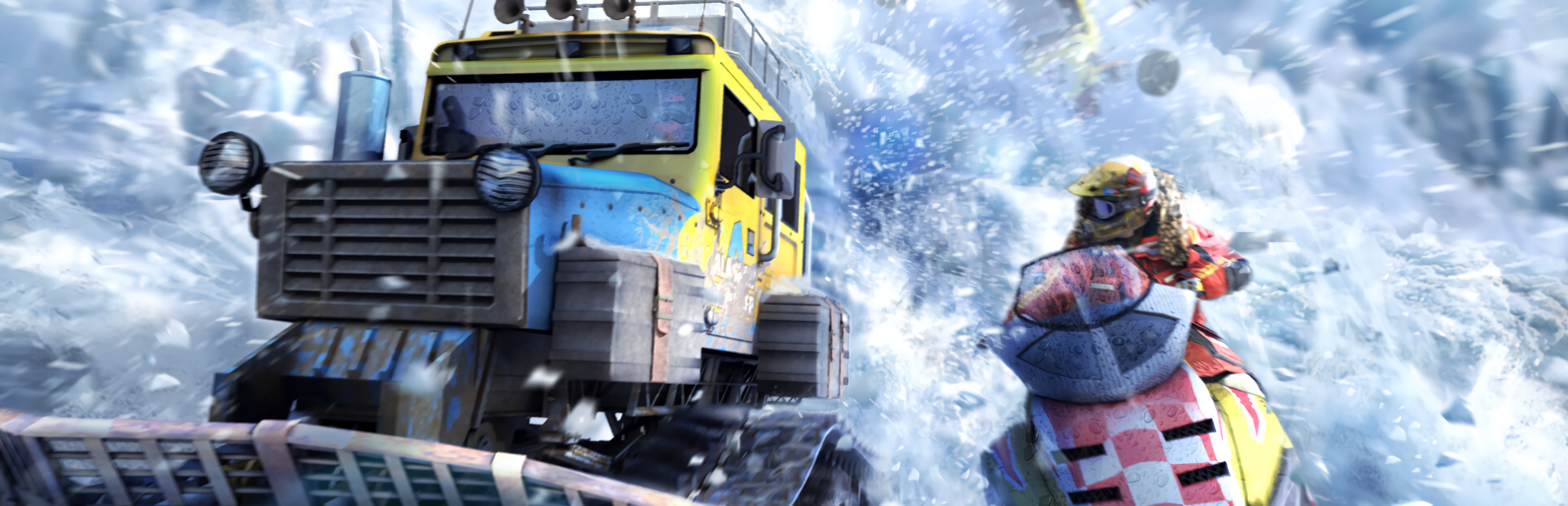
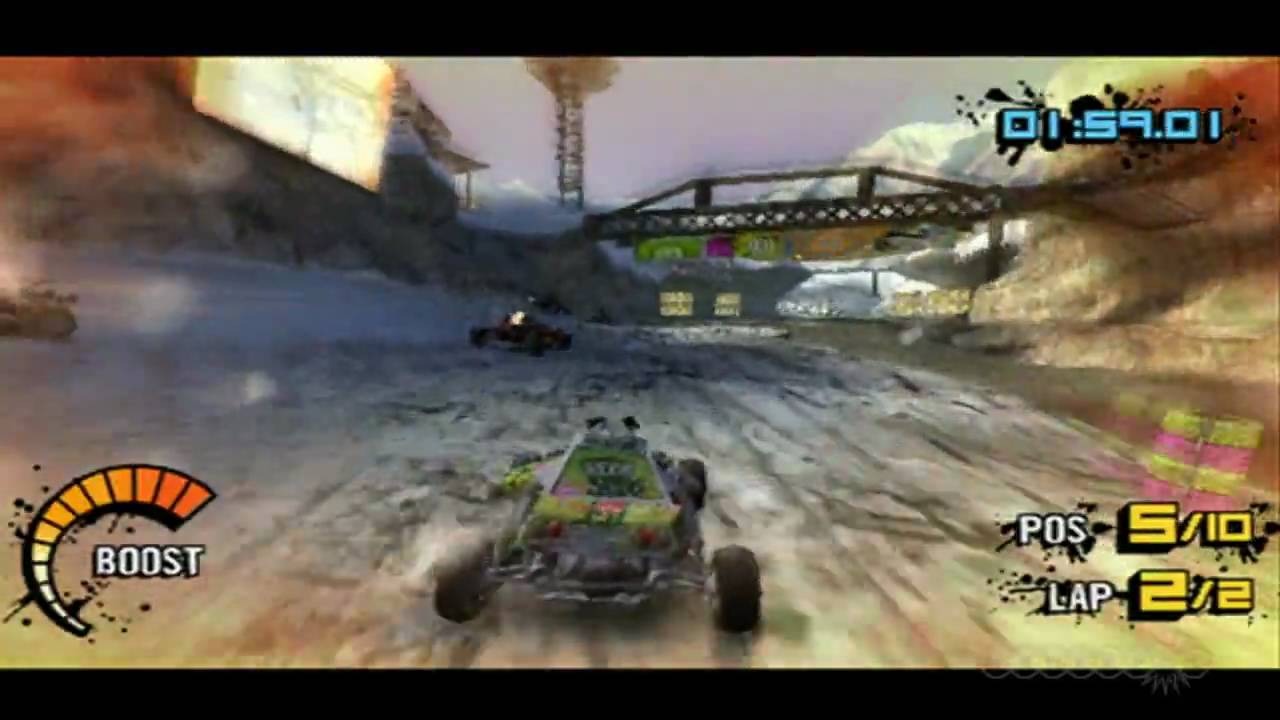
The PSP is chock-full of racing games, probably more so than any other handheld or console. The reason being that racing games are perfect for a handheld format, the PSP can display nice graphics and great physics (very important for a racer), and the analog nub is perfect for this. While there are dozens of mediocre to poor racers on the PSP Arctic Edge. Being one of the best-looking games on the system is a real plus, but it’s the fast-paced action that MotorStorm fans have grown to love that really pulls it off in the first place.
One thing I love about Arctic Edge is the menus; they’re easy to navigate and aren’t a jumbled mess. Getting into the career mode is simple since they put all the events in a rotating column that you slowly rise to depending on your rank. You can place 1st, 2nd, or 3rd in each race to earn points to advance to your next rank. There are a few race types that include regular races, checkpoint races, time trials, and so on. After you select your vehicle, you get to choose from a selection of vehicles, and there are many types. Ranging from snowmobiles to bikes, ATVs, snow trucks, and much more, you’ll have a large variety. Each vehicle handles differently on certain terrain, so choose wisely.
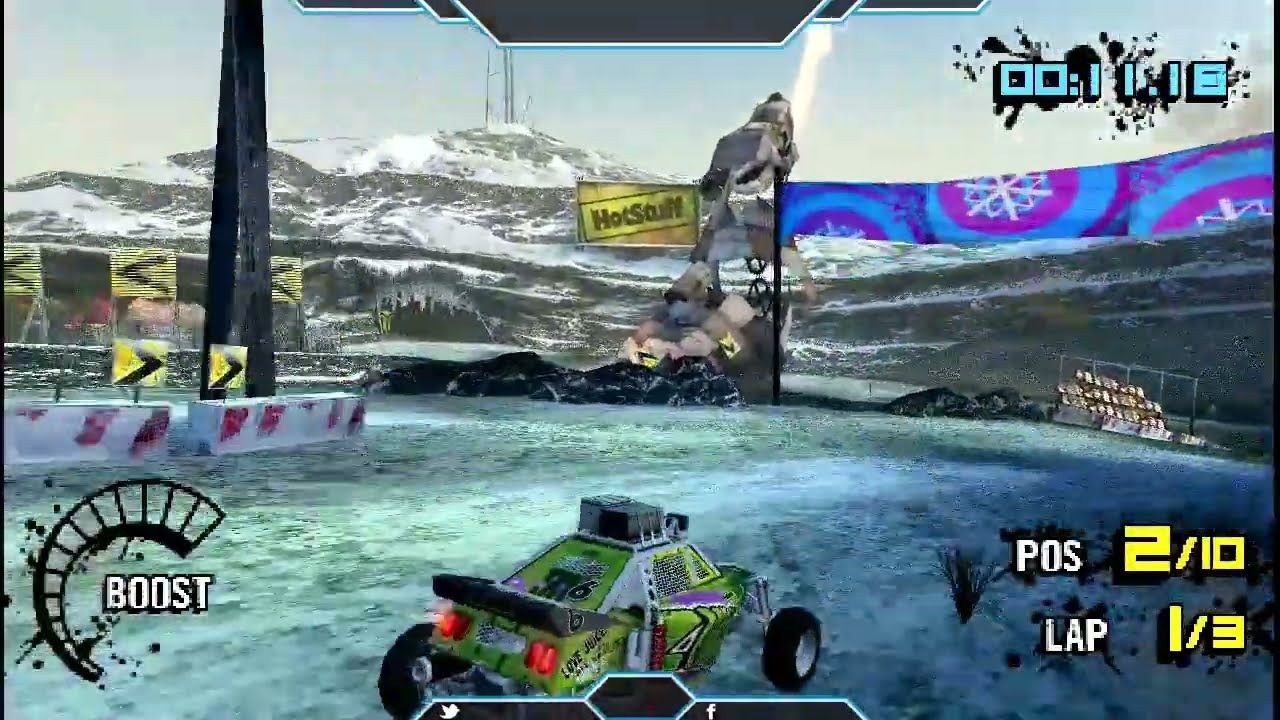
When it comes to actually racing, you’re in for a treat. You get a boost meter, but this can be used as many times as you want, just as long as you don’t overheat your vehicle and blow it up. You can cool down your meter by driving through water or deep snow. I found this very unique since I can’t recall it ever being done in another racing game. If that’s not enough to entice you, the sense of speed is amazing. The only problem is that I wish there were some blur effects or something, but what they do works just fine. There are different paths you can take on the tracks, and depending on your vehicle, some may not be a wise choice. The higher paths are for smaller vehicles, and the lower paths are for larger vehicles. Each track is laid out with deadly obstacles that you can smash into, but a quick press of the reset button will get your back on your wheels. The core of the racing is just really fun, but it does get repetitive after a while since that’s all there is to do.
Customizing your vehicles is nothing special since it’s your bare bones basics. I really wish that if there’s going to be customization, make it deep or don’t bother at all. You can unlock new parts, but all the upgrading is cosmetic since you unlock faster cars. The multiplayer is what will keep you coming back since there’s infrastructure. Yes, I know, all PSP games should have this in their multiplayer, and the racing is great since the computer-controlled AI is very odd. My only real hate for the game is the lack of custom soundtracks. The game dishes out a mediocre soundtrack that can grind on your nerves after a while, so shame on you, Sony, for providing this. Other than that, Arctic Edge is a great racing game on the PSP to pass the time.
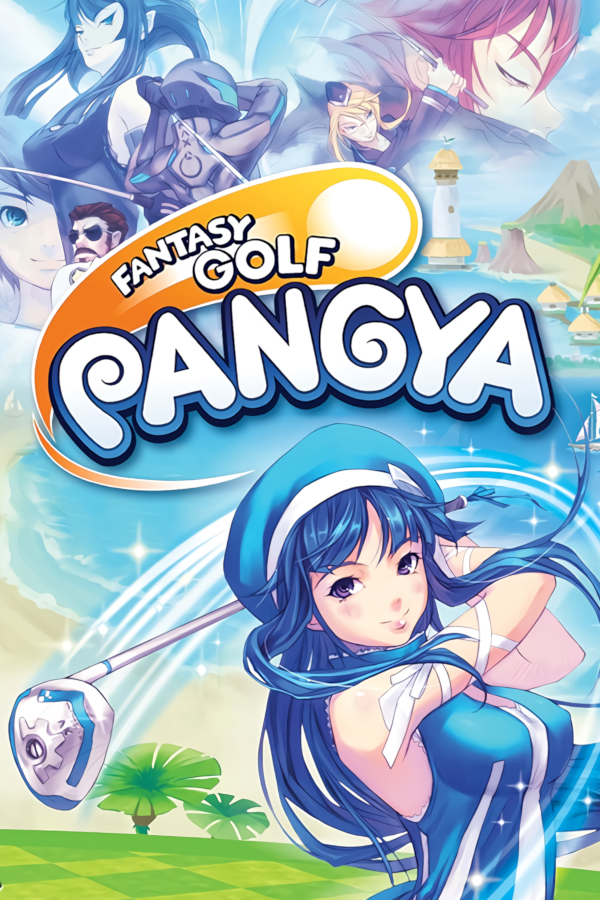
A long time ago, in a parallel dimension to Earth, there was a magical island world known simply as Pangya. All was peaceful in Pangya until one day, an evil force summoned by the Demon King came crashing down upon the land. This dark energy created a force field around Pangya that drained life from the land. The world of Pangya grew weaker with every passing day. Flowers withered, trees turned barren, and the earth lost its green. The people of Pangya could not come up with a solution to rid their land of an evil presence.
Until the inhabitants of the land realized that all of the life force from Pangya was being drained to the Demon King through a hole in the force field, A plan rose to plug the hole with a crystal filled with the spirit force of all living things. The power of the crystal became so great that it could not be touched by human hands. So the people in Pangya created the Air Lance, a tool in the shape of a stick to hit the mythical Phoenix ball into the hole of the evil force field. This difficult task was eventually completed by a warrior from Earth, ridding the world of the evil force for good. In honor of this warrior, the game of Albatross 18 is being played throughout the world of Pangya. The name Albatross was chosen because it is the best shot one can hit in the game outside of a hole-in-one. Today, you have been invited to play Albatross 18. Are you ready to show your skills?
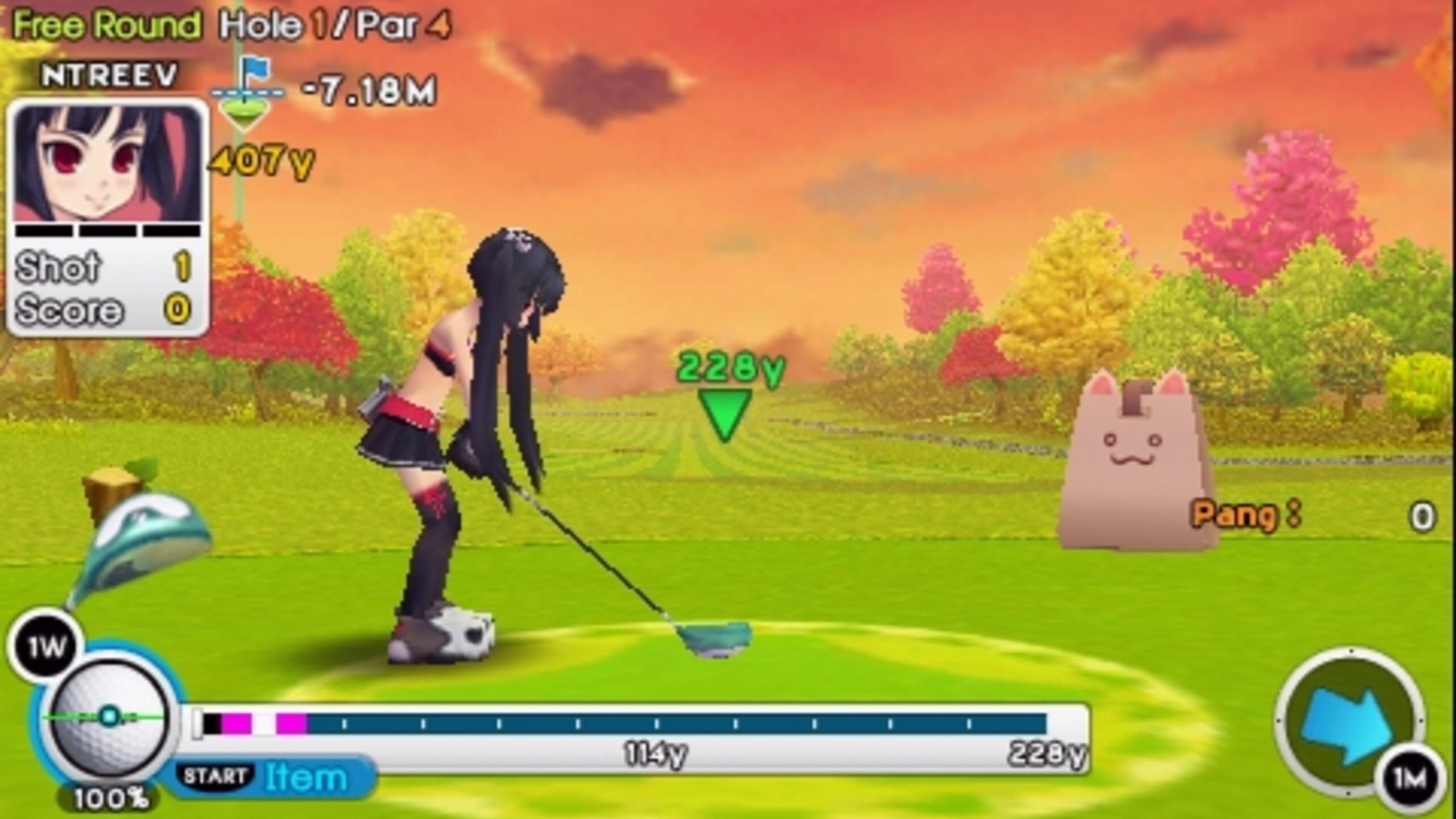
The game of Albatross 18 looks remarkably like golf; in fact, it is golf. When you start out in Pangya’s story mode, you set off into nicely laid-out courses with colorful names such as Wiz Wiz, Blue Moon, and Silvia Cannon. Playing the game is easy; simply pick your distance, then your power, and’swing!’ you’re off to the first hole. Wait a minute; there is a bit more depth than that. Differently colored blocks on the left indicate a certain action. Hitting just when it is white produces the perfect shot, while black or pink will make you tee, putting a point on your par count. Despite its creative-looking setting, Pangya still carries aspects such as the wind, the level of the terrain, obstacles, bunkers, the fairways, the rough, the green, and yes, even putting. Different characters are available to play with, and most can drive down a course anywhere between 210 and 260 yards. If the wind is facing you, you will probably nail about 235 if your character can drive 260. This is extremely important when shooting over a river or over a cliff since you will come short and get an out-of-bounds penalty.
The whole point of Pangya is to get your ball into the cup before the other player and do so with the fewest shots. Each player will take turns deciding what conditions will improve their shot. You need to adjust accordingly and use your quick finger to get a perfect Pangya shot. Pangya shots will bring your ball exactly where you want it, and anywhere outside the white box will make your ball come short. Pangya follows the traditional golf gameplay in most places but adds one little twist: power shots. Power shots come in different forms, ranging from the power spin that makes your ball roll back a few yards to the tomahawk, which makes your ball stop dead where it lands without rolling along with others. These sound useful, but the execution is so hard to pull off that you will quickly abandon the idea.
While most of the game’s mechanics sound solid and easy to understand, not every element has been worked out to the point it should have been. Customizing your game, for instance, is about as useless as playing golf with a baseball bat. You can shop at the Pangya store using Pang, the game’s currency, which is earned by completing tournaments. You can buy equipment such as new balls, clubs, and many other items. Buying golf balls adds points to your attributes such as accuracy, spin, and power. Strangely enough, clubs do the same but are just more expensive. The items that can be bought can be used during and will temporarily boost the exact same attributes, but they can also do some more interesting stuff, such as nullify the wind. All these elements could turn a standard game of golf into a true fantasy experience but end up being as exciting as watching paint dry.
The one thing that sets Pangya apart from its peers is its wonderful story and charming characters. Within each episode of the three available chapters, you can play ten characters, and they each have their own unique story. Each character is beautifully drawn, with personalities so vibrant that they pull you in and never let go. Uncle Bob is an angry police officer who entered the tournament just to get some fried chicken, and Max is a famous tennis player who is running from fans that are trying to get his autograph. There is no voice acting, but maybe this is a good thing. Most Japanese games don’t transfer well to American voices.
Contrary to the characters and colorful setting, the quality of the graphics is subpar, with flat and polygonal textures. In fairness, they do get the job done for this otherwise fine golfing game. Pangya is sure to be a pleasant surprise even to people who don’t like or even know how to play golf. Easy controls, wonderful characters, and a fun multiplayer mode will charm you out of your socks.
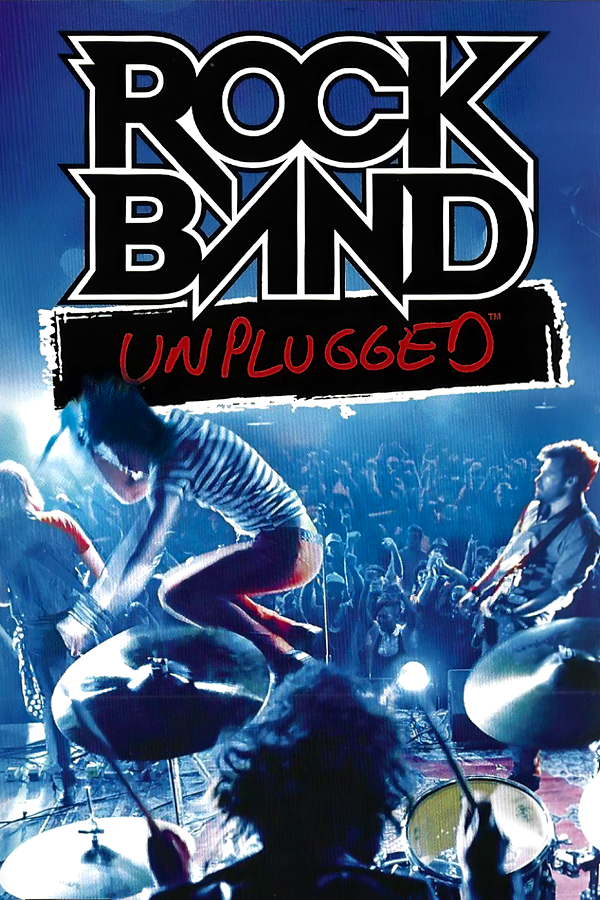
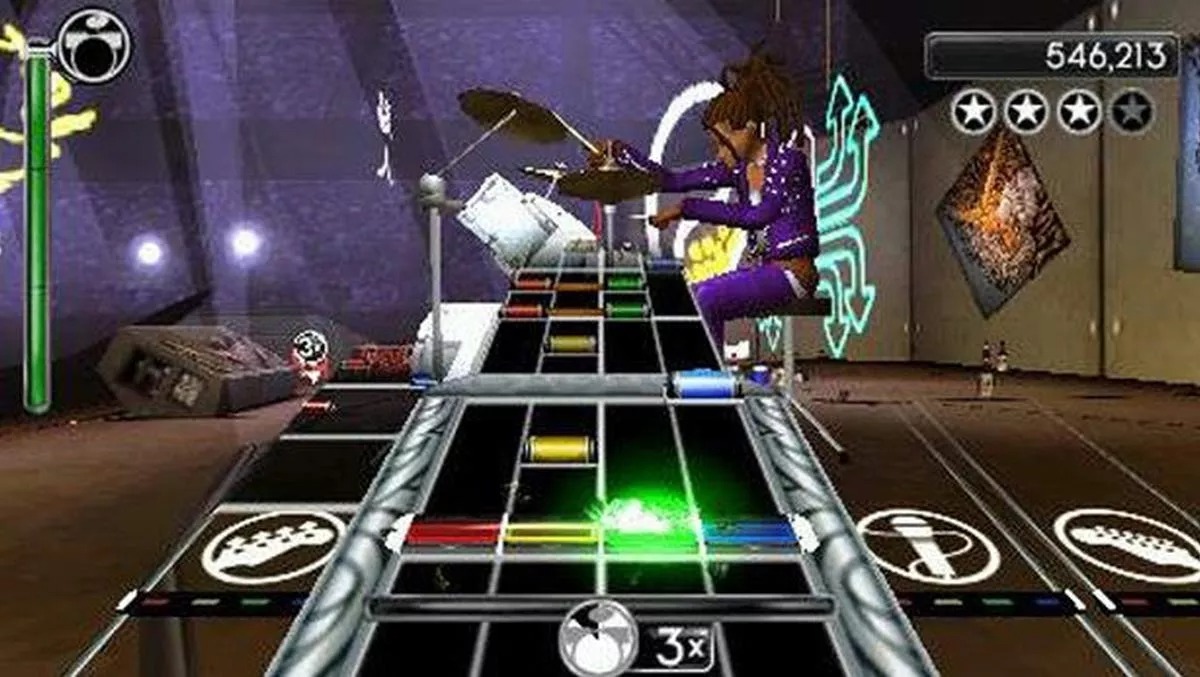
When Rock Band was released back in 2005, it kicked off a whole new era of rhythm games in your home. With Guitar Hero still using only the guitar controller, Rock Band introduced drums and mics to the genre. This brought a whole new meaning to the music genre and spawned many copycats, but none could do it better than Rock Band. Now that Rock Band has hit the portable scene, you just beg to wonder what quality the game has, and how could a game using instruments become so wonderfully executed with four buttons? Well, Unplugged is not a disaster, and the following paragraphs shall prove this to you.
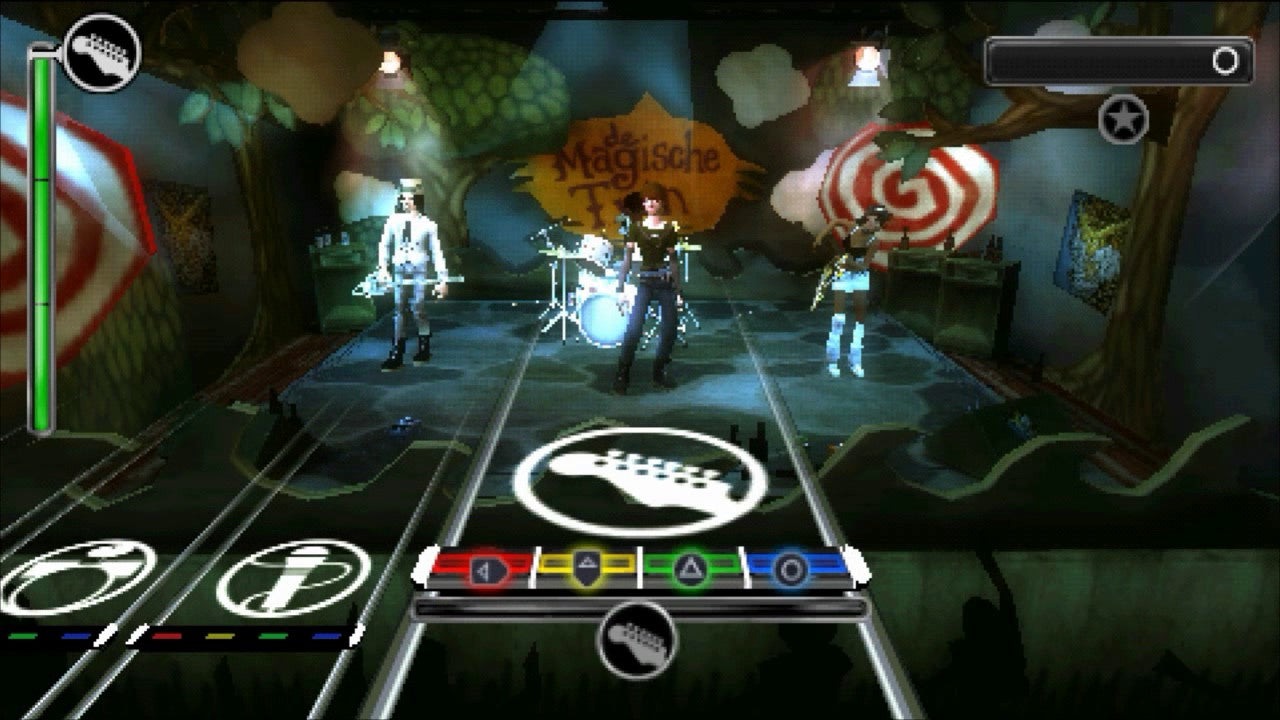
In short, Unplugged does some things really well with the gameplay but somehow manages to turn around and make the game not fun at the same time. Hold on to your desk, handrail, and controller because you have to play all instruments at the same time. Yes: bass, guitar, drums, and mic all at the same time. I know Backbone is a bunch of jerks, but it’s not as difficult as you might think. You see all four tracks on-screen (yes, singing is now a regular track), and when one starts coming down, you play the phrase, then switch to the next phrase using L or R. Phrases are silver borders around a certain amount of notes (each difficulty makes you play more in a phrase). If you play well enough, you’ll get to go to the next phase, but be fast! If you don’t switch right away, the phrase box will move up the track, and you must play all the darkened notes until you get there. In the meantime, other tracks are coming down around you, bringing down your crowd meter, and this last point is what makes the game not so fun.
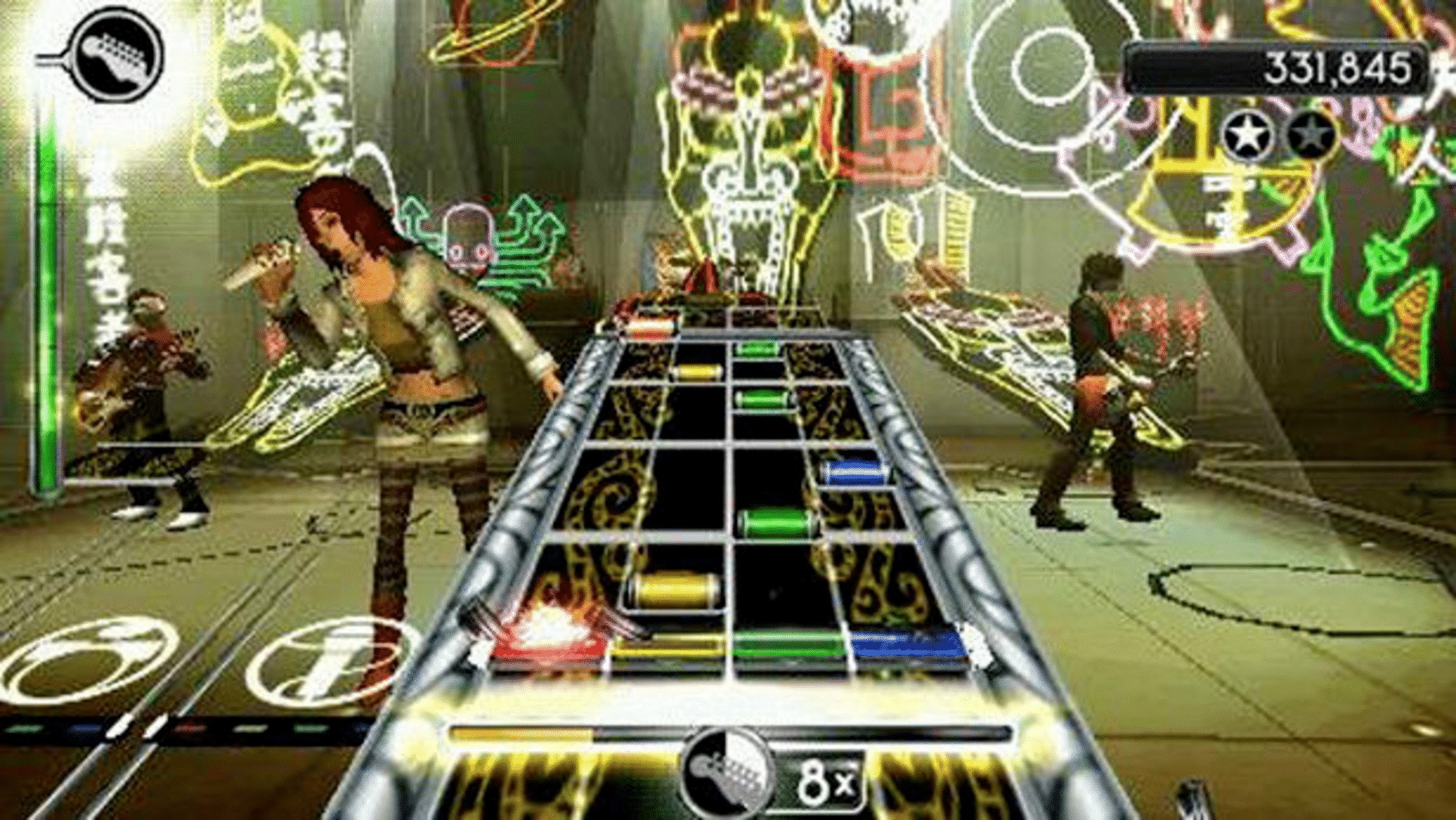
When you’re actually playing the game, you use the left D-pad (red), up D-pad (yellow), triangle (green), and circle (blue) (DJ Max Portable vets will already have this down pat). As you can see, there is no orange present since the game only uses four buttons, but don’t let this misguide you into thinking the game is easy because it is far from that. To make the game a tad easier on recognizing what buttons to hit together, the orange bar that was used for the kick pedal on the drums now ties notes that are apart from each other. This helps identify when to hit two notes simultaneously and thus makes it a bit easier when all these little notes are whizzing by. Overdrive (or Star Power) is still the same and can be activated with the X button, but having to perfectly play every phrase can make gaining Overdrive a little hard.
One other thing that really makes playing this game somewhat annoying is the fact that instruments drop out if you leave the track alone for too long. I don’t mean drop out as in failing (you can save the tracks by using overdrive), but in an audio sense. This is supposed to be an audio aid or cue to go to that instrument and play the phrase, but it just makes the song sound really bad.
One major disappointment is that Unplugged does not have any multiplayer whatsoever. Yes, I know, I know—it’s alright; you can stop crying now. I am clueless as to why this decision was made because multiplayer is what really made Rock Band shine, and there’s no excuse not to have it in the PSP version. Besides the missing multiplayer, the game is really vanilla in models, as it includes only your Band World Tour, Quickplay, and Training; oh, and Options if you really like that. One request that Unplugged finally responded to was the ability to customize everyone in your band instead of just the musician you are currently playing.
The customization is actually really shallow compared to the console versions of the game since you can’t choose clothing categories (Goth, Punk, Metal, etc.), but only a few clothes for your torso, bottoms, and shoes. There aren’t as many accessories or even hair and makeup items, but this is OK since the game doesn’t look that great anyway (more on this later). When you start your band, you can name it, pick a logo (yeah, you can’t even make one!), name your musicians, and pick from some generic clothing, hair, makeup, and your set. I see that Backbone had the whole “portability” thing in mind, so you can whip up a band and go, but some people actually see customization (like myself) as the main part of the game and can really bring the game to life with your creations.
Once you start a band and enter the world tour, you’ll be in familiar territory. You have mystery setlists, make a setlist, and various sponsored setlists that have various amounts of tracks. You can select your difficulty (easy through expert), but not your instrument, and I really wish Backbone would have kept the game the way it was before with just one instrument track.
When you are actually playing a song, you are rated on how well you did with up to five stars and a score multiplier. Landing notes will increase this multiplier up to 8x (if you activate Overdrive) until you miss a note, when it goes back down to zero. Once the song is over, you see your percentage of notes hit for each instrument along with how many phrases you played, attempted, or failed. Eventually, you’ll unlock managers you can hire to change attributes of your play style that will earn you more cash and fans or get you gigs you couldn’t do otherwise. You unlock songs by earning a certain amount of cash, fans, and stars. In the beginning, this can be difficult since you have to get almost perfect scores on every song to start unlocking more gigs.
Sometimes before you start a gig, a screen will come up and ask you if you want to gamble with your gig (in a sense). By getting 4 stars or more, you can get quadruple the cash or nothing at all. If you get 5 stars, we’ll double your fans and all that. It’s fun and all, but we’ve seen this before, guys! The World Tour seems to be the meat of the game, and it’s nothing new or original—just the same old stuff we’ve seen from previous entries in the series—and this is a bit disappointing since it makes you feel like you’re just playing a rushed port.
There is also downloadable content available (as I write this) for people looking for more than what’s on the disc. Currently, there are 10 songs available (assuming this is an experiment by EA) for $1.99 each on the PlayStation Store. They are great songs (Disturbed-Inside the Fire, Paramore-Crushcrushcrush), so this is a great way to keep Unplugged alive and kicking. Since this is a band game, how does it sound? Very good, actually, as the songs are MP3 quality thanks to the UMD’s 1.8GB storage capacity and the PSP’s memory size. There are 41 songs on the disc, featuring The Jackson 5, Lacuna Coil, Pearl Jam, Bon Jovi, Boston, Tenacious D, The Police, and a ton more. Most of these songs (again another disappointment) are from previous Rock Band games, but these seem to be the best of them and almost feel like “Rock Band: Greatest Hits.”.
However, when it comes to the actual ambiance, the game fails. Crowd noise sounds like static, and the menu noises sound muffled and very monotone—almost like you were playing DS (Ha! Take that Nintendo!). and really makes the experience kind of dull, aside from the music. If you want to talk about graphics, you should cover your eyes and run away because the game looks kind of ugly. The characters don’t have realistic animations like the console versions, detailed textures, or nice lighting effects. Everything looks flat, plain, and really dull. The characters use the same retarded animation over and over again, and it makes you wonder if the game is really a third-party creation. I realize the PSP has limited hardware, but c’mon, they can do more than that; Kratos was able to!
While the menus look nice and crisp and remind you of Rock Band 2, I still wish there was more to the graphics and sound of the game. This is a real disappointment for me, but what saves the graphics department is that you don’t really look at the characters. Your main focus is on the tracks and the notes, which look crisp and clear. Rock Band: Unplugged is a great departure for the series on the portable scene. With 41 songs on disc, great controls, downloadable songs, and an extensive World Tour mode, there are a lot of reasons to come back to Unplugged again and again.
Don’t let the bad sides, such as mediocre graphics, poor ambiance, awkward gameplay, and the wee bit shallow selection of modes, bother you. Unplugged is probably the best portable rhythm game ever made, and it doesn’t even need a guitar hand grip.
CakeMania has the same play style as Diner Dash, so fans of that game know what kind of fun they are walking into here. CM’s premise is as follows: You are Cloe, whose grandparents’ cake shop must be torn down due to its age, lack of customers, and not being up to code. So, as the sweet girl Cloe is, she decides to spice things up at the shop by adding new ingredients and working it all by herself. The gameplay is very similar to Diner Dash, where you have a step-by-step style of gameplay. A customer comes in, you give him a menu, you wait for him/her to select their cake, you go to the oven and you select the shape they want, after that, you carry it to the icing machine and select the color icing, and after this, they may want a decoration (which you have to end up buying before you can use them).
The later stages have you making double-stack cakes, but the game isn’t just as simple as all this. You have a certain cash goal you have to make, and customers will leave bigger tips depending on their attention level (hearts above their heads), so the more hearts, the bigger the tip. Some characters have more hearts than others, and there are holiday-specific cakes and characters. Some characters affect others, like Santa adds one heart to everyone, and the vampire at Halloween makes them irritated faster. The whole game is about memorization and organization. You have to decide who’s more important than who and bake the cakes accordingly. If you screw up, you put the cake on a stand (that you have to buy) so it doesn’t go to waste, and usually, a customer will eventually buy it, saving you time. If you screw up too much, you have to toss the cake, costing you money and time. If you take too long, customers will get angry and leave, losing money in the process.
When you finish a stage, you can save up and buy new cooking equipment, such as upgraded ovens, icing machines, a muffin oven to hand out free samples to make customers happier, more decorations, etc. This is what keeps you playing CM, which is to keep getting further and further, so in turn, the pace keeps going up, and so does your cash goal for the day. You get a certain amount of time to pump out cakes before the store closes, so if you have customers left after you close, that’s it for the stage. The game has many stages, and of course, the game isn’t perfect.
While that’s the main concept of the game, it’s played out pretty flawlessly, but it’s everything surrounding it that is average. The graphics are nothing much; just a bunch of drawn-up sprites with one or two animations per character, and the game looks and plays like something from a GameBoy Advance or cough DS. There aren’t any effects at all unless you count the icing machine’s “spray” effect. The game’s not ugly, but not pretty to look at either, which is a shame. Other games like this, such as Cooking Mama and even Brain Age, have some 3D elements. I don’t know why the Diner Dash engine hasn’t been updated to 3D yet. Thankfully, the PSP’s widescreen helps you see everything on-screen with ease without any scrolling, so this makes things more spread out and not so cramped.
The audio is just as plain as the visuals, with annoying one-track-repeating BGM, a few whooshing, and whizzing sound effects, and that pretty is the whole pie…or cake. So with a retarded story and plain audio and visuals, what you have left is a layer of vanilla cake with vanilla icing that tastes good but doesn’t really make your mouth water. With the cheap price point, you’ll be strangely and sickeningly addicted to this Diner Dash-inspired game.
I heard all the hoopla about Persona 3, but the next-gen craze sidetracked me from it. I finally rented the game, and I have to say I am very impressed. I’m tired of the same old random battle JRPG with cliché stories, characters, and battle systems. P3 tries to do something different with practically every element. When you start the game, you’ll notice the game has beautifully drawn anime cutscenes. The story doesn’t become very clear until after you start playing, but this is OK.
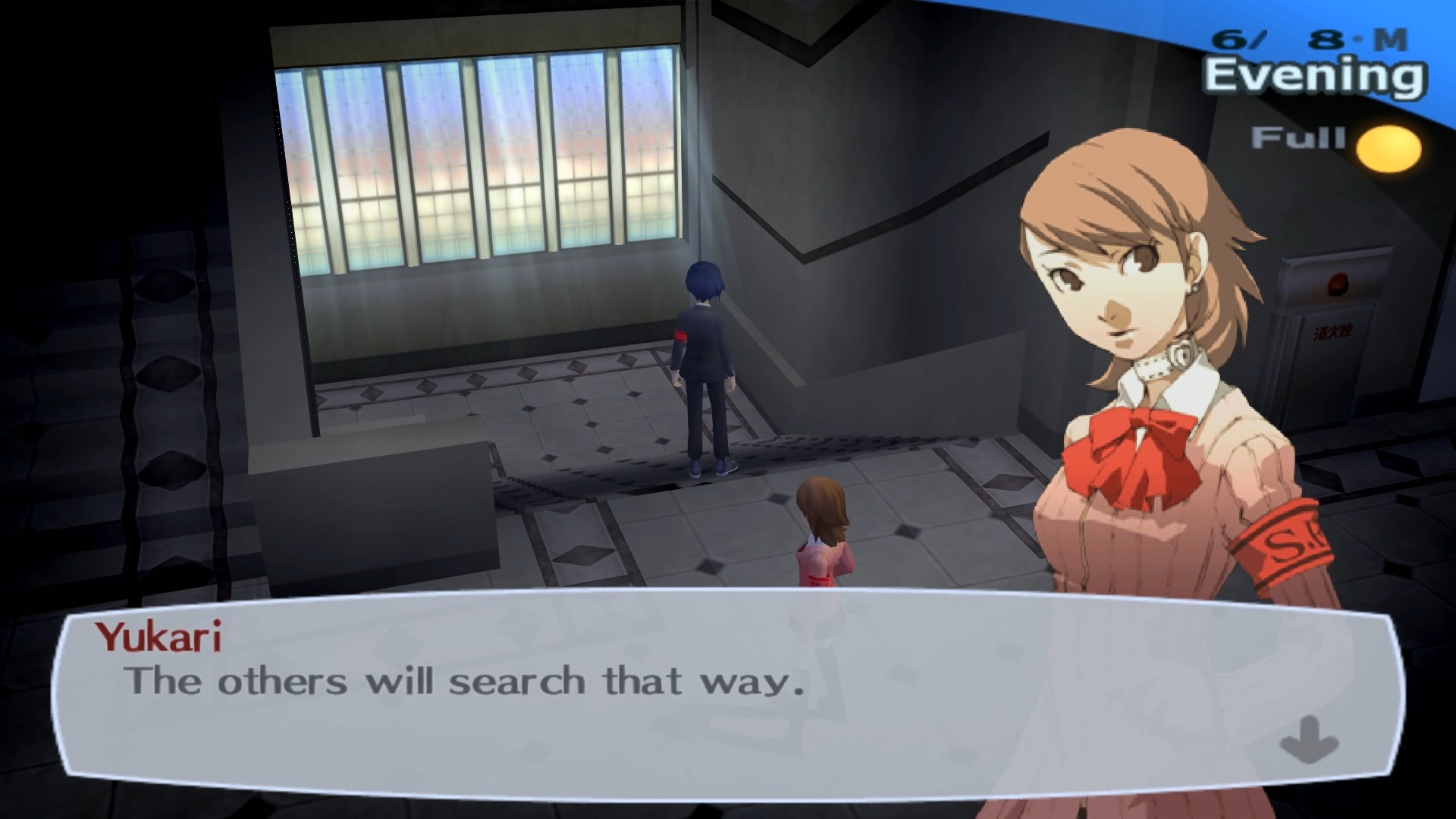
The first thing I have to say is that the game takes forever to get going. Maybe 5–6 hours into the game, you’ll really start getting interesting, and most of the play mechanics will be taught. When you’re not fighting, you’ll be living your regular school life by studying hard and preparing for exams. The game has a calendar event set up, and you go to school, talk to some people, and you can choose to stay awake in class and listen to the lecture to increase your academic skills. Sometimes you’ll have to answer questions (it’s mostly guessing), and maybe your charm will increase. After school, you can meet up with your friends to strengthen your social link (more on that later). Depending on the responses you choose, they will affect your relationships. You can also go shopping at the mall for items, weapons, armor, etc. Another thing I have to mention is that there isn’t enough to buy before the next moon phase (more on that later). So there is one new thing for each member, and that’s it. This can make traveling to the upper levels of Tarturus even harder (more on that later).
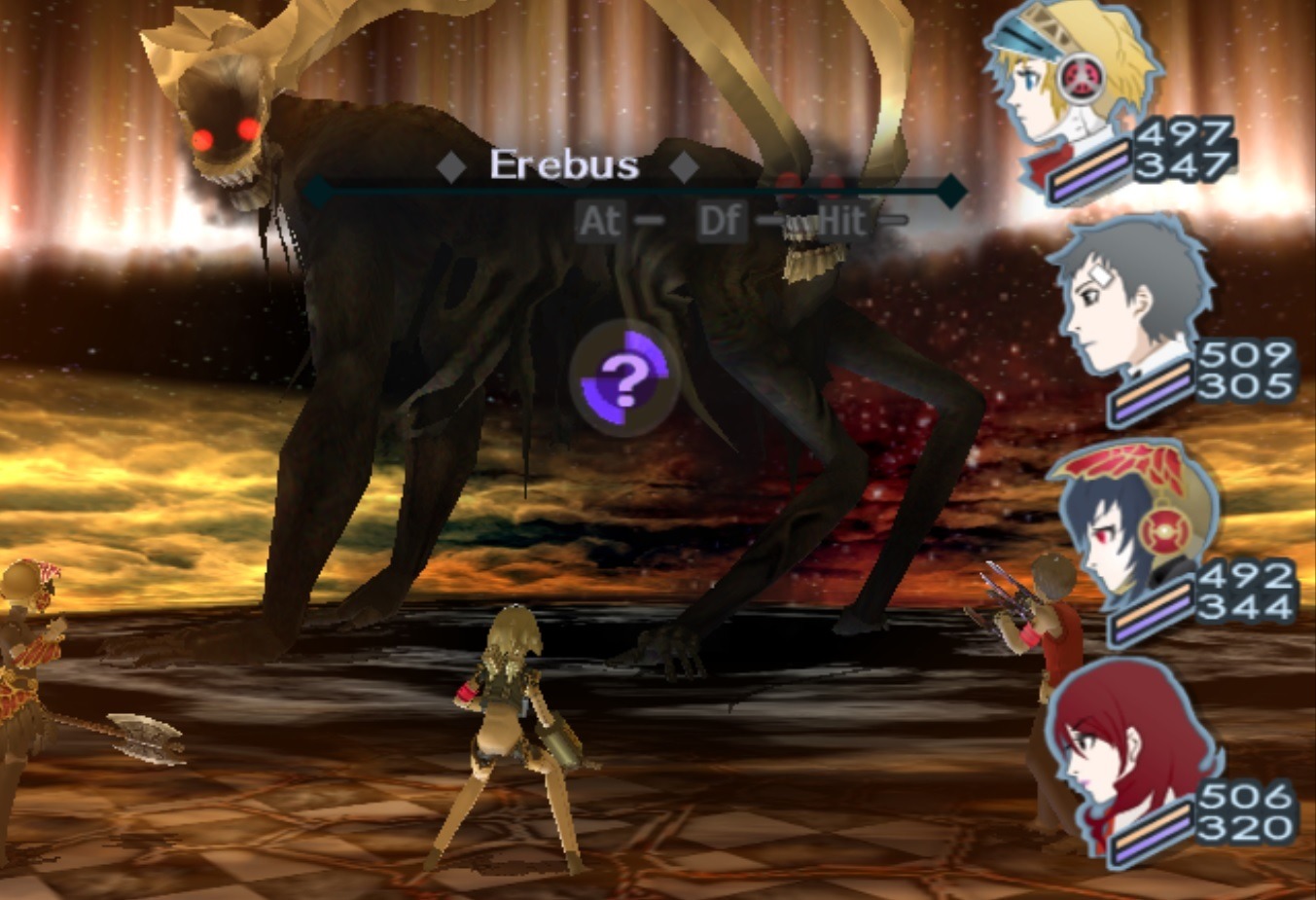
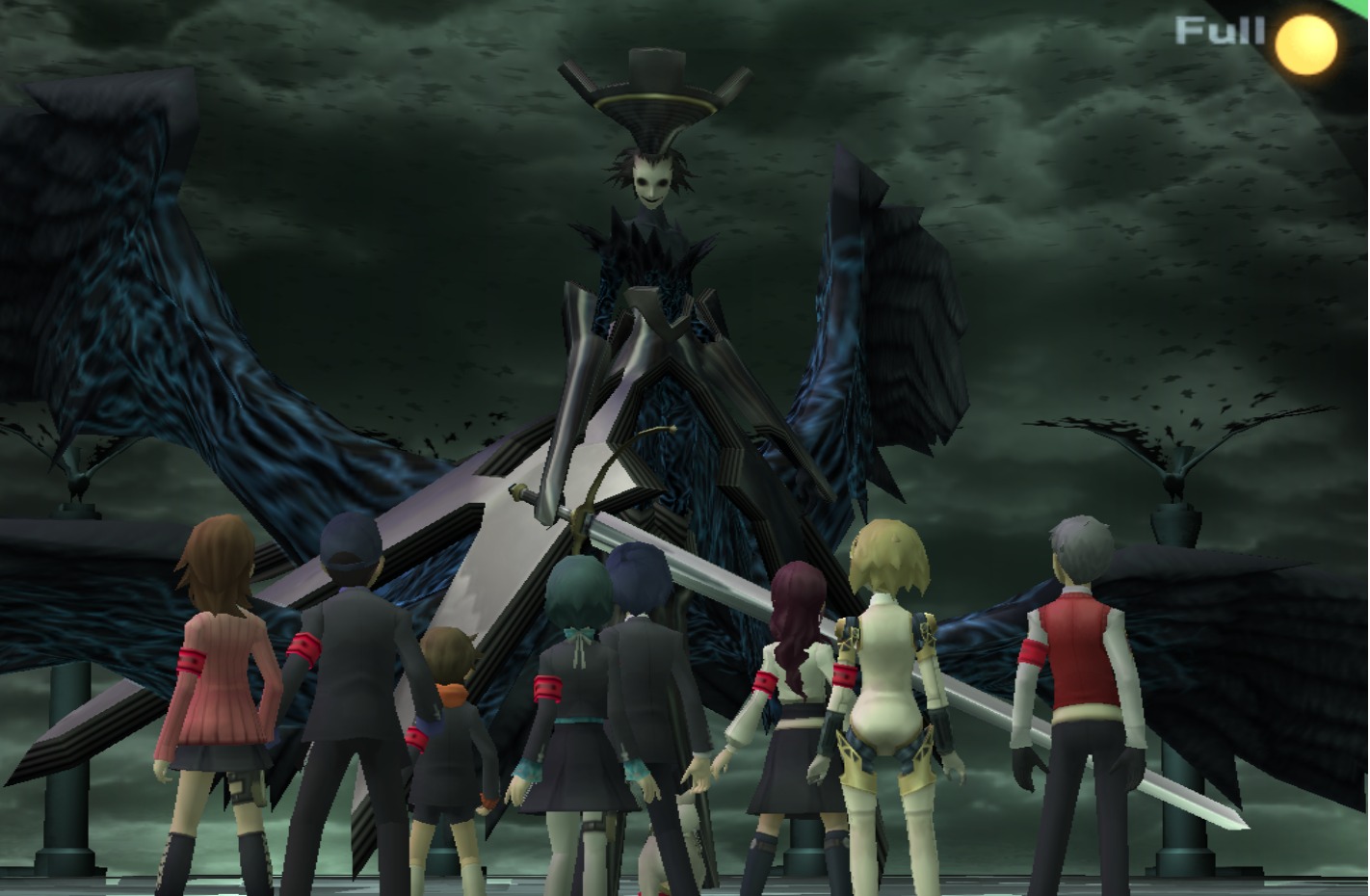
The game’s story is about shadows that try to wreak havoc during the Dark Hour, which is midnight. During this hour, the dorm you stay at turns into a mysterious tower known as Tartarus, and you must climb the tower, fighting stronger and stronger enemies. Every 30 days, you fight a boss, and some events happen that evolve the story. During those 30 days, you have to increase your social links, level up, and acquire all that you can before the big boss. When you fight in battle, you use your personas, which are like Aeons (think Final Fantasy), and they are your strongest attacks. You’ll rarely attack yourself, so you always concentrate on your personas. Some personas have different magic abilities, etc. The battles are won by determining the enemy’s weaknesses and exploiting them. When you hit their weakness, you get one more turn, and the enemies fall down. If you get all the enemies to fall down, you can do an all-out attack where all the players will maul the enemies for extra damage. This is key to mastering because you can die very easily early in the game because leveling up takes longer than it should. Luckily, you can switch personas in mid-battle, so you can exploit accordingly.
One irritating thing about this game is that they changed the elements’ names. Instead of Fire, Ice, Wind, and Fire, it’s Zio, Bufu, and Garu (light), and it’s really stupid. Why did they do this? Probably just to be cute, but it confuses you, and you have to know what these names mean. Once you win a battle, you may get Shuffle Time, which lets you see the faces of a card and shuffles them around. Some may give you bonus experience, some may be a new persona, and some may be weapons. While you run around through Tarturus, you can see the shadows, so this game isn’t random. If you hit them first, you get an advantage, but if you let them hit you, it’s not so good.
The game mainly revolves around personas, so, of course, you can make your own. Take your cards to the Velvet Room, and you can combine them to make better personas. Now there are attributes and rules, but these are confusing and pointless, so you just add a few up and see what it makes. It’s really simple and easy to use, but you can’t do this for a while because you can only create a persona that is at your level. Also in the VR, you can take requests from Elizabeth by bringing her certain items at certain dates for rewards. I found this very hard because you never really know what she’s talking about half the time. I think it’s mainly there for completionists.
Social links affect your persona because if you have a friend who is a Magician SL, all your Magician personas will level up faster. Of course, there are events every day that always change. Sometimes you can’t go to Tartarus at night because your members are too tired, some may get sick, some may be busy studying for exams, etc. This changes things up all the time, so not one day is the same. When it all boils down, the game is generally the same. Go to school; go to Tarturus over and over. There are no worlds or levels to actually explore, so this may disappoint some people. When in doubt, pick up Persona 3 because you are going to have a blast, and there are dozens of hours of RPG goodness here. With decent voice acting, memorable characters, and a great battle system, you will truly love this game.
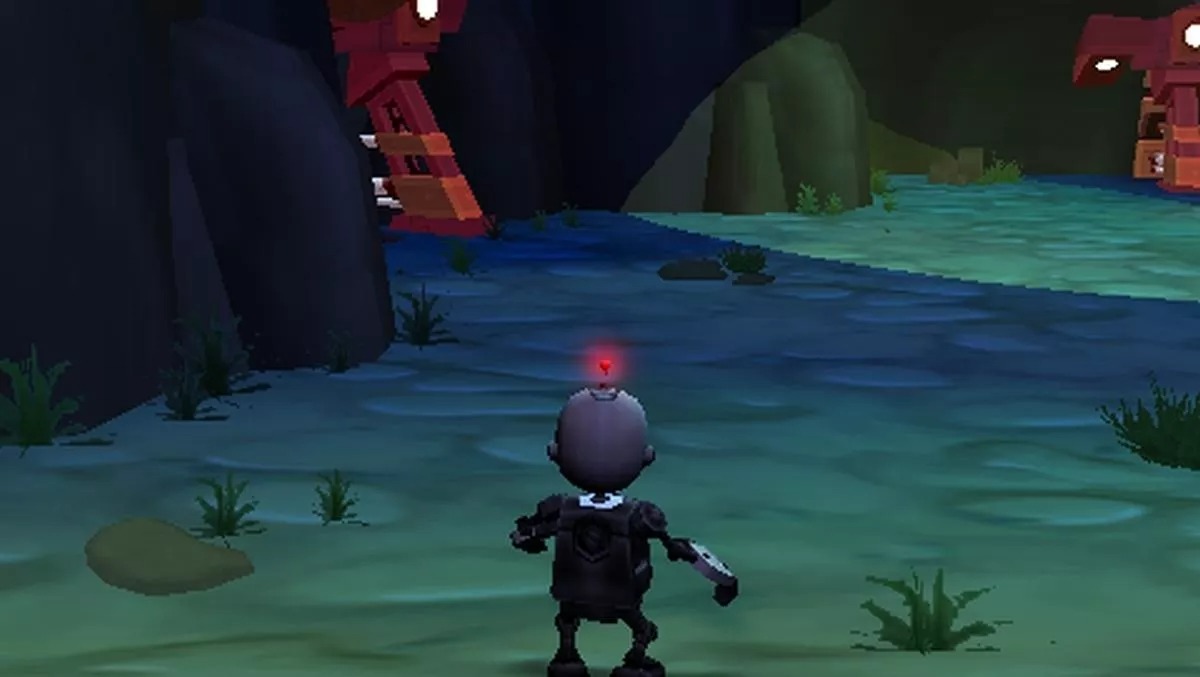
A lot of people hated Size Matters due to the fact that it had poor controls and felt more like a console port. SAC was made from the ground up and feels more portable-friendly. You play the main character, Clank, who is a secret agent and has to stop the thief of the Eye of Infinity, which will destroy the entire galaxy. Throughout the game, you use stealth by sneaking up behind enemies, pressing square, and executing a series of buttons before the timer runs out. This is very refreshing and never really gets boring. You can use some very clever weapons, such as the Tangle Carnation, which releases pods that eat enemies; the holo-monocle, which lets you disguise yourself as the enemy; and even cufflink bombs. You also perform some well-designed platforming and solve some simple puzzles with your special key (it’s probably the worst mini-game in the whole game).
While you prance around as Clank, you can use your Gadgebots to unlock doors through a series of puzzles you have to solve, and these are super fun and addictive. Clank also has some mini-games of his own, such as snowboarding, and a series of driving mini-games where you have to avoid obstacles. When you finish the mini-game, you can play more of the same type to get more bolts (money), like in all the other R&C games.
Some other mini-games have you doing timed button presses, which really keeps things from getting stiff. Aside from the Clank sections, you can play as Ratchet in jail, fending off his fellow prison mates. These are actually very repetitive and are the same arena games seen in other R&C games. Quark’s games are the funniest and are really weird. You have Quark saving space nuns, saving fishmen from killer cacti, and even singing about his left butt cheek. With all of this combined, you can unlock skill points and find titanium bolts to unlock more skins. I never really found this game boring, and it has a lot of replay value for R&C fans. There is no multiplayer this time around, but it’s not really missed. The game looks amazing and is probably in the top five best-looking PSP games out there right now. If you want a super funny, fun, and unique single-player game on the PSP, pick this up.
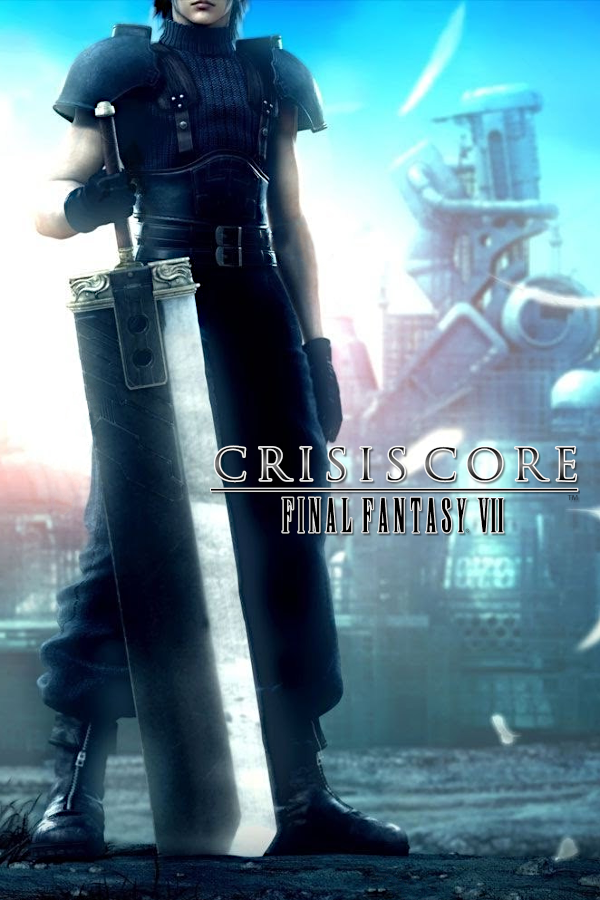
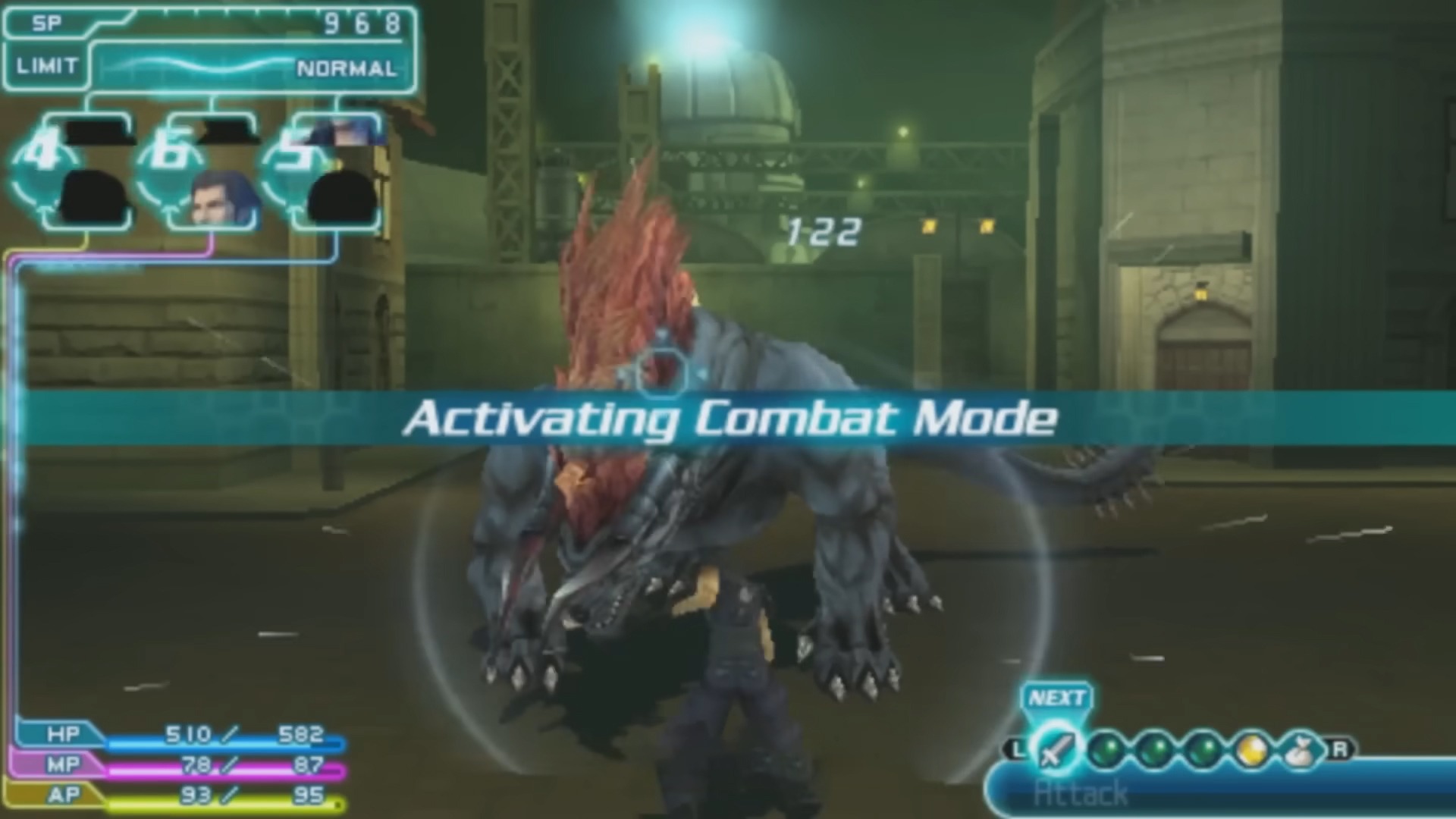
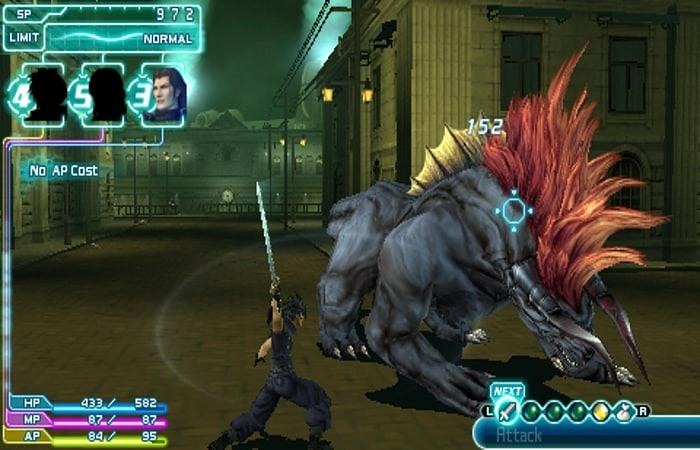
If you’ve been holding out on a PSP (I don’t know why you have), here is another reason to buy one. CC offers an original game experience, and, well, here’s how. First off, people who hate turn-based RPGs can relax. We get a whole new real-time combat engine, and no, it’s not like FF12’s. When you engage in combat, you can select attack, your materia (more on that later), and your items with the L or R buttons. You attack with X (combat is very simple and pretty easy). Now for the new original hate-it-or-like-it idea: the DMW. It looks like a slot machine up in the corner, and this is how you choose your power attacks (overdrives), level up, and your Aeon. This is also random, so it mixes up gameplay, yet for micro-managing freaks, they will hate this. Each character’s face is on the wheel, and as you meet them, they are unlocked. Each character has a special move, either offensive or defensive, and they are pretty neat. You also have numbers, and for example, if you get three 7’s, you level up. If you get two of the same number, you level up your materia. Another thing is that you don’t have magic and all that anymore.
Materia is things like fire, thunder, vital slash, and even graviga. You also have AP now, which is for materia like Vital Slash, Jump Attack, etc. You can also fuse materia together to make different materia. This is really fun to do, and there are tons of combos and different materia to collect. There are plenty of enemy types, so don’t worry.
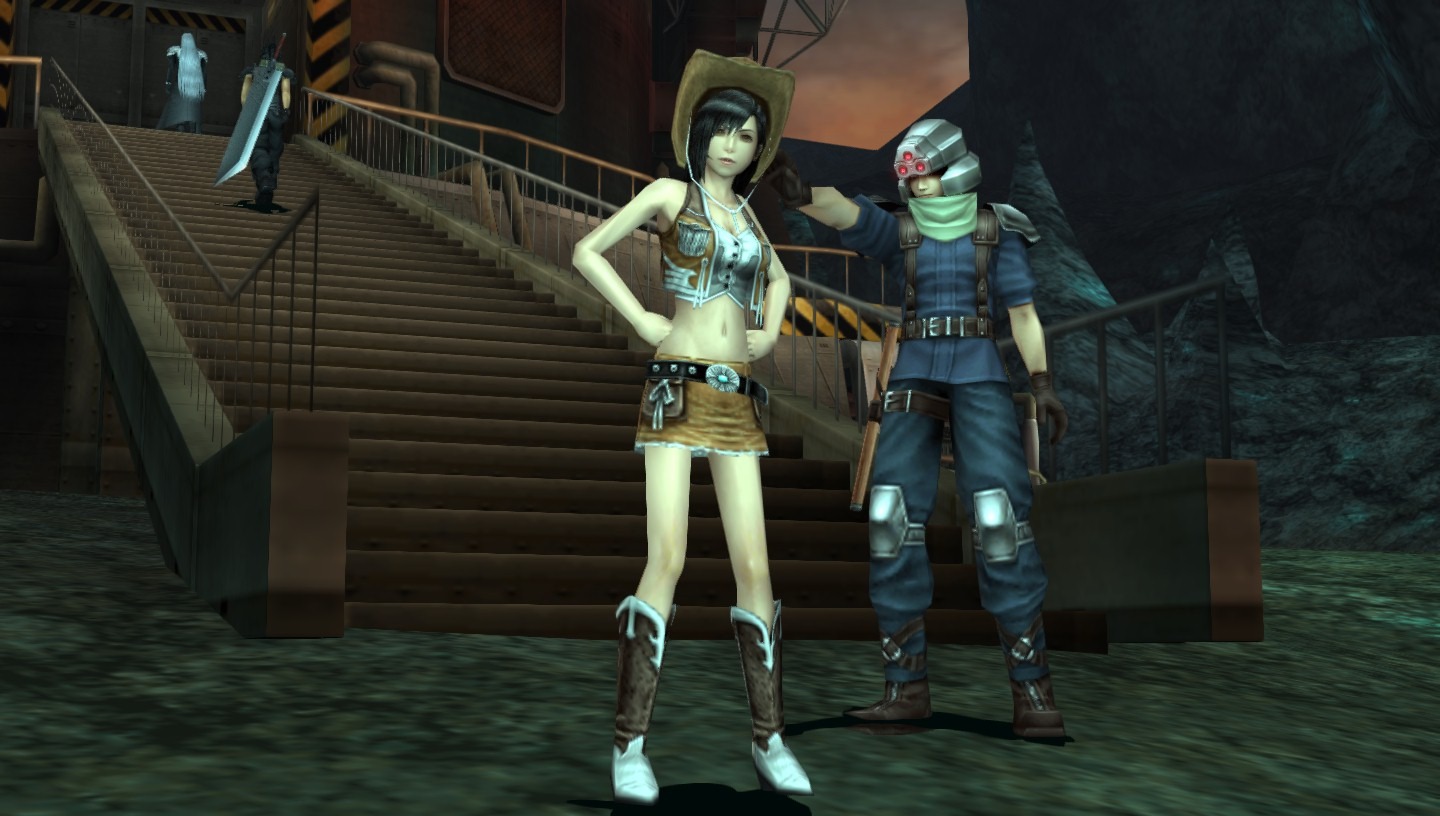
Now for the story, it picks up after the movie where you play as Zack (yes, just one character through the whole game, yeah, so…deal with it). You have to save the world from the evil projects that people are doing and stop Genesis from taking over the world. While the graphics are amazing and the voice acting (for the first time in an FF game) is great, you also get beautiful pre-rendered FMVs. Now for the issues. The DMW wheel is great, and it’s very fair on leveling you up (I finished at level 38) and balances your character very well for you.
The combat is very simple, with just one button: hit, block, and dodge. This could have been revamped more. The game is pretty short by FF standards. I beat the game in 17 hours, and I did 15% of the side missions as well. Speaking of that, the side missions get dull real fast. You access them through save points, and it’s just a “kill every enemy in the room” type thing, and it’s for getting more items. You can’t get new weapons either; you’re stuck with what you have. You can also access shops through the menu at any time, which is convenient but makes the game even easier. Overall, if you love FF, you’ll absolutely love this. If you hate FF, then try the game, and I’m sure you’ll like it now.






























 thebinarymessiah.com
Try multiplayer. A lot of fun !