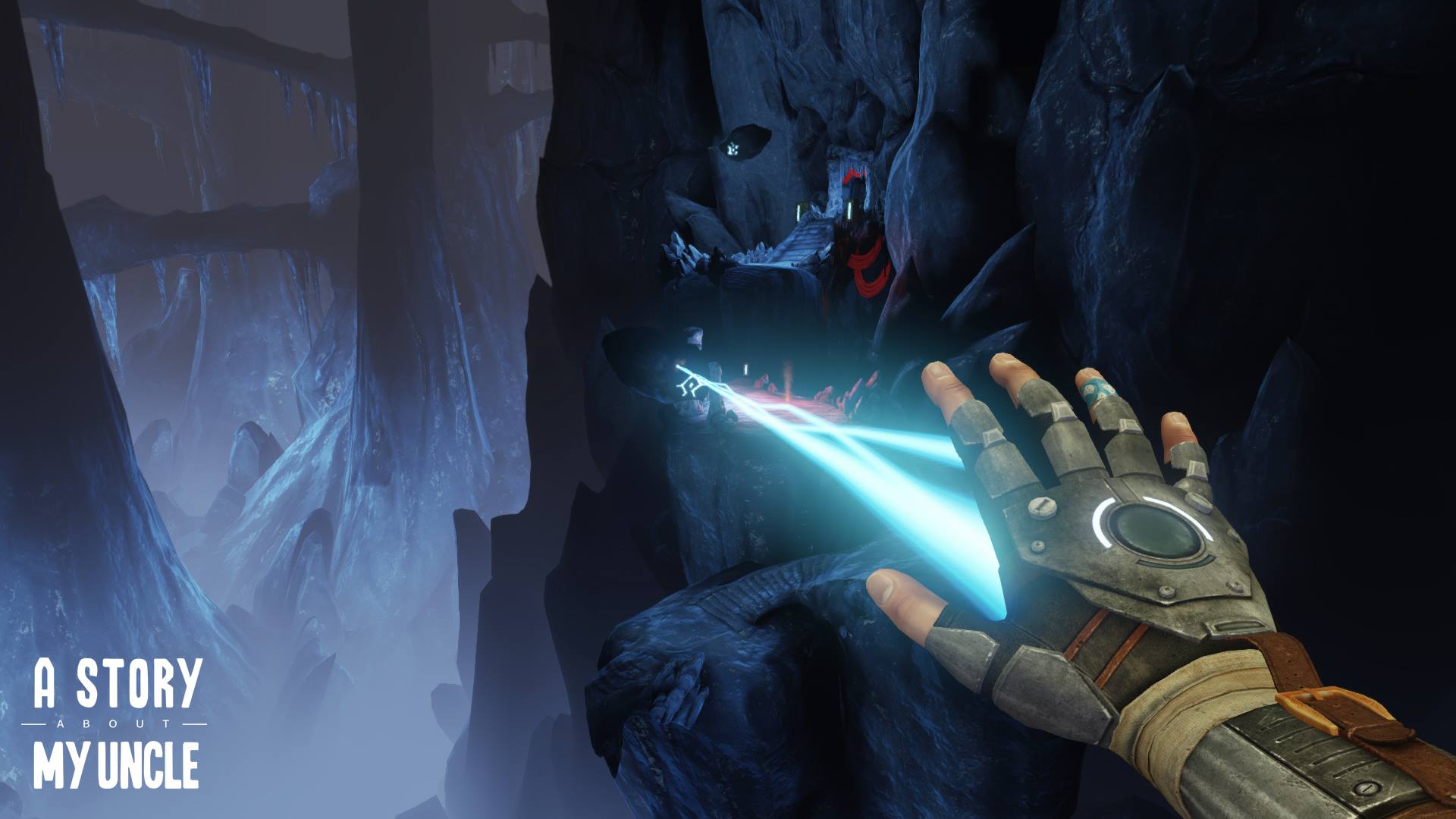
First-person platforming isn’t attempted often. A Story About My Uncle keeps it basic with grappling, anti-gravity jumping, and various puzzles. The story is fairly simple and doesn’t really mean anything until the very end. A boy is trying to find his uncle, Fred. He finds his uncle’s lab, where he straps on a weird jumpsuit and takes off to some unknown land. He eventually comes across a species of frog people, and a little girl from this village befriends the protagonist.
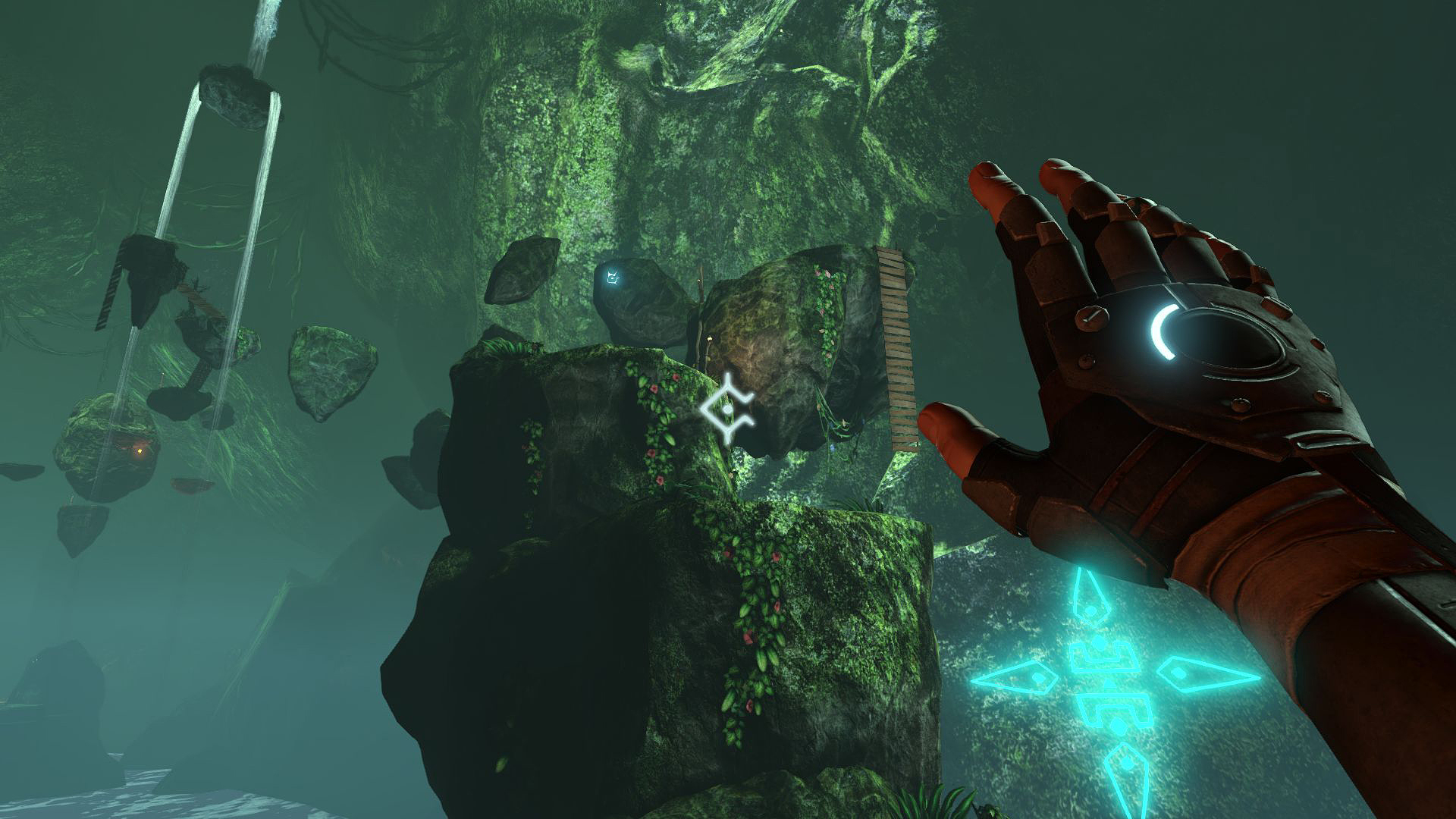
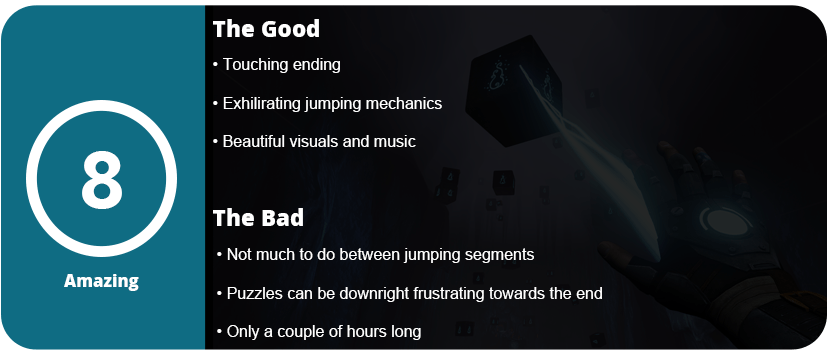
The jumping is actually quite exhilarating. You jump really high, and your character’s hands swing around, which makes you feel vertigo. The sheer speed and height this game creates is something not really seen in most games. As you make your way across bottomless chasms and dark caves, you begin to wonder what all this means. What’s the point? The jumping puzzles get progressively harder, to the point of downright frustration. The grapple has three shots. Once these run out, you either need to land or you’re falling into the abyss. Later on, you get rocket boots that allow a quick boost if you miss your shot or your next grapple point is too far away. One of the hardest obstacles is the windmill. I actually had to manipulate the physics by landing on one for a split second so my equipment could recharge. The game gets so tricky towards the end that casual players may not make it. Sure, the game is only a couple of hours long, but the complicated jumps are just mind-boggling.
With that aside, the music is great, and the game looks beautiful. While it uses the dated Unreal Engine 3, the art style is superb. I honestly felt like this was Journey to the Center of the Earth meets Mirror’s Edge. There’s nothing else out there like it, and the ending is extremely touching. Well worth the play through to get a few heartstrings pulled.
I just wish there was more to the game. Sure, jumping around gets fun, but sometimes I feel areas drag on forever with too much nothing in between. It’s a step in the right direction for this type of game. With more stories being pushed out and some variety in gameplay, this game could have been something even more incredible.
Have you ever wanted to play an MC Escher sketch? Echochrome may come to mind, but Antichamber feels like a mix of Portal, using cubes instead of portals, and Echochrome’s art style. There isn’t really a story here; you just wake up in a hub with four surrounding walls. One wall has your game options, which you just interact with; one wall has the various clues you find throughout the game; and the third wall has your map, where you can jump to levels you have discovered. All you really know is that you are chasing down a gray, mysterious block and trying to escape.
These types of games are never touched by big publishers, so it is up to indie developers to make them. Antichamber has a great block-gun puzzle mechanic that really gets your gears turning. You eventually upgrade to a yellow or red gun, but the basic is blue. Once you learn how the antichamber works and how optical illusions can change the world around you, you get the gun. You walk around linear hallways, trying to discover new areas. You may see a staircase leading up, but it disappears, and a straight hallway opens up. There may be an eye on a wall, and if you stare at it long enough, it will open up. Another illusion puzzle has you going up and down a shaft three different times; each time is different. These illusions are really unique and make Antichamber stand out from other first-person puzzle games like Portal.
The block puzzles consist of shapes on walls, and you have to fill in these shapes in certain ways. Sometimes there is glass blocking certain areas, so you need to drag them around instead. Lasers are a major part of the puzzle; some need to be blocked, and some need to be activated. Figuring these puzzles out is hard because you also have to generate new blocks if there aren’t enough. Drag them around in the puzzle grid in a square shape to fill in the middle. The puzzles get harder and harder as you move along.
If you mess up, you just press Esc to go back to the map room and start that room over again. I just wish the game had some more platforming rooms thrown in and wasn’t so puzzle-heavy; even Portal made you jump around some. The antichamber uses doors as another puzzle element. You have to insert cubes into holes to open doors, but sometimes there aren’t enough cubes. Use one to hold the door open, go through it, grab the cube, and just piggyback a few cubes to gather what you need for the final puzzle. Antichamber really had me stuck most of the way because of how unique and different the puzzles were; there’s nothing else like it.
There isn’t anything else like the visuals of this game. All white and bright primary colors. You feel like you are in one of MC Escher’s sketches. Nothing fancy here at all, which is what made Echochrome so great as well. Due to this art style and the illusions, the whole chamber can be very confusing to navigate. Pathways open up to nowhere; a pit may drop you into another part of the chamber, which can be confusing. I even found the ending pointless, but the whole idea is to solve puzzles. If you don’t like puzzle-solving, stay away from this game.
Overall, Antichamber has a wonderful art style and puzzle-solving elements that are like nothing else out there. This game is making a huge splash in the indie scene for a reason. If you love quirky puzzle games, this is just for you.
Arkham City is the successor to the critically acclaimed Arkham Asylum, which is considered the best superhero video game ever made. That’s a true fact because it made you feel like you were Batman, both in character and in the atmosphere. Arkham City captures this atmosphere but adds a ton of new features to make this game even better.
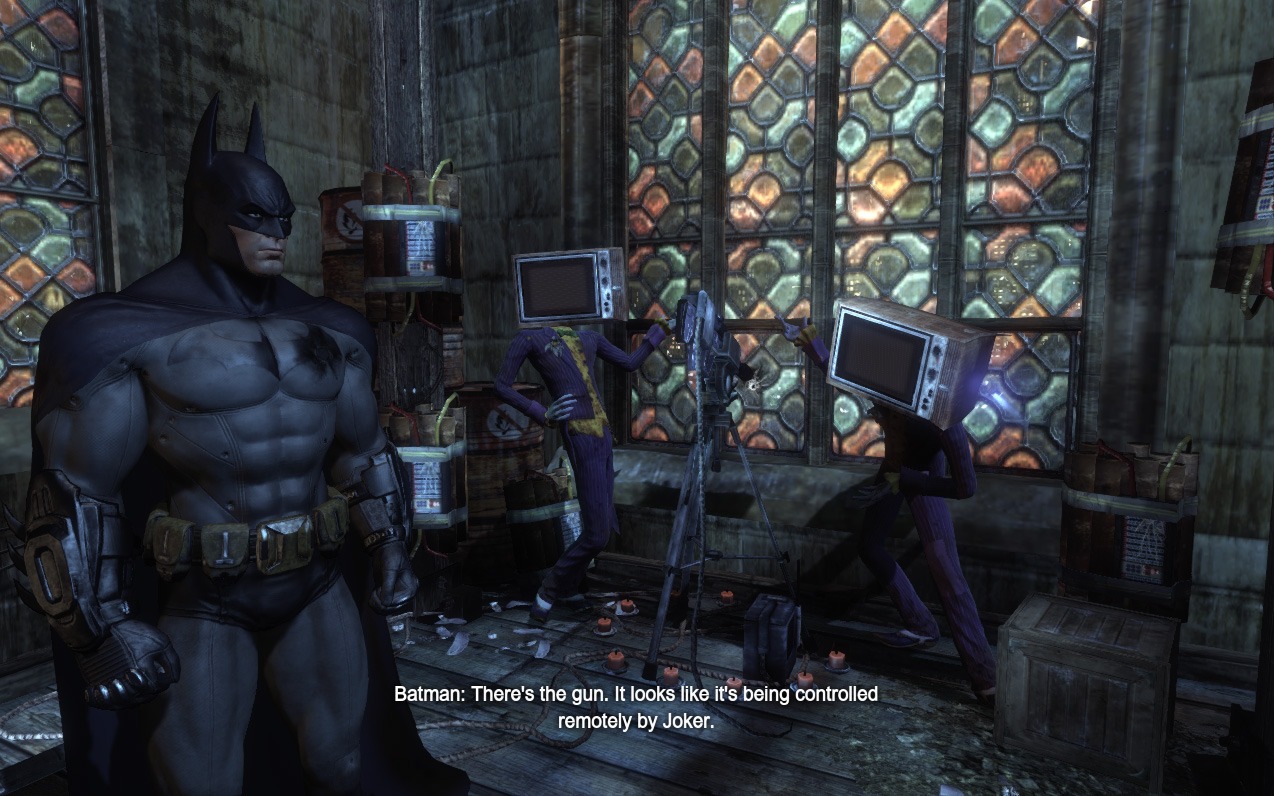
The story continues from the last game, where the Joker is infected with the Titan virus but also infects Batman. He is rushing to get a cure, but if the Joker dies, then so does Batman. The story has a satisfying ending and plays out like a great comic book would. As you go through the main story, you run into new faces in this series, such as Penguin, Catwoman, Mr. Freeze, Clayface, and Dr. Hugo Strange. All the characters in the game are excellent portrayals of their comic book form, and every character is masterfully voiced. Mark Hamel does an amazing job as The Joker (he has since said that this was his last role as the Clown Prince). You truly feel like you are in a comic book, and this is probably the best comic game made so far.
Exploration is upgraded tenfold here, with a large open area to explore. As the name implies, you are in a city where hundreds of criminals, kingpins, and thugs were thrown to kill each other off. It just so happens that Batman’s cure is in here, along with the Joker. The game may seem smaller than Asylum, but there are fewer interior areas and more outdoor areas, so this does become an issue. There seems to be less to do with the main story because there are fewer epic set pieces, and a lot of the game is filled with getting from point A to B. Sure, it’s fun using your grapple hook to swing around the city like Spider-Man (I know, wrong universe). You can use your cape to glide around town and do some pretty tricky maneuvers like jumping off walls, dive-bombing, and then pulling up and weaving around corners. Hell, they even give you some physical challenges based on this enhanced and well-put-together exploration system.
Don’t worry too much about being bored because there is a lot of variety in the story, and the indoor areas differ. The majority of the game is actually the Riddler stuff, of which there are over 400. There are trophies to find, solutions to puzzles, cameras to destroy, and Tyger computers, and this also includes having specific ones for Catwoman. There is enough here to keep you entrained for 30+ hours easily, but people who aren’t completionists may actually be bored quickly.
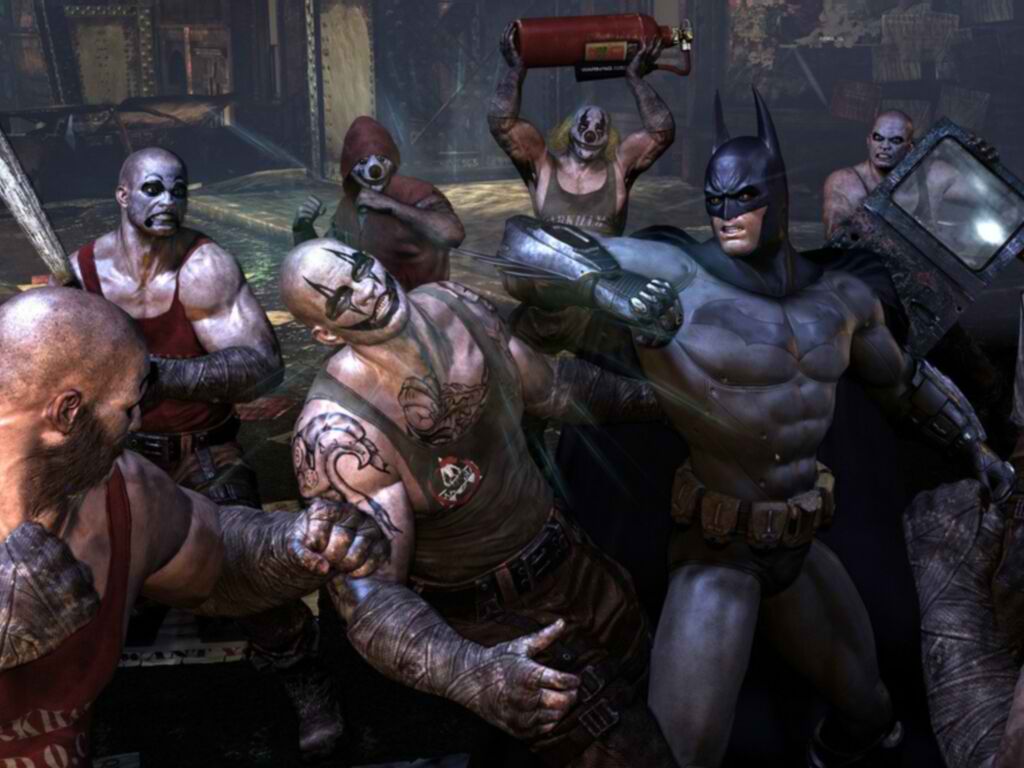
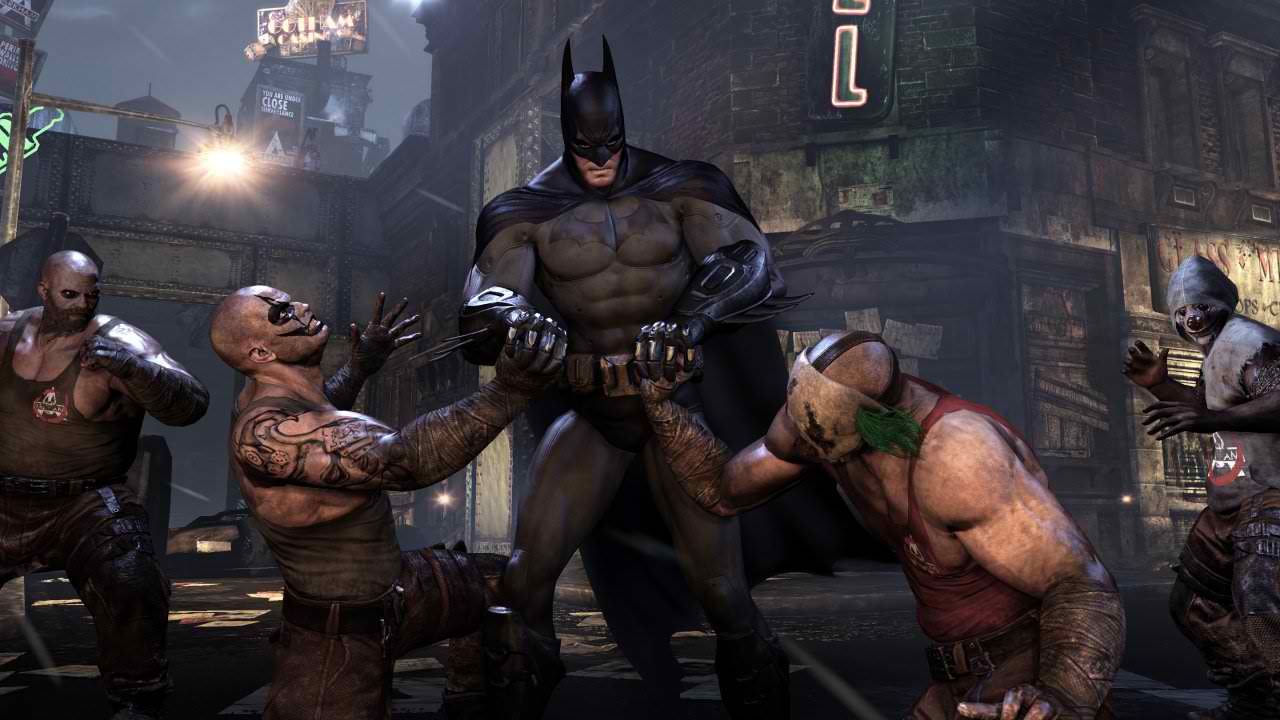
My favorite part about Arkham City is the new gadgets and the updated free-form combat system, which is the best one ever created since God of War. The combat is silky smooth, with Batman leaping and bounding on enemies with the push of the analog stick in a direction and the attack button. As long as you are in the combat area, Batman will jump to an enemy, no matter how far away, to keep your combo up. You can counter when an enemy has a symbol flash above their head, but you can also break through shields and knives and even use gadgets in combat. The system is so fluid with smooth animations that it looks and feels like a perfectly choreographed fight scene from a movie. Some of the new gadgets are a remote-controlled batarang, freeze blast bombs, and a weapon disruptor.
In Arkham City, you can play as Catwoman as well, but she only has a few segments in single player, but she’s just as fun. Her combat is just as fluid, but she’s faster and more nimble. She only has a couple of gadgets, but you won’t play here long enough to get disappointed. She has the ability to crawl on grates on ceilings and use her whip to move around buildings. I found this to be slower than Batman because you can whip something far away but have to climb the building with the press of A, so it takes twice as long to move the same distance.
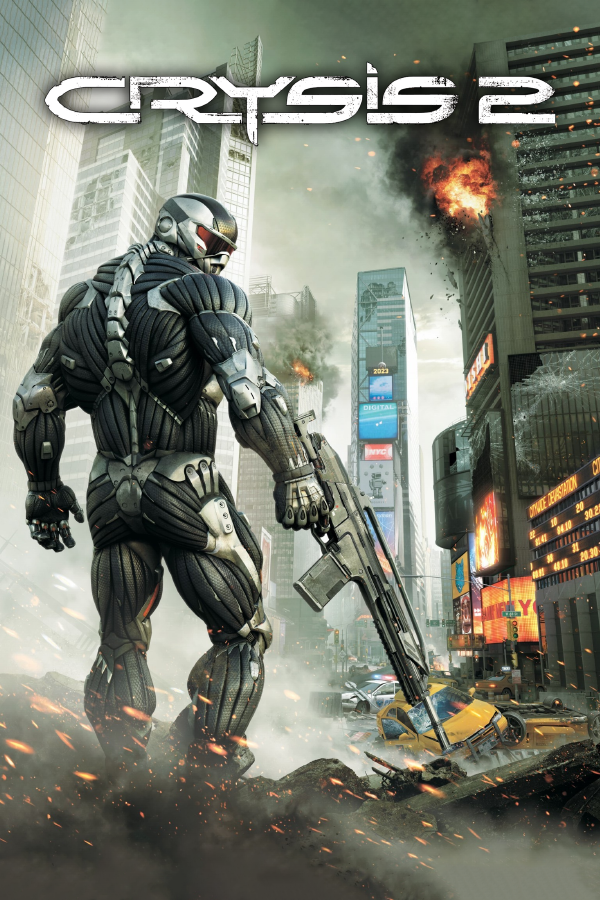
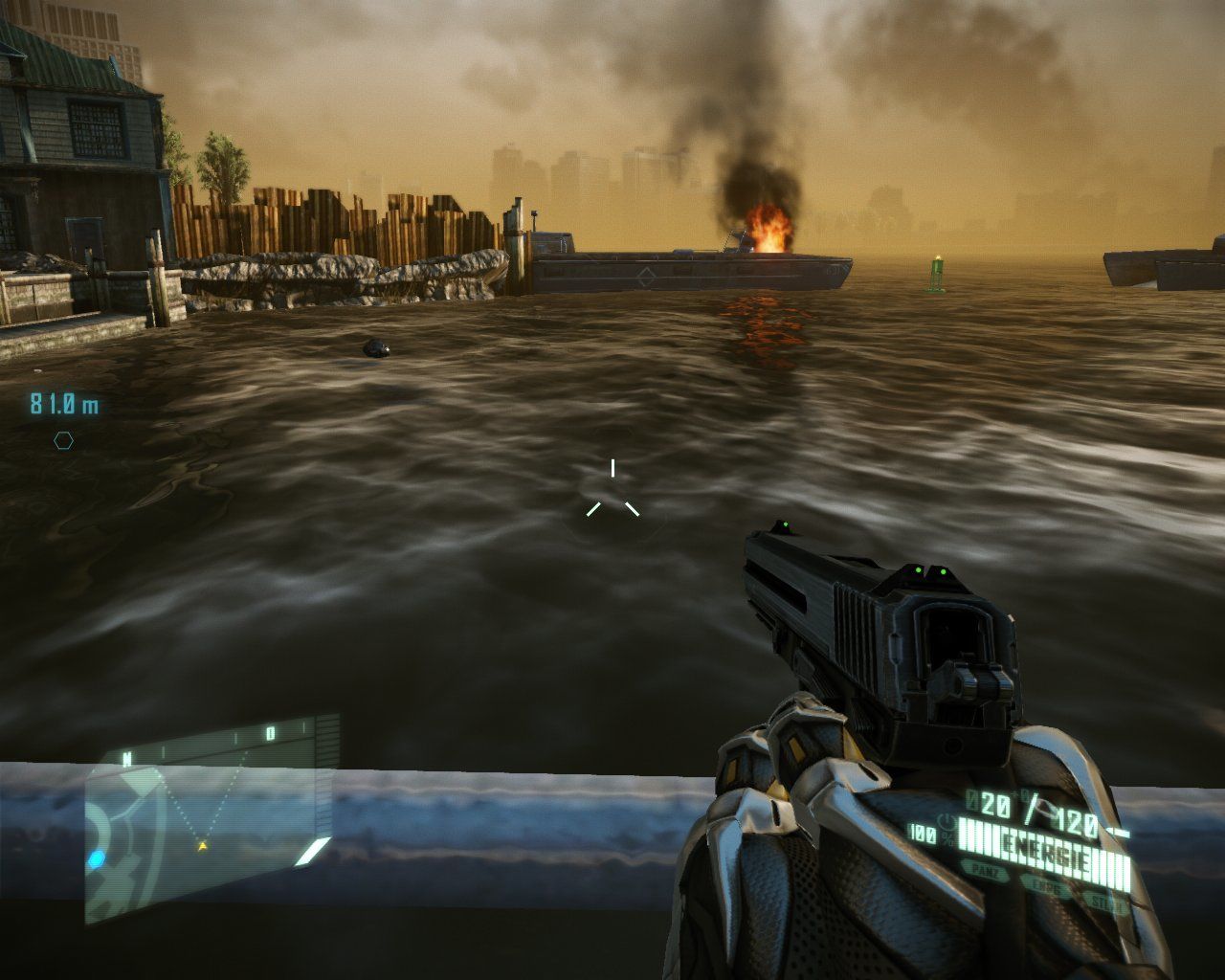
The visuals are also stunning, even in DirectX 9. High-resolution textures, awesome lighting effects, and a dark, moody atmosphere that makes you feel like you are in the Batman universe. If you have the monster rig (at least an ATI 6xxx series card is needed for high FPS), you can run the game in DirectX 11, but it is extremely tessellation heavy and probably the most advanced use of the technology since Crysis 2. Even my rig had FPS drops in the single digits sometimes.
Overall, Batman: Arkham City is a huge game with excellent production values. This is how a comic book game should be made, and all other developers need to take note. With a silky-smooth free-flow combat system, tons of hidden secrets, and a very engaging story with state-of-the-art graphics, you will not be disappointed. With added challenge maps to hone your skills, DLC costumes, and even new characters, this is one meaty package. I just wish the game had more epic set pieces and didn’t rely on the open world so much as to use it for filler.
I still remember Gears of War when I got my Xbox 360 on Christmas 2006. It changed the way I thought about games forever, which is why it is the only game I ever gave a 10. The game was perfect at the time, and I couldn’t really find anything wrong with it. I also remember the game being almost a complete failure early in development and seeing glimpses of shoddy gameplay footage on TV during E3 2004. The classic hit comes to PC with some enhancements that are great for newcomers and enough for fans to come back for another run (or three).
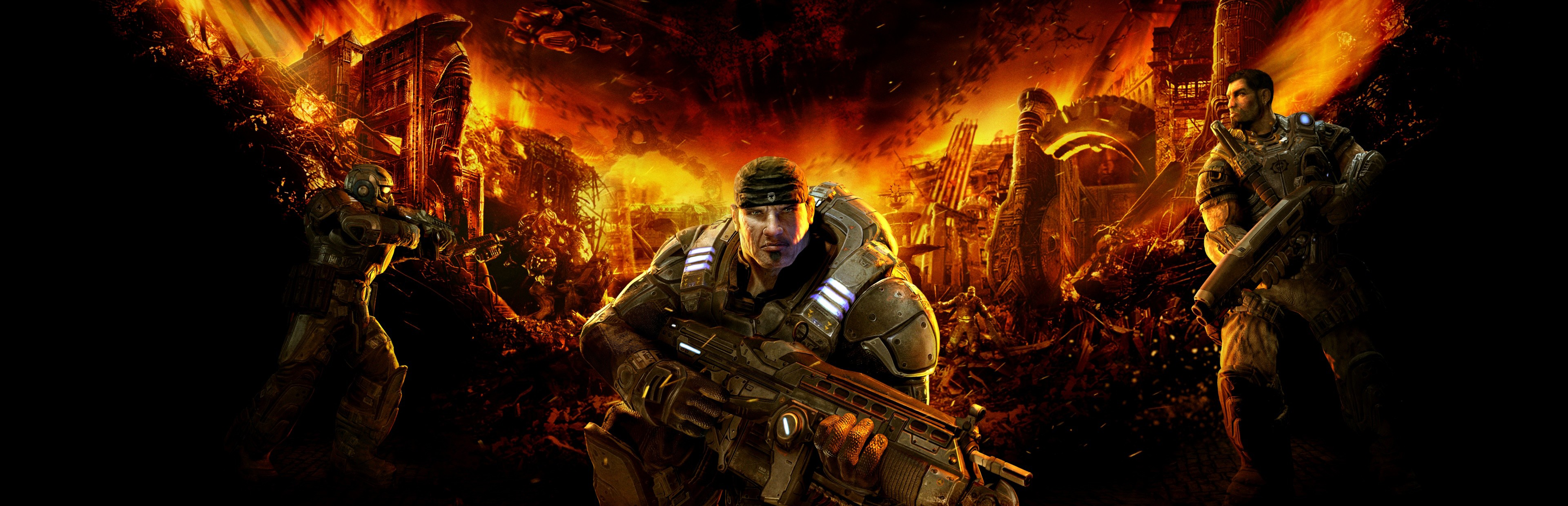
I’ll review this all over again for people who are unfamiliar (PC-only gamers). You play as Marcus Fenix in Delta Squad, who are sent on a mission to deliver a light mass bomb deep under the planet Sera to destroy the Locust horde that is trying to kill all of humanity. This sounds like a typical sci-fi B grade, but this is one of my favorite gaming stories of all time because of the characters, sheer terror, and hopelessness humans go through to rid of this vicious species. Gears of War may seem like a manly shooter on the outside, but inside there is a deep and complex story (just pick up the four books and you will truly see) that tests and trains every human to fight for survival.
Despite the excellent story and memorable characters, there is a great underlying gameplay system here. Slamming against cover, shooting awesome weapons, and killing interesting enemies that were never seen before is quite awesome. Locusts aren’t just bugs or aliens; they feel like entities that you should run away from and have nightmares about. It takes half a clip to take these guys down, and they shoot back with good AI (excellent at the time, good for today’s standards). During that time, the AI was unrivaled because the locust would flank you and act smart instead of just standing there and getting a shot at you.
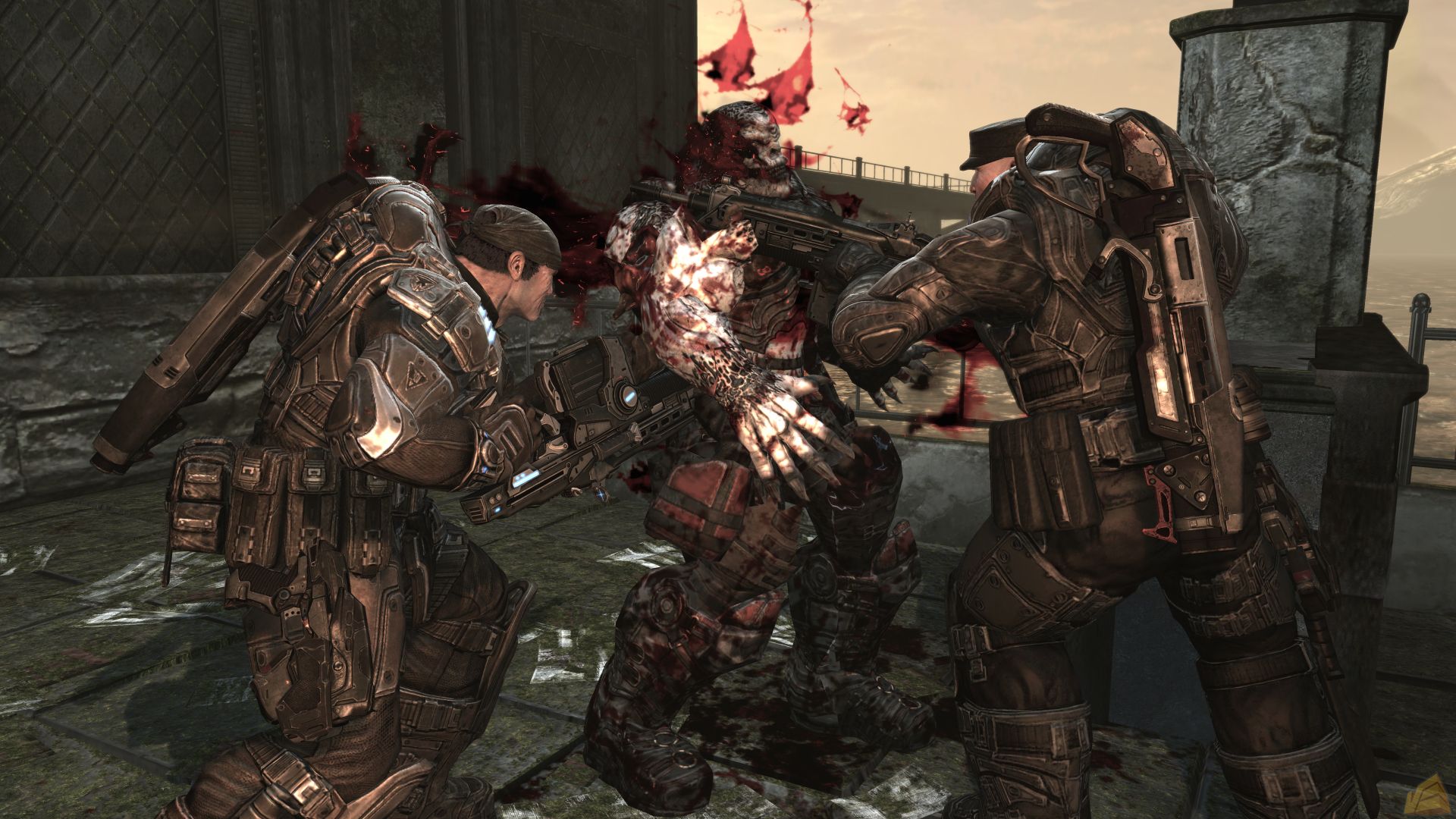
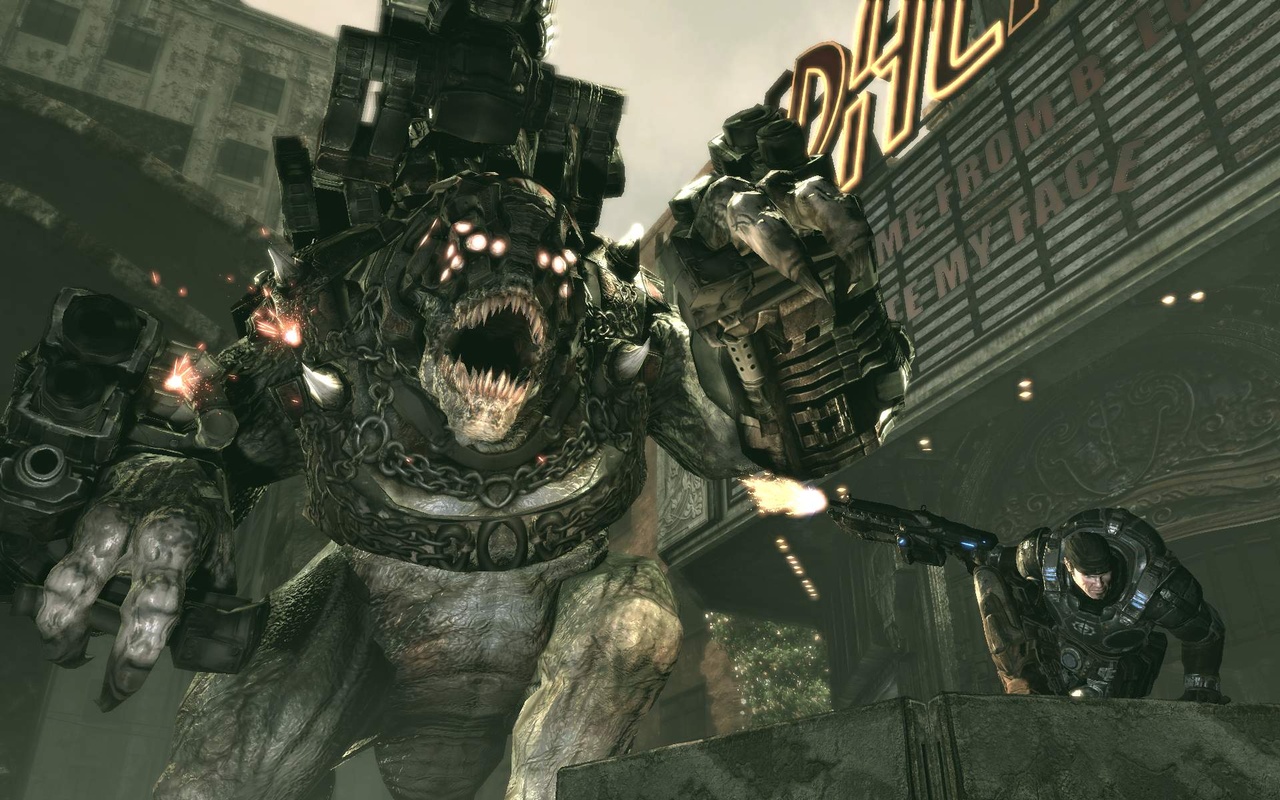
The weapons are memorable, such as the infamous Lancer with the chainsaw bayonet. Slicing through an enemy and watching blood splatter on the screen is just awesome and never gets old (even if you play the last two Gears). The Longshot is a powerful bolt-action sniper rifle; the Hammerburst is the Locust assault rifle; the Boomshot, Snub pistol, Boltok revolver, and Gnasher shotgun are some of the greatest weapons ever made, and they are infamous for a reason. The enemies vary greatly, and some can’t even be taken down with guns. The Hammer of Dawn is used to take down the Berserkers who run at you and must be dodged during three different scenes in the game. The Corpsers are huge spider-like enemies that can only be taken down in the same manner and jam communications. The list goes on, but each enemy has to be taken on in completely different ways, and most shooters can’t do that.
The campaign is well-paced with lots of different scenarios, such as avoiding the deadly Kryll at night while shooting tanks to stay in the light. There are turret sections, but sadly, there are no helicopter sections, which this game is dying for. There are epic boss fights, but overall the campaign is perfectly paced, with varied environments from outdoors to indoors. All of this combined equals one sweet package that 90% of shooters can’t accomplish in one game.
The multiplayer is fun if this is your thing. Gears of War multiplayer is a lot different from most because it’s tactical and close-quarters. 6-on-6 is tough, and you will die quickly against vets because the game requires a lot of rolling, dodging, and quick trigger fingers, but the modes are fun, like Execution and Wingman. Sadly, not many people play Gears 1 online anymore, so you will rarely find people playing. There is even a co-op mode for the campaign, which is a blast, but good luck getting anyone to play online.
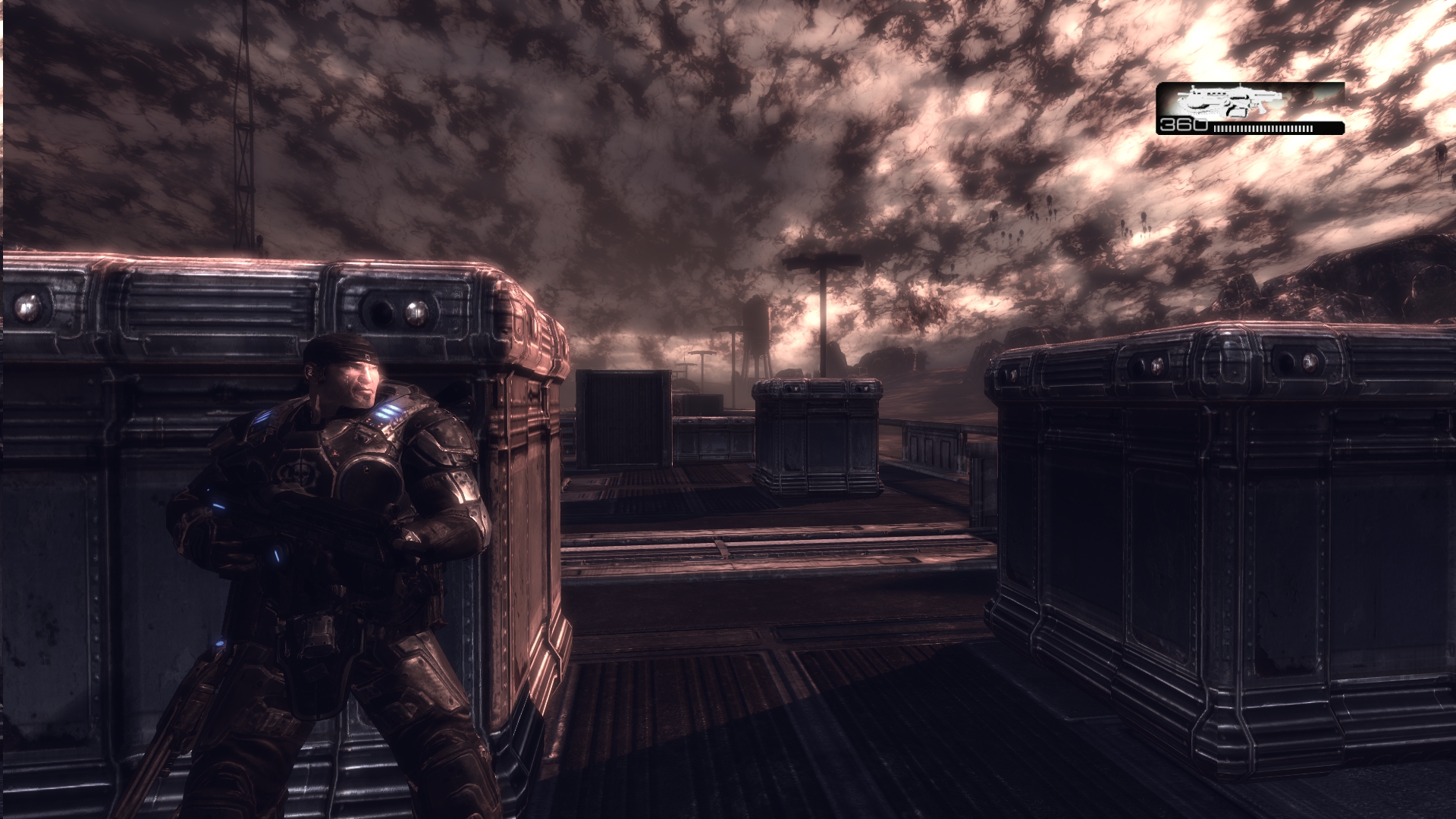
For the PC, we get updated visuals with DirectX 10 lighting, some higher-resolution textures, and, the best part, five all-new chapters that were cut from the Xbox 360 version. If you did play that version, remember after leaving the Fenix mansion, a Brumak comes after you, and you jump into an APC and escape? Stuff happened after that and between arriving at the train station. Delta Squad gets stuck at a lifted bridge and needs to find a way to power it so they can head to the train platform. This is also where you take on that Brumak that followed you and is probably the best 5 chapters in the whole game. I’m sad Xbox 360 owners had to miss out on this epic piece of Gears, but PC gamers will be pleased. There are also three additional COG tags, so watch out if you want those achievements!
Gears of War is worth a re-purchase for veterans or newcomers because this is a piece of video game history that can’t be missed by any shooter fan. Why do I not give this a 10 then? The game has shown its age with its dated graphics. Sure, they still look great, but the lower resolution textures, weaker lighting effects, and slightly sloppy animations show compared to the new Gears games. Most people will overlook this, but the game also does feel repetitive after a while, no matter how you slice it. You’re just running around shooting grubs, right? I feel it needed some more vehicle sections, and well, it was all fixed in Gears 2 and 3, but that’s beside the point.
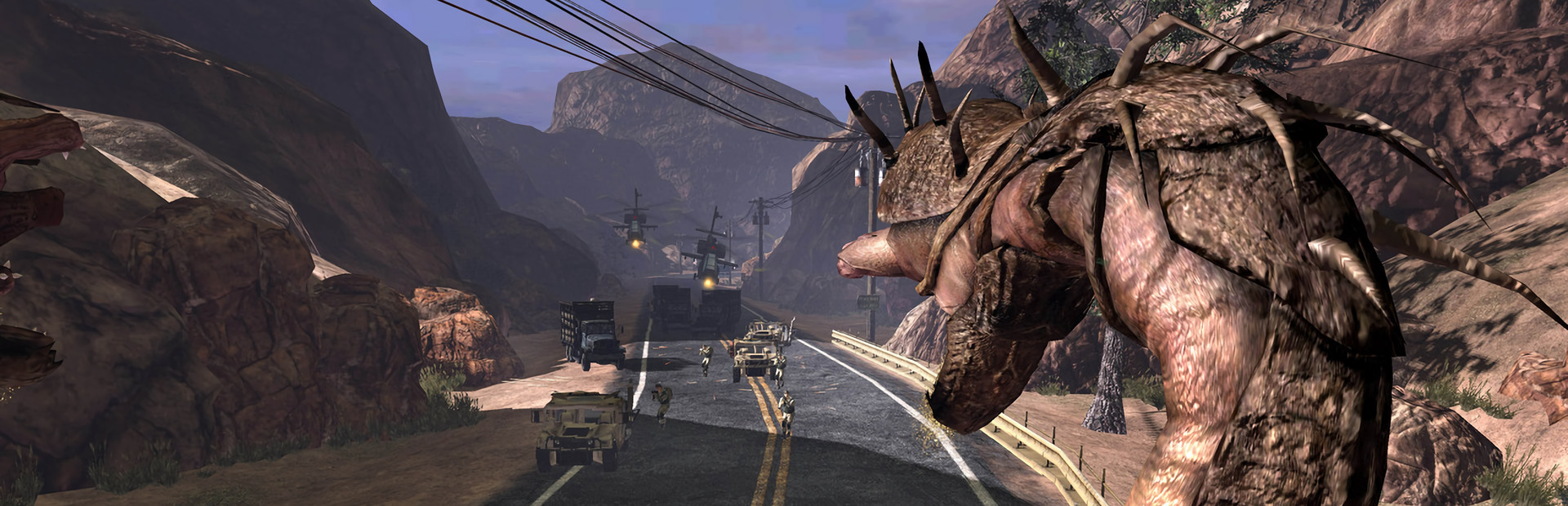
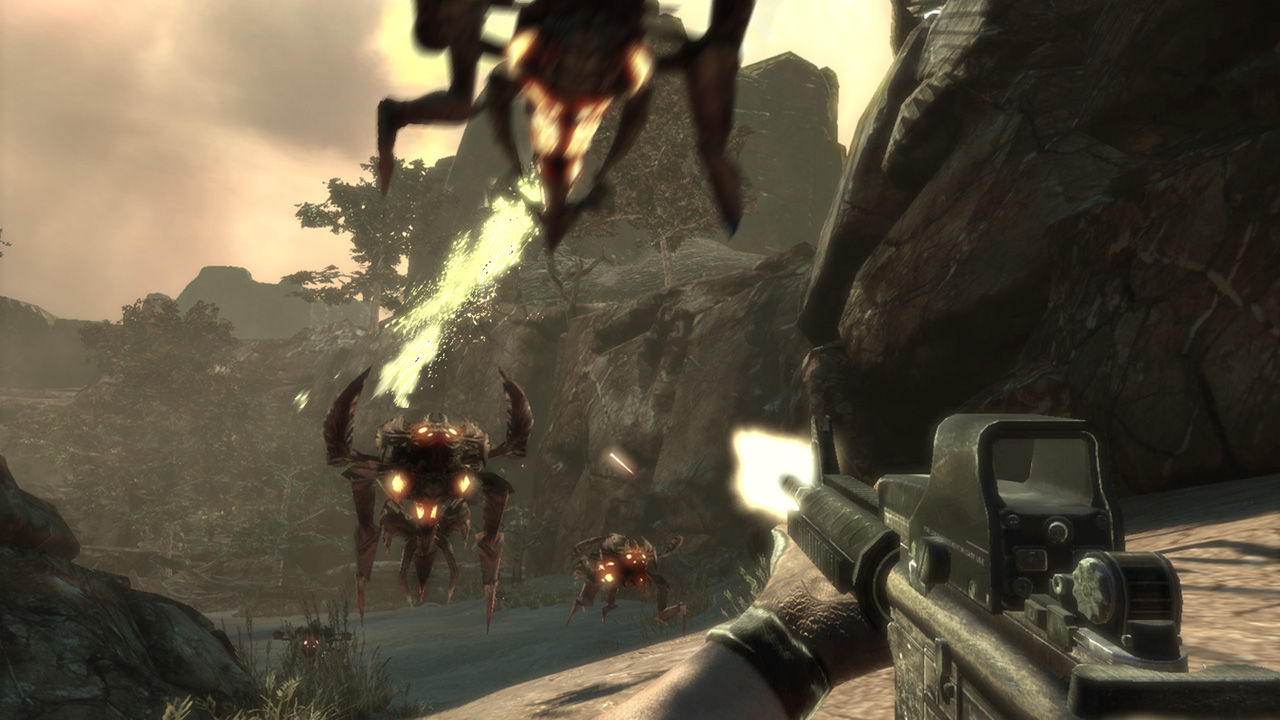
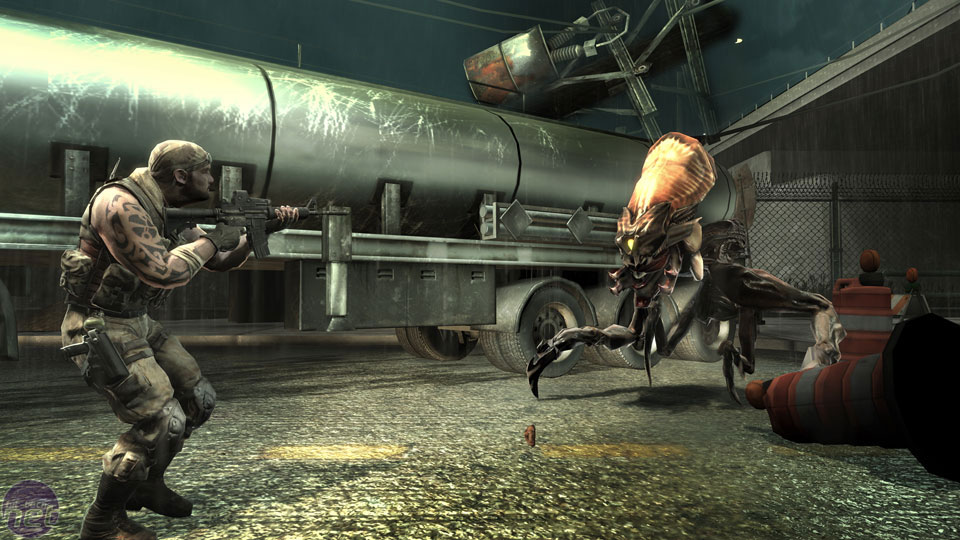
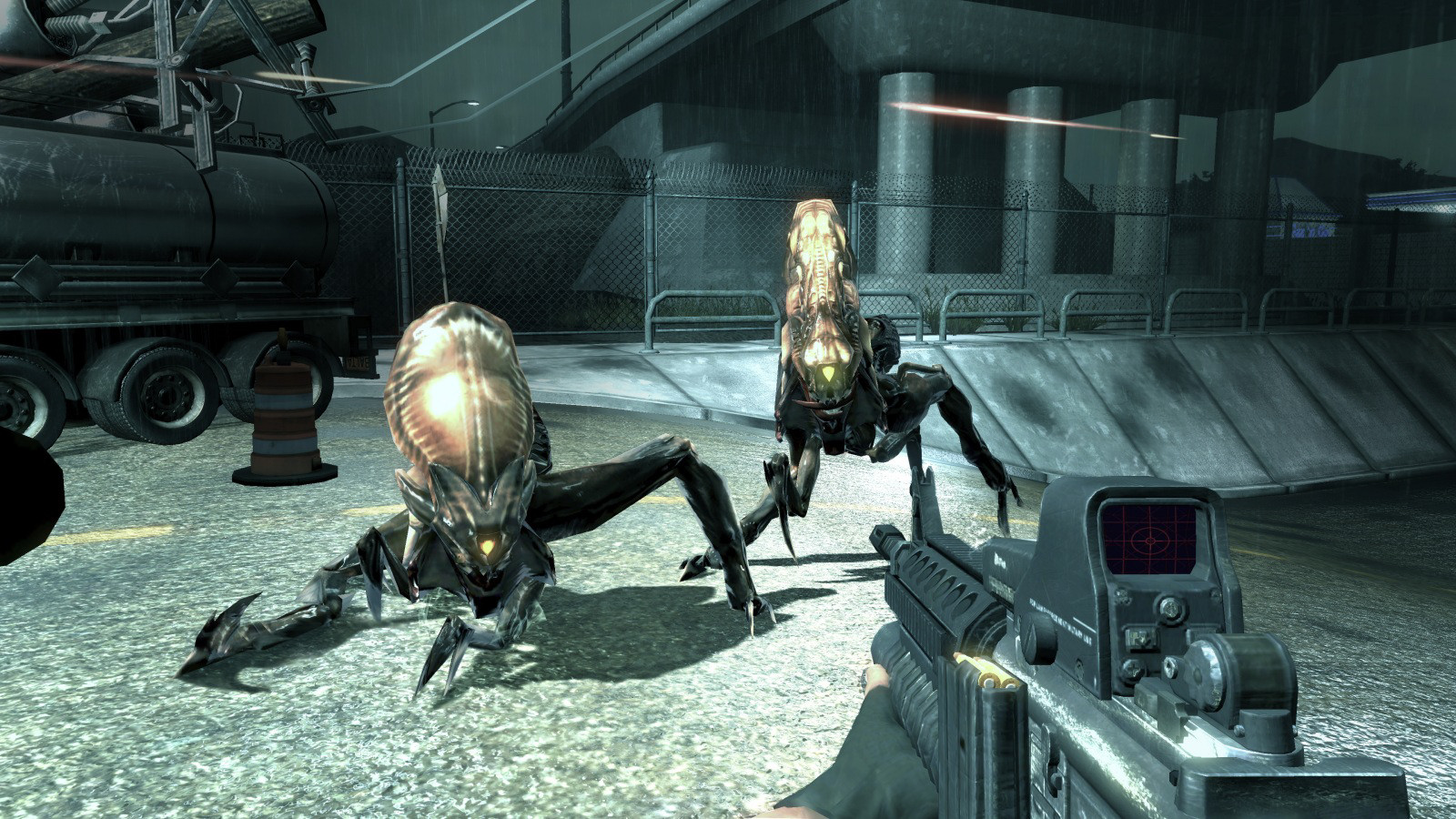
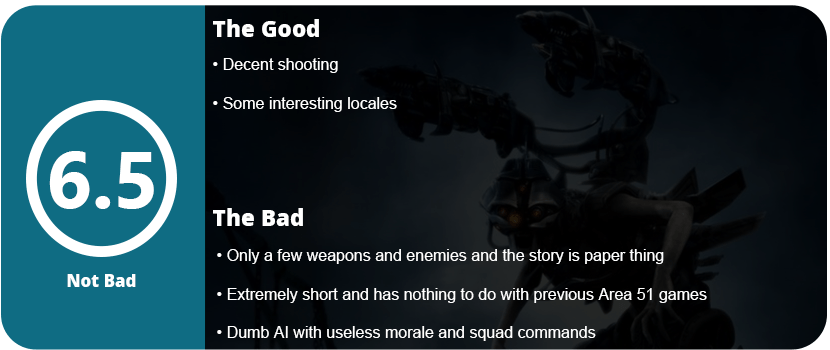
I played this about 3 years ago, and even then, it wasn’t all impressive. This game has nothing to do with the underappreciated Area 51 that came out years ago, despite being made by the same studio. In fact, the game has nothing to really do with Area 51 at all except you fight through Rachel, NV, and there are aliens. The game is a day’s worth of mediocre entertainment at best. The story is paper-thin, with something about a government experiment where they are trying to create the perfect soldier using prisoners and homeless people. The experiment breaks out, and you are fighting off a weird paramilitary plus Xeno aliens. The characters aren’t interesting, and this is by far just a B-grade experience.
The worst part about the game is the lack of content. Only a few weapons (like less than six) and a handful of enemy types make for a typical shooter experience. There are a couple of large boss fights that were epic at the time, but now they feel too scripted and stale. The graphics are pretty bad since this uses Unreal Engine 3 from years ago, so there are badly scripted explosions, crappy AI, and a useless squad command and moral system. You can send your two buddies somewhere, but it makes no difference because they won’t shoot anything most of the time. If you get shot a lot, your morale will go down, but I actually didn’t notice this doing anything because the AI is so dumb anyway. There are a few vehicle sequences (which stink), and all the weapons feel the same except a couple of alien weapons.
The multiplayer is nonexistent because the servers have been long gone, but you can grab the game for less than $1 on Amazon. The game lacks the greatness of its predecessor, with a lack of interesting stories, characters, and scripted cinematic events. You can go around collecting dossiers, but other than that, this is bare-bones at best. The game had a lot of potential but was executed poorly with lazy design and shortcuts. Why should you bother playing it? Mainly for fans of the first game or who just want an FPS fix for a few hours.
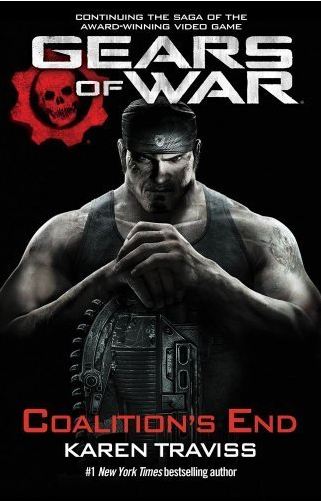
There were a lot of questions throughout the Gears of War trilogy, and only the hardcore fans asked them. The books helped answer all of these and tie up the plot holes that the games couldn’t fill. The final book of the Gears series fills the holes between Gears 2 and 3 and leads right up to the beginning of 3. The book focuses mainly on Bernie Mataki, Colonel Hoffman, and Dizzy. The book explains the fall of the Coalition that you see at the beginning of the third game and why everyone was living on the ship Sovereign. Even little things, like why Anya cut her hair short, are answered in this book.
Like Jacinto’s Remnant (book 2), you get flashbacks during the Hammer of Dawn strike that wiped out most of Sera, and we get to find out how Baird and Cole met (which is the question about why they knew each other in Gears 1), but it focuses on Bernie, Cole, and Dizzy just before, during, and just after the Hammer strike. The book is riveting, sad, and really heartbreaking during some moments. Just seeing humanity crumble and every last hope fall apart is heartbreaking. Traviss does a great job of keeping the characters’s personalities in the book so they feel just like they did in the game. Of course, this is mostly about the stalk and polyp infestation on the island of Vectes, which is humanity’s last refuge. Hell, you even find out why Prescott left the COG and where Hoffman wound up.
The book has the perfect pacing, and I don’t think the book series could have had a better ending. With such deep and lovable characters, a tragic setting, and a great lead-up to the final game, you can’t really go wrong here. There isn’t much action here because the book really digs deep into the minds of the characters and more into the tragedy they are facing than actual battles. There are some battles here, but there aren’t any with locusts because of the polyp crisis they face. This book is really only for hardcore fans, but if you want every single question answered up to this point, then pick this book up.
Shooters tend to be the most criticized category because they are usually all the same and don’t do anything new for the industry. This year some awesome shooters and not all made it on the list. This year saw some shooters that pushed the graphics cards on PCs, showed some astounding multiplayer, but most lacked in good stories. That’s usually what is looked for in the shooter category is mainly a good single-player campaign.
This was a tough one but Gears 3 topped them all mainly due to a good single-player campaign and an amazing finale to an already wonderful story. The multiplayer may not be as groundbreaking, but it’s the overall cohesive and well-balanced campaign that put it at the top. With great characters to follow and some truly awesome weapons to shoot you just can’t put the game down, and that’s what you want in a good shooter.
This was a strong year in fighters with lots of great comebacks. What makes the top fighter stand apart is a great cast of characters, smooth and responsive controls, but most of all a great fighting system. Stories tend to take the back seat in fighting games, but online multiplayer is also important.
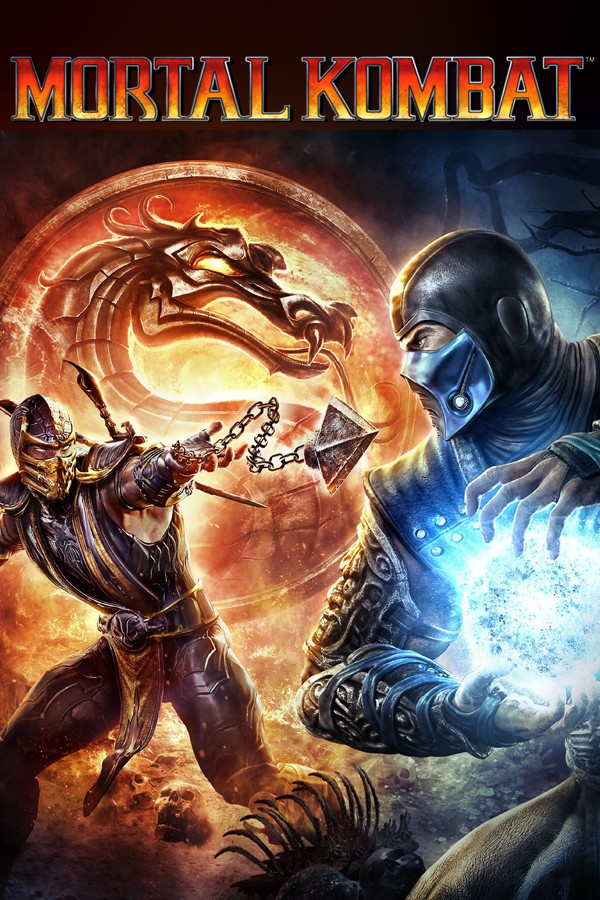
Before you go off saying this won because I’m a die-hard MK fan stop right there. There have been past MK games that didn’t deserve the best fighting game. It wins this year because it is true fan service and brings the series back to its roots. This year saw a lot of remakes, but Mortal Kombat gives us great visuals, all the characters we loved from past games and brings it back its 2D roots which are when the game was strongest. Smooth and responsive controls as well as the great fighting system we grew to love, and a bevy of fun modes are what makes Mortal Kombat come out on top.
Multiplayer can be put into any game, but a good multiplayer (whether it be cooperative or competitive) has to have balance, a good amount of modes, and something to set it apart from the rest. Shooters tend to be the main course when it comes to multiplayer. However, those tend to always be the same, but something needs to set it apart. Usually, it’s well-made maps, balanced weapons, and customization. Even something like poorly run servers can make online play bad. There were a lot of shooters this year, but only one topped them all.
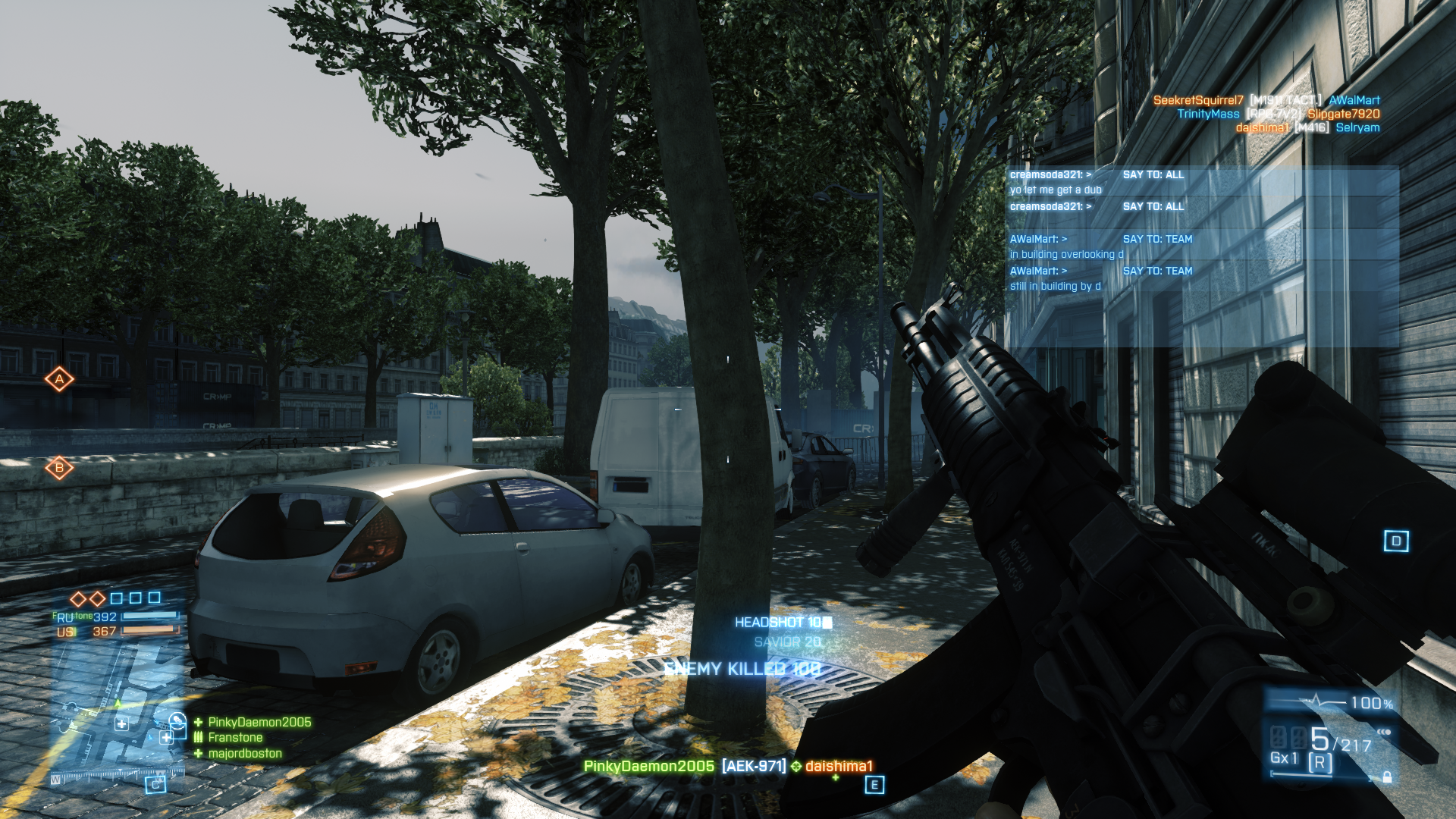
Great maps, a beautiful game engine, vehicles, and a change in pace for unlocks and perks is what makes Battlefield 3 the top dog this year. All the rest were just perfections of what has already been down, but Battlefield 3 perfected and added on to what’s already been done. Excellent maps, great balancing, and starting you out with crappy load-outs to force you to be good makes this one shine. Not to mention up 64 players on huge Rush or Conquest matches is an absolute blast and no other shooter can pull this off.
A new character is very important to a game because it can make it or break it. There are also hundreds of memorable characters out there so making a new one and trying to make it on the list is hard. There were very few new characters created this year, but among the few, there was only one that was very strong.
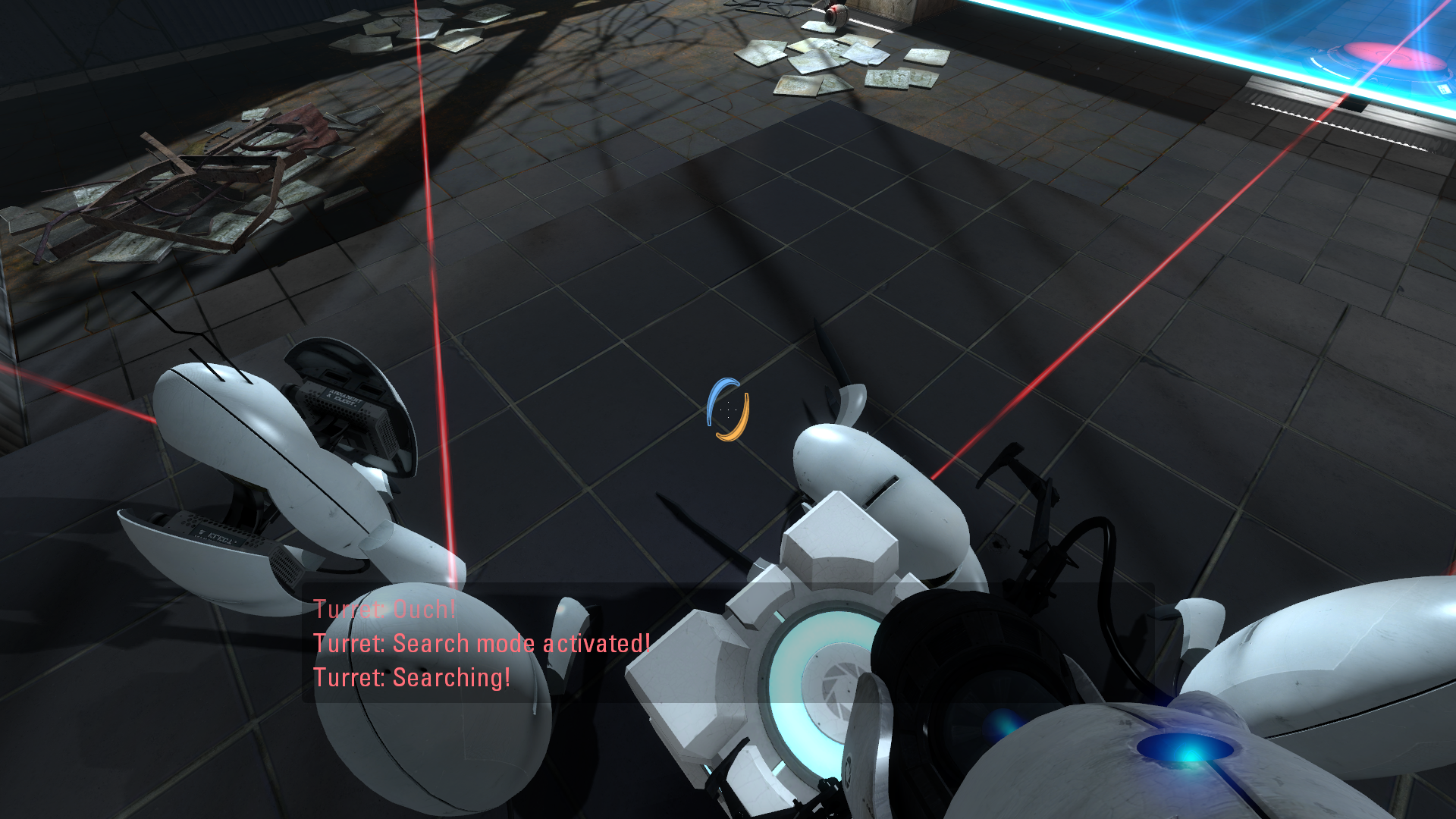
This was an easy pick this year. Wheatley is a very funny and strange character, but being just a blinking orb makes him all that harder to pull off. It’s his personality and voice acting that really make you remember him and put him among the best. His British humor mixed with the insane world of Portal 2 really makes you want to hear him talk and come back into the world. Wheatley’s character is perfectly balanced and you get doses of him throughout the game, and you just can’t help but love him.


















































 thebinarymessiah.com
Yeah, it's pretty damn awful. Notoriously one of the worst games on the PSP. A 4 was actually being generous.…