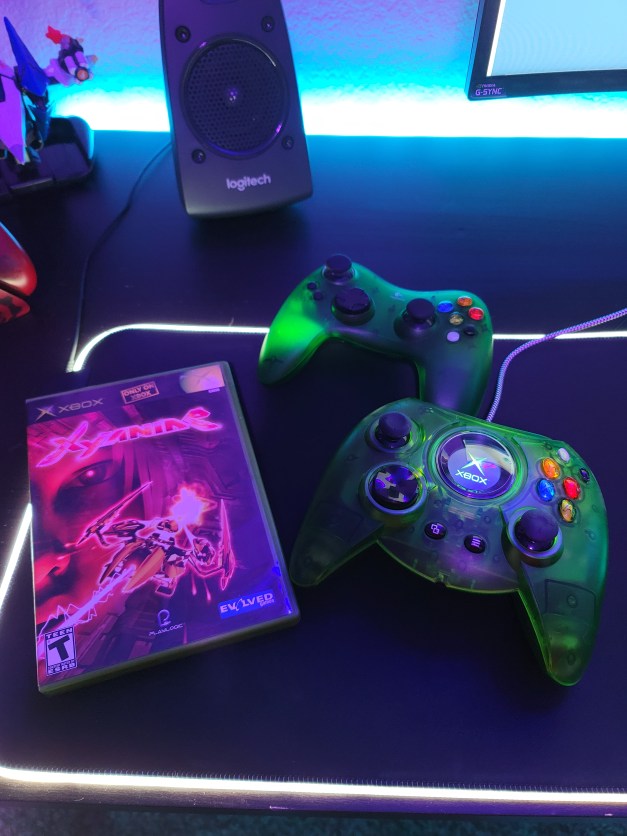
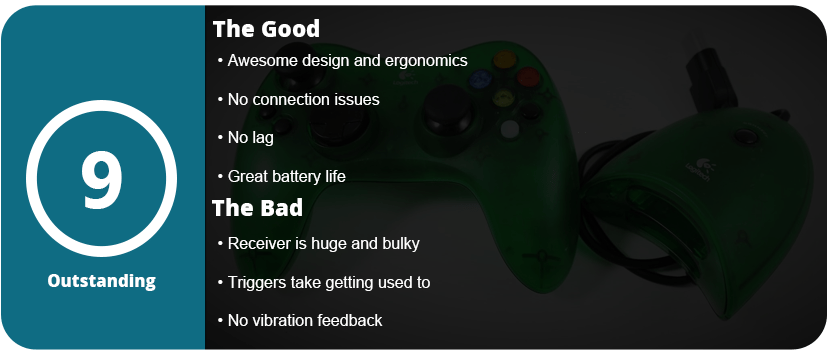
After loving the Cordless Precision Controller for PS2, I had to get something similar for the Xbox. Now, the Xbox controller is great, but I don’t like cords strung across my house. Back in the day, wireless controllers were expensive, and there weren’t many good ones. After picking up a generic wireless controller a couple of weeks ago, I ditched it in the trash. It lagged, was constantly cut out, had to be reconnected from the receiver end, and was just glitchy and cheap. The Logitech controller feels solid, literally melts away in your hands, and has a nice weight to it.
The arms of the controller are bent out more and are a bit longer, so you have a more solid grip. The black and white back and start buttons are closer to your thumbs and are a bit bigger. The triggers aren’t really better than the OEM controller, but they still feel nice and are a little less stiff. The analog sticks feel great, and just like the PS2 version, they are a tad loose, so it takes getting used to.
I found it puzzling to have memory card slots on the receiver end as it makes it big and bulky, and the Xbox has an HDD, so why do we need memory cards? I understand transferring saves to a friend’s system, but it couldn’t have been built into the system. Anyway, the controller connects without a hitch and never needs to be repaired. Just press a face button and it connects with zero hassle, and this is why I absolutely love these Logitech controllers.
The back door to the batteries is much easier to get off than the PS2 version, and you get 50 hours of battery life off of two AAs. Overall, this is the go-to wireless controller for Xbox, as it feels better than the OEM one and is just a seriously solid and amazing product. They tend to be a bit cheaper than the PS2 versions, as there was only one version released. However, a new controller will still cost you over $100.
Cover-based third-person shooters weren’t really a thing until the last console generation. Third-person shooters took quite a while to evolve into something truly stunning, and the best example of this is Gears of War, which is third-person shooting perfected. Kill Switch was actually a sleeper hit back in the day and was widely talked about due to the great shooting and cover mechanics.
Kill Switch has a story that sees a male protagonist (I can’t even remember his name; the story is so lame) trying to stop a dude named Archer from launching a nuke. In the process, you are trying to recover your memory of your wife being murdered by him. I don’t even know. The game is so short that it doesn’t allow any type of story to evolve, let alone a bad one. The story is completely forgettable, and I skipped all the dialog towards the end because it was a confusing mess.
The gameplay is where it’s at here. The controls are simple, and the game is run-and-gun at its finest for the time. Holding R allows you to buckle against a wall or obstacle, and you can blind fire over it, or you can pop up and shoot more accurately. I found that blind firing doesn’t quite work well if the obstacle is higher than you can raise your gun. Most of the time, it did not work, so I stuck to pop-up shooting. You can throw grenades and flashbangs, as well as dodge rolling and melee attacks. It’s a pretty standard affair, but at the time, it was done so well that there was nothing like it.
I have to say the level design is just plain bad and boring. Every level is a stereotypical military base with boring blank walls, stairs, and rooms. There is absolutely nothing to look at here, despite the game being technically quite good-looking. The textures are sharp, the models are nicely made, and the animations are pretty good. It just goes to show that you are literally just coming into this game for the shooting, and that’s it.
Maybe it’s a good thing this game is so short. Clocking in at about 4 hours if you don’t die a thousand times over trying to get through the hordes of enemies. There were issues with major difficulty spikes and draw distance. I would have a guy shooting at me accurately beyond where I could see, even with a sniper rifle. The weapons are nothing to write home about either, just your typical military machine guns and your token shotgun.
Overall, Kill Switch is worth a buy for its great gameplay that is fun and addicting. Just don’t expect a story or anything nice to look at. Is there a reason for there to be a sequel? Well, the story somehow manages to say that it hasn’t ended yet, but Kill Switch has no relevance today with better cover shooters like Gears of War. If it were rebooted into something fantastic, that’s another story, but I honestly can’t see that happening. Kill Switch belongs in 2003 and should stay there—nice and snug.
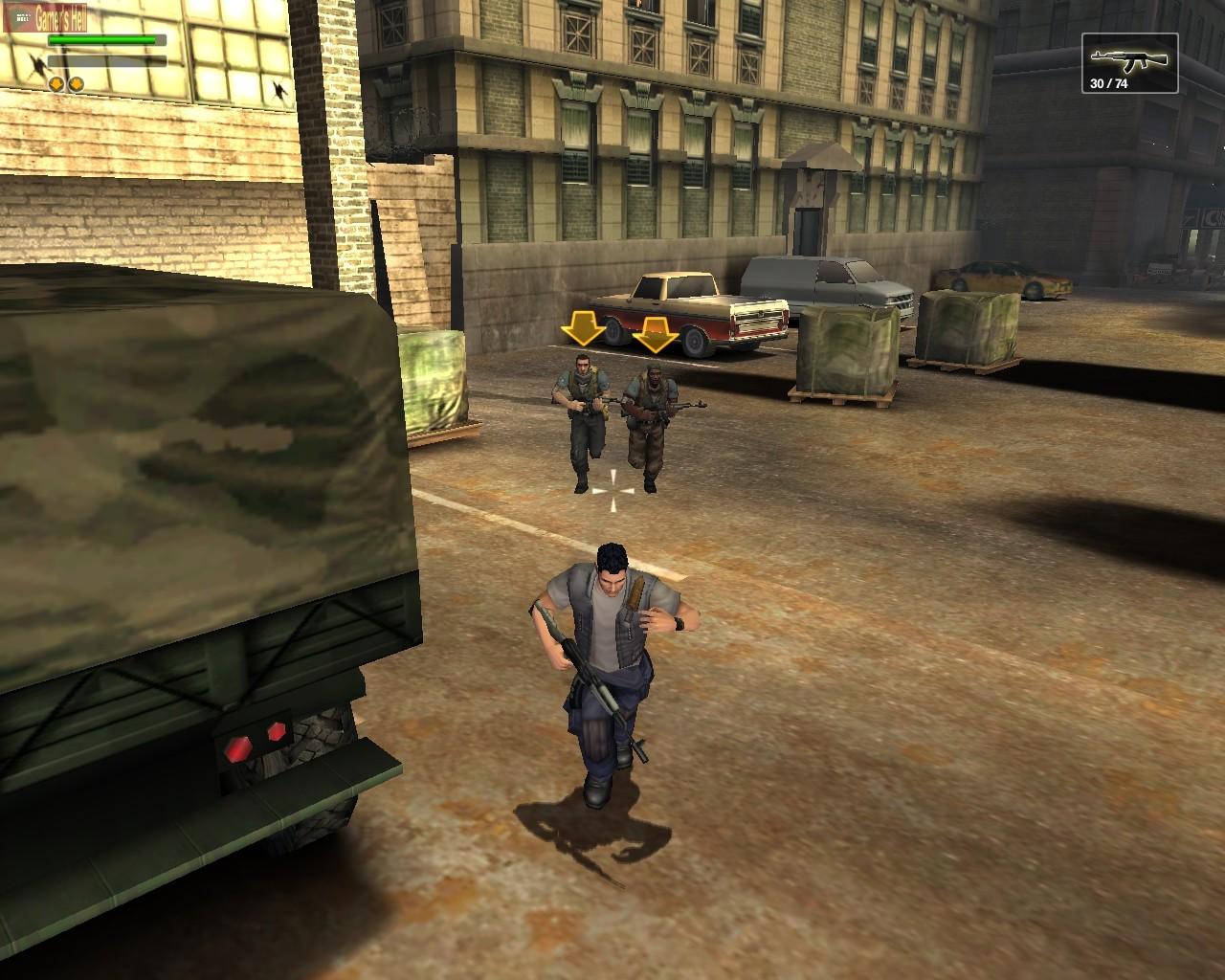
This is actually a game I knew was a big deal back in the day and ignored until now. I don’t know if it was because I was too young to understand the concept, it seemed like another shooter, or something else told me to overlook it, but I’m glad I finally dove into one of the most popular and talked about games of the early 2000s. Freedom Fighters is a squad-based third-person shooter where you control the main protagonist, Christopher Stone, and help the rebel fighters take back the United States from Soviet control.
The story isn’t really anything memorable, but the game does have a decent atmosphere about it. You feel the suppression of Russia as you run around the war-torn stages and view the cut scenes. Real-time scenes are mostly made up of news propaganda and the quick unfolding of the rebels winning. The game moves at a really fast pace, isn’t that long, and feels fairly average today, but back in the day, it was something new.
The game is structured around rebel bases that act as hubs, and each set of levels is accessed via a map. Once you get to a level, there are a few objectives to complete, and then it’s on to the next one (in any order). If you find yourself hurting for supplies, you can find manholes that act as checkpoints and can either quick-save or go back to your base (but you lose all your squad members). The game actually doesn’t explain any of this, and I had to figure this all out myself, which was very confusing and frustrating.
When you complete objectives, you get Charisma, which gives you a squad member slot at every level. It’s imperative that you do most of the side objectives, as later in the game you will need as many members as you can get. When you actually start shooting and playing the game, it feels extremely unbalanced and very difficult. The sheer number of enemies that are thrown at you is insane. There are probably over 200 enemies in each level, and the levels aren’t that big. The game uses an auto-aim mechanic, which actually works with how many enemies they throw at you. Just pull the trigger, and Stone will auto-switch enemies on the fly without any issues. There is a manual aim mode, but it’s finicky, and you can’t move while you aim. I would have liked fewer enemies and a more robust cover-shooting mechanic instead.
This shooting mechanic is what makes the game so difficult to begin with. I actually had to turn on cheats for rocket launchers as helicopters would come after me and there were no rocket launchers in the entire level. I was probably supposed to run from them, but the constant restarting was infuriating. Checkpoints are far and few between, and the last thing I need is to mow down the same five waves of enemies over and over just to try a different zig-zag path with the helicopter.
This extreme balancing issue brings the fun of the game down quite a bit, and after about three or four levels, it all starts to feel the same again. There are not that many weapons to choose from with just the standard assault rifle, submachine gun, and heavy machine gun nonsense that has been done many times over. Squad member control was decent, as they followed you around, but send them out to fight on their own, and they drop like flies. I’m actually glad the game was as short as it was, as it got so repetitive and numb that I wanted it to all end.
The visuals and audio in the game are actually impressive for their time. There’s a lot of detail everywhere, and the voice acting is rather excellent, but there are a lot of slowdowns when too much is happening on-screen at once. Overall, Freedom Fighters is a fast-paced third-person shooter on steroids, but the balancing issues, repetitive objectives, and overall frustrating difficulty bring the fun down quite a bit.
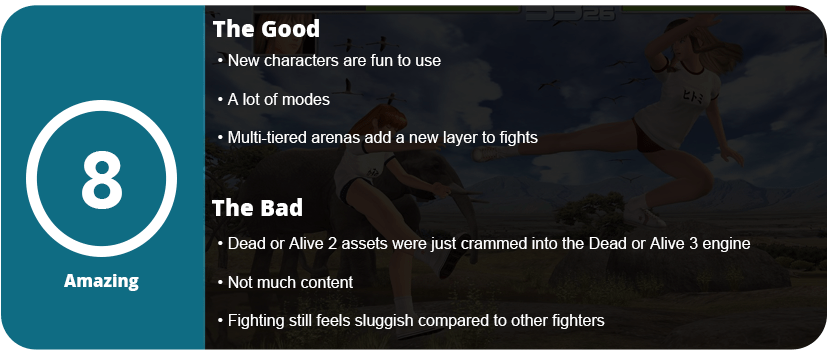
The shining gem in this bundle is actually the remaster of DoA 2, which debuted on the PS2. On the downside, it uses the DoA 3 engine and nearly looks identical to that game, and I’ll explain how and why.
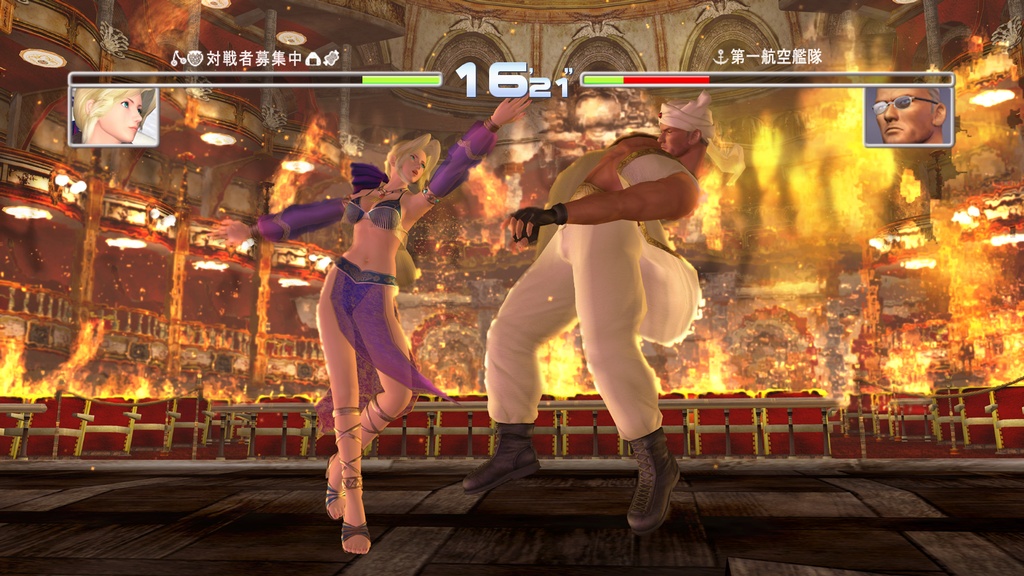
The first thing you will notice is that the menu looks exactly like the DoA 3 menu. Nearly the same modes and even the same graphics engine and character models. That’s not to say this game isn’t worth playing, as, like DoA 1, this is more enjoyable to play than to just try out for educational or nostalgic purposes. If you have already mastered DoA 3, then DoA 2 won’t do much for you outside of educating you on the series’ progression. The fighting system is actually much better and faster than DoA 1. When you jump between the two, it’s like night and day. The fighting system is slightly altered with more moves, animations, and combos. There’re even more characters here, as it almost doubles the roster. What was considered a lot of content back then is standard now, as double match rounds, endless mode, and time attacks just don’t cut it these days.
What I do love is that the arenas took the danger zone idea and added a step by making them multi-tiered way before Mortal Kombat: Deception did it. It’s exciting to knock your opponent off a ledge to get an extra edge over them, and playing chicken with the edges of the arena is a blast. Despite all these great additions, the fighting system just isn’t as refined as in the newer games in the series and still feels a bit sluggish compared to other fighting games.
The visuals look amazing on the Xbox and hold up even today, despite the awful aliasing seen everywhere. I would have preferred a more direct port than taking the assets and shoving them into the DoA 3 engine. Call it what you want, but DoA 2 is a fun game to play and should be in every DoA fan’s collection.
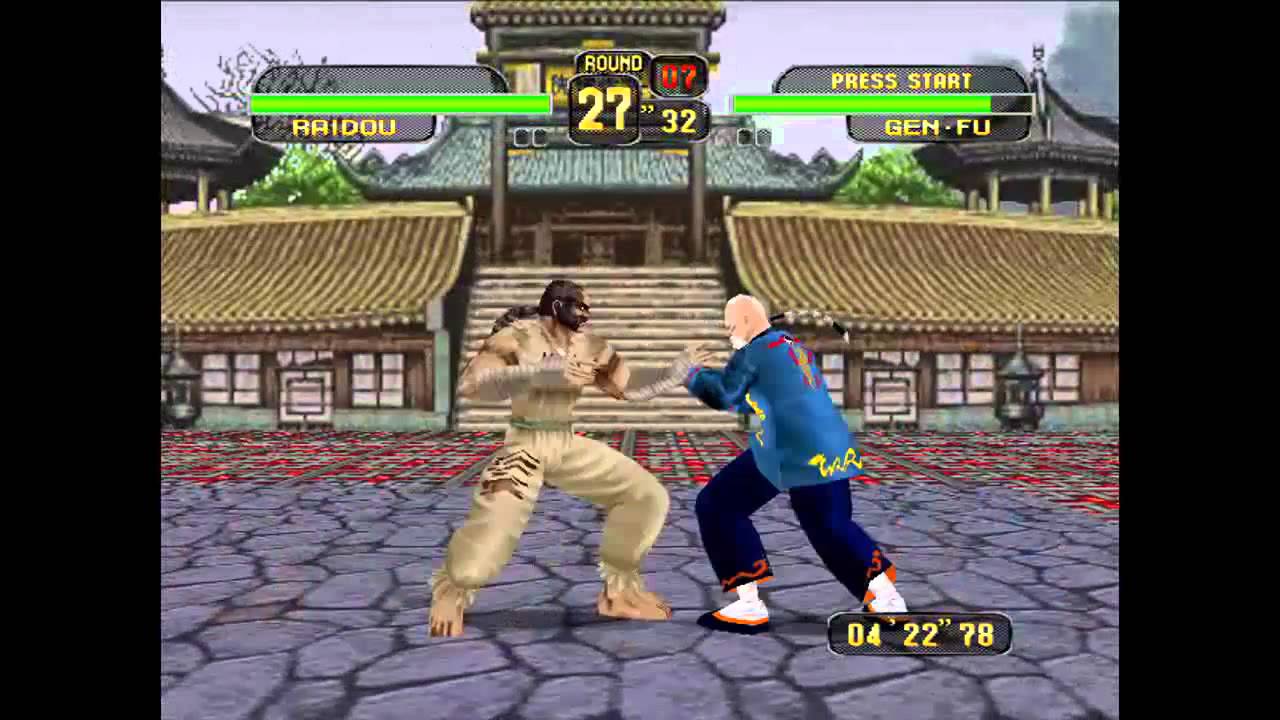
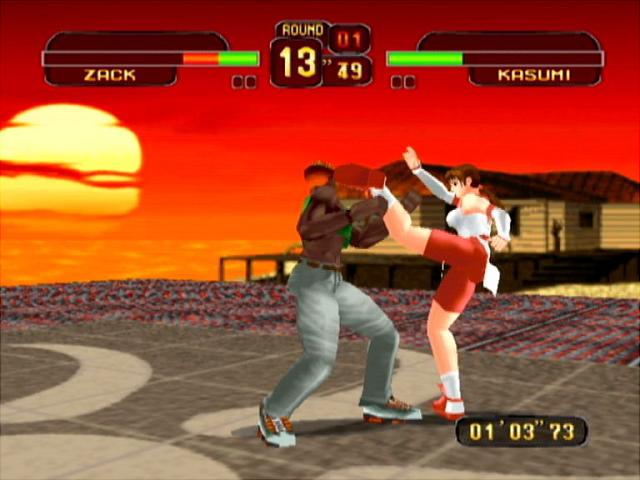
Dead or Alive wasn’t exactly cutting edge for its time back on the original PlayStation, but the game made enough of an impact due to its sex appeal with its female fighters. Dead or Alive is so basic, in fact, that I can’t really recommend this game as something to really get into and master, but more of something to have in a Dead or Alive collection. The combat system is all about holds, counters, and throws rather than fast-paced, crazy action like Mortal Kombat or Street Fighter. It was a slower-paced 3D fighter that was competing with the likes of Tobal, Virtua Fighter, Tekken, and various other 3D fighters of the time.
The story is pretty ridiculous and non-existent at this point outside of what’s in the manual and character profiles, so I’ll spare you the torture. The game actually plays quite well even today, with the baseline of the Dead or Alive fighting system we know today. There are several punch and kick moves along with the counter hold button and throw button. The game feels a bit floaty due to the old engine and physics, but it works. There’s a bit of charm to an old fighter like this. The game also features some of the first interactive stages with “danger zones” around the arena that do extra damage if knocked into.
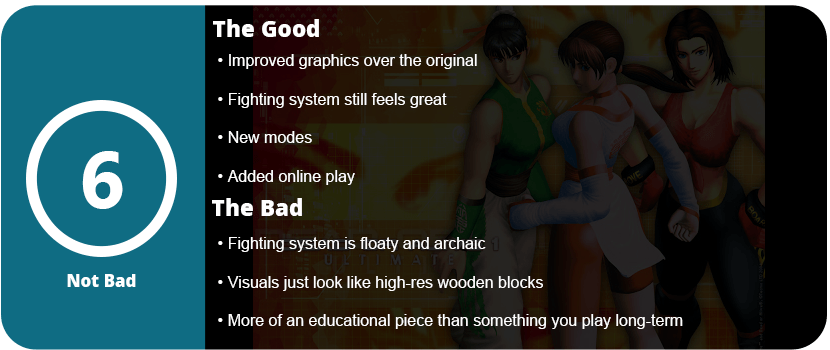
The game received a kind of HD remaster for the Xbox. The visuals are cleaned up with new textures and less blocky character models. What we get is an overly smooth, almost wooden block look to everything, but it still looks miles better than the original game on PlayStation. This version also adds breasts physics, as if that’s needed for something this ancient, as well as a flew of new modes and online play. Even with all these modes, I can’t see myself playing for more than 30 minutes at a time because the newer DoA games just make this one feel so stiff and archaic.
With that said, DoA 1Ultimate feels like a nice bonus compared to DoA 2 Ultimate, which is the far superior game. If you’ve never played the original game, you’re not missing much, but it’s nice to dabble if you’re a hardcore fan.
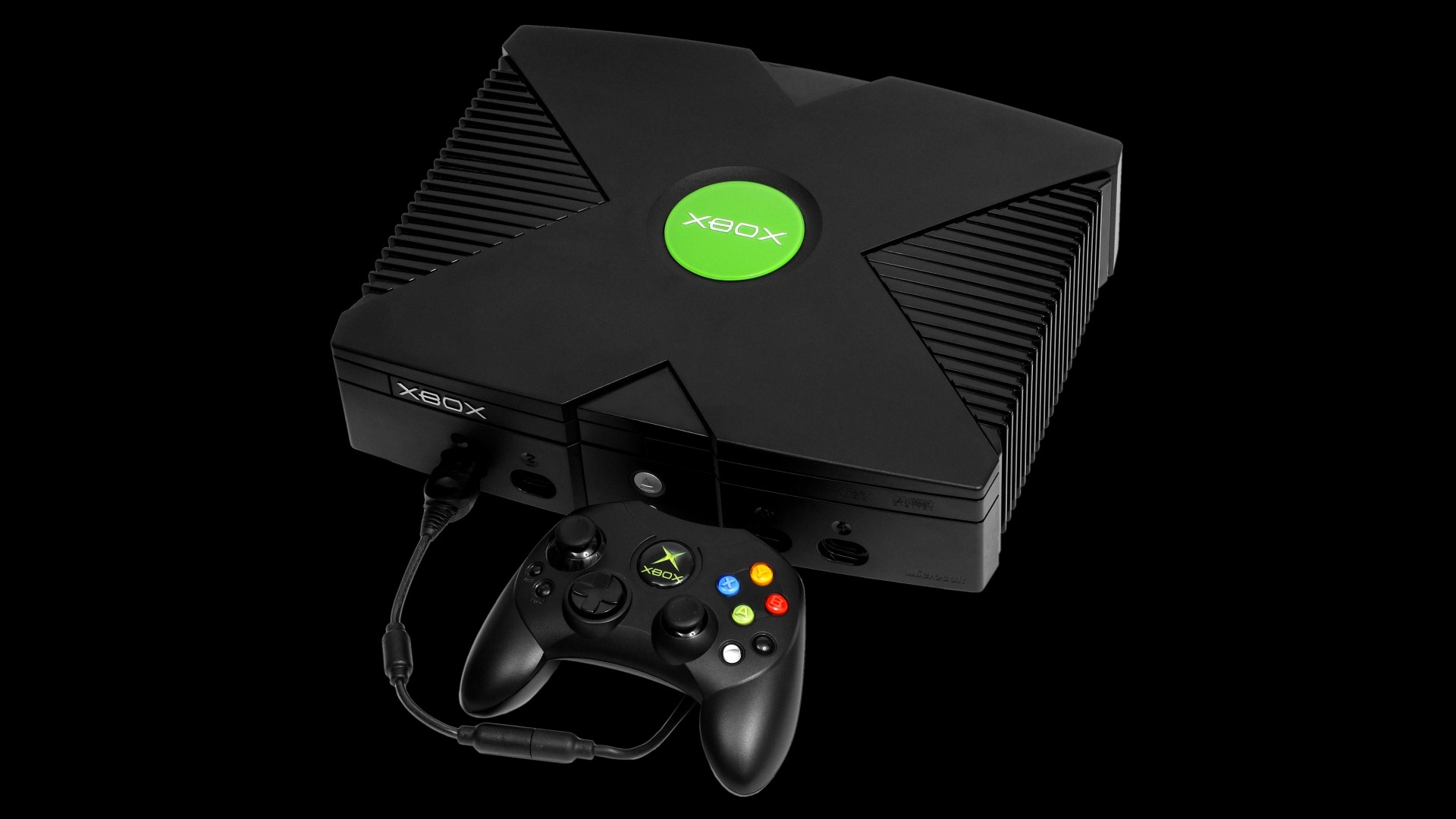
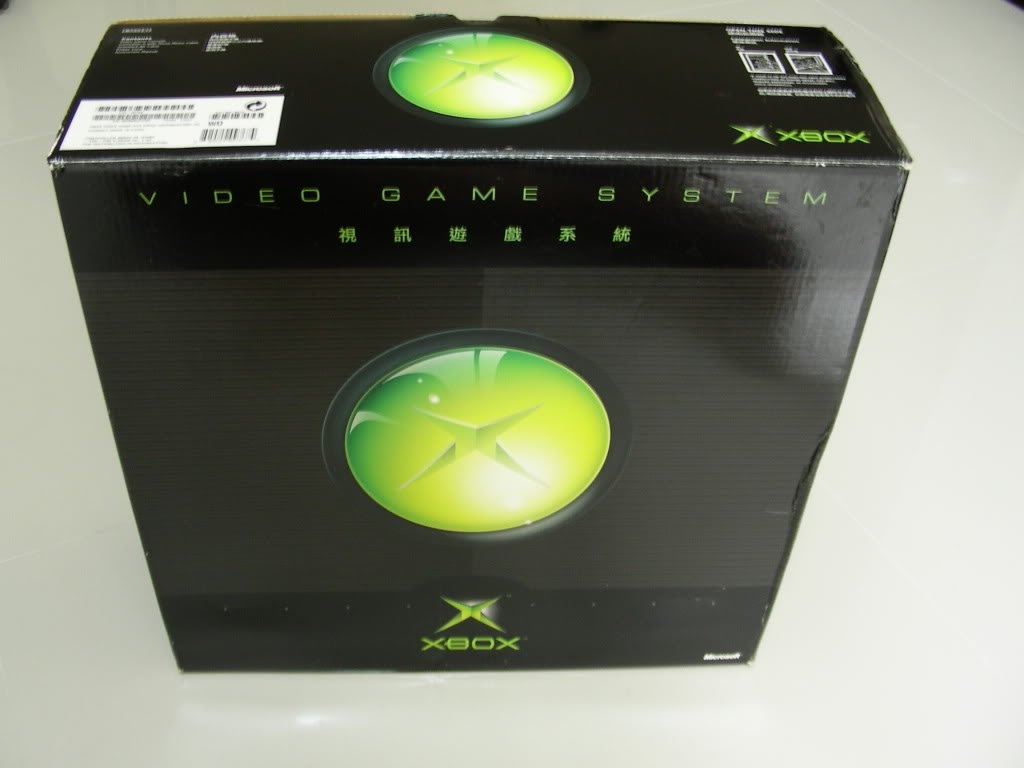
Here’s something funny. All these years, I passed up the original Xbox as just a failed experiment by Microsoft. Not until recently did I realize just how great this system was, what it was capable of, and how advanced it was for its time. I honestly think it got so much hate and low sales because no one understood what it was trying to do. No one really caught on until the Xbox 360 came out, which had nearly the same system and design process, but because it was 5 years later, everyone got it. I don’t think so.
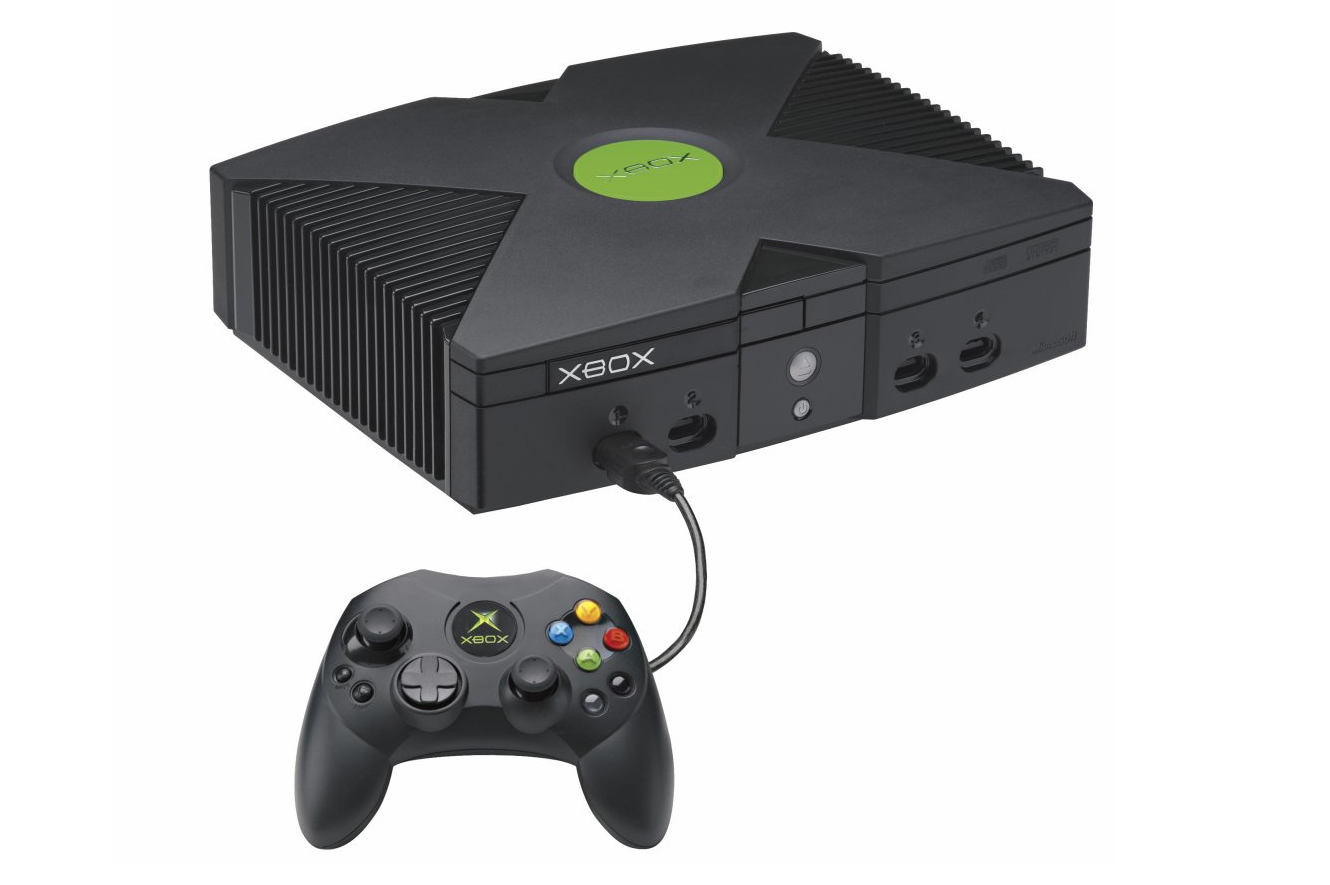
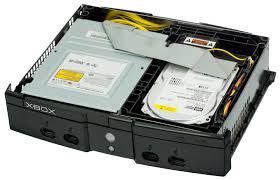
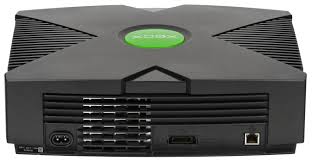
I have to say that the size of the system didn’t help. Sure, the original PS2 wasn’t the slimmest system ever, but it was nearly half the size. This thing is the biggest console I have ever owned or seen. The reason for the huge bulk is that Microsoft thought making a PC into a home video game system was a good idea, and it was. The main bulk of the system is the standard IDE DVD-ROM drive and 8GB HDD. These things are massive and heavy, and this is what contributes to the majority of the weight. The system has the power to throw around, though it is three times as powerful as the PS2 and GameCube. The system was the first to feature PC-type architecture with an Intel Pentium III at 733 Mhz and an Nvidia GPU called the NV2A at 233 Mhz. This made the system very easy to program, resulting in frequent PC game ports and higher-end visuals. Games like Half-Life 2, Halo 2, Splinter Cell: Chaos Theory, and many others looked astounding on the system, and even most multi-platform games were superior on the Xbox.
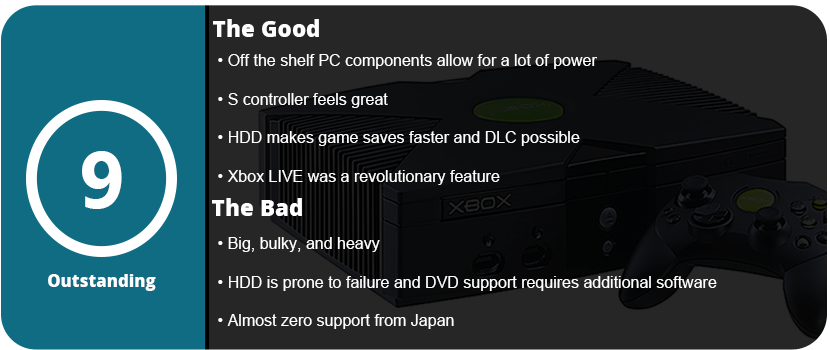
That’s not to say the Xbox is better than the PS2 software-wise. The PS2 was a much simpler system to use, with just a memory card and disc drive. The Xbox Dashboard and Xbox LIVE were revolutionary, causing Sony to push their PS2 Network Adapter faster and thus the eventual creation of PlayStation Network with the PS3. The Dashboard is the baby version of what we know today. You can change your system settings, and these stay stored thanks to the HDD. You can rip music to the HDD, which was a huge feature and allowed custom soundtracks in games, and you can allow soft modding of the system, which became a huge scene online. Sadly, Xbox LIVE was taken down a few years ago, so this is a single-player system only. The system firmware can actually be updated to the latest with a copy of Halo 2 that has the firmware on the disc. DLC is also no longer available unless you soft-mod your console and download it online. However, most DLC for the Xbox was multiplayer maps, which are really not good anymore.
So with a bunch of processing power, a built-in HDD, and a proprietary online service, what stopped the Xbox? Japanese developers did. While Sega had an exclusive deal with Microsoft to create over a dozen games for the system, Square Enix cut off nearly all support thanks to Microsoft executives’ snotty and arrogant attitude toward foreign developers. This is what gave the PS2 a huge boost and quadrupled sales thanks to many Japanese exclusives that we have known to love, such as Final Fantasy, Okami, Ico, Shadow of the Colossus, and many other Japanese-developed games. Microsoft was stuck with its own in-house studios and everything but the Japanese market. That’s not to say the Xbox didn’t have its own excellent suite of games.
One feature I love about the Xbox is that it supports HDTVs, which the PS2 and GameCube did not. The Xbox was so advanced that it even supported 1080i, which very few TVs touched back in the early 2000s. Growing up, I didn’t know a single person with 1080i input, let alone know what that was. The Xbox also supports widescreen, making it a perfect retro console for newer TVs. I plugged the system in via component and set the Xbox to HD output, and all the games looked crisp and clear. The PS2 had very few games that supported 480p output, as the system didn’t have the power to do so. With that said, the Xbox has 5.1 Dolby Digital and DTS, which sound great even on newer systems. This is supported by the system, thanks to the extra power that can process these channels.
The Xbox also had a fantastic S controller after the infamous Duke was discontinued. The S controller went on to evolve into the Xbox controllers we love today. I’m still not a fan of the Start, Back, Black, and White buttons that are on the arms of the controllers. It’s also odd to not have the bumpers on top, but most of the bulk is from the two memory card slots in the controller that were used to transfer saves to other systems. On the downside, the Xbox does not use the controller to play DVD movies, which requires a separate remote and dongle. This seemed like it was to get more money into Microsoft’s pockets, as the controller could easily be programmed to work.
Overall, the Xbox is a fantastic system that has many flaws but many high points that make it a must-buy for game collectors. It’s really cheap to collect for the Xbox, and the system runs around $50 on average. They are easily moddable, and they have a vast library that you won’t get bored with anytime soon.
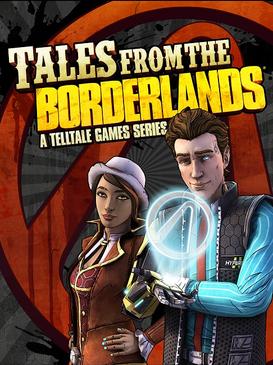
Borderlands is well known as a shooter-RPG hybrid, but with little to no story. There’s a lot of potential in a great Borderlands story, and Telltale Games finally delivered that. TftB is a fantastic story-driven game with memorable characters and enough Borderlands lore and quips to make a fan faint. The visuals are great, and there’s a lot to walk away from after completing it.
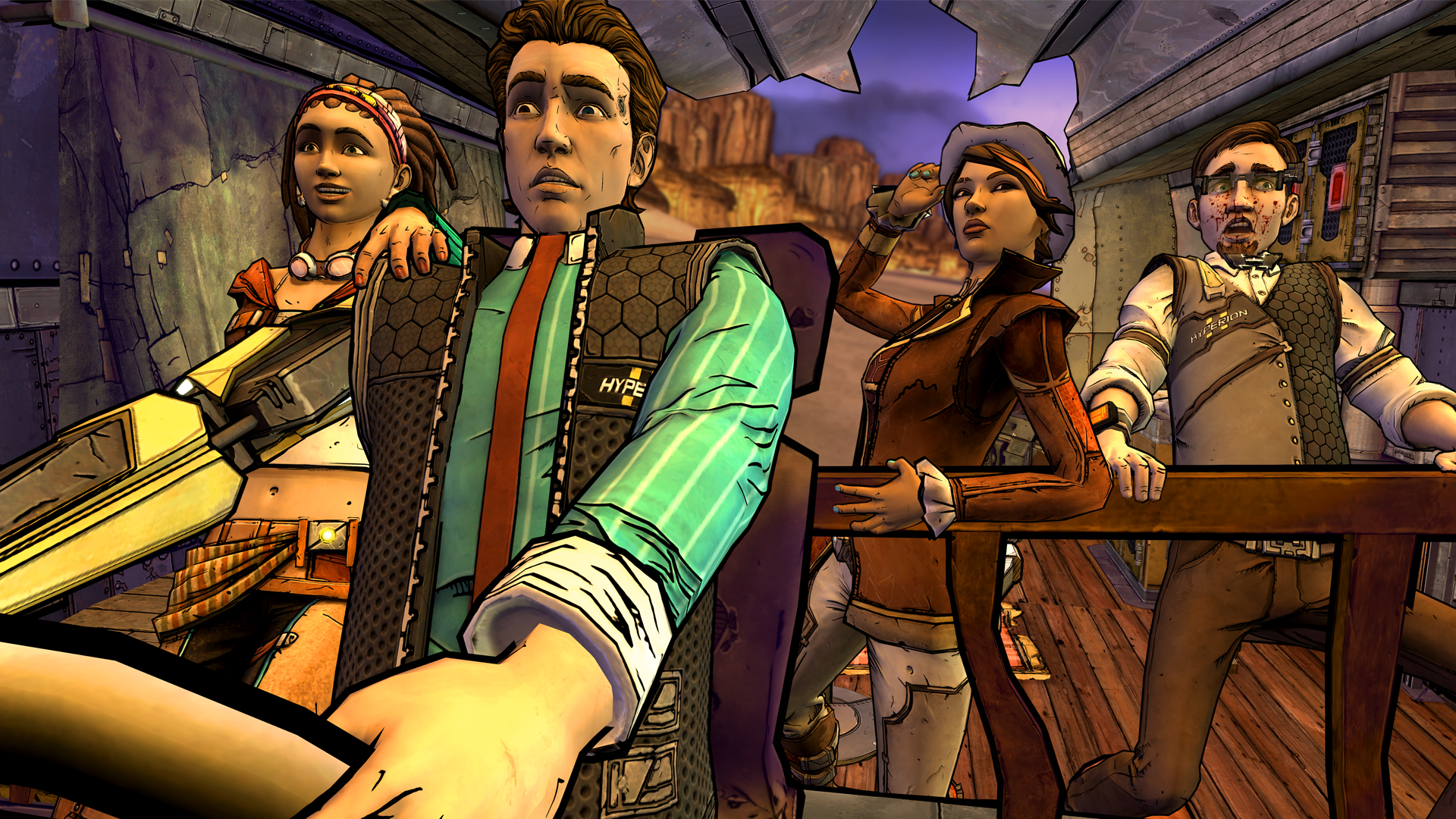
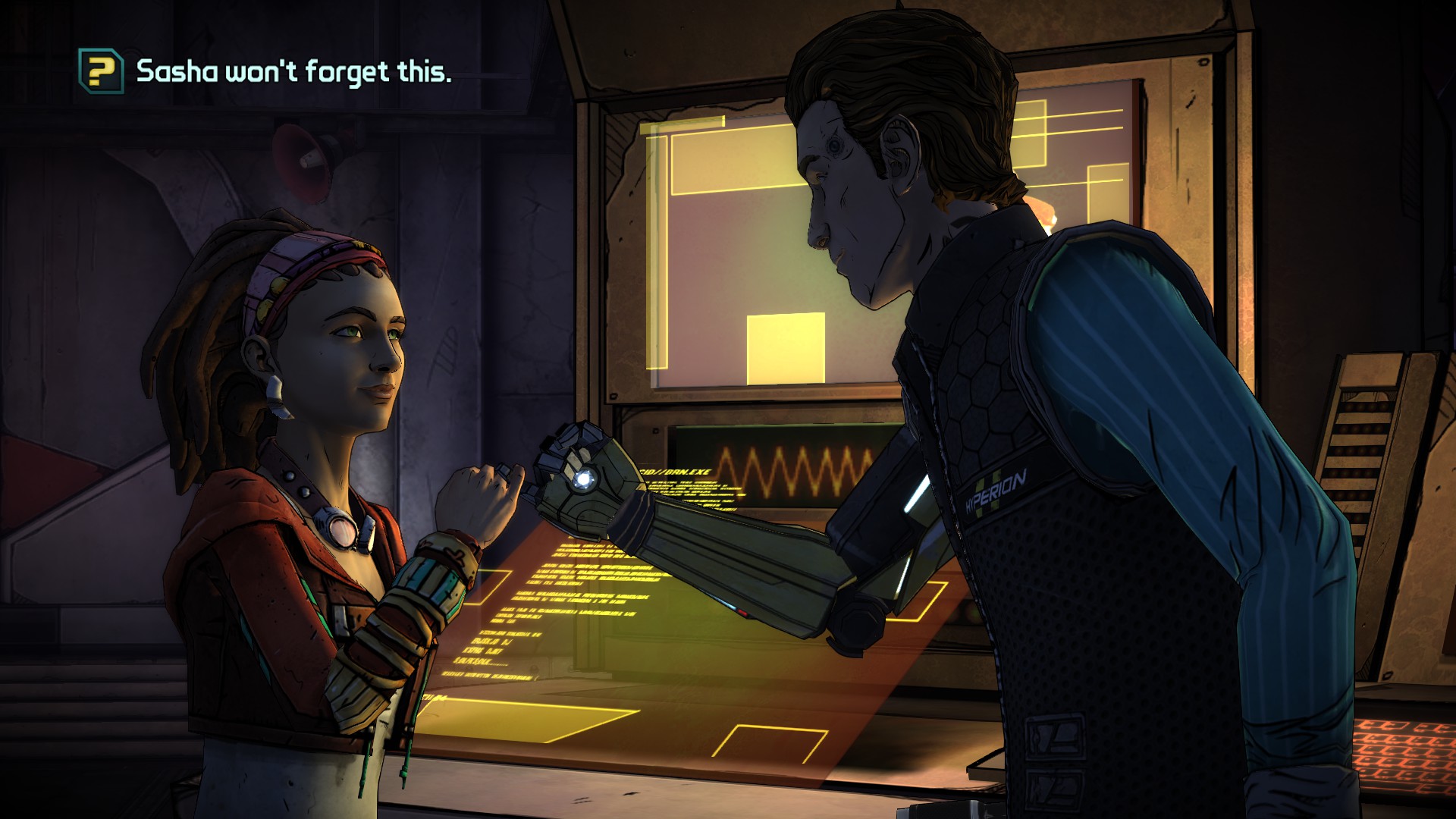
You start out by playing as two characters in this game, Rhys and Fiona. Rhys is a Hyperion corporate employee, and Fiona is a Pandorian con artist. The whole goal of the game is to open the Vault of the Traveler and find its hidden treasures. The entire point of any Borderlands game is to open a mysterious vault. The game is mostly comprised of flashbacks, as a man is dragging you two through the desert and having you retell your story leading up to the point of capture. This mysterious figure is well hidden, and I couldn’t guess who it was for the life of me. The unveiling was so surprising. Telltales are masters of surprise and plot twists, and TftB has plenty of them.
Like most Telltale games, there’s not much gameplay involved, just enough to make you feel like it’s a game. However, the stories are so fantastic that you won’t care much. There are a lot of quick-time events and moral choices in the game. These choices are the key components of any Telltale adventure and are what make them memorable. Some choices don’t matter so much, and some can change the course of the entire game. TftB doesn’t have as many story-changing choices as, say, The Walking Dead, but they do make a difference and can be tough to decide on. Putting your own moral compass in the game is what makes these games so memorable, and I love it.
Each episode usually switches back and forth between Rhys and Fiona, from Pandora to Hyperion and back. The game truly felt like a long adventure and was very satisfying and fulfilling all the way to the very end. The game has a large scope, and there is plenty of Borderlands stuff in here for fans. Opening loot crates can give you cash to use in-game; there are various jokes and even cameos of Vault Hunters from previous games. I also felt that the story was told at a decent clip and never got slow and boring or felt rushed. Each episode probably doesn’t stand on its own, but as a whole, the game is wonderful.
I want to complain about the exclusive quick-time events being the only thing that consists of gameplay, but I won’t because it works for the game. There’s action, drama, and plenty of comedy thrown in that any Borderlands fan will love. The visuals aren’t technically impressive, but the meld of Telltale’s art style and Borderlands is a perfect match here, and it feels like an actual Borderlands game, which is what counts.
In the end, no matter what console you play it on, TftB impresses on every level and tells a story that any fan will love and approve of. Even non-Borderlands fans will like the game. TftB is a perfect formula for how you do a franchise spin-off and do it right.
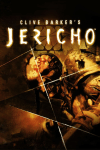
Man, playing this game has been a long time coming for me. I played the demo when it was first released, as it was highly anticipated. Clive Barker’s Undying was a very well-received horror FPS, and maybe he thought he could up the ante by making a squad-based shooter set in his universe. It sounded good on paper, and the trailers and screenshots looked decent, but once everyone got their hands on the game, the bad reviews and anger started up. I rented the game, actually bought it once when it was dirt cheap, and sent it back both times. I just couldn’t understand the game, felt it was boring, and didn’t have the patience for it.
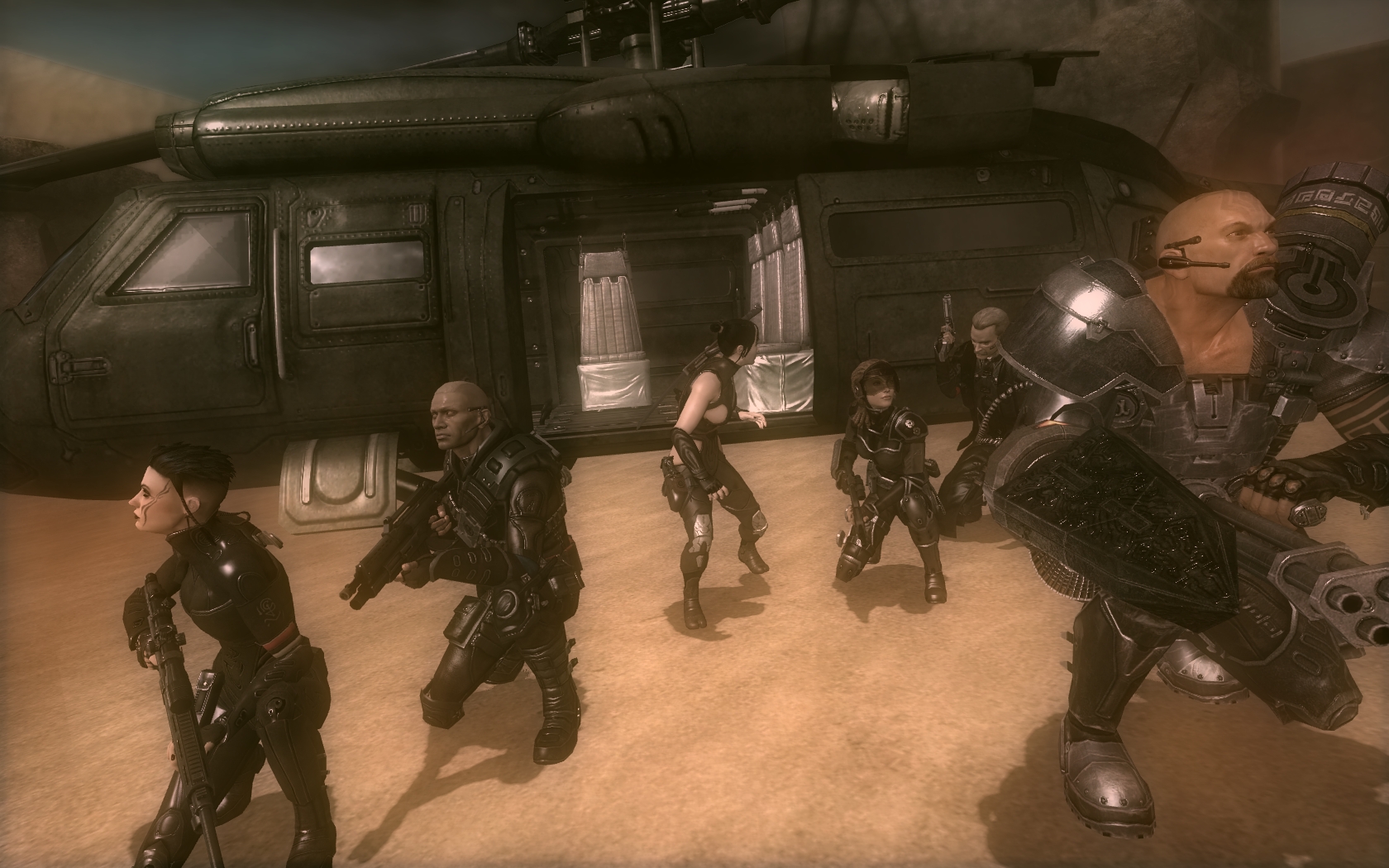
Now, almost ten years later, I decided to try one last time, and I finally got through the game. The story is what I had high hopes for, as Clive Barker is a great storyteller. You play as a squad of seven named Jericho that is sent to close a breach in a portal to hell. This self-contained hell is called the Pyxsis, which is a series of levels within itself. It doesn’t sound dissimilar to Clive Barker’s own Hellraiser series. Once you pass through each breach, a new setting is revealed, usually a time period from the past, and a new boss is on the horizon. The smaller story elements are decent, but the game has one of the worst endings I have ever seen. Once you beat the final boss, the game cuts straight to the credits with no pause—a complete shitty ending.
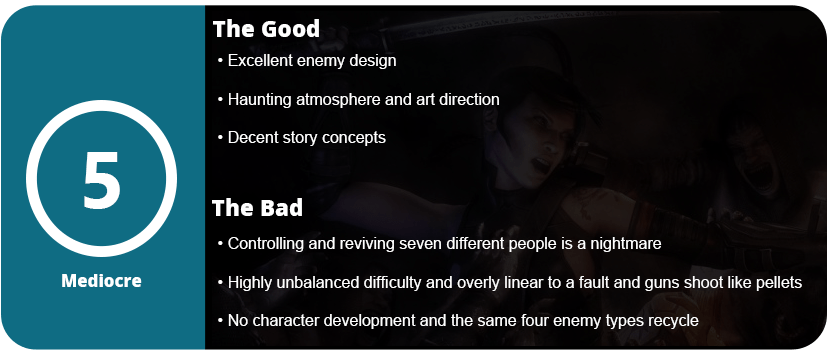
Actually, playing the game is quite a chore, and this is because the developers became too ambitious with you having to play as seven people, and it becomes a chore. Each member has their own weapon type and magic abilities. Delgado is a heavy mini-gunner with a fire demon spell and a fire shield. Jones uses an assault rifle/shotgun combo and can possess bodies. Black is a sniper and can use a bullet cam and telekinesis. Get the idea? There are seven of them, and you have to keep track of all of them in cramped linear hallways. Every so often, the squad splits up, but it still doesn’t matter. I went through endless hallway after hallway, killing the same three enemies throughout the entire game, and I wanted it all to end so quickly.
What makes matters worse is that the game is extremely difficult and poorly balanced. One level might be easy, but the next is wave after wave of enemies. Reviving each and every player every time they fall really stinks and makes things more difficult. Fighting a wave of enemies and having to run around and heal everyone who is down just makes the game more unnecessarily difficult. Even with the easy difficulty, I died a lot. On top of all that, the shooting mechanics are awful, as there’s no feedback or weight to the weapons, and they all feel the same. I just stuck with Delgado and the mini-gun through most of the game, as any strategy is null and void when you’re stuck in corridors through the entire game.
There were a couple weird puzzles thrown in randomly, and the boss fights became more and more frequent towards the end, like the developers ran out of ideas. After the 25th level, the game accelerates towards the ending. I can see how this game would have been better if there was more enemy variety, less linearity, and not so many squadmates. Just a tighter, more fine-tuned squad-based shooter would have been fine. Instead, we get seven people that we don’t really care about, as the game’s story randomly throws in cut scenes and there’s no character development.
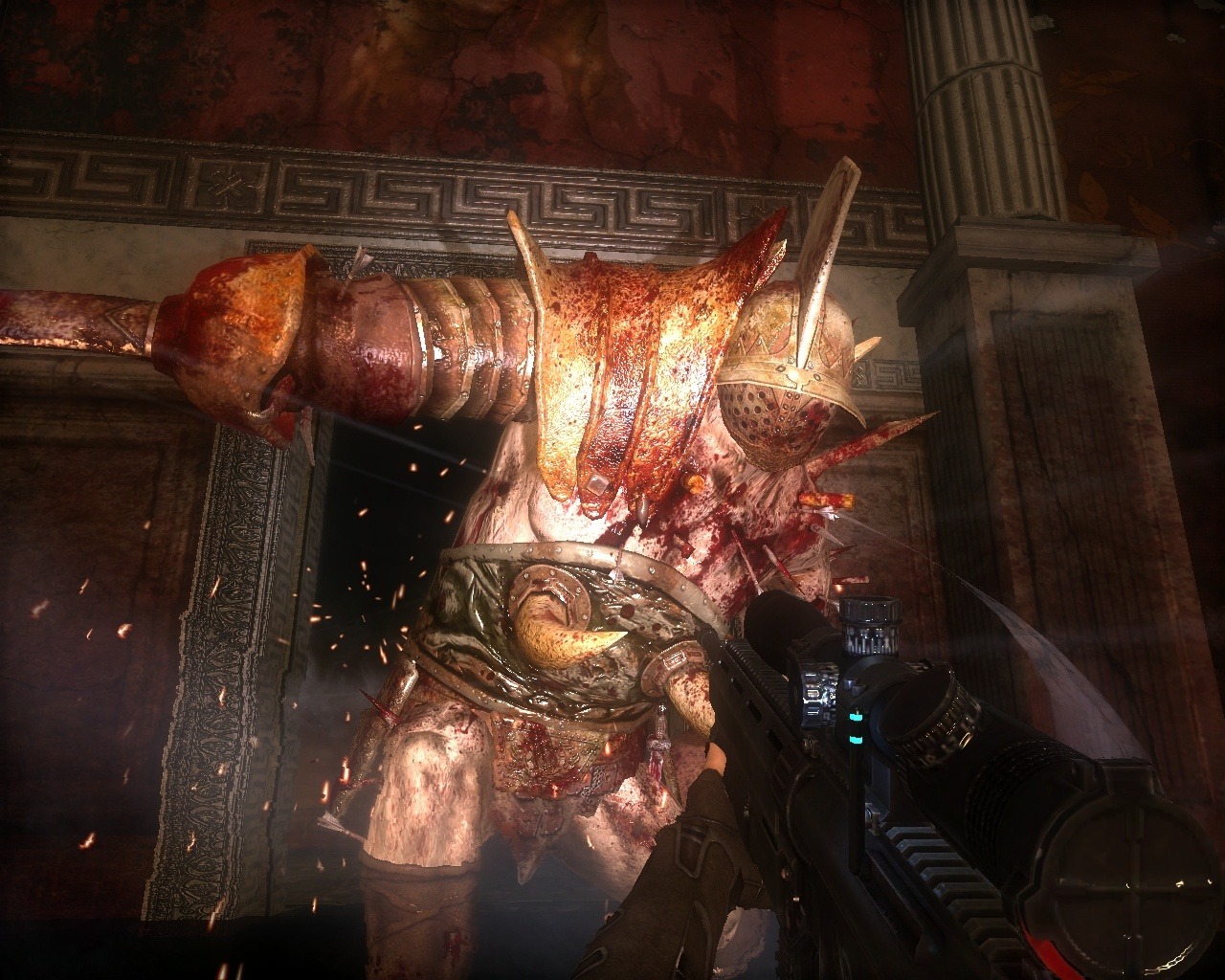
Outside of that, the atmosphere is fantastic and is the best part of the game. Clive Barker’s signature is all over the enemy and level design, with gore and blood on every inch of everything. The enemy designs are awesome, but there are about a half dozen, and they get boring to kill after a while. The levels are neat to look at, but they are nauseating in closed-up hallways and are always way too dark.
With that said, Clive Barker’s Jericho is only worth a playthrough if you are a hardcore Clive Barker fan; otherwise, there are zero reasons to even touch this game. It’s unbalanced, difficult, and boring; the story doesn’t really go anywhere; and controlling seven different people is a chore. The guns shoot like crap, and the only redeeming value is the art style and atmosphere. Stick to Undying if you want Clive Barker’s better adventure.
Note: This is a re-review due to my original Halo 3 review being very brief and not up to par with how I write these days.
Publisher: Microsoft Game Studios
Developer: 343 Industries/Bungie
Release Date: 9/25/2007 (X360), 11/11/2014 (XONE)
Available On
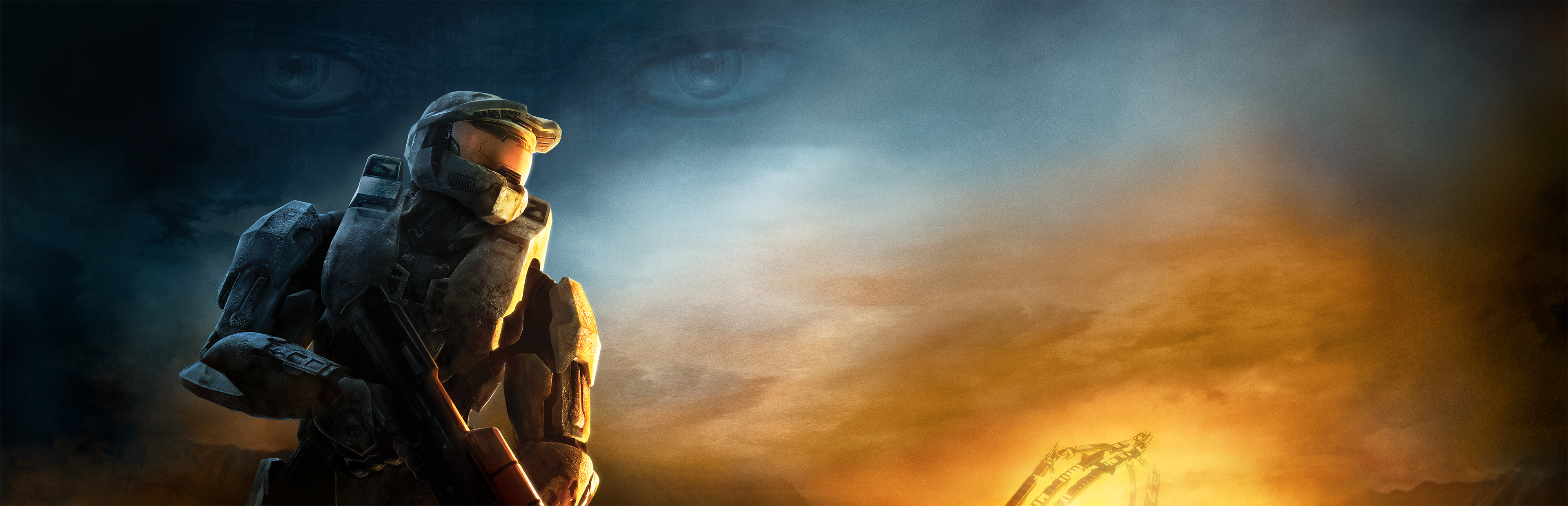
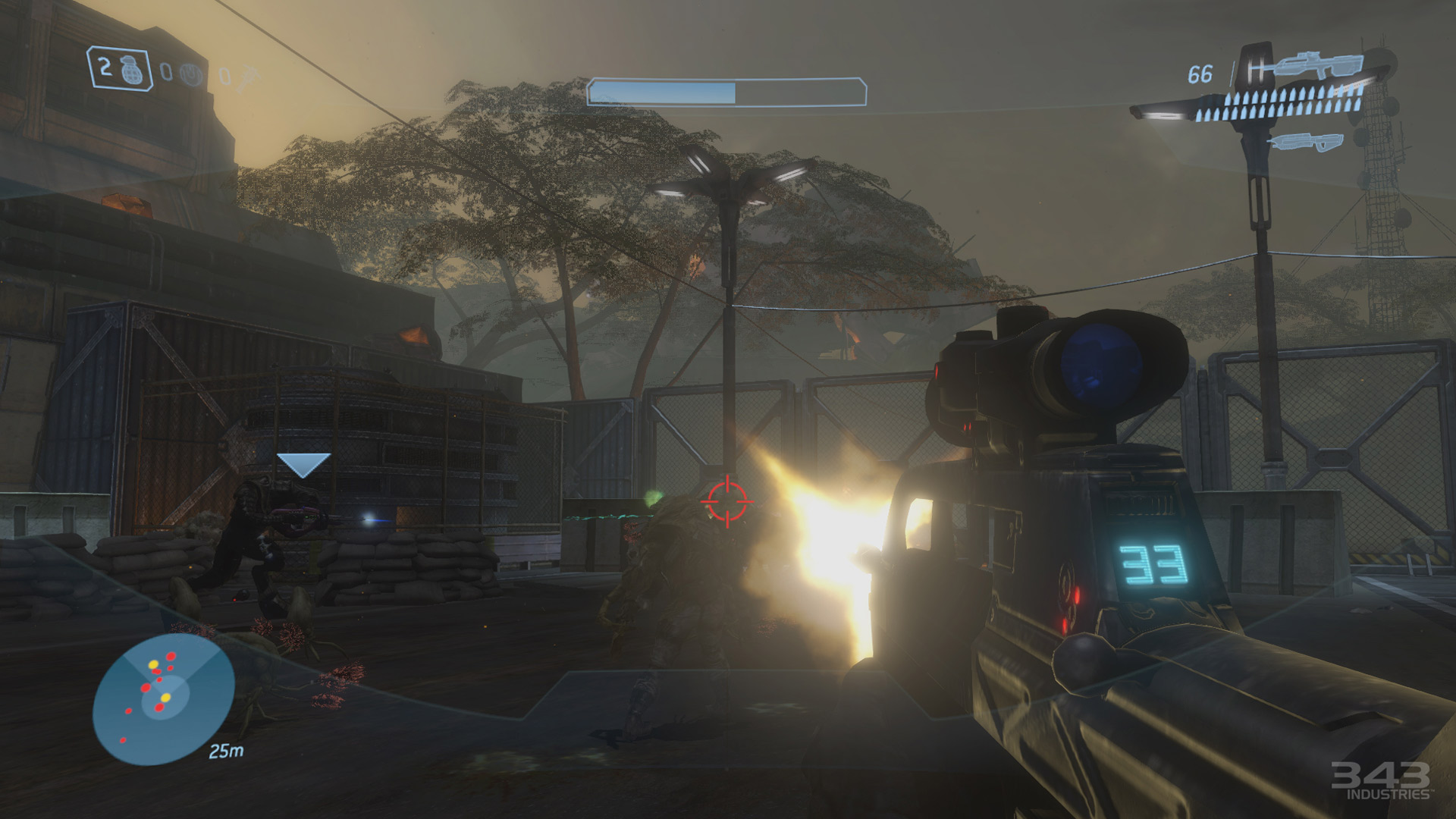
Nearly four years in the making, Halo 3 was one of the most anticipated games of the last-generation console launch. While it didn’t quite make the November 2005 360 launches, it did garner huge sales and broke records at the time. I remember playing Halo 3 shortly after its release and thinking it was the best of the trilogy. Now, after playing Halo 1 and 2 remastered, I have to say Halo 2 still stands superior. While Halo 3 is better balanced and has a better dual-wielding system, it’s shorter in length and feels like too much of the same. How many times do we have to “stop” the flood? How many Halo rings do we have to land on? It keeps getting boring and tiresome, and for me, the series has hit a fatigue plateau that it needs to get out of. While the Brutes are a more relevant enemy and there are more Flood variations, I’m still tired of it all.
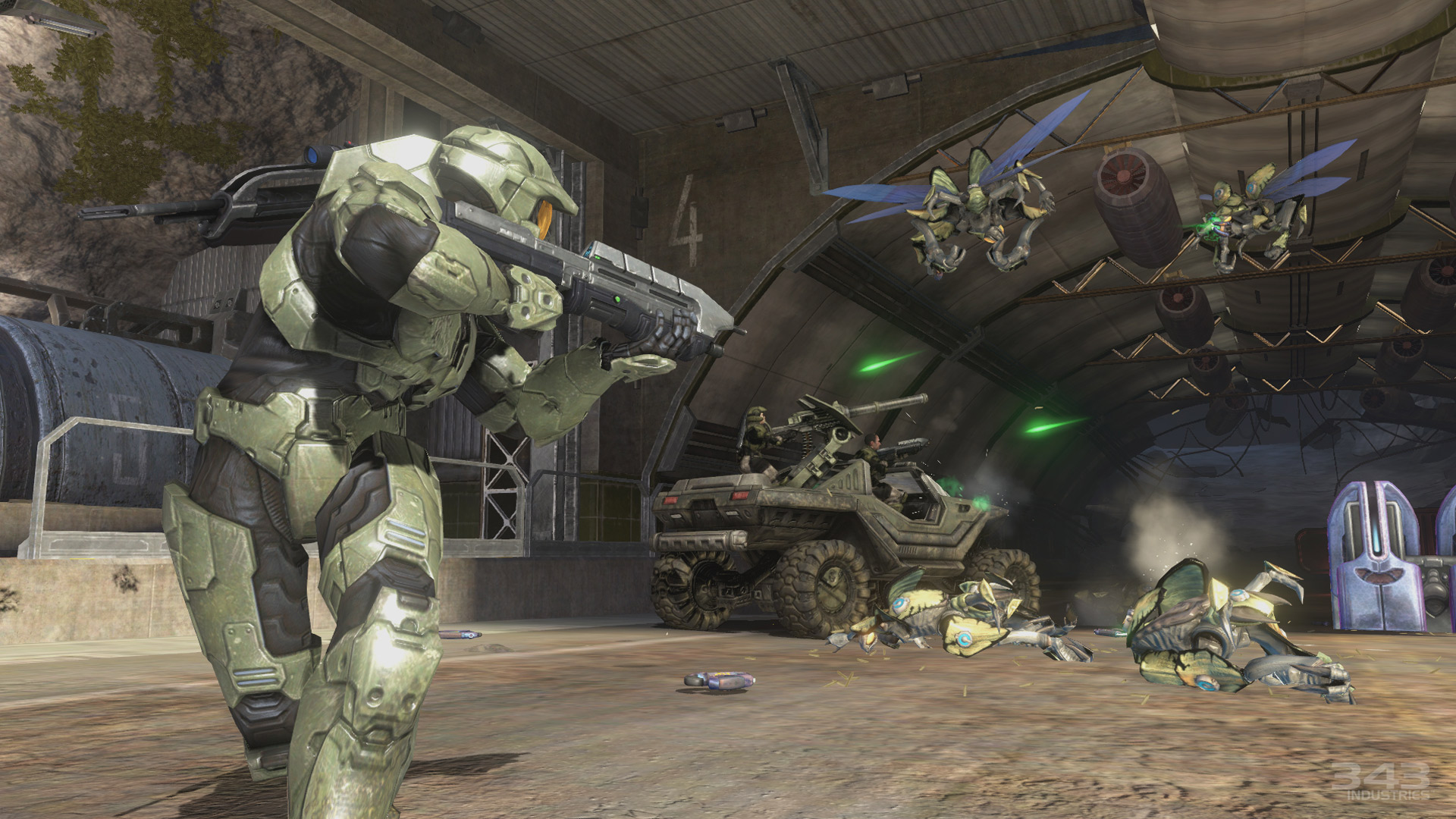
Despite those complaints, the game is still solid, no matter what. It’s challenging, for sure, and there are some added elements that change it up just enough to justify calling it a sequel. Remember those giant scarabs from Halo 2? Now you get to battle several of them in the game. We can now drive Scorpions and new Covenant vehicles such as Choppers, but sadly, we can no longer drive Wraiths. These balancing tweaks help make the gameplay better, just like only certain weapons can be dual-wielded. Dual Needlers can still be rocked around, as can Brute machine pistols, Brute shotguns, more energy weapons, and improved UNSC weapons.
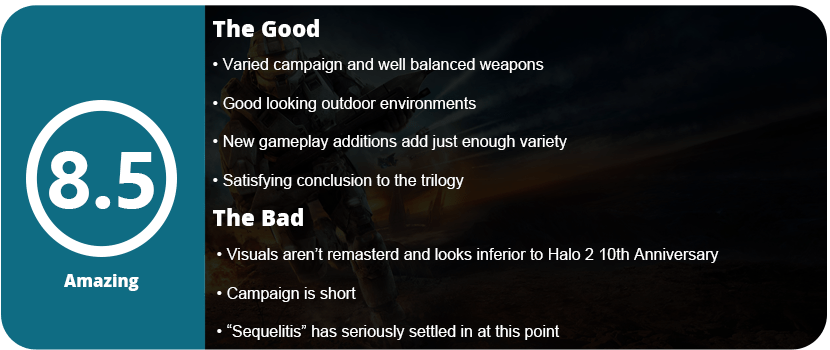
The game is shorter than the last games, but each level is completely different. One level has us on a Halo ring, another on the derelict Ark, so it doesn’t get too boring, but everything is very familiar. The whole point of the game is to stop the Flood and the Prophet of Truth from firing the Halo rings and killing everything in the galaxy. While the story is just as brief as the last games, I still found myself disappointed in not seeing or hearing about more lore. The series hasn’t exactly been expanded upon; it just stretched out through the trilogy, which I felt was disappointing.
Graphically, Halo 2 remastered looks better than Halo 3, but this isn’t a surprise. Halo 3 was criticized for not having “next-gen” graphics at the time of launch and was claimed to just be marginally better looking than Halo 2. Halo 3 doesn’t get a remaster here, and the gorgeous pre-rendered cut scenes are gone, which is a huge letdown. Honestly, Halo 3’s graphics are kind of all over the place with decent character models, but some textures look awful in spots and the physics seem weird and too floaty—even for Halo standards. Halo 3 received some lighting enhancements, and certain areas look pretty good (mainly outdoor areas), but don’t expect to be wowed by the looks of this game at all.
Overall, Halo 3 does what it was supposed to do: let us finish the fight against the Covenant Prophets and the Flood. The ending is satisfying enough, and I felt the game was shorter than previous installments, but somehow it was just right for this game due to the same feel it has. Sadly, the game was not remastered and feels inferior to the remastered versions of Halo 1 and 2. There’s just enough variety and changes here to make it feel like a sequel, but not the earth-shattering sequel that Halo 2 was.
Master Chief is one of the most iconic characters around, and despite being on a Western-heavy console brand, everyone knows who he is. The green Spartan made waves back in November of 2004 with Halo 2. Halo 2 pretty much defined online console multiplayer and was the driving force for Xbox LIVE throughout the Xbox 1’s lifecycle. I still remember Peter Moore lifting up his sleeve and revealing Halo 2’s release date as a tattoo on his arm; it was unique and cool, and probably something he regretted later on. Halo 2 also received more hate than any other game I can think of, and sadly, I’m one of those people. See, I was a hardcore Sony fanboy at the time and loved my PS2. While it was a superior console, it lacked show-stopping online games like Halo 2 and an FPS exclusive (Killzone was not what FPS PS2 owners needed).
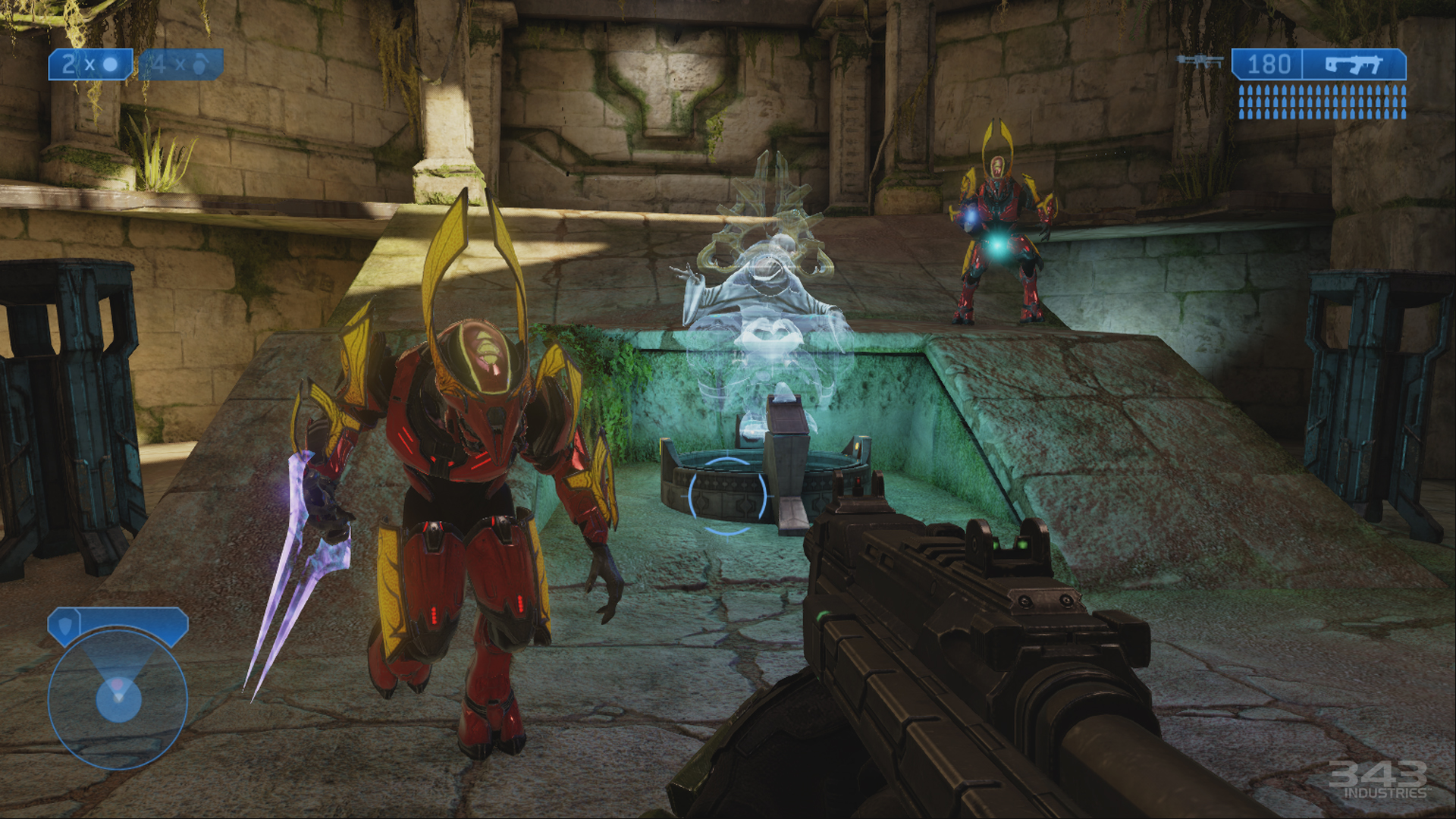
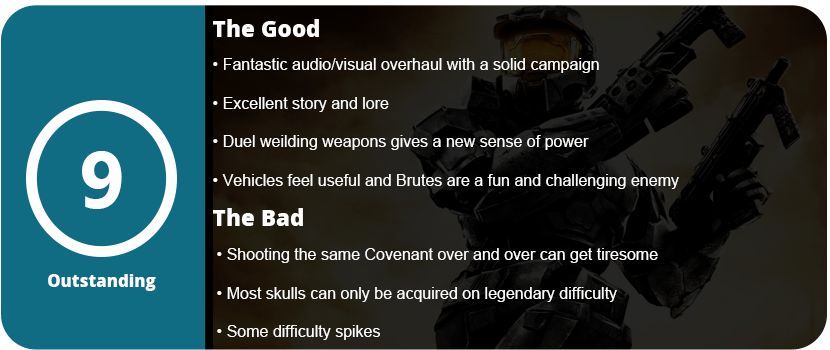
Halo has fantastic sci-fi lore, and I didn’t appreciate this until I got much older. If you read the comics and novels, you will realize just how deep and fantastic the Halo universe is. Halo 2 expands on the first game tenfold in nearly every way. The story is more fleshed out, has fantastic pre-rendered cutscenes, and has some incredible voice acting. The campaign was longer than the first game and offered more variety. For starters, dual-wielding was introduced and was one of the first games to make it work right. Each trigger on the Xbox allowed you to fire each gun independently as well as mix and match your favorite guns. More weapons were introduced, as well as the new Brute enemy. From start to finish, Halo 2 is one of the most diverse FPS campaigns I have ever played, from forests to interplanetary ships to jungle ruins and even cities. There’s so much to see in this game, and it’s also quite beautiful.
One thing I could never get past was the continued use of the same covenant over and over in each game. However, this allows you to remember and learn the AI quirks of each enemy so that when you play the next game, you already know their strategy and how to play the game. The Covenant are some of the best enemies ever made in an FPS because they require you to use strategy and everything in your arsenal. Enemies will duck, hide, and run away from you, which was almost unheard of back in 2004. Of course, with the Anniversary update, the AI is improved, and it feels like a fully updated game that could release tomorrow, despite the graphical age the games have aged very well gameplay-wise (Halo 1 is up for debate on that one).
The story behind Halo takes place after the first game, with the first Halo ring destroyed; however, a new protagonist joins us as the Covenant Elite Arbiter, who was tasked with protecting the ring and failed. He’s been made a martyr and must help activate the Halo rings to stop the incoming flood. Sadly, the flood is back and more aggressive than ever. I somehow didn’t mind them so much in this game, as they are not thrown at you for several levels at a time but given to you for a level here and there, and man, are they some of the most annoying enemies in gaming history. The little, tiny “poppy” floods, the big “pregnant” floods, and those ones that rush you. Now the Brutes have turned, so expect these floods to be even harder to take down. At least they are more balanced out and not thrown at you in seemingly endless waves.
Another huge update was the vehicles, as in Halo 1, they handled like crap. Each vehicle now has a boost feature, and they handle so much better and are easier to shoot with and maneuver. They are also given to the player more often and become vital tools at certain levels, just like your guns. I also found the shield was used better in this game as it recharges much faster, and health packs are no longer a concern anymore. Master Chief can take a little bit more of a beating after his shield has been used up.
The visual enhancement in Halo 2 is even better than that in Halo 1. The game looks amazing with completely redone environments, textures, lighting, and sound this time. Switching between classic and new modes was like night and day—I could never go back to the old Halo 2 again. With these new updates come the Halo toys you can find, as well as more skulls and terminals. These unlock achievements are quite tricky to find. The worst thing I can find about this game is the difficulty spikes. Some segments required constant restarts to find the right combo of how to hit the enemy or retry a new strategy. This led to many frustrations, but they weren’t as frequent as in the first game. I also didn’t like how most skulls can’t be acquired on anything but the hardest difficulty.
Overall, Halo 2: Anniversary is a must-play for Xbox One owners or lovers of the FPS genre. Halo defined the series for a reason and isn’t quite as shallow as haters would like to think. There’s a whole universe here that people are missing out on, as well as some of the best FPS action known to man.









































 thebinarymessiah.com
Try multiplayer. A lot of fun !