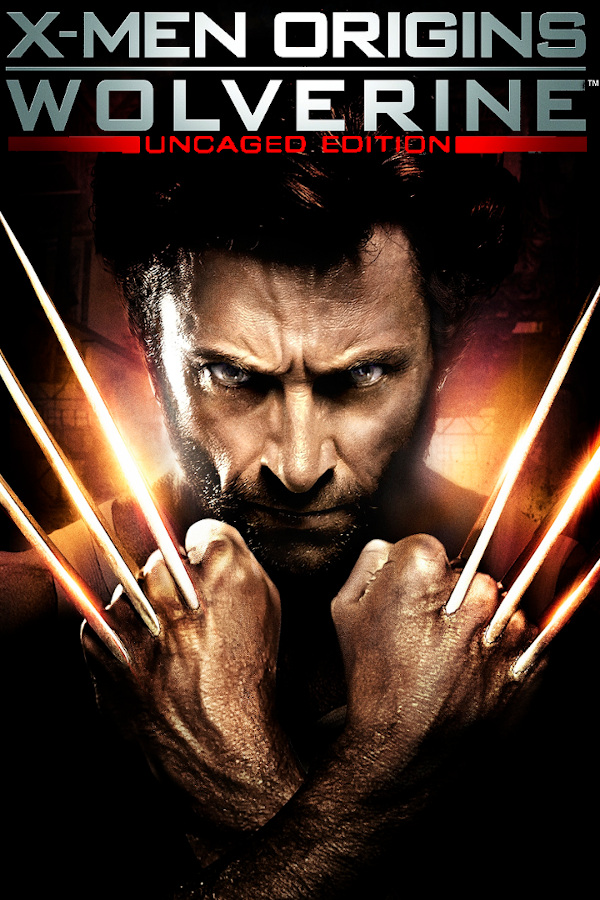
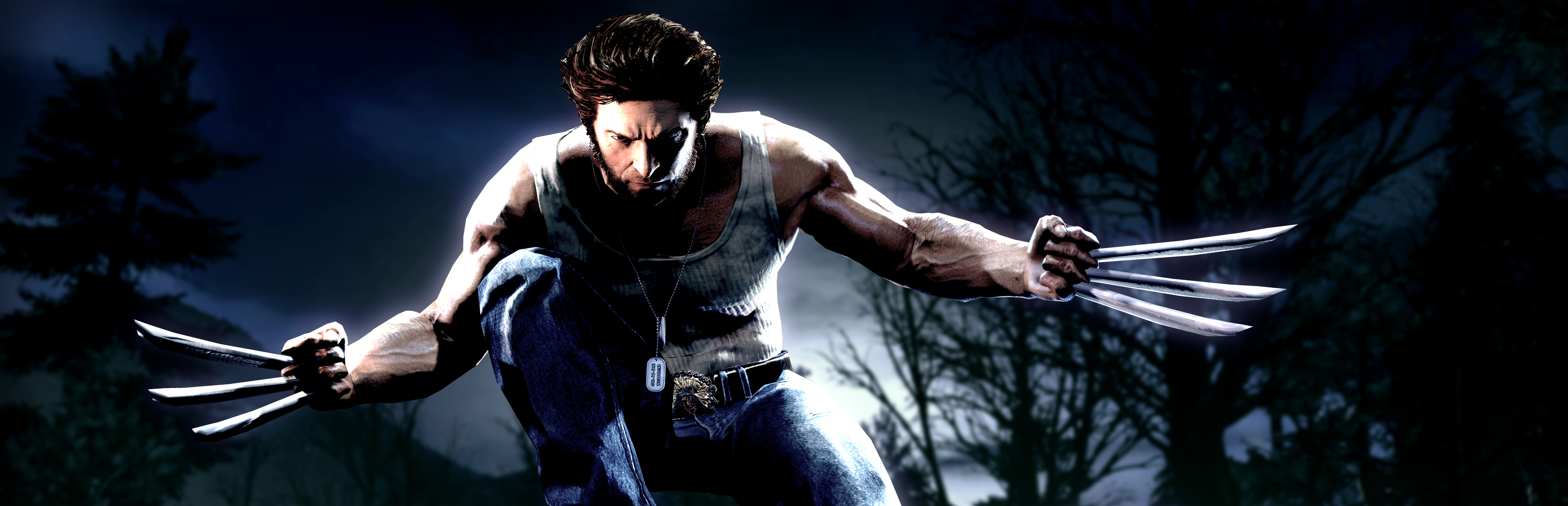
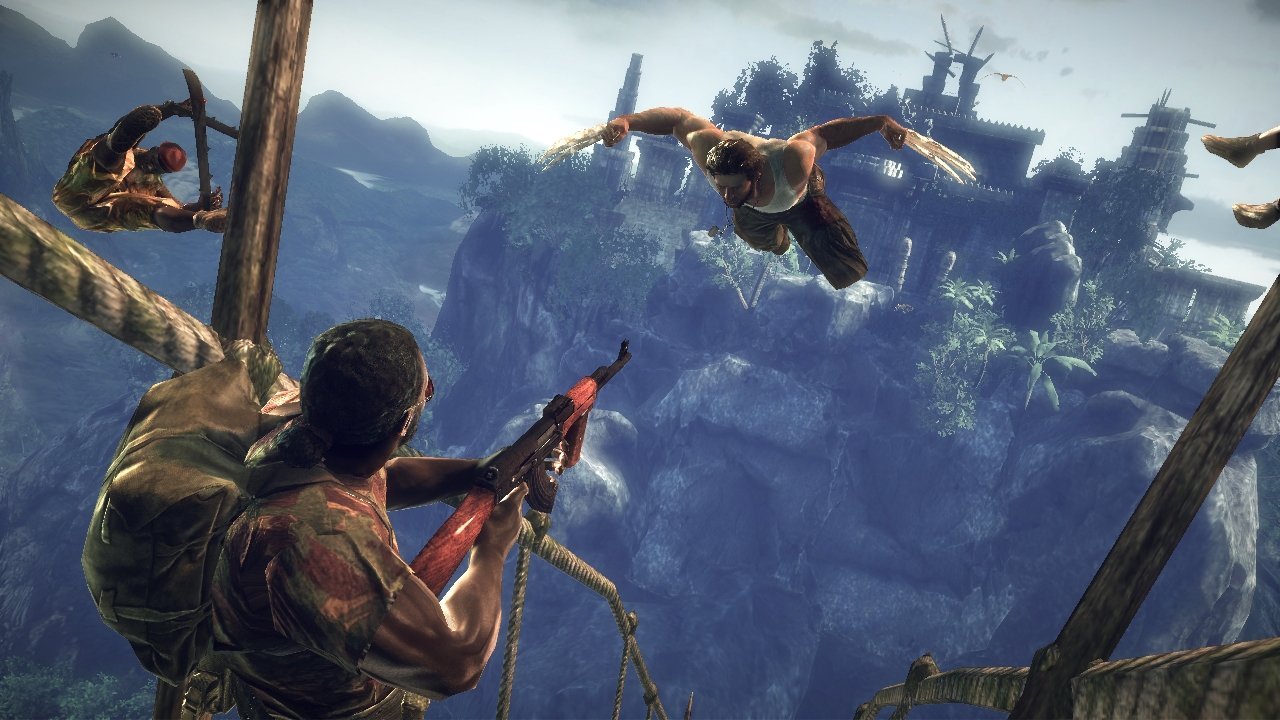
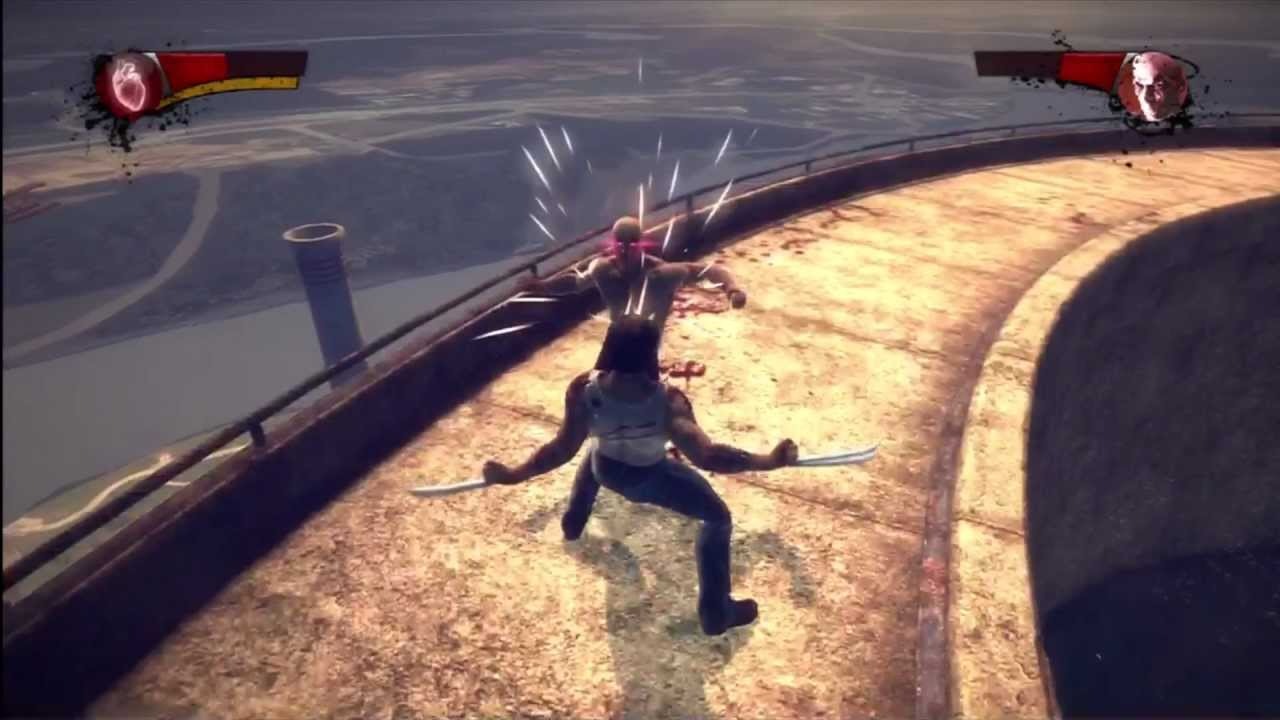
I’m neither an X-Men fan nor a comic book fan, so you can expect a fair, unbiased review first off. One great thing to think about when thinking about this game is that you don’t need to be an X-Men or comic fan to like this game; all you have to do is like action/adventure games (God of War, Prince of Persia, Bionic Commando, etc.). The game starts out pretty heavy and shows some great graphics, cinematic gameplay, and great voice acting (by none other than Hugh Jackman himself) all while skydiving into the forests of Africa. When you land, you’ll be shown a quick tutorial on how to use heavy and light attacks, along with combos. You’ll learn how to do quick kills, which are a timed heavy attack complete with a zoom-in slow-mo, gruesome, and gory kill. Yes, I said gory, and yes, this is the first mature-rated comic book game ever made, and I’m so glad Marvel got off their high horse (cough DC) and started showing their characters’s true feral side.
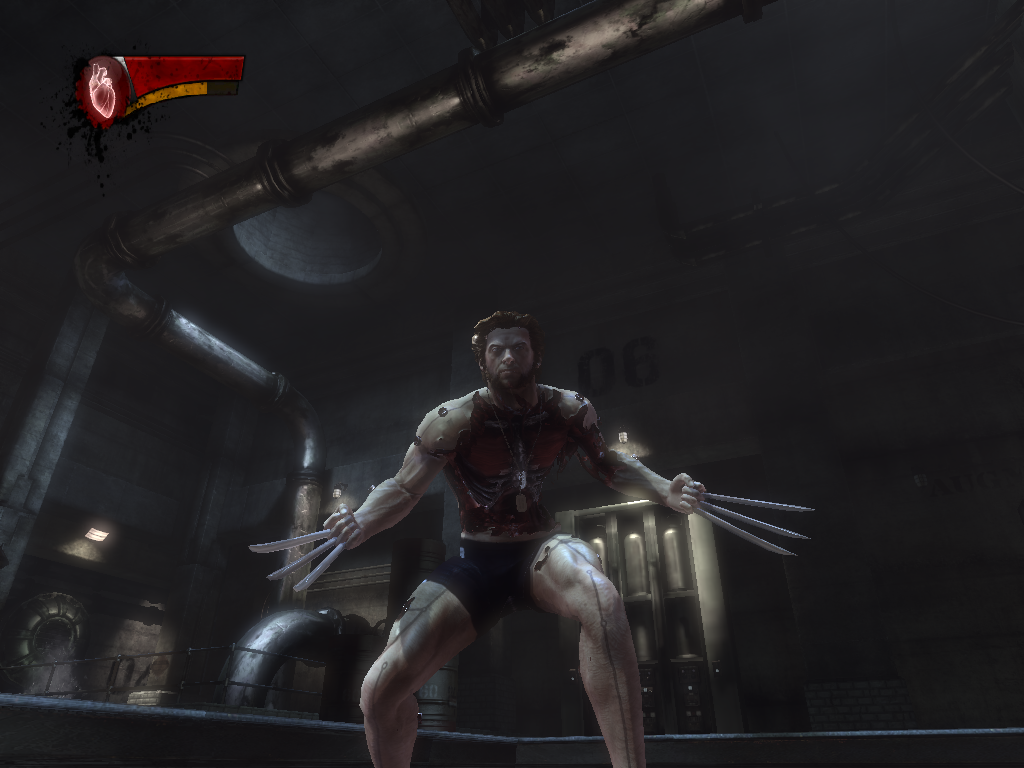
Most of Wolverine is based around combat since the story is simply only for hardcore fans, people who saw the movie (I hear it’s excellent and Mr. Jackman is the best Wolverine yet), or the fact that the story is just too cut up and flashed back to really get a grip on. A lot of the combat may feel repetitive sometimes, but it’s all cut up thanks to great platforming sections, some action button timing, some really big guys you must take on, and sprinkle on some epic boss fights. Each enemy must be killed differently since some are not weak enough to make quick kills and must be weakened; some can’t be thrown off ledges; and some enemies can only be killed in feral sense mode because of their camouflage. Each enemy has different quick-kill animations, thus making the game feel less repetitive. You can unlock different moves by leveling up, along with permanently increasing your health and rage meter. Rage always requires you to perform four of the rage moves, which range from a blender-style claw spin to a saw blade-style spin. Each one can be upgraded for a longer time—more power, more speed, etc. You also have three slots for mutagens, which somehow passively enhance the gameplay by adding some more health, making rage moves more powerful, or gaining more experience per kill. All these are easily in sync with each other, along with a great tree that allows you to learn things about your enemies for every kill, so they die faster later on in the game. This immense skill tree really works brilliantly and keeps the game from feeling cookie-cutter.
The game does have puzzles when it comes to environments, and some puzzles are even part of the environment. These puzzles are never hard to figure out thanks to your feral senses, but the timing of certain puzzles can be frustrating. Speaking of frustrating, the only real gripe I have with the game is that the difficulty isn’t balanced very well, so several levels will be easy, then suddenly an ultra-hard one, then an easy one, and maybe a few hard ones. The same goes for certain sections in levels, and this can lead some people to throw their controller at the wall…or a person. A lot of puzzles consist of pushing blocks to get up on certain ledges, pulling panels out of walls to unlock certain doors, and some level-length puzzles, such as using the hand of a giant robot to destroy the head and firing lasers to get through the only door out of the base.
Let’s talk boss fights. Some range from other X-Men universe characters (Saber Tooth for one) that are easily killed, along with some that are hundreds of stories high (like the epic robot boss fight that you fight from space while falling down to earth—yes, uber epic). Boss fights aren’t annoying; you just have to learn their moves.
The visuals in the game are astounding, and using the Unreal 3 engine, you can expect some of the finest-looking graphics yet. Everything looks sharp, clean, and highly detailed for your ultimate Wolverine experience. There are some nice unlockables for fans of the game, and I guarantee that this game will turn haters into lovers.
A long time ago, in a parallel dimension to Earth, there was a magical island world known simply as Pangya. All was peaceful in Pangya until one day, an evil force summoned by the Demon King came crashing down upon the land. This dark energy created a force field around Pangya that drained life from the land. The world of Pangya grew weaker with every passing day. Flowers withered, trees turned barren, and the earth lost its green. The people of Pangya could not come up with a solution to rid their land of an evil presence.
Until the inhabitants of the land realized that all of the life force from Pangya was being drained to the Demon King through a hole in the force field, A plan rose to plug the hole with a crystal filled with the spirit force of all living things. The power of the crystal became so great that it could not be touched by human hands. So the people in Pangya created the Air Lance, a tool in the shape of a stick to hit the mythical Phoenix ball into the hole of the evil force field. This difficult task was eventually completed by a warrior from Earth, ridding the world of the evil force for good. In honor of this warrior, the game of Albatross 18 is being played throughout the world of Pangya. The name Albatross was chosen because it is the best shot one can hit in the game outside of a hole-in-one. Today, you have been invited to play Albatross 18. Are you ready to show your skills?
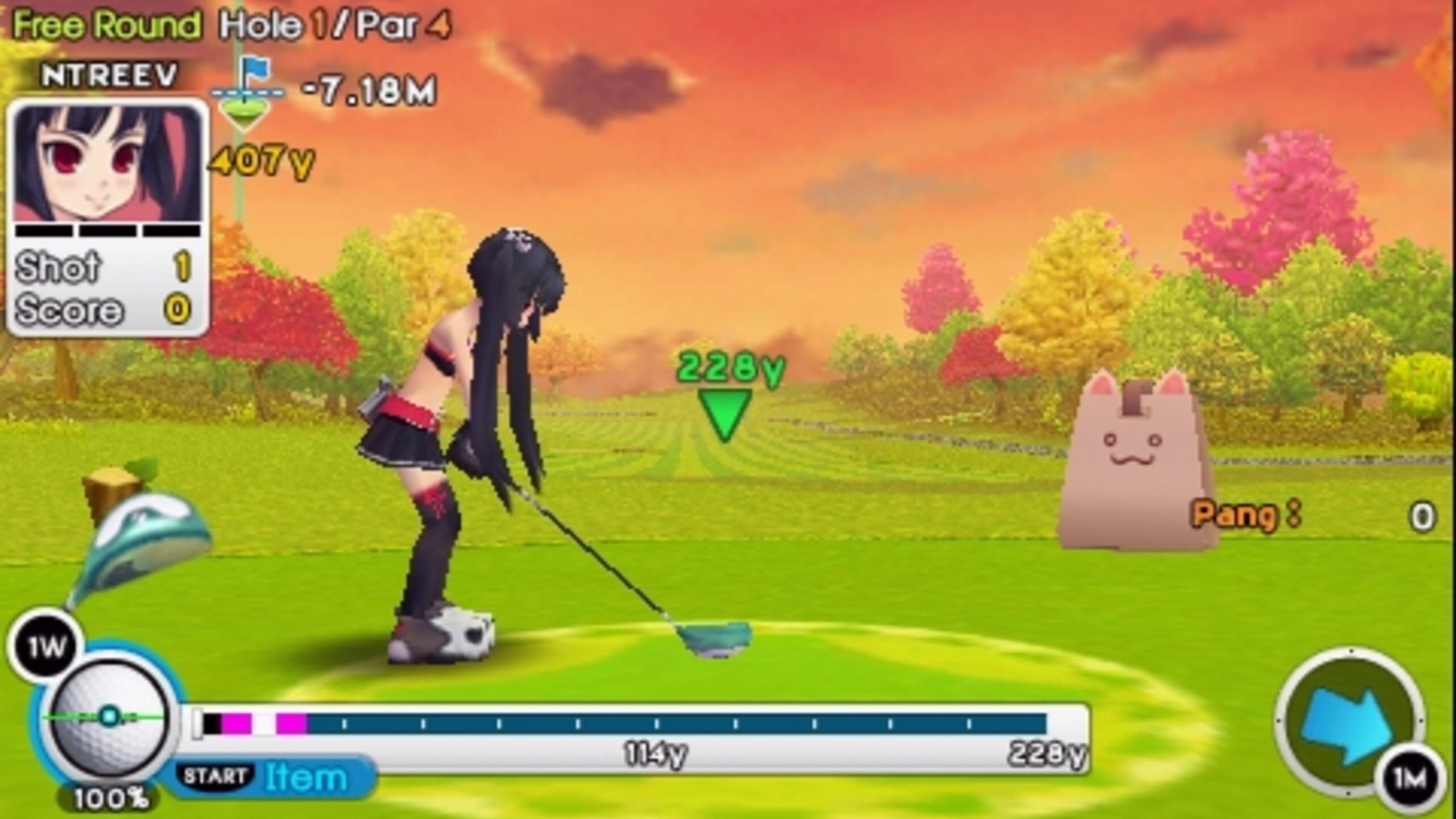
The game of Albatross 18 looks remarkably like golf; in fact, it is golf. When you start out in Pangya’s story mode, you set off into nicely laid-out courses with colorful names such as Wiz Wiz, Blue Moon, and Silvia Cannon. Playing the game is easy; simply pick your distance, then your power, and’swing!’ you’re off to the first hole. Wait a minute; there is a bit more depth than that. Differently colored blocks on the left indicate a certain action. Hitting just when it is white produces the perfect shot, while black or pink will make you tee, putting a point on your par count. Despite its creative-looking setting, Pangya still carries aspects such as the wind, the level of the terrain, obstacles, bunkers, the fairways, the rough, the green, and yes, even putting. Different characters are available to play with, and most can drive down a course anywhere between 210 and 260 yards. If the wind is facing you, you will probably nail about 235 if your character can drive 260. This is extremely important when shooting over a river or over a cliff since you will come short and get an out-of-bounds penalty.
The whole point of Pangya is to get your ball into the cup before the other player and do so with the fewest shots. Each player will take turns deciding what conditions will improve their shot. You need to adjust accordingly and use your quick finger to get a perfect Pangya shot. Pangya shots will bring your ball exactly where you want it, and anywhere outside the white box will make your ball come short. Pangya follows the traditional golf gameplay in most places but adds one little twist: power shots. Power shots come in different forms, ranging from the power spin that makes your ball roll back a few yards to the tomahawk, which makes your ball stop dead where it lands without rolling along with others. These sound useful, but the execution is so hard to pull off that you will quickly abandon the idea.
While most of the game’s mechanics sound solid and easy to understand, not every element has been worked out to the point it should have been. Customizing your game, for instance, is about as useless as playing golf with a baseball bat. You can shop at the Pangya store using Pang, the game’s currency, which is earned by completing tournaments. You can buy equipment such as new balls, clubs, and many other items. Buying golf balls adds points to your attributes such as accuracy, spin, and power. Strangely enough, clubs do the same but are just more expensive. The items that can be bought can be used during and will temporarily boost the exact same attributes, but they can also do some more interesting stuff, such as nullify the wind. All these elements could turn a standard game of golf into a true fantasy experience but end up being as exciting as watching paint dry.
The one thing that sets Pangya apart from its peers is its wonderful story and charming characters. Within each episode of the three available chapters, you can play ten characters, and they each have their own unique story. Each character is beautifully drawn, with personalities so vibrant that they pull you in and never let go. Uncle Bob is an angry police officer who entered the tournament just to get some fried chicken, and Max is a famous tennis player who is running from fans that are trying to get his autograph. There is no voice acting, but maybe this is a good thing. Most Japanese games don’t transfer well to American voices.
Contrary to the characters and colorful setting, the quality of the graphics is subpar, with flat and polygonal textures. In fairness, they do get the job done for this otherwise fine golfing game. Pangya is sure to be a pleasant surprise even to people who don’t like or even know how to play golf. Easy controls, wonderful characters, and a fun multiplayer mode will charm you out of your socks.
If you have ever played The Incredible Hulk: Ultimate Destruction, you will kind of get the idea of what Alex Mercer is going through in Prototype (or [PROTOTYPE] as SEGA thinks CAPS is cool >.>), just minus the green problem our Mr. Banner seems to be having. The reason I say prototype is like Ultimate Destruction, and just a tad more ultimate with a hint more destruction, is because it uses a beefed-up engine from the same game and shares some of the same mechanics.
You play Alex Mercer, a confusing test subject who wants revenge on his creator and to stop the infection from spreading throughout the story. I’d tell you more, but the storytelling is so terrible that I had no idea what was going on or who was doing what or who! Constant flashbacks and pieces of the story told through consuming certain targets and watching stills aren’t fun for your brain to digest.
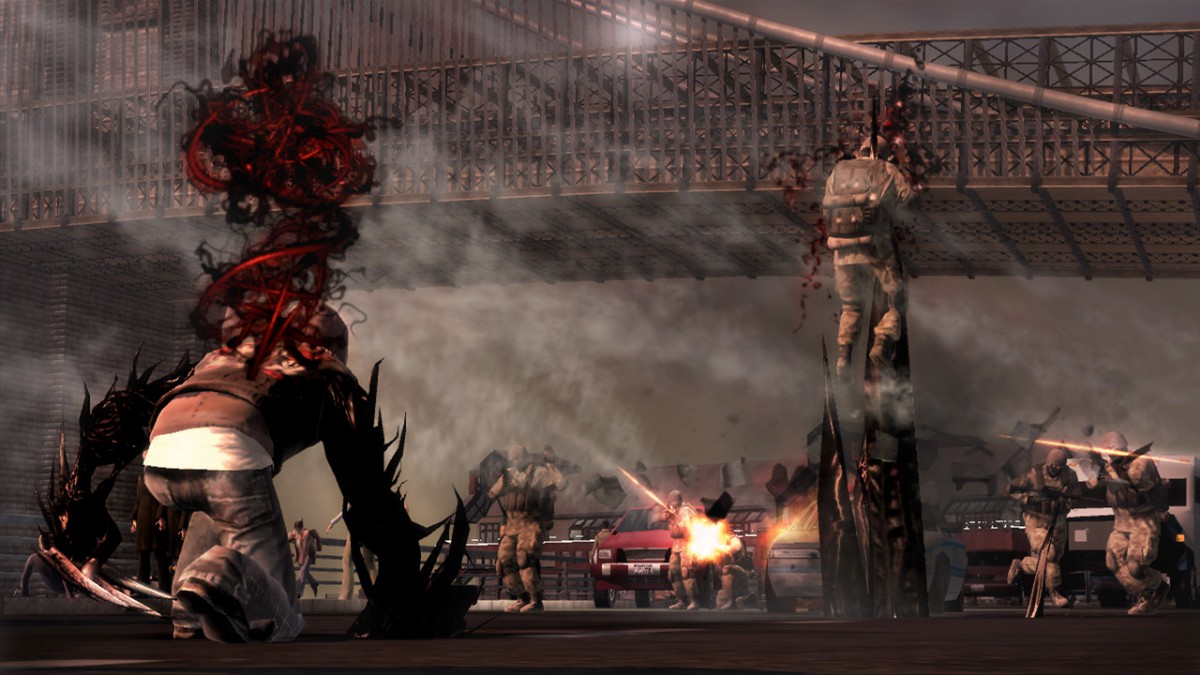
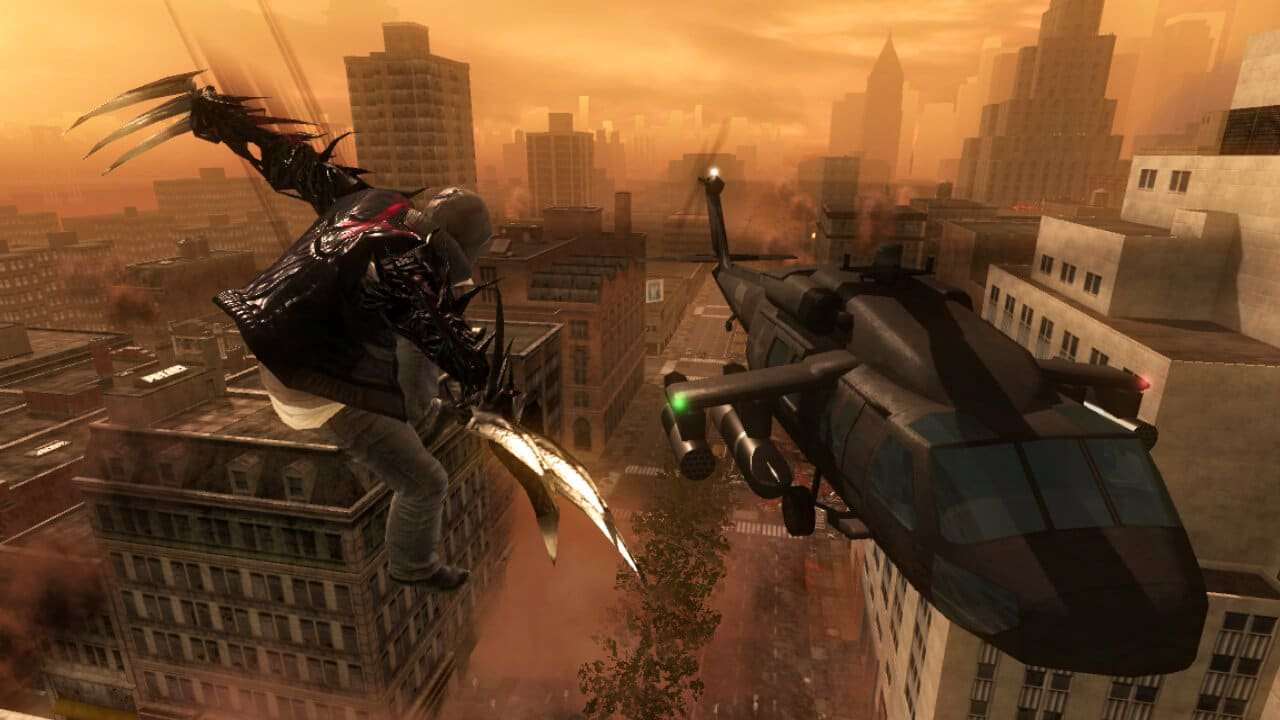
When you first jump into the game, you’ll be able to run up walls, climb buildings, and eventually glide, kick, and consume your way to ultimate infected glory. Most of Prototype is a free-roaming mode where you run from mission to mission, or side missions or activities, like Spider-Man or any other hero you like that can run across a city in less than 30 minutes. The great thing about this is that you can find hidden items such as extra experience or little-hidden things to unlock achievements (or trophies if you’re a PS3 fan and are somehow “accidentally” reading this Xbox 360 review). While most of these (like in any sandbox game) are so spread out and so well hidden, you won’t, except for the ones you run across by accident. Most of the free-roaming is, unfortunately, boring and bland. There are just people and cars, and that’s pretty much it. Once you get further into the game, rampant zombies and infected people terrorize the streets, and it does get more interesting, but it just makes you want to stay off of them and onto the buildings. Most of the graphics in the game are outdated and kind of boring, to begin with, so there’s nothing really “eye-catching” about the game at all.
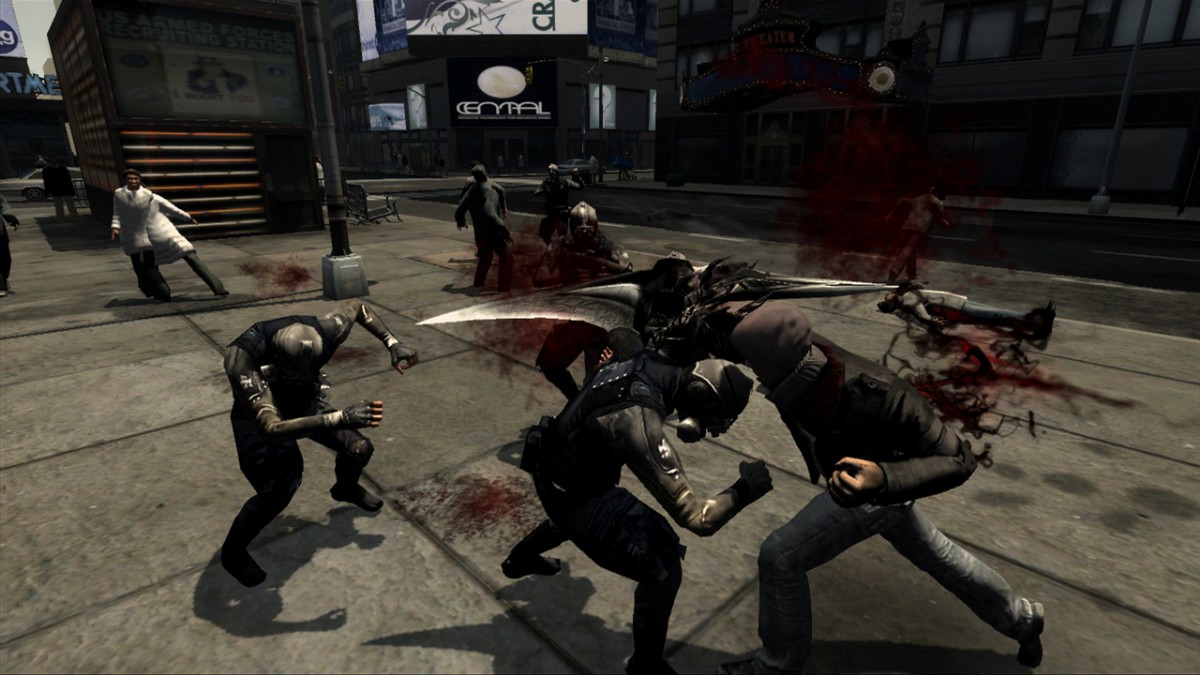
The meat of the game, really, is the fighting, and this is where the heart of Prototype lies. You have a HUGE skill tree that extends from combat to stealth, to movement, to, yes, you guessed it, powers. What kind of game would [Prototype] be without powers? Well, pretty boring since there are so many; you have more than you can handle. Prototype has so many different moves and powers that you will end up forgetting most of the little ones and just using your most obnoxious ones. Your arm can transform into different weapons such as a whip, giant fists via The Thing, larger muscles for a mix of power and speed, a giant scythe (the one on the cover!), and a few others. Accompanied by these, you have some armor (you can’t glide or double dash though!…yeah, shut up Mario Kart fanboys), and you can also shapeshift into whoever your last consumed victim was (more on that later). The way you use these powers depends on the enemies you’re fighting. A huge mechanic is the grab ability, since this is used to fling objects at helicopters, giant tentacle arms, and even military soldiers or infected monsters. Most of the time, you mash X and Y together to create a cool combo, then somehow unleash a weird power. That’s why there is just too much in this game since you can’t memorize all these combos and what each one does for what weapons. One of the next major mechanics is the lock-on system, which is used to dash toward enemies and pummel them before they do something amazing to your infected self. I had a hard time with multiple enemies since you’d want to target one (say, a guy with a rocket launcher up high), but the game would keep targeting someone else below.
You can use actual weapons in the game that enemies drop, such as machine guns, shotguns, and rocket launchers, and these are essential in some missions. Not always will you have your weapons available, and you’ll have to use the environment around you. It also consists of many boss fights, and this is where I concluded my playthrough. The game gets so frustratingly difficult towards the end that it will throw so many hard enemies at you at once (two tentacles plus 5–6 hunters) while trying to protect something. Yeah, right, but then again, Sega is known for doing this in their games. You’ll end up trying to hit one enemy, then another knocks you back, then you can’t get up because another is smashing on you, and when you do, you get knocked back again. Yes, a lot of cheap deaths and hits, and this isn’t fair.
Aside from the annoying main missions, there are some rather fun and unique activities that utilize your powers. Some missions will have you using selected power to eliminate a certain amount of enemies in a certain amount of time; some are races, checkpoint races, and some even have you finding targets and consuming them for your Web (more on that later). While most of these are fun, some are impossible to get because of the target requirements for a gold medal and the maximum amount of experience points to spend in the skill tree. Other skills are earned by consuming certain targets to fly helicopters, tanks, etc.
The last element I should mention is the skill tree, which is filled by consuming certain targets and watching a series of stills and a brief voice clip to fill in the story (lame). So as you can see, this may be unique (and ways to unlock achievements, yeah, or trophies), but this seems more like a cheap way to tell the story or used as a game filler. While Prototype is fun for a while, it quickly gets repetitive with its cookie-cutter enemy AI, broken storytelling, cheap deaths, and bland free-roaming world. I recommend Prototype for a rental, but don’t expect anything amazing.
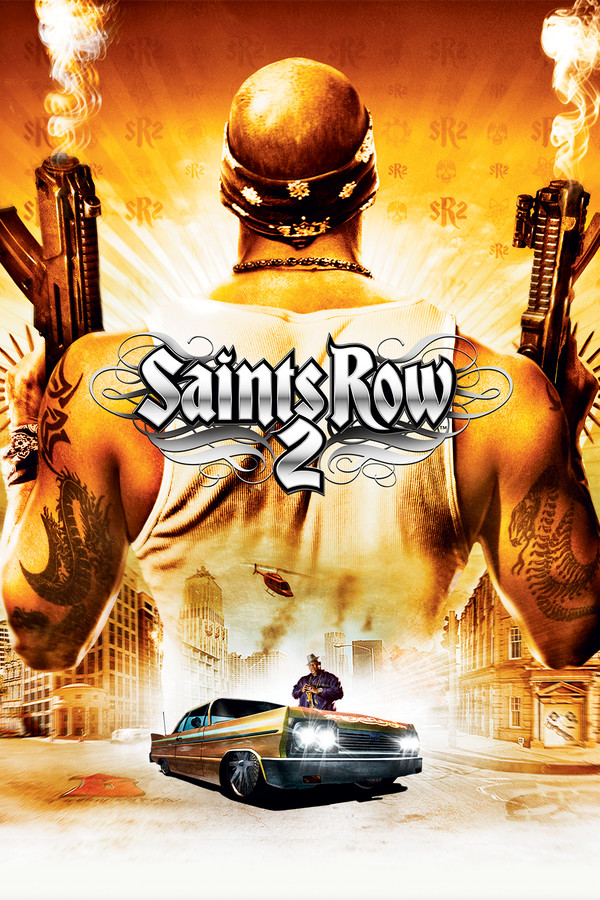
The sandbox or “open-ended gameplay” genre is actually the newest genre known to video games, with a good seven years under its belt, but not that many games have really proven the genre worthy. With Grand Theft Auto III being the daddy of this genre, many games were failed mock-ups of GTA; many weren’t even related but still didn’t do the genre justice. Saint’s Row tried to push the genre once again a few years ago, but didn’t do such a great job and was just shoved off as another GTA clone. Now that Saint’s Row 2 has been out for a while, people kind of just stopped with blank expressions, while some roared and cheered with joy. Saints 2 really does push the genre and is a clear opponent against Grand Theft Auto IV, but I’m not going to sit here and compare the two since Saints 2 deserves a separate look.
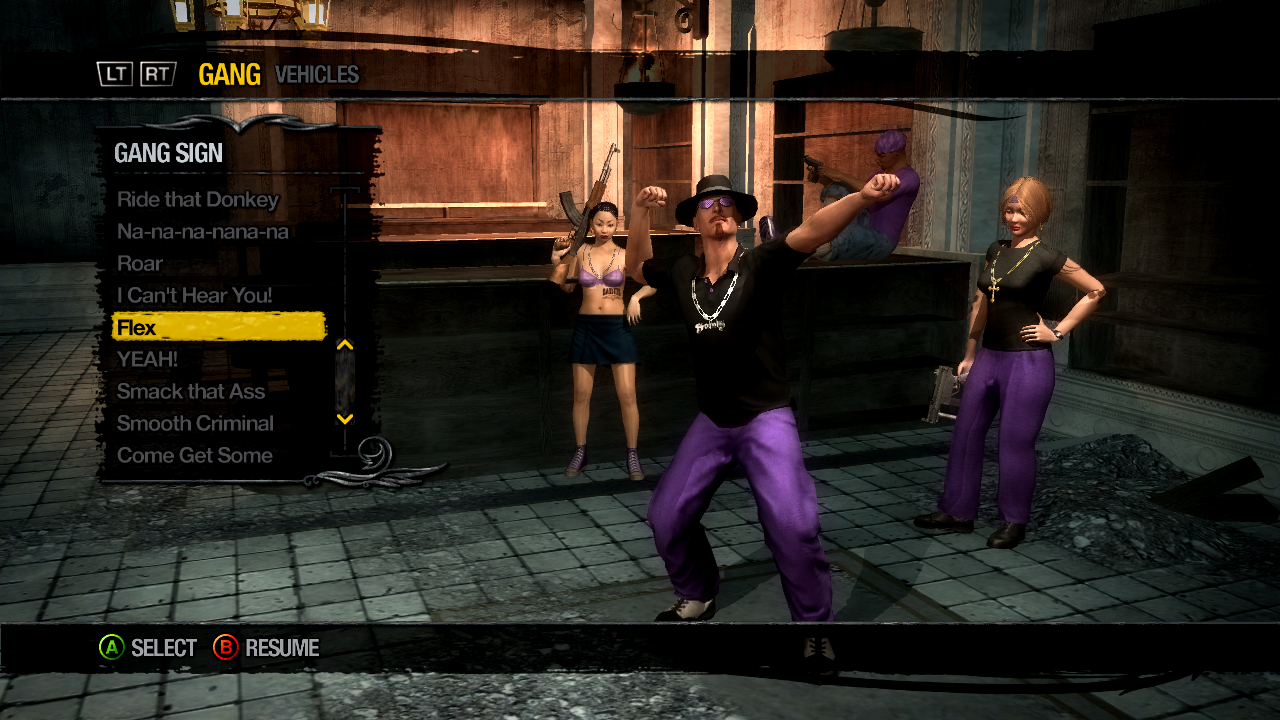
The first thing you do when you enter the game is to create your own character, and this is what really sets the game apart from others in the genre. You wake up from your coma in a jail hospital, and bam, you’re in there, changing your sex, picking your taunts (some are very vulgar), rearranging your face (you can do that outside of this too), picking your hair, and even your voice. The options are deep and riddled with lots of ways to make your character unique and stand out from others online. Once you get out of this mode, you are introduced to an easy-to-use tutorial that will show you how to control your character, and I have to admit, the controls are wonderful. I never got frustrated with them, and they are just so intuitive and easy to understand and remember. You start out with some melee training, then you pick up a pistol and discover you can zoom in via over the shoulder, jump around, and it all just feels nice and smooth. Once you hop into a car, this doesn’t change one bit since cars will turn on a dime and have the perfect feel to them (all 40 or so of them), and this makes driving around the city of Stilwater very pleasant.
The bulk of the game is about rivaling gangs throughout the story, and I have to admit the story is riveting, gruesome, and very entertaining and never falters once. You see, since you were knocked out for two weeks, all the gangs who hated you took their territory back, and now you must gather your old friends, start the 3rd Street Saints up again, and build your hideout. In this hideout, you can get your cash from the stores you purchased, change your gang’s style (like the ’80s, hip-hop, pimps & hos, that sort of thing), change your weapon layout, and pimp out your crib. All of these are just nice subtle touches that THQ didn’t really have to do, but they went that extra mile anyway.
Between these story missions, you can go to different stores and buy food (health), jewelry or clothes to increase your respect, go to plastic surgeons to redo something on your character, buy cars, buy weapons, and in the second half of the game, play side missions.
These side missions are actually a blast, and the two I will talk about are Fuzz and Septic Avenger. Most of the side missions are scattered throughout your map (Stilwater is HUGE, by the way), and they consist of events such as racing, celebrity protection, helicopter attack missions, etc. All of these missions earn you respect, so you can play story missions (each story mission takes one piece of your respect bar). Each mission gives you a time limit and a certain objective to complete, while some are easy and others are a pain in the @SS and can leave you screaming in frustration. Fuzz is a cop reality show where you drive around to designated crimes and kill them according to what your cameraman says. Sometimes you’ll have to use a chainsaw (camera angle a la Gears of War), use satchel charges on skateboarders, etc. Fuzz is an addictive (like most missions) way to fill your respect bar and leaves many laughs as well (thanks to the amazing dialog THQ wrote for the game). Septic Avenger has you driving a septic truck (yeah, a poop truck) spraying fecal matter all over buildings to depreciate their value for certain clients. As you spray the buildings, a red meter will drop and a cash amount will pop up, bringing that much closer to your depreciation amount. There are also some other smaller side missions, like the taxi missions and hostage diversion, in which you hijack a car and any passengers can be driven crazy (literally) until a ransom is given. You also have a streaker mission since you can walk around naked (blurred naughty bits, of course) and streak in front of people for cash.
If you think the side missions sound fun, don’t forget those story missions. The game has amazing voice acting and clever dialog, so it’ll keep you wanting more and make you come back to see which gang member you’re going to kill next. Not one mission is identical, and you are blessed with a nonrepetitive mission-based game that gives you many different places and ways to kill people throughout the entire game.
Now, when it comes to nitpicking the game apart, the graphics aren’t up to par with most next-gen games (thanks to a lot of Gears of War 2!). , and there are serious slowdown problems where the FPS will drop into the single digits sometimes; there are collision detection and clipping issues; some funky physic problems; but nothing that sandbox games haven’t encountered before. The game is highly playable, and you shouldn’t let these small problems bother you. The last thing I need to mention is the fact that the game is gruesome and more ballsy than GTA ever was. There are complete torture scenes, foul language, and running around naked a la Sims style, which is pretty far out there. The game is just hard-hitting and in your face, and that’s exactly what a mature-rated sandbox game needs.
Overlord is back in action. Hand-tailored to the Wii, it comes with more precise control of minions and overall easier ‘Overlording’ gameplay. Dark Legend is a whole new adventure, and while it isn’t going to knock your socks off, it will make you laugh, cry, scream, and even strangle people. To enjoy this game, bring an open mind, a dash of patience, and a hint of speed in your fingers to give your minions a run for their money. Get ready to take control of the young Dark Prince of Gromgard.
The start of the game feels like a narrative from a book, written so well that it really makes you wonder if it is a tale or if it is a true story. You play as a young Dark Prince of Gromgard, running through the castle talking to people, learning about your wonderful evil siblings, and rescuing the cook from the clutches of crazed Halflings.
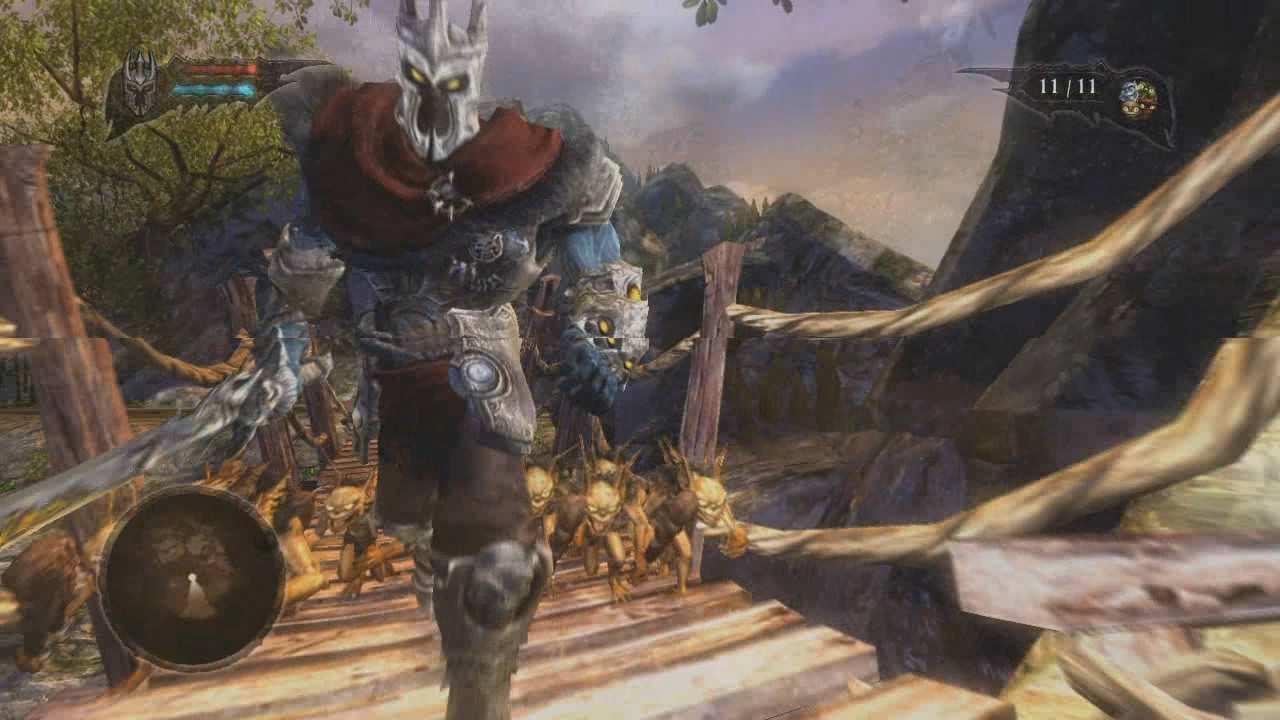
The whole idea behind Dark Legend was to give fans an idea of how the young prince started out before gaining his evil overlordship. You will be wandering through the castle hallways and getting your first introduction to your gauntlet of evil. All gloved in, you will learn how to use your minions in basic and advanced ways. With your loyal servant and mentor Gnarl by your side, you will traverse the dangerous depths of Gromgard in search of minions, destroying your evil siblings and taking the throne of Gromgard. Dark Legend has a bit of a Lord of the Rings feel to it, with the whole Knights in Shining Armor/Medieval setting to boost this idea. To complete the picture, you can throw some fairy-tale stuff into the Lord of the Rings mix. Little Red Riding Hood makes an appearance, and there is no shortage of wolves either.
Now you are probably thinking, “That sounds evil enough for me, but can I play the game to fit my evil Overlord ways?” The answer is, of course, you can, but it will require a little bit of patience, so sit back and take some notes. You play the game with the remote and Nunchuk. The Prince is controlled with the analog stick, the camera can be reset, and you can move the camera manually by holding down C and moving the cursor around the screen. When you actually get your first set of minions, you sweep them by holding down the B button and moving them around on the screen with the cursor. I know this sounds just fine, but wait, don’t get too excited yet! There’s a problem with this setup; the AI is pretty dumb. You can’t just move the cursor anywhere and hope that the little guys will follow. No, you have to put the cursor right in front of them, like a carrot held in front of a donkey, to get them to move. This becomes very frustrating when you have several enemies hitting you and you need your minions to go across a log to cross a stream (only blue minions can go into the water). Just holding down the B button on the other side is no good; you have to “drag” them over there, which is a serious drag.
Unlike minion sweeping, switching magic spells is really simple. You just hold down the + button, move the cursor over your spell, and let go. Wow, genius! Ok, maybe not, but the fighting mechanics of the game are definitely not so genius. All you do is swing your weapon with the Z button or wave your Wii-mote around. Yep, that is all, folks. Just wave the ‘ol remote around or tap that lonely little Z button. There are no combo upgrades or anything like that. You can switch between different colored minions with the left, right, and down D-pads. The D-pad is also used to do magic. Setting markers is done with the + button, and this allows you to tell a certain color minion to stay and attack for ambushing or get enemies you can’t reach.
When it comes to actual gameplay, Dark Legend is decent at best. Minions come in red, blue, green, and brown, and they are all unique in their own annoying, evil, and destructive little way. You will first gain brown minions, who are your basic fighting grunts and are no good at anything but looting, pillaging, and beating on things. Later on, you will gain green (which absorbs poison), blue (which can go into the water), and red (which can absorb fire), which are all needed at all times. To solve simple environmental puzzles, certain amounts of minerals are required. Say you have a turning wheel, but it has green gas pods around it. Then you use greens to absorb the gas before sending blues to turn the wheel. Everything works like a chain, and it is never too hard to figure out what is expected of you. You even have a mini-map with a compass that shows you your current objective. Using warp gates, you can quickly move from one area to another.
Summoning your minions is done via hives located throughout the levels. You can use them to pick up relics for spells, max health, and mana increases as well. Such spells vary from petrifying to electrocution, from slowing time to making your minions crazy and powerful for a short amount of time. The best technique, however, is the new ability to strangle your minions and charge them up. Red and brown ones explode, green ones can be used as a gas grenade, and blue ones give you life. I found all of these to be extremely helpful in a tight pinch. To top things off, you can kill enemies for souls to acquire more minions. Gold found in chests can be spent in your castle’s smelting room, where you can upgrade your weapons, armor, and minions. This is a must for harder enemies and bosses later on in the game.
The environments are very pretty at times, and some of the areas will definitely pique your interest. My favorite moment in the game was when I was in the woods chasing down Little Red. The area in which this takes place felt both charming and unique, its ambiance amplified by a menacing-looking moonlight that gave the leaves on trees a creepy look. The dialog the developers chose is clever yet evil, and the voice actors give it all their evil might to help set the mood.
So, there is lots of fun to be had in Dark Legend thanks to the clever use of minions, the good amount of spells, and plenty of relics to find. You will be sucked in for a good 6 to 8 hours. I just wish the minions were a bit smarter and the collision detection didn’t stink. The backtracking can really get you down too. I highly recommend Dark Legend only to Overlord fans or Wii gamers who want to wipe the dust off that Wii. The Wii shovelware stops here, my Lord, and so begins the tale
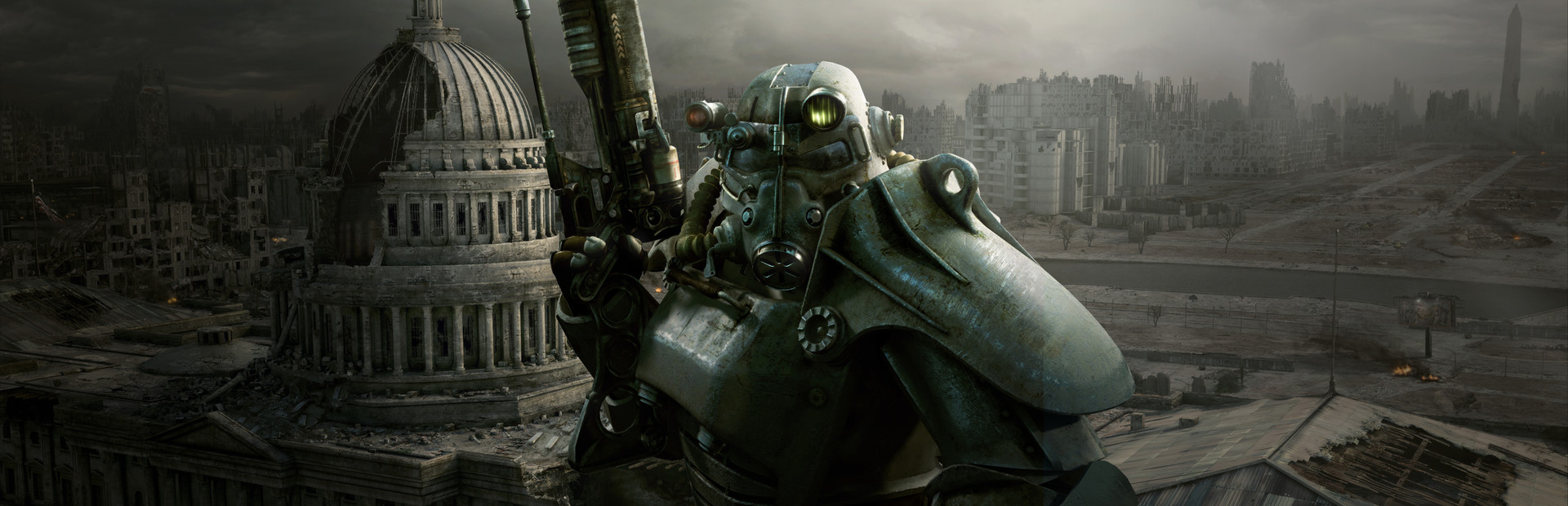
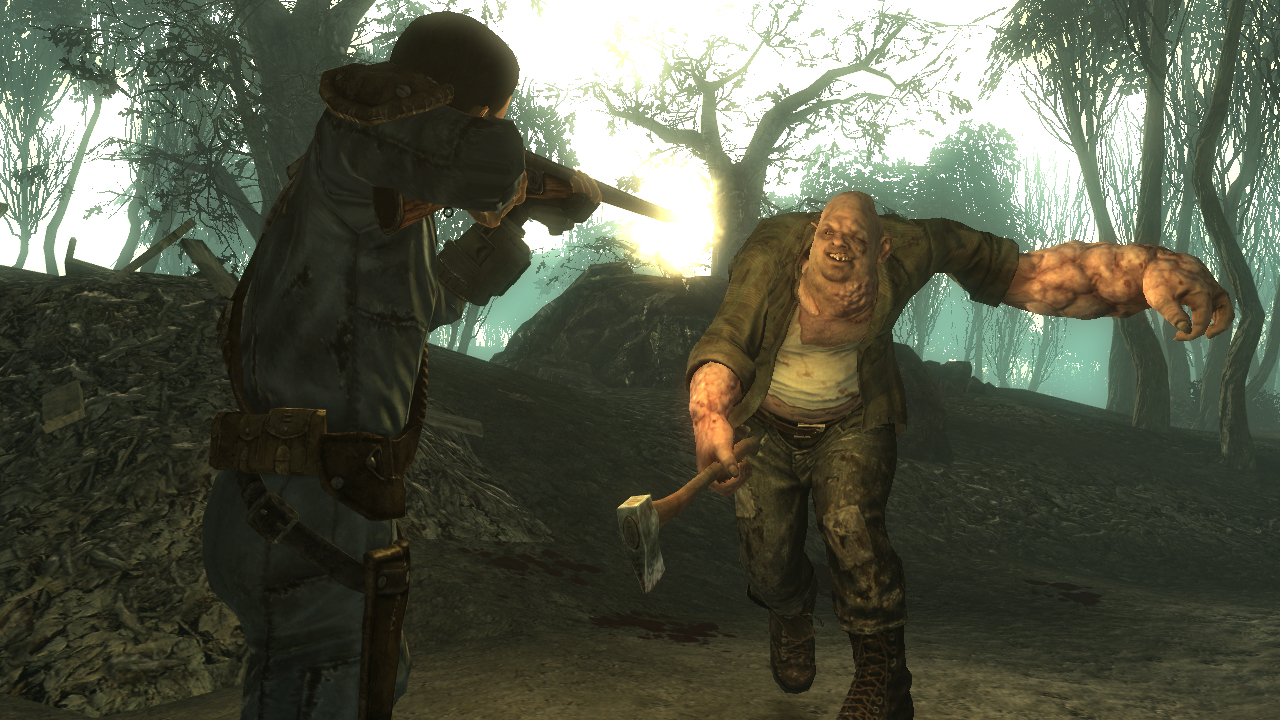
The highly anticipated Point Lookout is finally out, and it does not disappoint. With this being the fourth DLC available for Fallout 3, you’d think Bethesda has started to run out of steam, but it seems they’ve just gotten started. The DLC starts out with a boat docking near the Jefferson Memorial and talking to a strange Tobar, who tells you all about Point Lookout, Maryland, and all its great treasures and adventures. Sure, it sounds great for the heroine of the Wasteland, but just how dangerous is it? Well, extremely, and especially if you are under level 25 and without the Broken Steel DLC, because the bog hillbillies are extremely tough to kill even with the Tesla Cannon (you get this in the Broken Steel DLC). Hell, even the Rocket Launcher won’t kill them with one shot (it must be all that moonshine they drink).
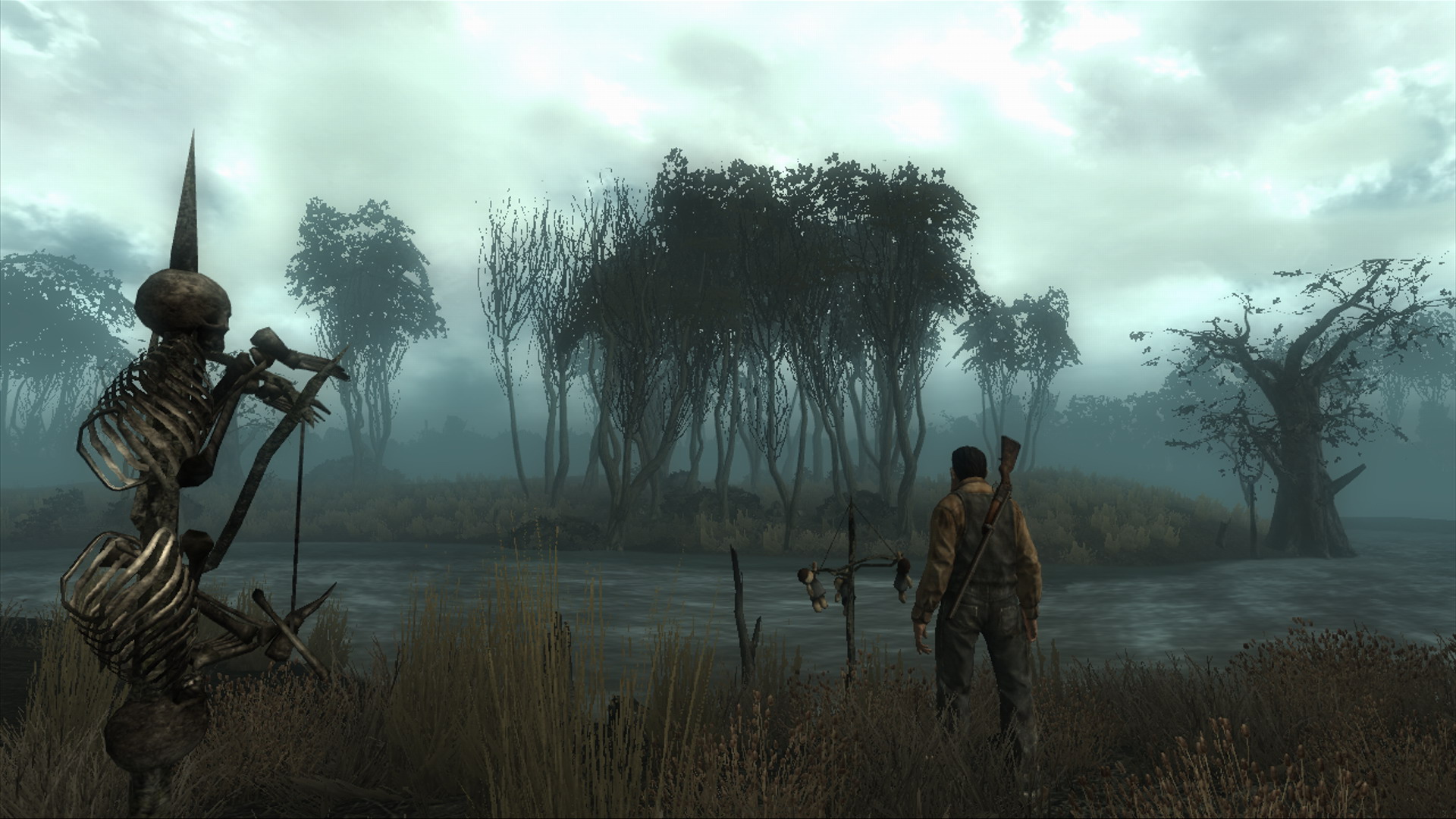
While not giving too much of the story away, you meet one AHOLE of a ghoul. Try to find a woman named Nadine, a deceptive brain, a strange cult, and a woman who has you help her with her family recipe of moonshine. The DLC is nothing short of amazing when it comes to the atmosphere since it’s just as lonely and creepy as the stuff on the disc (and The Pitt), with lots of fog, bogs, creepy hillbillies, strange buildings in the distance, and rads. Yes, since most of the DLC has water in it, you’ll be getting irradiated quite a bit, and this means you will need to bring some RadAway and Rad-X with you.
One mission even requires you to swim away from the island and locate a sunken submarine underwater. You have one store in the game in the carnival; there’s a motel you need to explore, a mysterious mansion, and a few other buildings, but there’s a lot to explore on this HUGE island, so you’re in for about 4-6 hours of great gameplay and story. Bethesda seemed to have concentrated more on exploring this time around than weapons or anything like that. There are a few new parks, the double-barreled shotgun, ando the lever-action rifle, but there are a ton of supplies to loot and grab. So much, in fact, you’ll have to head back to The Capital Wasteland just to sell it all. I believe this is a great DLC and is well worth the $10 (hell, I’ve paid $140 into Fallout 3 already), so don’t be afraid and come down to Point Lookout and explore!
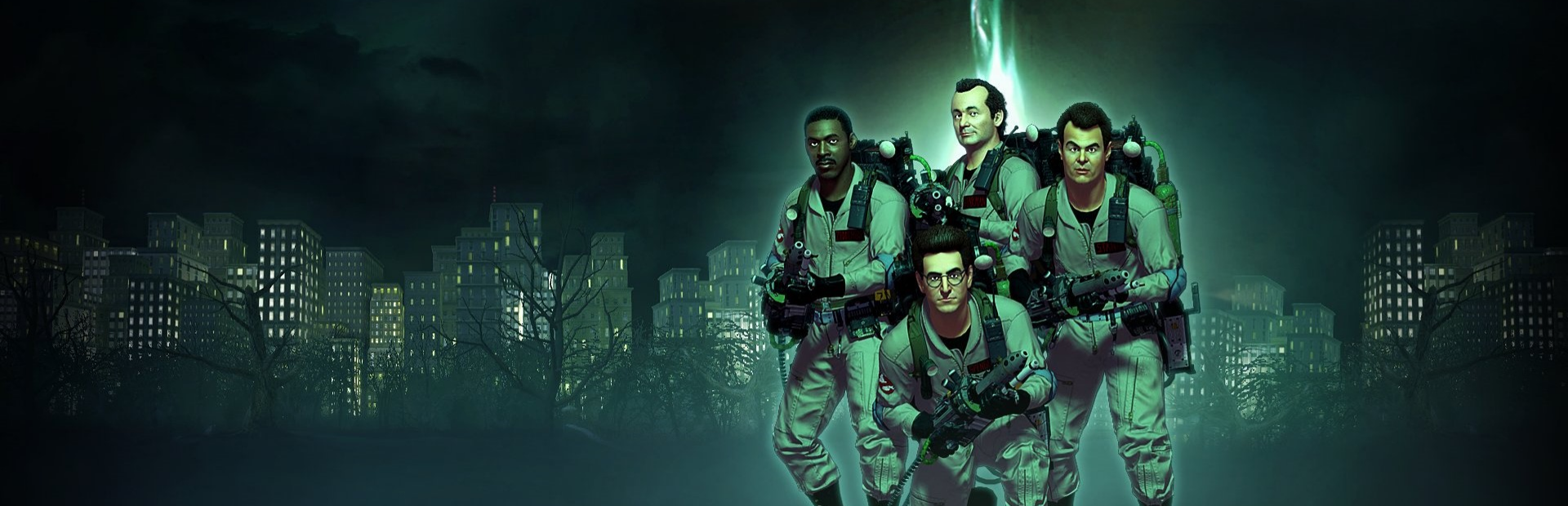
When we called the Ghostbusters back into our games in the early 90s, they didn’t do a very good job. You remember the Genesis version, MSX, NES, GameBoy, Atari 2600, and C64. The richness of the Ghostbusters universe needed more than 8 or 16-bit graphics and midi sounds to make it come to life. Technology has improved considerably since then, finally being able to do justice to our Ghostbuster friends. With the help of the Unreal 3 engine, the developers were able to create an atmosphere and story that are truly amazing.
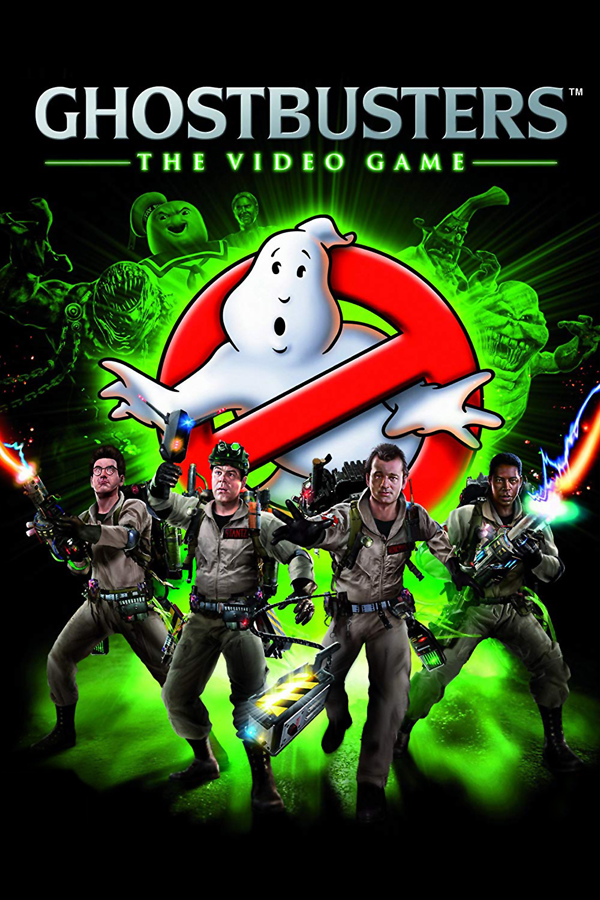
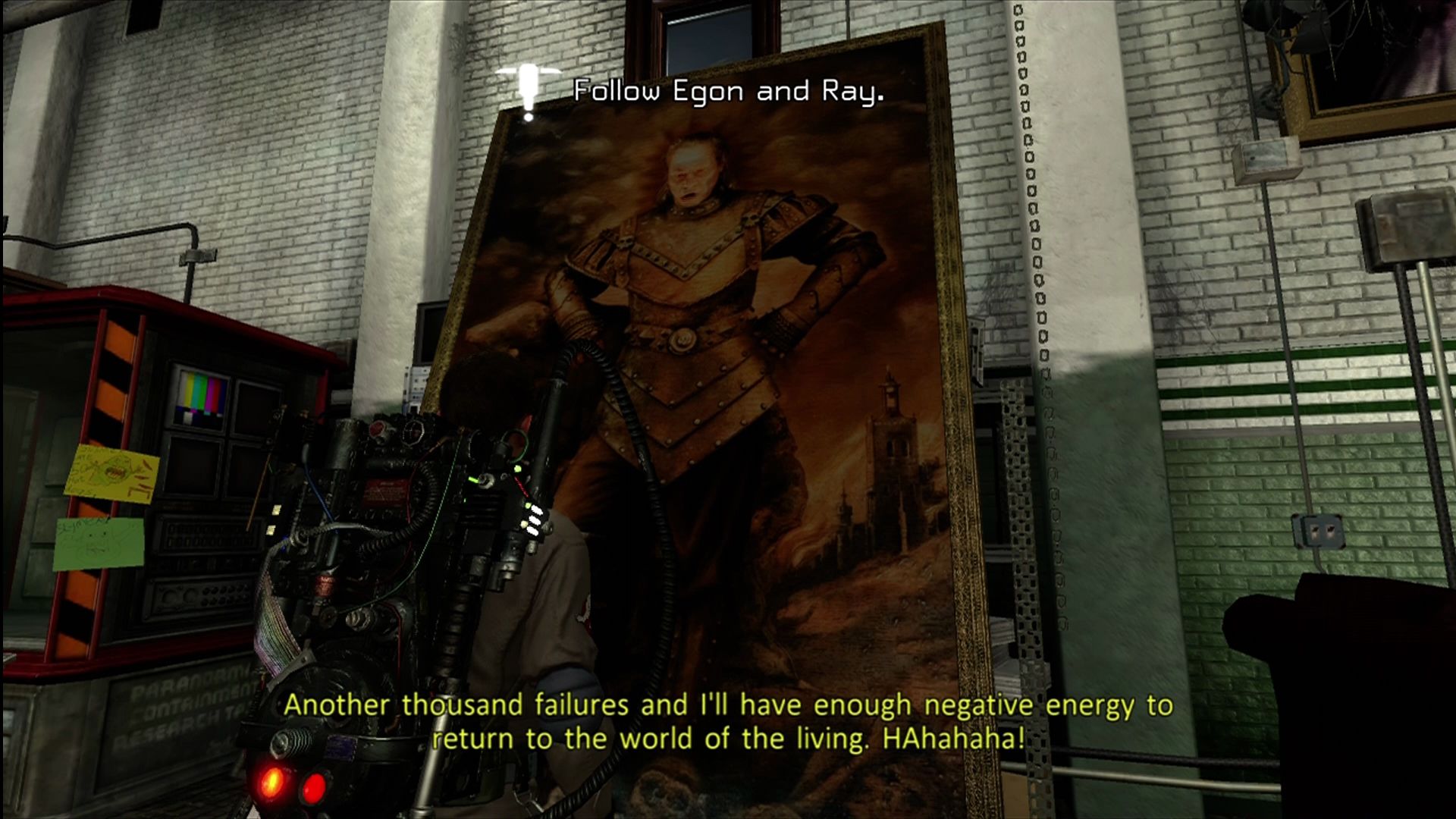
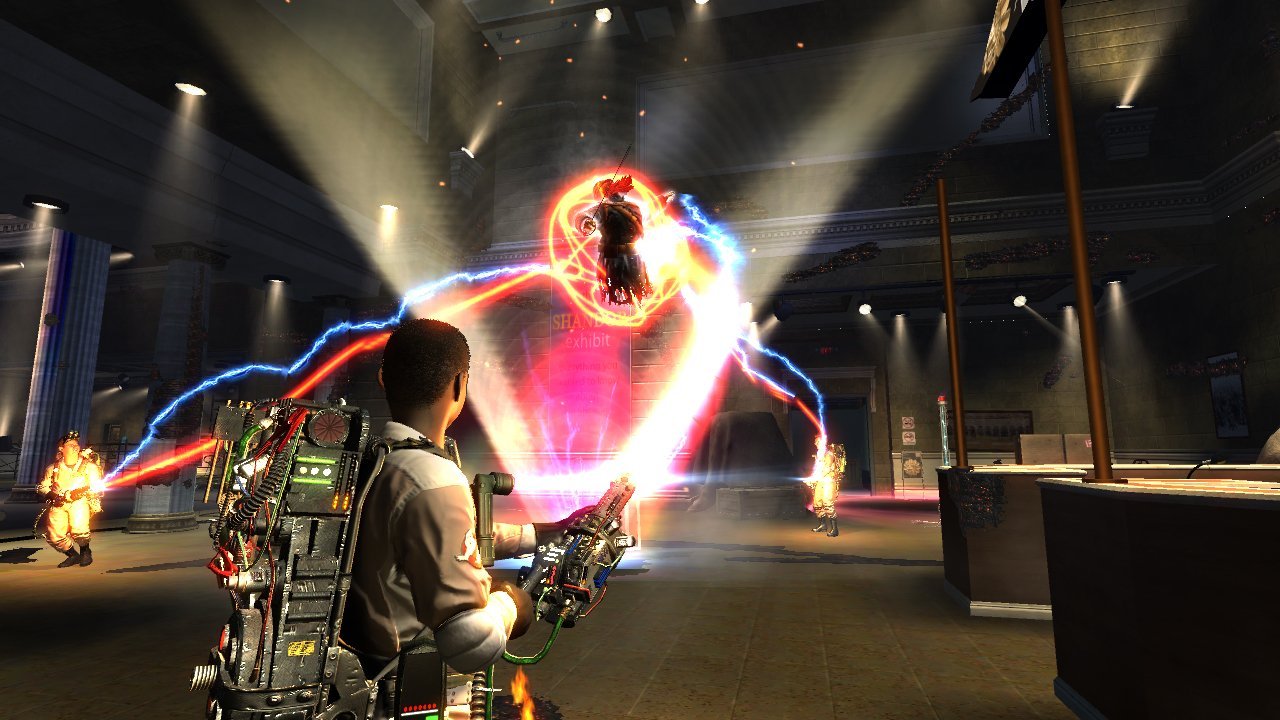
Players start out in the Ghostbusters’ headquarters, which has been properly equipped with a true-to-life fire pole for you to slide down on. Ray takes you through the basics of wrangling ghosts, trapping them, and using your gear down in the basement. One of the first things you will notice is that the controls feel very familiar, resembling those of games such as Resident Evil 4/5 and Gears of War. Still comparing it to a shooter, your proton pack takes the place of your “gun,” and your “ammo” consists of different types of particle streams. You can unlock four streams throughout the game, starting with your basic proton stream. The Stasis Stream, Meson Collider, and Slime Gun follow suit quickly. The most useful is the Proton Stream, which weakens ghosts and stuns them so you can wrangle, toss, and then hopefully trap them. Ghosts come in many shapes and forms, and it is rare to see so many different enemy types and level bosses in a game. These include many of the ghosts from the movies. You will be battling the Stay Puft Marshmallow Man, heading through the Sedgewick Hotel and the Haunted Library.
Each ghost has a weakness for a specific weapon type. To find out which type is effective, you must scan them with your goggles. Doing so will also reveal all sorts of other interesting and sometimes ludicrous information. Some ghosts are dispersible, which means that they die after a few hits with a certain weapon, but others must be trapped instead. The objective is to weaken them until their health bar turns red, after which you can trap the suckers. Walking around with your energy detector is good for finding artifacts—treasures that you get money for—and enemies.
Upgrading your weapons will improve them in various ways. You can increase a weapon’s rate of fire, make it overheat less often, or let you trap your enemies faster. All of these upgrades can be purchased in one play-through. Ghostbusting is a high-revenue business, and you will earn ample money to purchase any upgrade that catches your fancy. You are also tallied by how much damage you cause the city throughout your play. Doing too much damage may affect achievements.
The gameplay may sound simple, and it is, but that doesn’t take away from the fact that it is extremely fun. There is always something new to be experienced, and only towards the end of the game did I feel some repetition setting in. Ghostbusters kind of felt like a mix of Gears of War, BioShock, and Silent Hill. It can be downright creepy at times, but it also has wonderfully witty humor and some great lighting effects that help create a fantastic ambiance. Walking through dark hallways, your senses are always stimulated in various ways. Things may jump out at you, or you will hear strange cries and screams. Besides being scary, it is also immersive; I left the game after about a four-hour sit-down, and I really felt like I was a Ghostbuster (don’t call the men with the long-sleeved jacket until you have played for four hours straight yourself!). This is in large part due to the fact that the original actors are voicing the game, and I think that’s what truly made the difference.
The game is actually based on the script written by Harold Ramis and Dan Akroyd that was never made into a third movie. There are a lot of tidbits in the dialog that relate back to the original 1984 classic. This game can be played by both fans and nonfans, but it is truly geared toward fans of the movie. You can safely say this game is one of the best movie-licensed translations ever made.
Ghostbusters is just one of those amazing and immersive games that make you all giddy inside. The game truly has an amazing effect on its players. It may not have a lot of depth, but it easily makes up for that in the fun department. It is worth noting that Ghostbusters is a little on the short side, giving you about 6 to 8 hours of gameplay. Fortunately, the replay value is fairly high, making this a recommended buy. I really hope there is a sequel. Playing Ghostbusters has been one hell of a ride.
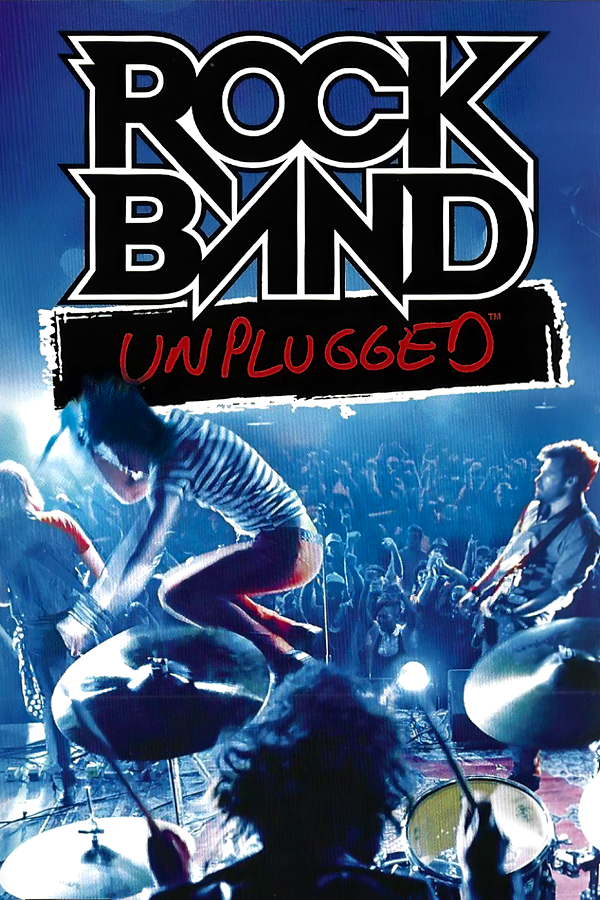
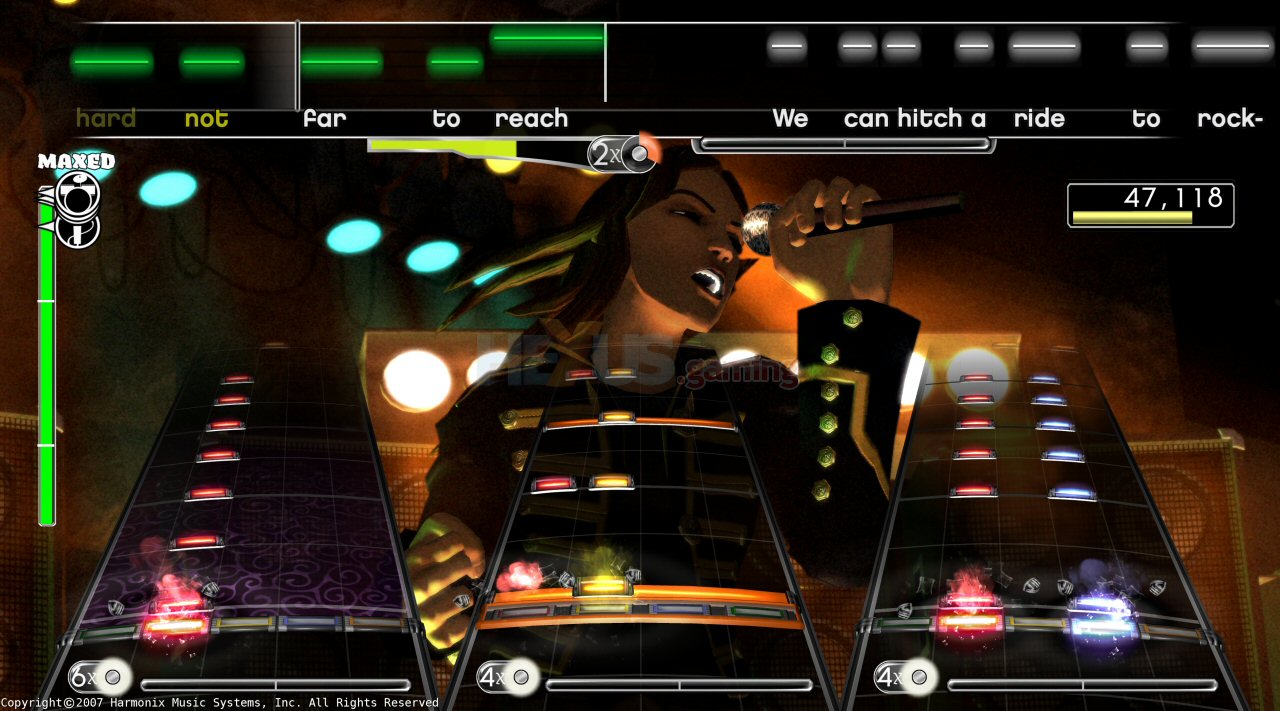
When Rock Band was released back in 2005, it kicked off a whole new era of rhythm games in your home. With Guitar Hero still using only the guitar controller, Rock Band introduced drums and mics to the genre. This brought a whole new meaning to the music genre and spawned many copycats, but none could do it better than Rock Band. Now that Rock Band has hit the portable scene, you just beg to wonder what quality the game has, and how could a game using instruments become so wonderfully executed with four buttons? Well, Unplugged is not a disaster, and the following paragraphs shall prove this to you.
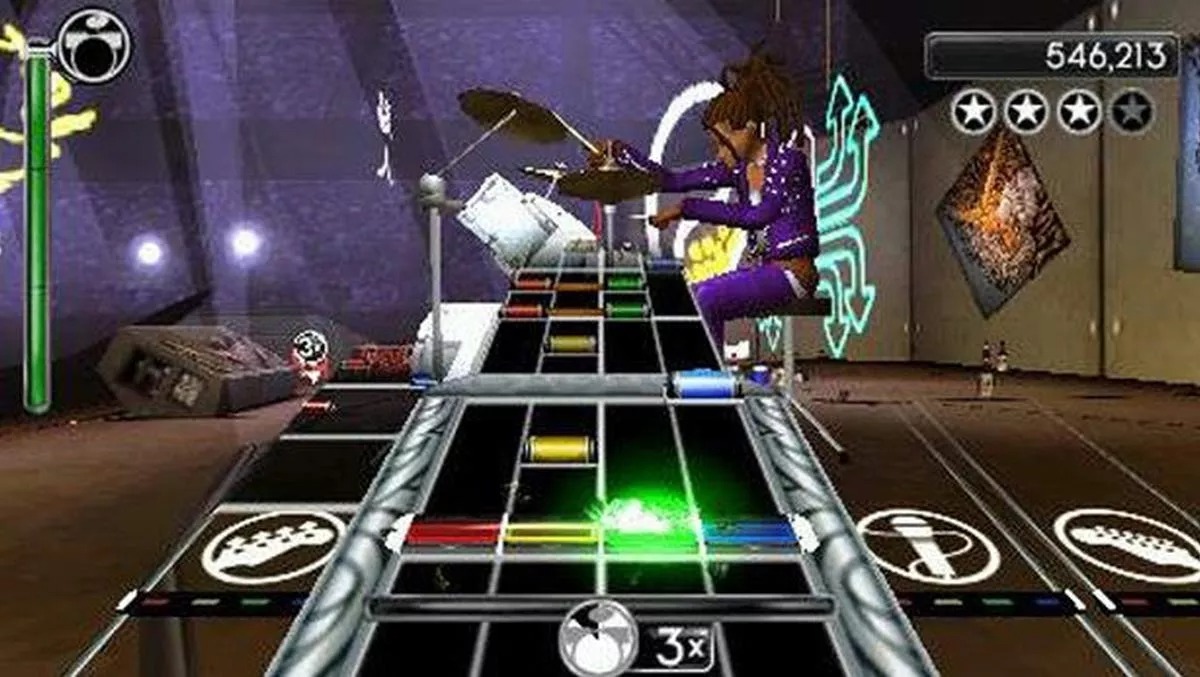
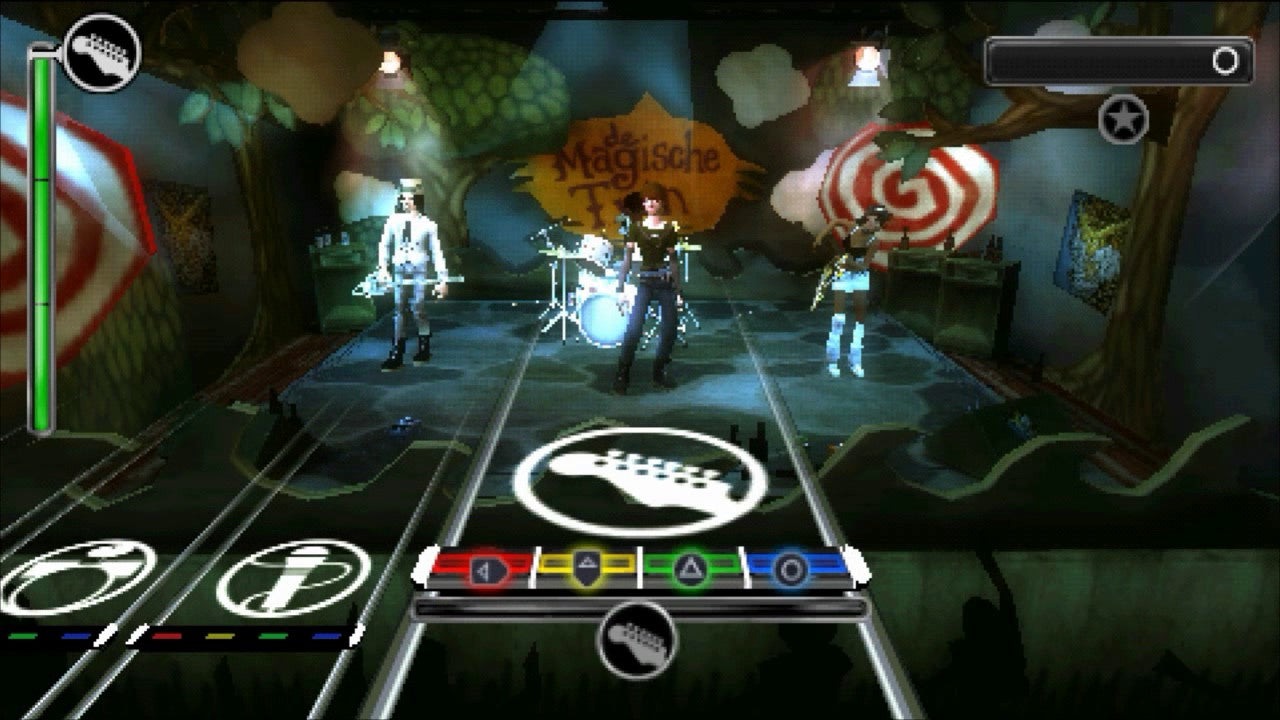
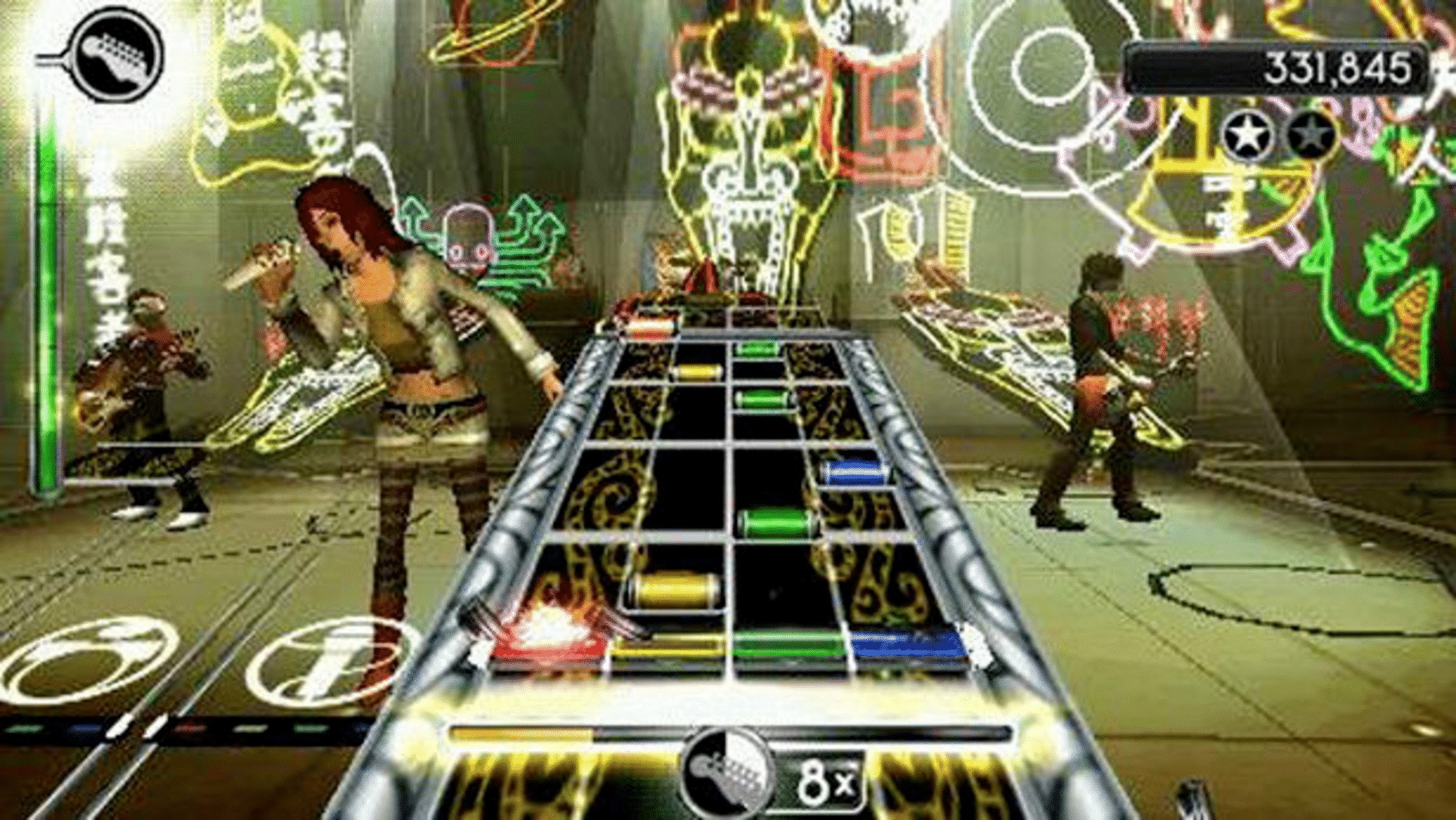
In short, Unplugged does some things really well with the gameplay but somehow manages to turn around and make the game not fun at the same time. Hold on to your desk, handrail, and controller because you have to play all instruments at the same time. Yes: bass, guitar, drums, and mic all at the same time. I know Backbone is a bunch of jerks, but it’s not as difficult as you might think. You see all four tracks on-screen (yes, singing is now a regular track), and when one starts coming down, you play the phrase, then switch to the next phrase using L or R. Phrases are silver borders around a certain amount of notes (each difficulty makes you play more in a phrase). If you play well enough, you’ll get to go to the next phase, but be fast! If you don’t switch right away, the phrase box will move up the track, and you must play all the darkened notes until you get there. In the meantime, other tracks are coming down around you, bringing down your crowd meter, and this last point is what makes the game not so fun.
When you’re actually playing the game, you use the left D-pad (red), up D-pad (yellow), triangle (green), and circle (blue) (DJ Max Portable vets will already have this down pat). As you can see, there is no orange present since the game only uses four buttons, but don’t let this misguide you into thinking the game is easy because it is far from that. To make the game a tad easier on recognizing what buttons to hit together, the orange bar that was used for the kick pedal on the drums now ties notes that are apart from each other. This helps identify when to hit two notes simultaneously and thus makes it a bit easier when all these little notes are whizzing by. Overdrive (or Star Power) is still the same and can be activated with the X button, but having to perfectly play every phrase can make gaining Overdrive a little hard.
One other thing that really makes playing this game somewhat annoying is the fact that instruments drop out if you leave the track alone for too long. I don’t mean drop out as in failing (you can save the tracks by using overdrive), but in an audio sense. This is supposed to be an audio aid or cue to go to that instrument and play the phrase, but it just makes the song sound really bad.
One major disappointment is that Unplugged does not have any multiplayer whatsoever. Yes, I know, I know—it’s alright; you can stop crying now. I am clueless as to why this decision was made because multiplayer is what really made Rock Band shine, and there’s no excuse not to have it in the PSP version. Besides the missing multiplayer, the game is really vanilla in models, as it includes only your Band World Tour, Quickplay, and Training; oh, and Options if you really like that. One request that Unplugged finally responded to was the ability to customize everyone in your band instead of just the musician you are currently playing.
The customization is actually really shallow compared to the console versions of the game since you can’t choose clothing categories (Goth, Punk, Metal, etc.), but only a few clothes for your torso, bottoms, and shoes. There aren’t as many accessories or even hair and makeup items, but this is OK since the game doesn’t look that great anyway (more on this later). When you start your band, you can name it, pick a logo (yeah, you can’t even make one!), name your musicians, and pick from some generic clothing, hair, makeup, and your set. I see that Backbone had the whole “portability” thing in mind, so you can whip up a band and go, but some people actually see customization (like myself) as the main part of the game and can really bring the game to life with your creations.
Once you start a band and enter the world tour, you’ll be in familiar territory. You have mystery setlists, make a setlist, and various sponsored setlists that have various amounts of tracks. You can select your difficulty (easy through expert), but not your instrument, and I really wish Backbone would have kept the game the way it was before with just one instrument track.
When you are actually playing a song, you are rated on how well you did with up to five stars and a score multiplier. Landing notes will increase this multiplier up to 8x (if you activate Overdrive) until you miss a note, when it goes back down to zero. Once the song is over, you see your percentage of notes hit for each instrument along with how many phrases you played, attempted, or failed. Eventually, you’ll unlock managers you can hire to change attributes of your play style that will earn you more cash and fans or get you gigs you couldn’t do otherwise. You unlock songs by earning a certain amount of cash, fans, and stars. In the beginning, this can be difficult since you have to get almost perfect scores on every song to start unlocking more gigs.
Sometimes before you start a gig, a screen will come up and ask you if you want to gamble with your gig (in a sense). By getting 4 stars or more, you can get quadruple the cash or nothing at all. If you get 5 stars, we’ll double your fans and all that. It’s fun and all, but we’ve seen this before, guys! The World Tour seems to be the meat of the game, and it’s nothing new or original—just the same old stuff we’ve seen from previous entries in the series—and this is a bit disappointing since it makes you feel like you’re just playing a rushed port.
There is also downloadable content available (as I write this) for people looking for more than what’s on the disc. Currently, there are 10 songs available (assuming this is an experiment by EA) for $1.99 each on the PlayStation Store. They are great songs (Disturbed-Inside the Fire, Paramore-Crushcrushcrush), so this is a great way to keep Unplugged alive and kicking. Since this is a band game, how does it sound? Very good, actually, as the songs are MP3 quality thanks to the UMD’s 1.8GB storage capacity and the PSP’s memory size. There are 41 songs on the disc, featuring The Jackson 5, Lacuna Coil, Pearl Jam, Bon Jovi, Boston, Tenacious D, The Police, and a ton more. Most of these songs (again another disappointment) are from previous Rock Band games, but these seem to be the best of them and almost feel like “Rock Band: Greatest Hits.”.
However, when it comes to the actual ambiance, the game fails. Crowd noise sounds like static, and the menu noises sound muffled and very monotone—almost like you were playing DS (Ha! Take that Nintendo!). and really makes the experience kind of dull, aside from the music. If you want to talk about graphics, you should cover your eyes and run away because the game looks kind of ugly. The characters don’t have realistic animations like the console versions, detailed textures, or nice lighting effects. Everything looks flat, plain, and really dull. The characters use the same retarded animation over and over again, and it makes you wonder if the game is really a third-party creation. I realize the PSP has limited hardware, but c’mon, they can do more than that; Kratos was able to!
While the menus look nice and crisp and remind you of Rock Band 2, I still wish there was more to the graphics and sound of the game. This is a real disappointment for me, but what saves the graphics department is that you don’t really look at the characters. Your main focus is on the tracks and the notes, which look crisp and clear. Rock Band: Unplugged is a great departure for the series on the portable scene. With 41 songs on disc, great controls, downloadable songs, and an extensive World Tour mode, there are a lot of reasons to come back to Unplugged again and again.
Don’t let the bad sides, such as mediocre graphics, poor ambiance, awkward gameplay, and the wee bit shallow selection of modes, bother you. Unplugged is probably the best portable rhythm game ever made, and it doesn’t even need a guitar hand grip.
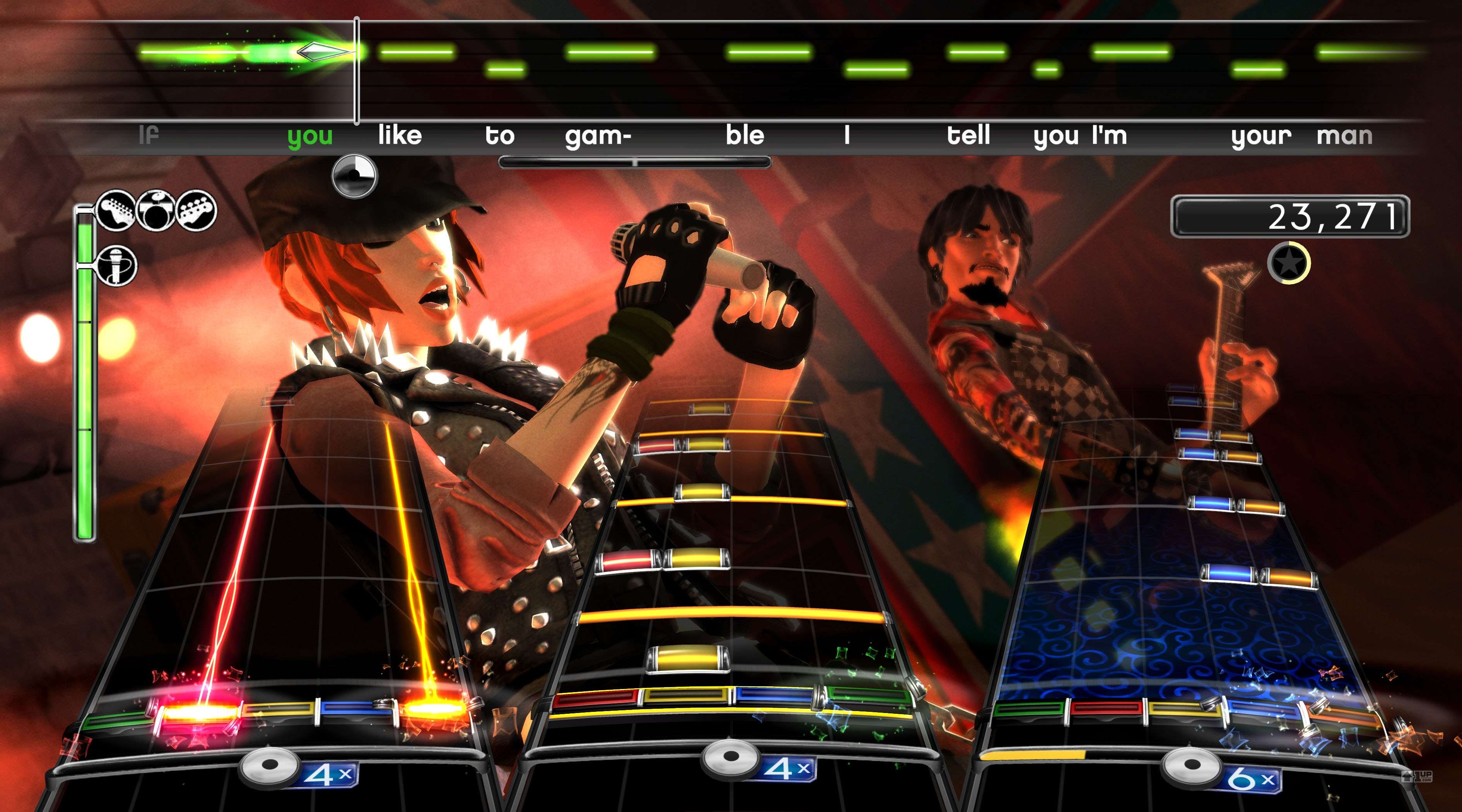
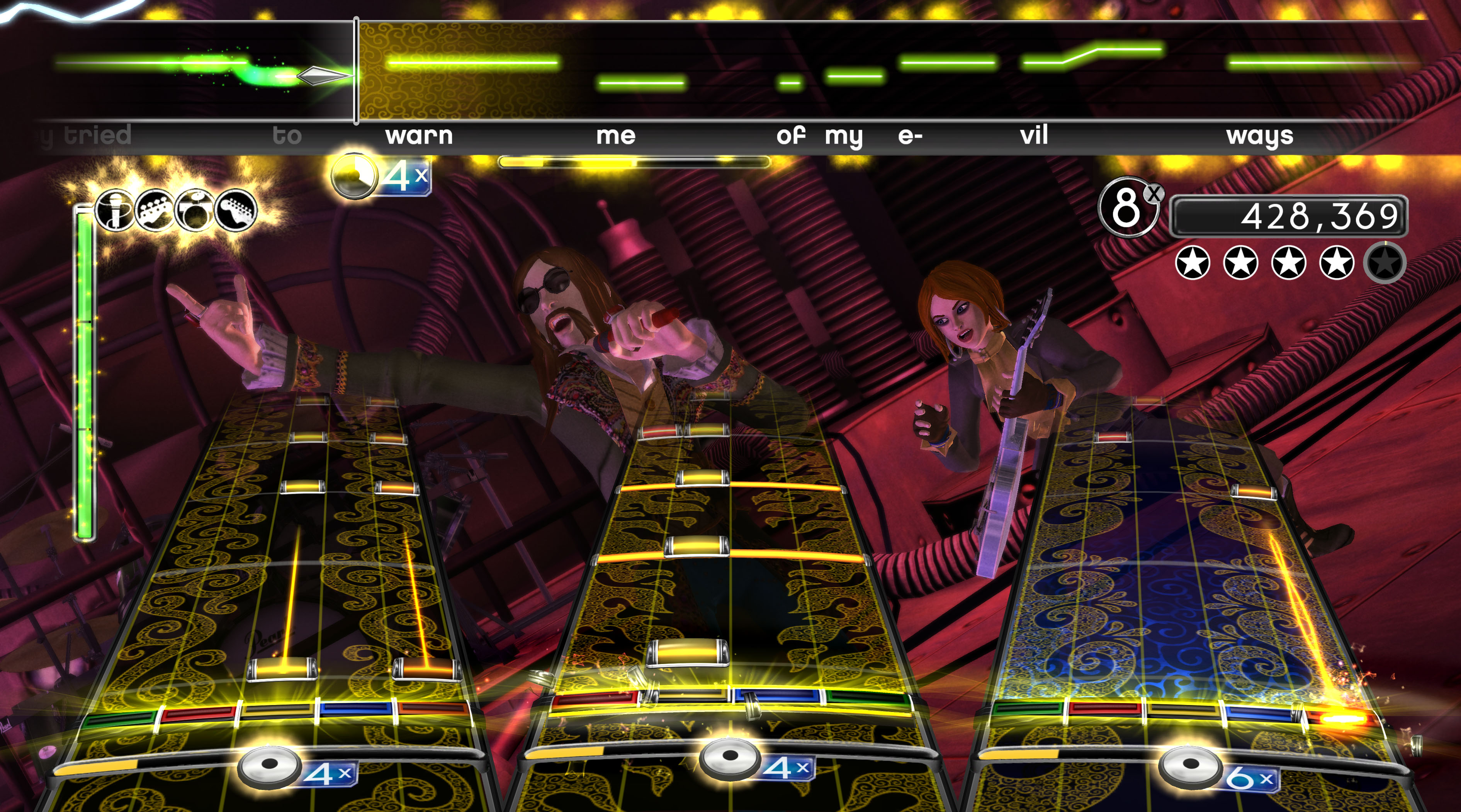
Rock Band stole the show from Guitar Hero as the best rhythm game and broke the boundaries with the drum peripheral and the excellent multiplayer to really make you feel like you’re in a band. I’m not going to explain how Rock Band is played since most people have already played it, so I’m mainly going to focus on improvements and updates.
Well, everything here that you loved about the first game is still here, but improved. I’m going to start with the hardware, which is actually much better than the original, and the most noticeable are the drums. The first game’s drums were poorly designed, with pieces constantly coming apart and a lot of plastic parts. Rock Band 2’s drums have a metal cover on top of the kick pedal; it’s bigger; the drums are quieter thanks to the pads being a softer material than just rubber; the base of the drums actually stays together since there is a whole locking mechanism on them, so moving your set won’t make the base come apart. Other than that, everything on the drums is the same; there are, however, three extra-colored plugs for the cymbal attachments (which are very poorly designed and not recommended), along with the drumsticks being a couple of inches longer. The best part about the drums is that they are wireless, and the batteries last forever. With three AA batteries, I only changed them once in a five-month period, and I played a lot.
On the guitar, it is also now wireless, with a wood-type texture on the next (instead of that ugly plastic), and the buttons are a little further apart so you can feel which button you’re hitting. For some reason, the bottom buttons are still the same, and I still find them useless. The microphone is a little bit lighter, but otherwise, I found no difference between this and the original. While all the hardware is well designed, it’s also more solid, stable, and responsive.
On to the game now. When you start the game, you’ll notice a nicer menu, more modes, and a longer World Tour. The first mode you’ll want to try is the training mode (if you haven’t played Rock Band before), but there is also the new drum trainer mode. You can work on your rhythm or just hit along to your own songs via the Xbox Guide, which I found fun and great. I know a lot of people tap things to their favorite songs, so now you really can while choosing several different drum set sound schemes. When you pop into the World Tour, you’ll notice there’s a venue in almost every city in the world, it seems. I bought this game in February, and it’s now June, and I still haven’t finished the World Tour (and I play several setlists every day).
While the fan, setlist, and star systems are still intact with a new manager element added, You can hire new managers that gain you extra fans, cash, or something along those lines. While there are 25–30 cities in the game, there are at least 2-3 songs plus 3-5 setlists in each city. By the time I got around to unlocking the hidden cities (including the endless setlist, which is an 84-song marathon), I had thirty million fans and over 2,500 stars. Yes, that is a lot of playing, and the World Tour is actually almost impossible to beat. The best part about Rock Band is the multiplayer, and Rock Band 2 adds some greatness to it with a few new modes.
There is now the long-awaited Band World Tour, so you can take your whole band through the World Tour and complete it that way. While the other modes are still here (Tug of War, Band Duel, Co-Op), nothing else has changed. There are some other cool modes, such as “Never Fail” and “Break Neck Speed.” These are cool modifiers for people who are really bored. On to customization: there are more items, including the new Thrifty section, but everything else is the same. The graphics are exactly the same, and customizing hasn’t changed. You can create a band logo, but it’s not any deeper than you’re familiar with. Now my favorite feature about the game is that you can import songs from Rock Band 1 into the game (for a $5 fee, of course), but this is well worth it.
When you’re done with that, head to the store, which has 500+ songs available to download in every genre imaginable. After you get bored with the songs on the disc, buy some songs! Rock Band 2 is such a great rhythm game; it’s solid, smooth, fun, heavy with songs, and has lots of quality.
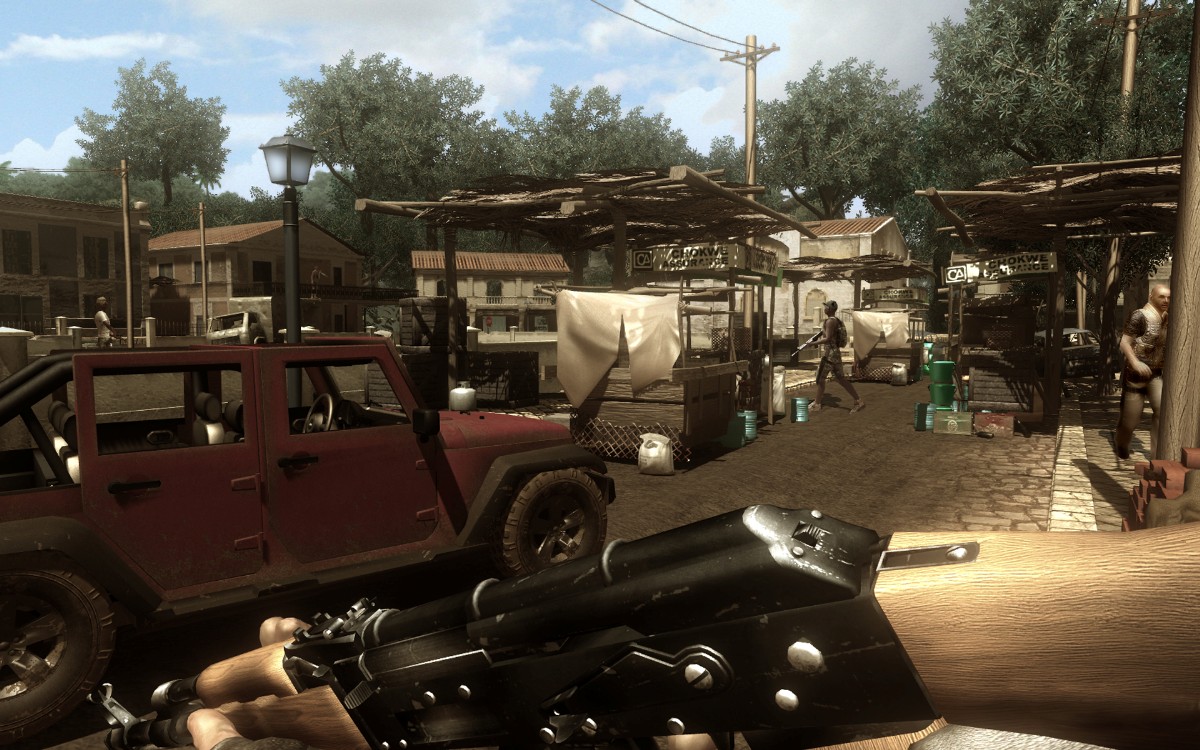
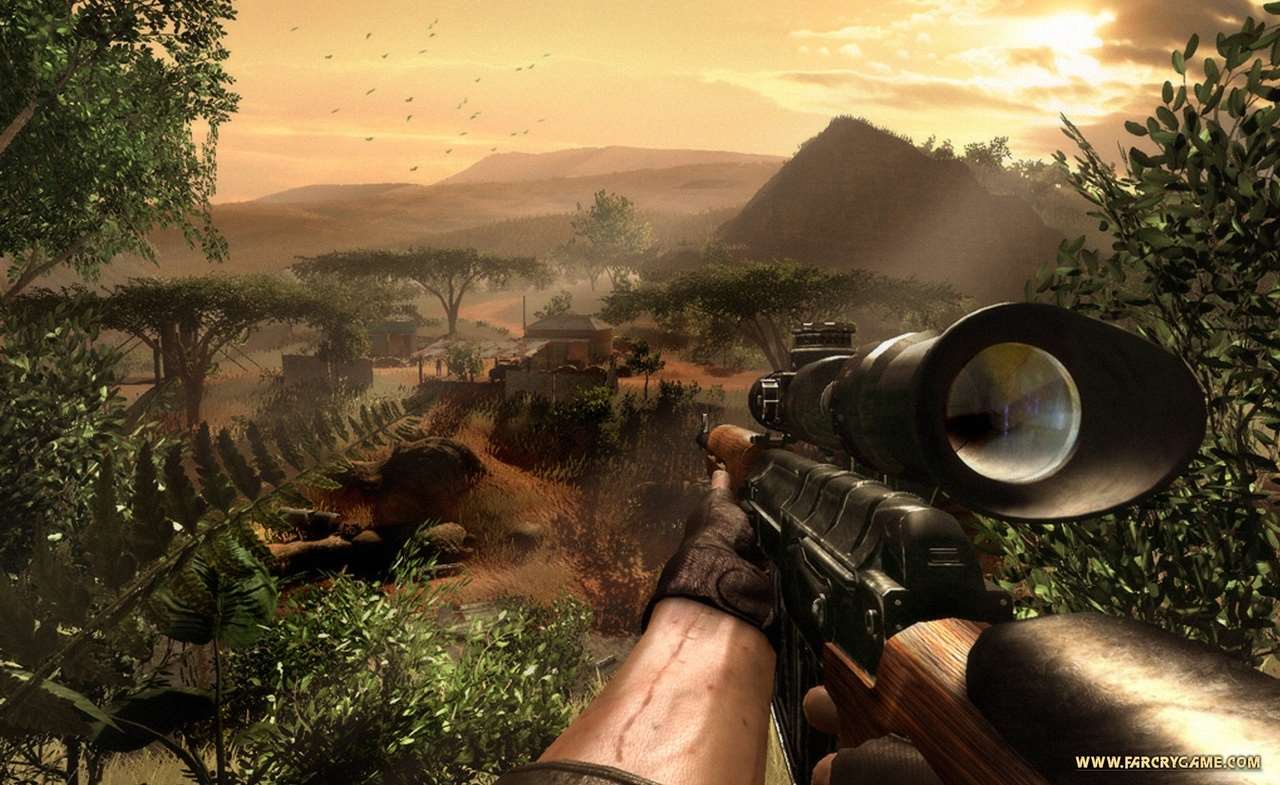
OK, Far Cry was a great technical feat, and that’s pretty much it. Far Cry had a lot of AI problems with enemies being able to see you miles away; you needed a monster computer to run it; it had almost no story; and it was pretty repetitive. Unfortunately, Far Cry 2 follows all these trends again, but with better graphics, a setting in Africa, an even more confusing story, a super confusing level editor, and the same bland, boring, huge open world. Now, I’m not saying Far Cry 2 is bad; I’m just saying it needs more filling because there is way too much crust on this one.
The game starts out great with you in the back of a car driving to the guerrilla’s headquarters. Once you get through the tutorial, you’re thrown into the beautiful yet empty world, trying to find “The Jackal,” who is feeding both rival gangs guns and fuel (APR and UFLL). You can work on either side since you need either to get to The Jackal. For starters, the game has lots and lots of guns, and you can upgrade them by using diamonds (finding diamond cases and/or completing missions). You can buy the weapons for infinite ammo in your safe rooms, and you can buy manuals that increase accuracy, reliability, etc. You can also buy equipment that will let you hold more ammo, more health, more stim-paks, etc. There are lots here, and everything is fairly priced, but you earn diamonds so slowly that it takes forever to get enough.
When you’re actually shooting the guns, it feels great, but another problem carried over from the first one is that these guys never die. You’ll pump a whole clip into these guys, and sometimes they’ll still be standing. Sometimes your gun will jam and you have to mash X to get it unstuck, and if you’re really unlucky, the whole gun will break, and then you’re SOL. Getting the reliability upgrades fixes this, and swapping out weapons from fallen foes helps this a lot. Far Cry 2 also has a “buddy system,” which is acquired by completing missions, and these so-called buddies can save you in battle (if you run out of health; think of it as an extra life). They can help make missions easier by offering alternatives. This is a great system and is probably the only great gameplay idea in Far Cry 2 that isn’t boring or doesn’t piss you off. When you do get low on health, you can pry bullets out of yourself, wrap yourself in bandages, and even poke yourself with magic needles. You can refill these at health boxes in random areas or in one of your safe houses. You unlock new safe houses by killing all guards in the area, and bam, there you go.
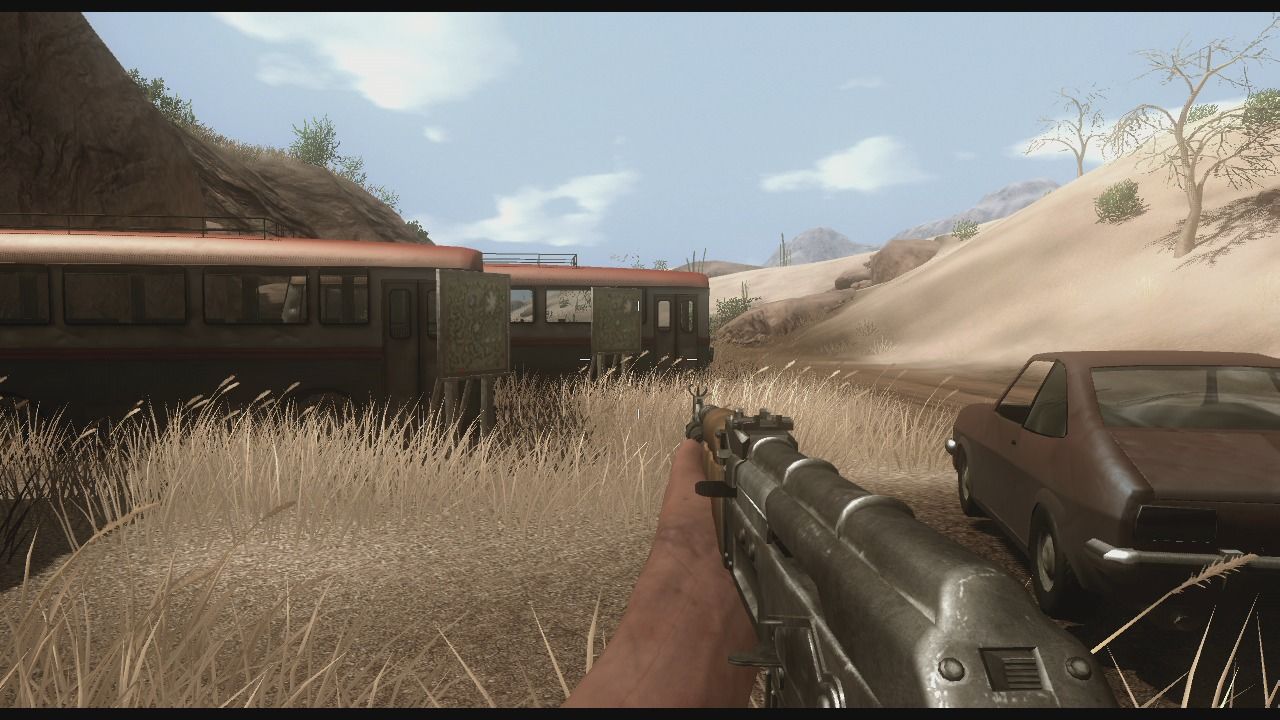
The next gameplay element that is from the first game and was bizarrely stripped down is the vehicles you drive. There are only maybe five in the whole game, and those are a Jeep, a car, an assault truck, and a couple of boats. When your vehicle gets banged up and starts smoking, you can hop out and repair it, which is great, but even if the car starts smoking a little bit, it runs very slowly. Now to get to the most annoying part of the game—the constant backtracking. I understand this is an open-world game (I love sandbox games, don’t get me wrong), but Far Cry 2 fails at this. First, the map they give you is horrible since it’s a little piece of paper you hold (next to your GPS), and all the dots look like blobs, so the legend is useless. You’ll travel to missions on one side of the map, finish them, and then have to navigate all the way back to town. You can’t really go off the trails since there are so many mountains, rocks, and trees blocking your path unless you run on foot.
Then this is where the meat of the annoyance comes in; there’s nothing in between all of this driving around! Maybe here and there you’ll see an animal, but all you get are the same thugs coming after you in their vehicles from the guard posts plastered all along the trails. That is really all there is to driving from mission to mission. The missions are exactly the same; maybe you’ll have to save a friend (or shoot him/her), but essentially it’s all the same.
The malaria effect was useless and made things even more annoying. Every so often, you’ll have to take a malaria pill, and if you run out, you have to go to the ends of the earth (ok, Africa!) to get more, or you die. Essentially, this makes the game boring, and I get headaches every time I play it. Now if you like sandbox games where there is hardly a story and you just drive around killing random thugs, then go ahead and have at it. Now, this brings me to the level editor, which is deep, but there’s no tutorial, and it is not user-friendly. Lastly, the only exciting thing is multiplayer. The best part of Far Cry 2 is the graphics; the game is gorgeous with free-flowing grass, everything burns, trees break when under fire, and the lighting is beautiful. It just all looks so good, but the gameplay is just not there. Sorry, Ubisoft, maybe Far Cry 3 will fix all of these issues.










































 thebinarymessiah.com
ORC is probably the worst game in the entire series. It's objectively awful. Being bad isn't different. Different is Outbreak…