The original 90’s Hellraiser comics were the best place to get more Hellraiser outside of the movies. The big flaw with that series is that there was no overarching storyline, but dozens and dozens of mini-stories involving the Lemarchand puzzle box. The Dark Watch strayed away from this and had a great overarching story, and sadly, Bestiary tries to mix the two with poor results.
A ragtag team of poachers have trapped Pinhead in a cage and are trying to take his pins for bounties at the Vatican. Pinhead, of course, triumphs in the end, and this is stretched out over six comics. There is literally no plot, no twists, and no interesting storyline. Among these are more mini-stories involving the Lemarchand boxes, and the same result from the ’90s comic ensues. We get a couple of interesting mini-stories, but some either have awful art or terrible stories. I really don’t think this format works for this series, despite it being forced anyway.
Bestiary is completely passable, even for the hardcore fans. There’s nothing here you can’t see before, and nothing here that you will miss, not even new lore.
Hellraiser is a fantastic series with great lore and characters. The visual style is what’s most appealing about the franchise, with its gruesome deaths and interesting and horrific character designs. Clive Barker is one of my favorite horror authors, and Hellraiser is right up there among my favorites. The Dark Watch takes a different approach to the series, rather than a bunch of mini-stories. The Dark Watch consists of 12 issues that have an overarching story.
The Dark Watch is about the war on Hell amongst itself. The Lemarchand puzzles play a smaller role in this series as we concentrate on characters and story, which is a good chance of pace over the 90’s Hellraiser comics. A ragtag team of cons and criminals just so happen to meet their goal of collecting every Lemarchand puzzle box in existence to prevent Hell’s Cenobites from recruiting more legionaries, which they think are to start a war with Earth. Pushing aside the smaller character backstories, the war isn’t supposed to be waged on Earth but in another circle of hell. Leviathan has a larger grand plan than what the Cenobites think, and of course, there’s lots of gore to help tell this tale.
I felt 12 issues were just enough of the story, and it had a satisfying ending. The characters were great, and everything made complete sense, with just enough mystery to continue on to the next issue. With three sides that the comic switched between, it kept the story well-paced and always on its toes rather than trodding through endless amounts of boring dialog. The art is fantastic, and the death and torture scenes are incredible and not usually seen in mainstream comics.
If you are a fan of Hellraiser, don’t like 90’s comics, or love horror in general, then The Dark Watch is an excellent series for you. Knowing some backstory on the Hellraiser lore and mythos will help me understand the story more, as it doesn’t explain most of what goes on in this universe. With that said, dive in and enjoy this gory ride.
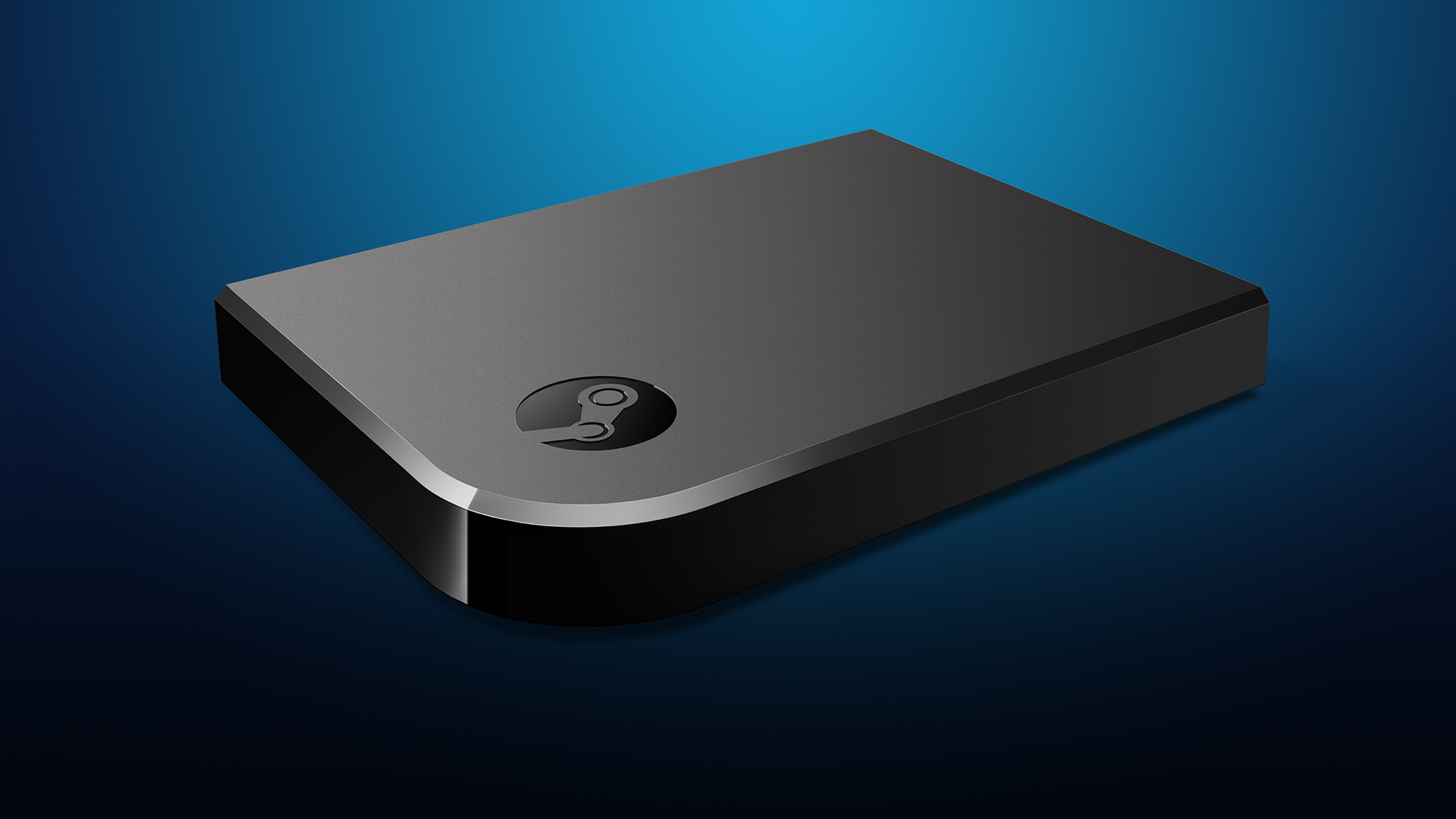
Video game streaming hasn’t really been a big option until the last couple of years, thanks to Steam. In-home streaming was possible for other computers, as this allowed computers or laptops that weren’t all that powerful to stream from a computer that was. This was great for families but didn’t have much practical use for anyone else. Now, thanks to Steam Link, anyone can stream their PC games right to their TV, but it isn’t without issues.
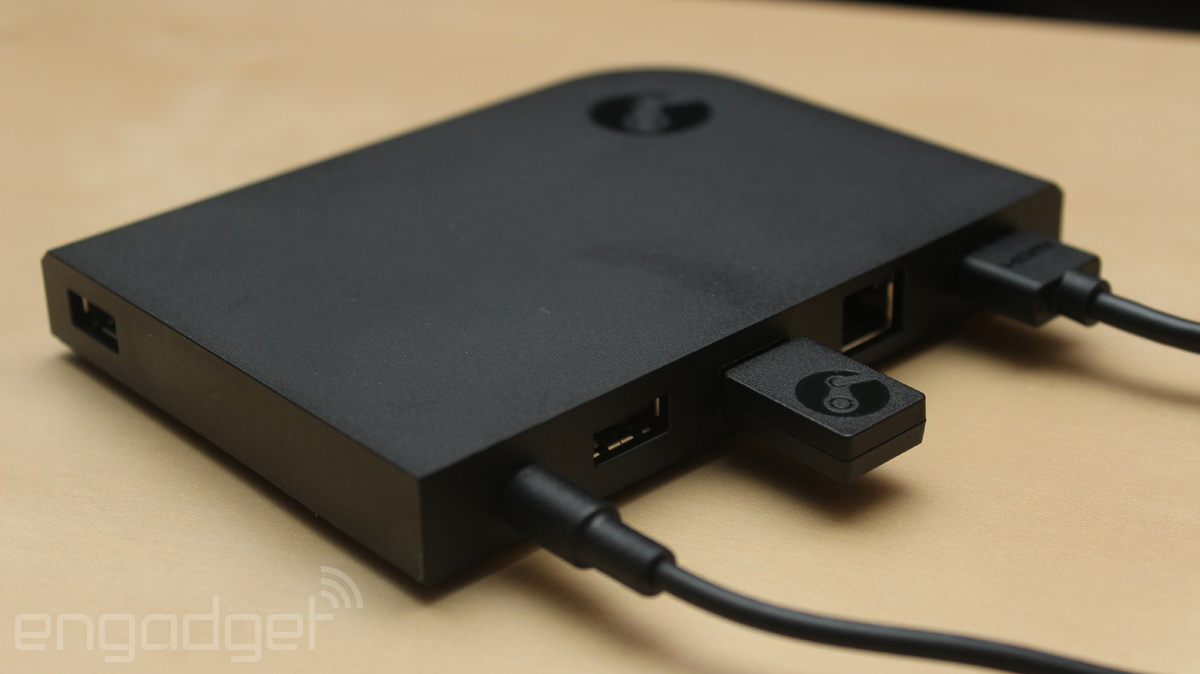
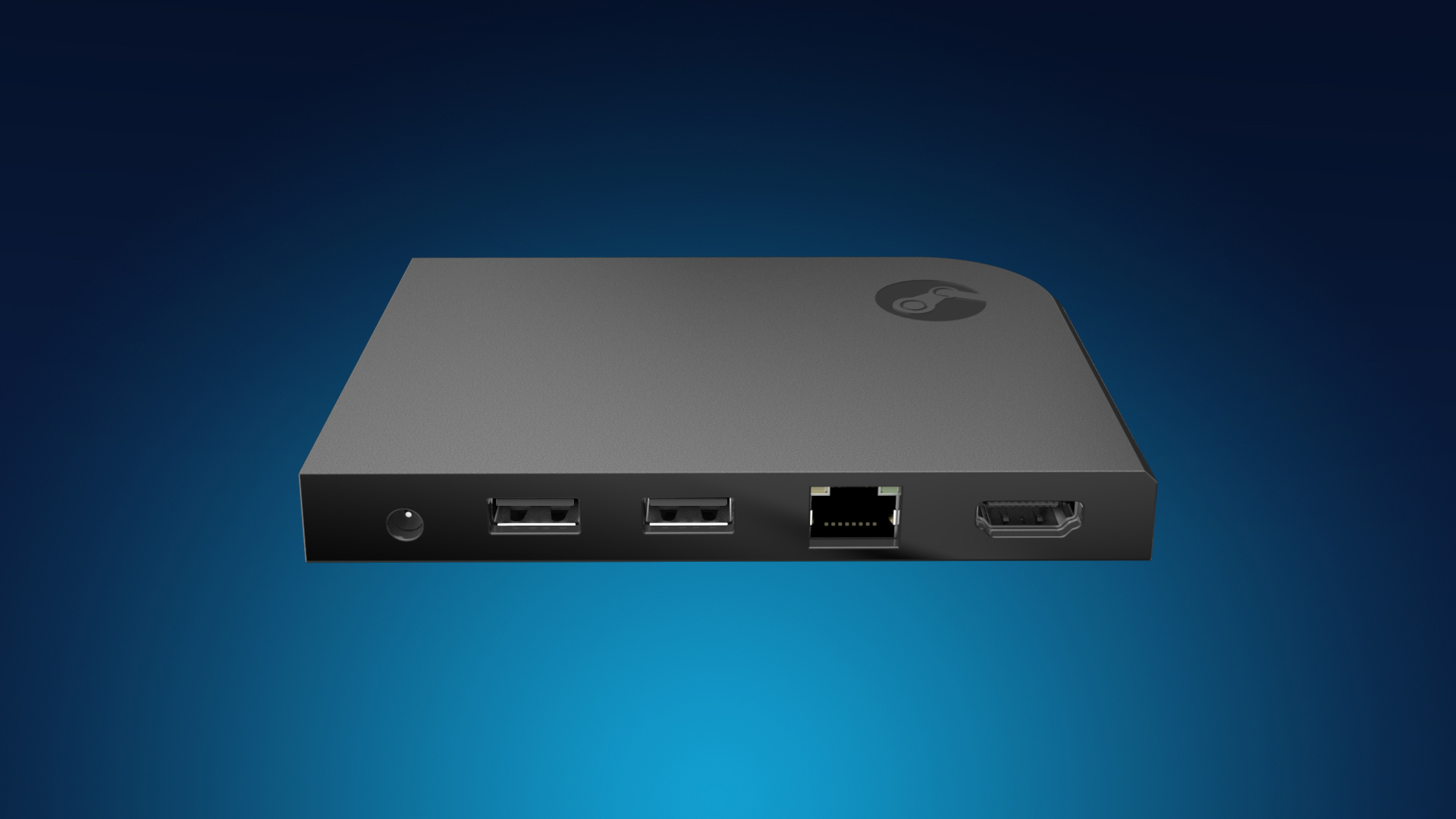
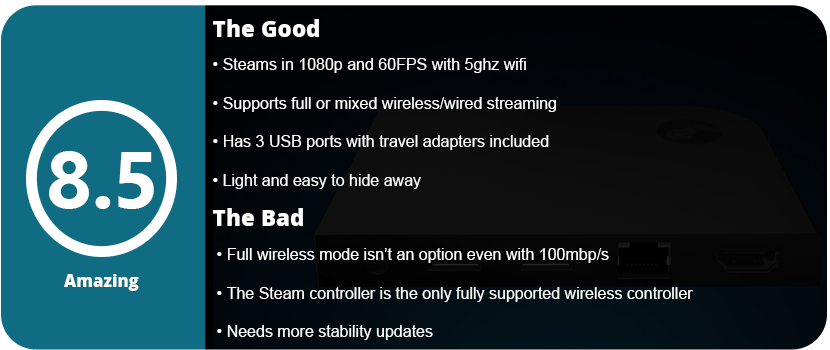
The Steam Link is a little confusing to set up at first. There’s a wired and wireless option, but the quick guide (the only instructions in the box) says that the PC should be connected through Ethernet to the router and then through Ethernet to the Link box. You don’t HAVE to have everything set up wired, but it can all be wireless as well. This requires an extremely fast internet speed, a 5GHz router, and a modern modem/router setup. Even then, you will experience latency issues. The box includes power adapters for different parts of the world, which is, I guess, good if you travel a lot; otherwise, it won’t matter. A 6′ Ethernet and HDMI cable are also included, which is a nice plus. Once I had everything set up, the Steam Link just kind of turned on; there’s no on or off switch. I then realized I needed a controller, so I used a wired Xbox One controller, but I realized I needed a longer USB cable, so I had to use a USB extension cord. Finally, I was ready to play.
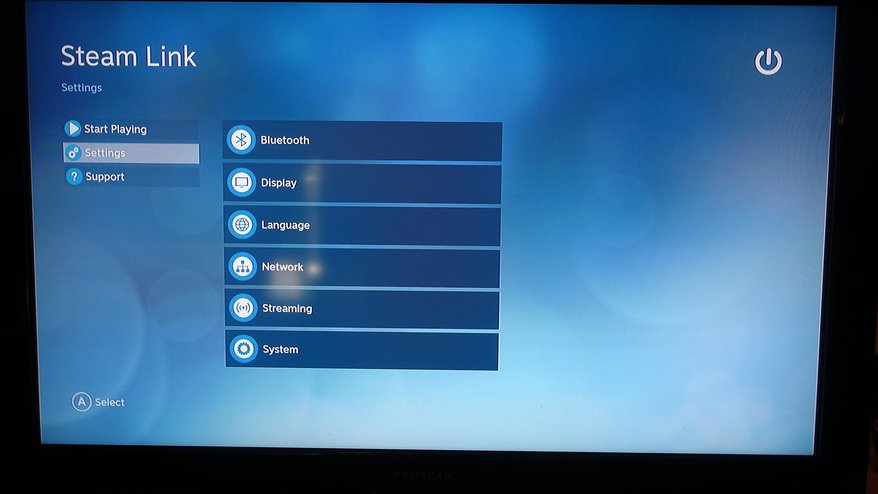
The software setup was pretty quick; the Steam Link had a software update, and after about 5 minutes, I was ready to go. I set up the Steam Link through WiFi via a 5 GHz connection and 100 mbit/s. Steam on my computer launched in Big Picture Mode, and I set the streaming quality to “Beautiful.” I then launched Fallout 4 and had my first issue. Unless you have a Bluetooth keyboard and mouse and/or a Steam Controller, there is no mouse emulation. I had to walk over to my computer and press play from the game launcher before it would boot. That was really annoying.
After playing the game for about 10 minutes, I noticed there wasn’t any video latency but only audio latency. There were pops and crackles in the audio, and it would cut in and out a lot. Every so often, the picture would compress a bit, and the whole picture would look pixelated. This wasn’t going to be feasible, so I ran an Ethernet cable from my router, under my rug, and up to the entertainment center, and then the audio cutouts stopped. However, the stream from my PC to the router was still wireless, but that didn’t seem to be an issue. I’m sure a software update could fix the latency for wireless streaming on the actual Link box.
Using Steam itself was a breeze in Big Picture Mode; it felt like a highly streamlined console UI (in fact, better than Sony, Nintendo, and Microsoft have ever come up with), and I could easily access the store, friends chat, and my library without a fuss. Another plus is being able to access your own music and various other Steam features. This is actually the best way to get a Steam machine experience without actually having to buy one.
In the end, the Steam Link is a great buy, but you must have the right setup before bothering. Have a wired setup, or make sure you have a 5 GHz router and at least a 100 Mbit/s connection before even thinking about wireless streaming. A Steam Controller is the best way to go here, as it will connect to the actual Steam Link box directly; otherwise, your only other wireless controller option is the Xbox 360 controller with the wireless adapter. Once the Xbox One wireless adapter releases, it will be much easier, and we need some more stability updates from Valve before this is seen in everyone’s living room. For $50, you don’t really have much to lose here.
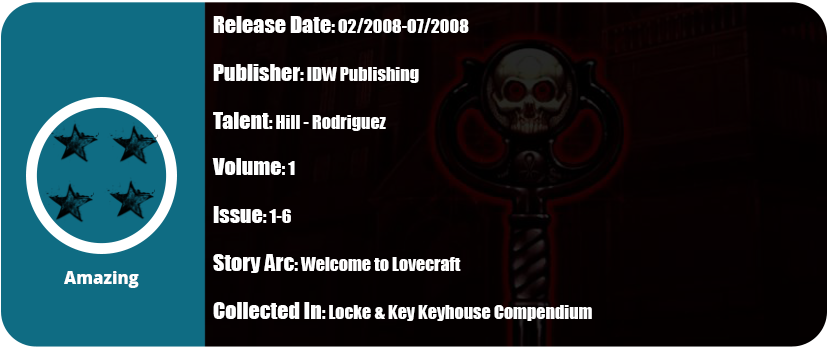
Locke & Key was a fantastic murder mystery and a game of cat and mouse. Never had that scenario been so satisfying in a comic. Every character was memorable, and each panel actually meant something that moved the story forward. I have to give the series credit for this, as it’s one of the fastest-moving comics I have ever read.
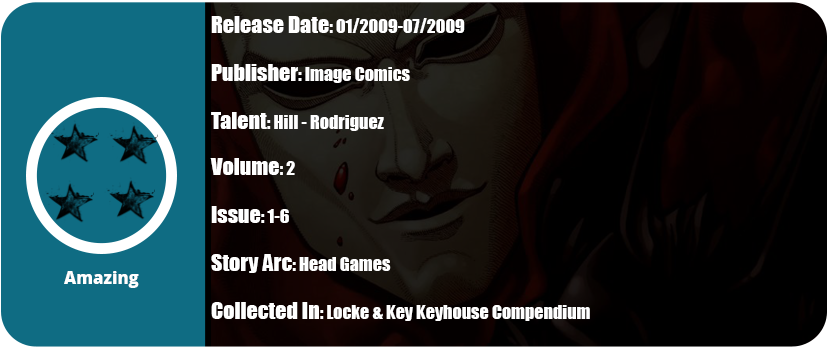
Head Games is all about finding another key, the Lockehouse. This one allows the user to open their head, take out memories, and put new ones in. It’s a very strange concept, one that is completely unbelievable, but in the world of Locke & Key, it is. The main villain, Dodge, is still trying to keep all his murders a mystery, and we finally know his ultimate goal, to open the black door, but why and what’s inside are never revealed in these chapters.
There are more murders, the Locke family goes through more turmoil and strife, and the series continues to be a wonderful page flipper. The best thing about Head Games is Dodge’s ability to trick everybody and hide all his schemes when they’re all right under everyone’s nose. It’s hard to explain all the minor details that make this series so addictive, but I will say that Head Games could have been made better if the plot advanced just a tad more and didn’t feel so much like the first series; it could have been perfect.
Another one of my favorite murder mystery series is Severed. This comic has extreme suspense and keeps a carrot dangling in front of you the whole way. The story is told by the main character, who is much older. We see the ending and get caught up in the present, which is a great way to add mystery. A man tells a story about how he lost his arm. He receives a letter in the mail, and it brings back memories of an enemy who haunted him and nearly ruined his childhood. The boy is a fiddler who wants to meet up with his father in Chicago to play with him at concerts. His mother forbids it; however, he runs away and hitches on a train.
Our main protagonist runs into many problems but befriends a girl named Sam, who disguises herself as a boy to keep pervs away from her. They make it through thick and thin, but the murder part comes in as a strange cannibalistic man with razor-sharp teeth (this is never explained; nothing supernatural here; maybe he sharpened them?). and he loves stalking children. He convinces the children to let him help them get back to Mississippi (as his father mysteriously wasn’t in Chicago and went back), only to end up with a twist ending that I won’t spoil.
The suspense is in the fact that this man is disguised as someone who wants to help the children, but the reader knows who he really is. There are several close calls and scenes that lead you to think he’s about to kill the children when the suspense is released. It keeps the pages turning, and this is key in comics like these. The art style is great and is reminiscent of 1940’s industrial America, which is great to look at.
The comic is sinister, sick, twisted, or any other word that can describe a cannibalistic murderer who stalks children. The series closes with a great finale, and I felt like there was a balanced beginning, middle, and end. The sensitive subject matter makes this a very raw and real comic that can actually happen even to this day. It’s an eye-opener and something that will keep you thinking about it all day long.
Murder mysteries are great for comics, as they feel like movies are still playing out before you. Locke & Key is a reverse murder mystery, as we know who the killer is from the very beginning, and the family knows and is trying to run away from him. A dysfunctional family living in Southern California is the victim of their father being viciously murdered by two mentally ill teens. What the oldest son, Tyler, goes through, as well as his younger brother and sister, is heartbreaking.
We follow the murderer, who ends up in high-security juvie and ends up escaping via supernatural means. The youngest brother in the family, Bode, discovers he can rip his soul from his body through a magical door and turn into a ghost. His family won’t believe him; in fact, every family doesn’t believe each other about anything, and this leads to some tragic deaths and a lot of events that could have been prevented. Seeing this family tear itself apart is frustrating in a satisfying way; it keeps you on the edge.
The story has a satisfying ending with a perfect cliffhanger that opens up an entirely new chapter and can potentially expand the story (which it did with later series), but my favorite part about this comic was the gore and graphic violence as well as the pure insanity of the murderer and his ruthless killings. The comic is a serious page-turner and is perfectly paced with an excellent crescendo.
Overall, Locke & Key is a wonderful horror comic about the supernatural, a being that we don’t ever get to know more about until later in the series, and real-life mortality. A family that clearly loves each other but can’t trust each other worth a dime just makes this comic horrible and wonderful all at the same time.
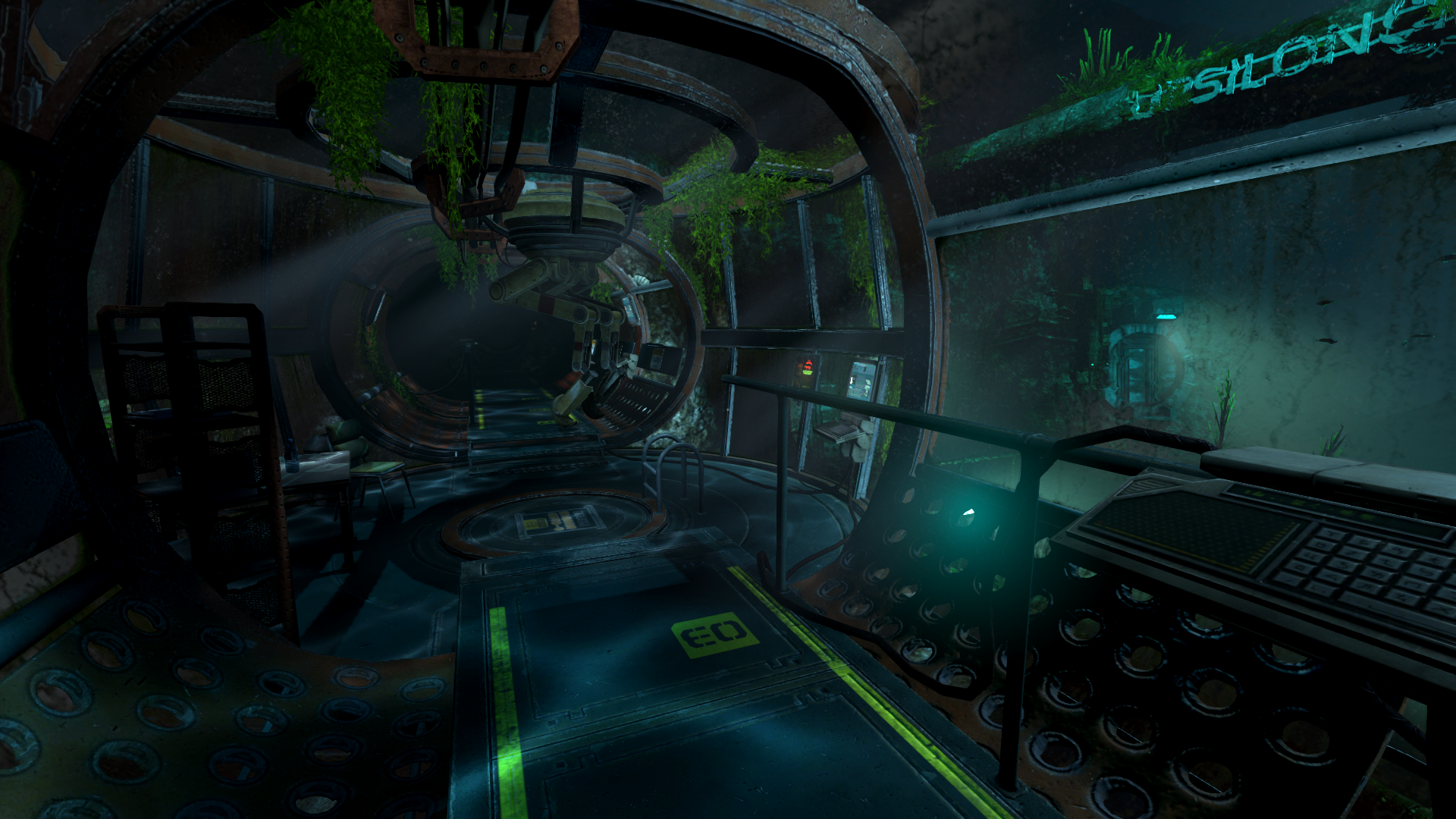
Have you ever wondered what would happen if humanity was on the brink of extinction? I really mean it too, not just in a cheesy sci-fi movie way. Soma makes you truly and honestly think about this, and it scares the crap out of me. Right up front, I want to say that Soma is one of the most original stories I have seen in a game in a very long time. The story takes a while to understand what’s going on, but once you do understand, you’re in for quite a ride.
You play as a man named Simon who is fighting brain cancer. You go to a doctor’s visit and sit inside a chair. One moment you think you’re getting scanned, and then you wake up in a mysterious lab wondering what’s going on. Immediately, the plot and timeline continue on around you while you’re catching up. It really makes you feel like you’re being dropped into the middle of a shitstorm. The premise of the story is that a meteor wiped out nearly all of humanity (which is a real and possible reality), and there is a system called the ARK that is to preserve humanity digitally. Now the story makes you think the ARK is several different things and works in different ways. The story is so well told that you actually organically understand everything exactly as Simon is understanding it; it’s quite unique and ingenious.
The game is made by Frictional Games, which made Penumbra and Amnesia: The Dark Descent, so you know what you’re in for: a very scary game. Soma is actually much more intense than those games, and it is scarier. The graphics engine has been pumped up quite a bit; while not state-of-the art it looks way better than Frictional’s previous games, and it is still quite beautiful artistically. Your goal is to solve simple puzzles in some areas while also discovering more of the story through audio and text files while you explore rooms. The most intense part of the game is when these WAU creatures are wandering and shuffling around. You have to hide and sneak around them, which is some of the scariest things I have done in gaming in quite a while. The sounds help sell the scare factor, and I really felt claustrophobic through the whole game. Running around in derelict underwater labs isn’t a walk in the park.
The game is broken up into areas or lab sites, and the whole thing takes place underwater. As you go further and further into the ocean floor, things get crazier and crazier. The WAU is an organic computer system that we built to help sustain life underwater, but it’s now taking over and has killed off nearly every remaining human left on the research site. The way this place is built is awe-inspiring and really makes you feel puny, thanks to the way the story is told. You literally go through every step to launch this ARK into space, and you have a computer AI companion that makes you feel even more alone. The various story pieces that come together in the game are fantastic and very memorable; I can’t say much more without major spoilers. I will say that you get moral choices in the game, but in the end, they mean nothing, and that’s actually the way you want it. The way the story is told, there is no way to find out what happened with your choices, and it makes it feel that much more real and scary.
I did run into a few issues in the game, like some of the sneaking areas were really difficult without a walkthrough because you need to keep your flashlight off and you’re basically feeling around in the dark. This made certain areas extremely frustrating and caused multiple deaths. I also found a few puzzles very vague. If those issues had been fixed, this would be the perfect adventure game, as it has already revolutionized several tired elements. You will look past these issues, thankfully, due to the story being so incredibly amazing that you will want to go on.
The atmosphere itself is just very foreboding; all you want to do is find another living person, but Simon’s luck is just really bad. Frictional Games forgoes the cheesy, predictable quirks of gaming stories and makes you press on and feel alone and hopeless, which is fantastic. Walking around in labs and then stepping outside into the vast ocean is a great experience and makes you realize just how screwed you are. You can still be attacked outside, and you must follow the procedures and safety measures set up throughout the underwater city, or you will die. The fact that Simon relies so much on his AI companion just reminds you how fragile this whole mission could be and that humanity could be lost forever so easily.
With that said, Soma is one of the greatest gaming stories ever told, and I seriously mean that. It’s just too bad this is an indie game and won’t get the attention it deserves. The game has a few flaws, like slightly dated visuals, difficulty spikes, and some vague puzzles, but you won’t care and will want to press on thanks to the amazing atmosphere that nearly makes you feel like it’s happening to you.
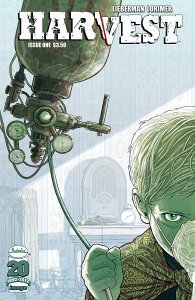
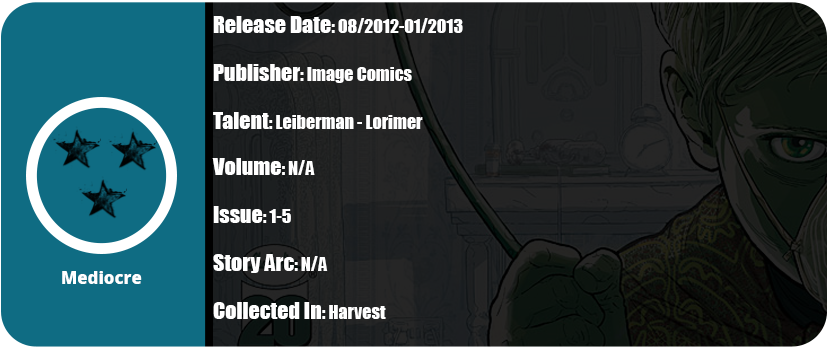
There have been many stories about organ harvesting, as it is a huge market and is also highly illegal. What I like about Harvest is not just the idea of organ harvesting; the comic also explains how it works business-wise, which is really interesting to me. The comic follows a typical catch-up type story; we start out at the end of the story, and it goes back and plays everything forward. The characters are quite striking and memorable, especially Ben Drane, who loses his medical license and falls into near homelessness. The comic is only five issues long, so it can’t mess around with a lot of backstories, and the desperation of all the characters really hits home.
The art style is also really nice and shows a dark, dingy atmosphere that suits working in the black market for mafia bosses. One thing I would have liked to see more of is more gore and up-close surgeries. There are a few, but they are only one or two panels long, and they could have really driven the suspense meter up with more. What we do have is a fast-paced comic that is perfectly balanced and has a nice beginning, middle, and end that is quite satisfying. Of course, there’s a cliffhanger ending, or is it? We never really know, but there’s also one aspect of this comic that never gets explained. Ben sees a little boy and girl a lot and is obviously hallucinating them, but are they him as a kid? Is the girl his sister? We never know, and it’s never explained, but maybe that’s a good thing.
Overall, Harvest is a great insight into the black market of organ sales, but a little more gore could have helped this comic a long way. What we have here is nothing really memorable, but something that makes you think at the end and even makes you appreciate your own life a little more.
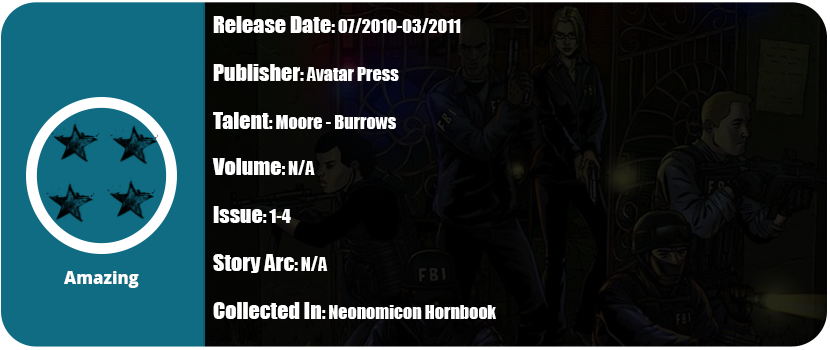
H.P. Lovecraft is an author who has inspired millions, from video games to actual events. Neonomicon takes a strange twist on the occult aspect of H.P. Lovecraft’s Cthulhu mythos and really tries to make you think that it could be possible. You follow a team of FBI officers who are trying to bust a cult that is known for murdering multiple people. The comic takes a Silence of the Lambs approach, as our main female character gets leads from one of the cult members in a high-security prison. Our female lead is a former sex addict, which plays a big part in the comic.
Our lead, Brears, and her partner, Lamper, wind up finding this cult’s headquarters at a sex shop that’s fronting as a board game shop. They get inside the cult thanks to Brear’s knowledge of the Cthulhu mythos, but that’s where things get weird and crazy. This is a sex cult, and yes, there’s tons of nudity and sex in this comic. However, it plays a huge role in the ending of the series. All these weird followers are trying to have multiple orgies, as it attracts a Dagon monster who actually has sex with all of these people. It’s very strange and almost makes this comic erotica.
Without spoiling too much, the creature rapes Brears multiple times, and she isn’t quite sure if she enjoys it because of her prior sex addiction. One moment, you think she just might enjoy it after the initial fright from the creature has passed. She starts to empathize with it and actually care for it, which is rather strange. This ends up turning your feelings towards the creature as well. The art style complements all this, as the entire atmosphere is dark and dreary and quite gory in spots.
In the end, Neonomicon is a great twist on the mythos, as it is told that H.P. Lovecraft’s work is actually fact and he actually met these creatures, but no one would believe him. Of course, the ending is quite predictable early on, but this strange, twisted take on something very beloved by fans is quite an adventure and ride. Just take it all with a grain of salt, and be warned of sex, rape, and nudity.
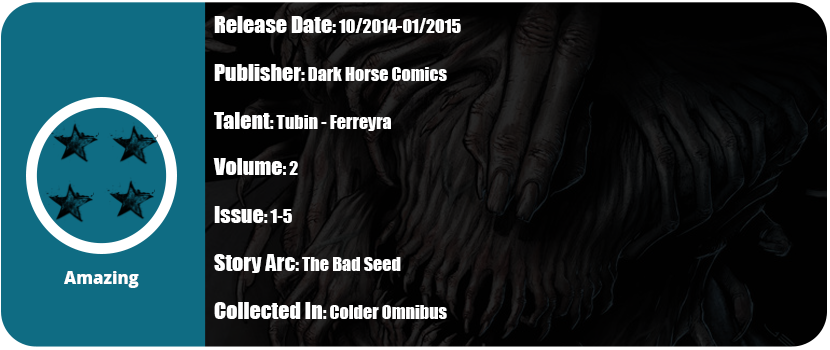
Read my previous review for the original Colder mini-series, as this one picks up right where that one left off. We find Declan and his previous caretaker living a happy life when a new player comes into the scene. A more sinister man who is harvesting the fingers of the insane—yes, fingers. He runs around slicing off people’s fingers and sticking them in soil pots. Swivel, this new bad guy, is actually a much better villain than Nimble Jack, as he is just calmer and less likely to relate to another villain. The monsters he creates are all finger monsters, which are both extremely disturbing and awesome at the same time.
The plot is a little less meaty than in the last series, and we don’t find out why Swivel wants all these fingers until the last issue. He just repeats that he can’t harvest or grow crops because of Declan, but it eventually all comes together to a nice conclusion. The series doesn’t explore the insanity aspect as much as before, and they play it off as we already know and understand, so it ends up taking a back seat, which is fine in the context of the comic.
Colder is one of the few mini-series I have read that has a solid beginning, middle, and end; most series can’t pull this off well. Colder is a great weekend read and something you will talk about with friends and fellow comic lovers for a while. The monster design and overall use of the human psyche are what make it stick with you. It’s all about the villains and bad guys in Colder that make the series memorable.
Overall, The Bad Seed is an excellent sequel to an already excellent series. Any horror fan should start with the original series and work their way up; you’re really missing out if you don’t.


























 thebinarymessiah.com
Try multiplayer. A lot of fun !