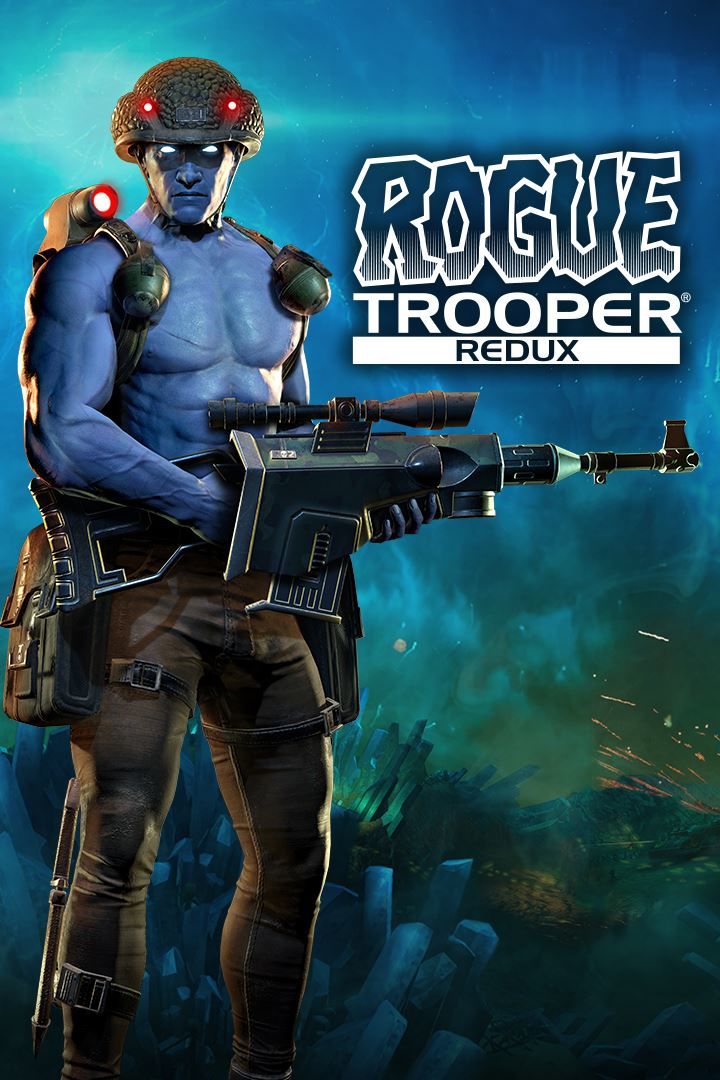
When playing Rogue Trooper, I kept asking myself, “Why?” to everything. Why is there no plot? Why was this game even considered good enough to remaster? Why did this game exist in the first place? It’s not all bad, definitely playable, and has some challenging gameplay, but it could have been so much more, right? Well, meet Rebellion! Famous for some of the most mediocre games in the early to mid-2000s that weren’t horrible but barely passable and very forgettable. I played the original on PC back in 2009, and it wasn’t all that great back then either.
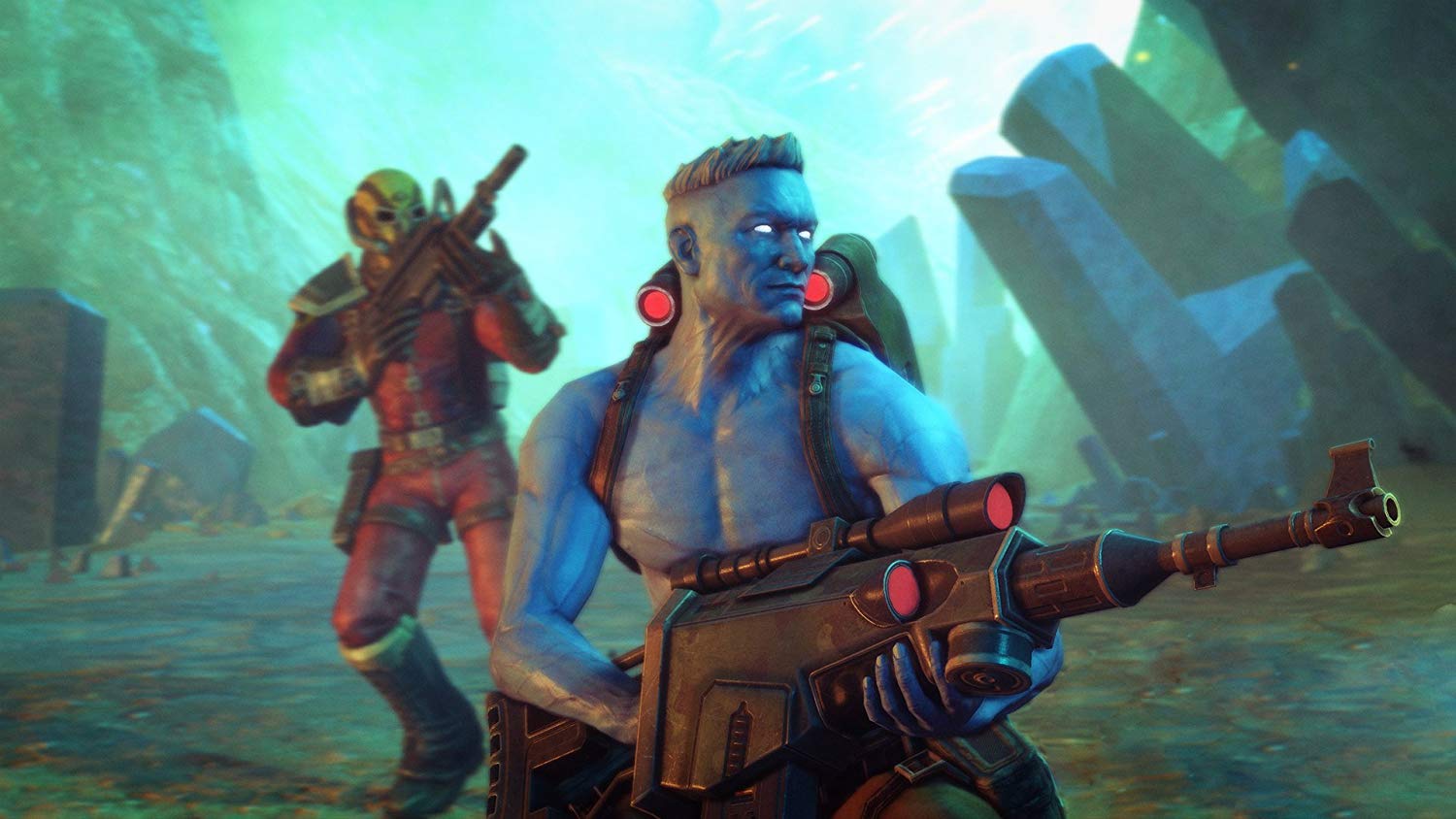
You play as a GI named Rogue (how original), who is a blue alien dude stuck in the middle of a war with a race called the Norts. There’s your story; have a nice day! I’m not kidding at all. This game has more plot holes than a screen door, and it boggles my mind as to why they even bothered. These GIs are immune to every poison known to exist, okay? But why? Then there is a single poison that was found to work, and the Norts want to mass-produce it to wipe out the GIs. Again, why? There are no answers, just lines of dialog that need a lot of backstories to explain what is even going on. The characters are paper-thin, don’t have much screen time, and the voice acting is atrocious. So the only reason to play Rogue Trooper is for the shooting, and that’s average at best.
Rogue has a gun that is “smart,” as well as his backpack and helmet. He installs chips that are cut out of dead comrades, and it gives his equipment an AI. That’s a pretty neat idea, and it’s the only thing in this game that seemed to have been fully fleshed out. Rogue gathers salvage from dead bodies and piles and uses these to craft ammo, new weapons, and upgrades. You don’t pick up any ammo in the game, as you can only craft it. You do have a pistol on hand that has infinite ammo in case you run out, but there’s the constant challenge of keeping your supply up and looting dead bodies. There are a few on-rails levels to mix things up, so the game isn’t boring ever, and the challenge is quite nice as standing out in the open for too long will get you dead and there’s a halfway decent cover system in place.
Rogue can also equip a silencer to his machine gun and sniper rifle, as well as use a decoy and attraction tool, but I never actually used these. The game even has a stealth mechanic in place, but after I got the silencer, I didn’t bother sneaking around, as sniper shots are one-hit kills. You can also place your Gunnar as a turret so it can cover doors that get unlocked, but again, this seemed like a wasted mechanic as the game isn’t quite sure if it wanted to be a tactical stealth game or a run-and-gun shooter. This game is a living, breathing embodiment of early to mid-2000s third-person shooters, and it hasn’t aged very well. Extremely linear level design, awkward animations, barely manageable aiming, and lots of on-rails and scripted events.
At least the game had a marginal graphics update and looks decent enough, but you can still see the age of the game behind the shiny new surface. There’s also a multiplayer mode that is basically pointless since no one is playing this online and never really did, and the entire game can be beaten in just 4 hours. There’s absolutely no reason to go back, either. So I go back to my original question: why? Why should you play a dated 15-year-old game in 2019? Maybe to experience a type of shooter that was incredibly popular at the height of the PS2 era? Maybe you have curious memories of this game and want to relive them. The answer is that you’re not missing out on anything if you skip this, and you don’t gain anything from playing it. Thankfully, it’s dirt cheap, and I can only recommend this to the curious.
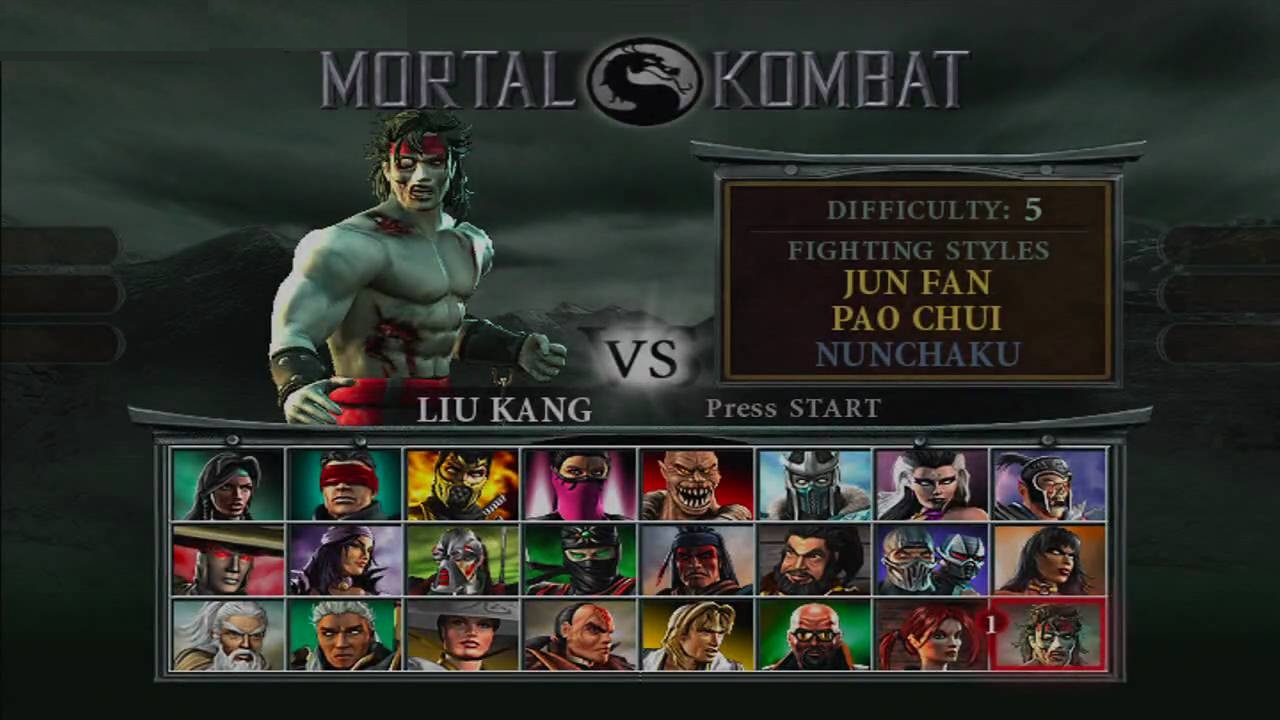
It was the very first game I ever pre-ordered. I have never been more excited about a game in my life. Watching gameplay trailers on a PC from 1997 on a 19″ CRT monitor while I stash away allowance bit by bit to get the Premium Pack for PS2. 2004 was an exciting year for gaming and for Mortal Kombat. With Deadly Alliance receiving mostly positive reviews but a lot of criticism from reviewers, Deception turned everything to 11 and added interactive arenas, more game modes, and online fighting. Yes, the online part was the biggest selling point of Deception.
This is the direct sequel to Deadly Alliance. Quan Chi and Shang Tsung have failed to take over, and Onaga, the Dragon King, has decided to rise from the Outworld and claim everything as his. A man named Shujinko is now the game’s lead (the first of many to come in later games) and must stop the Dragon King and reverse the actions he took during the Konquest mode that helped give Onaga his power.
Let’s talk about Konquest mode first, as most people will dive into it right away. It’s awful and should never have existed. It’s an expansion on Konquest from Deadly Alliance in which Raiden just walks along a path, and each “level” is a training tutorial for all the characters. This is an adventure mode where you get quests, find the treasure for the Krypt, find hidden secrets, and find out the back story to Deception, as well as meet many MK fighters and surprises. It sounds great on paper, right? Well, it’s horribly executed as one of the worst attempts at a free-roaming RPG/adventure hybrid I’ve ever seen. Shujinko runs around in supersonic, fast-forward motion; the realms are void of any life; they are terribly laid out; and the worlds rely on a grid system to figure out where every secret and item is. The problem is that the map is useless with no actual grid on it, so you run around for 10 minutes trying to find D2 or H8 only to realize it’s locked away and you can’t go there until you complete the Konquest.
That’s the main downfall of Konquest. Quests aren’t logged, and the entire game has to be played with a guide. It would take dozens and dozens of hours to figure everything out yourself, as locations to solve quests and even chests are incredibly cryptic or specific. Some chests with Krypt keys only appear on certain days of the month and times, and you would never know without a guide. You can meditate to make time move by faster, but this whole entire game mode is just frustrating, messy, and irritating. Doing the actual main quests is fine, as there’s always a large green pillar of light pointing where to go, but talking to a random character and getting a one-sentence quest saying to find a gem is not how quests should be done.
On top of all this, the world is terribly laid out. They try to force a look at each realm, such as Chaosrealm, which has magic portals that project to you various little floating islands that are “chaotically” made up and don’t make sense. Orderrealm is just a giant circle floating in the sky with “order” in the layout, and it looks nice and dystopian. It’s a little corny with the way the worlds are represented, but it’s kind of cool to finally explore these areas despite there being nothing to do in them. The visuals are also abysmal, as this looks like an early PS2 game that launched, even a little worse than that. Horrendous textures and models, awful voice acting, and laughable animations. It looks like an amateur game developer made this over the weekend.
Outside of Konquest, things are much better when you actually get to fighting. If any game were to use realistic martial arts, it’s Mortal Kombat. This fighting system and this era of games aren’t most people’s favorites. The realism is nice, with some good animations, and each character has two martial arts and a weapon style. You can branch into these styles with long combo strings, but that’s where the issue lies. This realistic, slower fighting style is in contrast to the fast-paced action of the 2D games. The characters look like stiff plastic dolls, and the combat is all about memorized combos. It’s fun, and it works with Mortal Kombat, but it’s also not the best way to play these games. The slower fighting pace means more strategy is involved, and a new breaker system has been added to quickly get out of combos.
Interactive environments are some of the coolest features of Deception, as they are basically fatalities within a stage. There are yellow lines that indicate when a player can get knocked out and take damage to a new tier, and red lines that will kill the player. The arenas are large enough that a game of tug-of-war always ensues, which makes playing tenser, especially online. Do you just knock them into the trap or play with them so you can cause a fatality? Speaking of fatalities, each character has two unique ones; some are great and some are lame. Li Mei, for example, has two fatalities that are just boring. Super punches to the chest, and you explode? Yawn. Kick your head off. I saw it before. Some others are rather runny and unique, but there are also Hara Kiris that allow the loser to do a fatality on themselves, taking the glory away from the opponent. Whoever inputs their code first gets to have fun.
Outside of combat, you can play Puzzle Kombat, which is just Street Fighter Puzzle with MK characters. At the end of each round, there is a fatality unique to the player, but getting your power level up means you can perform a special move that each character has. It can be played online as well, is super addicting, and can be a game on its own. The last mode is Chess Kombat, which is one of the most unique modes to ever grace a fighting game. Just like a game of chess, you can pick which character is what piece, and you play chess, but instead of just knocking a piece over, you fight it out MK style. Each piece gets a certain amount of health, so pawns get the least amount of health. It’s a great twist that adds more skill to the game and can also be played online. It’s a ton of fun, and I hope this mode returns to future games.
Besides the Krypt, where you can unlock various stuff for fans like promo videos, behind-the-scenes art, and various goodies, there’s not much else. Online play is incredibly smooth, with a full lobby where you can talk to other players, challenge players, and have a win/loss ratio next to your name. I never had any connection drops and playing online extends the longevity of the game tenfold.
I also want to talk about the new characters. Since MK4, Midway has had trouble adding interesting new characters, and that trend continues for the third time. Dairou and Havik are just boring, awful characters that don’t have any personality or soul. They feel forced, and I’d rather have a classic character put in than these two.
Overall, MK: Deception is a fantastic fighting game that is only hampered by slower combat and a horrible Konquest mode that must be played to unlock half the game’s roster and extra costumes. Puzzle and Chess Kombat are excellent modes that add dozens of hours of fun, and online play is always welcome.
Note: As of May 31, 2014, you can no longer play Deception online due to GameSpy servers being shut down. Even then, not a single person played this online game between 2006 and 2007. As Armageddon and other fighters came out, Deception’s user base quickly fell after the first 18 months and never went back up. Get a buddy to play next to you instead.
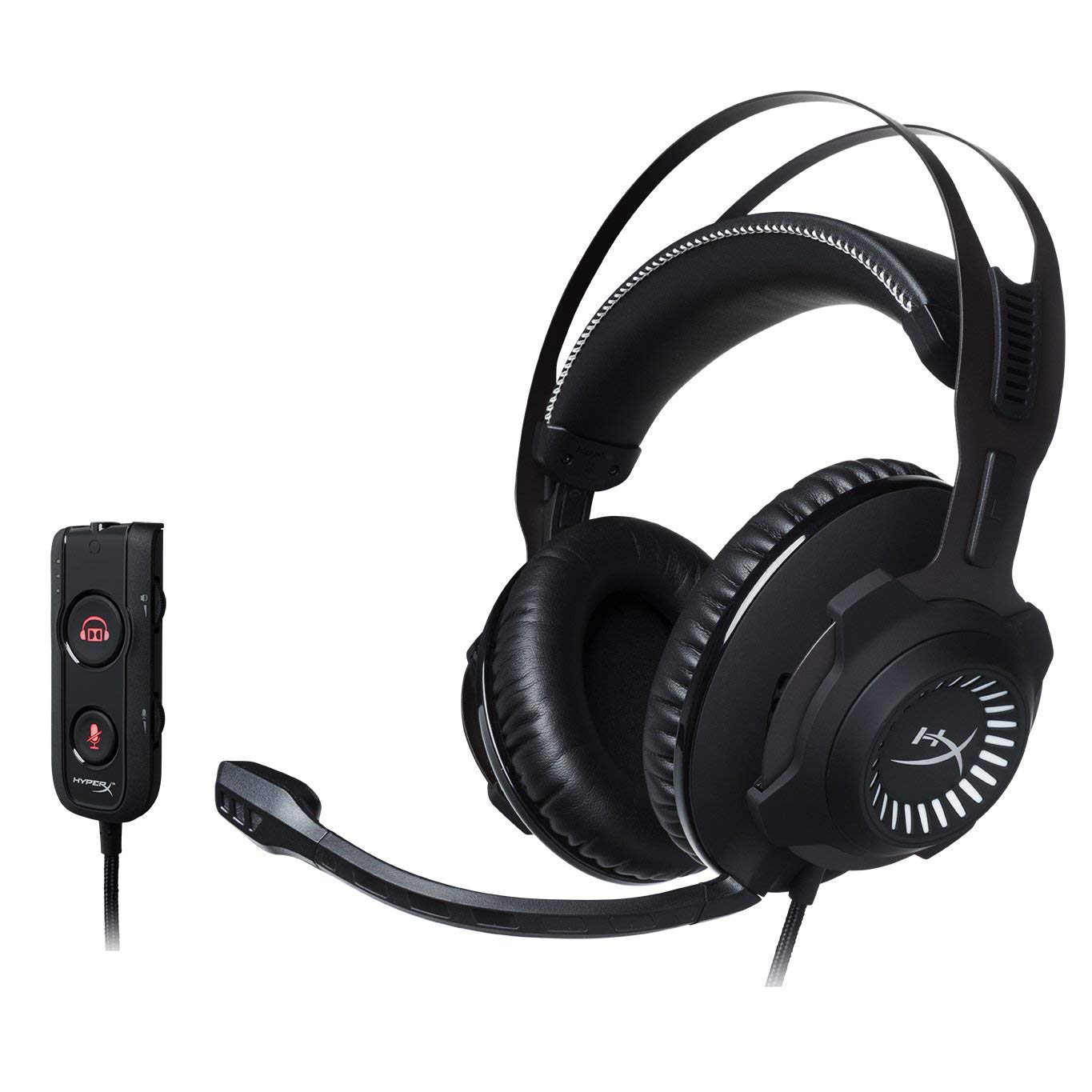
I’m not really big on gaming headsets, as I don’t need to use them often as I have my own place, but when I do, I want something amazing—something that can deliver the quality and power of large speakers inside some cans. After having the Razer Man O’ War for about 18 months, I switched over to some wired headphones and moved brands. Why Kingston? Well, the reviews are great, and it’s plug and play, which may sound iffy to some, but it works out well in the end.
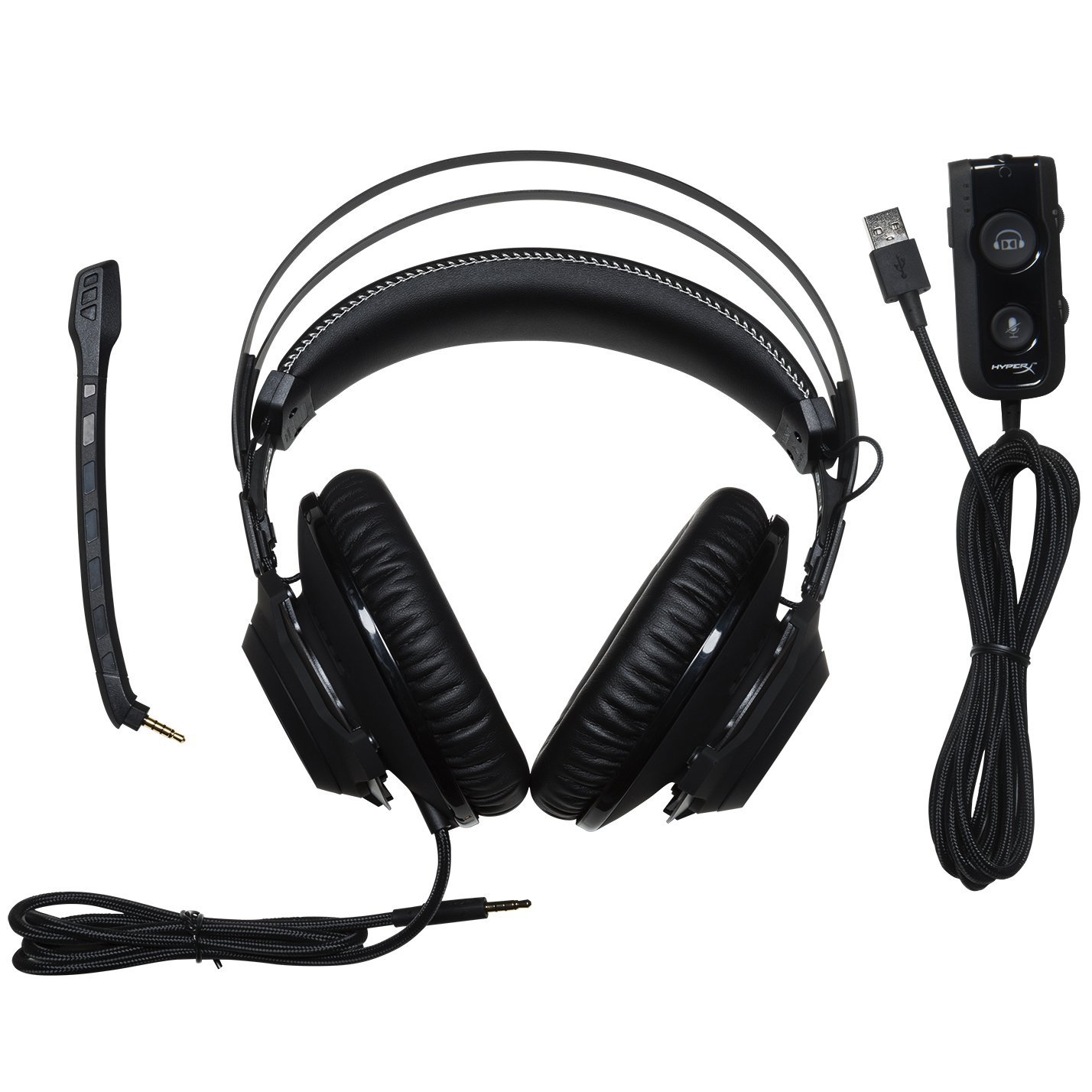
Some people want fancy software, RGB lighting, and crazy controls, but Kingston went a different route here. Most PC headsets are not compatible with a console, but these are thanks to a proprietary USB 7.1 audio card built into the cable with Dolby. Now the downside is that these are only stereo headphones with the 3.5mm jack adapter, but they still sound amazing. The USB port has a three-part equalizer for flat, bass boost, and vocal. For gaming and movies, you can activate the Dolby 7.1 surround sound with just a button, allowing the headphones to control everything without the need for any software.
The mic is completely removable, which is a nice feature, and it works just as you would expect. There’s a button to mute the mic on the control box, but for consoles, you will need to remove it completely to mute it through the hardware. Outside of these features, the headset itself is extremely comfortable and feels like a cloud sitting on your head. Instead of adjustable bands, we get a tension-sensitive soft band under a hard outer band. This means the band adjusts to your head shape easily without any fiddling. The ear cups are super soft, and no sound escapes. Since these are wired headphones, I had to figure out where to clip the control box, which wound up going on my keyboard cable to keep it nearby so I could access the controls easily. The cord behind that is rather long, which is needed for console use.
Here’s the big question: How does 7.1 audio sound in games and movies? Well, it works surprisingly well. The built-in sound card does a good job decoding the audio and making it sound incredible. I could hear gunshots behind me, people talking next to me, and explosions that sounded epic and amazing. Games with 7.1 options sound even better and more realistic, but sadly, there aren’t many games with this built-in.
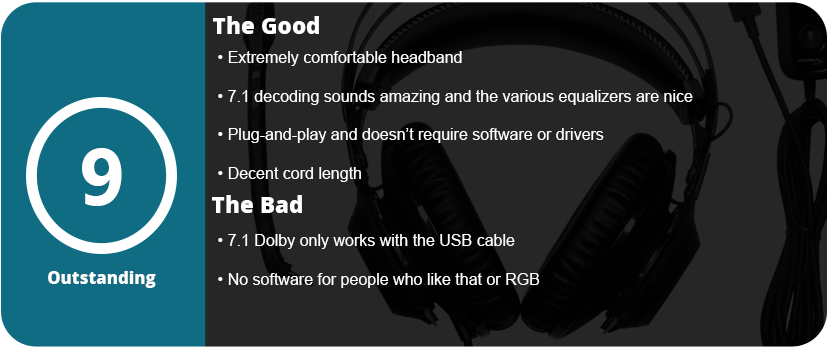
With that said, the HyperX Revolver S is a solid wired headset without the flash and fancy software accompanying most headsets these days. They are extremely comfortable, give an amazing sound output that is crisp and clear, and also have great 7.1 audio capabilities. There are a few minor gripes, like the control box being in a weird spot on the cable, only three equalizer settings, and missing software for those who like to fine-tune, but what’s here works surprisingly well straight out of the box and is plug-and-play. This is a versatile headset for any gamer, but sadly, the 7.1 only works through USB, and the 3.5mm jack is strictly stereo. For the price point, you get bang for your buck that you won’t get with most other headsets.
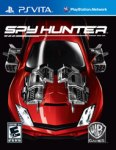
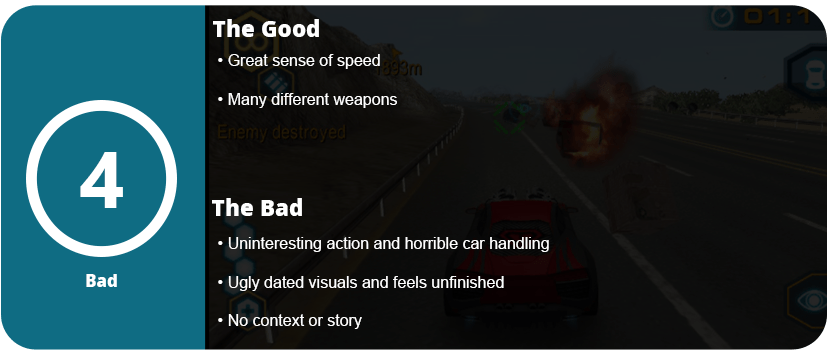
While I’ve played the arcade original, there were many Spy Hunter games released when I grew up, and all of them were terrible. This version is no exception, as somehow it doesn’t translate to 3D very well.
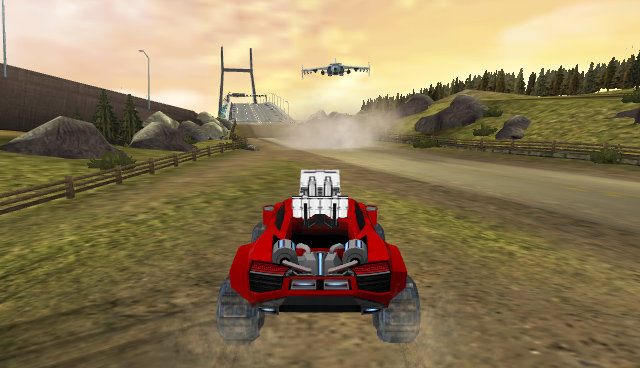
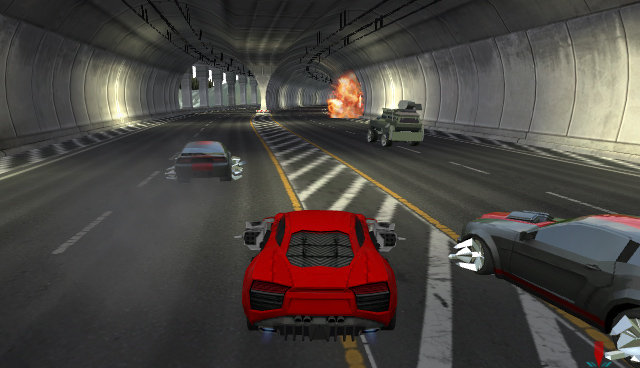
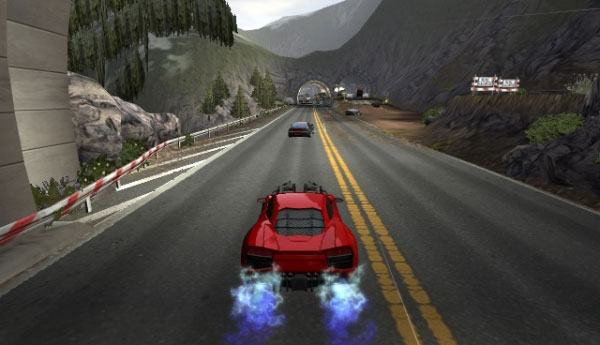
With the power of the Vita and being a launch title, I figured Spy Hunter could finally be done right, but boy was I wrong. The game starts out by taking a photo of you for your license and throwing you out onto the street with four weapons. Each weapon is assigned to a face button, and I started out with a flashbang, flamethrower, machine gun, and shocker. As I drove along, I was ambushed by generic-looking cars that rammed me, some that dumped explosive barrels, and some that had machine guns. The action itself was quite dull, with little going for it as the game already looked extremely ugly and boring.
Even with new upgrades and morphing into a boat, things did not get any more interesting. Driving the car feels like sliding on ice, and crashes are uninteresting. For a game that is supposed to be so high-octane, it doesn’t feel that way at all. The story is also pointless and pretty stupid, as there are no established characters or reasons as to why you are doing anything in the game.
If only the game looked better and felt more polished, I feel it could have been something. As it is, this feels like a beta or an incomplete game. Physics is awful; the weapons seem cool, but the results are uninteresting, and then when you repeat this a dozen times, it’s enough to make your brain melt. I can’t recommend this game even to hardcore racing or action fans. This isn’t even worth a bargain bin purchase because there are other bargain bin games worth buying instead.
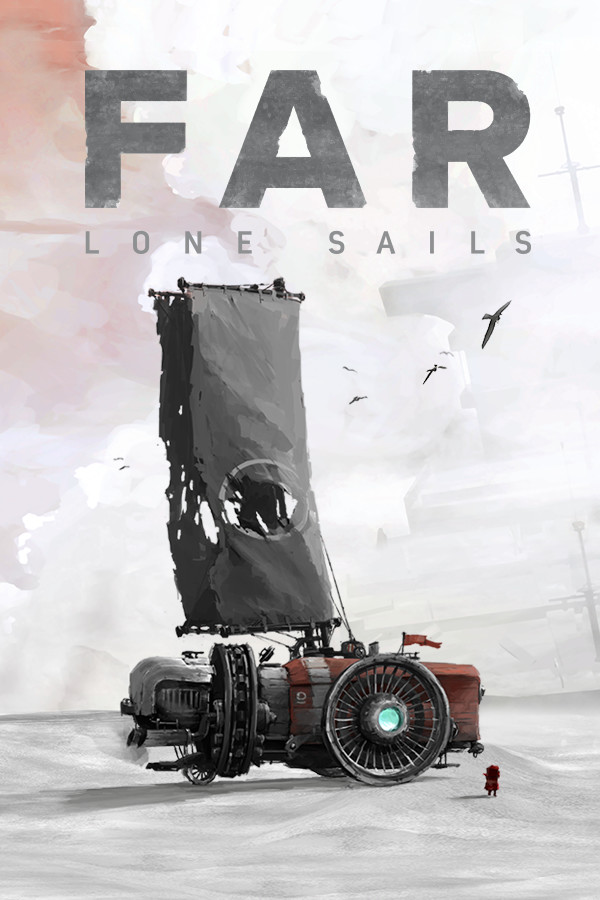
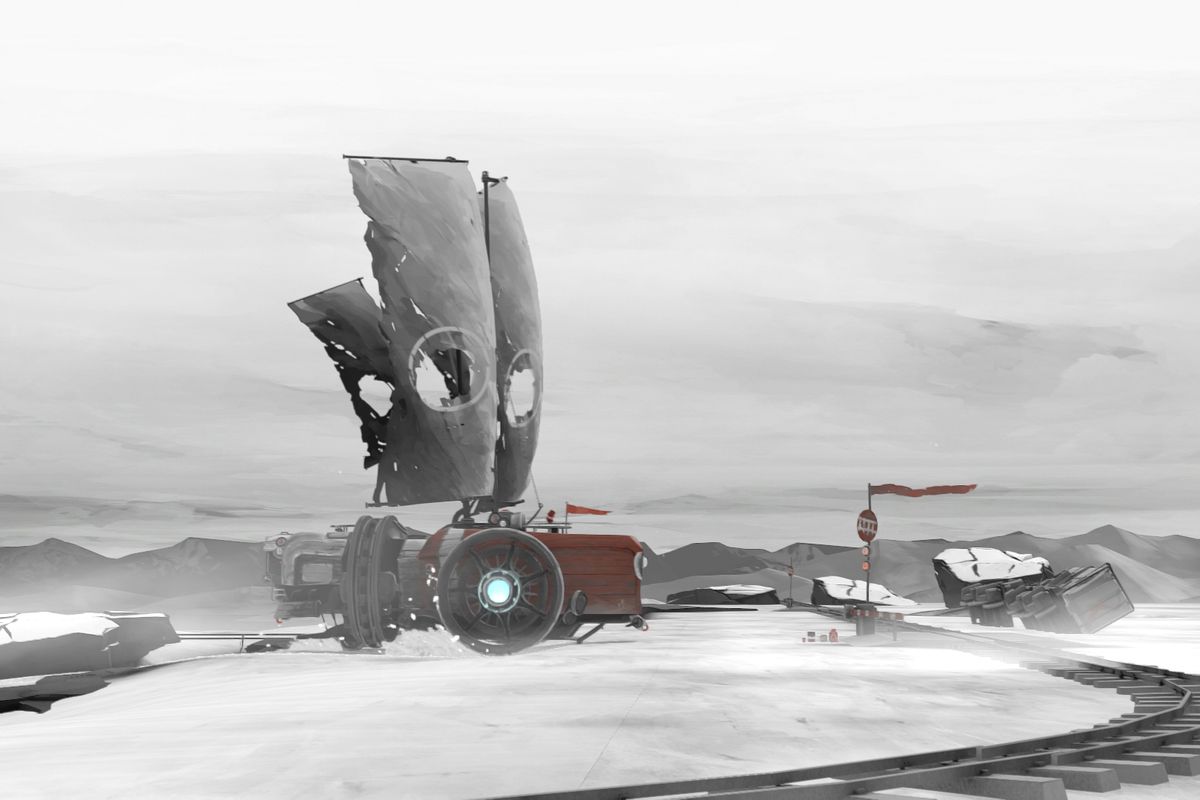
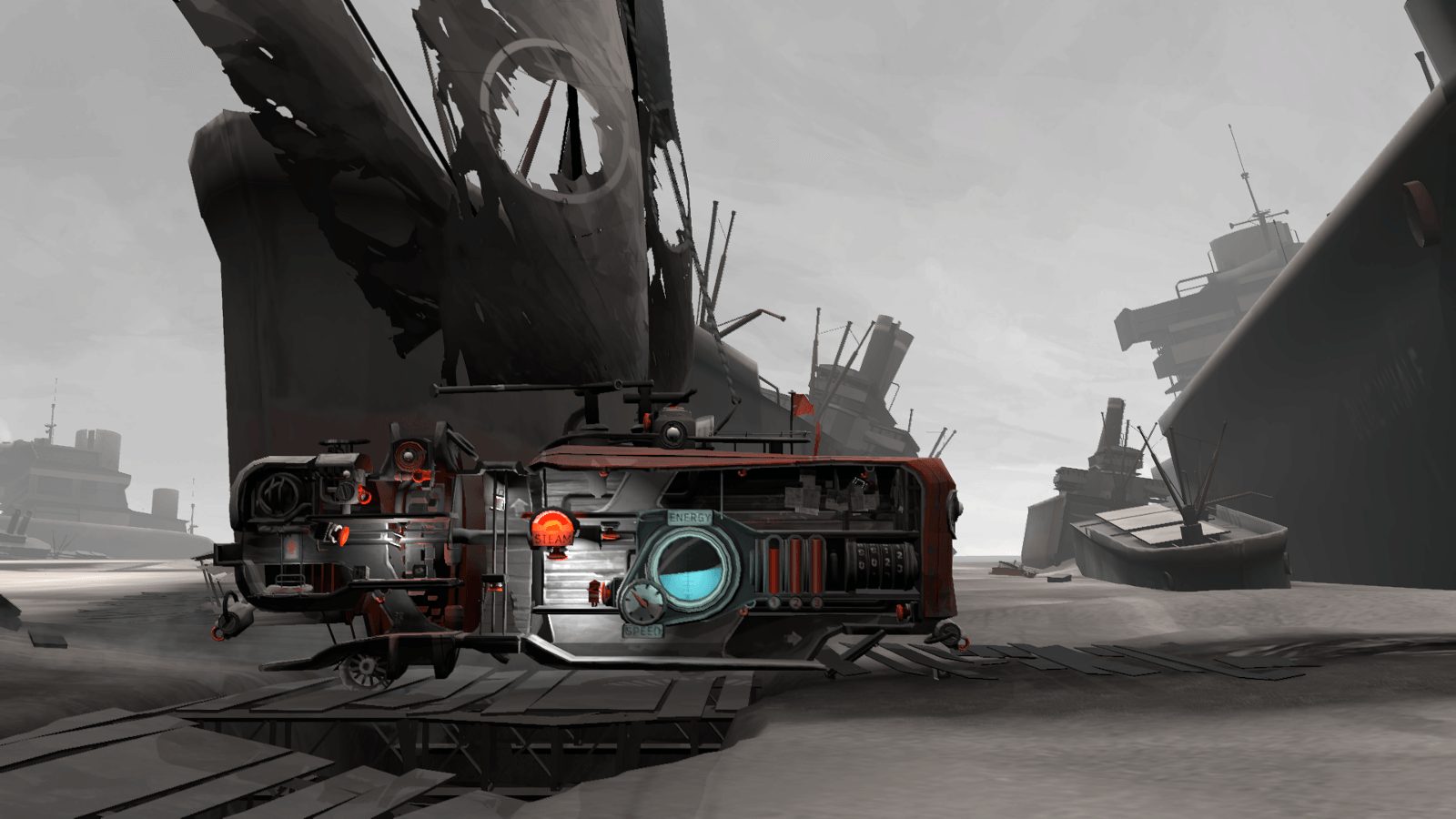
A mysterious girl in a red cloak sets sail on a strange SteamPunk-inspired machine to always move to the right. It’s never clear what your purpose is or why you’re going on this short two-hour journey, but you’re doing it, and it’s quite interesting.
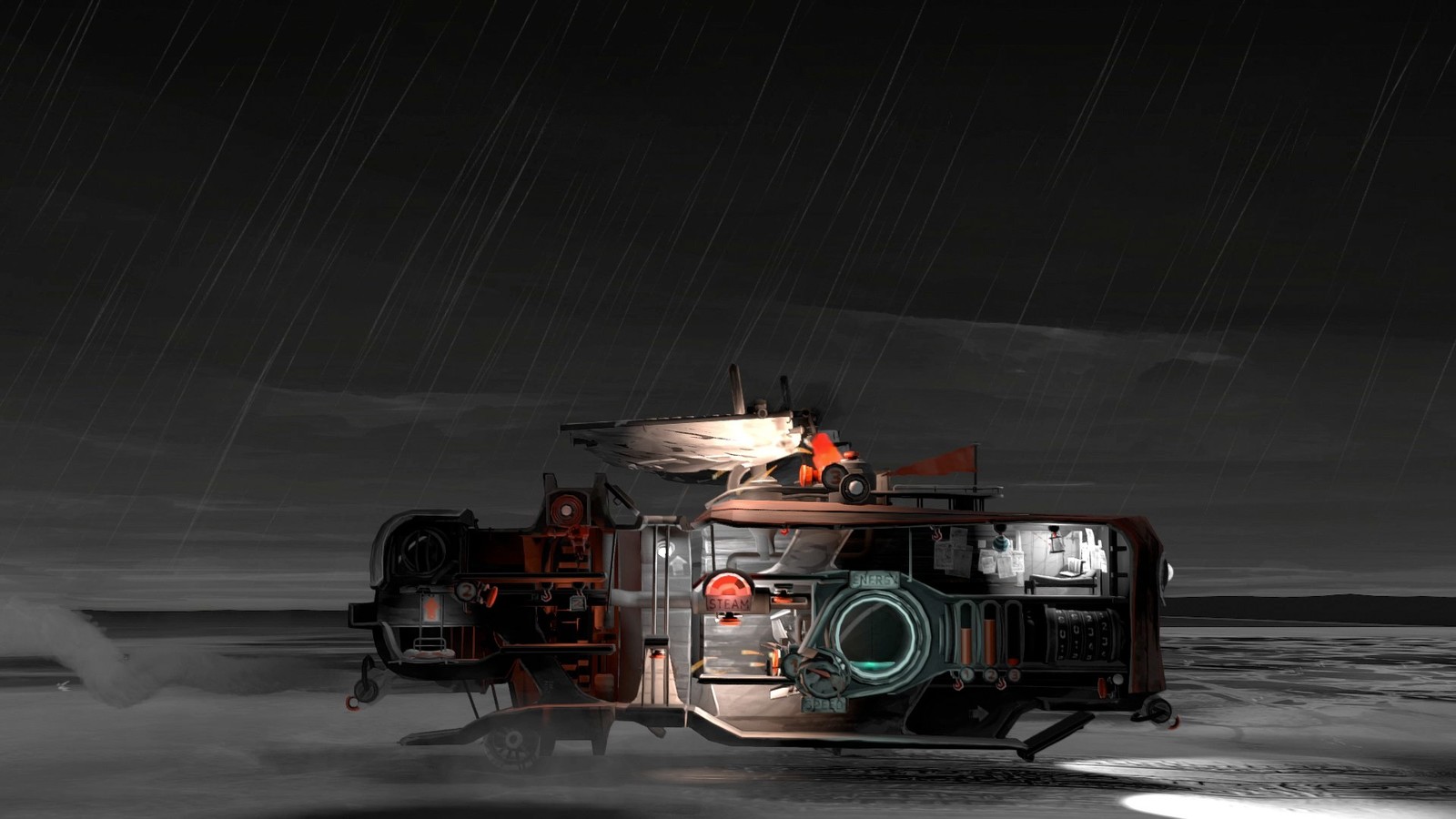
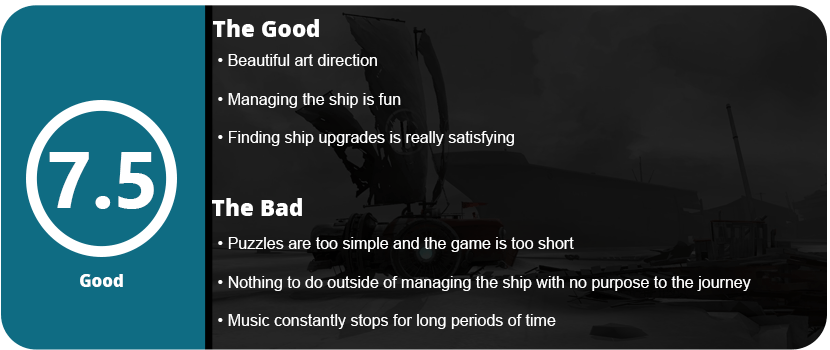
Your ship rolls instead of flies, but that’s okay. Inside the ship, there are several red buttons that do various tasks. The whole purpose of the game is to keep the ship moving by either hoisting your sails when there’s wind or using fuel and keeping the engine running. By the ignition button, there’s a steam release button and a brake. Behind the ship are buttons to suck up fuel on the road and a lift to insert objects into for fuel. The front of the ship has a pulley system, and there is a fire hose and repair torch. Most of these items you won’t get until you come across them on your journey. It’s pretty satisfying to micromanage something as simple as always stopping the machine to grab a box of fuel on the road and having a machine pull it in for you.
As you sail across the landscape, you will bump into a few puzzles. These require a little platforming mixed with figuring out how to get your ship through a door or across a lake. They are fairly simple, and after a little fiddling, you will figure out what to do. Outside of this, though, the game is void of anything. Once your ship is moving, there’s literally nothing to do, especially when you have full sails and don’t need to micromanage your engine. I was also annoyed that the music starts and stops so abruptly, and several minutes will go by of absolute silence.
The game looks beautiful with hand-drawn art, but it drives me crazy not knowing what the purpose of this game is, and I don’t like that. I’m all for minimalist game design, but developers who make you go on a journey with no background or story are just lazy and not cute or innovative. The various button-pressing mechanics are fun and a brand new concept I have never played before, but what’s the point at the end of two hours? Did I actually make a difference or accomplish something besides finding the credits?
Far: Lone Sails has very interesting gameplay mechanics, but it’s hard to recommend outside of sheer curiosity. Don’t expect a grandiose or heartfelt story here; just an interesting game to look at and button-pressing gameplay.
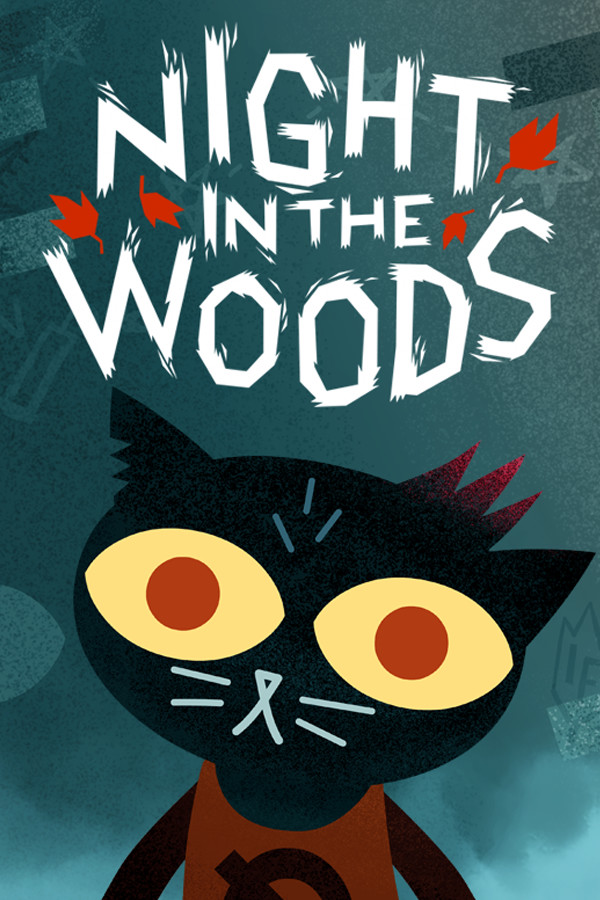
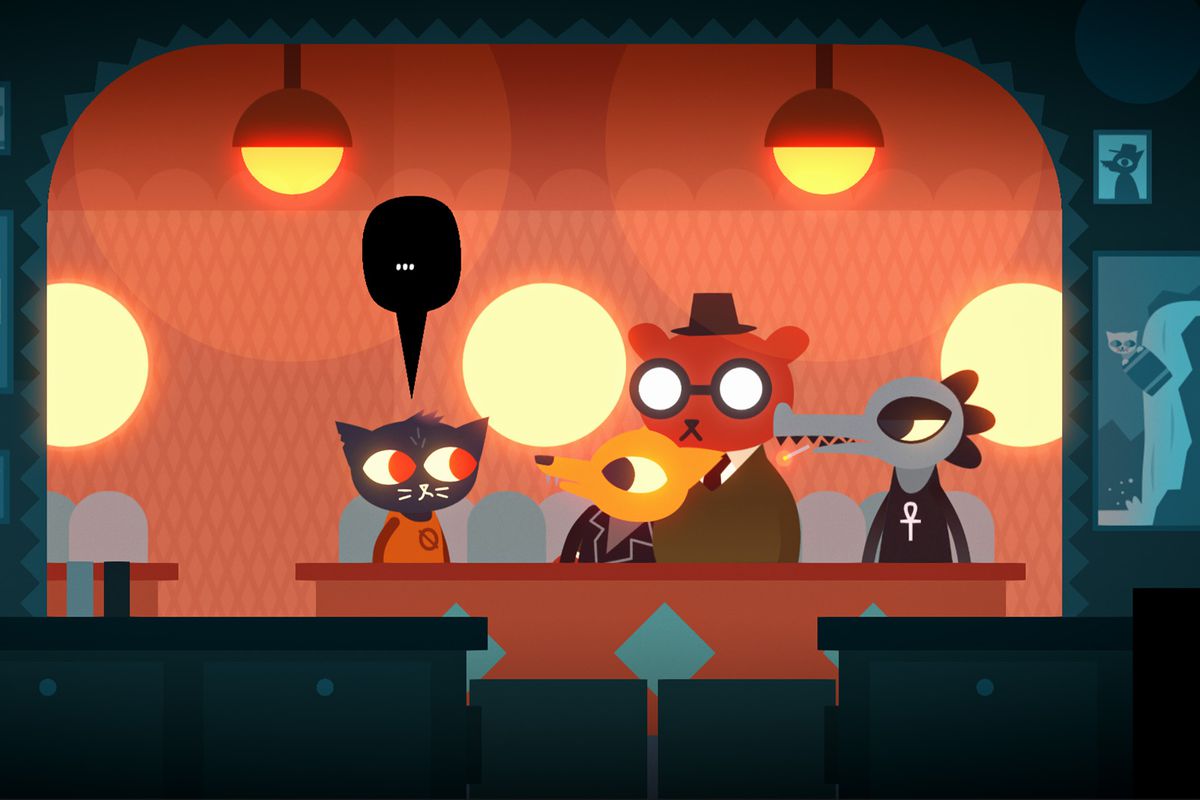
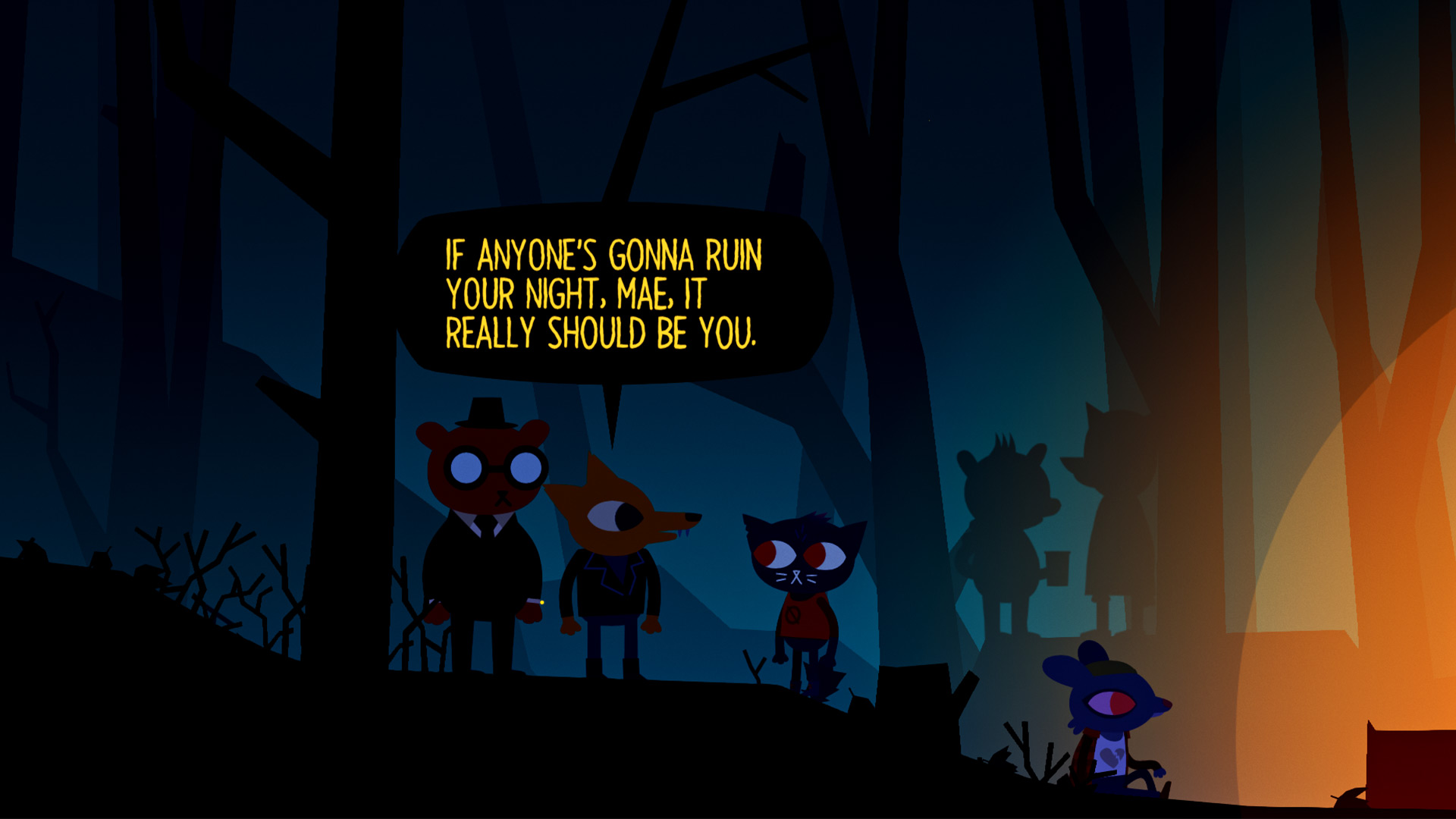
I love adventure games as they tell incredible stories with such detail that most other games can’t put out. They put action and gameplay on the back burner to bring the story upfront and into your face. They are typically slow-paced and keep you hooked with interesting characters, settings, and atmosphere. Night in the Woods is about a cat named Mae who drops out of college and comes back to her hole-in-the-wall town to hang with friends and discover a mystery plaguing her town.
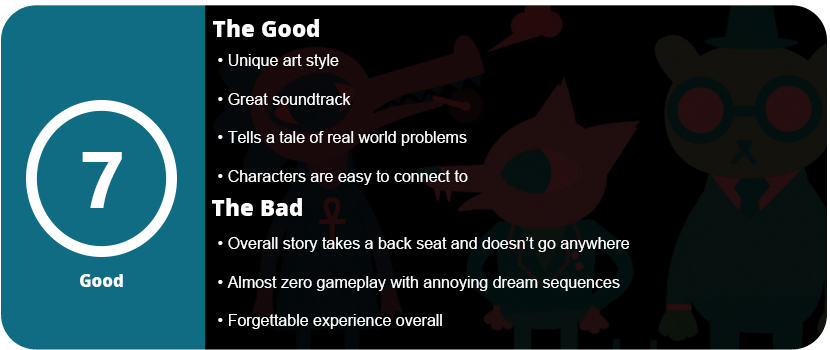
The game starts out fine with several scenes of character introductions and plot setting. Mae meets up with her four friends, and each day goes by with several activities such as talking to people, attending band practice (complete with a rhythm mini-game), and checking your laptop. This is fine and all, but this dragged on for way too long. Several days went by, and almost nothing happened outside of character development. The game talks about the real-life struggle of today’s younger generation (Millenials) and the day-to-day lives of lower-middle-class Americans. The game is set in a cartoony paper cut-out style but set in real-world problems that are very unique and interesting. I really connected with the characters, and their problems were genuine and real, but I wasn’t sure if I was playing a game sometimes.
Each night you go to sleep (after several days go by), you are presented with the only real gameplay here, which is annoying platforming on confusing “maps” to find four band members to complete the dream sequence. You go through five of these maps, and they are boring, a chore to navigate, and feel like forced gameplay. Outside of these sequences, there’s nothing but text and story. I really think this should have been a visual novel or just an animated cartoon rather than a game.
The actual relevancy of the title only comes into play during the last half-hour of the game, and it’s forgettable and almost feels forced compared to the day-to-day struggles of the characters, which are more interesting. I like how the game is written and the characters it portrays, but if you’re going to make this a game, actually give me a game to play. I started getting bored towards the end and just wanted the entire game to end.
That’s not to say I didn’t enjoy this game, but the praise it is given is a little ridiculous. It doesn’t do anything special in its own genre, and as a game itself, it’s barely that. I can only recommend this game to hardcore adventure game or visual novel fans who are okay going through hours of text and dialog with almost zero gameplay. It’s a great time killer and a fun way to burn away a lazy weekend afternoon, but nothing more than that, and there is no memorable story to care about from this.
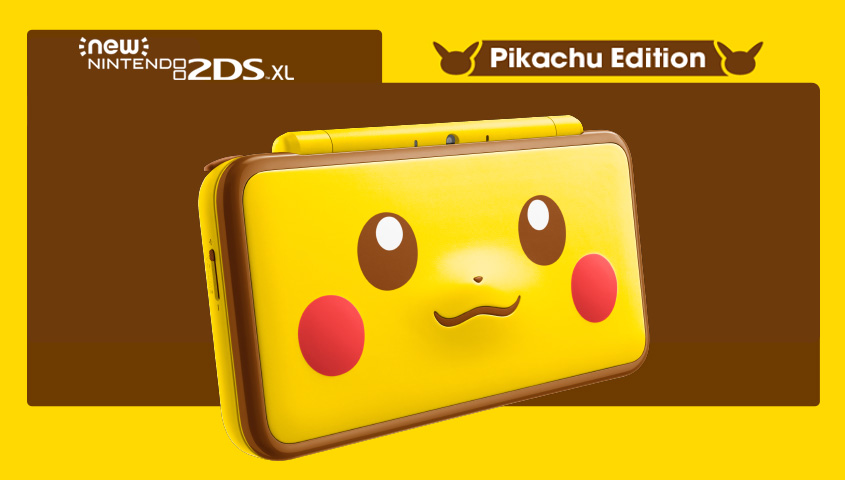
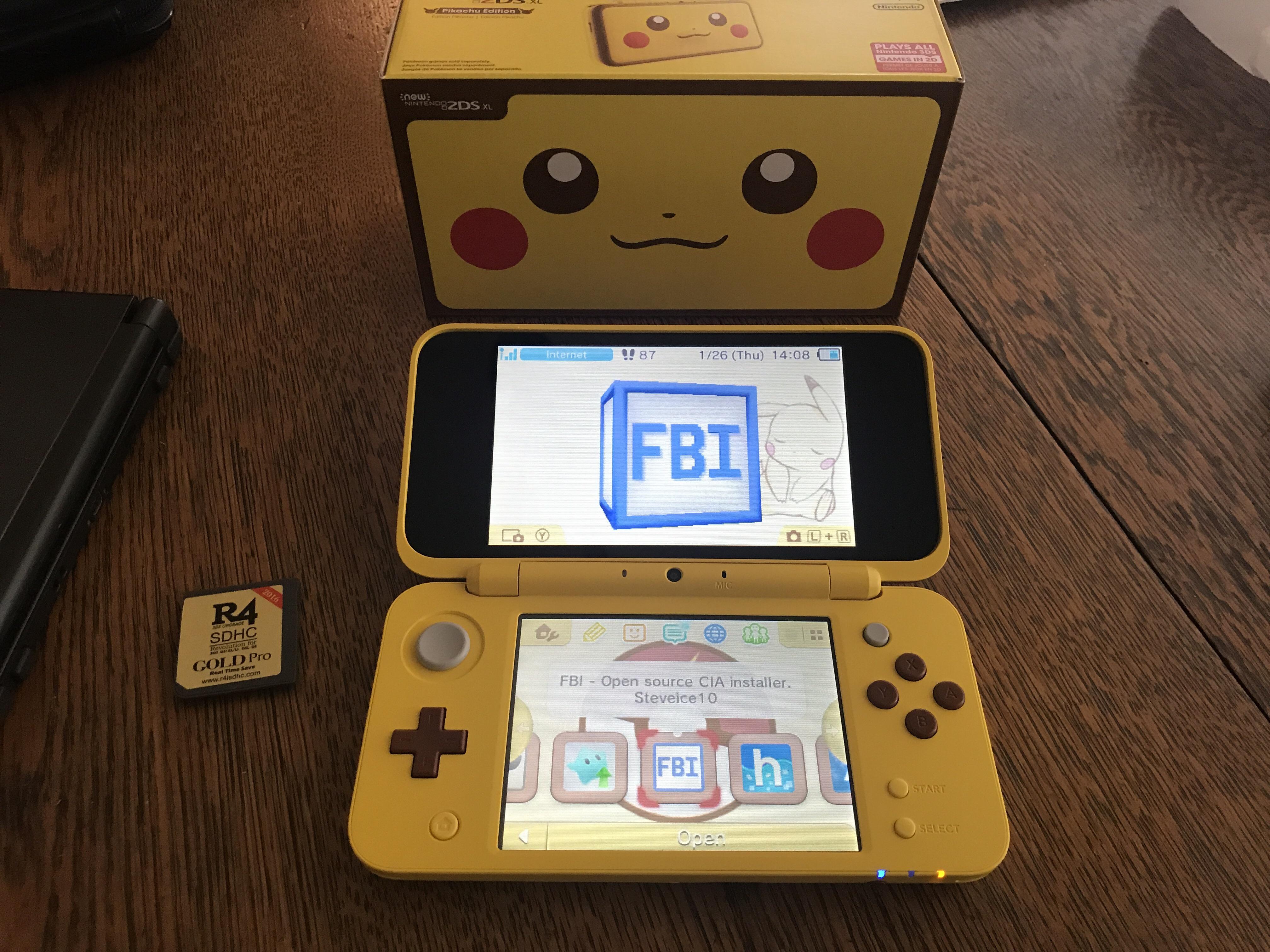
Oh, Pikachu, you’re so cute and cuddly and one of the most recognized characters in entertainment history. Nintendo sure does plaster your cute yellow face all over their consoles, and the 2DS XL version is the best yet. Nintendo went all out and went simple: just stick to Pikachu’s. With a raised 3D nose and cheeks on the top lid and lightning yellow all around, the system gives it a simple, minimal design and isn’t so over the top that it looks like a child’s toy. This is a nice, elegant way to show your love for Pikachu and Pokemon in general.
As for the system itself, this is Nintendo’s latest iteration of its 3DS hardware, which has undergone some drastic changes. Just like its DS cousin, the 3DS went from small to big to new over the last several years. We saw the original 3DS turn into the 3DS XL, which was expected as the DSi XL was a huge deal back in the day. Then we got a weird 2DS system that stripped away the foldable efficiency and the 3D model. So people were left wondering if it was an all-new system and if there were 2DS games just for the system. Then came the New Nintendo 3DS and XL, which was the best version yet as it included a C stick for camera control, better screens, sound, and overall design. So, here we are at the end with the New 2DS XL, which is a much lighter and slimmer version of the New 3DS XL, just without the 3D effect.
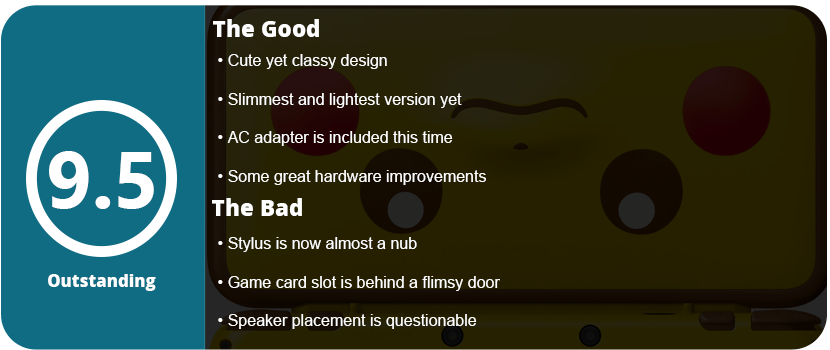
Honestly, I hesitated on the 2DS XL as I love my 3D effects, but as I play more and more games, I realize there are very few that utilize this feature well, and it just turned into a huge gimmick. The 2DS XL also has better-looking screens, a more comfortable form factor, and the weight was cut down. The New 3DS XL was a heavy beast and would leave hand cramps just for the sheer weight pulling on your wrist. The 2DS XL just feels so good in the hands and feels more sturdy. The 3DS XL had issues with loose hinges, weird-feeling buttons that kind of felt loose, and an overall clunky design despite looking nice. The 2DS XL has great-feeling buttons, with the shoulder buttons having nice soft clicks and the face buttons having small hard clicks, and it’s just a good system to play for long periods of time.
There were some things moved around, and not all of them were good. The stylus was shortened by half and has a weird tab that allows you to prop it up next to the headphone jack. The top of the stylus is curved in the same shape as the DS, almost like it was an afterthought. The game card access is now behind a door, which worries me as these things break over time. At least the SD card is here too, instead of behind a panel you have to unscrew like the New 3DS XL. The speakers were moved to the outer bottom edge, where the card slot has little slits, rather than on the top screen. It seems to sound better and a little clearer, but the location means it will get muffled when playing if you aren’t careful. The volume slider is now on the left side on the bottom half rather than on the top screen like before, and obviously, the 3D slider is absent.
Software-wise, nothing is new here. It’s just the same as the new 3DS XL, and that’s perfectly fine. There are no new additions to the firmware or anything special for this system except the exclusion of any 3D stuff. The system also includes the AC adapter, which is strangely missing from the new 3DS XL systems, so that’s a plus. Overall, the New 2DS XL is the definitive version of the system and cuts out all the experimentation and issues that were found in the earlier versions. If you like your 3D effects, then the New 3DS XL is your system, but if you don’t care, this is definitely it, Pikachu or not.
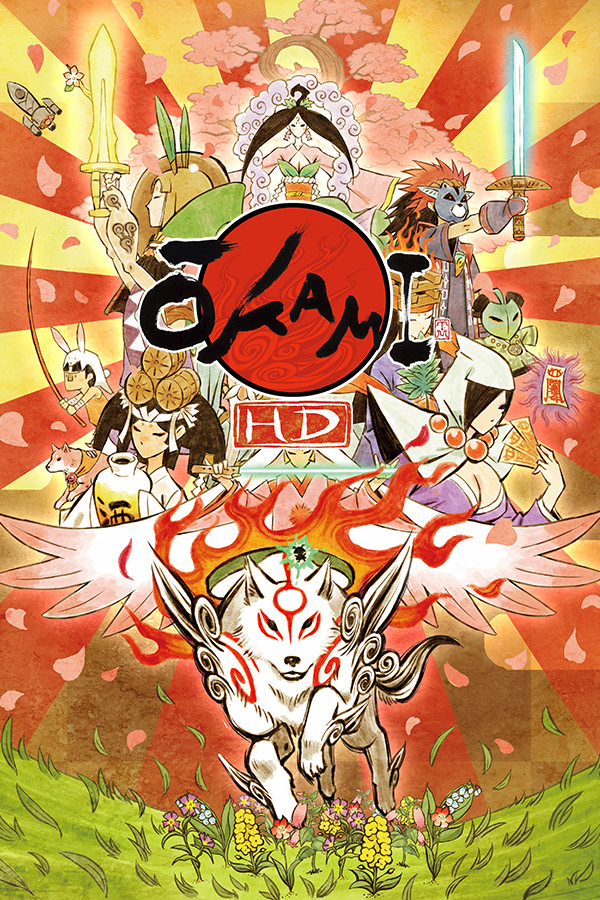
Okami was one of my favorite PS2 games growing up. I got the game for my birthday and was amazed by the beauty of the visuals and the unique gameplay of the Celestial Brush. It may not seem like such a big deal today, but back in 2006, this game sold PS2 units like hotcakes, and it helped the PS2 stand out as the best console of the generation, something the Xbox and GameCube didn’t have.
Fast forward 11 years, and the game still stands out and holds up as if it were released yesterday. You play as Okami Amaterasu, the Sun Goddess, with your Poncle pal Issun, as you embark on an adventure to rid Japan of darkness and evil. It seems like a stereotypical Japanese action-adventure story, but it’s a bit more than that. The characters have depth, and they all feel unique in their own way, with overexaggerated characters and personalities.
The game starts out simple enough by introducing you to basic game mechanics, including the celestial brush, by learning your first brush technique, rejuvenation. By pressing a button, the screen takes a snapshot and turns it into a black-and-white drawing right before your eyes. You then take an actual brush that you control and paint the correct stroke for each technique. This is such a beautiful and amazing game mechanic that works so well and yet has not been matched to this day.
As you progress through the game, the world opens up with larger hub areas that you can explore. Besides going for the main story, you can partake in item collection quests, praise gathering, and finding hidden chests that contain various items. Praise is used to upgrade your health; ink pots; an astral pouch (used to resurrect you when you die); and a money pouch. Praise can be gained by rejuvenating dead areas, feeding animals, and helping villagers in small, yet sparse, side quests. However, 90% of the time, you will be heading ever onward toward the end of your journey.
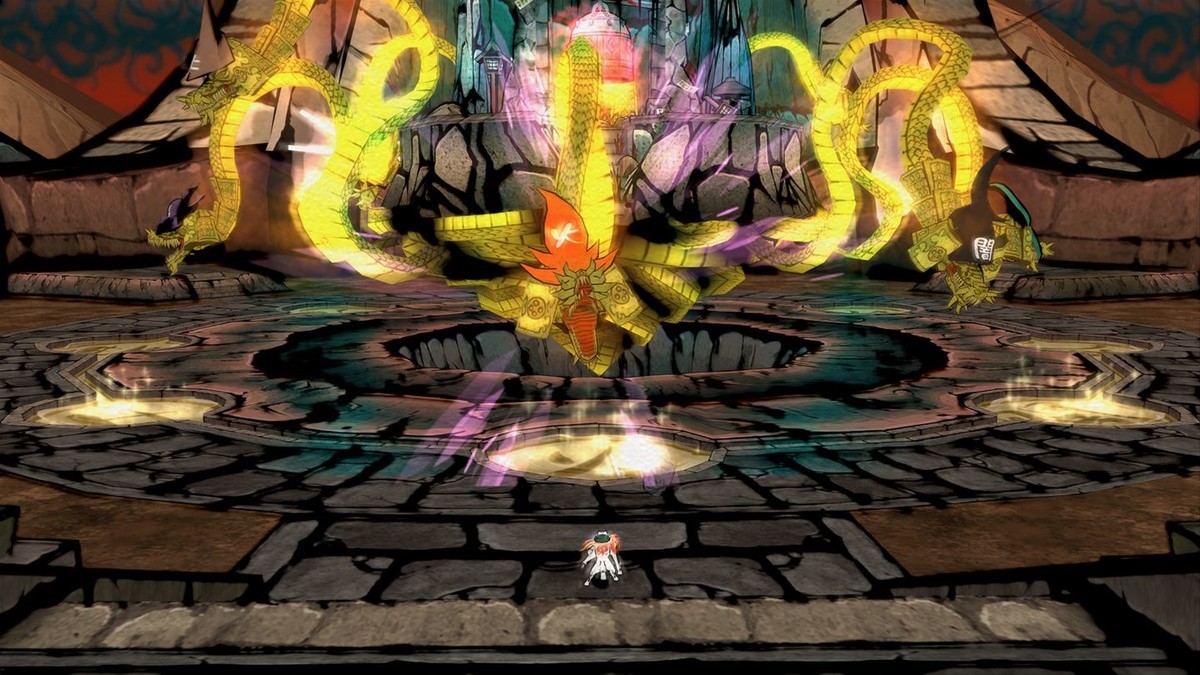
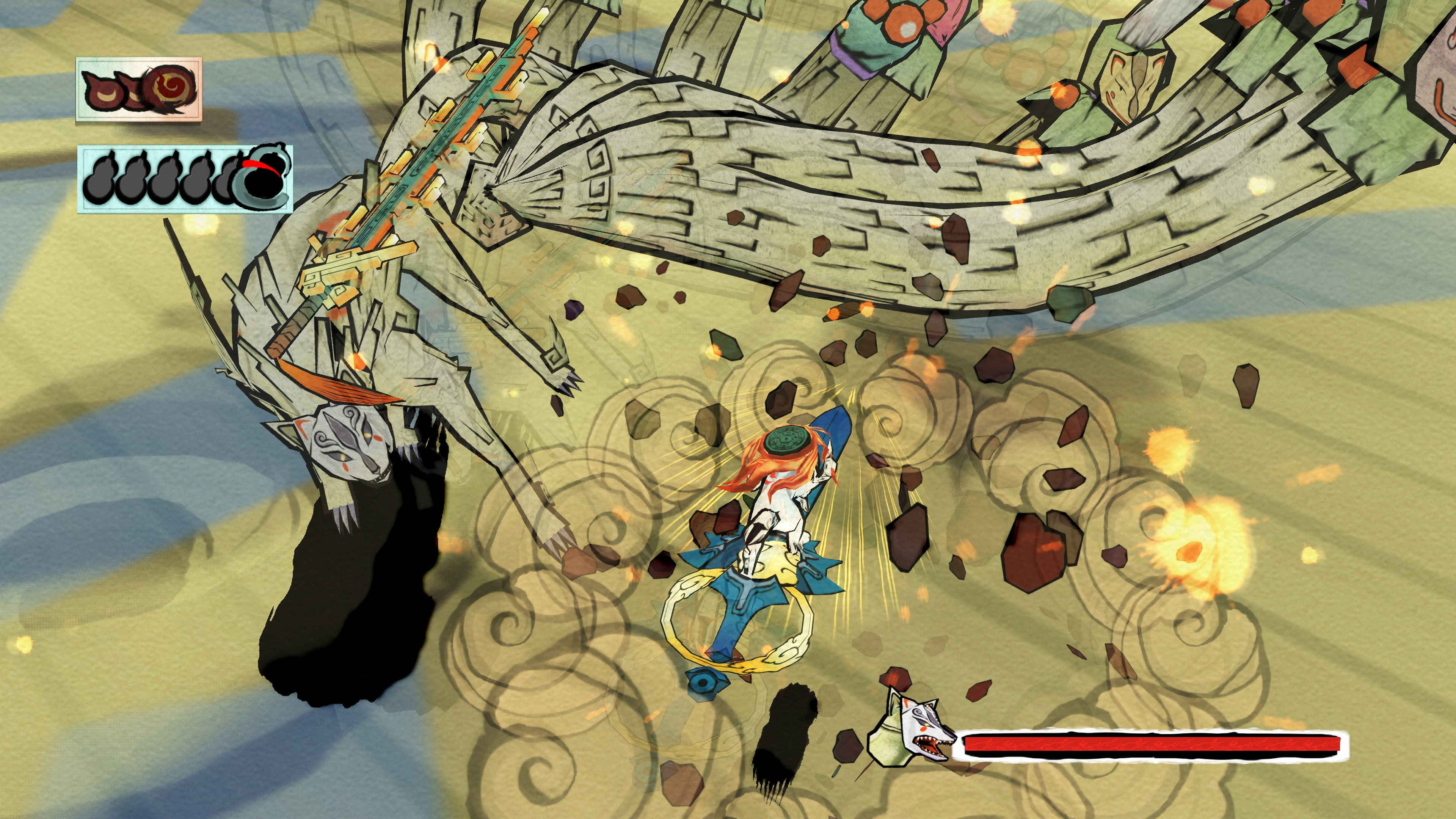
Combat is actually where the Celestial Brush comes into play the most. You and the enemies are surrounded by a cursed circle, and you can use your various brush techniques to defeat the enemy. There are many enemy types in the game, and they are all based on ancient Japanese myths and legends and look fantastic as well. Each enemy is completely different and weak to different techniques. Enemies are introduced slowly throughout the entire game, all the way to the end.
Boss fights are also unique and fun in their own right. Outside of brush attacks, you can also attack physically and with items. Amaterasu can equip three different types of weapons: mirrors, glaives, and beads. Mirrors are good for quick, rapid medium-range attacks; glaives are for heavier and slower close-range attacks; and beads are for rapid long-range attacks. You can also equip a sub-weapon for a secondary attack that is either close range or projectile. Combat never got old, but it is rather easy. I actually got through the entire game without dying once, and after you start getting a lot of money, you can just buy heavy-damage items and use them over your techniques and weapons. It’s a little unbalanced, but still fun and challenging nonetheless.
As a whole, Okami is beautiful, adventurous, memorable, and unique. However, it does have some flaws. The dialog is the most irritating part of the game, as characters talk in muffled simlish gibberish, and it just gets grating after a while. You also can’t quickly skip through dialog during some cutscenes, so it takes forever to get through. I also found the last 25% of the game long-winded and unnecessary. There’s also a lot of backtracking towards the end and repeated boss battles, which drove me nuts. The game clocks in at about 25–30 hours, which is a little too long for this game. Towards the end, it just felt like the developers were extending the playtime by making you repeat things and dragging things out. I loved my time with Okami, but those last 5–10 hours drove me insane.
Outside of all this, the remastered version looks amazing in widescreen and 1080p and even has 4K textures if you own an appropriate console or PC. It’s nice to see Capcom supporting current tech with their updated games as Okami pops to life on 4K TVs. The price is also a steal, as it was released at a budget price of $20. There’s no excuse not to play this classic.
The original Walking Dead was a fantastic adventure game. It was well written, tense, memorable, and had amazing characters. The dialog choices kept the game moving, and you always felt like you were in control of every moment. Season Two adds to this while taking place moments after the end of the first game.
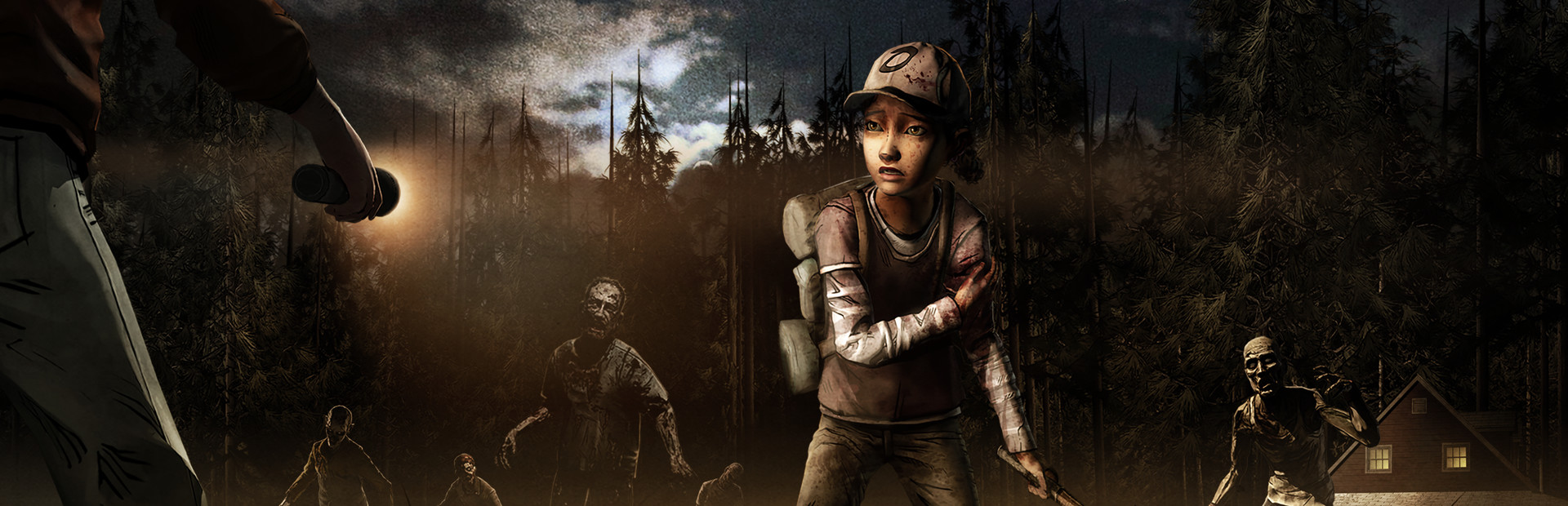
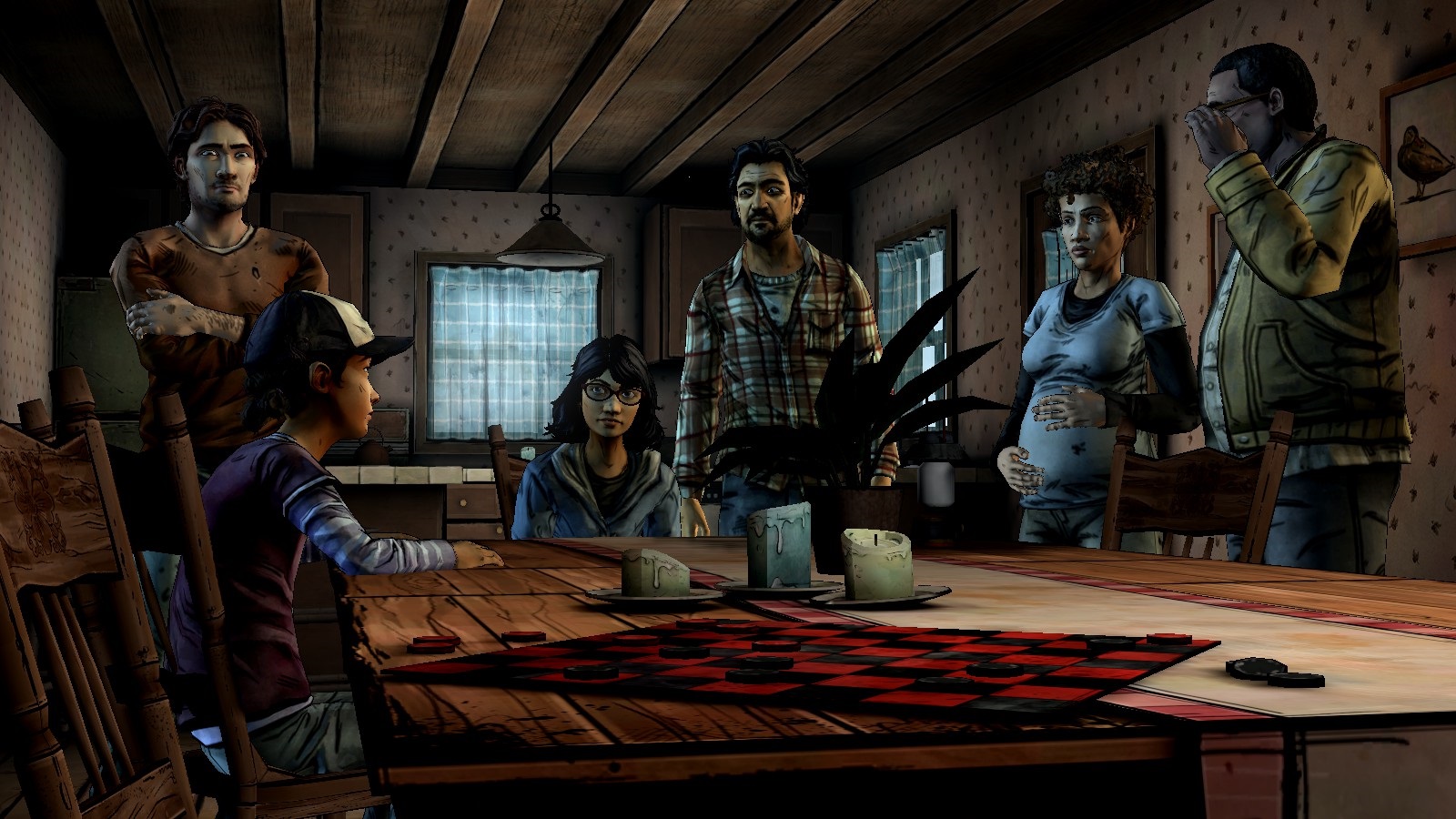
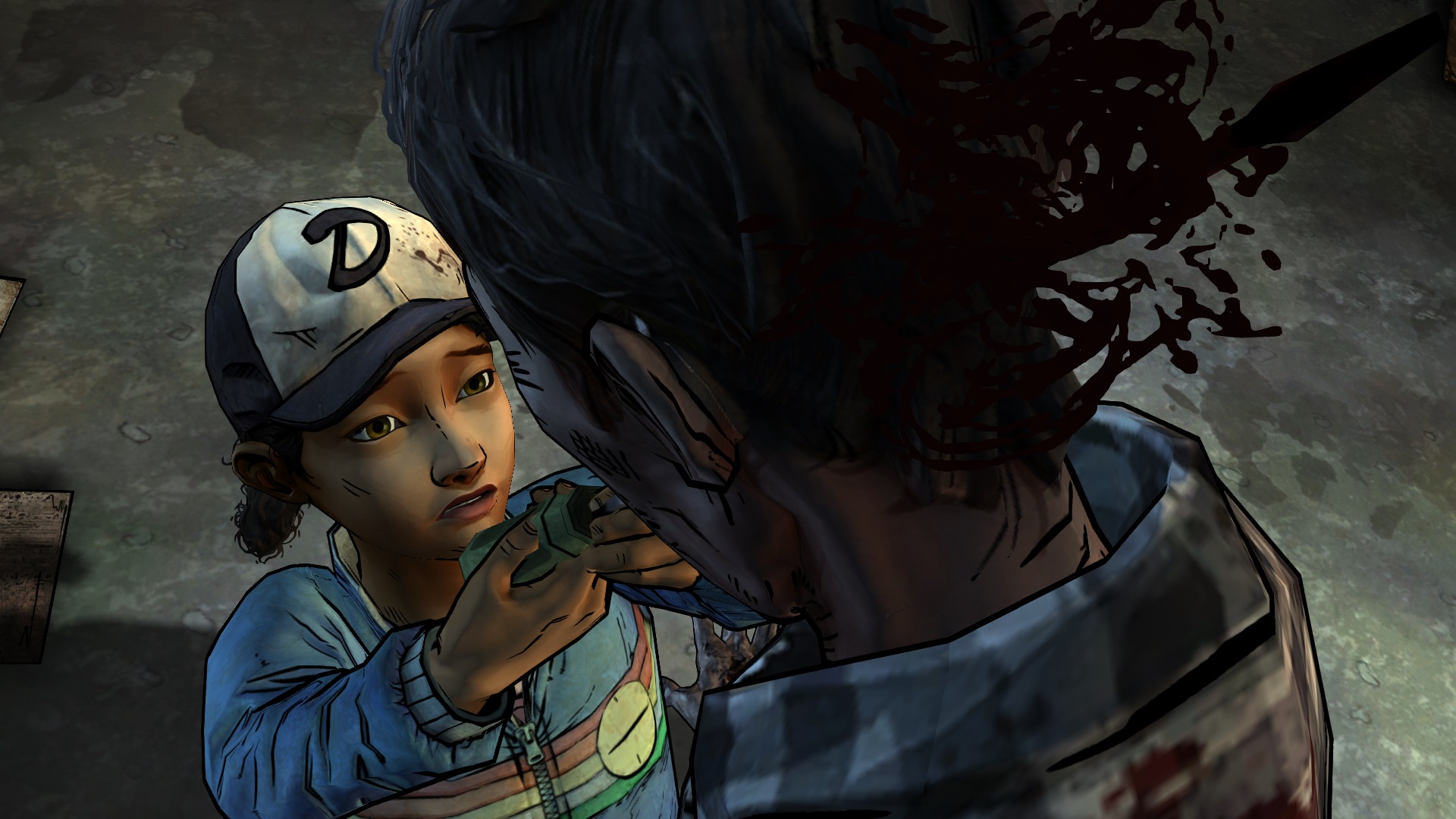
This time around, you play solely as Clementine. Right off the bat, I can tell you that your choices from the first season hardly impact Season Two. I imported my save, but I didn’t see many changes or choices I made from Season One affect anything here. We get an all-new cast, setting, and goal for Season Two that kept me going until the end.
Clementine is a child, but her raw character shows this season thanks to what she went through. Going from an innocent child to a hardened killer isn’t easy, and it makes Clementine such a likable character. Adults respect her for how mature she is; she can make adult decisions, but she still has some vulnerabilities that a child would have at her age. The new characters come across as strong, just like in Season One, but I felt a slight disconnect from them. Something about these new characters didn’t quite click as well. A lot is introduced early on, so this might be the reason.
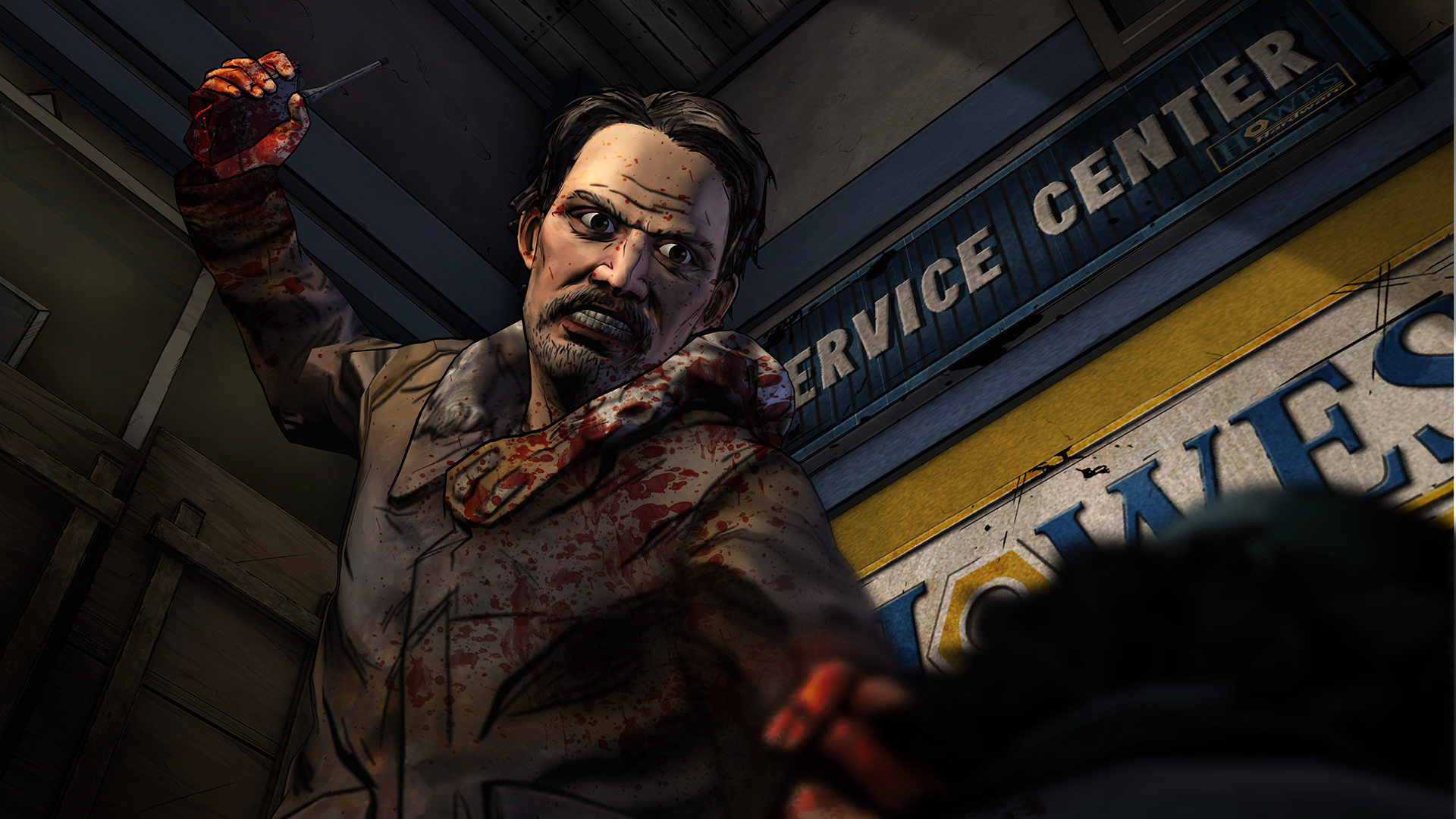
Throughout the game, we are seeing Clem get to a word-of-mouth safe haven called Wellington as she meets new friends, makes new enemies, and has to escape dire circumstances. I feel that this time around, the game is more of an interactive movie than a game. There are hardly any gameplay moments, and there is zero puzzle solving. The action sequences are somewhat entertaining, but the horrific moments of terror are far and few this time around. The few spots where you can walk around an area feel pointless, as all you do is go to the only interactive object to progress. The gameplay is seriously lacking here, but that’s not really a bad thing.
The dialog options are still strong, and many choices had me wanting to go back and change my choice, but that’s good. I always thought about what would happen if I chose something else, as some choices are designed to unfold later and some are immediate. The pacing of this game is also slower and less balanced. There are many slow moments of downtime and dialog build-up. Sometimes 20 minutes would go by with nothing but dialog options, which is a stark contrast to the first game.
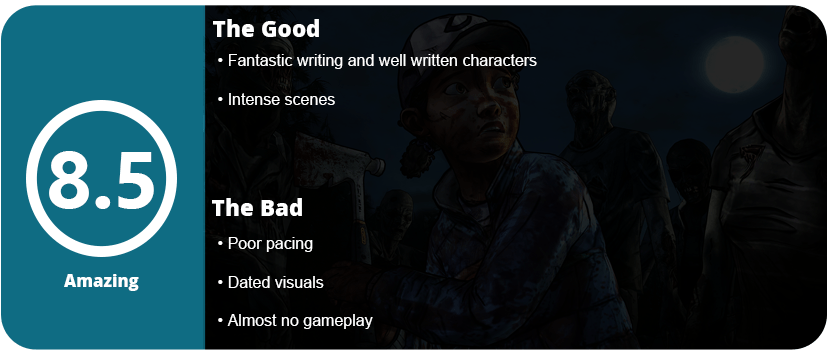
I did notice the visuals are slightly improved with better lighting and more detailed textures, but overall the game engine is seriously aging and doesn’t hold up to other games. Season Two is still a memorable game with great characters, excellent writing, and tense moments. If only it were paced better and had more gameplay.
Colors: Gray Joy-Con version, Neon Blue+Red Joy-Con version, Red Joy-Con version
Strange Tidings
I wasn’t a believer. I saw the Switch as a gimmicky train wreck straight into financial debt as Nintendo revealed the system last year. The concept was neat, the first home console was built into a tablet which felt like the last 2 Nintendo consoles smushed into one. The only issue that still remained was graphical power and online play as Nintendo is notoriously known for not doing well in these two departments.
Fast forward over a year later and I have one sitting next to me. To be honest, it was a spontaneous purchase during Black Friday weekend, as there were more and more games coming out that I really wanted to play. It was still a gamble, as there’s a huge divide on the Switch. Nintendo fanboys refuse to admit faults in the system, and naysayers refuse to admit the originality and fantastic games that are available, as few as there are.
First Impressions
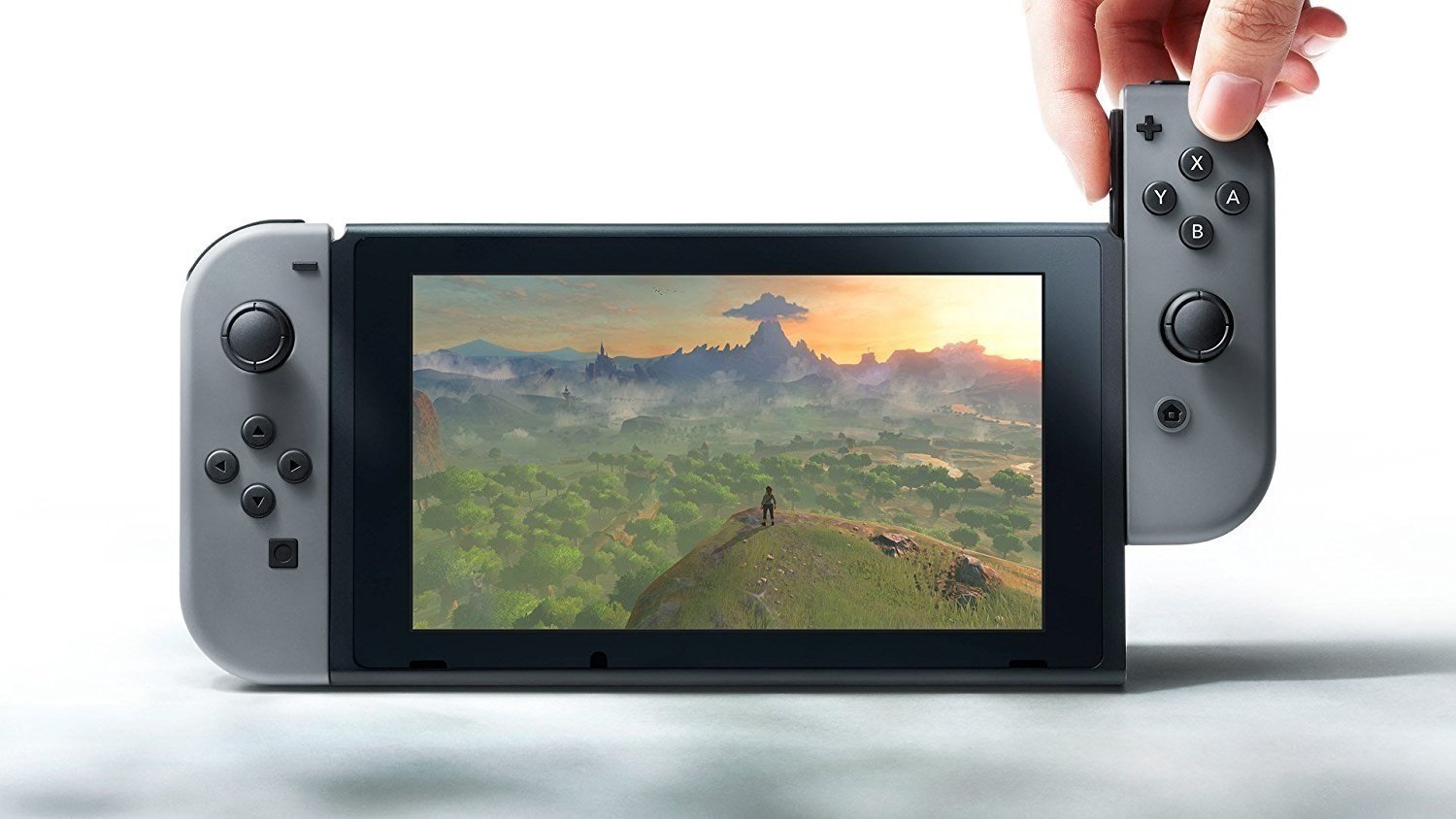
As I opened the box, I was actually surprised by how much smaller the system was than I originally thought. I thought it was going to be some hefty, unwieldy thing with controllers slapped on it. The tablet is just slightly bigger than any standard 7″ Android tablet on the market (Nvidia Shield K1, for example) and looks sleek, ergonomic, and not too heavy, really. The buttons are nicely laid out on top of the unit, along with volume control, power, the card slot, and a headphone jack. There’s a USB-C charger at the bottom as well as a kickstand. They seemed to have thought of everything and didn’t overthink too much else, which is surprisingly nice. The system is meant to be used in landscapes only, so this helped solidify their design ideas.
Once I popped the Joy-Con controllers out, I was also surprised. These things are surprisingly small and light, but they also feel nice and have great ergonomics. These could have easily been messed up and killed the system, but it feels like the Wii Remote mixed with 3DS buttons, which is a good thing. It’s also designed with offset thumbsticks like the Gamecube controller, which is a huge plus here. The aligned sticks on the Wii U pad were uncomfortable. The design is also meant to be symmetrical, so each controller can be used separately. The left Joy-Con then turns the directional buttons into face buttons, but the only small complaint is that the left stick is closer to the edge of the controller while the right is further in, so playing Mario Kart, for example, made me want the right Con so my hand didn’t cramp. There’s also an issue with the screenshot button (which works amazingly well and just like it should) not turning into the Home button.
Joy-Cons: Is the Name a Premonition?
The controller frustrations aren’t really all of that; the cons are interchangeable with a grip that turns these things into an actual controller; they slide right in, but the release button on the back is small and hard to get a grip on without pressing buttons, and having to take them off to slide them on the tablet in docked mode to charge is annoying. Then you have the side rails with the SR and SL buttons for playing with the controller landscape or separately for motion controls. These rails go on easily but are a pain to get off, and I’ve scraped and cut my fingers pulling them off. They are tight and require more strength than needed to get them off. The easiest mode to get these out of is tablet mode. Sliding them on the side of the tablet is easy enough, as is getting them off. I just wish there wasn’t so much configuring for each game, as with Skyrim, I had to slide the side rails off to put on the grip as I was tired of holding them for motion controls. Then I had to slide them off the grip and onto the tablet when I went and played in the bedroom.
Switch: The New DS
Speaking of tablet mode, this is the main attraction of this system. Nintendo wanted the power of a home console in your hands, and this is the first time it’s been done correctly. The PSP started this by being sold as a portable PlayStation home experience, but it didn’t have the power or the controls to do this correctly. Sony sold that same idea with the Vita, and while it did have both, the pirating from the PSP caused developers to back away. Nintendo has never sold their portable systems as home experiences, but here we have it. The games play in 720p while undocked, which is a bit disappointing seeing as tablets can display up to 2K resolution these days, but a lot more power would have to be built in, causing bulkiness, less battery life, and more cost. It still looks clean and crisp in this mode, and most people won’t notice.
The Big Screen
Docking the console is easy enough, but there was another problem here. There’s no click, no satisfying “snap” of the system connecting to the charge port, and no sound or feedback of any kind. The system kind of just flops in the dock and rests there. The only indication is the green light flashing on the dock, and that’s it. This could have been done much differently, with better feedback. While docked, games usually run in 1080p, but with some graphical hits like frame rate cuts or aliasing. The Switch is intended to perform better in docked mode as the CPU isn’t underclocked to save battery life, but there are varying theories about how all that extra power is used to render the picture in higher resolution and is not really performing better. It’s something Nintendo needs to iron out, and even eight months later, it’s still a tad bit of an issue. Battery life is also not that great in portable mode. You will maybe squeeze 4 hours out of the system on a game that doesn’t push it to its limits. I haven’t been able to time it just yet, so I will update this as time goes on to see if I can get 4+ hours.
Under the Hood
Let’s take a look at what runs this device first. For starters, the system has 4GB of RAM in the form of LPDDR4, which is what is seen in phones. I was surprised to not see X RAM, which is much faster, but it’s a good start. The system has an Nvidia Tegra X1 chipset, which is seen in the newest Shield device from Nvidia. It has an 8-core CPU running at 1.20GHz, and the GPU is Maxwell-based, running at 768MHz docked and 384 undocked. It also has a 6.2-inch screen in 720p. As you can see, it’s a very powerful portable device, but clearly doesn’t have any power close to the other competitors, but can easily be seen as the most powerful tablet on the market. Why Nintendo chose off-the-shelf parts instead of custom hardware is very interesting; it is definitely easier to program for. The SD slot can hold up to 2TB (which isn’t available yet) in microSDXC format.
Software
Let’s talk about the software. The Switch features a much more streamlined UI than the Wii U. No longer is there a huge ring of bubbles with Miis running everywhere. We get a clean and minimalist UI that just shows a row of “blocks” that are your games. Near the bottom, you can select settings, Joy-Con arrangement, eShop, and brightness. I love this UI, and it’s even better than the 3DS UI. This is designed to be easy to navigate with the touchscreen in portable mode. Another nifty feature is being able to “archive” games, so when you’re done with them, you can delete the game data, but it will keep all your saves to free up HDD space. If you run out of the 24GB (8 are taken up with OS), you can insert a microSD card, which is something that was much needed on the Wii U and really hurt sales. 24GB is plenty for physical games, but if you have a large digital collection, you can move screenshots and those games onto that SD card, which is awesome.
So, Is It Worth It?
Overall, the Switch is well worth the $300 purchase if you like all the games available. If you’re just a Nintendo player or just like one genre of game, then you should stay away. This is a great system that is revolutionary in its own right and takes a traditional home console and takes it on the go, but with the usual sacrifices that Nintendo is willing to make. It’s not very powerful (for a home console), the Joy-Cons are cumbersome to configure, the battery life isn’t too great, and the graphical difference between docked and undocked varies way too much and needs to be ironed out. There’s also the lack of games mentioned, which has been an issue since the Wii. The ones that are available are fantastic; there aren’t a lot of games that are downright awful on this system, with Nintendo’s own games being some of the best games in years, period.
To Nintendo’s credit, people are giving this system a harder time than it deserves. The Wii U deserved all the backlash it got; it was a terrible console that was terribly marketed and executed. The Switch is actually trying to be something completely new with some of Nintendo’s past and, best of all, ideas at play. With the support of more third-party developers (as we’re seeing as the year comes to a close), Nintendo could be back on track as the best video game company out there. Only time will tell, but they don’t have long.
















































 thebinarymessiah.com
Yeah, it's pretty damn awful. Notoriously one of the worst games on the PSP. A 4 was actually being generous.…