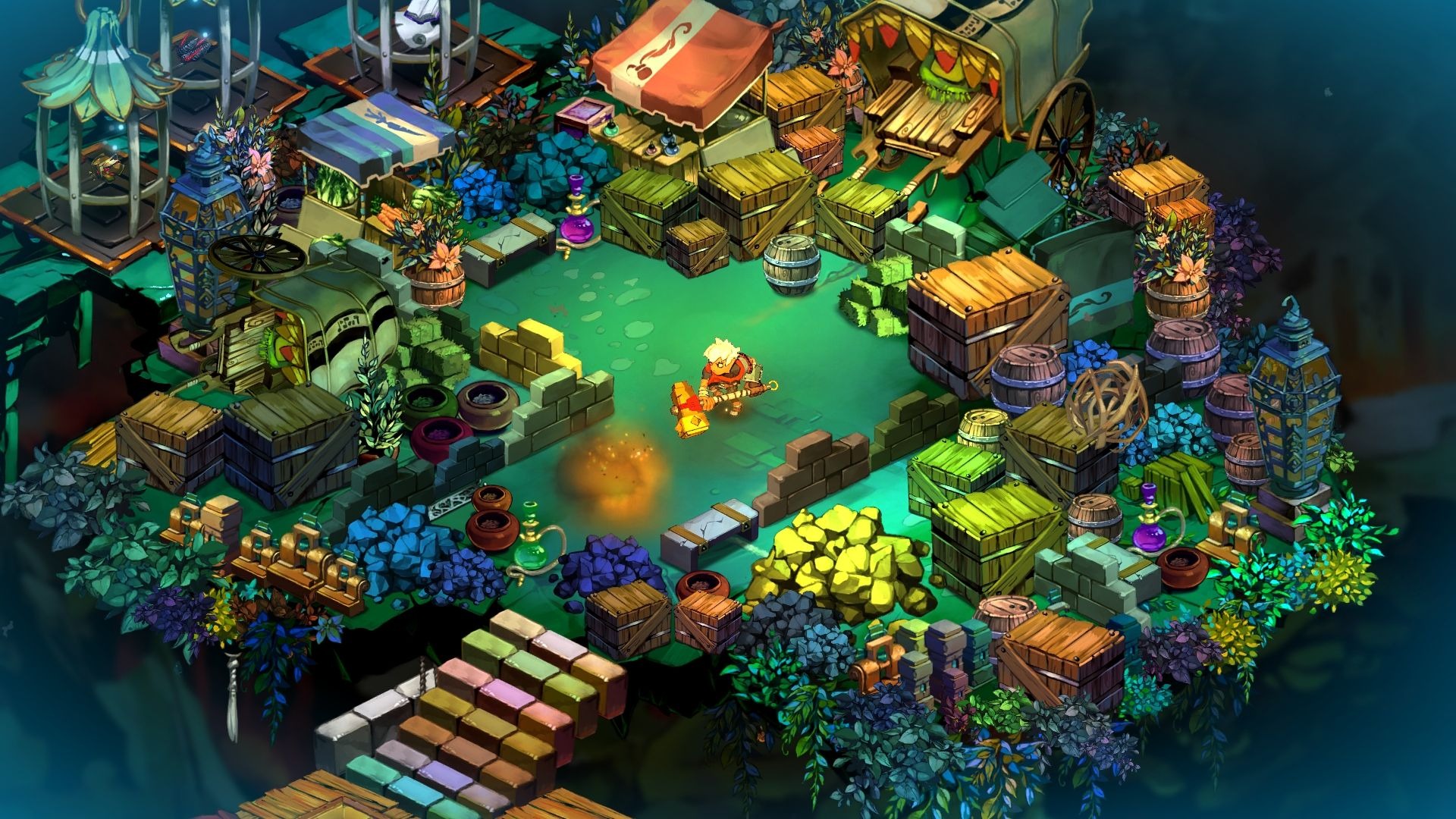
One thing that Bastion does differently from most games is its strong and unique narrative. A man narrates the boy’s every step and action in Bastion, and this is a very interesting way of telling a story. It’s like you’re playing an interactive storybook, especially since it looks like one too. You are trying to re-build The Bastion, which is a safe spot to run from The Calamity, and throughout the story, you find out what this is and why this boy is trying to find these shards to build this thing. Rucks (the narrator) guides you through the story as it unfolds, so you don’t know anything until it actually happens, like a storybook, but it’s happening while you’re doing it.
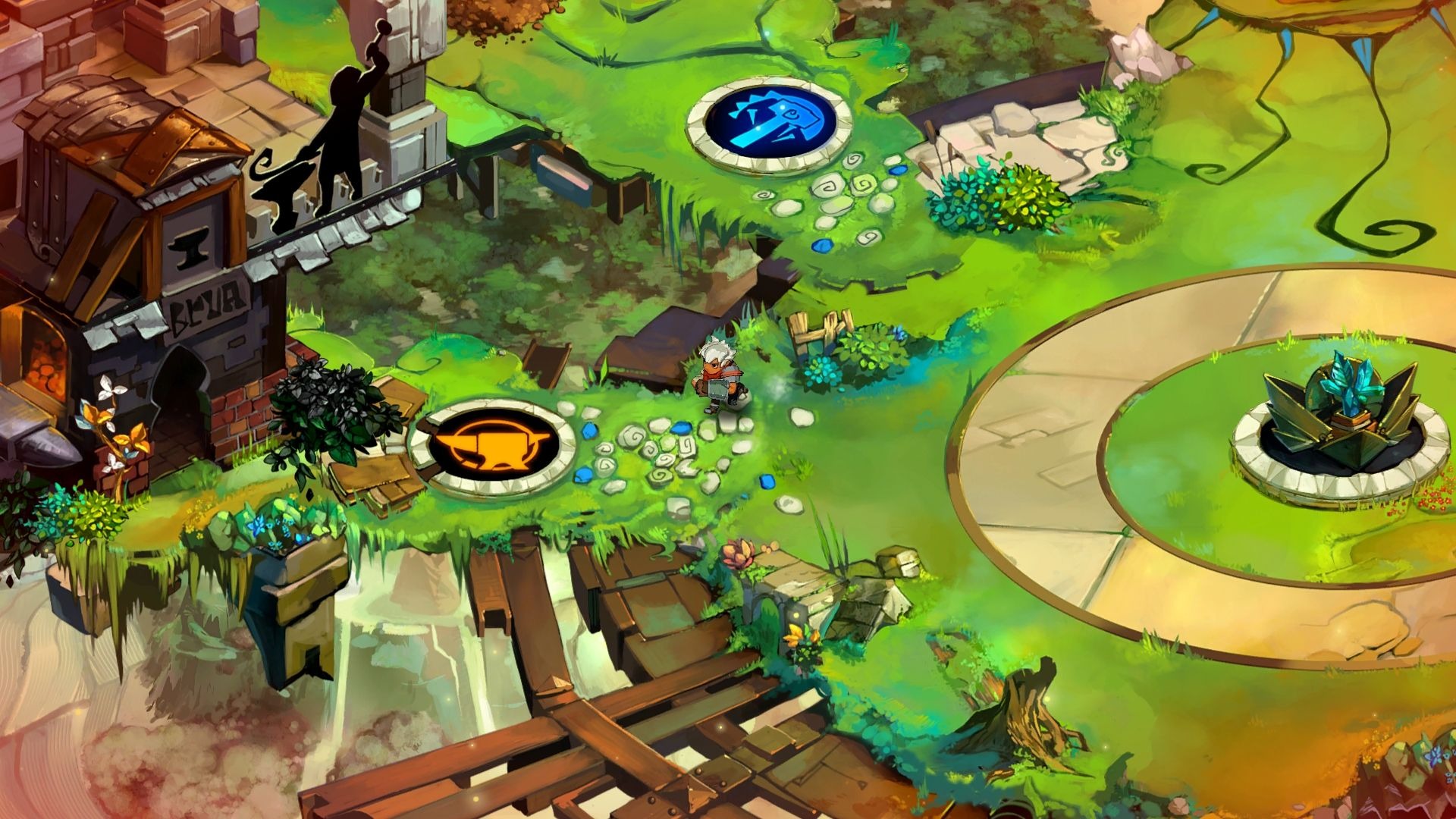
With the excellent narrative aside, the combat is top-notch and responsive. You can use a regular attack, a special attack, a block, or a projectile weapon. There are plenty of weapons, and you can upgrade them to add different attributes and bonuses. As you progress through the game, you unlock six different areas, which include an arsenal to swap weapons, a forge to upgrade your weapons, a shop to buy upgrades and special powers, a shrine to make the game harder, and an “achievement” area where you can meet requirements for extra shards (in-game currency). The customization and upgrades are deep and will keep you busy for a long while thanks to the proving grounds, which are unique challenges for each weapon. If you meet certain criteria, you get prizes based on your performance. These are not easy by any means, and a few were almost impossible to beat for me.
Combat is very responsive and challenging. The enemies are quick and smart and vary from stationary, fast-moving, slow-moving, heavily armored, etc. I should probably say that the balance is perfect, and you slowly get introduced to tougher enemies as the game progresses. You really have to use a combo of everything to stay alive because you will gulp health tonics constantly if you don’t use block and dodge a lot, so stay on your feet. The action gets hectic, and you start realizing this game is for hardcore action fans and not the casual gaming crowd that the visuals might seem to cater to.
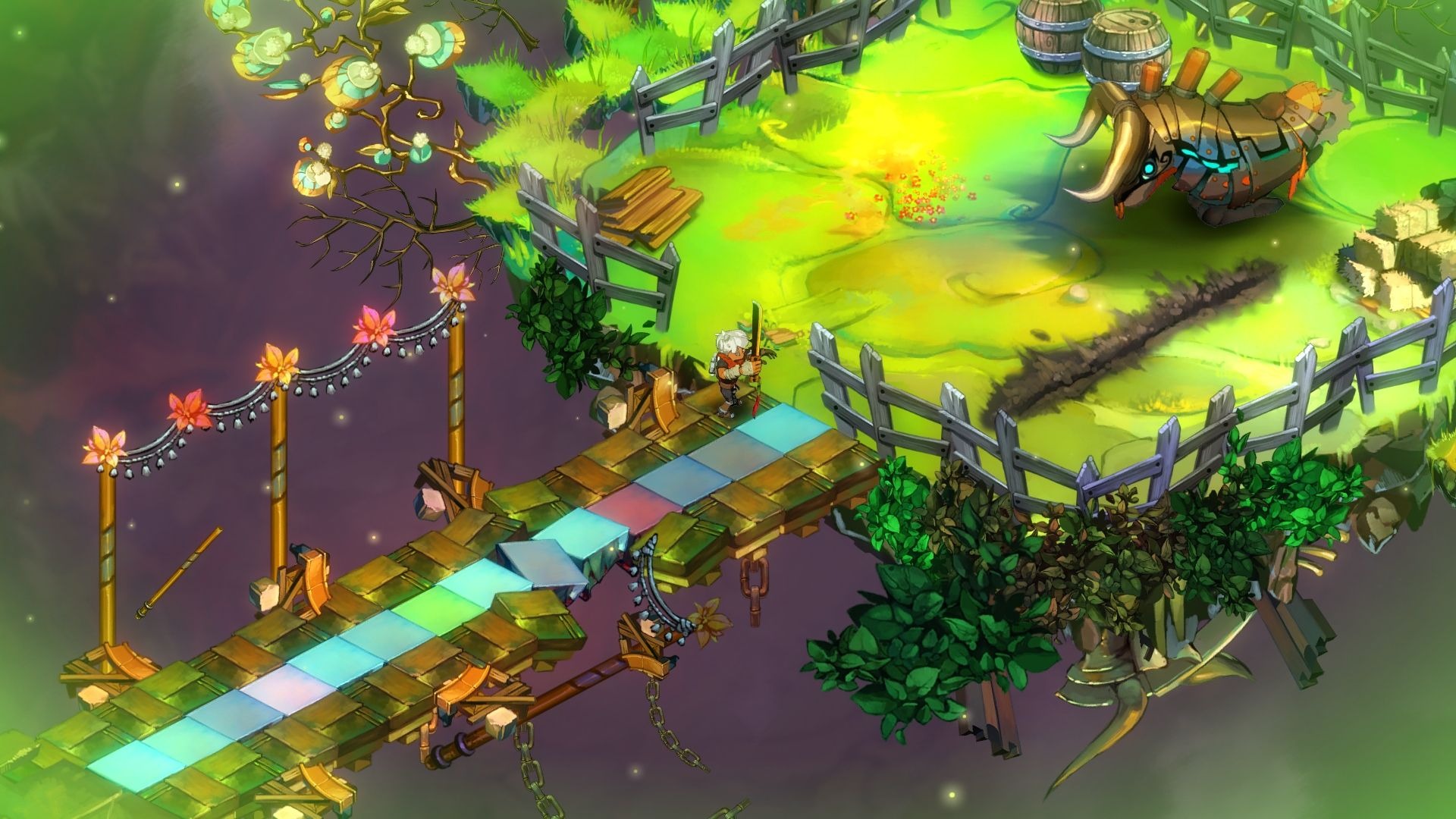
There are a lot of levels, and the length varies from 5 minutes to 15, but one thing I can’t get over is the visuals. As you run through the levels, the walkways appear under you and seem to float in the air. The levels vary so much that not a single one looks the same. The hand-drawn visuals are just gorgeous, plus you can’t forget about the amazing soundtrack, which is something you stick on your MP3 player and listen to. This feels like a high-budget game, but only an indie game can deliver something on this side of creativity and originality. Bastion is a unique game, and nothing is quite like it in terms of narrative and visual delivery. Every action fan should own this because it’s $15 well spent.
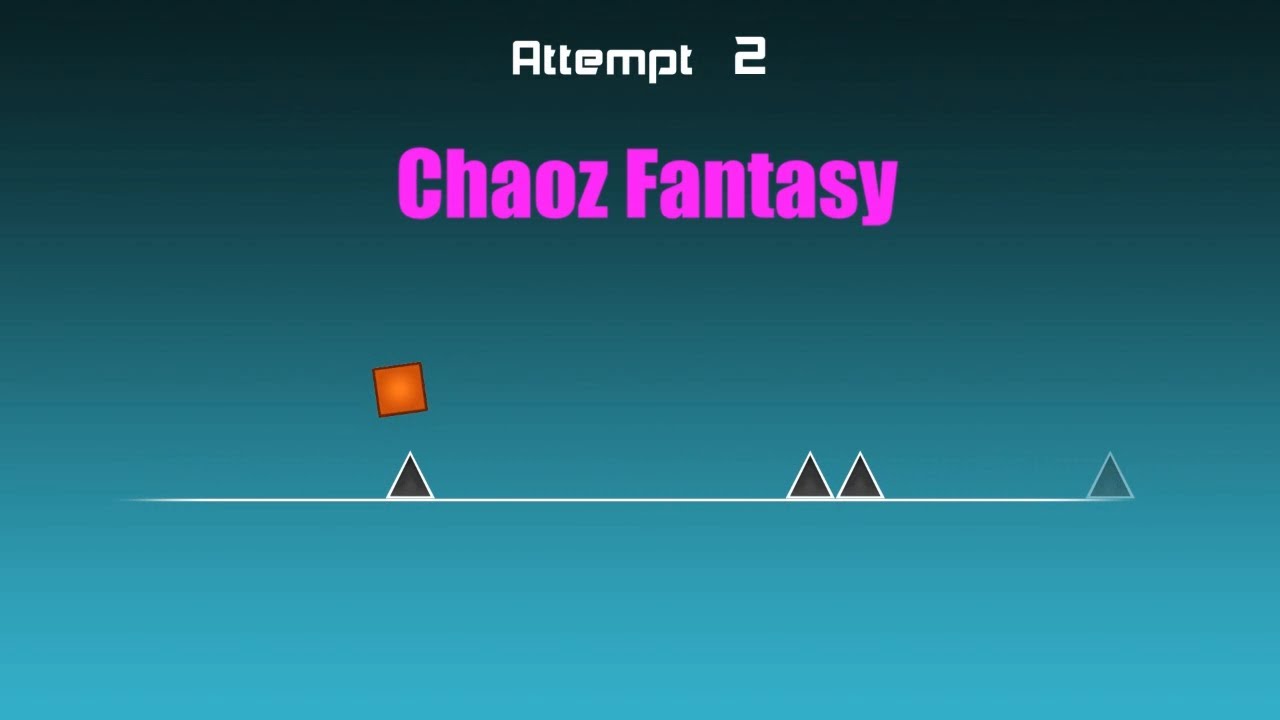
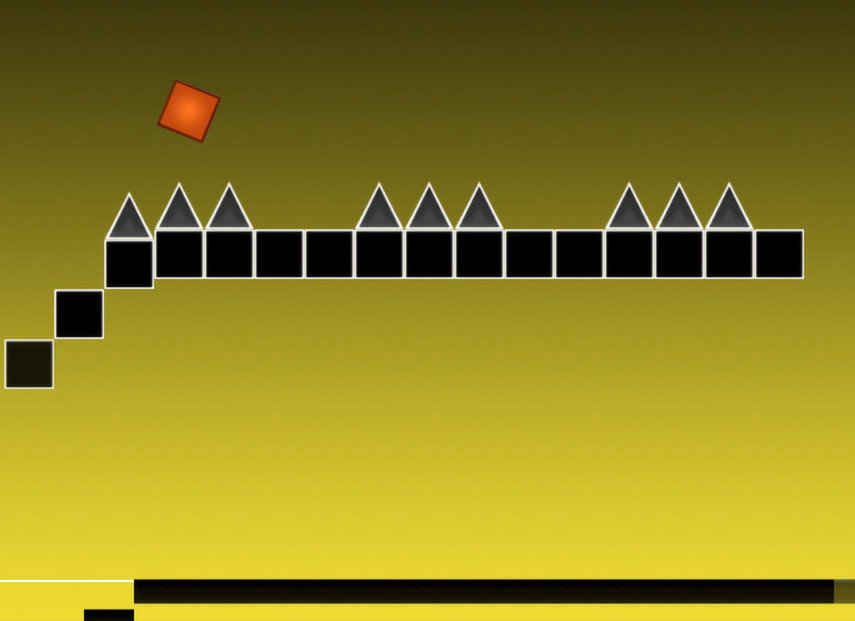
Remember those super-hard games from the 8/16-bit era? Well, it’s come back to haunt with this little game that is so simple in design yet so hard in execution. You guide an orange block over spikes and pits to the end of the level. All you do is tap to jump and hold to do quick jumps. It sounds simple, but the levels are brutally hard because they require precise skill and focus. There is a practice mode that lets you drop the flag with a touch of a button, and when you die, you respawn there instead of at the beginning of the level.
Of course, you can delete these flags if you spawn one in the wrong area, but man, this game is almost impossible! The game has a nice soundtrack that flows with your jumping, but most people will hate this game due to its high difficulty level. All I have to say is that hardcore platformer fans will die for this game and love it. All I wish is that there was an easy mode or something, but there’s a lot of great game here for a buck.
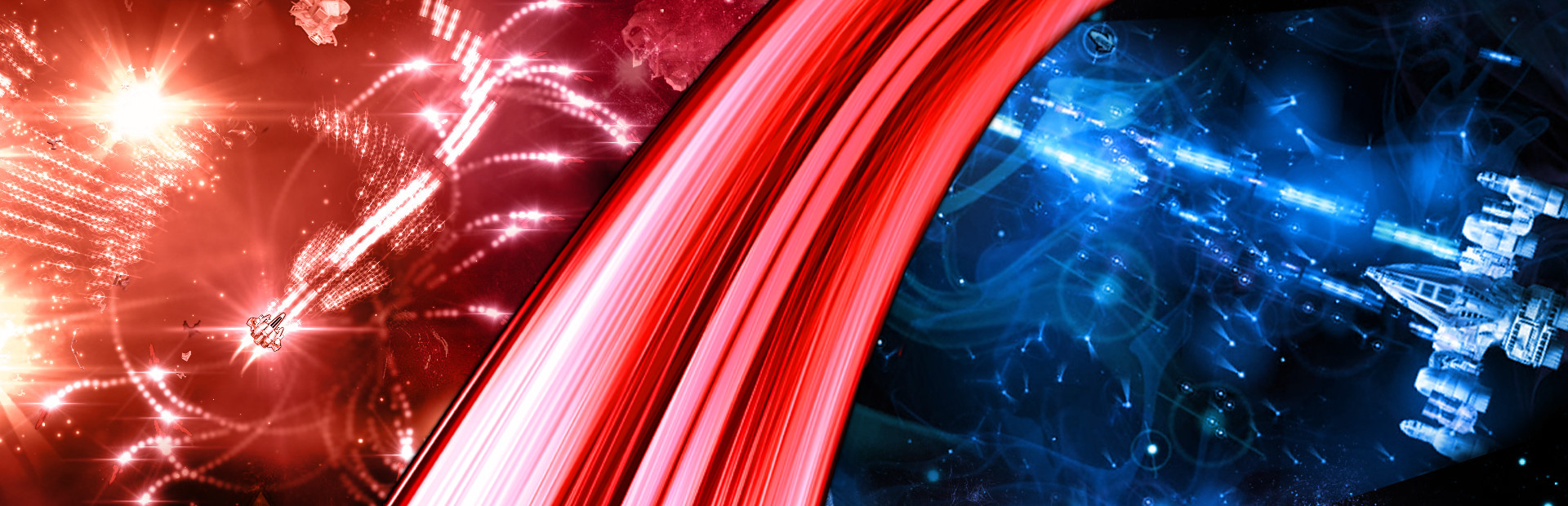
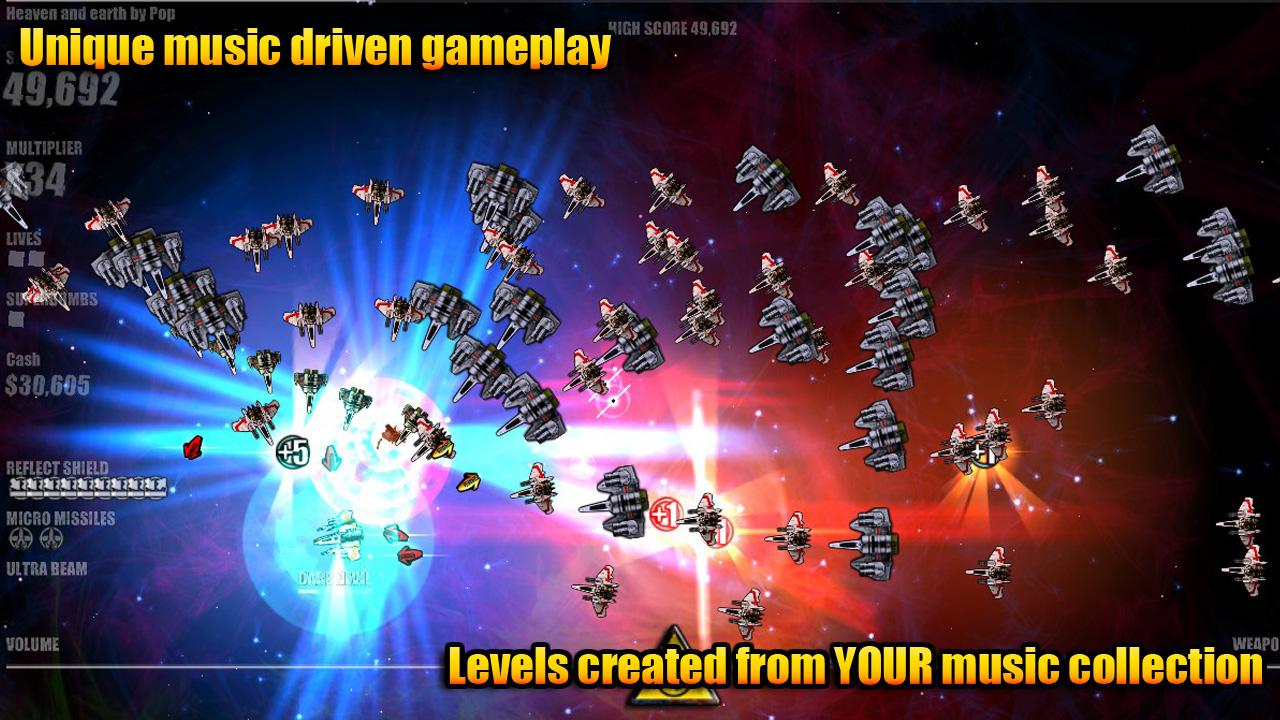
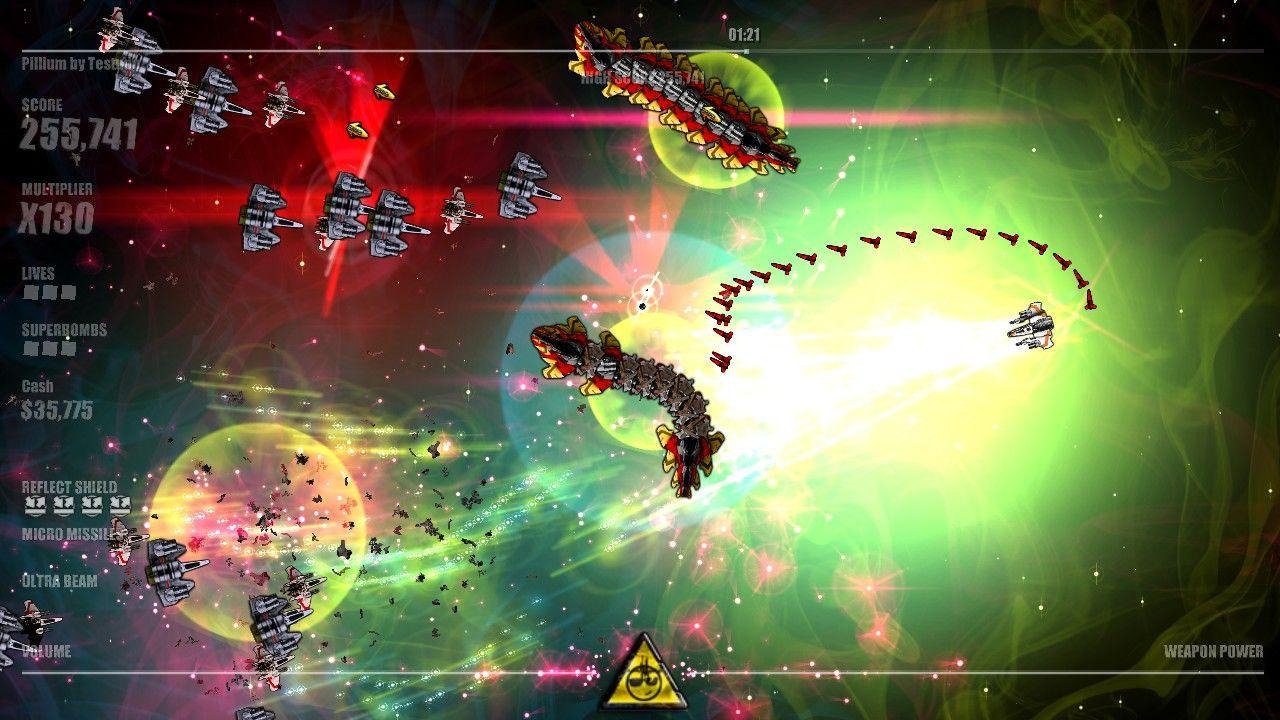
Being able to play a game using your own music isn’t new, but being a good one is hard. Beat Hazard lets you select your own music and then uses the tempo to create difficulty spikes and the flow of enemies. The beat of the song is seen in the bullets you shoot as well as the crazy explosions on one screen that can give you a seizure. When you select your music, you get to decide the difficulty. Pick a heavy and fast metal song, and you’ll be lucky if you get through the whole thing. Pick a normal soft rock song, and the difficulty is very gradual.
When you actually start shooting, there are several power-ups that range from increasing the volume, shot power, money, and bombs. If you die, you can collect the stuff you’ve dropped, but if you keep collecting the stuff, you get more and more powerful. You can use the money to buy perks that range from power-ups when you start to extra lives and other various perks. There’s a good amount, and it’s worth playing just to unlock them all. However, the game doesn’t have much depth, so this is a 30-minute-at-a-time game, or you will get bored. The visuals are decent, but the special effects that flash around remind me of Geometry Wars on crack.
So this is once again a game that makes you the decider of how fun an experience you get. The engine underneath does a good job using the songs to be a fun space shooter, but I would like to have seen more power-ups or maybe something more 3D. If you don’t like 2D space shooters, you won’t like this, even if you get to use your own music. The game can get really hard quickly and can be a bit confusing at first until you get the hang of it. There are quite a few modes, such as multiplayer, boss rush, and endless mode, so there is some variety there. For the low price, you can’t really go wrong, so pick it up and enjoy the craziness!
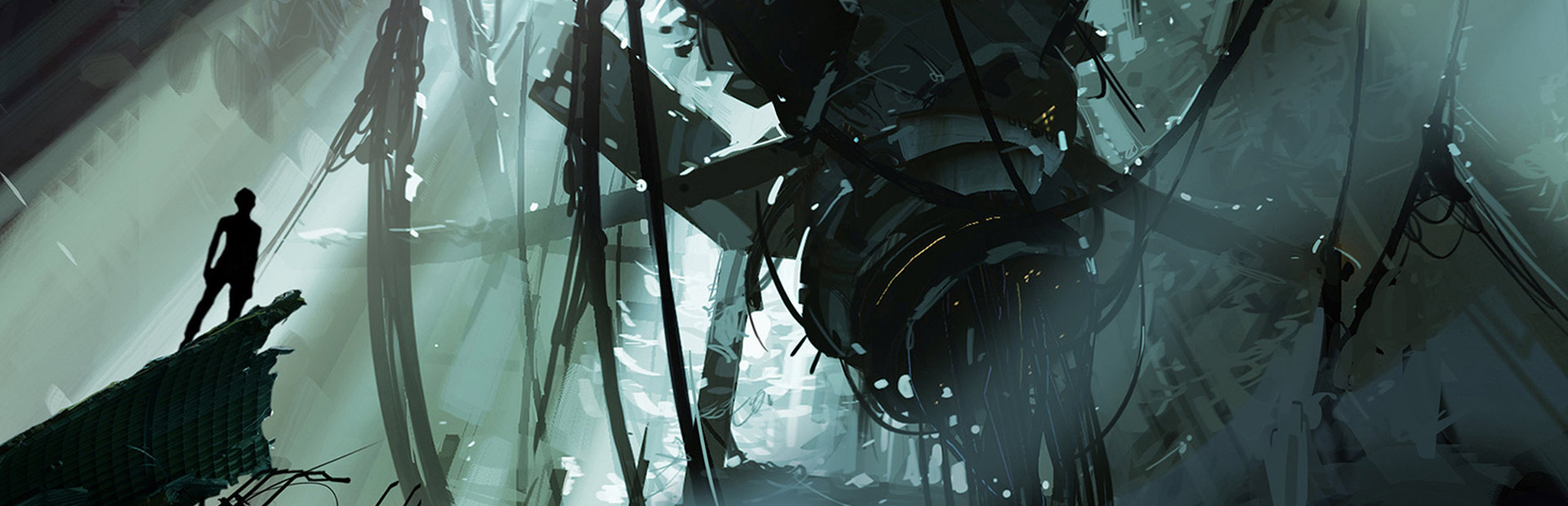
Portal was a phenomenon that redefined how puzzle games are made. The narrative was original and also helped create one of the best video game songs ever created (“Still Alive” by John Coulton). Portal 2 helps build upon this in so many ways and really helps show how a sequel should be done. Instead of just being stuck in lab testing rooms through the whole game, there are more environments to enjoy, and the narrative takes leaps forward instead of just GLaDOS’s voice droning on through speakers.
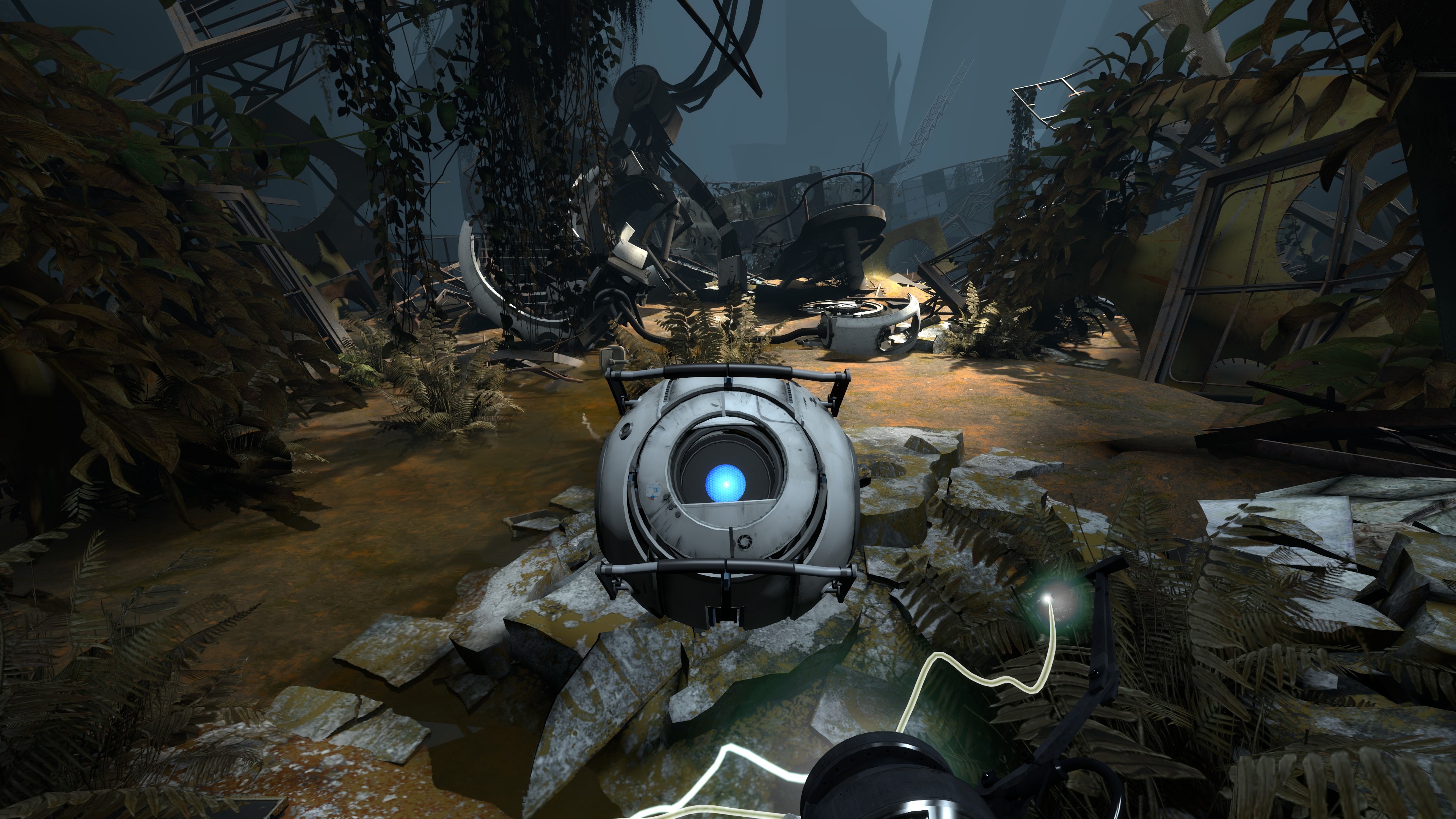
You play as the voiceless Chell once again, but you awaken after being in a coma for some time. A mysterious robot named Wheatley helps you escape your room, and you finally get to see what Aperture Laboratories is like outside the testing rooms. You get to see glimpses of the outside world; vegetation has taken over the facility; and the puzzles now take form in so many different ways. Halfway through the game, you get to see what Aperture was like 50 odd years ago and find out backstories on yourself, GLaDOS, and the founder of Aperture. The narrative is top-notch with lots of cinematic moments, but everything involves puzzle solving, and it’s so mind-bending that each one of the 50+ puzzles feels satisfying. It also goes to show how clever Valve is that I didn’t need a walkthrough once to figure out any of the puzzles. There are so many “AHA!” moments that you just don’t want to put the game down.
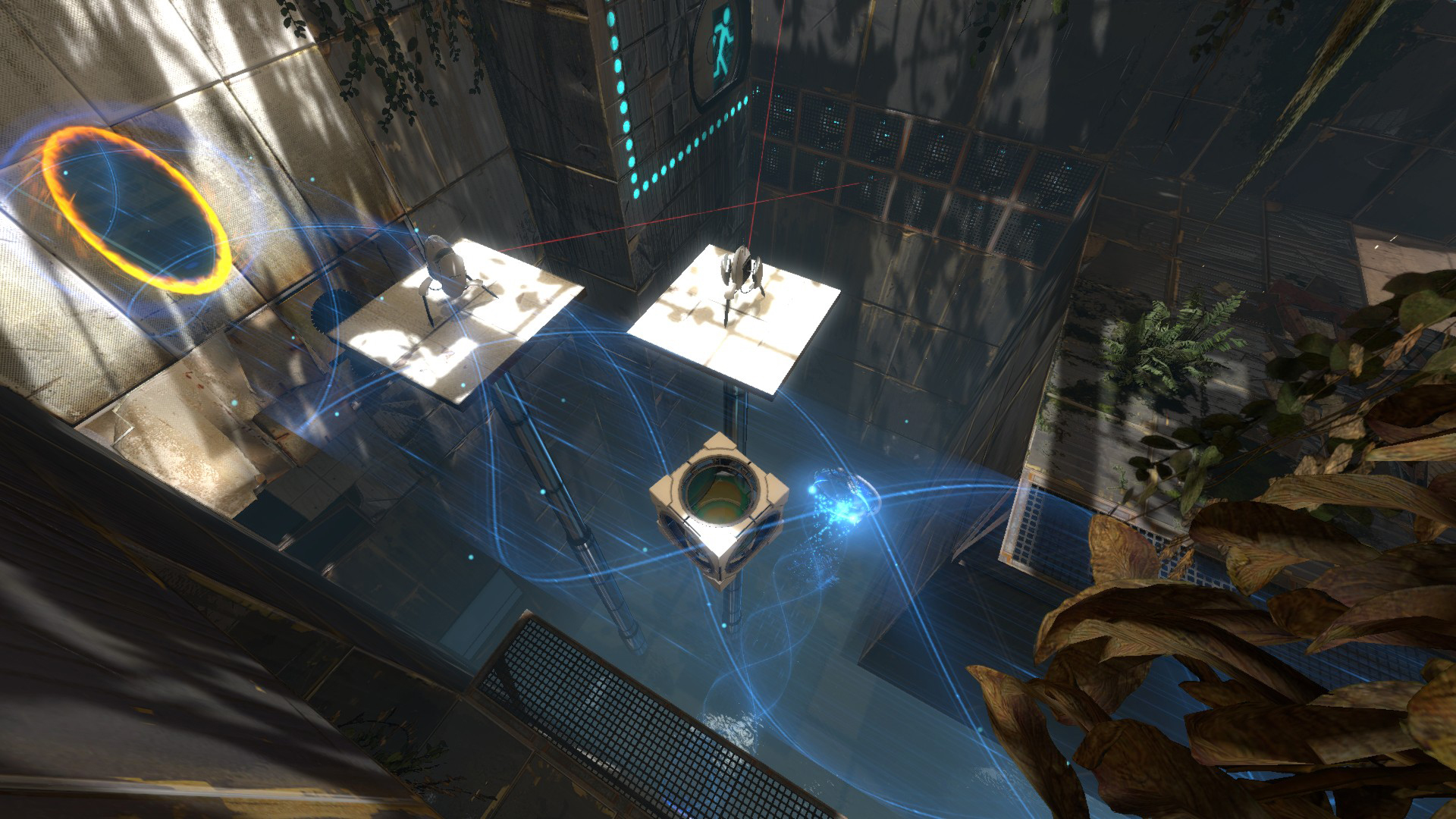
However, there aren’t just portals involved; other gameplay elements have been fused into the mix. There are three types of gels that you can use to solve puzzles: propulsion gel (orange stuff that makes you go really fast), fusion gel (blue stuff that makes things bounce), and conversion gel (which allows portals to be made on non-portal surfaces). Due to these new elements, you have to totally rethink how you work with portals, and it’s a great new mechanic and super fun to use. There are a few other things, such as jump pads, new types of companion cubes, turrets, and other items to solve puzzles, but explaining is almost impossible because you should just play it.
The puzzles are just so uniquely fused with the narrative that you never feel like you’re just jumping from room to room anymore. This really feels like a puzzle or adventure this time around, and some of the puzzles span two to three rooms. There’s constant chatter from characters while solving puzzles, so it doesn’t feel as stale this time around. All the new characters are great, and you’ll like them (or hate them) quickly thanks to Valve’s one-of-a-kind storytelling abilities. The music is one thing I love about this game because when you start bouncing around a room or sliding, there’s unique music that instantly plays when you’re doing these things. You get a strong sense of vertigo thanks to the game’s new take on heights, but the music is just phenomenal. This soundtrack is purchase-worthy, and the new GLaDOS song at the end is just as good as “Still Alive,” but in other ways.
The visual quality is great, but Valve really needs a new next-generation engine. Portal 2 uses the Left 4 Dead 2 Source engine, so everything looks nice, and there are some great visual effects (mainly the gel) as well as great lighting, but it’s not exactly up to par. Thankfully, there’s a huge variety of things to look at this time around (the game is over 10GB!) and the addition of a co-op campaign with an additional story and two new characters is a huge plus, so it’s like two games in one. There are also some quality extras, such as developer commentary, and you can customize your robots in the co-op campaign, which is a nice touch.
Portal 2 is truly something unique for this generation and probably the most innovative puzzle game ever made. With a strong narrative, lovable characters, and tons of new gameplay mechanics, it’s like the first game didn’t even exist. Don’t be overwhelmed by working with portals because this game takes your hand for a while and slowly lets you go when you feel confident enough, you’ll know. Valve knows how to make great games, and other developers need to follow suit.
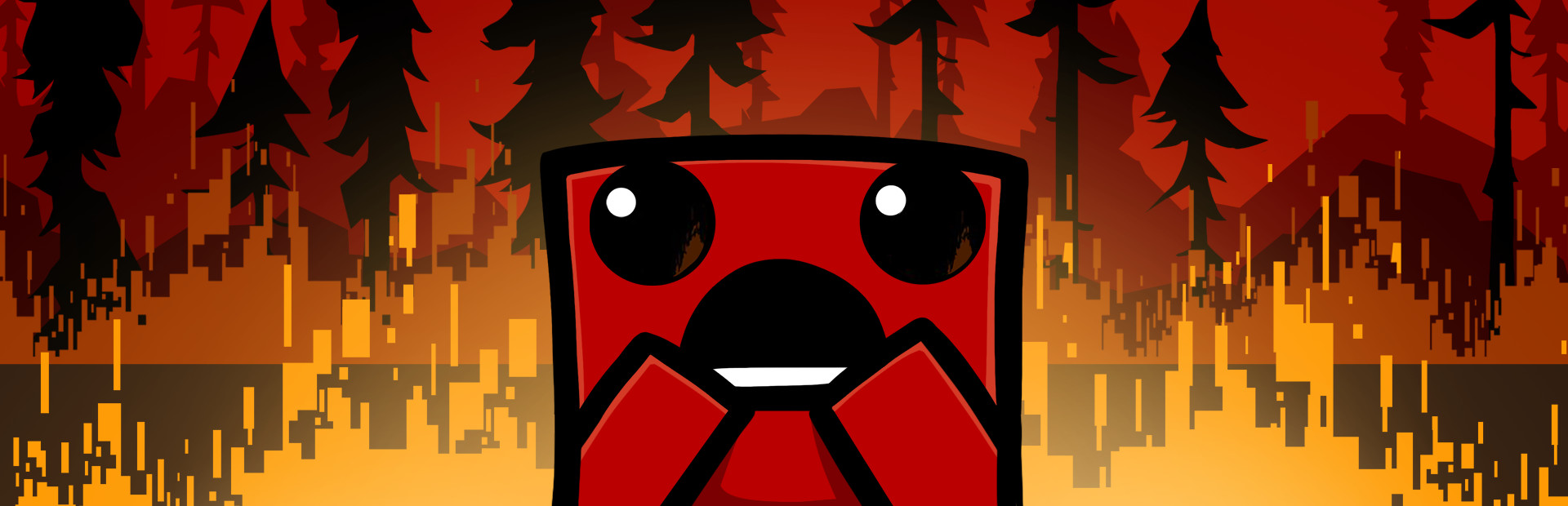
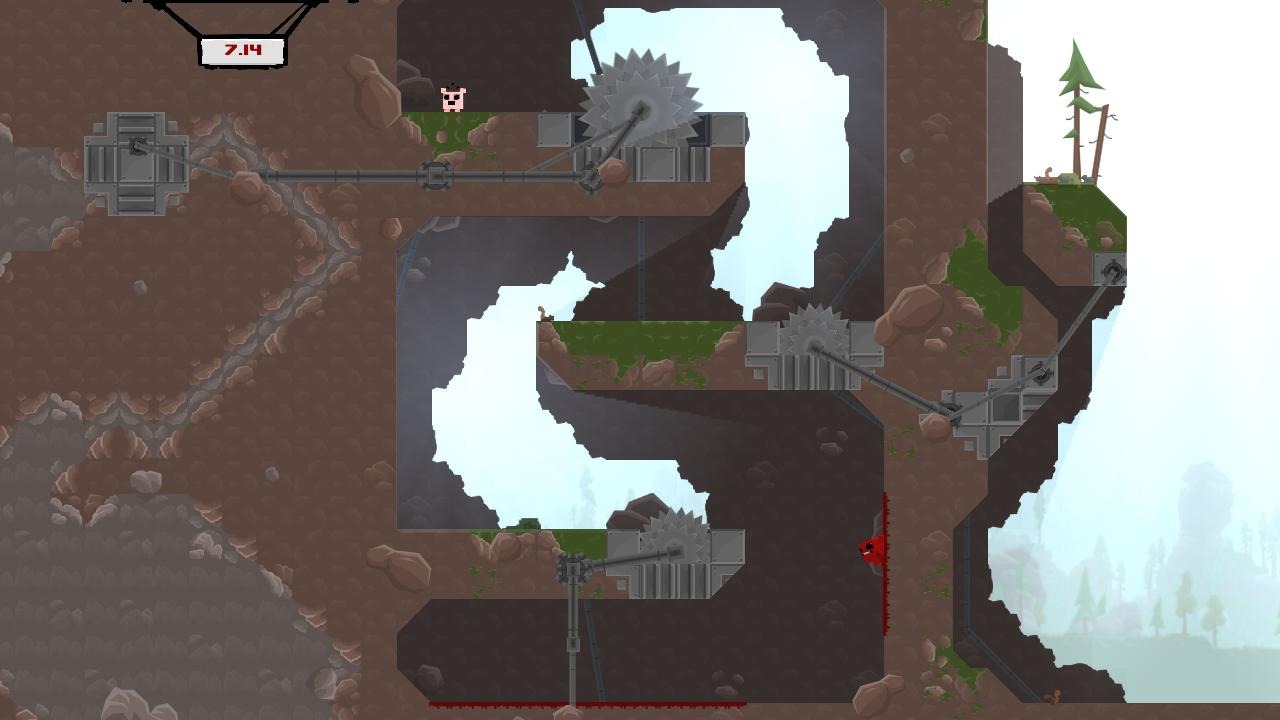
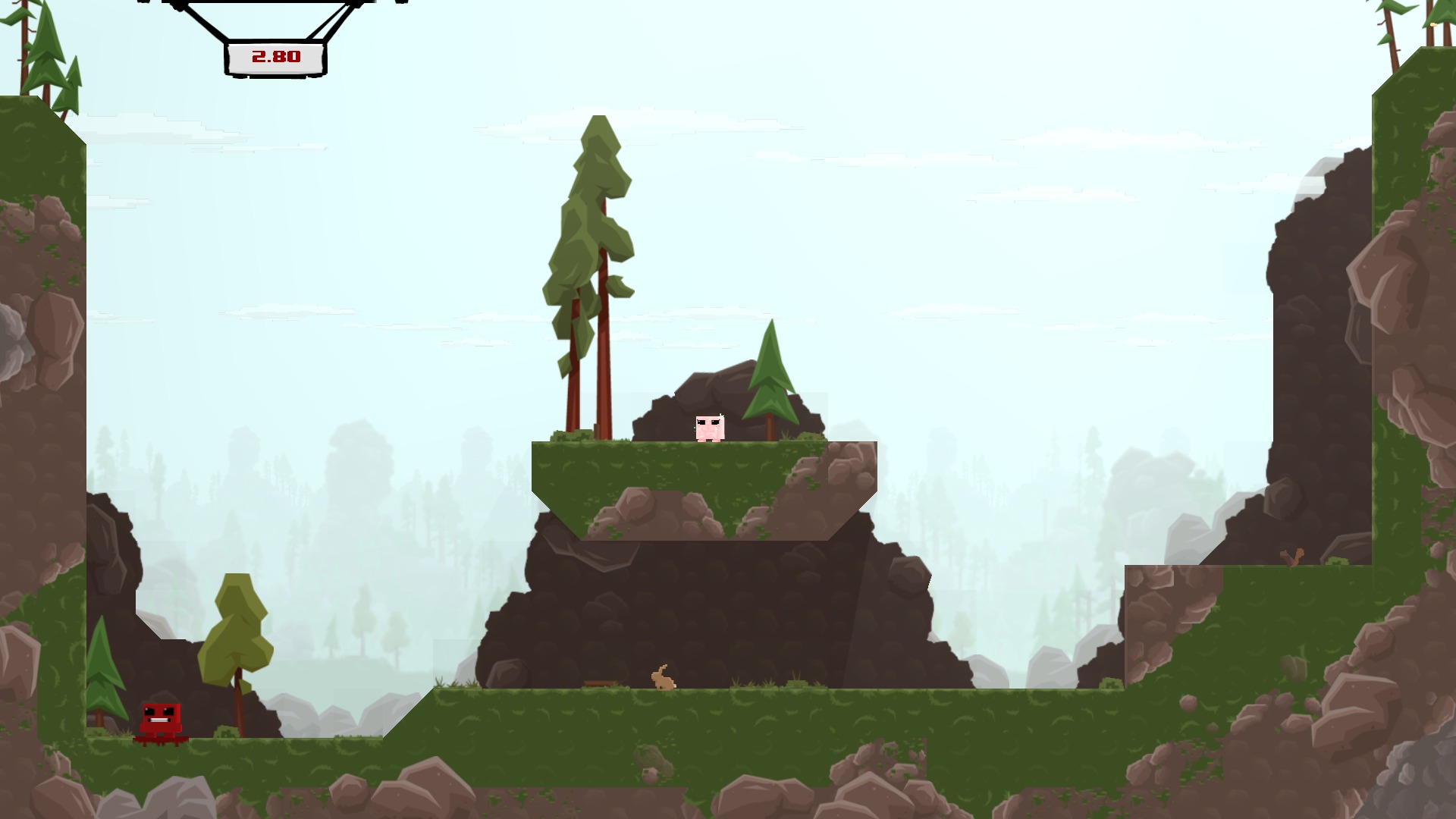
2D platformers are always compared to a 20-year-old game known as Super Mario Bros., and they have every right to. That game was flawless and literally created the 2D platforming genre. Super Meat Boy is probably the only game in recent history that comes close to that kind of pixel-perfect jumping and tight, responsive controls. SMB also has a ton of humor infused with it, and the game is a blast to play and highly addictive.
You play Super Meat Boy, who is trying to save Bandage Girl from Dr. Fetus. It’s a simple story, but it’s hilarious, and the cut scenes are drawn beautifully. The art style is very unique, and there’s so much detail infused in this game that it’s nuts. When SMB gets destroyed, he splatters his meaty goodness all over the walls, and it stays there. He makes a splooshing sound when running, and his facial animations are very funny. There are other characters you can unlock by completing warp levels, and these guys are just as detailed and have their own unique abilities.
The controls in the game are what really surprised me. They’re just absolutely perfect. They are super responsive and tight, and it feels like you’re controlling the characters with your fingers instead of buttons. Using the Games for Windows controller (or any other) is essential, but the keyboard works too. Jumping around corners and maneuvering through the game’s brutal levels can be conquered thanks to these tight controls. I’m dead serious about the game being hard because every corner and jump require extreme precision, or you will die 30+ times. Oh sure, you’ll die that many times thanks to a quick reset button that has zero loading. What’s cool is that after you beat the level, you get to see a replay of every time you died, so every SMB goes off, and you can follow them until the last one makes it. It’s awesome, unique, and makes you want to watch every replay and save them for friends to laugh at.
The warp levels bring the graphics back to 8-bit with amazing music and tend to be more challenging than the regular levels. Usually, you get to play the characters you unlock, but gameplay varies at these levels. You can also find bandages in the regular levels, but these require extra-extreme precision (if that’s possible), so this game is really for hardcore gamers only. Casual gamers will give up quickly, and there are no difficulty levels to set. From the frantic boss fights to the constant dishing out of new obstacles to overcome, the game ramps up after the first few stages, so you must stay on your toes.
With a crap ton of charming visuals, catchy music, and perfect controls, the game shines above all other 2D platformers. It wouldn’t hurt to say it’s probably the best 2D platformer in the last decade, but the brutal difficulty is very forgiving thanks to the feeling of accomplishment once you trump that level. Try beating the record time to feel even better about that victory! I highly recommend SMB to any platforming fan or even fans of the 16/8 bit eras.
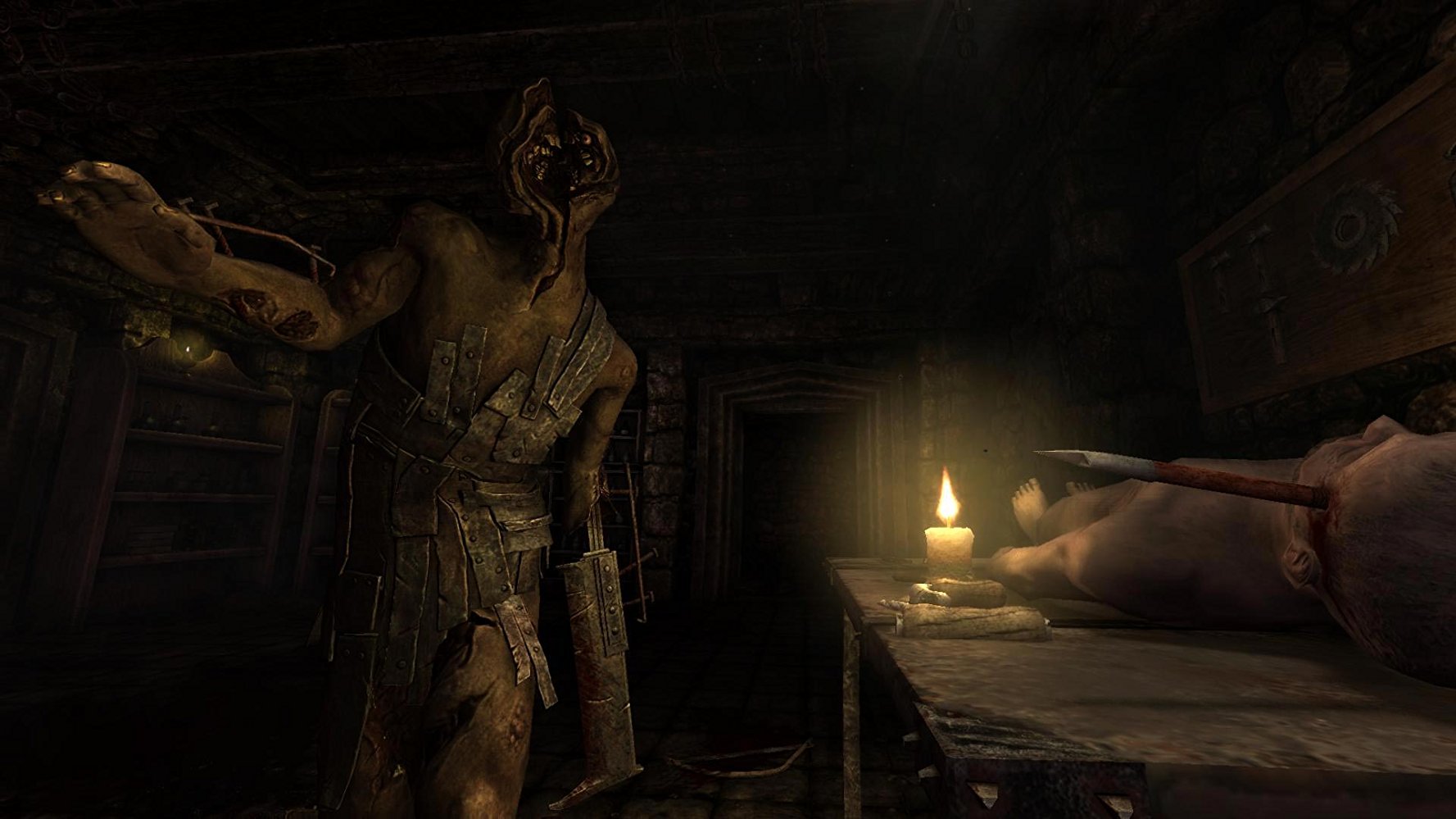
The survival horror genre is probably the fastest-dying of them all, but it’s games like Amnesia that really get the spotlight when they hit it home on the scare factor. Amnesia stays true to the genre, and this is due to the fact that there’s no combat whatsoever. Zero, zilch, nada, you can’t fight. If you see a creature, you have to hide or run, and this is what adds to the tension. If you can fight, you can just kill it, but if you can’t, then you have to really think about what to do, which can make you not want to continue.
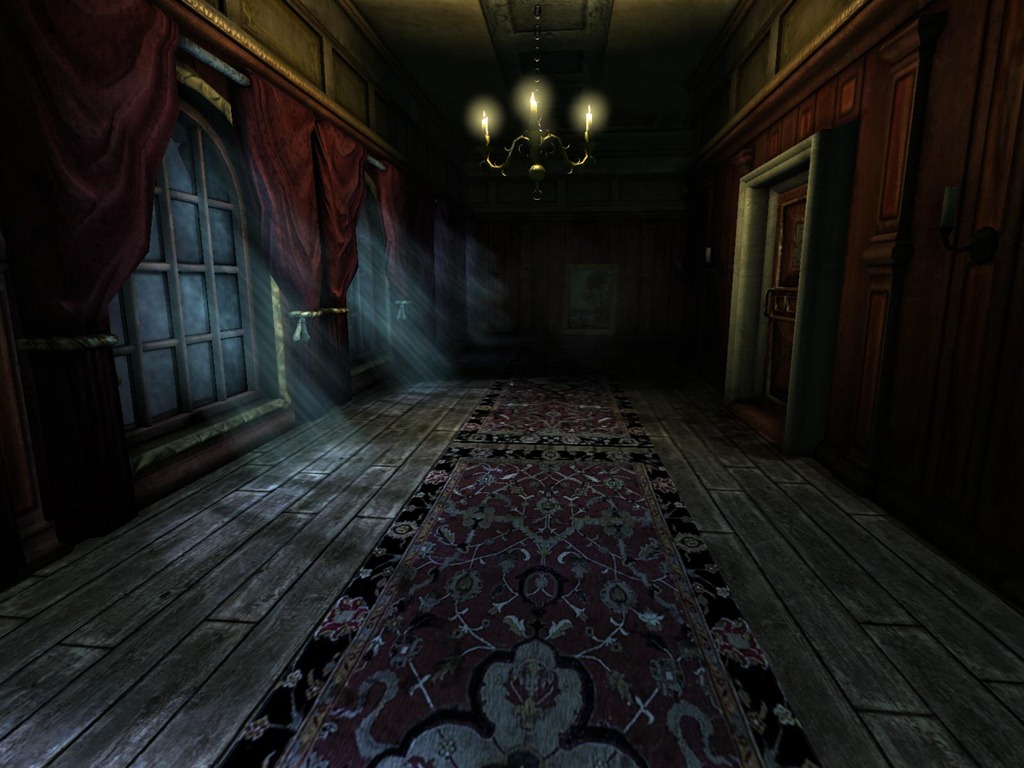
Amnesia may be a first-person adventure game, but your only weapon is light and against your own insanity, not creatures. Staying in the light is key, and oil for your lantern is as precious as 9mm ammo in Silent Hill. It’s scarce, and you try to savor every drop or just use tinderboxes as an alternative. You can light candles, lamps, or any source of light to guide your way to preserve oil or if you run out. Daniel can see in the dark somewhat, but it’s hard to solve puzzles like this.
As your sanity slowly drains, you will hallucinate, walk slower, the screen will distort, and creatures will hear you. Seeing traumatic scenes can do this too, as can looking at creatures for too long. You will also lose sanity if you don’t progress or solve puzzles, so it keeps you on your toes, but don’t worry, I only encountered a couple of times where Daniel went totally insane and lost it. You’ll more likely go insane from fright before he ever does.
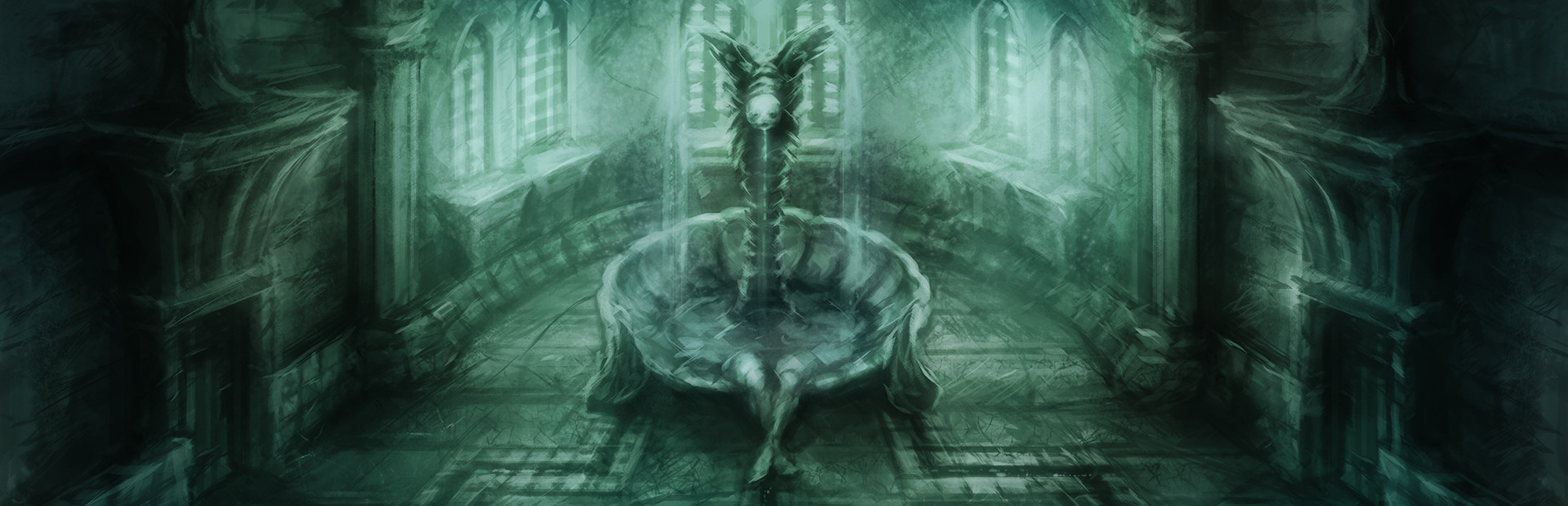
And that’s the thing about amnesia: it frightens you with atmosphere, pacing, and tension from the environment instead of zombies popping out. The music and ambiance are haunting, and they make you paranoid throughout the whole game. One scene had me in a room where I was picking up a letter, and suddenly something started bashing down the door. I literally jumped and tried to find a place to hide. A wardrobe! I grabbed each door and swung them open and hid, and as I peeked through the crack, Daniel started freaking out, so I had to not look. I heard the creature breathing, moaning, and moving around, and I was afraid it would start bashing down the wardrobe! It soon turned away, and I could continue hunting for puzzle solutions, but was I ever so scared?
The haunting story doesn’t help either, with you just waking up in a castle and not knowing who you are. You read letters along the way, trying to discover some orb and stop the shadow from consuming you. I can’t go into more detail because it will spoil the story, but it’s very creepy and disturbing and was well put together.
The second part of the game is the puzzles. These vary from object hunting to physics and pathfinding. I have to admit that Frictional has always been known for obscure puzzles, and some of the time I didn’t know what to do and was completely clueless. You rarely get hints, and this can lead to frustrating backtracking and pixel hunting, so an FAQ needs to be handy. Other than that, the puzzles were clever and really stuck to the story, and they all felt necessary.
Amnesia is a horror classic and is even better than Frictional’s Penumbra series. This game will scare the pants off of you; it even clocks in at a nice 6–8 hours and has three different endings to see. I really hope for a sequel or another game similar because Frictional found the survival horror sweet spot.
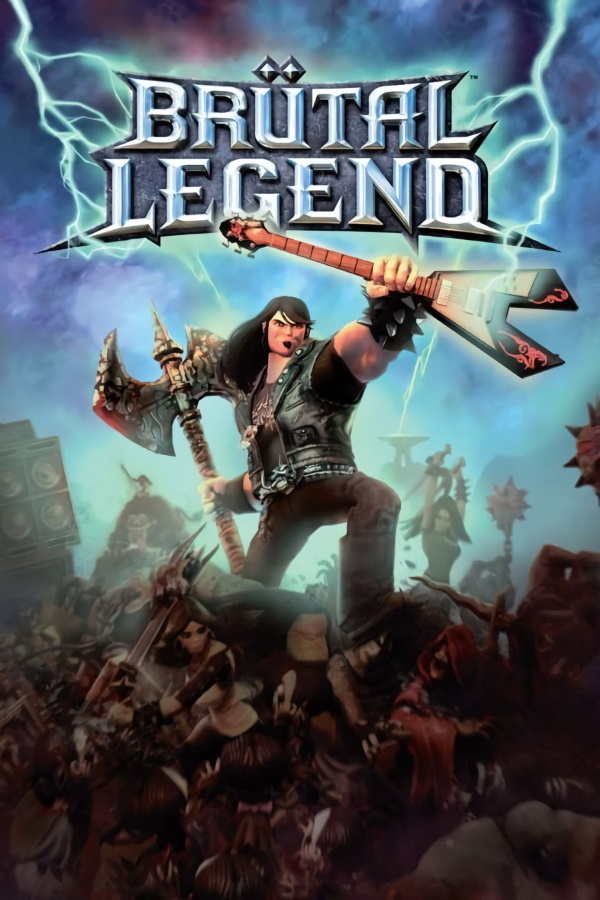
Ahh, good ol’ metal. That is exactly what you’ll say when playing Brutal Legend, thanks to Tim Schafer’s genius imagination and Jack Black’s great voice acting. Brutal Legend isn’t exactly revolutionary, but it does have some ideas that are interesting. When it comes to the story, this is one of Brutal Legend’s strong points. You play Eddie Riggs, who is a roadie and gets sent to another world, and that world is full of metal. Eddie runs into many characters, but his main goal is to find out why he is there and defeat the evil lord Diviculus.
The game starts out strong and shows you the ropes of combat and your deuce. Yes, the vehicle you drive around in the big open world. Combat consists of a strong attack and a normal attack, followed by your axe. Your axe can shoot lightning at foes or burn them. Along with this, you can smash down on the ground to send foes flying. There are some upgrades you can get that will extend combos and lead to using your axe, but combat is pretty shallow. Nothing ever really evolves, and it can even be a bit sluggish at times and a tad unresponsive. Upgrading the pain and strings on your guitar can make certain attacks more powerful. Not only can you upgrade your ax, but the deuce as well (more on that later).
While you may think combat sounds shallow, you can also use “superpowers,” which are little riff mini-games that can do certain things. The main ones you will use will be the ones to summon your deuce anywhere. Another is the face melter, which is followed by a great camera cut of melting faces! There is even one to rally your troops, block your enemies from creating more troops, and so on. Finding the relics for these powers is a huge pain since the world is so big and finding these rare relics can be tough, but wait a second; I’ll get back to the open world later.
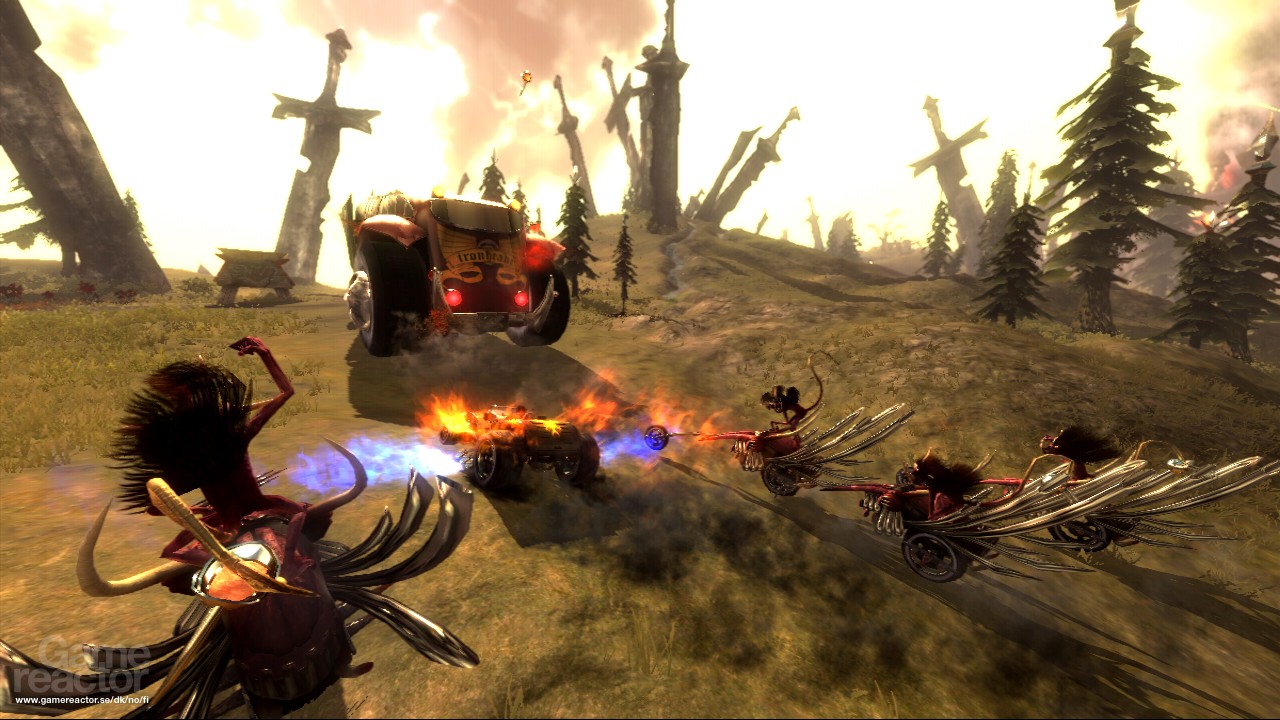
First, let’s finish the combat. Yes, you can upgrade your vehicle with weapons to help shoot down foes and even get a secondary weapon such as mines or flamethrowers. The main focus of the game is RTS. Wait, what? RTS? You’re kidding me, right? I thought this was a God of War-type game… I’m very sorry, but this is true, and while it works, it is the game’s biggest letdown. I too thought this game was all action-adventure until I got hit with a tutorial on how to do this. Well, to make things simple, all your basic RTS elements are here: Creating troops, upgrading your “base” to create stronger troops, and collecting “resources” to fund all this. With a unique take on RTS, you have to build “merch booths” on green holes in the ground to create fans, which in turn let you create troops. Upgrading your base up to two times lets you create greater troops like roadies, bouncers, and even fire barons. You have basic troops (headbangers) and chicks that shoot fire out of their guitars. There are a lot of units, and while you command them around the map via a light, you can tell them to hold, attack, go to, or follow you. Eddie gets to fly around the map, and when you need to aid your troops, you can use any of your “special attacks.” If Eddie dies, he respawns on his stage, thanks to his fans.
Now, while all this sounds simple, it really is too simple and could have been cut from the game. There are “in-between” levels that have you fetching these troops or going from A to B, and I really liked those missions better. The RTS just took too long and felt out of place in an action-adventure-type game. I was also disappointed to see only two boss fights, which were at the beginning and end; thus, the developers used side missions as fillers in between story missions. These side missions are interesting at first but become extremely repetitive since there isn’t much variety.
Side missions vary from helping the Ironheade (yes, with an E, so people know we’re serious) members ambush an enemy convoy all the way to racing. Some other missions consist of using your vehicle to fight off convoys, and the rare, unique side mission. There is even a hunting record-breaker, but this allows you to send that creature into battle to help you fight. Of course, you get something for completing these missions, and that is fire tributes. Think of these as currency to buy stuff at the store.
My favorite part of the whole game is actually the art style. Everything from the trees to the rocks to the animals is influenced by metal from the 70s and 80s, and Double Fine captured the feeling perfectly. The graphics are amazing and the voice acting is top-notch, but you can’t help but notice the attention to detail in everything. Not only is the art style unique, but the execution is as well, such as the dry ice mines and the great wall, which is made of amps that are so powerful they can kill you. Everything is pure metal, and so is the great 40+ song soundtrack. Brutal Legend isn’t for everyone, but metalheads or people who just appreciate great games or music will enjoy it very much.
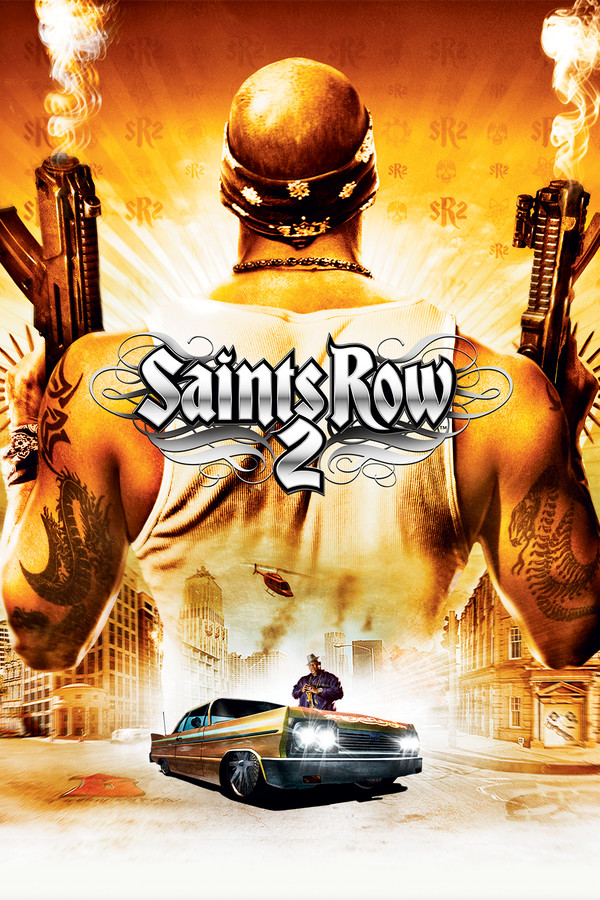
The sandbox or “open-ended gameplay” genre is actually the newest genre known to video games, with a good seven years under its belt, but not that many games have really proven the genre worthy. With Grand Theft Auto III being the daddy of this genre, many games were failed mock-ups of GTA; many weren’t even related but still didn’t do the genre justice. Saint’s Row tried to push the genre once again a few years ago, but didn’t do such a great job and was just shoved off as another GTA clone. Now that Saint’s Row 2 has been out for a while, people kind of just stopped with blank expressions, while some roared and cheered with joy. Saints 2 really does push the genre and is a clear opponent against Grand Theft Auto IV, but I’m not going to sit here and compare the two since Saints 2 deserves a separate look.
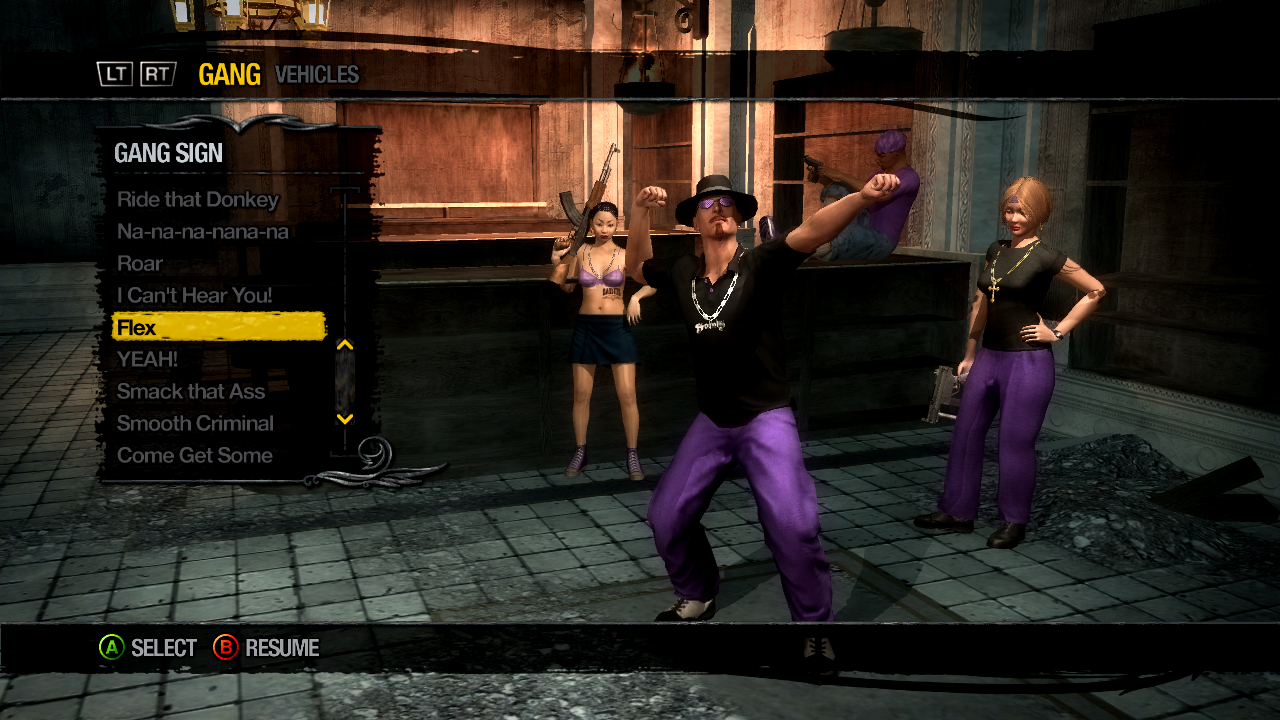
The first thing you do when you enter the game is to create your own character, and this is what really sets the game apart from others in the genre. You wake up from your coma in a jail hospital, and bam, you’re in there, changing your sex, picking your taunts (some are very vulgar), rearranging your face (you can do that outside of this too), picking your hair, and even your voice. The options are deep and riddled with lots of ways to make your character unique and stand out from others online. Once you get out of this mode, you are introduced to an easy-to-use tutorial that will show you how to control your character, and I have to admit, the controls are wonderful. I never got frustrated with them, and they are just so intuitive and easy to understand and remember. You start out with some melee training, then you pick up a pistol and discover you can zoom in via over the shoulder, jump around, and it all just feels nice and smooth. Once you hop into a car, this doesn’t change one bit since cars will turn on a dime and have the perfect feel to them (all 40 or so of them), and this makes driving around the city of Stilwater very pleasant.
The bulk of the game is about rivaling gangs throughout the story, and I have to admit the story is riveting, gruesome, and very entertaining and never falters once. You see, since you were knocked out for two weeks, all the gangs who hated you took their territory back, and now you must gather your old friends, start the 3rd Street Saints up again, and build your hideout. In this hideout, you can get your cash from the stores you purchased, change your gang’s style (like the ’80s, hip-hop, pimps & hos, that sort of thing), change your weapon layout, and pimp out your crib. All of these are just nice subtle touches that THQ didn’t really have to do, but they went that extra mile anyway.
Between these story missions, you can go to different stores and buy food (health), jewelry or clothes to increase your respect, go to plastic surgeons to redo something on your character, buy cars, buy weapons, and in the second half of the game, play side missions.
These side missions are actually a blast, and the two I will talk about are Fuzz and Septic Avenger. Most of the side missions are scattered throughout your map (Stilwater is HUGE, by the way), and they consist of events such as racing, celebrity protection, helicopter attack missions, etc. All of these missions earn you respect, so you can play story missions (each story mission takes one piece of your respect bar). Each mission gives you a time limit and a certain objective to complete, while some are easy and others are a pain in the @SS and can leave you screaming in frustration. Fuzz is a cop reality show where you drive around to designated crimes and kill them according to what your cameraman says. Sometimes you’ll have to use a chainsaw (camera angle a la Gears of War), use satchel charges on skateboarders, etc. Fuzz is an addictive (like most missions) way to fill your respect bar and leaves many laughs as well (thanks to the amazing dialog THQ wrote for the game). Septic Avenger has you driving a septic truck (yeah, a poop truck) spraying fecal matter all over buildings to depreciate their value for certain clients. As you spray the buildings, a red meter will drop and a cash amount will pop up, bringing that much closer to your depreciation amount. There are also some other smaller side missions, like the taxi missions and hostage diversion, in which you hijack a car and any passengers can be driven crazy (literally) until a ransom is given. You also have a streaker mission since you can walk around naked (blurred naughty bits, of course) and streak in front of people for cash.
If you think the side missions sound fun, don’t forget those story missions. The game has amazing voice acting and clever dialog, so it’ll keep you wanting more and make you come back to see which gang member you’re going to kill next. Not one mission is identical, and you are blessed with a nonrepetitive mission-based game that gives you many different places and ways to kill people throughout the entire game.
Now, when it comes to nitpicking the game apart, the graphics aren’t up to par with most next-gen games (thanks to a lot of Gears of War 2!). , and there are serious slowdown problems where the FPS will drop into the single digits sometimes; there are collision detection and clipping issues; some funky physic problems; but nothing that sandbox games haven’t encountered before. The game is highly playable, and you shouldn’t let these small problems bother you. The last thing I need to mention is the fact that the game is gruesome and more ballsy than GTA ever was. There are complete torture scenes, foul language, and running around naked a la Sims style, which is pretty far out there. The game is just hard-hitting and in your face, and that’s exactly what a mature-rated sandbox game needs.
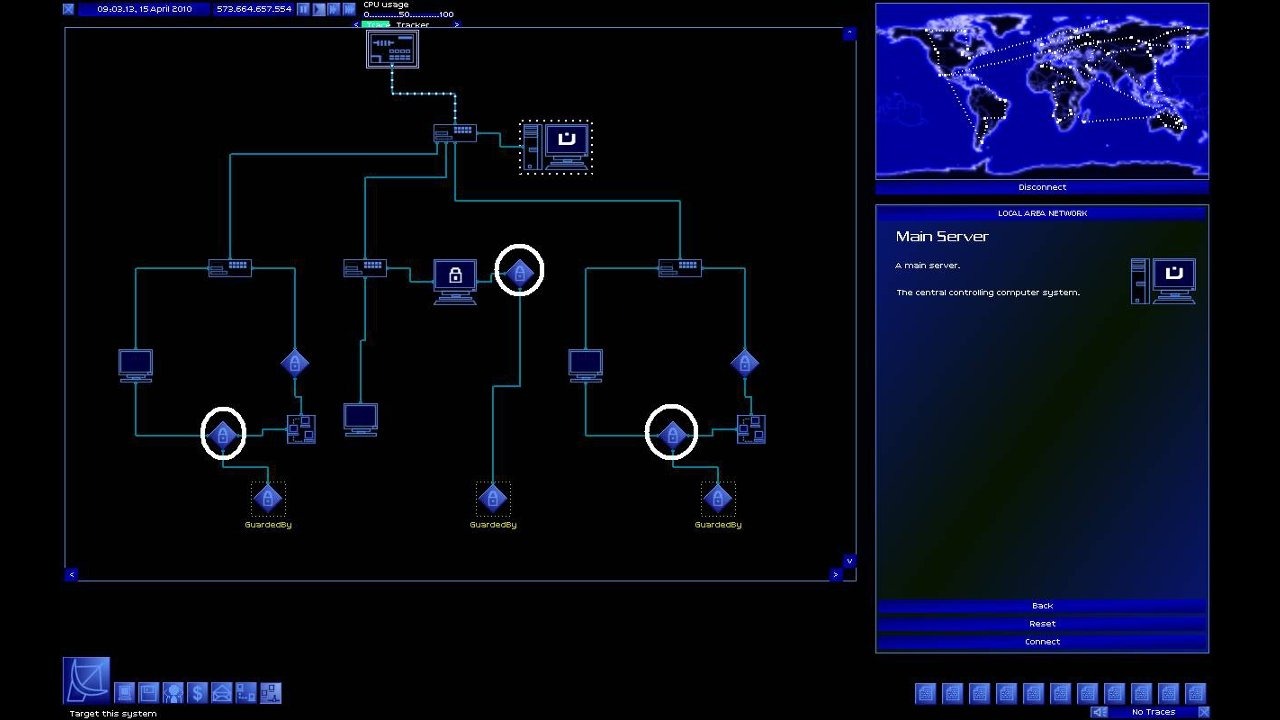
Hacker is a strategy game that simulates being, well, a hacker. You have a simple menu layout that shows your computer upgrades, what’s in your memory, your finances, and all that stuff. The main purpose of hackers is to take missions from the mission list, figure out the best way to do the mission, and then report back. You can log into your Uplink Network to upgrade your software, hardware, and gateway (more on that later). The way the game works is really simple; the main thing to watch out for is being traced, so you buy a trace detector, and, depending on the upgrade, it’ll tell you how much time you have before being traced. You hack into a server by using a password cracker and waiting for the password to be hacked. Once you get in, you have to actually “do the mission,” and this can range from just copying a file, deleting a file, or more advanced things like changing an academic record, getting financial information about someone, etc.
The simpler tasks are easy; you just open your copier or delete tool, and once you find the file, you click on it, and it either deletes or copies it. Copying files has to be added to your memory bank, and certain files have certain sizes. Make sure you buy a defragger to squish all your files together for more room. Doing these tasks takes CPU power to allocate the most important tasks, use more CPU power, or just upgrade your CPU. All of this costs credit that you earn from doing these jobs. Some more advanced missions may need a proxy or firewall bypass before you can edit records. Either buy a cheap proxy bypass program that automatically starts the tracing process or get a HUD program that lets you execute more advanced programs for more advanced tasks. Editing records is easy; all you do is type in what the mission log says and what you did. Make sure you delete your log files (if you have time) so you’re not detectable and get caught later on in the game. If a big corporation finds you and reports you, Uplink will kill your gateway, and it’s game over.
Some of the most advanced tasks involve voice decoders that make you talk in a mic and other decoders, so get into the banks (the most high-security servers). Upgrading your computer lets you store more items, makes tasks go faster, and lets you use more advanced hardware. Once you get the best hardware, the hardest task becomes a breeze. While there are a lot of missions, the game gets old really fast, and after the first 3–4 hours, you’ll start to get bored, whether or not you ever get to the higher levels. Bouncing your connection around the map is the key to slowing the trace, but sometimes this isn’t even good enough.
There are a lot of great ideas in this game, but they’re just not enough to keep you interested for long periods of time. A lot of times, you’ll get lost on what to do since the tutorial only covers the simple stuff like copying and deleting and doesn’t say anything about proxy and firewall bypassing. Most of this stuff you have to discover through trial and error, and this can cost you the whole game when you first start out. The game is also very bland, both audiographically and visually. The game is just a black screen with a bunch of pop-up windows and simple text that you read. The audio is very plain, with almost 16-bit music and no sound effects. The music is elevator music-style techno, and all it does is keep you from falling asleep. So, with just simple clicks and typing and figuring out the best way to solve missions, the game is fairly interesting for such a simple concept. I really hope there is a full-blown sequel in the works, and I hope it becomes more advanced than it is now. I feel the sequel could get major sales if it was done right, so all puzzle and strategy fans should check this one out, but if you’re looking for visual flair, look elsewhere.
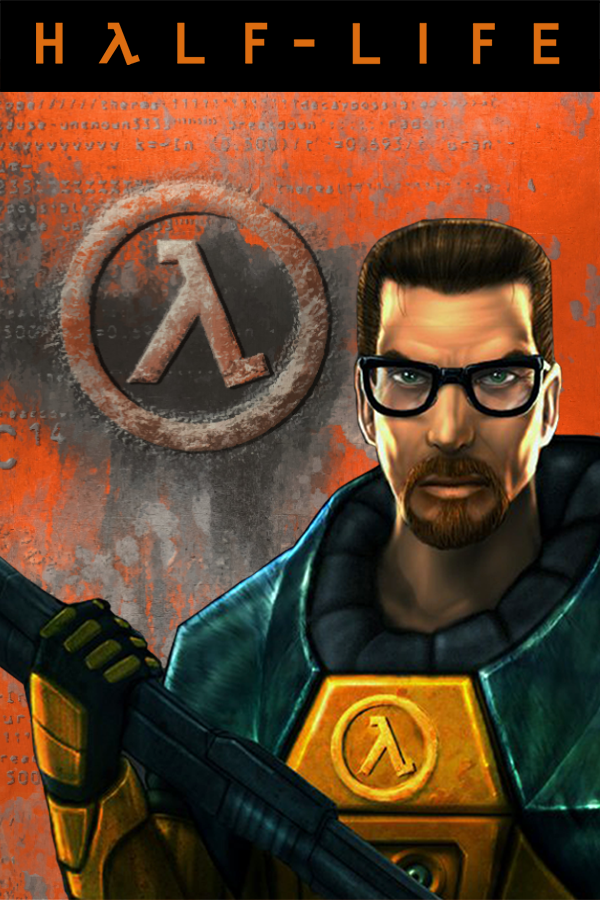
Man o’ man, does this bring back a lot of good memories? I remember almost dying because my mom’s computer couldn’t run HL1. I begged her to get the computer upgraded (at the time, not even knowing how this was possible or the cost), but she just wouldn’t do it. All I could do was stare at videos and screenshots until I thought they would be forever da-da-da! until I heard about the PS2 port! I was so excited that I babysat my bratty sisters for a whole summer and laid down $200 in smackeroonies on a used PS2, but to my luck, HL was nowhere to be seen. It turns out that not many copies of the game were made, so they were scarce. Settling with a rental, I finally was able to play the game, but it was starting to feel old because I didn’t get ahold of it until late 2003. Realizing that I was missing out on a lot at the time, I wound up losing my save and, being so angry, never touched the game again. Four years later, I can finally play the game again thanks to Steam (I actually ordered the HL1 Anthology off of EB games for $20), and I have definitely realized what I missed now that I have finally been able to finish the game.
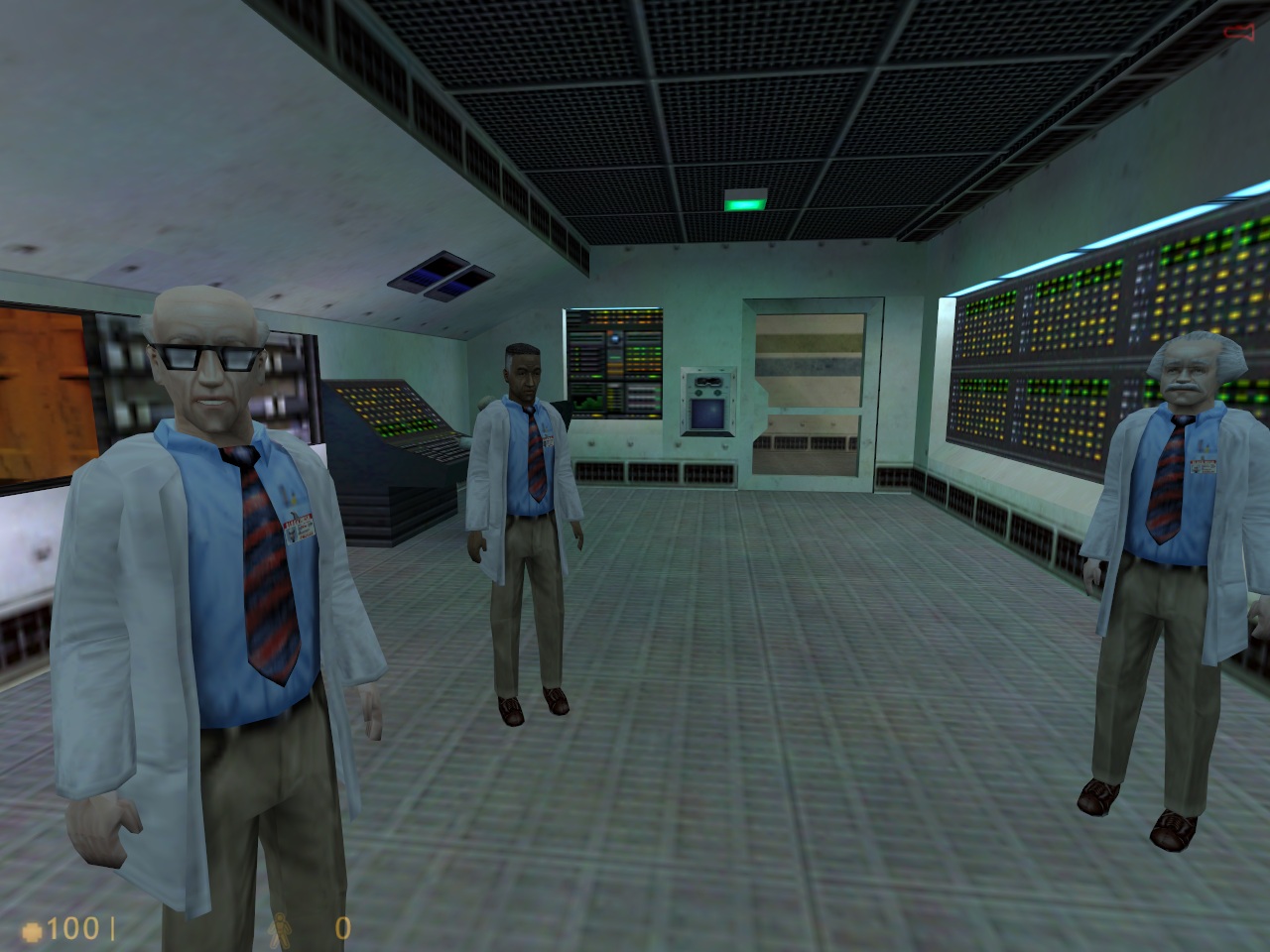
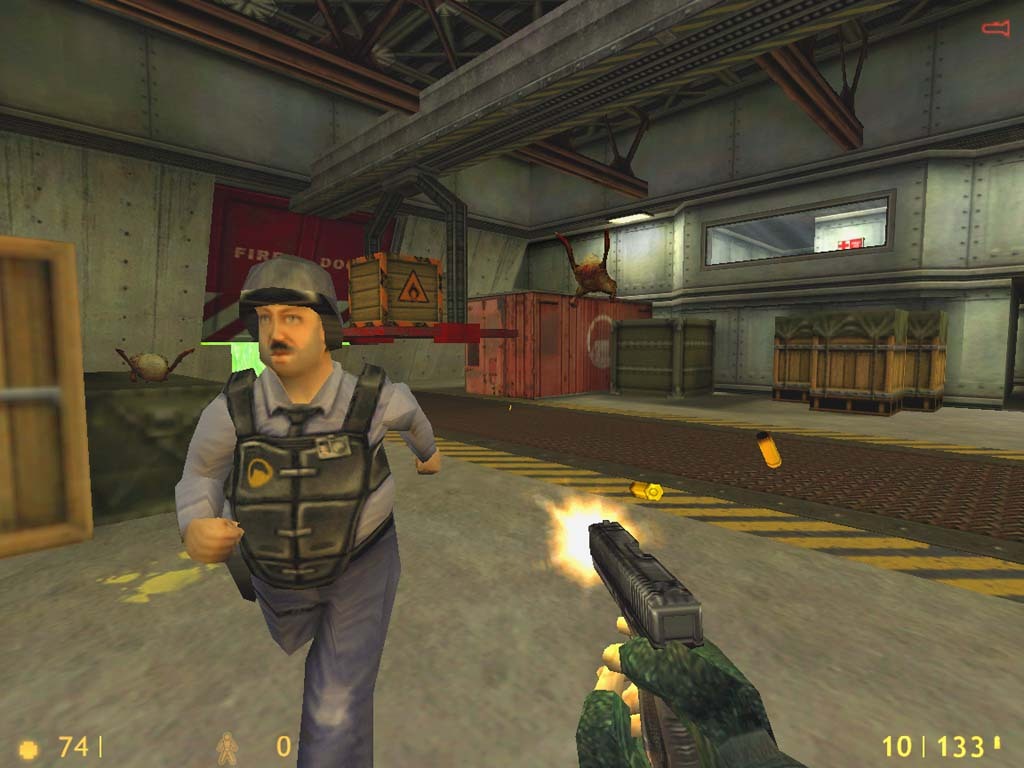
While Half-Life never looked as good as Unreal, Valve, it pulled some strings and did some custom stuff with the physics, water, and lighting effects. HL isn’t just your regular run-and-gun shooter; the story is told all in real-time by running into certain characters, and by just progressing, you get an idea of what’s going on without much dialog. This was revolutionary at the time, and so were the weapons, graphics, sound, physics, and enemies. The game has your usual weapons like machine guns with grenade launchers, pistols, revolvers, etc., but HL has some weapons up its sleeve that were never seen before. Such weapons happen to be laser-guided rocket launchers (you guide them with your mouse!). I remember people buzzing about these weapons back in the day, and they’re still pretty cool. You also have the Bee Gun, which is a weird slimy thing that shoots killer bees. You also have some strange electricity guns, mines, laser mines, satchel charges, etc.
The enemies were also something never seen before, like the Head Crabs, Head Crab Zombies, the Ichthyosaur, the Vortigaunts, etc. The game also had huge bosses, which were amazing back in the day and seemed very epic. The game was dark, creepy, and very hard as well. Most shooters back in the late 90s were just run-and-gun nonsense in dark tunnels, military complexes, etc. Half-Life is not innocent and does do this, but there are other places to see, like climbing a HUGE canyon and looking out over the ugly vista that looks like the Grand Canyon. Today it looks like someone slapped a low-res JPEG image in the background, but in the late 90s, things like this seemed like you were staring over a GrindLift in Gears of War 2. Half-Life was just so real and so amazing back in its day that it really kind of shocks you how such an old game can still make that kind of impact.
The game also consists of a lot of maze-like halls that you can get easily lost in, and I found this to be the main problem with HL. Some of the puzzles were a bit confusing to do, and navigating the endless halls calls for a much-needed walkthrough. While the level design is excellent and you pretty much know where to go, there are those occasional moments that make you wander around the whole area a few times and look in every nook and cranny, wondering what switch you missed or what you need to go through. Some neat things back in the day were being able to have the Blue Shift men help you and ask scientists to open doors for you. While this is standard these days, this kind of AI was unknown to late-90s PC gamers. This added to the realism and made you feel like you really were stuck in Black Mesa trying to fight off the alien invasion.
You’re probably wondering what the story is, right? Well, it’s really simple: Gordan Freeman (that’s you) arrives at Anomalous Hazards as a regular employee, an experiment goes awry, and Gordan must escape the facility and figure out the source of the alien invasion. The story, as I’ve already said, isn’t told through cutscenes but rather in real-time while you play. This helps add to the experience, but of course it may bore most younger PC gamers who are used to FEAR, Crysis, CoD, etc. Half-Life is for hardcore old-school PC shooter fans only and really takes cunning skill to finish. The game will give you less and less health as you go, and you’ll have to figure out how to take out a room of 10 bad guys with only 2 health. While this isn’t impossible, it can be done and requires precise skill (thus only for hardcore fans).
Most of you have probably played HL2 already, and these games are pretty much completely different besides the content. You still have your hazard suit; most of the weapons are the same, but there is more stuff in HL1. About 40% of the weapons and enemies in HL1 aren’t in HL2. HL2 is more realistic, while HL1 is more of a sci-fi type of game. Thankfully, you can play HL2 without even touching HL1 (which I did), but HL1 explains a lot of things that aren’t explained in HL2, and there are bits in HL2 that are for fans of HL1 that you normally wouldn’t know about unless you played this game.
Now, of course, HL1 has a lot of flaws, like floaty physics, being able to run 100mph, cheap deaths, and poor graphics, but these are flaws seen with age. If you were to go back to 1998, the game was almost flawless. Now, when it comes to upgrades and mods, there is an endless ocean. There are a ton of amazing multiplayer and single-player mods available, and I have spent hours and hours on most of them. You must go to FilePlanet.com and download these mods, because they are super fun. HL1 also has a free hi-def pack that you can download to update the graphics a little bit. If you want to go even further, pick up Half-Life: Source, which uses HL2’s engine to make things look more modern. I highly recommend the Source version for people who just can’t stand “old graphics,” but old-school shooter fans should just get the hi-def pack just for nostalgia’s sake.



















































 thebinarymessiah.com
Try multiplayer. A lot of fun !