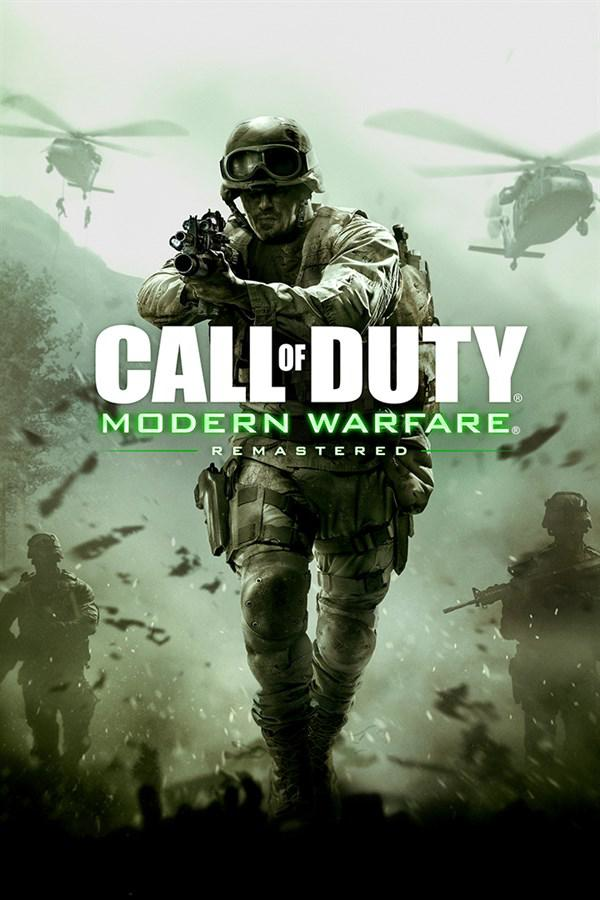
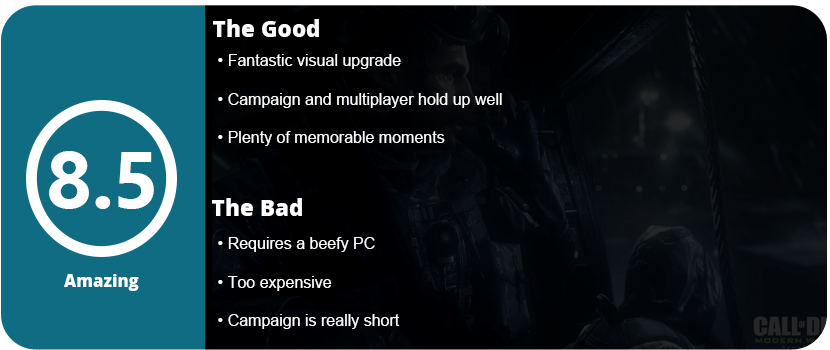
When a game as big as Call of Duty 4 gets remastered, it takes you down a serious memory lane. I remember watching the E3 reveal video of the “All Ghillied Up” level and being blown away. The cinematic gameplay and delivery of CoD4 were unheard of back in the day and helped push that generation of consoles forward. It was a groundbreaking game, despite where the series has gone over the years. Each level was carefully laid out with memorable moments and varied gameplay that most first-person shooters didn’t do 10 years ago, and that’s just the campaign. The multiplayer rewrote how first-person shooter online play should be.
That sound you hear when you hit an opponent and the X that appears in your crosshairs when you nail them? That was all Call of Duty. Being able to earn ranks and upgrade your weapons over time? That was Call of Duty. The maps were fantastically designed, and the weapons felt amazing to shoot. The movement was fluid, the pacing was perfect, and the opening scene on the ship is something I will never forget. Take all of that, fast-forward 10 years, and then stick the game in a current-generation engine, and you have a game that holds up and is better than any recent Call of Duty game.
While the campaign only lasts about 4 hours or so, there’s so much variety. From the stealth missions in Pripyat to using the AC-130 and bombing the crap out of Russian ultranationalists and even running away from choppers in vehicles, There’s various terrain, weapons, and pacing to make the campaign feel far from boring. While the story is generic and barely interesting, the gameplay isn’t. You play as two separate military teams from the US Marine Corps and the SAS. “Soap” MacTavish and Jackson are your two guys, and while it doesn’t really matter gameplay-wise, Captain Price is actually quite a memorable character as he has interesting dialog, cracks jokes, and has such a unique appearance. It seems silly, but Call of Duty 4 was the only game in the series that had anything really interesting or memorable going on.
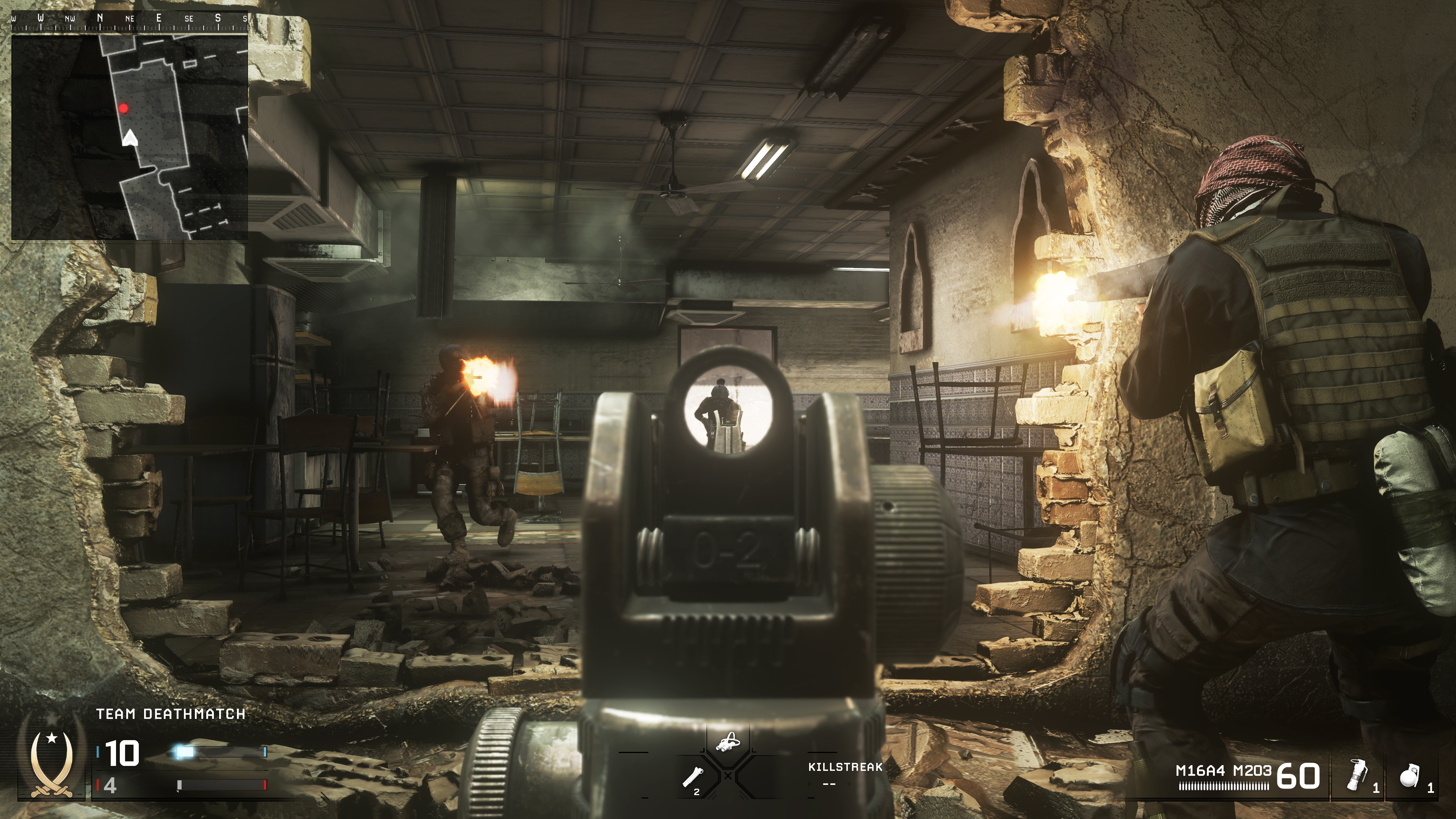
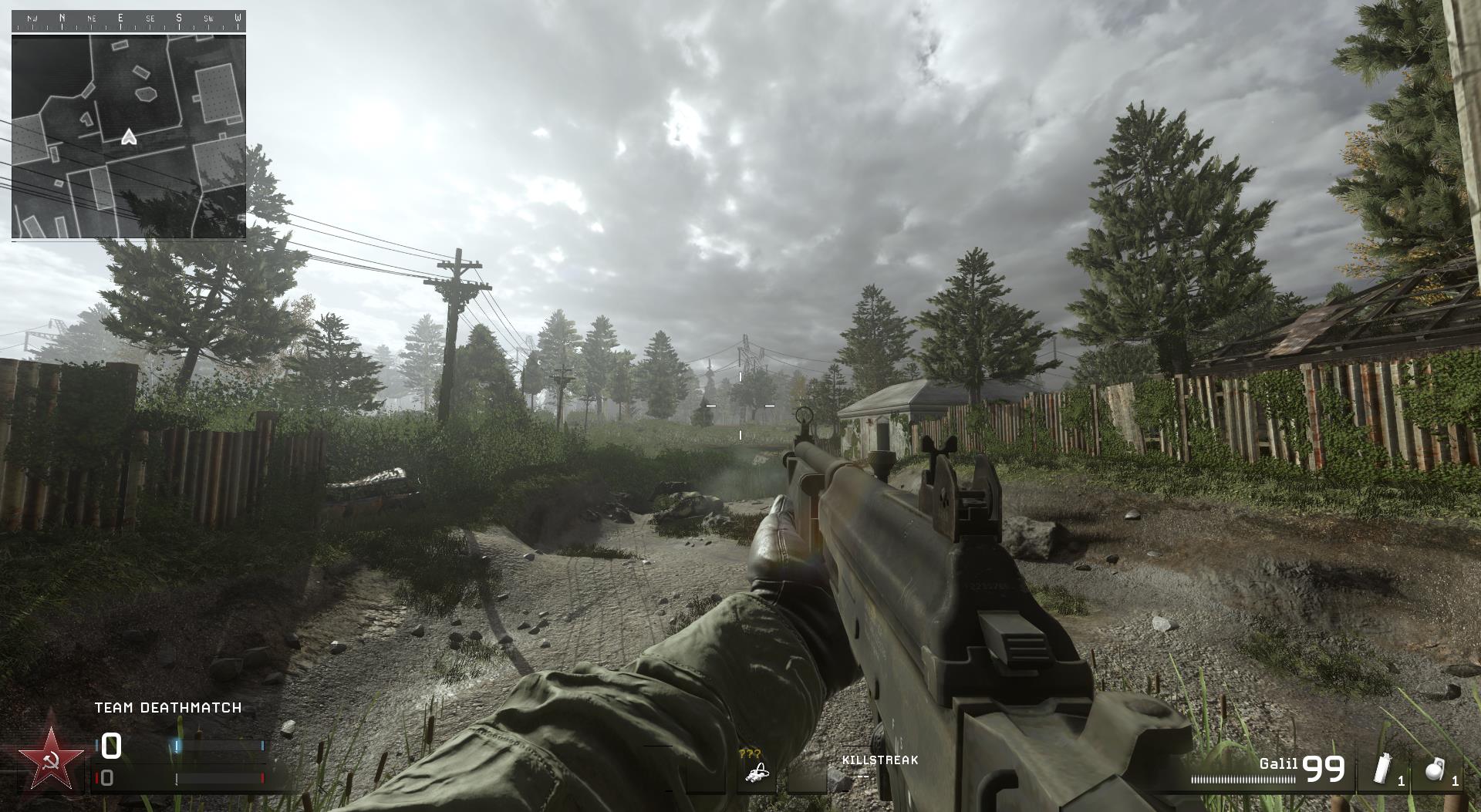
The multiplayer here is not only groundbreaking but also super addictive and fun. There are several different game modes, but my favorite has always been Team Deathmatch. The maps are perfectly designed and make it easy to remember every nook and cranny. Upgrading weapons and ranking up is so fun in this game, and you could literally spend dozens and dozens of hours just in the multiplayer alone. Despite how much time you spend on the online portion, I just wish the campaign was longer. It’s such an overlooked part of the game and trumps any future Call of Duty campaign.
The visuals have been massively upgraded to the point where current hardware will have a hard time rendering them. The textures look beautiful and have been painstakingly redone to make this game look like it was released yesterday. Lighting, physics, sound, and models have all been redone to look current, and it looks amazing. So much so that you need at least 8GB of VRAM just to see all the textures in glorious detail and at least GTX1060 to get the game off the ground at 1080p.
Overall, Modern Warfare Remastered is a snippet of a game that pushed the first-person military shooter in a new direction, but it also shows just how far downhill the series has fallen. Carefully planned-out campaigns and memorable maps are long gone for this tired franchise, but at least we have an upgraded version of one of the best shooters of the last decade.
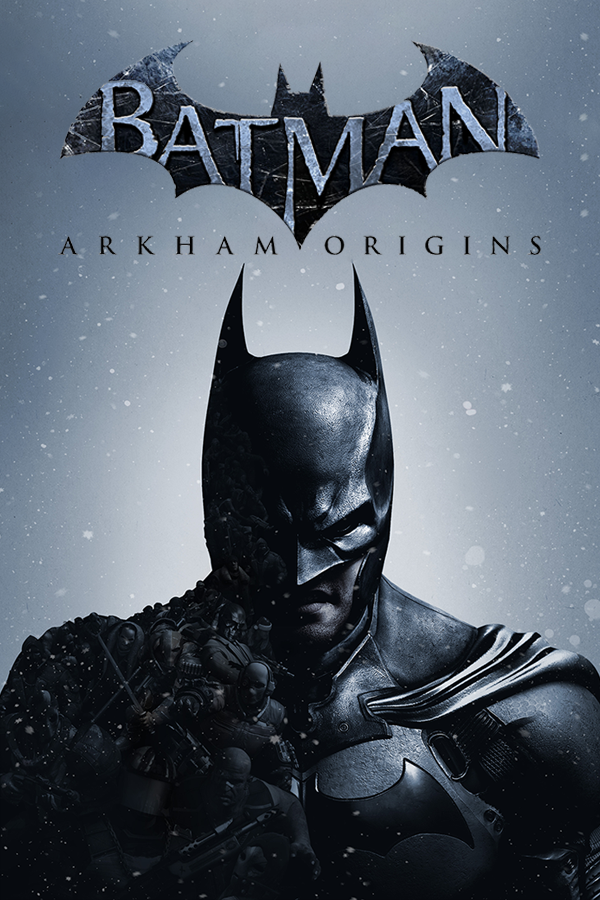
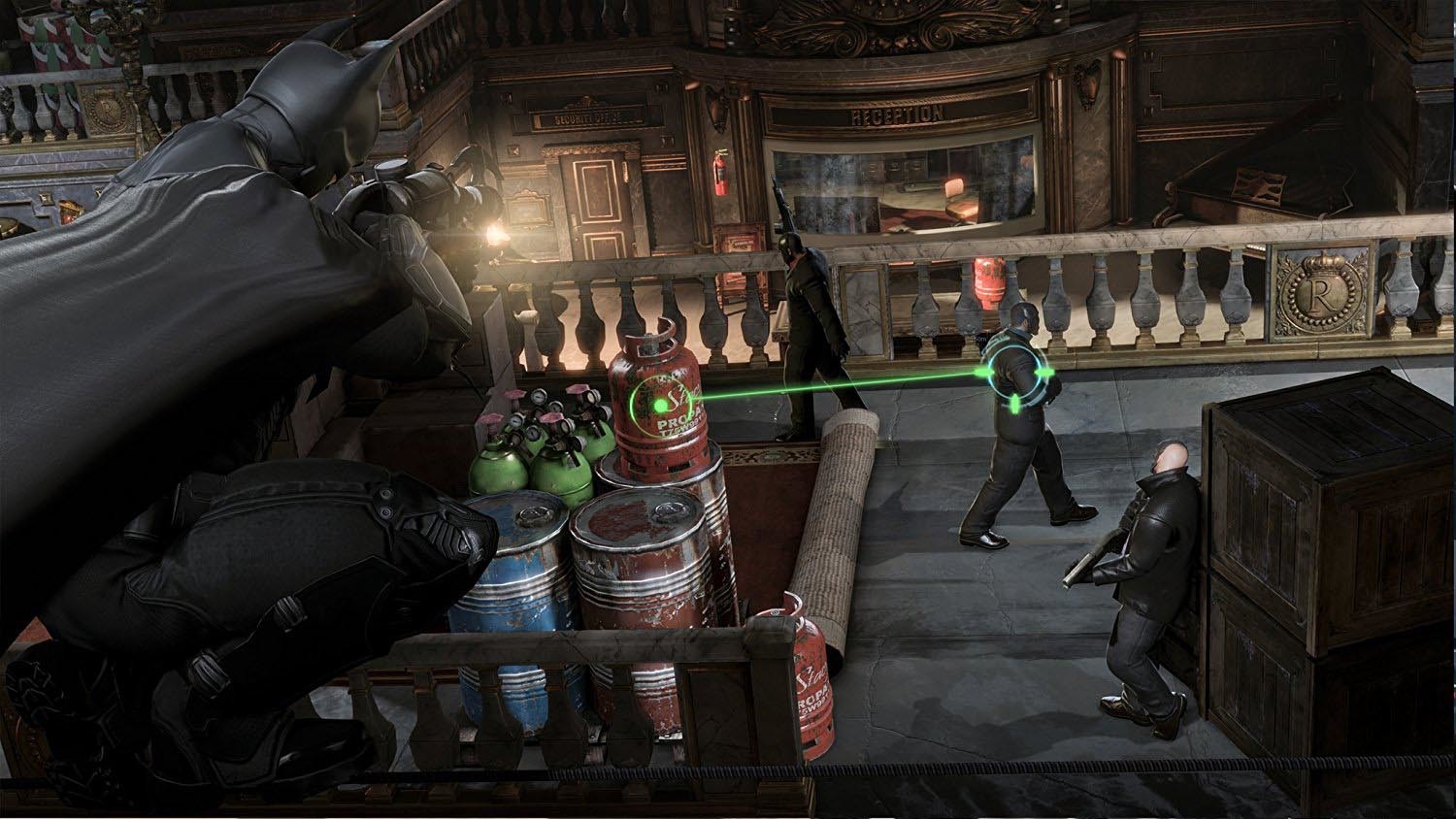
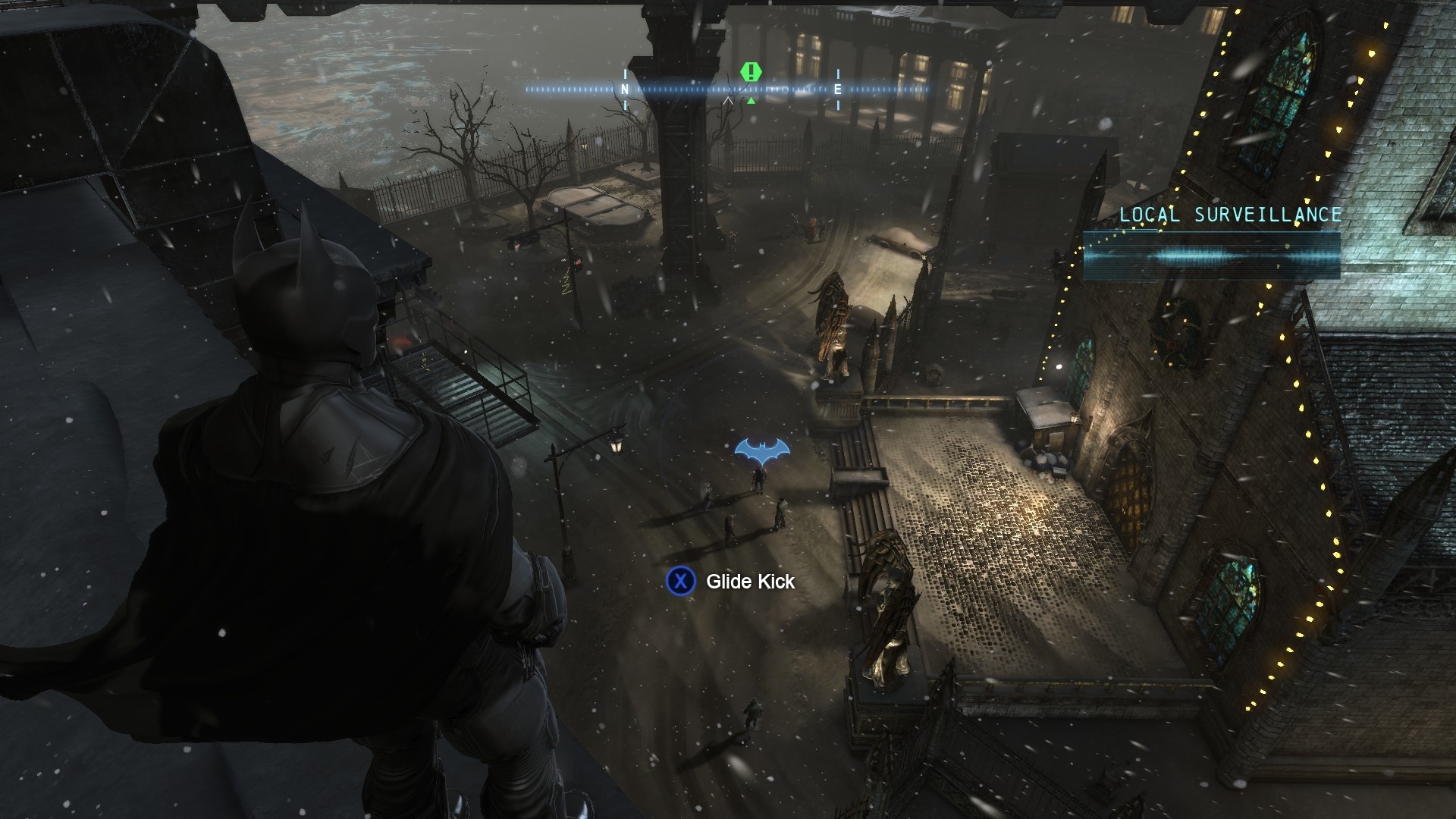
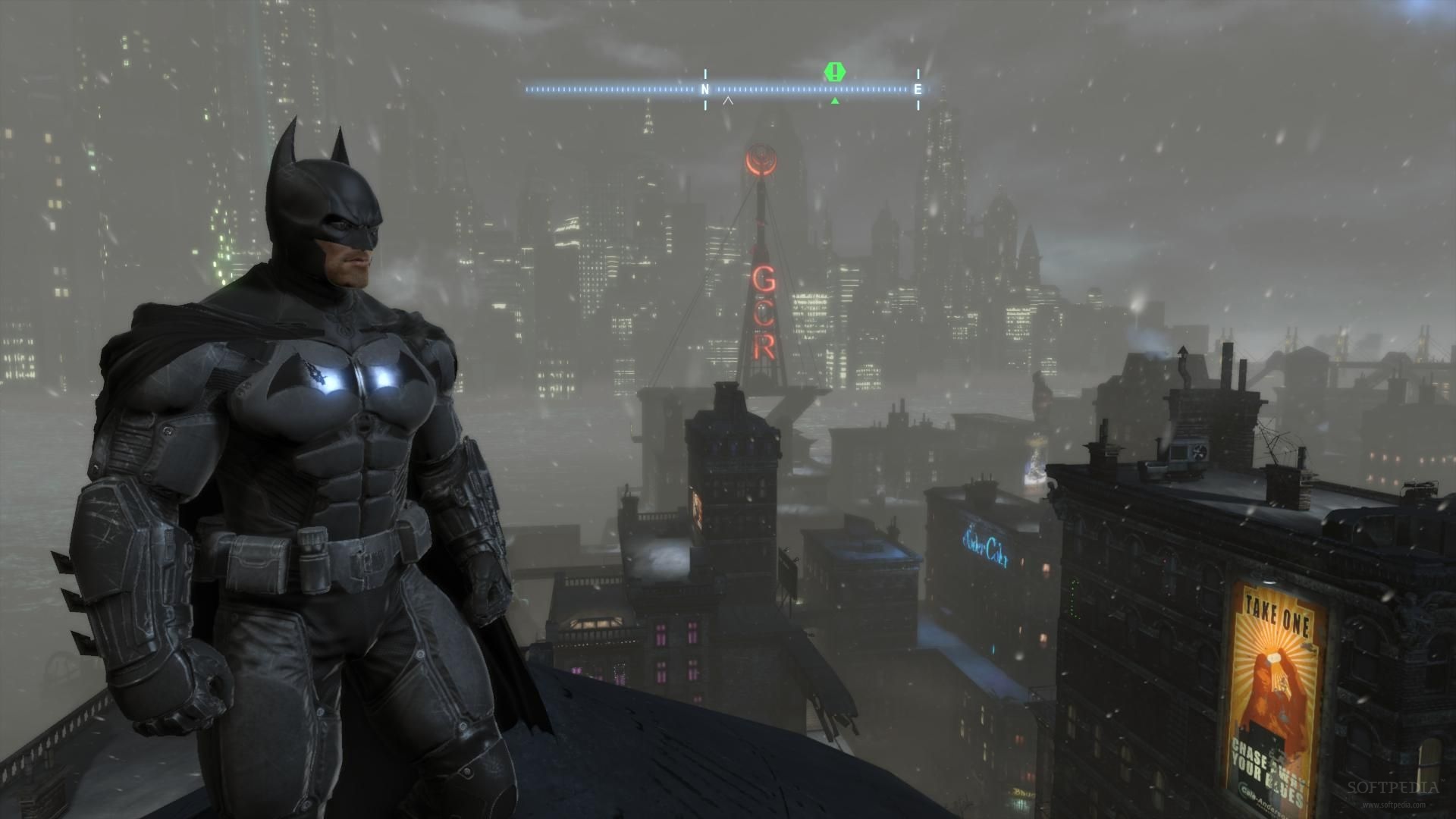
The Batman Arkham series is probably the best superhero video game series ever created. Arkham Asylum really paved new ground for action games in general, from the narrative, combat, and puzzle-solving aspects to even stealth mechanics. Arkham City built an open world on top of this with crazy Riddler puzzles, many side missions, and a deeper, more exciting world to explore, so where could the game go from there? A prequel, of course, and after the Arkham City series, fatigue started to settle in as it was a long, tough game.
So, here we are with Arkham Origins, the Batman game no one wanted or asked for. It’s also not developed by Rocksteady, so a lot of people became wary of the game, including the original voice actors being replaced by younger-sounding ones. This game is set only a couple of years after Batman becomes who he is and hasn’t met The Joker yet. The Gotham PD has labeled him as a wanted criminal, and Bruce Wayne is young and full of anger. It’s nice to see Batman become a little more flawed and feel more fragile than before, but it doesn’t last long, and I really wanted more depth for these younger characters.
Origins is kind of open-world and is more like a snippet copied and pasted straight out of City, which I felt was too safe. The world is devoid of life, kind of boring to explore, and there’s not much to do outside of a few side missions and solving tower puzzles to unlock fast travel locations, which is also kind of pointless. The meat of the game is the story missions, and they are quite a bit of fun here and there. As I stated earlier, the game plays too safe, so the memorable cinematic moments from previous games are pretty much gone. You literally go from one room to the next, jumping around, beating up bad guys, doing the occasionally flawed stealth mission, and then having a boss fight.
The combat system is really starting to feel stale here; while it’s really good, bouncing from baddie to baddie and stringing up combos and doing instant counters, it just feels too repetitive. You can use your gadgets to get an advantage, but just mashing the attack button and countering works just fine, so the gadgets felt kind of useless, and I never felt in such dire straits that I was clinging to pixels of health and barely getting out of fights. The stealth areas also feel stale as swinging around the tops of gargoyles and waiting for the right moment to swoop in on an enemy, take them down, and scramble back up is a tiring formula, and again, using Bat gadgets felt kind of useless as no matter what you use, the enemies are alerted and their patrol patterns are disrupted, making it a cat and mouse game of open opportunities.
I also felt the stealth arenas just weren’t set up as nicely as previous games and lacked something unique about each area. Even the level design is kind of whatever, with recycled content from previous games and absolutely nothing new to make this game stand out from the rest. I lost interest in finding data packs in each level, and the overall atmosphere of the game just feels dusty and dried out here.
Let’s talk about bugs and glitches. Even after all this time, there are bugs that caused my PC to completely crash, requiring a hard reset, texture glitches that require game configuration file edits, and FPS drops out the wazoo even on a top-of-the-line PC. It’s unacceptable, and the game almost became unplayable. The game also looks dated using City’s engine, but somehow not as good-looking. Textures are blurry in spots, and the animations are a little wonky here and there. The entire game just doesn’t feel as polished as the last two.
That’s not to say Origins is a bad game; it’s just unnecessary. Stuck between console generation cycles and being released too soon after City was just a huge mistake. The story is interesting enough to keep playing, but it doesn’t stand out and just feels like a massive expansion to City rather than a prequel.
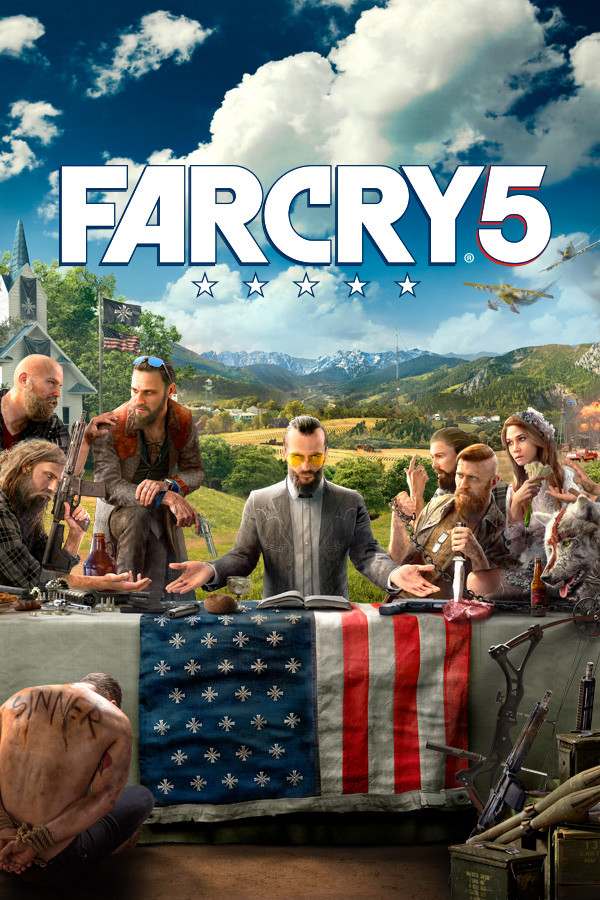
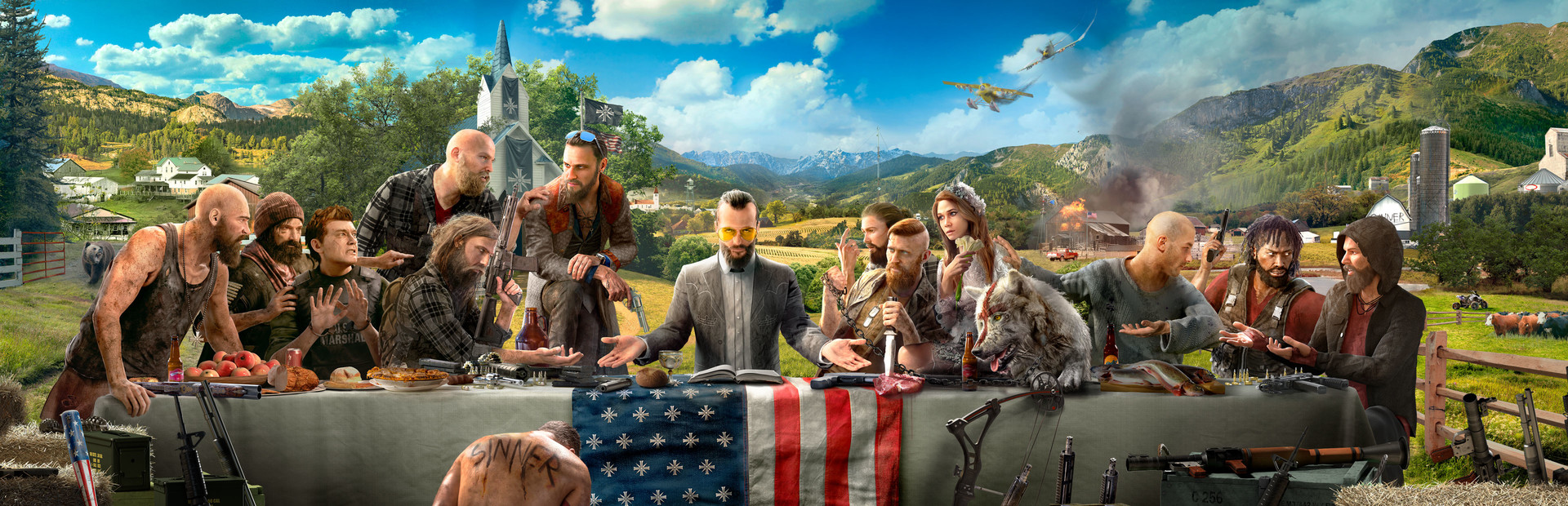
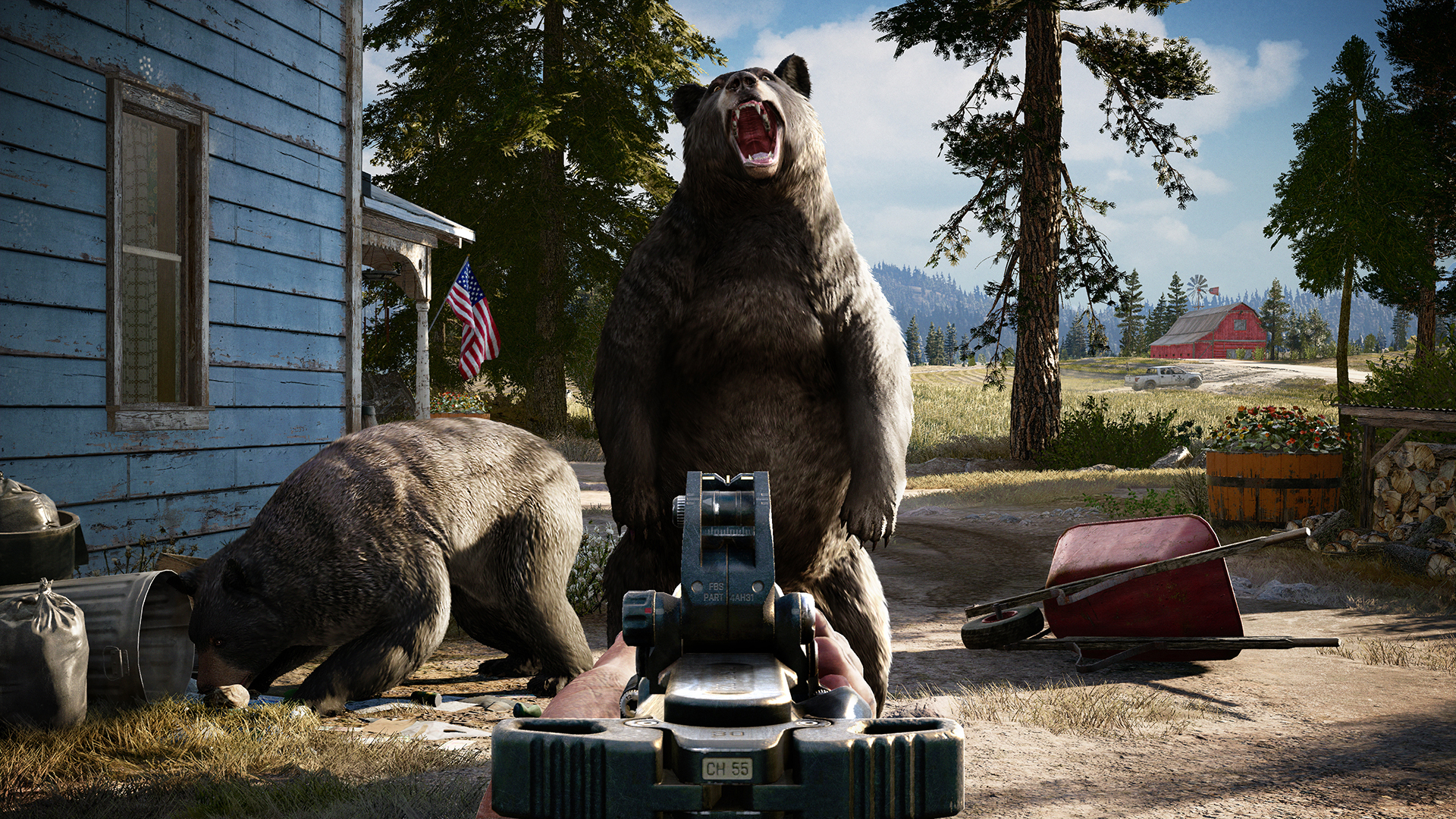
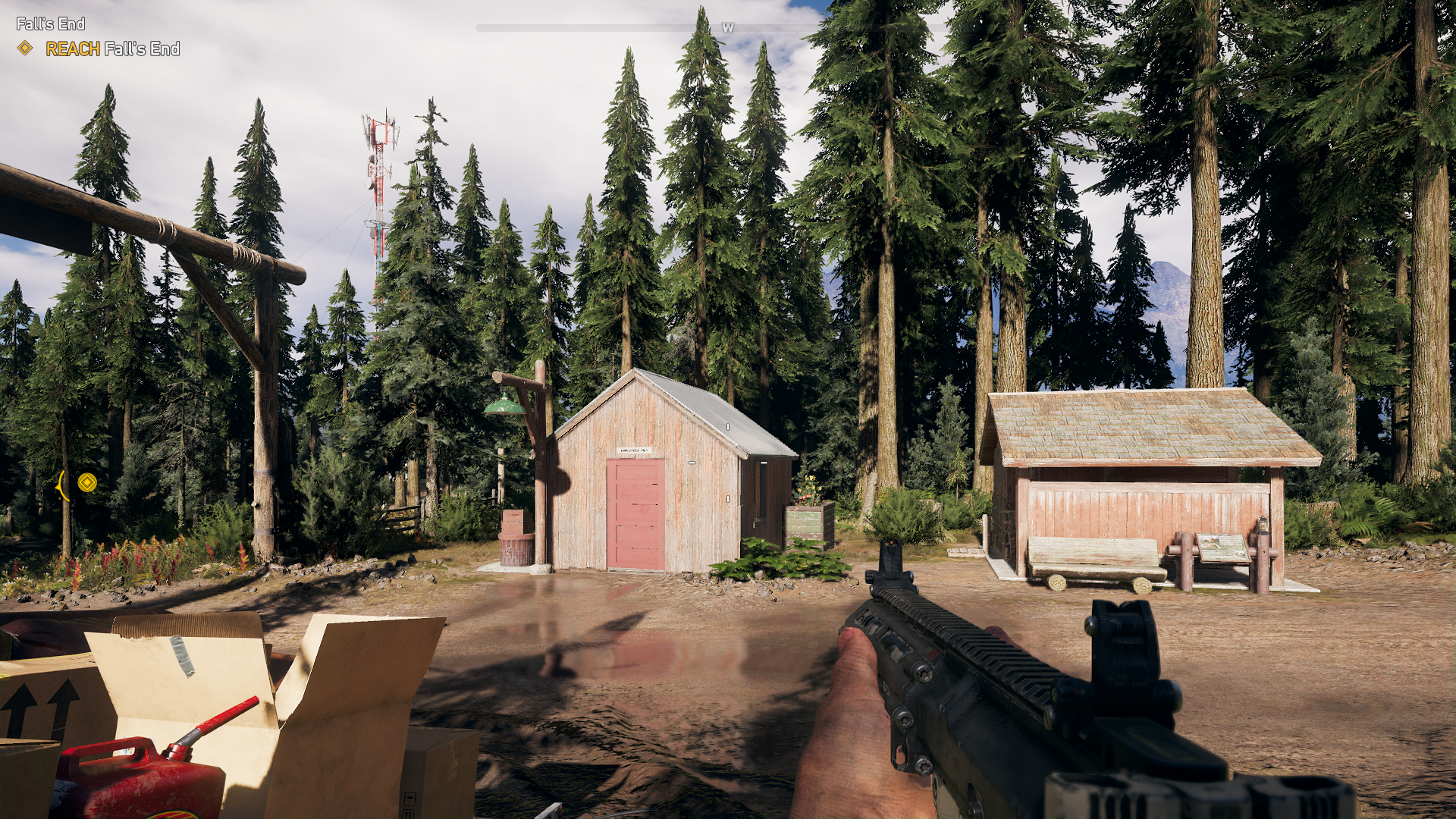
Far Cry is one of the many Ubisoft franchises that has been infected with sequelitis and “Ubisoftitis” specifically. For the last few years, their open-world games have suffered from the same stale structure and layout, and they have had a hard time finding their own personalities. Far Cry 5 is one of the first Ubisoft games in a while that has evolved a little and hasn’t quite carved its own nook in its portfolio, but it knocked out quite a few chunks to get started. It feels more RPG, and the activities and missions unfold more organically, with total freedom for the player to go about doing what they want, while some activities and missions are constantly revolving and moving a bit.
You play Sheriff Deputy Rook, who gets a call to head to a small county in Montana that is overrun by a religious cult. Things go south when your helicopter is shot down and you are taken prisoner along with your State Marshall partner. Joseph Seed is your main villain, and like all Far Cry games, he’s the main focus of the game, and he’s a great character. While not quite as good as Far Cry 3, Ubisoft unloaded their full-blown crazy bag here and made some insanely sick characters.
The main goal of Far Cry 5 is to take out Joseph’s three siblings, who have taken over a third of the map each. These story missions unfold by obtaining notoriety with each sibling as you finish missions and activities. There are three-story segments per sibling that are unlocked, and you are warped to a story area. These are some of the best parts of the games, as each sibling has their own unique way of controlling the people and has their own sick and twisted techniques. The final mission for each sibling requires you to destroy their bunker, and while this gets tedious, it’s only done three times in the whole game.
All missions require gunning Peggies down, but some side missions include freeing prisoners from roaming vans, solving Prepper Stash puzzles where you have to figure out how to get into a building or cave, stunt devil activities, and not to mention the all-new Far Cry Arcade, which has various levels scattered around the world displayed as arcade machines or posters. The level is a short variation that includes objectives that are fast-paced and insane.
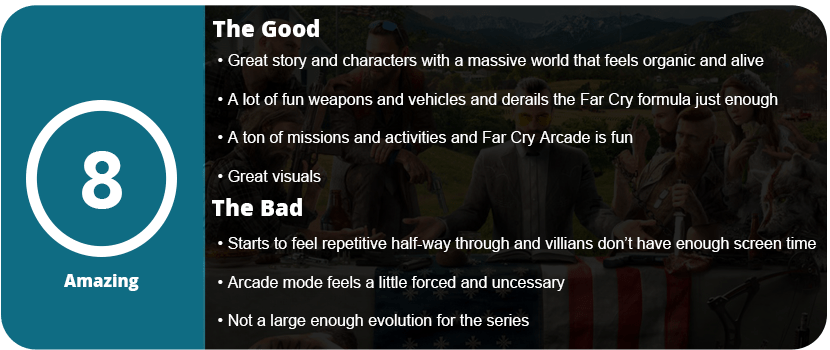
While there are a lot of fun activities and missions, such as fishing and small item hunting, it just isn’t quite enough to completely clear the stale air that Far Cry has created over the last few years. I loved the villains and characters, and the shooting is solid with a massive open world, but there are other issues such as each weapon feeling the same, grinding for cash is a chore, and perk unlocks come at a snail’s pace. You can buy gold bars with real-world cash to quicken the weapon and outfit purchases, so this is probably why it’s a grind.
For the most part, I stuck with the same four guns throughout the entire game, as I never really found a huge difference between them, and around 10 hours in, I started skipping the side activities and gunning for the end of the story. While the world is fun to explore and there is a lot to do and complete, it all starts feeling the same after so long. The game is nowhere near bad, but just repetitive and requires a lot of patience and dedication to complete, but outside the main story, there’s really no drive to.
Far Cry is at its best here, and the formula has been perfected. I honestly can’t see where else this series can go. Open-world first-person shooters are notorious for getting stale quickly, and unless they have an amazing story and characters, there’s no reason to stick around for too long. The arcade mode may keep you coming back if you really love the shooting in this game, but the main story has so much to offer that I rarely dabbled in arcade mode. Overall, the game is well worth a purchase, but if you haven’t liked Far Cry in the past, then this game won’t really change your mind.
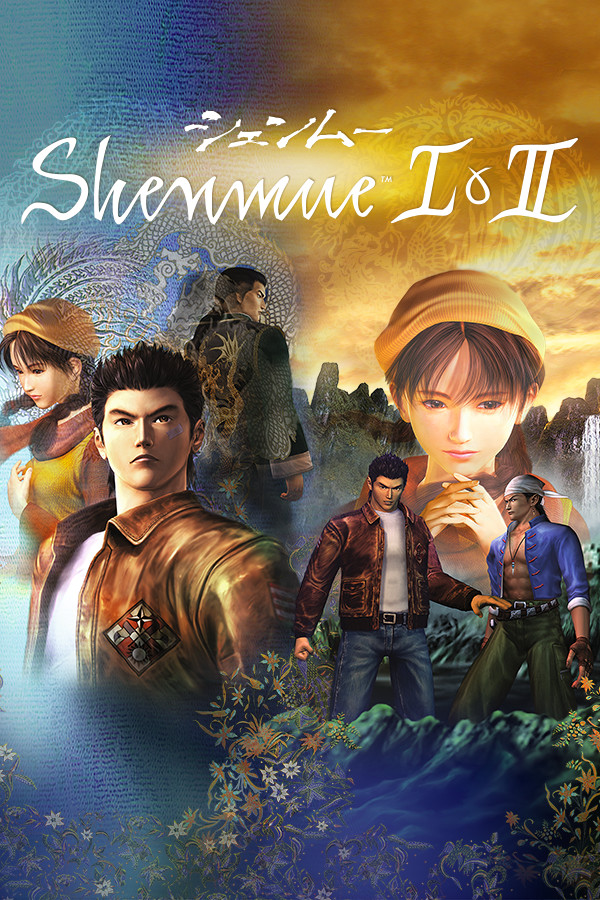
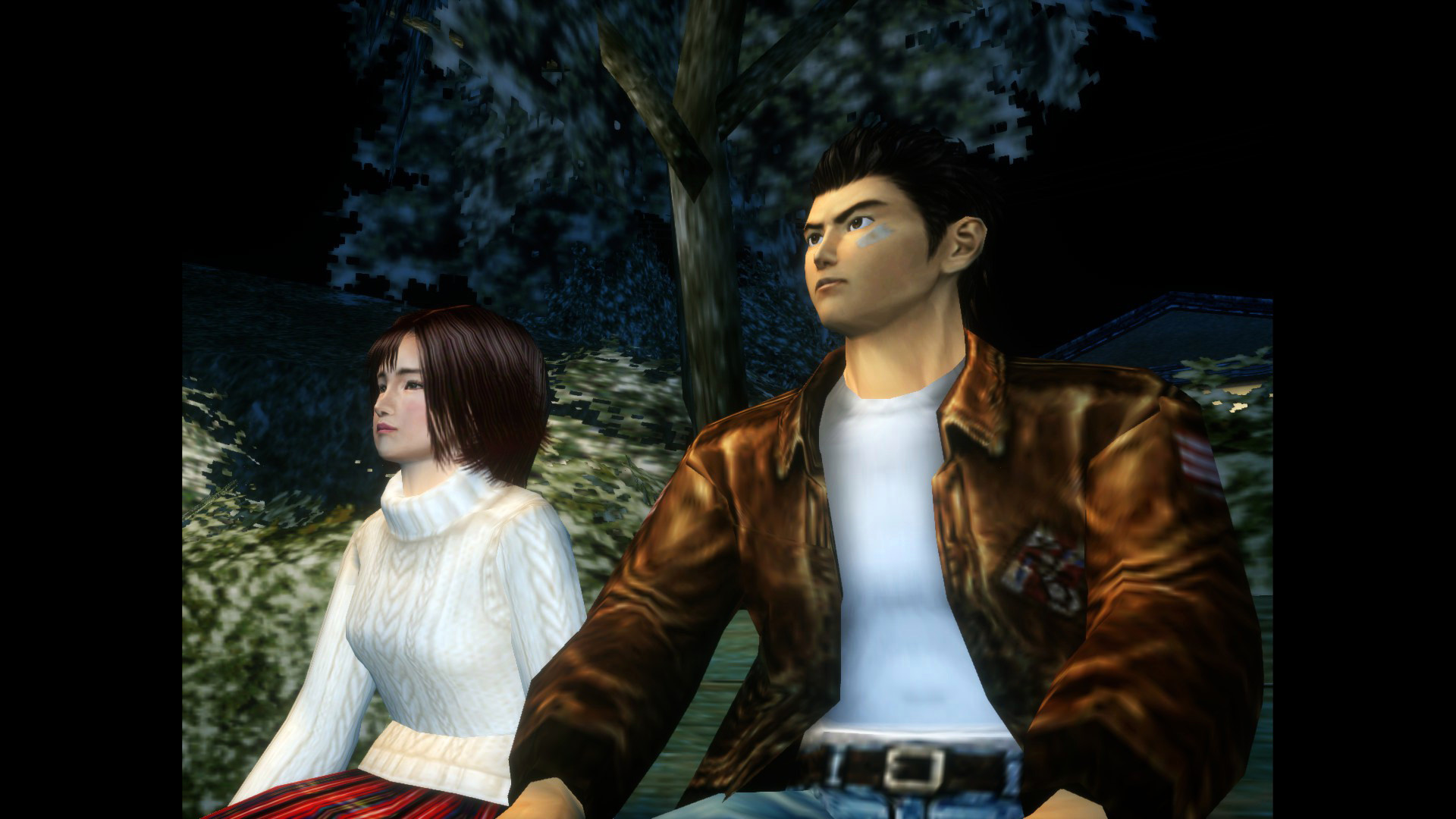
Shenmue is one of those games I never got a chance to play and have wanted to all these years. You always hear people talking about it; it pops up in “Best of” videos and “Worst of” videos, especially for the Dreamcast system itself. Shenmue was a beast all on its own back in the day, as no one had tried these gameplay ideas before. Sure, it’s an adventure game on the surface, but it’s also a life simulator, fighting game, and mini-game extravaganza all in one. It’s weird, beautiful, ugly, and frustrating all at the same time, and yet somehow it all kind of works.
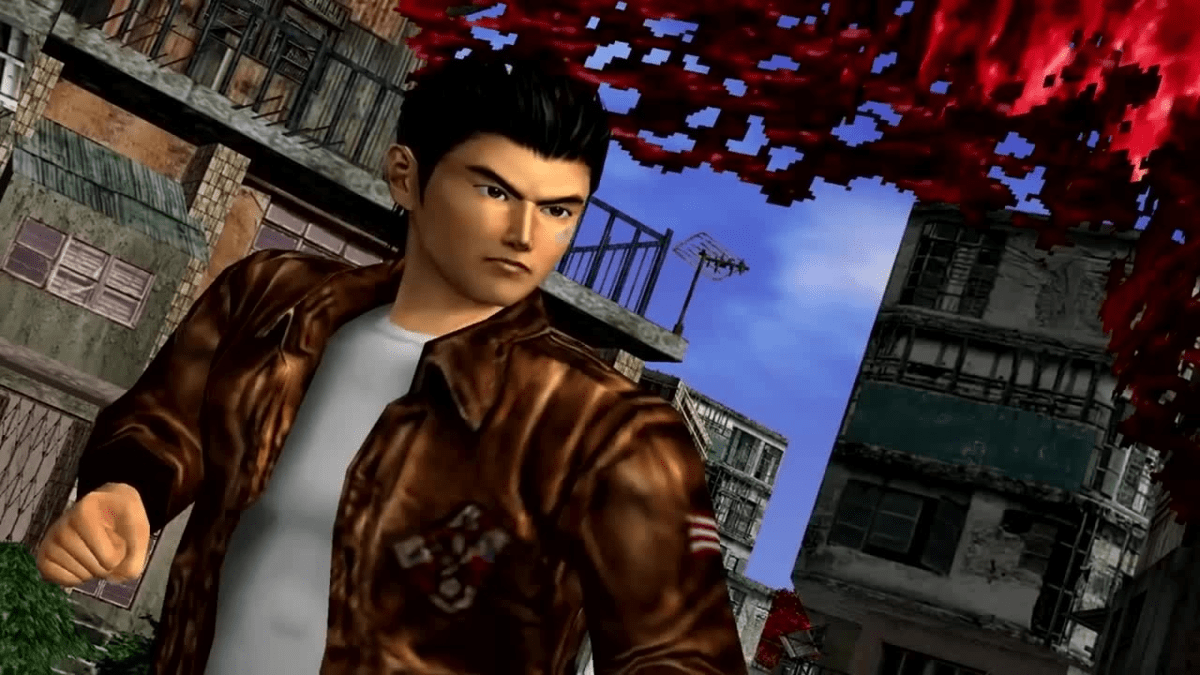
You play as a high school boy named Ryo Hazuki. He gets home one day, and his father dies while fighting a Chinese man named Lhan Di. He steals something called the Dragon Mirror, and you must somehow get it back. The weird thing about the story is that the end goal never really matters, but all the stuff in-between. What is this dragon mirror, and why does Ryo need to get it back? It’s really never explained except something about fulfilling a prophecy and the end times will come if Di keeps it… I don’t know; the story is so unbelievable and weird.
The game starts out like any other adventure game as you wake up in your room and commence rummaging around the house, pulling open drawers, finding items, and trying to figure out where to go. Thankfully, that’s something Shenmue does, as I rarely didn’t know what to do or where to go. After setting foot in the village, I watched a few cutscenes, knocked on about a dozen doors, and kept going through the town, figuring out where to go. Eventually, I ended up in the main city, where half of the game takes place. The first few hours have Ryo running around asking questions to get clues, then going to that person or place for either a cutscene or more clues. This continuous cycle of clue-finding felt satisfying as I met some interesting characters and felt connected to the world of Shenmue.
Sadly, there’s a huge, disappointingly frustrating factor about all of these events: they are time-sensitive. You have to wait for in-game time to pass before certain events unfold. That wouldn’t be so bad, but you can’t skip time, so I literally went and did other things like chores, cooking, or playing a different game while time passed. Sometimes it would take almost 45 minutes for time to pass where I needed it to be, then a small cutscene would play out, and then it’s back to waiting again once I find the next clue that requires more waiting. It would also be fine if there were things to do, but outside of a few real Sega arcade games and collecting Gotcha prizes, there are no side quests or anything to do. It’s so incredibly boring to sit and wait through all of this, and if you miss your time frame, you have to wait again. Waiting also goes for catching the bus to the harbor and working a real forklift job.
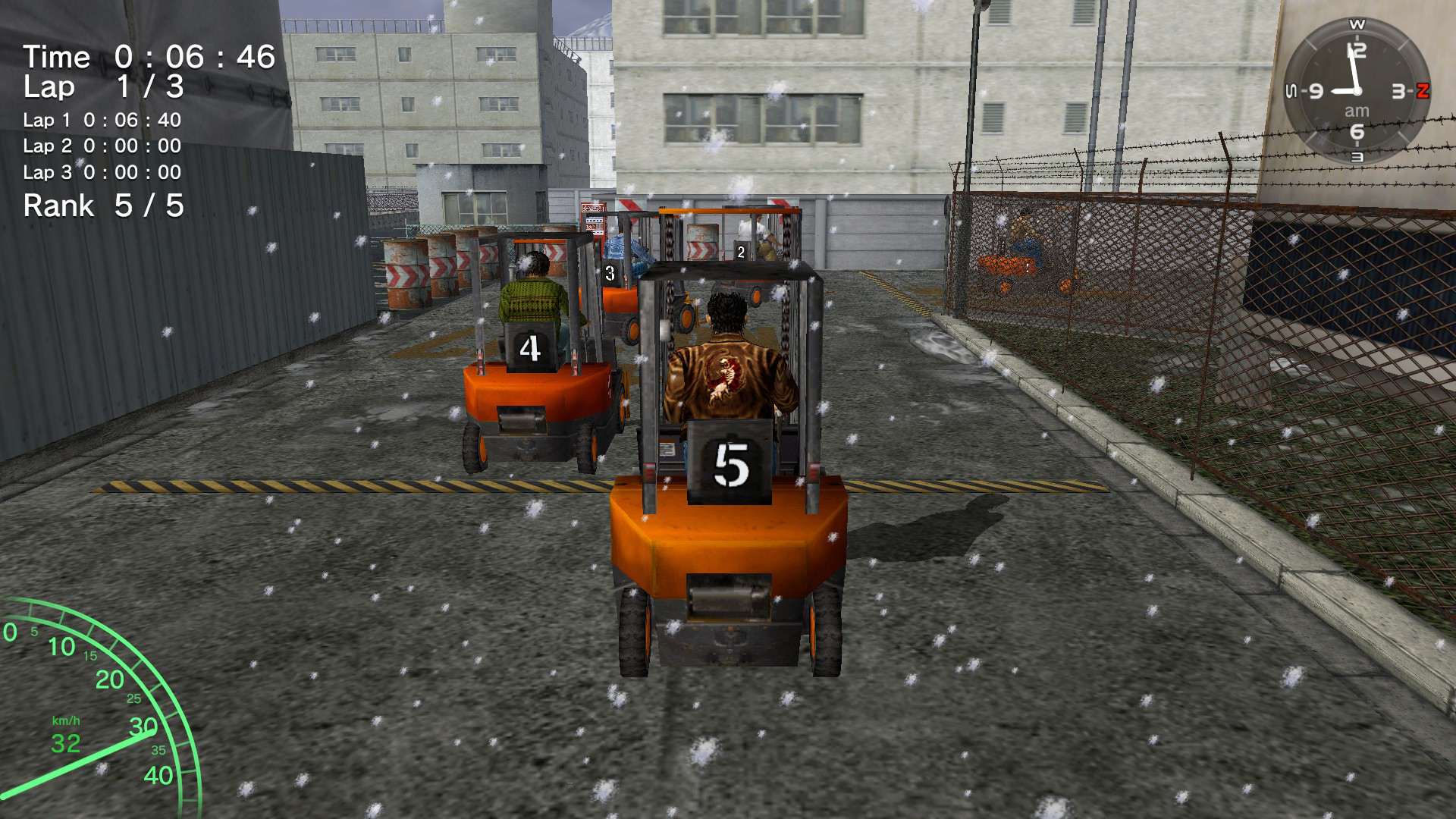
Oh my God, yes, the infamous forklift section of the game. This literally took up an entire 4 hours of the game. You work 8-5 for 5 in-game days driving a forklift from one end of the harbor and loading boxes into a warehouse. It’s both beautifully addictive and stupidly frustrating and annoying. All of this means that the Mad Angels, a drug cartel in the game, will pick on you because you’re new and you can obtain information from them after every fight. Not to mention the annoying forklift race at the beginning of each day on the same track. Man, it’s so stupid and frustrating, and I both loved it and hated it.
After the forklift section, there are a few more fights, and the game is done. The fighting itself is surprisingly impressive, with responsive controls, fast and fluid animations, and plenty of combos. Outside of the free battles, there are QTE battles, which can be hard, and the reaction time they give you is literally milliseconds. The visuals of the game haven’t been updated all that much. There are newer lighting effects and better shadows, and the characters have smoothed over textures, but overall it still looks like a 20-year-old game. There are still plenty of bugs and glitches, such as being stuck in first-person mode after driving the forklift, hard crashes, and objects disappearing completely.
The music is annoying and repetitive, with only one short track per area, and it just isn’t very good. The voice acting is awful, and even the Japanese voice track is questionable sometimes. The audio in general still sounds compressed and really bad, and the game is just really rough around the edges. So why should you play it? It’s a weird piece of gaming history on a system that died faster than it could blink. The characters are interesting, and the various activities are fun, but the long waiting and various missteps keep Shenmue from being a fantastic game.
Shenmue II
I have a weird disposition toward the entire Shenmue series. I really want to love it, but the problem is that the game is so flawed and so strange that it almost feels like a chore to complete. The first game was tolerable as it was fairly short, and the age made it more forgiving, but Shenmue II has no excuse. It was on a new generation of consoles, and I have literally never played a sequel in a series that was a copy and paste of the last game.
The game picks off exactly where the last one took off, with Ryo heading to Hong Kong, and as soon as I saw the first cutscene, I sighed, rolled my eyes, and did an entire facepalm. I expected the game to look fairly newer, have a new UI, better controls, and an all-new look, but we got a literal engine port from the Dreamcast with just new areas to explore and a story that’s four times longer than the original (the original Xbox game had four discs!).
As I got off the boat, I really realized it was the exact same game as Ryo controls, just as poorly. The gameplay is exactly the same to the T, and I buckled in for a long ride. The first third of the game has Ryo running around talking to people, gathering clues, meeting a few new faces, and trying to continue to find Lan Di and avenge his father’s death. At least more stories are explained, and we find out what every mystery in the first game means. To be honest, the first third of the game isn’t all that bad; yes, it’s more Shenmue I stuff, but it’s easy and straightforward for the most part. Once I got to the second third of the game, things got tedious, frustrating, and a little annoying. This series, for some reason, loves having Ryo work and be miserable when it comes to progress. Twice I was stuck having to work on the most boring and tedious mini-game I have ever played to earn enough money to move on. You can earn $10 a crate by helping someone move them from one side of the room to another, and it’s all about QTEs with the directional buttons. You usually never earn more than $60 as there isn’t enough time allotted for more work, and gambling is usually risky and out of the question altogether. The game favors the AI more than you, so you can easily blow all your cash and have to play that mini-game six or seven times over to earn it back again.
Outside of the awful mini-games, the second third of the game has Ryo running around inside buildings that are built like mazes with hallways that all look the same. It’s not as easy as using the elevator, as you will have to use the stairs to go up, use that elevator to go further down, then use the stairs again to go down further. In between are free battles, QTE events, and the occasional boss fight. It’s so tedious and frustrating as there are little dialog quips that are in between repetitive gameplay sections that can’t be skipped and just add to what makes the entire game annoying to play.
Once you get past that third of the game, the last third is the exact opposite of the rest of the game. It’s a 2-hour-long cutscene that lets you interact every so often via dialog or by running down a few paths, QTEs, and more dialog. Let that sink in for a minute. A 2-hour-long cutscene. All you’re doing is going through a forest and mountain pass to get to a village with a local accompanying you. This is also where most of the story unfolds and becomes more interesting.
I have a lot of things to complain about with this game and the series as a whole, but the story is still good enough to keep me trucking along and putting up with the repetitive, drawn-out nonsense the game dishes out. Not to mention the several times the game crashed and my progress was set back to my last save. The game itself is just ugly to look at and looks like a slightly updated Dreamcast game in only a few ways. The gameplay style is just too dated, frustrating, and unnecessary to get the story across. I would have rather had cutscenes and just QTEs in between than these weird gameplay “ideas” thrown in. Sure, the game is much larger in scope, but it’s still a linear maze of remembering street and building names and participating in fights.
Overall, Shenmue II is both beautiful and terrible at the same time. It’s a game out of time and should have either been less than the sum of its parts or just a 3D anime feature-length movie. As a game, it just doesn’t need to really exist, especially being so dated even at the time of release. It suffers from all the same issues as the first game, and even as an HD port, it still doesn’t look or play well. It’s a very niche game that many gamers will not even get 1/4 through before turning it off for good. It requires an immense amount of patience, time, and forgiveness to enjoy, and sometimes that’s just too much to ask for a game.
Conclusion
As it stands, this Shenmue HD port is either good or bad, depending on your stance on the series. It’s great to get a piece of gaming history playable on modern consoles, but there are so many flaws with both games and the port itself that it’s hard to justify it to anyone except really curious people and hardcore fans. The games are both full of crashes, bugs, and glitches, and they look hideous with no effort put into the game engine at all.
I have a weird disposition toward the entire Shenmue series. I really want to love it, but the problem is that the game is so flawed and so strange that it almost feels like a chore to complete. The first game was tolerable as it was fairly short, and the age made it more forgiving, but Shenmue II has no excuse. It was on a new generation of consoles, and I have literally never played a sequel in a series that was a copy and paste of the last game.
The game picks off exactly where the last one took off, with Ryo heading to Hong Kong, and as soon as I saw the first cutscene, I sighed, rolled my eyes, and did an entire facepalm. I expected the game to look fairly newer, have a new UI, better controls, and an all-new look, but we got a literal engine port from the Dreamcast with just new areas to explore and a story that’s four times longer than the original (the original Xbox game had four discs!).
As I got off the boat, I really realized it was the exact same game as Ryo controls, just as poorly. The gameplay is exactly the same as the T, and I buckled in for a long ride. The first third of the game has Ryo running around talking to people, gathering clues, meeting a few new faces, and trying to continue to find Lan Di and avenge his father’s death. At least more stories are explained, and we find out what every mystery in the first game means. To be honest, the first third of the game isn’t all that bad; yes, it’s more Shenmue I stuff, but it’s easy and straightforward for the most part. Once I got to the second third of the game, things got tedious, frustrating, and a little annoying. This series, for some reason, loves having Ryo work and be miserable when it comes to progress. Twice, I was stuck having to work on the most boring and tedious mini-game I have ever played to earn enough money to move on. You can earn $10 a crate by helping someone move them from one side of the room to another, and it’s all about QTEs with the directional buttons. You usually never earn more than $60 as there isn’t enough time allotted for more work, and gambling is usually risky and out of the question altogether. The game favors the AI more than you, so you can easily blow all your cash and have to play that mini-game six or seven times over to earn it back again.
Outside of the awful mini-games, the second third of the game has Ryo running around inside buildings that are built like mazes with hallways that all look the same. It’s not as easy as using the elevator, as you will have to use the stairs to go up, use that elevator to go further down, then use the stairs again to go down further. In between are free battles, QTE events, and the occasional boss fight. It’s so tedious and frustrating as there are little dialog quips that are in between repetitive gameplay sections that can’t be skipped and just add to what makes the entire game annoying to play.
Once you get past that third of the game, the last third is the exact opposite of the rest of the game. It’s a 2-hour-long cutscene that lets you interact every so often via dialog or by running down a few paths, QTEs, and more dialog. Let that sink in for a minute. A 2-hour-long cutscene. All you’re doing is going through a forest and mountain pass to get to a village with a local accompanying you. This is also where most of the story unfolds and becomes more interesting.
I have a lot of things to complain about with this game and the series as a whole, but the story is still good enough to keep me trucking along and putting up with the repetitive, drawn-out nonsense the game dishes out. Not to mention the several times the game crashed and my progress was set back to my last save. The game itself is just ugly to look at and looks like a slightly updated Dreamcast game in only a few ways. The gameplay style is just too dated, frustrating, and unnecessary to get the story across. I would have rather had cutscenes and just QTEs in between than these weird gameplay “ideas” thrown in. Sure, the game is much larger in scope, but it’s still a linear maze of remembering street and building names and participating in fights.
Overall, Shenmue II is both beautiful and terrible at the same time. It’s a game out of time and should have either been less than the sum of its parts or just a 3D anime feature-length movie. As a game, it just doesn’t need to really exist, especially being so dated even at the time of release. It suffers from all the same issues as the first game, and even as an HD port, it still doesn’t look or play well. It’s a very niche game that many gamers will not even get 1/4 through before turning it off for good. It requires an immense amount of patience, time, and forgiveness to enjoy, and sometimes that’s just too much to ask for a game.
Shenmue is one of those games I never got a chance to play and have wanted to all these years. You always hear people talking about it; it pops up in “Best of” videos and “Worst of” videos, especially for the Dreamcast system itself. Shenmue was a beast all on its own back in the day, as no one had tried these gameplay ideas before. Sure, it’s an adventure game on the surface, but it’s also a life simulator, fighting game, and mini-game extravaganza all in one. It’s weird, beautiful, ugly, and frustrating all at the same time, and yet somehow it all kind of works.
You play as a high school boy named Ryo Hazuki. He gets home one day, and his father dies while fighting a Chinese man named Lhan Di. He steals something called the Dragon Mirror, and you must somehow get it back. The weird thing about the story is that the end goal never really matters, but all the stuff in-between. What is this dragon mirror, and why does Ryo need to get it back? It’s really never explained except something about fulfilling a prophecy and the end times will come if Di keeps it… I don’t know; the story is so unbelievable and weird.
The game starts out like any other adventure game as you wake up in your room and commence rummaging around the house, pulling open drawers, finding items, and trying to figure out where to go. Thankfully, that’s something Shenmue does, as I rarely didn’t know what to do or where to go. After setting foot in the village, I watched a few cutscenes, knocked on about a dozen doors, and kept going through the town, figuring out where to go. Eventually, I ended up in the main city, where half of the game takes place. The first few hours have Ryo running around asking questions to get clues, then going to that person or place for either a cutscene or more clues. This continuous cycle of clue-finding felt satisfying as I met some interesting characters and felt connected to the world of Shenmue.
Sadly, there’s a huge, disappointingly frustrating factor about all of these events: they are time-sensitive. You have to wait for in-game time to pass before certain events unfold. That wouldn’t be so bad, but you can’t skip time, so I literally went and did other things like chores, cooking, or playing a different game while time passed. Sometimes it would take almost 45 minutes for time to pass where I needed it to be, then a small cutscene would play out, and then it’s back to waiting again once I find the next clue that requires more waiting. It would also be fine if there were things to do, but outside of a few real Sega arcade games and collecting Gotcha prizes, there are no side quests or anything to do. It’s so incredibly boring to sit and wait through all of this, and if you miss your time frame, you have to wait again. Waiting also goes for catching the bus to the harbor and working a real forklift job.
Oh my God, yes, the infamous forklift section of the game. This literally took up an entire 4 hours of the game. You work 8-5 for 5 in-game days driving a forklift from one end of the harbor and loading boxes into a warehouse. It’s both beautifully addictive and stupidly frustrating and annoying. All of this means that the Mad Angels, a drug cartel in the game, will pick on you because you’re new and you can obtain information from them after every fight. Not to mention the annoying forklift race at the beginning of each day on the same track. Man, it’s so stupid and frustrating, and I both loved it and hated it.
After the forklift section, there are a few more fights, and the game is done. The fighting itself is surprisingly impressive, with responsive controls, fast and fluid animations, and plenty of combos. Outside of the free battles, there are QTE battles, which can be hard, and the reaction time they give you is literally milliseconds. The visuals of the game haven’t been updated all that much. There are newer lighting effects and better shadows, and the characters have smoothed over textures, but overall it still looks like a 20-year-old game. There are still plenty of bugs and glitches, such as being stuck in first-person mode after driving the forklift, hard crashes, and objects disappearing completely.
The music is annoying and repetitive, with only one short track per area, and it just isn’t very good. The voice acting is awful, and even the Japanese voice track is questionable sometimes. The audio in general still sounds compressed and really bad, and the game is just really rough around the edges. So why should you play it? It’s a weird piece of gaming history on a system that died faster than it could blink. The characters are interesting, and the various activities are fun, but the long waiting and various missteps keep Shenmue from being a fantastic game.
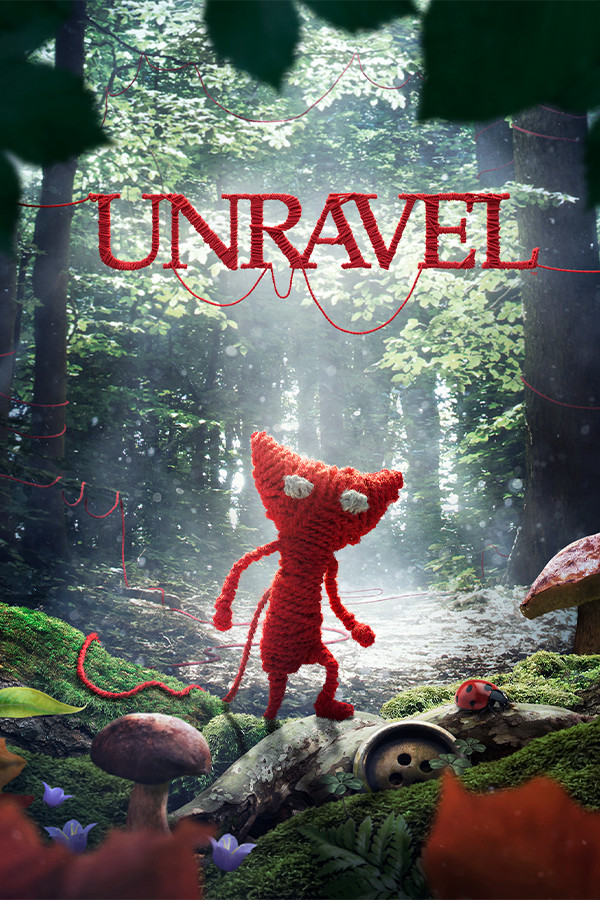
Playing as a ball of yarn isn’t a new concept. Nintendo first did it with Kirby’s Epic Yarn, and it was a charming blast. Coldwood tries its hand at crochet platforming, and it’s done fairly well. I can’t really explain the story much, as it really doesn’t exist. Yarny, the character, is on a journey to find various crocheted figures to attach to a photo album. Who this family is and the reasoning behind Yarny’s animation and coming to life are never explained. The entire idea doesn’t make any sense at all, but we’re here for the platforming.
The game has physics-based platforming and puzzle-solving. There’s a trail of red yarn behind you, and this is your lifeline. It can wrap around things, create bridges, and be used as a grappling hook. Simple puzzles involve hooking the yarn on points and creating bridges to drag objects up, while more complex ones involve wrapping the yarn in various ways to activate a pulley or open a door. It’s very interesting and unique, and there are so many different types of puzzles, but the problem relies on the mechanics around them.
The platforming is either heavy or too springy. Yarny will jump on an object and immediately bounce off of it in a forward motion only. It’s very hard to control this movement, especially when the camera doesn’t pan over quickly enough. The game is also hindered by poor pacing. I enjoyed running around pushing objects, pulling levers, and swinging around like a monkey, but once I got my groove and momentum, a big puzzle would halt my progress, interrupting the trance. I prefer just going forward and enjoying the scenery while swinging around and knocking things over, but once those puzzles started, I got frustrated.
Part of this has to do with most mechanics not being explained early on; the objects you need blend in too much with the background, or it’s very unclear that there’s a hook-off camera that you must jump to. Checkpoints are placed frequently, but some are misplaced, as I would have to repeat a long, easy section just to get to the one annoying jump or off-camera grapple and fall again and again. In some areas, I started over a dozen times just to get it right.
Outside of that, the game plays fine with 13 levels. You will be busy for a good 4-6 hours since some areas are really tough to get through. I loved the scripted moments, and some of the dangerous areas where Yarny runs from animals are pretty fun, but those big puzzles just really halted all the fun.
The game looks absolutely stunning, with realistic-looking textures and a huge variety of environments, including forests, tundras, toxic waste dumps, construction sites, and swamps. It’s incredible to look at and experience, and the music is great despite the same track repeating over and over through each level. It got irritating quickly.
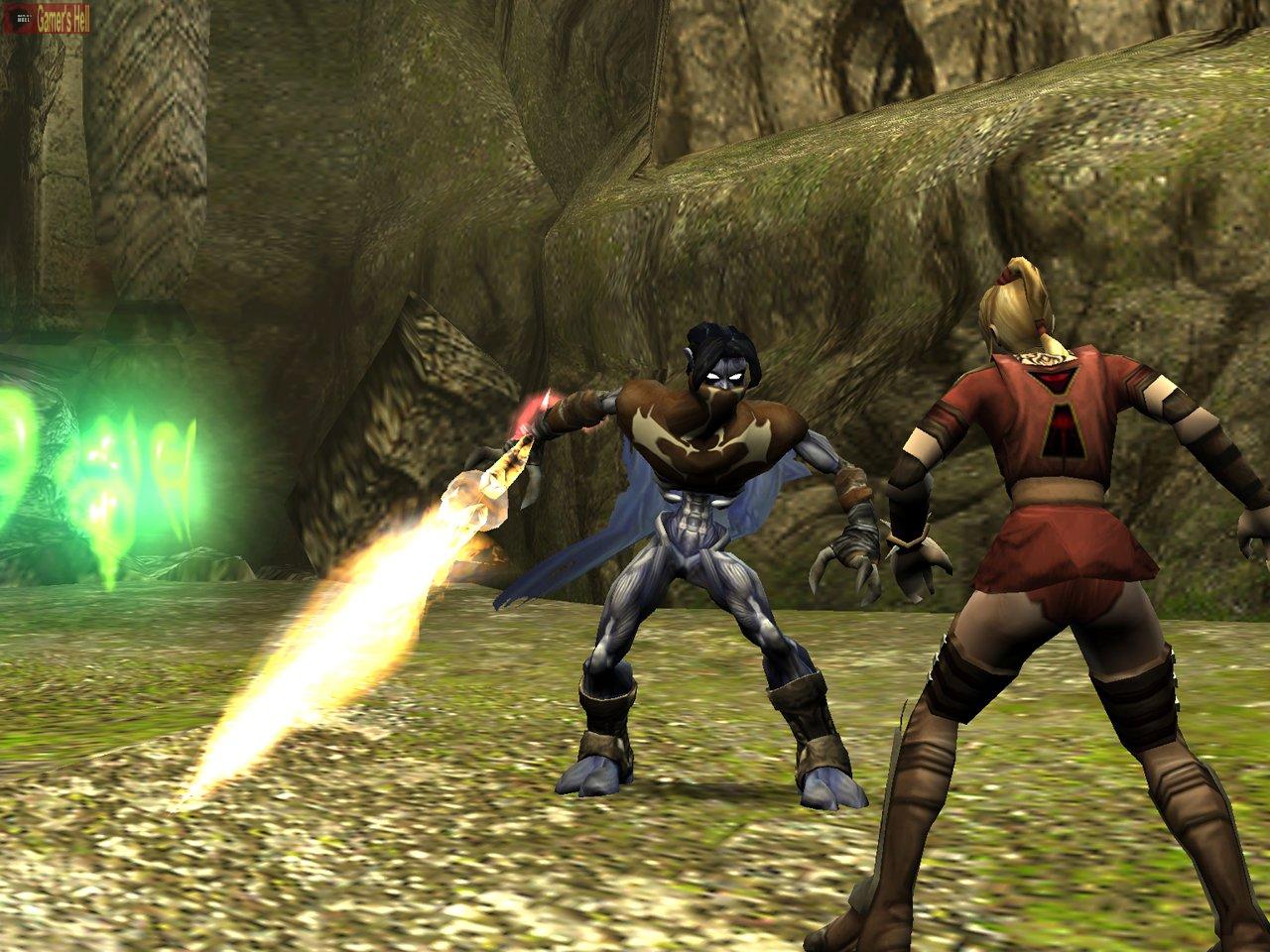
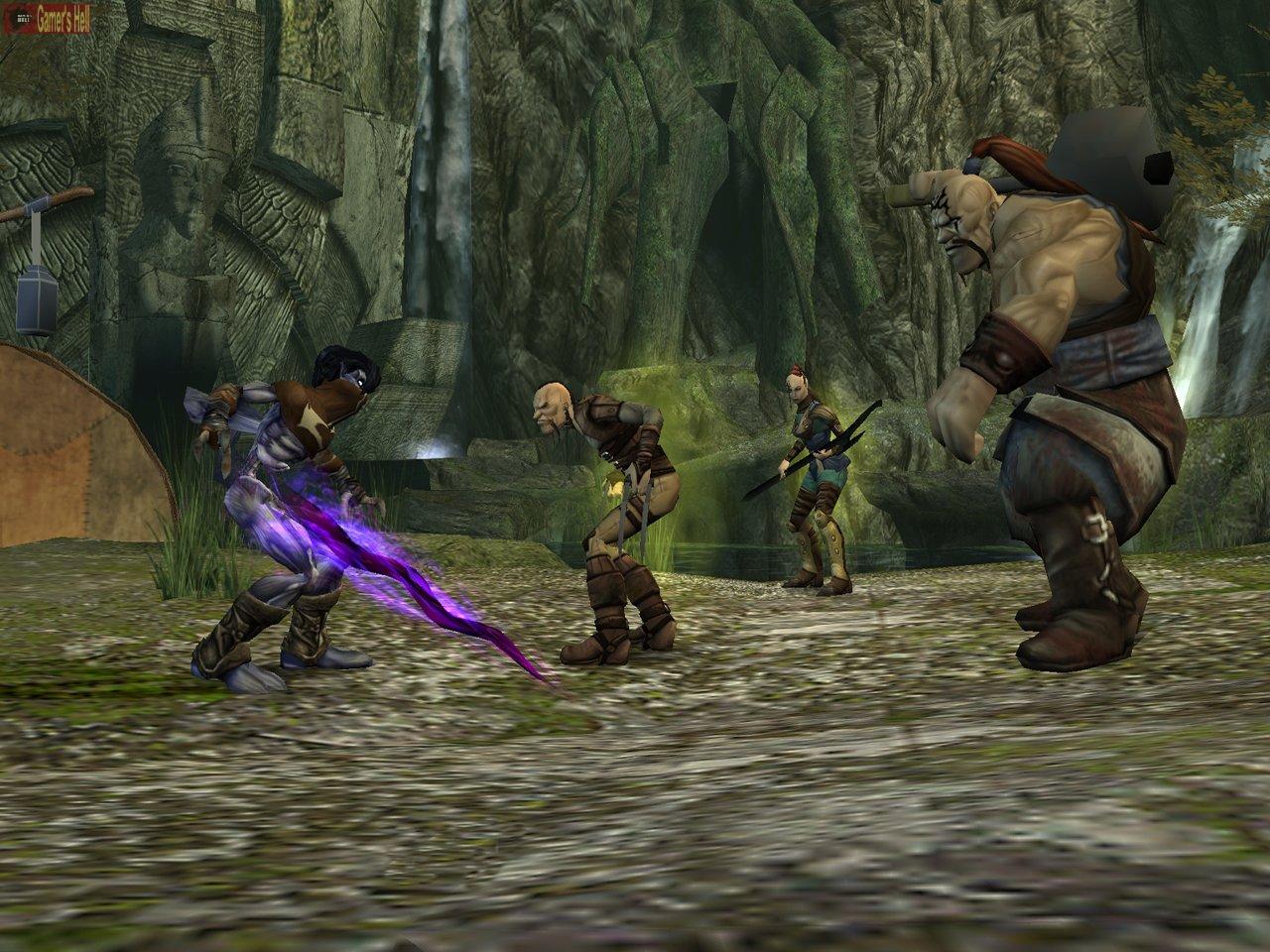
The Legacy of Kain was a very popular series back in the day. Defiance, an epic tale about vampires, is the final entry in the long-running series. You play the vampires Kain and Raziel. You switch between solving puzzles, fighting enemies, and discovering secrets.
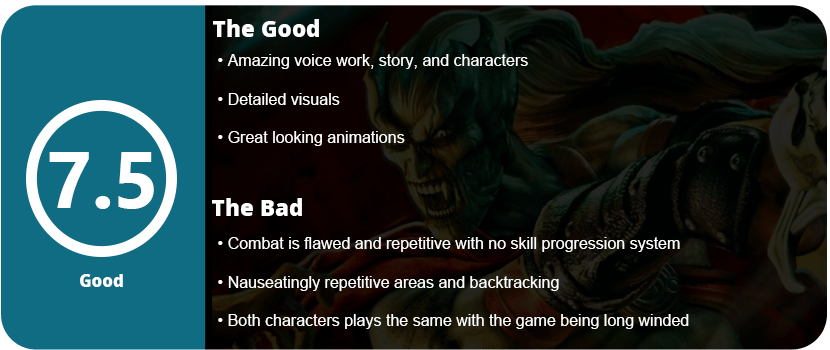
The game is well worth a playthrough, and you don’t have to play the previous games to understand what’s going on. The story is told so well that you get the entire picture by the end of the game, and it feels satisfying. It’s one of the few games back in the day that had a fantastic story that was worth trodding through the mediocre gameplay to see unwind. Playing as Kain is actually a lot easier than Raziel as his sections are shorter, he doesn’t have to do as many puzzles, and he’s more powerful. However, I was seriously disappointed with many aspects of this game as it became frustrating and repetitive long before I reached the end.
For starters, the level design isn’t the best, and there’s more backtracking in this game than I can stand. You don’t just visit the same area twice or even three times, but over half a dozen, and it becomes a drag. Kain’s segments are mostly just combat-oriented, finding balance pieces to acquire one of four sword abilities. Raziel’s segments require him to find seven different swords, and each element temple is exactly the same, just rearranged. You go into the temple, get the new sword, fight a mini-boss, use the new element to unlock a portal, and repeat nearly a dozen times. It’s so tiring and boring that most people won’t finish the game.
It’s not just the temples that repeat, but the rest of the game. You swap between the vampire citadel and a mansion, and both Kain and Raziel revisit it multiple times each. You go through the entire area once and then come back with a new ability to break through some wall that leads to a new area, just to go through it all over again as the other character. I find this level design poor, and some of the levels are confusing and maze-like, and I just didn’t care for it. Raziel has to shift between the Material Realm and Astral Realm several times throughout levels, but you have to find a conduit spot to shift back into the Material Realm. It’s a neat idea, but later you realize this is more of a hindrance and doesn’t really add much to the gameplay. There aren’t any special puzzles that require you to swap between the two to make things really interesting. You just use it to pass through certain doors and for platforming.
Combat is also full of flaws, with one major one being that Kain and Raziel fight nearly identically, with Kain just being slower than Raziel. Both have telekinesis powers, both use a sword, and both dodge nearly the same. Dodging is one of the biggest problems in the game, as you have to hold down the jump button while moving in a certain direction. Enemies move too fast to have time to hold the button down. Why do you hold a dodge button? It doesn’t help that there are knockback animations, and I absolutely hate these as they make combat a drag. Throw in the fact that you don’t get more powerful throughout the game; each sword element just adds a different power attack when your meter is all the way up. There’s no sense of character progression at all, and this game is long enough (roughly 12 hours) to have that kind of system. You can acquire new special combos, but they are difficult to execute, and most of the time you just button-mash. After about halfway through the game, I just ran past enemies unless I was forced to fight them. There’s no reason to fight these enemies at all except for health (both characters can absorb them to replenish), as there are no skill points or XP to gain.
I will say that the combat animations are fluid, the controls are solid, and everything works. The second biggest issue is the damn camera. It’s a static camera most of the time that spins around, and you can’t control it. A lot of times, objects were blocking the camera during combat, or I would fall and die because I couldn’t judge a jump right. The camera is atrocious and really detracts from the overall experience here.
The puzzles are also a joke, as they are barely puzzles. Just push this block onto that switch, and that’s all you do. There’s no thinking involved at all, like in other games in this genre. Now, it seems I’m ragging on the game, but I did enjoy it despite its many flaws. The voice acting is just fantastic, as are the story and characters; it’s the sole reason why I pushed on. The graphics are somewhat decent, with lots of detail everywhere, but there are games that look much better, especially since 2003 was a time when developers were really pushing these systems.
Once you beat the game, there are zero reasons to go back. There are no alternate endings, no special unlocks, nothing. There is great making-of stuff when you finish, but that’s it. Take it for what it’s worth and definitely pick this game up. It was one I missed growing up as a kid, and I plan to play every game in this series despite all its flaws.
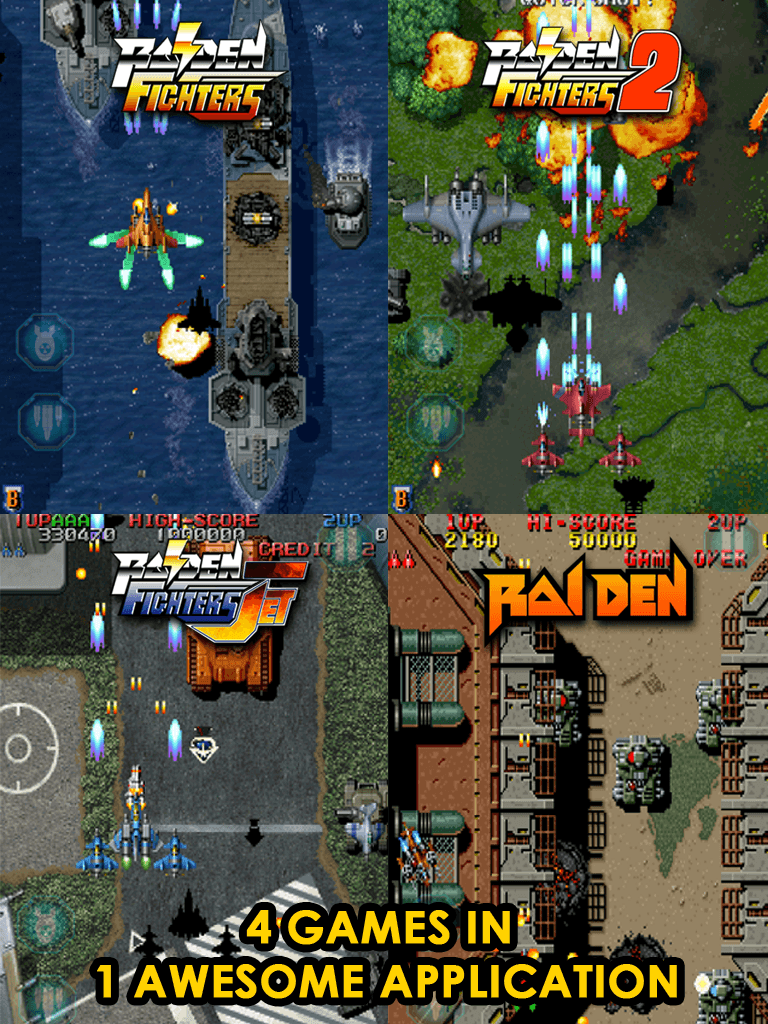
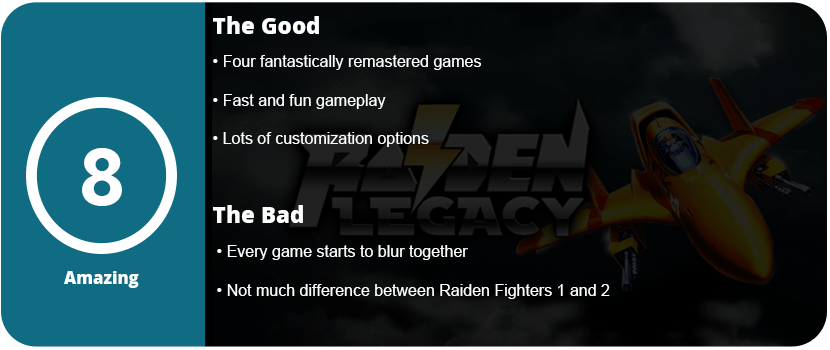
Raiden is one of the original popular shmups that delved away from fantasy settings and more towards a realistic military setting. Raiden is fast-paced, controls smoothly, and has some great enemy layout and level design. To top this all off, Raiden Legacy has four Raiden games that are all a complete blast to play.
The first game is the original Raiden. Using 16-bit graphics and sound, it may look dated, but it plays wonderfully. The sprites are crisp and clear, and the sound is great. It starts off slower than the newer games, with power-ups and faster-paced enemies taking a while to appear. This may seem familiar with some of the recent free-to-play or freemium bullet hell games today. The bosses are fun, there are plenty of jets to choose from, and I found it had a personality over the newer Raidens that made it stand out and unique.
Next up is Raiden Fighters. This is a more updated, newer-looking Raiden that you would see in arcades. The game looks crisp and clean, and there are plenty of power-ups to go after. It is definitely different than the first Raiden and feels different as well. Just like all the other games in this collection, there are plenty of control options, and each game has arcade, mission, and practice modes. It’s always a good idea to get a handle on each level, enemy placement, and power-up management before mastering a level.
The third game in the collection is Raiden Fighters 2. It feels quite similar to the first Fighters game and honestly could have been excluded, and the package would have been fine. The graphics and sound are nearly the same, but there are different jets to use, enemies, and levels, so it is kind of a new game. Still just as solid as the other two and worth a playthrough.
The last game is Raiden Fighter Jet. Fighter Jet is more, well, jets, I guess. You fight a lot more air enemies than ground enemies, and it looks and sounds the best out of the four. After you get to the fourth game, it will start to feel a bit the same, and it will start to become a blur in the end. However, these are fun shmup experiences, and they work great on mobile phones. The control settings are customizable (I preferred Touch 200), and the game just looks awesome in portrait mode on high-res screens.
Overall, if you’re a shmup fan, this is a must-have. Keep in mind that this is a more realistic military-style shooter and less fantasy, but still a great game.
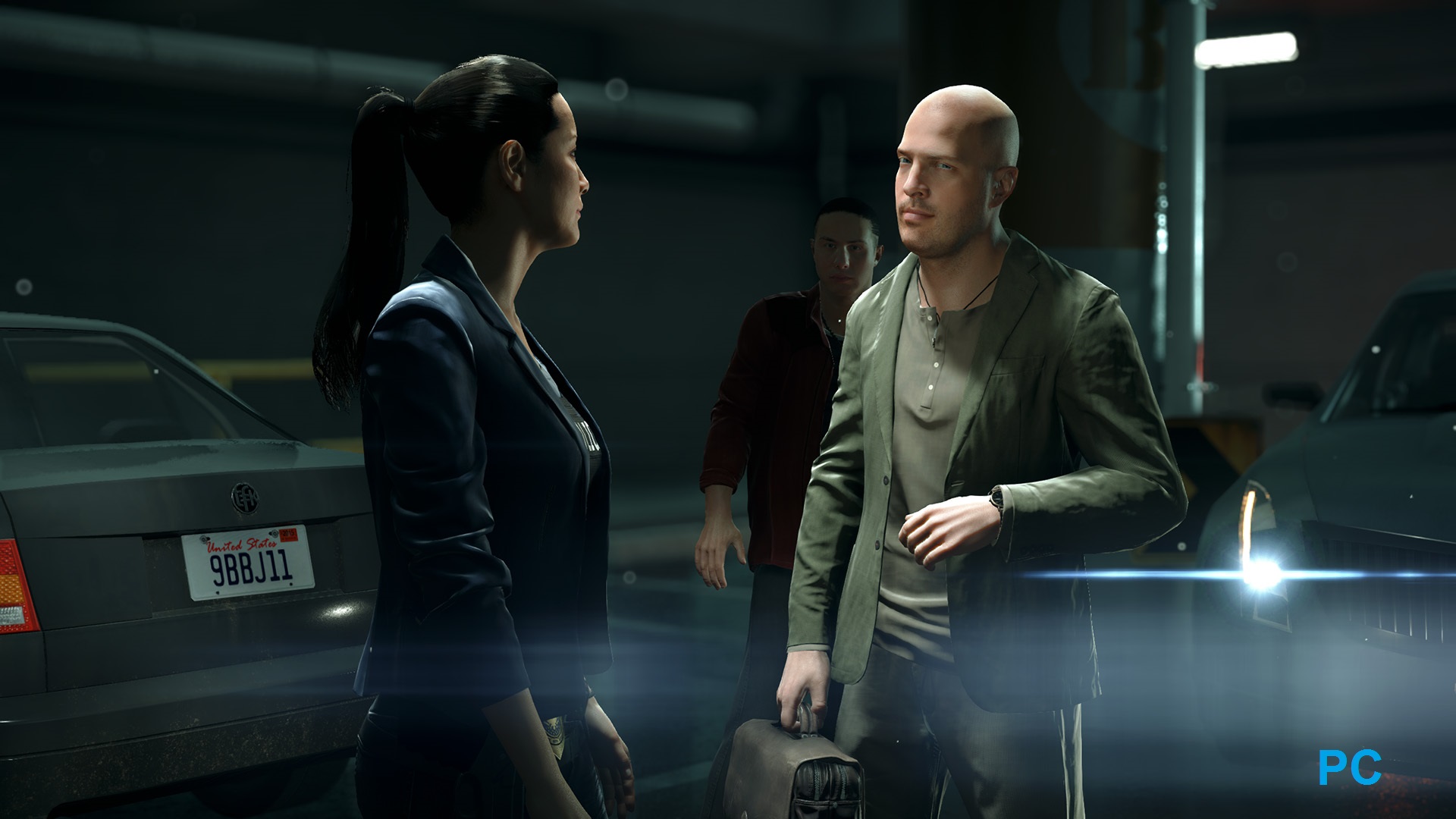
The first-person shooter genre hasn’t really advanced over the years. I feel this is one genre that is de-evolving over time. No longer do we have the clever and memorable shooters from the mid- to late-90s and early 2000s. Every shooter these days is all about killing as much stuff as you can as fast as you can, and Hardline is no exception. The game tries to take a more cerebral approach with the addition of stealth. Remember, half the time you are a cop and the other half a criminal. You play a man named Nick Mendoza, who is a good cop who gets framed while taking down a drug cartel in Miami. Your partner is a female cop; there are few plot twists; a lot of unrealistic stuff happens; there’s some cheesy dialog; blah blah, you get the rest. While I was interested in the story enough to keep playing, I forgot about the whole thing once I shut the game off.
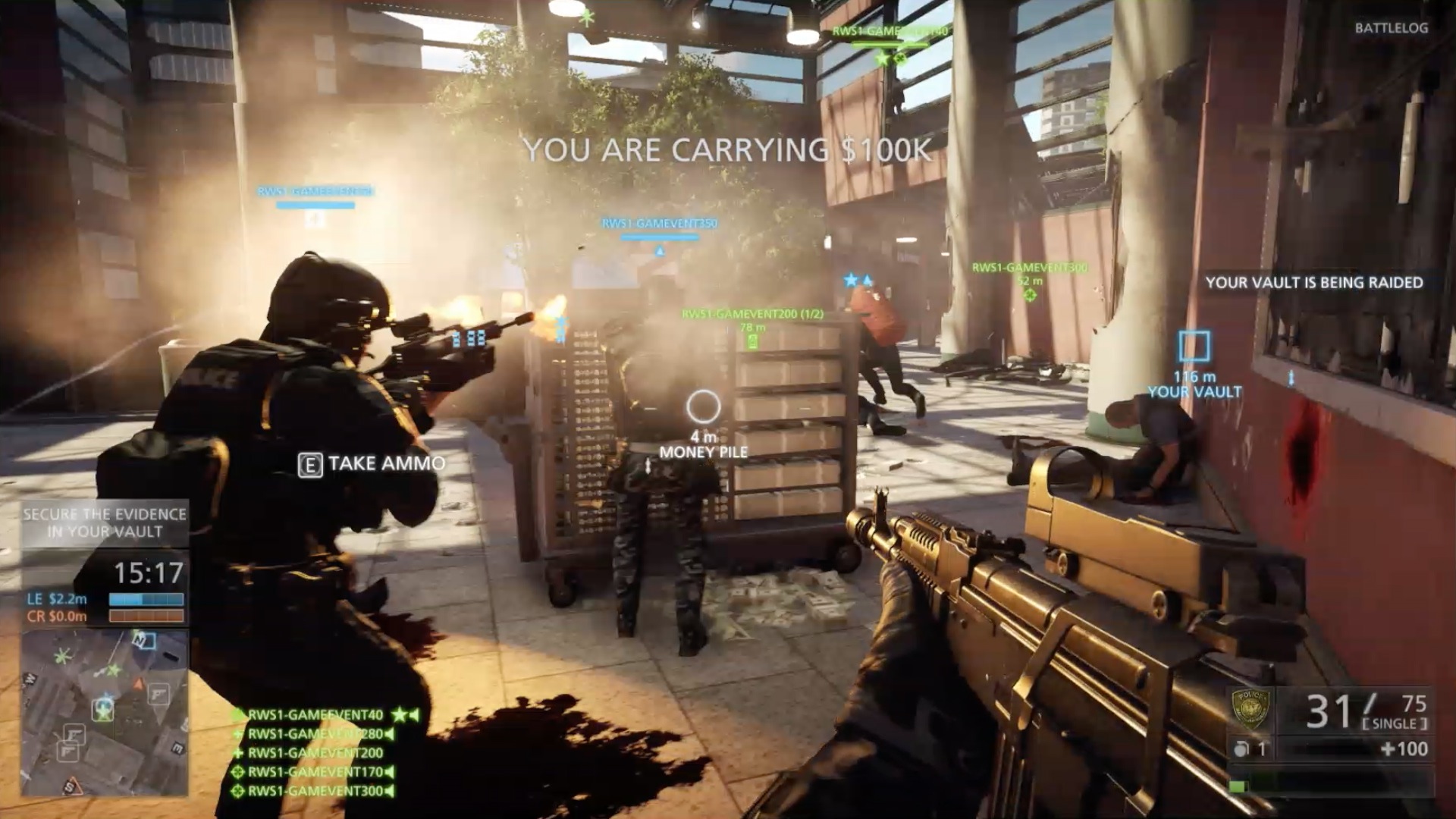
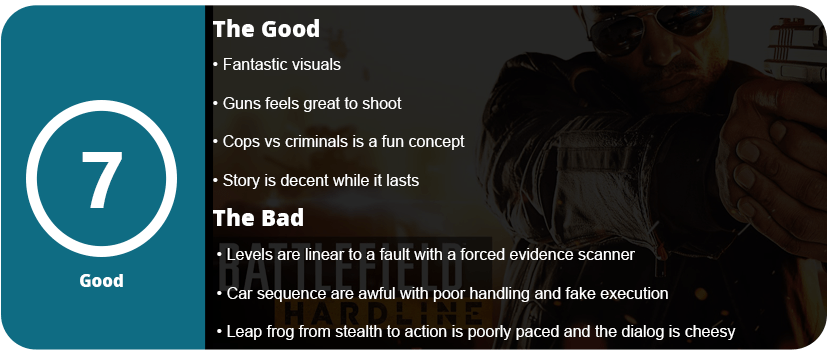
Hardline’s stealth gameplay actually isn’t half bad, but it feels pointless in some ways. Sure, you’re rewarded for using stealth and arresting criminals, but I feel this could have been done in a different way. As you sneak around levels, you can make people freeze, up to three, and take them down. This rewards weapon and attachment unlocks, obviously; what else? It’s fun at first, but after the first level, I just wanted to shoot stuff up, but I couldn’t because of the unlocks. Each level pretty much plays out exactly the same: navigate the extremely linear level, get lost a few times, use the annoying scanner to find evidence for more unlocks, and kill more bad guys. Hardline is literally a leapfrog game from stealth to action, and it gets a little tiring after a while. Thankfully, the game only lasts about 5 hours, and then it’s on to multiplayer. On some levels, I was able to take down all the bad guys, and that felt satisfying, but in some areas, you had to enter the right area or take them down in a certain order to not get spotted, and this was so irritating. One level had me trying to sneak out of a prison ground while trying to hide from cops, but for some reason, they constantly spotted me no matter where I hid, and it was all about reloading the game 500 times to exploit the mechanics—not fun.
One thing I do like a lot about Hardline and Battlefield in general is the overall handling and feel of weapons. They have weight, they feel real, and there’s a lot of feedback and skill required to aim the gun, and with this, you will find your favorites. Hardline is more urban cops vs. robbers, so you won’t see the military weapons you’re used to. Most missions I went through with a pistol as my main weapon and then a shotgun or SMG as a backup, that’s it. No grenades, no rocket launchers—nothing like that. It’s an interesting change-up for the series, but it just wasn’t done right.
Multiplayer is interesting, but it still doesn’t top Battlefield 3. Most modes consist of variations of capturing the flag with small maps, but the most interesting is hotwiring. This is a car heist mission where you drive around on maps, but the vehicle handling is some of the worst. Even during the campaign, the car chases felt fake, ridiculous, and completely unbelievable. The janky and over-exaggerated handling doesn’t help either. While multiplayer is a nice change from urban maps over large military fields, it’s not something to write home about. I got bored after getting to around level 15 and just kind of stopped and went on to better games.
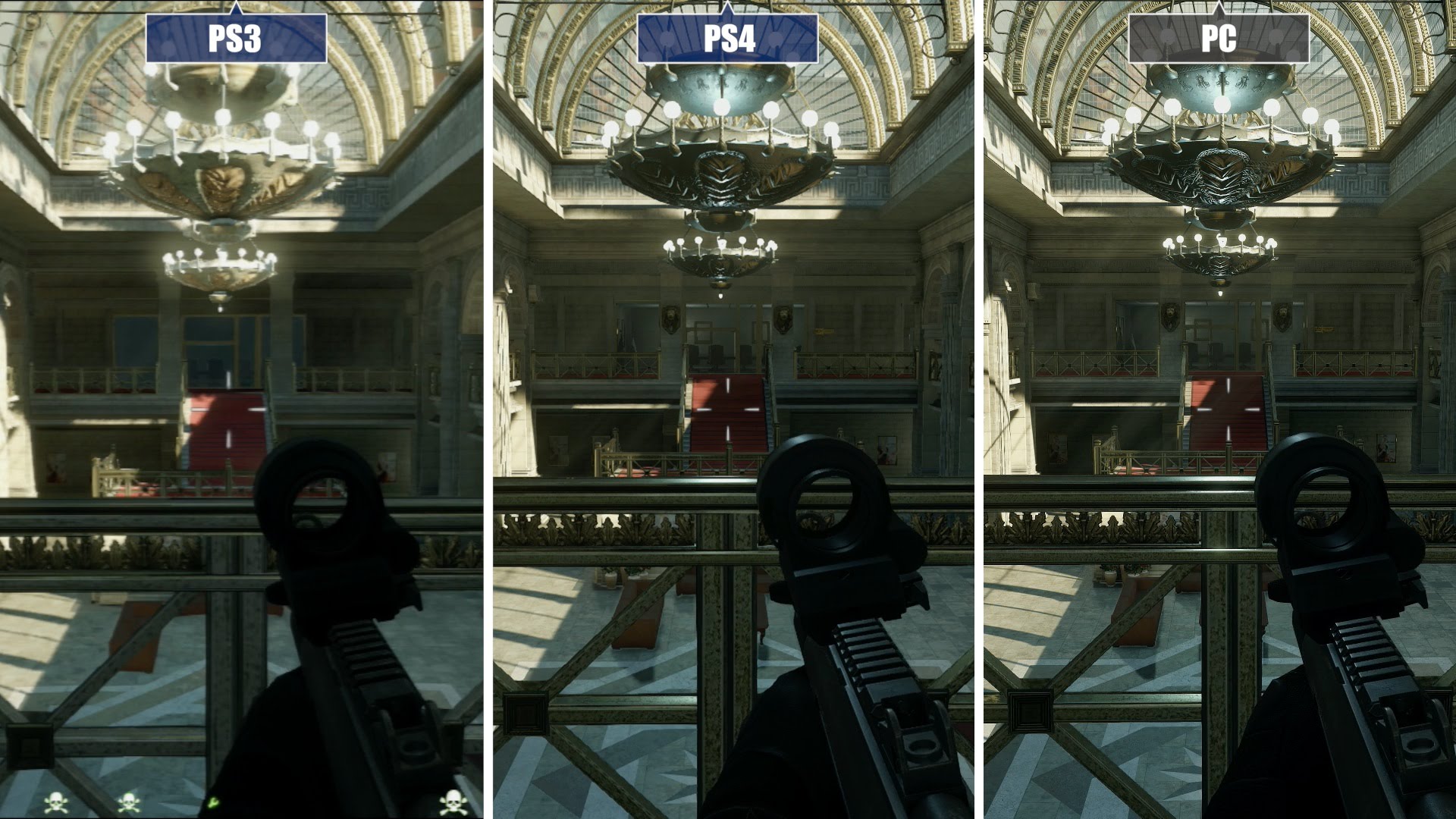
The visuals are quite impressive, some of the best out there right now, with fantastic lighting and extremely high-res textures. While the PC version does look the best, the PS4 and Xbox One versions are nothing to scoff at. However, you will need a fairly new system to run this on a PC—nothing over 18 months old.
With that said, Hardline is a nice change of pace for the series, but it just wasn’t executed right. The story is decent, albeit cheesy and fake; the levels are more linear than you can imagine; and the leapfrog from stealth to action is just a little nauseating and causes poor pacing issues. The car chases are terribly done, completely fake, and unbelievable. The multiplayer, while interesting, feels too similar to other shooters and doesn’t top Battlefield 3’s excellent maps and balancing; the visuals are also stunning, but this won’t help the game much. What we have here is a slightly above-average shooter and a below-average Battlefield game. I really felt this was the series’ low point, but that doesn’t mean I wouldn’t want a sequel that’s more fine-tuned.






































 thebinarymessiah.com
Try multiplayer. A lot of fun !