Skateboarding games have always been one of my favorite genres. They’re intense, require an insane amount of skills and coordination, and are just so much fun to play. I started all the way back to the original Tony Hawk’s Pro Skater and ended at Skate 3. From there, the genre pretty much died, but Olli revived the series a bit, and I fell in love with the first game.
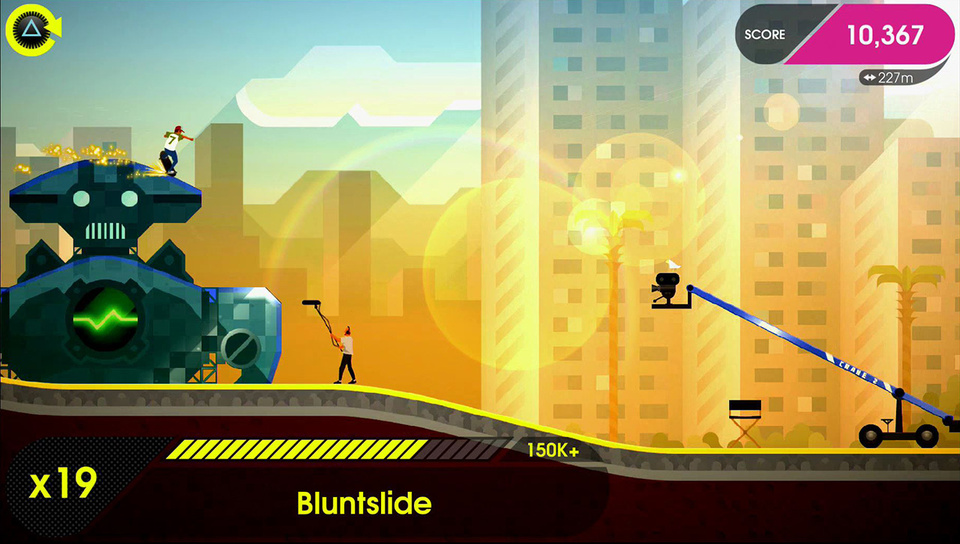
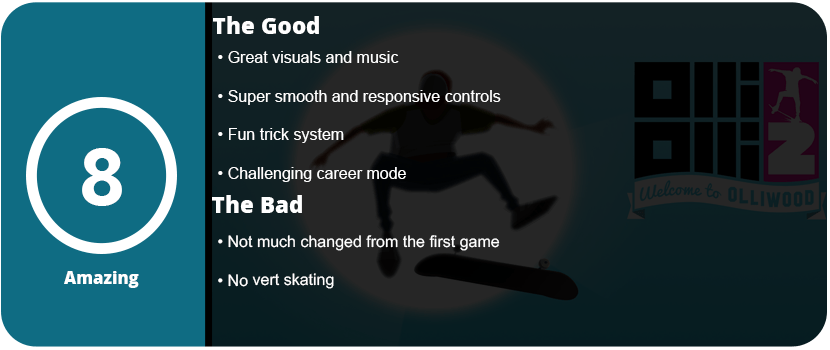
The second is no different, and that’s both good and bad. On the plus side, the game feels smoother, there are more tricks, the entire game is more responsive, and there are more modes and new levels and themes. The downside is that it’s pretty much the same game with no real evolution of the series.
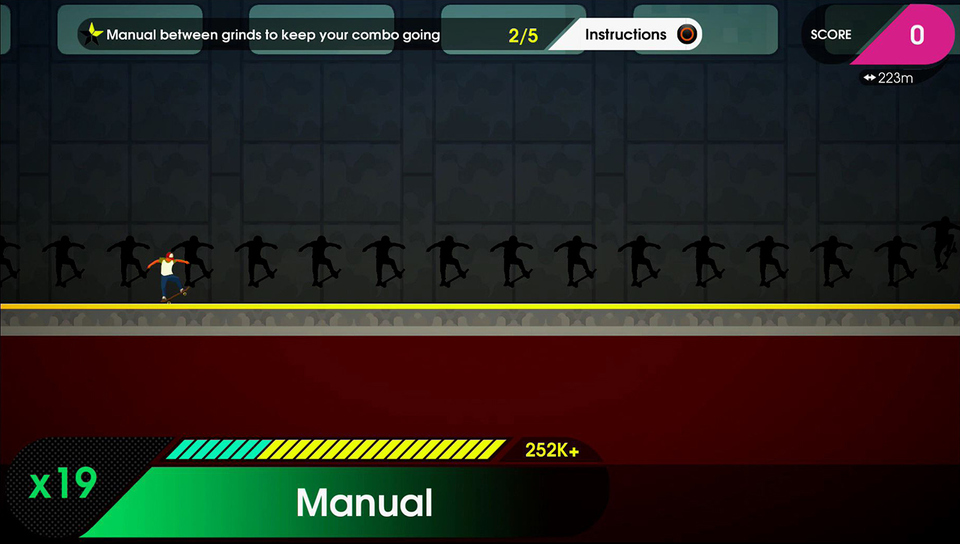
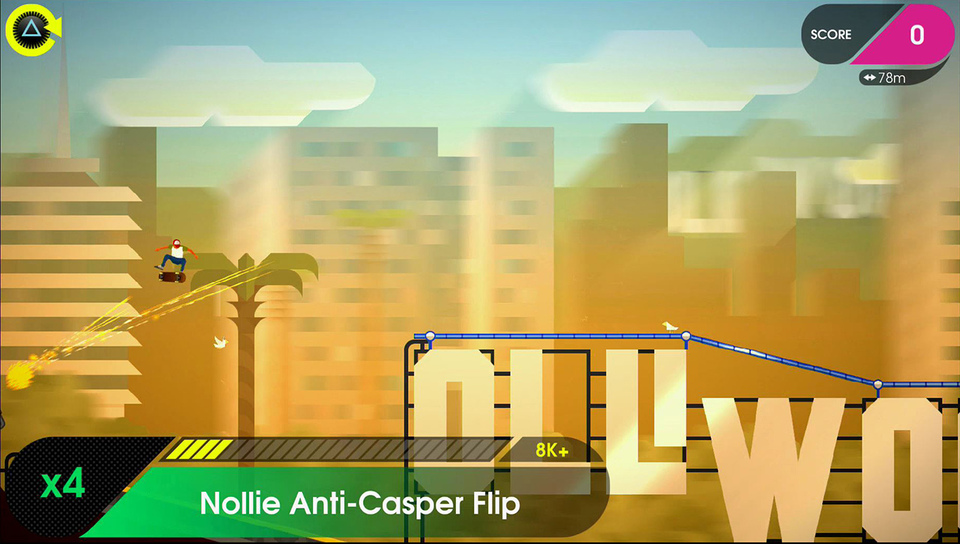
Career mode is where you will spend most of your time. Here you have six different goals, varying in tricks, scores, and special spots. Using the left analog stick, you can push down and then up to pop the board up and flick it around to do tricks. Holding it down over a rail will allow you to grind. To properly land a trick, you must press X right before landing, or they will all be sloppy. This trick system is similar to Skate’s and is a great evolution of the button combo system.
Sadly, you can’t do grabs, and there’s no vert skating. Half-pipe rounds would have been fun, and it’s sad that the sequel doesn’t really add all that much. There are two other modes, which are trick spot and just a leaderboard tracker. They’re fun but aren’t really different from the career mode.
The game looks nice with fun music, awesome 2D scenes, and a great Hollywood/Los Angeles theme, and it’s just super smooth. With all that said, OlliOlli 2 is a great entry for newcomers and veterans who will find enough new stuff in the career mode to consider a purchase.
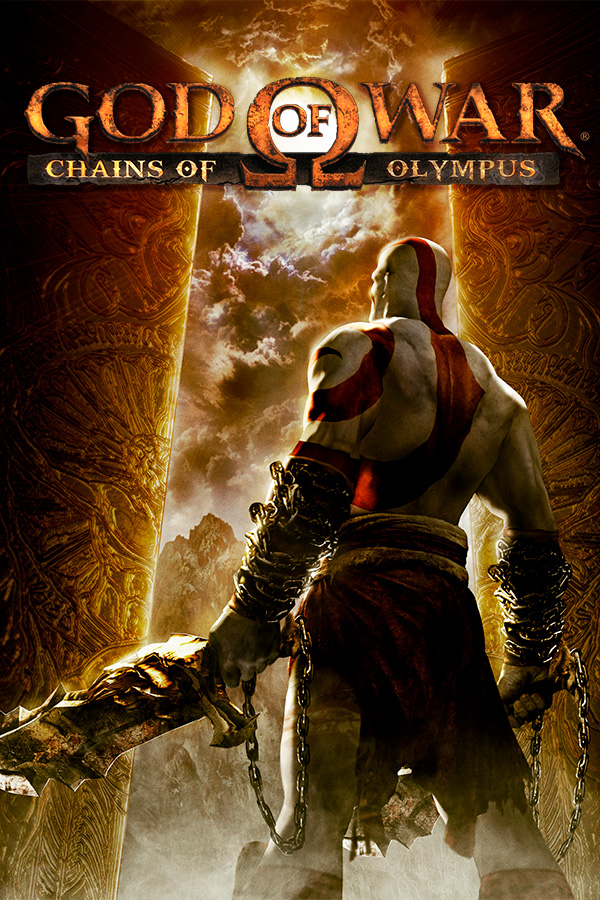
Chains of Olympus was probably the single biggest PSP release during the entire console’s life cycle. It was one of the first games everyone wanted for the system, and Ready at Dawn delivered a God of War experience just like the console version, with no cut corners.
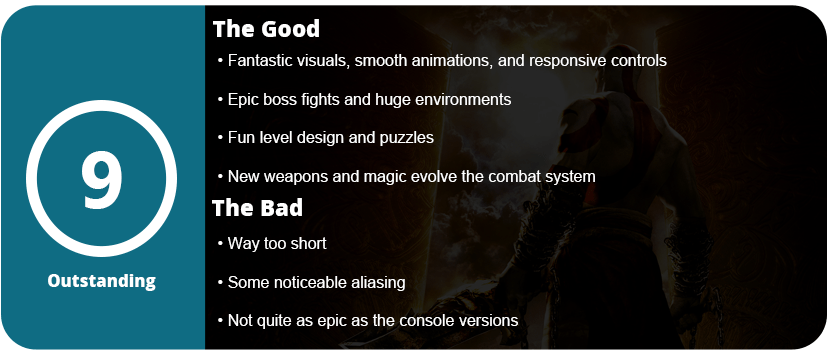
The game takes place between the first two games, with Kratos continuing his journey to rid every god of Olympus and his quest to kill Zeus. He finds himself discovering more nightmares of his past, his daughter, and various new gods not seen in previous games. The story is just fine and feels just like a God of War game, but it’s very short and can be finished in less than 4 hours.
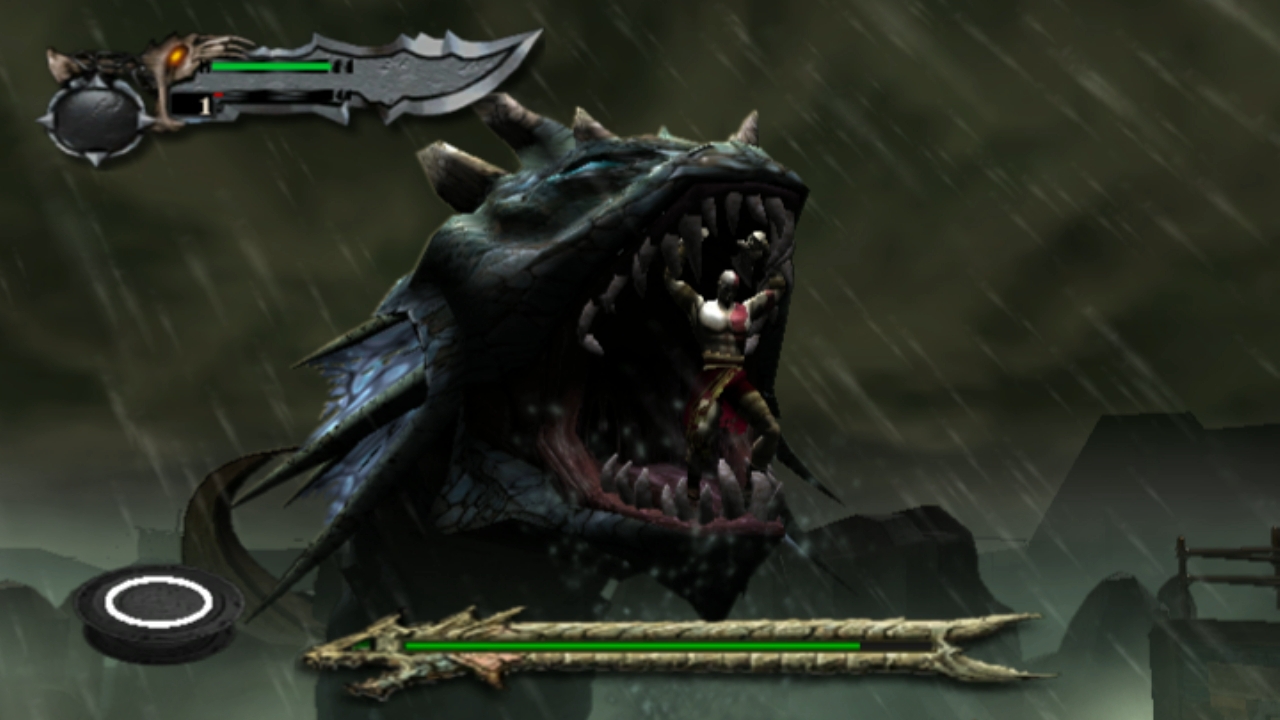
I remember starting up this game for the first time and seeing half of Kratos’ face in the main menu, just like in previous games, and pressing that new game button. The game starts with you at the Battle of Attica, fighting off a giant basilisk sent to destroy the city by the Persians. I knew the game would have an epic first boss fight and a giant city to fight in, as the previous games did as well. You also have to remember that this was released two years after God of War II, so there wasn’t much else to go off of at the time. Thankfully, this game carved its own path in the God of War series, and later games actually borrowed things from this game.
Surprisingly, the controls work out just fine with the handheld version. Pressing the shoulder buttons and moving the analog nub allow you to dodge. The combat and animations are gorgeous, and the game runs at 30FPS most of the time. Very rarely did it ever drop below that, and sometimes it even went up to 60 FPS in smaller areas. Everything about this game is so familiar yet somehow slightly evolved from GoWII. The moves are more fluid, and upgrades are a bit different as well. New magic items and a brand new weapon are introduced as well.
The Gauntlet of Zeus is a giant fist that brings slower, more powerful hits; sadly, due to its short length, only one extra weapon was introduced. Efreet is the new AOE magic attack that uses fire damage; Light of Dawn is a long-range magic attack; and Charon’s Wrath stuns enemies. Kratos also gets a shield in the game, allowing new counter-attacks and throwing back projectiles at enemies. The whole combat system as a whole feels new and enhanced enough to make this feel like a sequel rather than a spin-off.
Just like in previous games, you can upgrade your magic and health with hidden Phoenix Feather and Gorgon Eye chests, as well as using red orbs to upgrade items. Most of the hidden chests are easy to find if you explore all areas and pay attention to breakable walls and side paths. The best part about this game is the new enemies and bosses, which is what makes God of War so epic to begin with.
After beating the Basilisk, you will come across a few other bosses, but they aren’t large epic enemies like previous games; they are smaller and more challenging combat-wise, which is fine for the story that it delivers. I don’t want to spoil the game and tell you all the bosses right here, but the final boss proved quite a challenge and will test your reflexes for sure.
The environments are also amazing, as with any God of War game, with huge set pieces, massive buildings, giant statues, and various background stuff going on. Chains of Olympus was the best-looking handheld game ever released at the time and stunned everyone. It sold more PSP systems, which was good and was the main reason why most people bought a PSP. The lighting effects and textures look great and are a step up from God of War II. There is some noticeable aliasing and audio compression, but overall, the game seems impossibly good on the small system. This was also the first PSP game to use the full 333 MHz of the CPU and required an update before playing.
Overall, Chains of Olympus is a milestone and a pinnacle game in the handheld market and shows just how much of a powerhouse Sony’s handheld was back in the day. Sadly, we never got a new God of War on Vita, but this game is playable on that system as a PSP download.
Kratos and God of War are PlayStation icons and symbols of what the system can offer. This game was the biggest hit in 2005, and I went nuts for it like everyone else. It reinvented the action-adventure genre like no one else had with epic boss fights, cinematic combat, and insane-level design. We finally get all of this in portable form on the Vita. While it isn’t the most ideal version, it’s still plenty of fun.
God of War is really starting to show its age and flaws these days; that is really clear. It was a new idea, however well executed, but still had some issues. The game isn’t quite as epic as I remember, thanks to the newer games in the series being insanely huge. There are only two big boss fights in this game, and I could swear there were more. The game is brutal in spots but still rewarding, with many secrets and areas to explore.
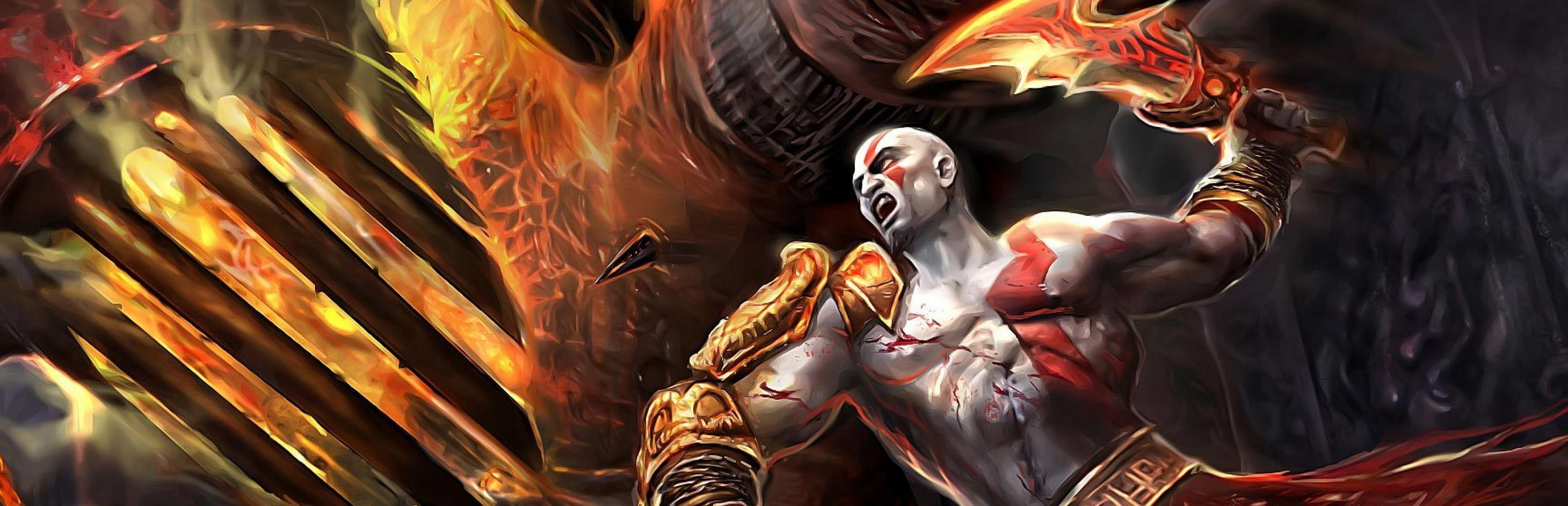
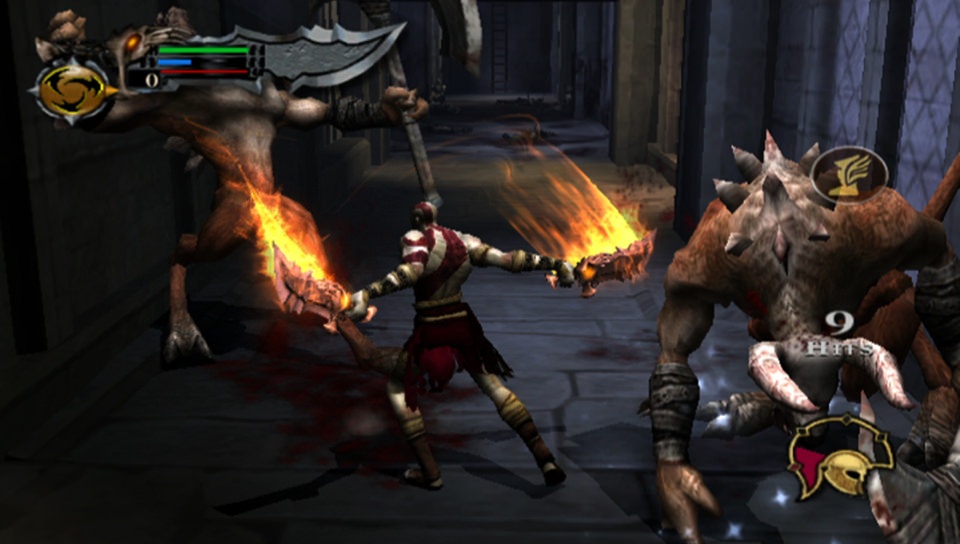
You play as Kratos, a Spartan general who cried out for Ares to save him and defeat his enemies, but this all came at a huge price. I won’t spoil more of the story if you have never played this series, but longtime fans know it already. The game has amazing combat, which is what was praised so much 13 years ago. Using the Blades of Chaos, Kratos can swing and spin them around with amazing animations and kill hordes of enemies. I’m not kidding about hordes; there are some scenes where you must defeat nearly a hundred enemies, which is brutal.
The enemy variety is also great, as there are small, easy enemies to huge, lumbering cyclops that take many hits to kill. God of War is famous for quick-time event kills. After so much damage is taken, the enemies will display the circle button above their heads. This initiates a quick-time button pressing, which will give you health orbs. Each enemy has its own unique animation. Each enemy is also a challenge on their own, as some are dangerous on hordes while others are not so much alone. The level design is fantastic, and the enemy placement is cleverly laid out to offer a challenge every step of the way.
The series is also famous for the magic powers you acquire that are different with every game. You get four, which become very useful for various enemies. Poseidon’s Rage is great for clearing hordes of weaker enemies, as it’s an AOE attack. Zeus’ Fury is the only long-range weapon you get for picking off ranged enemies. Souls of Hades is like a shield, and Medusa’s Gaze is great for larger single enemies to turn them to stone. On top of the Blades of Chaos, you also get Artemis’ Blade, which is a powerful short-range heavy weapon, but once the Blades were fully upgraded, I honestly never really used it.
Outside of combat, there are puzzles that will sometimes slow you down. Most consist of pressing switches in order, climbing puzzles, or jigsaws. Pandora’s Temple is a giant puzzle within itself that takes up a third of the game near the middle. I just can’t stress enough how hard this game can be. Some spots had me restarting dozens of times until I got it right, and this included platforming sections. The first game’s Hell area is notorious for being brutally difficult. Having to balance on long spinning logs covered in blades and then climb spinning spiked towers that stretch on forever is daunting, but rewarding when you do complete it.
Overall, God of War is still a blast to play 13 years later and is as polished as I remember. Outside of hardware limitations at the time, Sony did an amazing job creating what they did. There are some cheap deaths, unbalanced difficulty in spots, and the quick-time events do get repetitive, but it’s minor issues that can’t really bring the game down even today.
The Vita version is the only way to play this game in portable form, and it’s not the most ideal version. The PS3 version runs at a smooth 60FPS, but the Vita cleans up the visuals a little and does have some FPS drops when a lot of enemies are on screen, but it’s not often. I’m sad to see this game doesn’t hit 60FPS, which it does even on PS2 sometimes, which keeps this game from getting a perfect score.
It’s sad to say that the Vita was a mostly commercial flop as Sony got scared with the first sign of trouble. The Vita still continues to release JRPGs and visual novels today, but first- and third-party support has been long gone. The Slim Vita was released right at the beginning of all this, but there’s still a huge library to play on for anyone who hasn’t picked up a Vita yet. While the launch system was a fantastic piece of hardware, the slim version is as well.
While I won’t get into technical details about the hardware, the Slim Vita is virtually the same system, just slimmer, more ergonomic, lighter, and with much better buttons and placement. The awkward oval start, select, and home buttons are gone with new circle buttons that are firm and less mushy. Everything just has a more satisfying click and less of a mushy feeling to it, which is nice. The downside to being lighter and slimmer is a cheaper feeling, but it still feels good in the hands.
The home button no longer lights up, so those LEDs were moved to the top next to the power button as small bars, which look sleek and minimal. The Vita also uses a standard micro-USB cable, which is nice and ditches the proprietary charger; it’s just too bad they didn’t do that with storage. 1GB of internal memory is included for tiny games and saves, but you can’t use it concurrently with the outrageously expensive memory card.
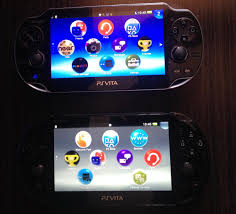
The biggest change of all is the LCD screen, which is no longer OLED. The Vita was touted as having a fantastic-looking screen, and while the LCD is nothing to scoff at, it doesn’t pop like the OLED did, but you wouldn’t notice unless they were side by side. This change always has more battery life as well. Also noted is the exclusion of 3G models, as AT&T killed the Vita plans less than a year after launch.
Overall, the Slim Vita is the best version to get due to all the improvements. Griping about the OLED screen isn’t enough to justify not wanting this version. We won’t get another iteration, so this is the best you can find.
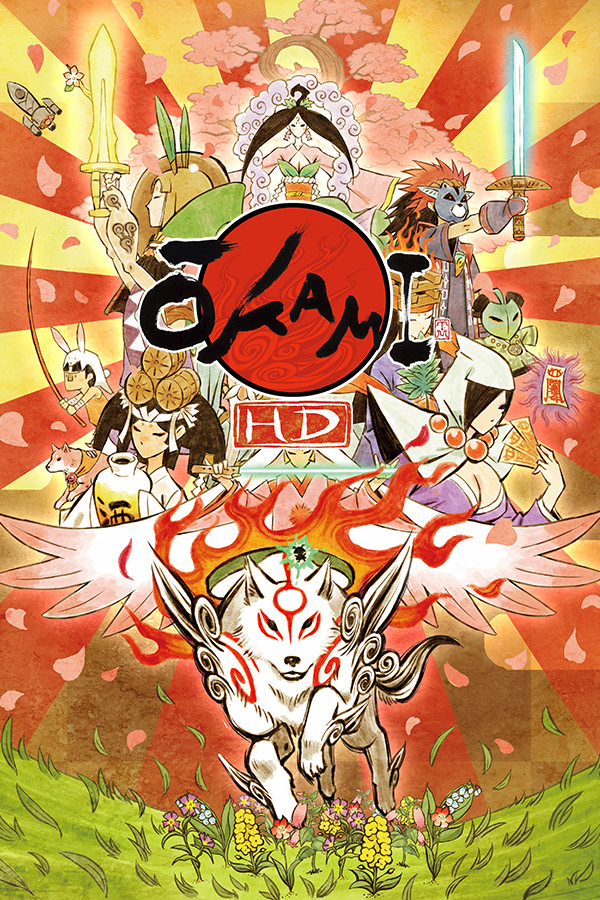
Okami was one of my favorite PS2 games growing up. I got the game for my birthday and was amazed by the beauty of the visuals and the unique gameplay of the Celestial Brush. It may not seem like such a big deal today, but back in 2006, this game sold PS2 units like hotcakes, and it helped the PS2 stand out as the best console of the generation, something the Xbox and GameCube didn’t have.
Fast forward 11 years, and the game still stands out and holds up as if it were released yesterday. You play as Okami Amaterasu, the Sun Goddess, with your Poncle pal Issun, as you embark on an adventure to rid Japan of darkness and evil. It seems like a stereotypical Japanese action-adventure story, but it’s a bit more than that. The characters have depth, and they all feel unique in their own way, with overexaggerated characters and personalities.
The game starts out simple enough by introducing you to basic game mechanics, including the celestial brush, by learning your first brush technique, rejuvenation. By pressing a button, the screen takes a snapshot and turns it into a black-and-white drawing right before your eyes. You then take an actual brush that you control and paint the correct stroke for each technique. This is such a beautiful and amazing game mechanic that works so well and yet has not been matched to this day.
As you progress through the game, the world opens up with larger hub areas that you can explore. Besides going for the main story, you can partake in item collection quests, praise gathering, and finding hidden chests that contain various items. Praise is used to upgrade your health; ink pots; an astral pouch (used to resurrect you when you die); and a money pouch. Praise can be gained by rejuvenating dead areas, feeding animals, and helping villagers in small, yet sparse, side quests. However, 90% of the time, you will be heading ever onward toward the end of your journey.
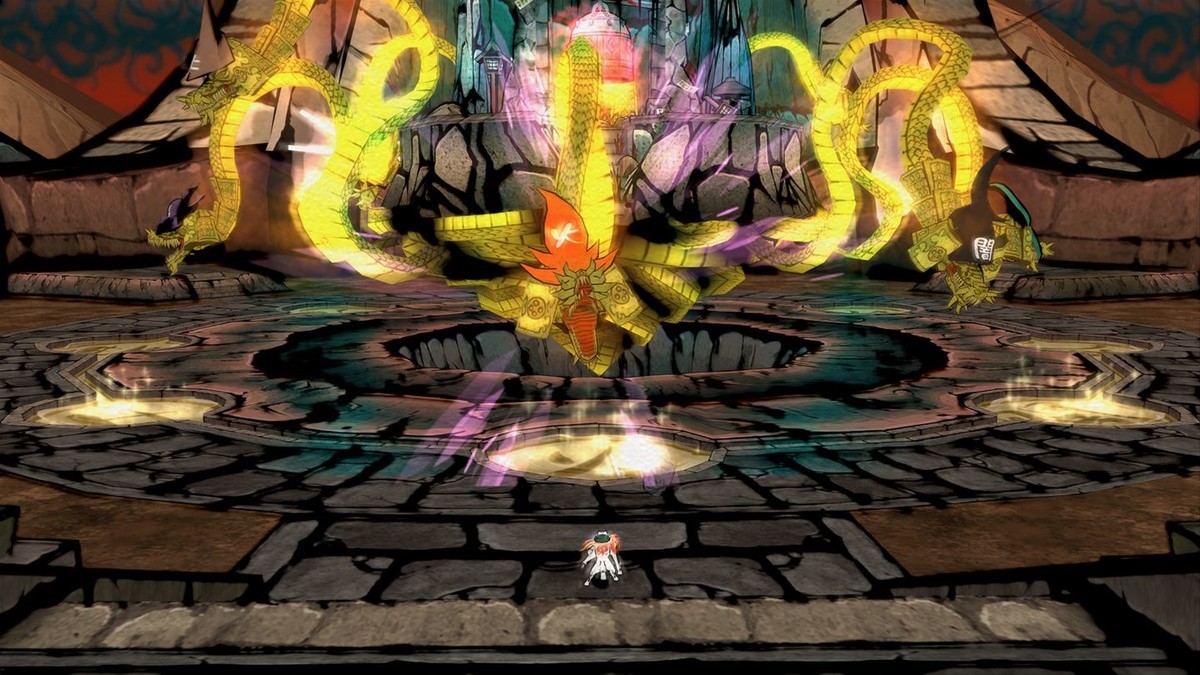
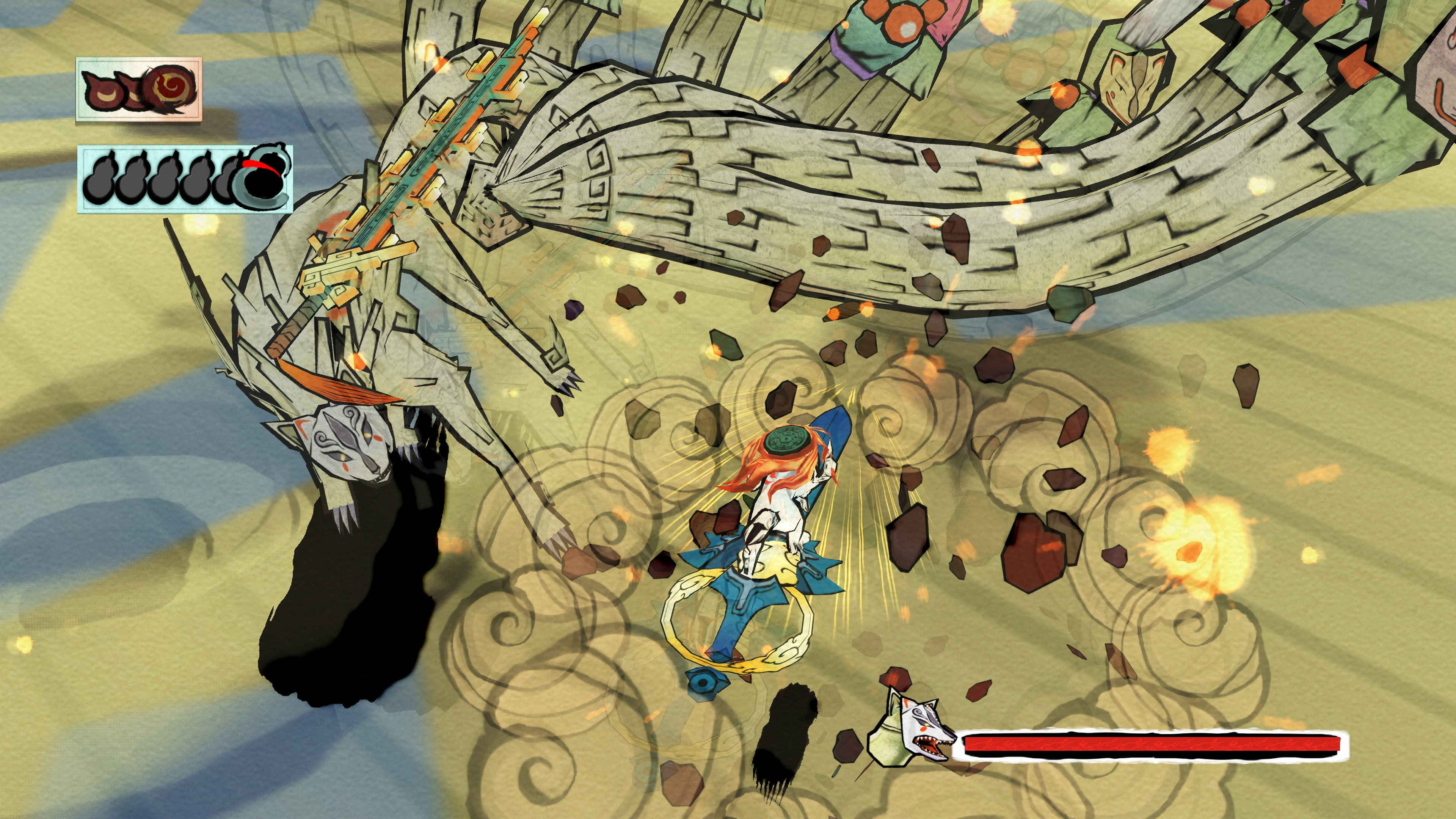
Combat is actually where the Celestial Brush comes into play the most. You and the enemies are surrounded by a cursed circle, and you can use your various brush techniques to defeat the enemy. There are many enemy types in the game, and they are all based on ancient Japanese myths and legends and look fantastic as well. Each enemy is completely different and weak to different techniques. Enemies are introduced slowly throughout the entire game, all the way to the end.
Boss fights are also unique and fun in their own right. Outside of brush attacks, you can also attack physically and with items. Amaterasu can equip three different types of weapons: mirrors, glaives, and beads. Mirrors are good for quick, rapid medium-range attacks; glaives are for heavier and slower close-range attacks; and beads are for rapid long-range attacks. You can also equip a sub-weapon for a secondary attack that is either close range or projectile. Combat never got old, but it is rather easy. I actually got through the entire game without dying once, and after you start getting a lot of money, you can just buy heavy-damage items and use them over your techniques and weapons. It’s a little unbalanced, but still fun and challenging nonetheless.
As a whole, Okami is beautiful, adventurous, memorable, and unique. However, it does have some flaws. The dialog is the most irritating part of the game, as characters talk in muffled simlish gibberish, and it just gets grating after a while. You also can’t quickly skip through dialog during some cutscenes, so it takes forever to get through. I also found the last 25% of the game long-winded and unnecessary. There’s also a lot of backtracking towards the end and repeated boss battles, which drove me nuts. The game clocks in at about 25–30 hours, which is a little too long for this game. Towards the end, it just felt like the developers were extending the playtime by making you repeat things and dragging things out. I loved my time with Okami, but those last 5–10 hours drove me insane.
Outside of all this, the remastered version looks amazing in widescreen and 1080p and even has 4K textures if you own an appropriate console or PC. It’s nice to see Capcom supporting current tech with their updated games as Okami pops to life on 4K TVs. The price is also a steal, as it was released at a budget price of $20. There’s no excuse not to play this classic.
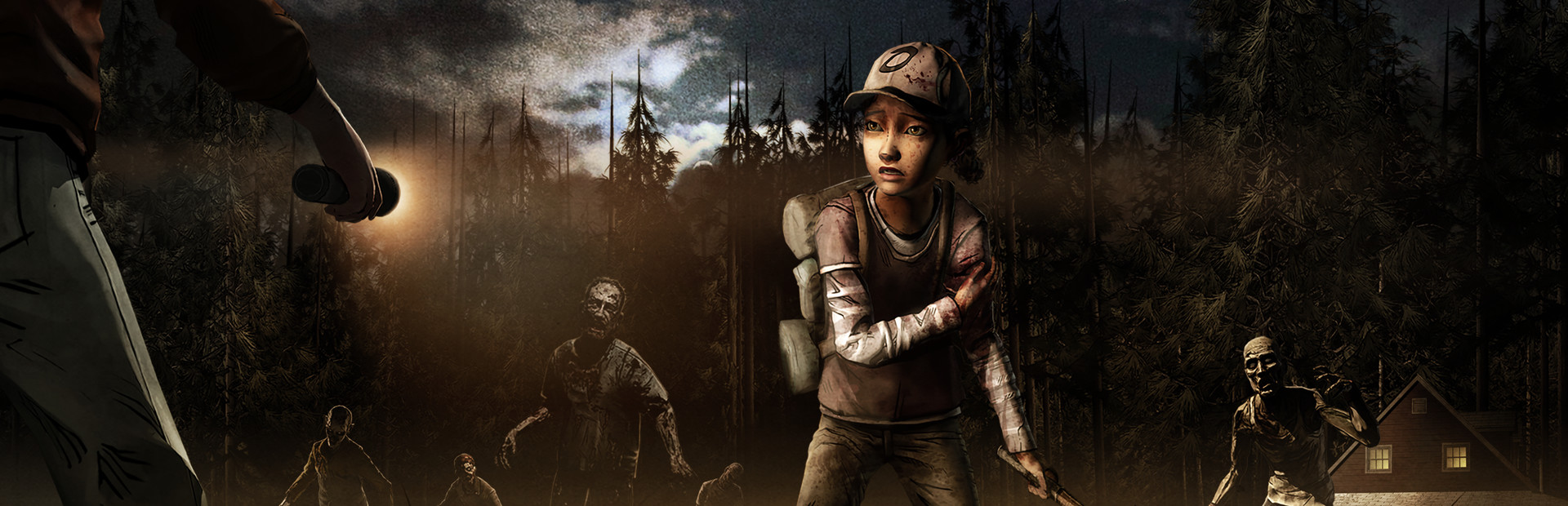
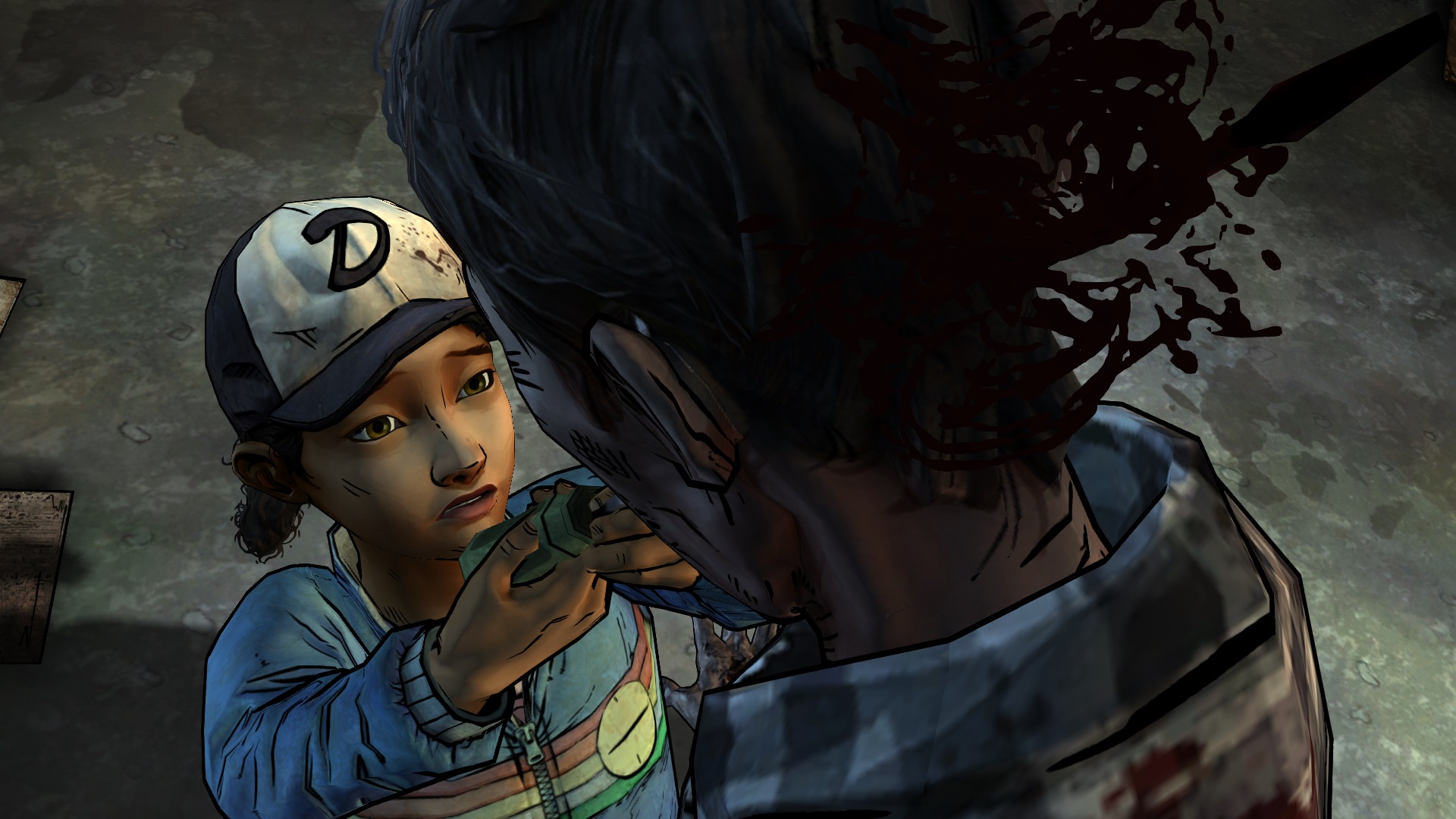
The original Walking Dead was a fantastic adventure game. It was well written, tense, memorable, and had amazing characters. The dialog choices kept the game moving, and you always felt like you were in control of every moment. Season Two adds to this while taking place moments after the end of the first game.
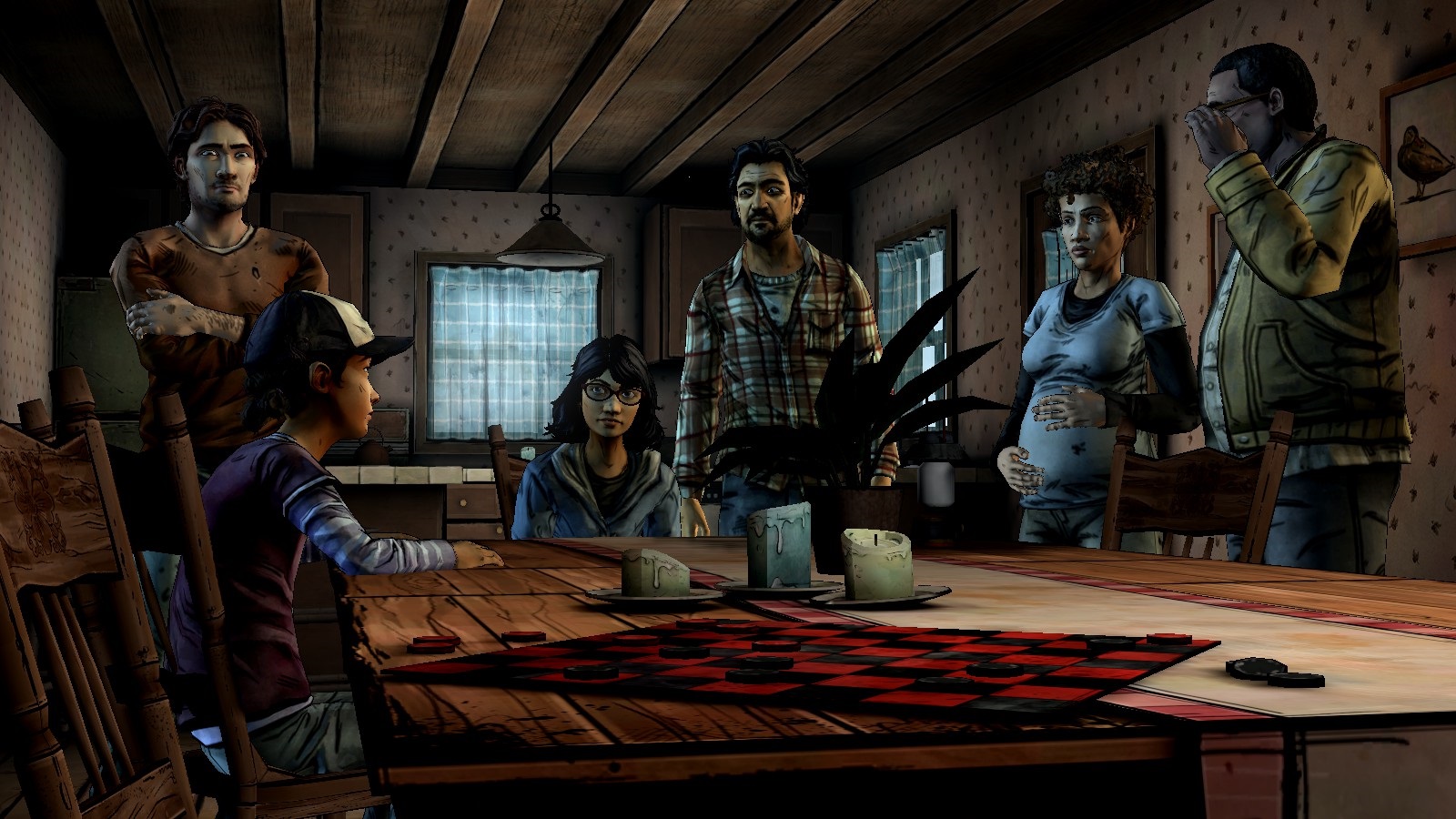
This time around, you play solely as Clementine. Right off the bat, I can tell you that your choices from the first season hardly impact Season Two. I imported my save, but I didn’t see many changes or choices I made from Season One affect anything here. We get an all-new cast, setting, and goal for Season Two that kept me going until the end.
Clementine is a child, but her raw character shows this season thanks to what she went through. Going from an innocent child to a hardened killer isn’t easy, and it makes Clementine such a likable character. Adults respect her for how mature she is; she can make adult decisions, but she still has some vulnerabilities that a child would have at her age. The new characters come across as strong, just like in Season One, but I felt a slight disconnect from them. Something about these new characters didn’t quite click as well. A lot is introduced early on, so this might be the reason.
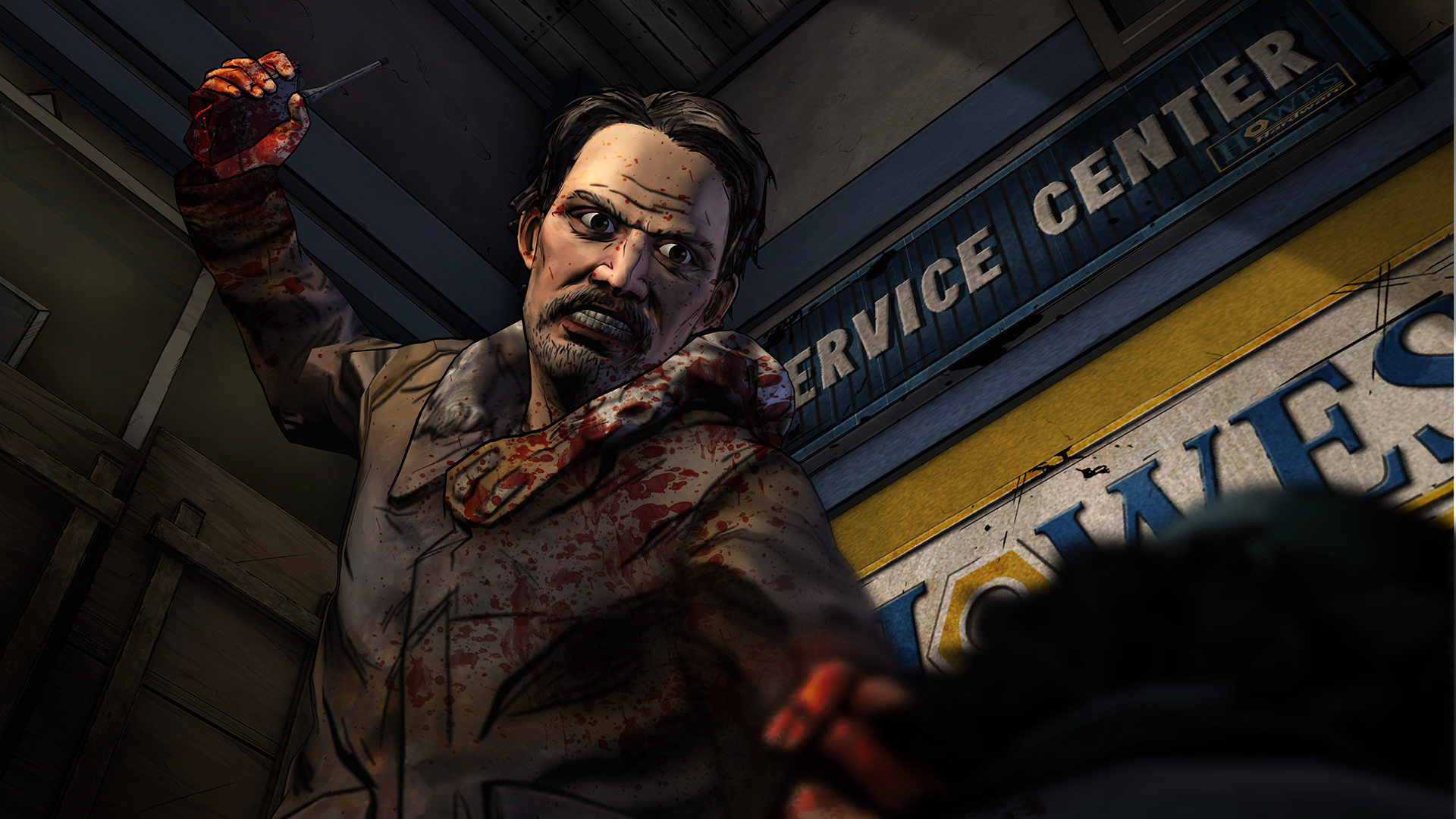
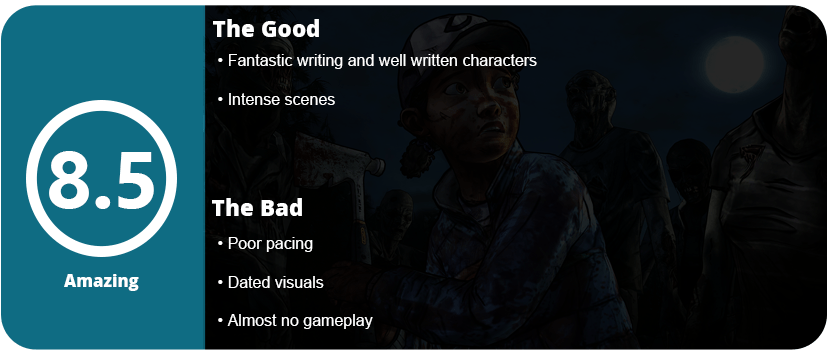
Throughout the game, we are seeing Clem get to a word-of-mouth safe haven called Wellington as she meets new friends, makes new enemies, and has to escape dire circumstances. I feel that this time around, the game is more of an interactive movie than a game. There are hardly any gameplay moments, and there is zero puzzle solving. The action sequences are somewhat entertaining, but the horrific moments of terror are far and few this time around. The few spots where you can walk around an area feel pointless, as all you do is go to the only interactive object to progress. The gameplay is seriously lacking here, but that’s not really a bad thing.
The dialog options are still strong, and many choices had me wanting to go back and change my choice, but that’s good. I always thought about what would happen if I chose something else, as some choices are designed to unfold later and some are immediate. The pacing of this game is also slower and less balanced. There are many slow moments of downtime and dialog build-up. Sometimes 20 minutes would go by with nothing but dialog options, which is a stark contrast to the first game.
I did notice the visuals are slightly improved with better lighting and more detailed textures, but overall the game engine is seriously aging and doesn’t hold up to other games. Season Two is still a memorable game with great characters, excellent writing, and tense moments. If only it were paced better and had more gameplay.
Game of Thrones is one of my favorite TV shows of all time, and for good reason. It had memorable characters, well-written scripts, fantastic actors, and so many gripping plot twists that will make your head spin. How do you copy this in a 5-hour game? Telltale somehow managed to do it, with some flaws, and I left wanting more.
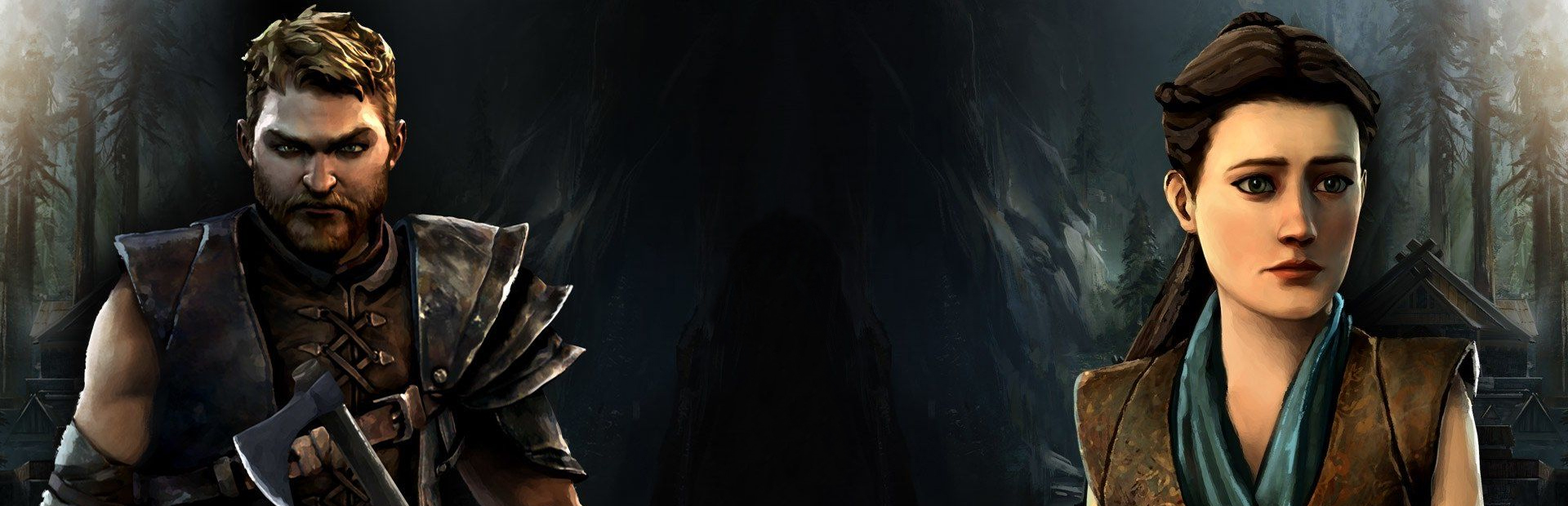
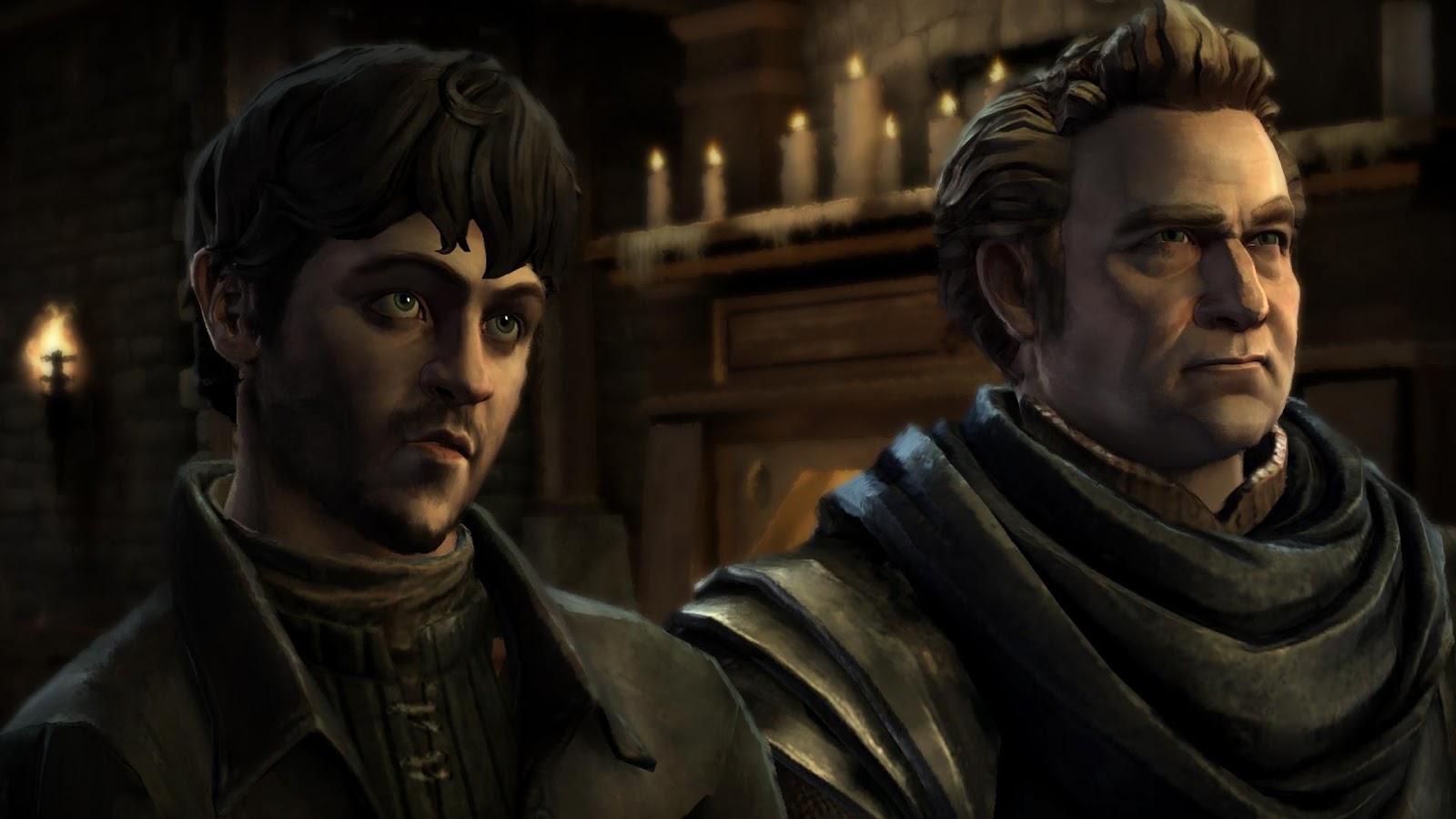
You play House Forrester, who are aligned with the Starks in the North, not seen in the show. They are trying to come out from under Roose Bolton’s foot, as the Boltons were assigned as wardens of the North after Ned Stark died in the first season. Ramsay Snow is constantly coming back to the house to “babysit” them, and this is some of where the major turning points happen.
You follow five characters in the game as our viewpoints change. Mira Forrester is in King’s Landing, trying to gain Lady Margery’s favor before she becomes queen. Then there’s Ethan Forrester, who is the new lord of House Forrester after his father dies in the hands of Frey’s ambush. Then there’s Edward Tuttle, who was the original Lord’s Steward, and he gets sent to the Wall. Asher Forrester is off in Essos, trying to gain Daenarys’s favor for an army. With all these different viewpoints, it feels just like the show with everyone spread out.
This is a much more story-driven Telltale game, and I know that sounds silly, but there’s maybe 5% gameplay here and not even any puzzles. There are some combat quick-time events, a few times where you walk around an area looking at things, and then the many, many dialog options, with some being meaningless and some having a full swing of the entire story.
I won’t get into details about the story as that will spoil it, but I was kept in for the whole game. The acting from the original characters who do appear is nice, as is the acting from the new characters. The new characters are memorable, hold their own, and feel like they would fit right into the TV show. As the episodes pick up, you spend less time with each character as all the choices you make culminate in the finale. Some choices were rather difficult to make as you decided who lived or died or how you acted towards someone. This was especially brilliant, as I thought I was doing the right thing sometimes, but it turned out it was hurting me more.
In the end, the point of the game is to gather a large enough army to fight back the Whitehills, whom the Boltons assigned to watch over House Forrester. All your choices will mean the difference between a house that lives or dies. I didn’t find the game really dull, but the scenes where I had control felt pointless. Rarely did it ever feel relevant, such as in a scene where Mira is searching for a letter in Tyrion’s office and guards are running down the hall, and she was trying to not get caught.
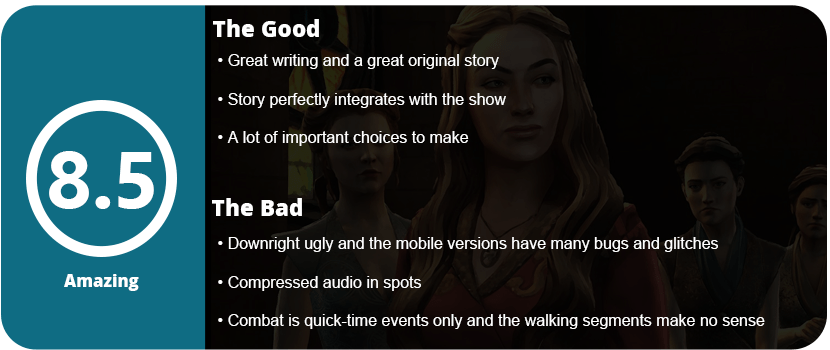
The game does end with a sequel in mind, but I don’t know if that’s ever coming; not all the characters’ stories were fulfilled, which is a shame. The visuals are downright ugly and still use Telltale’s decade-old engine, which needs an overhaul. The mobile version of the game is still riddled with bugs and poorly optimized, with frequent slowdowns, crashes, freezes, and bugs. The audio was terrible, as in the last 2 episodes it was somehow compressed to sound like PS1 audio. Overall, though, the game is well worth a playthrough for fans of the show; just don’t get the mobile version.
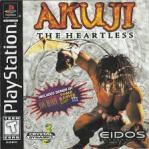
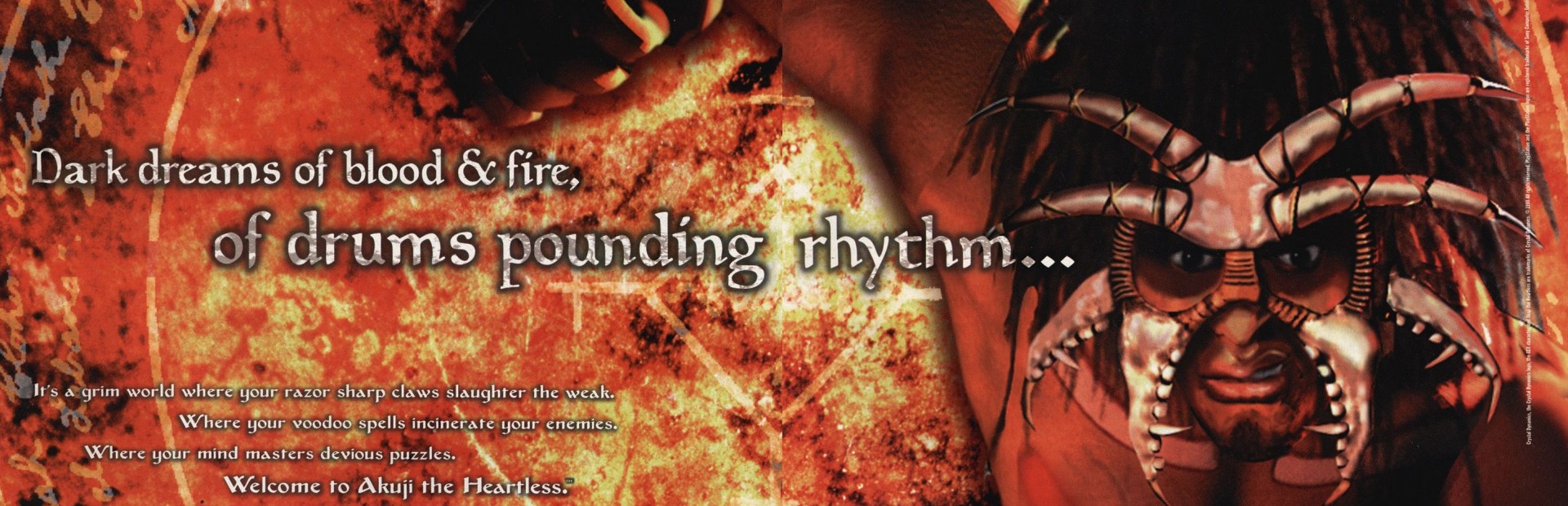
Crystal Dynamics was a juggernaut on the PS1. After Tomb Raider was released, they firmly placed their name in every gamer’s household. Akuji was released closer to the end of the system’s life cycle, and while critically acclaimed, it didn’t sell well. It was a bizarre game about voodoo and was hard to market at the time.
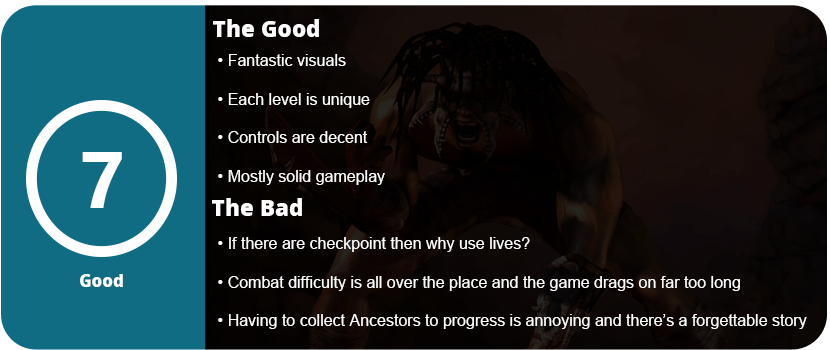
You play as Akuji, who needs to get his wife’s soul back and must travel through the different levels of hell to reclaim his ancestors’ souls and appease the keeper of the vestibules, which act as hubs. In each hub, there are doors you can go through that lead to each level. If you don’t collect these floating heads, you won’t be able to advance in the game, and I absolutely hate this system. Even with all the skills, you used to beat bosses and enemies; you needed to collect things. I feel this is demeaning and frustrating. For the story, it’s forgettable and nothing special.
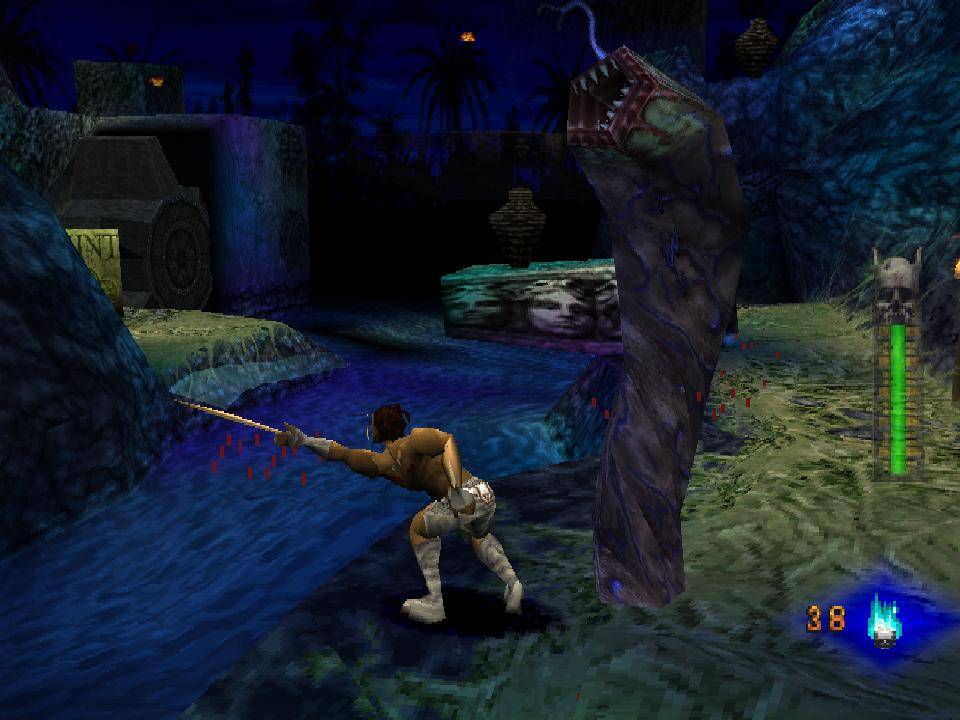
The game plays quite well, with Akuji jumping around, slashing, and blasting spells. You will use your spells more than you think in this game, and there are a variety of them, and each is used for different situations. Outside of combat, there is some minor puzzle solving and switch throwing. Platforming in the game is mostly fine, but the camera is sluggish to move around with the shoulder buttons, so Akuji will jump off an edge or fall to his death. Another irritating thing is the use of lives. I mean, why? You can hit checkpoints, which are poorly spaced, so why not just restart there? Why punish the player even more, as if surviving and checkpoints aren’t enough?
I felt this game dragged on a bit too long. There are over 15 levels, and while they all look different and great, they’re unoriginal. They are mostly short, and each level plays out the same. Grab this doohickey, put it here, flip this switch, kill this enemy to lower this wall, etc.
While this was the norm back in the day, it just doesn’t hold up well. Maybe if some things changed a bit, like the use of lives, it would be a more fun experience. Mixing a collectathon with a progressive platformer just doesn’t work well here.
The game looks fantastic, as Crystal pushed the PS1 to its limits, probably too hard. When effects like water splashes or magic effects flash around, the game slows down to a crawl, which can get quite annoying, but it’s still playable.
Overall, Akuji is a great PS1 title that has solid controls and great gameplay; it just has so many frustrating factors around it that make it less enjoyable as you play. If you really need a PS1 platformer that’s different, then go for it, as this is a hidden gem.
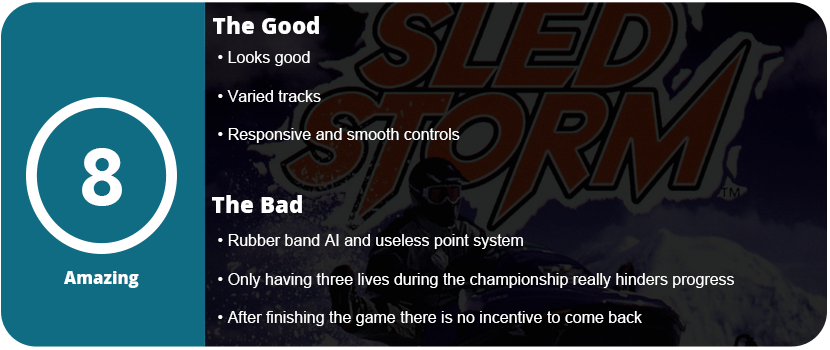
The late ’90s were home to extreme sports on consoles. There was a huge boom in this genre, and it led to many great games. Sled Storm is kind of an oddball, as snowmobile racing isn’t a huge hit in the US. However, EA managed to pull off a responsive and fun little racing title.
Sled Storm is similar to most arcade racing games from its time. There are several modes such as championship, single race, and multiplayer. Championship has two different modes. One mode is an open circuit with natural courses and you can upgrade your ride. The second one is a snocross closed-circuit event in which you just need to win. Sounds simple enough right?
Wrong. You need to get first place in every race to advance. There are four other racers on the track, and the game is subject to frustrating rubber band AI. You can be ahead all through the race, and on the final lap, everyone seems to zoom ahead of you. One crash, and it’s restart time. The other annoying thing is that you only get three restarts and then have to restart the entire championship.
It’s rather annoying but tolerable. The crafts handle really well and the visuals are great. Powder flies up behind the vehicle into the camera every time you bounce or take a turn. There’s snow blowing toward you and the track is nicely detailed. The controls are what steal the show here. They feel smooth and very responsive and make you want to keep playing.
There is no fancy trick system here, but a point system is used for knocking down objects on the track and other reasons I couldn’t figure out. That’s about all there is to this game. The tracks actually vary, but after beating the championship there’s really no reason to come back. Think of this as a quick little 2-3 hour racing game and back on the shelf it goes.
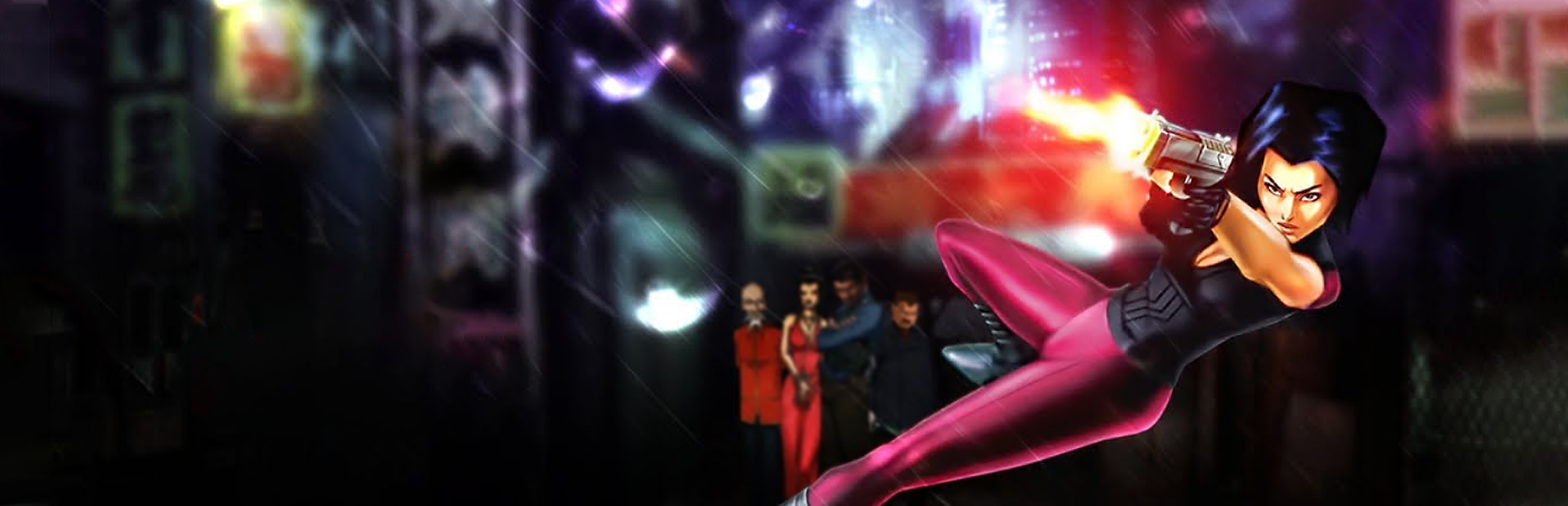
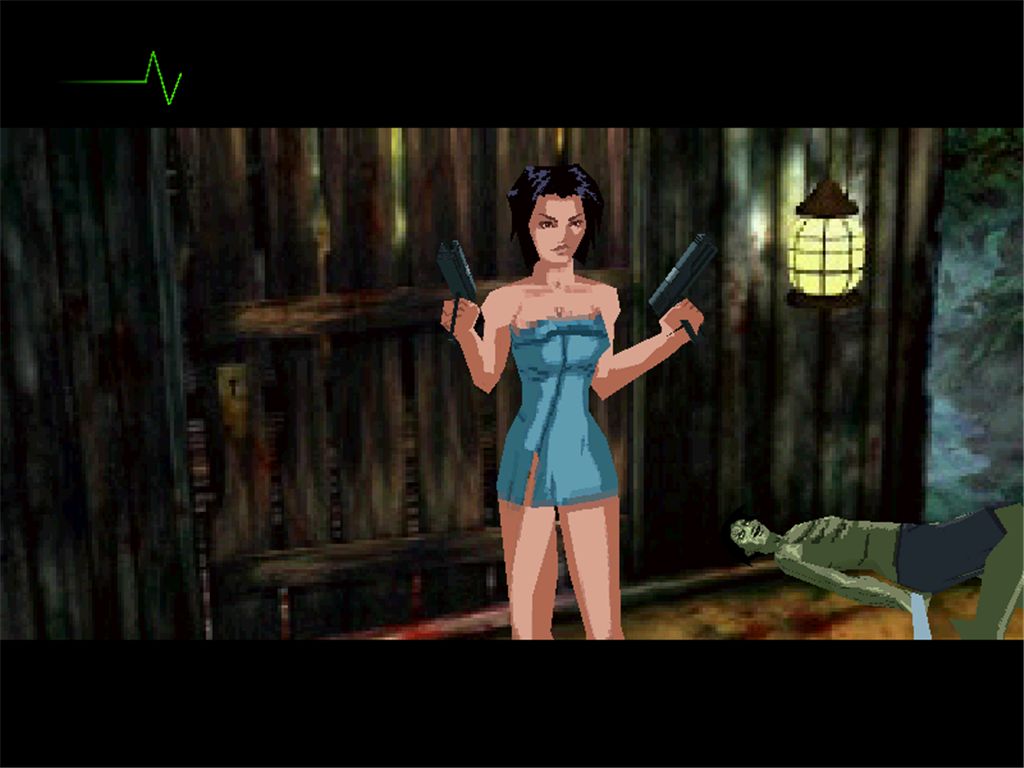
Fear Effect is actually a game that goes way back for me. I remember the summer of 2000 and was shopping around in a local game store, Game Doctor, back in Casper, Wyoming. There weren’t really any databases to look up reviews in back then, outside of magazines, so I would always pick a game based on its cover. I saw Fear Effect, $30, used in the display case. I used trade-in credit (back when it was all written down on carbon paper) and took the game home. Seeing it had four discs, I thought I was in for one hell of a ride.
I was actually dead wrong and returned the game the following day. It was frustrating, hard, and too mature for my age at the time. It’s so strange finishing this game almost 20 years later and realizing that it was actually harder than I thought. This game is downright unfair and frustrating around every corner.
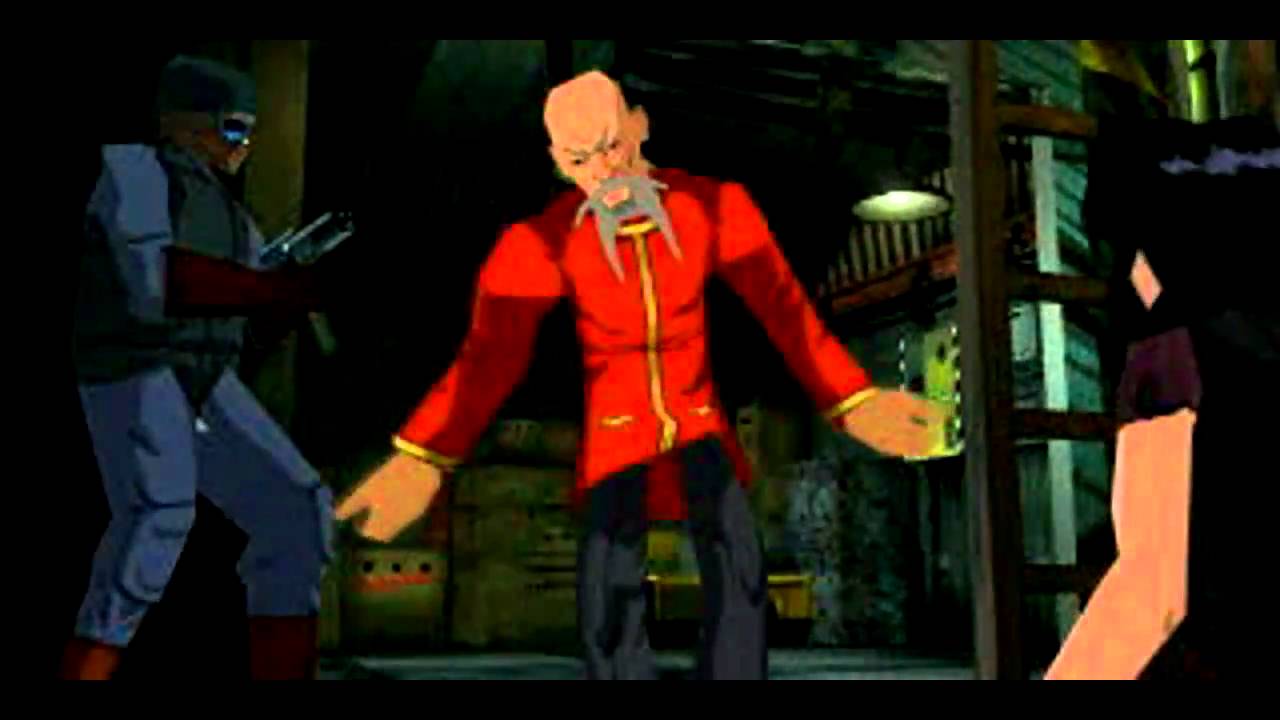
You play three different characters throughout the game: Hana, Deke, and Glas. All three are mercenaries hired by a Chinese mobster who wants his kidnapped daughter back. It starts out as a spy-style action game and then quickly turns into something supernatural. It’s the strangest thing and is such a jarring change of pace for this type of game. That will be the least of your worries, however.
The game has beautifully pre-rendered backgrounds that you run around in Resident Evil style. These “tank” controls are just awful, and there’s a reason why they don’t exist anymore. You can sneak around, shoot, and use items, but it’s how those are executed that makes the game so hard and unfair. Stealth is actually out of the question; no matter how slowly I snuck up, guards would hear me and kill me. I just had to blast my way through everything, and therein lies another issue: ammo. You will have many enemies thrown at you with little ammo, and the supernatural enemies don’t drop ammo. They even get clever towards the end and make them drop paper ammo that you need to backtrack to a fire and burn to get the real ammo.
It doesn’t end there; you will be reloading save after save and dying over and over again. Most of the puzzles and traps will trigger an FMV, and usually a death FMV, meaning game over. Just the slightest pixel of your character touches the trap, and you’re dead. It’s back to reloading the save, which is rather long, by the way. The backtracking is the final killer here, especially on the final level, with items gathering on either end of the level just to unlock the door on the opposite end. It’s silly, archaic, even for the time, and didn’t need to be in this game.
I will admit that the puzzles are rather clever. You actually get clues that are organically placed in the environment, and you need to write them down to solve the puzzle, which is neat. Back in the day, walkthroughs were scarce, so all you had was a guide or writing things down. The puzzles aren’t serious brain-scratchers, but they are tough and fun.
The combat itself is awful and is the main cause for reloads. You get a dodge button, but with awful tank controls, you just stand there blasting everything. There’s no cover, no armor, nothing like that. You also have to flip through your inventory with squares and circles while you’re getting blown away, which can cause problems. Why not pause the action with a radial menu? That’s not too hard.
Is the game even worth trudging through for the story? Not really. The mix between Chinese mafia antics and the undead is weird and forgettable here. The characters have no depth, and the story is slow to move forward. It’s entertaining enough to push you through the game, but nothing you would replay, even for the multiple endings. With that said, I only recommend playing this if you want a beautiful-looking PS1 game to play or a decent adventure. Just get the cheat codes handy, or expect to spend more time reloading than playing.

















































 thebinarymessiah.com
Try multiplayer. A lot of fun !