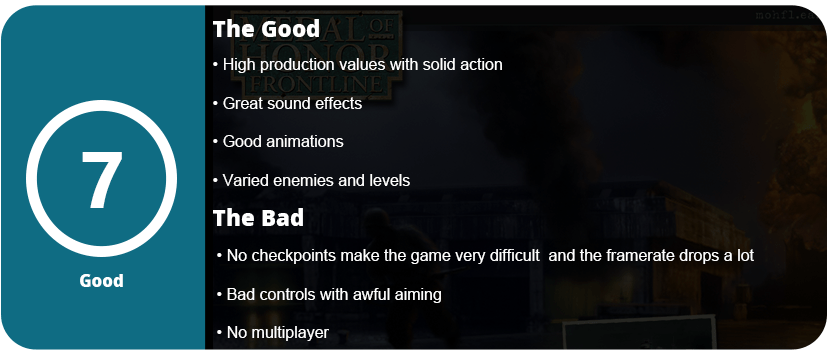
This was one of the first games that blew me away when I was a kid and made me proud to own a PS2. The opening D-Day scene took my breath away—all the explosions, the scripted scenes, the death animations, the sound—it was all here, and the production values were through the roof. Looking back at it 11 years later makes throwing an egg on the floor more exciting than watching this game. While I can’t compare it to games that came after it, even back then there were issues with the game, and they just really stick out now.
Frontline’s realism dropped off after the opening level. After D-Day, you get recruited to do special missions across Europe and are a one-man army. It’s very unrealistic when you’re running around by yourself, killing squads that an entire army takes to take down. You’re blowing up fuel depots, sabotaging equipment, assassinating important Nazi figureheads, and various other things. The game is solid, and the scripting is still nice today, but the shooting mechanics and controls stink. There’s no aiming down the sights; instead, you just zoom in. Shooting from the hip has no reticle, so this is useless. My biggest issue with the game, and even back then, was that it was insanely difficult and there were no checkpoints. If you die, you restart the entire level, which can be infuriating.
You have to be careful and run around finding health packs and ammo. You can pick up enemies’ weapons and instead are stuck with what you are given at the start unless you find a placed weapon. I did like the variety of enemies, such as fat chefs throwing knives at you, engineers, cooks, butlers, and even enemies in robes. The death animations are still nice, but where’s the damn blood?! The game almost comes off as campy because it is so far from capturing the tragedy of WWII. Even back in the day, I felt this way. The pacing of the levels is also off because some levels will be really long and tough while others are super short.
I did find that the game had some fun cheat codes, but there’s no replay value. Multiplayer wasn’t put into the PS2 version, and even the graphics are lacking. There’s a lot of aliasing, and the framerate drops tremendously during explosions. Everything does look clean, and you can tell a lot of time and care was put into the game. I just can’t get over how bad the aiming is; it’s so squirrely and hard to get a bead on enemies. The game has a pretty decent length campaign and is worth the cheap price if you have never played this game. Frontline was one of the best WWII games for a reason because it was one of the first to really have high production values.
In the end, Frontline feels very dated, but you can see why the game was praised so much back in the day. The production values still show, but the PS2 can’t keep up with the action. The aiming is terrible and the controls are all wrong, but what can you expect from an 11-year-old game?
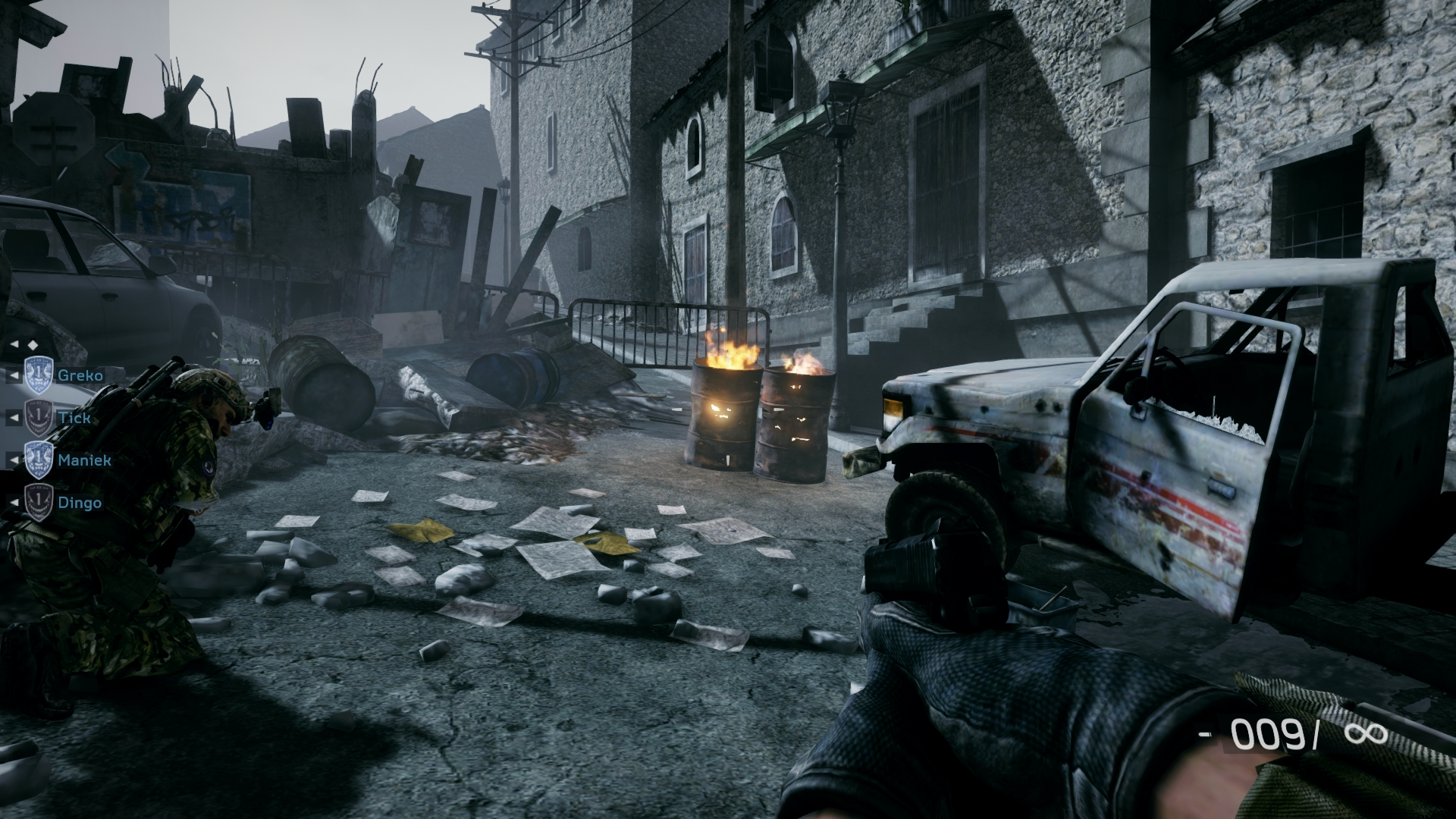
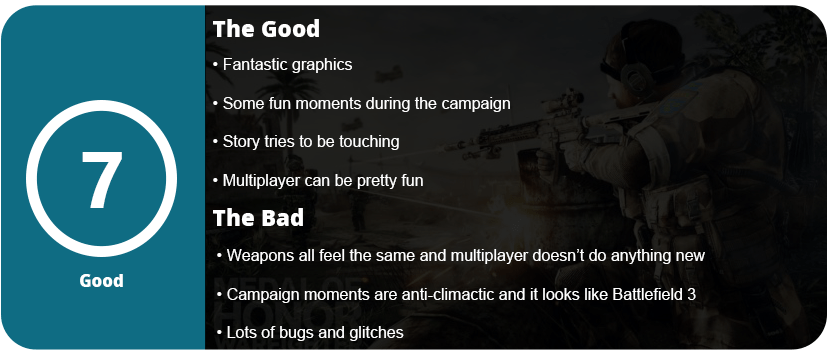
Here we go again: another military shooter. First, it was World War II; now it’s the Middle Eastern War. Warfighter is the sequel to the rebooted Medal of Honor. The first game wasn’t all that great; it had some good moments during single-player but lacked the multiplayer greatness of other shooters like Modern Warfare and Black Ops. Warfighter ditches the Unreal engine and uses Frostbite 2, seen in Battlefield 3, but not as well as that game. Sure, the game looks fantastic, but it doesn’t take advantage of DirectX 11 features like BF3 did.
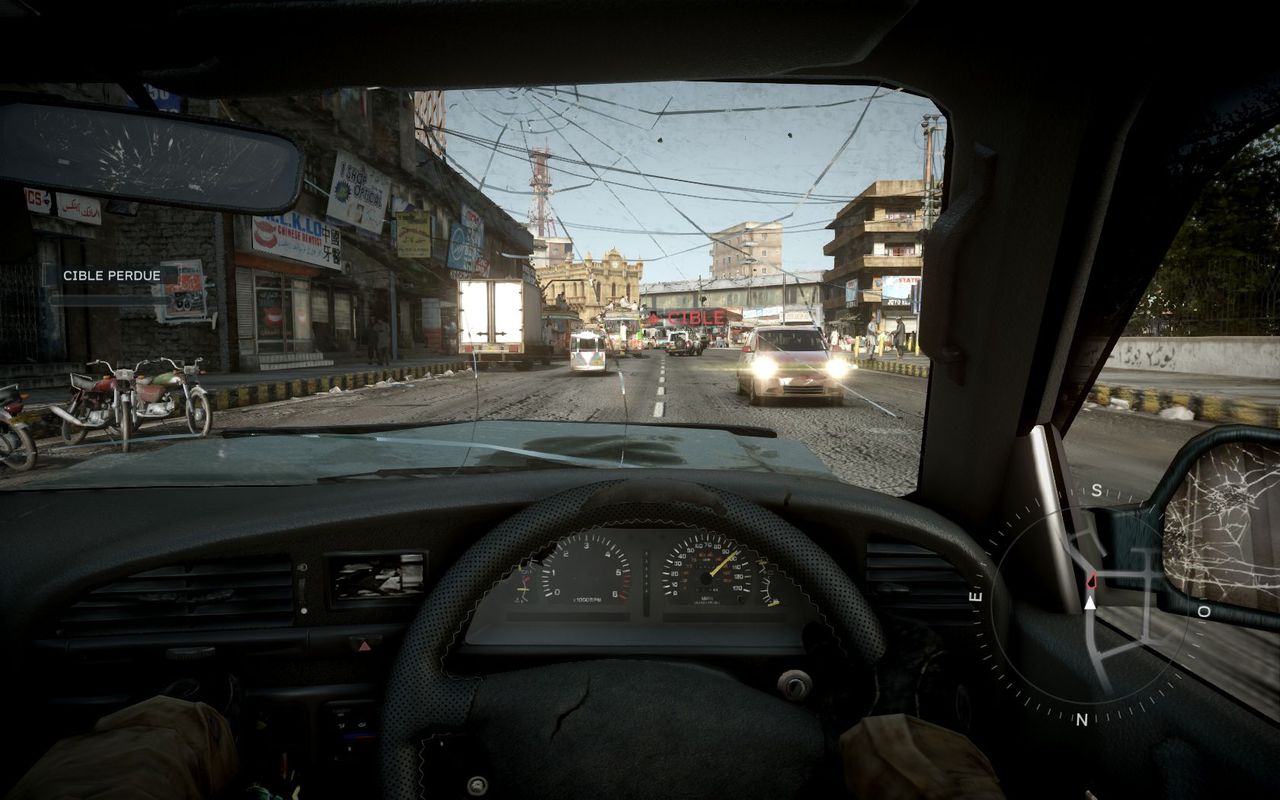
Warfighter sees the old Tier 1 team coming out of retirement to stop a shipment of PETN explosives from shipping to Dubai, or one of those Middle Eastern countries. Honestly, the story had a few high moments, but they were rare, and I could see this game had potential like the last game but fell short. There were some nice, touching moments in the story, like the stress between Preacher and his wife and kid, but it was so brief that it didn’t have time to build up. The pre-rendered cut scenes look amazing, but the story is so short you won’t care in the end. The game has a touching ending, and Danger Close could have had more here. The same goes for moments during the campaign; everything feels anti-climactic. There were some vehicle chase scenes that went on forever, and nothing ever happened. Some lasted over 10 minutes, and I was just driving around dodging traffic. One area had me hiding from a target’s security team by sneaking around in the car and hiding in spots. It was a fun game of cat and mouse, but again, nothing really happened during this moment. There were two moments when you controlled a drone on the ground, but yet again, it was uneventful.
The Warfighter campaign seems solid, but it is plagued with what shooters need to stop being: shooting galleries. The game is either too easy for a while, then you hit that difficulty spike where you die a bunch because of that one enemy. Warfighter is plagued with these issues. It also doesn’t stray from the typical military shooter norm, running around various deserts and destroyed buildings shooting Muslims; it gets old fast, and you start questioning your own morals after a while. I also have to mention the odd chase scenes on foot. You will chase a target through an area, and his men will come out to stop you, but he hides on the sidelines. Once you shoot everyone, he continues; this makes no sense. Most guys would high-tail it while their men would shoot you down. The campaign just lets you down right when you think things start getting good; the last game was full of the same thing.
It seems Danger Close has some good ideas, but they don’t know what to do with them. It also comes down to the weapons; they all feel the same. I couldn’t tell the difference between one and the other. I would pick up a PKM and an AK, and one would just shoot faster and the other would, but all weapons felt really inaccurate. It was really annoying. The only weapons that felt different were pistols and shotguns. You are actually stuck with the weapons you are given for the whole mission. If you pick up an enemy’s weapon, you have to ditch it; you can’t keep it. Even the sniper rifles felt like overpowered pistols, and the steady aim mechanic didn’t seem to even work.
It also doesn’t help that the game is full of bugs and glitches. I would get stuck in railings, enemies would clip through barriers, and they even hid behind trees and small posts like they were walls. This also leads to multiplayer. With all this said, is Warfighter’s campaign worth playing? Sure, for a 4-6 hour gaming session if there’s nothing else to play. Once you finish that, you will head straight into multiplayer, which can be pretty fun.
The multiplayer isn’t really different from other shooters, but the sense of teamwork is really well done here. There are some fun game modes that mix different ones together, but in the end, the same campaign issues travel over like bugs, and each weapon feels the same. You gain XP and level up, and yeah, the same old story here, but it’s at least fun and a little different. Is it worth the full price, though? Probably not. I would get this when the price drops below $20 and you are bored of your other favorite online shooter. As it stands, Warfighter is a game no one asked for. It feels almost like Battlefield 3, even as much as some sort of expansion. It looks like BF3 and almost plays like it, but it isn’t nearly as polished or well done. I think EA needs to just pull the plug on MoH. There’s no room for it anymore, and no one has asked for another.
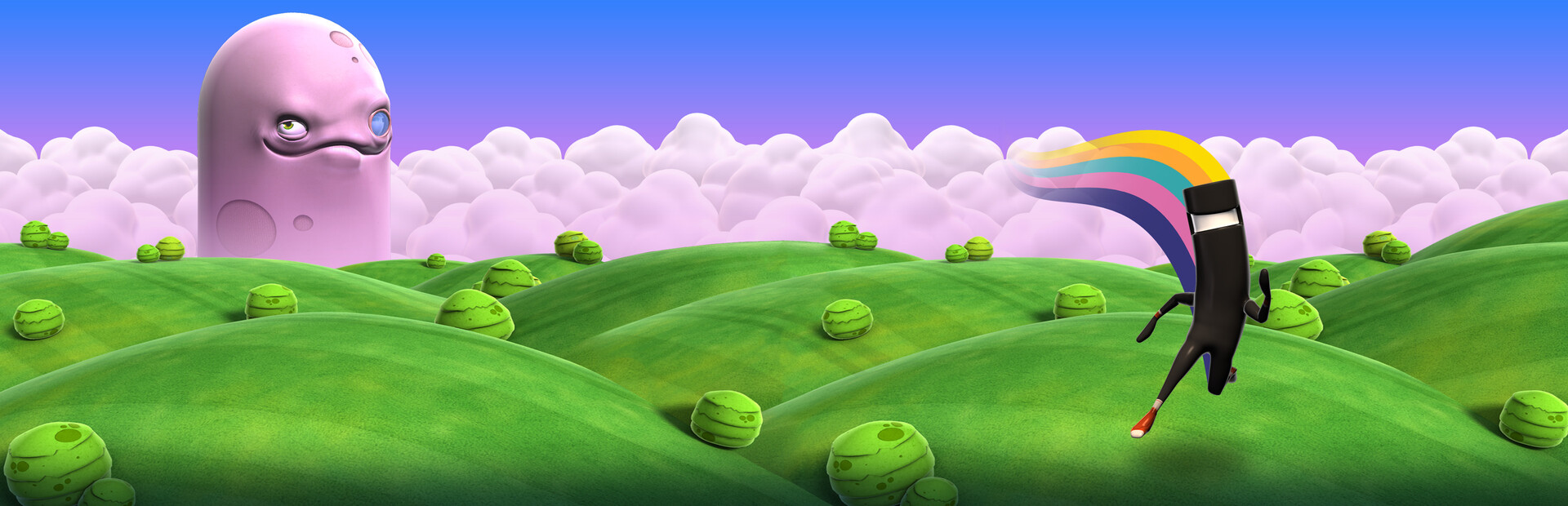
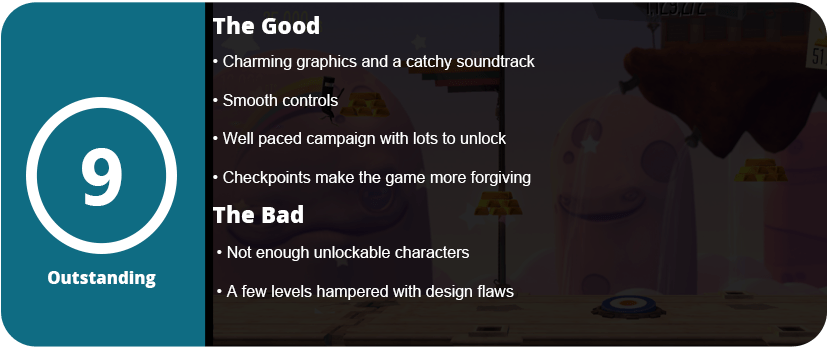
8-bit style games are growing in popularity, and Bit.Trip has been delivering excellent games for quite a while now. Runner was my favorite in the series, but it was relentlessly hard, even early on. Runner 2 fixes these issues by making levels more fluid and by adding a checkpoint halfway through. The game is mostly the same, but with added obstacles and better graphics.
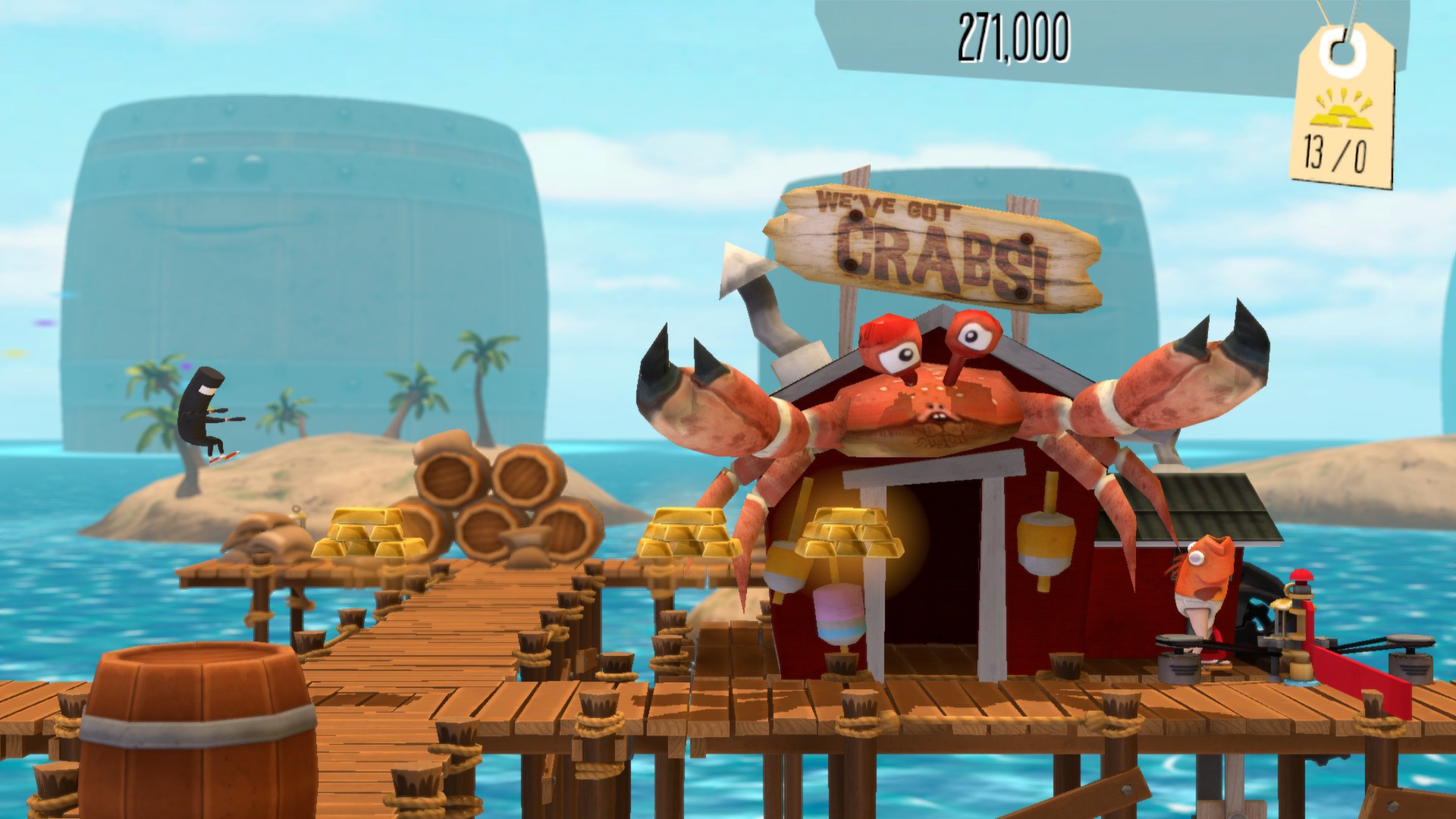
The game plays roughly the same as the last one. Watch Commander Video and his pals run to the right while you jump, kick, and dance your way to the end of the level. Some added obstacles are a four-way diamond where you need to press the corresponding button when you get to each corner. Another obstacle is a loop-de-loop, where you use the right analog stick to follow your character as he runs inside. Various obstacles are introduced as the game progresses, and by the end, you need to be quick and have all these memorized as soon as they pop up. I actually never felt overwhelmed by having to remember too many abilities; it felt just right. Levels have you ducking, jumping, using your shield to block flying blocks, kicking stop signs, and even kicking some in the air while sliding. The abilities are timed to a catchy 8-bit soundtrack that is even better and richer than the last game. As you move along, there are gold bars to collect as well as red plus blocks that add a track to the music as you move along.
These elements are what everyone loved in the first game, and they stayed in this one, but the game is just more forgiving. Honestly, it was more fun because I never even got to the second level in the first game. Runner 2 features bosses at the end of each level that are pretty fun and very challenging. There’s a new path feature for levels that changes the difficulty depending on which path you choose. Red and green arrows will point to which path is which; the red path usually has hidden chests that unlock costumes as well as retro cartridges. These 25 retro levels are actually in 8-bit, like they were ripped straight from an NES game. Very charming and fun to play.
You also score by doing everything in the game. Dancing is one ability that adds 2,000 points with each move. I just found the whole game very addicting and couldn’t put the controller down. Rarely did I find a spot where I was stuck, and even rarer were there occasions where the game’s own design got in the way. I would fly by something so fast that I would die several times before realizing what was going on and what I had to do. The whole game is just super fun, challenging, and very rewarding. If you get all the gold bars and the 4 red plus signs in the level, you get to shoot yourself out of a cannon at a target to get a Perfect+ score. Very challenging, but fun.
The graphics look amazing, with each of the five levels being unique. My favorite was The Bit. Trip, which was level 5. You can see other Bit.Trip games being played in the background as you run along. My biggest disappointment was the lack of extra characters. There are five, but what about Super Meat Boy and other characters from the last game? I wanted more honesty. The PC version at least gets a little extra flair with depth of field and slightly better lighting effects. This is just one artistically stunning game.
Overall, Runner 2 keeps what everyone loved in the last game and adds a lot more depth and more layers of fun while being more forgiving. There are lots to collect and a ton of challenges to complete while you play. There are a few levels that were hampered by their own design flaws, and I just wish there were more unlockable characters.
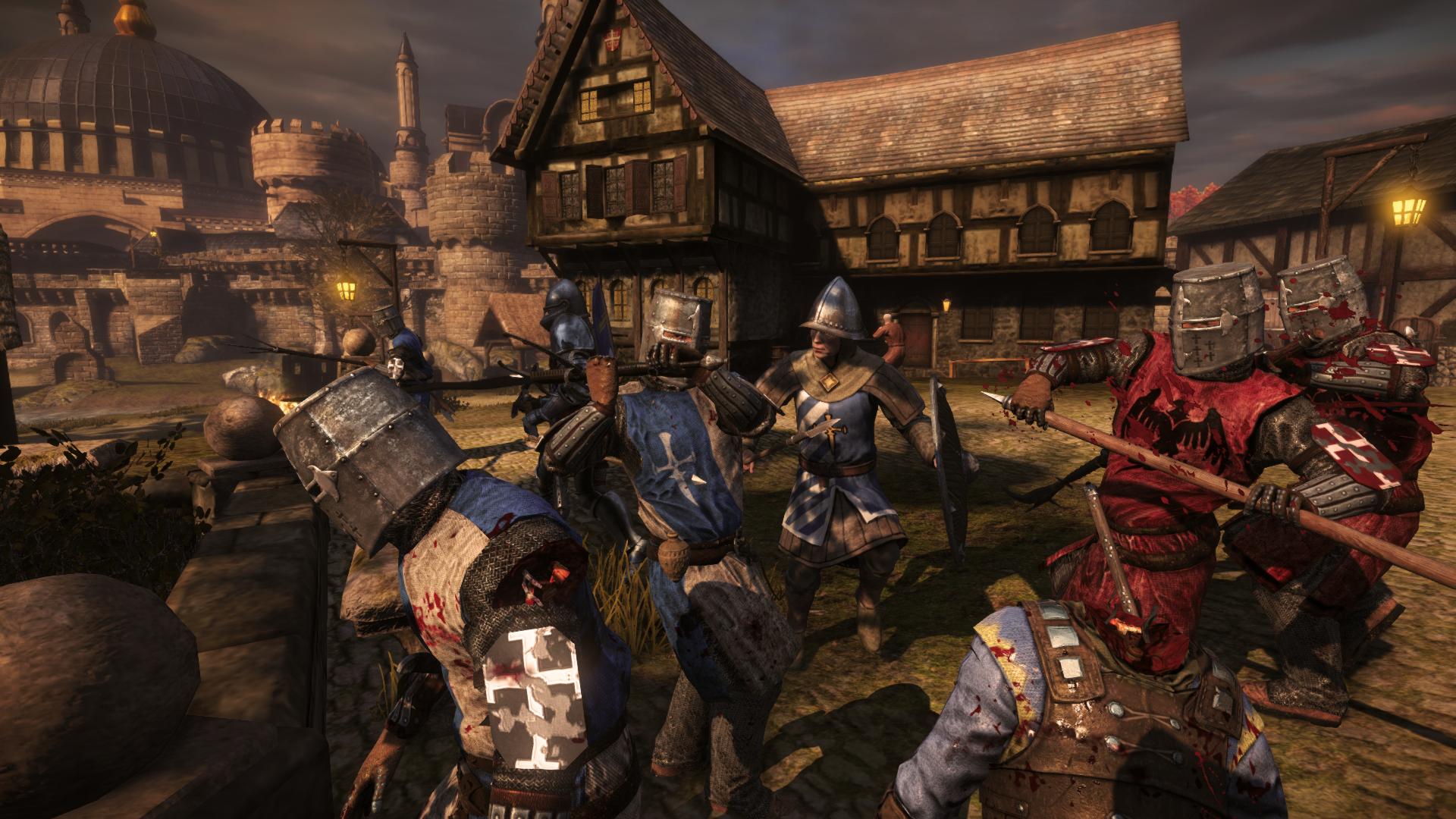
While everyone is playing Black Ops II and Battlefield 3, there is a little multiplayer game called Chivalry: Medieval Warfare. This knight-in-shining-armor online-only game pits players against each other and lets them have at it with deadly swords, crossbows, flaming pots, shields, and various other Camelot-era weapons. This is a different multiplayer game and will keep you hooked for dozens of hours.
There’s no story here at all, so don’t worry about that; this game doesn’t need a story. You open up the game, and you are greeted with a server list. There’s a tutorial that shows you the ropes of this game. There’s a bit more to it than just swinging around weapons. Each one has range, damage, and speed that you have to think about. In a small arena, you probably want a short and fast weapon, while on the more open maps, you should use a javelin and a giant polearm. There are three basic attacks: overhead, side-by-side, and jab swings. You can feint attacks as well to trick your opponent, which is a key move you have to learn to master. You block, but you have to time it, and you can’t just block aimlessly. You have to be looking at the weapon, or the block won’t really connect. This is really a knight simulator, and the game is just so much fun.
It doesn’t stop there, though; there are some projectiles. The bow is great to use and has an arrow cam that helps you adjust your aim. There’s also a crossbow, but reloading is very slow, and you can’t see around you when reloading. Larger classes get axes to throw, while smaller ones get knives and daggers. I found a strategy where I’d use up my projectiles and try to get some kills that way before going in. There are 4 classes: man-at-arms, knight, vanguard, and archer. The Vanguard is the biggest class and can kill in just a couple of hits, but it is extremely slow. He and the Man-at-Arms have a charging attack that will devastate anyone in its path. If you use a kite shield with these classes, it protects you from rear attacks, which is actually how I died the most. I would be battling an enemy, and I’d get creamed by two guys coming up from behind that I couldn’t see or hear.
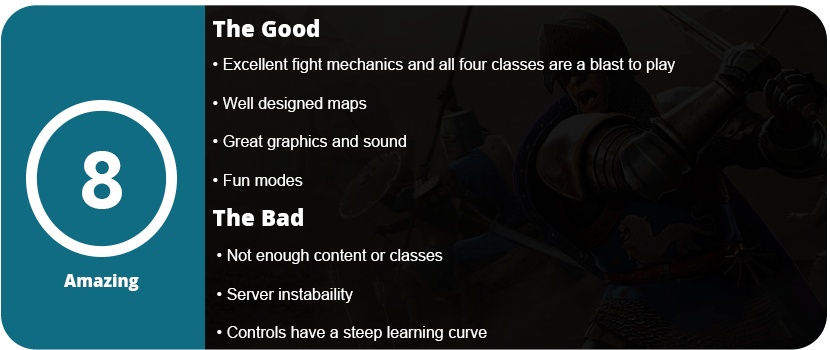
Some levels have traps in them that you can activate to help your team or whittle down someone’s health before going in for the kill. Each class is a lot of fun to play, and I found myself constantly switching between them, unlike other multiplayer games. I just wish there were more classes. Four isn’t all that much, and there aren’t enough maps. Torn Banner is putting out free content, but it’s been slow coming since the release last year. However, I still find myself coming back and playing a few rounds at least once a week; the game is very addictive.
The game modes are also lacking. There’s just Team Deathmatch, Free-for-All (Deathmatch), Capture the Flag, and Dueling, which is 1v1. There are a couple more, but these are typical modes found in other games. One mode that is unique to this game is a siege-type mode where you use battering rams, trebuchets, and various other long-range siege weapons to break into the enemy’s fortress and take it over. That is probably the most fun. On one map, my team was trying to push a battering ram through a small village. We were trying to fight off the other team, and it was a constant back and forth. Once we got to the front doors, their archers made easy work of the battering team because their moat didn’t allow us to surround the team and defend them. We just had to do archery battles or hang back and wait for people to come out.
As it stands, Chivalry has proven to be a very popular and well-made multiplayer game. The graphics are fantastic, and everything looks superb. Hopefully, Torn Banner can continue to dole out new content to make players happy and continue playing.
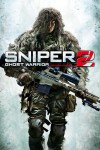
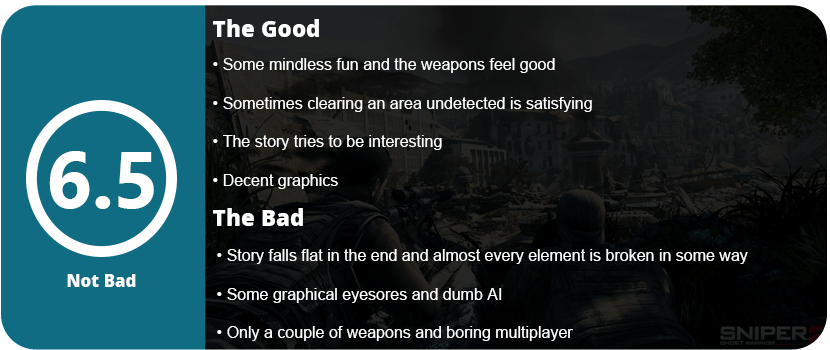
Sniper: Ghost Warrior was a game trying to be different, a sniper simulator similar to Sniper Elite but much worse. Ghost Warrior 2 improves upon the predecessor a lot but is still not worth the price of admission. I actually wanted to be interested in the story; it kept trying to pull me in, but it just fell flat in the end. The voice acting is actually pretty decent, if cheesy sometimes. I don’t know why you’re on these missions; it never explains. All I know is that you’re hunting a guy named Marinov or something like that and trying to stop the sale of bioweapons. It was a typical present-day military story, but the plot twists actually had me interested, almost.
The game is actually a lot of fun, but all the gameplay mechanics are half-baked and fall flat. The game is supposed to be a sniper simulator, but it holds your hand through every scenario. It marks who to shoot in what order, how far away they are, and even gives you a red dot to accommodate for which way the wind is blowing. With the sniper rifles rendered in such high detail, why not let us figure it out for ourselves? Well, the average 15-year-old Call of Duty player wouldn’t like that, that’s why. The shooting feels fine, but all the sniper rifles feel exactly the same—all three. There is a serious lack of weapons; to begin with, your only other weapon is a silenced pistol. That’s it. I understand you’re a sniper, but why not a silenced sub-machine gun or something?
The other major issue is that every single gameplay mechanic is broken in some way. The game tries to implement stealth, but it doesn’t work. I was able to just walk around without being detected and even run. Stealth kills don’t work right and are unsatisfying because the animations are terrible, and the death kills aren’t very gruesome. Even the bullet cam shots stink; it’s nothing like Sniper Elite V2. On top of all this, the AI is dumb as dirt. In one mission, I alerted everyone but stepped into a bush, and not a single enemy saw me even after I stepped out again. I was able to kill everyone, and none of them even looked for me. Sometimes I died during scripted events without knowing why. Having your core gameplay elements break is not fun.
Ghost Warrior 2 fails to make a sniper simulator like it wants. The game is highly linear and is nearly on rails. The upside is that the game is still mindless and fun. Sometimes when the game does let you go on your own and you have to clear an area, things like killing two enemies with one bullet and clearing the whole area without getting detected feel a bit satisfying. Other than that, the same scenarios were repeated until the game ended. Snipe these enemies, sneak around a bit, scripted event, cutscene, hide, snipe these enemies, rinse, and repeat.
The game actually looks pretty decent but doesn’t use CryEngine 3 like Crysis 2 or 3 does at all. It doesn’t take advantage of the DirectX 11 features at all. The game looks like it has medium-high settings on Crysis 2. It still looks good, but there are some eyesores. Plants that you sneak through a move at a low framerate are literally just flat textures that bend around. The cattails are not even in 3D and look like something from a PS2 game. A huge oversight or just plain lazy? I don’t know. Don’t even ask me about the multiplayer because no one is playing and it’s boring anyway.
Overall, Ghost Warrior 2 is mindless fun but not worth the price of admission. Every core element is broken in some way, and even the graphics are broken in spots. Pick this up when it’s $5 or less; otherwise, pass it up and play Crysis 3 instead.
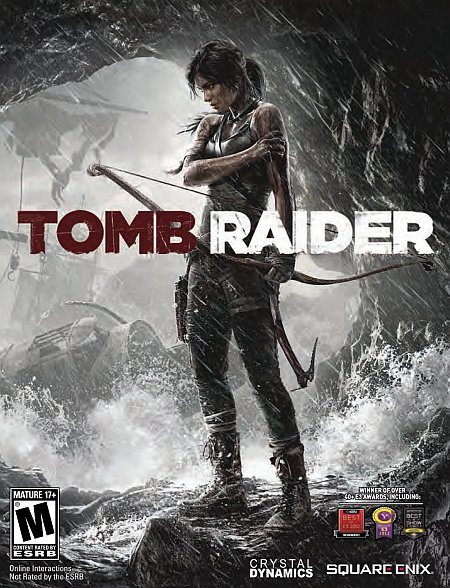
This is exactly how you do a game series reboot, right? I wish I could end my review with that, but I need to tell you why. Tomb Raider suffered through a few mediocre games during the first run of the series during the late 90’s and early 2000s. The first reboot did well for the series by maturing Lara and giving us better controls and a more cinematic experience. Now comes Tomb Raider (2013), a fantastic game that shows the more human side of Lara. The game starts out with you and a science crew on a ship on the way to an archeological site, but things go awry when Lara decides to head to the Dragon’s Triangle off the coast of Japan. A mysterious storm destroys the boat, and Lara and the team are stranded on this island. There is a mysterious cult trying to sacrifice people to a sun goddess to end these storms. Lara has to deal with this if she wants, of course.
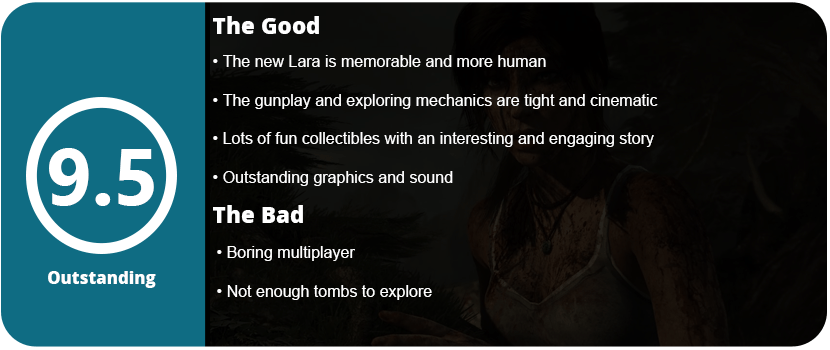
What makes Tomb Raider so memorable is the struggle she goes through while surviving. She is nearly raped, suffers tremendous injuries, and has to cope with herself, dealing with the fact that she has to kill to survive. She is not comfortable with this at first and really struggles to pull the trigger. This adds layers of depth to her character that weren’t seen before. Not only is her personality more memorable, but her looks have changed. No longer is Lara wearing the short shorts and tight shirt with her huge bust. She has been knocked down a few cup sizes and is much younger, straight out of college, in fact. It’s hard to really describe her more than this; you have to play the game to really connect.
The gameplay in Tomb Raider has completely changed, but yes, there is platforming and gunplay. Both are tight and very well crafted. Gunplay consists of using scraps to create a pistol, bow, machine gun, and shotgun. That’s it. As you progress and find salvage in crates and dead bodies, you can upgrade these to look and feel like better weapons. There are many upgrades that increase damage and accuracy, as well as adding new ammo types. Lara’s animations are very well done and realistic, and this falls into combat. She scrambles around and ducks behind cover; the guns feel great to shoot, and you can see how inexperienced Lara is; she’s not a Navy SEAL or commando. Unlike other games like this, her stumbling animations don’t interfere with the game at all. You can still move around, you can dodge, and there’s even some melee thrown in. As you upgrade your skills (done at various campfires throughout the game), you can dodge, and through quick-time events, you can do some pretty gruesome kills.
While gunplay is tight and fun, exploring is just as important. This island is massive, and you can go anywhere; there are no limits. Fast travel via camps really helps, but there’s a reason for moving around everywhere: collecting hidden items. These range from relics, GPS caches, documents, etc. There are hidden tombs found throughout the game that hold area maps for these items. These tombs consist of cleverly made physics puzzles that are really fun to complete. You get rewards like art and 3D models to view. The whole game just has an amazing atmosphere and is so much fun to explore.
On top of all the climbing around, you get a climbing axe, which is an important tool for climbing and combat. Your bow is used for shooting ropes across valleys and canyons to pull items to solve puzzles, break doors, and access new areas. The whole exploring ideal in this game is just fantastic and really fun. I did have to think about how to get to new areas and actually try to navigate and experiment with that good game design. There is a Survival Instinct ability that highlights map markers and objectives, and when you unlock the skill, you can see items through walls.
The story itself is a bit confusing; the whole spiritual thing is a bit unbelievable in such a realistic world like this, but that is what Tomb Raider is known for. Lara is the main character here, and what she goes through was the main story for me. I loved every second of the story. The voice acting is awesome, and the graphics look amazing—some of the best on PC yet. The new DirectX 11 features like Tessellation and the new TressFX technology applied to Lara’s hair look nice, but there were a lot of bugs and glitches for Nvidia users during launch (they are now fixed). You will need a monster rig to play this game on the highest settings.
The multiplayer was tacked on late in development and is pretty boring. The combat was designed for cinematic gameplay, not multiplayer. It feels just like it does in the story, but it just doesn’t suit multiplayer well. I played all three rounds and got bored of the game. Some people may like it, but there are better multiplayer shooters out there.
Overall, Tomb Raider is one of my favorite games of all time and is really memorable. The voice acting is solid, and Lara’s new personality makes her more human and more relatable. The graphics are outstanding, and the gunplay and exploring mechanics are fun and very cinematic.
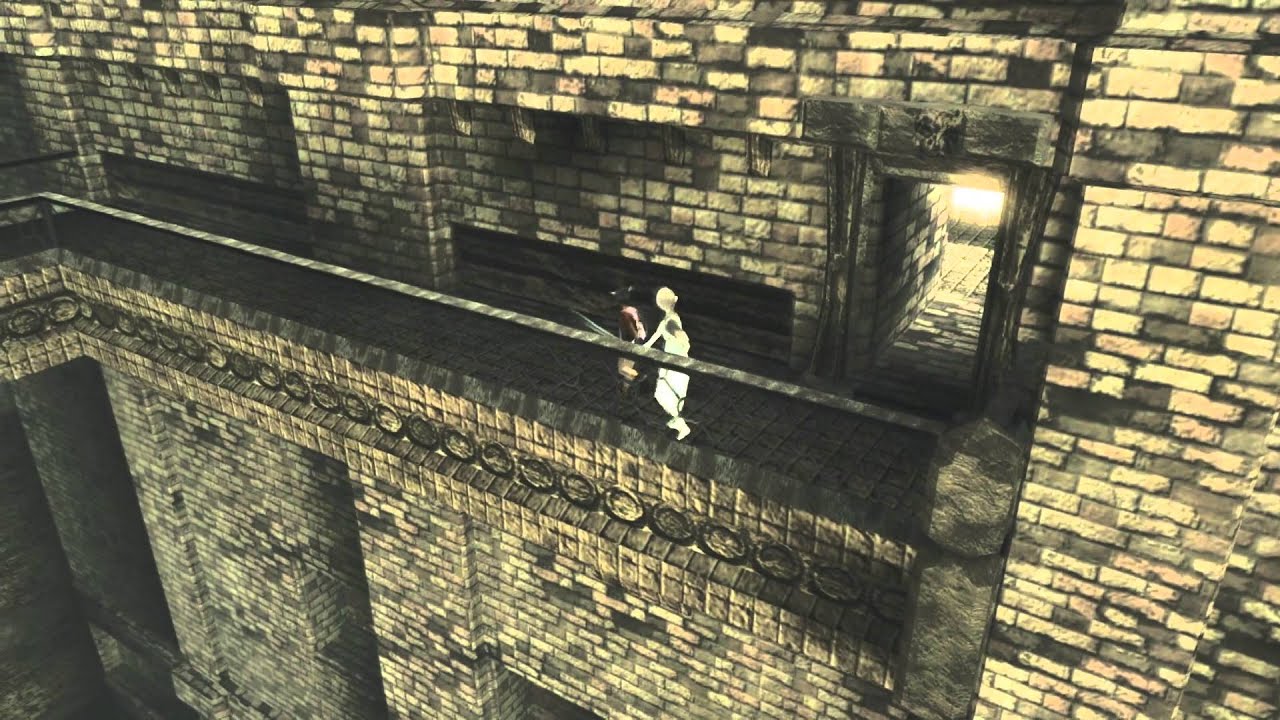
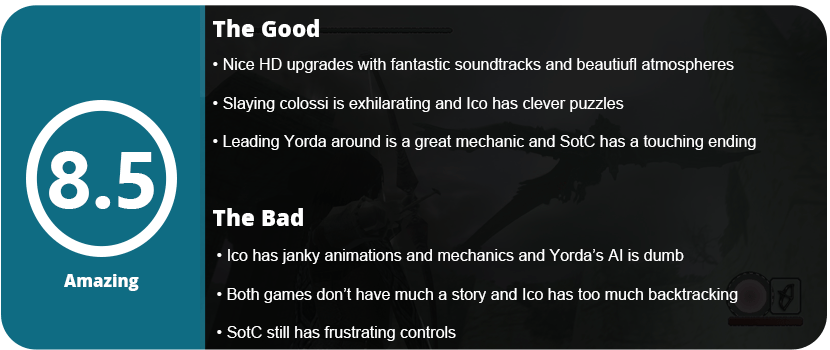
Ico is probably one of the most forgotten games in history. Being one of the first graphical powerhouses for the PS2, it proved that you don’t need a complex story and characters to have a good game. All you know is that you are a boy named Ico who is trying to save a girl named Yorda from her evil mother and escape from the castle. You enter as a captured prisoner because you have horns. You then escape and find Yorda along the way. What made Ico such a big deal was that you led her around manually by holding R1. This forced you to become attached to her, and they rarely spoke.
This game was way ahead of its time. That’s probably why people passed it by for Jak & Daxter and other PS2 games at the time. The game consists of some pretty cleverly designed puzzles that involve pulling switches, climbing, cutting ropes, and swinging on chains. You also push and pull on the occasional block. The level design is really well done, but there were a few obscure puzzles, like jumping off of a chain to knock a bridge down. This is completely against the game’s mechanics, so you would never know to do this. Leading Yorda around sounds annoying, but it prevents you from having to rely on the already shoddy AI. The game mechanics work well enough in design, but they are sloppy and frustrating to deal with.
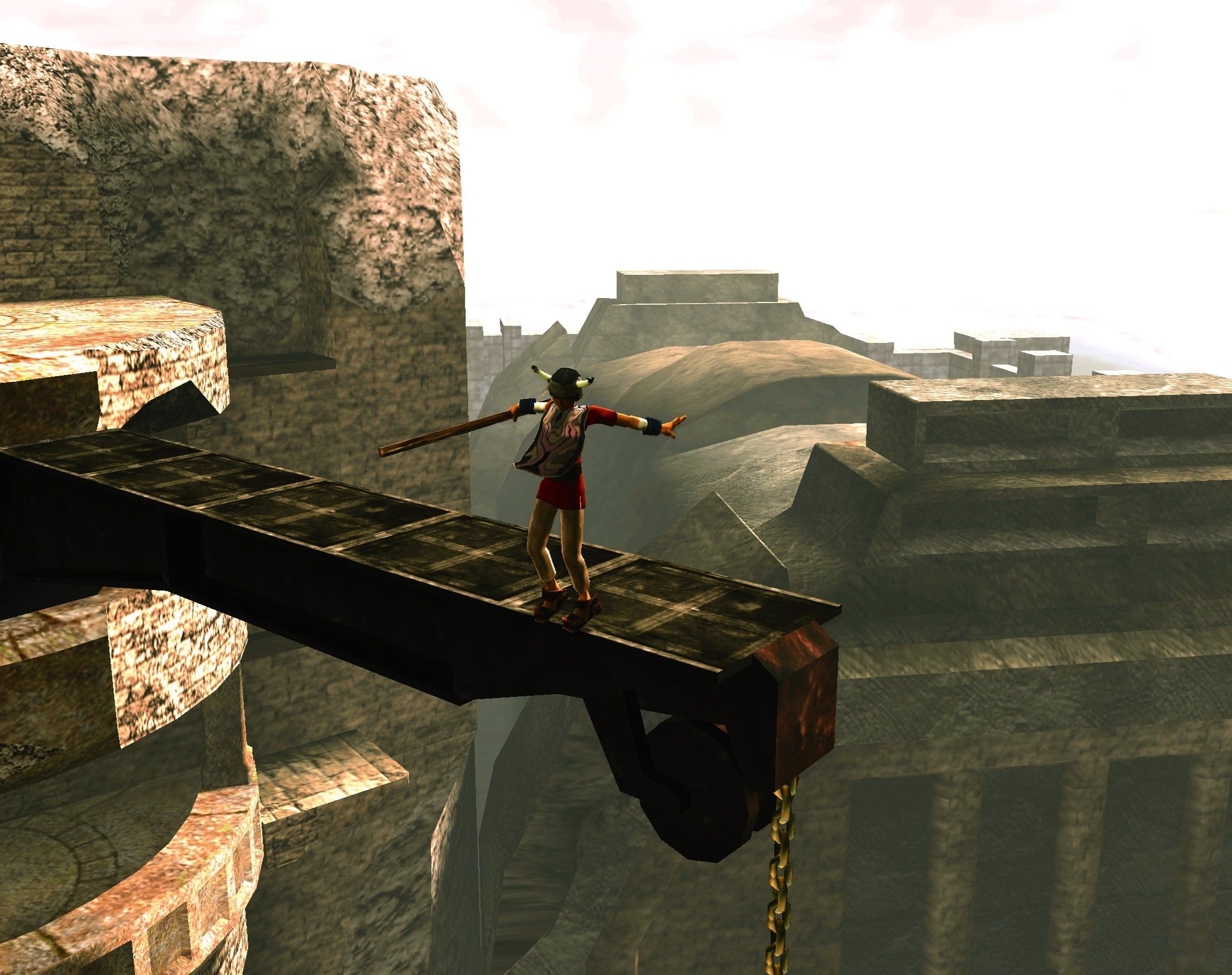
When you jump, Ico tends to clip into ledges and ladders, making you have to slightly adjust him until he latches on. If you press the analog stick just slightly and jump, he will jump 20 feet, causing you to jump off ledges or fall to your death. There’s just so much bad collision detection, and the animations are janky and not well done. When you drag Yorda around, her arm looks like a flopping noodle that can go through her body. I know this was originally designed for PS1 before the game jumped ship to PS2, but still. There are other mechanics, like setting your sword down to pick up a giant stick, lighting it on fire, and then setting off a bomb. Sometimes you have to toss these before they blow you up. Fun game mechanics and all, but they repeated through the entire game, making you grateful for the short length (just about 4 hours).
A lot of times I didn’t know where to go because the middle of the game has two areas that are identical but just slightly different. The constant backtracking can confuse you, requiring a walkthrough. There are no boss battles to speak of except the final boss, but the combat is so frustrating and annoying. Ico swings his sword around aimlessly, and you can’t move while doing so. The AI jumps away as soon as you run after it, so if you get stuck in a three-hit combo, you get knocked down, and Yorda gets dragged away. You can’t die in this game during combat, but if Yorda gets dragged underground, you’re done. You can pull her out of the hole, but sometimes a shadow creature will hit you and knock you back, and then you have to suffer the long animation of getting up. A lot of games had these animations (The Mark of Kri), and I don’t know why. It breaks the fluidity of everything. Once you get the hidden mace in the game, combat is really easy, but you still get annoyed by the creatures constantly backing up when you approach.
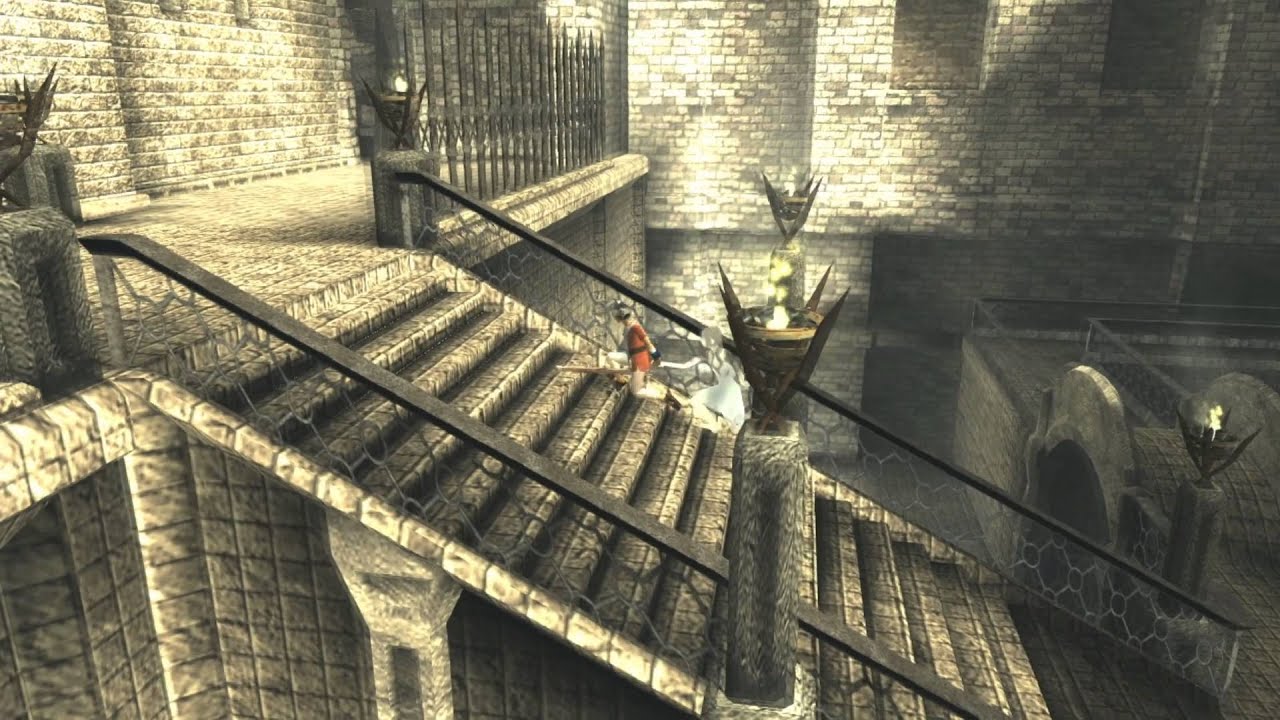
The graphics look great with the new HD upgrade, but even back then, they were amazing. A lot of textures have been slightly upscaled, and some bloom and HDR have been added for better lighting. You can still notice the game’s age during up-close shots of areas. Textures are muddy and so blurry that they don’t even look like what they are representing. The main thing is that you can pan the camera around more now that the resolution has been bumped up, making navigation easier. This is how you do HD upgrades, right?
Overall, Ico is a great game, but the dated mechanics really show their age. If you can look past all this, you are in for a great, albeit short, game, but don’t expect engaging characters or a complex story. There are four cutscenes in the whole game, but this is about the journey and not the story.
Shadow of the Colossus
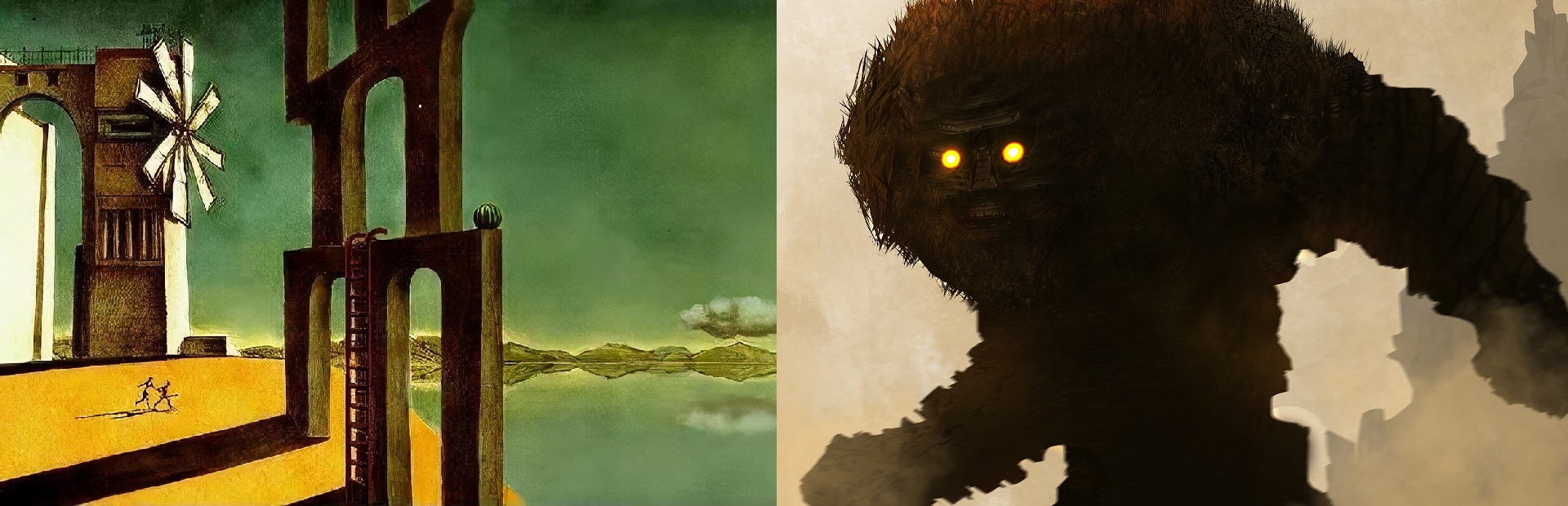
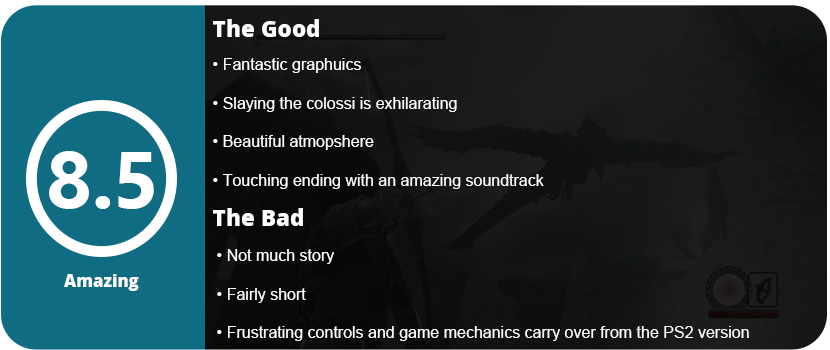
I have been wanting to review this game forever, and now I have the chance. I played this back in 2005 when it first came out, and it was just unreal. SotC still has some of the best graphics to grace the PS2, and it almost looked next-gen at the time. Of course, it suffered from the massive slowdown, but now we can play it with some extra graphical effects and at 60FPS. There’s not much of a story here; there never is with Famito Ueda’s games. You are a boy named Wander who brings a girl to a temple in a cursed land and vows to destroy all 16 colossi in order to bring her back to life. The game has one of the most touching endings I can remember.
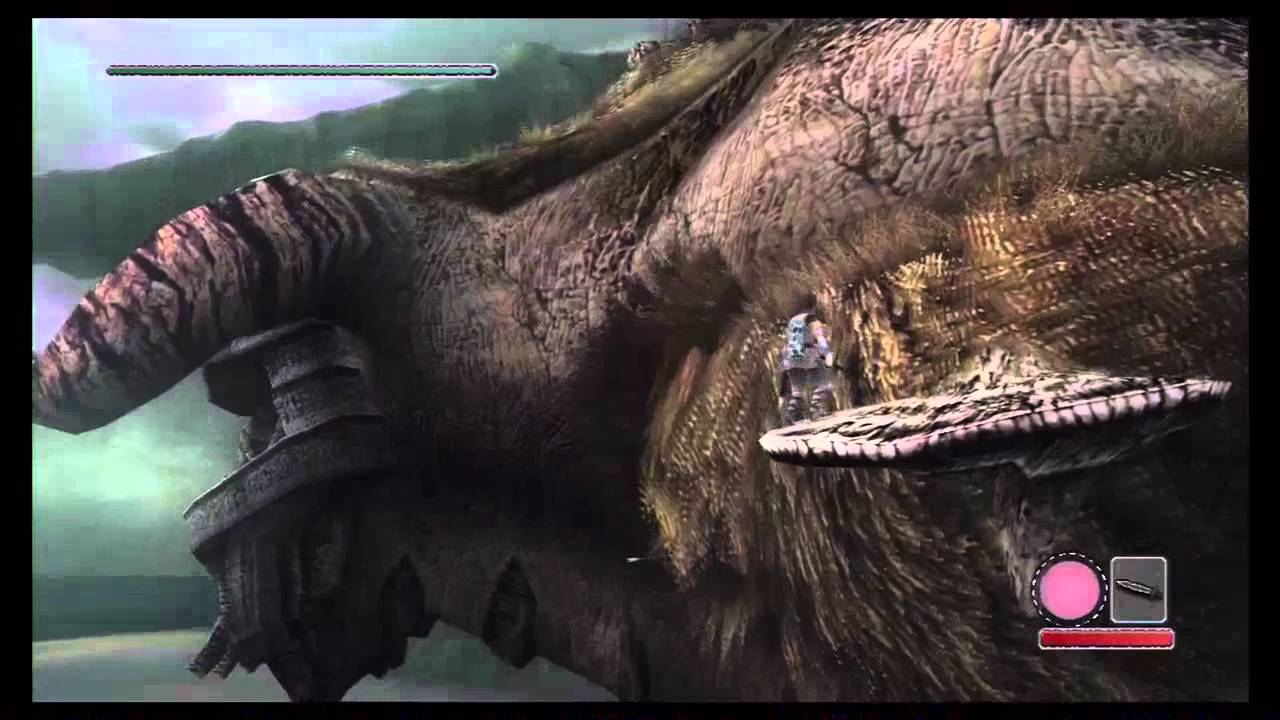
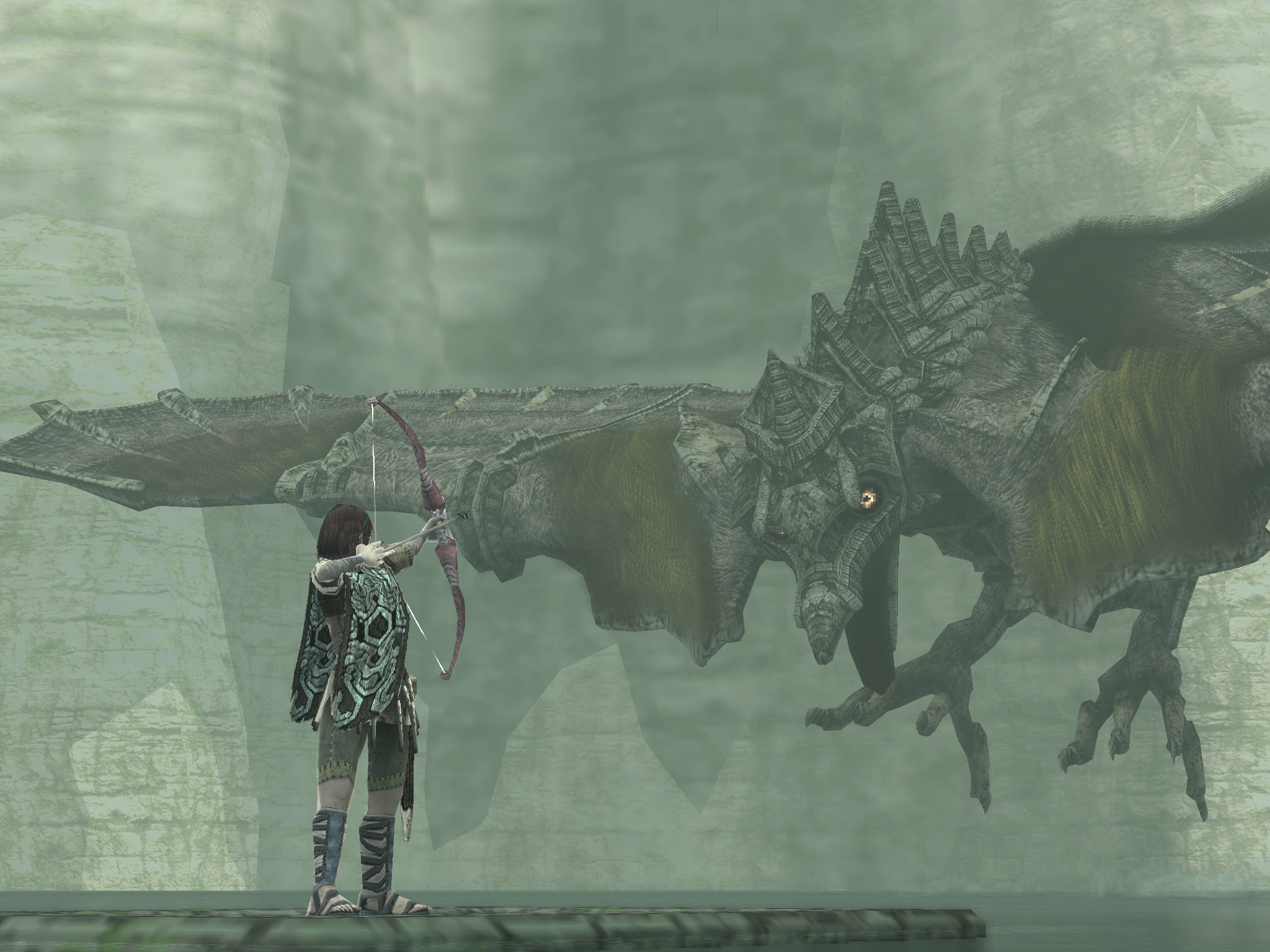
The game is very basic; you just head to each colossus and slay it. There is a huge open world, but it is very barren and void of life, but that’s the way it is supposed to be. You feel very alone and helpless in this land of brown and gray. You have two weapons: a sword and a bow. You can hold the sword up to the light to guide you to the next colossus, which really isn’t that hard. Once you find it, you have to figure out how to get on top of it, and that’s the tricky part. Each colossus is completely different. Some are tall, some are fat, and some are the size of a lion. These lumbering beasts will attack, but you need to find their weak spots. One colossus has weak spots on the bottom of its feet. When it walks, you need to use your bow and shoot it. It then falls over, and you can jump up, grab its fur, and start climbing. Some aren’t so easy; in fact, there are no hints on how to get on top of these beasts. One tricky water serpent requires you to swim over him, and then his tail will come out of the water so you can grab it.
The best part is when you get on these things. Each colossus is like a level in itself. You can climb around and hold the R1 button to stay on. They will try to shake you and your window to actually stab the glowing, weak spots that are really small. You have a stamina meter, and when it depletes, you let go and fall back down. This can be really frustrating if getting on top of the Colossus is already frustrating or a long fiasco. As you slay these monsters, your stamina and health increase, but you still need to watch out. The worst part about the game is the god-awful controls. They just stink, and the game mechanics are sluggish and unresponsive. If it weren’t for this, the game would be perfect. Wander’s animations are a bit jerky, and when the colossi shakes you and your stamina is dropping, you just want to charge your stab and kill it, but sure enough, you get shaken again right as you start to charge. Wander flops around, and it just feels sluggish. When you try walking on the colossus, Wander will fall and tumble, sometimes right down to the ground. I almost threw my controller several times because of this. You will mainly die because of the mechanics, not your skills.
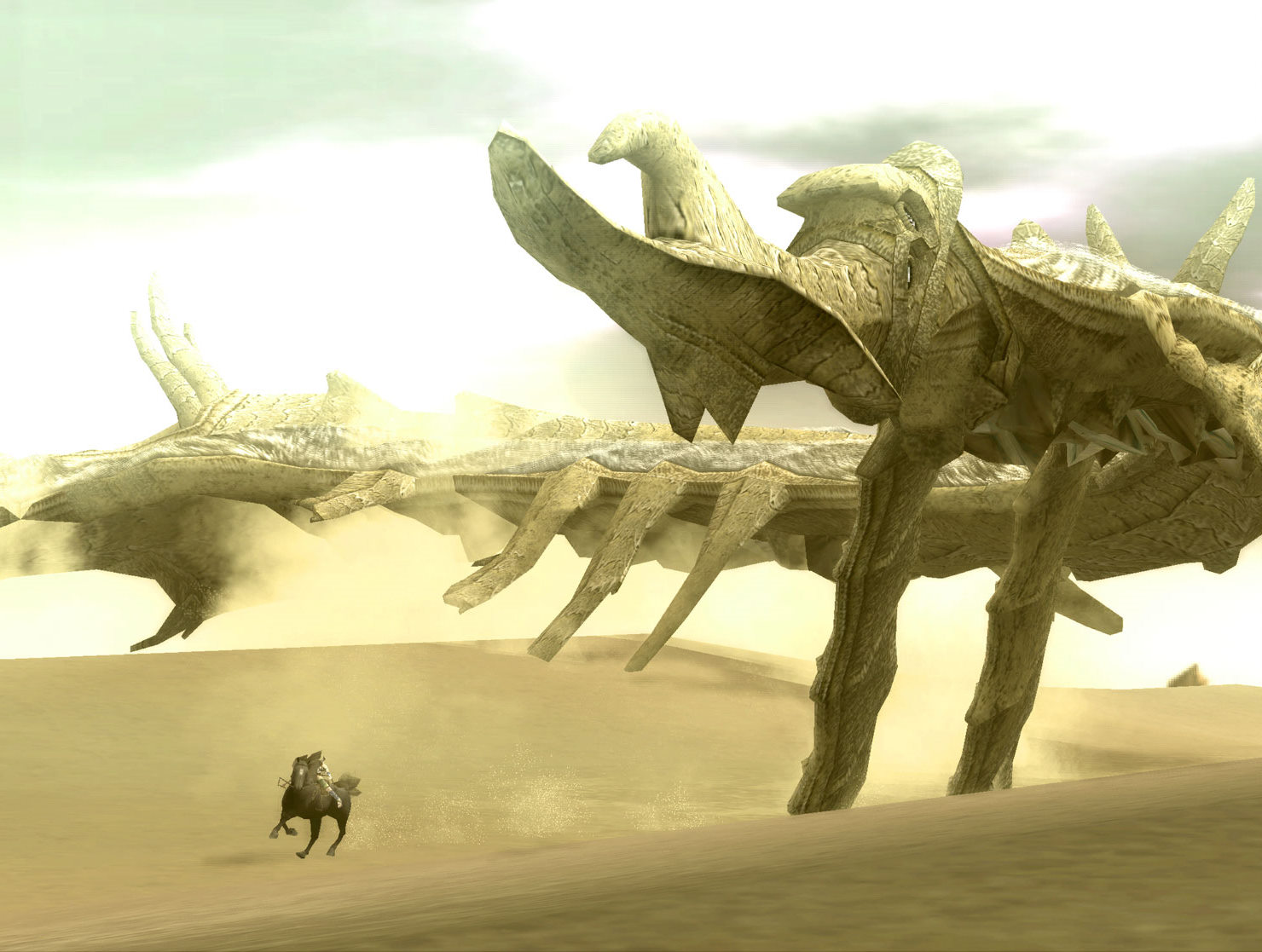
Let’s talk about your horse. Aggro is the main character, but I felt like I was driving a Mac truck. He won’t move if you push the stick forward; instead, you have to mash X, and it takes forever for his momentum to get going. You can only tap the stick left and right to steer him, but he moves too quickly and runs right into walls, which he then stops on a dime and turns completely around. Maneuvering through tight areas is a serious pain. The horse controls are just terrible. This is probably the only bad part of the game; there is nothing else like this game out there. The colossi themselves look fantastic and are just gigantic. You really feel helpless and wonder how you are going to take this thing down. It all adds to the foreboding atmosphere of the game and the loneliness and helplessness that you feel throughout.
I have been wanting to review this game forever, and now I have the chance. I played this back in 2005 when it first came out, and it was just unreal. SotC still has some of the best graphics to grace the PS2, and it almost looked next-gen at the time. Of course, it suffered from the massive slowdown, but now we can play it with some extra graphical effects and at 60FPS. There’s not much of a story here; there never is with Famito Ueda’s games. You are a boy named Wander who brings a girl to a temple in a cursed land and vows to destroy all 16 colossi in order to bring her back to life. The game has one of the most touching endings I can remember.
The game is very basic; you just head to each colossus and slay it. There is a huge open world, but it is very barren and void of life, but that’s the way it is supposed to be. You feel very alone and helpless in this land of brown and gray. You have two weapons: a sword and a bow. You can hold the sword up to the light to guide you to the next colossus, which really isn’t that hard. Once you find it, you have to figure out how to get on top of it, and that’s the tricky part. Each colossus is completely different. Some are tall, some are fat, and some are the size of a lion. These lumbering beasts will attack, but you need to find their weak spots. One colossus has weak spots on the bottom of its feet. When it walks, you need to use your bow and shoot it. It then falls over, and you can jump up, grab its fur, and start climbing. Some aren’t so easy; in fact, there are no hints on how to get on top of these beasts. One tricky water serpent requires you to swim over him, and then his tail will come out of the water so you can grab it.
The best part is when you get on these things. Each colossus is like a level in itself. You can climb around and hold the R1 button to stay on. They will try to shake you and your window to actually stab the glowing, weak spots, which are really small. You have a stamina meter, and when it depletes, you let go and fall back down. This can be really frustrating if getting on top of the Colossus is already frustrating or a long fiasco. As you slay these monsters, your stamina and health increase, but you still need to watch out. The worst part about the game is the god-awful controls. They just stink, and the game mechanics are sluggish and unresponsive. If it weren’t for this, the game would be perfect. Wander’s animations are a bit jerky, and when the colossi shakes you and your stamina is dropping, you just want to charge your stab and kill it, but sure enough, you get shaken again right as you start to charge. Wander flops around, and it just feels sluggish. When you try walking on the colossus, Wander will fall and tumble, sometimes right down to the ground. I almost threw my controller several times because of this. You will mainly die because of the mechanics, not your skills.
Let’s talk about your horse. Aggro is the main character, but I felt like I was driving a Mac truck. He won’t move if you push the stick forward; instead, you have to mash X, and it takes forever for his momentum to get going. You can only tap the stick left and right to steer him, but he moves too quickly and runs right into walls, which he then stops on a dime and turns completely around. Maneuvering through tight areas is a serious pain. The horse controls are just terrible. This is probably the only bad part of the game; there is nothing else like this game out there. The colossi themselves look fantastic and are just gigantic. You really feel helpless and wonder how you are going to take this thing down. It all adds to the foreboding atmosphere of the game and the loneliness and helplessness that you feel throughout.
The graphics are superb, even to this day. The PS3 version adds some texture filtering and anti-aliasing, and of course, the frame rate is now 60. There’s also some extra bloom added, so the lighting looks great. However, despite all this greatness, the game is pretty short, and you can beat it in about 5–6 hours. All you do is slay all 16 colossi, and you’re done. However, it was a very memorable experience.
Overall, Shadow of the Colossus was a milestone for the PS2 and is still one of the best games ever made. The frustrating controls and game mechanics keep this game from being as perfect as all the rest. Have patience and just deal with it. Every PlayStation fan should play this game.
Ico is probably one of the most forgotten games in history. Being one of the first graphical powerhouses for the PS2, it proved that you don’t need a complex story and characters to have a good game. All you know is that you are a boy named Ico who is trying to save a girl named Yorda from her evil mother and escape from the castle. You enter as a captured prisoner because you have horns. You then escape and find Yorda along the way. What made Ico such a big deal was that you led her around manually by holding R1. This forced you to become attached to her, and they rarely spoke.
This game was way ahead of its time. That’s probably why people passed it by for Jak & Daxter and other PS2 games at the time. The game consists of some pretty cleverly designed puzzles that involve pulling switches, climbing, cutting ropes, and swinging on chains. You also push and pull on the occasional block. The level design is really well done, but there were a few obscure puzzles, like jumping off of a chain to knock a bridge down. This is completely against the game’s mechanics, so you would never know to do this. Leading Yorda around sounds annoying, but it prevents you from having to rely on the already shoddy AI. The game mechanics work well enough in design, but they are sloppy and frustrating to deal with.
When you jump, Ico tends to clip into ledges and ladders, making you have to slightly adjust him until he latches on. If you press the analog stick just slightly and jump, he will jump 20 feet, causing you to jump off ledges or fall to your death. There’s just so much bad collision detection, and the animations are janky and not well done. When you drag Yorda around, her arm looks like a flopping noodle that can go through her body. I know this was originally designed for PS1 before the game jumped ship to PS2, but still. There are other mechanics, like setting your sword down to pick up a giant stick, lighting it on fire, then setting off a bomb. Sometimes you have to toss these before they blow you up. Fun game mechanics and all, but they repeated through the entire game, making you grateful for the short length (just about 4 hours).
A lot of times I didn’t know where to go because the middle of the game has two areas that are identical but just slightly different. The constant backtracking can confuse you, requiring a walkthrough. There are no boss battles to speak of except the final boss, but the combat is so frustrating and annoying. Ico swings his sword around aimlessly, and you can’t move while doing so. The AI jumps away as soon as you run after it, so if you get stuck in a three-hit combo, you get knocked down, and Yorda gets dragged away. You can’t die in this game during combat, but if Yorda gets dragged underground, you’re done. You can pull her out of the hole, but sometimes a shadow creature will hit you and knock you back, and then you have to suffer the long animation of getting up. A lot of games had these animations (The Mark of Kri), and I don’t know why. It breaks the fluidity of everything. Once you get the hidden mace in the game, combat is really easy, but you still get annoyed by the creatures constantly backing up when you approach.
The graphics look great with the new HD upgrade, but even back then, they were amazing. A lot of textures have been slightly upscaled, and some bloom and HDR have been added for better lighting. You can still notice the game’s age during up-close shots of areas. Textures are muddy and so blurry that they don’t even look like what they are representing. The main thing is that you can pan the camera around more now that the resolution has been bumped up, making navigation easier. This is how you do HD upgrades, right?
Overall, Ico is a great game, but the dated mechanics really show their age. If you can look past all this, you are in for a great, albeit short, game, but don’t expect engaging characters or a complex story. There are four cutscenes in the whole game, but this is about the journey and not the story.
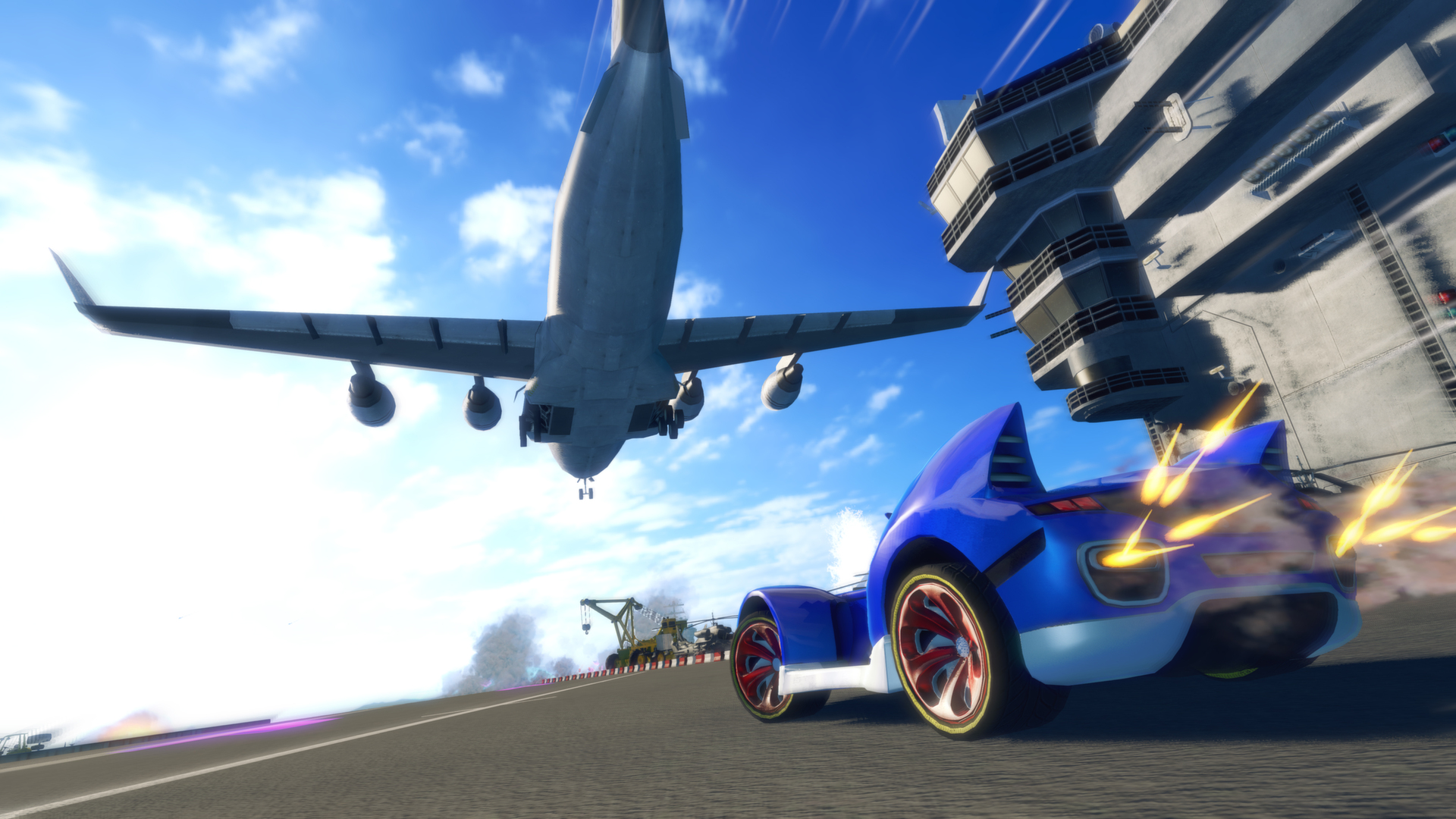
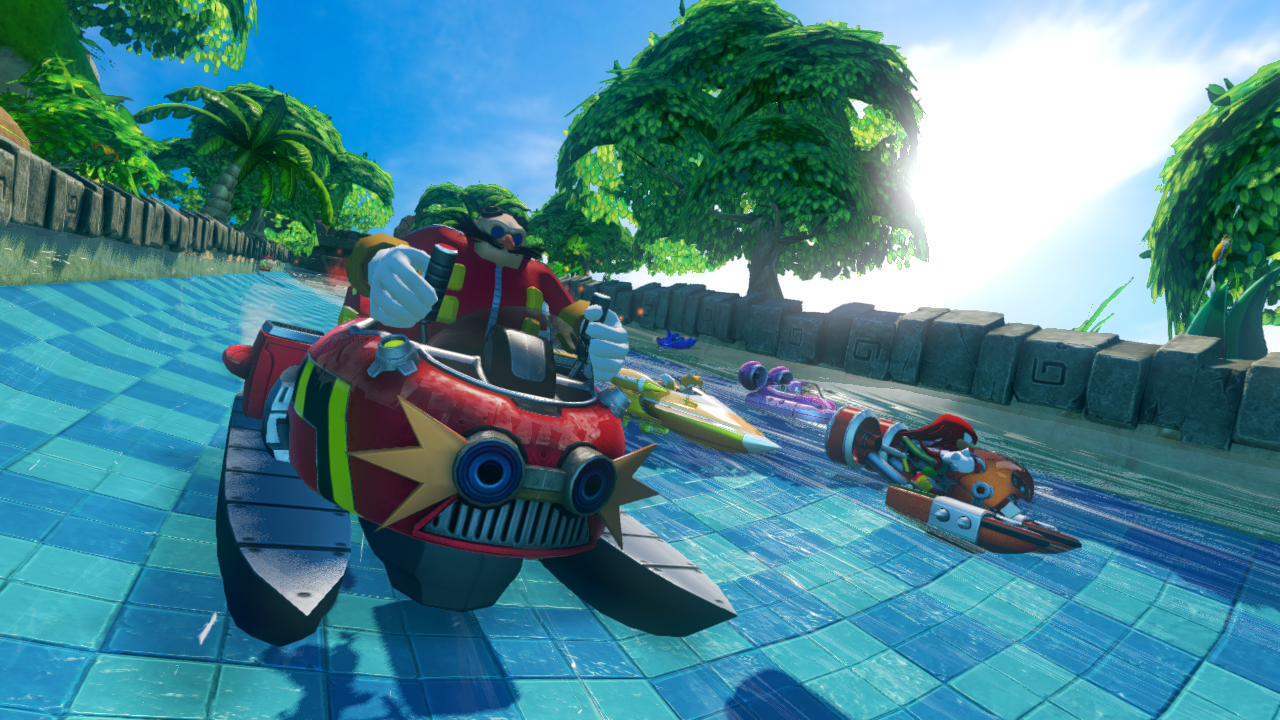
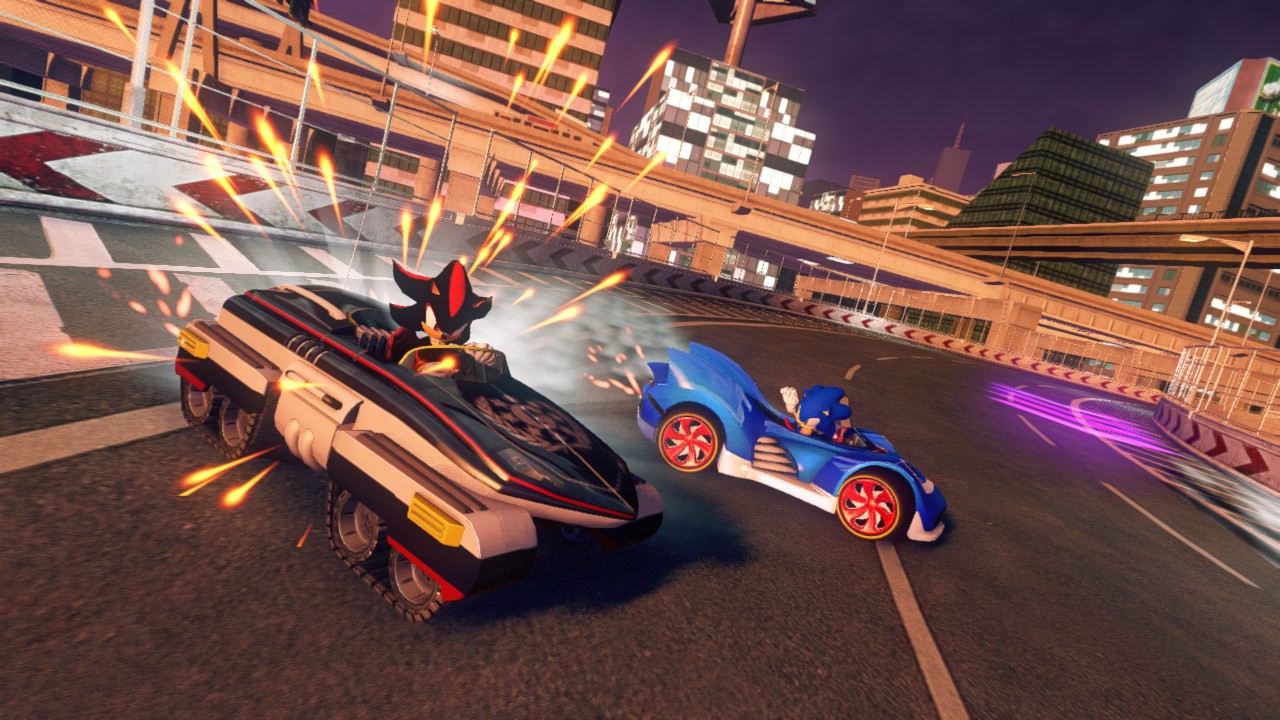
I’m not much of a kart racing fan because the games tend to be too simple and easy, but Transformed really knocks it out of the park. The last Sonic Kart Racer was just okay; it had a slow pace, and it just wasn’t designed very well. This game really surprised me with its excellent graphics, track design, and character selection.
The obvious are Sega mascots such as Sonic, Amy, Shadow, Robotnik, Alex Kidd, and various others. While any of these guys outside of Sonic aren’t well known, it is nice to see them here. PC users get exclusive characters such as Football Manager (I know), Team Fortress, and Shogun (I know… Not exactly amazing characters you would want in a kart racer, but oh well. When you start your first race, you will immediately see how much better this game is. The handling is so much more fluid, and the races just flow. What really sells the game are the tracks that change mid-race and are able to transform into flying and nautical vehicles. Each character has three different vehicles, and it just feels great. They all handle things differently, so it makes you stay on your toes. The track design is amazing. There are hazards everywhere, and the weapons are really cool. The tracks are featured in various games, like Sonic’s Green Hill Zone and Samba De Amigo’s crazy LSD track. These levels are fun, but I just wish there were more.
The weapons vary from iceballs, twisters, remote cars that explode, rockets, blowfish, and various other crazy weapons. You pick up the question-mark capsules to find them, but you will find an All-Stars weapon that will make you really powerful and fast. Your car transforms, and it just looks really cool. Along the way, you can pick up coins that are used in other modes’ load screens in a slot machine to acquire boosts and other items. I just found the game to be very pleasing to play, but not with a single player. Easy was too easy, medium was too hard, and hard was impossible. The AI is really bad, but people play kart racing games for multiplayer anyway, which is where all the fun is to be had in this game. Unlike the last game, PC gamers get online multiplayer.
The graphics are really nice, with bright, vibrant colors, great-looking textures, and some really amazing lighting effects. Of course, the PC gets the best treatment, and it looks way better than the last game. As you play the game, you will eventually find tracks that become your favorites and find which character you prefer. The dynamically changing tracks just add that much more fun to the game. Hitting speed boosts, finding weapons, and avoiding track hazards are so much fun, and the sense of speed is incredible.
I just wish there was a bit more, but while there is more content than in the last game, I feel something is just missing. Maybe if the AI wasn’t so bad, the single-player would be more fun, but I found myself getting bored with it. The only reason to constantly come back is multiplayer. There is a licensed feature that allows you to add up to three stickers that you earned, but I felt this was completely useless and something to put in for little kids. However, as it stands, it doesn’t add anything significantly new to the genre or push it forward, which is what it needs. While it may not reinvent the wheel, it just makes it bigger and louder.


















































 thebinarymessiah.com
Clearly you have been blocking everything you or haven't played the game at all. Maybe pay attention to the story…