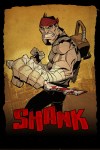
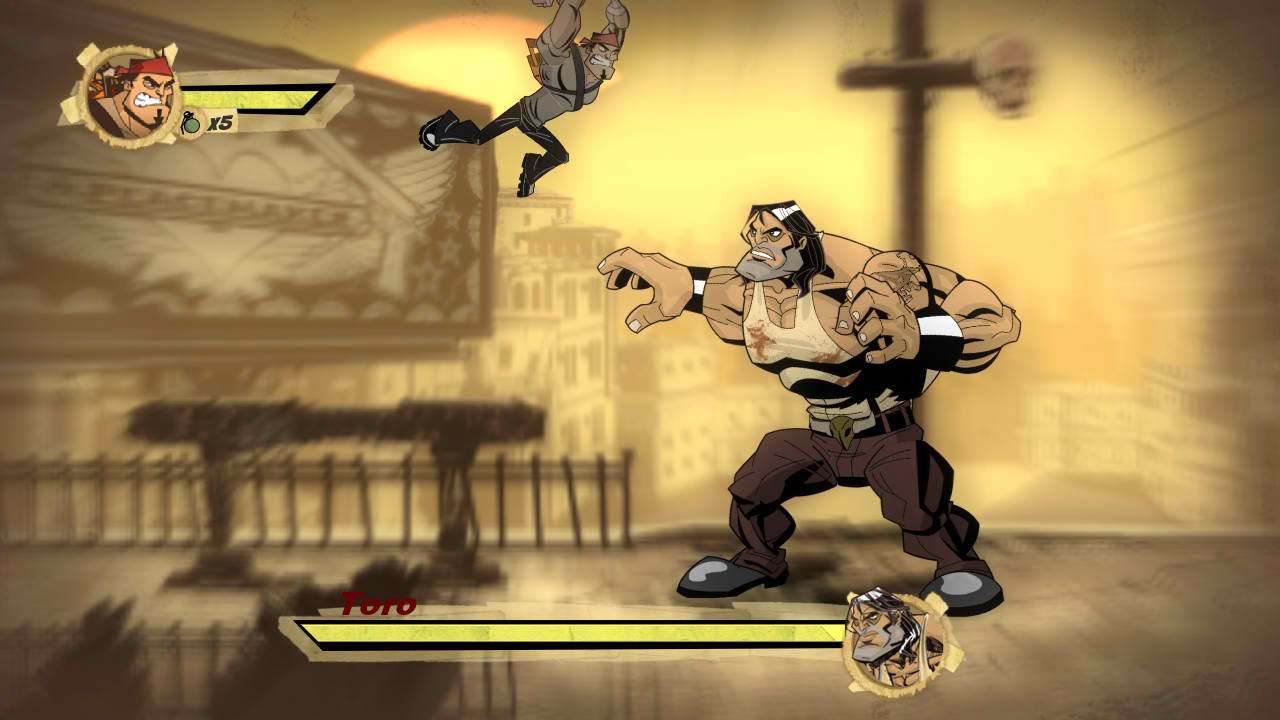
Shank is an artistically stunning game about a man named Shank (voiced by the same man who voiced Kratos in God of War) who is trying to get revenge on the death of his girlfriend. It doesn’t quite go according to plan, but he heads for the people responsible anyway. The game has gory melee combat with a tad bit of platforming. The game can be beaten in less than 4 hours, but by the end, you will have wished it had ended long before that.
The combat consists of light attacks (your shank), heavy attacks (weapons that are picked up like the chainsaw, katana, chains, and machetes), as well as three different guns for distance combat. You can toss grenades to clear crowds, but that’s pretty much all there is to the combat. There really aren’t any combos to learn or gain, which is a shame because by the end of the first couple of levels, you will get bored with the combat. There are problems, despite the hacking being fast-paced. Sometimes the controls will feel a bit sluggish when trying to counter people behind you, and when you get knocked back, you can get bounced around by multiple enemies with no way to get back up until it stops. This really frustrated me throughout the game. I always felt like I wasn’t 100% in control of Shank. Even some of the weapons had problems, like the shotgun only firing a couple of rounds, but then he puts the gun away, and during this animation, you are vulnerable. The problem is that you’re not even done shooting it, so he has to take it back out. Things like this crop up while you are playing, and by the end, you just have had enough. There is some minor platforming, but it’s not very challenging and feels like just some lame filler content.
One major issue was that the health pickup button was the light attack button. Who’s bright idea was this? During boss fights, this poses a real problem when you are trying to conserve health and then you accidentally use a light attack near the pickup and drink it. Other than this, other problems consist of repetitive boss fights, but the few that are different are the only things that break up the monotony. The visuals change between levels, but other than that, you just get bored. I wish there was a level-up system or some way to earn combos. Hacking and slashing enemies in a gory fashion is fun for so long until you want more. Hell, even some more varied level design would have been nice, but no such thing exists here.
Overall, Shank provides a mediocre story that barely keeps your interest. The game has a beautiful art style but is lacking in design change, and the combat is very shallow and monotonous. This game had a lot of potential, but if what is here is enough for a quick playthrough, then you will forget about it. Even playing again in different costumes isn’t enough to drudge through this repetitive side-scroller.
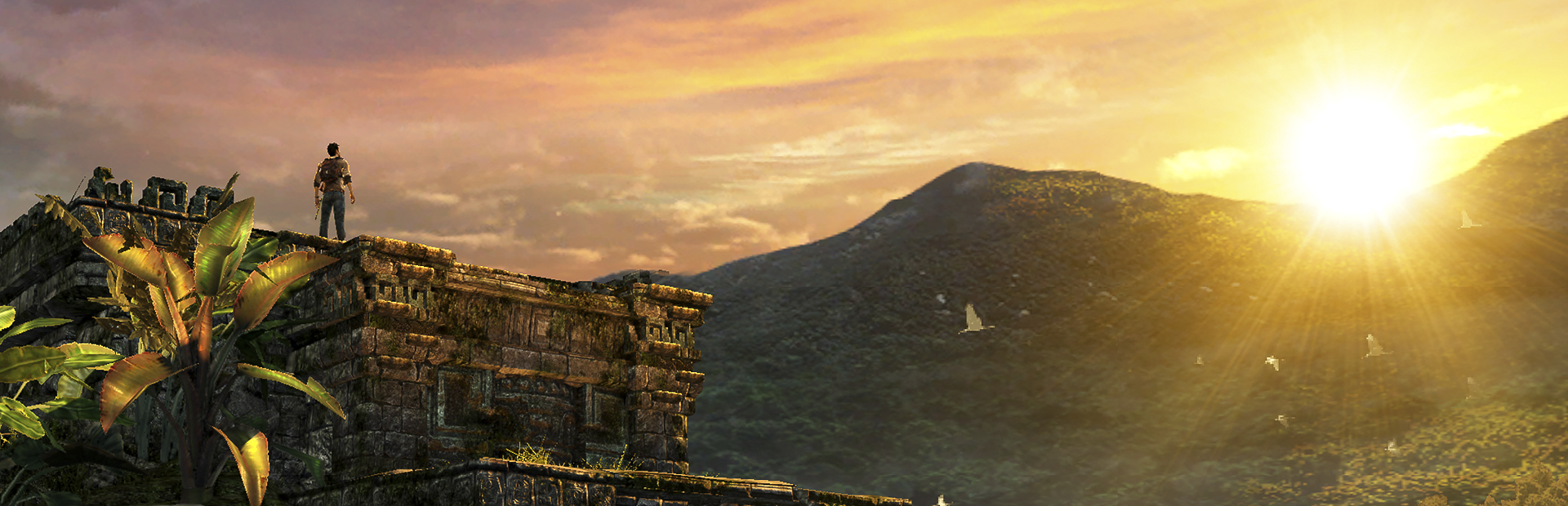
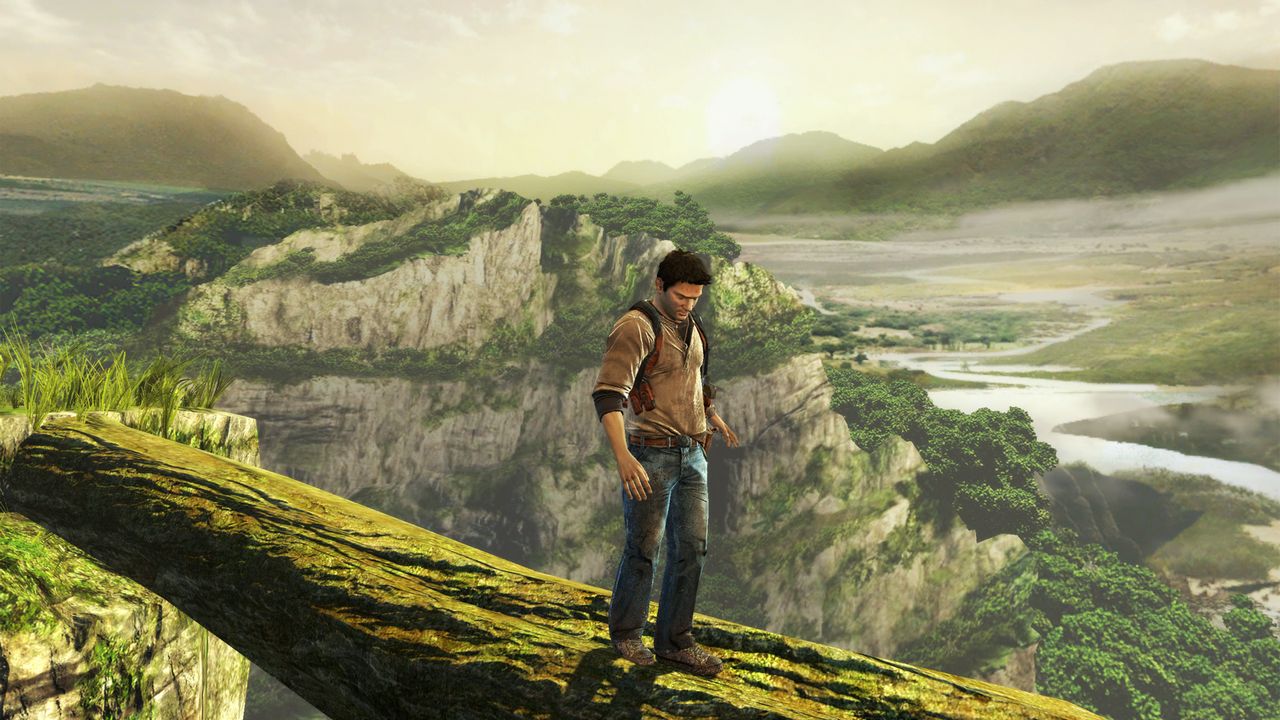
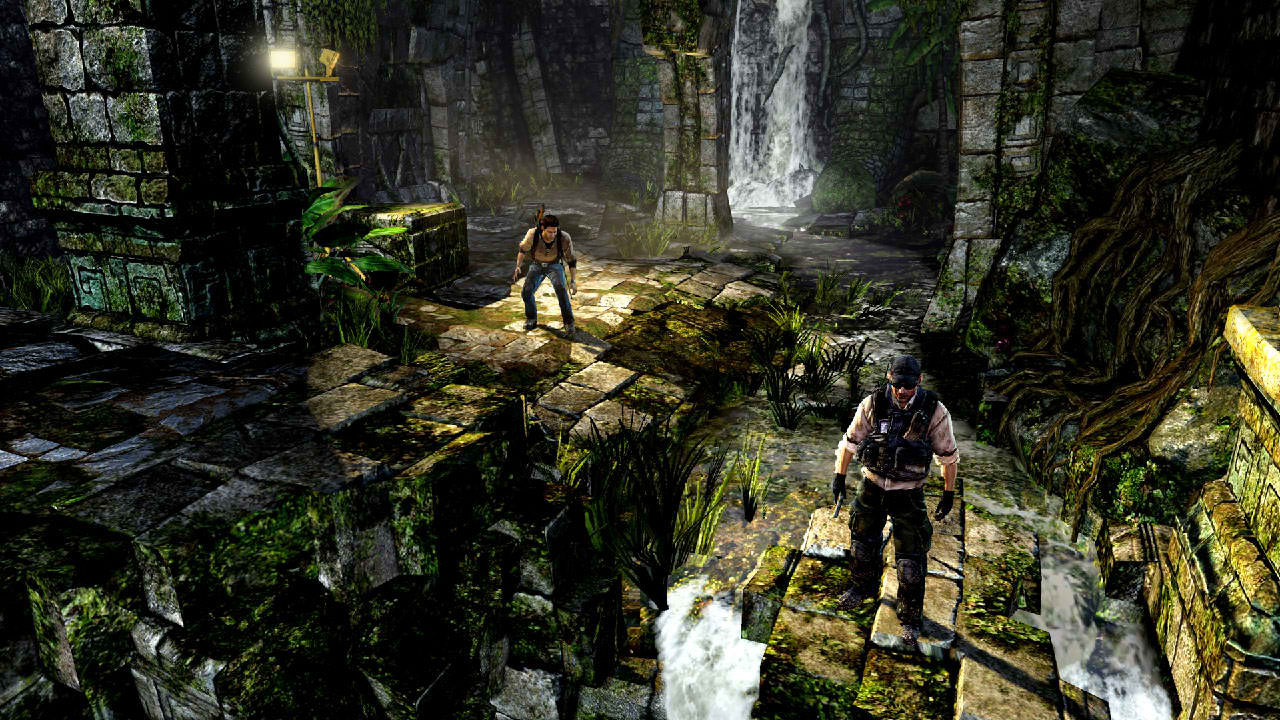
Golden Abyss is the prequel to Drake’s Fortune for PS3. This one is coming from Syphon Filter (for PSP) at Bend Studios instead of Naughty Dog. We follow the hero Nathan Drake as he uncovers a 400-year-old massacre and travels through various dangerous locales to get there. Of course, this isn’t an Uncharted without some bad guy trying to get the fortune all for himself, but this time there are two, so this makes it a race. A new heroine is introduced as Marisa Chase, but fans will not like her as much as previous females in the series due to her lack of charm and charisma. The overall experience is the same as the PS3 versions, but with some added features exclusive to Vita.
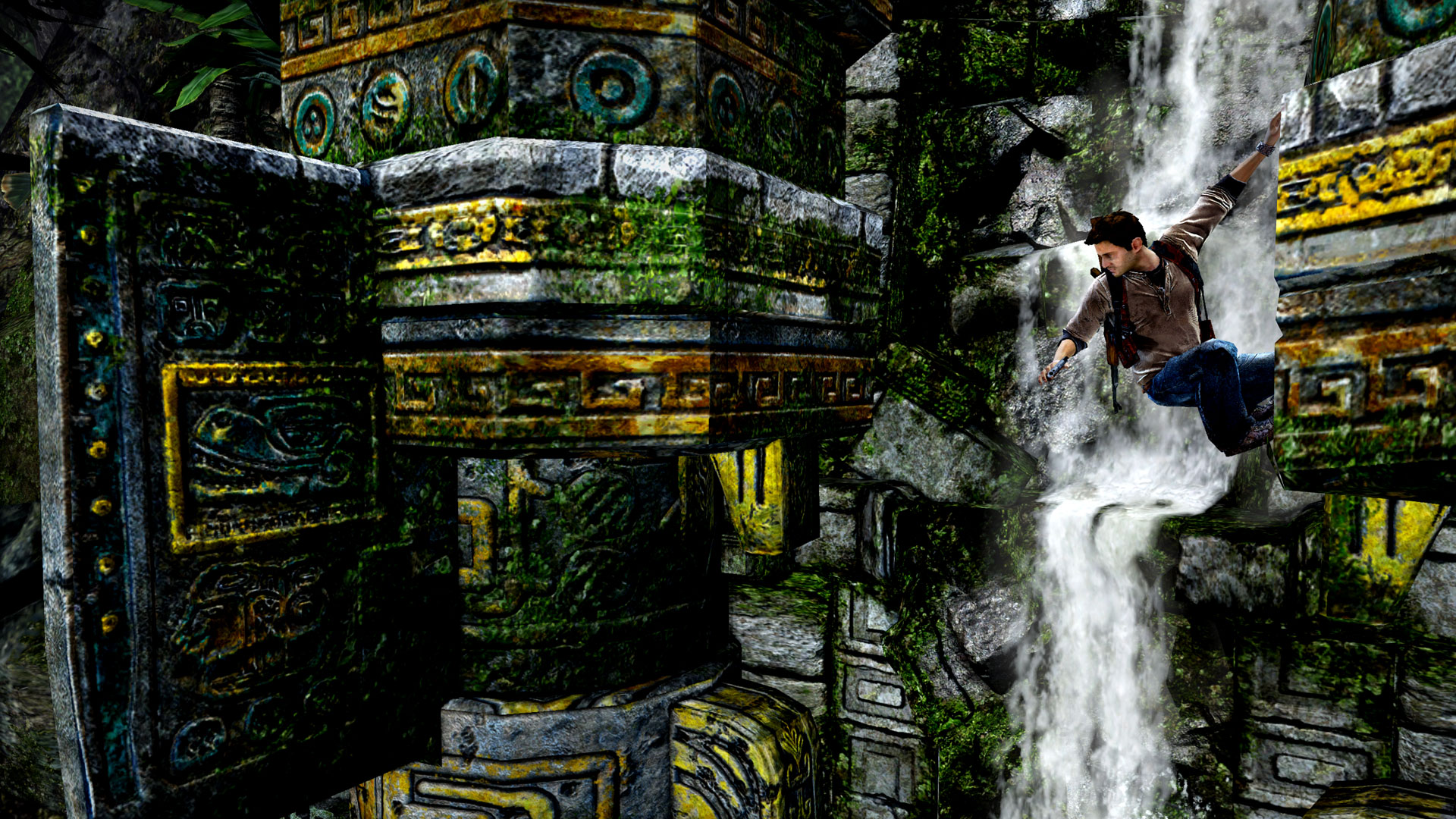
The story itself doesn’t tread any new ground besides carving a new adventure. It isn’t as deep as the last two Uncharted games (Among Thieves and Drake’s Deception) because it doesn’t explore anything about Drake’s past or push his character in any way. The game felt a lot like the first one, and that’s fine, but the Vita version could have been a lot more. The combat and platforming haven’t changed at all, but what’s here works well. If you are already familiar with Uncharted’s gameplay, you won’t need to learn anything new except the Vita features. You can climb around handholds as normal, but you can “paint” your path with the touchscreen, which is helpful during long shimmies. You can use the touchscreen to climb ropes (as well as the rear touchpad), as well as access menus.
Thanks to the second analog stick, you won’t have camera trouble, and this also includes combat. Gunfights feel just like the PS3 versions, but hand-to-hand use the touchscreen. You can press the first icon on the enemy or just use the square. The final blow is delivered by a swipe direction on the touchscreen. In fact, all quick-time events are done with the touchscreen. This doesn’t really add anything significant, but it is a nice touch and makes use of the technology. The tilt sensor is used to balance yourself on beams, and the gyroscope is used to fine-tune your aim. These features are just subtle touches, but they don’t really make the game any easier.
Golden Abyss has 34 chapters, but the game can be beaten in about 4-5 hours if you aren’t looking for collectibles. There are tons of them, and without a walkthrough, you won’t find them all. This includes taking photos and doing charcoal rubs with the touchscreen. This is probably the best use of the touchscreen because it fits so well into the Uncharted gameplay and setting. The story is delivered with excellent voice acting, and the dialog is top-notch with Drake’s sarcastic and snarky comments. There are some interesting puzzles that use the touchscreen, but they are easy and not as challenging as the console versions.
The visuals are a real treat and are probably the best-looking handheld game to date on any platform ever. The lighting effects and highly detailed textures are unrivaled on any other portable device. It doesn’t look as good as the PS3 versions, but it looks very close to the first Uncharted graphics-wise. There are various locations to gawk at, such as night caves, lush jungles, and dense villages.
After you beat the main game, there really won’t be any reason to come back except to find the collectibles and unlock trophies. The story is entertaining but not nearly as memorable as the console versions, but Uncharted is lacking one huge thing that brings it down so much: epic set pieces. Uncharted is famous for this, and there isn’t a single one in the entire game. No exciting train chases or anything like that. It feels too familiar with the basic gameplay and doesn’t stray far from that path. Golden Abyss is a great Vita game, but not the best Uncharted game.
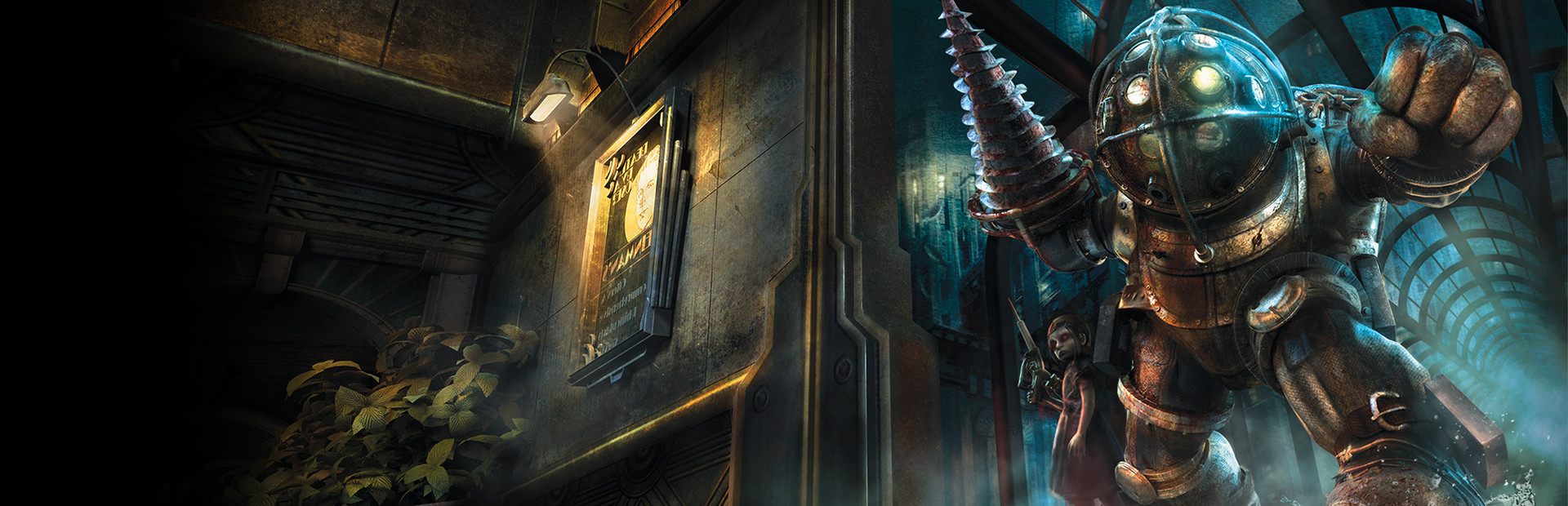
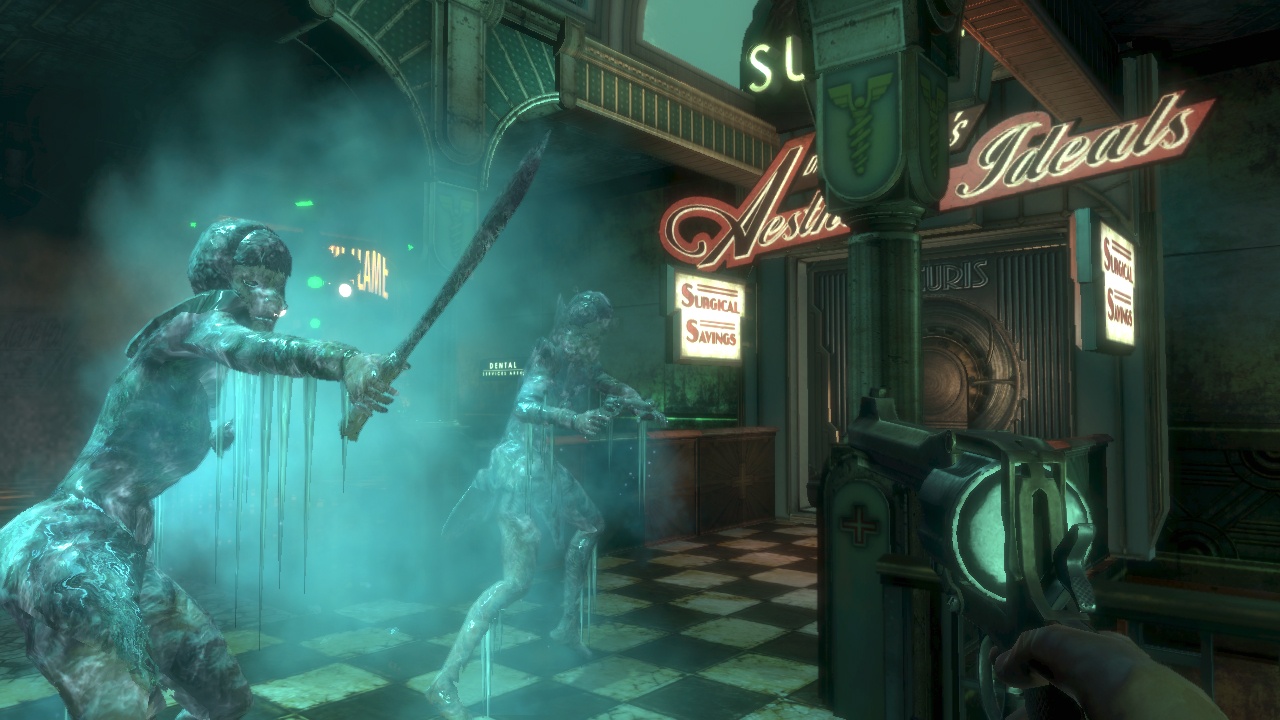
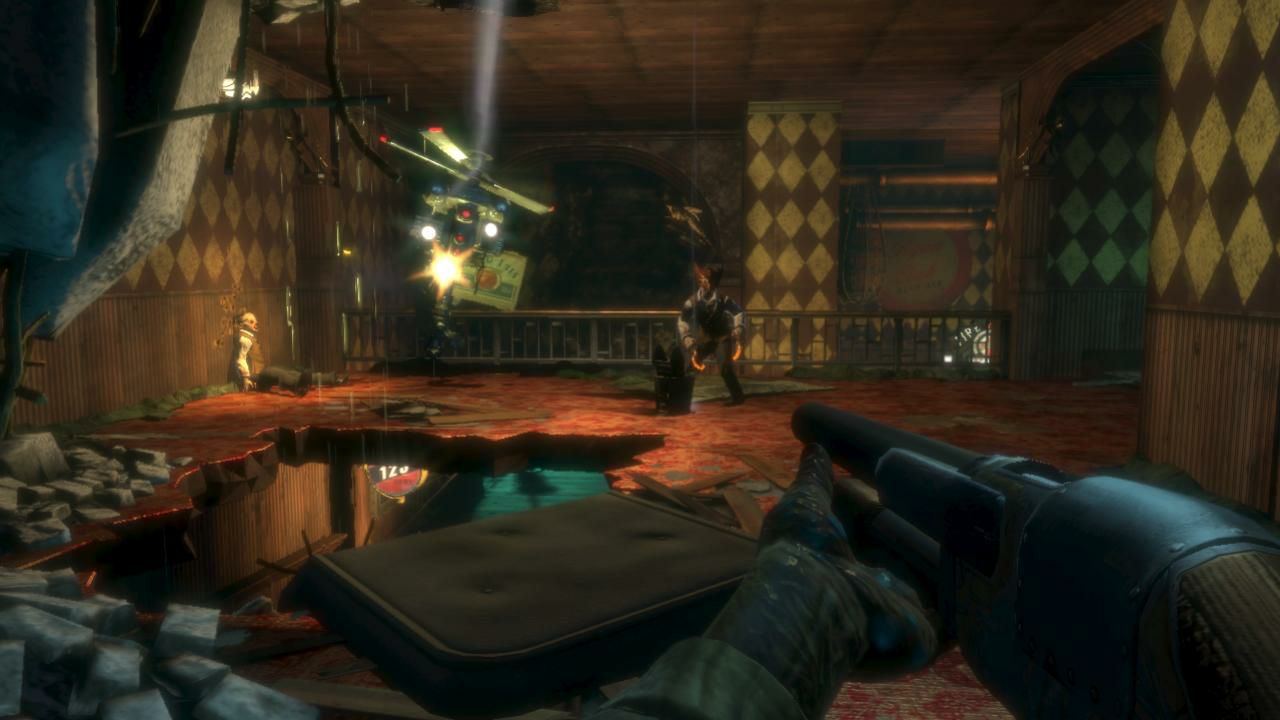
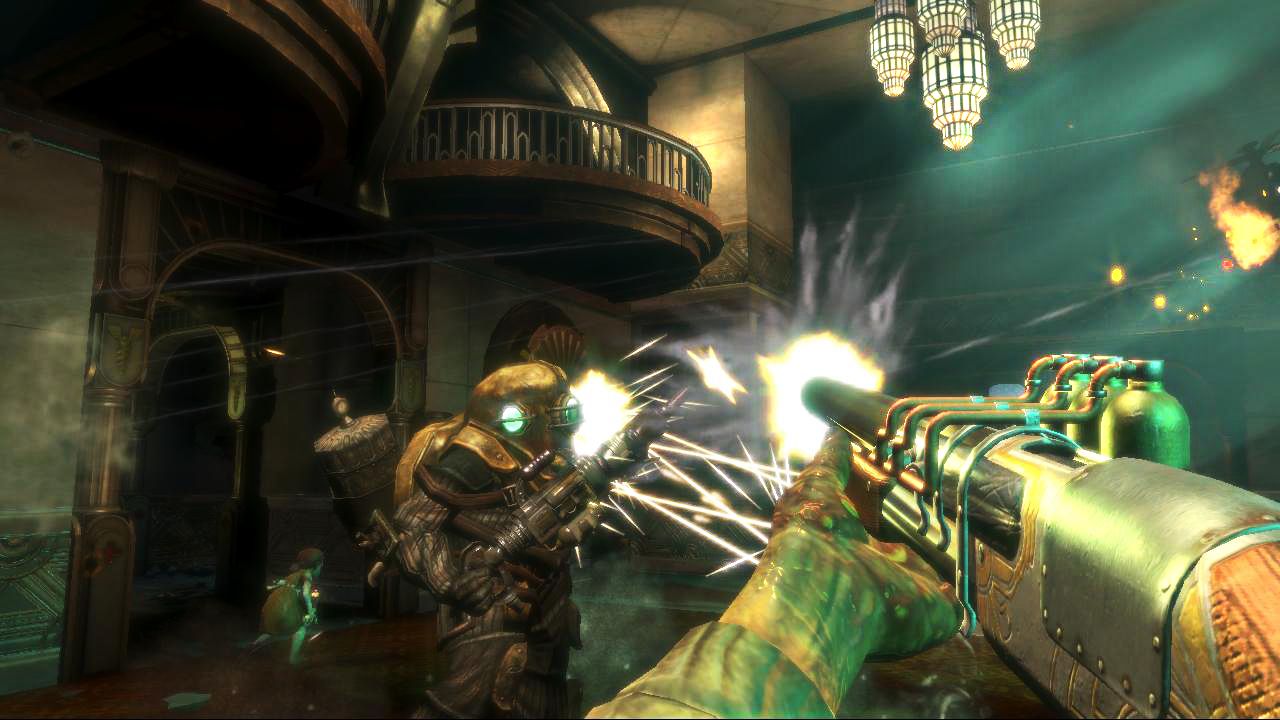
BioShock is awesome! Buy it! That is probably all you need for a review, but that’s not really a review. Anyway, if you don’t know the plot of BioShock, then you’ve been living under a rock for the past few months. You play a nobody named Jack who crashes into a plane and discovers Rapture. A failed underwater city whose founder, Andrew Ryan, turns crazy, and all the people of Rapture have gone nuts. They go nuts due to the plasmids they use to gain power. Also, the ADAM that can make you turn into anything you want is very valuable and is the key to rapture. The Little Sisters gather the ADAM, and the Big Daddies protect them. The story is full of plot twists and secrets. It’s probably one of the most original stories in any game period. The gameplay is like that of an average shooter, if you want it to be, or it can be a genetically enhanced one. That’s the beauty of BioShock. It can be anything you want; it can be boring, fun, stupid, or lame; it’s all up to you.
The game’s narrative is one-of-a-kind and what most games copy these days. The story is told through radio transmissions with no cutscenes. That is extremely hard to do while keeping the player interested. Atlas guides you around, telling you how to get to Andrew Ryan, but the world around you also tells the story of Rapture through audio diaries, things written on walls, and what the psychotic enemies blurt out. This is a rare form of storytelling in games, which is why BioShock is such a classic.
The graphics stand up pretty well today with DirectX 10 enhancements, but they are so subtle you won’t even notice. There are supposed to be better water effects and physics, but I didn’t notice a difference except that your steps cause ripples in the water now. There are lots of graphical problems on the PC that were never addressed, but they don’t hinder the game much. The game is very surreal, and it just sucks you in. The big thing here is the gene splicing and all the plasmids. There are so many of them, and you can do whatever you want with them. You can shoot fire from your hands or freeze your enemy with an ice blast. There are others as well that let you gain more health or hack turrets and safes better and faster. There is just so much detail here, it’s nuts. You can use a camera and research your enemies to learn their weaknesses and gain new plasmids and tonics. The only disappointment was the lack of any multiplayer whatsoever. All you can do is play this game to experience the true beauty of it all. BioShock is one of the best games in years, and I assure you that you will have more fun with BioShock than with Halo 3 or Metroid.
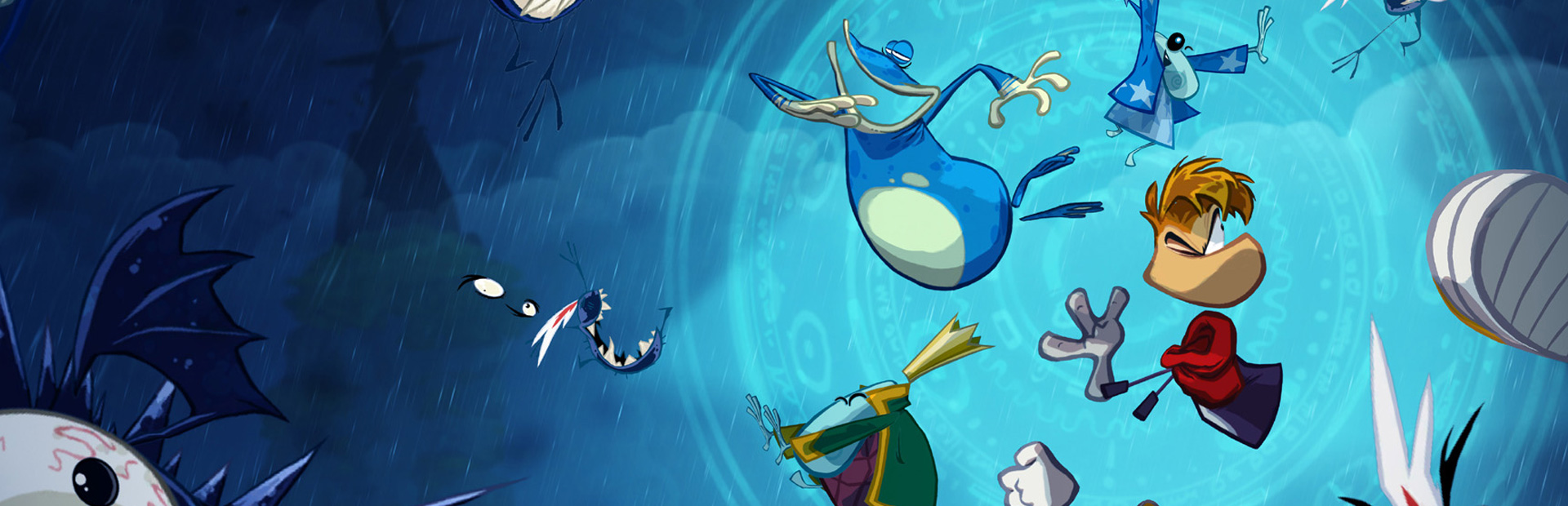
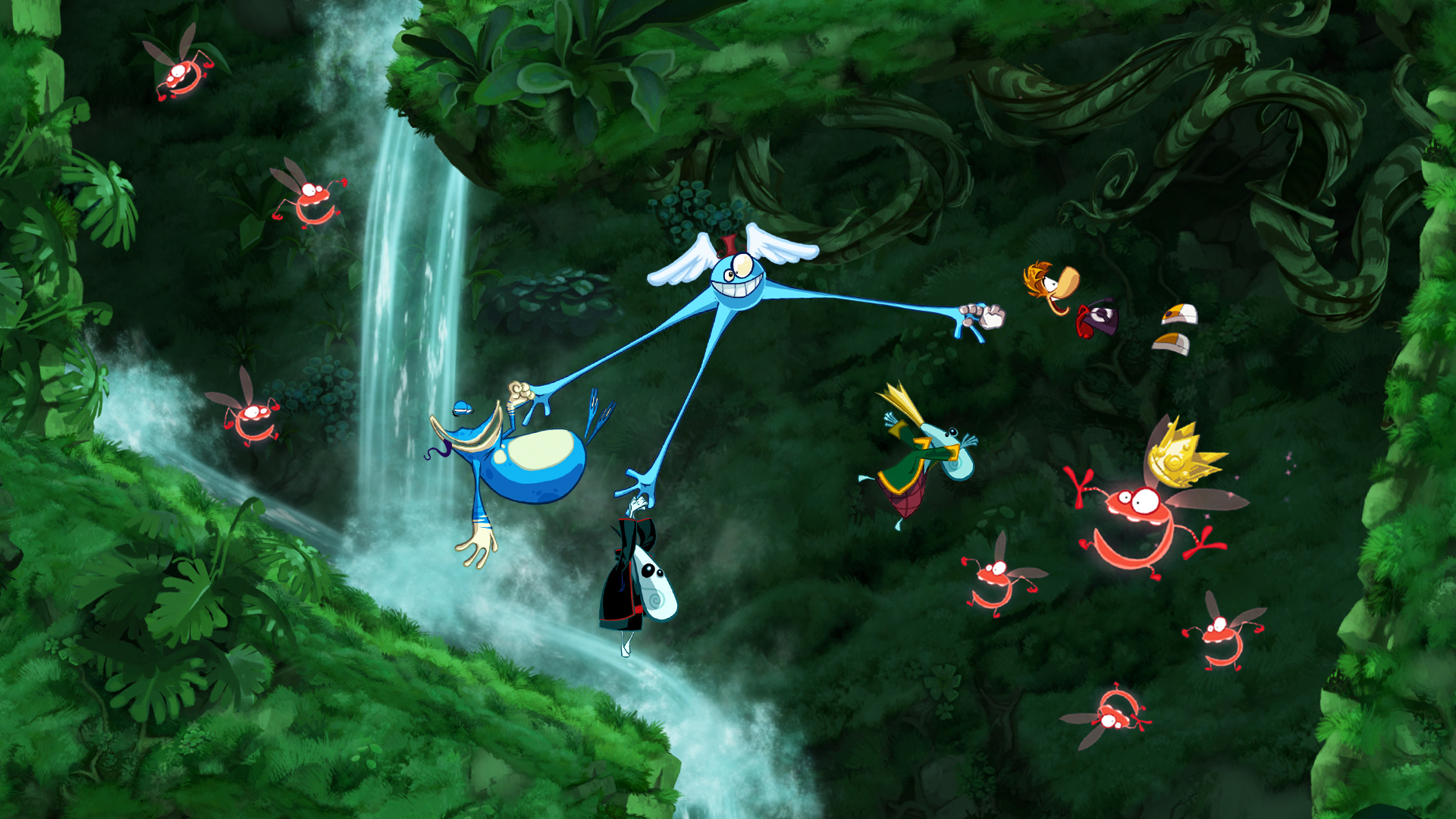
Rayman has been a struggling series since the PS1 games came out. There have been spin-offs, ports, and terrible sequels since then, but Origins redeems the series. There isn’t really a story here except that you’re saving lums and princesses of different lands to earn powers. There aren’t any cut scenes or voiceovers because this goes back to its old-school roots, and yes, the game is hard.
The controls are silky smooth, and so are the animations. It helps that the controls are responsive, as well as that you can jump around the levels that require focus and skill to navigate. Obstacles lay in your paths, such as treacherous waters, enemies, and fire. Each new area has unique enemies, hazards, and an overall layout that is very nice to look at. Enemies can be jumped on or punched, and after that, they inflate. You can use the Vita screen to touch them so they pop to get the light inside, which actually makes this version more forgiving than the consoles. When you jump around to find lums, you will see them in hidden objects, and some will be trapped in bubbles. You can touch them to pop them up to add to your collection, which is much easier. While you’re bounding about the cleverly laid-out levels, you can find hidden areas with cages full of lums that you can find by hearing their cries for help.
The game is just so cleverly designed, with levels that are tricky but not so tough that you can’t forgive the game. You may restart a few times, but it actually requires skill instead of luck or exploiting the game’s faulty controls (if they were). Sliding around on the ice, dashing towards an enemy and punching them, grabbing onto a ledge, and then jumping up on top of an enemy can be tricky, but it can be done with a little practice and a quick reaction. The levels slowly get harder, but the whole point is to collect the lums and get medals at the end of each level. Save enough, and you can unlock special treasure missions where you have to chase one down through a series of tricky obstacles.
Origins is just so clever and charming that you can’t really hate it. There are plenty of characters to unlock, as well as extras. This game is perfect for people who love exploring levels and finding secrets. There are plenty of levels and things to find to keep you busy for many hours. I do wish there were some more features for the Vita besides just using the touchscreen. However, what is here works, and nothing got downgraded from the consoles. I can only really recommend this game to hardcore platformer fans because of the difficulty.
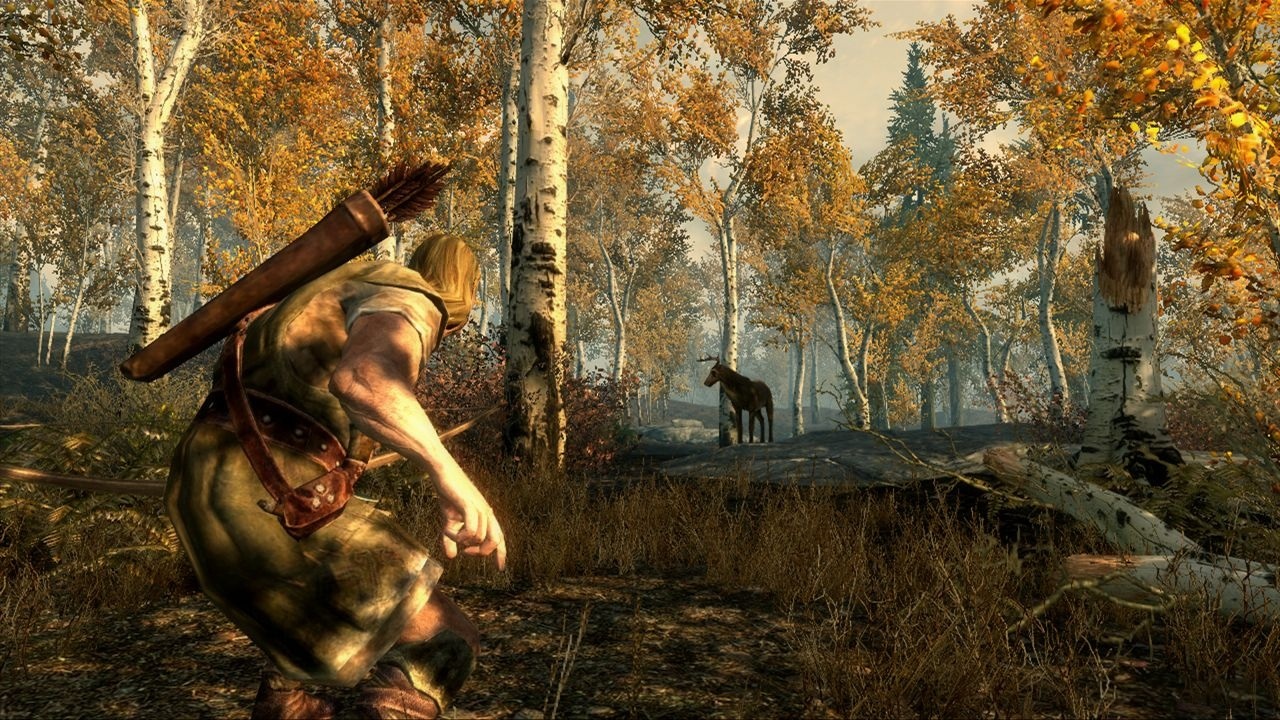
Here it finally is! I had so many great memories with Oblivion back in 2007. I could go on and on about that game, but the fifth game in the series is before us and has taken the world by storm. From creating internet memes to lots of weird videos on YouTube, Skyrim is a behemoth that even non-gamers couldn’t ignore. Skyrim takes place in Well, Skyrim, which is north of Cyrodiil. Cyrodiil was where Oblivion was set, but Skyrim is also set 200 years after those events. Of course, they are talked about in Skyrim, but time isn’t the only change in the game.
You are the Dragonborn, or Dovahkiin, who has the power of the Thu’um, which means you can shout like a dragon. This is actually a major gameplay element in the game, as well as fighting dragons. The map may seem smaller than Cyrodiil, but there is a lot more content in the game. I spent 108 hours on Skyrim, and that was 90% completion of side quests, areas discovered, and finishing the main story. I finished at level 45 and had almost 100,000 gold. In Oblivion, I was able to finish the game at about 95% in 50 hours. That lets you know how much more content there is, so you will be busy for months.
Let’s talk about combat first. The game still has third-person melee combat like the past two games, but it has been revised. The combat feels smoother, and it’s not so much like you’re playing whack-a-mole. There are more elements involved behind the engine, but the thing you will see the most is the perk system that is borrowed from the Fallout series. When you level up, you look to the sky and have a bevy of different areas to gain perks in: magick areas, combat, defense, and even blacksmithing (more on that later). Concentrate on one area and try to get as many perks as you can. This gets rid of the system from Oblivion where you can only level up to something if you use it, like jumping around like a bunny to increase endurance, etc. If you use light armor, you will gain levels (up to 100 in every category) in that area. Use two-handed weapons or destruction spells, and you will gain levels quickly. The perks allow you to gain and build on that area instead of solely relying on users to gain levels.
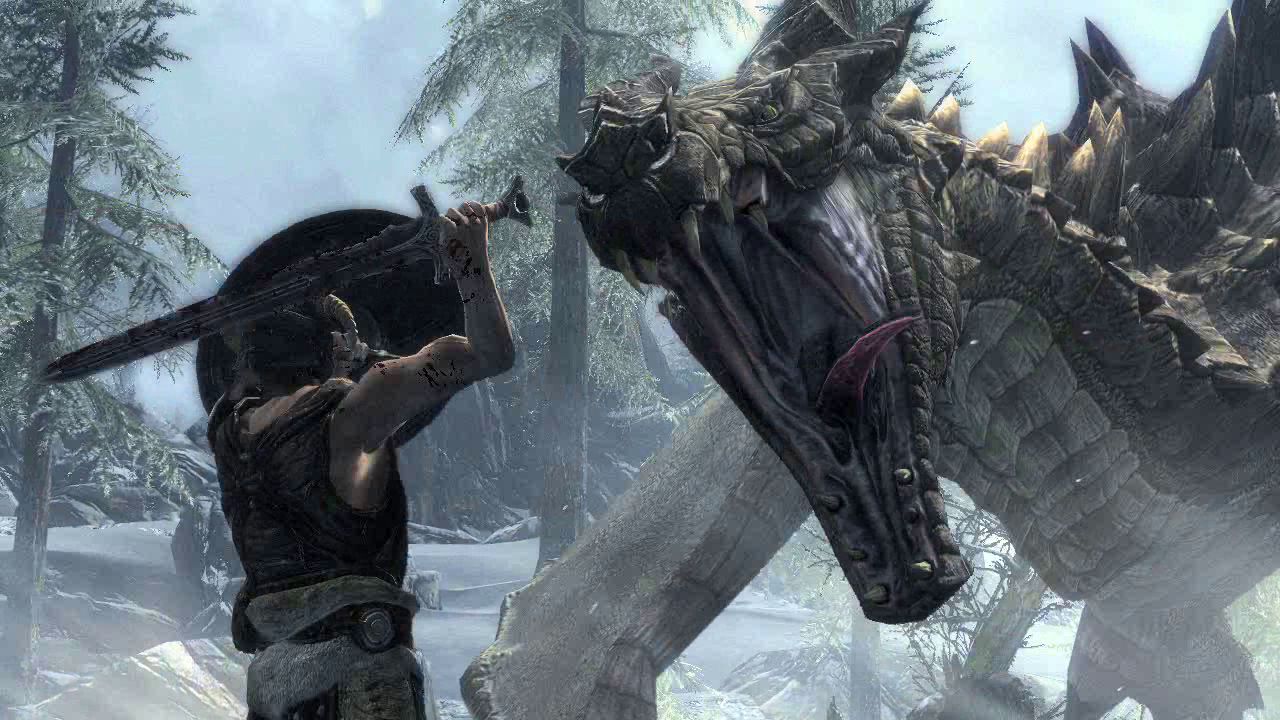
Of course, there are new enemies in the game, like Draugrs and dragons. Dragons should be avoided early on until at least level 10 because you will die in one hit. Once you kill these beasts, you gain their soul and can use it to unlock dragon shouts. Shouts consist of powers like unrelenting force, slow time, and fire breath. Each shout has three levels, but you need to find those words by exploring dungeons throughout the world. Dragons are just awesome creatures to fight because they are the biggest enemy ever put into a TES game. Of course, you need to watch out for wildlife like bears, crabs, leopards, etc. The world of Skyrim is dangerous and cold, so beware. Sneaking is still a huge problem because it seems no matter how good your sneaking skill is, you still get caught, especially when pickpocketing.
Factions are a huge part of TES, and Skyrim doesn’t leave you out. The thieves, dark brotherhood, mages, and fighter guild are all here, but bigger and better. The stories are more fleshed out and are a lot longer, plus your rewards are better. The Dark Brotherhood and Thieves Guild stories were my favorites, and they show you just how deep into the lore and story you can get. Everything else from past TES games you remember is here, like choices during dialog, but thankfully the whole persuasion mini-game is gone from Oblivion. There are a lot more main characters, and the voice acting is more varied, but everyone has Nordic accents because Skyrim has a Viking/Nordic setting, which is a huge departure from Oblivion’s strictly medieval tone.
Looting is a huge part of TES, and Skyrim doesn’t disappoint here. There is so much to loot that even after 100 hours, you will still scour every nook and cranny for stuff to sell at shops. Lockpicking has been improved and is much quicker this time around. Menus have also been improved with a nice four-way system leading to items, magic, maps, and skills. This gets rid of Oblivion’s awful Excel sheet-type menus. Of course, my complaint here is that you can’t compare items anymore, which is a major pain. You have to remember statistics, which is a bigger pain when shopping.
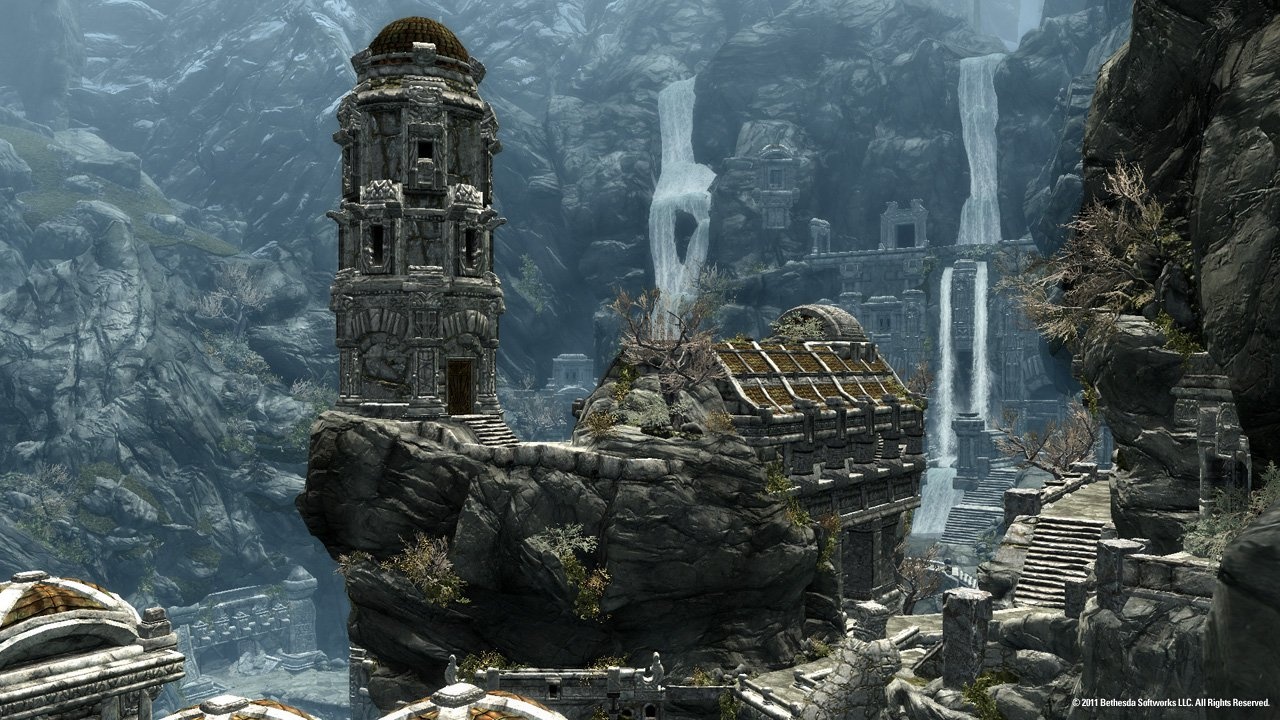
Skyrim has a forging system where you can get ingots for various medals as well as leather. Use these to forge weapons and armor in different categories, like Daedric, Leather, Studded, Iron, Glass, Ebony, etc. You can upgrade these on benches for armor and grindstones for weapons. This makes the whole armor and weapon system feel more custom-made to your liking than just what is out there. The armor and weapons are over double what is in Oblivion. Those are all the major changes in Skyrim, but there is so much detail here that you have to play the game to truly see what I am talking about. You can even read every single book in the game. There is so much detail here. Fans of the series will love the deepened and richer lore of the races and parts of the TES series. There are tons of them here. You even get to explore ancient Dwemer (Dwarven) ruins.
Horseback riding is back, and even the third-person view has been greatly improved, as have the animations. There are so many major changes, as well as minor changes, that I can’t even remember them all. However, there is a huge issue with this game, and that is bugs. There were so many bugs upon release that stopped quests from continuing: quest items being lost, stuck in areas, graphics bugs, dragons flying backward, and everything else you can imagine. Even after a few patches, there are still some bugs, and probably a few that will never be fixed. This is unacceptable, even for a large game like this. Thankfully, there is a huge mod community that fixed a lot of this first, but the stock game has problems that console gamers can’t fix.
The models are still ugly, and the woman still looks like a man. PC gamers get high-resolution textures, which make the game look amazing, but the consoles are stuck with low-res graphics that look kind of dated. The lighting in Skyrim is great, but with so many issues cosmetically, you really should get the PC version. Mods out there transform women into beautiful heroines straight out of comic books, with amazing new armor, new lighting, graphical effects, etc. The stock game is really lacking technically, and that disappointed me quite a bit. If you can look past all this, Skyrim is one of my favorite RPGs of all time and sits right up there with Oblivion.
Collector’s Edition: Hardcore fans may want to drop the extra $90 for the monster collector’s edition. You get a giant statue of Alduin that is an in-game model, a giant coffee table-style art book, a making-of DVD, and a steel bookcase. The statue is worth the extra money itself, and it looks amazing. Of course, this is for hardcore fans only, but good luck finding one.
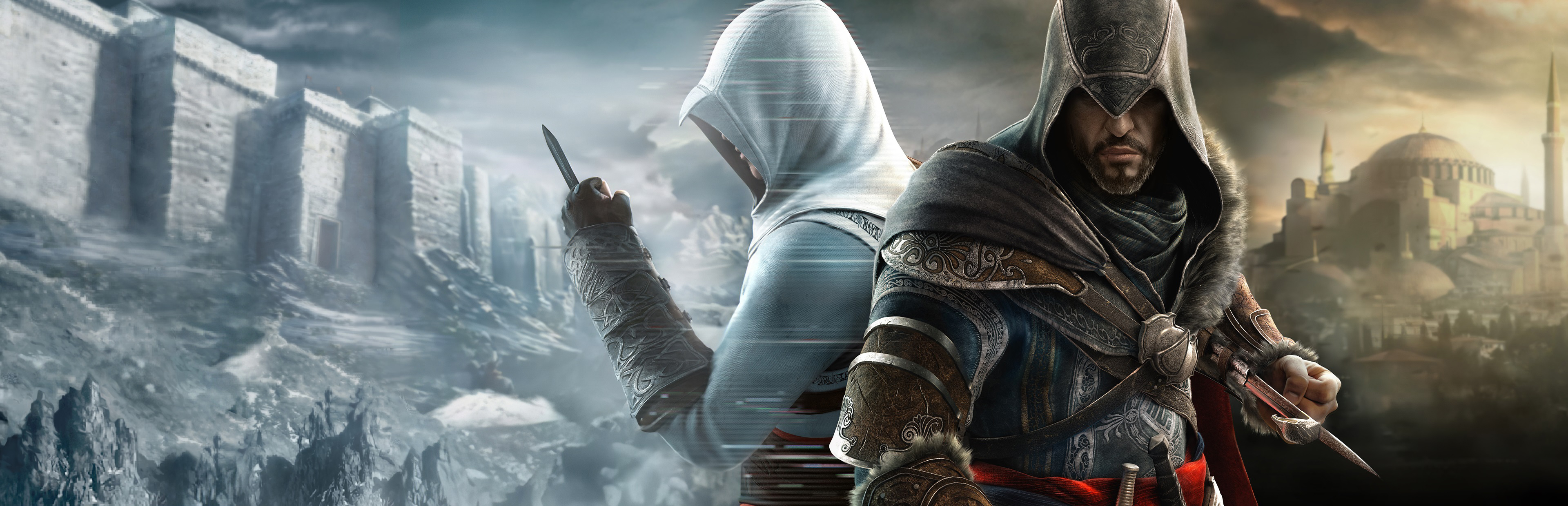
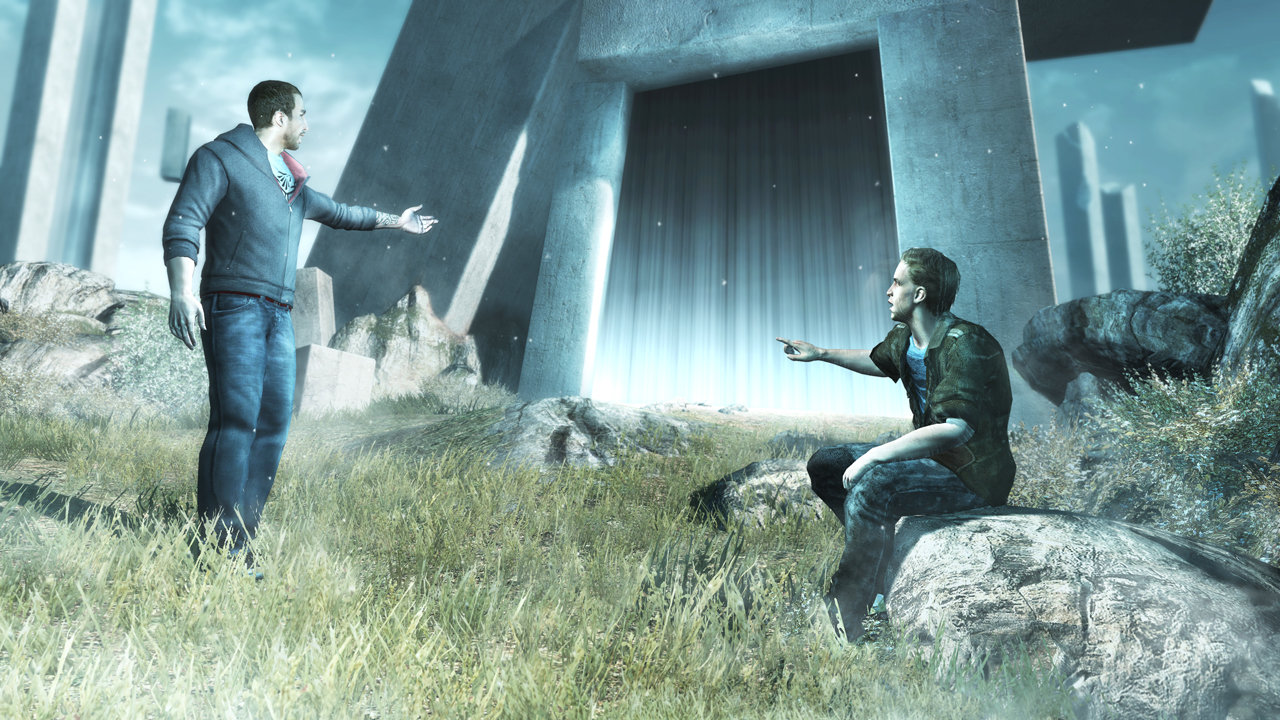
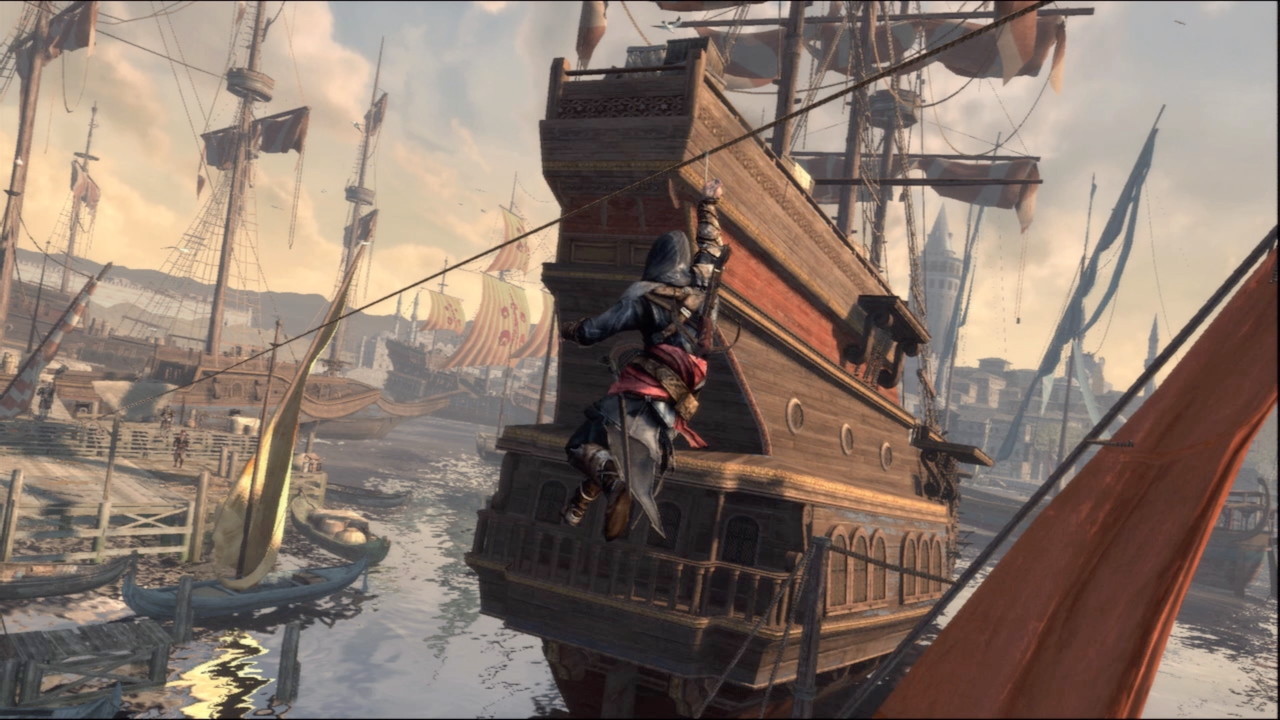
Ezio Auditore da Firenze. When most gamers hear this name, they think of one of the best video game characters ever made. Ezio went down in game history the way he did for a reason. Assassin’s Creed revolutionized the action/adventure genre with assassination skills, a whole new take on stealth gameplay, and awesome parkour gameplay. Revelations are the conclusion to Altair and Ezio’s story, but just another chapter for Desmond Miles. Desmond is stuck in the blackness of the Animus and is in a kind of coma. His brain can’t tell his personality apart from Ezio and Altair’s, so Subject 16 (yes, you finally meet him) helps you a little bit here. There isn’t much of Desmond here because this is the two assassins’s story; in fact, there are only three cut-aways for Desmond through the whole game.
Ezio’s story starts with him trying to find the five keys that Altair hid, but the Templars are also after them. Altair has some secretly hidden library under Masyaf, so it’s a race. This is the shortest AC game to date, but that doesn’t mean it’s worse. There is a new layer added to Ezio’s personality because he’s 50 through 62 in this game. Playing as an old man is pretty awesome, though. Ezio is now wiser, smarter, and a master assassin. You even play as Altair through his old age up to 92, and he still kicks ass! This should be more like Geriatrics’s Creed. Let’s go ahead and start with side missions. The same ones from Brotherhood are kept, but others from past games are cut. Templar Dens replace Borgia Towers; you can recruit assassins, buy stores, buy monuments, find viewpoints, and that’s about it. Side missions took a back seat here to some epic main story missions. Overall, the game can be beaten in less than 15 hours, even if you try to do the side missions that are here.
Collectibles this time around involve only Animus Fragments, which are used to unlock crappy Desmond side stories, which will be explained later. Two new combat abilities are brought to the table here: bomb-making and the hook blade. This adds a layer of depth to combat and climbing. Remember when you would jump off a building from too high and just couldn’t reach the one in front of you? Now you can, with a quick press of the action button, catch yourself. It can be used in combat as well as running away from guards. Remember when guards would block your path and you had no choice but to get knocked over? Now you can hook them and roll right over their backs. This also adds another item to climbing, which is zip lines. Zip along and assassinate enemies at high speed, which is a blast.
Bombs have three different levels: diversions, weapons, and defense. Boxes are scattered everywhere that contain parts of bombs that contain the container, gunpowder type, and item inside. You can use a lamb’s blood bomb to make enemies think they’re wounded and become stunned. A splinter bomb stuns enemies or uses a cherry bomb to drive guards away from areas. These really come in handy when you don’t want to get into a huge fight. The problem here is that it’s wasted on the short length of the story. I didn’t even get to use all the bomb types because there weren’t enough missions in the game that called for them.
There is also a strange strategy-type section at the beginning that is never used anywhere in the game, and I thought it was fun. You can use points to call down different types of assassins on roofs or use defenses on the ground. You can use your gun when the wave of guards comes. This was kind of like a tower defense thing and was really strange just to have it on one mission.
All the other items are here, like parachutes, poison darts, and all that stuff from past games. However, combat is finally perfect with combo chains after you kill an enemy. Keep the chain up, and you can kill each one near you with just one hit. The combat really flows this time, and the new kill moves are just gruesome. You can do everything else in past games, so nothing here has really changed. You do use your Eagle Sense more because you need to use it to find these clues to the keys. This leads to awesome and varied main missions that involve epic chases, picking your way around guards, and even giant climbing puzzles. I found these to be the most entertaining, but the gameplay really ends there. It is short and sweet, as well as entertaining.
The area is completely new because it is set in Constantinople and Istanbul. There is one sequence dedicated to a whole underground Templar city, but I felt all this was wasted on such a short little sequence. The area in Revelations is tiny compared to past games, but this is understandable for how short the game is. The new art style and the setting are a great welcome because Rome and Italy were getting tiring to see. The graphics are still superb, even with the slight updates to the engine. The voice acting is superb, and so is the storytelling.
Desmond’s Journey is a strange telling of Desmond’s past through a first-person platforming puzzle thing. I have no idea what this is, but it should go away. There are five short little areas that involve platforming and pushing buttons. Then you get to place floating blocks in front of you to make paths. Yeah, what the hell? It’s nice to know Desmond’s story, but collecting 100 fragments for this isn’t even worth it.
Multiplayer has been amped up and is just as fun. There are more modes, but instead of being really original, they are hidden under the AC theme. These are the models you see in first-person shooters that are disguised here. Capturing the flag is just taking a key from the enemy base and returning it to yours. There is a deathmatch mode and a few others, but more modes are good and they are fun. There are more maps, characters, and abilities that will keep you coming back for hours.
Overall, Revelations is just as amazing as past games in the series, but just on a smaller and shorter scale. It perfects the series to a T, and I don’t think anything else can be done with these two heroes. If you made it this far in the series, go ahead and finish it. Long-asked questions are answered, but there are also some new ones now. The game has a touching ending, and we even finally get to see what happened after the first AC. Revelations is an excellent game, with just enough new stuff to keep fans happy.
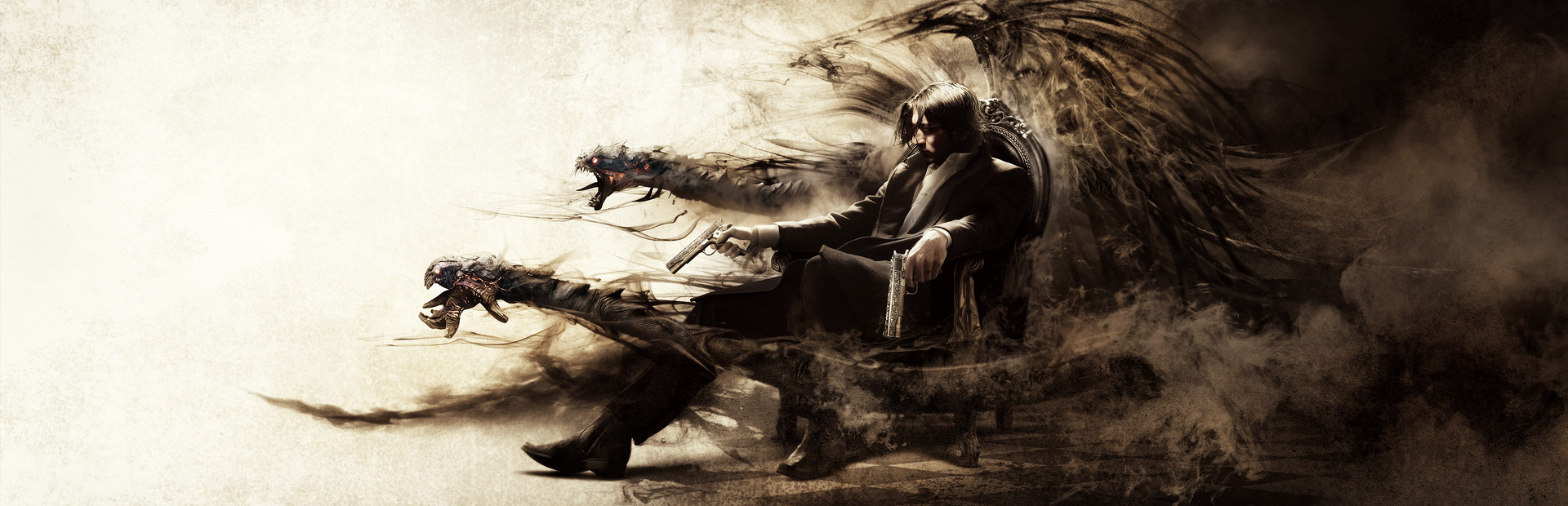
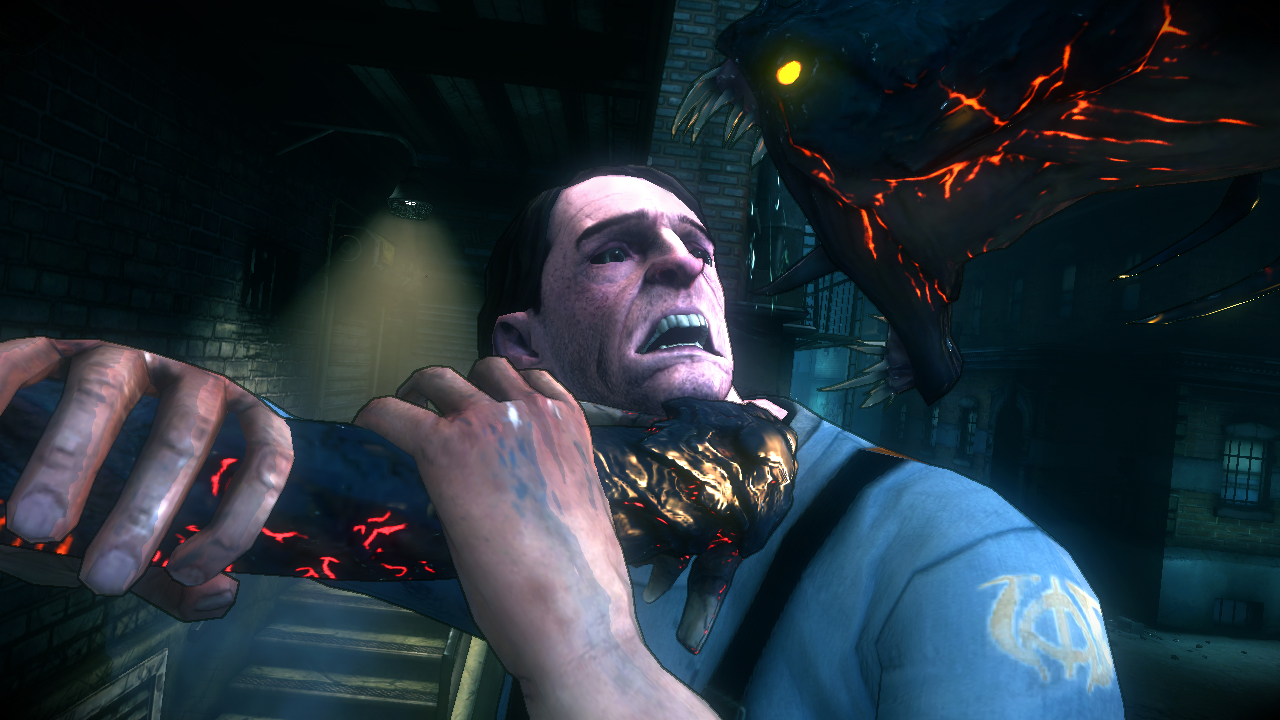
I have to come right out and say that The Darkness II is disappointing and takes away more good from the first than adds to it. The first game is one of my favorite games of all time because of the amazing atmosphere and linear open world that was delivered with trickling story elements that kept you wanting more. This allowed constant banter between Jackie and The Darkness, but it was that dark, eerie atmosphere that kept me wanting more. The side quests were nice, and there were some varied environments. The Darkness II takes all that away and makes this a more linear, in-your-face type of game. Sure, the storytelling is superb, and so is the voice acting, but that linear, open world allowed you to explore things on your own.
The Darkness II is about The Darkness finally waking itself back up inside Jackie, and he is on the hunt to find Jenny even though she’s dead. A cult group called The Brotherhood wants The Darkness and takes constant hits on Jackie’s mafia family. The story is great and even more deep than the first game, but once again, that awesome atmosphere is exchanged for some ho-hum backdrops you fight in, ranging from a warehouse to a graveyard to a carnival. What has changed here, mainly, is how you use The Darkness powers because it is the best part of the game.
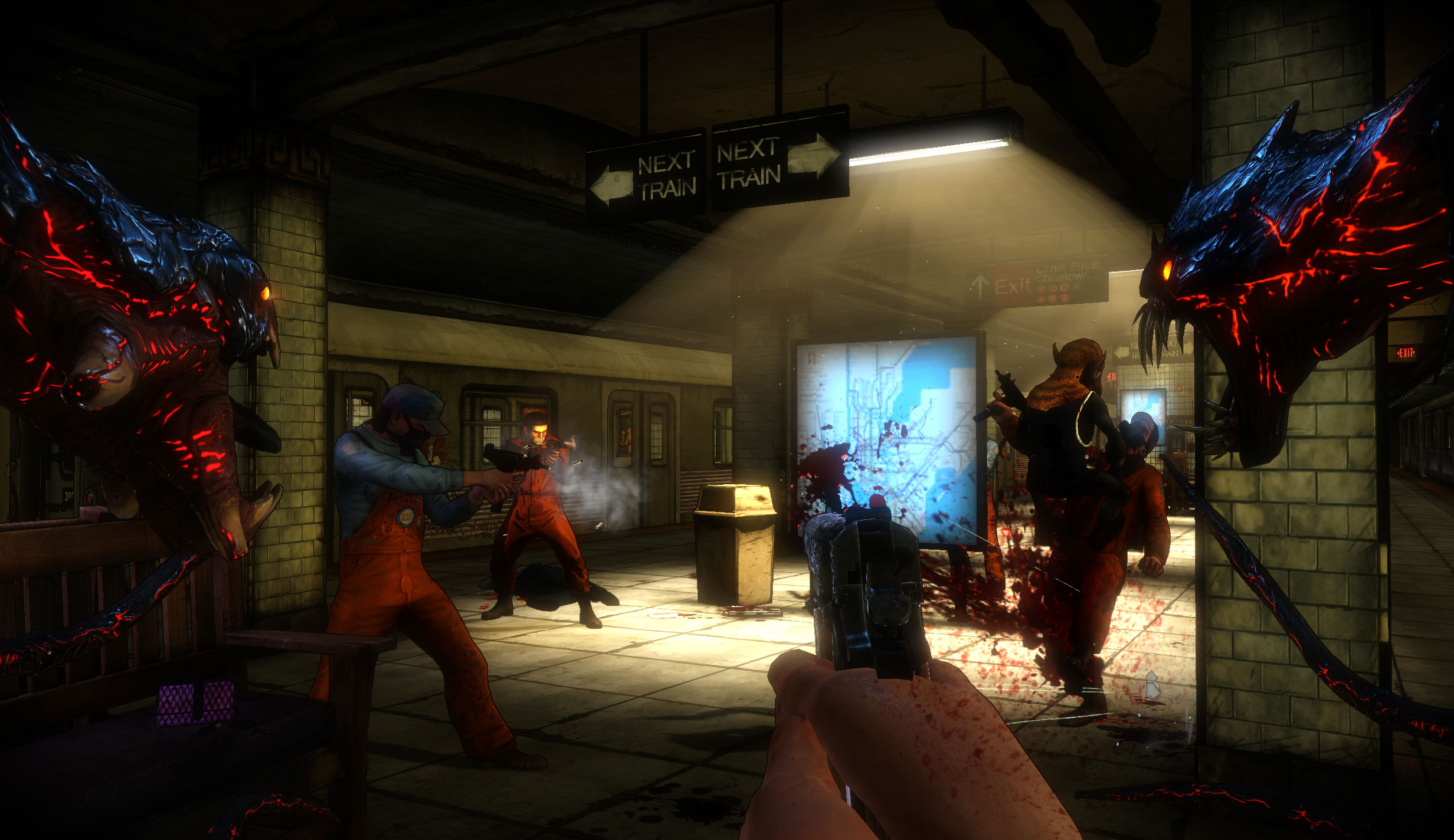
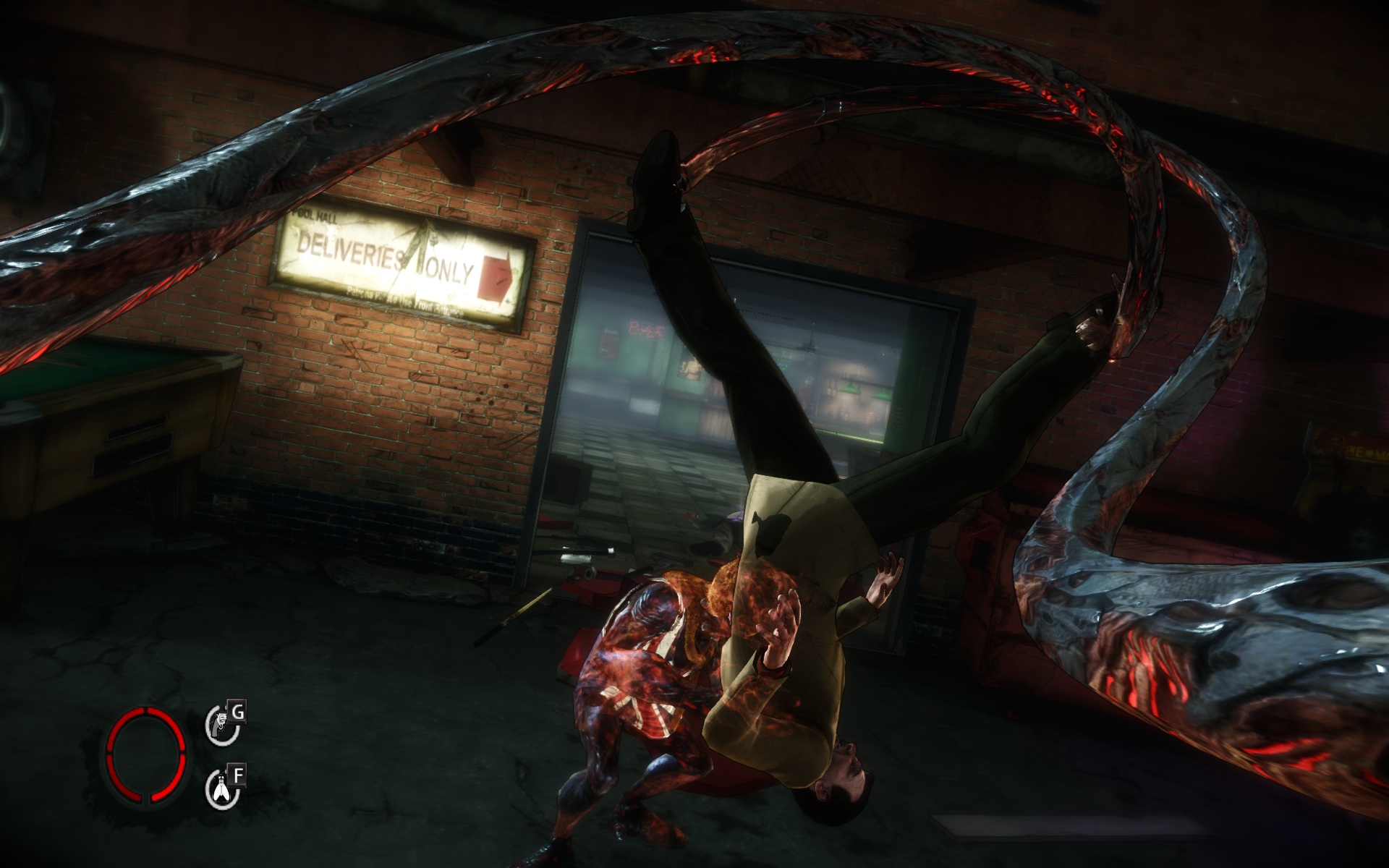
You can upgrade your powers even more now by earning points by killing foes and finding relics. You can also use the environment around you to kill enemies, like using fan blades, poles, chairs, barrels, you name it. The awesome gory death animations make for a visual treat, but you can also tear enemies apart with new Darkness animations and abilities. Eating hearts isn’t the peak of your powers here anymore because you can now upgrade with Darkness armor, shields, ammo producing death kills, and even using your Darkling to sicken enemies.
Yes, that Darkling strategy thing that felt like Overlord is gone now. The one Darkling that follows you throughout helps you on his own, but his charming self is still there. He will still fart, pee, and curse his foes down, so don’t be disappointed there. I actually preferred this because it jives with the faster-paced action. Gunplay is still a huge part of the game, and so is dual-wielding. You can channel darkness through the guns for one-shot kills, but the guns handle very nicely and are a lot of fun to use. Some other powers range from faster reloading, bigger clips when in darkness, using Swarm to stun enemies, and various other upgrades.
The whole point is to stay in the dark, and this time you are given more than just light bulbs. The Brotherhood uses light weapons against you and will have traps and random light obstacles set up, so you must take them down quickly. Staying in the dark allows you to swipe your demon arms, but you are also thrown more than just humans now. Enemies will be infused with dark armor that you must punch through before killing them, and some of these guys are tough. Some can teleport around, so there is a new level of challenge here, but the big problem is that sheer numbers are thrown at you, which can be overwhelming later on.
All this doesn’t sound too bad, right? Ripping a car door off and watching it fly through the air and cut someone in half. Watching your demon arms rip a body in half or pull ahead after stunning them doesn’t seem worse. The fact is, the game is really repetitive in the sense that this is all you do. Just running around killing everything in your path with really no strategy. There’s no cover system, no Darklings to use, and nothing but your demon arms and guns. The story elements are delivered wonderfully, but you can’t help but know that it’s just more killing waiting on the other end of the cutscene. The boss fights break things up, but all you do is avoid attacks and blast them to death, and to be honest, late in the game, you use your guns more than demon arms because there are just too many enemies to kill at once.
On top of all this, the art style was changed to represent the comics more, which is nice, but the game isn’t technically impressive. It looks a couple of years old and doesn’t even come with enhanced visuals on the PC. There is an extra Vendetta mode that can be played online with up to four players, introduces four characters with separate Darkness abilities, and is actually quite fun. Once you finish these, however, you won’t be coming back.
Overall, The Darkness II detracts so much from the first game that it is almost not even the same. The slower-paced trickling action is replaced with repetitive in-your-face corridor shooting that is better or worse depending on the player. This should be played by fans of the first game just to see the story playthrough, but don’t expect the masterfully created atmosphere and open-world feeling of the first game.
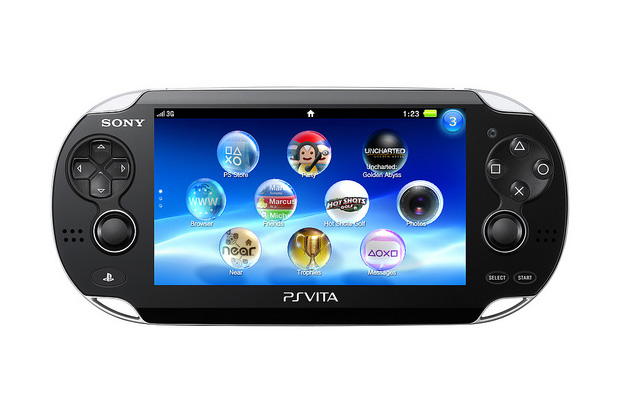
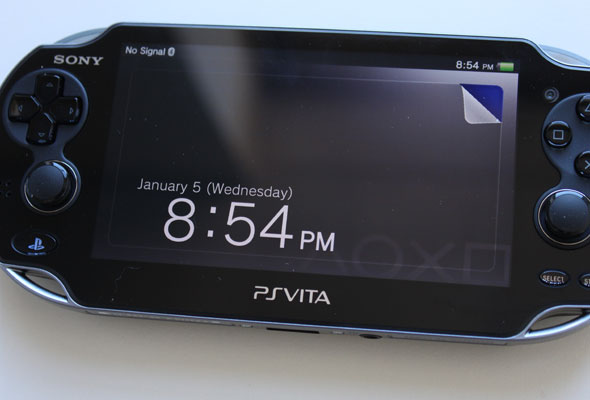
It’s hard to believe that it has been 8 long years since the PSP came out, but it’s true. Those long years gave us some of the best portable games ever made and were the first true attempt at a portable console experience. Unfortunately, the system was doomed from the start with proprietary disc media, no second analog nub, and a slew of other things, but the system was a powerhouse at the time and had a lot of potential. The Vita is Sony’s second phone, and it fixed all the issues of the PSP plus some, and one of those is noticeable as soon as you pull the shiny new device out of the box.
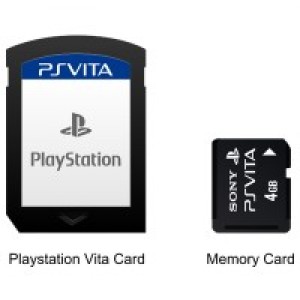
A second analog stick. An honest-to-God stick and not a nub or pad. These things feel like they moved straight from the DualShock controller and just shrank a little. They feel great, even in-game, and I couldn’t believe that the second stick was there; it was like a wish coming true from God himself! This opens up the Vita to a whole slew of games that couldn’t be done on the PSP just because of this one little piece of hardware. While playing Uncharted: Golden Abyss, I actually forgot the second stick was there a few times because I’m so used to the single nub on the PSP. It may take some PSP vets some getting used to before truly adapting to it. The next big thing that Sony fixed was no disc media! Thank you very much! Those UMDs were irritating and sucked up precious battery life, as well as limiting the memory size. Now we get nice little carts, like the DS, or you can download the game digitally via the PlayStation Store.
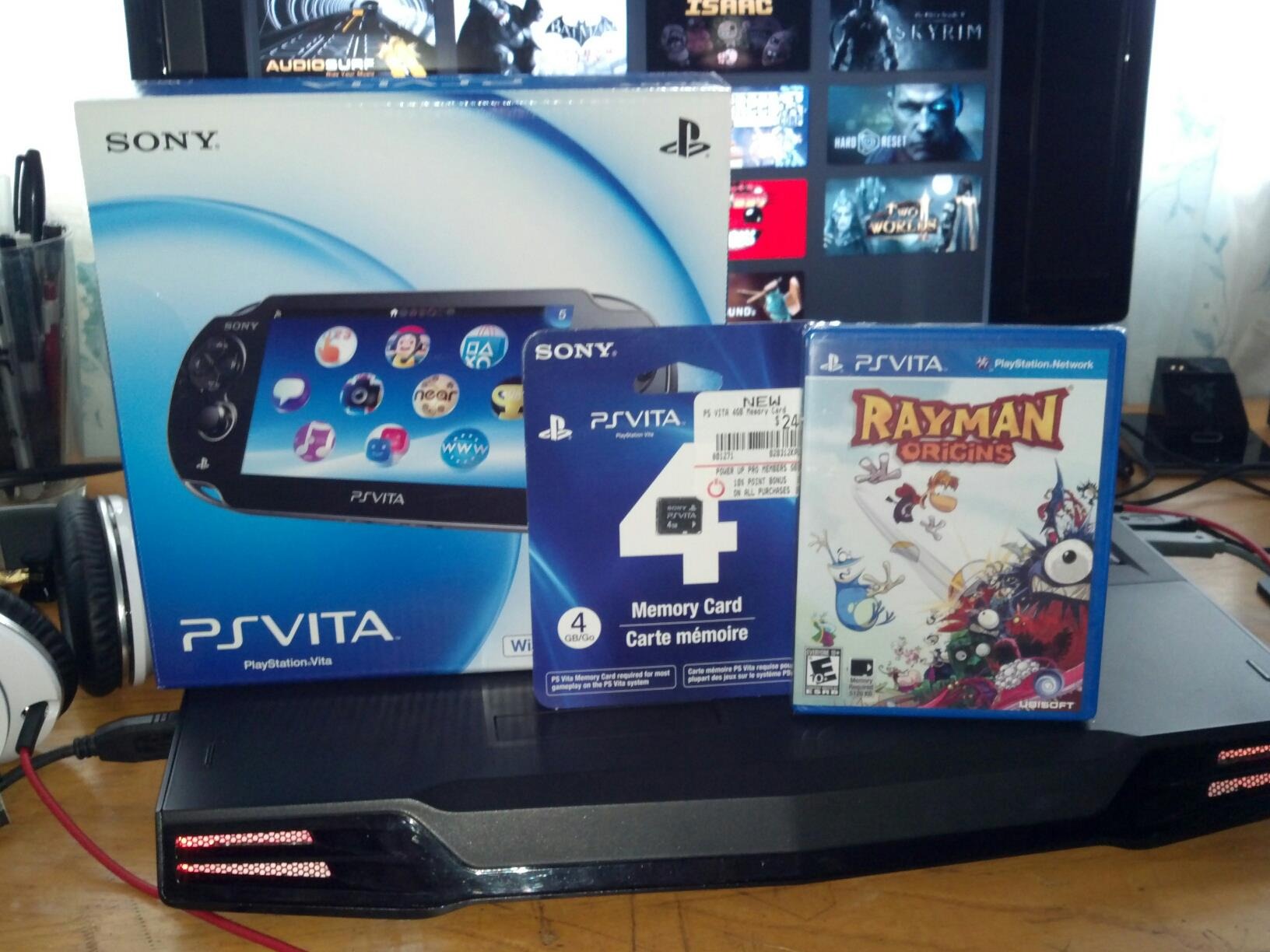
Sony made one fatal flaw with the Vita, and that is the proprietary memory cards. What in God’s name was Sony thinking? Everyone thought the memory stick pro-duos were bad for the PSP, but at least those were regular memory sticks. These tiny little things only work on the Vita and cost a fortune. A 32GB will cost you $100, which is a complete rip-off, but guess what? You don’t have a choice! Thanks a lot, jerks!
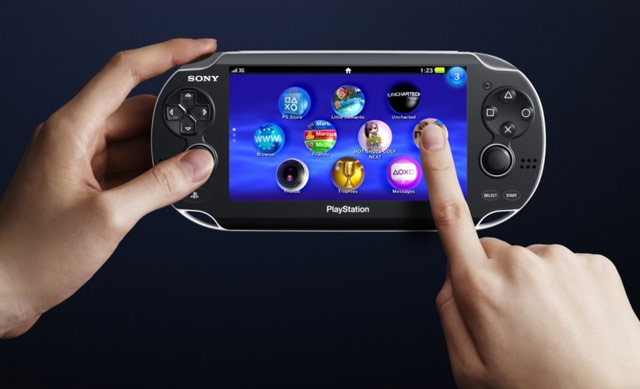
The next big thing Sony did was add a touchscreen. Copied the DS, you say? Not exactly; it’s more like it copied smartphones, but flip this guy over and you have a touchpad on the back, which is Sony’s little way of saying, “Hey, we’re trying to be original too.” It’s an odd thing to have, and not many games use it yet, but it adds a whole new dimension to touchscreen gaming, and it’s just as responsive as the touchscreen, so it doesn’t feel like a dead limb. However, it’s up to game developers to use this odd mechanic, but only time will tell.
The screen is one of the best things about the device because it’s an OLED (Organic Light Emitting Display), so you’re looking at some of the best display technology out there. Now you don’t have to worry about dead pixels! Yeah, remember that launch fiasco, Sony? The screen is 5″, which is the biggest portable gaming screen ever made and even tops the PSP’s 4.3″ screen. This allows for lots of detail in your face and tons of room for touching things on the screen.
Once you get over how gorgeous the screen is (I can’t stop staring at it!), you will start hitting those buttons on the device. Sure, they don’t do anything unless you are in-game (the Live Area is all touchscreen-based, but more on that later), but the button layout here could have been a disaster. Sony had to be really careful because of those new sticks, so the D-pad and face buttons shrank about half their size and got moved up. Blasphemy! Actually no. Despite the higher placement and smaller size, I still hit them accurately, like the PSP, even with my really big thumbs. The D-pad is way better than the PSPs and works well with fighting games (yes, relax! ), so no worries there. But there is one problem with these buttons. The start and select buttons are way too small and are level with the system instead of sticking out. What! Did Sony fall asleep at the drawing board here? They are also placed all the way at the bottom of the right side, so you have to move your hand down. C’mon, what happened there? Other than that, the L and R buttons are nice and huge, and you get a nice big PlayStation Home button the size of Venus on the left side, but hey, it glows!
Anyway, the buttons are just fine, so how about everything else visually? Sony made the little “compartments” more subtle this time around, so the memory slot is hidden at the bottom as well as the game card slot on top, so the whole system just looks like a big oval. Don’t be worried about the size of the thing, either. Sure, it’s big and not exactly pocket-sized, but for what is under the hood, this thing is compact and pretty light.
Now that the visual stuff is out of the way, let’s talk about it under the hood. This thing is the most powerful handheld on the market, only being rivaled by devices powered by the Tegra 3 processor. The thing has a quad-core Arm-9 Cortex CPU, which is freaking powerful. This allows for PS3-quality visuals that no other portable device on the market has. It also has a quad-core GPU, which is over four times as powerful as the iPhone 4S’s GPU. The system also packs 512 MB of system memory and 128 MB of VRAM (video memory), which is astounding (the Xbox 360 has 512 MB of memory for comparison). We also get two cameras that are front and back-facing, which can track head movement, a six-axis gyroscope, Bluetooth, a microphone, and a 3G wireless card. Holy crap, that’s a lot of stuff. This is one powerful device, but we have yet to see what it is fully capable of.
Now let’s get down to the software and how the thing plays. Every PlayStation fan by now is used to the XMB (Cross Media Bar), thanks to the PSP and PS3. Get ready for change because the new live area is made of bubbles. You like bubbles, right? This is to make use of the touchscreen, which takes a while to get used to. You can rearrange these bubbles to your liking, kind of like on a smartphone, and even change the background for each “page.” The Vita can multitask, which is something the PS3 can’t even do. You can play a game, hit the home button, go online and look up an FAQ, then flip back to your game without having to quit. Why can’t you do that on the PS3? Someone at Sony was dropped on their head as a baby one too many times, but it’s nice to have it here.
Once you start playing with the Welcome Park, which gets you used to Vita’s new features, play around with Near, which is like the 3DS’s StreetPass, but worse and more confusing, and you will really start liking this guy. The browser works like the PS3 but has fewer features for some reason, but we get trophies! Oh my God, trophies! These are also great for games that are cross-platform, so you can start working on a trophy on Marvel vs. Capcom 3, then pick it right up on the Vita and finish unlocking that trophy.
The Vita uses a remote to play a lot better than the PSP, mainly because it’s more powerful and can do what the PS3 can do. Right now, the remote play is still pretty weak, but the potential is there. Right now, only 3 games support cross-play (MvC3, MLB 2K12, and Hustle Kings), but I’m excited about what this can bring. Overall, the Vita has a lot of software potential but is lacking a lot and feels kind of thin. Sony’s attempt at augmented reality comes to life with the Vita with AR cards (yes, they ripped off the 3DS), and it works really well thanks to the system’s more powerful hardware and gyroscope.
Overall, is the system worth $250? Yes, it is if you are a hardcore portable fan or console fan. This is the first real console experience in portable form, and Sony nailed it perfectly. The other big issue I forgot to mention is battery life. You get about 3–4 hours on a powerful game, 9 hours for music, and 4-5 hours for video, so don’t expect huge play sessions like on the DS. The battery lasts forever in sleep mode, though! Sure, what good does that do you? For what this system does, the battery life is actually pretty long because you’re running a mini-supercomputer off of it. Cut it some slack! The games for the system right now are OK, but not as awesome as the PSP launch (considered the best launch ever), but the games are reviewed separately. I would pick one up if you love portable consoles, because this thing has so much potential. It just has a few major flaws and is quite lacking software-wise, but Sony will probably pick up the pace over the next year.
Over the next 5 years, I see the Vita as the model for portable games. We’ll start seeing games push the system graphically, like God of War did for the PSP. I think we’ll see games that give us more than just touchscreen smartphone games, thanks to the rear touchpad. In 5 years, I expect the library to grow beyond ports, and we’ll probably see the Vita’s first killer app by the end of this year that redefines portable gaming, kind of like Syphon Filter and God of War did for the PSP. Those games showed that even with major flaws, the system can be something incredible and helped people look past them all. Something like that will pop up for the Vita in the next year or two, and then we can start talking about moving forward in the portable market.
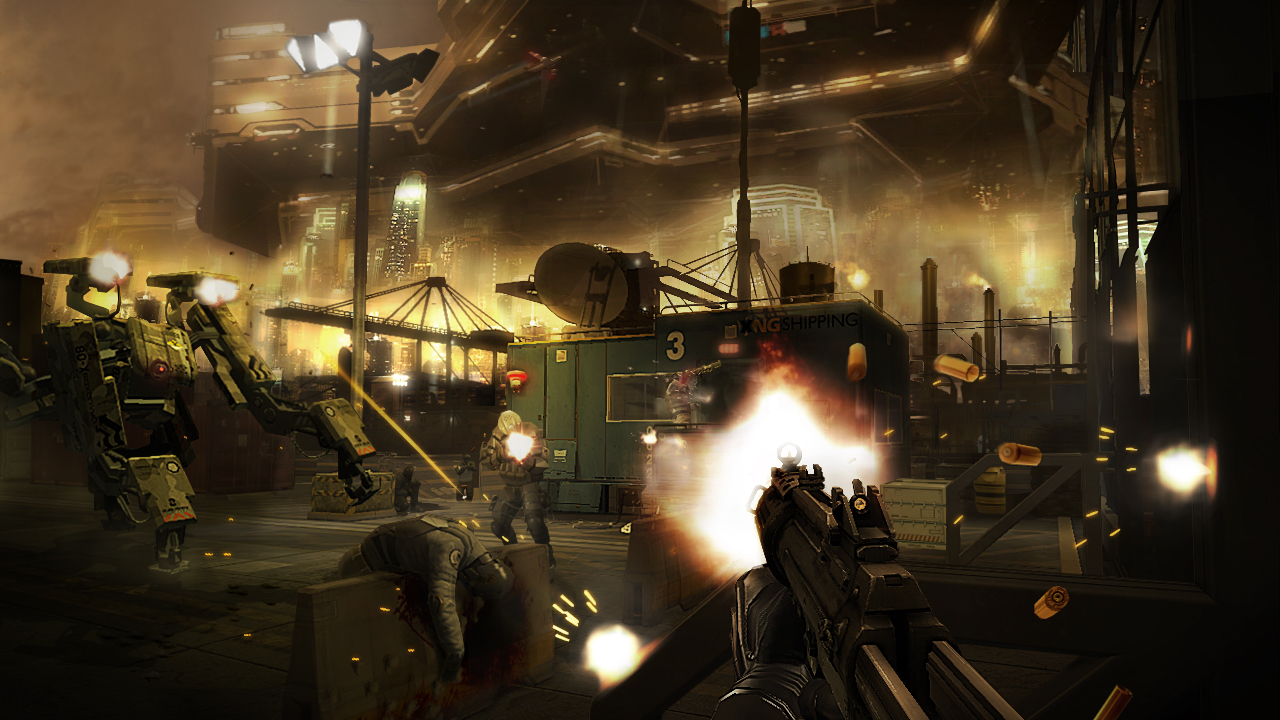
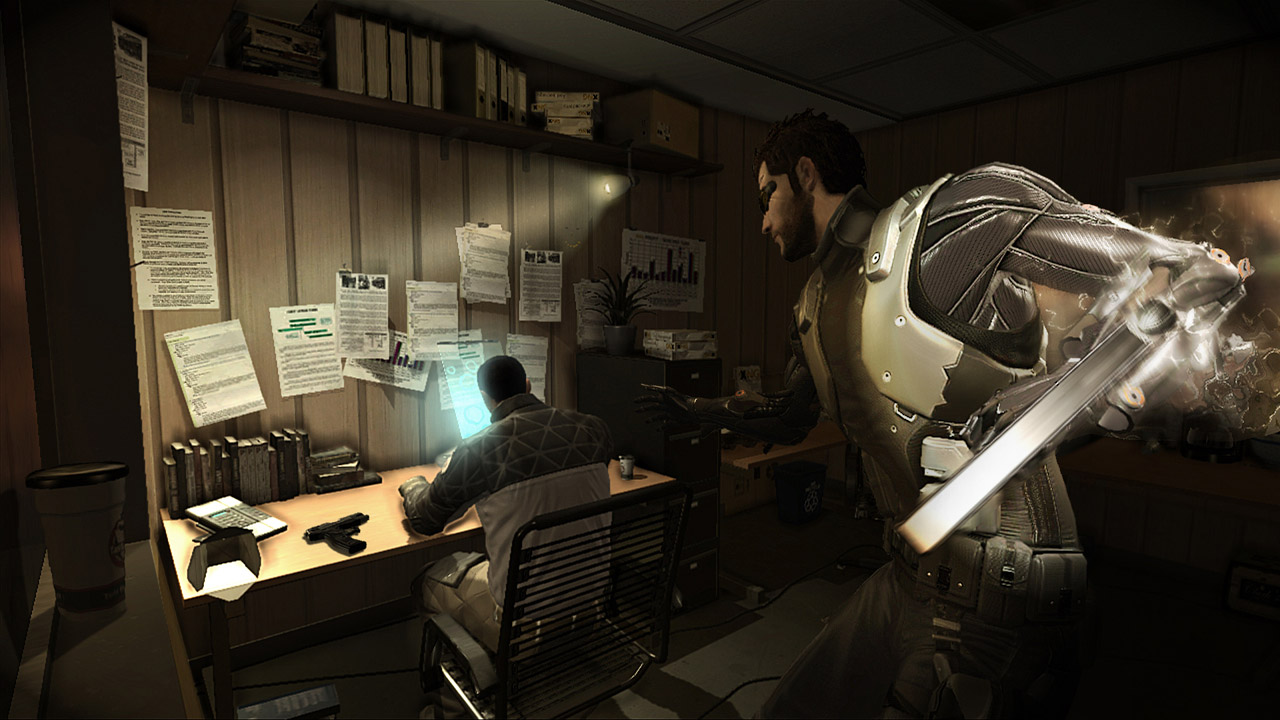
Being the third sequel to one of the top five PC games of all time can be tough. The guys at Eidos Montreal nailed the game and pulled off one of the most anticipated games of all time. One of the best parts of Human Revolution is the engaging atmosphere and story that go along with it. You play the ex-SWAT turned security chief at Sarif Industries, Adam Jensen. Sarif Industries is one of the leading corporations in human augmentation. Of course, there are always rivals, so the facility gets broken into one day and the top scientist gets stolen (among others) and is used for some secret project. The great thing about the story is that you’re led on constantly, so you think the plot goes one way and then quickly moves another way. When you start the game, you will have no idea that the people involved are the main cause towards the end. The story is masterfully created and very entertaining.
Of course, what makes Deus Ex so famous are the multiple ways you can approach getting to a goal. Use stealth and not knock out anyone; use tranq darts, stun guns, or just up-close melee. If you don’t like that, you can use silenced weapons and take everyone out, or just run through with a machine gun and blast everyone away. Of course, it’s not just how you kill people, but how you navigate the level. If you see a room full of eight bad guys, you can upgrade your augs to allow you to become invisible for a few seconds and dash across the room to the door you need. Don’t you have that aug? You can find a vent somewhere and crawl through most of the area, but wait, there’s a camera right where you need to be. Find the computer that controls cameras, hack into it, and disable it. Or you can just blast your way through.
There are tons of options for every part of the game, but the augs are what will get you through. You can access an elevator that can bypass three whole floors of bad guys, but it’s blocked by heavy crates. If you have the ability to move heavy objects, you are golden. If not, find another way around as best as you can. The whole point is to choose a play style and augment yourself accordingly, so if you want stealth, use stealth add-ons, the ability to see through walls, invisibility, and keep a tranq gun or silenced pistol. I love how there are so many options to choose from, and each section just flows and doesn’t require too much trial-and-error like most stealth action games.
You will come across conversations where you need to persuade someone to give you information, and this is done through clever dialog choices, but you can use augmentation to see what personality type the person is and how to persuade them. If you are having a hard time, you get a chance to release pheromones as a last-ditch effort to persuade, but you must know the personality type, so watch that meter carefully. These choices can be simple or huge, such as how to disable turrets during a boss fight or even to make whole missions easier. However, choices during the game don’t affect the endings, so some people may feel this was all for nothing.
While those are the main parts of gameplay, you can upgrade weapons, buy and sell at black markets, and even buy Praxis kits for upgrading at limb clinics. Be warned, though, because the game is very hard if you choose to gun everyone down. You will lose your life quickly, and just a few shots will kill you. There are even a few boss fights, but I found these extremely difficult and required a lot of saving during the fight. The game also has a decent length of about 15–20 hours, so you will be busy for a while.
I do have to mention that when the game came out, there were horrible glitches, and it performed terribly. I actually had to restart the game 1/4 through because of a glitch that prevented me from moving on to the next level. This is unacceptable, but by now, 99% of the glitches have been fixed, and the game now performs smoothly. The overall atmosphere is a lot like Blade Runner, but I felt it was lacking with just people standing around in the linear levels. Sure, you can run around, but the game is made up of hallways rather than an open world. The graphics look decent in DirectX 11, but they look abysmal in DirectX 9, so don’t expect this game to look amazing. Characters have low-resolution textures as well as low-poly models, and the overall effects aren’t very impressive.
Overall, Human Revolution is one of the best stealth-action games to come out in a while, but most importantly, it re-creates the amazing choice-based gameplay that the first game did so many years ago. If you can look past the dated visuals, linear level design, and difficult boss fights, you will be pleased with lots of great game design as well as engrossing characters and an engaging story.
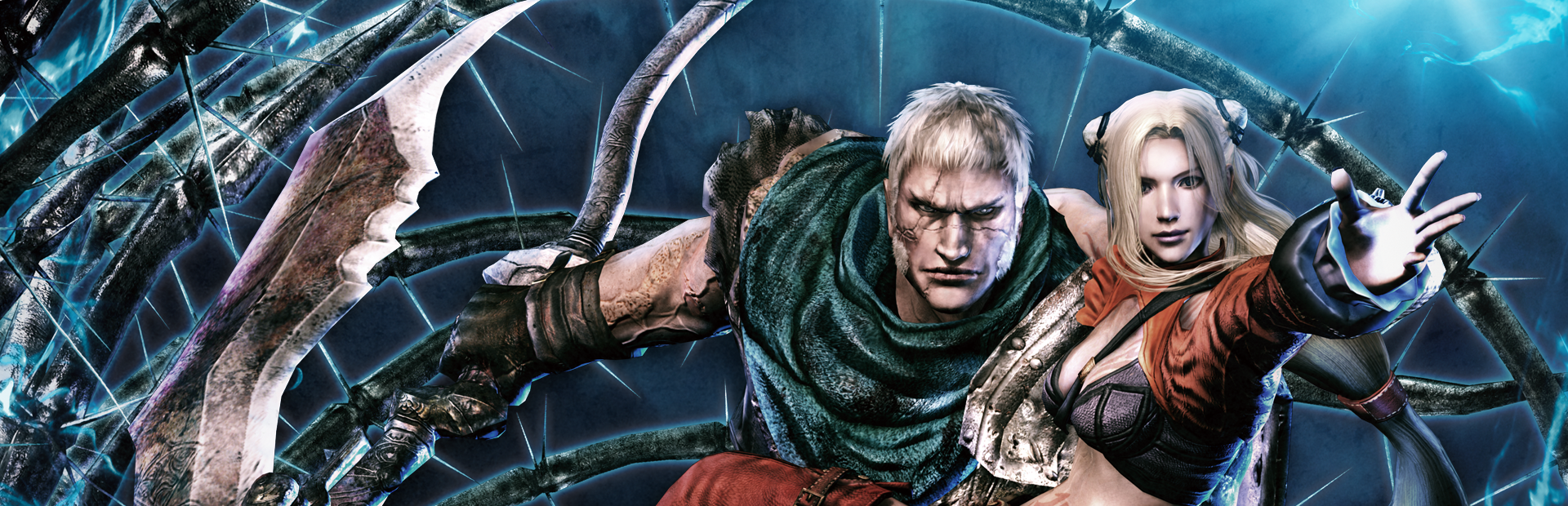
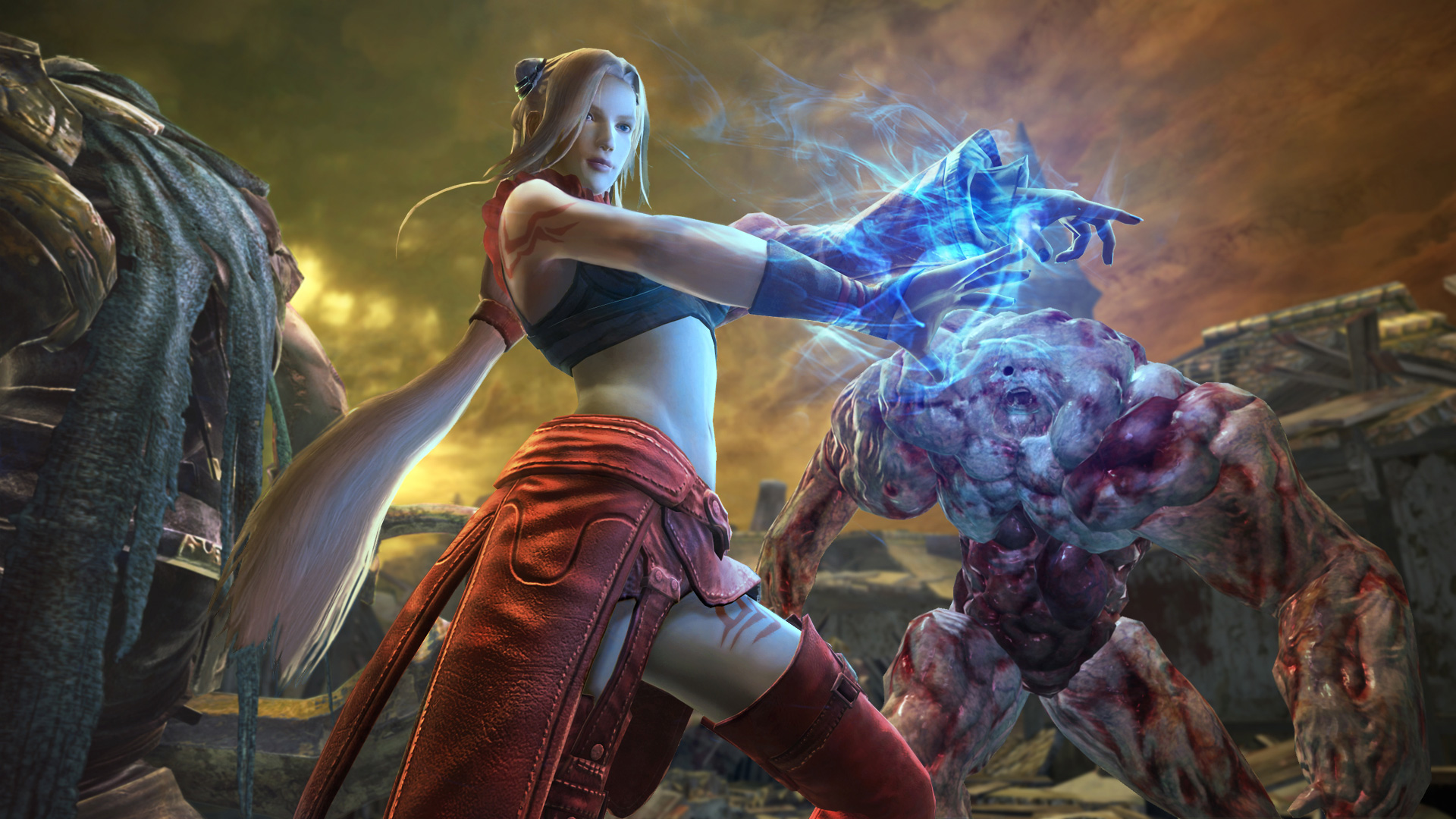
This is one of those reviews where there are more bad things than good things to say about a game, so I will start with the good. The story is interesting with you playing as both Gretchen (a witch) and Heinrich (an executioner) are stuck together under the worst circumstances. Heinrich executed Gretchen and several other witches for allegedly spreading the plague, even though they didn’t. An evil man named Faust wants the Anima Del Monde for himself to become immortal. Gretchen curses Heinrich as he cuts her head off, saying that he will be immortal. After suffering for a hundred years, Gretchen needs to stop Faust, and the witch’s hellbent on destroying humanity as payback. She seals Heinrich in a knight’s contract that he cannot leave her side or they both die, thus one of the game mechanics.
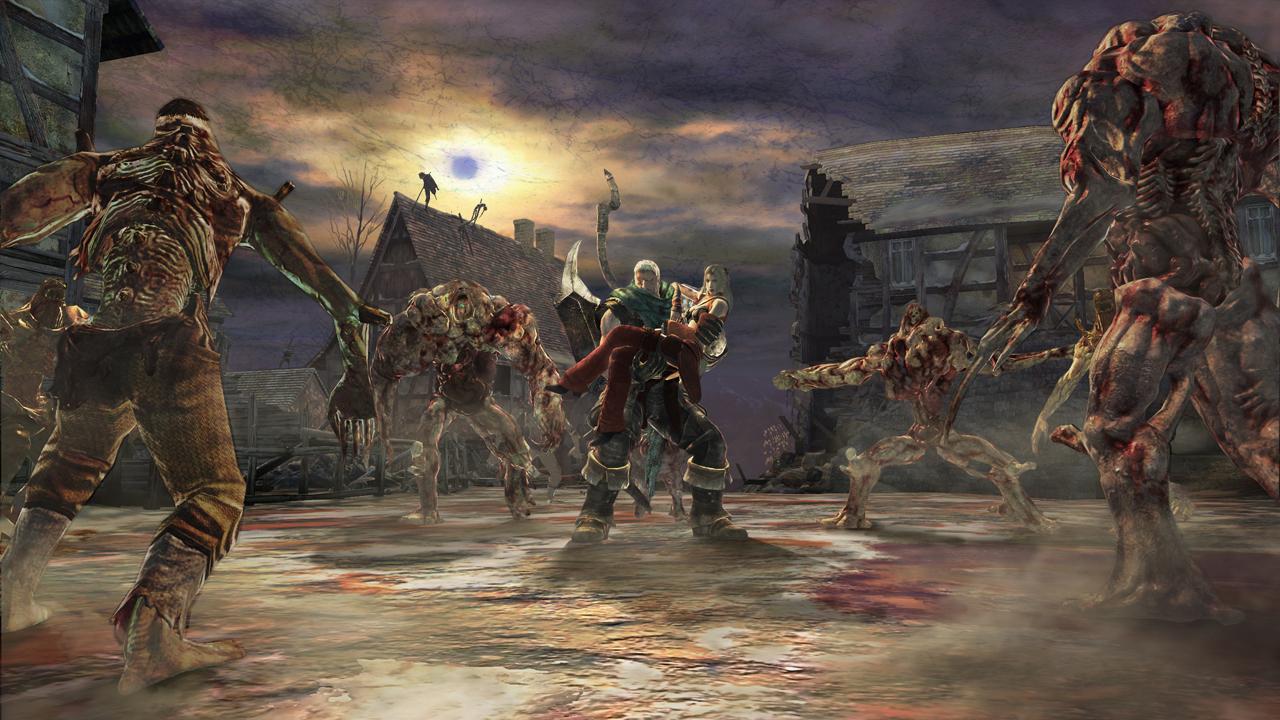
That’s about where it stops being good. Well, using Gretchen’s witch powers during combat is fun, but everything else is a total mess. To start with the combat, let’s talk about this pile of a mess. You can use Heinrich to do basic light and heavy attacks while holding down RT, and the face buttons let you control Gretchen’s powers. This is simple enough, except in execution, it fails. Heinrich never seems powerful because it takes dozens of hits just to kill one enemy, so you constantly resort to only using Gretchen. Animations are stiff and sluggish, so you can’t break them to attack a different enemy. When you fall, each character bounces a bit before slowly getting up, and in the meantime, you’re getting killed. Sure, Heinrich can’t die because he’s immortal, but you have to constantly babysit Gretchen because she is your health bar. You can carry her to heal, but she also can’t keep up with you, so you carry her almost 80% of the time. You can use a special power that will wipe the screen of enemies (and thus the nudity part on the back of the box) or make Heinrich super powerful. The worst part about combat is when Heinrich actually gets stunned and you have to tap A about 50 times before he gets up, and in the meantime, Gretchen is getting killed. Unless you can hit the A button like you are convulsing in morbid pain, you will throw the controller every ten minutes. Did I forget to mention the poorly designed quick-time events that give you a fraction of a second to react?
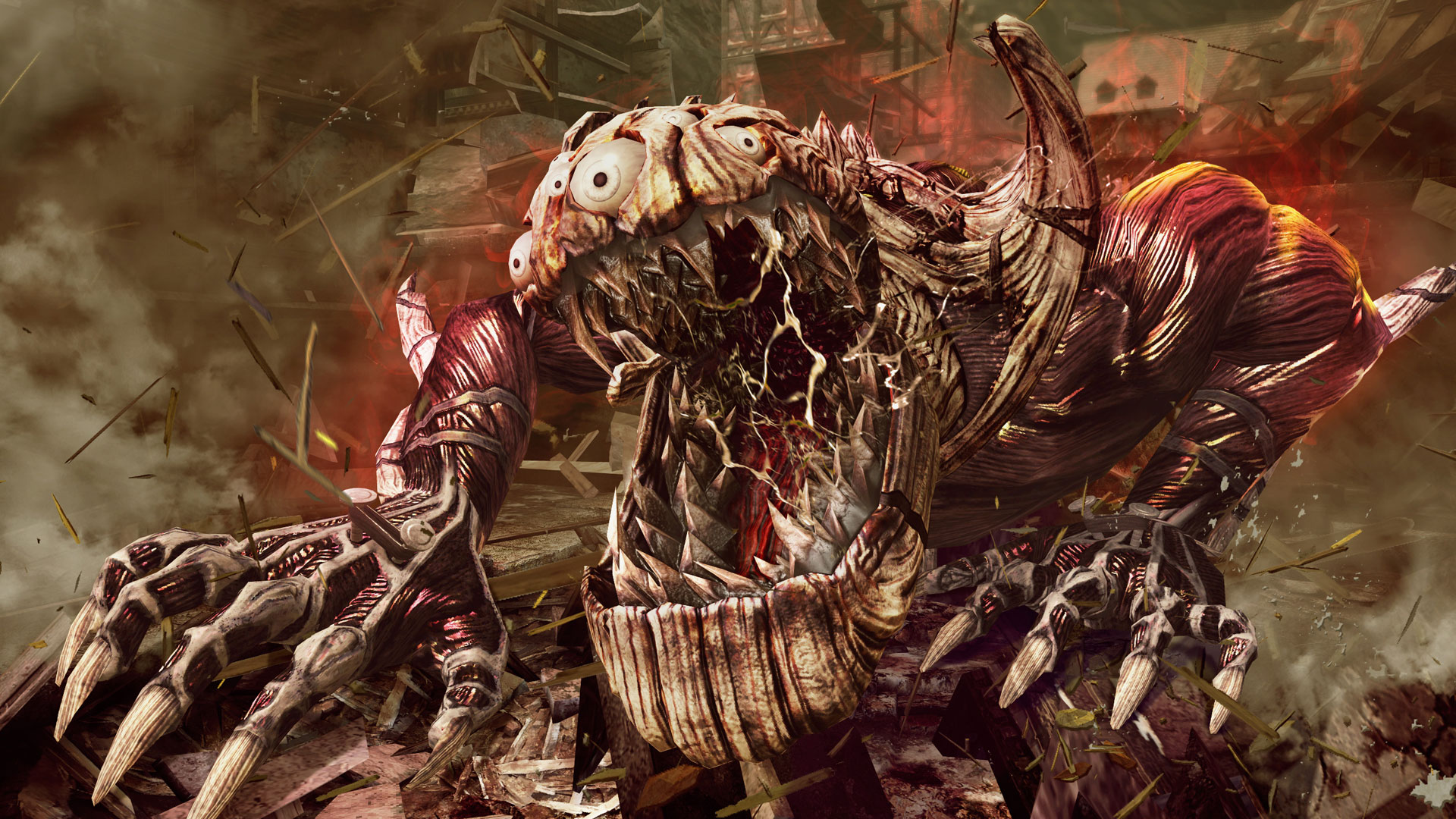
Heinrich has no aerial attacks, so you have to rely on the only two air attacks from Gretchen, but her powers have cool-down periods based on what level you’re using. Boss fights are interesting because they vary, but the mechanics are just absurd, with some knocking you outside invisible barriers or not leaving any window to attack after being stunned. They feel clunky and unpolished, but the terrible camera doesn’t help; it gets lost in corridors and has a mind of its own. If you think combat is difficult, wait until you hear about how bad navigating the terribly designed levels is.
The levels are bland, boring, and hard to navigate because there are no hints on where to go, the map is useless, and you wind up running around in circles trying to figure out where to go. Load times between each level don’t help, and they are pretty long. There are even loads sometimes when coming out of the pause menu, and that is just not acceptable in this day and age. The overall mechanics just feel dated and like something that you played in the early 2000s. The graphics are terrible and horrifically outdated, and the voice acting is cheesy and spotty at best. So the only thing going for it is the story and using Gretchen’s awesome powers.
With unfair mechanics aside, the overall experience is only for people who like a serious challenge or are just that desperate for an action adventure. There are a ton of things out there that are better, so you won’t be missing much if you skip out here. It’s sad that a game with such potential was poorly designed, and with an open ending, I’m scared to find out that we will get another plate of crap. I sure as hell won’t eat it, but will you?














































 thebinarymessiah.com
ORC is probably the worst game in the entire series. It's objectively awful. Being bad isn't different. Different is Outbreak…