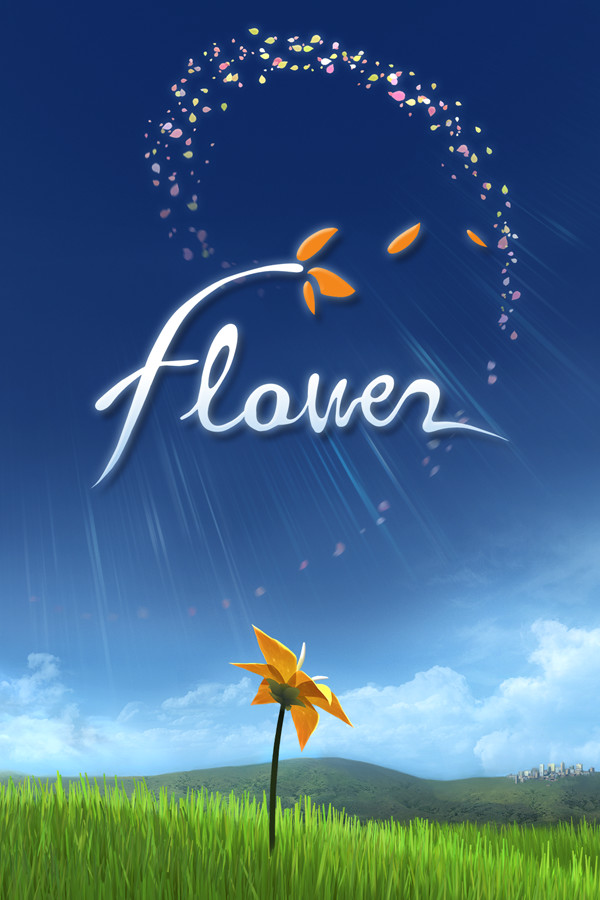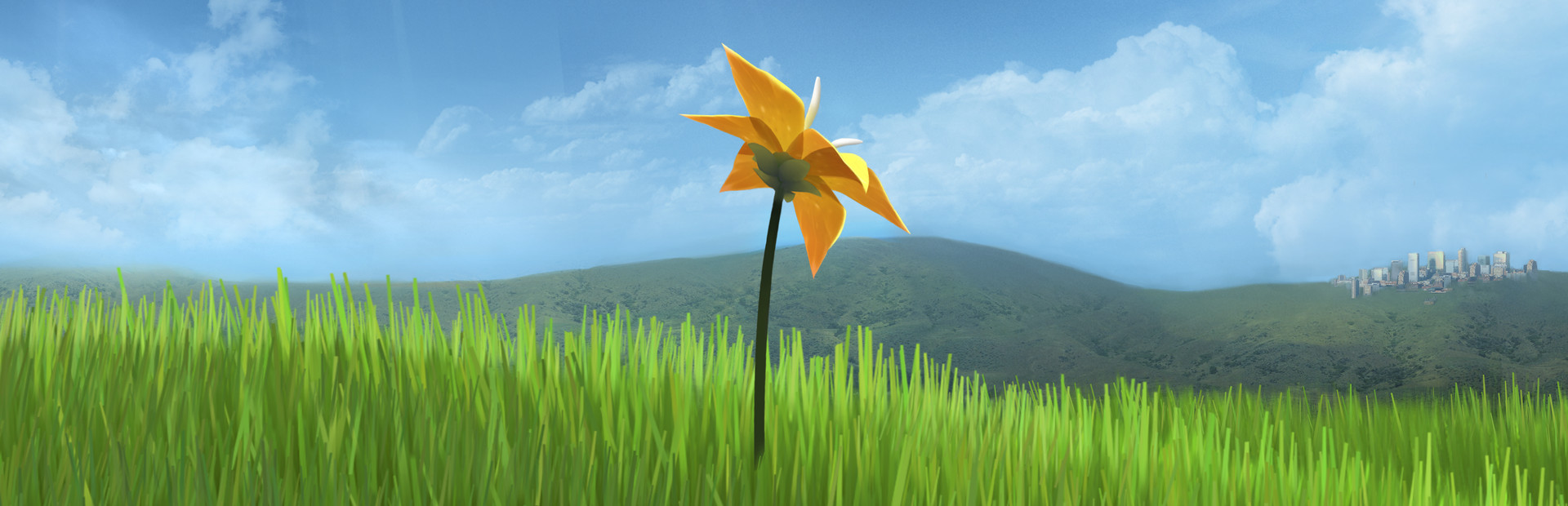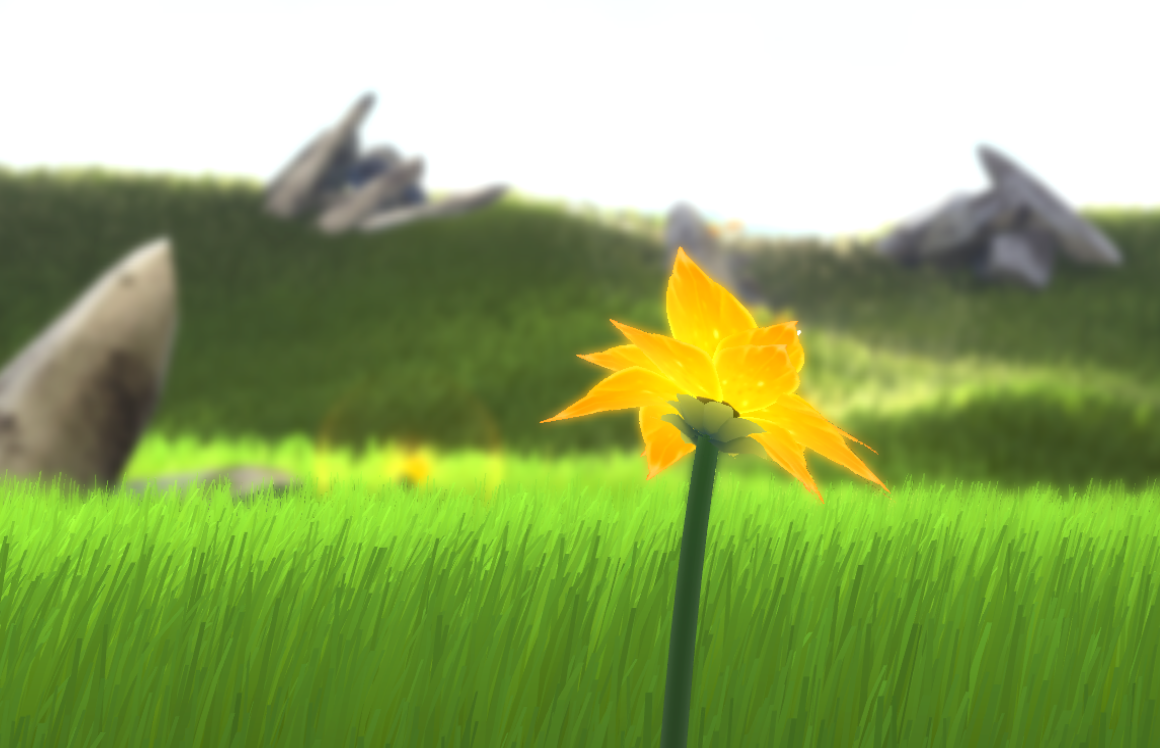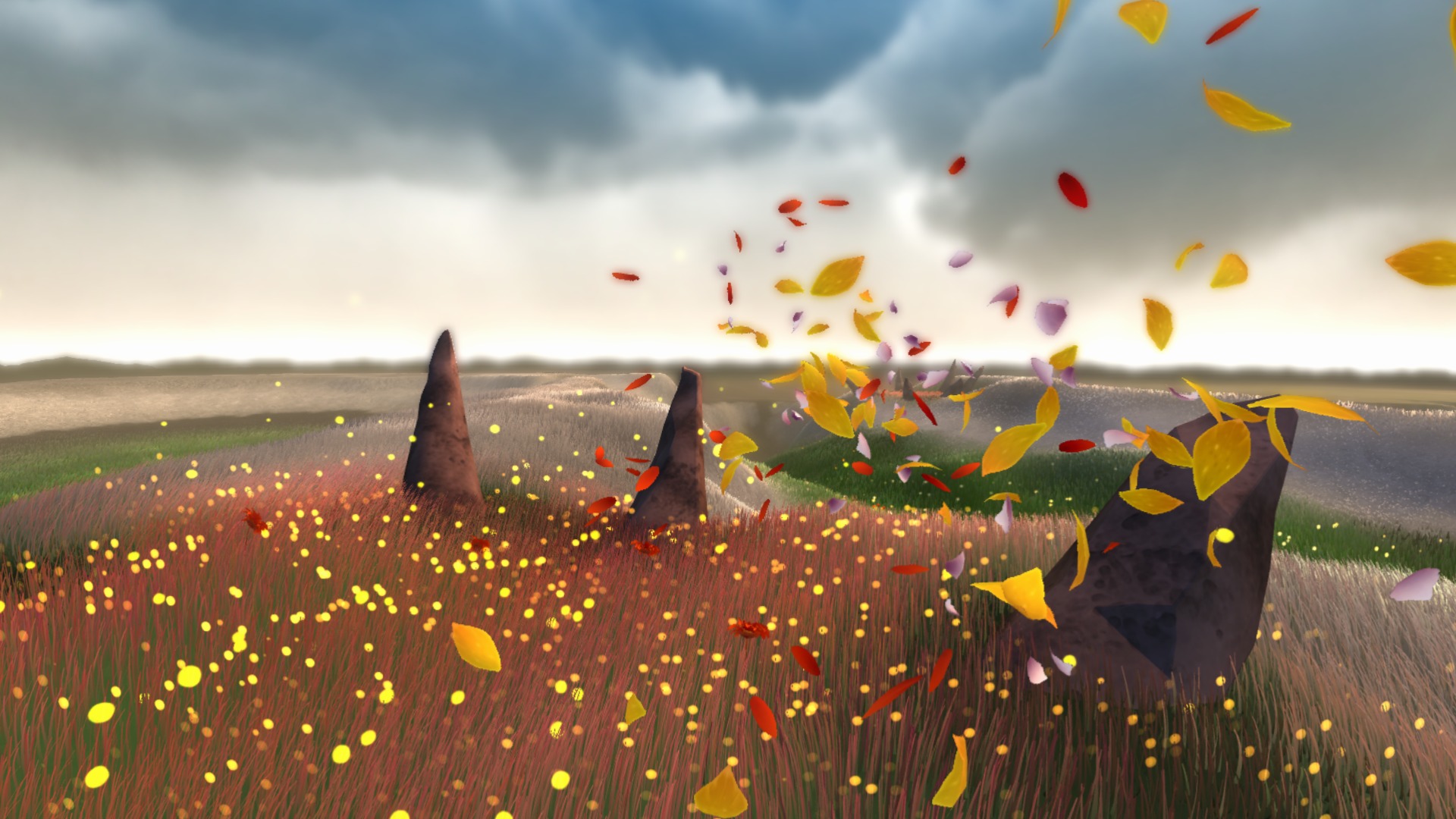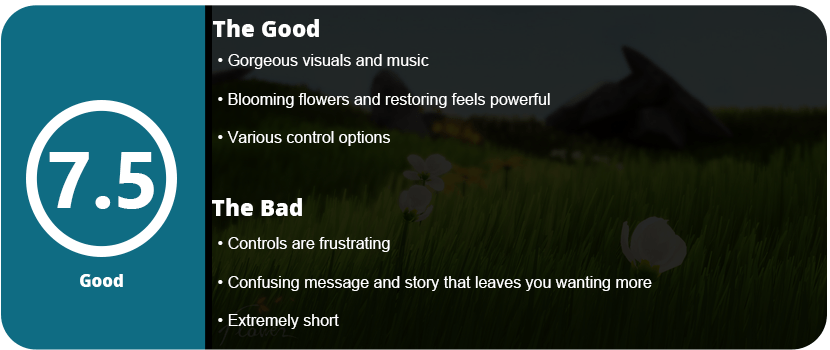
That game company is a really talented bunch. With Journey and Flow under their belt, they are known for making artistically stunning games on Sony’s consoles. When Flower was released on PS3, it amazed gamers around the world with its gorgeous visuals and music. It’s a very simple game, but that’s okay for what it does.
You control a single flower petal and ride the wind to help other flowers bloom and remove gloom and grayness from the world around you. You can control the speed of the petals, and the novelty came from using the PS3’s SixAxis controller to move the petals around. On the Vita, you can use the gyroscope or hold the rear touchpad. I honestly don’t like the controls and feel it is very difficult to control at low or high speeds. I always missed a set of petals in a run and had to turn around and go back, breaking the magic and flow of the game.
It was like this constantly throughout the entire game. Once I felt the game had jumped from petal set to petal set only to let me go and lose focus of the current run. As the game progressed, this became more complicated as you avoided falling electrical towers that would shock you and send you flying backward. It’s a beautiful game to behold, even on Vita, but the frustrating controls and mechanics bring it down quite a bit.
Flower also has some underlying environmental message that feels hypocritical. The game goes from green grasses to dark and dreary in a few levels, only to have you restore color to the city (which clearly represents Los Angeles), so I don’t have any idea what the story is or what the message is about.
There are about seven levels, not including the credit level, which was interesting. Flower is a PlayStation classic and should be played just for its beauty and unique gameplay that no other game can touch. The music is amazing, and I really felt sucked into the game only to be ripped out again by bad controls.
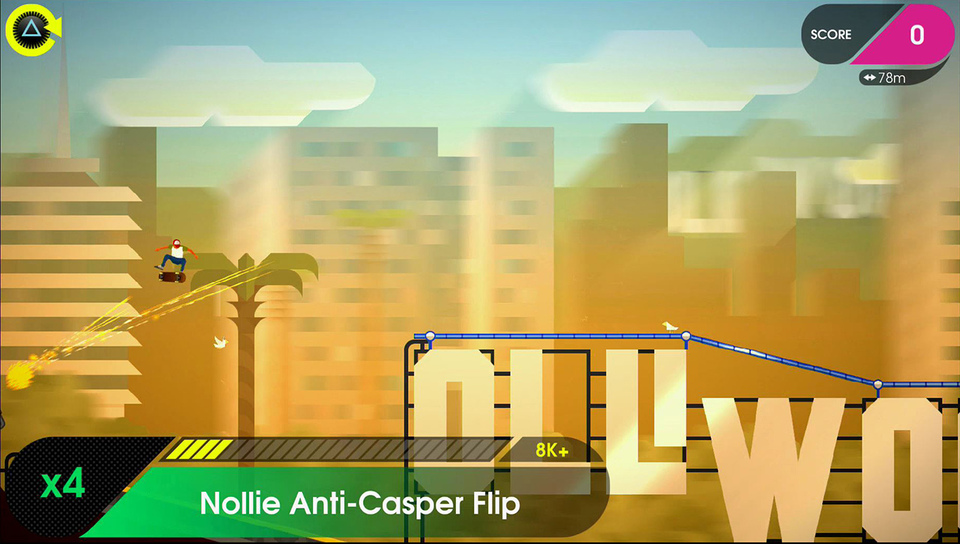
Skateboarding games have always been one of my favorite genres. They’re intense, require an insane amount of skills and coordination, and are just so much fun to play. I started all the way back to the original Tony Hawk’s Pro Skater and ended at Skate 3. From there, the genre pretty much died, but Olli revived the series a bit, and I fell in love with the first game.
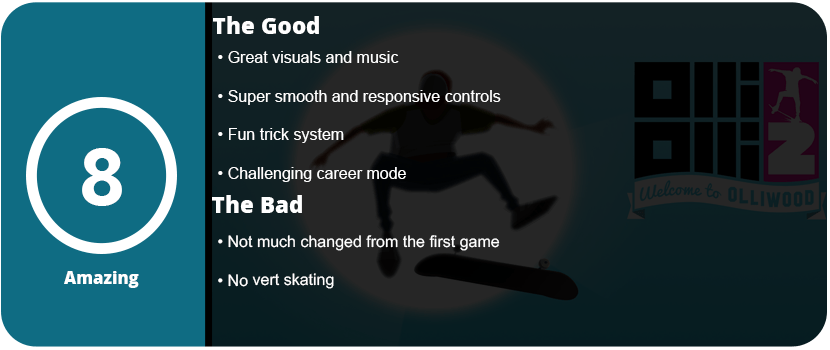
The second is no different, and that’s both good and bad. On the plus side, the game feels smoother, there are more tricks, the entire game is more responsive, and there are more modes and new levels and themes. The downside is that it’s pretty much the same game with no real evolution of the series.
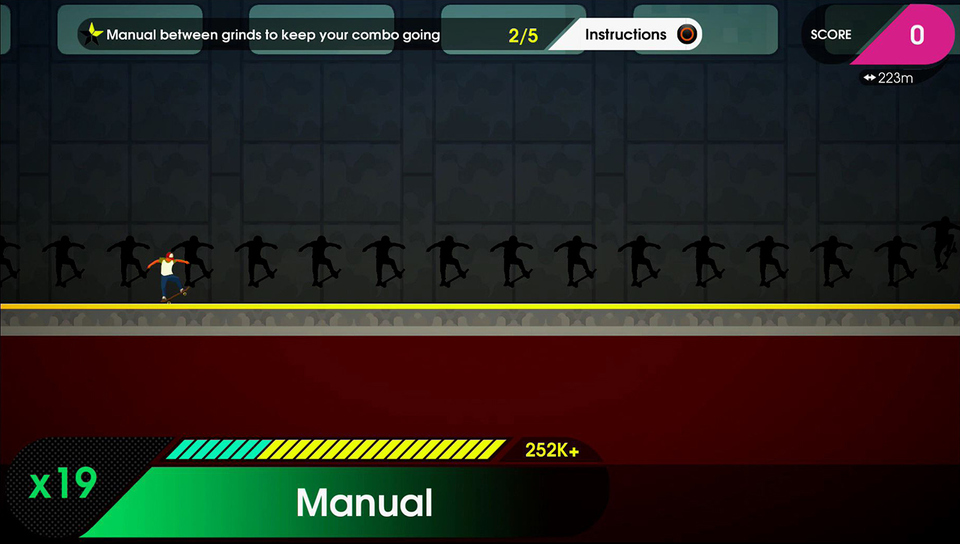
Career mode is where you will spend most of your time. Here you have six different goals, varying in tricks, scores, and special spots. Using the left analog stick, you can push down and then up to pop the board up and flick it around to do tricks. Holding it down over a rail will allow you to grind. To properly land a trick, you must press X right before landing, or they will all be sloppy. This trick system is similar to Skate’s and is a great evolution of the button combo system.
Sadly, you can’t do grabs, and there’s no vert skating. Half-pipe rounds would have been fun, and it’s sad that the sequel doesn’t really add all that much. There are two other modes, which are trick spot and just a leaderboard tracker. They’re fun but aren’t really different from the career mode.
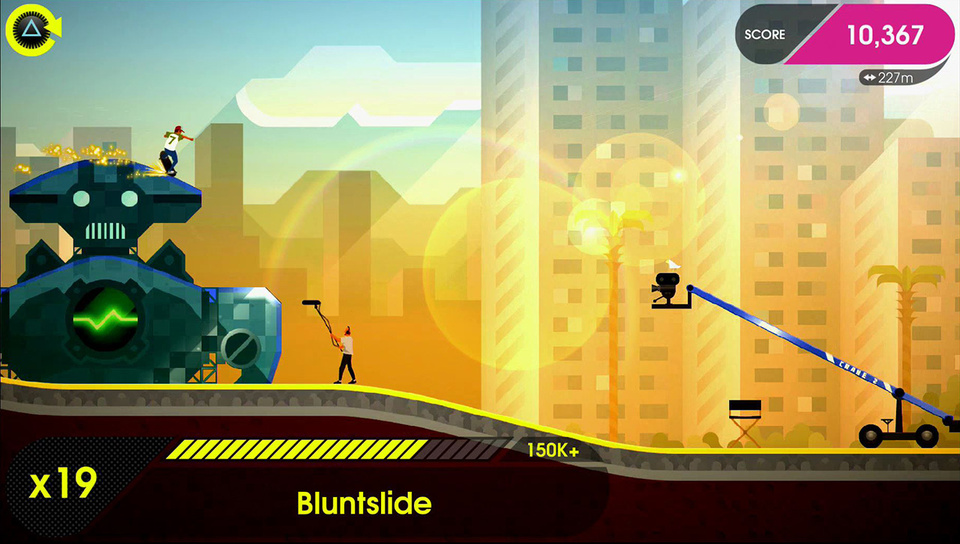
The game looks nice with fun music, awesome 2D scenes, and a great Hollywood/Los Angeles theme, and it’s just super smooth. With all that said, OlliOlli 2 is a great entry for newcomers and veterans who will find enough new stuff in the career mode to consider a purchase.
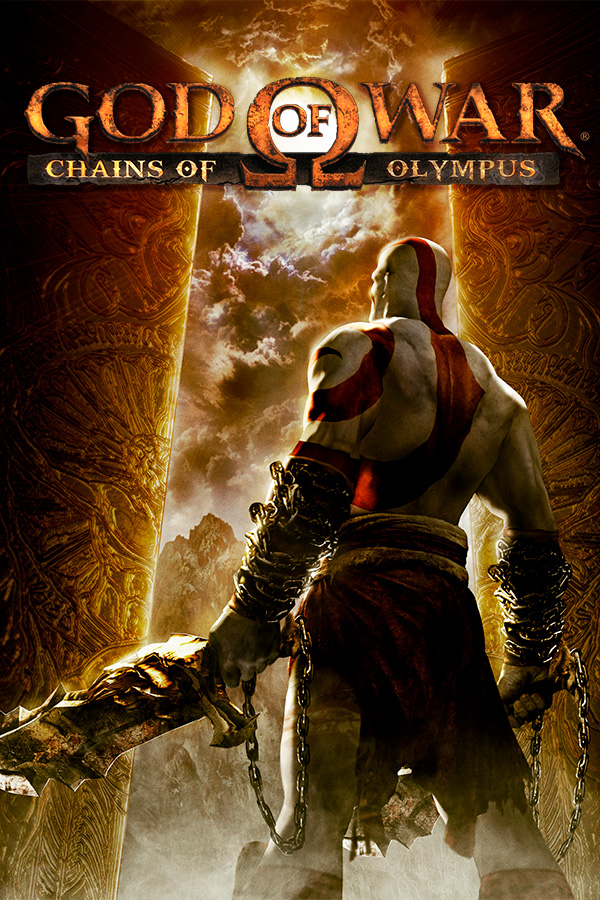
Chains of Olympus was probably the single biggest PSP release during the entire console’s life cycle. It was one of the first games everyone wanted for the system, and Ready at Dawn delivered a God of War experience just like the console version, with no cut corners.
The game takes place between the first two games, with Kratos continuing his journey to rid every god of Olympus and his quest to kill Zeus. He finds himself discovering more nightmares of his past, his daughter, and various new gods not seen in previous games. The story is just fine and feels just like a God of War game, but it’s very short and can be finished in less than 4 hours.
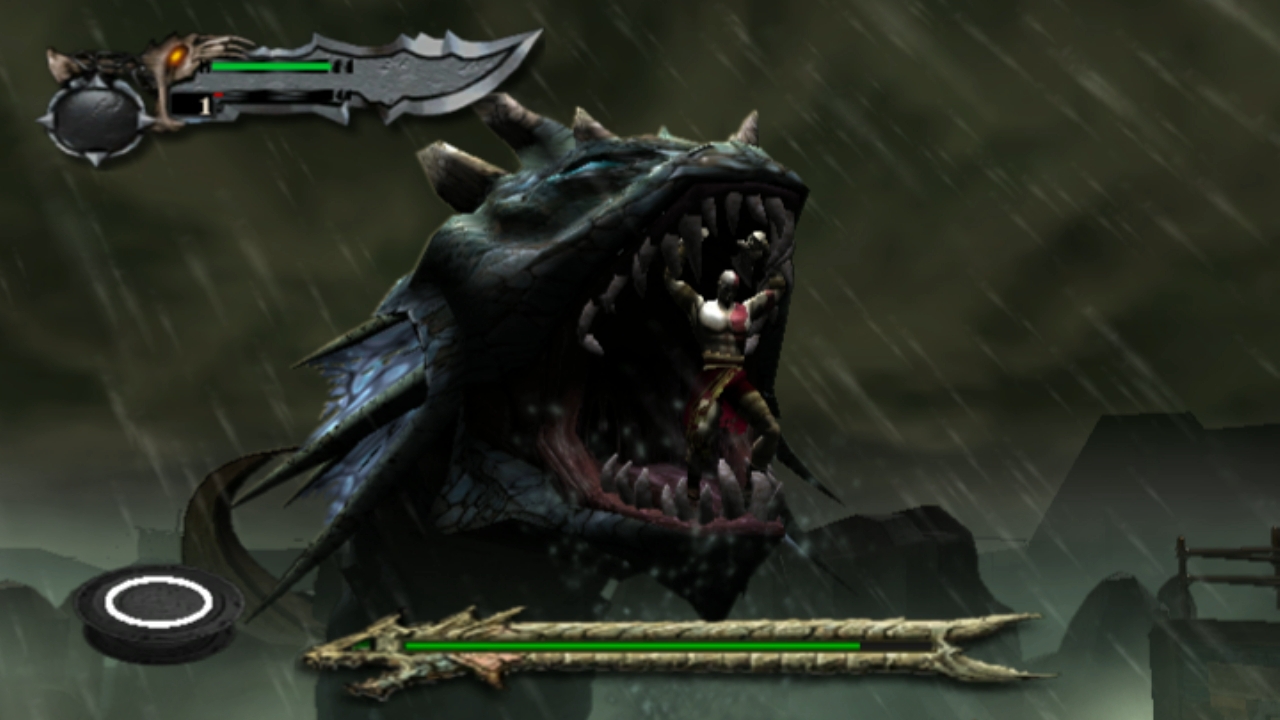
I remember starting up this game for the first time and seeing half of Kratos’ face in the main menu, just like in previous games, and pressing that new game button. The game starts with you at the Battle of Attica, fighting off a giant basilisk sent to destroy the city by the Persians. I knew the game would have an epic first boss fight and a giant city to fight in, as the previous games did as well. You also have to remember that this was released two years after God of War II, so there wasn’t much else to go off of at the time. Thankfully, this game carved its own path in the God of War series, and later games actually borrowed things from this game.
Surprisingly, the controls work out just fine with the handheld version. Pressing the shoulder buttons and moving the analog nub allow you to dodge. The combat and animations are gorgeous, and the game runs at 30FPS most of the time. Very rarely did it ever drop below that, and sometimes it even went up to 60 FPS in smaller areas. Everything about this game is so familiar yet somehow slightly evolved from GoWII. The moves are more fluid, and upgrades are a bit different as well. New magic items and a brand new weapon are introduced as well.
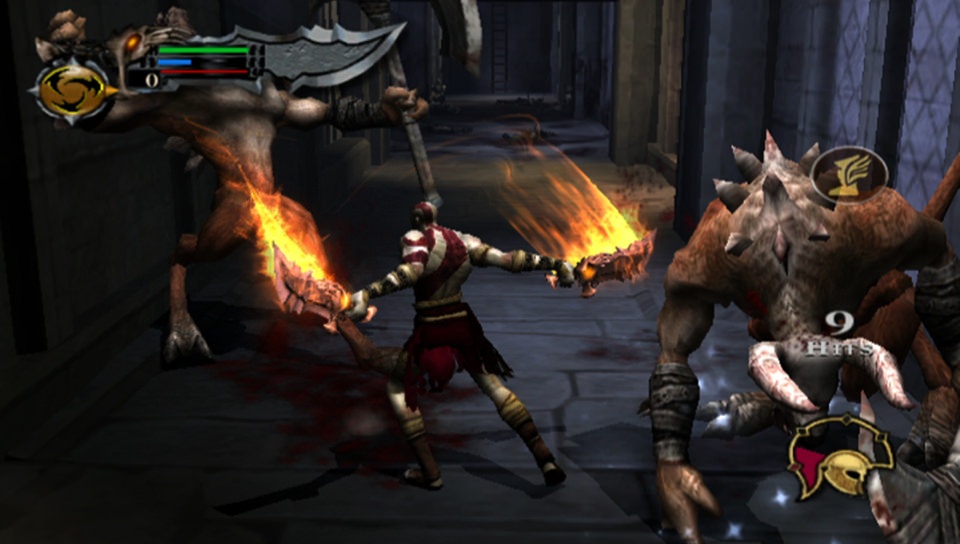
The Gauntlet of Zeus is a giant fist that brings slower, more powerful hits; sadly, due to its short length, only one extra weapon was introduced. Efreet is the new AOE magic attack that uses fire damage; Light of Dawn is a long-range magic attack; and Charon’s Wrath stuns enemies. Kratos also gets a shield in the game, allowing new counter-attacks and throwing back projectiles at enemies. The whole combat system as a whole feels new and enhanced enough to make this feel like a sequel rather than a spin-off.
Just like in previous games, you can upgrade your magic and health with hidden Phoenix Feather and Gorgon Eye chests, as well as using red orbs to upgrade items. Most of the hidden chests are easy to find if you explore all areas and pay attention to breakable walls and side paths. The best part about this game is the new enemies and bosses, which is what makes God of War so epic to begin with.
After beating the Basilisk, you will come across a few other bosses, but they aren’t large epic enemies like previous games; they are smaller and more challenging combat-wise, which is fine for the story that it delivers. I don’t want to spoil the game and tell you all the bosses right here, but the final boss proved quite a challenge and will test your reflexes for sure.
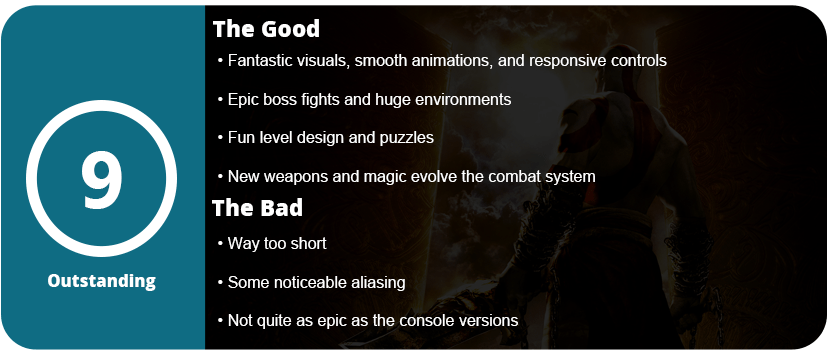
The environments are also amazing, as with any God of War game, with huge set pieces, massive buildings, giant statues, and various background stuff going on. Chains of Olympus was the best-looking handheld game ever released at the time and stunned everyone. It sold more PSP systems, which was good and was the main reason why most people bought a PSP. The lighting effects and textures look great and are a step up from God of War II. There is some noticeable aliasing and audio compression, but overall, the game seems impossibly good on the small system. This was also the first PSP game to use the full 333 MHz of the CPU and required an update before playing.
Overall, Chains of Olympus is a milestone and a pinnacle game in the handheld market and shows just how much of a powerhouse Sony’s handheld was back in the day. Sadly, we never got a new God of War on Vita, but this game is playable on that system as a PSP download.
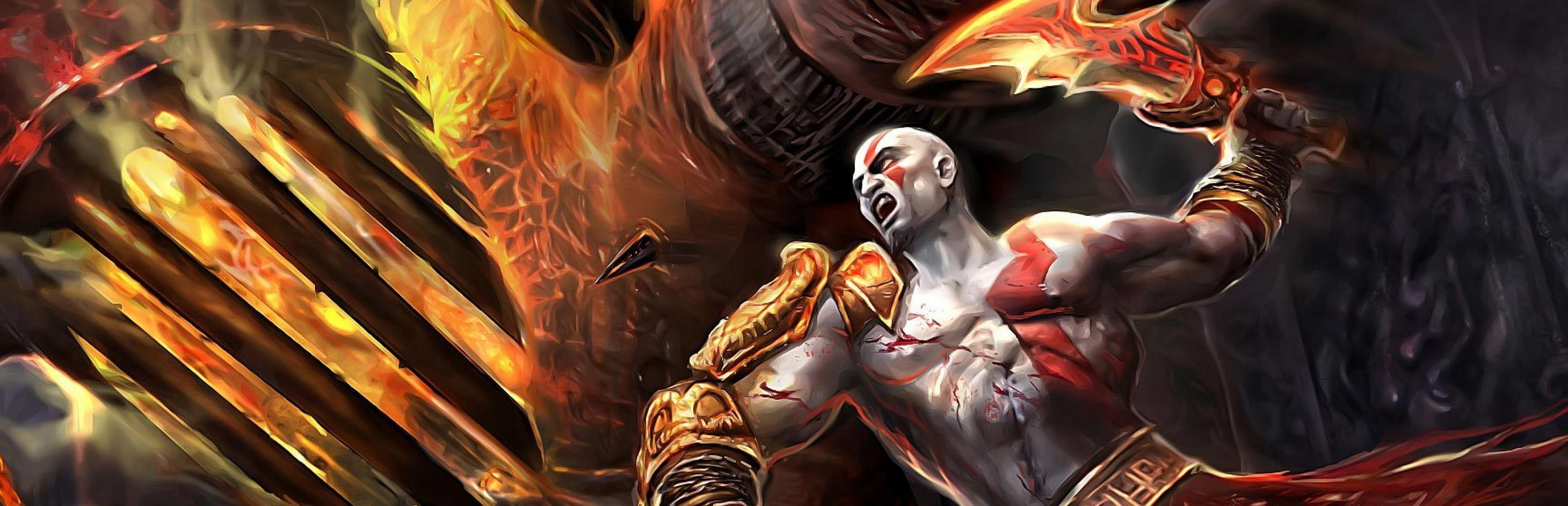
Kratos and God of War are PlayStation icons and symbols of what the system can offer. This game was the biggest hit in 2005, and I went nuts for it like everyone else. It reinvented the action-adventure genre like no one else had with epic boss fights, cinematic combat, and insane-level design. We finally get all of this in portable form on the Vita. While it isn’t the most ideal version, it’s still plenty of fun.
God of War is really starting to show its age and flaws these days; that is really clear. It was a new idea, however well executed, but still had some issues. The game isn’t quite as epic as I remember, thanks to the newer games in the series being insanely huge. There are only two big boss fights in this game, and I could swear there were more. The game is brutal in spots but still rewarding, with many secrets and areas to explore.
You play as Kratos, a Spartan general who cried out for Ares to save him and defeat his enemies, but this all came at a huge price. I won’t spoil more of the story if you have never played this series, but longtime fans know it already. The game has amazing combat, which is what was praised so much 13 years ago. Using the Blades of Chaos, Kratos can swing and spin them around with amazing animations and kill hordes of enemies. I’m not kidding about hordes; there are some scenes where you must defeat nearly a hundred enemies, which is brutal.
The enemy variety is also great, as there are small, easy enemies to huge, lumbering cyclops that take many hits to kill. God of War is famous for quick-time event kills. After so much damage is taken, the enemies will display the circle button above their heads. This initiates a quick-time button pressing, which will give you health orbs. Each enemy has its own unique animation. Each enemy is also a challenge on their own, as some are dangerous on hordes while others are not so much alone. The level design is fantastic, and the enemy placement is cleverly laid out to offer a challenge every step of the way.
The series is also famous for the magic powers you acquire that are different with every game. You get four, which become very useful for various enemies. Poseidon’s Rage is great for clearing hordes of weaker enemies, as it’s an AOE attack. Zeus’ Fury is the only long-range weapon you get for picking off ranged enemies. Souls of Hades is like a shield, and Medusa’s Gaze is great for larger single enemies to turn them to stone. On top of the Blades of Chaos, you also get Artemis’ Blade, which is a powerful short-range heavy weapon, but once the Blades were fully upgraded, I honestly never really used it.
Outside of combat, there are puzzles that will sometimes slow you down. Most consist of pressing switches in order, climbing puzzles, or jigsaws. Pandora’s Temple is a giant puzzle within itself that takes up a third of the game near the middle. I just can’t stress enough how hard this game can be. Some spots had me restarting dozens of times until I got it right, and this included platforming sections. The first game’s Hell area is notorious for being brutally difficult. Having to balance on long spinning logs covered in blades and then climb spinning spiked towers that stretch on forever is daunting, but rewarding when you do complete it.
Overall, God of War is still a blast to play 13 years later and is as polished as I remember. Outside of hardware limitations at the time, Sony did an amazing job creating what they did. There are some cheap deaths, unbalanced difficulty in spots, and the quick-time events do get repetitive, but it’s minor issues that can’t really bring the game down even today.
The Vita version is the only way to play this game in portable form, and it’s not the most ideal version. The PS3 version runs at a smooth 60FPS, but the Vita cleans up the visuals a little and does have some FPS drops when a lot of enemies are on screen, but it’s not often. I’m sad to see this game doesn’t hit 60FPS, which it does even on PS2 sometimes, which keeps this game from getting a perfect score.
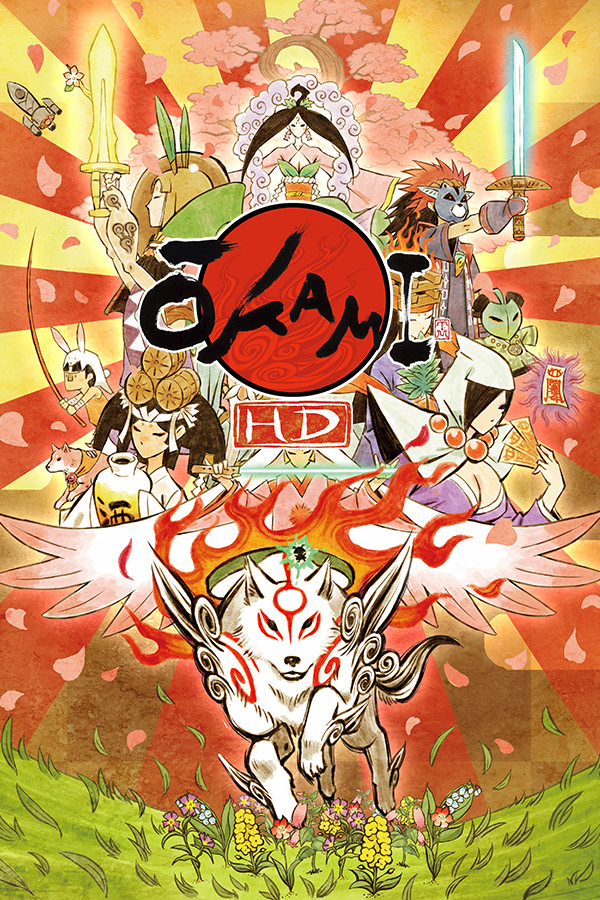
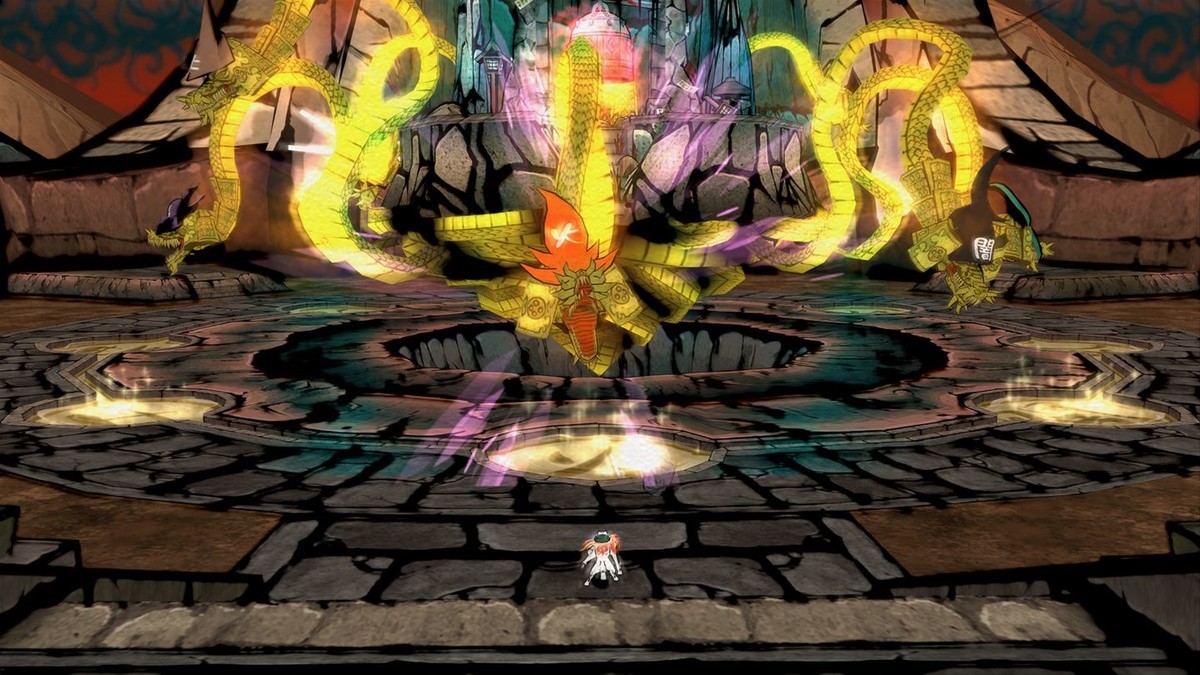
Okami was one of my favorite PS2 games growing up. I got the game for my birthday and was amazed by the beauty of the visuals and the unique gameplay of the Celestial Brush. It may not seem like such a big deal today, but back in 2006, this game sold PS2 units like hotcakes, and it helped the PS2 stand out as the best console of the generation, something the Xbox and GameCube didn’t have.
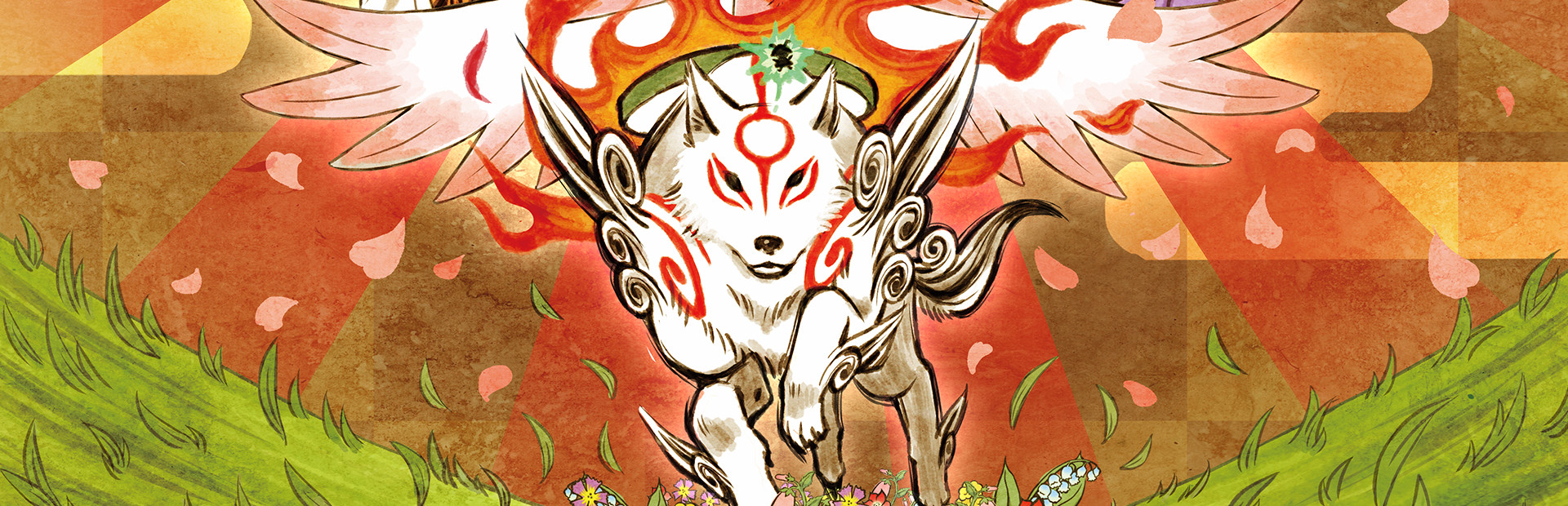
Fast forward 11 years, and the game still stands out and holds up as if it were released yesterday. You play as Okami Amaterasu, the Sun Goddess, with your Poncle pal Issun, as you embark on an adventure to rid Japan of darkness and evil. It seems like a stereotypical Japanese action-adventure story, but it’s a bit more than that. The characters have depth, and they all feel unique in their own way, with overexaggerated characters and personalities.
The game starts out simple enough by introducing you to basic game mechanics, including the celestial brush, by learning your first brush technique, rejuvenation. By pressing a button, the screen takes a snapshot and turns it into a black-and-white drawing right before your eyes. You then take an actual brush that you control and paint the correct stroke for each technique. This is such a beautiful and amazing game mechanic that works so well and yet has not been matched to this day.
As you progress through the game, the world opens up with larger hub areas that you can explore. Besides going for the main story, you can partake in item collection quests, praise gathering, and finding hidden chests that contain various items. Praise is used to upgrade your health; ink pots; an astral pouch (used to resurrect you when you die); and a money pouch. Praise can be gained by rejuvenating dead areas, feeding animals, and helping villagers in small, yet sparse, side quests. However, 90% of the time, you will be heading ever onward toward the end of your journey.
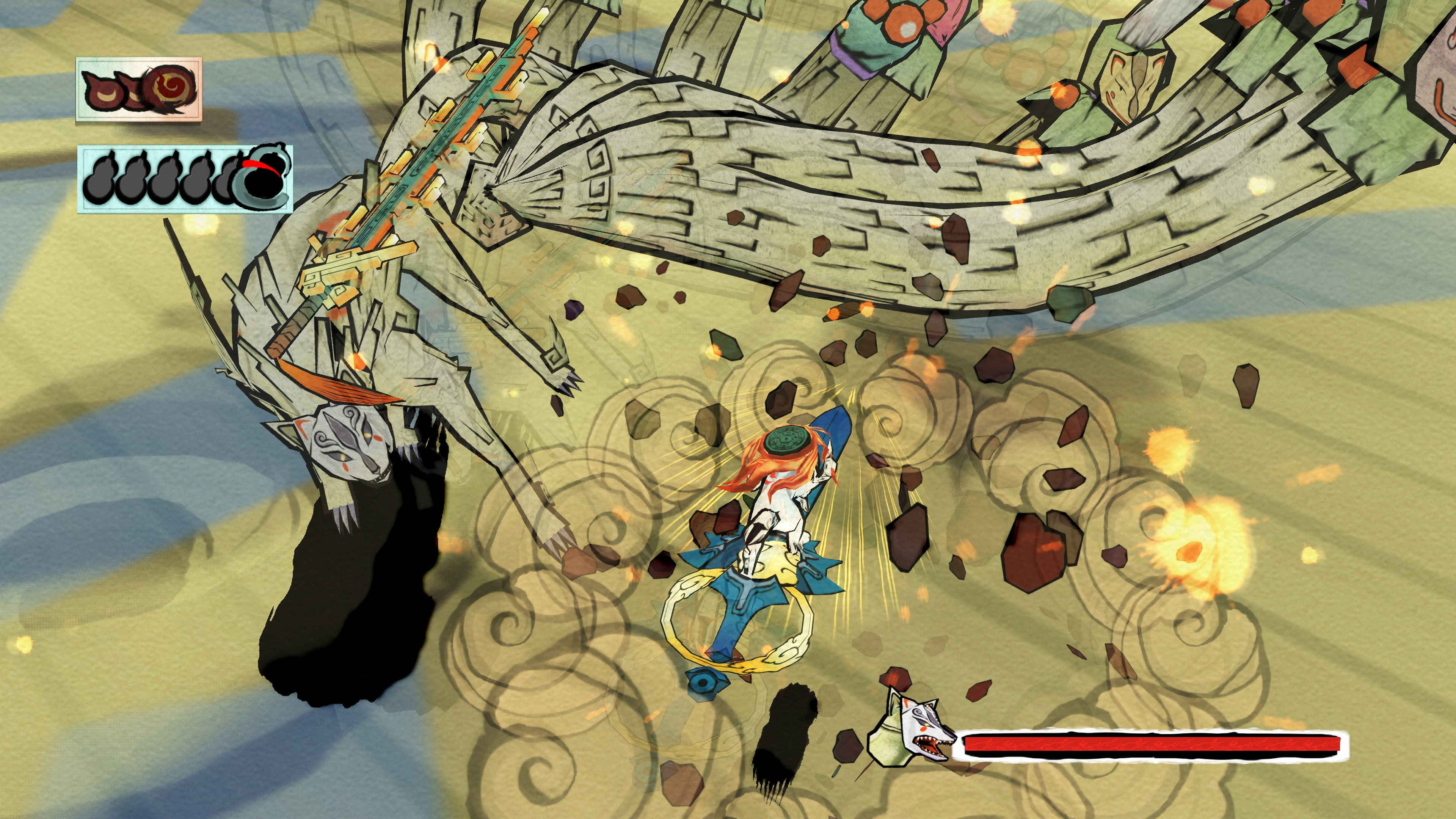
Combat is actually where the Celestial Brush comes into play the most. You and the enemies are surrounded by a cursed circle, and you can use your various brush techniques to defeat the enemy. There are many enemy types in the game, and they are all based on ancient Japanese myths and legends and look fantastic as well. Each enemy is completely different and weak to different techniques. Enemies are introduced slowly throughout the entire game, all the way to the end.
Boss fights are also unique and fun in their own right. Outside of brush attacks, you can also attack physically and with items. Amaterasu can equip three different types of weapons: mirrors, glaives, and beads. Mirrors are good for quick, rapid medium-range attacks; glaives are for heavier and slower close-range attacks; and beads are for rapid long-range attacks. You can also equip a sub-weapon for a secondary attack that is either close range or projectile. Combat never got old, but it is rather easy. I actually got through the entire game without dying once, and after you start getting a lot of money, you can just buy heavy-damage items and use them over your techniques and weapons. It’s a little unbalanced, but still fun and challenging nonetheless.
As a whole, Okami is beautiful, adventurous, memorable, and unique. However, it does have some flaws. The dialog is the most irritating part of the game, as characters talk in muffled simlish gibberish, and it just gets grating after a while. You also can’t quickly skip through dialog during some cutscenes, so it takes forever to get through. I also found the last 25% of the game long-winded and unnecessary. There’s also a lot of backtracking towards the end and repeated boss battles, which drove me nuts. The game clocks in at about 25–30 hours, which is a little too long for this game. Towards the end, it just felt like the developers were extending the playtime by making you repeat things and dragging things out. I loved my time with Okami, but those last 5–10 hours drove me insane.
Outside of all this, the remastered version looks amazing in widescreen and 1080p and even has 4K textures if you own an appropriate console or PC. It’s nice to see Capcom supporting current tech with their updated games as Okami pops to life on 4K TVs. The price is also a steal, as it was released at a budget price of $20. There’s no excuse not to play this classic.
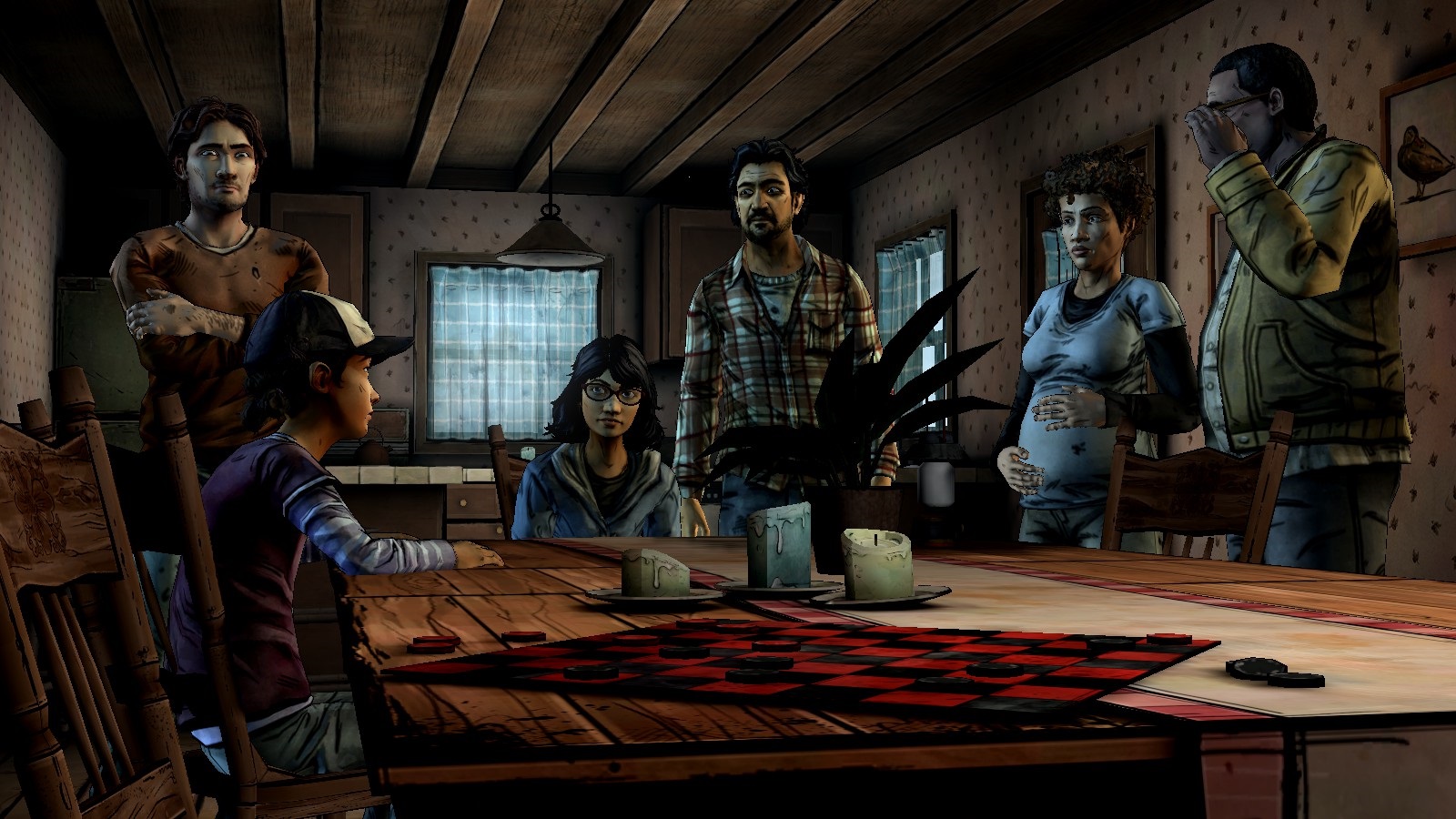
The original Walking Dead was a fantastic adventure game. It was well written, tense, memorable, and had amazing characters. The dialog choices kept the game moving, and you always felt like you were in control of every moment. Season Two adds to this while taking place moments after the end of the first game.
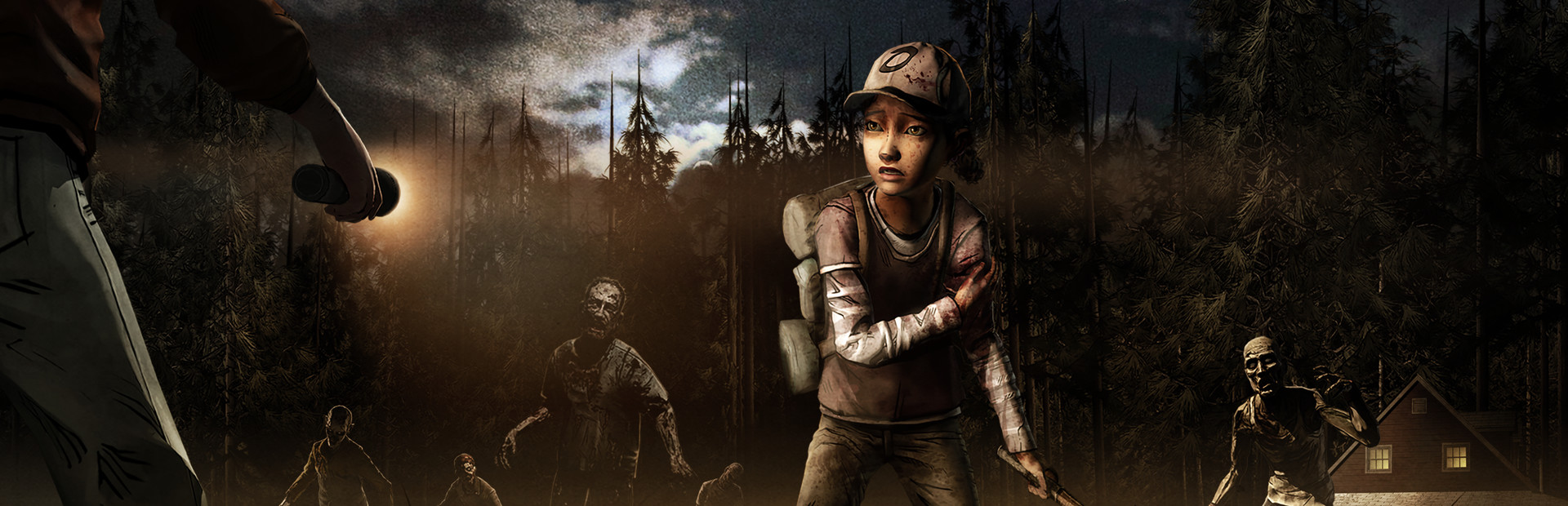
This time around, you play solely as Clementine. Right off the bat, I can tell you that your choices from the first season hardly impact Season Two. I imported my save, but I didn’t see many changes or choices I made from Season One affect anything here. We get an all-new cast, setting, and goal for Season Two that kept me going until the end.
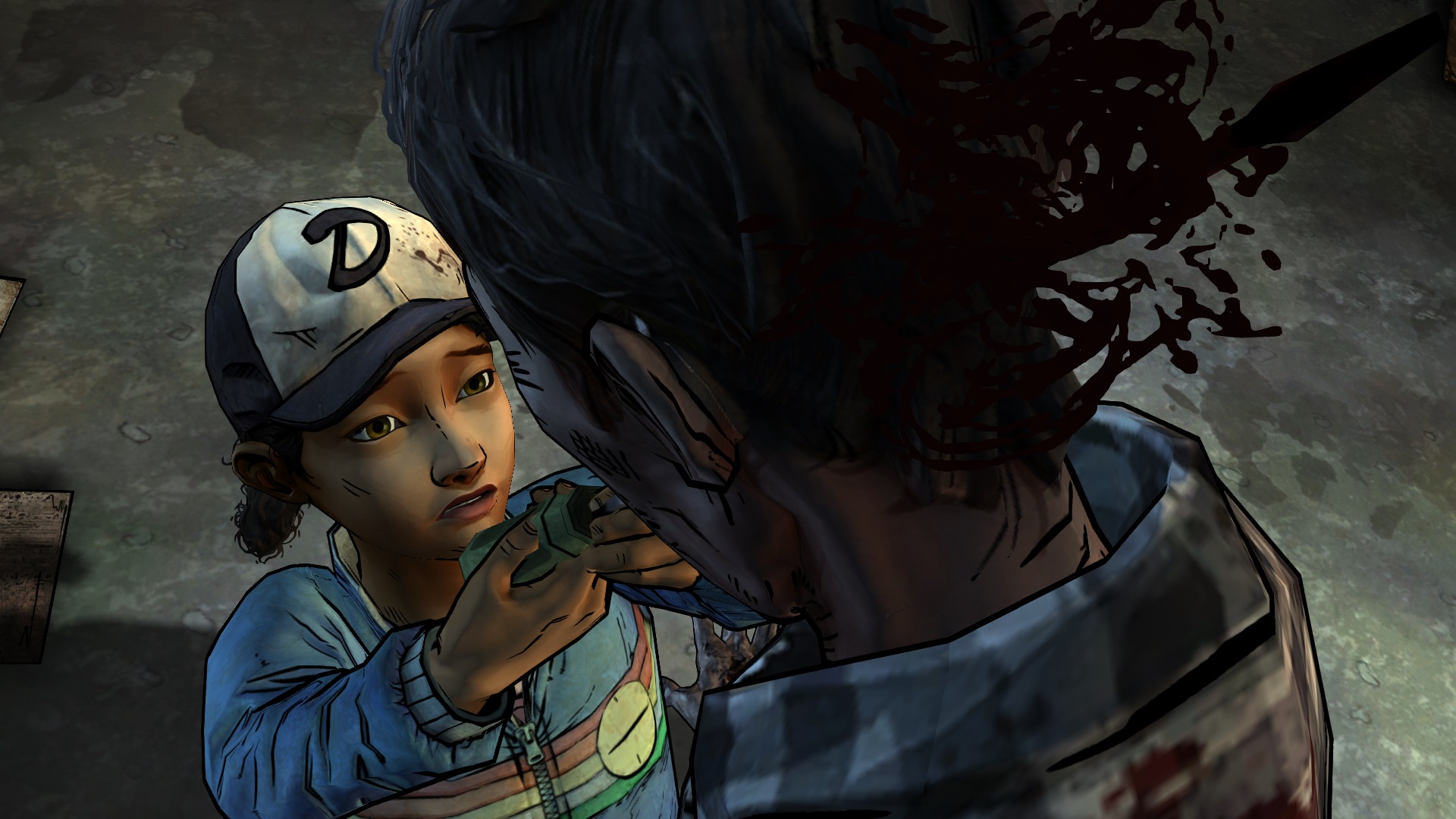
Clementine is a child, but her raw character shows this season thanks to what she went through. Going from an innocent child to a hardened killer isn’t easy, and it makes Clementine such a likable character. Adults respect her for how mature she is; she can make adult decisions, but she still has some vulnerabilities that a child would have at her age. The new characters come across as strong, just like in Season One, but I felt a slight disconnect from them. Something about these new characters didn’t quite click as well. A lot is introduced early on, so this might be the reason.
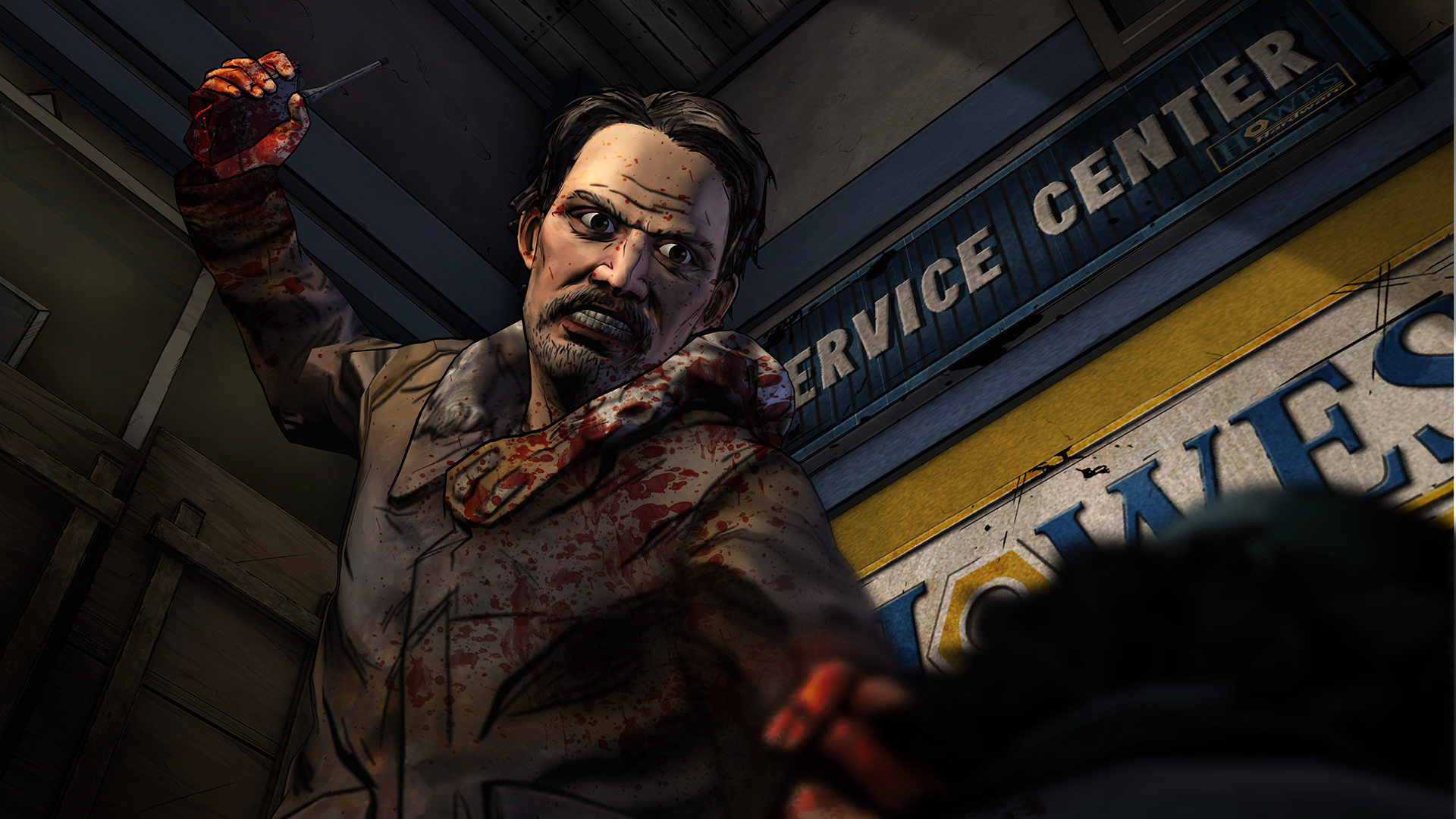
Throughout the game, we are seeing Clem get to a word-of-mouth safe haven called Wellington as she meets new friends, makes new enemies, and has to escape dire circumstances. I feel that this time around, the game is more of an interactive movie than a game. There are hardly any gameplay moments, and there is zero puzzle solving. The action sequences are somewhat entertaining, but the horrific moments of terror are far and few this time around. The few spots where you can walk around an area feel pointless, as all you do is go to the only interactive object to progress. The gameplay is seriously lacking here, but that’s not really a bad thing.
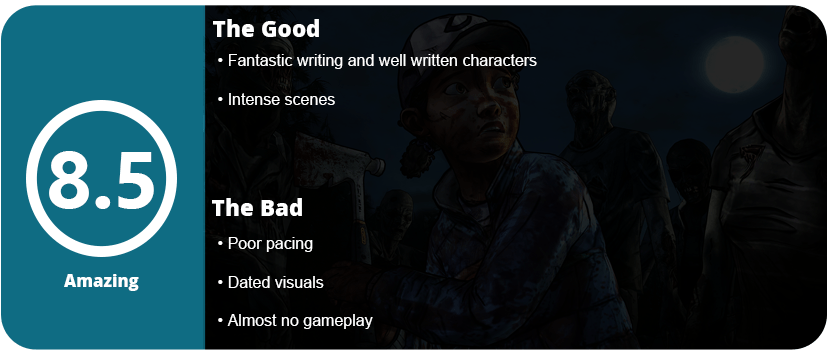
The dialog options are still strong, and many choices had me wanting to go back and change my choice, but that’s good. I always thought about what would happen if I chose something else, as some choices are designed to unfold later and some are immediate. The pacing of this game is also slower and less balanced. There are many slow moments of downtime and dialog build-up. Sometimes 20 minutes would go by with nothing but dialog options, which is a stark contrast to the first game.
I did notice the visuals are slightly improved with better lighting and more detailed textures, but overall the game engine is seriously aging and doesn’t hold up to other games. Season Two is still a memorable game with great characters, excellent writing, and tense moments. If only it were paced better and had more gameplay.
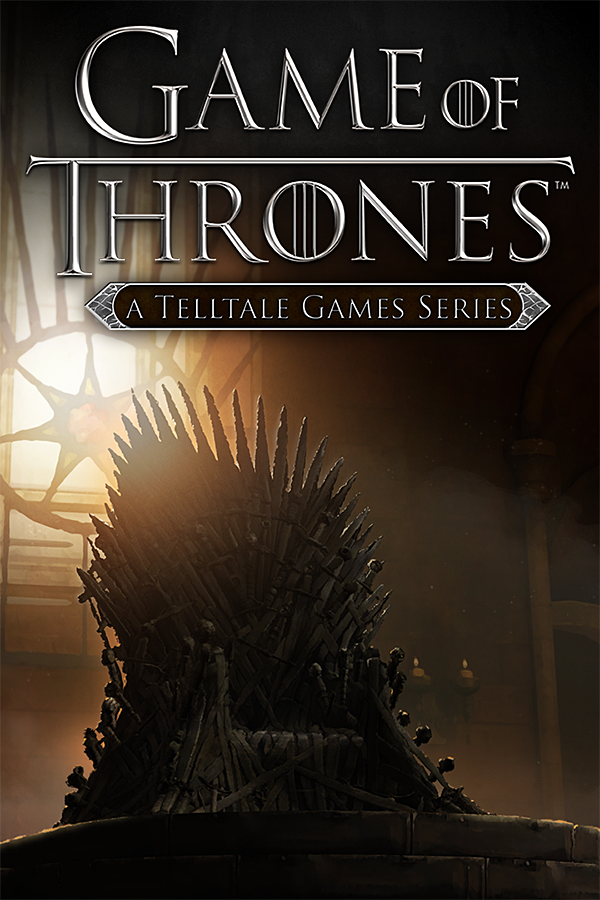
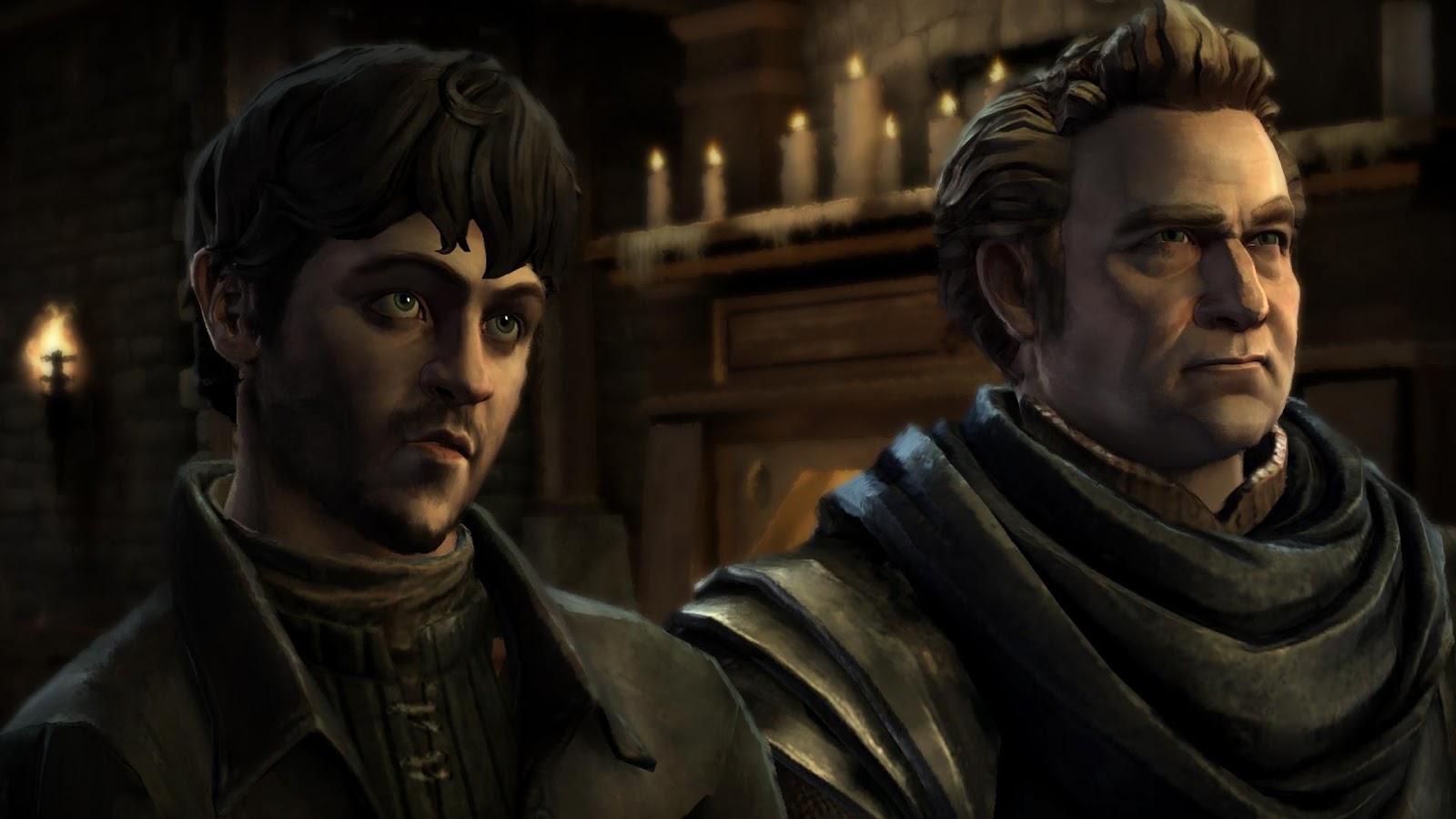
Game of Thrones is one of my favorite TV shows of all time, and for good reason. It had memorable characters, well-written scripts, fantastic actors, and so many gripping plot twists that will make your head spin. How do you copy this in a 5-hour game? Telltale somehow managed to do it, with some flaws, and I left wanting more.
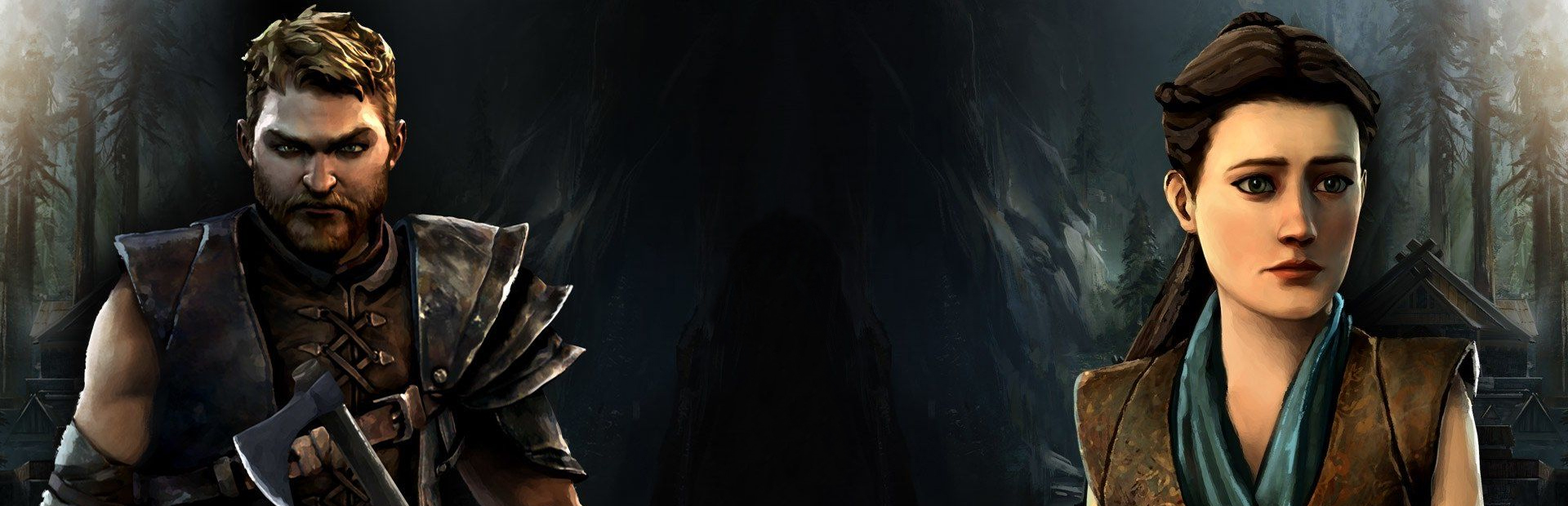
You play House Forrester, who are aligned with the Starks in the North, not seen in the show. They are trying to come out from under Roose Bolton’s foot, as the Boltons were assigned as wardens of the North after Ned Stark died in the first season. Ramsay Snow is constantly coming back to the house to “babysit” them, and this is some of where the major turning points happen.
You follow five characters in the game as our viewpoints change. Mira Forrester is in King’s Landing, trying to gain Lady Margery’s favor before she becomes queen. Then there’s Ethan Forrester, who is the new lord of House Forrester after his father dies in the hands of Frey’s ambush. Then there’s Edward Tuttle, who was the original Lord’s Steward, and he gets sent to the Wall. Asher Forrester is off in Essos, trying to gain Daenarys’s favor for an army. With all these different viewpoints, it feels just like the show with everyone spread out.
This is a much more story-driven Telltale game, and I know that sounds silly, but there’s maybe 5% gameplay here and not even any puzzles. There are some combat quick-time events, a few times where you walk around an area looking at things, and then the many, many dialog options, with some being meaningless and some having a full swing of the entire story.
I won’t get into details about the story as that will spoil it, but I was kept in for the whole game. The acting from the original characters who do appear is nice, as is the acting from the new characters. The new characters are memorable, hold their own, and feel like they would fit right into the TV show. As the episodes pick up, you spend less time with each character as all the choices you make culminate in the finale. Some choices were rather difficult to make as you decided who lived or died or how you acted towards someone. This was especially brilliant, as I thought I was doing the right thing sometimes, but it turned out it was hurting me more.
In the end, the point of the game is to gather a large enough army to fight back the Whitehills, whom the Boltons assigned to watch over House Forrester. All your choices will mean the difference between a house that lives or dies. I didn’t find the game really dull, but the scenes where I had control felt pointless. Rarely did it ever feel relevant, such as in a scene where Mira is searching for a letter in Tyrion’s office and guards are running down the hall, and she was trying to not get caught.
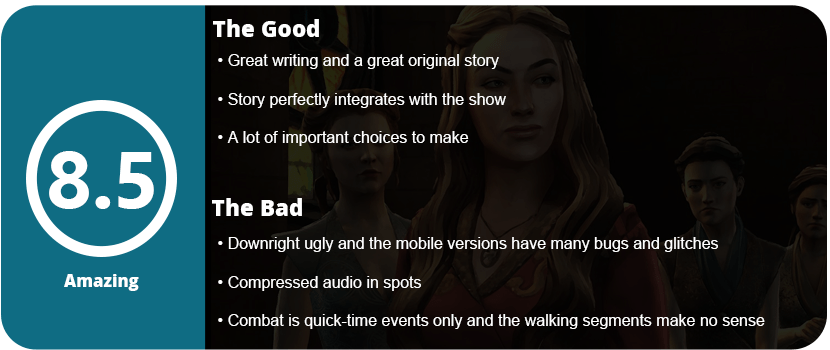
The game does end with a sequel in mind, but I don’t know if that’s ever coming; not all the characters’ stories were fulfilled, which is a shame. The visuals are downright ugly and still use Telltale’s decade-old engine, which needs an overhaul. The mobile version of the game is still riddled with bugs and poorly optimized, with frequent slowdowns, crashes, freezes, and bugs. The audio was terrible, as in the last 2 episodes it was somehow compressed to sound like PS1 audio. Overall, though, the game is well worth a playthrough for fans of the show; just don’t get the mobile version.
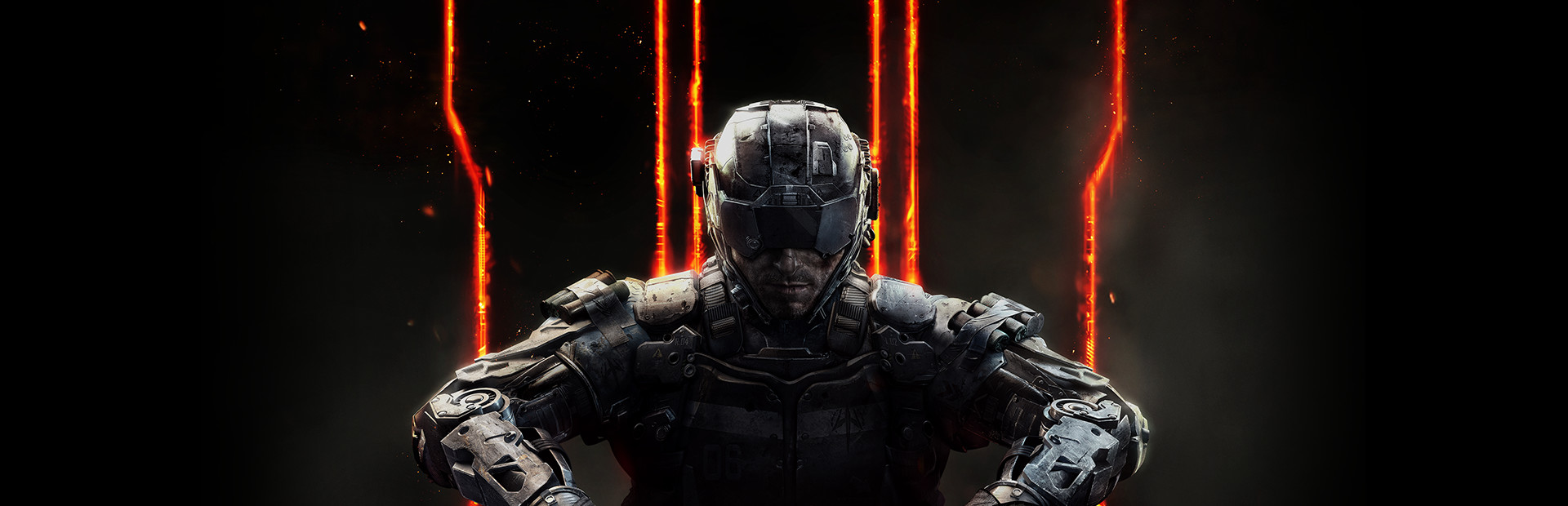
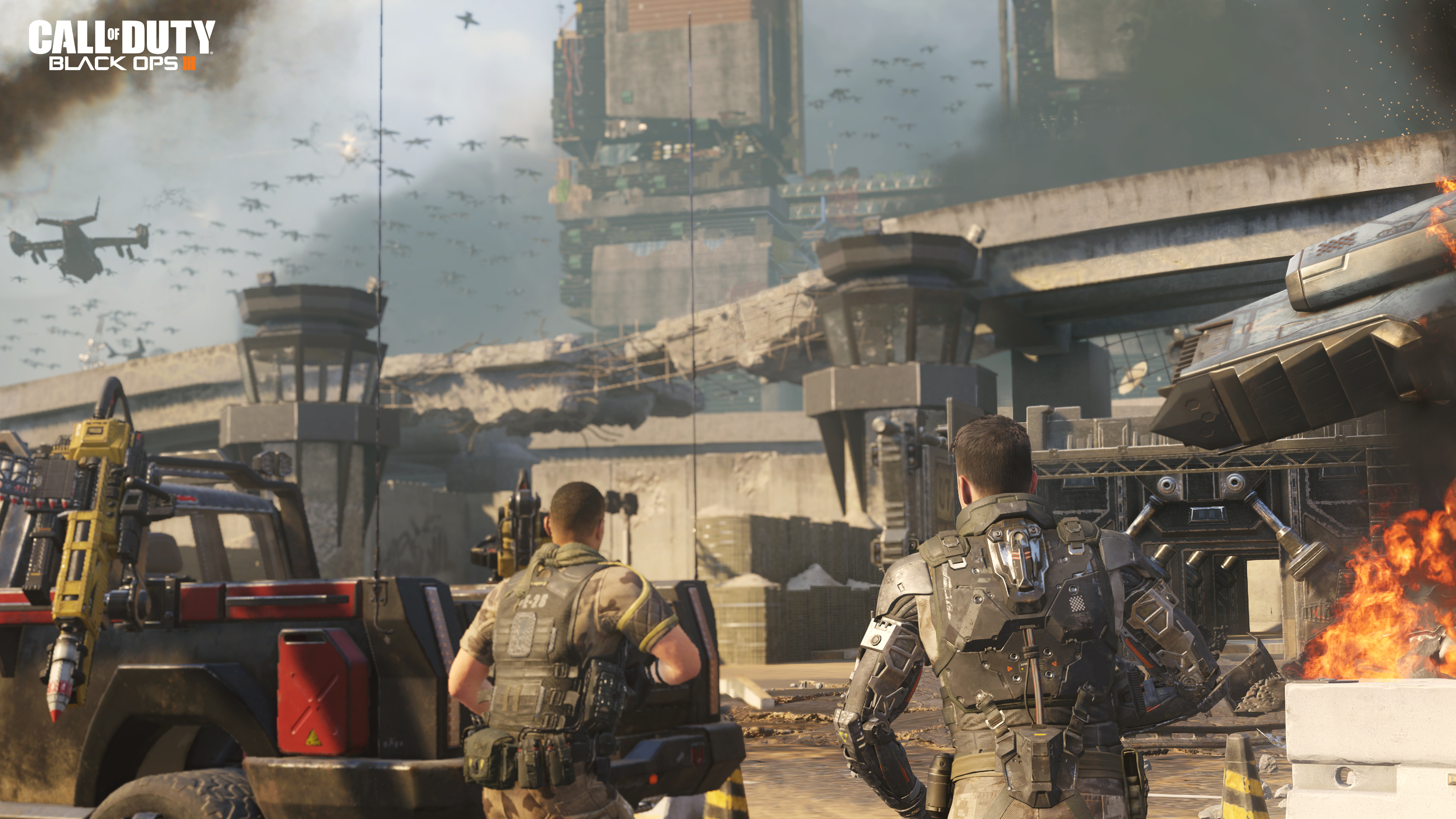
Man, where do I begin? Call of Duty was one of my favorite franchises growing up, and Modern Warfare helped kickstart FPS games into a new cinematic, next-generation universe. That Pripyat level in the first modern war still sticks with me to this day. After MW2, the series took a steep downhill slide and hasn’t stopped since. Here we are with Black Ops III, a futuristic military shooter that is a far cry from what the original Black Ops was, which was absolutely fantastic. You play as a squad of black-ops cybernetic soldiers who are trying to stop an all-powerful AI from destroying the world. See, the whole world is completely infused with technology that can read people’s minds and know our every move. The CIA has several operations around the world to keep this in check, but it all goes wrong one day. The actual concept is interesting and could have gone somewhere, but instead, we dredge through a sewer of boring, mediocre, and lame campaign levels that drag on way too long and overstay their welcome.
The game plays exactly like every other CoD since MW1. You run and gun your way through waves of enemies that are as dumb as dirt, and you face unbalanced difficulty spikes and repeat about a million times. I have to point out that I really hate the new weapon system in this game. You can no longer pick up guns from enemies but instead run into mobile armories where you can swap your loadout. This is a campaign, not multiplayer. I want to pick up weapons from enemies and keep things constantly mixed up. Several times through one level, I would need a shotgun or sniper rifle but was screwed because I couldn’t get to an armory. I can’t predict what’s going to happen next, so this is a huge mistake, and I really hated it.
Second, the enemies are as boring as ever, with generic robots and super soldiers. You get the occasional mobile armor, but that’s about it. It’s so boring that I just shrugged because I knew this was coming from a game like this. I mentioned the terrible weapon systems, but let’s talk about how terrible the actual weapons are. For one, there’s a small amount for a CoD game, and they all feel the same. Sure, you have shotguns, assault rifles, and pistols, but they just feel the same. They seem to have no weight, no bearing, and no personality. It’s futuristic shotgun A and futuristic assault rifle F. There are no real-world weapons anymore, and it’s just a borefest due to a lack of personality. The entire game has zero personality or originality. It all feels like endless metal corridors, hallways, and concrete. At least the first Black Ops felt original and had some personality and weight to it.
To make the game feel more like multiplayer, you get dumped into a central hub after every level and can change your loadout, unlock weapons with fabrication kits, and customize your weapons. There’s a new concept introduced called cybercores, which are powers that you can use against enemies. I found these almost worthless, as the game offers no opportunities to change to the standard CoD gameplay to implement them. It just felt like something tacked on to say, “Hey! We did something different! SEE?!” which I didn’t fall for. The only useful power was stunning multiple robots at once, but that’s about it. For most of the campaign, I forgot these powers were even there. I just ran around shooting everything in sight, like every other COD. I wish the series would stop pretending to be sophisticated and complicated when really it’s a dumbed-down snoozefest with no personality. It has been years since CoD has put its own fingerprint on the FPS genre, and this game doesn’t do it any favors.
I hated the campaign, but the multiplayer was at least fun for a while. It’s still the same old CoD MP that we’ve grown to either somehow tolerate or completely hate. However, Black Ops III is much more grindy than any other CoD game, and I gave up after around level 5. Even in single-player, it takes many levels before you can purchase decent weapons and load-outs. It’s part of the reason why the game gets so boring so quickly; the fast unlocks of the past are gone, and it feels almost free to play, which is a damn shame.
Graphics-wise, it’s nothing impressive except for how powerful of a PC you need to run something that shouldn’t push high-end systems. With the GTX 970, I used to have to turn down settings and still get massive slowdowns. It wasn’t until I used an overclocked 1070 that I got steady FPS with everything maxed out, and even then sometimes the game dropped down to 40 FPS for no apparent reason. The game is poorly optimized, has awful glitches that still exist after all the patches, and just doesn’t look all that original or impressive.
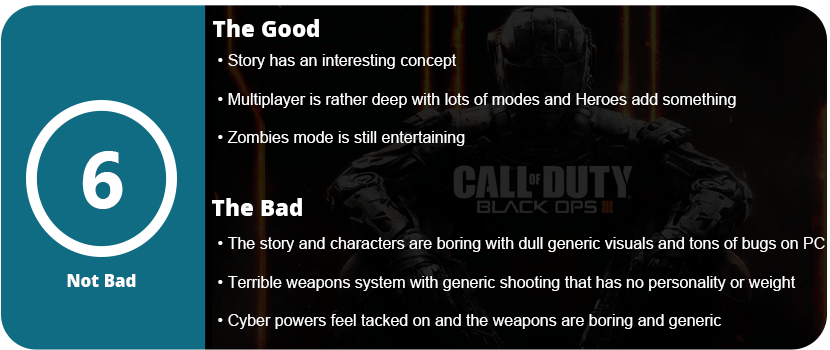
Overall, I can’t really recommend this game except for the hardcore CoD players, and fans of only the older games will hate this. The weapon system stinks, the campaign is boring, lame, tedious, and full of glitches, and the unlocks are a grindfest. There’s so much wrong with Black Ops III that it took me over a year to finish the campaign. It’s just boring and not fun to play, as there are plenty of other great shooters out there. I’d rather play Half-Life 2 for the 20th time or the Crysis trilogy than spend one more minute in this game. Now, that’s not to say I hate it to death, as the multiplayer can be pretty fun with new modes and playable heroes at a little depth, but it’s not enough to save the core gameplay. Zombie Mode is the final saving grace, as it still provides entertainment, but like multiplayer, it will only last so long with boring guns to use and average visuals.
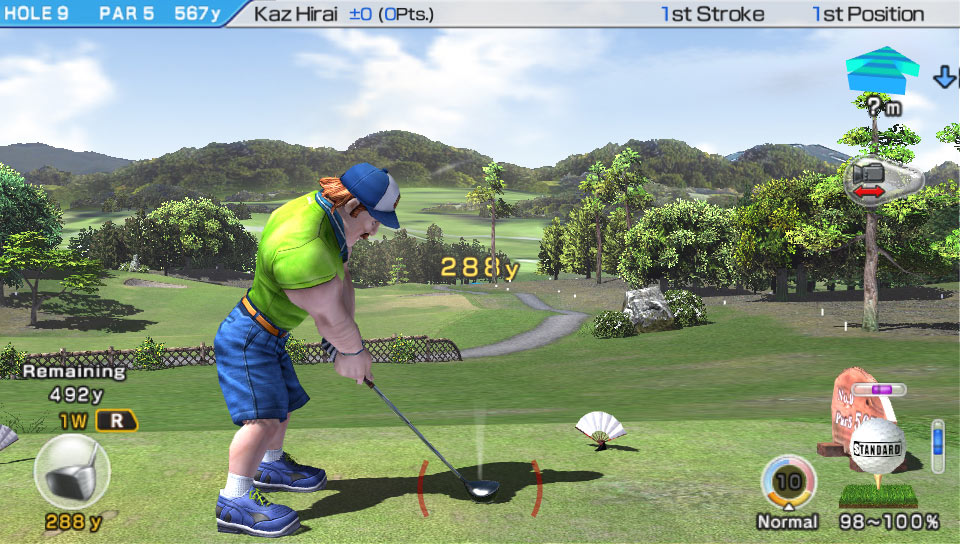
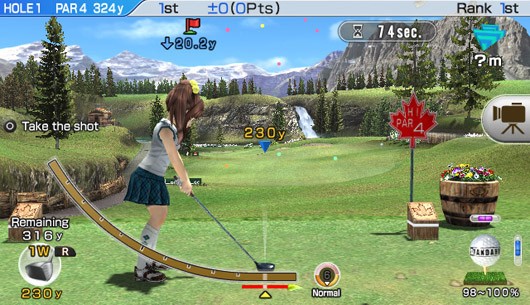
Hot Shots Golf has always been a solid golf series for PlayStation owners since the wee days of the PS1. While it provides cartoony visuals, the game is as close to a real golf simulator as you can get. The game has easy controls, fun gameplay, and amazing original courses.
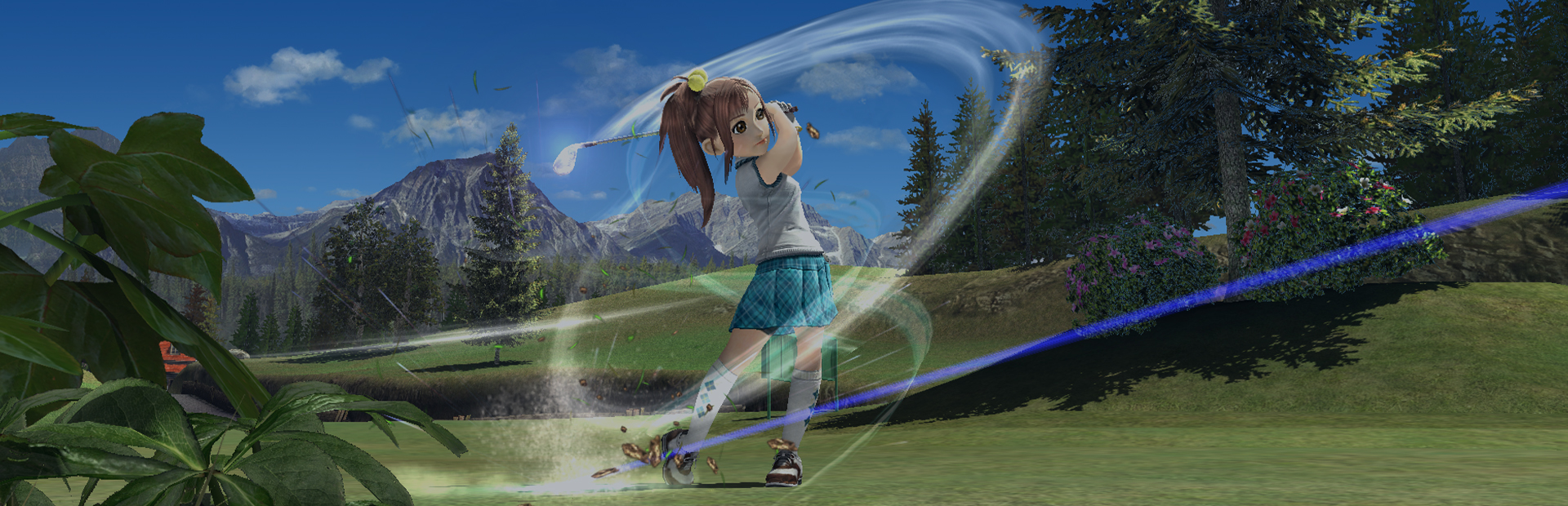
World Invitational doesn’t deviate too far from the already familiar formula. You can create a character and customize every aspect, from hair decorations to shoes. Unlocking new items requires meeting certain conditions during the career mode, and it gives you something to do and shoot for. Once you get out onto the course, things are still quite familiar, and you start to realize why this is the best golf game on the Vita.
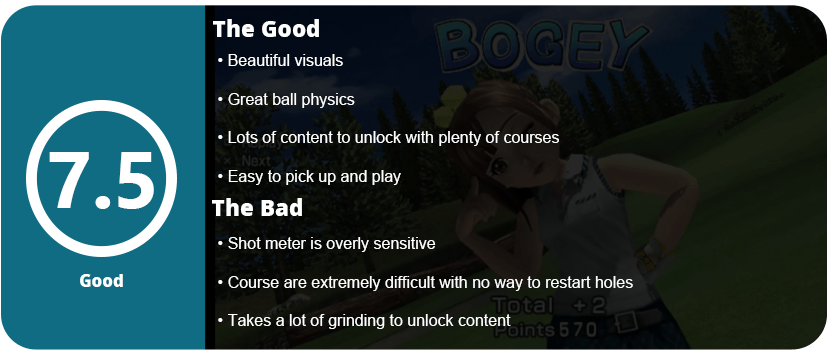
The standard golf game affair is here, from zooming to the hole, seeing wind speed, checking your lie, and even changing your swing and clubs. Controls are very easy, and the swing meter is actually customizable. There are several different types of players. You have unlocked swing meters, which is strange, but my favorite is the three-step meter. Setting your power and then your accuracy is the easiest way to go. I found that this game has an overly sensitive swing meter, no matter which you use, and it’s very hard to get a perfect swing, more so than most golf games. Courses are also very difficult right off the bat, with crazy doglegs, narrow greens, and crazy wind conditions. This is actually the hardest Hot Shots golf game I have played, and it will turn casual players off due to the difficulty.
The game is also grinding heavy, and unlocking items takes forever. I actually couldn’t advance very far in my career because of the difficulty, and unlocking new clubs and earning enough coins just becomes discouraging. There’s no way to restart holes or courses, as you have to quit and go back in, which is a huge downer. I would start out poorly, and by the 5th hole, I would want to restart, but you have to lose all your progress. This grind-heavy playstyle is just a huge turn-off, and acquiring trophies in the game is nigh impossible without having a high-level character.
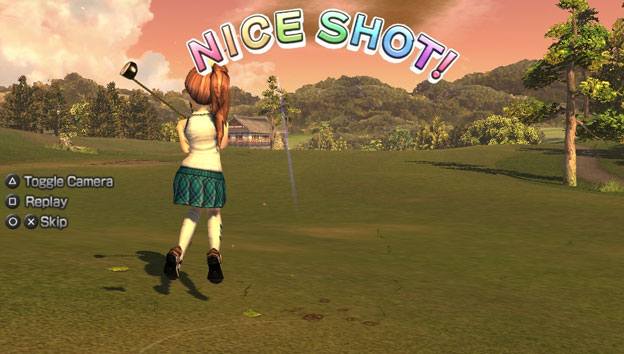
The graphics are amazing, with awesome ball physics, beautiful lighting, and great models. All this is nothing if you get frustrated early on in the game, and it’s not just me. I had a friend buy the game shortly after me, and even playing online is quite hard, and we quickly got frustrated with the game. Occasionally I would go back and try again, but getting to the 15th hole and screwing up big time sucks as you have to quit and start over. There’s no point in finishing because you know you’re going to lose. If you could restart holes, this would alleviate the majority of the frustration in the game.
As it is, the game is nice to look at, easy, and fun to play. Grinding to unlock new items, upgrade your character, and not being able to restart holes makes this quite a frustrating game. The overly sensitive shot meter takes away from pure skill, and the courses are extremely hard to play right from the start. I can only recommend this to hardcore golf players, despite the audience this series normally aims for.
Have you ever wanted to time-travel and change the past? How about just the last 30 seconds? You get that option in Life is Strange. You play Maxine Caulfield, who discovers she can rewind time by saving her childhood friend from a fatal gunshot wound in the girl’s bathroom. This changes Max’s life and everyone around her, but it’s up to you to decide if it’s for good or worse. Life is Strange tells a fantastically beautiful story with wonderfully written characters. The game will keep you hooked and have you playing all 8 hours with barely a blink.
Life is Strange tries to build on the revolutionary point-and-click adventure genre that The Walking Dead revived from Telltale Games. The game is a little more open-ended, but not by much. There’s more to explore and items to “look at,” which gives you a bigger insight into Max’s own thoughts and mind. Honestly, by looking at all these objects, you get to know Max better and the world around you more. Besides this, you just walk through every area to the next character that advances the story. There are some “time puzzles” that require you to select certain dialog choices and then rewind time to use that information to your advantage. It’s an interesting idea, but Life is Strange’s storytelling is a bit of a mess and requires you to pay attention very closely or you will miss something.
The game is broken up into 5 episodes, and each one has a cliffhanger ending. The game goes on at a good pace except for the final chapter, which is a roller coaster and kind of a mess. Without spoiling everything, you kind of “review” everything you have done through the game, which involves an awful stealth sequence. However, through the entire game, I couldn’t help but realize that no matter what I chose, the final outcome never changes, which is odd. It’s not until the last two chapters that all your choices start to unfold, but I feel they are just detours rather than different outcomes. Despite that frustration, the story in Life is Strange is amazing.
I have to talk about the atmosphere of this game. It’s so nostalgic and really reminded me of my adventures as a kid growing up, and it really makes you think about your family, friends, and what’s going on around you in your life. That small country life is something I grew up with personally, and the game really hit home with me. It sucked me in every minute, despite the slow start I had to push through. The entire game is so touching and full of emotion; it’s one of the best video game stories I have ever seen, but it still doesn’t top Soma. This is a story you will talk about long after the game is over and ponder over. The only thing that really annoyed me about the story is that it tries to turn this innocent teen drama “Where did my best friend go?” mystery into a serious murder mystery, which is kind of jarring. I loved exploring these areas out in the middle of nowhere and getting into shenanigans with Max and her best friend Cloe through their time travel events. Once the murder mystery stuff hit, it was a bit of a turn-off, but it wasn’t until towards the end.
Life is Strange also isn’t the prettiest game to look at; it’s rather ugly. The game has a nice watercolor art style, but the game’s technical level is a first-generation Xbox 360 game at best. The textures are muddy and awful, and the character models are terrible. This is just a downright ugly game, but the story and characters keep your head out of that. Overall, this is worth every dime and all your time invested.
Yep! The fact that I forgot about this game until you made a comment proves that.