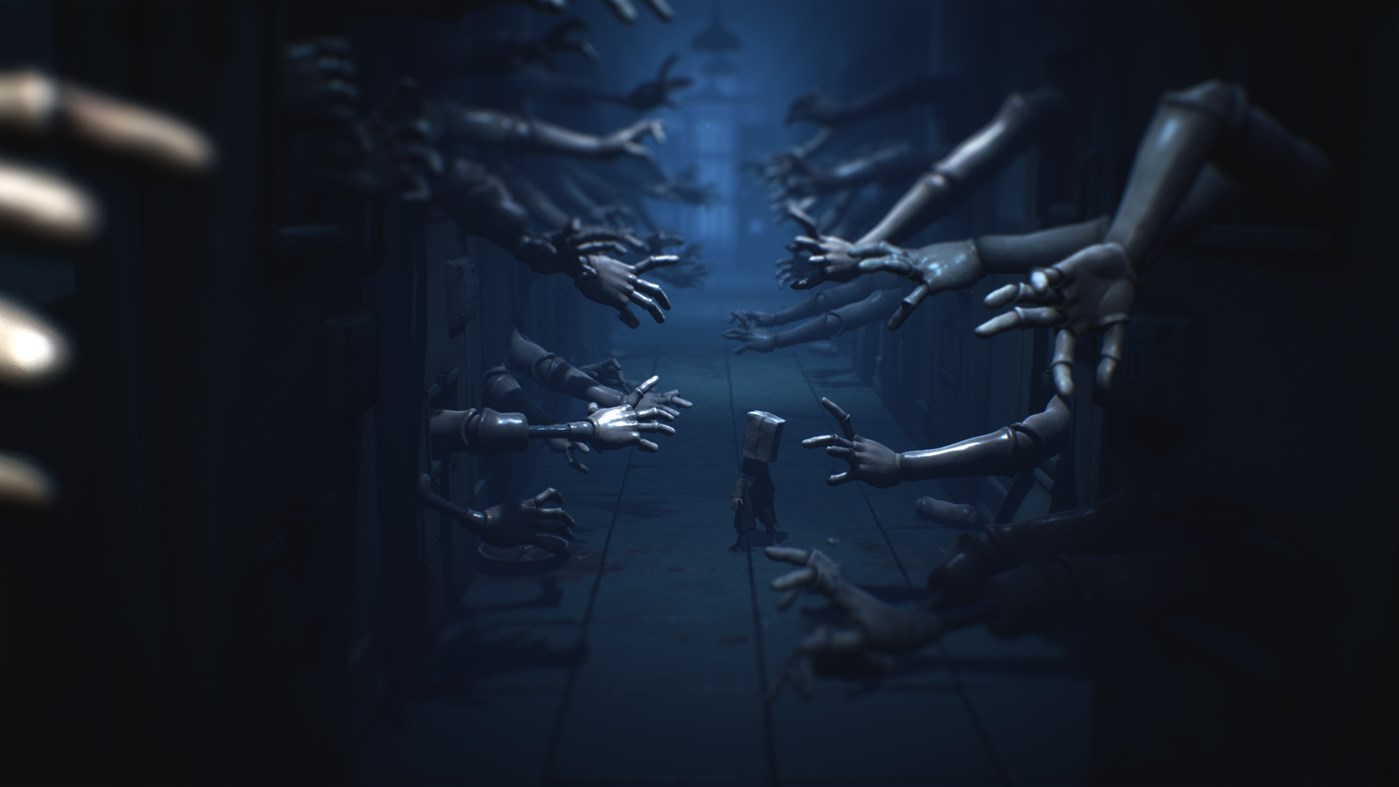
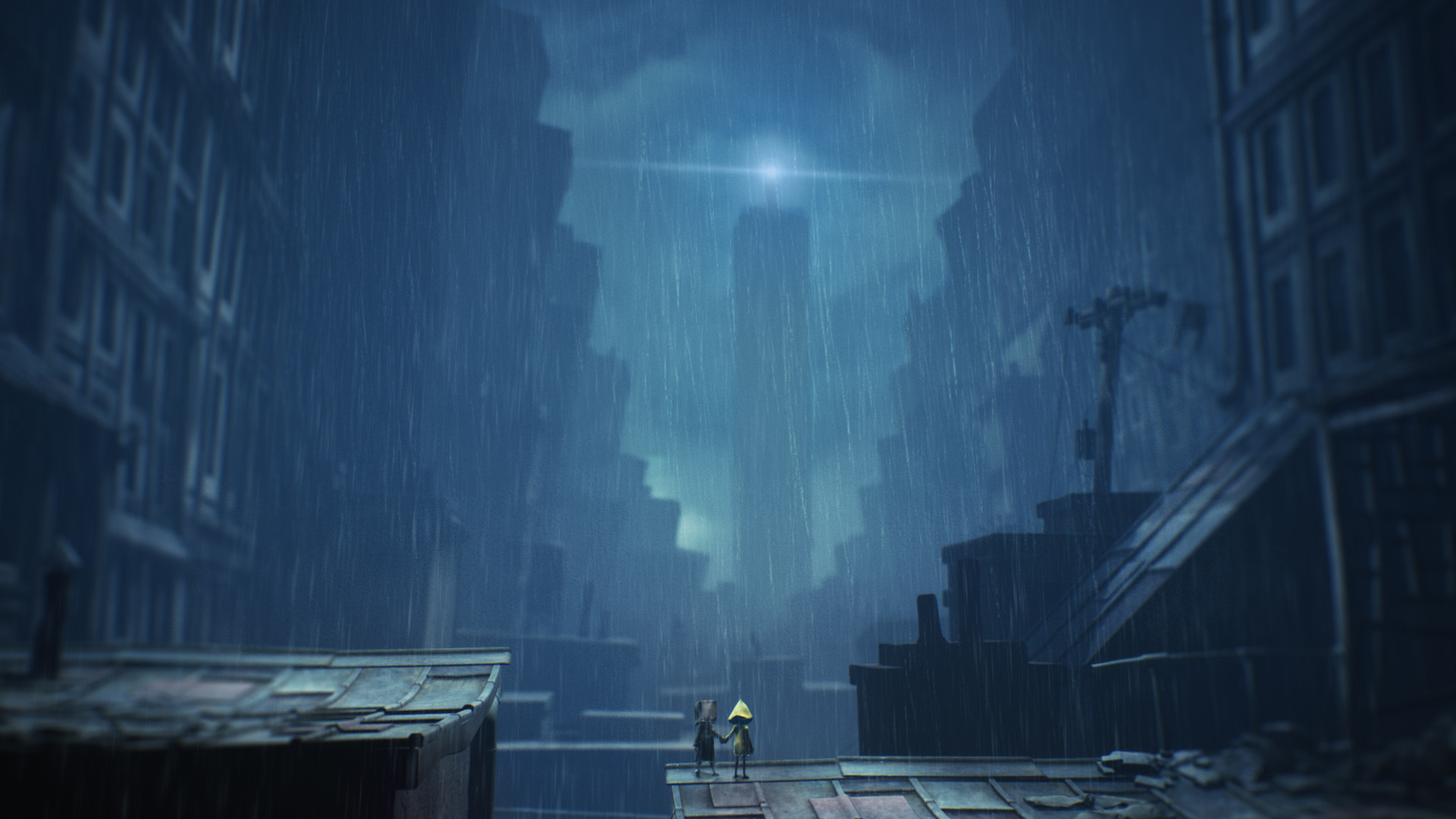
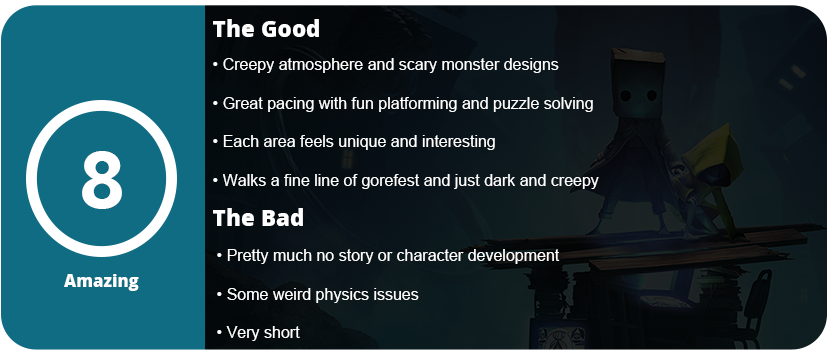
Little Nightmares was a creepy platformer with a minimal story and narrative. The game was mostly all about atmosphere and puzzle-solving. These games cropped up after Limbo was a smash hit, and games like Inside also followed. The only downside to these games is that they tend to not shape any kind of narrative or world-building. There are a lot of interesting things to look at, and clearly, the setting you are in is a curious thing to want to know about. Little Nightmares II puts you in the shoes of a paper bag-wearing kid who is running from something, but you never know what. Throughout the entire game, you go from location to location, not knowing what your end goal is, and even after finishing the game, I wasn’t quite sure what to make of everything.
The game starts out by giving you simple controls such as jumping and picking up objects using the physics engine. You won’t be doing this very often except to use weapons occasionally and throw an object at a button to open a door. The atmosphere sets in right away with your character running through a forest, trying to avoid bear traps, and traversing fallen bridges. Once you get to a certain area, you meet your first main monster, and then you are introduced to combat. I really don’t want to call it that, as all you do is pick up an ax and swing it, but it’s completely based on physics. Usually, you will use an ax to break down walls, but you will use it to fight enemies at the school level, and it’s all about timing. The ax is very heavy, and your character can’t move it very fast, but it works.
The first area is rather short but pretty cinematic, and things will slow down greatly as the game goes on. After a few areas, you will notice the game adds a lot of puzzle-solving, most of which don’t require much thinking. There are a few physics-based puzzles, and halfway through, you meet a companion that requires some puzzle-solving with two people, but the ease of the puzzles is to keep the pace going. You don’t want to spend too long in any one area. I felt the chase from enemies and puzzle-solving were well balanced. Several screens will go by of just platforming, maybe just empty screens of scene-setting, but I do want to talk about these monsters. The game is very creepy, and the main monsters basically chase you throughout the entire area you are in. The school has a teacher that can stretch her neck out and chase you through vents and under tables. The hospital has a doctor who can walk on ceilings. They show up in some scenes, but not every area has you killing this main villain; the most important part for you is escaping.
There is some frustration with the game, and that’s a lot of trial and error. Some scenes wanted to get across the screen via a certain path, but I got caught by the villain numerous times before figuring out how to do it. There were also control issues with climbing things in which my character got stuck, or I didn’t understand that jumping across a ravine to hang on to my character’s hand was going to be an issue. In several areas, I had to restart the screen over and over until I walked across that beam just right or didn’t get caught. Thankfully, you just restarted that screen, and it helps keep the pace going. I just wish there was more story to be told or something else to hold on to rather than the next creepy monster or setting.
The game looks great visually, with a lot of nice art, but technically, it’s not super impressive. Textures look muddy up close, and some objects don’t have the highest poly count. The animations are great, however, and the controls are good; there’s just that annoyance with the game’s physics. It’s also pretty short, as it can be finished in about 5 hours, and I honestly wanted more. The creature designs are so fantastically creepy and unique, and the game skims the line between gory and just plain dark and creepy. It’s never a gorefest, but it feels like it could be. There are animal guts, but not humans; there are body parts everywhere, but they’re mannequins. It’s a fun line to walk down, and it’s done just right here.
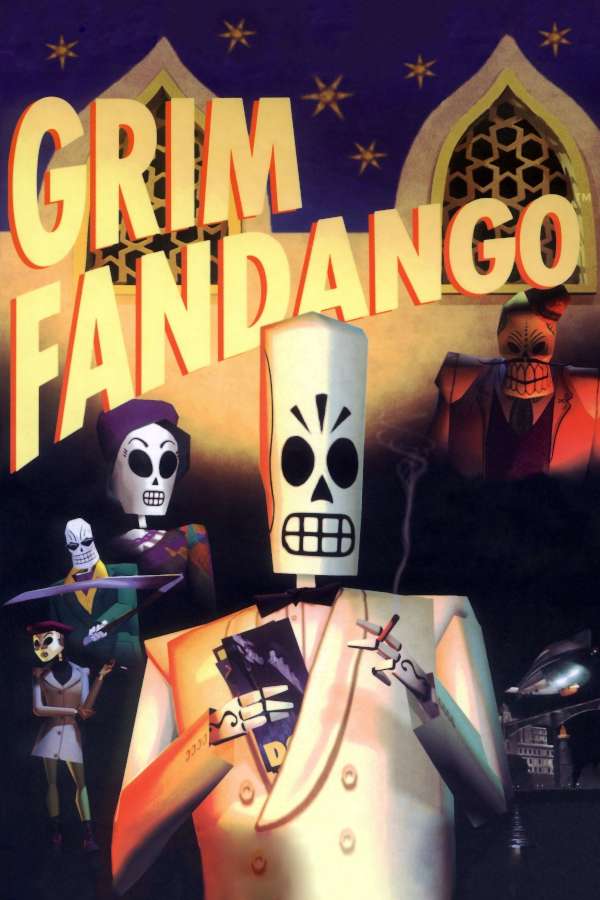
Tim Schaffer games are always hit or miss. He may be a great story writer or character creator, but he’s not a great game designer. I don’t want to come out swinging with everyone, thinking I hate Grim Fandango or all Schaffer-made games. A lot of his work is considered some of the best games ever made on PC, which I get, but they’re remembered for their story, atmosphere, and characters—not so much their gameplay.
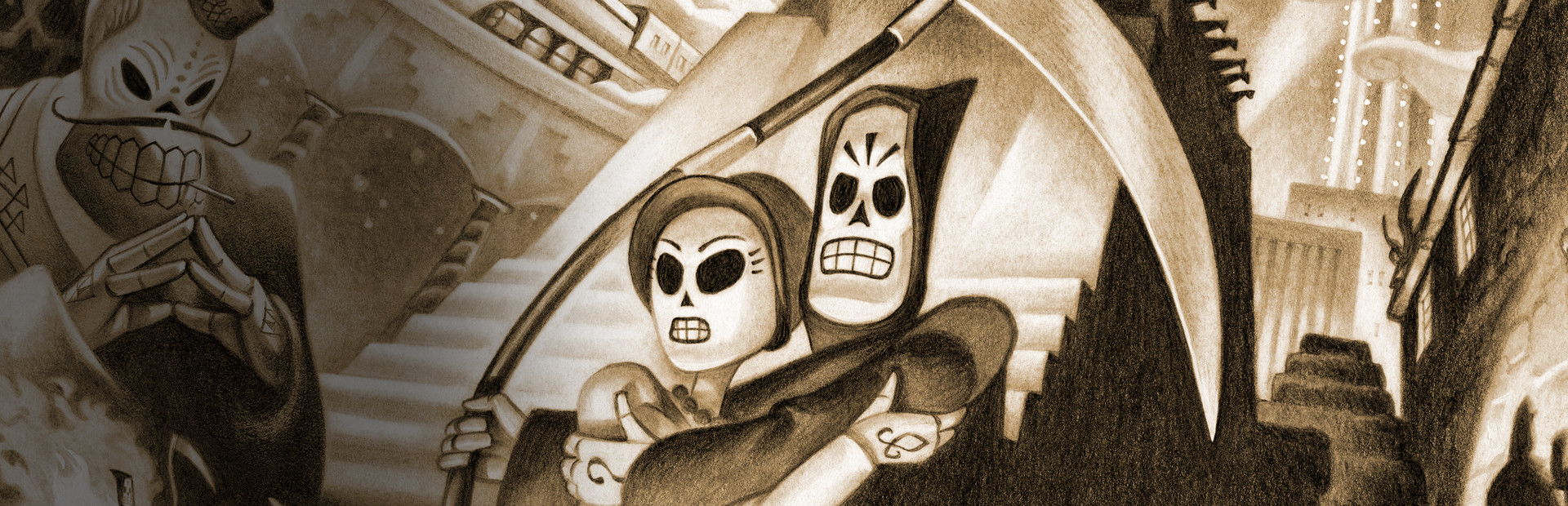
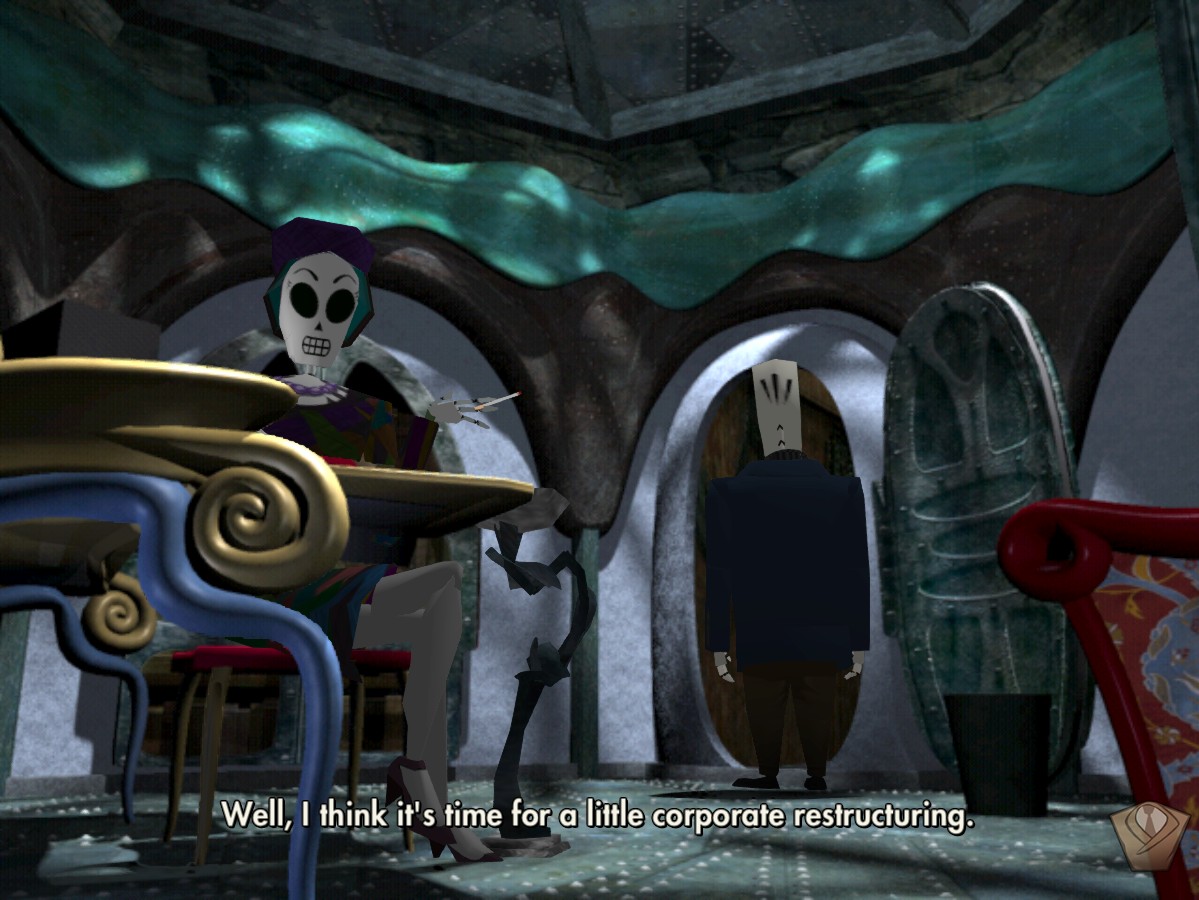
You play as Manual Calavera. A Mexican salesman of the dead gets wrapped up in a huge film noir-style story trying to save a mysterious girl, get back at his evil overlord of a boss, and also an evil co-worker. The game is split up into four years. It takes four years for people to travel by foot to the Ninth Level if they don’t qualify for an express train ticket. For some reason, Manny can’t get any good clients, yet his co-worker Domino can. You wind up uncovering a plot of fraud, sabotage, subterfuge, and love. I can’t go too far into story details, but they’re quite entertaining enough to keep you pushing on.
And pushing on will do. The game’s object-hunting obtuseness varies from minimal to I will never figure this out without a walkthrough. The way objects are used is very illogical at times, and you wonder how Schaffer thought gamers would think in these ways. It doesn’t help that the areas you explore are massive, with dozens of hallways and rooms, and you can easily miss something that needs picking up or completely bypass something that needs to be interacted with. LucasArts had a lot on their hands with this game, as it was the first 3D game they developed and the most sophisticated to date. There’s no object mixing, either. Manny stores everything in his cloak or jacket, and you must either try everything on every interactive object or simply think in odd, obscure ways.
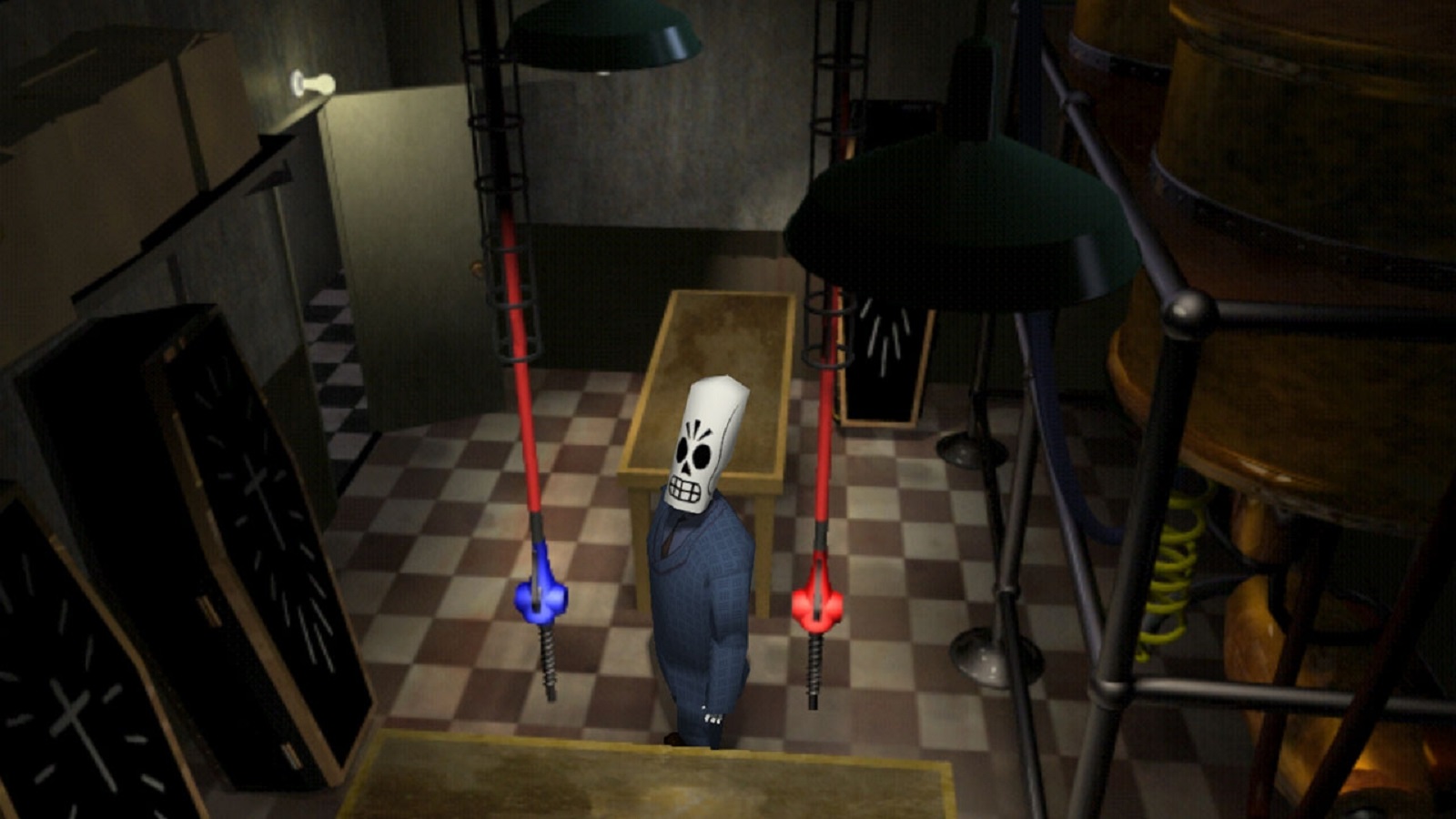
One example early on requires Manny to gum up a pneumatic tube system and get the maintenance demon to open the door. That was fine and all, but the demon left, and I couldn’t get in the door. I then had to re-acquire all the items needed to gum up the system again by running down hallways and doing a ton of backtracking, all because I didn’t realize I had to throw the bolt to stop the door from closing. How was I supposed to guess that? You run into these situations every step of the way, and it gets exhausting and discouraging. Another scenario requires Manny to take a sign and use it to find a hidden doorway in part of a forest. This forest has doorways that loop back around to the same room and do nothing. How would you know to take that sign from the previous room and use it as a compass to find the hidden doorway in this room? The puzzles are insane and poorly designed, which leads to constant frustration. I felt my progress halted every five minutes.
With puzzle obscurity out of the way, there’s nothing else to this game. There are pretty environments to look at, great music and voice acting to listen to, and some great characters, although none of them are very memorable. You can unlock quite a few achievements by talking to certain people at certain points or looking at certain objects. I find this in tune with the puzzle’s obscurity. I also didn’t like how many areas are reused over and over again while, in new ways, they’re still the same. Things are just spread so far apart, and so many sub-plots and hints are given to you that you can’t make heads or tails of any of them. There’s no journal to keep track of what’s said or even what you’re really supposed to be doing next. It can become quite frustrating.
Thankfully, the game isn’t very long, especially if you use a walkthrough. My adventure was over in about 6 hours, and I enjoyed it while it lasted, but it’s not something I will be talking about for years to come. The gameplay time isn’t enough to really flesh out the characters more than you wanted, and it almost plays out like a Pixar movie. It’s a fun blast while you’re in it, but once the credits roll, you quickly move on to something else and probably won’t remember it a year down the road. Something about this whole game just didn’t stick with me, and I can’t put my finger on it. If the puzzles weren’t so obscure, I might be more inclined. At least there’s fun developer commentary all over the place, and the remastered upgrades are nice. Everything looks sharp and clean and is rendered in a much higher resolution. However, there are still many collision and animation bugs.
Overall, Grim Fandango is a fun story with some fun characters while you’re in it, but you will quickly move on to other things as something about this game doesn’t quite stick. It feels more like a Pixar cartoon with gameplay bits in between than a full-blown game. It looks good, sounds good, and the voice acting is excellent, but many won’t finish the game just due to how obscure getting through everything really is.
You play as Ichiban Kasuga. A naive young yakuza member who ends up in politics of his yakuza family and then later the entire country of Japan’s government. The story is incredibly well written and directed, and I was hooked from beginning to end, at least the story and characters. I love the characters here as they have tons of heart, soul, and personality that make you want to see them through to the end of their journey. The first three chapters of the game are pretty much story and character building. In fact, I didn’t really get to do anything outside of watching cut scenes for the first three hours of the game. I just ran to spots that triggered them and I watched this complex web of characters build their story up, and I wasn’t upset as I was glued to my screen the whole time.
This is the first time I’ve finished a Yakuza game and a rare completion of a JRPG. Usually, JRPGs have great stories and characters, but something within the game keeps me from finishing it. Be it unfair and insane difficulty, too much grinding or late-game issues pop up like needing to quest for something very specific and it makes the progression grind to a halt. Like a Dragon is the first in the series to play like a JRPG and not an action game. The story is fantastic and the characters are well written and memorable, but that’s probably the strongest thing going for the game, and it’s the reason why I slumped through the late game issues to see it through to the end.
Once you get past a certain point in the story, honestly I can’t say anything as every little detail could be a major spoiler, you finally get let loose in the world. However, with this being a JRPG let’s talk about combat first. The game is played in a turned-based style, but characters move around on their own in the arenas. Depending on your job you have various skills that can cause major damage, and this is super important and the core of the entire game. While base attacks are fine early on in the game, they don’t do much later on and you start relying on skills that all use MP whether they’re physical or magic-based. Each attack has a type such as magic, slashing, piercing (guns), bashing, or blunt (physical) attacks. Some attacks might have elemental attributes attached to them, but you really must balance your team. You need characters that can heal, do large AoE damage, and do lots of damage to single enemies. It’s important you have a class that can do one of each of those things as it’s key to winning battles.
Early on in the game, the difficulty feels perfect. There were some challenges, I had to use strategy, really focus on ranking up my character’s jobs, and learning enemy weaknesses. This is also a key point in the battle system. Like a Dragon mocks or makes fun of other games like Pokemon. Early on you come across someone similar to Professor Oak and the entire scene plays out like the beginning of every Pokemon game. It’s pretty funny. The point of this is you acquire a bestiary of each enemy type and when you fight in battle and discover a weakness it will appear over the character when you select that attack. This is vital to winning boss fights and harder battles late game or just in general.
Ranking up your job is more important than leveling up your character honestly. This determines your max health, how powerful your attacks are, and learning new attacks. You get more powerful attacks as you rank up, but the downside is that once you change jobs, you start from the bottom on that job. So you have to grind that job to level it up, and late-game this is incredibly tedious, but more on the late-game problems later. There are thankfully no random battles, but enemies walk around outside that can be avoided. When you fight enemies, the environment is also important, as smaller areas are great for attacks that do AoE damage, and it allows you to wipe out enemies faster in bigger groups.
Outside of combat, there are a ton of mini-games, like in every Yakuza game. Karaoke, classic Sega arcade games in Club Sega, crane games, driving ranges, go-karts, and many others. They’re fun at first, but there’s not really any reason to do these mini-games outside of acquiring items. Items are also an important part of combat, as the most powerful armor and weapons are almost unobtainable until you can start raking in serious cash at the Battle Arena in Chapter 12 and fighting the more powerful enemies late in the game. You can also upgrade Ichiban’s weapons (only his weapons can be upgraded) and craft new items, but honestly, this is only needed if you can’t afford to buy them. There are no unique weapons or armor that can be crafted exclusively, at least that I noticed, and once I started raking in serious cash in the millions, I just bought everything, and crafting became pointless towards the end of the game.
There are shops and restaurants scattered everywhere, and I didn’t pay attention to these too much until the late game. Restaurants can fully restore your health and MP, and bulking up on recovery items becomes super important late in the game as well. I didn’t really use many of these until then, as the game felt perfectly balanced, and the right strategies can keep you alive. There are a couple of pawnshops that allow you to sell items, and this is how you make most of your money early on in the game. You start out digging for yen under vending machines and eventually start earning a small amount of money to buy recovery items and cheap gear. There are also sub-stories, like in every Yakuza game, that are shown as chat icons on the map. These give you items and cash and are mostly pointless once you get the late game, and the stories aren’t interesting at all. You also have extra side missions that can get you larger amounts of cash, called Hero Quests. This is mostly for completionists in the end, but the entire reason this is a JRPG is that Ichiban can see enemies as monsters with different uniforms. It’s “in his head because he feels life is like Dragon Quest.” It’s super silly and a lame excuse to make a realistic game have a fantasy twist, but what other excuse were the developers going to use?
As you progress through the first eleven chapters, you hop around taxis to fast-travel to spots, unravel the story, rank up your jobs, level characters, acquire new armor and weapons and items, and all this sounds like a normal JRPG affair, but then chapter twelve comes and knocks you on your ass. This is when most people will probably quit the game, as it turns into a completely different beast and the way you play must change. This is the worst part of the game, and I don’t see how this was necessary. The game had a perfect flow and difficulty level leading up to this chapter. The first sign hits you when you must acquire 3 million yen for a specific reason in the story. By now, you probably have a couple hundred thousand yen at the most. How am I going to get this much money as street thugs don’t really payout and I can only sell so much? Well, the first stupid idea was that there are specific things you need to do to get this money, and they don’t tell you. First, you have a watch in your inventory that’s worth one million yen. You need to sell that, and then there is a specific Hero Quest you must complete that gives you two million yen. You need to take ten photos of a statue hidden throughout the city. What a serious pain in the ass! I knew right here that the game was going to be a chore from here on out. Then, to make matters worse, the last statue is hidden behind insanely difficult enemies out of nowhere. They were many 8 levels above me, but that wasn’t a problem before. I had to grind for a couple of hours just to beat them to take that photo. Such nonsense!
It just gets worse from here. Chapter seven had you complete one of the two long dungeons in the game. It was challenging, but not impossible. This dungeon is the only way to grind up until now. However, once you get to a new small city, you unlock the battle arena, and this is your main way to level grind by climbing floors and beating waves of enemies. You will be here for probably 6–8 hours minimum. At this point in chapter twelve, you come across a boss fight that cranks the difficulty up to nearly unfair and impossible. I had to grind 15 levels just to get a fair advantage. This boss just absorbs so much damage, and throwing all my powerful attacks at him still kicked my ass. I died and retried nearly a dozen times before I almost gave up. I’d grind five or six levels and try again until I could finally do it. I chewed through recovery items like crazy trying to get through this chokepoint in the game. Sadly, it never lets up after this. From here on out, every single boss is a serious chore and does massive damage, no matter what you do. This is what I have in JRPGs, which is why I rarely ever finish them.
So, you will then need to grind consistently before each major story point that you are warned about. You need to be at least level 65 by the final boss, and man, is it a serious pain? You shouldn’t have to want to quit a game because the developers decided the game needed more playtime by chapter twelve. Let’s make you do over a dozen hours of grinding just to finish the game. It’s stupid, insane, and completely unfair. They had the difficulty balanced out perfectly before, and I was happily enjoying the game. The only reason I kept going was because I wanted to see the ending and how everything came together. The story is that good, but if it weren’t, I would have quit at this point. You’re basically grinding the battle arena and the one dungeon, trying to acquire new gear and rank up your job to get more powerful attacks. I highly recommend being around level 70–75 before tackling the final boss, but at that point, you are 25 levels away from maxing out your character.
The game at least has amazing voice acting (in Japanese, of course), and the graphics are pretty good technically but pretty boring on an artistic level. These are hyper-realistic graphics, and the only artistic flair is the enemy designs. I enjoyed the music as well, but in the end, the last few chapters will test your patience. The mini-games are fun, the sub-stories are boring and repetitive, and the post-chapter twelve grinding is an absolute chore and really hurts the game. However, if you can prevail, get through the grinding, and learn the strategy of balancing your party’s jobs, you will get through an incredible and memorable story with great characters.
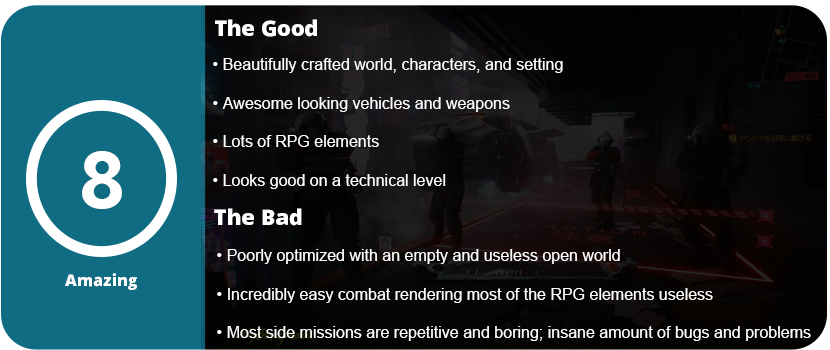
This is by far one of the most anticipated games in modern gaming history. I know I have been excited since its poorly chosen announcement date in 2012. Sadly, CDPR kind of dug its own grave from that date onward. The game is nothing like how it looked in its early concept videos, and a lot of content is cut. Even if you look past all the bugs and launch woes, this is what’s going to stay long after the game has been patched up to a more playable state than it currently is as of this review.
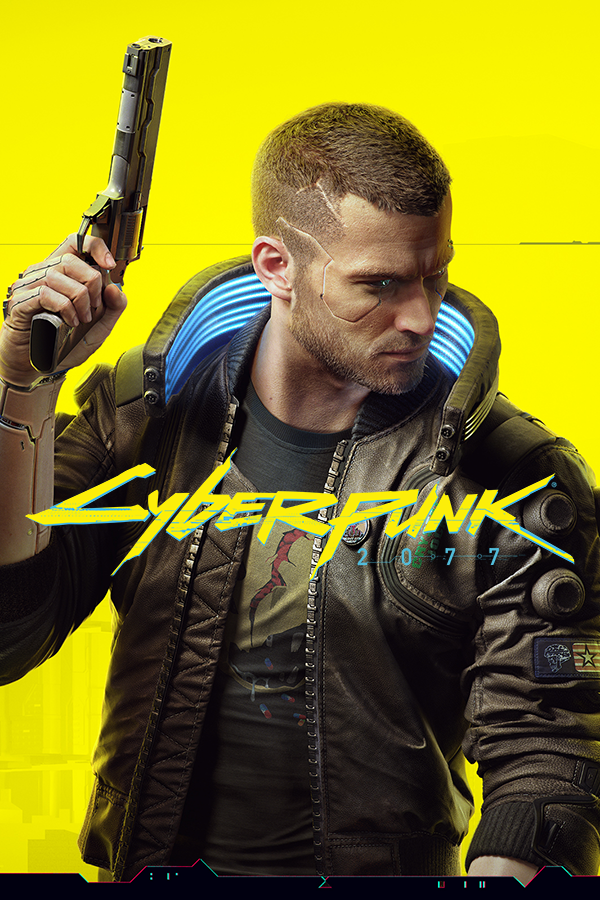
However, if you look underneath all the hype, hate, and sometimes unfair controversy, there’s a great game here. The story and the atmosphere are the main reasons why I stayed. You play as V. A vigilante or mercenary for hire who ends up in the wrong place at the wrong time and gets involved in a corporate terror plot that changes his or her life forever. The entire story revolves around a device you end up acquiring on a job, and this device is the key to immortality. This device also has Johnny Silverhands, played by Keanu Reeves, and one of the reasons why the game got so much hype is that he is a digital construct that is trying to take over your mind. I don’t want to spoil too much of the main story, but my favorite parts of the game were the side missions with the other characters like Panam, Judy, and Claire. These missions really develop a relationship and a strong personality and are one of the shining points in Cyberpunk.
One of the first problems that sets in early is character customization. Ignore all the sexist homophobes who were mad about being able to make your characters transgender. The anatomy is off, first off, and doesn’t look right, and what’s the point? You can only see the genitalia in the player menu; it’s censored in mirrors, and the “sex scenes” are awkward and pointless. One of the core gameplay elements of the game is Brain Dances, which are virtual scenes that you can manipulate during missions, or basically a half-assed detective mode. Some Brain Dances are “sex scenes,” but I just think these were added to add controversy. On top of all this, you can’t change your character’s looks after the initial start of the game. Just why?
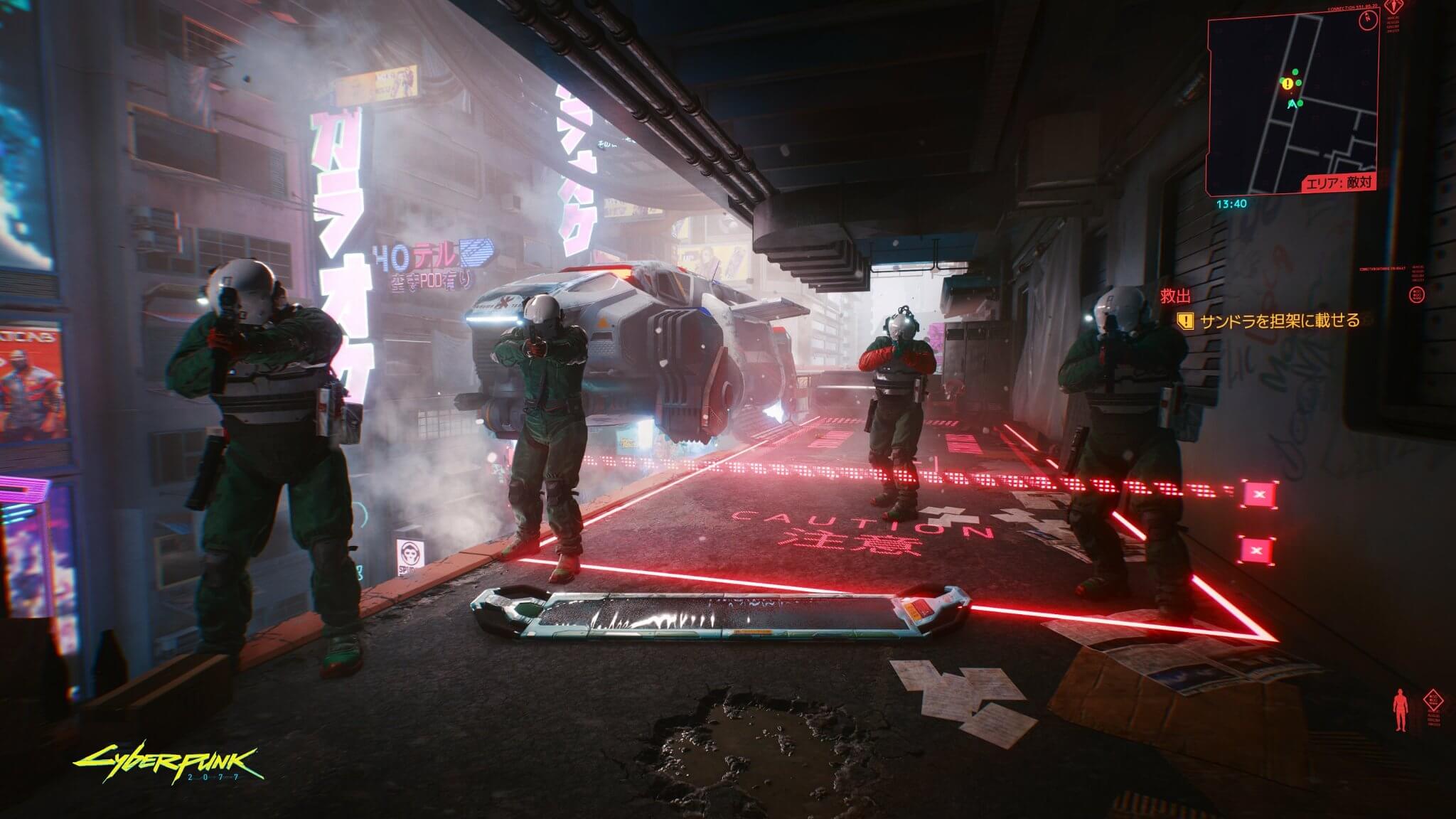
The way to get around the game and various missions can be a bit messy, but the open world of Night City is gorgeous and has a fantastic atmosphere. There’s the main city itself, the outskirts, which are like a desert-type environment; there are suburbs; and various other locales to actually make it feel like Los Angeles. You can walk, run, hijack cars, and fast-travel at certain points once you discover them. Missions are found via random encounters on the street, phone calls, texts, and other means. I never got around to finishing all of them, as the ones revolving around the side characters are the most interesting, and the rest get kind of repetitive. Driving the actual cars is not my favorite, as before the 1.2 patch, they were just broken. They look absolutely amazing and have some insanely cool designs, but sadly, they just don’t drive very well.
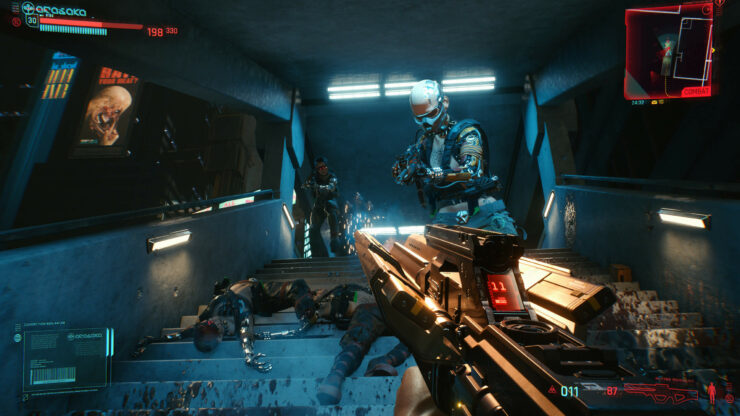
With this being a CDPR game, there are RPG elements involved. There’s a skill tree, cyberware implants, and stats on weapons and armor. It’s pretty detailed, especially with all the wearable armor parts on every part of your body, but it’s also one of the most flawed areas. The skill tree is nice, with many paths you can take, such as melee, various gun types, stealth, and so on, but I felt a lot of abilities were useless, and I just got them to unlock an area I needed. Skill trees tend to be very useless in many games these days, and sadly, they aren’t any better here. When it comes to weapons, they are incredibly unbalanced, with sniper rifles doing one-shot kills no matter where you hit the target early on in the game or at low levels. Then you will get a pistol that will barely do any damage at a much higher level, even if you have the skills that boost pistols. It’s improved in patches but still remains a problem. The bottom line is that Cyberpunk 2077 is incredibly easy. While stealth is fun and a good option for most missions, blasting through the game isn’t that hard. I rarely ever died, as health items are everywhere and so is ammo. While shooting is fun and satisfying, and the weapons feel good, the game is just way too easy.
You can then visit Ripper Docs to install implants that add bonuses and unique weapons to your body, but in the end, I rarely ever visited these and never filled all my slots. What’s the point? The game is so easy, I never really needed much. Just a shotgun, sniper rifle, and an assault rifle or sub-machine gun of some kind. You can add mods to these weapons like sights, silencers, and various others that modify the stats, but the combat is so unbalanced and easy that there’s really no point. Stealth missions mostly rely on your stealth skill tree stats, and you can also hack stuff, but I also found this rarely useful as the game is just so easy that you don’t need these small advantages that would turn the tide of a battle, like, say, Deus Ex. If I got busted, I could easily wipe everyone out with my one-shit kill sniper rifle and hold onto this gun through the entire game.
That brings me to the other side of Cyberpunk’s gameplay loop. After about 10 hours, you will have seen everything the game can do, and you will know whether you want to complete every single side mission and gig call or just plow through the storyline and call it a day. While I love Night City, there’s nothing to do inside of it. Sure, there are various shops you can visit, and you can look at dildos and sex toys inside of windows, but that’s it. There are no side activities like mini-games, no property you can purchase for player homes, or anything like that. I felt like this large, gorgeous city was wasted away, as it’s just a conduit between missions. This is not a cyberpunk playground like many of the early trailers suggested.
In the end, don’t go into this game expecting a true “next-gen” title that raises the bar and changes games for how we play them today. A lot of people went into this game expecting some unreal level of detail, not to mention the visuals. While the game looks amazing, it’s poorly optimized, even on the latest PC hardware. Ray-tracing is pretty much pointless; even on my 2080, the game would dip well below 30 FPS. The only saving grace for PC gamers is the DLSS option, or playing at 1080p resolutions. On my i7 10700 and 1660ti setup, the game played fine in 1080p, but I still got dips here and there. It’s one of the most poorly optimized games I have played in recent years, and while recent patches have made the game more stable, they don’t fix the crazy dips all over the game. It’s even worse on PS4 and Xbox One base models. So, go in expecting a fun story, fun, albeit easy, combat, interesting vehicles, and a cool cyberpunk city to run around in. Don’t go in expecting something revolutionary.
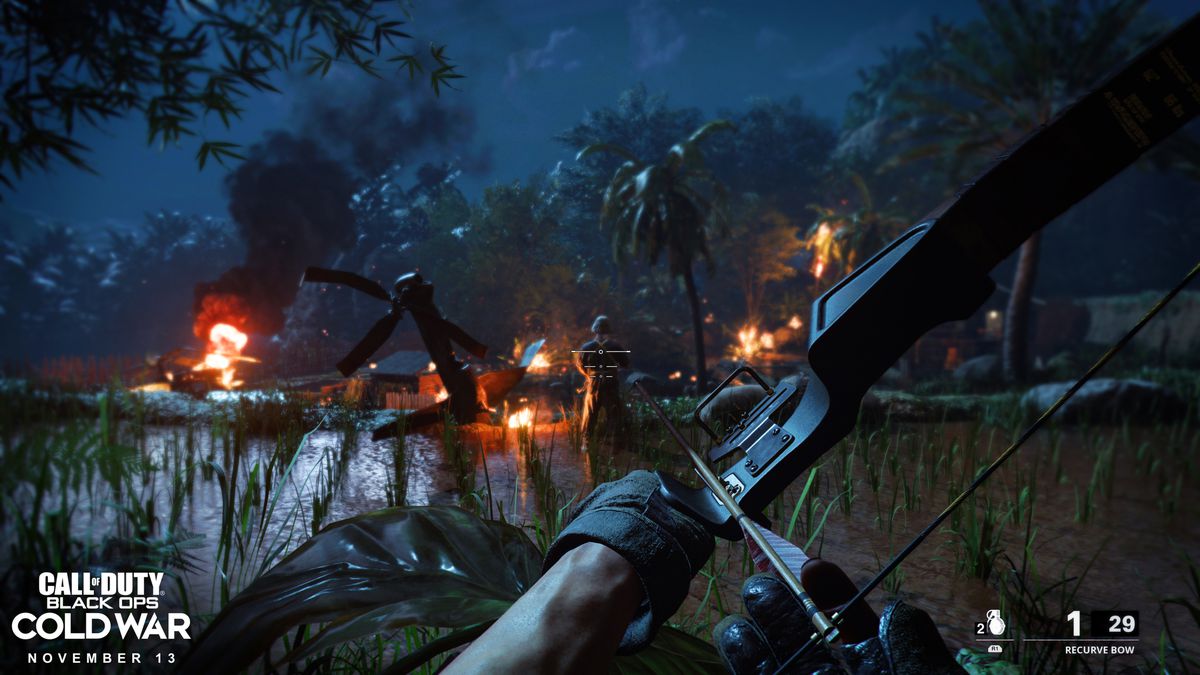
Well, well, well, here we are a year later with Treyarch’s installment of the series once again after a decent hiatus. Black Ops is back on the table with an entirely new reboot, just like Modern Warfare was last year, but does it make as big of an impact? Well, most people will jump straight into the campaign first, which is one of four modes that flesh out Cold War’s myriad of gameplay variations.
The campaign is set during the Cold War, as if the title hasn’t clued you in at all. The game is specifically set in the early ’80s, as you play as a band of special operatives ordered directly by U.S. President Ronald Reagan to stop a Russian terrorist from setting off a bunch of American nukes. The story is well-paced, and the characters have potential, but here’s the main problem with Cold War: the story is only a few hours long and is probably the shortest Call of Duty campaign to date. It was over way before I wanted it to be, as the slow burn was a nice pace over Modern Warfare’s fast-paced action, but that game had a much longer campaign and stronger characters that were, dare I say, pretty memorable and stood out. Cold War is set up differently and takes a different approach to the campaign in an almost 80’s spy type of way, and I enjoyed those brief moments. You walk about a hideout, and on the evidence board is your next mission, but two of them also require you to solve decoding puzzles, which were rather fun and neat. You need to find all the evidence pieces in the campaign to solve these, and they were quite challenging. Once you do, you get short side missions—nothing special—but those puzzles are one of many things that didn’t get enough time to mature.
There are bombastic scripted events like in every Call of Duty, but the quieter, more subtle moments are just as enjoyable. There’s an intense, open-ended level in a KGB base in Russia that has you playing as a double agent. It’s very tense, as you have to decide how to plant evidence to get access to a vault. You can do it in many ways by sneaking around restricted areas and planting things, opening things, and the various cat and mouse of everyone being on to you but not quite knowing it’s you yet. You have to stay one step ahead, and the script is well written for this. I loved this level, and that was the only one like it. The final level is a repetitive mess and feels too much like previous Black Ops campaigns that made no sense, but the campaign is enjoyable, albeit just way too short and underdeveloped.
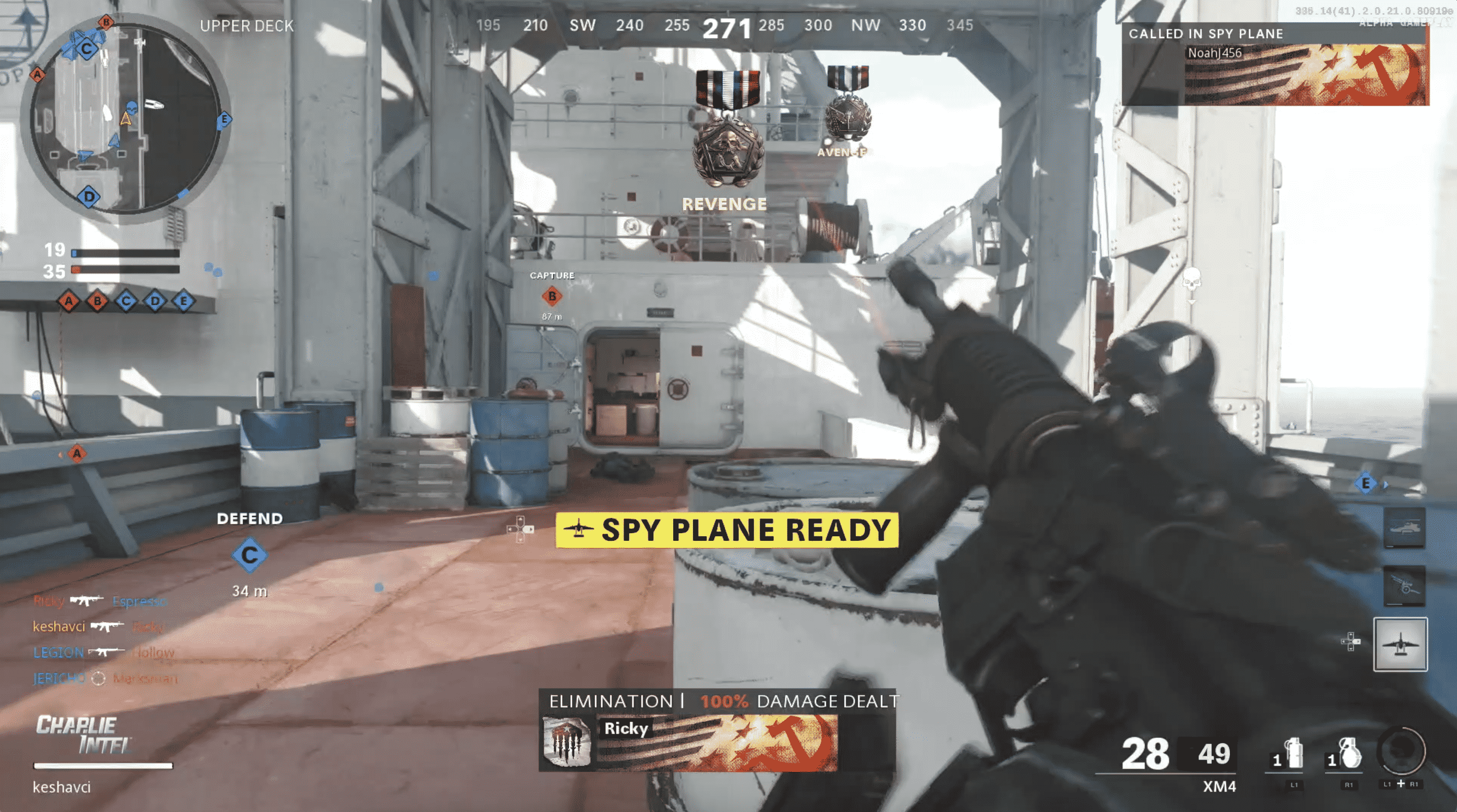
When it’s all said and done, you’re going to uninstall the campaign and move on to zombies and multiplayer. Let’s get into multiplayer first. I can’t stress enough that the Cold War is more arcadey than modern warfare. Even in the campaign, the guns don’t have the same realistic weight, quick scoping is faster, and everything feels like it’s fast-forward. The movement is about three times as fast, there are health bars above everyone’s heads, and there are scorestreaks instead of killstreaks. It seems like chaos is coming from Modern Warfare, but it’s a nice alternative to a more serious and realistic game. The UI and menu are pretty much identical to Modern Warfare, with a few tweaks, so you can jump right in without having to relearn where everything is. Blueprints, attachments, load-outs, and all that are still here. It just feels a bit more streamlined, and maybe some fat has been shaved off. Some will like it, and some will hate it.
The actual gameplay of the multiplayer is a standard Black Ops affair. The same modes from Modern Warfare carry over, like Team Deathmatch, Domination, Kill Confirmed, etc. The maps are also just as hit-or-miss as Modern Warfare and take some getting used to. Not everyone will be as fans of these maps as they were with Modern Warfare’s launch maps. The game is faster-paced and more arcade-like than Modern Warfare, with enemies darting across the map at an alarming and almost too-hard-to-target speed. Sliding is extended, shooting feels less weighty, and the overall scope of the game is just faster and lighter. This isn’t something I prefer. I like the more realistic physics and weight of Modern Warfare, as it makes the game a bit more tactical and slower-paced, but not necessarily easier, mind you. I do like the era-specific weapons like the M-16, M-79, M-60, and various other weapons that have been discontinued in today’s military practices.
Most people will probably come to Black Ops for its zombie mode, though. That’s the bread and butter of this series, and it doesn’t disappoint here. I won’t delve too far into this mode, but the newest features are larger maps and a weapon rarity system similar to RPGs. You’re allowed to bring in your multiplayer loadouts for the first time, and I liked the larger areas with the many hidden secrets. I feel like this mode needs to break off and expand into its own game, honestly. There is also the Dead Ops top-down shooter mode, which is a complete waste of time. It’s boring, repetitive, and feels half-baked. At this point, Black Ops is running into a ridiculous amount of modes and heading into Mortal Kombat territory for half-baked mini-games and too many ideas at once.
With that said, Cold War isn’t as good as modern warfare. It doesn’t feel as polished or well thought out, and honestly, it feels rushed. I think another year and the game could have been better, if not just as good, but as it stands, Modern Warfare is still the best game in the series to date. I love the faster-paced multiplayer; it was fun and exciting, but the maps are lackluster and left me wanting more. I also got bored of the multiplayer much faster than Modern Warfare. I honestly haven’t touched the game since the week of the game’s launch. I didn’t get that excited, addictive feeling of wanting more. The campaign was actually a lot of fun and really interesting, but it felt rushed and half-finished and just wasn’t long enough. There are a lot of good ideas here that didn’t get a chance to flourish, and that’s quite a shame.
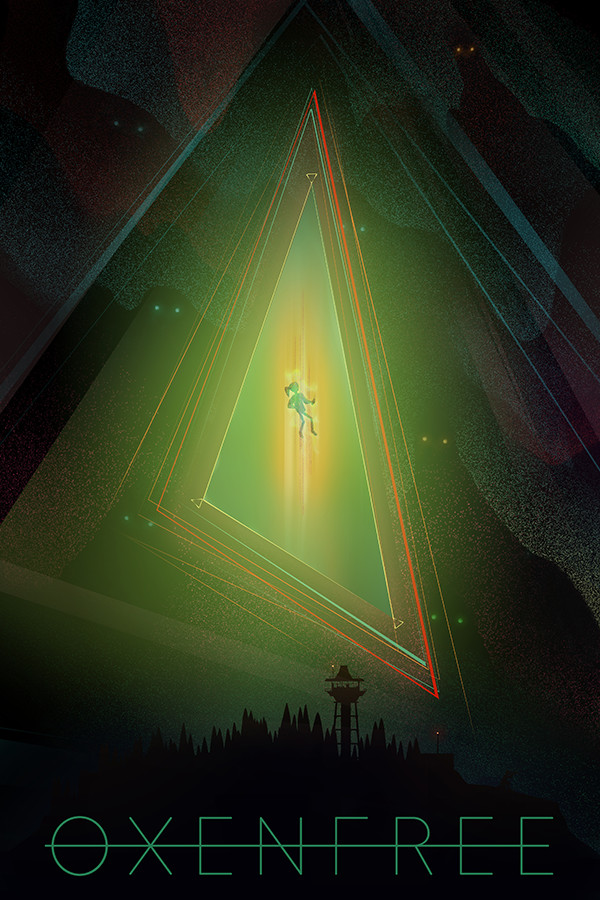
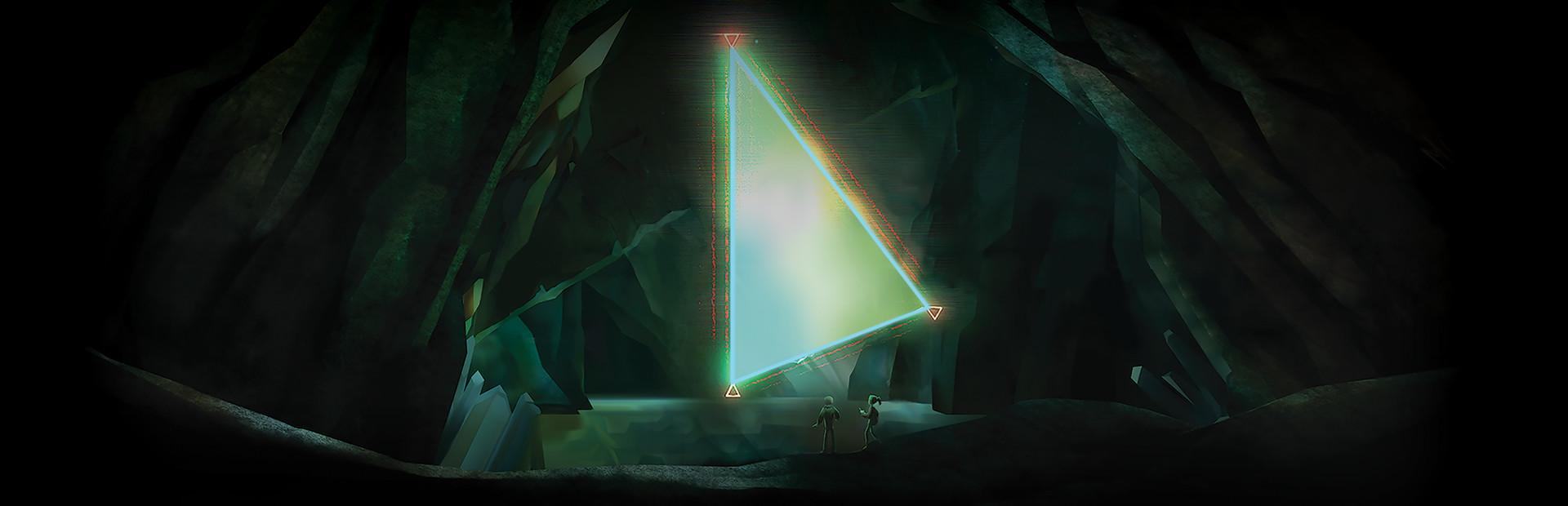
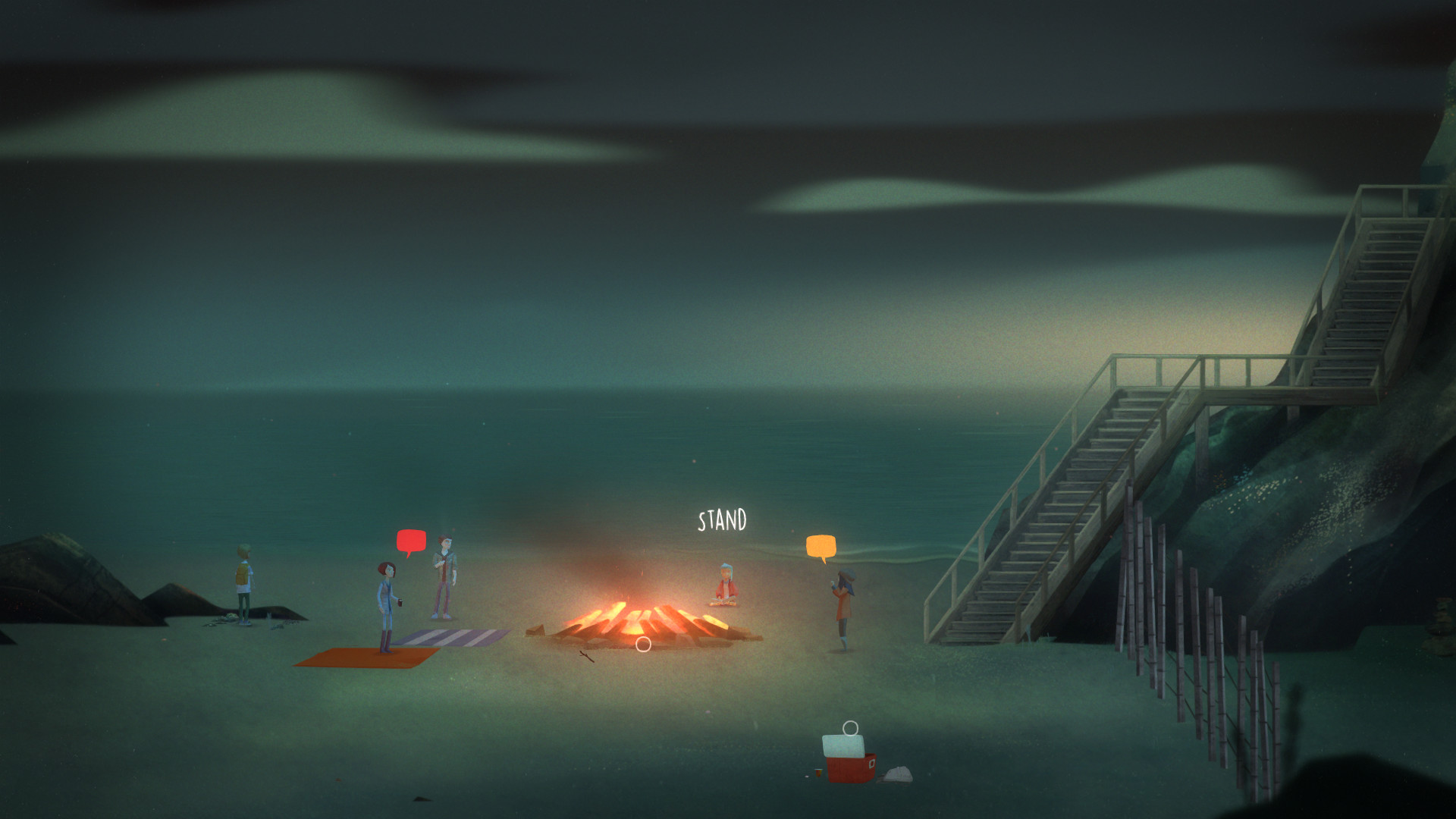
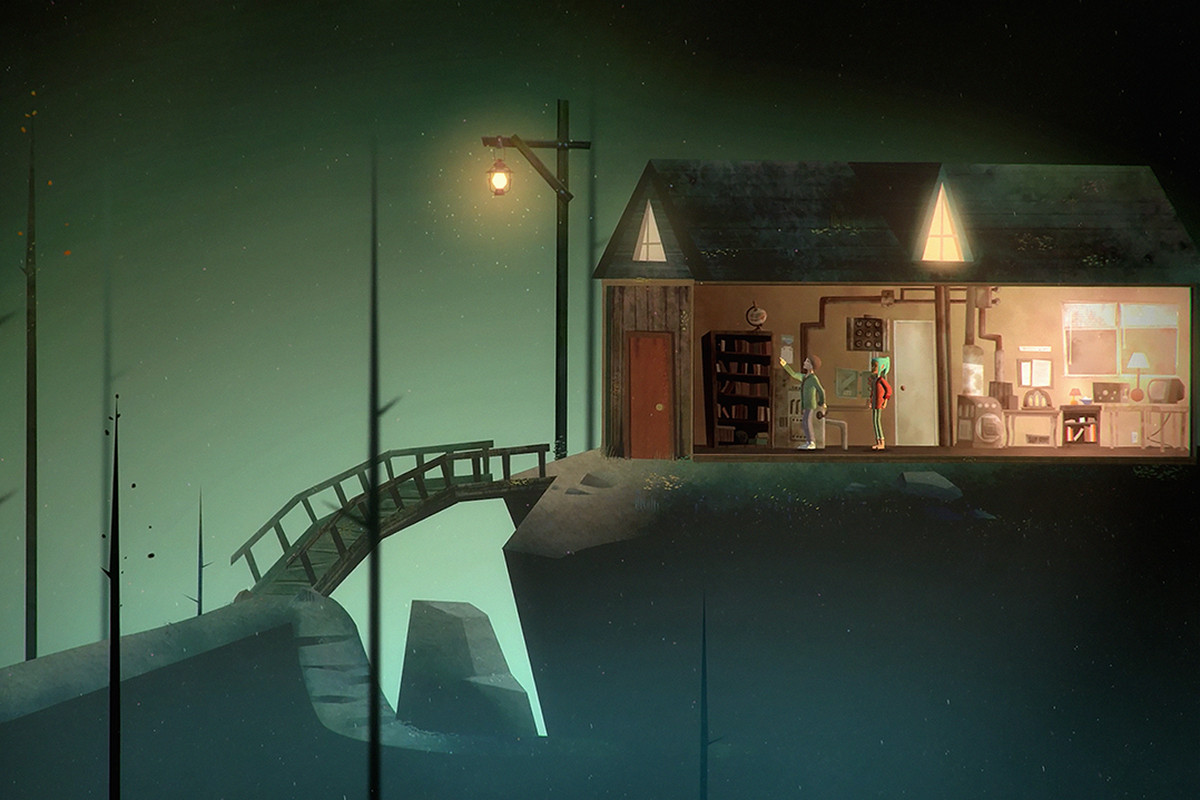
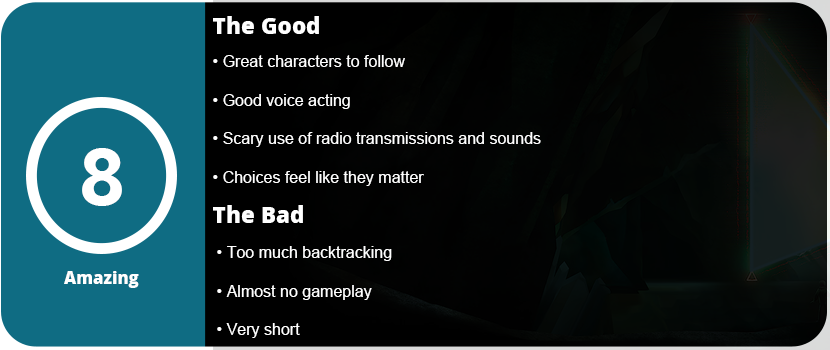
Oxenfree is all about horror and mystery. It starts out with five students in their early 20s arriving at a small town in the Pacific Northwest to discover some sort of weird thing that goes on in the caves there when you tune a radio to a certain frequency. After a good amount of dialog, plot, and character development, you tune your radio and discover a rift in time. You also discover the island is actually haunted, and you are trying to free the ghosts within. Why, how, and what they are in the mystery that I won’t spoil.
The horror elements are mostly audio-related and are something I have not really heard in a game before. The game uses the eerieness of radio static and voices. Have you ever gone down a scary YouTube rabbit hole and watched “Top 10 Scariest Sounds” or something like that? Well, if you ever heard one that was about strange radio call signs that were used in the Cold War, then you know what you will hear in this game. It made the hair on my neck stand up and was very chilling to hear. There are various stones you can find throughout the game that give you tidbits of stories about the island, and these creepy radio calls are part of this.
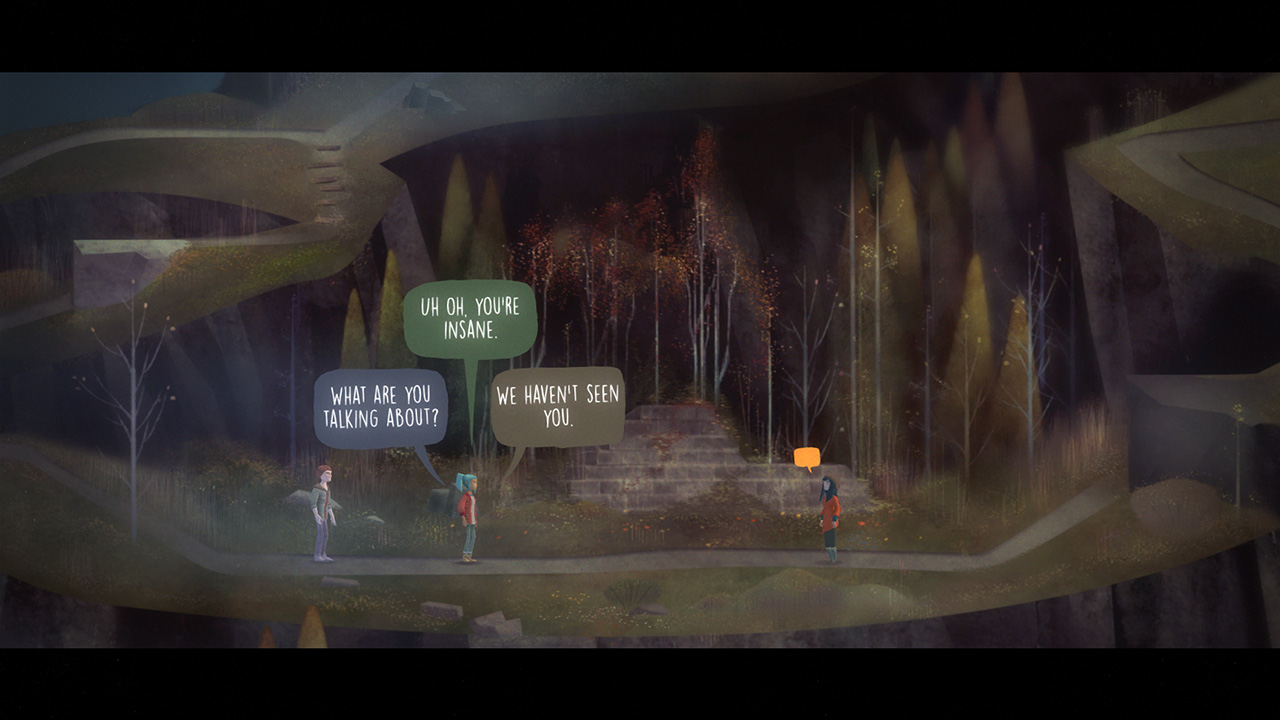
You wander around the island, listening to the dialog, as there are no puzzles in this game. It’s very much a “walking simulator,” but you walk and talk with the characters and choose from three different dialog options as they pop up in conversation. Some of these are story-altering, and some are not. These choices determine the ending you get, which I found was a little too short and disappointing. I really got to like the characters here, and the game is so short that you can’t invest a lot of time into them. Every so often, the game will bring you into a time loop, and these are when a lot of important choices are made. Even for a 4-hour game, the story is done quite well and has a beginning, middle, and clear ending, and you wind up exploring most of the island, albeit at a snail’s pace. You can wander around further to collect letters and find these frequency stones, but I honestly didn’t find the story of the island as interesting as the characters.
The voice acting is actually really well done, and I like that when you answer before someone finishes a sentence, Alex, your character, will interrupt with a correct tone and inflection in her voice. The constant bantering between the characters is the most entertaining part of the game, and I was always looking forward to hearing what they had to say. The game also looks really good with 2D backgrounds and 3D models. It’s a 2D side-scrolling adventure, so it’s hard to get lost here. I found the game’s pacing was all over the place; however, there would be sections where I felt I was progressing quickly only to get slowed down by too much backtracking or lots of cut scenes and dialog. You don’t have to really think to finish the game, and I felt collecting everything was too tedious due to the slow pace of the game.
Overall, Oxenfree is a great horror mystery game that, while not very memorable, will entertain you for an afternoon and might be something you discuss with friends as the story does have a twist ending. It looks good, has great voice acting, and the characters are interesting, but the constant backtracking, slow pace, and almost zero gameplay may put some off.
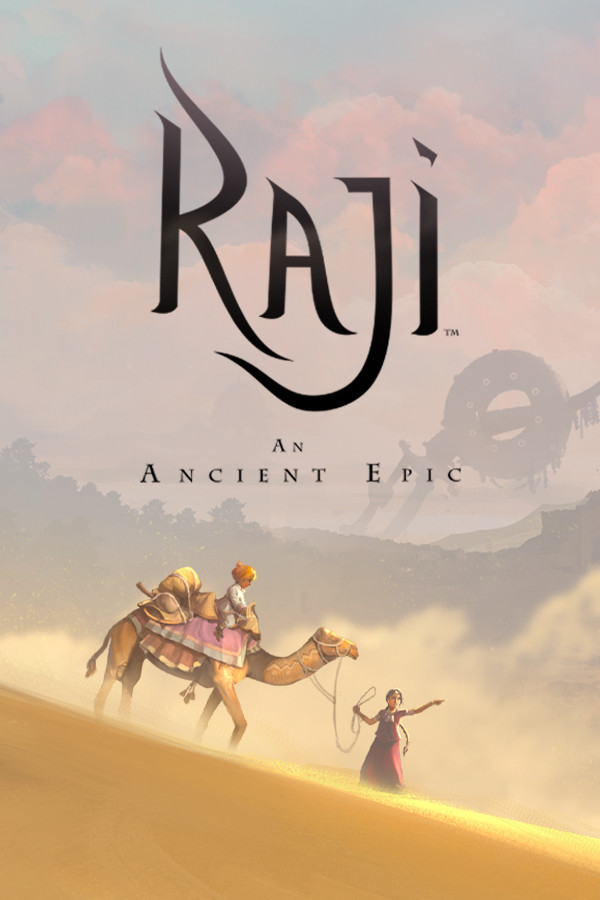
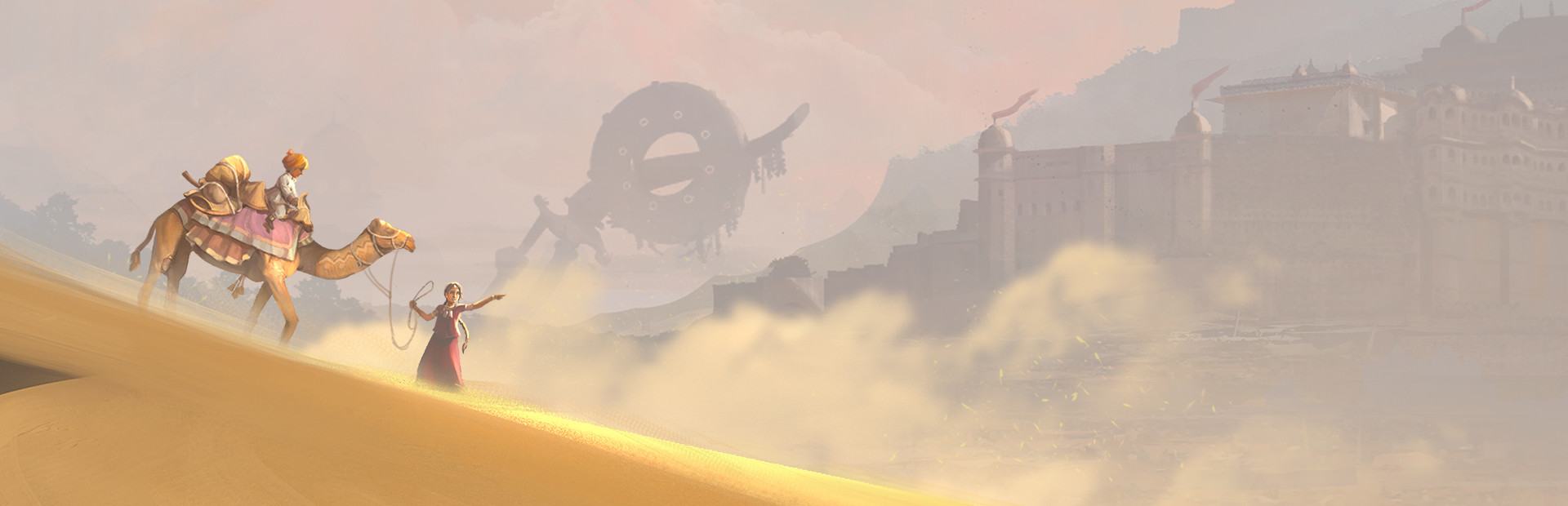
Small indie games can usually have better content than large AAA budget games these days due to their smaller scope and lower financial risk. Some of these games still rarely stand out and become huge, massive success stories. Raji is a game I wish could become a success story that blows up like Journey, Braid, Limbo, or Inside, but it feels like it’s missing something to bring it to that level. For starters, the story is rather dull and uninteresting and mostly focuses on teaching the player about Asian-Indian mythology. You play Raji, who is determined to rescue her brother, Golu, from an evil demon. The story mostly focuses on mythology, but Raji and Golu aren’t very exciting characters. They feel very one-note.
The game’s main focus is combat and platforming. Combat is surprisingly deep, with acrobatics and various moves that make it feel like Prince of Persia. Raji can do backflips off walls and pole spins, and each of the three weapons you acquire has a special attack: light and heavy. You start out with a staff, and this weapon is great for reaching; the second weapon is a bow; and the third is a sword, whip, and shield. You will end up switching weapons based on which enemies you are fighting. The enemy designs represent Asian-Indian mythology, look cool, and are a challenge to fight. The game might seem easy at first, but there were sections where I did it numerous times, and the boss fights are a great deal more difficult as well. However, there are difficulty spikes throughout the game. You will breeze through a few fights and then keep dying on just one that either has an unfair amount of enemies or multiple waves. You can heal by doing finishing moves, but that’s the only way in combat.
You can acquire skill points to add various elements that can damage enemies passively. These are mostly hidden in the game and require venturing off on different paths, but I didn’t make too much of an effort as the game is so short with only three large levels. Platforming is actually the most enjoyable part of the game, but the game focuses more on combat. While combat looks good and controls well, it just doesn’t have that oomph that other games like this have, like Prince of Persia or even God of War. It feels like there’s no response from enemies when you hit them; there’s no weight to her movements. There’s momentum, but no feeling behind her, which I feel would have taken the already detailed combat one step further. Platforming works well with wall runs, double jumps, shimmying, and hopping across poles.
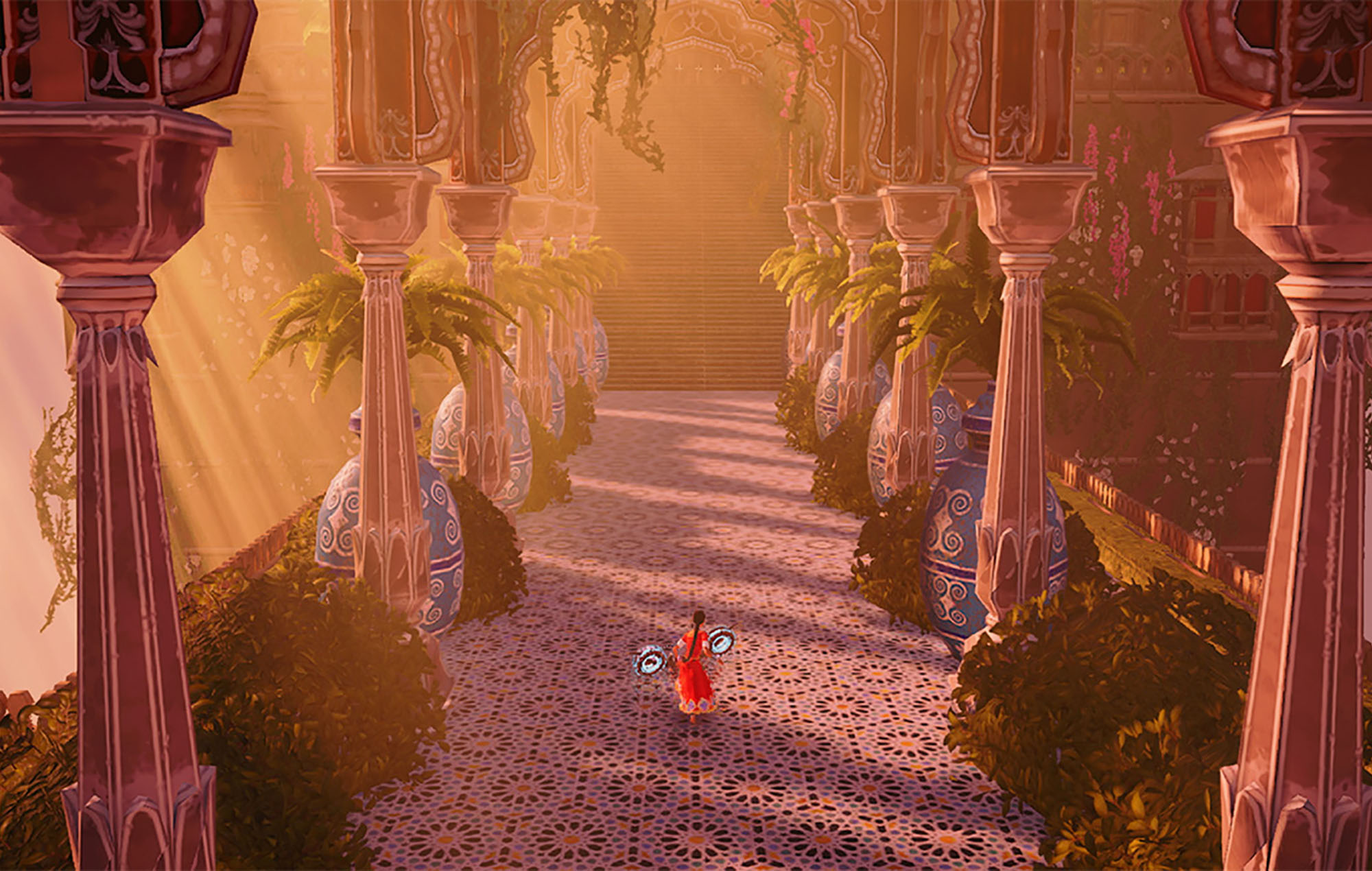
The game adds puzzles, if you can call them that, as they aren’t really puzzles. You have to spin things to match them up, but it’s not like a typical puzzle. You can just rotate the rings until everything matches up. No puzzles here, really. This is probably the weakest part of the game, including the areas in level two where you have to throw out lilypads in the water to hop across. What’s the point? This doesn’t add a challenge to the game but just feels like a useless element that takes focus away from something else. At least the game looks amazing, with epic vistas, good lighting effects, and lots of detail. It’s clear that a lot of care went into the game, but it needed more time for some polishing. I even ran into some game-breaking bugs with enemies disappearing or not appearing and getting stuck on ledges.
Overall, Raji is a great action platformer that has some faults. It focuses too much on mythology and less on our heroine; combat controls well and looks fancy, but has no weight or feeling behind it; and platforming is the best part because it is focused on less over combat. The puzzles aren’t even puzzles, and the overall experience is only a few hours long. I haven’t played an indie game quite this fun in ages, and even with huge difficulty spikes, the game has a lot to offer.
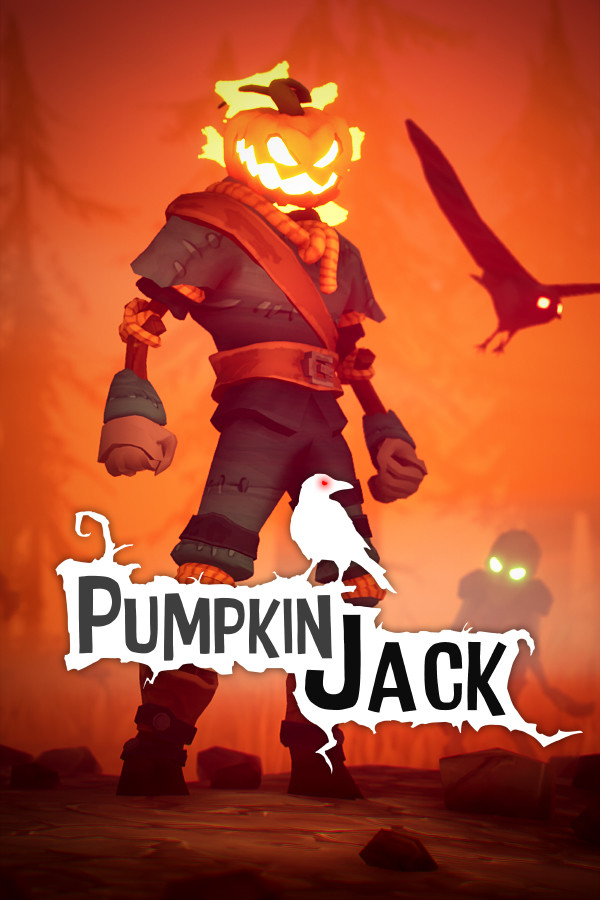
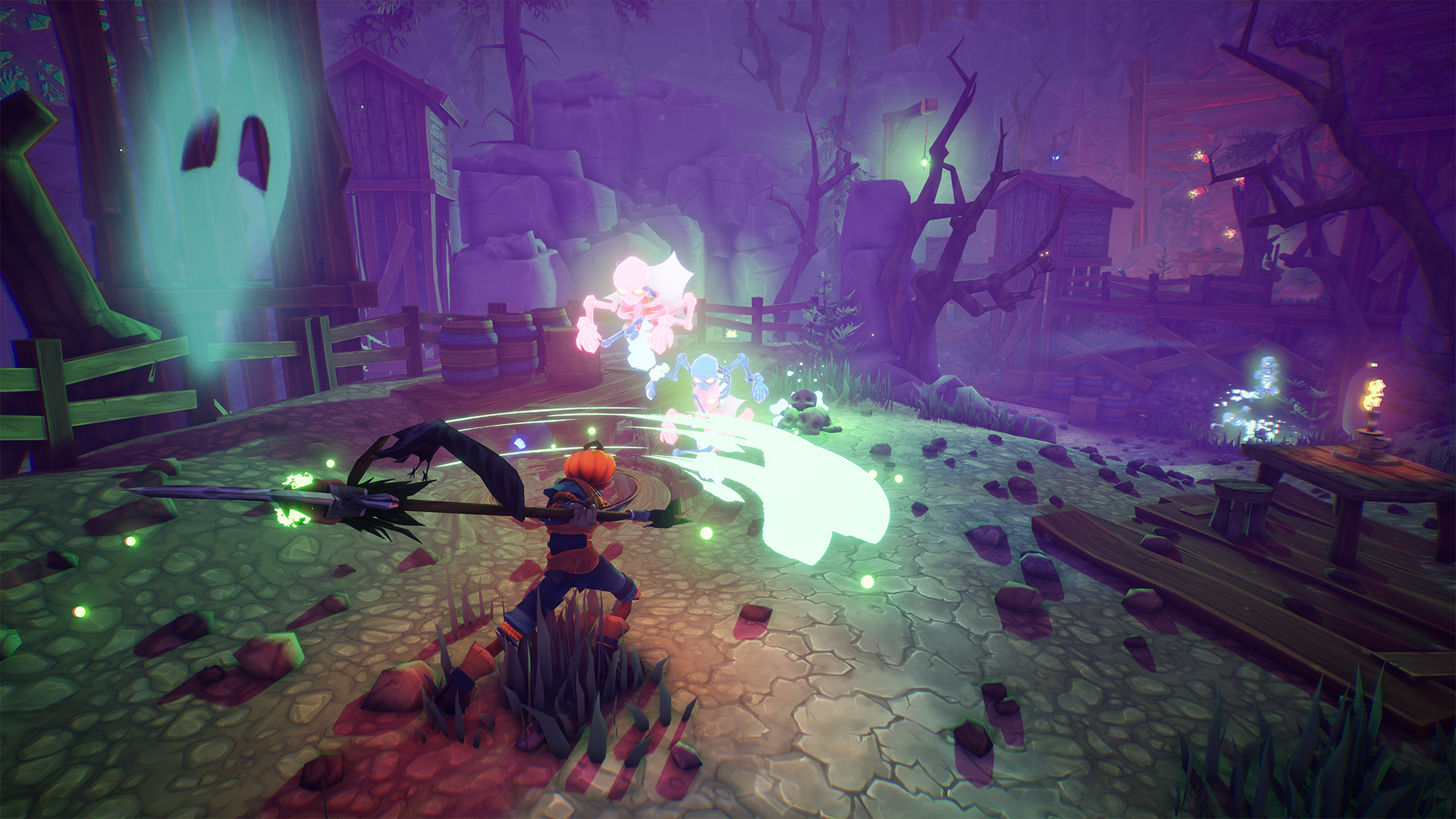
Small indie platformers are something I like paying attention to. Pumpkin Jack caught my eye as it looks and feels like a PS2-era platformer that would have fit in at that time, but has more polished gameplay than most did in that same time period. You play as a demon named Jack, who is sent by the Devil to stop an evil wizard from taking over the world. It’s a very paper-thin story, but the game is so short that anything else couldn’t really flourish. This is also akin to PS2-era platformers, as most of their stories were pretty basic and uninteresting due to their length and budgets. You have a crow companion that spews hints and dialog at you, but that’s it story-wise. The cinematics are nice, and the presentation of the story is fantastic, but the content is really lacking.
This goes for most of the game, honestly. While what is here is really solid, it’s very elementary and basic. Combat consists of one button mashing over and over with an aerial attack. You can send your crow out for a quick hit from afar, but the main attraction is the various weapons you acquire at the end of each level. Ranging from shovels, scythes, magic orbs, and a shotgun, The arsenal is quite fun and keeps things mixed up, and so do the enemies. The enemies are well designed and have one of the strongest points in the game. While you can button mash, you must also dodge, as dying is quick if you aren’t on top of your moves. Some enemies require being stunned first, some will spawn until you destroy their spawn point, some are strong, some are weak, and each enemy needs a certain approach to them.
The main focus outside of combat is platforming. You will be pressing the jump button at least once every 2–3 seconds without a break. There is tons of platforming that can get a bit tricky, but the momentum and physics of Jack feel just right, and the double jump helps quite a bit too. This would be a pretty monotonous game if there were just platforming and one-button combat. To break this up, there are some mini-games you can play with only Jack’s head that have you doing Simon Says, guiding bombs, memory games, etc. There are also on-rails sections in each level that require dodging and shooting down enemies. It’s quite fun, but you realize there is a formula in each level, and while these are different, such as riding in a minecart versus being carried by a giant bird, they are essentially the same mini-games with different skins. At least the amount you do is varied, with some levels having a lot and some having only a couple.
The only thing you collect in the game are crow skulls used to unlock costumes, which feels pointless as the game is about 4 hours long and there’s no replay value. You see everything the game has in the first playthrough, and due to its repetition and overall basic gameplay, I have no desire to go back through. It’s fun while it lasts and can offer a decent challenge, but it’s very formulaic when you step back and look at the game as a whole. The level design is great with various spooky themes like mines, graveyards, swamps, forests, and a neat Christmas level, but again, this is a PS2-era designed game with 2020 flair. The boss fights are probably the most unique things in the game, but I can say if this game came out 15 years ago, it would have been a smash hit.
The visuals are also very dated, looking a couple of generations old, despite using DirectX 12 and even having ray-tracing and DLSS support. The textures are just muddy and low-resolution, and they’re meant to look like an older platformer. The game had a low budget, but it still needs mentioning. However, with the tight controls, great platforming, decent challenge, and unique enemies and bosses, the game is just good enough to recommend a one-time playthrough. The story is thin and uninteresting; the combat is simple, but there are five different weapons to use; the level design is interesting; and there’s an actual challenge.
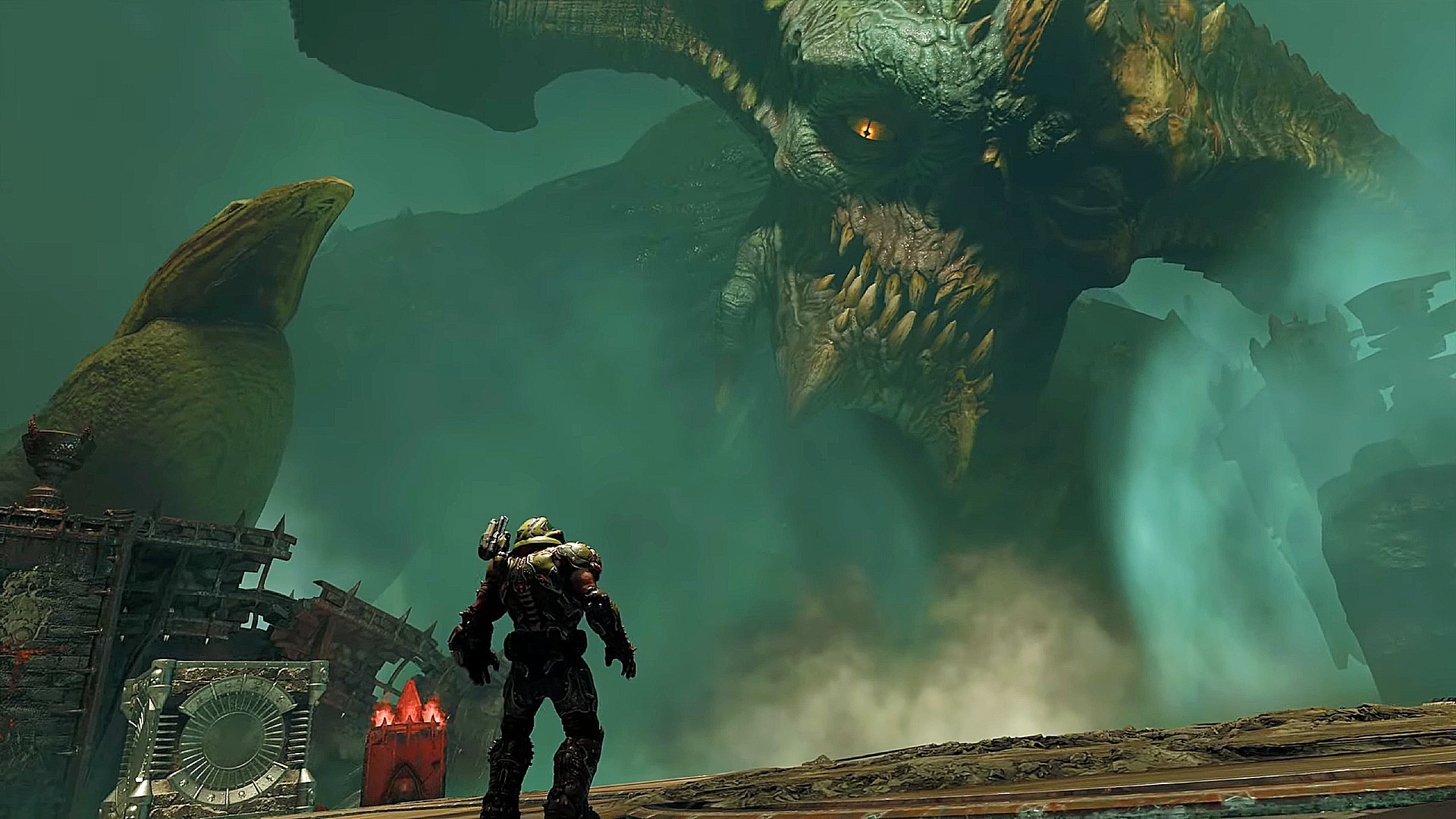
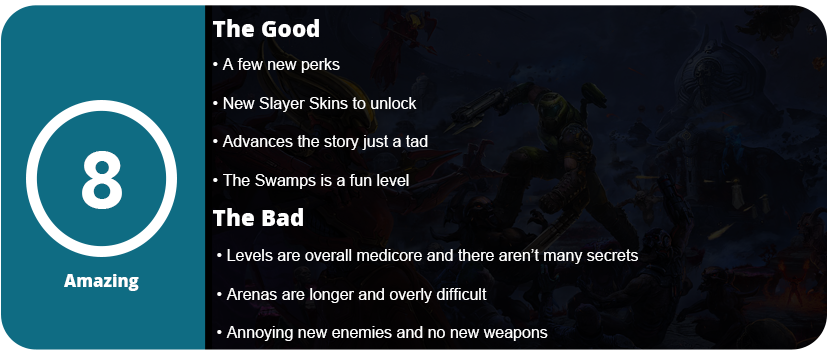
At the end of Doom Eternal, I was left with a bit of disappointment. Too many things were forced into the game, and it got tiresome towards the end. New enemies were uninteresting and slowed the pace down some—too much platforming—and the difficulty was all over the place, no matter what difficulty setting you were on. The Ancient Gods, sadly, exacerbate this by adding a new enemy that, once again, slows the pace down and is just an excuse to use a certain weapon mod. There are no new weapons, just three newish levels. I say newish as the third level, The Holt, is a recycled Urdak level. It’s boring and uninteresting, yet the first level, UAC Atlantic, is just a giant science center in the ocean. The Swamps, the second level, were the most interesting of the three, but they aren’t amazing overall.
The story takes place right after the ending of Eternal, with Doomguy trying to kill the one true Seraphim God to end all demons. It’s mostly just dialog over intercom here and there and just barely advances the already silly Doom Eternal story. Outside of a few codex pages, there’s not much else to the story here. In fact, there are even fewer secrets to find. There are just 1ups, BFG ammo, and codex pages, and there are six gore nests and three slayer gates. The Gates will give you an extra perk that has been added, which isn’t very useful, and the Gore Nests reward new Slayer skins. That’s pretty much it for secrets, but the levels are very long and incredibly difficult. Combat arenas are tougher and longer, and I died numerous times in each level, even on the lowest difficulty. This is my biggest issue with Doom Eternal. Doom 2016’s areas felt hand-tailored, but Eternal’s felt randomized. Even the final boss is insanely difficult, with too much jumping and worrying about obstacles rather than just shooting.
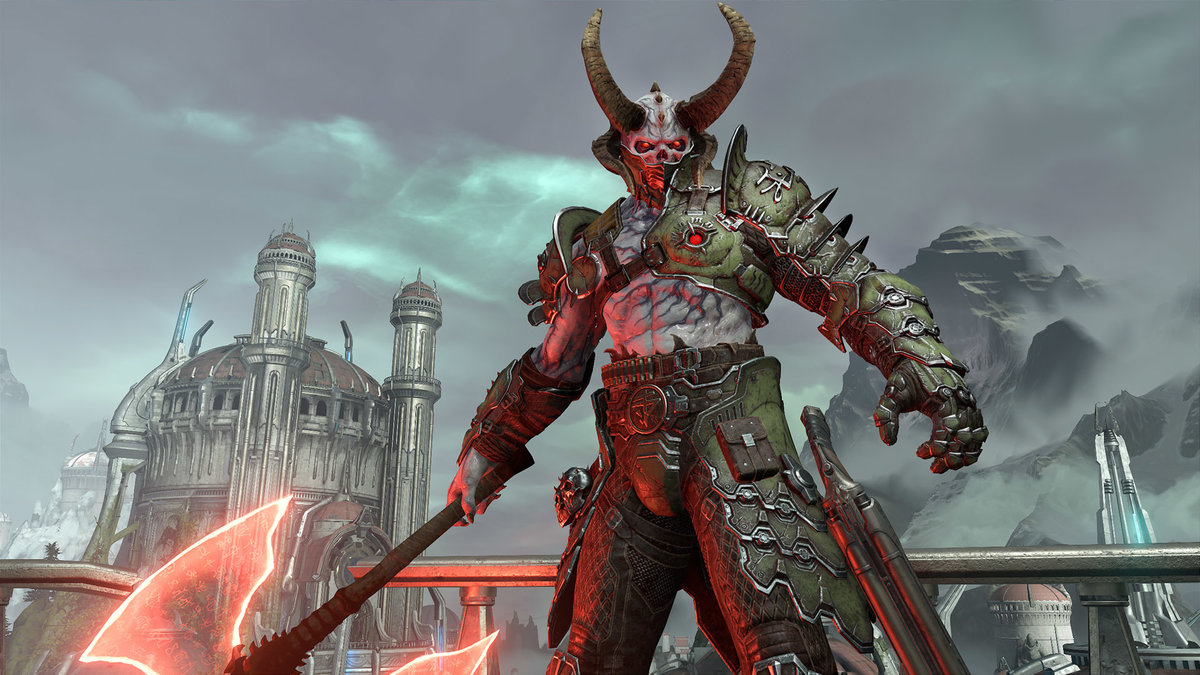
The Ancient Gods feel more like stuff from the cutting room floor than an actual expansion. There’s almost nothing new here outside of 2.5 new levels, a few perks, and two irritating enemies. Yes, like Maurader and Maykyr Drone, these enemies just slow the pace down. We get another Maykr drone that has a shield and is only vulnerable when it’s down, and then there are the spirits. These possess demons and make them stronger, and the only way to kill them is to use the microwave beam or kill all the enemies in the area so it disappears. Super annoying, not any fun at all, and just slows things down. I would have liked to see a new weapon or an actual demon.
Overall, The Ancient Gods is still fast-paced and fun in Eternal Combat, but it’s just not enough new to be considered anything more than some lost levels. Fewer secrets, new annoying enemies, insanely pumped-up difficulty, longer and less interesting levels, and only three new perks. It’s still plenty of fun, and if you finished Eternal early on, then this will give you a few hours of mayhem to get another taste, but it’s nothing to write home about.
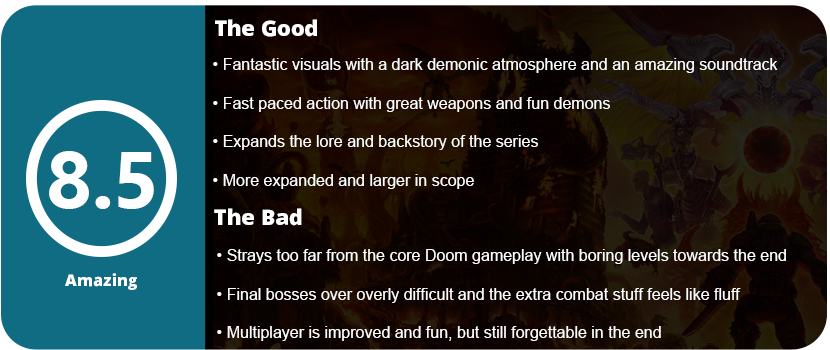
Doom (2016) helped resurrect the aging and dying franchise. Doom 3 was scary and atmospheric but lost the fast-paced action of the original games. Doom bought this back in 2016 with a rocking soundtrack, fantastic visuals, fast-paced shooting, and what felt like Doom brought into the future, it was nearly perfect. Eternal follows in the footsteps of Doom 2016 by trying to expand the lore, story, and combat altogether. It does a great job doing this, but it does bring about some problems that didn’t exist in the first game.
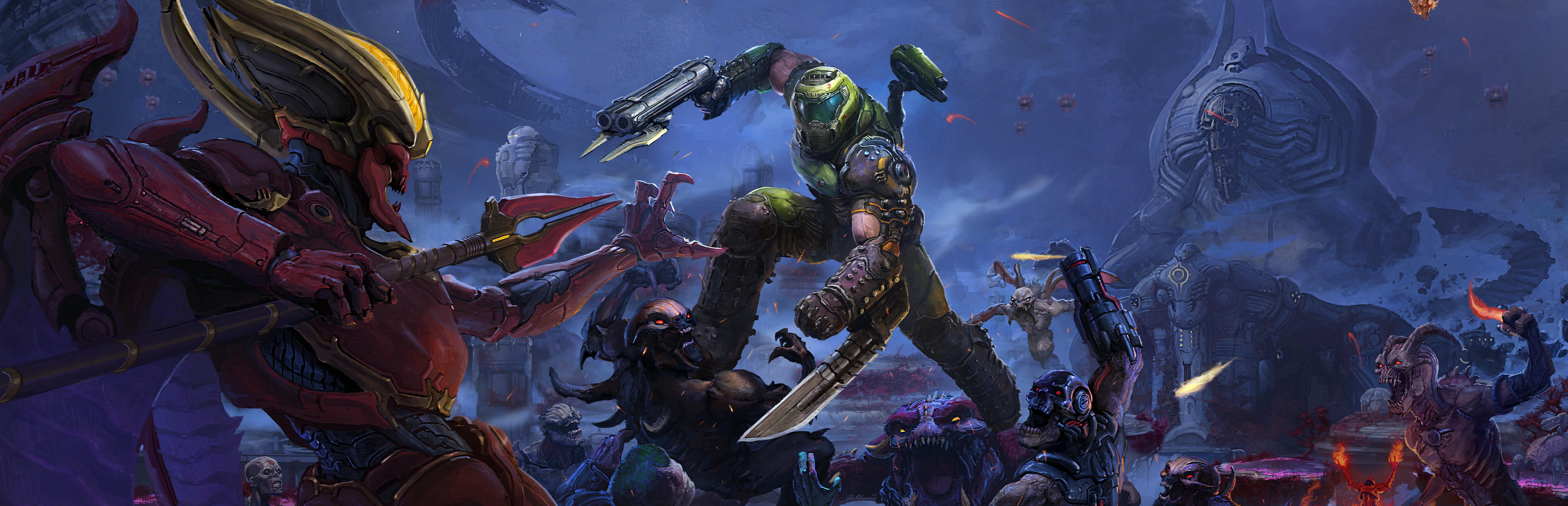
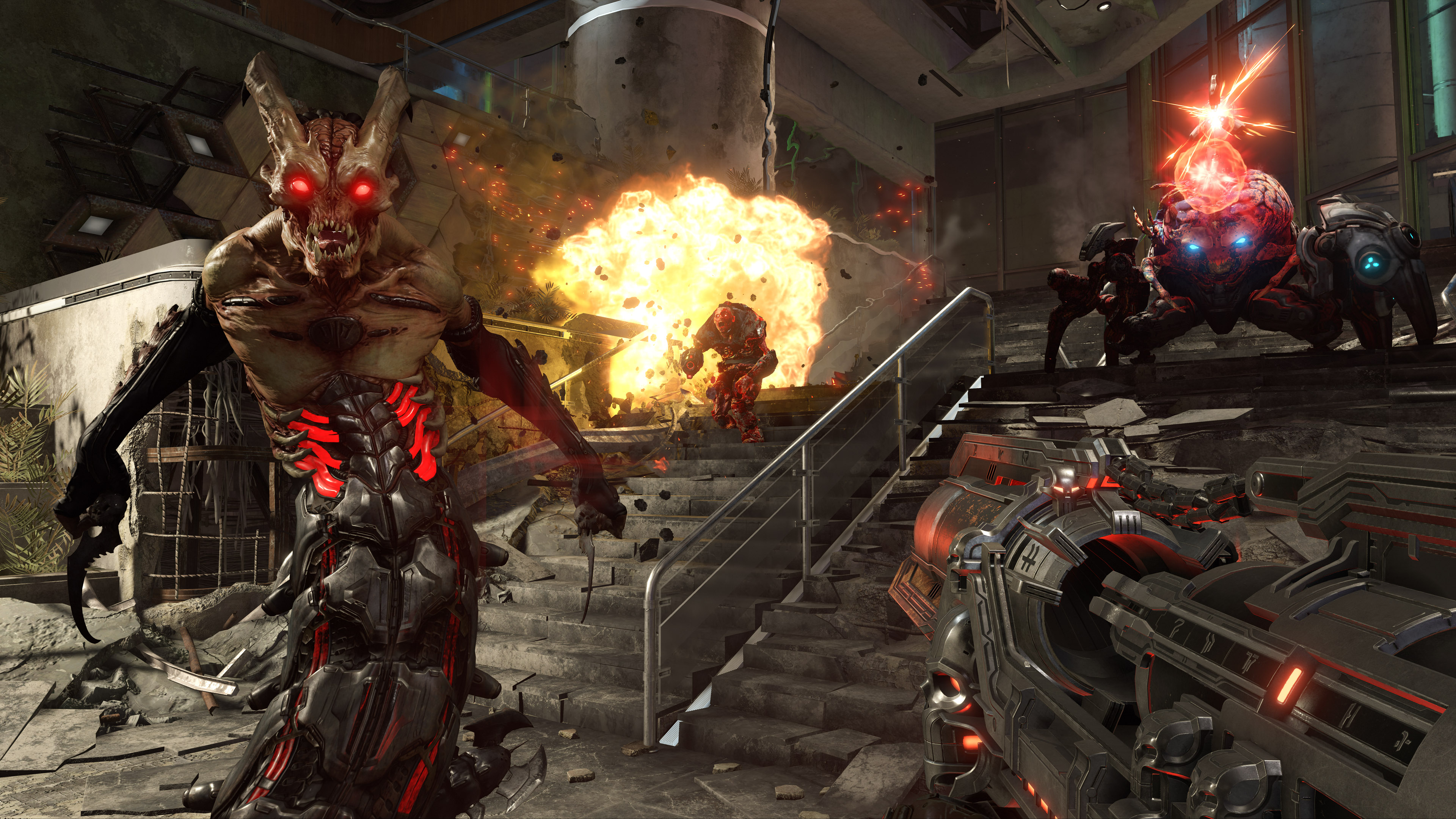
You are still Doomguy, or the Doomslayer, trying to stop Hell from invading Earth. ID Software did a great job expanding the lore via a codex that has some interesting reads on the backstory of the Doomslayer, his origins, and what the world is that he’s trying to save and destroy. The locations are more varied this time around, with more back and forth between Hell and a mix thereof. Combat is basically the same as the demons you encounter, minus a few additions. A new shoulder blaster has been added that can shoot fire or ice bombs as well as a flame. I feel this was probably the most useless addition, as it’s one more thing to remember while you’re furiously trying to kill enemies. The ice bomb can freeze a group of enemies if you’re backed into a corner, and the firebomb does a decent amount of splash damage. The flamethrower, though—what was the point? On the other hand, you have a new super punch ability that can be used to knock out some demons’ armor and open walls for secrets. You also get a new dash ability, which is used for platforming.
That’s another thing that’s been added: more platforming. You can wall climb on some surfaces, and jumping from platform to platform works well enough but feels wholly unnecessary. Secrets consist of numerous items, from songs to unlock to play in the Fortress of Doom, codex pages, toys, and an all-new upgrade system for the Praetor Suit and weapons. Weapons get two mods each and can then be upgraded with weapon runes. There is also a mastery upgrade that requires certain requirements to be met, or you can skip the challenge with a mastery token. You can also upgrade your health, armor, and ammo with certain passive benefits. There’s a lot of upgrading and acquiring, and I feel this is an excuse to make the game feel artificially expanded. I preferred the simpler game of Doom 2016 with regular upgrades. I feel Eternal is doing too much for a game that’s supposed to be very simple. I also feel the new reboot series has run its course at this point. There’s not much else the game can do, really.
The combat itself feels fine and is incredibly challenging and mostly unbalanced towards the last few levels. There are 14 missions, so it’s much longer than the last game, running about 10–15 hours if you explore every nook and cranny. I found exploring for secrets quite enjoyable and fun, as everything is on the map and you just need to figure out how to get there. There are also combat challenges such as timed gore nests and crucible challenges that give you keys to unlock a hidden weapon. You can find sentinel batteries to unlock rooms in the Fortress of Doom, which is the new hub area that also has upgrade items locked away. It’s fine enough—a pain to navigate, but an interesting idea. I again feel that Eternal strays a little too far from the traditional Doom path in favor of more modern methods to make the game feel bigger and expanded, when in essence most people come to Doom for the visuals, gore, fast-paced shooting, and interesting levels.
Speaking of levels, the game does overstay its welcome around mission 10 and feels like it just drags as you chase the final boss around. Not only are they incredibly difficult and almost unfair, but the levels end up being repeats of previous levels, and the Urdak level is boring to look at. I do like the first 8–10 areas, as they are interesting to look at with demonic imagery, gore, and just overall interesting atmospheres. The demons are great to look at and fun to shoot and tear apart. The quick-time event animations are much faster this time around and more varied. Each demon has its own set of front, aerial, and rear animations. Blue for health and orange for more ammo. You also have your chainsaw with three fuel cans to get yourself a large number of orbs, but this is also one of my gripes with the game. You have to rely more on using the chainsaw to acquire ammo and health from enemies than you do on picking them up around you. Instead of giving us larger ammo capacities, you have to constantly scrounge for ammo, and it drives me insane. I understand you run out of ammo sometimes in Doom, but every 5 minutes? I would die sometimes because I ran out of ammo and chainsaw fuel, so what do you do then? Use your super punch and hopefully have a weaker demon around for a scrap of ammo. This focus on ammo scrounging really needs to shift in the next game.
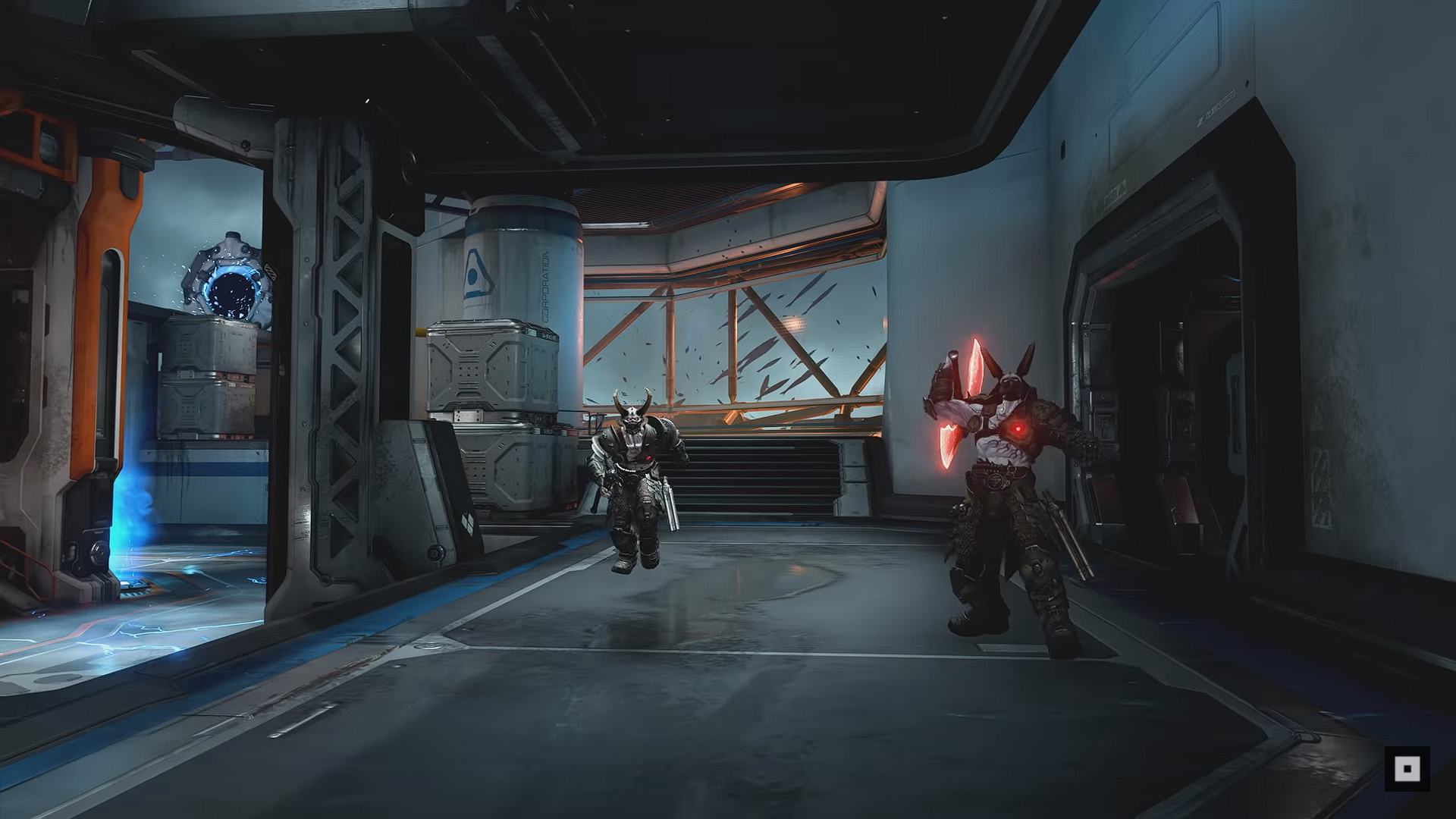
The multiplayer in Eternal is much better than Doom 2016, as PvP is out the window this time in favor of demons vs. the Slayer. Two demons and AI bots versus one slayer is kind of fun at first, but after about 3–4 hours in these modes, I was over it. It just doesn’t hold my interest like Unreal Tournament or Quake’s Deathmatches did. Doom was never really well known for multiplayer, and while it’s much better here, I wish it would just focus on single-player only. Overall, what we get is a great sequel to Doom 2016 with fantastic visuals, a rocking soundtrack, great weapons to shoot and demons to kill, and just amazing fast-paced shooting. The last few levels are boring and overly difficult, and the added stuff to combat feels like filler and fluff to pad a game that was already great.












































 thebinarymessiah.com
Try multiplayer. A lot of fun !