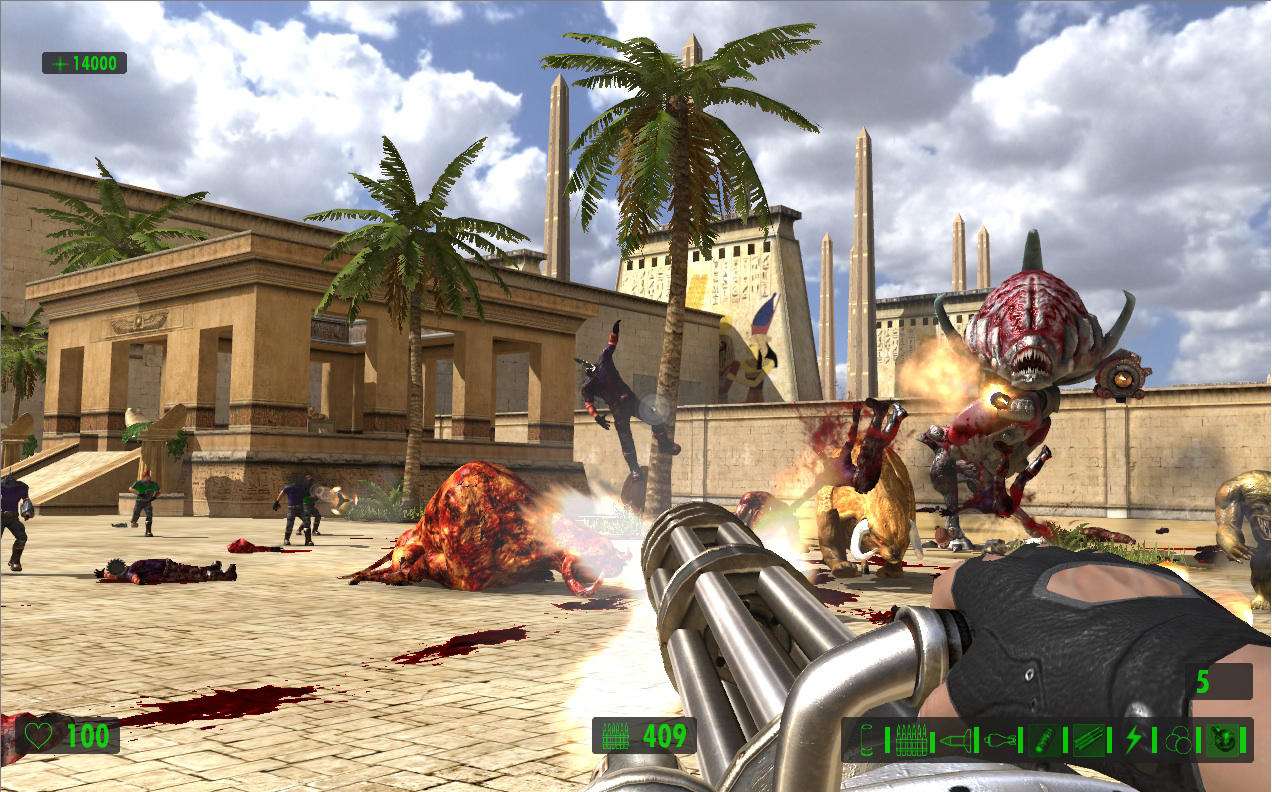
I could never get into Serious Sam, mainly because I didn’t have the (at that time) powerhouse of a computer to run this strange FPS. Serious Sam was in vain of other first-generation FPS games like Doom, Duke Nukem, and Quake. Serious Sam infused strange humor, and that’s what set it apart from the more serious shooters. The HD version is just a prettied-up version of the second game, and it still stands that only fans will enjoy this.
There is no real story attached, but you pay as Sam, who runs around shooting weird, yet interesting, foes with super powerful weapons. Weapons range from your standard array of FPS weapons, such as a flamethrower, rocket launcher, double revolver, shotgun, etc. The foes can be pretty funny, with headless kamikazes that scream, skeleton horses, and just weird, indescribable beings. On top of this, the levels are pretty open and the HD graphics look nice, but it’s not enough to save the ancient gameplay.
We’re so used to amazing cinematic gameplay that just runs and gun shooters seem boring. Not only this, but the weapon selection is a pain because there’s no radial menu of any type or even category. They aren’t even numbered! You can never remember which weapon is which number, so you try to find the right weapon while backing away from enemies, which leads to frustrating deaths. Also, the game is plagued with irritating hidden secrets that are nearly impossible to find. The game is also very hard unless you play on the easiest setting, and your guns never feel quite powerful enough.
While there is a nice variety of environments, they seem static, stale, and lifeless. I would have liked to see more detail, like animals running around, birds flying, and just the extra stuff you see in modern games. I don’t want just an old game with better graphics. Why bother unless you modernize it a little more? Because that’s who’s going to play it. People who are used to modern shooters. I really wish Serious Sam would evolve into a modern shooter, because I can guarantee it would be amazing.
There are a few neat things, like being able to record your game, but unfortunately, no one’s playing online. I would have liked to see some making-of videos, a history of Serious Sam, or something like that. I understand fans of the original will dig this, but the people who evolved along with the genre just can’t get it.
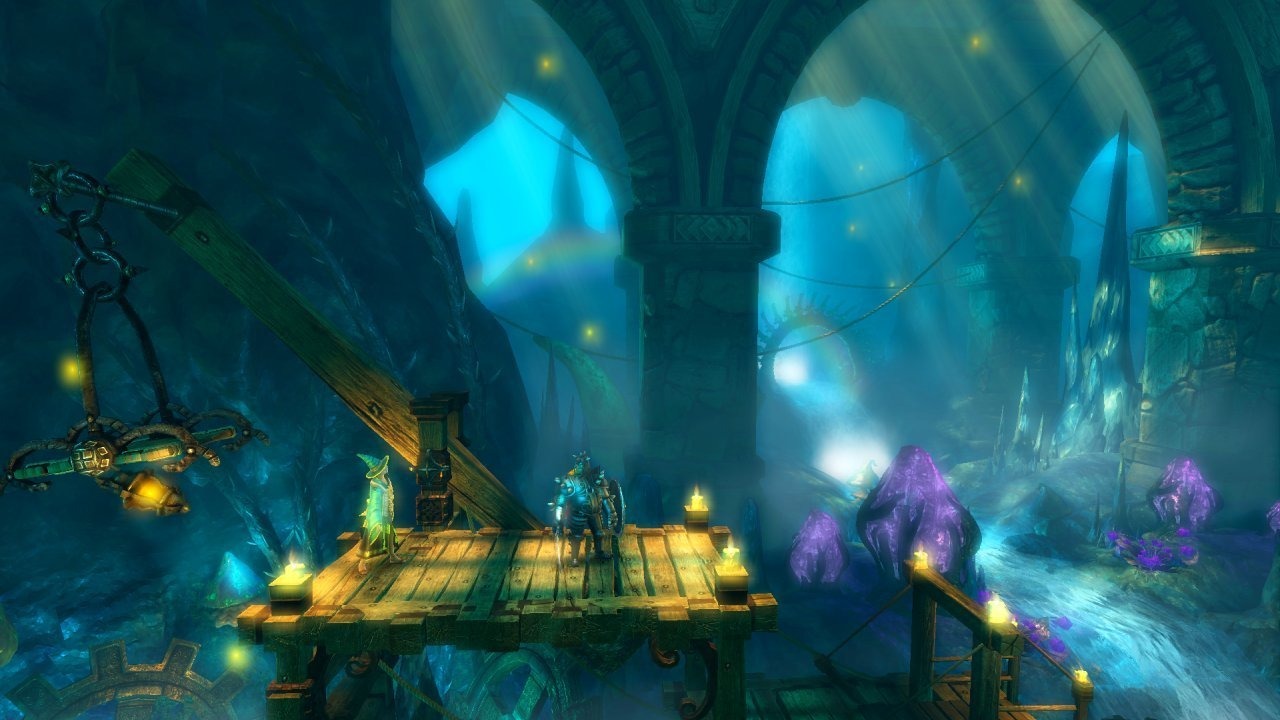
The Trine tells the tale of three heroes whose souls are tied together by the Trine, and they must find a way to break apart. While the story is simple and shallow, the gameplay is where it’s at. You can play as a warrior knight who has a sword and shield and is your combat guy; the thief has a grappling hook for getting across long distances and a bow for long-distance kills; and the wizard can create objects to climb on and levitate objects, but it is a no-go during combat.
The wizard is the most interesting character since he can create blocks to climb on and bridges to cross gaps. You can find things to add to your characters to give them new abilities as well as enhance them. The combat is pretty shallow as well, with just a hack that slashes everything that comes after you type play. It actually tends to get in the way of the tricky platforming and can get annoying after a while. The game is based on physics, so some physics puzzles are involved, but they don’t seem implemented very well.
The game looks great with a beautiful fantasy art style, good voice acting, and smooth controls. There are a few glitches in the game, but these are all wonky physics issues. The game is pretty much just getting from left to right without dying, but you can respawn characters at checkpoints, so dying seems kind of pointless since you aren’t severely punished. In fact, if you do die, you can’t use that character if the puzzle requires them, so this just seems irritating. Overall, the game is pretty good and worth a purchase thanks to its nice length, pleasing visuals, and good platforming segments.
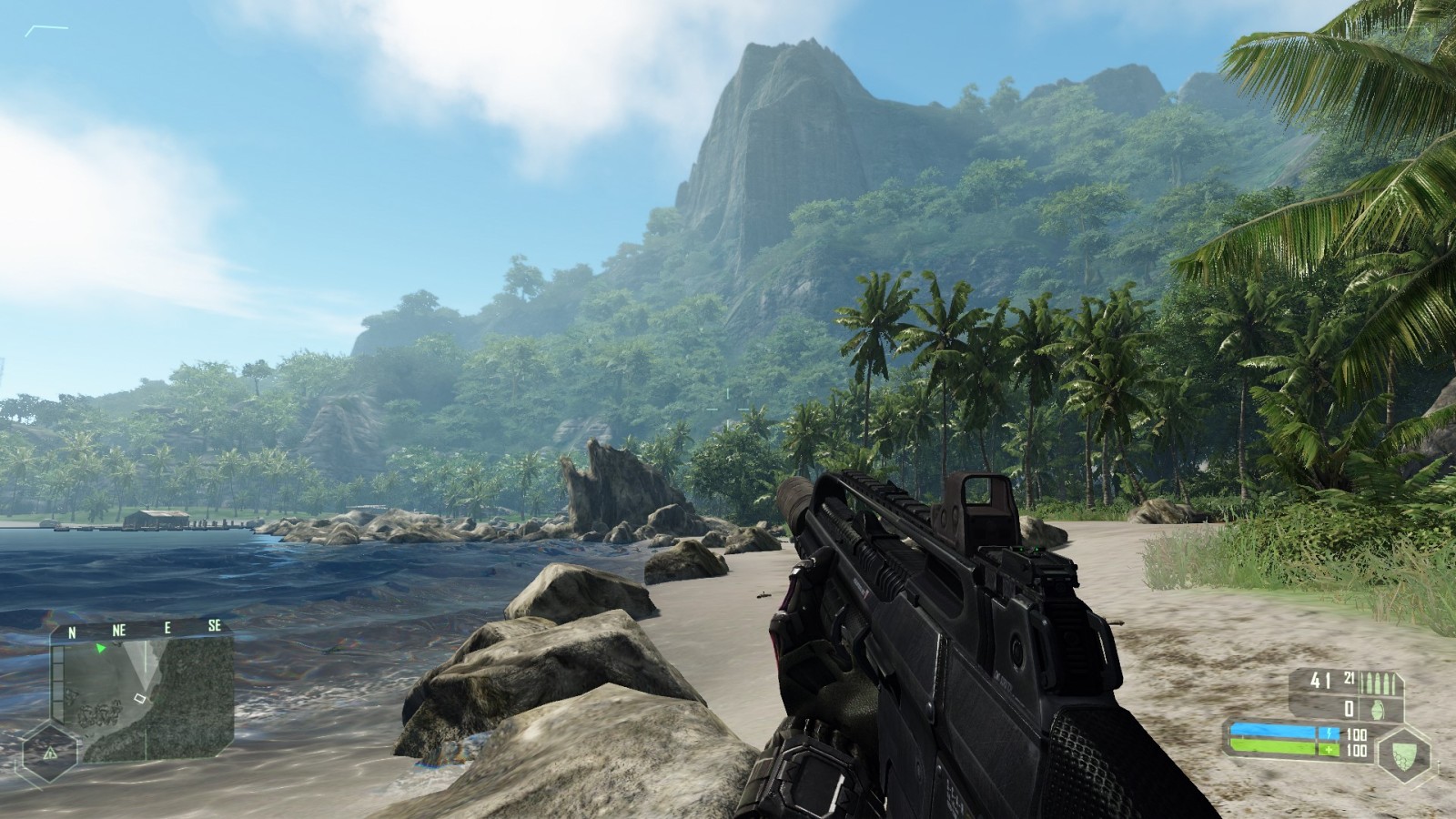
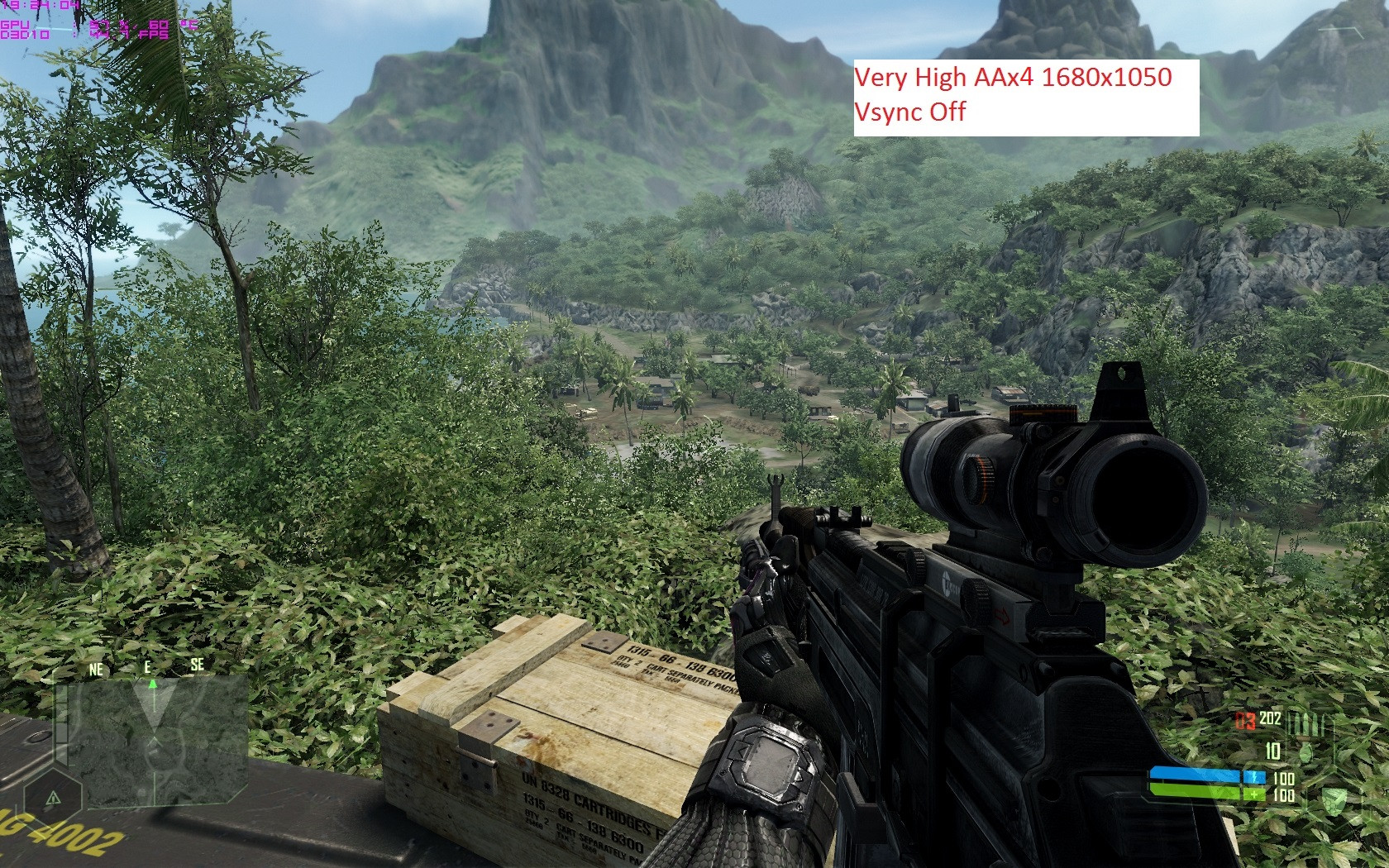
The biggest hype behind Crysis was its looks. Very few people have the hardware to run the game like it should be: all settings are very high and using DirectX 10, and I am one of the lucky few to have the hardware setup to do so. While most people can run this on ultra settings, you won’t find too many who can run it above 30 FPS. My setup was able to handle most of the game at above 20 FPS, but it did dip into the single digits every once in a while. With that aside, Crysis is just stunning, even three years later. Every texture is high resolution, and even when looking at something up close, you can see all the detail in that texture and not just a blurry or pixelated mess. All the lighting is gorgeous, and the physics seem almost real, thanks to the super-advanced Crytek engine and DirectX 10. Everything in the game just looks amazing: every blade of grass sways, trees crumble under fire, and leaves on palm trees shear off when fired at. Throughout the whole game, you will never get sick of looking at this tropical technical feat.
Now a game can look as good as it wants, but it’s no use if the game doesn’t play well and has a good story?. You play as a Special Forces agent called Nomad and are sent in with a team to investigate an island that the Koreans have occupied. It gets interesting right from the beginning and stays interesting throughout.
Thankfully, Crysis is a solid shooter with some elements that other FPS games have never used before, and the biggest thing is the Nano Suit. This thing lets you choose between four different modes to help you out on the battlefield. Stealth turns you invisible for a certain amount of time. The faster you move, the more energy it depletes. Armor is pretty self-explanatory, and speed gives you a super boost that lets you dash dozens of yards in a matter of seconds, for a few seconds. Lastly, strength lets you throw enemies and melee them to make them fly, as well as extra height when jumping. All these are crucial to surviving in this hard and wide-open game.
Yeah, that’s right. It’s not linear. Surprised? Well, with so many linear FPS games out there (cough, Halo cough), it’s a nice change. The island is huge and wide open, and you can take different approaches to each situation. Most of the time, you have to infiltrate Korean KPA camps, and using stealth along with silenced weapons is a good start. Or you can go in guns blazing. If you prefer the backdoor approach, maybe you can get there by truck or swim across the lake and take them all by surprise. The multi-approach system is useful, but stealth may not always be the best choice, and sometimes you don’t get one.
That brings me to the next element of customizing your weapons on the fly. Have a sub-machine gun and can get an accurate shot? Attach a silencer and a sniper scope, set it to single shot, and pop off some guys before charging in. Once inside, attach a red dot sight, add an ACOG scope to the top, and even a grenade launcher. Being able to change one weapon to another on the fly is just awesome and really does help in every situation. This breaks the monotony of trying to find a gun for specific situations.
The game’s pacing takes a turn halfway through the game when you start fighting aliens. Of course, this makes the game more interesting, is almost like two games in one, and takes a more linear turn. Instead of infiltrating KPA camps, you fight alongside squadmates against aliens. This is fun, and I wish shooters would do stuff like this more often. It breaks up the monotony of the open jungle and kicks things up a notch.
Every element in the game works, but of course, everything could be better, and that’s why Crysis 2 is coming out. My biggest gripe with the game is the difficulty. Even on easy, the game is brutal and seems unfair at times, such as vehicles blowing up really fast, having 30+ guys come after you, and not being able to use stealth to get into a camp. This can drive you nuts, but the story is good enough for you to keep coming back for more. If you have PC power, Crysis is a must-have.
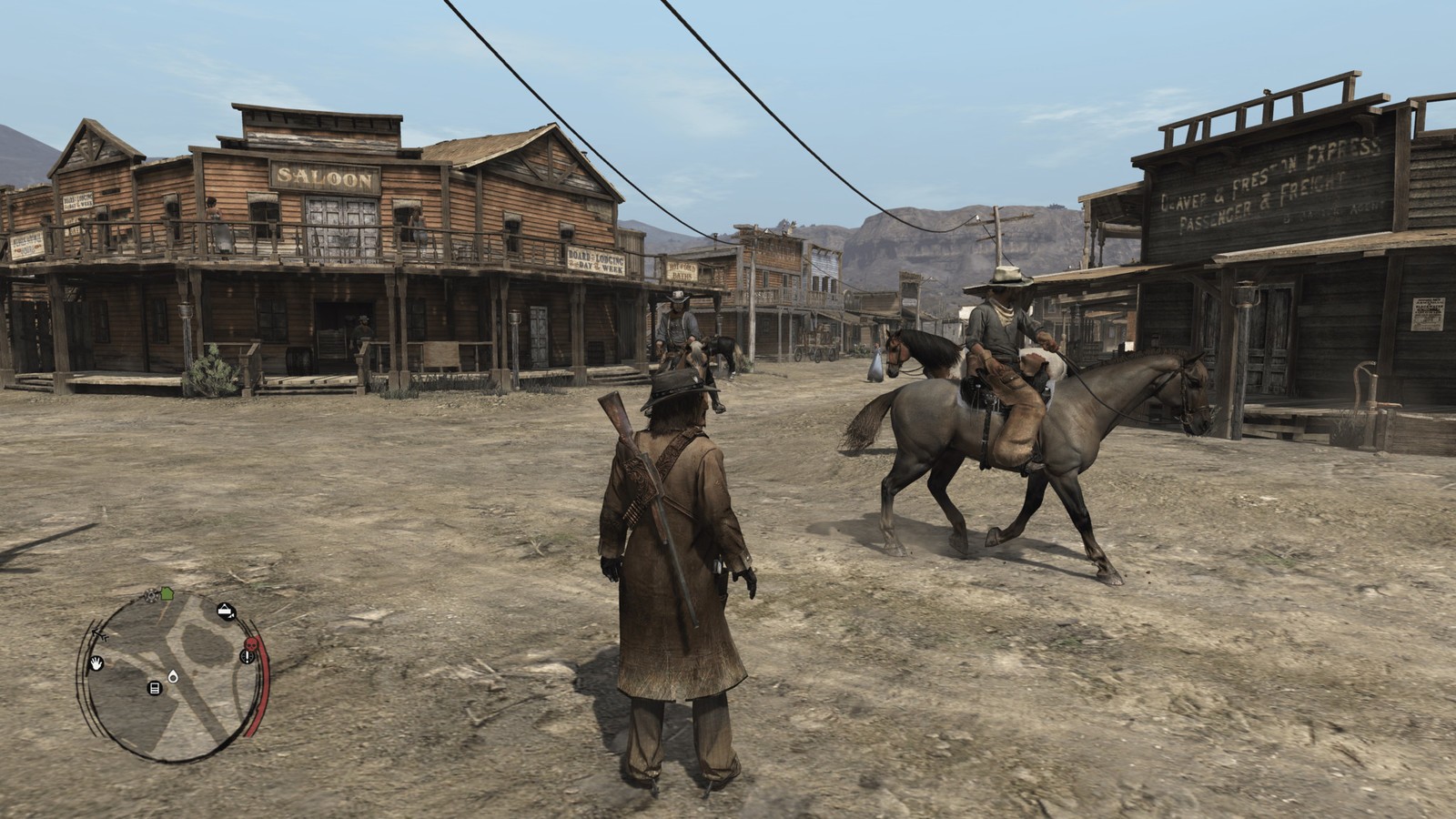
My name is John Marston, and I’ve lost everything. The US government took them from me and promised my freedom if I helped “establish a civilization” by catching the three crooks I used to ride with.
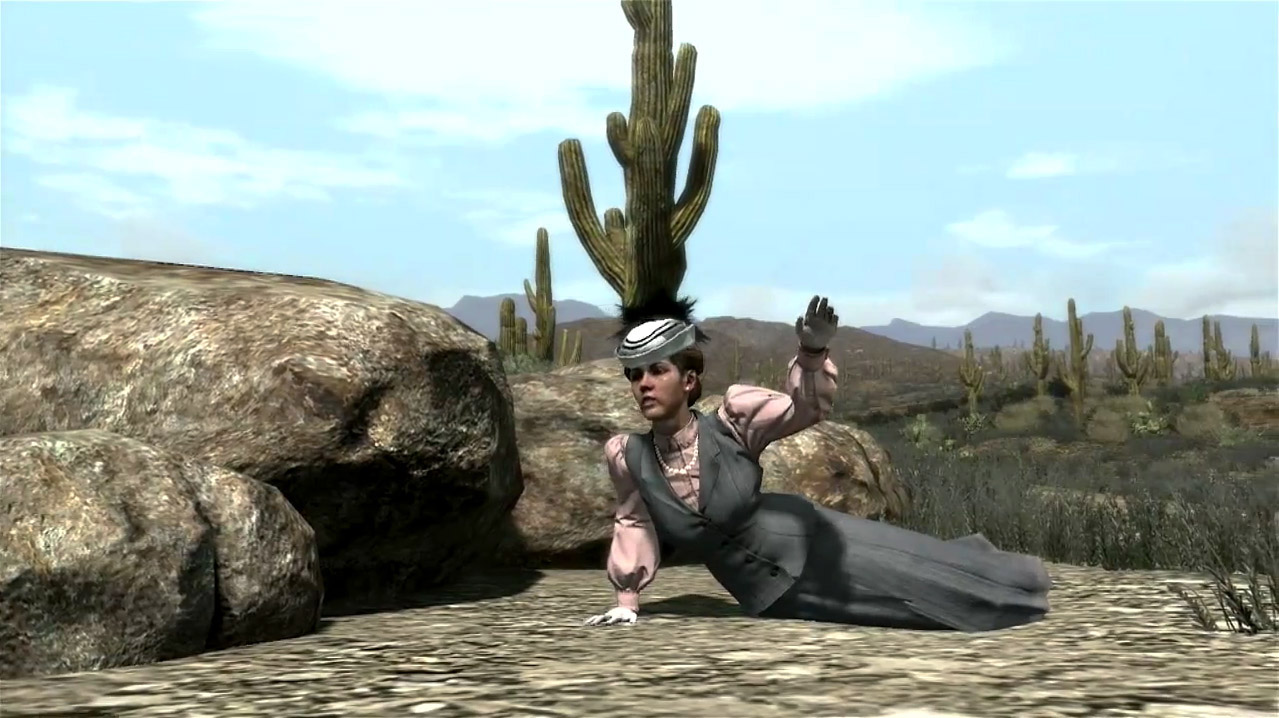
The first thing I noticed after I got off the train was how beautiful the country looked. Rolling hills, trees, and animals roam wherever you look. People on stagecoaches and even the occasional train. How I learned this new “civilization” was very interesting and even would make a good story.
Day 2
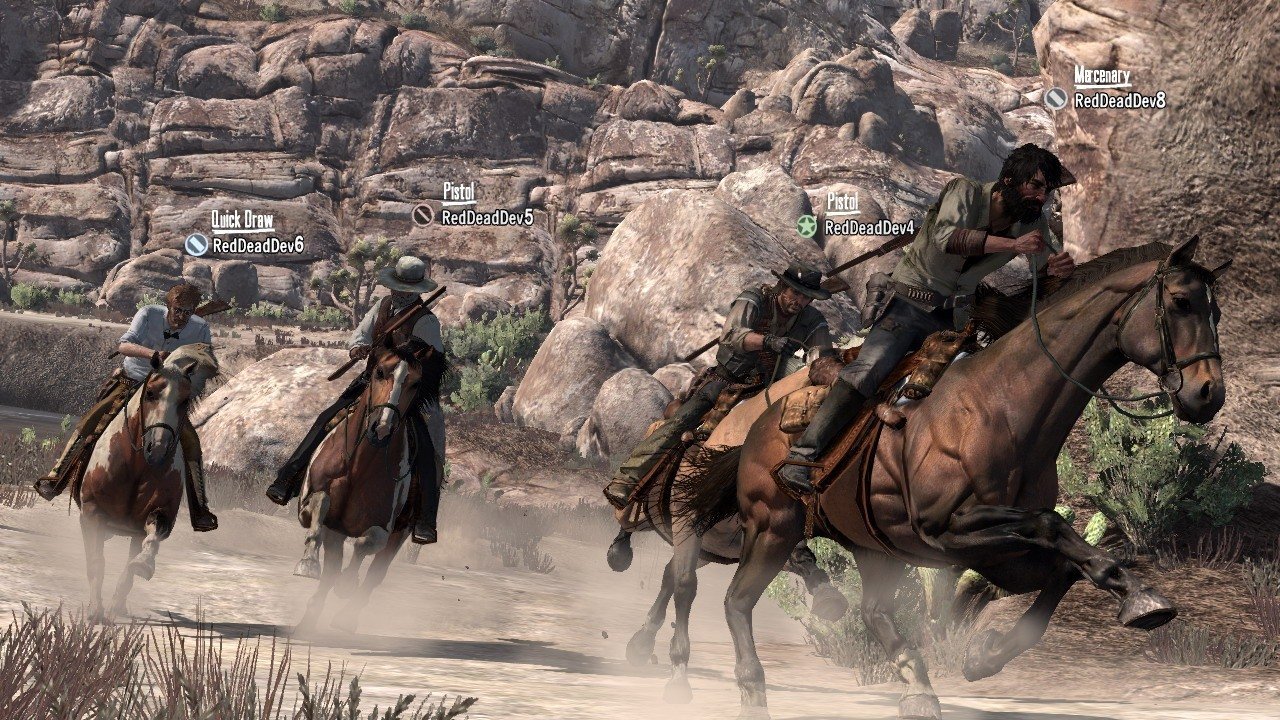
After getting shot by Bill Williamson, I met this lovely lady, Bonnie MacFarlane, and she helped me along the way. Riding horses with her was a good time, and it doesn’t seem too hard. If I kick it too hard with my spurs, it will buck me off unless I bond with it first by riding it often. Keeping speed with her was easy since holding my speed kept me right next to her.
Shooting on the horse was a little difficult, and using my dead eye was almost necessary since everything went by so fast. Controlling a horse and a gun at the same time isn’t very easy. When I focus enough, everything seems to slow down, and I can mark my targets with an X and blast away. I don’t know where I got this trait from, but it sure is handy.
She even showed me how to herd cattle by keeping pace behind the herd and making sure stray animals leave. Taming horses was pretty easy since I just had to lasso them and keep my balance until they were broken. Today was a long day, so I’m going to rest.
Day 3
I left Bonnie after helping her out on some errands. I just follow the yellow route line to my objective, which I put on my map, and it ain’t too hard from there. I can even mark waypoints and travel to them via stagecoach or when I make a camp off the road or away from water. This makes things handy since traveling this vast land can get tiresome.
After shooting some thugs from the wanted poster I picked up, I realized how each bullet affects every part of the body. Hit an arm, and they drop their gun. Hit their leg, and they limp away; hit their chest, and they fall over and crawl away. I found this useful when having to catch criminals with my lasso. Shoot the sucker in the leg so he stops running!
I went to the local market (there are many) and sold some herbs I picked, and after I hunted some deer, wolves, a snake, and some birds, I sold all those parts for some cash and bought myself a new gun. I love my shotgun, sniper rifle, revolver, and other weapons, but I just needed something more powerful. I did buy a new horse as well as some tobacco for focus and some medicine. I’m beat for now, so I’m going to go purchase some property in this town and rest.
Day 7
I’ve learned a lot lately, and one of the biggest things I learned was not to shoot other people or even run over them by accident. I had the law come after me, and I now have a bounty on my head. I can get a pardon letter or pay the bounty, but if I get my honor and fame up by doing good deeds, maybe people won’t be so hasty to tattle.
I tried some gambling to ease my mind today, such as Liar’s Dice, Texas Hold ‘Em, Blackjack, Horse Shoes, Arm Wrestling, and more. These games seemed pretty fun at first, but after a few tries, they bored me, so I was off hunting again. After I caught my kill, I noticed a stranger needing help, so I marked him with a question mark on my map and a purple circle in the area where I could find him later. I’ll tell you to partner these tales and these people with something else.
There are so many things to do here that I can’t describe them all. This place is huge, even with Mexico to the south. Everything here just looks so amazing, and as you can see so far, it’s stunning. Even when I got to the snow-capped mountains and was hunting bears, I felt like I couldn’t get enough of the scenery. The world also sounds beautiful, with birds chirping and the sound of crunching dirt under my feet. It’s refreshing.
Day 28
Well, I don’t know what else to say. This world is so massive, expansive, and gorgeous that it’s like nothing else. There is so much to do here that by the end of my journey, I’ll have felt satisfied, and even roaming around with friends can be pretty fun. So long, partner, and keep the West and the Wild alive.
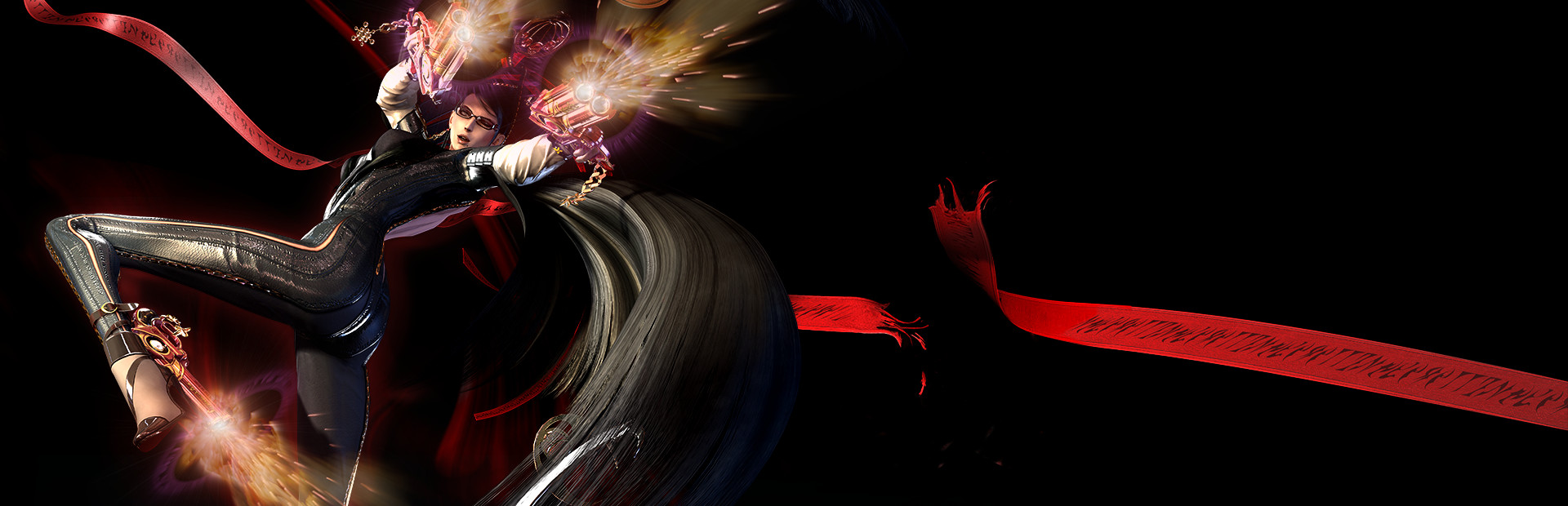
When you think of sexy and video games, they usually don’t mix. There have been a lot of attempts at using sex to sell video games, and while some were successful, such as Dead or Alive, BloodRayne, and Tomb Raider, others weren’t, such as Red Ninja, Cy Girls, and Rumble Roses. Where does this put Bayonetta? On top as queen and as one of (if not THE most) stylish, sexy, and witty female protagonists ever created in any media period.
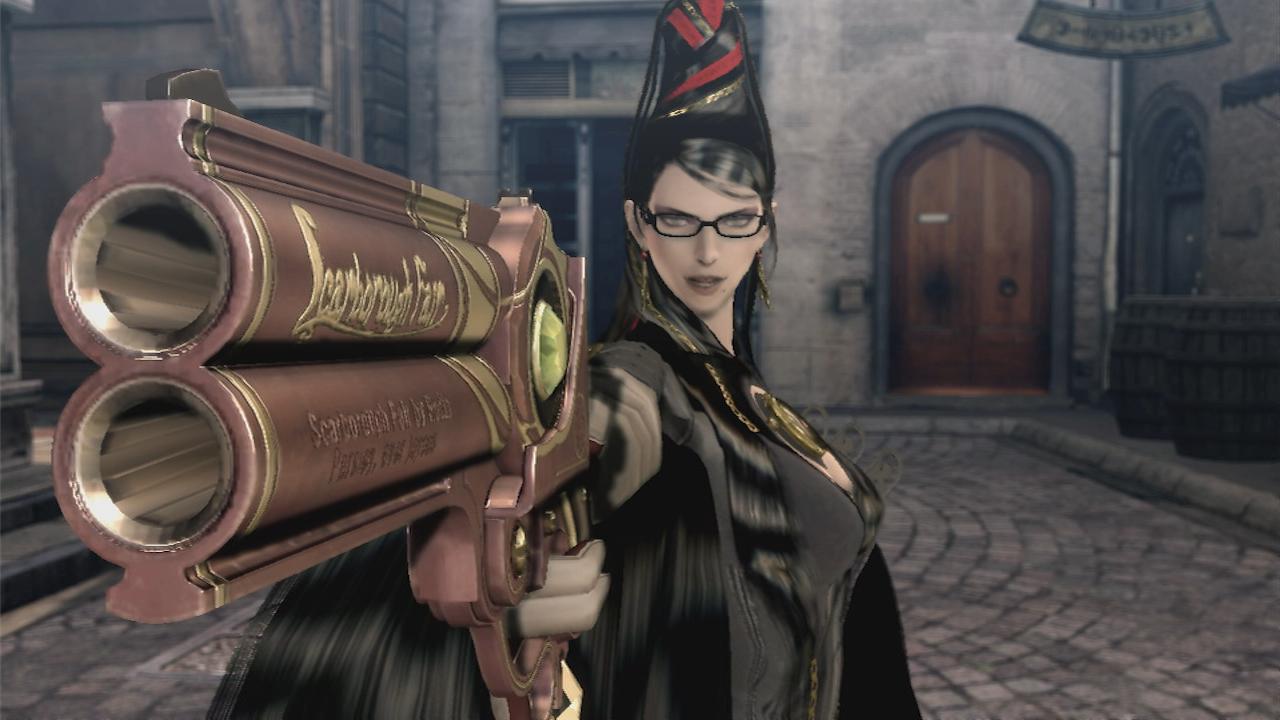
Being a good and bad Umbra witch trying to unlock her past. Bayonetta has witty dialogue and a super-sexy British accent. I can’t describe just how shocking Bayonetta is in terms of design. She is scantily clad in leather with proportionate breasts and has beautifully styled hair and glasses that look good. She just makes your heart throb when you see her, and no other female game character has done that for me. The cinematics in the game are very outlandish, outrageous, and just “I can’t believe they did that.” The game is developed by the lead designers of Devil May Cry and Resident Evil, so if you are a Devil May Cry fan, you know what to expect.
My last note on the design of Bayonetta’s sexiness is just how they incorporate it all into the gameplay, from items to moves to summoning demons. One cut scene I can recall has Bayonetta sweating on a plane, and Luka watches the bead of sweat drip down her breast and drop right off her nipple. All while the camera is zoomed in on this at a side angle. Necessary? Yes. Why? Because that is just what Bayonetta is all about. Nonstop action with sex thrown in.
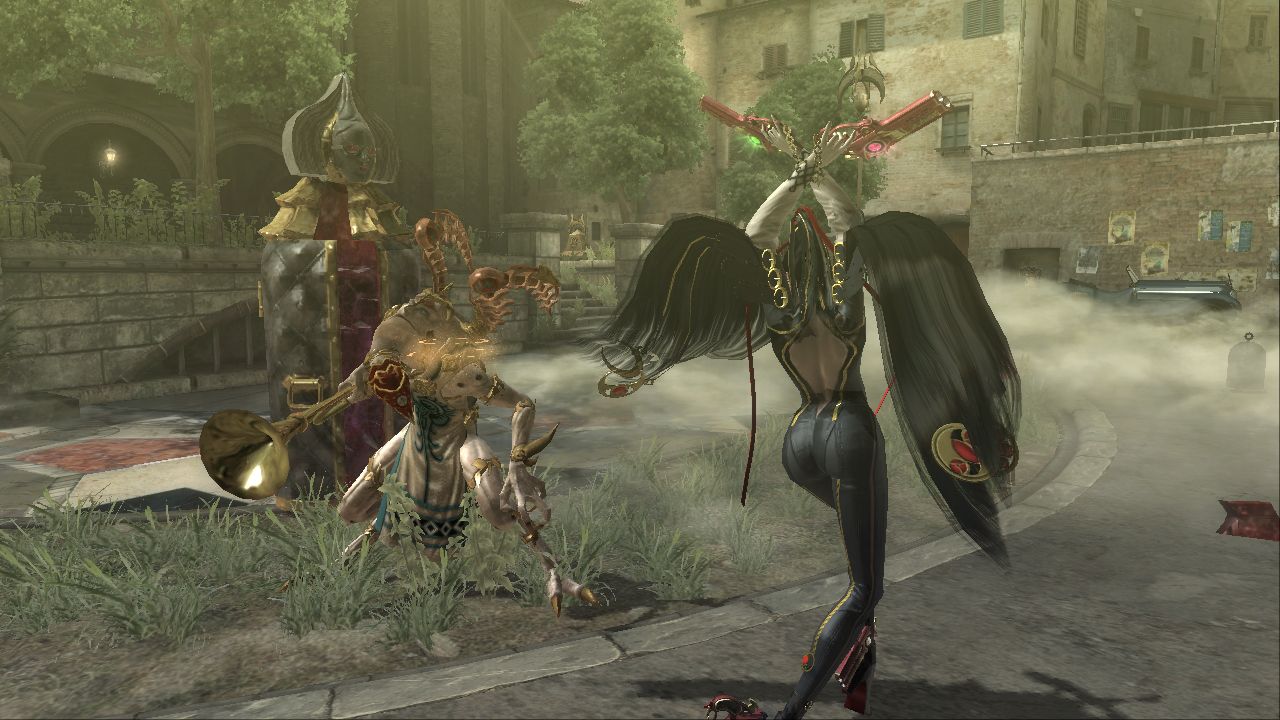
Getting down to gameplay, you fight the good-bad angels by summoning the Creator to merge all three realms: Purgatorio, Paradiso, and the human realm. All these creatures are amazingly designed, and there are a good 30 or so of them. Bayonetta fights with both her feet and hands. You can equip a normal weapon on her hands and either the shotgun or handgun on her feet. Using the Y button, she uses her hands, and B is her feet. The combos are deep and almost endless since you can hold buttons down to charge weapons or use X to just use the handgun. Using witch time is a unique element that you must use at all times since time slows down for a few seconds if you evade at the right time, and this is key to defeating certain enemies and bosses since some can’t be beaten without it. This is also incorporated into puzzles, but they usually aren’t all that hard to figure out.
Unlocking weapons requires you to find pieces of LPs of angel hymns and bring them back to Rolin in the Gates of Hell bar. Here, you can also buy items, accessories, alternative weapon designs, and more. All items (like in Devil May Cry) give you either health, witch power, or extra life, and you get the idea. Each comes in a small or large form and costs a good amount of halos (the game’s currency). There are only four different weapons: a whip, a sword, guns, and Beowulf-type claws. Thankfully, you can have two different load-outs and switch between them on the fly.
Anyways, when you finish a batch of angels, you will be scored based on your combo style, time, and damage taken, and this affects your overall level score. If anyone is a Devil May Cry fan, you will know this scoring system is brutal and impossible to score perfectly on every level. This is also Bayonetta’s biggest flaw since a lot of the game is hair-tearing, controller throwing, and frustration-inducing ulcers, especially when it comes to boss fights. There are five different medals you can get. Pure platinum, platinum, gold, silver, and bronze. Pure platinum consists of you getting the biggest combo style and killing all enemies in the shortest amount of time with no damage at all. Platinum consists of the same, except you can take a little damage, and so on and so forth. You are then ranked at the end of the level by these medals plus how many items you used and overall damage was taken plus time and combo style. If you do poorly (like I managed), you can get a stone award. Even on normal, I did my best and thought I was smokin’, but I still managed to get stone awards at the end of every level.
On another note, the bosses are fun and out of this world. They are ugly and big, and you just want to kill them. Each one is unique, and one even has you riding around on a piece of debris in the ocean fighting a 200-foot sea creature. Epic? Sure, it is, and every second of the game is. Each boss and each fight consist of a little damage-inducing, button-mashing mini-game using Bayonetta’s demons or torture attacks. For the larger enemies, Bayonetta’s hair turns into demons, and if you didn’t know, her clothes are also part of her hair. She goes into a sexy pose, and her clothes are stripped except for the hair swirling around her sweet spots. You can pulverize the enemy. Smaller enemies have torture attacks that are gruesome, sometimes sexy, and satisfying. This can be done by getting your Witch Power meter all the way up, but take a hit and it goes down. There is no magic in the game, and you won’t even remember since all the elements work well.
On a side note, the gameplay is changed up in almost every level, which leads to epic motorcycle riding levels, jumping across cars in traffic, shooting down enemies on a rocket flying through the air, and a whole lot more. There is even an arcade shooter in between levels that earns you points you can use to get items or exchange for halos. The game is chock-full of neat elements that have never been used in any game before (if so, they are perfected here). If you want stylish, over-the-top, sexy action, then look no further than Bayonetta.
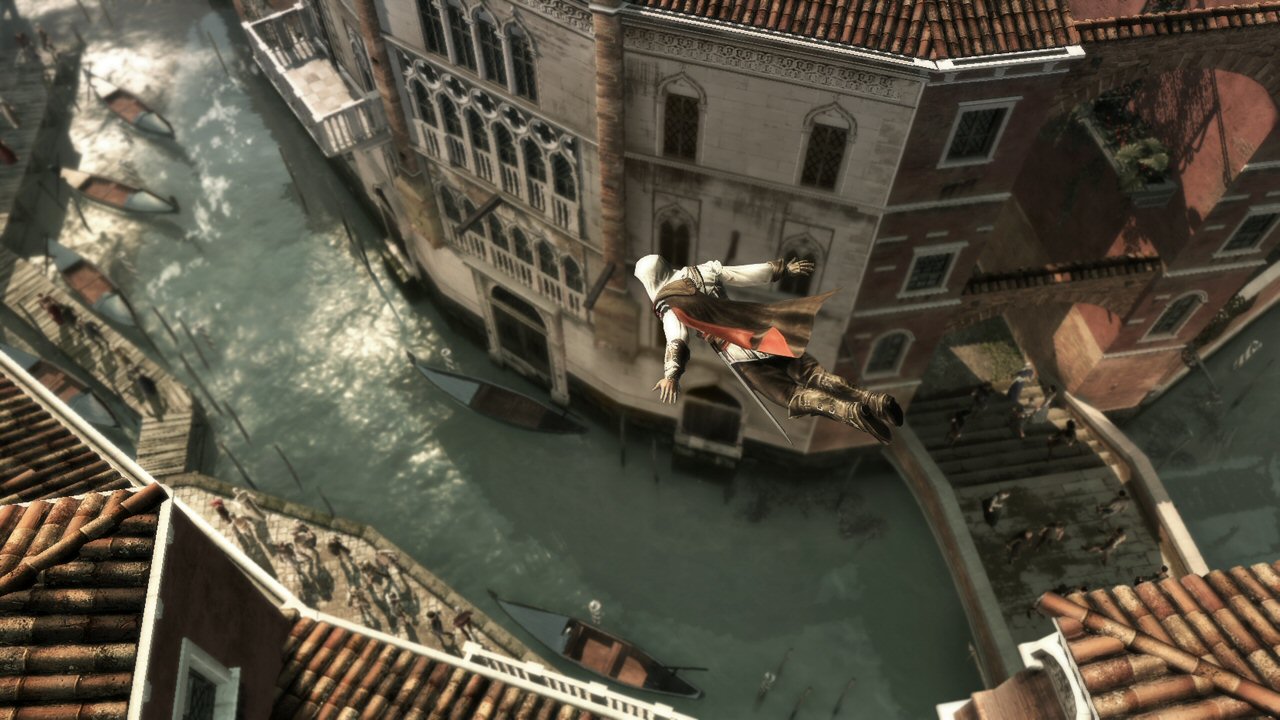
Maybe once a decade we get a truly beautiful game that really represents what games are: cinematic experiences that the player can get lost in for hours. Assassin’s Creed II is one of those rare games, and it also represents what a sequel should be. Assassin’s Creed II boasts a wonderful, enrapturing story that really grabs you both in a political, historical, and science fiction sense. Never have I seen the three mixed so well with an ending that can make your head spin for hours afterward and have you talking amongst your friends about it for days. You are not Altair, but Ezio Auditore, who is on a path of vengeance for the rival banking family that killed him. In the real world, you are still Desmond Miles trying to unlock the secrets of his assassin ancestors and figure out what the Apple of Eden is really meant to do and why everyone wants it.
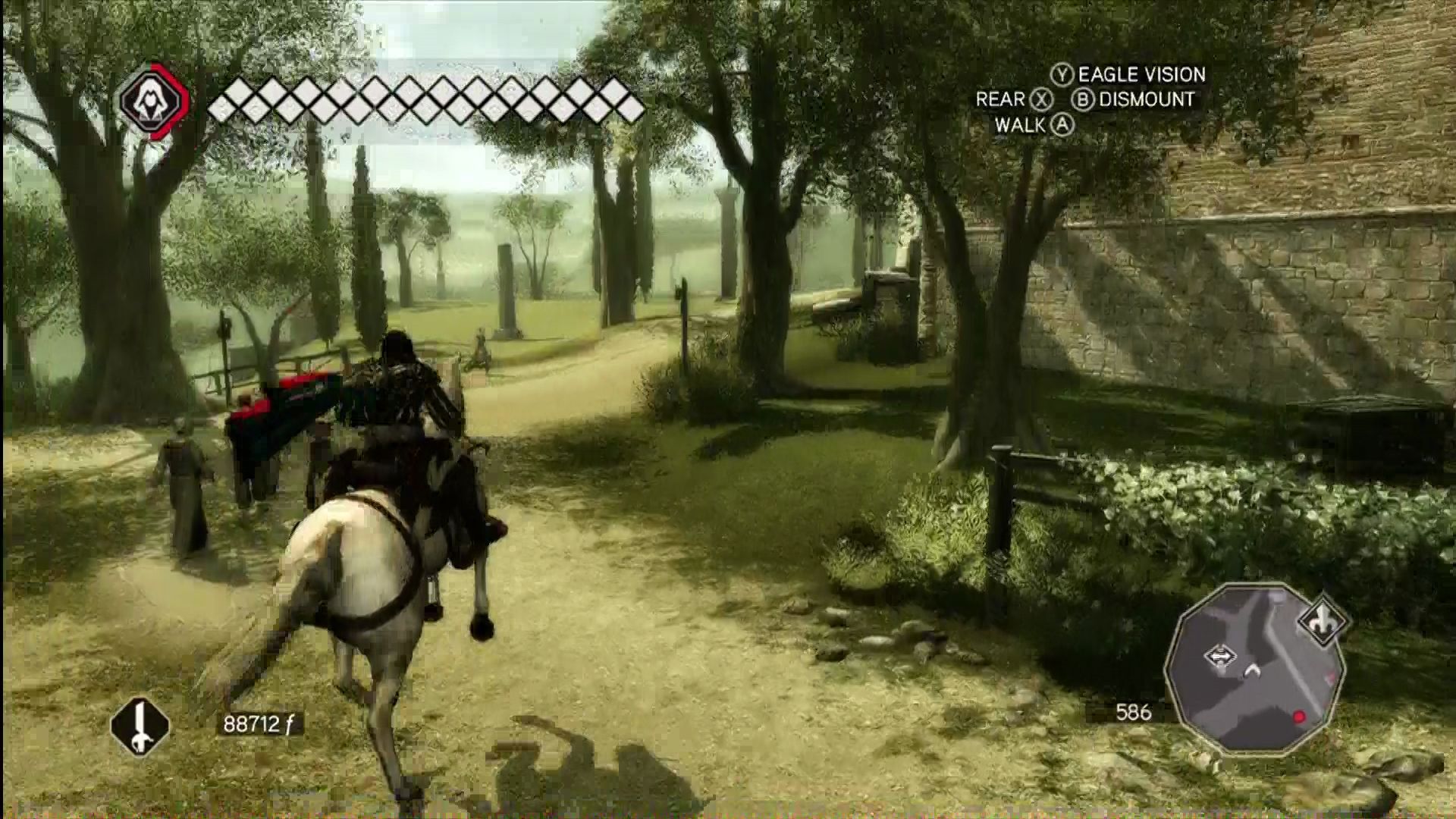
From the start, you will notice major changes from the original, and these are graphics. The game is truly one of the most beautiful of the decade, capturing the Italian Renaissance era with all of its amazing architecture, historic figures, and language, along with the social classes of the time. But before we talk more about beauty, let’s talk gameplay. As everyone recalls, the first game was very repetitive and pretty bare-bones, so expect Assassin’s Creed II to have tons of things to do. Not only are there more side missions, but there are more scripted story-driven missions, and playing Desmond isn’t so boring. You actually go to a different location with Desmond and even fight with him. Just a hint without spoiling anything. You have your Messenger, beat-up, and race events from the previous game, but gone are the “helping citizen” events. You have tons more variations, from raiding assassin tombs (interior Tomb Raider style levels) to Templar Lairs, races on horseback, assassination contracts, finding codex pages to upgrade your health, chasing down people stealing your money, chasing down messengers, solving glyph puzzles, finding statuettes, restoring your uncle’s villa, more viewpoints, and the list goes on. Yeah, there is more variety, and because there is so much to do and so many ways to do it, you really never get bored, because I never did.
You can do ten side missions, then three main missions, then fast travel back to your uncle Mario’s villa to upgrade the city to get more income for you to spend, then go find some feathers for your mother in mourning, and maybe get some Codex pages. Doesn’t that sound like enough? That’s ok. The variations in story missions never get dull with all the weapon upgrades you get. You even get to use Leonardo da Vinci’s flying machine about 2/3 of the way through the game. Want to talk about upgrades? Well, there is an economic system in play here, but don’t get too excited. It’s your simple buy stuff from merchants and upgrade your stuff type thing. You can upgrade your armor over a dozen times, buy dozens of weapons, upgrade medicine pouches, throw knives, and even poison vials. You can dye your clothes or buy paintings to increase the value of your villa. Did I mention there is every assassin weapon in this game? You have smoke bombs, dual hidden blades/punch daggers, poison blades, hidden guns, and even a passive ability to toss money on the ground to distract guards.
Fans of the original remember that the best attack was the running and jumping assassination attack. Wanted more? Well, you get more with the ability to pull guys down from hanging on a ledge, from a hiding spot, on a bench, in a crowd, jumping off something, and anyway you possibly can. You can now swim, which is a huge plus, and blending has totally changed. Instead of having a “blend” button, the previous “blend” button is now a “walk fast” button, which can be used to pickpocket people for money by just running into them. Blending now consists of using any group of pedestrians or hiring people. You can hire courtesans, thieves, or mercenaries to do your dirty work or distract guards from important posts or patrols. This allows you to walk right on by to wherever you need to be. You can blend by sitting on benches or dropping your notoriety. Your notoriety is the creed diamond that has a red bar around it. The higher it gets, the more the guards will be on your case and chase you for subtle things. Ripping down posters or bribing heralds can bring it down, but becoming anonymous first is a must.
Now that we have the basic elements out of the way, let’s talk combat. The core combat system is here, but with upgrades, such as being able to counter a counter-attack, take away weapons, use your hidden blade as a weapon for instant counter-kills, and so on. The enemy AI is also better, with four enemy variants that can chase you down or kill you with their bulk and massive weapons. Free running is also slightly improved with tighter controls and better-designed levels, more climbing puzzles (viewpoints), and just more terrain overall. The game really only gets frustrating when the controls get a bit sticky and you cling too well to ledges. The world is 3x the size of Assassin’s Creed, with the towns of Forli/Venice, Firenze, the Villa, and Roma. After about ¼ through the game, you get to ride a horse-drawn wagon in a chase down a mountainside to get to Forli/Venice, which is a rich cinematic experience that the game is full of. Once you get to Venice, you can ride gondolas and swim in the water.
So with all this greatness and beauty that Assassin’s Creed II gives us, how does this soup taste? With all these ingredients, I have to say it tastes damn good. Everything works well together, and the game feels like a rich, illustrious world that doesn’t feel dead. With fluid combat, free running, plenty of stuff to do, amazing visuals, voice acting, history, and science fiction, you get anywhere from 15 to 25 hours of a wonderful game. This game will have you sitting back and savoring every moment, not just because of how amazing it looks and sounds, but because of how beautiful the game is as a whole. These games come once in a decade, and Assassin’s Creed II is it.
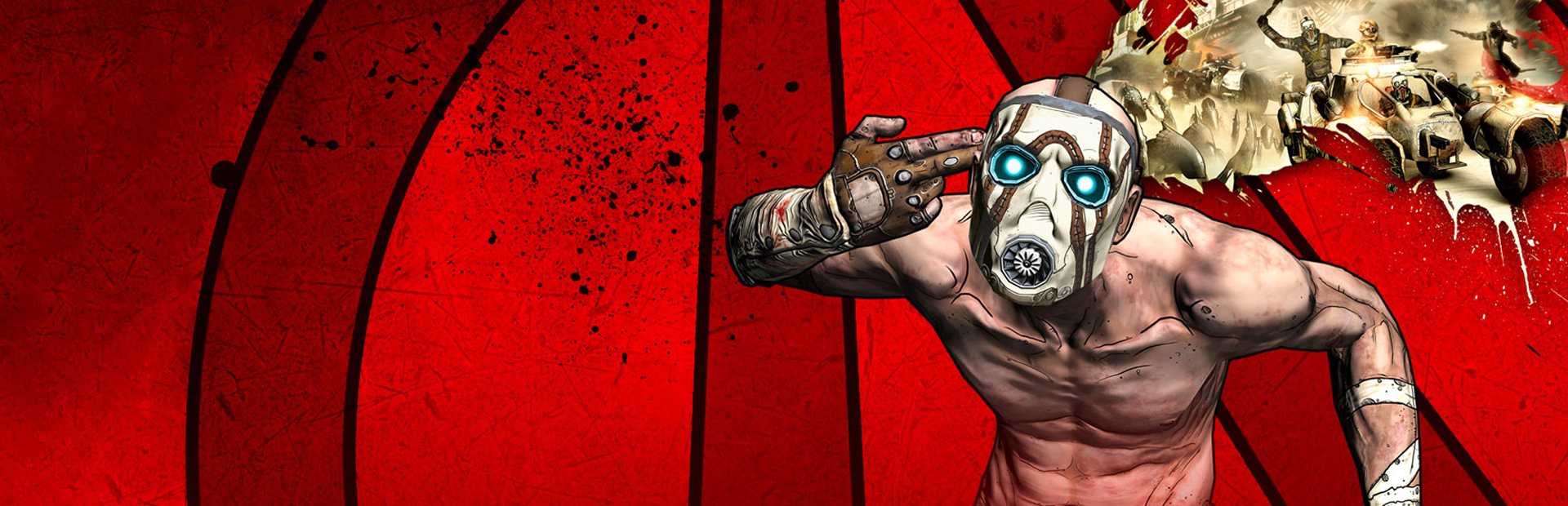
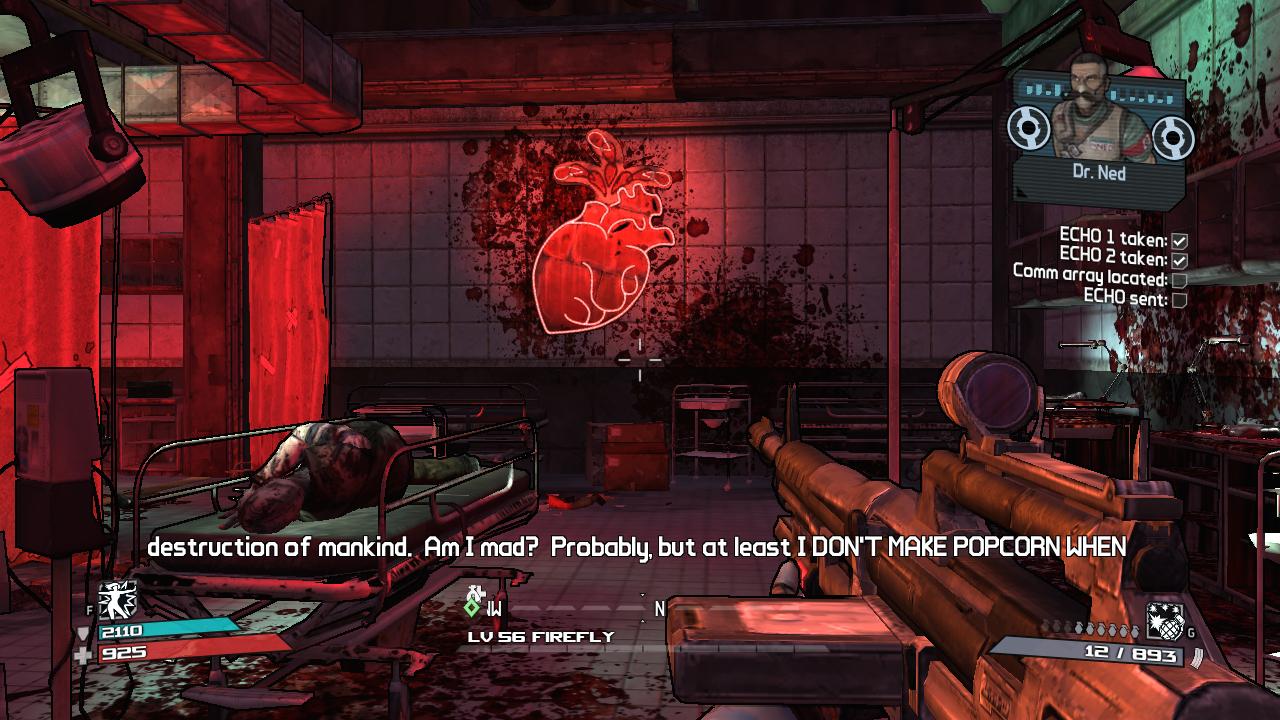
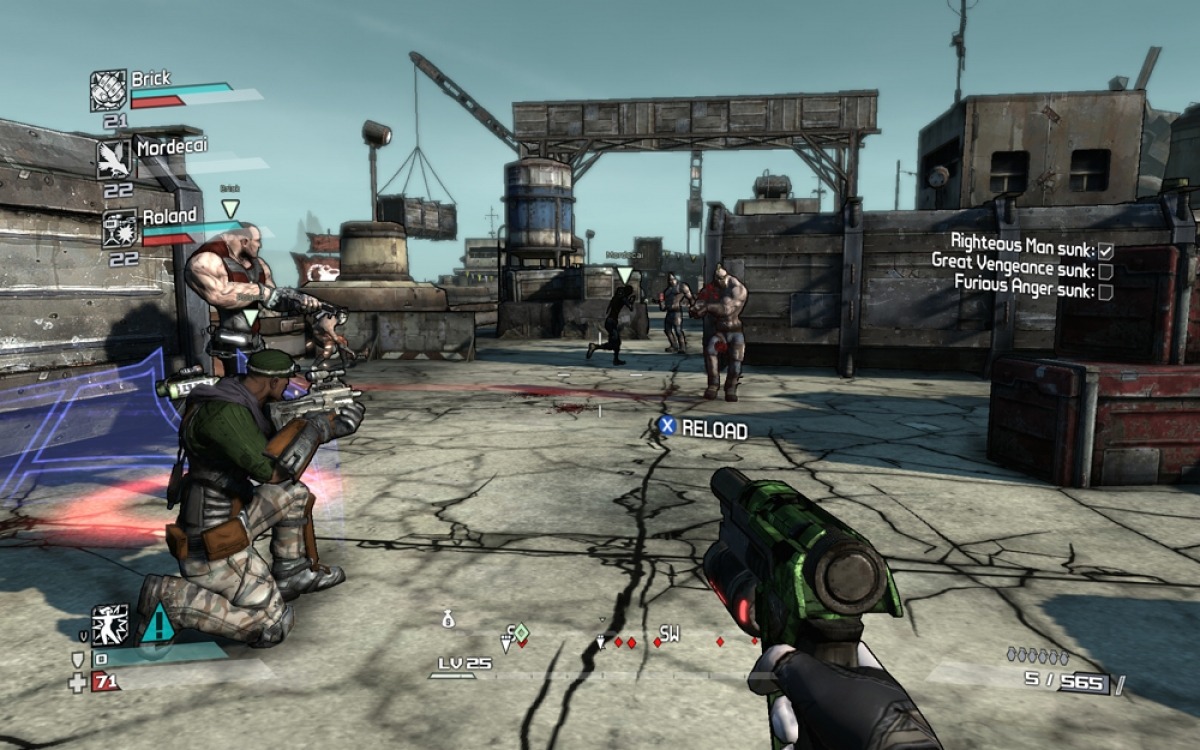
The newest RPG hybrid is probably FPS hybrids, and since these are so new, Borderlands can be considered one of the first to perfect them. While Fallout 3 holds the crown, let’s just say Borderlands is the prince. If you have had a hard time grasping FPS/RPG hybrids, then let me put it simply for you. Like in traditional RPGs, you have elemental attacks. In Borderlands, you have these, and they consist of corrosion, explosives, fire, and lightning. Some guns can be fused with elemental powers, i.e., a lightning combat rifle will deplete enemies with shields faster than just a normal rifle. A shotgun with corrosive powers can kill creatures faster than a gun with lightning powers.
Another element that you should be familiar with is statistics. Just like TRPGs, Borderlands has damage and hit accuracy on weapons. You get shields that have certain aspects, such as when they deplete, they send a wave of corrosive acid, or they recharge faster or give you a health boost, etc. You also get grenade mods, which change the way your grenades act, just like guns. There are also specific class mods that can increase some of your stats even further. Additionally, each character has a specific ability they can use, and you can equip special spheres that add attributes to this ability. Sound like a TRPG so far? What about enemies? They too have levels and shields, and the damage you deal with them will bounce off of them in a series of numbers, along with the experience you get once they are killed.
There are a lot of little tidbits, such as the money system; you can purchase items or upgrades at vending machines; saving claptrap robots can give you more storage space; there are healing items; when you kill an enemy, you can loot them; and you can also loot the dungeons you enter or the open world. See, it still sounds like a TRPG. What makes it different? Just add guns, a vehicle you can drive and shoot from, and a fast travel system. The way to play in all this fun is to co-op. More players + harder enemies=better loot. There is good math in my book.
This sounds fine and dandy, like nothing can go wrong, but Borderlands has its issues. While the gameplay is actually pretty flawless, with lots of guns such as rocket launchers, combat rifles, SMGs, revolvers, etc. The content is very thin. There isn’t much to do but run around the barren wasteland, completing the 150+ side missions and 50+ story missions. There is hardly a story or any dialog. You’re just running around trying to find this vault with some special treasure. All the loot is the same, and even the storage bins you find them in get boring to see after a while. While the game has a pretty neat cartoony graphics style, everything is brown and boring, which puts the neat art style to waste.
The difficulty isn’t something to complain about since it increases as you level up. Each area has to load separately, and the load times are longer than they should be. Most of the side missions vary from scavenger hunts to killing people, looting, and more killing, but the core gameplay is really shallow, and the stuff it’s wrapped around is flawless. This game is really meant for people who just want a straightforward shooter with some more depth and a twist. While it does feel more arcadey than Fallout 3 and more pick-up-and play it just doesn’t have that charm and amazing feeling to it. Borderlands is executed well but just needs more filling to make it superb. However, the game is highly addictive, and even though you know you’re doing the same thing over and over again, you never get tired of it. The game has a level 50 cap and can be completed 100% in less than 20 hours, so Borderlands is a great purchase for any shooter fan.
If you have ever played The Incredible Hulk: Ultimate Destruction, you will kind of get the idea of what Alex Mercer is going through in Prototype (or [PROTOTYPE] as SEGA thinks CAPS is cool >.>), just minus the green problem our Mr. Banner seems to be having. The reason I say prototype is like Ultimate Destruction, and just a tad more ultimate with a hint more destruction, is because it uses a beefed-up engine from the same game and shares some of the same mechanics.
You play Alex Mercer, a confusing test subject who wants revenge on his creator and to stop the infection from spreading throughout the story. I’d tell you more, but the storytelling is so terrible that I had no idea what was going on or who was doing what or who! Constant flashbacks and pieces of the story told through consuming certain targets and watching stills aren’t fun for your brain to digest.
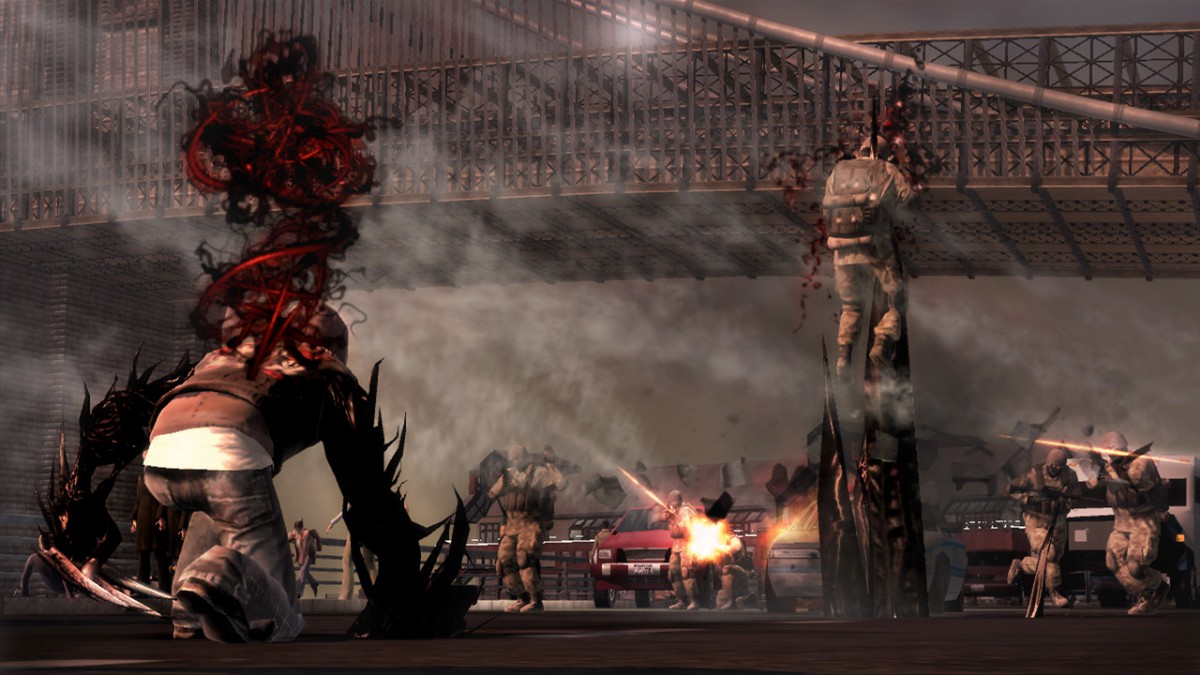
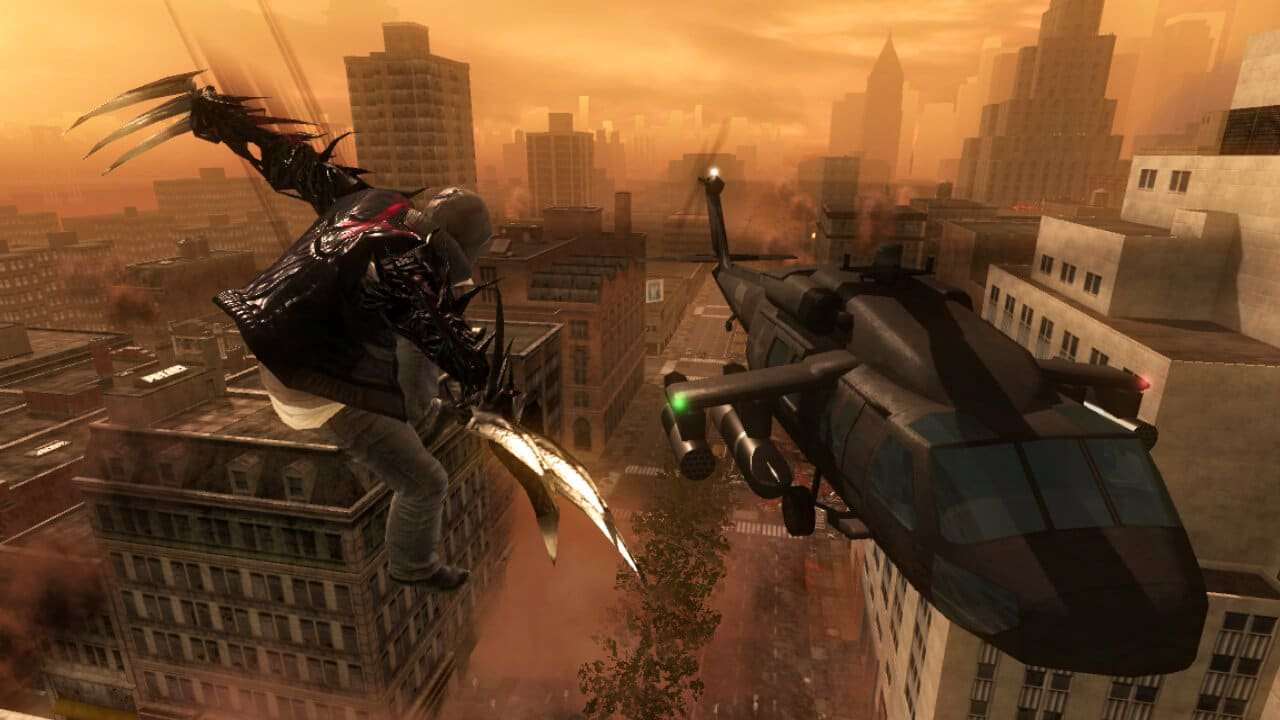
When you first jump into the game, you’ll be able to run up walls, climb buildings, and eventually glide, kick, and consume your way to ultimate infected glory. Most of Prototype is a free-roaming mode where you run from mission to mission, or side missions or activities, like Spider-Man or any other hero you like that can run across a city in less than 30 minutes. The great thing about this is that you can find hidden items such as extra experience or little-hidden things to unlock achievements (or trophies if you’re a PS3 fan and are somehow “accidentally” reading this Xbox 360 review). While most of these (like in any sandbox game) are so spread out and so well hidden, you won’t, except for the ones you run across by accident. Most of the free-roaming is, unfortunately, boring and bland. There are just people and cars, and that’s pretty much it. Once you get further into the game, rampant zombies and infected people terrorize the streets, and it does get more interesting, but it just makes you want to stay off of them and onto the buildings. Most of the graphics in the game are outdated and kind of boring, to begin with, so there’s nothing really “eye-catching” about the game at all.
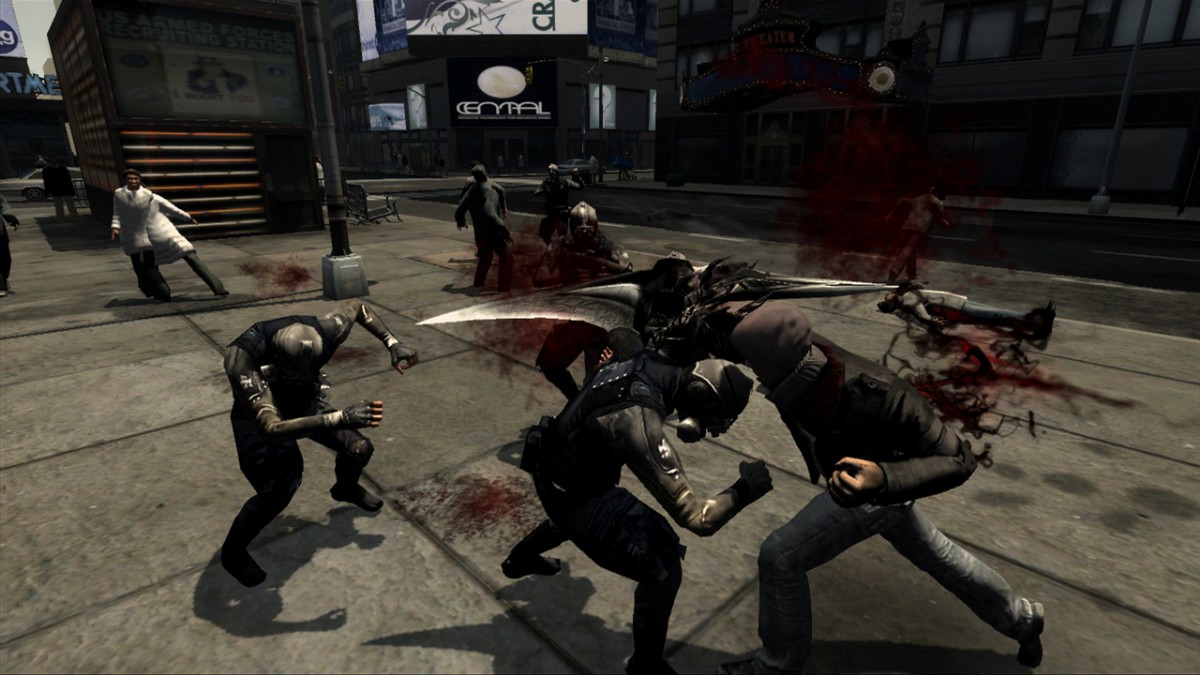
The meat of the game, really, is the fighting, and this is where the heart of Prototype lies. You have a HUGE skill tree that extends from combat to stealth, to movement, to, yes, you guessed it, powers. What kind of game would [Prototype] be without powers? Well, pretty boring since there are so many; you have more than you can handle. Prototype has so many different moves and powers that you will end up forgetting most of the little ones and just using your most obnoxious ones. Your arm can transform into different weapons such as a whip, giant fists via The Thing, larger muscles for a mix of power and speed, a giant scythe (the one on the cover!), and a few others. Accompanied by these, you have some armor (you can’t glide or double dash though!…yeah, shut up Mario Kart fanboys), and you can also shapeshift into whoever your last consumed victim was (more on that later). The way you use these powers depends on the enemies you’re fighting. A huge mechanic is the grab ability, since this is used to fling objects at helicopters, giant tentacle arms, and even military soldiers or infected monsters. Most of the time, you mash X and Y together to create a cool combo, then somehow unleash a weird power. That’s why there is just too much in this game since you can’t memorize all these combos and what each one does for what weapons. One of the next major mechanics is the lock-on system, which is used to dash toward enemies and pummel them before they do something amazing to your infected self. I had a hard time with multiple enemies since you’d want to target one (say, a guy with a rocket launcher up high), but the game would keep targeting someone else below.
You can use actual weapons in the game that enemies drop, such as machine guns, shotguns, and rocket launchers, and these are essential in some missions. Not always will you have your weapons available, and you’ll have to use the environment around you. It also consists of many boss fights, and this is where I concluded my playthrough. The game gets so frustratingly difficult towards the end that it will throw so many hard enemies at you at once (two tentacles plus 5–6 hunters) while trying to protect something. Yeah, right, but then again, Sega is known for doing this in their games. You’ll end up trying to hit one enemy, then another knocks you back, then you can’t get up because another is smashing on you, and when you do, you get knocked back again. Yes, a lot of cheap deaths and hits, and this isn’t fair.
Aside from the annoying main missions, there are some rather fun and unique activities that utilize your powers. Some missions will have you using selected power to eliminate a certain amount of enemies in a certain amount of time; some are races, checkpoint races, and some even have you finding targets and consuming them for your Web (more on that later). While most of these are fun, some are impossible to get because of the target requirements for a gold medal and the maximum amount of experience points to spend in the skill tree. Other skills are earned by consuming certain targets to fly helicopters, tanks, etc.
The last element I should mention is the skill tree, which is filled by consuming certain targets and watching a series of stills and a brief voice clip to fill in the story (lame). So as you can see, this may be unique (and ways to unlock achievements, yeah, or trophies), but this seems more like a cheap way to tell the story or used as a game filler. While Prototype is fun for a while, it quickly gets repetitive with its cookie-cutter enemy AI, broken storytelling, cheap deaths, and bland free-roaming world. I recommend Prototype for a rental, but don’t expect anything amazing.
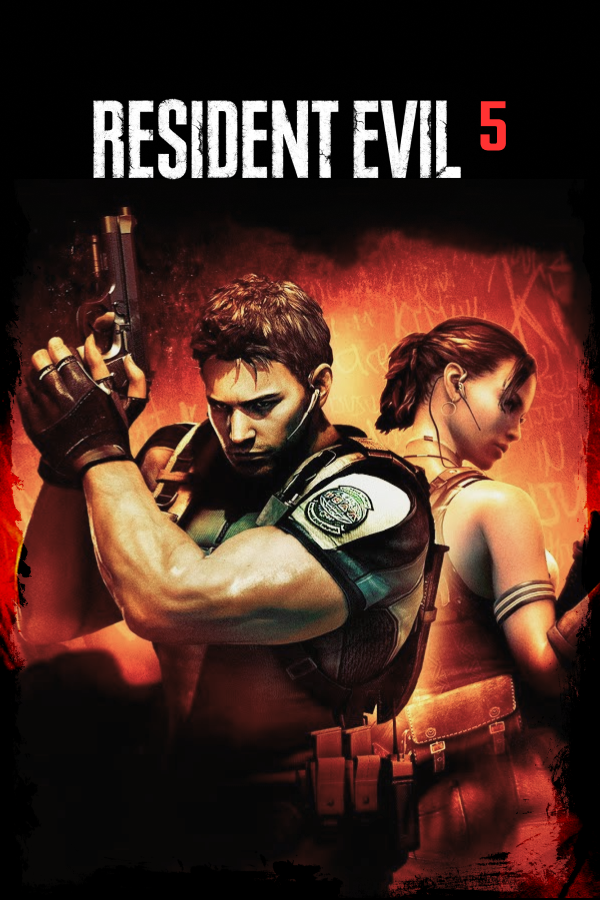
I was waiting for this game ever since I stepped foot into RE4 two years ago (on the better PS2 version). For some reason, RE5 feels like RE4.5 since it feels so similar, and this was a big disappointment for me. Don’t get me wrong, RE5 is phenomenal, but all the similarities can make avid RE4 players quickly bored and/or not so impressed. Rewind four years ago to that pre-rendered still of Chris Redfield during the RE5 announcement and look (or remember) how amazing it looked.
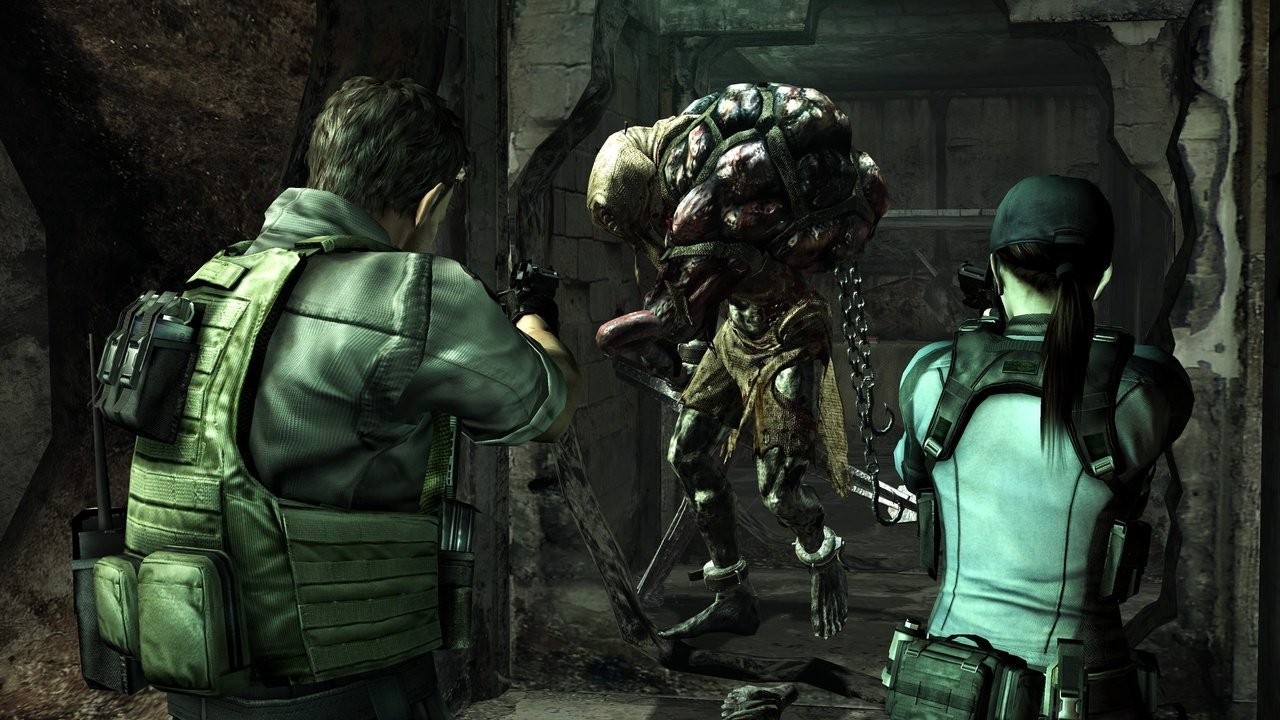
Well, since it took so long to come out, RE5 now looks on par with most next-gen games. It is one of the best-looking games out right now, but what RE5 does that RE4 didn’t do is have amazing cinematic cutscenes. RE4 had a lot of interactive cut scenes, but RE5’s are very cinematic (buy the collector’s edition and you’ll see the new camera technology they used to make these amazing cutscenes). There are fewer interactive cutscenes (press the so-and-so button within 2-3 seconds), but everything else makes up for it. RE5’s controls and basic gameplay are exactly the same as RE4’s. Hey, if it ain’t broke, don’t fix it, right? There’s still the over-the-shoulder camera, along with the whole laser sight and the whole wonky control scheme. While it still works, it does feel dated, and I wish there were a more Gears of War-type control setup or even something more modern.
One of my main gripes is that your attached case is a whole lot smaller, and you can’t upgrade it like in RE4. Sure, you have a quick-select button, but I’d prefer more room for stuff, thanks. You get nine NINE slots, and they are quickly used up. Let’s say you have a vest, four different weapons, and four ammo types. There’s no room for health (yes, it’s still the stupid herb ordeal), grenades, or anything else. This requires a lot more sacrificing, but thankfully your sexy buddy, Sheva Alamar, has nine slots as well, so you can trade and exchange items with each other. Yes, there is a “buddy system,” and I think in a zombie-ridden Africa, the buddy system is great (don’t worry, it’s not a “bodyguard” system like RE4 Sheva actually fights). Sheva’s AI is pretty good. Sometimes she tends to try and shoot through you half the time and doesn’t like to keep up with you when you’re bombarded with enemies.
Rarely will you die from this, but if you do, you get mad. This is why RE5 is a better-played co-op, online or offline. This is great and even has a Left 4 Dead feel since you’re surviving zombie hordes while trying to stop…err…a really bad man from unleashing the new Uroboros virus around the world. Since this is a next-gen system, the boss fights are bigger, badder, and tougher, and boy, do I mean BIGGER!!! You thought the El Gigante was huge on the GC, PS2, and Wii tries shooting up a 30-foot flying B.O.W. or something that’s the size of a naval freight ship. A few new elements are added to certain boss fights, such as “key weapons,” and these are only good for that fight. You may have a rechargeable flamethrower, an RPG, or even a satellite gun, kind of like the Hammer of Dawn in Gears of War. While all boss fights are a major challenge, you can always do it in one try. There are a lot more weapons in RE5, but most of them are useless since they are slight variations of other weapons. It takes longer to completely upgrade weapons, and you can only do this when you start the game, die, and are in between levels. No, there’s no creepy British dude with stuff under his coat selling you things. I found this change a bad one since it may hinder some people when they need a weapon before a certain point. Upgrades cost a lot more and thus make unlockables harder to get.
Another great thing about being next-gen is that the levels are now huge and the puzzles are challenging but not confusing and scatterbrained. There are a lot of little goodies to collect and unlock. You can use points for achieving certain things (such as finding all BSAA emblems, beating certain levels, etc.) to unlock figurines, filters, costumes, etc. These add great replay value and can make the game more fun a second time. When you beat the game, you get a mercenary mode (like in RE4) that pits you against tons of zombies you have to fend off. RE5 is an amazing game, but it feels too similar for RE4 veterans and may hinder and bring down your expectations.
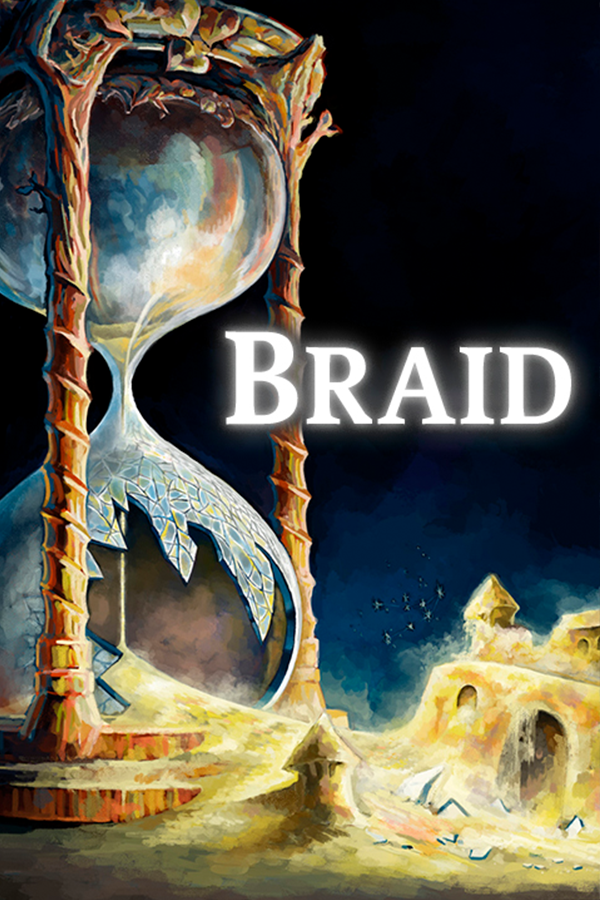
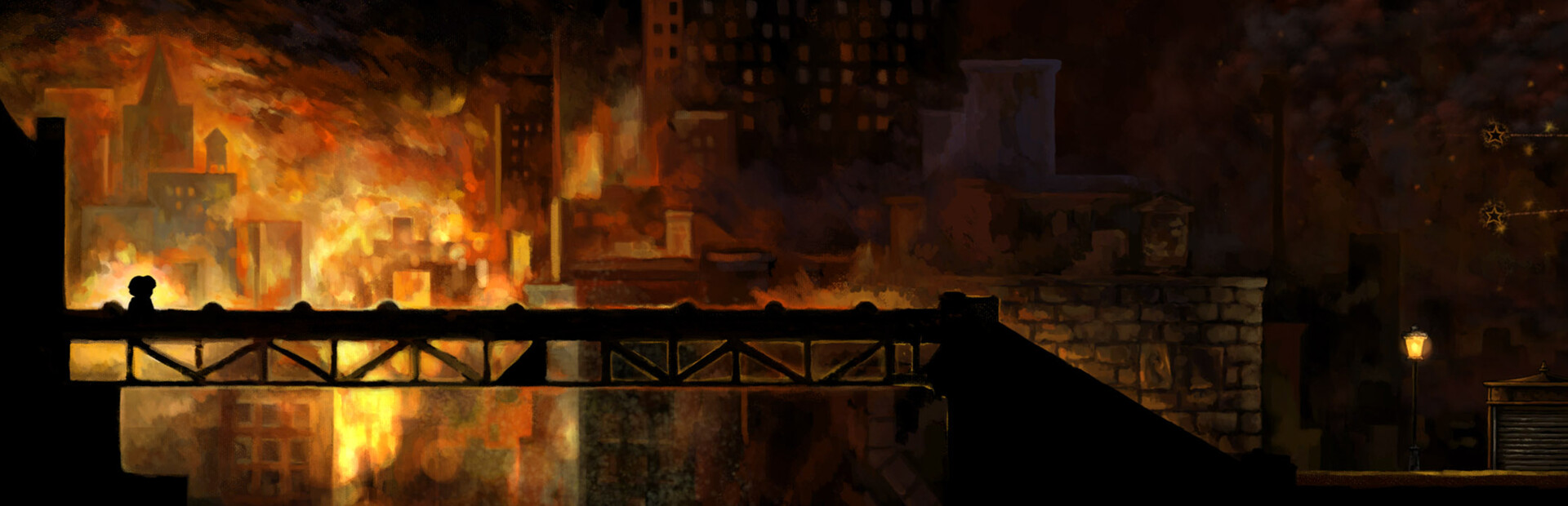
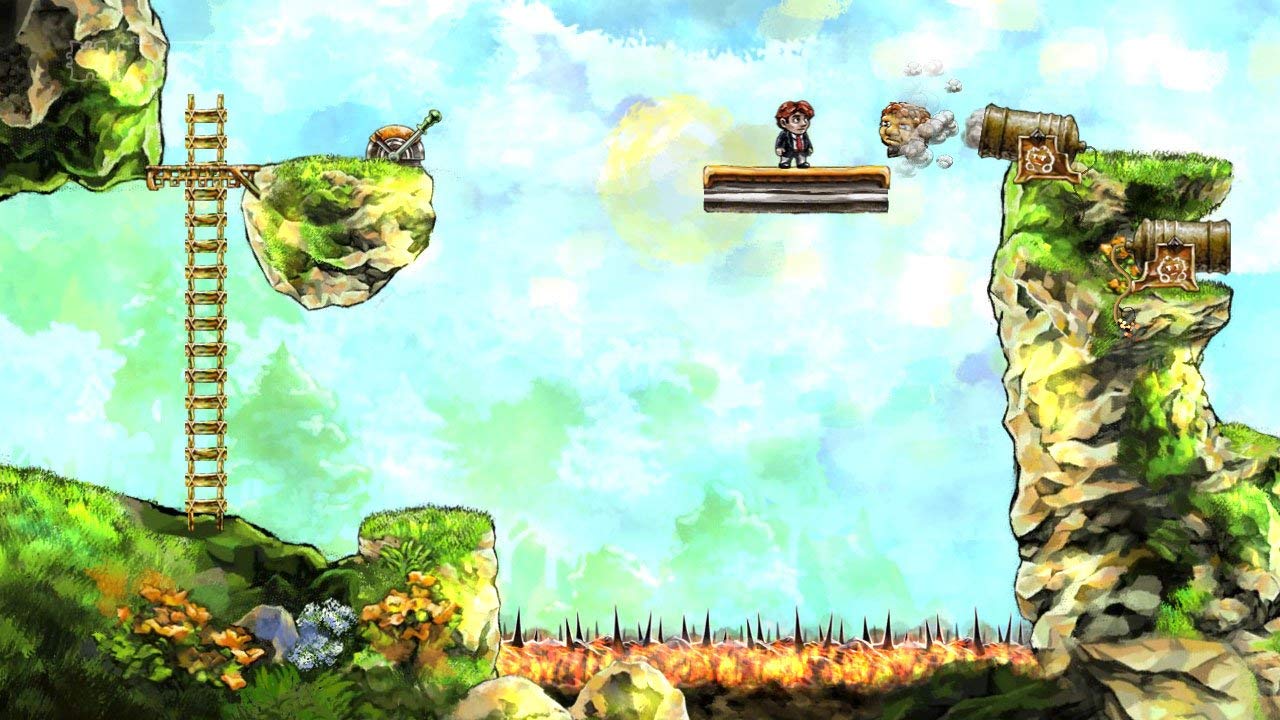
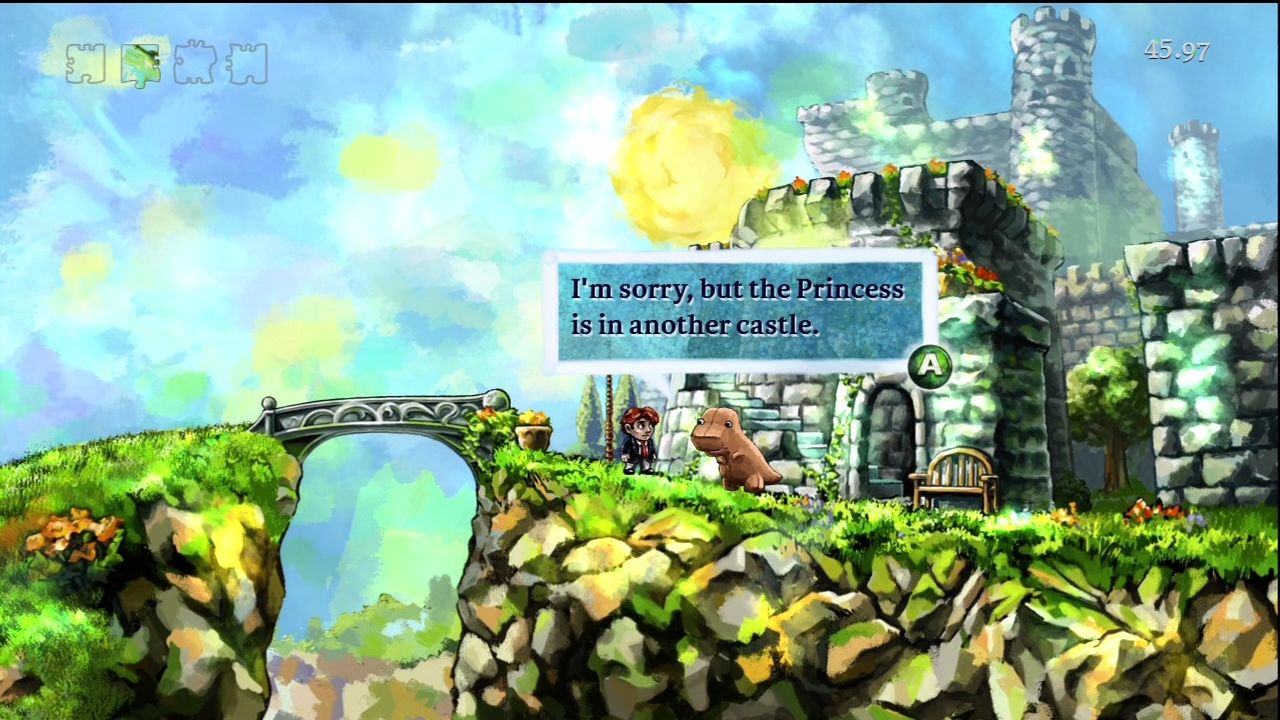
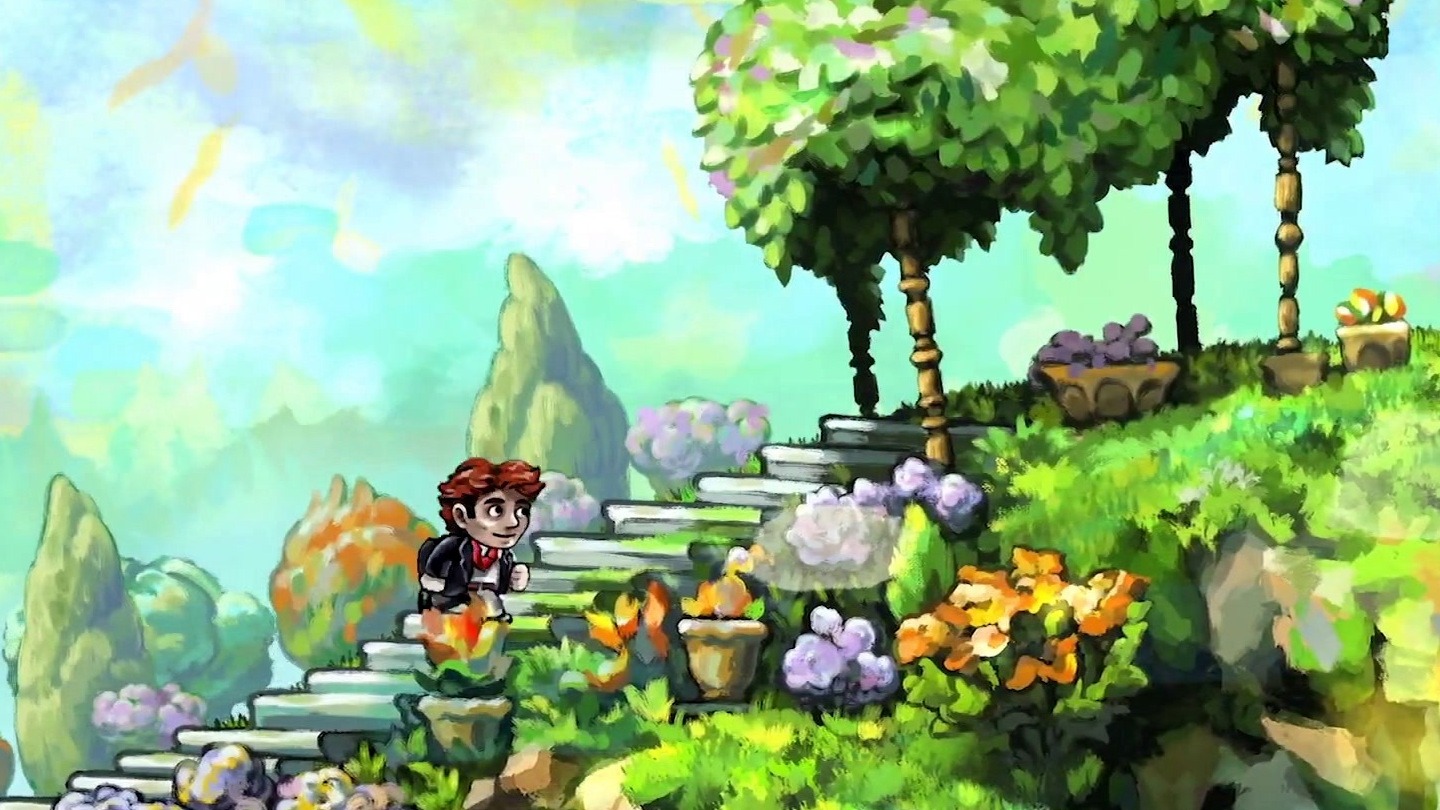
Braid is one of those WTF games where you think you know what’s going to happen, then it turns around and slaps you in the face. The story of Braid is very interesting, but it doesn’t really matter until the last level. You start the game off on world 2, then you end with world 1, and that’s the piece of the story that makes your brain go funny. This is what I love about Braid; it has a wonderful story along with beautiful pastel or watercolor backgrounds. The music is very moody and inspiring, and I just love the whole package. The main attraction to Braid is the whole-time mechanic. Each world uses time in a different way to solve unique (yet not hair-tearing) puzzles. Instead of dying and starting all over, you can rewind time—all the way until you enter the level if you have to. This is a very hard mechanic to explain, but you have to use the enemies as jumping springs. You have to jump on them just right to get on that higher ledge. Sometimes you have to alter their paths using time to get to where you need to. When some platforms and enemies are green, they are unaffected by time.
You can rewind time to get a moving platform underneath them, but they don’t go back in time; they just keep walking. Sometimes everything is moving backward in the level, and you have to alter the way the enemies are moving. If you walk forward, everything moves backward. One world has you using a ring that slows down time, but only around the bubble it creates. This lets you slow down cannon fire, slow down enemies so you can use them in the right manner, etc. One world even has you using your own shadow to help you. When you walk to where you need to be but you have to throw a switch that moves a platform on the other side of the level, you just rewind time back on the platform, and your shadow retraces your steps and hits the switch. This game is just so mind-blowing that it’s extremely hard to explain. The objective is to collect all the puzzle pieces and complete the puzzle to finish the world.
The game has about seven worlds and can be beaten in about 6–8 hours, depending on your IQ. If you like puzzles that truly bend your brain in ways unimaginable, then go for Braid. This game is too hard to describe in words; you just have to play it. For $15, it’s definitely worth it, thanks to all these awesome elements put together.
I don’t think there will be anything like this out there again, and this not being done by a major developer is very surprising. I hope this game gets the XBLA GotY award because there’s just so much to the time-traveling aspect that it’ll just wow you.
























































 thebinarymessiah.com
Super, thank you