Walking simulators are something I really enjoy as they can focus mostly on the story, characters, and atmosphere. Sadly, it’s also a big gamble as sometimes the story can be great, but the gameplay is awful or the story is awesome, but the ending sucks and pretty much makes the entire experience not worthwhile. The Chinese Room is notorious for its walking simulators, being almost exactly that, and this game is a spiritual successor to Dear Esther which looked great but was forgettable.
The game puts you in a small rural British town of Shropshire where there doesn’t seem to be anyone around. All you know is to follow a ball of light floating around and it guides you around the town to activate cut scenes of the main characters talking about what happened at that moment. You will see the aftermath such as a wrecked car, a turned-over box, bloody rags, etc. There are no actual character models as they are just whisps of light in the shape of people acting things out on screen. This can make the game aggravating to play and pay attention to. A game with literally zero gameplay outside of an action button, and doesn’t have any characters on screen better be damn good right?
As you walk around and follow the ball of light you will sometimes hear a numbers station playing on a radio or a telephone ring. These are extra tidbits of stories you can listen to. Each part of the town focuses on a specific character, but sadly I was often lost as to who was what as there were no faces to put to any of the voices. Once you see a cutscene play out your ball of light will stop and wait, sometimes. There were quite a few glitches in the game in which the ball of light would get stuck in the ground, not continue on, or just disappear somewhere never to be found. I had to restart the game to get the ball back on track.
Major cutscenes that actually advance the story are triggered by grabbing a ball of light and moving it left and right until it explodes. This was originally an excuse to use the then-new DualShock 4 touchpad. Here it’s just a mouse drag and feels pointless. You know you are done with an area when you get a ball of exploding light that takes a few seconds to trigger. After this cutscene, the area goes dark and you follow a trail of lights on the ground to the next area. This is all there is to the game. It’s pretty to look at, even today. The game uses CryEngine so it looks awesome and holds up well, but it’s still forgettable. There’s nothing memorable about a realistic-looking generic old English rural town.
I did eventually get into the story towards the end. However, the game just ends on a pretentious note and I felt deflated and annoyed. I really hate endings like this. This was four hours I will get back and I won’t take anything away from this game at all. No interesting gameplay, no memorable visuals, and no exciting story. The voice acting is great, but that’s about it.
Sadly, Everybody’s Gone to the Rapture is a game I’ve avoided for a decade and there’s a reason for that. I knew that this game would be very forgettable and a waste of time. I enjoyed the idea of this strange apocalyptic infection that’s passed around through phone and radio waves, but there’s no pay-off in the end. That also doesn’t take into account the aggravatingly slow walking pace that most people won’t be able to put up with. Even if it was two times faster it would be more tolerable. It feels like you’re crawling. That would be fine if there were more visuals to look at but there aren’t.
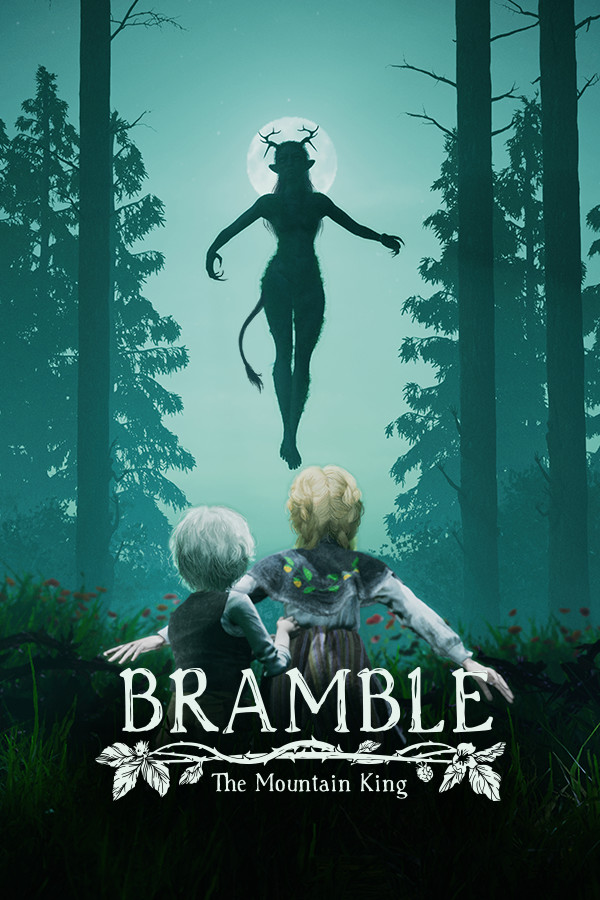
Linear, narrative-driven adventure games are some of my favorites. Bramble does a great job trying to be different than the rest by delivering a little bit of everything and not overstaying its welcome. You play as Olle, who is trying to rescue his captured sister from the bramble and evil forest creatures who took her.
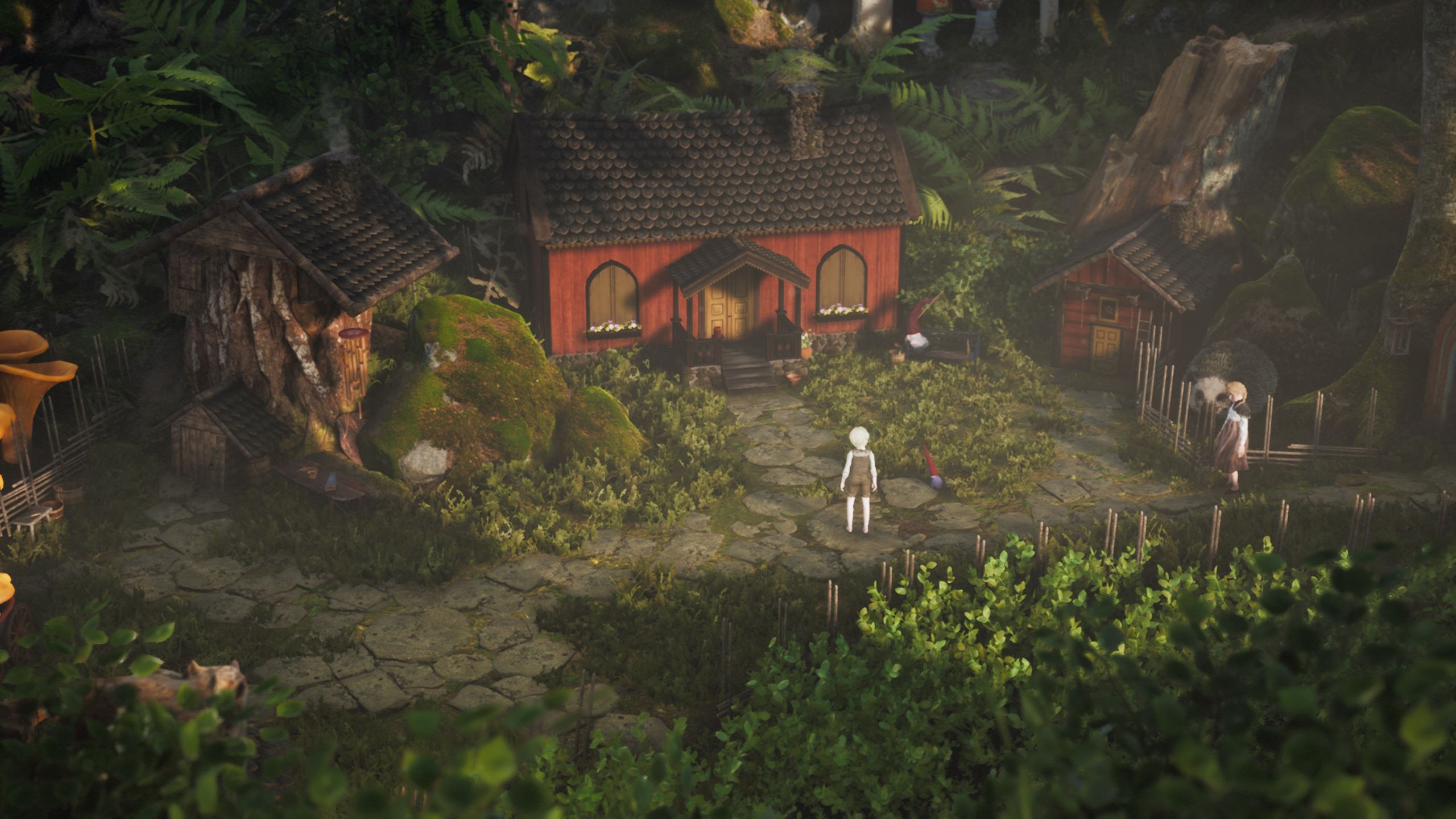
The game does a great job of luring you into a false sense of security. The game starts out bright and colorful, with beautiful sweeping vistas of green. You get to solve various simple puzzles with cute gnomes that laugh like little babies. The first third of the game is cheerful and bright—until it suddenly isn’t. Bramble quickly turns dark, gory, and downright depressing. Sacrificed babies, wading through pools of animal gore, climbing moldy meat—and those cute little gnomes get slaughtered at some point. It’s just done abruptly and suddenly, and it’s shocking.
The majority of the game has you running around areas with fixed camera angles, jumping, climbing, pushing the occasional push, twisting the odd lever, and solving the easiest puzzles. I honestly don’t know why these puzzles are even here. Exploration is also nonexistent. You go into a room with a locked door, only to find the key on the table in front of you. This happens multiple times as well. I don’t understand the point of it. There is a bit of combat thrown in, but it’s saved for boss fights. You have a ball of light that’s not only used to illuminate areas and clear some paths, but you can also chuck it at weak points at bosses. The boss fights are the only challenge in the whole game, as you must memorize attack patterns and dodge, jump, or toss your ball at the right moments through waves of attacks.
The environments are constantly changing, and they all look fantastic. Depth of field is used well here as you are a small person in a giant’s world, so everything from blades of grass to a normal-sized rock is huge. This is well shown, and the perspective is pretty cool with the depth of field effects used. Textures look great, and models look good too. The entire game is narrated by a woman, so it’s the only voice acting in the game. I do want to mention that the soundtrack is gorgeous. During chapter changes and while the camera pans across a vista while you’re running, an incredible vocal soundtrack will play, and I honestly would listen to it outside of the game. The soundtrack by Martin Wave and Dan Wakefield is fantastic.
Despite the great pacing, wonderful visuals and soundtrack, and challenging bosses, there still isn’t much of an actual story here. The game is narrated like a children’s storybook from medieval times, but that’s about it. I had no reason to get attached to the characters or the world around me. The monster and creature designs are top-notch, and I always looked forward to the next screen because it was always a surprise. The game is nice and short and is better than most short, linear, narrative-driven adventure titles. I love the dark tone and theme, and while you may not discuss this with your friends a year from now, it’s at least a sight to behold.
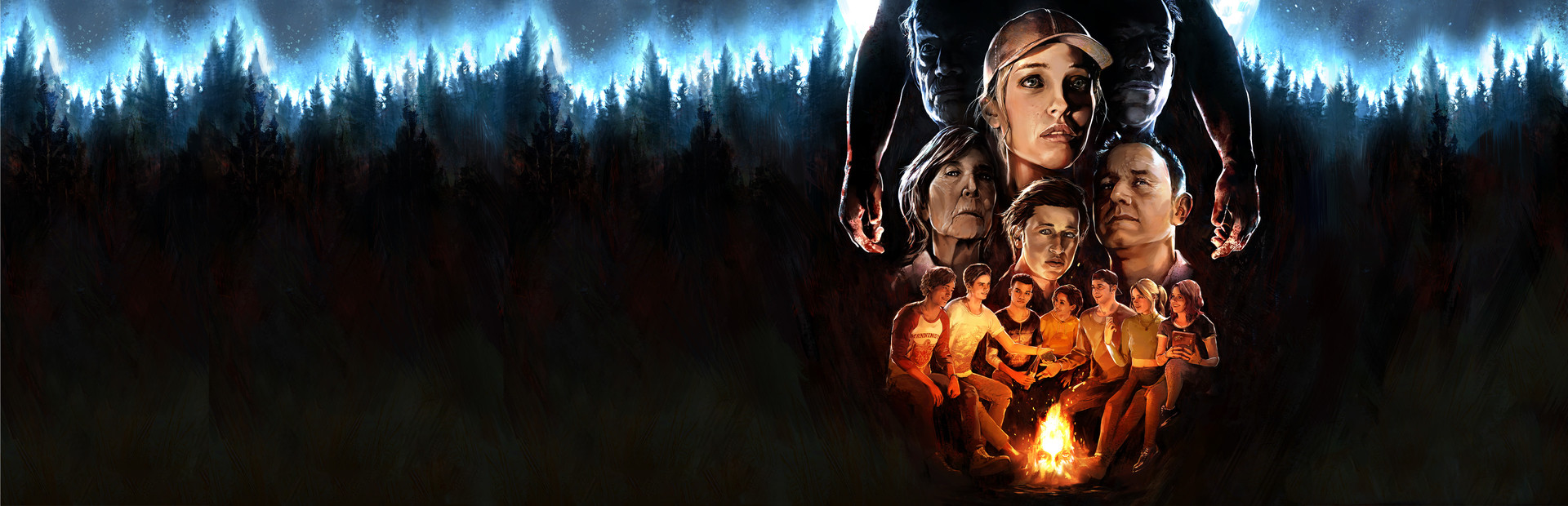
Supermassive games are well known for the interesting worlds they create, albeit how small and linear they are, and their knack for telling decent horror stories. Until Dawn is still considered one of the best PS4 games to date, and it was a fantastic game. Mostly in terms of the lore and story behind the characters. The pacing was also pretty great. Supermassive went on to create the episodic The Dark Pictures Anthology game, which is mediocre at best. The Quarryis the first stand-alone title they have made sinceUntil Dawn, and their experience from The Dark Picturescarries over.
If you are familiar with any of their work, you will know pretty much what to expect. The game starts out fairly slowly, introducing the choices and QTE gameplay to you in a safe manner that won’t affect the story. You start out as two characters who are on their way to a kid’s camp in some nondescript woods to be counselors. You run into something on the road and get run off, and you need to figure out what to do from there. The dark and brooding atmosphere kicks in right away, and the game is better paced than some of their previous works. Once the beginning chapter is out of the way, you get introduced to all of the other characters, and the first few chapters build up to the horror and get you attached to these characters via personality cliches and quirks. Sadly, Supermassive relies heavily on character traits and stereotypes to get you attached to their characters. Their games are more about the here and now, and there’s little lore or character background like in other adventure games.
This has always been a fault of their games that I don’t like. While the characters are more likable than in previous games and have better and stronger personalities, I still don’t care for them after the game is over. I don’t think about them or care to go back and find out about other outcomes. You have the jock type, the strong female, the silly female, the meek female, the silly small dude, etc. They are just all stereotypes, and relying on this makes all of their games feel like B-grade horror movies with slightly better acting. I understand that’s sometimes the charm, and it’s almost done on purpose in this case, but I would like to see the studio’s experience put to use in more than just cookie-cutter horror movies you watch on cable TV at 2 a.m. and forget about the next morning.
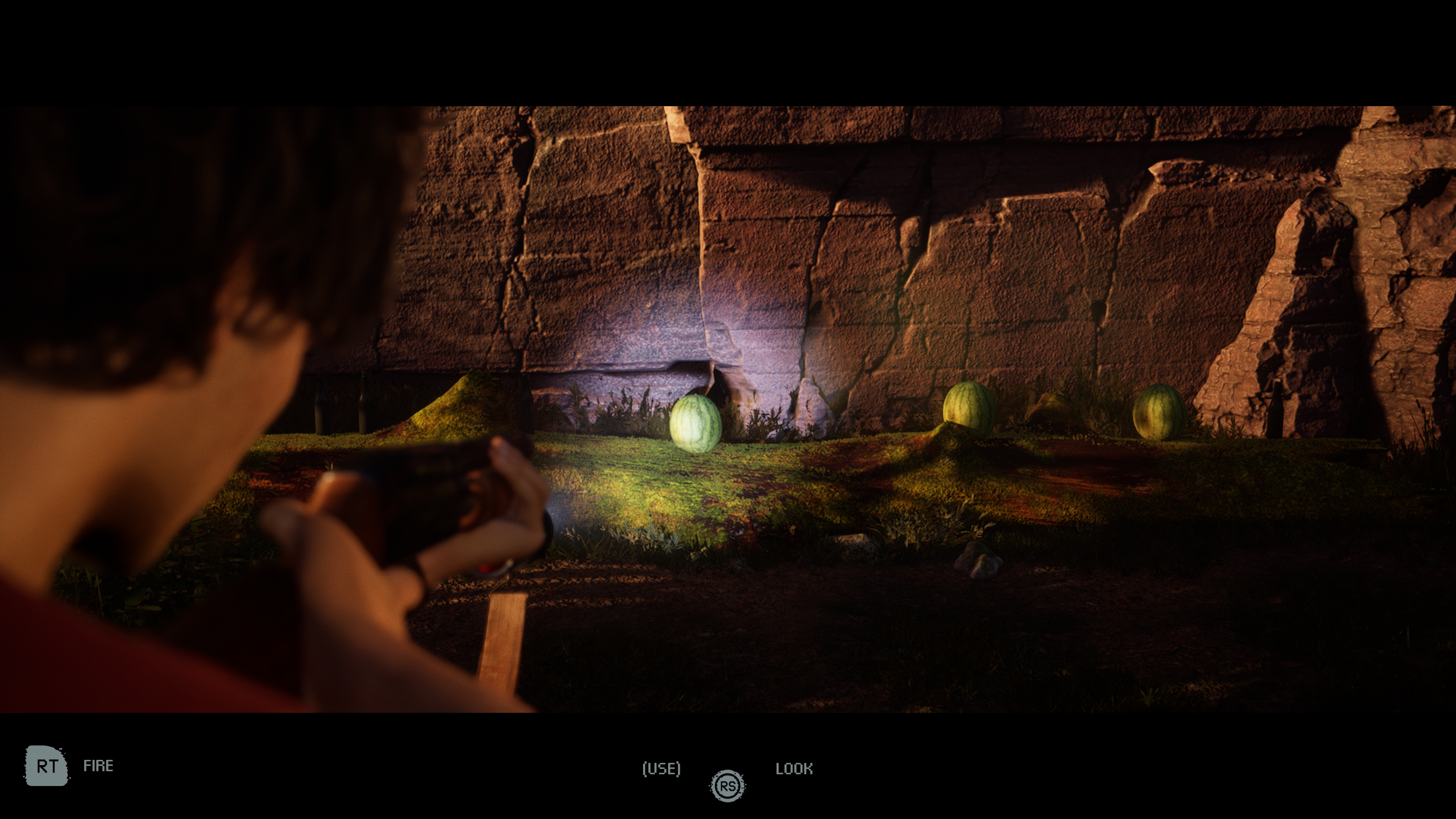
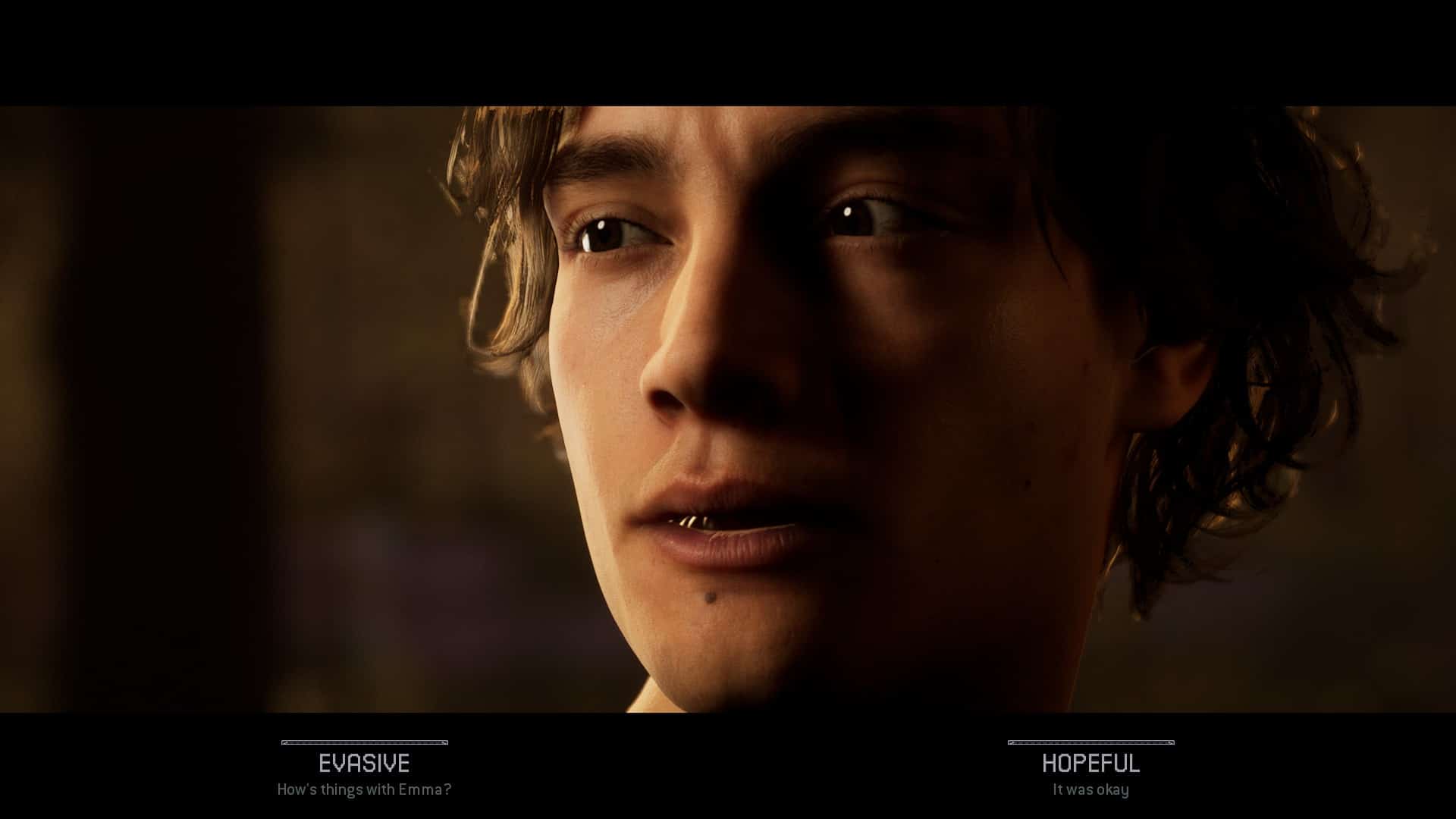
With that said, there is still almost zero gameplay here. Your main goal is to focus on choices. You get dialog choices, always two, that can shift your attitude towards a character one way or another, and it’s your job to observe them and figure out how they will react based on how they are dealing with things in the world. During the “action sequence,” you get really easy QTE button prompts, and failing these will either end in a game over that kills a character or a second chance to try again. You can press the left analog stick in a certain direction or mash a face button. Adventure game gameplay these days is so bad. I honestly wish the puzzles would make a comeback. There are some small changes to the typical Supermassive gameplay with choice actions. A prompt will pop up asking you if you want to call out, stop someone, raise a weapon, or something along these lines. These are important and can change the whole outcome of the game. It’s a rule of thumb to either hide and hold your breath or run and don’t mess up the prompts, but sometimes you can stray off the path, and these usually have dual outcomes. Something good and bad happen at the same time.
When you rarely get control of a character, you wander around looking for things to look at and tarot cards. These cards are similar to the photos in The Dark Pictures Anthology and can show you a predicted outcome. You only get to choose a single tarot card you find per chapter, rather than seeing every outcome as you discover them. I honestly didn’t feel these were necessary, and all but one of my party survived by the end of the game. I think I did pretty well. Walking around the linear areas is an excuse to add “gameplay” and pad things out. There is even a movie mode that lets you just watch the game as a movie, so there’s that. I will admit that the choices here felt heavier and more important than in previous games. I really had to think, and sometimes I really couldn’t predict or know what my choices would do. A lot of them were based on pure instinct. So at least their path engine is getting better.
Of course, Supermassive is also known for its hyperrealistic animations and visuals. Sure, they are fantastic. So good that some of the facial animations just don’t look human or feel awkward. They still have that “video game trying to be super real” feeling to them. Their Unreal Engine is still poorly optimized, and with a high-end PC, I still dipped under 60FPS at 1440p. To be honest, Supermassive also just can’t get a lot of what most other adventure games get right. Any time they try to be “touchy-feely and deep,” it comes off as corny and cheesy. It’s not to the level of, say, Life is Strange that can really dig deep and make you believe that these characters are human and feel pain and misery.
Overall, The Quarry is a nice departure from their mainline mini-series, but it still suffers from the same issues. A poorly optimized engine, awkward facial animations, corny dialog, and forgettable characters and stories. This is a typical “2 AM B-grade made for cable TV” horror story and nothing more or less. By the time the credits rolled about 9 hours in, I shrugged and just moved on to the next game. The acting is much better than in their previous games, and their choice engine feels more organic and relies more on instinct, which is great, but there is pretty much zero gameplay. This is fun to play on Halloween night with a friend with the lights off, or just to pass an evening with some decent entertainment. Don’t expect to talk about it with your friends the next day, however.
The PlayStation controller is iconic. It was the first controller that had force feedback built-in and dual analog sticks, and it became a worldwide icon. I remember buying my first DualShock controller as a kid. It was a green one, too. The controller improved with the PS2 by adding pressure-sensitive buttons, but overall it was still the same thing. The DualShock 3 was the most controversial, originally being a six-axis controller with no force feedback due to the lawsuit that Sony was in over their force feedback tech. The DualShock 3 did eventually come out, but the six-axis motion was a gimmick and was never utilized outside of the first two years of the system’s life. It also had triggers that weren’t well done, and the analog stick rubber degraded over time. It just wasn’t a fantastic controller. On the other hand, the DualShock 4 wasn’t the greatest either. The forced light bar needed to communicate with the PlayStation camera so that no one had drained the battery, and the added touchpad didn’t really add to any one experience, just like the SixAxis didn’t. It had improved rear triggers and analog sticks, but that was about it.
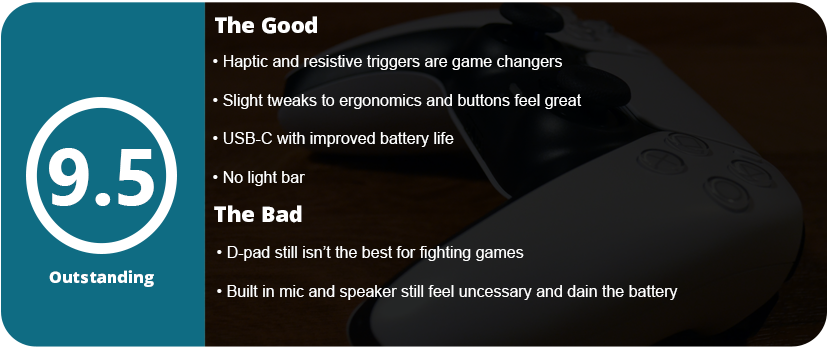
Here is the scrapped DualShock name. I have to salute that name, and it will be missed. We are now in the DualSense era. This controller is probably the first ever to be truly as innovative as the built-in analog sticks and force feedback from the DualShock 1. The haptic triggers literally change how a game plays and feels. These aren’t gimmicks. There is a resistive force on the triggers in the game. You can hold down a trigger partially, and it will stick to the motor. Pull down harder to actually shoot a gun or arrow. You can feel the swings of an axe in God of War: Ragnarok. The triggers can even vibrate a bit and feel suddenly loose or tight, like in The Last of Us Part 1. It changes the way I shoot in games. Spider-Man Remastered lets you feel the webs that you shoot with physical force.
This is the best part of the entire controller, and I miss it in every game that doesn’t have it. The rest of the controls are just slightly tweaked for a better hand feel in the grips, and the top light bar was finally removed. However, there are still lights around the touchpad, which is fine. The controller just looks so good now, too. The change to a pure white launch color was strange but also brave. The texture of the controller is improved as well. It doesn’t feel as slippery, and the plastic doesn’t feel as cheap as the DualShock 3 (I’m sorry, but that controller was my least favorite from Sony). The D-Pad also feels better this time around and is less mushy. I also love how the controller is now USB-C and we can finally get away from the micro connector. You still have Bluetooth availability, and it seems to be more compatible with devices than what the DualShock 4 could do. I do like the actual PlayStation logo as the home button now, and the controller retains the speaker and mic features. There is also a mic mute button right on the controller, which is a great feature.
Overall, the DualSense controller is the first controller revolution since the Wii remote and the original DualShock before that. The haptic triggers literally change the way you play and feel the game. There are so many things you can do with this type of resistive technology, and many first-party games are coming out swinging already. The battery life is improved over the DualShock 4, the ergonomics have been tweaked just enough, and finally, get USB-C! I’m not sure how Sony can improve from here.
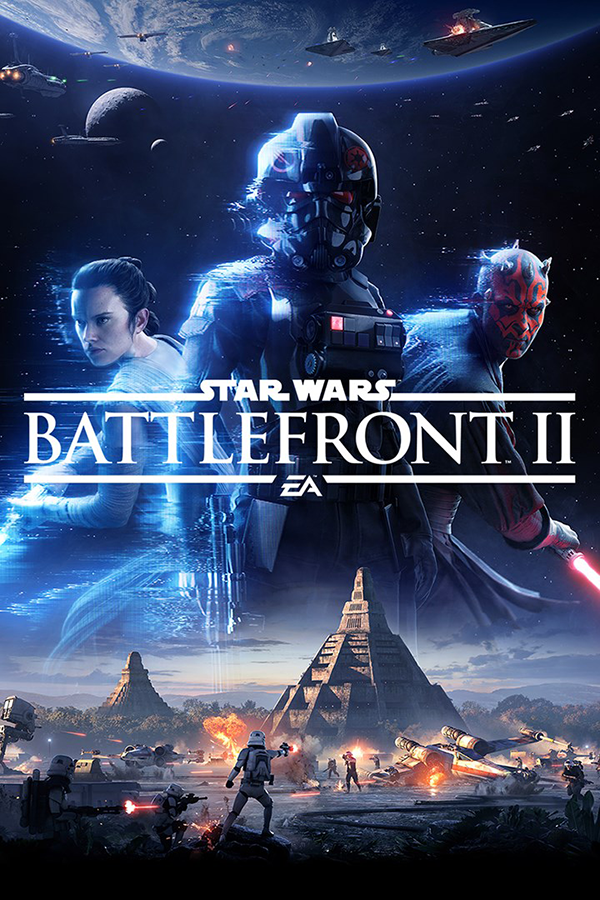
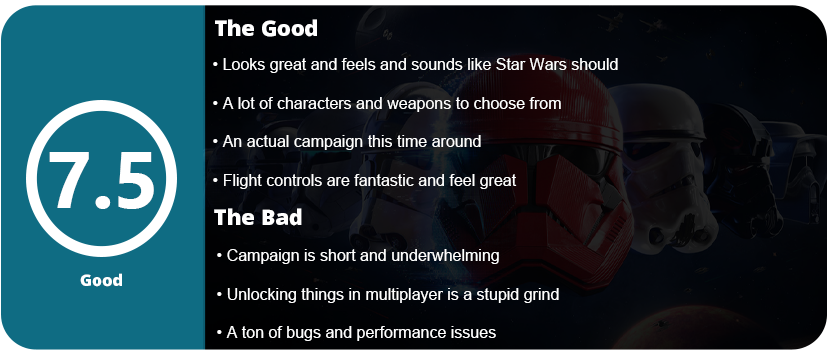
It’s no secret thatStar Wars Battlefront II was one of the most controversial games ever made. While Motive is a fantastic developer, the pressure from EA higher-ups created the infamous loot box scandal. It was one of the most talked-about stories of 2017. The awful and immoral practices of mega-corporations in the games industry were finally coming to a head, and it was so bad that Motive removed the paid loot box system entirely.
With that said, Motive did add a single-player campaign, which was sorely missed in the first game. While the campaign is nothing to write home about, it’s there, and the effort was appreciated. You can blow through the whole thing in about 4-6 hours. There is a three-mission epilogue you can play through as well, which maybe adds 45 minutes to an hour at most. You play as a brand new character created for the game Iden Versio. She’s a great character on screen and very charismatic. The First Order elite turned resistance fighter is a nice touch, especially since you start out as the enemy in the game. Sadly, the game doesn’t really go anywhere story-wise outside of telling a small battle before the events of Episode 7. A lot of your favorite heroes and villains are present, such as Boba Fett, Luke Skywalker, Lando, and Chewy.
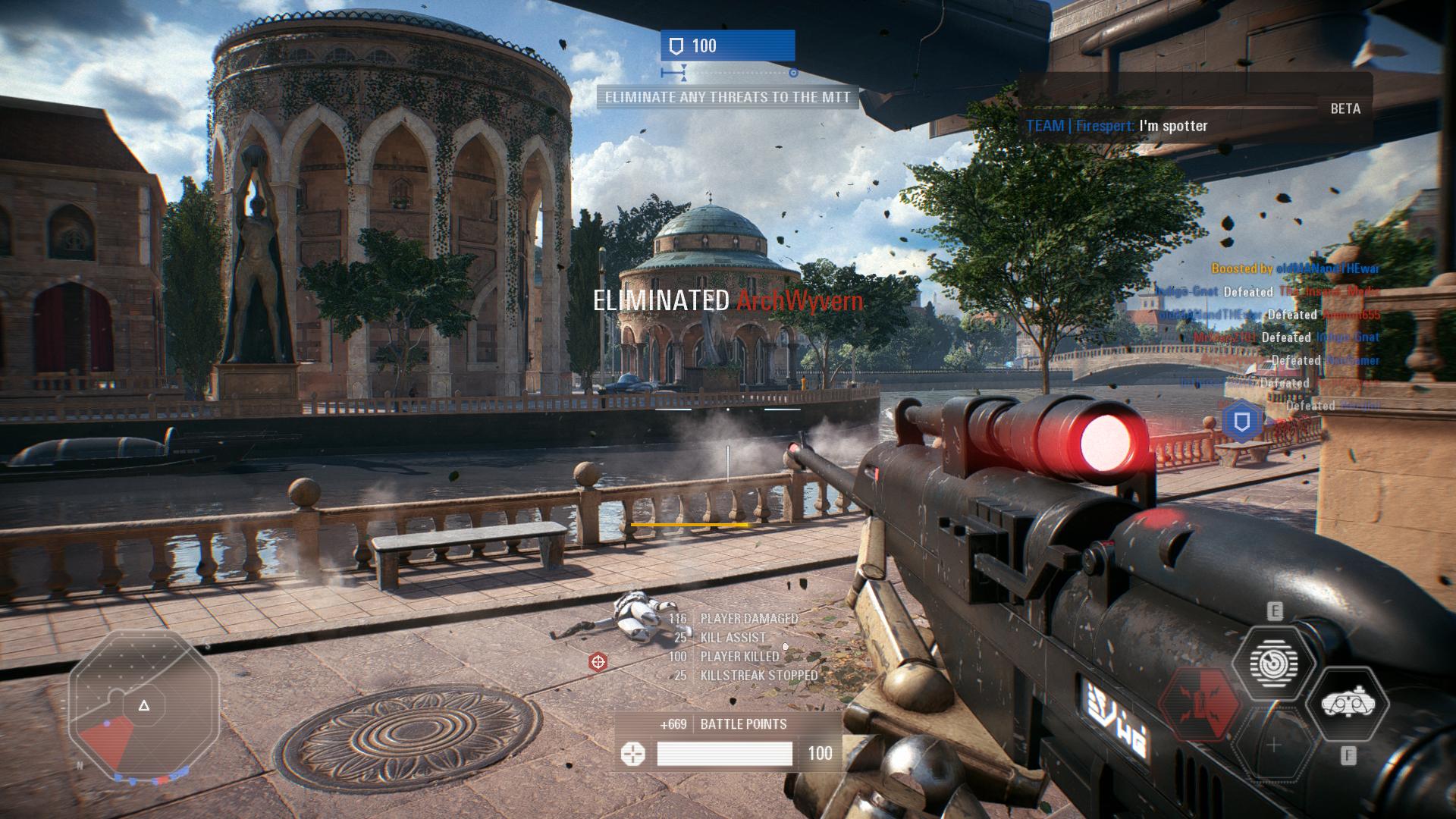
The campaign mostly feels like a very linear version of the multiplayer game. You can just stand in a hallway and blast everyone away. Weapon damage and stats don’t seem to really matter in single-player. You mostly just want a weapon with a high rate of fire for when you are out in open areas, which is most of the time. You can equip battle cards that give you three abilities. These range from healing to grenades, scanners, and secondary weapons. They are most useful in multiplayer because they give you a bit of an edge. You occasionally get heavy weapons you can equip, and they have cool-down timers rather than ammo, so you can keep them. There are also vehicles, but you will mostly be flying them in space in the campaign, which is really well done. Ships fly well with fantastic controls. You get a taste of all of the maps in the multiplayer campaign. The campaign is mostly just reworked multiplayer maps with a few hallways thrown in. Getting through each level isn’t complicated. Objectives range from securing an area to splicing a console, and that’s about it. Nothing too fancy. The main story is entertaining the first time you play it, and then it’s off to multiplayer.
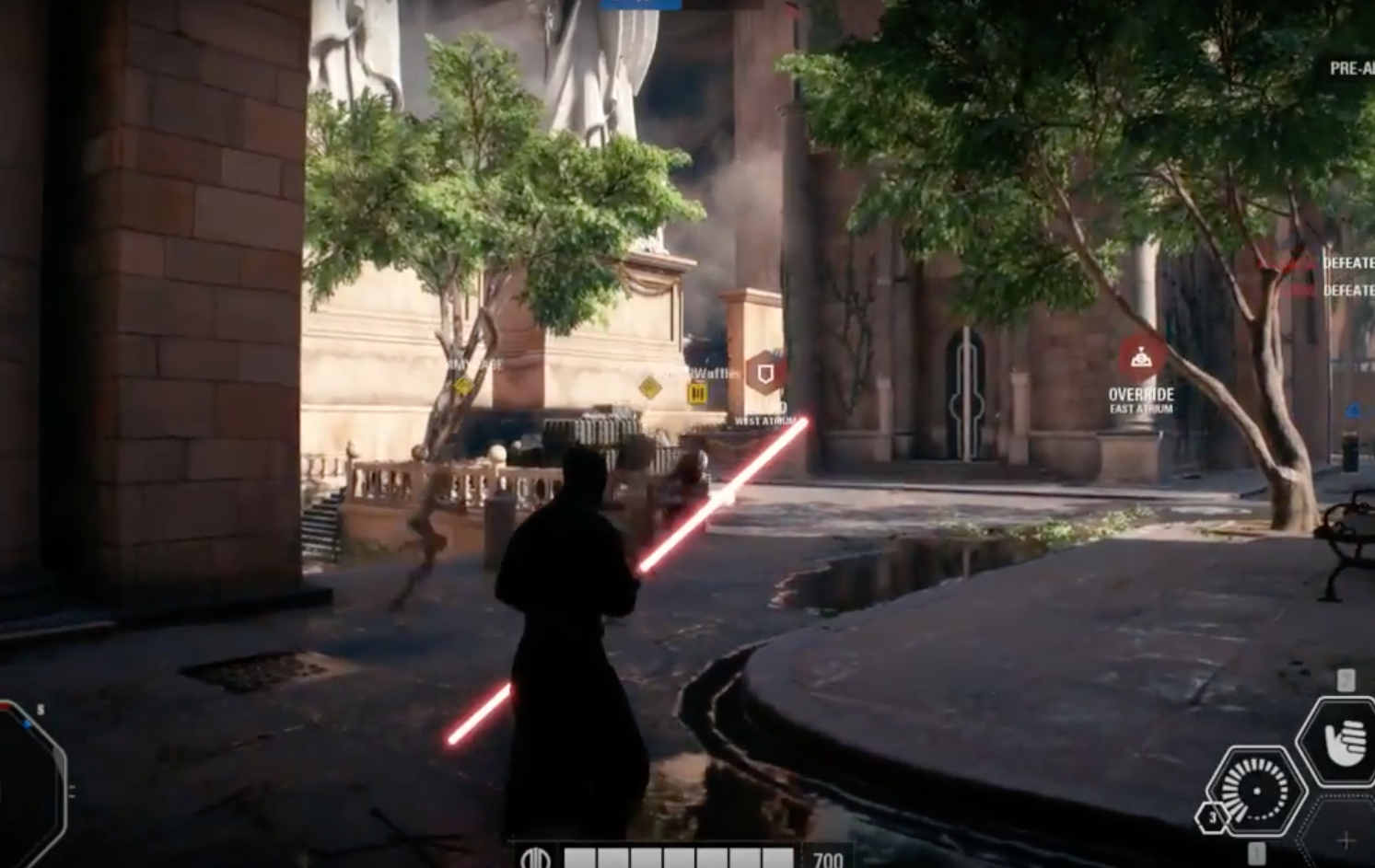
Multiplayer is where the meat of the game is. It’s built on the Battlefield franchise anyway. Multiplayer consists of large open maps with 20 vs. 20, and you must secure points on the map. This is the most common mode. The new Heroes vs. Villians is really popular and fun. Heroes are nerfed to an extent. You have a stamina bar for blocking blaster fire, jumping, and swinging your lightsaber around. This makes it fairer for other players. You get three abilities, just like every other character. The lightsaber combat feels and looks good, and it also plays the part. You really feel like a more powerful character, but just a tiny bit. You don’t want the game to be unbalanced.
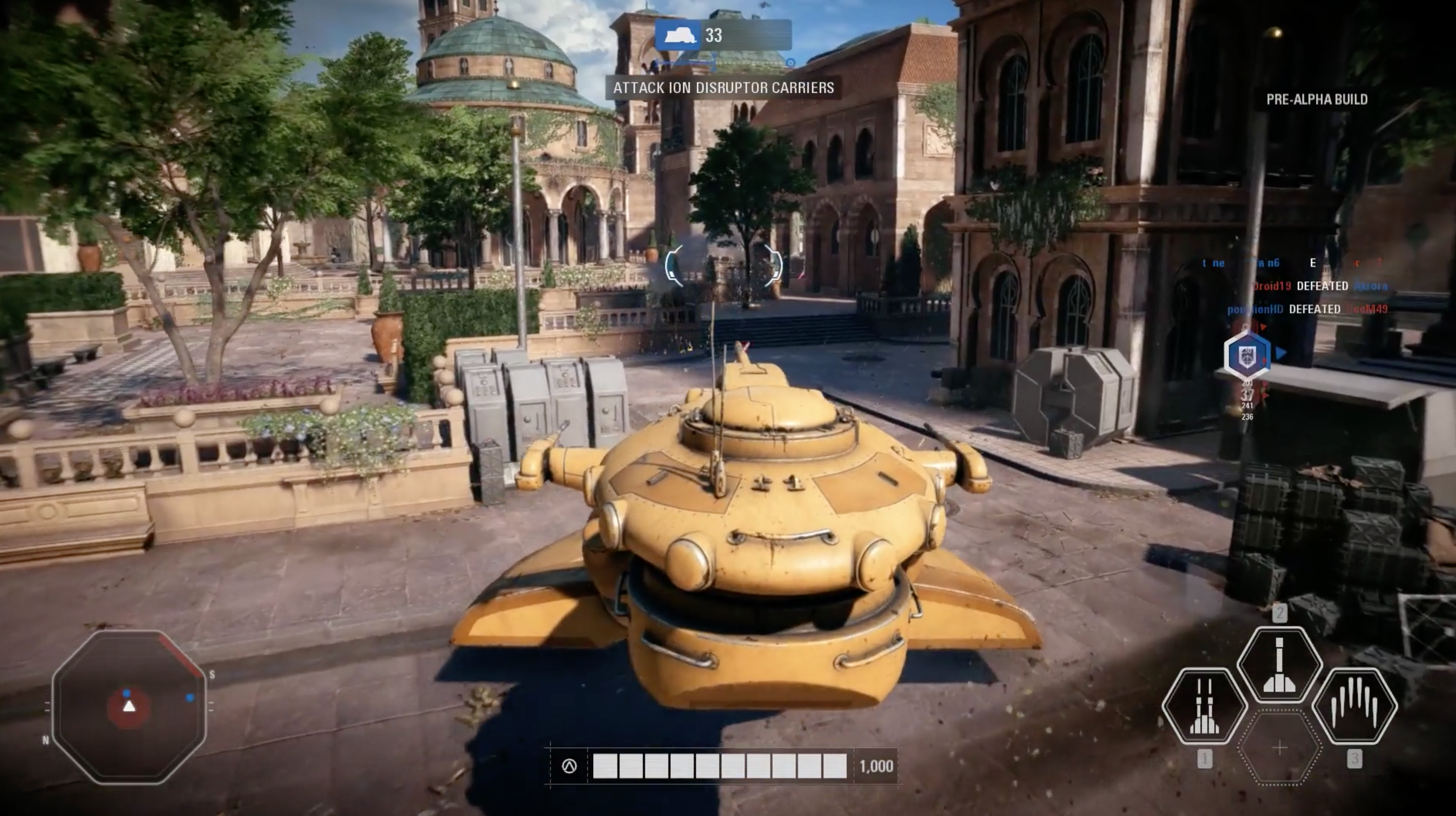
If you are familiar with previous Battlefront or Battlefield games, then you know what to expect. The game looks and feels like large Star Wars battles, both on the ground and in space. There are many iconic maps and planets, as well as numerous factions such as the Droids, Republic, and Empire. Everyone will have a favorite to play as, but expect a long grind. You can’t even get a single battle card equipped until you level up a character. This will mean playing each one at least once until you find a favorite. Unlocking weapons, cosmetics, emotes, voices, and taunts all come at the cost of grinding. Sadly, the game just isn’t interesting enough for me to dedicate that much time to it. I spent maybe 4 hours in total in multiplayer, and while it’s fun in short bursts, it just doesn’t have that addictive nature that Battlefield or Call of Duty have. There’s nothing there that makes me want to come back, and I think the grind for unlocks is part of it. Everything is locked away from the start, with no incentive to keep playing.
I did have a lot of fun in multiplayer, but only in short bursts and only then for a short time span. After a while, I just couldn’t dedicate the time needed for the insane unlocks and grind. The game looks fantastic with EA’s Frostbite engine at work doing its magic, but that also comes at a cost. The game was a technical nightmare at launch, and DirectX 12 is still broken to this day. Cut scenes stutter and hitch at higher resolutions, and the game used to crash a lot on certain configurations. Motive has the essence down; it just needs more meat around a third entry.
Overall, Battlefront II doesn’t quite live up to the original charm and essence of years past. Multiplayer is fun with huge open battles, but it comes at the cost of a serious grind just to get a single battle card equipped. The campaign is appreciated, but it’s short and uninspired, and Iden’s character is underutilized. Combined with poor performance issues and the loot box scandal at launch, this game is a bargain bin purchase at best.
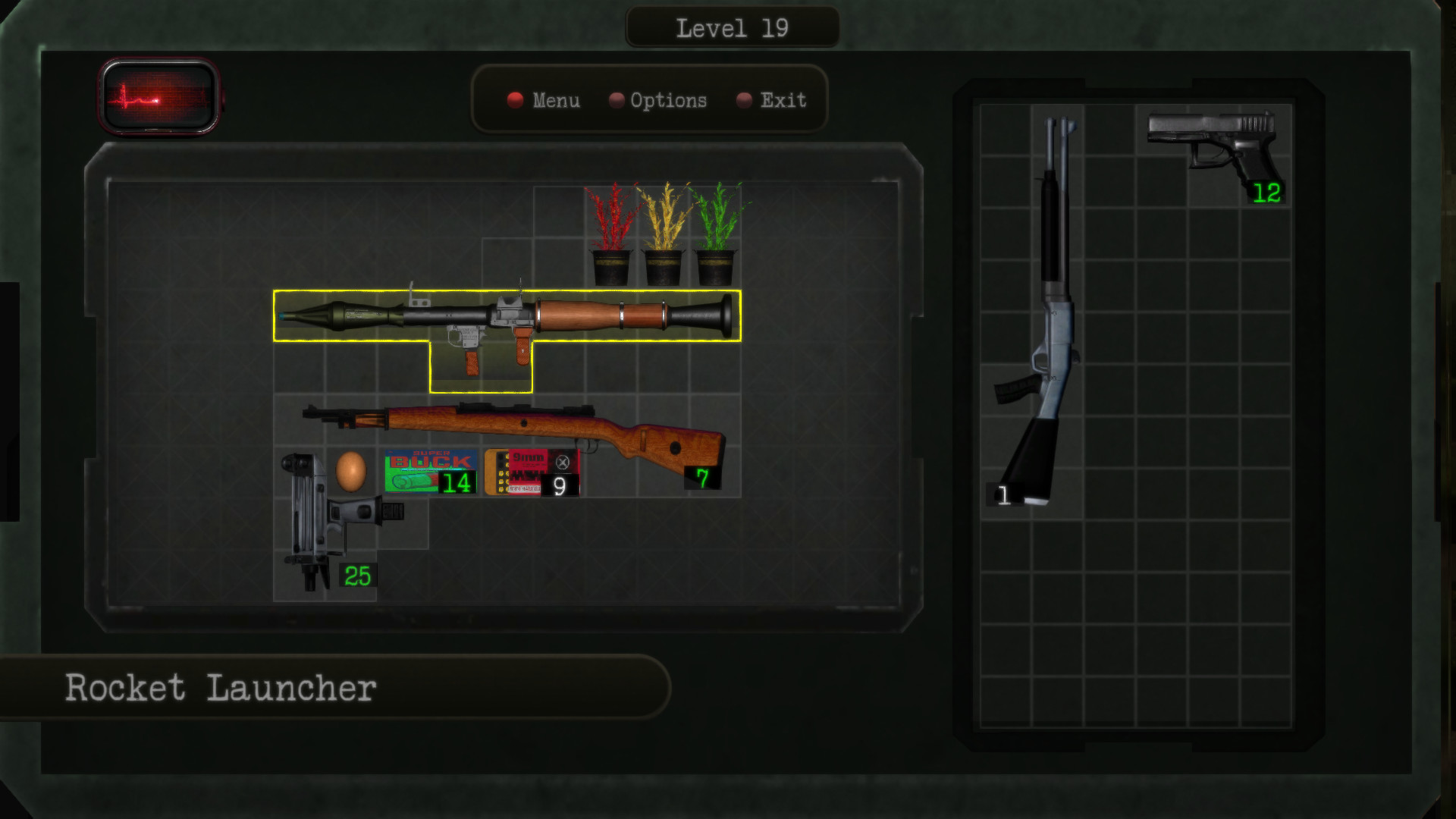
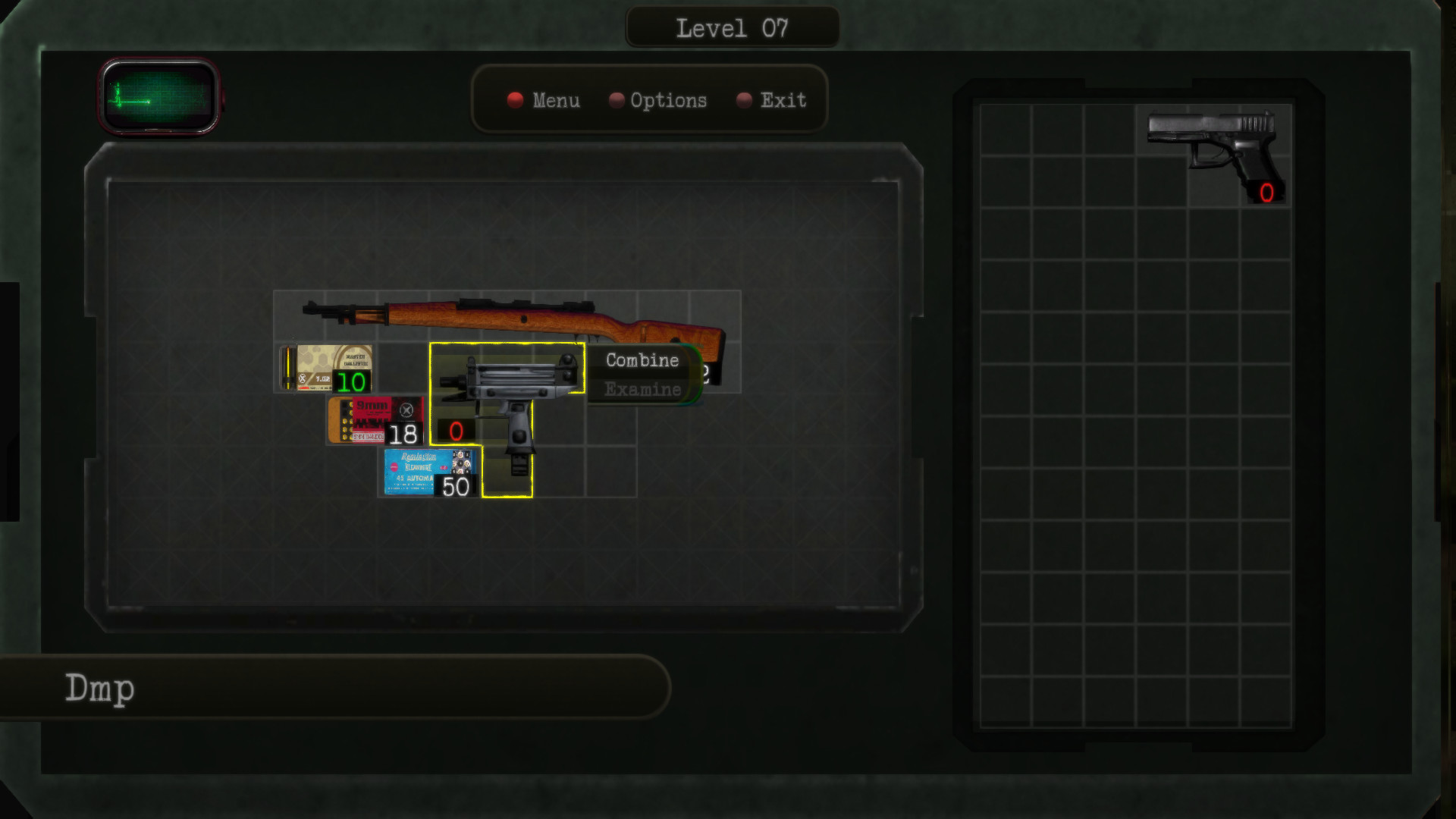
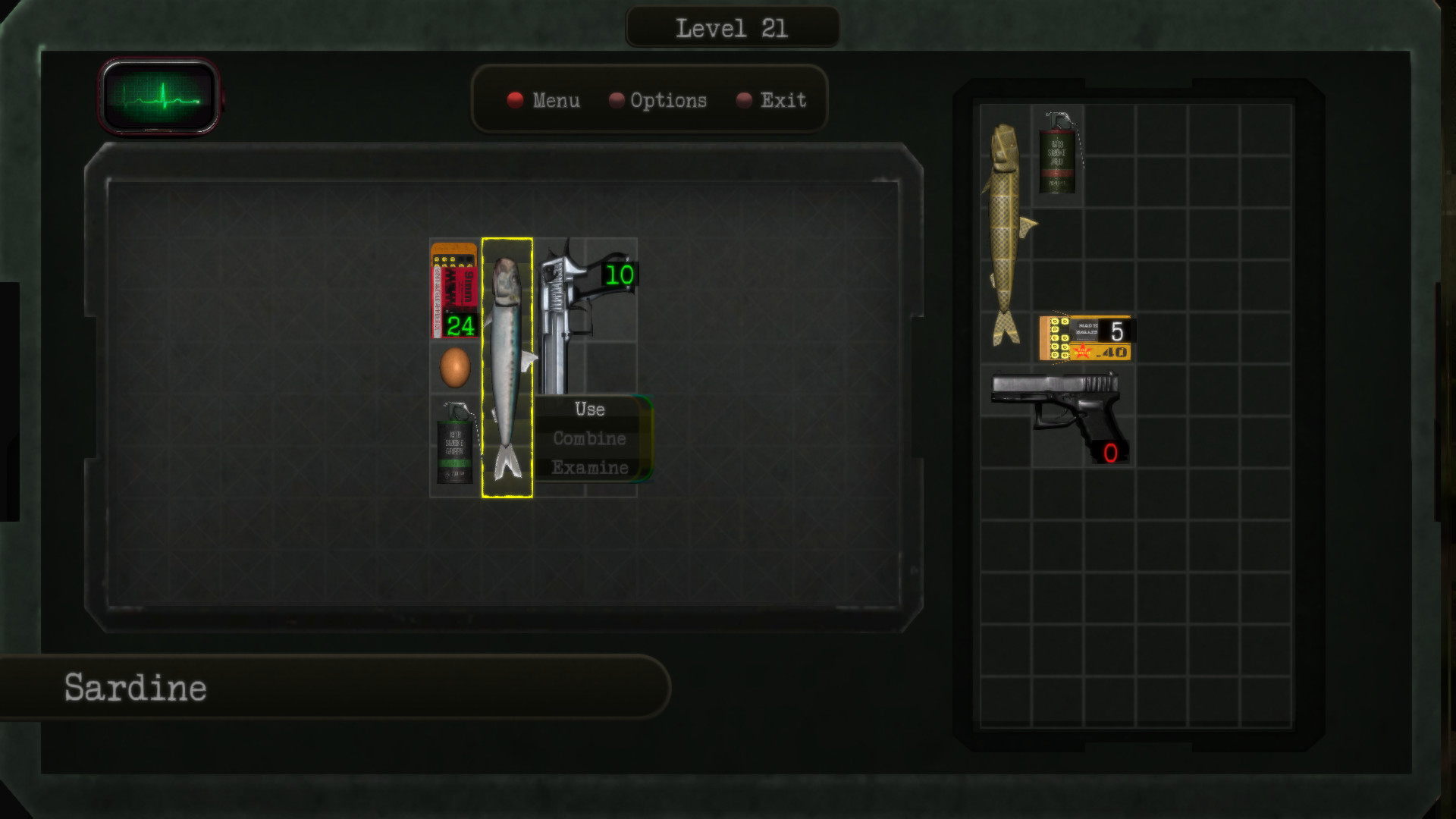
Did you ever play Resident Evil 4 and want to just organize that inventory? It’s kind of satisfying getting all your items in the right spot, so someone thought that should be its own puzzle game. In Save Room, you organize weapons, health, and other items ripped straight from the game it’s inspired by.
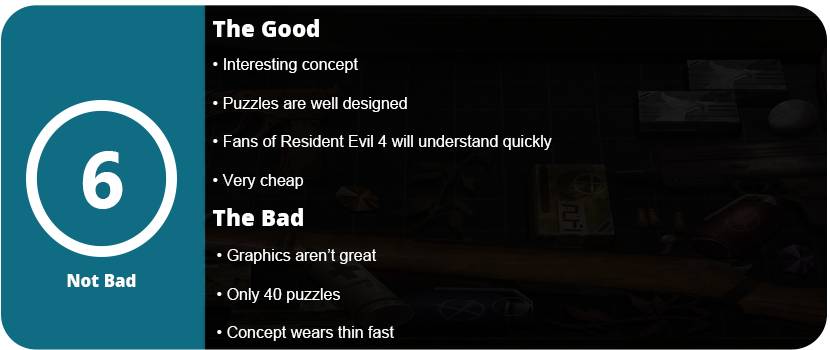
There are only 40 puzzles in total and you can blow through them in just about an hour. On the left is a cache with a grid and on the right are the items you need to fit in there. There are just enough squares to fit every item exactly. You begin with just fitting small pistols and then larger weapons like shotguns and rifles. Shortly after this, you need to organize health items and grenades. Things get more complicated when you start out with too many items.
Well, just like in RE4, you have a health meter and need to refill your guns. You need to do this in a certain order as this is also part of the puzzle. You may have three health items, but can only use two so you must figure out how to combine herbs and also hurt yourself with poisoned eggs and fish to be able to use more health items. Later on towards the last dozen puzzles you start crafting ammo in addition to stacking ammo and reloading weapons.
This all sounds complicated, but if you ever played RE4 you know exactly what to do already. A few puzzles will get your brain juices flowing. Mostly the ones that needed me to combine certain types of ammo and reload or stack ammo in a certain order. I only had to look up a few puzzles online, but most are quick trial and error levels and you will be breezing through them.
This sounds like a great concept, but in the end, it gets old really fast and it makes you just want to play RE4 instead. The visuals are pretty ugly, there’s a single track that loops in the background, and that’s all there is to this. For the low asking price, I can’t really complain. I had my hour of fun, but it’s totally forgettable. This isn’t on the same level as Portal or even something like The Room series. You won’t be talking about this 10 years from now. I honestly can only recommend this to RE4 fans who want some sort of weird spin-off. Anyone else who never played RE4 just won’t care about this or even get the idea.
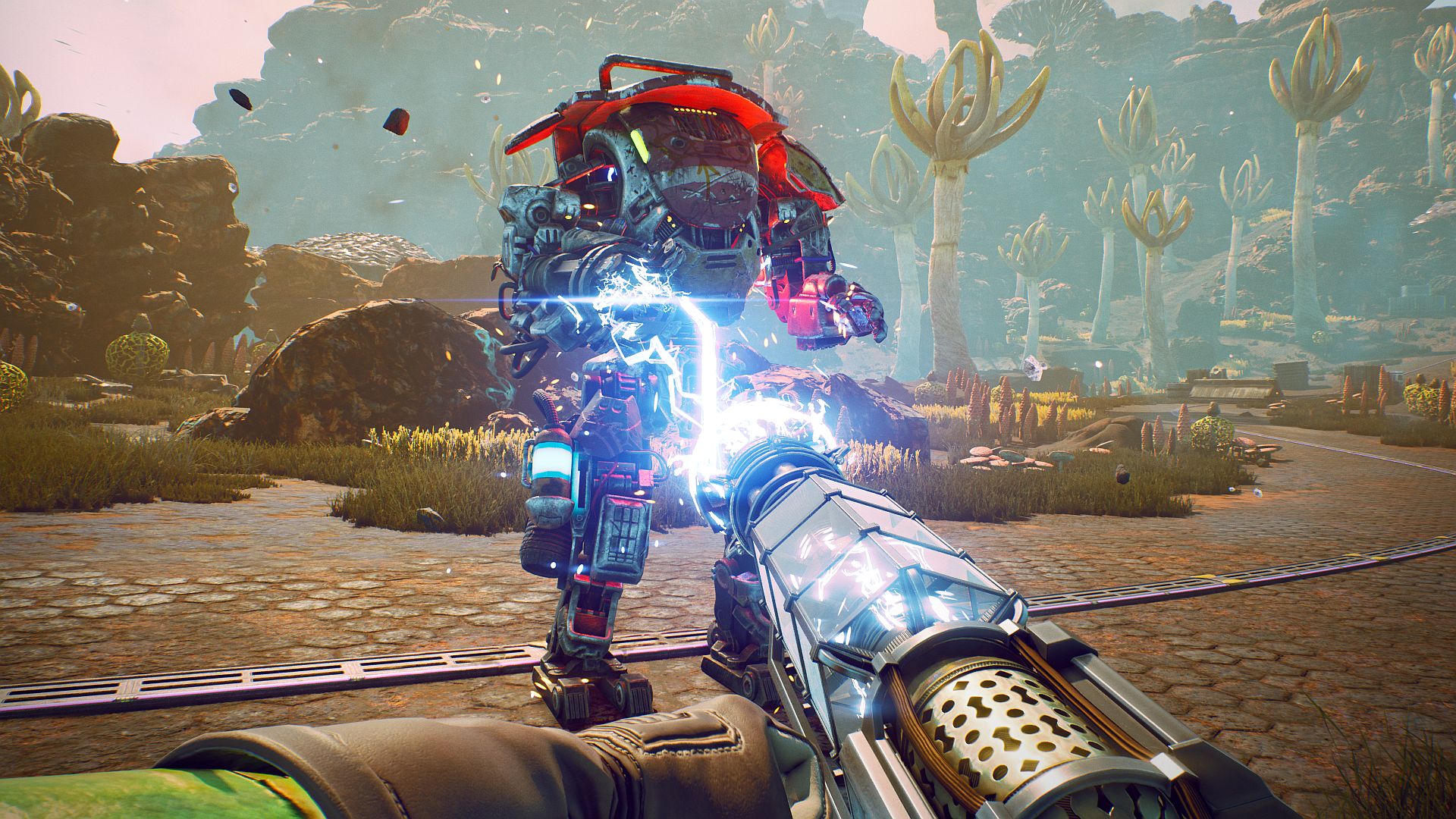
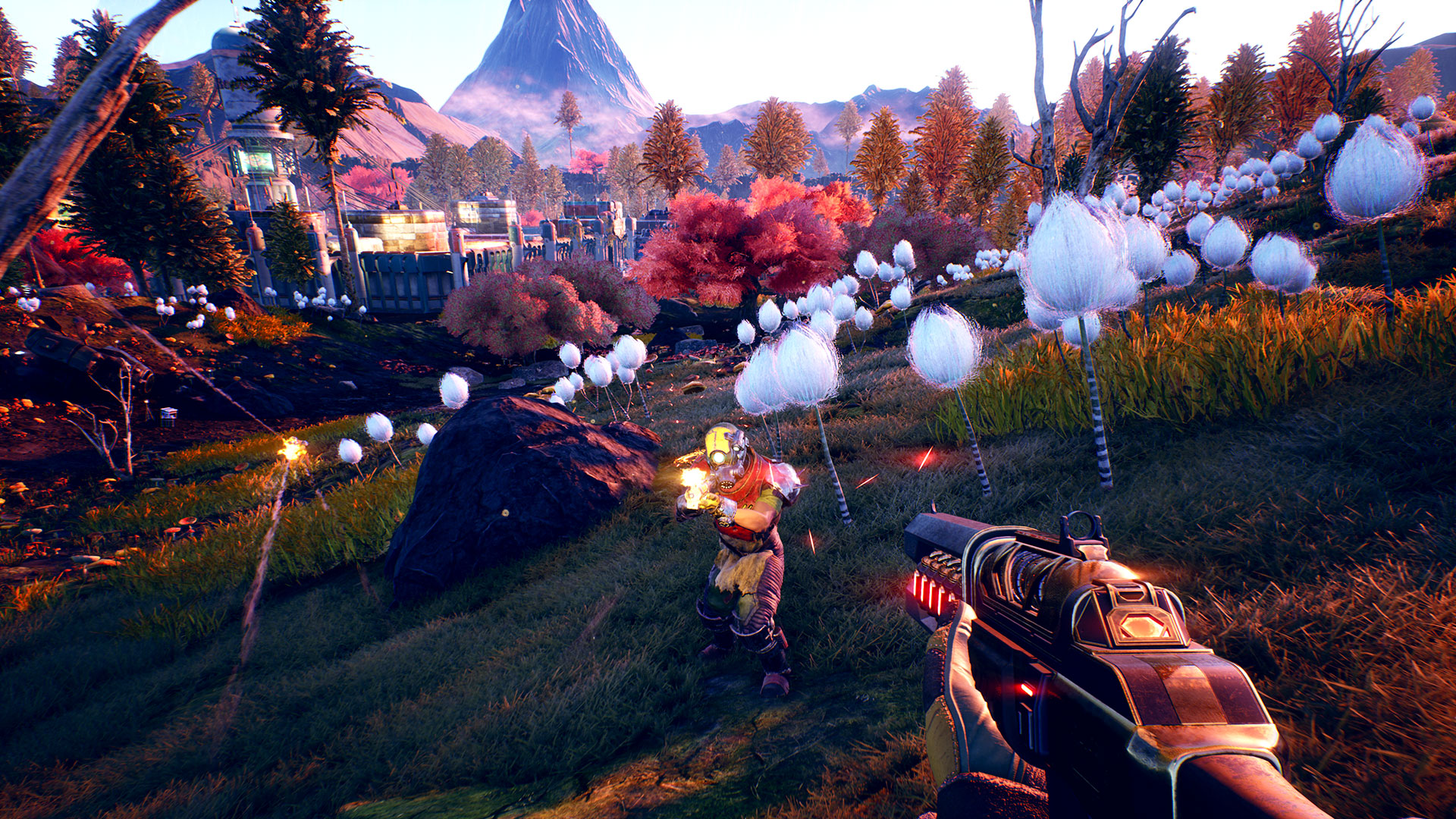
Obsidian Entertainment lit the world on fire with Fallout: New Vegas. Many considered it superior to Bethesda’s own offering, Fallout 3. The Outer Worlds was considered a spiritual successor to New Vegas. The same type of play style. A first-person RPG with shooting elements, a large story, companions, quests, and worlds to explore Many were calling it New Vegas in space, but is it really that, and does it live up to New Vegas?
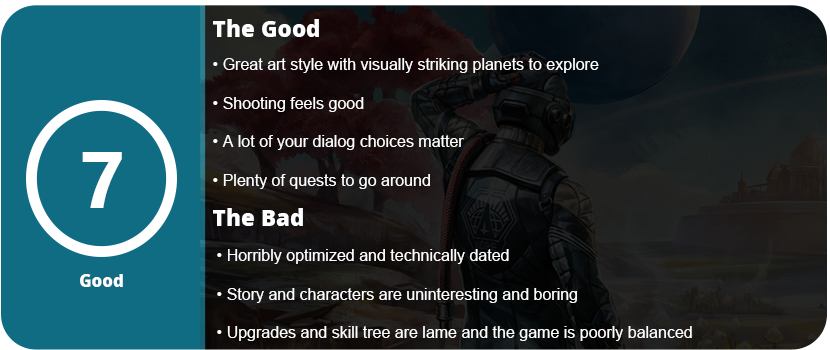
The short answer is no. It falls short in nearly every way. The game really does feel like it’s trying to be New Vegaswith the funny humor in the propaganda posters and the overseeing mega-corporation that’s trying to take over the Halcyon colony, and you’re trying to get factions to agree with each other or side with them. The overarching story is pretty much forgettable, and that goes for most of the game. The story, characters, and side quests are mostly boring. I hate to really say this, as this game has sat installed on my PC for a couple of years now, and I would do a mission or two and quit because of just how dull the game is. The characters aren’t memorable; there’s no personality that stands out, and the overall mega-corporation humor that overshadows the game just feels like it’s in the background.
The game is also incredibly short. I did several companion quests, dealt with all the factions, did multiple side quests, and still clocked in at around 12–13 hours. If you blow through the main story, you can finish it in 4-5 hours easily. I feel that contributes to the problem of the story and characters being uninteresting. There’s not enough time for them to develop. Your entire crew is all humans, and they all just feel like generic Bethesda faces that were run through a random generator, and nothing stands out. I wound up skipping through a lot of dialogue because I just didn’t care. I loved the characters and overall story of New Vegas. It was fresh and interesting, but this just feels like a generic space odyssey.
So what about the gameplay? It’s tighter and more refined than New Vegas, but not by much. I hated the upgrade and skill tree systems. They felt generic and half-baked. The game’s poorly balanced, where it’s either way too easy and you mow down enemies, or they swarm you and kill you on the spot. I felt like none of the items you can use helped at all; stats didn’t seem to matter, and the only thing that really did matter was your level in each respective category. You really want to get your speech levels high, including in engineering, as you can bypass a lot of battles with speech checks. Most of the weapons in the game felt pretty generic, and their weapon power didn’t seem to matter.
Weapons can be tinkered with and modded at workbenches. Mods can be picked up and attached to various parts of guns. They can add elemental damage, increase clip size, add scopes, and do damage to different types of enemies, but outside of this, you can just tinker with the weapon’s level, and future weapons don’t matter. There were no cool, unique weapons found on bosses or for getting into hard-to-hack safes. Looting, like in Fallout, feels pointless as there is so much given to you. By the end of the game, I had thousands of rounds of ammo for each weapon type. You can specialize in long, pistol, or heavy weapons, but I just wound up dumping points into all three. Add a few good mods and tinker with the weapon up to your level, and you will stick with the same weapons through most of the game, rarely trading them out. You can equip up to four weapons, and I rarely ever used healing items until the final showdown, where you are swarmed by enemies in every room you go into.
Another balancing issue is with the factions. You can gain and lose reputation, and this will make guards attack you on-site in certain towns, locking out quests and not being able to finish any in this case. I wound up pissing off a couple of factions, had to abandon the quests there, and couldn’t go to the shops either. This is really frustrating, and there’s usually no way to get the reputation back. This can lock off companion quests and many side missions. Throughout the entire game, I mostly just mowed down every enemy in my way and used my companion’s abilities when I was swarmed on occasion. You get a single ability to slow down time, which is useless because it slows down time too much.
The only thing I really enjoyed were the visuals. The game looks like a last-generation title, but the worlds are unique and look really good. I was interested in discovering new towns and new enemies, but that was really it. Everything else was either ignored, forgotten, or skipped because of how uninteresting most of the game is. I don’t feel like this is Obsidian’s best work or their love letter to New Vegas. The game is horribly optimized, looks dated, and feels dated because it is too safe. The game lacks any depth, and most may not even enjoy the shooting. The story and characters are boring and unoriginal, and the game’s length doesn’t justify this type of game in general. Who wants to play a 4-player RPG with supposed vast worlds to explore? You might enjoy blowing through the main story, but that’s about it.
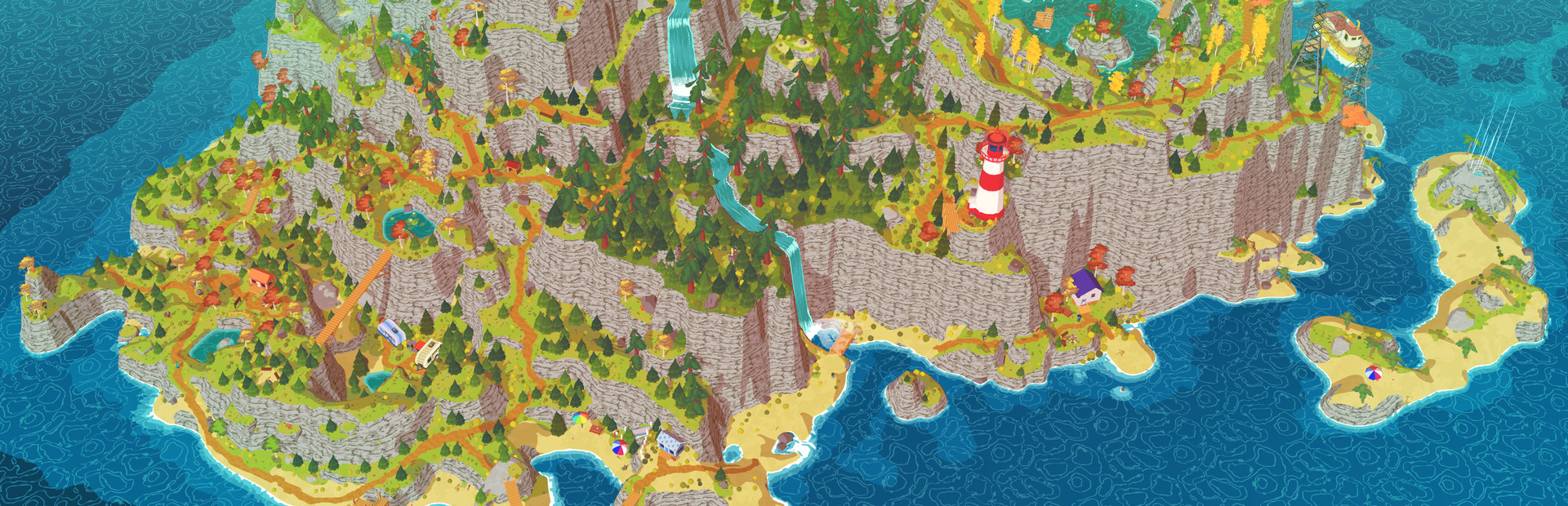
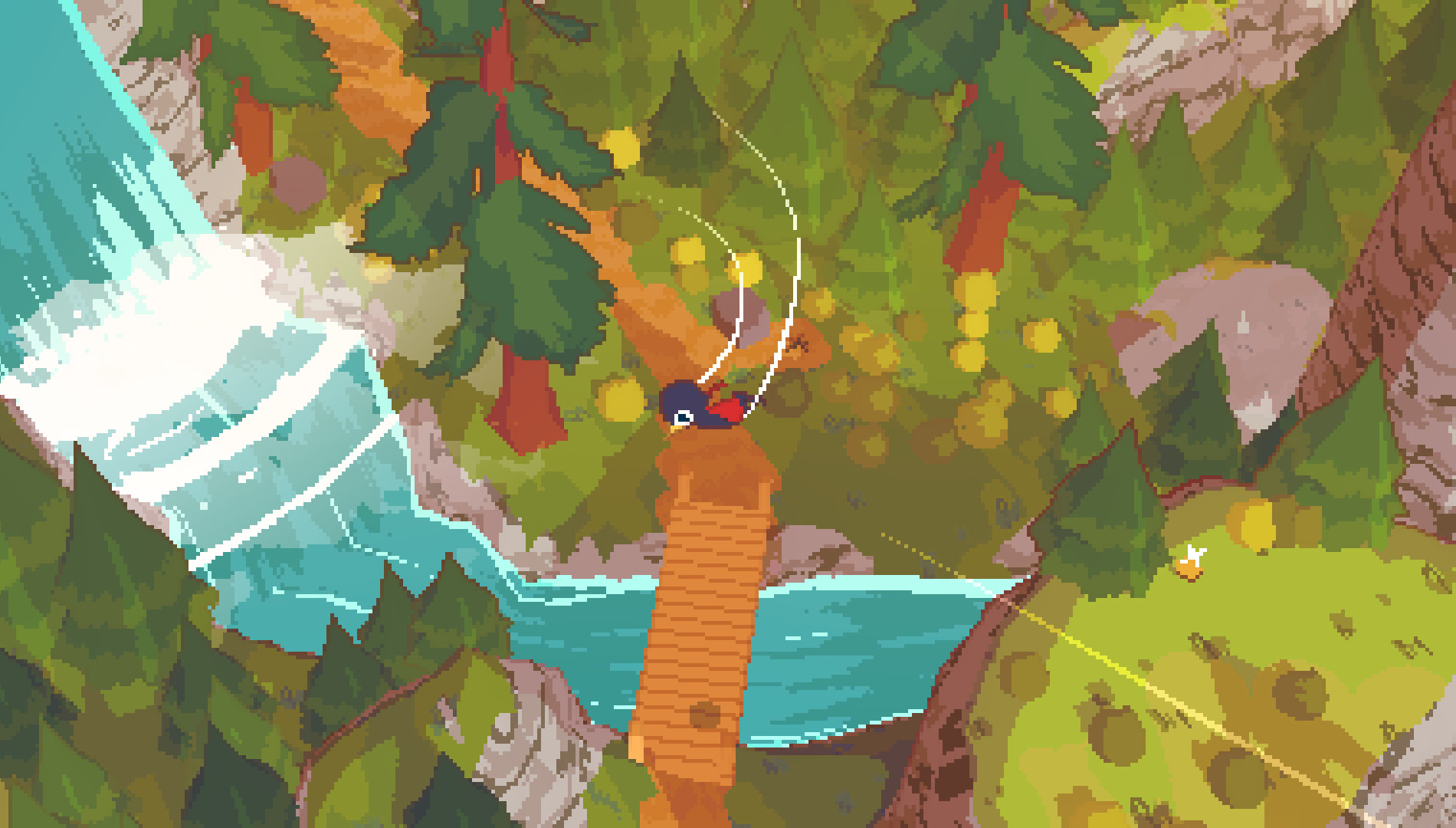
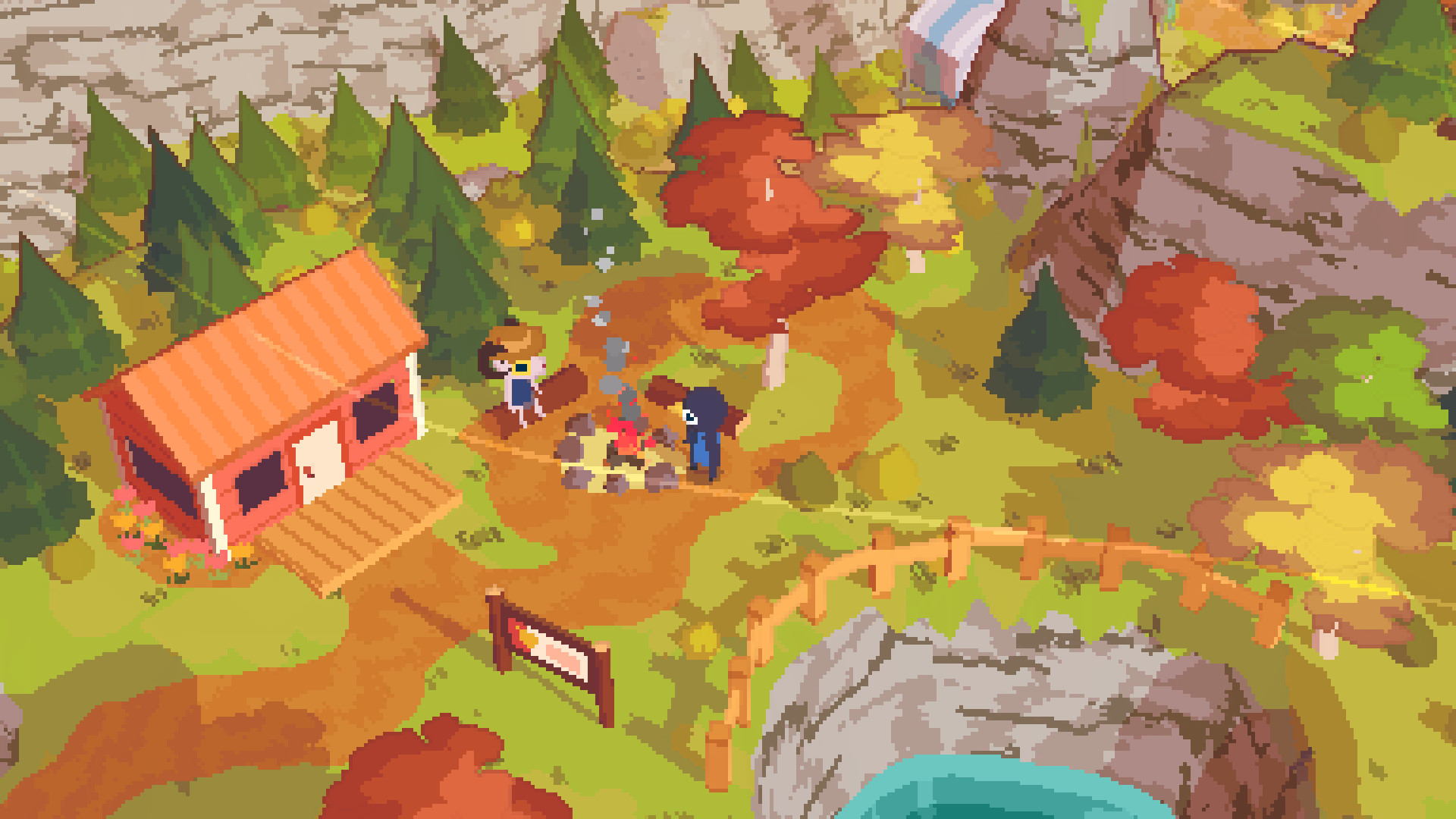
You can’t really call this a walking simulator or a platformer. It’s a bit of both. A Short Hike doesn’t have the touching story that tugs on your heartstrings that a lot of short indie “walking simulators” have, nor is it a skill-based platformer that requires precision timing. It reminded me of something familiar from the 32/64-bit era, such as Super Mario 64, Donkey Kong 64, or Kingsley’s Adventure. This is an isometric “retro pixel” style 3D platformer with tons of charm and a fun island to explore. The entire game can be completed 100% in less than four hours, and the main story can be finished in one hour, but if you just race to the top of Hawk Peak to get the cell phone reception you need to hear back from your mother, then you are robbing yourself of an entire game.
There are dozens of characters dotted throughout the island offering challenges, golden feathers, hints, and just plain silliness. The writing for the characters is very similar to that of 16-bit games of yesteryear. Your main goal for progress is golden feathers. These are single jumps or stamina for climbing. I found 11 on my journey, but there were a few more I missed. You can do more than a single hop without the first golden feather. You really should glide around the island and explore. Some characters want seashells; one runner is missing a headband; and there are treasure maps, chests with coins, digging spots, fishing spots, and a few other activities like stickball and parkour races. You won’t discover these without talking to creatures and exploring. I love the exploration in this game. It’s not overly difficult, and you can always figure out how to get to a seemingly hidden spot. Just upgrade your feathers.
Coins are used to buy feathers from a couple of characters, and you can sell caught fish to get more coins. This all sounds like a lot of fun, but it’s packed into a single hour and somehow doesn’t feel overwhelming. The island seems big at first, but you will easily remember the landmarks, and there are signs everywhere pointing to the different trails and landmarks. You eventually unlock shortcuts by watering spring flowers and using a pickaxe to knock through a tunnel. It’s incredibly satisfying to find all the objects for a creature and then run back knowing exactly where they are and get your reward, and it’s always one step further to progress. No matter what you do in the game, it will always push you closer to your goal.
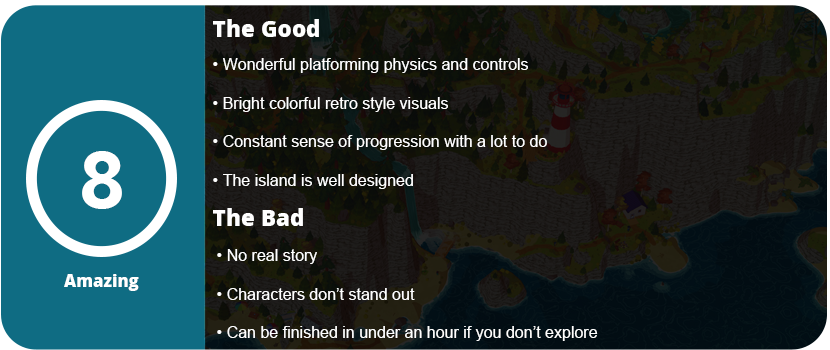
Even after reaching the peak, you get an opportunity before finishing the game to complete everything. By the first full hour, I had almost all the feathers, and I could go anywhere I wanted. I didn’t 100% play the game, but I got close to it. The platforming itself is wonderful, with great physics and tight controls. I never felt slippery, and gliding never felt off or wrong. You do eventually get a sprint ability, and this helps you get around the island even faster on foot. Thanks to the short length, there’s a constant sense of progression with every action you take. The visuals are bright, colorful, and charming, and the music is fantastic. There’s not much to hate about this game other than its length and lack of an overall story.
A Short Hike is one of the highest-rated games on Steam for a reason. It’s a bite-sized chunk of gaming goodness that merges the exploration and fantasy of adventure from the early days with the better controls and tighter designs of today. It may only take an afternoon to complete, but it’s incredibly satisfying and isn’t something you will quickly forget.
Harry Potter is one of the biggest media phenomena of the 21st century. When the novels came out they were all over the news and I read them right from the beginning. While the novels were big the movies were even bigger and I don’t think Harry Potter would be where it is today without the success of the movies. I remember my family going to see every movie up until the first part of the 7th movie on Thanksgiving every single year. By the time the 7th movies were out, I was an adult and saw those with my now wife. I did get burned out on the series though so thankfully it’s great to know Hogwarts Legacy is 100% original content with all new characters and story.
The only thing the game follows from the books or movies is the lore, aesthetics, and visual representation of various architecture, creatures, and overall visuals. You play as a nobody 5th-year student who gets caught up in a giant plot of goblins finding a way to wield dark wizard magic. You must fast-track your education at Hogwarts while also fighting off this powerful new foe. The story drags you along on a breadcrumb trail where you slowly unveil the plot, the intricacies of the characters, and the mysteries. Portkey Games did a phenomenal job of making the story feel like one of the books. The slow unfolding of the story gives a sense of mystery and constant guessing. It’s a pretty good story and one of the best so far this year.
There are of course side quests and larger side stories involving various students at Hogwarts. One involves a Slytherin student, Sabastian, and the Dark Arts. Another is a girl named Poppy who just wants to stop poachers and save creatures, and then there’s Noa who wants to avenge her father’s death. The entire game has a massive open world consisting of Hogwarts itself, Hogsmeade which is the only major town in the game, and then the rest of the world itself consisting of various regions, secrets, and activities. The game can seem overwhelming, but the entire game is strung out to you very slowly as you play. It allows you to get the ropes on all the various systems in the place game with one of the biggest being combat.
Combat is probably the weakest and coolest part of the game. It plays similarly to an MMO with shortcut keys and hot bars. Each hot bar has four slots and you can have up to four hot bars. You learn spells through the story as you attend various classes. These are all the spells you know from the book and movies. Wingardium Levioso, Avada Kadavra, Repulso, Accio, and many others. There is only magic combat in the game so don’t expect to find swords and shields. Defense is dependent on a halo around your head that flashes red or orange. Orange means you can deflect attacks while red means you must dodge.
You can whip out spells at a lightning pace, but of course, they have cooldown timers so this means you need a balanced loadout and need to switch between hot bars constantly. This is something I didn’t like in the game. I can understand with a controller you can only have four hotkeys, but do what Dragon Age did and give PC players the ability to use maybe eight hotkeys and combine hot bars. I found myself always fumbling with the controls trying to quickly dodge, deflect, keep an eye on my timers, swap between hot bars, and keep an eye on the enemies, and then my health and magic meter. It’s too cumbersome and needs some balancing in the next game. The combat looks cool with fast and smooth animation, great sound effects, and tons of on-screen info being blasted into your eyeholes. There are plenty of boss fights, mini-bosses, world bosses, and all sorts of enemy types to shake a wand at. Goblins, beasts, and humans alike.
The next part of the game is exploration. This game is very similar to Skyrim in that manner. You will always find something no matter where you go. Once you unlock the ability to fly on a broom you can use Revelio in the air and it will mark stuff on your map. There are a lot of activities to do from filing out your field guide by finding flying books, interesting spots, and objects, there are secrets inside Hogwarts itself like hidden chests under bridges that require puzzles, but you also need the spells to complete certain puzzles and get to certain areas. You can pick locks (which has an absolutely awful lockpicking mini-game that can’t be skipped), but one of the major problems with all of this exploration is the lame loot. If you get ahead of the story you will mostly end up finding armor that’s behind you in levels. Exploring dungeons is fruitless as you will solve a puzzle and get a lame piece of armor or just 50 coins. I wound up ignoring side paths in dungeons because it just wasn’t worth it. Finding the best armor in the game will come to you eventually.
The third biggest part of the game is the Room of Requirement. Here you can decorate, expand, and craft. You can add traits to clothing/armor, and breed beasts that you can capture in the wild for more unique traits that can be woven into clothes. You can also plant seeds for using the three combat plants or creating potions. While this all sounds neat and fits into the world of Harry Potter it’s very tedious. I wound up not bothering to add traits to clothing as the loot you find it pretty awful anyways and you end up selling 90% of what you find. I would add traits closer to the end game when you stop finding a lot of armor that is at a higher level. I also didn’t bother brewing potions much as you must wait in real time for plants to grow or potions to brew. It’s pretty dumb and tedious.
You can fast travel between dozens of Floo Flames as you discover them and this makes traveling quickly essential. The various activities you can do are Merlin Trials, a combat arena, various puzzles, and of course side quests for people around the world. It really is a well-created open-world game and feels different from the dredge of crap we’ve been getting the last ten years. I always had fun exploring the world, doing tasks and puzzles, and seeing what secrets the game had. It really is this generation’s Skyrim or will be as close as we get to it.
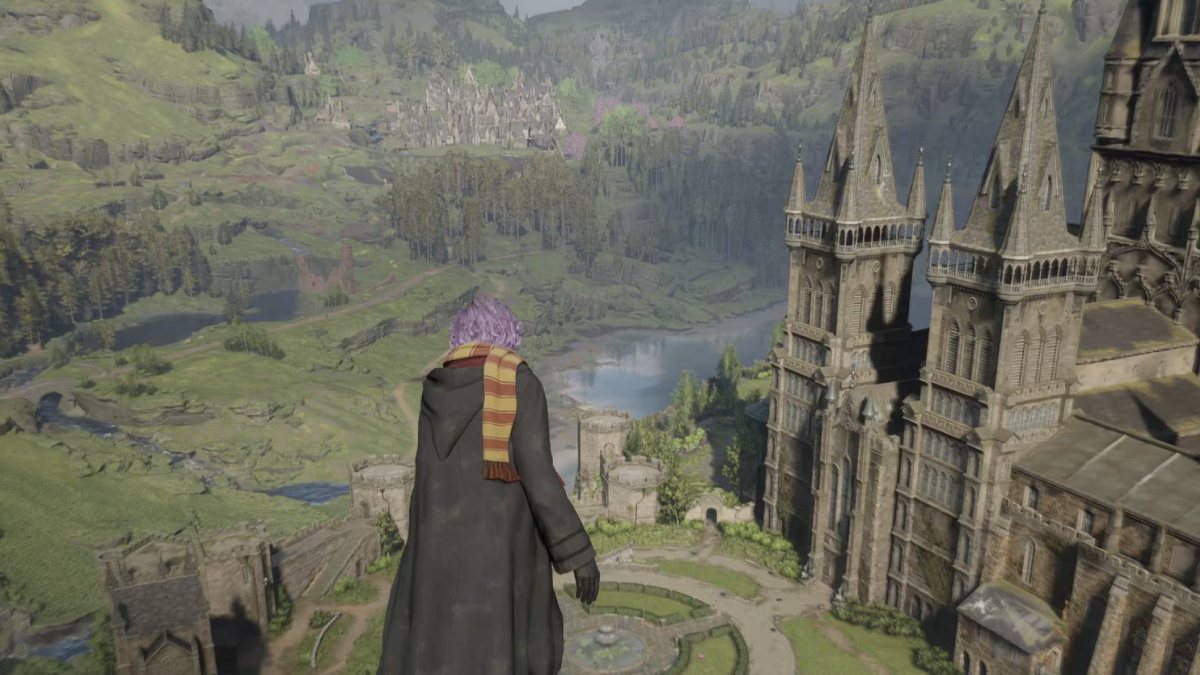
The visuals, voice acting, and overall atmosphere of the game captured what we loved in the movies perfectly. The visuals are gorgeous with great lighting and tons of love and detail in every part of the world. Sadly, it’s so poorly optimized. Ray tracing is unplayable, and there’s stuttering in Hogwarts no matter how powerful your system is. Some patches have ironed most of the problems out, but they will never be perfect. The game still looks fantastic and I loved flying over new areas for the first time or seeing the seasons change. Portkey Games did a stupendous job making this game feel like a living breathing world.
Overall, Hogwarts Legacy is a wonderful open-world RPG with some flaws. The combat can be unwieldy sometimes and cumbersome, crafting is a chore, and the game is horribly optimized, but the characters are wonderful, the graphics are fantastic, and it feels like a living and breathing world of Harry Potter that captures all of the magic and love that we grew up with. You will spend dozens of hours having fun exploring the nooks and crannies that the world has to offer, the powerful beasts you can fight, and the creatures to capture.
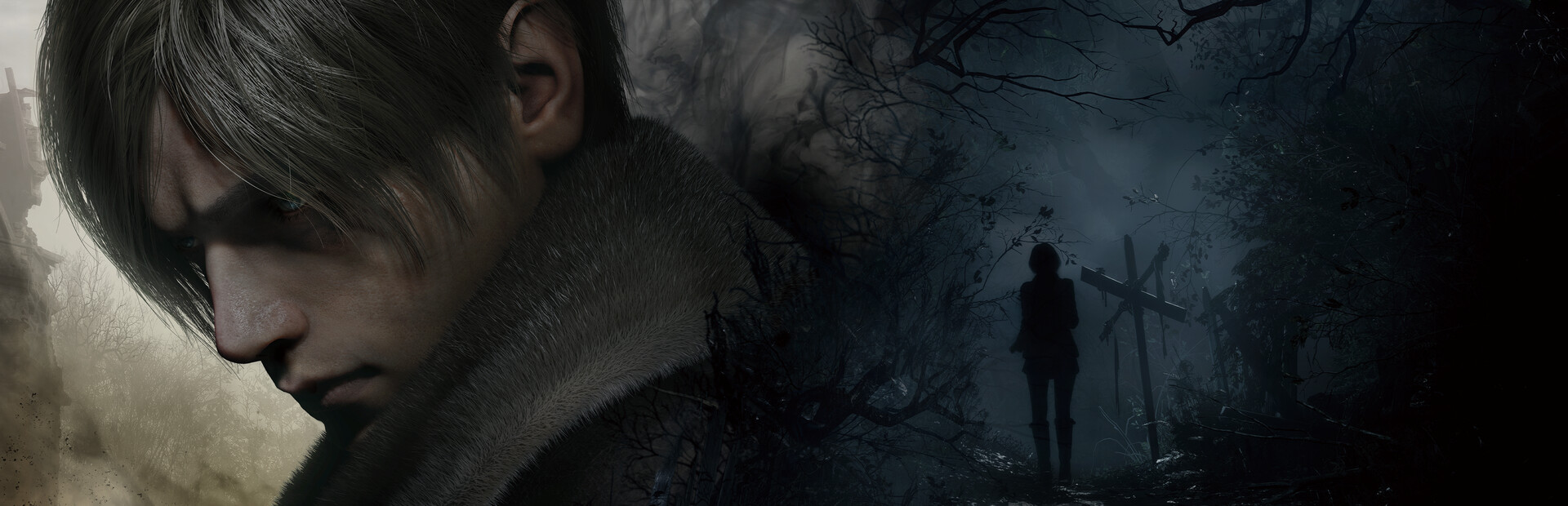
Resident Evil 4 changed the entire gaming industry. It was one of the most influential games of all time. It actually still kind of is. It showed how drastically you can reboot a game and honestly started the whole reboot craze and is the gold standard to live up to. Take a game that has tank controls and pre-rendered backgrounds and throw it into a third-person shooter with unique control and a well-balanced gameplay loop. It was talked about for years and inspired other games like Gears of War. Resident Evil 4 (2023) is a reboot of a game that mastered reboots. It has the highest standards to live up to. Thankfully the last two Resident Evilreboots were fantastic and took pages from RE4. So, what we get is just a better-remade RE4.
The story itself is supposed to have taken place after RE2. Leon is sent to save the US President’s daughter, Ashley Graham, and that’s about it. There is a new virus that got loose from Umbrella and the Los Plagas will come out of enemies every so often and it happens more as the game goes on. Their heads will pop off and a new tendril-like creature will come out in various forms. You can stop this before it happens when they are on the ground twitching. The characters in the game are pretty simple and have no time to become interesting. Outside of Leon and Ashley the other characters show up for just a few minutes in the game, so the story itself takes a back seat. It’s the weakest part of the whole game.
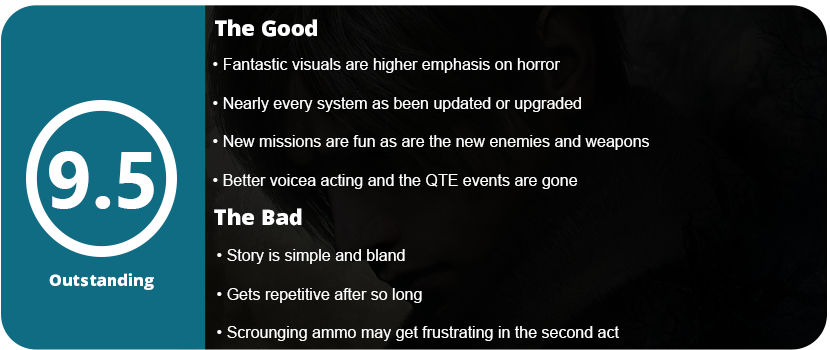
Right off the bat, you will notice an immediate change. Not only are the environments more detailed, but the opening scene has changed as well. We get an all-new voice cast (that’s much better), new music, and updated sound effects, and the overall feeling is more modern and less stiff. You can actually shoot and walk this time around which is a huge change in balance for the game. The knife has also changed as it can be broken but also upgraded. Crates can be stomped on rather than sliced so gameplay flows better. You can acquire boot knives that can be used to ward off enemy attacks up close. You will also notice that quick-time events are pretty much gone. These scenes are now fully playable with you in complete control rather than an actual cut scene.
All of these changes are for the better and add a whole new dynamic to the game. Combat mostly remains the same with enemies slowly lumbering towards you with various weapons. Enemies can throw axes, molotovs, and shoot you with crossbows. Some will shock you with sticks, others will carry shields, and then there are the bigger enemies. Rarely occurring, chainsaw-wielding enemies will appear that require explosives or heavy damage to kill. You need to constantly run and turn back to shoot. Using your surroundings is key. Lure them towards explosive barrels, or funnel them everywhere down a corridor so you can line up headshots. The level design is fantastic as you get little arenas that you can immediately scan and strategize with.
Every time an enemy dies they will drop something. Unlike the original game, this time around a whole new mechanic of crafting has been added. Enemies will always drop something whether it’s resources, gunpowder, health, ammo, or money. You need resources and gunpowder to craft various ammo types. Recipes can be bought from the merchant. You can also buy weapons, armor, resources, health, and various other items. Another new system is the side missions. These can be found posted on walls and convert the older challenges into missions. The blue medallions, tough enemies, shooting rats, or finding certain objects. These are traded for spinels which can be traded for rare items such as exclusive new weapons, treasures, and more. Cases are not just expanded now, but different case types will drop certain items more frequently and new charms can be attached to help lower the cost of sales, increase sell value, drop rates, and so on. These charms are won by completing target practice missions in one of five locations in the game.
That’s a ton of new things already and it’s so well-balanced. It’s a way to take the older systems and tweak them into something new and more fun. You can move around and technically kill enemies easier so with an added crafting system you always get rewarded. There are still treasure maps to buy and valuables to look for which are key to racking up coins. Certain valuables can have jewels inserted into them to increase their sell value so hang onto those gems! On to something much bigger is Ashley herself. Many felt she dragged the experience down. You have to always catch her when you hopped off ledges and she always got captured easily. Now you can send her away, hide her in lockers, and she does most actions on her own now. She’s much less of a burden.
Speaking of Ashely there are stealth elements in the game now by sneaking around and offing zombies, but this is easily ignored. It doesn’t work outside of a couple of zombies and then everyone sees you. The AI walking patterns are too random to sneak through areas, and this wasn’t intended in the original game anyway. While sneaking around zombies is possible sometimes there are new enemies in the game, but I don’t want to spoil anything. Original enemies are updated and look even more grotesque. That’s another theme of the remake. Horror is much more prominent in this game. Like in previous RE remakes the flashlight is added so Leon will whip it out in dark caves and there is a constant sense of tension and dread no matter where you go. The game relies less on jump scares this time around.
There are three acts in the game. The village, the castle, and the island which is split between a mine and a military base. My favorite part is act one which is the most iconic. The castle is okay, but the game gets insanely tough during the second act. Ammo is incredibly scarce. You must be very cautious about what ammo you use and when. Save more powerful ammo like grenades and magnum rounds for the mini-bosses and bosses themselves. Save your sub-machine gun ammo for large crowds and your rifle ammo for enemies are off. The pistol is going to be your main weapon throughout the entire game so always keep a stock of it.
The visuals are a nice upgrade over the previous remakes. Ray tracing has been added, but it’s not great. The RE engine is still insanely well-optimized for lower-end PCs and runs really well. However, there is still no DLSS support so it needs to be manually added through a mod, but even on the Steam Deck, the game runs fairly well. The visuals are top-notch and the art direction captures the vibe of RE4 in a more visceral and raw way. I love it. When you’re all finished with the game you can run through on a New Game+ which is a must as that’s the more fun way to play. Overall, RE4 (2023) is a massive update to an already iconic game and changes nearly everything wrong with it. I just wish the game was a little better balanced and it does get repetitive after so long. You are just walking around shooting zombies with a couple of simple puzzles thrown in. At least the exploration is fun and there’s always something new to look at.










































 thebinarymessiah.com
Try multiplayer. A lot of fun !