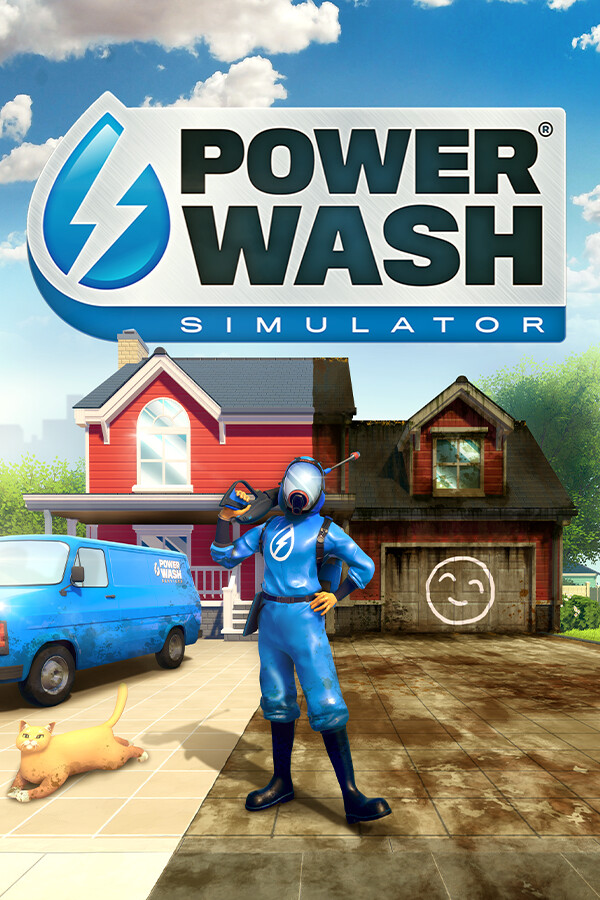
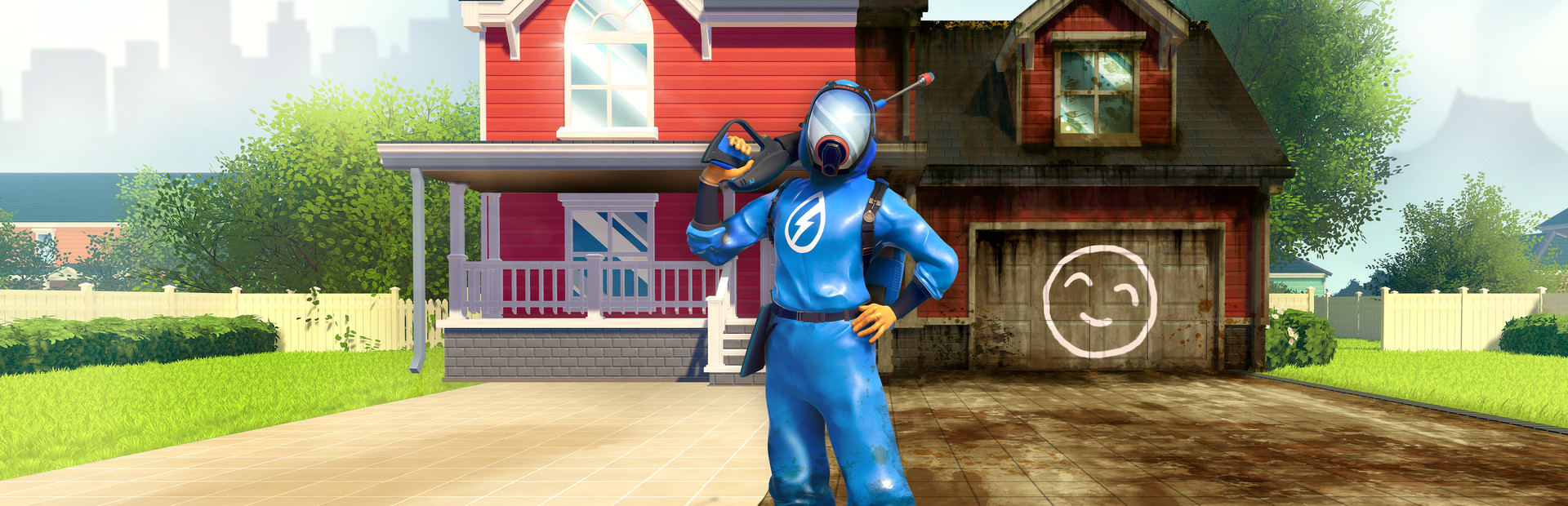
I never thought that I would have so much fun with a chore. There are various curated threads online about watching power washing. It’s satisfying to see someone turn an incredibly dirty surface into a sparkling clean one like wiping a window with a squeegee. There are many jokes about missing a spot and everyone in the comments losing their minds. r/powerwashingporn is a popular subreddit dedicated to these videos. FuturLab has done an incredible job of making this chore feel fun and satisfying. There’s even a silly story that’s evolved over the course of the Early Access phase involving gnomes.
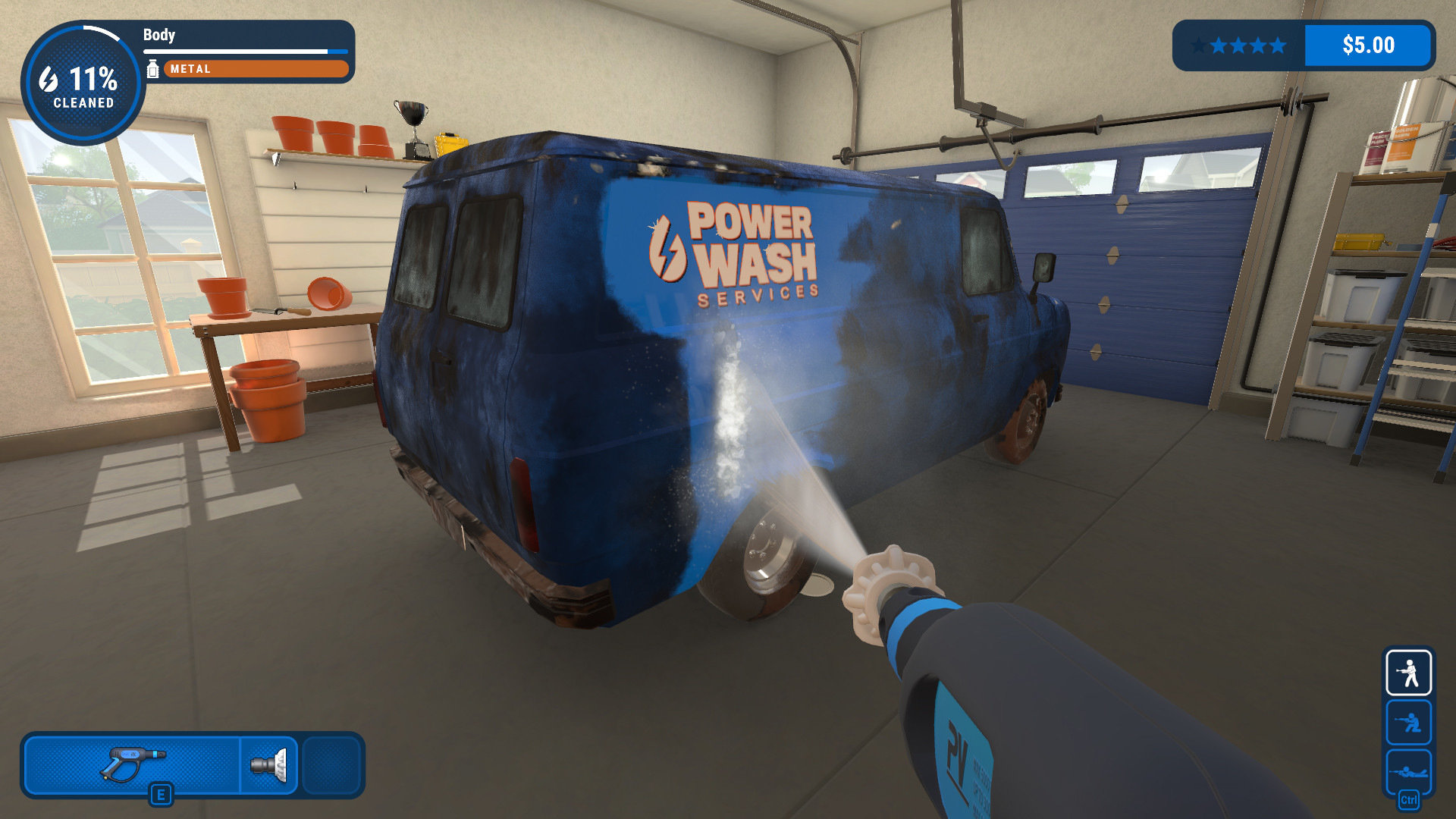
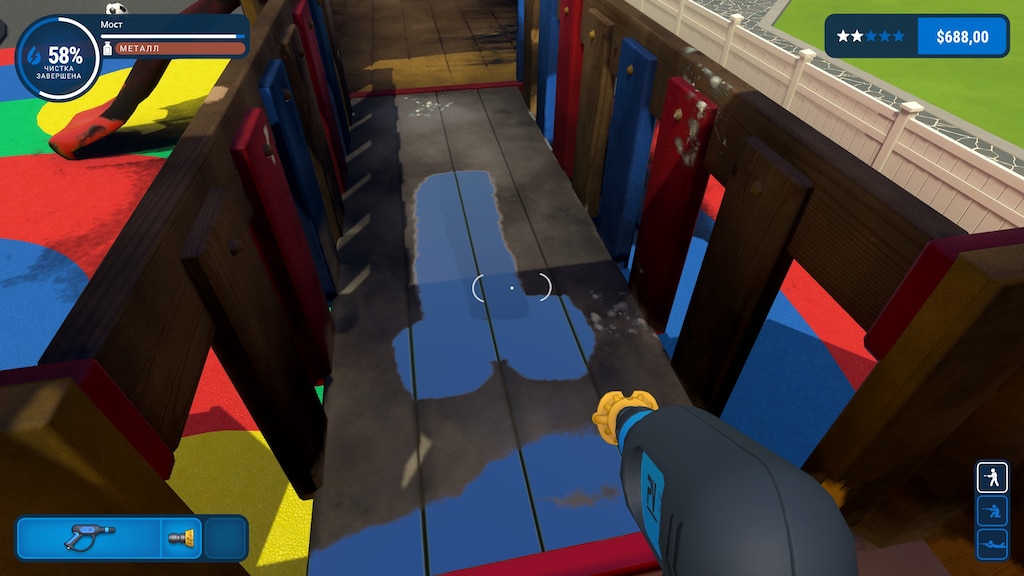
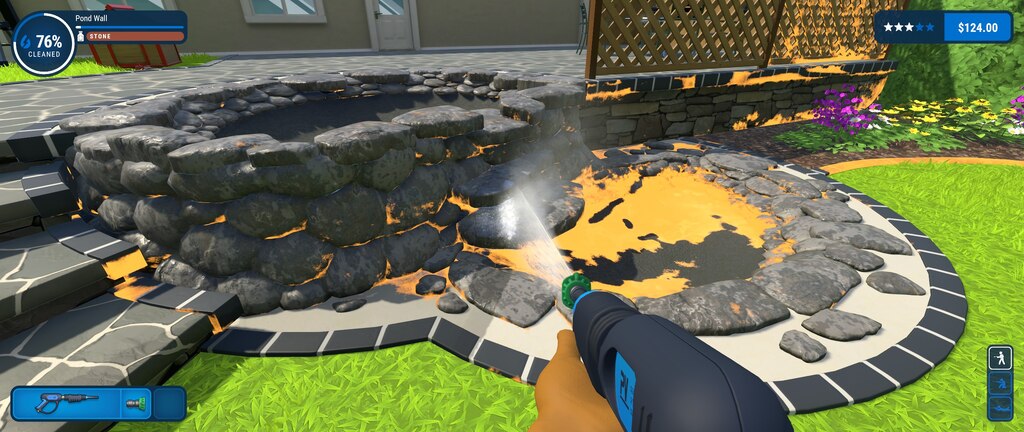
Every surface is covered in dirt, rust, mud, or some type of grime. You get a power washing nozzle and you spray things down until they turn clean. You can decide what to spray, what direction, and in what order. That’s part of the fun. Tackling each area in a certain way is satisfying and fun for you. Your tools include various spray nozzles that have different widths as well as spray liquid for getting tough areas, but this stuff is expensive and limited. You also have a spray gun that shoots various distances. These can be bought and unlocked with money by completing levels. You are paid at the end of a level and you can see a sped-up replay of your work. There are also cosmetic items such as your suit and gloves.
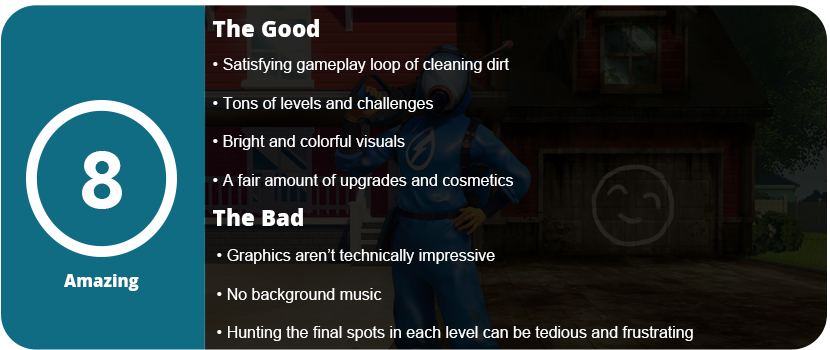
Some levels are multi-storied so you get step stools, ladders, and scaffolding that can be moved around and put wherever you need it. There are a few levels that have some frustrating buildings to clean such as the giant shoe level. There is a meter on each surface that shows how complete it is and sometimes it can be hard to find that one dirt spot that’s keeping the surface from dinging. Thankfully there is an illuminate dirt button that turns all dirt a golden yellow for a few seconds so you can see what you’re missing. Getting down the last percent in each level can get annoying as you’re just hunting down that last dirt spot. There is also a list of each surface and the percentage that they’re cleaned, so you can at least eventually narrow it down.
There isn’t any background music. You just get ambient noises like birds chirping or cars driving in the background. It’s a very silent game. You’re best just playing your own music in the background as this is a very zen game where you can veg out and not think about much. I also appreciate the control scheme on a controller too. It’s easy to control and you don’t have to move your aim camera back and forth like you used to in Early Access. You can now press a button to move your sprayer within the frame of the camera. This can reduce motion sickness and overall irritation. It wasn’t a big problem on a PC with a mouse, but it was unbearable with an analog stick. Most levels can take you 1-3 hours to complete depending on how big they are. There are smaller challenges that involve just cleaning a vehicle like an RV, alien spaceship, Mars rover, or bicycle. Levels get more complex as you go on with more small objects and more complicated surfaces. Things like planes, boats, helicopters, and the previously mentioned shoe house can get really busy. I would end up doing some levels in multiple sessions. The longest level I spent time on was nearly five hours.
Again, you have to like this kind of thing to see an appeal to it. The visuals are bright and colorful, but rather basic and simple. There is no raytracing, AI anti-aliasing, or anything complex rendering-wise. The game can technically get very repetitive, but that’s actually the point of this game. I feel many may mistake this game for a business simulator when you only do the power washing and buy upgrades and cosmetics. I had a blast (no pun intended) with this game and FuturLab is still putting out content that I need to catch up on. Overall, PowerWash Simulator is one of the most relaxing and satisfying games I’ve ever played.
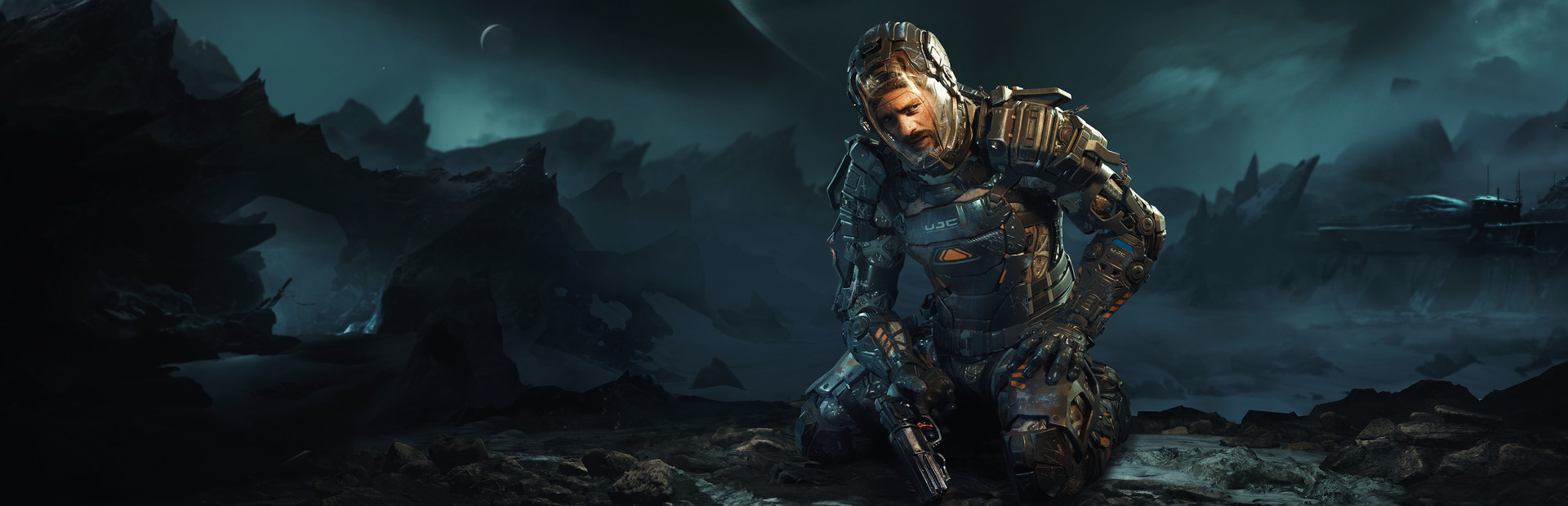
Dead Space was one of the last original IPs to really push the horror genre forward. I felt it was the only horror game to take Resident Evil 4′s torch and carry it along. The Callisto Protocol received a ton of hype because Dead Space’s co-creator Glen Schofield was leading the charge. The game was another third-person horror shooter with sick monster designs, a desolate Callisto moon, and a great story. I was honestly shocked by how below average this adventure is and was quite saddened the longer I played.
The game actually starts out quite well. You are Jabob Lee. A space courier delivering medicine to the prison colony on Callisto when suddenly everything goes wrong. Your ship crashes and you are wrongfully charged for a crime you did not commit. The game takes you on a pretty long cinematic journey for the first 30-45 minutes before the action starts. This is when things immediately started falling apart. The game’s main mechanic is melee combat. That would be fine and all, but it just doesn’t work as intended. You are expected to go one-on-one with each enemy and whack at them like Whack-A-Mole and then dodge attacks. It’s a dodge-and-then-attack type combat system. You can’t parry without unlocking it as an upgrade and animations can’t be quickly interrupted. It’s hard to judge the enemy’s attacks and how long their combo will go on. These animations just aren’t well done. It lead to many cheap deaths that came from the animations being too long and not interruptable.
This makes the first couple of chapters a chore, and most people might quit here. You do get weapons, but ammo is scarce until later on in the game. There are five weapons you can acquire, but don’t think these are as unique or interesting as Dead Space’s weapons. You really only get three weapons with two being nearly identical. Two pistols and two shotguns. One is a “Skunk” gun and the other is a riot gun. The only difference was their spread, to be honest. Your first weapon is the Hand Cannon which can pack a punch, but the Tactical Pistol is nearly useless. All of these weapons feel handicapped until you start upgrading them. Just like Dead Space, you get a limited inventory with healing items, valuables, and ammo. It’s literally a 1:1 ratio of how Dead Space plays.
Weapons are acquired by finding schematics (yeah that’s a direct copy too). You can find 3D printing stations throughout the game that will print add-ons, health, and ammo, but you won’t be able to buy everything in one play-through. No matter how thorough you are. It’s best to just upgrade the Hand Cannon and either Skunkworks or Riot Gun and do the rest on the next play-through. That is if you even want to. This hand-to-hand combat with these monsters just isn’t fun. Once I was able to get more ammo more often by stomping enemies (seeing a pattern here?) I tried to avoid melee combat. That’s not a good thing when the core combat mechanic is so bad that you don’t want to ever use it. Sadly, it’s forced upon you during the same two repetitive boss fights, but there were a couple of patches later on that made it more tolerable, but still not good.
Sadly, despite how great the visuals are the level design is insanely linear and boring. You just run down the corridor after corridor fighting randomly popping-up monsters until you get to the next fuse, switch, or generator. It’s pretty mundane and has already been done in many games before it. Unlike Dead Space, there are no puzzles here. In fact, the overall level design is just elementary and basic at best. There is one area where you must sneak around monsters that are sensitive to sounds. You can stab them in the back and do takedowns, but this was for an entire chapter. It became dull really fast. The only advantage was killing them all silently and then stomping on them to rack up tons of ammo. You do get a grappling glove that allows you to pull and push objects away, but this just seemed like an excuse to use death traps in certain arenas. It was poorly implemented.
The story itself doesn’t get interesting until the final chapter. There isn’t much story here at all. I wanted to know what this thing was that killed off the entire planet’s population, but you just move from scene to scene falling around trying to escape each section. It’s a poorly paced-story that seemed more like an afterthought. Jacob himself is well-acted, but we know nothing about him nor did I care one bit about his character. Dani is the other main character and I cared about her just as much. The game isn’t long enough or has enough story to tell us anything worthwhile. There’s no care in world-building through visuals like Dead Space did. You just move through corridor after corridor killing enemies that pop up and that’s it.
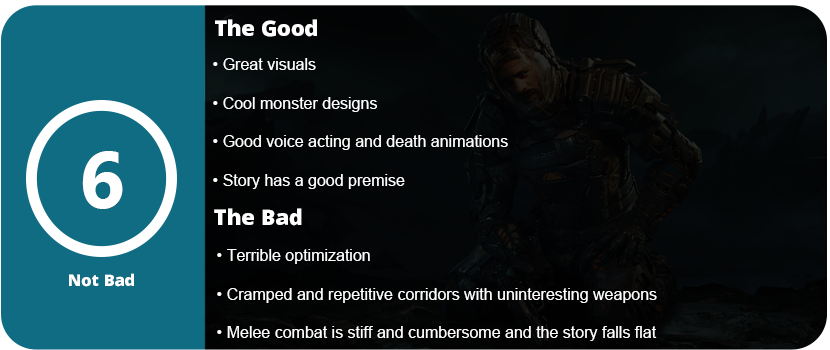
The visuals might be really good, but the performance is awful. Even after half a dozen patches, AMD FSR2 is broken, ray-tracing cuts the frame rate in half even on a 3xxx series card. There are tons of stuttering from poor shader optimization as well even months after release. Despite the nice visuals, they aren’t taken advantage of due to 90% of the game just being in cramped corridors. Overall, The Callisto Protocol is a colossal disappointment trying to copyDead Space to a tee and failing to capture anything that made that game stand out or become the icon it is today. The monster designs are neat, the visuals are good, and the story’s premise is good. That’s about it.
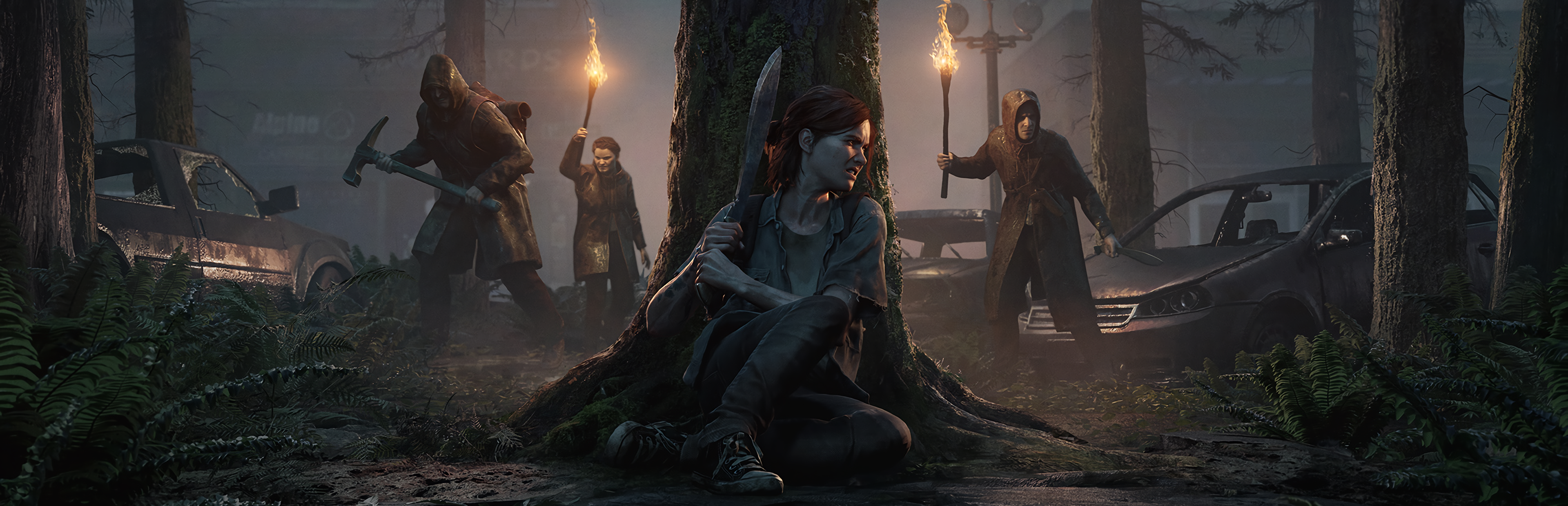
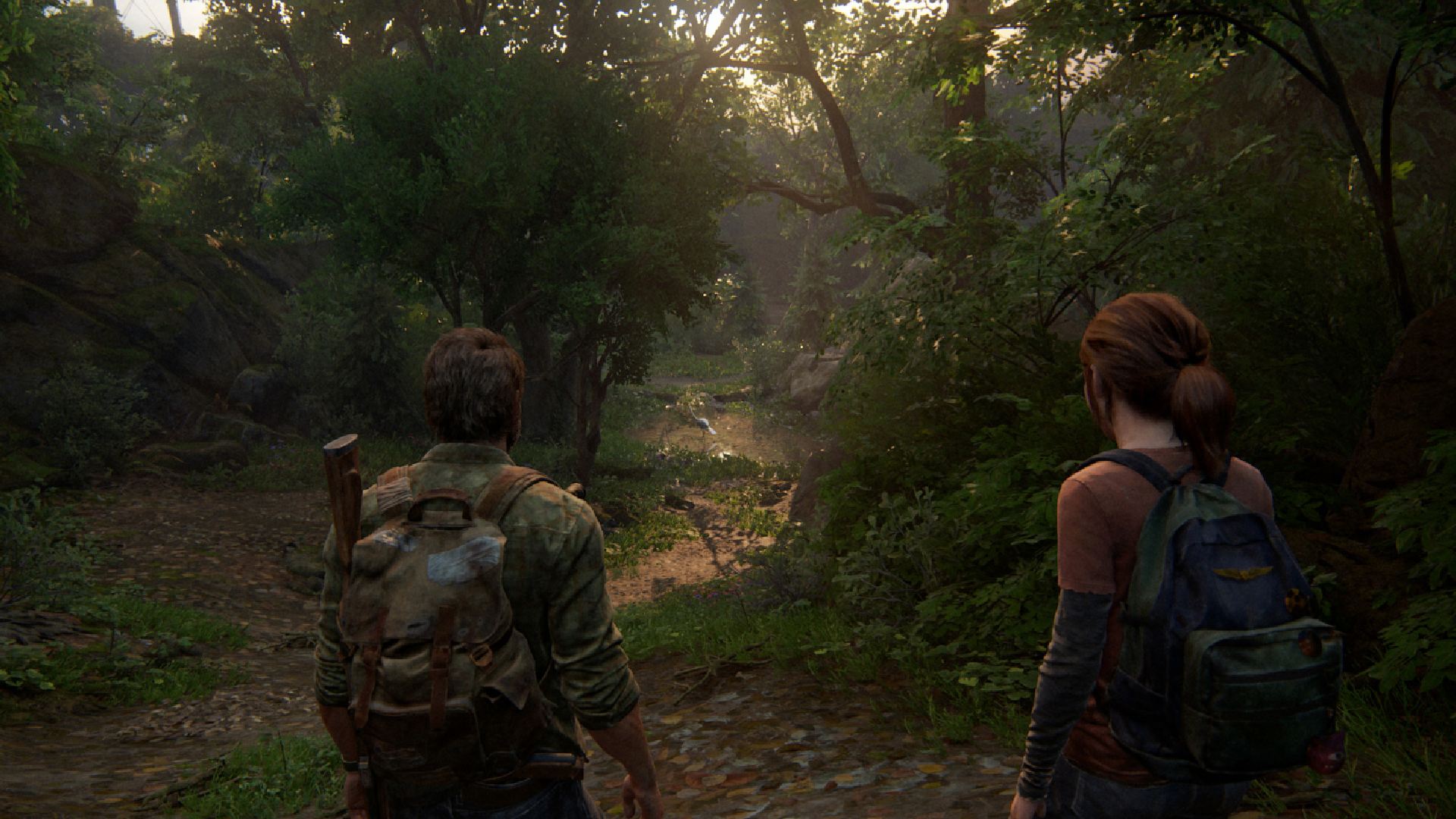
The Last of Us is one of gaming’s best-told stories. Naughty Dog’s original IP came out 7 years prior to this game’s release, and many thought we would never see the sequel. The original game ended on a cliffhanger. Joel took Ellie out of that hospital and “rescued” her for his own selfish purposes. Did he doom all of mankind from a cure? Will Ellie ever find out what he really did? Those questions play a back seat in what is probably one of the best revenge stories I’ve seen in a single-player game.
The story is the best part of this entire game outside of the visuals and voice acting. There is so much packed into this 20-hour game that despite it taking place only over the course of three days (for the bulk of the game anyways) it’s almost twice as long as the first game. We finally get to see what life is like for humanity thanks to the four-year gap from the last game. Ellie is now of age, has love interests, and life seems to be going well until a shocking tragedy occurs that causes Ellie to seek blood-searing revenge. Risking her life, relationships, and mental well-being by tracking someone across the country and spending three days in Seattle to hunt this person down. We get the perspective of Ellie during the first third of the game and Abby during the second third of the game. Abby is a great character who has just as much depth as Joel or Ellie, and I love that the story doesn’t stick with the tried and true cliche of a good guy and a bad guy. The game shows that anyone can be the bad guy if you look at them from a different angle and vice versa. The Last of Us‘ story is bout survival. Not good vs. evil and I love that so much.
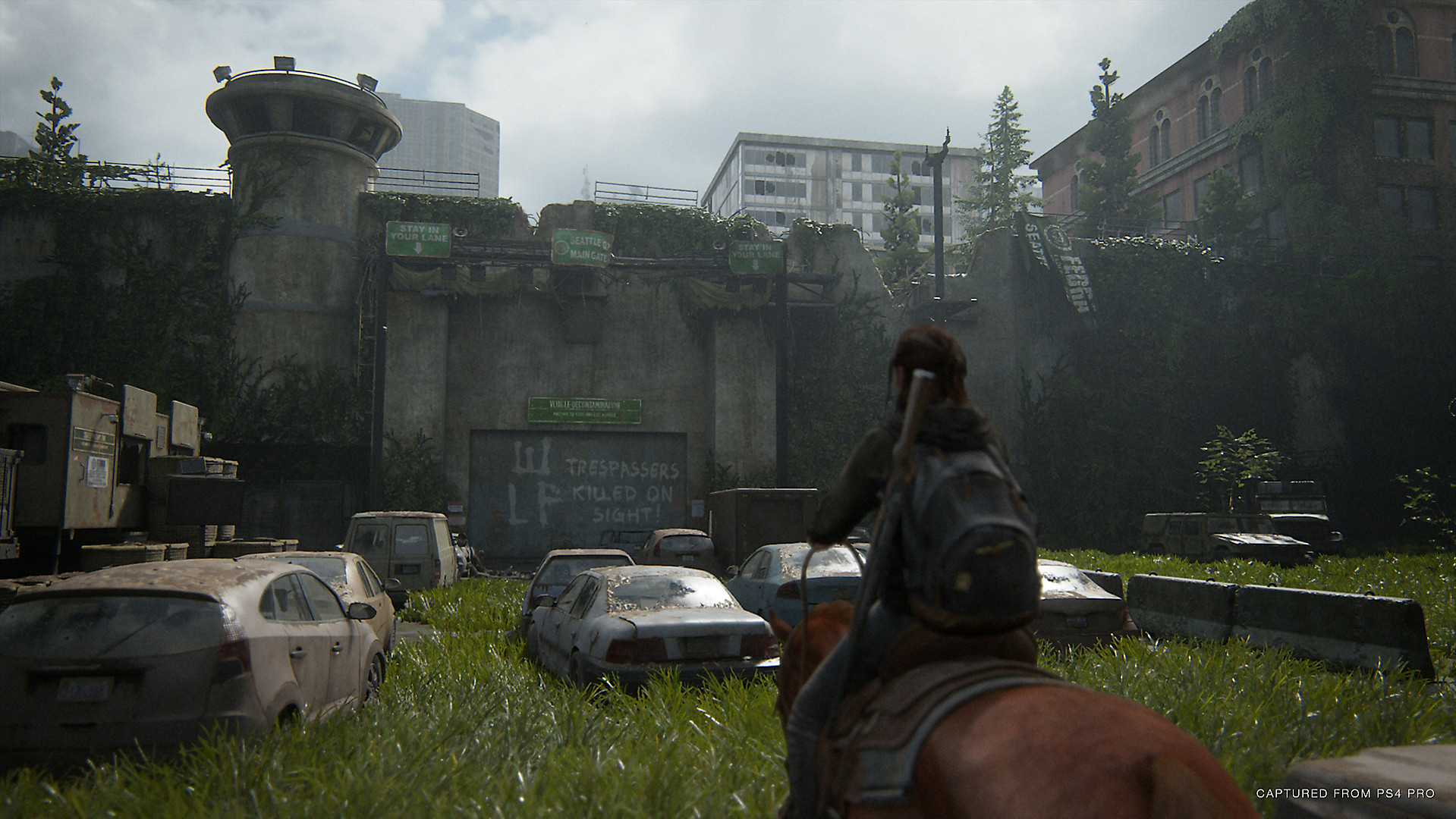
Having lived in the Seattle suburbs for the last four years I was excited to see where I live to take place in a game, but it’s not completely accurate. There are no real-life building names or anything like that. It’s more the overall Pacific Northwest aesthetic than anything super accurate. The only distinct thing about the recreation is highway numbers, street names, the Space Needle, Pike’s Place Aquarium, and the Ferris wheel. There’s also a lot of rain and green which the PNW is famous for. The beginning of the game takes place in Jackson, Wyoming which is another area I grew up as a kid. Not Jackson, but Casper which is mentioned in the game. I spent most of my life south of Santa Barbara where the last couple of hours take place in the game. Ventura to be exact, and it’s pretty crazy that all three areas I grew up or lived in are in the game. The change of settings and scenery is really nice, however, Seattle does get old after a while as you revisit some of the same areas multiple times.
A couple of new factions are introduced in the game. The Washington Liberty Front, The Rattlers, and Scars are a cult refusing to use old-world tech. You befriend new people and run across a lot more. People die and tragedy hits nearly everyone around you. I don’t want to talk too many specifics on the story and spoil everything, but it is insanely detailed and it makes you keep playing. When it comes to infected there aren’t any new enemies introduced outside of a new crazy boss character, but that’s okay really. They do play a smaller role in this game as the story is more about human vs human now that we’ve cleared out a good amount of infected in areas that have been settled.
Sadly, outside of the story and characters not much else is new gameplay-wise. It’s almost the exact same game. Stealth still isn’t the best. Enemies seem to randomly walk around and it’s nearly impossible to stealth kill everyone in every section. There are some new weapons that are exclusive to Abby and Ellie. Hunting pistol, crossbow, sub-machine gun, double-barrel shotgun, and many more. We get to use trip mines and pipe bombs as well. There’s more to craft such as silencers for your pistol, arrows, explosive ammo, and many more. The entire weapon and crafting system was expanded a lot as well as upgrade branches which are only found in hidden training manuals sadly. If you miss these you miss out on upgrade paths. You can still find workbenches and upgrade weapons, but parts are more scarce and harder to find this time around.
There are still many quick-time events during scripted scenes such as mashing the square button, holding triangle to open doors, and of course, a few on-rail shooting segments which are fun. These are spread pretty far apart so they aren’t abused. I hate to say this, but the game does get repetitive. You just go through beat after beat of either humans or infected and each area plays exactly the same. Try to stealth kill as many as you can, get caught, shoot the rest, scrounge for parts, and move on. This goes on for 20 hours, and while the gameplay itself is good, I’d rather have the stealth be completely cut. Yes, ammo is scarce and there are times when I found more ammo than I could carry, but the shooting is insanely good. I’d rather shoot more. The gore is awesome, and the death animations and physics are some of the best I’ve ever seen. This includes screams of pain and agony. It’s a very visceral game bound by realism. However, sometimes I just wanted to explore more or just shoot everything and move on. There were some areas that were well-designed and it was satisfying when I could nail everyone silently, but it rarely happened.
I highly recommend playing this on a PS4 Pro or mostly the PS5. I played this on PS5 only and it looks amazing at 60FPS. I can’t imagine playing this sub-30FPS on a base model PS4. With this being the last Sony exclusive on PS4 it looks stunning. Almost as good as The Last of Us Part I on PS5. There are some spots of ugly textures and the textures in the far distance look pretty ugly, but everything up close looks so good. The facial animations, motion capture, and everything else are amazingly detailed. There is so much content packed into this game that you will walk away satisfied.
Overall, The Last of Us Part II tells a controversial yet compelling story with likable new characters and challenges the typical storytelling tropes of good vs evil with perspective. There are plenty of new weapons, upgrades, and items to craft, but it’s exactly the same as the last game otherwise. With the extended length area after area of killing enemies gets old and stealth still isn’t the greatest. I do love the visuals, but Seattle does get old after a while due to playing it twice over with another character. This is easily one of the best single-player games ever made and is a masterpiece in storytelling.
The 8-bit era of Atari was before my time. I started the next generation with the Sega Genesis and Super Nintendo as a young toddler. I still respect and have enjoyed iterations and ports of Atari 8-bit games over the years. What hasn’t been done well is anything outside of bundles of seemingly random collections. They’re nearly countless at this point and have spanned nearly every console imaginable. Atari anniversary collections, various Atari-themed packs, and various retro packages with fancy UIs or presentations However, no single retro package has been as cohesive or beautifully created as the Atari 50. Even Sega’s recent Genesis Collection, with its retro 90s bedroom and bookshelf display, can’t beat this.
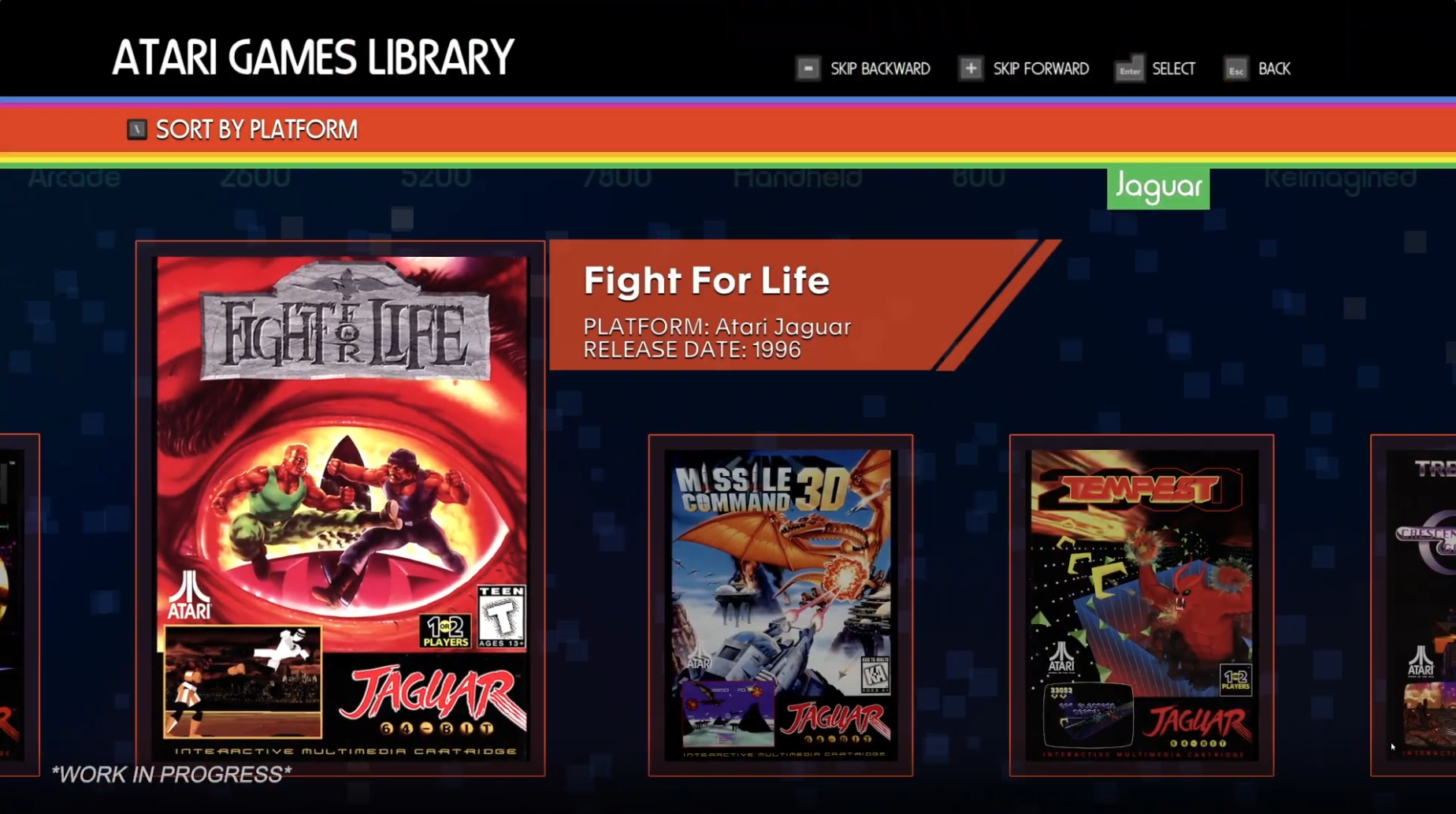
The entire game is presented like an interactive history lesson. You go through four timelines. Atari’s origin story and their arcade routes You get to see photos, printouts, commercials, and interviews with various Atari developers and industry veterans such as Tim Schafer (Psychonauts) and Cliff Bleszinski (Gears of War). These are presented in chronological order. A game is presented when its release comes up in the timeline. Some games have cover art, photos, and even comics underneath them to view. As you advance in the timeline, you get the feeling that you’re playing an interactive museum tour. There are no fancy 3D menus or anything, but the clean and simple UI works well. There are a few surprises peppered in, like unreleased prototypes and Digital Eclipse’s own recreations of iconic games like Yar’s Revenge and Haunted House.
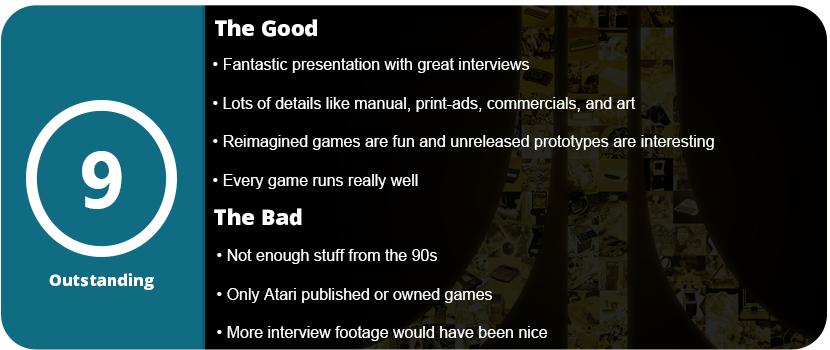
As you advance to the home console and PC timelines, things get more interesting. You will eventually get to the Atari 5200 and 7800 games, which are a bit more advanced. You will also get to play a few PC games for the Atari home computers. Then you will finish up in the 1990s with the Atari Lynx and Jaguar. Sadly, there aren’t many games in this timeline, and the biggest issue with this entire game is the lack of third-party titles. You only get to play Atari-published and owned games. That’s very limiting, and while I understand this is Atari’s own history, there are many games that helped make their systems great outside of internal developers. The few Jaguar games range from Cybermorph to Tempest 2000 and Missle Command 3D. They aren’t great, but they are interesting to dive into. That’s another thing about this whole collection. Very few games are fun to play for longer than five minutes. Some are pretty clunky and bad. This isn’t a “greatest of” collection, which I really appreciate. You will most likely go back to the more fun games like Missle Command, Centipede, Millepede, Tempest, or their latest versions in this game. You get special bezels, backgrounds, overlays, and control options for every game as well. You can also select various modes, and some games support save states, which is cool. You also get a digital view of every manual for the game, including the arcade operator’s manuals. They didn’t leave anything out.
By the time I spent around 5 hours in the game, I got to the end of the timelines. You can go back and play any game in the library view and pick your favorites. These games run really well and look great, but many gamers who didn’t grow up in the 80s will probably find this nothing more than a history lesson. Even more, will find pretty much every game boring or uninteresting. However, that’s not a knock to the games, but just a warning to younger audiences. Anyone younger than 30-35 will most likely not find this game interesting or fun. If you have a curiosity about Atari’s history or games then this is the best place to get that. If you have an itch for trying out 8-bit games or want to go back without emulating anything then this will give you nearly 100 games. I also appreciate how few ports and copies of the same game are in here. Each game was hand-picked and placed with relevancy.
Overall, the Atari 50 is one of the best retro packages you can ever play. Telling an entire developer’s history with games placed in their correct time slots and even including unreleased games and reimaginings of some is just fantastic. The videos are entertaining and interesting, and you will learn a lot. There are so many details added from commercials, print ads, posters, manuals, customizable controls, save states, and more. It’s a complete and cohesive package for Atari lovers out there. Just be warned that there are no third-party games and less of the 90s stuff.
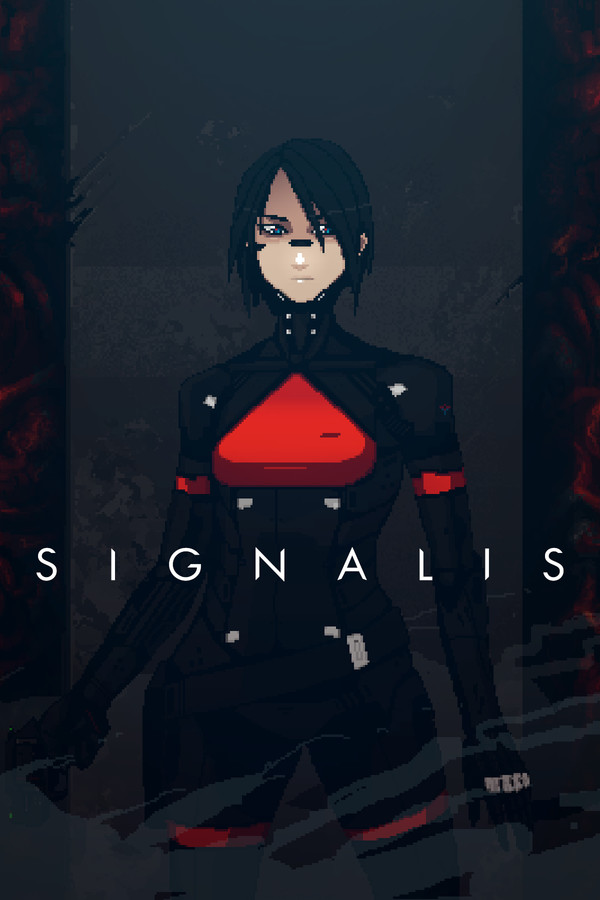
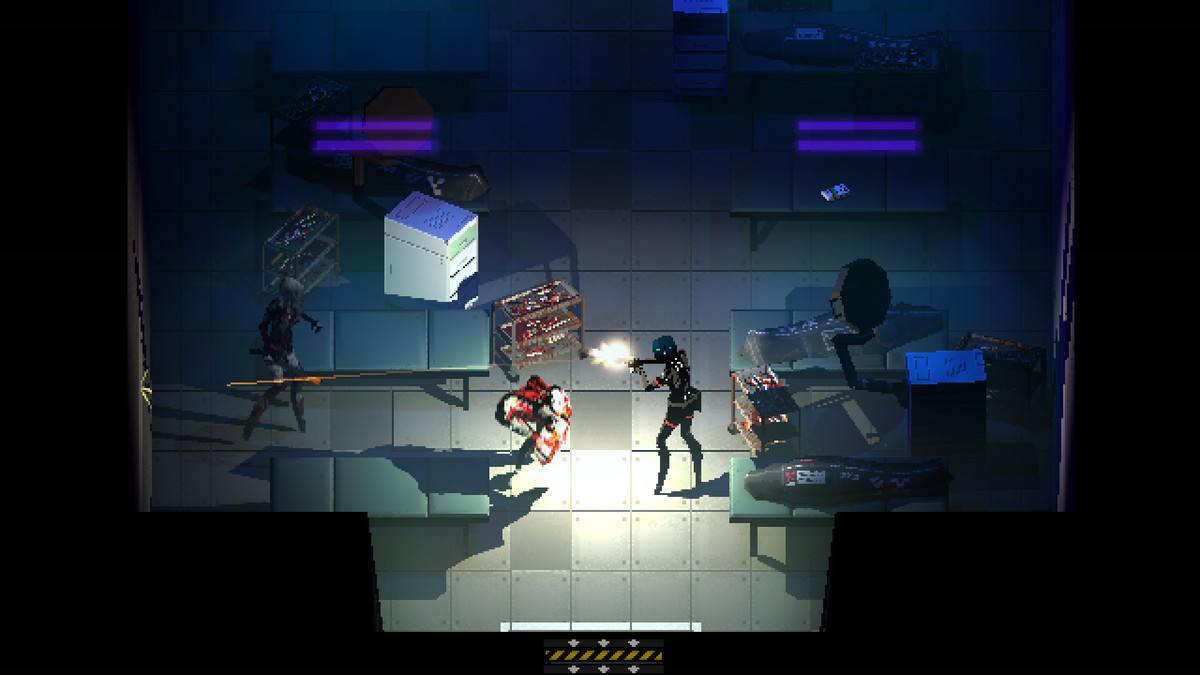
What would happen if you combined Resident Evil with Silent Hill? Probably a game with crazy enemies, creepy music, inventory management, and tank controls. Well, that’s exactly what Signalis is. It combines the best of PS1 horror and shoves it into a nice retro package with great controls and animations. Developer Rose Engine might be a bit on the nose with its inspirations, but it does a good job of making it feel more modern with a retro flair.
The weakest part of the game is its story. I will get that right out of the gate. While most PS1-era horror titles had convoluted and messy stories that usually made no sense or were open for player interpretation, Signalis is very cryptic, but the overall journey has a twist ending that is pretty eyebrow-raising. It will leave you stunned a bit and is a great payoff outside of the fact that there is almost no world-building or lore to get into. You get the occasional note, similar to Resident Evil, that tells a little snippet of what happened just before the current event. See, you’re some sort of AI controller robot in some dystopian German world. That’s all I really got out of the story and the few cut-scenes peppered throughout the game.
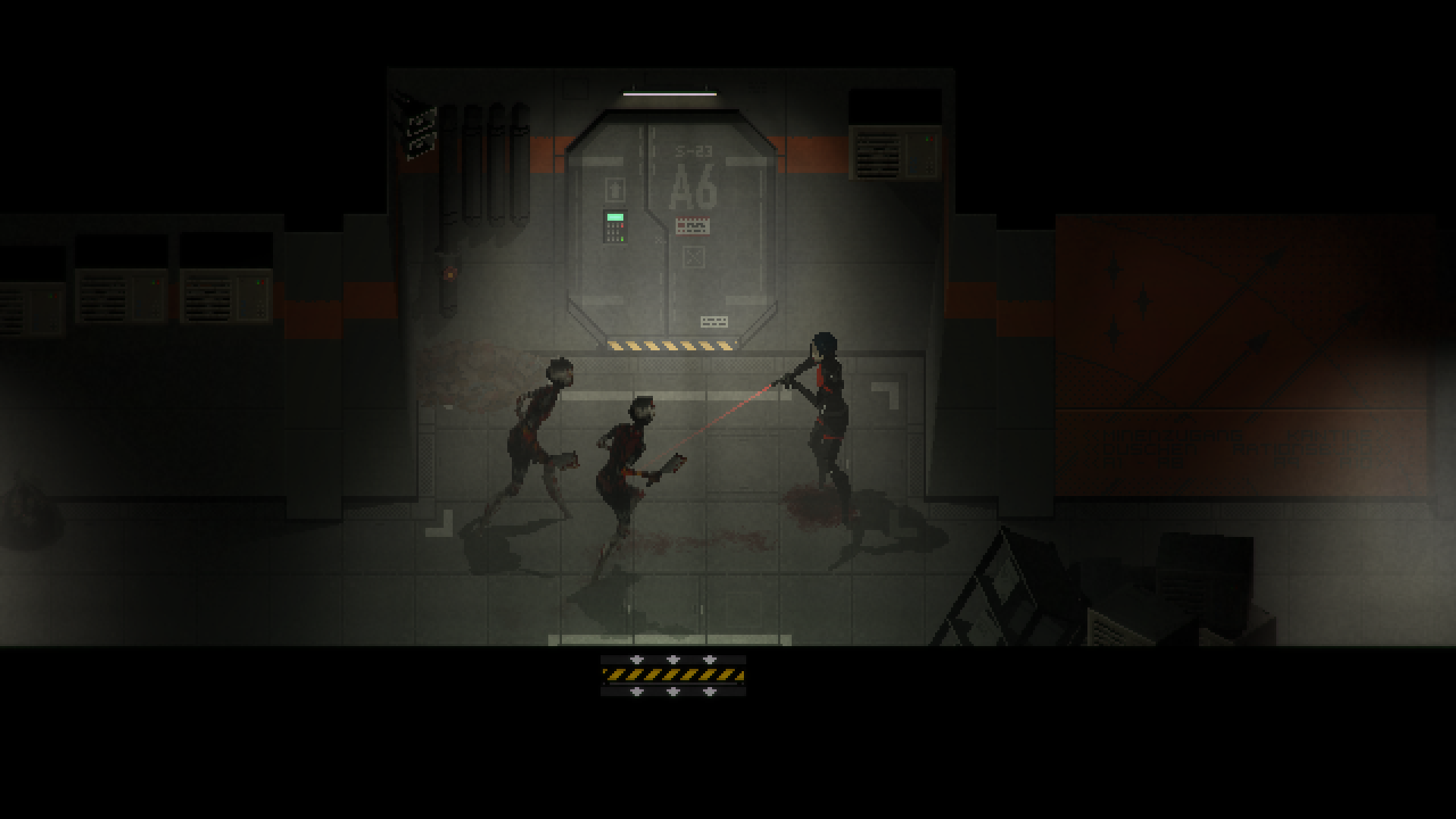
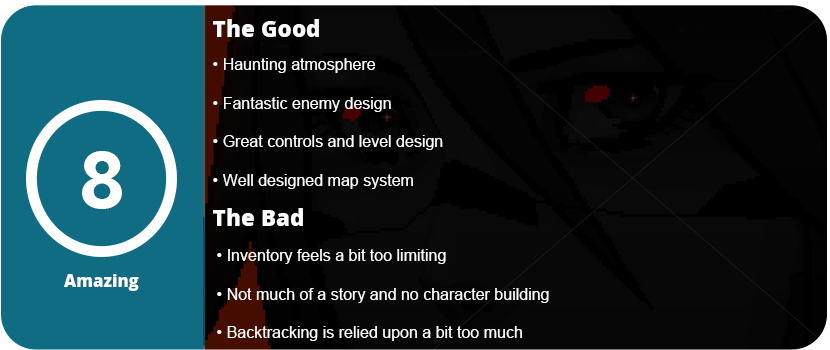
Just like the horror games that inspired Signalis you have limited inventory space, very little ammo for your weapons, fewer healing items, and lots of backtracking. I will praise Rose Engine for making backtracking in Signalisless painful than games of the PS1 era. There is a good map system that even marks puzzles that require items. The final area of the game has no map, but you will learn to remember landmarks. The level design in Signalis is fantastic. A game with a lot of backtracking needs good landmarks so you remember where every room is. If you are familiar with the 32-bit era of horror games this style of progression won’t bother you. There were some puzzles that had me write stuff down (math puzzles) or take photos of diagrams. You get a radio about halfway through the game and you can use the frequencies to help solve puzzles. I will admit that inventory management is a little too tight here. You only get 6 inventory slots and there are no upgrades in this game. I wish I had at least eight. I constantly had to leave healing items and ammo behind to dump puzzle items and backtrack a couple of times. At least in my first playthrough, I was able to preserve quite a bit of ammo. I didn’t even end up using two of the weapons. You can easily run from most enemies which I recommend later on when you enter rooms with four or more enemies.
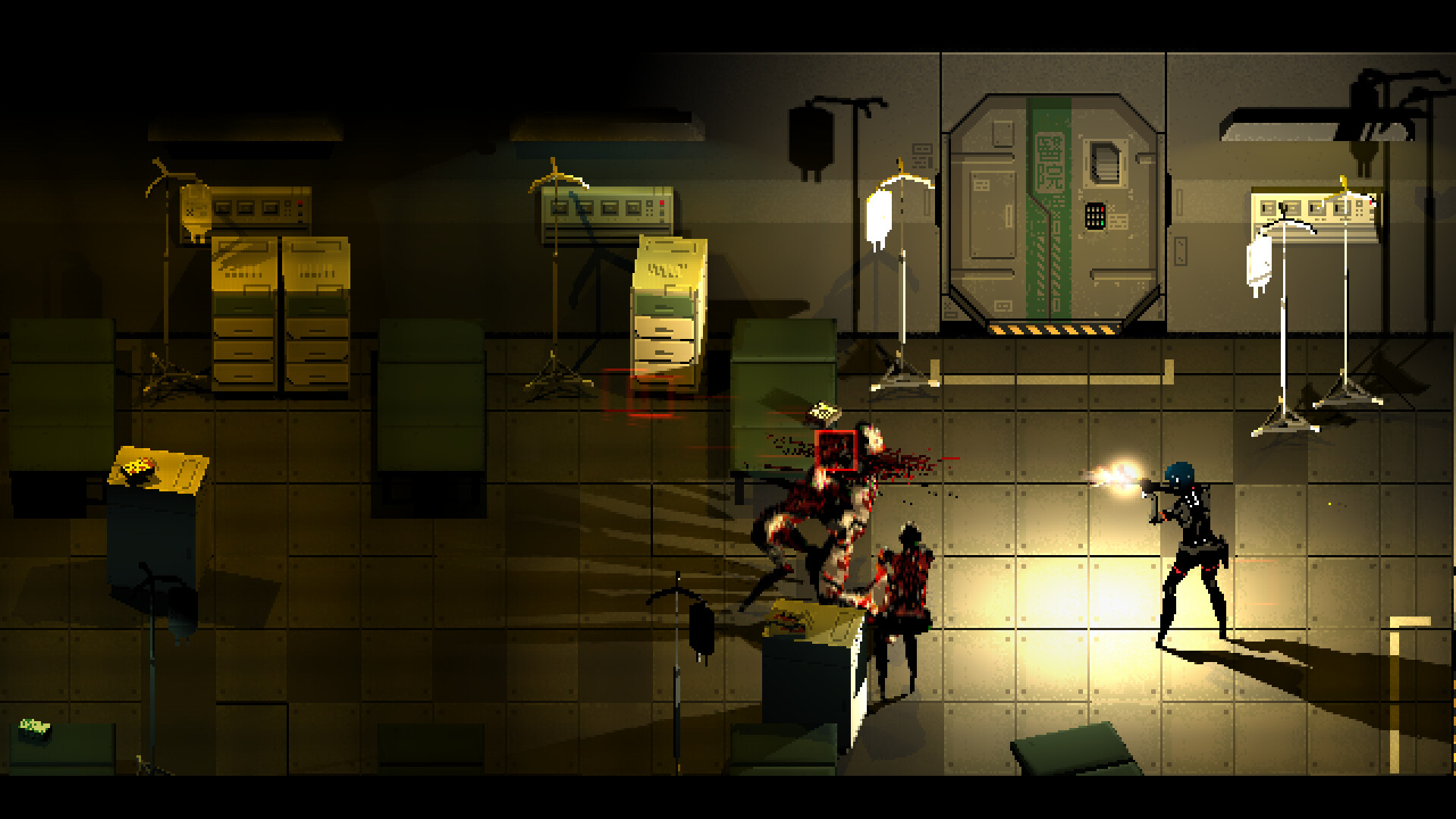
You can only shoot enemies while standing still. There is an aim button that auto-locks, and you can fire. Enemies will fall down, and you have to stomp on them to temporarily kill them. Yes, after the first area, you get thermite, which will permanently burn enemies and keep them from rising. This is why I recommend only killing enemies in main corridors that require you to frequent them often. Most rooms have a one-time entrance. You run in, grab everything, and leave. Rooms with puzzles and save rooms don’t have enemies, so this helps. Just like games of this genre, you will eventually unlock shortcut doors to get back to the main puzzle areas or save rooms, which help cut down on a little bit of the backtracking.
The enemies themselves are very Silent Hill-like. Almost exact copies. There are EULR enemies that look exactly like the Bubble Head Nurses from Silent Hill 2. The STCR enemies look like the Closer enemies from Silent Hill 3 or the Siam from Homecoming. Everything aesthetic and atmosphere-wise is very close to Silent Hill. Even the music is similar. The entire game looks similar to the Otherworld from Silent Hill as well. I have to say I like it a lot. We need more Silent Hill, and this is the closest you will get. There’s a little cyberpunk infusion with the AI robots and dystopian world. It’s a great fusion, and I couldn’t get enough of it.
I didn’t find much of the game frustrating. Puzzles are fairly straightforward. You may have to look up one or two, but the solutions were mostly right in front of me, and I just didn’t see them. There are only two boss fights in the game, and they are pretty fun but not very challenging. The challenge in the game’s combat arises from getting swarmed. As long as you run, you will always be safe. Enemies usually have to stop to swing, and unless you’re backed into a corner, you won’t get hit. The variety of weapons helps, and you can store everything in your save room chests and go back to get what you need. I did finish the game with plenty of healing items and ammo. I can’t express enough how much running helps in this game. There were occasional rooms that needed my flashlight too.
Overall, Signalis nails the feeling and atmosphere of Resident Evil and Silent Hill. The monster designs are great, the music is haunting, and the level design is done in such a way that memorizing the layout of an area isn’t that hard, which is key for games that need a lot of backtracking. Puzzles aren’t insanely vague or obtuse, and it’s obvious what items go where once you find both. I just wish there were more than six inventory slots. It just adds artificial fluff to the playtime by constantly having to go back to your storage chest and dump off items. I also wish the overall story and world-building were better. The game is only about 6 hours long, so there isn’t much time or room for character or world-building anyway. Thankfully, the atmosphere, enemy design, tight controls, and well-designed areas are all tight. This is easily the best retro horror game to be released in the last couple of decades.
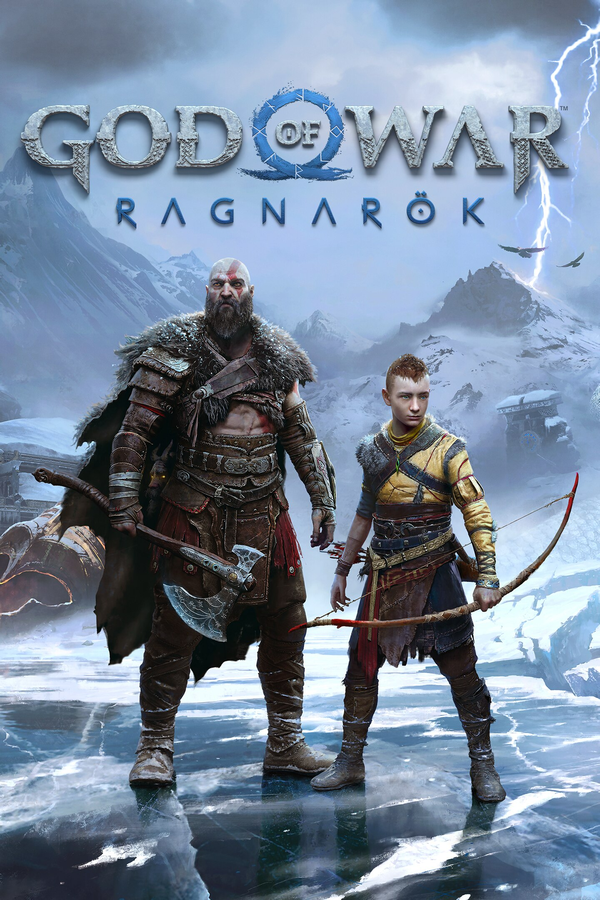
God of War (2018) was a masterpiece of a game. I honestly expected just more of the same with Ragnarok, as I couldn’t imagine how they could improve or add anything. I knew they were reusing many of the same realms, and I thought this would feel more like a short expansion pack relying primarily on endgame challenges. I was dead wrong. This game is about 10 hours longer story-wise and has more explorable realms than the first game. A couple of realms are still used as central hubs, but most are fully explorable, with hours of content in each one. This brings me to the actual story itself. It’s phenomenal, moving, tear-jerking (especially the ending), and has one of the best ending levels I’ve played in over a decade. While there are many improvements over the first game, a few flaws still remain that haven’t been addressed, but they’re minor.
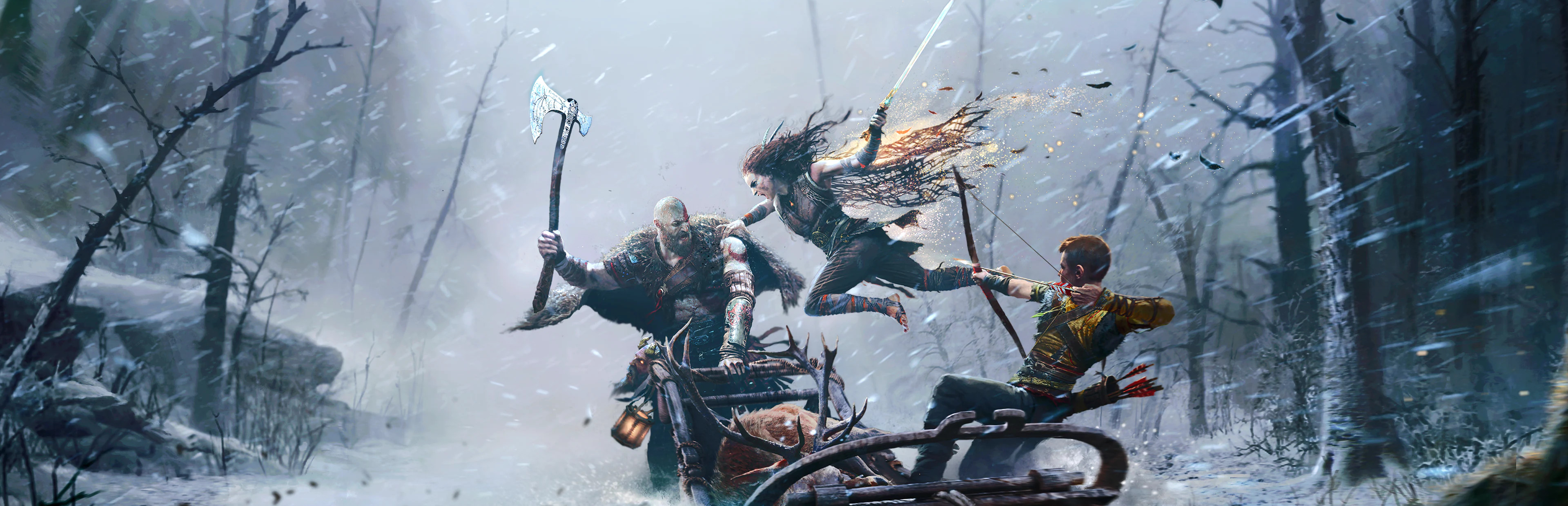
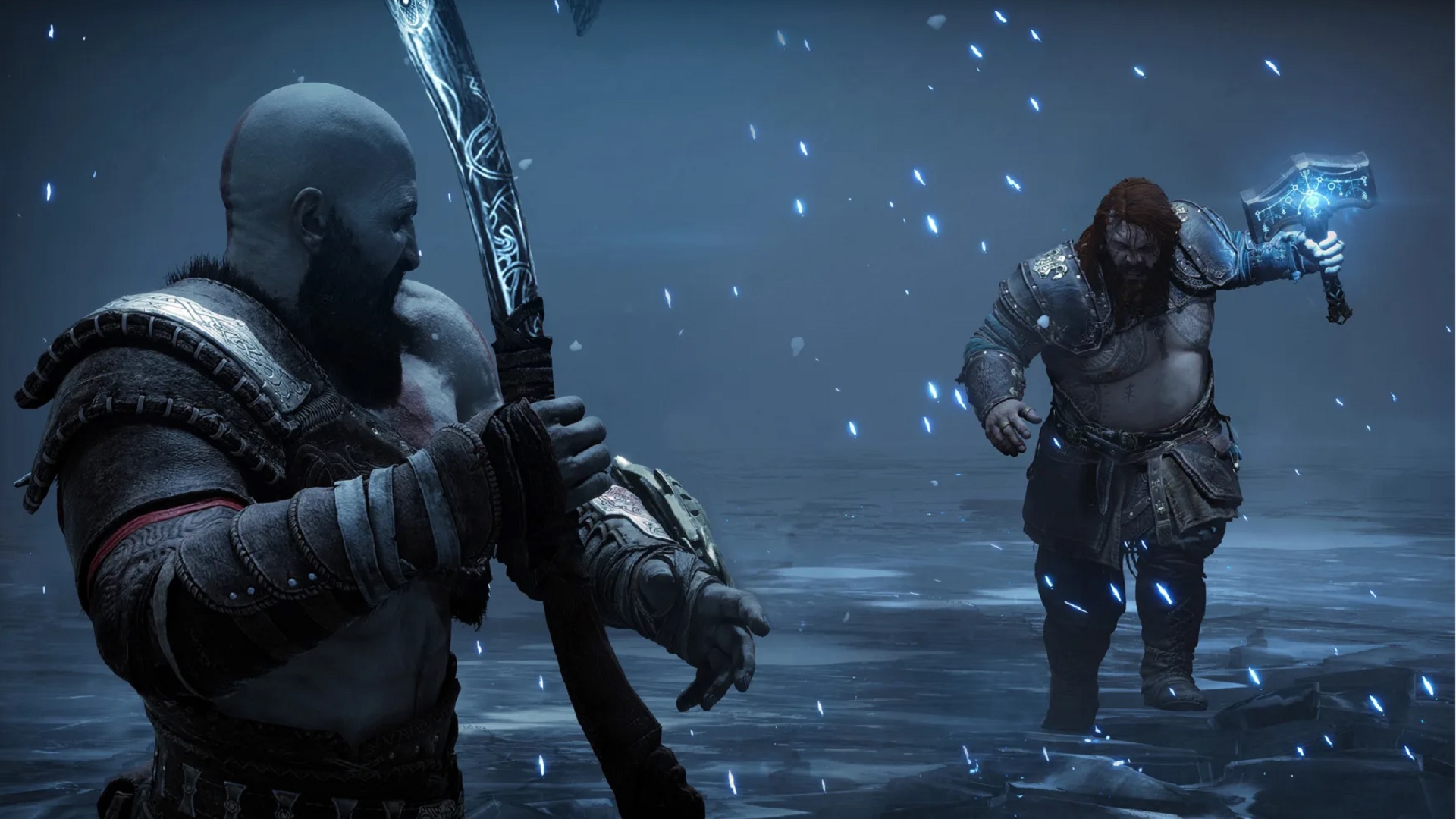
The game starts pretty much right where the first game ended. You’re in a cave with Atreus (who is now a teen), and you ride through a snowy path on a dog sled. I don’t want to explain too much of the story details, as there are some twists and beautiful moments, but every single character here is memorable. All of your favorites from the first game are back, plus a lot of new ones. Thor, Odin, Thrud (Thor’s daughter), Sif (Thor’s wife), Heimdall, and many others just ooze character and charm. Even some of the smaller characters with little screen time make such an impact and are so well written and designed. It’s some of the best writing and character development in any game, period. I just want to say that you won’t be disappointed with the story at all. It does take 20–25 hours to complete the story, but it’s never boring, never dull, and goes off on so many different paths.
You can now play as Atreus in many scenes, and he’s nimble, swift, and a lot of fun to play as. He’s a stark contrast to Kratos’ larger and slower build. He can melee with his bow, shoot arrows, and equip relics that add augments to his arrows. He also has powers. He does have his own assist partners in the game. Without spoiling anything, there are several characters that accompany him on his own journey. You aren’t stuck with the same companion through his sections. The gameplay is just so varied that it never gets dull.
Combat itself has improved some, but it was never flawed before. Animations are tighter and more varied, and you now have three different abilities you can change and equip. These are in the form of relics and amulets. When you hold down L2, you can press R2, circle, or R1 and use cooldown abilities. These are more abundant than in the first game, with a ton of find and collect. These are specifically heavy and light attacks for each of the three weapons, as well as one ability from your amulet. There are passive buffs you can apply to your amulet that can reduce cooldowns and make you more powerful while using certain relics, and equipping any three at the same time grants a special bonus. This is all slowly unlocked for you throughout the story, but to get the most out of this stuff, you have to explore and do all the side stuff to get better buffs and abilities.
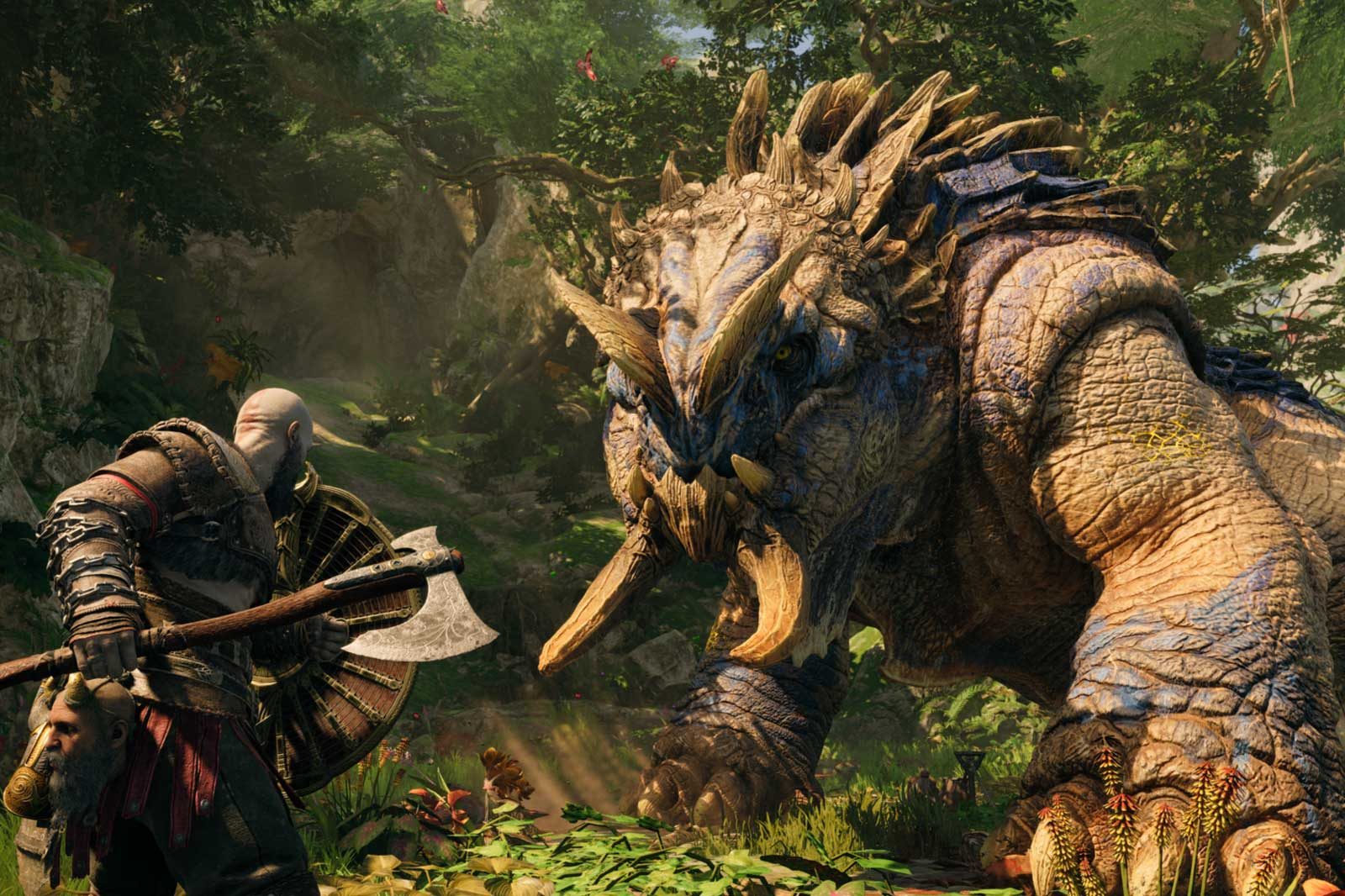
The combat system is just perfect. I didn’t think it could get better, but it does. The only thing I wish I could do is combo in and out of different weapons. That’s the only issue I had with the combat. The additional spear weapon is a treat and adds powerful mid-range attacks, so Kratos is fully balanced. The axe for short-range attacks and the Blades of Chaos for long-range attacks These weapons can be upgraded by defeating bosses throughout the realms for sparks, and they are hard to come by and rare. You must seek them out to increase your equipment level. This is even more important than the first game. Enemies have levels above them just like before, but the side stuff is what mostly relies on this. The hardest enemies in the game are the Berserker bosses, and you must tackle them in a certain order to gain that extra level and be at level 8, which takes a couple dozen hours to get to. The enemies are well-designed; every single boss is different, and even the mini-bosses have been mixed up. We’re no longer spammed with just troll bosses like before, which got quite repetitive outside of the story bosses.
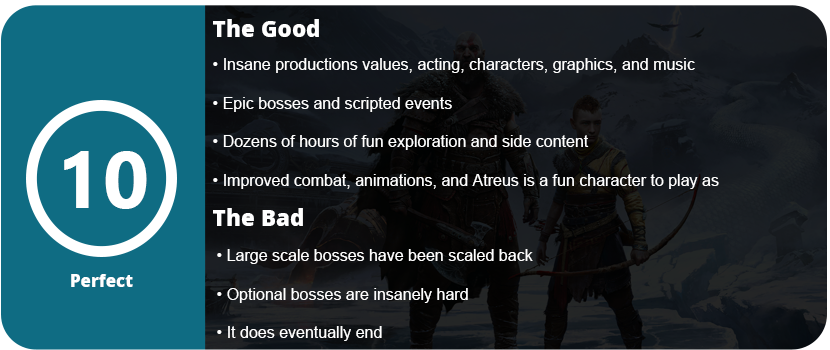
That’s where my first minor complaint comes in. The bosses and large-scale battles are toned down quite a bit in this game, and that was a huge part of God of War‘s DNA. The quick-time events are almost non-existent as well, outside of key scripted scenes. I was a little let down by this, which was probably the only major letdown of the game. The large-scale bosses do exist, but there are only a couple, and they are pretty far apart in the story, but they are still epic nonetheless. All of those cool large-scale bosses are mostly replaced with well-designed smaller bosses that require you to really hone the combat system. It’s honestly no joke either. These optional bosses will kick your ass. Even 35 hours into the game, I was dying a dozen or more times until I memorized every attack pattern and dodged and parried perfectly. This is why having the proper equipment level is key. I would come back even just one level higher, and it would make my time easier. You also get to use resurrection stones, which are highly recommended to always have as you don’t get penalized for using them. There is a new berserker stone as well that gives you full rage.
When it comes to exploration, Ragnarok is full of it. There aren’t just a couple of boat areas like before, but nearly every realm can be traversed by boat, with a lot of areas to unlock, chests to grab, and puzzles to solve. One of Ragnarok’s strengths is its environmental puzzles. These are Zelda-level fun and addictive to find and solve. It’s recommended to do all of the side stuff at the end of the game, when you have all the abilities and weapons needed. The same Relic chests exist as before by finding three runes to hit with your axe, but more ways to solve these have been added. In addition to just mashing square to Atreus and other partners to assist you, there are now two arrow types. Magic and Rune arrows Rune arrows are green and do heavier damage, but magic arrows are purple and can increase fire or ice damage to enemies. These are also used in puzzles. The purple arrows can create domes that can be shot to create a chain reaction of fire to light up runes for puzzles. These can be tricky but fun to figure out.
Your spear can be used to blow open weak points in rocks and be used as a pole to get to new areas. It’s so satisfying to finally go back and get that one chest you saw teasing you or get to that whole new area you knew was above you but couldn’t get to. These teases throughout the story make you want to explore, which I did anyway. I usually did everything I could with my current abilities in the realm before moving on. You can easily spend 5 or more hours in each realm, completing them to 100%. There are still the Muspelheim challenges, Odin’s Ravens, and many more favors to find, collect, and solve. You will easily spend 50–60 hours in this game to complete it to 100%, and it’s satisfying, addictive, and so much fun. The level design is fantastic, as it’s easy to remember nearly everything in the game and where to go. Just a simple chest was easy to remember once I got to that area. There were a few small areas that were a pain to explore, such as near the Abandoned Village in Vanaheim. It’s one of the few areas poorly laid out with confusing paths and easily missable shortcuts, but these aren’t very common.
The production values are the last thing I want to talk about. They are amazing, mesmerizing, and absolutely mind-blowing. I can’t put into words just how well put together this massive game is. Christopher Judge’s performance as Kratos is deeper and has more nuance, and he just is Kratos. Sunny Suljic does a fantastic job, as he’s grown with Atreus and has put his own spin on the character. Odin’s actor, Thor, and everyone in between are perfectly cast. This is Game of Thrones or Harry Potter-style perfect casting. This is one of the best-acted games ever made, and that’s not an exaggeration. I couldn’t get enough of everyone on screen, and there is just so much dialog and acting on screen that it’s insane. The music is also phenomenal. If you loved God of War‘s music before, it sounds just like we’ve grown to love it, but more mature and, of course, varied due to the sheer size of this game. Deep, sweeping horn instruments, a lot of crescendos, and emotional orchestras play away at the perfect tempo. This type of game only comes once in a generation.
Lastly, I want to talk about the technical side of the game. The graphics look amazing on PS5 and fine on PS4. Sadly, this is a cross-gen title, so the graphics aren’t as impressive as a next-gen-only title like A Plague Tale: Requiem, as you can see where the visuals were held back to be able to scale down to the base PS4. The game looks amazing in 4K 60FPS Quality mode, but a game that requires precise timing plays better in Performance mode at 1440p. However, the best is the VRR mode, which is only available on TVs that have been released in the last year or two. Sadly, this whole VRR and performance and quality mode thing will continue until we are done with cross-gen titles. Loading times are super fast on PS5 as well, so there’s nothing to worry about. Technically, Ragnarok is nothing to worry about, as it’s still one of the best-looking games ever made.
Overall, Ragnarok is a perfect game. It has puzzles, great level design, a huge world to explore, bosses small and large, epic scripted set pieces, and well-acted characters that are always welcome to see on screen. The story is an emotional roller coaster of Kratos learning to let go and Atreus becoming an adult. There’s the larger issue of every realm trying to come together to defeat a common enemy. Combat is easy to learn but hard to master with a ton of armor and equipment to find. Exploring and solving environmental puzzles never gets dull or boring. There are side quests, treasures, and everything in between. This game literally has everything, and just like the greats before it, it is the essence of what a good game is. The only flaws are the lack of quick-time events and large-scale bosses, and the optional bosses are incredibly tough, but that’s not really a flaw in the end. Ragnarok is the best game to come out this generation so far, and like I said at the end of my review in 2018, how can they make this series even better?
While it may not seem that there were as many exclusives for Sony’s platforms this year it’s because they don’t have the PC realm. We saw a bunch of amazing ports to PC this year, but Sony laid down their last card with a confirmed release date this year. Sony can still prove that their own IPs rock and people want them.
What can I say? The game has to be played to do it justice. The acting is impeccable, the story is exciting and full of adventure and wonder, the combat is tight, responsive, and addictive, exploring the vast world is a blast. The visuals are fantastic. There’s not much here that can’t be liked. It’s almost a perfect game.
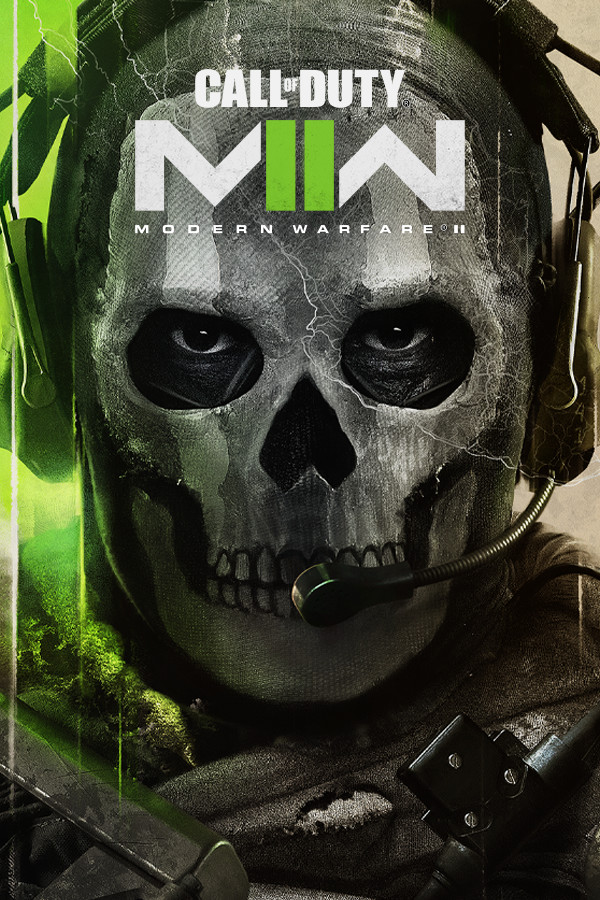
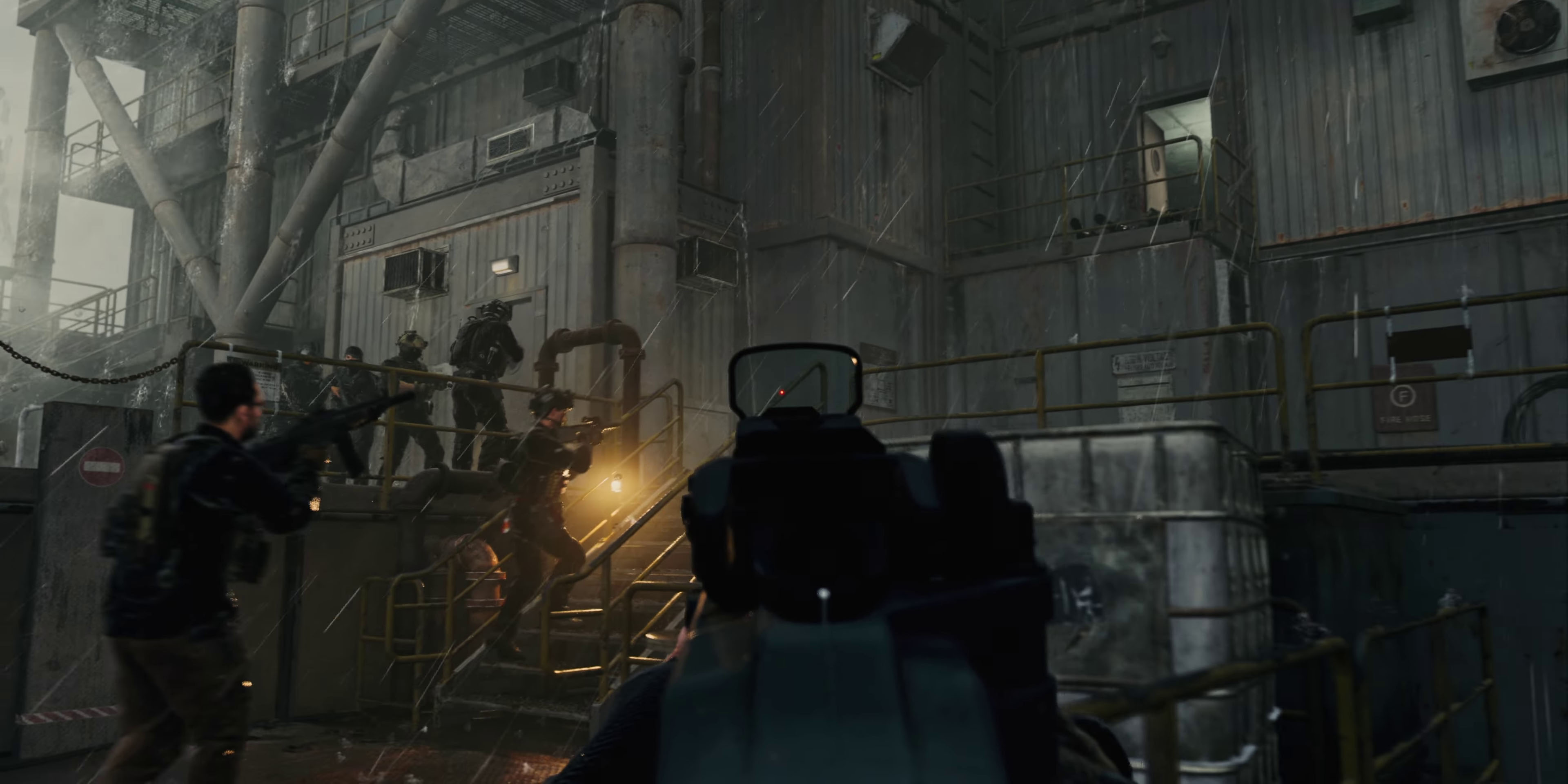
Here we are again. At least Activision let three go between releases this time, and it’s been paying off. I had high expectations for Modern Warfare II‘s campaign, as 2019’s was pretty damn good. A lot of elements carry over, such as the fantastic acting, fun on-screen characters, and bombastic mission design, but there are a couple of new things thrown in borrowed from Black Ops: Cold War and tweaked slightly. You play as various well-known Modern Warfare characters such as Soap McTavish and Ghost, with Captain Price returning as well as some characters from 2009’s Modern Warfare 2. If you hadn’t guessed, this is a prequel to that game and a direct sequel to Call of Duty 4. Starting to see a pattern here? 2019’s Modern Warfare was a prequel to Call of Duty 4. My guess is that Modern Warfare III will be a prequel to Modern Warfare 3. Why are we doing this? Why is there a Call of Duty multiverse?
Sadly, the campaign isn’t as good as 2019’s and still doesn’t teach any lessons. It’s a fast-paced, rapid-fire campaign that doesn’t focus on its strongest points. The story is interesting enough thanks to the fantastic acting, and the on-screen characters are interesting and fun to watch, and I wanted more of them. Instead, we’re rushed through a bare-bones campaign full of the same stuff we’ve seen before. On-rails vehicle missions, stealth missions that don’t require you to really use stealth, some weird puzzle with a missile laptop that isn’t really a puzzle because Infinity Ward thinks every player is dumb Yeah, the game treats you like you’re stupid and does everything for you. I really wish this would stop. Stop being scared of challenging us. Sure, the gunplay is, bar none, some of the best out there. The weapons feel great, and the animations and various minute things like ADS time, scope switching, and all that jazz feel tweaked and more responsive than ever. It’s a blast to shoot things and use various weapons.
The only new thing here is screwed up, which is the worst part of the game. The final act has you crafting items and sneaking through a city to escape the enemy. Yeah, crafting in Call of Duty I never thought I’d see the day. It’s poorly implemented because the level design is terrible. I constantly got turned around and went in circles, causing me to restart numerous times. You have no way to deal with enemies until you find a sharp object, which is towards the end of the first objective. You can craft smoke bombs, pry tools (which are essential to finding a gun and better weapons), and various small traps, but finding these items is a chore. I had to go into every single house and search everywhere just to get enough parts to make a single item.
Getting caught required numerous restarts, which seriously halted the game. It’s later introduced in an even worse situation in which you are in a single office with no weapons and have to scrounge for a sharp object and make items while also being on a timer to disarm a bomb with that same laptop puzzle thing. It’s stupid and not fun. The thing is, there are only two enemies in the room. Why would I need to craft all of these objects? Find two glass shards under the tables and duct tape them out. In fact, you can just stay under here and disarm the bomb without being seen. What were they thinking?
The campaign is about 5–6 hours long, and it ended on a cliffhanger leading to 2009’s Modern Warfare 2. So after this, go play the remastered campaign of that, I guess. I was left wanting more of what there was less of and wanting less of what I got. The beat of the game is well done. I felt entertained enough by the story and characters to keep going, but those horrible stealth sections really slowed the game up, and it makes me not want to play the campaign again. 2019’s campaign is worth replaying. It’s fun and varied.
The visuals are fantastic. While only a small step up from 2019’s engine, it looks amazing and is a well-optimized engine that can run on lower-end hardware. While there’s no ray tracing right now, I can’t wait to try it out. It’s one of the best-looking games out there and is a treat to look at.
The Multiplayer
This is where I was most excited. I actually really like Call of Duty‘s multiplayer suite. After 2019, the game just perfected it. It’s addictive and fun, and the customization options are pretty large. However, this year’s game is a grind. I didn’t think 2019 was really bad, but I feel like without a Battle Pass, you will be grinding a lot here. The biggest complaint is the new UI. It sucks. There are no more notifications (the green dots) on what you have unlocked. I have to quit a match search so I have time to go in and figure out what I unlocked. The armory itself is a bit confusing. I wish they would have just ported the 2019 UI over. It was perfectly fine.
Even the menu where you pick the match type is confusing. It feels like a mobile UI shoved onto a console. With that out of the way, the game plays pretty much the same. Movement is a bit more refined, guns feel even better than before, and there are more of them and a larger variety. You still get your five main classes and can customize your own, which, by the way, is a confusing mess thanks to that terrible new UI. New perks like strong arm, which lets you see the trajectory of a thrown item. There are now perk packages that let you select two base perks and a bonus perk. I found this really felt better than picking separate perks, as it forced you to mix things up.
The maps themselves are the star of the show, and there are some good ones here. I feel like these are way better than the Cold War‘s maps, but not quite as good as 2019’s. Still, there were only one or two maps I didn’t care for, but they weren’t terrible. The same modes and playlists return, but my favorite is always team deathmatch. I do play a few other modes occasionally, but TDM never gets old. I didn’t really get into Warzone 2.0 or any of the 32v32 maps, as I prefer smaller battles in this game.
With that said, Modern Warfare II doesn’t take the series in new directions but provides more of what made 2019 work, and that’s fine. The campaign isn’t as good, but the new characters bring a lot of life to the series, and they are fun to watch on screen. Sadly, the stealth missions bring the entire campaign down and hurt the replay value. After the short campaign is over, it’s on to the multiplayer that we’ve grown to love, and if you liked 2019’s, you will like what’s here. A new perk and field upgrade system tweaked controls and animations, and all new maps are pretty good. I just wish the UI wasn’t so awful.
Supermassive Games once again excels in its strengths and doesn’t learn from its weaknesses or mistakes. Man of Medan was a great start to a horror series, and Little Hopecould have learned a lot from the fumblings of the past game but didn’t learn a single thing. You play as a crew of five this time who end up in a bus crash on their way to a school field trip to the Northeast town of Little Hope. A ghost town.
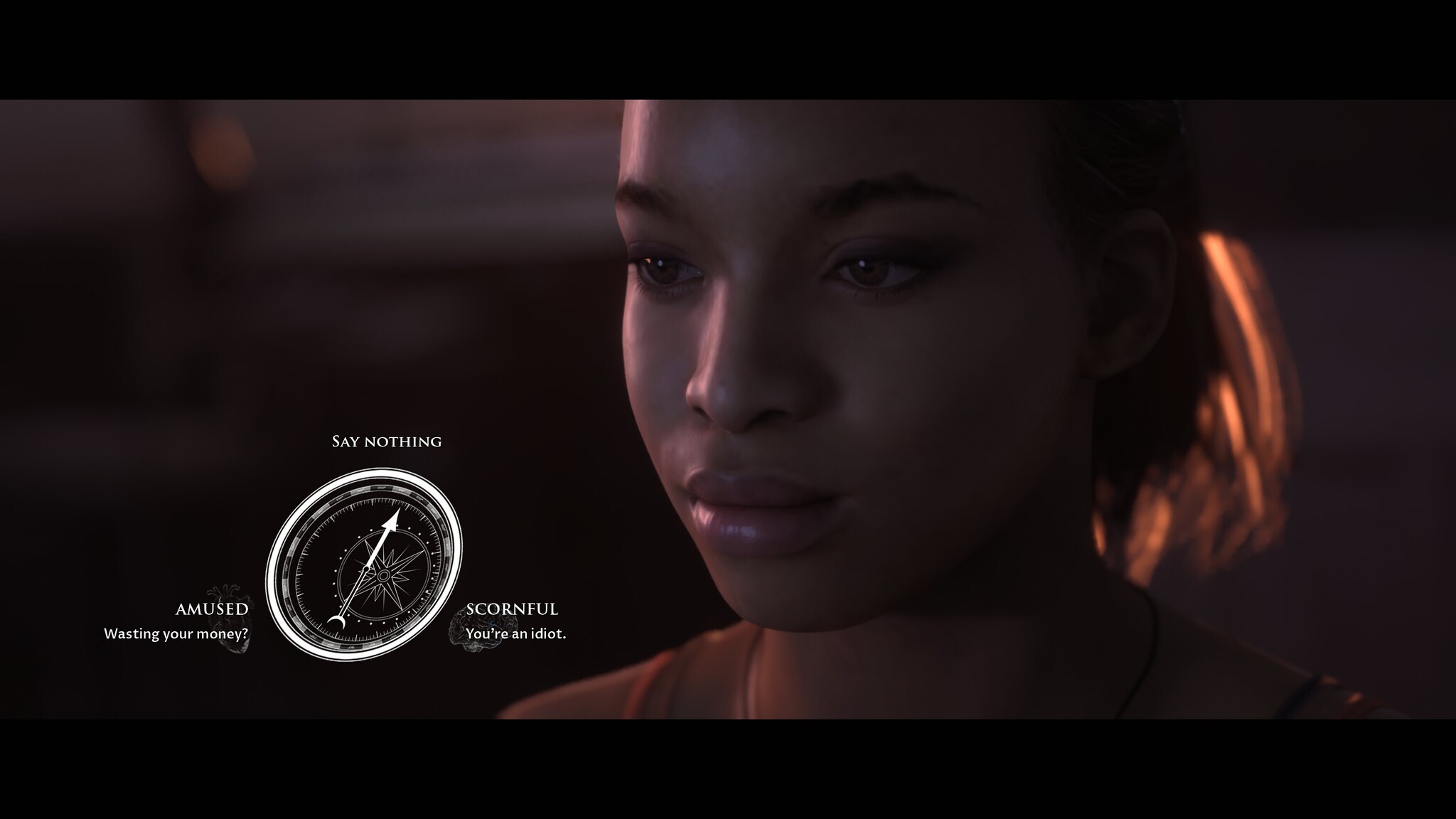
The game starts out very strong. You are in the 70s stuck in the middle of a dysfunctional family. The prologue quickly introduces what the series is good at. Death. You then end up in a bus crash and are stuck in a rural town in the Northeast in the middle of nowhere. I was excited about this one. It has a great Silent Hill feel to it. Endless fog, creatures creeping around in the distance, and a ghost mystery. Sadly, the game quickly devolves into walking around what seems like random houses, forest paths, and buildings. The same issues plague this game such as the lives of the characters dwindling down to succeeding in QTE events. The traits between characters that are strengthened or weakened through dialogue choices will determine how hard these QTEs will be. You can also explore and find secrets and a few hidden weapons to make these scenes easier as well.
The game feels less cohesive than Man of Medan. The story itself doesn’t feel as exciting or interesting as the previous game either. The story just never seems to go anywhere and doesn’t make any sense until the very end which is really annoying. I kept hoping that there would be a twist or something, but the story just drags out as it has nothing to really tell. The characters themselves are more compelling than in the previous game and I felt a little more attached to them, but they are still walking stereotypes and cliches. The facial animations are slightly improved, but the voice acting can still be spotty.
There is still no gameplay here. Outside of the walking scenes and looking for secrets and QTEs this is just an interactive four-hour movie. We still get cuts to The Curator who can give you occasional hints and I’m sad that his backstory isn’t told and we still no nothing about this character. That seems to just be a running theme with this series. We just get characters thrown into some B-grade horror mystery for four hours with nothing else to show for it. There’s nothing memorable about this series or insanely interesting. The monster designs are still well down. Supermassive still does a great job slowly revealing these monsters as there are only a few of them. However, it’s not enough to make up for the lack of everything else.
The game is visually impressive. It looks fantastic on PS5 and PC, but is also poorly optimized on PC with insane slowdown and requires way too high of a setup for what it is. The textures, models, and lighting are top-notch, but the janky animations just bring it down some. The game still suffers from mannequin-like facial animations sometimes. Overall, it’s a very impressive game visually.
In the end, Little Hopedoes little to advance the series and instead sets it back a bit further. With a less than compelling story, stereotypical characters with no depth, wonky facial animations, and spotty voice acting, plus the lack of gameplay makes this a four-hour B-grade horror movie that’s interactive. You won’t miss much by skipping this one as there is no overarching story over the entire Dark Pictures Anthology.
Until Dawn was a visually impressive game. It was also very atmospheric and had some memorable scenes. Supermassive Games has a talent for world-building and giving you the fine details. The downside is that Until Dawndidn’t have any memorable characters. They were B-grade actors with stereotypical college student personalities and they never stood out. The same is present for Man of Medan. This is an ongoing horror series full of short stories with the overarching narrative being kept together by The Narrator. He gives you hints and a couple of tips to help keep everyone alive in the game.
Man of Medan is also visually impressive. Great textures, detailed character models, impressive lighting effects, and great camera work. The game suffers from Supermassive’s previous weaknesses. Forgettable stereotypical characters that you see in B-grade horror movies. The acting is spotty and all over the place and includes facial animations. Sometimes it looks great and other times they look like stiff mannequins. You play as four college-age people who take a boat trip to go scuba diving to find an unmarked airplane that was downed during World War II. Things take a turn for the worse when they get kidnapped and brought onto a World War II ship to look for Manchurian Gold. They meet supernatural beings and must escape. Your job is to keep them alive.
While the overall tale is interesting and I really wanted to know what happened to this ship and the things going on, the game is so short that the characters get zero back stories and it’s just jump scare after chase scene after QTE event. You keep the characters alive by mainly being successful with QTE events. These are when the characters’ lives are in danger. If you played any cinematic adventure game in the last 20 years you know what to expect. There are various ways you can make the game easier or more difficult by walking around and searching for objects. This is the only gameplay here. Walking around small hallways and looking at objects. If you see a sparkle it means you can interact with it. Picking up objects and turning them overlooks cool and the objects are insanely detailed, but it doesn’t add anything to the experience. You can easily just go straight to the end of every scene.
That’s another problem with this game and these types of games as a whole. There’s almost no gameplay. Most gameplay is just an excuse to keep the player engaged. Thankfully Man of Medan never gets dull and is always moving at a good pace. When creepy stuff happens it’s done very well. I was wigged out by some of the creatures on screen. Supermassive’s camera work is superb here. I felt like I was playing a movie which is more than I can say for most games. The only excitement in the game is the quick decisions needed before timers run out. You can get premonitions from finding pictures hidden around that show 3-second clips of what might happen in the future. Sometimes these helped and sometimes I realized what was happening too late. I managed to only lose one character and it was at the very end of the game. I have to say that the whole bearing and trait system makes no sense to me. During conversations, you can pick one of two answers and this will unlock traits or increase others. It’s never explained well. Finding certain objects and adding to bearings, but I have no idea what this does. Again, there’s no explanation.
Overall, Man of Medan is an interesting first outing into this new series and I look forward to seeing more. While I don’t doubt Supermassive can supply an entertaining ride, the characters need to be more interesting, the facial animations need more work, and the bearing and trait system needs more explanation. The 4-5 hour runtime is over before you know it










































 thebinarymessiah.com
Try multiplayer. A lot of fun !