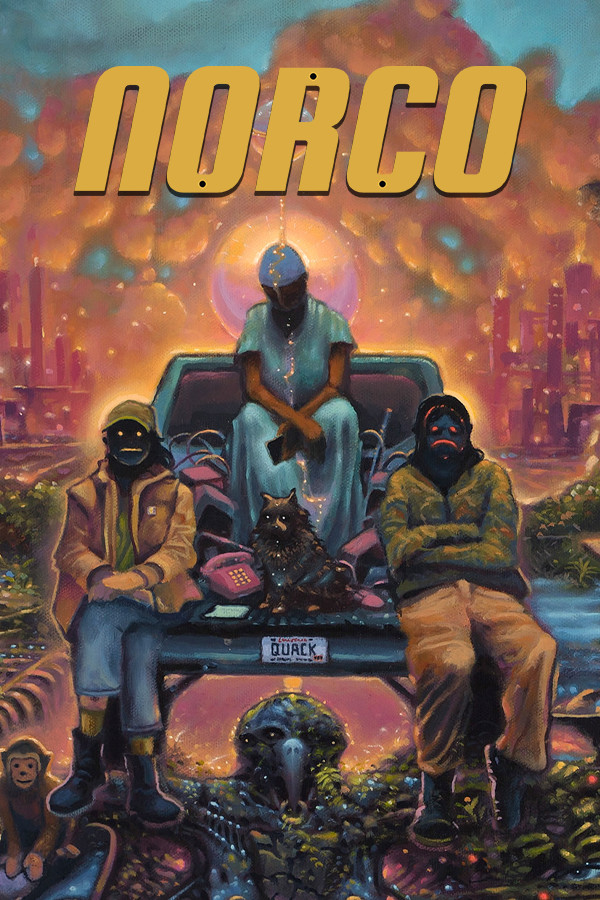
Adventure games seem to be making a comeback, which is a great thing. My fondest memories of PC games are adventure games, with The Longest Journey being my favorite of all time. They are basically interactive novels with visuals, and sometimes voice acting, to help illustrate the story. Norco is one of the better modern adventure games of late, but it still fails in a few spots.
The story itself has moments of clarity, but like most text-heavy adventure games of late, it becomes a convoluted mess with few characters to care about and a disappointing ending. You play two different characters: a mother and a daughter. You play as the mother, Catherine, in the past, playing events that lead up to the present daughter’s events. The daughter is chasing her mother’s ghosts and trying to recover belongings that a corporation took from her. These belongings are supposed to have answers as to why this corporation targeted your family. The whole game is set in a 20-minute-into-the-future borderline post-apocalyptic New Orleans. There isn’t too much world-building, but a lot of poetic metaphoric dialogue that a lot of games right now think is clever and interesting, but just compounds the fact that a more normal, cohesive story is what makes adventure games memorable.
There are a few moments where you might enter a combat mini-game, but these are far and few, and it seems almost impossible to fail them. Various typical adventure game elements are lightly sprinkled throughout, like inventory items, backtracking, and code memorization, but surprisingly, there are no puzzles. A lot of important clues and context will be shown in green during dialog, and talking to your party can give you hints, which is helpful. I rarely couldn’t figure out where to go. The explorable areas are just still images that you can move your mouse around and click on to interact with. The entire game is from a first-person perspective. There is a small mini-map in the corner that lets you click around to various “rooms” you’ve unlocked, and then there’s a larger map to jump around to the main areas.
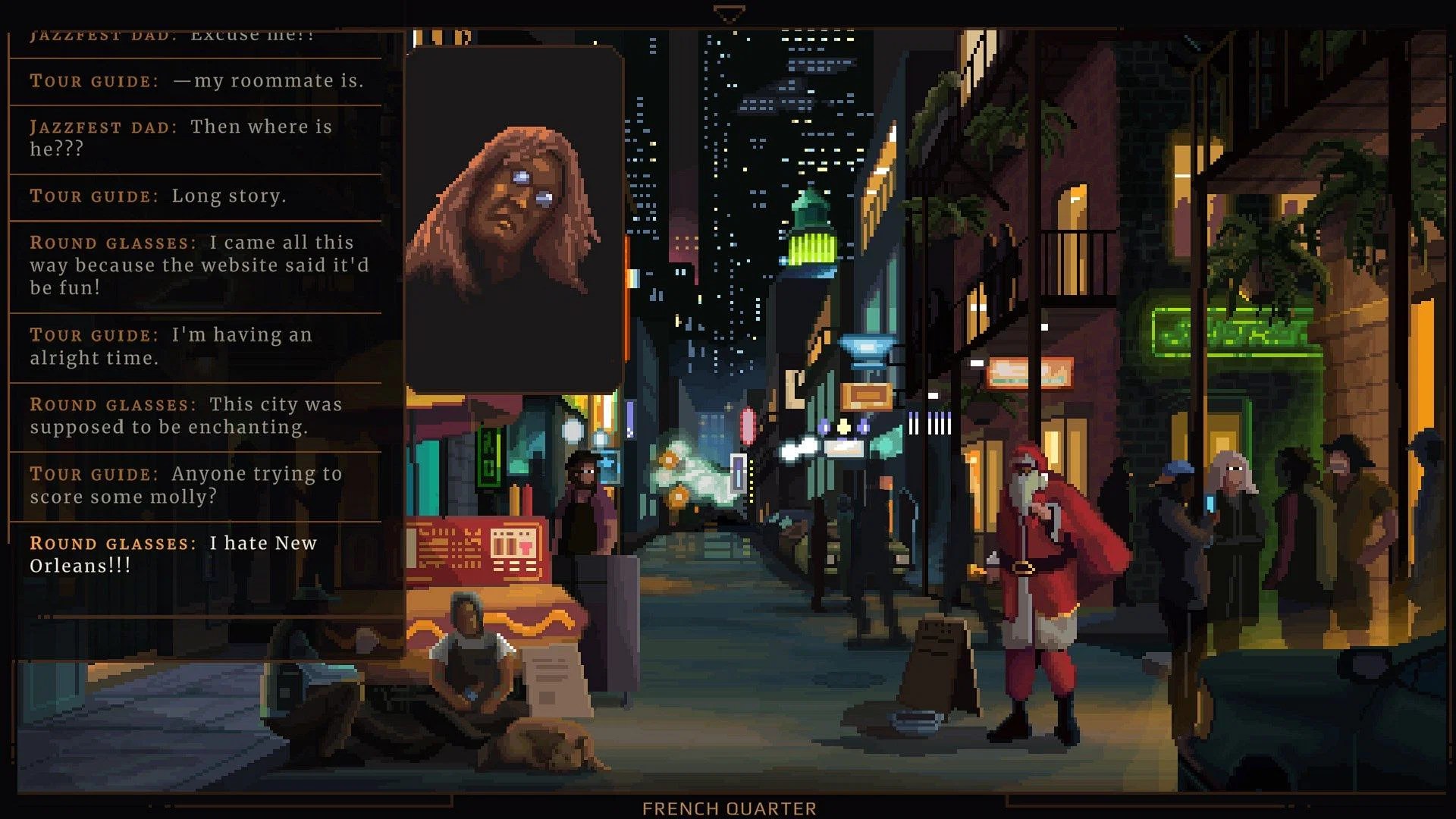
The best part about the game is the art and abstract character design. There is some weird imagery here, and I really enjoyed the pixel art. The entire game gives off a great sense of atmosphere and foreboding helplessness. You meet weird characters, an occult, strange objects, and overall, the game just pulls off a great sci-fi setting, but just the setting. As the game progresses, the entire reason why you’re doing any of this is lost, and it just devolves into abstract poetry and makes no sense. Sometimes things seemed normal, and there was decent character building, but it just wasn’t enough to push it to that top-tier adventure game level. I still didn’t care about anyone in the game enough, as right when things seemed to pick up, the game dropped the ball with more abstract poetry, weird imagery, and unanswered questions.
Overall, Norco has great art and super weird characters and settings, but the overall story is just a convoluted mess that devolves into poetic abstractness that seems to be plaguing adventure titles.
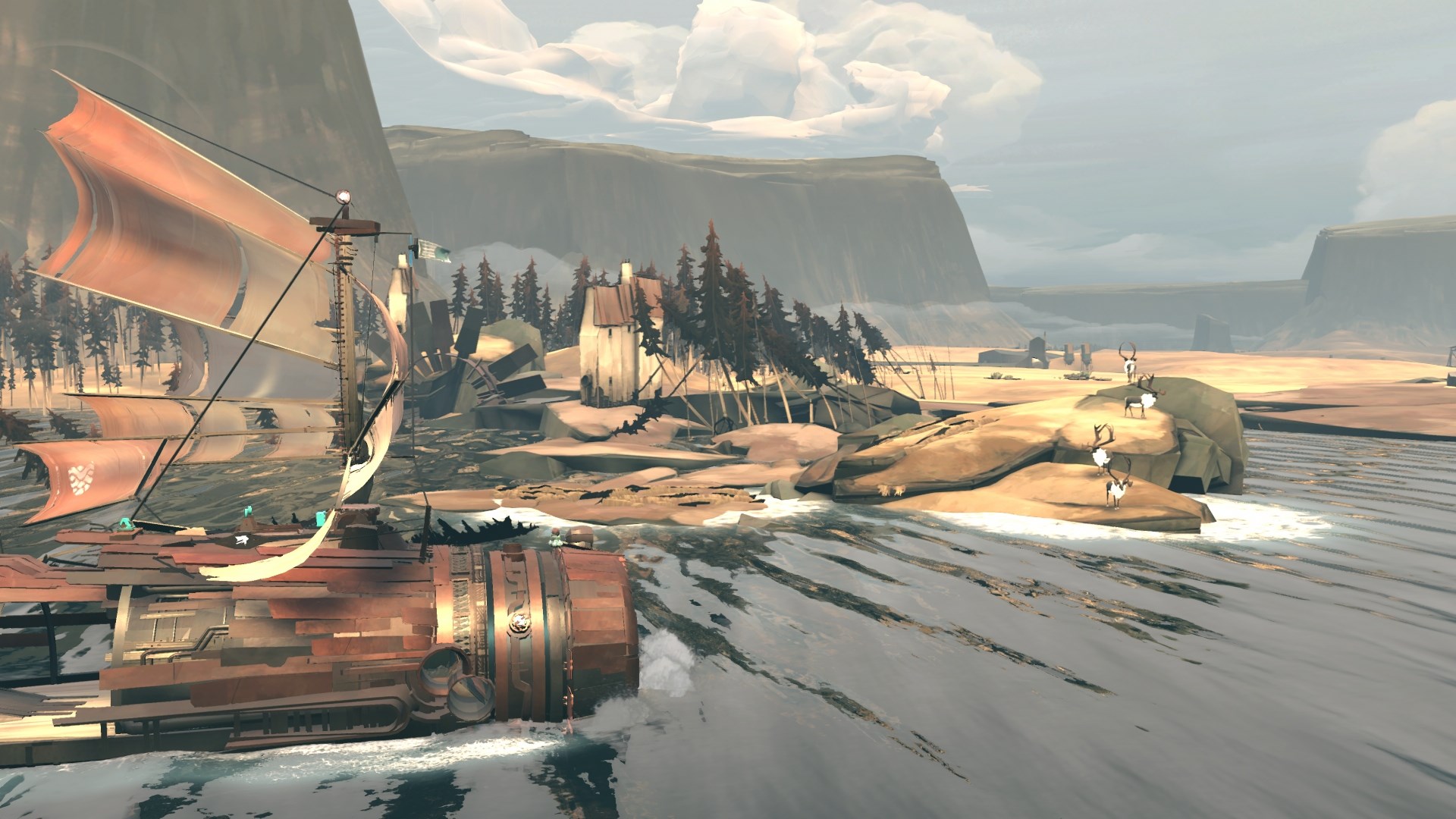
Lone Sails was an interesting puzzle adventure game that took place on a 2D plane. You micro-managed various things on your vessel while acquiring upgrades to overcome new obstacles. Changing tides is exactly the same thing, but on a boat instead.
There is no store or character building at all, and that really stinks. I can tell the world in Far is sad and clearly post-apocalyptic, but the game gives me no reason to care about it other than the puzzles. You start out swimming this time and learning the basics. jumping, climbing ladders, moving objects, and picking them up. You then acquire your ship and learn how to manage your fuel, sails, filling with air or water for submarine controls, cooling your engine, and using your boost power. You acquire these over the course of the game, but fuel management is key. Don’t use fuel unless you don’t have wind, which was the mistake I made. I wound up with tons of fuel at one point without realizing that’s the most I would ever get, and that was 2/3 through the game.
Gathering fuel is done by collecting junk lying around. This isn’t often, and sometimes you will hit a buoy, and below these are caches of fuel. Don’t get lazy and skip them, but sadly, the game never tells you to look out for them either. Each upgrade requires a giant puzzle of a level, and they were never hard or complicated. Mostly, it’s pushing a lever to drop an object into a machine. They’re fun, but not hard. While you’re sailing, there will be long stretches of nothing. Sometimes not even music. This can get quite boring as the micromanagement of the ship gets tiresome after a while. It was fun at first, but I felt like this was the main gameplay loop and not the puzzles. Overall, there are only four upgrades to get, so about 4–5 puzzles in total. You spend at least 2–3 hours just sailing and micromanaging your fuel and sails.
Once in a while, there are cinematic platforming moments in which you just follow a linear path, which was neat because it’s the only action in the game. I just can’t care a lot about this series without some kind of back story or context. Games like Limbo, Inside, and Little Nightmares do this well with storytelling from your environment. There’s not much to tell in open oceans with just wasted buildings. Even the puzzle areas had murals that supposedly told a story, but they really didn’t mean anything. There’s only one neat moment at the very end of the game before the credits roll, and that’s it.
The platforming itself is fine, if not slippery. I constantly found myself wanting to twitch jump around the ship, and I would constantly fall down holes, get stuck on ladders, or not get to where I wanted because of the slippery jumping and physics. It’s also a bit too floaty. The puzzles are the most enjoyable part of the game, and it’s a shame the boating is so tedious and boring most of the time with nothing going on. If it were cinematic or a more interesting management system, I would really like this idea. I didn’t care for it in Lone Sails, and it was doubled down on here.
Overall, Changing Tides looks good for what it is and has a nice art style, but you will quickly forget this game. It’s about 3–4 hours long, and I can’t stress enough that there
Video games that are considered moving art are rare and don’t happen as often as they used to. Games like Shadow of the Colossus, Okami, Journey, Monument Valley, Echochrome, and various games from large to small budgets would be among that crowd. Lost in Random takes visual and character design inspiration from the likes of Tim Burton’s The Nightmare Before Christmas, Alice: Madness Returns, and Psychonauts. Now, I don’t know if those are exact inspirations, but it sure does feel like it. I feel like I’m playing a Tim Burton cartoon.
You play as a girl named Even. The world-building in Lost in Random is very well done. By the end of the game, I completely understood this world and the horrible things people have to go through. There is an evil queen who rules a black die. When she rolls a die, it determines where a child gets sent. There are six realms in the world of random. You are, of course, starting out at the bottom and have to work your way up to Sixtopia, where the evil queen resides. Children are used for something, and the queen also takes your sister Odd back to Sixtopia with her. The people of Random used to have their own dice, and the evil queen didn’t like this, so she took them all away, and only she can decide anyone’s fate.
Each realm is very well done. They all look different, and each realm plays an important role in serving the queen. One realm makes the cards, one realm offers the garbage to create the evil robots, and so on. As you climb through the realms, you meet people and can do side quests, which, surprisingly, aren’t that annoying. You mostly finish them all just by completing the main quests in each area, and I rarely felt any made me go out of my way. Exploring is one of two major parts of the game, and it’s quite enjoyable; in fact, I enjoyed it more than the combat, which there is more of. I loved seeing the beautifully crafted areas, talking to the crazy NPCs, and learning how each realm is dealing with everyday life. This kind of detail isn’t put into games as much these days unless they’re strict RPGs.
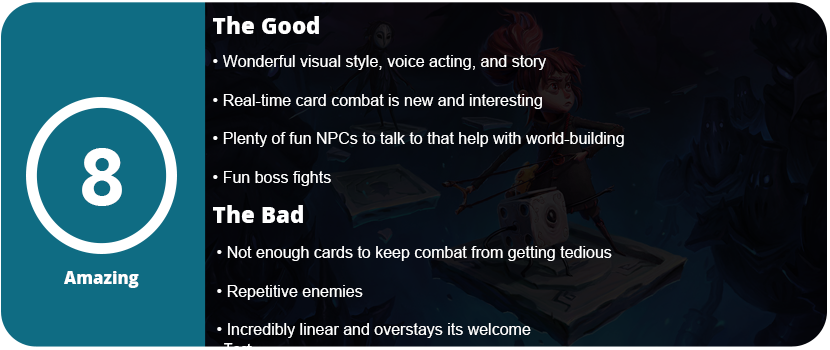
As you explore the realms, you can shoot down pots to earn coins to buy cards. Cards are used in combat, but it’s not like Hearthstone or anything like that. This is real-time combat with cards that give you what you need in the battle. You can carry a deck of 15 cards, and there are around 30 or so in the game in total. You can usually carry 2–3 of each one in your inventory. The deck is varied and broken down into categories. Weapons, traps, hazards, assists, and so on. The problem is that because the combat is in real-time, it can drag on and take a while to get any battles over with. You start out with just you and your death. You only get to roll a one at the beginning, and as you climb realms, you get more sides. This is an issue because until you get at least four sides, you can’t roll very high. You must run around the arena, shooting crystals off of enemies, to build up your hand. I find this whole process tedious, which really dampens the combat a lot and nearly kills the fun. Once you have gathered enough crystals, you can roll your die, and that determines the spending points you get. Each card has a number from 0 to 3. The strategy is picking the right cards for the situation and making sure you have a varied deck. You don’t want to be caught without a melee weapon or health, for example.
Once you play your hand, you have to shoot crystals all over again or “blink” through enemy attacks. An important card is Blink Attack, which damages enemies as you dodge because, without a melee card, you’re weaponless. This also drags out combat, as I wish the slingshot would automatically do some damage. You’re stuck just running around shooting crystals and hoping a hazard or weapon card comes up so you can attack and do some damage. This also makes for cheap deaths, especially in the board game areas where there are no checkpoints. Board games have various rules in which a game piece is moved around, and your roll determines the moves. There are hazards, enemies, traps, and obstacles to overcome, and I absolutely hated these. They dragged out the already dragged-out combat, and if you died towards the end, it was another 20 minutes to fight your way back to the end.
As you can see, the combat has some great ideas, like real-time combat mixed with card battling, but getting to that sweet spot is a chore. There is also so much combat in this game. Once you left a town, you just went into one arena after another, and it felt like it would never end. The only reprieve in combat was the boss’s fights as they changed things up. The same five enemies repeat throughout the entire game, and then, after a while, it just becomes a game of survival rather than strategy. You already know how to kill these enemies after the 50th time, so the strategy is gone early in the game. I wound up just equipping the cards that did the most damage, dropped my spending requirements down, gave me more spending points, and required fewer crystals to get to the cards. I stuck with melee weapons, bombs, healing, blink attacks, and poison, and that was about it. Most other cards end up becoming useless as the game gets harder.
Overall, the game also overstays its welcome. The combat isn’t interesting enough to last 10 hours. As you battle your way through six worlds, each with multiple bosses, quests, side quests, and cards to buy, the game grows tiresome towards the end. I just wanted to explore the beautiful worlds and enjoy the scripted events towards the halfway point. Every time another board game came up or another arena, I groaned. That’s not a good thing. I liked the mix of combat types, but getting to that point with the crystal shooting is just such a chore and slows the whole game down. What’s here, though, is a wonderful story, great characters, fantastic voice acting, and a beautiful world to explore.
Adventure games that both have shock value and a good story are rare and hard to come by; sadly, Martha is Dead is not one of those. You would mistakenly think this is some sort of horror game with monsters and demons, but it’s barely even that. This is a ghost story, a story about battling mental illness, and a story about surviving WWII in Axis Italy. You play Guilia, who is Martha’s twin sister. This is a detective game more than anything, with plot twists and an interesting vintage camera system.
The game starts out simple enough. Introducing controls, the plot, character building, and the whole nine yards that adventure games typically put you through. Martha’s best feature is the camera system. While you can take photos anywhere (I don’t know why you would), you need them for specific plot points. Guilia is trying to talk to the White Lady of the Lake and find out why her sister died. This is kind of the first half of the story, as it jumps around so much. The game is very plodding, slow, and constantly leads you on for little payoff. Taking photos for objectives is simple enough. Just get the focus and distance right, and snap the photo. You then get to develop the photo, but instead of taking you through the entire complicated process, the game explains to you what that is and says it cuts 90% out for better gameplay. Why? You just focus and position the negative for exposure and then develop it in liquid, but the point at which you stop it is the same for every photo. A pretty lame “mini-game,” if you ask me, with tons of lost potential.
With the camera feature out of the way, there are other small gameplay things you do, such as a morse code mini-game, which I actually enjoyed. I had to look up a morse code chart online and decipher it myself. That was actually well done and made me think, but that’s the only part that did. 75% of the game is spent in Guilia’s house or the wood’s winding paths. There are a few scenes where you control a motorboat, but it’s just to get to the other side of the lake. You are mostly wandering around at a slow pace, going from point A to point B, and interacting with objects. Go check out the graveyard, go back to the house and develop the photo, go back to the lake and find an underground bunker, go back to the house, and put up a flag. The constant backtracking is tiring and clearly used for filler.
Then the last hour of the game is zero gameplay. It consists of long puppet shows recapping the entire story, like you already didn’t know what happened. The story thinks it’s more complicated than it is. Honestly, the puppet shows are cool-looking, but they didn’t advance the story. The story here gets recapped numerous times in various forms, which is really annoying and makes the player feel dumb. After the puppet show stuff, you just walk around interesting scenes with narration, and that’s it. The best parts of the game are the gory death scenes, which are pretty nutty. They would make Mortal Kombat fans blush. But in total, this is maybe five minutes of the entire game. There’s a bike you can ride, but the control is terrible, and it’s only used to ride around the house and surrounding path, so what’s the point with that?
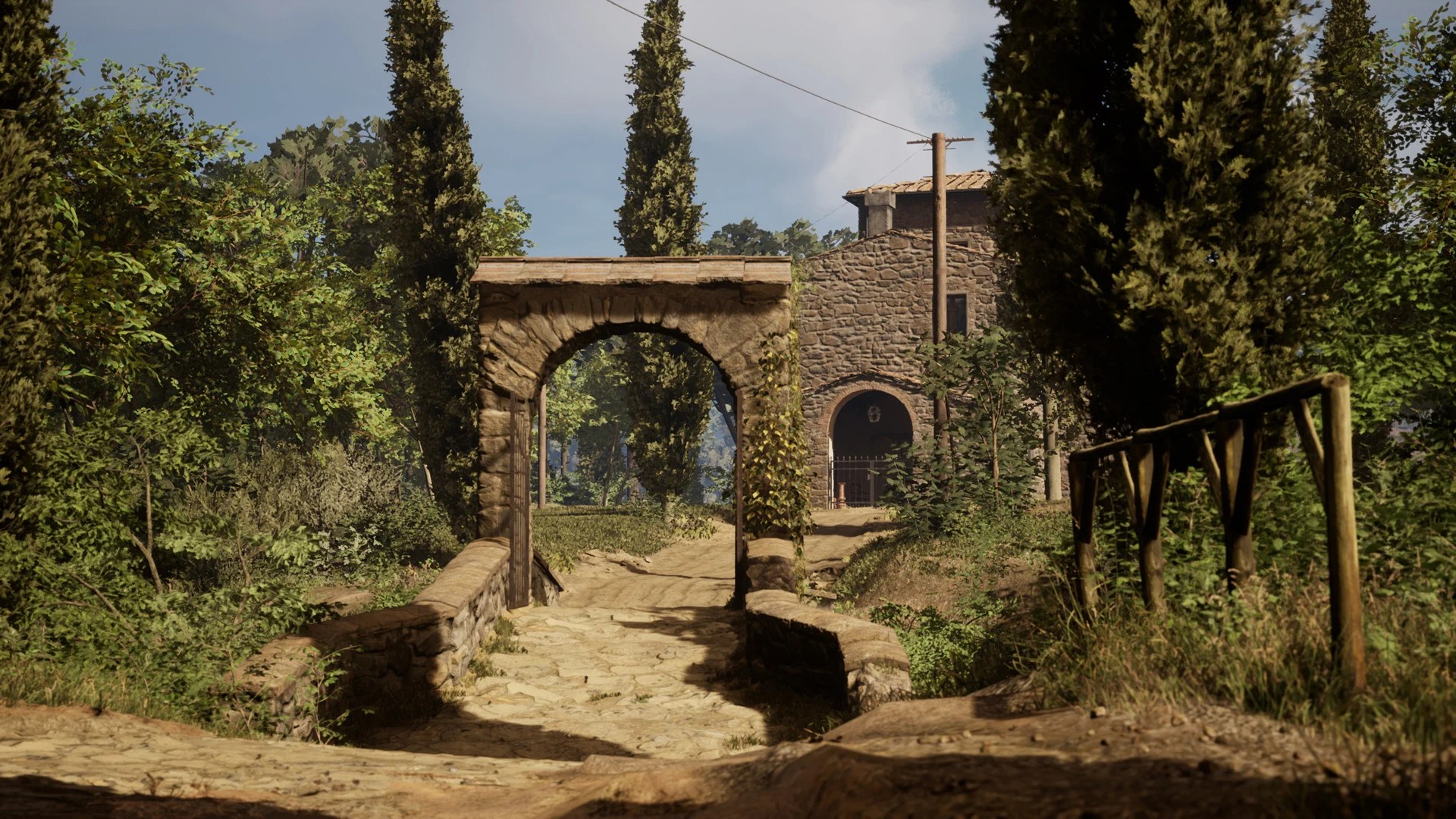
Then there are the visuals. Yes, the game looks damn good. Crazy detailed textures, amazing lighting effects, and models—and it just looks like a AAA title—but at what cost? The game runs horribly on even my RTX 2080 that’s overclocked. There is ray tracing in the game, but I couldn’t tell the difference between that and ultra-graphics settings. I feel this was put in more for next-gen consoles for a subtle effect. The game has constant stutters, frame drops, weird frame rates with ray tracing on, and even DLSS set to ultra-performance. At 3440×1440, I had scenes that ran at above 60FPS with ray tracing on, and then I would turn around and the frames would drop by over half. Without DLSS? Forget it. The game would drop into single digits one second later, and then inside the house it would be 90FPS. Super terrible optimization all around here, and even with DLSS set to ultra-performance without ray tracing, I still saw dips under 60FPS. Totally unacceptable. DLSS shouldn’t be used as a crutch.
Overall, Martha is Dead mostly relies on shock value for the few scenes that have it. It’s neither a horror game nor a puzzle game. It’s just an adventure game with various story elements tossed together, boring backtracking, and little gameplay to keep you interested. The photo mode is ambitious but purposefully handicapped when it could have been as robust as real-life photography back in WWII. It’s a missed opportunity. The game spoils itself constantly with frequent story recaps, and in the end, there’s a final plot twist. The story runs its course about two-thirds of the way through, and you’re left with a giant recap scene with no crazy finale that most adventure games have.
Supermassive Games have the ability to tell great stories and present scary atmospheres and settings. Until Dawn is one of the best PS4 games to date and I loved it. It seems that either their budget is lower, or they’re not taking enough time to finely craft these Dark Picturesstories because thus far they are B-grade horror at best that you quickly forget after the credits roll and House of Ashes is no better. There’s so much left open and unexplored in this paper-thin story that chugs at a snail’s pace until the last hour of the game.
I understand that adventure games like this need time to simmer and do a lot of story building. Life is Strange is a great series that does this very well without feeling boring. House of Ashes is mostly boring. The game drags the pointless story scenario by scenario without anything happening. You keep expecting something to be explained or some backstory to unfold or characters to grow and expand, but that never happens even once here. You play as a group of stereotypical U.S. Marines who are sent down into an ancient temple in Iraq to find some sort of superweapon. Immediately the characters start off unlikeable. Stereotypical Marines of every flavor here. The hard-ass who is rude and has a foul mouth, the jealous couple, the science nerd, the sensitive nerd with glasses who wears a helmet, and the voice acting that accompanies this is pretty bad as well. The guy who plays Jason sounds like he’s faking a mid-western Texas accent and it just sounds so cringy. Everyone sounds like they’re whispering at a high school play recital and it just feels so off.
It takes forever for the team to actually get down into the temple and start their mission. There are just tons of standing around and lots of backhanded comments to each other. The only plot within the group is that Rachel was married to Eric (the leader) and is now secretly dating Nick. Okay? And why do I care? There’s no backstory here, no history, nothing. The game just throws you into these characters’ lives like we already know them. They don’t have strong enough personalities to make you really become attached during the game and I just didn’t care or route for anyone. The vampires you fight take forever to show themselves and become revealed. There are few action sequences and when you do get into them laughably easy with just simple quick-time events and nothing more. This isn’t really a game, but an interactive movie at best.
Failing these quick-time events (you’d have to not be paying attention to fail them) is how most choices and paths change in the story. Sometimes there are dialog choices and I have to hand it to Supermassive for making these choices mean something every single time. They don’t waste a single one. There are choices I made at the very beginning of the game that affects the team all the way through the end and it makes me think back and regret those choices. This is a good thing as it means their choices and path system isn’t useless like most “choose your own adventure” type adventure games are (looking at you David Cage and your games). There are flashing points when you can control a character for all of 10 seconds that are collectible that you can find to unlock interview videos (yawn) and achievements. I tried to make an effort, but despite how little you control characters I still missed stuff. However, the story isn’t interesting enough and takes so long to pick up that I didn’t want to go back ever again. There’s nothing to care about enough here.
The visuals are actually quite good, however, the engine is poorly optimized even for high-end PCs, but again, it looks great. The monster designs are awesome too, it’s just too bad the characters look weird and ugly. I also don’t like that there’s no mystery here. Why are the vampires here? The beginning of the game shows a chapter of ancient people who worship or are trying to stop these vampires, but it’s never explained why or how. There are no explanations here. Even the few collectibles don’t tell of much that’s going on. Just, “Evil scary vampires, and we must stop them”. This game’s story is something you’d see on in the early 2000s on the Sci-Fi channel at 2AM and just watch it out of sheer boredom. Lots of shooting stuff, no one runs out of ammo, their packs hold infinite items, crowbars magically attach to their backs, and so on. It’s so hoaky I couldn’t help but shake my head or laugh at certain scenes.
Overall, House of Ashesis probably a fun entertaining game to look at and play with a partner or friend for an evening, but that’s it. You won’t get anything out of this game, and it’s not even really scary. The vampires look cool and so do some of the human vampires, but that’s it. Military stereotypes, unrealistic events, forgettable and boring characters, and a story that doesn’t go anywhere at all.
A game-changer for any game is its atmosphere. How it can make you forget you have a controller in your hands and suck you into its world, make you believe in its world, or even scare you. There are many memorable worlds that have been created such as Fallout 3, Silent Hill, and Metro. These games have tons of atmosphere that suck you in and make you fear or delight in the next step that’s coming.
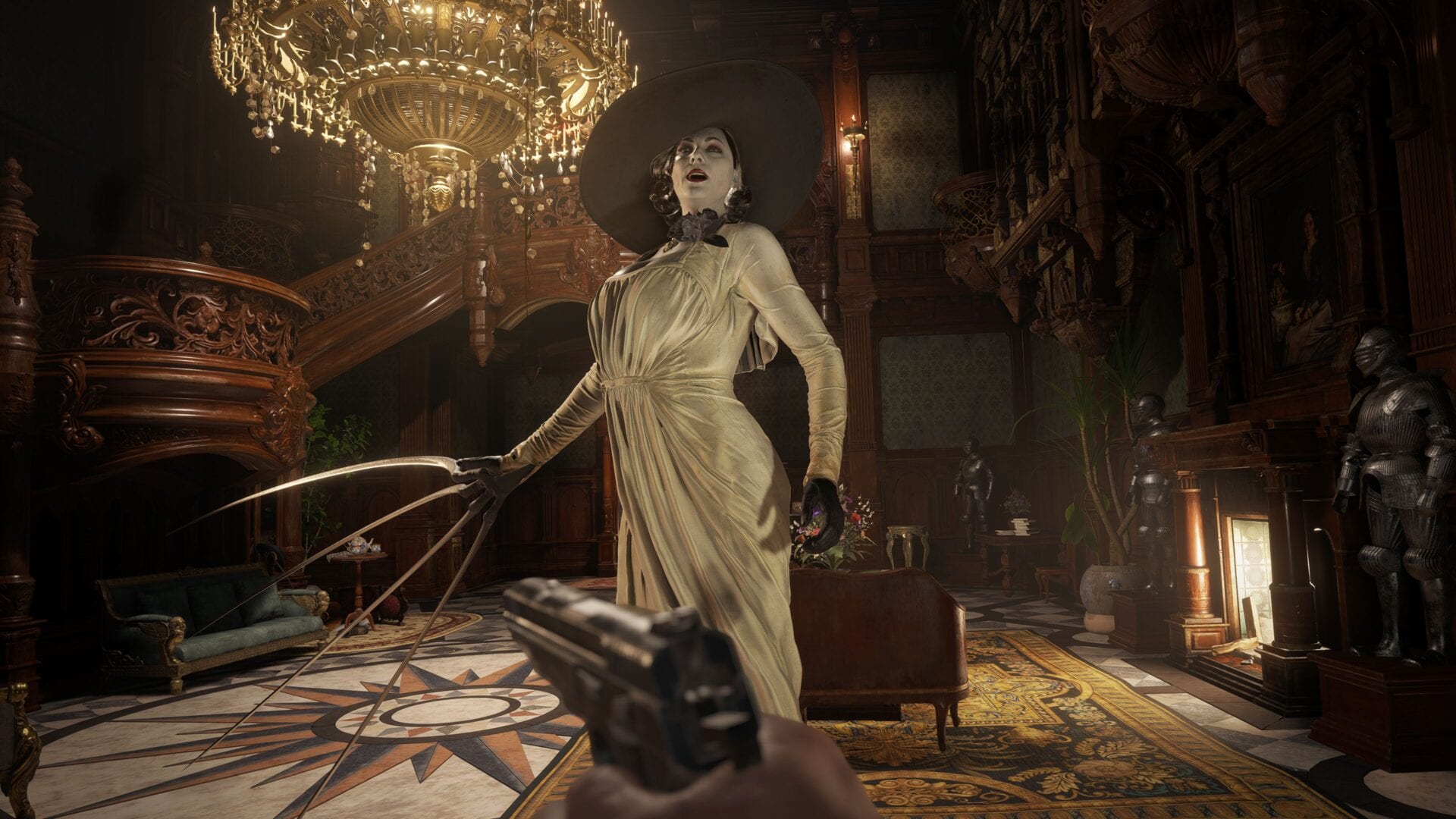
Resident Evil Village brings back the fear factor and not just the action. While VII was more scare than action, I feel Village really balanced the two well. The entire world of Village just feels like absolute terror. Each level has a tense atmosphere of dread, death, and like you just want to get the hell out. There were many games that created convincing worlds, but Village did it the best.
A game-changer for any game is its atmosphere. How it can make you forget you have a controller in your hands and suck you into its world, make you believe in its world, or even scare you. There are many memorable worlds that have been created such as Fallout 3, Silent Hill, and Metro. These games have tons of atmosphere that suck you in and make you fear or delight in the next step that’s coming.
Resident Evil Village brings back the fear factor and not just the action. While VII was more scare than action, I feel Village really balanced the two well. The entire world of Village just feels like absolute terror. Each level has a tense atmosphere of dread, death, and like you just want to get the hell out. There were many games that created convincing worlds, but Village did it the best.
A brand new category was introduced this year. Sequels need to take accountability for not evolving or changing anything. Sometimes you don’t fix what’s not broken, but you still need to add something. There are plenty of sequels released year after year that doesn’t change enough to justify the cost or just exist.
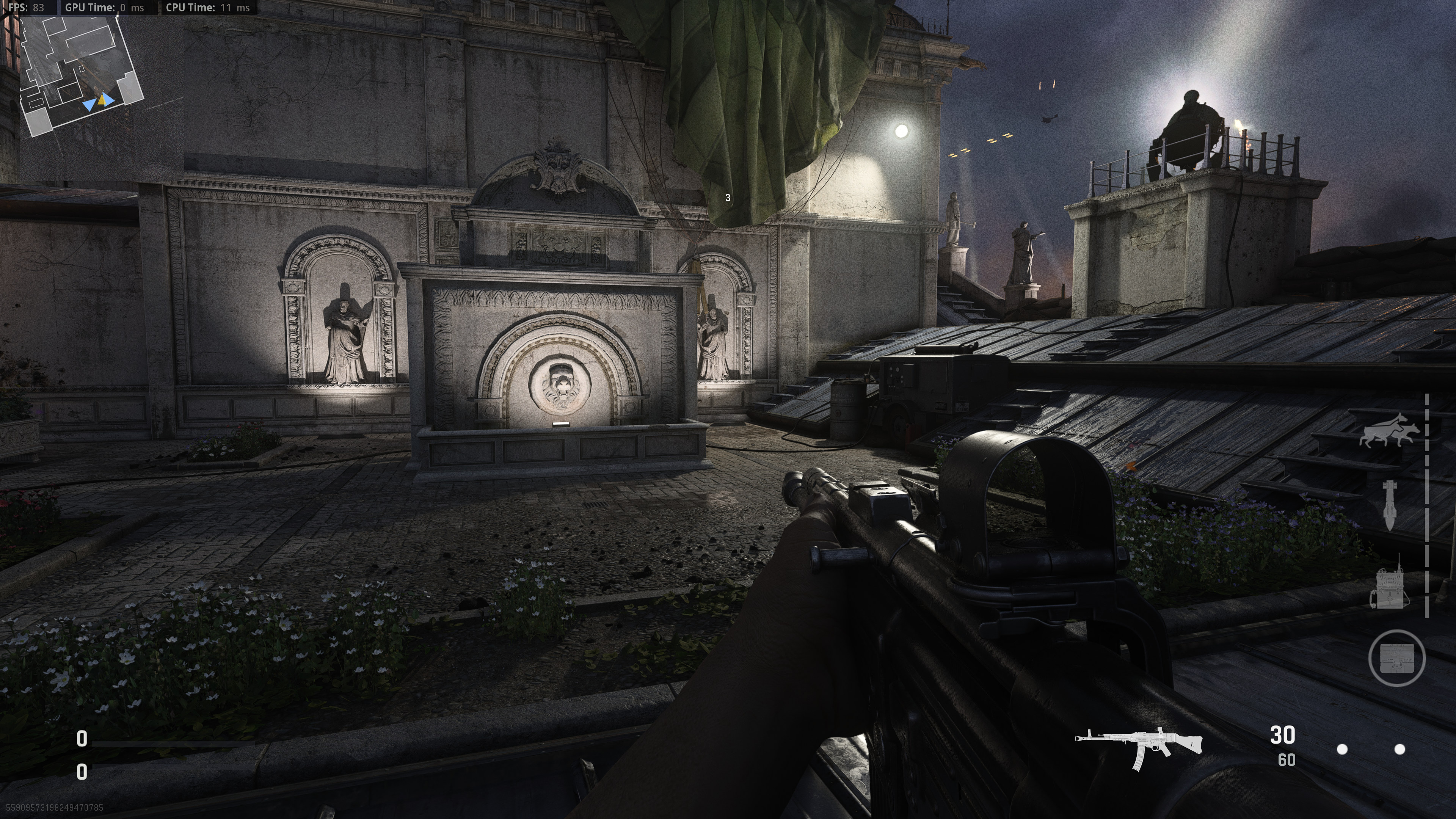
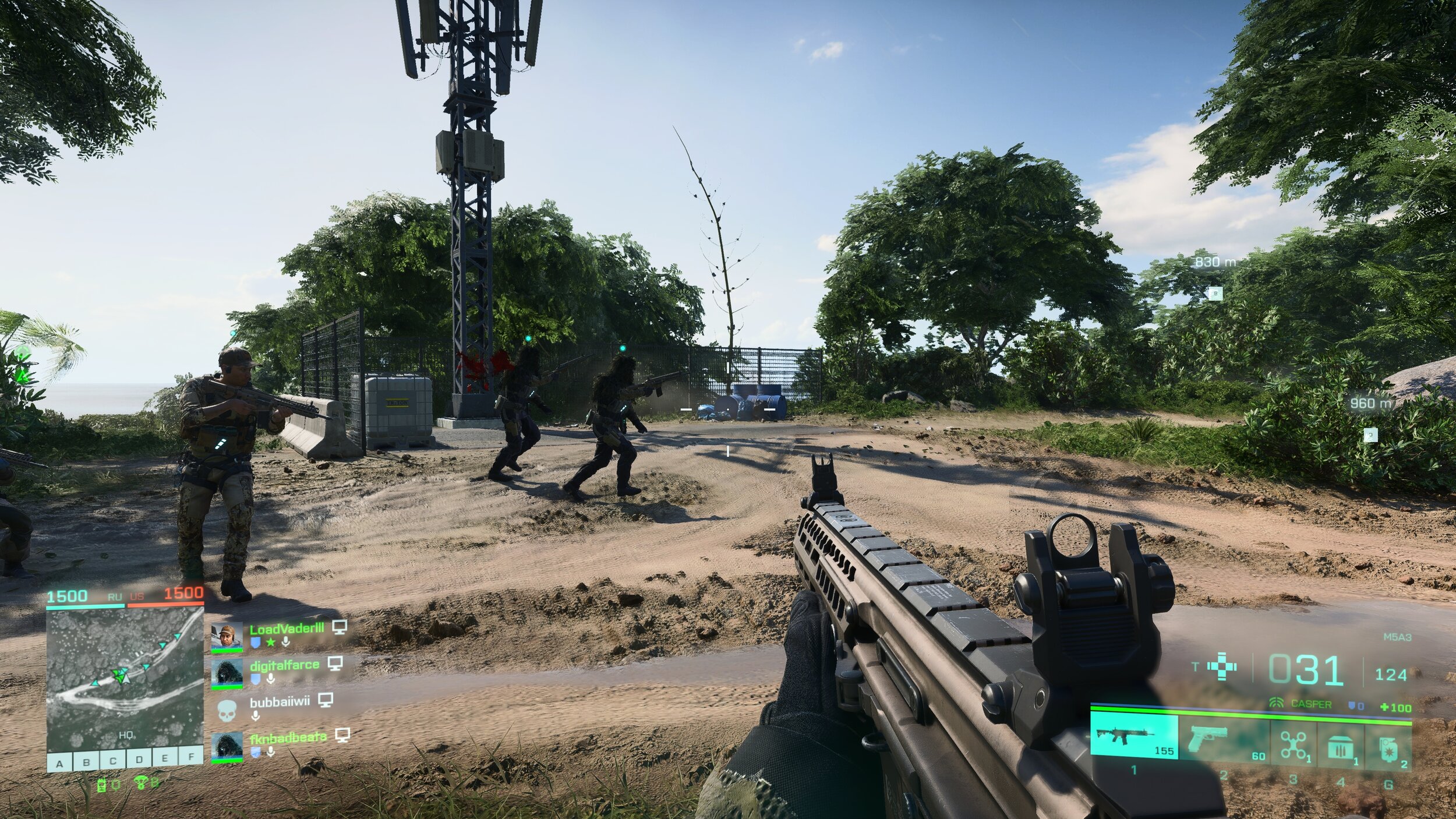
While Modern Warfare 2019 was a fantastic game and brought the series back to its roots it quickly slid downhill and doesn’t seem to be stopping. Battlefield was successful and bringing the series back to the past, but Call of Duty: WWII was mediocre, and Vanguard doesn’t seem to be much better. While the story campaign is entertaining yet forgettable, I remember the campaign from Modern Warfare 2019 and played through it twice. It was very entertaining and well done. The multiplayer in Vanguard is the most disappointing part. Copied and pasted from the last two entries while shoving some Overwatch stuff in like Plays-of-the-Game and points for voting on the MVP. While the game looks fantastic and plays well we still get ho-hum maps, and lame Zombies mode that takes the best parts out, and just one of the worst games in the series in a long while.
Life is Strange is one of my favorite games of all time. It just captured the small-town teenage adventure that a lot of us can reminisce about. It was one of the few games that I played that were so emotional and really made you feel for the world and characters you were in. The series keeps trying to capture that lightning in a bottle and doesn’t quite do it as the first game did. That magic is hard to reproduce, but True Colors is still quite an emotional game with great characters.
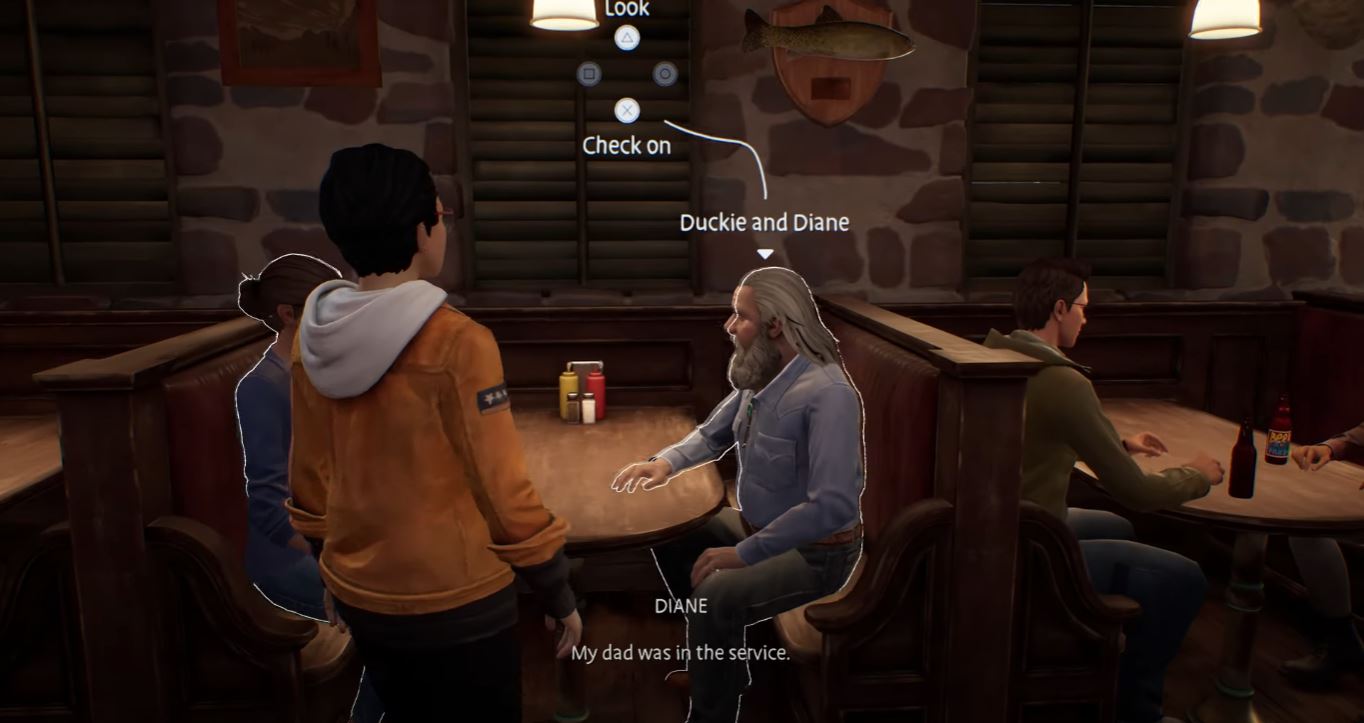
You play Alex Chen, a young woman who is leaving foster care for a small town in Colorado called Haven. Not only is there a town mystery to solve, but you are also trying to find a purpose and reason to stay. You end up living with your brother, Gabe, and slowly start unlocking your past and the mystery of the town. That’s as far as I want to go with the story; anything else will literally spoil the game, as there are quite a few big twists and turns, and even just revealing certain things that happen is surprising and unexpected. What I will say is that the story focuses a bit too much on this town mystery and less on your personal feelings with those around you, despite Alex’s “power” involving raw emotion. When I first started the game, I will admit that Deck Nine has a great way to get to the point of how the main character feels about the world around them. When you open your phone, you can read text messages and bulletin posts that help explain what’s going on outside of Alex’s life. I recommend reading these texts at the very beginning of the game because she ends up blocking some people, and after reading this long thread, it kind of helps you see more of what Alex is feeling in her life.
The first chapter is slow to build, much slower than in previous games, and the story doesn’t really pick up until right at the end of Chapter 1. The game also doesn’t have much gameplay. You do get to control Alex in certain areas to “explore,” which only consists of hearing her internal dialog and commenting on things you can look at. I don’t feel this really adds to anything; it just feels like an excuse to make this a game and not an interactive movie. This is a serious issue with adventure games these days. There are no puzzles, no real exploration, just lame gameplay excuses to make you feel like you’re controlling anything. I understand this is so it doesn’t scare off casual gamers, but adventure games are known for their puzzles. The only gameplay in here is a certain scene where you are doing a LARP (live-action role play) that the town takes part in, and the game kind of has a light make-believe RPG thing going on. There are things to “collect,” like looking at certain objects, interacting with things that can be missed, and listening to people’s internal dialogue with Alex’s powers.
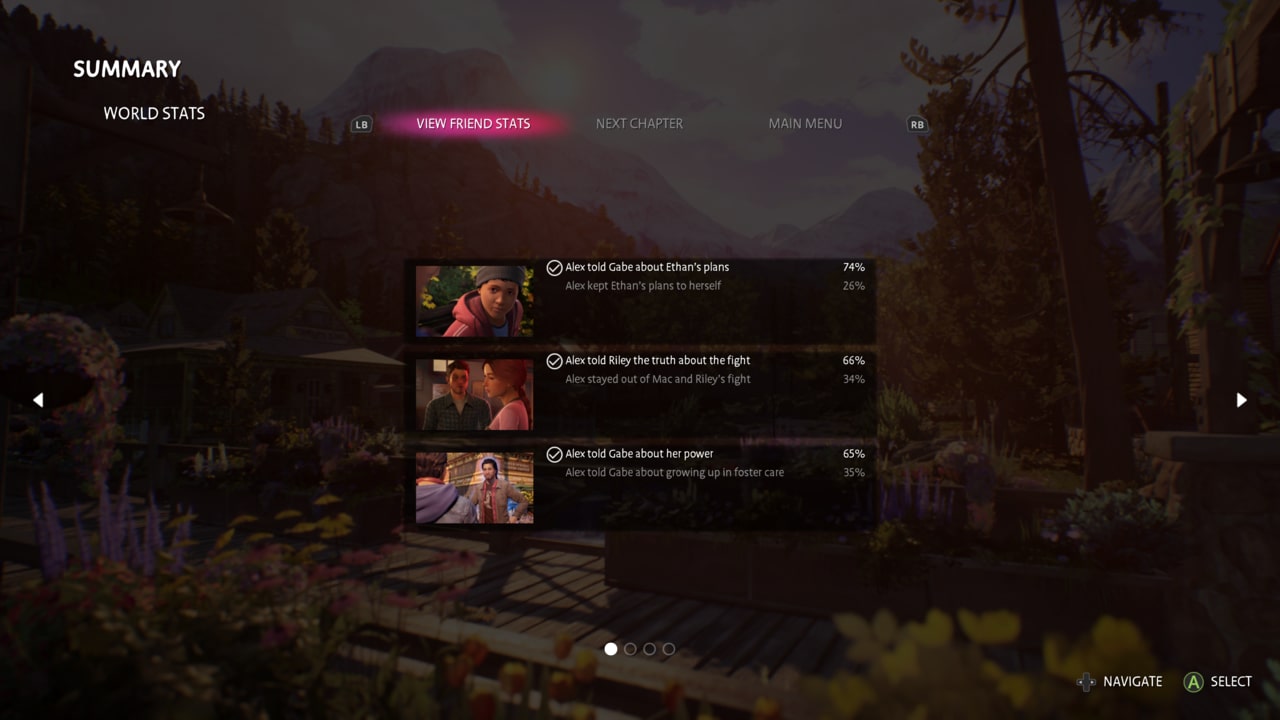
There are major choices to be made in the game, and that’s the true core of Life is Strange. These choices are pretty tough and really change the outcome of the story, but there aren’t as many in True Colors as in previous entries. There are only a few major choices where the game pauses and lets you choose. Other things are dialog options, but I never could really tell if these made a change or not, and that’s a real weakness with this game. You could argue it’s so organic that you don’t notice, and maybe that’s better? I’m not quite sure, but I know only the major choices I made were obvious in their effect. I also found that there may be too many characters in this game, and we aren’t given enough time with any of them. Even Alex’s love interest, while touching and emotional, feels shallow and one-note. There isn’t enough time spent with this person to establish this connection. It’s more in line with just a few actions that took place, and suddenly they love each other? It doesn’t feel super organic, and Alex’s other friends aren’t allowed any insight into their past, like with Cloe or Max in the first game. I cared a lot about Alex, but not too much about anyone else because of these factors.
The game isn’t impressive to look at on a technical level; there are some last-gen textures here and there, but the lighting is great, and the facial animations are fantastic. The characters’ emotions really come across thanks to the details put into the facial animations. While the game looks miles better than previous entries, it still feels like parts are older than others. The music is fantastic as always and carries the Life is Strange atmosphere from previous entries. It’s good enough to listen to outside of the game, and I still listen to the first game’s OST all the time. The music plays in just the right moments, really helps carry the emotional scenes through to the end, and adds an extra punch to the gut.
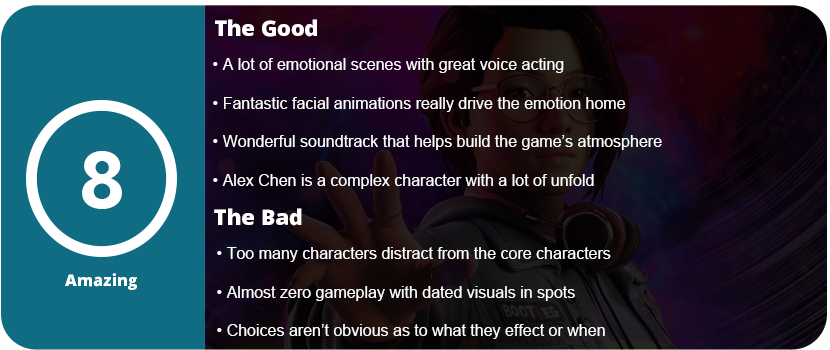
With that said, True Colors does what previous games did well, but it doesn’t quite capture the magic of the first game. There are too many characters, and this brings the focus away from the core characters, and we don’t get enough insight into their past to care about them much. Alex’s love interest feels shallow and underdeveloped, and the mystery of the town itself also brings the focus away from helping the characters grow. I feel there are just too many distractions in the story to make it feel as wholesome as the first game. The visuals, while looking great in spots, feel dated, but the facial animations are fantastic. The music is amazing and helps Life is Strange establish an atmosphere all on its own, but I also feel the choices aren’t as obvious in this game. What’s here is a great game with some seriously emotional scenes that are well done, but don’t come in expecting out-of-this-world storytelling like the first game.
Oh boy, right when you think Assassin’s Creed can’t get any bigger or better. Valhalla is by far the best game in the series, but it does still have many problems that have plagued the series in the last few entries. Over the 70 hours I spent in the game, I felt satisfied and had a lot of fun in the game, and never was it boring, but there are parts that still feel like a chore, and the game is still very bloated despite the fat trimming from Odyssey.
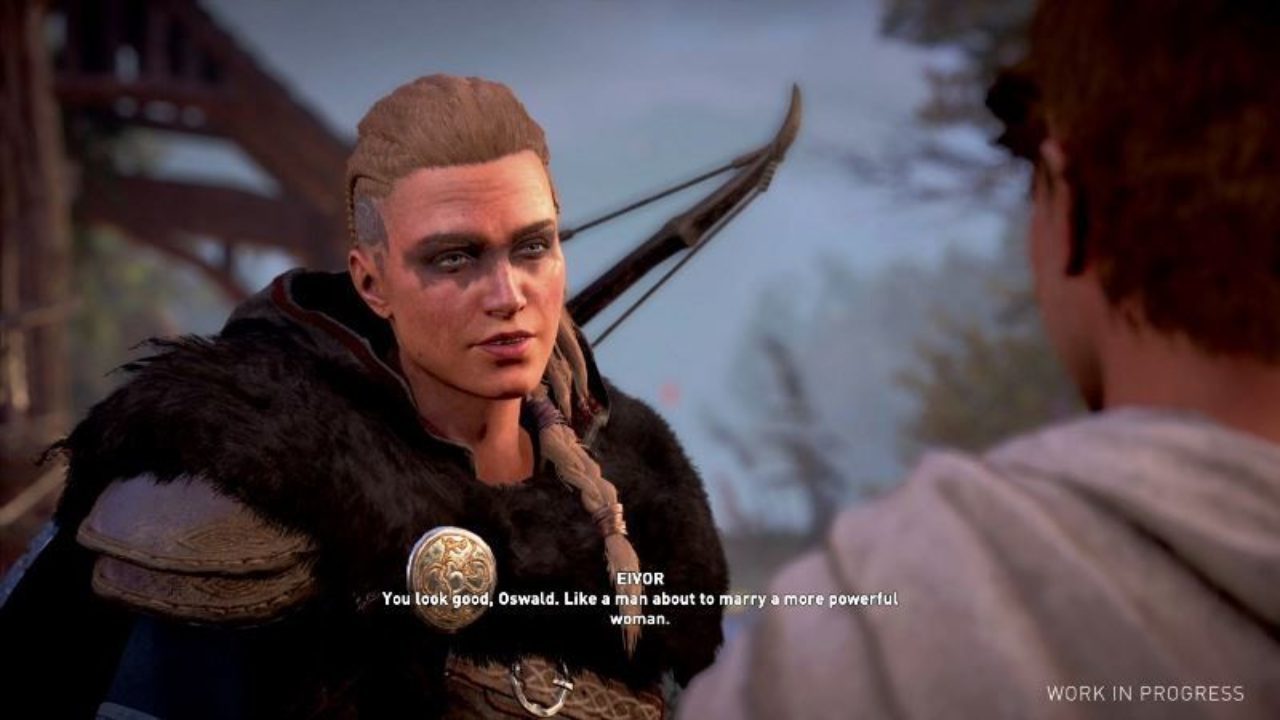
If you couldn’t guess already, Valhalla is set around when the Vikings invaded England and tried to take down the Anglo-Saxons and their Christian faith. The game thankfully has unique characters again, interesting dialog, and a plot to actually care about, well, minus the real-world stuff with Layla. You play as either a male or female Eivor who is your hero in this game and is set to build up the village of Ravensthorpe, stop The Order of the Ancients, as well as a plot revolving around your brother Sigurd being sucked into the Christian craziness as he thinks he’s a god.
The main gameplay loop in Valhalla is an alliance map that allows you to pledge yourself to territories throughout England to gain their trust to eventually take down the evil King Alfred. There are about a dozen territories to conquer, but each has a mini-subplot in which you have to deal with that kingdom’s troubles. The characters are rather interesting, and I grew to care about them thanks to the sharper writing over Odyssey’s dull cookie-cutter banter and annoying accents. Getting to pledge to these kingdoms usually ends in storming a keep or castle and putting that king back in power or helping him hold it. One plot involved a murder mystery, and another involved a king’s son who didn’t want to step up to the throne. Some of the kings are dying, and you must secure the throne. It may sound repetitive, but actually, with each area being different with a unique plot, I always looked forward to the next one.
Of course, while that’s the larger scope of the objective of this game, and it’s a welcome new breath of fresh air for the series, you also have the smaller gameplay loops within, such as, of course, the RPG elements that have been scaled back and also seem pointless. Now instead of actual levels, you have a power level that increases and gives you two skill points every time you level up. There is a new skill tree or web that gives you stat increases and unlocks some new abilities, but the auto-assign works just fine here as the level cap is 340, and by the time you get there, you will have unlocked pretty much every important skill. On top of this, the loot system is now in favor of unique armor, weapons, and abilities that must be found in the world and are hidden. While this does feel more Assassin’s Creed-like, it’s still a chore to go around finding these dozens of armors and weapons throughout the world. They usually aren’t too hard to find, and some of them can be fun, like the Assassins of Bureus that are back.
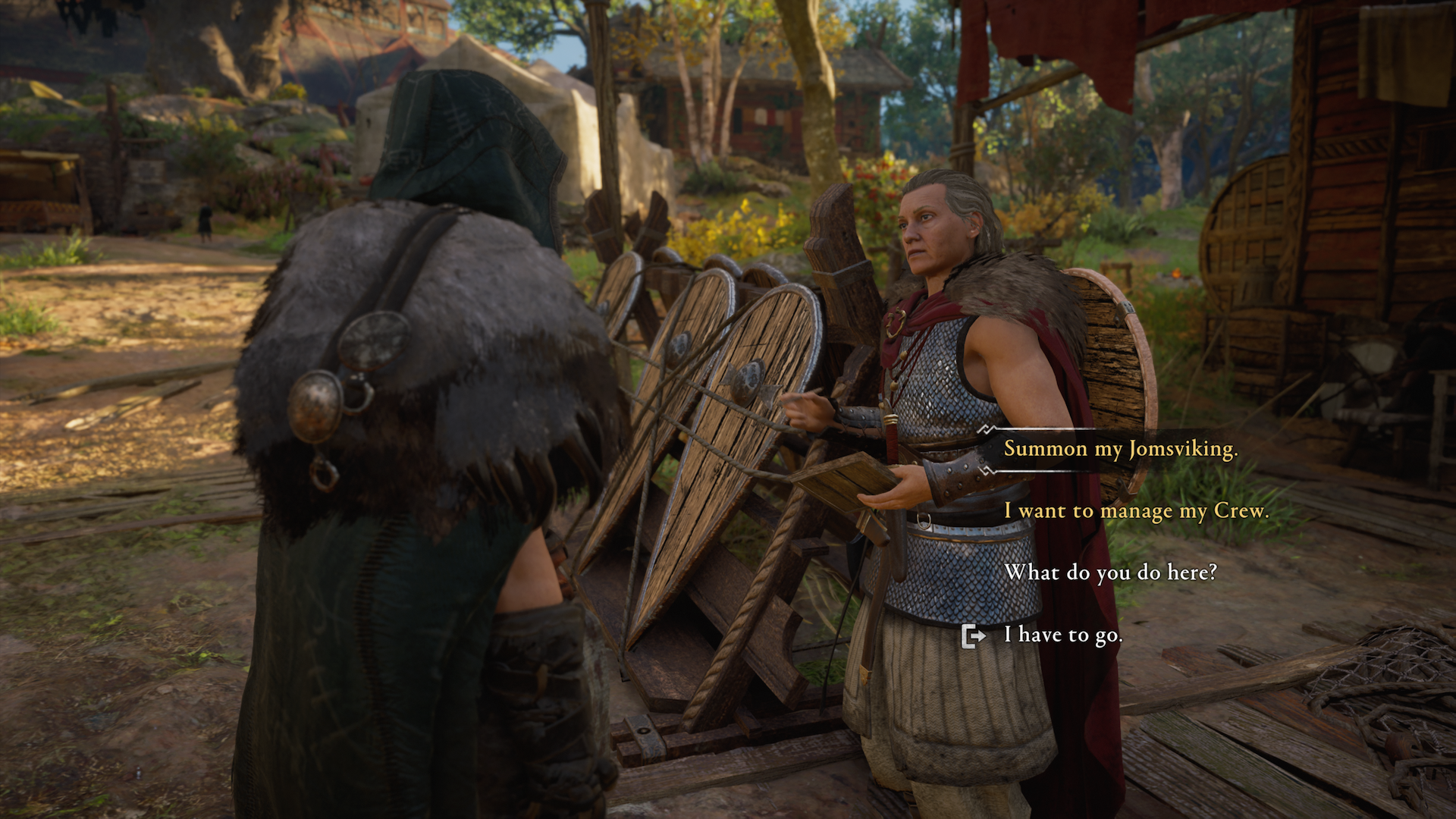
The only way to do other things like customize your ship, upgrade your armor and weapons, etc. is to find chests throughout the world called wealth, and these give you supplies to upgrade your own village. You use this to unlock new facilities. This can also feel like a grind, but over the first twenty hours, you will eventually unlock all the important buildings. Traveling around England is mostly done by horseback and sailing on rivers; more on that later. Just like any AC game, exploring the world is a lot of fun. The world is about one-third the size of Odyssey, so it’s less overwhelming, but still too big, honestly. AC worlds have become too large and bloated for their own good, and it just ends up being mostly padding and filler; however, completing the main story and finding all of the Order members isn’t as much of a chore as in Odyssey. Sure, there are power levels set in each area, but I was able to complete these underpowered if I kept my armor and weapons upgraded. Thankfully, that’s what’s great about the armor and weapons being unique. You can technically stick with the default stuff and just upgrade it over time and ignore everything in the game. Even upgrading your village is mostly optional.
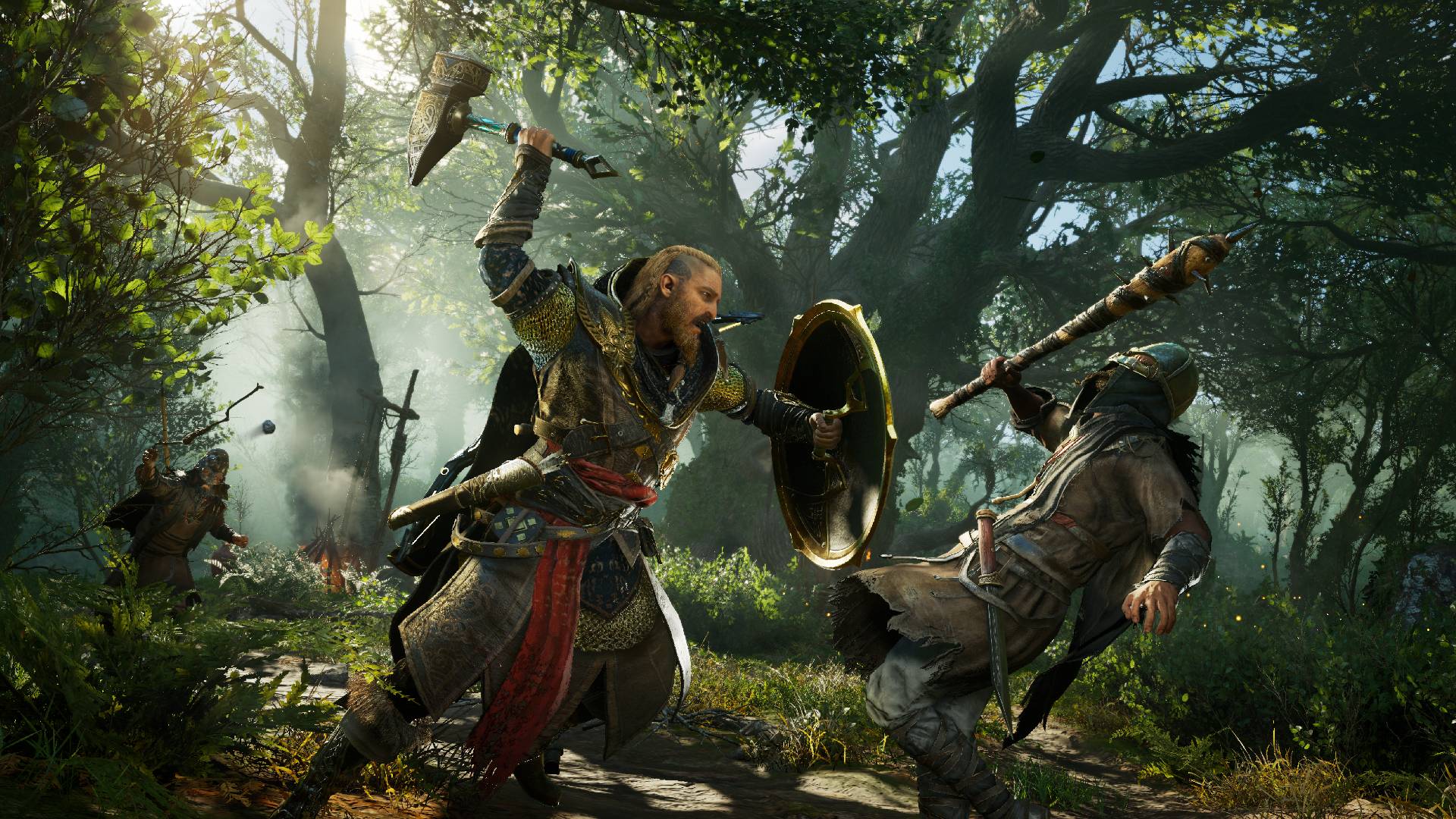
When it comes to combat, the game shines and feels great. The combat system is the same as Odyssey, but tweaked and feels better this time around with some brutal combat. Beheadings, slicing off arms, exploding bodies, etc. While the death animations get old fast, each weapon has a few unique ones of its own. At least you get the hidden blade in this game and can one-hit assassinate guards regardless of power level. This is a huge positive change, as stealth in Odyseey took a back seat. Any guard that is more powerful gets a quick-time event that determines whether you can one-hit kill them or not. This can also be turned off in the options, so every enemy is a one-hit kill, just like the good ‘ol Assassin’s Creed game should be. This allows the satisfying leapfrogging and double assassinations of enemies around camps and makes clearing some out faster.
Finally, sailing has taken a backseat, and ship battles are now gone. Instead, you get river raids, which allow you to sail around the rivers and basically raid villages for wealth that is used to upgrade your village. Again, these are completely optional. They are fun for a while and are fairly easy to get some resources for. There are various other activities in the world, like aligning runes, stacking stones, and mysteries, which are mini-side events that happen in the world that can be completed in seconds or minutes, and they can be pretty entertaining. They also give you XP, so it’s a great way to level up if you want to complete the Order story tree. Over time, you will naturally level up by completing territory pledges in the game to around level 280, which is recommended for the ending. After this, up to 340 is optional to complete the order tree, as there is one Zealot that is level 340, and I was able to beat him at 315 with ease by the end of the game.
The game itself looks fantastic, despite the Anvil engine being poorly optimized and requiring too high system requirements for what is seen. There’s no ray-tracing or DLSS, and yet the game requires a 3000 series Nvidia GPU? It looks slightly better than Odyssey, so I don’t understand this. On my overclocked 2080, I still had FPS drops on the Very High settings. On my 1660ti, I had to keep everything around high and still dropped below 30 FPS in some areas. It’s just an engine that needs an overhaul and needs to run better. I also ran into crashes and glitches, even almost a year after release. Despite all of this, the game’s art style captures medieval England, and each area looks beautiful with sweeping vistas and mountains. The soundtrack is also one of the best in the series to date, and I regularly listen to it outside of the game. It’s just amazing and well put together.
This game won’t change your mind if you hate Assassin’s Creed, but if you’ve been on the fence for a while, I suggest jumping in here. It strips down the RPG elements a lot and feels more like a traditional AC game, just bigger, with most things being optional. I had a lot of fun hunting down the Order members and finding gear and weapons. However, the real-world stuff with Layla just needs to go. Outside of the beginning scene, you only go back towards the end of the game, and it’s just so uninteresting, and there’s so little of this that you forget what happened in the previous game. The endings that involve “ancient high-tech” and the Animus should just go away, as we only care about the historical parts of the game. I even noticed that the scenes with Layla look extremely dated, like they were made a decade ago with the last low-resolution textures that should be on an Xbox 360 with lower poly models and worse lighting effects. It seemed tacked on or just planned years ahead of time, and they clipped it into this game to make it fit the story.
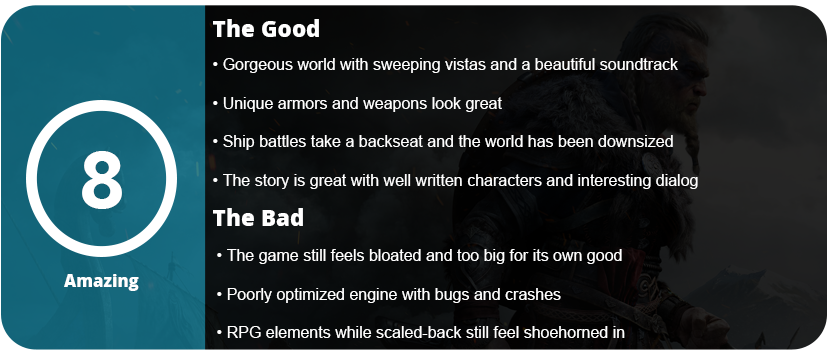
Overall, Valhalla is a fun game and a well-made AC game. It does feel bloated with too much optional stuff to find around the world, but it’s just optional, and you aren’t forced to find it like in Odyssey. I was able to complete both main storylines easily, and the RPG elements scale nicely with the story and can even be turned off. The game looks and sounds amazing despite the poorly optimized engine, and the story was actually good with well-written dialog and characters I cared about. There were even unique assassinations! However, the series still needs to scale back and just go back to the way AC was in the past. One single story had a beginning and an end, with some optional content thrown in. It takes 50 hours just to complete the main story after completing all pledges, and then another 20 hours to level up enough to finish the Order storyline. Over 100 hours in to actually get 100% completion, possibly even 120, and that doesn’t include the DLC that can take 15-20 hours to easily 100% those! It’s stupidly bloated and feels insane, but thankfully, it’s just optional. AC in general just doesn’t have an interesting gameplay loop for grinding, and it was never supposed to be an RPG. These elements feel shoehorned in as an excuse to make the world bigger and extend gameplay time. The series has never needed any of these.















































 thebinarymessiah.com
Try multiplayer. A lot of fun !